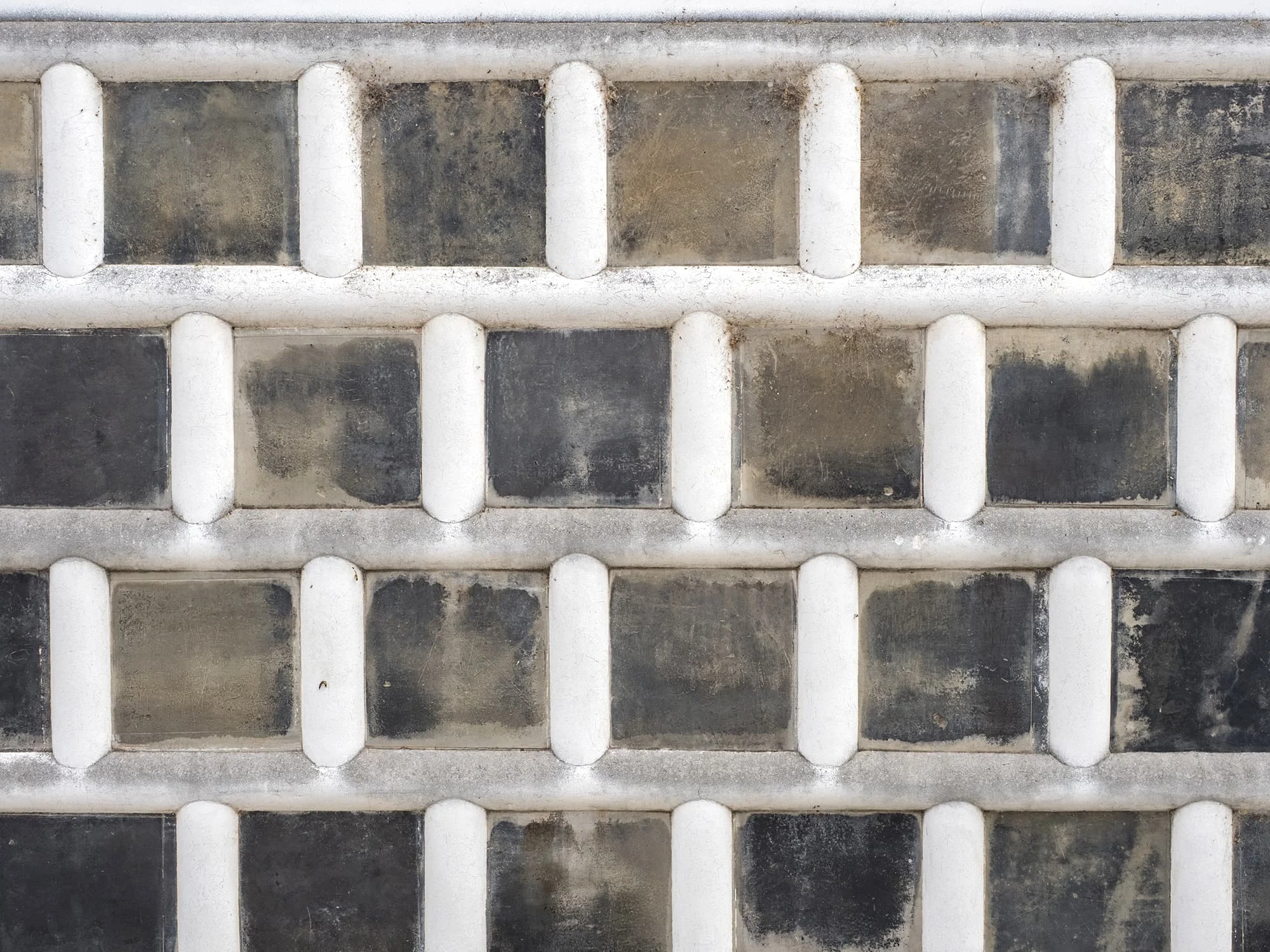
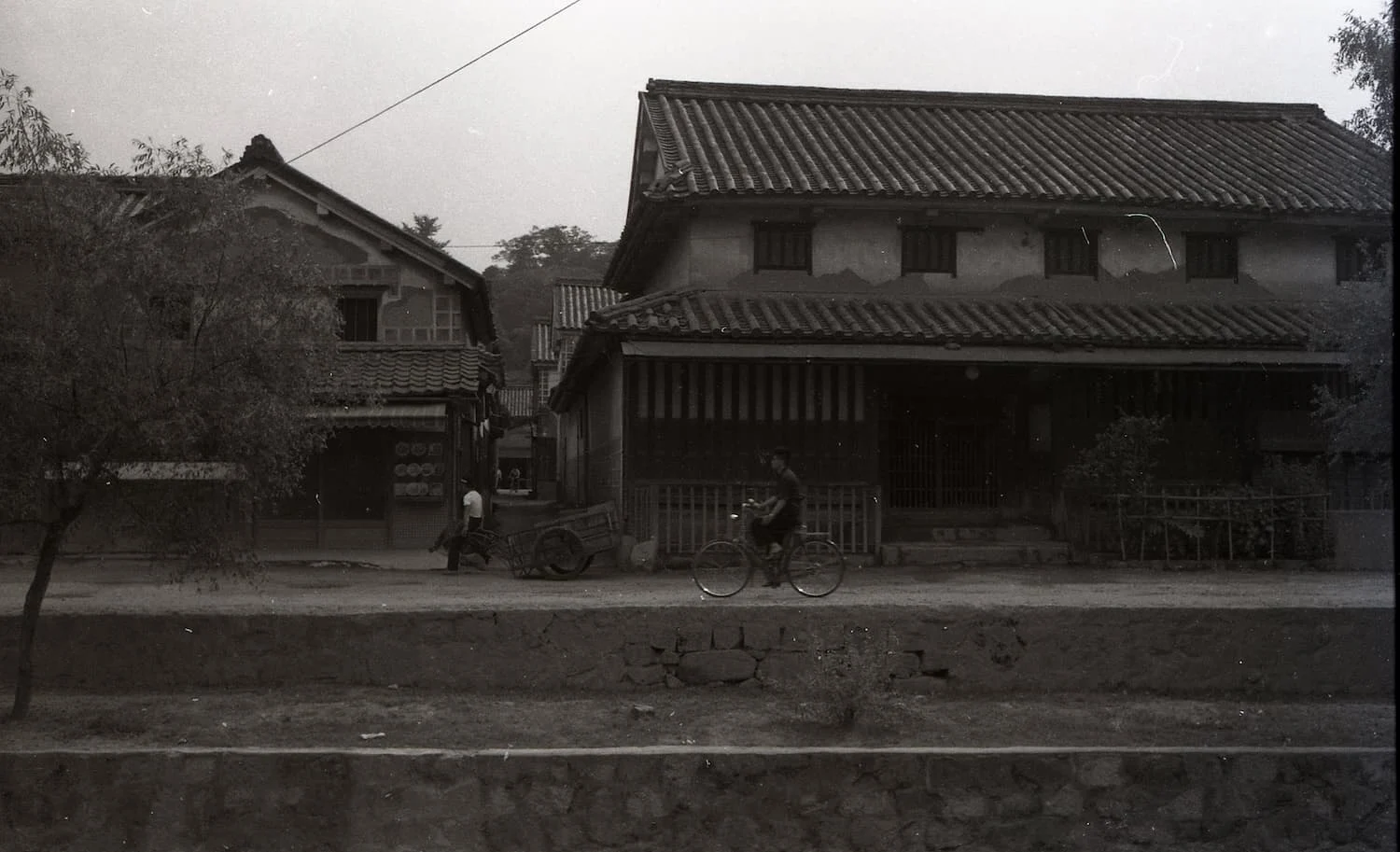
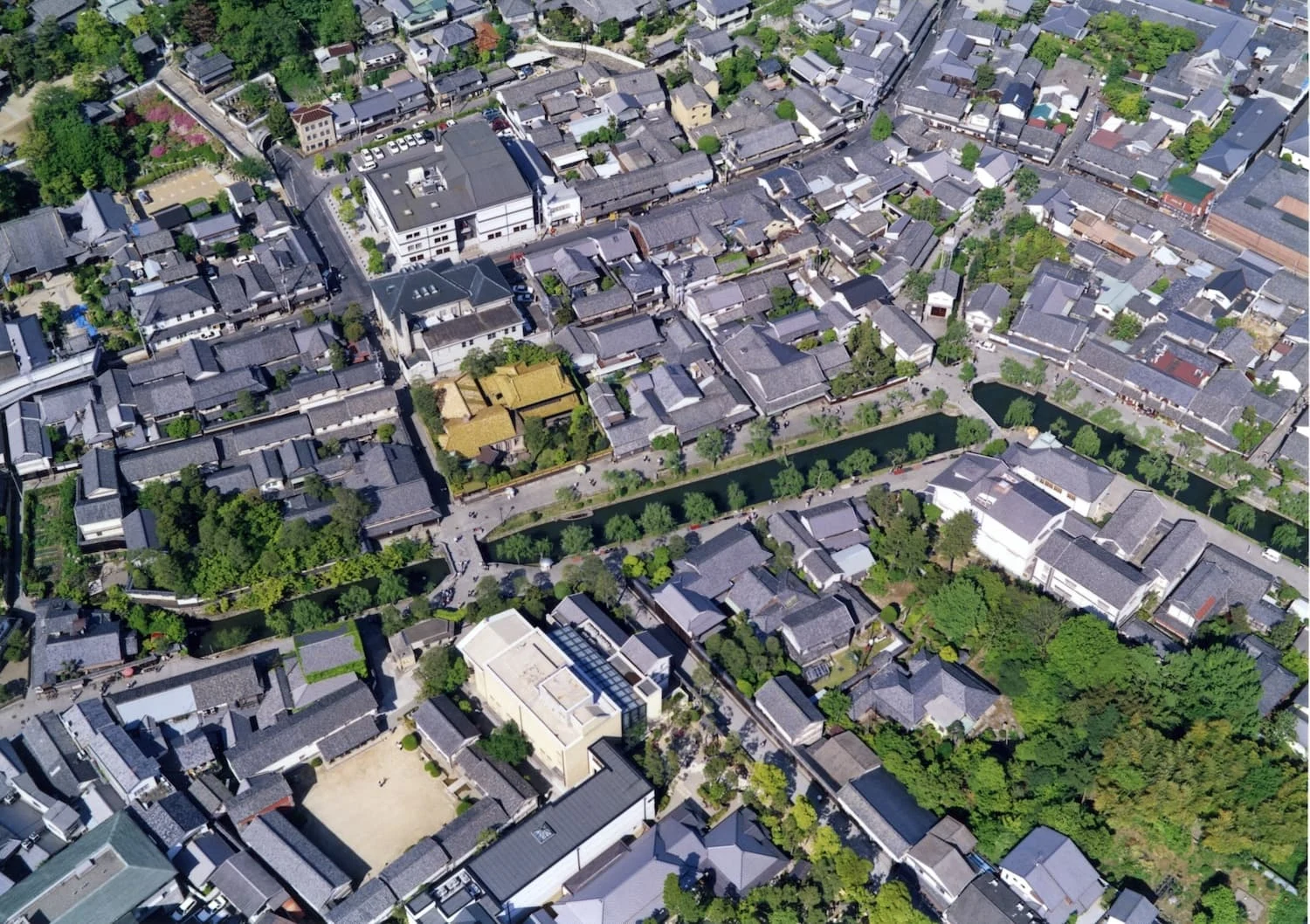
The Bikan Historical Area is a place that conveys the townscape harmonizing white-walled residences and Western-style buildings that have remained since the Edo period to the present day.
Townscapes like the Bikan Historical Area were common in pre-war Japan, but gradually disappeared during the post-war period of rapid economic growth. In 1968, a pioneering move, Kurashiki established the "Kurashiki City Traditional Scenic Preservation Ordinance," choosing to preserve this townscape.
However, the Bikan Historical Area is not a "town frozen in time." It is a "living town" that incorporates new elements in line with the times, not just focusing on tourism, but also where residents live.
"Learn about the history of the Bikan Historical Area" is based on the reports and slide materials presented by Yamamoto Taro from the Kurashiki City Historical Materials Development Office and Fujiwara Noriyoshi from the Kurashiki City Board of Education during a study session held by the voluntary organization "Kono Machi Jikan Ryokou Club" in the fiscal year 2025, and it was compiled by the representative director of the Haretoco General Incorporated Association, Toi Kengo, based on discussions among club members.
This was created with the hope that through learning based on research results obtained by interpreting historical materials, it will serve as a foundation for understanding the historical facts and traditions related to the Bikan Historical Area.
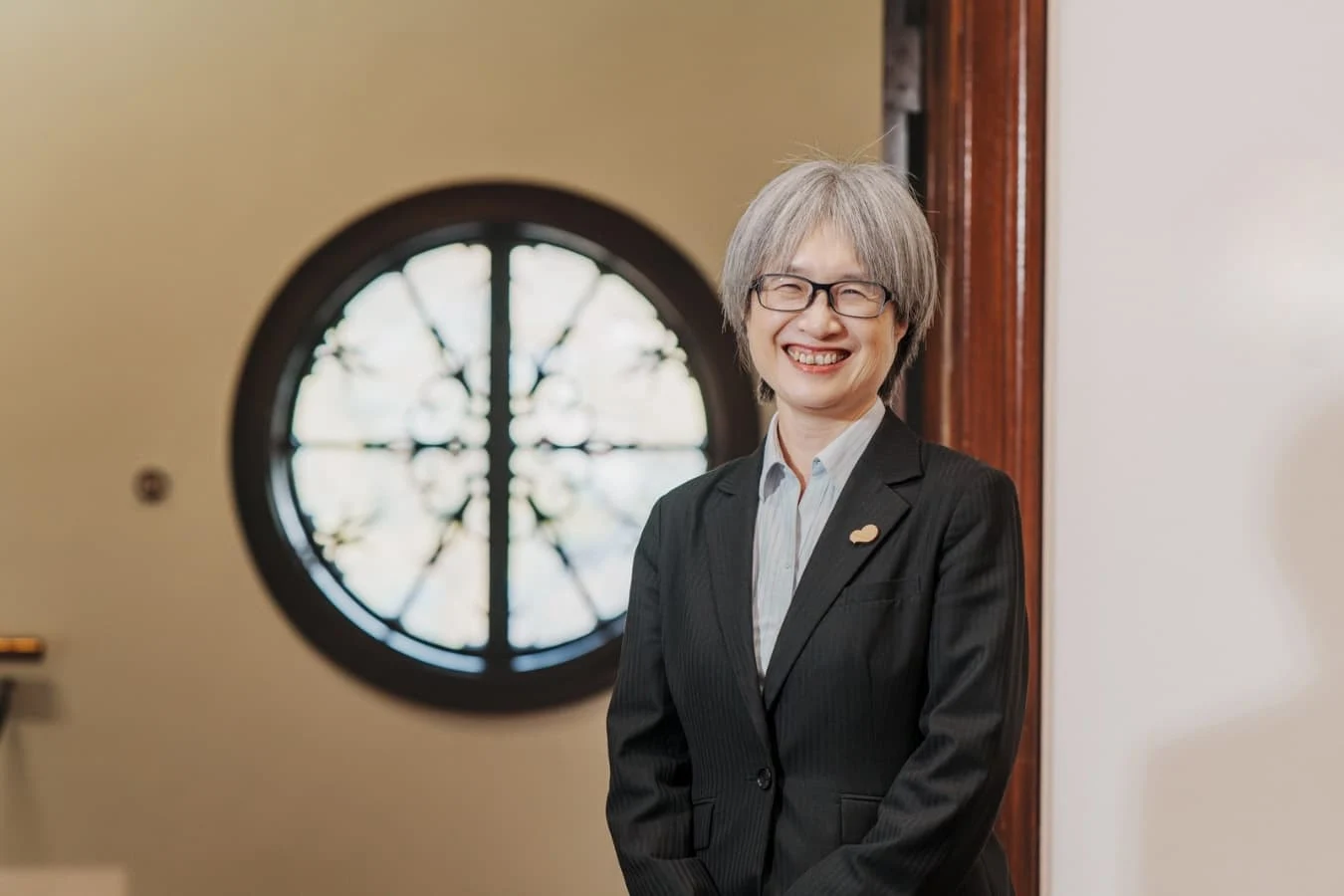
Message from Akane Ohara, Representative of the "Kono Machi Jikan Ryokou Club"
The Bikan Historical Area has nurtured a rich story unique to the area as the lives and activities of people have layered over time like geological strata.
Behind its captivating narratives lie various traditions and interpretations.
We believe that rather than denying these, carefully tracing the historical facts that form the foundation of the stories can provide clues to savor this land more deeply.
Our hope is to share the accumulation of facts in a way that as many people as possible can access, and that it will assist in the new creations and activities of those who love this place.
We hope this article will enrich each of your connections with the Bikan Historical Area.
Definition of the Bikan Historical Area
In this article, the "Bikan Historical Area" is defined as the area designated by the national government as the Kurashiki River Traditional Building Preservation District (Type 1 Scenic Area) (the area with a blue background in the figure below).
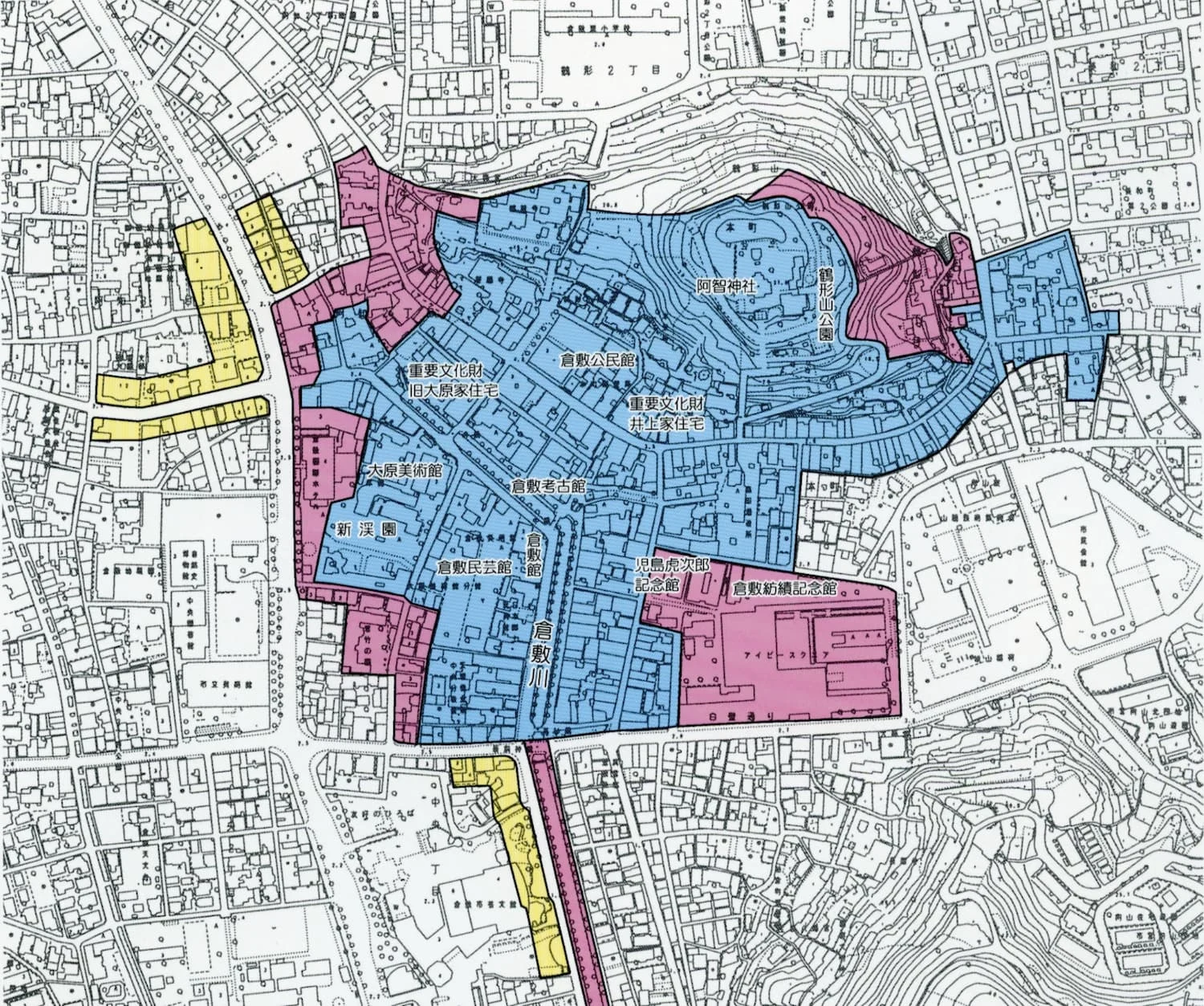
Blue: Traditional Building Preservation District 15.0ha
Pink: Traditional Scenic Area 6.0ha
Yellow: Background Area 2.2ha
(Image provided by Kurashiki City Board of Education)
In Kurashiki, from around 1965, voices grew louder calling for rules to protect the historical townscape, leading to the establishment of the "Kurashiki City Traditional Scenic Preservation Ordinance" in 1968, the second of its kind in the country (the first being Kanazawa City's "Traditional Environment Preservation Ordinance") (enforced in 1969). This ordinance requires the mayor's consent for any changes to the exterior of buildings.
Subsequently, in 1975, a partial revision of the Cultural Properties Protection Act led to the establishment of the "Traditional Building Preservation District System." Furthermore, in 1978, the "Kurashiki City Traditional Building Preservation District Preservation Ordinance" was enacted (enforced in 1979), receiving designation as an Important Traditional Building Preservation District by the national government.
Origin of the Name "Kurashiki"
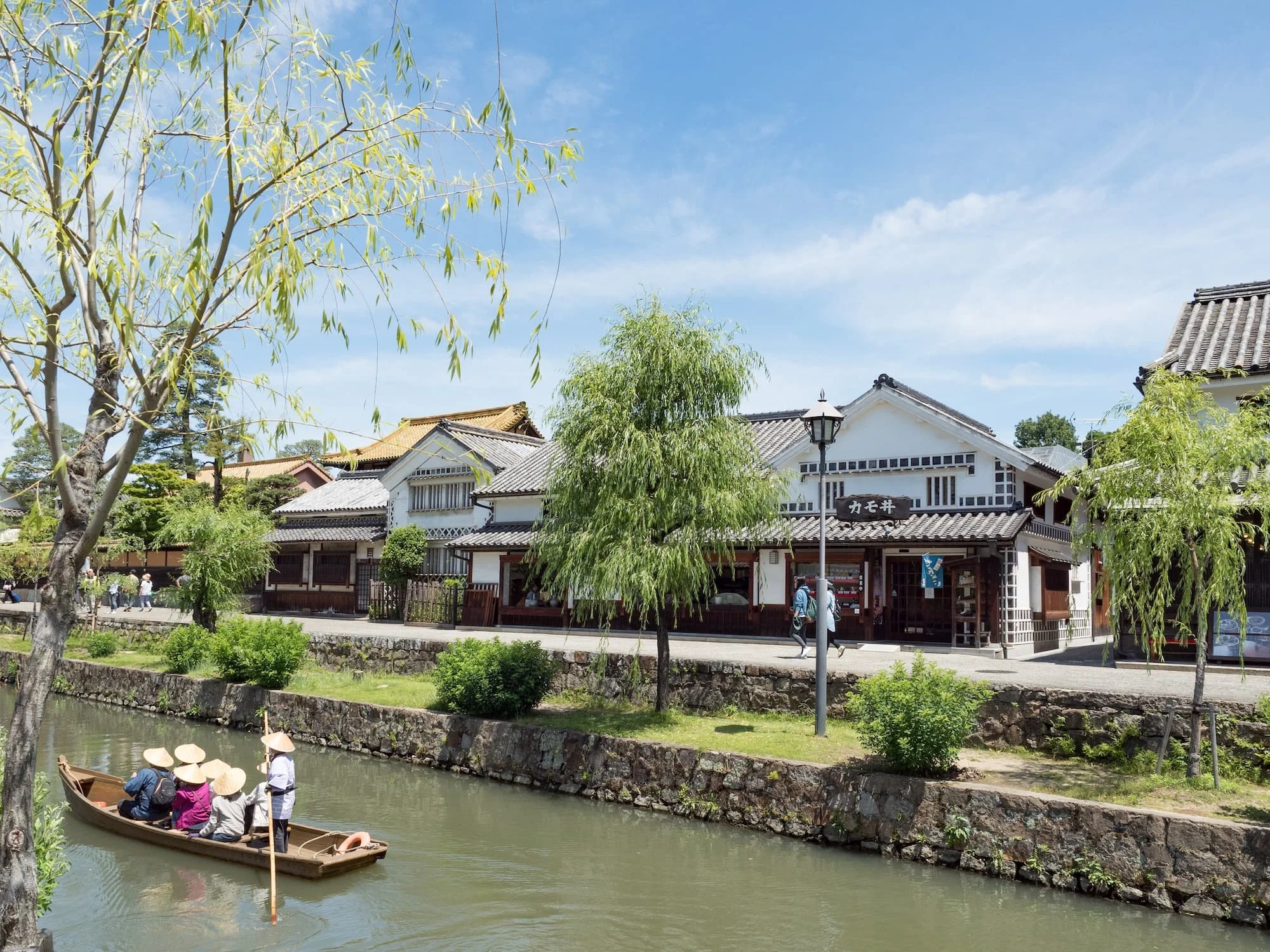
"Kurashiki" is an abbreviation of "Kurashiki-chi," meaning a distribution center for goods temporarily stored when transporting taxes and other items from estates (imagine a modern "warehouse district"). Therefore, it is not a name or term with a special meaning, but rather a "term."
The term "Kurashiki" existed in various places in western Japan during ancient and medieval times, and one of the famous places called "Kurashiki" is present-day Onomichi, which was established for the shipment of taxes from the Ota estate.
As a place name, Kurashiki exists as an old name for the current Kurashiki City and Hayashino in Mimasaka City, Okayama Prefecture, and the name "Kurashiki" referring to the area around present-day Kurashiki City dates back to the late 16th century.
History of the Bikan Historical Area
The current area around the Bikan Historical Area first appears in history in the late 16th century.
From the Ice Age to the 15th Century
It is said that the area around the Bikan Historical Area was land during the Ice Age. The sea level was about 100 meters lower than it is now, resulting in a land connection between the continent and the Japanese archipelago, making the Seto Inland Sea also land. Therefore, it is believed that the Naumann elephant also inhabited the area, and fossils of Naumann elephants have actually been retrieved from the seabed of the Seto Inland Sea.
During this time, humans also seem to have moved to the Japanese archipelago in search of warm places. Since the area around the Bikan Historical Area was also land, it is possible that people lived there. At that time, humans were moving in search of warm places and food, so the concept of "settlement" was weak, and no traces of their lives have been found.
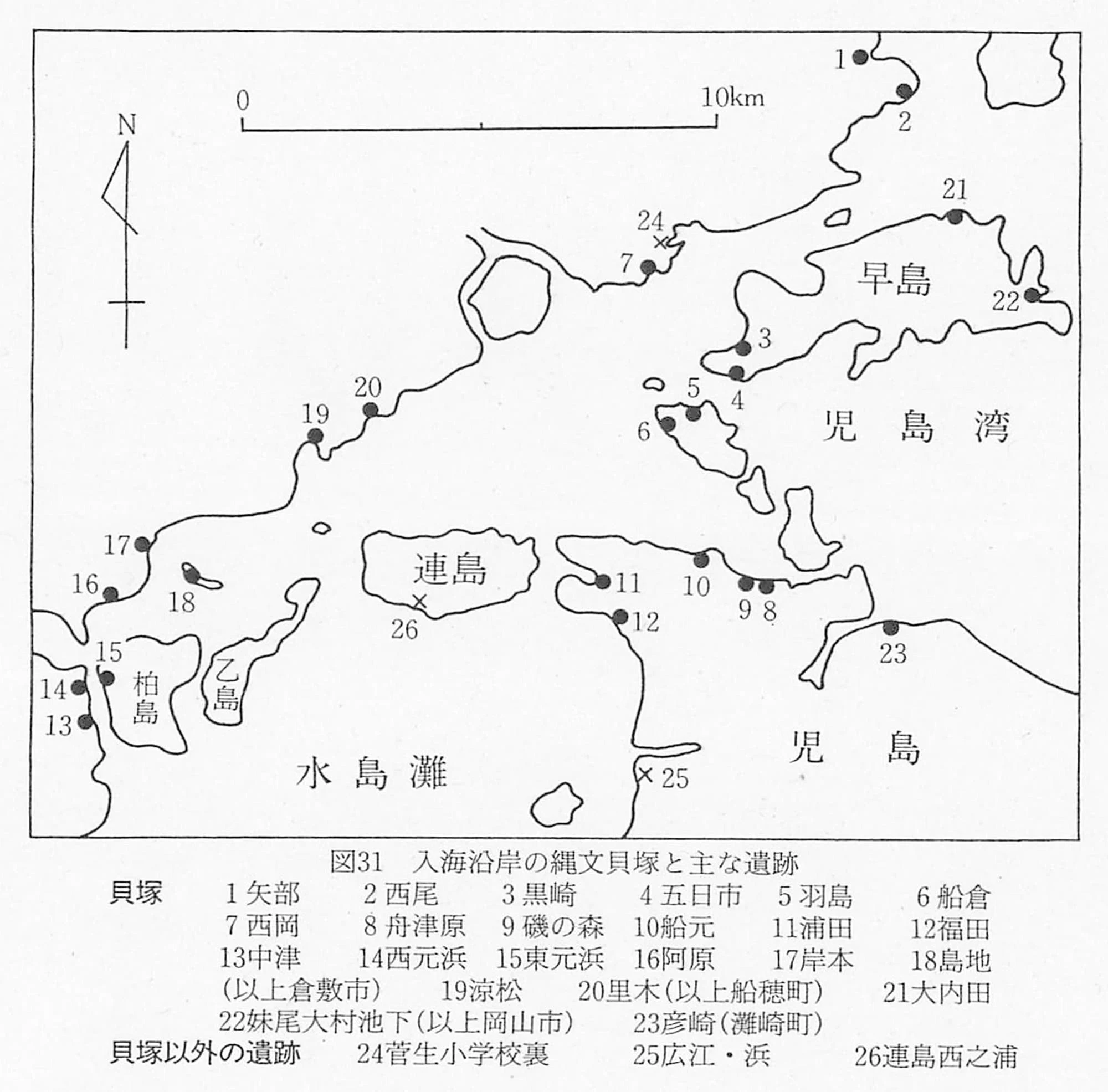
(Quoted from "Newly Revised History of Kurashiki City," Volume 1, page 59, written by Maekabe Tadahiko and Maekabe Yoshiko)
About 6,000 years ago, during the Jomon period, the Ice Age ended, and the land that had been above water became sea. The area around the Bikan Historical Area was similar, but areas currently named "mountain," such as Tsurugata Mountain and Mukaiyama, and areas named "island," such as Hashima, were islands at that time, where Jomon people are believed to have lived.
Evidence of this can be found in the remains of the Hashima Shell Mound and the Funakura Shell Mound, particularly the Funakura Shell Mound, which has deep strata, suggesting that relatively many people lived there for a long time.
Subsequently, from the Heian period to the Kamakura period, many estates (lands privately controlled by nobles, temples, and influential figures) were established throughout the region, and the northern part of present-day Kurashiki City also became an estate. During this time, the political center was in Kyoto, so the surrounding area developed gradually as a "place at a reasonable distance from Kyoto." In present-day Nishiachi, Kurashiki City, there is Henjyo-in Temple, which is said to have been founded during the Heian period, indicating that land was gradually increasing.
Notably, the most famous events in the late Heian period around Kurashiki are the battles of Fujido and Mizushima during the Genpei War.
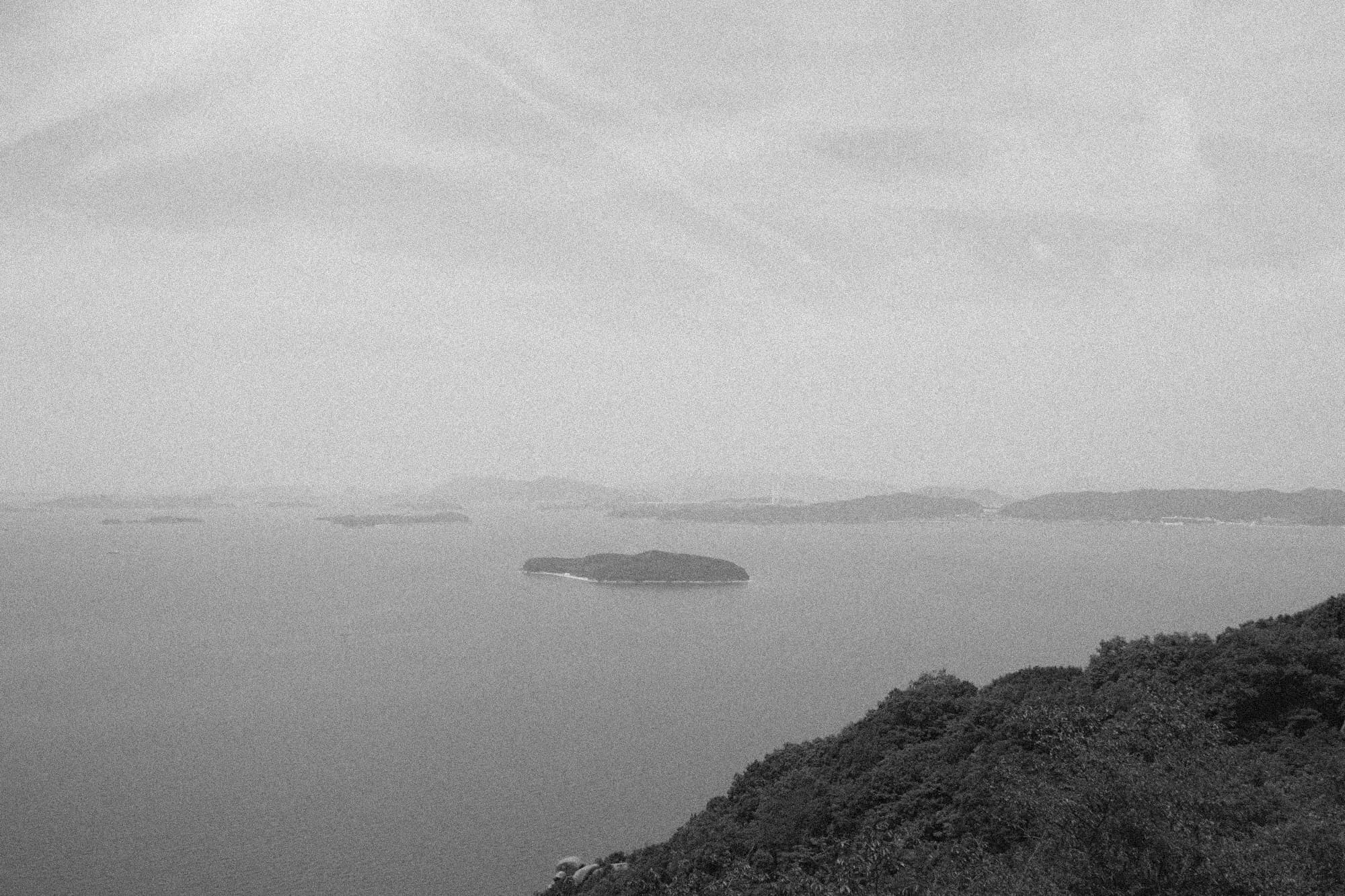
15th Century
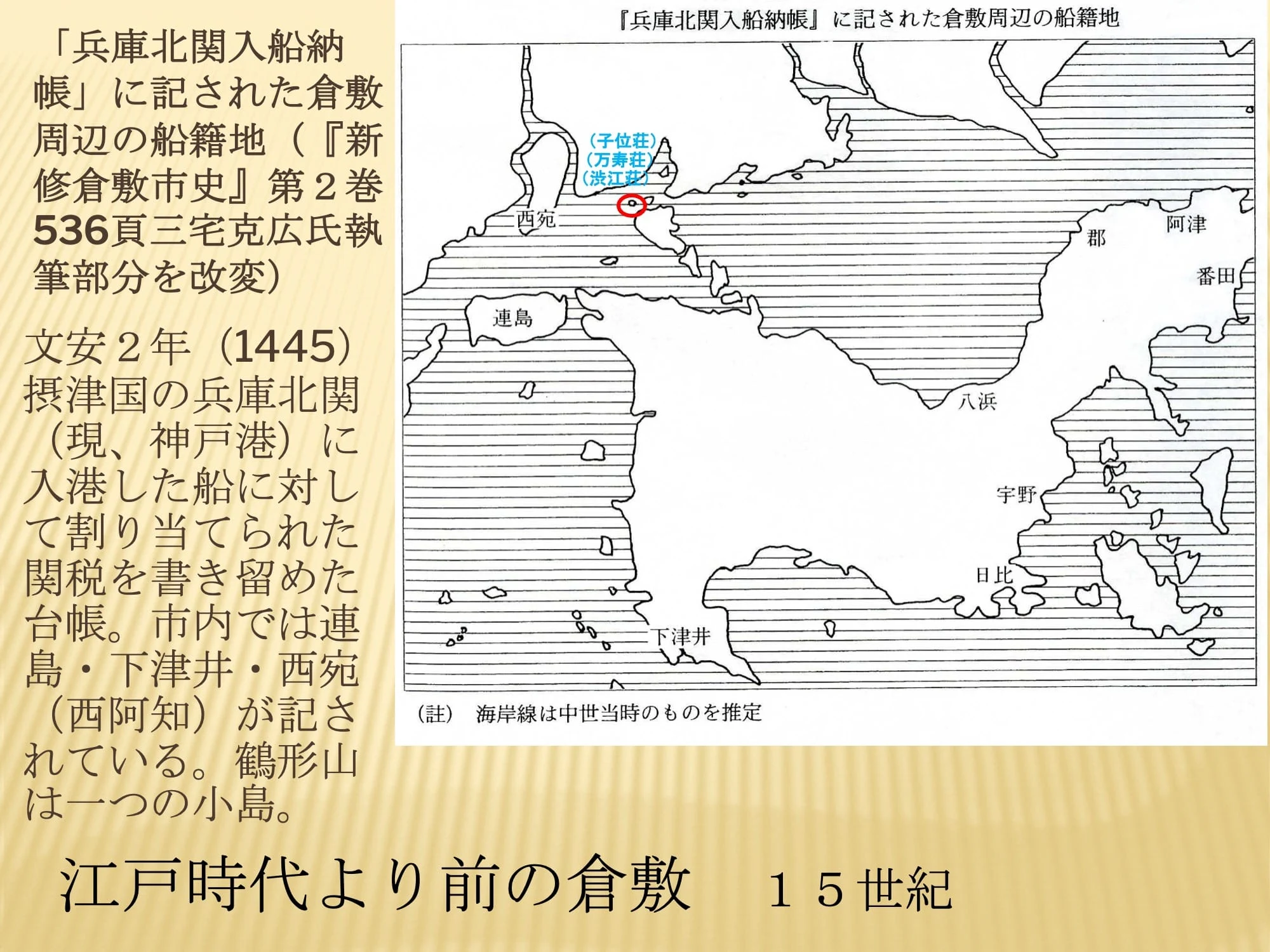
Even in the 15th century (1400s), the area around the Bikan Historical Area was still sea. However, due to floods from the Higashi Takahashi River (now a discontinued river, which existed before the river improvement works carried out from the Meiji to Taisho periods), sediment accumulated, gradually expanding land in the northern part of the Bikan Historical Area.
People seeking new lands began to settle on the expanded land.
One might think, with a modern perspective, "Wouldn't it be nice to live in new land along the coast?" However, from a contemporary viewpoint, inland areas are more convenient and livable, but until the Meiji period, the center of logistics was the sea, not the land.
As a result, people living in coastal towns and islands became prosperous through trade. Before the advent of railways in the Meiji period, water transport was the mainstream, so it is important to view the land from the sea rather than the sea from the land.
From this perspective, it can be said that Kojima and Tsurajima were prosperous regions in Kurashiki.
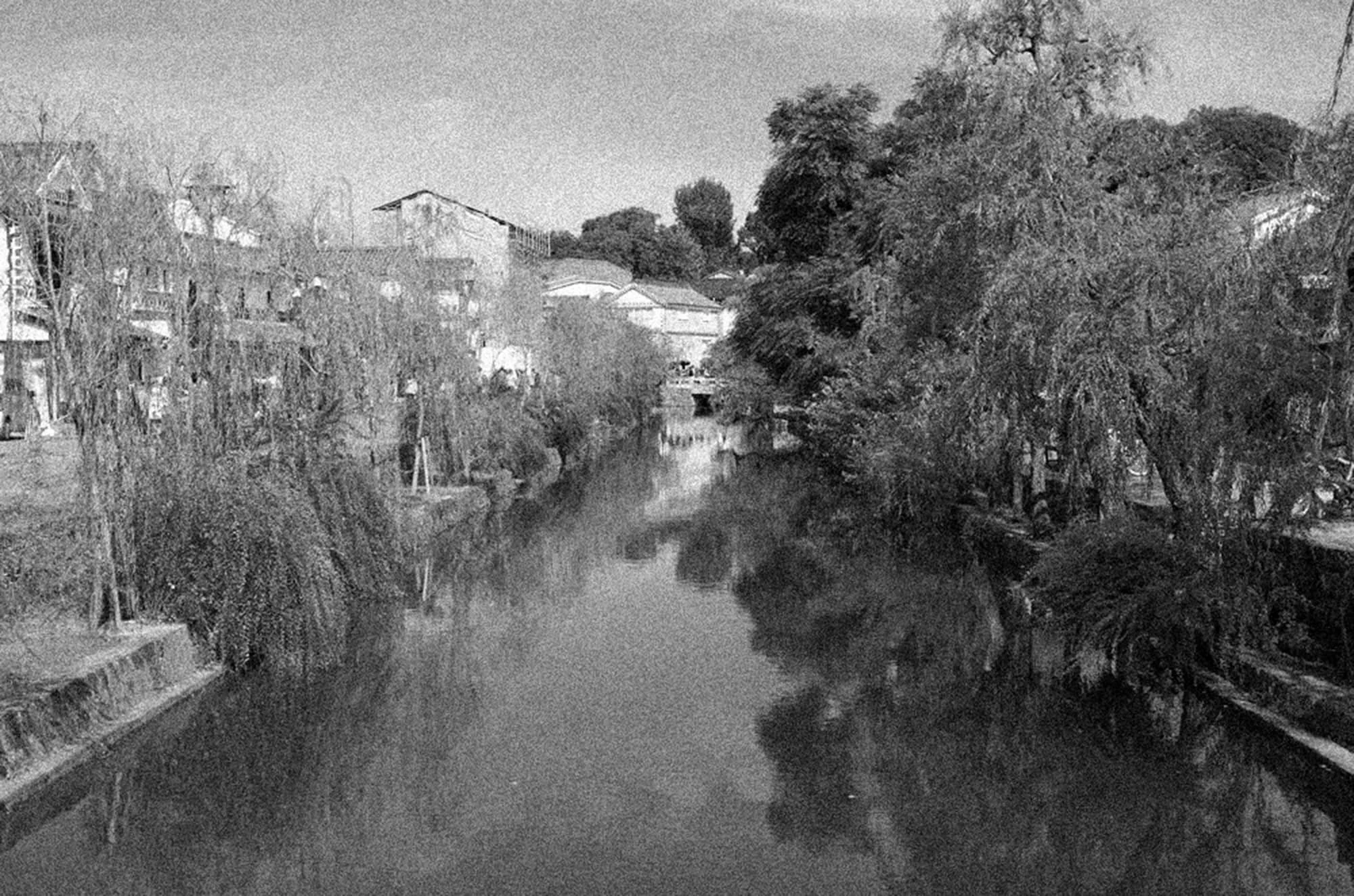
Late 16th Century
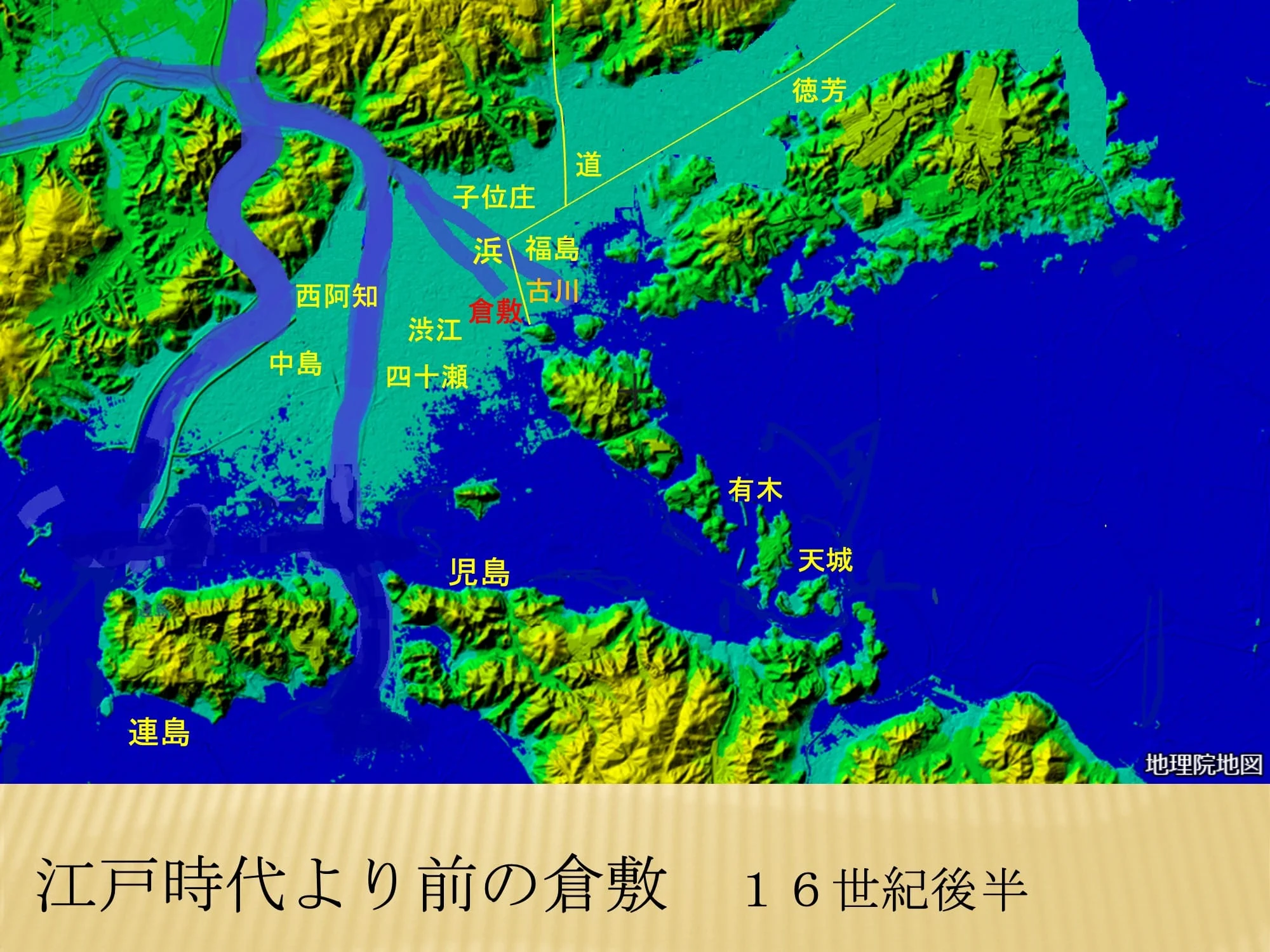
As the 16th century progressed, the alluvial land that had expanded due to sediment accumulation reached the vicinity of the Bikan Historical Area.
The land in Kurashiki would later increase dramatically due to land reclamation, but the area around the Bikan Historical Area was not reclaimed land but alluvial land (the name of Hamacho in Kurashiki City is thought to be a remnant from the time it was by the sea).
※ Currently, areas like Nitta and Sasaoki in Kurashiki City are reclaimed land.
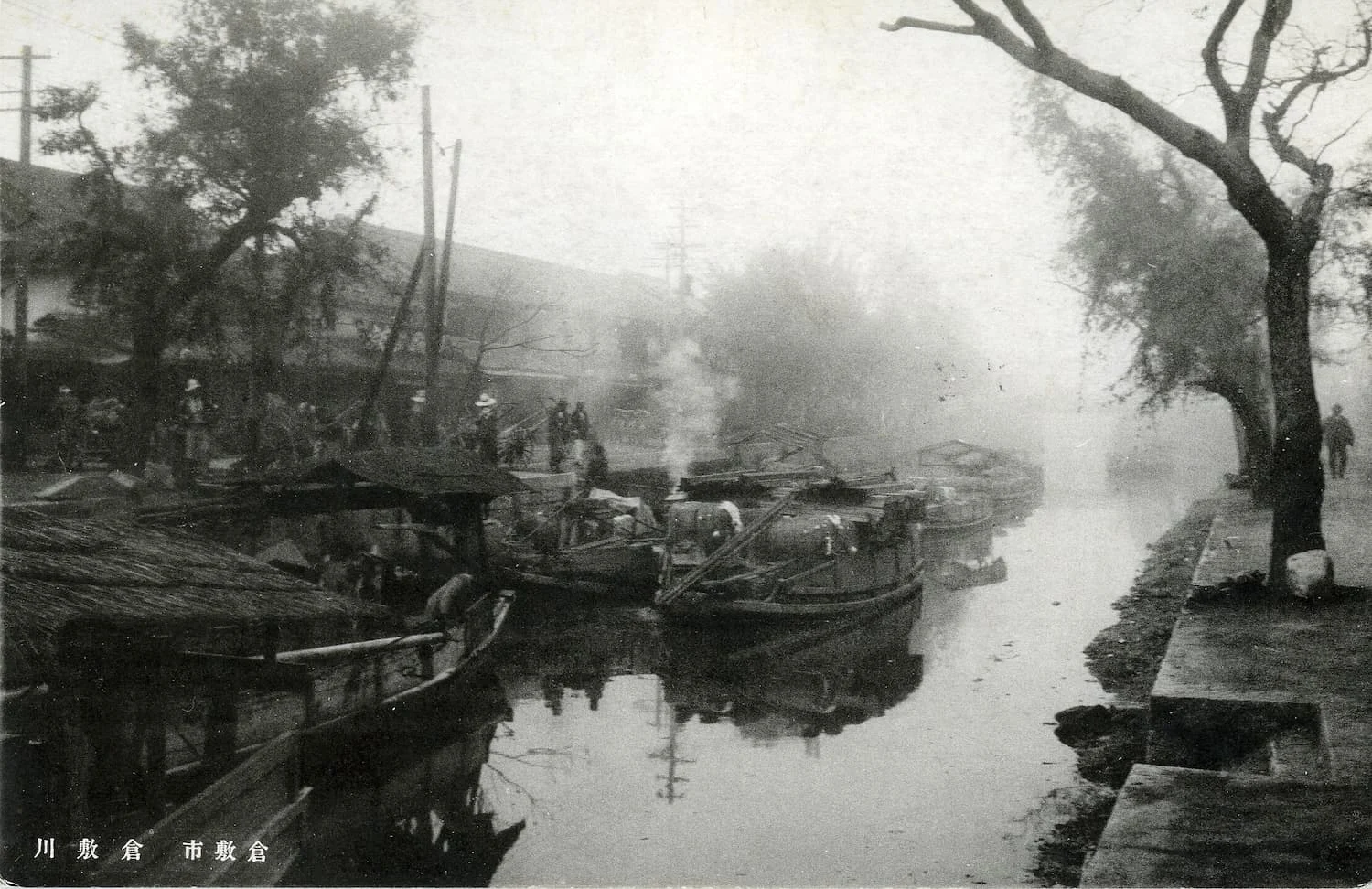
Because the Bikan Historical Area was close to the sea, it began to prosper as a port.
From the late 16th century, the town began to gradually take shape. Since it was a port, a market was first established in what is now Honmachi. From there, the town expanded.
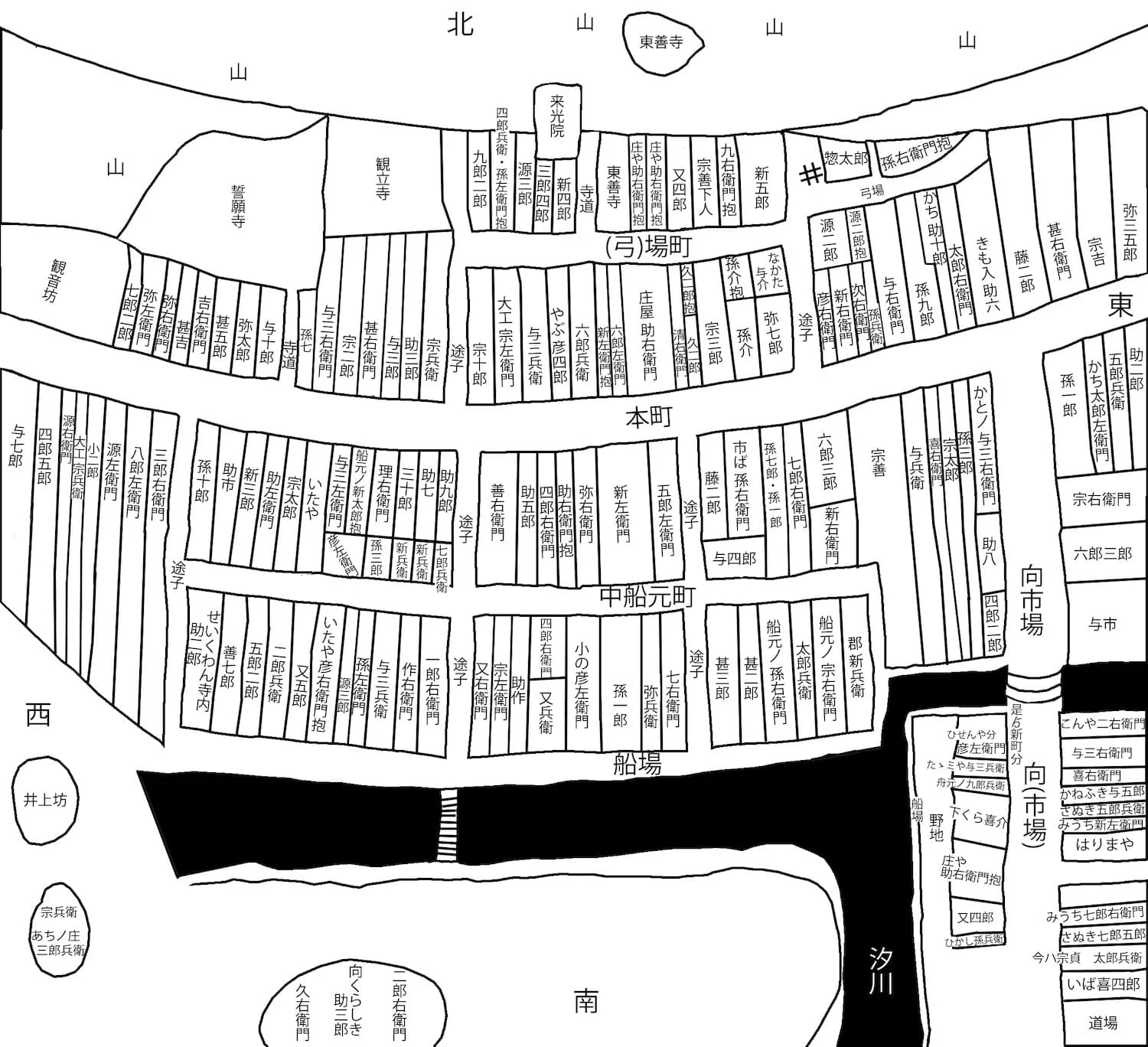
(Image provided by Kurashiki City Historical Materials Maintenance Office)
After the water siege of Bitchu Takamatsu Castle, most of Bitchu was under the control of the Mori and Ukita clans, and Kurashiki was part of the Ukita domain.
Early Edo Period
Until the 16th century, Kurashiki was primarily a port, and there was hardly any farmland.
Later, during the Edo period, agriculture became active, and the area south of the Bikan Historical Area was transformed from sea to land through reclamation, allowing Kurashiki to develop as a distribution center for goods.
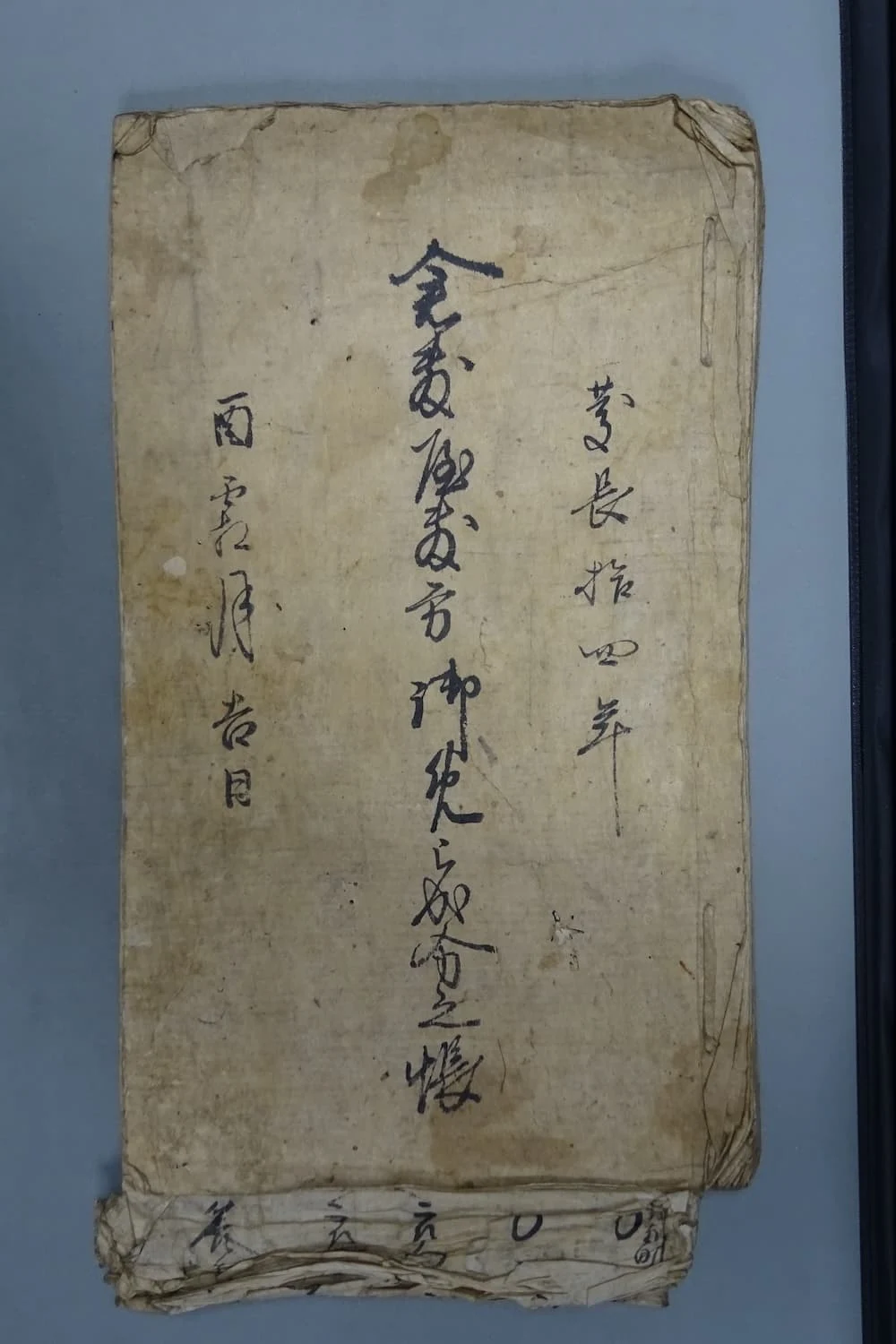
By this time, the name "Kurashiki" was also recorded in local documents.
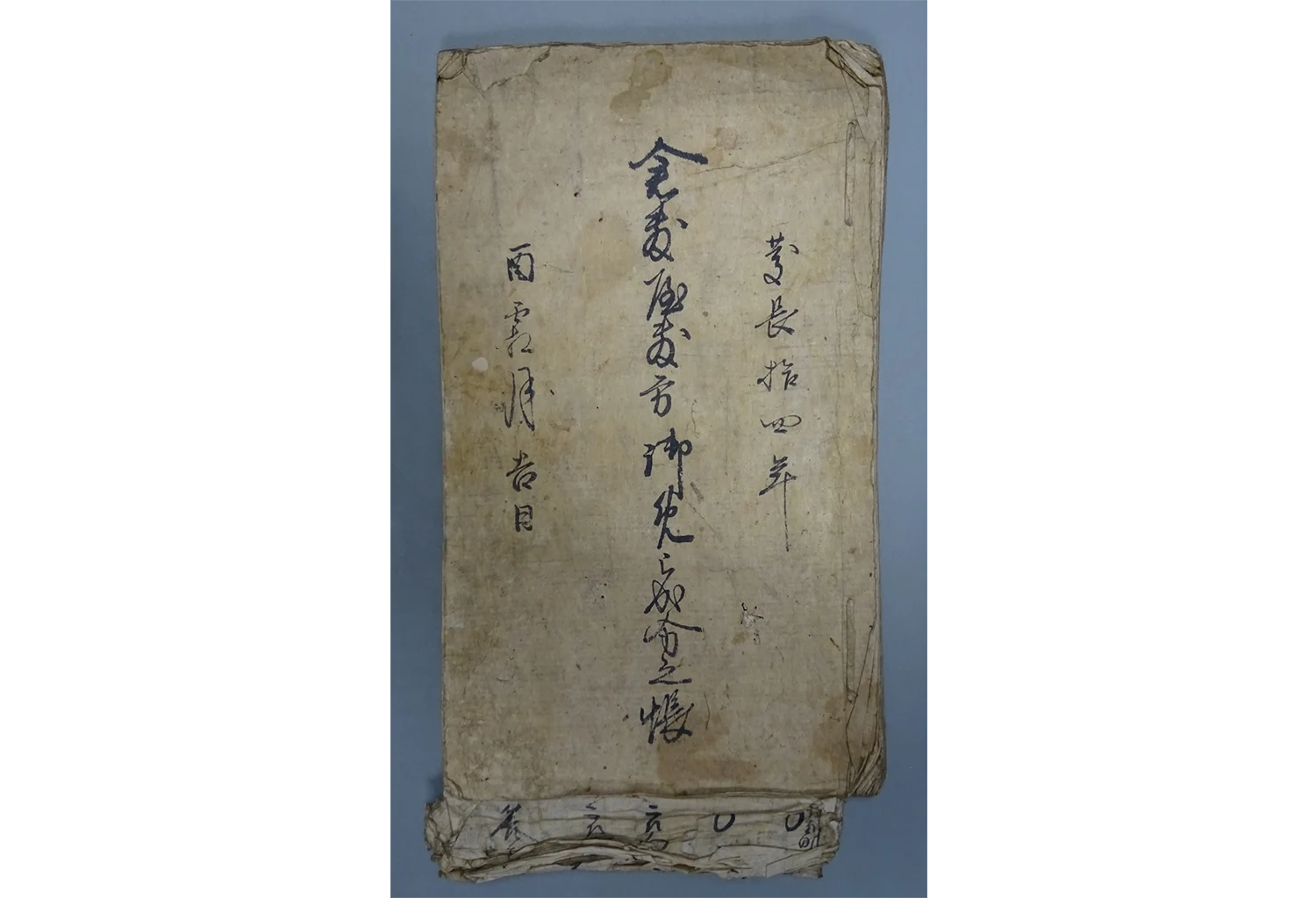
(Image provided by Kurashiki City Historical Materials Maintenance Office)
After the decisive battle of Sekigahara, the Mori and Ukita clans, which had controlled most of Bitchu, including Kurashiki, were expelled from Bitchu. Tokugawa Ieyasu, who won the battle of Sekigahara and established hegemony, appointed "Kuni Bugyo" in 11 provinces, including Bitchu (mainly in the Kinai region).
The "Kuni Bugyo" was a position established by Tokugawa Ieyasu to manage the lands of the Toyotomi family during the Edo period. Immediately after the battle of Sekigahara, the Toyotomi family still existed, and the Edo shogunate's system had not yet been established, which is why this arrangement was made.
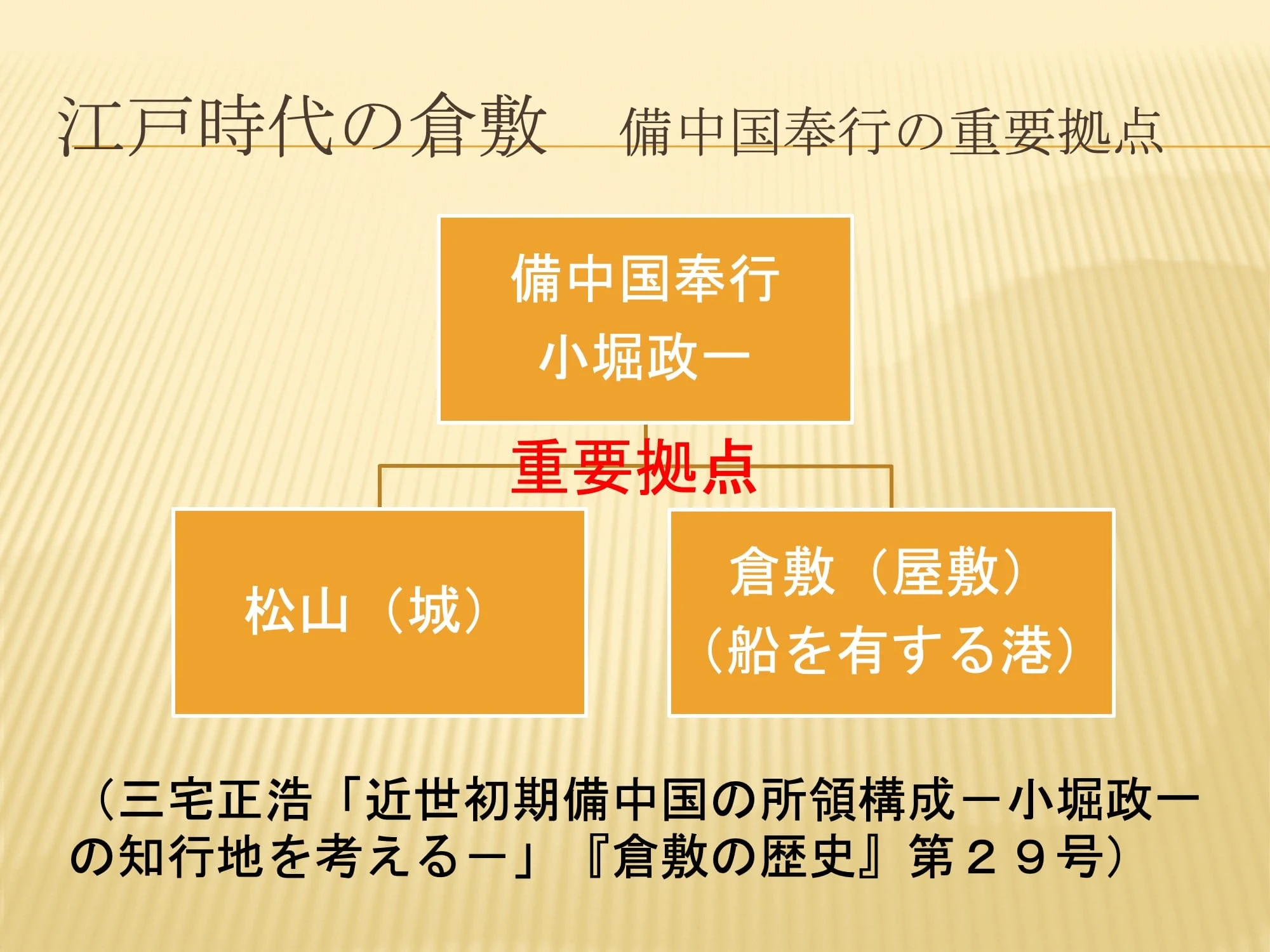
The person dispatched as the Bitchu Kuni Bugyo was Kobori Masatsugu, and after his sudden death in 1604, Kobori Masakazu succeeded the family and defended Bitchu Matsuyama Castle. The important bases of the Bitchu Kuni Bugyo were Matsuyama, where the castle was located, and Kurashiki, which had a port.
It should be noted that Kobori Masakazu is generally known as Kobori Enshuu, and he is historically remembered as a garden designer and tea master, including for the Katsura Imperial Villa.
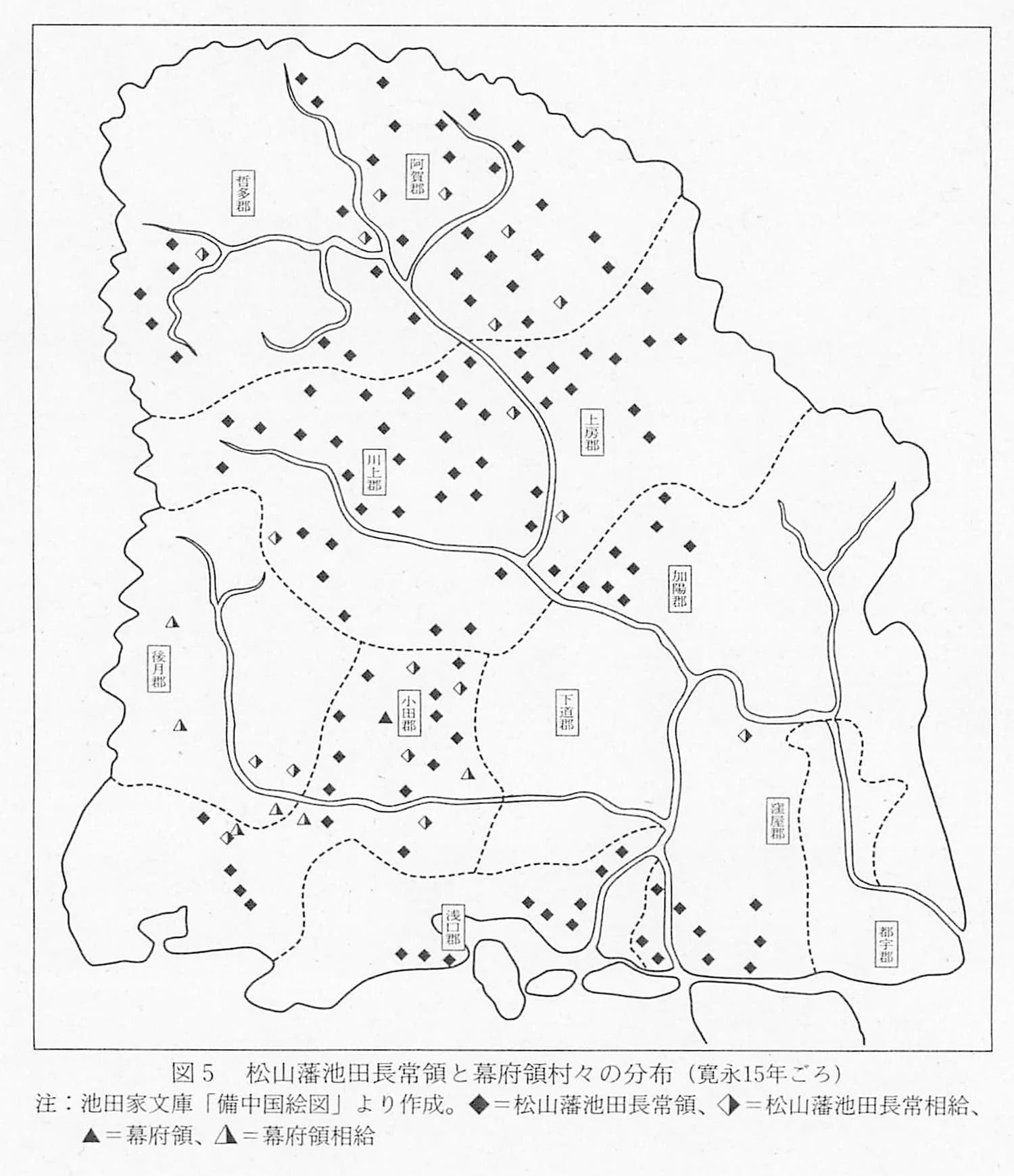
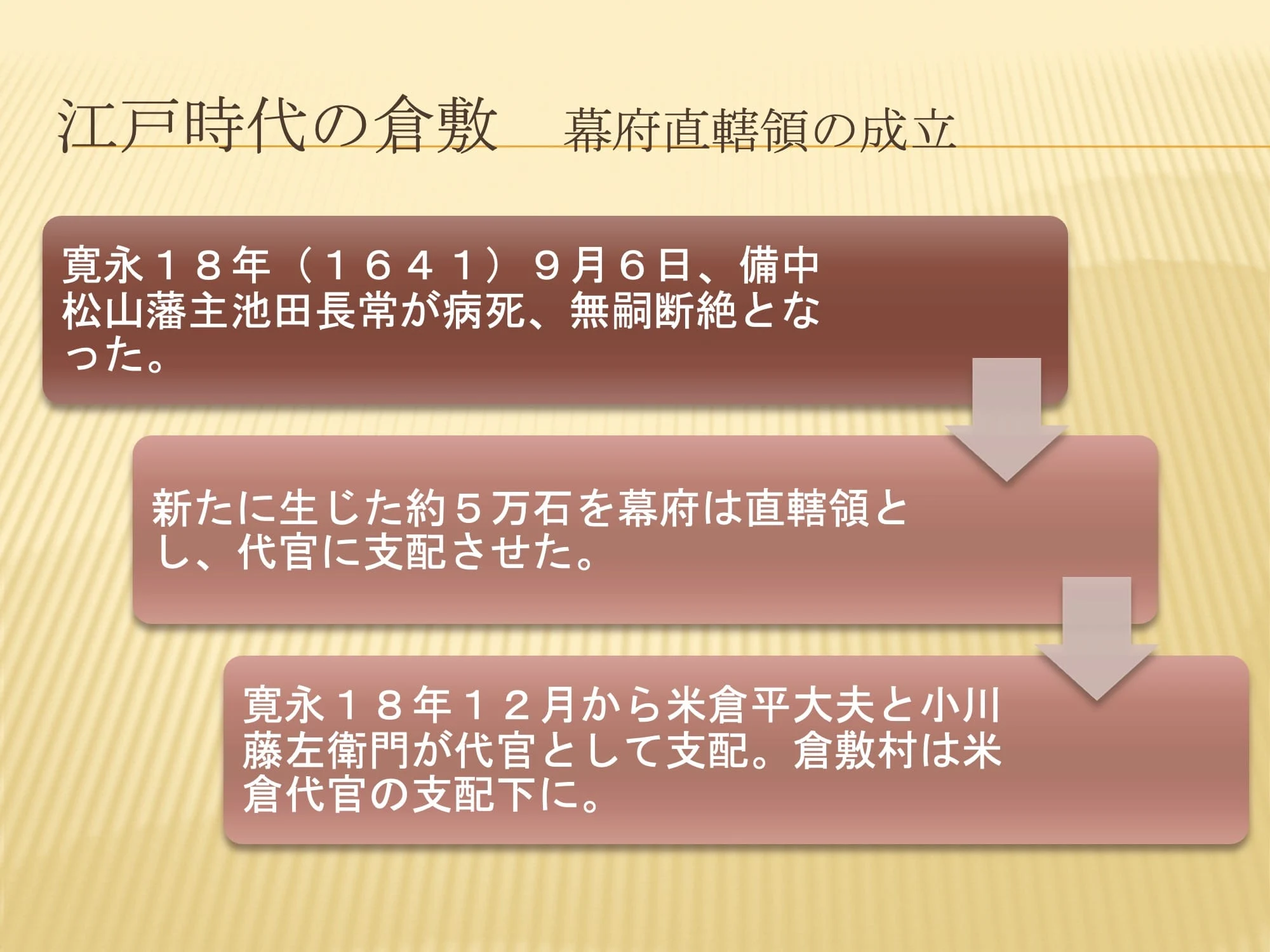
Subsequently, the era of the Ikeda clan in Bitchu continued with Ikeda Nagayuki and Nagatsune, but in 1641, Ikeda Nagatsune passed away, resulting in a succession crisis (the head of the family died without an heir, leading to the dissolution of the family), and Kurashiki Village became a direct territory of the shogunate.
Edo Period (Directly Governed by the Shogunate)
From December 1641, Yonekura Heidayu and Ogawa Tozaemon were dispatched as officials, and Kurashiki Village became a town governed by the shogunate's direct officials. The so-called "Tenryo town Kurashiki" began here.
The term Tenryo is often introduced in modern times as something special, but it became a directly governed territory of the shogunate due to this background, not because it was chosen. The term Tenryo is also a colloquial name for the shogunate's directly governed territories.
It is believed that the shogunate had the intention of increasing its directly governed territories, but could not act forcefully due to the presence of daimyos, so they increased their directly governed territories in this manner when the timing was right.
Therefore, it is thought that the common people's perception at the time was that there was no sense of being "chosen" or that "Tenryo is amazing." The narrative that Tenryo was something special began after the Showa era, when it became associated with tourism keywords.
However, compared to the "castle towns" governed by daimyos, there may have been a freer atmosphere. This is because there were no samurai or "buke-yashiki" (samurai residences) in the town, and it was not a town serving samurai.
Management of Kurashiki Village
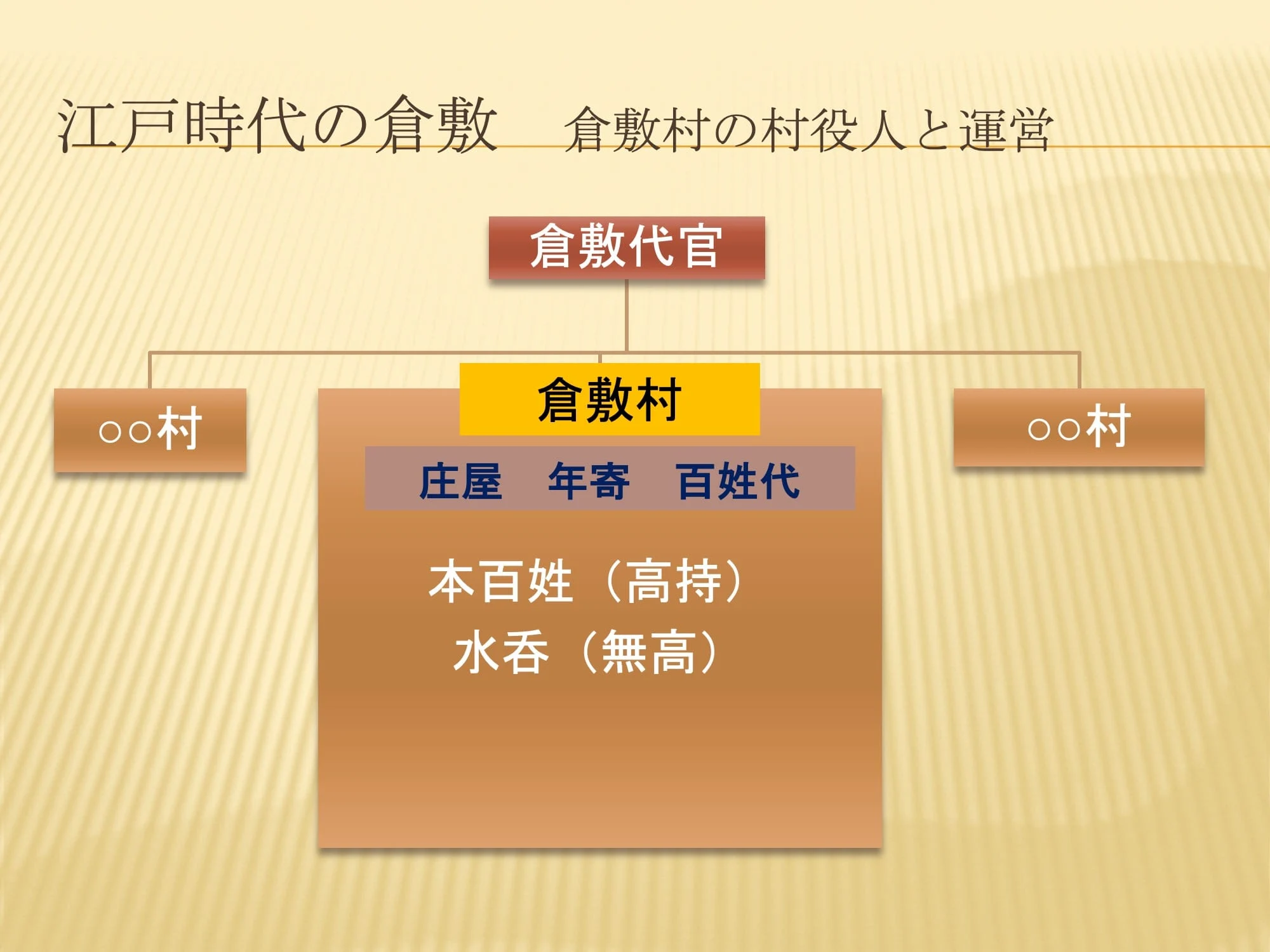
As a directly governed territory of the shogunate, Kurashiki Village was managed by village officials.
The Kurashiki official was a samurai, but in modern terms, he was like a "bureaucrat dispatched from Tokyo." It is believed that they had no choice but to have local influential figures share the governance of the shogunate's territory.
From the early Edo period, the management of the village was undertaken by old families known as "Koroku." In the early Edo period, Koroku had many leased lands and houses, becoming influential merchants engaged in wholesale and brewing industries.
When hearing that merchants managed Kurashiki Village as village officials, some may associate it with the Edo period's class system of "samurai, farmers, artisans, and merchants" and have doubts. Indeed, the discourse of "samurai, farmers, artisans, and merchants" exists, but the reality was not so simple.
Currently, there is a perspective that distinguishes between the ruling class (samurai, imperial family, nobles, upper-ranking monks, and priests) and the ruled class (peasants, artisans, and townspeople), organized into groups such as samurai's vassals, peasant villages, townspeople's towns, and artisan guilds, with individuals positioned through their households or groups.
For example, those living in castle towns were townspeople, while those living in villages were peasants. Among peasants, there were various types, such as those engaged in agriculture and those in trade. It is necessary to consider class and occupation separately.
Kurashiki Village is a village.
Therefore, its members were classified as peasants regardless of their actual occupations, and Kurashiki Village became "a village of peasants, not merchants or townspeople."
Furthermore, Kurashiki Village was an area extending from the current JR Kurashiki Station to the vicinity of Kurashiki City Nitta (Nitta Junior High School), but the area around the current Bikan Historical Area was called "Suihoyashiki" (mariner's residence). It is said that Suihoyashiki was almost entirely composed of people engaged in trade.
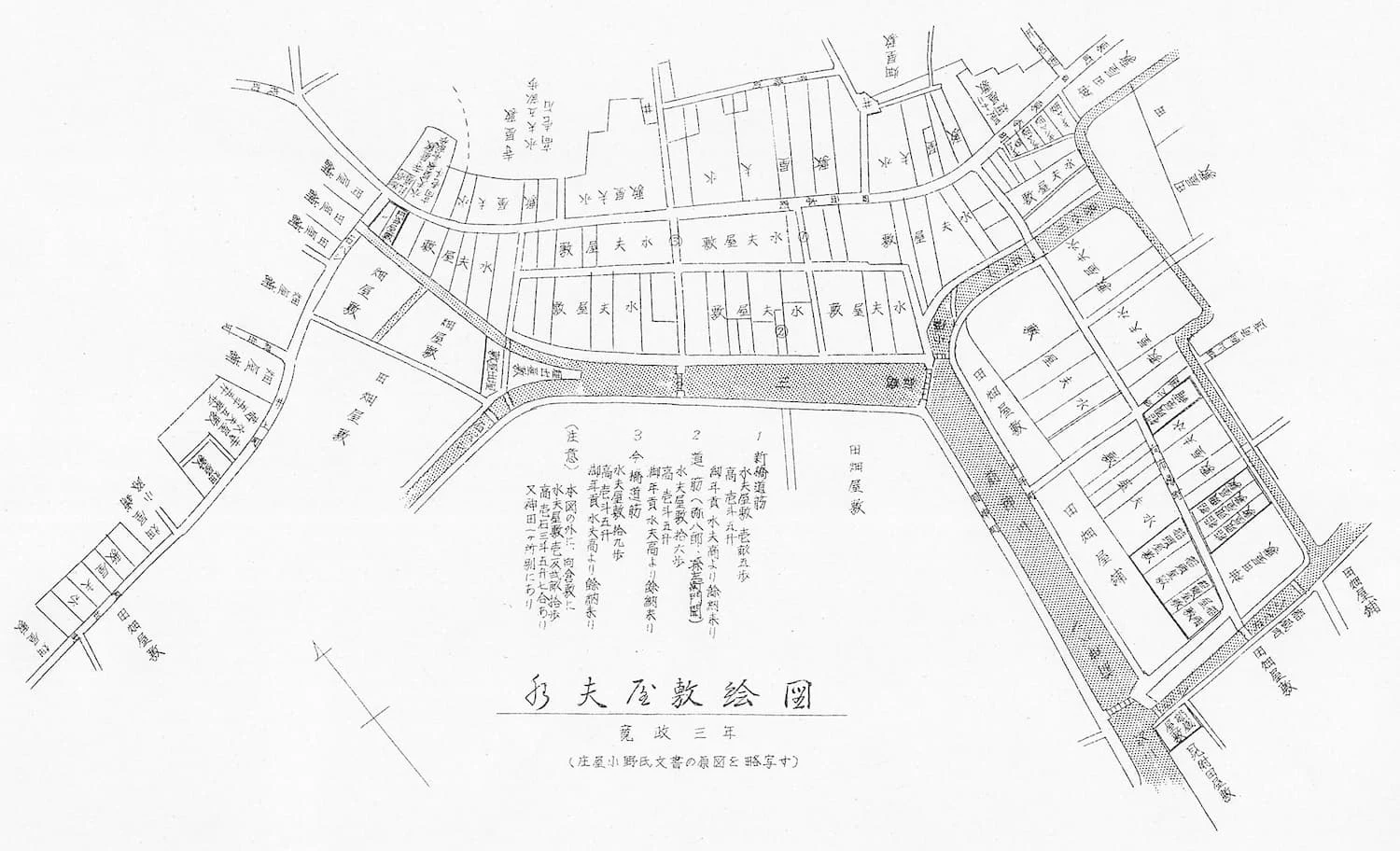
Life in Edo Period
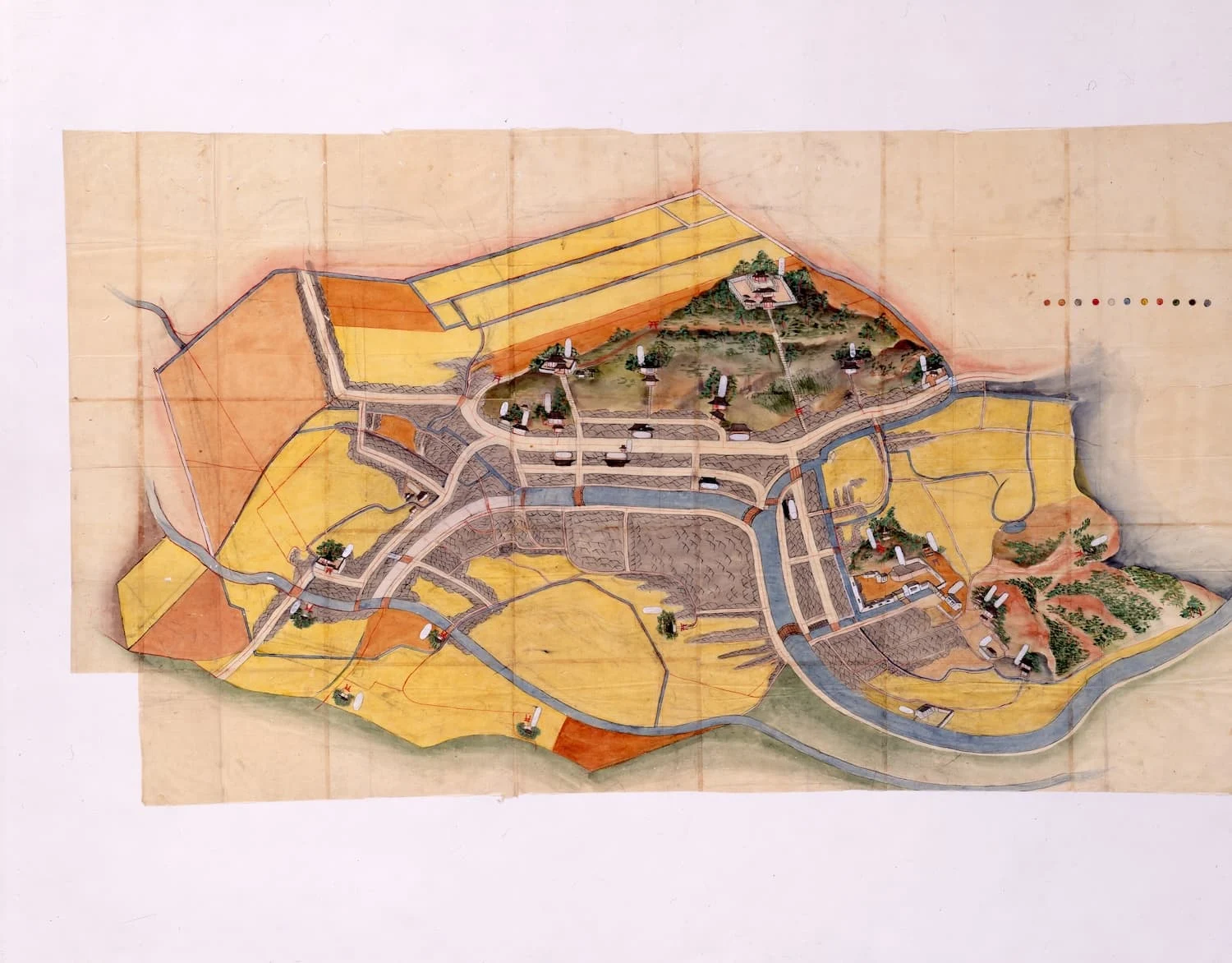
(Image provided by Kurashiki City Historical Materials Maintenance Office)
During the Edo period, Kurashiki Village had the Kurashiki official residence (completed in 1746) within the current Kurashiki Ivy Square, and many houses lined the current Bikan Historical Area.
In the early Edo period, Koroku was the center of village management, but new emerging merchants known as "Shinroku" also appeared. Thus, with the common people, rather than the ruling class such as officials, at the center of village management, unique initiatives began to take place.
| Koroku | Ono Family, Mizusawa Family, Inoue Family, Oka Family, etc. |
| Shinroku | Ueda Family, Ohashi Family, Ohara Family, Hara Family, Koyama Family, etc. |
The emergence of Shinroku later led to the "Shinroku-Koroku Disturbance."
Eventually, it became a village disturbance involving the peasants under them, and it is said that there was a long period during which they would not even speak to each other when they met.
In the Bunsei era (1818-1830), six members of Shinroku opposed the Koroku, who had monopolized the village officials, and it ultimately led to a lawsuit in Edo. As a result, village officials were elected for the first time, but initially, the Ueda Family from Shinroku and the Mizusawa Family from Koroku became the village heads, and the village was divided based on which side they supported.
This village disturbance was quite intense, and it can be said that there were many conflicts in Edo period Kurashiki Village.
On the other hand, in a world ruled by samurai, the number of samurai was small due to it being a directly governed territory, and the peasants played a central role in the village, which indicates that they were economically well-off.
The term "Shinroku" was used to refer to the group of six who sued the village head, but the terms Koroku and Shinroku were not used at the time and were likely named in later periods.
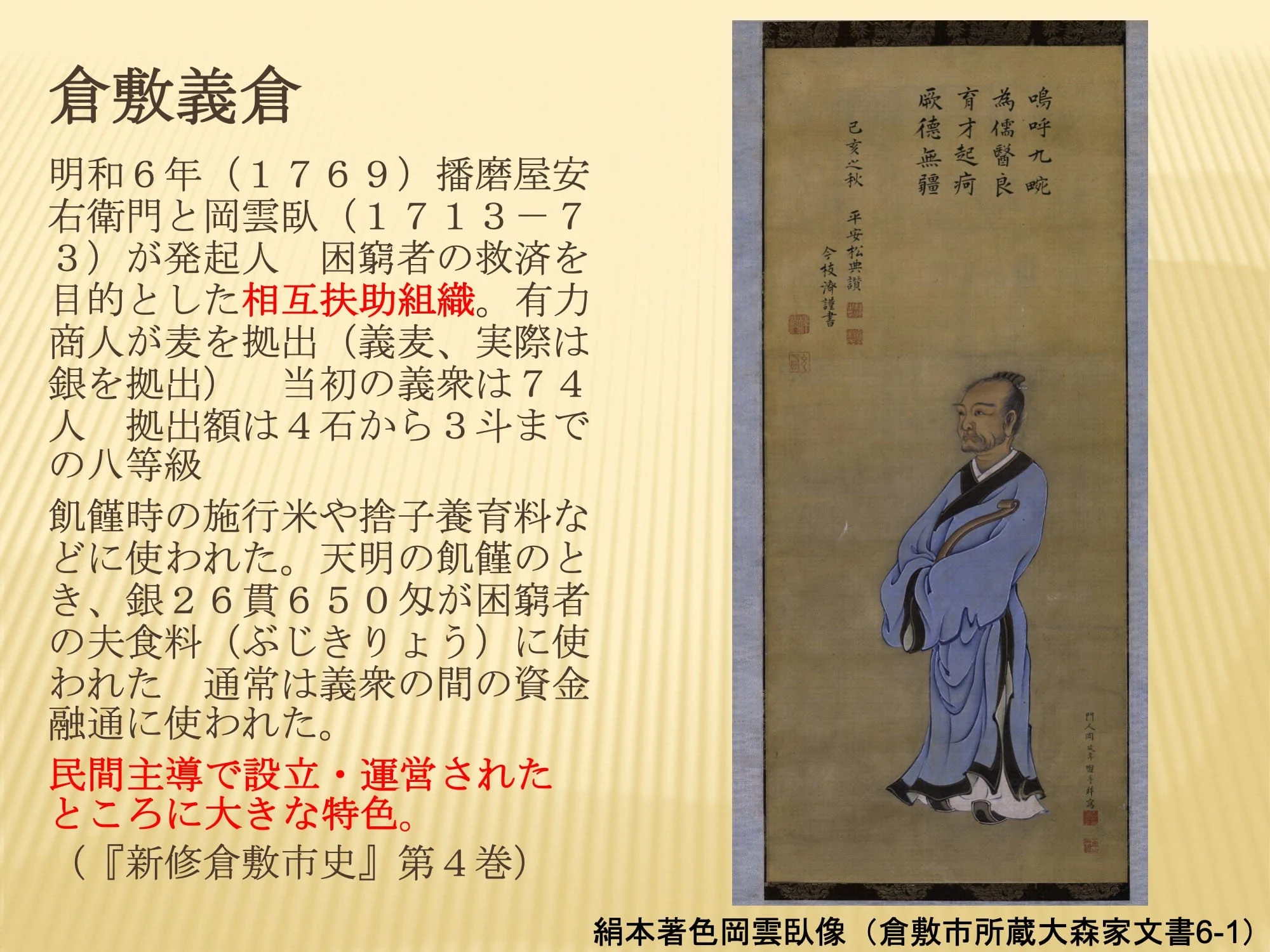
The mutual aid organization called Kurashiki Giso symbolizes the uniqueness of Kurashiki Village.
Kurashiki Giso is a welfare system that provides relief to those in need, similar to what we would consider today. The establishment and management of such a system by the private sector rather than the ruling class allows us to glimpse the common people's "affection for the town" in Kurashiki Village at that time.
Occupational Structure of Kurashiki in the Edo Period
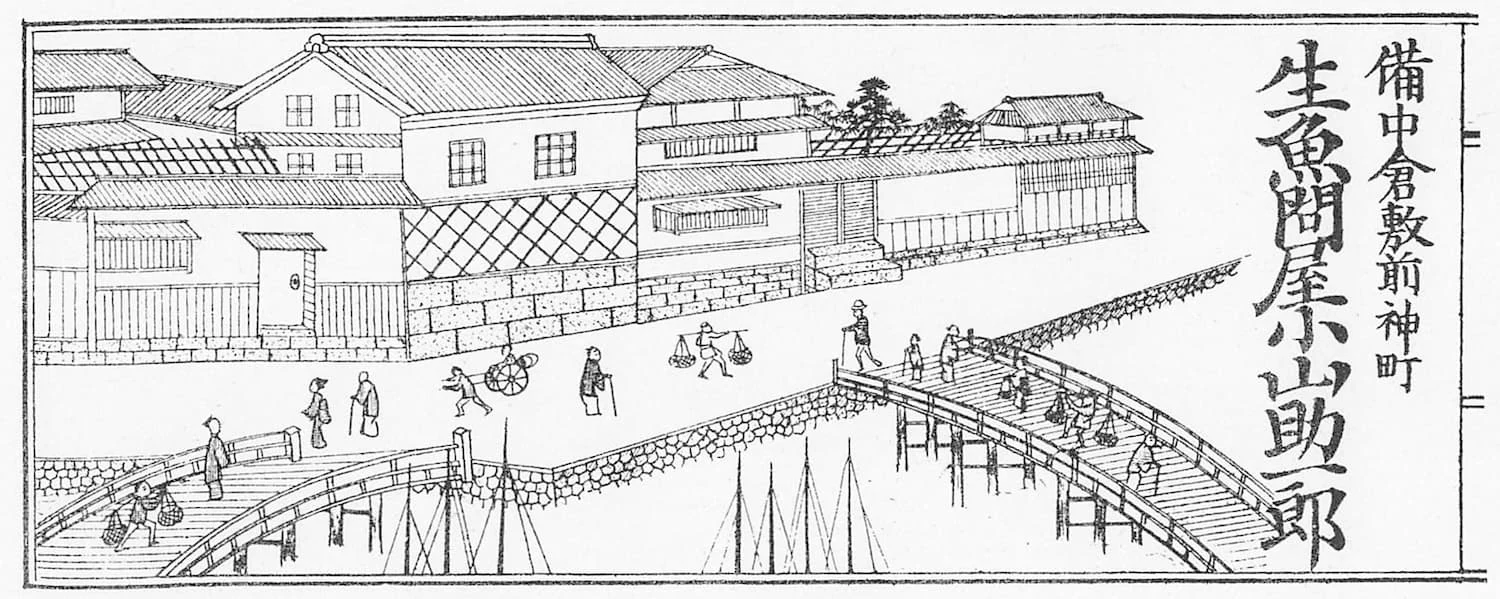
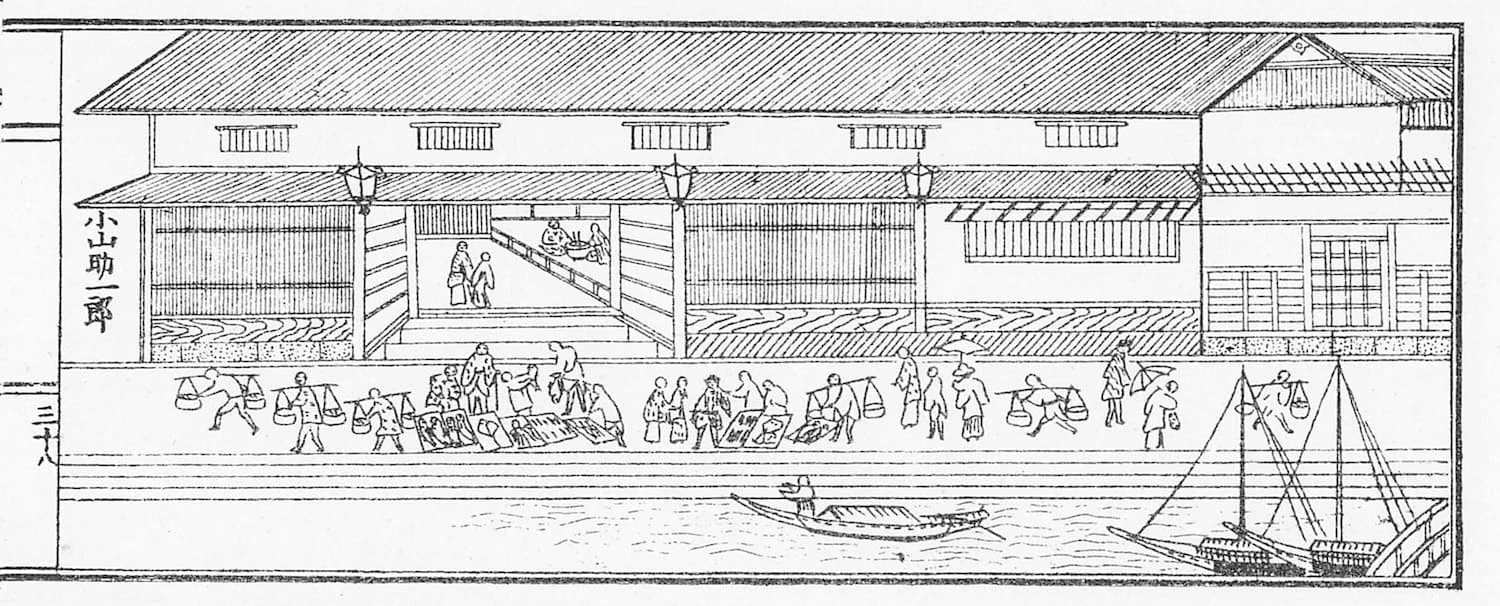
According to the "Kurashiki Village Town Small Business Ledger," among the 1,838 heads of households in Kurashiki Village in 1772, there were 893 engaged in agriculture and 945 in other occupations.
Looking at the agricultural workers, there were only 60 peasants, while the tenant farmers numbered 828, indicating that land ownership was concentrated among a few individuals. Therefore, being of the "peasant class" did not mean equality.
The difference between having land and not having land was significant, and those without land had no choice but to engage in small businesses or mobile sales in rented houses, but there may have been room for individuals to rise based on their own abilities, which could be a characteristic of Kurashiki. The existence of Shinroku, who rose through trade, can be seen as a symbol of this.
In fact, diverse commercial and industrial activities were developed outside of agriculture.
Among these, 134 fish sellers and 45 cotton seed buyers stood out, highlighting Kurashiki's role as a distribution hub for fish and cotton seeds. The presence of 10 wholesalers, 6 intermediaries, 10 inns, and 19 pawnshops indicates that Kurashiki was a regional distribution and financial center. Additionally, sewing was a common occupation for women.
The Edo period was a society based on the "koku" system (a measure of agricultural production expressed in the amount of unpolished rice). In an era where agriculture was mainstream, the presence of diverse occupations in a rural village may have influenced later periods.
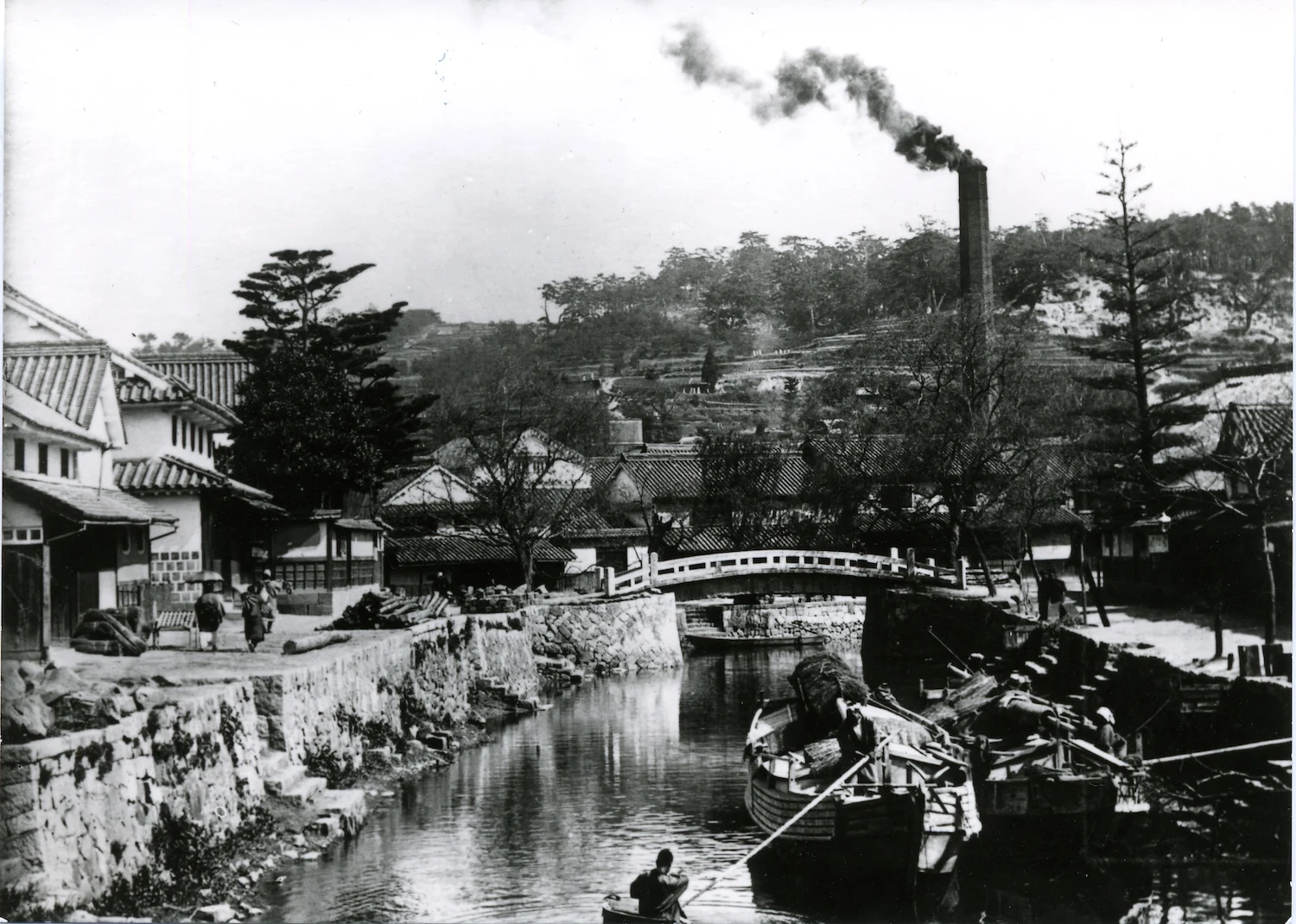
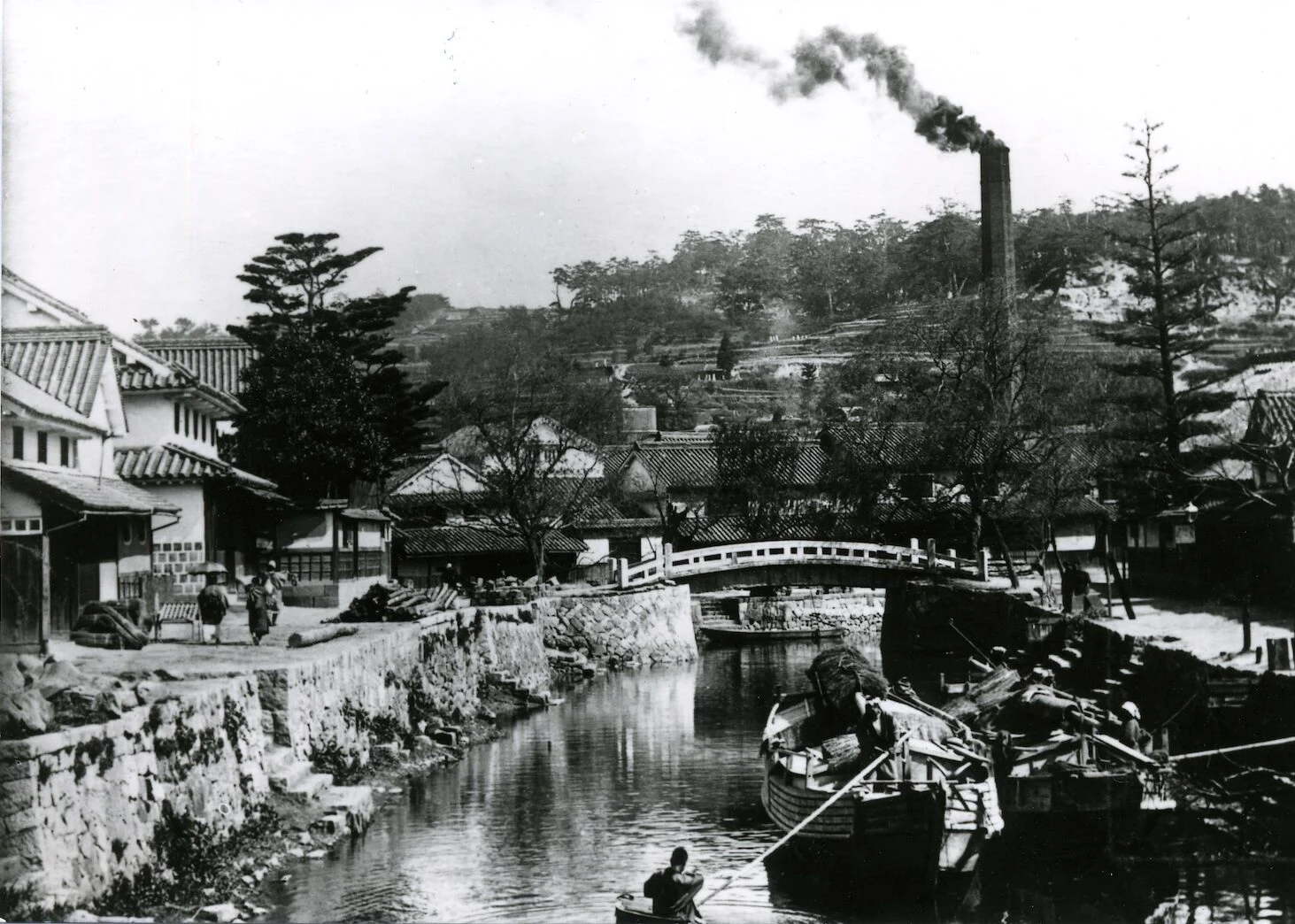
Meiji Era
(Image provided by the Ohara Art Foundation)
During the Edo period, Kurashiki thrived as a central town with the establishment of the Kurashiki Daikan Jinya, but it began to change with the Meiji Restoration.
After the Meiji Restoration in 1868, Kurashiki Village became "Kurashiki Prefecture" by adding several areas that had been under the direct control of the shogunate, which had been governed by the Kurashiki Daikan Jinya. Subsequently, in 1871, Okayama Prefecture was established by merging ten prefectures, including Bitchu Province and Bingo Province, which included Kurashiki Prefecture (initially established as Fukatsu Prefecture).
The prefectural office of Okayama Prefecture was located in present-day Kasaoka City.
As a result, Kurashiki, which had long been the "center of local politics" since the Edo period, was excluded from the political center. Furthermore, in 1875, it was merged into Okayama Prefecture, becoming a "local village within Okayama Prefecture," and gradually declined.
Yamakawa Hitoshi, born in 1880, wrote, "When I became aware of my surroundings, Kurashiki was still a village like an old pond with no flowing water."
The Birth of Kurashiki Spinning
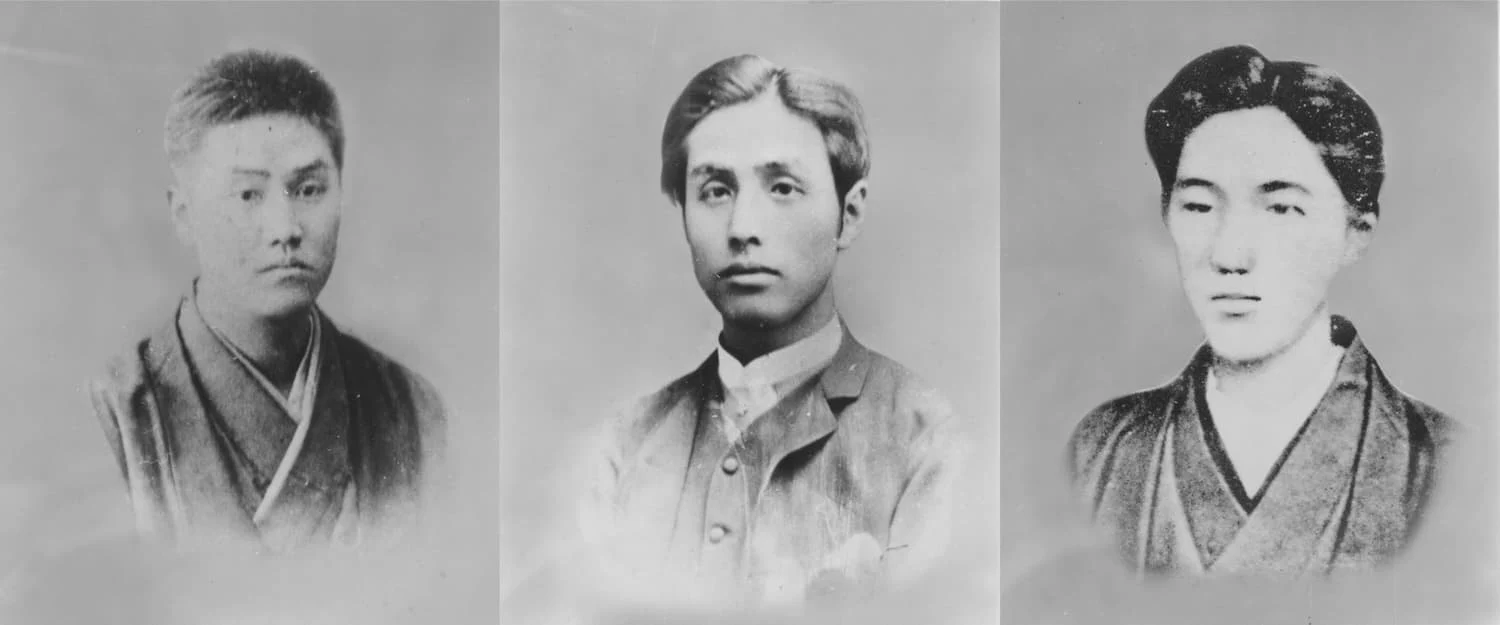
Around 1884, the youth of Kurashiki, which had become a "rural town in Okayama Prefecture," rose up to change their town. Among them, Kimura Ritaro, Komatsubara Keitaro, and Ohashi Sawasaburo were referred to as the "Three Great Men of Kurashiki" and were involved in the establishment of the Kurashiki Spinning Company.
Even in the Edo period, when moving or studying in the city was not easy, the wealthy class studied in Edo or Kyoto. It is believed that the youth learned about the then-advanced "spinning industry" as a result of their studies in Tokyo during the Meiji era. The presence of a certain number of such individuals may be evidence of the prosperity of Kurashiki during the Edo period.
They had a strong sense of "representing the town and village to learn in the city." Therefore, it was natural for them to share the knowledge they gained locally and to serve their town, and they likely felt a strong sense of mission.
Since Kurashiki had been a cotton cultivation area since the Edo period, and the Meiji government promoted modern spinning industries under its industrial promotion policy, Kimura Ritaro, Komatsubara Keitaro, and Ohashi Sawasaburo persuaded local influential figures to establish a spinning company.
With the support and investment of the first president, Ohara Koshiro, many citizens resonated with the plan for the new business, leading to a flurry of applications for stock subscriptions. The shortfall was covered by Ohara Koshiro, allowing the project to move forward. Thus, in 1888, the Kurashiki Spinning Company was established on the site of the former Kurashiki Daikan Jinya.
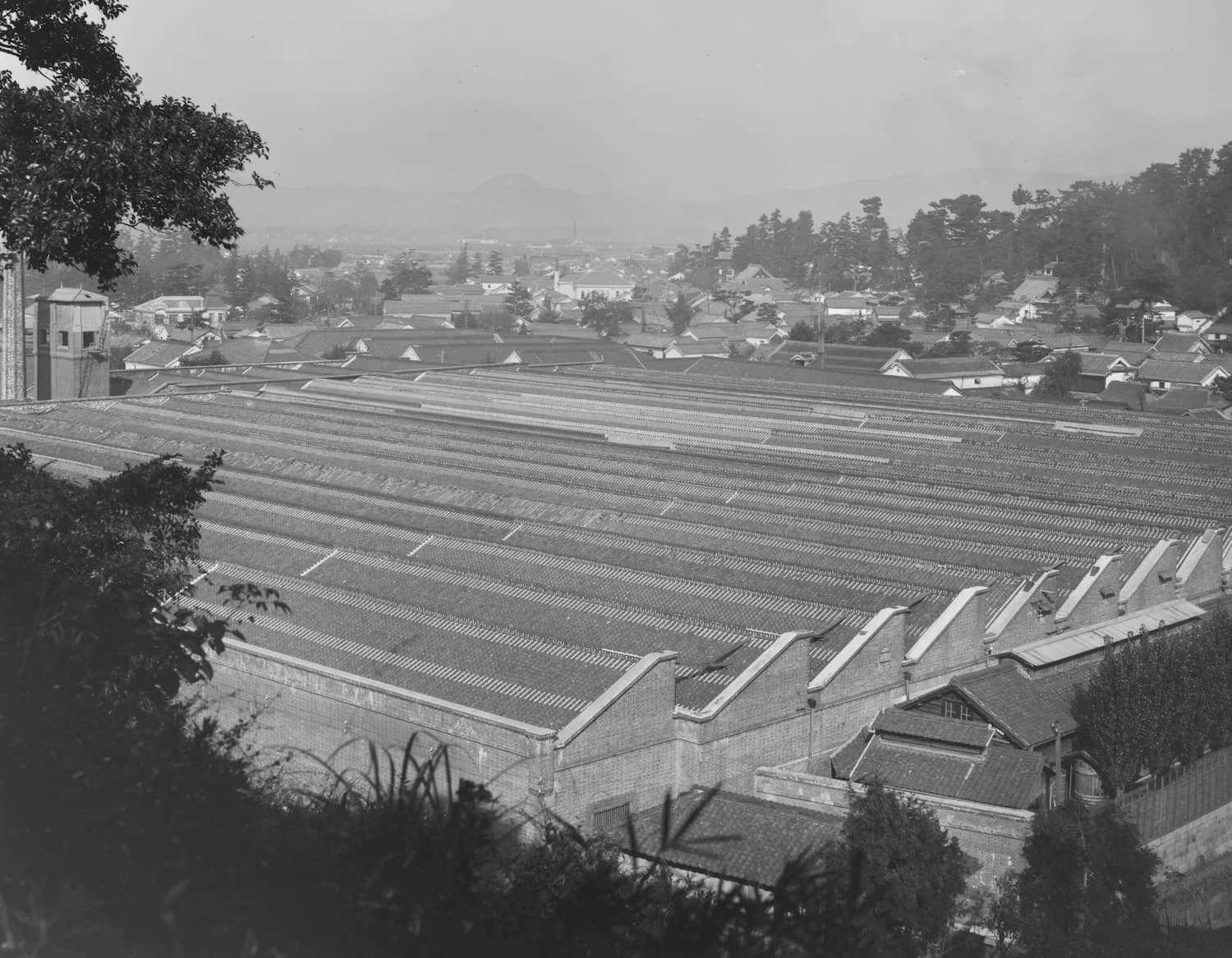
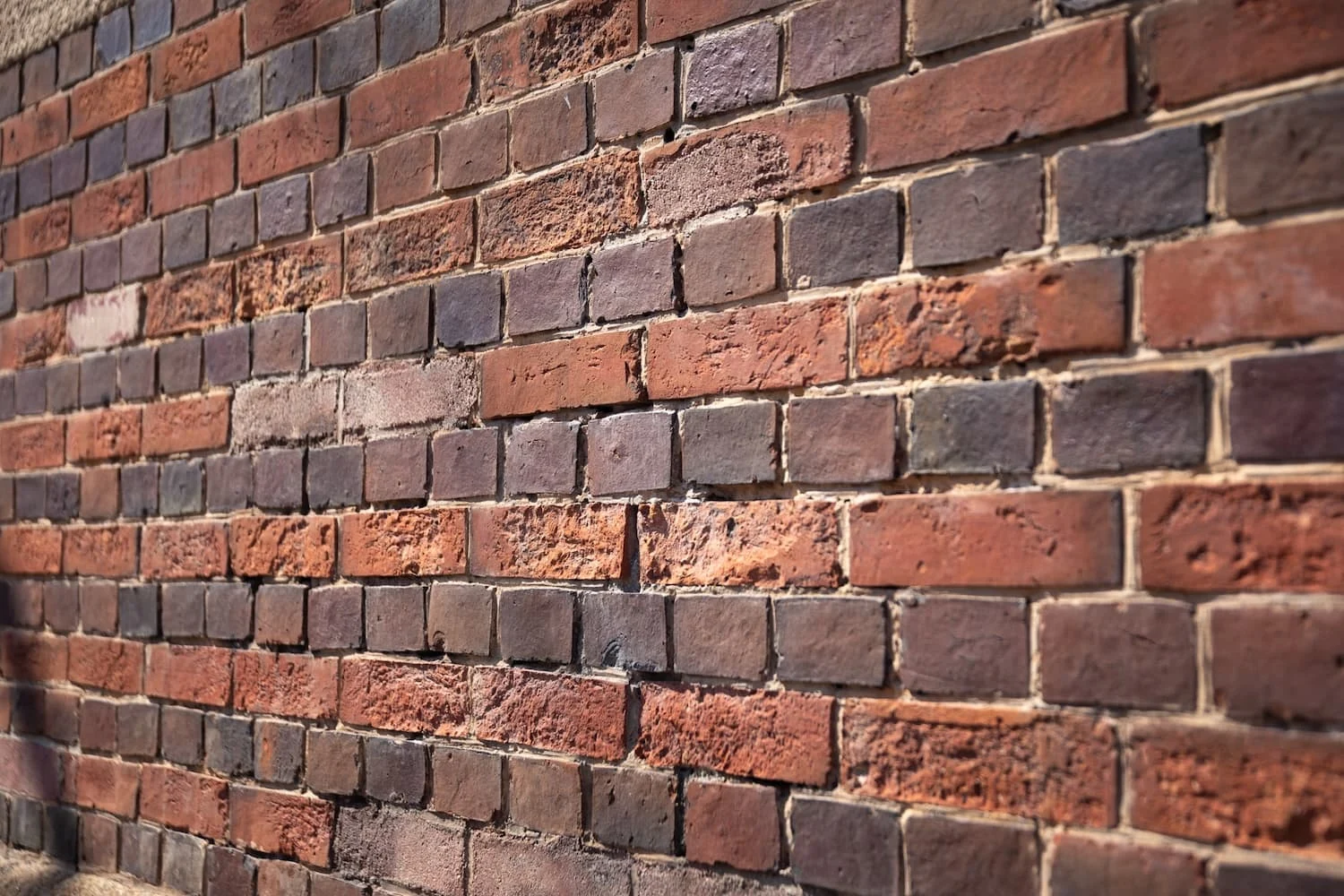
The Kurashiki Spinning Company was a building that incorporated the latest technology from the West.
In the midst of traditional townscapes, the construction of Western-style brick buildings on the site of the former Kurashiki Daikan Jinya, which had once been the political center, may seem out of place by modern standards. However, at that time, the Edo period townscape was the norm. It can be imagined that they found joy in Westernization and modernization rather than in the townscape and white walls of the Edo period.
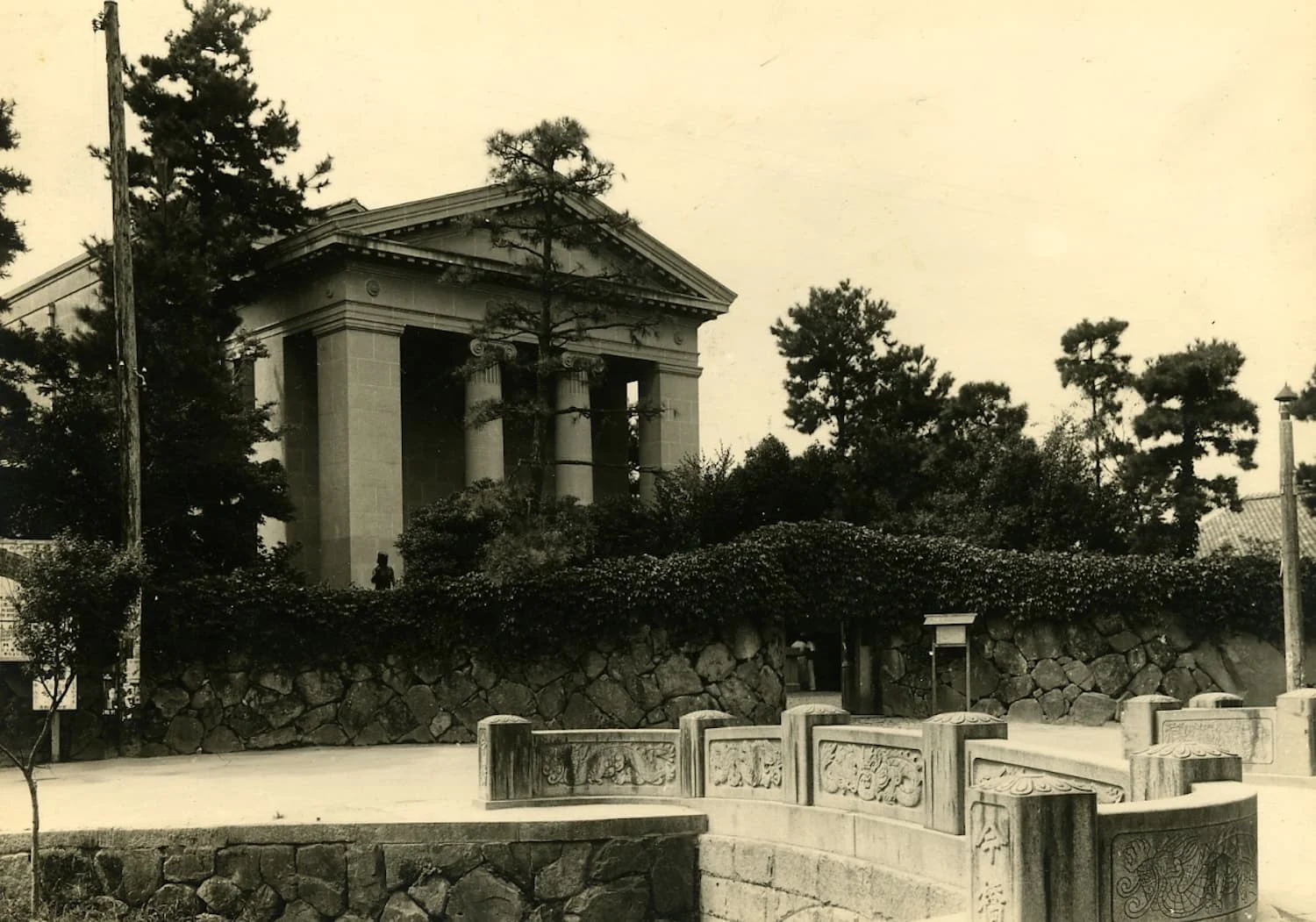
Taisho Era to Early Showa Era
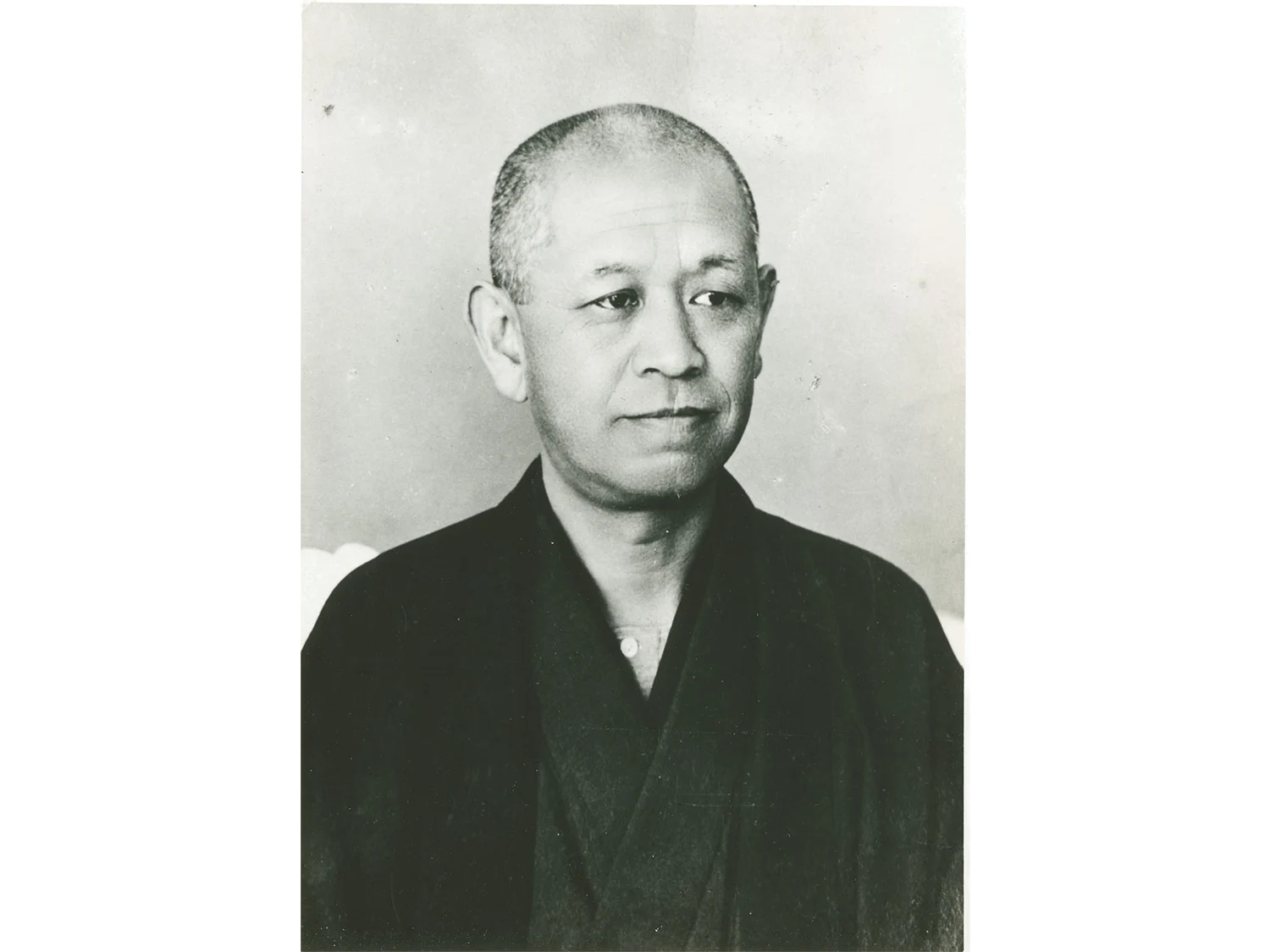
After that, the central figure of the Bikan Historical Area became Ohara Magosaburo, who succeeded the first president of KURABO INDUSTRIES LTD., Ohara Soichiro.
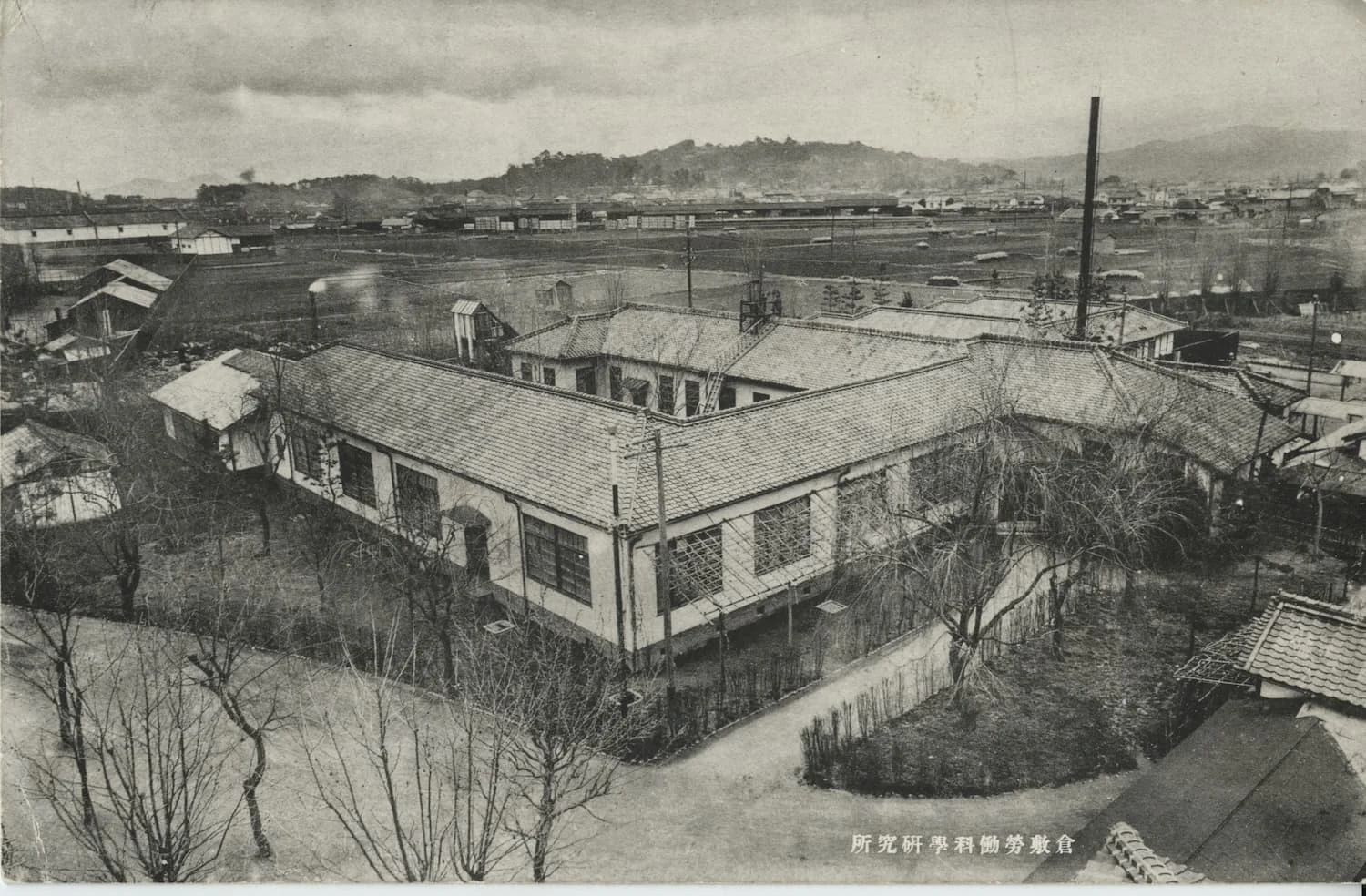
Ohara Magosaburo developed KURABO INDUSTRIES LTD. into a leading spinning company in Japan, while also establishing the First Joint Bank (now: Chugoku Bank) and Kurashiki Silk Textile Co., Ltd. (now: Kuraray). Furthermore, he supported numerous social projects and cultural activities, creating facilities such as Ohara Museum of Art, Kurashiki Central Hospital (now: Kurashiki Central Hospital), Ohara Agricultural Research Institute (now: Okayama University Resource Plant Science Institute), Ohara Social Problems Research Institute (now: Hosei University Ohara Social Problems Research Institute), and Kurashiki Labor Science Research Institute (now: Ohara Memorial Labor Science Research Institute).
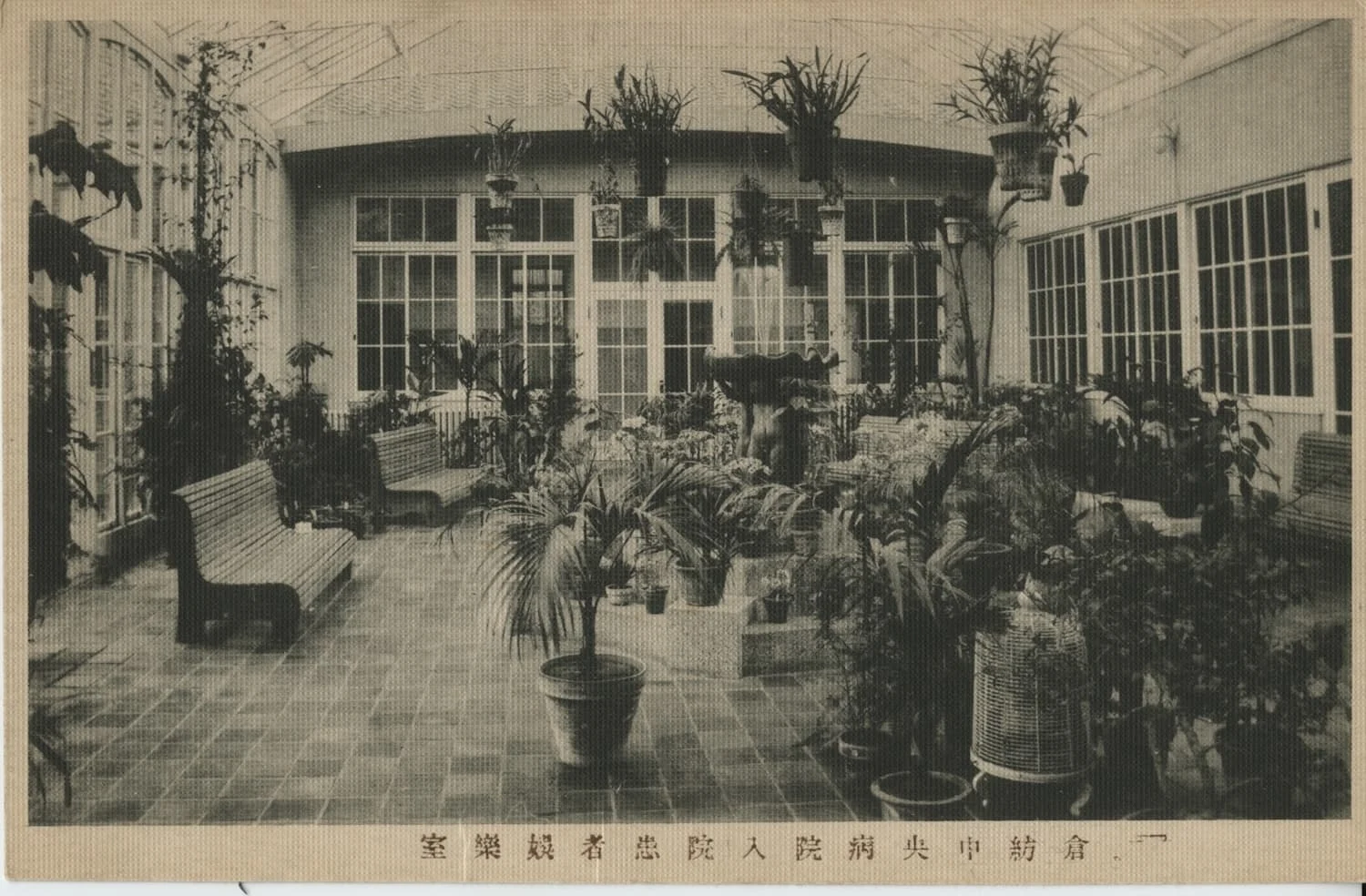
Around this time, Kurashiki began to take pride in being a "tenryo" (directly governed territory), and the people also started to have a consciousness of "Kurashiki, the town of tenryo."
In modern times, it became common to hear the phrase "Kurashiki, the town of tenryo," which began to promote the tenryo aspect around this time.
In 1928 (Showa 3), a book titled "Kurashiki City Guide" published by Kurashiki City Office contains the following description.
"It has continued to develop uniquely as 'Tenryo Kurashiki.'
More than 50 years had passed since the Meiji Restoration, and it may have been a time when the era of direct shogunate rule began to be romanticized. The town of Kurashiki itself began to use the keyword "tenryo."
Encounter with Mingei
Around this time, there was an important encounter that would lead to future townscape preservation activities. It was the meeting between Ohara Magosaburo and Mingei.
The term "Mingei" is an abbreviation for "popular crafts," a coined term created by Yanagi Soetsu. Yanagi believed that everyday items possess a beauty rooted in their purpose, which he called "use is beauty," and he, along with Kawai Kanjiro, Hamada Shoji, and Tomimoto Kenkichi, established the Mingei movement.
After meeting Yanagi Soetsu, Ohara Magosaburo fully supported the establishment of the Japan Folk Art Museum and worked to convey the charm of local crafts to many people. As a result, key figures of the Mingei movement began to frequently gather in Kurashiki.
From the Post-War Era to the Present
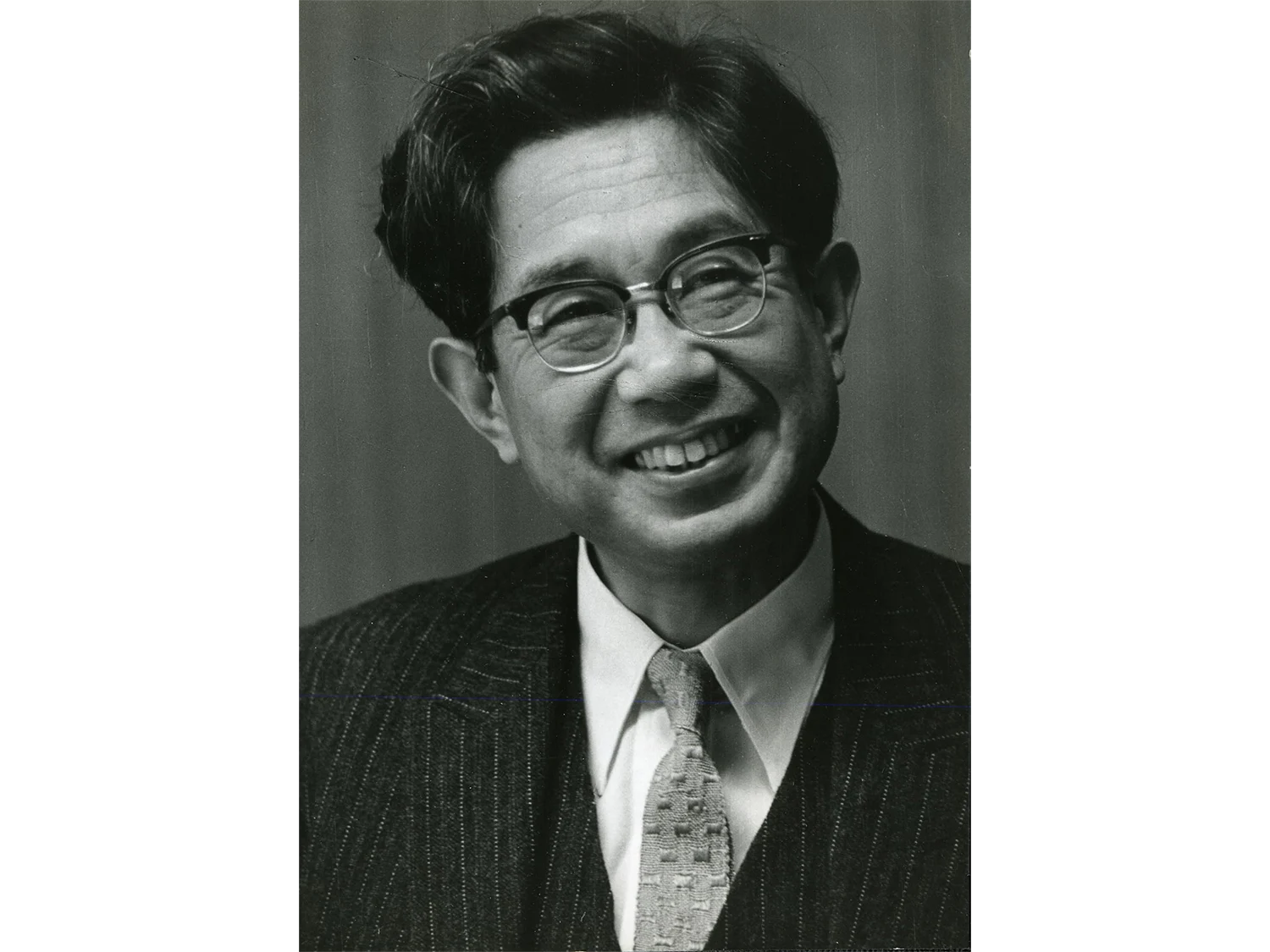
Ohara Magosaburo passed away just before the end of the war in 1943, and the family business, including cultural projects, was handed over to his eldest son Soichiro.
Soichiro joined Kurashiki Rayon in 1932 and inspected various countries in Europe between 1936 and 1938. It is often mentioned that he was impressed by the preservation of the townscape in Rothenburg, Germany, and engaged in townscape preservation activities in Kurashiki, but there is no clear record that he actually visited Rothenburg.
The only record is a statement from Shizutaro Urabe, a classmate from middle and high school and a maintenance engineer at Kurashiki Rayon, who said that Soichiro expressed the desire to "make Kurashiki the Rothenburg of Japan."
It is undoubtedly true that Soichiro had a strong passion for culture and the arts, as well as for townscape preservation. However, it seems that his stance was more about supporting activities rather than taking the lead himself.
One piece of evidence for this is his involvement with Mingei (folk craft).
Influenced by his father Magosaburo, he had interactions with people involved in the Mingei movement, and in 1946, shortly after the war, he invited the textile artist Kichinosuke Tonemura to Kurashiki on the recommendation of Soetsu Yanagi. This was to ask Tonemura to teach weaving techniques to the Women's Volunteer Corps, who could not return to Okinawa immediately after the end of the war.
(Image provided by the Kurashiki City Historical Materials Maintenance Office)
(Image provided by the Kurashiki City Historical Materials Maintenance Office)
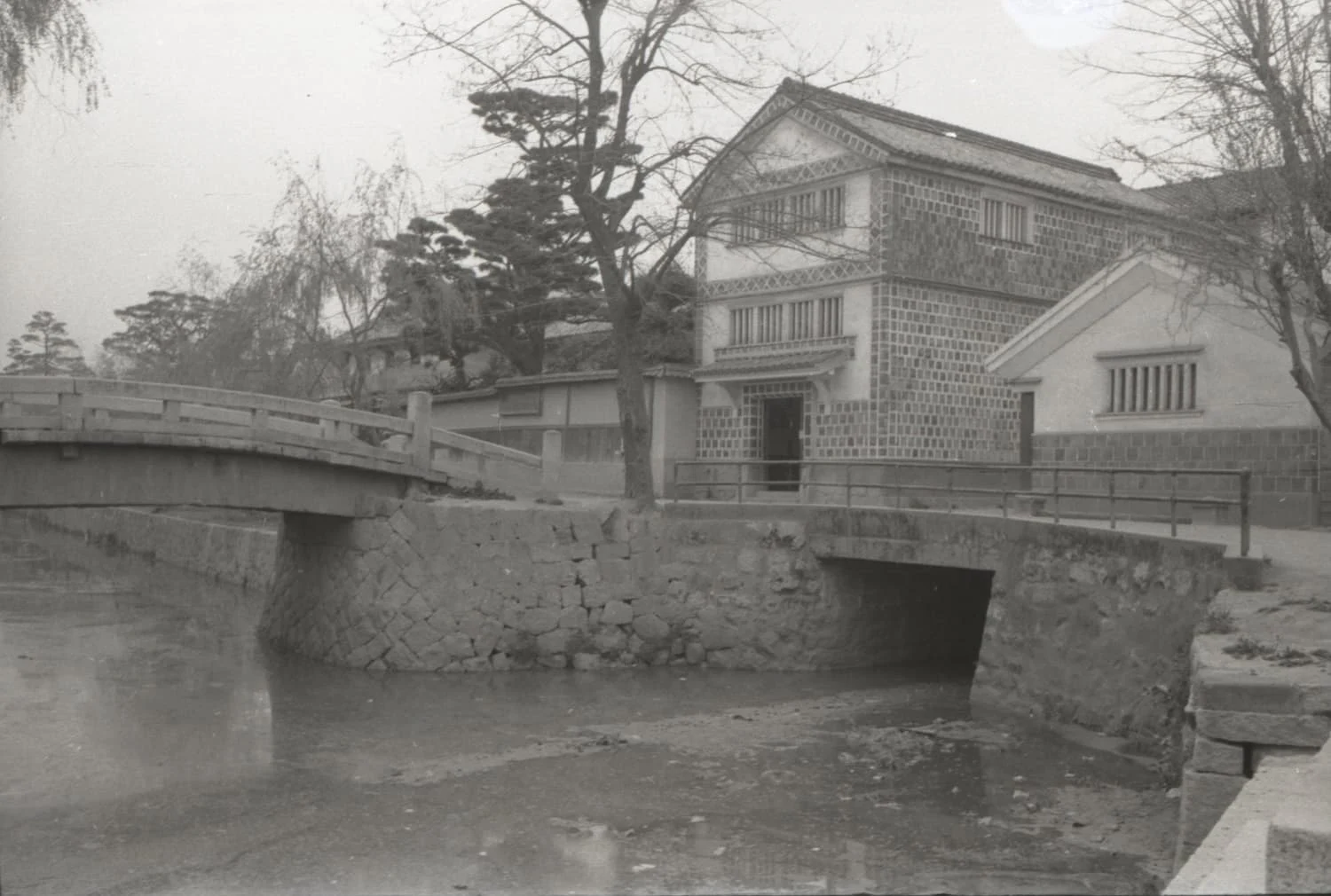
Subsequently, in 1948, the Kurashiki Museum of Folkcraft was established as the second Mingeikan in Japan. This utilized a rice storehouse of the Ohara family and was the first instance of the restoration of an old house in Kurashiki. In modern terms, it could be called a "renovation facility." The spirit of "making use of what is available" is one of the principles of Mingei proposed by Soetsu Yanagi, and it is believed that both Soichiro and Kichinosuke Tonemura were conscious of this.
Establishment of the Kurashiki Urban Beauty Association and Townscape Preservation Activities
(Owned by the Kurashiki Museum of Folkcraft)
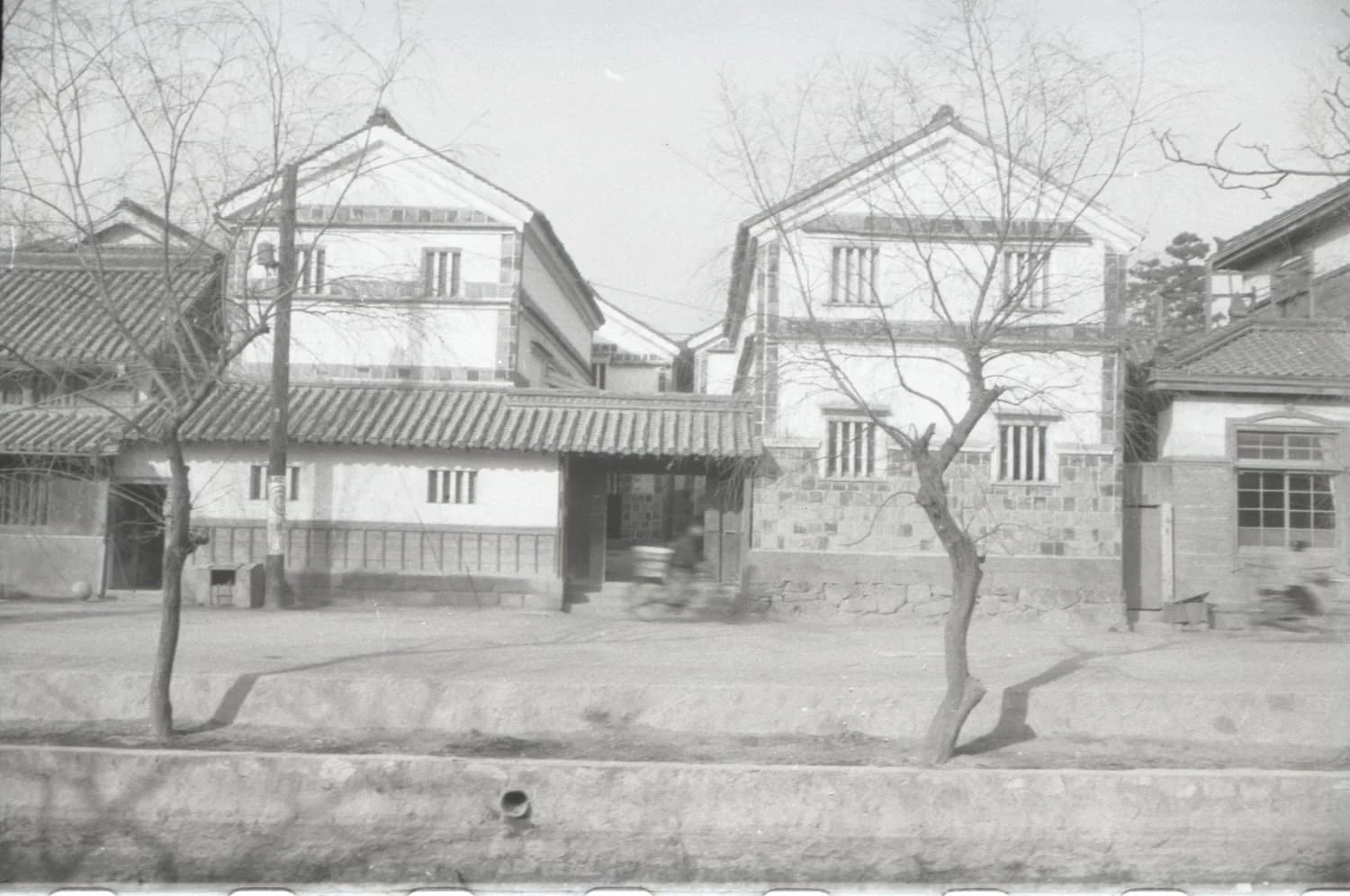
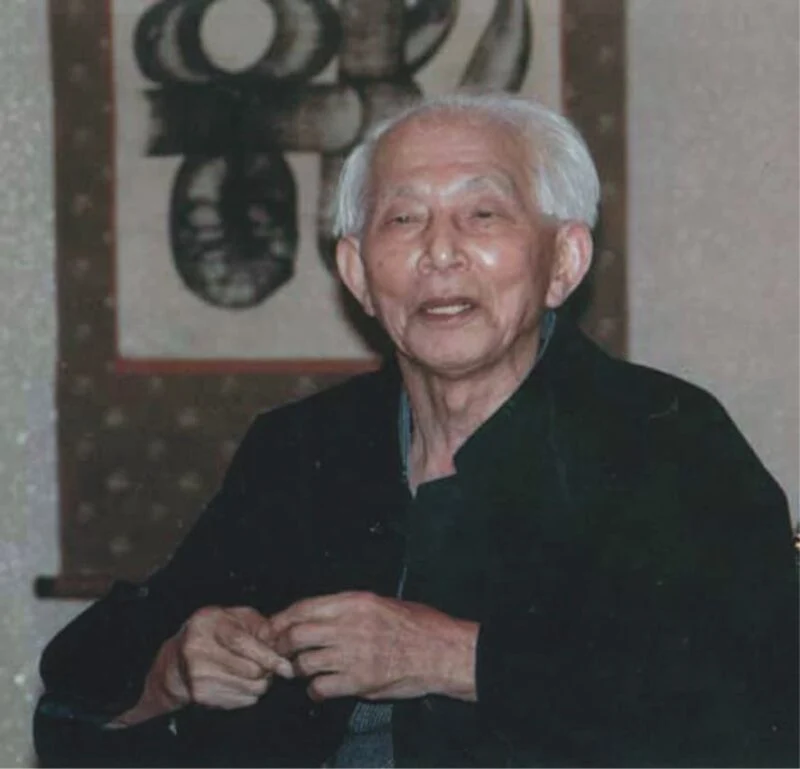
Furthermore, in 1949, the Kurashiki Urban Beauty Association was established.
This was the first townscape preservation organization in Japan formed by local residents, initiated by local experts including Kichinosuke Tonemura. However, while there was a growing sentiment to preserve the townscape at that time, it was not the "consensus of the residents." Japan was entering a period of rapid economic growth, where it was common to demolish old structures and build new ones.
Nevertheless, the decision to "preserve" was likely made possible by key figures like Kichinosuke Tonemura supporting the activities. In this sense, Tonemura played a significant role in the townscape preservation activities in Kurashiki. Additionally, in the early activities of the Kurashiki Urban Beauty Association, a strong encouragement came from an article titled "Folk Houses as Cultural Properties," published by Gaijiro Fujishima in the "Cultural Property Monthly" in January 1952.
The Kurashiki Urban Beauty Association always paid respect to Ohara Magosaburo and Soichiro for laying the foundation for townscape preservation. However, in later years, there seemed to be doubts about the "story of townscape preservation centered around the Ohara family" that was created by those around them. While it is not the case that Soichiro was unrelated to townscape preservation activities, there are no records indicating he was deeply involved. Since he did not deny the activities and often seemed to support them, it may have created an atmosphere of giving "official approval."
In fact, in the Bikan Historical Area, Shizutaro Urabe, a maintenance engineer at Kurabo, worked on many buildings, but at that time, it seemed to be perceived as "Mr. Ohara is doing something new." The same was true in modern times, where architects of new buildings were not particularly noted, and it has only been in recent years that the name "Shizutaro Urabe" has been highlighted as an architect.
(Image provided by the Kurashiki City Historical Materials Maintenance Office)
As a result, the voices calling for the establishment of rules to protect the historically preserved townscape led to the administration supporting residents' activities, and in 1968, the "Kurashiki City Traditional Scenic Preservation Ordinance" was created (enforced in 1969). Furthermore, this initiative became a national system, and in 1978, it received designation as an Important Traditional Building Preservation District by the national government.
Thus, the preservation of the townscape in the Bikan Historical Area gained legal grounds and continues to this day.
However, even after obtaining legal grounds, residents' activities continue.
This is because, despite becoming a strong tourist destination, the Bikan Historical Area is still a living town where not only merchants but also residents live. Because there are residents, issues related to daily life also arise.
For this reason, the philosophy and activities of the "Kurashiki Urban Beauty Association," established in 1949, have been passed on to the "Kurashiki Traditional Building Preservation Area Protection and Development Association," which continues activities to nurture a safe and secure town and townscape for future generations.
(Image provided by the Kurashiki City Historical Materials Maintenance Office)
This Town Time Travel Club
(Sponsored by Sanraku Co., Ltd.)
Members
| Akane Ohara President and CEO, Sanraku Co., Ltd. |
| Hiroko Kadotori Director, Ohara House Katalyzer |
| Toshihiko Inagaki First-Class Architect, Trim Design |
| Tamiko Oga President and CEO, Japanese Folk Toy Museum |
| Yuichi Akiba President and CEO, Kurabiz Co., Ltd. |
| Mariko Takaishi Kurashiki City Regional Revitalization Cooperation Team |
| Kengo Toi Representative Director, Haretoco General Incorporated Association |
Advisors and Article Supervisors
| Taro Yamamoto Chief, Historical Materials Maintenance Office, Kurashiki City General Affairs Bureau |
| Noriyoshi Fujiwara Curator, Kurashiki City Board of Education |
| Masatake Nishimura Advisor, Kurashiki City Bureau of Cultural Industries |