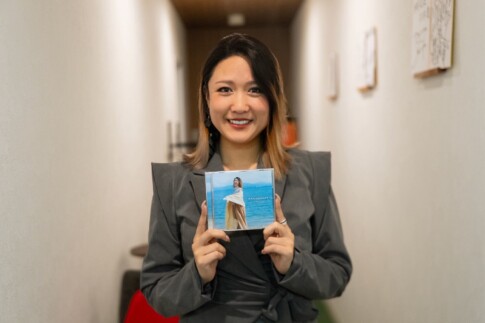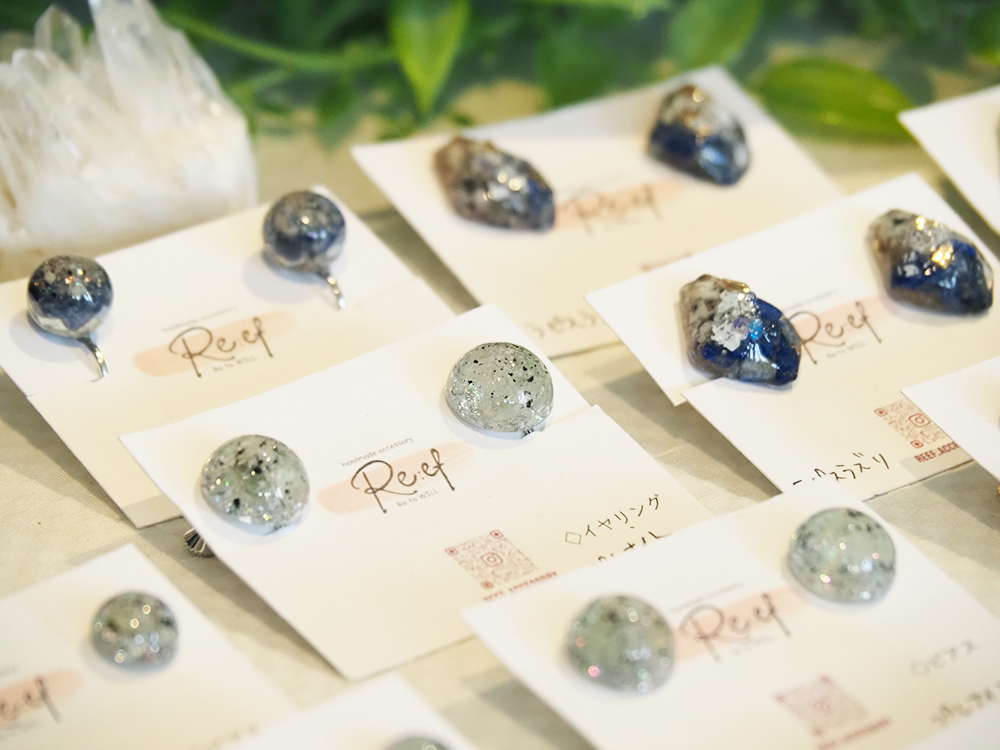
Interview with MAMAN owner and accessory planner Eri Imoto
We spoke with Eri Imoto about the specific thoughts she hopes to connect through accessories made with stone from Kitagi-shima Island.
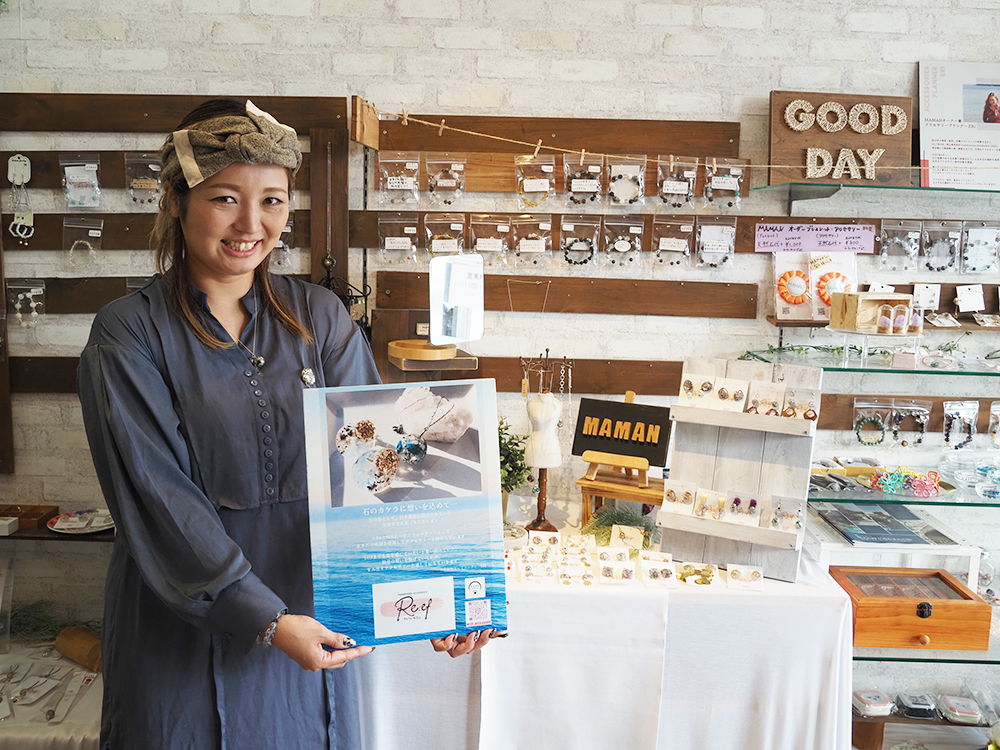
The thoughts connected by “Re:ef”
What are the thoughts you hope to connect through “Re:ef,” Ms. Imoto?
Imoto (honorific omitted)
It all began with my grandmother’s wish to “go back to the island.”
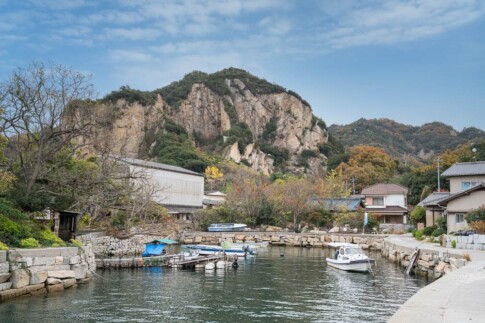
For me, Kitagi-shima Island is where my father’s family home is, and where my grandmother lived.
My grandmother had lived on the island for a long time, but because of her health, she left the island and moved to the mainland, and later entered a care facility.
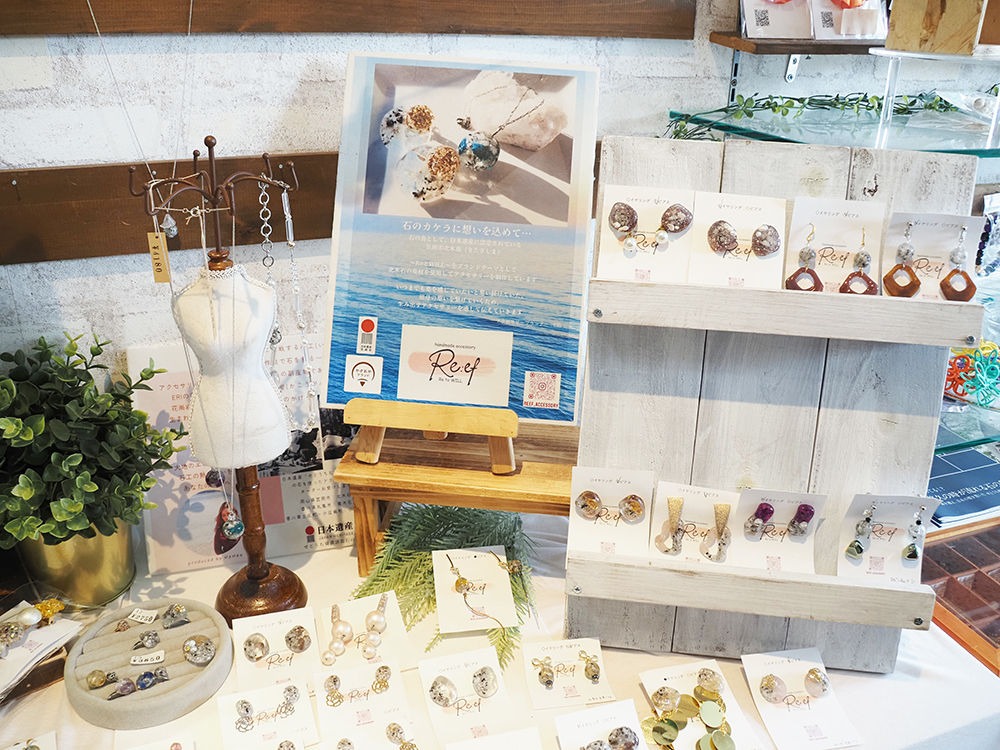
We could no longer visit her during the COVID-19 pandemic, and in the winter of 2021, when her condition was increasingly poor, I was interviewed about making accessories for a segment called “In Love with Stone: Gifts from Kitagi-shima Island” on NHK Okayama’s TV program “@ (At) Okayama.”
The segment gave me the opportunity to give my grandmother an accessory as a gift.
My grandmother was doing well at the care facility, but she often said, “I want to go back to the island.”
So I gave her an accessory made with Kitagi granite, a symbol of her hometown, hoping it would remind her of the island.
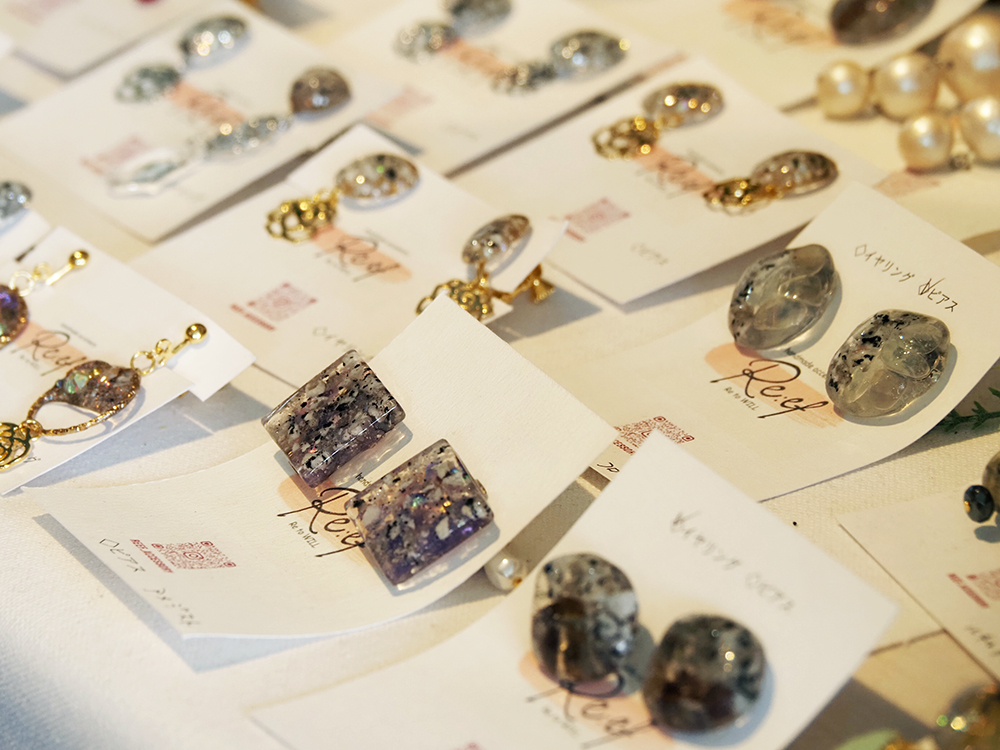
Because of the pandemic, I couldn’t meet my grandmother in person, so I shared my feelings with her in a video.
After that, my grandmother’s health declined, and she passed away three months later.
She never made it back to the island.
We built her grave in a place overlooking the sea she loved so much.
I imagine my father, who grew up on Kitagi-shima Island, has similar feelings about his hometown.
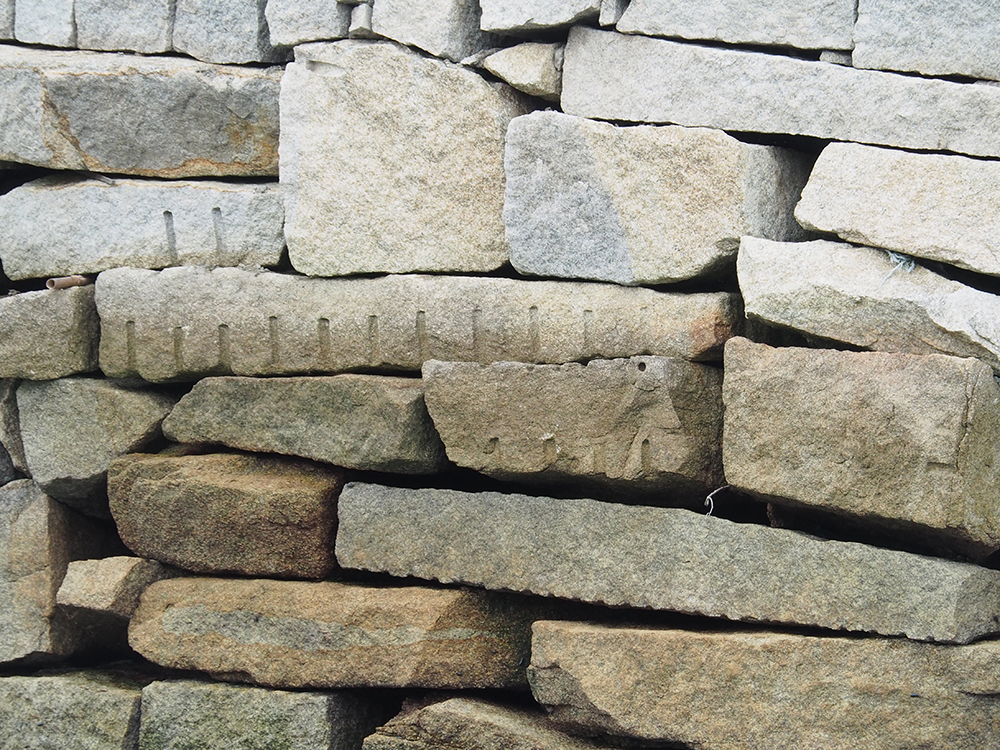
The program first aired over two years ago (first broadcast: April 9, 2021), but people still watch it and come to buy my accessories.
People often ask, “Why make accessories out of stone?” and I often tell them about Kitagi-shima Island and my grandmother.
People who buy or learn about the accessories sometimes tell me, “It reminded me of my hometown,” or “My grandmother also lived on an island…”
Some say, “I’m going to give it to my grandmother as a present.”
Through accessories, I want to connect things that bring people’s hometowns to mind.
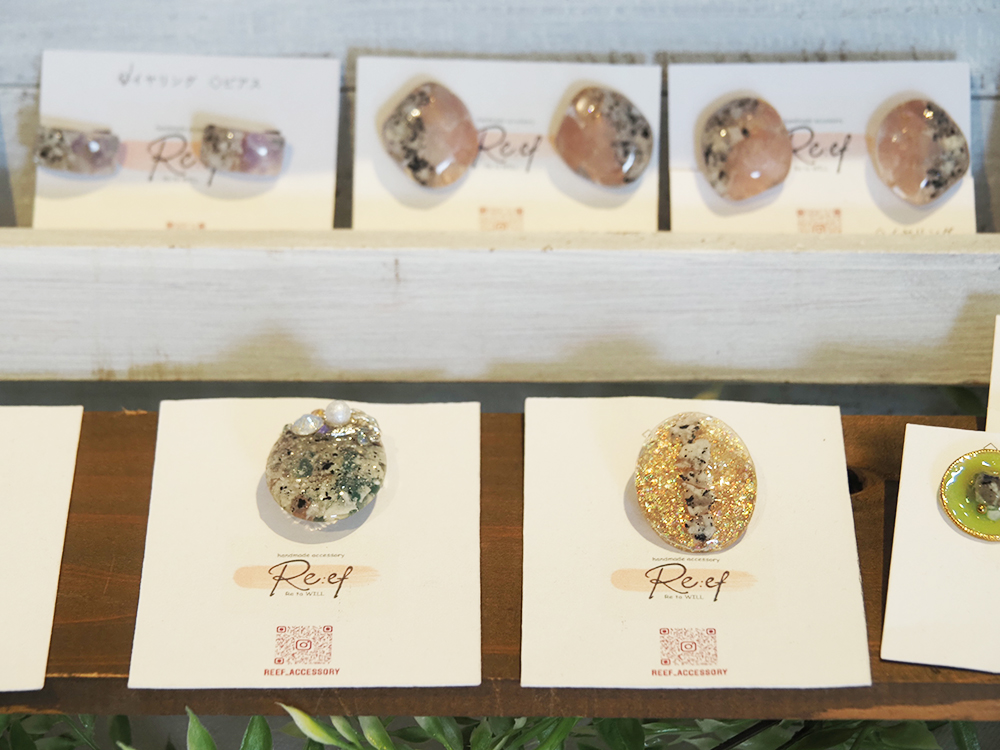
What do you value when making accessories?
Imoto
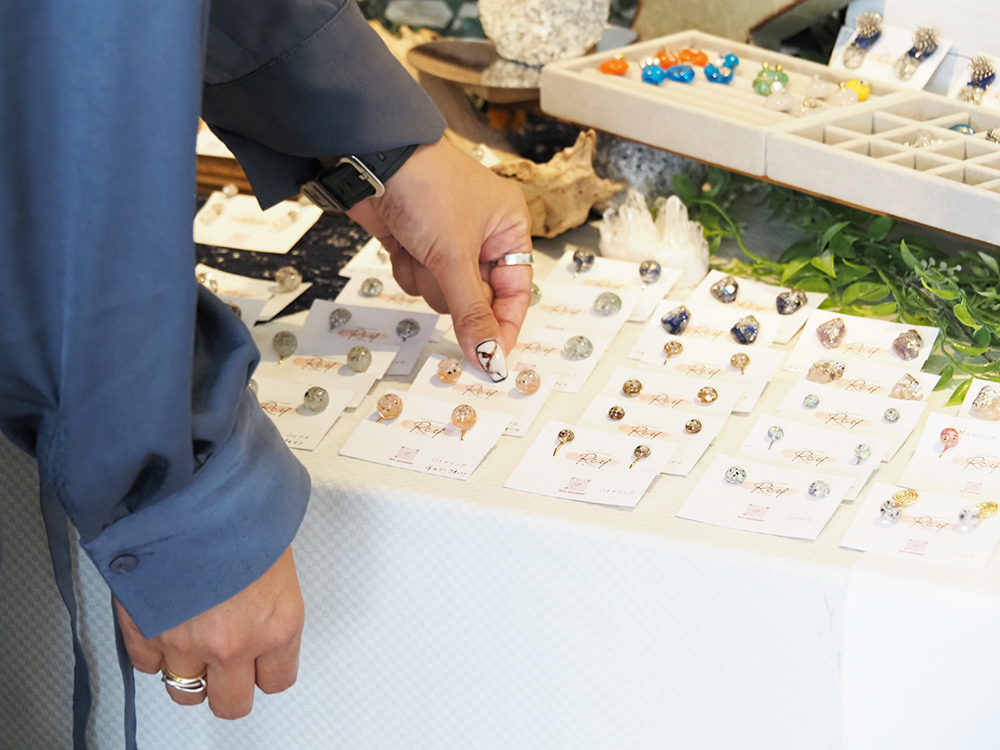
At first, I thought that even people who knew about the stone from Kitagi-shima Island mainly associated it with gravestones, so I wanted to present Kitagi granite in a bright, appealing way to young people.
But my own feelings have changed quite a bit since then.
Talking with the people who take my accessories home has helped me imagine the feelings they connect with them.
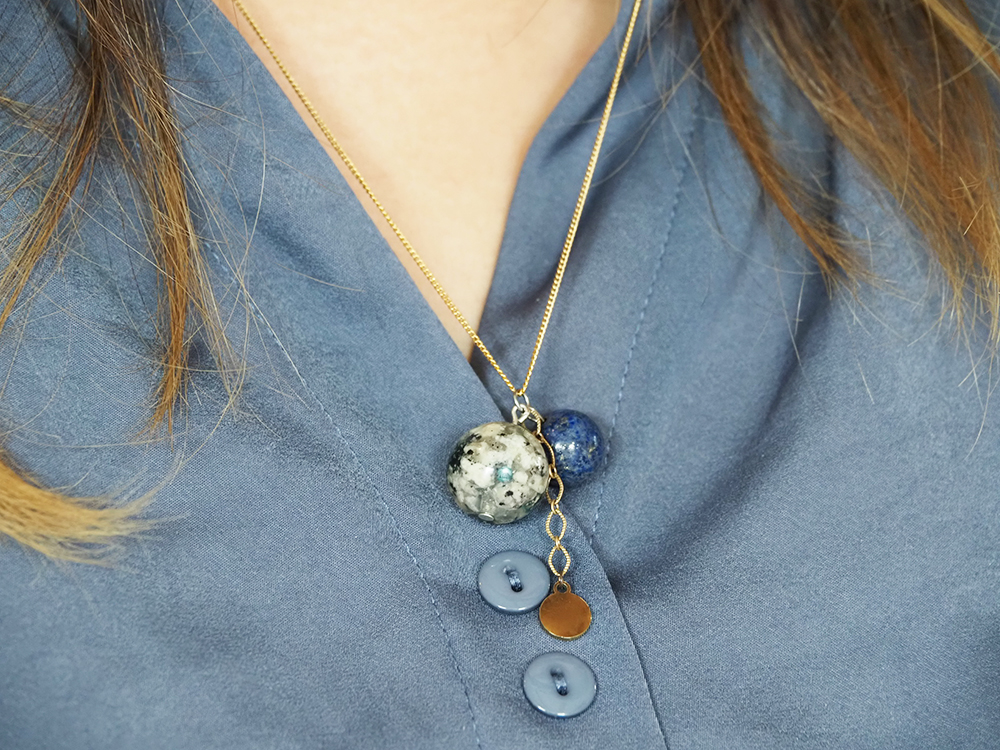
When I’m booked to exhibit or sell at an event, I go there in person and make accessories with an image that suits the venue.
I ask about the age range of visitors and look at the art displayed there, so that the accessories don’t feel out of place in the atmosphere.
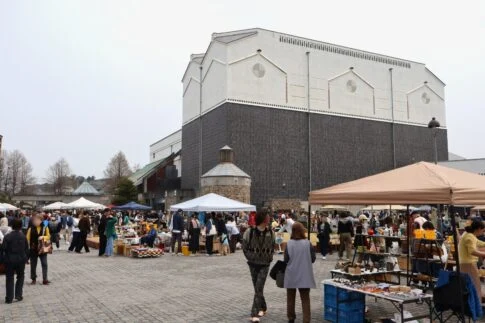
For example, when I exhibited at Takahama City Yakimono no Sato Kawara Museum in Aichi Prefecture, I drew inspiration from the traditional image of the town, known for its roof tiles.
Some of the other artists used natural materials such as earth and water to create their works, so the accessories I made for that event were more artistic than cute.
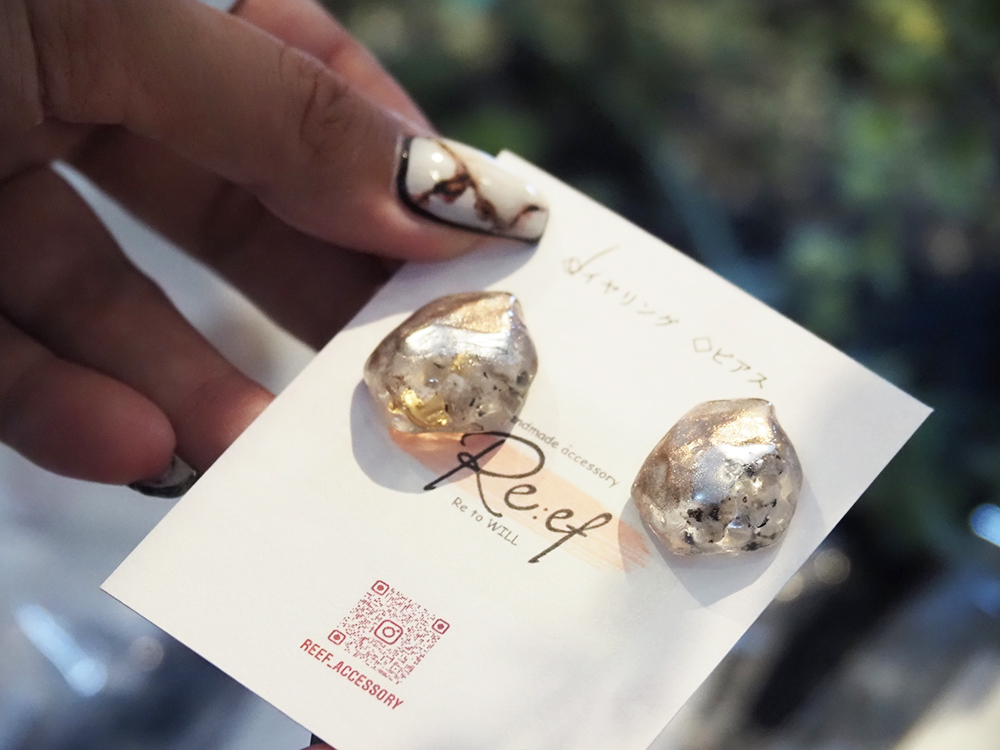
I think making things to suit each venue this way resonates more with the people there.
You also hold workshops, right?
Imoto
I also change the content of my accessory-making workshops each time, depending on the venue.
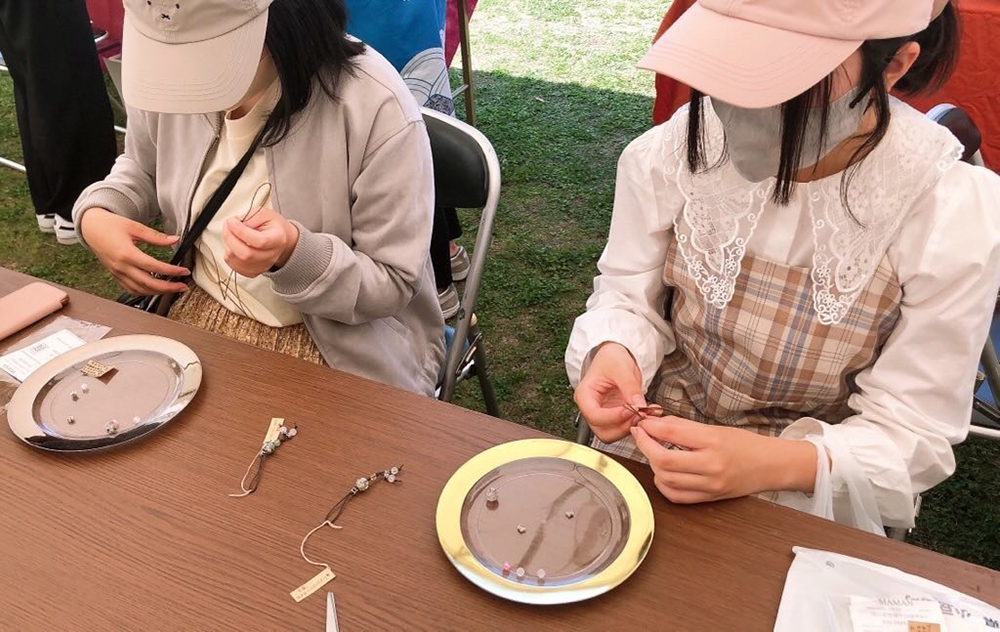
For example, the Takehisa Memorial Museum in Kasaoka City asked me to collaborate with Japanese painting pigments, so I made the workshop longer.
The aim of introducing Kitagi granite is the same, but the workshop length and what we make vary each time, as do the participants, from young children to adults.
That’s because I want people to wear the accessories they make.
If they’re too easy to make, people often stop wearing them later on.
I want to offer meaningful workshops that let people keep their creations as good-luck charms.
A deepening bond with Kitagi-shima Island
Do you visit Kitagi-shima Island?
Imoto
When I was a child, I went about four times a year, during summer vacation, New Year’s, and other holidays.
After my grandmother left Kitagi-shima Island, I didn’t have many chances to go, but now I visit from time to time.
That started after I began making accessories.
When I was interviewed for the TV program, I went inside the house where my grandmother had lived for the first time in a long while.
I thought it felt lonely when nobody came and went.
After my grandmother passed away, I felt that even more, and started wanting to go at least once a month.
Even when I have no particular reason, I want to go see the sea.
I think I go there to remember why I started making accessories and how I began doing it to connect people’s feelings.
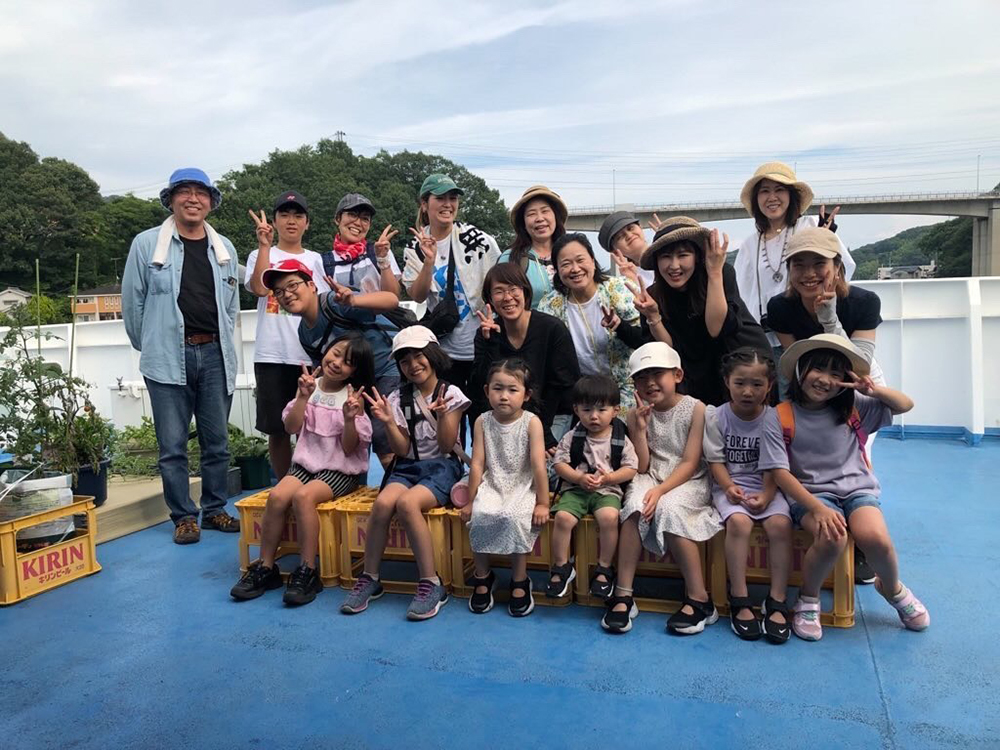
I actually completed the “Stone Island Guide” training, and can now guide people around Kitagi-shima Island.
As part of the training, I had to lead a tour once, so in July 2023 I went with 25 MAMAN customers.
What are your favorite spots on Kitagi-shima Island?
Imoto
First, I recommend visiting the former movie theater, Hikari Theater.
You can watch a short film about the history of Kitagi-shima Island, and I cried when I saw it.
The islanders who appear in the film were there when it was shot, and the way they speak is just like my grandmother.
It makes me think again, “These people are still alive and well, so we have to carry on their legacy.”
I wanted everyone to see it, so I included it in the July 2023 tour, and it was well received.
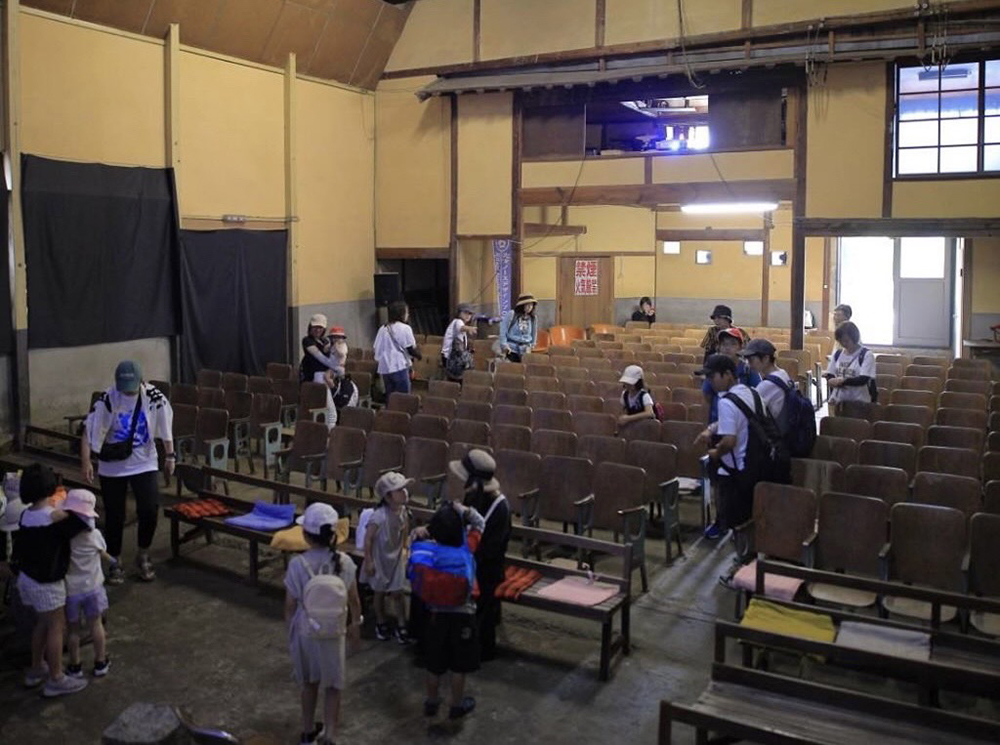
I think people experience the island differently if they watch the film before exploring it.
After that, I recommend walking from Hikari Theater to see the “Regrettable Stone,” said to have missed its chance to go to Tokyo; then the stage on the lake, where Nakanishi Keizo was scheduled to perform, but couldn’t because of the pandemic; Kitagi’s Venice; and finally, the sea.
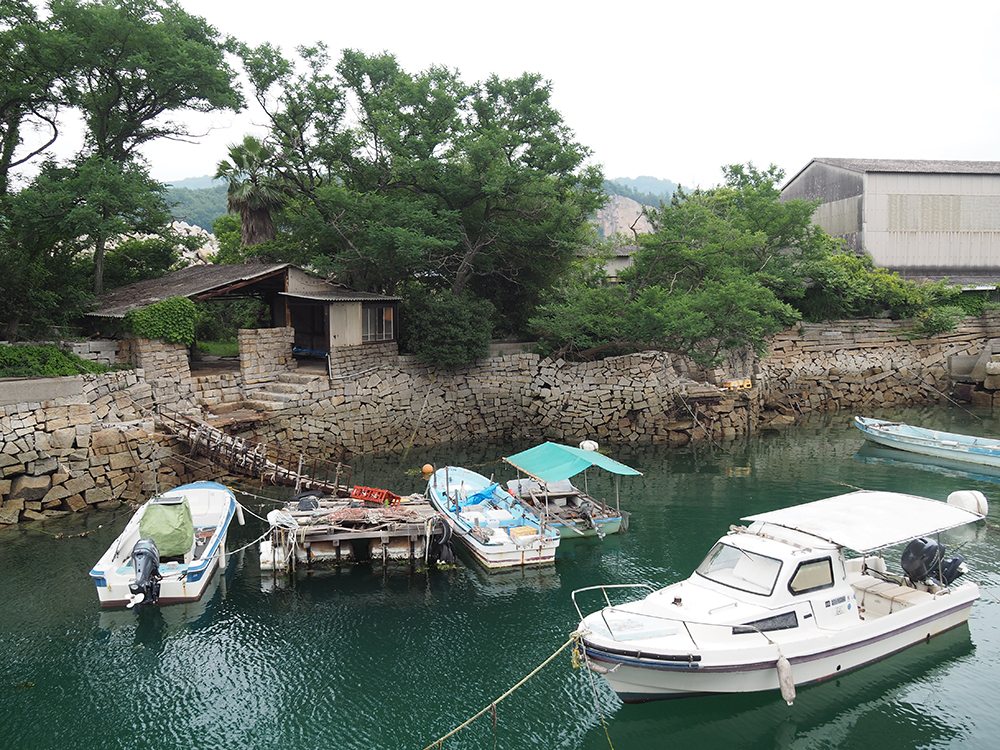
It takes quite a while to get around on foot, but if you can, I recommend the sea at Sotasaumi, the area where my grandmother lived. It’s very beautiful.
Is there anything you’d like to do in the future?
Imoto
I’d like to hold workshops and pop-up events all over Japan, perhaps in a corner of a shop.
I’d like to go there myself, hold workshops, and give people a chance to see and handle my accessories.
I’d be happy to visit museums, Community Centers, beauty salons, car dealerships—anywhere, if there’s an opportunity.
And I’d be so happy if people learned about Kitagi-shima Island through my accessories and came to visit.
Even if it’s not Kitagi-shima Island, I hope they’ll be reminded to “go back to their hometown” or “visit someone they haven’t seen in a long time.”
I think the person who receives the gift would be happy to hear, “I thought of you and bought this accessory.”
From the Writer
I first met Ms. Imoto around the time she began making accessories with Kitagi granite.
It’s been almost four years.
What stood out to me was hearing that she has been visiting the island more often since she started making accessories.
I was glad to see that making accessories has also helped Ms. Imoto deepen her connection with Kitagi-shima Island.
Perhaps she’ll even organize tours of Kitagi-shima Island for people who buy her accessories.
I’m looking forward to seeing what comes next.
MAMAN Information
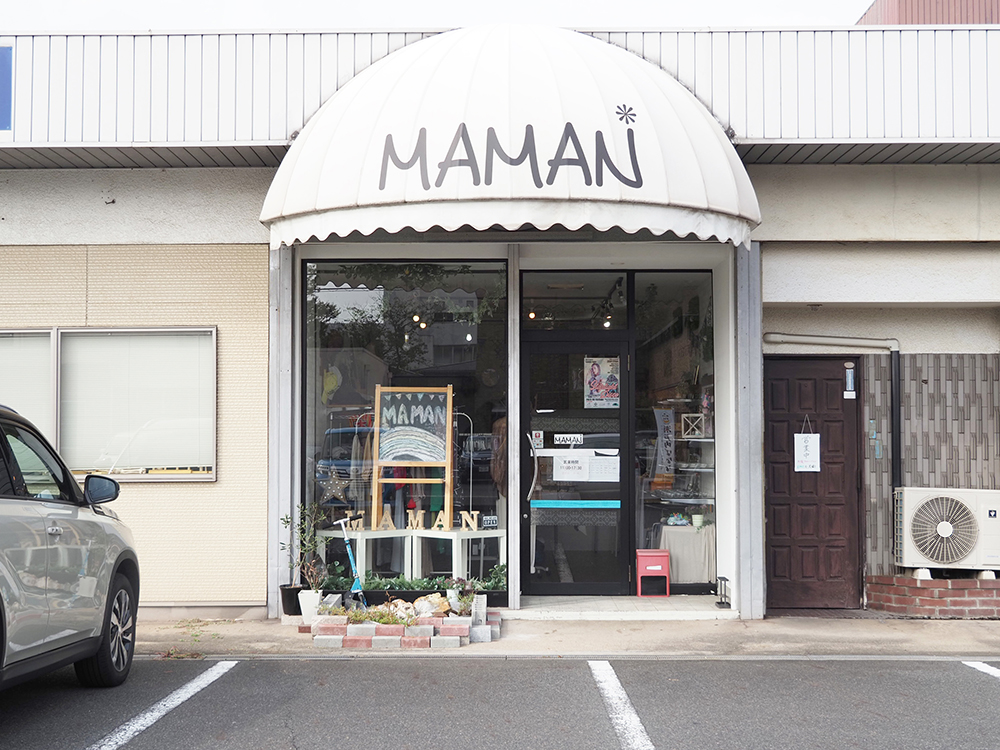
| Name | MAMAN |
|---|---|
| Address | 8-7 Shibancho, Kasaoka City, Okayama Prefecture |
| Contact | 070-2424-1390 |
| Parking | Available |
| Hours | 11:00 a.m.–5:30 p.m. |
| Closed | Wednesday May close temporarily |
| Payment methods |
|
| Website | MAMAN Online Shop |