
When people hear “kappo,” they may imagine a somewhat formal restaurant. But there are days when you want to enjoy Japanese cuisine more casually with friends or family, too.
On November 6, 2026, “Kuzushi Kappo Wanohana no Mirai” opened in Mizushima, Kurashiki City. The food is authentic, yet it’s a Japanese restaurant you can enjoy without feeling intimidated.
The menu features seasonal courses made with ingredients at their peak, as well as obanzai.
Visible across the counter is owner Ono Junji, carefully preparing each dish. We introduce the restaurant’s interior, its course meals, and the thoughts Ono has put into his restaurant.
The information provided was current when this article was published in November 2026. Please note that it may differ from current information.
About Kuzushi Kappo Wanohana no Mirai
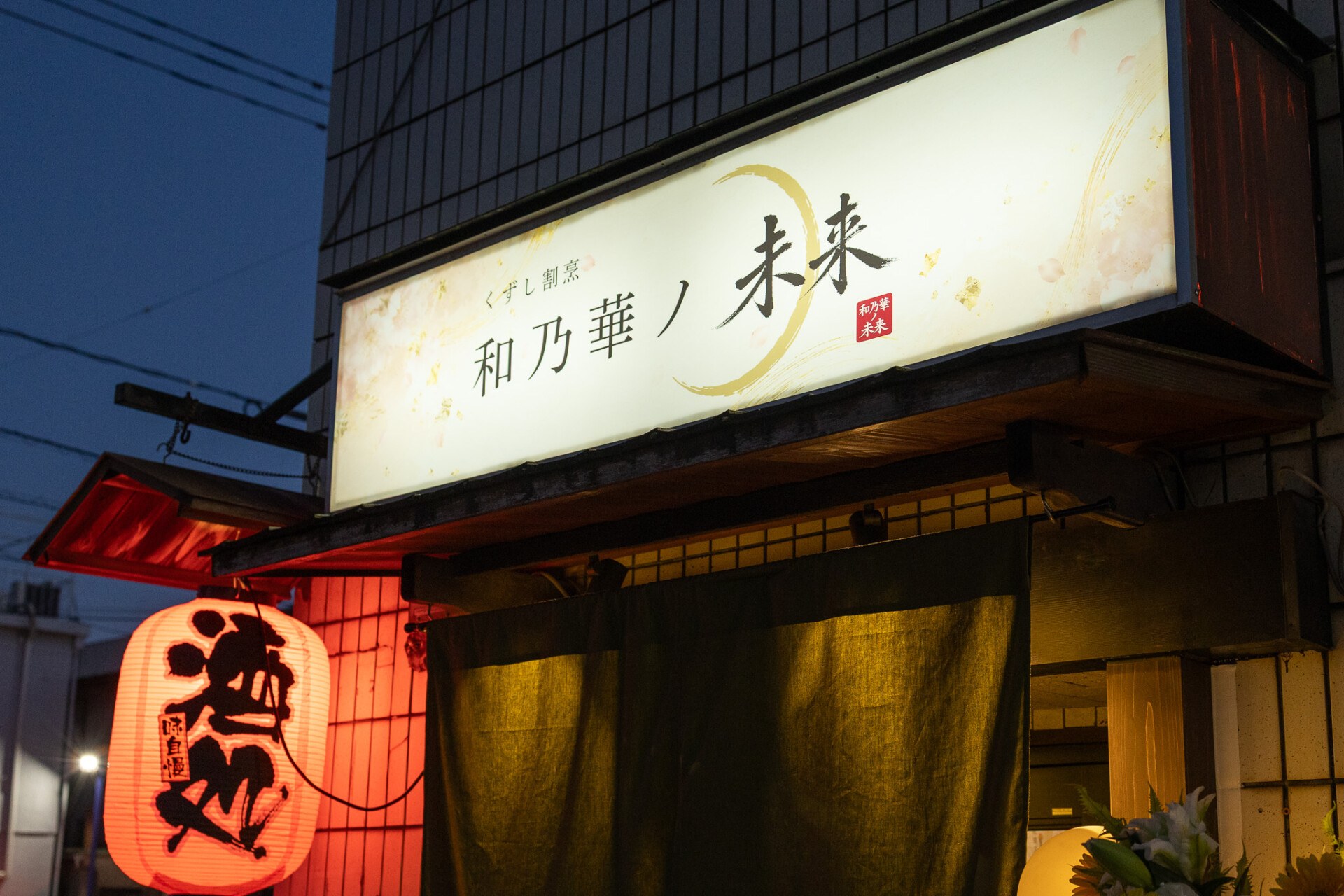
Kuzushi Kappo Wanohana no Mirai is a Japanese restaurant in Nishitokiwa-cho, Mizushima, Kurashiki City.
The name “kuzushi kappo” expresses the desire to let guests enjoy authentic kappo cuisine at reasonable prices, in a relaxed, casual setting.
Each character in “Wanohana no” has its own meaning.
- “Wa” represents the spirit of food
- “No” represents cooking with care
- “Hana” represents hospitality like a flower
- “No” represents a peaceful, leisurely time.
And “Mirai,” meaning “future,” expresses the wish to carry delicious food and moments of unhurried relaxation forward into the future.
The interior
The restaurant has six counter seats and 14 tatami-room seats.
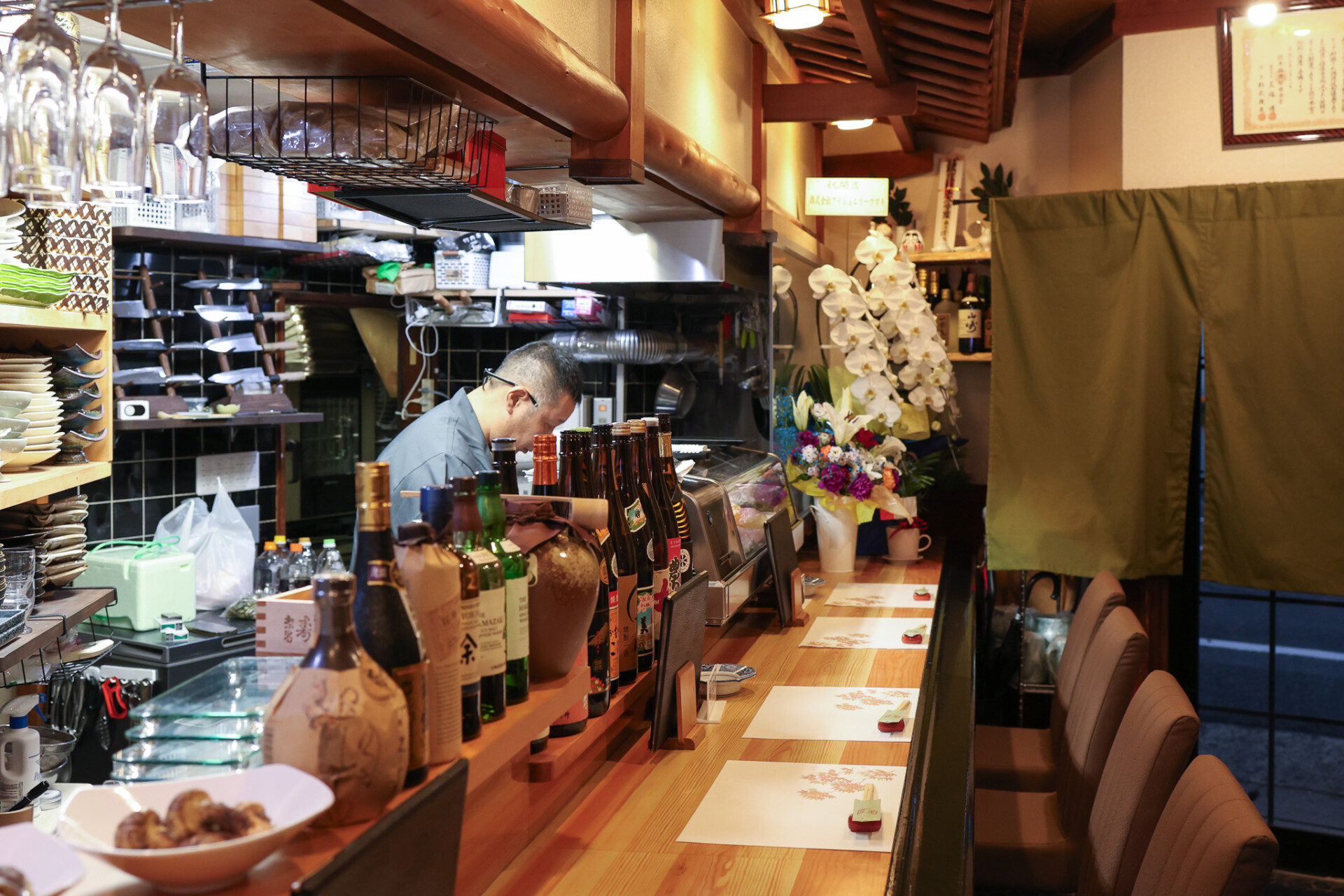
Large platters of food lined the counter, while the shelves at the back held a selection of sake and shochu.
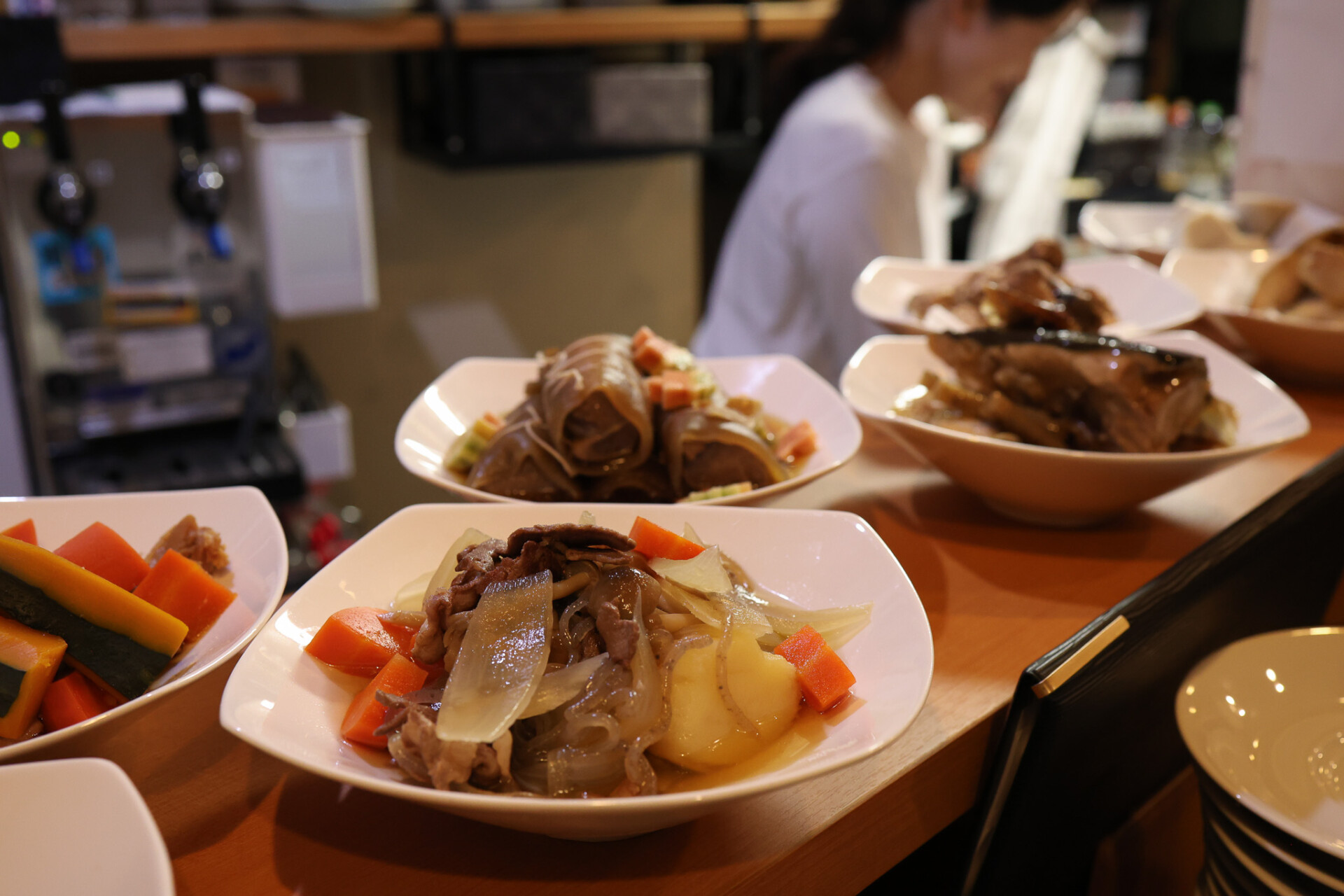
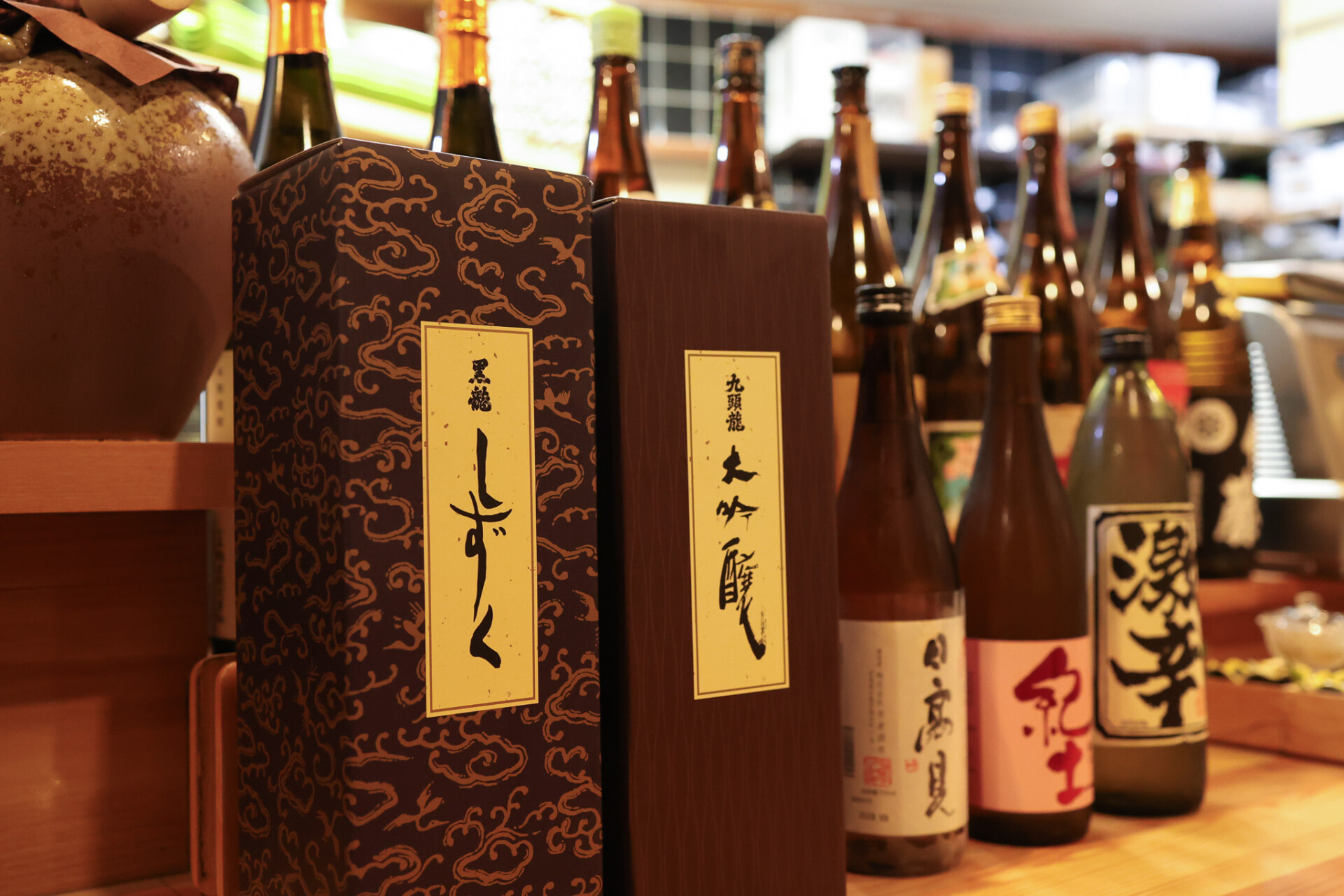
You can see into the kitchen and watch Ono finish each dish up close. He focuses intently on the food while briskly calling out to the staff. By contrast, his expression toward customers is warm, and the welcoming atmosphere he creates left a strong impression.
One of the charms of counter seating is that you can enjoy the time spent waiting for your food to be ready.
The tatami-room seating has chairs, and its entrance is separate from the counter seating entrance.
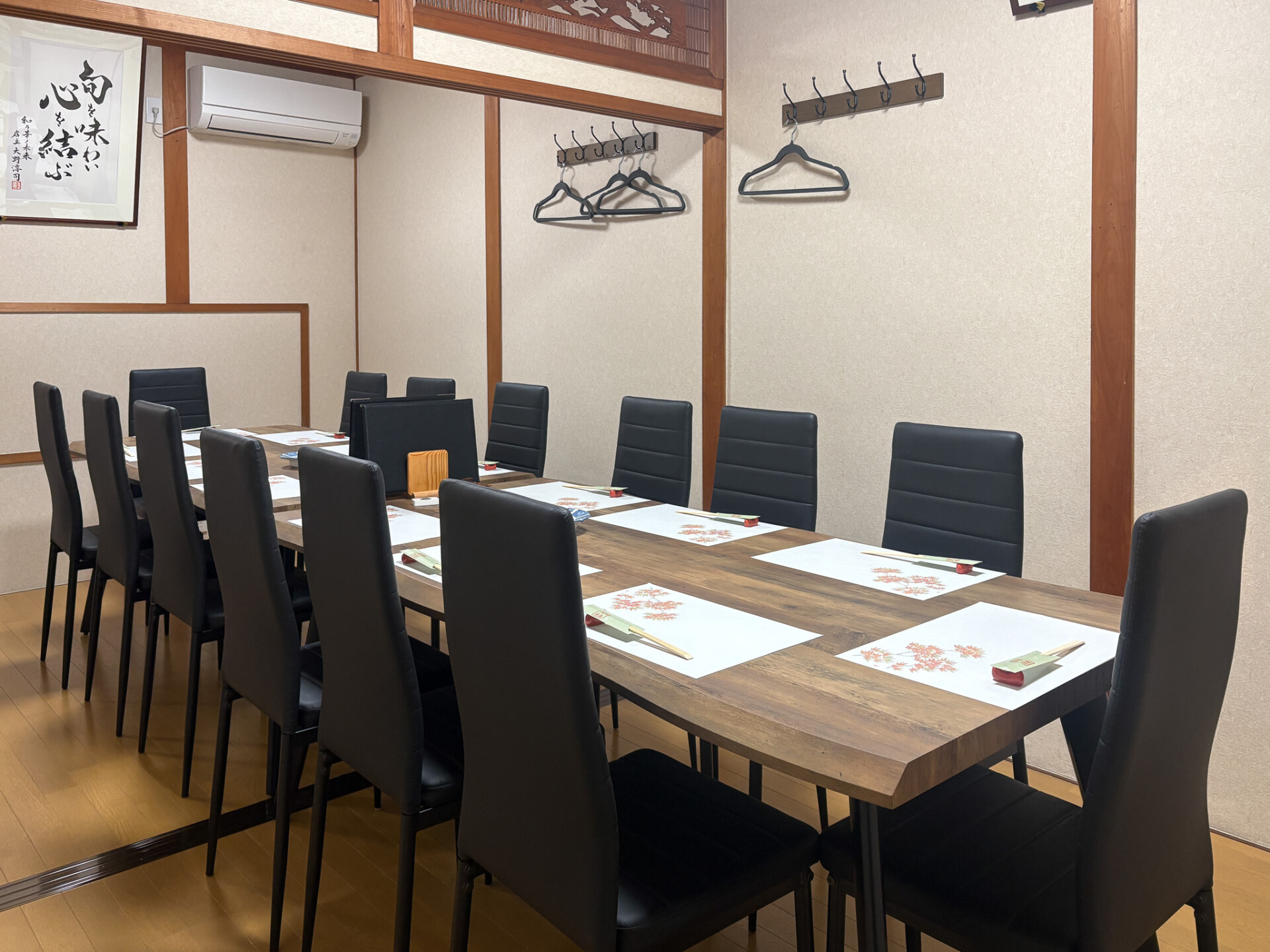
It looks suitable not only for meals with family and friends, but also for work gatherings and business dinners.
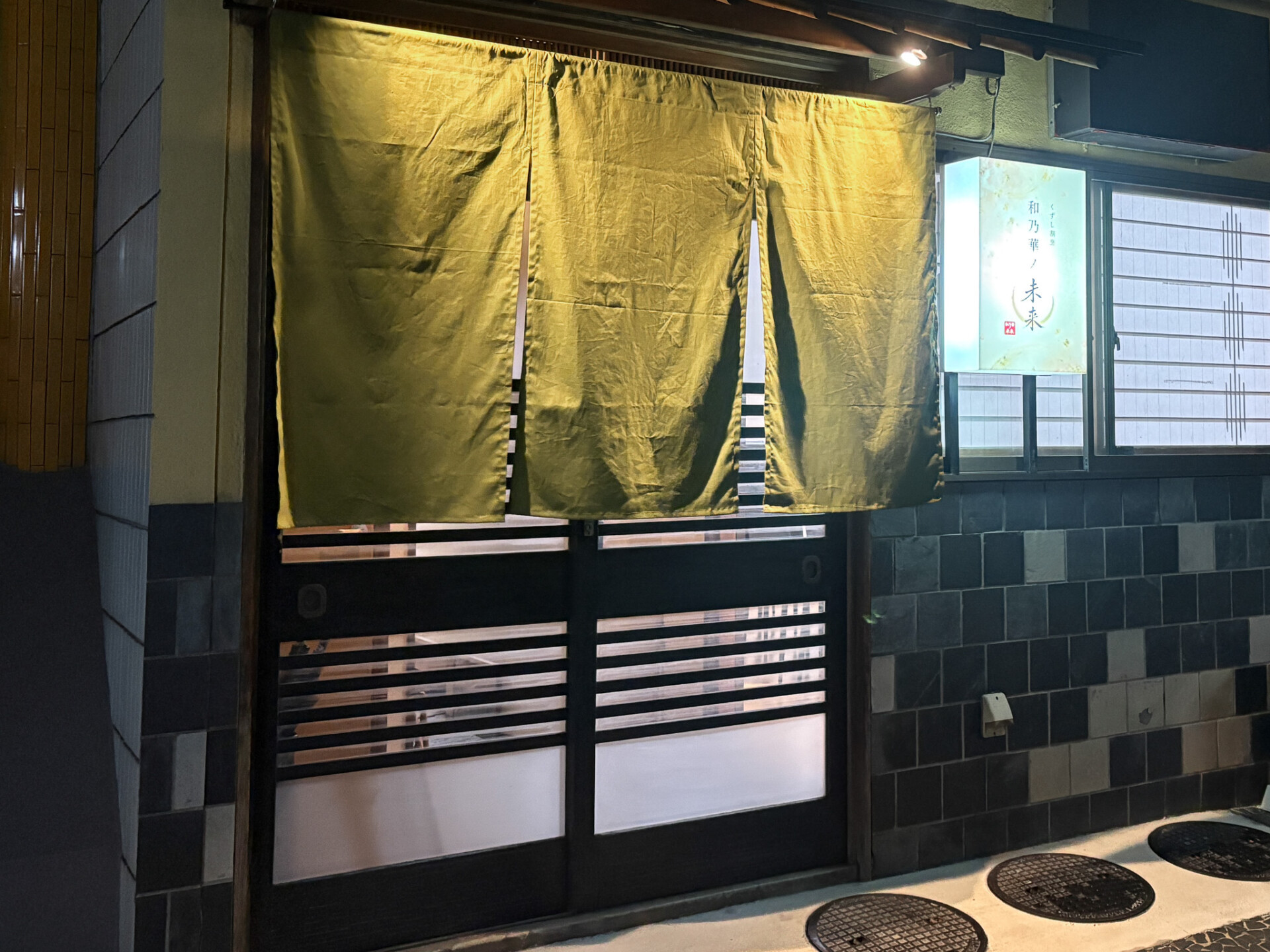
For kaiseki and other course meals, booking by the day before is recommended.
All-you-can-drink plans are also available for parties. Reservations and inquiries are accepted by phone or Instagram DM.
“Tokiwa,” a kaiseki course celebrating the seasons
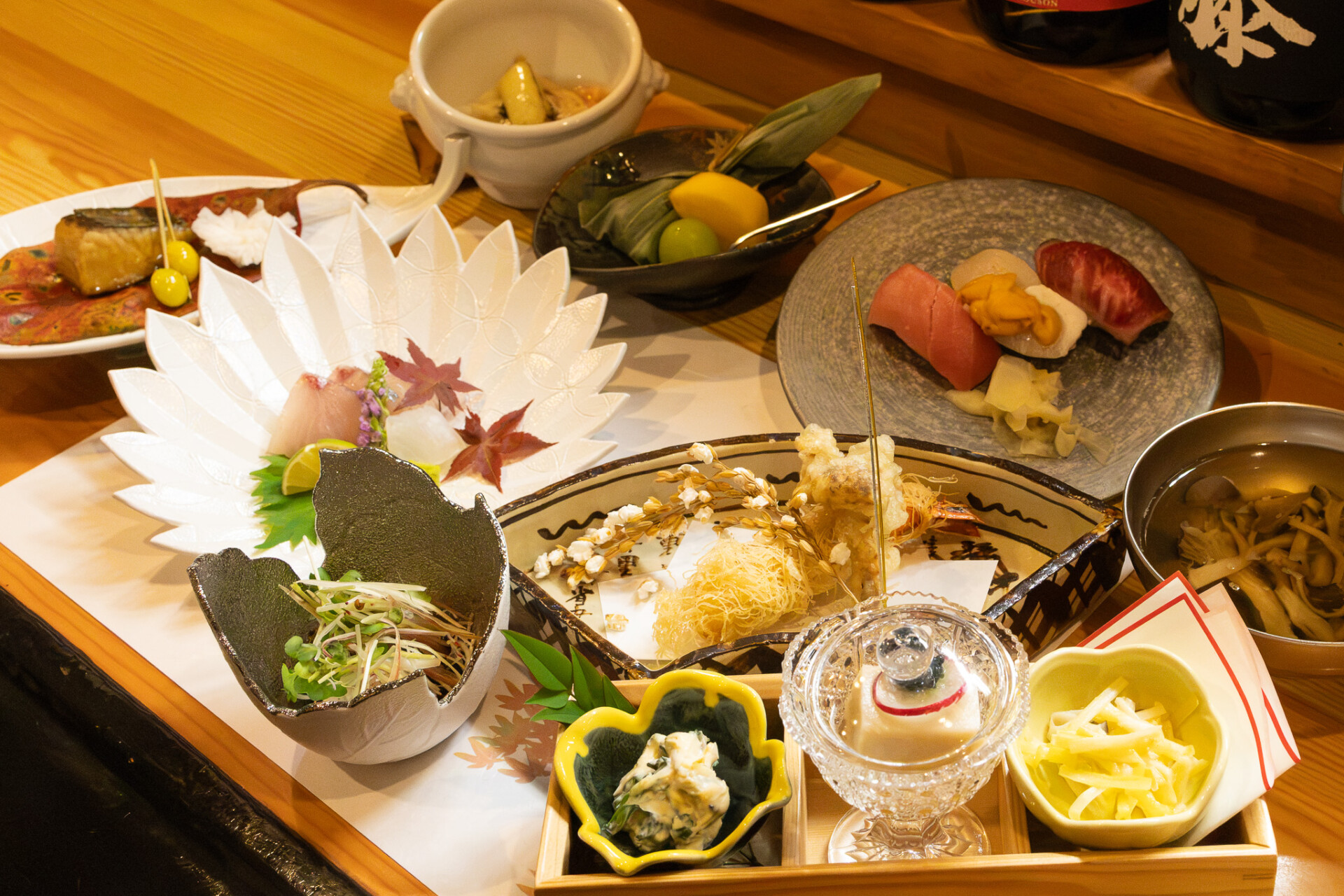
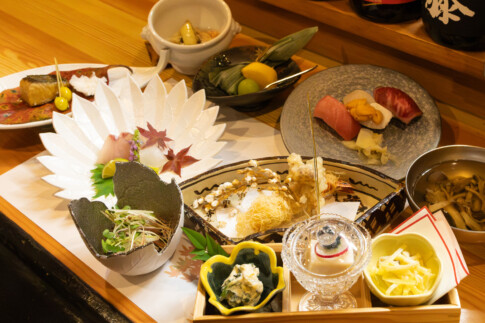
During our visit, we had the 5,500-yen “Tokiwa” course.
You can apparently discuss a course to suit your budget. The dishes change depending on the season and that day’s ingredients, so each visit brings the chance to enjoy seasonal flavors at their peak.
- Appetizer: Yellow chives and Shimotsui octopus with vinegared miso, homemade sesame tofu, chrysanthemum greens and shimeji mushrooms dressed with tofu
- Sashimi: Seared Spanish mackerel, assorted in the style of a seasonal harvest
- Sashimi: Two kinds, flounder and amberjack
- Simmered dish: Shimotsui sea bream and turnip simmered in seasoned broth, topped with crab sauce
- Grilled dish: Teriyaki Spanish mackerel
- Fried dish: Shrimp wrapped in fine noodles, matsutake tempura
- Meal: Red-vinegar nigiri sushi (medium-fatty tuna, Chiyagyu Beef, and pen shell topped with sea urchin)
- Soup: Clear soup with hiratake mushrooms from Nagano Prefecture
- Dessert: Bamboo-leaf-wrapped mochi with custard, muscat grapes, persimmon
All nine dishes show thoughtful touches in their tableware and presentation. Every one left a lasting impression, but here are five highlights.
A colorful appetizer served in glassware
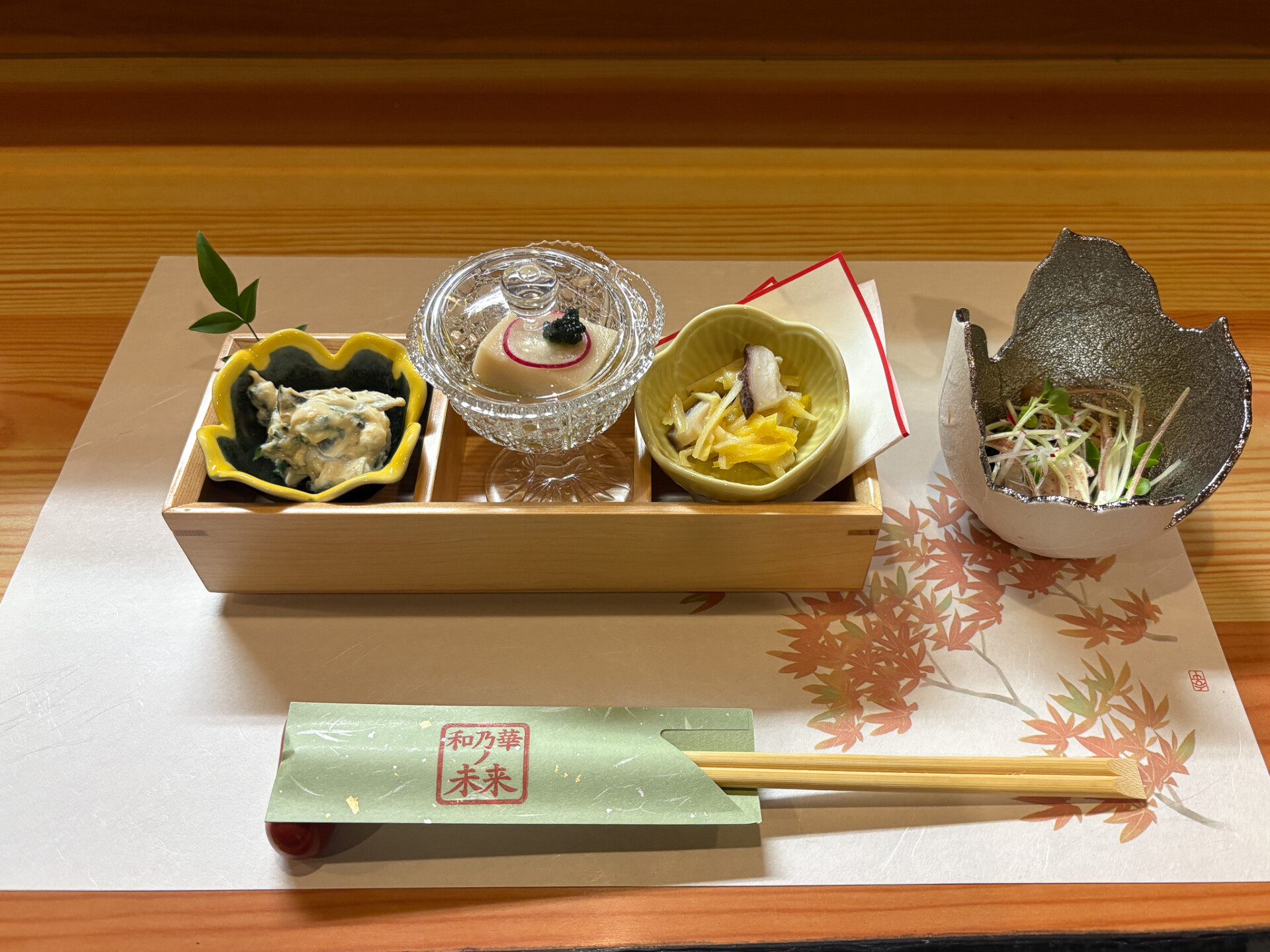
The wooden box held three appetizers of the day.
The sesame tofu came in a glass dish with a lid, building anticipation even before it was opened. I liked the vinegared miso dressing, which paired the crisp texture of the yellow chives with a sweet-and-sour flavor.
Sashimi presented in a petal-shaped dish
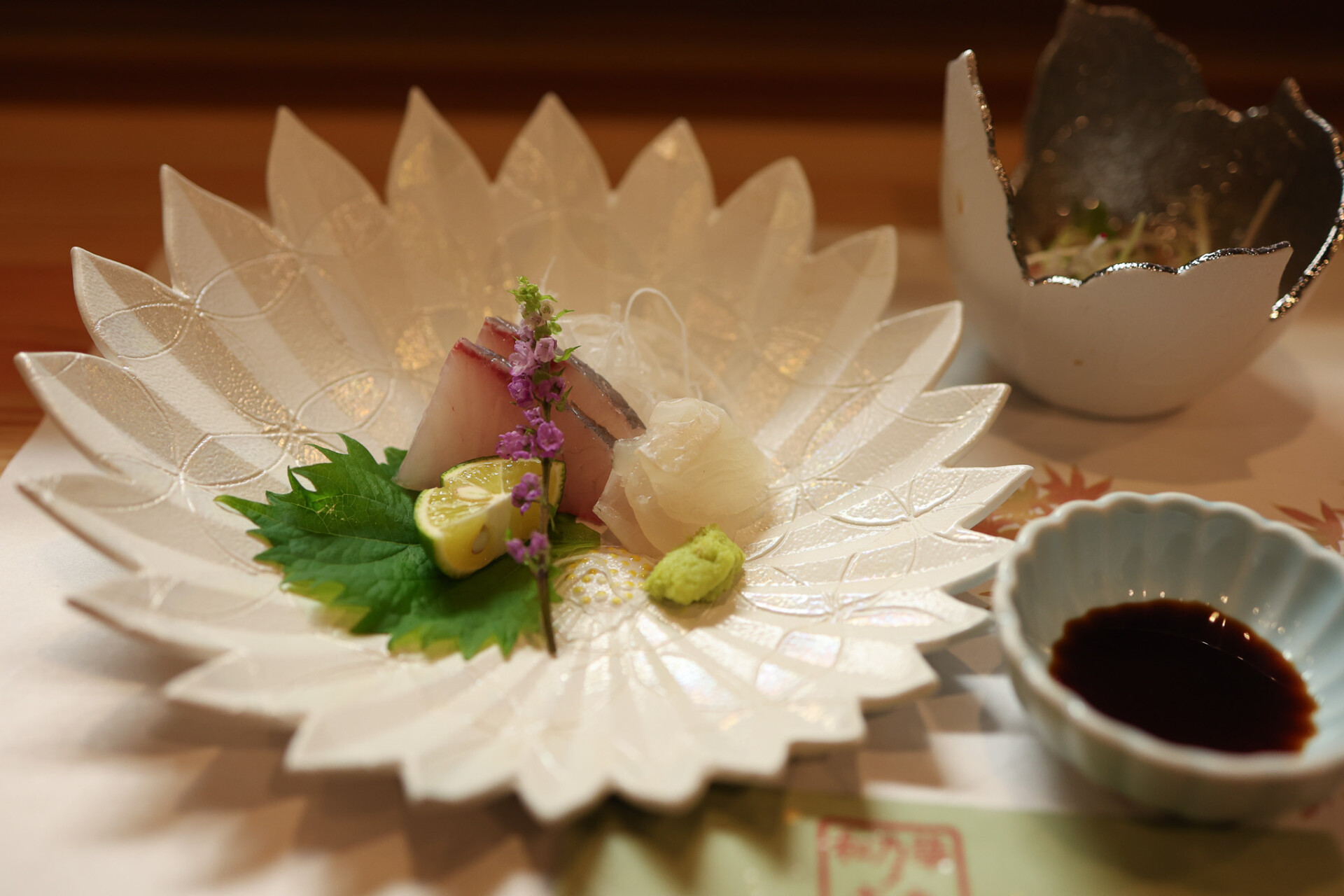
There were two sashimi dishes.
The first was seared Spanish mackerel arranged in the style of a seasonal harvest, served with garlic ponzu.
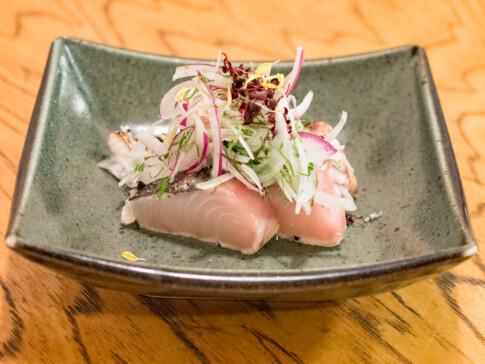
The second was a two-kind assortment of flounder and amberjack. The flesh was firm, with a satisfying bite. The white dish, reminiscent of flower petals, was accented by purple shiso flower spikes.
Fried dish wrapped in somen noodles
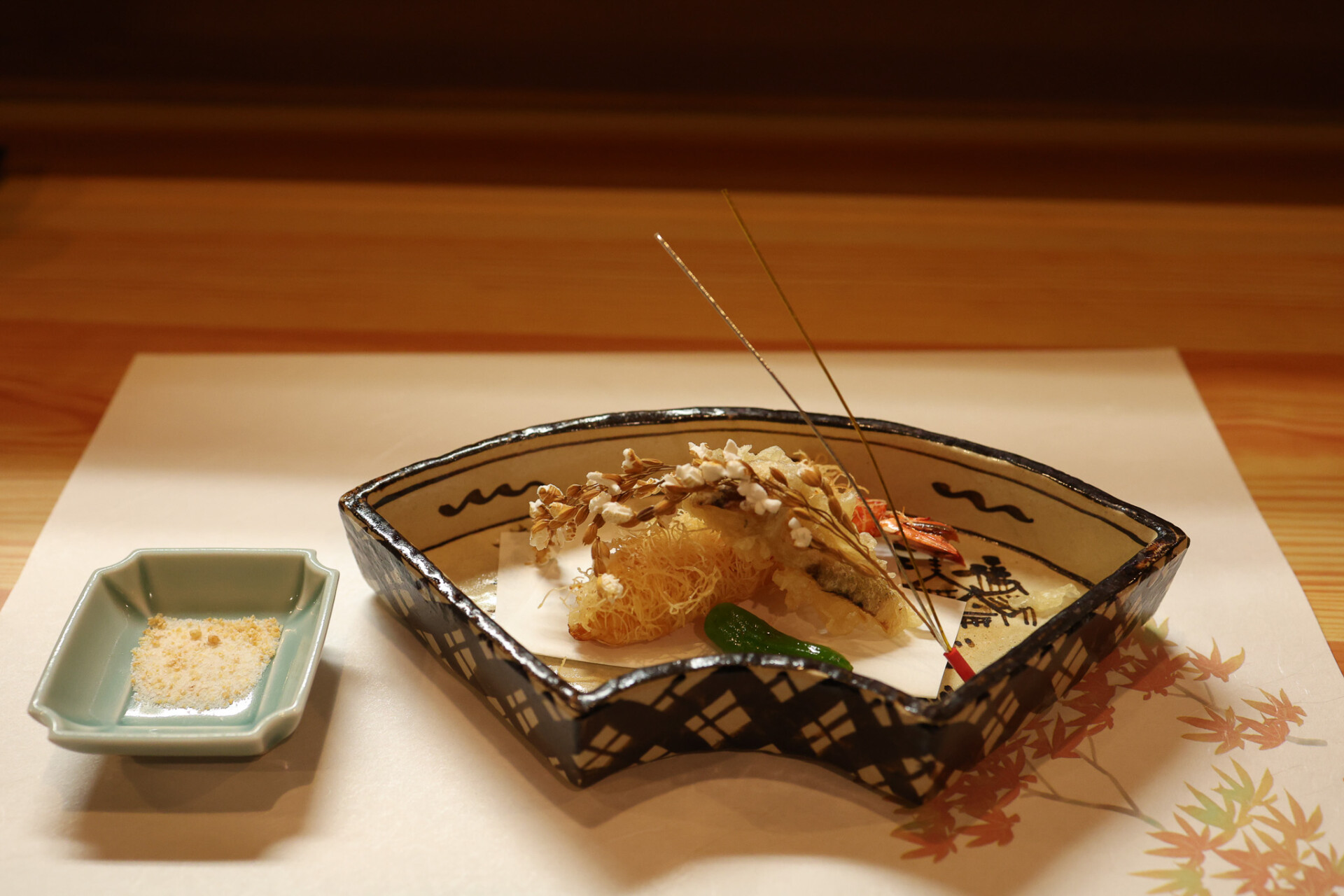
There were two dishes: shrimp wrapped in fine noodles and matsutake tempura.
With rice ears and gold and silver mizuhiki cords as garnishes, the fan-shaped dish was filled with the bounty of autumn.
The fine-noodle-wrapped shrimp was large and springy. The aroma of the matsutake tempura rose from the very first bite. In autumn, it is enjoyed with arare salt. The salt served alongside it apparently changes with the seasons.
Sushi made with red vinegar
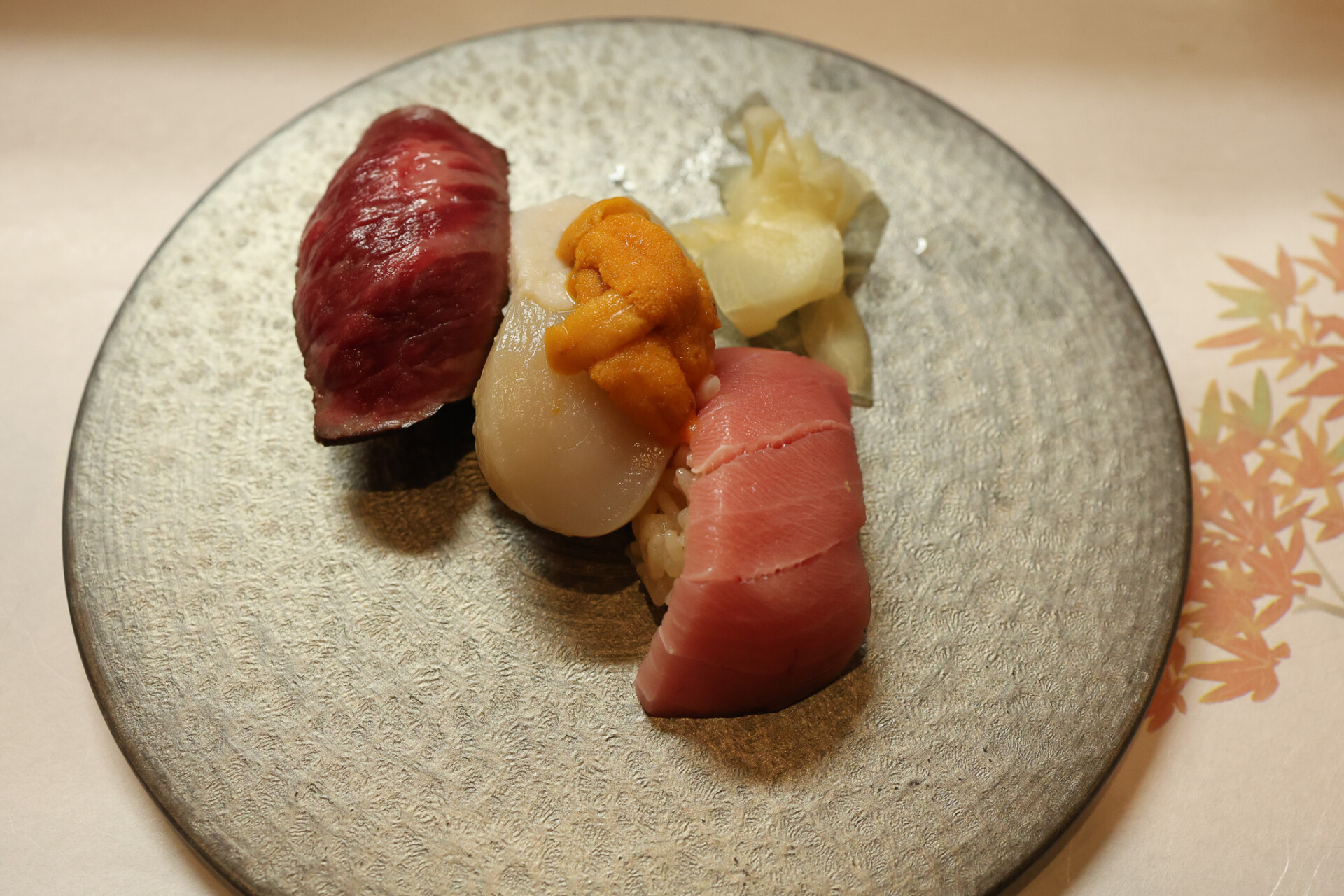
The meal featured red-vinegar sushi.
The medium-fatty tuna melted in my mouth, and the Chiyagyu Beef was tender with no unpleasant odor at all. The ark shell topped generously with sea urchin was a luxurious bite, its sweetness spreading through my mouth.
A gentle sweetness wrapped in bamboo leaves
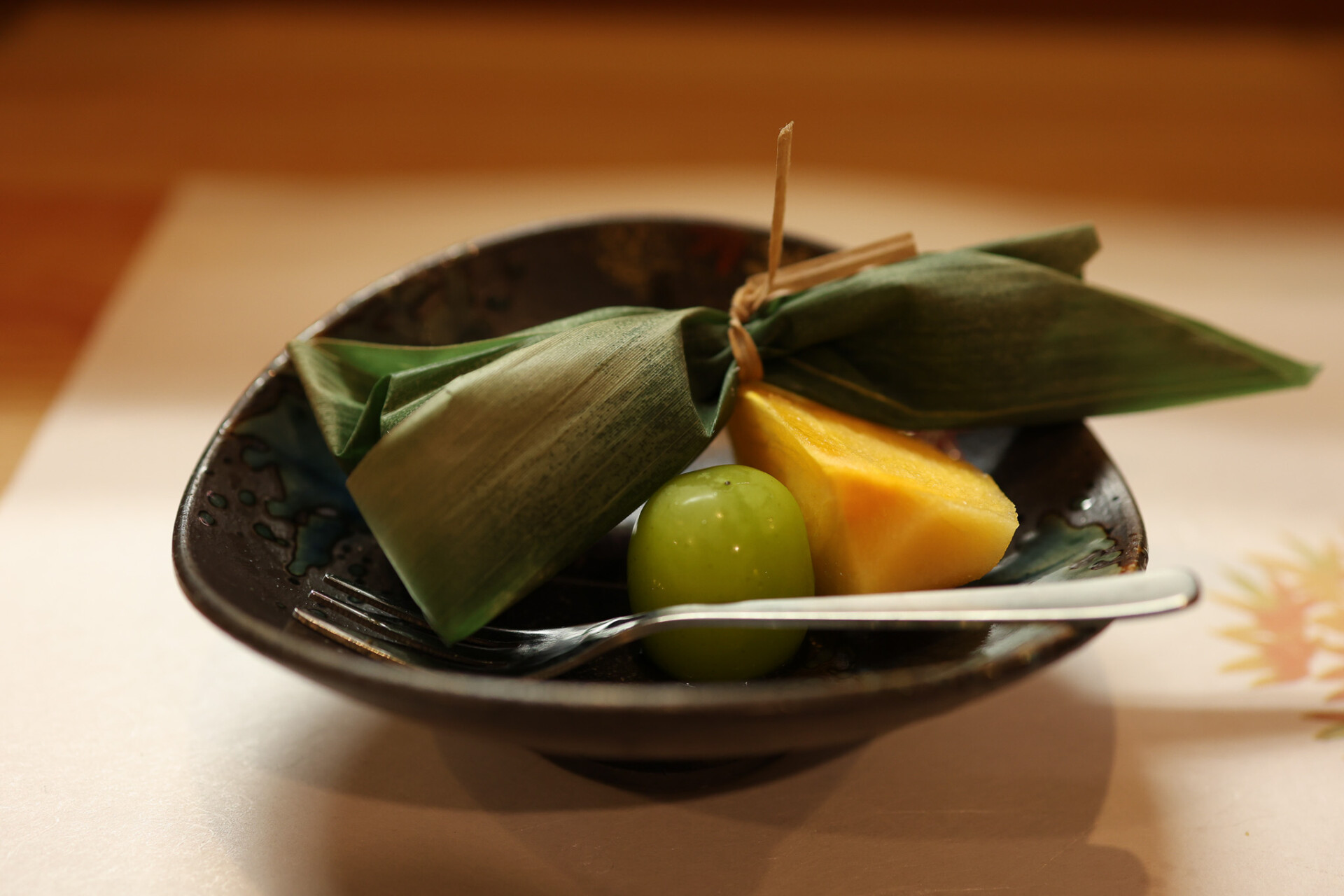
Dessert came last.
From its appearance wrapped in bamboo leaves, I thought it was chimaki, but inside was mochi filled with custard. Its refined sweetness melted in my mouth and, together with the fruit, brought the course to a gentle close.
Obanzai and à la carte dishes, too
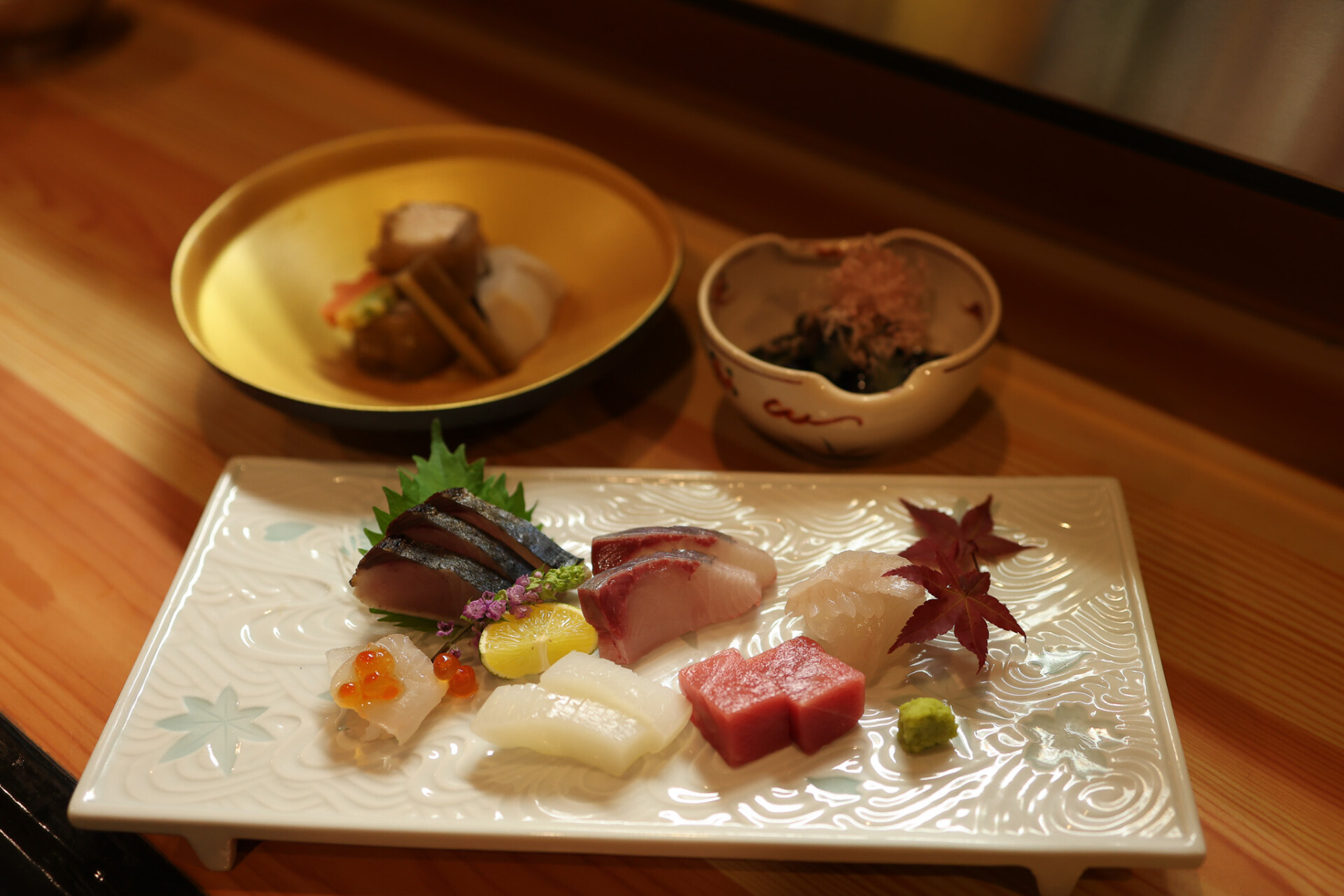
In addition to set courses, there is a wide selection of à la carte dishes. You can enjoy sashimi, grilled and fried dishes made with fish sourced that day, and sushi ordered by the pair, as well as homestyle obanzai such as meat and potatoes and yellowtail simmered with daikon.
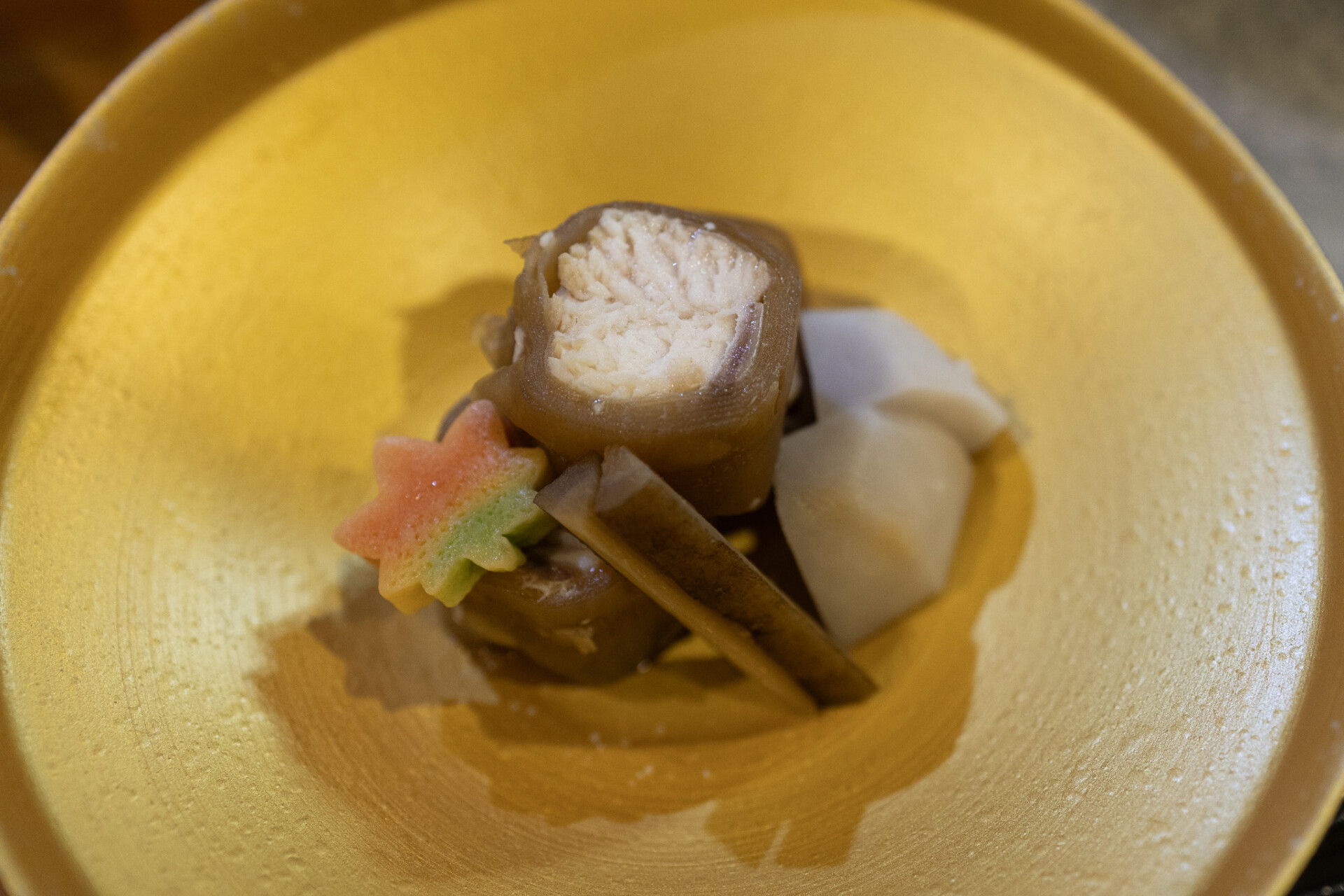
What surprised me most was the yellowtail and daikon.
Yellowtail and daikon is a familiar dish of yellowtail and daikon simmered together, but what they served here was yellowtail and daikon with the yellowtail inside the daikon. One bite of the well-seasoned daikon brought a smile to my face.
A menu ranging from sushi to dessert
Opening the menu, I found items named after the restaurant, such as “Mirai Curry” and “Mirai Pudding.” They also offer “Today’s Recommendations,” based on that day’s ingredients.
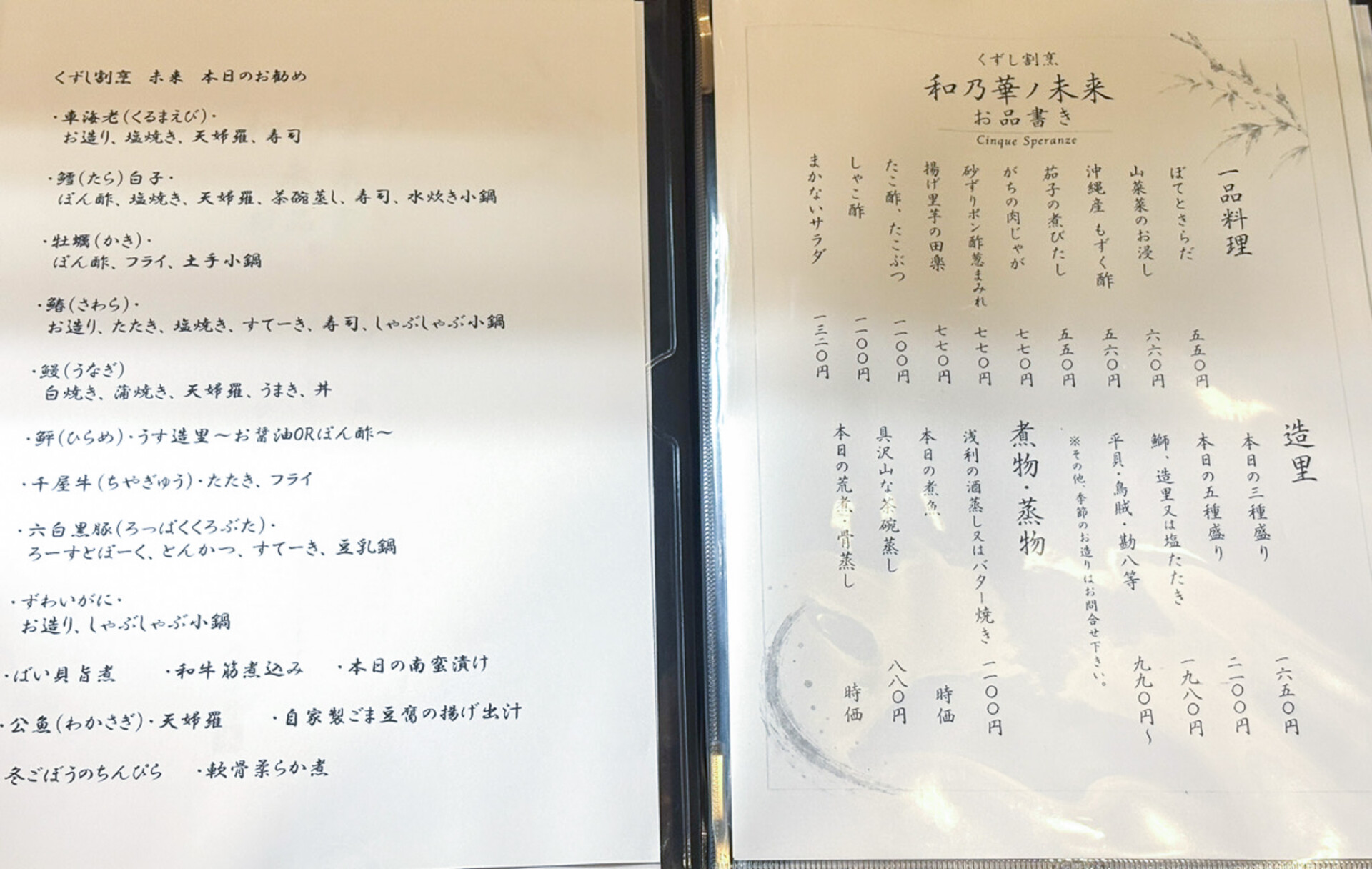
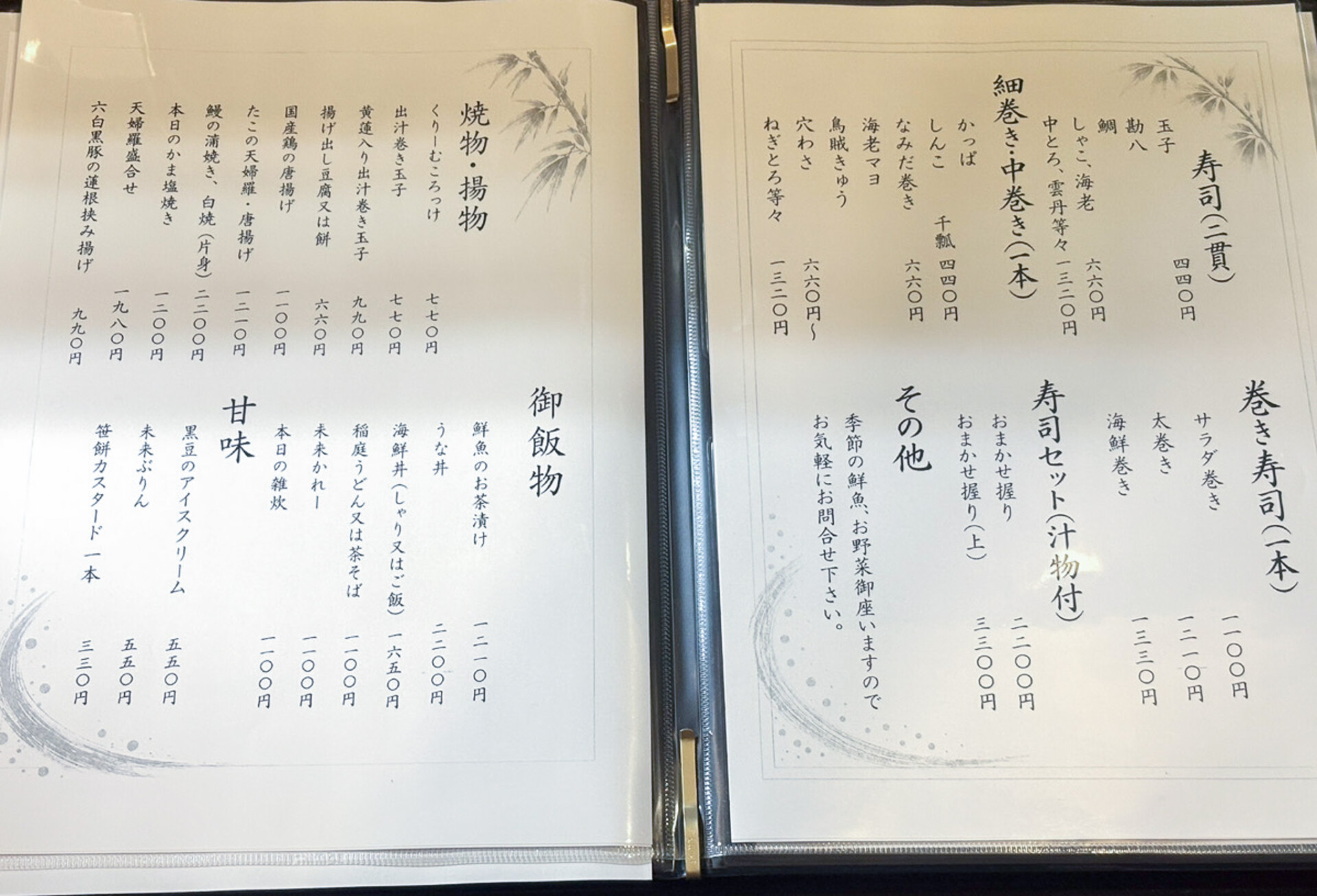
It also seems like a place to drop by on days when you want to enjoy just a little sake and sushi rather than a set course.
We asked Ono about what inspired him to become a chef and his feelings about the restaurant, as he puts his heart into every dish.
Kuzushi Kappo Wanoka no Mirai Information
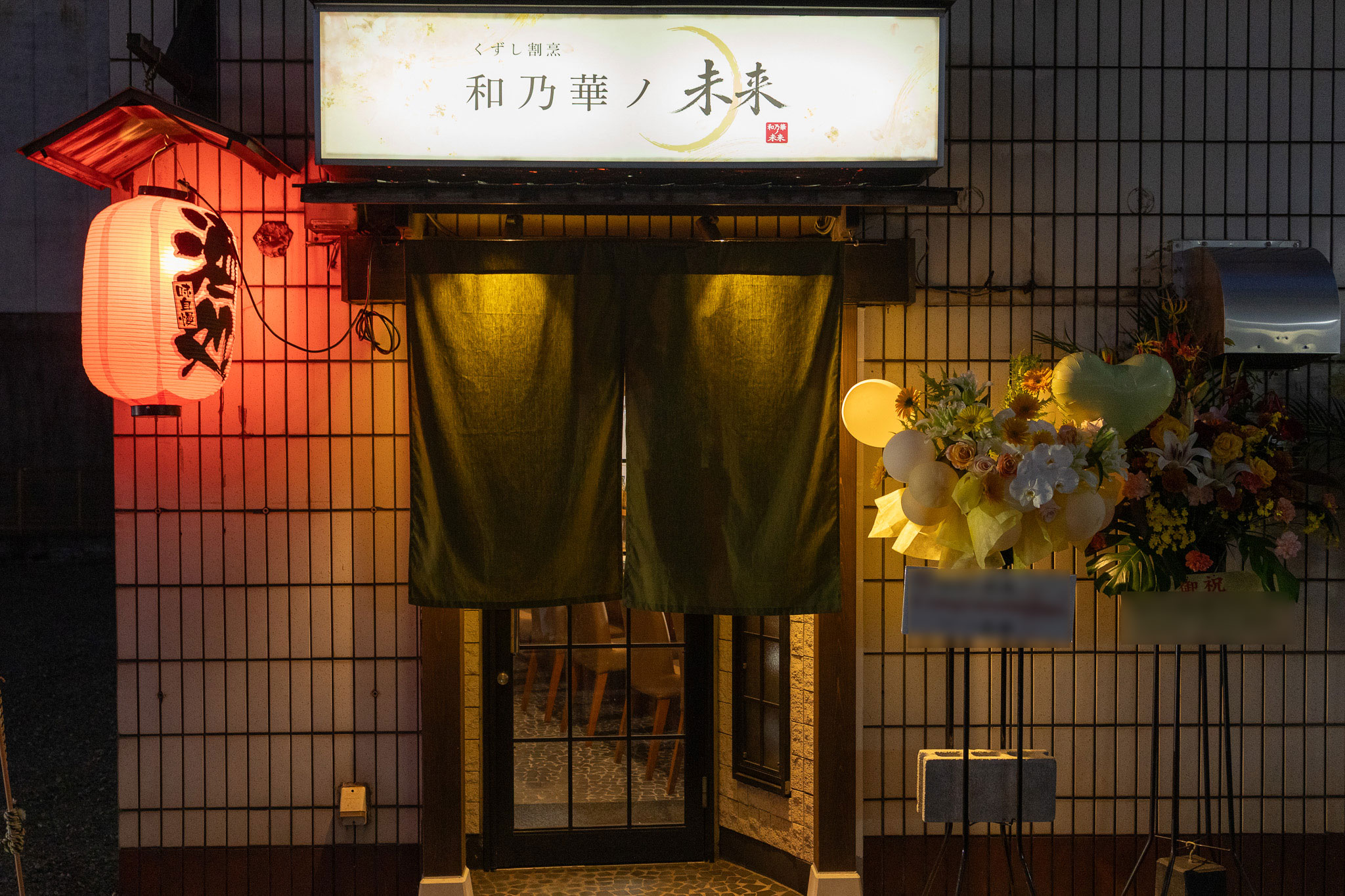
| Name | Kuzushi Kappo Wanoka no Mirai |
|---|---|
| Address | 12-17 Mizushima Nishitokiwa-cho, Kurashiki City, Okayama Prefecture |
| Contact | 086-484-2030 |
| Parking | None |
| Hours | 5:30 p.m.–11:00 p.m. |
| Closed | Irregular holidays |
| Payment methods |
|
| Reservations | Accepted |
| Seating | 20 seats Counter: 6; tatami room (chairs): 14 |
| Restroom | Western-style toilet |
| Website | Kuzushi Kappo Wanoka no Mirai |














Kuzushi Kappo Wanohana no Mirai