
Kurashiki Central Library and the Museum of Natural History are right next to Kurashiki City Art Museum, just beside the Bikan Historical Area. Did you know that these two facilities will be moving to different locations?
How will the sites be used after the facilities move?
In fact, nothing has been decided yet. Kurashiki City plans to formulate a basic concept in fiscal 2027 and is now preparing to consider the matter together with residents.
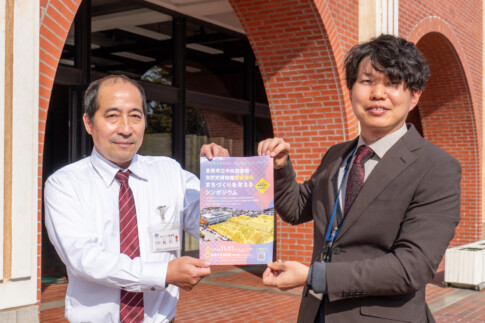
As a first step, the “Symposium on Community Development After the Relocation of Kurashiki Central Library and the Museum of Natural History” will be held on Sunday, November 22, 2026, in the auditorium of Kurashiki City Art Museum.
This article introduces the symposium program and the thoughts behind it, as shared by the staff of Kurashiki City’s Community Development Promotion Division, who planned the event.
The information presented is current as of the article’s publication in November 2026. Please note that it may differ from current information.
What Is the “Symposium on Community Development After the Relocation of Kurashiki Central Library and the Museum of Natural History”?
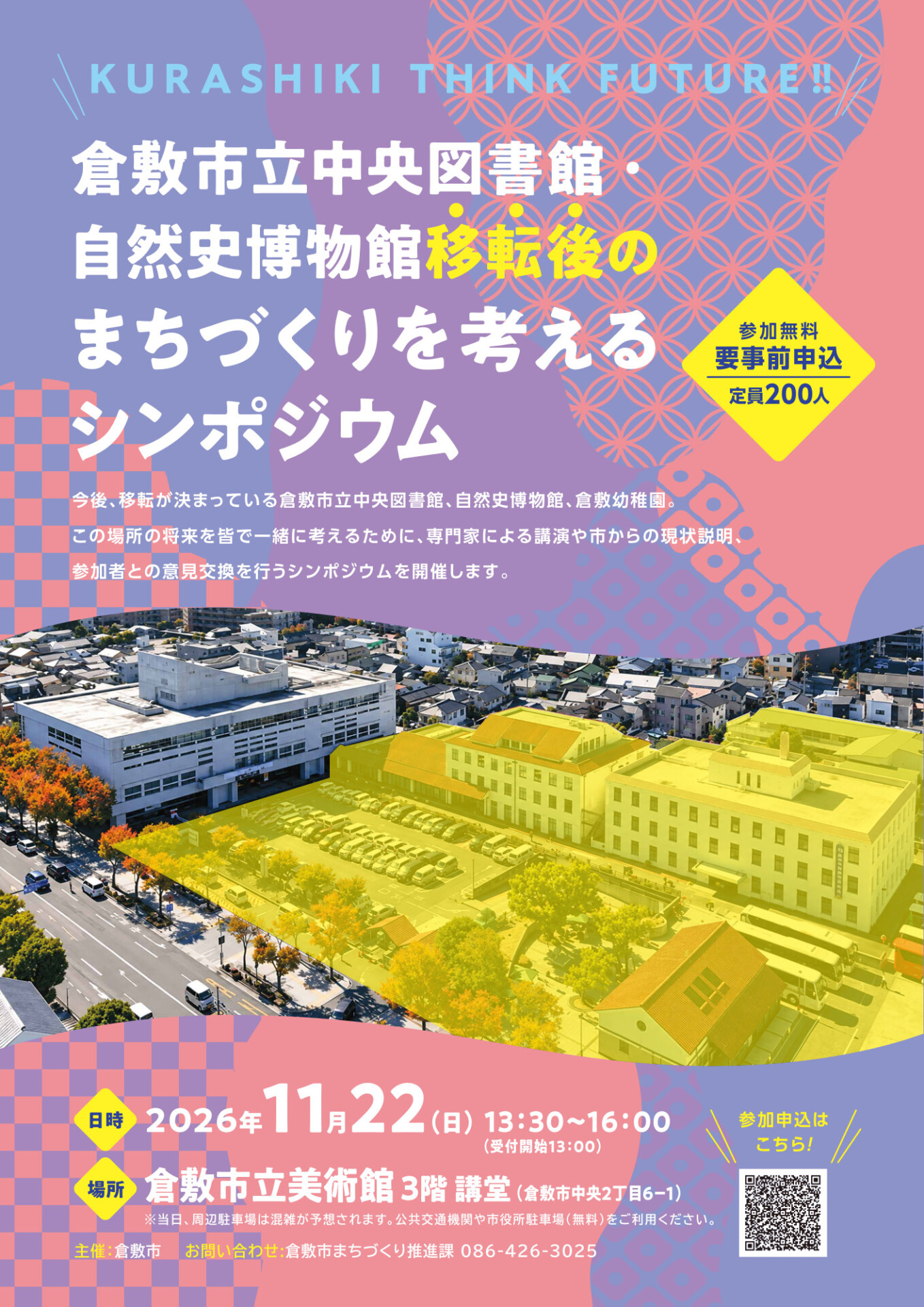
The Symposium on Community Development After the Relocation of Kurashiki Central Library and the Museum of Natural History is an event where everyone can consider together the future of the sites of Kurashiki Central Library, the Museum of Natural History, and Kurashiki Kindergarten, all of which are scheduled to move. The program includes talks by experts, an update on the current situation from the city, and an exchange of views with participants.
The symposium will be held on Sunday, November 22, 2026, from 1:30 p.m. to 4:00 p.m. (registration begins at 1:00 p.m.) at the auditorium on the third floor of Kurashiki City Art Museum. Admission is free, and capacity is 200 people. Advance registration is required.
Area Covered
The areas covered are as follows:
- Kurashiki Central Library
Relocation to the area east of the main Kurashiki City Office building has been decided - Kurashiki Museum of Natural History
Relocation to the grounds of Life Park Kurashiki has been decided - Kurashiki Kindergarten
Relocation to the grounds of Kurashiki Municipal Nishi Elementary School has been decided - Municipal Central Parking Lot, tourist rest area, and bus-only parking lot
Undecided
This area could be considered the gateway to the Bikan Historical Area and has the feel of a tourism hub. However, it also contains facilities for residents, such as the library, so how the sites are used after the move is an important topic for Kurashiki City residents as well.
The area was home to an elementary school from the Meiji era through the mid-Showa era.
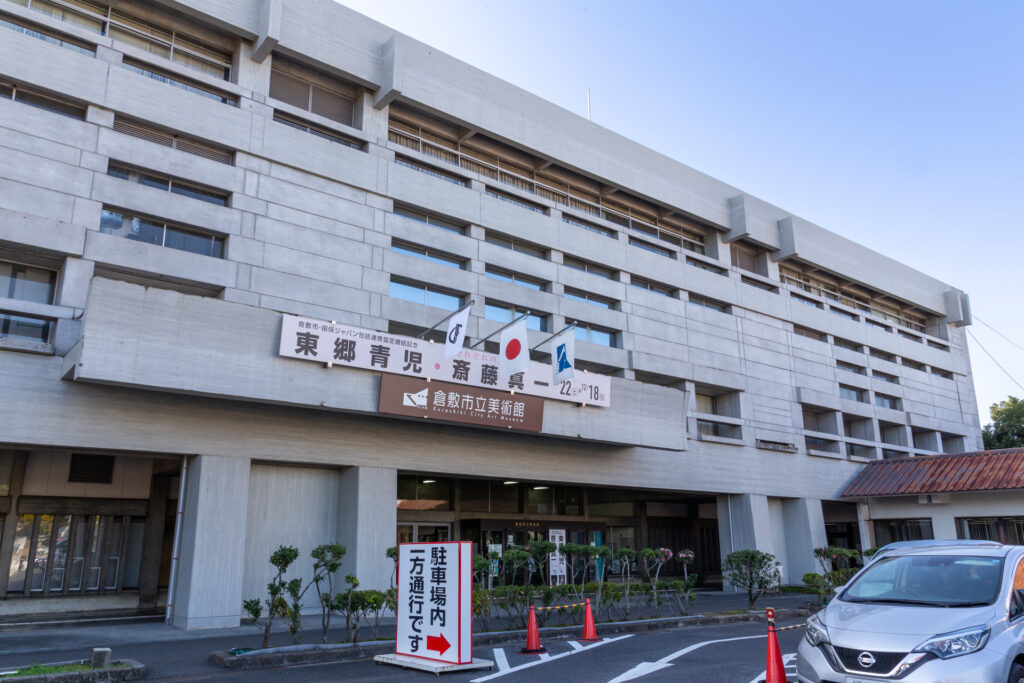
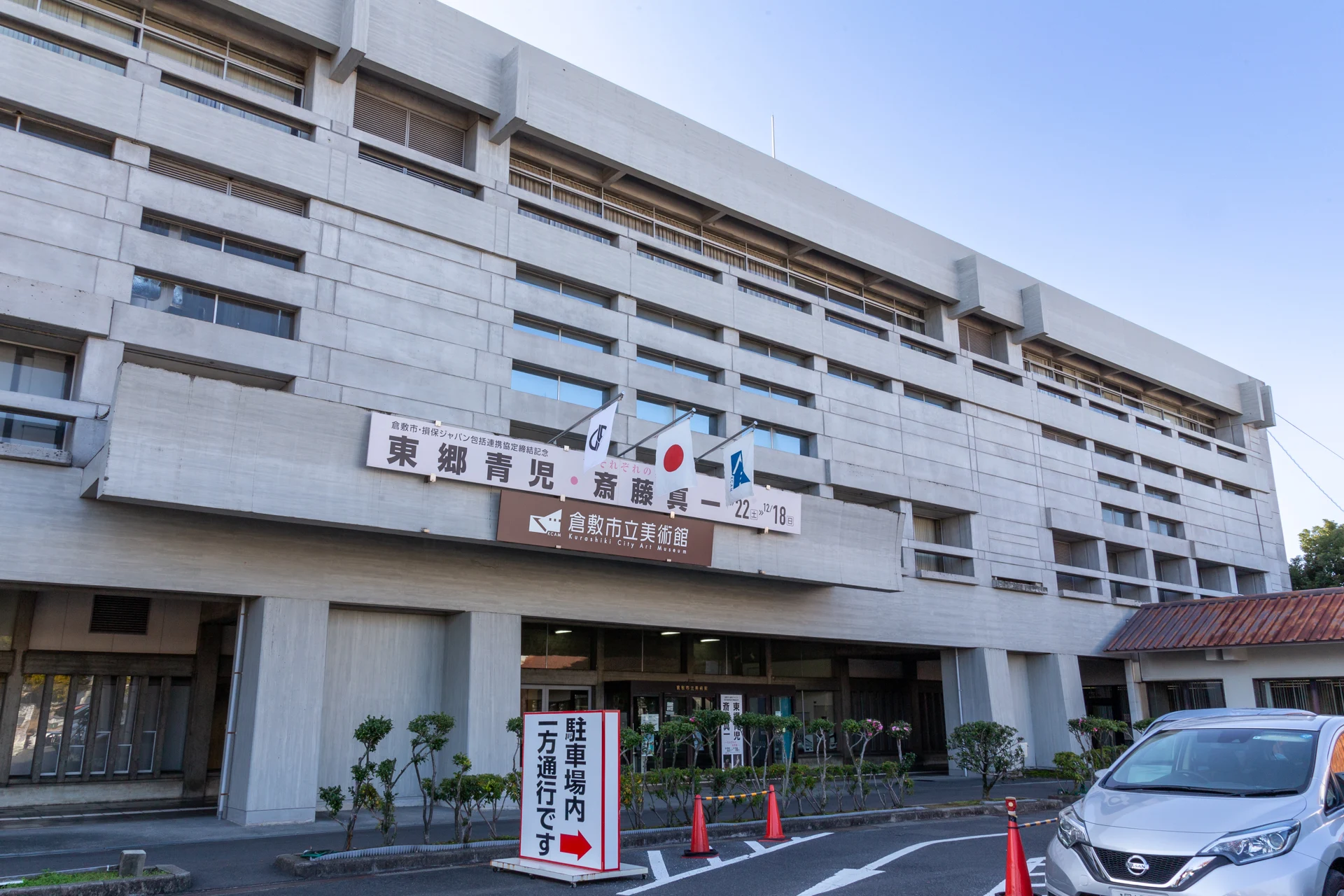
The city hall was built here in 1960 (in what is now Kurashiki City Art Museum). After the city hall moved to its current location, the art museum, library, and Museum of Natural History opened in 1983. A cultural facilities zone was established, and it remains so today.
Incidentally, the current Kurashiki City Art Museum was designed by architect Tange Kenzo, known in Japan as “Tange of the World.”
At the time, Tange Kenzo planned to create a “Civic Plaza” north of the city hall (the area under consideration this time), with a “public hall” facing the building. The plan was never realized, but it shows that the site was considered an important place for residents even in 1960.
Program for the Day
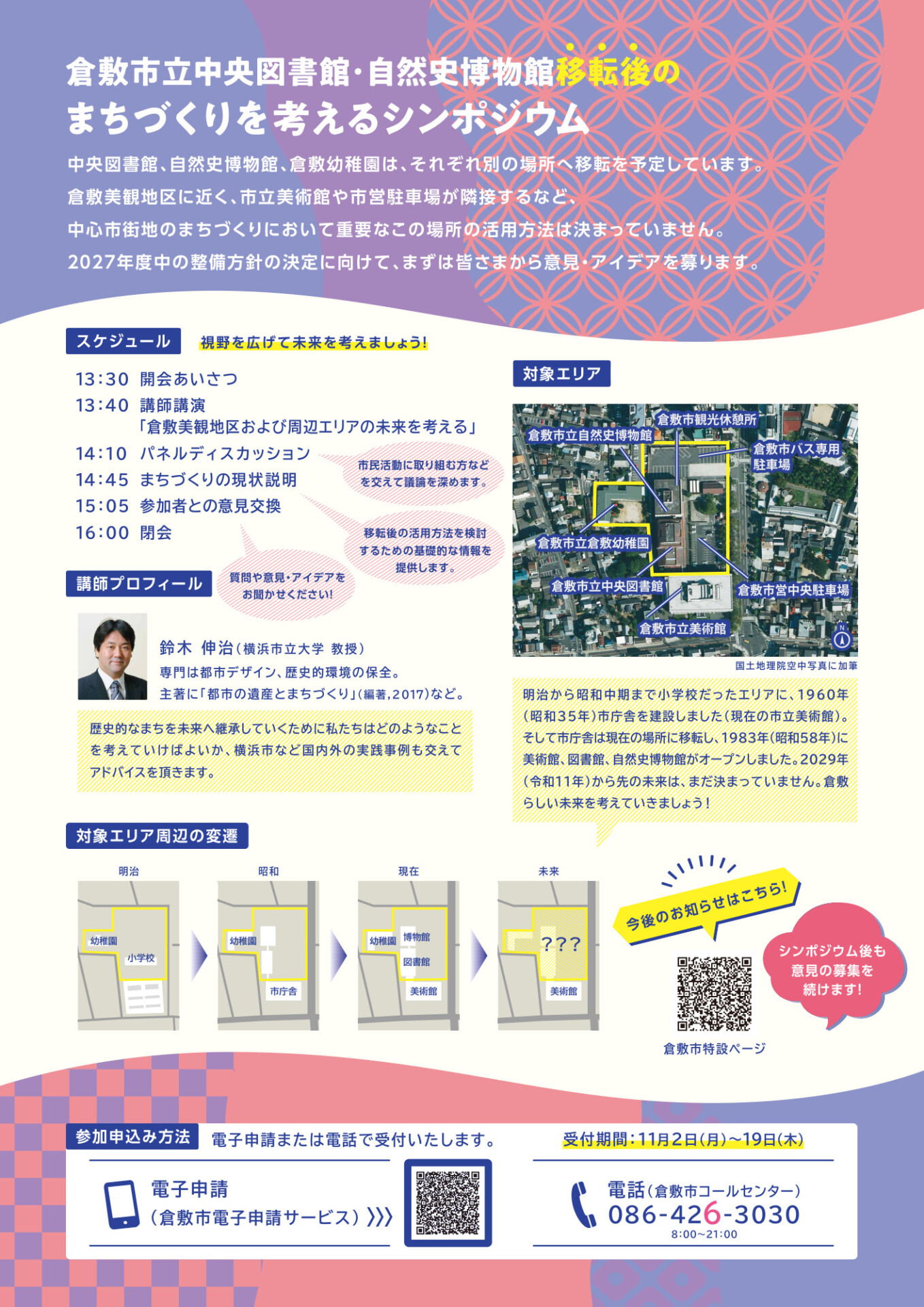
The program for the day is as follows:
- Opening remarks (1:30 p.m.)
- Talk by the guest speaker: “Considering the Future of the Bikan Historical Area and Its Surroundings” (1:40 p.m.)
- Panel discussion (2:10 p.m.)
- Update on community development (2:45 p.m.)
- Exchange of views with participants (3:05 p.m.)
- Closing (4:00 p.m.)
The speaker is Suzuki Nobuharu, a professor at Yokohama City University. His specialties are urban design and the preservation of historic environments. Drawing on practical examples from Yokohama and elsewhere in Japan and overseas, he will discuss what we should consider to pass historic towns on to future generations.
Rather than the usual format of experts speaking together, the panel discussion is planned as an opportunity to hear from young people, including high school and university students, who are interested in this area.
Exchange of Views with Participants
The second half of the symposium will include time for an exchange of views with participants. According to Kurashiki City, it will be an opportunity to:
- Share views without trying to combine or consolidate them into a single opinion
- Avoid judging or dismissing the ideas raised
- Listen broadly to what each person thinks and share reactions by asking, “What made you think that?”
- Offer views by raising hands, with a facilitator helping the conversation flow
Interview with Kurashiki City’s Community Development Promotion Division
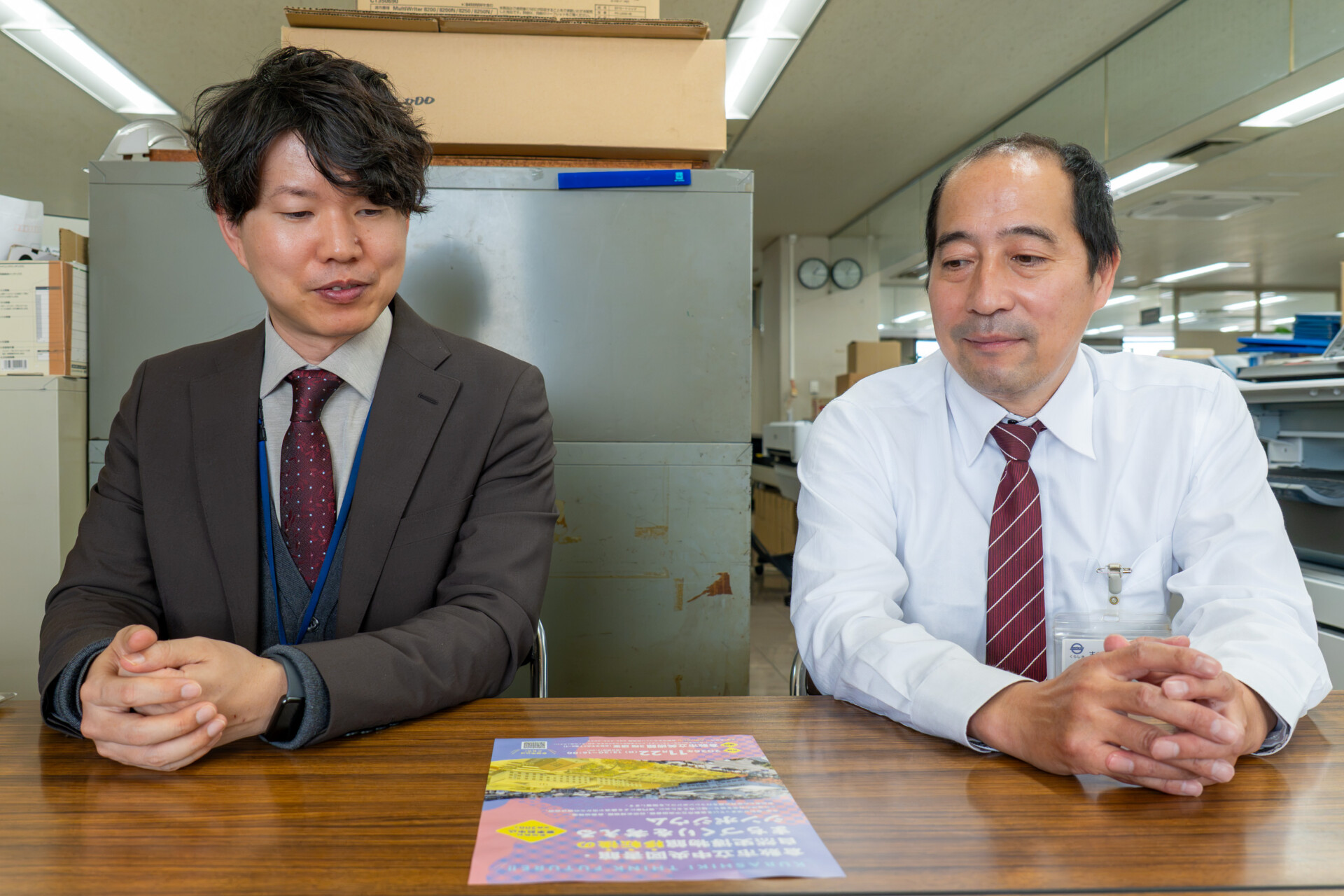
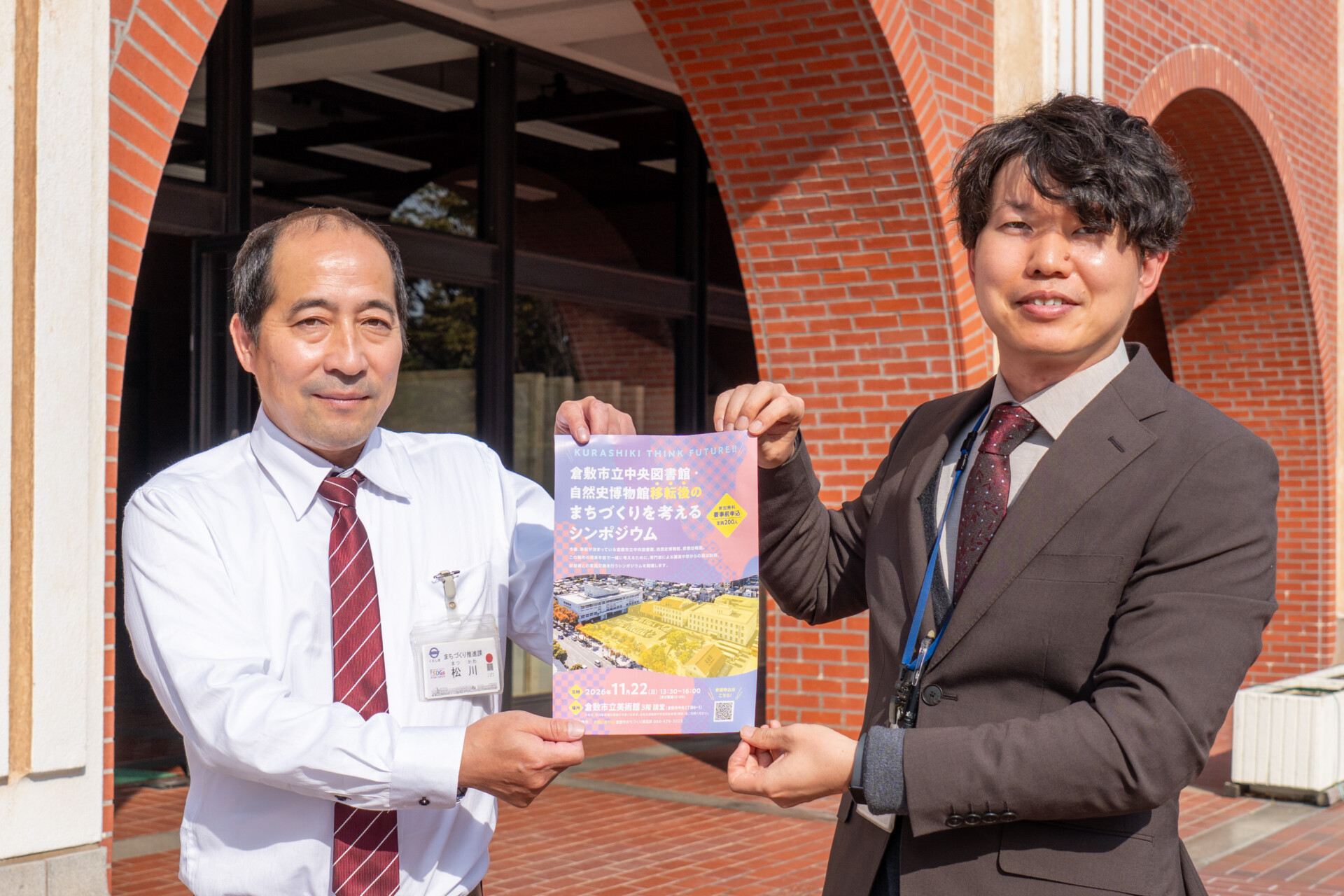
We spoke with Matsukawa Kazuhiro and Kuwata Kyohei of Kurashiki City’s Community Development Promotion Division, who planned the symposium.
Background to Planning the Symposium
Could you tell us what led to the decision to hold the symposium?
Matsukawa (titles omitted)
With population decline in mind, Kurashiki City is working to reduce the total floor area of public facilities and reorganize and consolidate facilities in order to create a sustainable society.
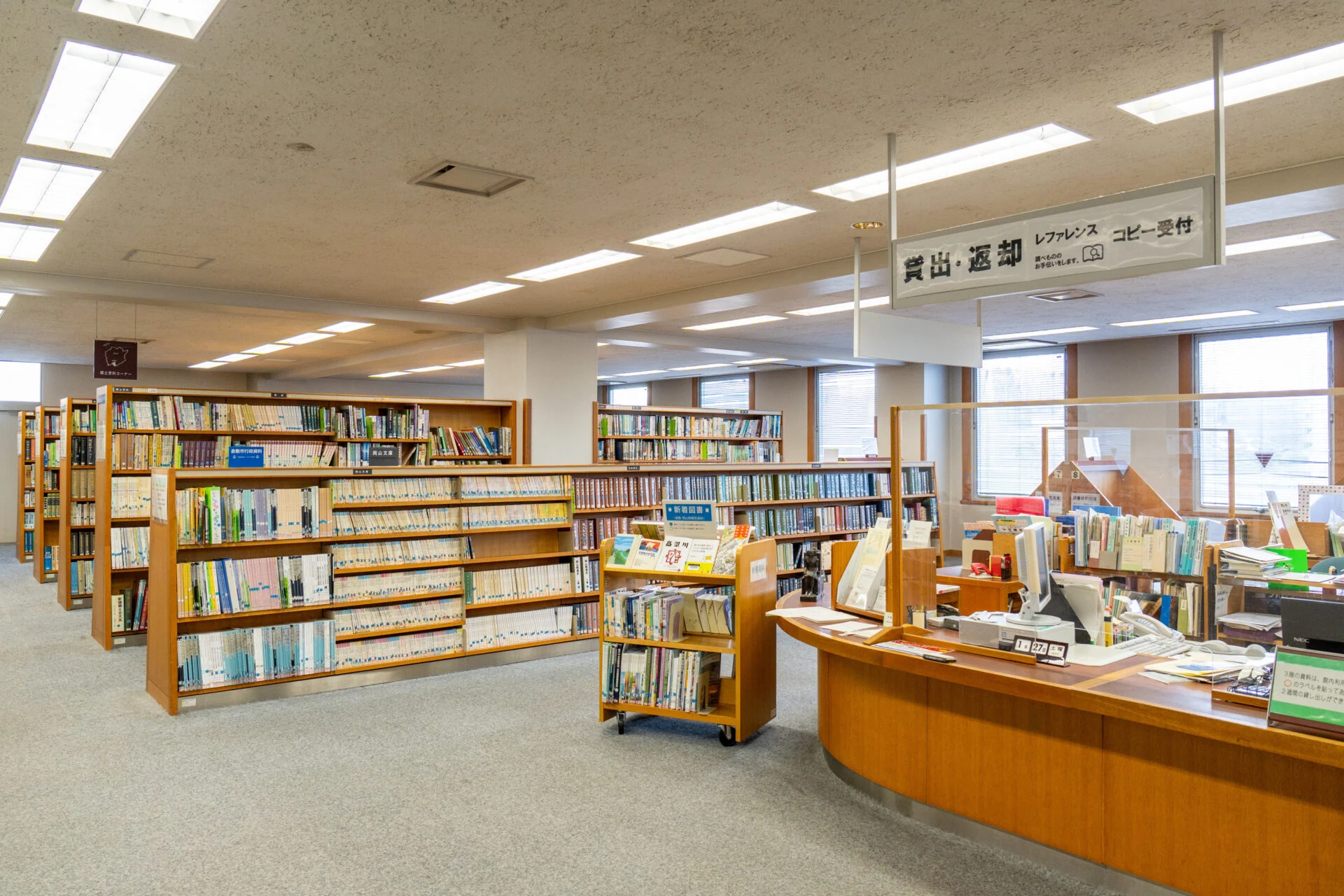
Kurashiki Central Library will move to a complex facility east of the main city hall building, while the Museum of Natural History will move to a complex facility at Life Park Kurashiki in Mizushima. The neighboring Kurashiki Kindergarten is also scheduled to move into a complex at Kurashiki Municipal Nishi Elementary School.
How should the sites be used after the move? What would be good to have here? Rather than having the city decide on a policy first, we want to hear a wide range of views from residents and other stakeholders, and use them to help us consider how the sites should be used in the future.
This is an extremely important location, as it is also an entrance to the Bikan Historical Area.
The city cannot make the decision on its own. That is why we felt it was necessary to first hear a variety of opinions.
Kuwata (titles omitted)
This is a large area, and once plans get underway to a certain extent, the opportunity to express opinions may disappear altogether.
A public comment period after decisions have been made may gather opinions, but in practice it would be difficult to use them to go back to square one. We felt that the earliest stage would be the best time for people to share their views freely, so we decided to hold the symposium now, while nothing has been decided.
However, we plan to share information on the day about functions the city considers essential, such as parking.
What Happens After the Symposium
Will there be an opportunity for people who cannot attend the symposium to share their views?
Kuwata
Some people may be unable to attend because of scheduling conflicts; others may attend but have limited time to speak, or may have thoughts they would like to share but find it difficult to participate.
This symposium is the kickoff for gathering opinions from this point forward. The main process of collecting views will begin afterward.
The symposium proceedings are scheduled to be posted on the website at a later date.
After the symposium, there will be about two months to submit opinions, until around January next year (2027). Submissions will be accepted through the website and by mail. The views collected will be organized and categorized, and workshops will be held to explore them in greater depth.
Matsukawa
After that, during fiscal 2027, we hope to present residents with a basic concept for how the former sites will be used.
Finally, do you have a message for residents?
Kuwata
Since it is called a symposium, you might imagine that you will be made to listen to a difficult discussion. But the focus is on an area familiar to you all.
The library and Museum of Natural History are there now, but before that it was the city hall, and before that it was an elementary school. We want this to be a place where everyone can enjoy thinking together about what next step this site, which has grown alongside the town, will take. We would be glad if you joined us without feeling you need to be formal.
Matsukawa
This central urban area is important to Kurashiki City. We hope the symposium will inspire you to feel a stronger attachment to Kurashiki. It will not be a heated debate, so we would be grateful if you came along and enjoyed it.
From the Writer
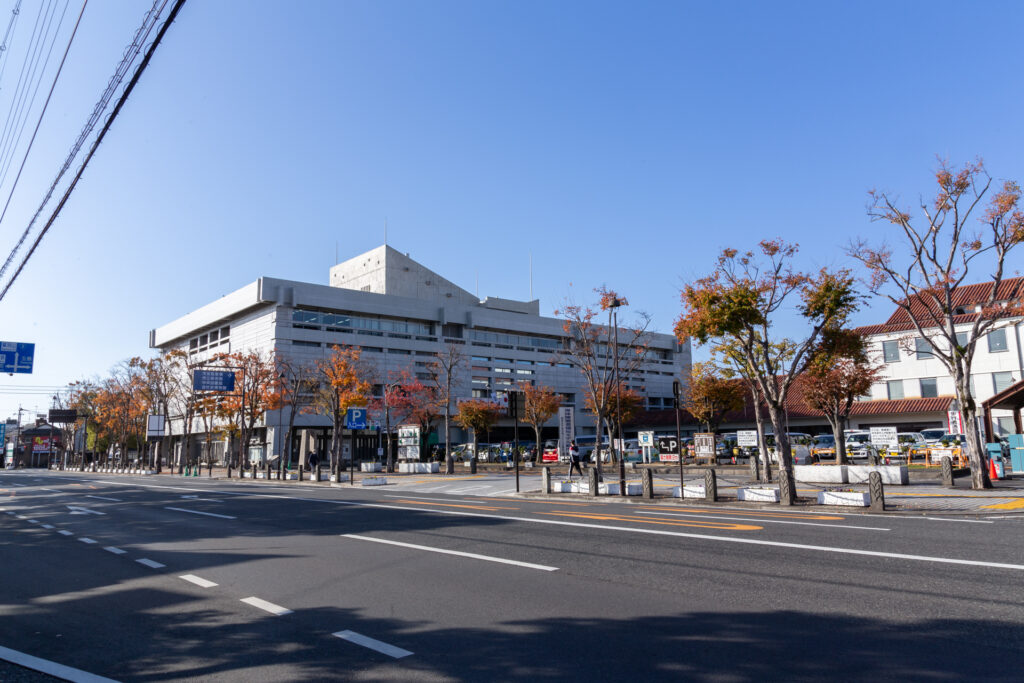
Public facilities will be reorganized in various parts of Kurashiki City in the years ahead.
These efforts tend to be associated more strongly with services for residents, but the area containing Kurashiki Central Library and the Museum of Natural History is somewhat unusual in that it also serves as a tourism hub.
Future discussions will likely consider whether the facilities, functions, and services to be developed should be for residents or for tourists.
Since there can be no “perfect answer” that satisfies everyone, it is important to share our views now, while nothing has been decided, about how this site at the entrance to the Bikan Historical Area should change in the future.
Why not visit the auditorium at Kurashiki City Art Museum on Sunday, November 22?
































Symposium on Community Development After the Relocation of Kurashiki Central Library and the Museum of Natural History
Address:
2-6-1 Chuo, Kurashiki City, Okayama Prefecture
Auditorium, 3rd floor, Kurashiki City Art Museum
Date and time:
Sunday, November 22, 2026
1:30 p.m.–4:00 p.m.
*Registration begins at 1:00 p.m.
Admission:
Free
Capacity:
200 people
*Advance registration required (through Thursday, November 19, 2026)
How to register:
Online application (Kurashiki City Online Application Service)
By phone (Kurashiki City Call Center, 086-426-3030, 8:00 a.m.–9:00 p.m.)
Web page:
Kurashiki City official website
https://www.city.kurashiki.okayama.jp/cityinfo/city-plan/1006487/1006515/1028090/1027751.html