
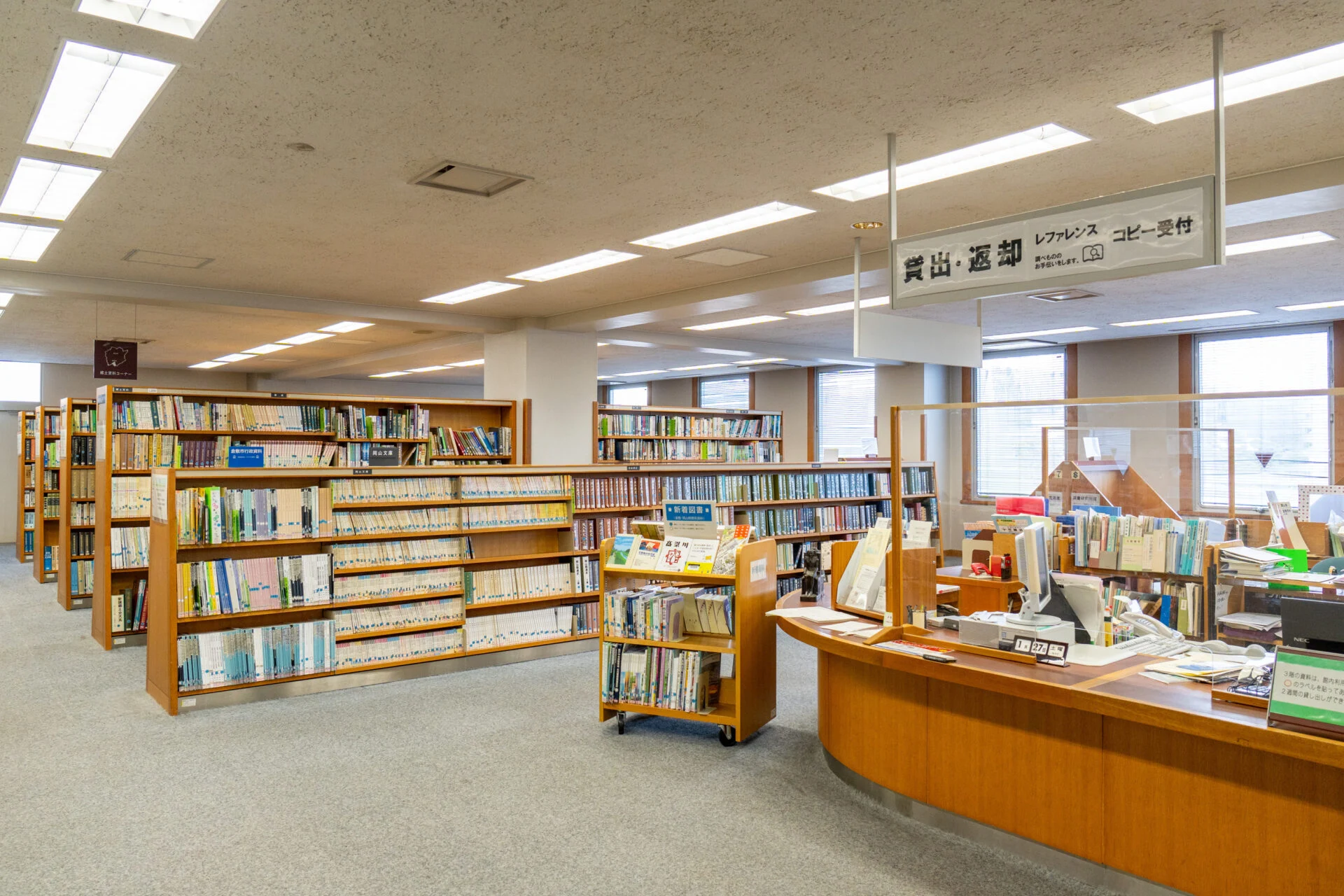
I have come to want to carefully select the books I keep on hand, and I have started using the library more often.
I learned that I can pick up reserved books at the nearest Community Center, and I felt quite knowledgeable about the library, but as I unraveled it, I found there was so much I didn't know.
By understanding the role that the library plays, the library, which was just a "place to borrow books," has transformed into a place I want to visit.
In addition to the types of materials, I will introduce the services and events of the library, focusing on Kurashiki Central Library.
Kurashiki City Libraries
Do you know how many libraries there are in Kurashiki City?
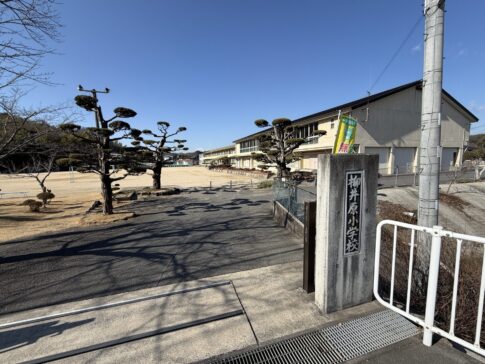
The answer is six. There is one library each in the districts of Kurashiki (Central), Mizushima, Tamashima, Kojima, Mabi, and Funao.
If you include the library at Life Park Kurashiki, there are seven libraries.
Each Community Center also has a library where you can borrow books, and you can pick up books reserved online and elsewhere.
When you include the stations and distribution facilities where the mobile library circulates, many citizens can easily encounter books.
Libraries in Kurashiki - Functions and Roles of Libraries
What would come to mind if you were asked, "What does a library do?"
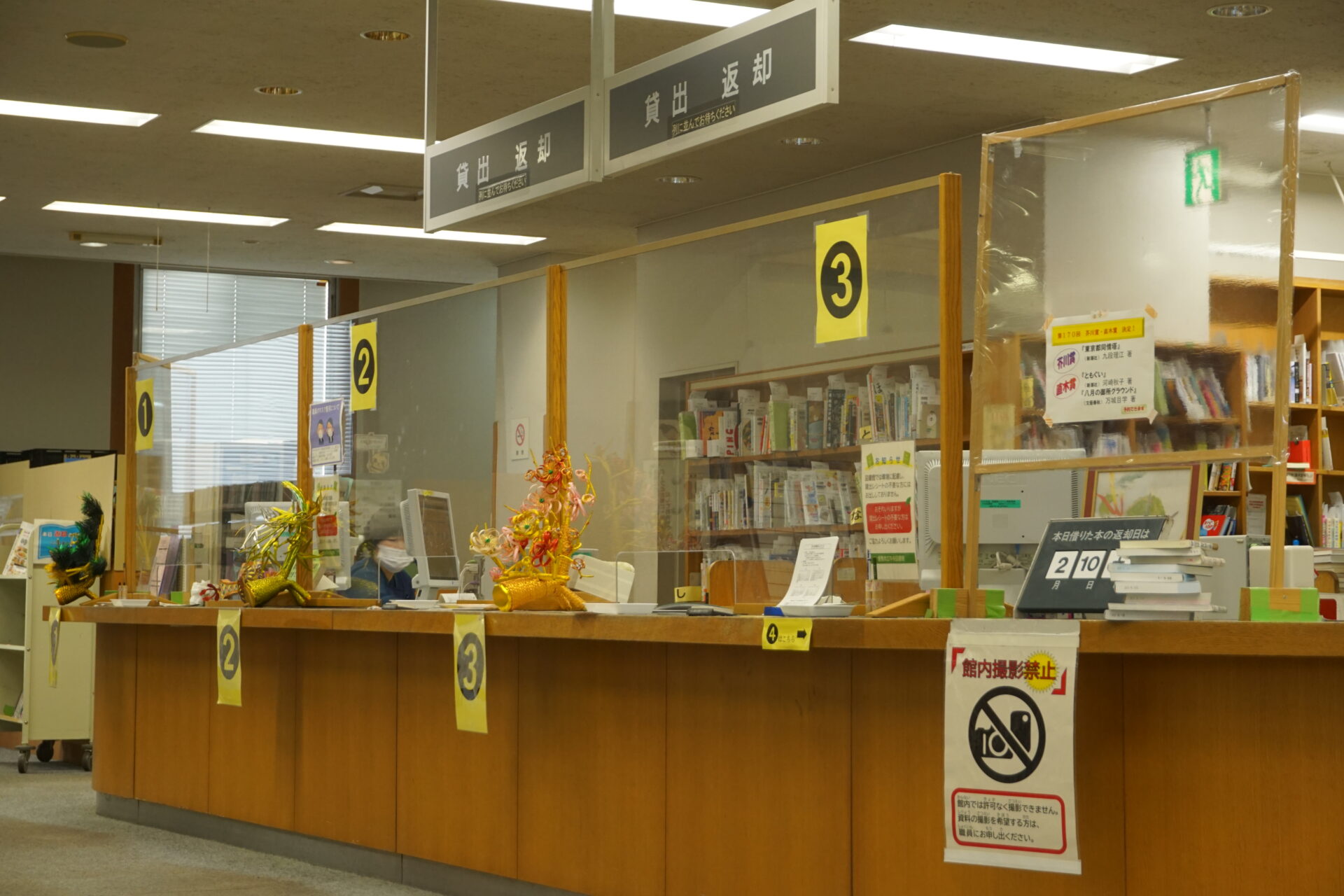
You might think of things like "finding and borrowing books" or "doing research."
I have summarized the main functions and roles of the library.
- Lending services
- Reference services
- Interlibrary loan
- Lending services at mobile libraries and Community Center libraries
- Children's services
- Services for people with disabilities
Lending Services
The Kurashiki Central Library lends materials to people living in Kurashiki City and those commuting or attending school in the city.
Additionally, through the "Takahashi River Basin 7 Cities and 3 Towns Wide Area Utilization Service," it is also possible to borrow from public libraries within the region. (For details, please see the Kurashiki Central Library website (PC version) > Takahashi River 7 Cities and 3 Towns Wide Area Utilization)
Reference Services
Reference services are "assistance with research."
You can consult about "which library has the materials you are looking for" or "recommendations for materials related to the theme you want to research."
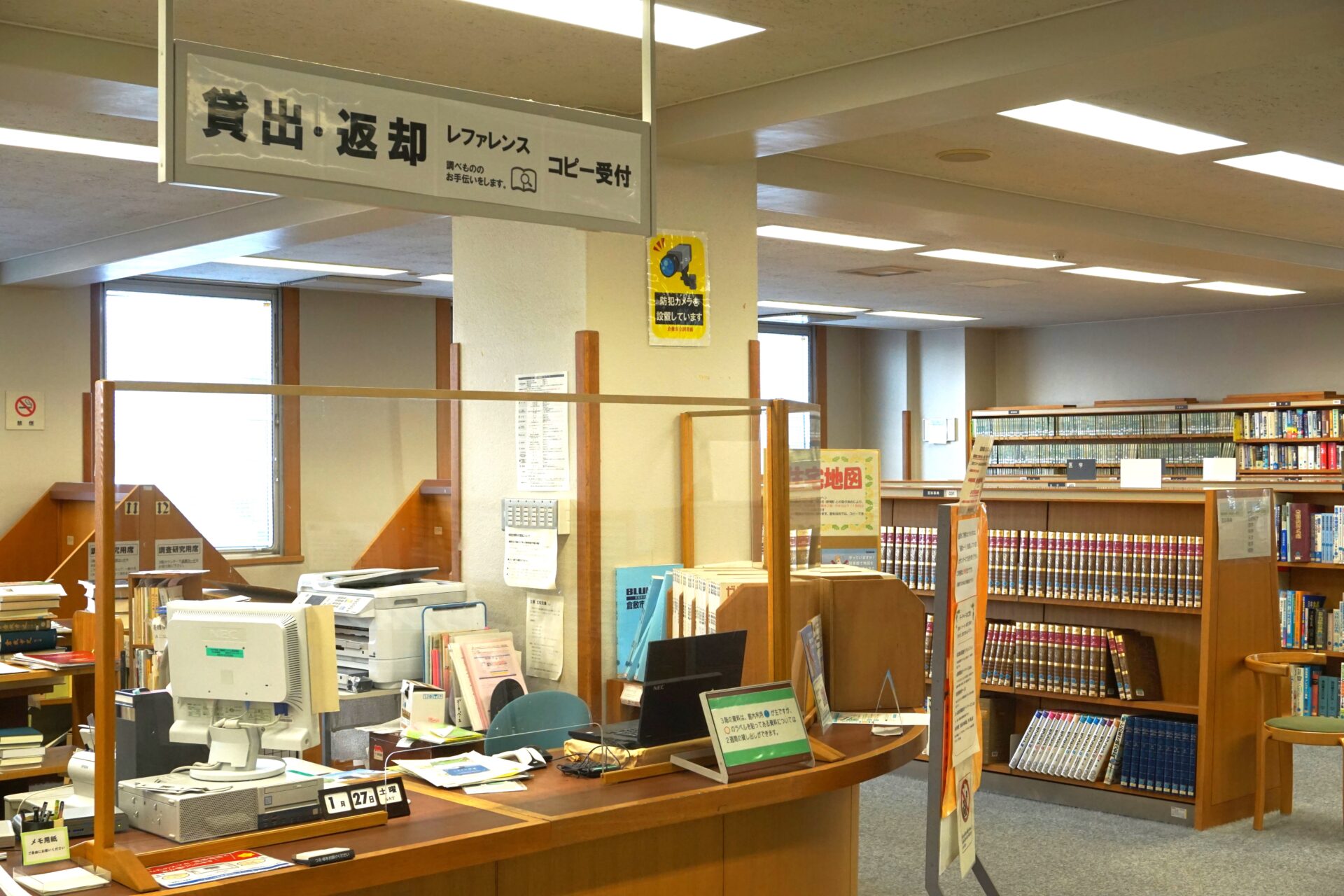
Collection Management
The materials held and preserved in the city's libraries are subject to ongoing collection management, such as selection and deaccessioning.
The "selection" of new materials to be held by the library and the "deaccessioning" of outdated or damaged materials are conducted according to established criteria, and the materials in the library are organized daily.
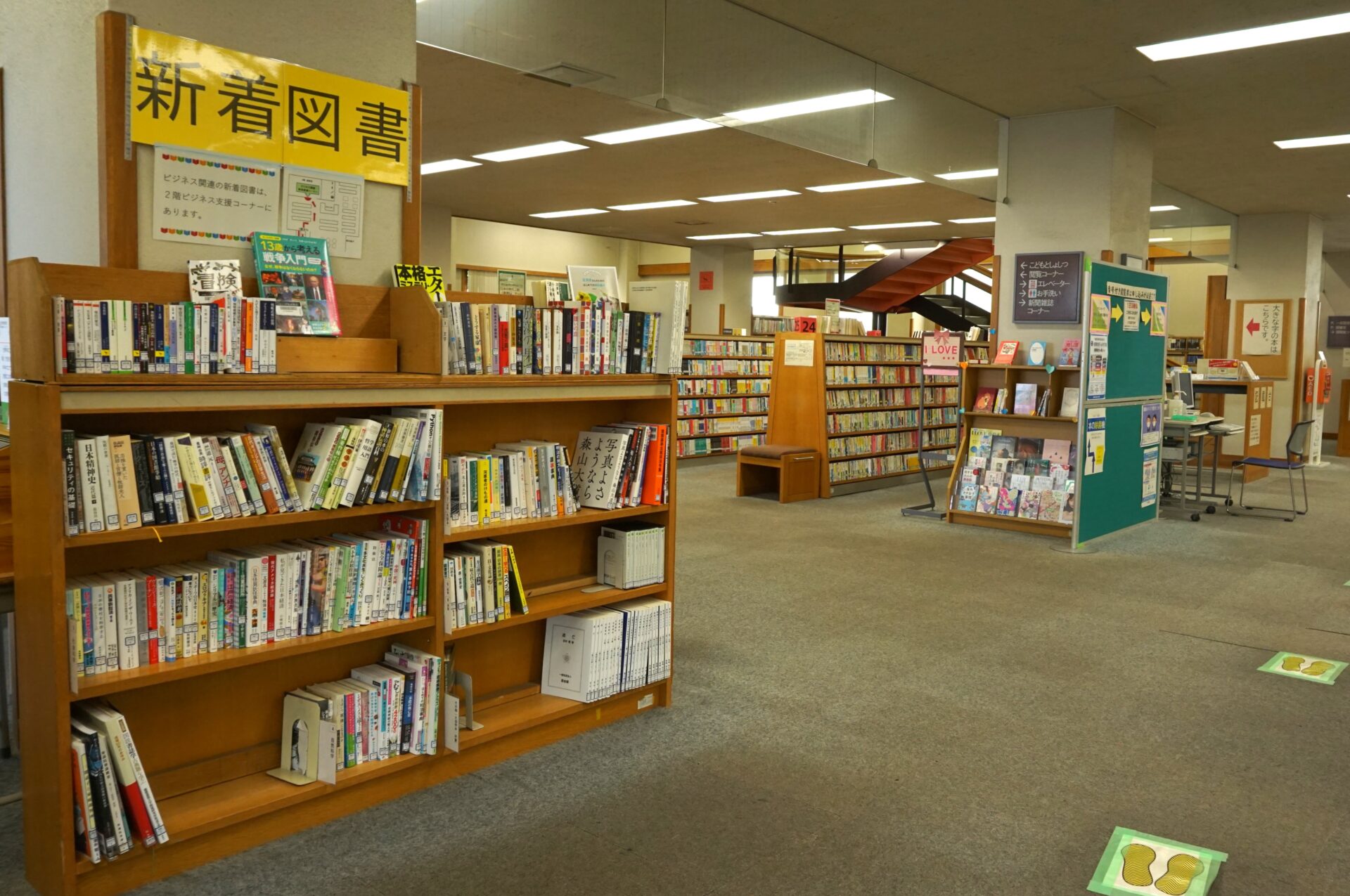
Interlibrary Loan
Interlibrary loan refers to the borrowing and lending of materials between libraries.
Even if the Kurashiki Central Library does not hold a book, we strive to obtain it from libraries across the country as much as possible.
Mobile Library
Mobile libraries provide a circulation service to areas and facilities that are far from libraries.
The Kurashiki Central Library has three mobile library vehicles that regularly circulate to stations within the city.
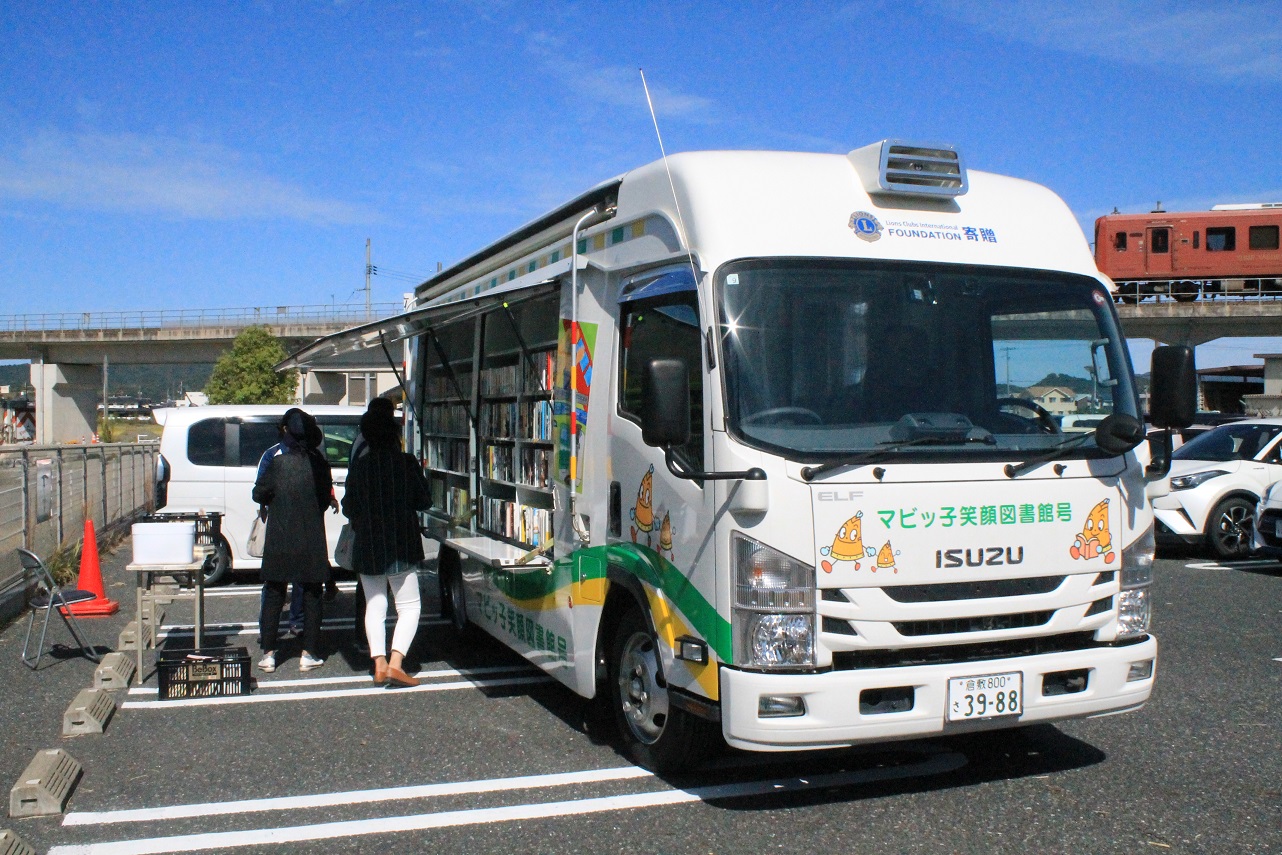
I usually use the lending services a lot. I am reminded that the background to being able to borrow the books I want when I want them lies in the roles and functions beyond just the lending service.
By changing my perspective slightly, I also realized that there are various types and contents of materials available.
For Those Who Find Reading Difficult - Aiming for a Society Where Everyone Can Read
The basic operational policy of Kurashiki Central Library states that its users are "people of all ages, from infants to the elderly."
What specific materials are available for all people?
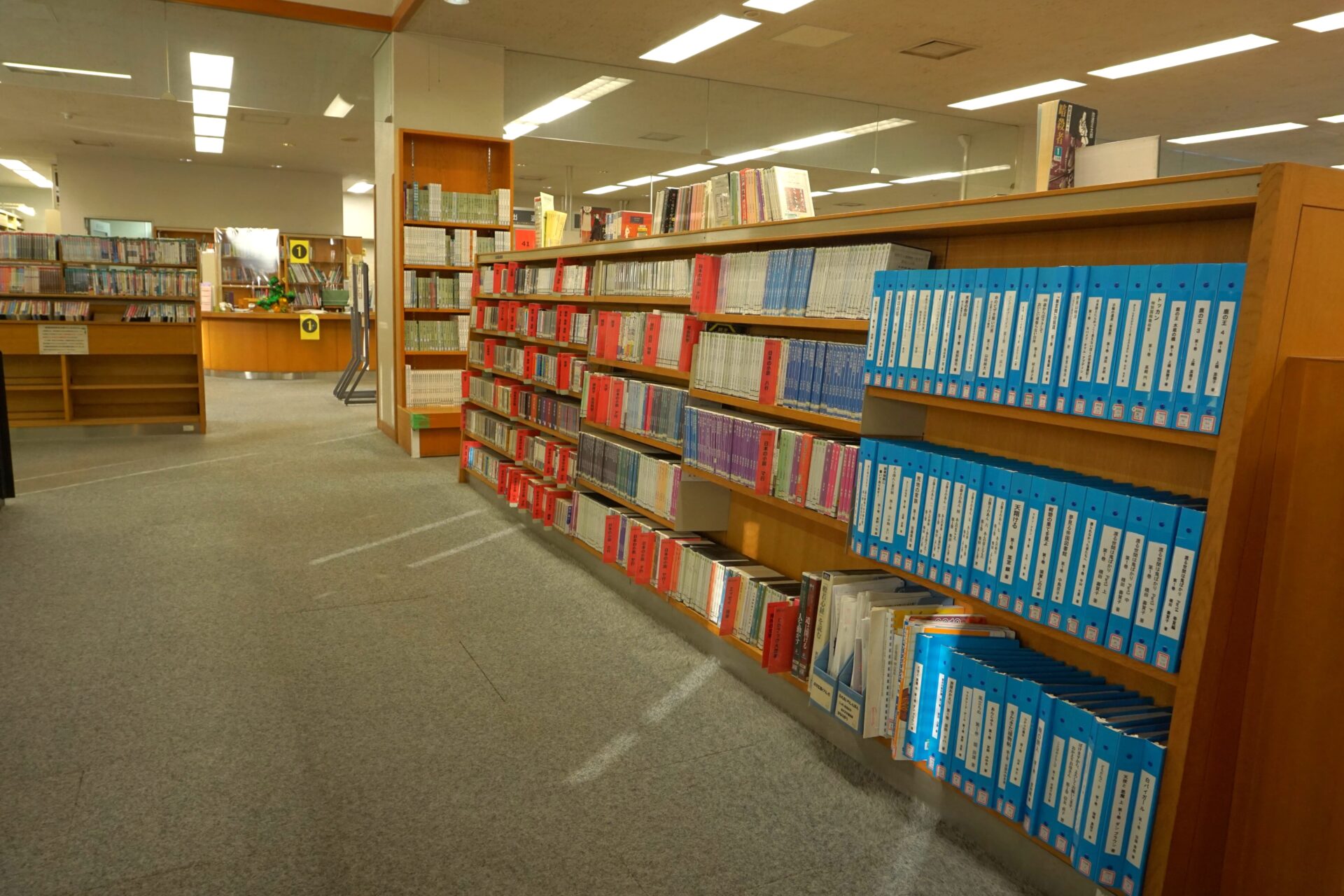
In my research, I found a law called the Reading Barrier-Free Law, which was enacted in June 2019 (Reiwa 1).
This law aims to ensure that all people, regardless of disability, can benefit from the culture of written and printed materials through reading.
"Reading Barrier-Free Law" Awareness Leaflet Ministry of Education, Culture, Sports, Science and Technology
It aims to make it easier for people with various disabilities to access the content of books in formats that are easy to use.
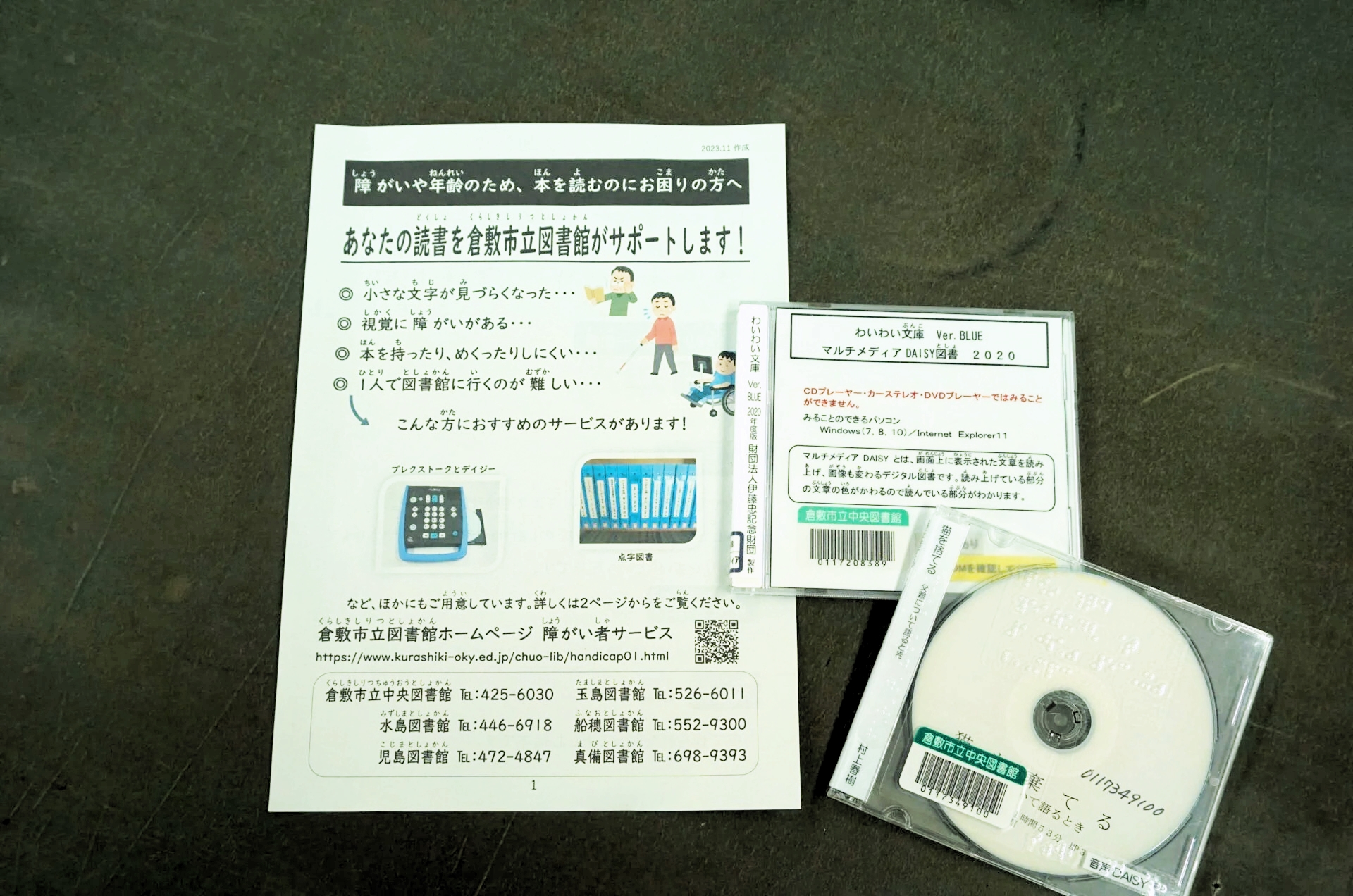
In an awareness leaflet that summarizes the law in an easy-to-understand manner, various books available at the library were introduced.
| Type | Content |
|---|---|
| Large Print Books | Books written in large print for those who have difficulty seeing |
| Braille Books | Books translated into braille. Diagrams and pictures represented using dots are called "dot diagrams." There are also "braille picture books" that have braille and dot diagrams printed on transparent sheets and attached to picture books. |
| LL Books | Books written in easy-to-understand language. They use pictograms and photos/diagrams to aid understanding. |
| Fabric Picture Books, Tactile Books | Books made from fabric, leather, or yarn that allow readers to feel the shapes of pictures. They have mechanisms for buttoning and threading, making reading enjoyable. |
| DAISY (Digital Accessible Information System) | International standard for digital audio books. You can move to the headings or pages you want to read from the table of contents. There are "audio DAISY" and "multimedia DAISY," among others. |
| E-books (※ Not held by Kurashiki Central Library) | E-books designed for those with visual impairments allow users to navigate to desired pages from the table of contents using computers, smartphones, or dedicated devices, and they can change the font size, font, and background color. There are also increasing numbers of e-books that can be listened to. |
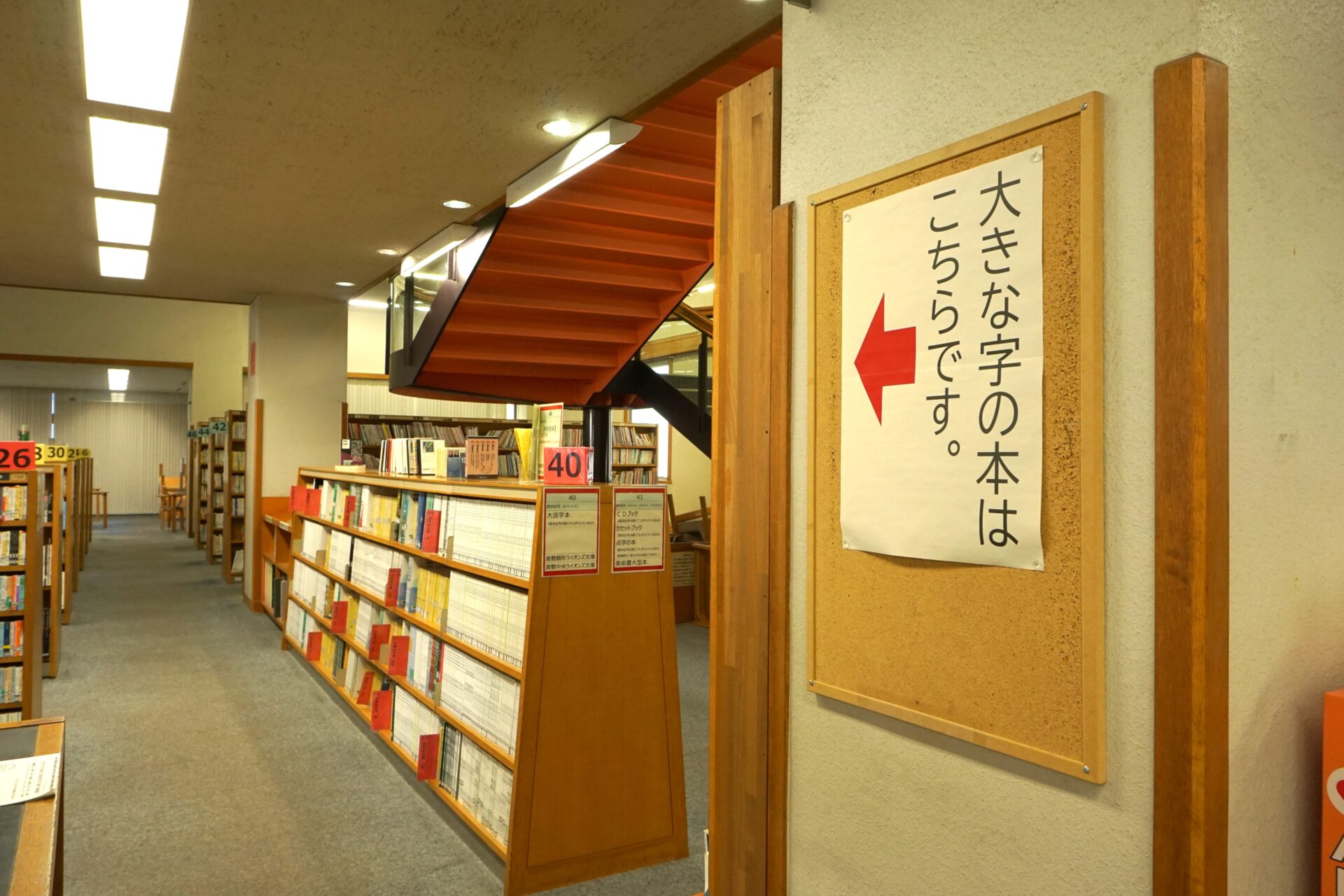
- "I struggle with kanji"
- "I find it difficult to follow text visually"
- "I can't turn the pages," etc.
I realized that "all people" includes those who find reading difficult. Even when we say "reading is difficult," there are various circumstances behind it.
To provide reading styles that suit each circumstance, the library offers a truly diverse range of tools that go beyond just paper media.
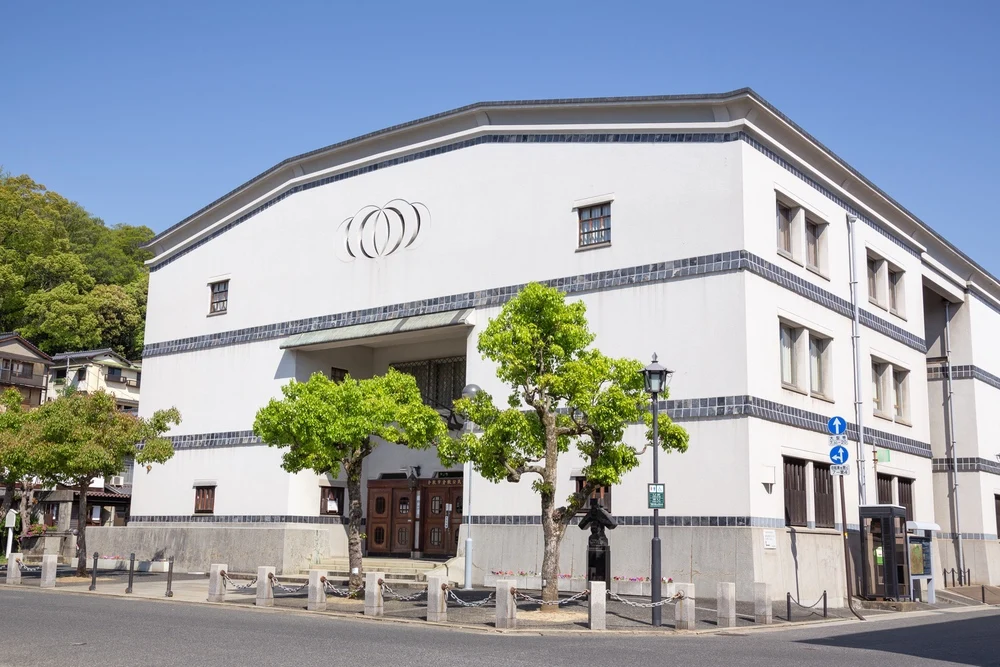
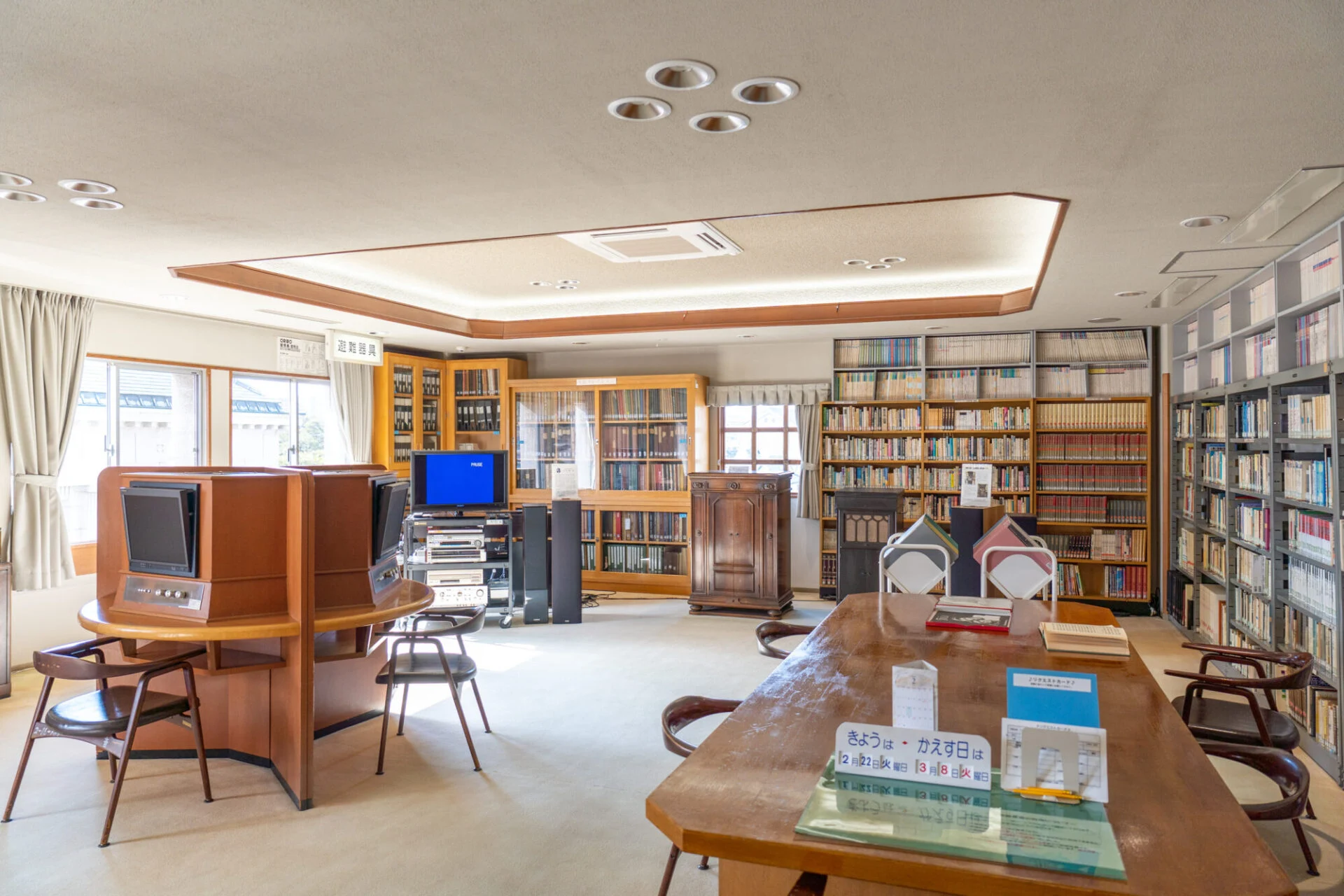
I learned about the daily operations of the Kurashiki Central Library (hereafter referred to as "Central Library"), one of the six libraries in Kurashiki City.
Data on Kurashiki Central Library
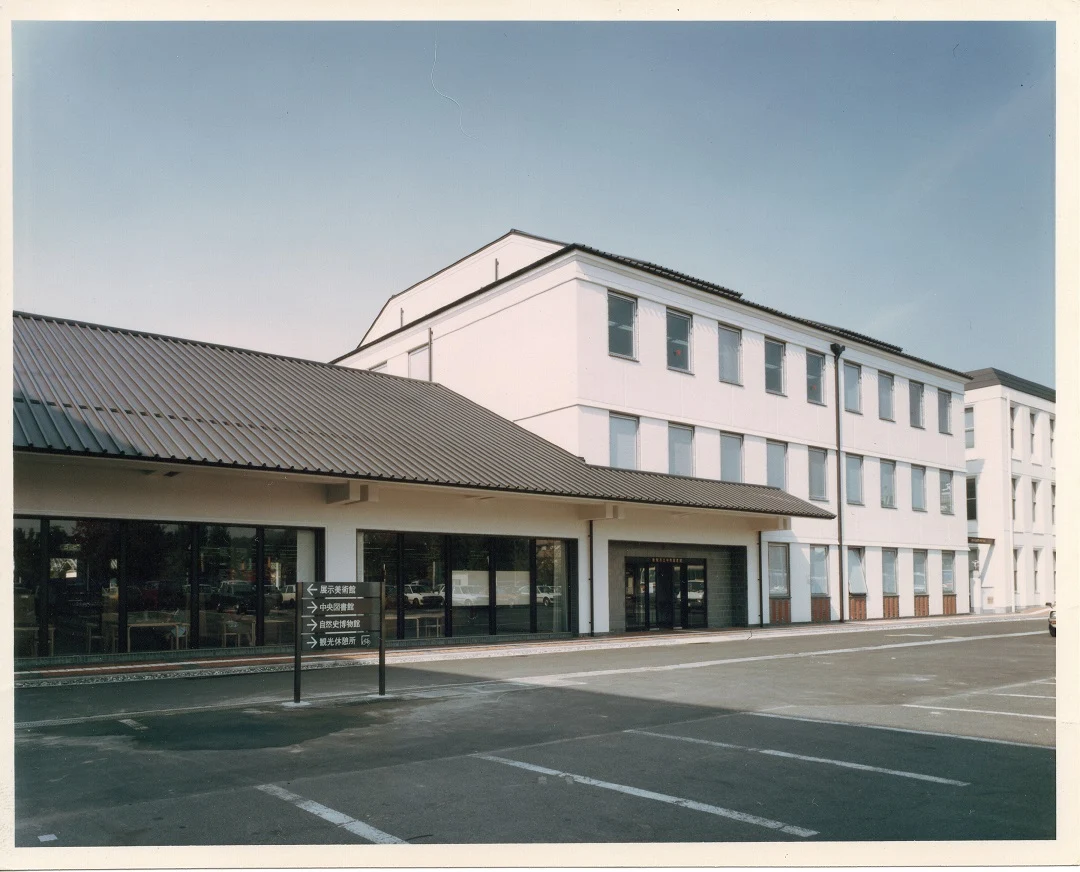
| Name | Kurashiki Central Library |
|---|---|
| Location | 2-6-1 Chuo, Kurashiki City |
| Contact | 086-425-6030 |
| Parking | None |
| Opening Hours | Monday to Saturday: 9:00 AM to 7:00 PM Sunday and Holidays: 10:00 AM to 6:00 PM |
| Closed | Every Monday except the first Monday Last Friday of every month (open in August and December) Special organization closure (within 14 days) Year-end and New Year (December 29 to January 4) ※ The opening hours and closed days of libraries in the city vary by library. For the opening hours and closed days of libraries other than the Central Library, please refer to the library website. |
| Smoking | Completely non-smoking |
| Restrooms | Western-style toilets, Japanese-style toilets, barrier-free toilets |
| Childcare | Nursing room, diaper changing sheet |
| Barrier-Free | Barrier-free toilets, elevators |
| Website | Kurashiki Central Library |
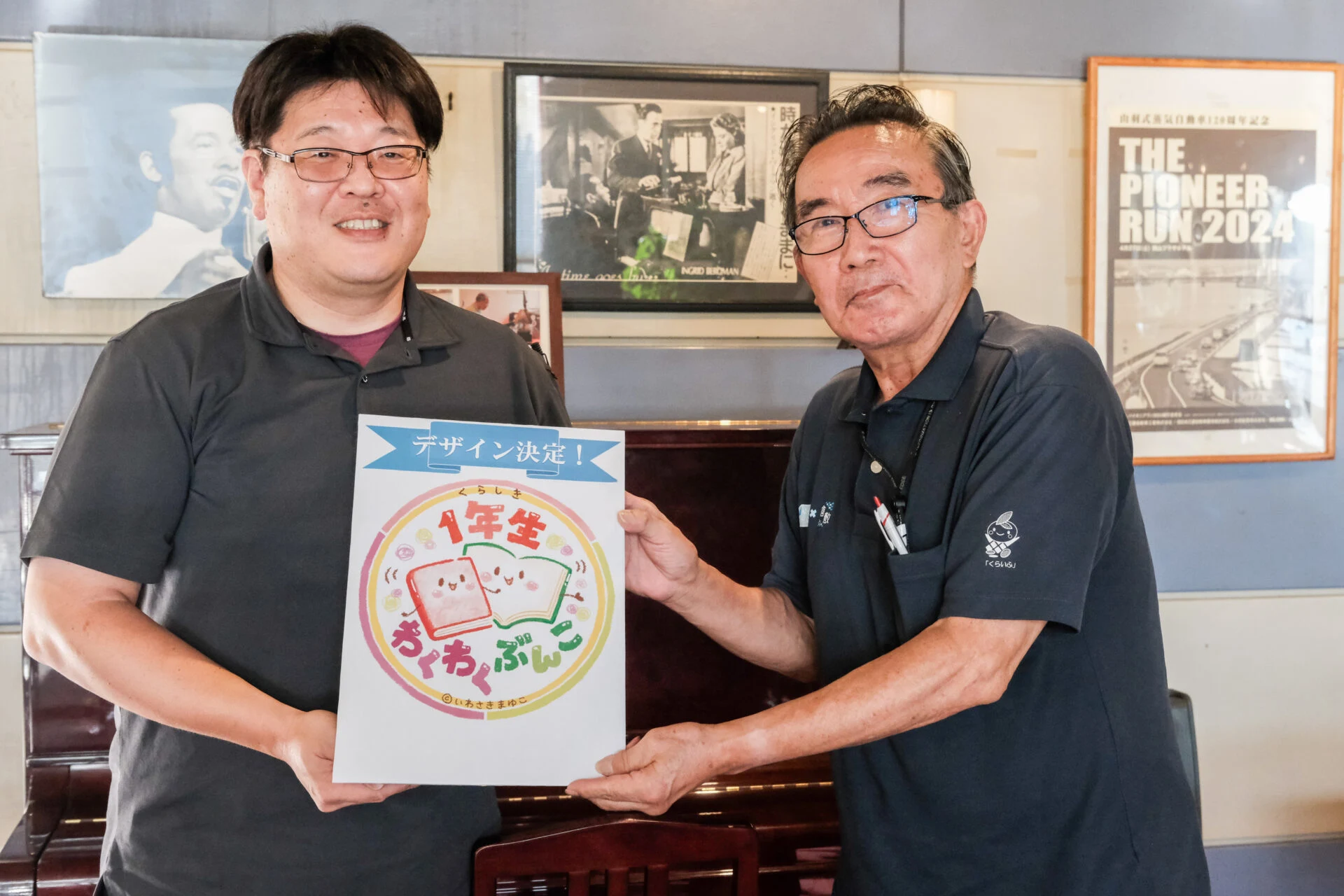






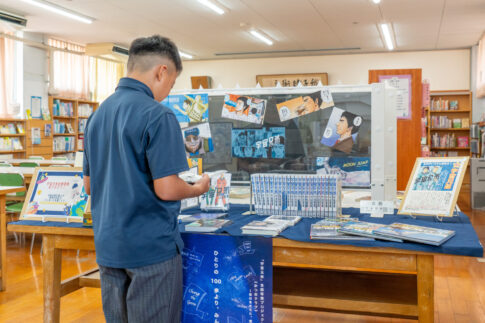

In Kurashiki City, a "Recycled Book Event" is held based on the deaccession criteria and the rules for the free transfer of deaccessioned materials.
For details such as the timing of the event, please check the Kurashiki Central Library website or the official account on X (formerly Twitter).
※ The selection criteria, deaccession criteria, and rules for the free transfer event are published on the Kurashiki Central Library website under "About the City Library".