
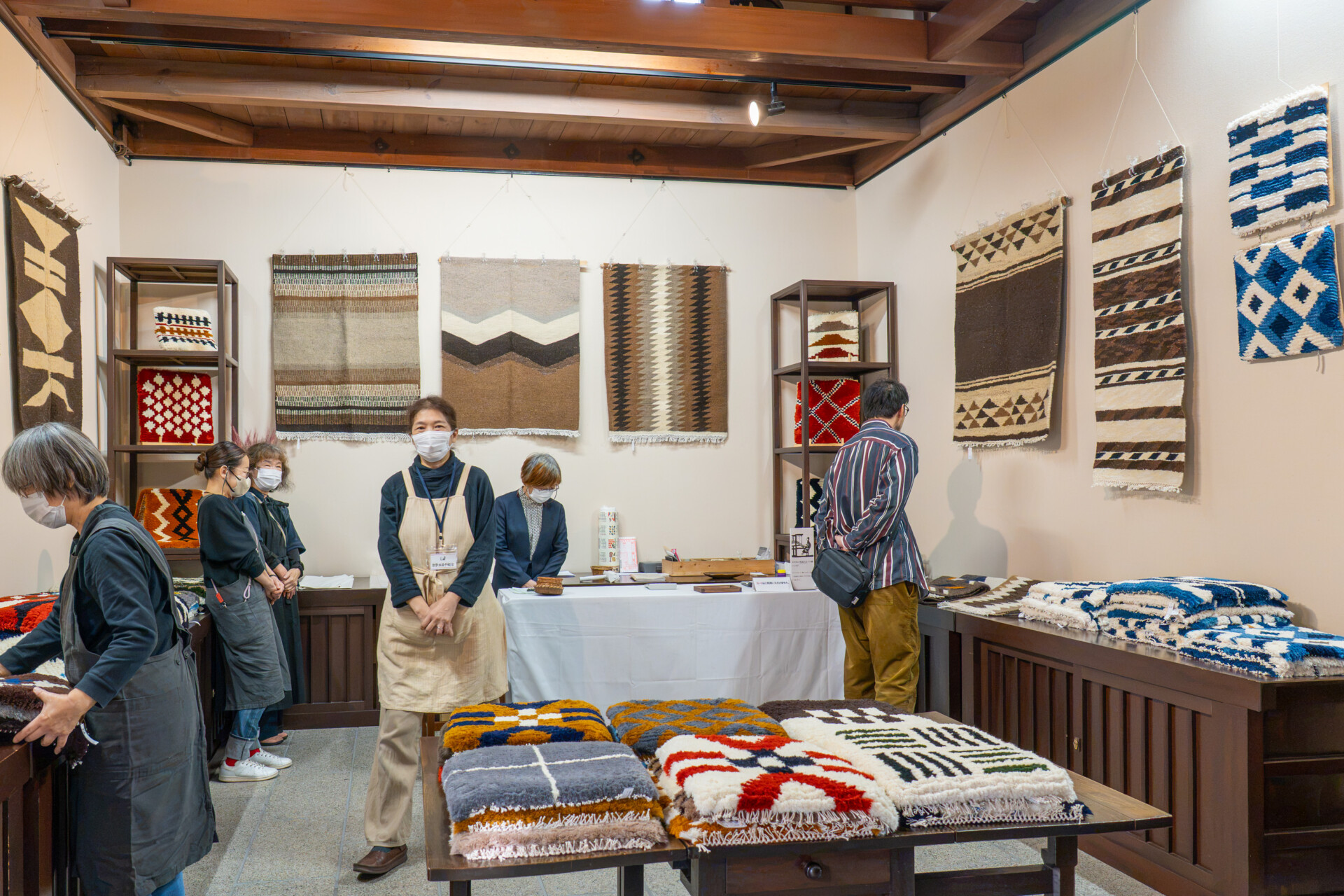
A soft, fluffy chair mat made by bundling and tying wool together. You may have spotted one in a Kurashiki folkcraft shop and wondered about it.
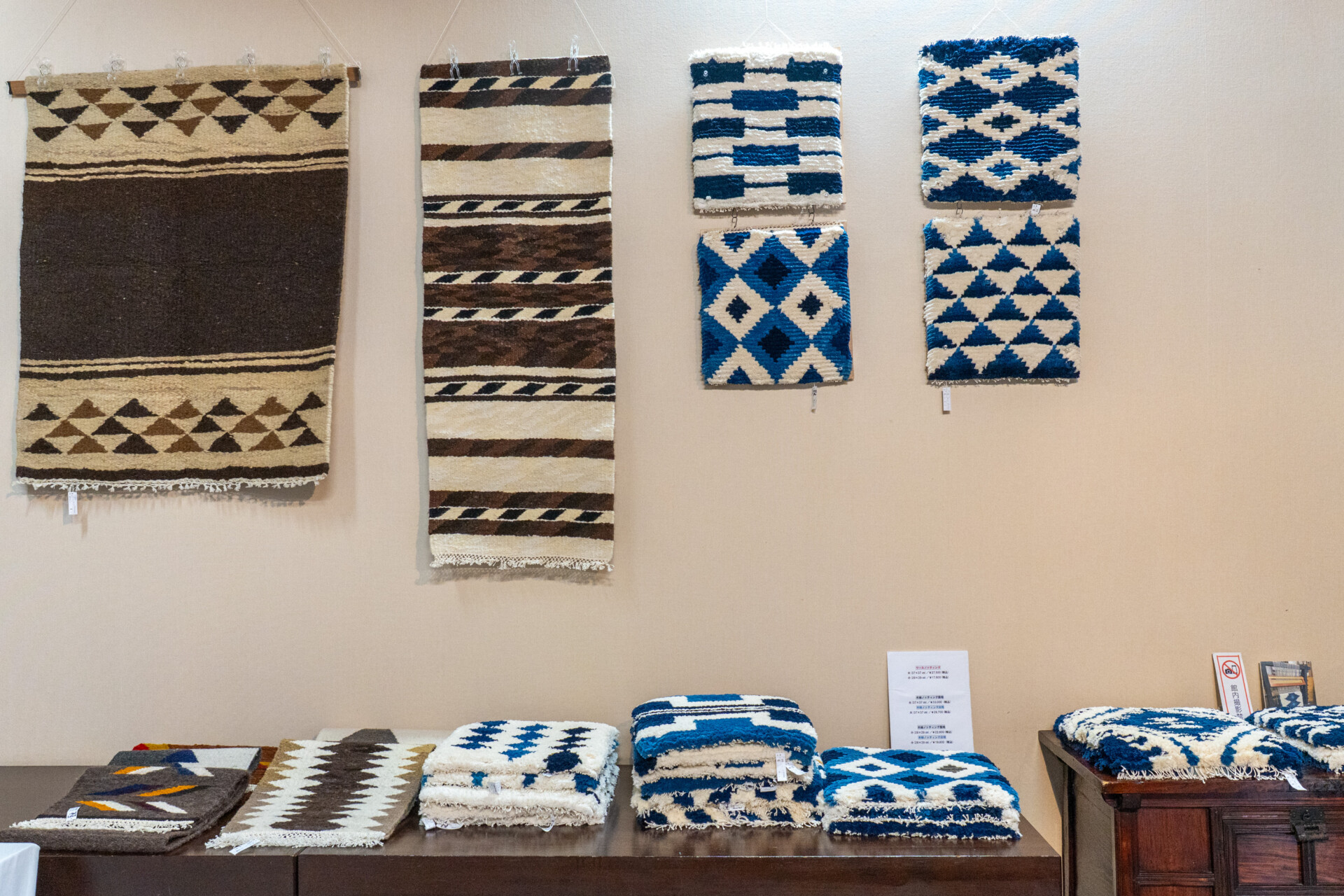
The chair mats commonly known as “Kurashiki Knotting” are woven by tying weft threads—bundles of as many as 160 strands of wool—to cotton warp threads. The name comes from the English word “knot.” However, most shops carry only a few, and there is not much variety.
Once a year, an exhibition is held where dozens of works of “Kurashiki Knotting” are brought together.
The “Kurashiki Honsome Handweaving Association Exhibition,” featuring works by makers who studied at the Kurashiki Honsome Handweaving Institute, is being held at the Kurashiki Museum of Folkcraft from Tuesday, November 3, 2026 (national holiday). This year, more than 50 people are exhibiting works, including large tapestry-woven rugs in addition to “Kurashiki Knotting.”
This article introduces the highlights of this year’s exhibition and how to enjoy it, based on an interview with Ishigami Rieko of the Kurashiki Honsome Handweaving Institute.
Photography is prohibited inside the Kurashiki Honsome Handweaving Association Exhibition venue. Special permission was granted for photography this time.
The information provided was current when this article was published in November 2026. Please note that it may differ from current information.
What is the Kurashiki Honsome Handweaving Association Exhibition?
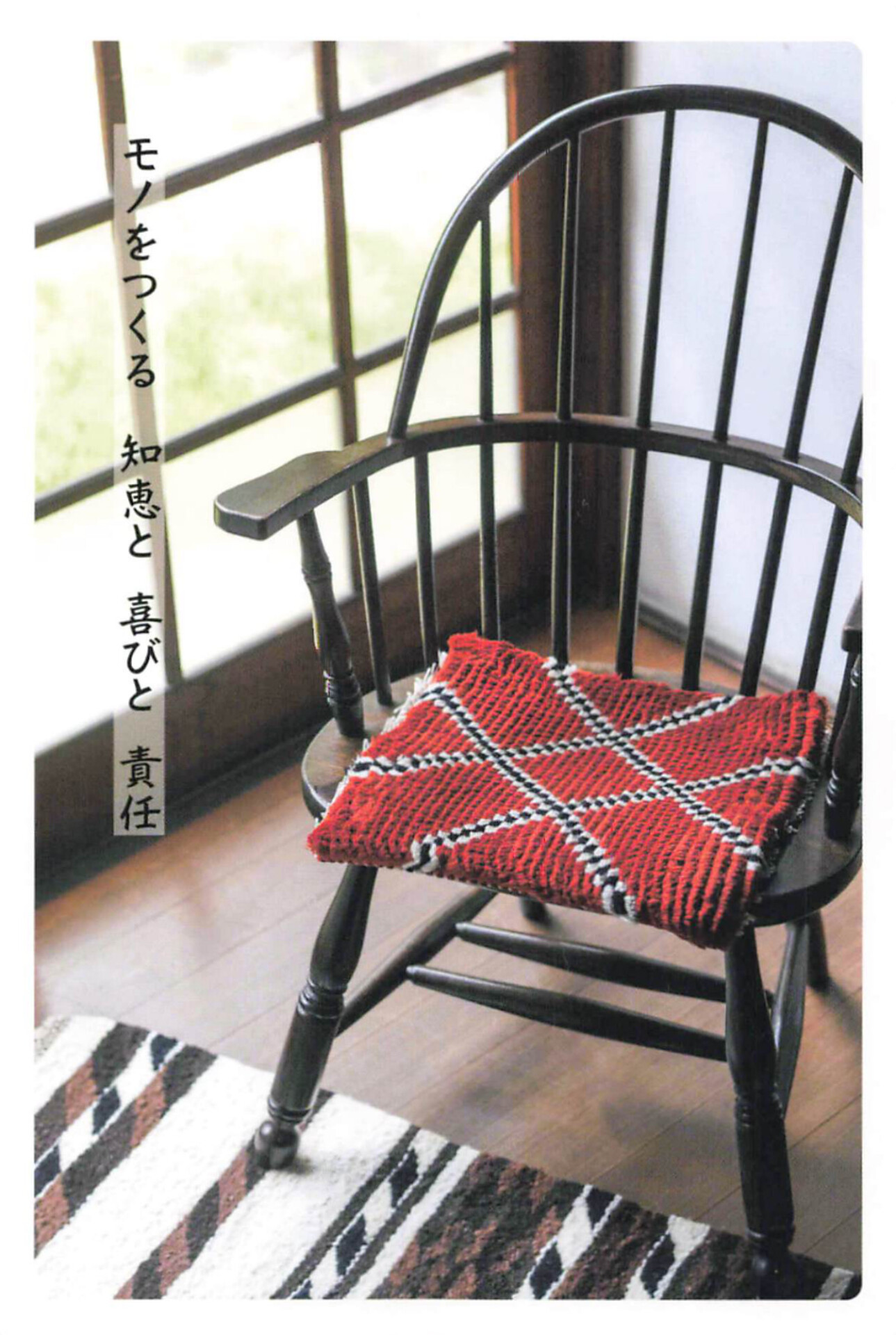
The Kurashiki Honsome Handweaving Association Exhibition is an annual exhibition and sale of works by graduates and current students of the Kurashiki Honsome Handweaving Institute. It is held in the special gallery on the first floor of Building 1 at the Kurashiki Museum of Folkcraft.
The Kurashiki Honsome Handweaving Institute was established in 1953 by Tonomura Kichinosuke, the first director of the Kurashiki Museum of Folkcraft. Students spend a year learning how to dye and spin thread and weave by hand.
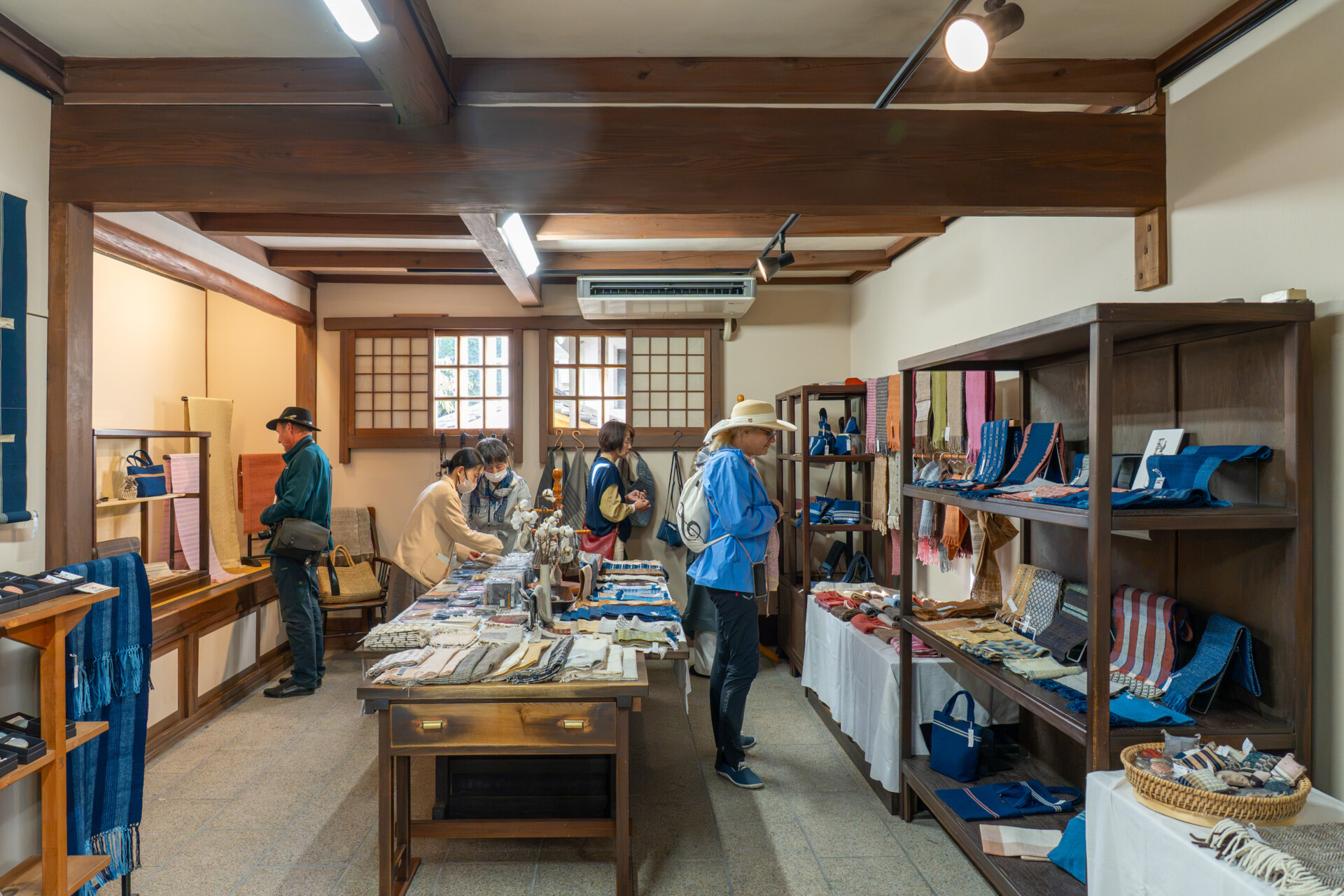
The Kurashiki Honsome Handweaving Association, which organizes the exhibition, is made up of current and former students of the institute.
After graduating, members continue weaving throughout Japan. The Kurashiki Honsome Handweaving Association Exhibition has been held every year since the institute was established in 1953, making it a regular event and an opportunity for members to share their work.
This year’s exhibits include:
- Knotting
- Tapestry weaving
- Pot holders
- Table runners
- Coasters
- Fabric accessories
The 2026 exhibition runs from Tuesday, November 3 (national holiday) through Sunday, November 8.
It is open from 10:00 a.m. to 4:30 p.m., and until 3:00 p.m. on the final day, November 8.
How to buy at the venue
Admission to the exhibition is free. You can choose and buy works at the venue.
Cash only is accepted for payment.
Interview with Ishigami Rieko of the Kurashiki Honsome Handweaving Institute
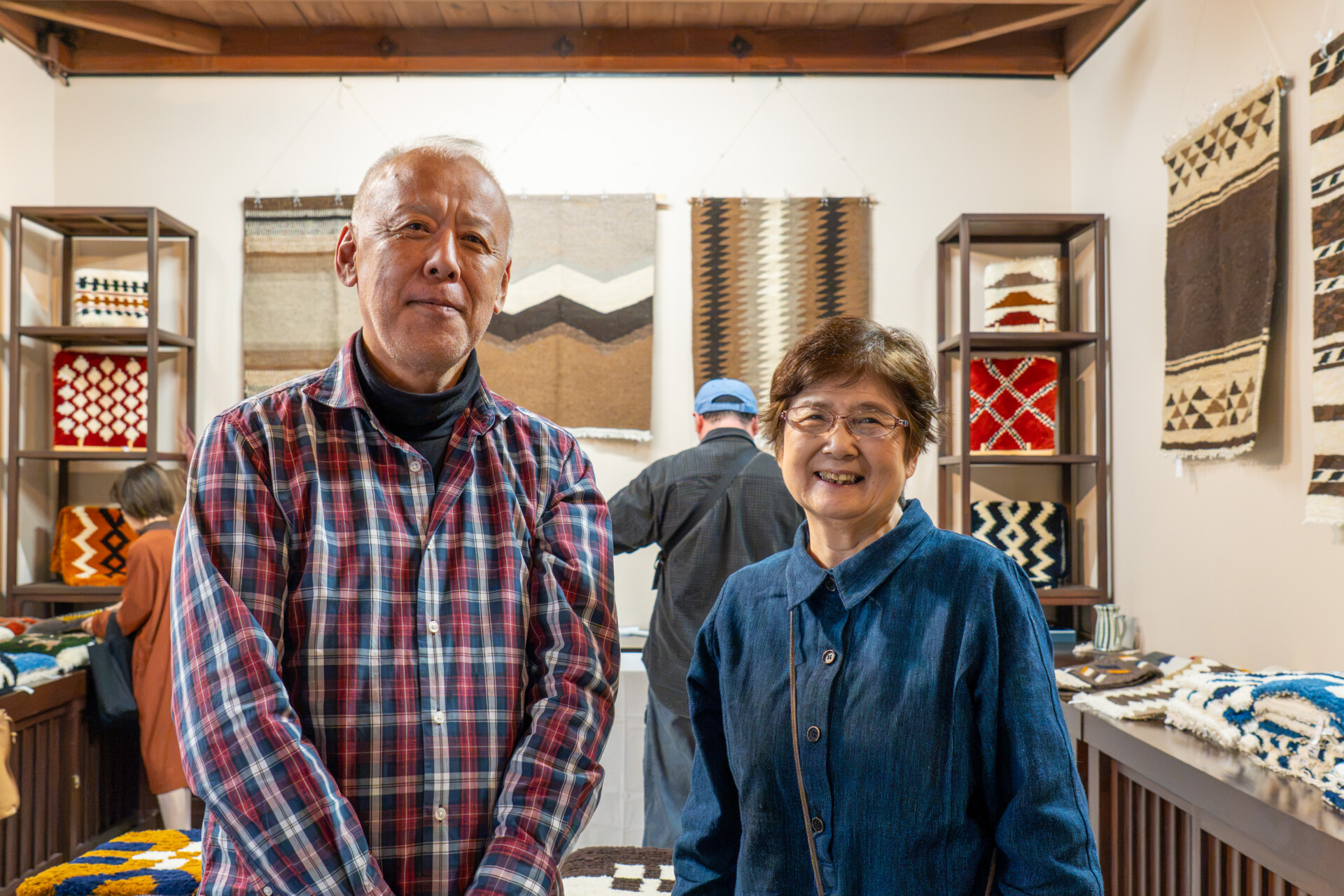
We spoke with Ishigami Rieko, representative of the Kurashiki Honsome Handweaving Institute, about this year’s exhibition.
What kinds of people exhibit their work?
Ishigami (honorific omitted)
Graduates of the Kurashiki Honsome Handweaving Institute exhibit their work.
More than 50 people are exhibiting this time, including people who graduated from the institute this year.
The number of works varies from person to person. The makers’ names are not listed, and there are works ranging from small to large, so the number itself does not mean much.
Could you tell us about the highlights or distinctive features of this year’s exhibition?
Ishigami
This year, there are many large tapestry-woven works.
They are all in natural colors—the colors of the sheep’s wool itself. People who take on this kind of large-scale work have contributed pieces. Usually, there are more of the classic knotting chair mats (the so-called “Kurashiki Knotting”).
I think makers probably create things they themselves want.
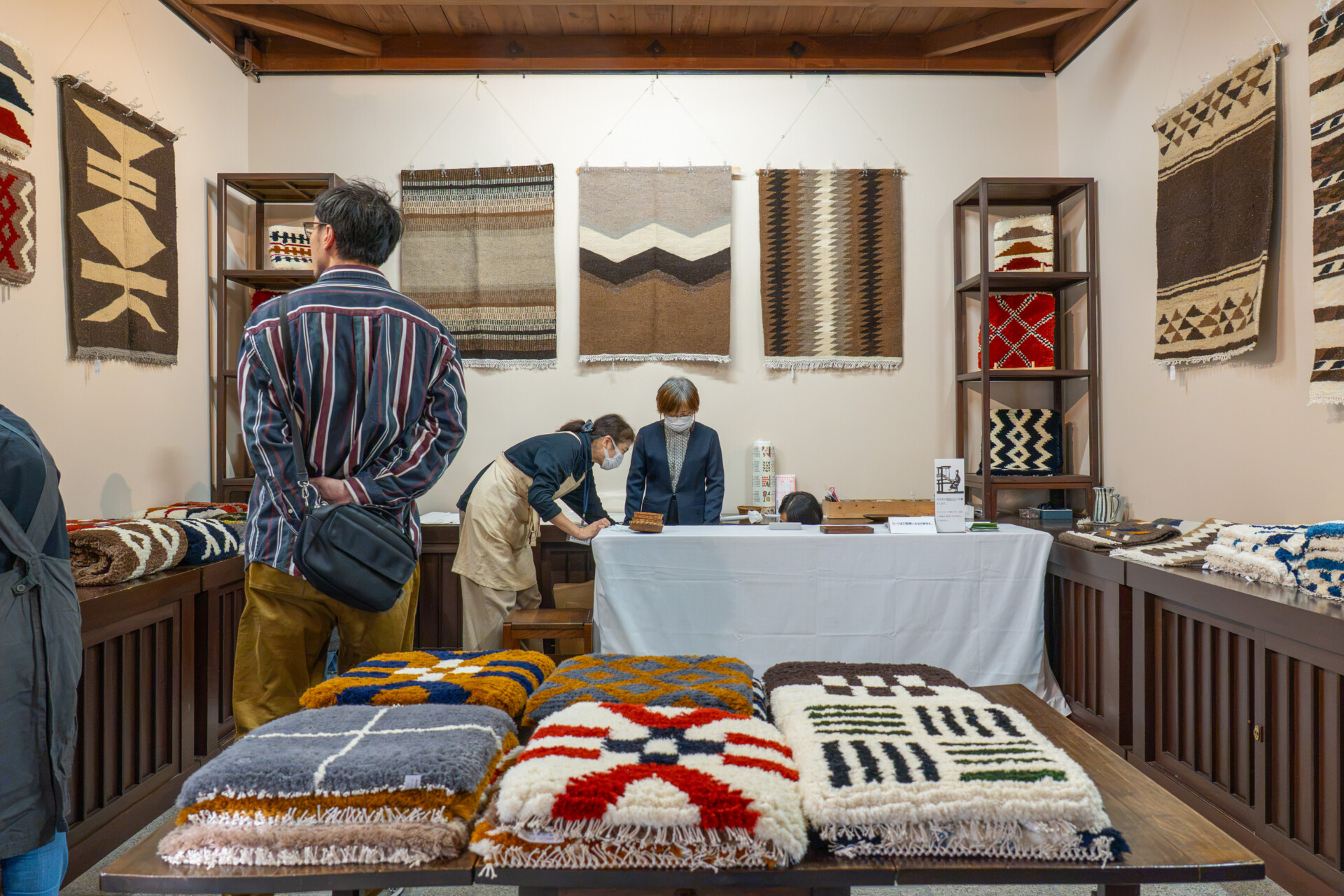
Kurashiki Knotting patterns are distinctive. Do trends or tendencies change over time?
Ishigami
Knotting chair mats are the most popular.
We have continued making the same things ever since the Kurashiki Honsome Handweaving Institute was established in 1953.
The patterns have not changed since then, either.
We do not tell people they have to do it this way. We teach them, but they do not stray very far. I think they probably try other things at least once. But I think the good things ultimately become clear. I believe that is one of our strengths.
These days, many young people come to the institute saying they want to make something themselves because they want a mat for their chair.
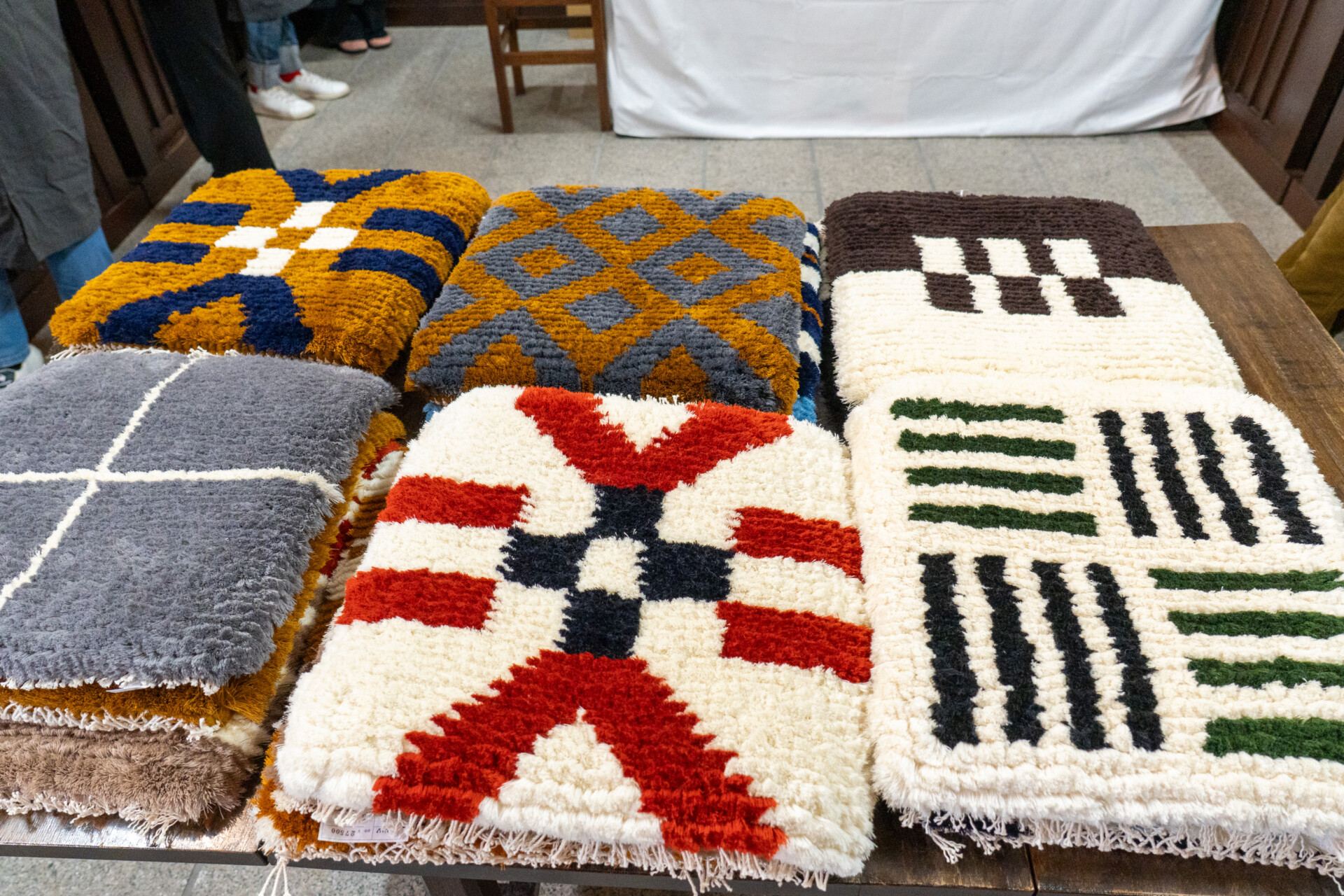
Is there anything else you would like visitors to look out for at the venue?
Ishigami
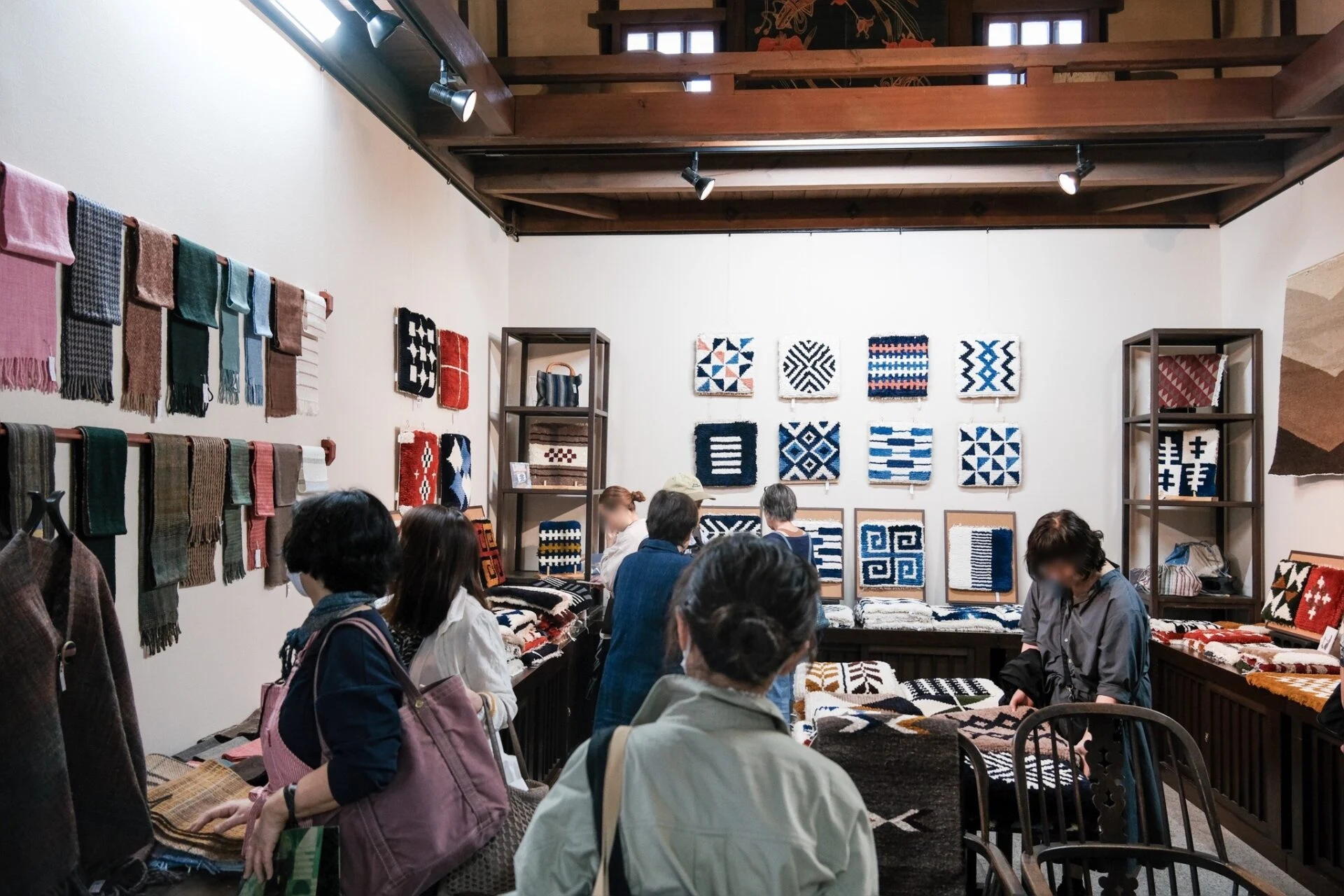
In addition to large works and knotting chair mats, there is a wide selection of various accessories and small rugs.
With so many people exhibiting everything from large to small pieces, there is naturally a lot of variety. I think that if you come, you will find at least one thing you want.
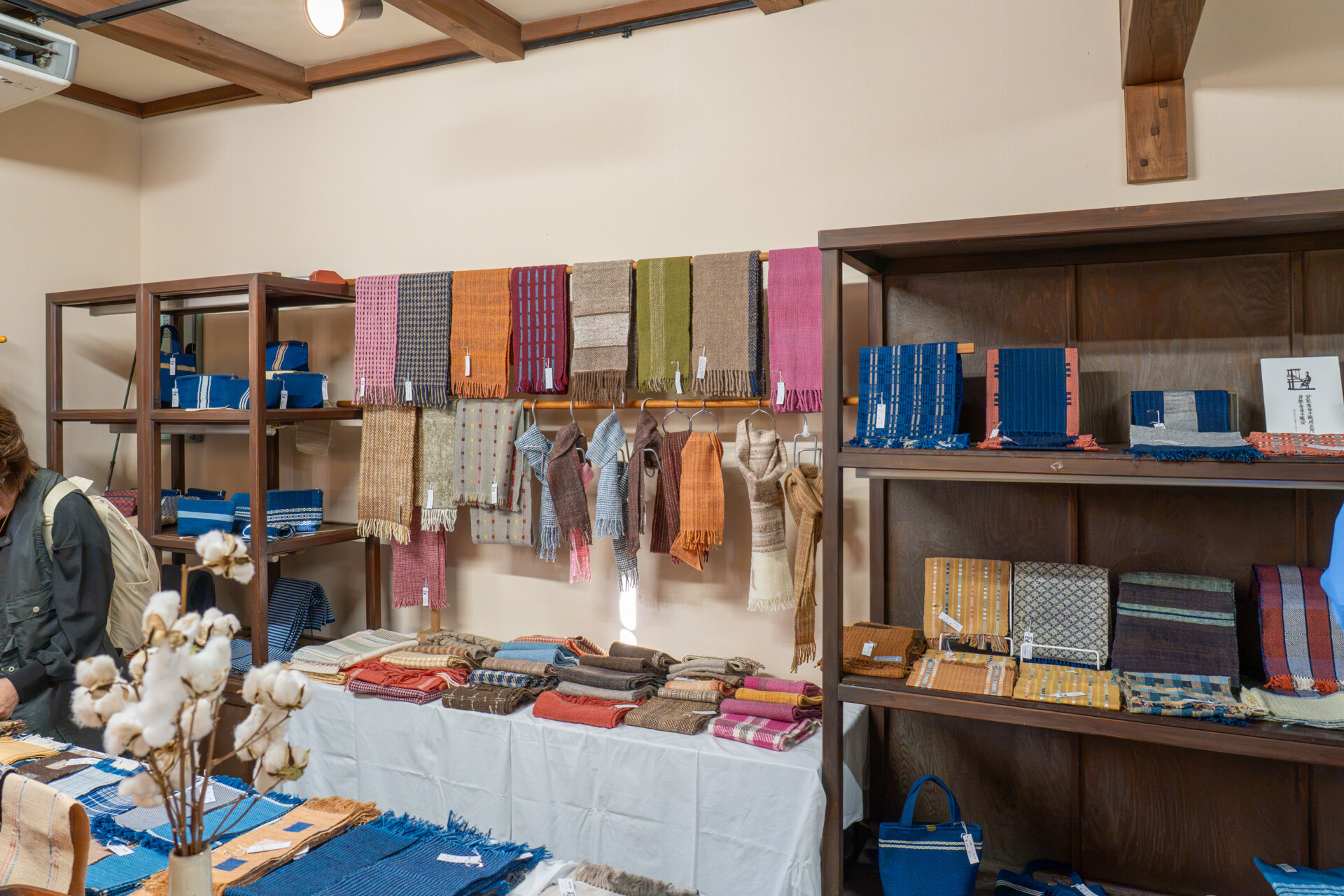
There is a line on the first day every time, and the venue is bustling with many visitors today as well (the interview took place on November 3). Are works replenished during the exhibition?
Ishigami
There are no restocks during the exhibition.
Everyone makes their work and brings it here, so everything is put out at once. As a result, there may be fewer works toward the end of the exhibition.
If you want the widest selection, it is probably best to come early, but I hope you will think of it as a matter of chance.
Many people who come toward the end of the exhibition say, “I’m glad this was here.” One of the good things is that there is no right or wrong time to come. It is about the encounter.
Fortunately, there is not much difference in the quality of the works.
The designs are not all that different, and they remain much the same over the years. So I hope you will treasure the fact that you encountered a piece at that particular time.
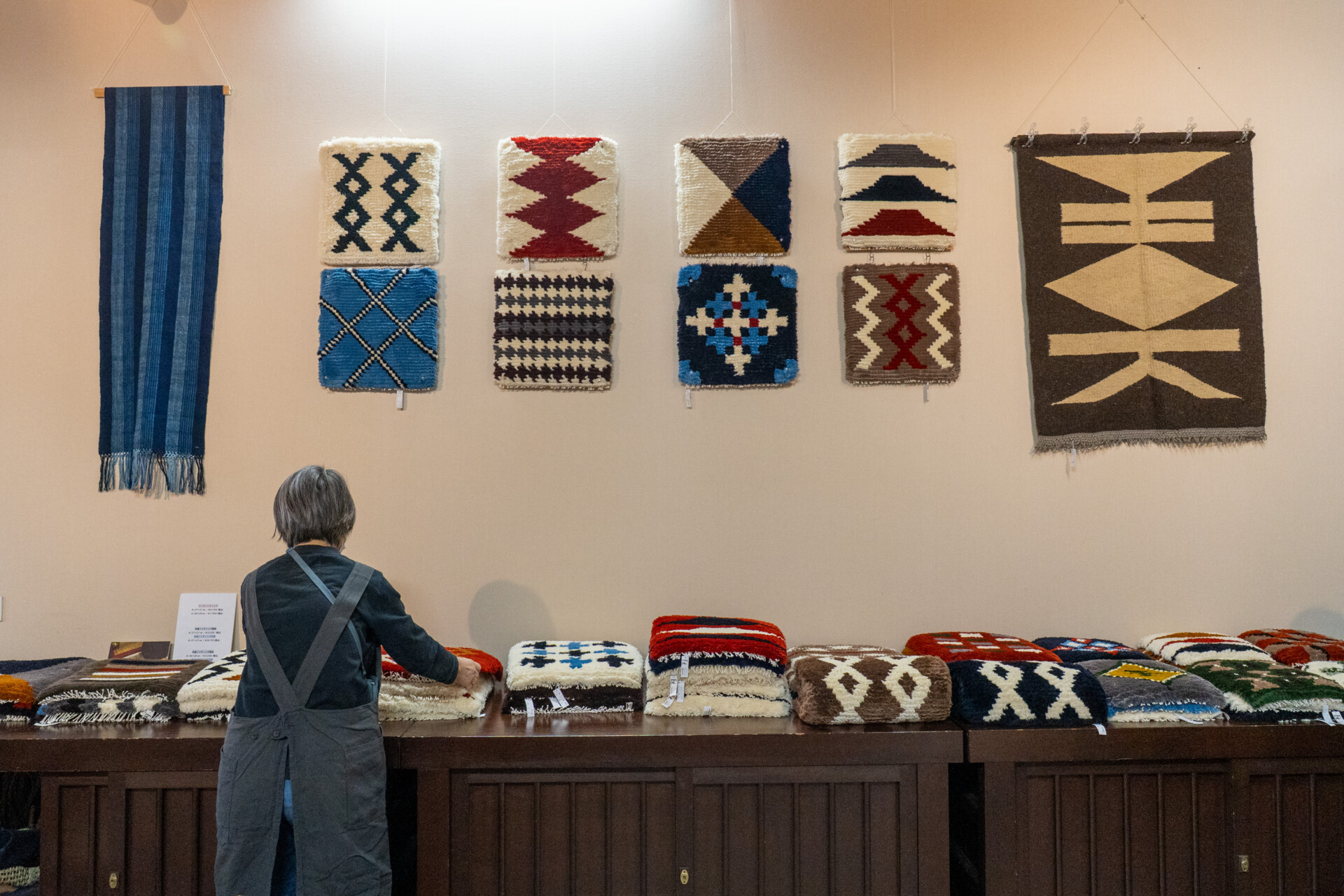
Finally, do you have a message for our readers?
Ishigami
I would be happy if you would use these pieces as part of your everyday life.
From the Writer
I have visited the Kurashiki Honsome Handweaving Association Exhibition several times in the past. Each time, I thought, “I’ll take one home,” but I could not decide because of the wide selection and the prices.
However, after hearing Ishigami talk about “chance” this time, I decided to visit again later and take home a piece I encountered then.
That said, there is no doubt that visiting early gives you more options.
During the exhibition, which runs through Sunday, November 8, why not visit the special gallery at the Kurashiki Museum of Folkcraft and look for a piece to welcome into your home?

What would you like to know about Kurashiki?
Enter a search term to find articles on this site







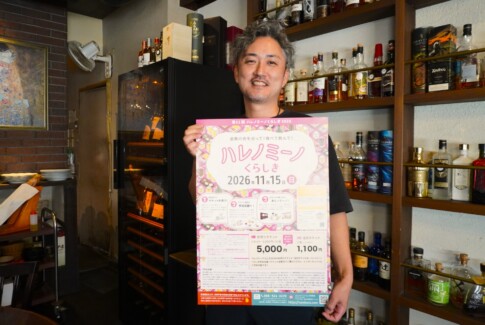



























Kurashiki Honsome Handweaving Association Exhibition
Address:
1-4-11 Chuo, Kurashiki City, Okayama Prefecture
Special Gallery, 1st Floor, Building 1, Kurashiki Museum of Folkcraft
Dates and hours:
Tuesday, November 3–Sunday, November 8, 2026
10:00 a.m.–4:30 p.m.
*Until 3:00 p.m. on the final day
Admission:
Free
*Cash only at the venue
Web page:
Kurashiki Museum of Folkcraft official website
https://kurashiki-mingeikan.com/kashi2012.html