
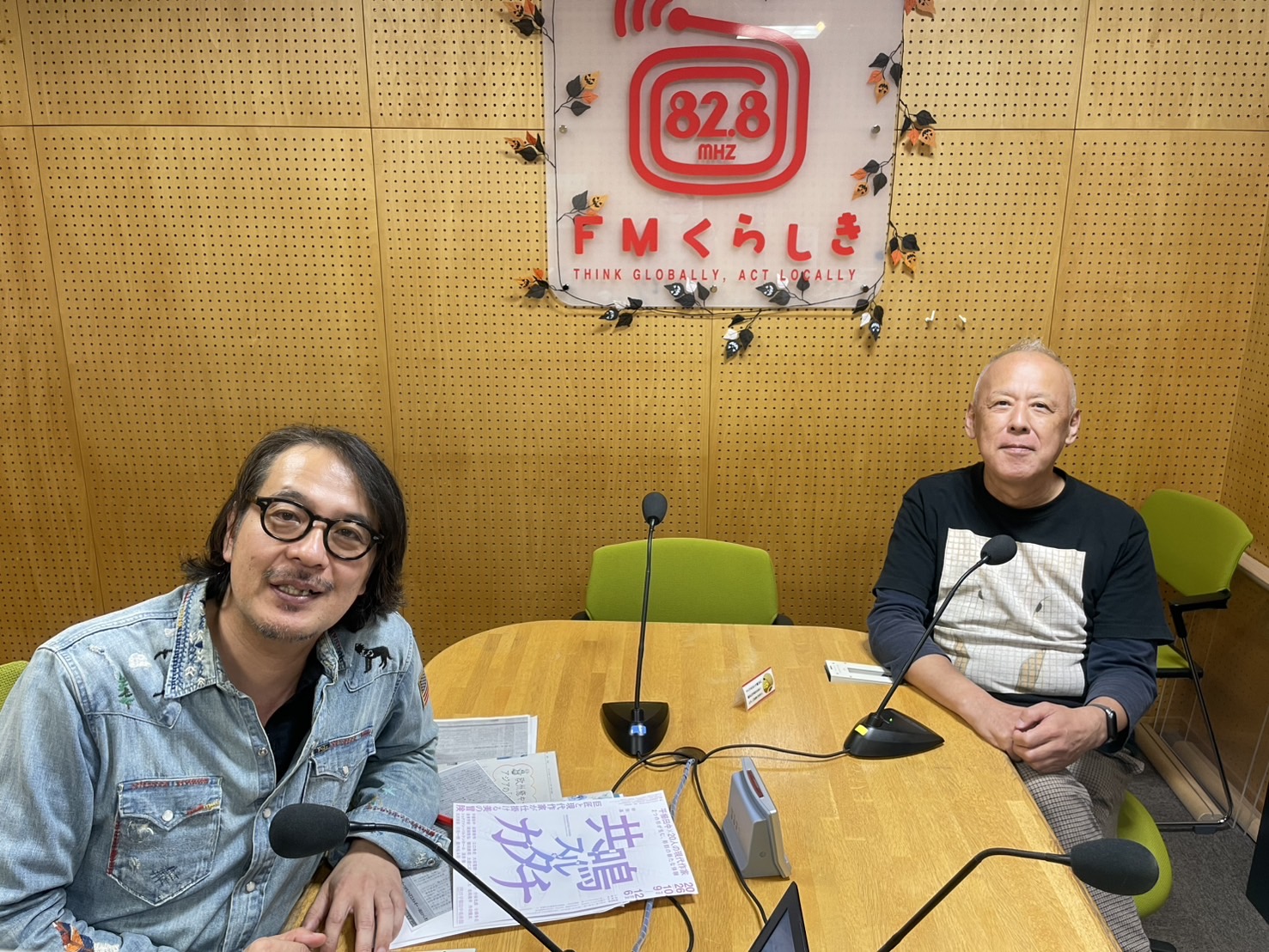
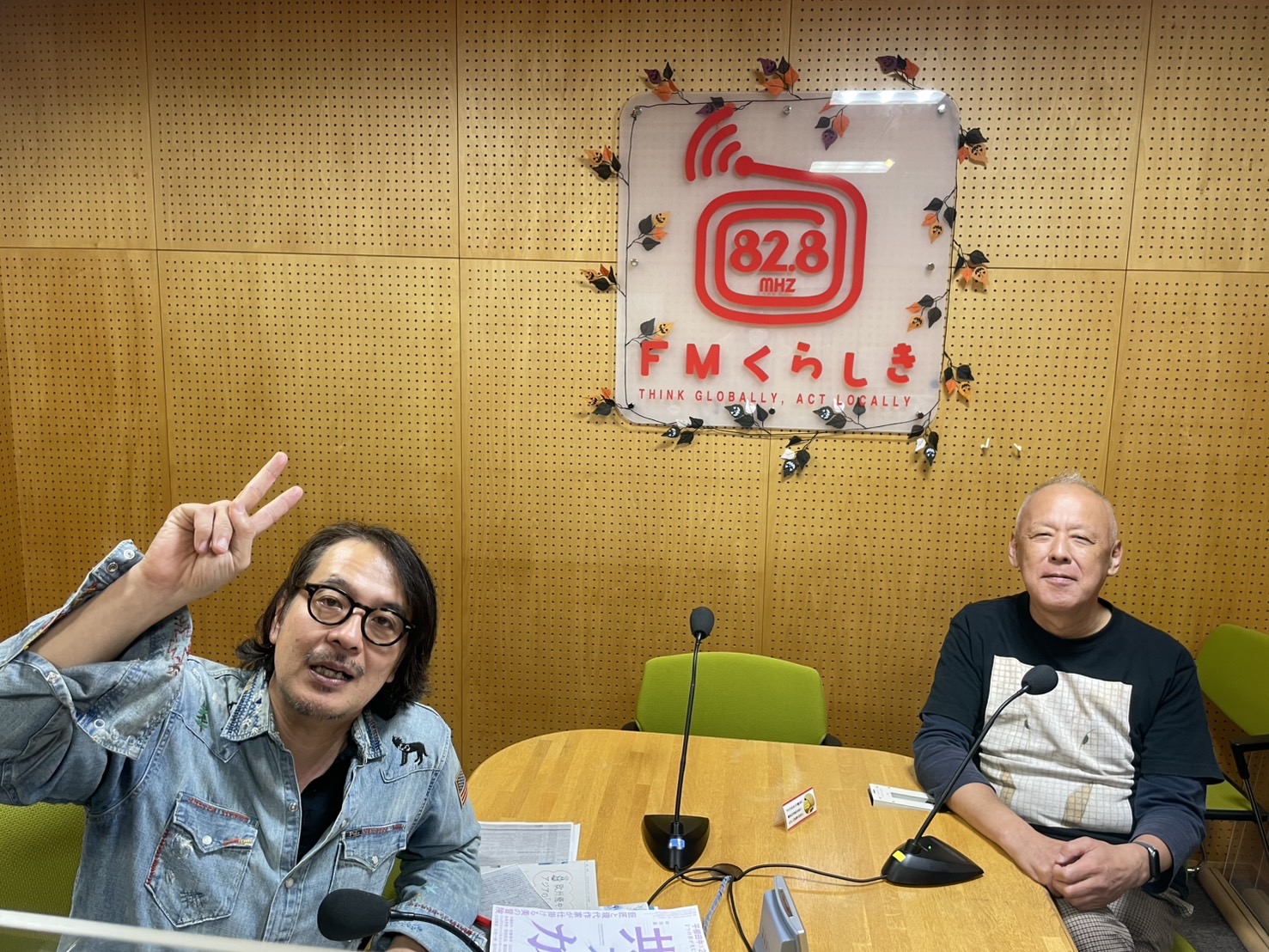
On FM Kurashiki’s “Weekly Kurashiki Happy Radio,” the “Art Goes On” segment features Hideyuki Yanagisawa, director of the Kurashiki Museum of Folkcraft, on the fourth Friday of every month.
Here is an excerpt from the October 23, 2026 (Friday) program.
This article was contributed by FM Kurashiki Co., Ltd. The editorial team at Haretoco General Incorporated Association edited and published it.
The information in this article was current when it was published in November 2026. Please note that it may differ from current information.
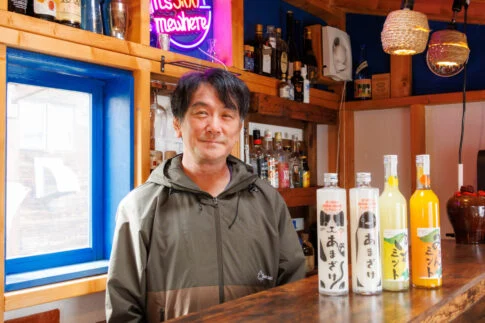
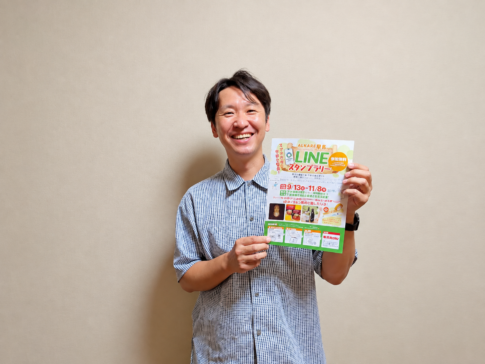
This episode’s guests
- Yanagisawa Hideyuki (guest)
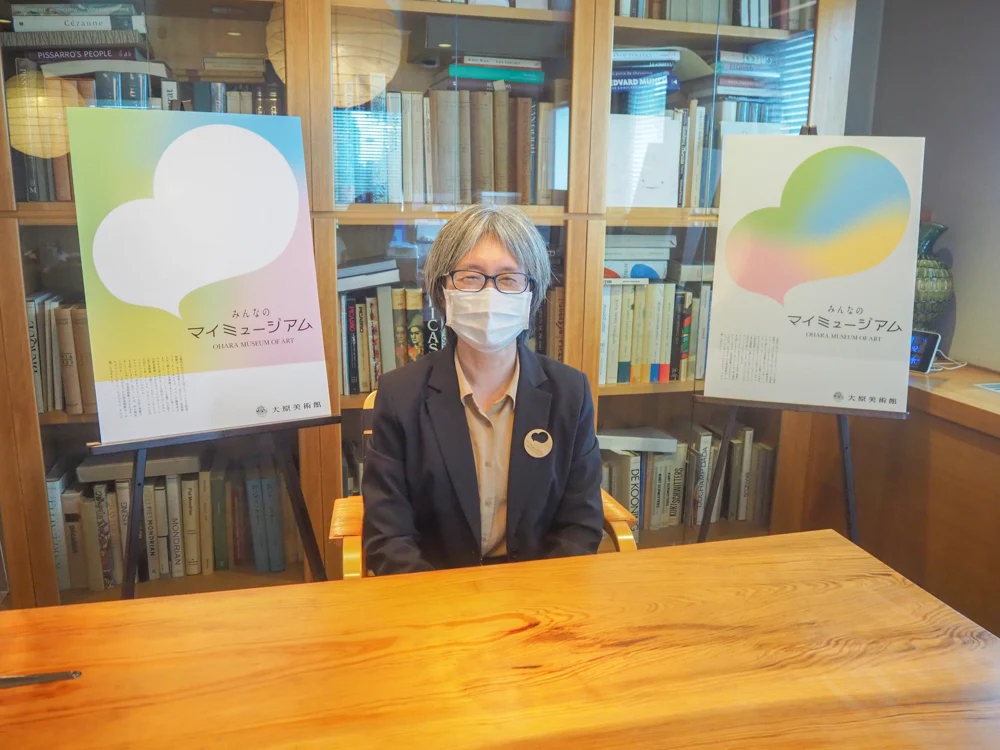
Director of the Kurashiki Museum of Folkcraft. Also serves as senior adviser to the Ohara Art Foundation.
Worked as a curator at the Okayama Prefectural Museum of Art and the Ohara Museum of Art; became assistant director of the Kurashiki Museum of Folkcraft in 2023 and director in April 2026. - Charlie Otani (host)
“Resonating Forms,” where contemporary artists engage with Hirakushi Denchu’s 《The Mirror Lion》
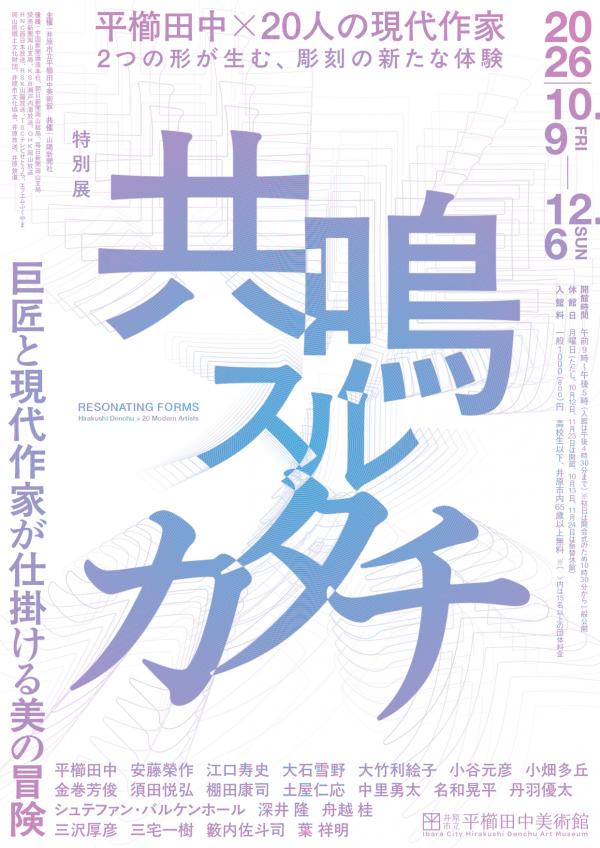
A special exhibition, “Resonating Forms: An Adventure in Beauty Orchestrated by Masters and Contemporary Artists,” is being held at the Hirakushi Denchu Museum in Ibara City through Sunday, December 6, 2026. The exhibition pairs works by sculptor Hirakushi Denchu, who was born in Ibara City and continued creating even after turning 100, with works by 20 contemporary artists.
The exhibition centers on Denchu’s signature work, 《The Mirror Lion》. The wooden sculpture, carved and painted, depicts Onoe Kikugoro VI dancing in the kabuki performance “Shun-kyo Kagami Jishi.” It took about 20 years to complete, finishing in 1958. Alongside the completed sculpture, the venue also displays studies made during its creation. Otani says he has already visited.
Otani
When I went, there happened to be very few people. When I entered the first room, there was a work that looked like a small study for 《The Mirror Lion》.
Yanagisawa
There was also that huge, lion-like thing, right?
Otani
The chimera. They were facing each other, and I felt almost apologetic walking between them. I wondered if it was all right to pass between the works, with each one gazing at the other. It made me a little nervous.
Artists who received the Hirakushi Denchu Prize are also featured
The Hirakushi Denchu Prize, named after Hirakushi Denchu, has been awarded to contemporary sculptors. According to Yanagisawa, its recipients are all active figures in contemporary Japanese sculpture.
Yanagisawa
The chimera Otani mentioned, facing 《The Mirror Lion》—the big but cute one that looks like a lion with wings. That was made by Misawa Atsuhiko. Odani Motohiko, who had a conversation with Misawa, is also popular. He also created 《Rompers》, a video work at the Ohara Museum of Art.
I thought it would only include people who had received the Hirakushi Denchu Prize, but there are all kinds of contemporary creators taking on Denchu’s works one-on-one. It’s not a group contest; each work faces off individually. I think it’s an ambitious undertaking.
Otani
I realized that wood is such an infinite material, and that expression can be so free. It made me feel the potential of wood so strongly, I wondered if Japanese people just love wood.
A woodcarving exhibition he worked on in his first year as a curator, and Katsura Funakoshi
Yanagisawa
A little over 30 years ago, in 1991, we held an exhibition of modern and contemporary Japanese woodcarving at the Okayama Prefectural Museum of Art. I was in my first year as a curator and was in charge of it.
Otani
That was a long time ago.
Yanagisawa
The most cutting-edge artist featured in that exhibition was Katsura Funakoshi.
He has since passed away, but in this exhibition he was treated as a contemporary master. I found myself viewing it while reflecting on my own history.
Back then, Funakoshi’s works had quite a strong smell of wood. After 30 years, naturally, the smell had faded.
Above all, I really hope people will see Odani’s work. I shouldn’t say too much about what’s inside. And this time of year, it’s lovely to take a drive out that way.
The annual “Kurashiki Honzome Handweaving Association Exhibition,” featuring knotting rugs
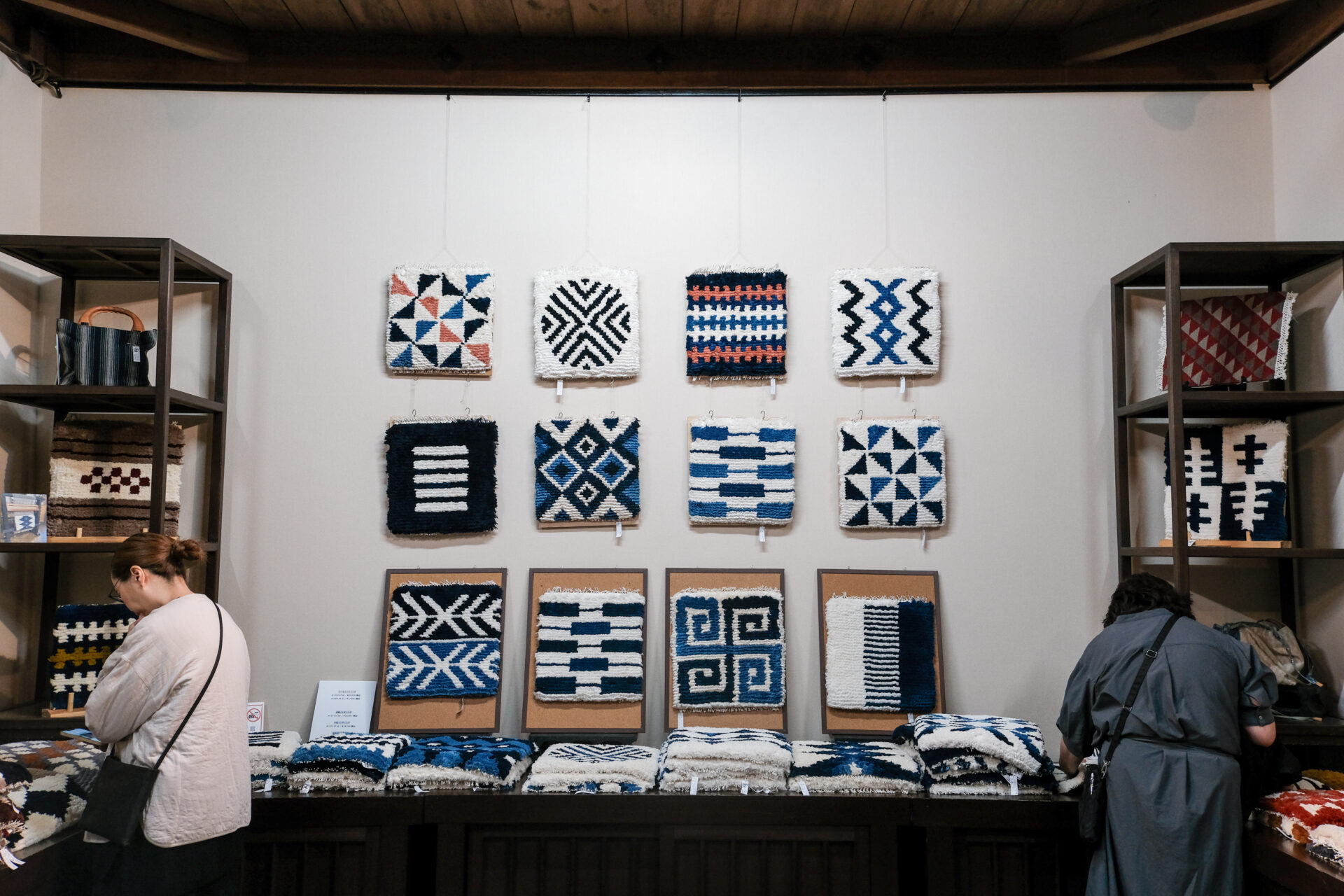
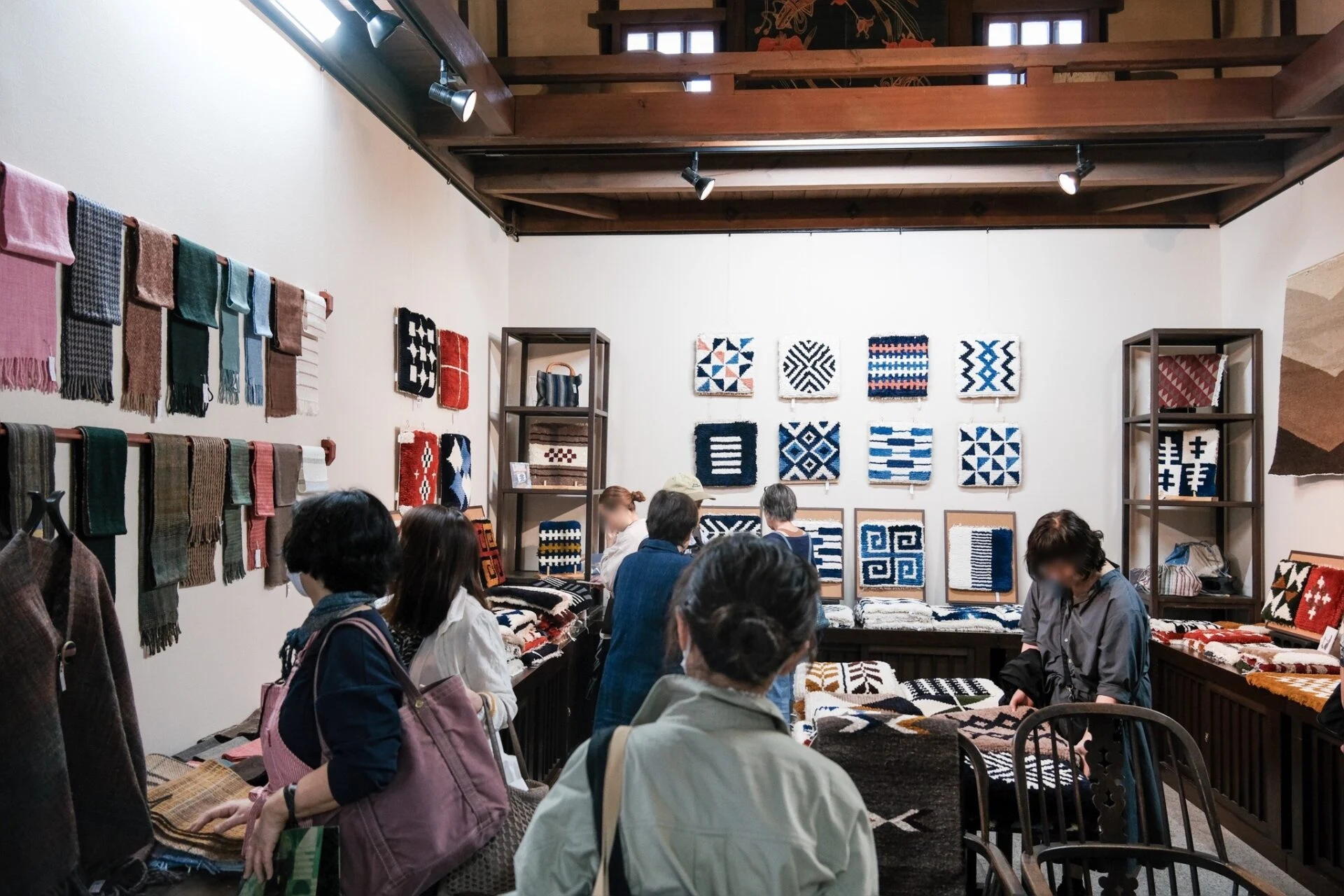
An event Otani looks forward to every year is the “Kurashiki Honzome Handweaving Association Exhibition,” a sales exhibition opening at the Kurashiki Museum of Folkcraft on Tuesday, November 3 (a national holiday).
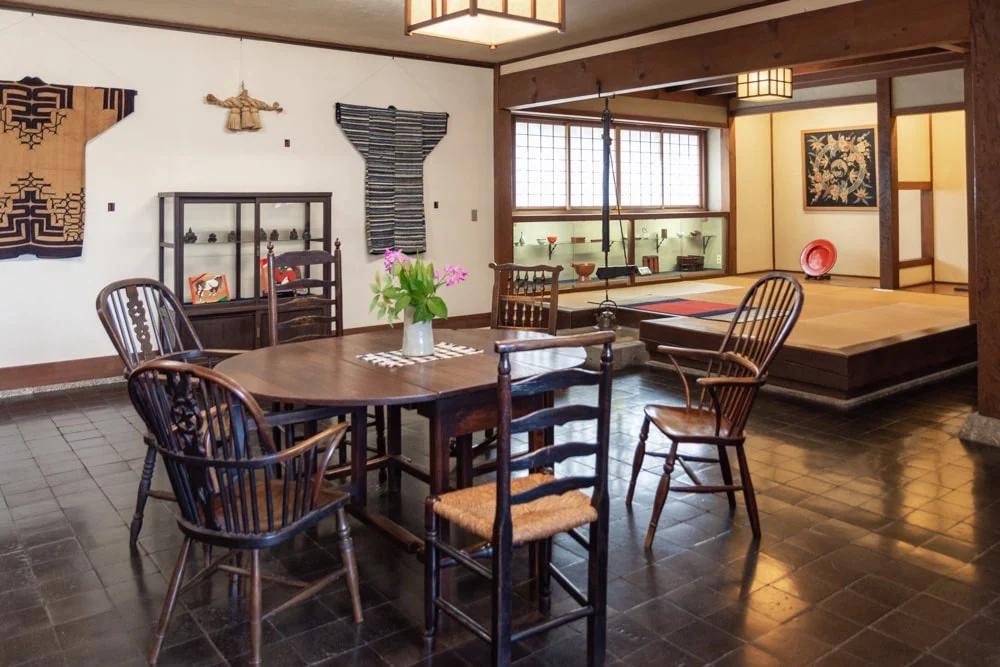
The works are made by people who studied at the Kurashiki Honzome Handweaving Institute. The institute was established in 1953 by Tonomura Kichinosuke, the first director of the Kurashiki Museum of Folkcraft. It is directly opposite the museum, on the corner of the road leading to Kurashiki Ivy Square.
Every year, many people spend a year learning to dye yarn and weave by hand. One of the institute’s signature products is Kurashiki knotting, a chair mat woven by tying bundles of wool onto cotton yarn.
Yanagisawa
That’s not a place that says, “Come on in”; it’s a place to hone your skills.
But it really has a lovely atmosphere if you go. Rather than working yourself to the bone, you learn to make things while enjoying and enriching your daily life. It feels like you’re learning how to live well day to day, not just how to make things.
After they clear out all the special exhibitions on the first floor of the Folkcraft Museum, they display the things made there for a week.
Otani
I see.
Yanagisawa
Especially the knotting rugs—the fluffy, cushion-like ones.
They’re expensive, but a lot of people line up on opening day every year. There’s nowhere else you can see so many of them together. Even shops that carry them only have three or four to choose from.
Otani
When I go later in the exhibition, I worry there won’t be anything left to choose from, so I hesitate.
Yanagisawa
That’s what it means to find the right one. If it’s gone, you can think of it as having found someone who loves it. But if you really want one, line up on the first day. Both are true.
The exhibition venue can be visited without an admission fee
Besides knotting rugs, there will be woven items such as shawls and small accessories, with a range of prices. You can enter the exhibition venue without paying an admission fee.
Yanagisawa
It’s fun just to go and see the exhibition, and once you’ve seen it, you’ll probably want to visit the Folkcraft Museum too.
From the Writer
See masters and contemporary artists face off in Ibara, then discover handwoven works in Kurashiki. After hearing Yanagisawa’s stories, you may find your autumn weekend plans taking shape.
Events introduced on the program
Address:
1-4-11 Chuo, Kurashiki City, Okayama Prefecture
Special Gallery, 1st floor, Building 1, Kurashiki Museum of Folkcraft
Exhibition period:
Tuesday, November 3 (national holiday)–Sunday, November 8, 2026
Hours:
10:00 a.m.–4:30 p.m. (until 3:00 p.m. on the final day)
Admission:
Free
Payment method:
Cash only
Web page:
Official website
https://kurashiki-mingeikan.com/kashi2012.html
Articles about FM Kurashiki





“Weekly Kurashiki Happy Radio” can also be heard via FM Kurashiki’s simulcast (in a computer browser or the “Radimo” smartphone app).
FM Kurashiki “Weekly Kurashiki Happy Radio” Information
| Name | FM Kurashiki “Weekly Kurashiki Happy Radio” |
|---|---|
| Address | 520-28 Hakurakucho, Kurashiki City, Okayama Prefecture |
| Contact | 086-430-0828 |
| Website | Program page |

What would you like to know about Kurashiki?
Enter a search term to find articles on this site


























Address:
315 Ibara-cho, Ibara City, Okayama Prefecture
Hirakushi Denchu Museum, Ibara City
Exhibition period:
Friday, October 9–Sunday, December 6, 2026
Opening hours:
9:00 a.m.–5:00 p.m. (admission until 4:30 p.m.)
Closed:
Mondays
Admission:
Adults: ¥1,000
Free for high school students and younger
Web page:
Official website
https://www.city.ibara.okayama.jp/site/denchu-museum/21137.html