Located a 10-minute walk from JR Kurashiki Station, Kurashiki City Art Museum.
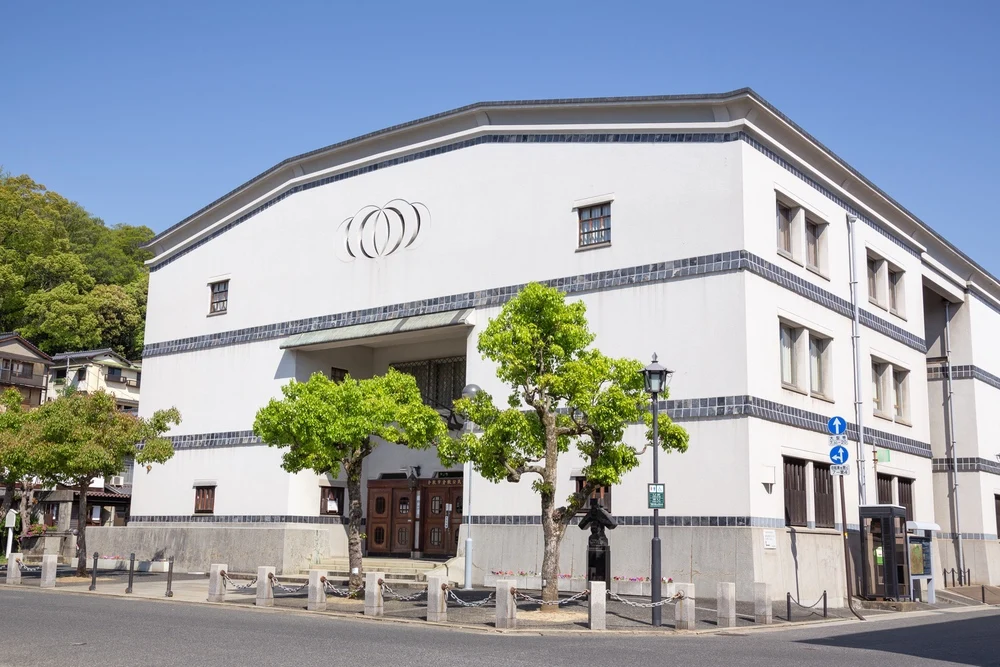
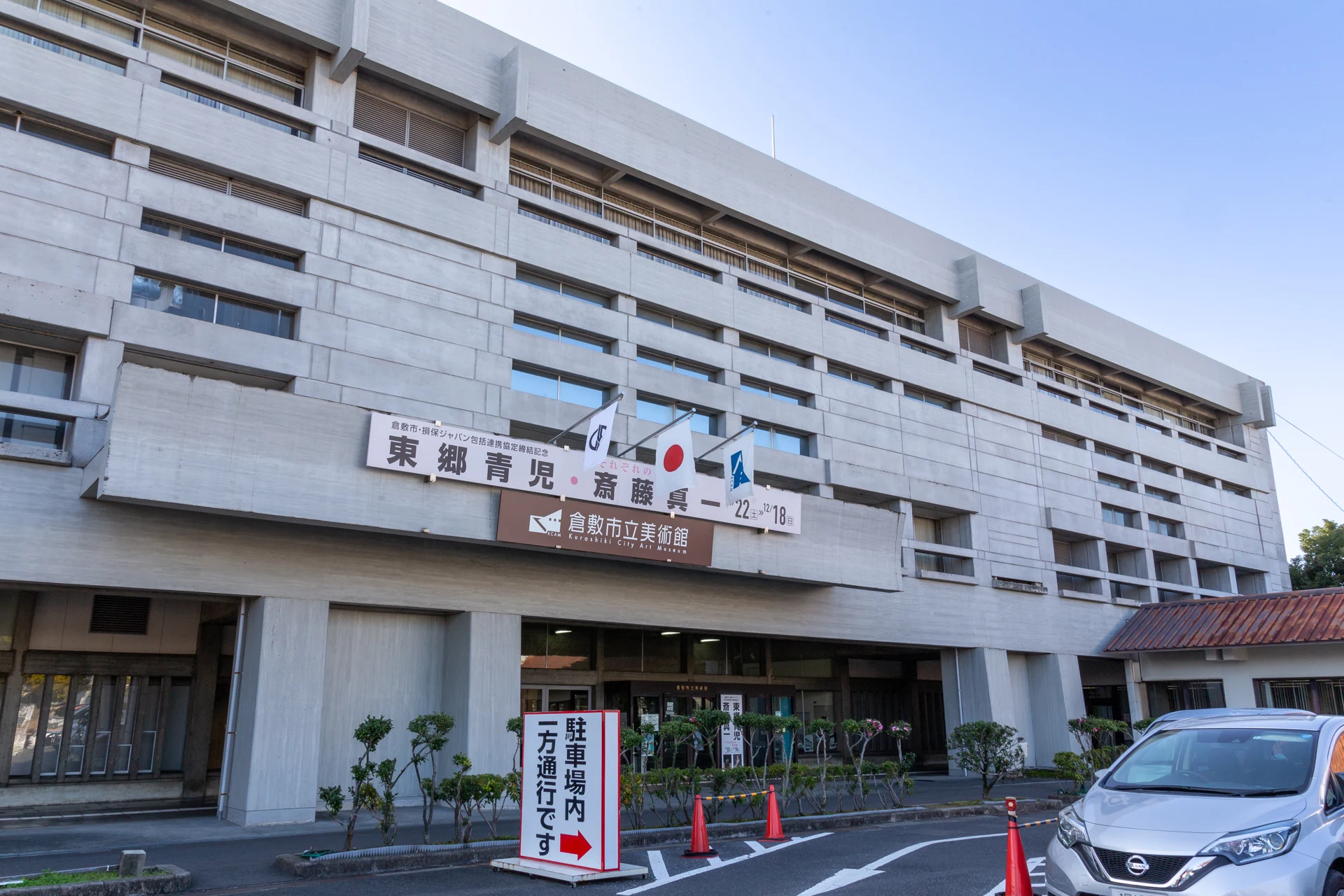
The museum features a solid building and, along with Kurashiki Central Library and Kurashiki Museum of Natural History, forms the cultural facility zone of Kurashiki City.
Kurashiki City has many cultural facilities, but what kind of facility is the Kurashiki City Art Museum?
We interviewed about the concept, activities, and collection of the Kurashiki City Art Museum.
Photography may be prohibited in the Kurashiki City Art Museum depending on the exhibited works. Please check with the staff for details.
What is Kurashiki City Art Museum?
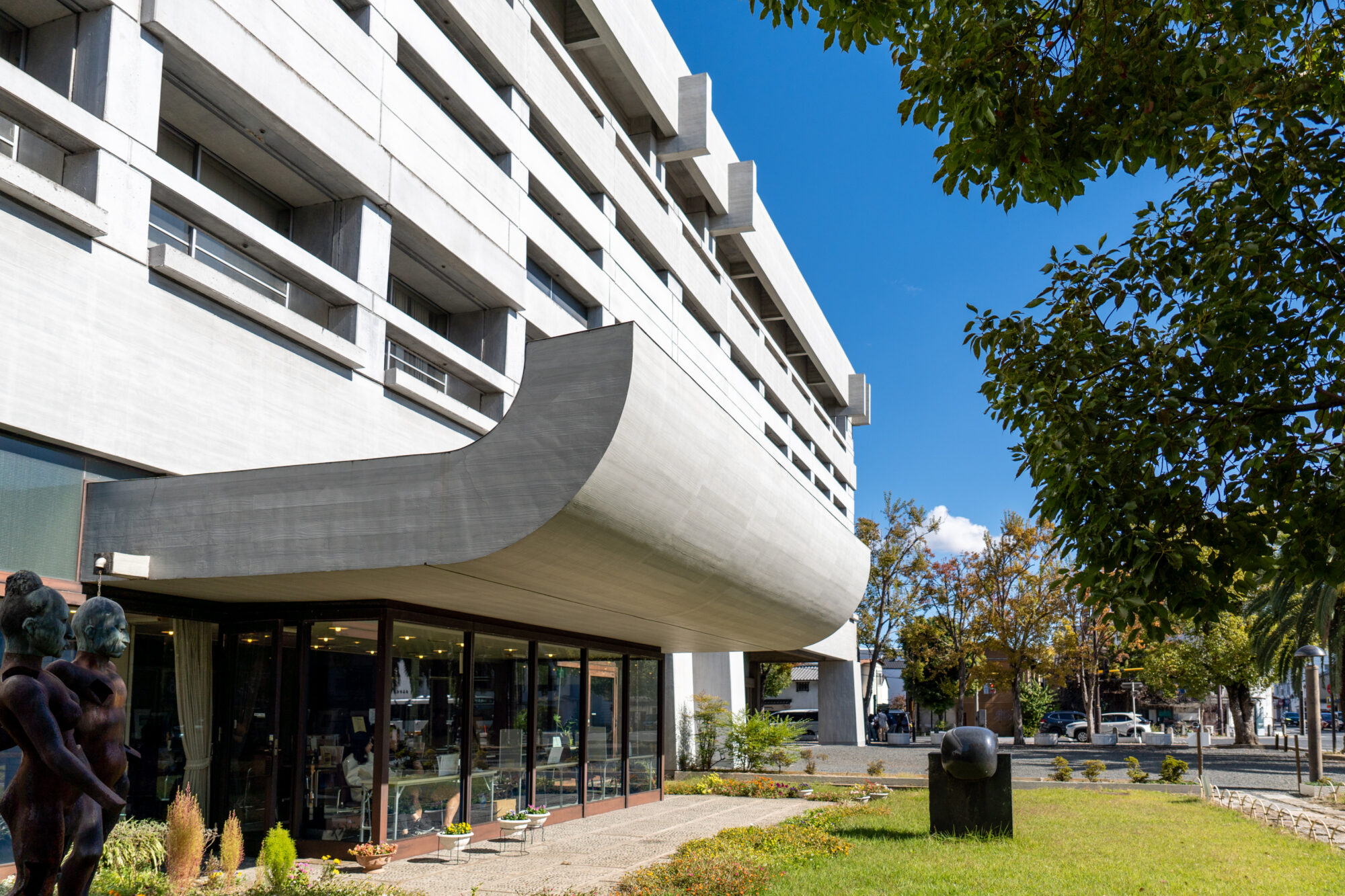
The Kurashiki City Art Museum opened in 1983.
It was established by reusing the former Kurashiki City Office building.
The relocation of Kurashiki City Office and the donation of works led to the opening of the museum
The building was completed in 1960.
It was designed by architect Tange Kenzo, known in Japan as "the Tange of the World."
It was used as the Kurashiki City Office for 20 years, but later the decision was made to relocate to the current City Office building.
After the relocation, Kurashiki City began to consider how to reuse the building.
Around the same time, Ikeda Yoson, a Nihonga (Japanese painting) artist from Kurashiki City, donated about 500 works to the city.
To manage Ikeda Yoson's works, they started to consider opening a museum in the former city office building.
For the reuse as a museum, architect Urabe Shizutaro, also from Kurashiki City, was commissioned for the renovation.
Then, on November 3, 1983, the Kurashiki City Art Museum was opened.
The original name was "Kurashiki City Exhibition Art Museum."
It was renamed to "Kurashiki City Art Museum" four years after its opening, in 1987.
Activities of Kurashiki City Art Museum beyond just exhibitions
The activities of Kurashiki City Art Museum can be broadly divided into three categories.
- Exhibitions
- Education and outreach
- Rental space
▼ The first is exhibitions.
- Special exhibitions
- Collection exhibitions
When you hear "activities of a museum," the first thing that comes to mind is likely the holding of exhibitions.
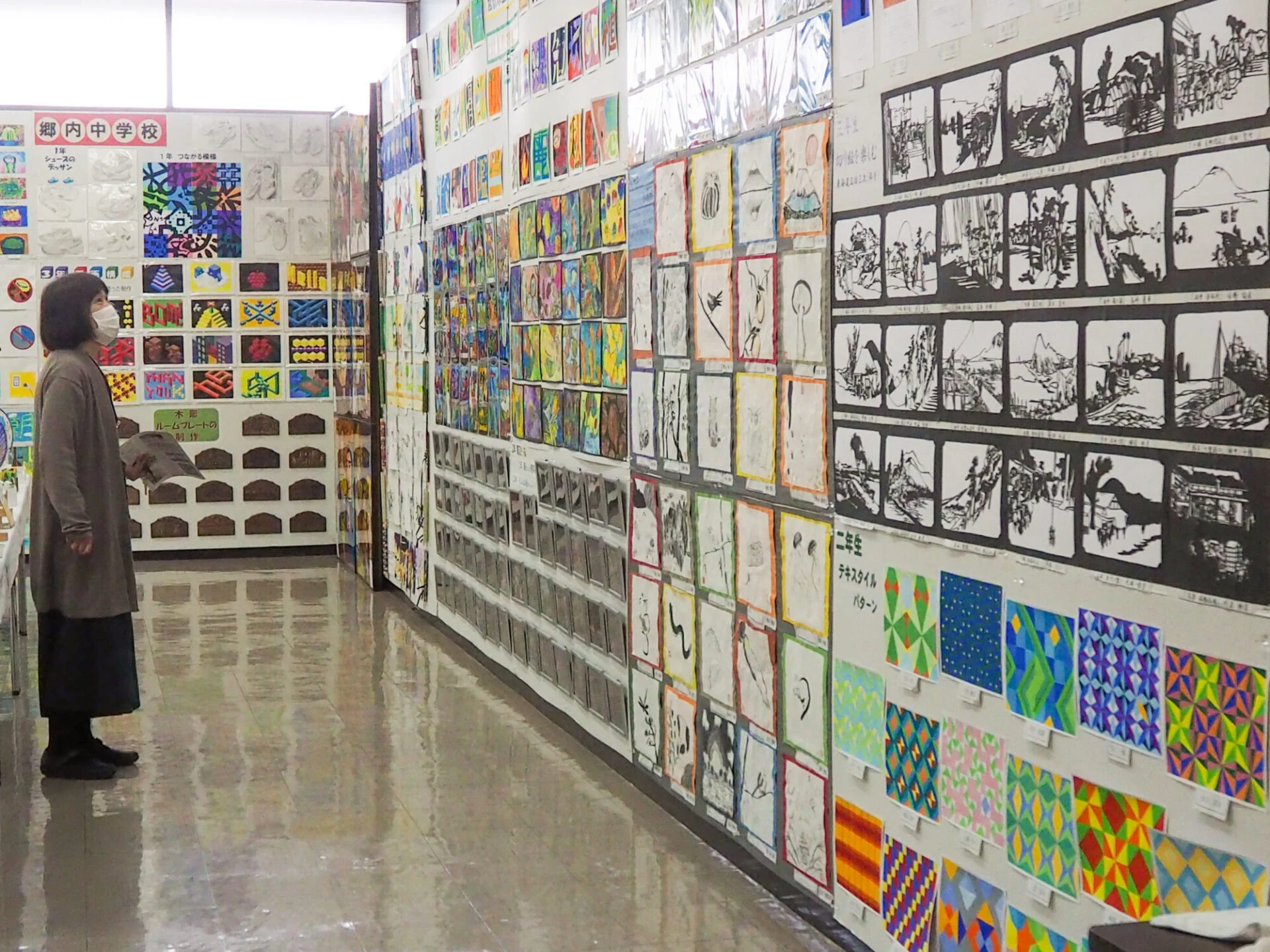
At Kurashiki City Art Museum, in addition to original planned exhibitions, they also hold exhibitions such as the jointly organized "Kurashiki Art Exhibition" and "Kurashiki-kko Art Exhibition."
▼ The second is education and outreach activities.
- Events related to exhibitions
- Art appreciation courses
- Art practical courses
- Collaboration with universities
You can deepen your understanding of the works and learn about art.
For example, in the art practical courses, they offer courses in watercolor, Nihonga, plaster drawing, lithography, and etching over a six-month period.
There are intermediate courses for experienced individuals in lithography and etching, as well as courses for beginners.
▼ The third is the rental of rental space.
- Exhibition room
- Auditorium
- Conference room
Anyone can rent these spaces, and many citizens use them as venues for presentations.
The exhibition room is used for presenting works, the auditorium for piano recitals, and the conference room for study presentations, among other uses.
The collection of Kurashiki City Art Museum centered on local artists
A feature of Kurashiki City Art Museum is the large number of collections.
It holds more than 11,000 art works and materials.
The core of the collection consists of works by local artists.
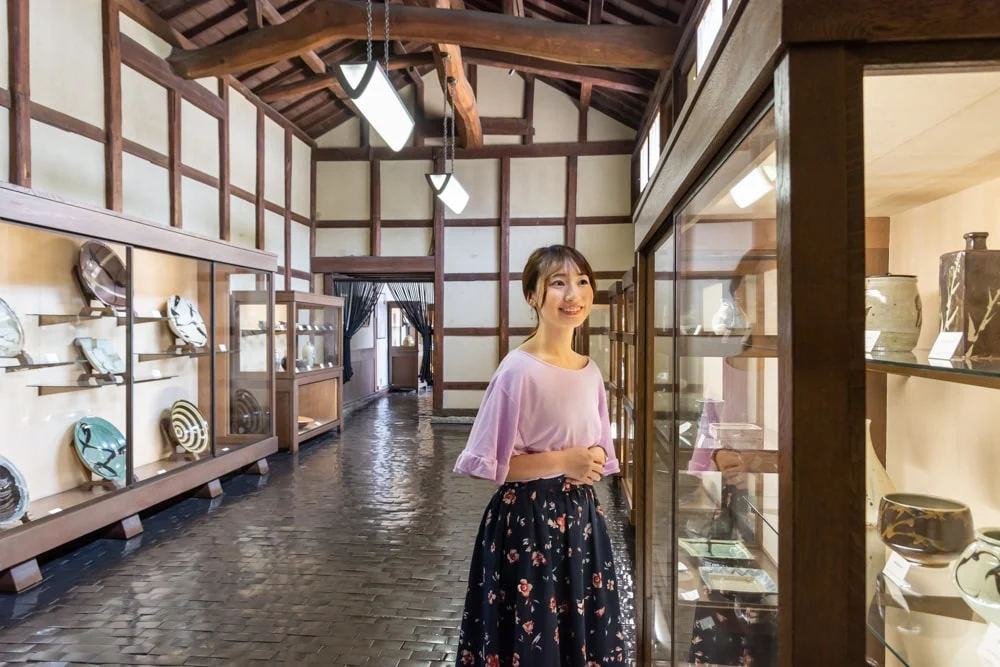
It manages a diverse collection including Nihonga, Western-style painting, sketches, sculptures, and crafts, and sometimes conducts restorations.
Here are some of the collection works from Kurashiki City Art Museum.
Ikeda Yoson "Song of the Forest"
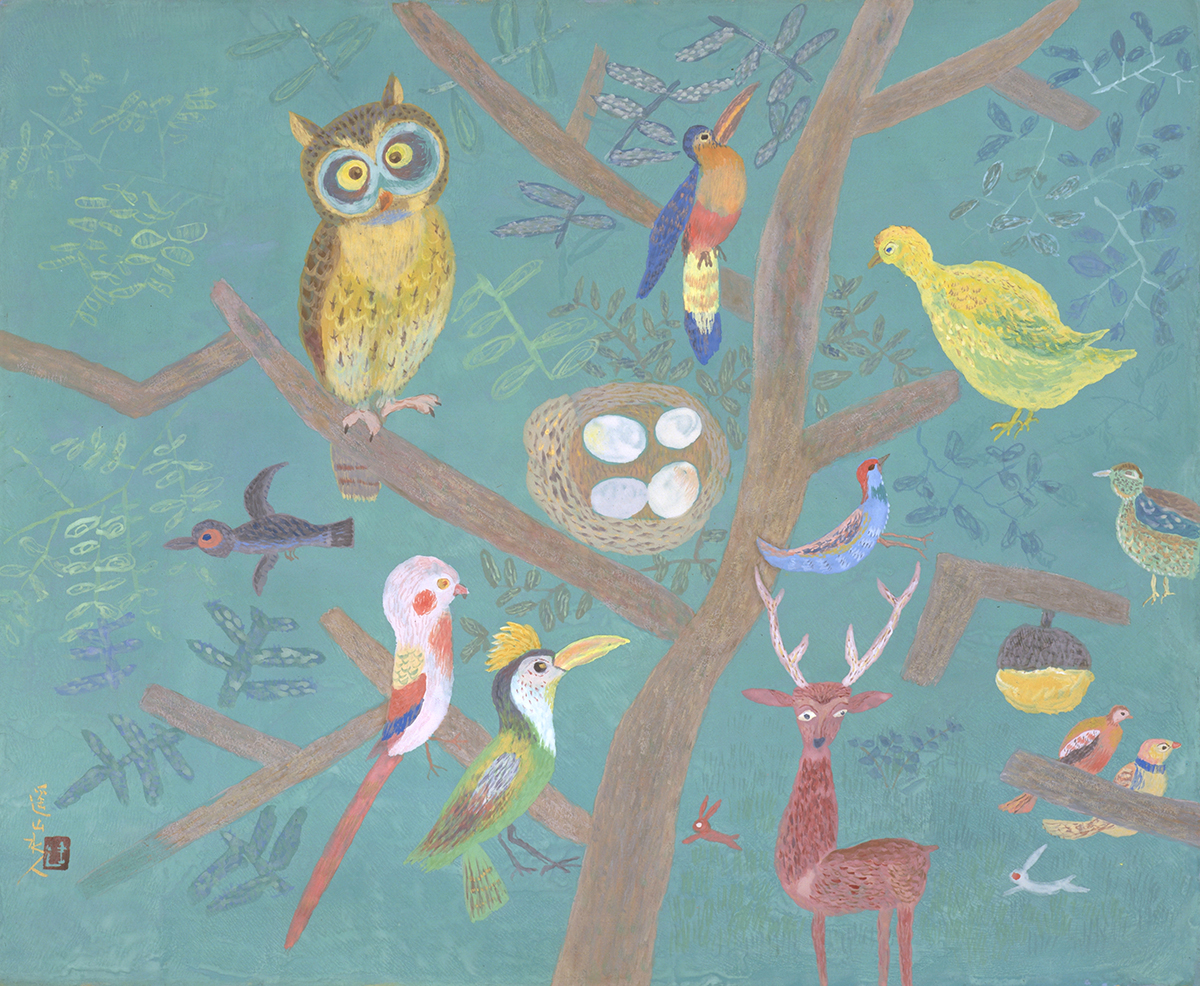
One of Ikeda Yoson's representative works, which also led to the opening of the Kurashiki City Art Museum, is "Song of the Forest."
It is also used in the museum's leaflet.
Ikeda Yoson was active as a Nihonga painter.
While Nihonga may have a lofty image, Ikeda Yoson's works convey a sense of playfulness.
"Song of the Forest" is particularly approachable, with a cuteness reminiscent of illustrations from picture books, making it enjoyable for both children and adults.
Ikeda Yoson "Fantasia of Myojin Reef"
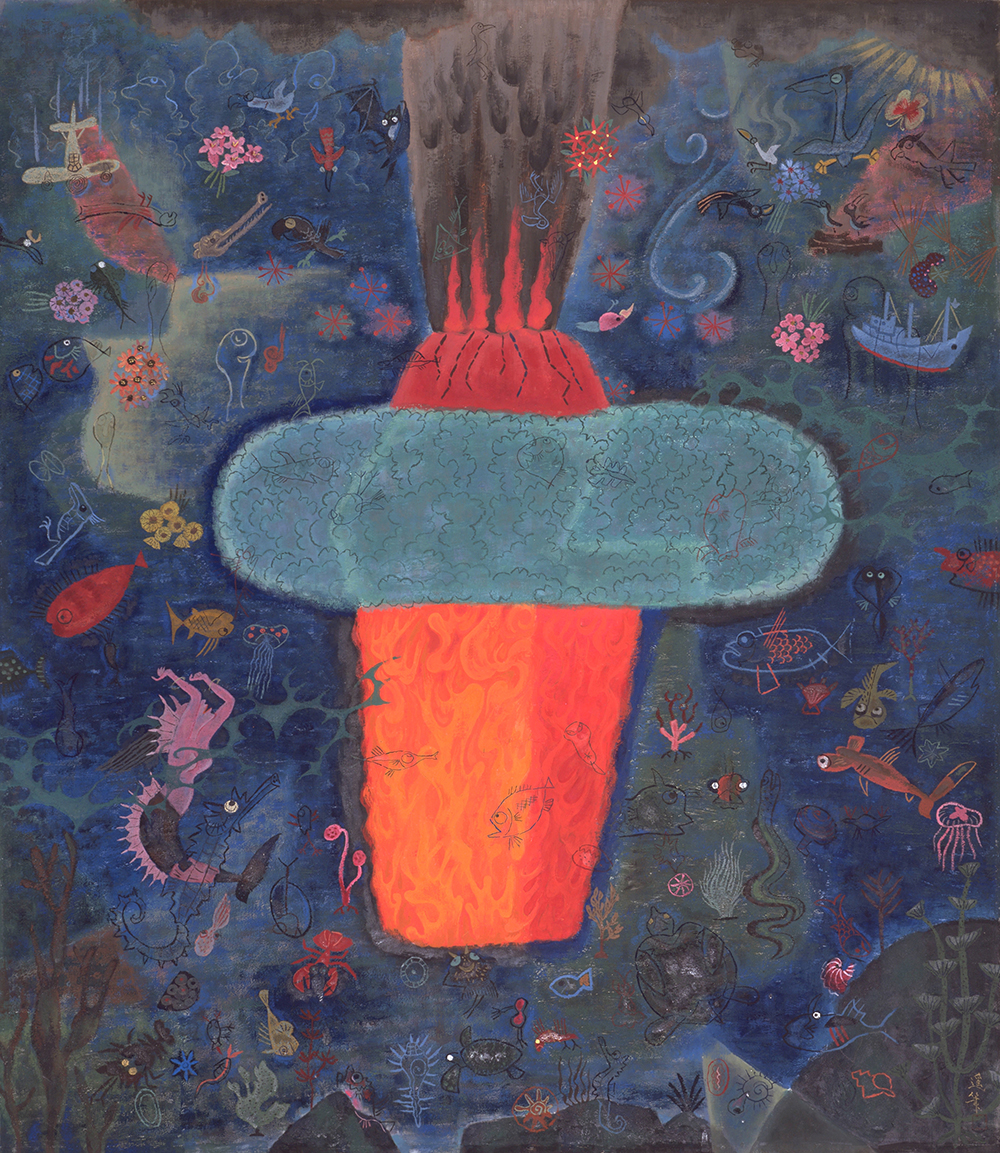
Another work by Ikeda Yoson to introduce is "Fantasia of Myojin Reef."
It is said to be a work inspired by the news of an underwater volcano erupting, expanding the imagination while painting.
Around the erupting mountain, there are airplanes, mermaids, and seahorses.
The work is characterized by a pop and cheerful depiction, rather than the tragedy of the eruption.
When viewing Ikeda Yoson's works, one can predict that he was an artist who constantly sought new expressions rather than adhering to traditional Nihonga.
He was one of Japan's representative painters, awarded the Order of Culture in 1987.
Inaba Shunsei "Peony"
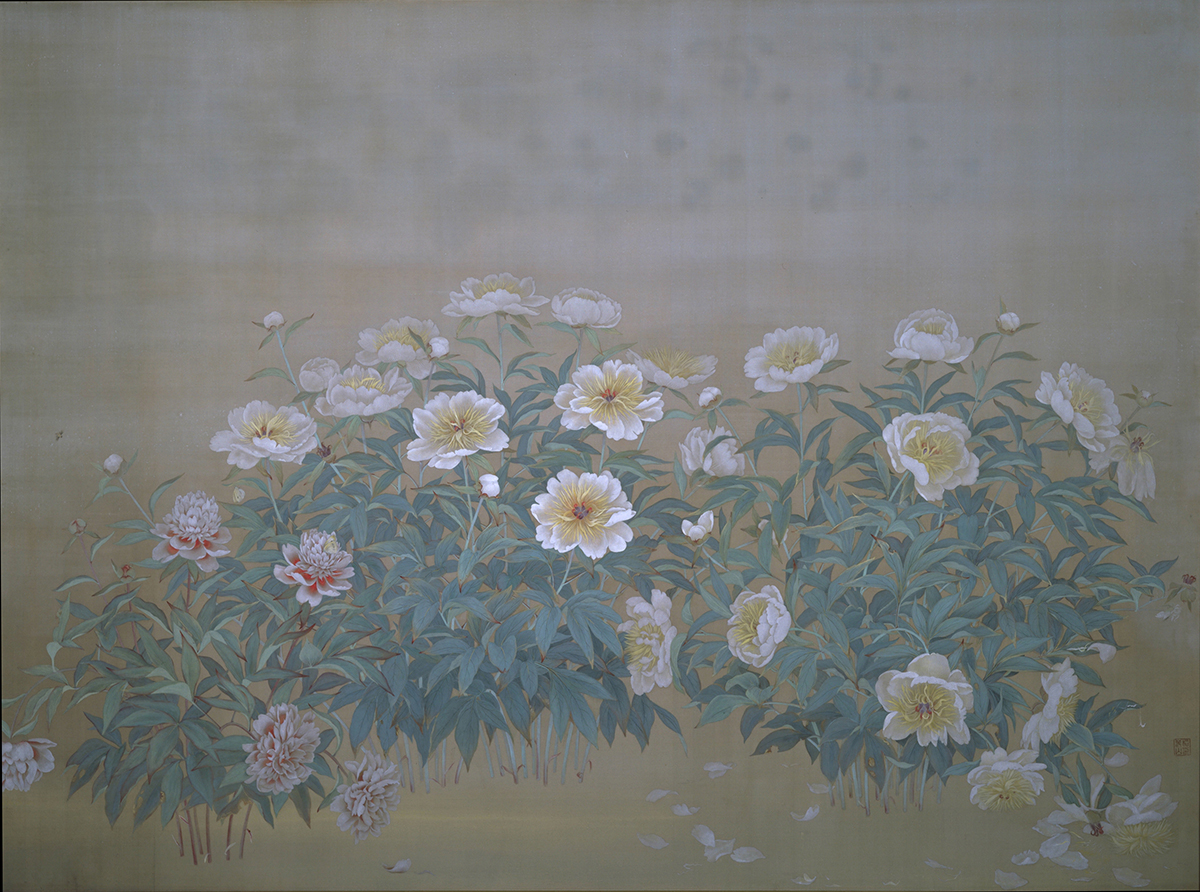
While there are works like those of Ikeda Yoson, the Kurashiki City Art Museum also houses many traditional Nihonga.
One of them is Inaba Shunsei's "Peony."
Even among the soft color palette, the color of the peony flower draws the eye.
"Peony" is said to be one of the favorite works of the museum director, Sakata Takushi.
Collection works can be viewed in the "Collection Exhibition" (irregular)
If you are interested in the collection of Kurashiki City Art Museum, it is recommended to visit the Collection Exhibition, which is held irregularly.
There is no permanent exhibition room at Kurashiki City Art Museum, so the collection is not always on display.
Be sure to visit the Kurashiki City Art Museum when the Collection Exhibition is being held.
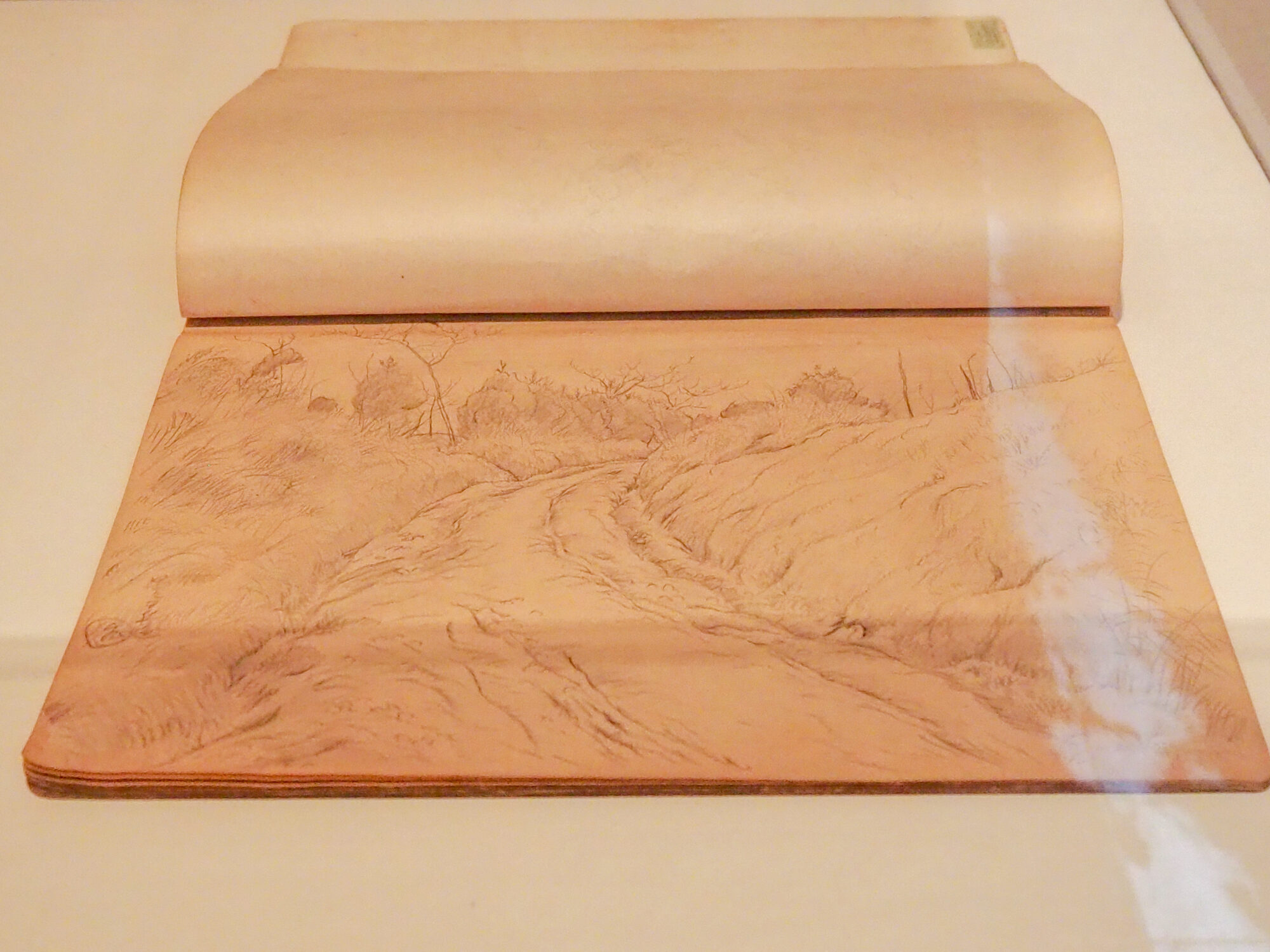
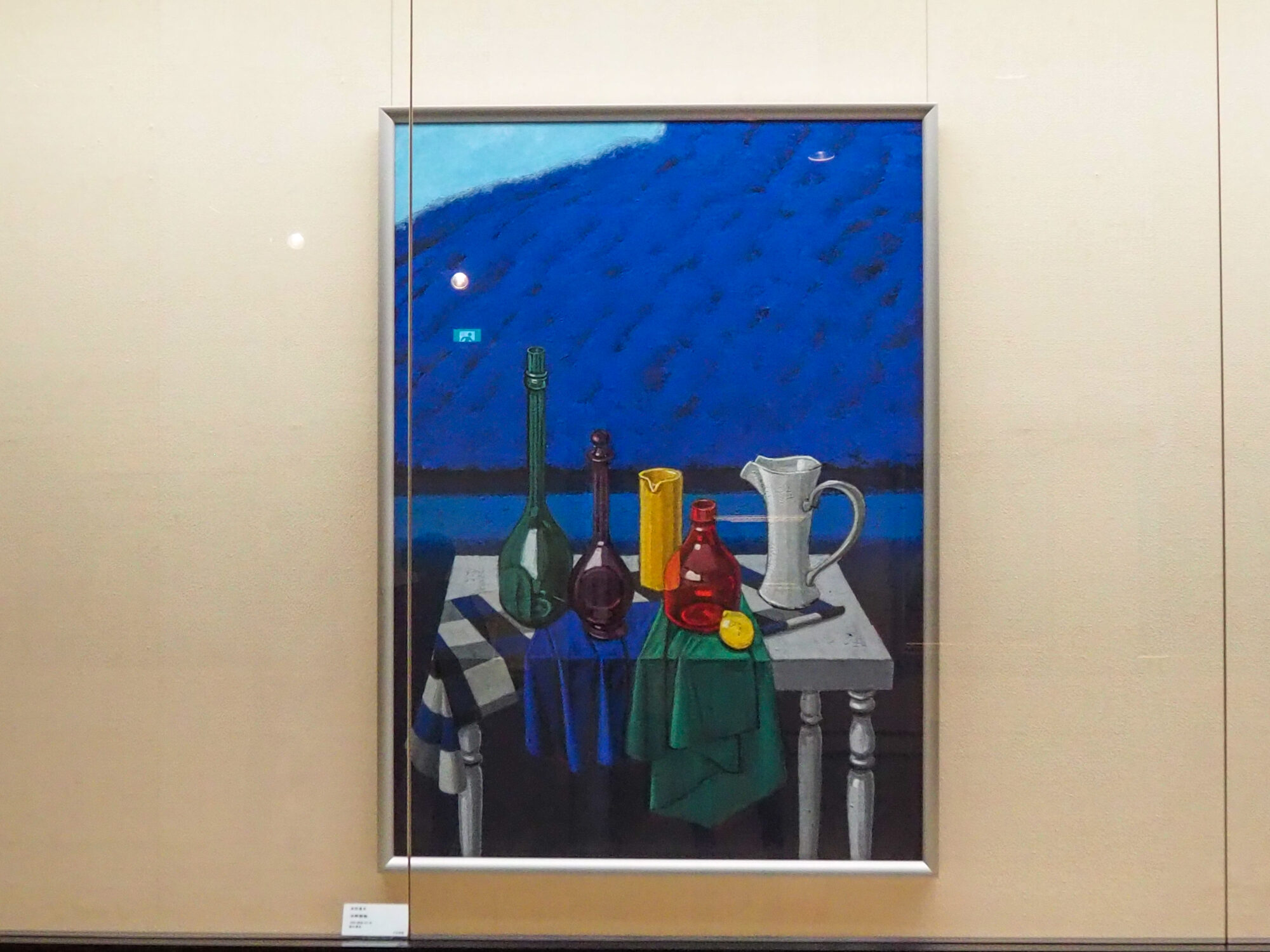
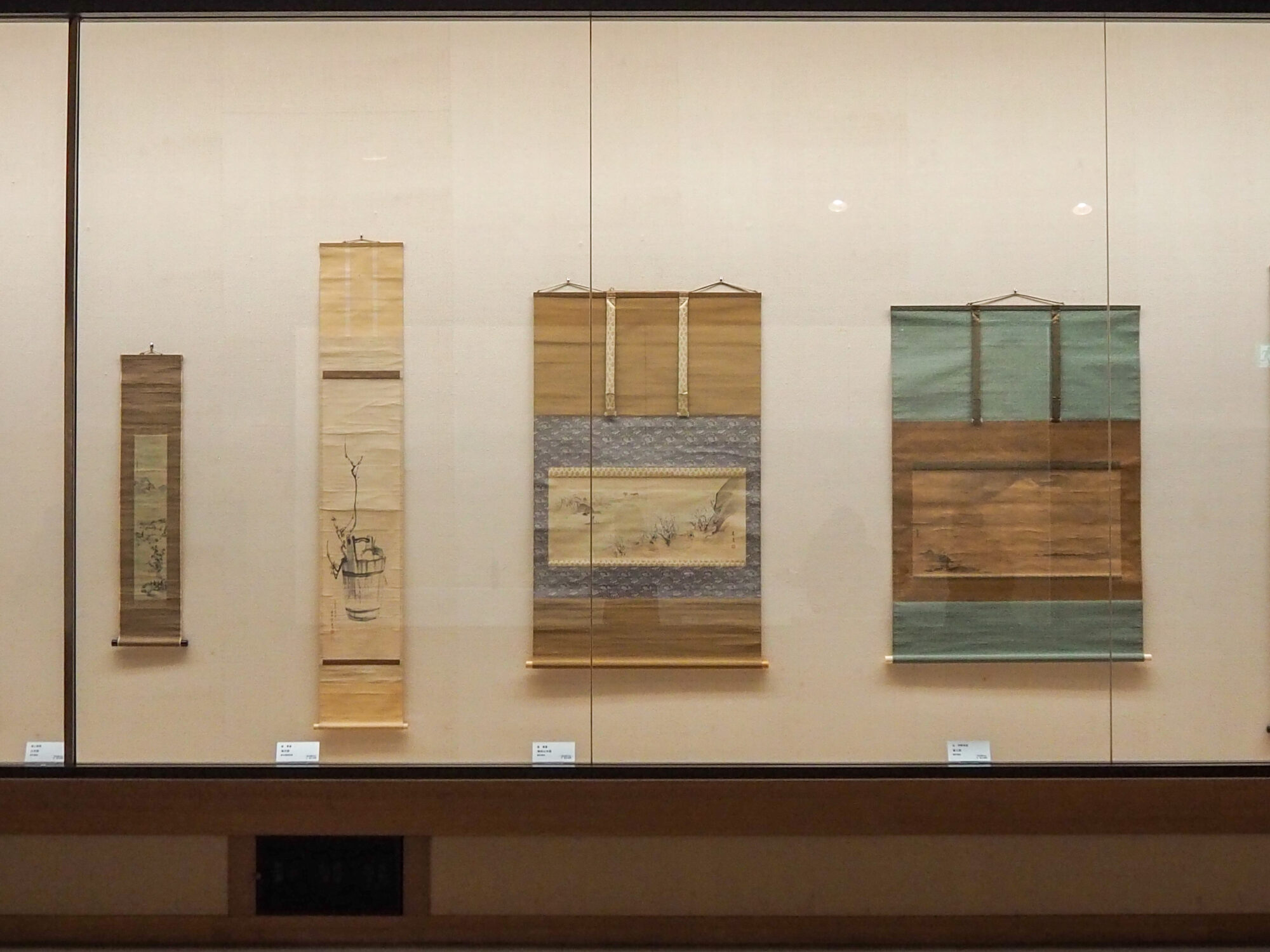
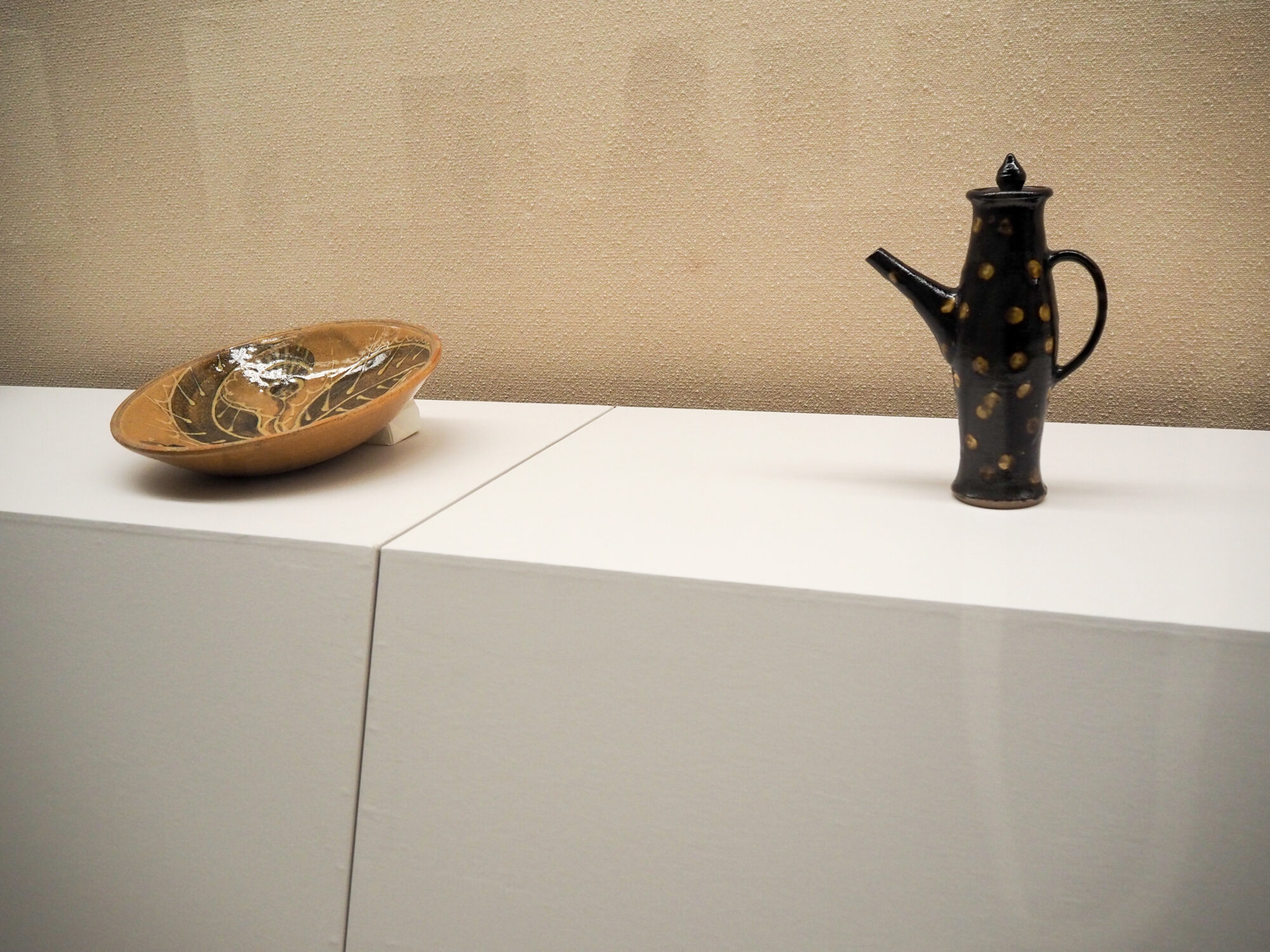
On the day of the interview, the "Collection Exhibition 'Focusing on Newly Acquired Works'" was being held.
While the three works introduced were not on display, I was able to view 50 works, including other pieces by Ikeda Yoson.
Once again, I felt the wide range of the collection.
"Kurashiki-kko Art Exhibition" participated by all elementary and junior high schools in Kurashiki City
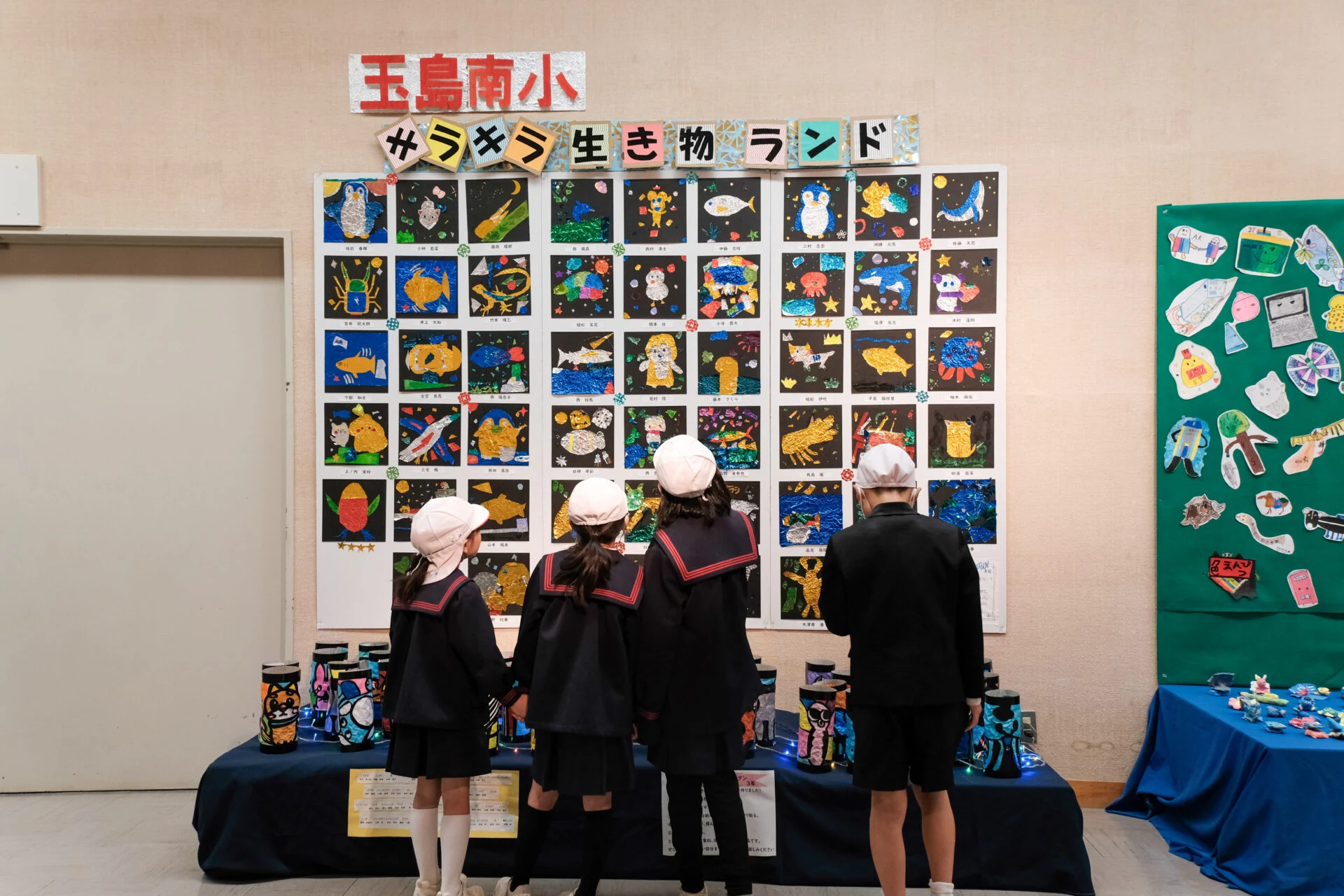
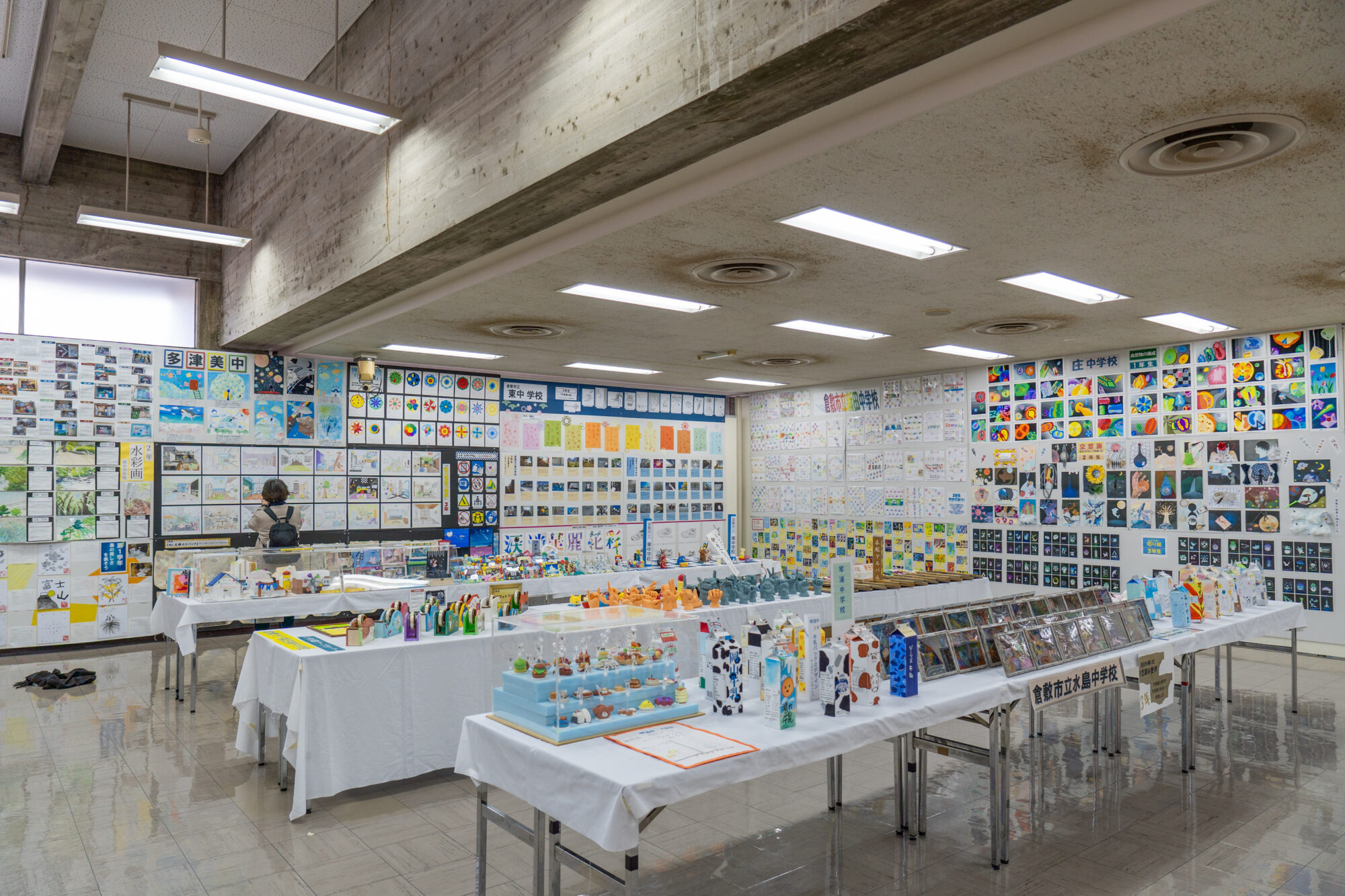
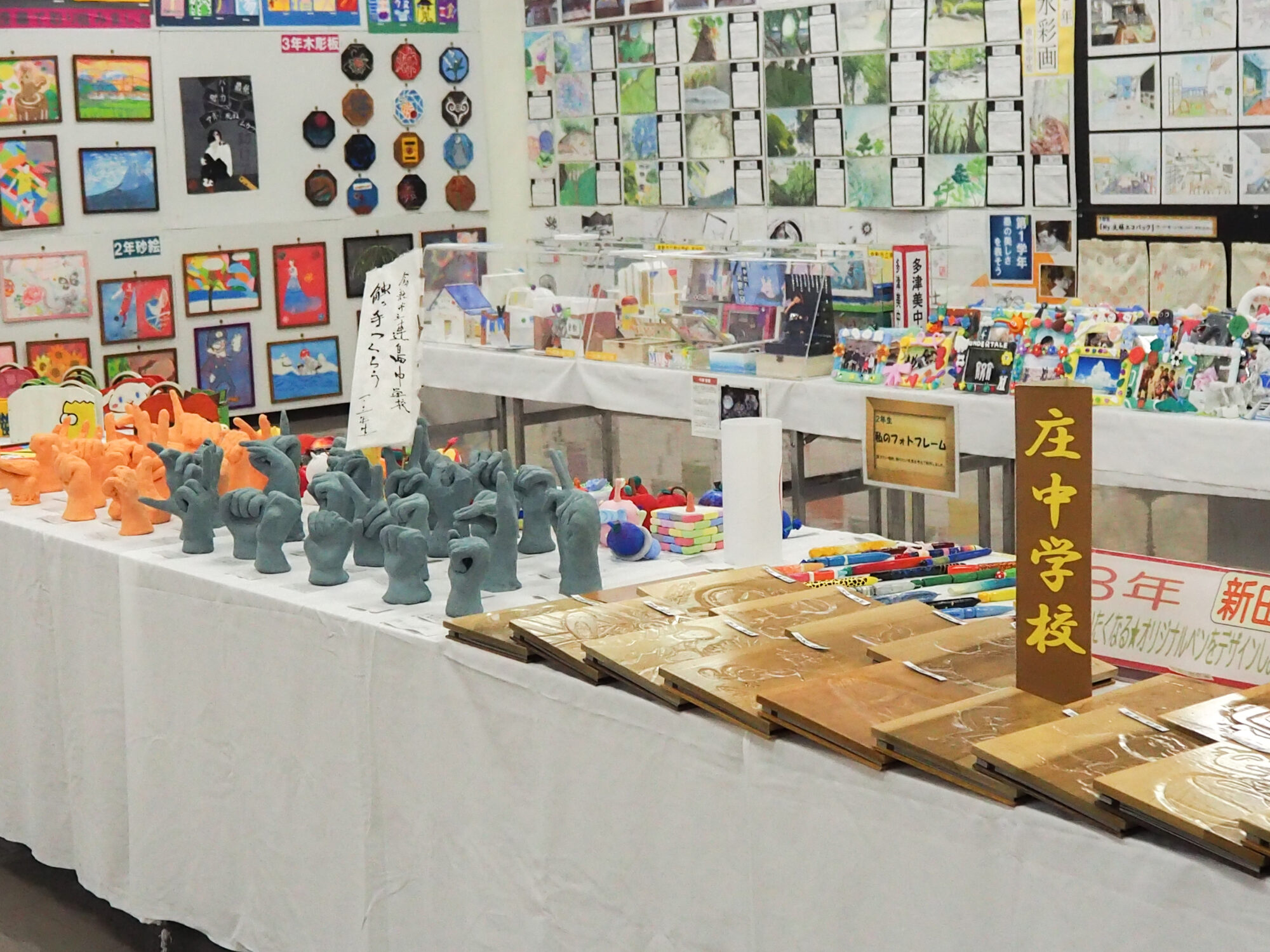
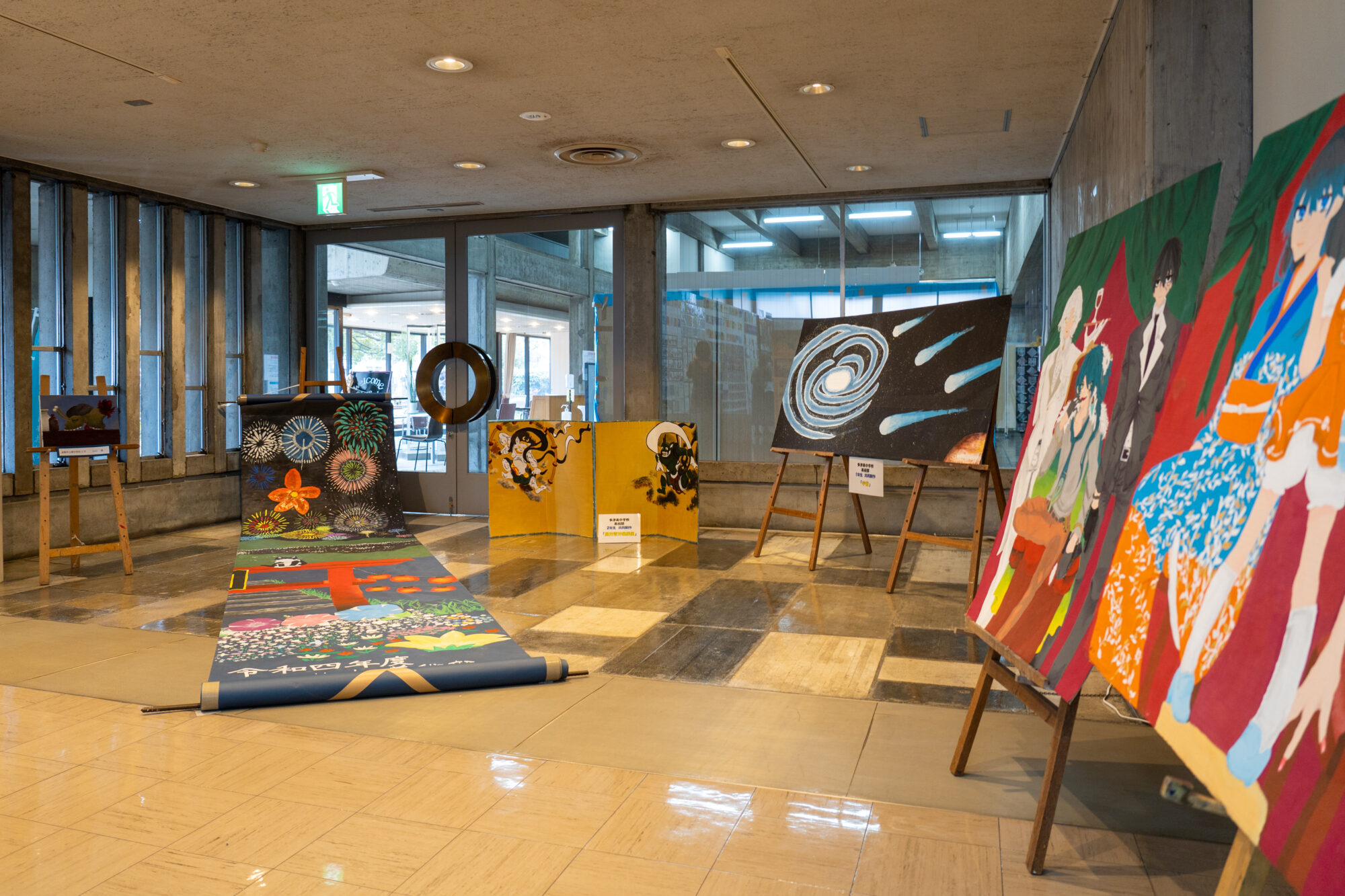
On the day of the interview, they were also holding one of their education and outreach activities, the "Kurashiki-kko Art Exhibition."
This year marks the 37th edition in 2022.
Despite the differences in grade levels, all elementary and junior high schools in Kurashiki City participate in this art exhibition.
The display of students' works filling the entire exhibition space was impressive.
Sakata, the director who has been observing the children's works, felt that the level of the works has been rising every year.
Of course, the building itself is also attractive
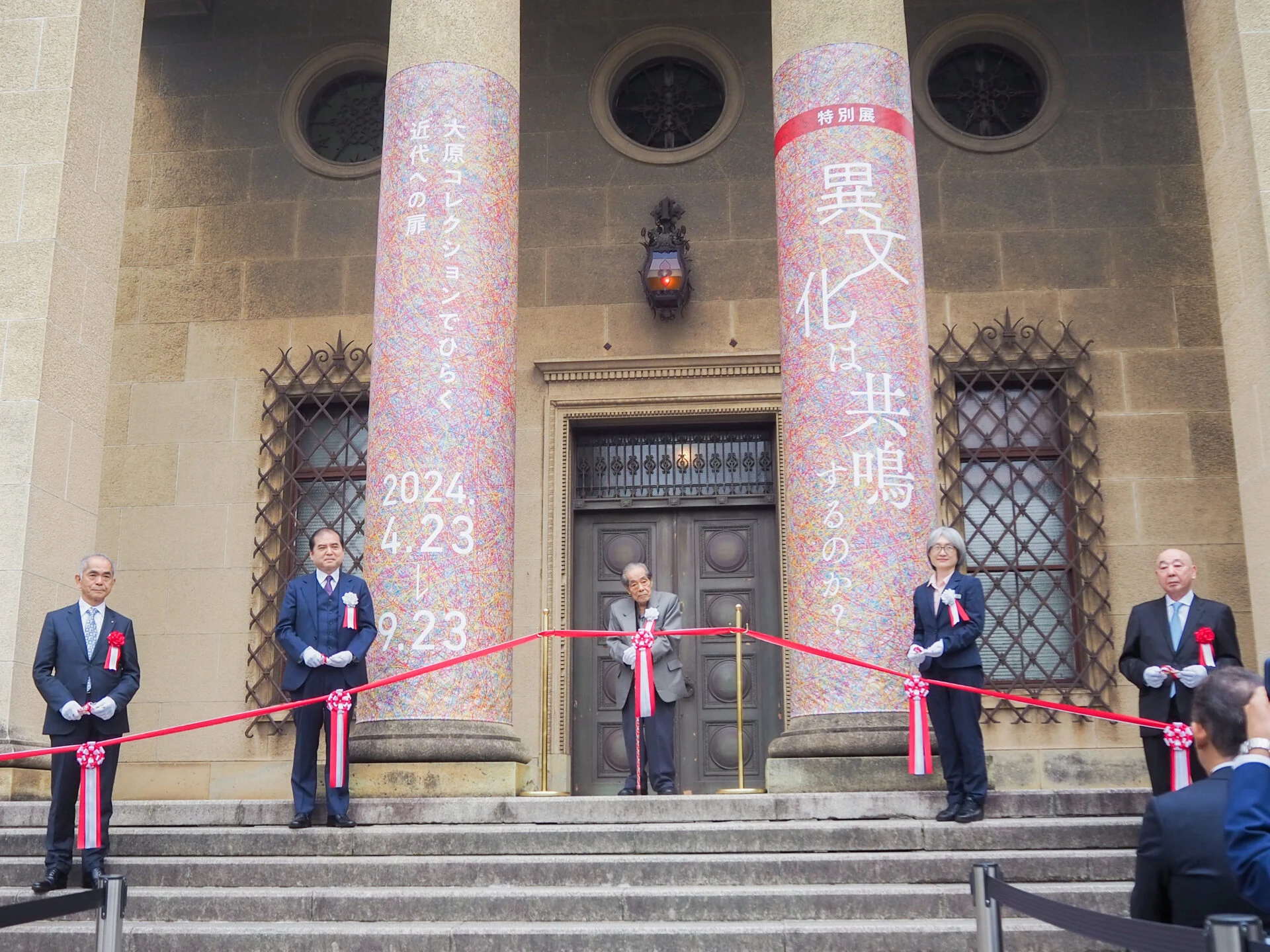
Kurashiki City Art Museum is one of the attractions of the building itself.
In 2020, it was designated as a registered tangible cultural property of the country.
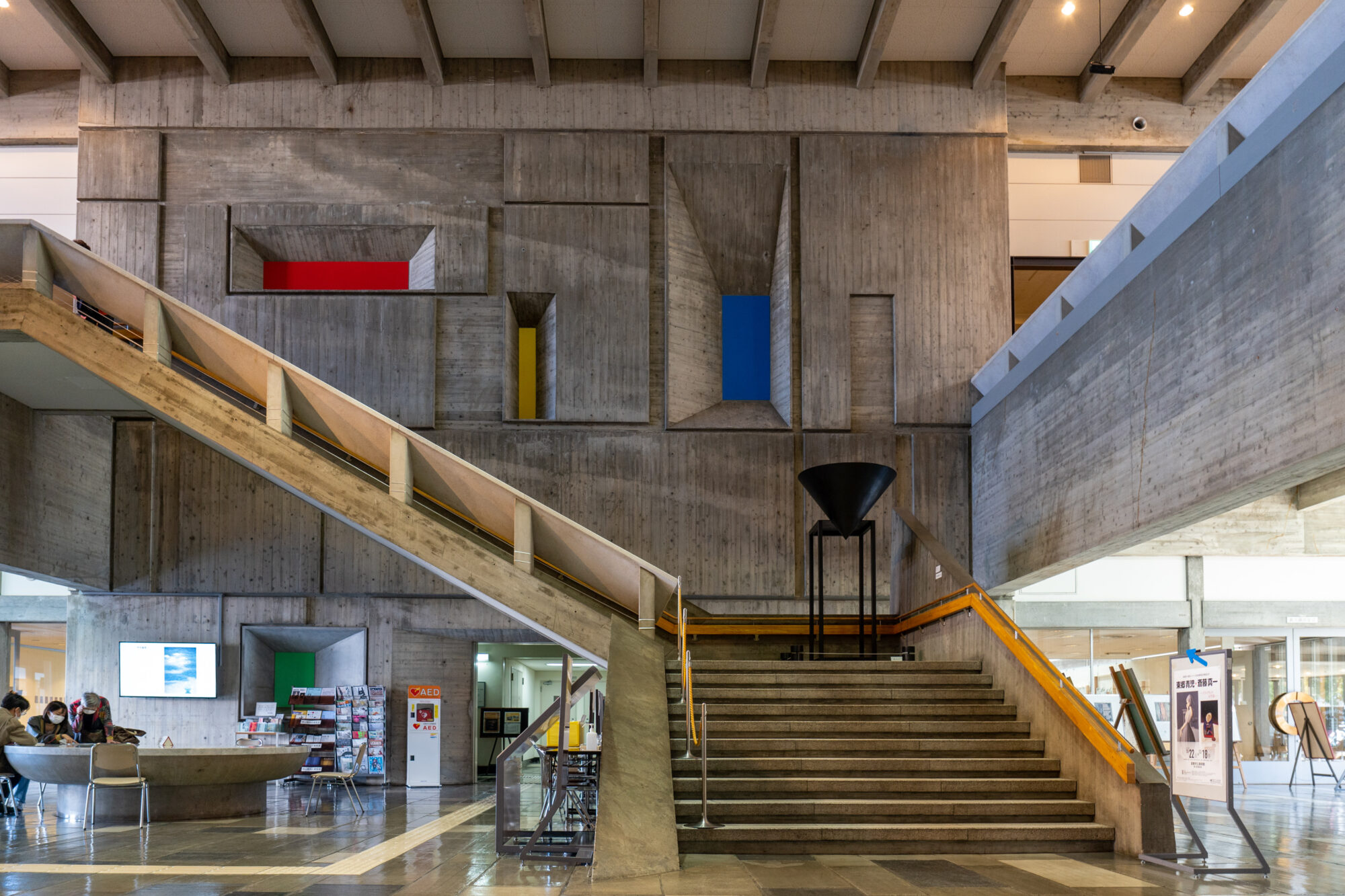
As you step into the entrance, a heavy yet open space unfolds before you.
Looking up from the bottom of the stairs to the entrance of the exhibition room on the second floor, you will feel the unique structure characteristic of Tange architecture.
Director Sakata says, "I want to cherish and protect the building left by Tange."
In this way, the Kurashiki City Art Museum offers a variety of ways to enjoy.
What kind of thoughts do the staff have in operating it?
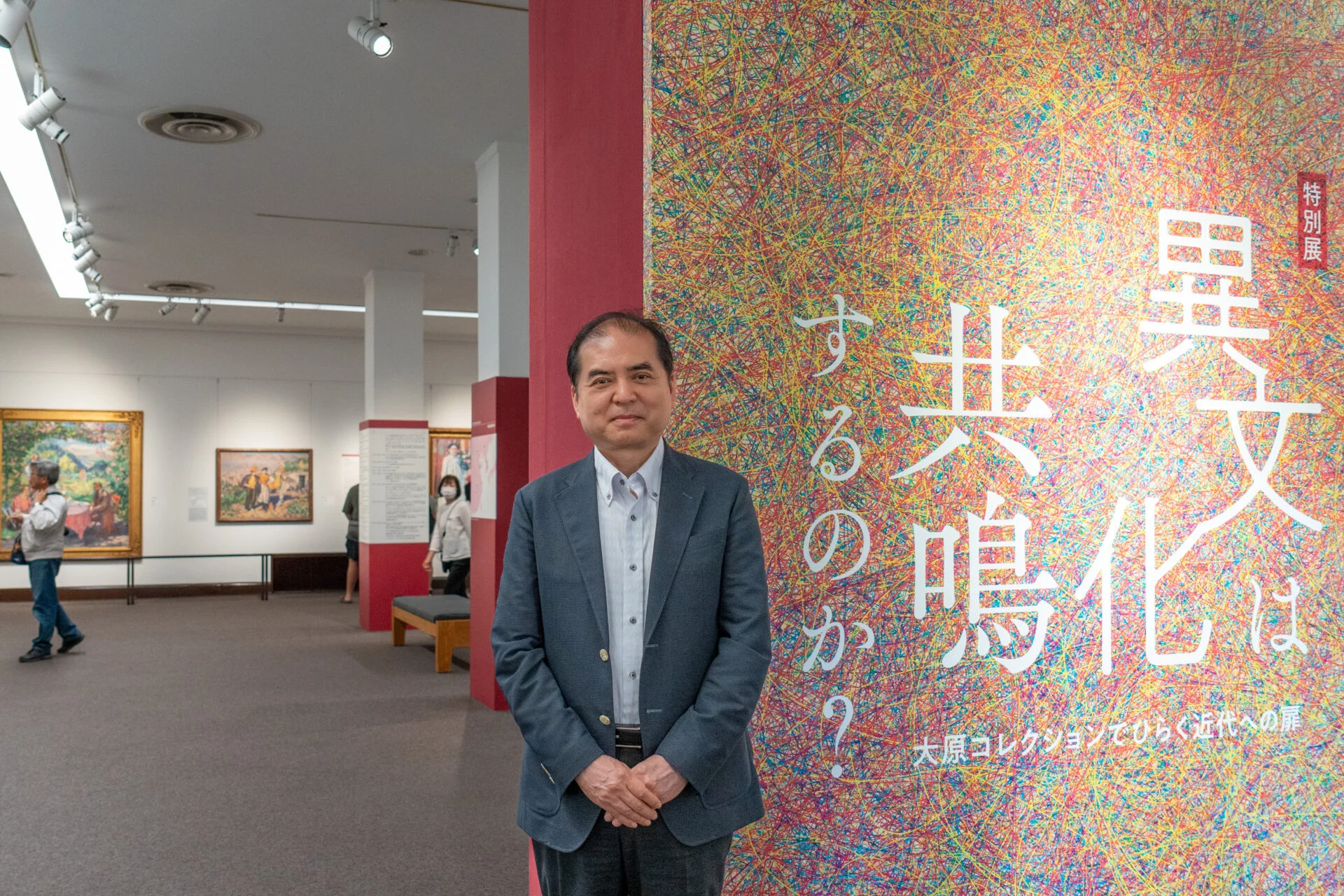
We spoke with Director Takushi Sakata and curator Fumika Sugino of Kurashiki City Art Museum.
Data of Kurashiki City Art Museum
| Name | Kurashiki City Art Museum |
|---|---|
| Location | 2-6-1 Chuo, Kurashiki City |
| Contact | 086-425-6034 |
| Parking | None |
| Opening Hours | 9:00 AM – 5:15 PM (Last admission: 4:45 PM) |
| Closed | Monday ・If Monday is a holiday, closed the following day ・Closed during the New Year holidays ・May be closed temporarily at other times |
| Admission Fee (including tax) | [Individual] General: 210 yen University/High School Students: 100 yen Middle/Elementary School Students: 50 yen [Group] General: 150 yen University/High School Students: 70 yen Middle/Elementary School Students: 30 yen The following can view the collection exhibition for free: ・Elementary and middle school students in Kurashiki City presenting an Ikigai Passport or student handbook ・Elementary school students presenting a Takahashi River Basin Passport (excluding weekdays) ・Students from elementary and middle schools in Kurashiki City viewing with a teacher (including the accompanying teacher) ・Persons aged 65 and over ・Persons with disabilities and one accompanying person (presenting a physical disability certificate, rehabilitation certificate, or mental health certificate) *Special exhibition admission fees are set separately |
| Payment Method |
|
| Smoking | Completely non-smoking |
| Restrooms | Western-style toilets, barrier-free toilets |
| Barrier-Free | Barrier-free toilets, elevators |
| Website | Kurashiki City Art Museum |