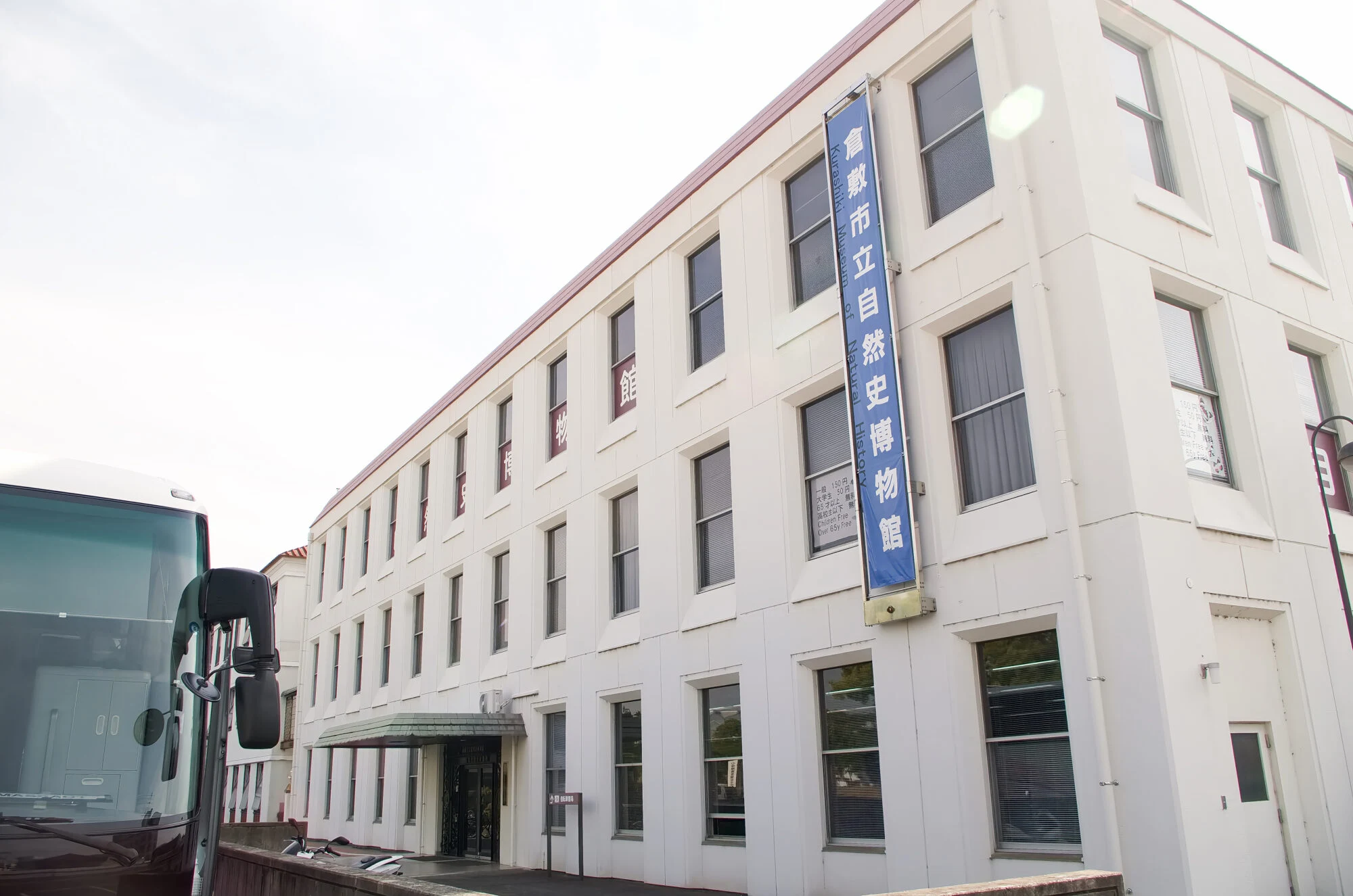
Kurashiki Museum of Natural History is located in the city center, where the Central Library and Art Museum are situated, and it has more than 11,000 exhibition items related to insects, plants, animals, and geology.
Opened in 1983, it will celebrate its 40th anniversary in 2023, and the collection has exceeded 1.04 million items.
Kurashiki Museum of Natural History was started not by the government, but by citizens who love nature.
In addition to the permanent exhibition room, it also introduces storage rooms and collection items that are usually not accessible.
What is Kurashiki Museum of Natural History
When I hear Kurashiki Museum of Natural History, I first think of the mother and child of the Naumann elephant that greet you in the entrance hall on the first floor.
▼ On the left is the museum's idol "Pao-chan", and on the right is Pao-chan's mother "Naumama".
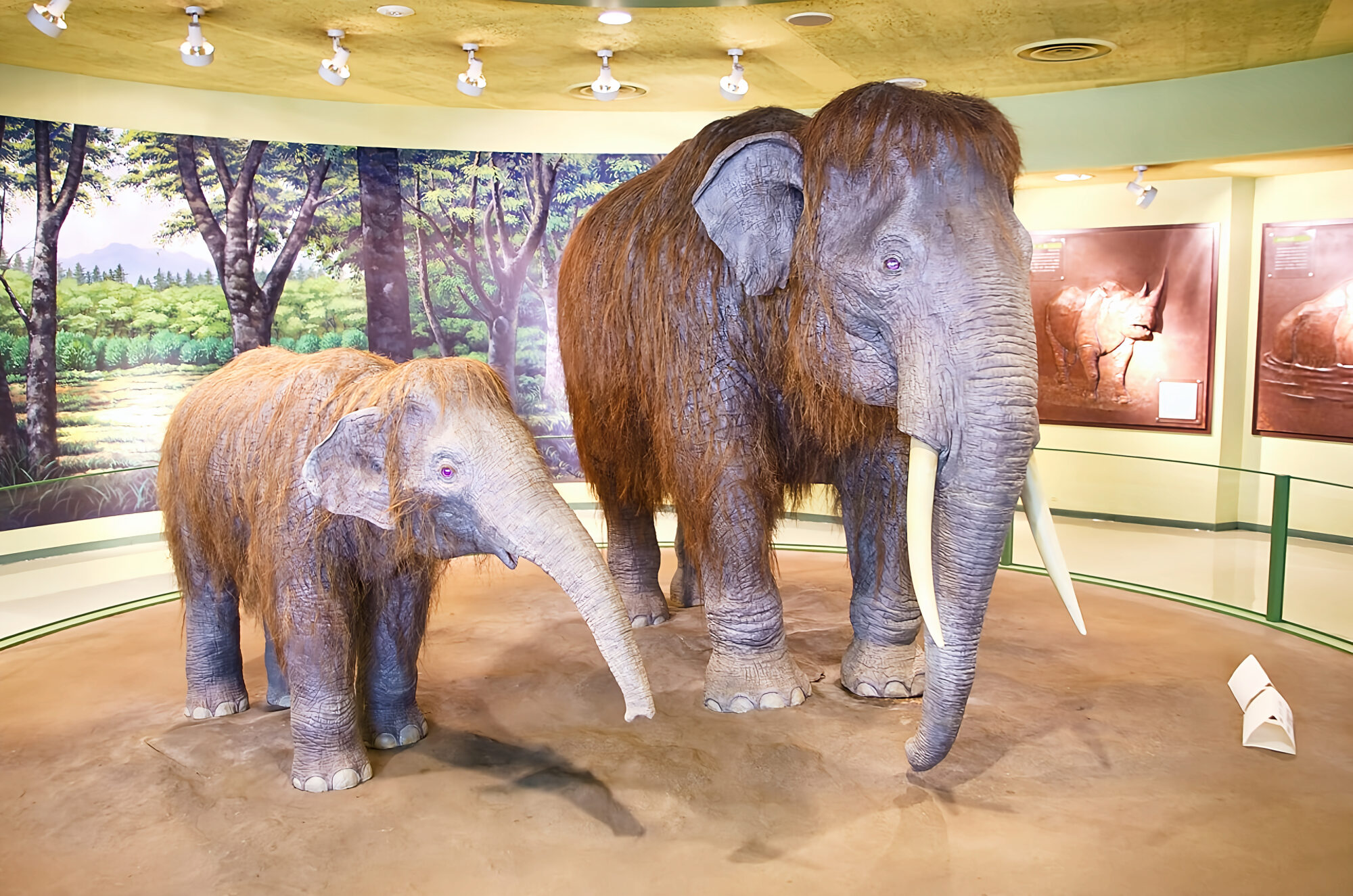
Doesn't knowing their names make you feel more attached to them?
You are overwhelmed by their realistic presence, moving their trunks and making sounds.
▼ Here is a simple location of Kurashiki Museum of Natural History.
It is located on the west side of the Bikan Historical Area, where Ohara Museum of Art is located.
It is situated to the north, adjacent to Kurashiki City Art Museum and Kurashiki Central Library.
Among the various facilities in Kurashiki City, it is positioned in a cultural area where many facilities gather in the city center.
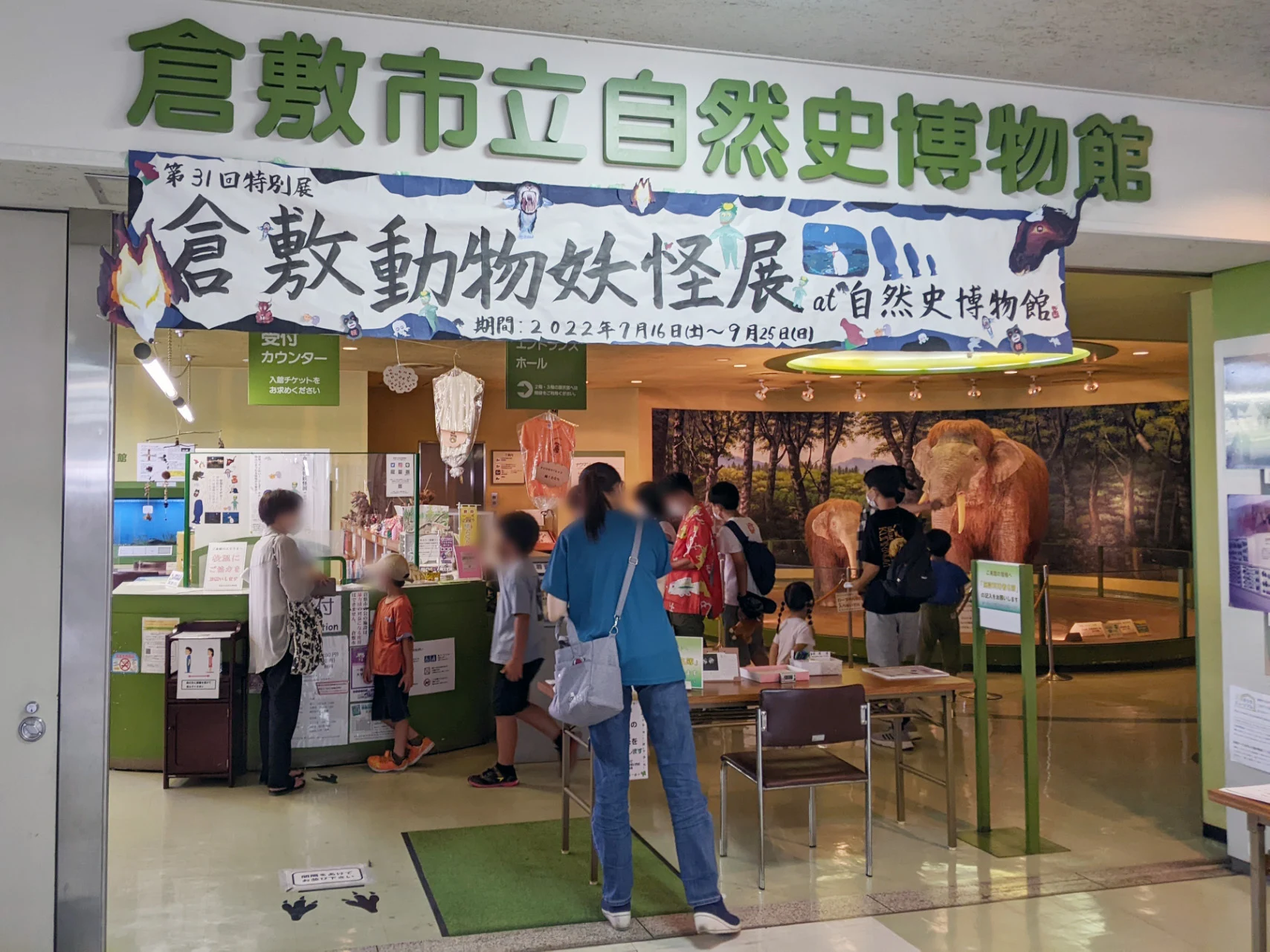
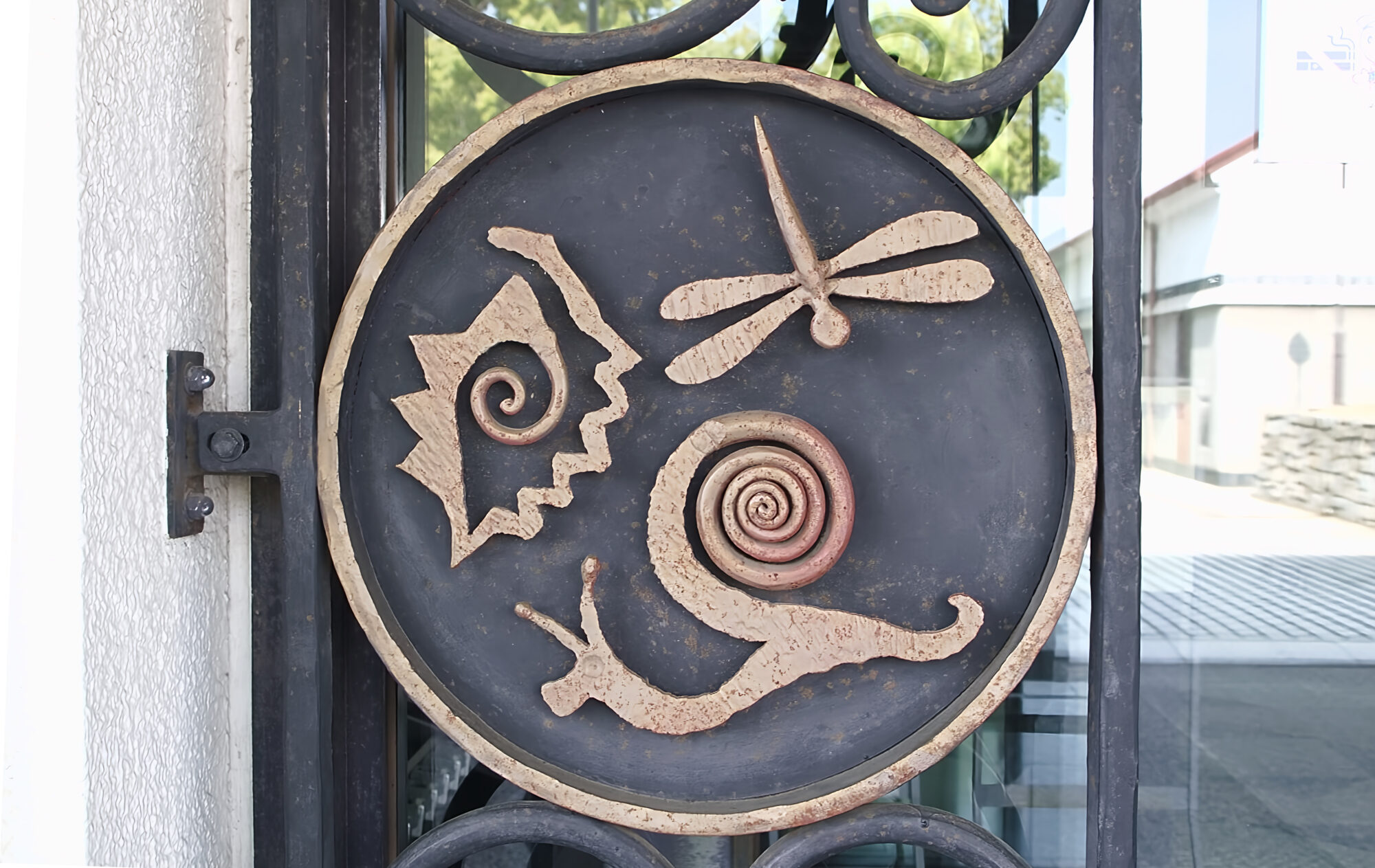
▼ Entering through this entrance, the Kurashiki Museum of Natural History is on the left side, within the same building as the Kurashiki City Tourist Rest Area.
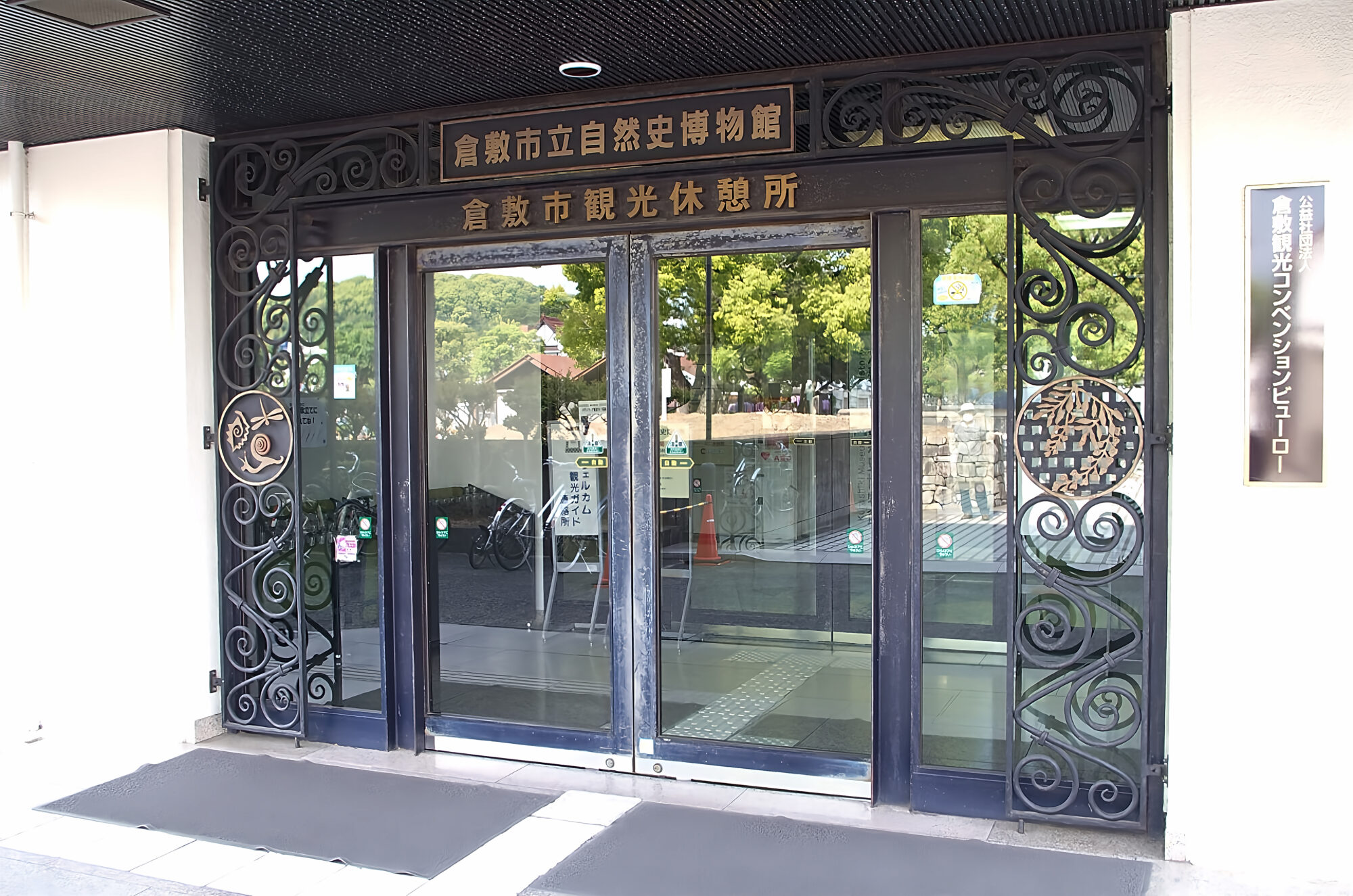
As soon as you enter, you will be welcomed by Pao-chan and Naumama, whom I introduced earlier.
Introduction of Exhibits
At Kurashiki Museum of Natural History, you can see mainly permanent exhibitions and special exhibitions that are limited-time.
Let's introduce them in order, starting from the entrance hall on the first floor, then to the second and third floors.
Entrance Hall
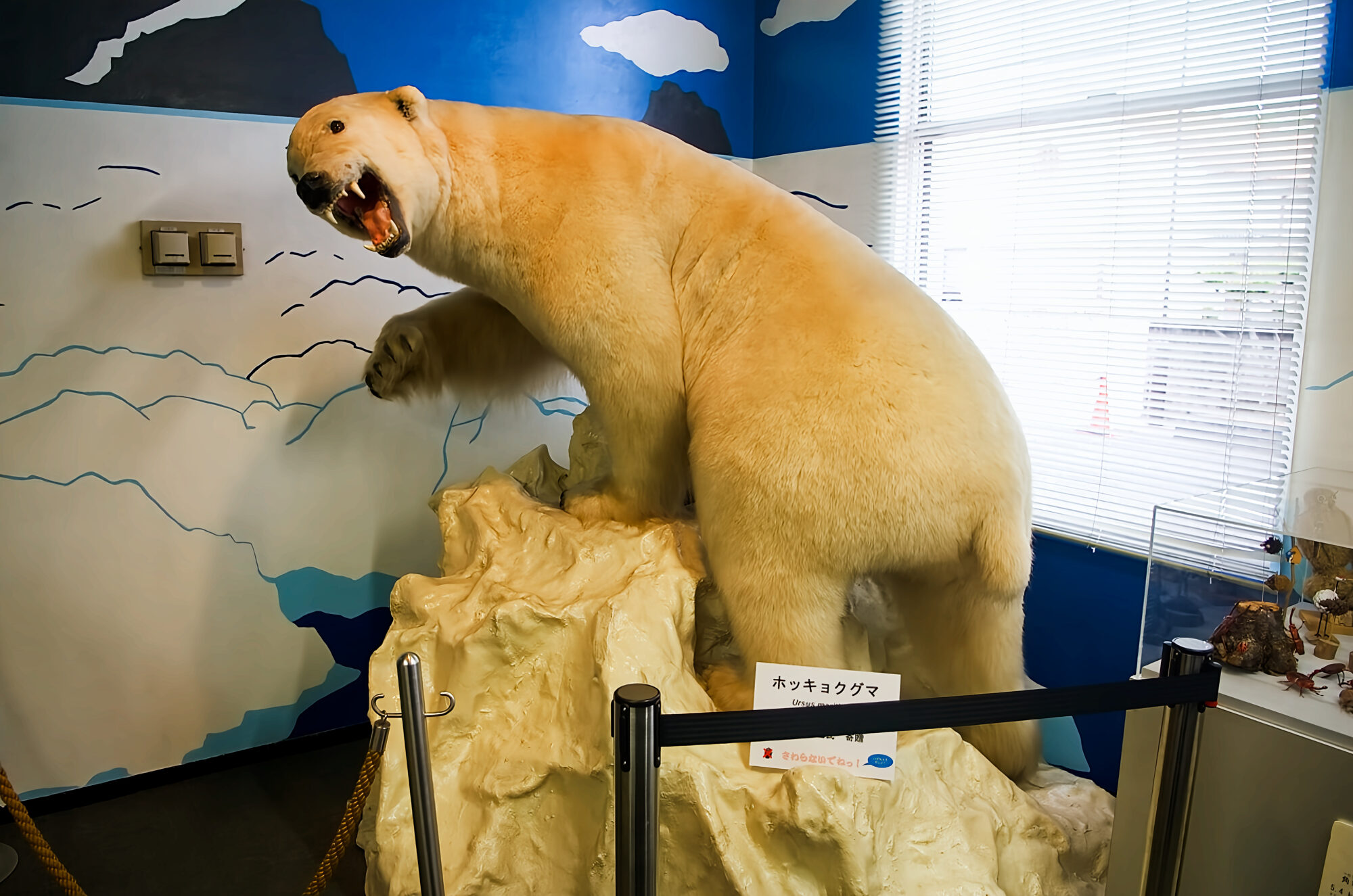
In the entrance hall, in addition to the mother and child Naumann elephants I mentioned, you will also be greeted by a "polar bear specimen" and a "Triceratops skull model".
The polar bear specimen was previously displayed at a bowling alley, but was later donated to Kurashiki Museum of Natural History by its subsequent owner.
It has a powerful presence that seems ready to move, and it is a magnificent polar bear in excellent condition.
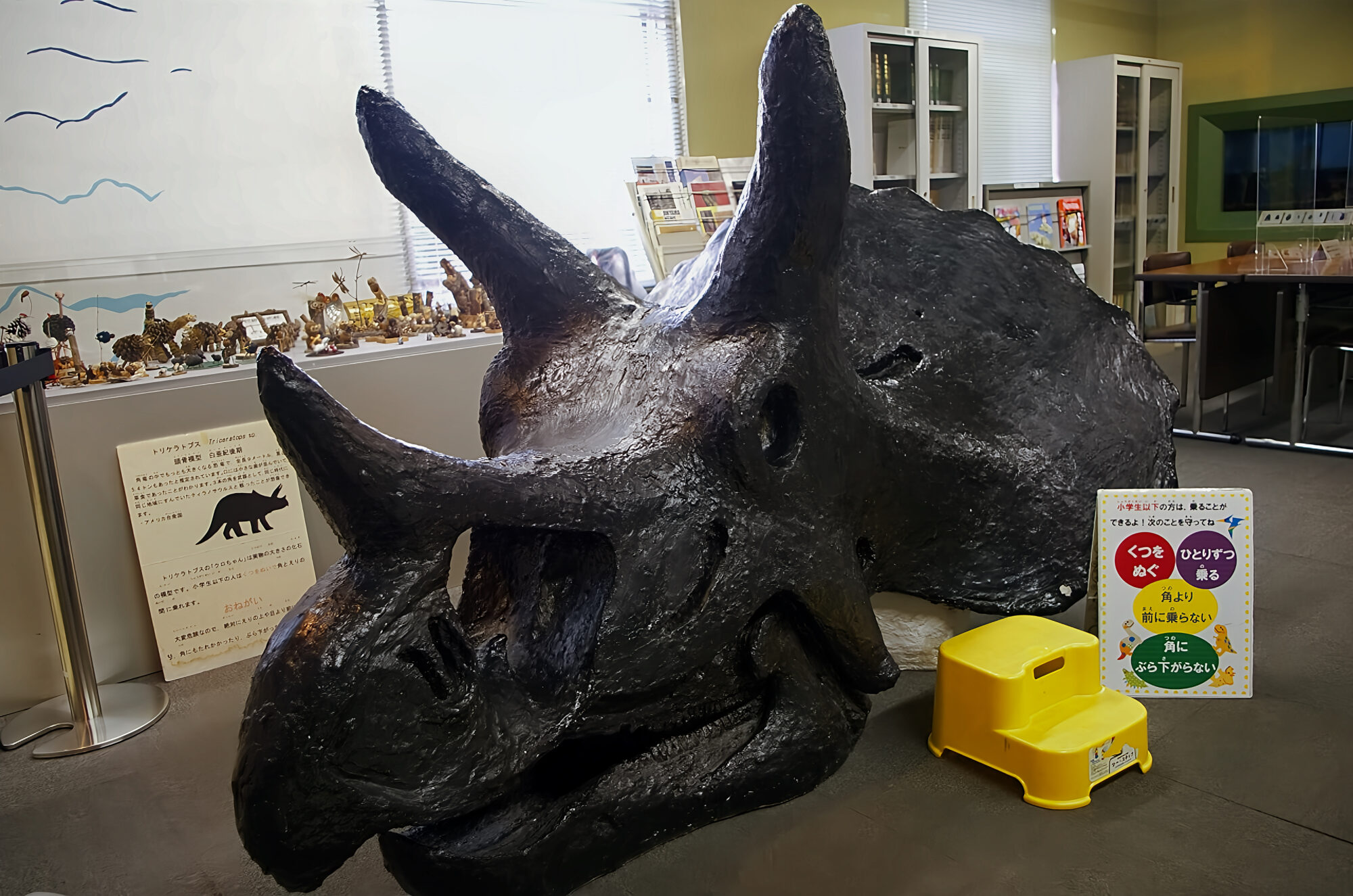
The "Triceratops skull model" can be mounted by children under elementary school age.
I remember my daughter happily climbing onto it.
In fact, it was handmade by the curators of Kurashiki Museum of Natural History.
It seems they made it using polyurethane and plaster, and I am amazed by their creativity and execution.
2nd Floor: The Formation of Okayama Prefecture (Exhibition Room 1)
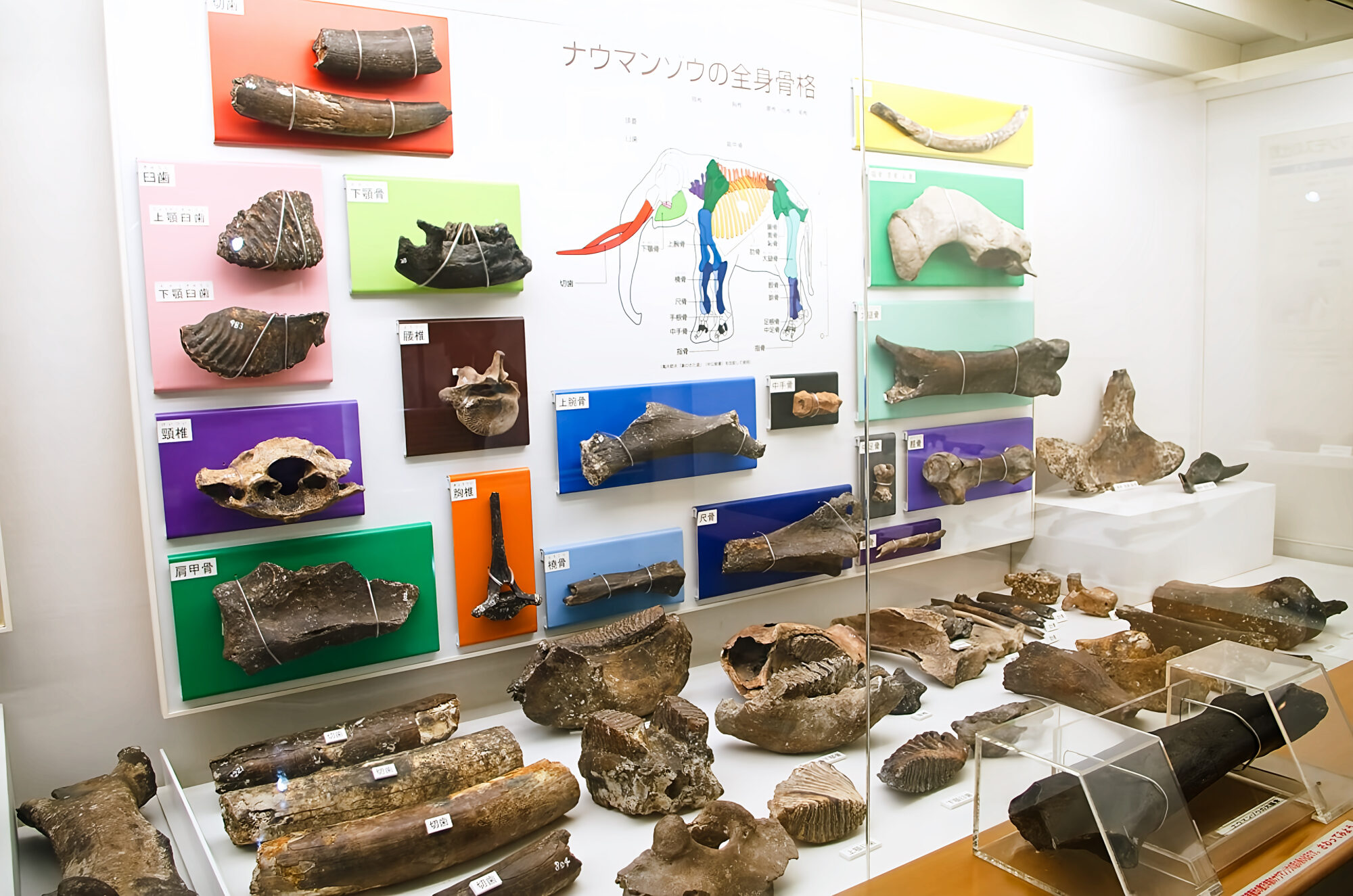
In Exhibition Room 1, we introduce a fossil collection by Keiiichi Yamamoto, a local historian from Shimotsui, Kojima, Kurashiki City.
Mr. Yamamoto began collecting fossils caught in the fishing nets of Shimotsui around 1950.
Later, he donated a collection of over 1,000 items to the Kurashiki Museum of Natural History.
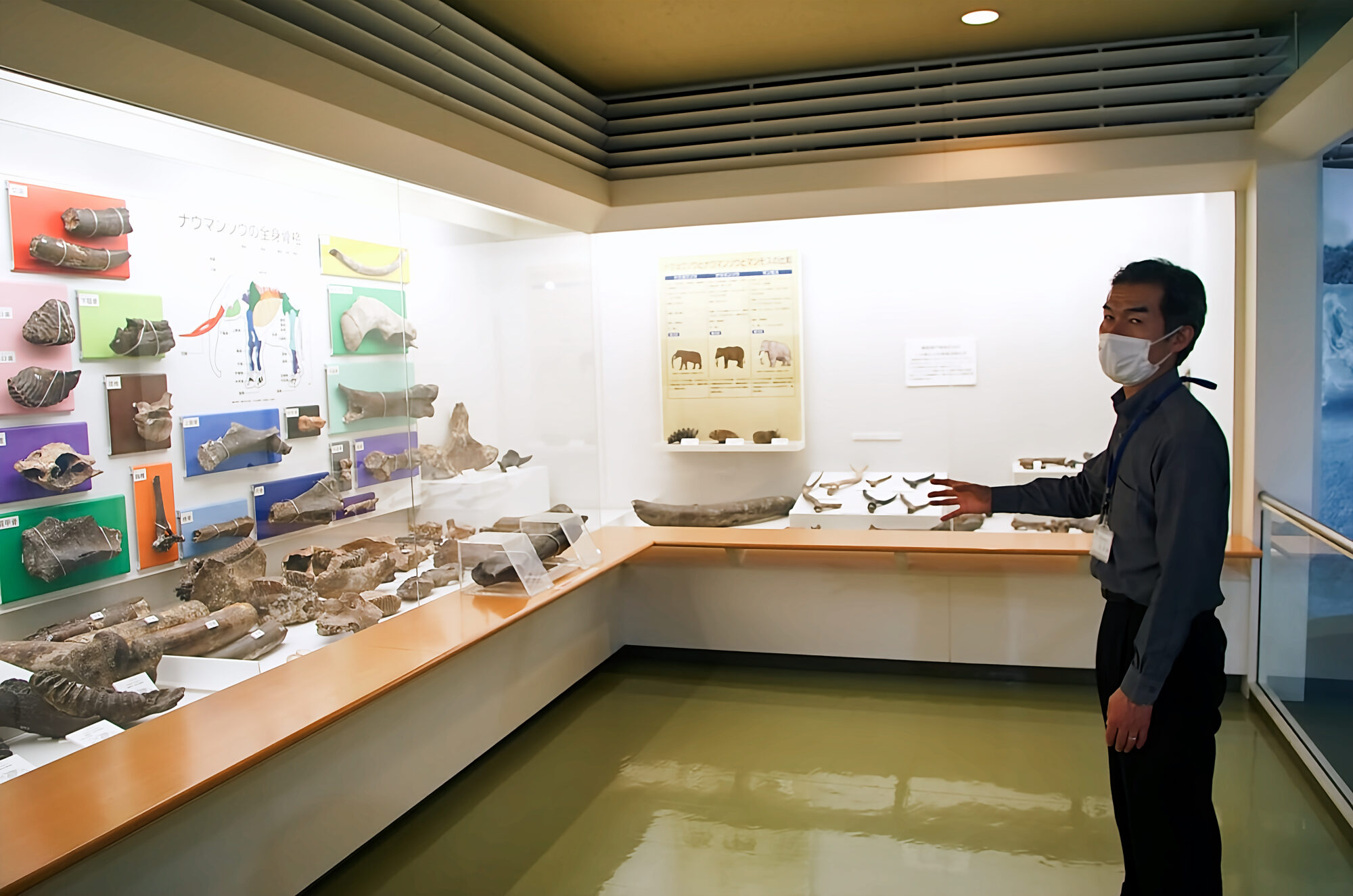
Before Mr. Yamamoto started collecting these fossils, they were considered a nuisance to fishermen because they would break when caught in the nets, and I have heard that they would simply return them to the sea.
I am amazed by the number and size of the fossils of the Naumann elephant that were raised from the seabed.
▼ Here is an exhibition room where you can learn about the history of life on a global scale through fossils.
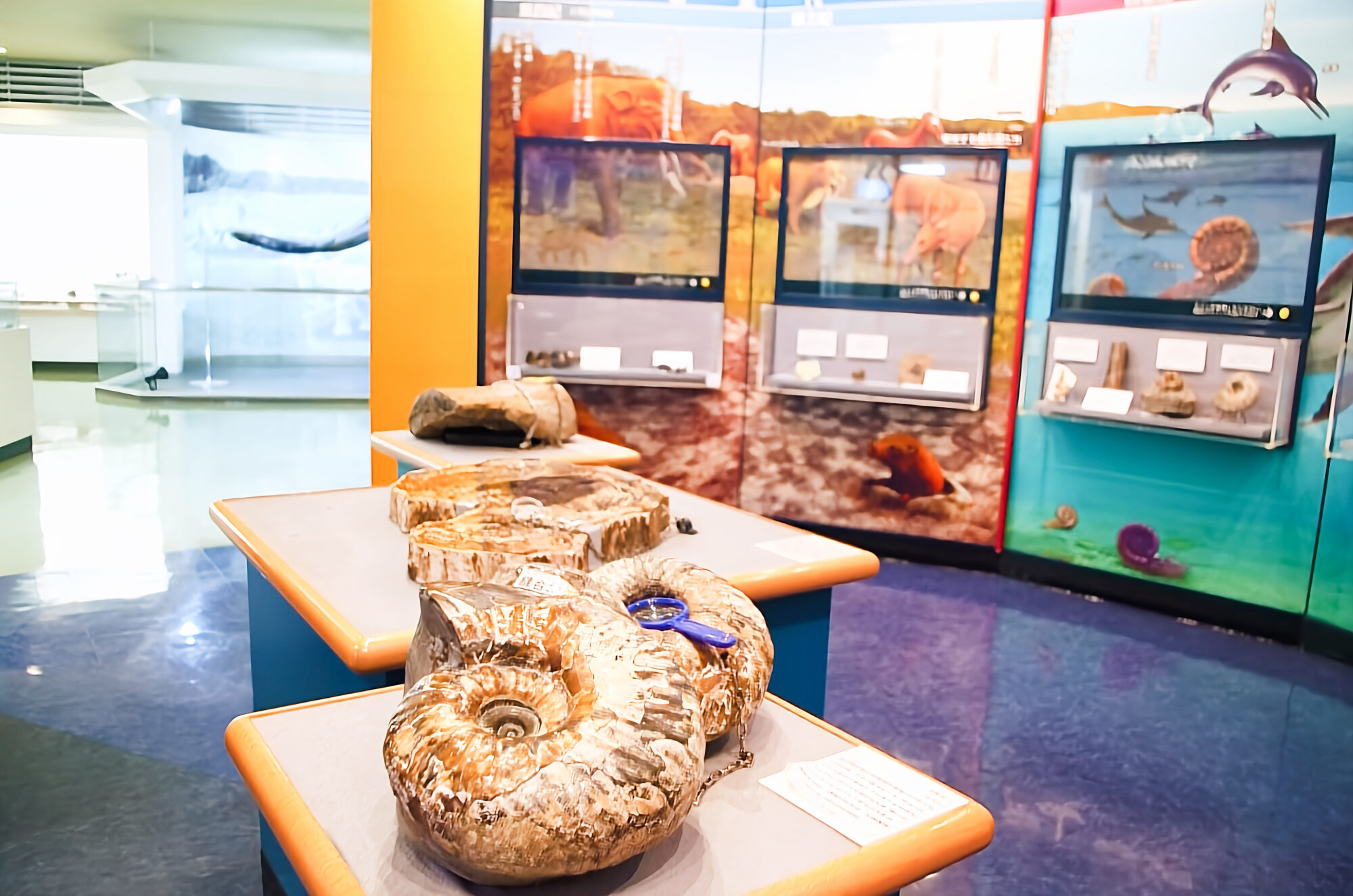
Please take a close look at the beautifully preserved fossils with a nice shine.
Magnifying glasses are also provided.
2nd Floor: The Creatures of Okayama Prefecture (Exhibition Room 2)
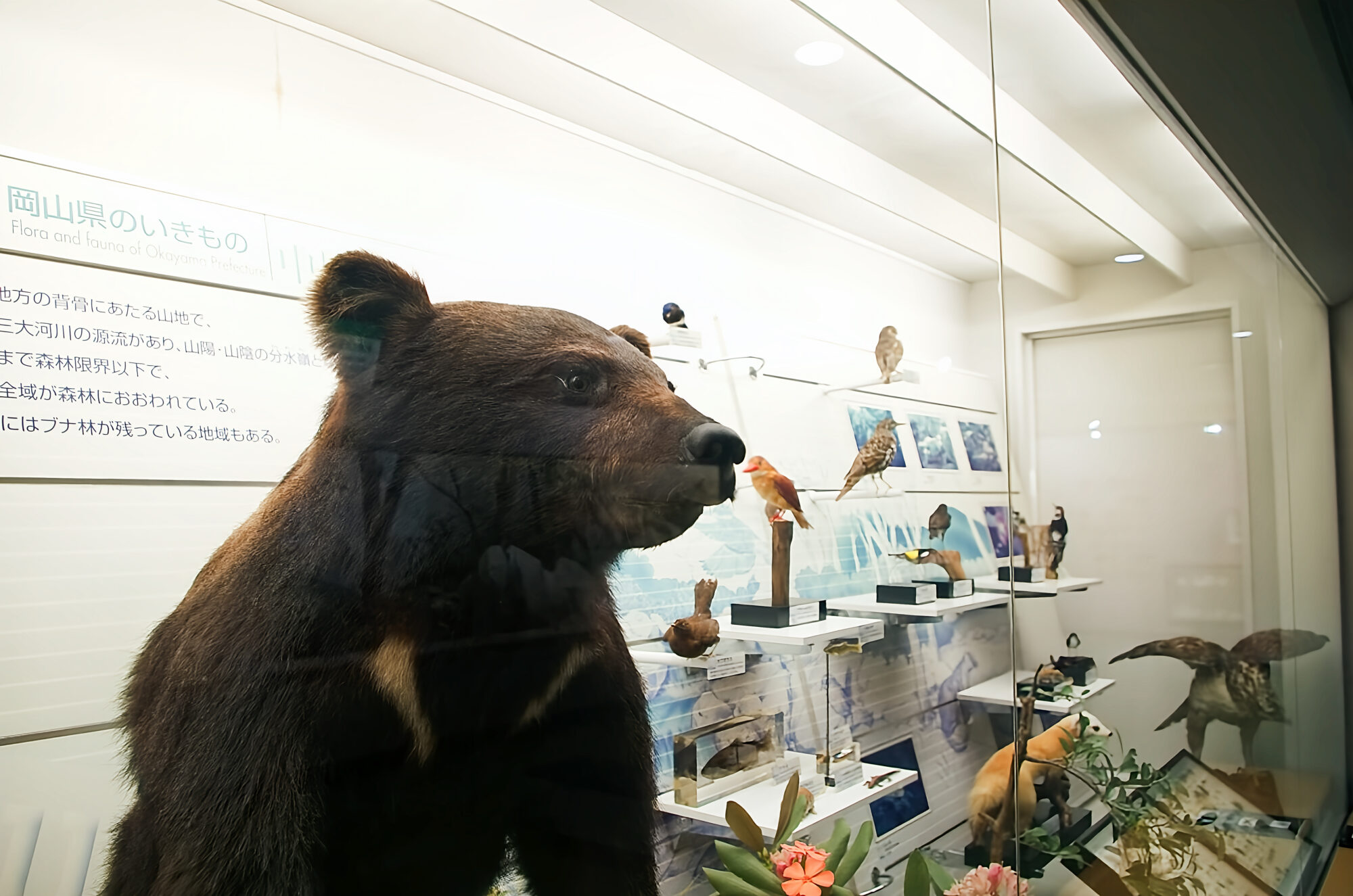
Exhibition Room 2 features a rich display of taxidermy of various birds and animals such as nutria.
The nutria and the displayed wild boar and Japanese deer are obtained through culling or accidents and made into animal specimens for display.
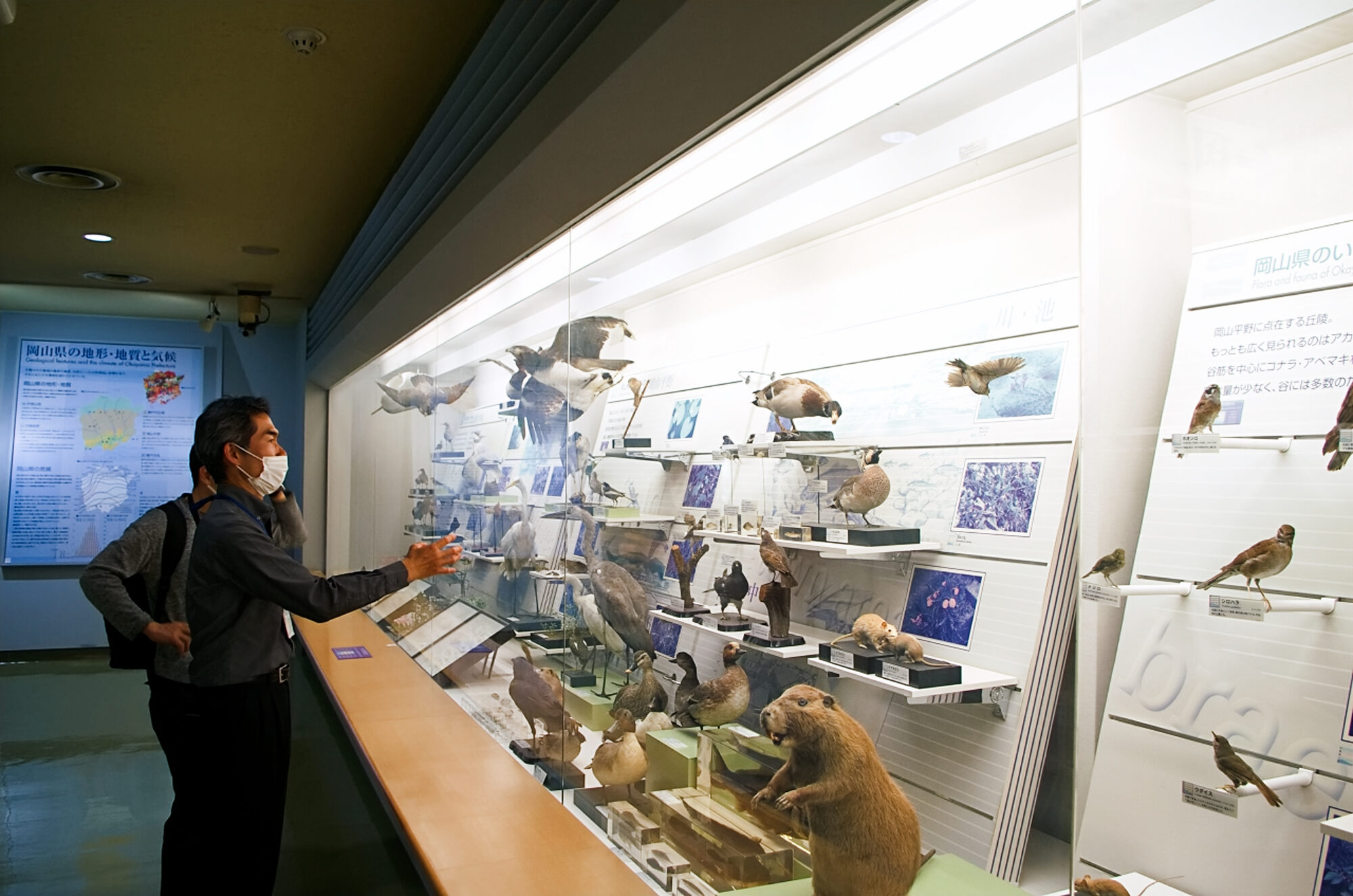
Among the animal taxidermy, the Asian black bear stands out.
You can observe the creatures of Okayama Prefecture, which are not often seen in the wild, up close.
Aren't you healed by their round eyes?
2nd Floor: The World of Insects (Exhibition Room 3)
Exhibition Room 3 is a display room for insects.
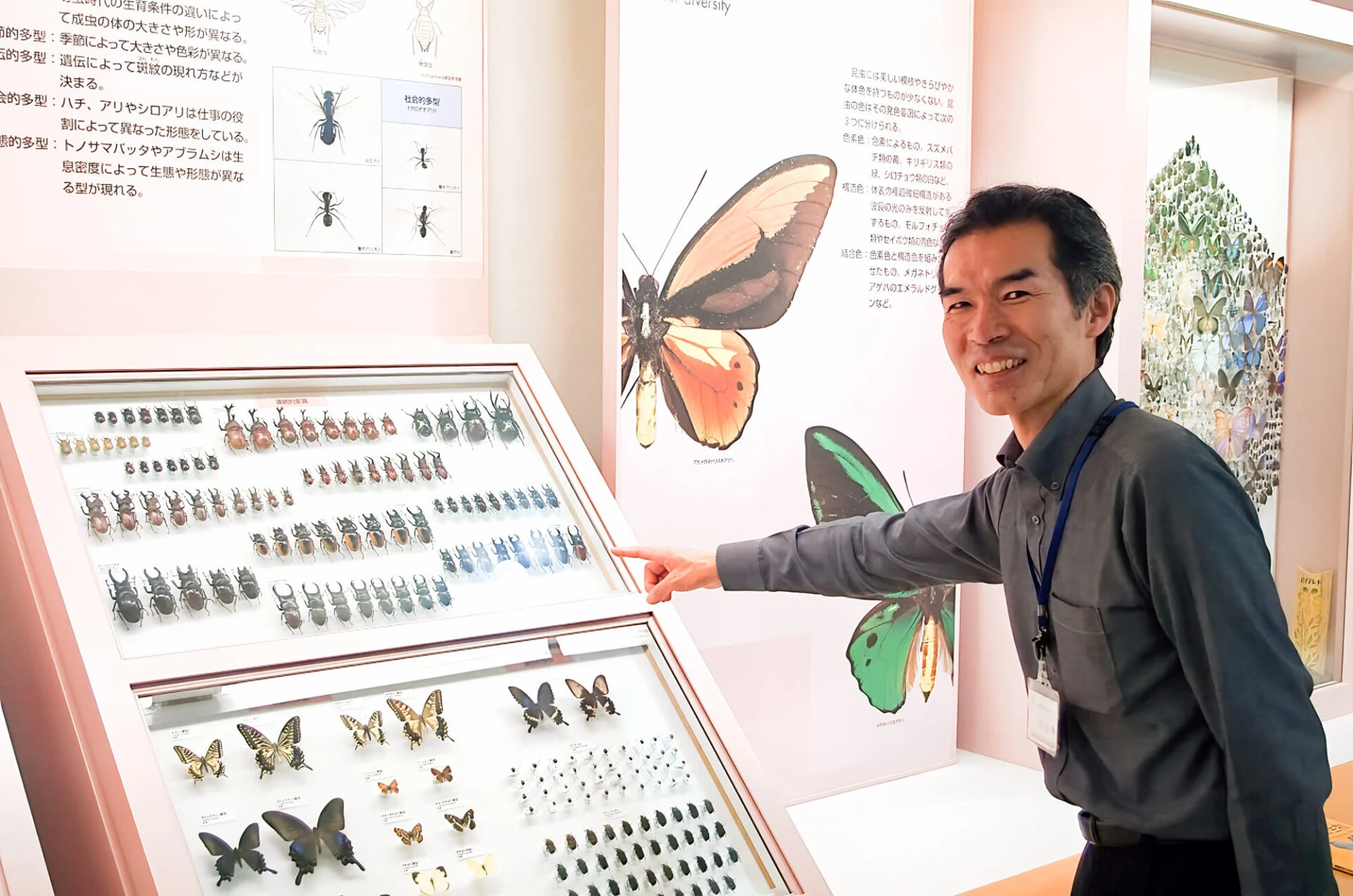
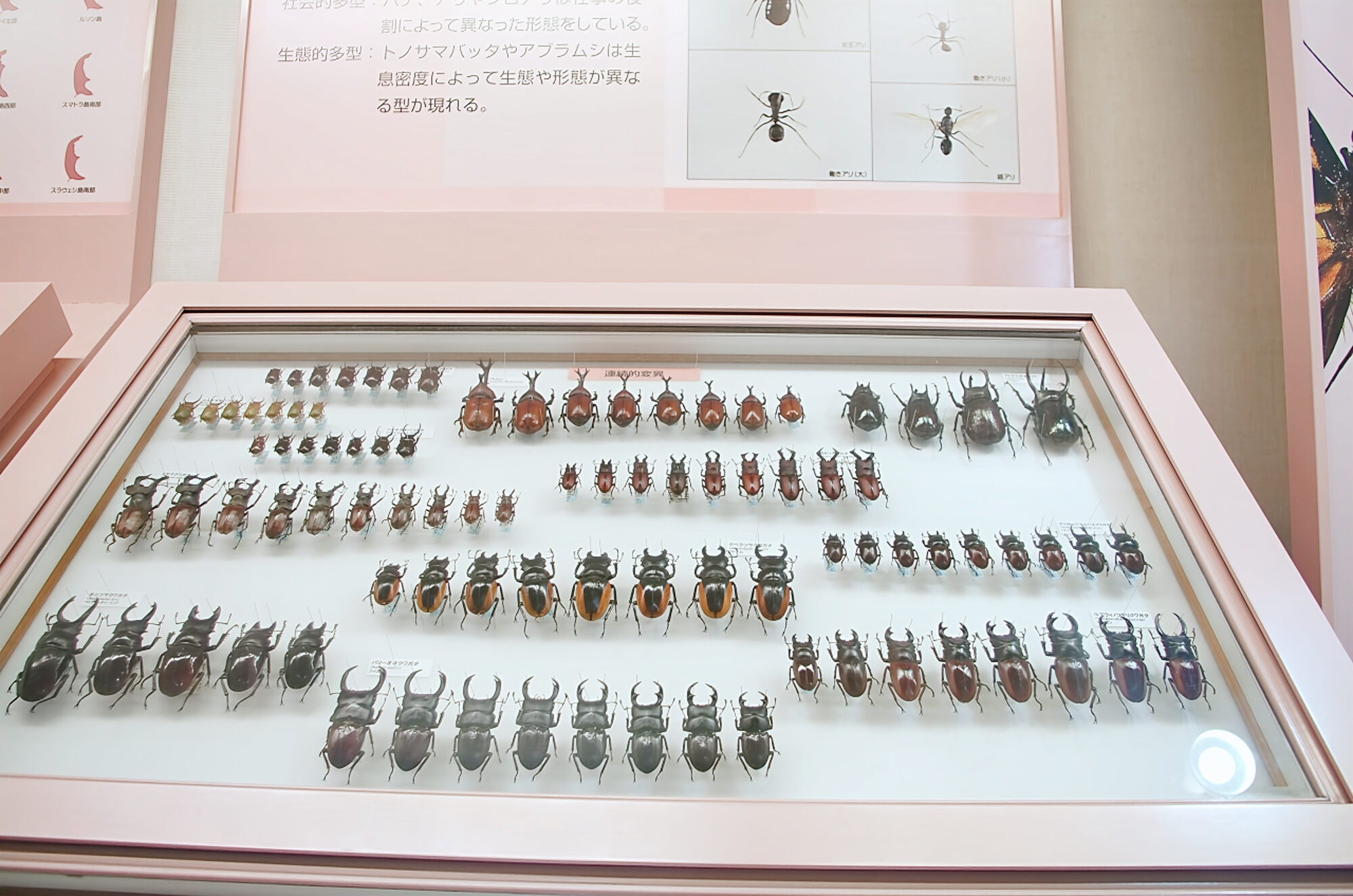
▼ Below are specimens that show individual variation within the same species.
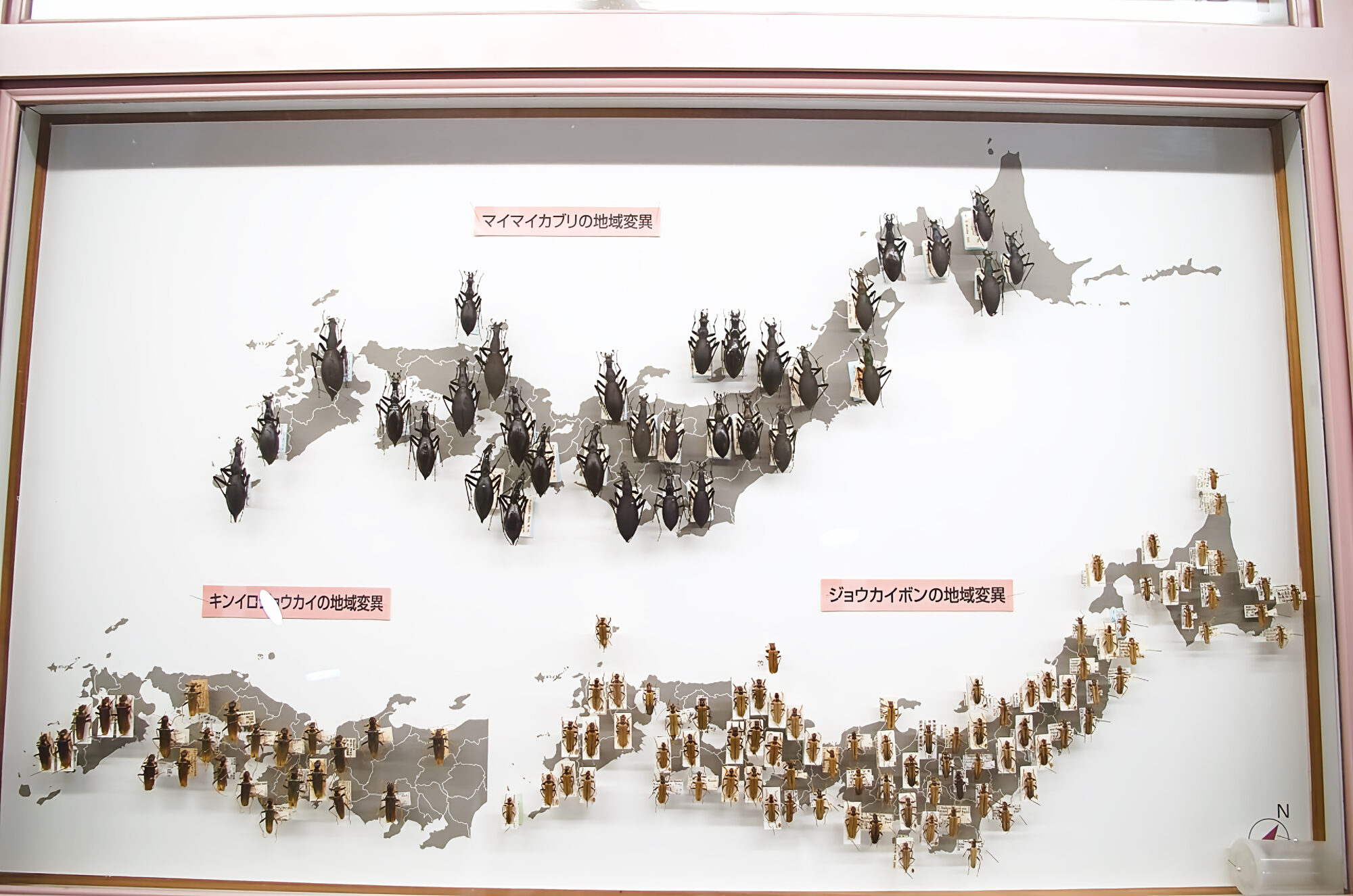
We clearly display the regional differences by location, which are important records when collecting.
You can see and confirm the subtle variations by region, even among individuals of the same species, from Hokkaido to Kyushu.
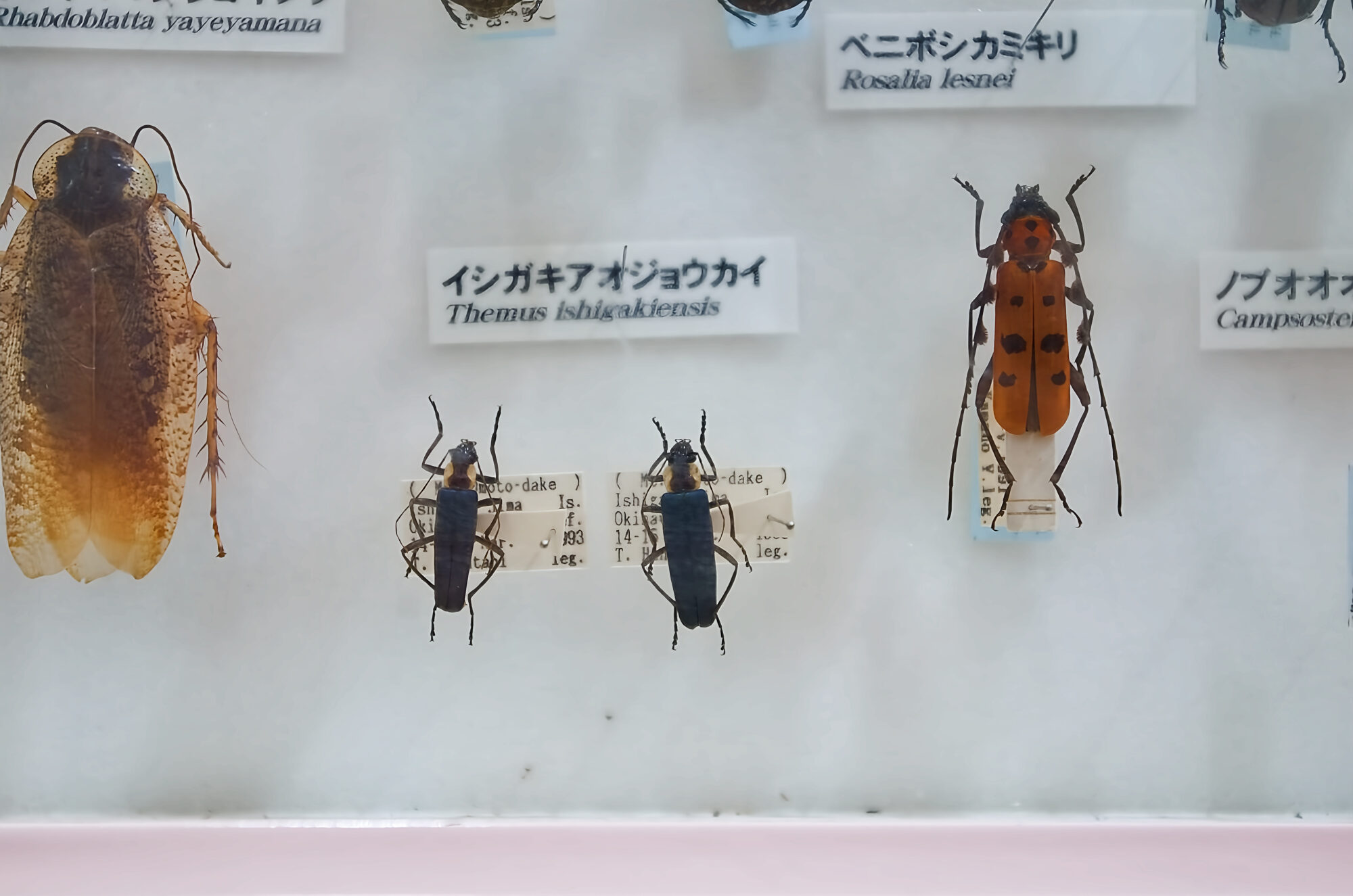
In the "Exhibition of Insects from the Southern Region (Ryukyu Islands)," the curator of the insect section displays the "Ishigaki Aojokai" that was collected when they were a third-year university student.
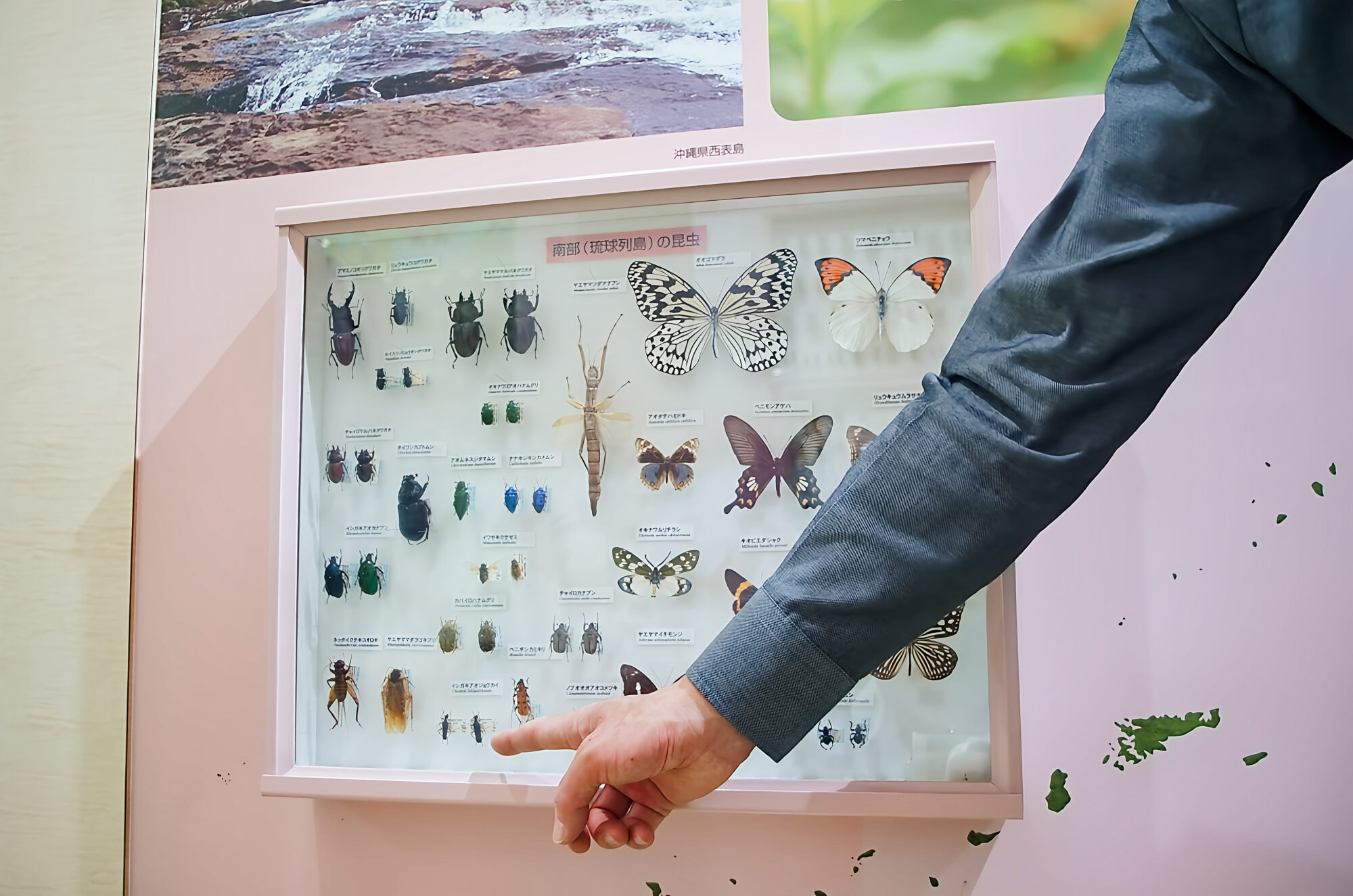
Until then, there had been similar collection cases on Okinawa Island, but this is the first time this species has been collected on Ishigaki Island.
It has been recognized as a new species and named "Temnus Ishigakienis" as its scientific name.
Without an explanation, it would be difficult to realize that this is a rare insect that is a new species.
Please be sure to see this "Ishigaki Aojokai" up close.
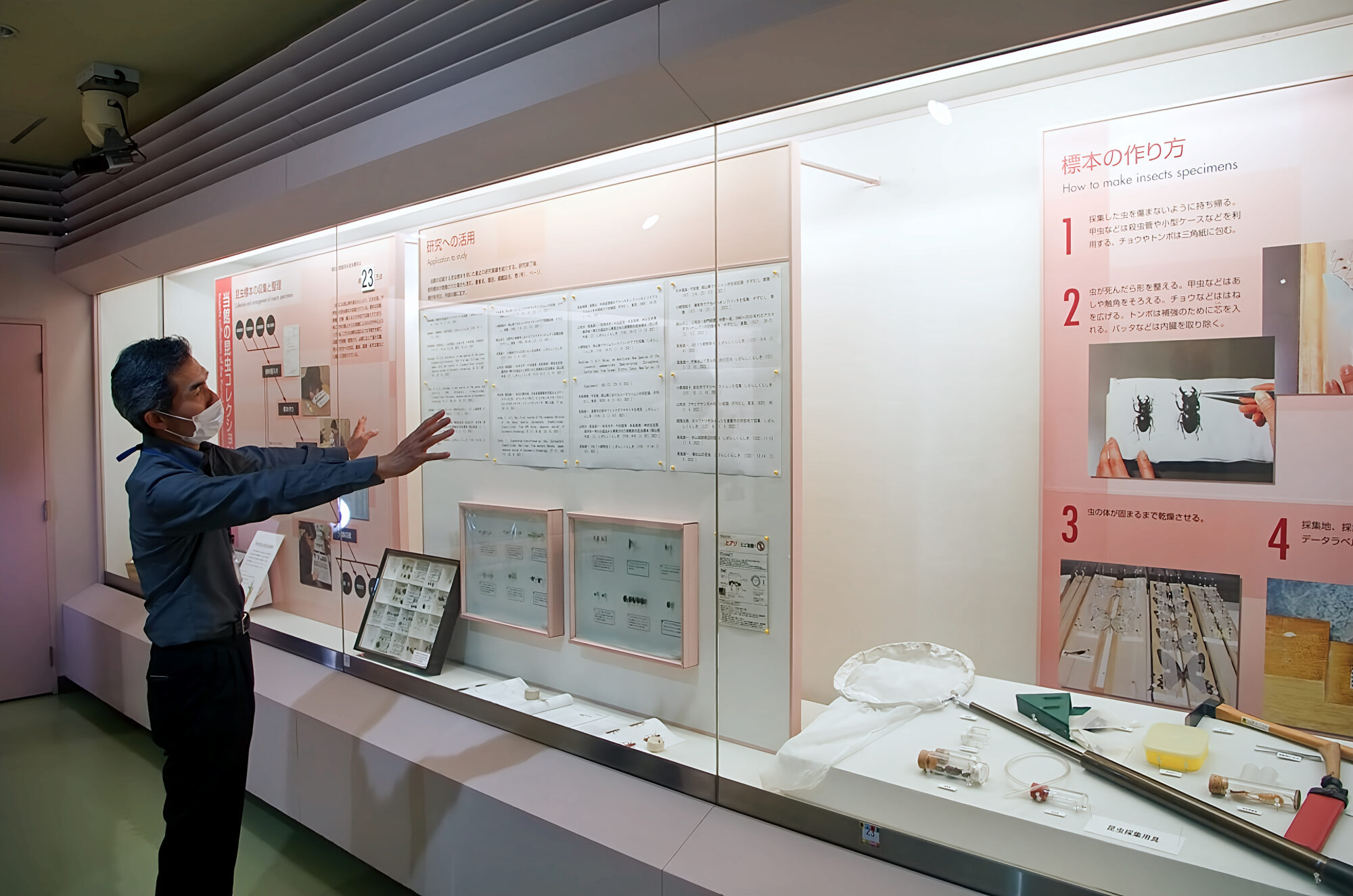
In the "Utilization for Research" exhibition, research results related to new species of insects like the "Ishigaki Aojokai" are introduced.
The exhibition on "Diversity of Food" is also a must-see.
It features handmade displays by the curator of "Food of Insects Living in Various Habitats."
▼ In this photo, we introduce insects that feed on animal feces.
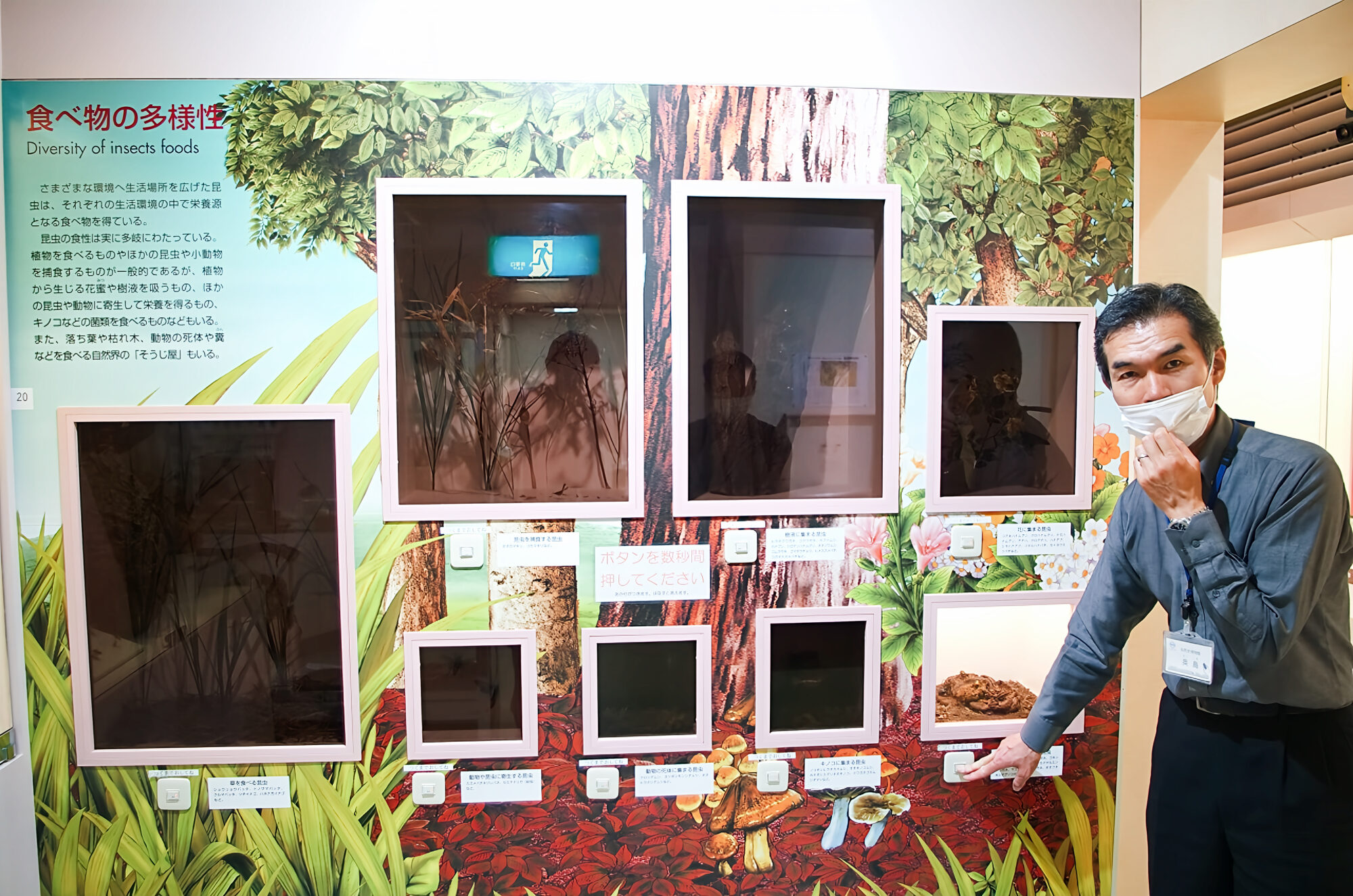
This feces was freeze-dried by the curator.
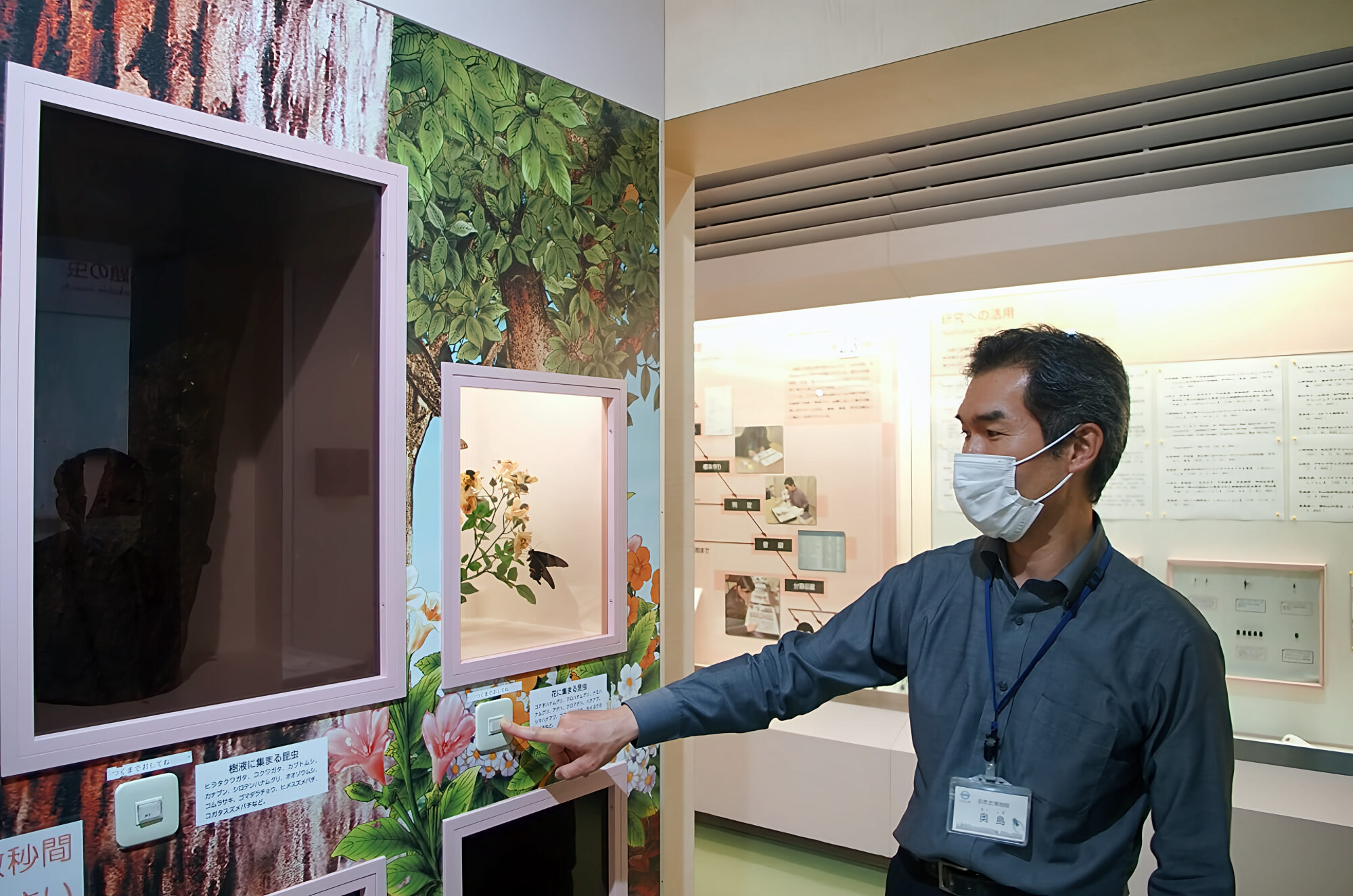
These exhibits, which look just like the real thing, are all interactive, so please enjoy pressing all the buttons.
The warm gaze of the butterflies is a must-see.
Additionally, specimens of butterflies sipping nectar from flowers are beautifully recreated to look as if they are alive.
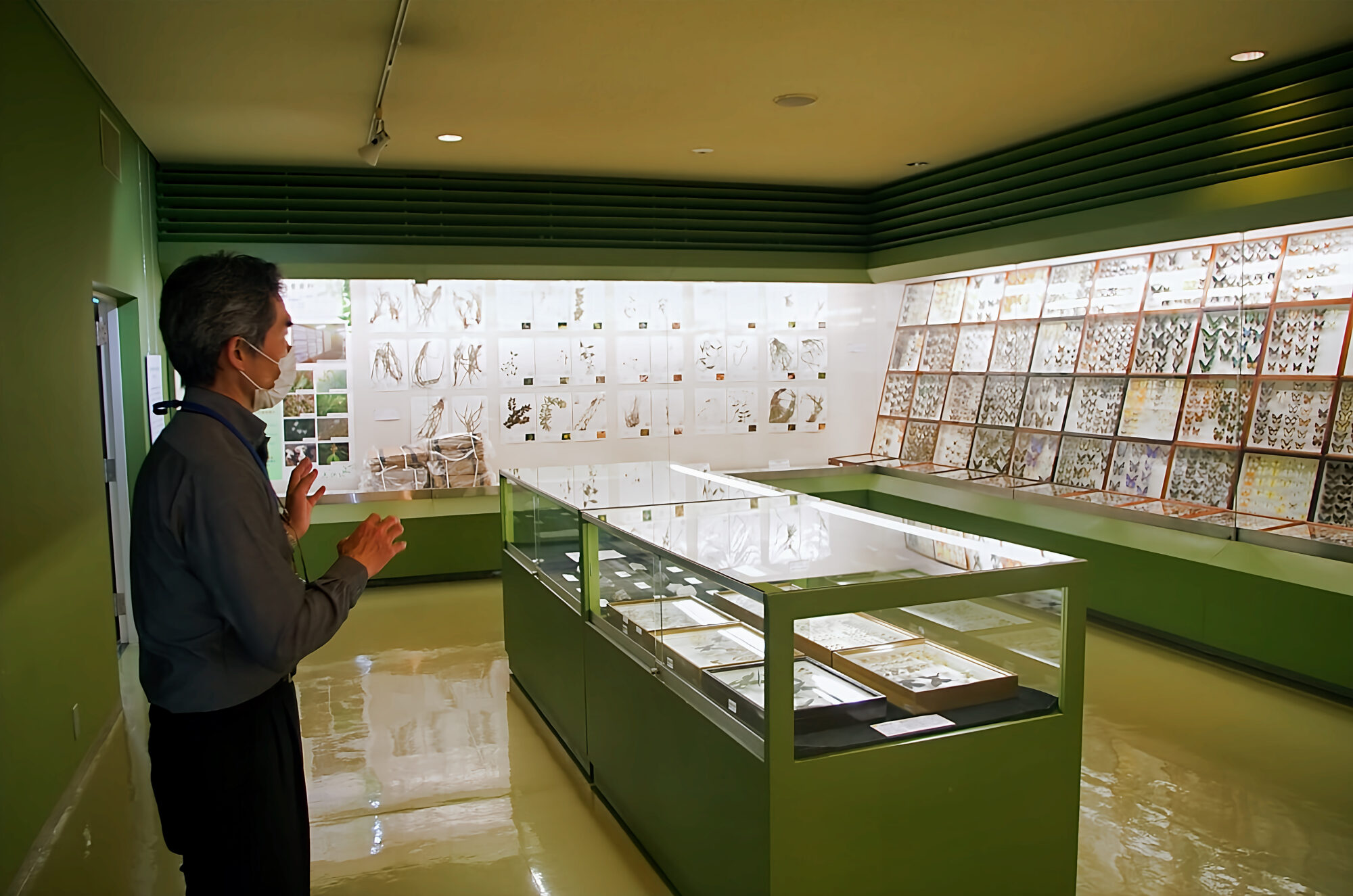
3rd Floor Plant World (Exhibition Room 4)
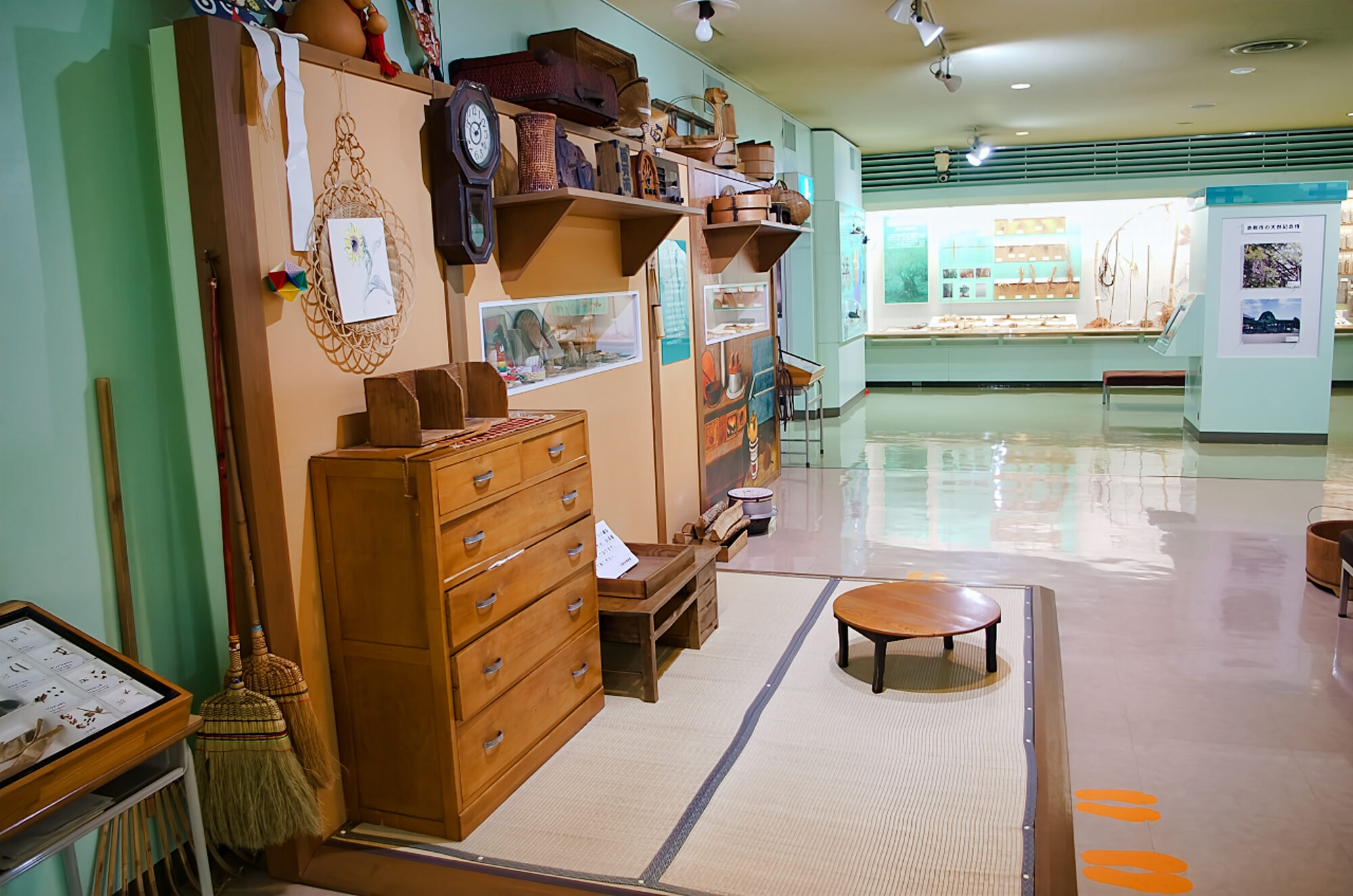
Upon entering Exhibition Room 4, the first thing that catches your eye is a display corner that recreates a room from the Showa era.
The theme is "Plants in Daily Life," which makes you realize that during the Showa era, people lived surrounded by essential items made from many trees and bamboo.
▼ Below are displays of plants that look as if they are alive.
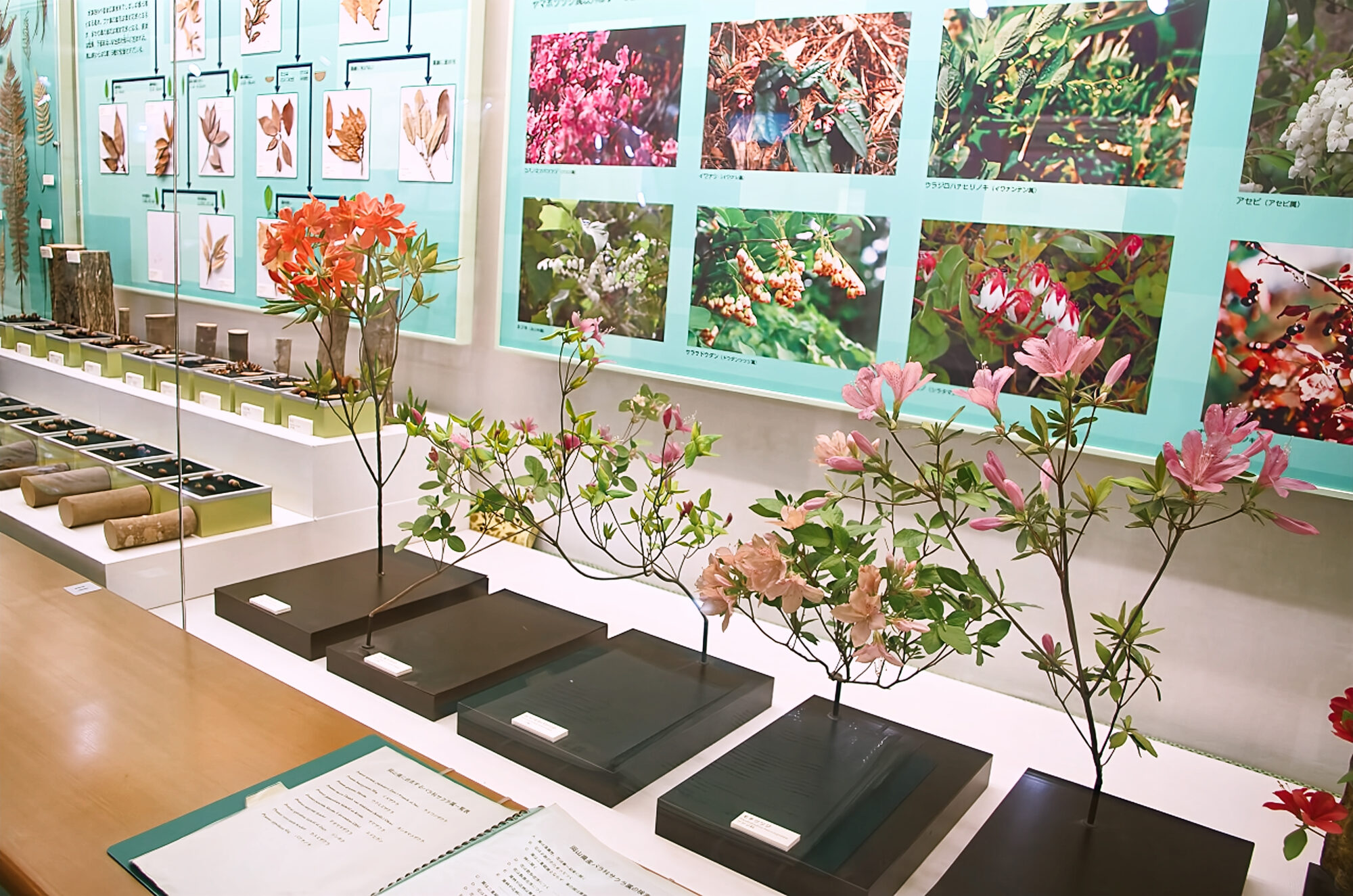
Unlike pressed flower specimens, you can clearly see not only the colors of the flowers and leaves but also the overall appearance of each plant.
In this corner, we introduce timely topics. At the time of the interview, there was a special exhibition titled "Tomitaro Makino and the Plants of Okayama", related to Tomitaro Makino, who is also the model for the protagonist of the NHK serial television drama "Ranman" currently airing in 2023.
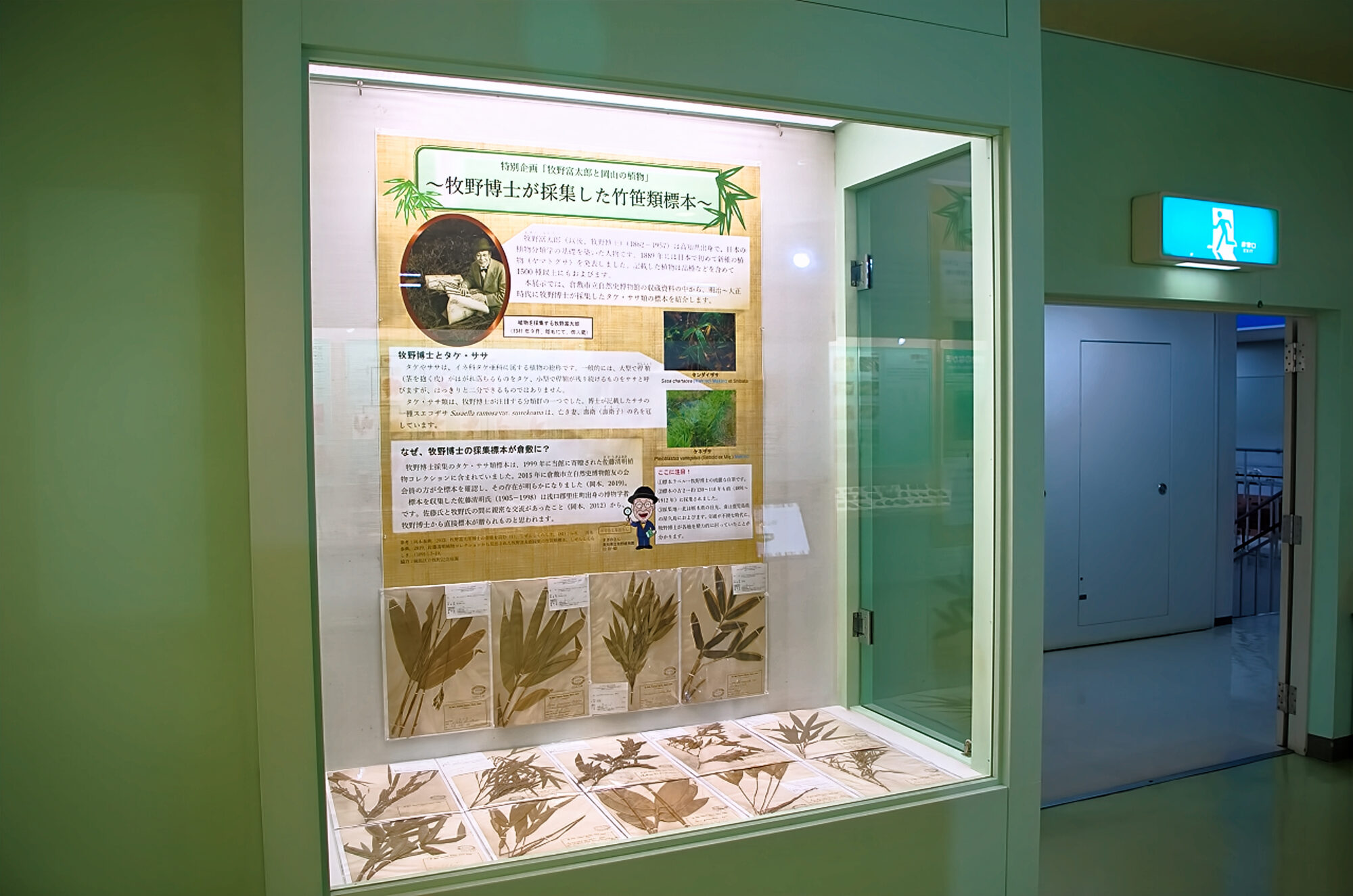
Recently, it seems that specimens of plants collected by the biologist Kiyoaki Sato from Satoshio, Okayama Prefecture, have been discovered among the collection.
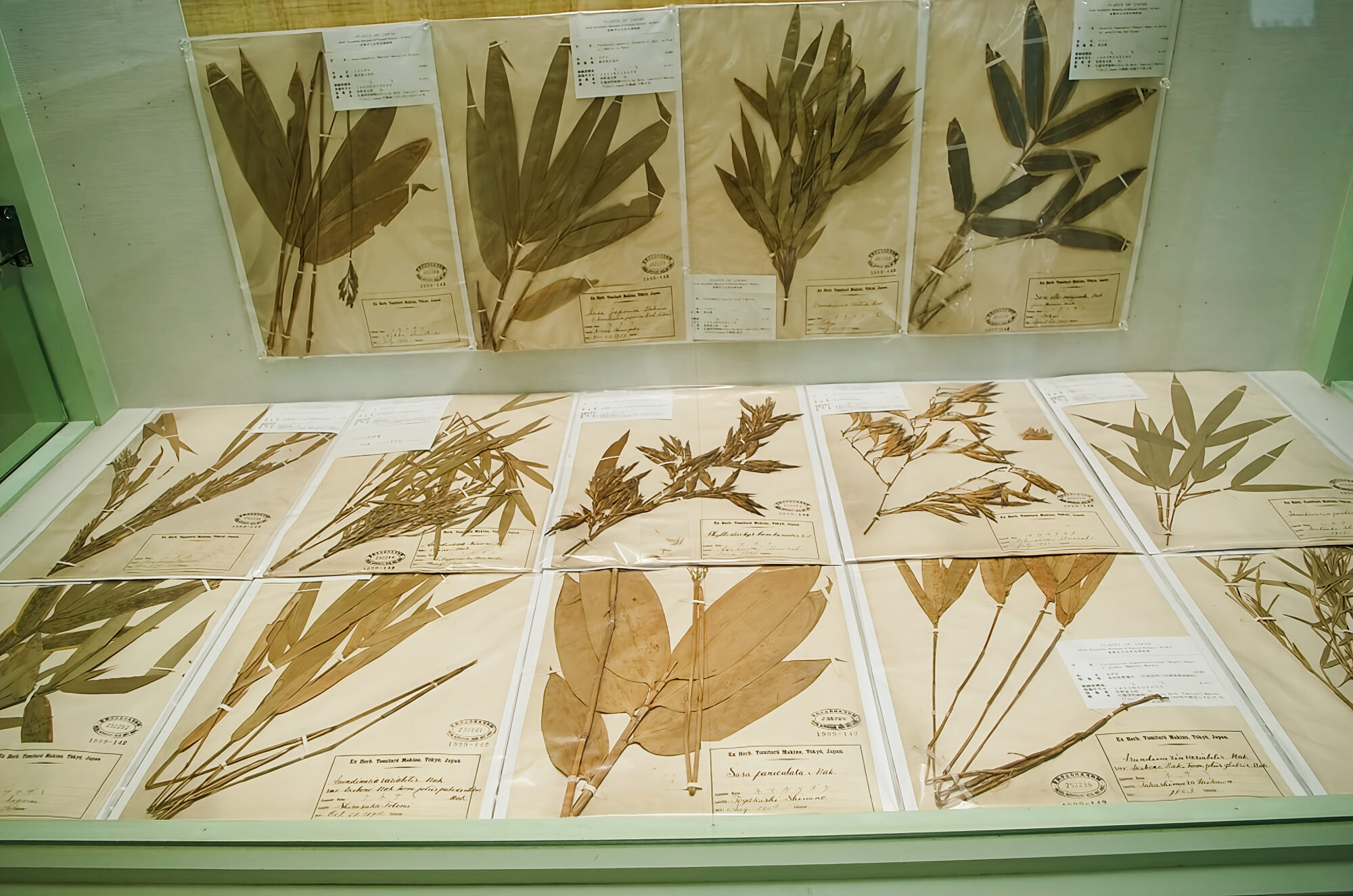
The specimen labels are likely in Dr. Makino's own handwriting, making this truly a treasure exhibition.
To show the characteristics of each bamboo and grass, some specimens are mounted on boards in a way that reveals the features of the leaf surfaces and stems.
Each specimen is labeled with its scientific name, Japanese name, collection location, and collection date.
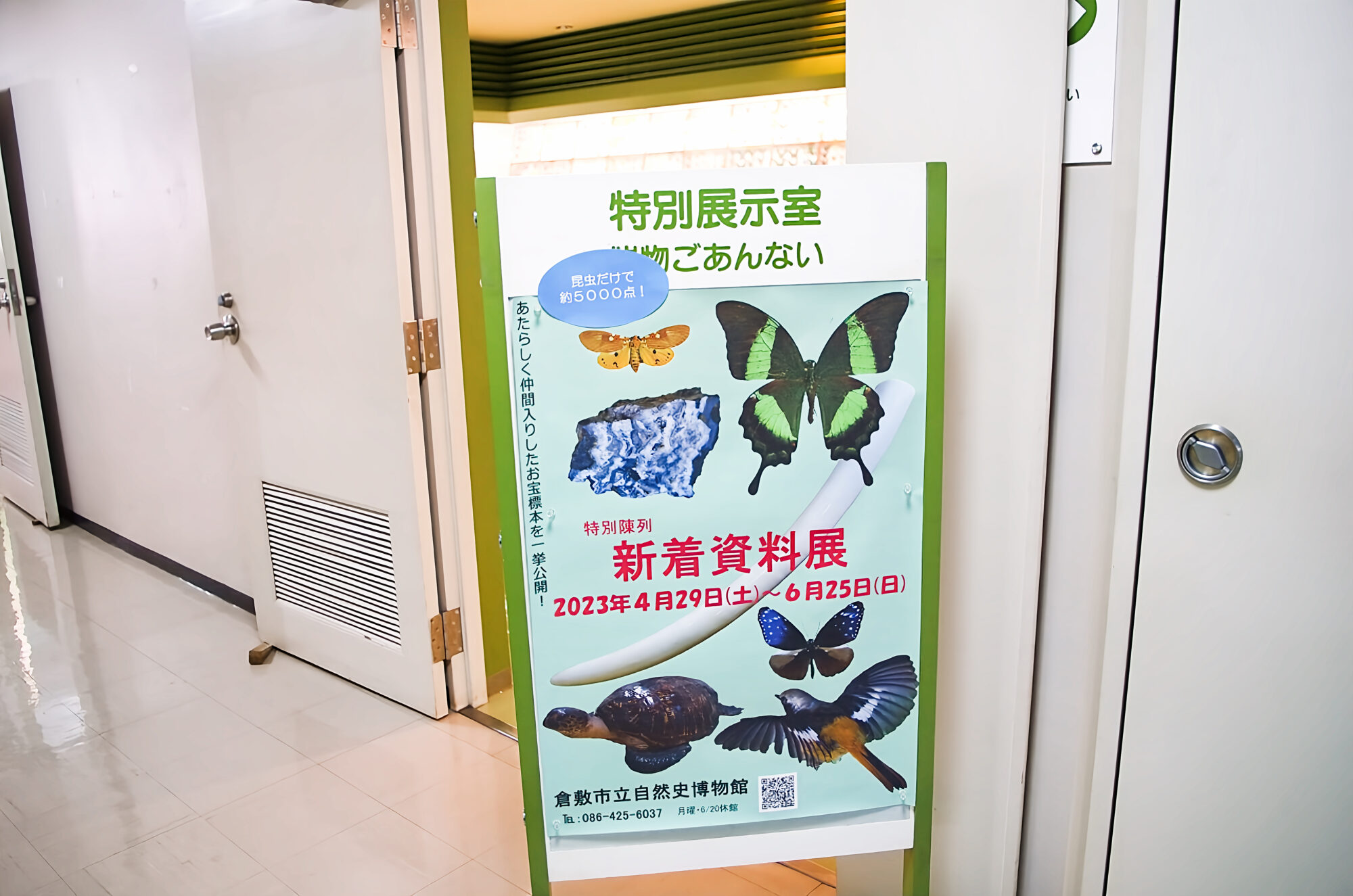
3rd Floor New Acquisitions Exhibition (Special Exhibition Room)
As for the collection methods for the stored specimens, the most common is donation.
It is said that about 93% of the stored specimens as of the end of March 2023 are from donations, which shows how closely Kurashiki Museum of Natural History is connected to the local community.
Every year, tens of thousands of specimens are donated, and special specimens from these donations are showcased annually in the "New Acquisitions Exhibition".
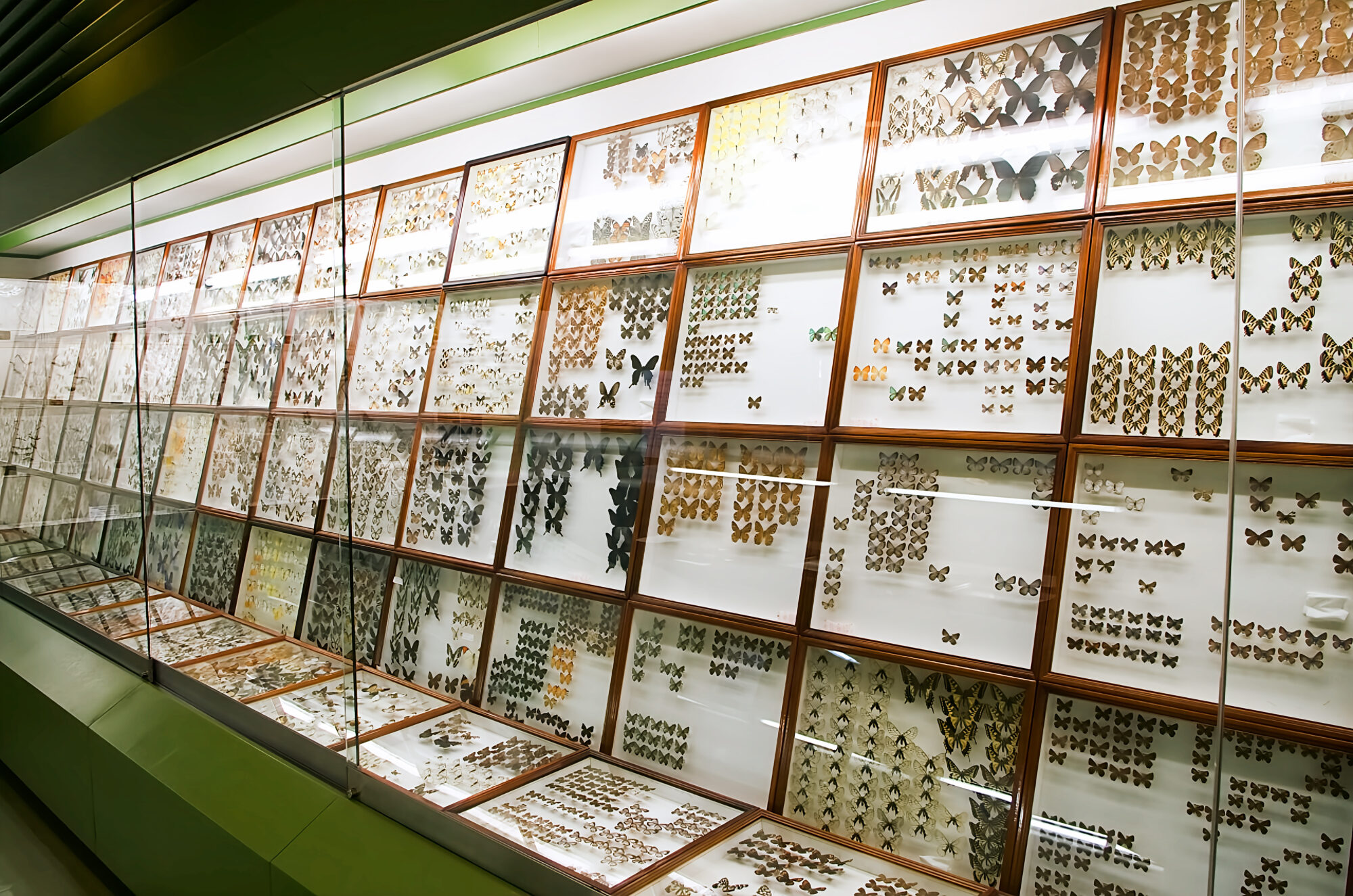
Unlike natural objects such as plants and rocks, which are considered the property of landowners, insects are living creatures, so there is no legal ownership.
I had never even imagined this, but after receiving an explanation, it makes sense.
Regarding the many donated insects, approximately 5,000 specimens are on display this time.
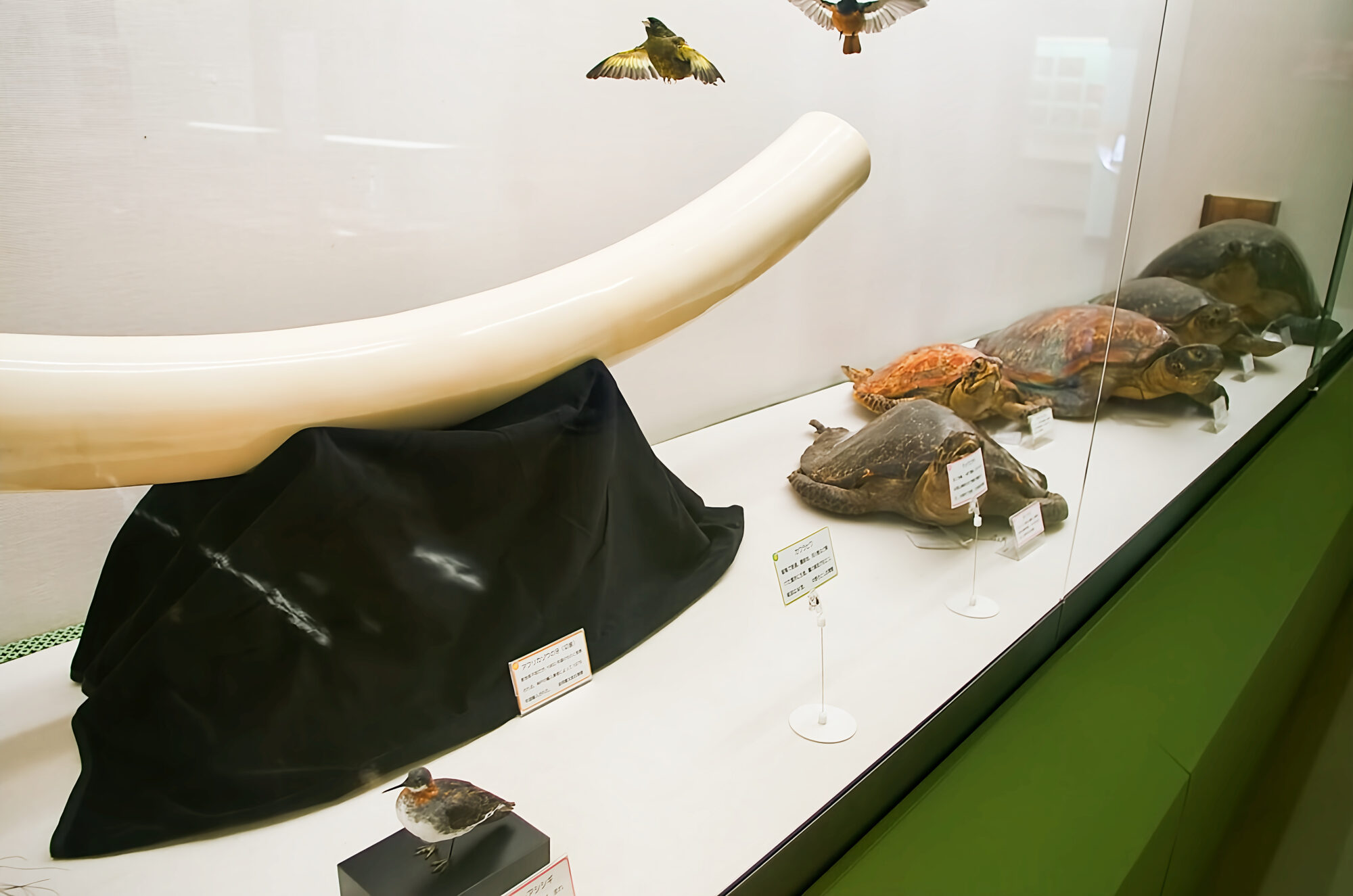
In addition, many taxidermy specimens have also been donated.
In general households during the Showa era, taxidermy animals were often displayed in places like the tokonoma (alcove) and entrance, but nowadays, they are not as commonly displayed.
Due to generational changes and the increased regulations on rare wildlife, many taxidermy specimens are being let go.
3rd Floor: Skeleton Specimen of a Bryde's Whale (in front of the elevator)
On the 3rd floor, in front of the elevator, a skeleton specimen of a whale measuring 11.67 meters in length, discovered at Mizushima Port in Kurashiki in September 2021, is on display.
The whale was caught on the bow of a tanker that was docked at Mizushima Port. It is a massive creature that is rarely seen in the local Seto Inland Sea, and it was reportedly quite a challenge to retrieve.
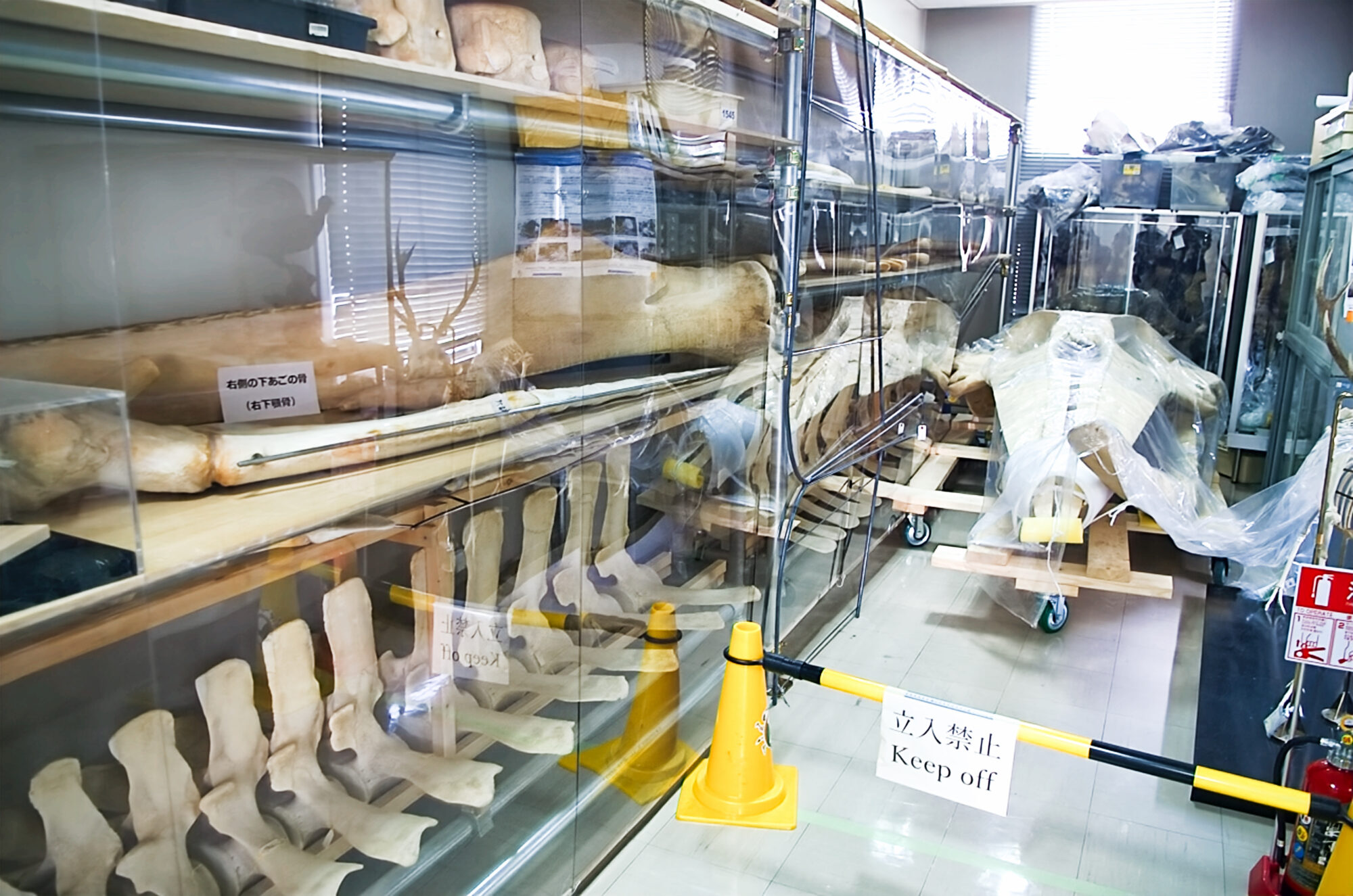
It is unfortunate that it cannot be displayed permanently due to its size, but thanks to the cooperation of many people, this valuable skeleton specimen will be passed down to the next generation.
Introduction to the Collection Room
I was guided through the heart of the Natural History Museum, the collection room, which is usually off-limits to the public.
▼ On the left side of this narrow corridor, precious specimens such as insects are stored.
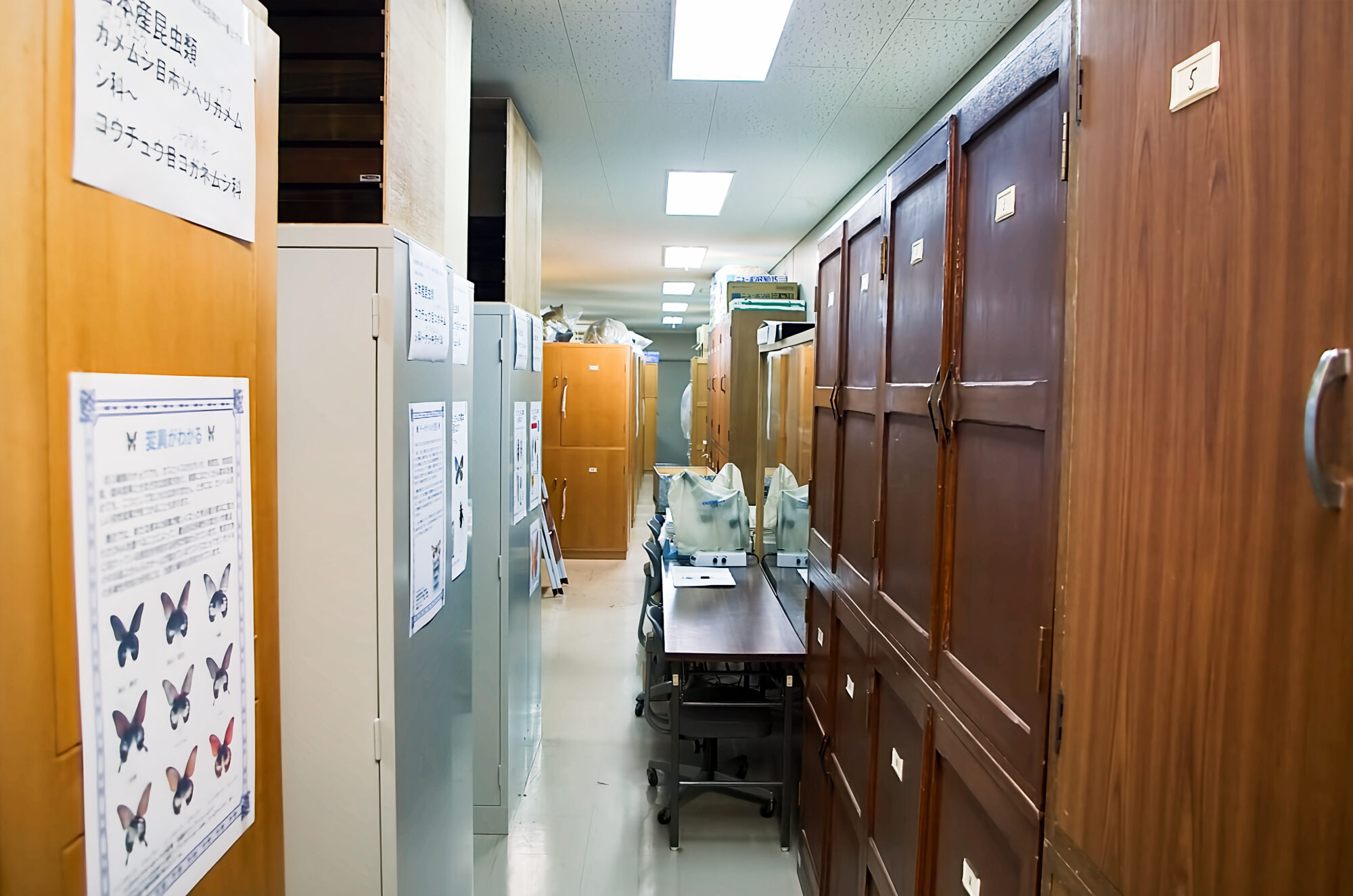
To protect the specimens from pests and mold, temperature and humidity control in the collection room, as well as an annual fumigation treatment, are necessary.
As I was guided to the shelves where the insects are stored, the curator asked, "Is there any insect you would like to see?"
▼ When I requested a stag beetle, I was shown the specimens that are stored and preserved.
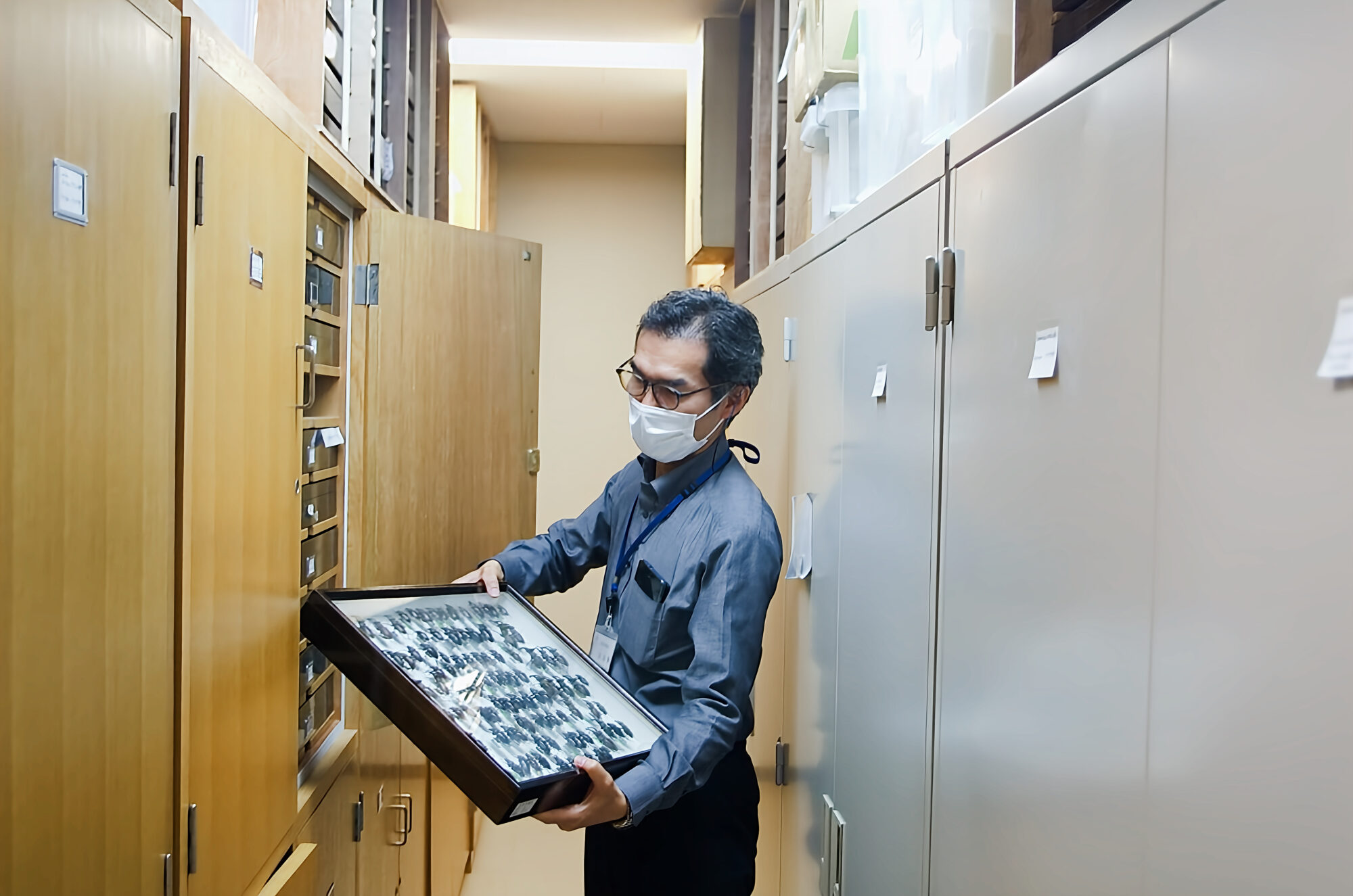
Without hesitation, the specimen was retrieved in less than 10 seconds after being asked.
I could feel that the specimens are organized in a systematic classification order.
▼ Next, I was shown another specimen, consisting of "10 individuals arranged neatly."
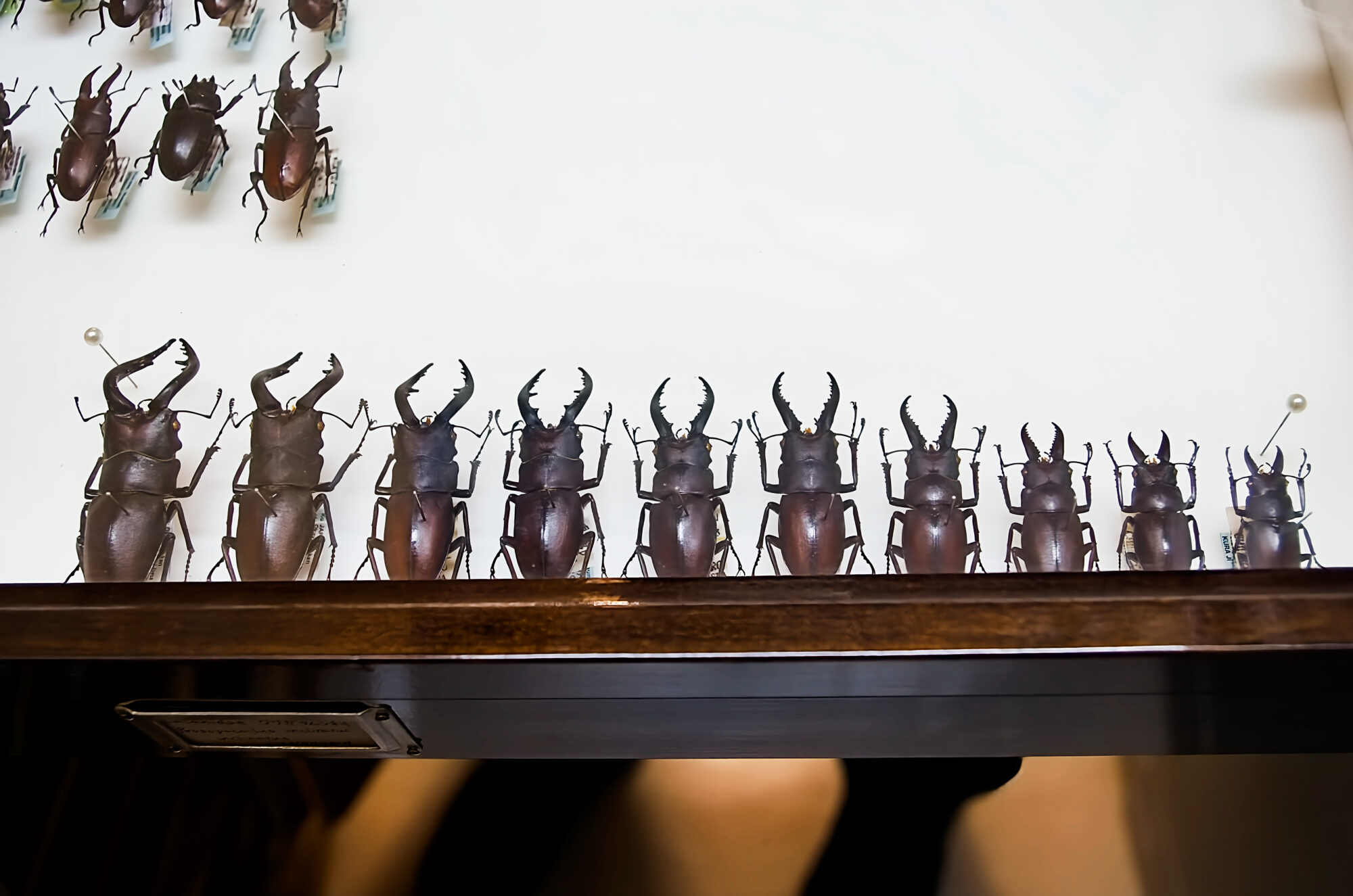
I confidently identified the left specimen as a stag beetle and the right specimen as a kokuwagata, but I was completely wrong.
In fact, they were all stag beetles.
I learned that to have a complete set of specimens showing individual variation, it is necessary to collect hundreds of precious specimens and select a balanced variety of sizes, which made me appreciate the importance of the Natural History Museum even more.
Next, I was shown a specimen of the Beckoning Dragonfly from Okayama Prefecture.
This specimen was collected in 1938 in Sawada, Okayama City (now Naka Ward, Sawada), but it is now said that the Beckoning Dragonfly is extinct in Okayama Prefecture.
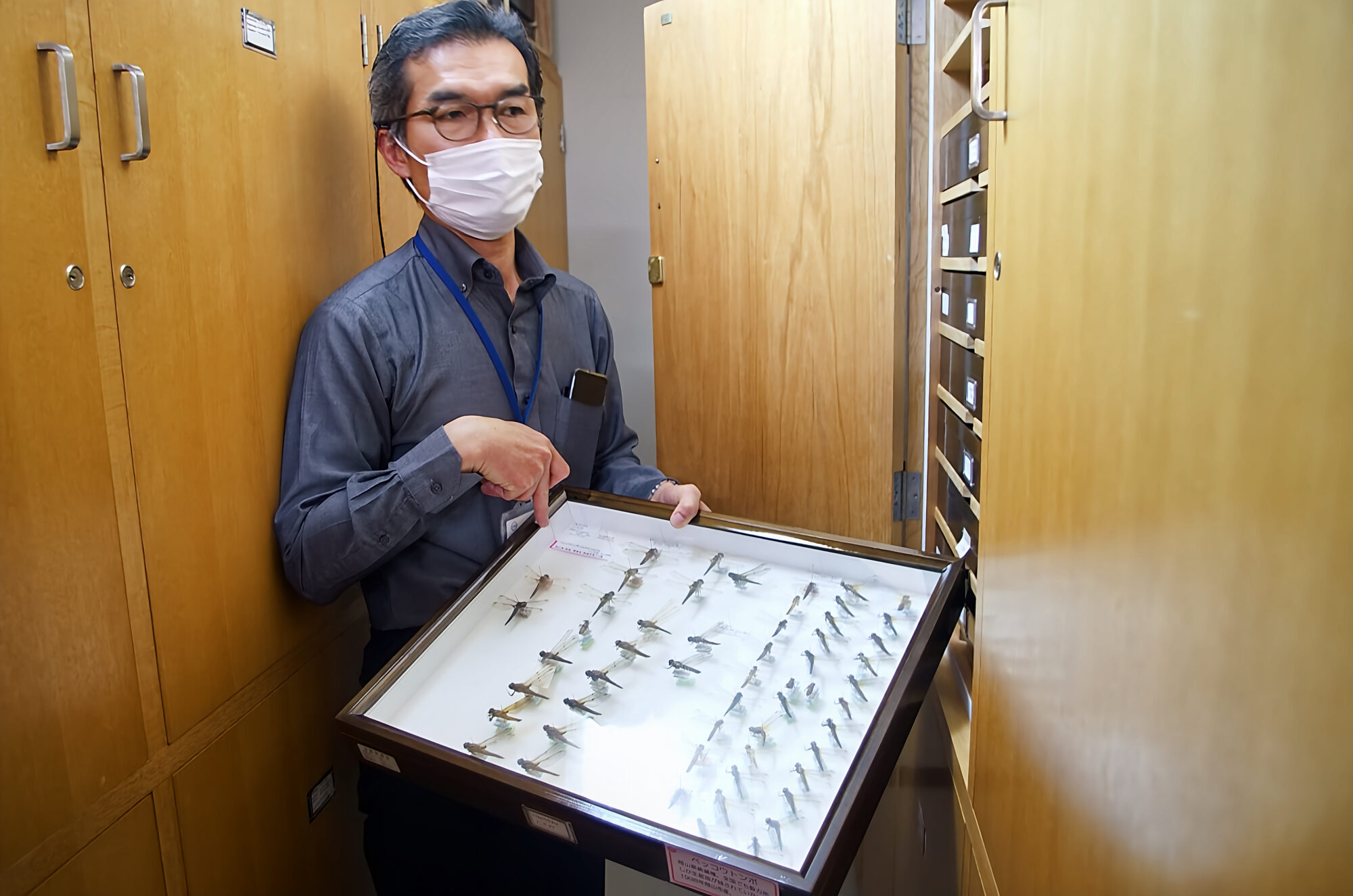
Two precious specimens remain, but the curator mentioned, "At that time, there was probably no recognition that they were rare."
Currently, there are only a few known habitats nationwide, and there are concerns that this species is endangered in Japan.
Many rare biological specimens that can no longer be obtained are stored here, and I truly feel that they are treasures.
On the website, in celebration of surpassing 1 million collection items, there is an announcement for "100 Selected Treasures of Kurashiki Museum of Natural History (updated regularly)."
Please check it out on the website as well.
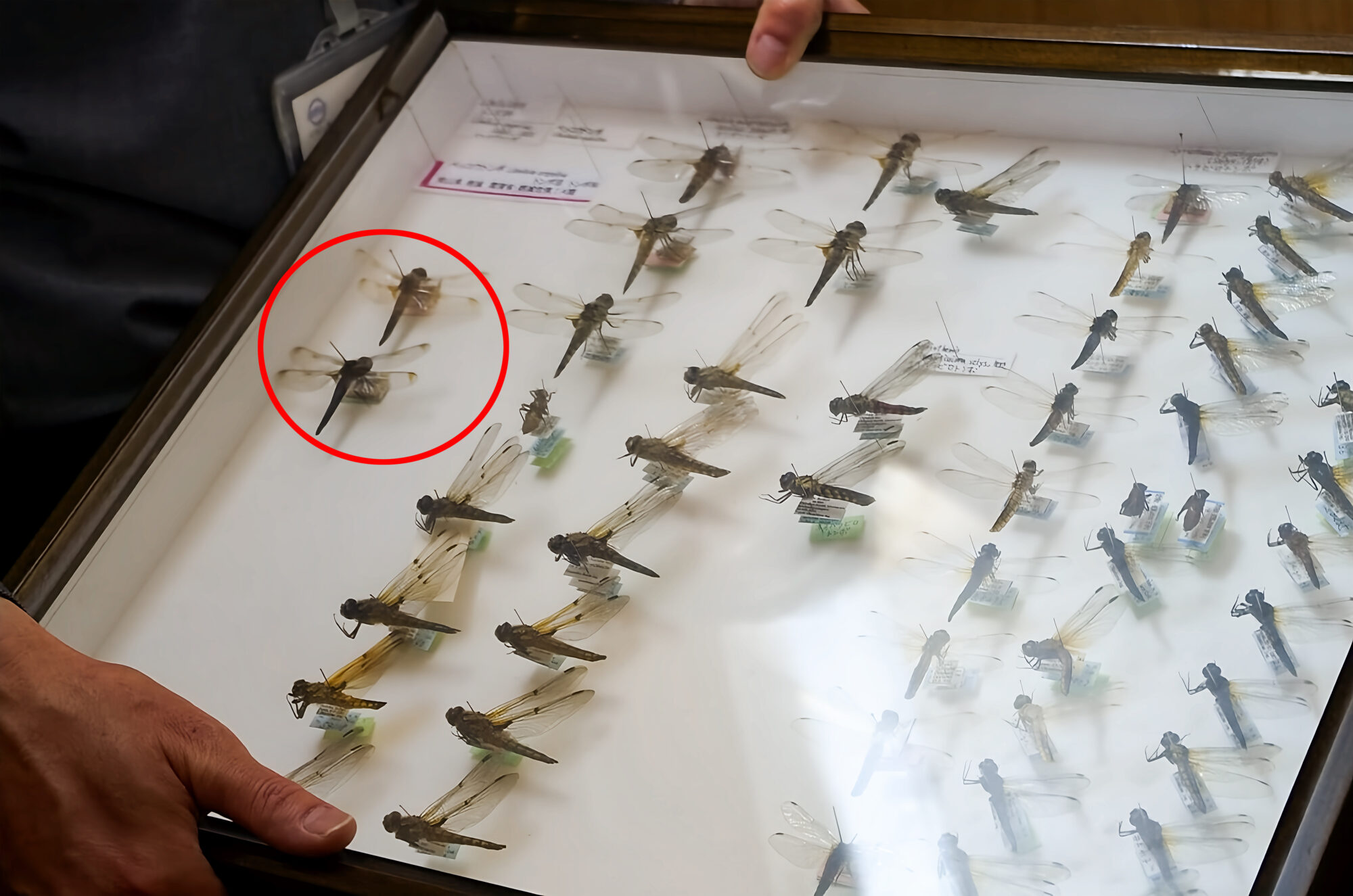
"Due to the donation of tens of thousands of items each year, the storage capacity of the collection room has already been exceeded," I was informed.
As a result, handmade storage shelves by the curators have been installed on top of the regular shelves.
It is a clever solution that conveys the desire to store as many specimens as possible.
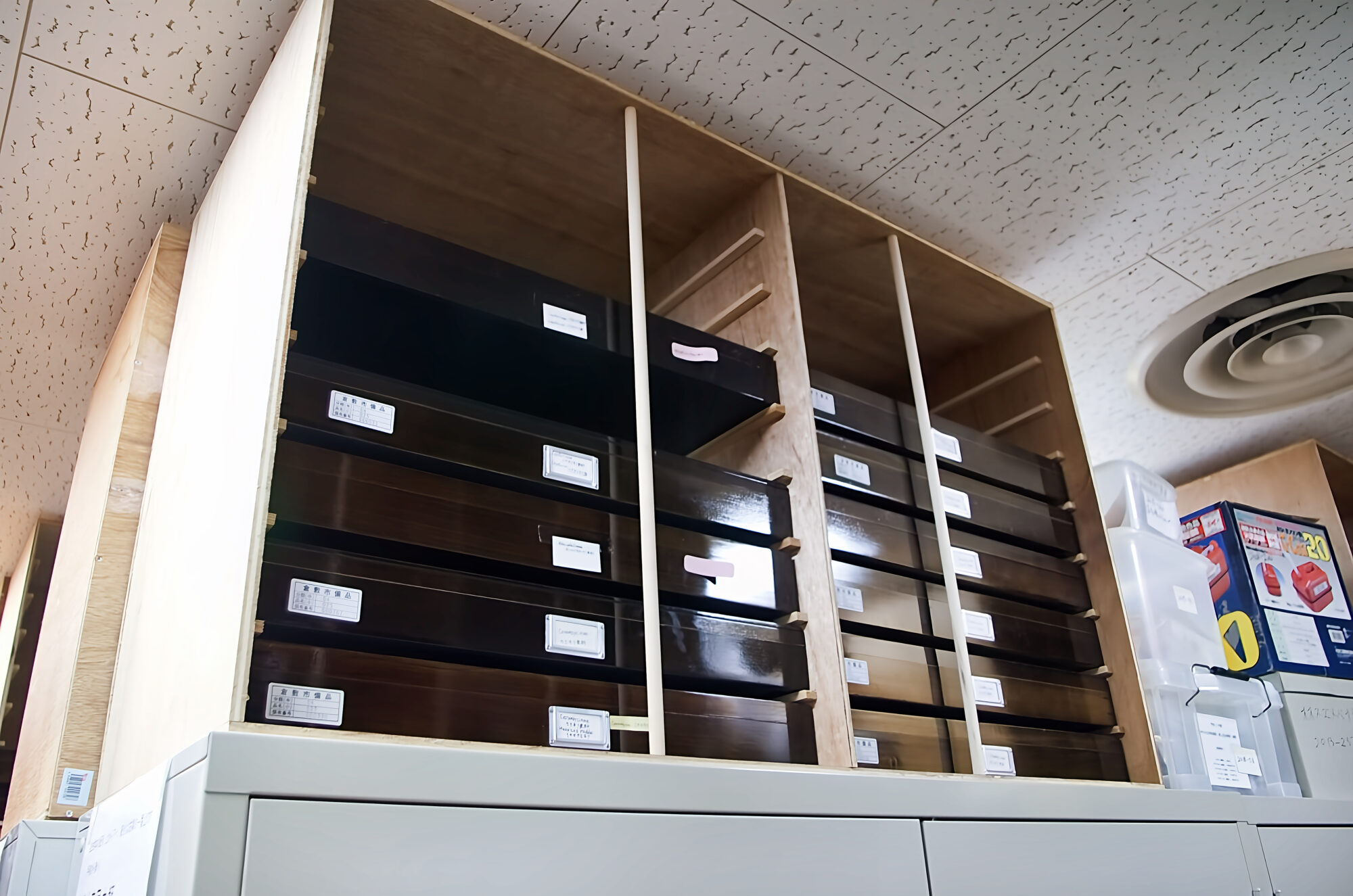
We interviewed Okushima Yuichi, a curator in the insect field, who guided us through the exhibits and storage room at the Kurashiki Museum of Natural History.
Data on the Kurashiki Museum of Natural History
| Name | Kurashiki Museum of Natural History |
|---|---|
| Location | 2-6-1 Chuo, Kurashiki City, Okayama Prefecture |
| Contact | 086-425-6037 |
| Parking | None No dedicated parking available, please use nearby paid parking ・Kurashiki City Central Parking Lot ・Kurashiki City Bikan Historical Area South Parking Lot ・Kurashiki City Achi Terrace Kurashiki Parking Lot |
| Opening Hours | 9:00 AM – 5:15 PM (last admission at 4:45 PM) |
| Closed | Monday However, if it is a public holiday or substitute holiday, it will be closed the following day. Closed during the year-end and New Year period (December 28 – January 1), and other temporary closures may occur for storage fumigation and other reasons. |
| Admission Fee (including tax) | General: Individual 150 yen, Group (20 or more) 100 yen University Students: Individual 50 yen, Group (20 or more) 30 yen High School Students and below: Free 65 years and older: Free Persons with disabilities and one accompanying person: Free *Admission fees for special exhibitions may be set separately *Other various reductions are available. Please inquire. |
| Payment Methods |
|
| Reservations | Available Reservations for school groups and organizations can be made in advance by phone (086-425-6037). Online applications and email reservations are not currently accepted. When calling, please provide the following information: ・School or organization name ・Number of visitors and number of supervisors ・Date of visit ・Start and end times of the visit ・Name of the supervising person ・Contact phone number |
| Smoking | Completely non-smoking |
| Restrooms | Western-style toilets, barrier-free toilets, public toilets |
| Childcare | Nursing room, diaper changing table, stroller rental |
| Barrier-Free | Barrier-free toilets, elevators, wheelchair rental |
| Website | Kurashiki Museum of Natural History |