
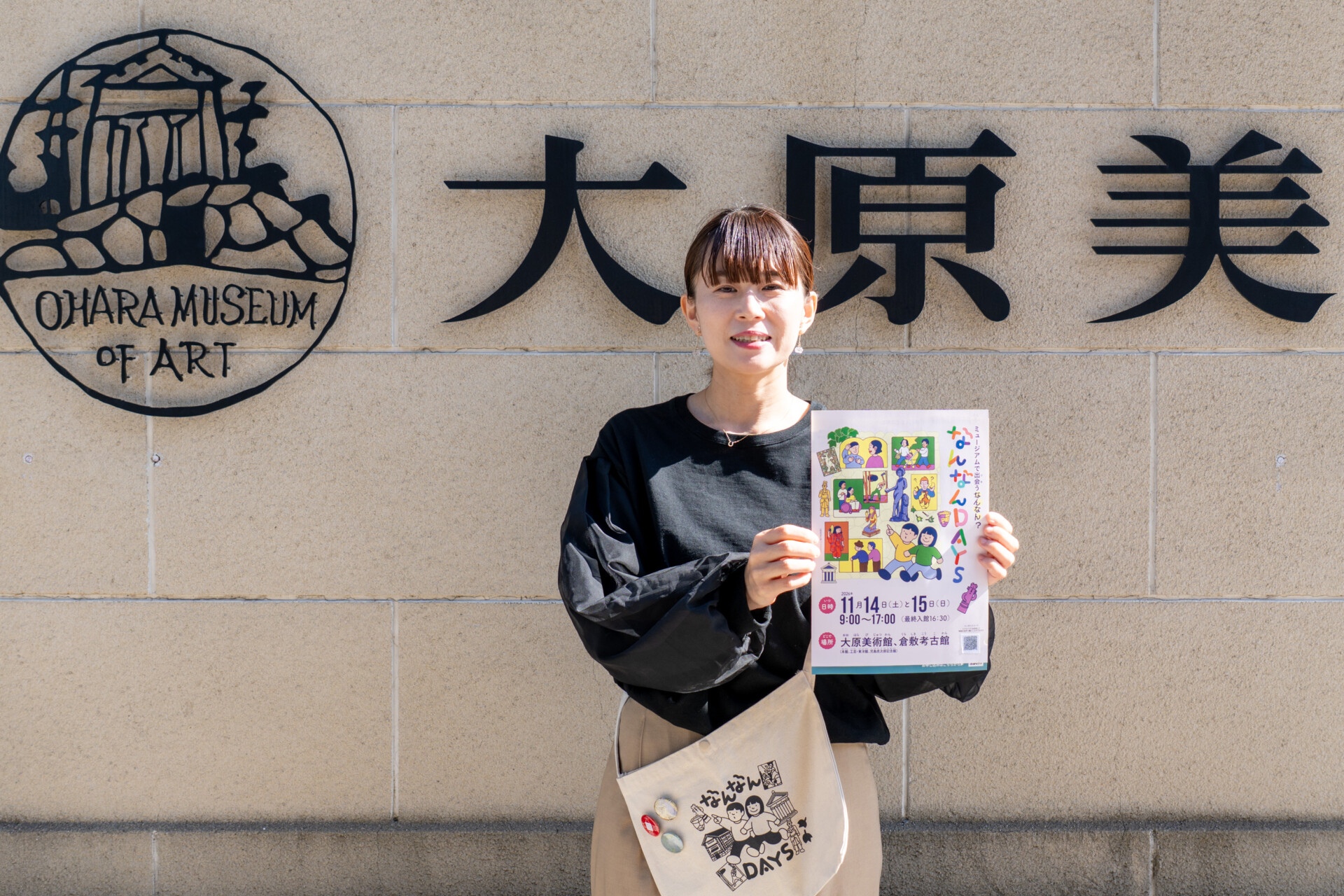
I’m not sure I can enjoy the art quietly. Is it okay for me to visit the museum?
If you have young children, or you or a family member has a disability, you may hesitate to visit an art museum for one reason or another.
Even people in these situations can visit the museum and take part in “Nannan DAYS,” a large-scale workshop event where you can touch, make things, and chat. It will be held again this year.
First launched last year (2025), Nannan DAYS is now in its second year. What has changed?
We asked Teramoto Shizuka of the Ohara Art Foundation, which plans and runs the event.
The information provided was current when this article was published in November 2026. Please note that it may differ from current information.
What is “Nannan DAYS: What’s That We Encounter at the Museum?”
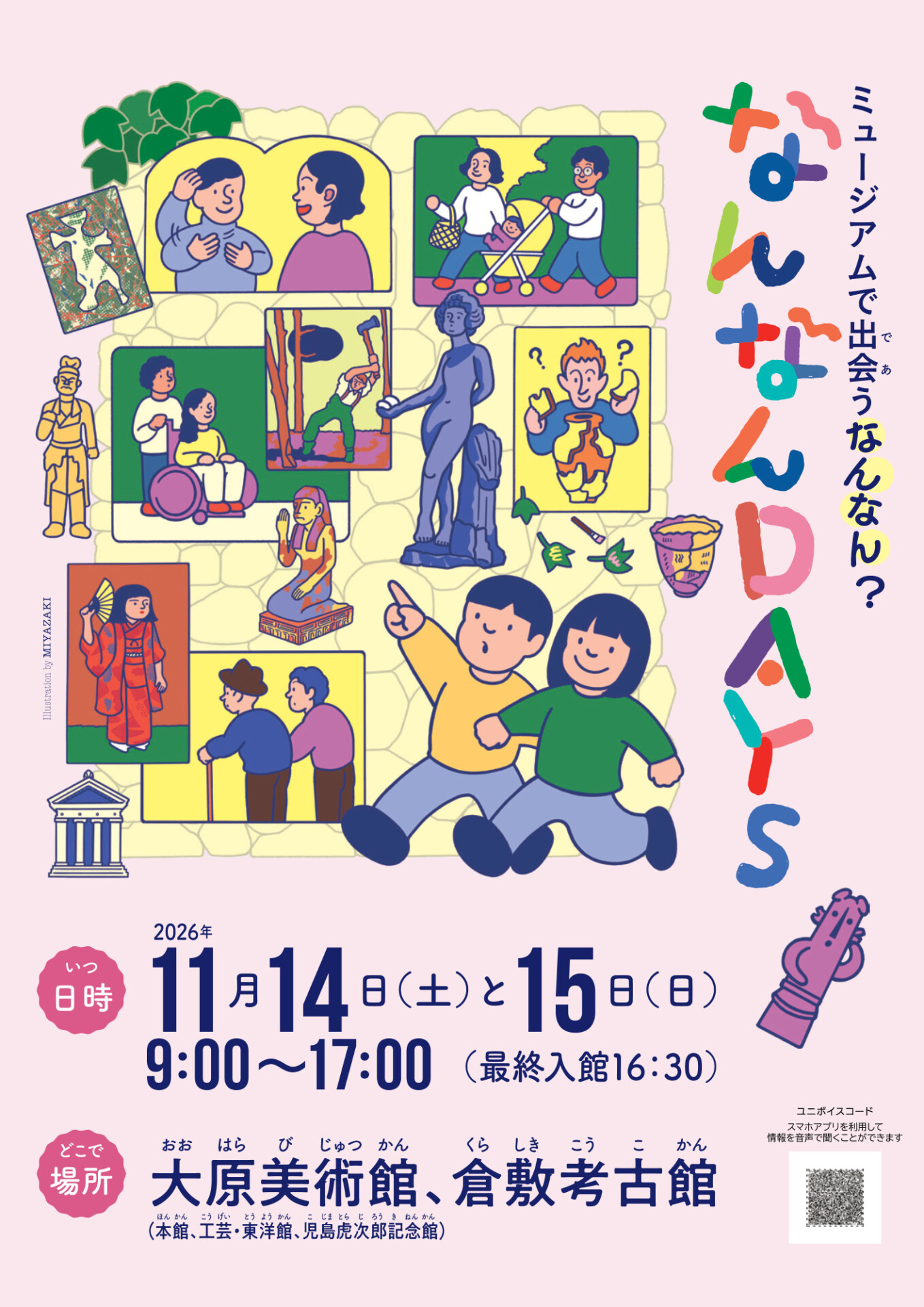
Nannan DAYS is a two-day event hosted by the Ohara Art Foundation. Participants visit two museums, the Ohara Museum of Art and the Kurashiki Archaeological Museum, while cherishing the feeling of wondering, “What’s that?” Now in its second year, the event will be held on Saturday, November 14 and Sunday, November 15, 2026, at the Ohara Museum of Art and the Kurashiki Archaeological Museum.
Since 2002, the Ohara Museum of Art has held a summer event called “Children’s Art Museum” (commonly known as Chiru-myu). Although it was named “Children’s,” the event was actually aimed at their parents and guardians, but it seems to have developed a strong image as an event for children.
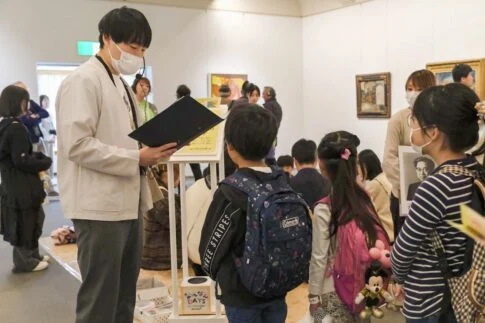
Nannan DAYS was planned as an event that anyone, from babies to seniors, can participate in, and enjoy looking at paintings, sculptures, archaeological materials, and buildings, talking about them, and making things.
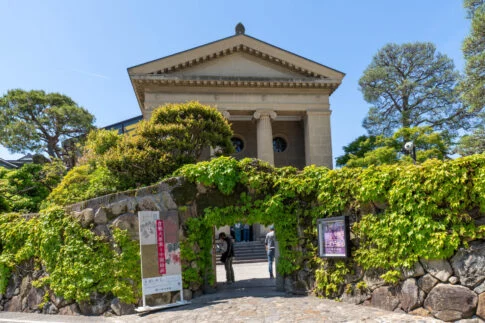
The venues are the main building of the Ohara Museum of Art, the Craft and Oriental Art Gallery, the Kojima Torajiro Memorial Gallery, the Kurashiki Archaeological Museum, the courtyard, and the lawn in front of the Annex.
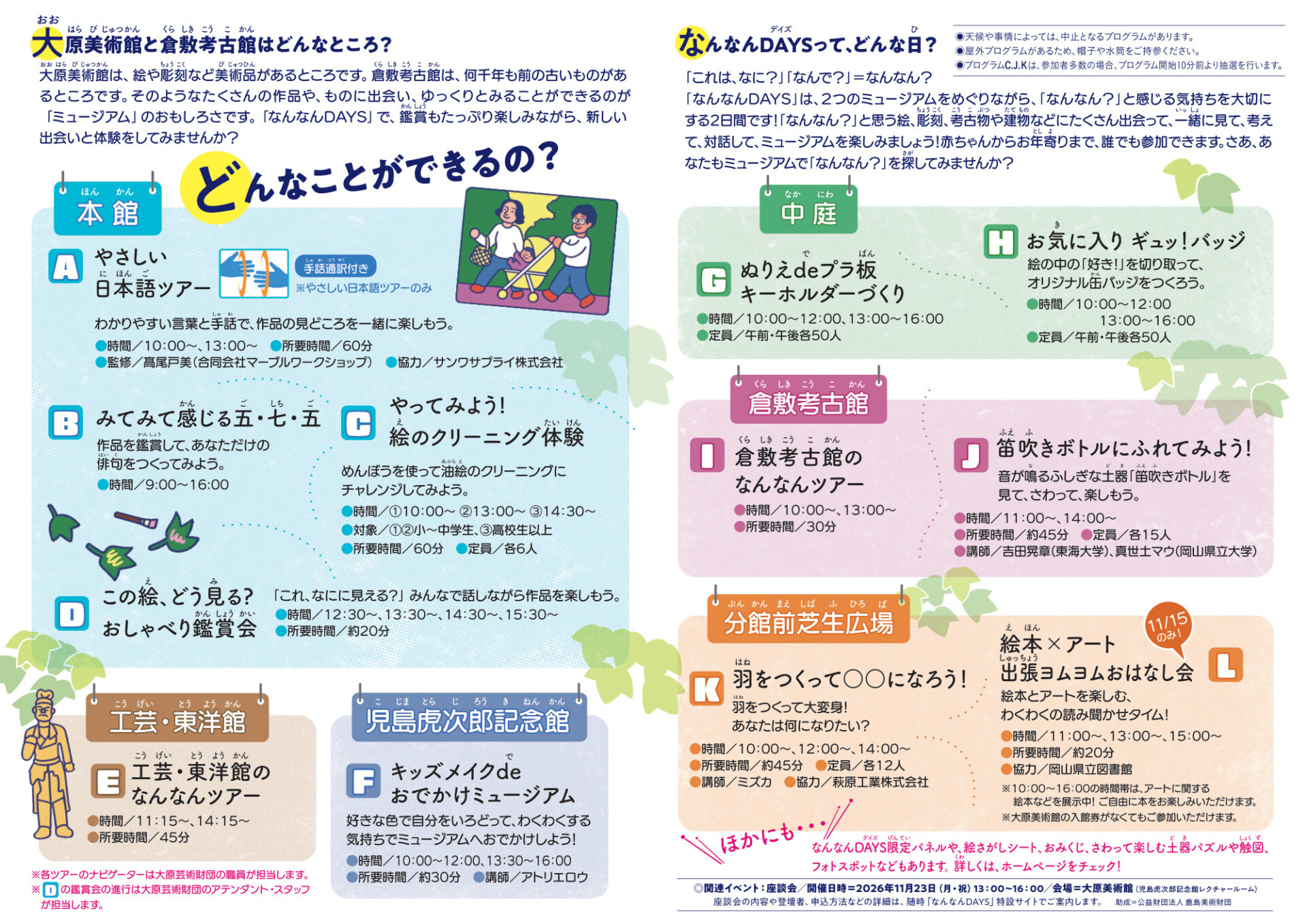
How to participate
To participate in Nannan DAYS, you must purchase an admission ticket to the Ohara Museum of Art and register separately for Nannan DAYS.
When you register for Nannan DAYS, you will receive a wristband.
With the wristband, you can enter and leave each museum as many times as you like on the day. So it’s actually good value as a ticket, too (since it effectively includes admission to the Kurashiki Archaeological Museum).
Elementary and junior high school students who live in Kurashiki City can enter for free by showing their “Ikiiki Passport.” Also, people visiting the Ohara Museum of Art for the first time will receive a “My First Museum Visit sticker.”
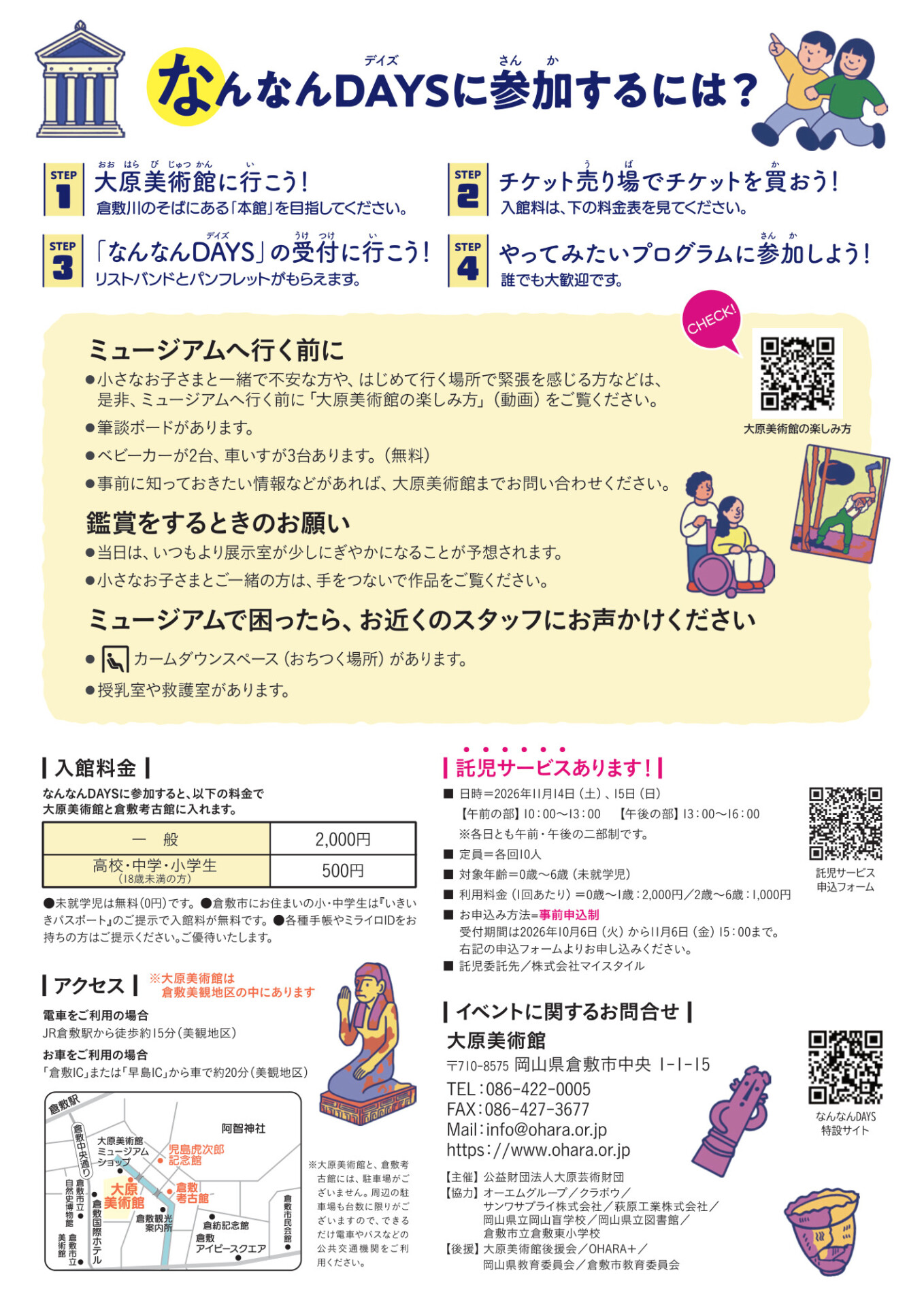
Various support services
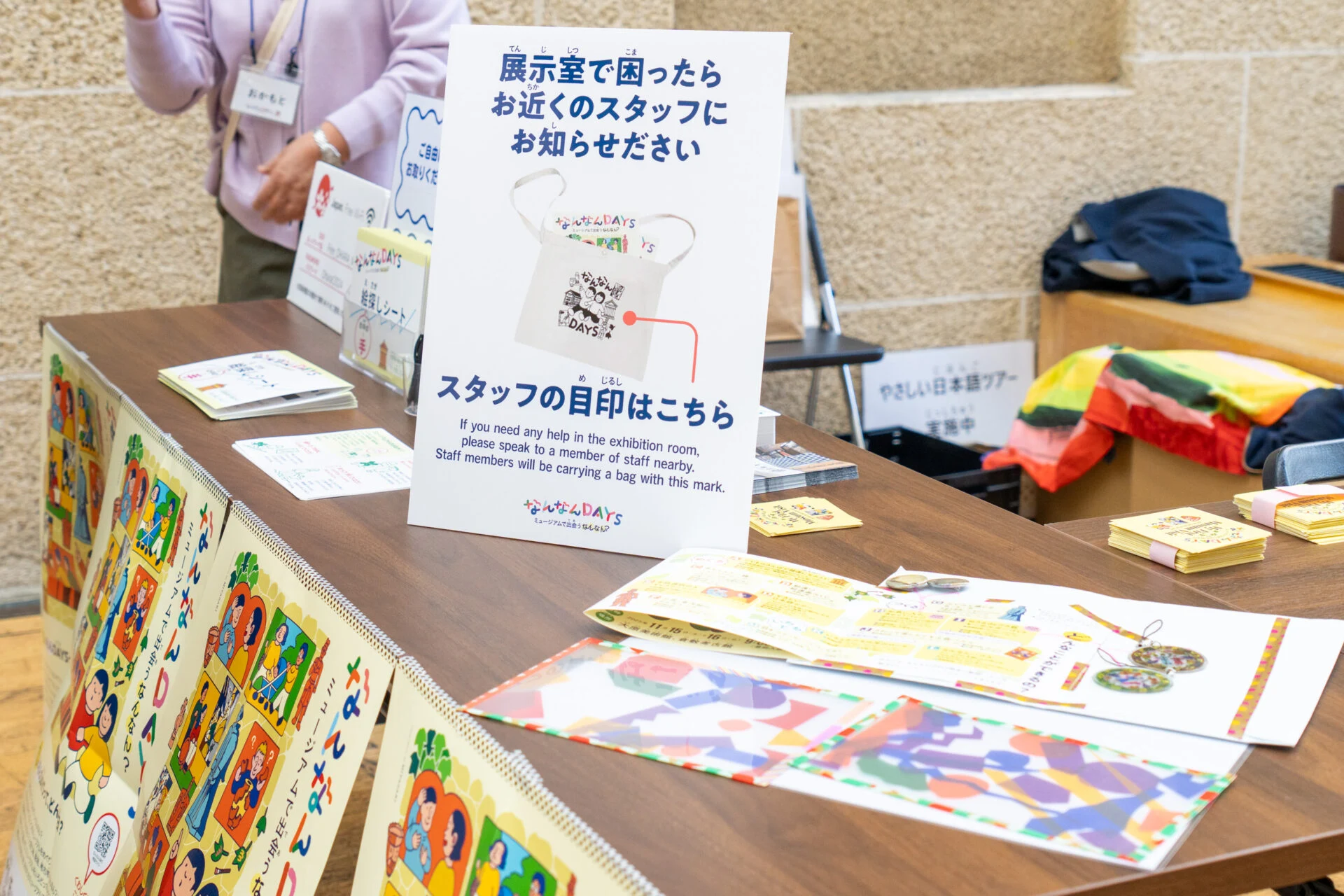
A variety of support services for visitors will also be available on the day of Nannan DAYS.
- Free loan of writing boards for communicating in writing, strollers, and wheelchairs
- Loan of earmuffs and fidget toys (toys that help you feel calm)
- A calm-down space
- Nursing room and first-aid room
- Childcare service for children aged 0 to 6 (advance registration required; fee applies)
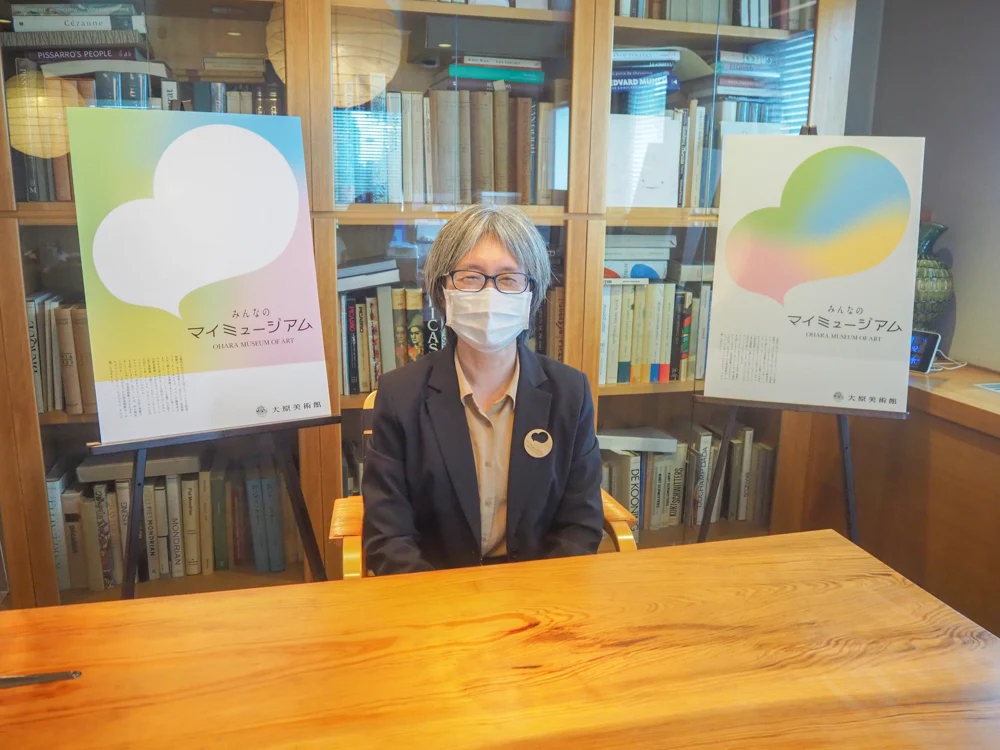
Interview with Teramoto Shizuka of the Ohara Art Foundation
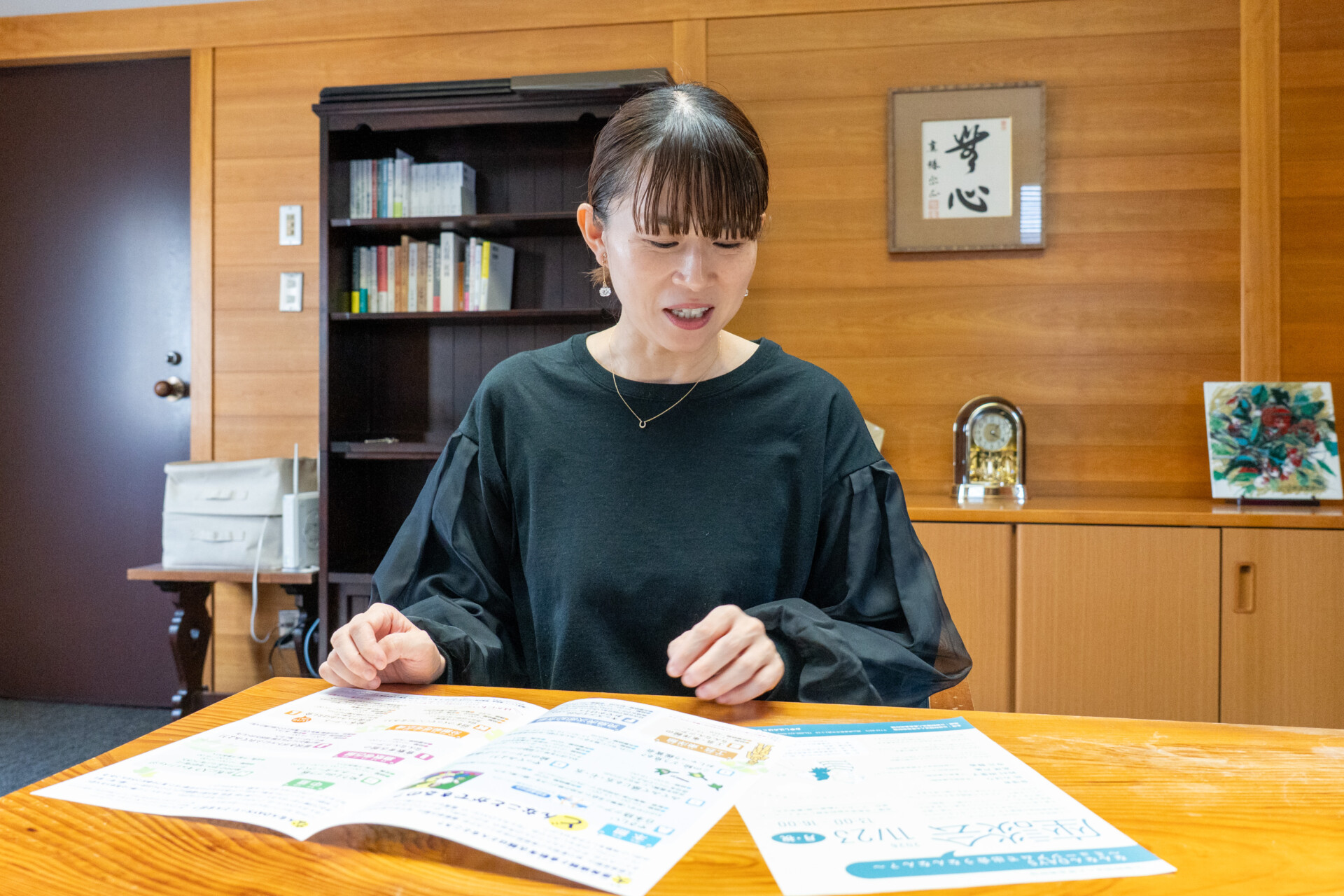
We spoke with Teramoto Shizuka of the Ohara Art Foundation, which is in charge of Nannan DAYS, about how the event came about and what to look forward to this year.
Could you tell us how Nannan DAYS came about?
Teramoto (honorific omitted)
Since 2002, the Ohara Museum of Art had held a summer festival-like workshop event called “Children’s Art Museum” (commonly known as Chiru-myu), for young children and their parents and guardians. It was suspended in 2020 due to the COVID-19 pandemic, and was on hiatus for about five years.
When we decided it was about time to bring it back, Chiru-myu had grown into a well-loved event that everyone was looking forward to seeing return. So, we wanted to offer opportunities to experience art to a wider range of people, without focusing on “children”.
With “Children’s” in the name, we would say that adults were welcome too, but it inevitably gave the impression that it was for children, and specifically elementary school-aged children. We heard comments like, “My child started junior high school, so we stopped going.”
Also, looking at museums around the world, it seems they are undertaking initiatives related to well-being and accessibility. The Ohara Museum of Art also wanted to create a place that people of all ages, from young children to seniors, could enjoy, so we decided to bring back the large-scale workshop event in a new format starting in fiscal 2025.
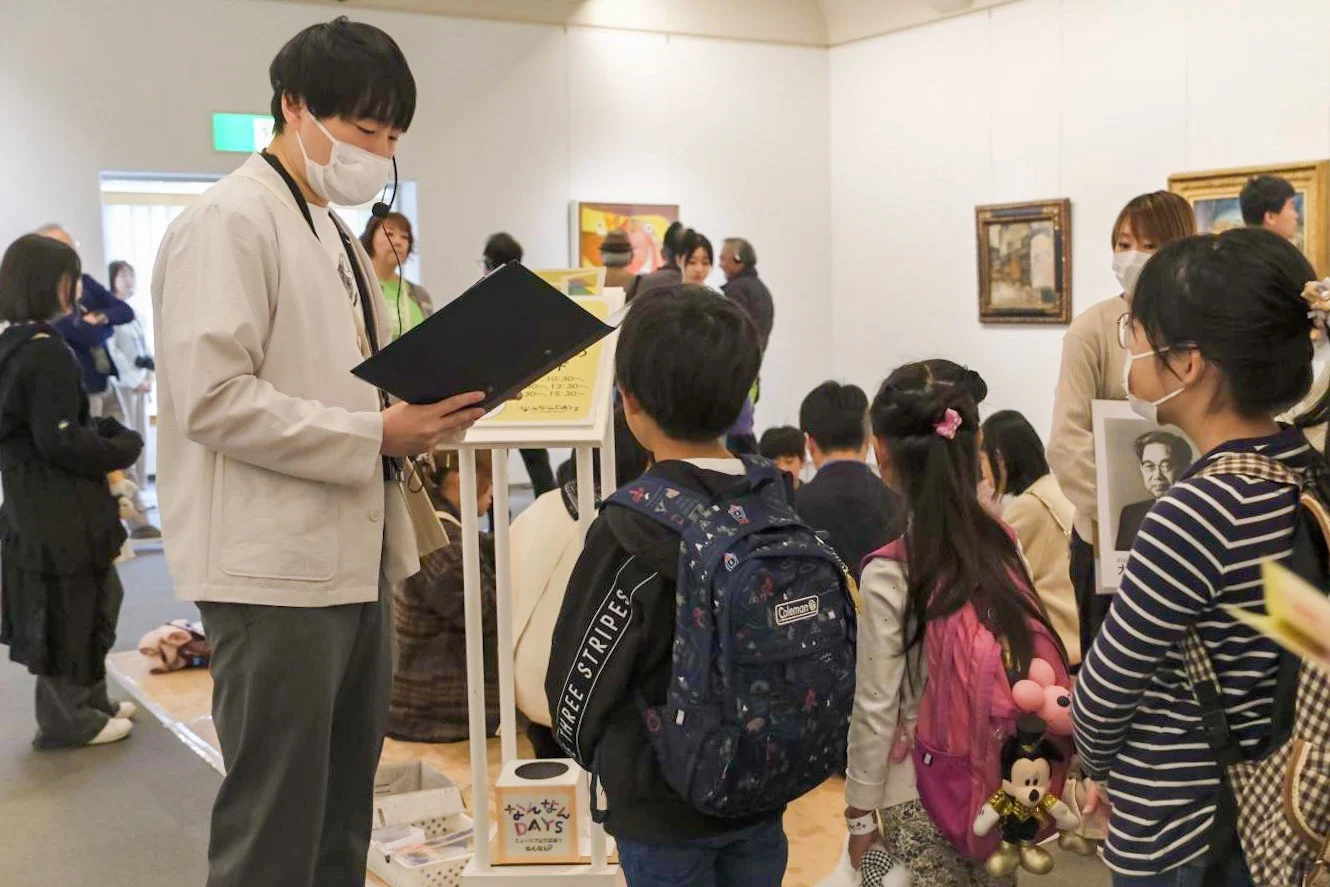
Looking back at last year (2025), what have you changed this year?
Teramoto
Last year, for example, we held various programs with the aim of having people with disabilities participate.
To do that, we expanded the ways we reached out to people, but in reality, our message wasn’t getting through.
We provided sign language interpretation and easy Japanese, but people who needed sign language or easy Japanese didn’t come. We also set up a calm-down space, but it wasn’t actually being used by the people who needed it.
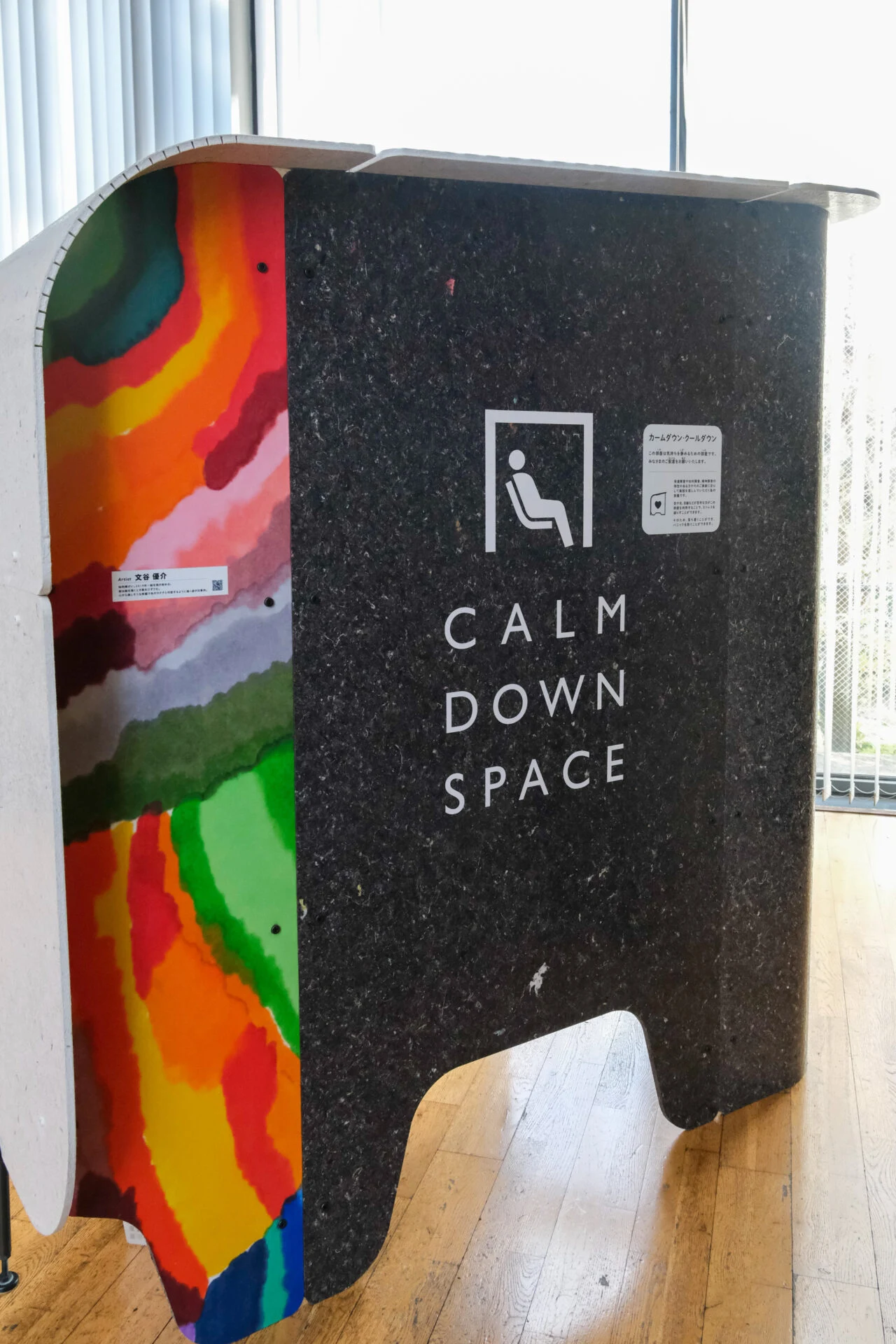
Still, even if people couldn’t come, knowing that it was an event with a calm-down space might reassure those who were considering attending. And having sign language interpretation and easy Japanese might help people feel that the event was relevant to them.
So this year, we’re working hard to get the word out. One way is through the flyer.
The “Uni-Voice” app reads aloud the content we enter, so we can reliably get the information to people with visual impairments. The cut in the flyer marks where the code is.
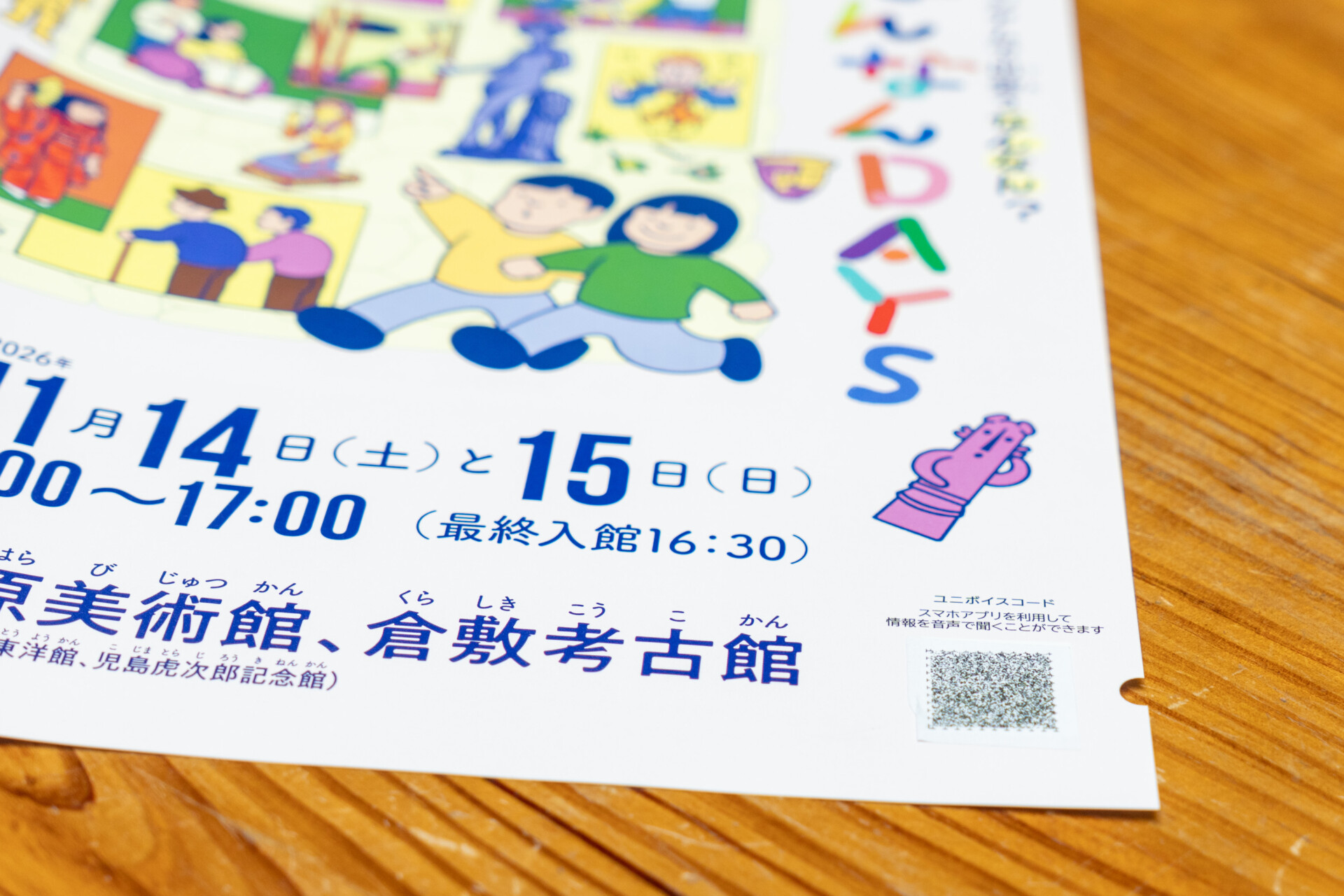
Also, when we mail out flyers, people might see that it’s a flyer after opening the envelope and think, “Maybe this isn’t for us,” and not look at it.
So, we put stickers on the outside of the envelopes aimed at people with disabilities, with messages such as “Childcare service available” and “Sign language interpretation available.”
We’re finding ways to get the information across so people can see that it’s relevant to them before they even open the envelope.
Is there anything in the day’s program that you’d like people to look out for?
Teramoto
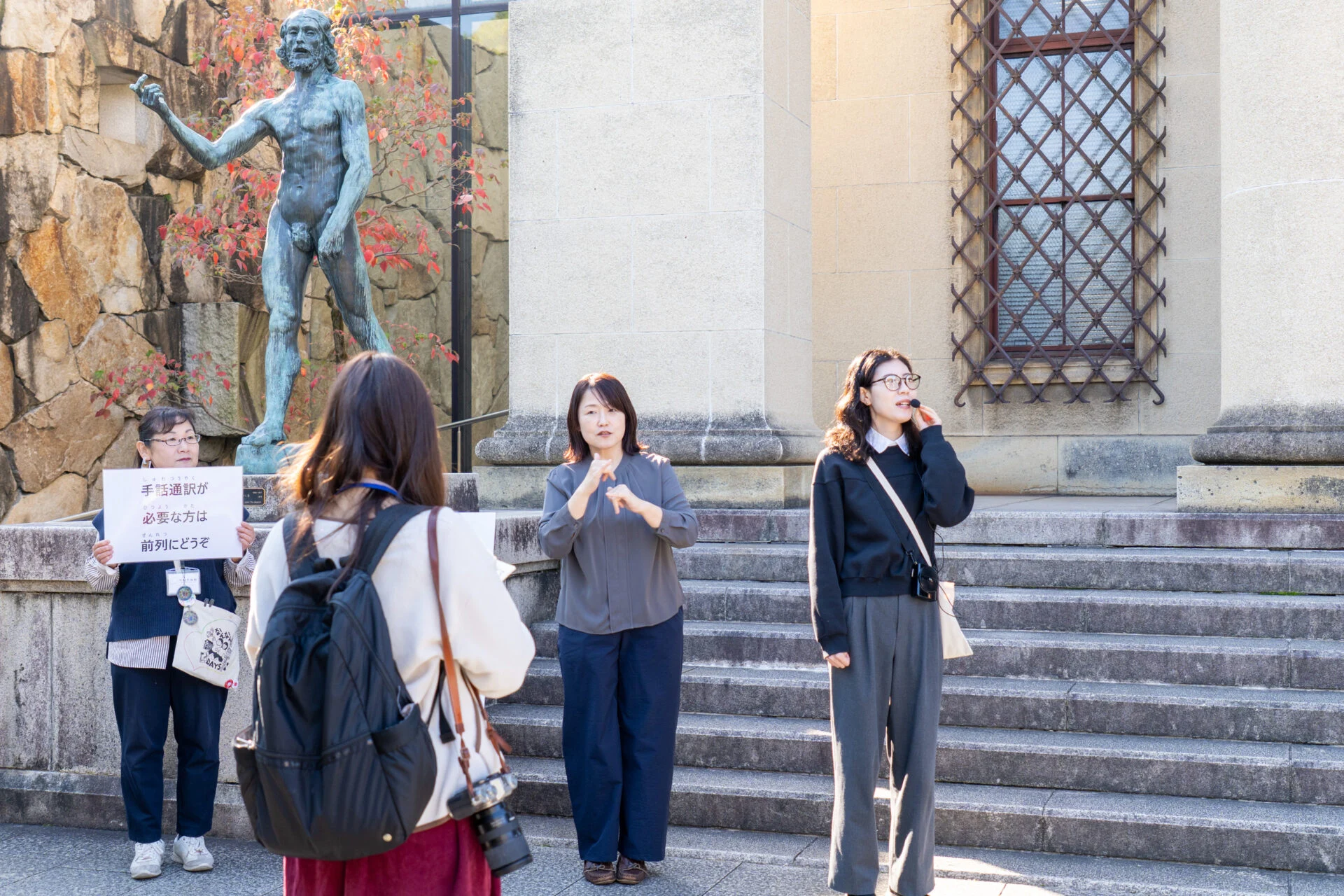
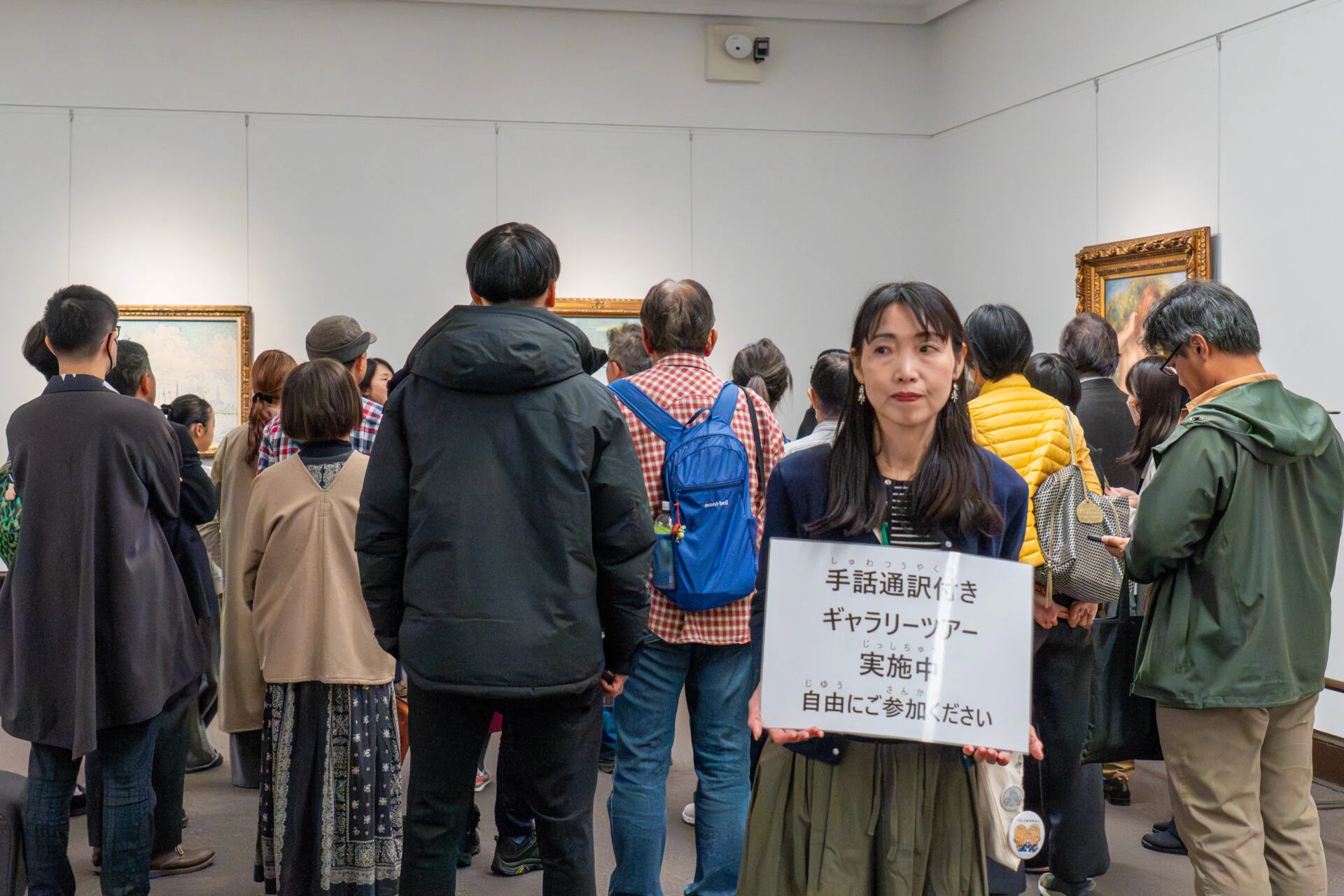
We’ll add sign language interpretation to the “Easy Japanese Tour,” which we also held last year.
Last year, we held a separate gallery talk with sign language interpretation, but this year we’ve combined the two.
Another major difference from last year is that we’ve increased the number of works visitors can touch.
In the room dedicated to Shiko Munakata in the Craft and Oriental Art Gallery, we’ll place tactile diagrams near the artworks. I think visitors will be able to touch them and understand things like, “Oh, this is how it’s carved,” and “There’s a bird here.”
There are two more things visitors can touch than last year. And of course, the pottery puzzle at the Kurashiki Archaeological Museum, which was popular last year, will be back.
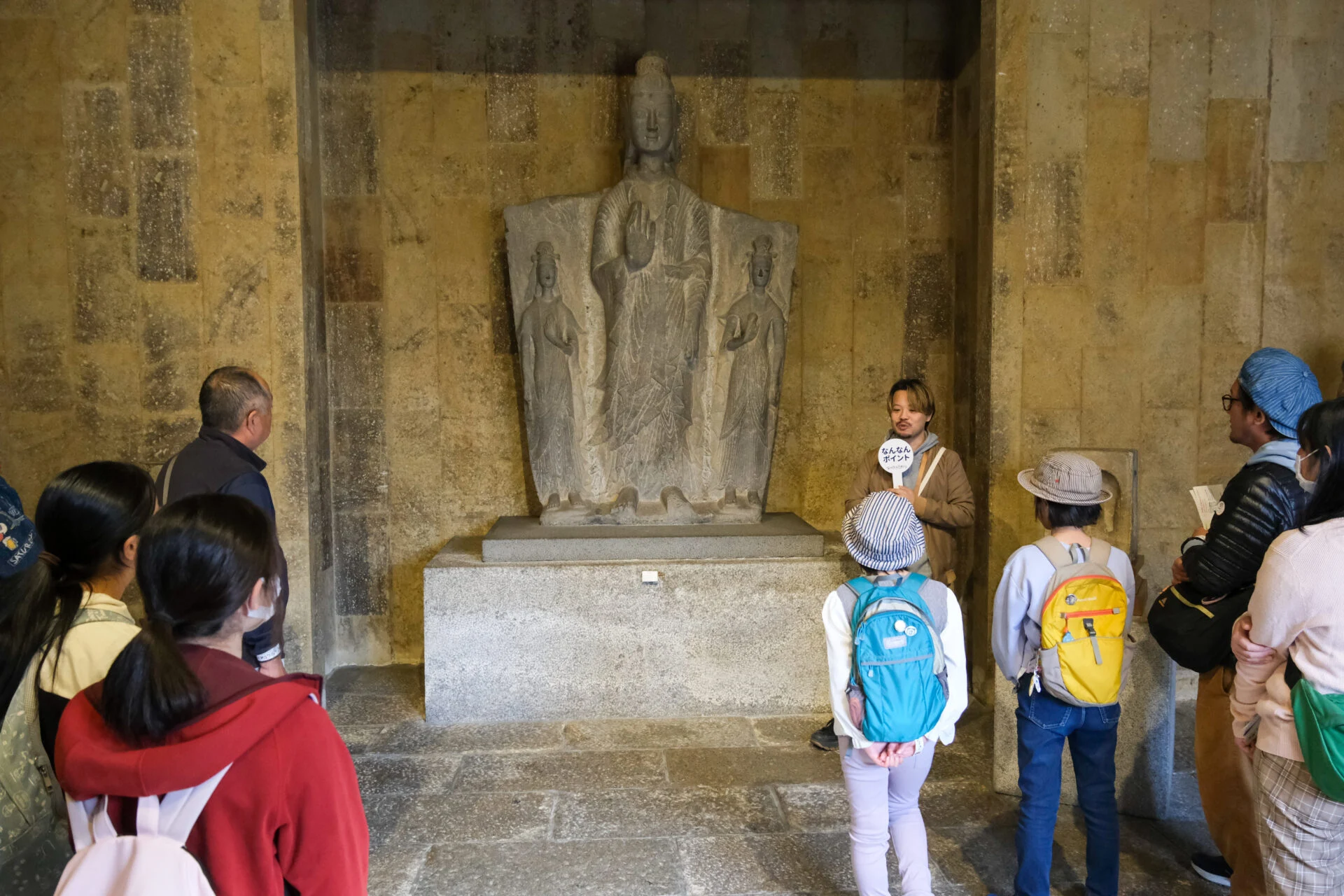
Also, there were a lot of tours last year, with many things happening at the same time, so we’ve streamlined things this year. Visitors can take part in the Easy Japanese Tour, the Craft and Oriental Art Gallery tour, and then the Nannan tour at the Kurashiki Archaeological Museum.
What would you like visitors to take away from the event?
Teramoto
Since the title is “Nannan DAYS,” we hope visitors will have all kinds of realizations and discoveries at the museum. And we hope they’ll share them with someone, or exchange ideas with museum staff and artists, and let those ideas grow.
Last year, we also had “Nannan Panels,” displaying questions that made people think, “Now that you mention it, that’s true.” We’ll have them again this year. We hope visitors will take home lots of “What’s that?” questions from these two days.
You may learn something by taking part in a workshop or tour, or you may find yourself wondering even more, “What is that?” We’d be happy if you took home experiences that are hard to put into words, like “What on earth is this?”
Finally, do you have a message for our readers?
Teramoto
There are probably lots of events around this time of year, but we’d be delighted if you came to Nannan DAYS as one of them and went home with happy memories.
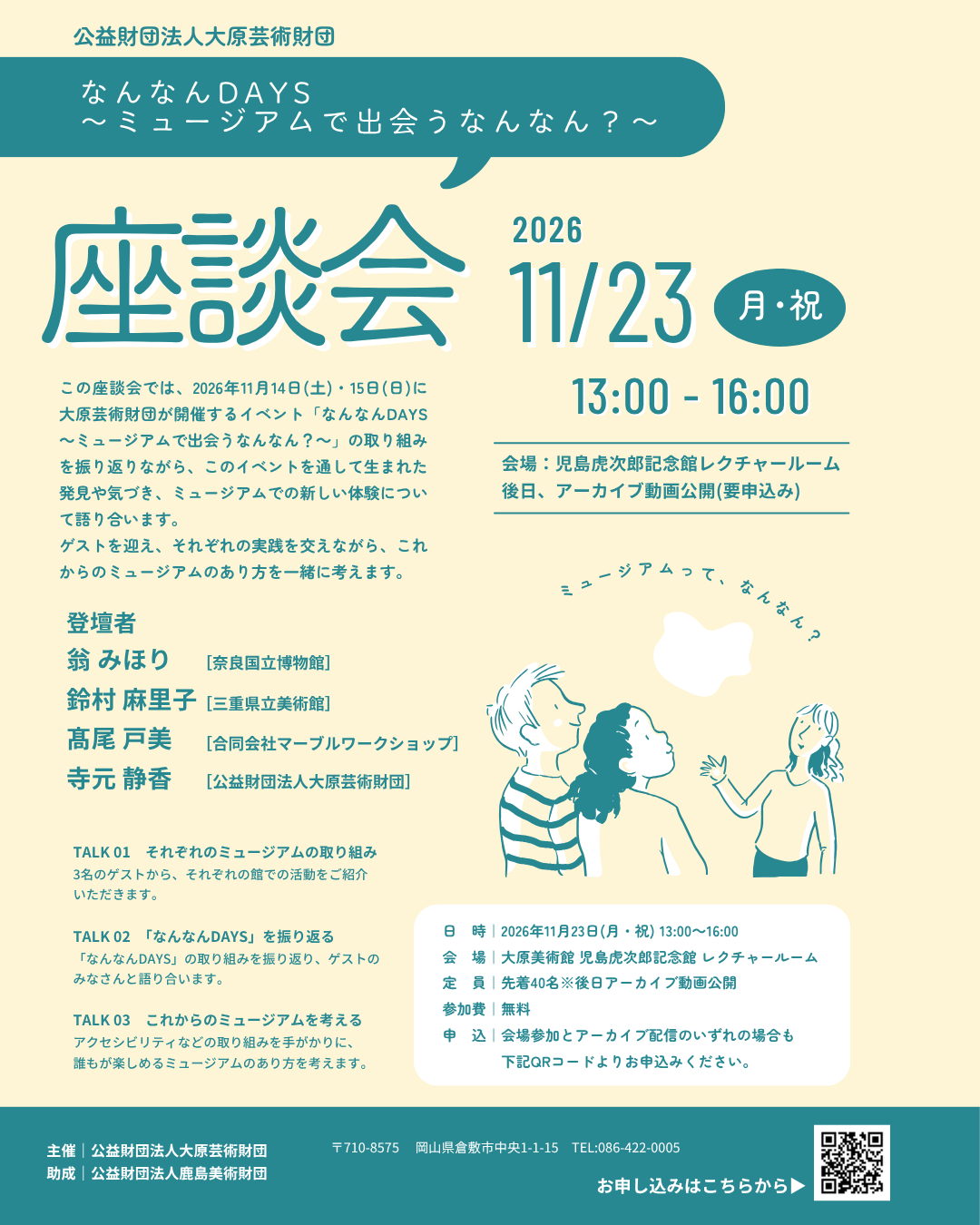
We’ll also hold a discussion session this year to look back on Nannan DAYS.
It’s an open event that anyone can attend. It’s also an opportunity to learn what other museums are doing, so please join us if you’re interested.
From the Writer
I attended last year’s Nannan DAYS as a reporter, and for the first time in a while, the Ohara Museum of Art was filled with the atmosphere of a festival being held.
At a museum where visitors are generally expected to spend their time quietly and observe good manners, I thought it was fun to be able to enjoy ourselves together. It seems this year’s event has been improved further, taking into account issues from last year.
Why not visit the Ohara Museum of Art and the Kurashiki Archaeological Museum on Saturday, November 14, and Sunday, November 15, to discover what “Nannan?” means to you, whether you’re a baby or a senior?
Also, on Monday, November 23 (national holiday), a roundtable discussion looking back on Nannan DAYS, featuring Teramoto Shizuka, will be held in the lecture room at the Kojima Torajiro Memorial Gallery of the Ohara Museum of Art. Admission is free (first 40 people; advance registration required). Sign language interpretation and Japanese subtitles will be provided, and an archived video will be made available later.



What would you like to know about Kurashiki?
Enter a search term to find articles on this site




































Nannan DAYS: What Will You Discover at the Museum?
Address:
1-1-15 Chuo, Kurashiki City, Okayama Prefecture
Ohara Museum of Art (all buildings), Kurashiki Archaeological Museum
Dates and hours:
November 14 (Saturday) and 15 (Sunday), 2026
9:00 a.m.–5:00 p.m. (last admission 4:30 p.m.)
Admission:
Adults: ¥2,000
Elementary, junior high, and high school students (under 18): ¥500
Elementary school age and younger: Free
Childcare service:
There are two sessions each day, morning and afternoon.
[Morning session] 10:00 a.m.–1:00 p.m.
[Afternoon session] 1:00 p.m.–4:00 p.m.
[Capacity]
10 children per session
[Eligible ages]
0–6 years old (preschool age)
[Fee (per session)]
0–1 years old: ¥2,000
2–6 years old: ¥1,000
[How to apply]
Advance registration required
Application form: https://forms.gle/utbjbeaKkAvNozHo8
*Applications accepted through Friday, November 6, 2026.
Web page:
Nannan DAYS special website
https://project.ohara.or.jp/nannandays