Kichijo-in, located in Shionasu, Kojima, is a historic temple founded by the monk Kozen in 1322, at the end of the Kamakura period, during the reign of Emperor Go-Daigo.
Since the tenure of Honorary Head Priest Motoyama Keijo, the temple has held various events, including the “Kojima 88-Temple Pilgrimage,” as an open temple where everyone—not just parishioners—can take part. This spirit has been carried on by the current head priest, Motoyama Kaihan.
One of its annual events is “New Year’s Eve Bell Ringing and First Shrine Visit,” which lets visitors ring the temple bell on New Year’s Eve—a tradition that has become difficult to find in recent years.
Here is an introduction to Kichijo-in in Shionasu, Kojima.
Kichijo-in is not a tourist temple, so visitors cannot enter the main hall.
However, you are welcome to visit the temple grounds freely. It was also a filming location for “Charihen♪,” which Kurashiki Tocotoco previously featured.
If you would like to see inside the main hall, a guided visit can be arranged, so please contact Kichijo-in in advance.
You can also take part in annual events such as those introduced in this article.
The information presented was current when this article was published in December 2025. Please note that it may differ from current information.
About Kichijo-in

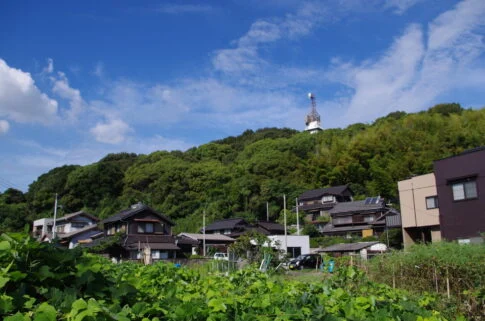
Kichijo-in stands at the foot of a mountain in Shionasu, Kojima, with views to the west of Takashima and the Mizushima Industrial Complex.
Kichijo-in’s mountain name is Iozan, its temple name is Jofukuji, and it belongs to the Omuro school of Shingon Buddhism.

There is a signpost along the approach. Go up to the right for Kichijo-in, or to the left for Iō Inari Shrine.

Highlights of Kichijo-in
As you climb the stone steps from the signpost, six smiling Jizo statues greet you on the right at the entrance to the temple gate.

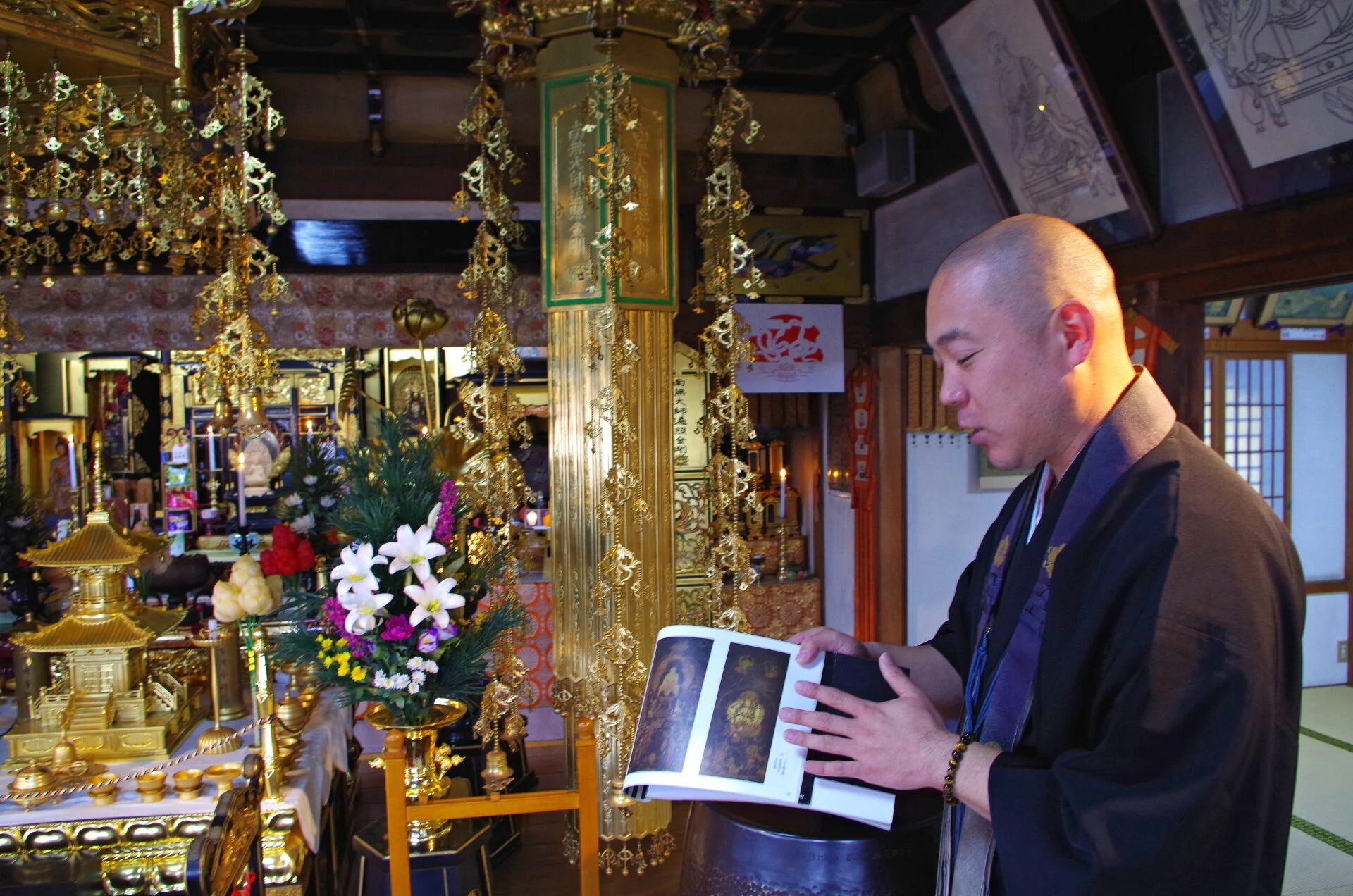
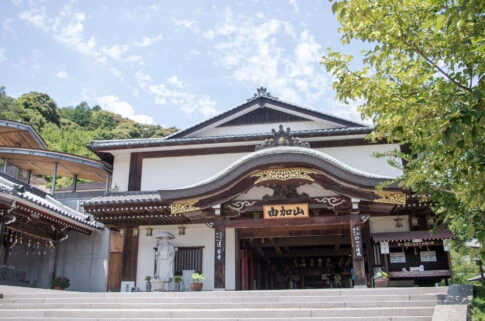
Enter through the temple gate on the left, and you will see the guest hall and bell tower on your left.

The guest hall is a single-story building with an irimoya-style roof covered in traditional Japanese tiles.

The sides of the guest hall’s main roof ridge are adorned with magnificent tiles depicting a pair of dragons.

The bell tower in front of the guest hall offers a distant view of Shionasu’s townscape, and its platform is lined with statues of the Seven Lucky Gods, all smiling.


Behind the guest hall stands the main hall, a three-bay, square building with a hōgyō-style roof covered in traditional Japanese tiles.

A Buddhist altar cabinet is enshrined in the solemn inner sanctuary, housing the Medicine Buddha, Kichijo-in’s secret Buddha and principal image.

The principal image is enshrined in the large altar cabinet in the center, surrounded by many statues of Fudo Myoo and Kobo Daishi, among others.
The principal image is unveiled once every 10 years; the next unveiling is scheduled for 2030.

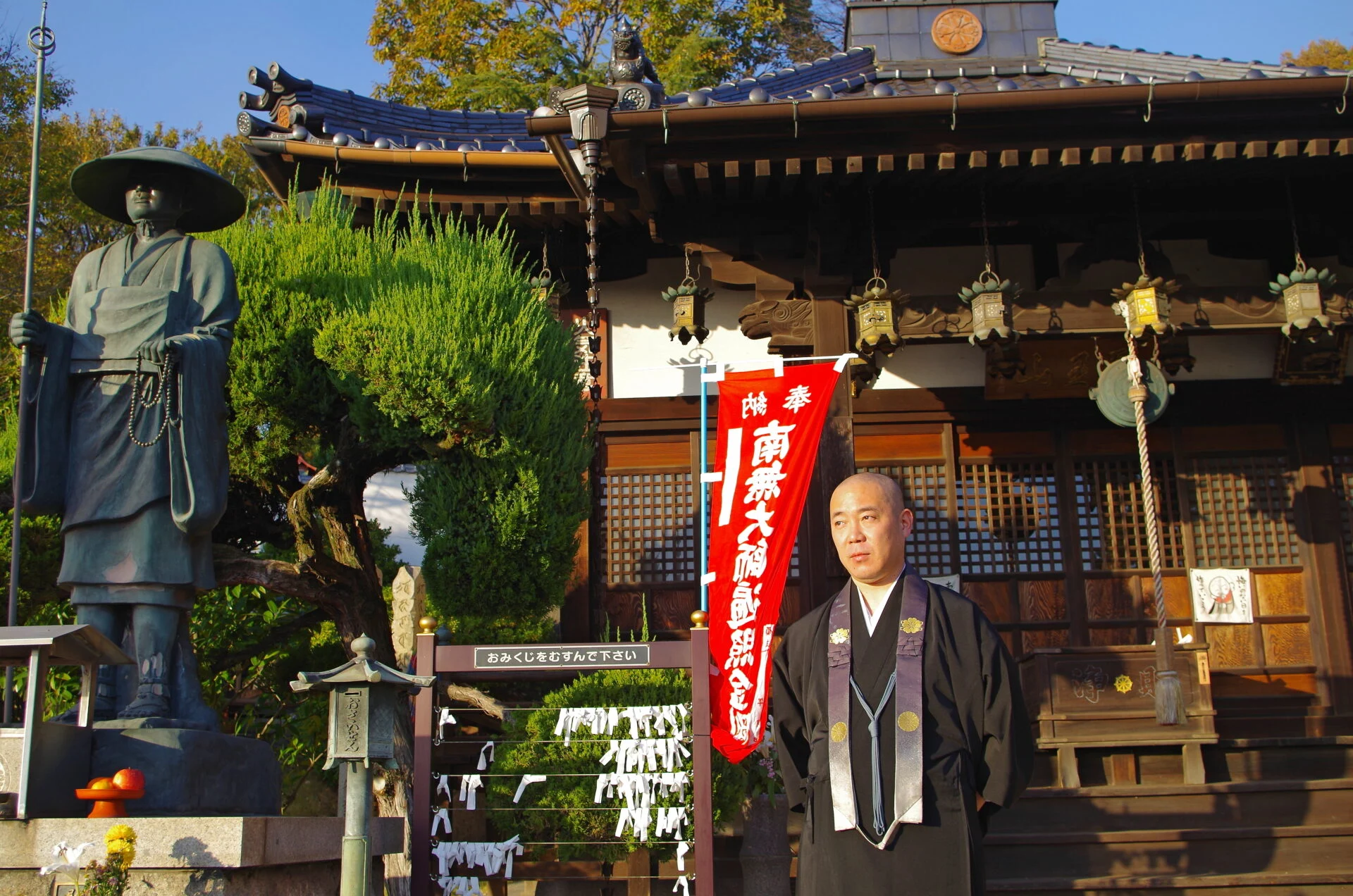
Kichijo-in holds a variety of events as an open temple.
We spoke with its head priest, Motoyama Kaihan.
Kichijo-in Information
| Name | Kichijo-in |
|---|---|
| Other name | Iozan Jofukuji Kichijo-in |
| Buddhist sect | Omuro school of Shingon Buddhism |
| Address | 2349 Shionasu, Kojima, Kurashiki City |
| Contact | 086-475-0758 |
| Parking | Available There is a second parking lot in addition to the one below the temple gate. The second parking lot can accommodate 9 vehicles, including kei cars. |
| Principal image | Medicine Buddha |
| Blessing | Peace of mind for those who enter the temple gate; happiness for those who leave |
| Goshuin (sutra-copying fee) | No. 36 and No. 37 on the Kojima 88-Temple Pilgrimage; a goshuin for Kichijo-in alone is also available Sutra-copying fee: 200 yen. |
| Visiting hours | Please visit at your convenience. |
| Closed | None |
| Admission | No admission fee is required. |
| How to pay admission and sutra-copying fees | Please place the sutra-copying fee in the Jizo statue in front of the temple gate. It makes a lovely sound. |
| Restroom | Available |

What would you like to know about Kurashiki?
Enter a search term to find articles on this site