
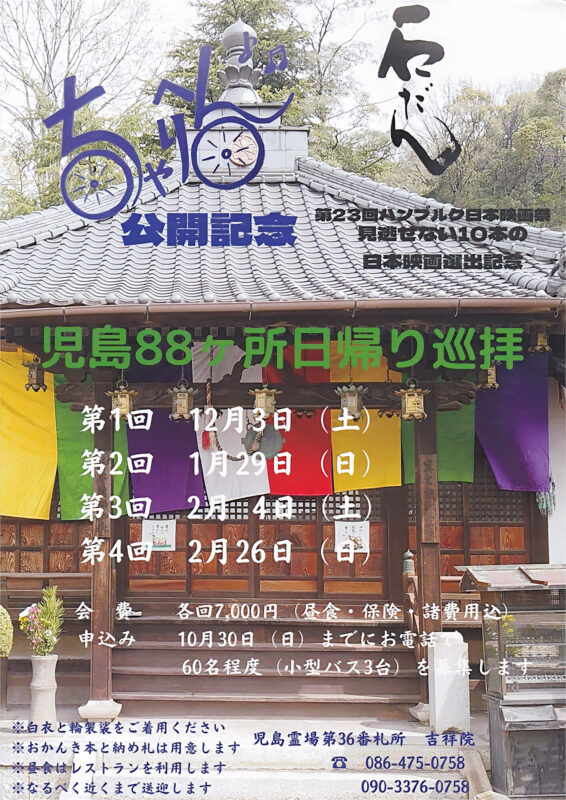
Kojima 88 Sacred Sites Day Trip Pilgrimage has been held at Kichijo-in Temple on Mt. Iozan, located in Kojima, for about 40 years. It started in 1984, and has continued in 1994, 2004, and 2014.
This fifth event was originally scheduled to be held in 2024. However, due to the increased focus on Kojima's sacred sites for the following reasons, it was held in the fiscal year 2022.
- The film Stone Steps, directed by Kuwata, released in 2021, was nominated for the Director's Award and Jury Prize among only 5 films at the 23rd Hamburg Japanese Film Festival. Furthermore, it was introduced by Belgian film critics and selected as one of the 10 films to see in Asia.
- In 2022, the film Charihen♪, directed by Kuwata, was released.
- 2023 marks the 1250th anniversary of the birth of Kobo Daishi.
I had always wanted to visit the Kojima sacred sites, but the moment I saw the flyer, I felt compelled to participate.
Let me introduce the Kojima 88 Sacred Sites Day Trip Pilgrimage that spans four days.
What is the Kojima 88 Sacred Sites Day Trip Pilgrimage?
The Kojima 88 Sacred Sites Day Trip Pilgrimage was initiated about 40 years ago by the honorary chief priest of Kichijo-in Temple, Keijo Motoyama.
Attracted by the honorary chief priest's personality and humorous explanations, there were more than 170 participants at times (in 1994), and they traveled with 7 buses.
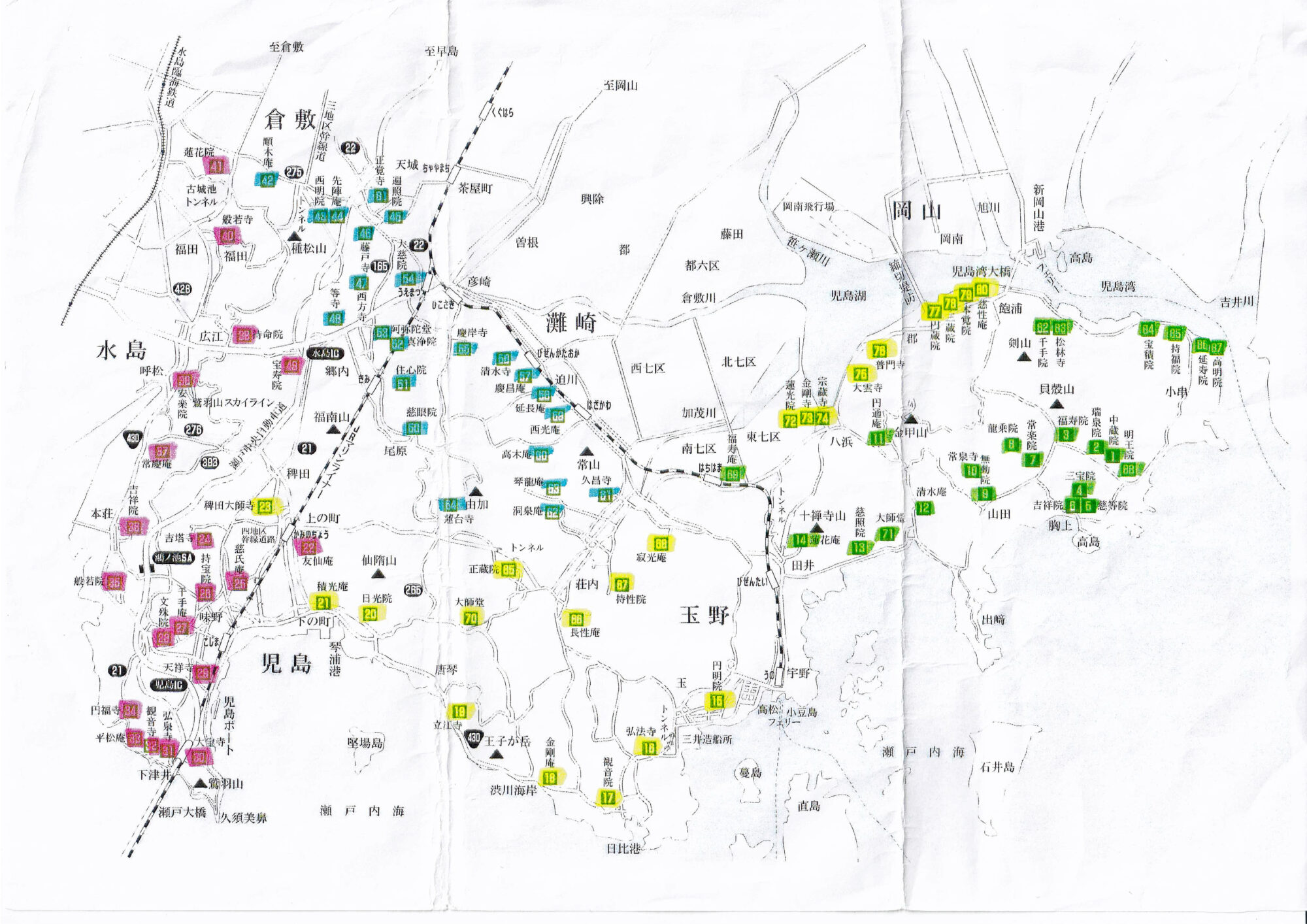
Over four days, we will visit the Kojima sacred sites scattered across the Kojima Peninsula, located southeast of Kurashiki City.
Generally, there is a route that goes from the first temple to the 88th temple in order, known as "sequential pilgrimage," but this time, it will be "random pilgrimage." This allows for an efficient visit without worrying about the order of the temples.
For reference, here is the planned itinerary. In reality, there were changes to the temples visited each day due to adjustments in the schedule.
| Date | Day | Itinerary (Planned) | Reference |
|---|---|---|---|
| Day 1 | December 3, 2022 | From the 36th temple Kichijo-in to 20 temples | See below in red |
| Day 2 | January 29, 2023 | From the 23rd temple Hieda Daishi-ji to 22 temples | See below in yellow |
| Day 3 | February 4, 2023 | From the 88th temple Myooin to 23 temples | See below in green |
| Day 4 | February 26, 2023 | From the 64th temple Yugasan Rendai-ji to 23 temples | See below in blue |
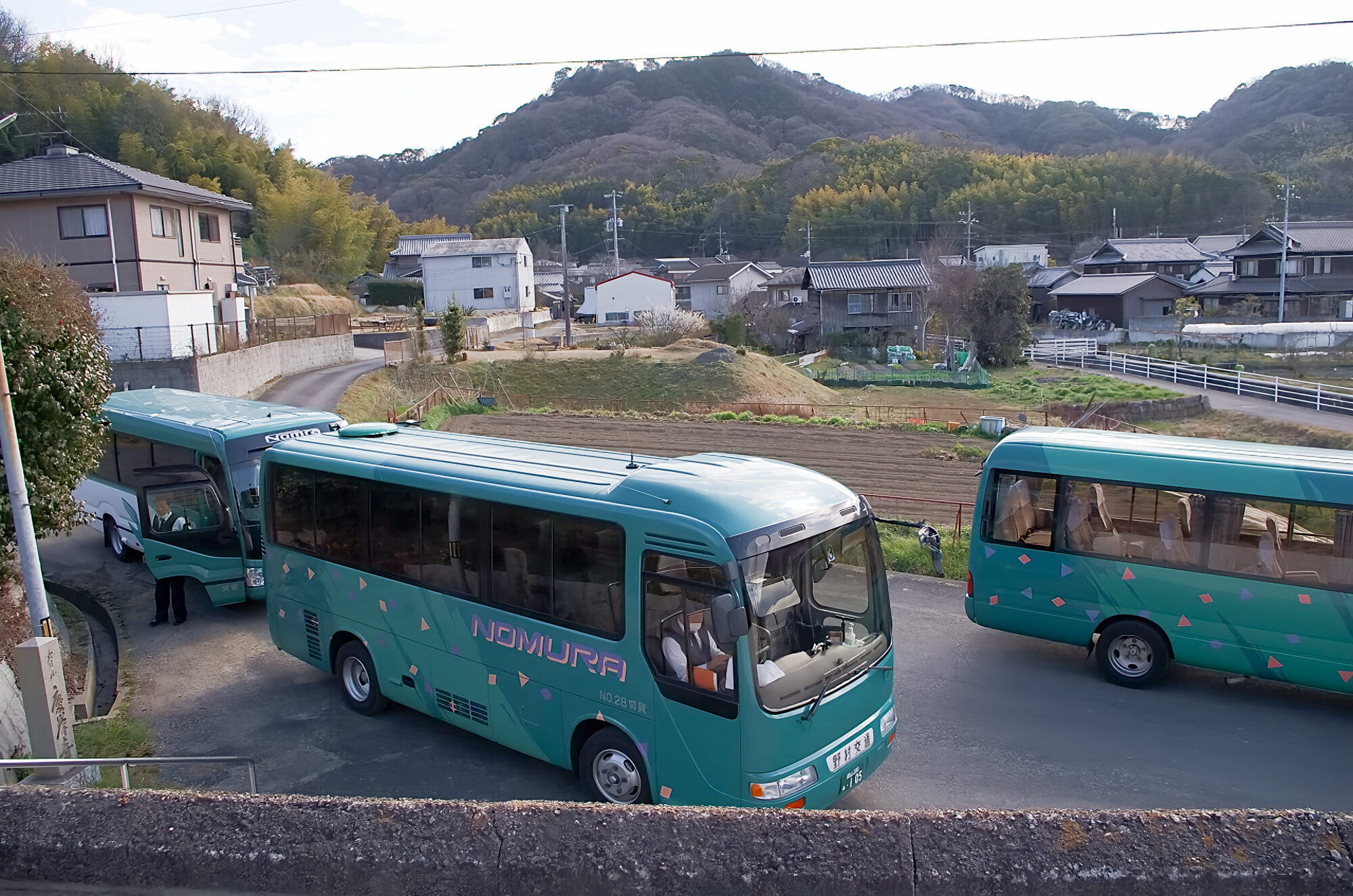
During this pilgrimage, the chief priest of Kichijo-in Temple, Kaihan Motoyama, along with Mr. Kuroki from Nakahara Sanpodo and Mr. Morimoto from Nomura Transportation, guided us.
The pilgrimage method is a hybrid of bus and walking
The Kojima 88 Sacred Sites are modeled after the Shikoku pilgrimage, with a distance of one-tenth, starting from the first temple, Chuzoin in Tamano City, and going around the Kojima Peninsula in a clockwise direction, ending at the 88th temple Myooin in Bandata, Tamano City.
The total distance is about 140 km, and it is set up so that even those with weak legs can walk it in a week.
However, even with this setup, walking such a distance is difficult.
Therefore, the Kojima 88 Sacred Sites Day Trip Pilgrimage is designed to be accessible for the elderly, getting as close to the temples as possible by bus and walking, making it an attractive way to efficiently visit the Kojima sacred sites.
This is what is called a hybrid pilgrimage.
This time, there were about 50 participants, divided into 3 buses for the pilgrimage.
Enjoyment of the pilgrimage: meals
The four-day pilgrimage included luxurious lunches, making it one of the highlights.
- Day 1: "Washuzan Rest House"
- Day 2: Lunch buffet at "Setouchi Marine Hotel" in Tamano City
- Day 3: "Gonta Chaya Miyama" in Miyama Park, Tamano City
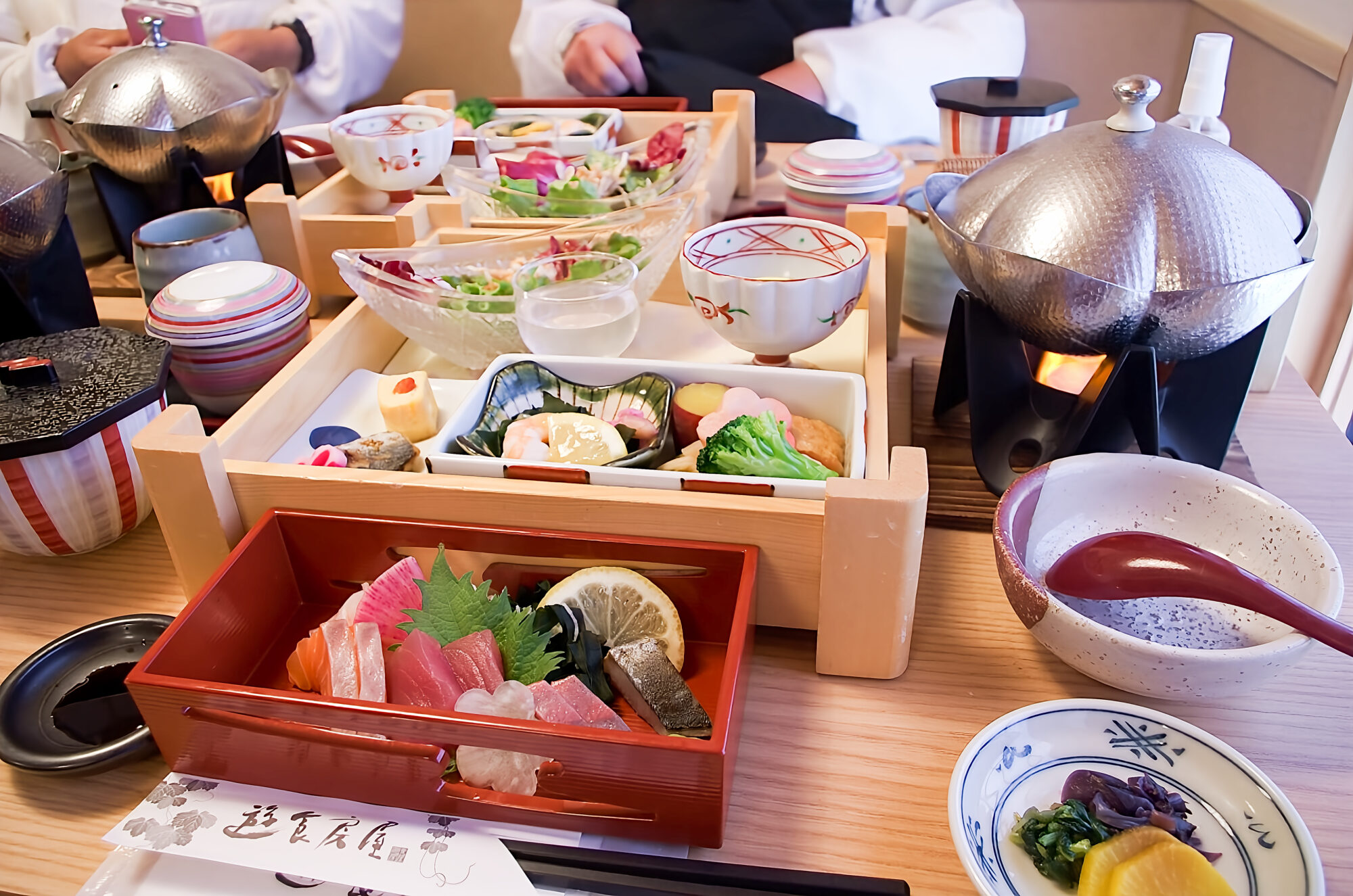
- Day 4: "Yushokubouya Kurashiki" in Horinaka, Kurashiki City
As an example, let me introduce the lunch on Day 4 at Yushokubouya Kurashiki.
Perhaps because it was the final day, we enjoyed a lavish kaiseki meal that included sashimi, hot pot, and tempura.
Enjoyment of the pilgrimage: hospitality
One of the joys of the pilgrimage is the hospitality.
Here, I will introduce an example from Day 2.
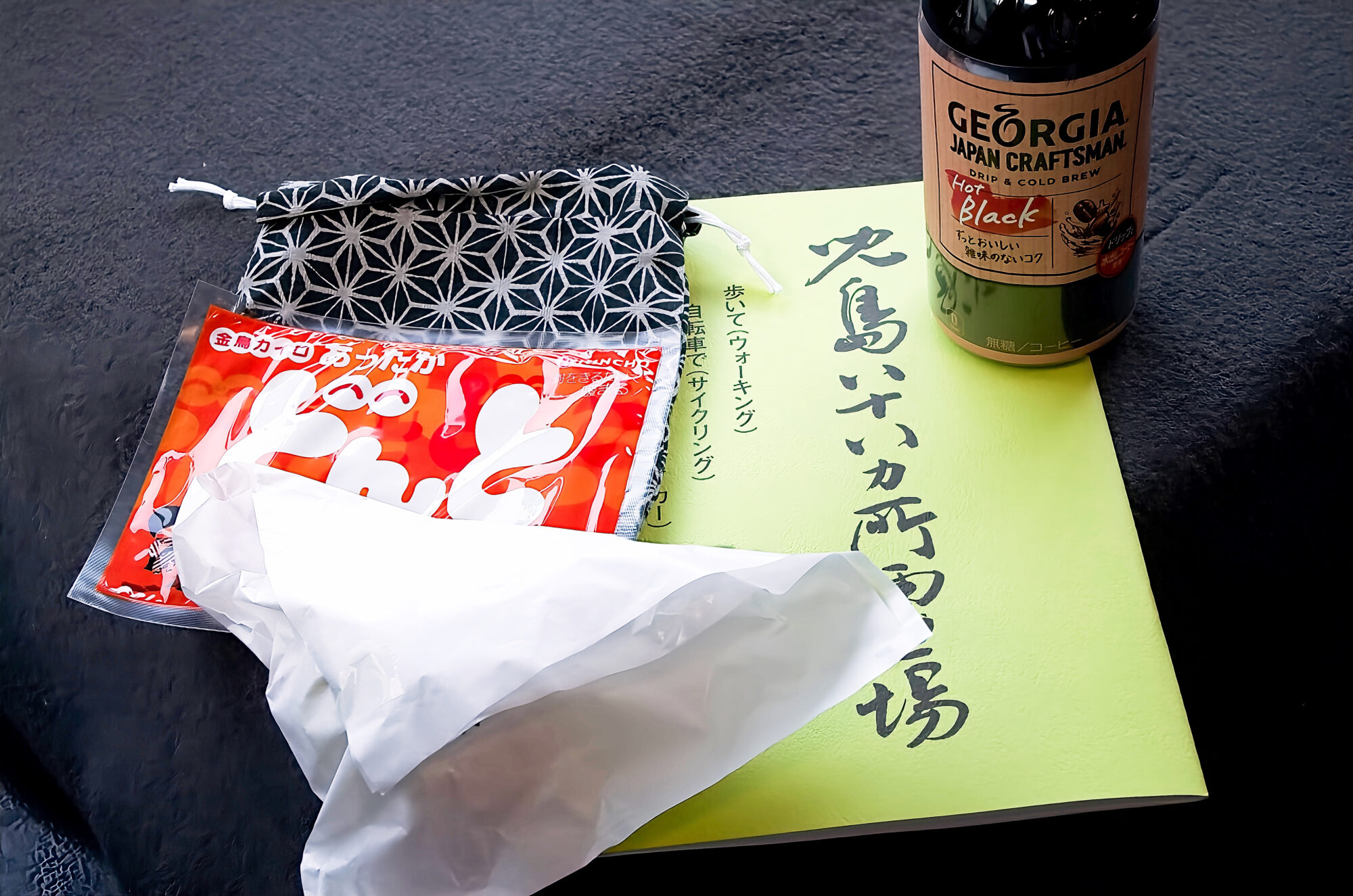
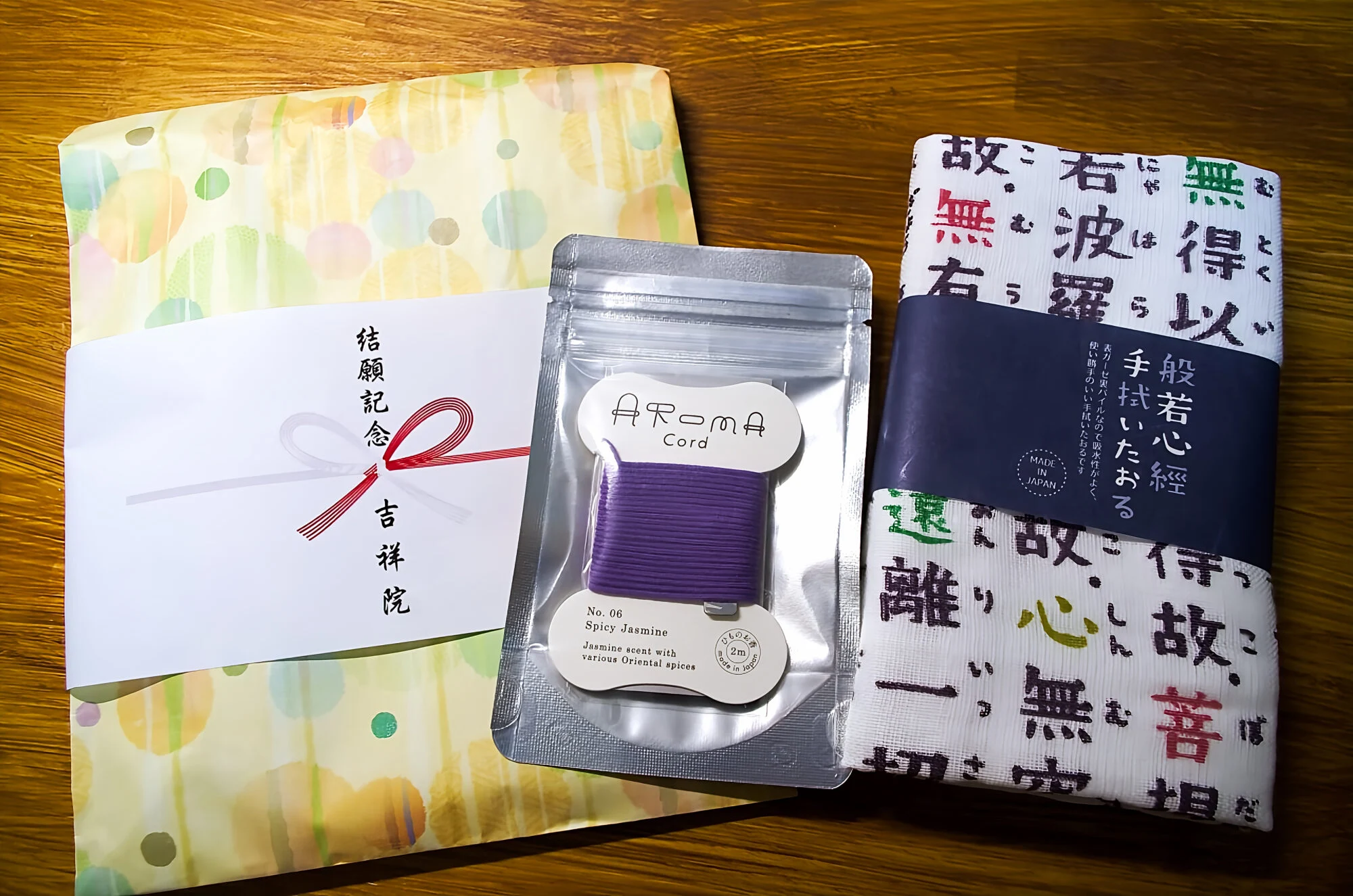
Especially on Day 2, there was hospitality from participants, including hand-sewn offering bags, the "Kojima 88 Sacred Sites Guidebook" revised after 13 years, and drinks.
Regarding hospitality, it has generally included drinks and senbei (rice crackers).
Perhaps this is one of the effects of the excitement generated by the release of Kuwata's film. While hospitality is not something to expect, it was fortunate.
What are the pilgrimage rituals?
According to the chief priest of Kichijo-in Temple, "There are no particularly fixed methods for rituals such as pilgrimages, and even the way to hold and use the rosary, as well as the number of incense sticks, varies in different practices."
He mentioned that it is best to "follow the rituals of the person teaching you," which allowed us to participate in the pilgrimage without being overly strict about the rituals.
Here, I will introduce the main steps of the pilgrimage that I learned during the Kojima 88 Sacred Sites Day Trip Pilgrimage.
Highlights of the pilgrimage
The Kojima 88 Sacred Sites Day Trip Pilgrimage involves visiting temples and hermitages, repeatedly offering prayers according to the pilgrimage rituals.
Since it is difficult to introduce all the sacred sites, I will present highlights of the four-day pilgrimage mainly through photos.
Day 1
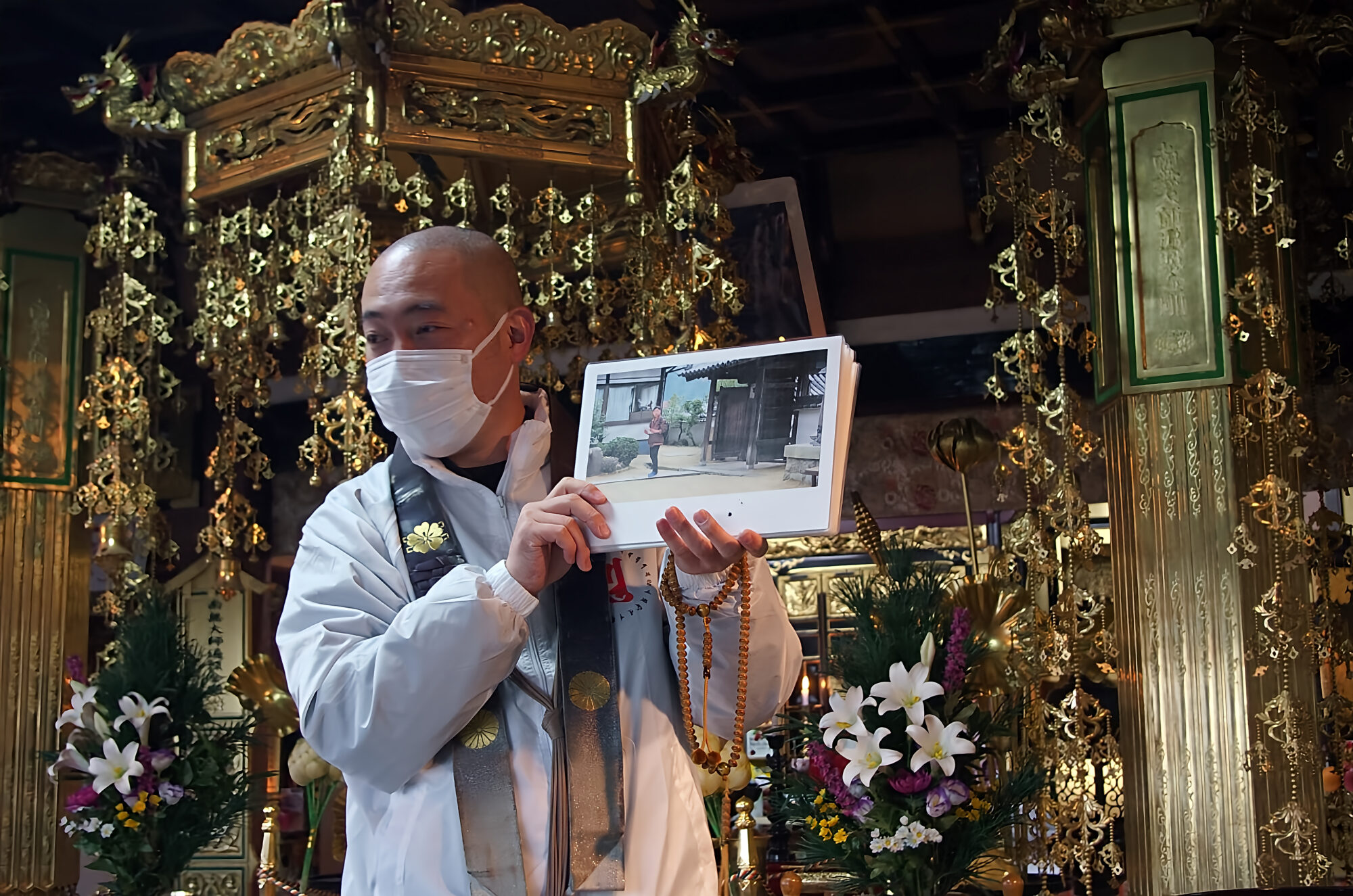
▼36th Temple Kichijo-in (Kojima, Kurashiki City) was the starting point.
After entering the main hall and receiving an explanation about the Kojima 88 Sacred Sites Day Trip Pilgrimage, the chief priest explained scenes filmed at the location for the movie "Charihen♪". It is more enjoyable after watching the film.
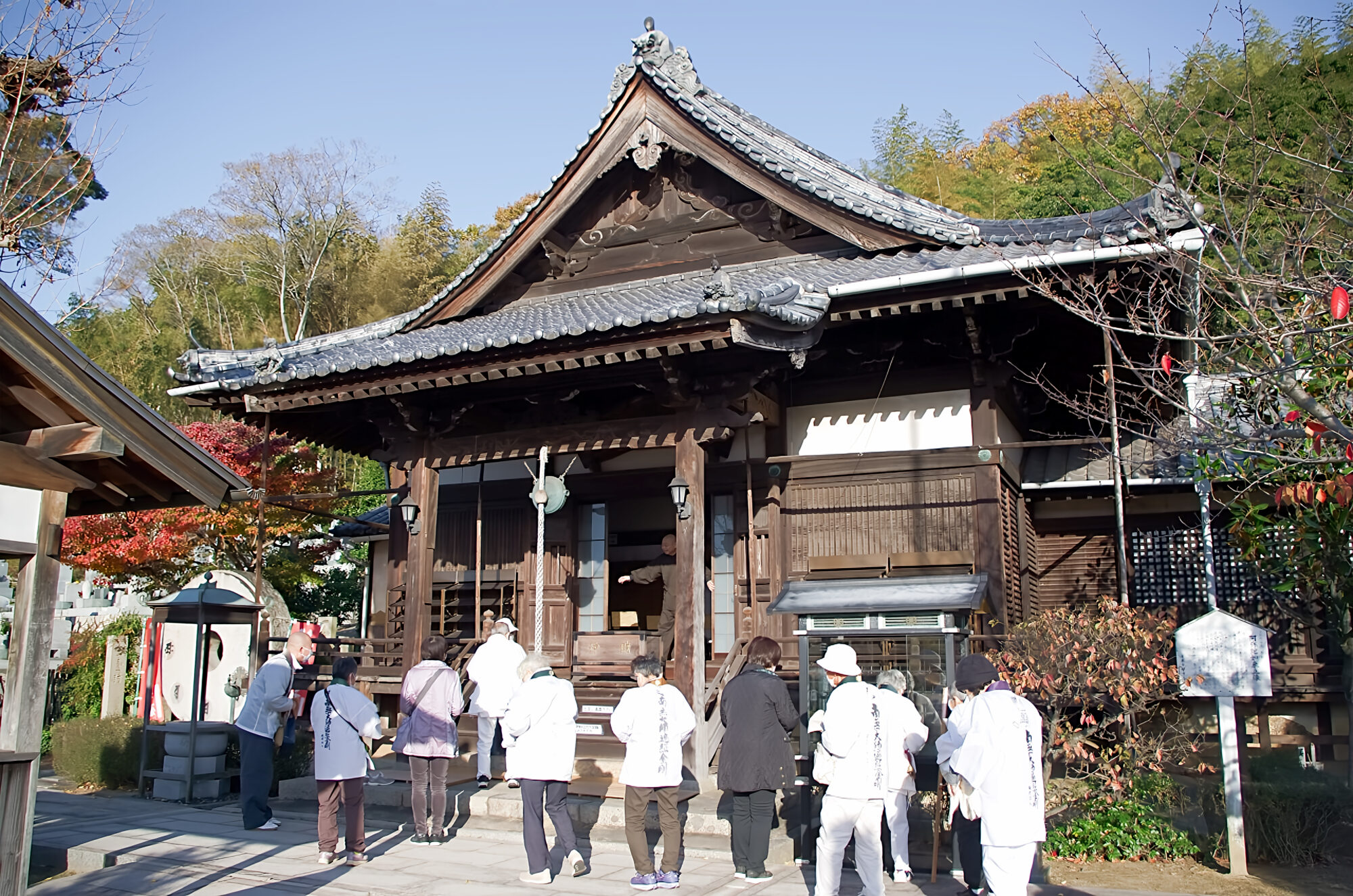
▼At the 35th Temple Hannyain (Kojima, Kurashiki City), we experienced the pilgrimage.
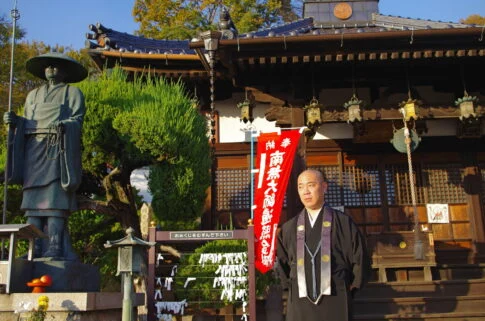
Participants wore white robes and a wa-gesa (pilgrim's stole). Upon arriving at each temple, we offered candles and incense, made our donations, and recited sutras.
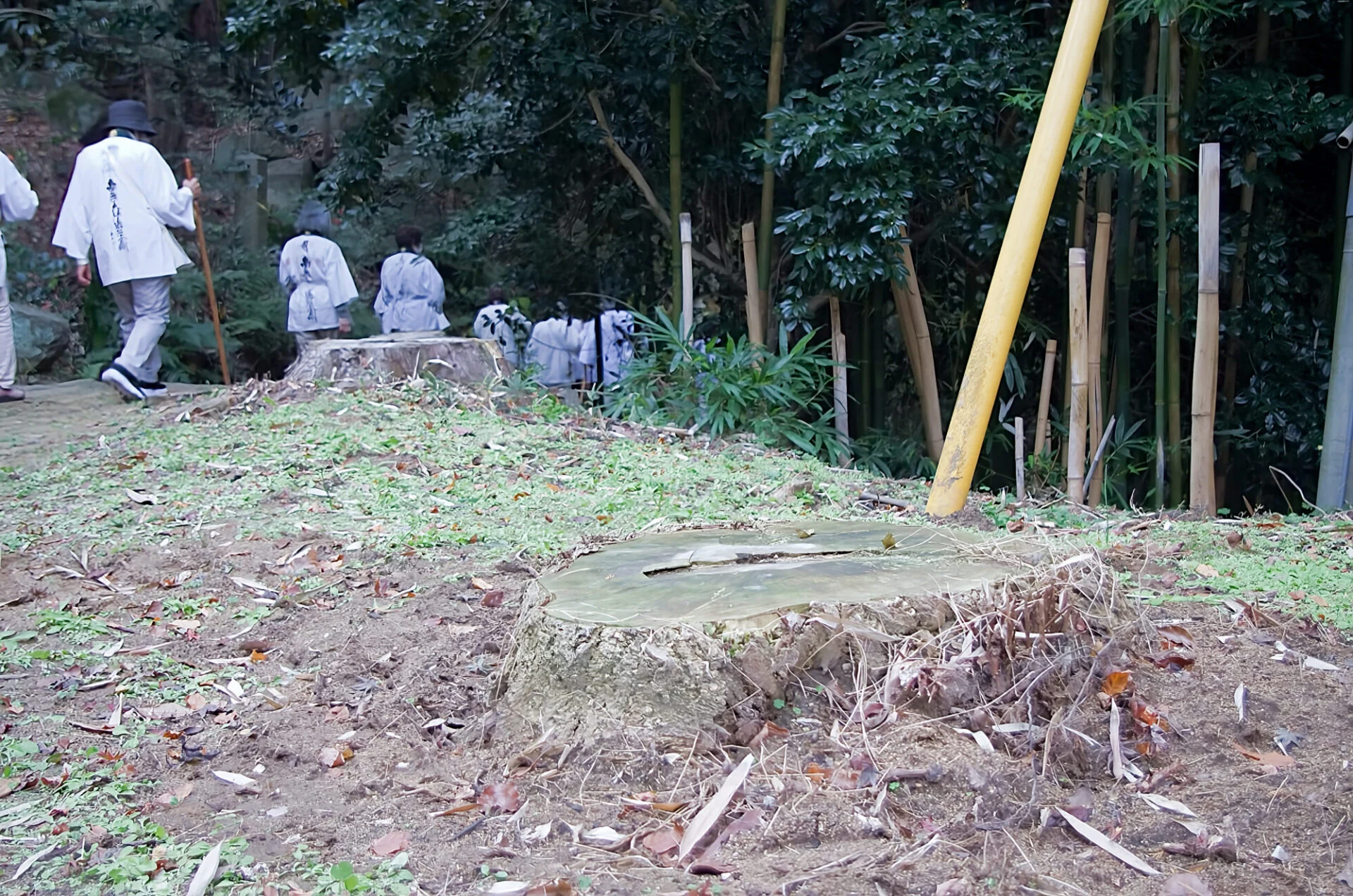
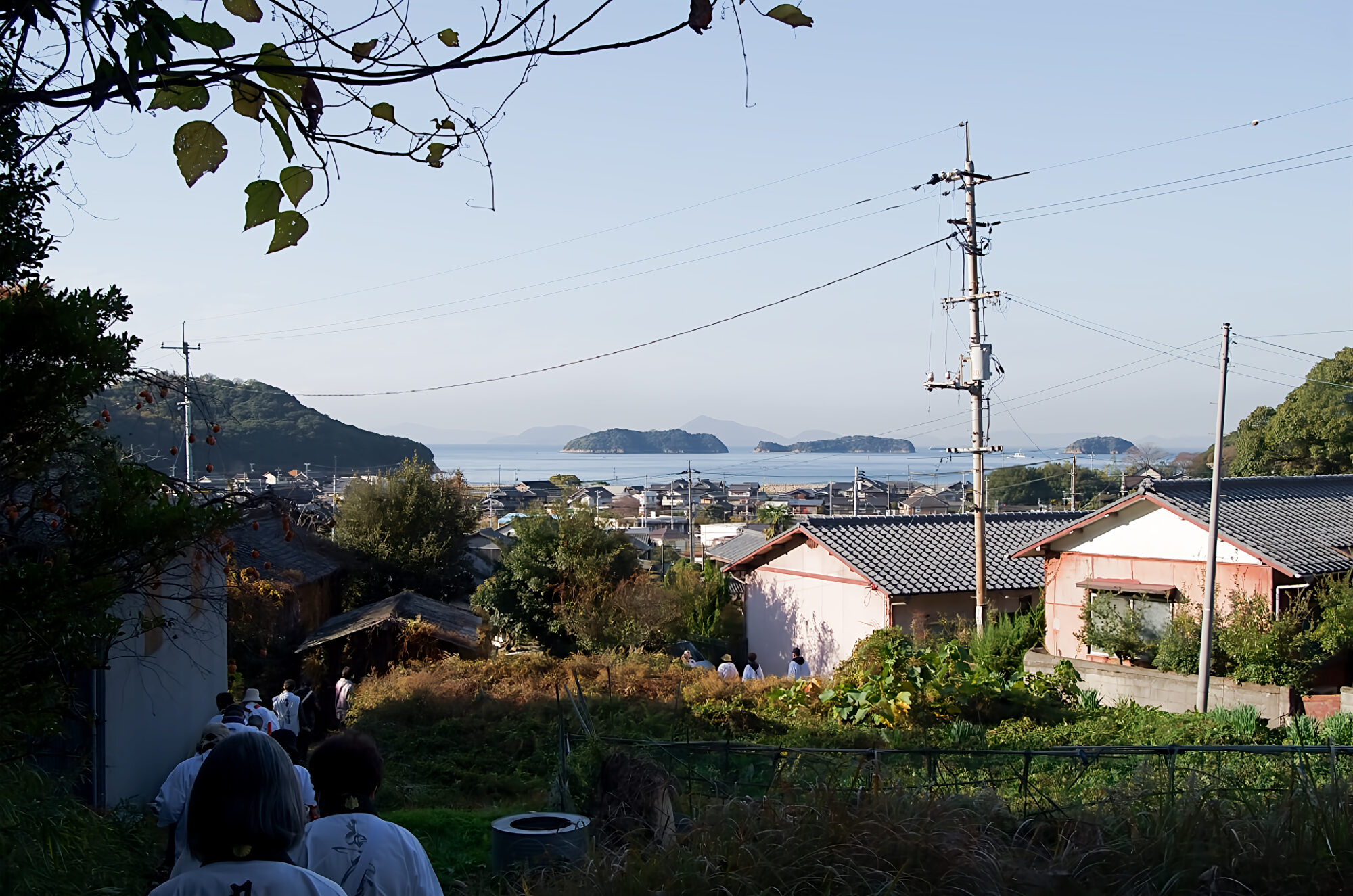
▼On the way back from visiting the inner temple of Hannyain (Kojima, Kurashiki City). Since we walk along the old narrow paths, we cannot approach by bus. To avoid injury, we take slow steps to visit.
With our slow pace, we can also enjoy the distant calm Seto Inland Sea and its islands.
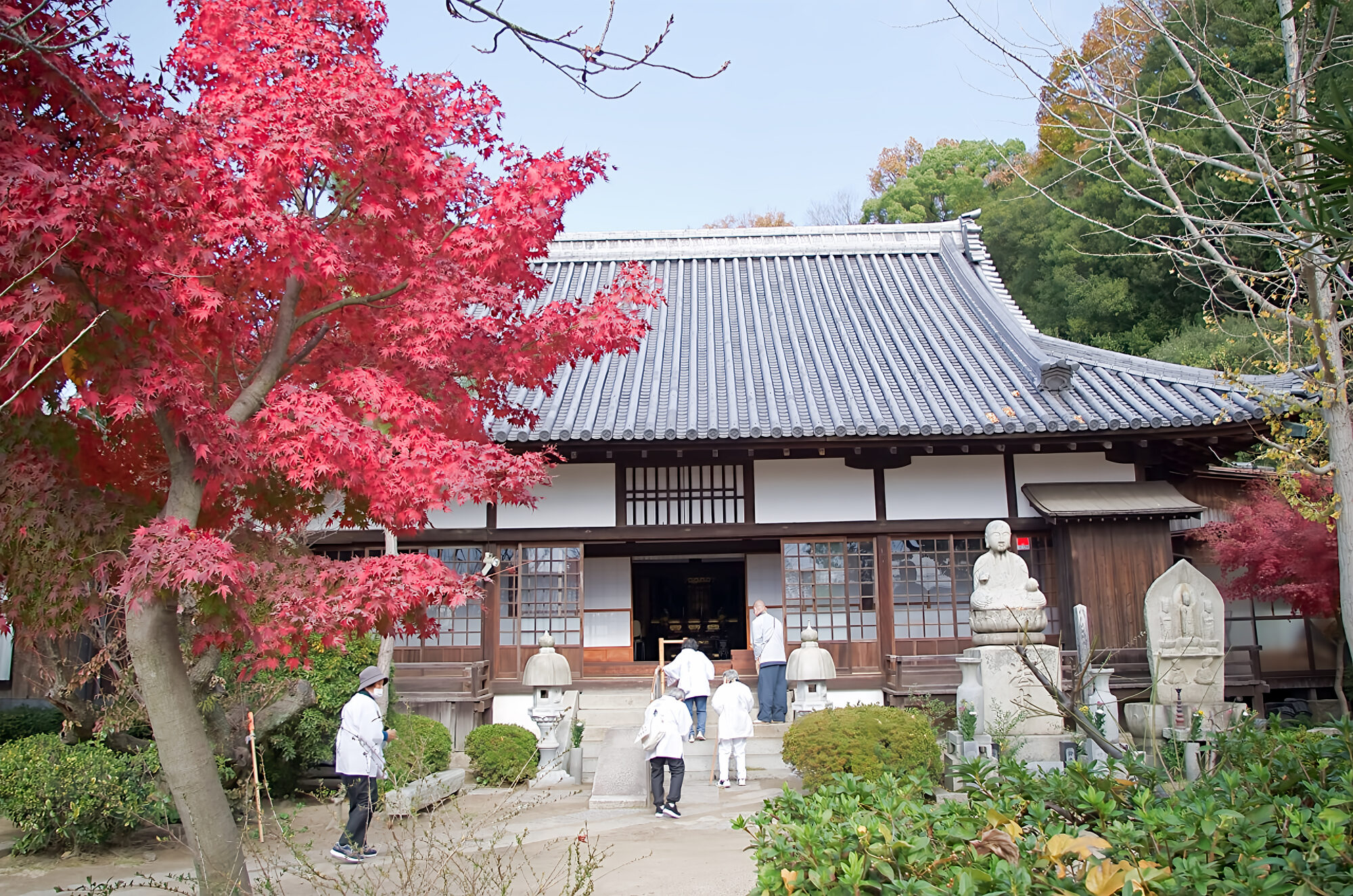
▼At the 34th Temple Enpuku-ji (Shimotsui, Kurashiki City), we are captivated by the vibrant autumn leaves in front of the main hall.
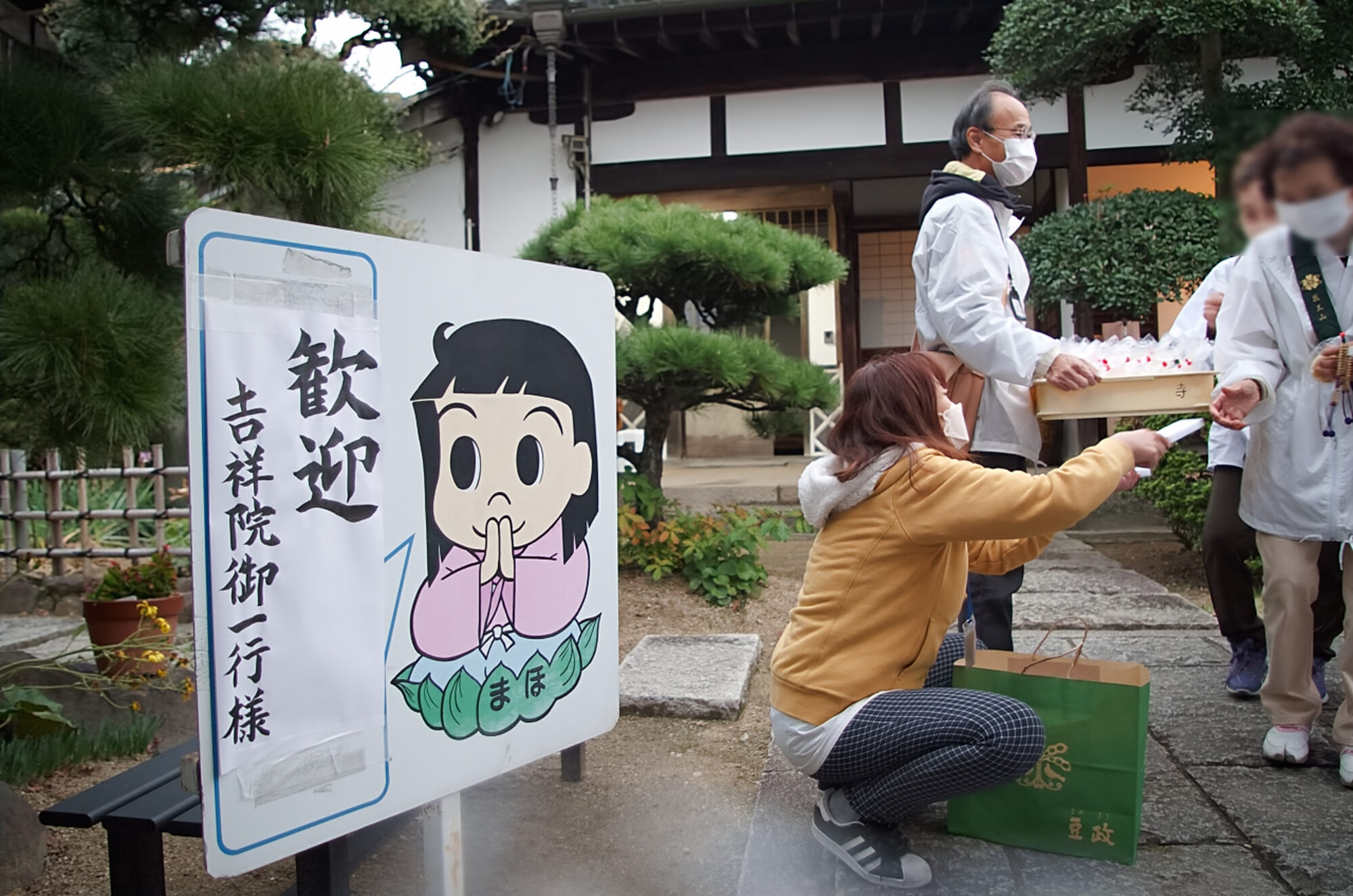
▼At the 38th Temple Anraku-in (Kojima, Kurashiki City), we were welcomed by a sign from the mascot Mao-chan (pronounced "Mao" written as "maho") of Anraku-in. The "Welcome, Kichijo-in Group" sign was a thoughtful gesture, and we received "bread" and a unique "hand of Kannon" inspired by the Thousand-Hand Kannon.
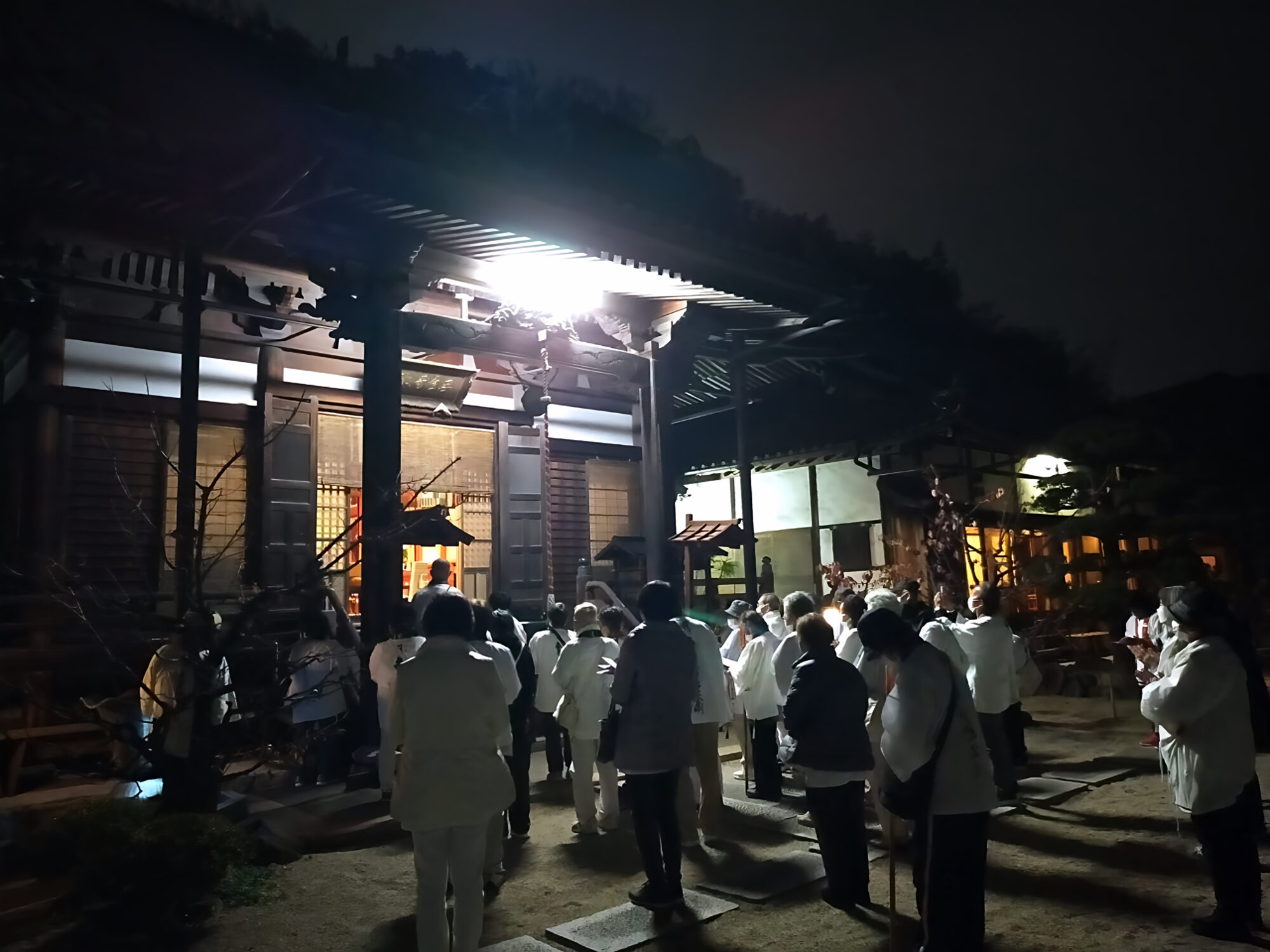
▼The final stop on Day 1 was the 40th Temple Hannyaji (Fukuda-cho, Kurashiki City), and it was already night.
At the Kojima 88 Sacred Sites Day Trip Pilgrimage, it is customary to shake hands with at least 5 people and say goodbye after visiting the last temple, promising to meet again in the future.
Although I felt a bit shy about shaking hands, I could naturally feel the spreading laughter. It is a wonderful promise that can only be made with fellow pilgrims after spending a day together.
Day 2
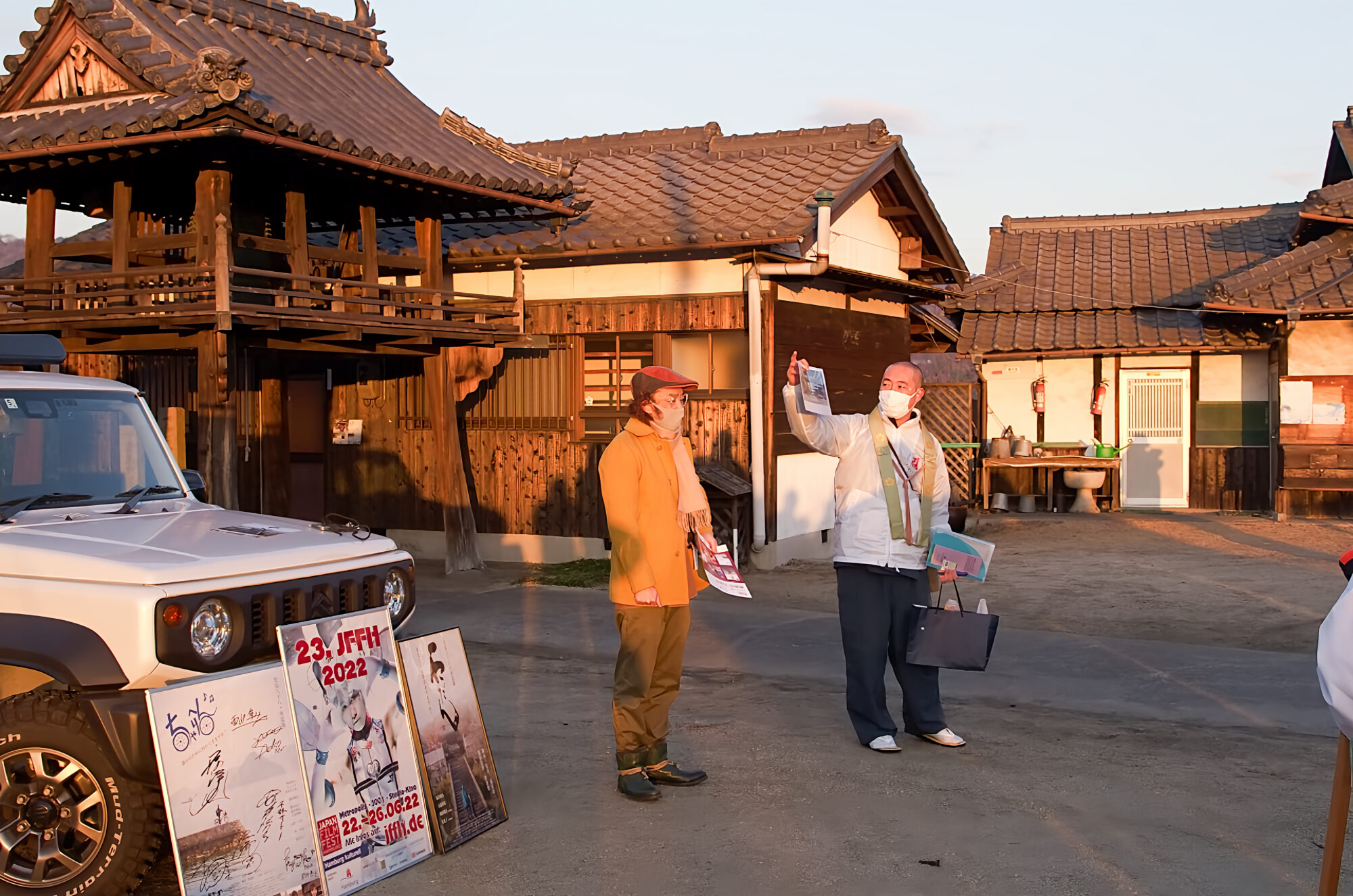
▼On the second day at the 23rd Temple, Hieda Daishi-ji (Kojima Hieda-cho, Kurashiki City), Director Koichi Kuwata of the films "Ishidan" and "Charihen♪" came to visit. I feel a sense of closeness as I have had the opportunity to write an article about Director Kuwata. The scene of the resident priest and Director Kuwata explaining while basking in the morning sun is wonderful.
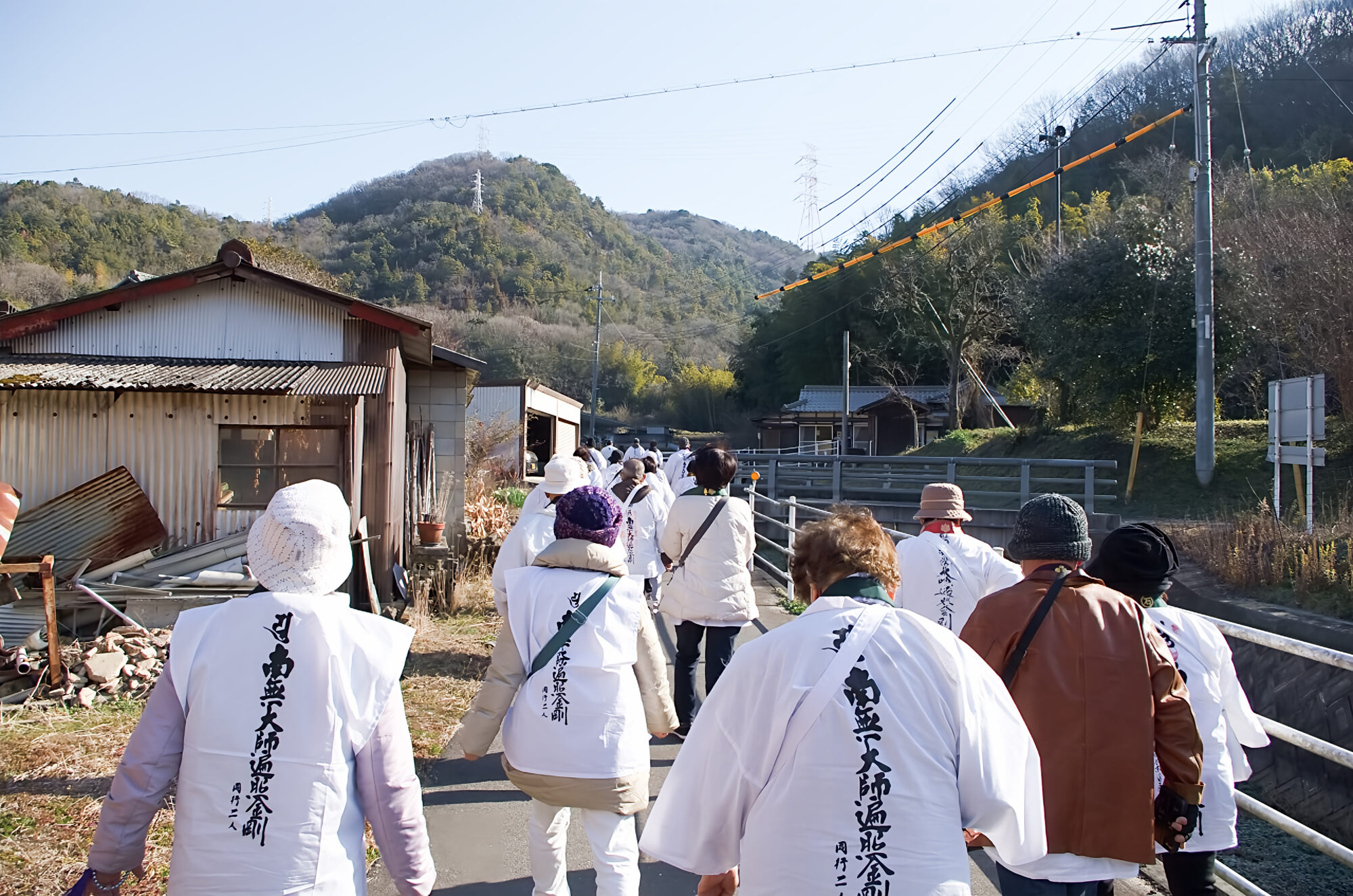
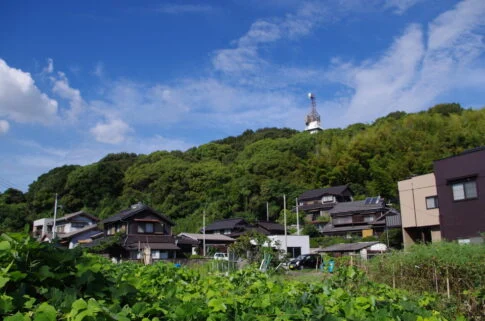
▼A photo heading towards the 68th Temple, Jakkōan (Tsushima, Tamano City). We also walk along such quiet rural roads.
There are participants over 80 years old, but seeing their energetic steps that defy their age makes me feel the benefits of the pilgrimage.
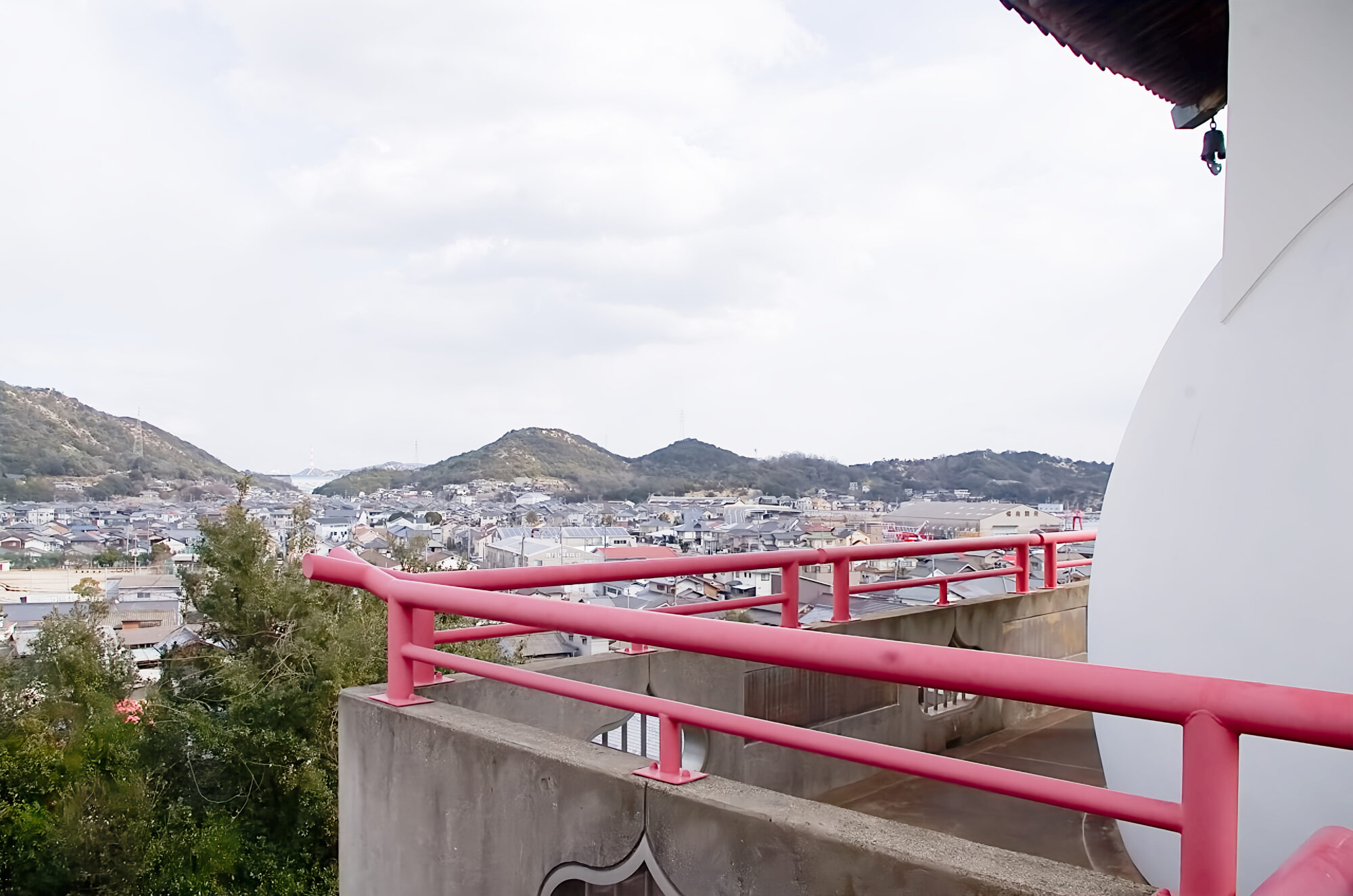
▼The bell tower (on the right) of the 17th Temple, Kannon-in (Hibi, Tamano City) is magnificent, but I recommend the view from this bell tower. Being on a high ground, you can see the townscape of Hibi below and its expanse.
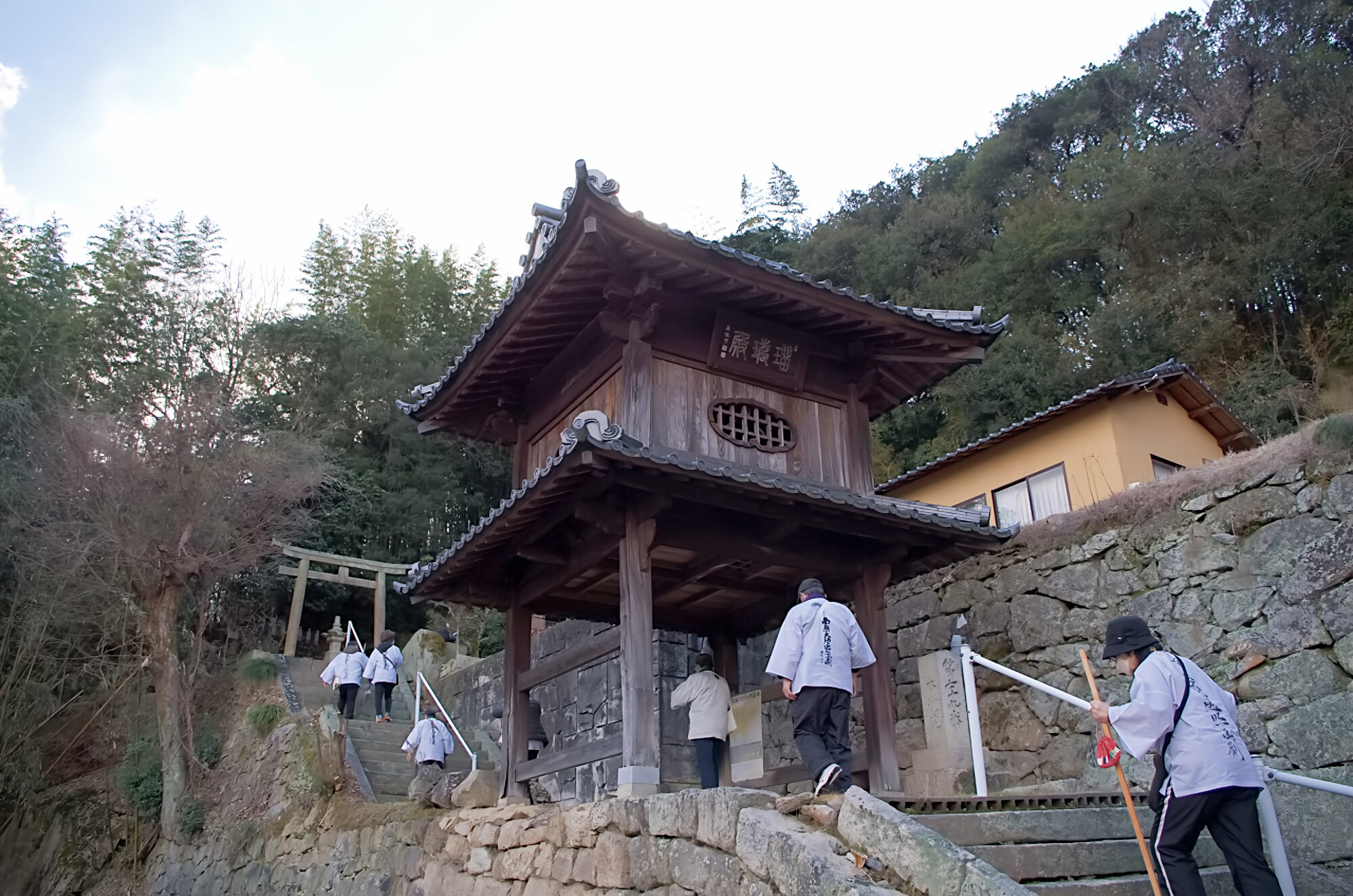
▼At the entrance of the 79th Temple, Hongaku-in (Minami Ward, Okayama City), a magnificent mountain gate serves as a landmark.
Day 3
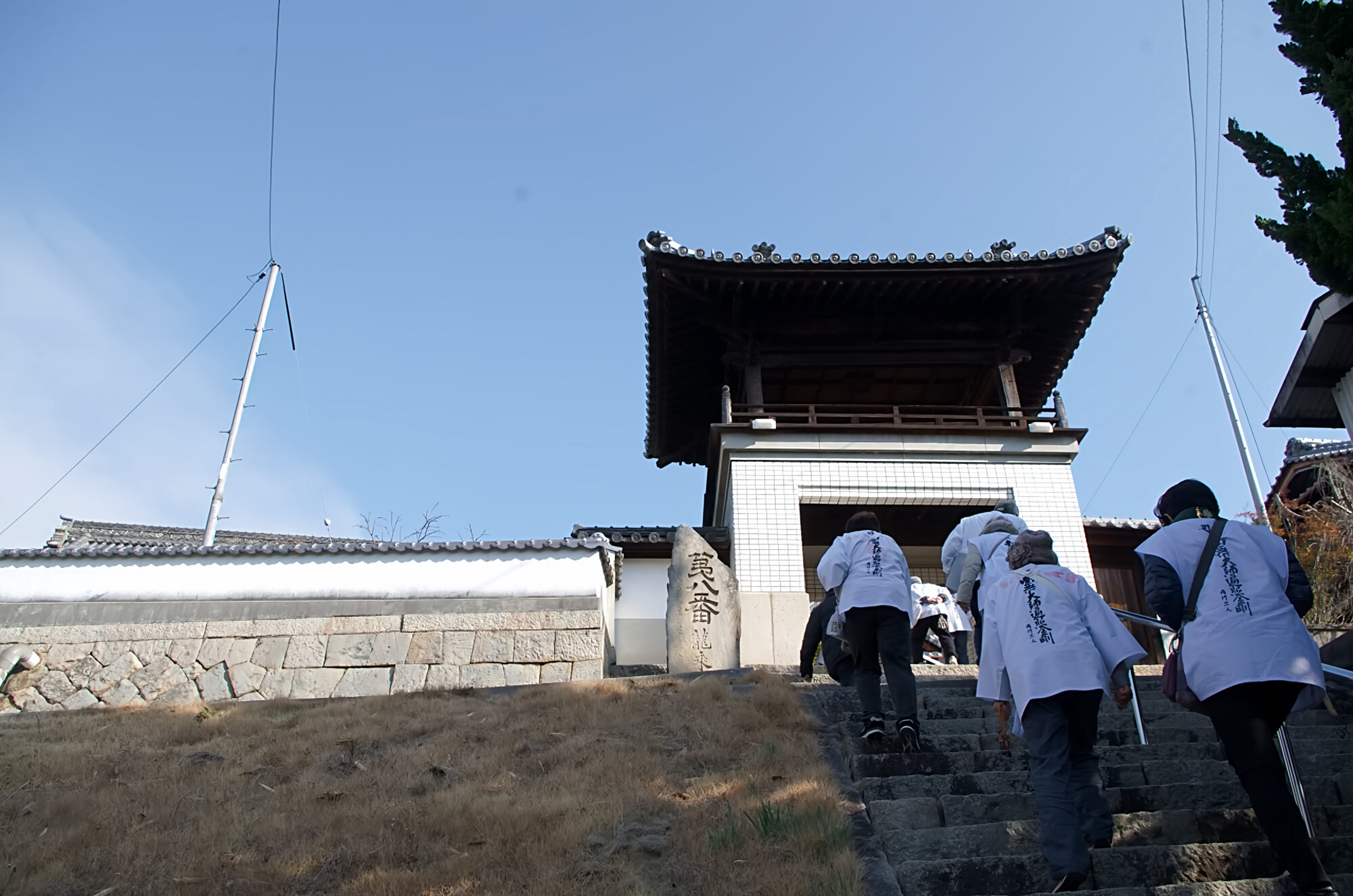
▼The bell tower gate of the 8th Temple, Ryūjō-in (Higashidaiji, Tamano City) on the third day is unique. It features concrete pillars with tiled designs. I feel a sense of the Showa era.
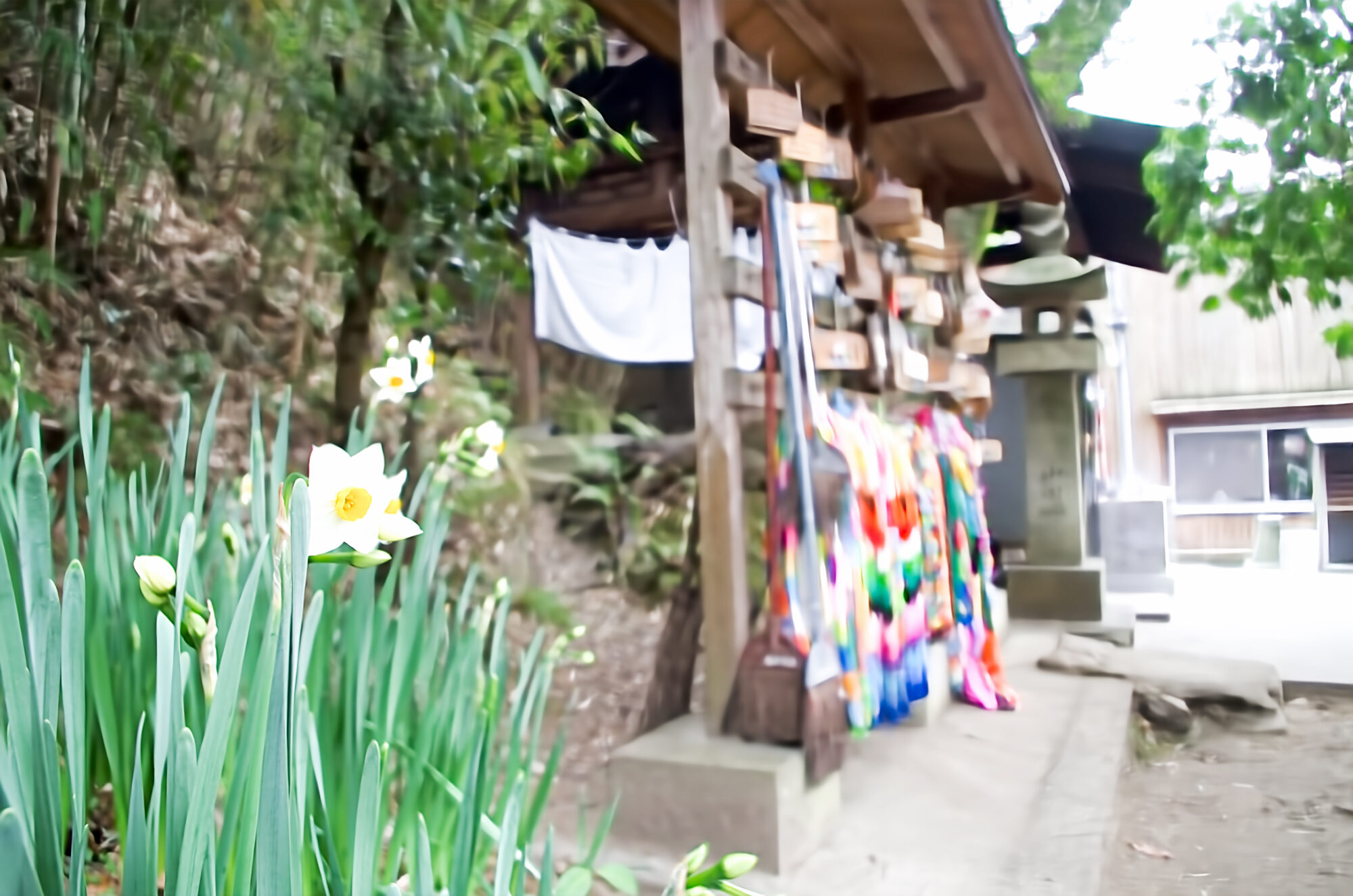
▼In addition to the Kojima 88 Temples pilgrimage, we also stopped by Yotarō Shrine (Ōsaki, Yahama-cho, Tamano City), famous as the god of feet. It is said to be a popular shrine that many people from all over the country come to visit. The narcissus, which is rarely seen in everyday life, is also soothing.
The "Yotarō" enshrined at the shrine refers to the warrior Motoie Ukita. He died in battle at the young age of 18 during the Battle of Yahama, which took place in the area of Yahama, Tamano City.
The following episode is told.
During the battle, he was injured in the foot and was hiding in a bamboo grove, but a nearby resident revealed his hiding place to the pursuers, leading to his discovery and death.
It is said that at this time, Motoie regretted his foot injury and vowed to help those with foot ailments.
The hall built by the residents who revealed his location as an apology became the present-day Yotarō Shrine.
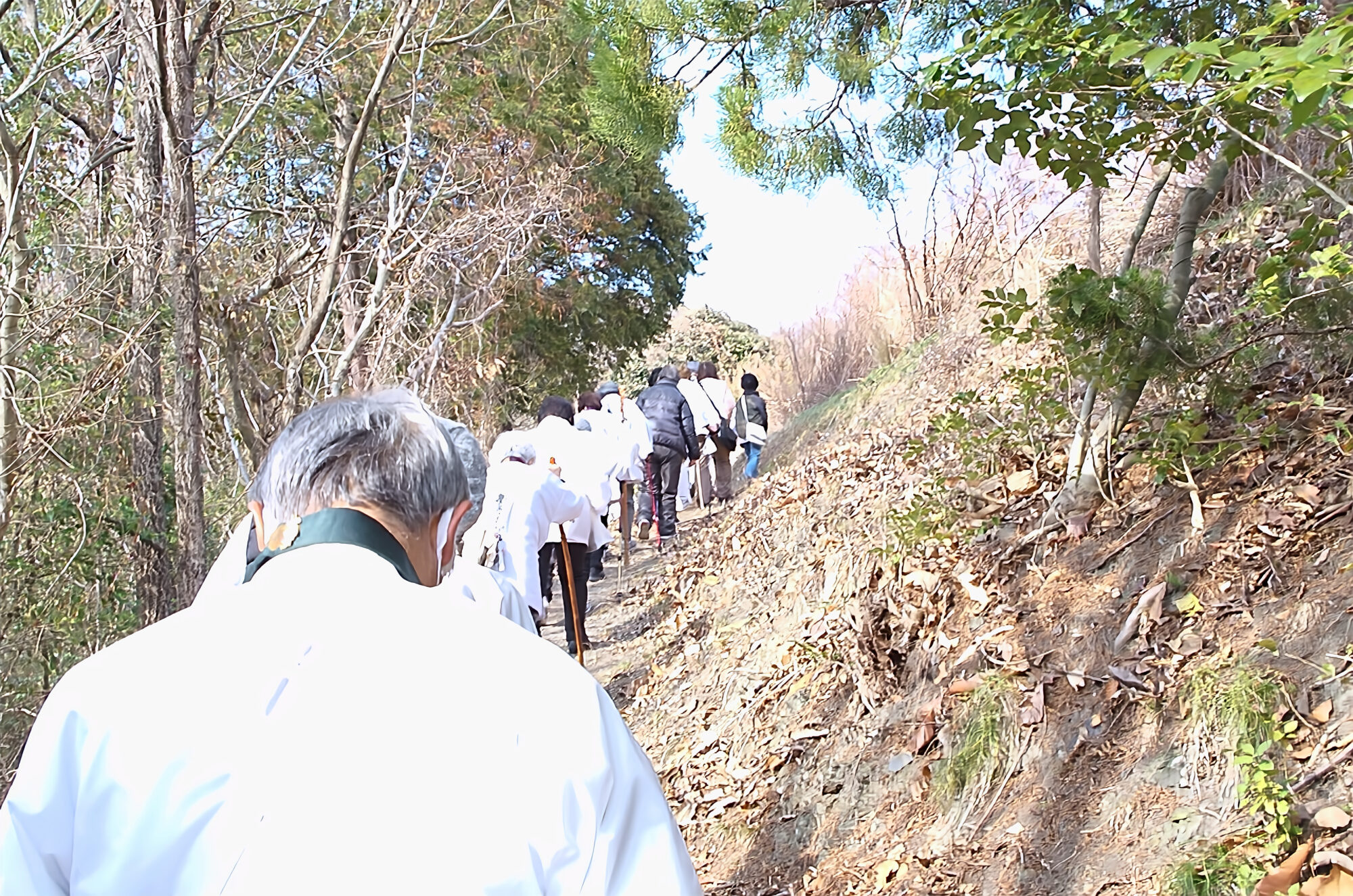
▼The pilgrimage path heading to the 71st Temple, Daishidō (Ōyabu, Tamano City). This path goes through a steep mountain road among the Kojima 88 Temples.
▼The 83rd Temple, Shōrin-ji (Miyauchi, Okayama City) was originally located on Takashima, an island in Kojima Bay, and was moved to its current location during the Meiji era. It is now situated on a hill overlooking Kojima Bay, offering a scenic view.
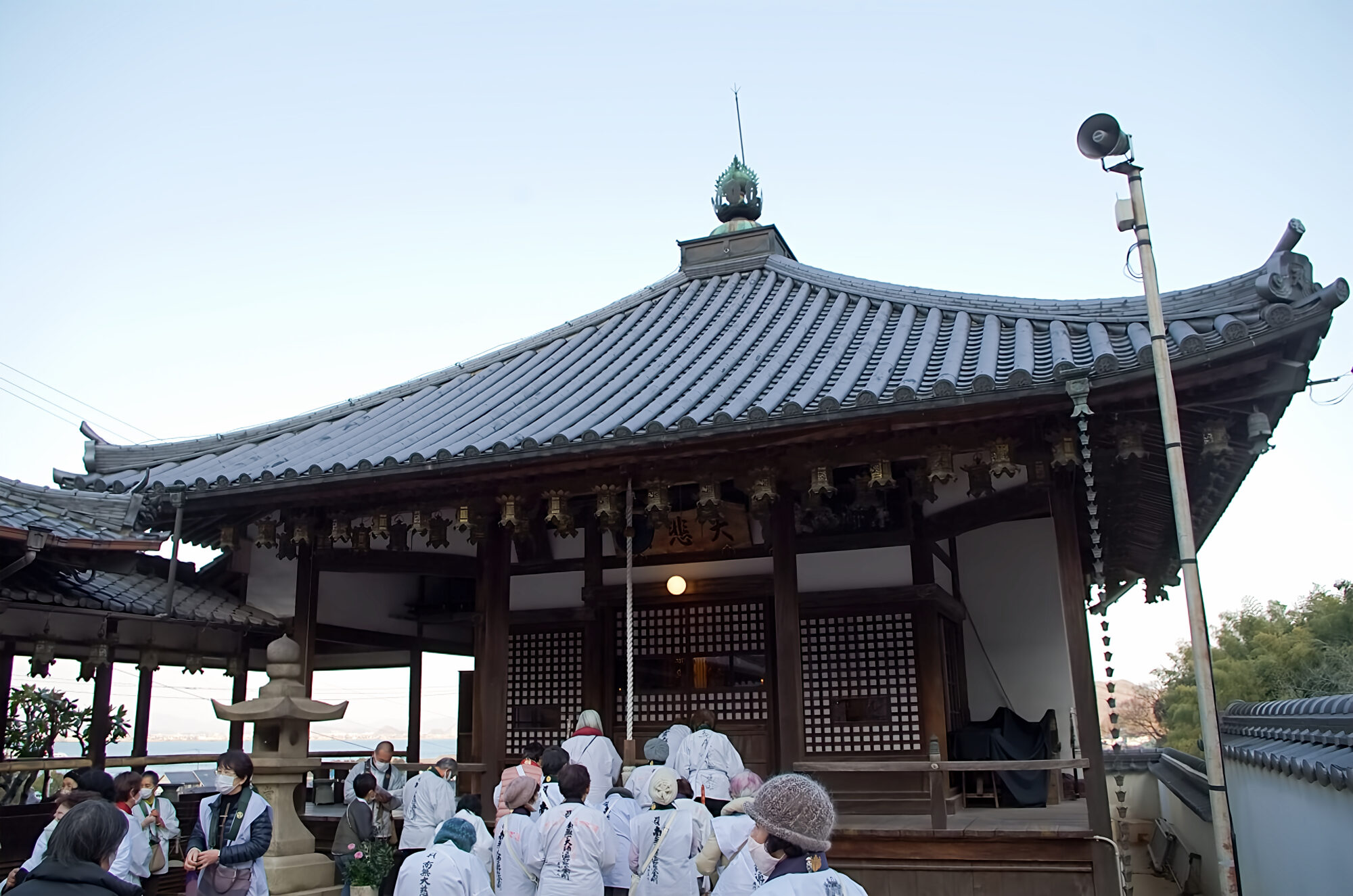
At Shōrin-ji, the Senju Kannon Bodhisattva, the principal image, was not publicly displayed as a secret Buddha until recently. It is now open to the public. This Senju Kannon Bodhisattva is said to have originally been the principal image of Hachikuri-ji in Sanuki and is believed to have been created by Kobo Daishi.
Additionally, due to the historical merging of three temples, three principal images are enshrined. Be sure to see each of the principal images.
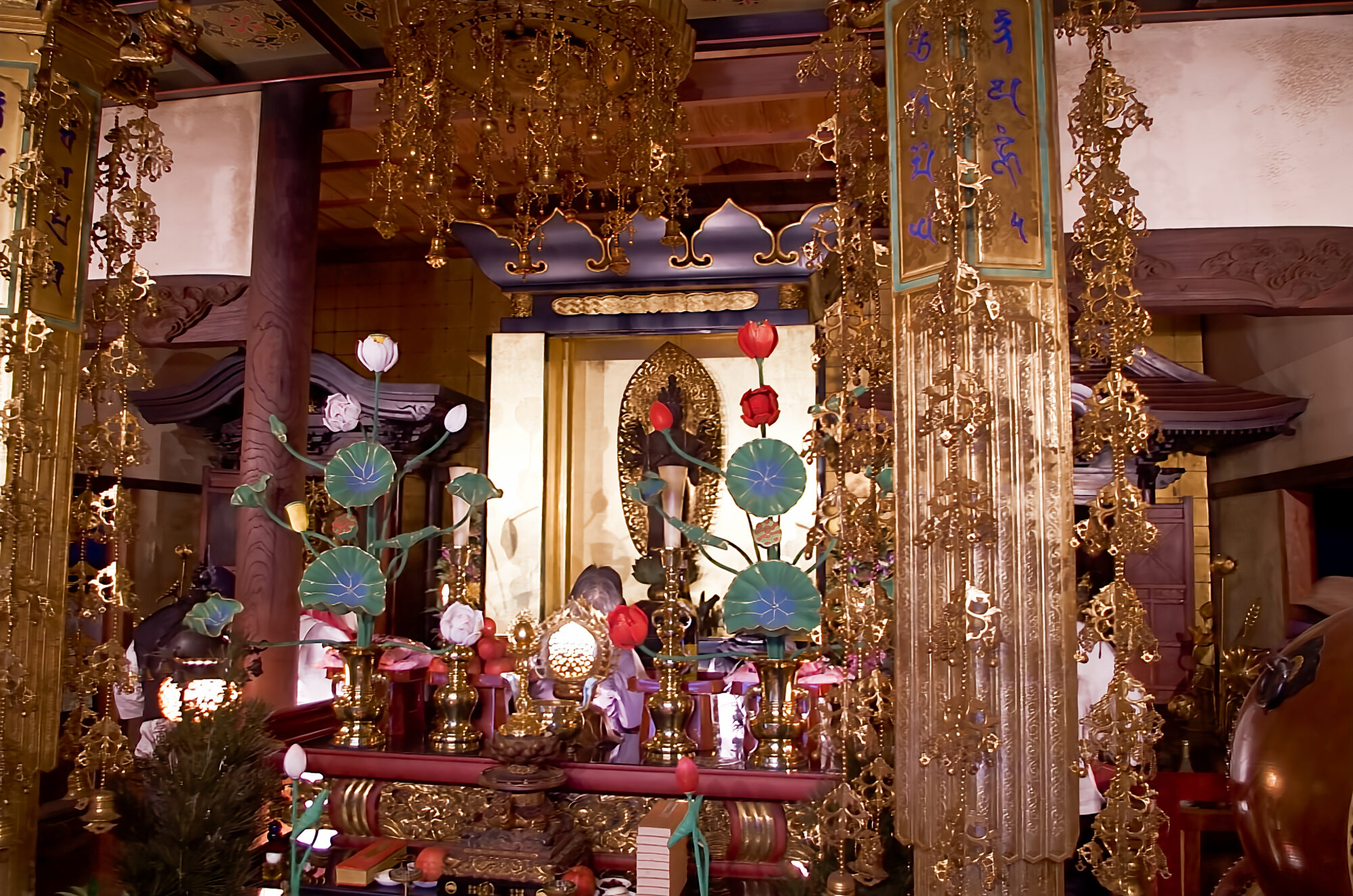
At Shōrin-ji, we also received a performance of taiko drumming and the Heart Sutra by the resident priest.
The Heart Sutra, which I heard for the first time, was performed with an uplifting energy. Please check out this video. It is a new sensation of a live Heart Sutra (9 minutes) that makes you want to move to the rhythm.
Day 4
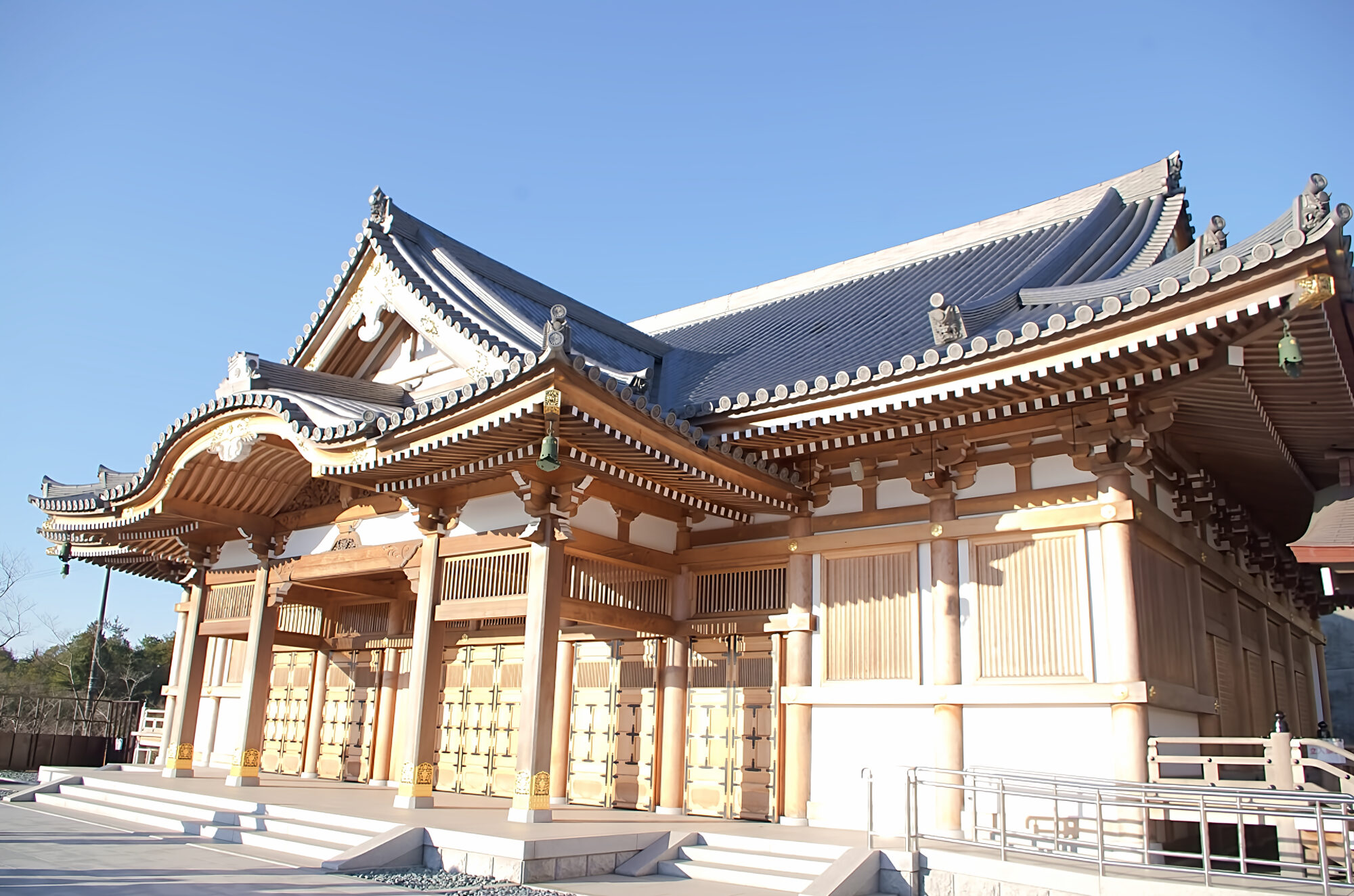
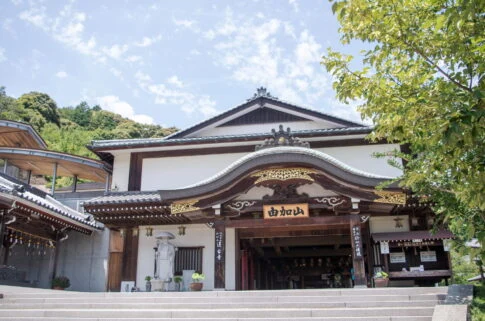
▼The pilgrimage on the final day begins at the new main hall of Rendaiji (Kurashiki City, Kojima Yuka), which was completed on October 4, 2022.
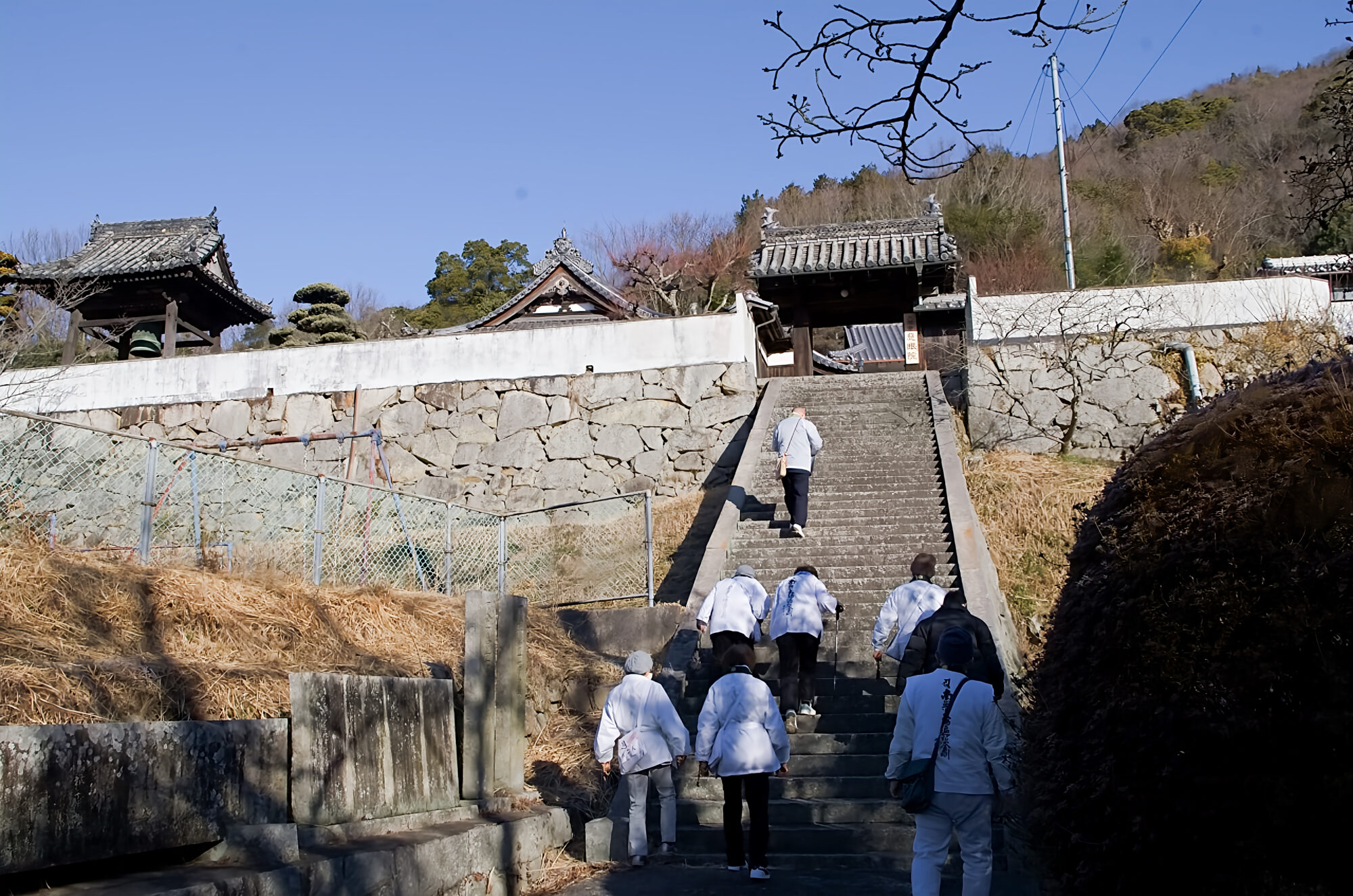
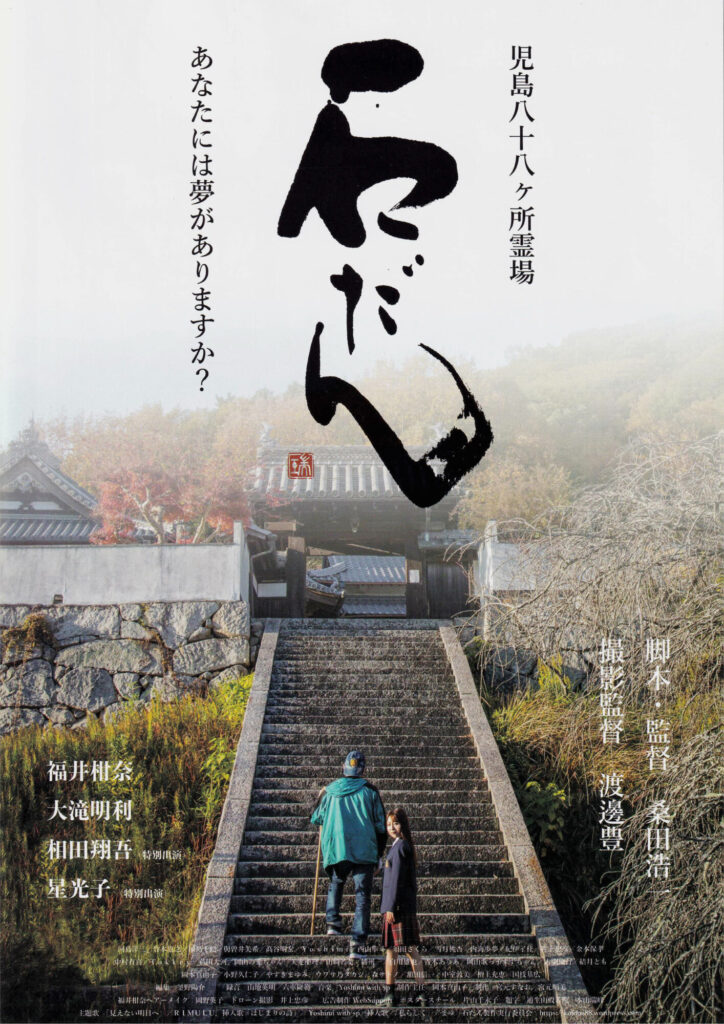
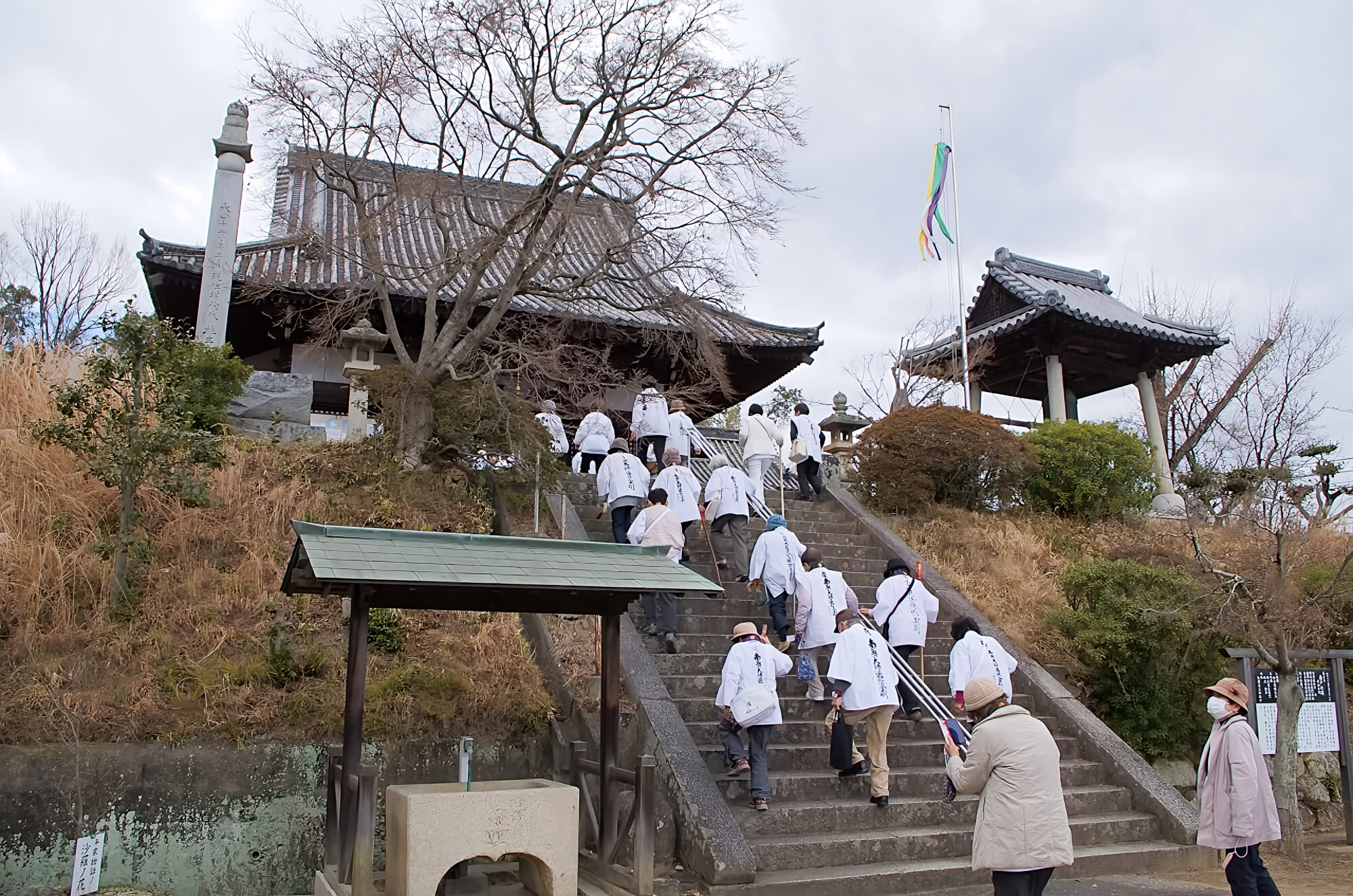
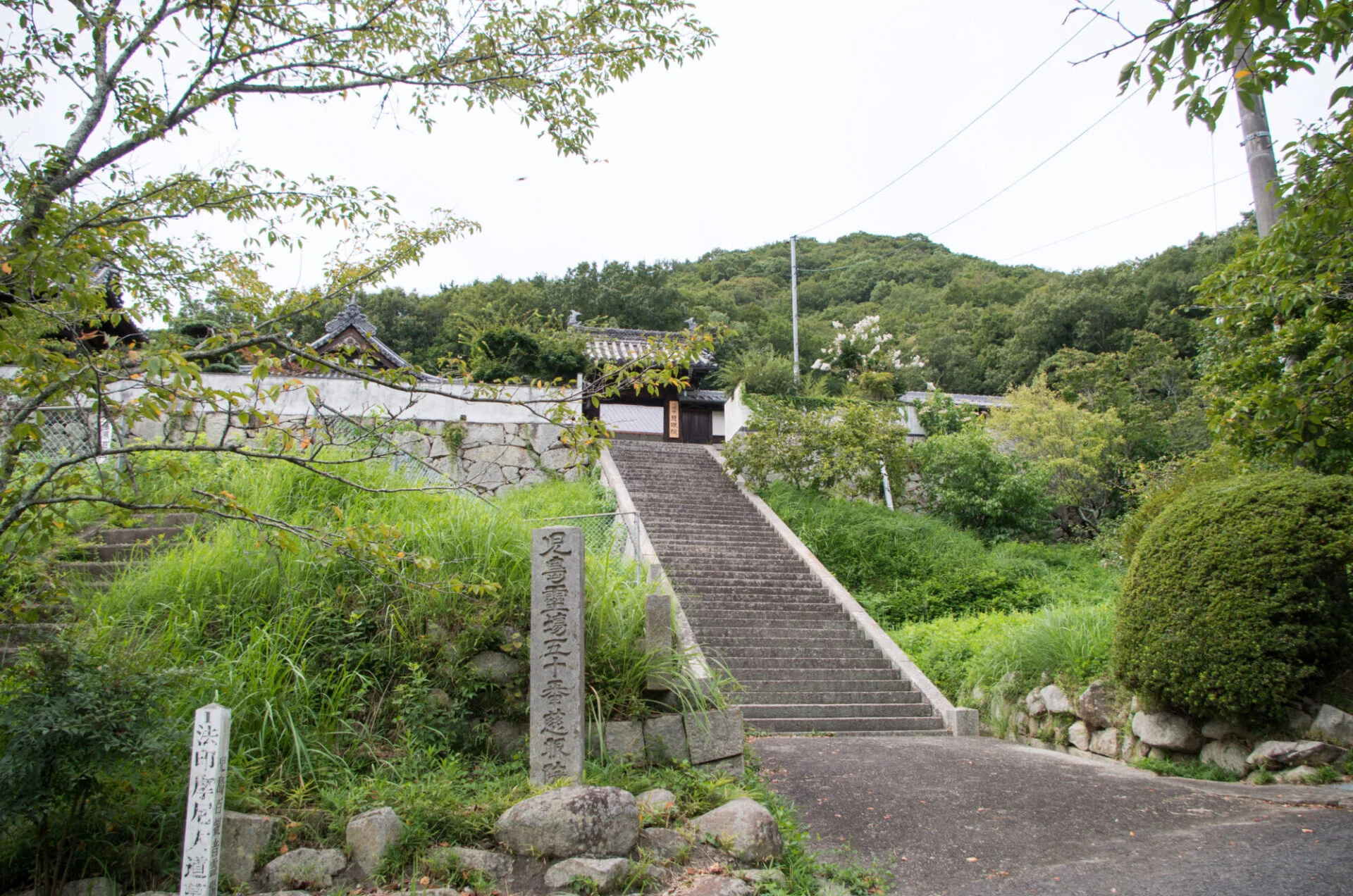
▼At the 50th Temple, Jigen-in (Oihara, Kurashiki City), the stone steps in front of the mountain gate were featured in the poster for Director Kuwata's film "Ishidan." The stone steps are quite prominent among the Kojima 88 Temples. In fact, the view from this mountain gate is also recommended.
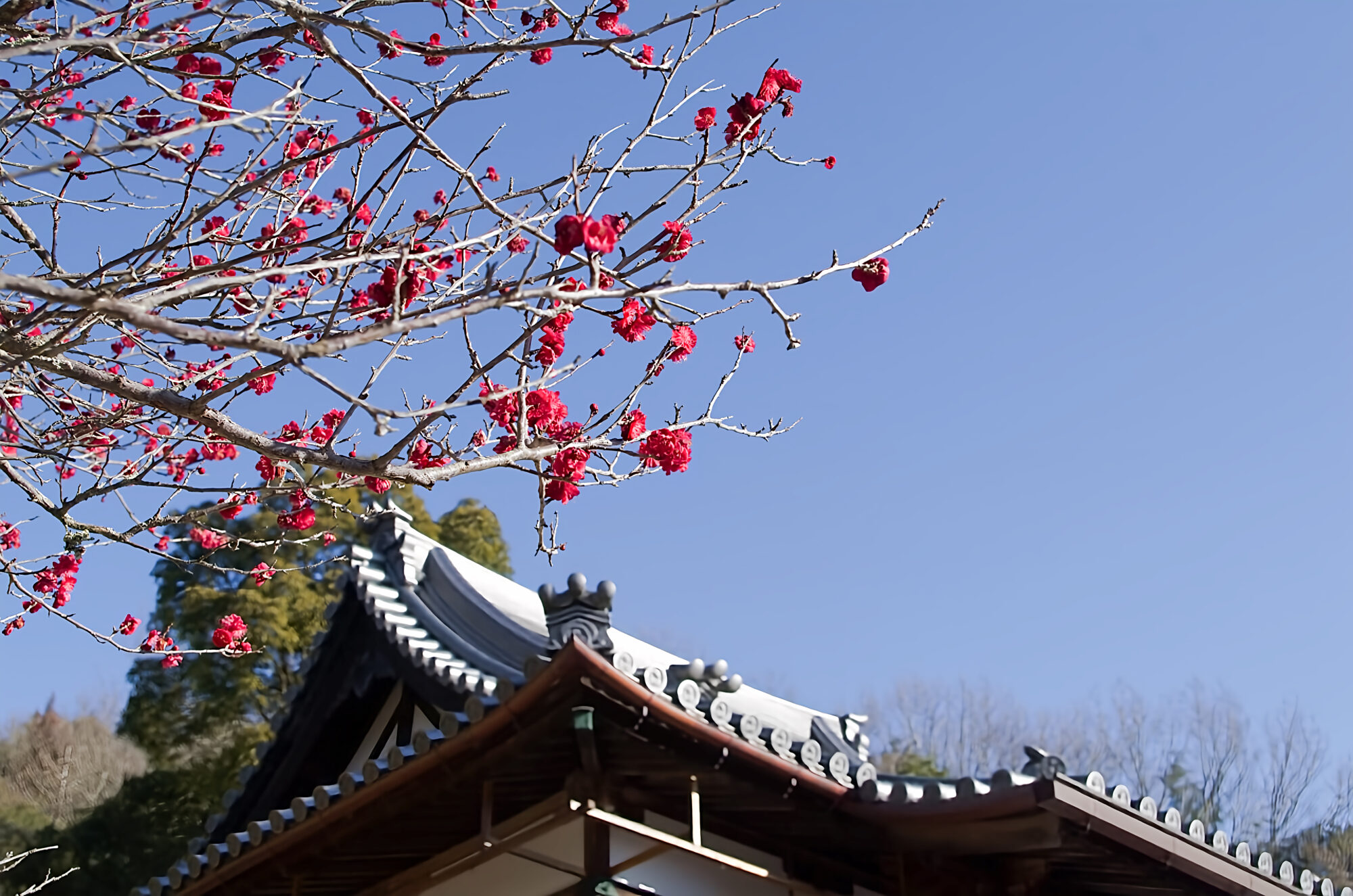
▼In front of the main hall of Jigen-in, red wax plums were in bloom. Although the "One-Day Pilgrimage to the 88 Temples" started in autumn, I can already feel the change of seasons from winter to spring.
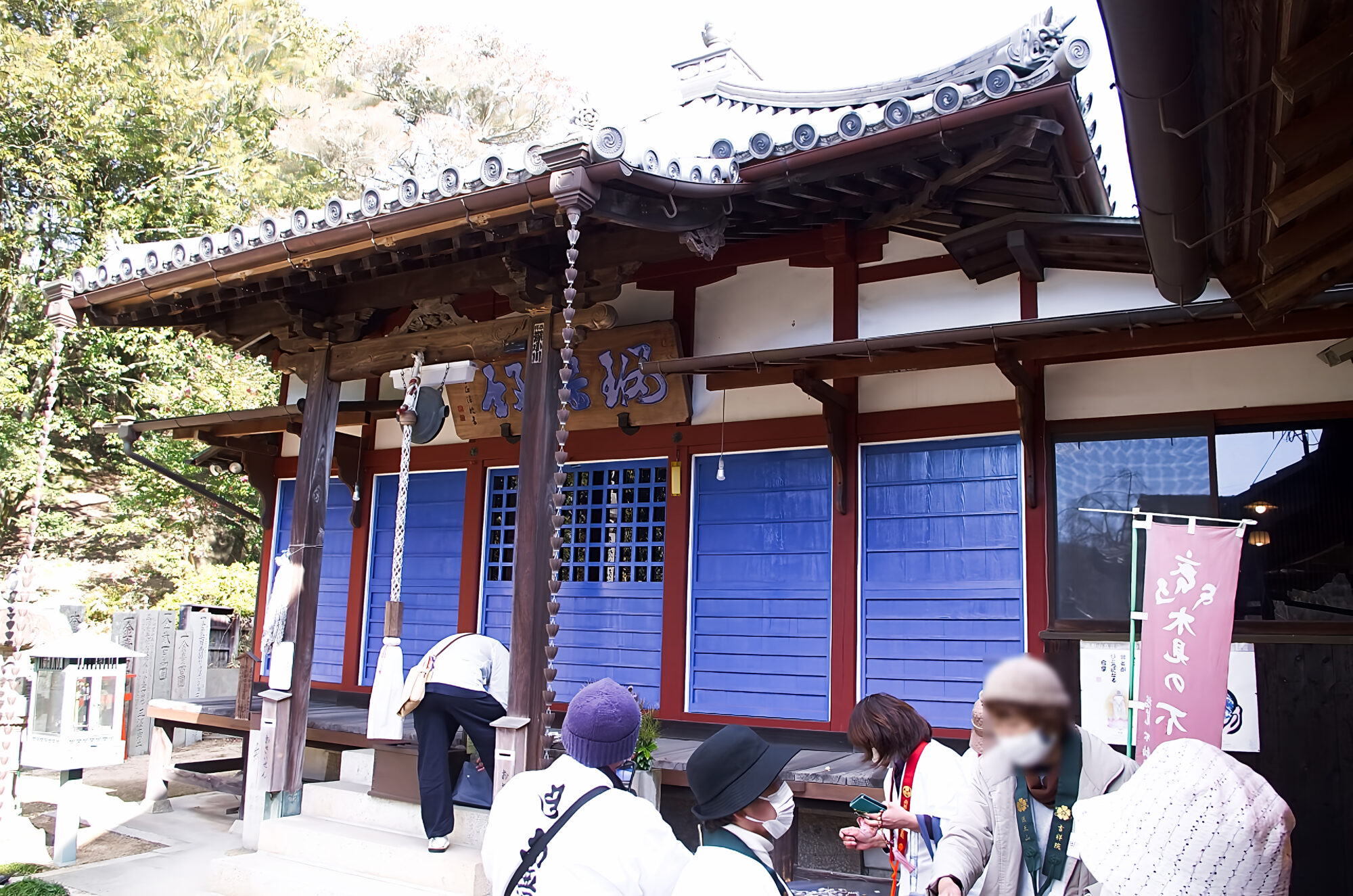
▼51st Temple Jumshin-in (Kurashiki City, Kimi). What catches the eye here is the vivid blue wall of the Daishi Hall. I wonder why it was painted such a vivid blue.
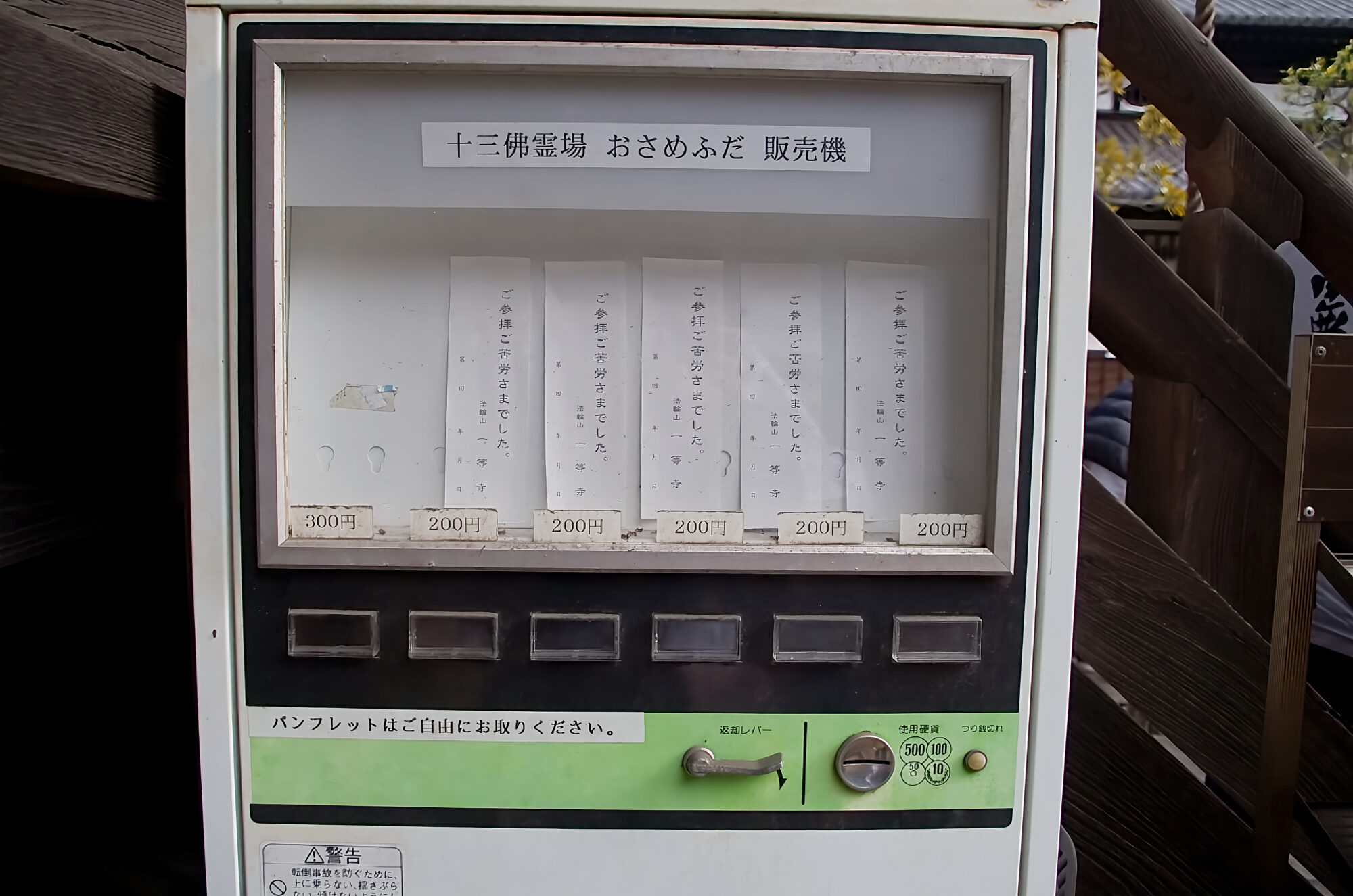
▼48th Temple Itto-ji (Kurashiki City, Sohara). I discovered a rare vending machine for "osamefuda" next to the main hall. This osamefuda is for the Jusan Buddha Pilgrimage, which is different from the Kojima 88 Temples.
▼46th Temple Fujido-ji (Kurashiki City, Fujido-cho). Fujido-ji, which is also one of the sites of the Genpei Fujido Battle, is part of the Kojima 88 Temples.
Sasaki Moritsuna, known for riding a horse and crossing the shallow waters to defeat the Heike army, is also famous as a historical temple that held a grand memorial service for the war dead of both armies.
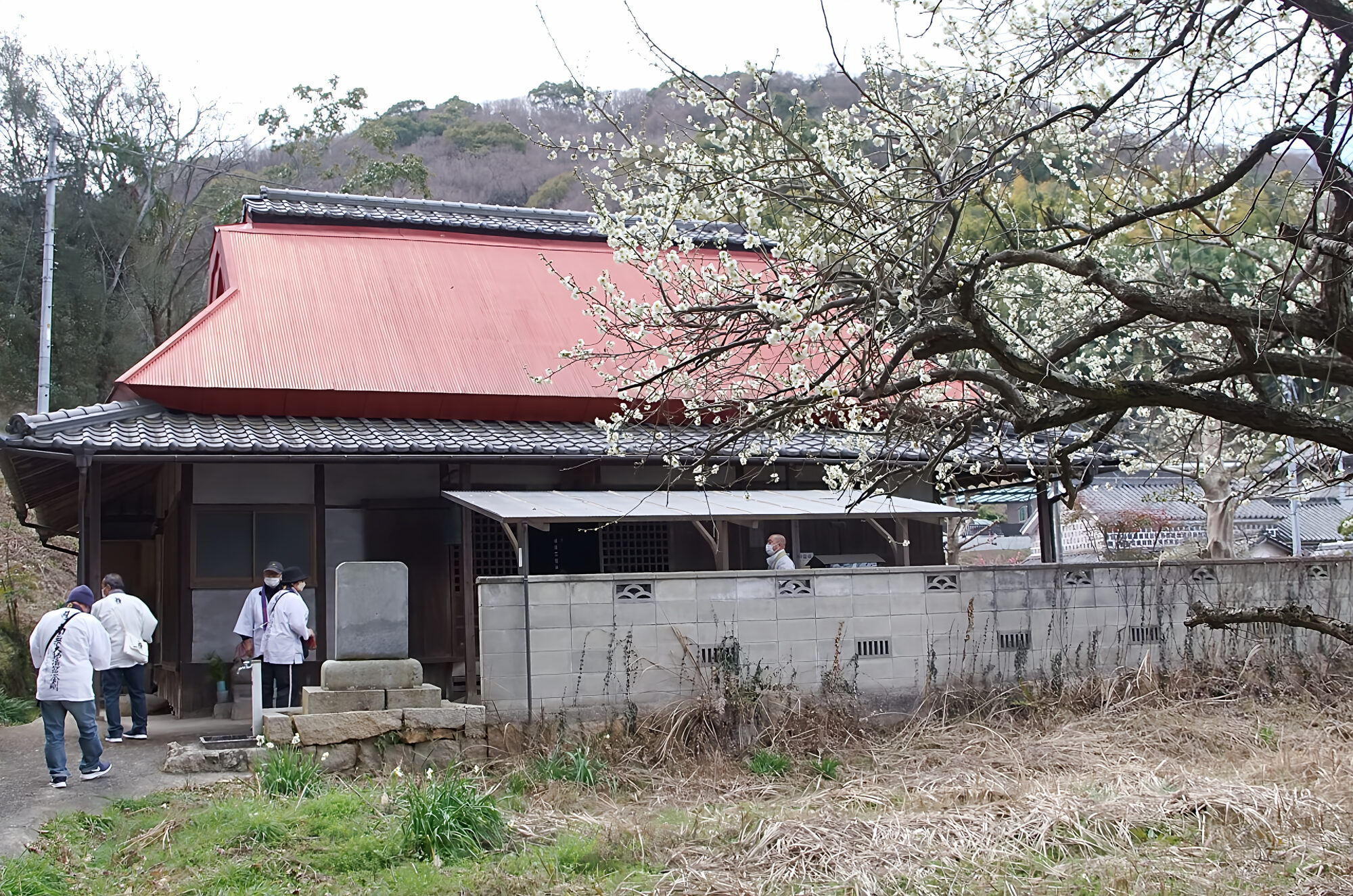
▼42nd Temple Junki-an (Kurashiki City, Tsubuie Kuroishi). In front of Junki-an, white plums are blooming, and here too, I feel the arrival of spring.
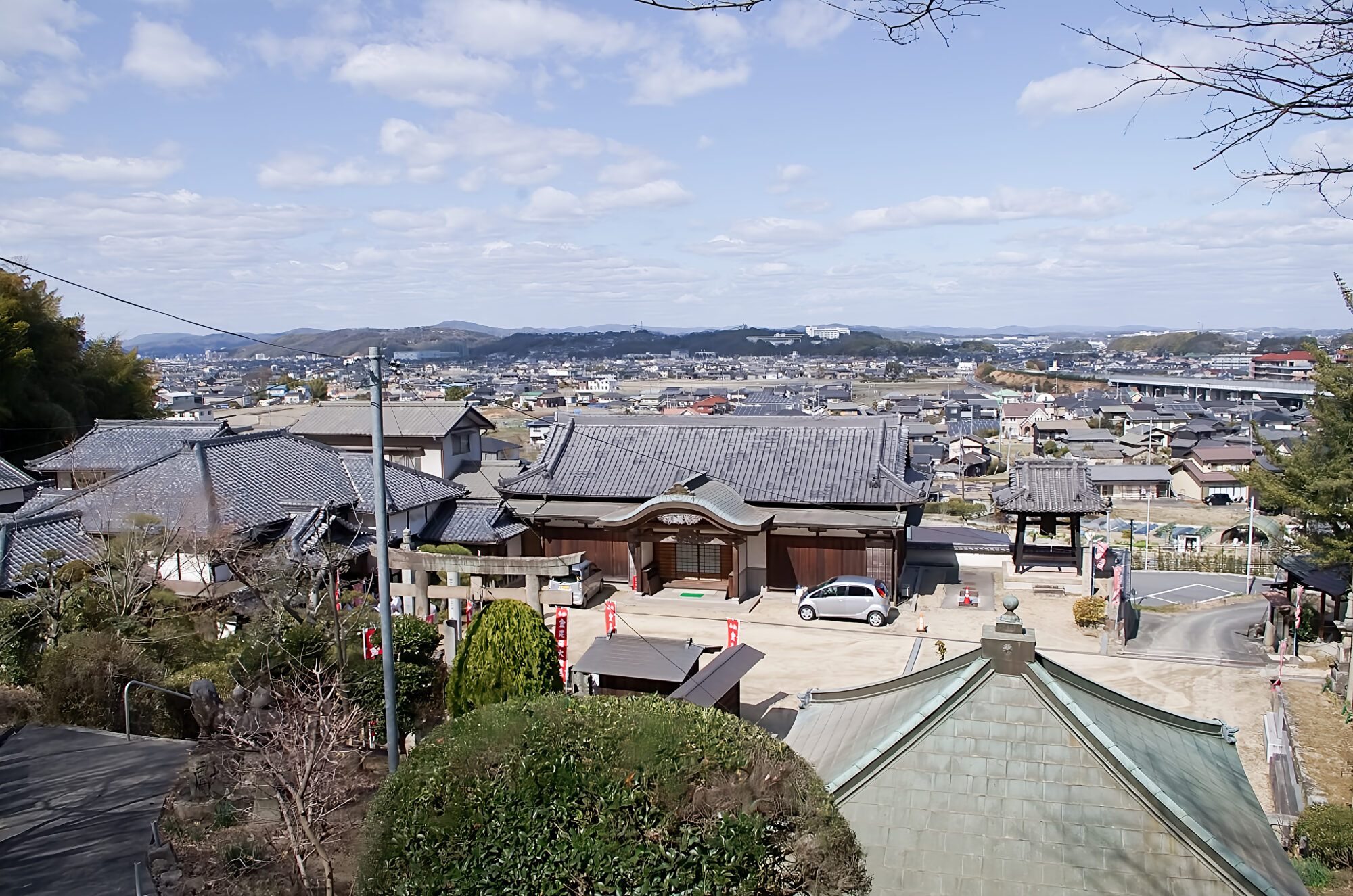
▼43rd Temple Nishi-meiin (Kurashiki City, Tsubuie) and 44th Temple Senjin-an (Kurashiki City, Tsubuie).
In front of me, I can see Okayama Gakuin University and Okayama Junior College (Kurashiki City, Arashiro). The residential area and rice fields spread out before me, which were once the site of the Fujido Battle. Doesn't it excite you to imagine that this was once a strait?
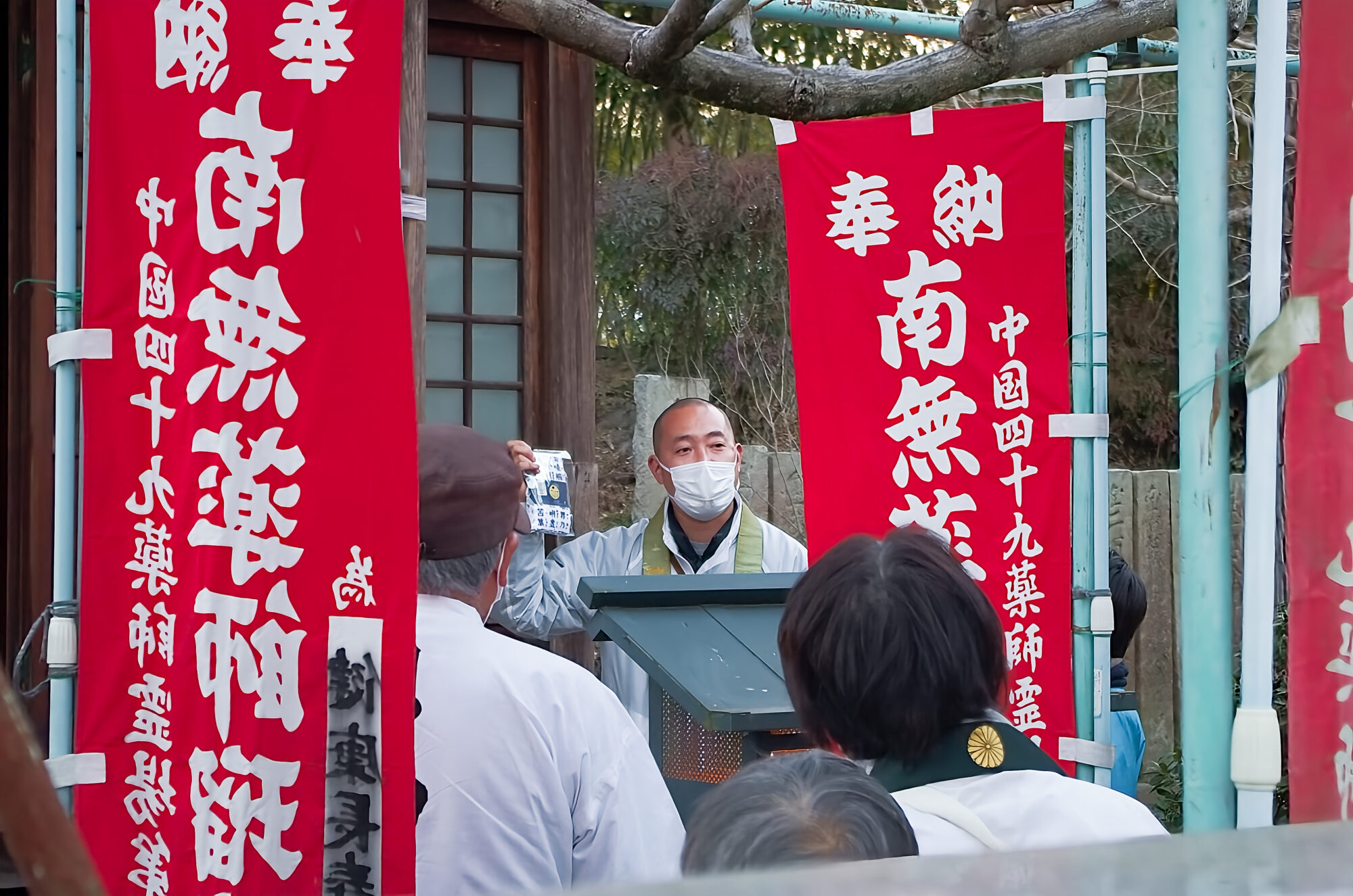
▼61st Temple Kyusho-ji (Tamano City, Yokoichi). The final destination of the Kojima 88 Temples day trip pilgrimage.
According to the head priest who guided us, the four-day pilgrimage has come to an end.
Conclusion
I have long wanted to complete the Kojima 88 Temples Pilgrimage and participated alone.
Before participating, I had concerns such as, "Will I be physically okay for four days, from early morning until night?" and "Will it be lonely to participate alone?" However, it was a comfortable pilgrimage, and I was able to complete it safely.
Above all, the participants were cheerful and smiling, creating a pleasant atmosphere, allowing me to enjoy participating even alone.
The next event is planned for about 10 years later.
I think it’s fine for various reasons, whether it’s for those with strong faith, those interested in the Kojima 88 Temples, or for health reasons.
Feeling the excitement of the "Kojima 88 Temples," why not participate?
Data on the Kojima 88 Temples Day Trip Pilgrimage
| Name | Kojima 88 Temples Day Trip Pilgrimage |
|---|---|
| Dates | Schedule for the 2022 fiscal year ・1st: December 3, 2022 (Saturday) ・2nd: January 29, 2023 (Sunday) ・3rd: February 4, 2023 (Saturday) ・4th: February 26, 2023 (Sunday) * Departures each day from 6:00 AM to 6:30 AM, and disbanding from 6:00 PM to 6:30 PM |
| Location | Kojima 88 Temples (around Kojima Peninsula) |
| Participation Fee (including tax) | 7,000 yen per session (including lunch, insurance, and various expenses) * A total of 28,000 yen (7,000 yen x 4 sessions) to be paid by the first session |
| Website | Iouzan Kichijoin │ Facebook Page |












【Worship at the Main Hall】
Each person offers their donation and offering. (Experienced participants) will also light candles and incense.
【Offering of Sutras】