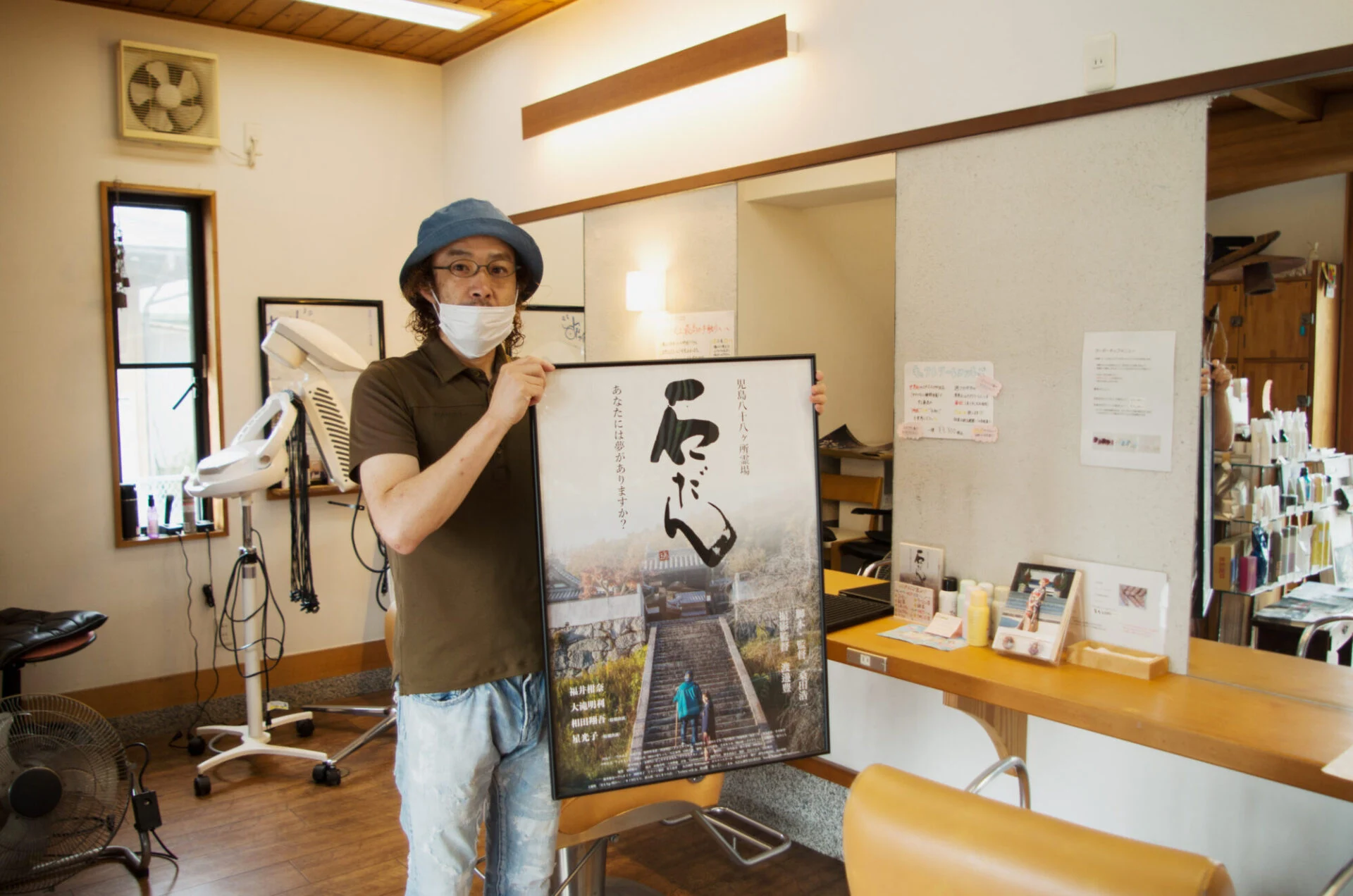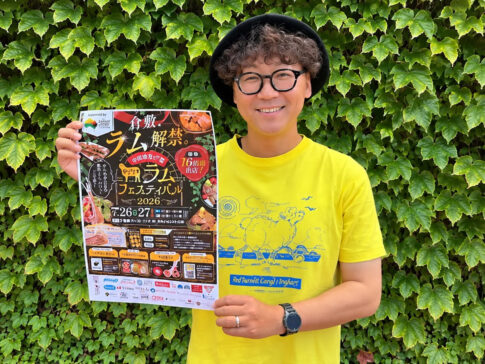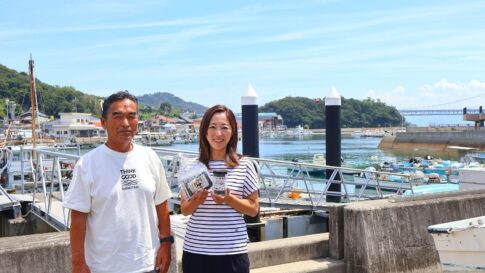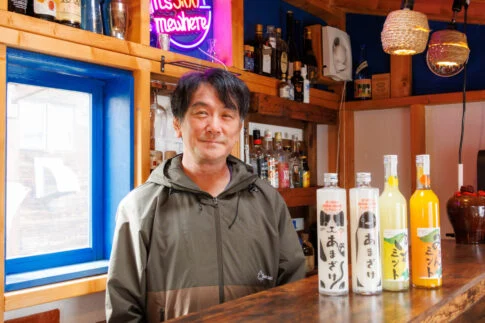
The movie "Ishidan" was produced by Kuwata Koichi, who lives in Kojima, Kurashiki City.
By raising funds for the movie through crowdfunding (hereafter abbreviated as CF), while working as a hairdresser and during the COVID-19 pandemic, the film "Ishidan," set in the Kojima 88 Sacred Sites, was filmed in 10 days.
The author learned about the movie "Ishidan" through CF and participated.
At the preview screening, I was moved not only by the story of the film but also by the beautiful landscapes of my hometown, Kojima, which I was able to appreciate anew on the big screen, and I thought, "I want more people to see this. I want to introduce it."
The response to the movie "Ishidan" has been significant, and now it is reaching the world.
In June 2022, it was screened in Hamburg, Germany.
I will introduce the "Kojima 88 Sacred Sites," which served as the setting, the beautiful landscapes of Kojima that were filming locations, and the achievement at the Hamburg Japanese Film Festival!
The "Kojima 88 Sacred Sites" that served as the setting for the movie
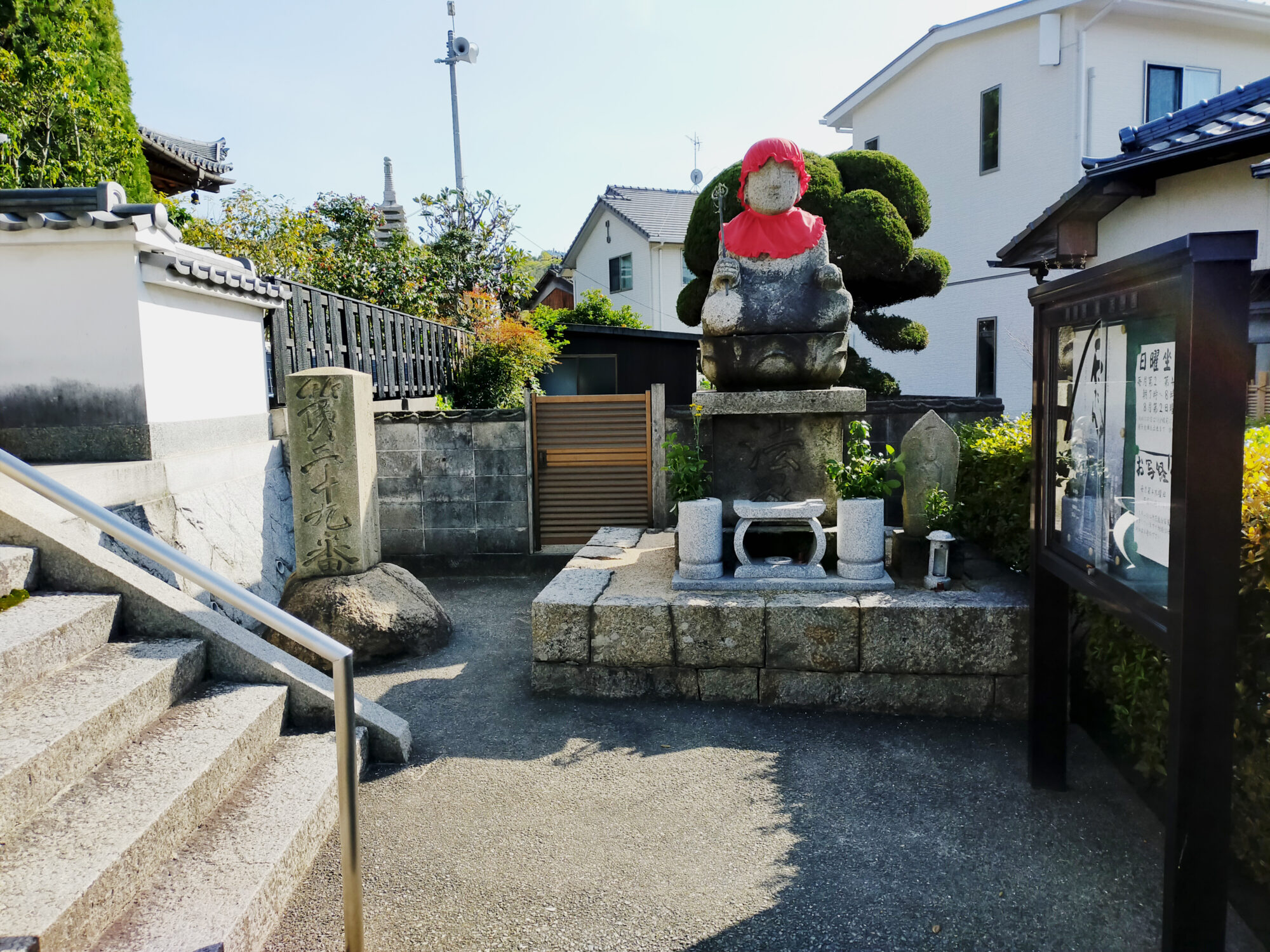
Do you know about the "Kojima 88 Sacred Sites," which served as the setting for the movie "Ishidan"?
Even if you live in the Kojima area, you might not know much about it.
I also lived in the Kojima area until high school, but I was unaware of it.
I only learned about it by chance when I saw a book titled "Kojima 88 Sacred Sites: Mr. Kosan Gozaburo" at the Kojima Library in 2018.
The Kojima 88 Sacred Sites are pilgrimage sites scattered around the Kojima Peninsula, located in the southern part of Okayama Prefecture, including temples, hermitages, and several other hidden sites in Okayama City, Tamano City, Kurashiki City Kojima, Mizushima, and Kurashiki Amagi.
At the time the Kojima Sacred Sites were established, it took considerable time and travel expenses to visit the Shikoku 88 Sacred Sites, so, at the request of the common people, a nearby mini-version of the sacred sites was created to shorten the time.
In fact, there is also the Kurashiki 88 Sacred Sites around the Bikan Historical Area in Kurashiki City.

When and who established the Kojima 88 Sacred Sites?
The Kojima 88 Sacred Sites were selected by Monk Enmyo, the head priest of Yagita Kiyotou-ji Temple in Kojima.
The "Shikoku 88 Sacred Sites" are said to have been established in the 6th year of the Kōnin era (815).
It is said that during the Bunka and Bunsei eras (1804-1830), it was at its most active, with pilgrims making a complete circuit around Shikoku, starting from the first sacred site in Tokushima Prefecture and heading clockwise to the 88th sacred site in Kagawa Prefecture.
The Kojima 88 Sacred Sites were modeled after the Shikoku Sacred Sites, covering one-tenth of the distance, with Chuzoin Temple in Tamano City as the first sacred site, and a clockwise pilgrimage around the Kojima Peninsula, with Myōō-in Temple in Bandai, Tamano City as the 88th sacred site.
It is indeed a mini sacred site.
In this journey, there are 55 temples, 33 hermitages, and several other hidden sites, with a total distance of 35 ri 5 chō (approximately 140 kilometers), designed to be walkable in one week even for those with weak legs.
Introduction of Monk Enmyo
Monk Enmyo was born in the 4th year of the Tenmei era (1784) in the home of the Kamoi family in Odaka Village, and at the age of 13 in the 8th year of the Kansei era (1796), he became a monk after shaving his head at the first temple in Sobara Village.
In the 4th year of the Bunka era (1807), at the age of 24, he became the head priest of Kiyotou-ji Temple in Yagita, Oda Village.
At this time, Monk Enmyo promised his fellow Shingon monks (Shogyoku and Santō) to carry out charitable works that would benefit future generations, and he realized this promise together with his friends.
| Enmyo | Established the Kojima 88 Sacred Sites |
| Shogyoku | Built a five-story pagoda at Bichu Kokubun-ji Temple |
| Santō | Established a magnificent hall at the summit of Shumatsuyama, enshrining Konpira (currently known as Konpira Daigongen) |
From the 4th year of the Tenpo era (1833), Monk Enmyo, accompanied by a local official from Yagita Village, Sasaki, repeatedly visited the temples on the Kojima Peninsula, selecting the 88 sacred sites modeled after the Shikoku Sacred Sites.
He measured distances with a rope and devised ways to make the pilgrimage accessible, with the help of good men and women, building bridges and creating signposts to improve the paths, and completed the Kojima 88 Sacred Sites in the 10th year of the Tenpo era (1839).
The joy of completion is inscribed on the monument of the Kojima Sacred Site Headquarters in front of Kiyotou-ji Temple, and shortly after finishing the inscription in the 2nd year of the Kōka era (1845) in May, he passed away at Kiyotou-ji Temple at the age of 62.
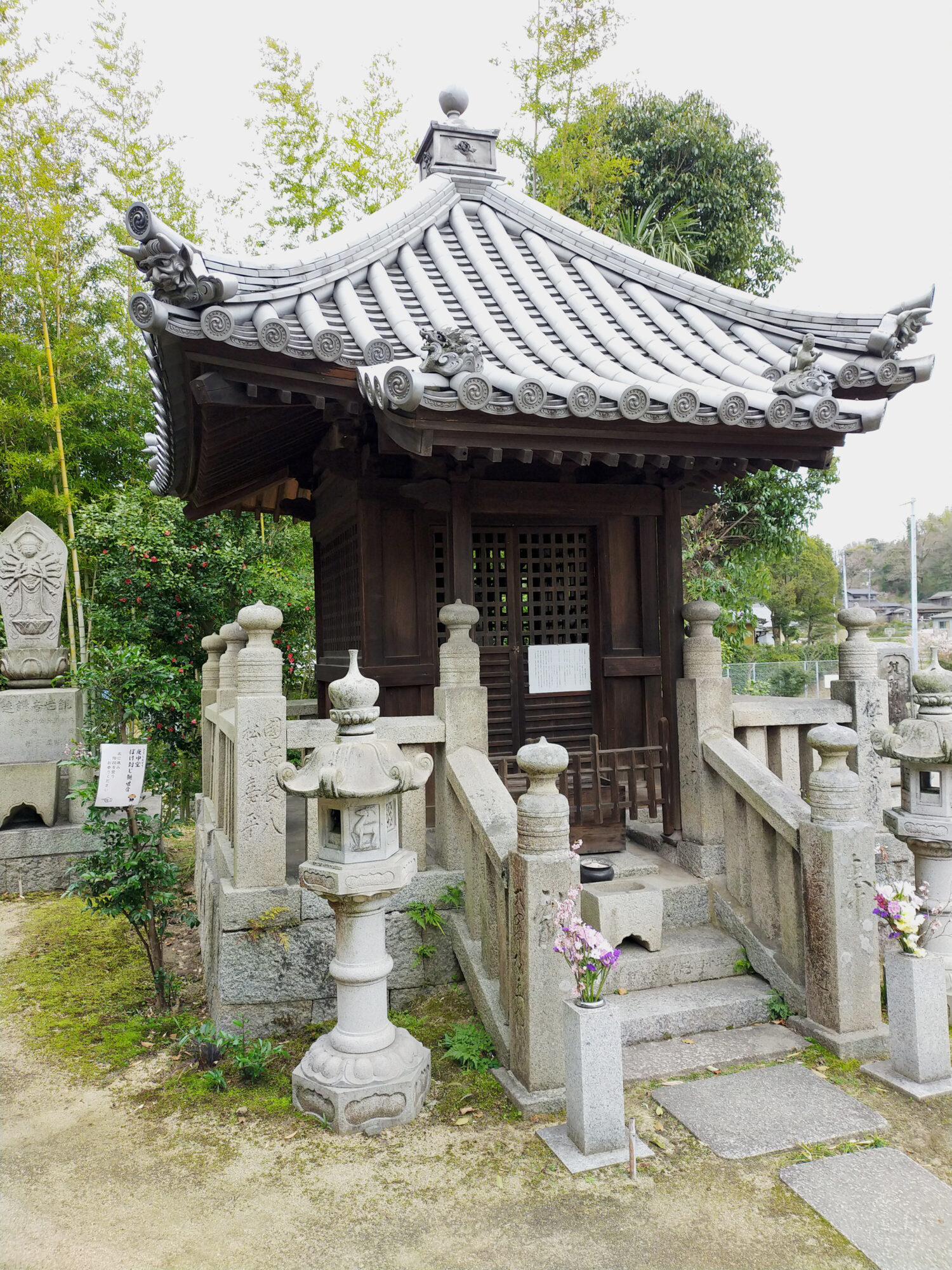
A sacred site was established within Kiyotou-ji Temple, called Enmyo-do, and his virtue has been long celebrated.
▼ Enmyo-do
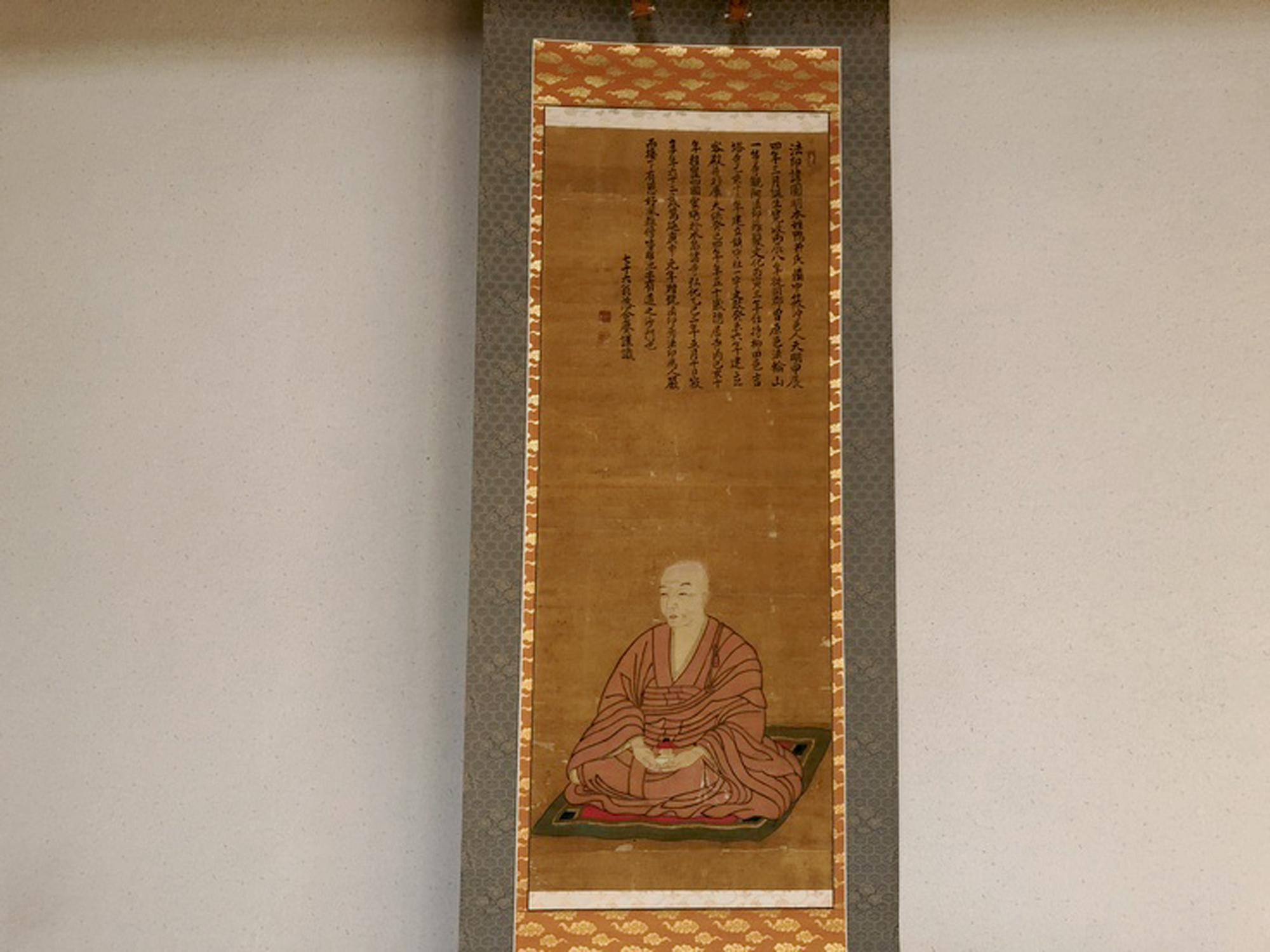
Enmyo was awarded the title of Hōin for this great achievement, and later was also granted the title of Monk.
The title "Monk" is the highest rank among the monk officials appointed by the imperial court.
▼ Monk Enmyo (from a hanging scroll owned by Kiyotou-ji Temple)
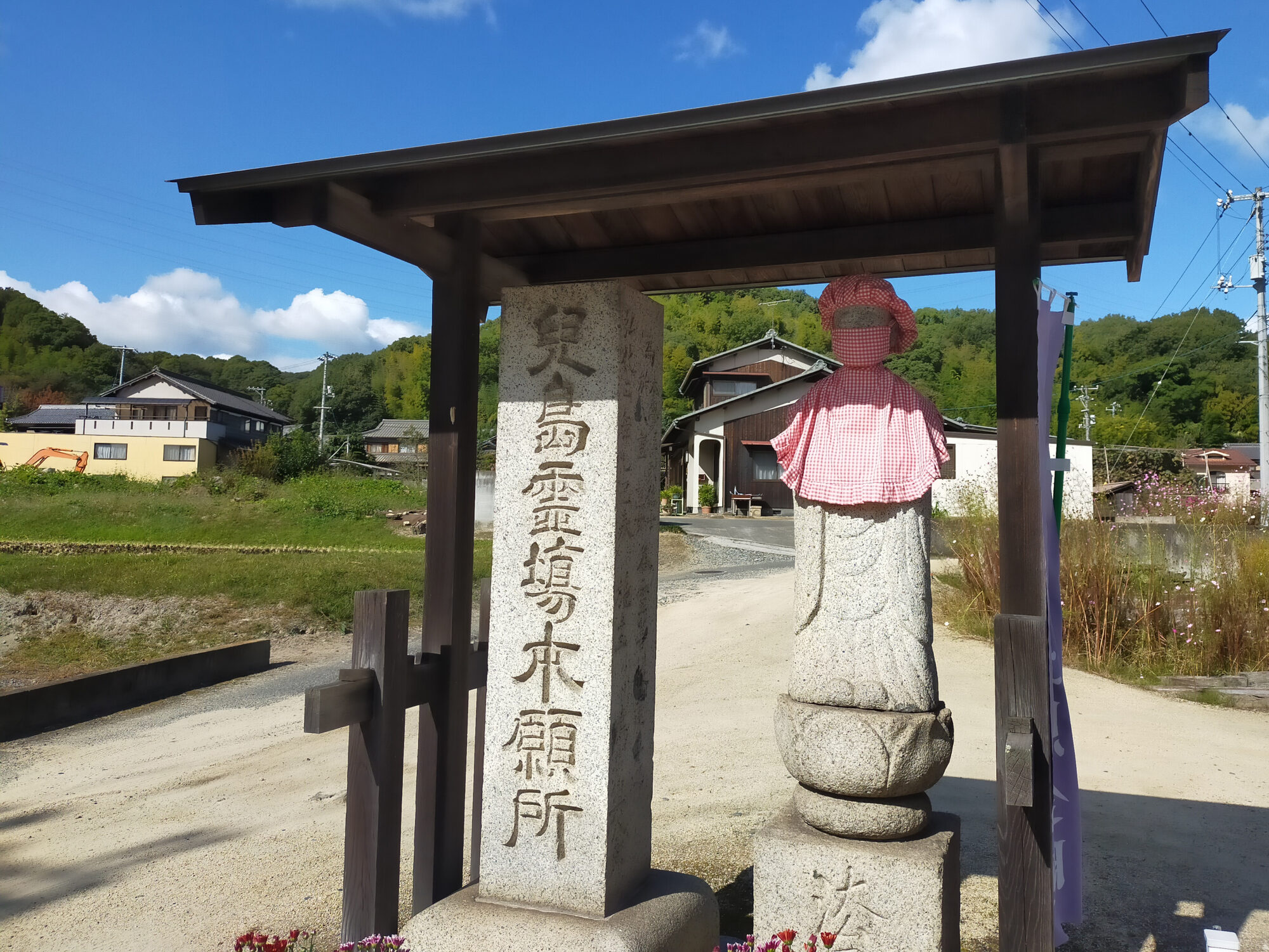
Monument of Kojima Sacred Site Headquarters
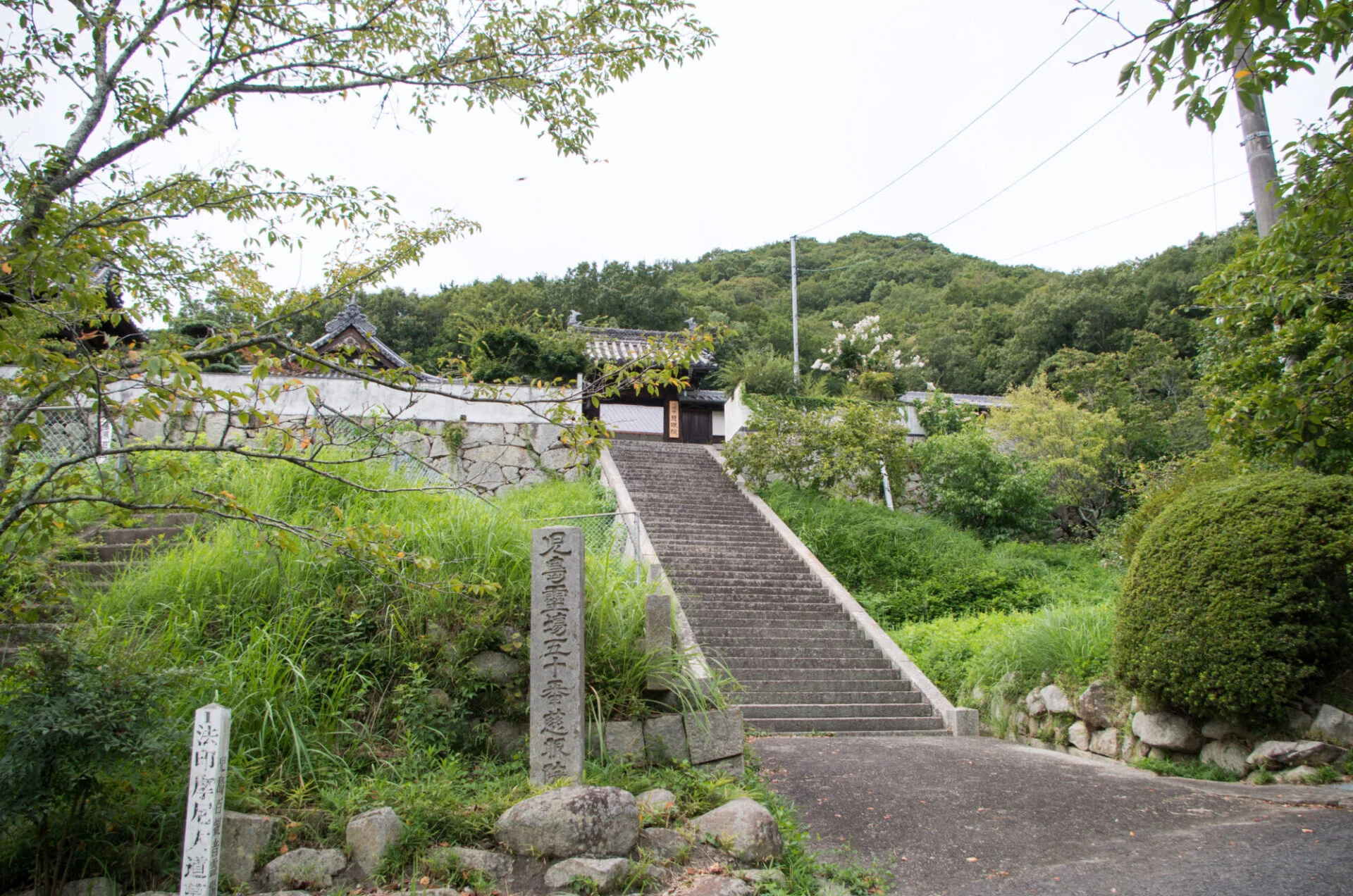
In front of the mountain gate of Kiyotou-ji Temple, there is a stone monument of the "Kojima Sacred Site Headquarters" alongside a standing Jizo statue.
This records the original wish (original intention) of Monk Enmyo, who established the Kojima Sacred Sites.
I will introduce the feelings that Monk Enmyo held, quoting the modern text by local historian Otani Toshifumi.
I moved the precious sacred sites of Shikoku to the temples in Kojima and established the Kojima 88 Sacred Sites. I want to make known to all people the blessings and grace of the Buddha that can be received through this pilgrimage.
Kiyotou-ji Temple, Enmyo's Chronicle from "Along the Oda River" translated by Otani Toshifumi
In particular, for those who are busy with daily work and have no time to visit, for those whose weak bodies may fall ill from spending many days traveling to distant sacred sites, and for those who have thought about visiting but have not yet acted, fulfilling even a little of their wishes would surely align with the heart of the Buddha.
If the number of people visiting this Kojima Sacred Site increases, it would be a great joy. However, it must not become the work of foolish people who deceive the world and plunder people's wealth. I carve this into stone to convey the original intention of opening this sacred site for future generations.
Introduction to the movie "Ishidan"
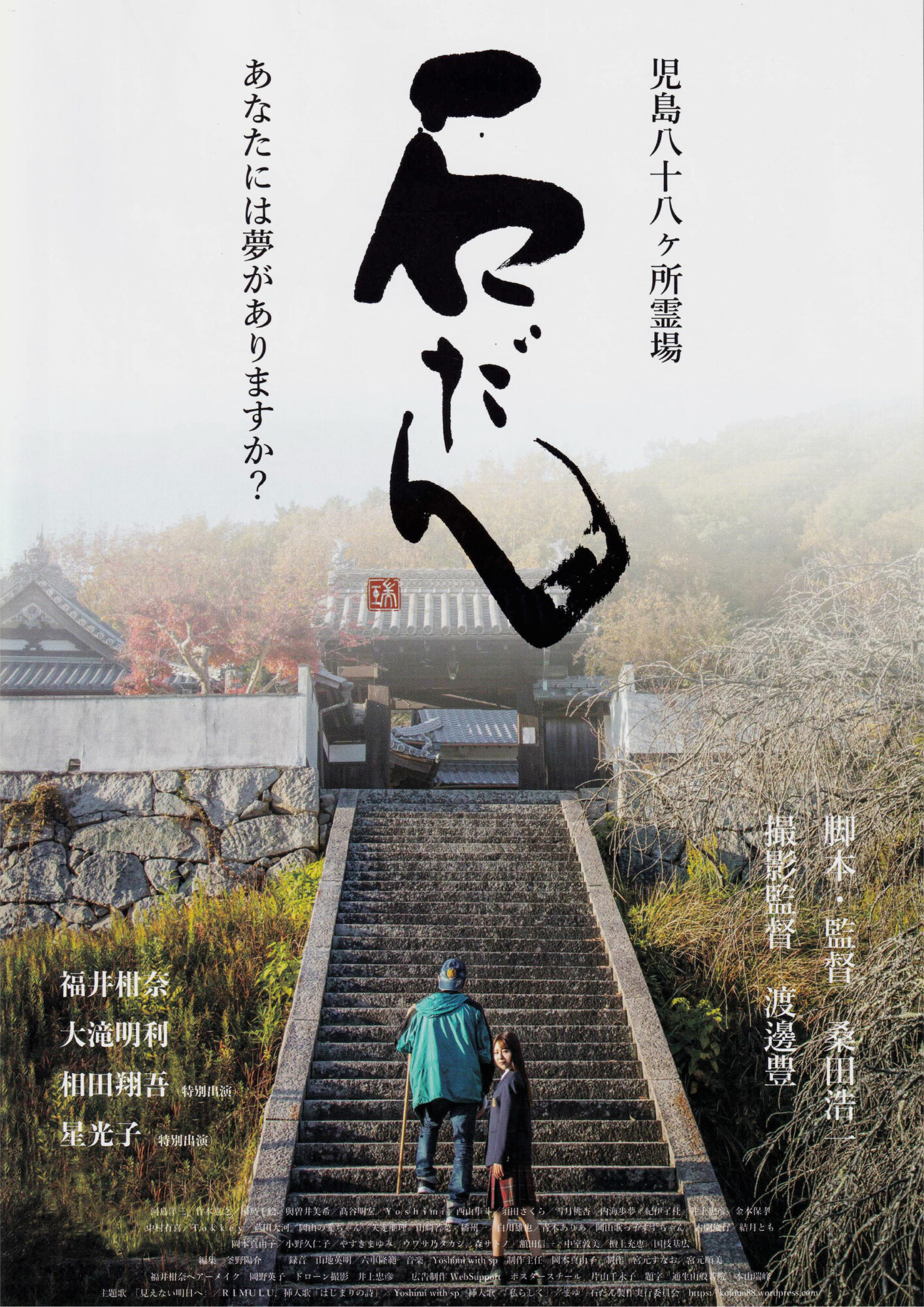
Director Kuwata's CF was his first challenge, and despite that, he gathered 124 supporters and raised about 1.2 million yen, exceeding the target amount, successfully establishing the project.
The movie "Ishidan," set in the "Kojima 88 Sacred Sites."
Looking back at the main text of the project by Director Kuwata, his overflowing passion is conveyed.
I want to revive and energize "Kojima," which continues to see a declining population, and bring it back to a vibrant town!
Many people do not know that there are 88 sacred sites in Kojima, and I want them to pay attention to the "Kojima 88 Sacred Sites" through the film!
I want to create a work that conveys the coolness of not giving up on dreams and pursuing them to the younger generation!
Aiming for the revival of the "Kojima 88 Sacred Sites" through the movie "Ishidan"!
For Kojima to revive, "young power is essential. Through the film, I want the residents of Kojima to have confidence in being from here and to want to live in such a town."
This film conveys the director's feelings directly.
Synopsis
From the "Ishidan" flyer (leaflet), I will introduce the synopsis.
Kimura Natsuki (18) is a high school girl dreaming of becoming a singer.
As the only daughter of a doctor, Natsuki is not allowed to pursue her dream and is opposed by her mother Midori (45).
Frustrated, Natsuki tries to relieve her feelings by associating with a delinquent group at school. One day, she meets a middle-aged man, Katayama Tsutomu (56), who is touring the Kojima 88 Sacred Sites.
Though they seem incompatible, by chance, they end up touring the Kojima 88 Sacred Sites together.
However, Katayama is suffering from terminal lung cancer and has been given a prognosis of limited time.What will Natsuki do when she learns this...?
Will the two of them be able to complete the pilgrimage of the Kojima 88 Sacred Sites?
And what will happen to Natsuki's dream?
Scenery I want you to see, which I want to preserve for 100 years
What captivated me particularly in the movie "Ishidan" was the beautiful scenery of my hometown, Kojima, and the people living there.
I will introduce some of the scenery I want to preserve, along with a few scenes from the movie.
The opening Seto-Ohashi Bridge
▼ The scenery that first brought tears to my eyes at the preview screening.
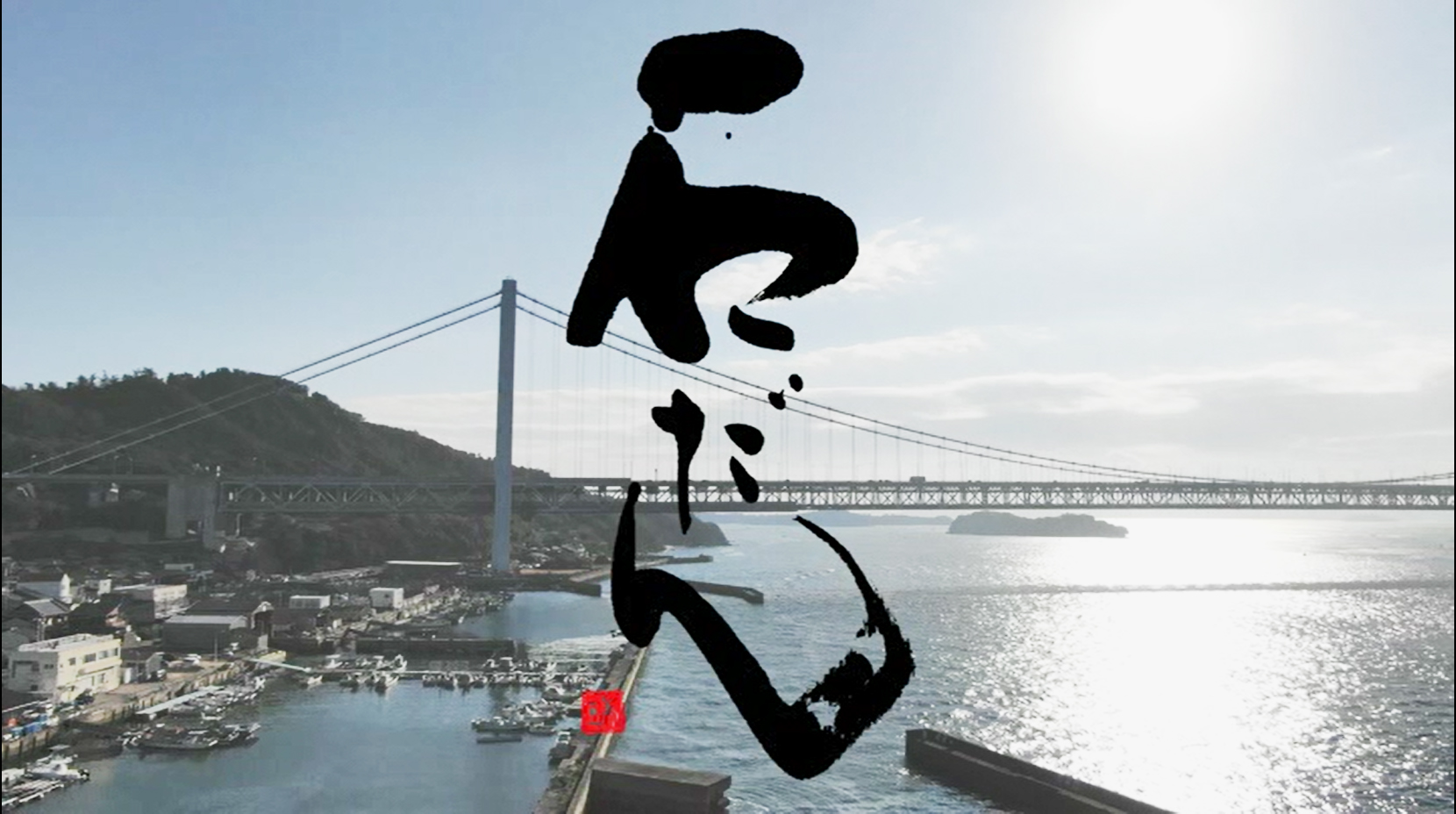
The Seto-Ohashi Bridge opened in 1988, the same time I entered high school.
The Seto-Ohashi Expo was held in front of Kojima Station, and I felt the excitement as many people visited Kojima, dreaming of a bright future.
In my youth, the Seto-Ohashi Bridge symbolized the bright future I dreamed of, along with the magnificent title of "Ishidan" and the theme song "Mienai Ashita e" by RIMULU playing as the movie began.
The Seto Inland Sea, which we can be proud of to the world, harmonizes exquisitely with the calm inland sea and the beauty of its many islands, along with the presence of the Seto-Ohashi Bridge as an artificial structure.
The Ginkgo Tree in Tsunou
▼ The hidden site of Hannyoin (Tsunou). I am captivated by the stunning yellow carpet (the fallen leaves of the ginkgo tree).
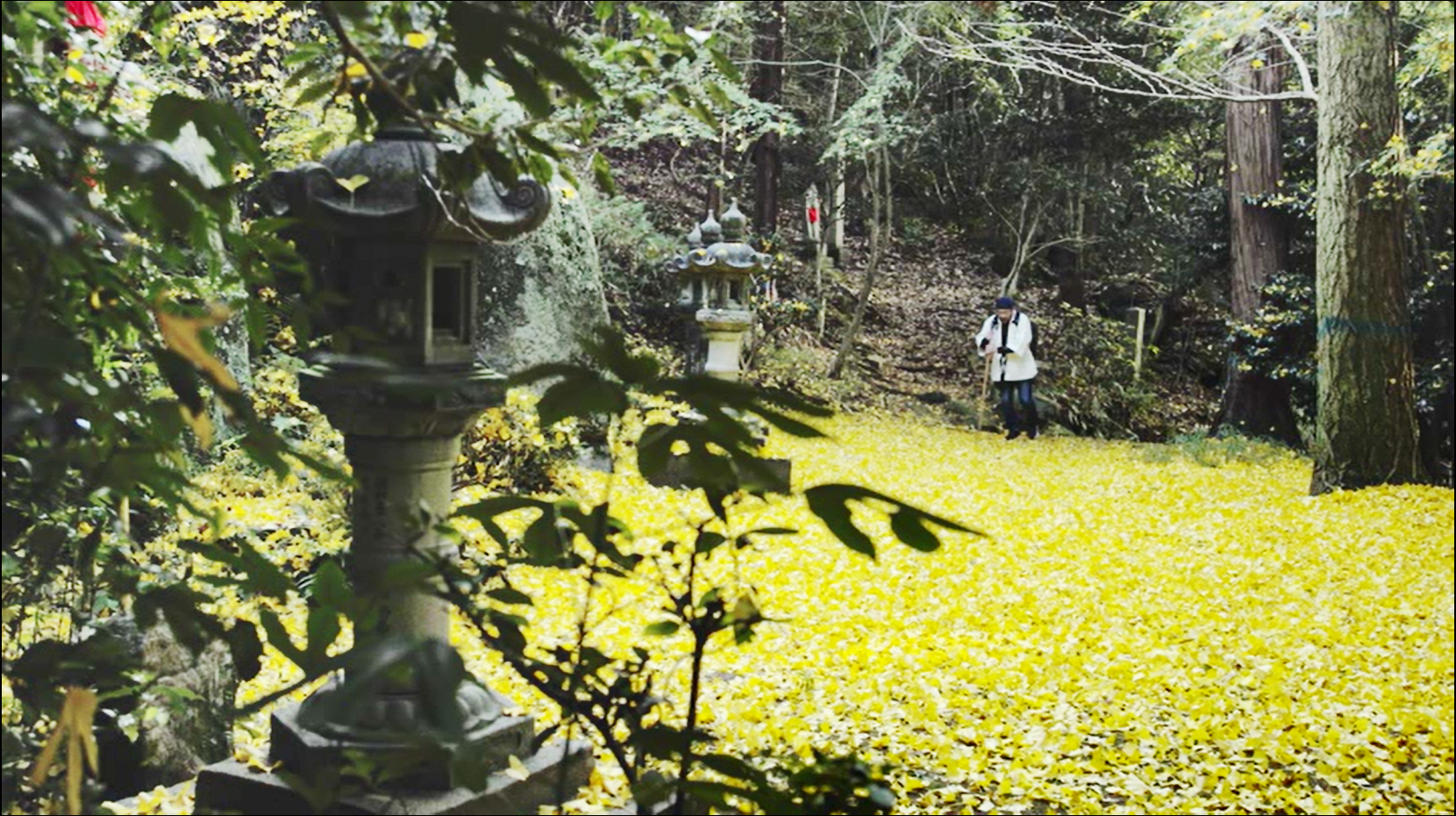
I believe this photo alone conveys its beauty, but please also watch the movie "Ishidan" PV.
It is a breathtakingly beautiful scenery that leaves one speechless. A 2 minute and 43 second video.
There is a follow-up story about this.
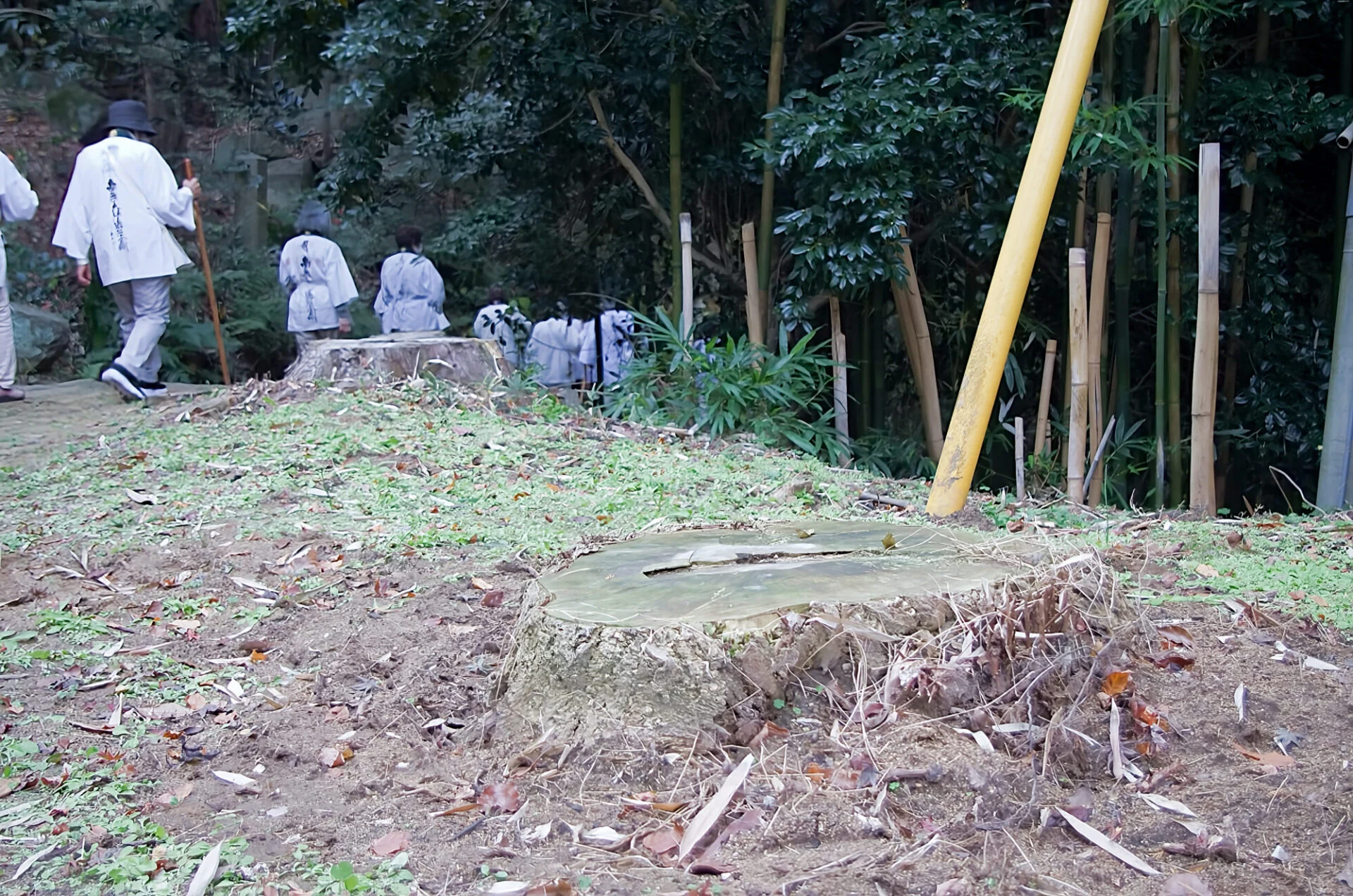
▼Unfortunately, in 2021, a large ginkgo tree was cut down. Currently, this view that was introduced can no longer be seen.
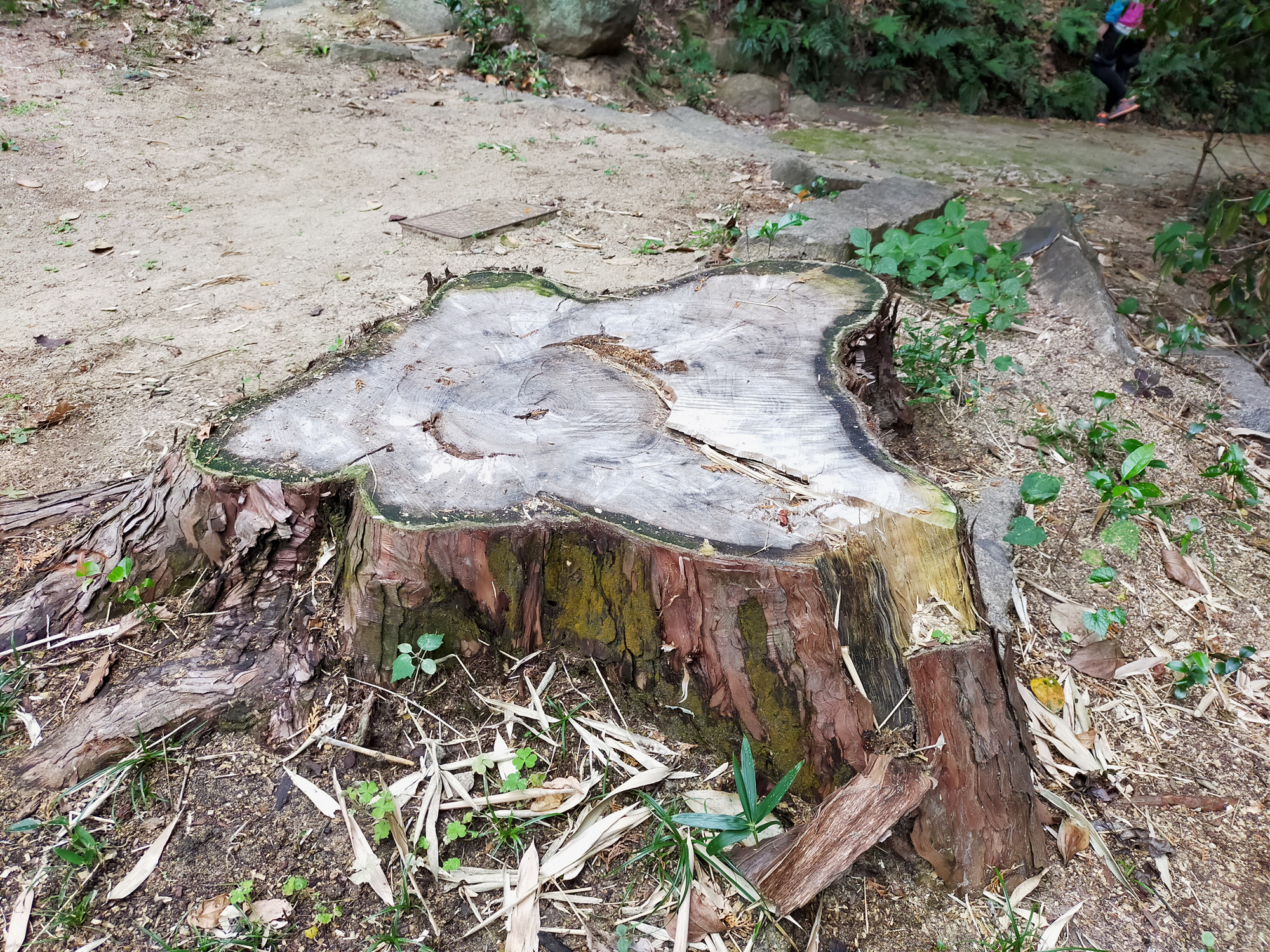
The reason is unknown.
Looking at the stump, you can tell it was a magnificent large tree.
I was disappointed when I learned this fact. I wanted to see it with my own eyes at least once.
However, don't you think it has meaning that it was preserved as footage before it was cut down?
In the movie "Ishidan," the scenery we want to leave for 100 years is preserved in video.
Now, I can only hope that this ginkgo tree will revive over the course of 100 years, and that "our grandchildren's generation will once again see the yellow carpet."
End Roll
Please be sure to watch the end roll until the very end.
Director Kuwata filmed various beautiful landscapes, living creatures, and people related to sacred sites in Kojima. He only filmed on Mondays, which are his days off as a hairdresser.
Against the backdrop of the artificial Seto-Ohashi Bridge and Mizushima Industrial Complex, it features shrines and temples that have been preserved unchanged, and the calm islands of the Seto Inland Sea, making it a video we want to leave for 100 years (about 4 minutes) that we hope people around the world will see at least once.
And to the World
The movie "Ishidan" was selected for screening in Hamburg from among 285 entries at the Hamburg International Film Festival, and was chosen as one of 81 works.
Furthermore, it received the honor of being nominated for the audience award and jury award among only 5 works out of the 81.
After that, it was introduced by Belgian film critics and was selected as one of the 10 films they want to see in Asia, and the film "Ishidan," which was screened in 2021, continues to spread around the world.
▼This is the film festival poster that was sent to Director Kuwata on the afternoon I interviewed him, from Hamburg.

The materials sent included the brochure for the Hamburg International Film Festival.
Although I cannot read English, I can understand that "Ishidan" has been nominated for the honorable 5 works.

Conclusion
If you watch the movie "Ishidan," I would be happy if it serves as an opportunity for you to notice places like the "Kojima 88 Sacred Sites" and "the beautiful landscapes of Kojima nearby."
Also, through the movie "Ishidan," I feel genuinely happy and proud that a part of the scenery that is so commonplace in our lives, such as shrines and temples and the Seto Inland Sea, is being recognized and honored far away in Hamburg, Germany, which has made me love my hometown even more.
I look forward to the day in the near future when young people from Kojima and Germans will pilgrimage together to the Kojima 88 Sacred Sites.