
The Kurashiki 88 Sacred Sites is said to have been established in the mid-Edo period and is located in the central area of Kurashiki, around the Bikan Historical Area, Tsurugata Mountain, and Mukaiyama.
Vol.1 mainly introduced the pilgrimage practices and the scenery of the Bikan Historical Area and Tsurugata Mountain. Continuing with Vol.2, we will focus on the scenery from the Mukaiyama area to the area in front of JR Kurashiki Station.
The Kurashiki 88 Sacred Sites are part of the scenery that we usually see without thinking.
Please rediscover the landscapes of Kurashiki that have been preserved and passed down by touching on their meanings, history, and the thoughts of those who wish to leave them for the next generation.
What are the Kurashiki 88 Sacred Sites? From the "Kurashiki 88 Sacred Sites Pilgrimage Brochure"
Even if you hear "Kurashiki 88 Sacred Sites," you might not understand it right away.
For information on pilgrimage practices and the scenery of the Bikan Historical Area and Tsurugata Mountain, please refer to the article in Vol.1.

In Vol.2, we will change our perspective and quote the "Greetings" from the "Kurashiki 88 Sacred Sites Pilgrimage" brochure to introduce the Kurashiki 88 Sacred Sites.
Let's check the pilgrimage course
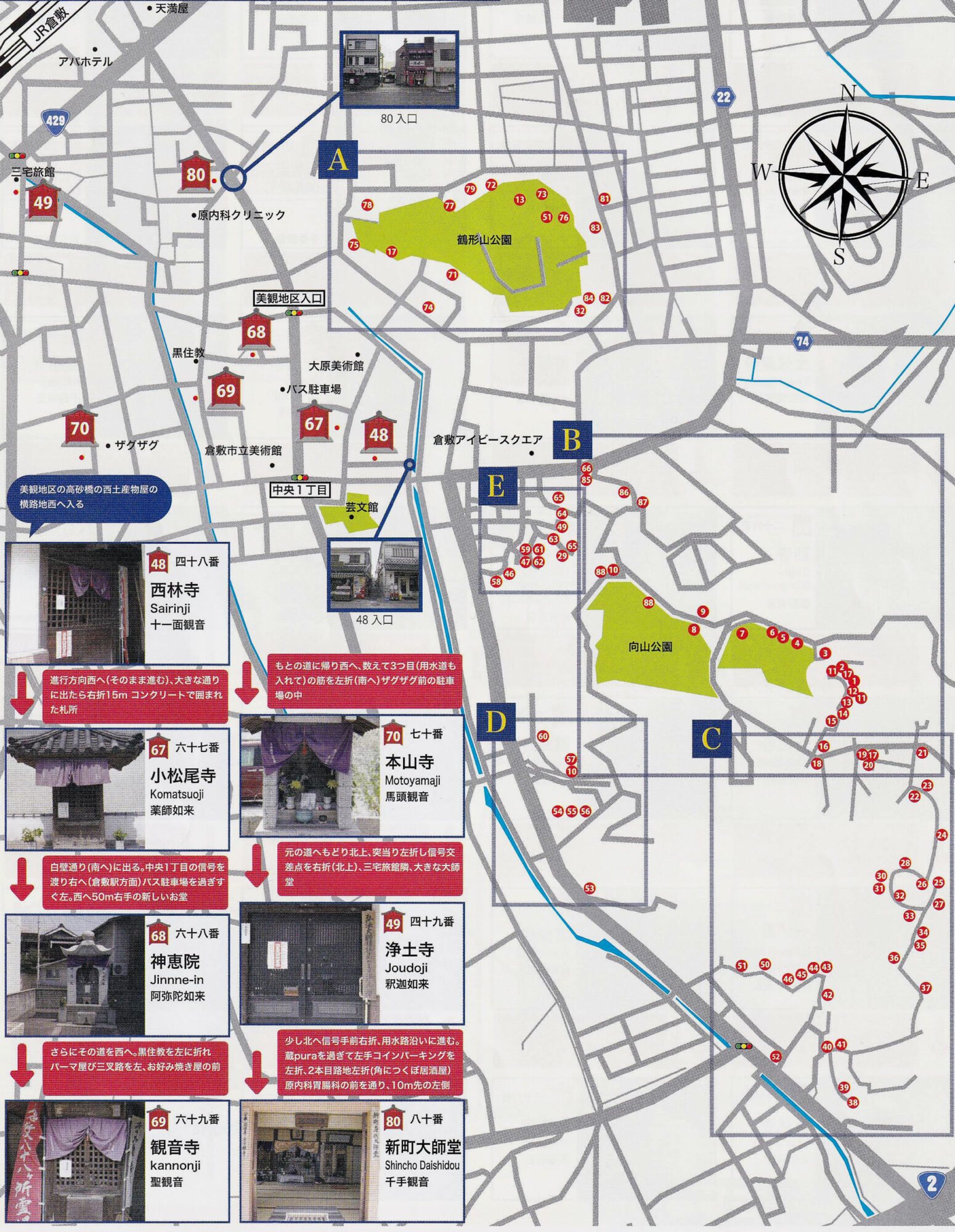
▼This is the map in the "Kurashiki 88 Sacred Sites Pilgrimage" pamphlet.
Vol.1 covered the area around Tsurugata Mountain. We introduced the area marked as Area A on the map.
In Vol.2, we will walk through Area B (around Mukaiyama) and Area C in the morning, and introduce the course we walked in the afternoon through Area D, Area E, and in front of JR Kurashiki Station.
Let's visit Unben-ji Temple (north side of Mukaiyama) to Kanjizai-ji Temple (south side of Mukaiyama) (Area B to Area C)
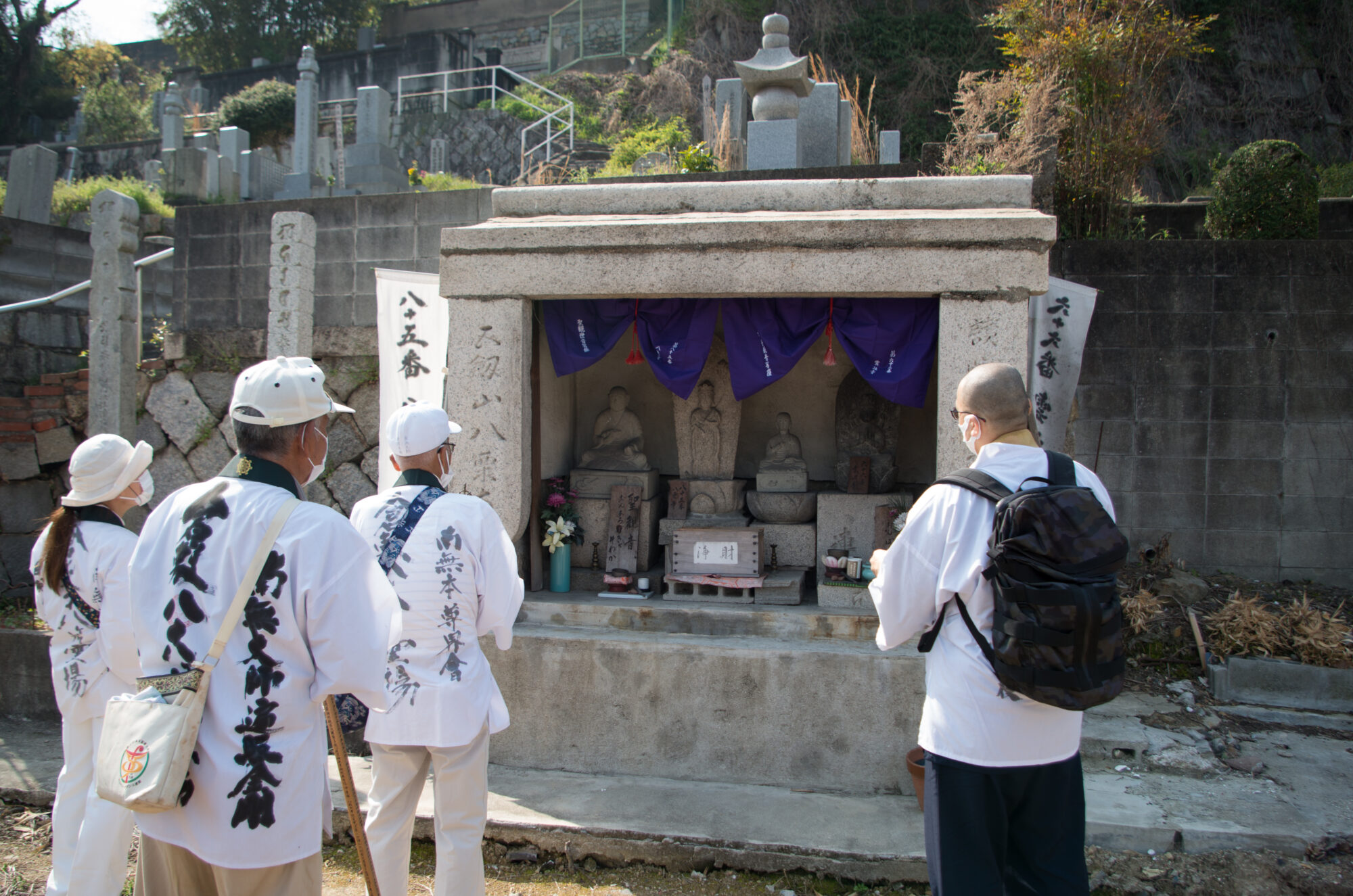
▼The 66th sacred site, Unben-ji Temple, and the 85th sacred site, Yakuri-ji Temple.
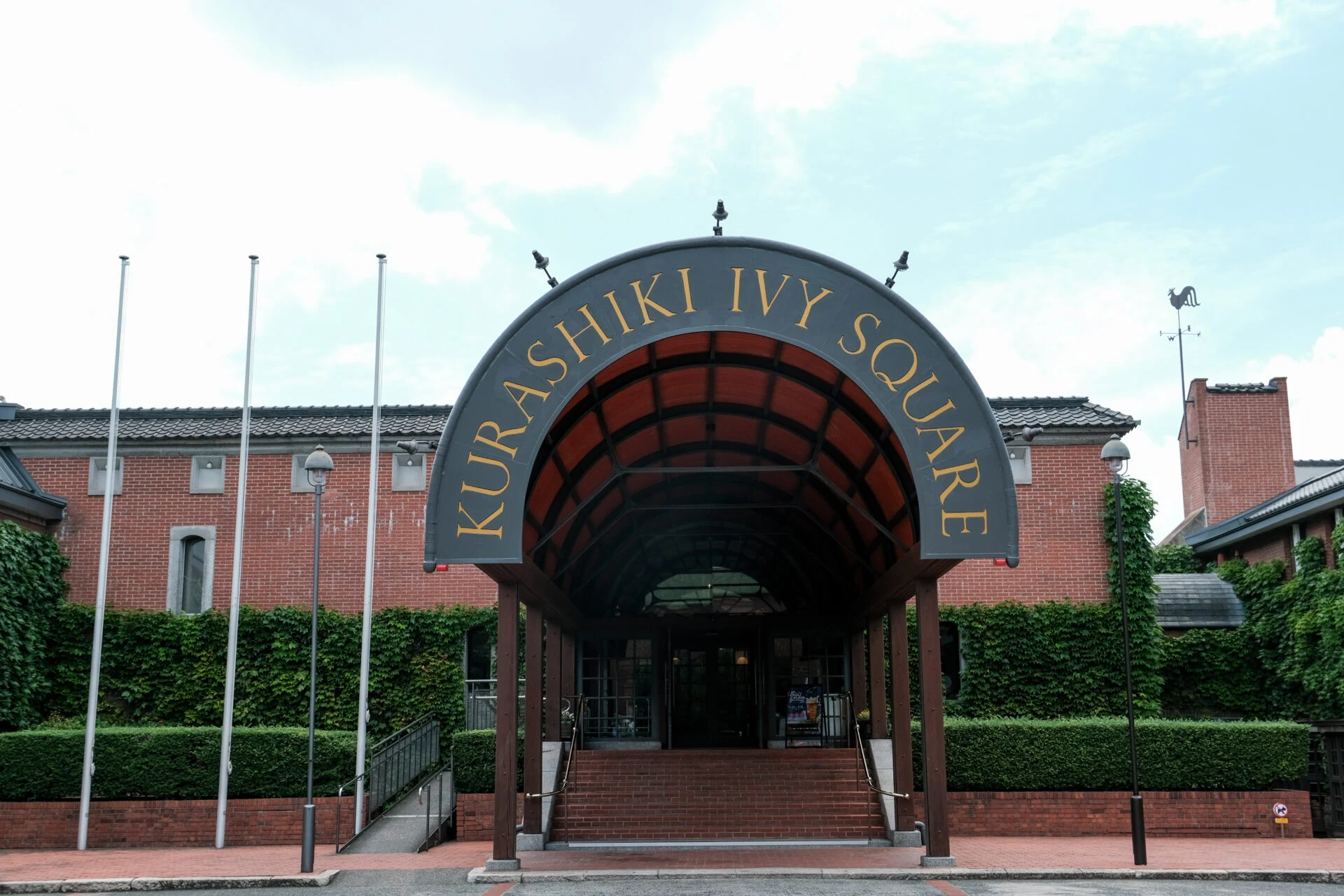
Near the intersection south of the road on the east side of Kurashiki Ivy Square.
Since the two sacred sites are combined in one location, the site is large, and there are four deities enshrined: two Kobo Daishi and two main deities.
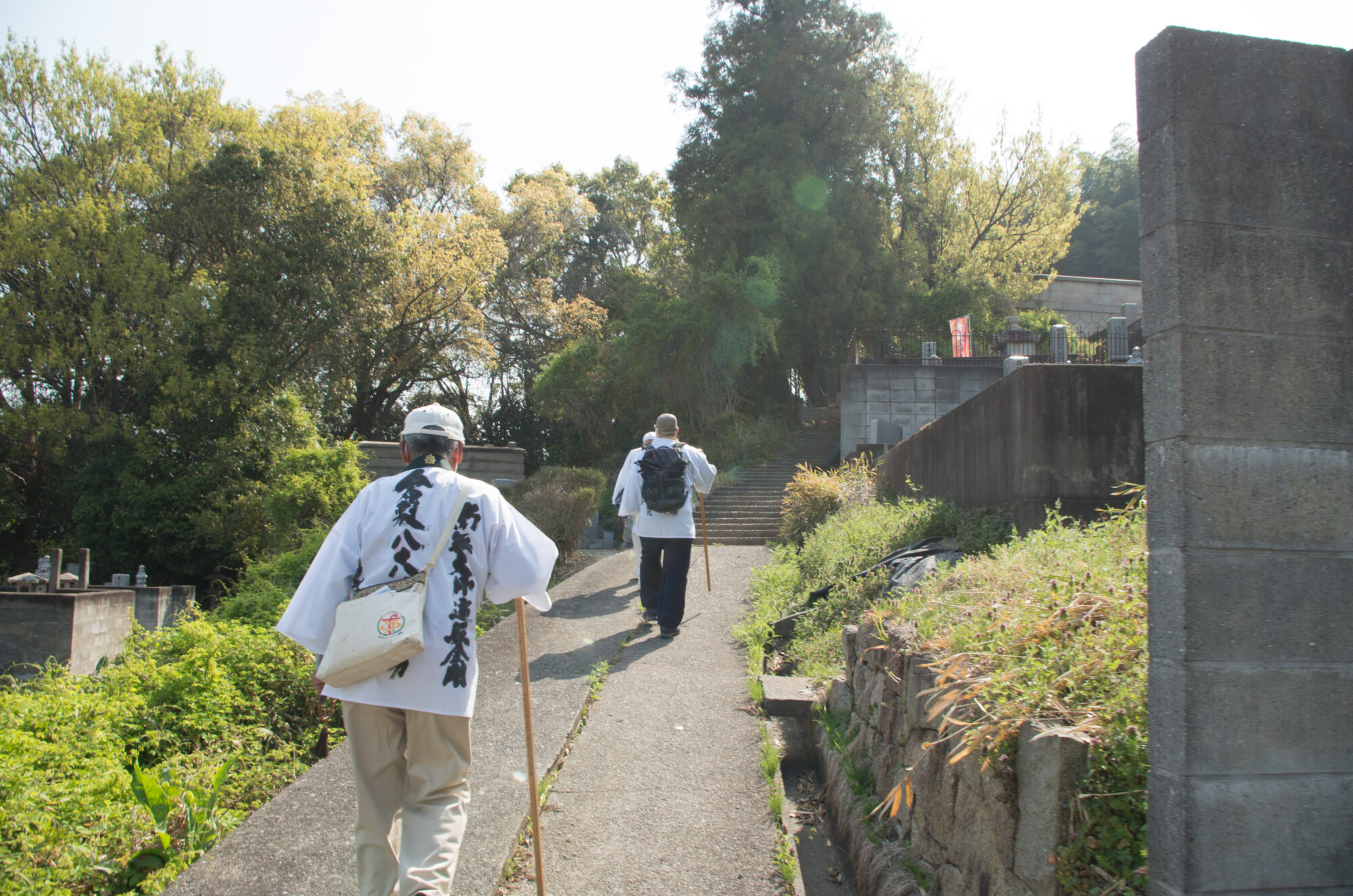
▼Let's go up the narrow path from here to Mukaiyama.
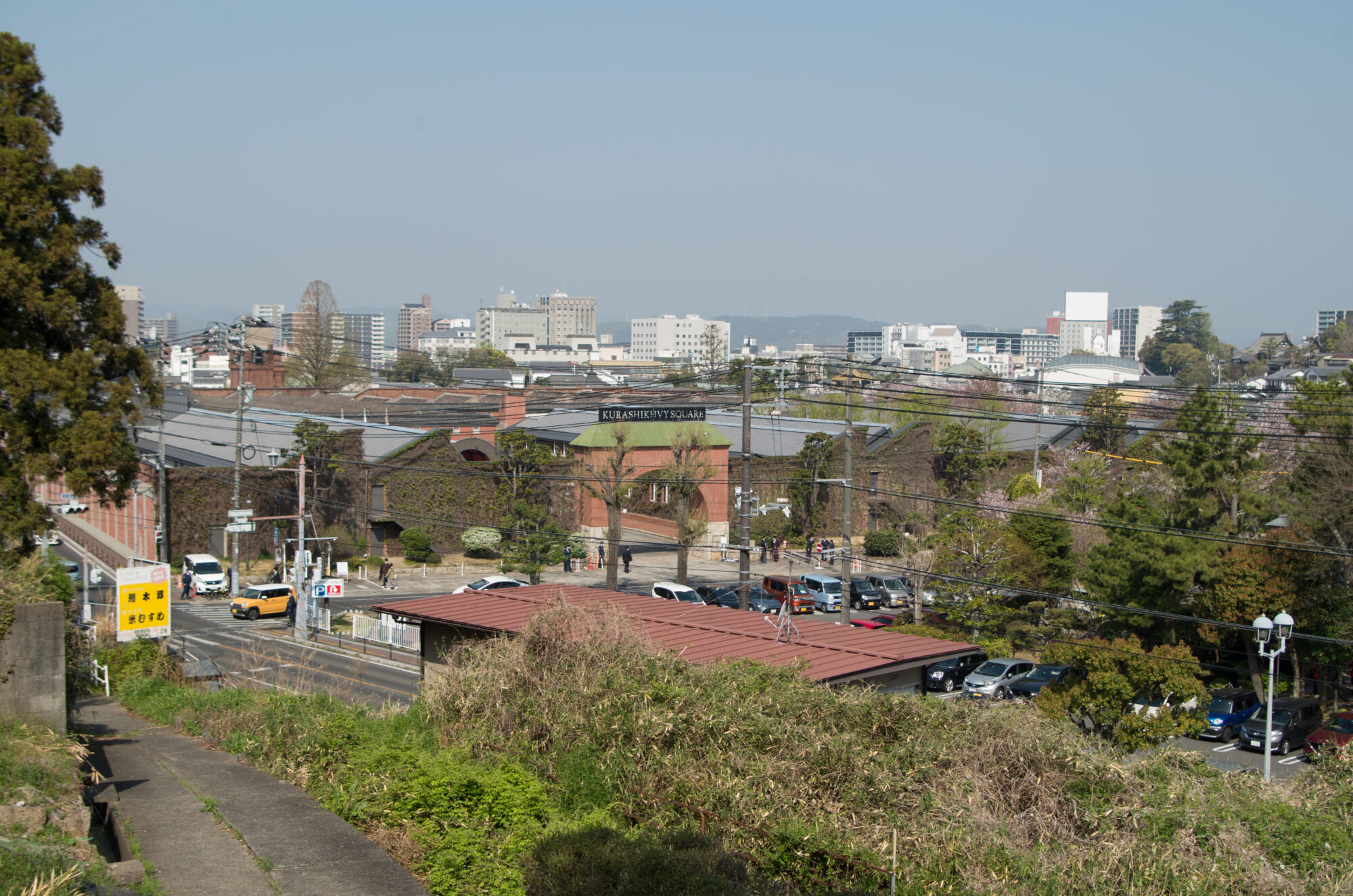
▼A little further up. When you look back, you can see Kurashiki Ivy Square and the central city area of Kurashiki.
Just a slight change in perspective makes the scenery you usually see look different, doesn't it?
▼The 87th sacred site, Nagao-ji Temple. It may look a bit tilted, but it is firmly placed on a solid natural stone foundation.
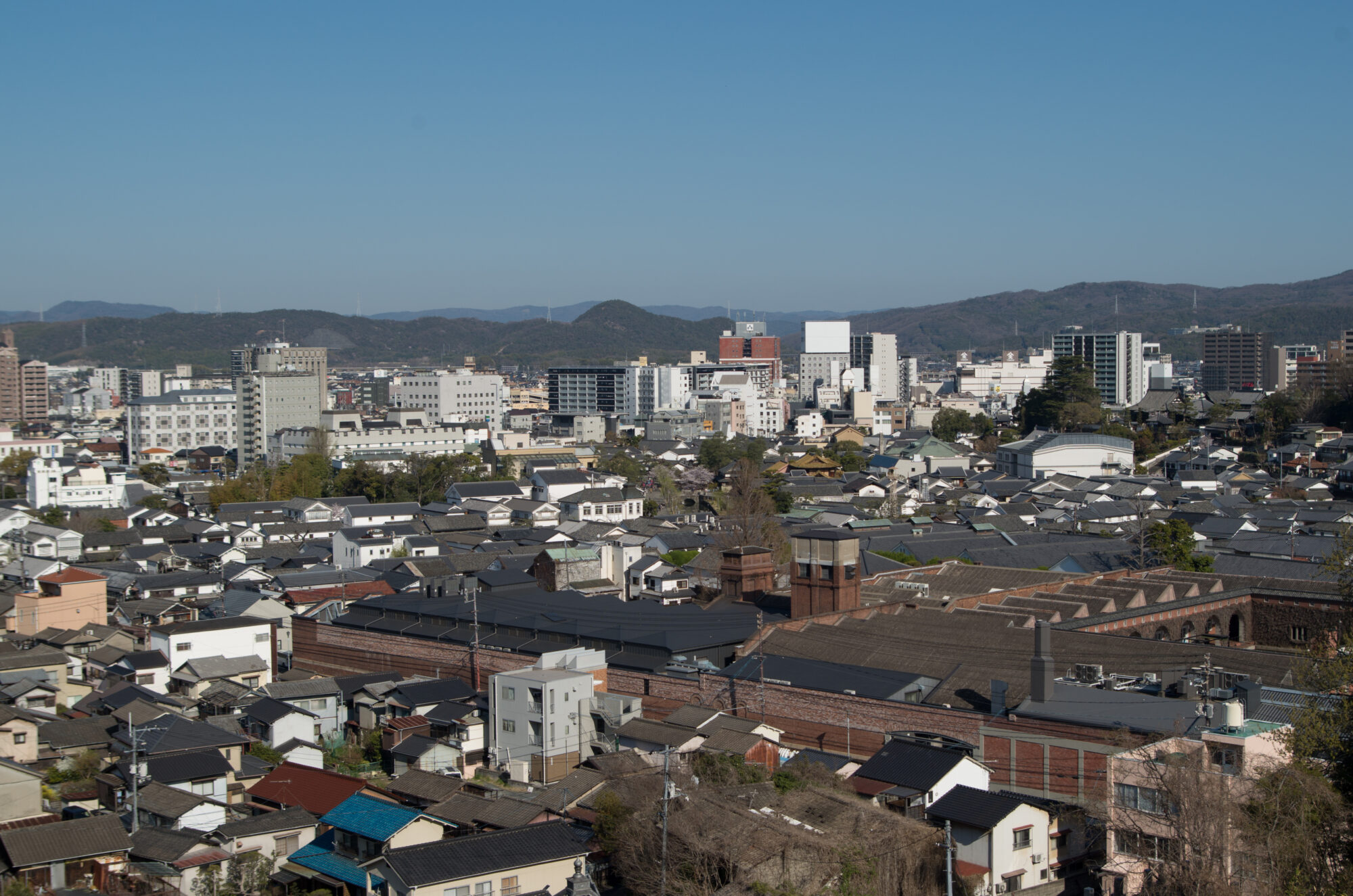
▼Scenic viewpoint.
The entire view of "Kurashiki Ivy Square" and a little further back, you can also see "Achi Terrace Kurashiki."
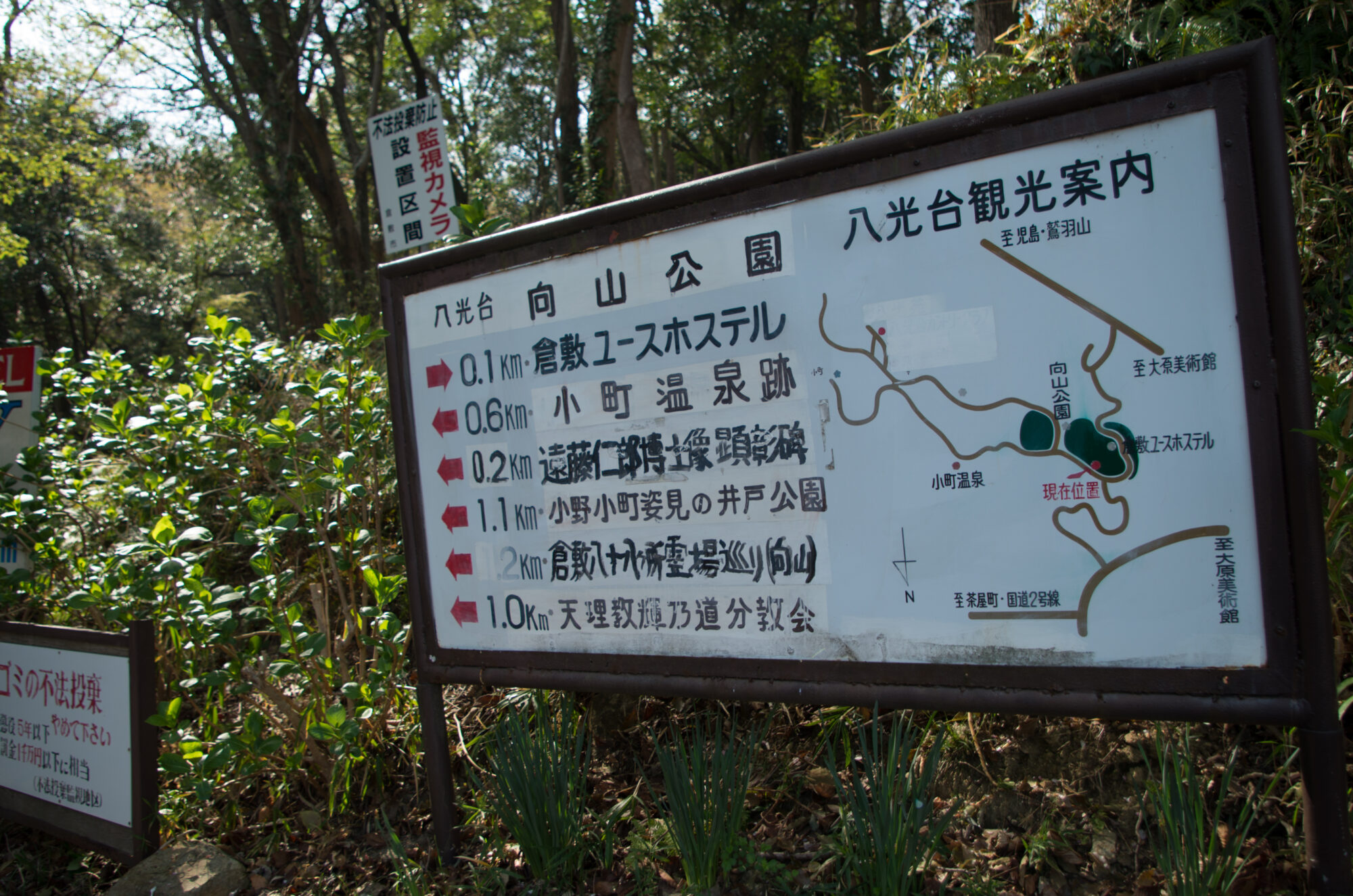
▼The signboard at the top of Mukaiyama.
It clearly states "Kurashiki 88 Sacred Sites Pilgrimage (Mukaiyama)" in the second row from the bottom.
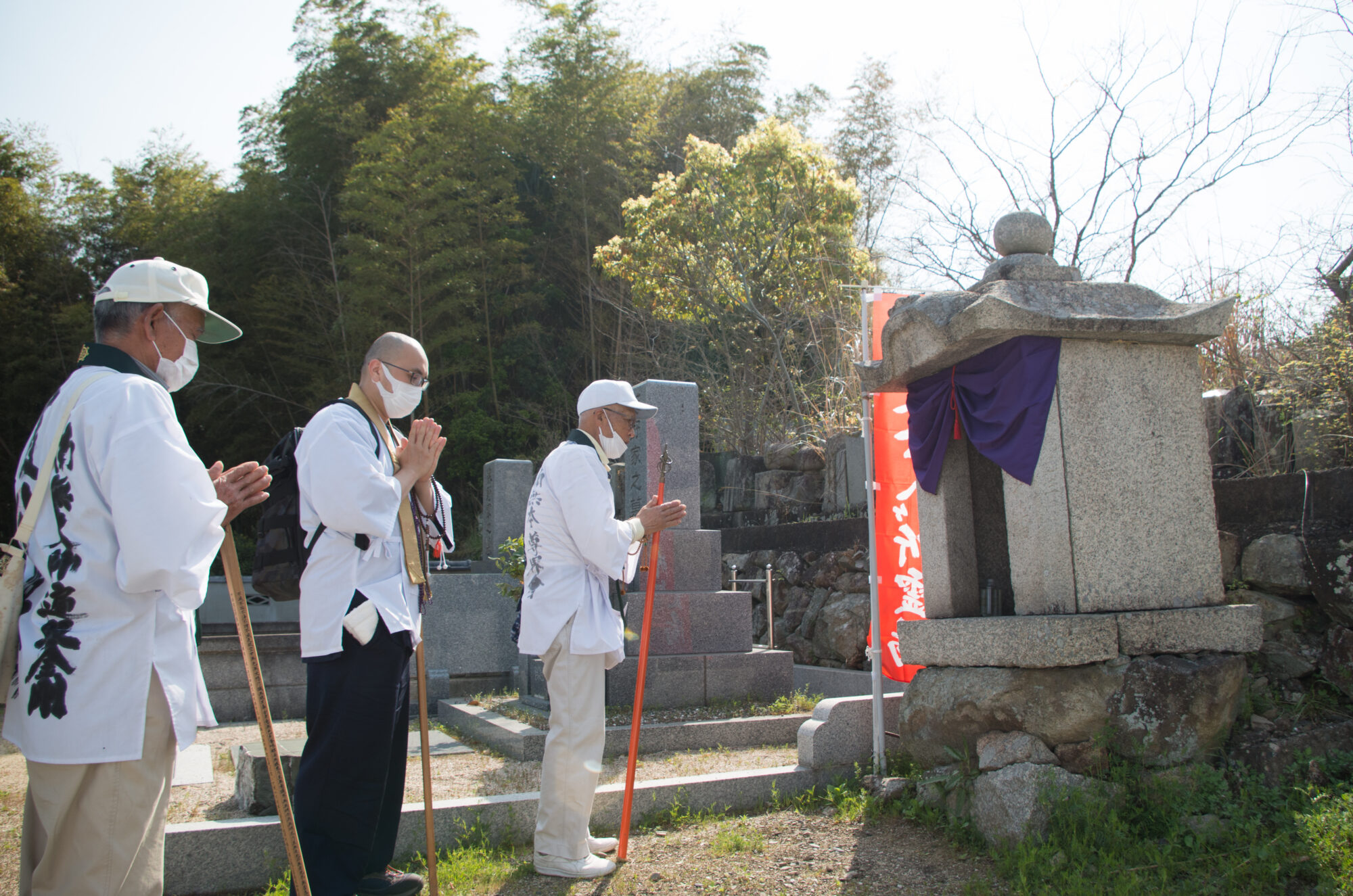
▼The 88th sacred site, Okunoin.
It is located right next to the road leading up to Mukaiyama Park, so you may have seen it.
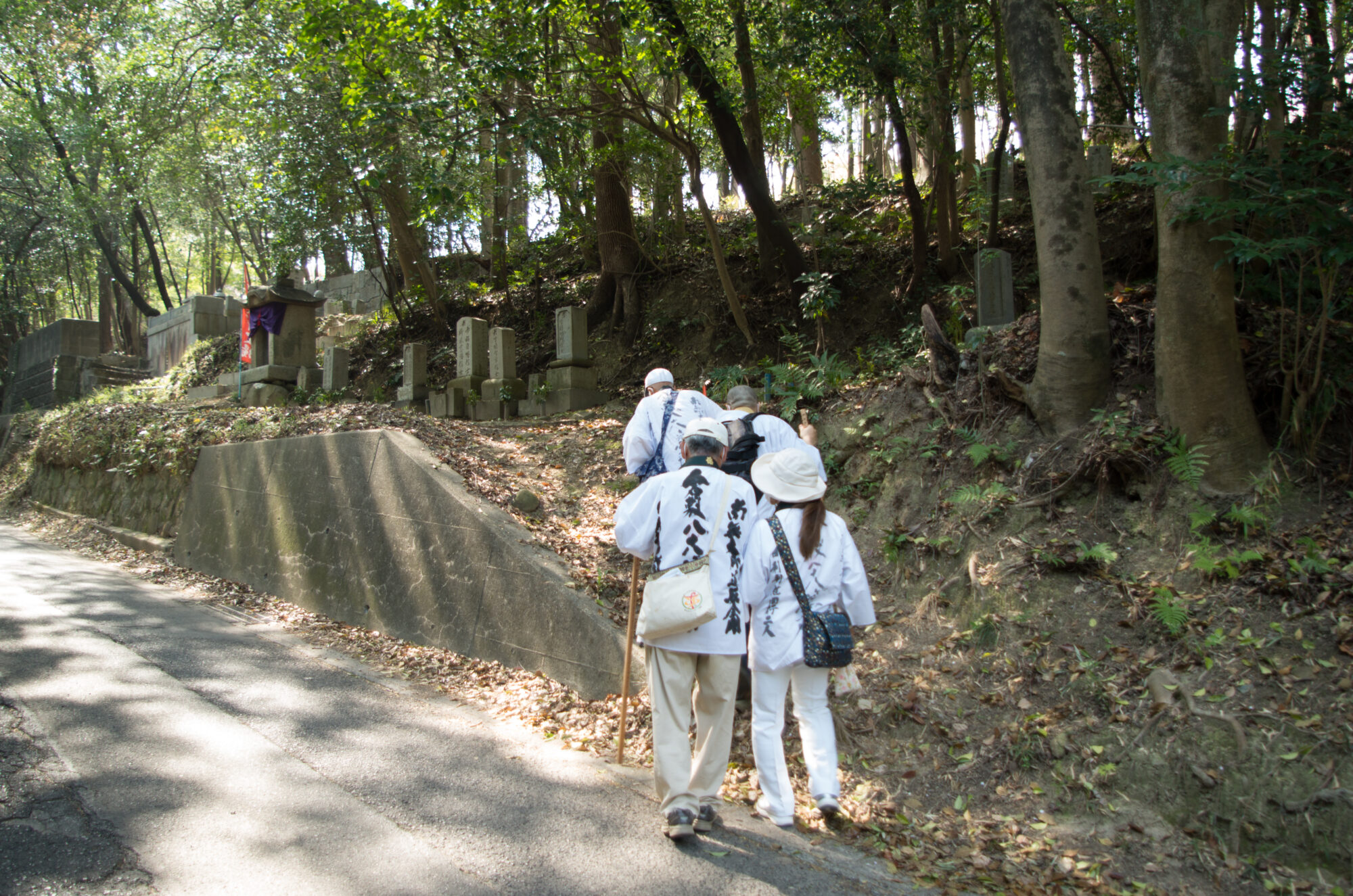
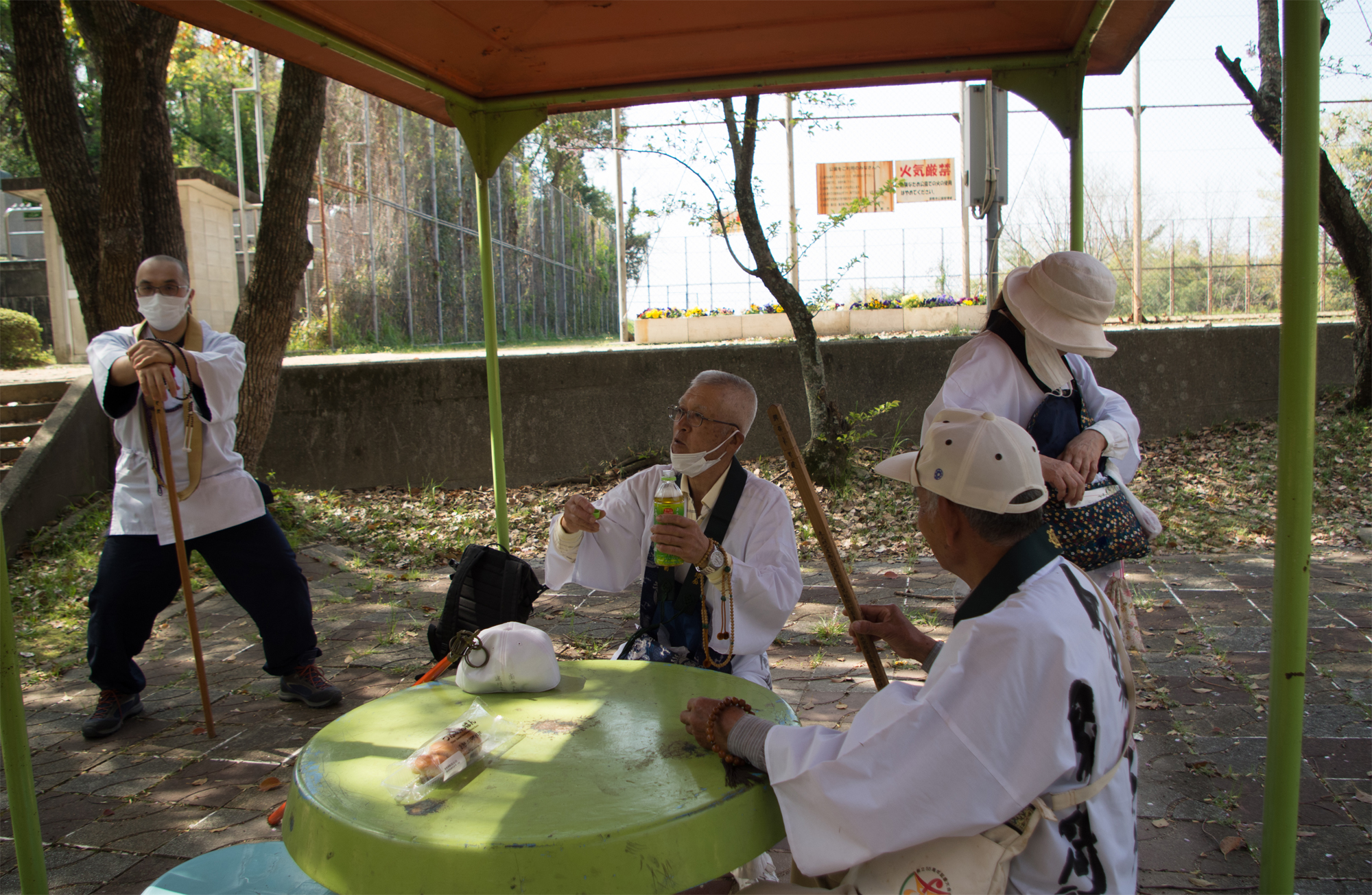
▼Taking a break at Mukaiyama Park after climbing the slope. Although we walked slowly, I was out of breath and sweating.
I enjoyed some sweets prepared by Mr. Kato, a guide of the Kurashiki 88 Sacred Sites, and regained my energy.
As the author, I am captivated by the flexible pose of Mr. Chushun from Kanryuji Temple.
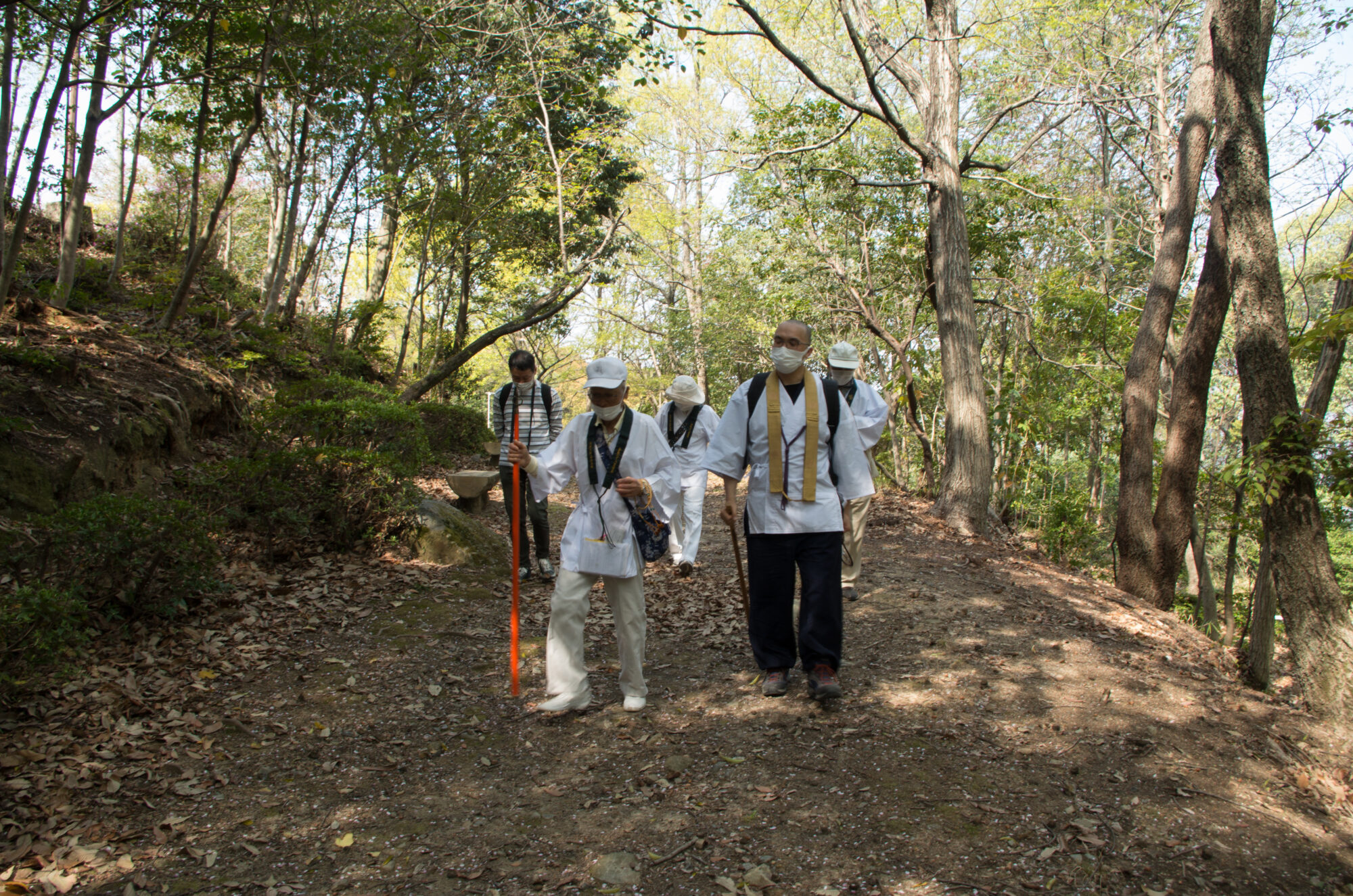
▼From the park, we will slowly descend the wide, well-maintained mountain path.
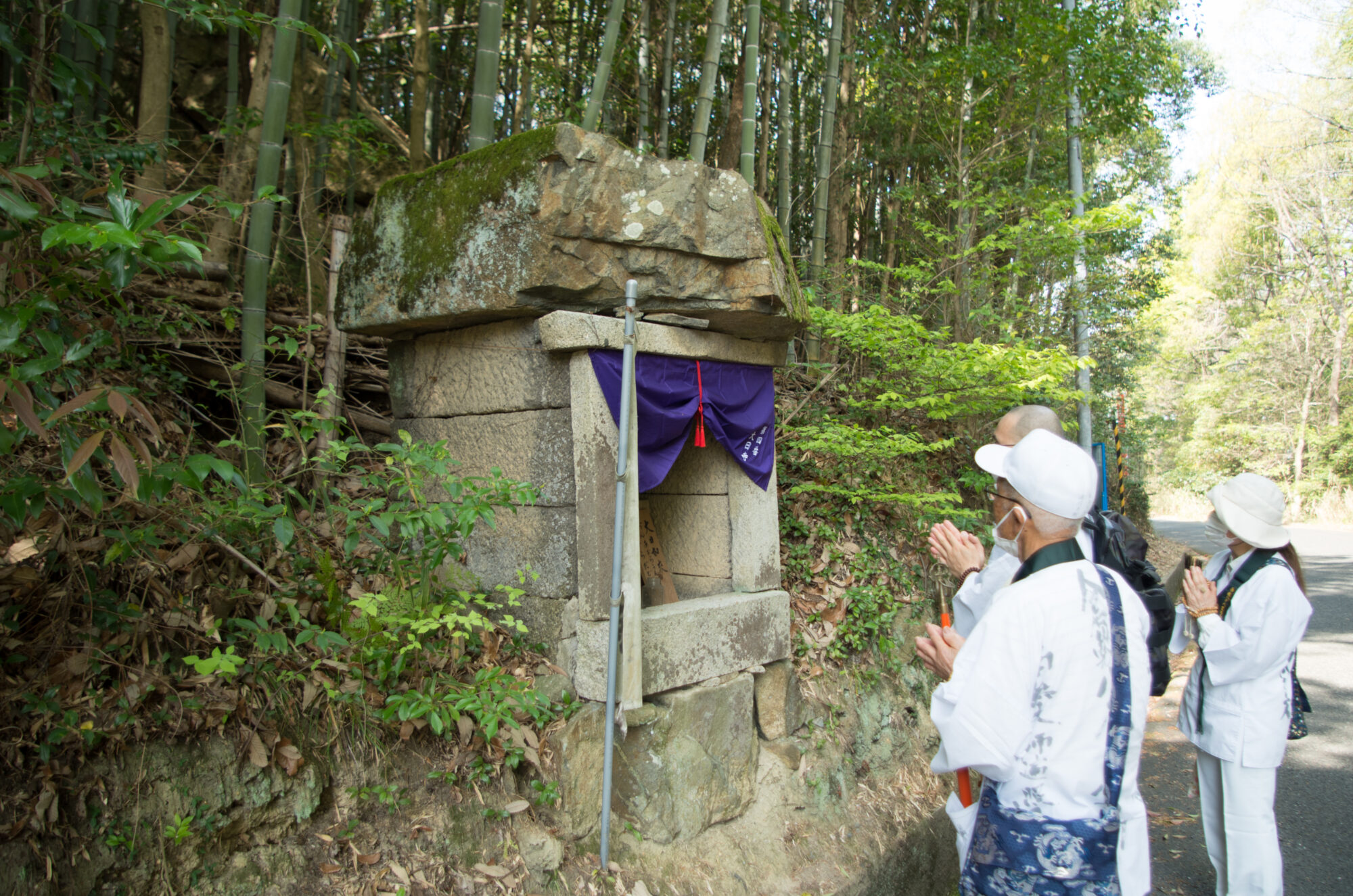
▼The 4th sacred site, Dainichi-ji Temple. This site is characterized by a large natural stone placed on top of the temple.
It is said that it is unknown when and how it was placed there.
▼The 3rd sacred site, Konzen-ji Temple.
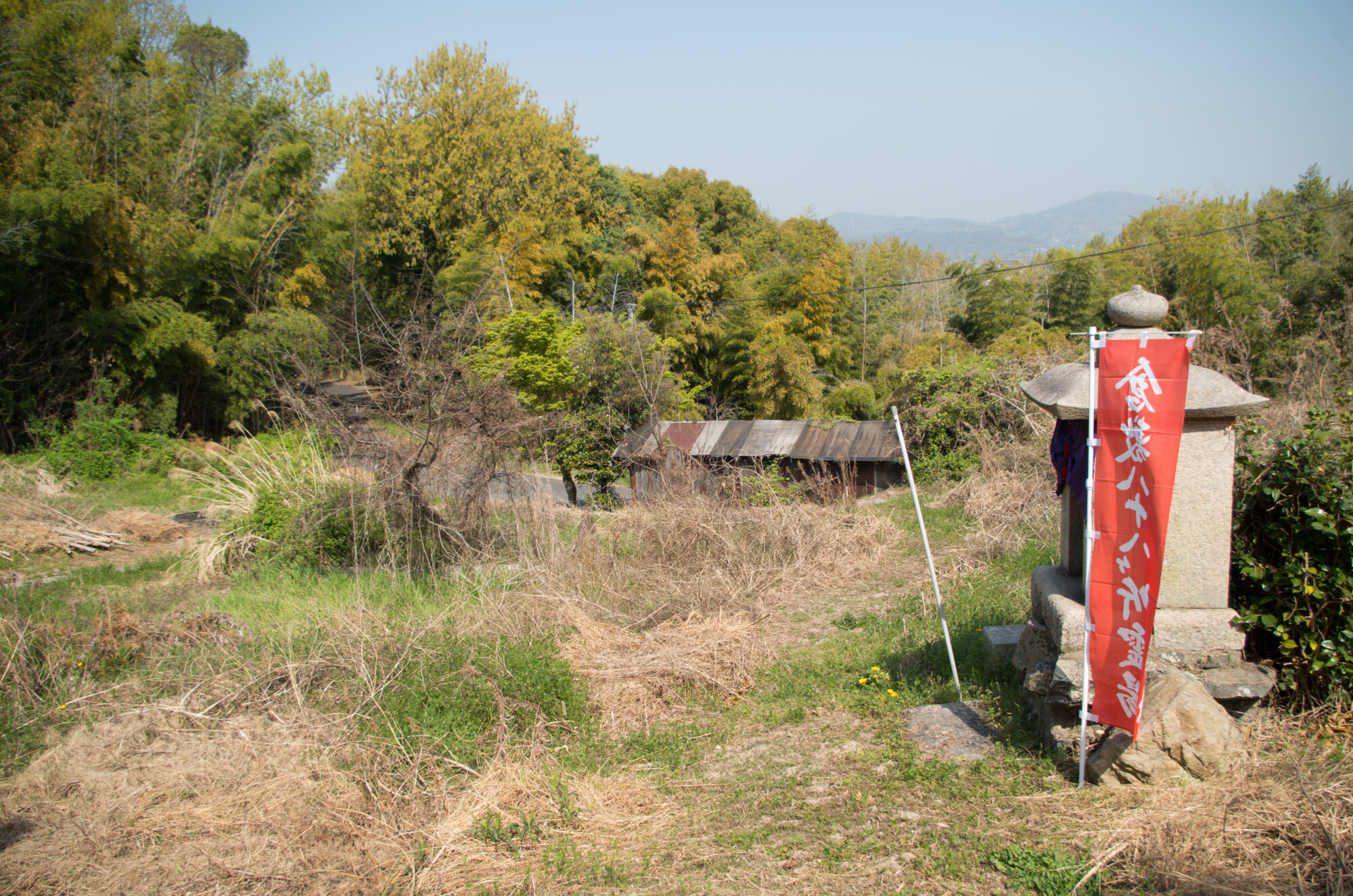
One of my favorite views.
Aside from the temple, there are only dirt paths and small huts. It makes me imagine, "Did people walk while enjoying such a primitive landscape when the sacred site was first opened?"
▼ 11th temple Fujidera and 2nd temple Gokurakuji.
Several temples are gathered and enshrined in the bamboo grove and tranquility. It is quite difficult to approach unless it is well maintained, but it is a group of temples that I hope you will visit at least once.
The reason for the many gathered here is said to be, "Around the early Showa period, when a road was established leading up to Mukoyama, they were gathered here."
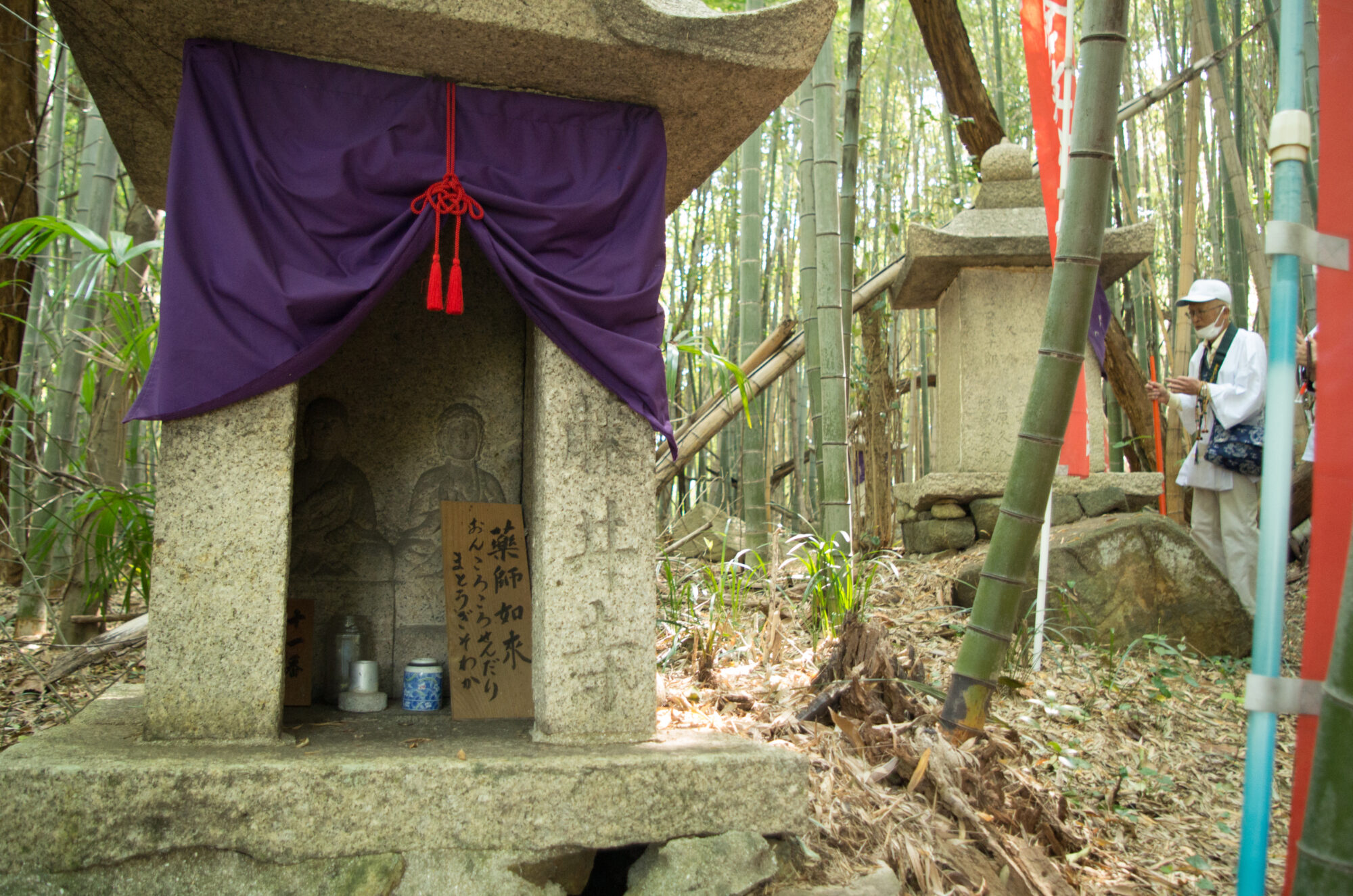
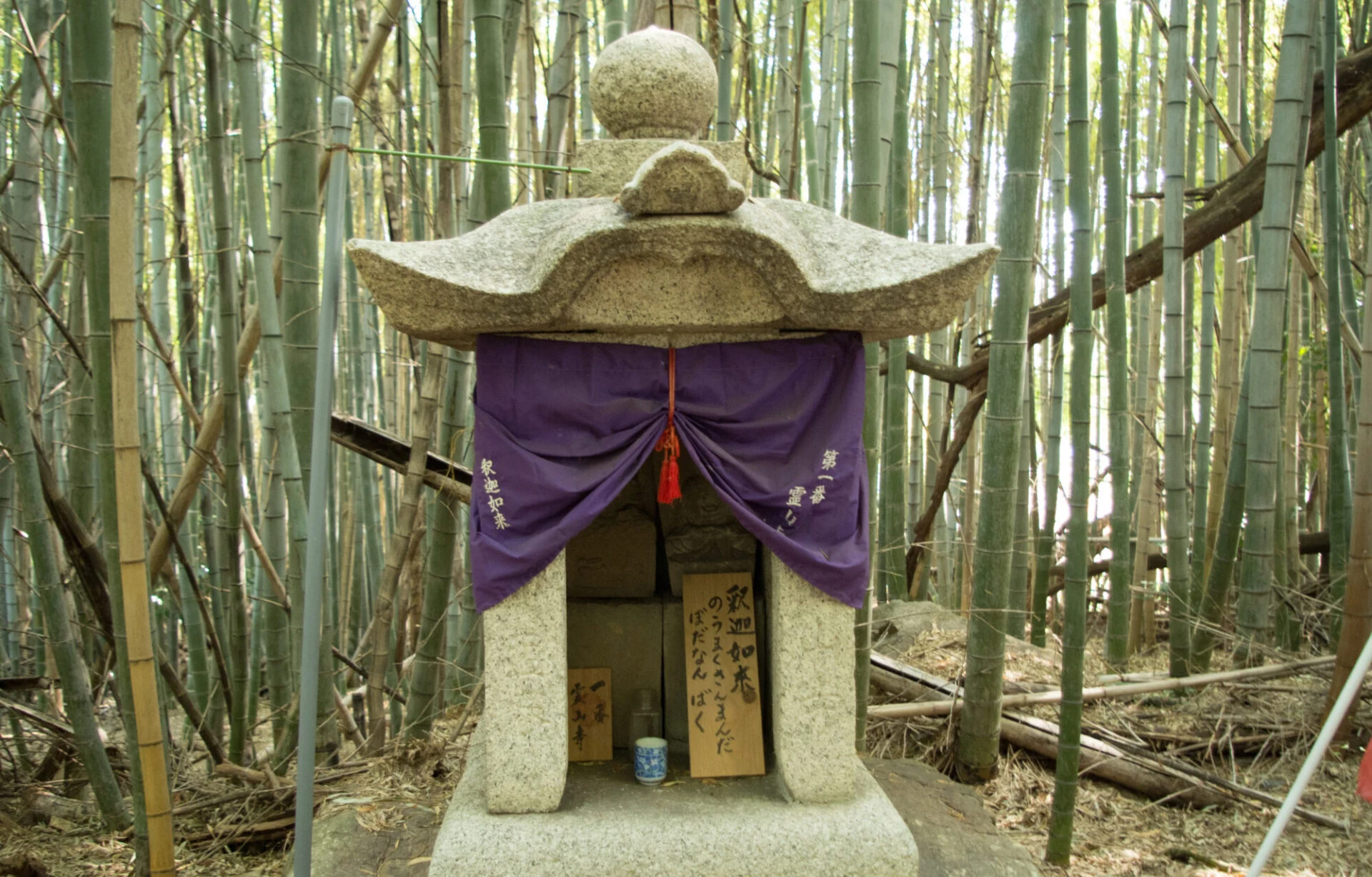
▼ The 2nd temple Gokurakuji, the 17th temple Idodera Okunoin, and the 1st temple Reigenji are lined up.
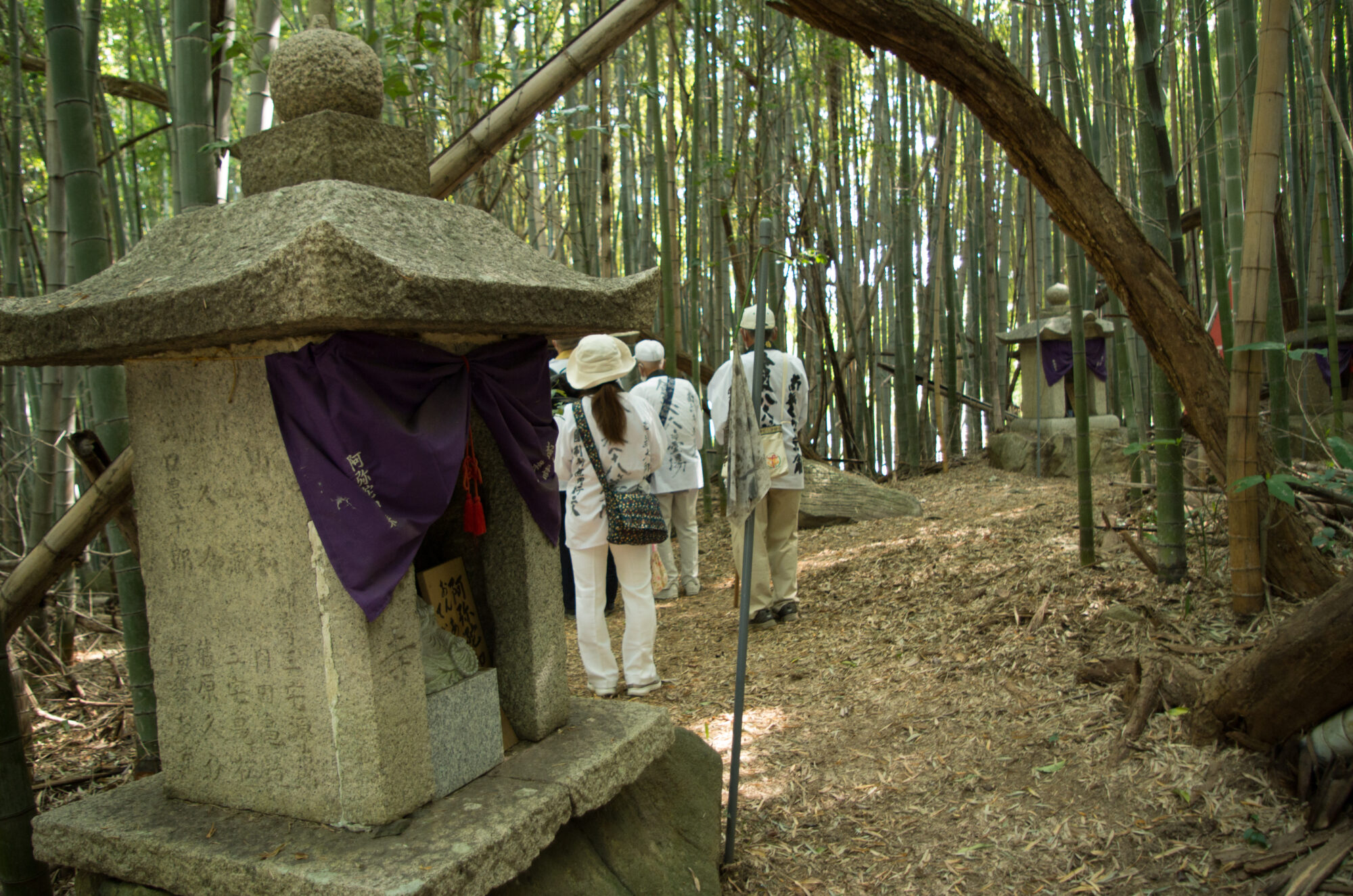
▼ 15th temple Kokubunji.
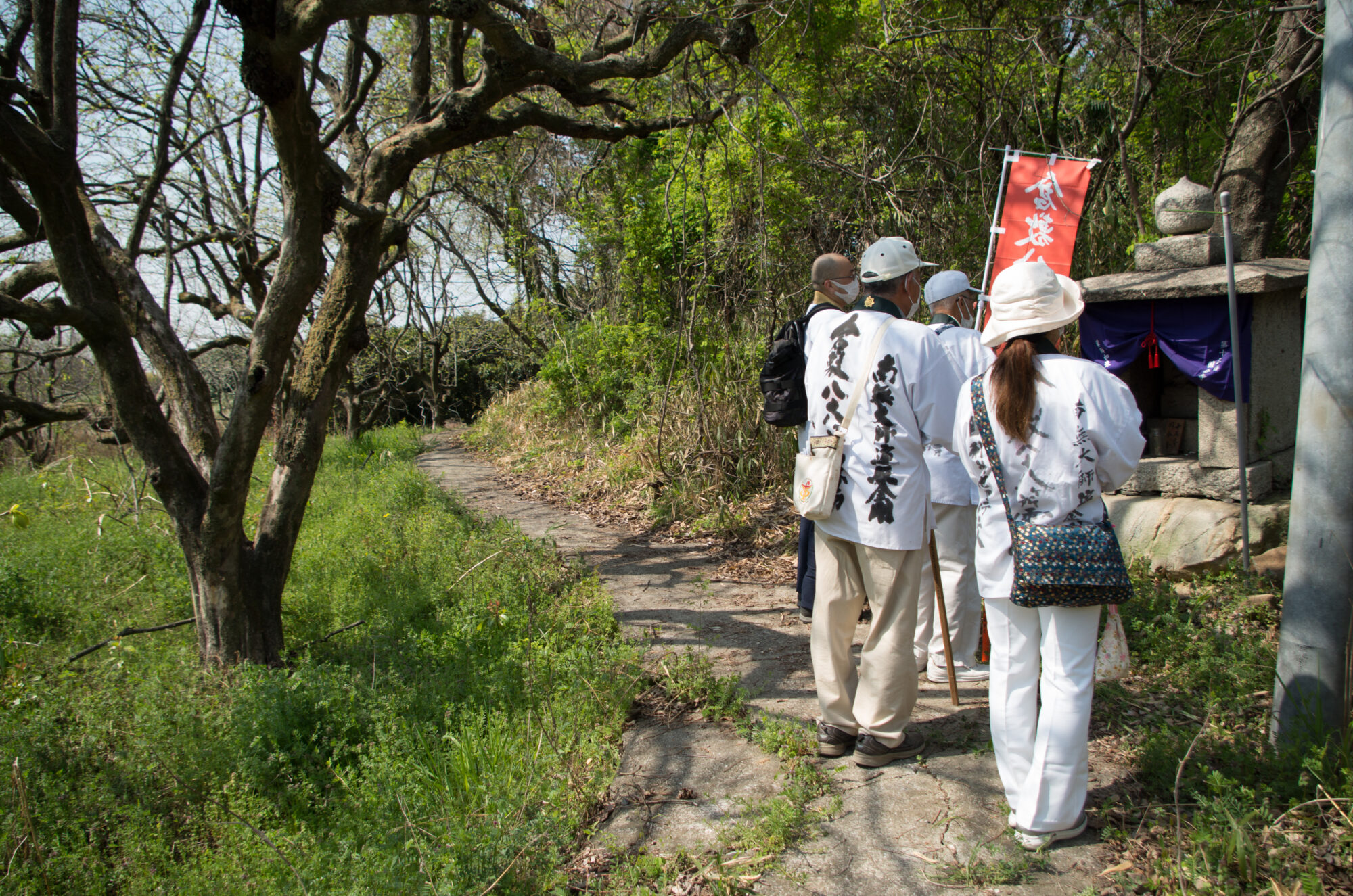
This mountain path also excites me, wondering, "Is this the path that has remained since the early days of the pilgrimage?"
▼ 21st temple Tairyuuji. On the day I walked with everyone, I was captivated by the daffodils blooming on both sides of the temple.
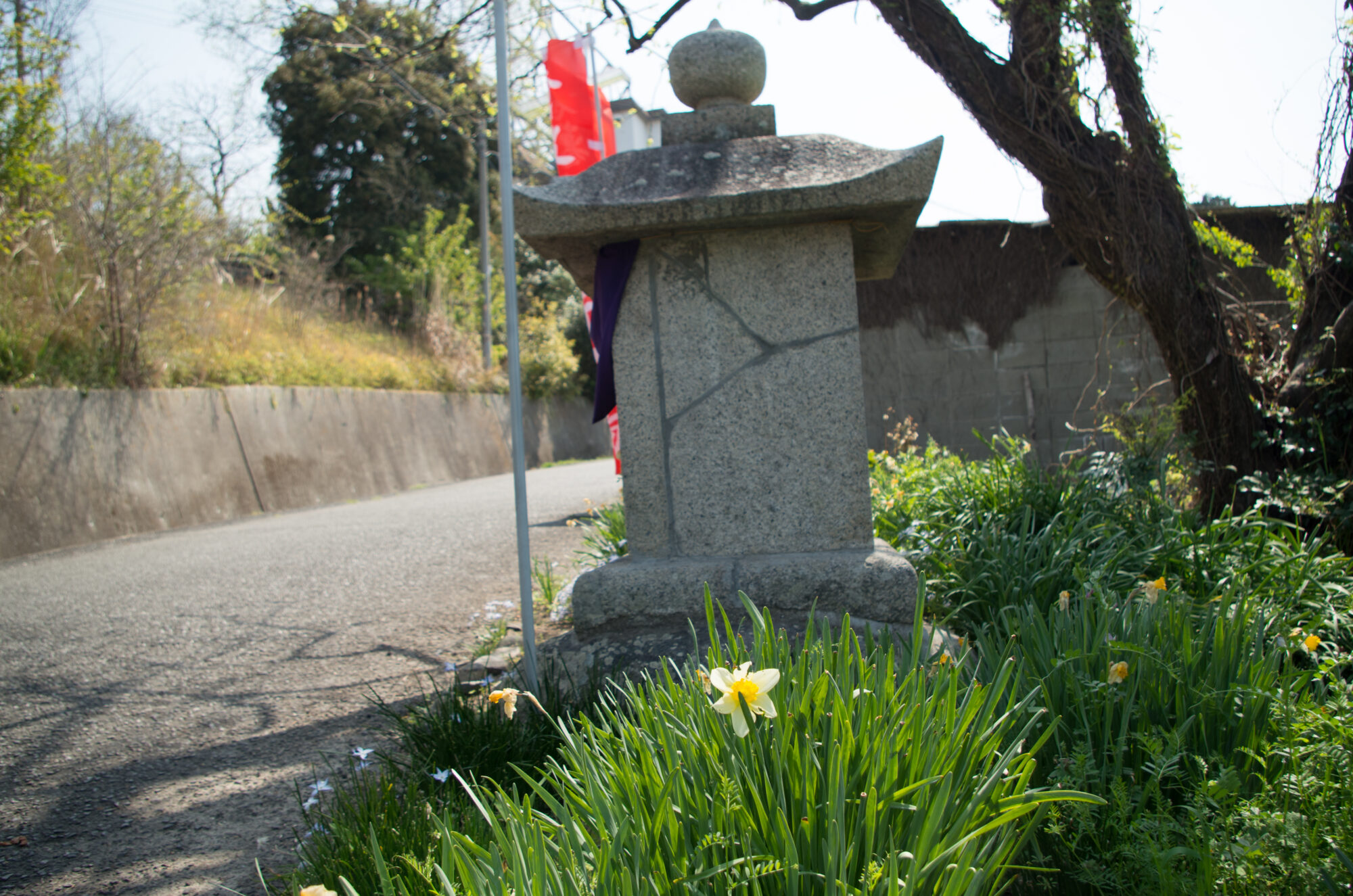
▼ Entering the mountain path next to the 21st temple. It is quite a path that takes courage to enter alone.
On the Mukoyama course, there are also such unclear entrances. Therefore, I recommend participating in the pilgrimage held every March and November.
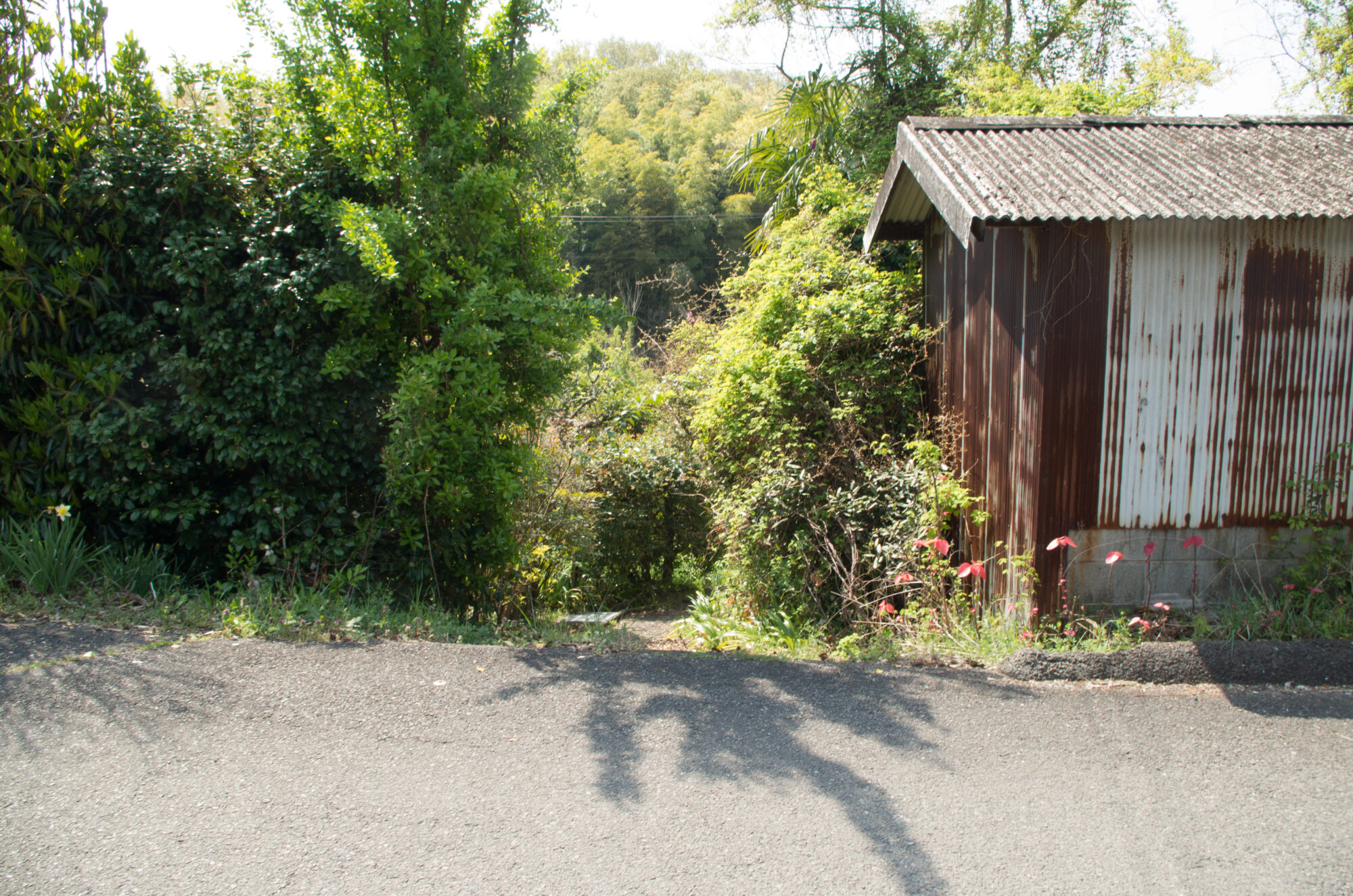
▼ Truly a mountain path.
Here, pay attention to the felled trees and bamboo on the left side. Maintaining a mountain that people can enter is quite challenging.
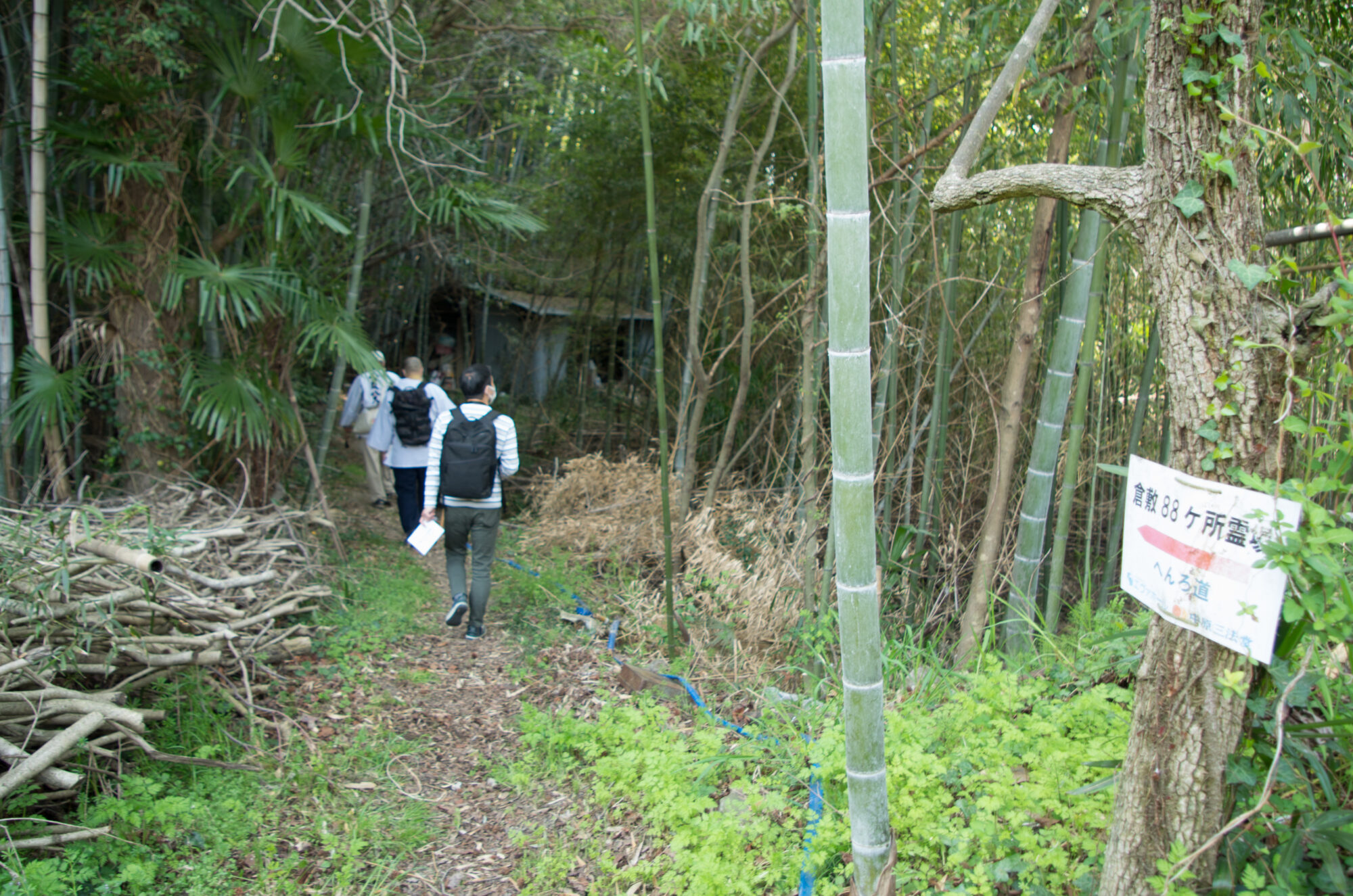
▼ Suddenly changing to a broadleaf forest.
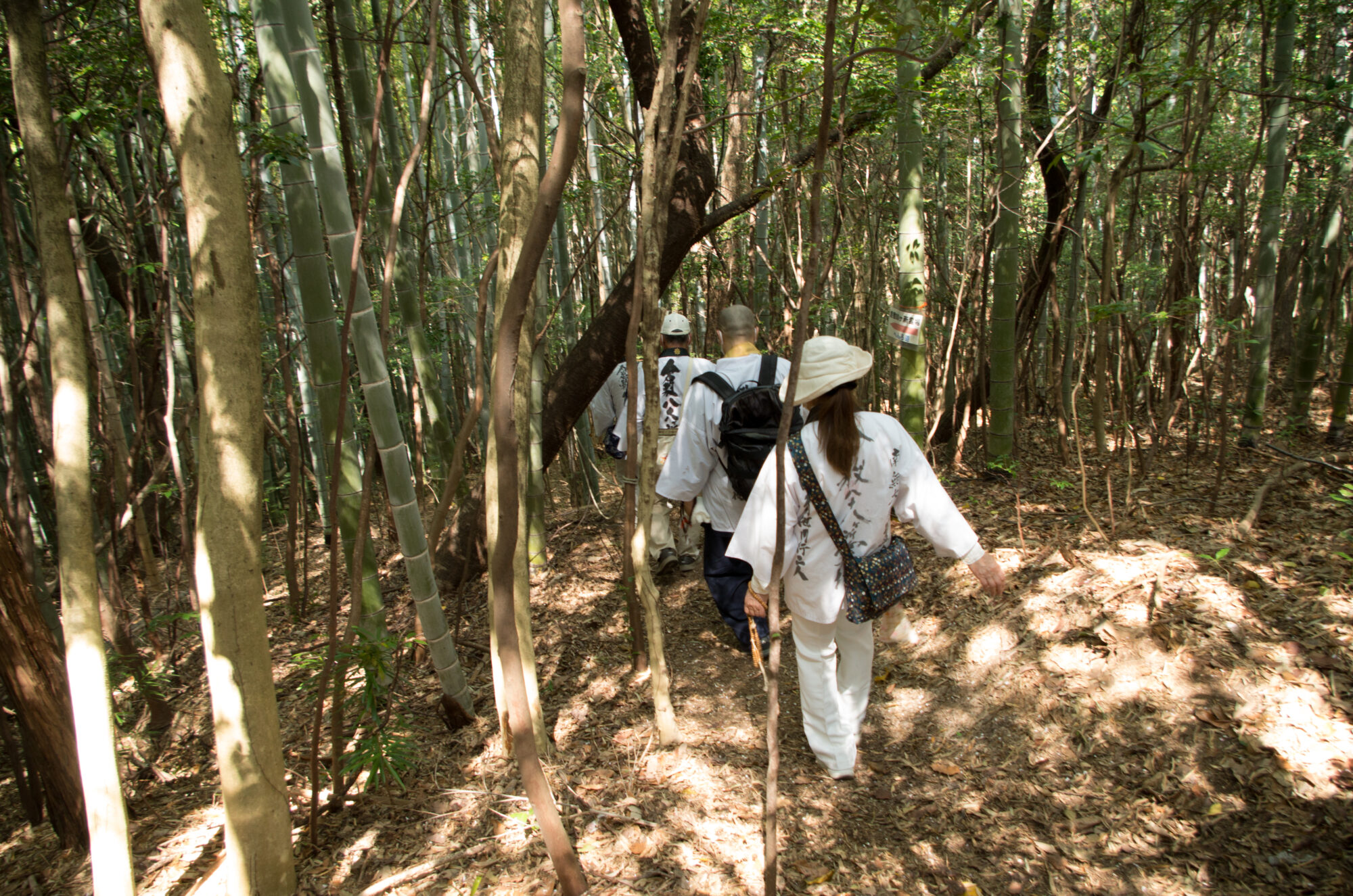
This somewhat dark forest has little underbrush, making it easy to walk.
However, because sunlight does not reach the ground, underbrush does not grow, and due to the effects of rain and other factors, surface erosion progresses, making the mountain prone to degradation.
Since the dry fallen leaves make it a bit slippery, I walked slowly, taking one step at a time.
▼ 33rd temple Sekkeiji.
I think this area is near the summit of Mukoyama.
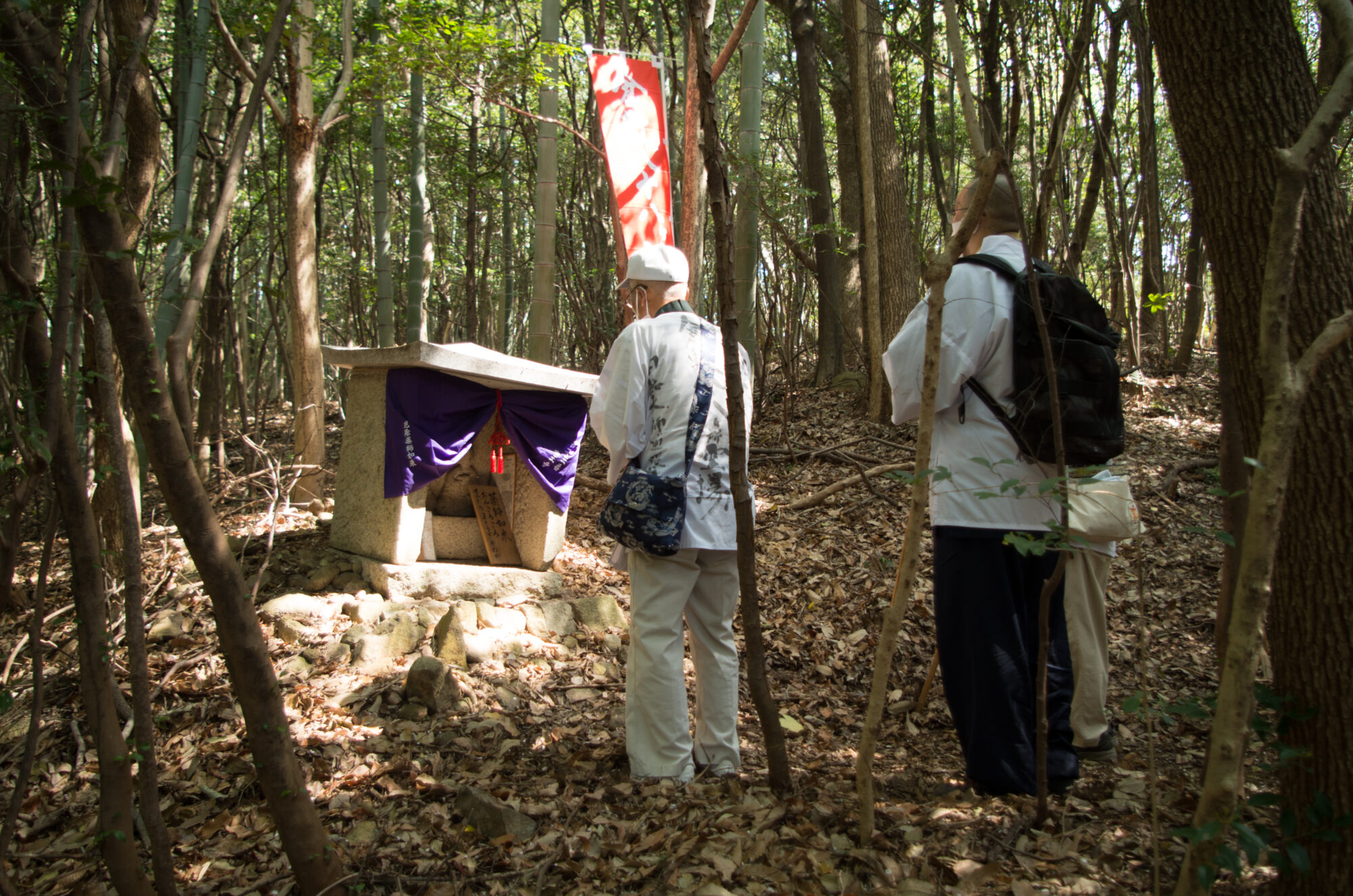
Especially from the 26th temple Nishidera to the 25th temple Tsudera, they are very close to each other, so caution is necessary. Please walk the correct course while checking the map in the pamphlet.
It seems to be a trial, as it has become a pilgrimage route that takes a bit of a detour.
▼ 36th temple Seiryuji. It is firmly established on a large natural rock.
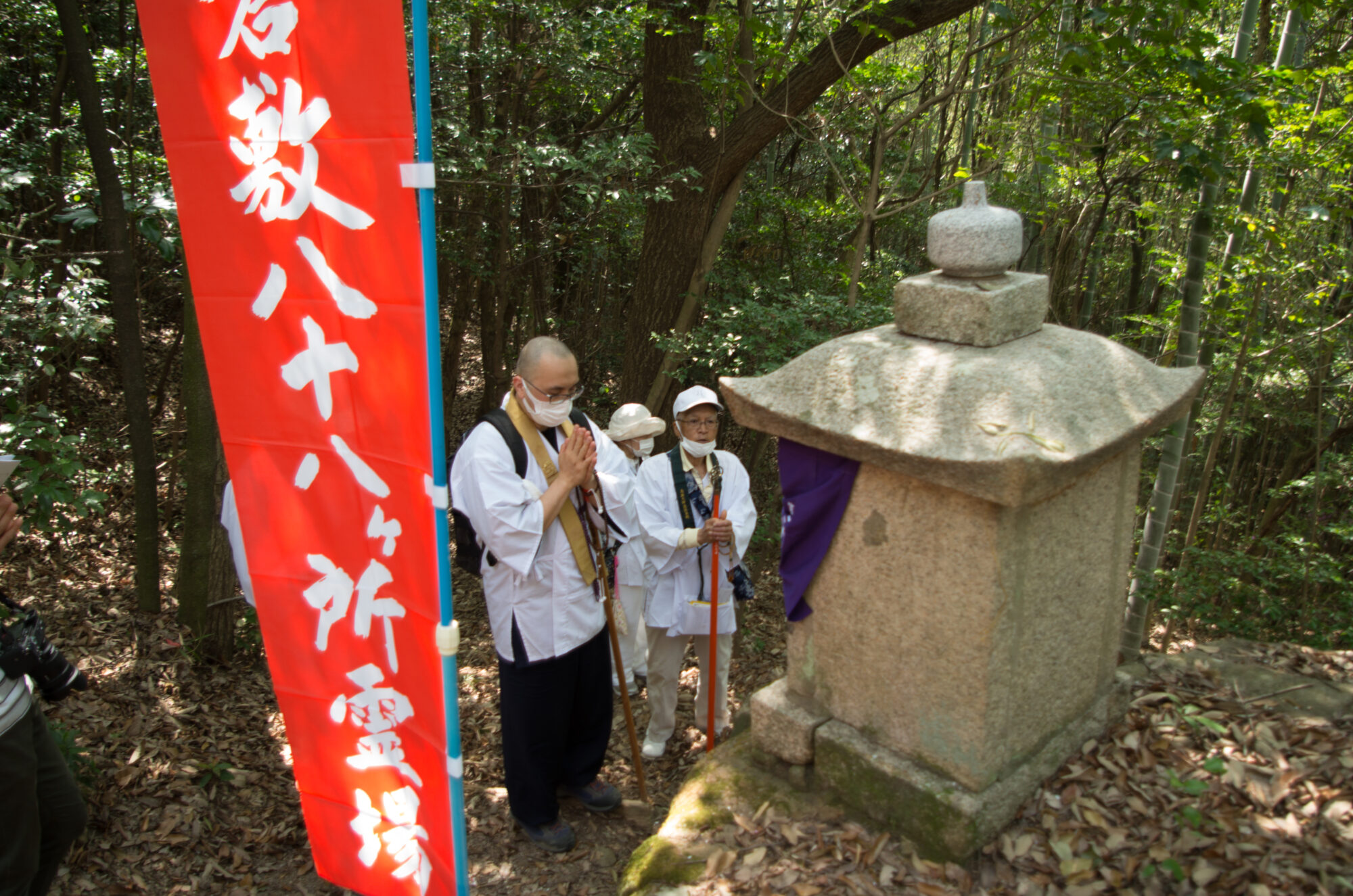
▼ As I pass through the forest, the view opens up, and I see Mt. Adaka, where the Kurashiki City Office and Adaka Shrine are located.
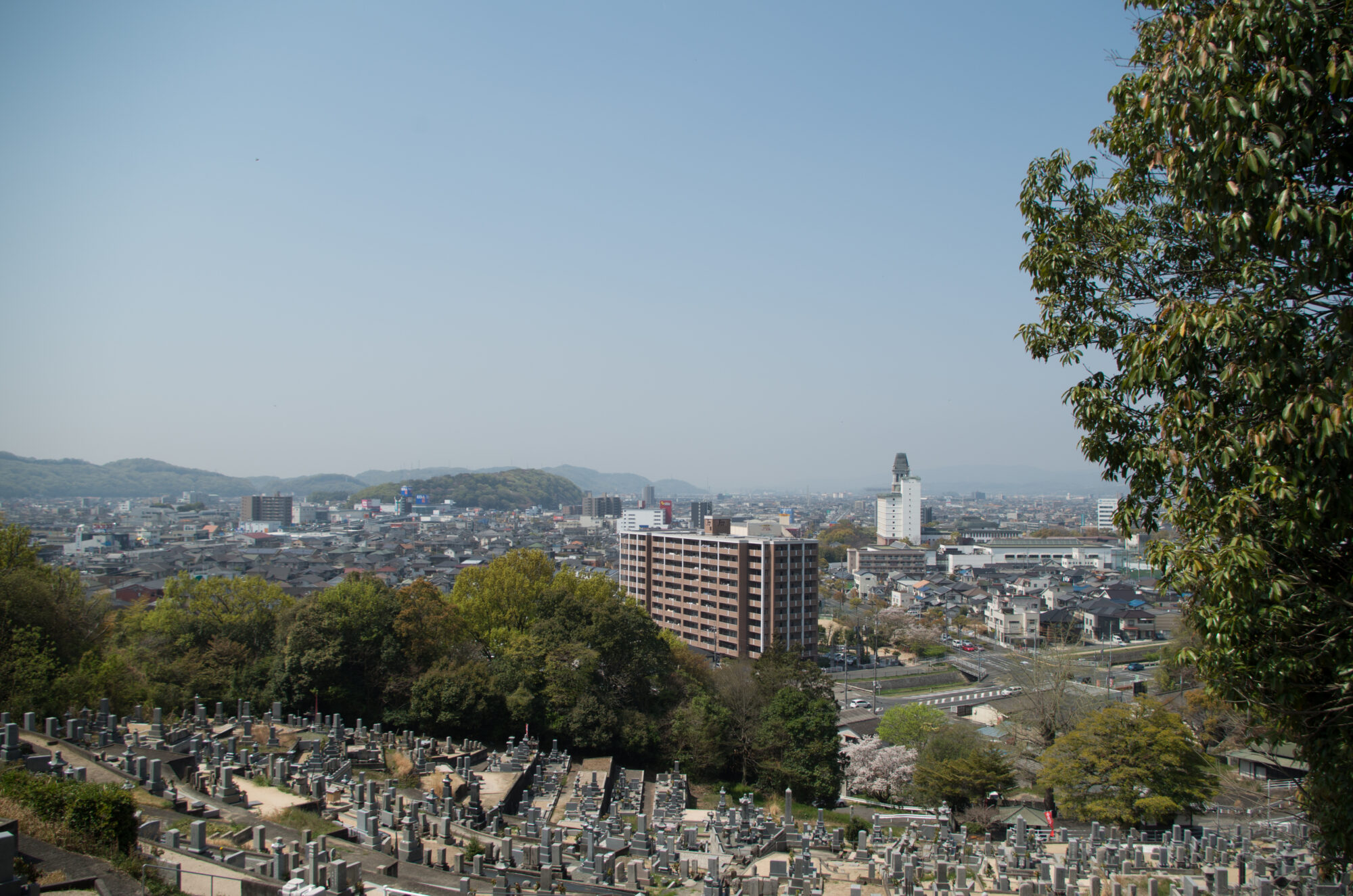
The height of the Kurashiki City Office is 66.88 meters. The elevation of Mt. Adaka is 67.00 meters.
Adaka Shrine is a shrine with a history of over 1000 years, recorded as one of the shrines in Bichu in the old record book (Engishiki).
Therefore, it is said that the designer of the city office was careful about the height in respect for the shrine.
▼ 41st temple Inariji (Ryukouji).
You can see Jinyuuan on the left behind. Several temples are scattered around this cemetery.
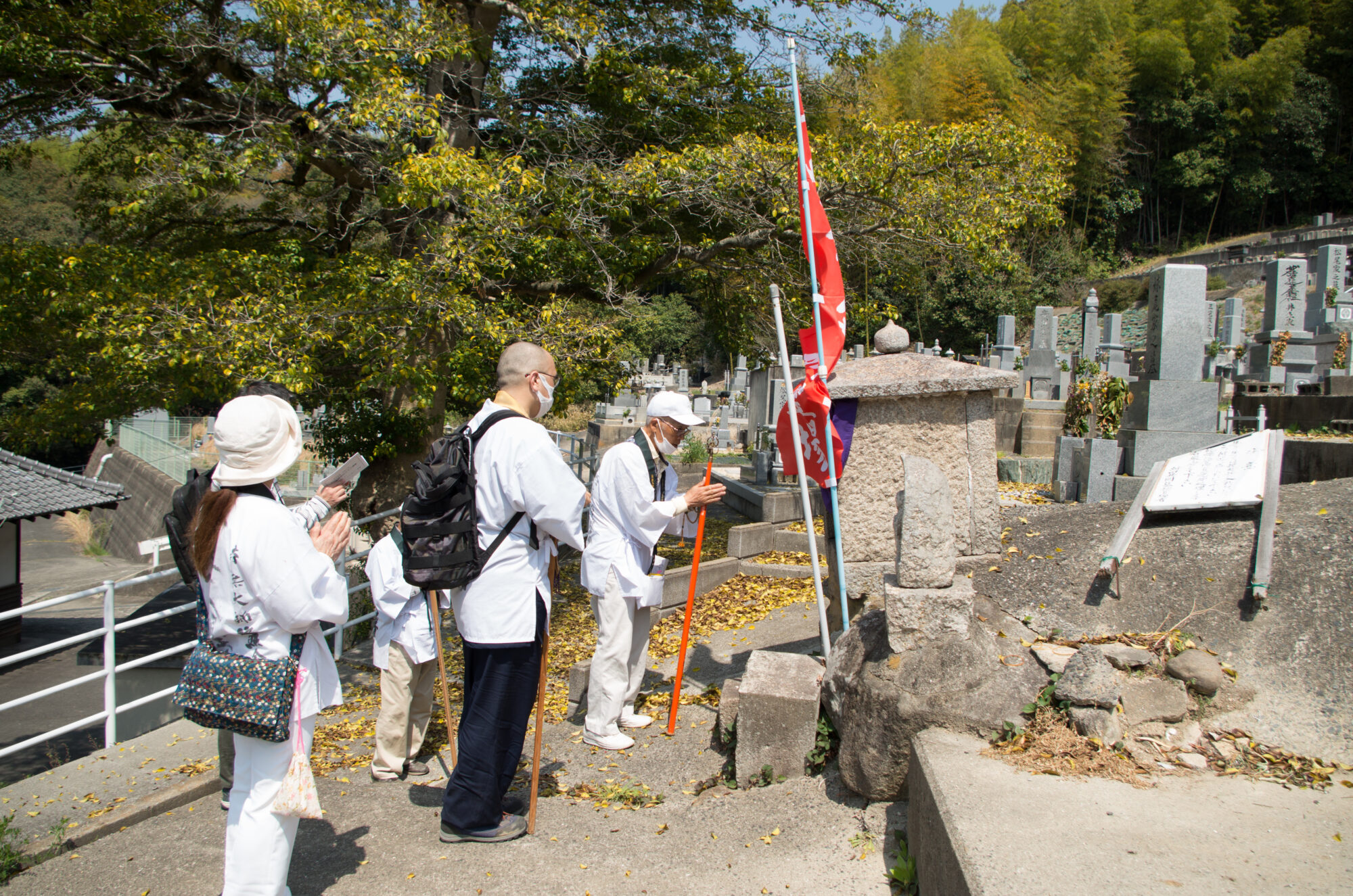
▼ 40th temple Kanjizai-ji.
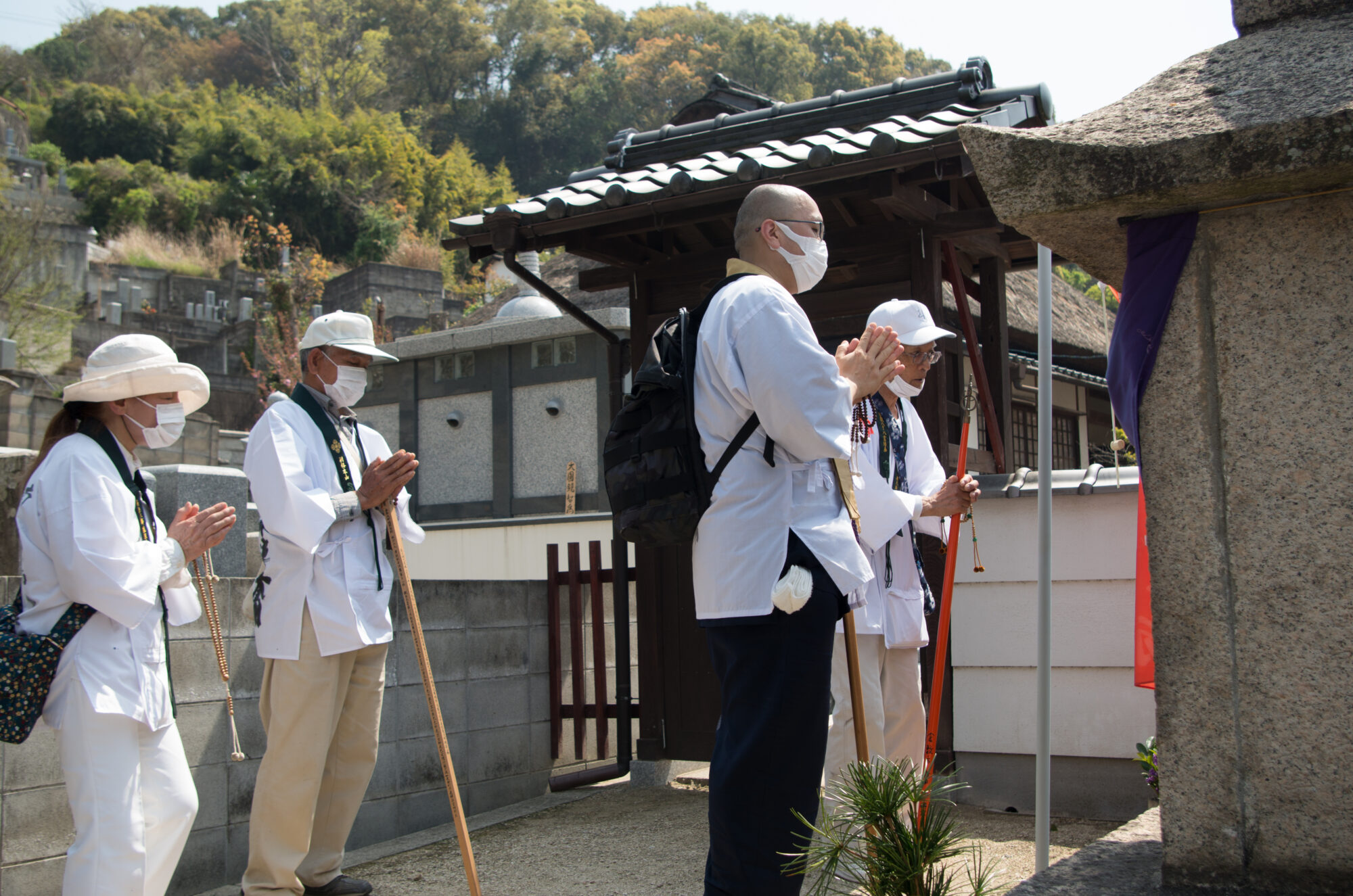
It is located in the parking lot of Jinyuuan, which is below the cemetery. Here, the chief priest Murata from Kanryuji Temple joins us. We pray together.
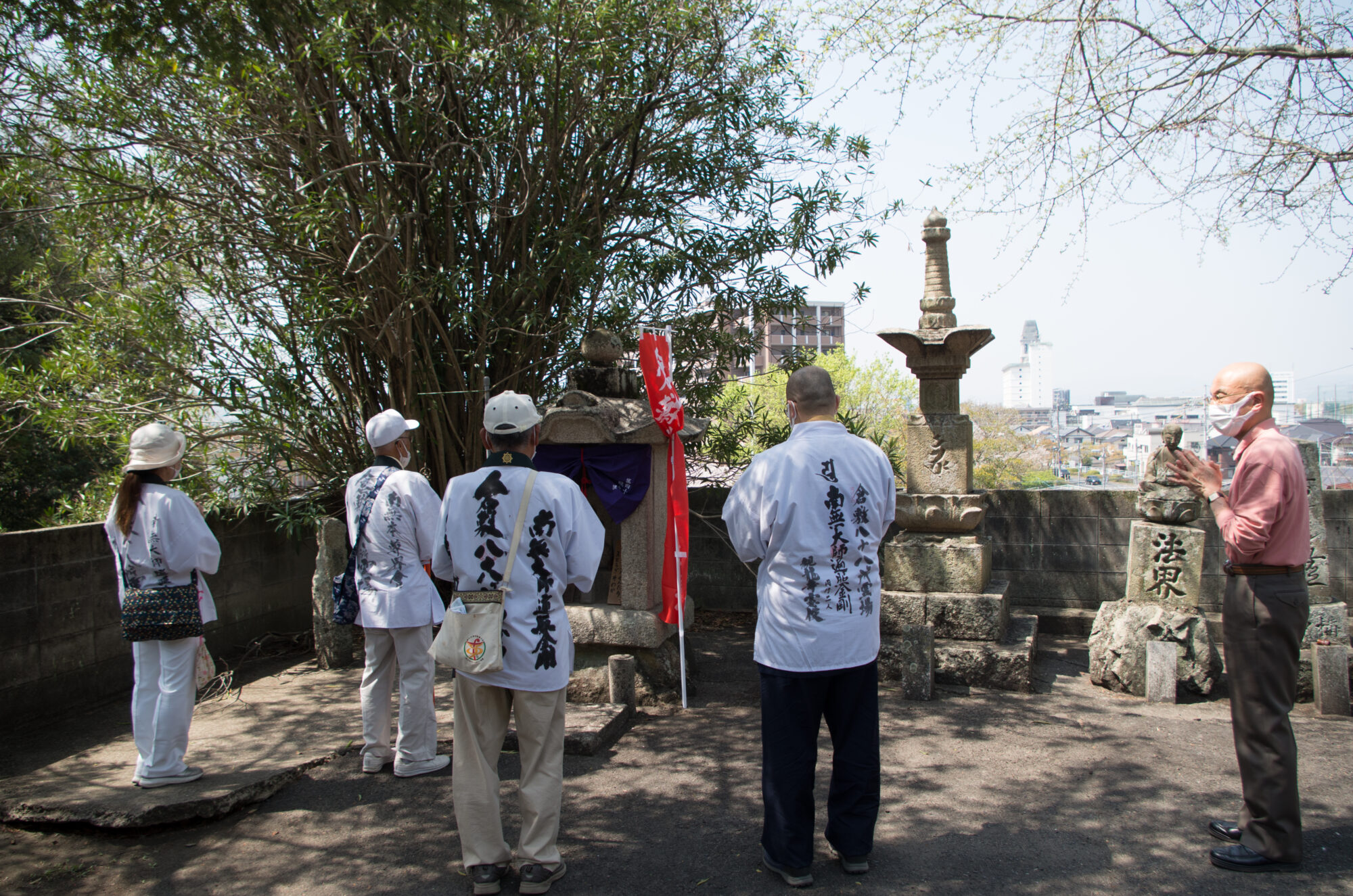
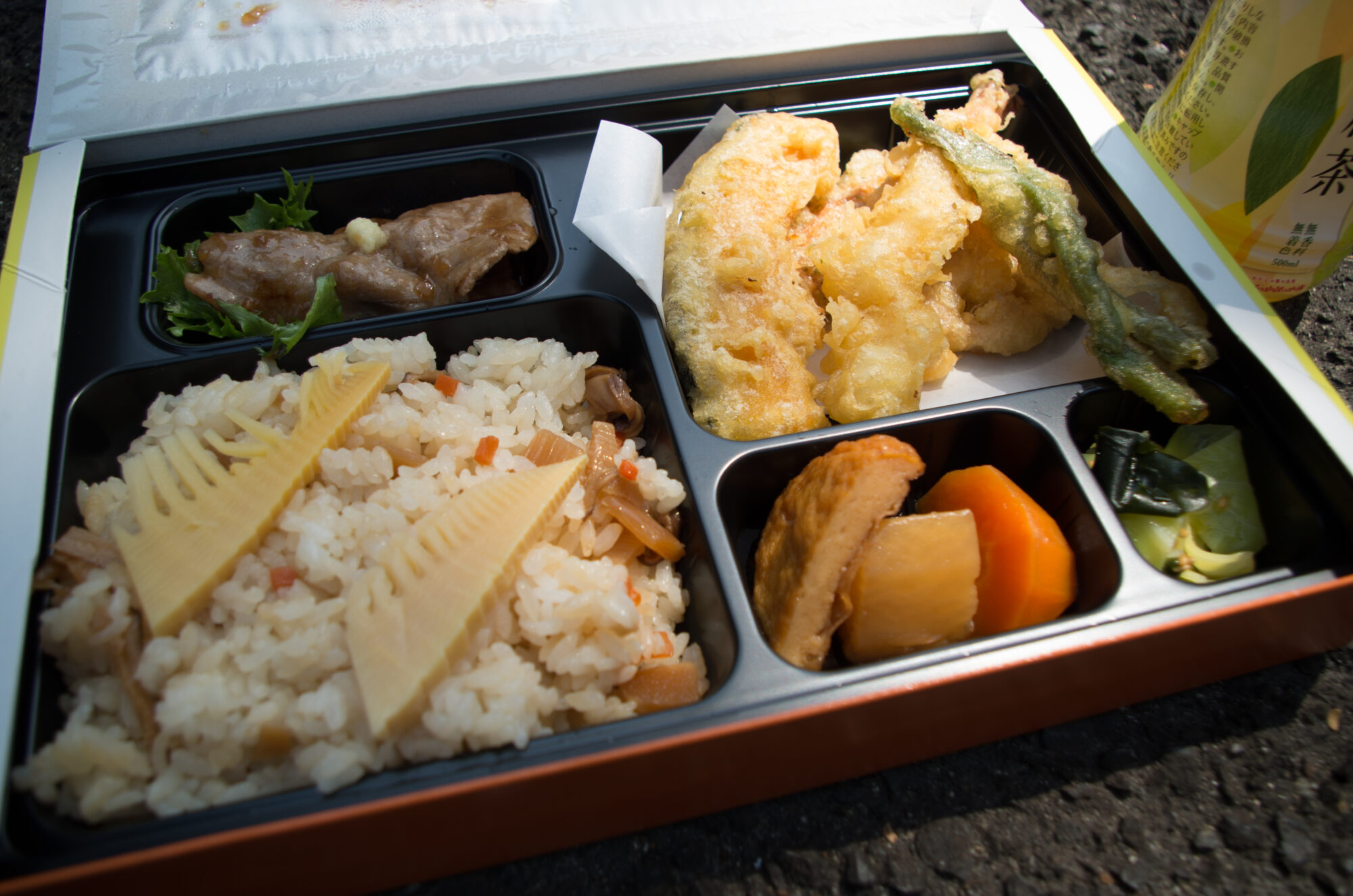
▼ After joining, Chief Priest Murata provided lunch boxes and tea.
Bamboo shoot rice and simmered dishes heal my tired body.
Introducing the people who protect and inherit the sacred sites
Let's take a short break here. In Vol.1, I introduced some people, but I will introduce those who protect and inherit the sacred sites that I couldn't cover.
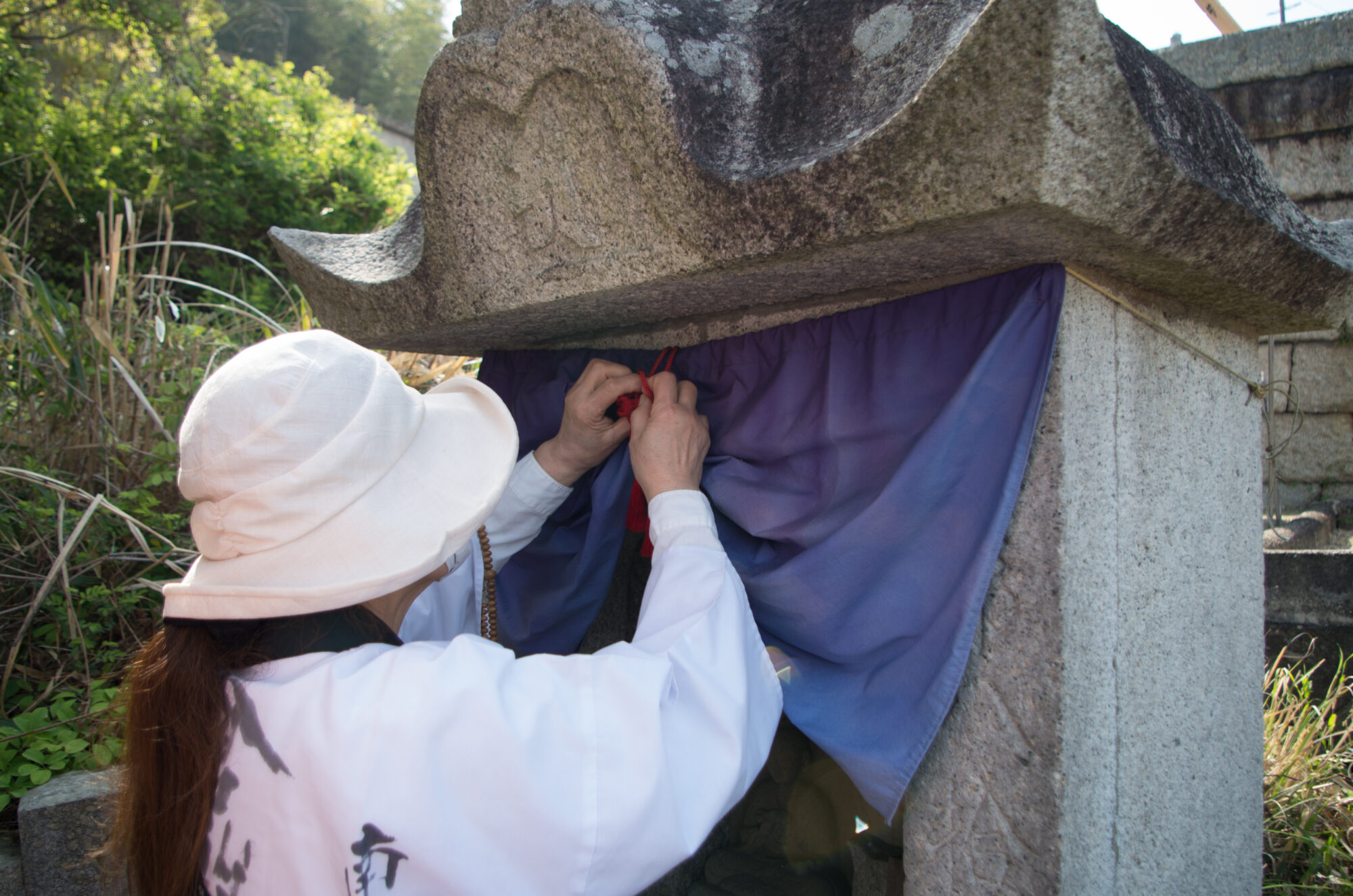
Ms. Uchida, who walked with us (female)
At the 86th temple Shidodera. Ms. Uchida (female) was replacing the string that holds the curtain of the shrine. It gives a glimpse of how the sacred site is protected through daily service.
Nakada Sadako
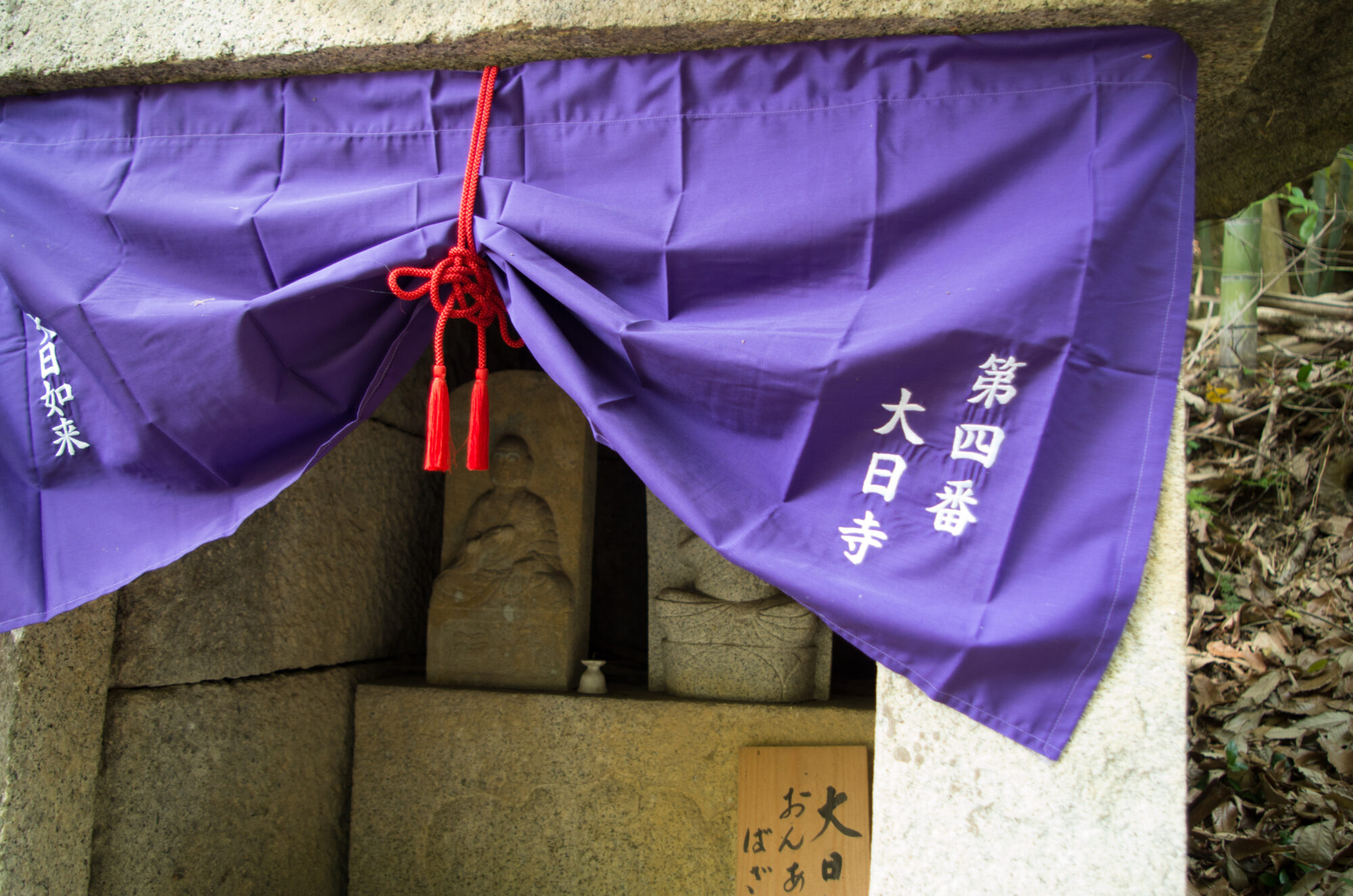
At the 4th temple, Daishi-ji.
Please take a look at this brand new embroidery. It is said that Nakada-san, after turning 90, spent about five years sewing each piece with a sewing machine, and you might not notice it unless you are told.
Unfortunately, Nakada-san passed away about four or five years ago, but the beautiful purple fabric with white embroidery that still protects the temple is lovely.
Matsumoto and Miyake
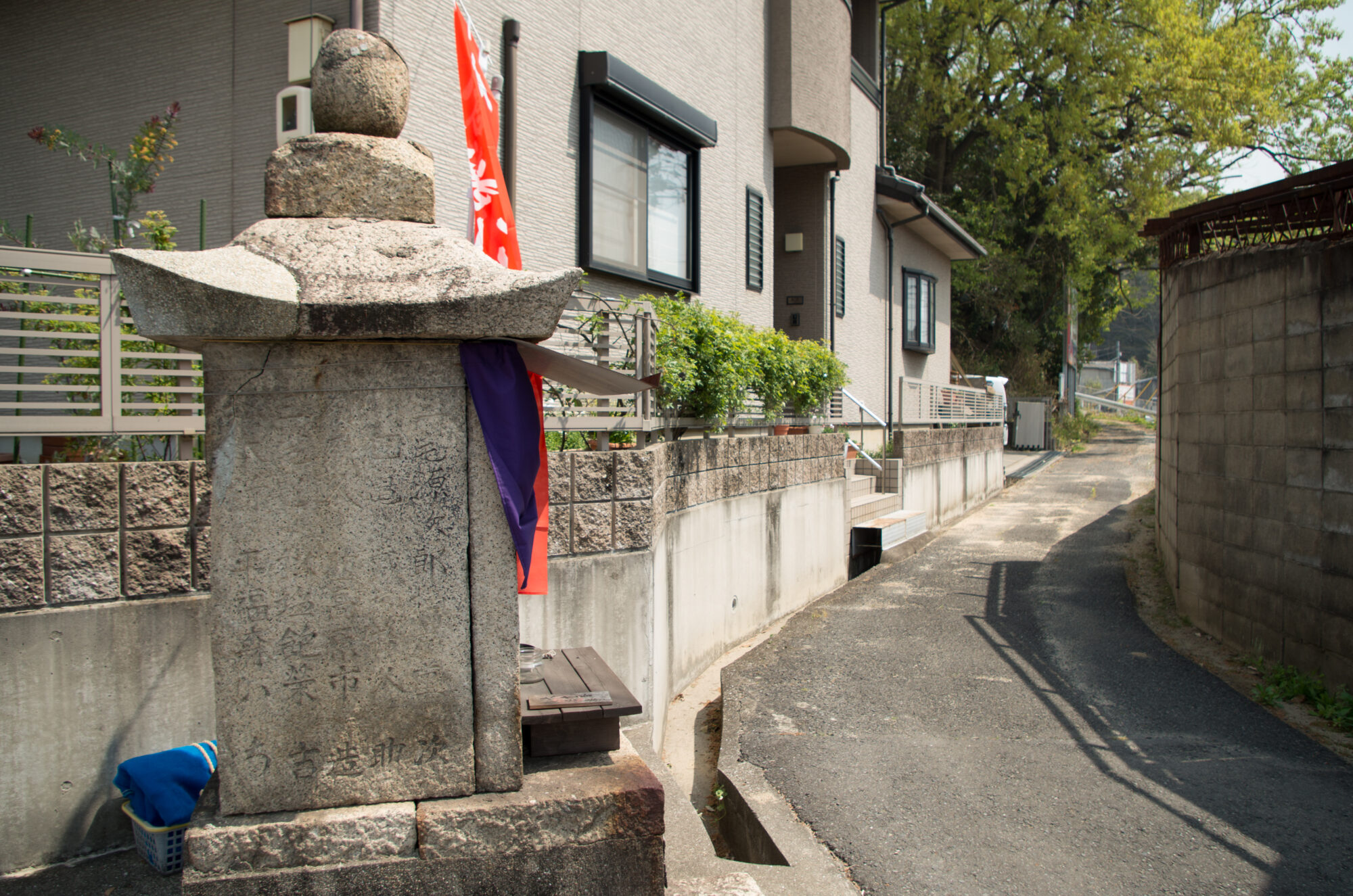
At the 60th temple, Yokomine-ji.
▼Part of the roof is missing, but you can see that it has been beautifully repaired with concrete.
One of the restorations led by Matsumoto-san and Miyake-san's friends.
The block walls introduced at other temples are also one of them. The feelings for the sacred sites are being passed on to the next generation in visible forms.
Walking together with Kato and Uchida (male)
I went to check the condition of the mountain path next to the 21st temple again.
Kato and Uchida (male), who walked with me, are mainly responsible for maintaining this rough path, cleaning up fallen leaves in March and mowing grass in August.
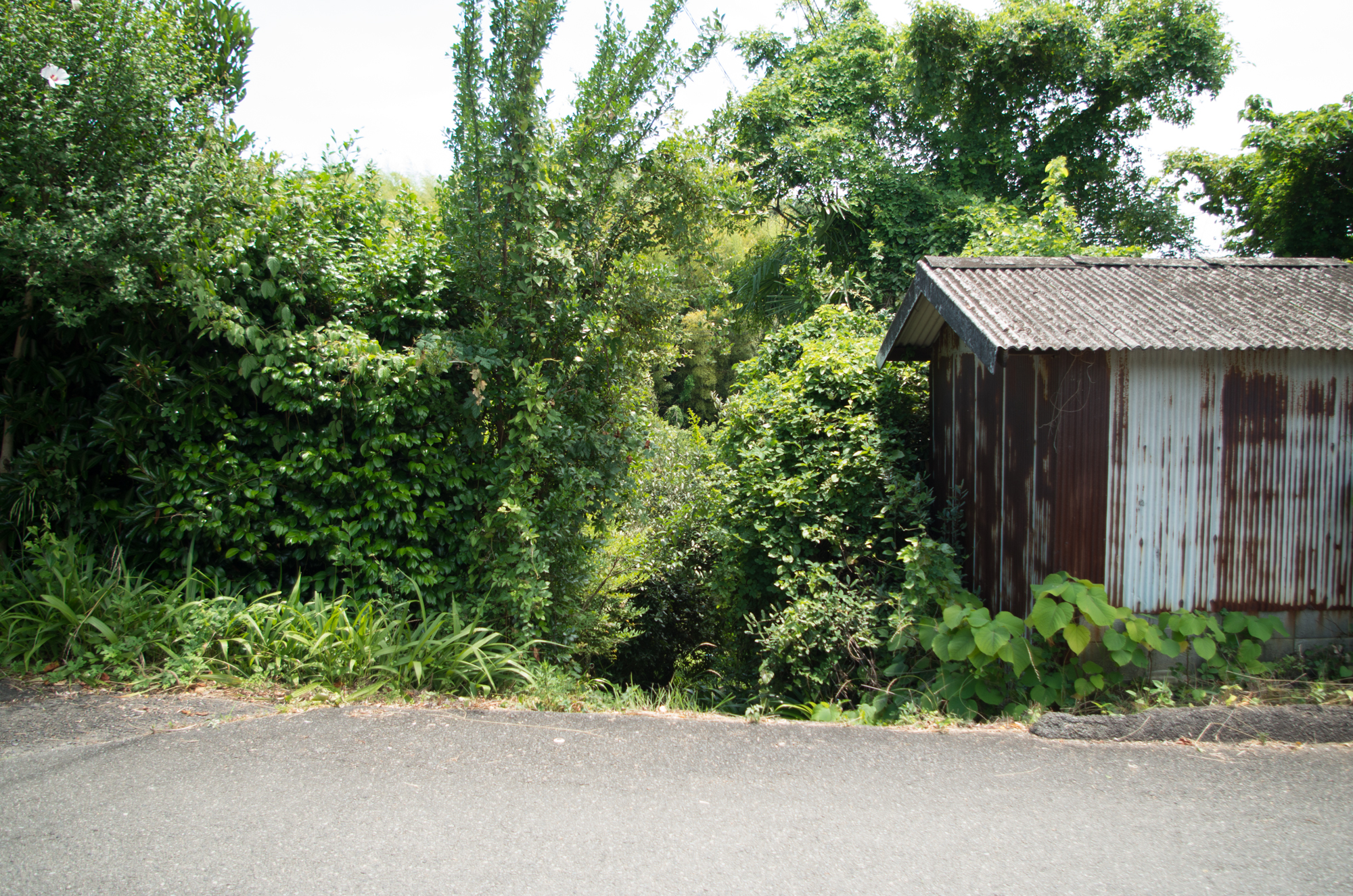
I took a photo of the same place, but the trees and weeds have grown, making it difficult to walk easily.
This is an example of how maintenance is being done to protect the area.
Here’s a postscript.
Right after this pilgrimage, Kato's golf score was "88." Don't you feel the influence of Kobo Daishi?
In fact, it might be a beneficial pilgrimage site for golfers as well.
Bizen-yaki Nagayama
Bizen-yaki Nagayama is located in the Bikan Historical Area, which was also introduced in Vol.1.
As the office of the sacred site, they distribute brochures and pamphlets daily.
Later, I received materials again from them. Without these materials, it would be difficult to walk.
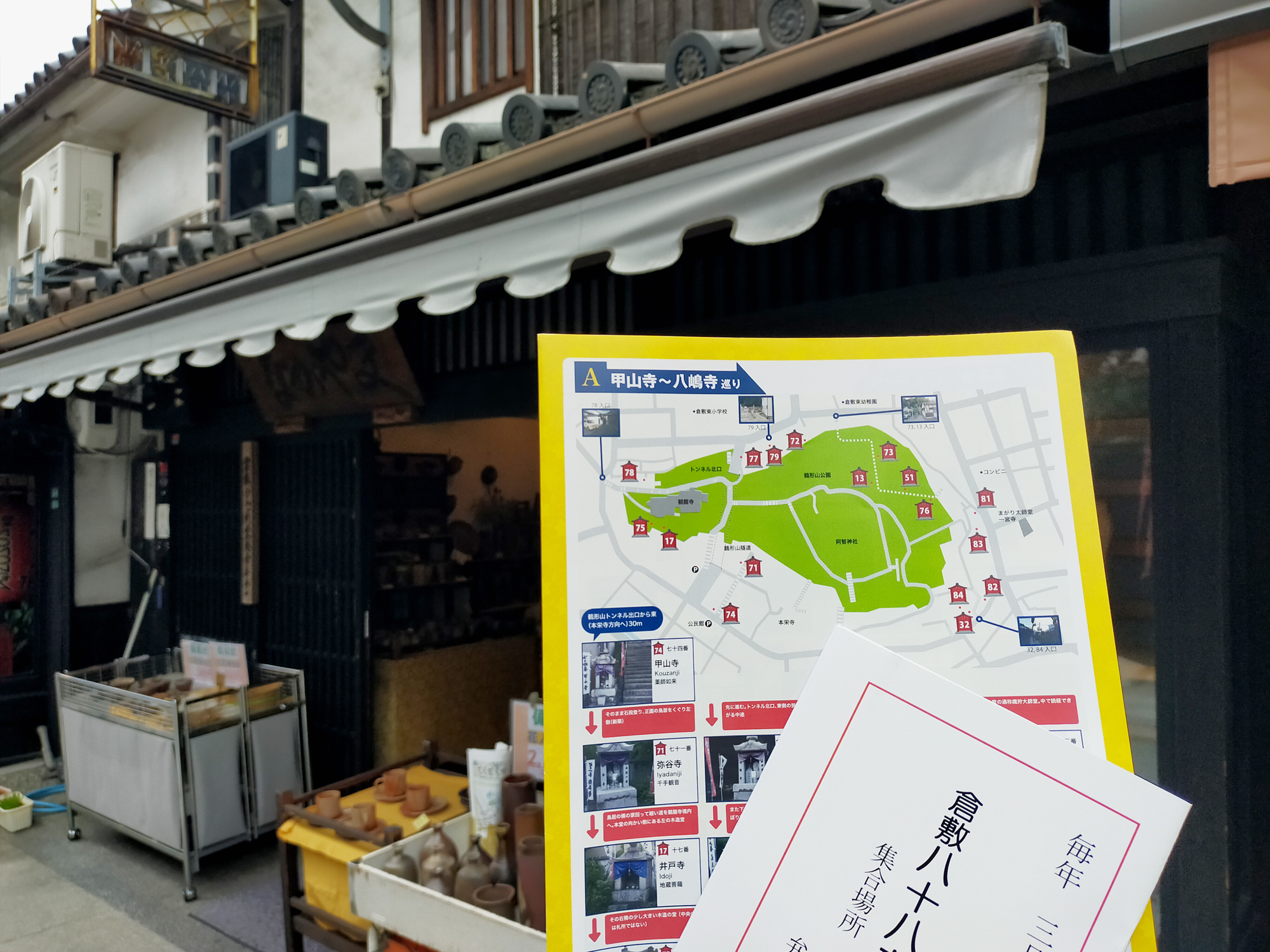
Let’s visit Tai-san-ji (around Kurashiki City Office) to Kanryuji Temple (goal) (District D, District E, around JR Kurashiki Station)
Now, let's resume the pilgrimage from Tai-san-ji. We aim for the goal at Kanryuji Temple.
▼52nd temple Tai-san-ji.
I walked from north to south through the mountains of Mukoyama and came down to the town here. Honestly, it was a moment of relief in my heart.
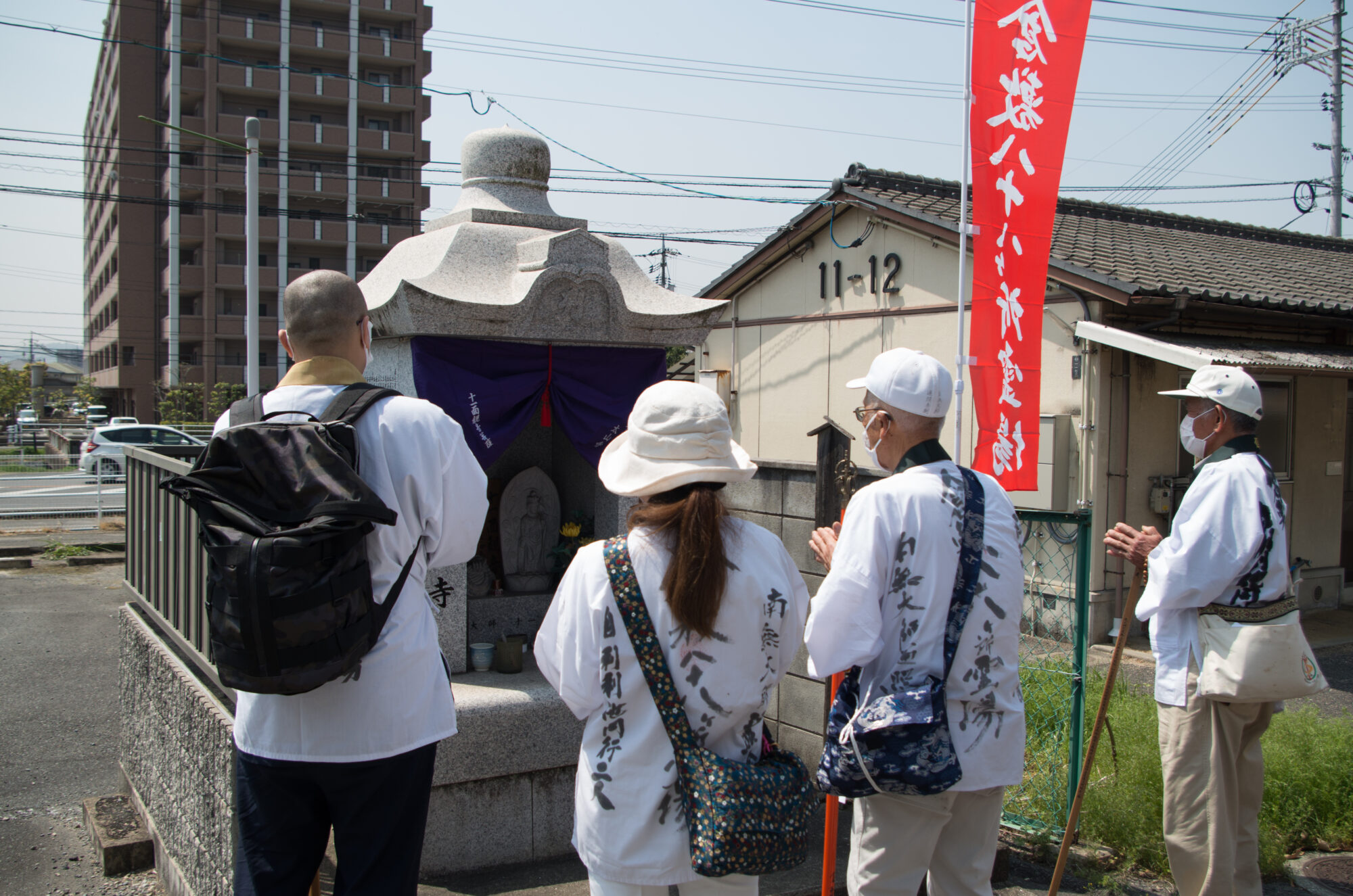
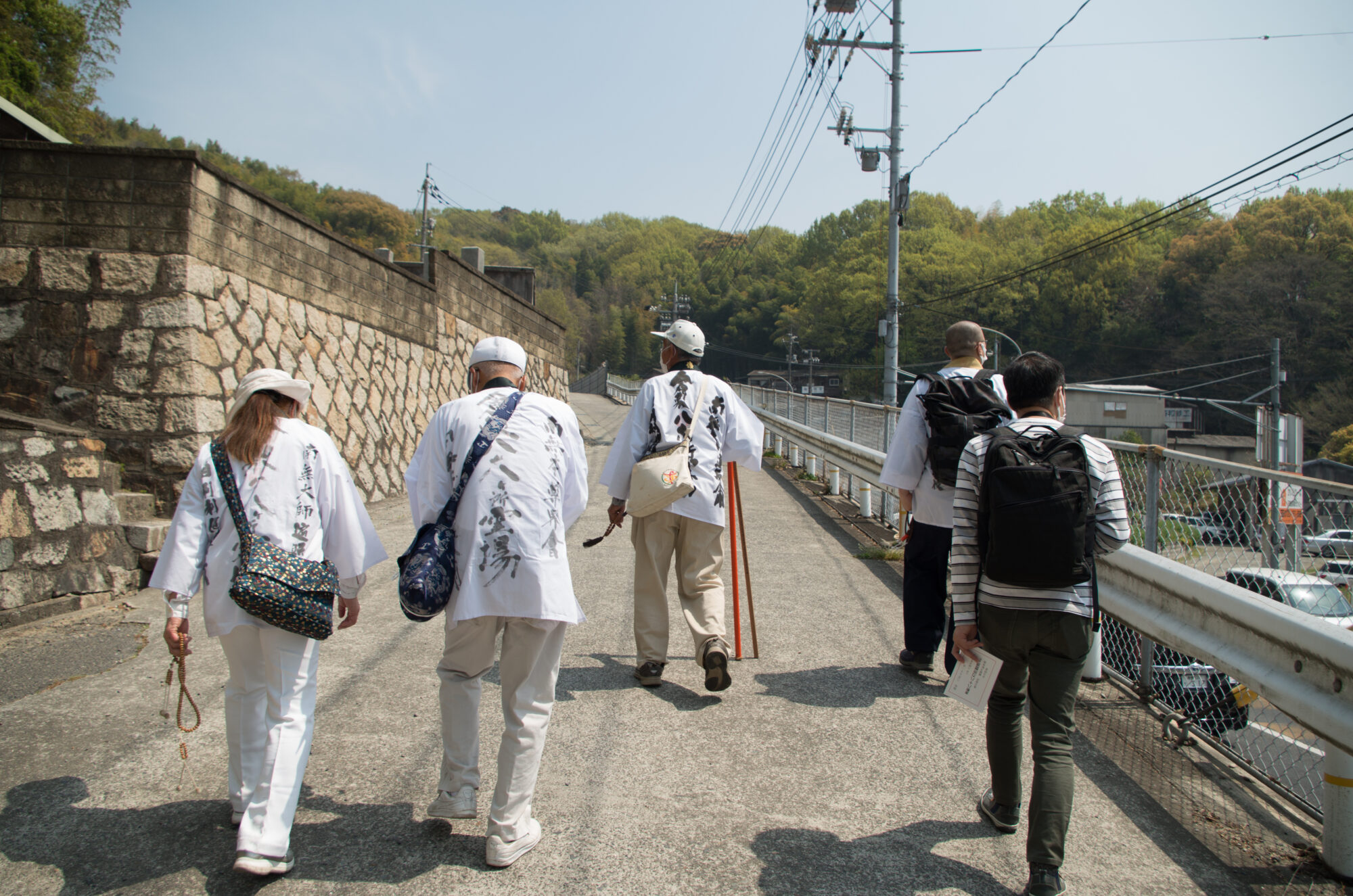
▼The moment of relief was short-lived, as I headed north along the west side of Mukoyama, repeatedly going up and down the mountain.
There are mountain paths that cross dry streams like this. By the time I got here, the feelings of "excitement" were overtaken by "fatigue" and the "nervousness" of wondering if I would be able to reach the goal safely.
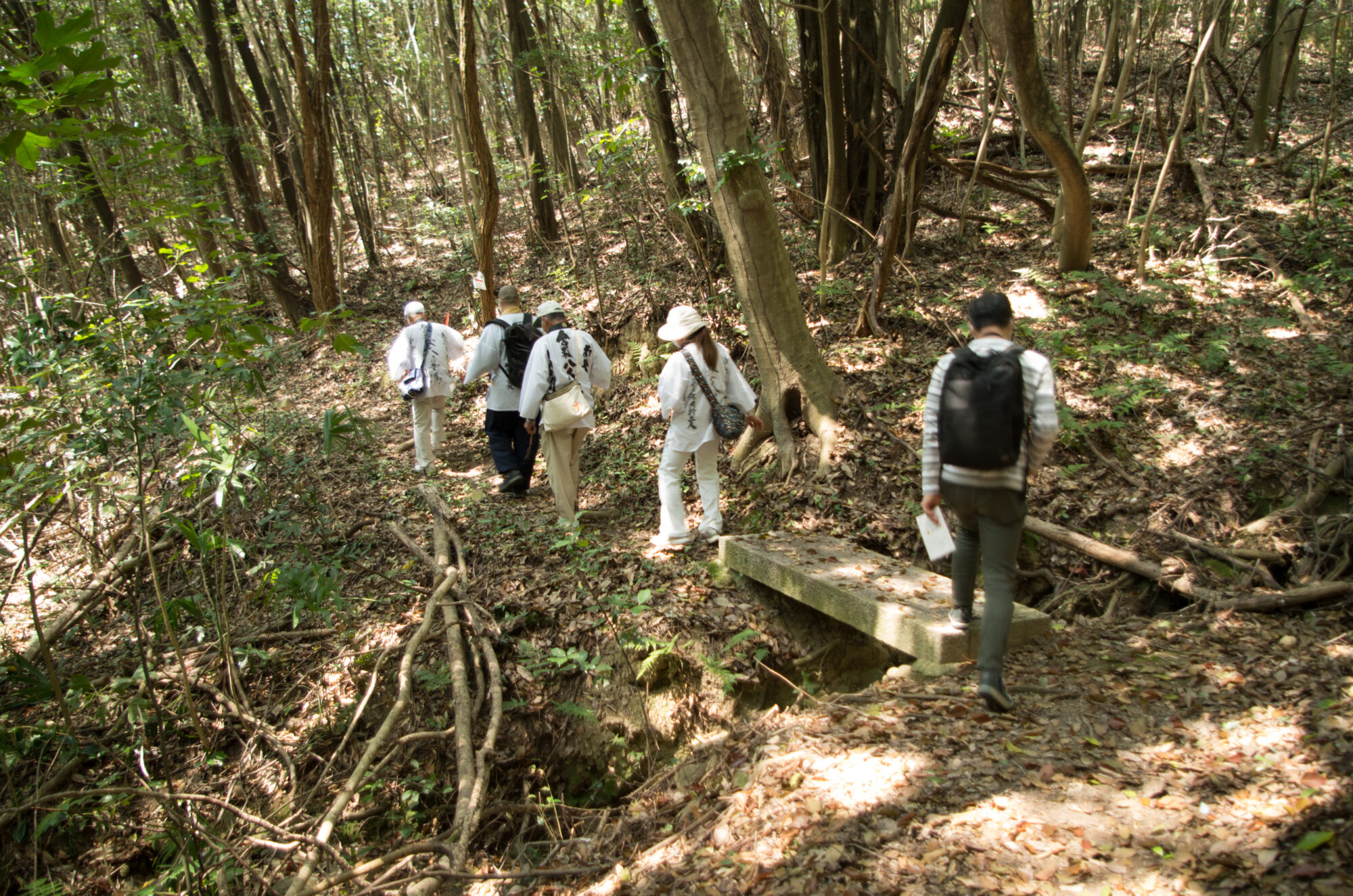
▼46th temple Joruri-ji.
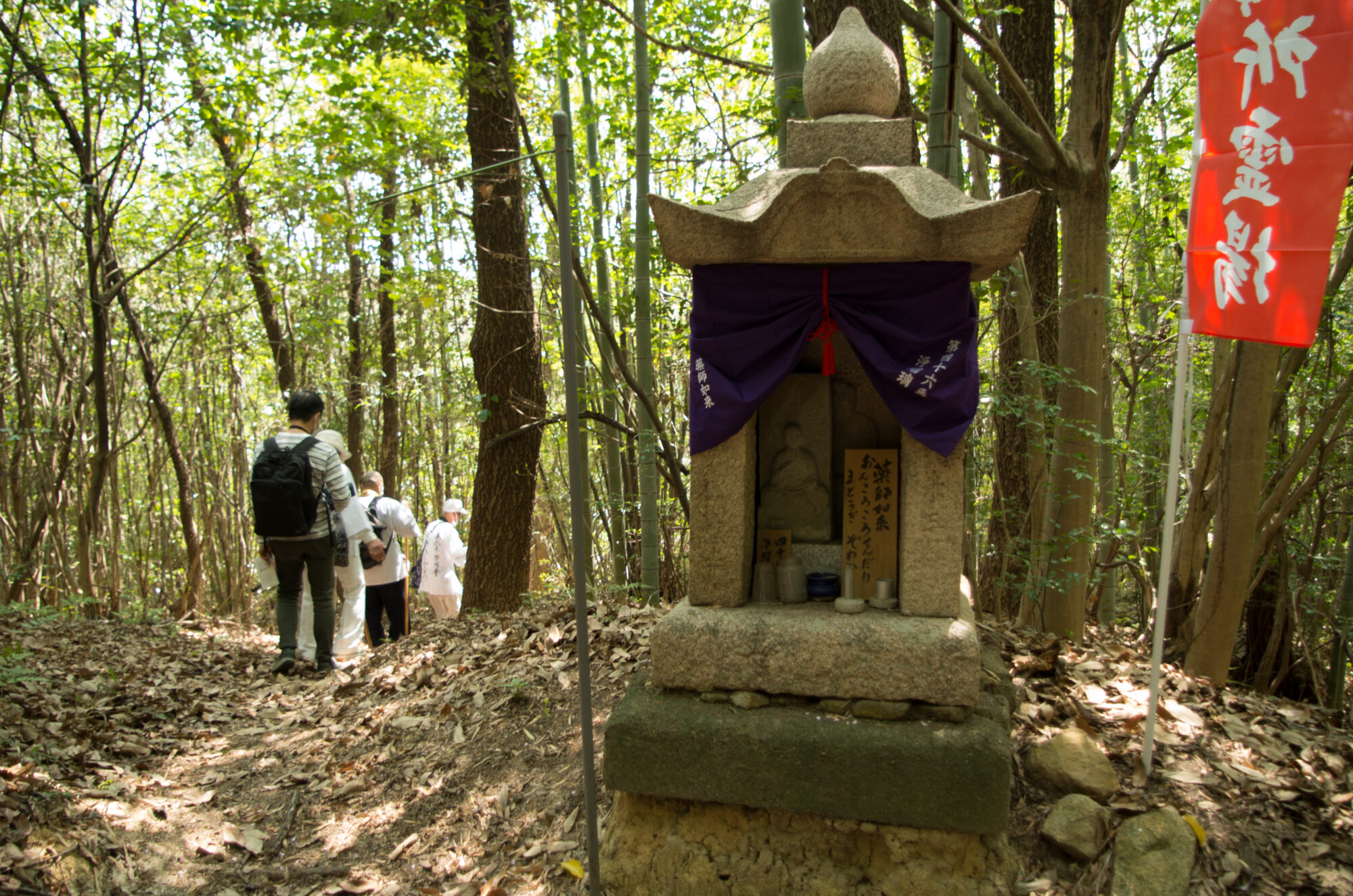
▼50th temple Handa-ji.
Originally, it was placed on the rock seen in the back, but it has been relocated to the front. Just relocating it is a tremendous labor.
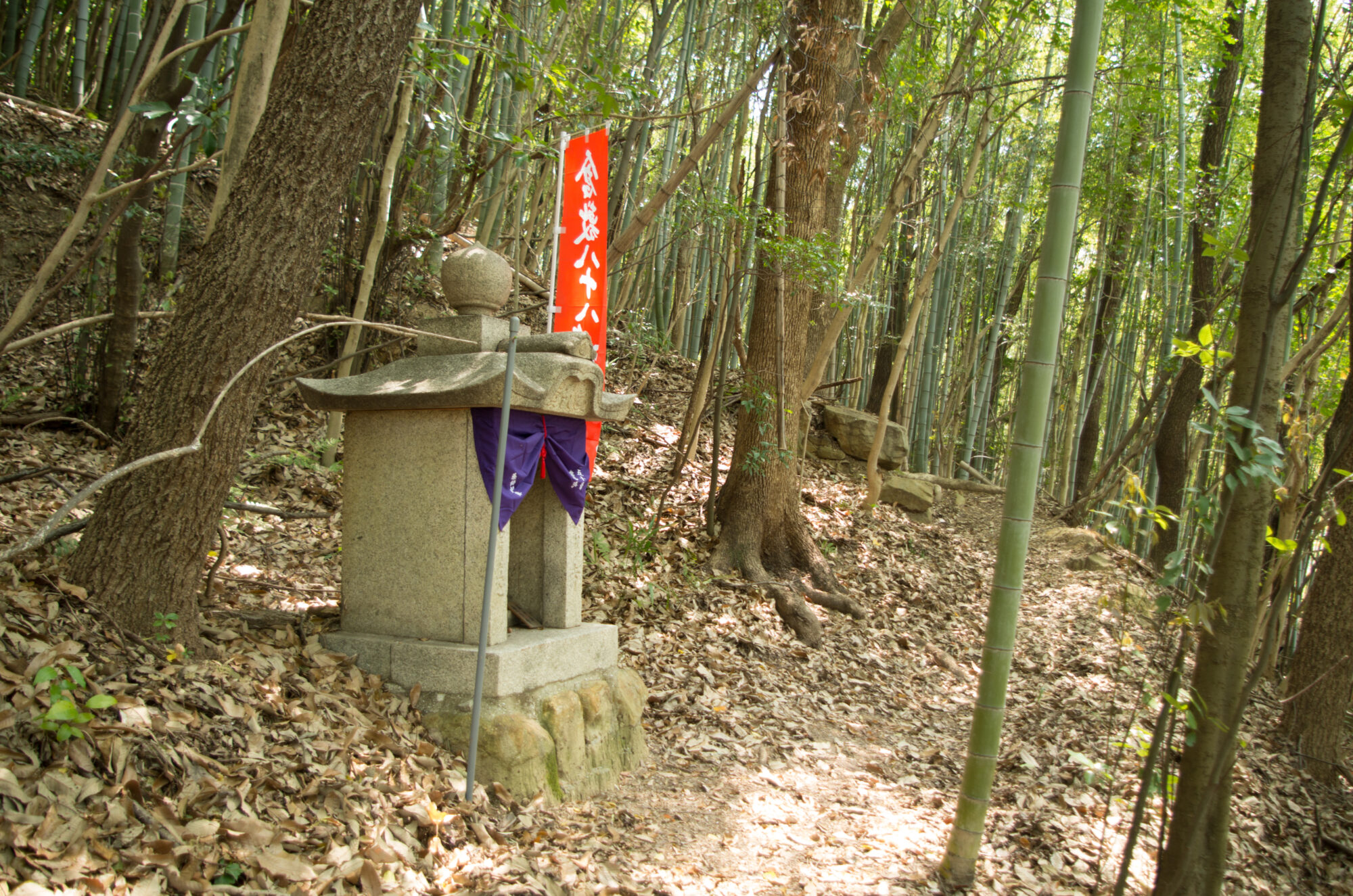
▼I came down again and headed north along the road on the west side of Mukoyama.
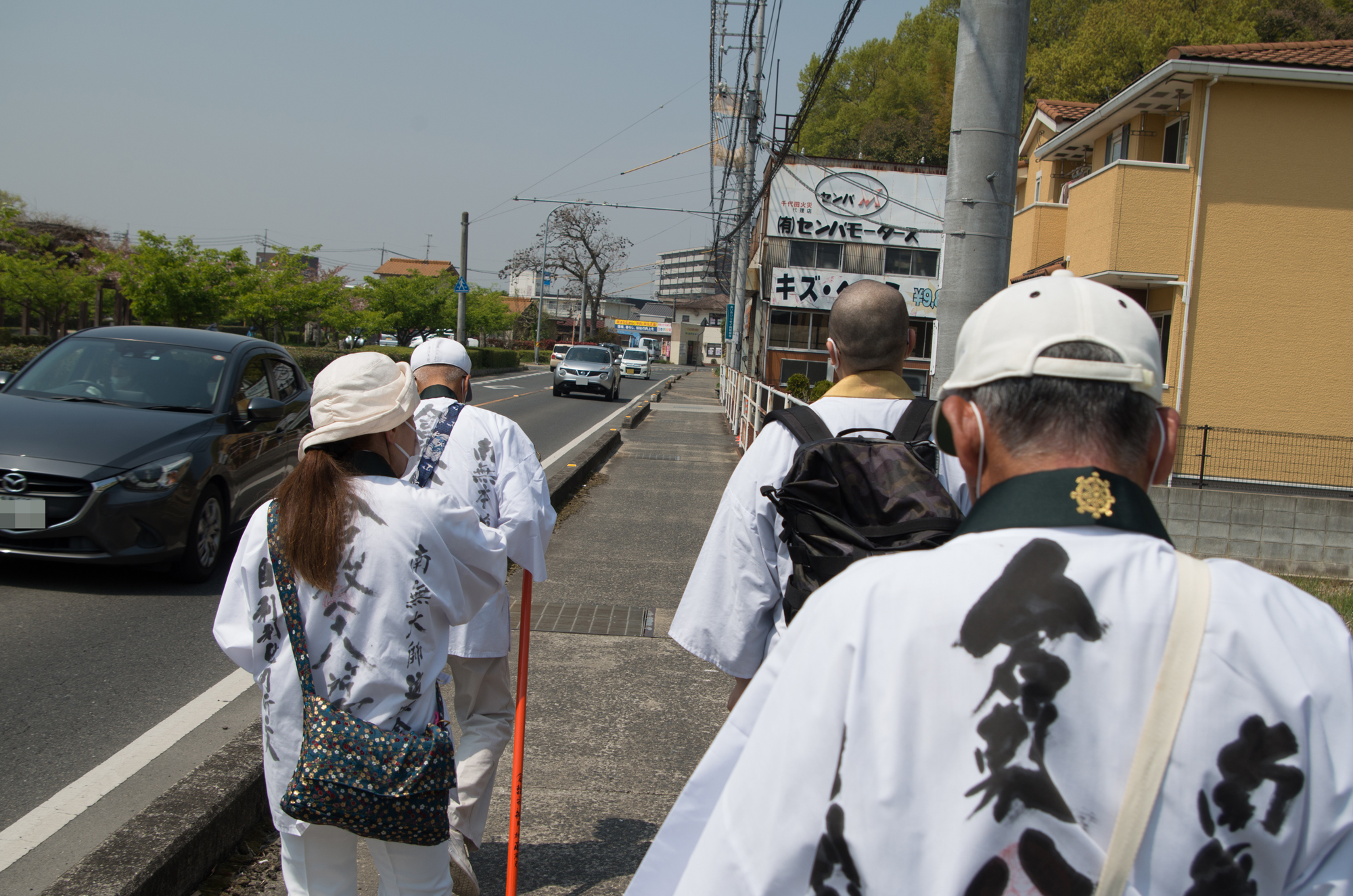
▼As I head a little north, I climb the slope again.
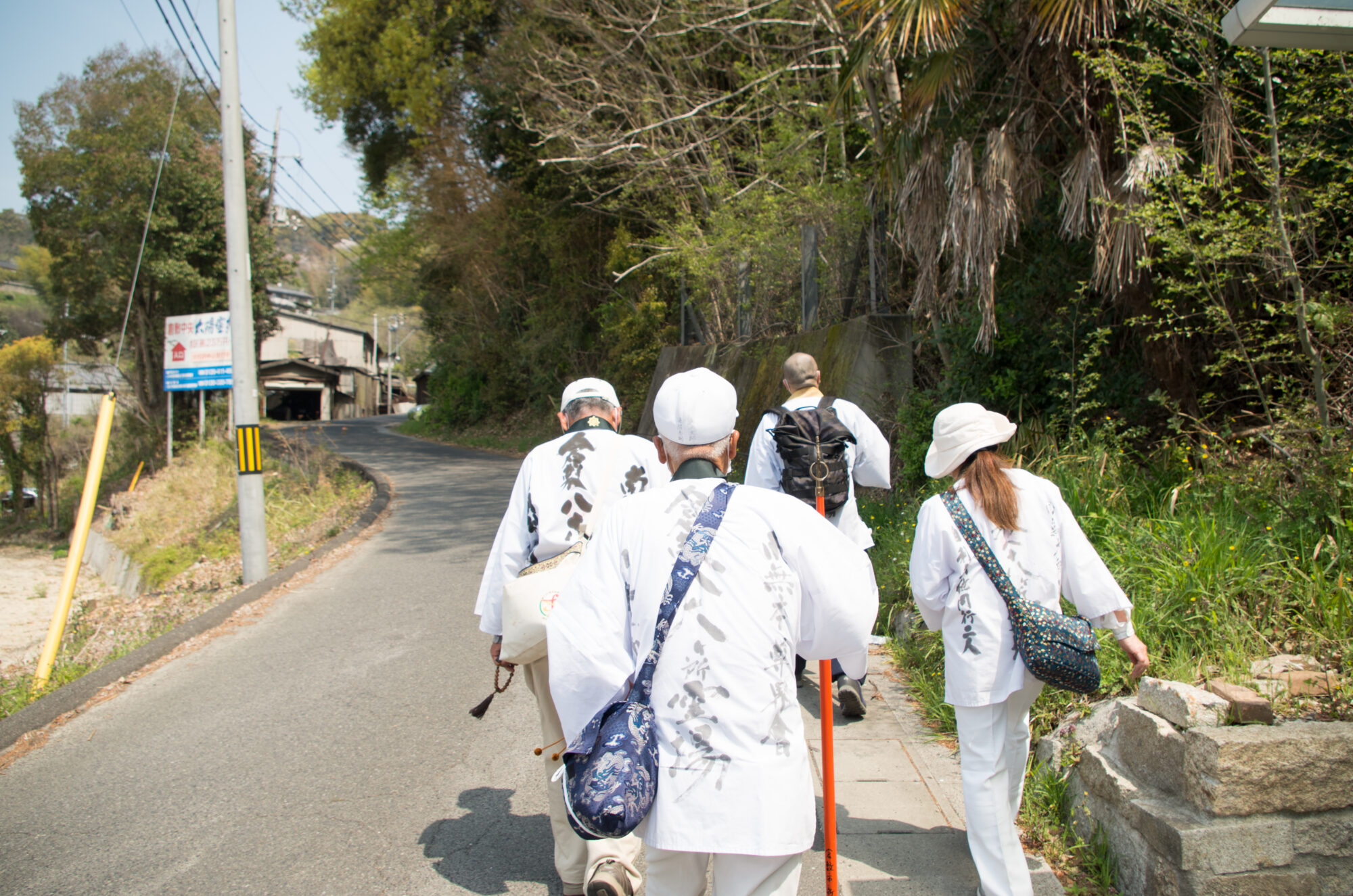
▼This temple site gathers three temples: the 54th temple Enmei-ji, the 55th temple Ohto Chikatsu Butsu, and the 56th temple Tai-san-ji.
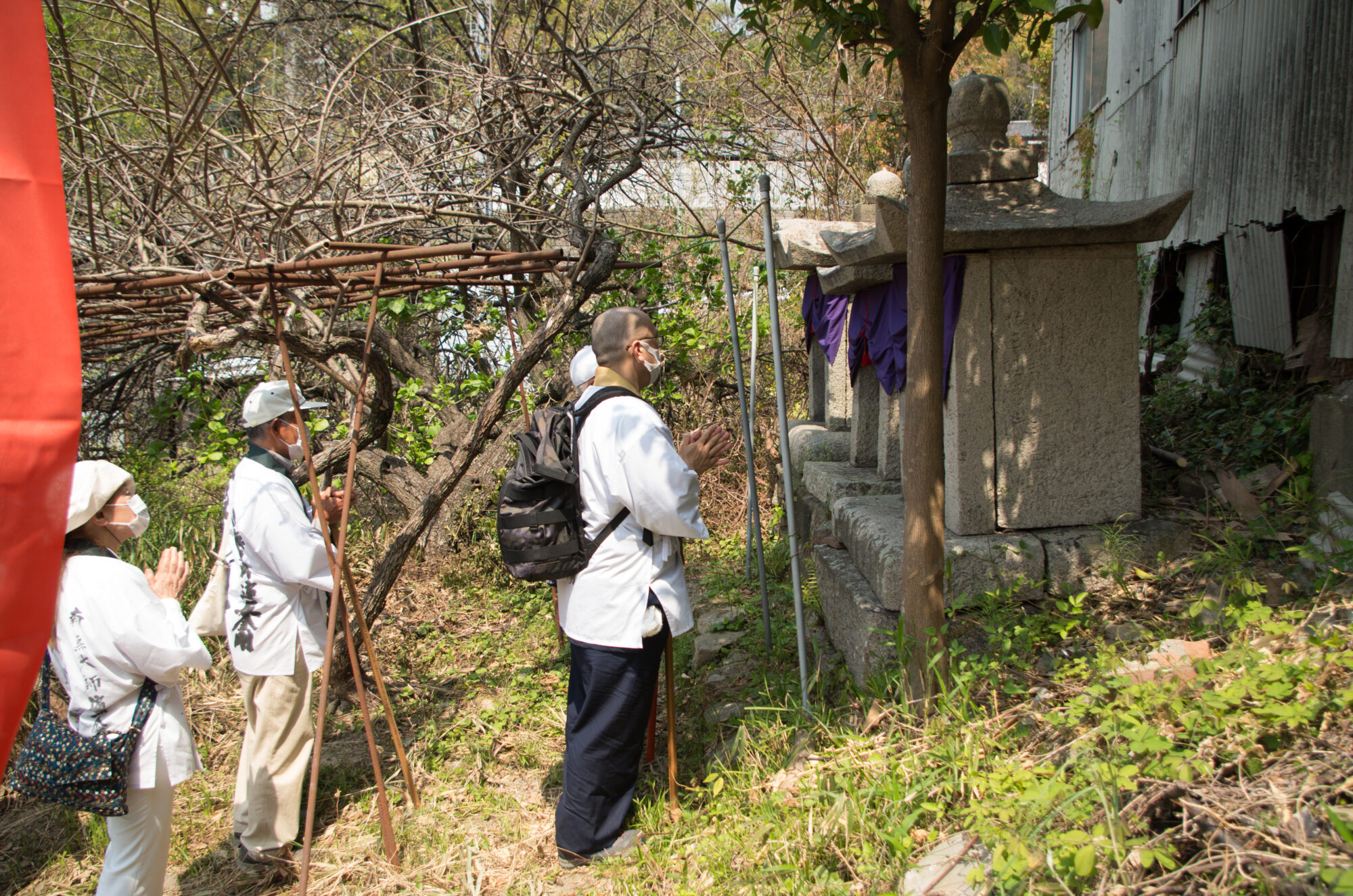
According to reference materials, it is noted that "it is located below the old crematorium and was likely gathered here due to road improvements."
Additionally, when visiting these temples, caution is needed as there is a possibility of passing through private land depending on the route.
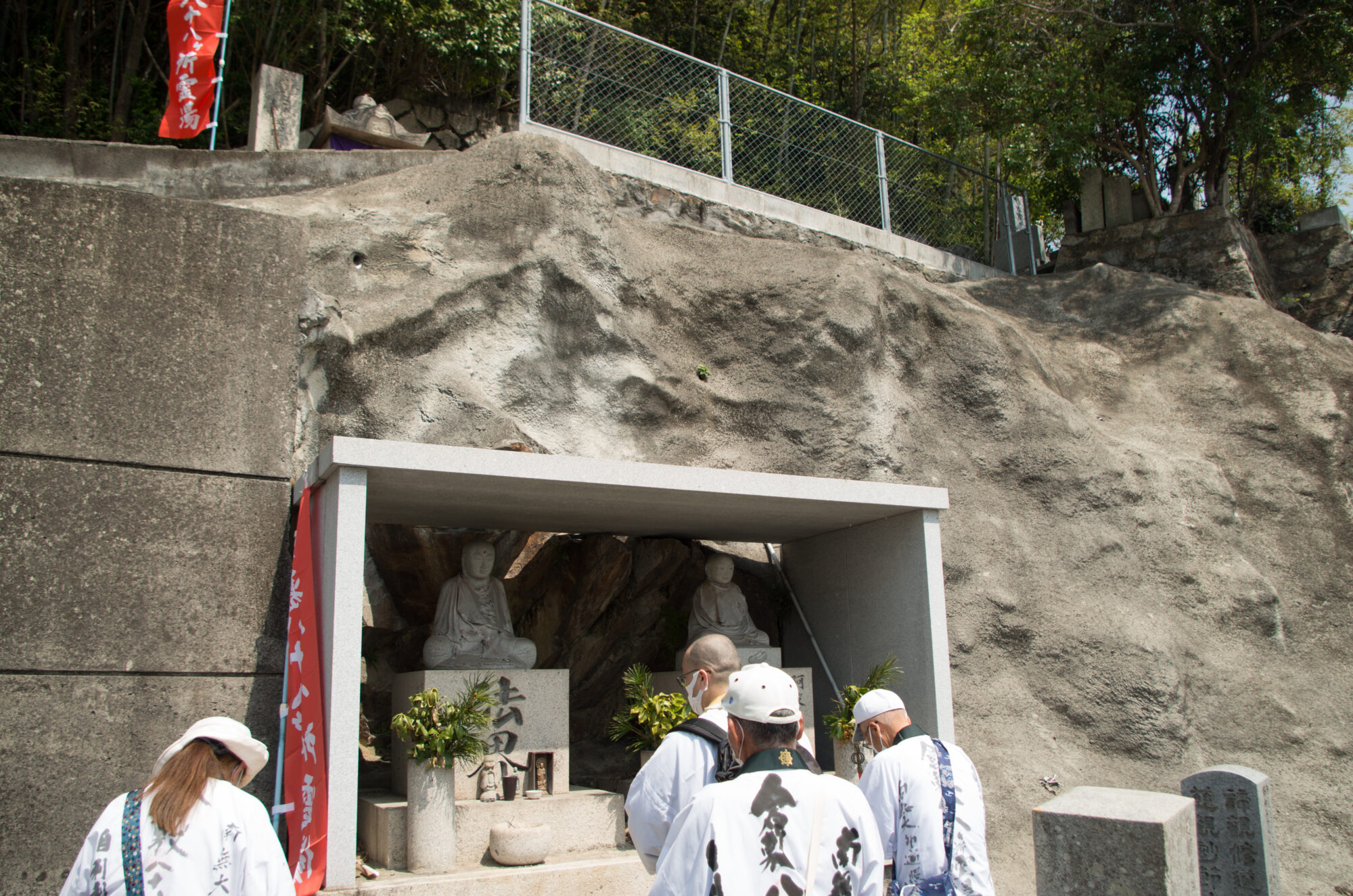
▼Crossing the road leading to the Furumachi Tunnel, I climb the slope again.
▼10th temple Kirihata-ji. You can also see the 57th temple Hachiman-ji one step up.
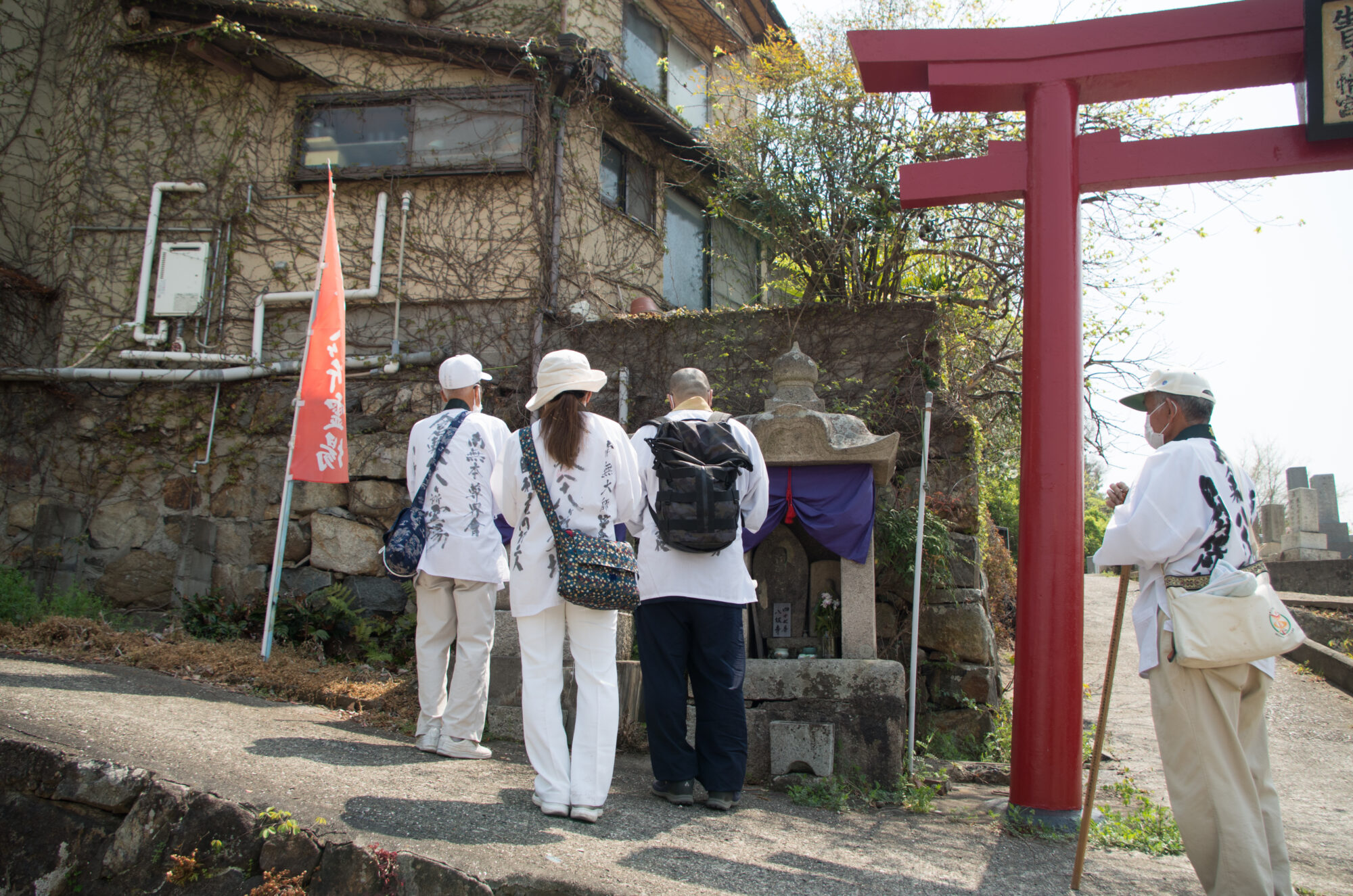
▼I have come north to the vicinity of the torii gate of Ikume Hachiman Shrine.
Here, the 47th temple, Yasaka-ji Temple, and the 62nd temple, Hoju-ji Temple, are lined up.
▼59th temple, Kokubun-ji Temple.
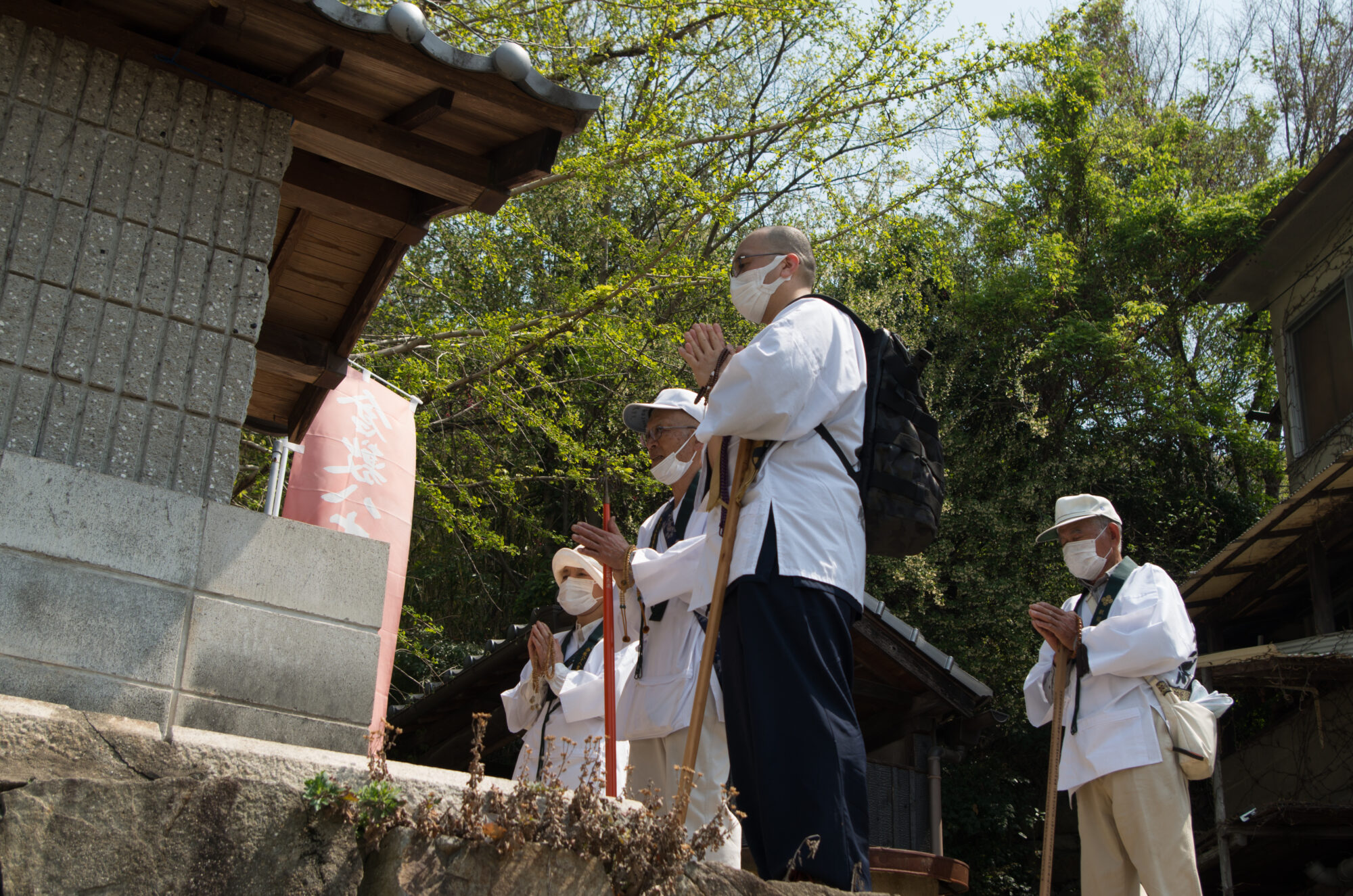
▼I have come quite a way back. I can see Kurashiki Ivy Square and Kanryuji Temple nearby. However, do not let your guard down thinking that the goal is just around the corner. From here, I will take a detour to the west for a while on the pilgrimage route.
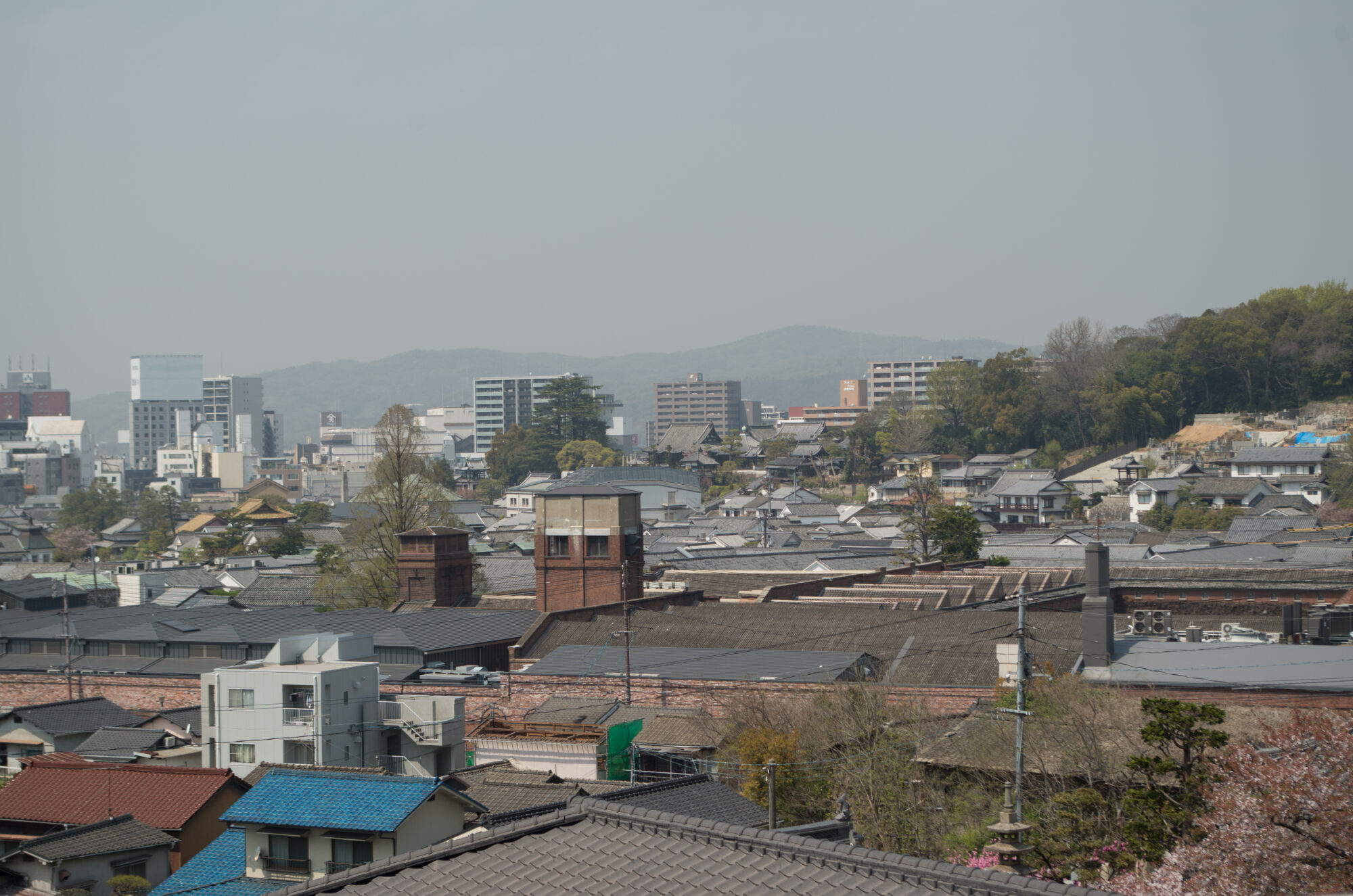
▼63rd temple, Kichijo-ji Temple.
There are more temples located in alleys, unlike the mountain paths from earlier.
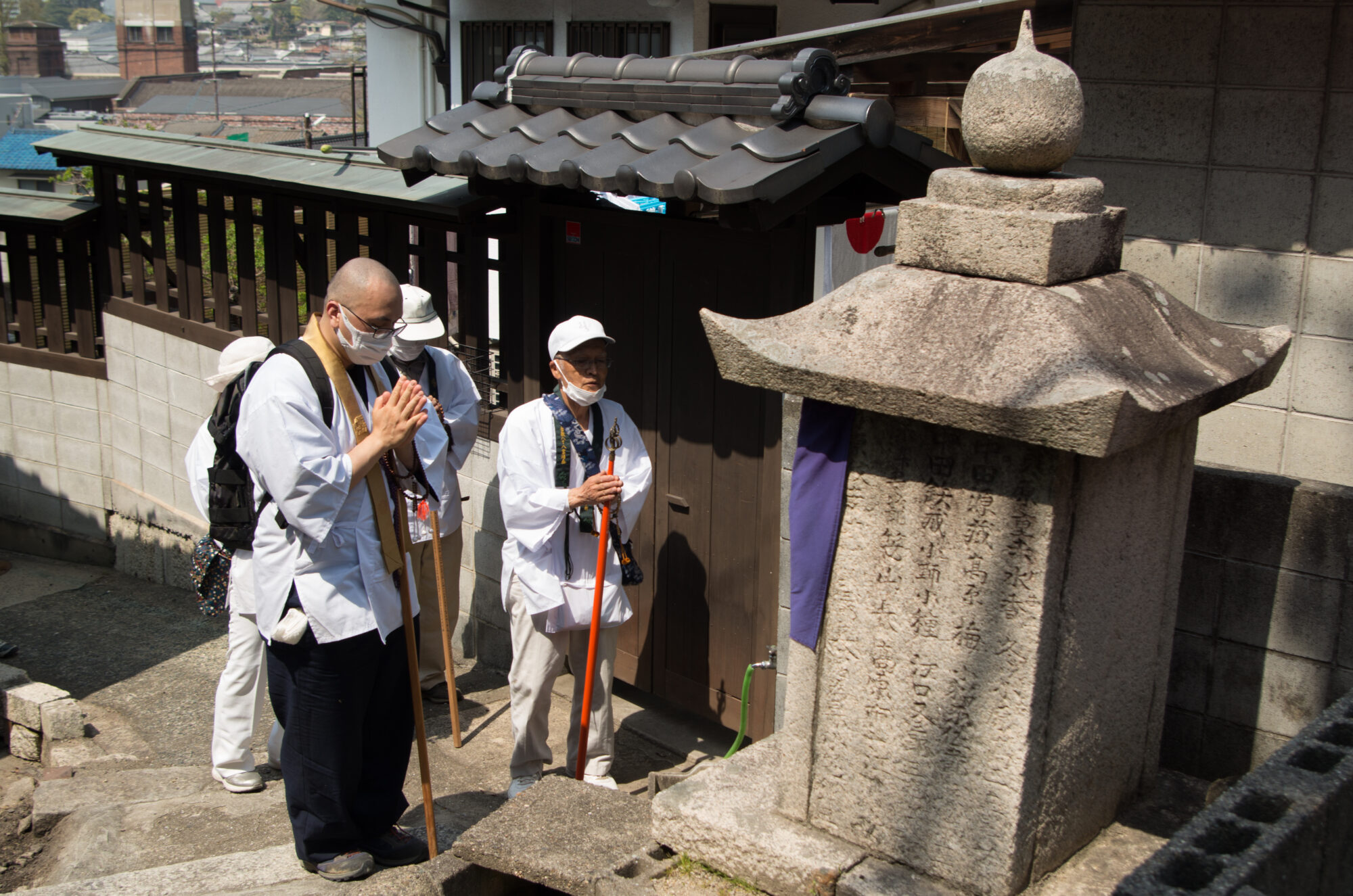
▼The pilgrimage path descends a bit from the 63rd temple.
The author particularly enjoys the scenery that opens up suddenly in such narrow alleys.
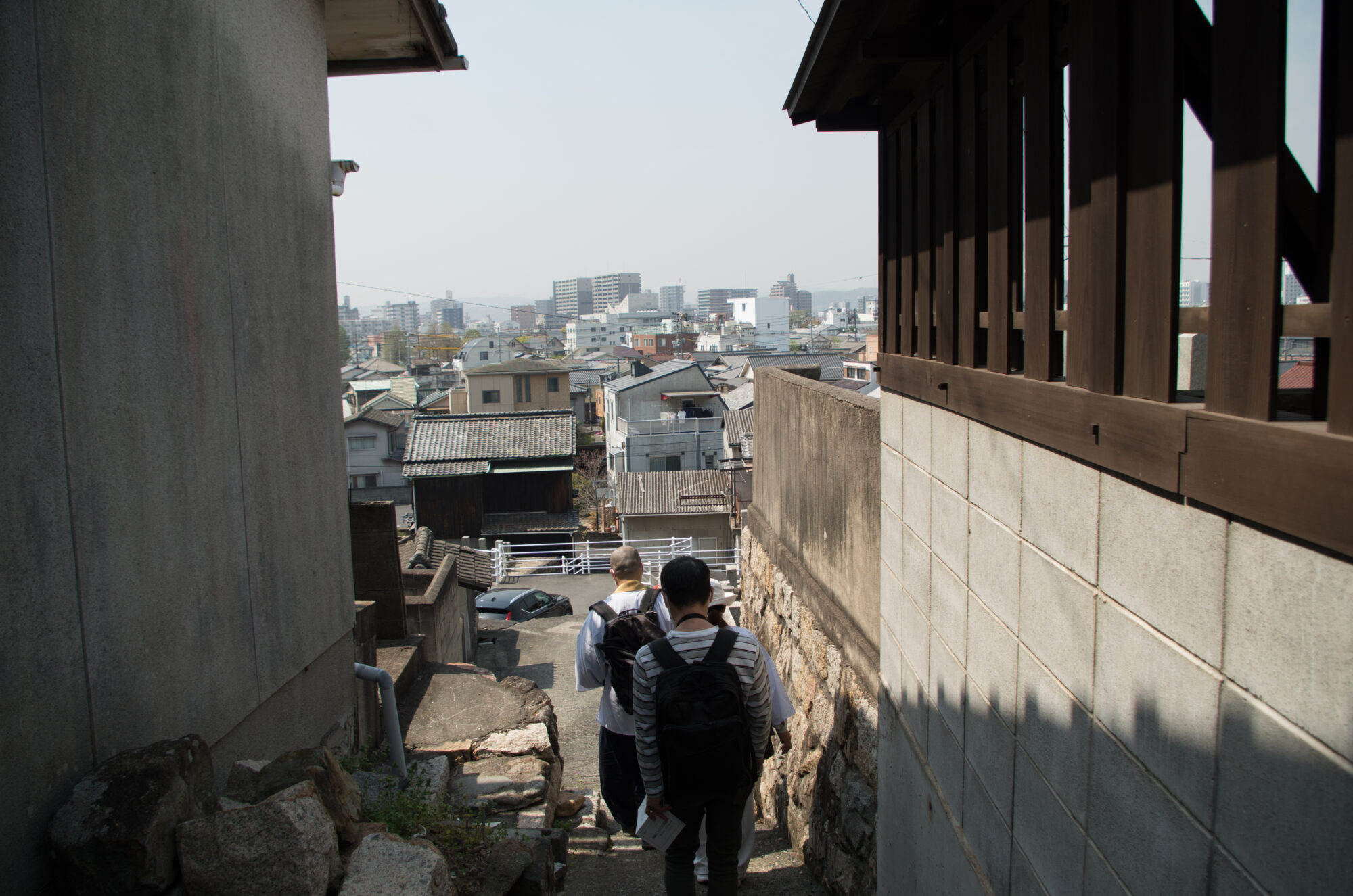
▼65th temple, Sankaku-ji Temple.
A few more of these narrow alleys will continue.
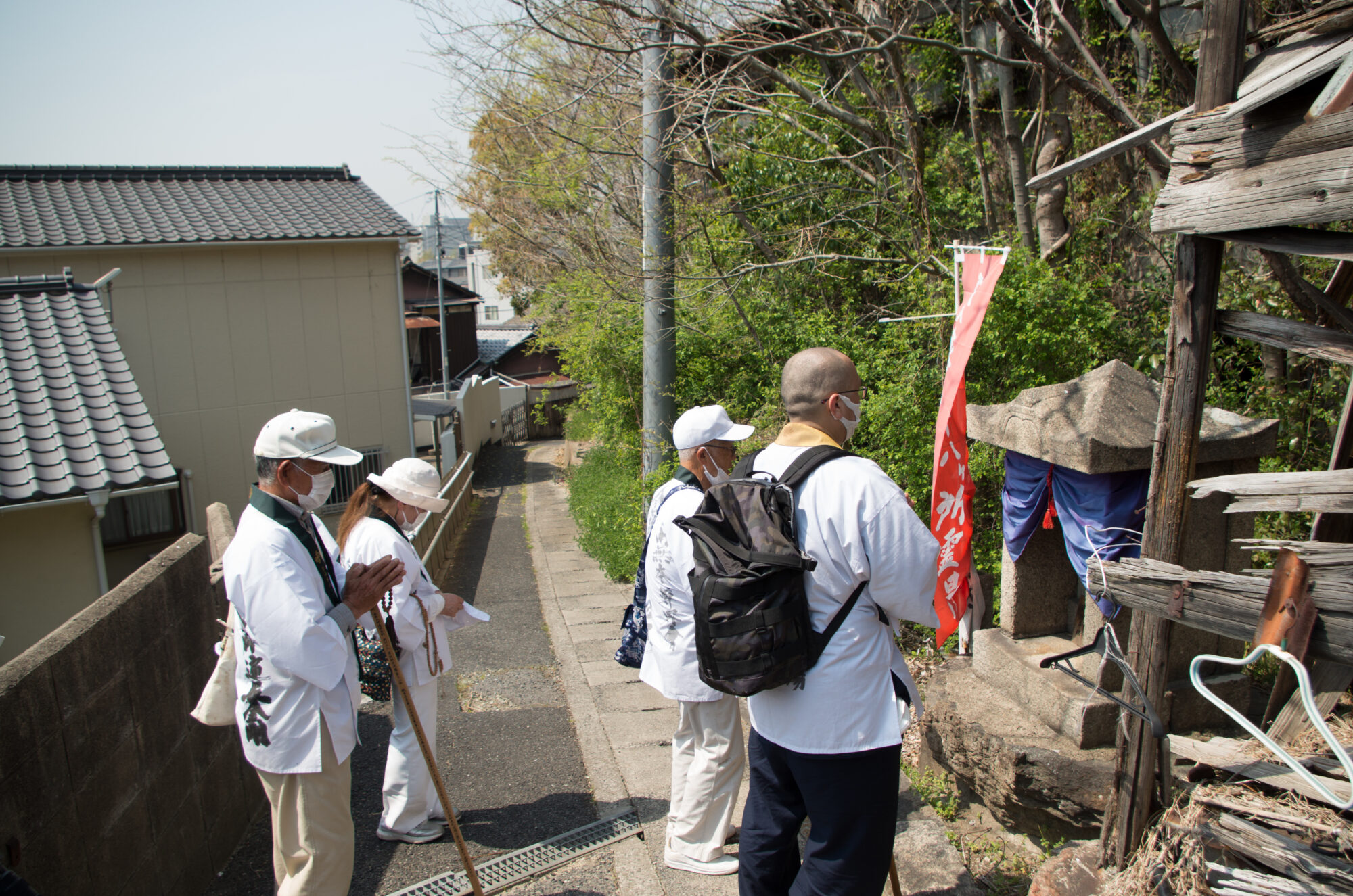
▼As I pass through the narrow alley, I come out onto the road on the south side of Kurashiki Ivy Square.
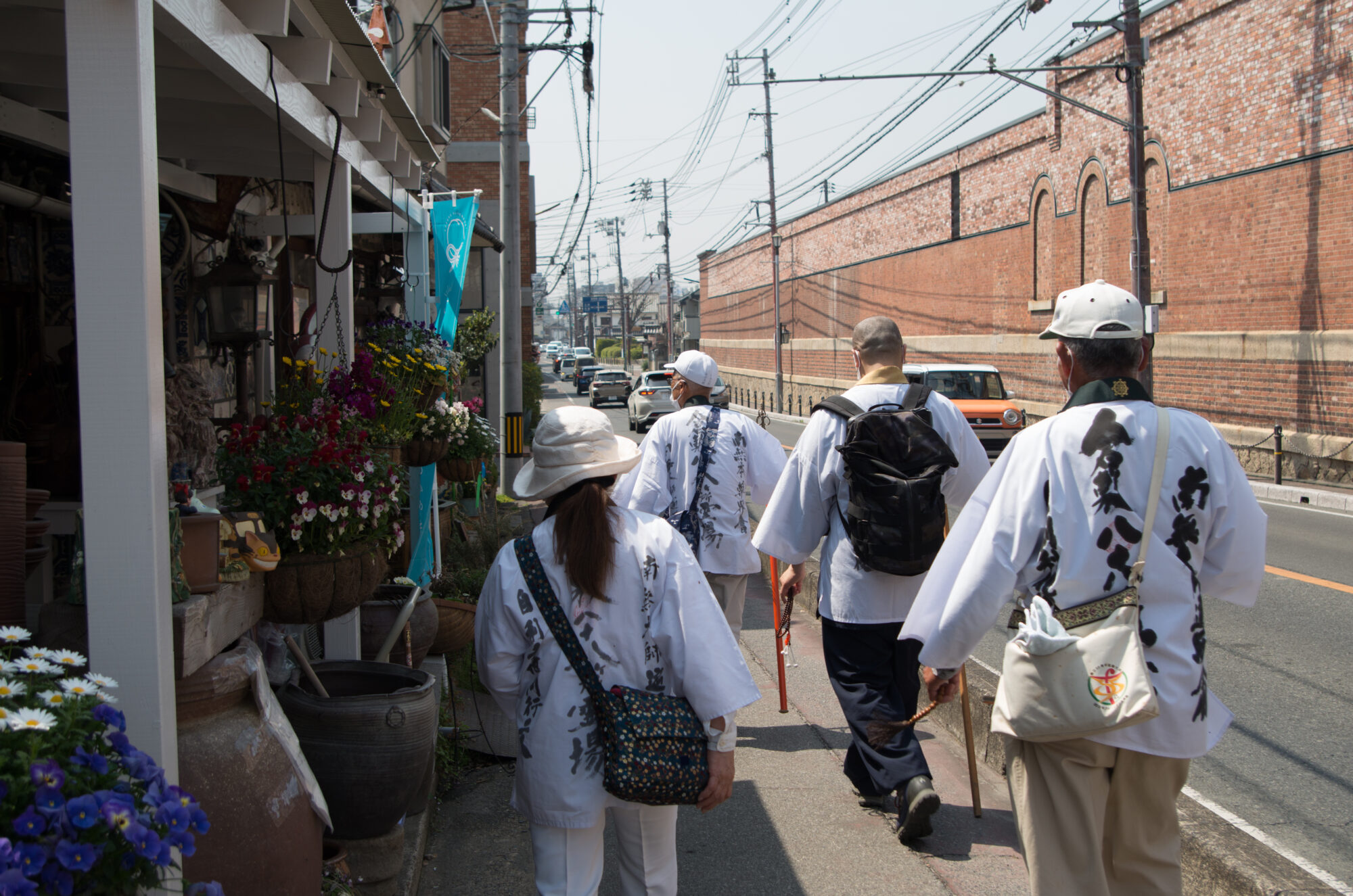
▼I cross Takasago Bridge in the Bikan Historical Area. The pilgrimage attire suits the scenery of the Bikan Historical Area, doesn't it?
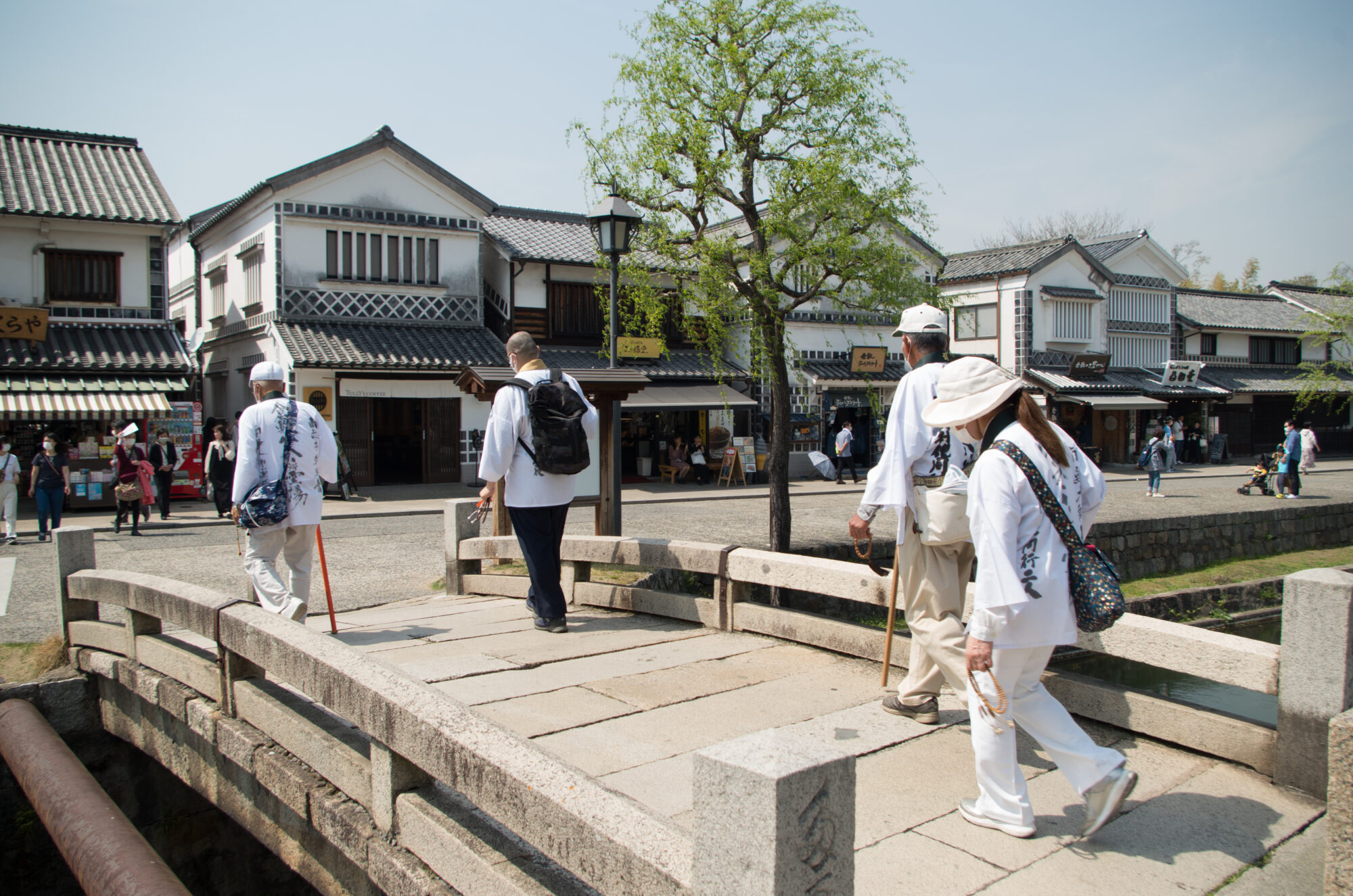
▼After crossing Takasago Bridge, I enter a narrow alley directly. In fact, there is a temple in this narrow alley as well.
Since it is a temple located within the Bikan Historical Area, why not visit it once?
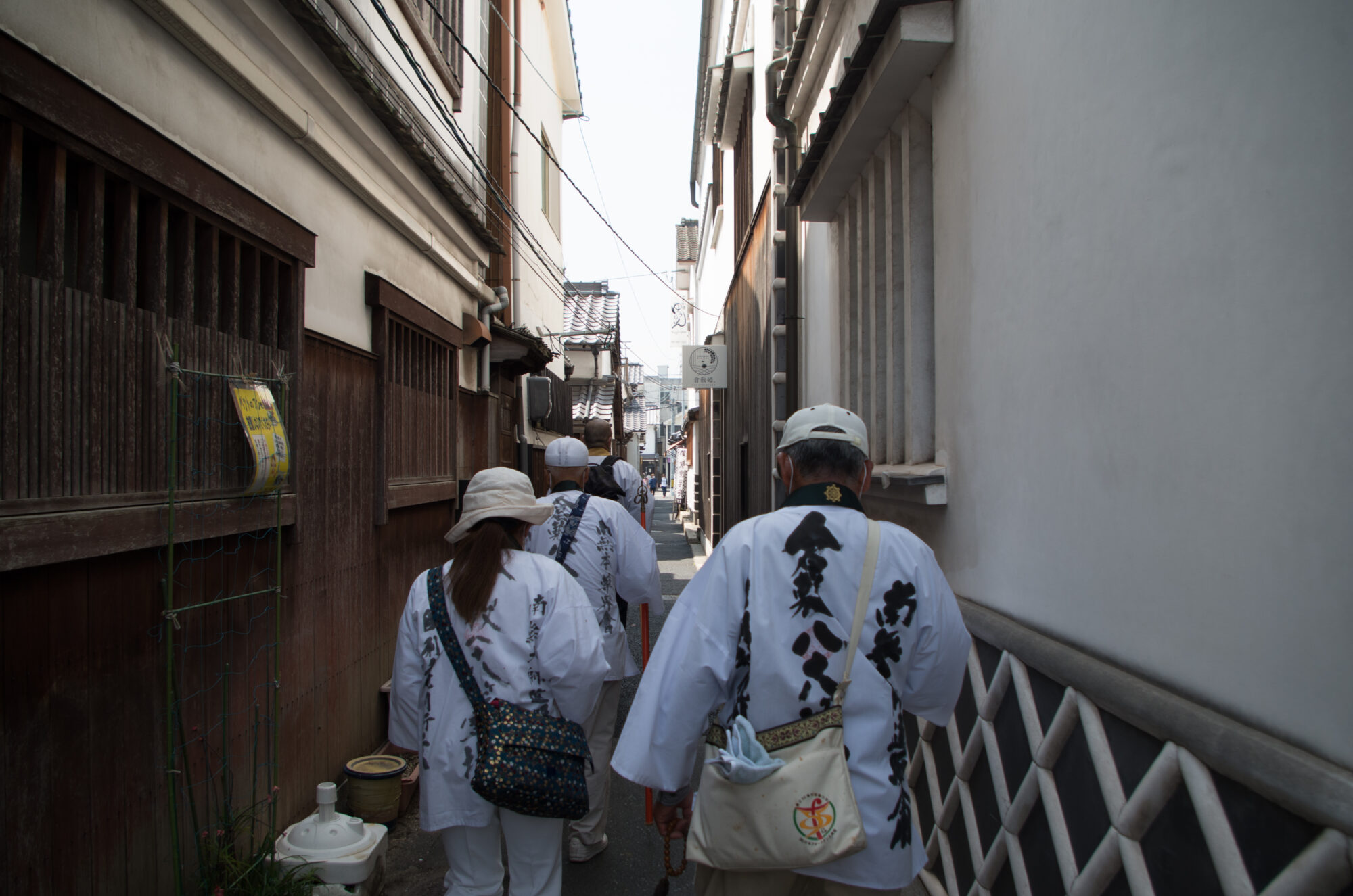
▼67th temple, Komatsuo-ji Temple. This temple has a spacious area that can be seen in the photo. It is located slightly east of Wakutake no Sono.
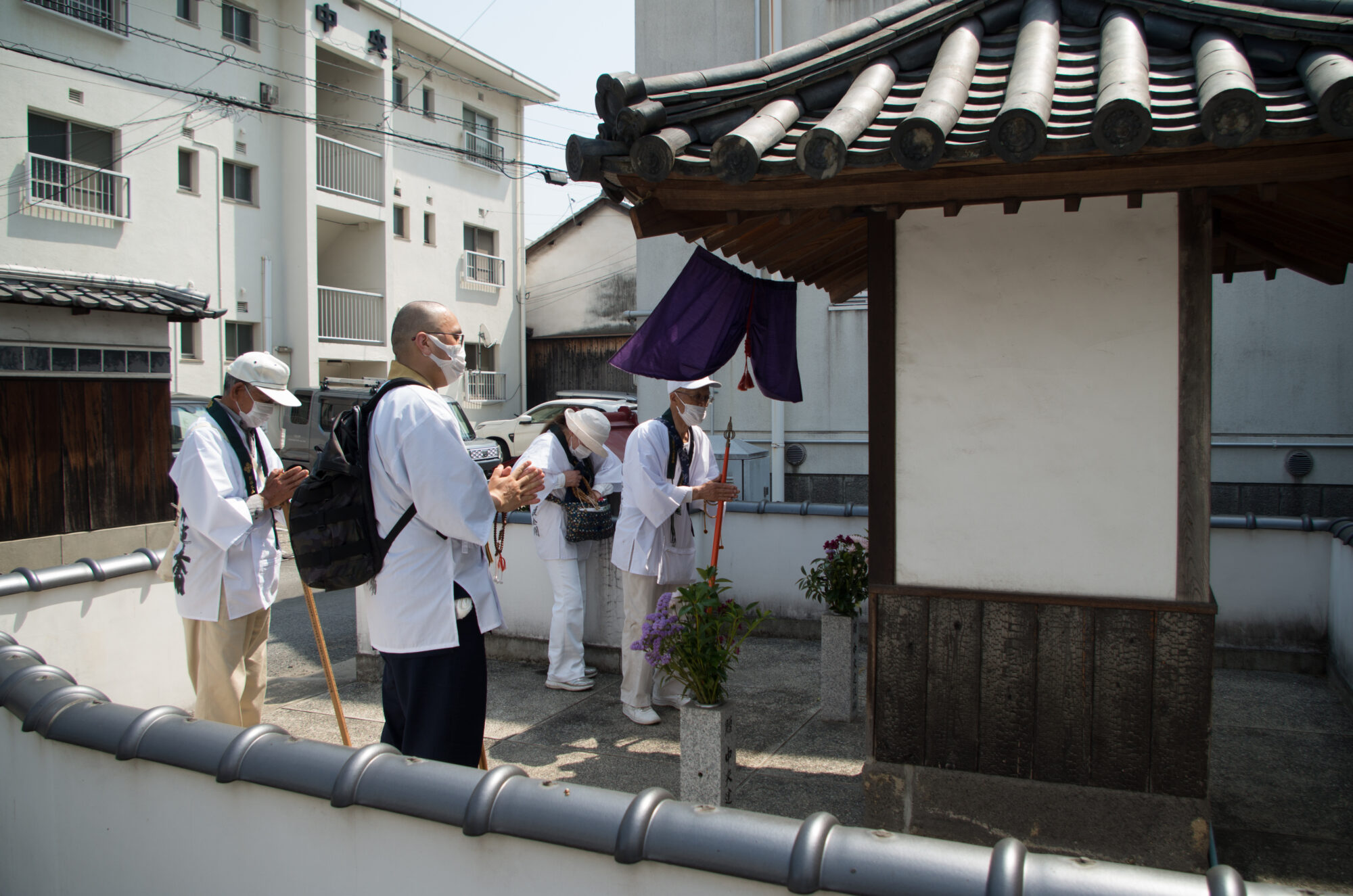
▼Let's walk west along the south side of the Ohara Museum of Art (Annex). The walls of this museum are impressive, resembling castle walls.
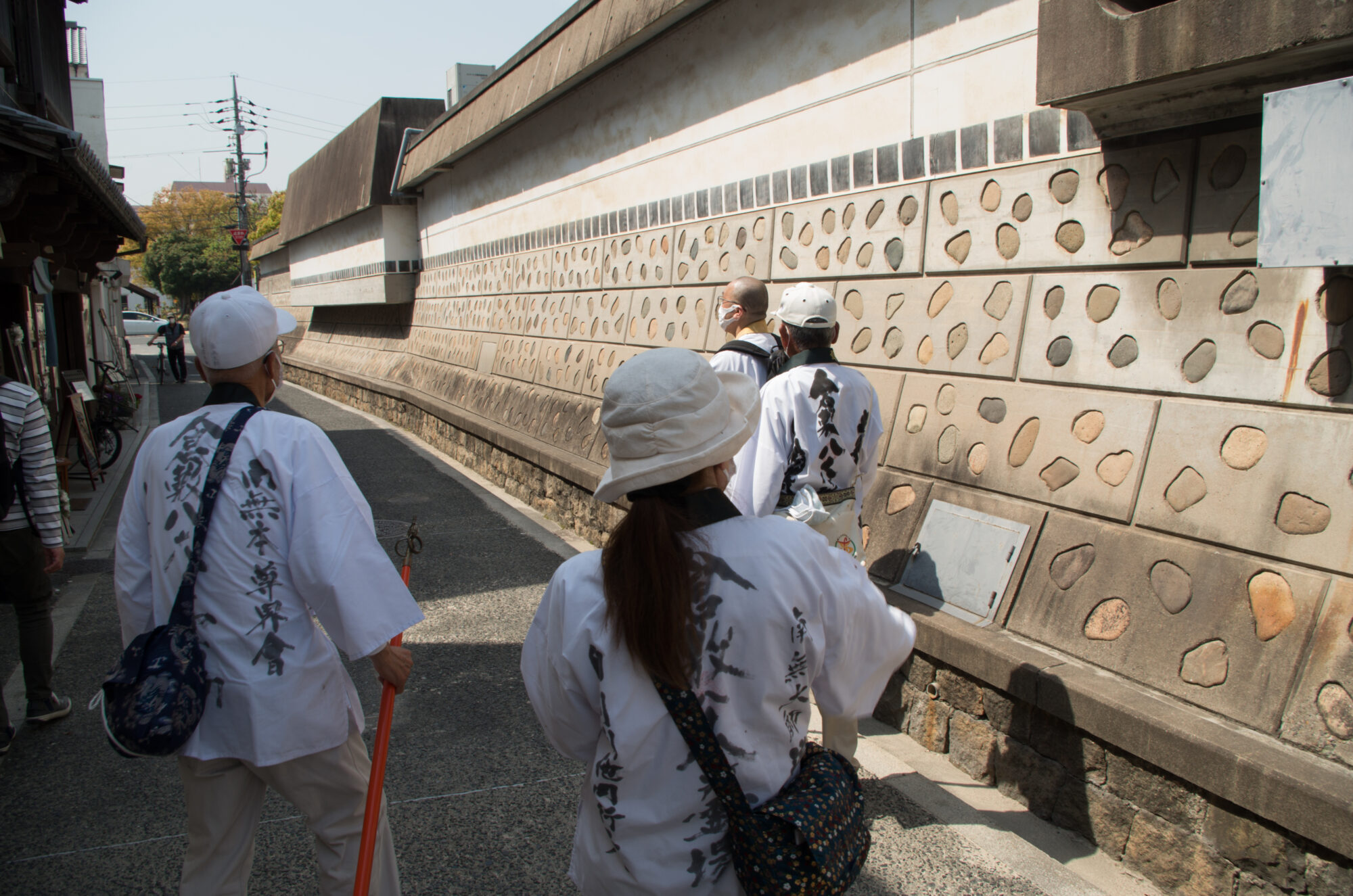
▼Continuing west through the town.
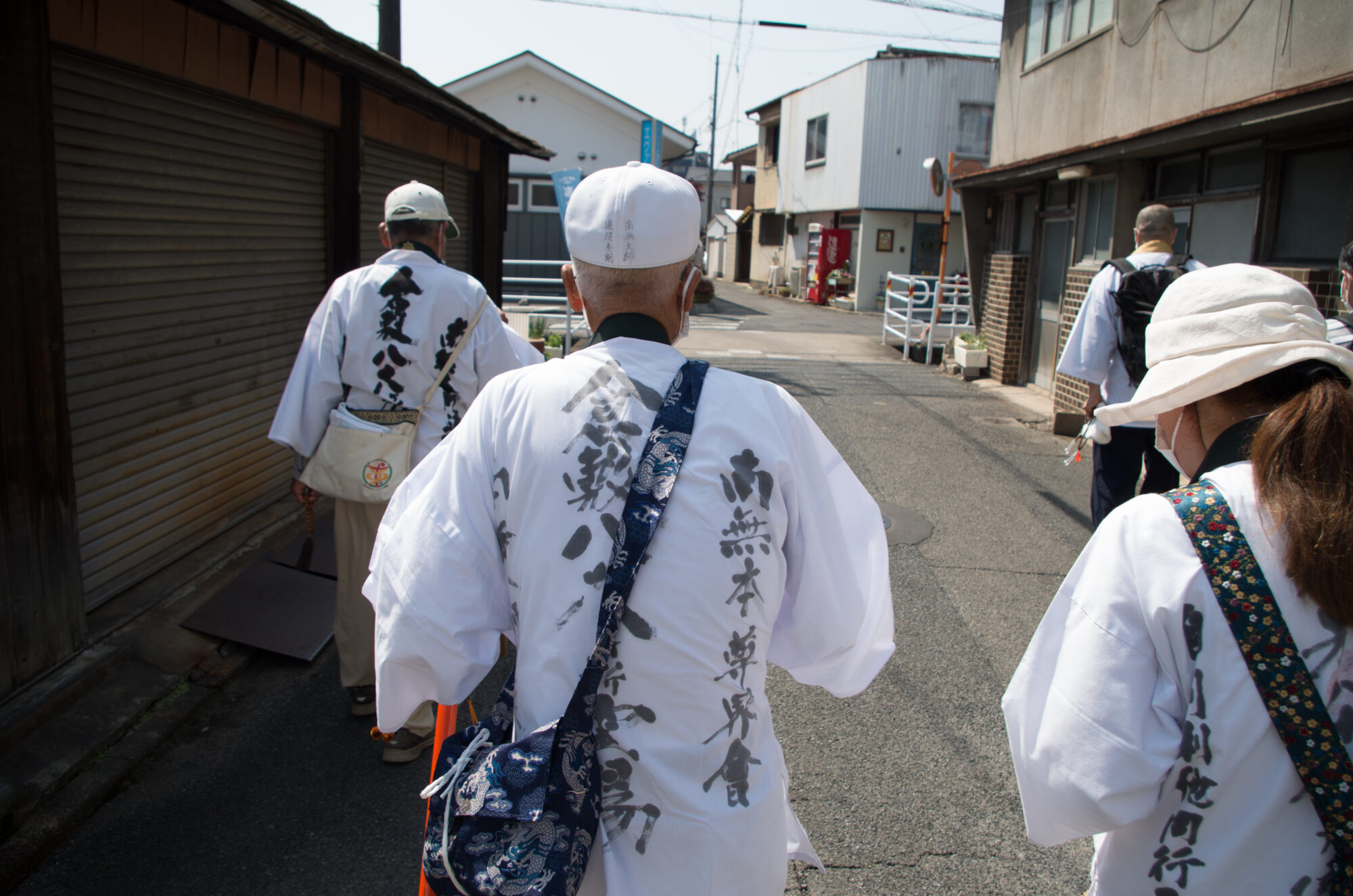
▼70th temple, Motoyama-ji Temple. Near the drugstore in Inari-cho. The temple is characterized by its stylish block wall.
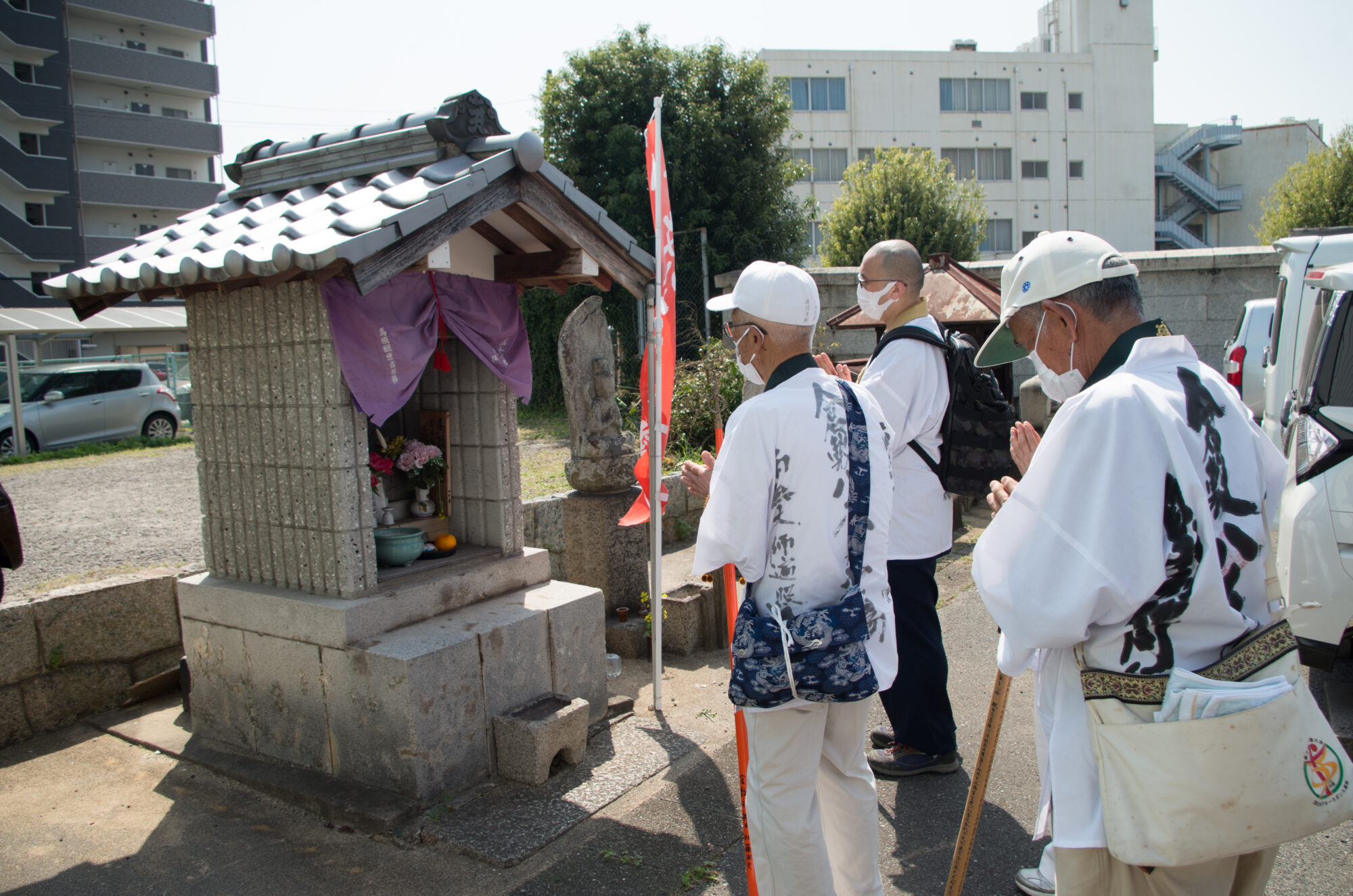
▼49th temple, Jodo-ji Temple.
The surrounding scenery is that of the town. The characteristic of this temple is that it is located inside a solid building.
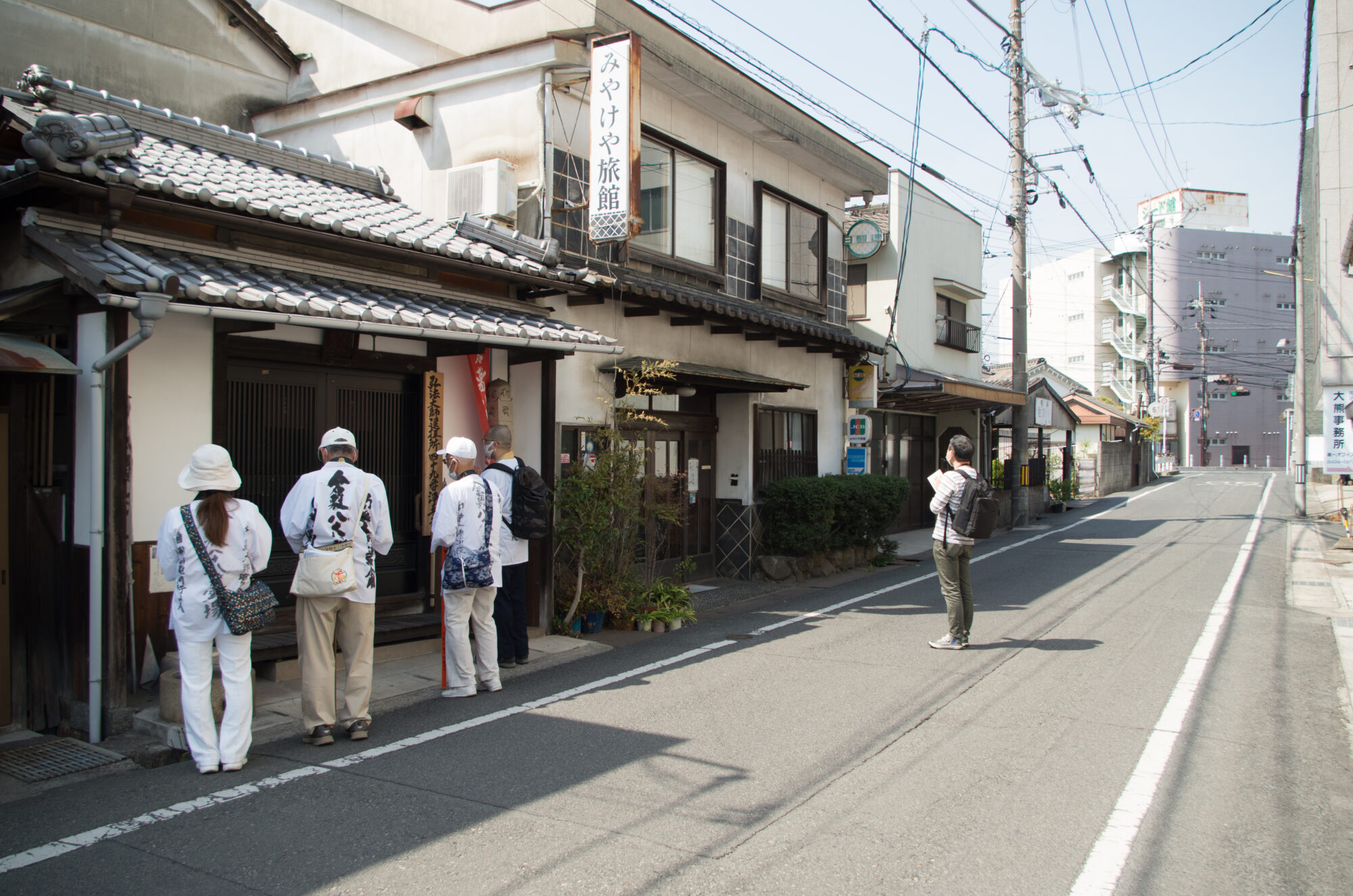
▼Slowly heading south along the Kurashiki River, which flows life-giving water from the Takahashi River to the Kurashiki area. I am walking towards Achi Terrace Kurashiki.
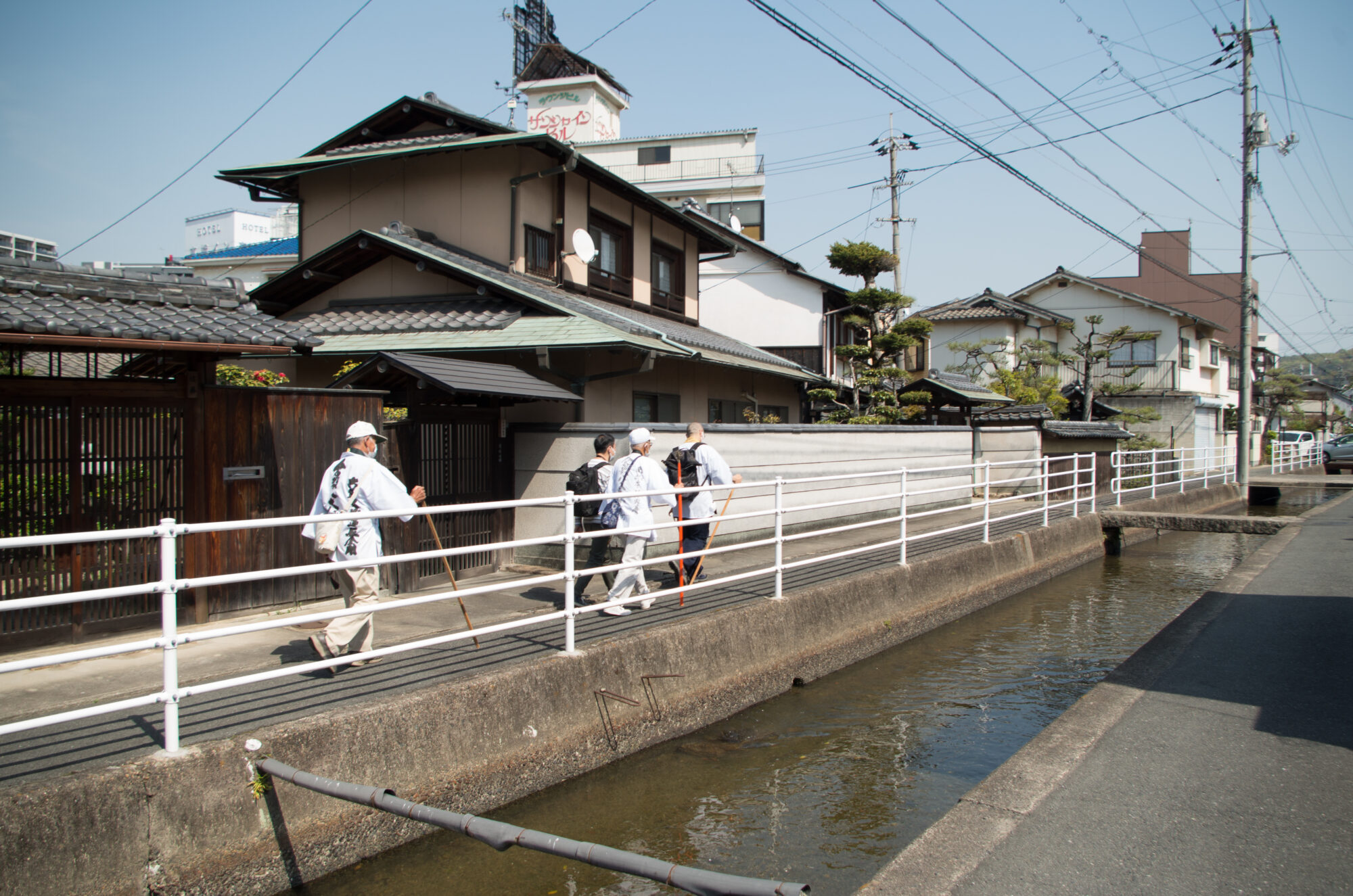
▼The newly constructed 80th sacred site, Kokubunji, near Achi Terrace Kurashiki. This site was originally enshrined as Shinmachi Daishido, but was relocated due to various circumstances.
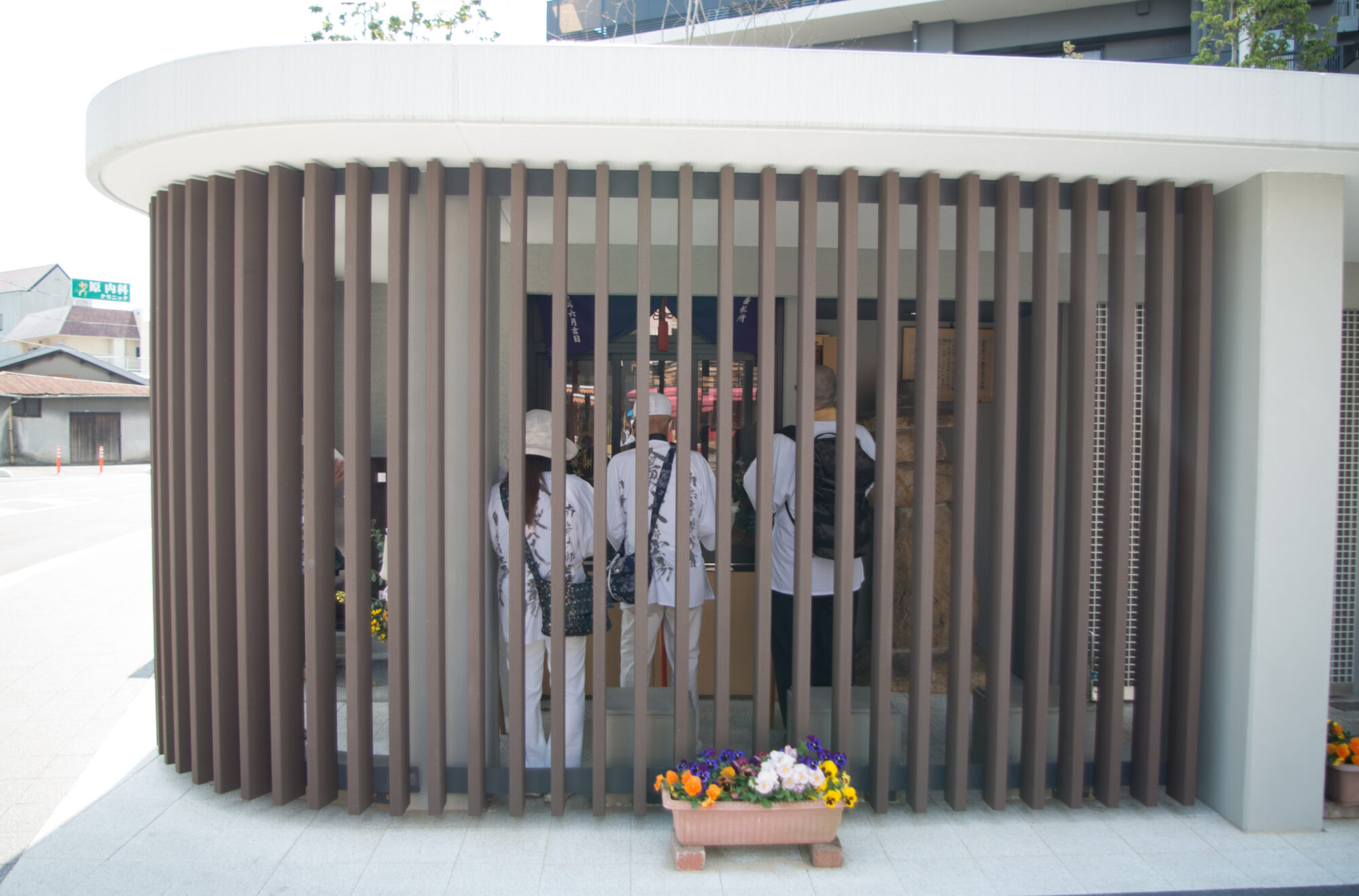
▼The principal image and the statue of Kobo Daishi enshrined at the 80th sacred site.
Please pay attention to the statue of Kobo Daishi here. Its face is charred black.
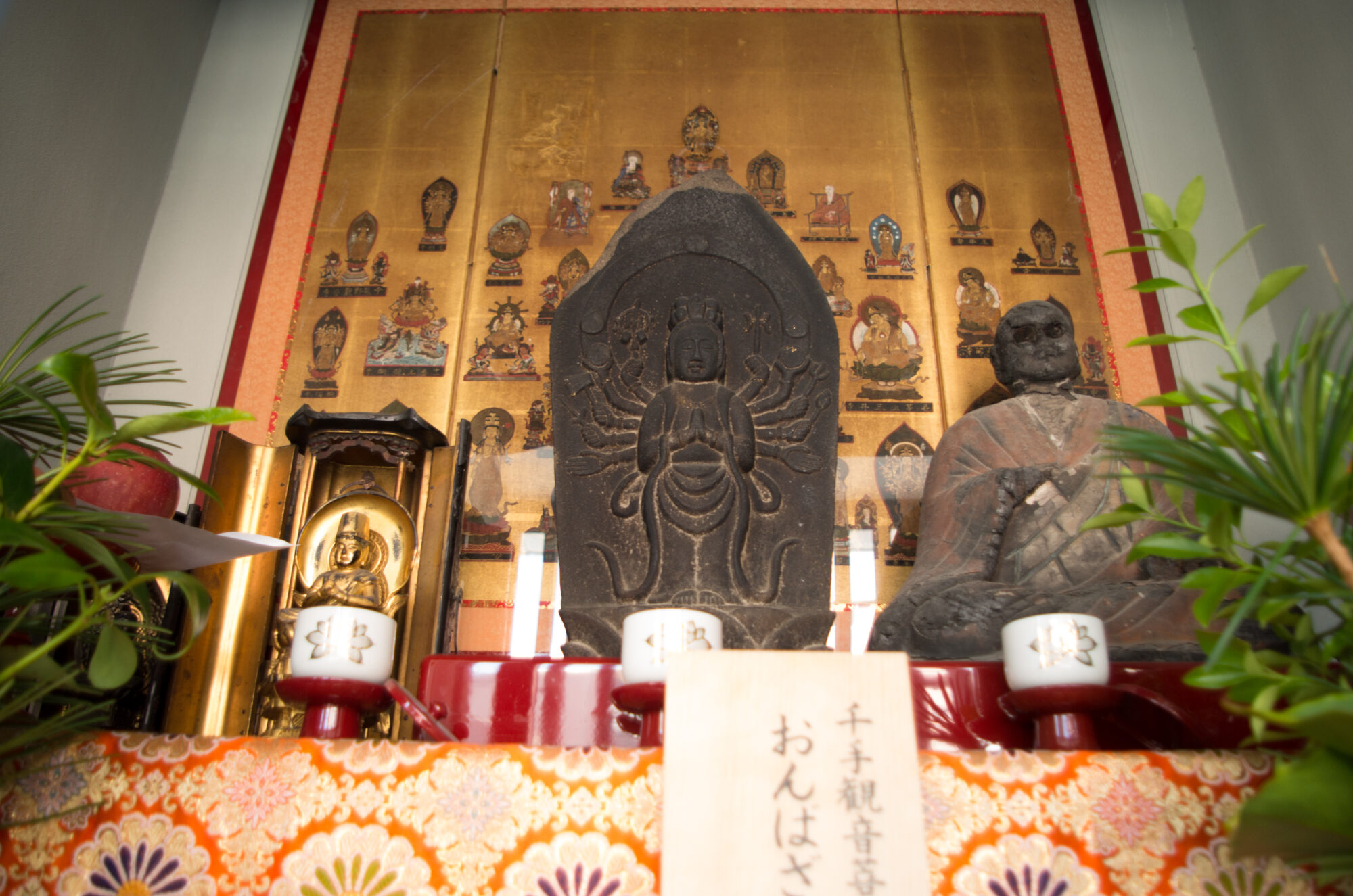
The reason for this can be found in the "History of the 80th Sacred Site in Kurashiki" displayed at this site.
This sacred site was established over 200 years ago during the Edo period as the 80th of the 88 sacred sites around Kurashiki Village. It was named Shinmachi Daishido after the town name at that time. In 1966, it was partially destroyed by a nearby fire, and the wooden statue of Kobo Daishi was charred, but it has gained the faith of the people as a substitute Daishi. It was relocated here due to redevelopment projects in the Reiwa era.
Just by looking at this description, you can feel that it has been protected by the local people for a long time.
▼I have returned to Kanryuji Temple (west side). To be honest, I am just tired.
On the other hand, I feel a sense of accomplishment and fulfillment from being able to walk with everyone. I am just filled with gratitude.
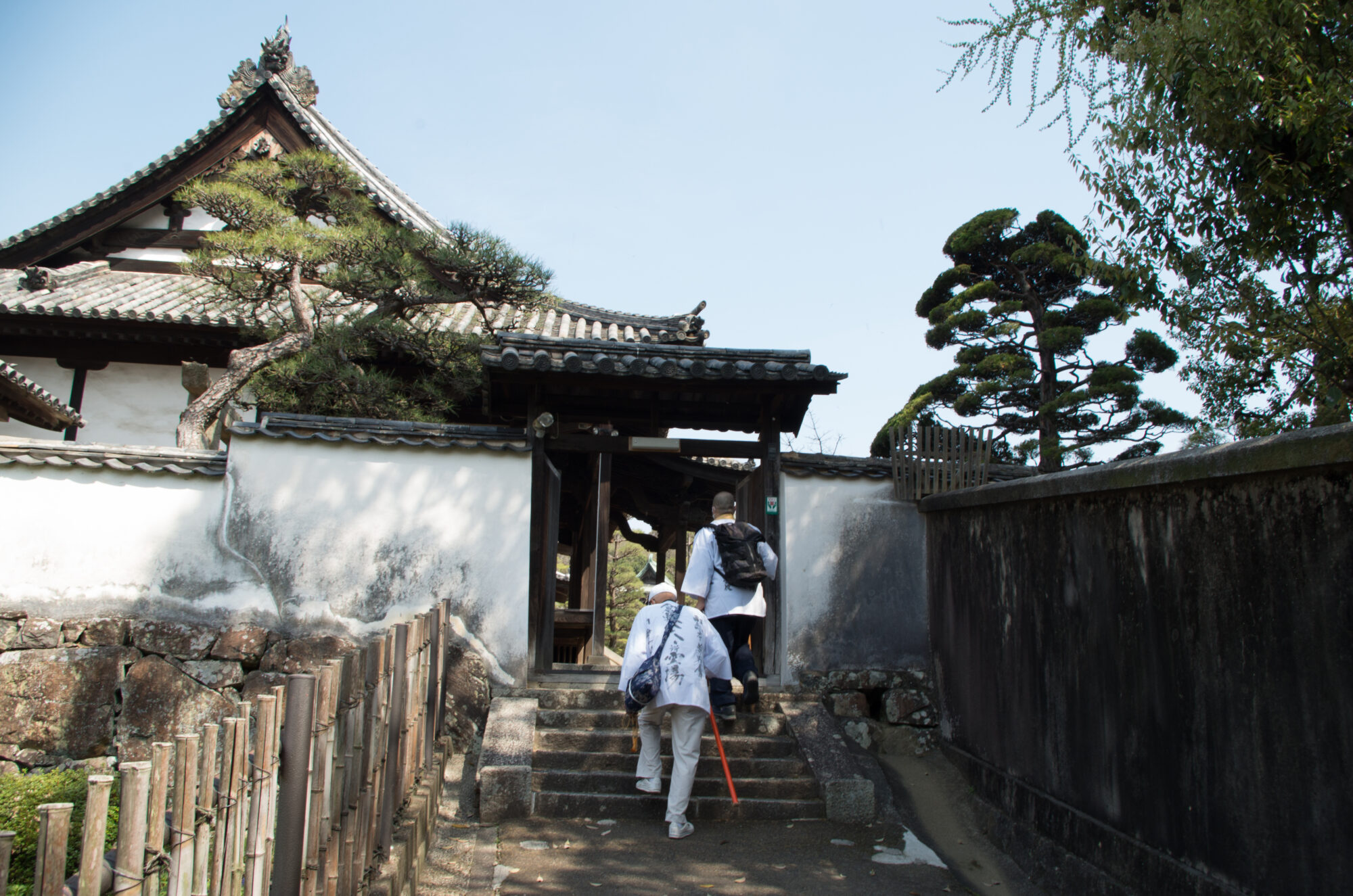
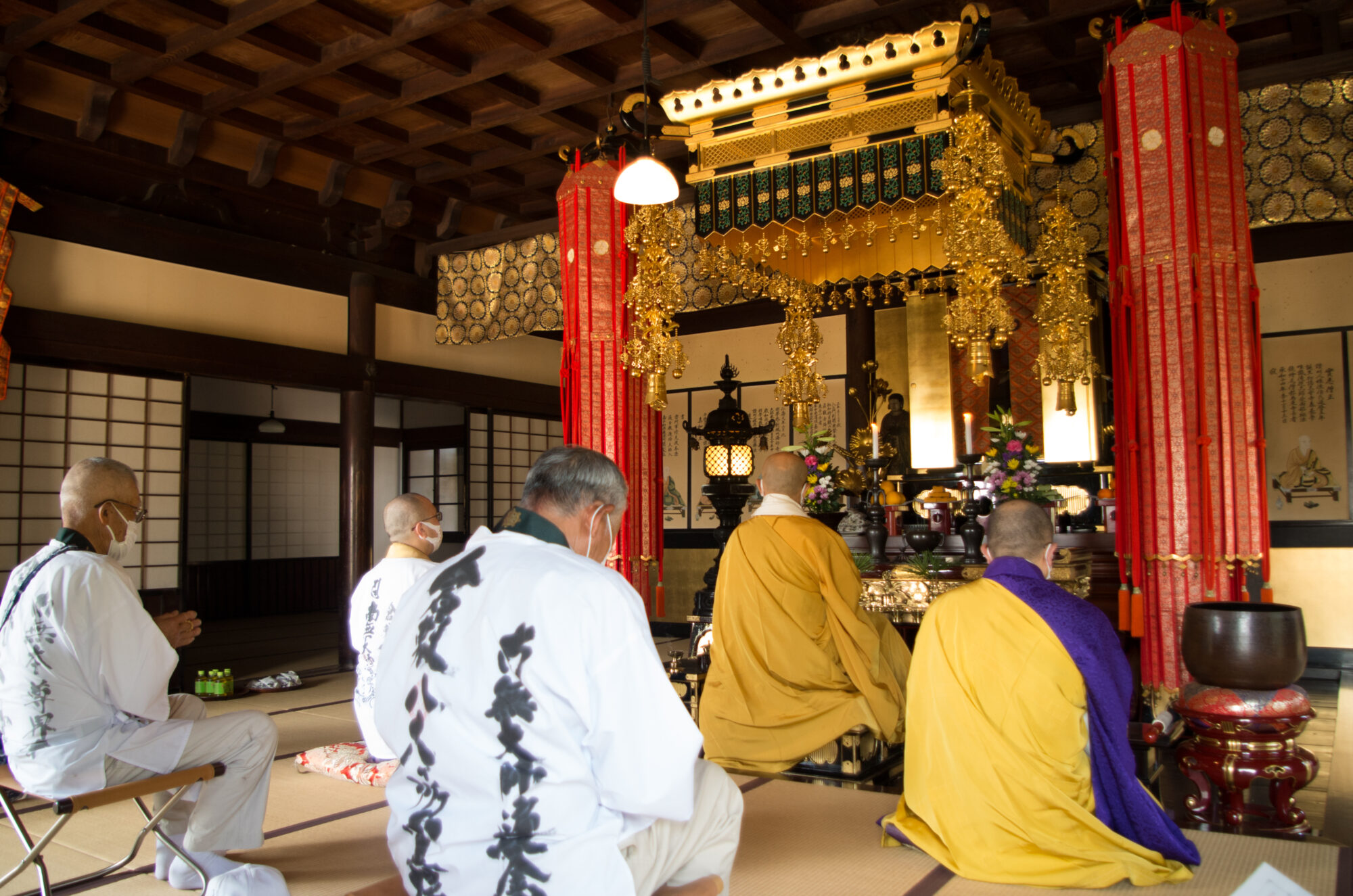
▼At the Daishido of Kanryuji Temple. I offer my prayers of thanks and gratitude for being able to complete the pilgrimage safely.
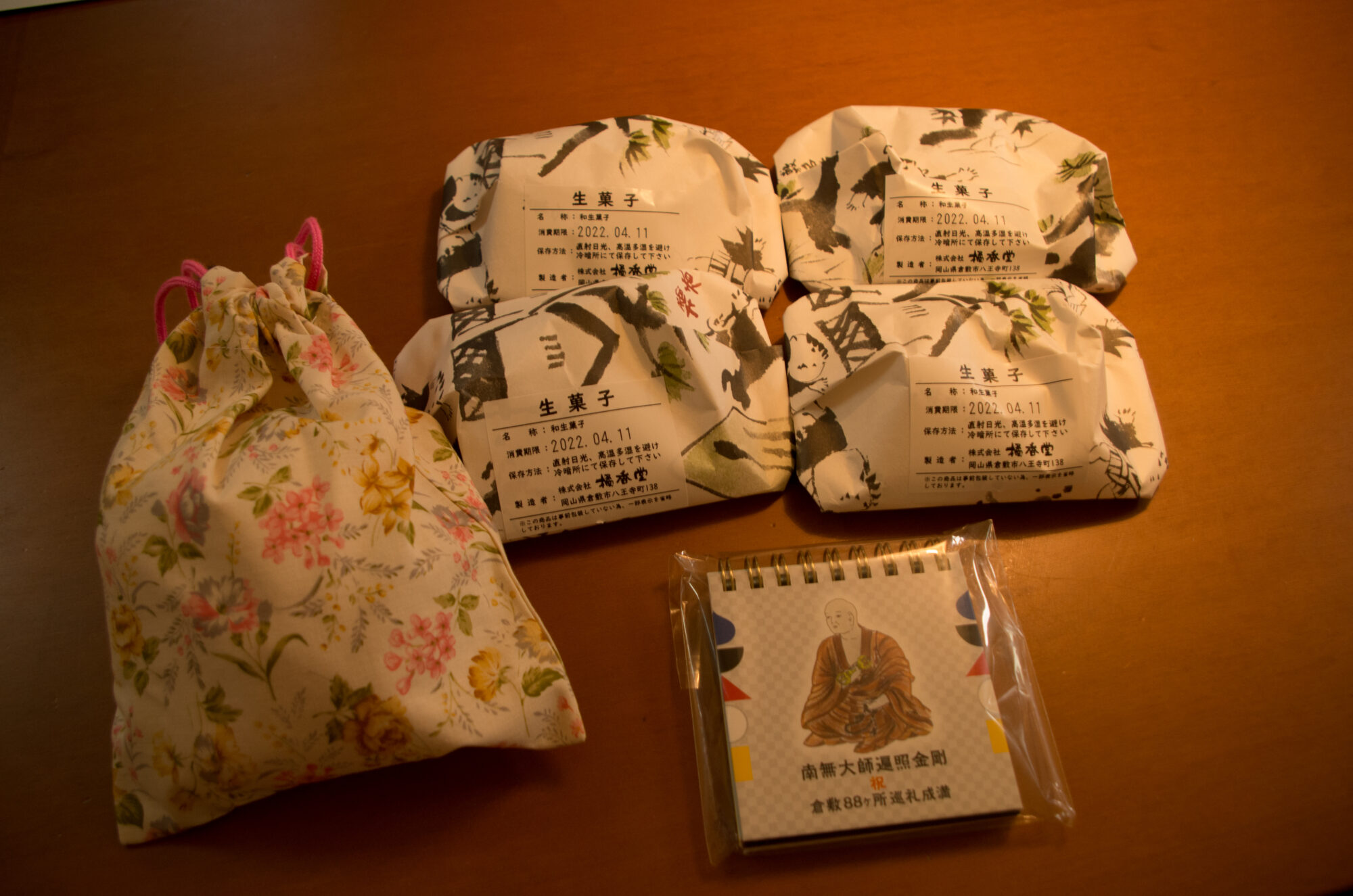
▼Finally, I received hospitality from Kanryuji Temple. The bag on the left is the hospitality from Mr. Chida, introduced in Vol.1.
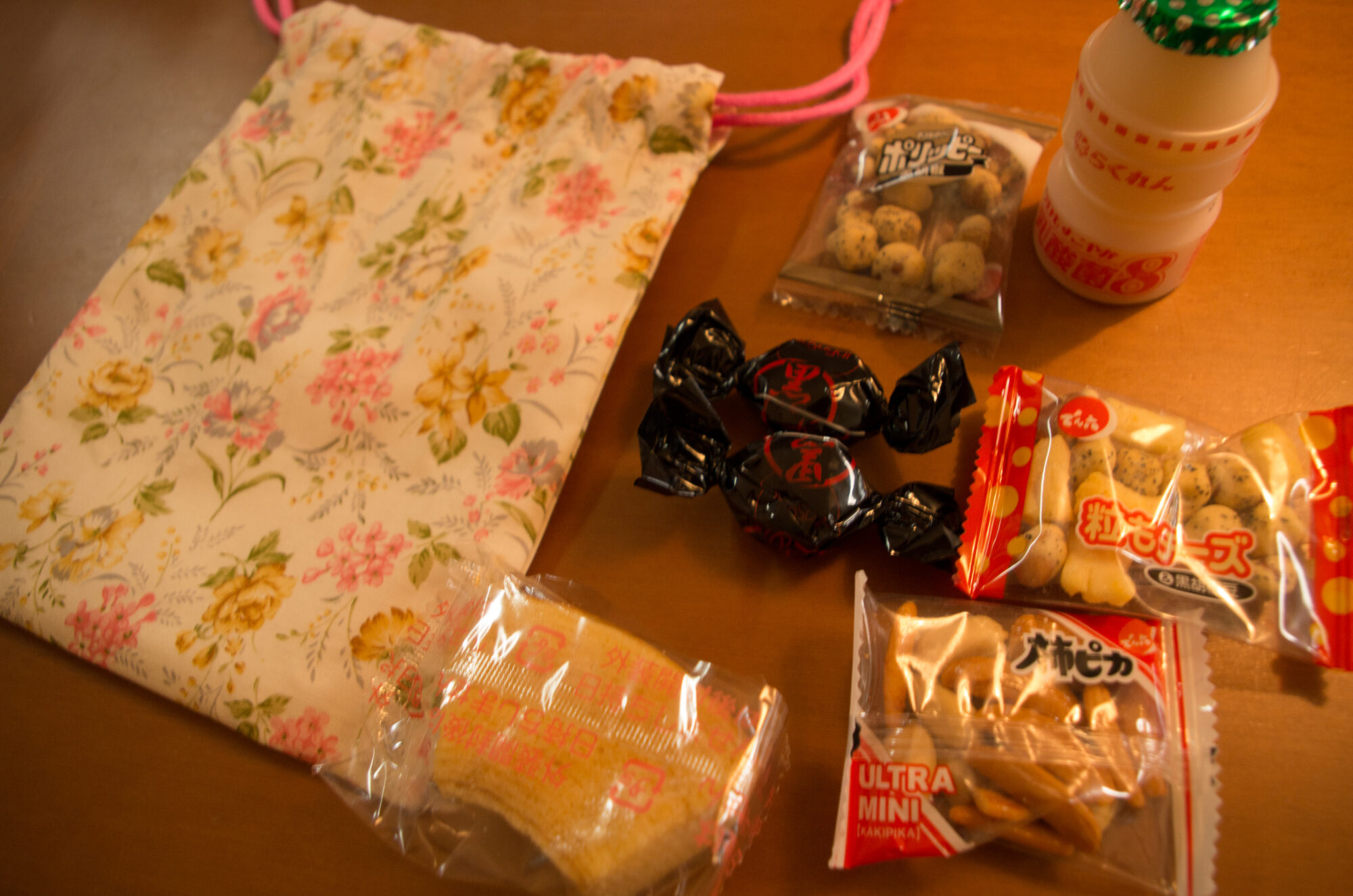
▼I opened the hospitality from Mr. Chida. It was a delightful assortment of candies and snacks, each one a joy.
Conclusion
Vol.1 primarily summarized knowledge, while Vol.2 focused mainly on landscapes, introducing the "Kurashiki 88 Sacred Sites Pilgrimage" in two parts.
One of the reasons I wanted to write this article is the "People who protect and inherit the sacred sites" mentioned in the title of Vol.1.
With the thoughts of many people, the long-standing Kurashiki 88 Sacred Sites Pilgrimage has been beautifully revived.
Before the outbreak of the COVID-19 pandemic, pilgrimages were held twice a year.
At times, as many as 100 people gathered.
I hope that people will notice the new discoveries in the familiar landscapes they see every day and recognize that there are people who protect and inherit the sacred sites.
Here, I have two points to note.
The first is that if you underestimate the mountains of Kurashiki, you may risk getting lost.
The second is that during the Kurashiki 88 Sacred Sites Pilgrimage, we also walk through areas where local people live their daily lives.
I hope everyone can enjoy the pilgrimage while being mindful of their feelings of gratitude and observing decorum and manners.
The landscapes we see every day.
This article may prompt you to notice the red banners and stone shrines marked "Kurashiki 88 Sacred Sites" along the paths you walk every day.
If you do notice them, why not take a moment to stop and peek inside the shrine?
You may realize that the uniquely crafted statues of Kobo Daishi and the principal images are watching over you warmly.
Data on the Kurashiki 88 Sacred Sites Pilgrimage
| Name | Kurashiki 88 Sacred Sites Pilgrimage |
|---|---|
| Date | Every year in March and November, gathering at 8:30 AM for departure |
| Location | Advisor of the Kurashiki 88 Sacred Sites Association, Kanryuji Temple |

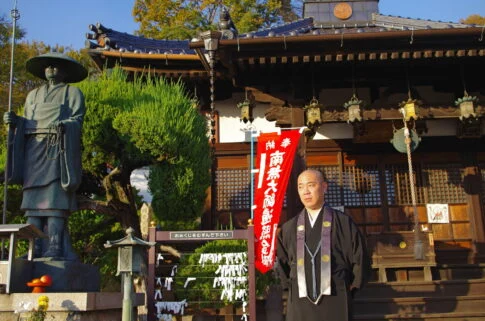
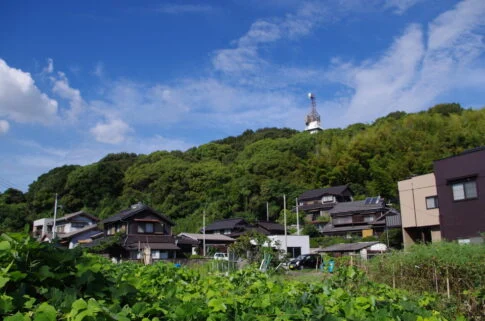
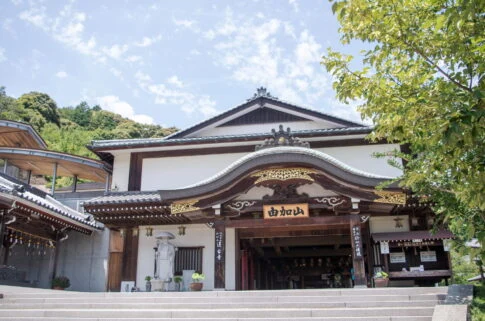








Normally, it is expected to visit the sites in order from the first to the second, and from the second to the third. However, in Kurashiki, due to road expansions, many of the stone temples themselves have been relocated, and they are not arranged in order as they should be.
Therefore, we, the Kurashiki Sacred Sites Association, have started from the 74th sacred site, which is said to be the birthplace of Kurashiki, the old Yumiya. We will describe the route in detail, so even first-timers can walk alone.
First, please read the route indicated by the circle. Next, you will find the name of the temple you arrive at. The Kurashiki 88 Sacred Sites differ in several places from the names of the sacred sites in Shikoku.
Next, I have written the name of the main deity and the mantra.
1. Written by Kojiro Kobashi, Kurashiki 88 Sacred Sites, self-published
2. Written by Kenichi Inoue, Kurashiki 88 Sacred Sites, Takahashi River No. 41, Showa 57
3. Edited by Shigeeko Taniguchi, Guide to Kurashiki 88 Sacred Sites, self-published
References above
Now, let's go.