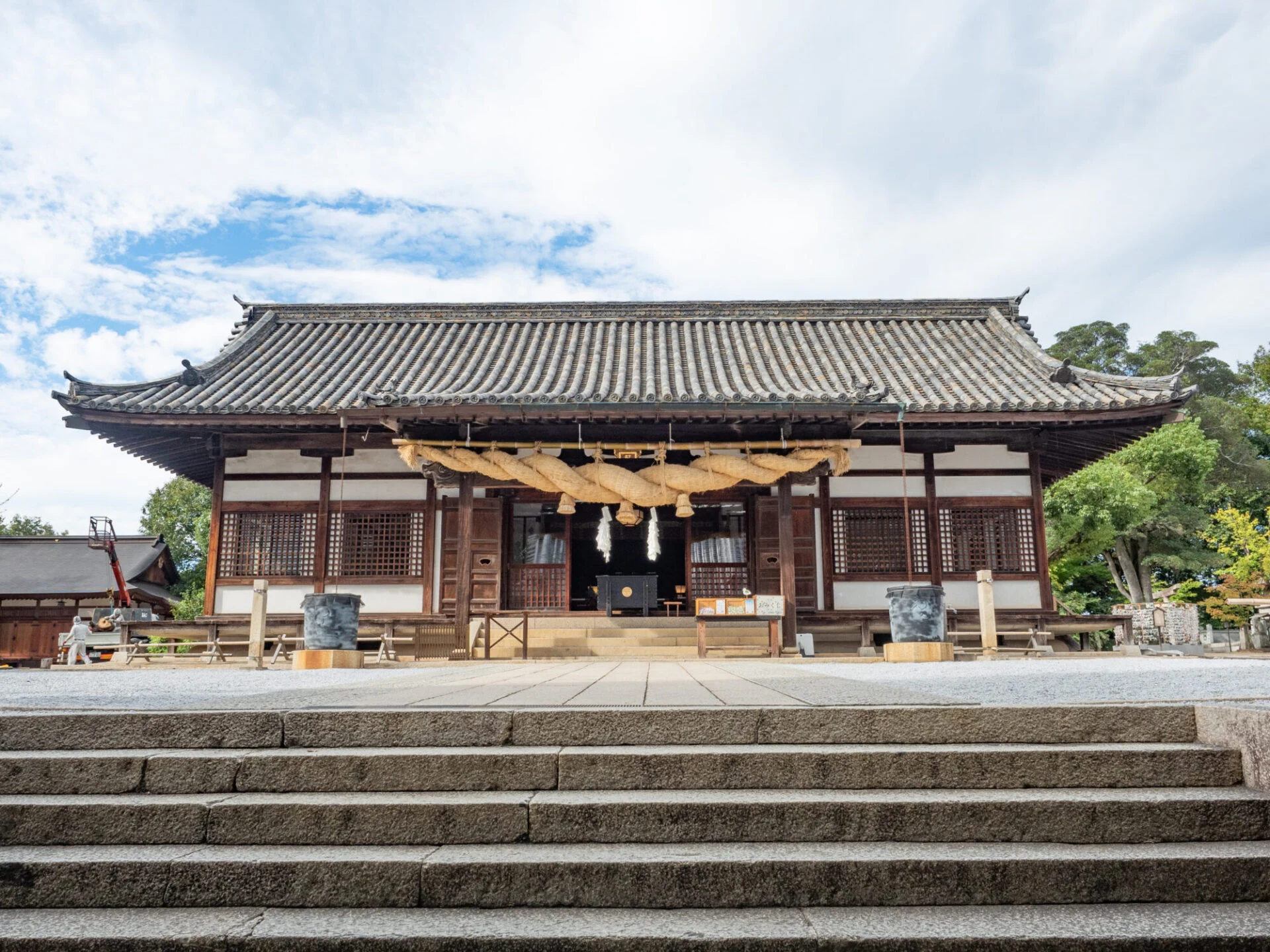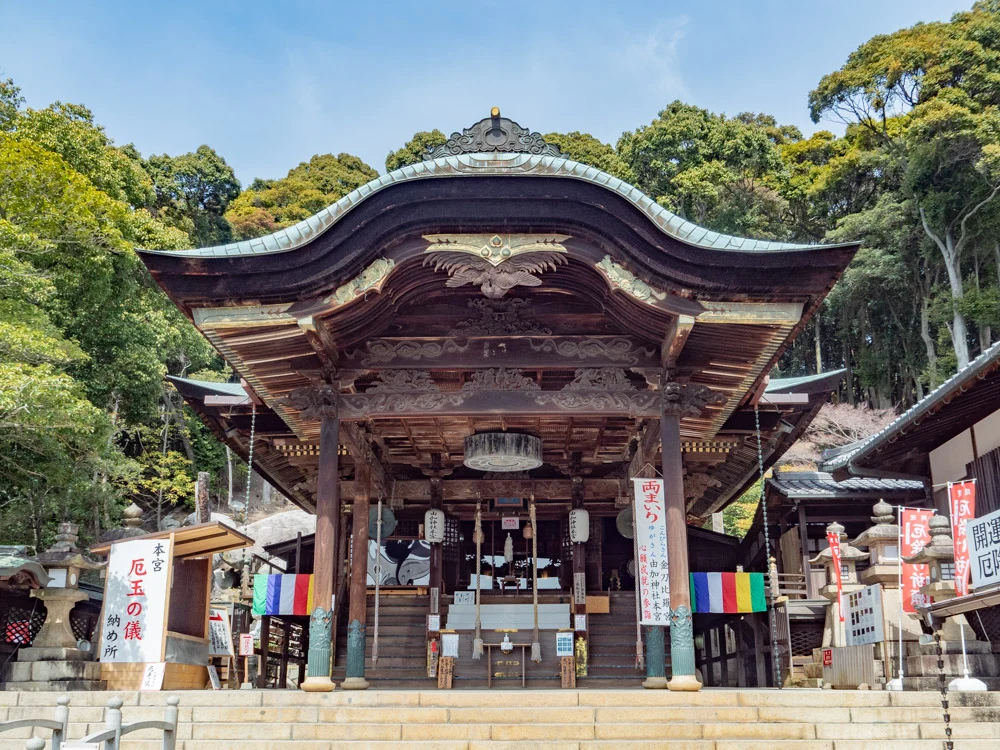
The small hill towering to the north of the Bikan Historical Area is called Tsurugatayama.
On top of Tsurugatayama, there is a shrine called Achi Shrine, and a temple called Kanryuji.
In fact, Kanryuji has traces of the turmoil during the late Edo period, a time when Japan's history underwent significant changes.
We will introduce Kanryuji, a spot related to the turmoil that occurred in Kurashiki.
What is Kanryuji?
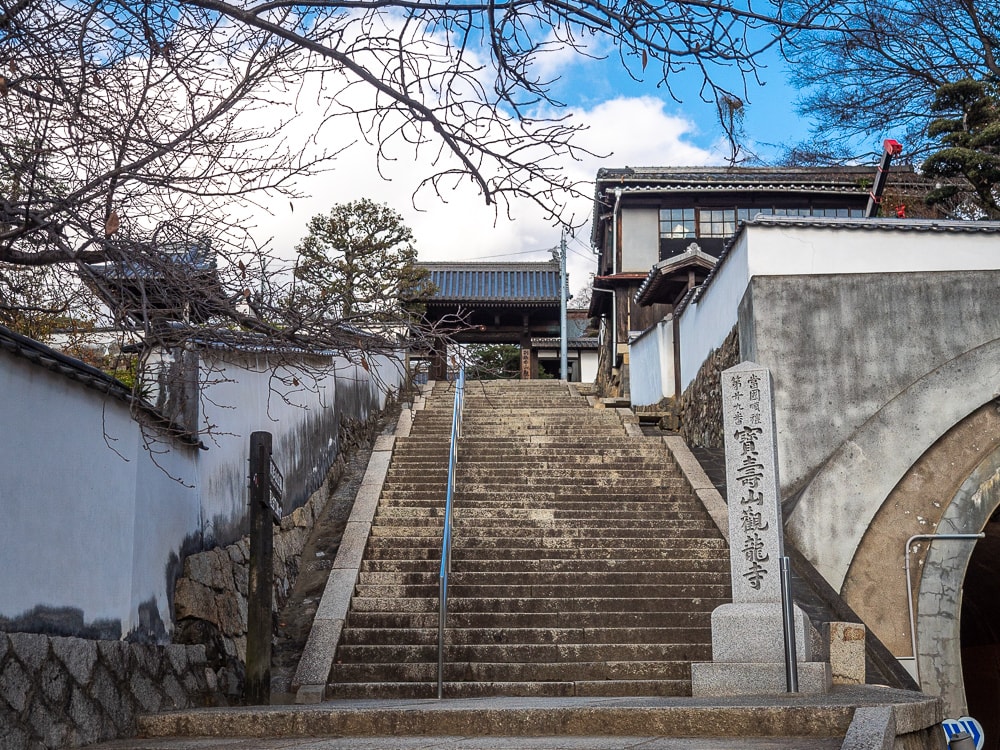
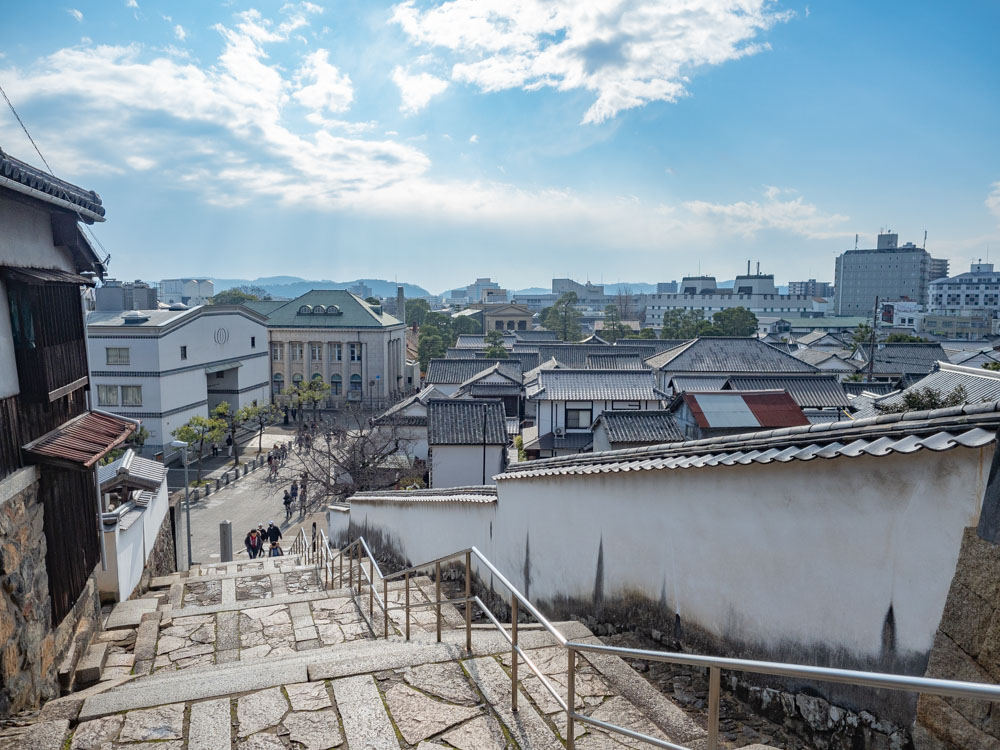
Kanryuji is located on Tsurugatayama, which towers to the north of the Bikan Historical Area.
The stone steps on the left side (west side) of the "Tsurugatayama Tunnel," which runs north and south through Tsurugatayama, serve as the approach to the temple.
The mountain name of Kanryuji is Hojusan, and its sect is Shingon Sect Omuro School.
It enshrines Daikokuten as its principal deity.
Daikokuten represents "the truth of the universe" and is an important deity in Japanese Esoteric Buddhism.
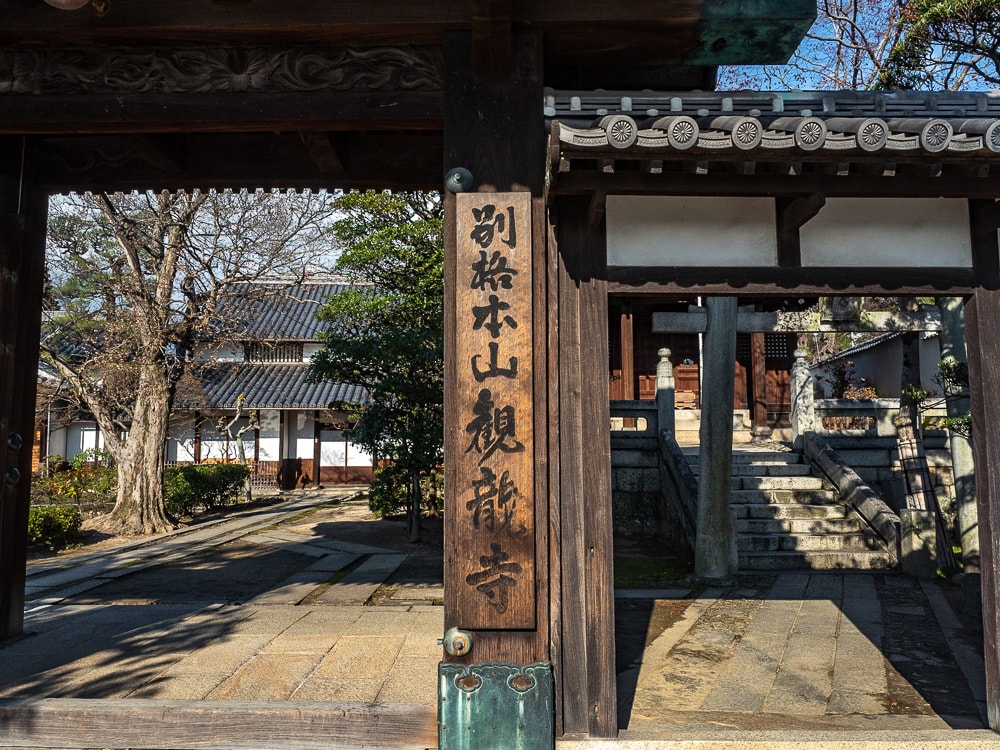
In the first year of the Kan'wa era (985), Kanryuji was established in the area of present-day Nishioka in the northern part of Kurashiki City.
During the Muromachi period, it was relocated to Kurashiki Village (now around the Bikan Historical Area).
With a history of over 1000 years, it is one of the oldest temples in Kurashiki.
Highlights of Kanryuji
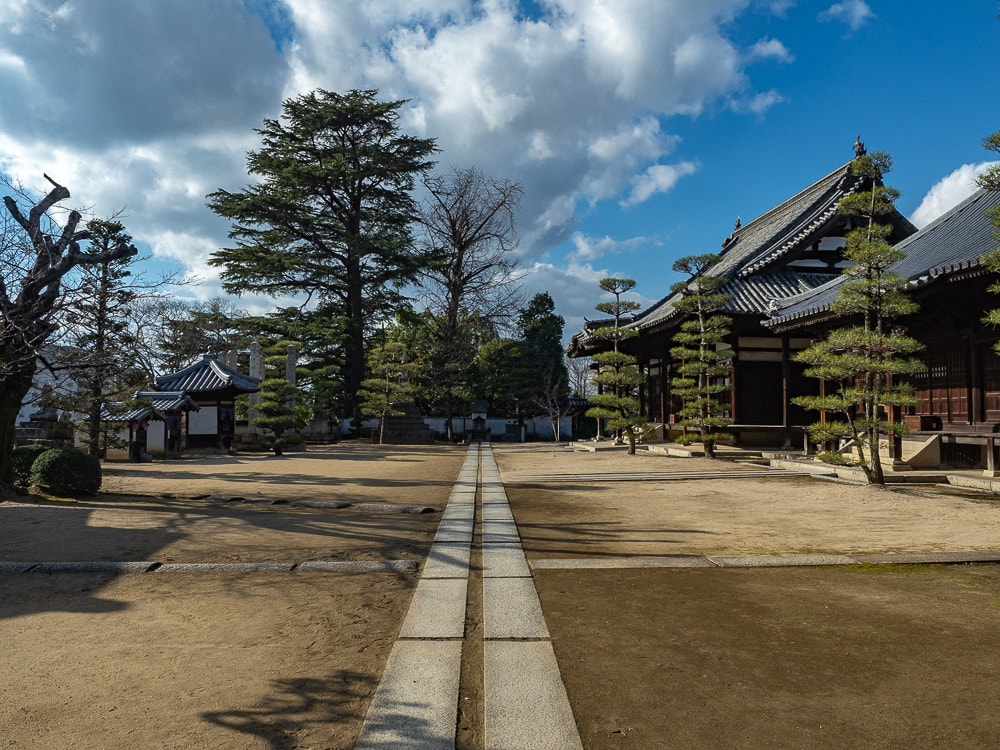
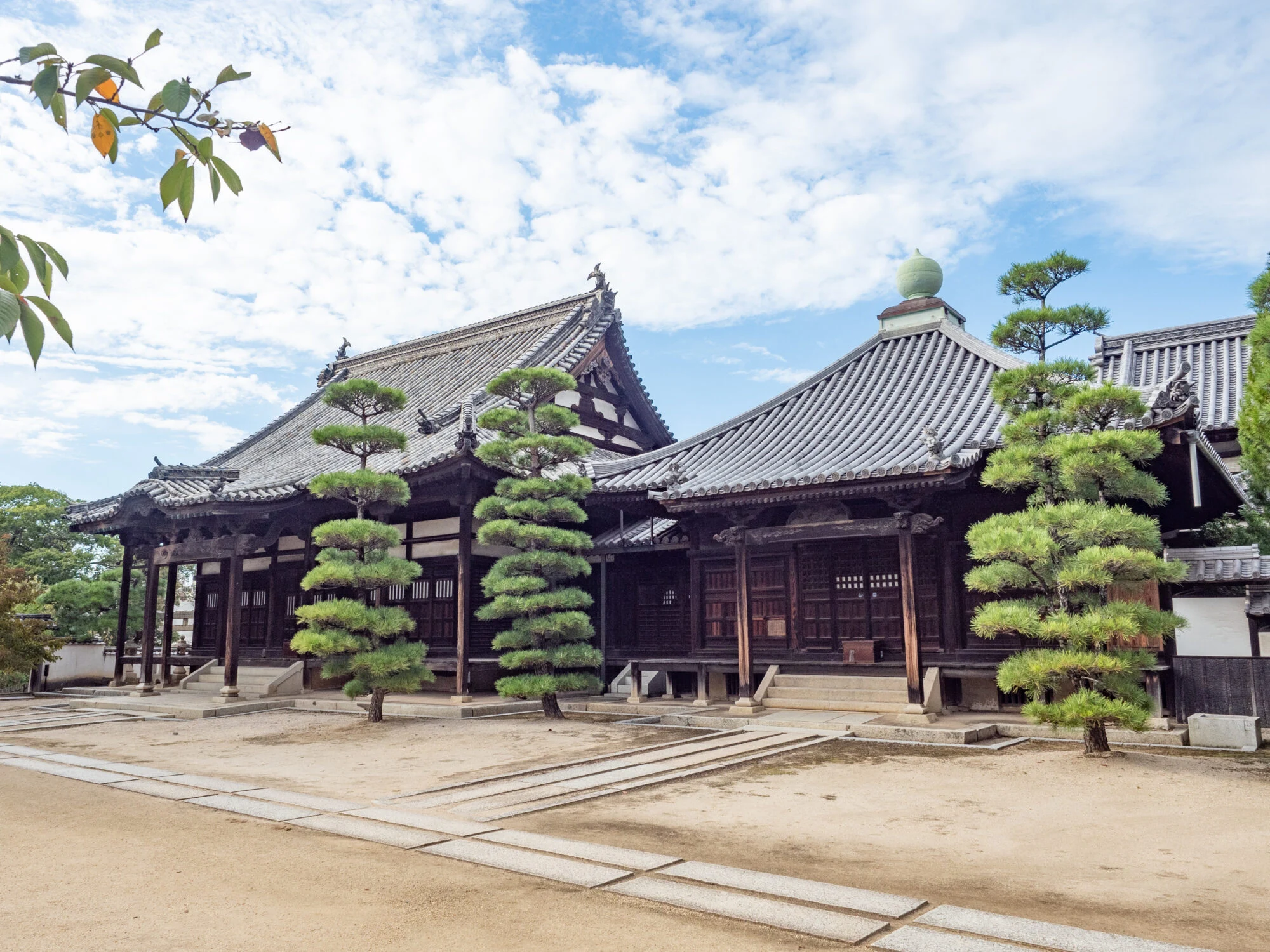
Kanryuji has a vast precinct.
Therefore, we will carefully select and introduce the highlights.
If the mountain gate is open, you can freely enter the precinct.
However, you usually cannot enter the buildings such as the main hall.
The Mountain Gate and Spear Marks
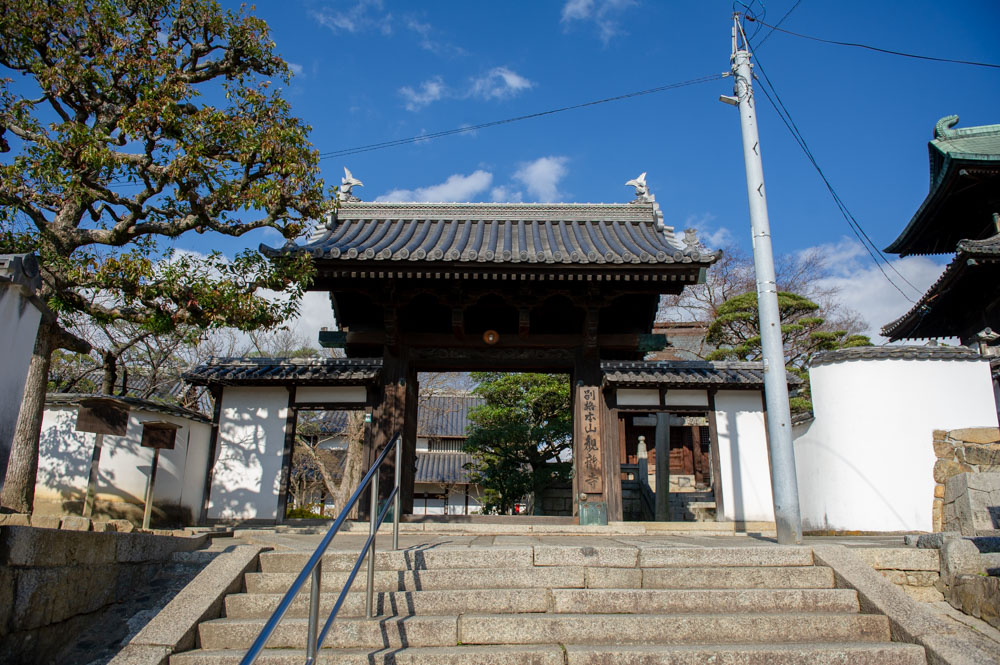
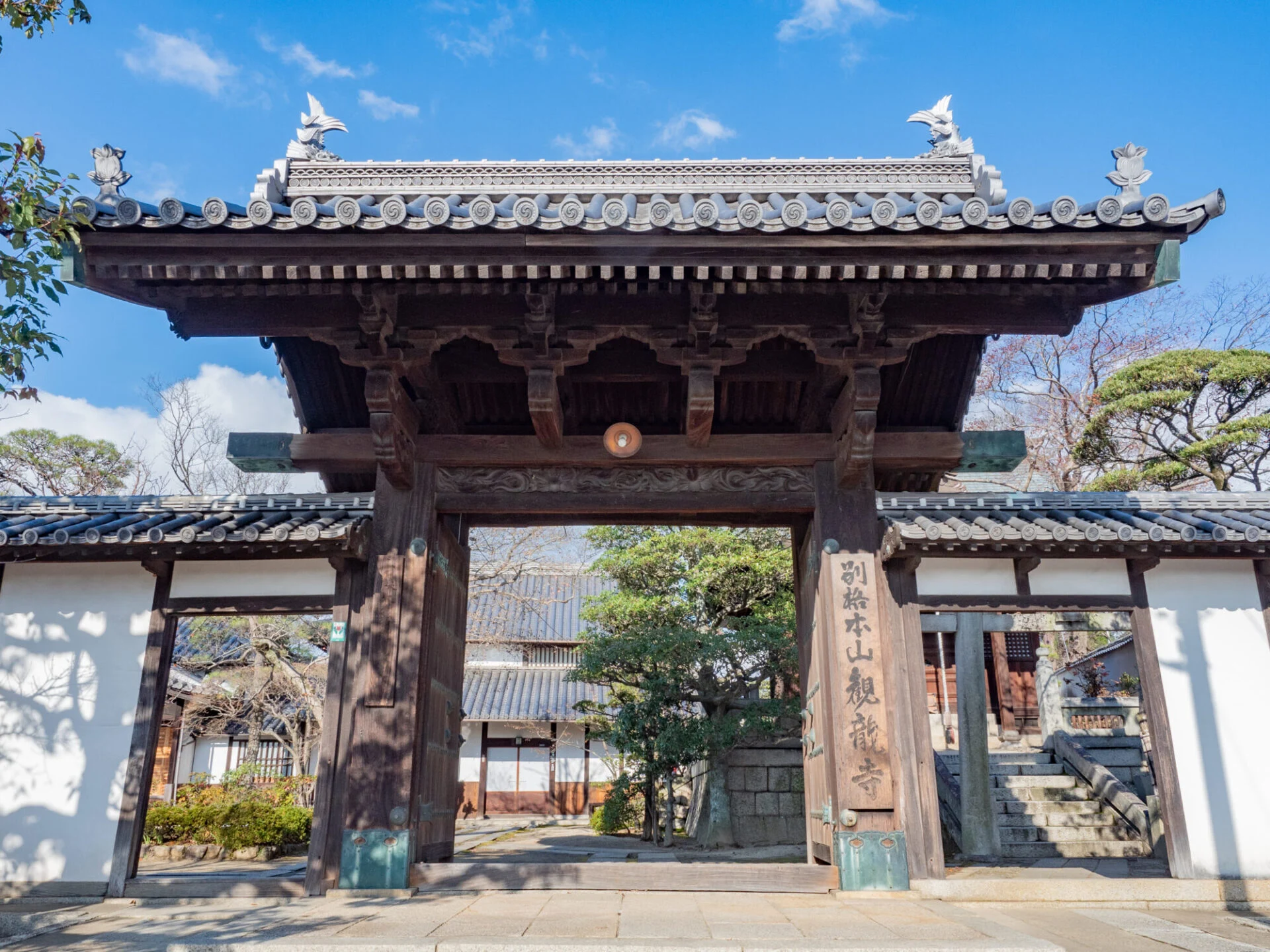
First, we have the Mountain Gate, located at the top of the stone steps.
This is the entrance to the precinct.
This mountain gate is a very old structure built in the 5th year of the Meiwa era (1768).
Additionally, there are small gates on either side of the large entrance at the front of the mountain gate.
The upper part of the small gate on the left side is a highlight.
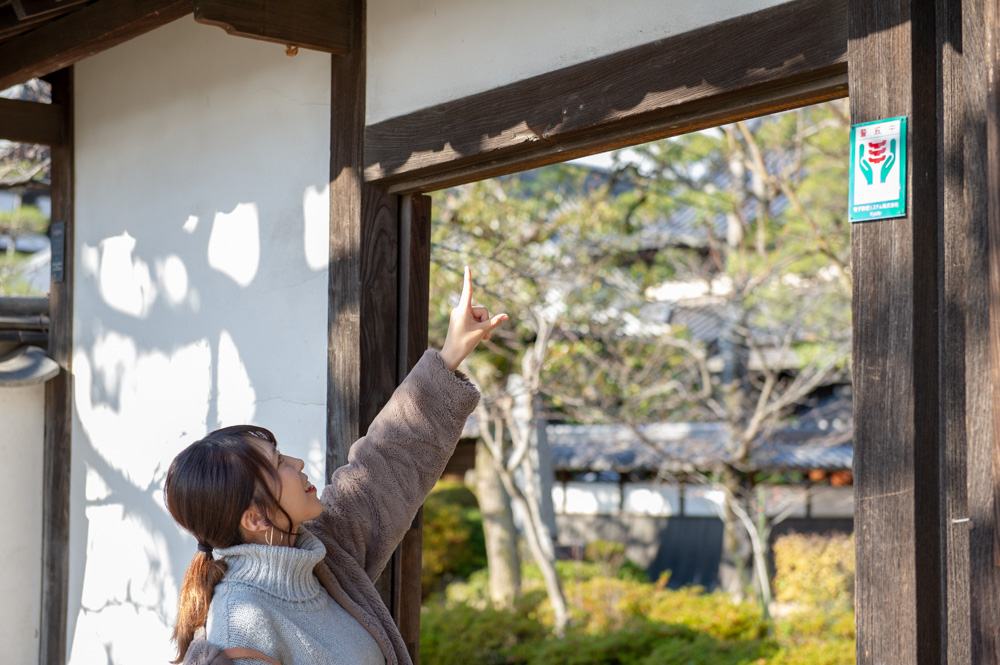
There are marks on the upper part of the left small gate.
In fact, these marks have historical value.
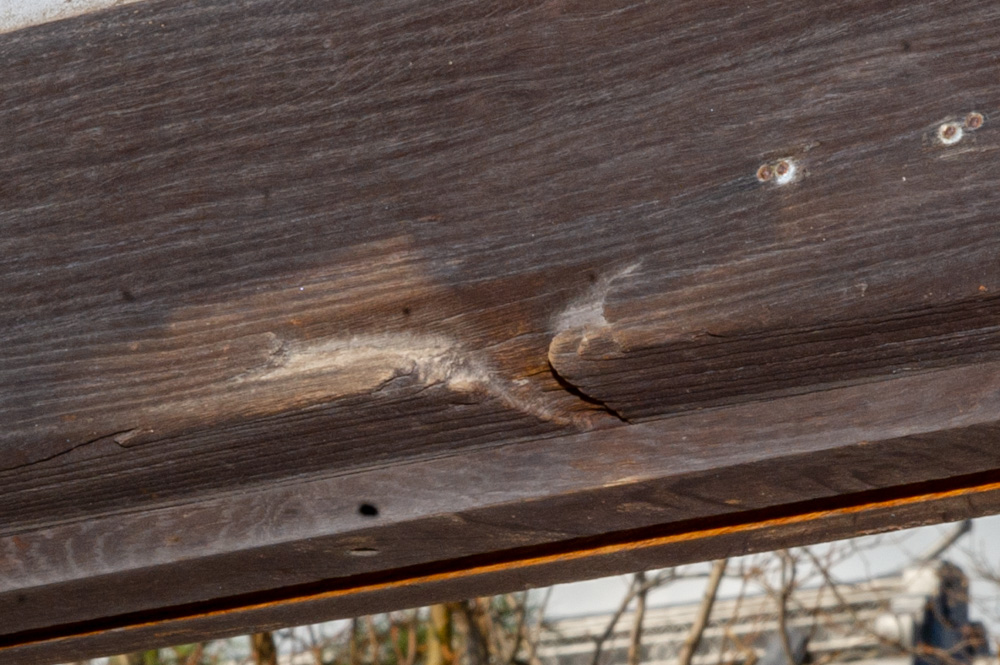
In the late Edo period, there was an incident where an attacking force assaulted the Kurashiki magistrate's office.
This incident is called the Kurashiki Asaosoudou Incident.
After the assault on the magistrate's office, the attacking force took refuge in the precinct of Kanryuji.
At that time, the members left marks on the mountain gate with their spears.
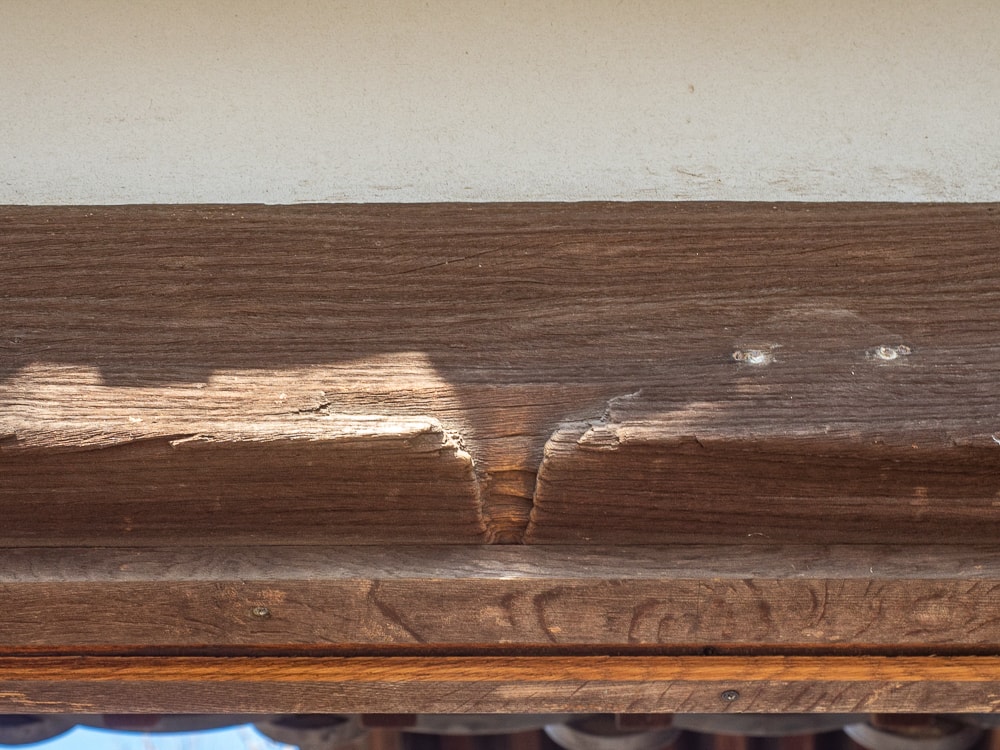
During the late Edo period, Japan was a time of conflict between the pro-imperial and pro-shogunate factions.
The marks on the mountain gate of Kanryuji vividly convey the struggles of that time to the present day.
Details about the Kurashiki Asaosoudou Incident will be provided later.
Myoken-do
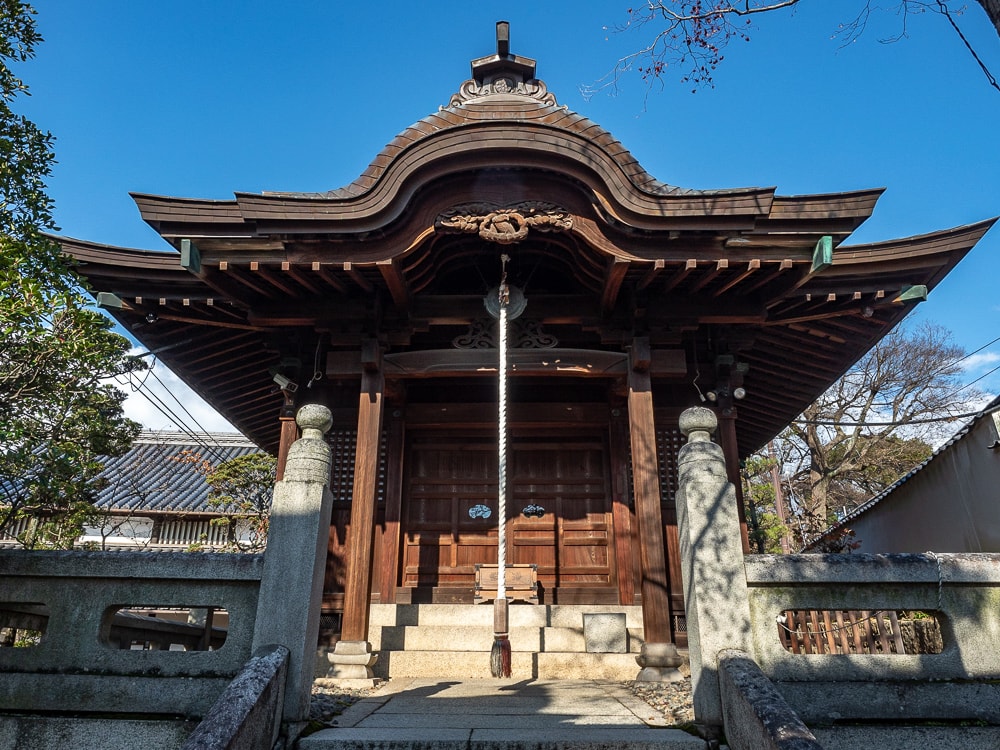
As you pass through the mountain gate, you will immediately see Myoken-do on your right.
It is also called Myoken Shrine.
Inside, it is said that a drum is enshrined.
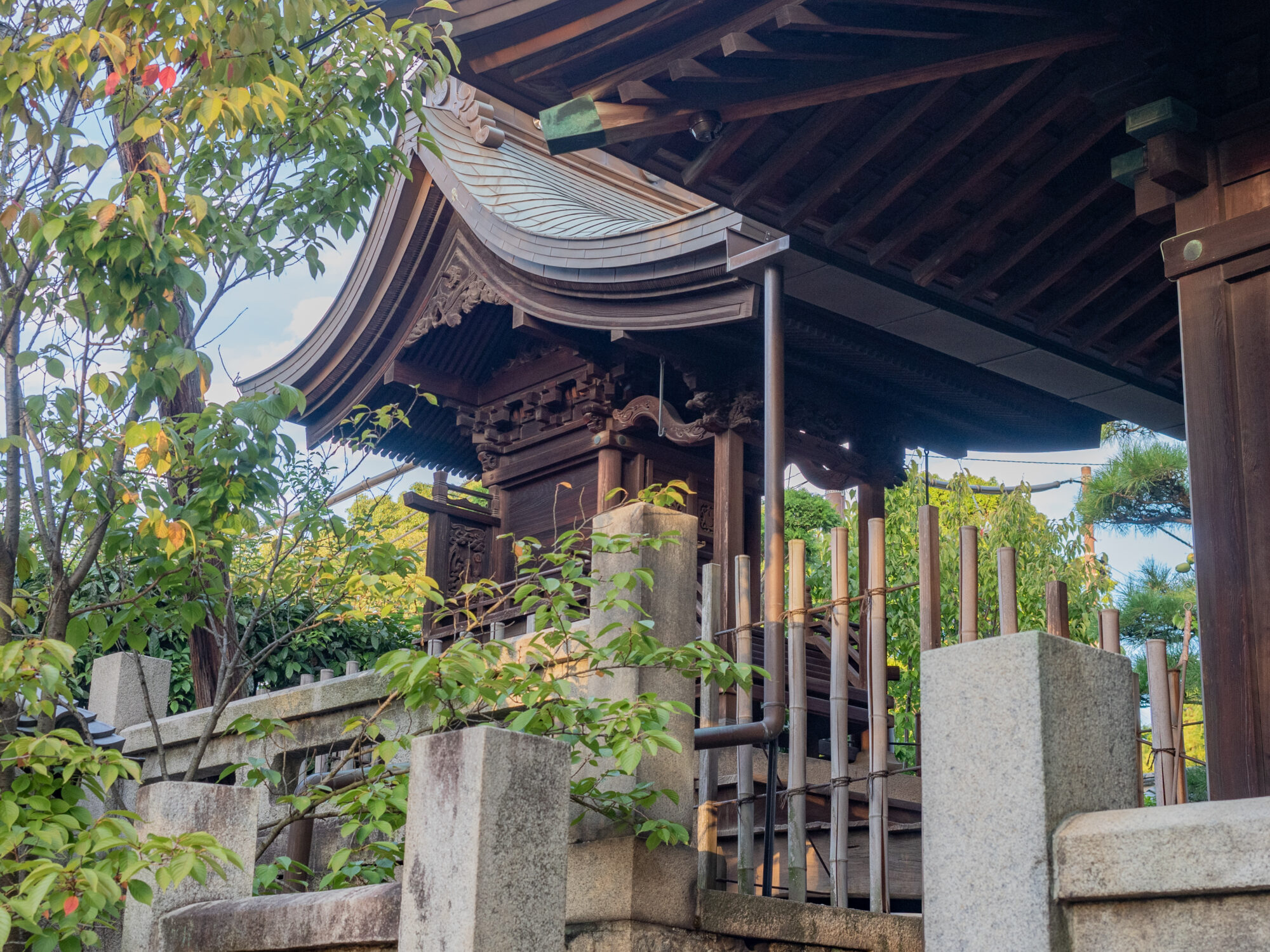
Before the Meiji 2 year, Achi Shrine was called "Myoken Shrine."
Kanryuji was the bettoji (temple managing the shrine) of Myoken Shrine.
However, in the Meiji 2 year, due to the "Separation of Shinto and Buddhism," the sacred objects of Myoken Shrine were moved to the buildings of Kanryuji.
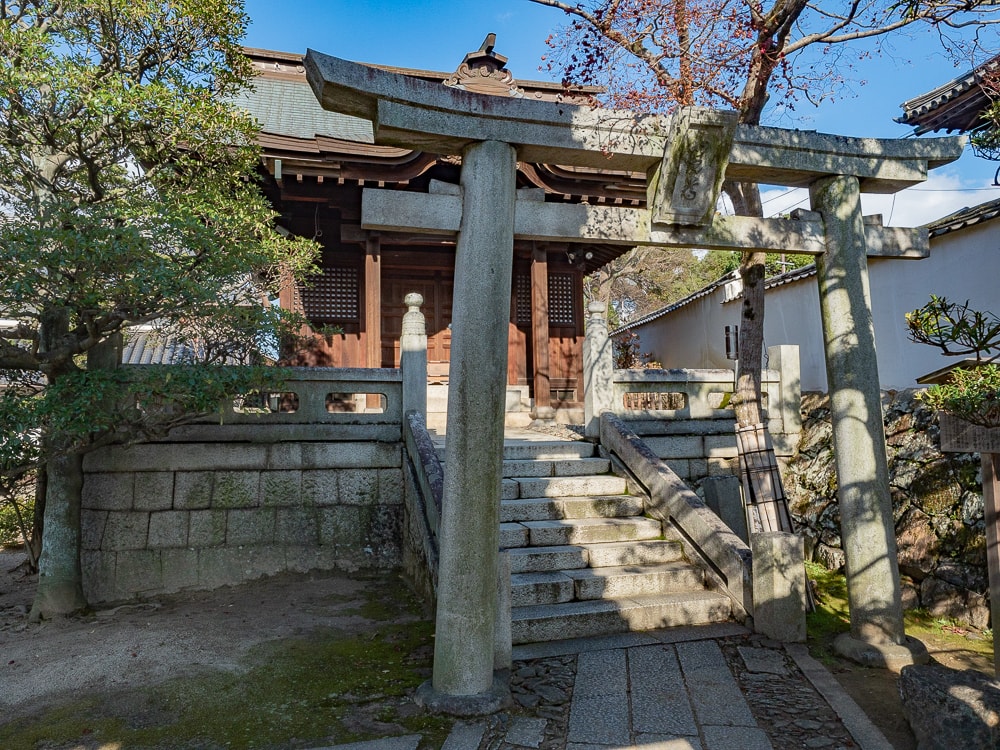
Later, in the 41st year of the Meiji era, Ohara Soichiro, the father of Ohara Magosaburo, established Myoken-do, and it remains to this day.
The presence of the Torii can be seen as a remnant of when Kanryuji managed Myoken Shrine.
Daishi-do
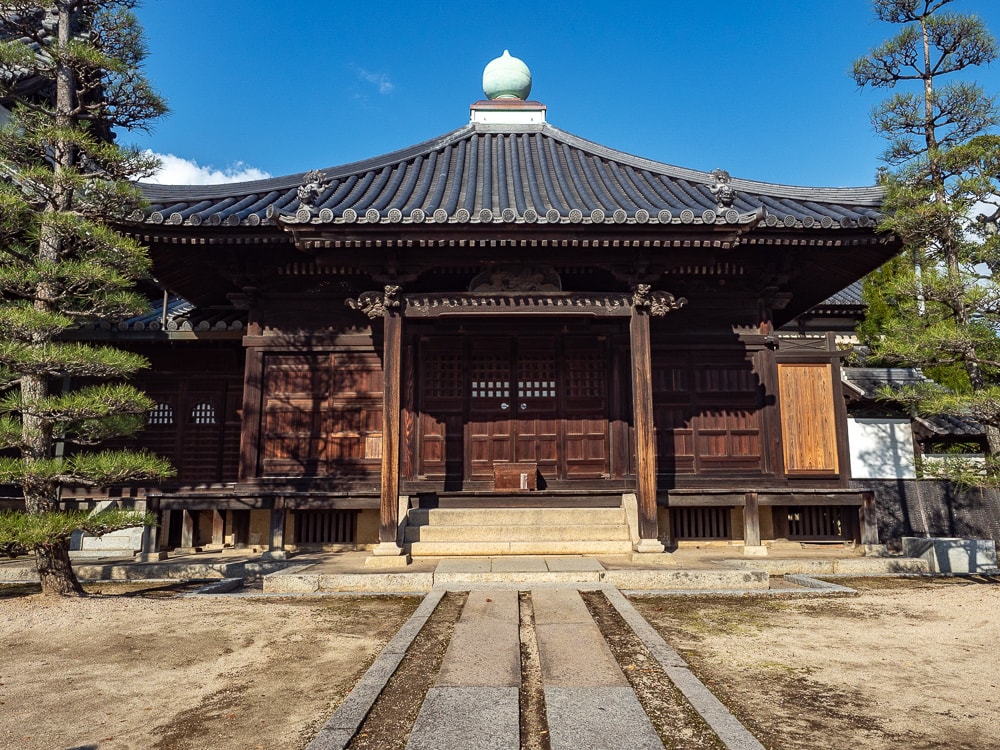
Located almost in the center of the precinct is the Daishi-do.
Daishi-do is a hall dedicated to Kobo Daishi (Kukai), who was given the title "Daishi."
The title of Daishi was a prestigious honor given only to highly esteemed monks.
Kanryuji suffered damage from two fires during the Edo period, but the Daishi-do that remains today was built during the Kyowa era (1801-1804) after the fires.
Hondo
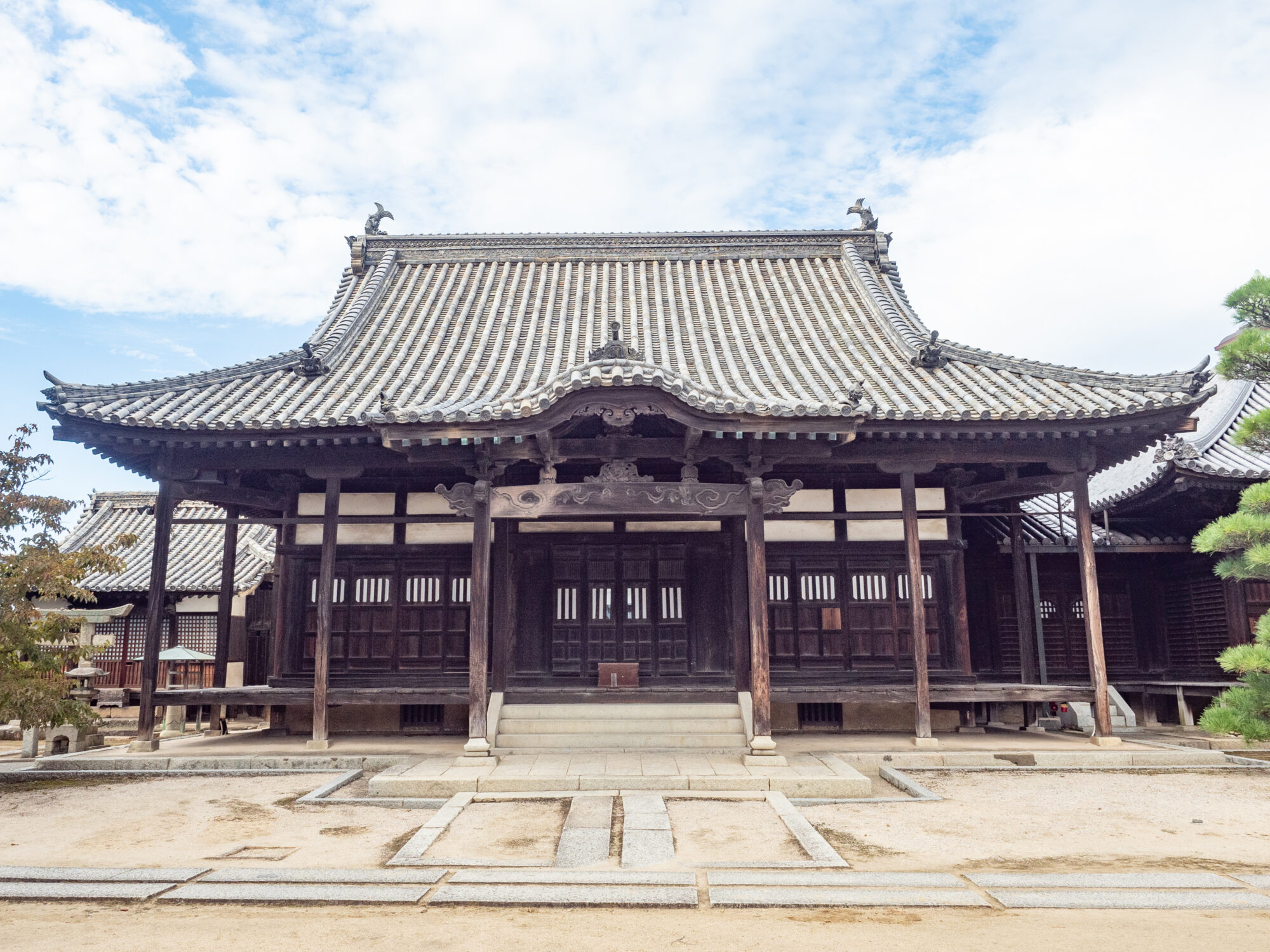
The main hall (Hondo) is located on the west side of the precinct, farthest from the mountain gate.
The main hall of Kanryuji was burned down in two fires during the Edo period.
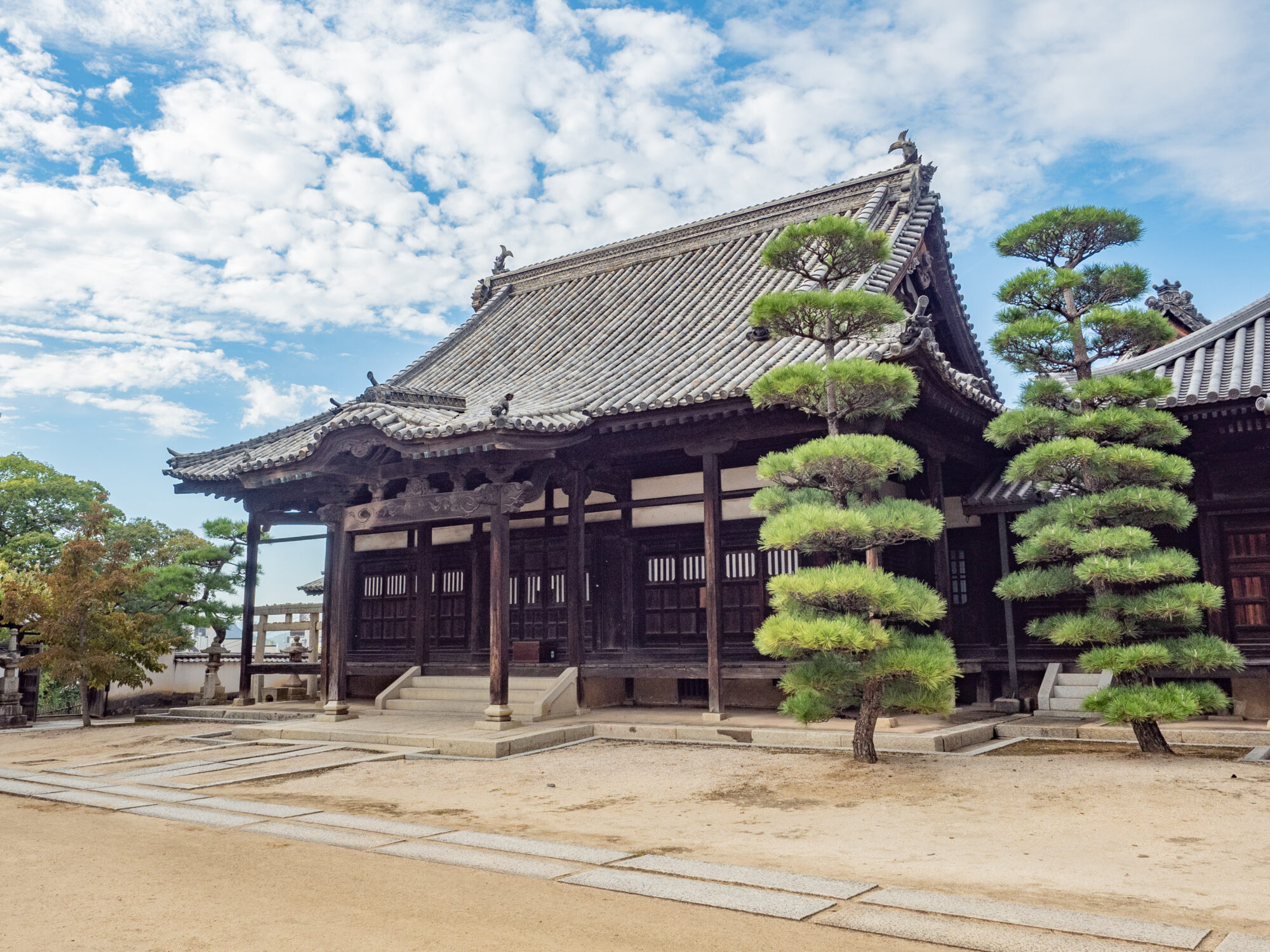
The current main hall that remains was rebuilt in the second year of Kan'en (1749).
Therefore, the main hall of Kanryuji Temple is one of the oldest buildings remaining in the Bikan Historical Area.
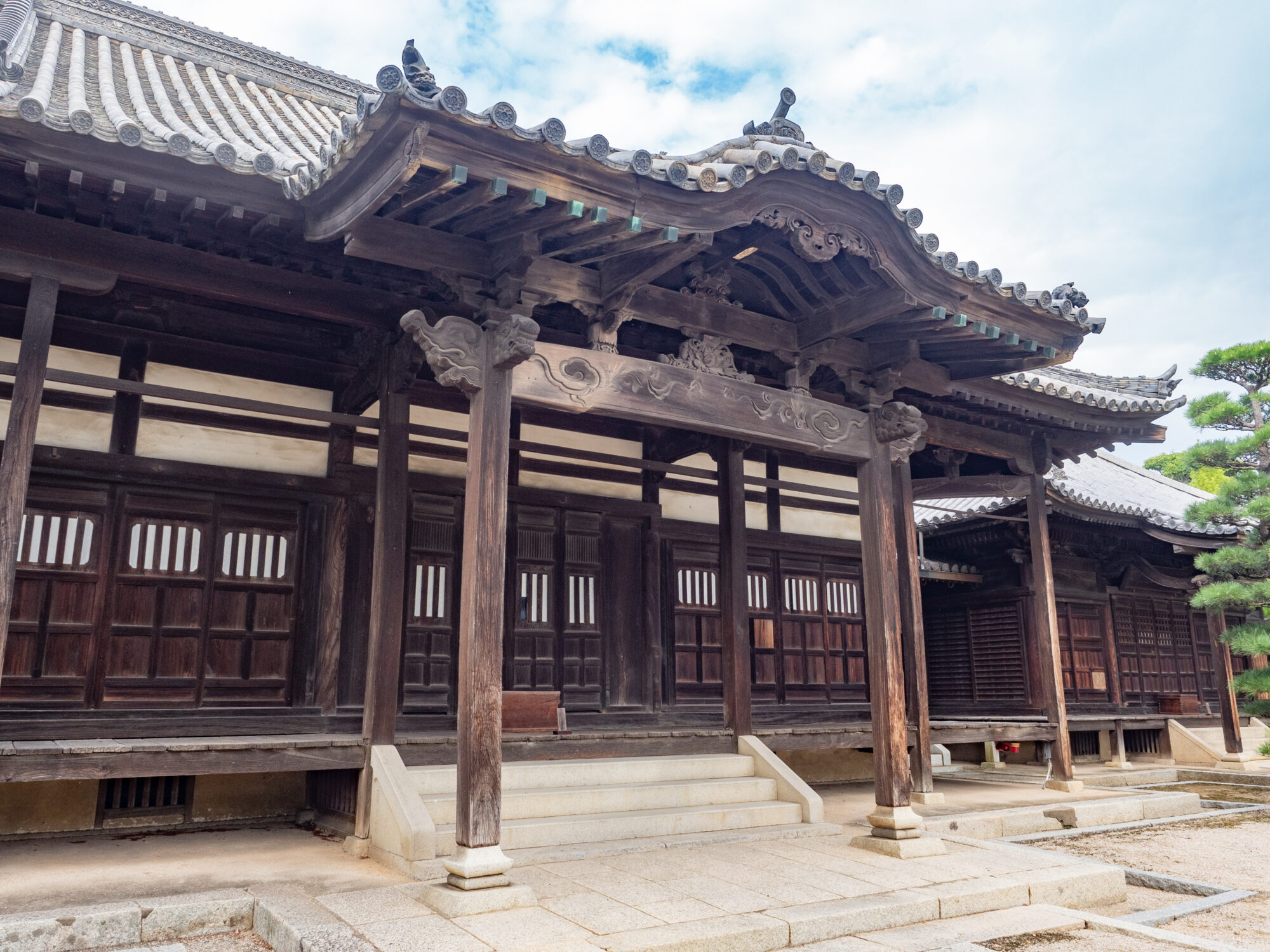
In the main hall, the Dainichi Nyorai is enshrined.
There is a donation box, so let's make a donation and pray with our hands together.
Please note that entry into the main hall is generally not allowed.
Bell Tower
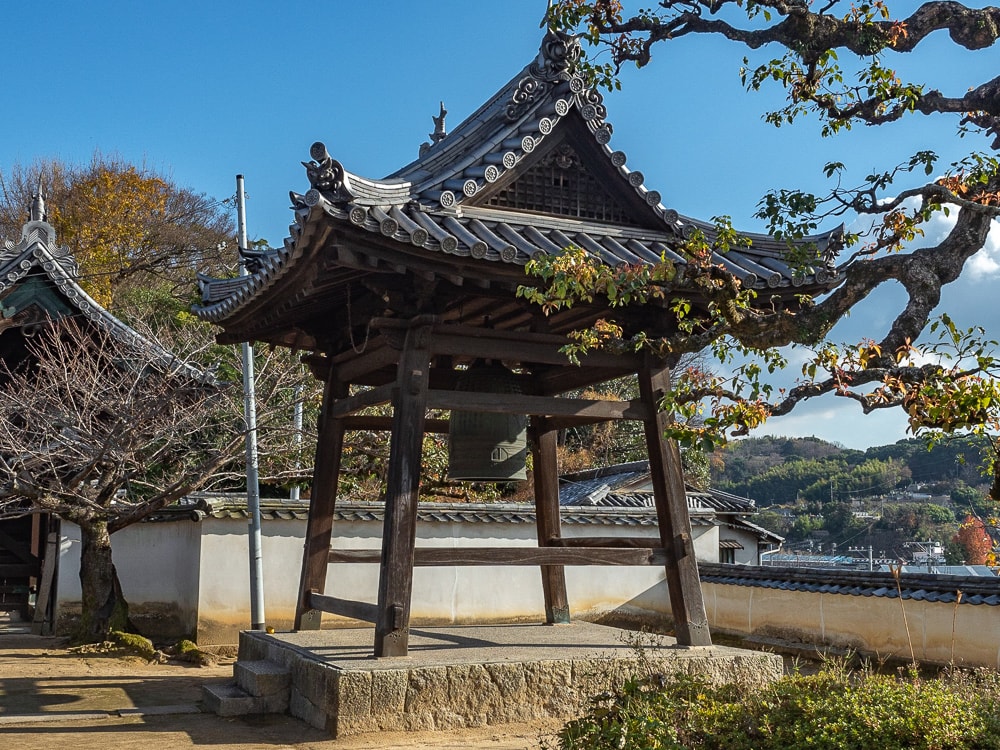
On the central southern side of the precinct, just to the left after passing through the mountain gate, you will see the bell tower.
The bell tower is a building that houses a bonsho (temple bell), and it is one of the symbols of the temple.
The current bonsho of Kanryuji Temple was recast in the late Showa period.
View from the Bell Tower Front and Senshoan
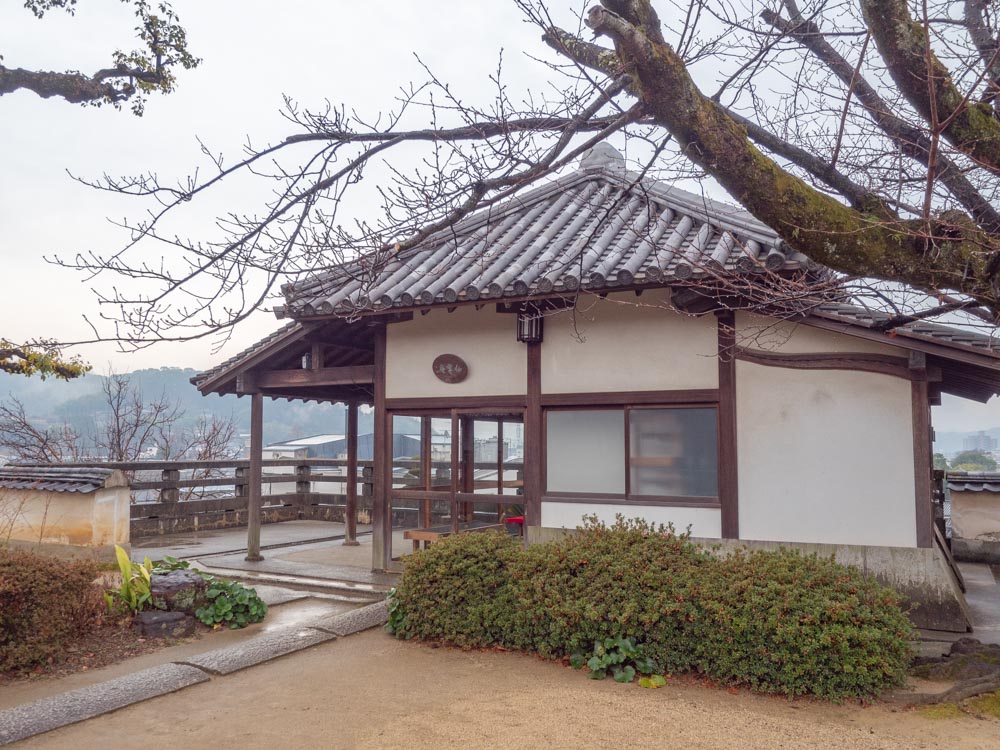
In front of the bell tower, there is a building called Senshoan.
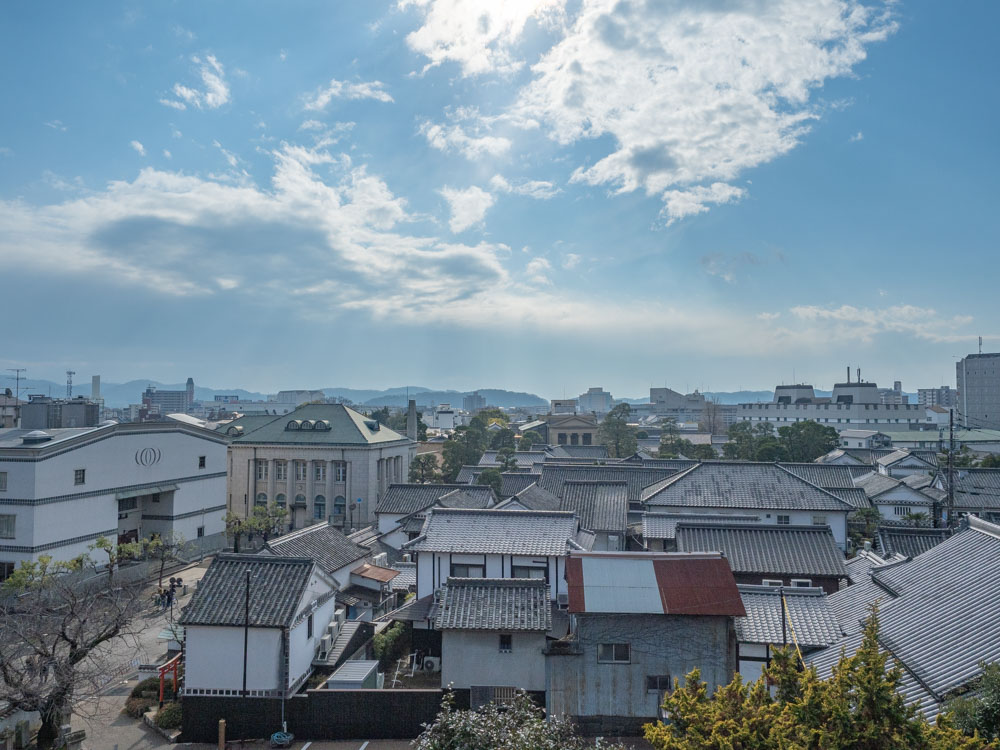
It is popular as a viewing spot in the Kurashiki Bikan Historical Area and is one of the photo spots.
The Bell Tower of Tsurugata Mountain on the East Side of the Precinct
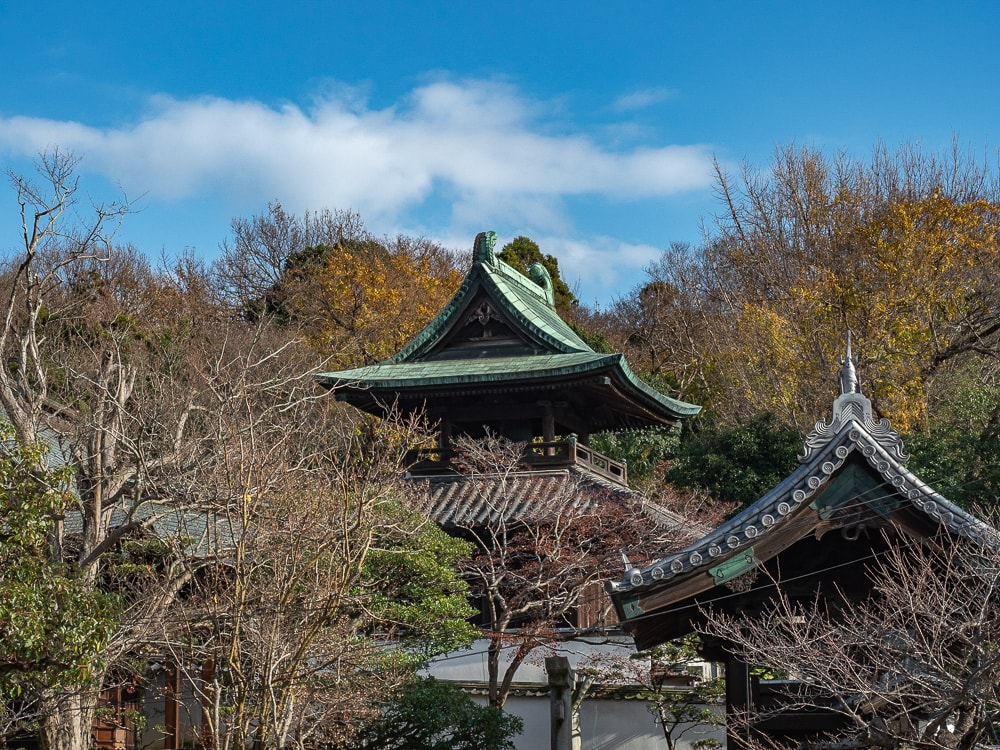
Looking east from the precinct of Kanryuji Temple, you can see a large bell tower just outside the eastern side of the precinct.
This bell tower does not belong to Kanryuji Temple, but it is called the Bell Tower of Tsurugata Mountain.
The Bell Tower of Tsurugata Mountain is located just to the east (to the right) after proceeding from the mountain gate of Kanryuji Temple.
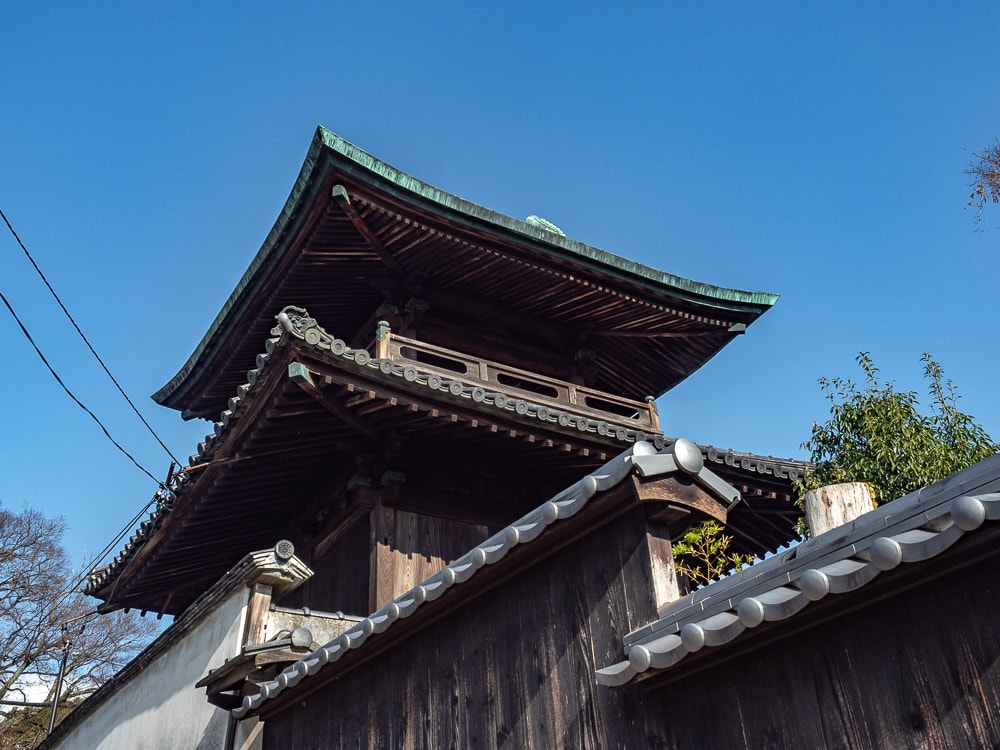
This bell tower was built in the second year of Kanpo (1742) by Ono, the village headman of Kurashiki Village.
To notify the residents of the time in Kurashiki Village and the town, the bell was rung by residents in turns, and it was called the Time Bell.
During the war, all bells were requisitioned, so the original does not exist today, but the current bell tower was rebuilt in Showa 24 (1949) by Ohara Soichiro and donated to the former Kurashiki City.
In the recasting, the woodblock print artist Munakata Shiko designed the patterns for the bonsho.
Additionally, the ringing of the Time Bell was suspended, but in Showa 52 (1977), the Kurashiki Lions Club donated an automatic bell ringer to Kurashiki City, and the Time Bell was revived.
Please note that entry into the Bell Tower of Tsurugata Mountain is not allowed.
Kanryuji Temple's Goshuin
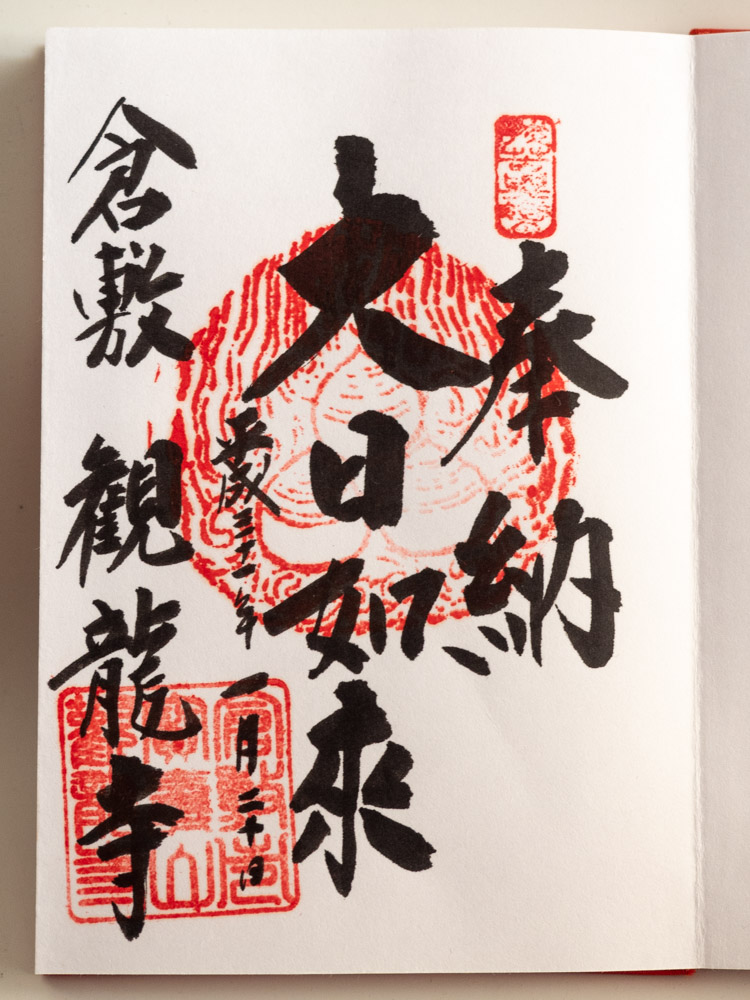
At Kanryuji Temple, you can receive a goshuin.
When receiving a goshuin, please pay a 300 yen donation fee.
Please note that there may be times when a goshuin cannot be issued depending on the circumstances.
History of Kanryuji Temple
Originally Located in the Northern Part of Present-Day Kurashiki City
Kanryuji Temple is said to have been founded in the first year of Kanwa (985).
The location where it was built was not the current site, but in a region called Koino-sho in Kuboya District.
Koino-sho corresponds to the northern part of present-day Kurashiki City, around the Nishioka area.
At that time, it was not called Kanryuji Temple, but Hoshakuin, and the mountain name was Hokutozan.
At this time, there was a temple called Sai-anji Jisho-in, and it was one of the 12 temples that were branch temples of Sai-anji.
Among the 12 temples that were branch temples of Sai-anji during the Heian period, two temples, Gyogan-in (formerly Zaizen-in) and Ryusho-in, still remain in the Nishioka area today.
By the way, Sai-anji is said to have been founded by Ganjin during the Nara period.
Relocation to the Current Site Around the End of the Muromachi Period
Around the early 1500s, at the end of the Muromachi period, Hoshakuin was relocated from Koino-sho to the southern side of present-day Tsurugata Mountain.
The relocated site is said to be around the entrance to the stone steps of Kanryuji Temple, where the parking lot for visitors to Kanryuji Temple is located.
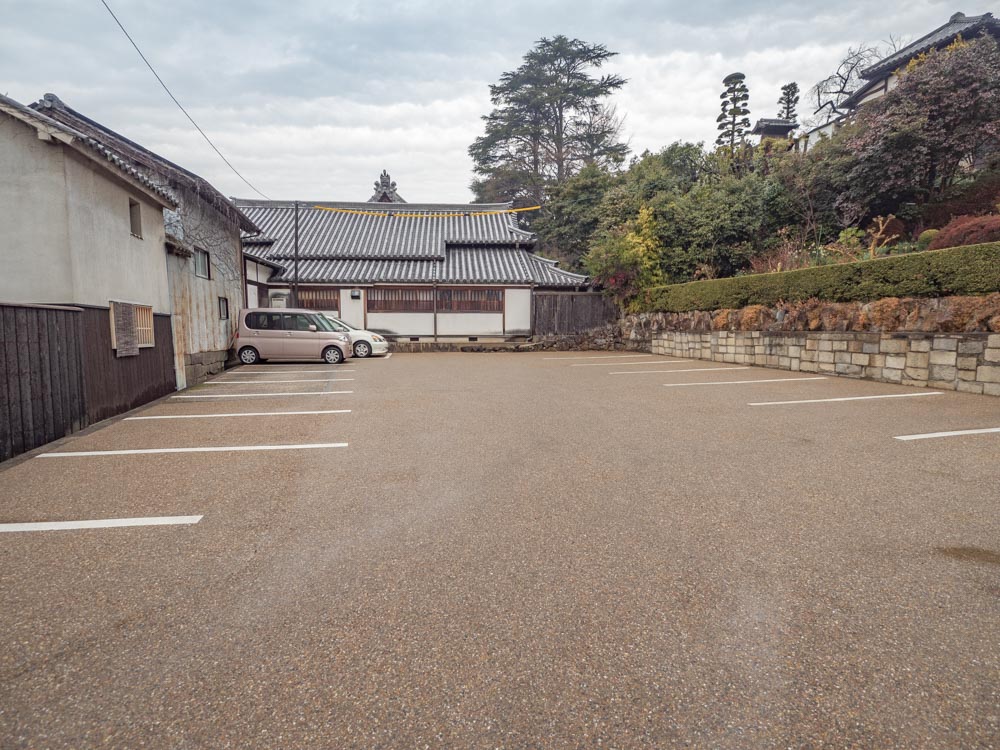
During the time when Kanryuji Temple was in Nishioka, Kurashiki City, and was called Hoshakuin, Myo Ken-gu was enshrined as the guardian deity.
Myo Ken refers to the Big Dipper and the North Star.
In other words, the Big Dipper and the North Star were enshrined as the temple's guardian deities.
Myo Ken-gu later became the predecessor of the current Achi Shrine.
When Hoshakuin was relocated to the south of Tsurugata Mountain, Myo Ken-gu was also moved along with it.
Later, in the third year of Bunroku (1594), Myo Ken-gu was moved to the location where the current Achi Shrine is located.
From this time, Myo Ken-gu began to be worshipped not only by Hoshakuin but also by the villagers.
Renamed Kanryuji Temple During the Edo Period
In the first year of Kan'ei (1624), it was relocated to the current site on top of Tsurugata Mountain.
The temple's name was officially changed to the current Kanryuji Temple, and the mountain name became Hojuzan.
In the fifth year of Kan'ei (1638), Kanryuji Temple was designated as the Betto-ji (temple managing a shrine) of Myo Ken-gu.
Later, during the Enkyo period (1744-1748) in the Edo period, it suffered two fires, resulting in the loss of many buildings, including the main hall.
After the fires, the buildings were gradually rebuilt throughout the Edo period.
Today, many buildings reconstructed during the Edo period remain in the precincts of Kanryuji Temple.
| Current Buildings | Construction Period |
|---|---|
| Main Hall | Rebuilt in the second year of Kan'en (1749) |
| Old Guest Hall | Rebuilt in the 11th year of Hōreki (1762) (used as a guest hall until the Kyōwa period) |
| Mountain Gate | In the fifth year of Meiwa (1768) |
| Various Halls | During the An'ei period (1772-1781) |
| Daishi Hall | During the Kyōwa period (1801-1804) |
| Guest Hall | During the Kyōwa period (1801-1804) |
During the Edo period, Kanryuji Temple was active with a monk named Kyōzon-Kyōkai during the Bunka and Bunsei periods (1804-1830), who was regarded as a famous monk.
As a result, Kanryuji Temple attracted cultural figures such as Raisan'yo and Kanchazan.
The Kurashiki Asao Incident Occurred in the Late Edo Period
In the late Edo period, conflicts between the anti-shogunate and pro-shogunate factions broke out across Japan.
In fact, the conflict also occurred in Kurashiki.
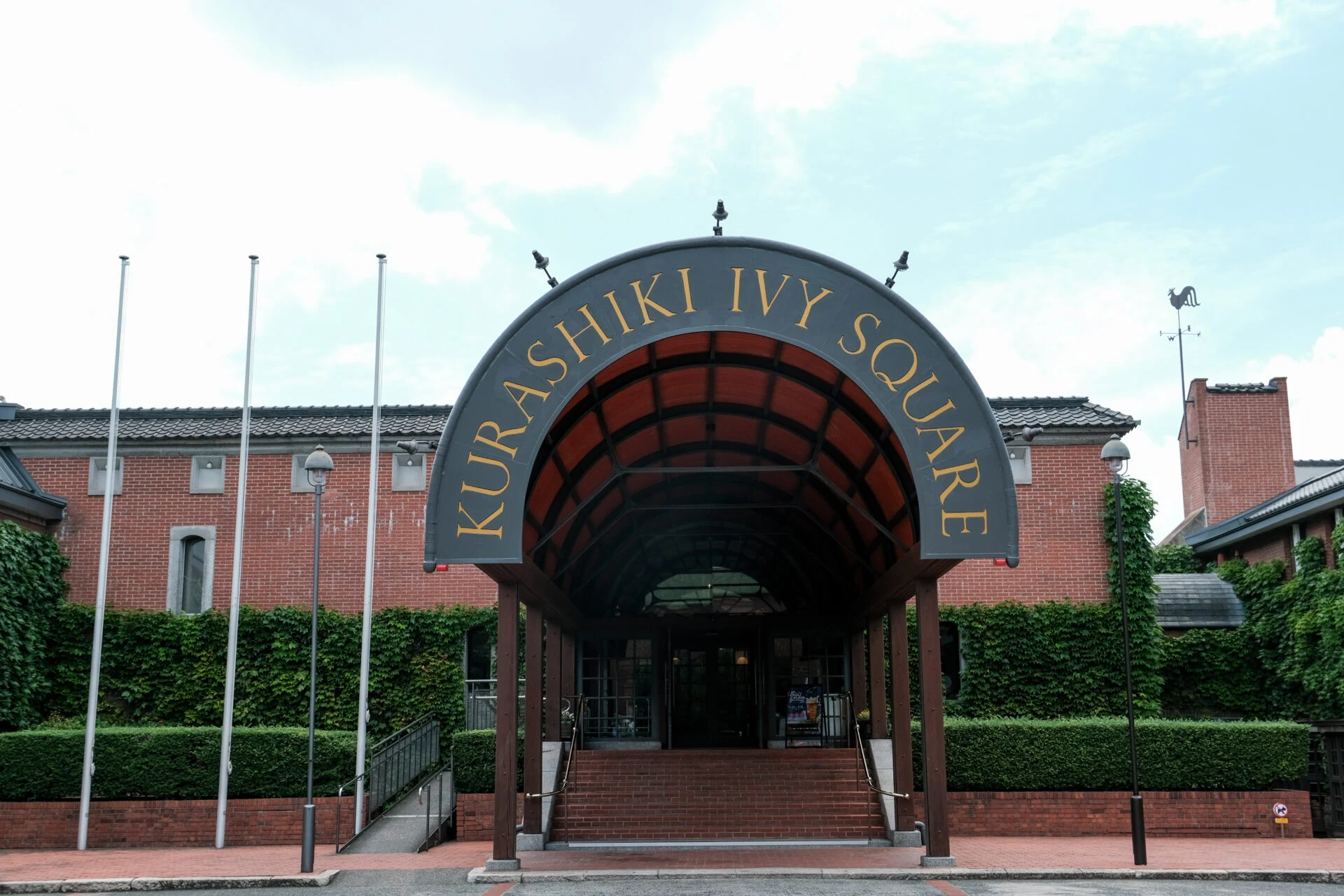
Among the anti-shogunate faction, a military force of about 100 led by Tateishi Magoichiro attacked the Kurashiki Daikansho (the office where the shogunate's deputy carried out duties, now Kurashiki Ivy Square) on the morning of April 10, Keio 2 (1866).
Although the Kurashiki daikan was absent, they injured or killed 11 men and women inside.
Kurashiki was a tenryo (directly governed territory of the Edo shogunate) and an important base governed by a deputy sent by the shogunate, which is why it was targeted by the anti-shogunate faction.
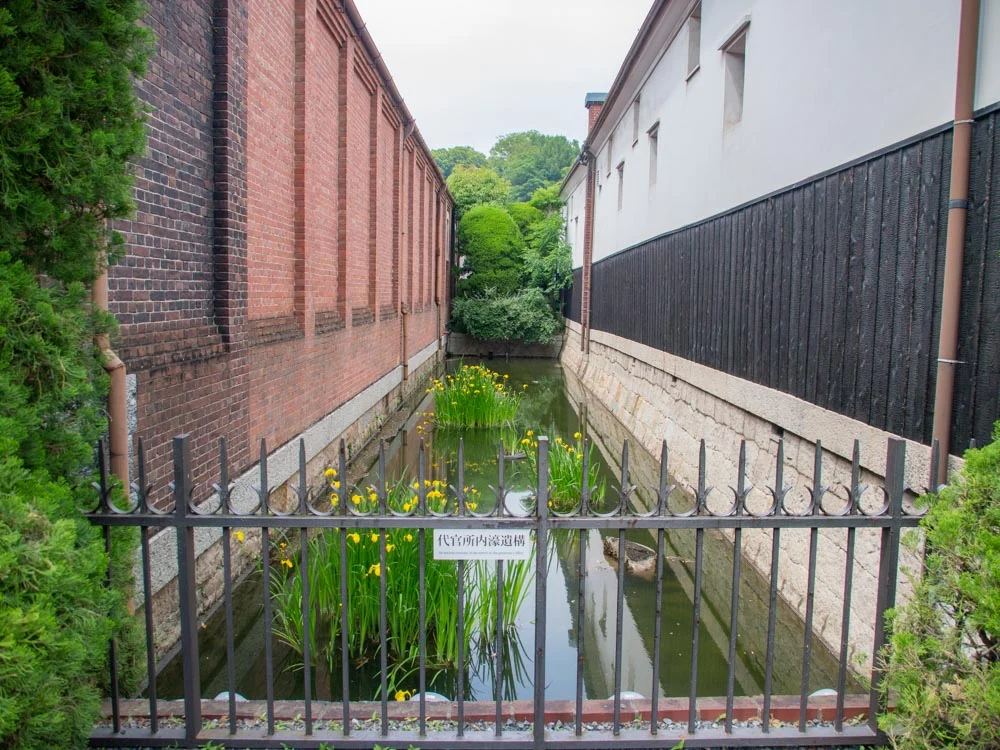
After the attack on the Kurashiki Daikansho, the military force took refuge in Kanryuji Temple to rest.
At this time, the door frame of the mountain gate was marked with a spear by the soldiers, and the marks still remain today.
Later, in the afternoon of the same day, the military force departed from Kanryuji Temple.
On April 12, two days later, the military force attacked and burned down the Asao clan's encampment (the residence that became the clan's office) located in Monda, Soja City, north of present-day Kurashiki City.
This series of events is referred to as the Kurashiki Asao Incident.
Separation from Achi Shrine in the Meiji Period
In the Meiji period, in order to clearly separate shrines and temples, the "Separation of Shinto and Buddhism" was carried out in the second year of Meiji (1869).
As a result, Myo Ken-gu, which was under the management of Kanryuji Temple, was separated and became Achi Shrine.
The sacred objects of Myo Ken-gu were moved to Kanryuji Temple, and later, in the 41st year of Meiji (1908), Myo Ken-do was built in the precincts.
In the late Showa period, the bonsho was recast.
Chronology
| Period | Event |
|---|---|
| Nara Period | Ganjin founded Sai-anji in Kubo District, Bichu Province (around present-day Nishioka, Kurashiki City). |
| Kanwa 1 (985) | Hokutozan Hoshakuin (later Kanryuji Temple) was established as one of the 12 branch temples of Sai-anji. |
| Sengoku Period (1500s) | Hoshakuin was relocated to the southern foothills of present-day Tsurugata Mountain. |
| Kan'ei 1 (1624) | Relocated to the current site (on top of Tsurugata Mountain) and renamed Hojuzan Kanryuji Temple. |
| Kan'ei 5 (1638) | Designated as the Betto-ji of Myo Ken-gu (now Achi Shrine). |
| Genbun 4 (1739) | The Kannon Hall was built and became the 29th sacred site of the Bichu Saigoku 33 Kannon Pilgrimage. |
| Enkyo 1 (1744) | Many buildings were lost in a fire. |
| Enkyo 4 (1747) | Buildings were rebuilt, but another fire occurred three months later, resulting in further loss. |
| Kan'en 2 (1749) | Main hall was rebuilt (current main hall). |
| Hōreki 11 (1762) | Guest hall was rebuilt (current old guest hall). |
| Meiwa 5 (1768) | Mountain gate was rebuilt (current mountain gate). |
| An'ei Period (1772-1781) | Various halls were rebuilt. |
| Kyōwa Period (1801-1804) | Daishi Hall was rebuilt (current Daishi Hall). Also, a new guest hall was constructed (current guest hall). |
| Keio 2 (1866) | The Kurashiki Asao Incident occurred, and an attacking force took refuge in Kanryuji Temple. |
| Meiji 2 (1869) | Separation of Shinto and Buddhism, leading to the independence of Myo Ken-gu as Achi Shrine. |
| Meiji 41 (1908) | Myo Ken-do was built in the precincts of Kanryuji Temple. |
Kanryuji Temple has watched over the history of Kurashiki.
We interviewed the chief priest, Murata Ryūzen.
Data of Kanryuji Temple
| Name | Kanryuji Temple |
|---|---|
| Alternate Name | Hoju-san |
| Sect | Shingon Sect Omuro School |
| Location | 2-25-22 Achi, Kurashiki City, Okayama Prefecture |
| Contact | 086-422-0357 |
| Parking | Available |
| Main Deity | Vairocana Buddha |
| Benefits | Fulfillment of wishes, peace in this world, etc. |
| Goshuin (Donation Fee) | Available (300 yen) |
| Visiting Hours | Daytime only |
| Closed Days | None |
| Admission Fee | Free |
| How to Pay Admission and Donation Fees |
|