As you walk along the Kurashiki River in the Bikan Historical Area, you can see a small hill to the northeast.
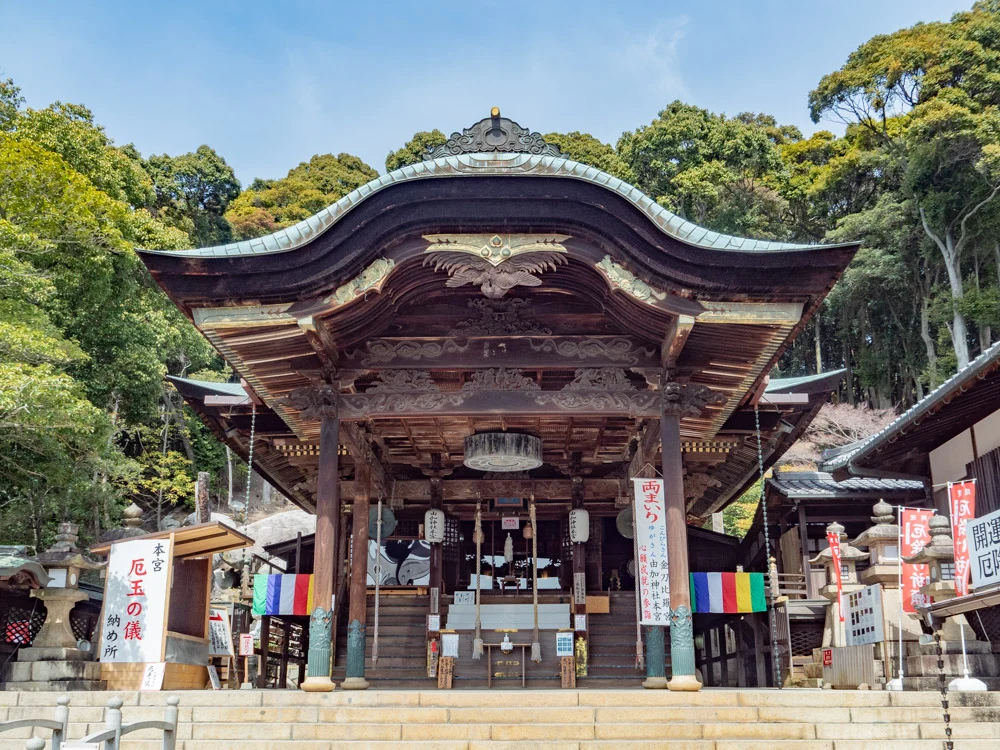
Tsurugatayama is the name of the mountain, and the shrine visible at the top of the mountain is Achi Shrine. Achi Shrine is the guardian deity of Kurashiki (the local protective deity). It is also the only shrine in the Bikan Historical Area.
Let me introduce Achi Shrine.
What is Achi Shrine?
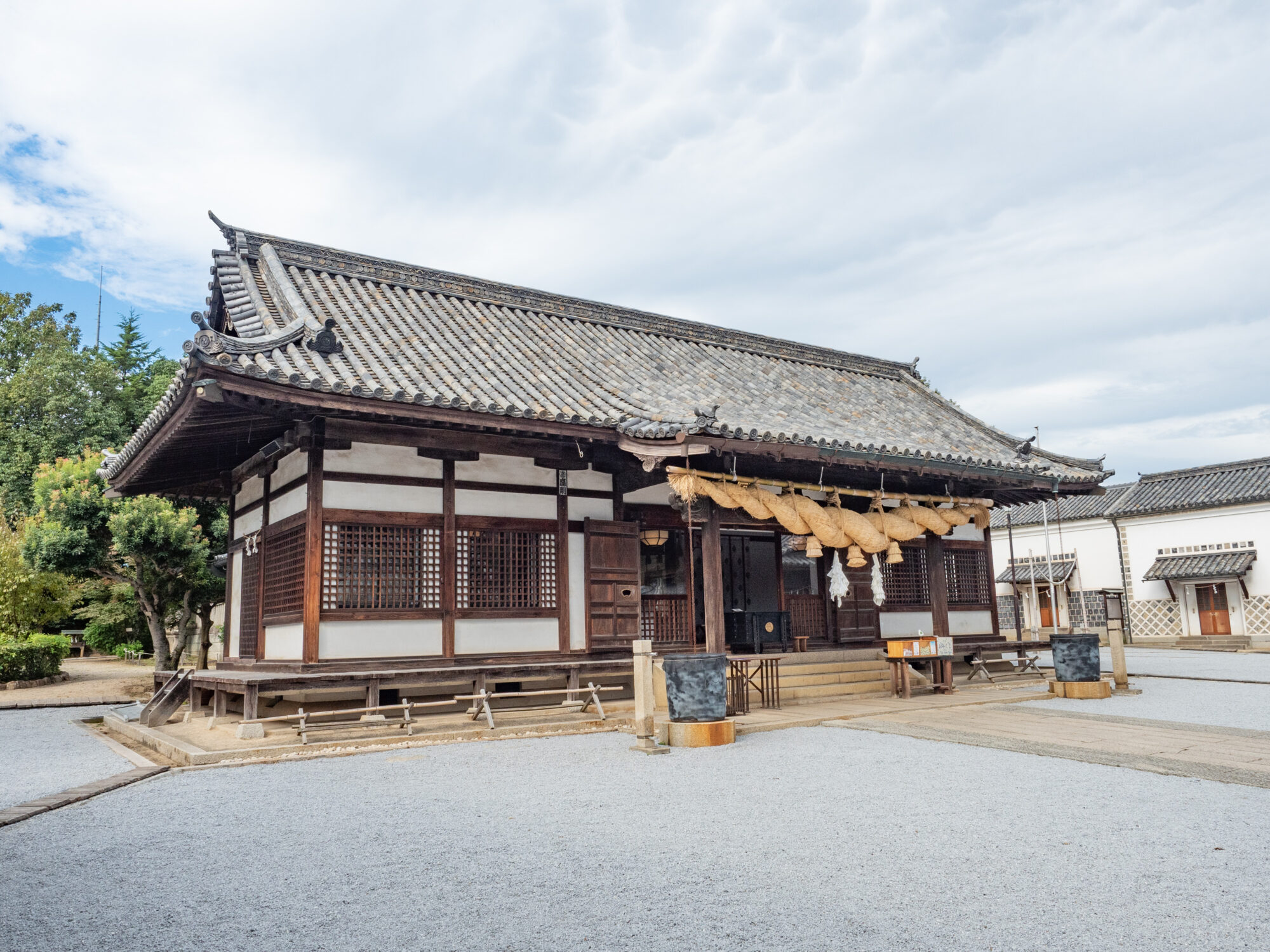
Achi Shrine is an ancient shrine that serves as the guardian deity of the town of Kurashiki (formerly Kurashiki Village).
It is located on Tsurugatayama, a hill to the north of the Bikan Historical Area. The deities enshrined here are the Munakata Three Goddesses. They are goddesses born from the oath between Amaterasu Omikami and Susanoo no Mikoto.
The Munakata Three Goddesses refer to the following three deities:
- Tagirihime no Mikoto
- Takitsuhime no Mikoto
- Ichikishimahime no Mikoto
The Munakata Three Goddesses are deities who watch over the safety of navigation.
For this reason, the benefits of Achi Shrine are safe navigation and traffic safety. Additionally, Ichikishimahime no Mikoto is also a goddess of performing arts, wealth, and beauty, so Achi Shrine offers the following benefits as well:
- Improvement in performing arts
- Enhancement of skills
- Prosperity in business
- Beauty and health
The name "Achi" refers to the ancient name of the area around the center of Kurashiki.
Highlights of Achi Shrine
Here is a map of the Achi Shrine grounds.
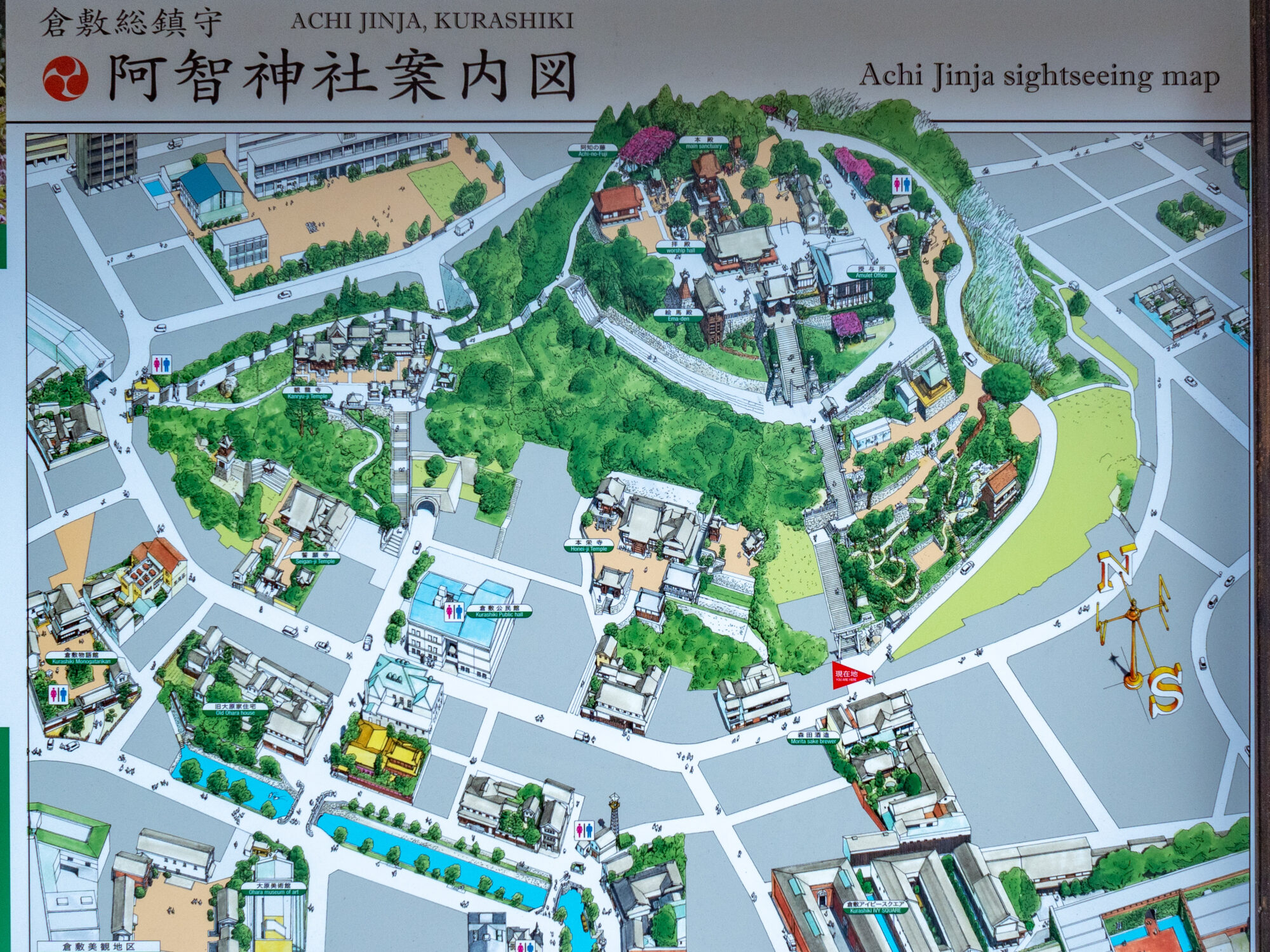
Temizuya
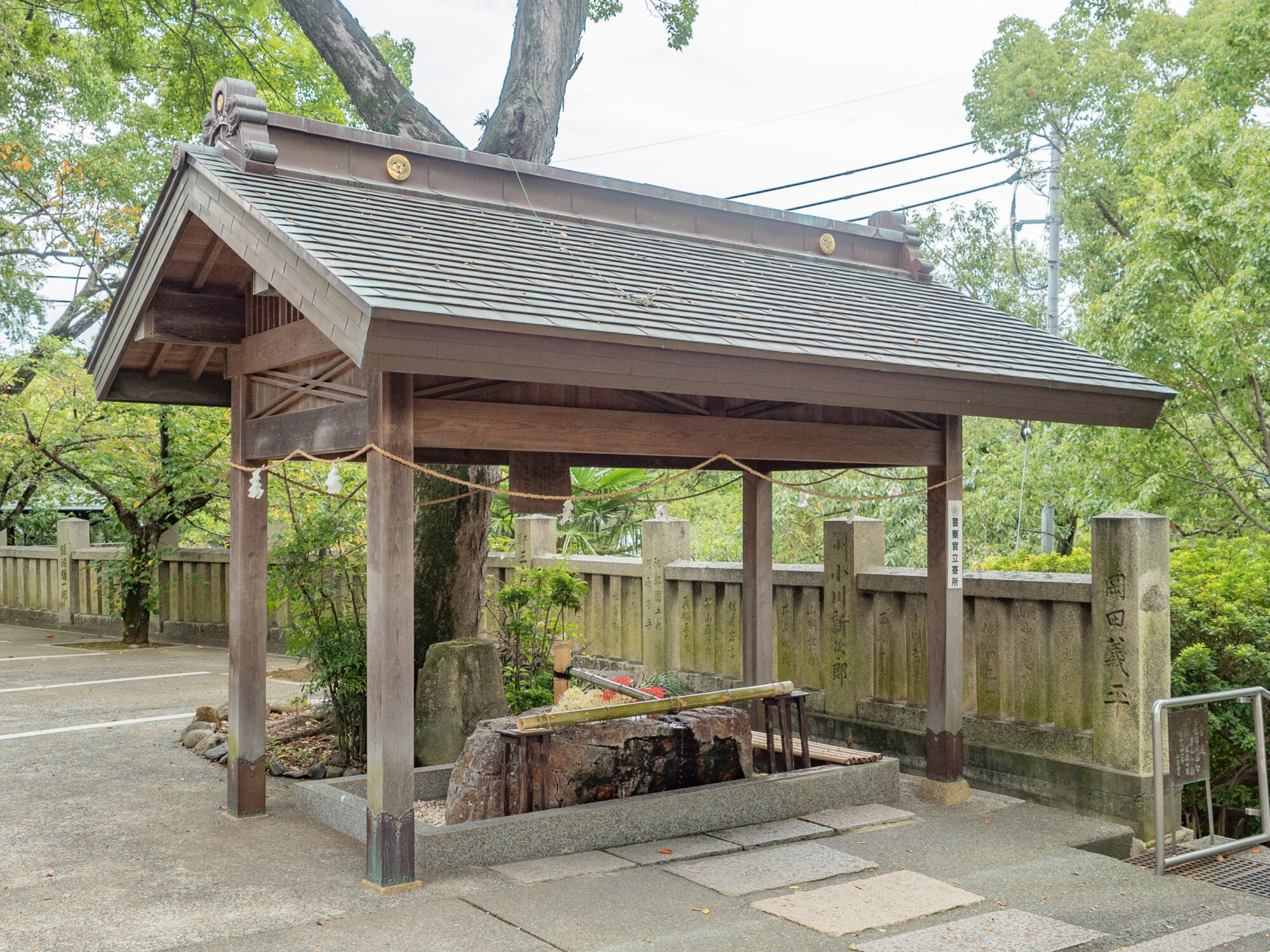
The temizuya (purification fountain) is located just below the Zuishin Gate, which is the entrance to the shrine grounds, and can also be reached from the west approach.
Be sure to purify your hands and mouth at the temizuya before your visit.
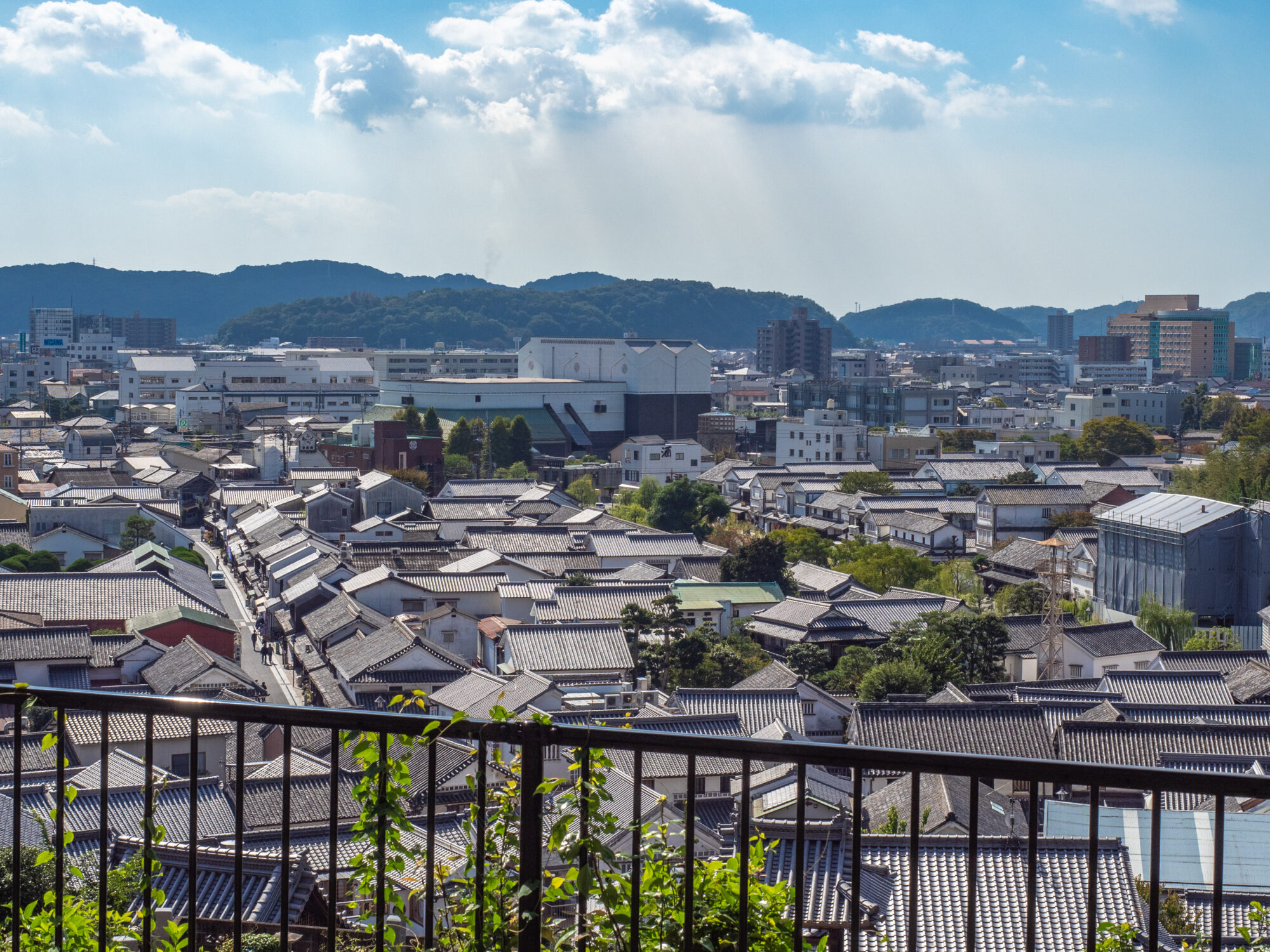
If you move a little west from the temizuya, there is a spot where you can overlook the townscape of Kurashiki.
You can see the shape of the town clearly, and it offers a different view than walking through it, making it a recommended spot.
Zuishin Gate
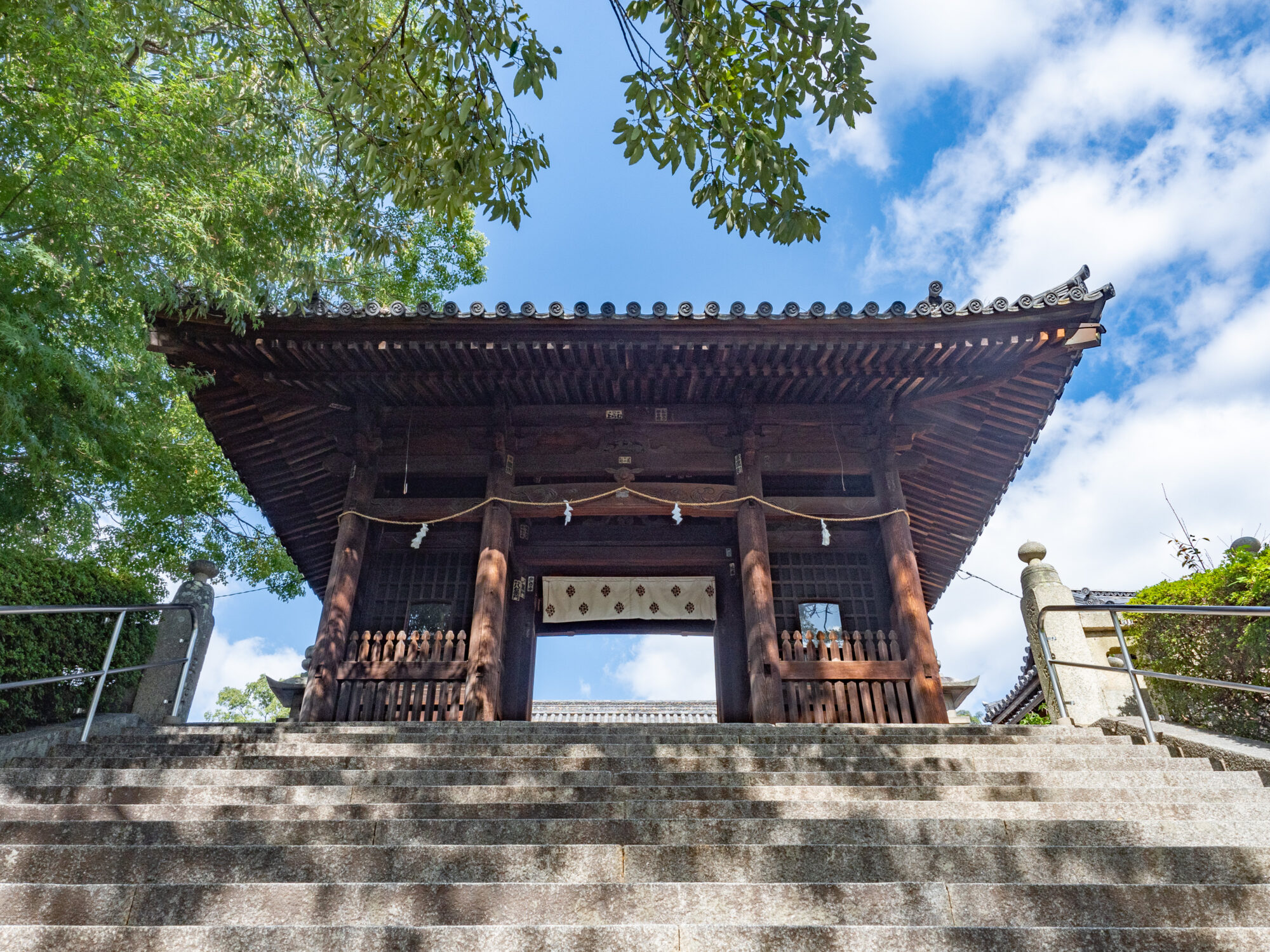
The Zuishin Gate is located at the top of the eastern approach.
It is the entrance to the Achi Shrine grounds.
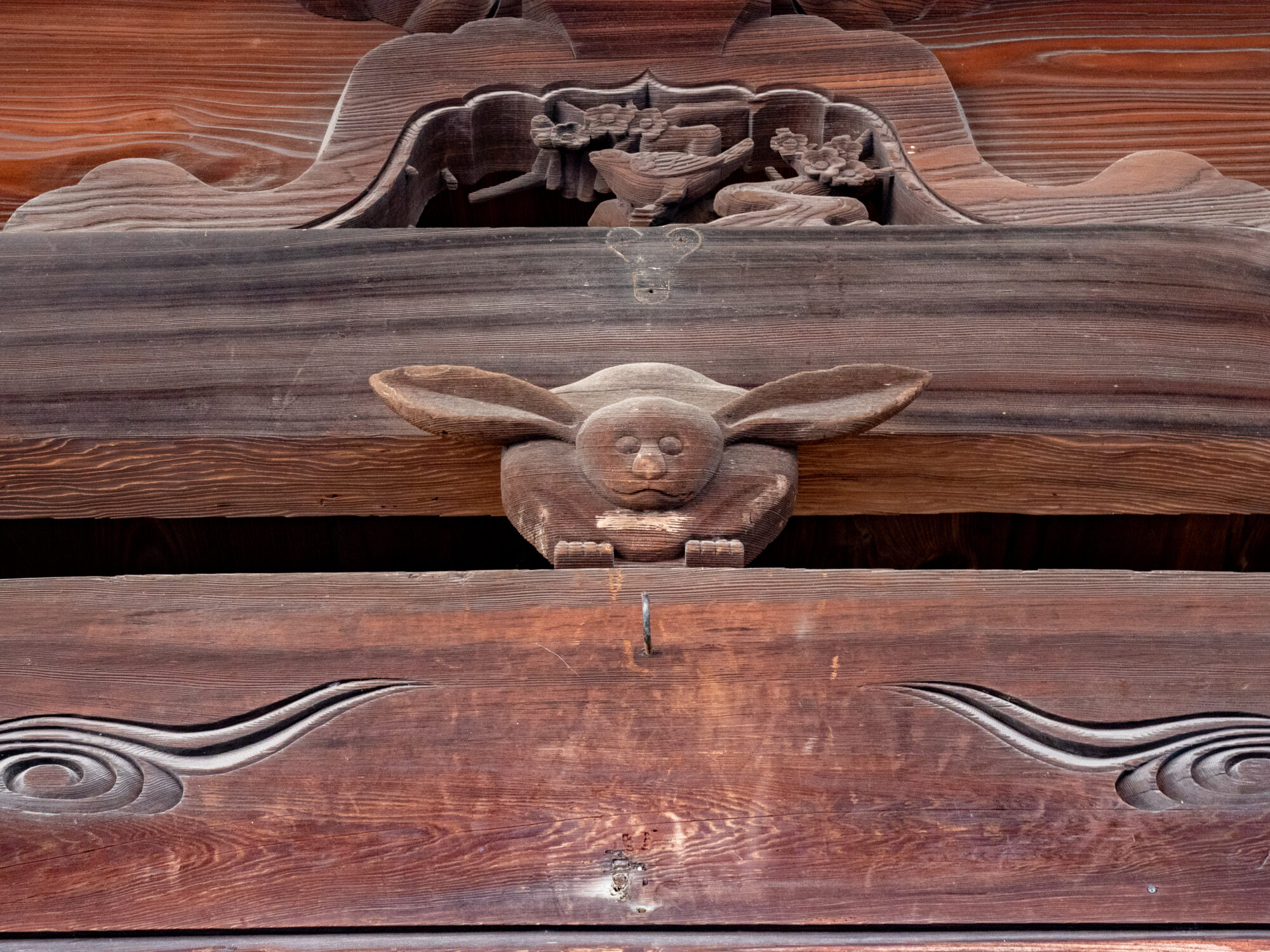
At the top center of the gate, there is a carving of a rabbit.
This rabbit is carved on both the front and back, so be sure to take a look!
It is a symbolic presence of Achi Shrine and is also featured on the cover of the shrine's goshuincho (shrine stamp book).
Main Shrine
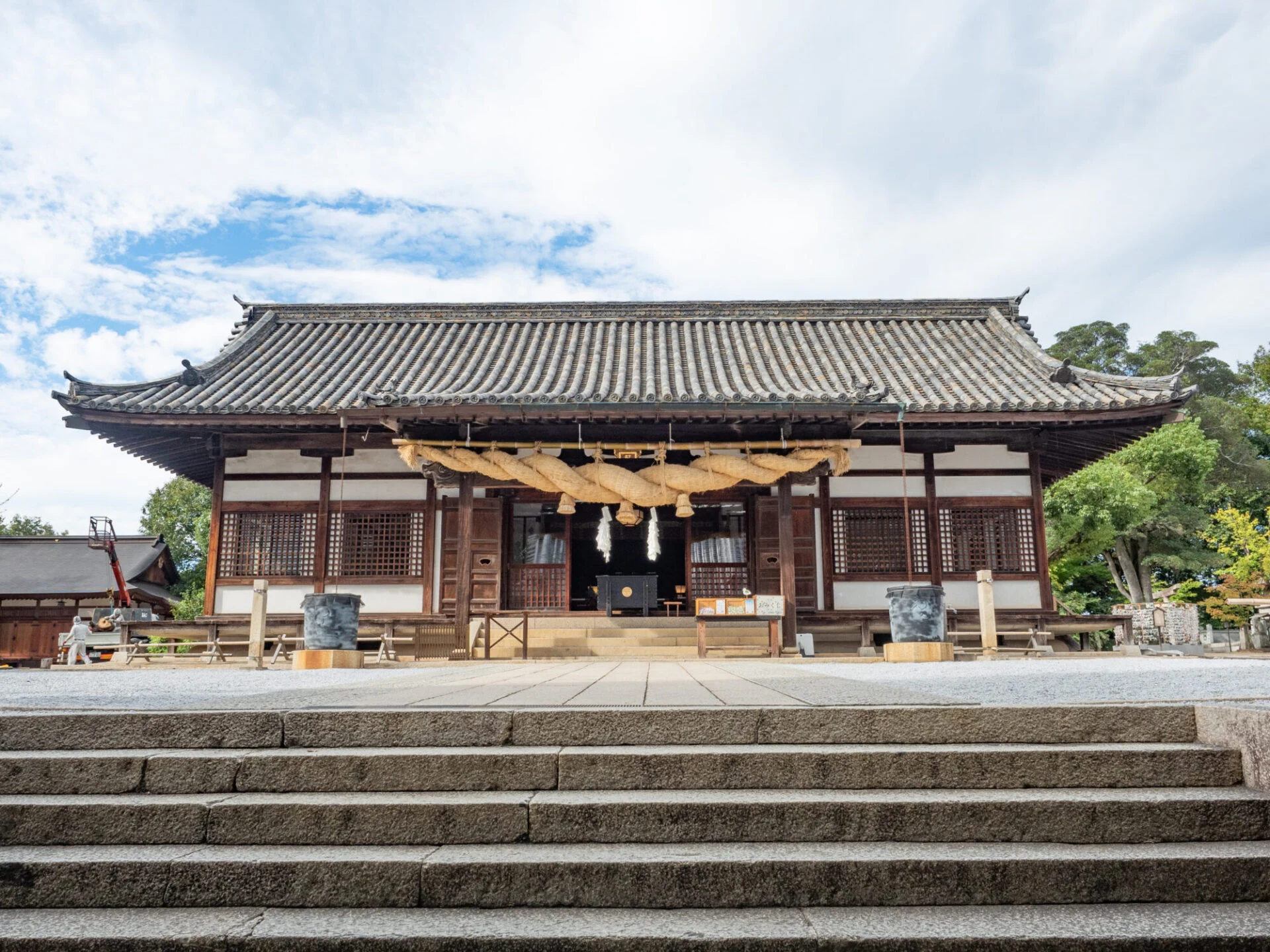
As you pass through the Zuishin Gate, the first thing that appears before you is the haidan (worship hall). The haidan is quite large and very impressive.
When you visit Achi Shrine, be sure to first pay your respects in front of the haidan.
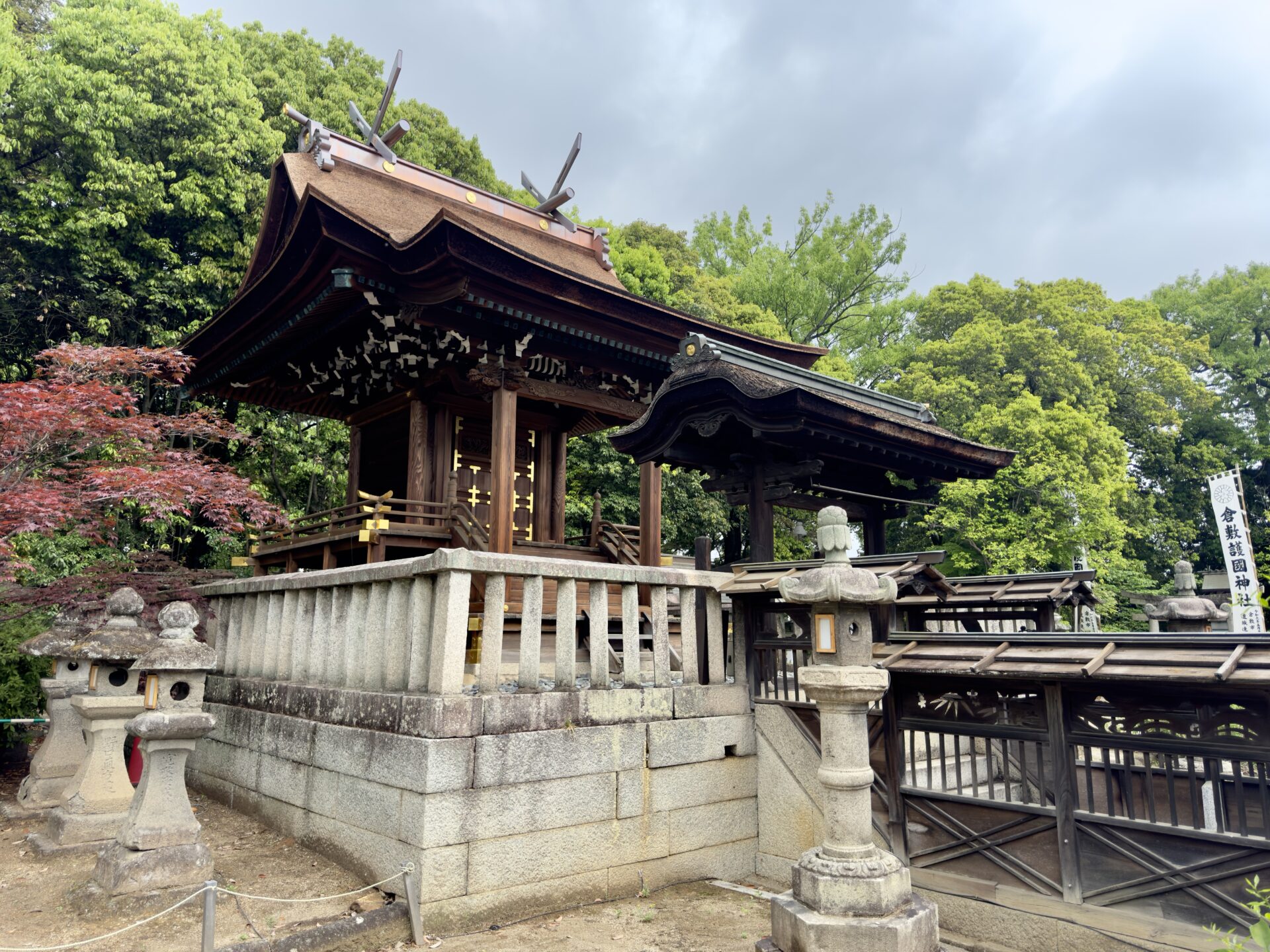
Behind the haidan is the honden (main shrine).
The Munakata Three Goddesses are enshrined inside.
A highlight of the honden is its roof.
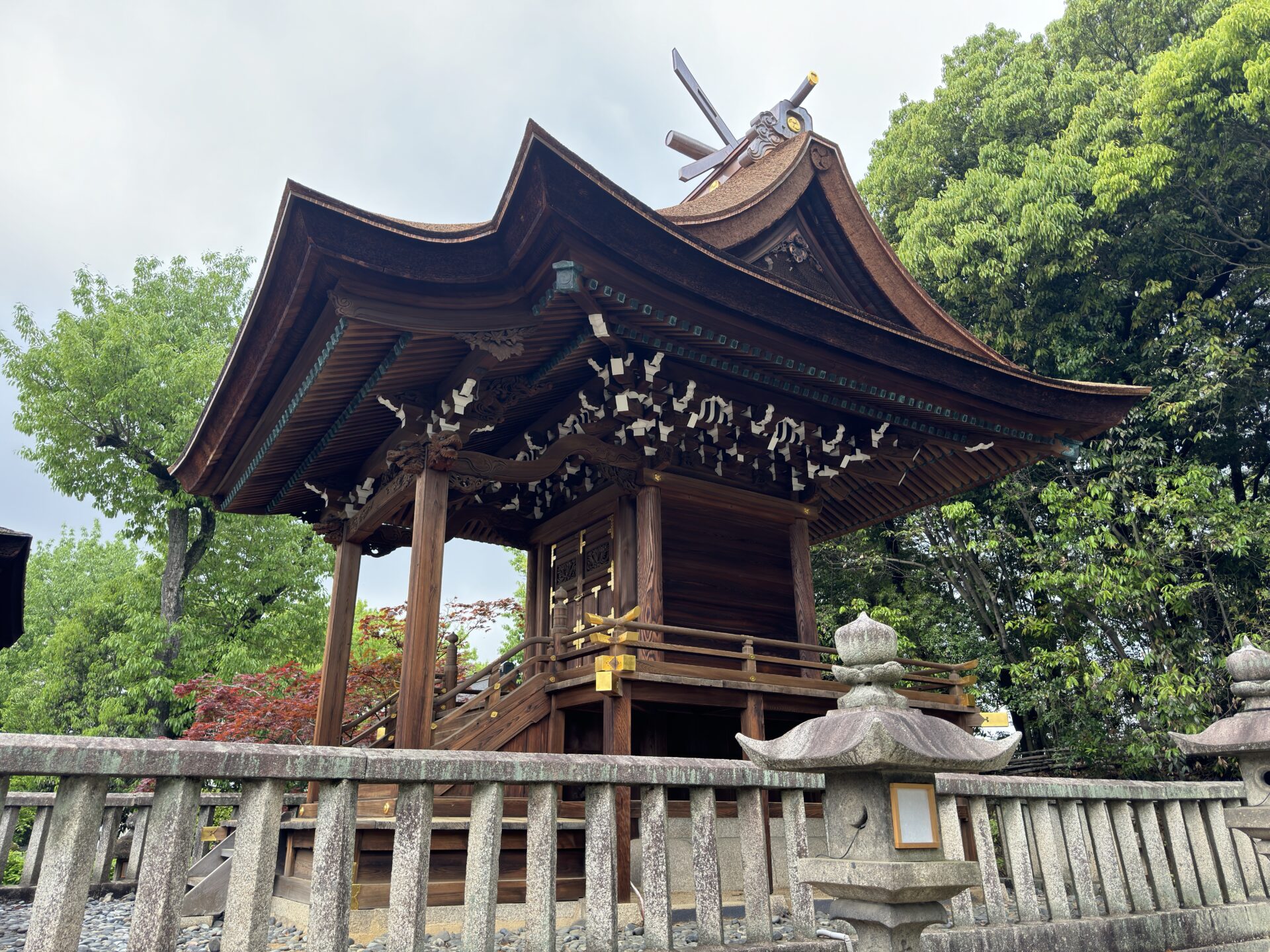
The honden is built using a traditional Japanese architectural method called hiwadabuki, which uses the bark of hinoki (Japanese cypress), making it a very prestigious shrine.
The only shrines in Kurashiki City that use hiwadabuki are Achi Shrine, Adakajinja Shrine, and Kumano Shrine, Japan's first Kumano Shrine.
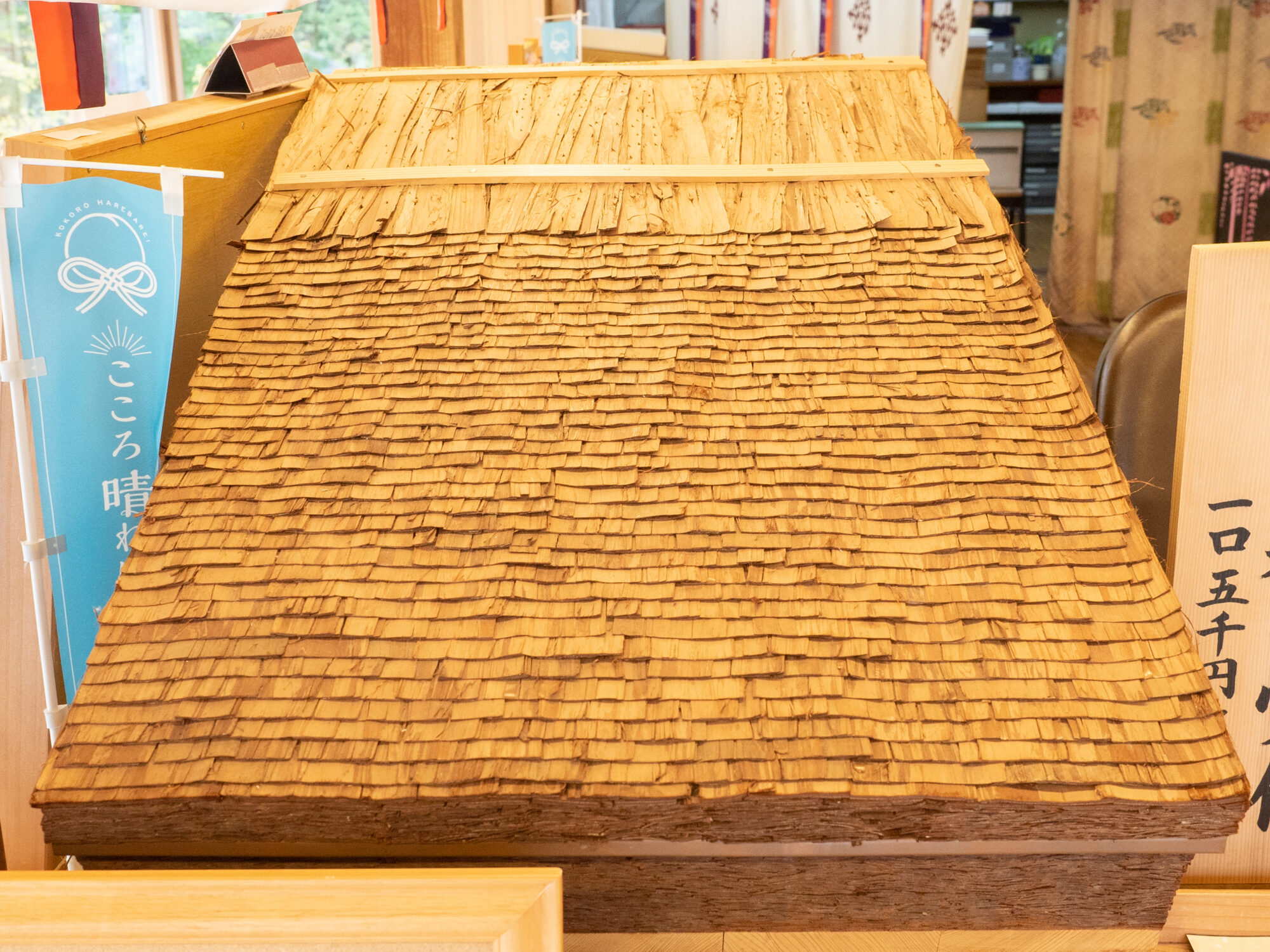
Achi Shrine is currently undergoing a renovation project for the honden group, which will take about five years from 2022 to around March 2027. The roof replacement of the honden was completed in 2023.
During the construction period, the shrine office is offering limited-time goshuin and donations.
Amatsu Iwakura
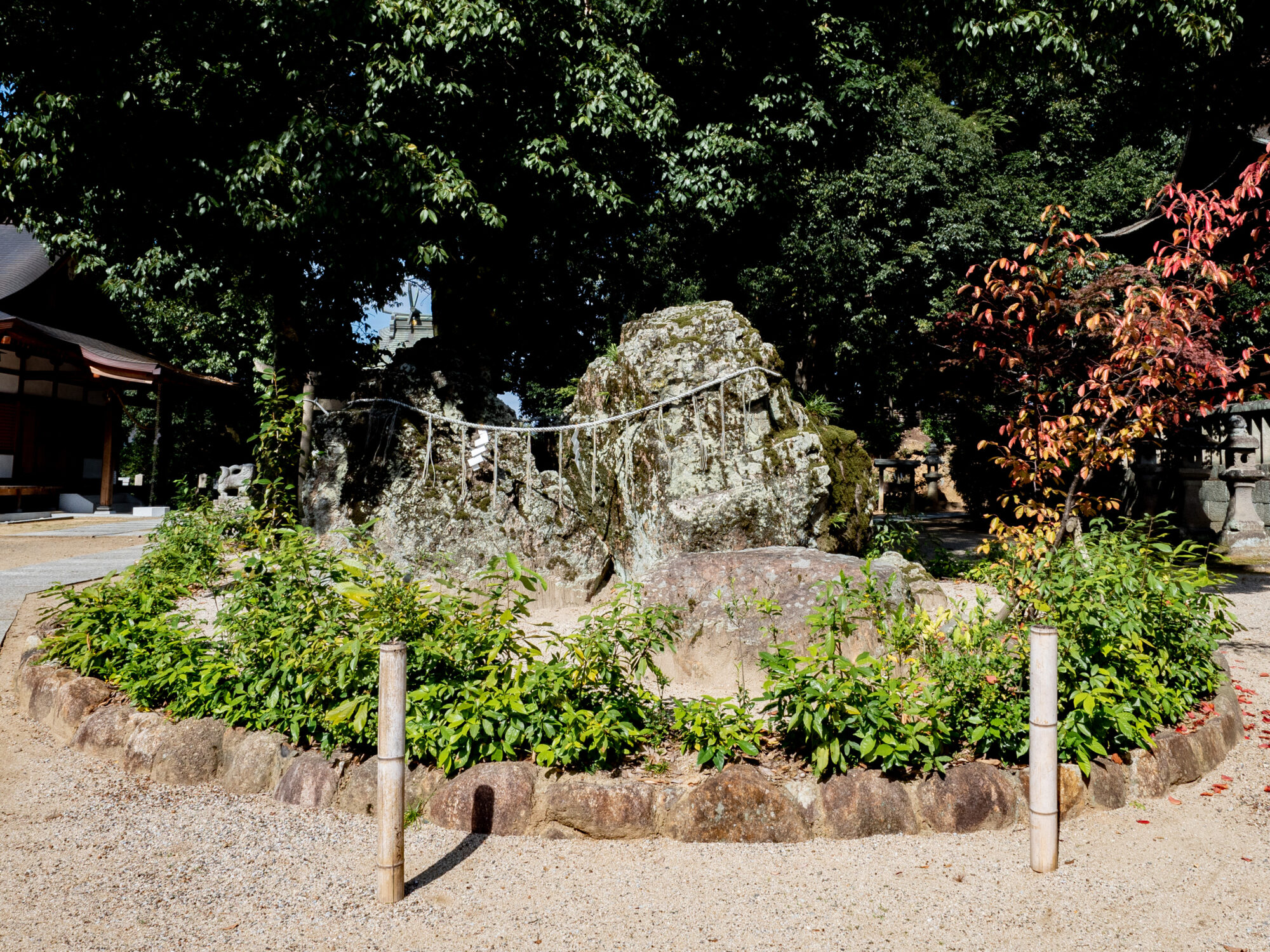
To the left of the main hall is Amano Iwasaka.
In the past, large rocks and strange rock formations were worshipped as places where gods descended. Iwasaka is the prototype of shrines.
When I actually saw Iwasaka, I felt a very mystical aura.
View from the Shrine Grounds
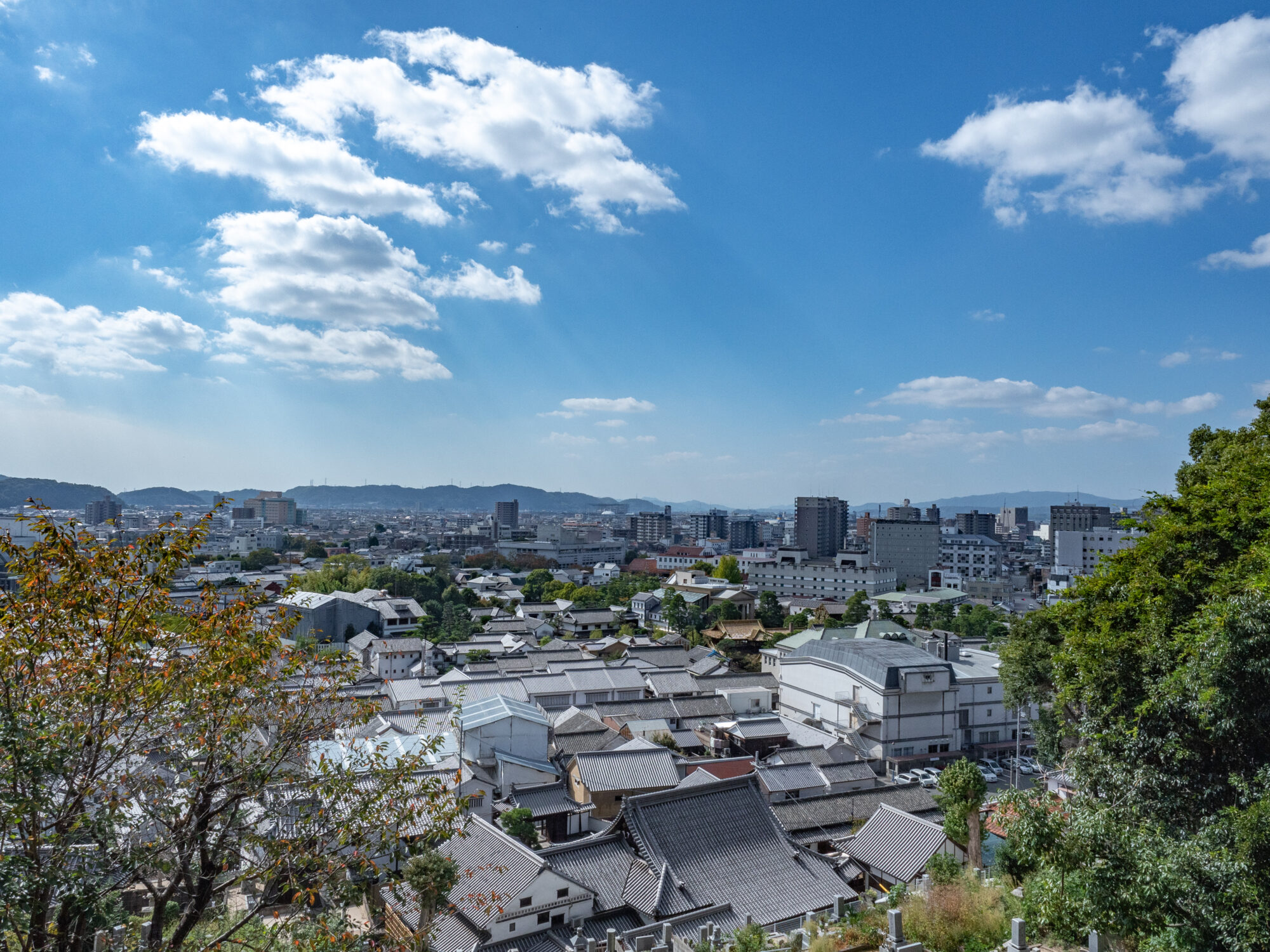
Since Achi Shrine is located at the top of Mt. Tsurugata, which is 43 meters high, you can enjoy a nice view of Kurashiki City from the shrine grounds.
In the center of the above photo, you can see the Ohara Museum of Art.
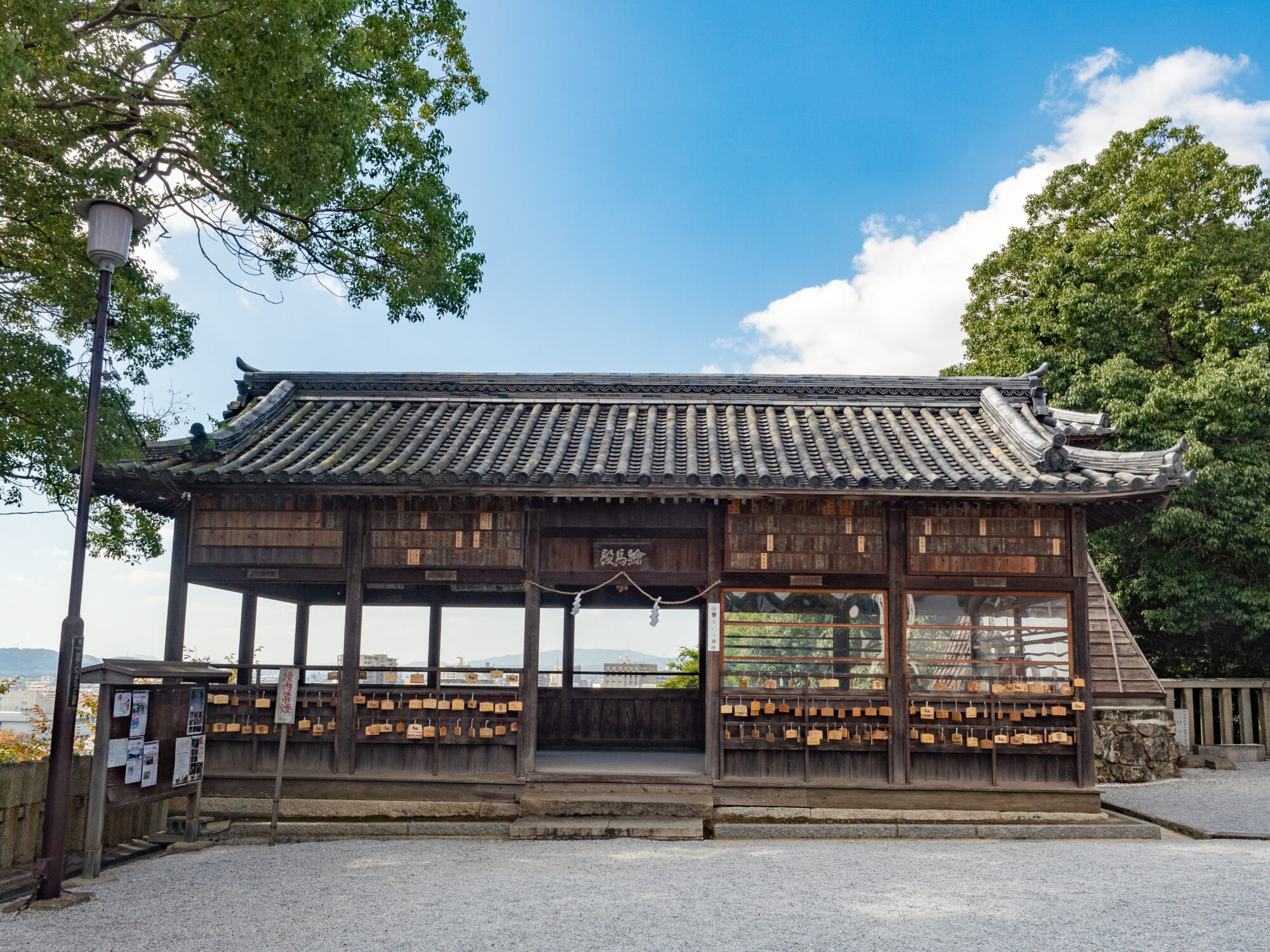
In particular, the Ema Hall located on the shrine grounds is a great viewing spot.
In the past, the view from here was all ocean.
Also, the Ema Hall features a unique architectural style called Kakezukuri.
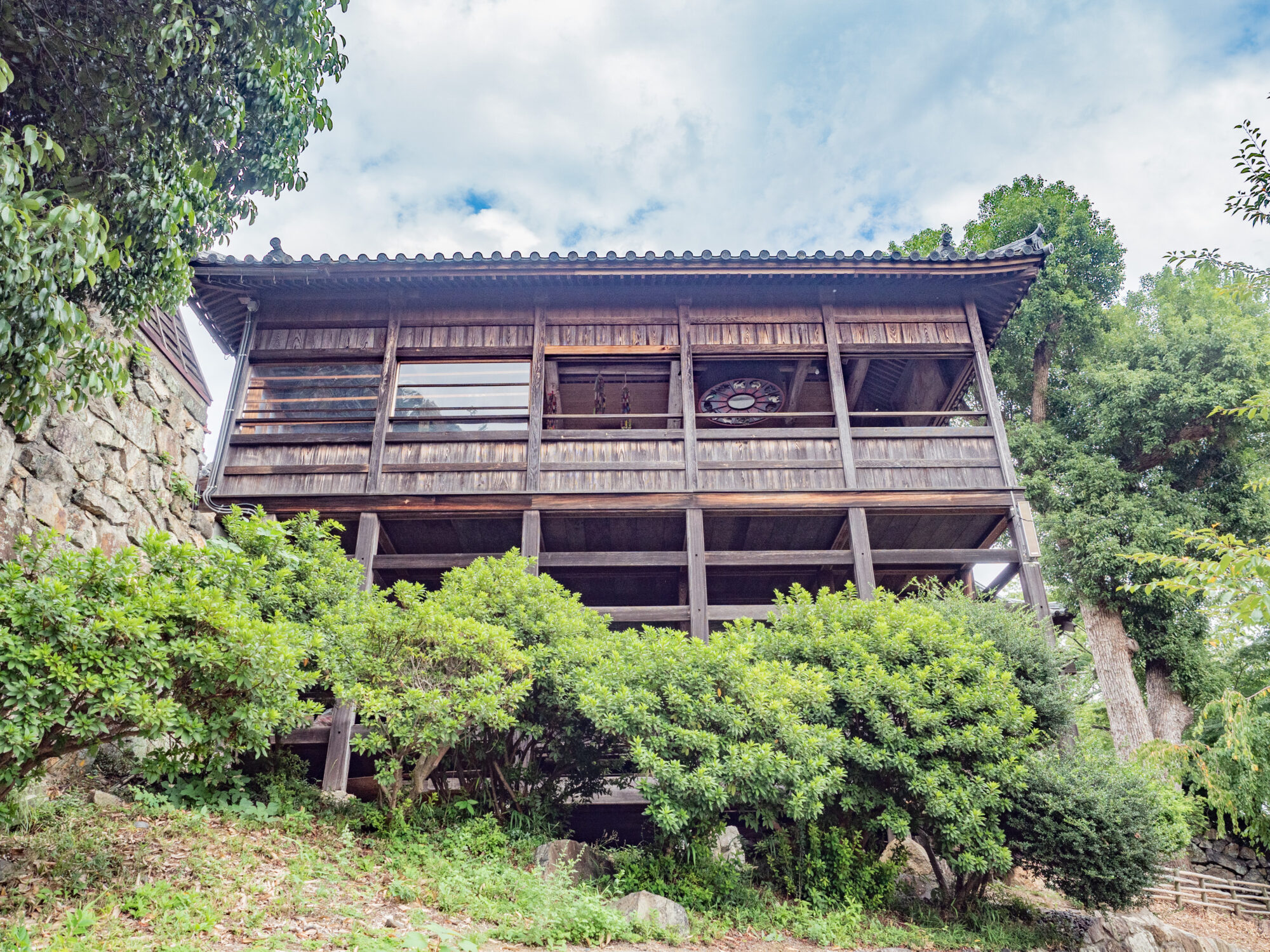
Kakezukuri is a technique for building structures that protrude over slopes.
Kakezukuri can be seen in places like Nageire-do in Tottori Prefecture and Kiyomizu-dera Temple in Kyoto.
The Kakezukuri of the Ema Hall is best appreciated from below, so I recommend viewing it from there.
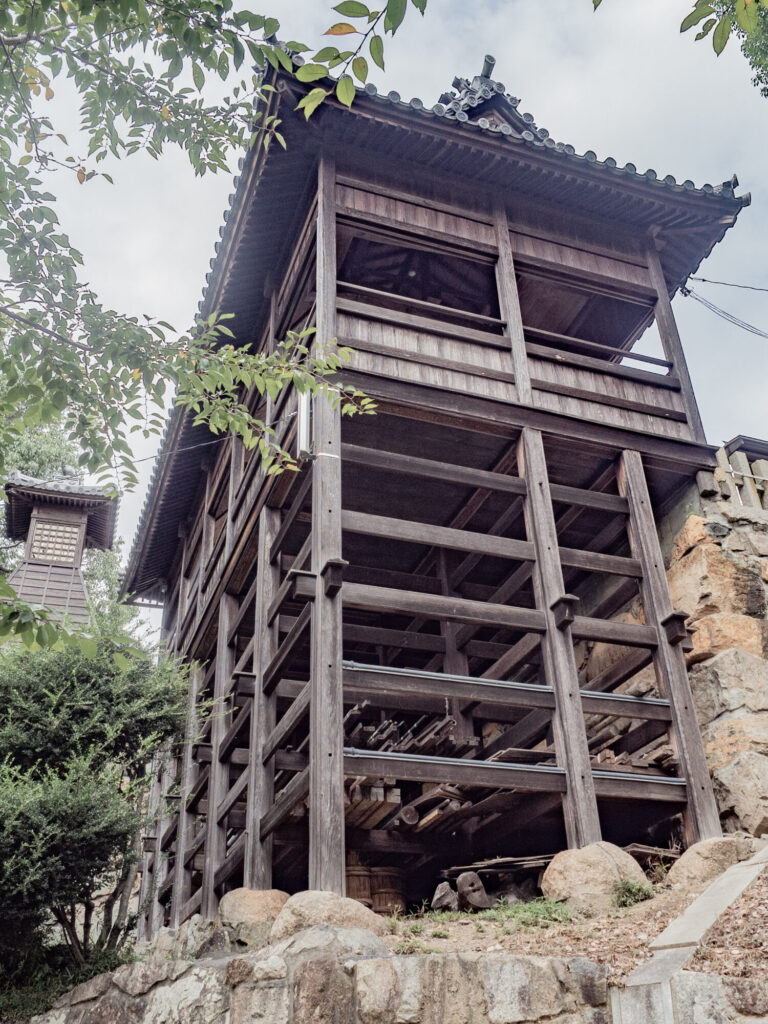
If you walk a little west from the temizuya (water purification fountain), you will see the Ema Hall.
The wooden beams arranged in a lattice pattern are impressive and worth seeing.
High Lantern
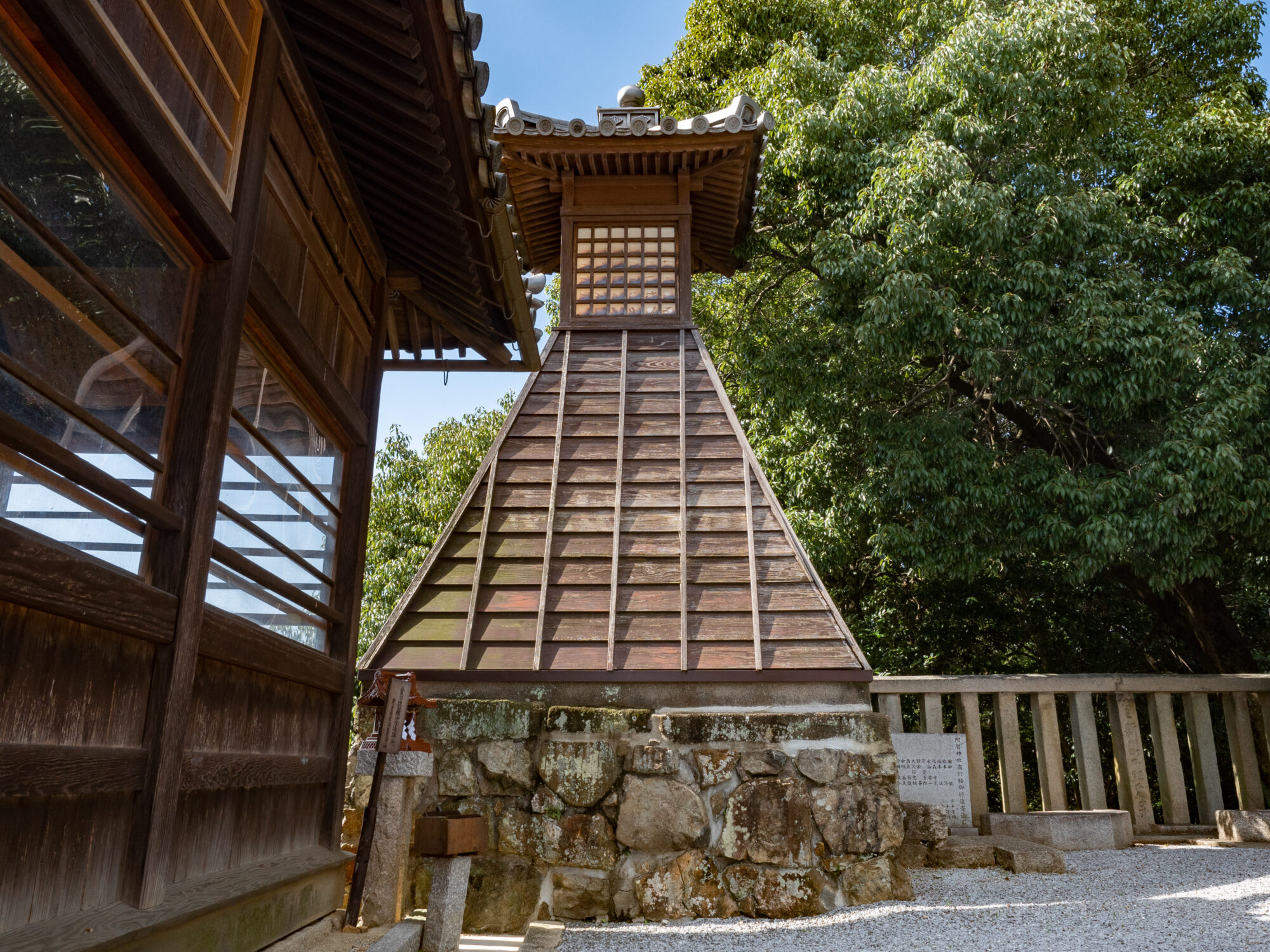
Next to the Ema Hall is the High Lantern.
The High Lantern at Achi Shrine is of the same type originally placed in ports, serving as a marker for ships entering and leaving the harbor.
It is said to have originally been located along the Kurashiki River in the Bikan Historical Area, at the base of Nakabashi (around the current Ryokan Kurashiki).
Later, it was moved to the grounds of Achi Shrine in connection with the shrine being the guardian deity of maritime traffic.
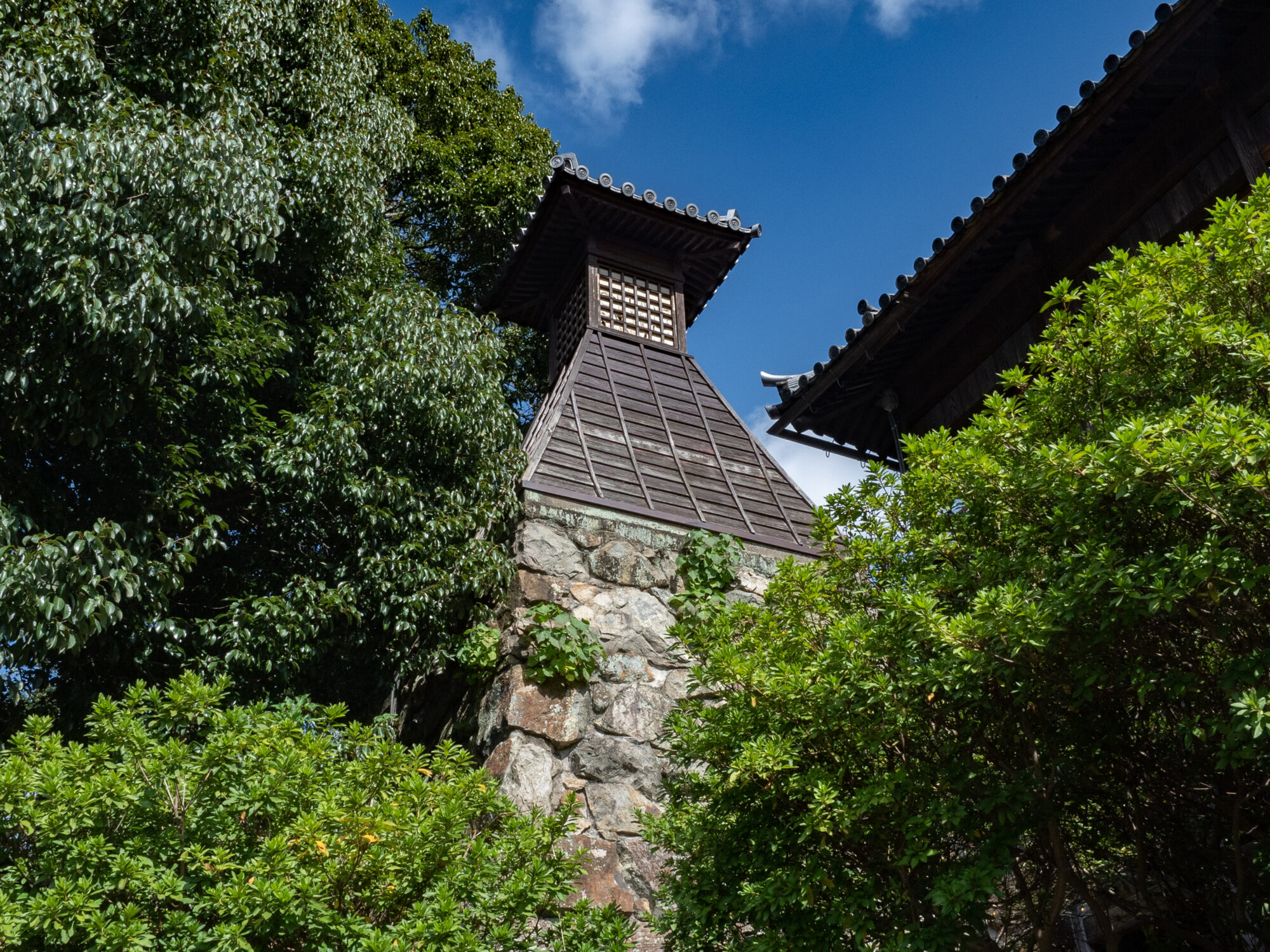
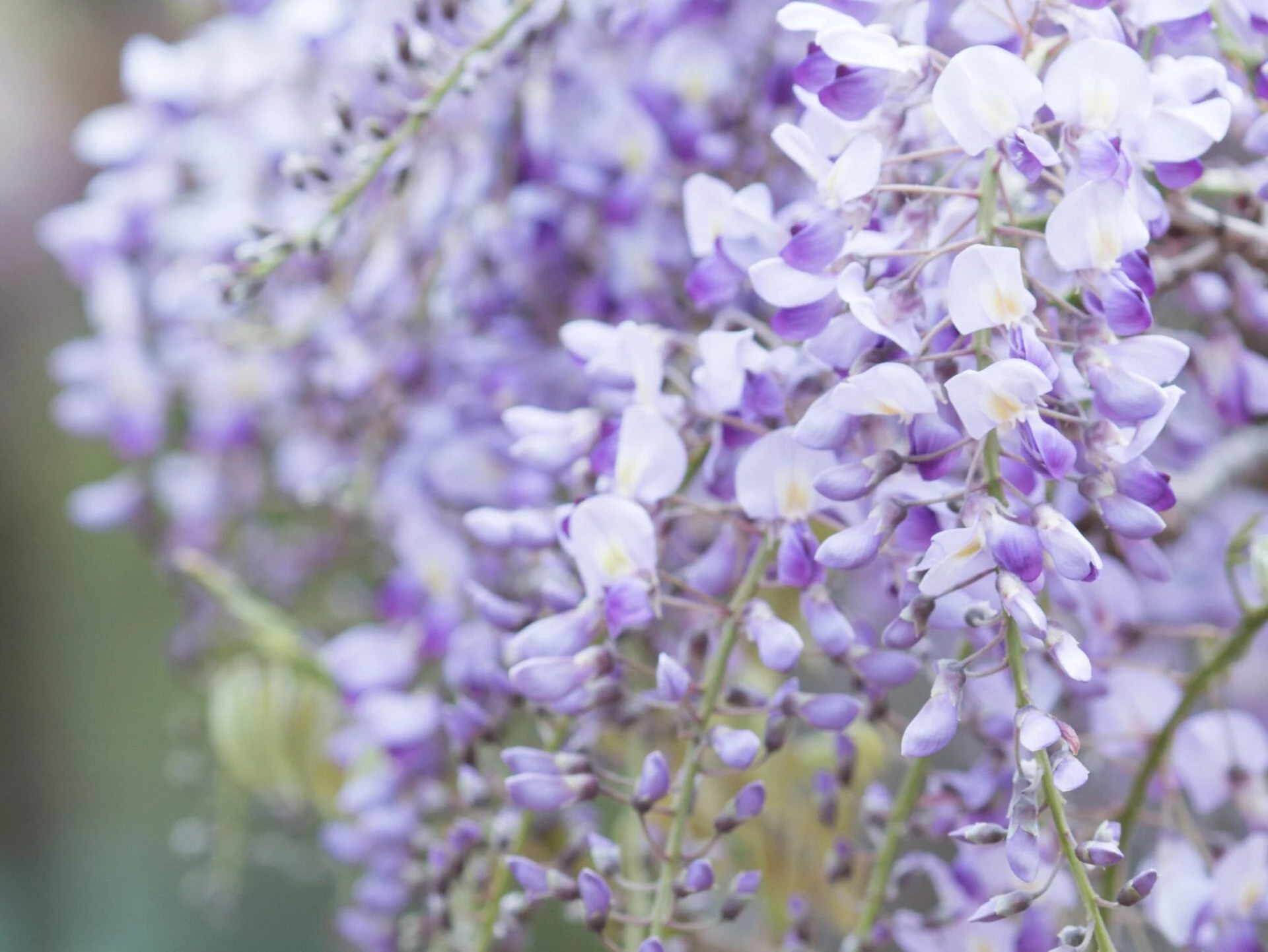
Today, the High Lantern has become a symbol of Achi Shrine, alongside the wisteria of Achi and the rabbit carvings on the Zuishin Gate.
The height of the High Lantern is about 5 meters.
Looking up from just below the shrine grounds is quite impressive.
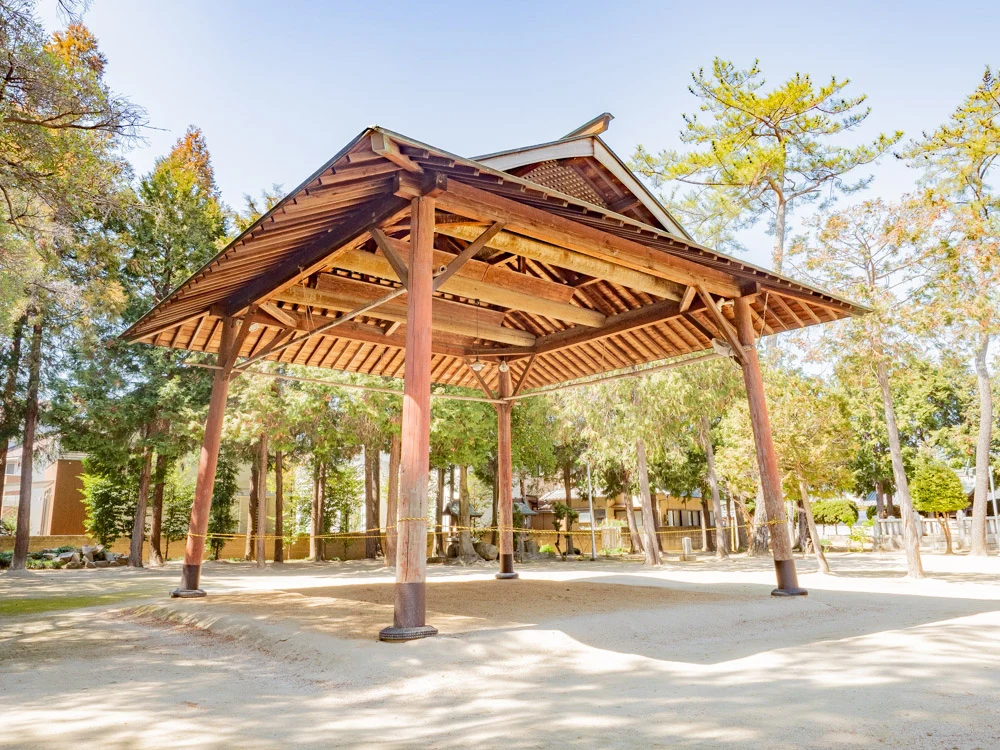
Noh Stage
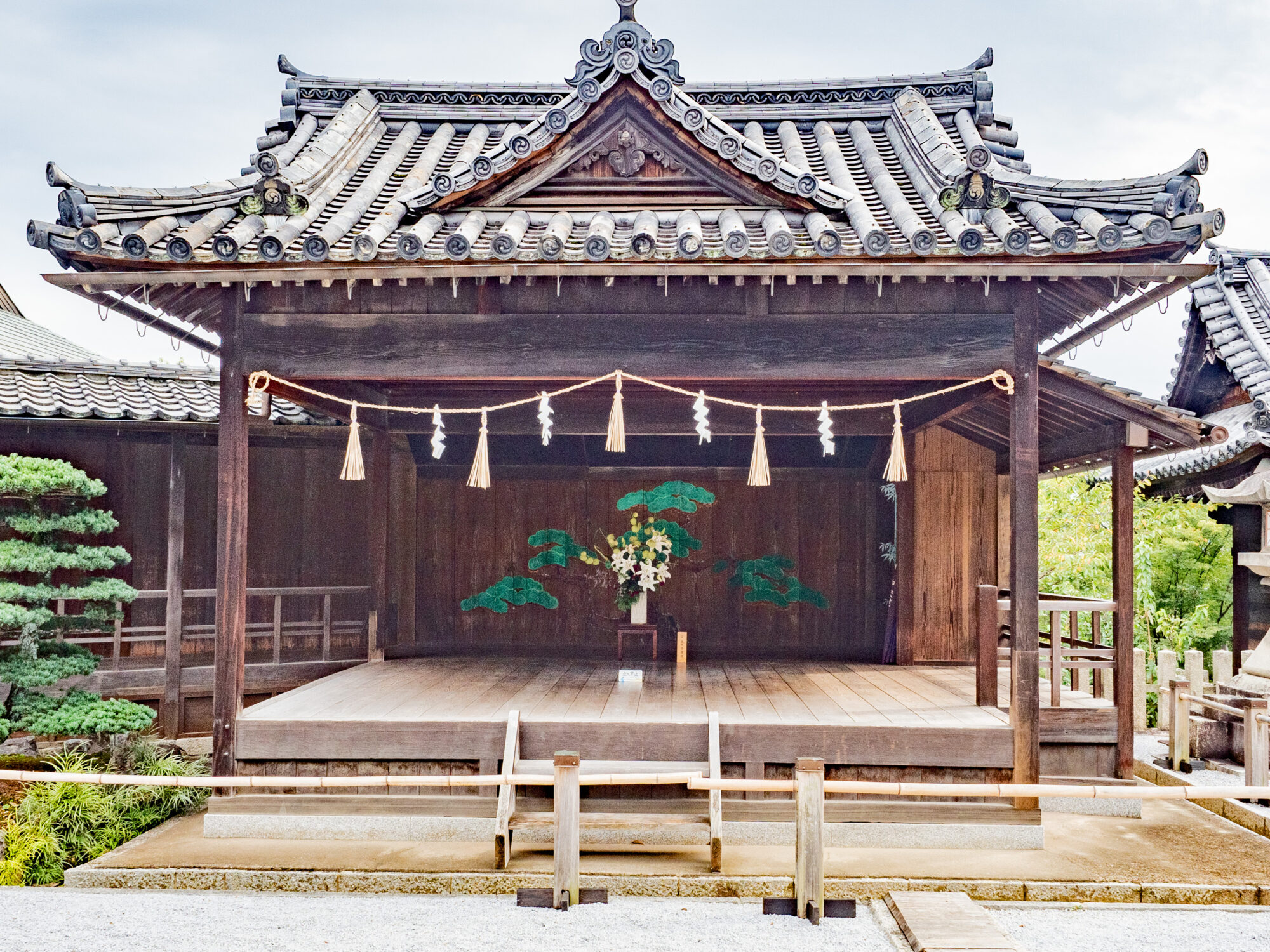
The Noh stage is located opposite the worship hall, between the Zuishin Gate and the shrine office.
A distinctive feature is the painting of pine trees at the back of the stage.
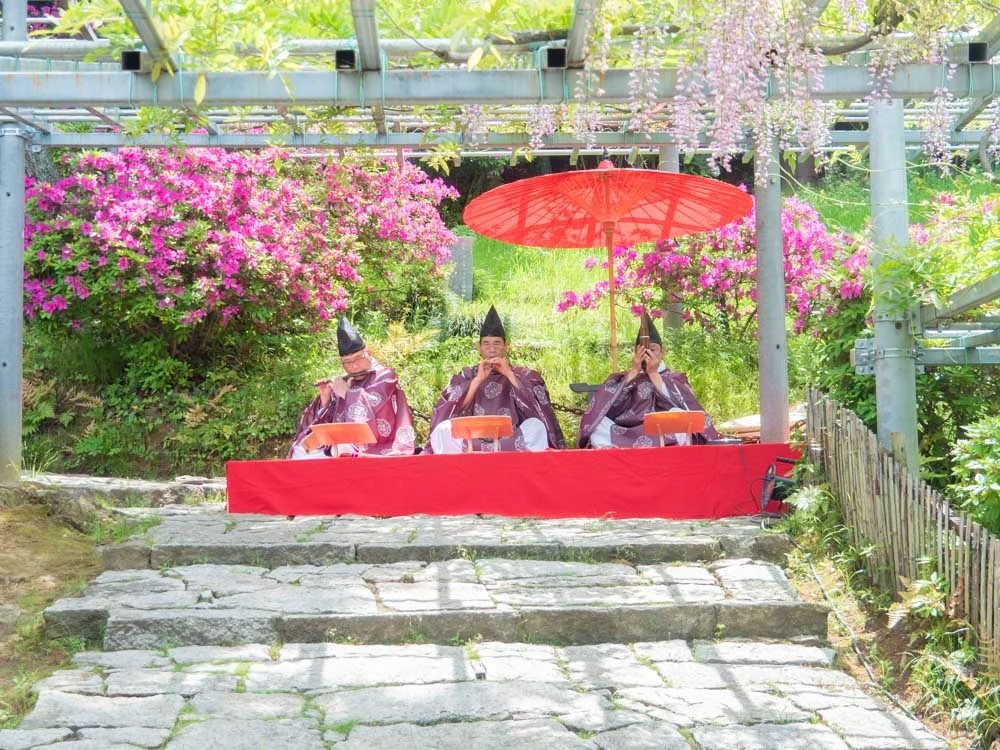
During festival seasons, various performances such as Kan-nigai, which includes gagaku (ancient court music) and hayashi (traditional music), are dedicated here.
Shrines within the Shrine Grounds
Achi Shrine has several small shrines (shrine within the shrine) separate from the main hall, and I will introduce some representative ones.
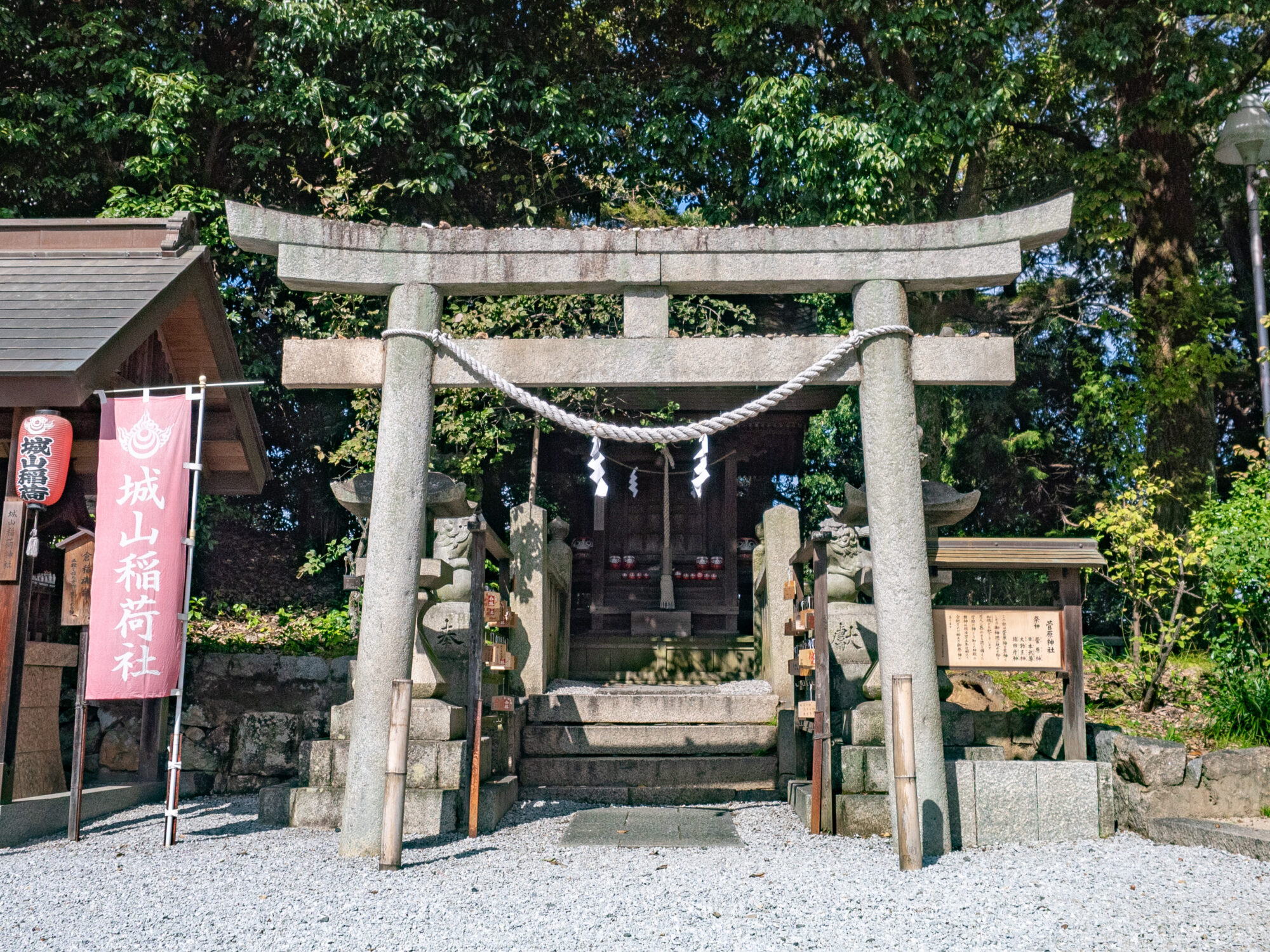
First is Sugawara Shrine.
It enshrines Sugawara no Michizane, the god of learning.
It is located behind the right side of the main hall.
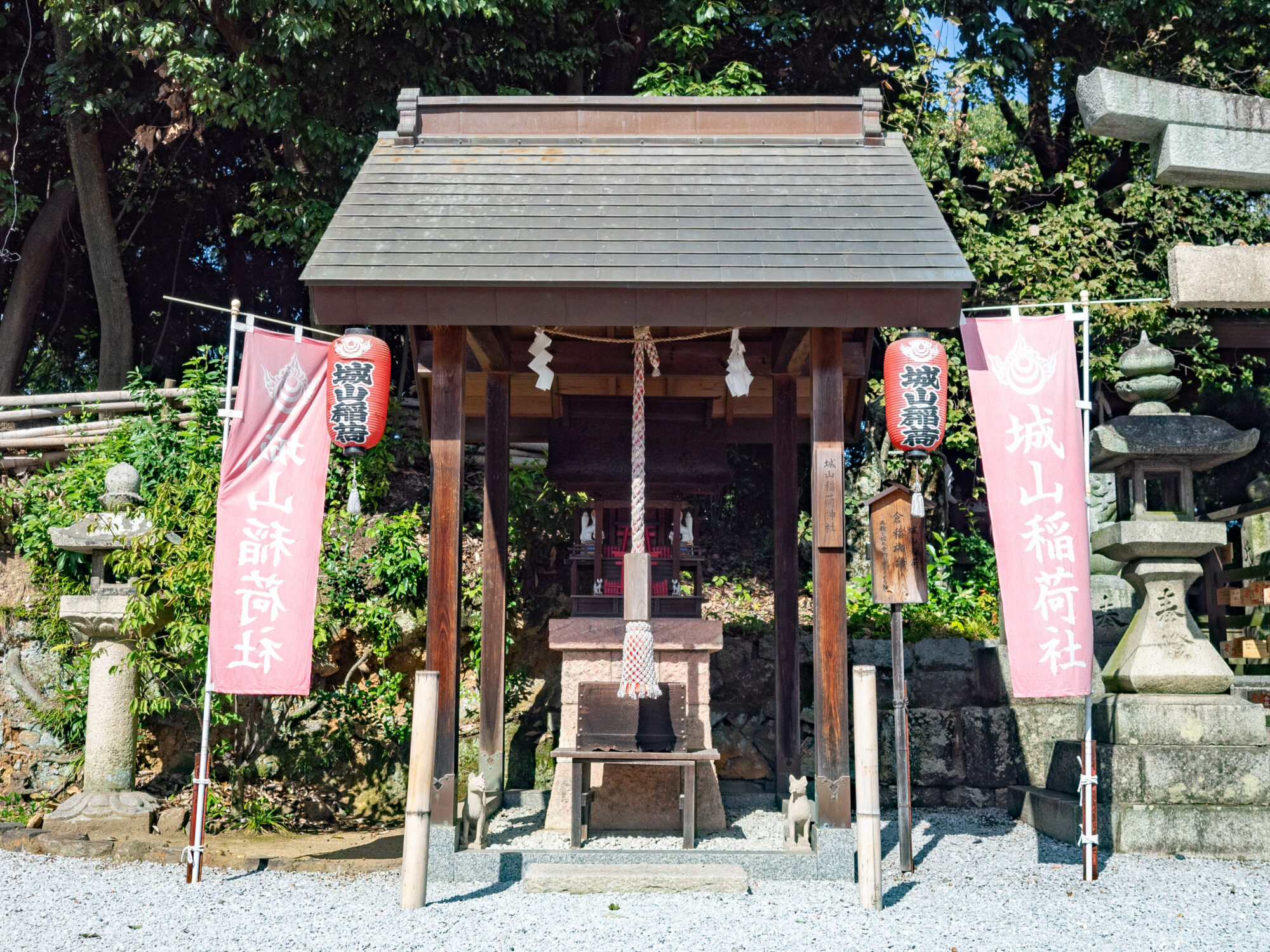
Next to Sugawara Shrine is Shiroyama Inari Shrine.
Originally, it was located at the site of the Kurashiki Magistrate's Office (currently Kurashiki Ivy Square) and was later moved to the grounds of Achi Shrine.
It is the deity of agriculture and prosperous business.
Achi Wisteria
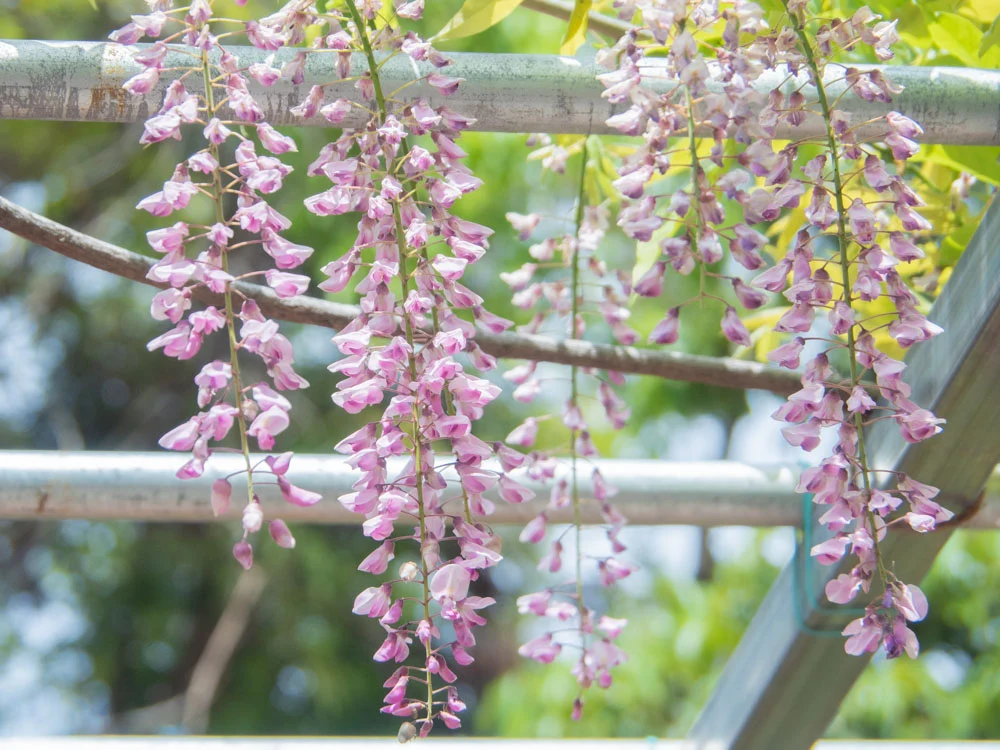
Achi Wisteria is located at the back of the shrine grounds.
It is a variety called Akebono Fuji, and it is the largest and oldest wisteria in Japan among the same variety.
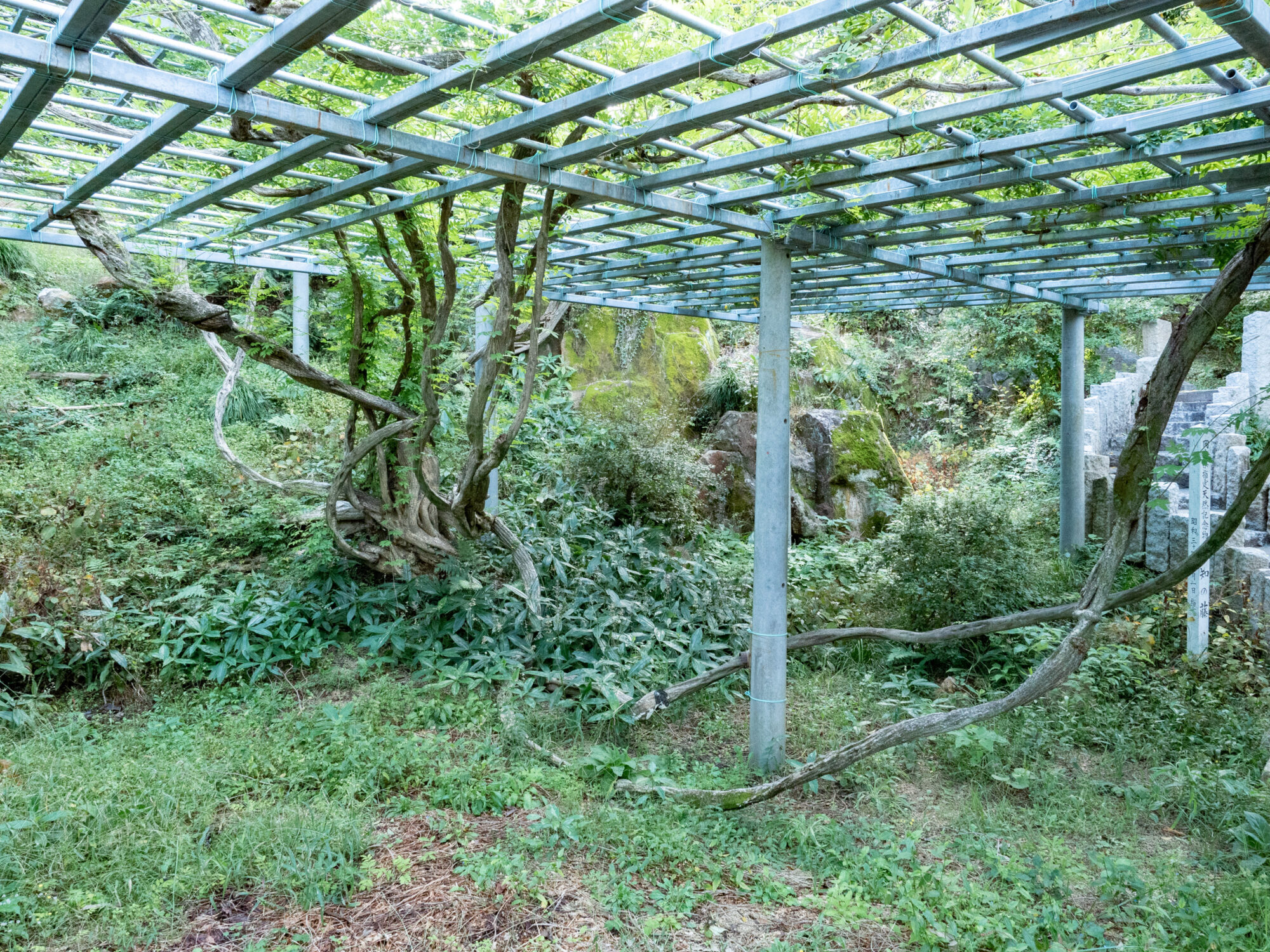
Its estimated age is said to be between 300 and 500 years, and it was designated as a natural monument of Okayama Prefecture in 1956.
In line with this, the city flower of Kurashiki City is wisteria.
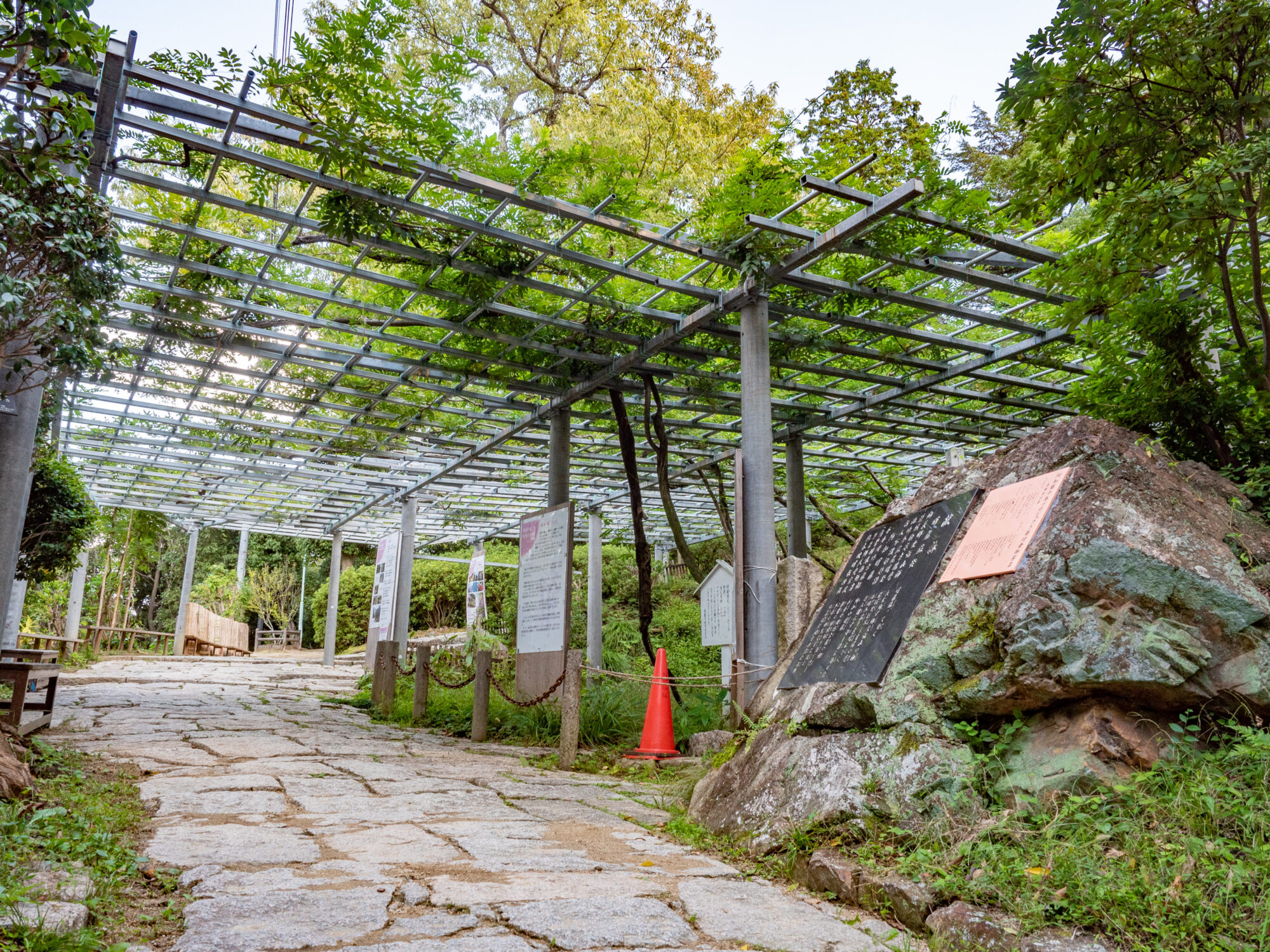
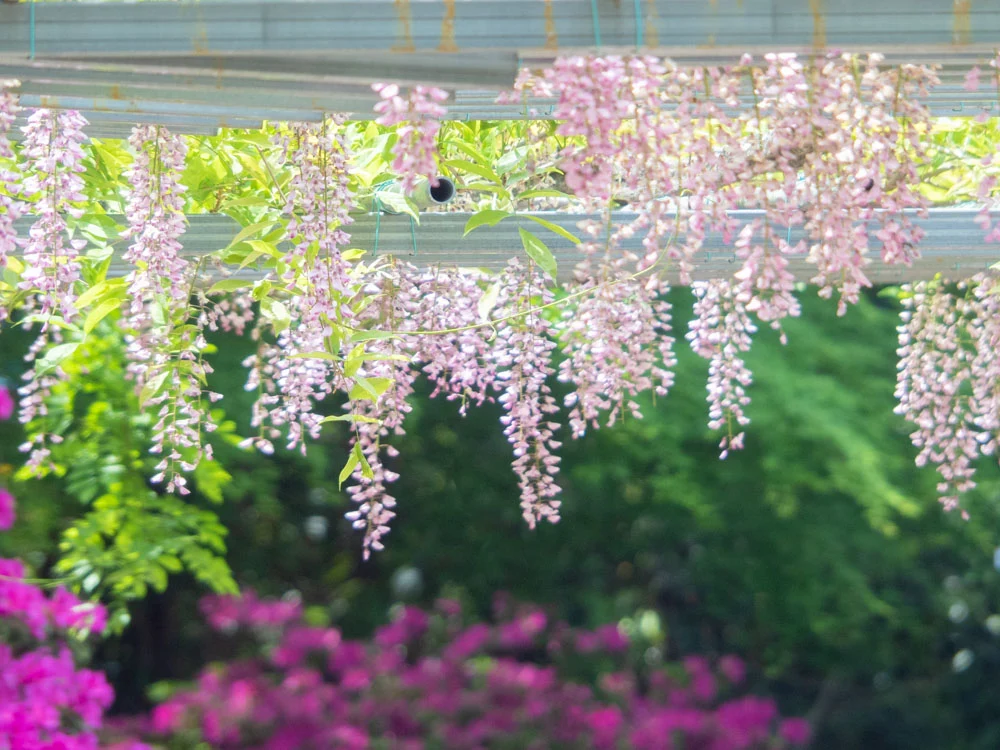
Around late April, the flowers bloom, and the wisteria trellis is dyed a pale pink.
During that time, the Wisteria Viewing Association is held, and many people come to see it.
Achi Shrine Amulets, Goshuin, and Goshuincho
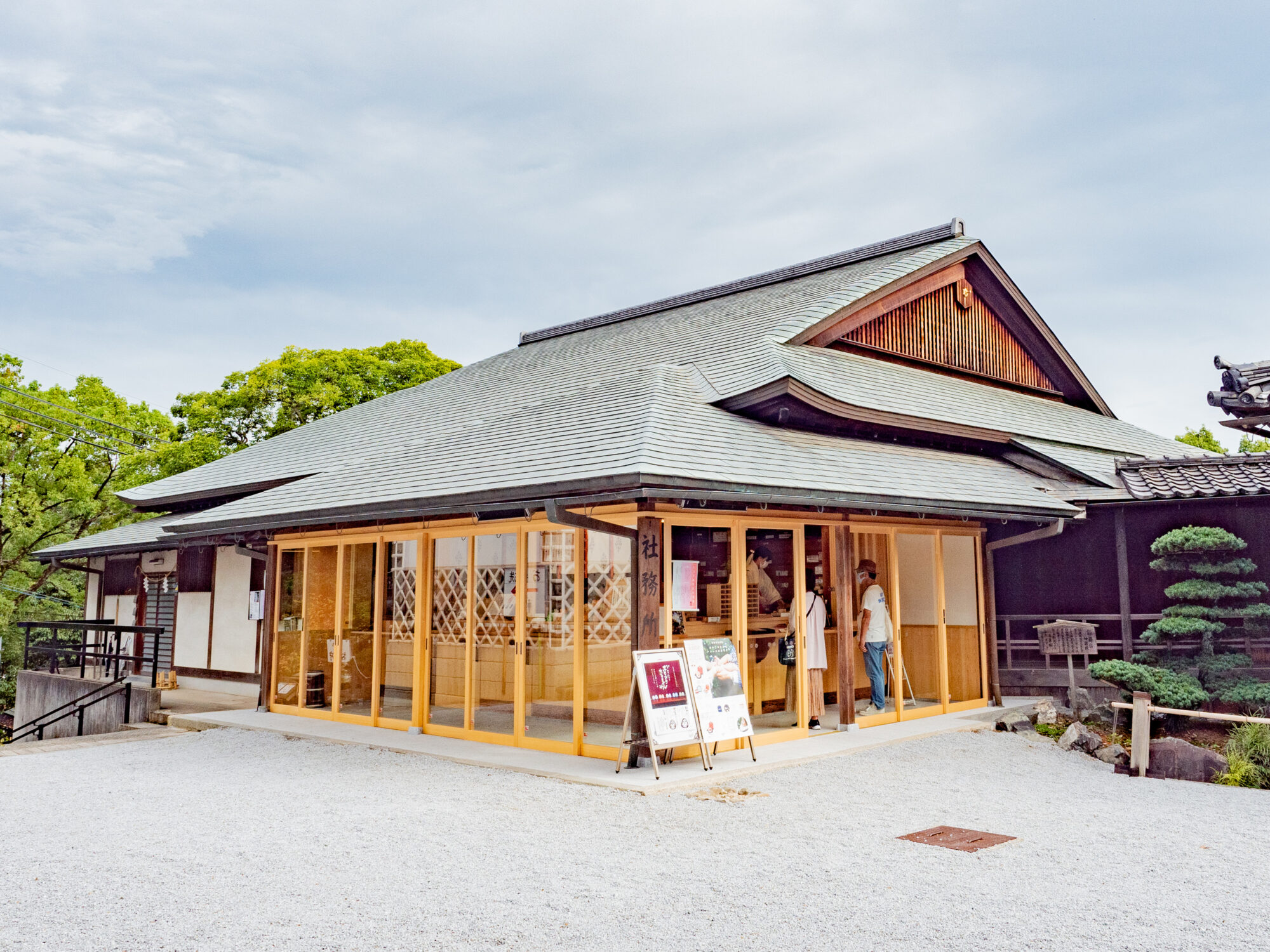
Amulets, talismans, and goshuin can be obtained at the shrine office.
If you want them, please speak to the person inside the shrine office.
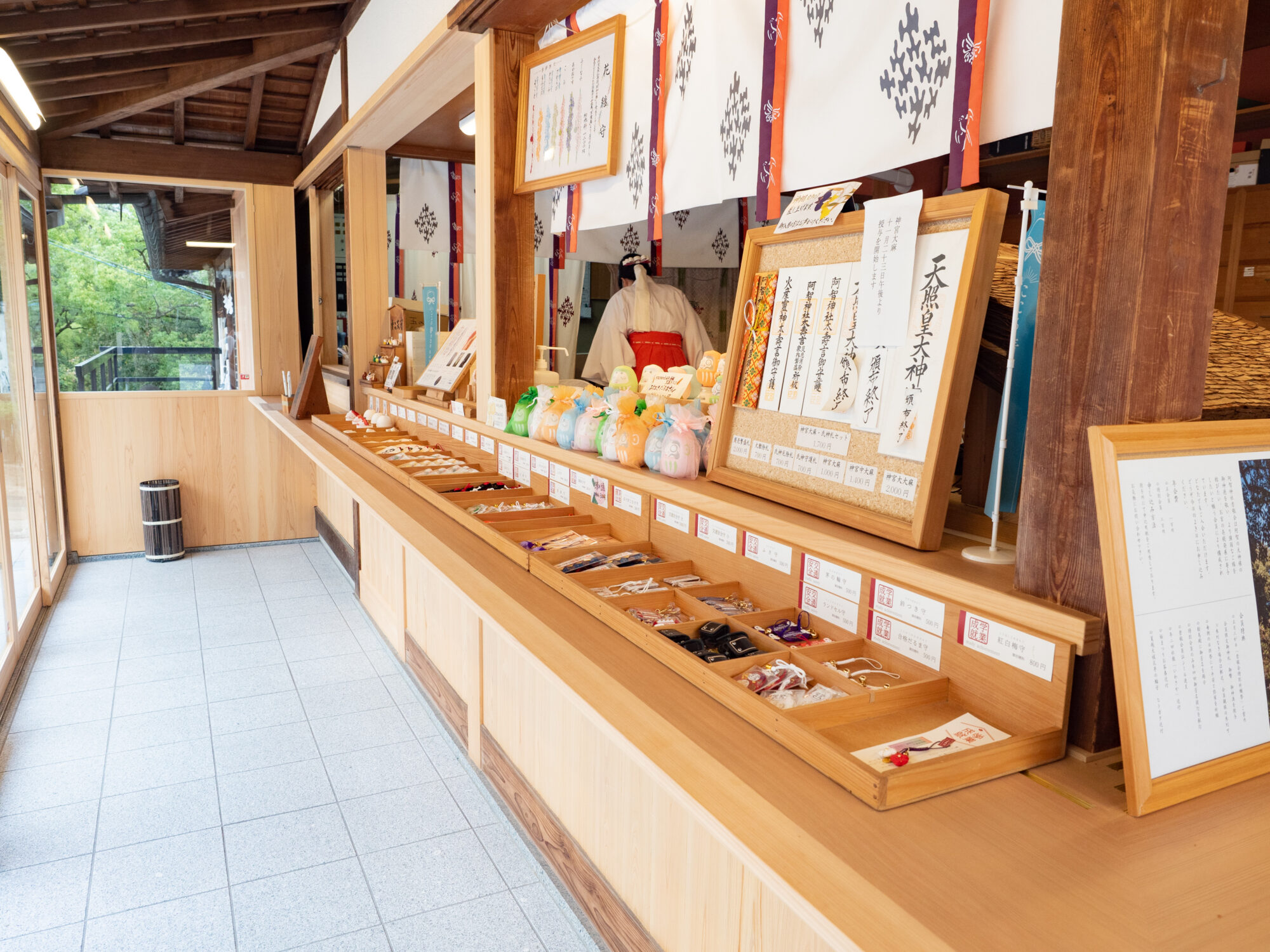
The shrine office was partially renovated in the summer of 2022.
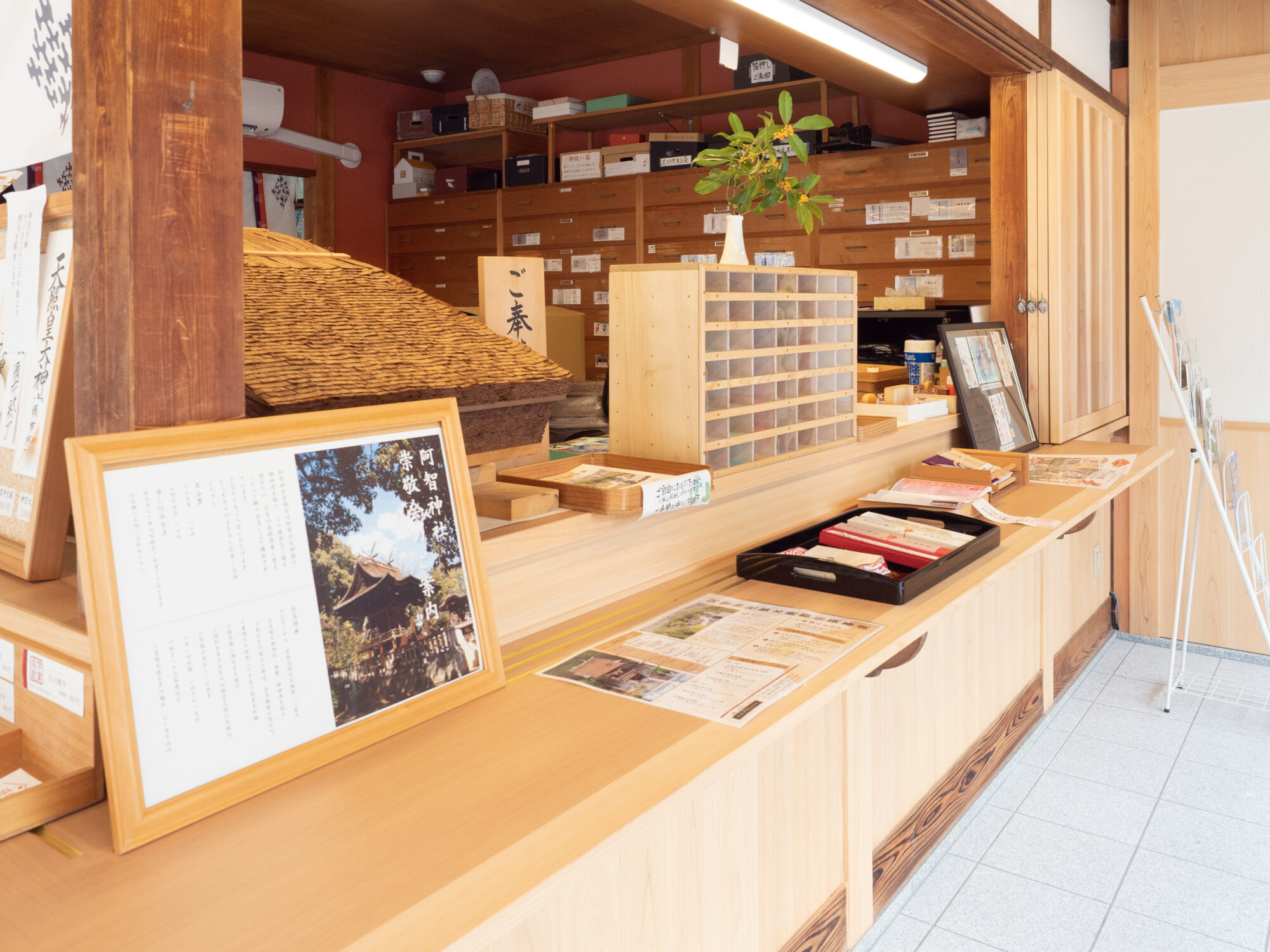
At Achi Shrine's office, you can receive amulets, goshuin, and goshuincho.
Achi Wisteria Fruit Amulet
Achi Shrine has several types of original amulets.
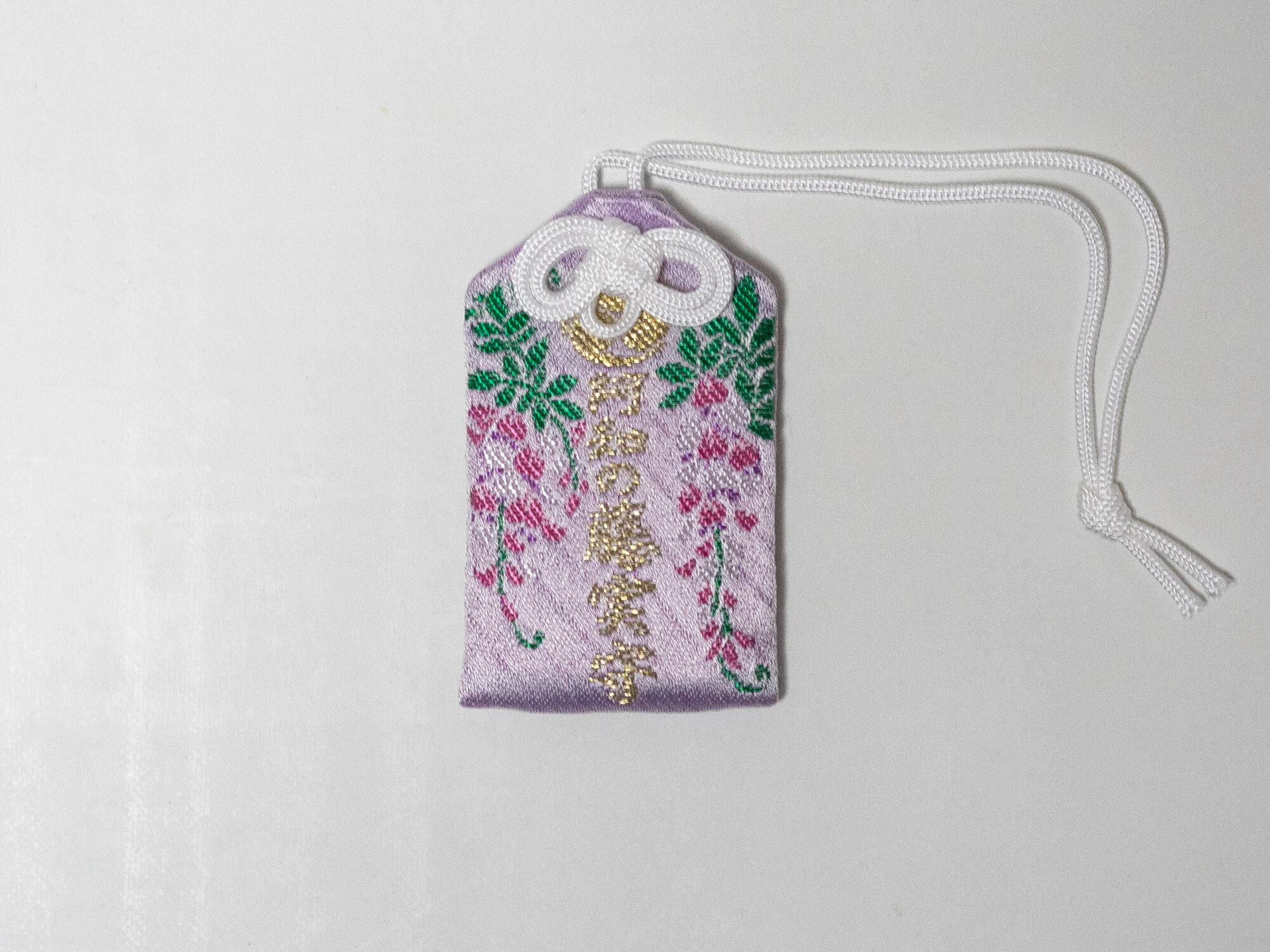
The highlight is the amulet containing the fruit of the Achi wisteria, called Achi Wisteria Fruit Amulet (fujimimamori).
Playing on the words for wisteria fruit and immortality, it serves as a talisman for health and safety.
Additionally, it also has meanings related to harmony and marital happiness, playing on the words for wisteria and "no two."
To receive the Achi Wisteria Fruit Amulet, a donation of 1,000 yen is required.
Flower Wrapping Amulet
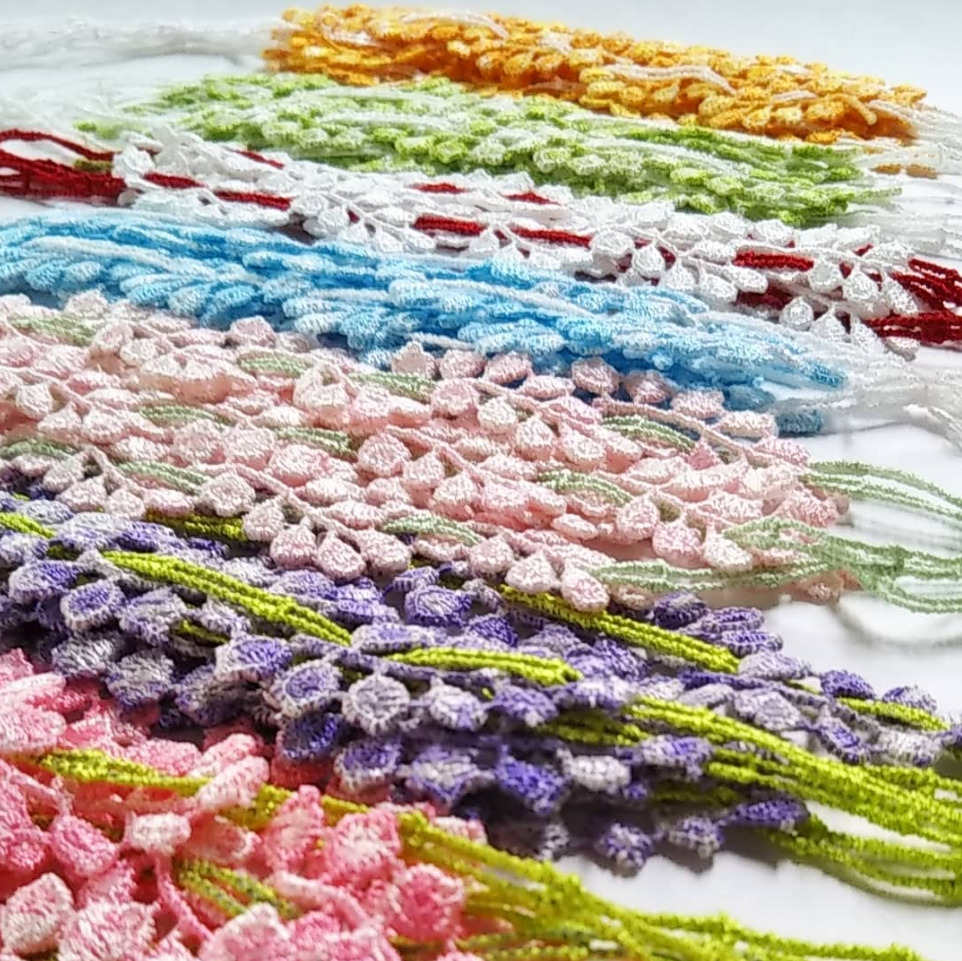
Achi Shrine has many amulets, but among them, the most popular is the Flower Wrapping Amulet (hanamakimamori).
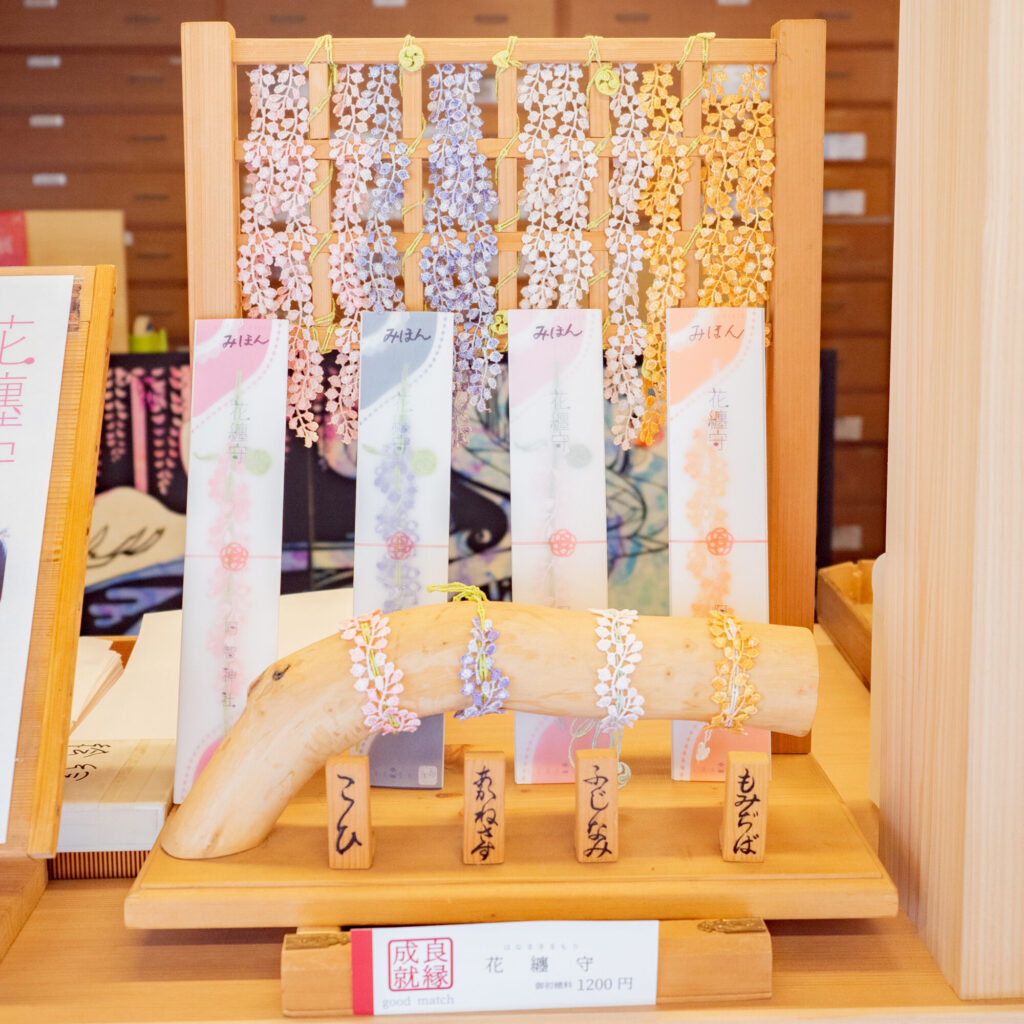
This amulet is designed in a lace pattern inspired by the "Achi Wisteria," and it has the benefit of "tying strong bonds" like the thick and long vines of the Achi wisteria.
The Flower Wrapping Amulet is a type that can be wrapped around your arm or bag.
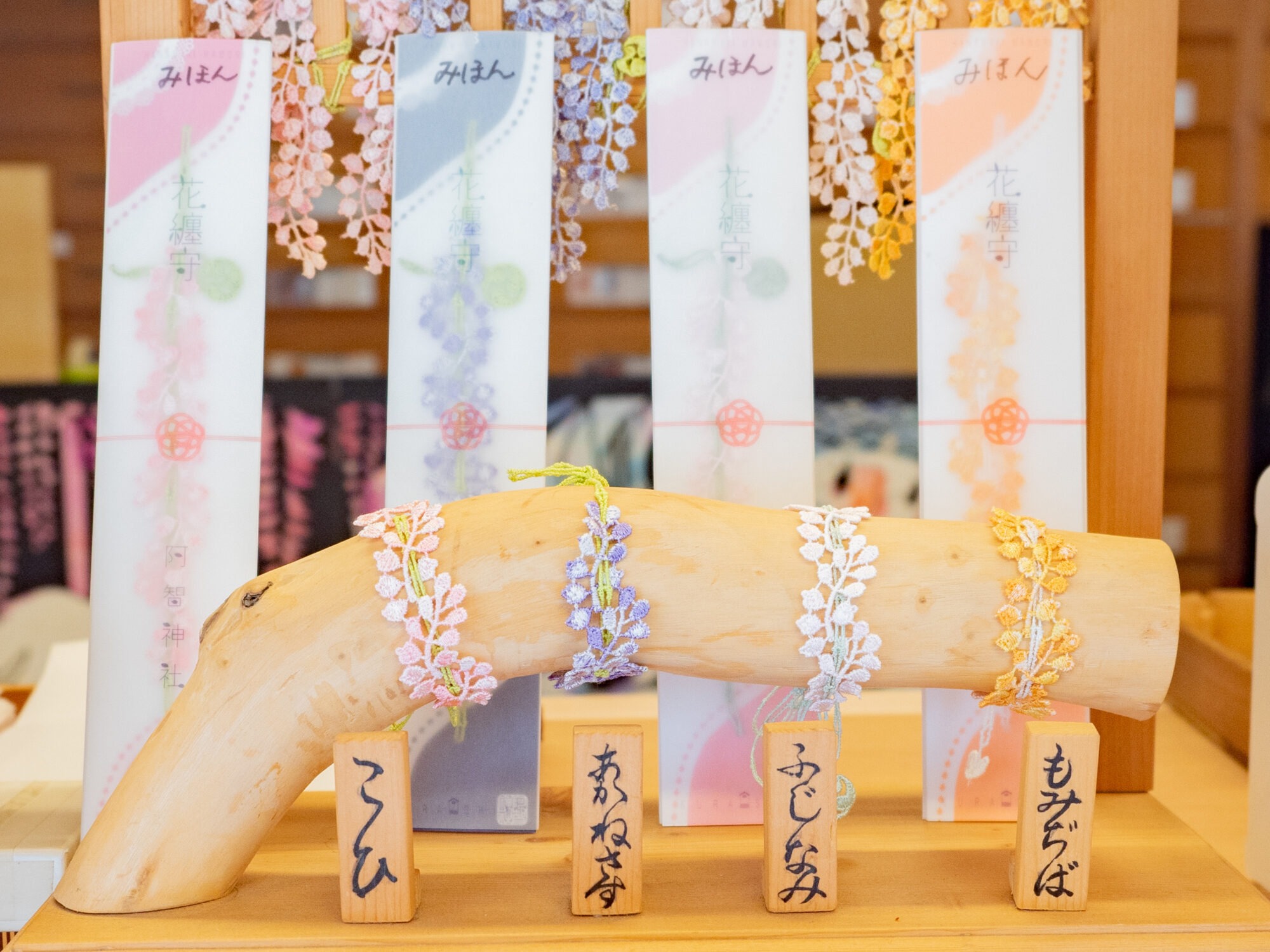
As the name suggests, it gives the impression of being wrapped in flowers.
In addition to the usual three colors, there is one seasonal limited color for each season, allowing you to choose from a total of four colors.
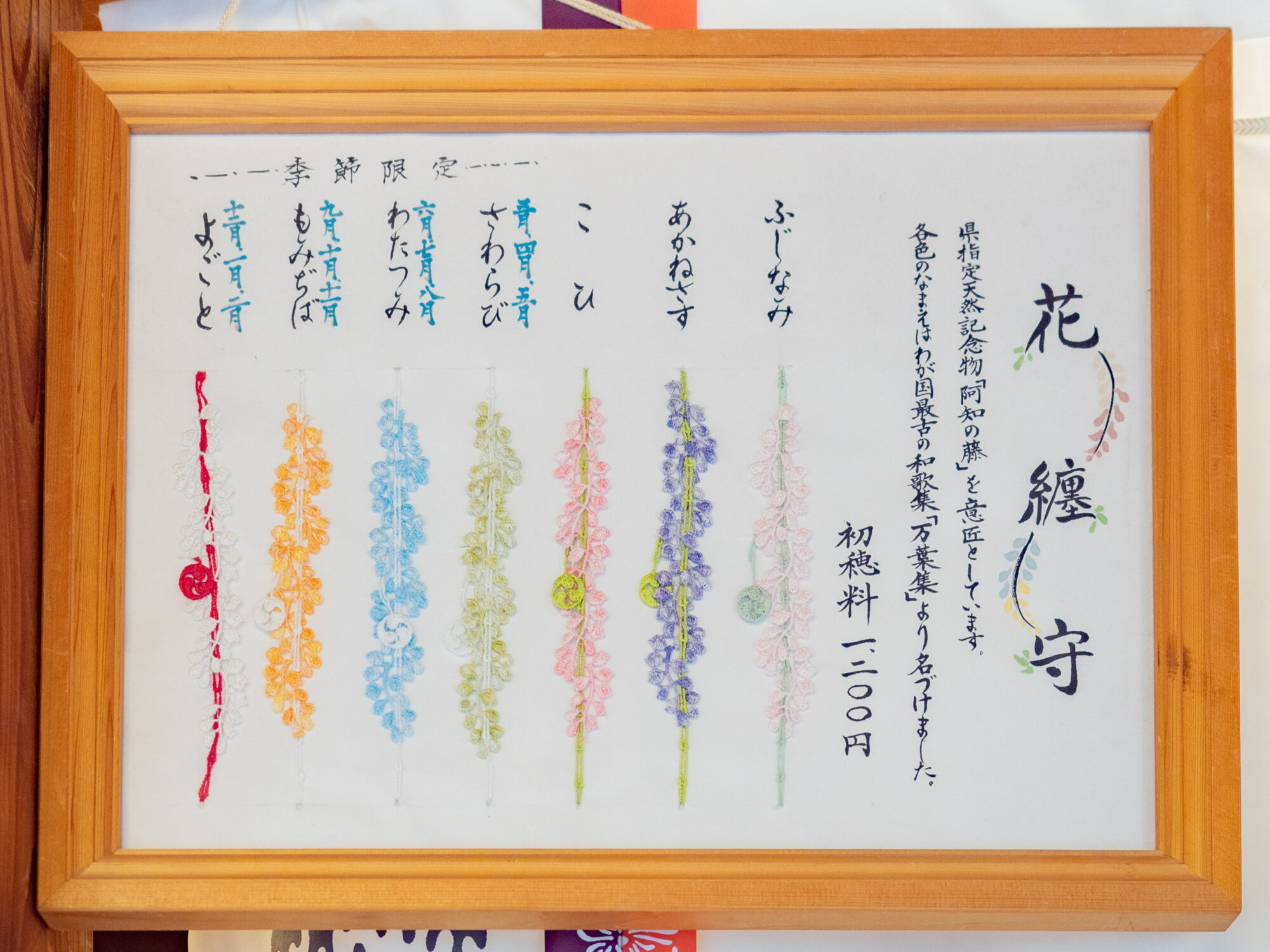
The names of the colors are taken from the "Manyoshu" (Collection of Ten Thousand Leaves).
The initial offering for the Flower Wrapping Amulet is 1,200 yen.
Goshuin
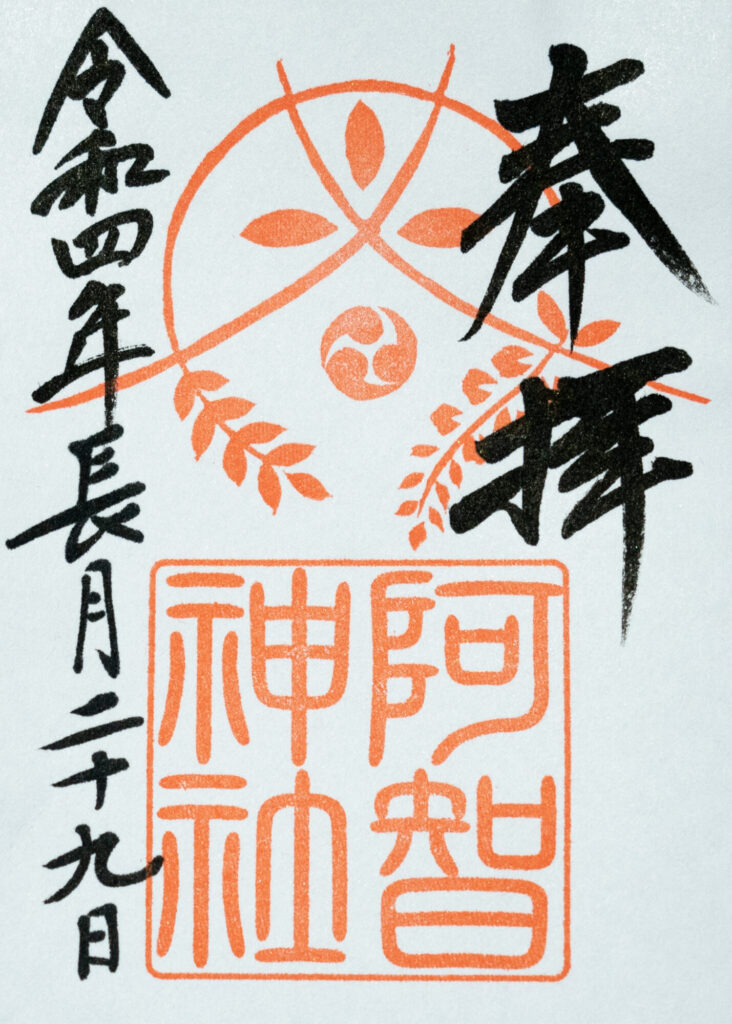
After visiting Achi Shrine, you can receive a goshuin.
To obtain the goshuin from Achi Shrine, a donation of 500 yen is required.
From 2022 to around March 2027, the roof of the main hall will undergo renovation.
In line with this, from 2022 for about five years, a limited edition goshuin for the roof renovation of the main hall will be issued.
The limited edition goshuin will feature the shrine's crest along with a special design created for the renovation.
The limited edition goshuin is expected to be available for about five years until the renovation is completed around March 2027.
Please note that during the renovation period, only the limited edition goshuin will be available, and the regular goshuin will not be issued.
Achi Shrine also has original goshuincho available.
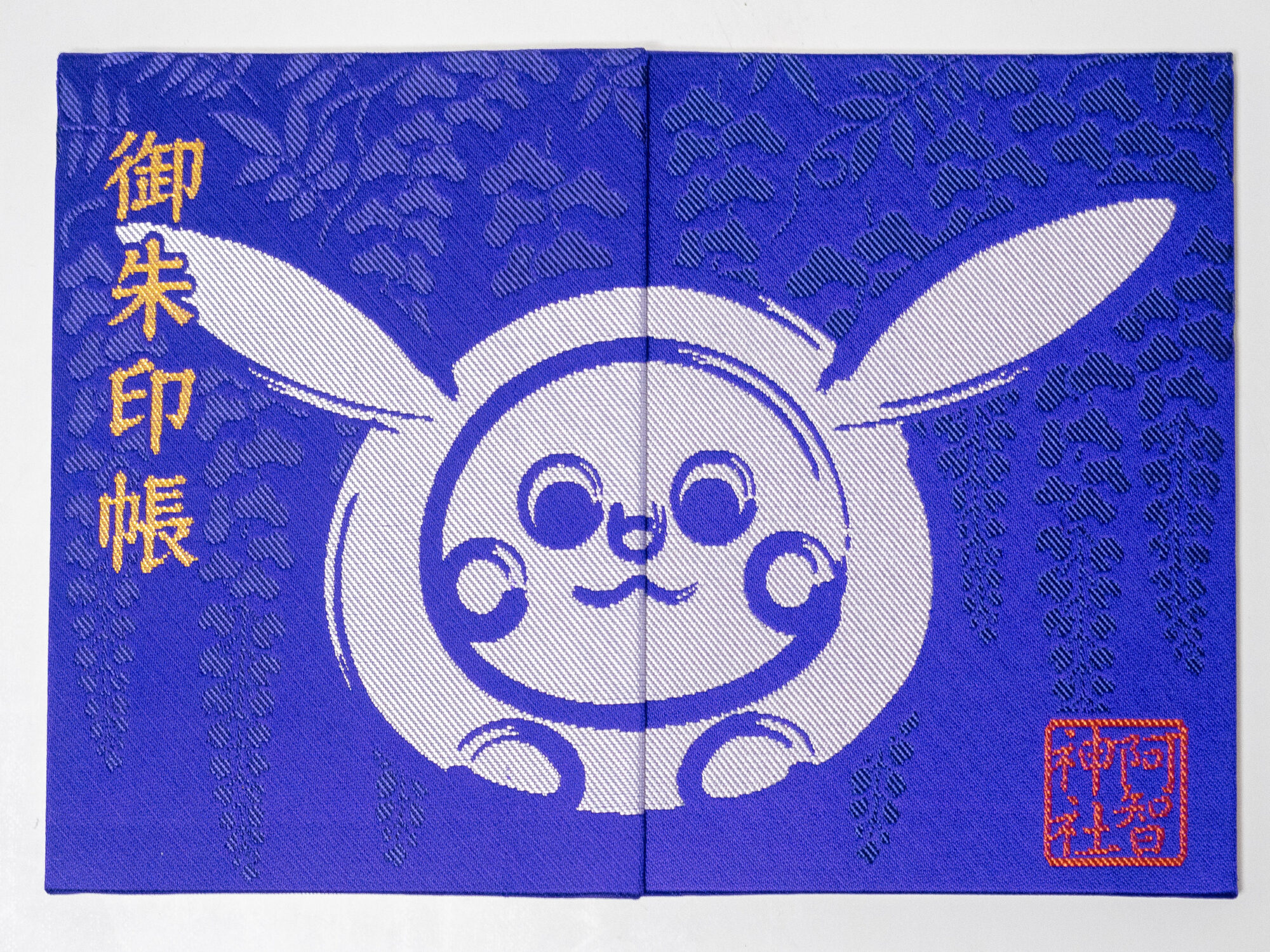
The fabric is in ultramarine blue, featuring a rabbit from the Zuishin Gate.
To receive the goshuin book of Achi Shrine, please pay an initial offering of 2,500 yen.
Main Events of Achi Shrine
Achi Shrine hosts many annual events and festivals.
The main ones are as follows:
| Month | Event |
|---|---|
| January | New Year's Festival |
| February | Setsubun Festival |
| March | Kurashiki Hina Tour |
| April | Sakura Festival |
| May | Fuji Viewing Association |
| May | Spring Grand Festival |
| August | Summer Purification Ceremony & Tanabata Festival |
| October | Autumn Grand Festival |
| December | Year-End Purification Ceremony & Old Amulet Burning Festival |
History of Achi Shrine
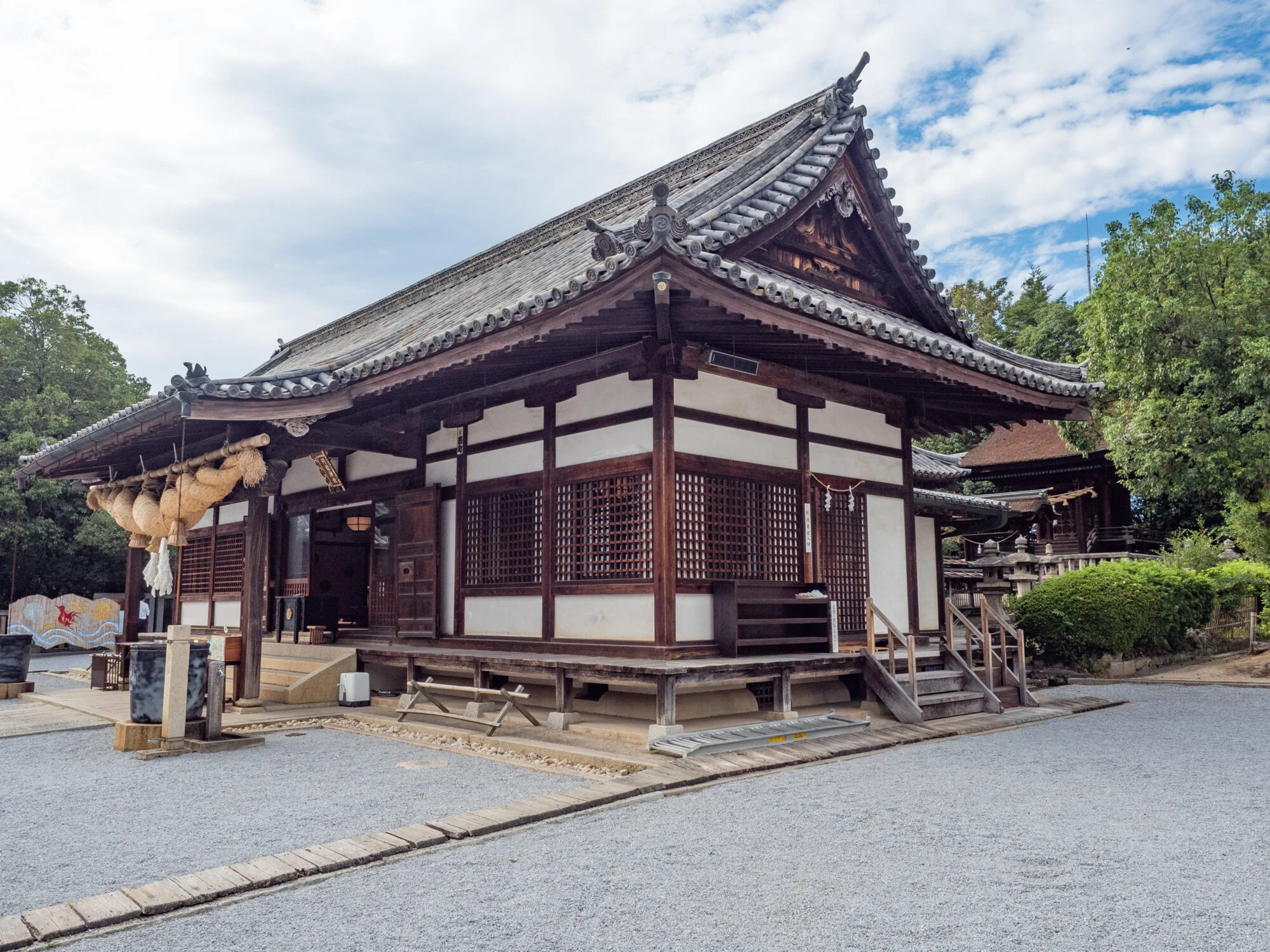
Before the separation of Shinto and Buddhism in the early Meiji period, Achi Shrine was called Myo Ken Gu.
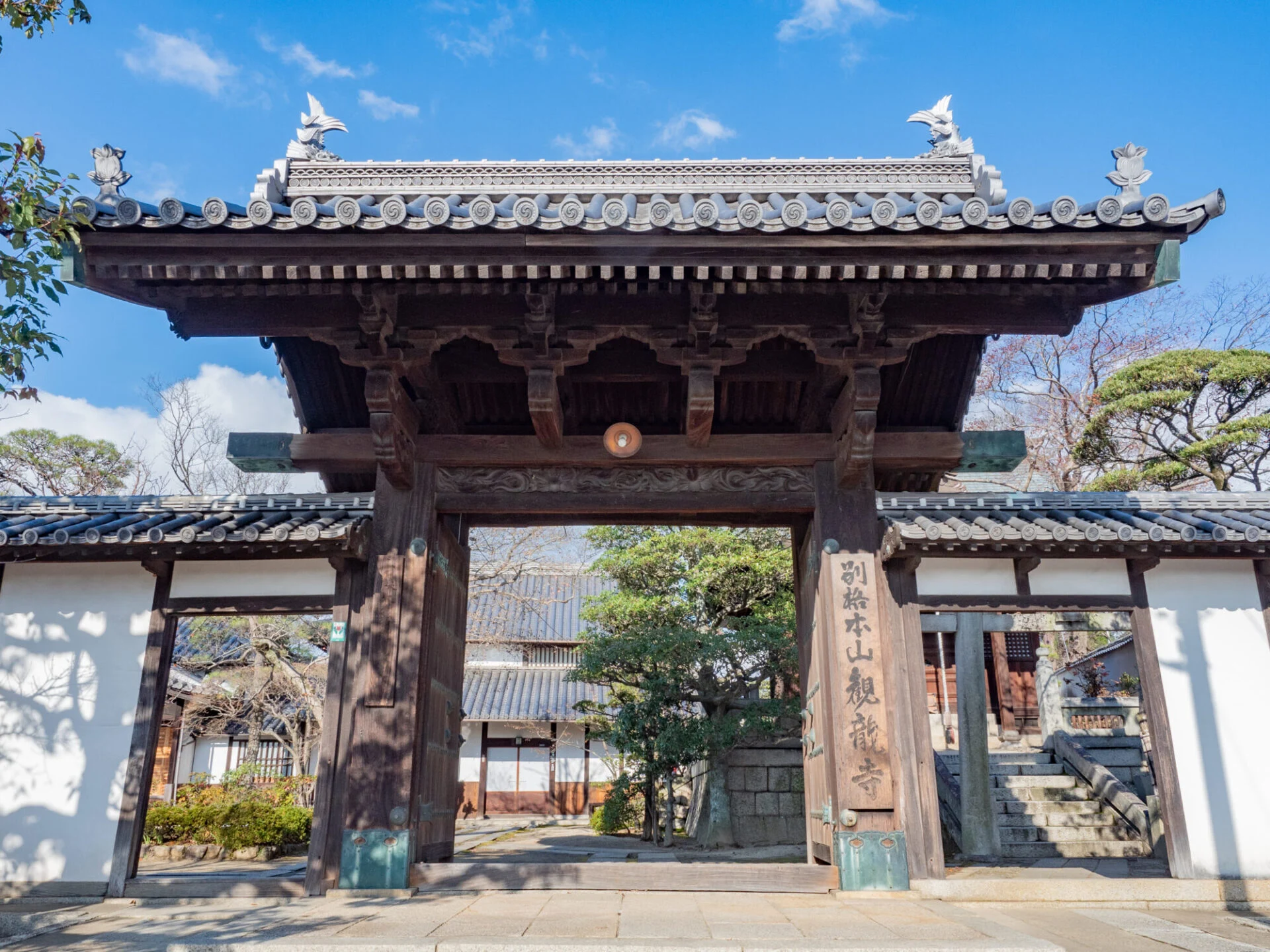
From the early Edo period onwards, Kanryuji Temple managed it as a bettoji (a temple that oversees a shrine).
The current center of Kurashiki was once a sea in ancient times, and Tsurugatayama was an island.
During the Sengoku period, the lord of Okayama Castle, Ukita Hideie, reclaimed the northern sea of Kurashiki, connecting it to the land, and the land reclamation gradually progressed during the Edo period.
After the land was reclaimed, Kurashiki was connected to the sea via the Kurashiki River, becoming an inland port town.
Additionally, it became a directly governed area of the Edo Shogunate (Tenryo), establishing the Kurashiki Magistrate's Office as a political center, and prospered as a commercial hub for the collection and distribution of goods.
As wealthy merchants increased in Kurashiki, Myo Ken Gu also grew larger.
Myo Ken Gu enshrined Myo Ken, which is the deification of the North Star and Big Dipper.
In 1869, the separation of Shinto and Buddhism took place, and Myo Ken Gu became independent from the management of Kanryuji Temple.
At this time, it was renamed Achi Shrine, derived from the ancient name of Kurashiki, and has remained so to this day.
Additionally, the enshrined deities were changed to the three Munakata goddesses.
As the guardian deity of Kurashiki, Achi Shrine watches over the city of Kurashiki.
We interviewed the chief priest, Arai Shunsuke.
Data of Achi Shrine
| Name | Achi Shrine |
|---|---|
| Location | 12-1 Honmachi, Kurashiki City, Okayama Prefecture |
| Contact | 086-425-4898 |
| Parking | Available 15 parking spaces for worshippers on the east side of the precinct. |
| Enshrined Deities | Takiri-hime no Mikoto Takitsuhime no Mikoto Ichinomiya-hime no Mikoto |
| Benefits | Safe navigation Traffic safety Improvement in performing arts Skill enhancement Prosperity in business Beauty and health |
| Goshuin (Initial Offering) | Available (500 yen) |
| Visiting Hours | Open for visits at any time |
| Reception Hours | Gift office: 9:00 AM - 5:00 PM Prayer start times: ・Morning: 9:30 AM, 10:30 AM, 11:30 AM ・Afternoon: 1:30 PM, 2:30 PM, 3:30 PM *Reception is not available on festival days in spring and autumn. *There may be times when reception is not available temporarily. Please check the website for the latest information. |
| Closed Days | None |
| Admission Fee | None |
| How to Pay Admission Fee / Initial Offering |
|
| Restroom | Barrier-free restroom |
| Website | Achi Shrine | Located in Honmachi, Kurashiki City, Okayama Prefecture |