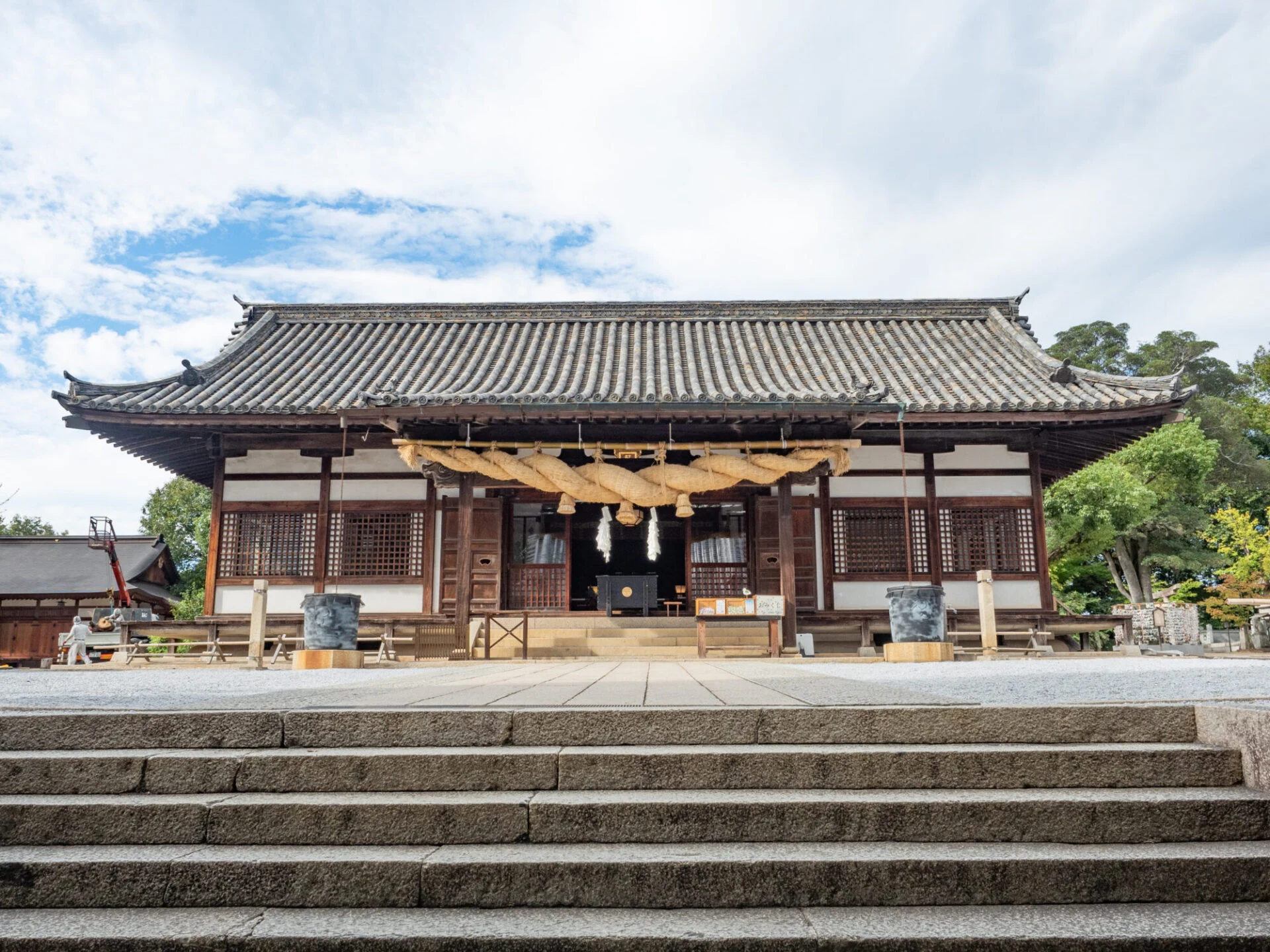
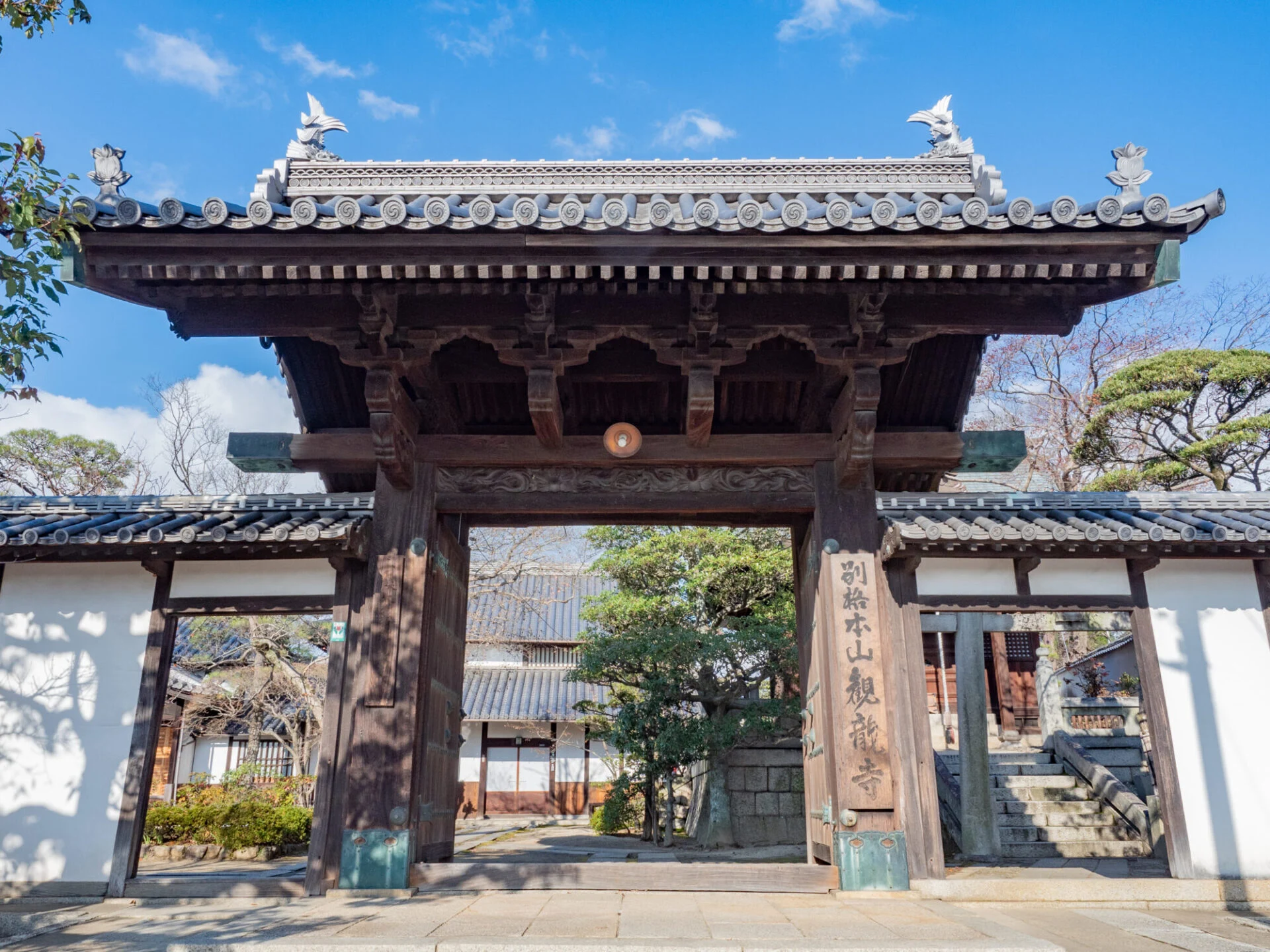
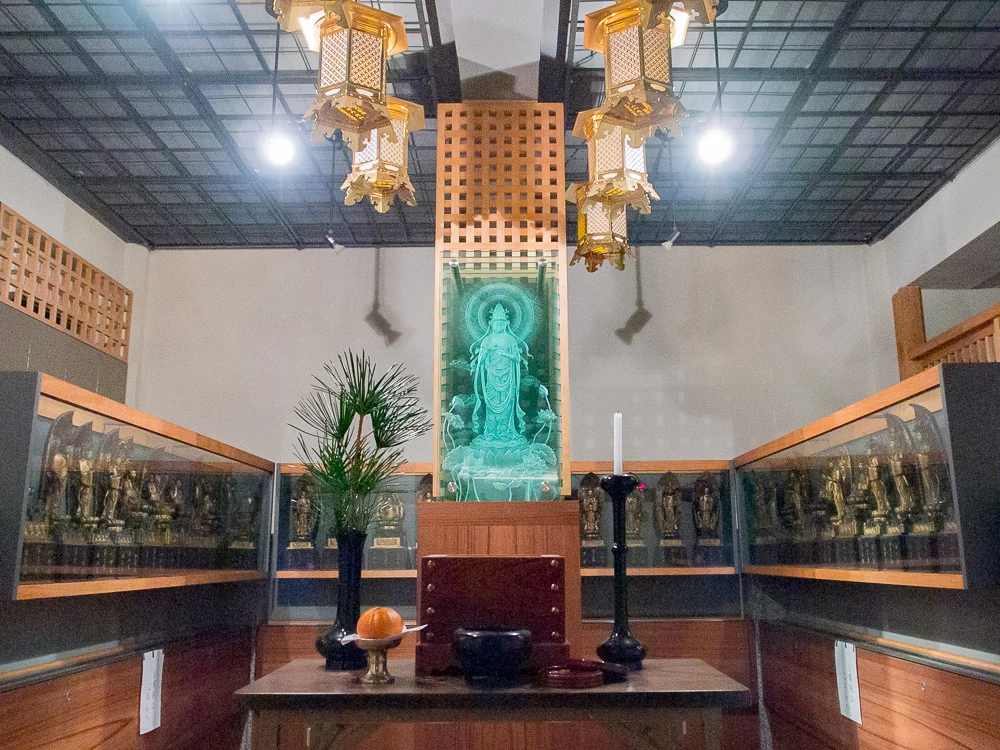
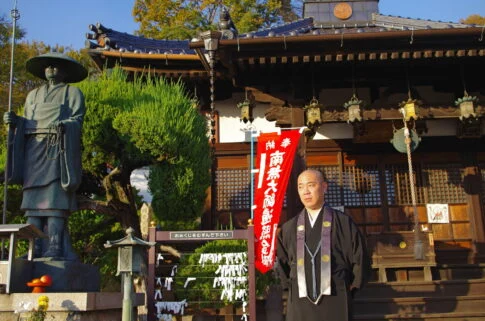
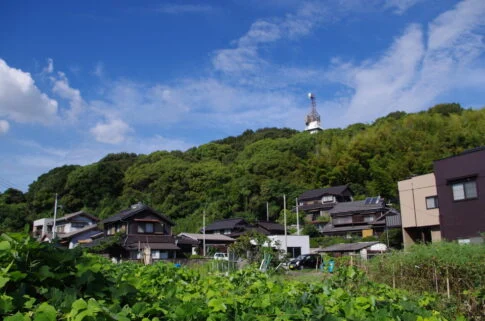
Around Mt. Tsurugata in the Bikan Historical Area, there are many temples and shrines, including Kanryuji Temple and Achi Shrine.
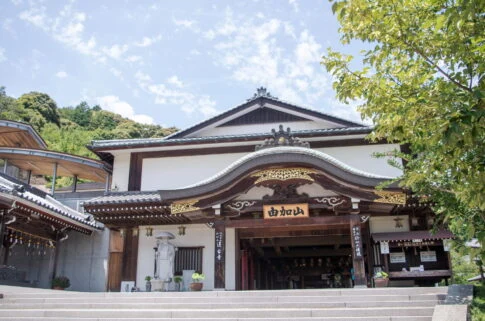
Jodo-shu Bukkosan Narichikaiin Seigan-ji is a historic temple that is said to have been established around the mid-Heian period as a Tendai sect temple associated with the monk Eshin Sozu Genshin.
There is also a tradition that Fujiwara Narichika, who was exiled due to the Shishigatani Conspiracy, stayed at Seigan-ji.
We will introduce Seigan-ji, a spot that conveys the history of the Heian period in Kurashiki.
Seigan-ji is not a tourist site, so you cannot enter the grounds or the main hall.
Please enjoy Seigan-ji, which is usually not seen, through this article.
What is Seigan-ji?
Seigan-ji is located at the foot of Mt. Tsurugata, on the north side of the Bikan Historical Area, within the Kurashiki Hondori shopping district.
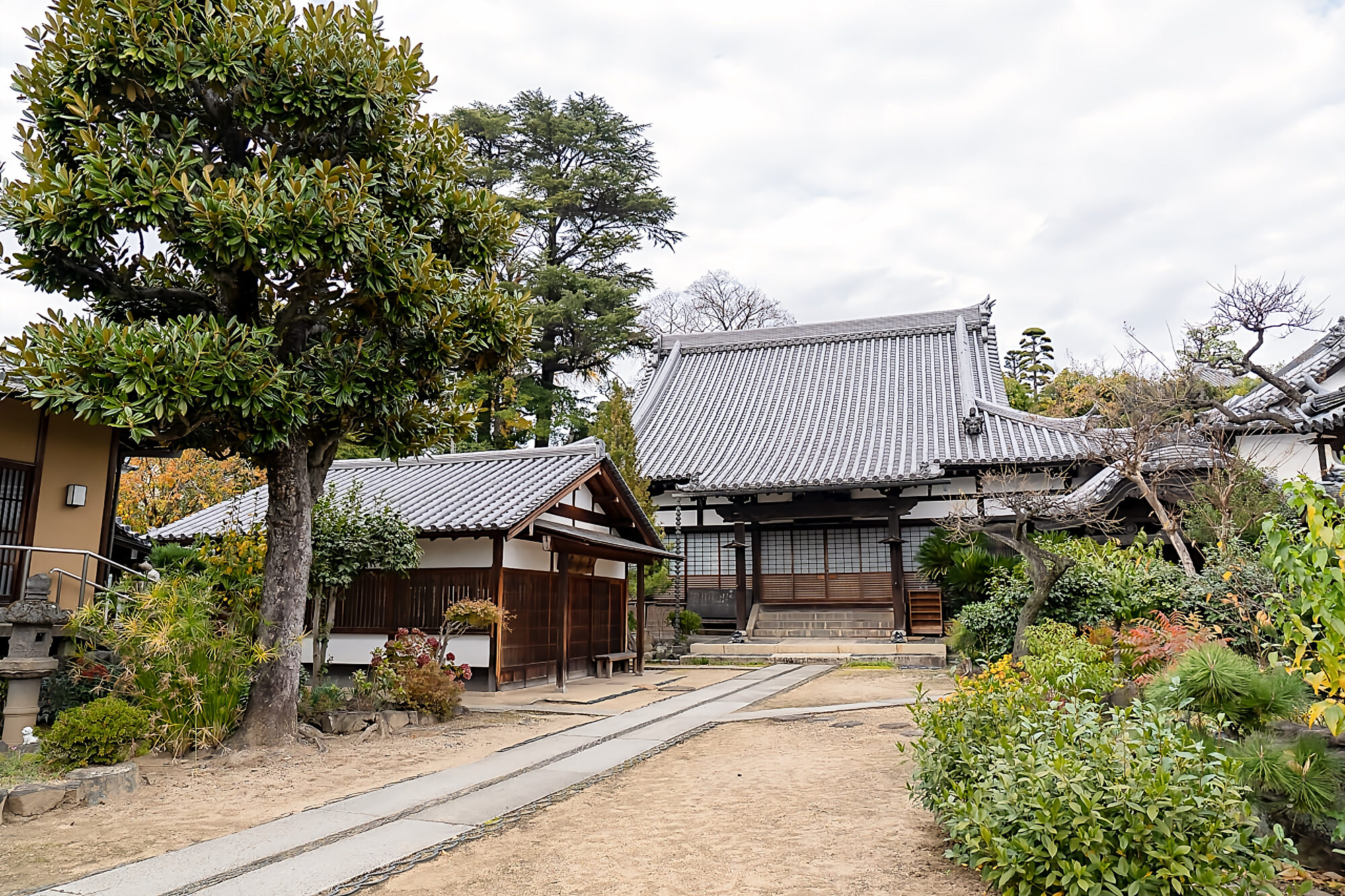
The mountain name of Seigan-ji is Bukkosan, the institute name is Narichikaiin, and it belongs to the Jodo-shu Chinsei-ha Chion-in branch.
"Mountain Name"
A title given to Buddhist temples. Sometimes the mountain name is derived from the name of the mountain where the temple is located, and other times it may be a Buddhist term unrelated to the location.
"Institute Name"
This was permitted for temples where members of the imperial family became the head after the Heian period.
It is said that in ancient times, it was located at the corner of the slippery rock near the current west approach to Achi Shrine.
For information about the slippery rock, please read the explanatory board next to "La Pan Kurashiki" in the Kurashiki Hondori shopping district.
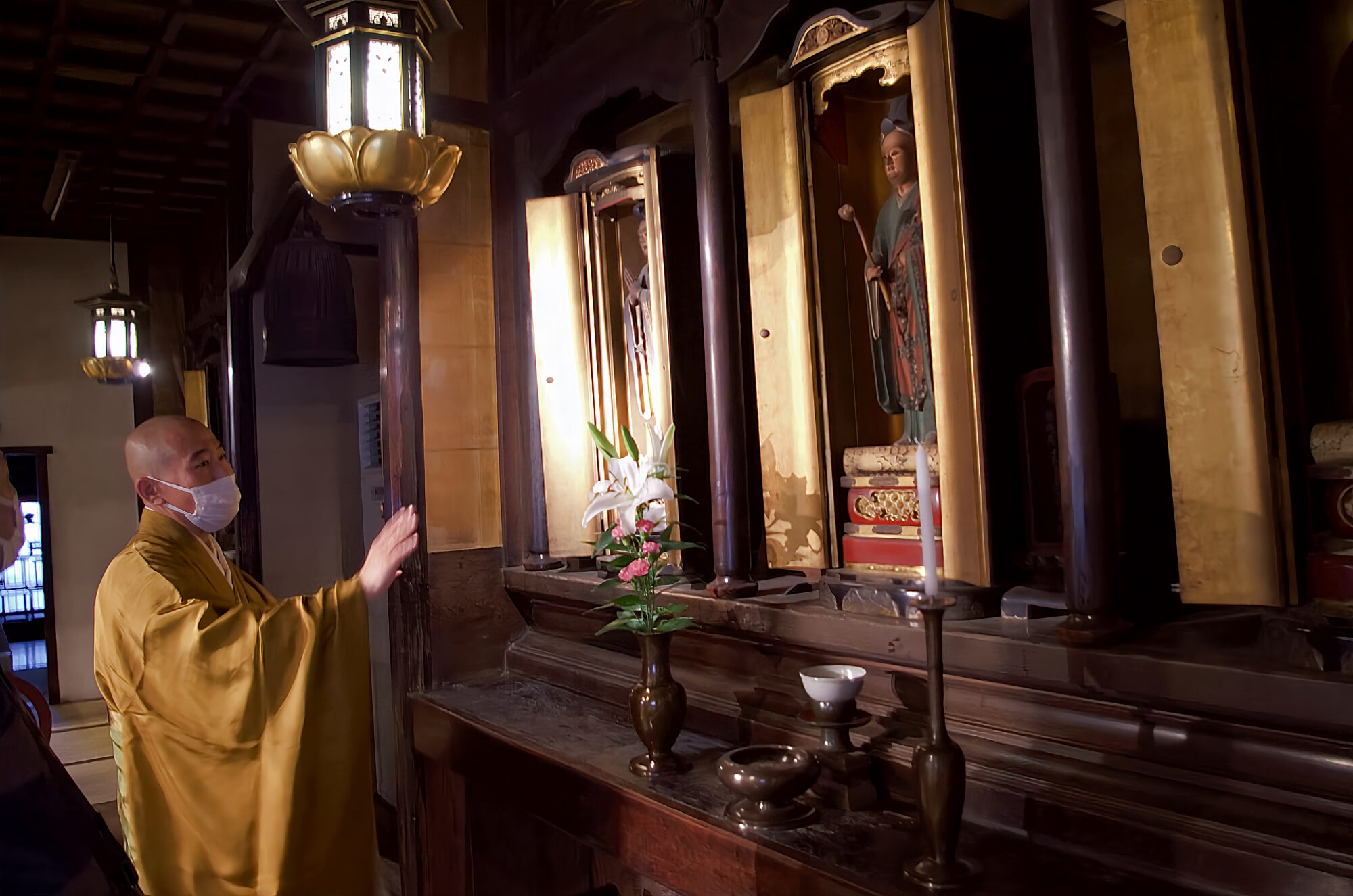
▼ I learned about the main hall and the grounds of Seigan-ji from the chief priest, Shingatani Shinsaku.
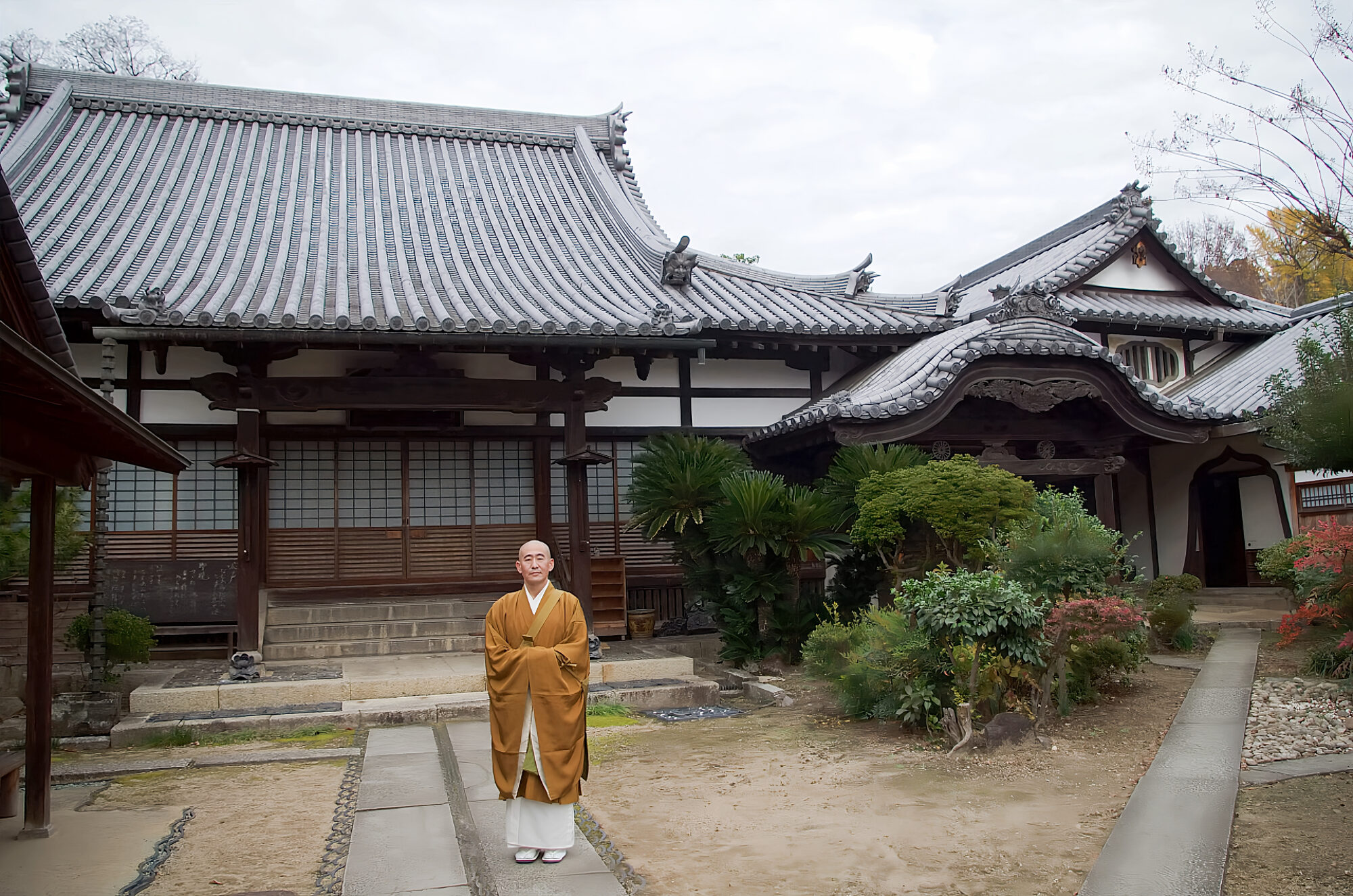
Highlights of Seigan-ji
The grounds of Seigan-ji are vast, far beyond what one can imagine just by peeking from the entrance with the mountain gate.
Under the guidance of Chief Priest Shingatani, I was shown the historical buildings such as the main hall, mountain gate, and Hiba Tenmangu Shrine, as well as the main deity.
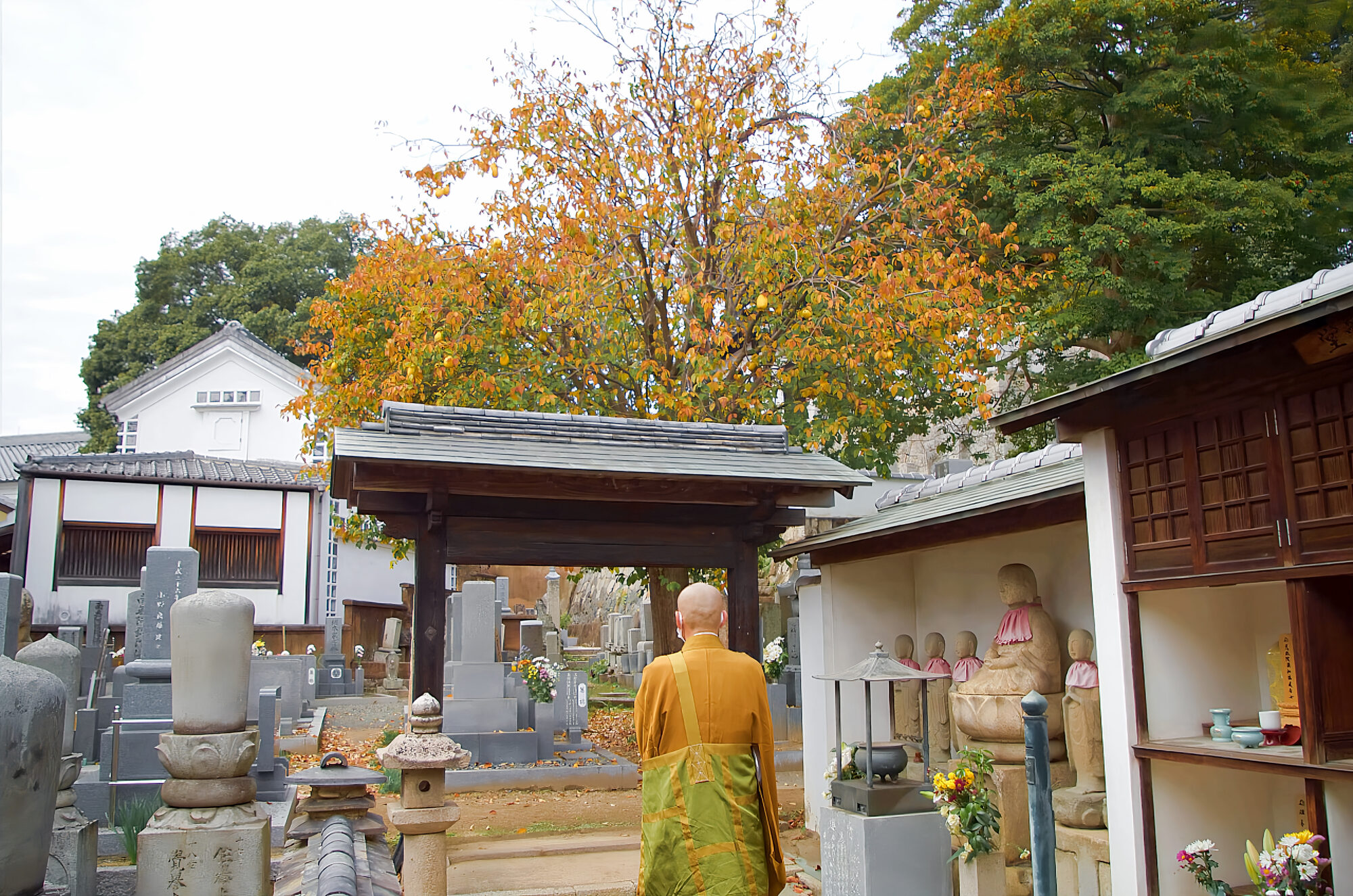
▼ A moment when going up to the family tombs.
First, my eyes are drawn to the magnificent quince tree.
Main Hall
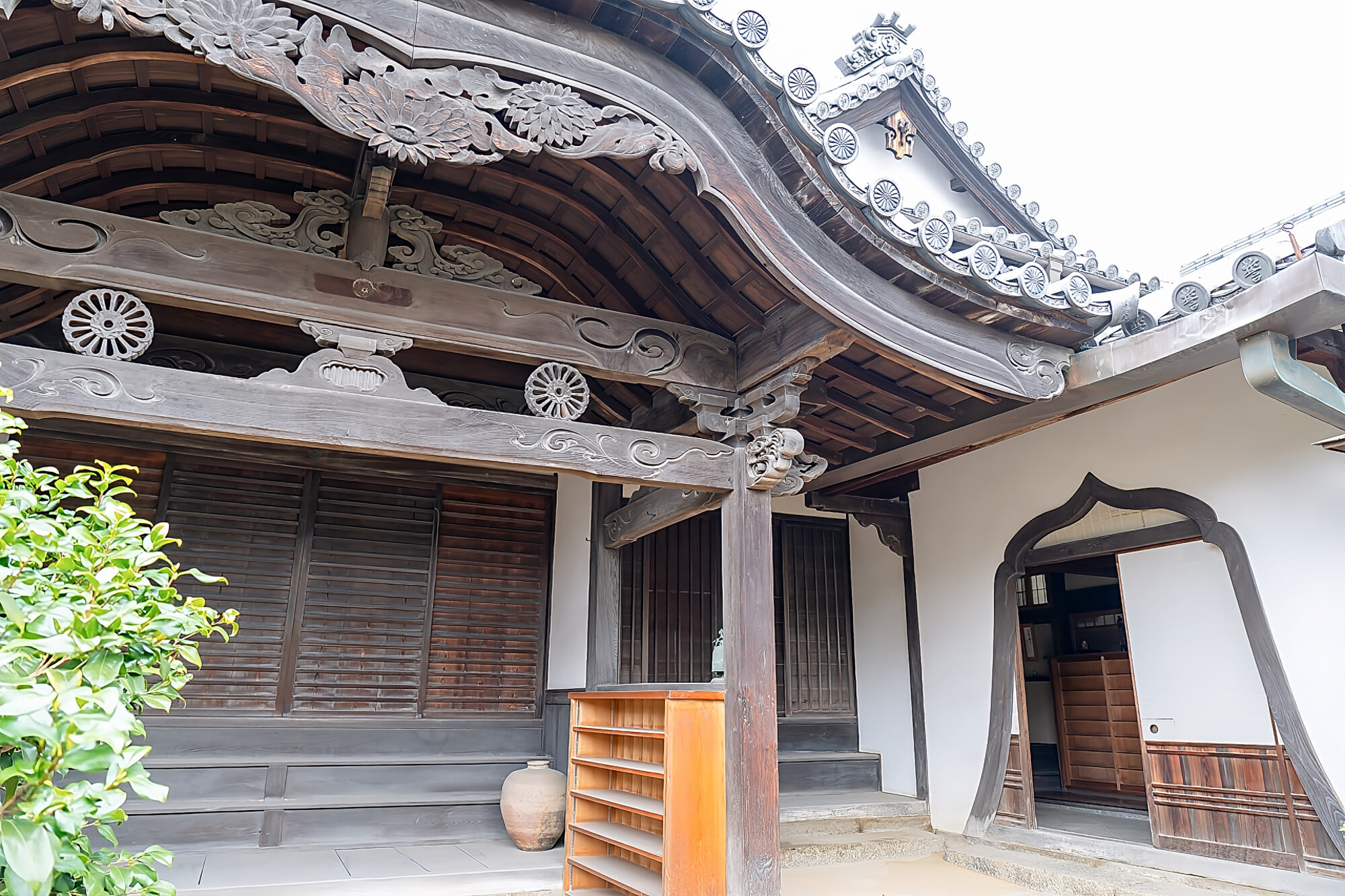
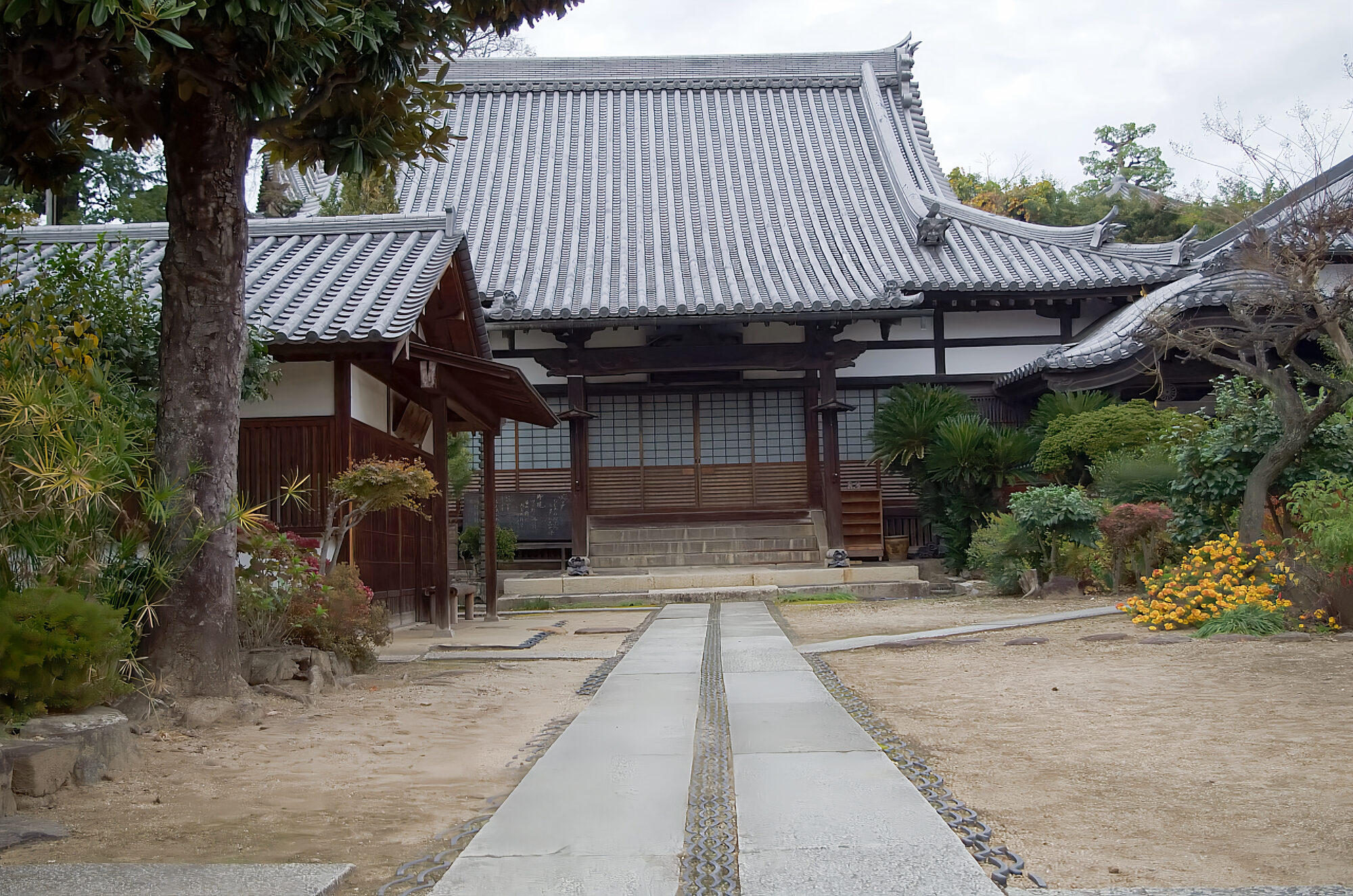
Upon entering through the mountain gate, the 400-year-old main hall is directly in front, with the entrance and kitchen to the right of the main hall.
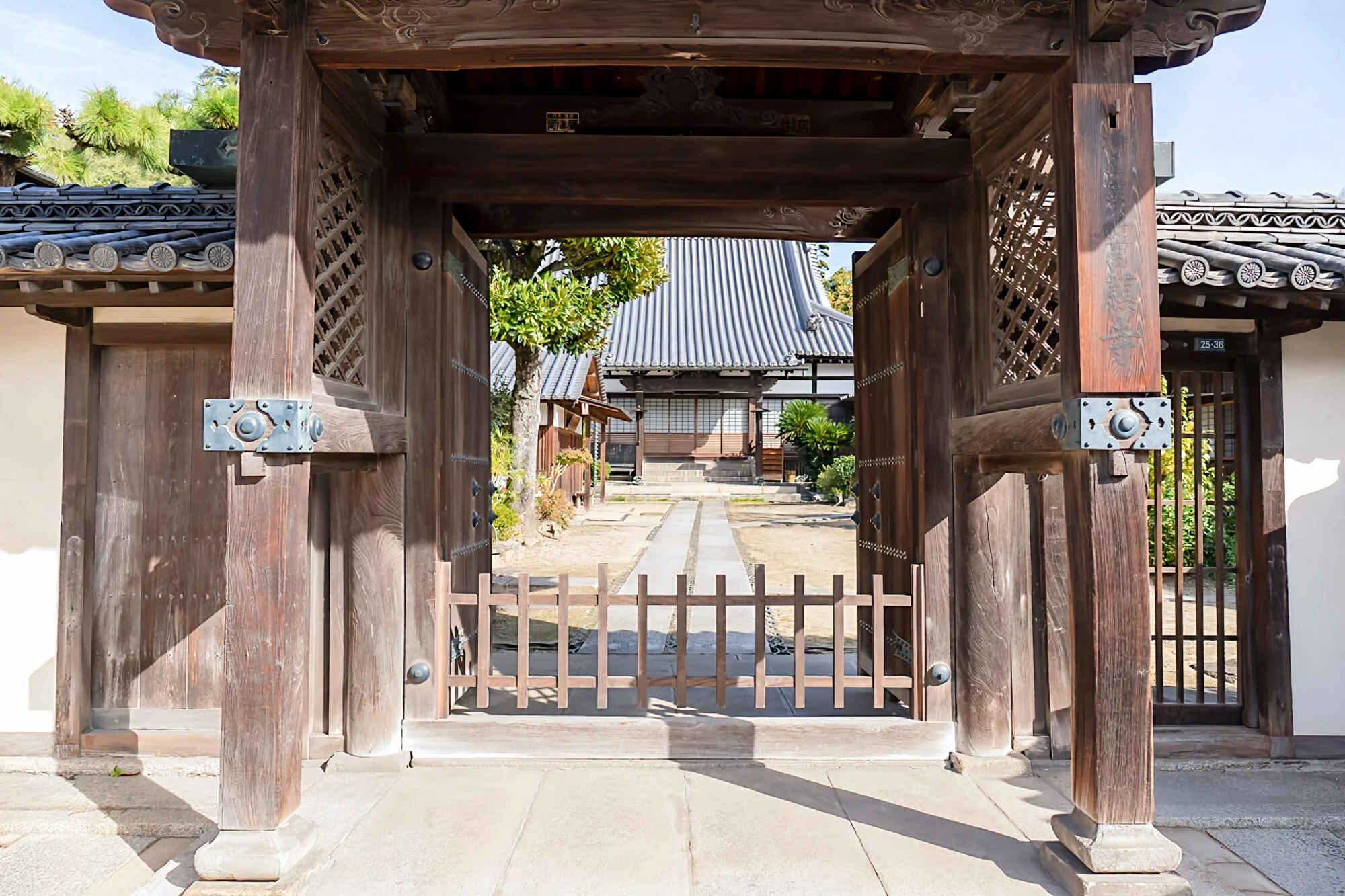
If the mountain gate is open, you can view the main hall from the gate.
To the left of the main hall are the Enma Hall, family tombs, and bell tower, while to the right is the Hiba Tenmangu Shrine.
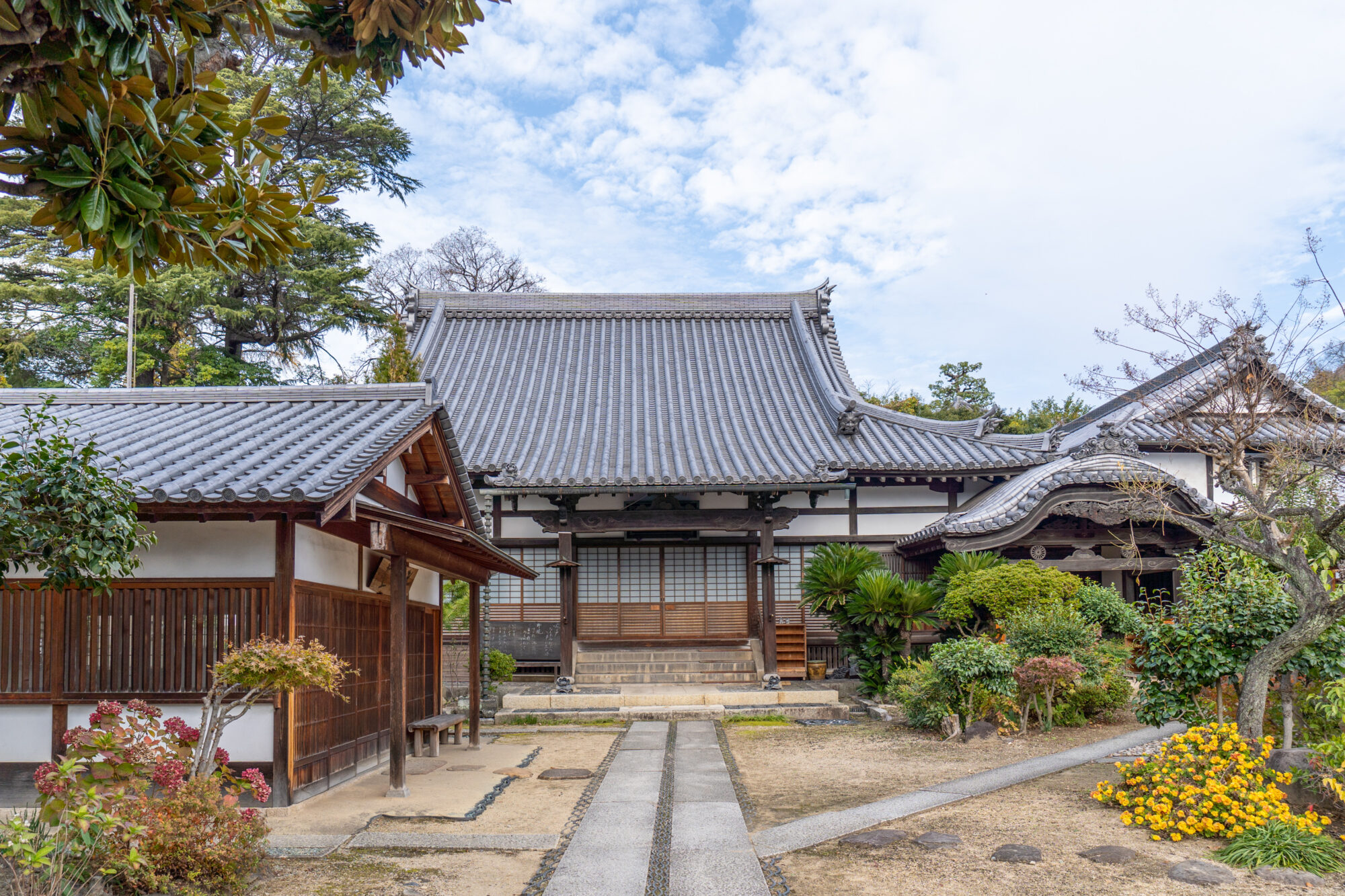
▼In addition to the railing carvings such as the Chrysanthemum Crest, the roof made with curves and the wooden architecture of the entrance on the right are also wonderfully crafted.
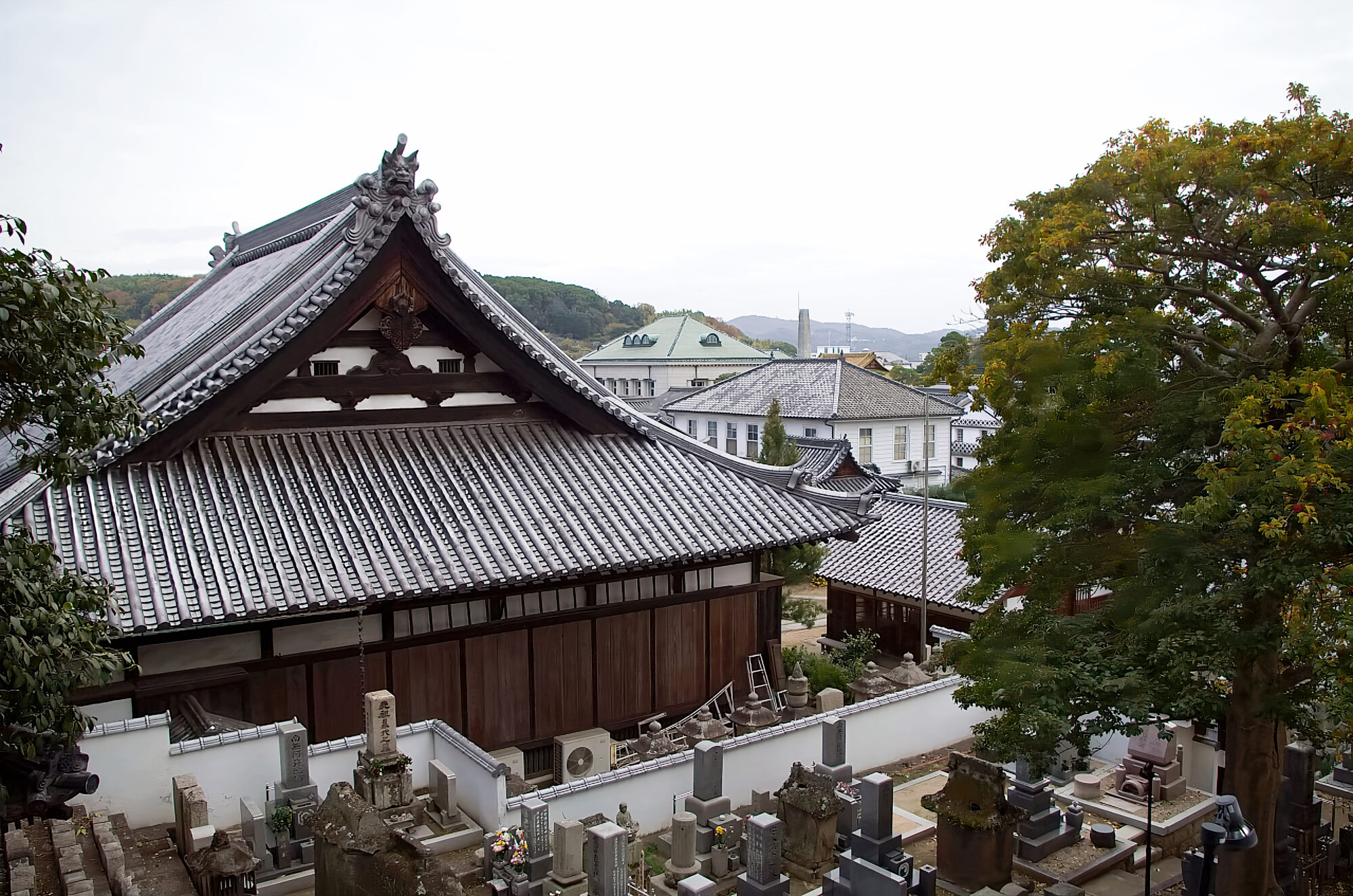
If you proceed to the left in front of the main hall and go up a little between the graves, the scenery changes.
You can feel the size of the main hall, and Bikan Historical Area is right there.
Nearby is the former Kurashiki Post Office (now Sanraku Co., Ltd.). Behind it, you can see the former Chugoku Bank (now Ohara Museum of Art Shin Kojima-kan).
Principal Image
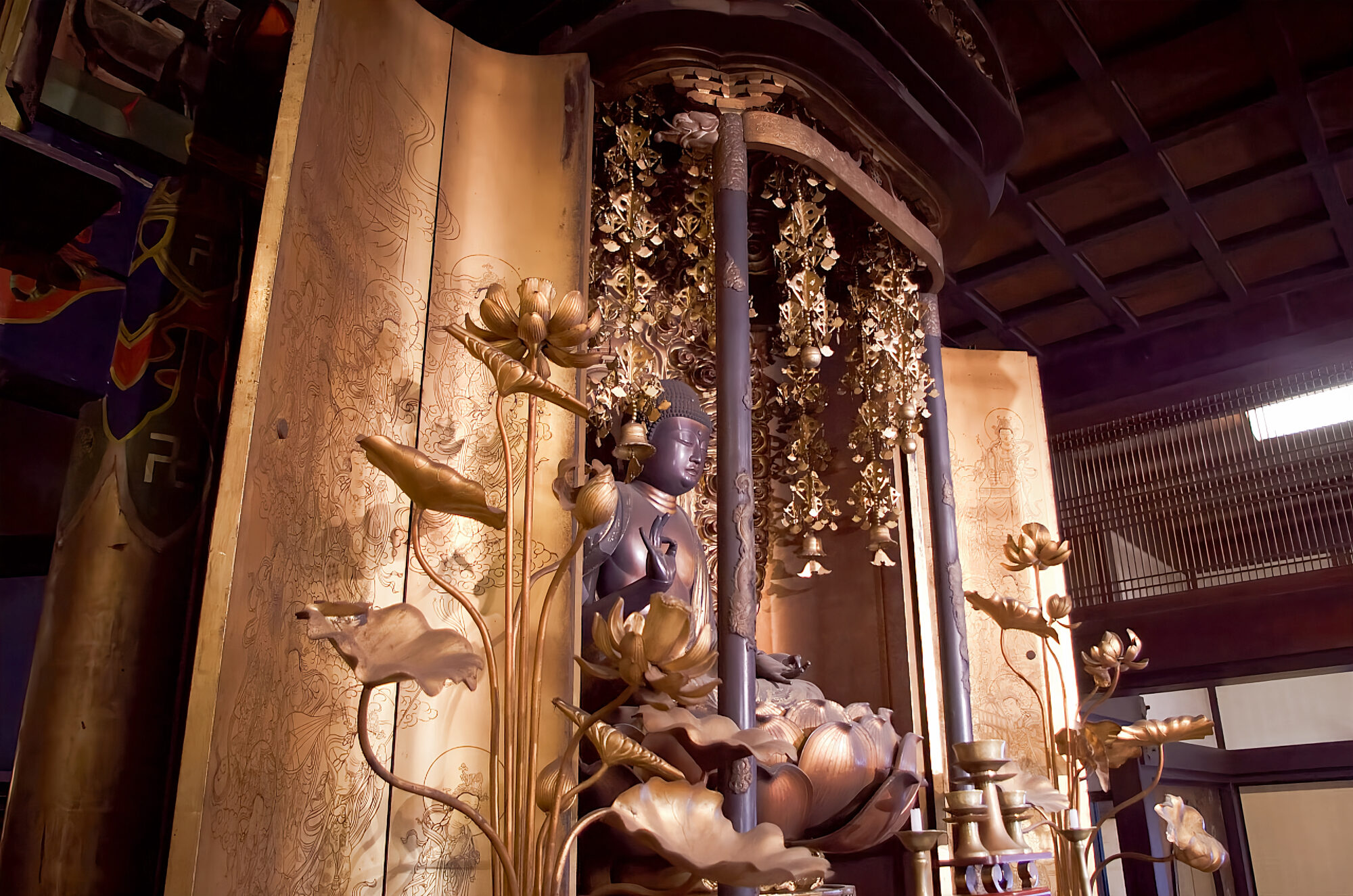
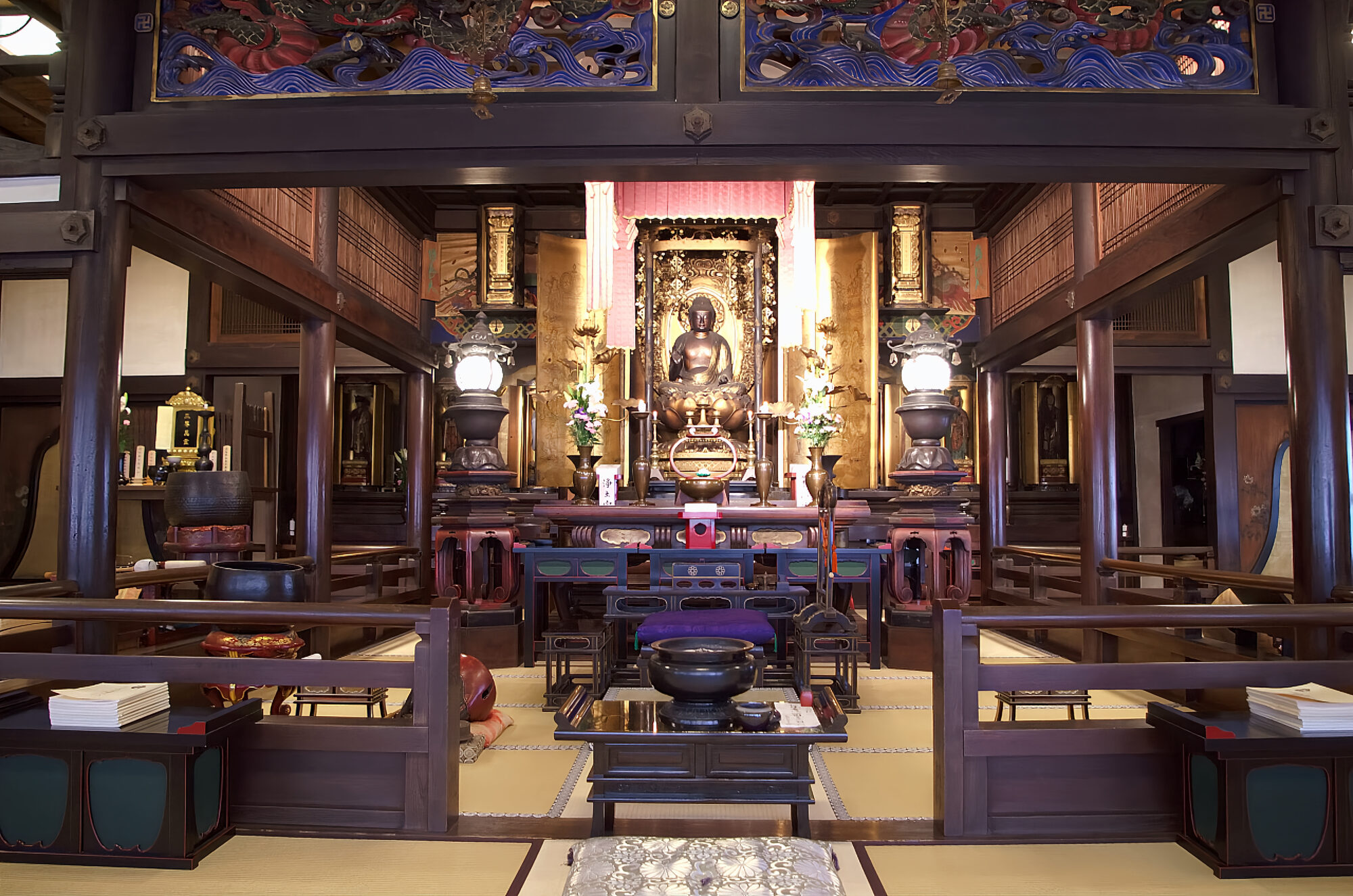
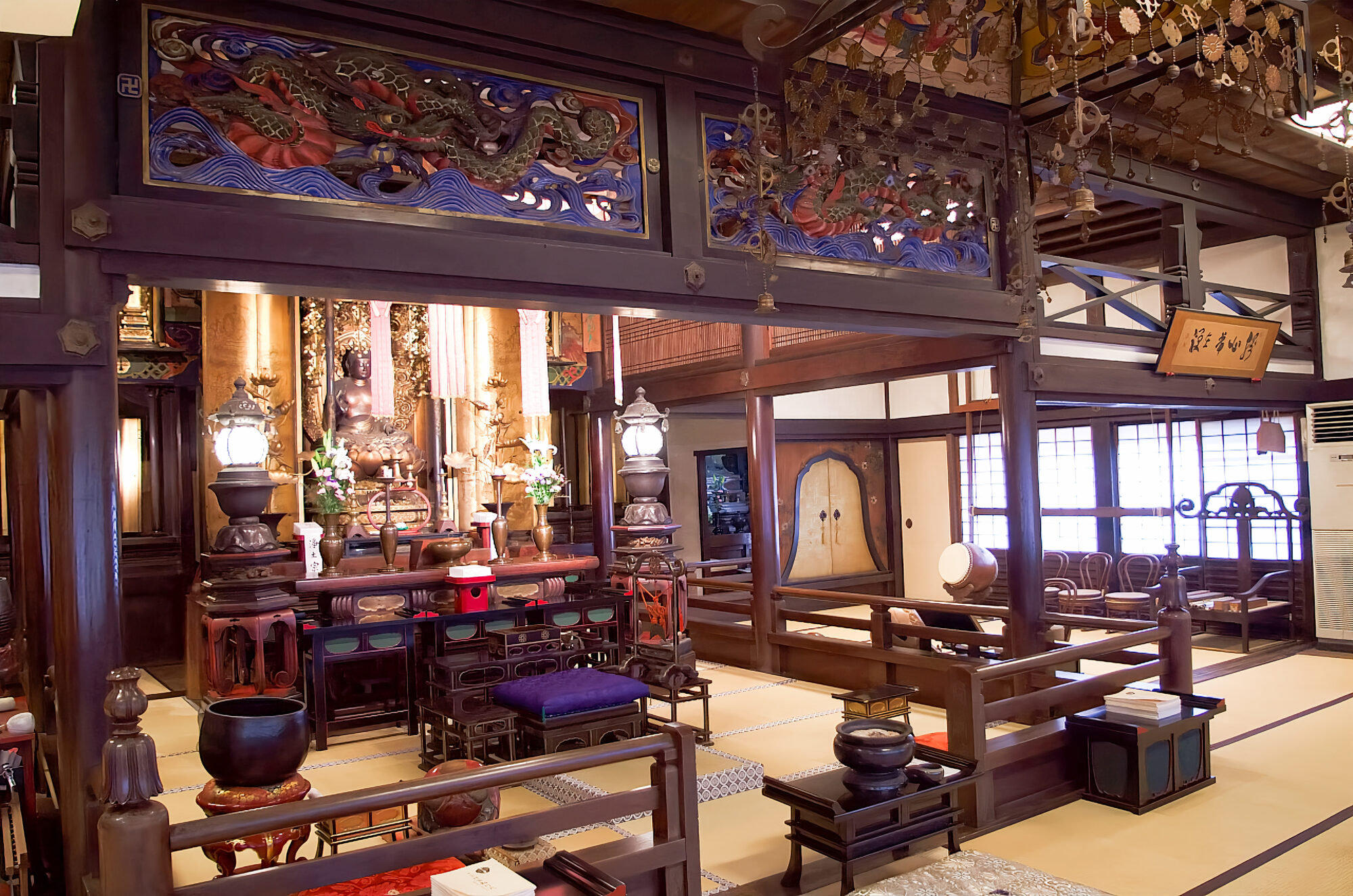
In the center of the main hall, which has a tranquil and clear atmosphere, is enshrined the principal image of Seigan-ji Temple, Amitabha Buddha.
When facing the principal image, there was an overwhelming emotion that made me catch my breath due to its dignified presence.
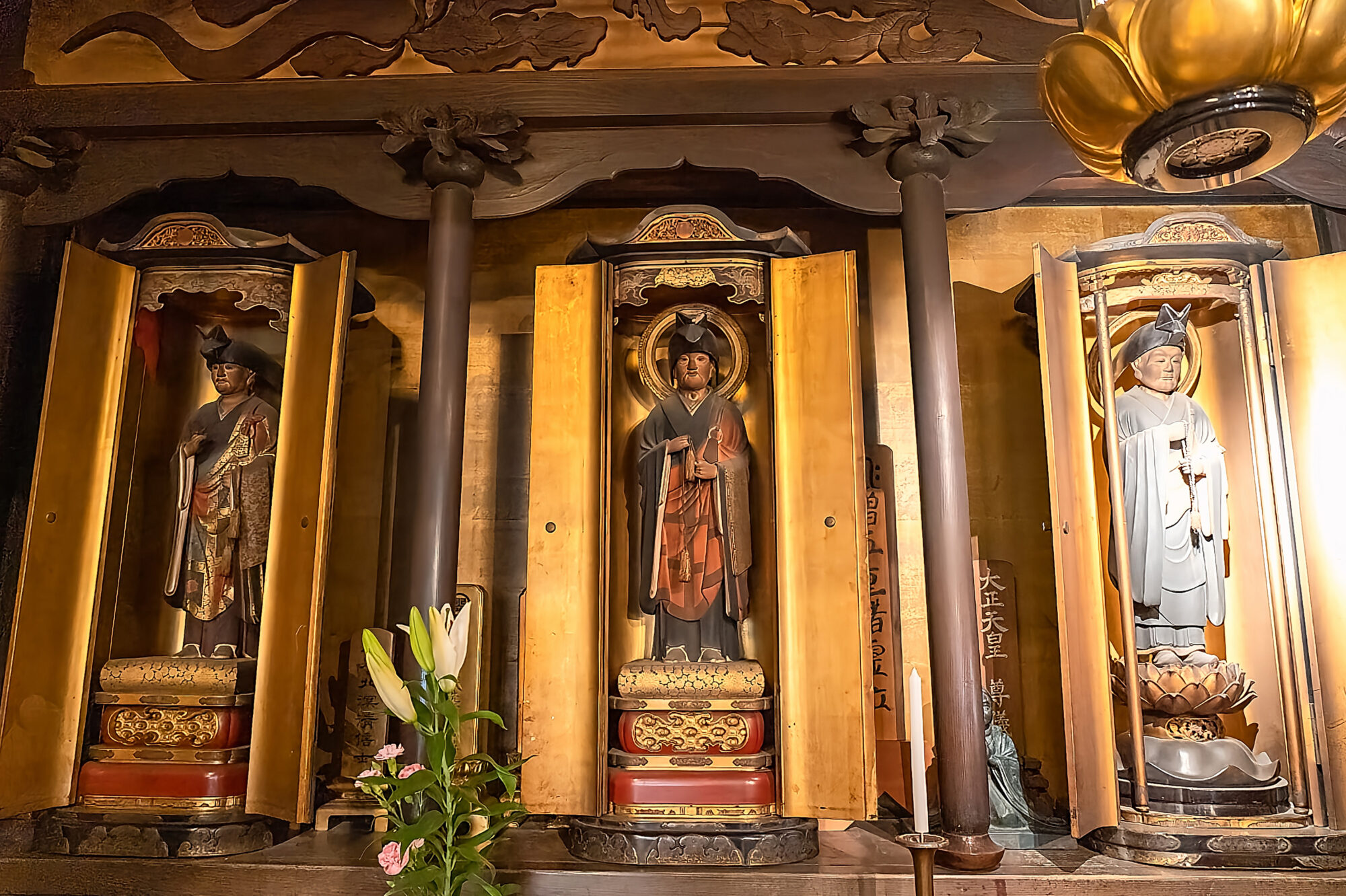
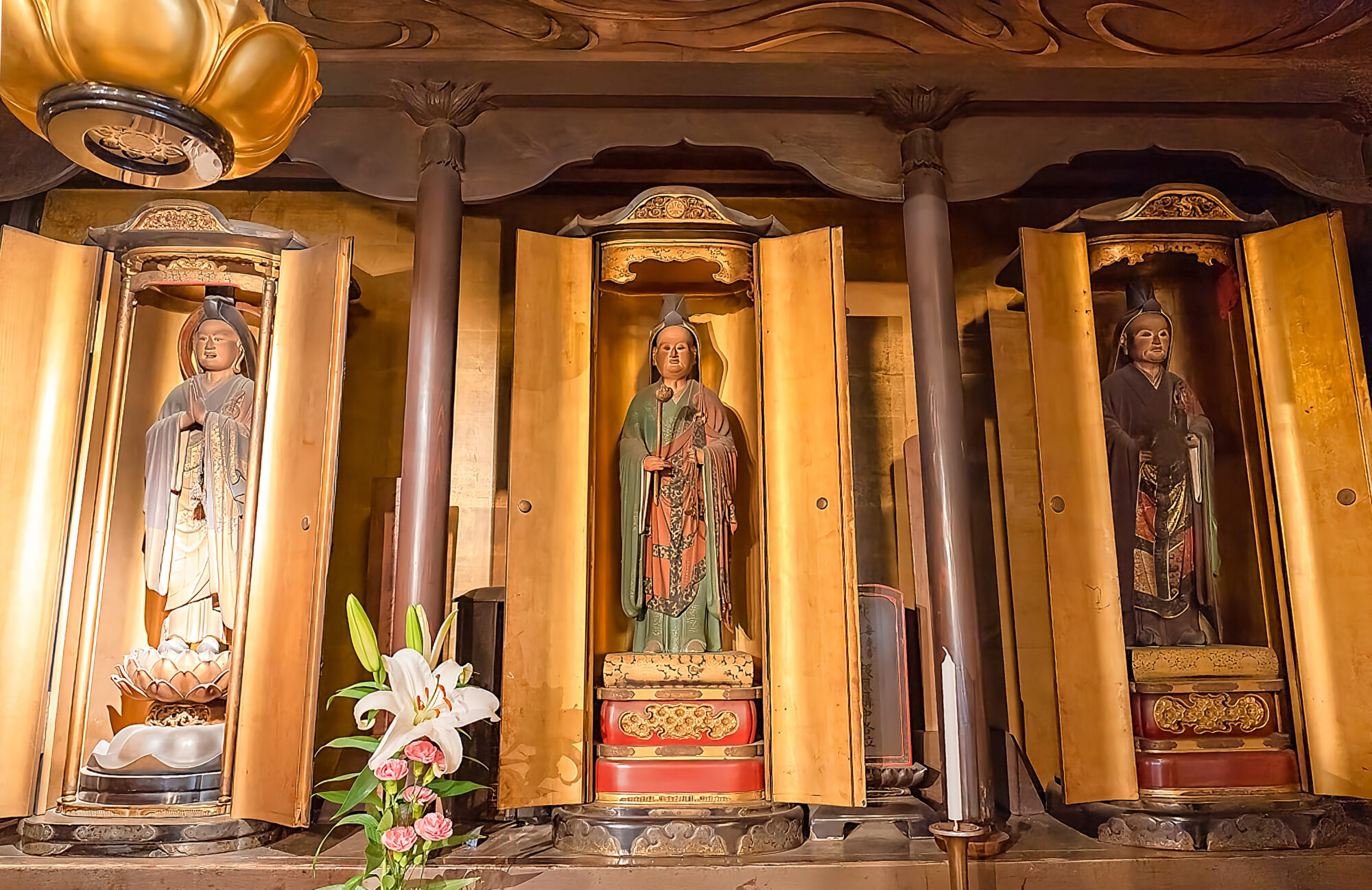
In the side chambers on either side of the inner sanctum where the principal image is enshrined, the statues of the Six Ancestors of Pure Land (Jodoshikuso Ryu) are enshrined.
Amitabha Buddha has made a vow that "Anyone who calls my name will surely be saved", and it is said that when a person dies and chants "Namu Amida Butsu", they will be welcomed into the Pure Land.
The Amitabha Buddha enshrined in Seigan-ji Temple is making the Welcoming Gesture (raising the right hand and lowering the left hand while forming a circle with the index finger), which is said to symbolize "saving all people."
Additionally, behind the 3-meter tall altar (zushi) where Amitabha Buddha is enshrined, the Illustration of the Twenty-Five Bodhisattvas Welcoming (Nijugo Bosatsu Raiko no Zu) is beautifully and intricately painted.
Next, when you look at the inner sanctum from the back of the outer sanctum, you will see a wooden boundary indicating the boundary between the inner and outer sanctums.
▼According to Chief Priest Shigeyasu, "This boundary is not typical of the Pure Land sect's layout, and while there is no confirmation, it may be a remnant from the former Tendai sect era."
Statues of the Six Ancestors of Pure Land
The Statues of the Six Ancestors of Pure Land enshrined in the side chambers of the principal image are intricately carved and decorated in vibrant colors.
Therefore, they are presumed to be the work of a renowned sculptor, but details remain unknown.
▼In the left side of the inner sanctum, three masters are enshrined: Honen Shonin, Shoko Shonin, and Ryochu Shonin.
▼In the right side of the inner sanctum, three masters are enshrined: Donran Daishi, Doshu Zenji, and Zendō Daishi.
Mountain Gate and Lions
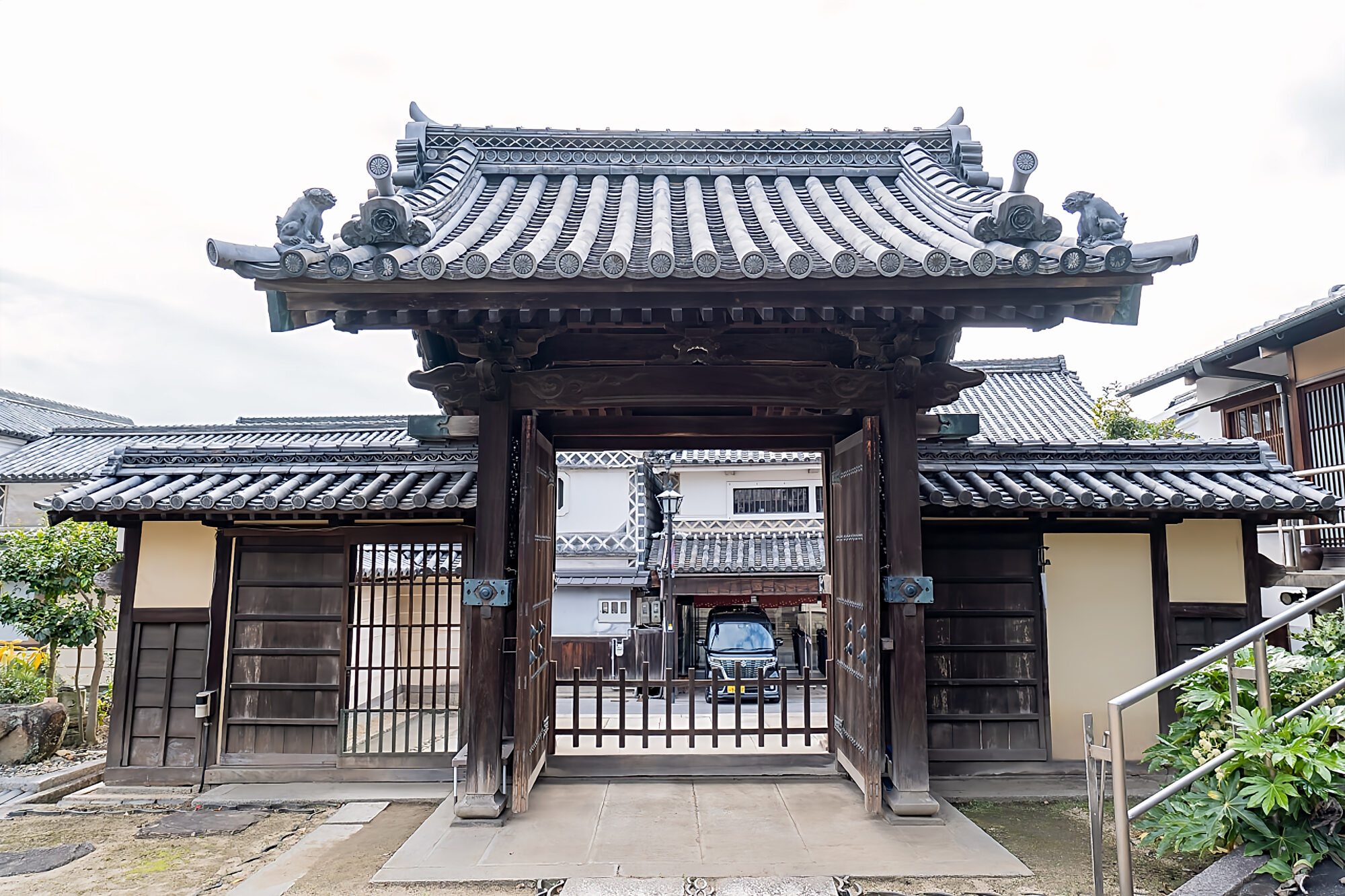
This is a photo of the mountain gate of Seigan-ji taken from within the grounds, which is usually not visible.
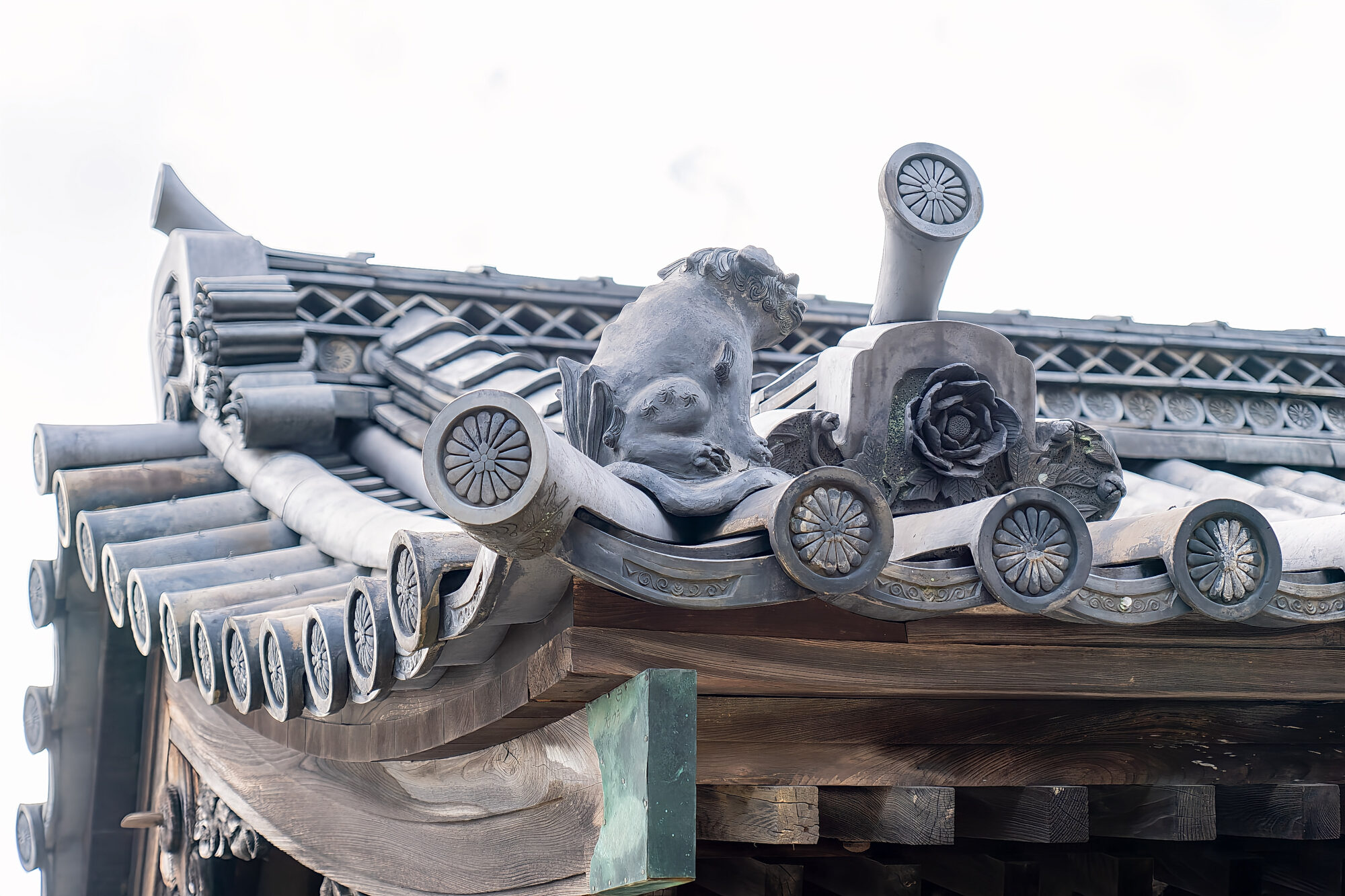
What I want you to notice is the lion statues placed at the four corners of the roof.
In fact, the designs of the lions on the front and back are different.
The lion on the grounds is sitting, while the lion on Honmachi Street is a leaping lion with its hind legs raised close to its head.
According to Chief Priest Shigatani, "The dynamic lion and the sitting lion express movement and stillness, representing A-un on each side, the Honmachi Street side and the grounds side."
Additionally, the left and right also express A-un through the opening and closing of their mouths, showing it doubly.
They are often mistaken for komainu (guardian dogs), but they are lions," he said.
Without explanation, one might not notice the difference between komainu and lions.
I myself was under the impression they were komainu.
▼The leaping lion (A-gata) on the right side of Honmachi Street
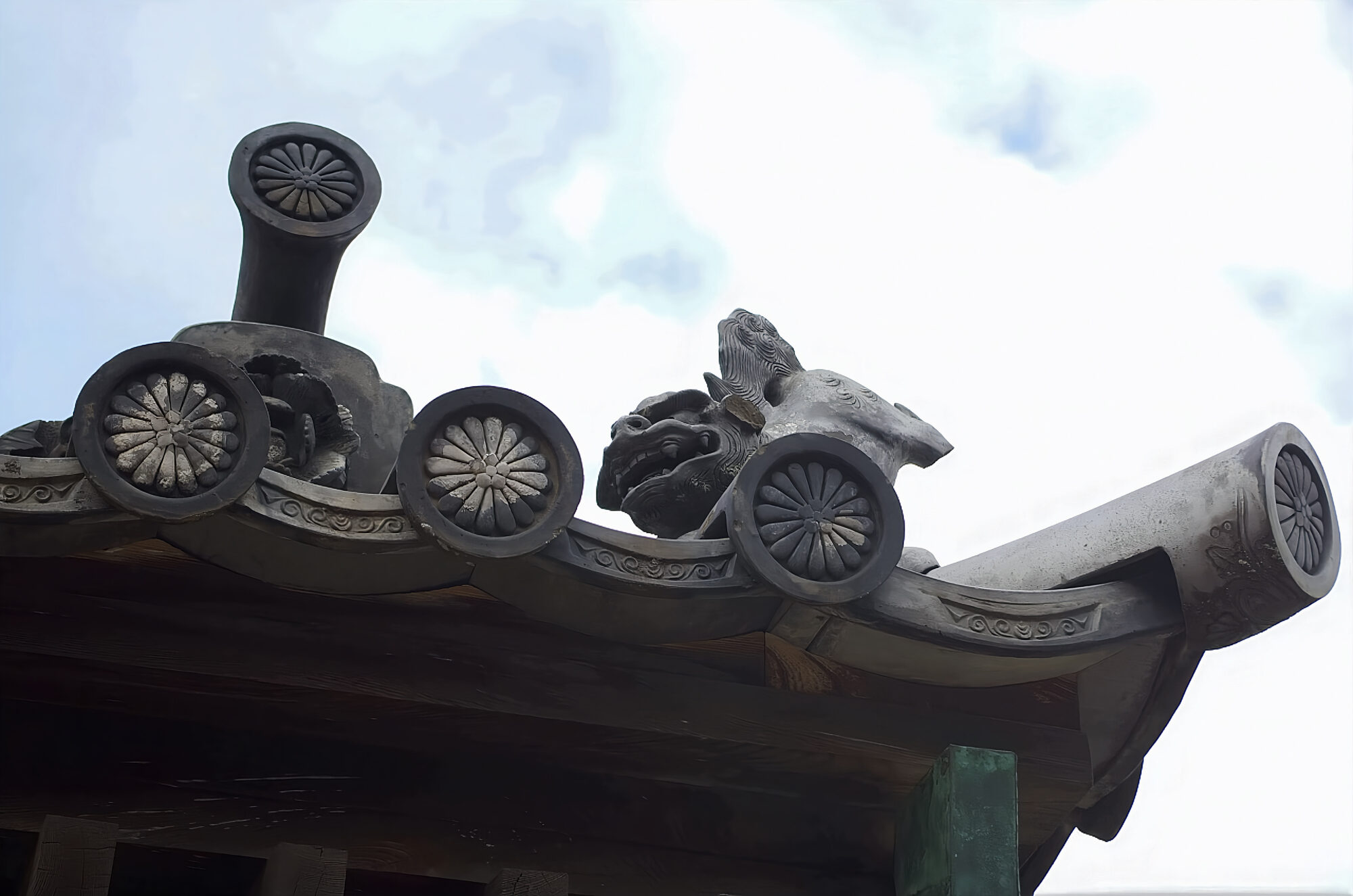
▼The sitting lion (Un-gata) on the left side facing the temple
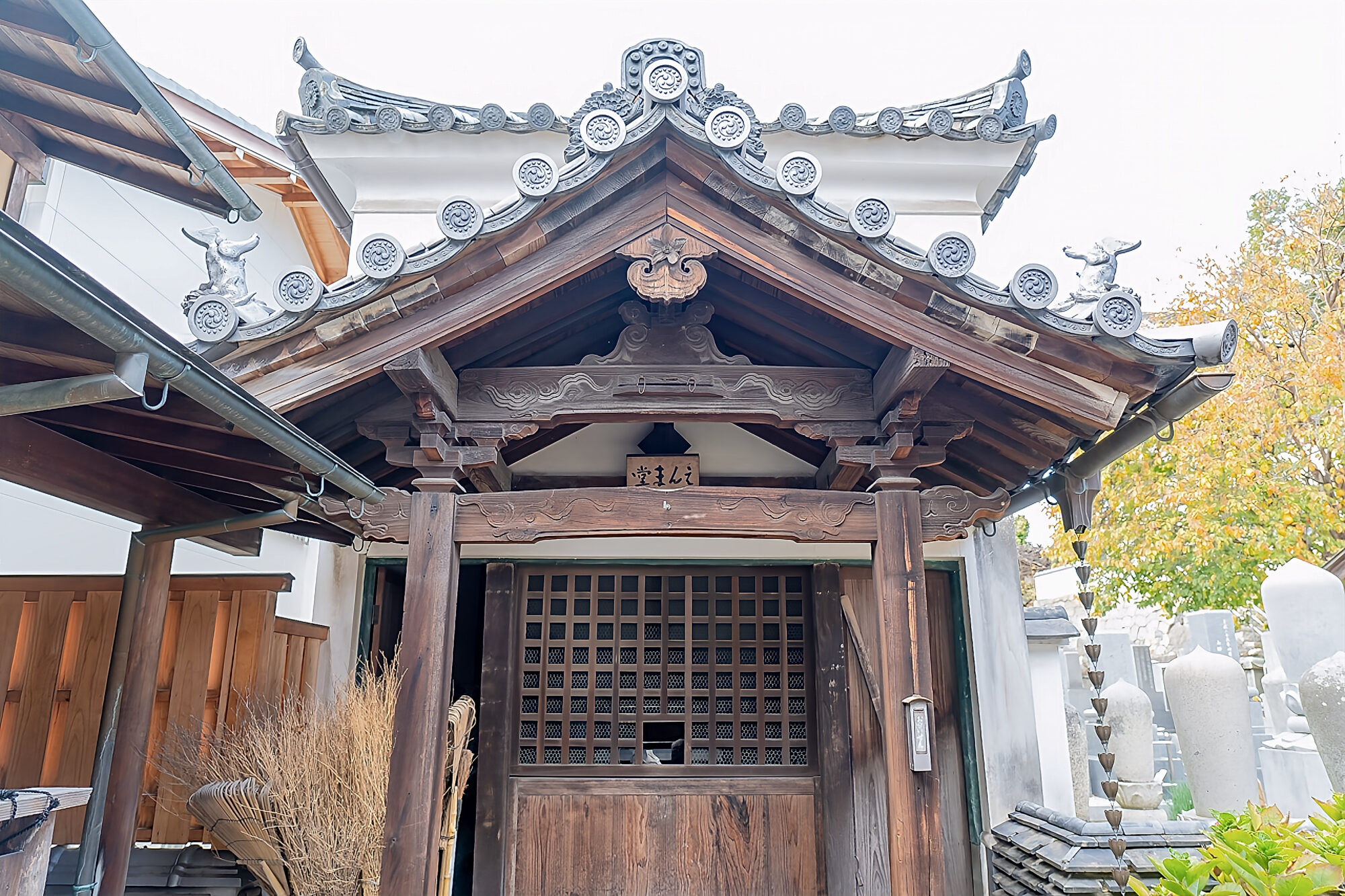
Enma-do
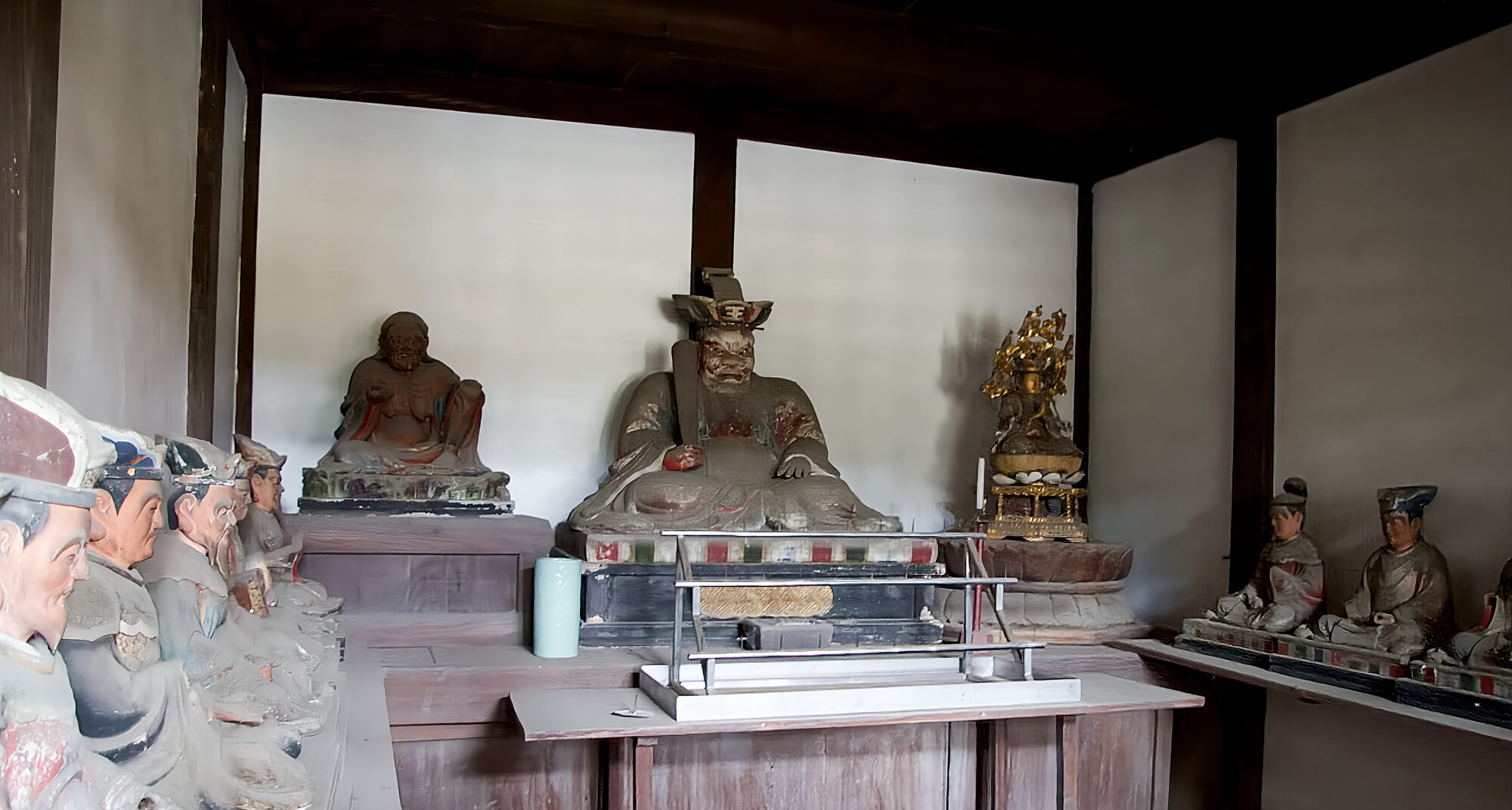
To the left after entering the mountain gate is the Enma-do.
▼Chief Priest Shigatani spoke as follows:
"In the past, the Enma and Ten Kings statues were stored in the second-floor warehouse of Enma-do, and my master, my father, reinstalled them as they are now. In fact, there are eleven statues of the Ten Kings for some reason, and I still do not know why there are eleven."
Ryugu Gate and the Mizusawa Family's Historical Tombs
Among the tombs at Seigan-ji Temple, the "Mizusawa Family Tomb" is located in the deepest and highest area, with the "Ryugu Gate" at its entrance.
Even at the entrance of the tomb, such a magnificent Ryugu Gate has been constructed, evoking the splendor of the time.
The Mizusawa family (Izutsuya) was one of the 13 famous wealthy merchants in early Edo period Kurashiki. It is said that they once owned land all the way to Sakatsu.
During the Kansei era (the end of the 1700s) to the Bunsei era (the beginning of the 1800s), they became the richest family in Bichu.
The current building of the Kurashiki Museum of Folkcraft was a storehouse of the Mizusawa family until the mid-Meiji period.
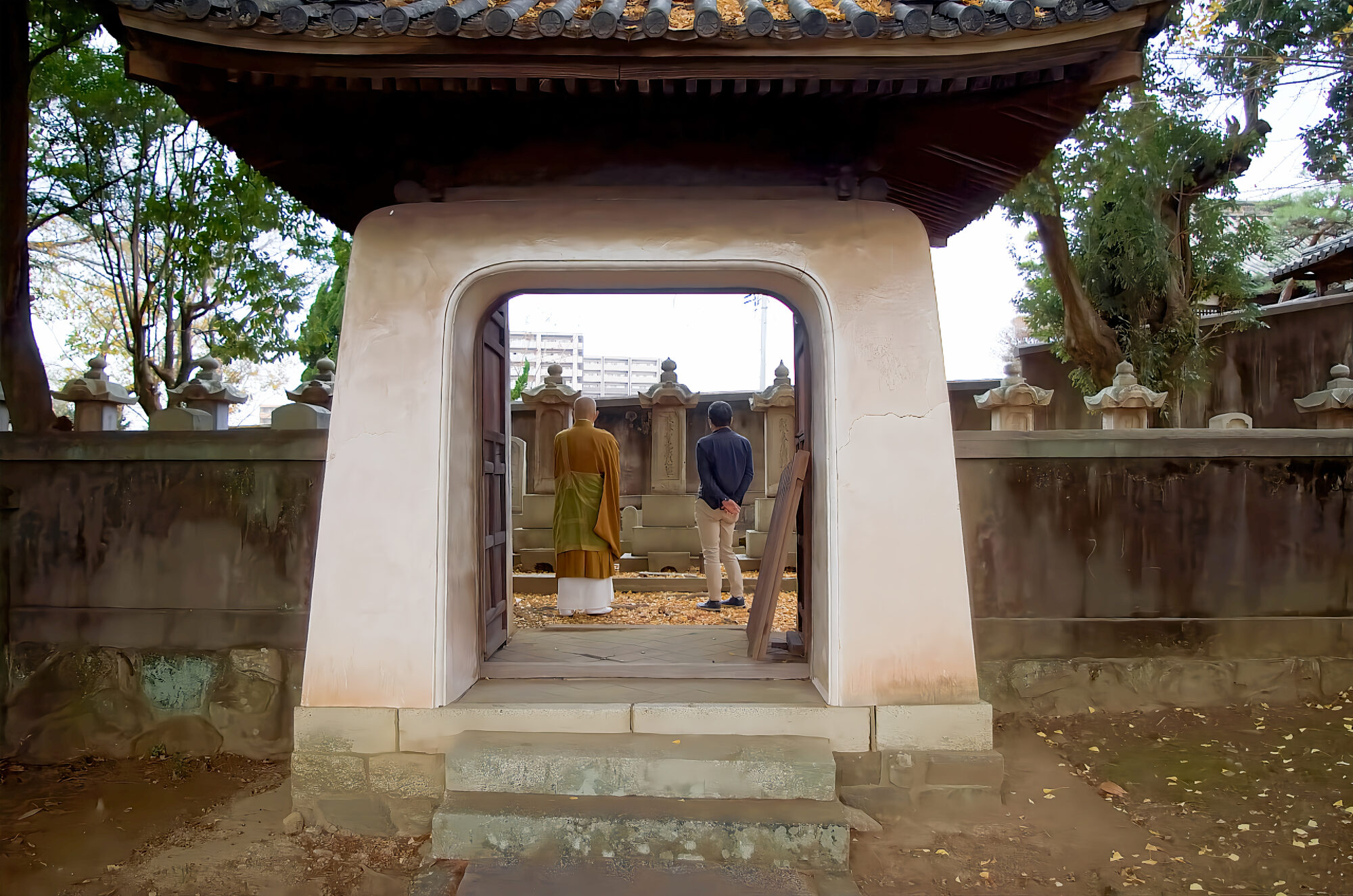
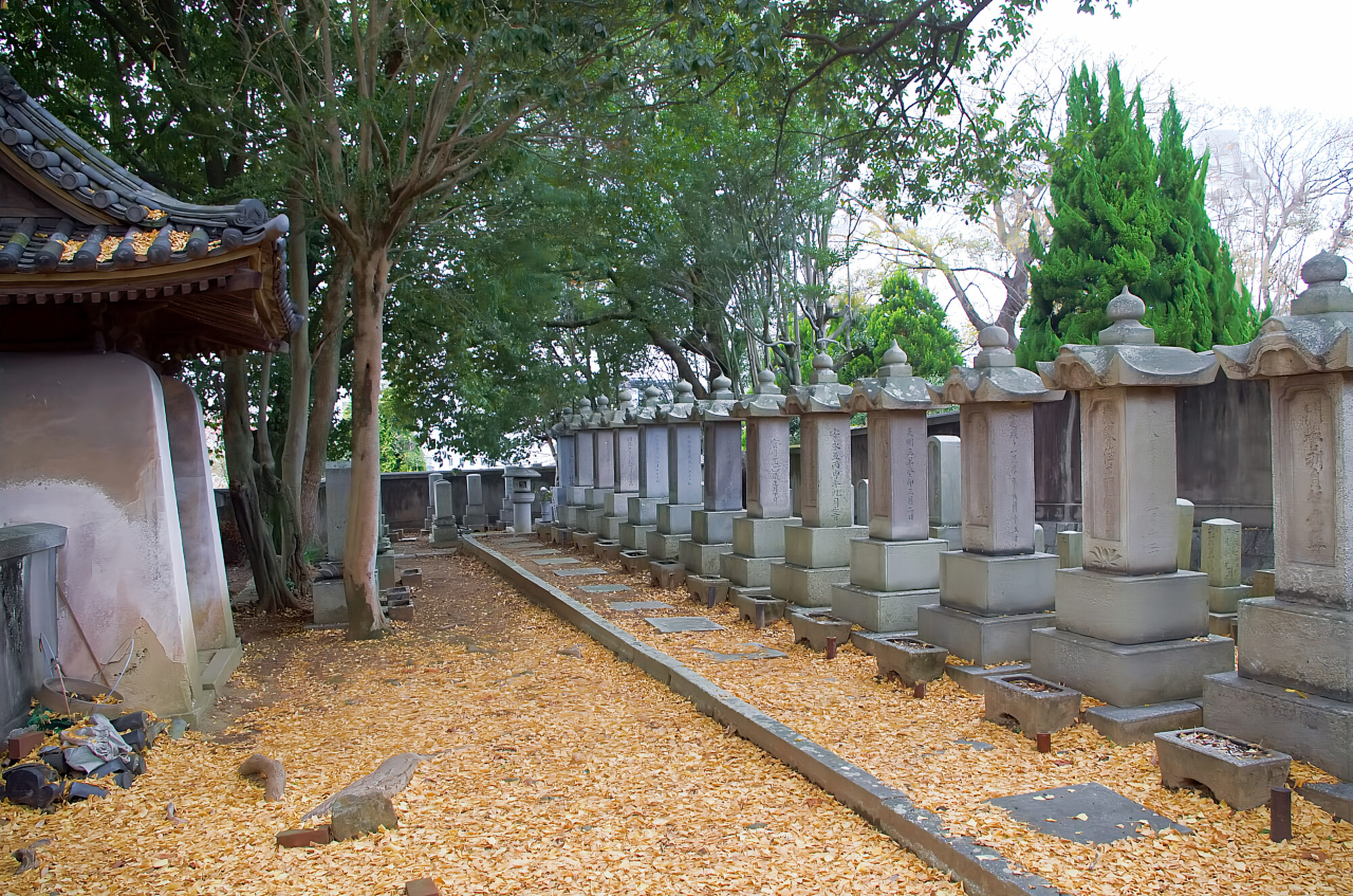
▼The well-maintained and orderly Mizusawa family tombs.
The historical tombs of the Mizusawa family, who reached great prosperity in Bichu, are located in the Seigan-ji Temple cemetery, indicating that Seigan-ji has been a prestigious temple for a long time.
Hibai Tenmangu Shrine (Haisan and Honden)
Upon entering the mountain gate, you will find Hibai Tenmangu Shrine on the right.
▼Hibai Tenmangu Shrine (Haisan).
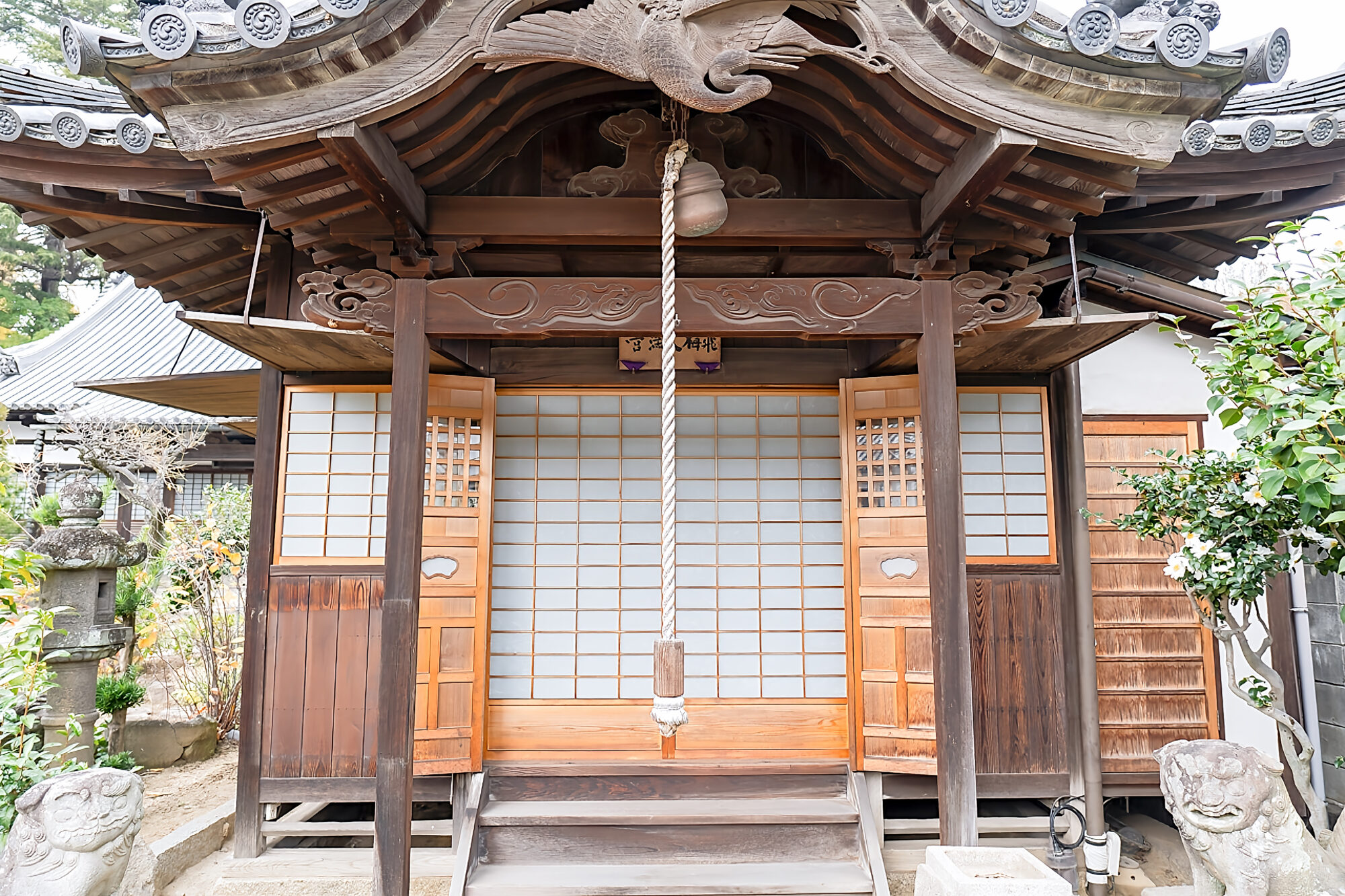
The komainu (guardian dogs) in front of the Haisan bear the names of the chief retainer Kobayashi Shinzaemon and his assistant Usami, who donated them in April of the 2nd year of the Tenpo era (1831).
▼Hibai Tenmangu Shrine (Honden).
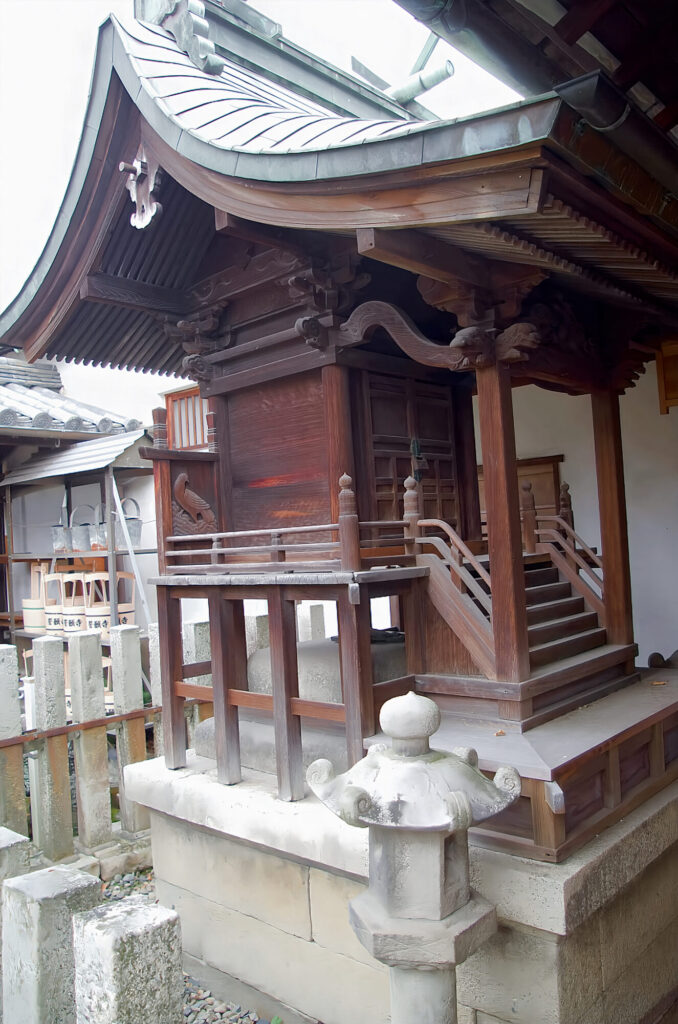
The main hall is characterized by carvings of doves, which are closely related to Hachiman Shrine.
Additionally, the lanterns on both sides of the main hall were donated in August of the 10th year of the Bunsei era (1827) by the chief retainer Okusa Taro-uma and his son Tarozaemon.
Bell Tower
On a slightly elevated area within the cemetery, there is a two-story bell tower.
This bell was lost during the war when it was requisitioned, but a new bell was installed and the bell tower was completed in the 55th year of the Showa era (1980).
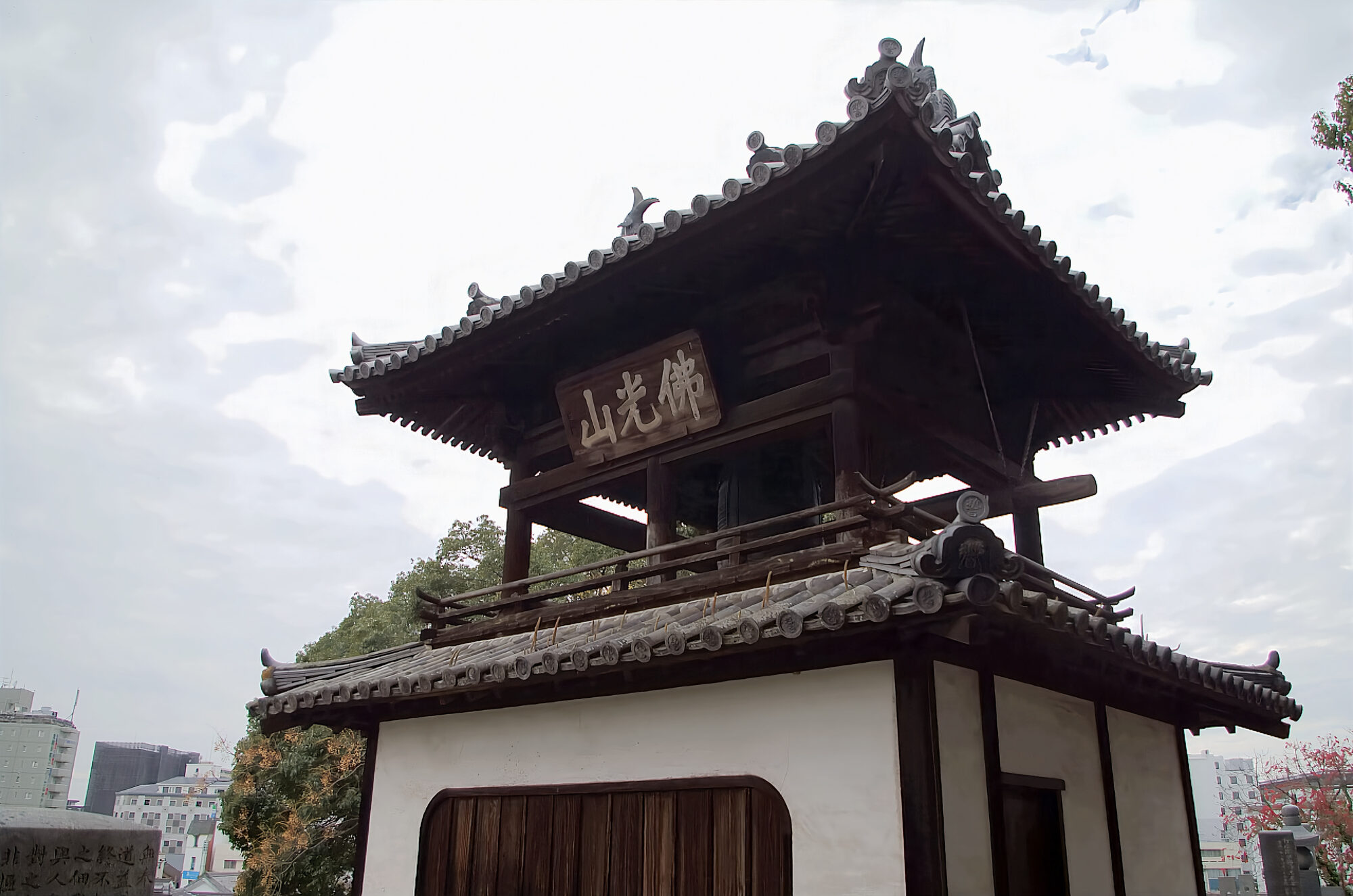
▼The view from behind the bell tower is also spectacular.
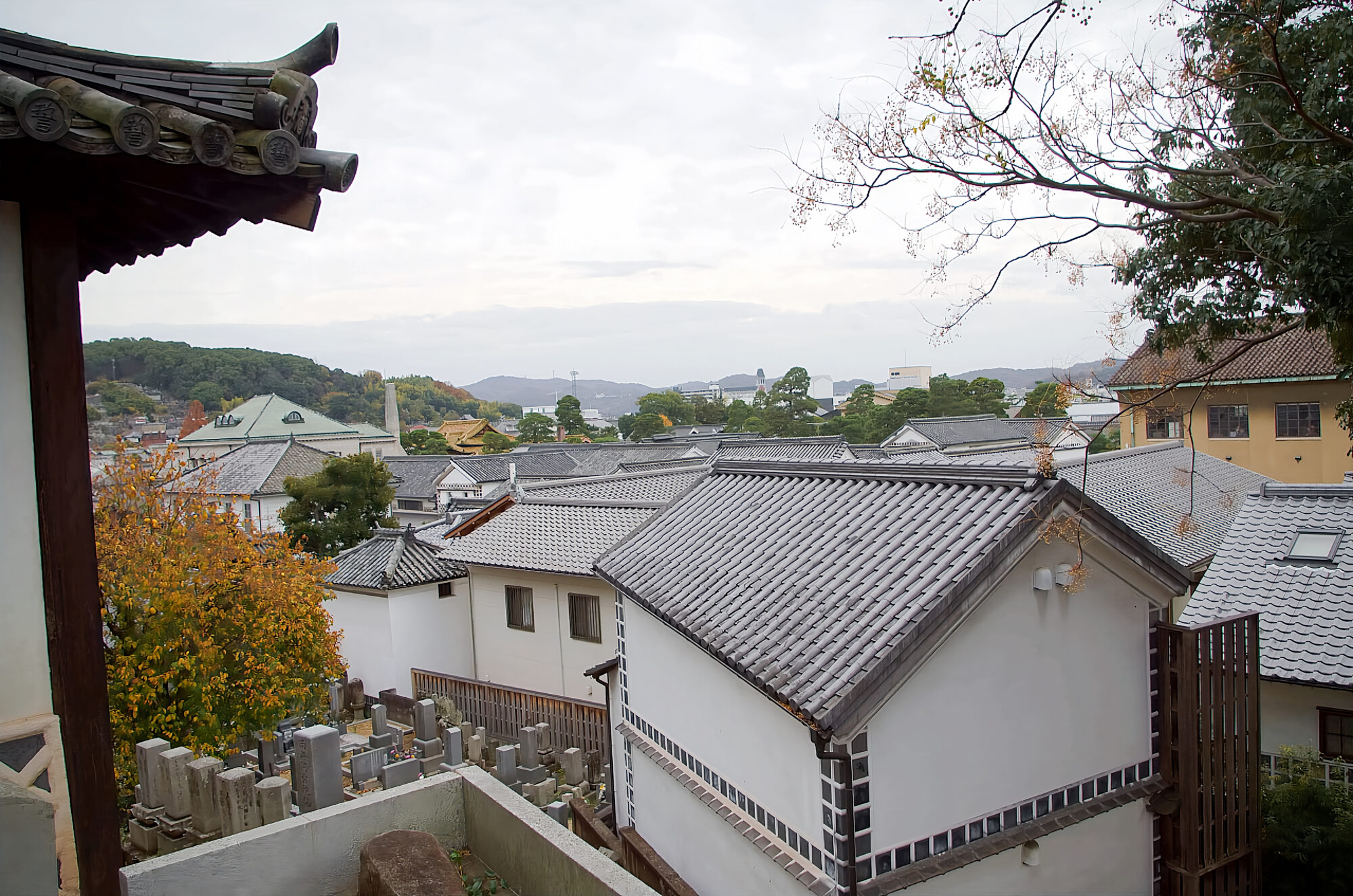
With just a slight elevation, you can see the Kurashiki City Office and far-off Kojima Peninsula.
You can also enjoy a close view of the traditional storehouses characteristic of the Bikan Historical Area.
Tile Patterns
The tile patterns on the sanmon (mountain gate) of Seigan-ji Temple are said to feature the "Kiku (Chrysanthemum) Crest," which was specially permitted for use by Prince Kachonomiya.
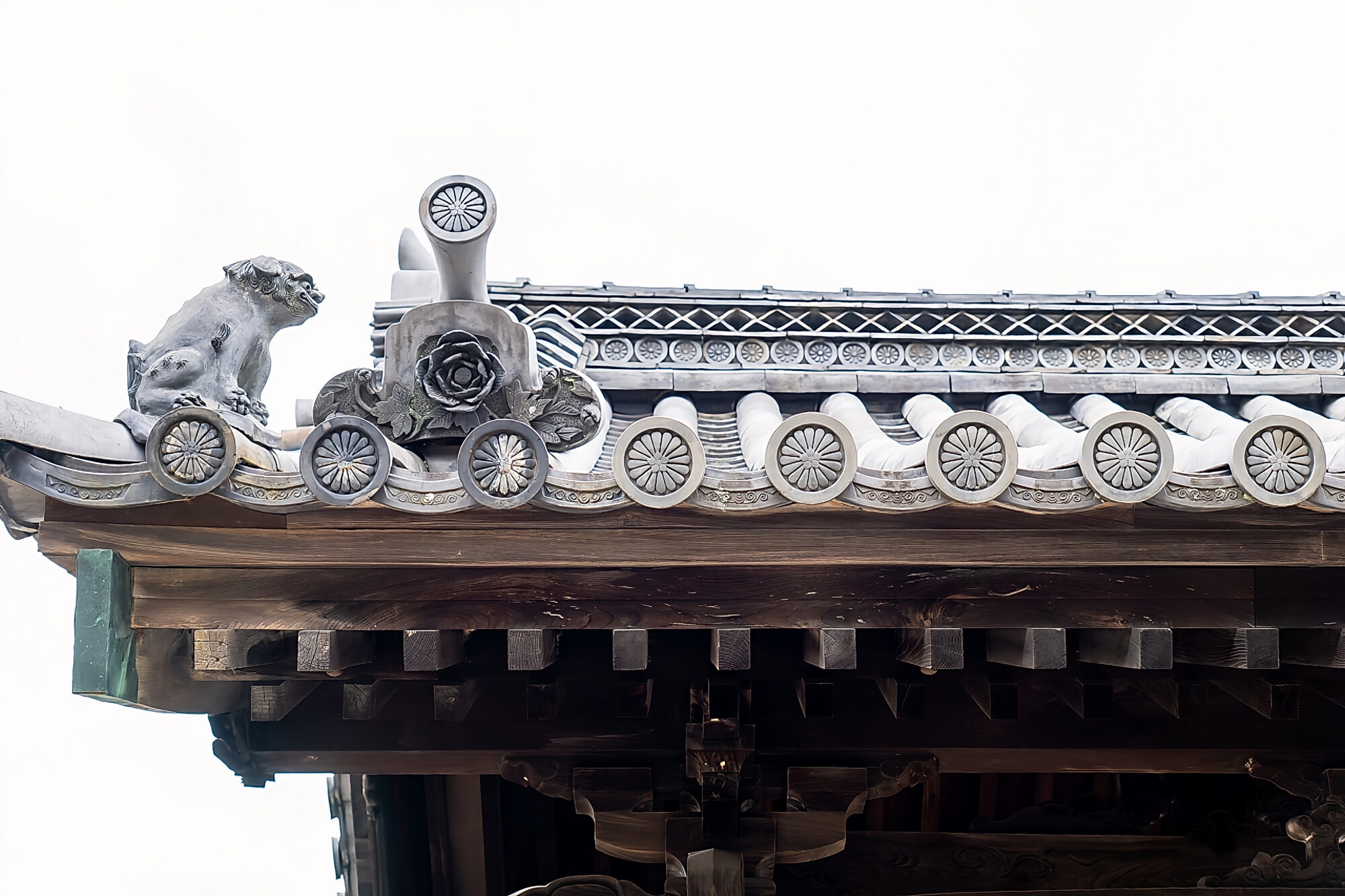
Please take a look at the tile patterns on the sanmon.
You can sense the temple's rich history.
▼ The tile patterns on the roof tiles of the main hall and other structures feature the character "誓" (sei) from Seigan-ji.
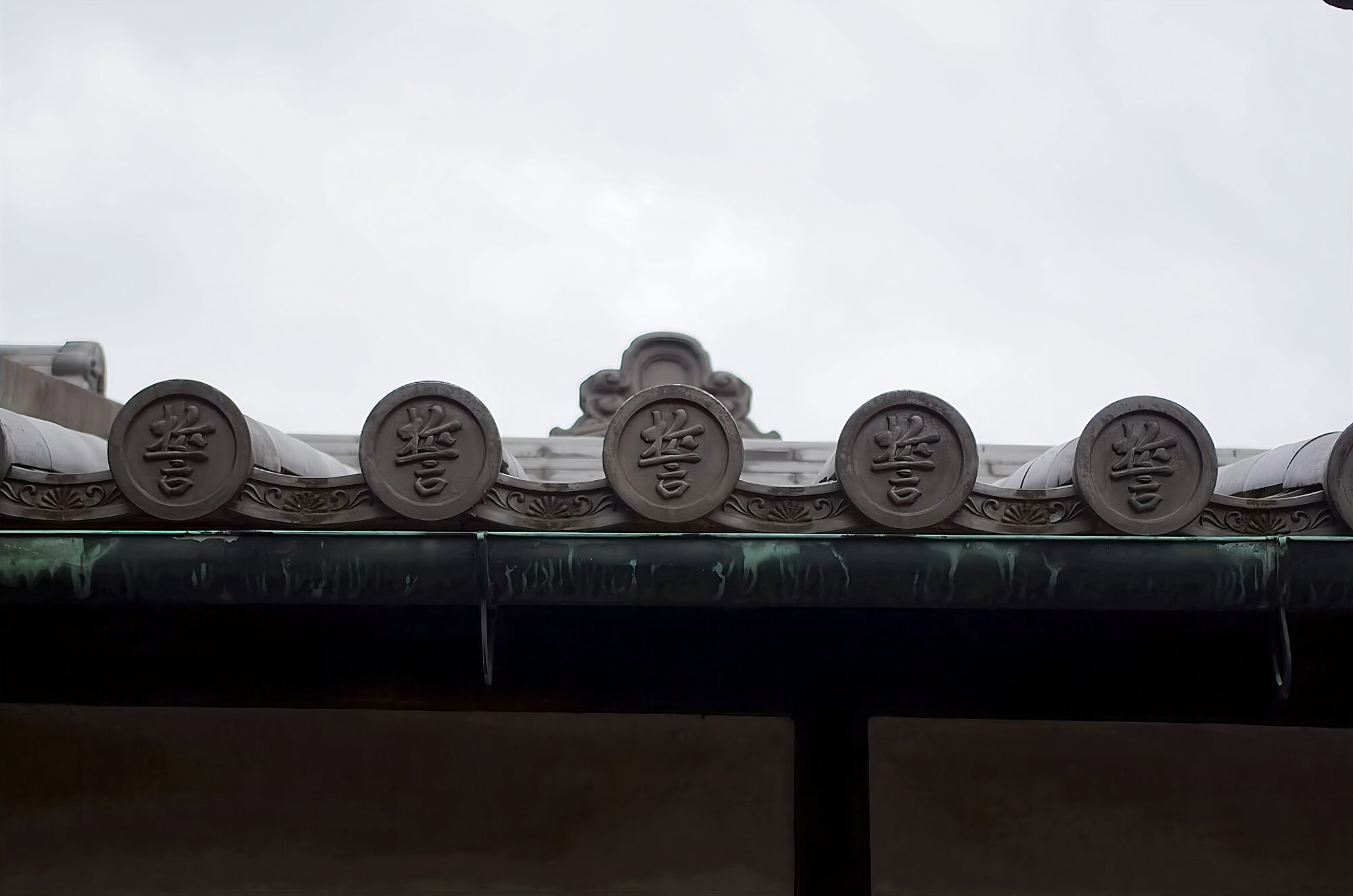
The style of the character "誓" has varied with each period of tile restoration, but it has recently been unified during recent renovations.
▼ Various tile patterns from different periods have been collected on the temple grounds.
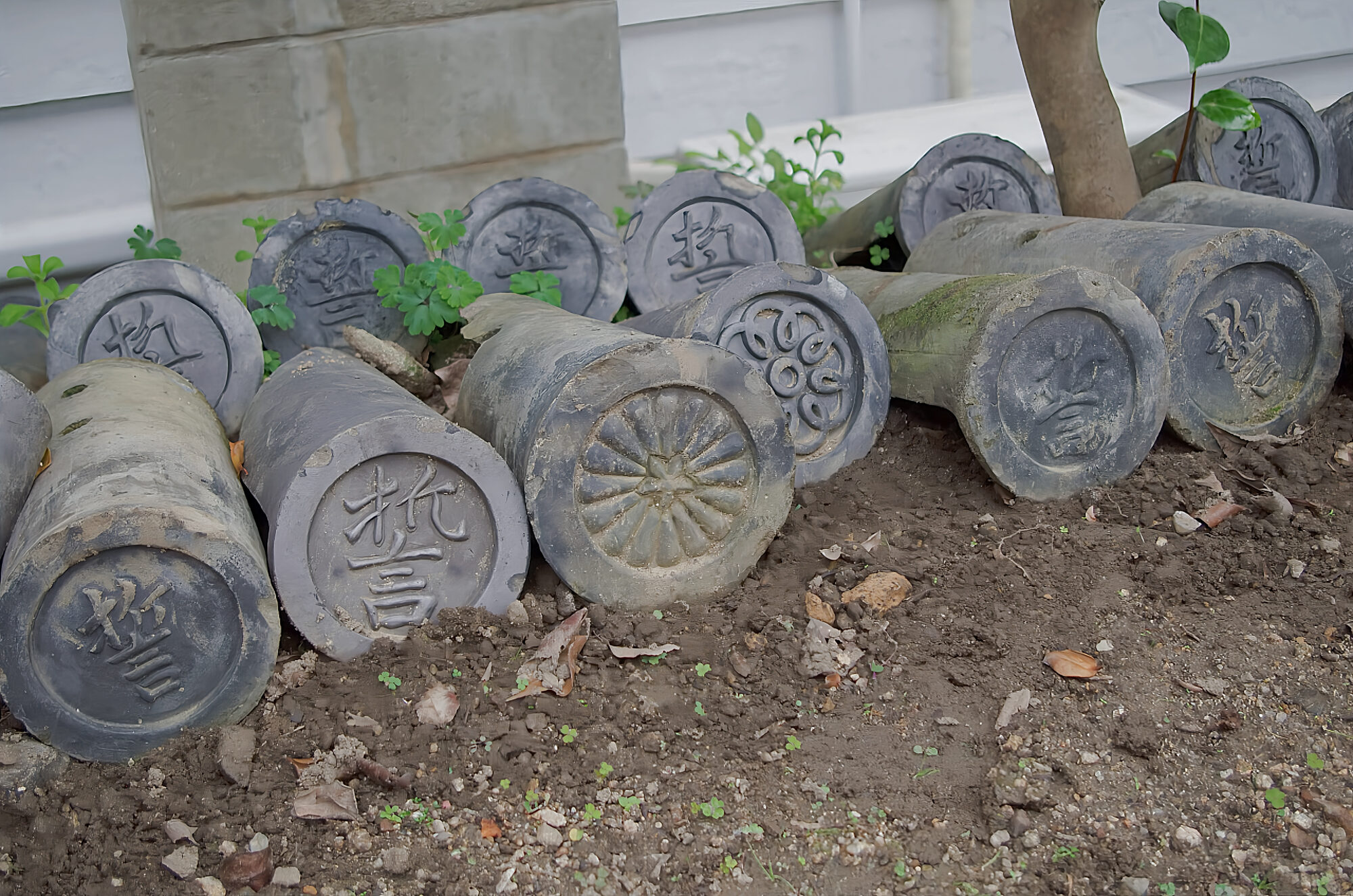
It is interesting that there are various designs even in the different styles of the character "誓" and the "Kiku Crest."
▼ In fact, old tiles are also utilized on the approach to the main hall after entering the sanmon. It is said that they were used by the mother of the current chief priest, Shigatani Shinsaku.
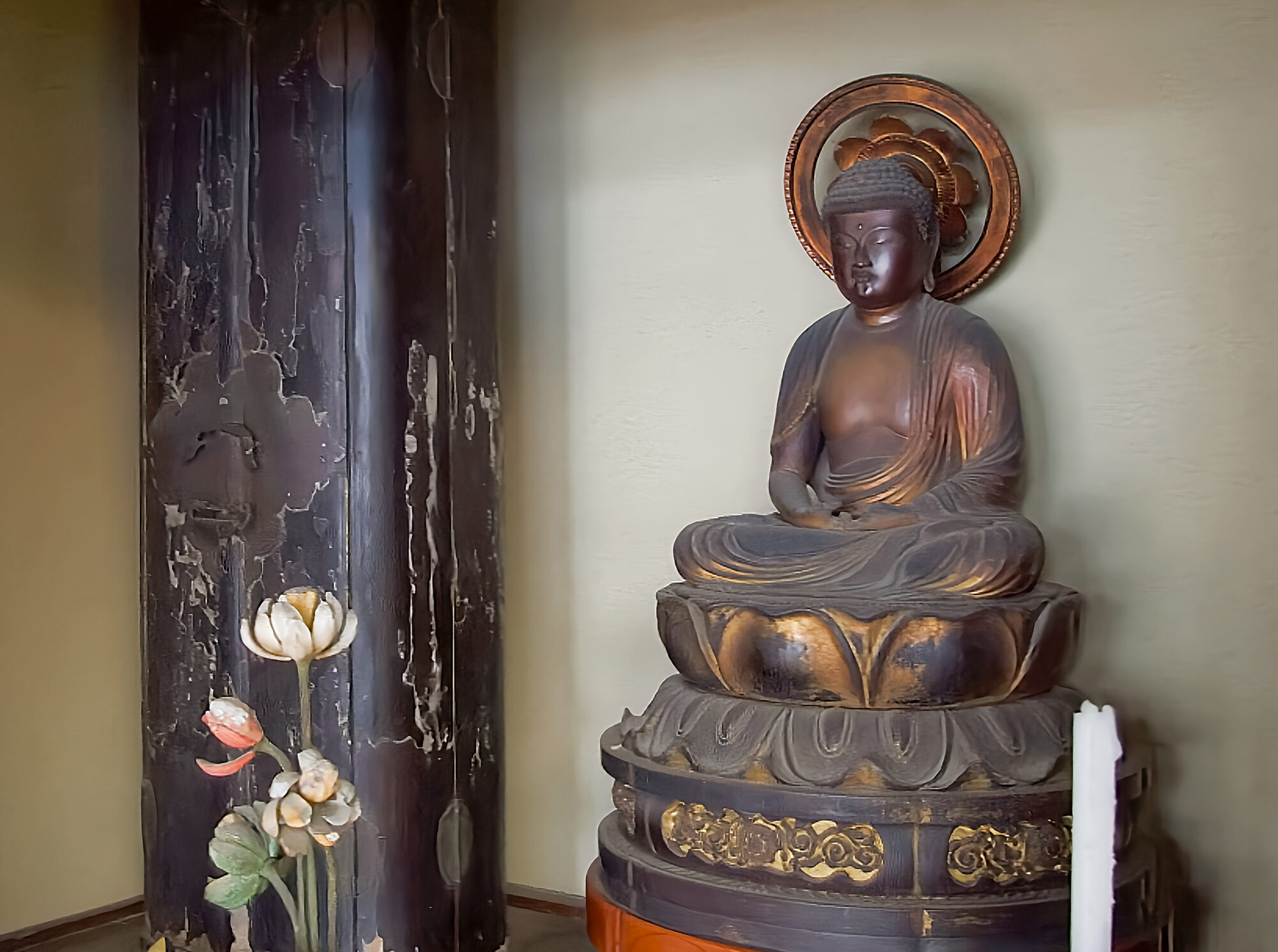
Kannon Bodhisattva Originating from Fujiwara no Narichika
▼ The Kannon Bodhisattva, said to have been donated by Fujiwara no Narichika in the late Heian period, is enshrined here.
History of Seigan-ji Temple
Seigan-ji Temple is a historic temple that was established around the mid-Heian period. Here is an overview of the temple's main history.
| Period | Event |
|---|---|
| Mid-Heian Period | Founded as a Tendai sect temple associated with Eshin Sozu. |
| Late Heian Period | It is said that Fujiwara no Narichika stayed at Seigan-ji while being exiled from Kyoto to Kojima in Bizen due to the conspiracy of the downfall of the Taira clan known as the "Shishigatani Incident." During this time, he is said to have enshrined the statue of Kannon Bodhisattva. |
| Oei 31 (1424) | The first generation, Zenkei Shonin, came to this place and established a Pure Land sect nembutsu training hall. |
| Tensho 8 (1580) | Revitalized by the fifth generation, Anrakuan Sakuden Shonin (the founder of rakugo). ※ Anrakuan Sakuden Shonin later became the head priest of the Seigan-ji Temple of the Jodo sect in Nishiyama, Kyoto. |
| Early Edo Period, Genna Era | Revitalized by the sixth generation, Zuiko Shonin, who was commissioned by Chion-in. |
| Edo Period | The ninth generation, Gen'etsu Shonin, was a direct disciple of the 38th head priest of Chion-in, Gen'yo Manmu, and was revered as a leading temple of the Jodo sect in Bichu Province. |
| Mid-Edo Period | During the time of the fifteenth generation, Reikai Shonin, the temple received patronage from Prince Kachonomiya and was granted the "Chrysanthemum Crest," as well as a "Purple Curtain" and "Golden Robe," which they were allowed to use in perpetuity. |
| Kaei 2 (1849) | Main hall reconstruction. |
Next, we interviewed the chief priest, Shigatani Shinsaku.
Data on Seigan-ji Temple
| Name | Seigan-ji Temple |
|---|---|
| Other Name | Bukkōzan Narichikai-in |
| Sect | Jodo Sect |
| Location | 2-25-36 Achi, Kurashiki City, Okayama Prefecture |
| Contact | 086-422-6318 |
| Parking | None |
| Main Deity | Amitabha Buddha |
| Seal (Offering Fee) | None |
| Visiting Hours | Events open to the public are as follows: ・December 31│New Year's Eve Bell ・April 8│Hanamatsuri: A Buddhist event where sweet tea is poured over the statue of the baby Buddha prepared in front of the sanmon. |