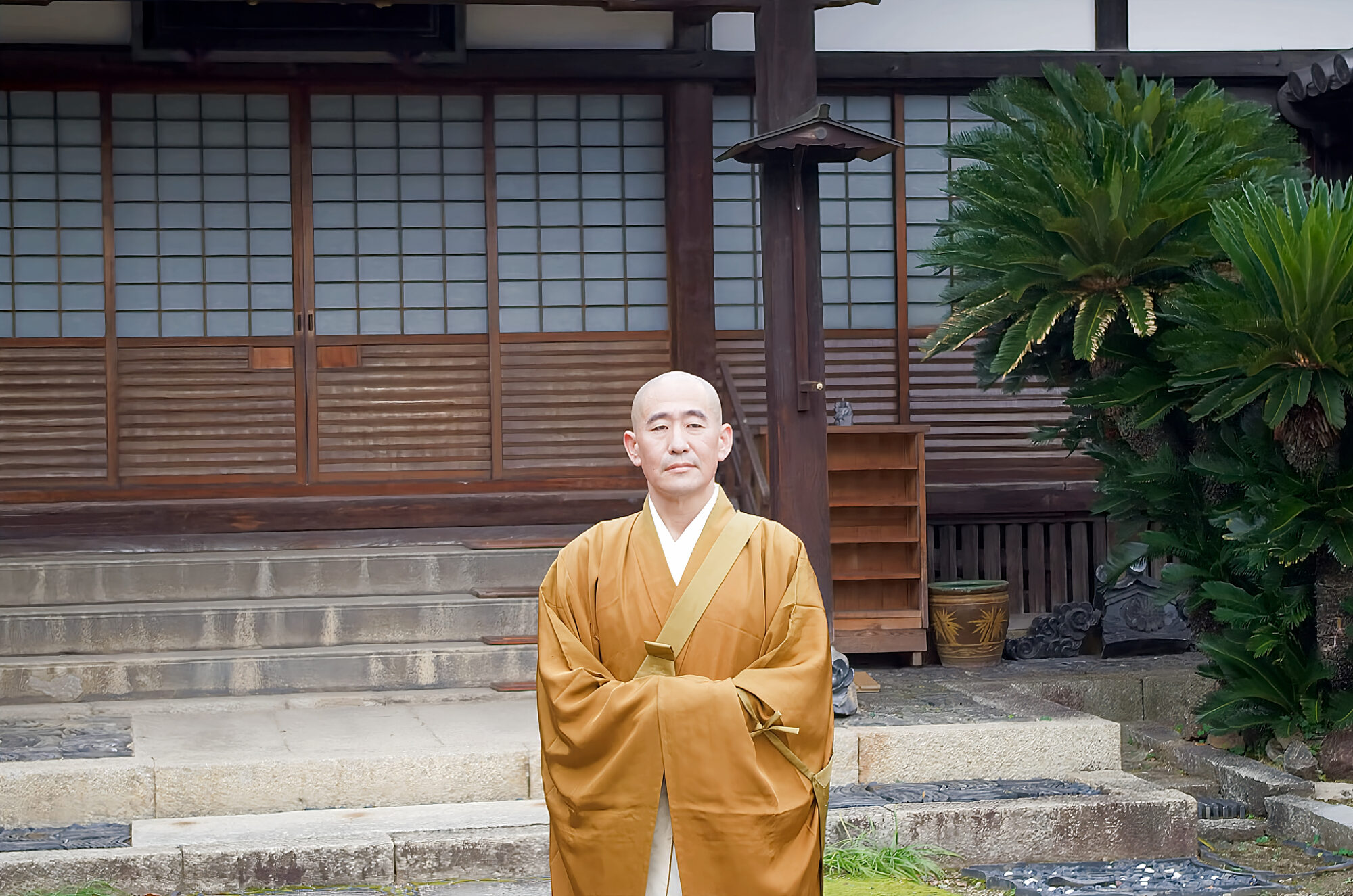
Interview with Head Priest ShigitanI Shinsaku
Seiganji Temple stands in Kurashiki City's Bikan Historical Area.
We spoke with Head Priest ShigitanI Shinsaku.
Please tell us about the history of Seiganji Temple.
Head Priest ShigitanI
Seiganji Temple was restored by the monk Sakuden, who went from one dilapidated temple to another, restoring them.
It is said that around 1600, he persuaded the townspeople of Kurashiki and restored the former Seiganji Temple, which stood on the site of today's temple.
Monk Sakuden is also known as the founder of rakugo.
The present Seiganji Temple was established around 1800.
The temple was originally founded as a Tendai Buddhist temple, but no records remain from its founding through the first head priest in the Genpei period, so the details are unclear.
It is said that the temple had ties to the imperial family, partly because the Tokugawa shogunate protected Jodo Buddhism during the Edo period and partly through its connection with a head priest who came from Kyoto.
Seiganji Temple also served as the administrative hub for the Bitchu region as a furegashira (supervising temple), alternating with Gentokuji Temple in Kasaoka City.
I heard there is a building called Tobiume Tenmangu on the grounds. Is that right?
Head Priest ShigitanI
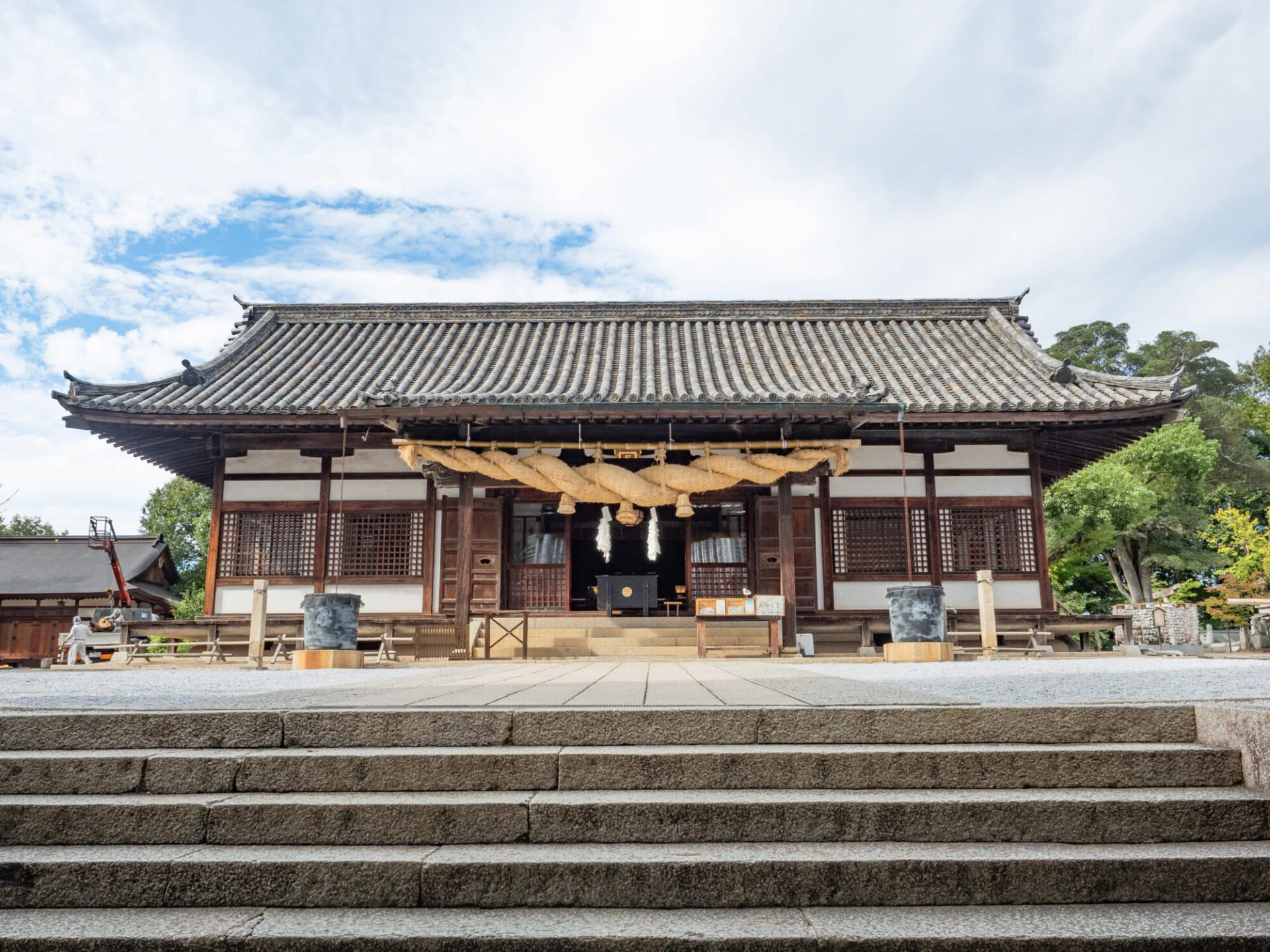
Partly due to the anti-Buddhist movement that arose in the early Meiji period, only the hall from the Kurashiki Magistrate's Office was relocated to its present site.
The reason is not well understood.
It was originally a Hachimangu Shrine, so pigeons, messengers of the gods, are carved on either side of the main sanctuary.
When you hear about the anti-Buddhist movement, you get the impression that temples and shrines were separated, but at Seiganji Temple it seems they were brought together.
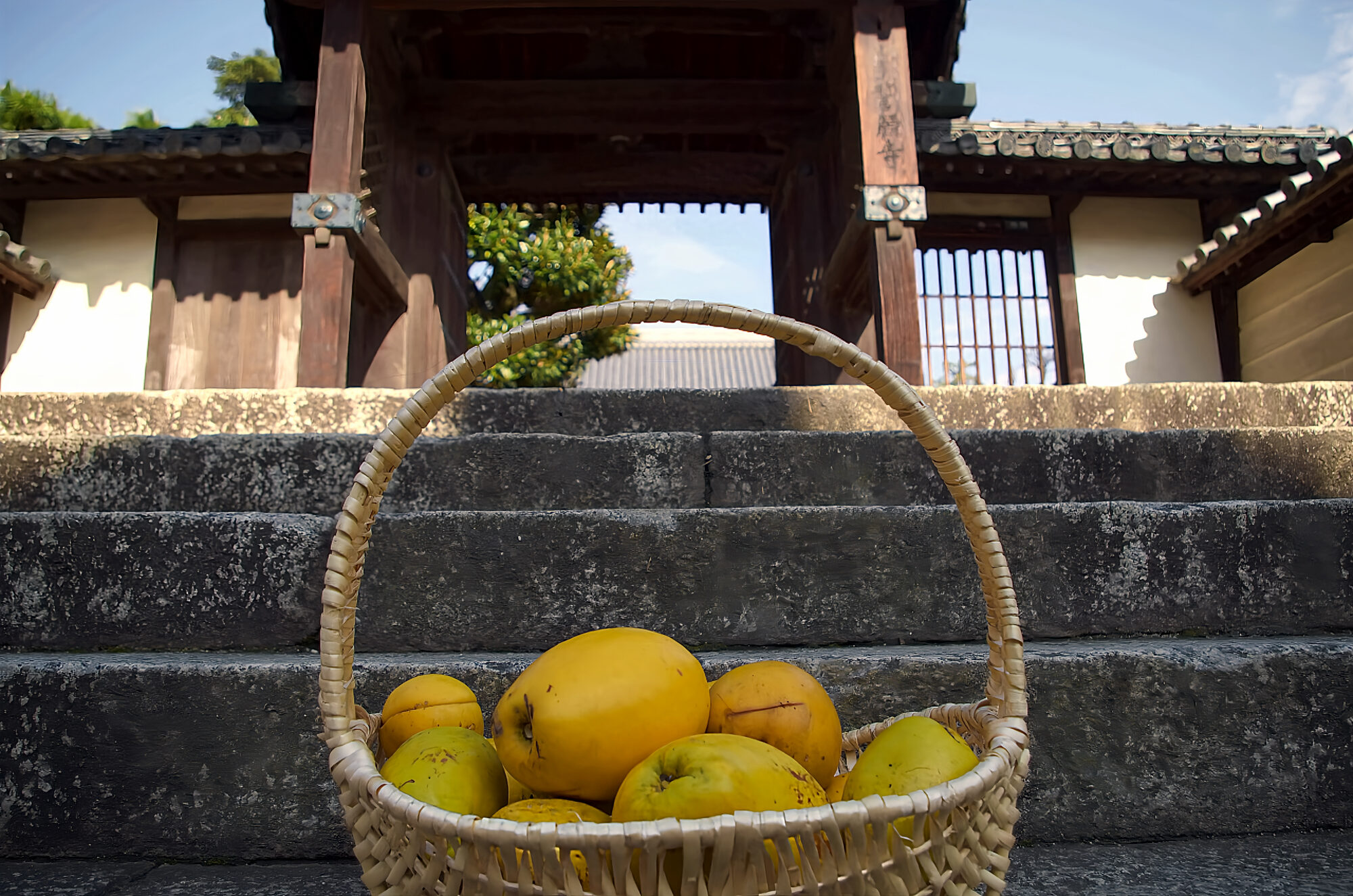
I had been curious about the quince placed in front of the temple gate. What is the reason for putting it there?
Head Priest ShigitanI
There is a large quince tree on the grounds. Its fruit can be used to make quince liqueur and jam, and because it smells nice, it can also be used as an air freshener.
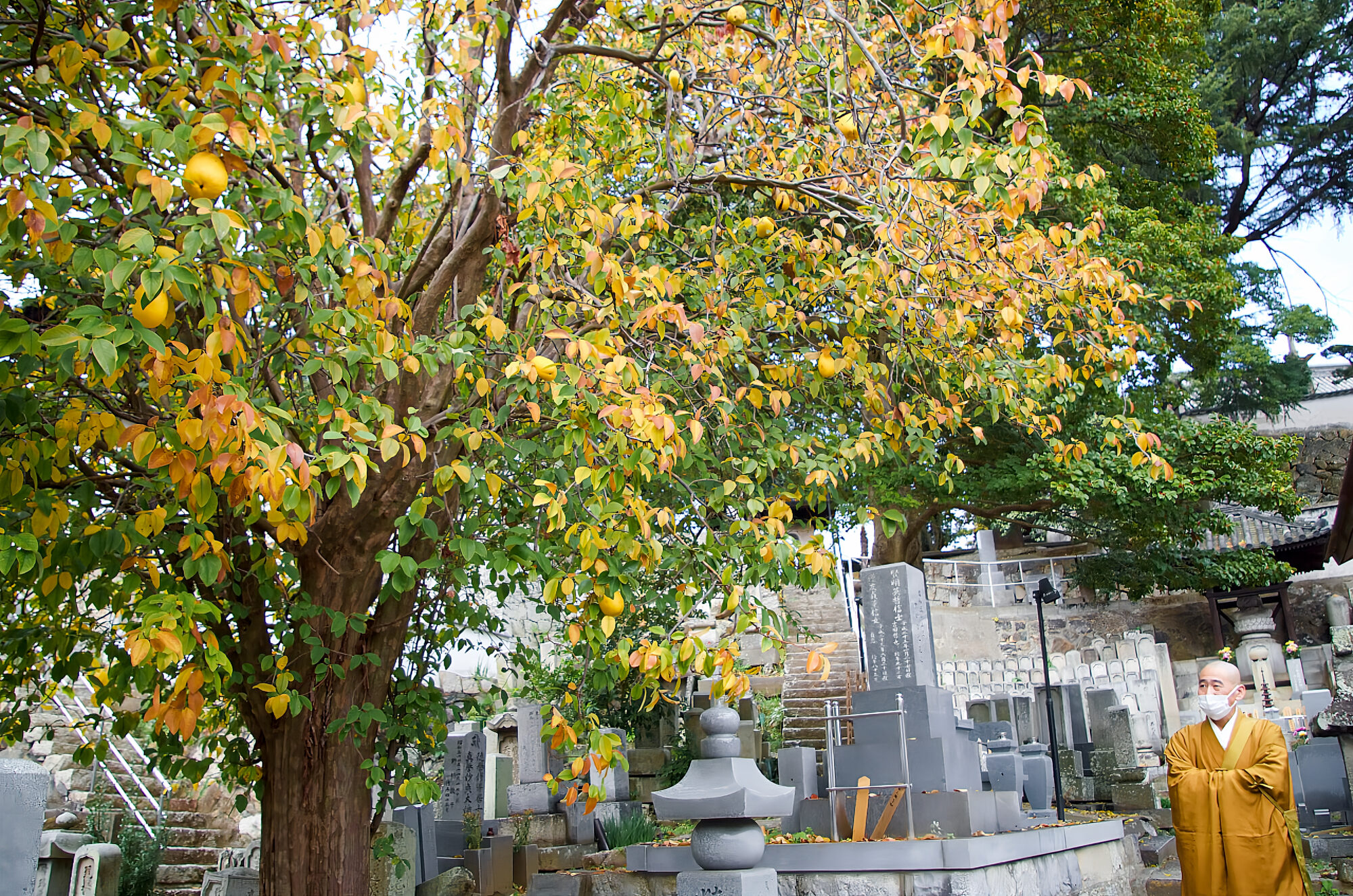
With reverence and warmth.
It's nothing special; I leave them out hoping people will enjoy them.
Please feel free to take some home.
What is Jodo Buddhism? Please tell us.
Head Priest ShigitanI
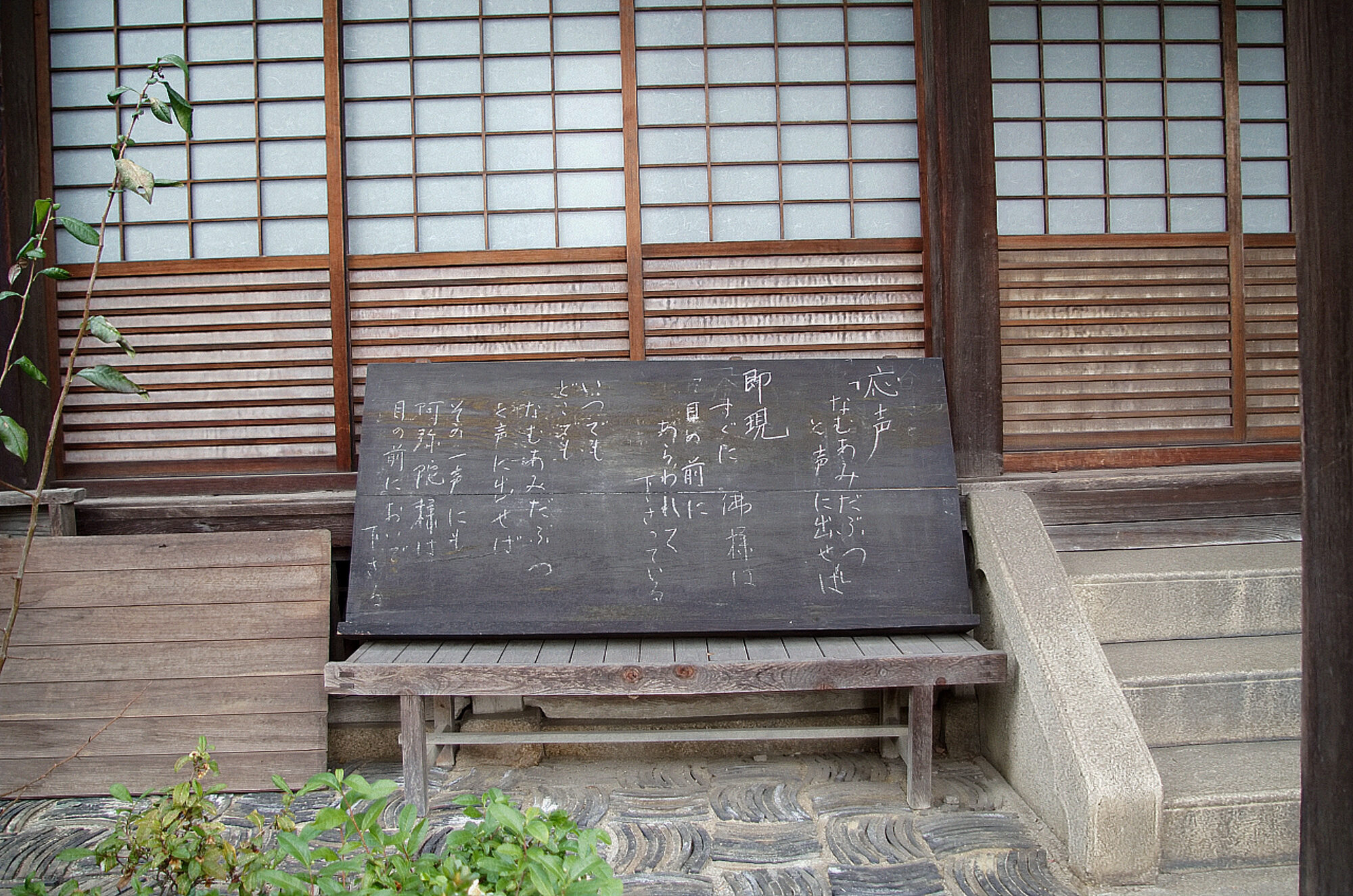
I want people to realize that they already have a connection with the Buddha.
This may be a characteristic of Jodo Buddhism, but you don't have to be a priest to pray; anyone can do it.
Chanting Namu Amida Butsu is like taking a bath and cleansing yourself.
In our daily lives, we sometimes become spiritually soiled.
But praying can purify you, so I hope people realize that they can do it themselves.
Also, even during services in Seiganji Temple's main hall, there is no division between the inner and outer sanctuaries, or especially between the priest and the parishioners. We pray together, and I hope that everyone can receive the Buddha's blessings directly.
This also connects with Honen's teachings, which emphasized salvation for ordinary people.
From the Writer
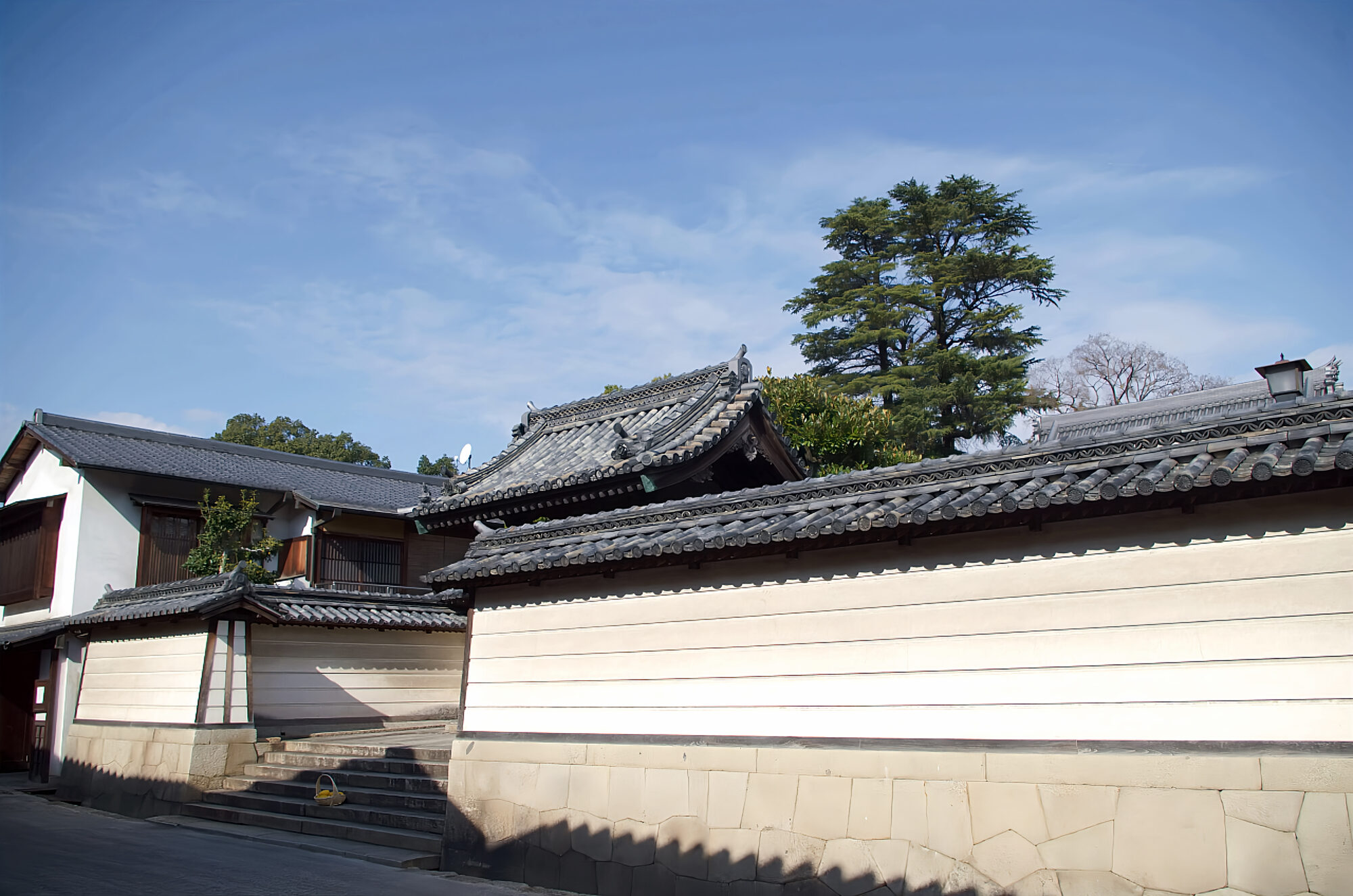
Seiganji Temple is located along Honmachi-dori Shopping Street, making it an easy place to visit.
Take a look inside Seiganji Temple through the temple gate and experience its atmosphere. Even that alone will give you a sense that it is a temple with a distinguished history.
The five lines on Seiganji Temple's wall signify its connection to the imperial family and its rank; the highest rank is represented by five lines.
Imagine the history surrounding the “Shishigatani Conspiracy” and “Fujiwara no Narichika,” which took place in the late Heian period. By learning about Seiganji Temple's close ties to the imperial family, we hope you will get a sense of one chapter in Kurashiki's history.
Seiganji Temple Information
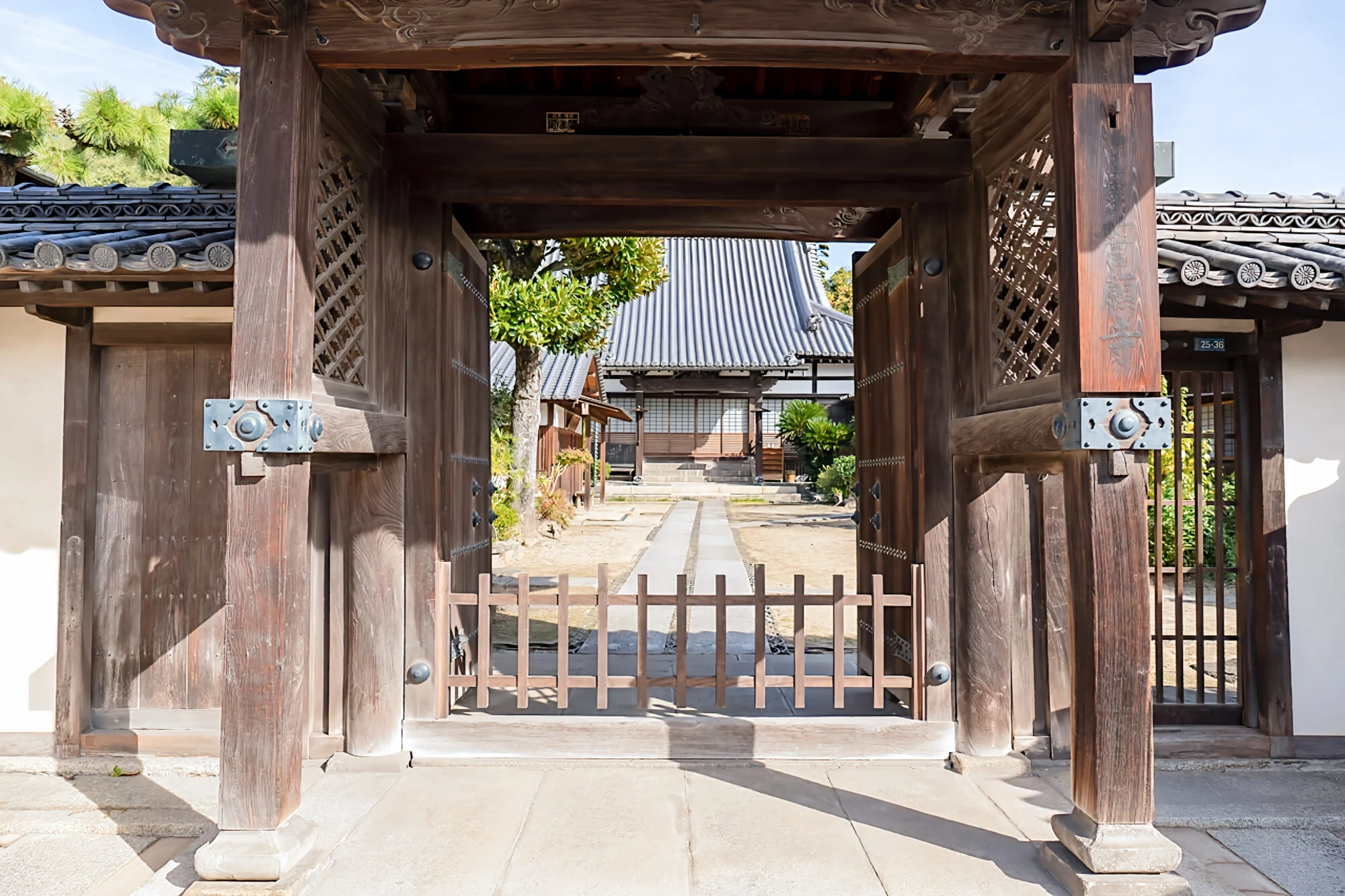
| Name | Seiganji Temple |
|---|---|
| Other name | Bukkosan Narichikain |
| Buddhist sect | Jodo Buddhism |
| Address | 2-25-36 Achi, Kurashiki City, Okayama Prefecture |
| Contact | 086-422-6318 |
| Parking | None |
| Principal image | Amida Nyorai |
| Goshuin (sutra-copying fee) | None |
| Visiting hours | Events open to the general public are as follows. ・December 31│New Year's Eve Bell-Ringing Ceremony ・April 8│Flower Festival: a Buddhist event where sweet tea is poured over the birth Buddha statue set up in front of the temple gate |

What would you like to know about Kurashiki?
Enter a word to search articles on this site