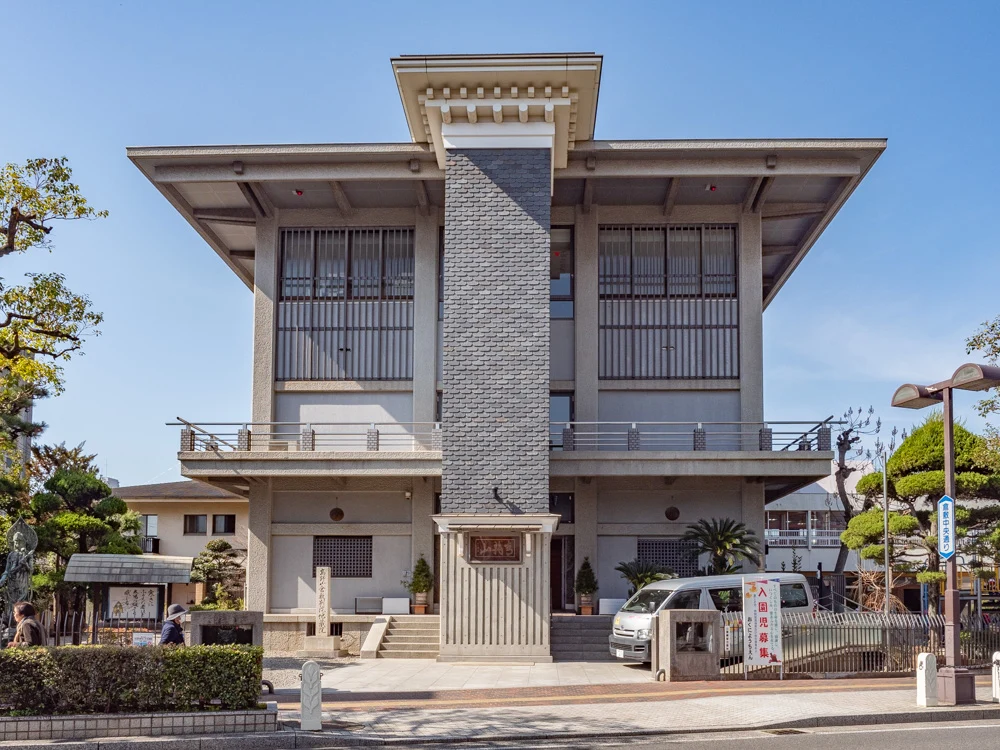
As you walk along "Kurashiki Chuo-dori (Motomachi-dori)" extending south from JR Kurashiki Station, a modern temple built of reinforced concrete comes into view.
This temple is called "Koyasan Kurashiki Betsuin Seiryuzan Jizo-in" (Koyasan Kurashiki Betsuin Seiryuzan Jizo-in, hereafter referred to as Jizo-in).
Although it is a modern temple, it actually has a long history.
In particular, during the Edo period, it received strong faith from the lords of the Okayama domain, and the seventh lord, Ikeda Tsugumasa, built structures and donated his own Buddhist statues.
These statues are opened only once a year during the New Year, along with the main deity.
Additionally, the underground Kannon Hall created during the major renovation in the Heisei era is a must-see!
Despite its appearance, I will introduce Jizo-in, which has surprisingly rich history.
Koyasan Kurashiki Betsuin Seiryuzan Jizo-in is a modern-looking temple along Kurashiki Chuo-dori
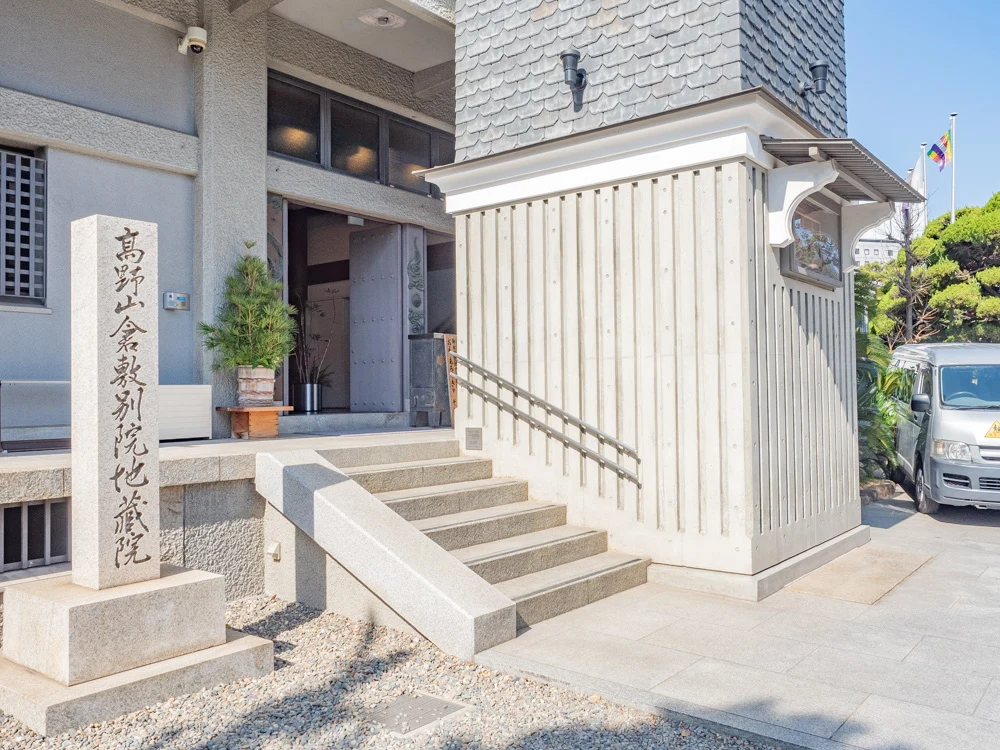
Jizo-in is a temple of the Koyasan Shingon Sect located in the center of Kurashiki.
It is situated along the main road "Kurashiki Chuo-dori (Motomachi-dori)" extending south from JR Kurashiki Station, just north of the Bikan Historical Area.
It is about 500 meters from Kurashiki Station.
▼ At first glance, Jizo-in appears to be a modern building that does not look like a temple.
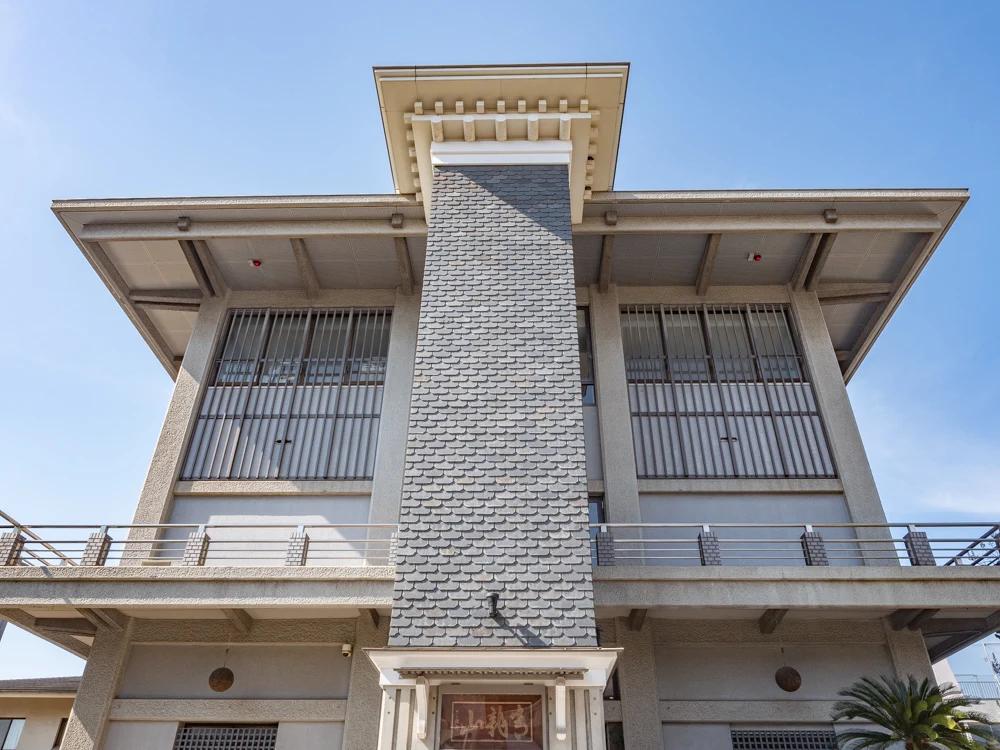
When you think of a temple, you might imagine a traditional tiled building, so the reinforced concrete construction is surprising.
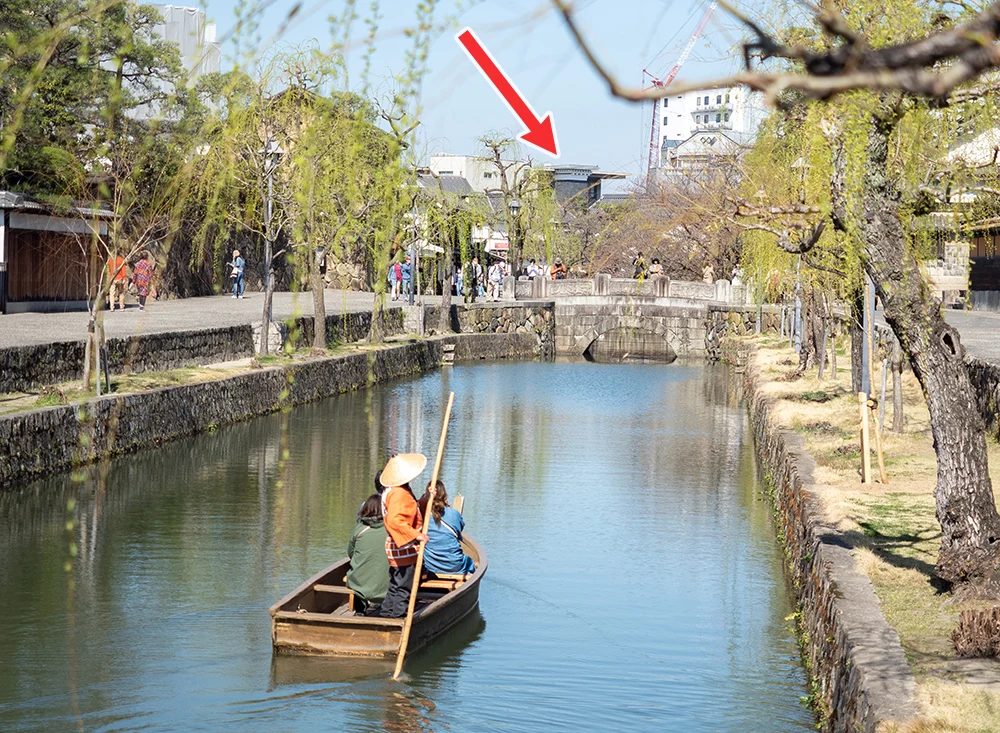
On Friday, Saturday, and Sunday nights, it is illuminated, and the upper part of the elevator tower (the central vertical section) can be seen from Nakabashi over Kurashiki River.
If you stroll through the Bikan Historical Area on weekend nights, be sure to check it out.
Nakabashi is the bridge that spans between the Kurashikikan Tourist Information Office and the Kurashiki Archaeological Museum.
▼ During the day, this is what Jizo-in looks like from Nakabashi.
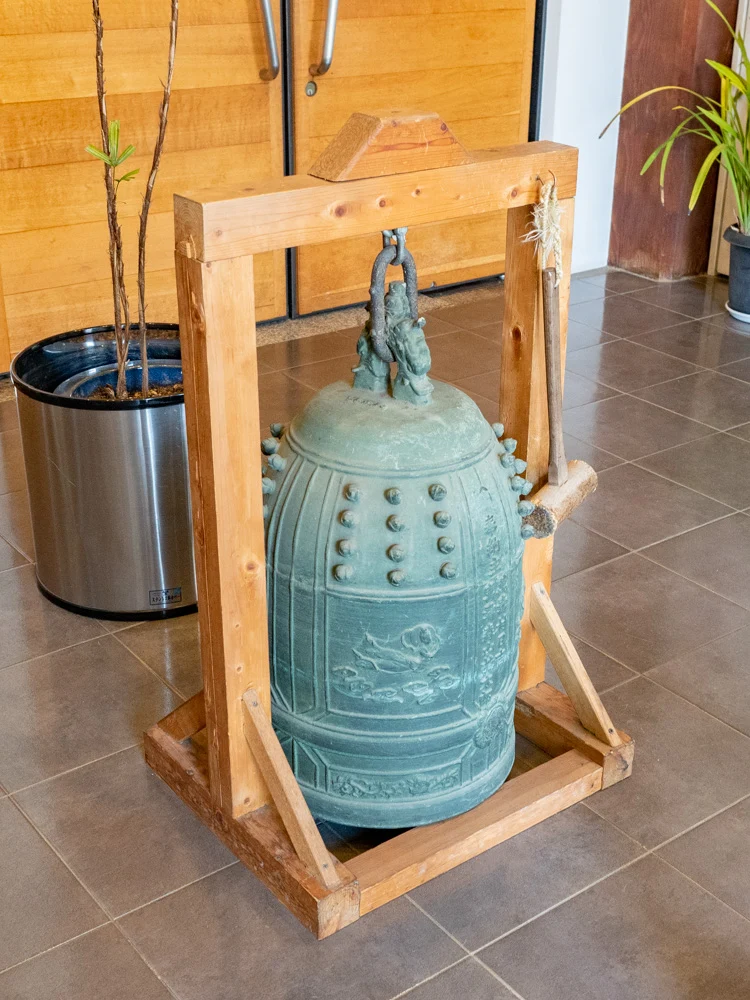
▼ On the first floor, there is a bonsho (temple bell) that is struck with a wooden mallet, which is a rare style.
To the north of the temple, there is the Okuni Kindergarten founded by Jizo-in.
Additionally, Jizo-in is also known as "Koyasan Kurashiki Betsuin."
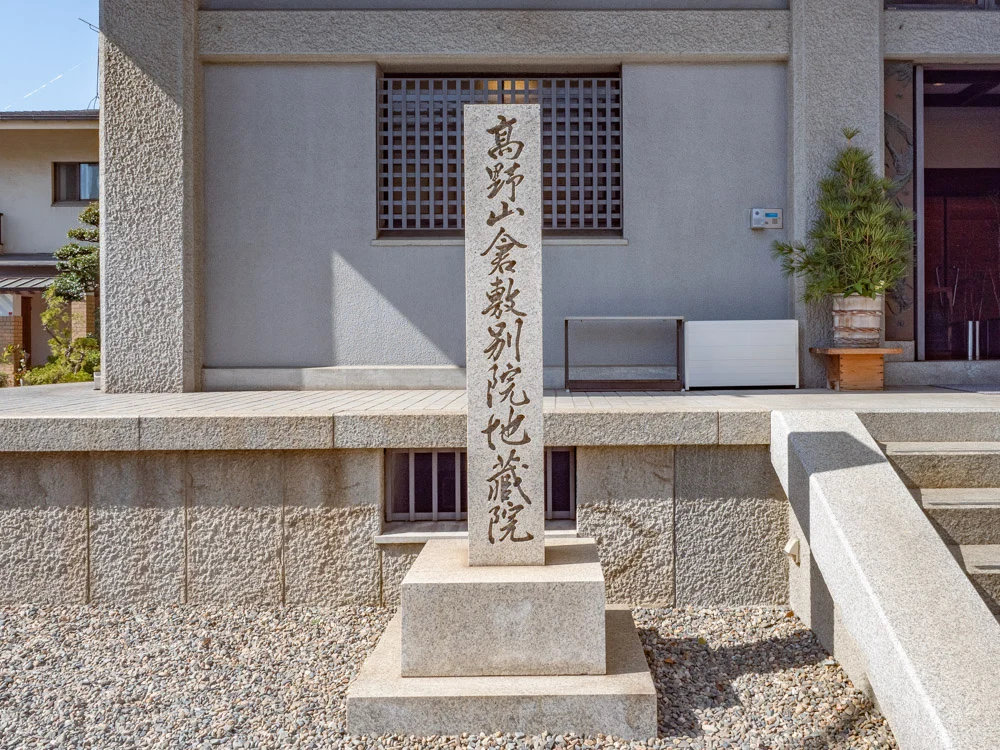
A Betsuin is a temple that has been recognized as a Specially Recognized Betsuin by the head temple of Koyasan.
Furthermore, there is a pilgrimage of Bichu Sacred Sites in the Bichu region (western Okayama Prefecture), which consists of 108 temples of the Koyasan Shingon Sect, with Jizo-in being the 35th and Koyasan Kurashiki Betsuin being the 36th sacred site.
During the Edo period, Jizo-in welcomed the Bishamonten statue from Chogosonshi-ji Temple located in present-day Heguri-cho, Nara Prefecture, which gathered faith in Bishamonten from the surrounding people.
Highlights of Koyasan Kurashiki Betsuin Seiryuzan Jizo-in
Here are the highlights of Jizo-in, which gives a modern impression.
Edo period mid-term demon tiles displayed on both sides of the entrance gate
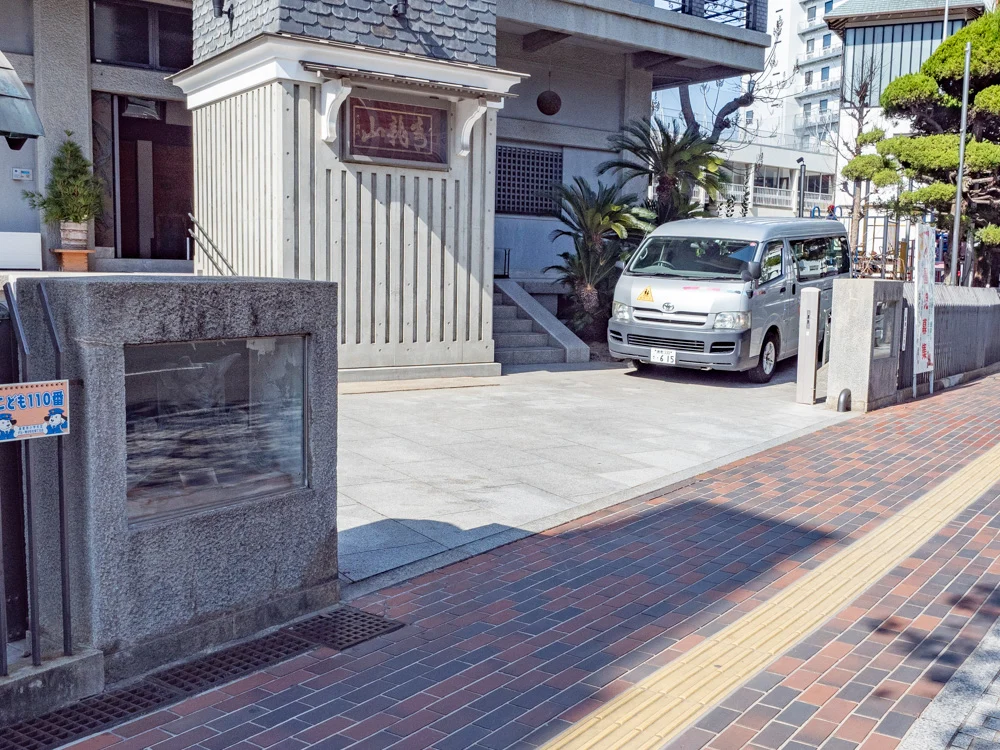
On both sides of the entrance gate of Jizo-in, demon tiles are displayed.
These demon tiles were used in the building that existed before the reconstruction due to urban planning.
The demon tiles were manufactured in the 8th year of Tenmei (1788).
To the left facing the entrance is the demon tile of "Gatten Bosatsu," and to the right is the demon tile of "Nitten Bosatsu."
Holy Kannon statue
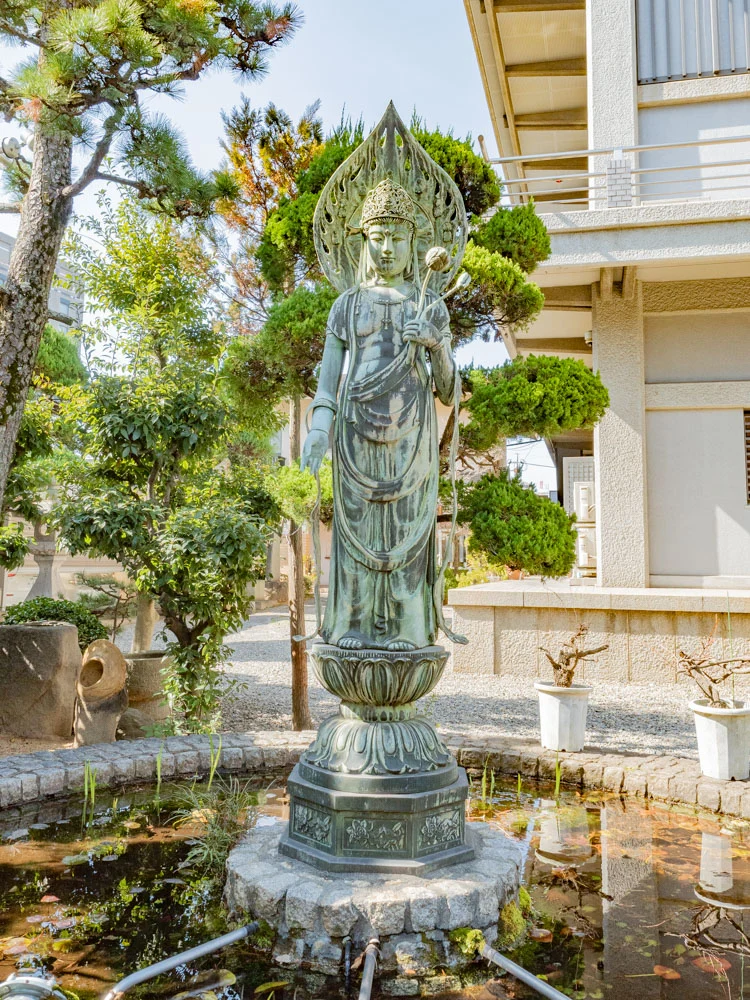
Upon entering the mountain gate, there is a Hojo-ike (pond) immediately to the left, which contains a standing statue of Seikanzeon (also known as Shokanzeon, Holy Kannon).
The Holy Kannon statue is the main deity of Jizo-in.
Therefore, the Holy Kannon statue can be considered a symbolic presence of Jizo-in.
Main hall
▼ The Main Hall of Jizo-in is located on the second floor of the temple building.
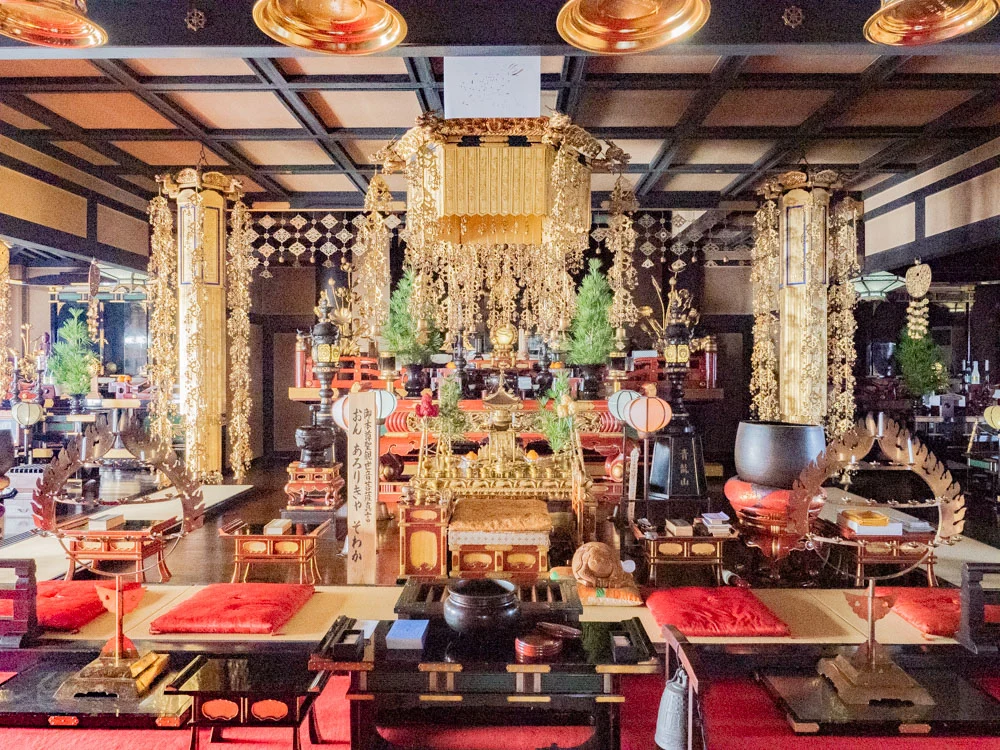
▼ It features very splendid decorations.
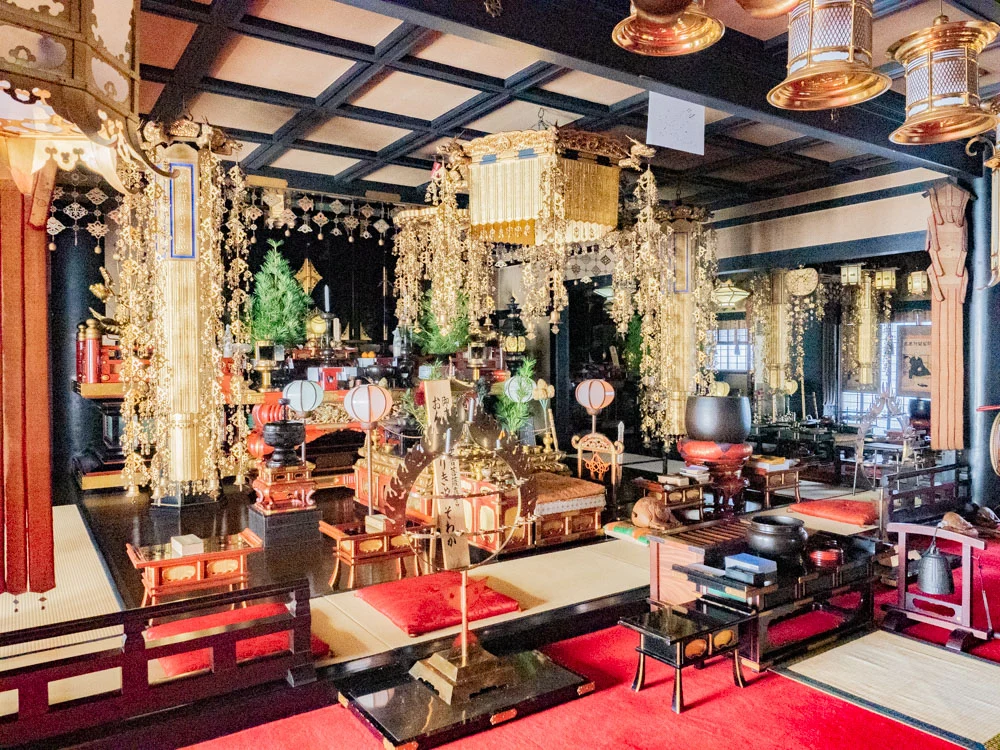
It was unexpected given the reinforced concrete exterior.
It suddenly creates a solemn atmosphere typical of a temple.
During the interview, I was allowed to visit and take photos specially.
Nirvana painting
February 15 is the anniversary of the Buddha's death, known as "Nehan-e."
Therefore, at Jizo-in, the Nirvana painting is displayed in the second-floor main hall throughout February.
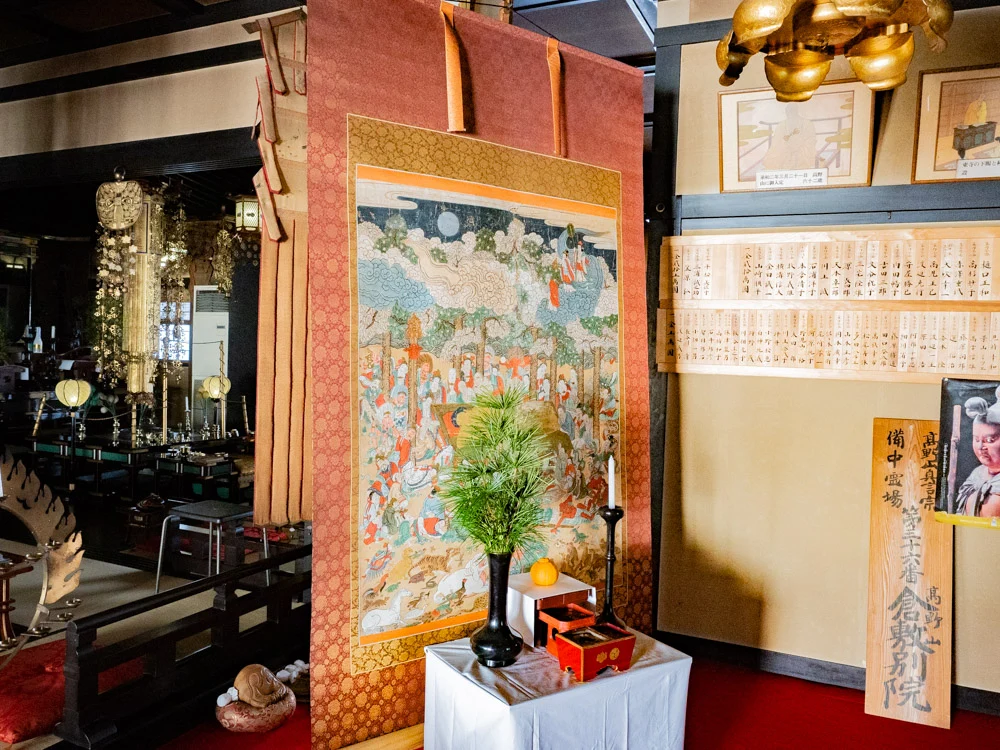
The Nirvana painting depicts the scene when the Buddha passed away (died).
Remarkably, the Nirvana painting at Jizo-in was created about 200 years ago during the Edo period.
▼ In the center, the Buddha is lying down, surrounded by many disciples.
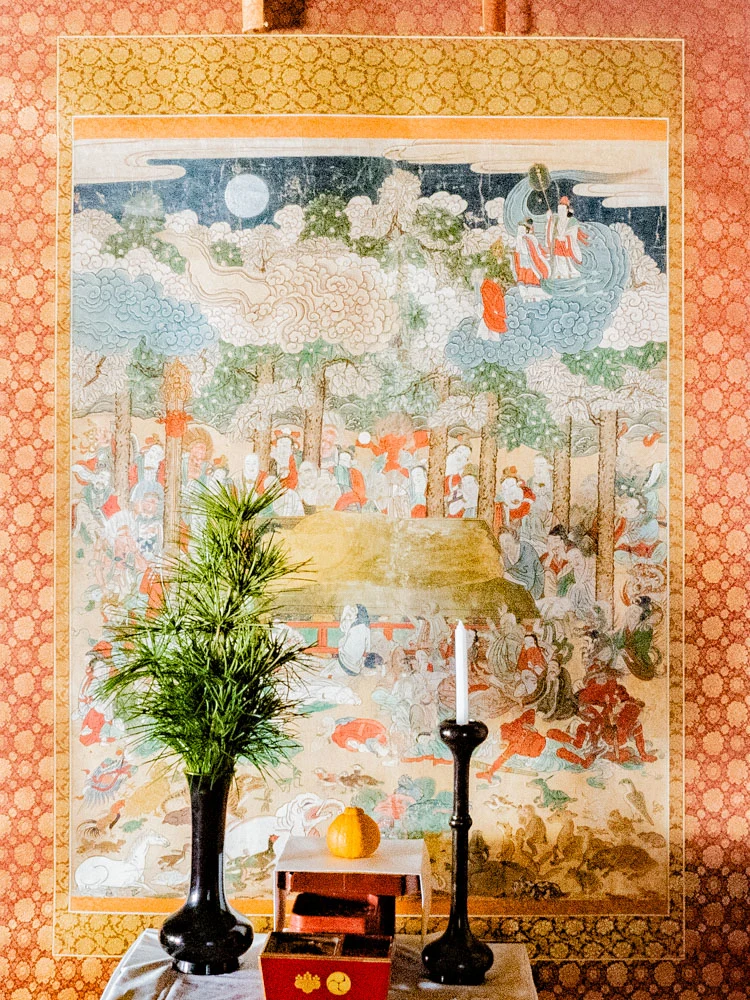
Above the clouds is the Buddha's mother.
She has come to welcome the Buddha.
If you look closely, it seems that other living beings besides humans have also come to witness the Buddha's death.
Bishamonten statue created by Okayama lord Ikeda Tsugumasa
Once, Jizo-in was located about 2.5 kilometers south in the Sasaochi area.
During the Edo period, Sasaochi was initially part of the Bizen Okayama domain, so Jizo-in had strong faith from the Ikeda family, the lords of Okayama.
In particular, the seventh lord of Okayama, Ikeda Tsugumasa, had deep faith and established the temple buildings and donated his own Buddhist statues.
The statue created by Ikeda Tsugumasa is opened (kaihi) once a year during the New Year (January 1-3).
Be sure to visit during the first shrine visit of the year.
▼ The opening hours for the Ikeda family's statue are as follows.
| Date | Opening Hours |
|---|---|
| January 1 | From 6:00 AM to around 6:30 AM |
| January 2 | From 7:00 PM to around 7:30 PM |
| January 3 | From 2:00 PM to around 2:30 PM |
On January 3, a grand "Daibannya Tendoku Ceremony" is held, along with the serving of amazake and a lottery.
Holy Kannon standing statue and thirty-three Kannon standing statues made of five-layered glass in the underground Kannon sacred site
There is a Kannon Hall underground at Jizo-in.
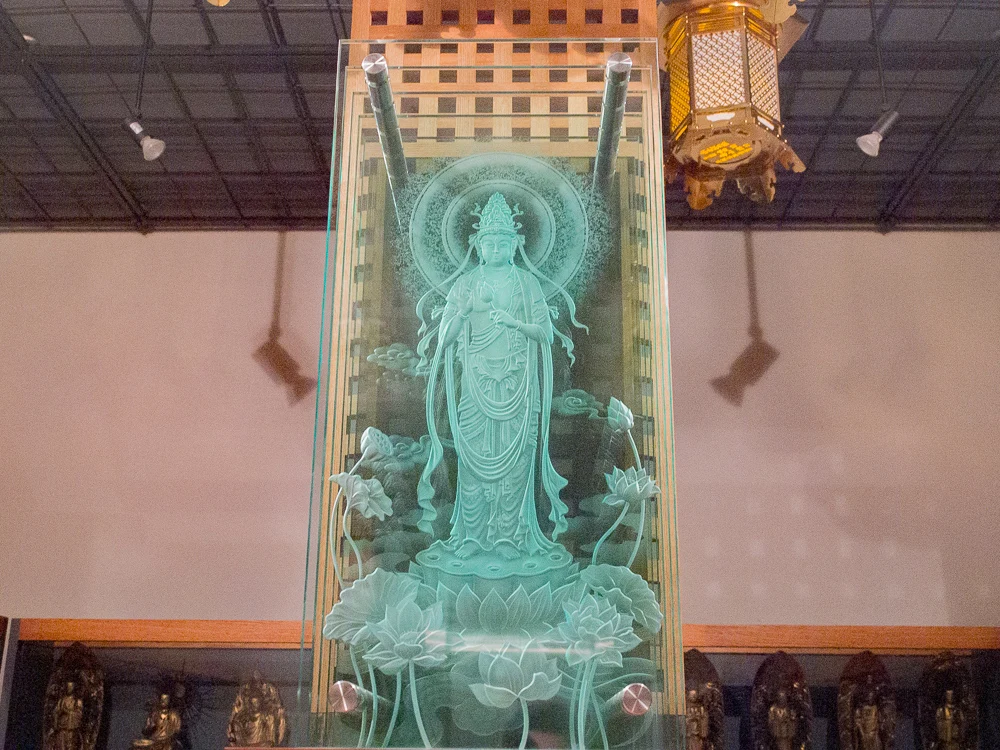
This Kannon Hall contains a Holy Kannon standing statue and a thirty-three Kannon standing statue, which are must-sees!
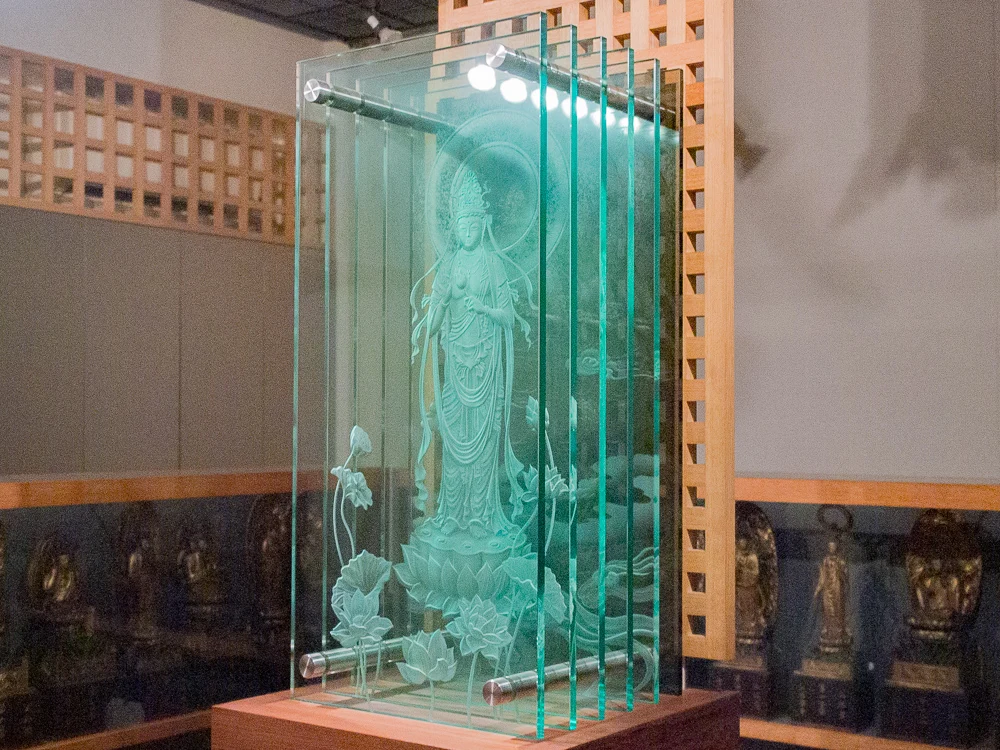
▼ In the center, there is a five-layered glass Holy Kannon standing statue, surrounded by the thirty-three Kannon standing statues from Saigoku.
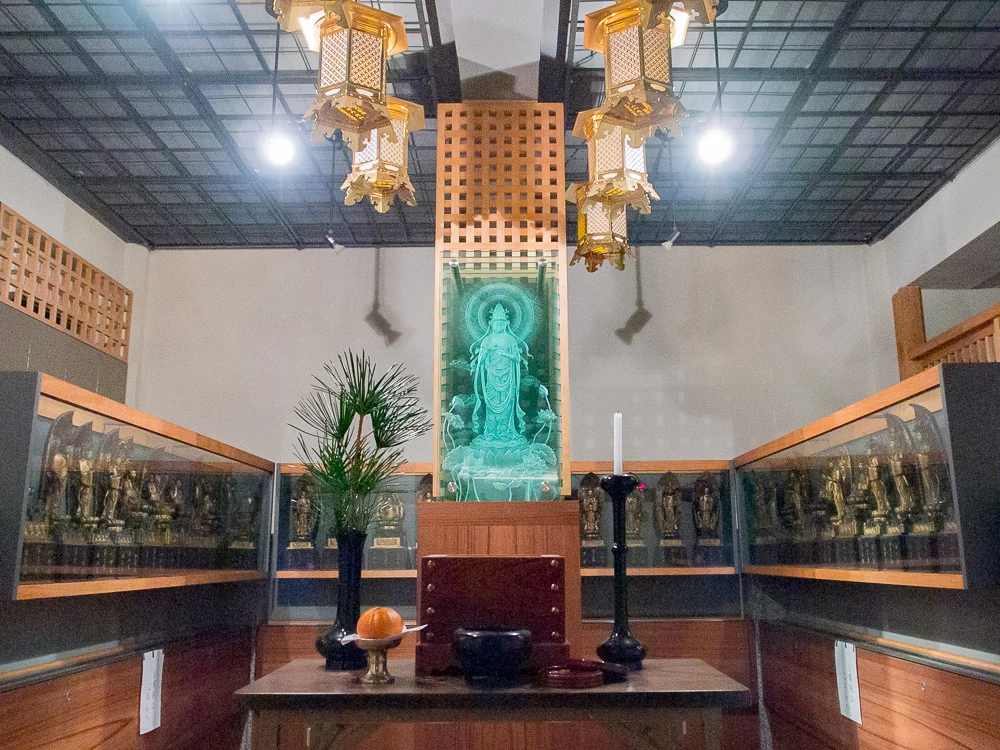
It has a very solemn atmosphere.
The underground Kannon Hall was created during the major renovation in the Heisei era, completed in 2008.
▼ The Holy Kannon standing statue has a very mystical presence.
▼ From the side, you can clearly see that it is made of five-layered glass.
▼The thirty-three Kannon statues surrounding the hall were made in a quite old era.
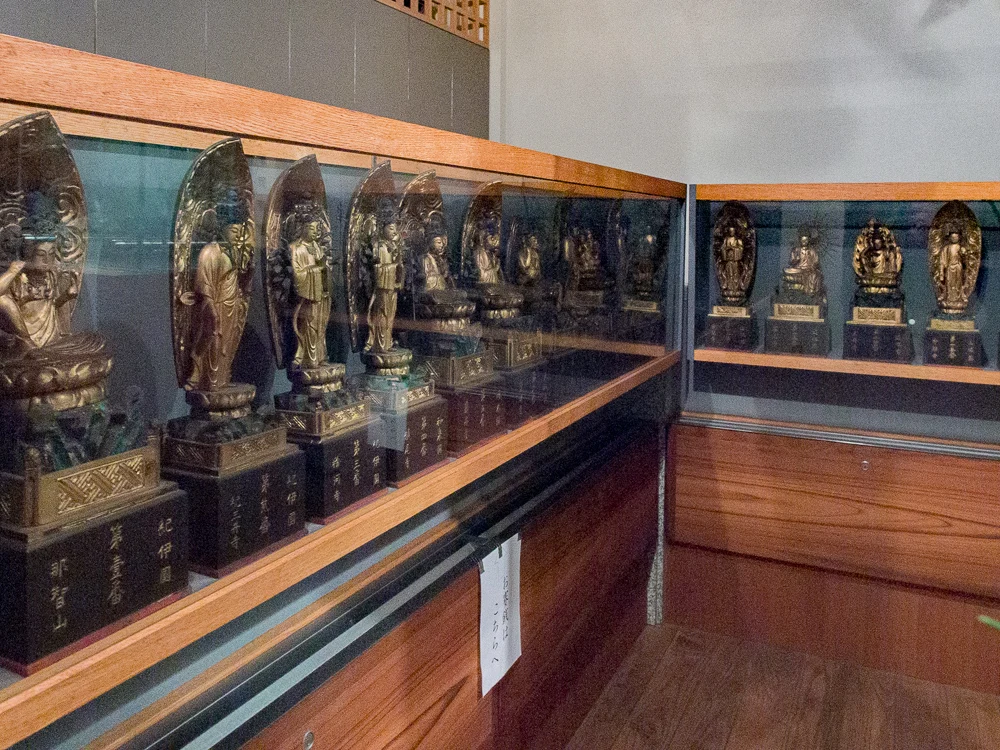
By visiting the Underground Kannon Hall, you will have completed a pilgrimage to all the thirty-three Kannon sacred sites in the Saigoku region.
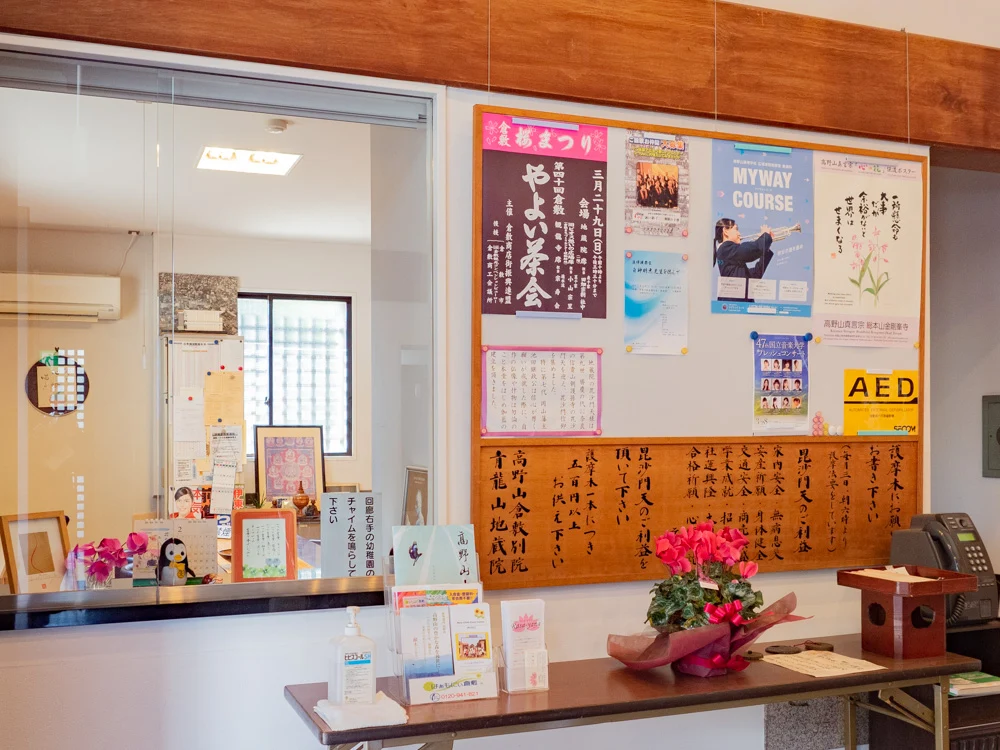
▼If you wish to visit the Underground Kannon Hall, please inform the temple staff on the left side as soon as you enter the first floor by saying, "I would like to visit the Underground Kannon Hall."
Goshuin of Jizo-in, Seiryu-san, Koyasan Kurashiki Betsuin
At Jizo-in, you can receive a goshuin (temple seal).
▼Below is the goshuin of Jizo-in.
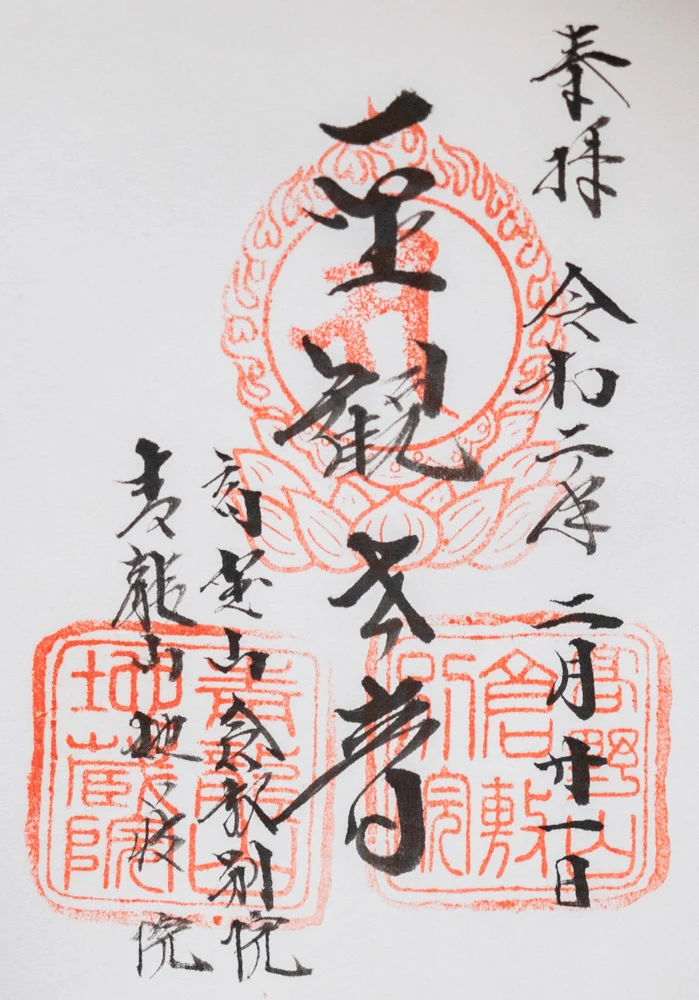
In the center is the name of the principal deity, "Shō Kannon," and in the lower left are the names "Seiryu-san Jizo-in" and "Koyasan Kurashiki Betsuin."
When receiving a goshuin at Jizo-in, please pay the offertory fee.
▼To receive a goshuin, please inform the temple staff on the left side as soon as you enter the first floor by saying, "I would like to receive a goshuin."
Also, if the head priest is absent or if ceremonies or events are taking place, it may not be possible to receive a goshuin, so please check in advance.
Ceremonies at Jizo-in, Seiryu-san, Koyasan Kurashiki Betsuin
The main ceremonies held at Jizo-in throughout the year are as follows.
| Ceremony | Date | Time |
|---|---|---|
| Bishamonten Goma Ceremony (Bishamonten goma hōyō) | January 1 | 6:00 AM - 6:30 AM |
| Bishamonten Goma Ceremony | January 2 | 7:00 PM - 7:30 PM |
| Bishamonten Goma Ceremony, Daikan'nya Tendoku Ceremony(daikan'nya tendoku hōyō) | January 3 | 2:00 PM - 2:30 PM |
| Bishamonten Goma Ceremony | February to December, every 3rd day | 6:00 AM - 6:30 AM |
| Principal Deity (Kannon) Service | 17th of every month | 7:30 PM - 8:00 PM |
| Sending Off the Buddha (Bon Ceremony) | August 15 | 6:00 PM - 8:00 PM |
Ceremonies are open to all, regardless of sect.
Anyone is welcome to attend.
Please note that the dates and times other than New Year and Sending Off the Buddha may change.
Be sure to check in advance when planning to attend.
History of Jizo-in, Seiryu-san, Koyasan Kurashiki Betsuin
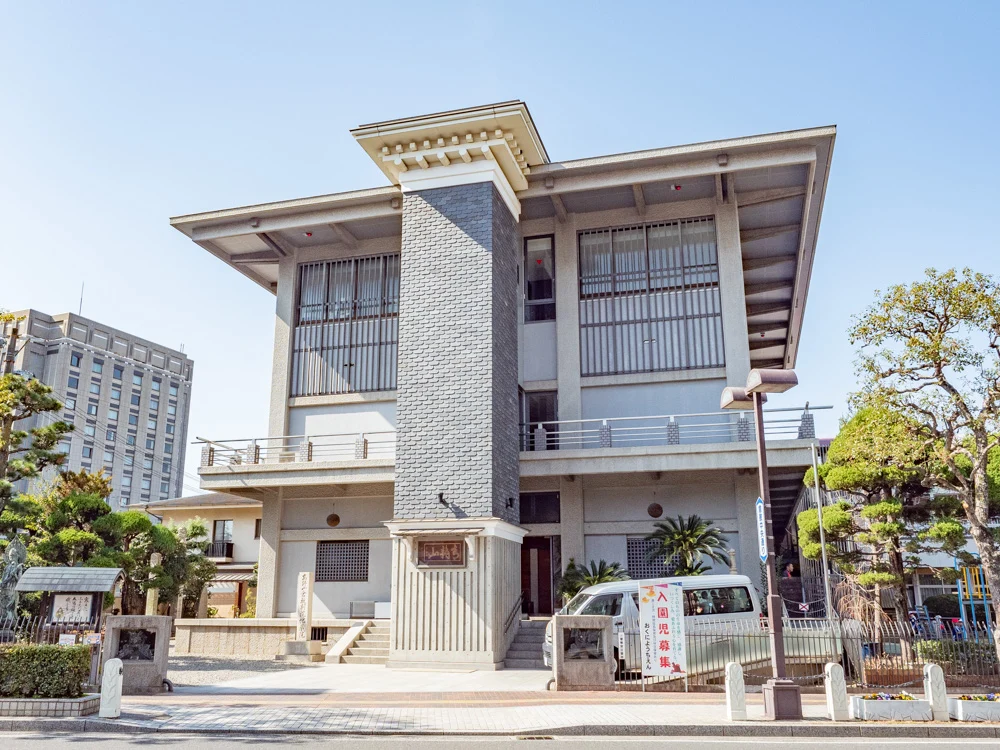
Located in the city center, Jizo-in is a modern building, but it actually has a long history.
It is not known when Jizo-in was founded.
Moreover, it was not always located in its current place.
Initially, it was located about 2.5 kilometers south of its current location, on a mountain called Ashitaka-yama.
This mountain towers just south of the bypass of National Route 2 that passes through the area of Ashitaka.
It was one of the temple offices managing Ashitaka Shrine.
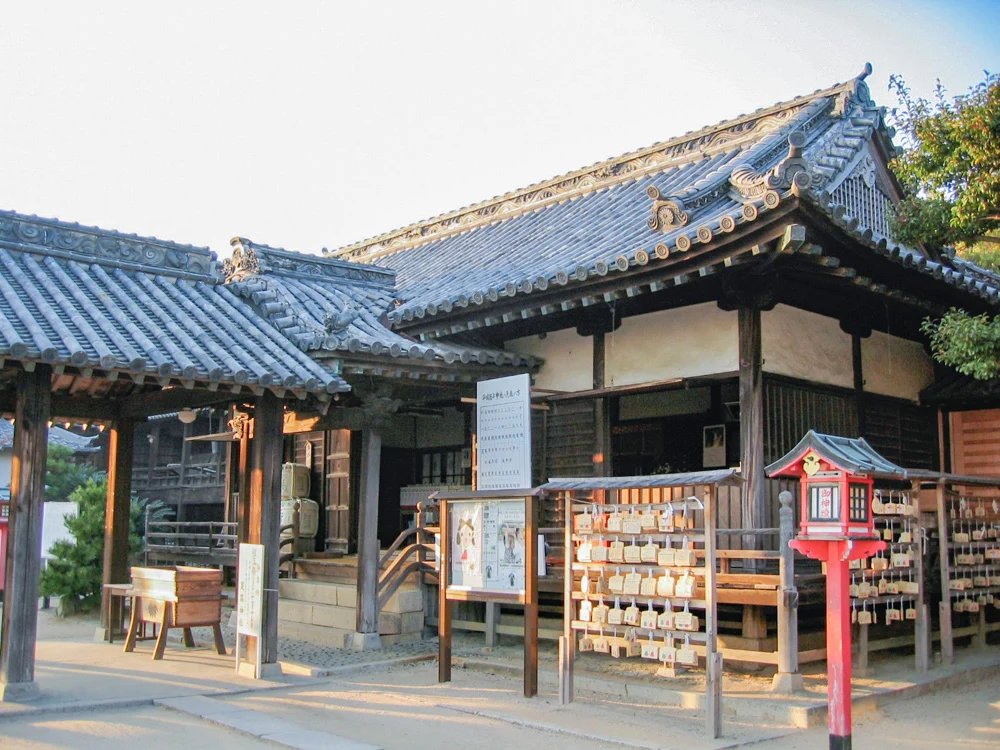
At that time, the temple was called Seiryu-san Jizo-in Inoue-ji.
In the 13th year of the Tensho era (1585), it was relocated to Hiyosho Village, now known as Hiyoshi-cho, Kurashiki City.
Then, in the early Edo period, during the Jōkyō era (1684-1688), it moved to Kurashiki Village (now the center of Kurashiki City).
In December of the first year of the Meiji era (1868), a fire broke out, destroying the main hall and leaving the temple uninhabited.
However, in the 34th year of the Meiji era (1901), Ekai Daioh from Hōtō-ji (now in the Tsurajima area of Kurashiki City) became the new head priest, and the main hall was rebuilt in the 42nd year of the Meiji era (1909).
Furthermore, the current Gokuni Kindergarten was established.
In the 26th year of the Showa era (1951), it was recognized as a special temple under the Koyasan Shingon sect.
Afterward, part of the temple grounds was donated to the city for urban development, and the current building was constructed.
Incidentally, Ashitaka Shrine still stands on Ashitaka-yama today.
Conclusion
Jizo-in is located in an easily recognizable place along Kurashiki Chuo Street.
Although it is a modern building made of reinforced concrete, it surprisingly has a long history.
Moreover, it is a branch temple of Koyasan.
The underground Kannon Hall has a mystical atmosphere and is a must-see.
Additionally, it is noteworthy that Kurashiki, which was a direct territory of the Tokugawa shogunate, had a particularly strong faith from the Okayama clan.
Why not visit during the New Year to see the Buddha statue created by the Okayama clan lord, Ikeda Tsugutaka?
Data of Jizo-in, Seiryu-san, Koyasan Kurashiki Betsuin
| Name | Jizo-in, Seiryu-san, Koyasan Kurashiki Betsuin |
|---|---|
| Sect | Koyasan Shingon Sect |
| Location | 3-20-17 Achi, Kurashiki City, Okayama Prefecture |
| Contact | 086-425-0143 |
| Parking | Available 2-3 cars |
| Main Deity | ・Main Hall: Shō Kannon (Shō Kannon Bosatsu or Shō Kannon) ・Right Hall: Bishamonten ・Left Hall: Jizo and Aizen Myōō |
| Benefits | Benefits in this life |
| Goshuin (Offertory Fee) | Available (300 yen) ※ The offertory fee is regulated by the Bichu branch of the Koyasan Shingon Sect. ※ Not available when the head priest is absent. |
| Visiting Hours | Daytime only |
| Closed Days | Not open for visits on Saturday, Sunday, and public holidays in the afternoon. |
| Admission Fee | None (instead, a donation) |
| How to Pay Admission and Offertory Fees |
|
| Restroom | Western-style toilet |