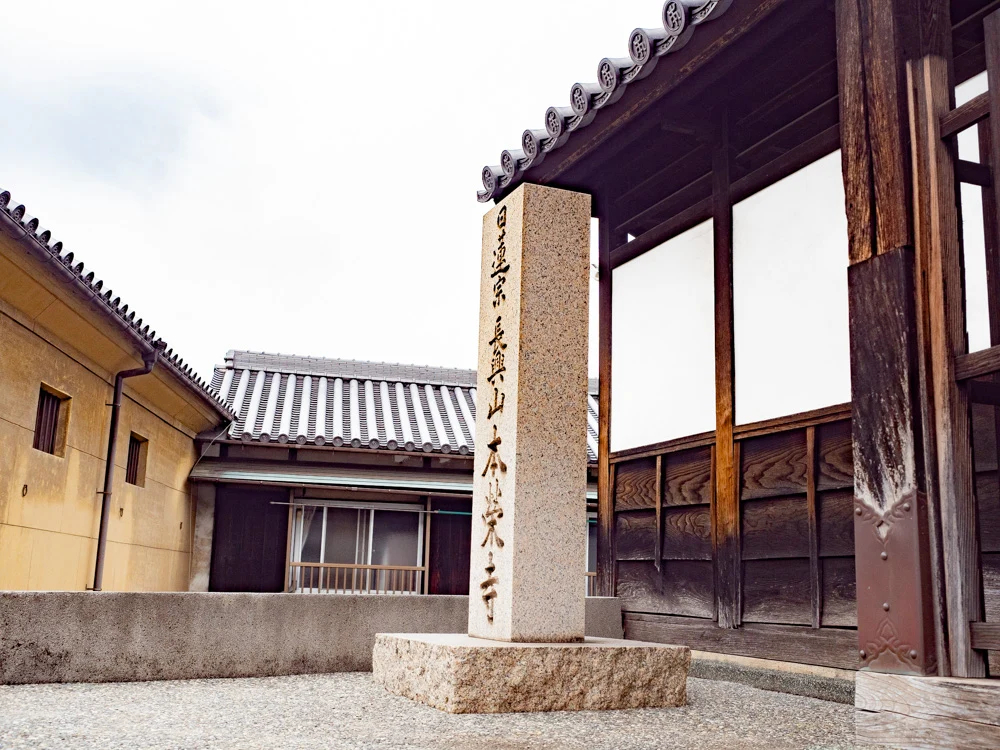
Did you know there is a temple called Honeiji located to the south of Tsurugatayama?
Honeiji is located just behind the nationally designated important cultural property, Inoue House.
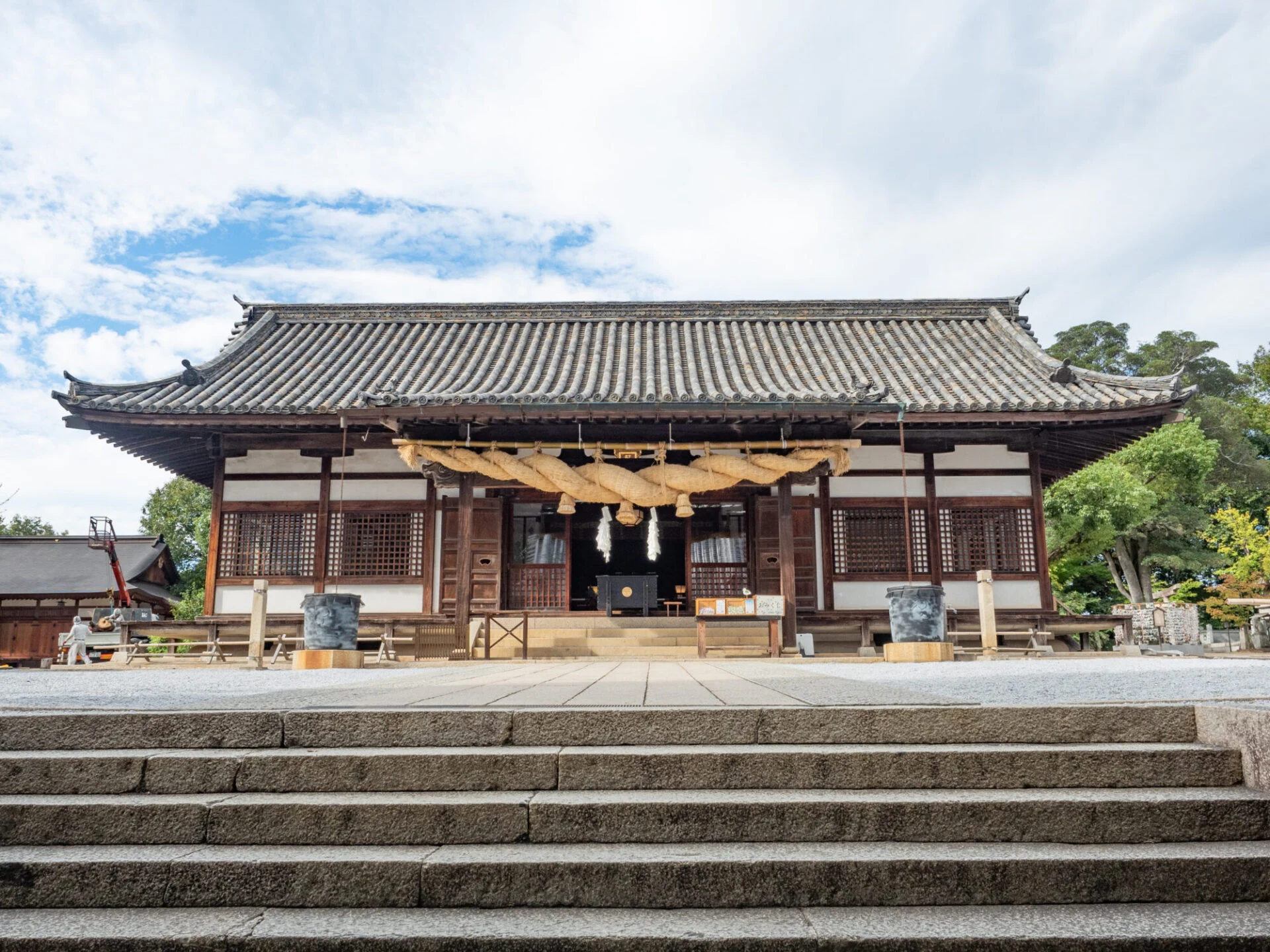
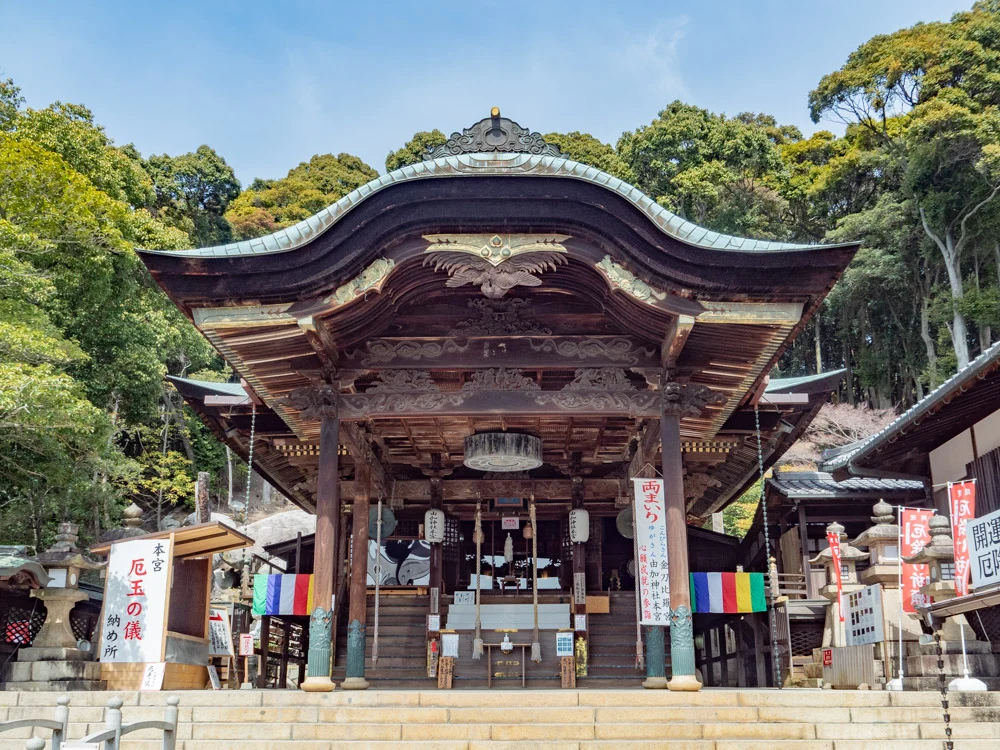
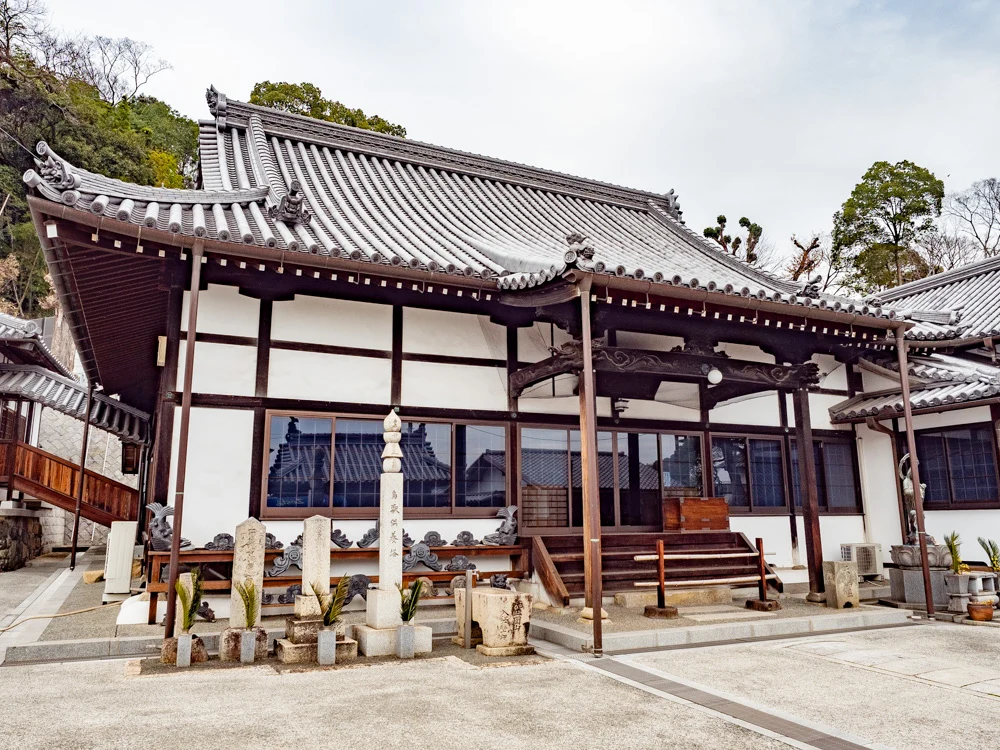
The main hall of Honeiji is a historic building that is said to have been built in the middle of the Edo period.
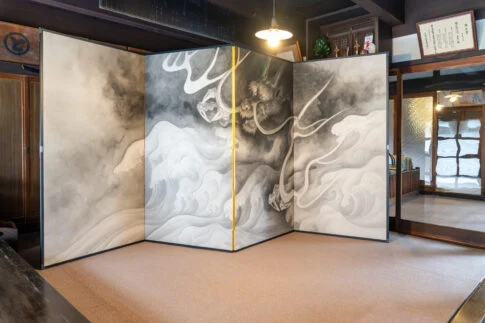
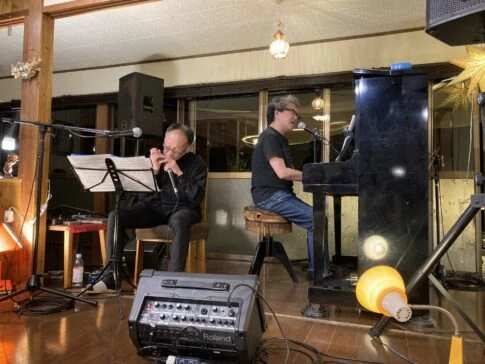
Moreover, the main hall serves as a venue for events such as Kurashiki Jazz Street and the Kurashiki Byoubu Festival.
Despite being a historic temple, Honeiji also hosts events, and we would like to introduce it.
Honeiji is an old Nichiren temple located at the southern foot of Tsurugatayama
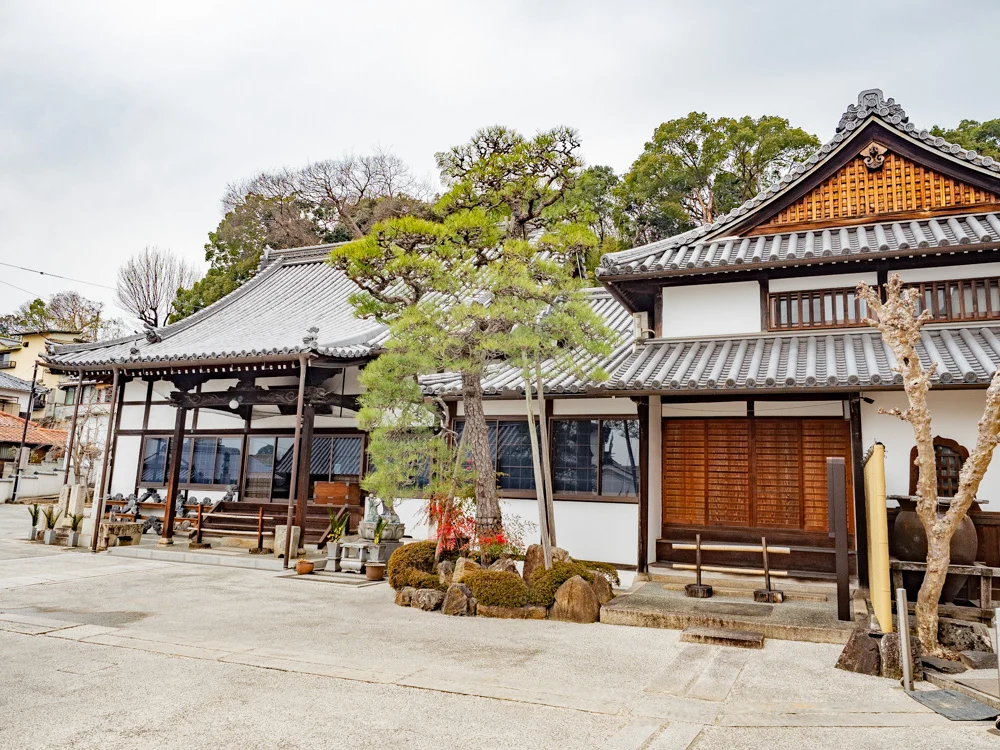
Honeiji is a temple located at the foot of Tsurugatayama.
It is situated directly behind the Inoue House, which is a nationally designated important cultural property.
The mountain name is Chokozan.
Compared to nearby Kanryuji Temple and Achi Shrine, this temple is less frequently mentioned in tourist information.
However, Honeiji is a historic Nichiren temple that has been in existence since the early Edo period.
Highlights of Honeiji
Here, we will introduce the highlights of the grounds of Honeiji.
Please refer to this when visiting Honeiji.
Sanmon Gate
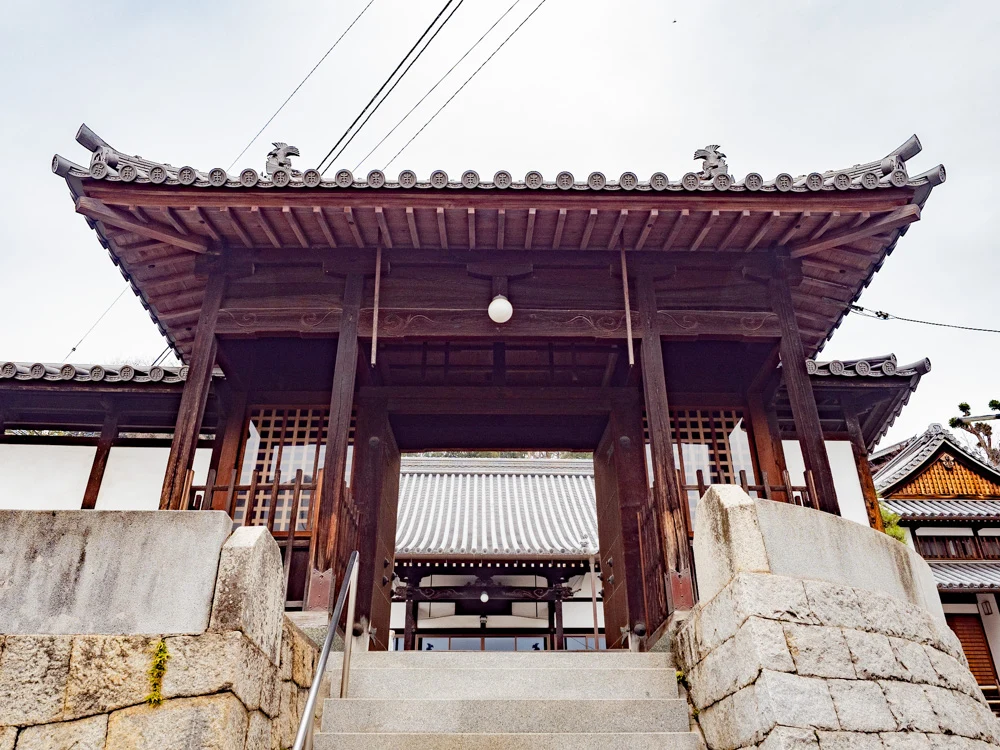
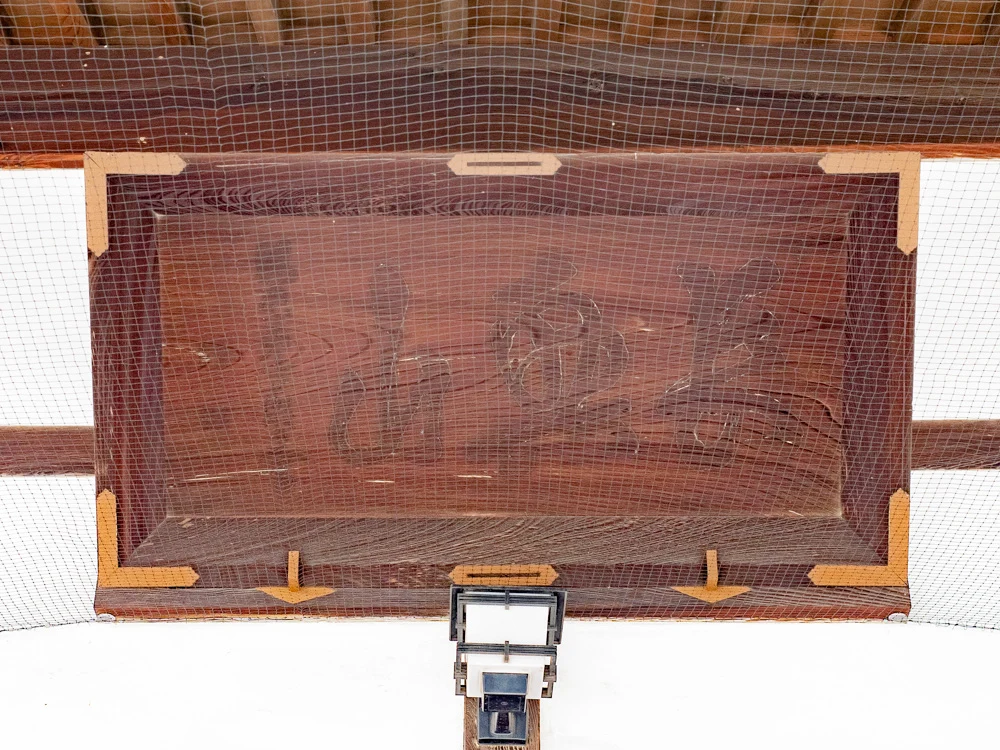
Behind the Inoue House, on a slightly elevated area with stone walls, stands a large Sanmon Gate.
Main hall built in the mid-Edo period
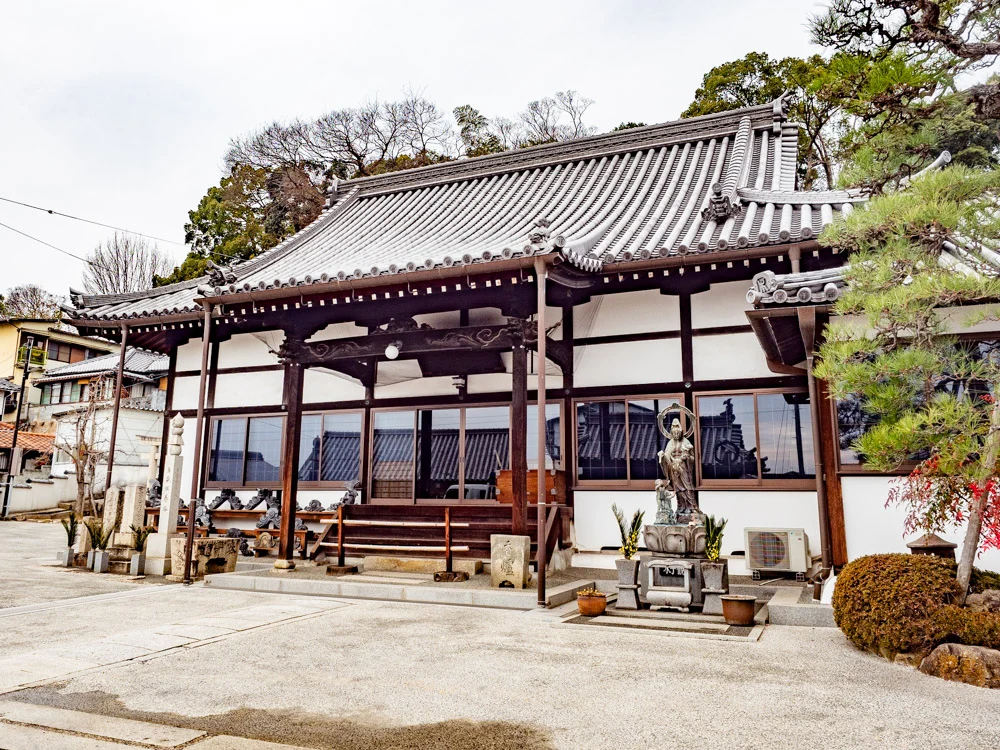
As you pass through the Sanmon Gate, the first thing you see is the Main Hall.
It is a large and magnificent main hall, and its exterior gives a newly renovated impression.
However, this main hall was actually built in the 14th year of the Horeki era (1764), making it very old.
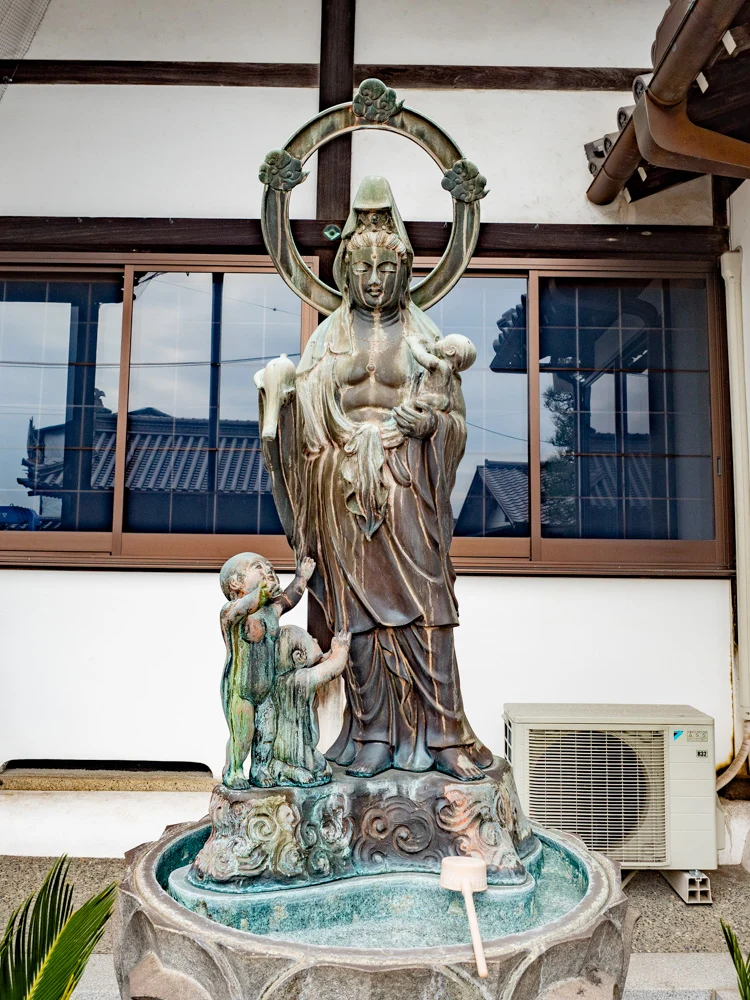
▼To the right of the main hall is a statue of Mizuko Kannon.
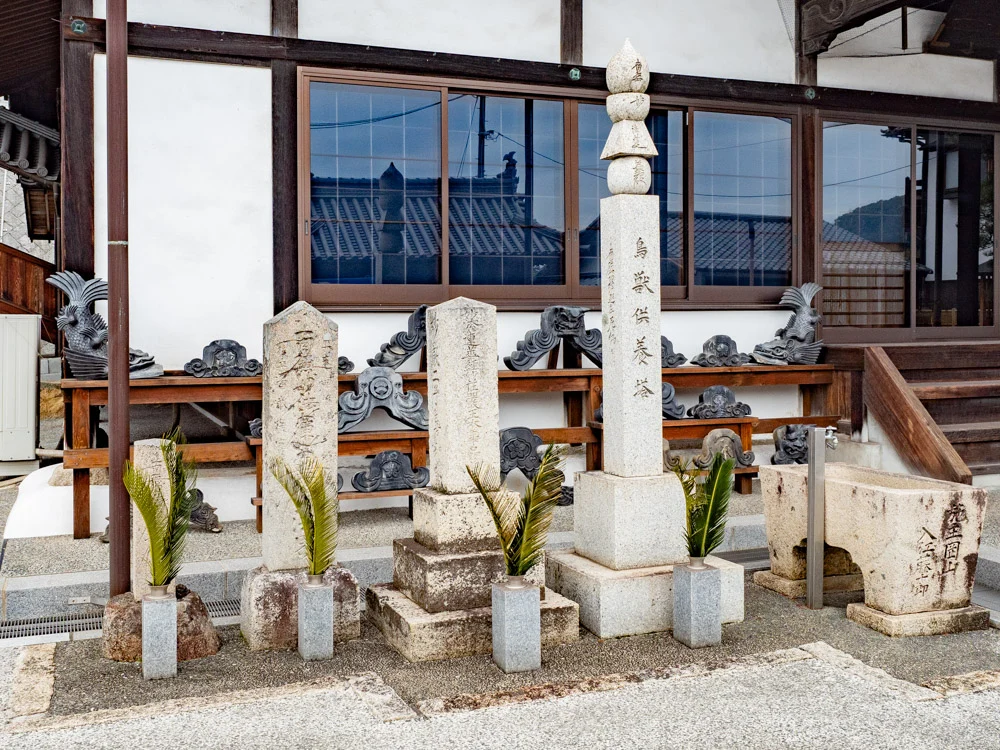
▼To the left, there is a Chojyu Kuyo Tower.
Myoken-do
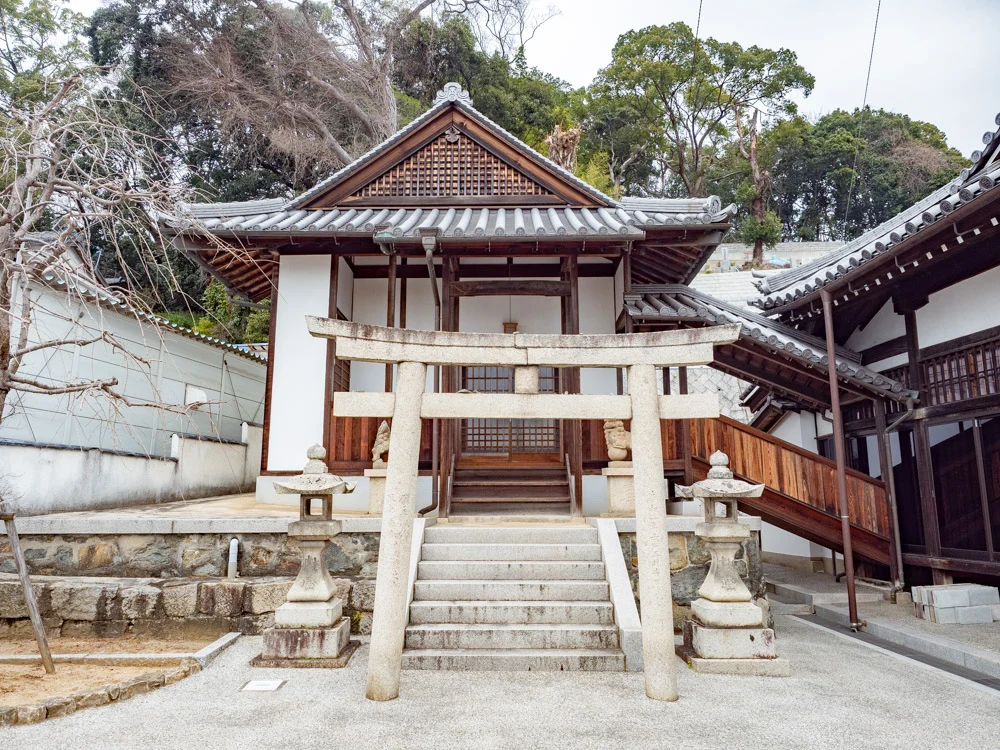
▼The building located to the left of the main hall is called Myoken-do.
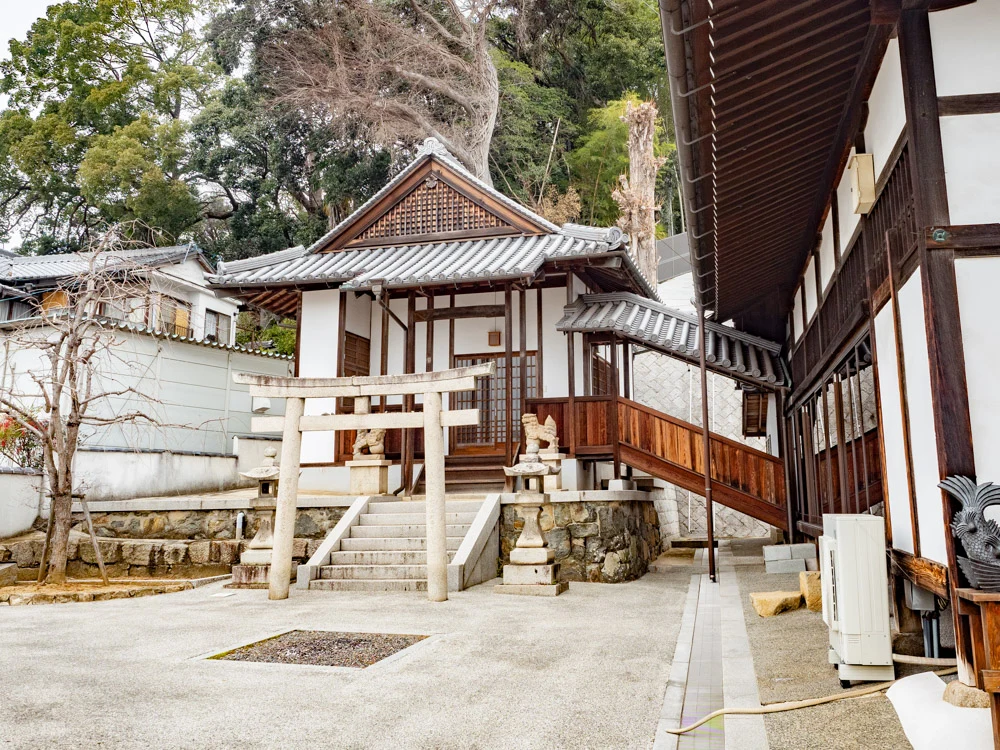
In Myoken-do, the Myoken Bosatsu is enshrined.
Myoken Bosatsu is said to be represented by the North Star and the Big Dipper.
▼The presence of a torii gate suggests the remnants of the syncretism of Buddhism and Shinto that existed until the Edo period.
Seisho-do dedicated to Kato Kiyomasa
▼To the right of the main hall is the temple office.
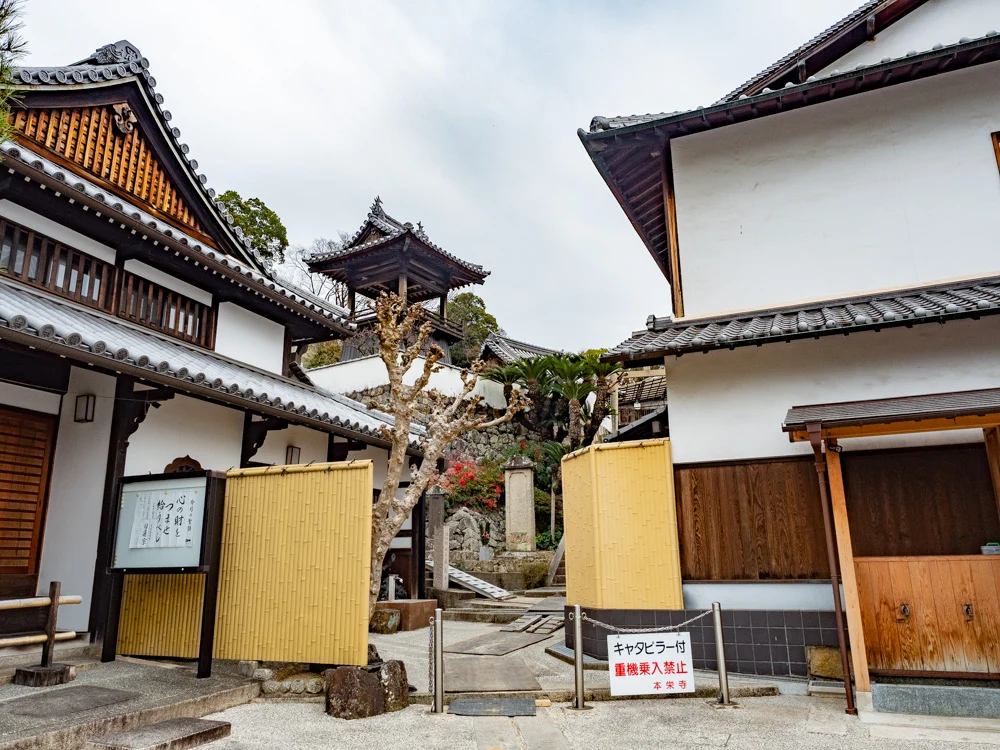
▼If you proceed further to the right of the temple office, there are stone steps that lead to a slightly elevated area.
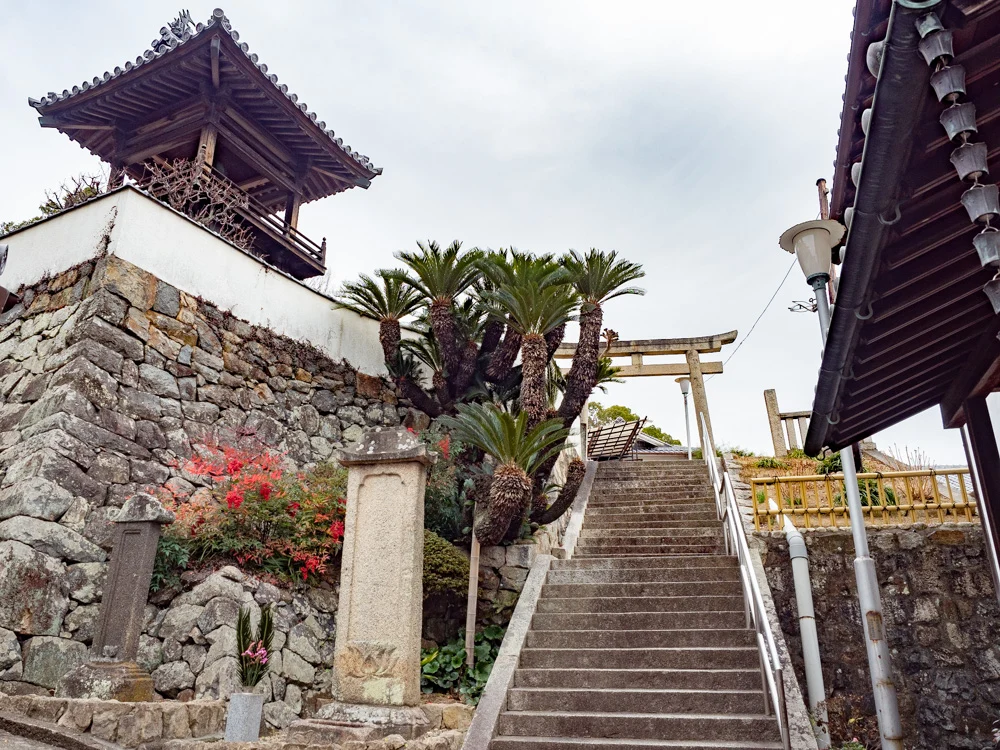
▼Here is the Seisho-do.
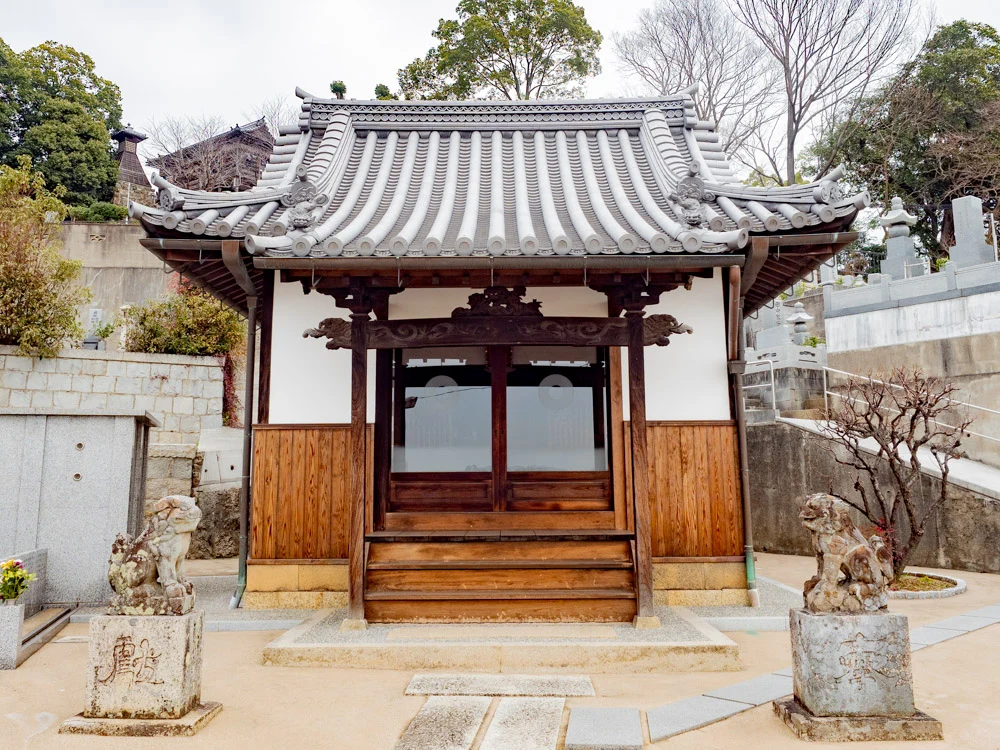
Seisho-do enshrines the famous feudal lord Kato Kiyomasa as its name suggests.
He is a well-known figure often mentioned in textbooks.
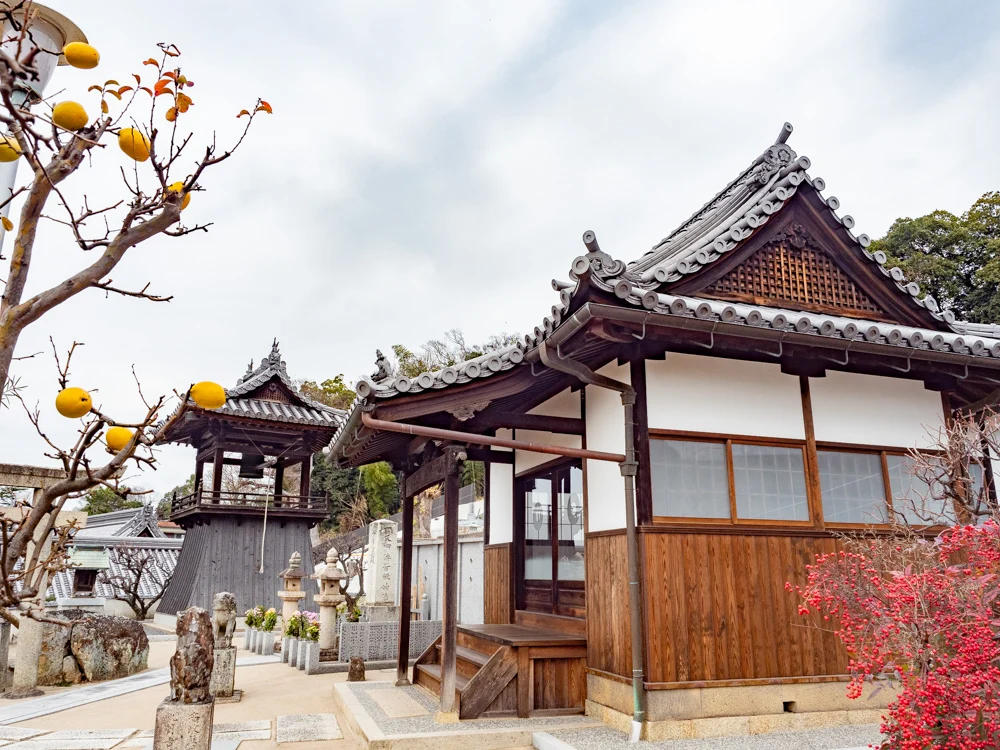
Kato Kiyomasa was a devout follower of Nichiren Buddhism.
For this reason, he is enshrined at Honeiji, which is a Nichiren temple.
To the right of Seisho-do, there is also a karin tree.
▼During the interview, the karin fruit was just starting to grow.
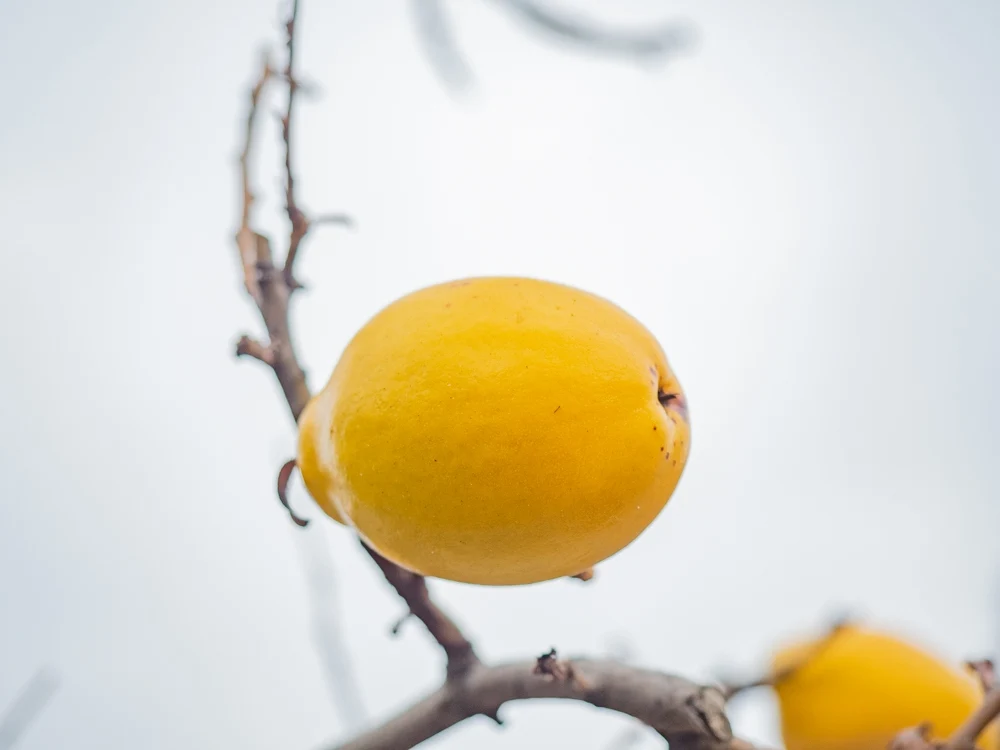
▼It seems that a lot of fruit grows on it.
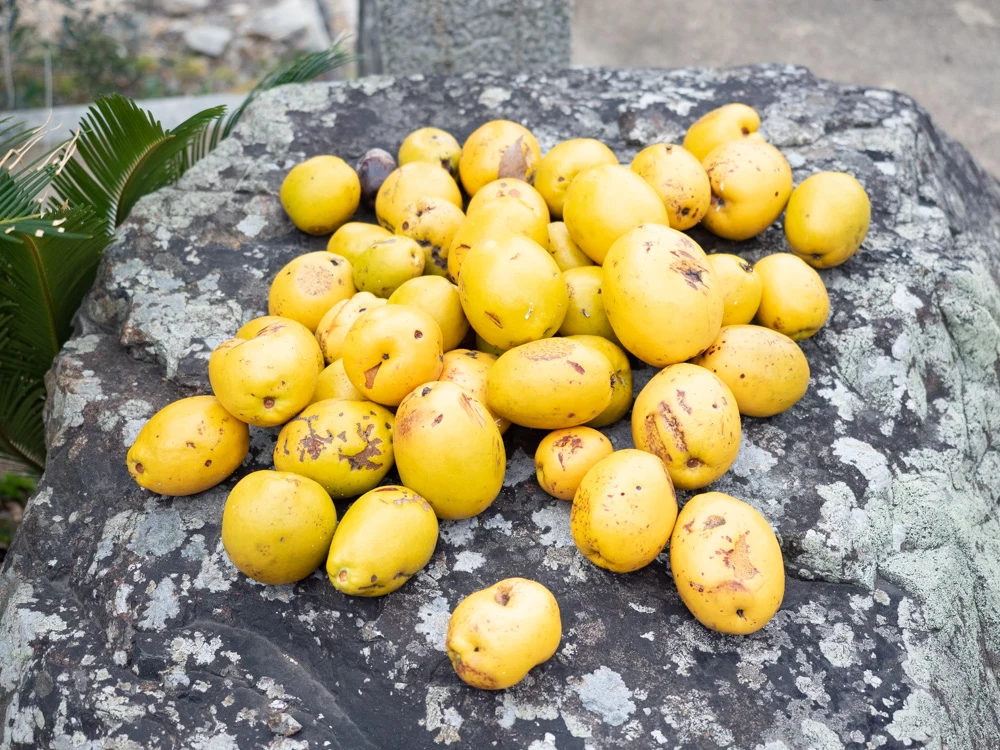
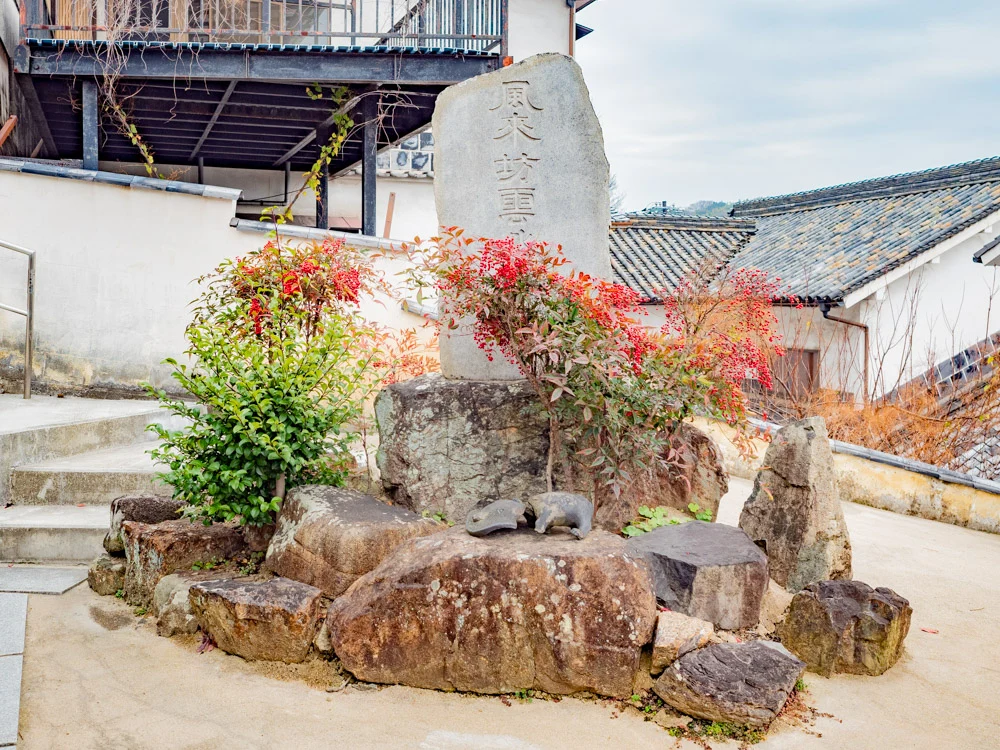
▼Additionally, to the right of Seisho-do, there is a Furaibo Unzui Monument.
Bell Tower
▼To the left of Seisho-do is the Bell Tower.
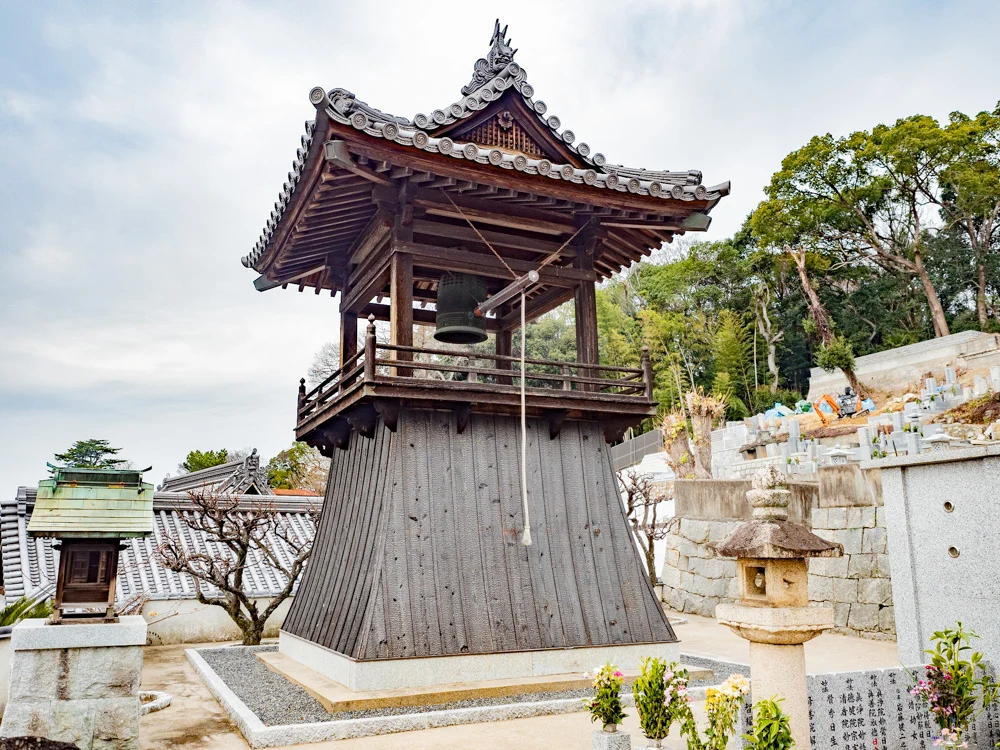
The bell tower is a building that houses a bonshō (temple bell).
▼The bell tower of Honeiji is quite tall, and it is characterized by having the bonshō at a high position.
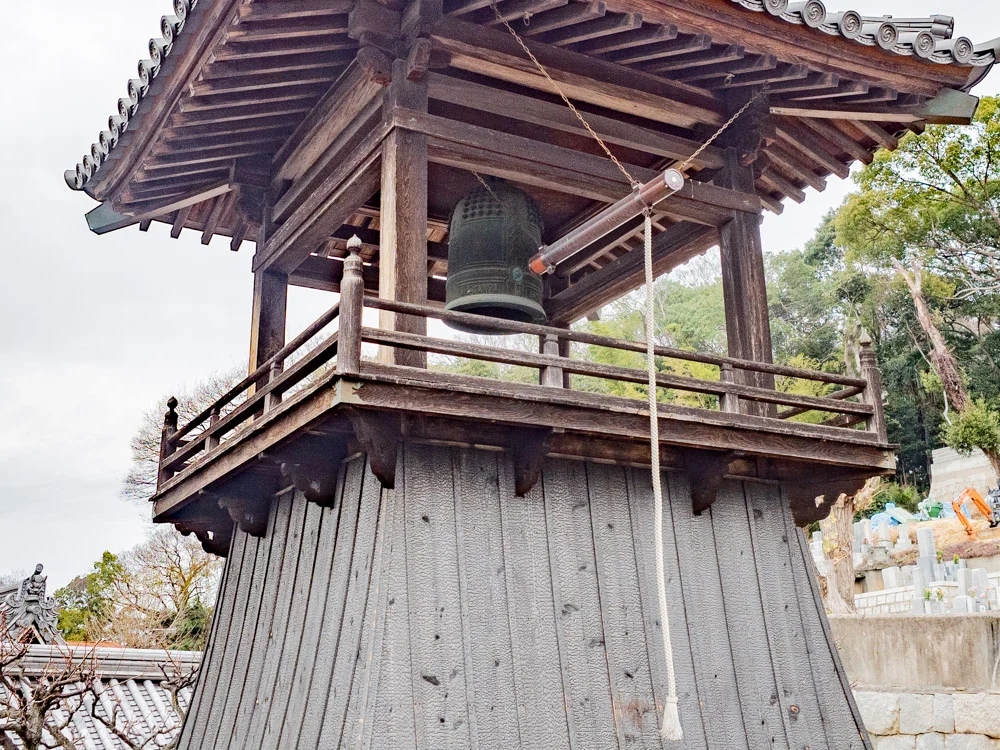
▼Next to the bell tower, there was also a small shrine.
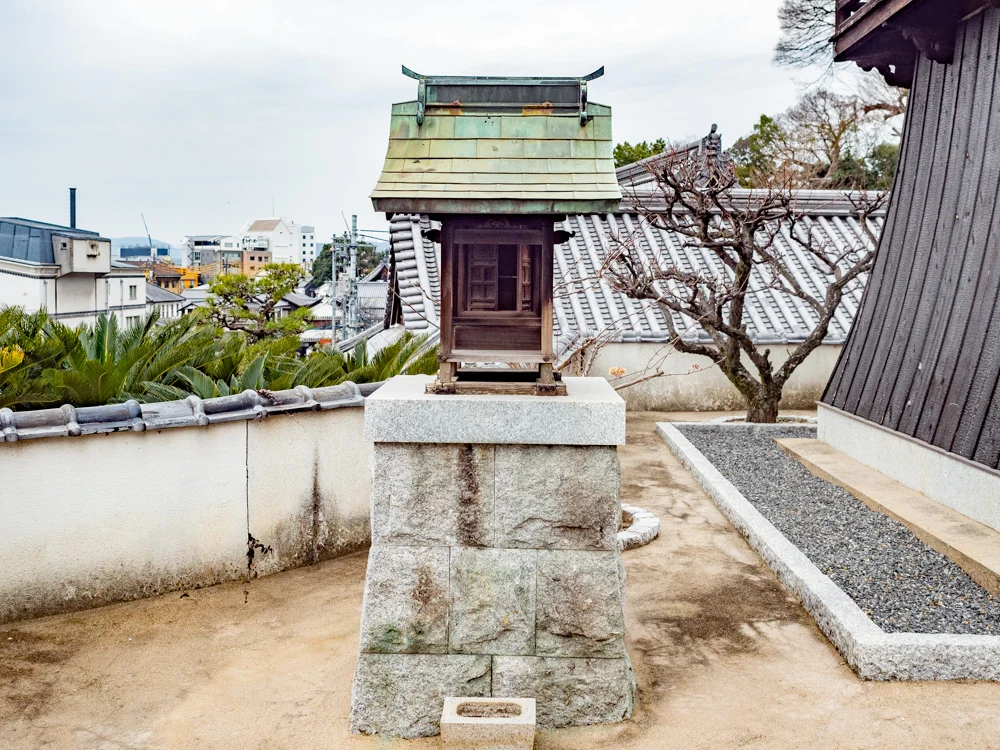
View from Seishodō and the Bell Tower
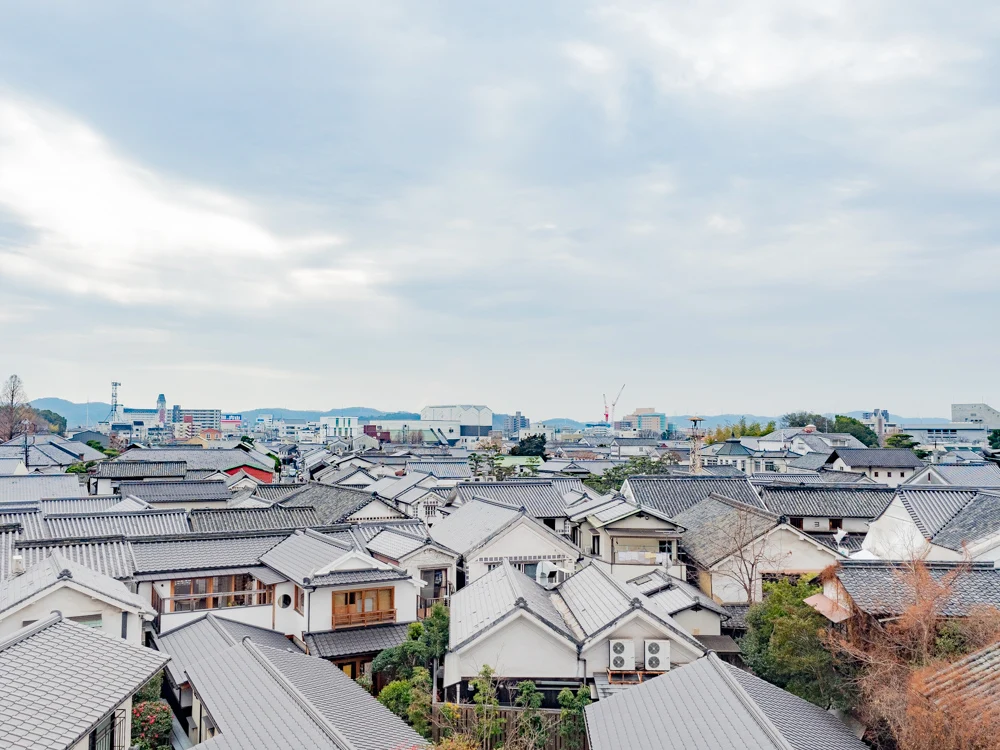
Honeiji is located on a slightly elevated area compared to its surroundings, and the area where Seishodō and the Bell Tower are situated is even higher, allowing for a view of the Bikan Historical Area.
▼Additionally, facing north, you can see Achi Shrine's Zuishin Gate, Ema Hall, and tall lanterns.
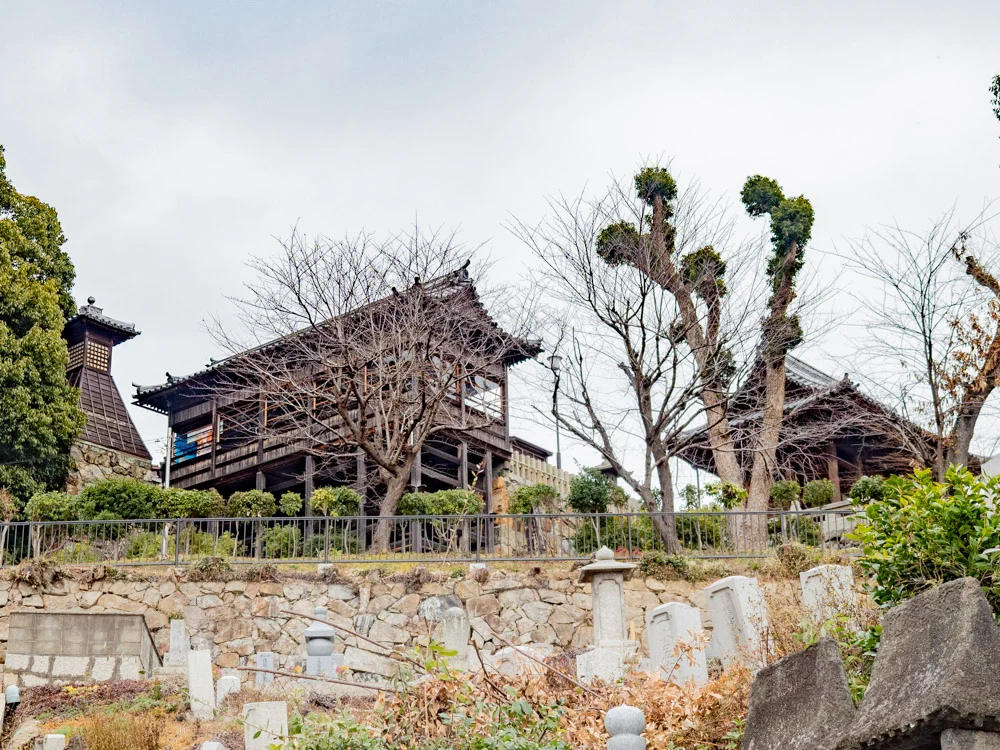
Honeiji is a Venue for Jazz Street and Byoubu Festival
Honeiji has a long history that dates back to the early Edo period.
On the other hand, it also serves as a venue for events such as Kurashiki Jazz Street and Kurashiki Byoubu Festival.
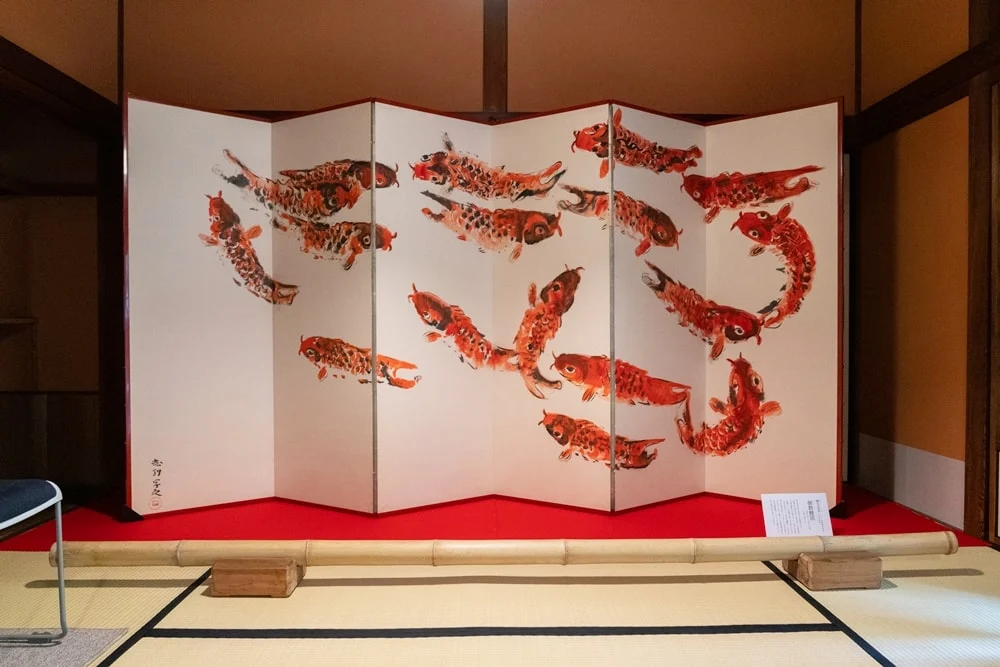
Both events are held in the main hall.
It is a rare opportunity to tour the historic main hall built in the mid-Edo period.
When Jazz Street and the Byoubu Festival are held, be sure to stop by Honeiji as well.
Honeiji's Goshudai
At Nichiren sect temples, you can receive a "Goshudai" instead of a goshuin.
▼Below is Honeiji's Goshudai.
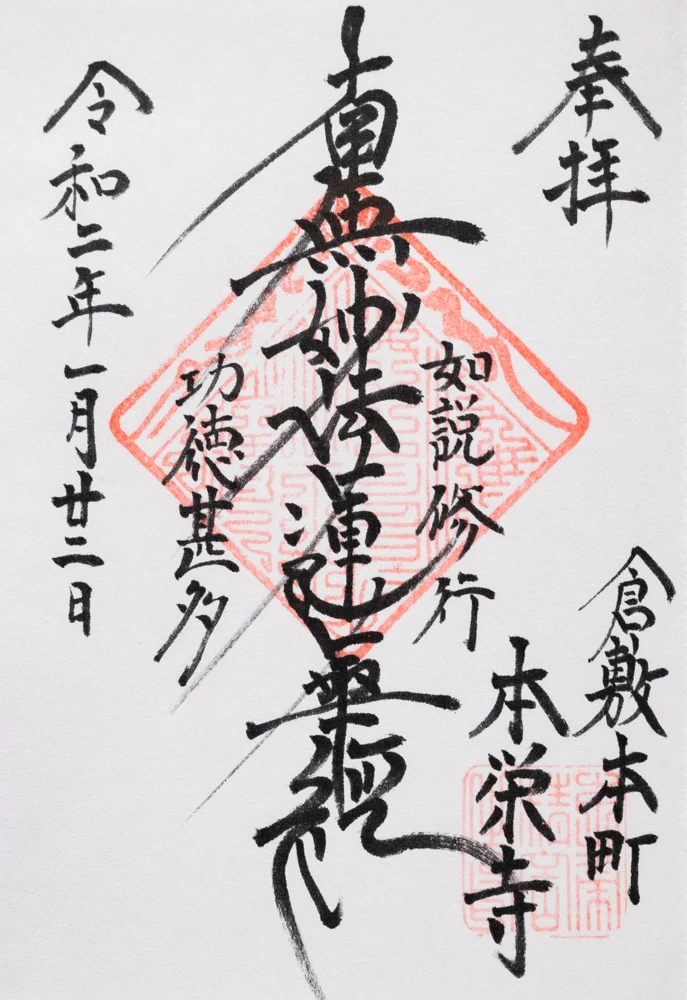
When receiving the Goshudai at Honeiji, it is necessary to pay a donation fee.
However, Honeiji does not specify the amount of the donation fee.
Additionally, if the chief priest is absent or if a memorial service is being held, the Goshudai cannot be issued.
Furthermore, when receiving the Goshudai at Nichiren sect temples, it is advisable to prepare a separate Goshudai book for Nichiren sect, distinct from those of other sects.
What is Honeiji's Main Deity and Benefits?
What kind of main deity is enshrined at Honeiji, and what benefits does it provide?
Honeiji is a temple of the Nichiren sect.
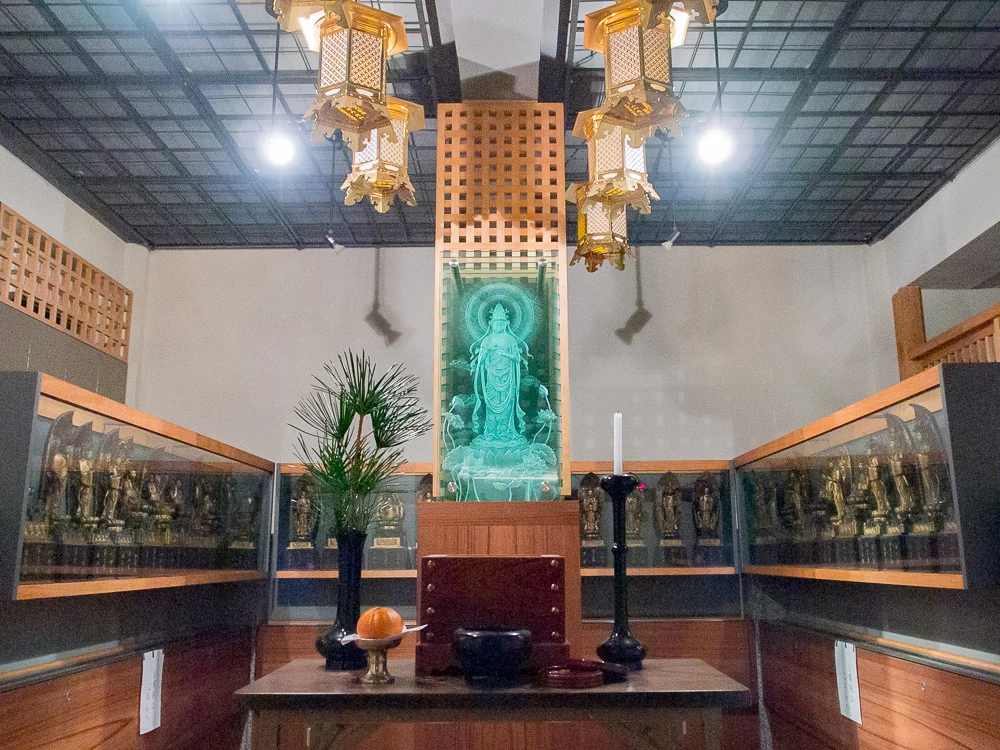
Many Nichiren sect temples enshrine the Great Mandala as their main deity.
The Great Mandala features the phrase "Namu Myoho Renge Kyo" written in the center, surrounded by the names of various Buddhas as recorded in the Lotus Sutra.
The benefits are said to be "Genze Annon" and "Goshō Zensho".
In this context, it means living a peaceful life in this world and being born in a good place in the next life.
History of Honeiji
Now, let me introduce the history of Honeiji.
Honeiji was not originally located in its current place.
Originally, Honeiji was situated at the southern foot of Asitaka Mountain, about 2.5 kilometers southwest of the Bikan Historical Area.
At that time, it was known as Rengeji, and its mountain name was Myohozan.
In the early Edo period, in the 12th year of the Kan'ei era (1635), it was moved to Kurashiki Village.
At that time, a monk from Myohonji Temple in Kamakura's Hikigayatsu was called, and the temple's name was changed to Honeiji, with the mountain name changed to Chokozan.
Since then, it has gathered faith in the Kurashiki area.
Conclusion
Despite being a historic old temple, Honeiji also participates in events such as Jazz Street and the Byoubu Festival.
The temple may seem difficult to access on regular days, but during events, it is easy to visit.
When Jazz Street and the Byoubu Festival are held, be sure to check out the historic main hall and temple grounds as well.
Data on Honeiji
| Name | Honeiji |
|---|---|
| Other Name | Chokozan |
| Sect | Nichiren sect |
| Location | 1-41 Honmachi, Kurashiki City, Okayama Prefecture |
| Contact | 086-422-2844 |
| Parking | None |
| Main Deity | Great Mandala |
| Benefits | Genze Annon, Goshō Zensho |
| Goshūin (Donation Fee) | Available (No specified amount for donation fee) ※ Not available when the chief priest is absent |
| Visiting Hours | Daytime only |
| Closed Days | None |
| Admission Fee | None |
| How to Pay Admission Fee and Donation Fee |
|
| Website | Chokozan Honeiji | Nichiren Sect Temple |