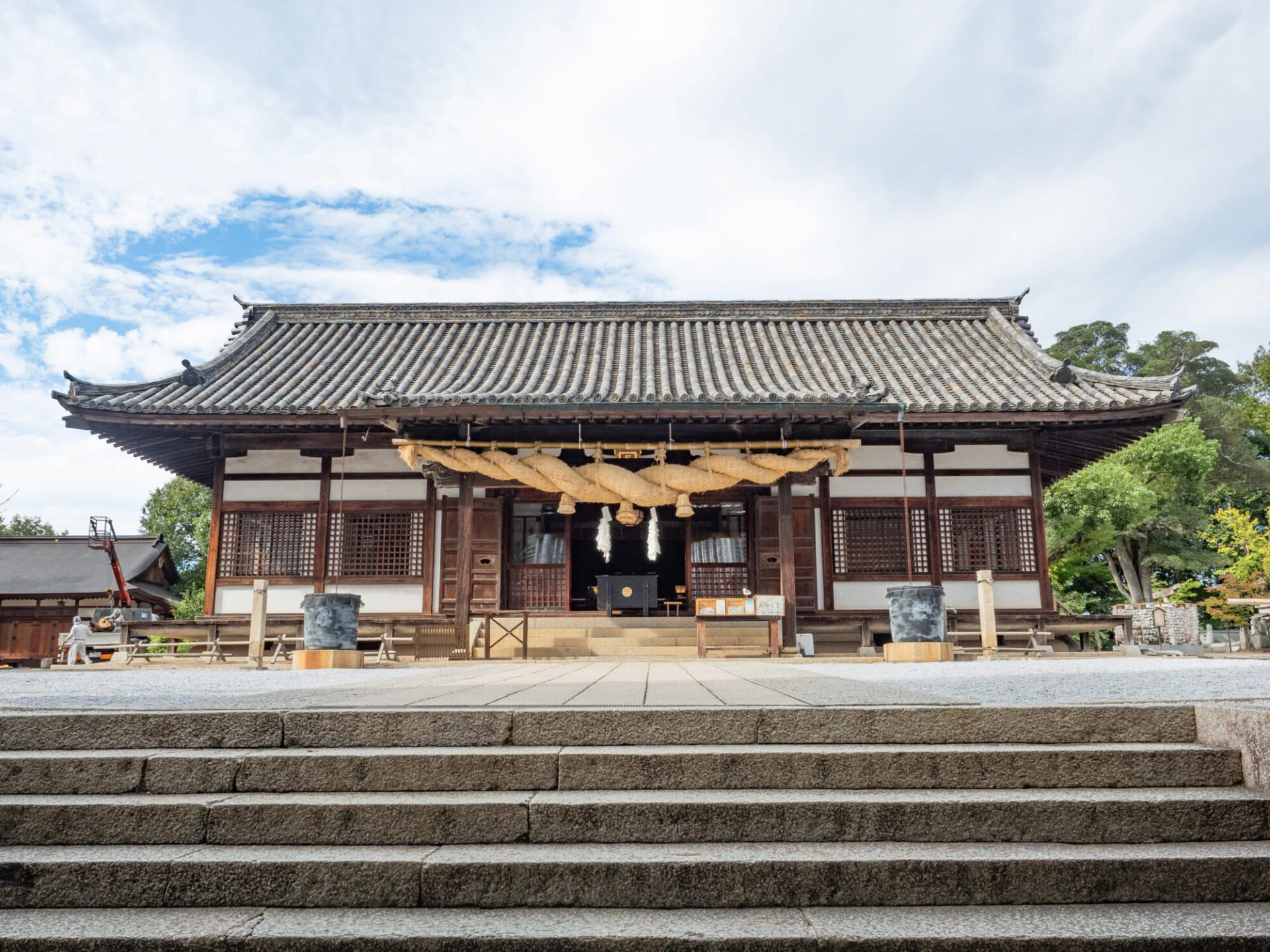
Held every October on the day of the autumn grand festival at Achi Shrine, the “Kurashiki Byobu Festival” is a cherished tradition.
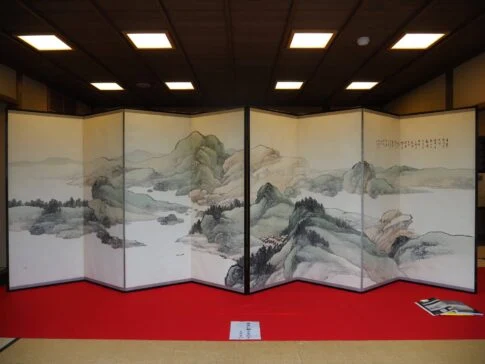
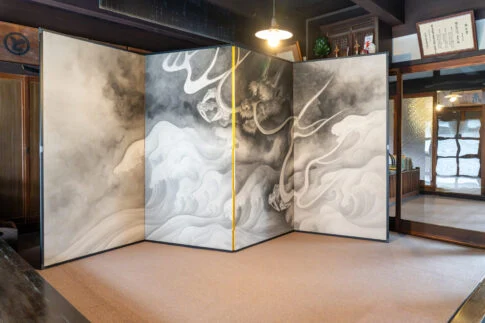
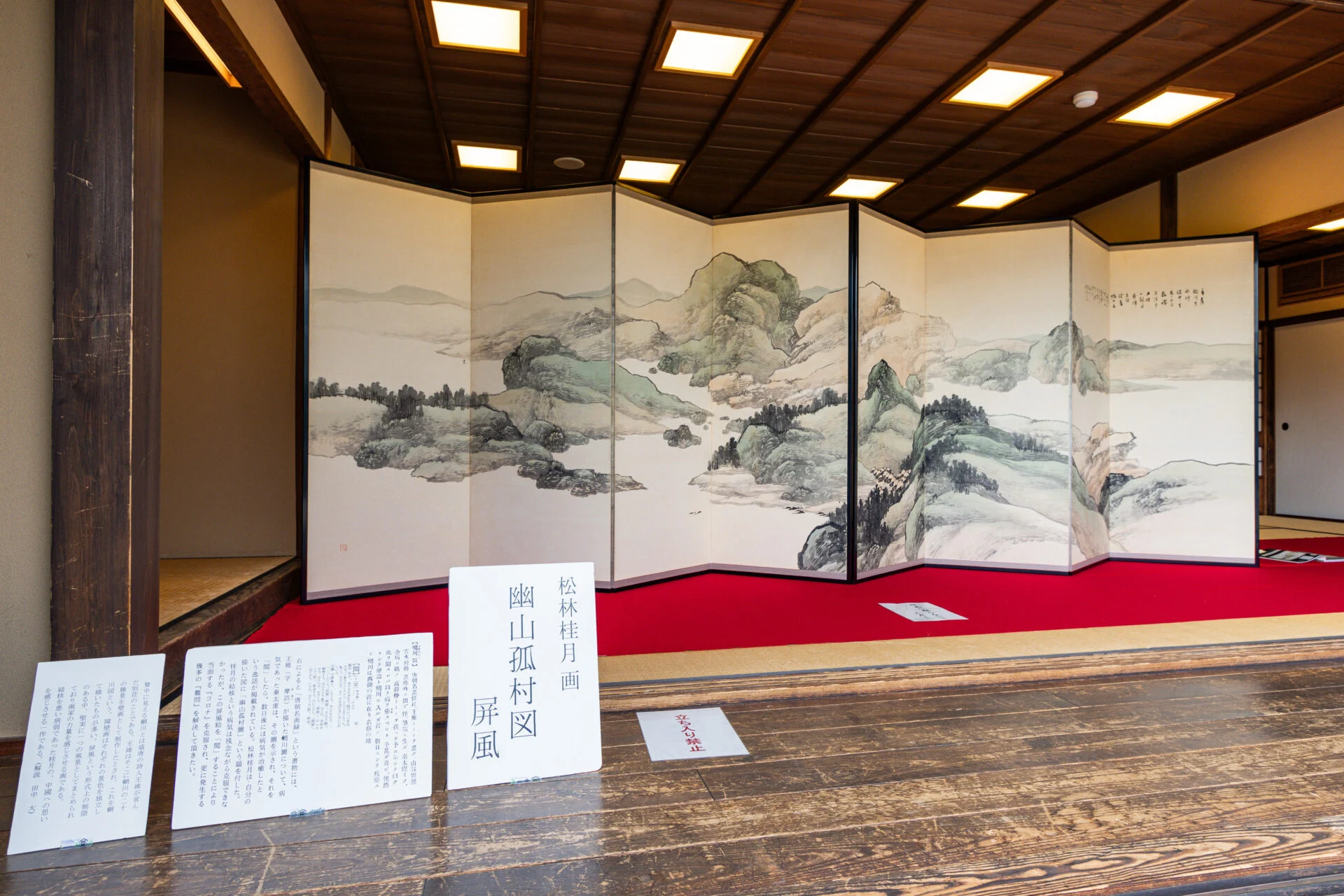
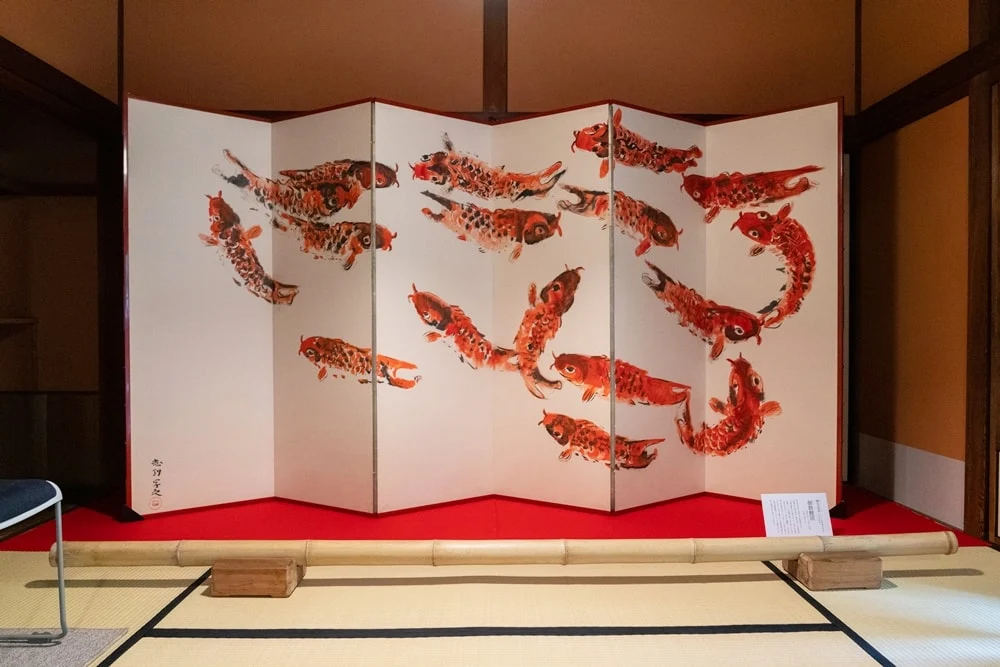
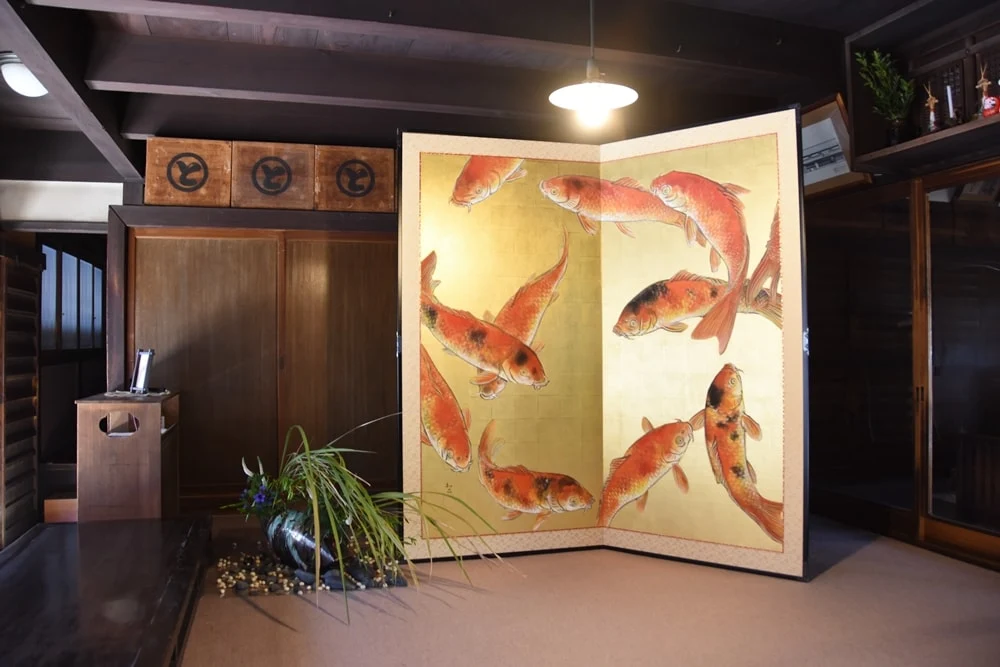
This year, it was held over two days, Saturday, October 18 and Sunday, October 19, 2025, with folding screens displayed inside machiya townhouses opened to the public.
Since its revival in 2002, the festival has become one of the autumn traditions of the Bikan Historical Area, but this year also saw an initiative that differed slightly from previous years.
The information presented was current when this article was published in November 2025. Please note that it may differ from current information.
About the Kurashiki Byobu Festival
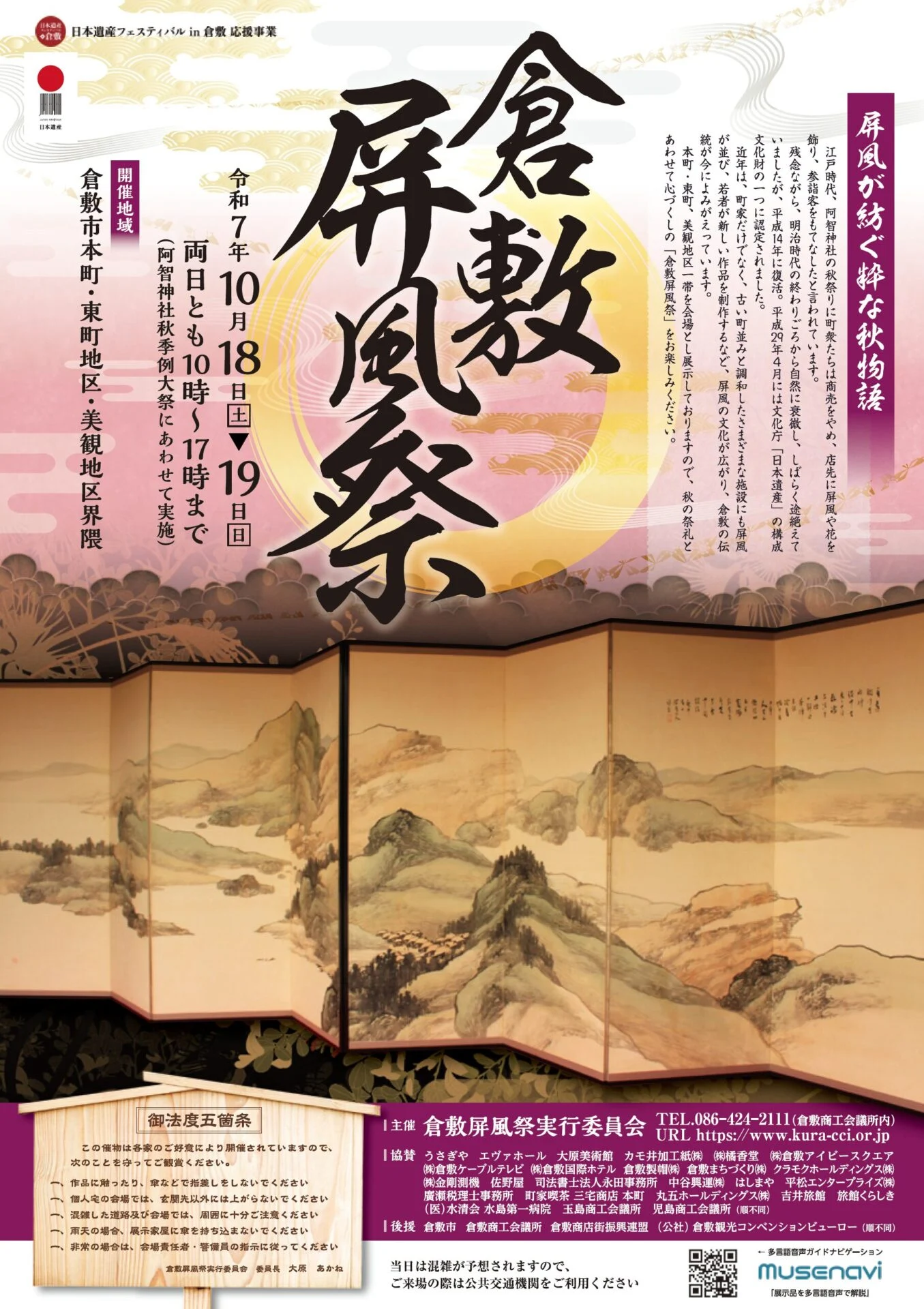
The Kurashiki Byobu Festival is a tradition that began in the Edo period. In the past, it was held on the days of the spring and autumn grand festivals. It died out once in the late Meiji period, but was revived in 2002 through the efforts of local residents.
Since then, together with the autumn grand festival at Achi Shrine and Suinkyo, it has been cherished as a hallmark of Kurashiki’s autumn festivals.
It was originally held in Honmachi and Higashimachi, but today it has spread throughout the Bikan Historical Area.
At the 2025 festival, folding screens were displayed at 38 locations across 36 establishments in the Bikan Historical Area.
Smartphone audio guides introduced
A new initiative was launched at the 2025 festival.

Audio guides were made available via smartphones, allowing visitors to access them by scanning QR codes posted at each location.
The audio guide system is powered by “People Software Co., Ltd.,” a Kurashiki-based systems company, using its multilingual audio guide navigation service “MUSENAVI.”
The narration for the audio guides was provided by students in the broadcasting club at Okayama Prefectural Kurashiki Seiryo High School.
Yuki Tsutsui, head of the broadcasting club at Okayama Prefectural Kurashiki Seiryo High School, spoke about the initiative as follows.

Tsutsui (surname only)
This time, we were responsible for narrating the audio guides for the folding screens.
The request came at short notice, and there was a lot of script to record. The hardest part was figuring out how to read with feeling when we had no photos of the works during recording.
Because of this, I kept stumbling over my words, and it took a long time because we had to record many takes. But when I listened to my narration at the venue, I realized that the explanations were easy to follow and helped people understand the works more deeply.
It was a collaborative production involving many people, and when we watch it together, we feel, “It really is wonderful.” The schedule was tight, but we achieved a good result, and I’m truly glad I was able to take part in this project.
The day of the festival
The following is a photo-focused look at the Kurashiki Byobu Festival as I visited it on October 19, 2025.


Works by Students of Okayama Prefectural Kurashiki Seiryo High School

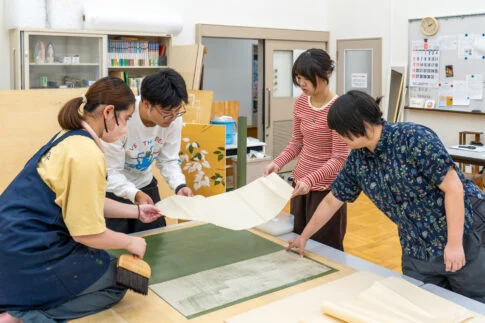
Kurashiki Community Center displayed a collaborative work by the art club and calligraphy club of Okayama Prefectural Kurashiki Seiryo High School.

Also on display here was an “art appreciation facilitation system” combining a robot with generative AI, based on research by People Software Co., Ltd. and the Nakazawa Laboratory in the Faculty of Engineering at Okayama University.

We asked Haruna Kunishiro of the art club how she felt about creating the folding screen.

Kunishiro (surname only)
We created a folding screen in collaboration with the calligraphy club, and painting on plywood was a first for us.
The most difficult part was the preparation before we started painting.
Cutting the plywood to fit the frames we were given and sanding it were really hard. Unlike paper, boards are difficult to cut, so we needed a lot of people to help.
As we worked, we tried different approaches, making sketches and drawing on full-size sheets of paper to check the layout.
For the colors, we used gansai, a traditional Japanese painting material.
At first, I thought the finished work would have very little color, but when I actually painted with gansai, it turned out beautifully. I’m really pleased with it.
At first, I had taken the panels out of their frames and was painting them as boards, so it felt like I was “painting on a board.” But when I saw the finished work on display, I realized, “I had been painting a folding screen.”
Works by Students of Kurashiki University of Science and the Arts


Works by the Japanese painting seminar in the Faculty of Arts at Kurashiki University of Science and the Arts were also on display at Jazz Cafe Avenew and Ueshima Lantern Shop.
Three students whom we had interviewed while they were working were explaining their own works to visitors, so we asked them how they felt.
What was the most difficult part of creating the folding screens?
Fujiwara (surname only)
We had never made a folding screen before; we had only ever painted on flat surfaces. So just thinking about how it would “fold” made us approach it completely differently from our previous work.
The hardest part was that we had to keep the folds of the screen in mind as we painted. Even when painting it as a flat surface, we had to consider that people would also view it from an angle, which required a different perspective from what we were used to.

Now that you’ve finished, are there any styles or themes you’d like to explore in the future?
Fujiwara
As I experiment, I tend to layer colors like in Western or oil painting, so in the future I’d like to try styles that focus on traditional Japanese painting techniques and brushwork.
Tsunoda (surname only)
This time, I painted a landscape with an abstract feel. If I get another opportunity, I’d like to try painting still lifes or animals instead of landscapes.
Hiratsuka (surname only)
If I get another opportunity, I’d like to put a little more thought into the frame as well.
From the Writer

Since its revival in 2002, the festival has become an autumn tradition, but we could also see changes, such as works by younger generations being exhibited and new services being introduced.
The Kurashiki Byobu Festival will surely continue next year and beyond.
While cherishing what remains unchanged, we look forward to enjoying the Kurashiki Byobu Festival again next year as it gradually welcomes new elements and continues in harmony.
Articles about the Kurashiki Byobu Festival
Kurashiki Byobu Festival Information

| Name | Kurashiki Byobu Festival |
|---|---|
| Dates | October 18 (Sat.) and 19 (Sun.), 2025 10:00 a.m.–5:00 p.m. |
| Location | Throughout the Bikan Historical Area |
| Admission (tax included) | Free (some facilities charge admission) |
| Website | Kurashiki Byobu Festival |


What would you like to know about Kurashiki?
Enter a search term to find articles on this site