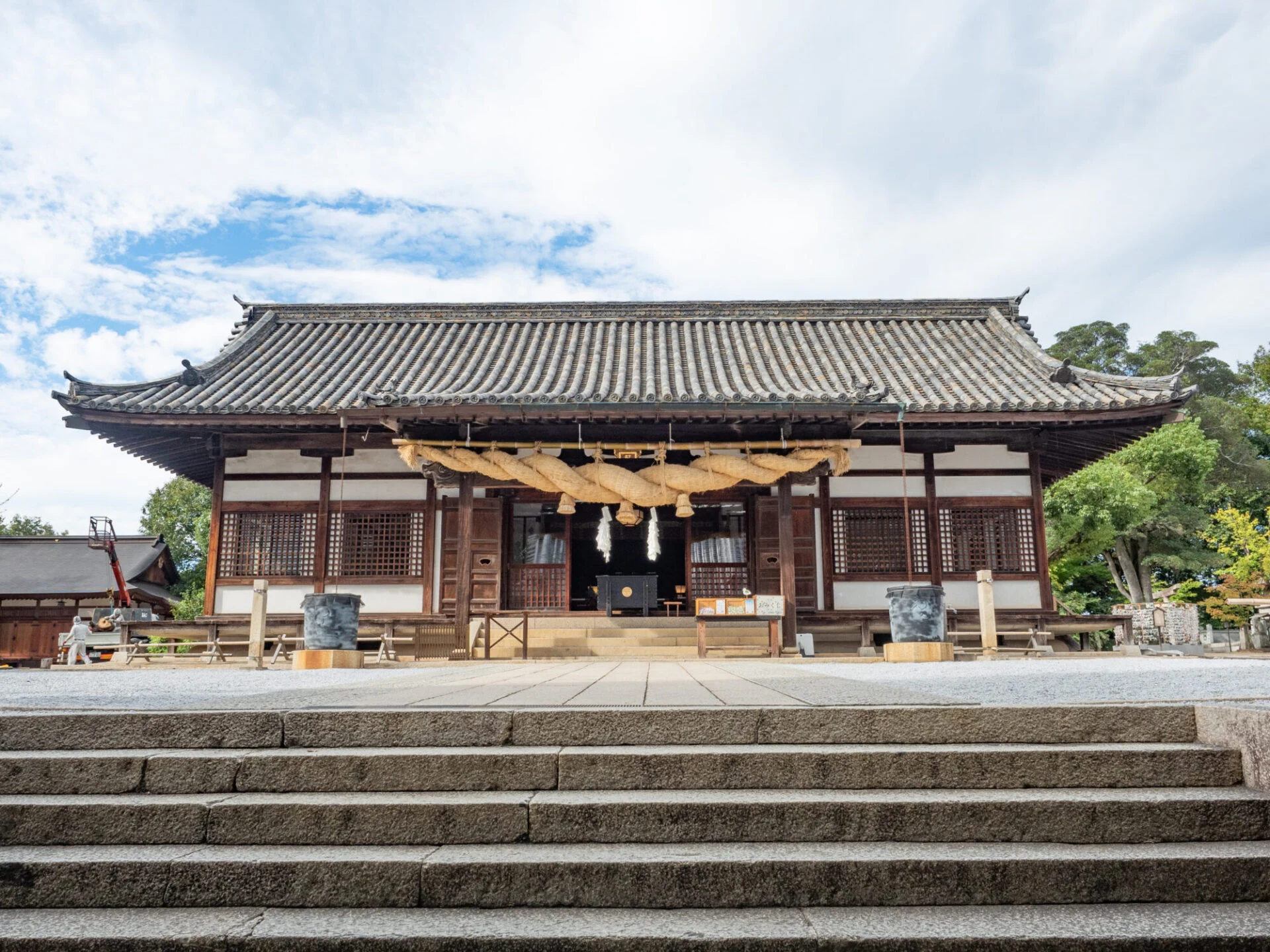
The annual grand festival is held at Achi Shrine in May and October.
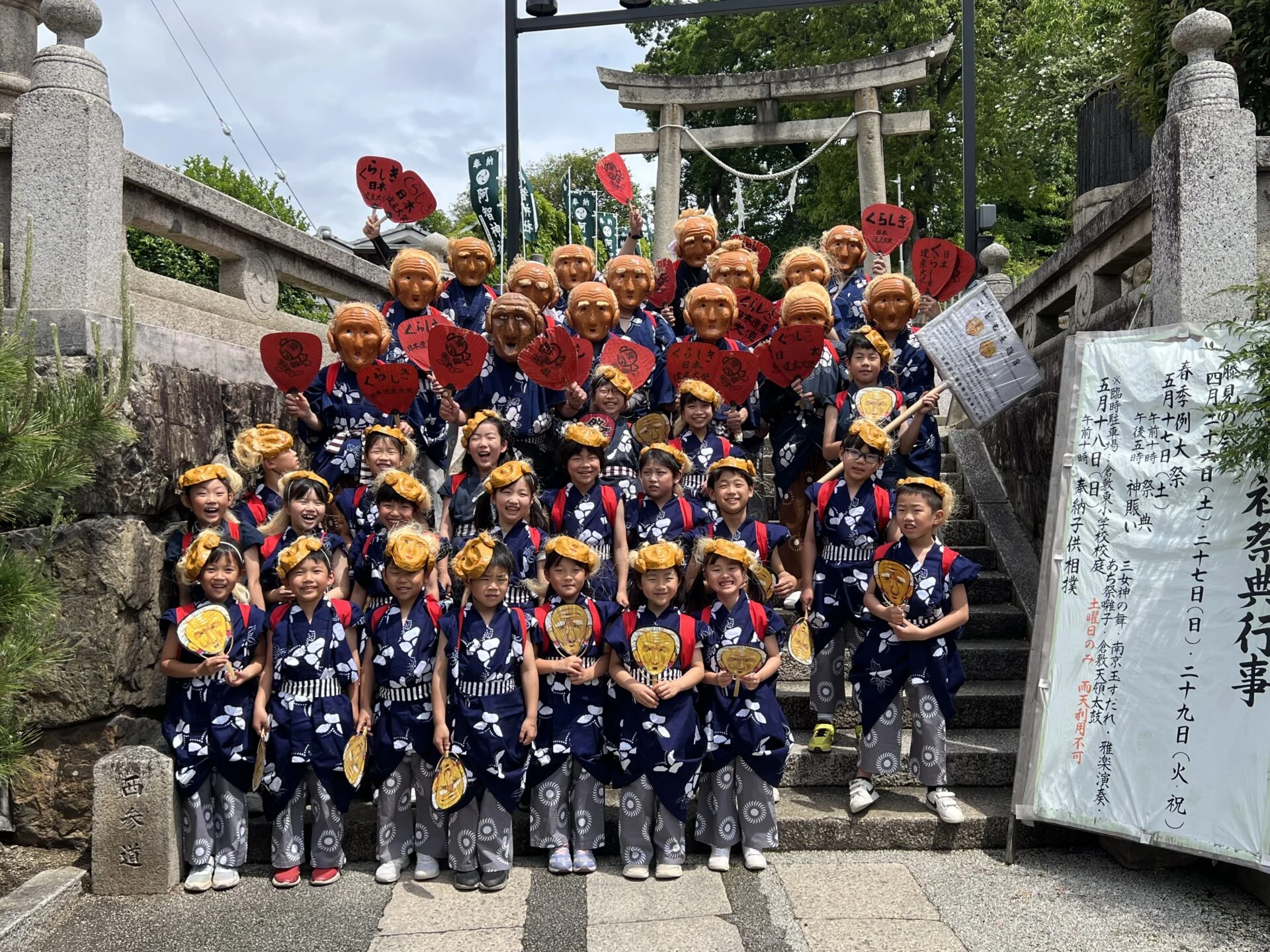
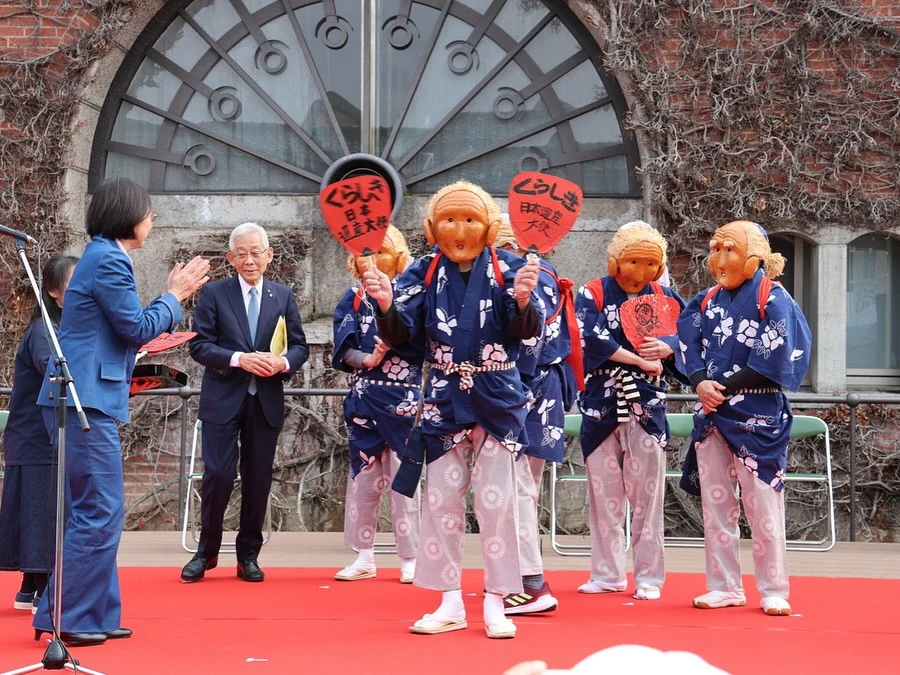
If you walk around the Bikan Historical Area on the day of the grand festival, you may encounter a Suinkyo wearing a brown mask and holding a red fan (uchiwa).
The Suinkyo will gently tap your head with the fan as you pass by. Its appearance and atmosphere are unique, so it may startle you at first, but this action carries the wish of "may you be happy."
The culture of Suinkyo has continued since the Edo period, and it is currently preserved by the Kurashiki Suinkyo Preservation Society.
We interviewed the Kurashiki Suinkyo Preservation Society about their thoughts on inheriting the Suinkyo tradition.
What is Kurashiki's specialty "Suinkyo"?
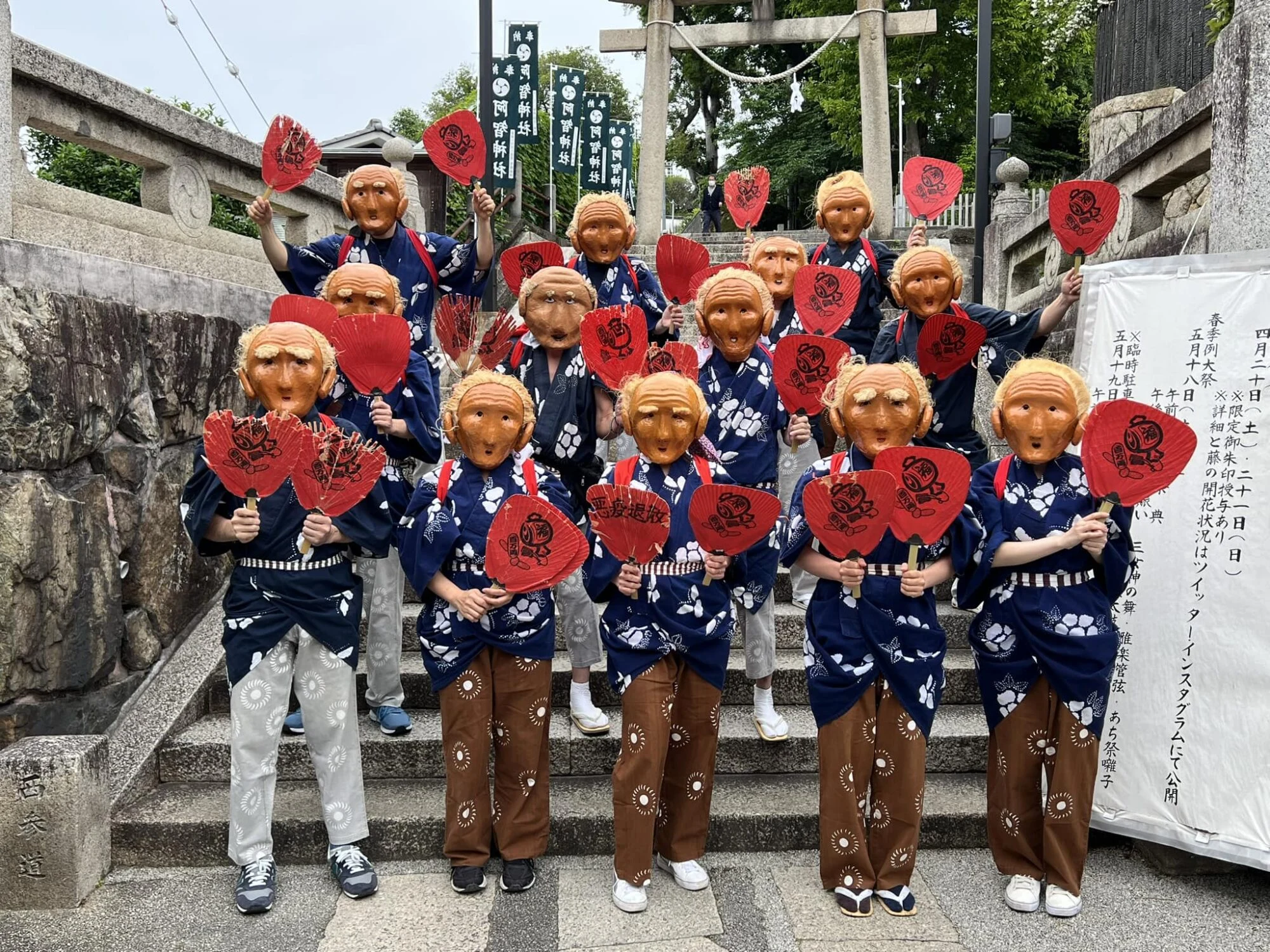
Suinkyo is a character that appears during the festivals at Achi Shrine (spring grand festival and autumn grand festival), and it is a specialty that has continued since the Edo period.
Suinkyo wears "grandfather" and "grandmother" masks and gently taps the heads of passersby with a red fan (uchiwa). It is said that being tapped by a Suinkyo brings wisdom, longevity, and good fortune.
As a being that spreads happiness, it has been enlivening the festival for many years.
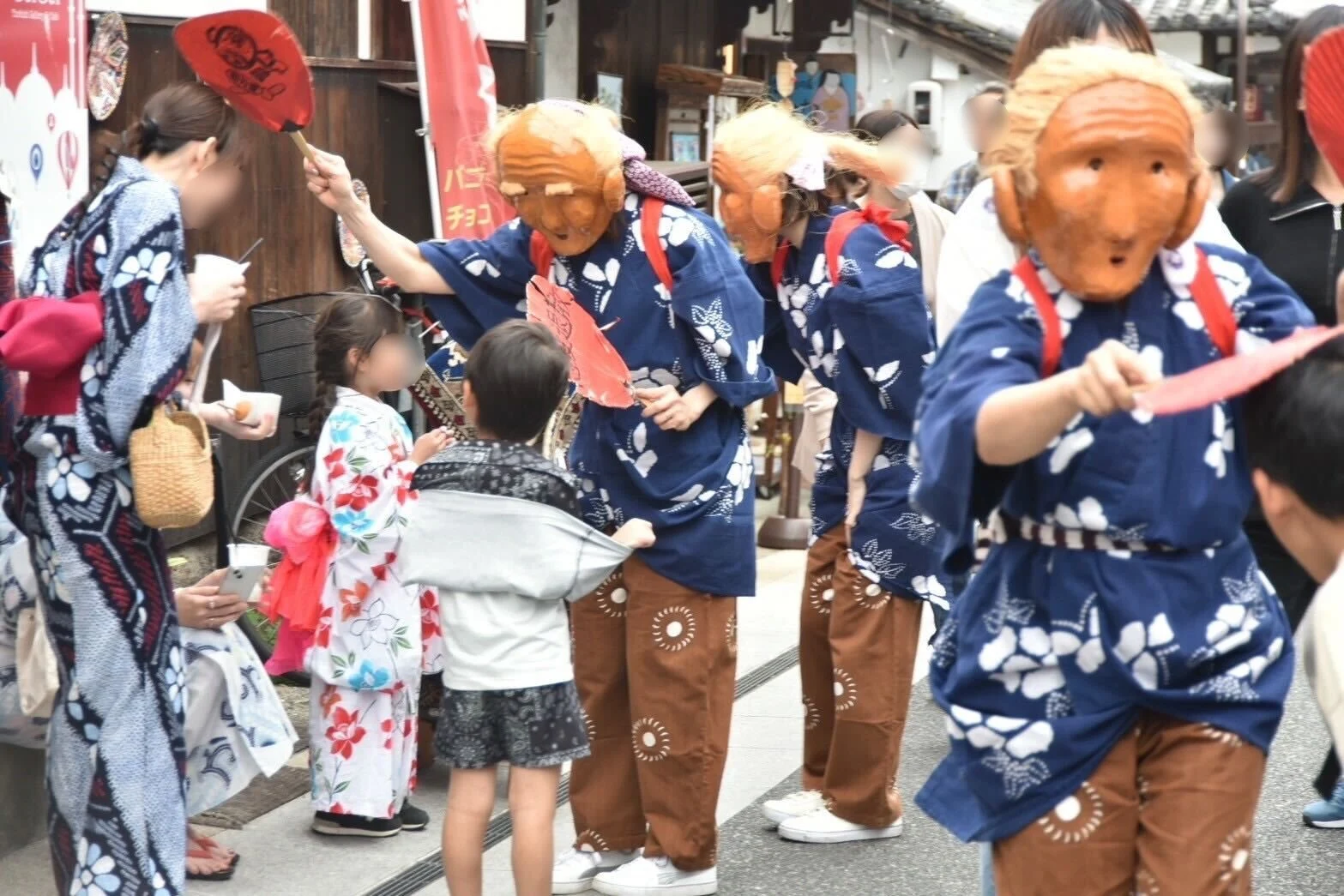
While the Suinkyo is now gentle, some locals say that "the Suinkyo of the past was scary."
Let's first look back at the changes that have occurred in Suinkyo over the years from the past to the present.
The history of Suinkyo from the Edo period to the present
Suinkyo is said to have originated in the Edo period.
At that time, inspired by the Gion Matsuri in Kyoto, the people of Kurashiki Village thought, "Let's make the procession of Myoken Shrine grand."
Myoken Shrine
Now known as Achi Shrine.
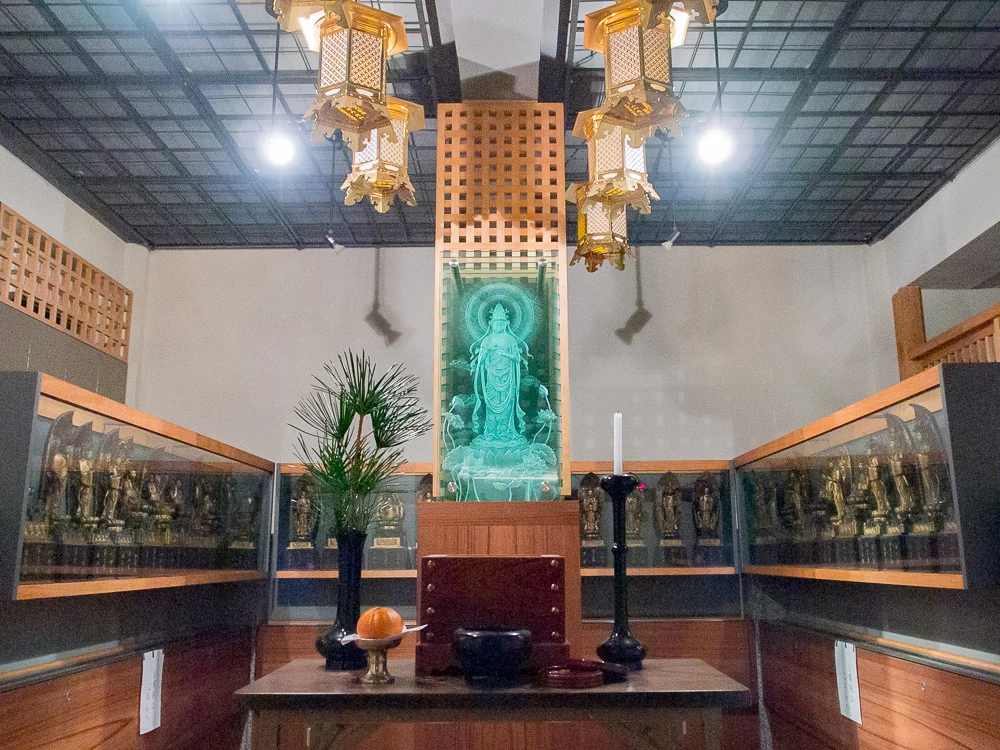
From the early Edo period to the early Meiji period, Kanryuji Temple managed it as a bettoji (a temple that oversees a shrine).
Later, due to the separation of Shinto and Buddhism policy in the second year of Meiji, the sacred object of Myoken Shrine was taken to Kanryuji Temple and enshrined in the Myoken Hall of Kanryuji Temple.
As each village took on different roles, an elderly couple assigned the role of lion dance found it difficult to participate due to their age. Therefore, they created masks representing themselves as "grandfather" and "grandmother," allowing young people to wear these masks and participate in the festival on their behalf.
The "grandfather" and "grandmother" that appeared in the festival in 1692 became the beginning of the present-day Suinkyo.
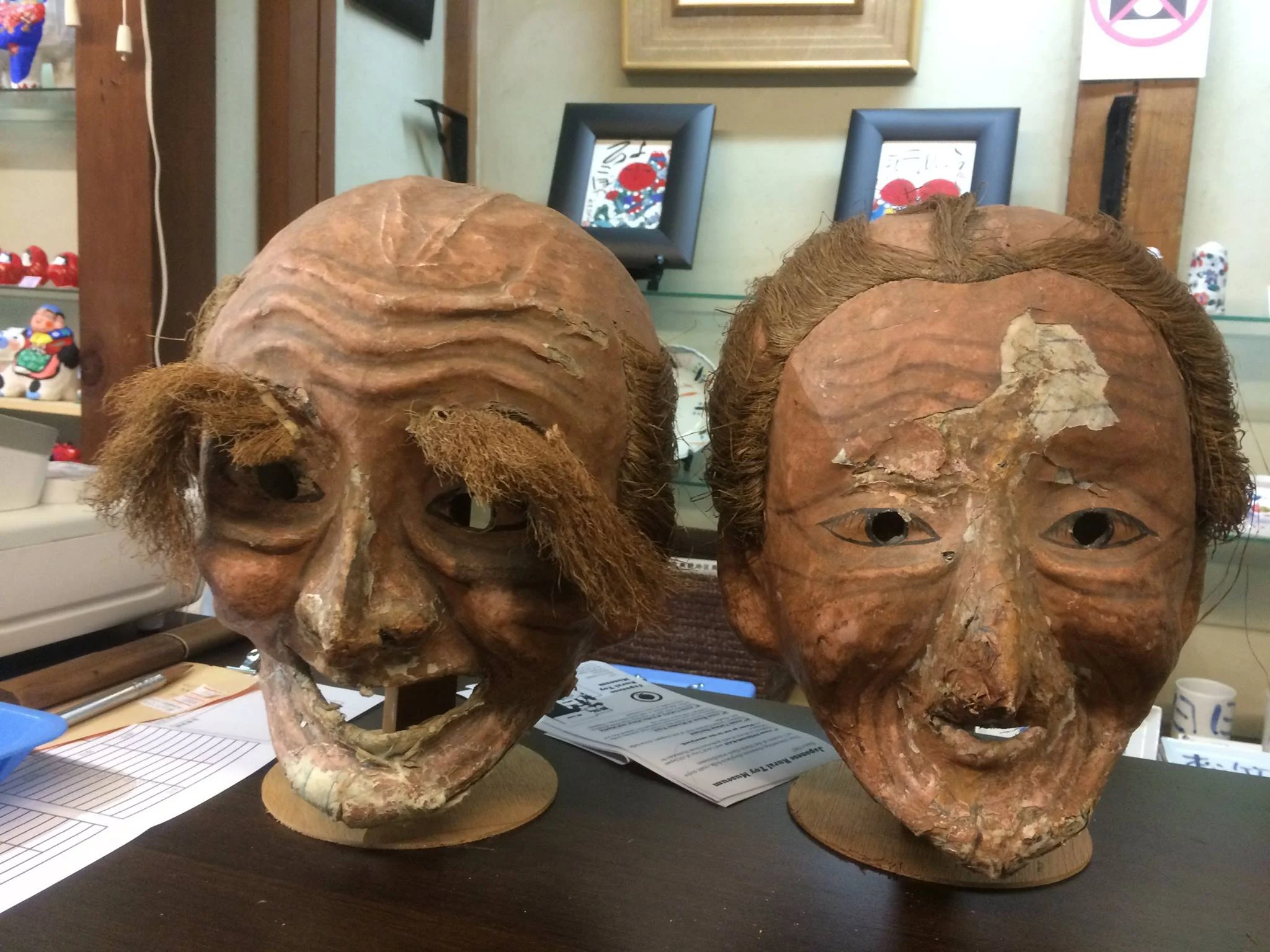
In the Edo period, Suinkyo played the role of performing lion dance when the portable shrine (mikoshi) stopped. The "grandfather" and "grandmother" were friendly to the local people and seemed to be popular characters.
As the Meiji period began, due to the separation of Shinto and Buddhism policy in the second year of Meiji (1869), the main shrine of Myoken Shrine became an empty hall, and it was renamed "Achi Shrine" derived from the old name of Kurashiki, "Achi." Additionally, the enshrined deity was changed to the Munakata Three Goddesses.
At this time, it is said that the procession of Myoken Shrine was also abolished, but the desire for its revival grew, and in the fifth year of Meiji (1872), it was revived as the procession of Achi Shrine.
However, the revived procession was streamlined compared to the previous one, with the mikoshi taiko (portable shrine drum) and other elements abolished, and the number of participating parishioners decreased. As a result, the parishioners who did not participate in the procession declared, "From now on, we will bring out the mikoshi!" and made their own mikoshi by stacking futons, enlivening the festival. This became the present-day Chitose-raku.
During this time, Suinkyo also appeared and took on the role of chasing away children who got too close to the Chitose-raku to prevent them from getting hurt.
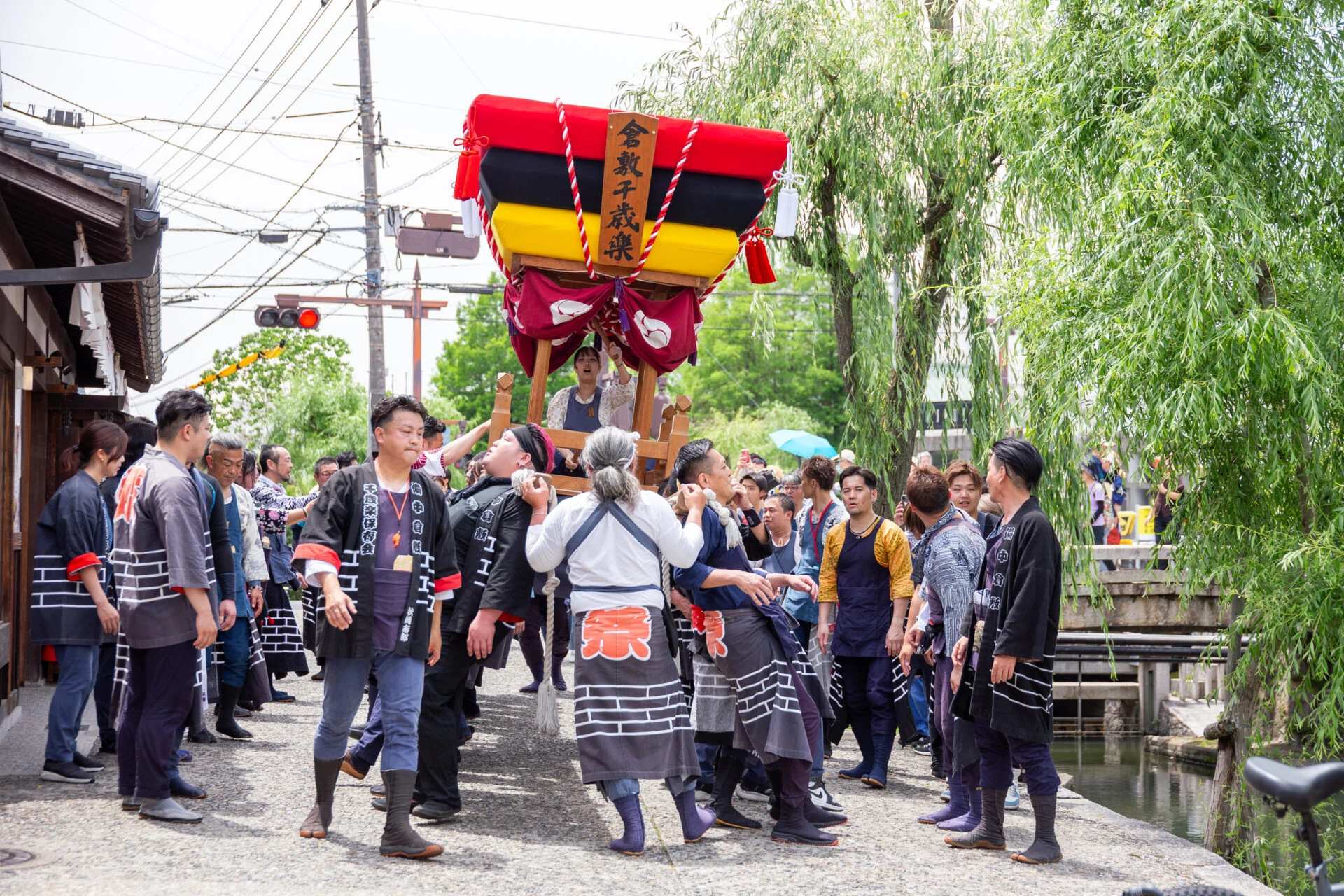
Chitose-raku
"Chitose-raku" is a type of float that has a vertically placed drum inside and is covered with futons to form a roof. It is distributed throughout the Setouchi region and is a common term in the southern Okayama Prefecture. The number of futons can vary from one to nine, and some have carvings in the gaps.Source: Takahashi River Basin Kids
Suinkyo would tap children with the fan to chase them away, while the children would tease the Suinkyo with "hayashi kotoba" (a type of playful banter) to make it chase them, and such interactions were part of the festival's charm.
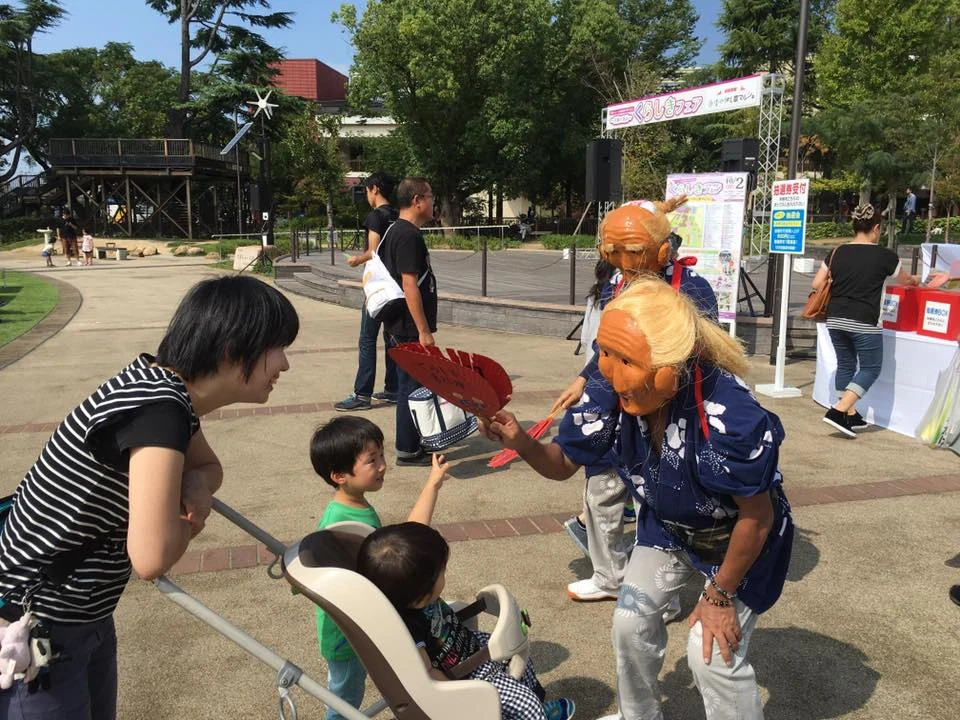
To protect the safety of children, the Suinkyo would tap them. Eventually, the sayings changed to "being tapped by Suinkyo leads to healthy growth" and "being tapped by Suinkyo brings happiness."
Moreover, the strong tapping style has also transformed into a gentler one over time.
What is the Kurashiki Suinkyo Preservation Society?
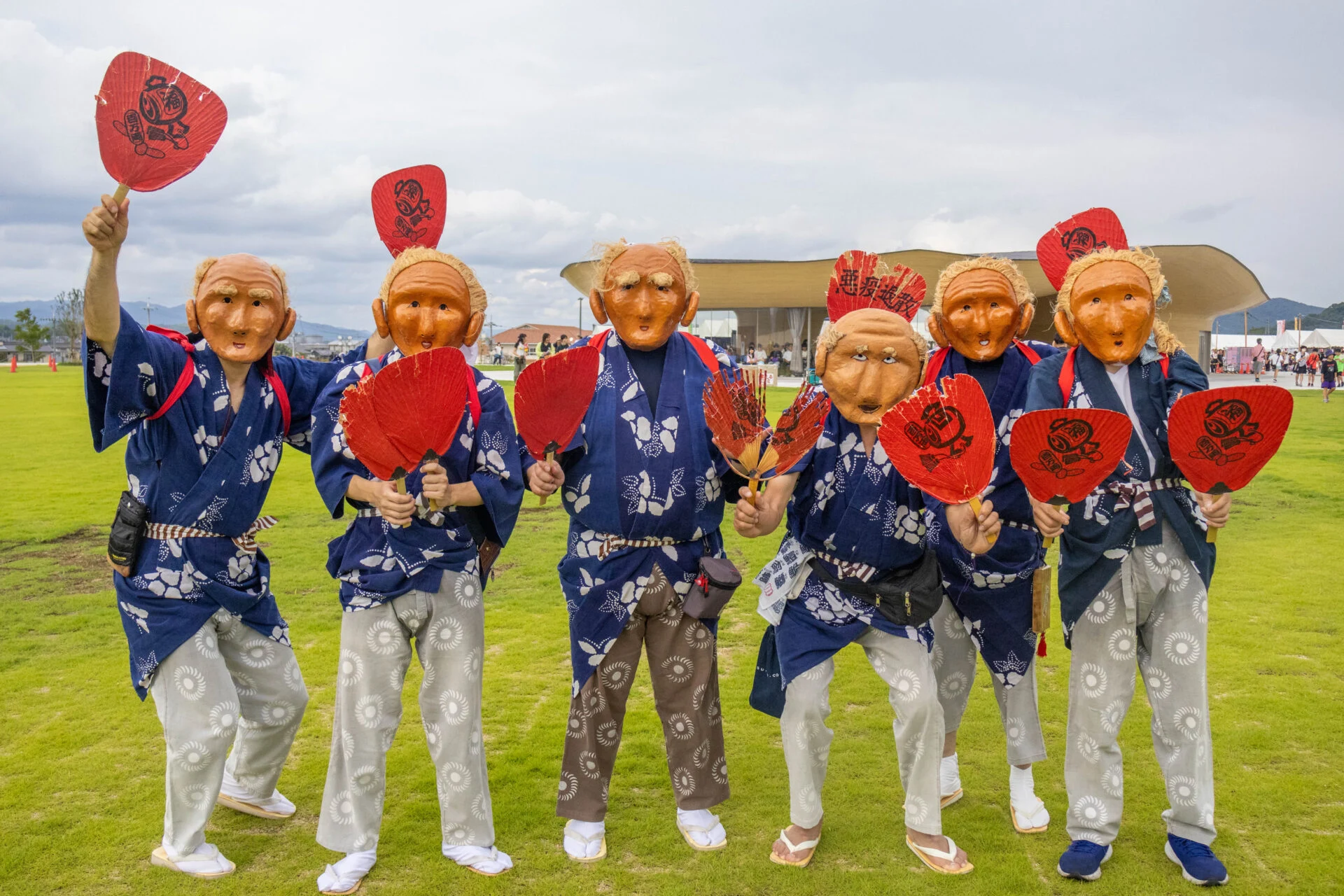
The Kurashiki Suinkyo Preservation Society is a civic organization aimed at preserving and passing down the traditional culture of Suinkyo.
Originally, Suinkyo only appeared during the grand festival of Achi Shrine, but its activities have now expanded.
Activities of the Kurashiki Suinkyo Preservation Society
The main activity of the Kurashiki Suinkyo Preservation Society is participation in festivals.
They appear as Suinkyo in various festivals in the city, such as the spring grand festival and autumn grand festival of Achi Shrine, Mabi and Funao Grand Dance, and Kurashiki Tenryo Summer Festival.
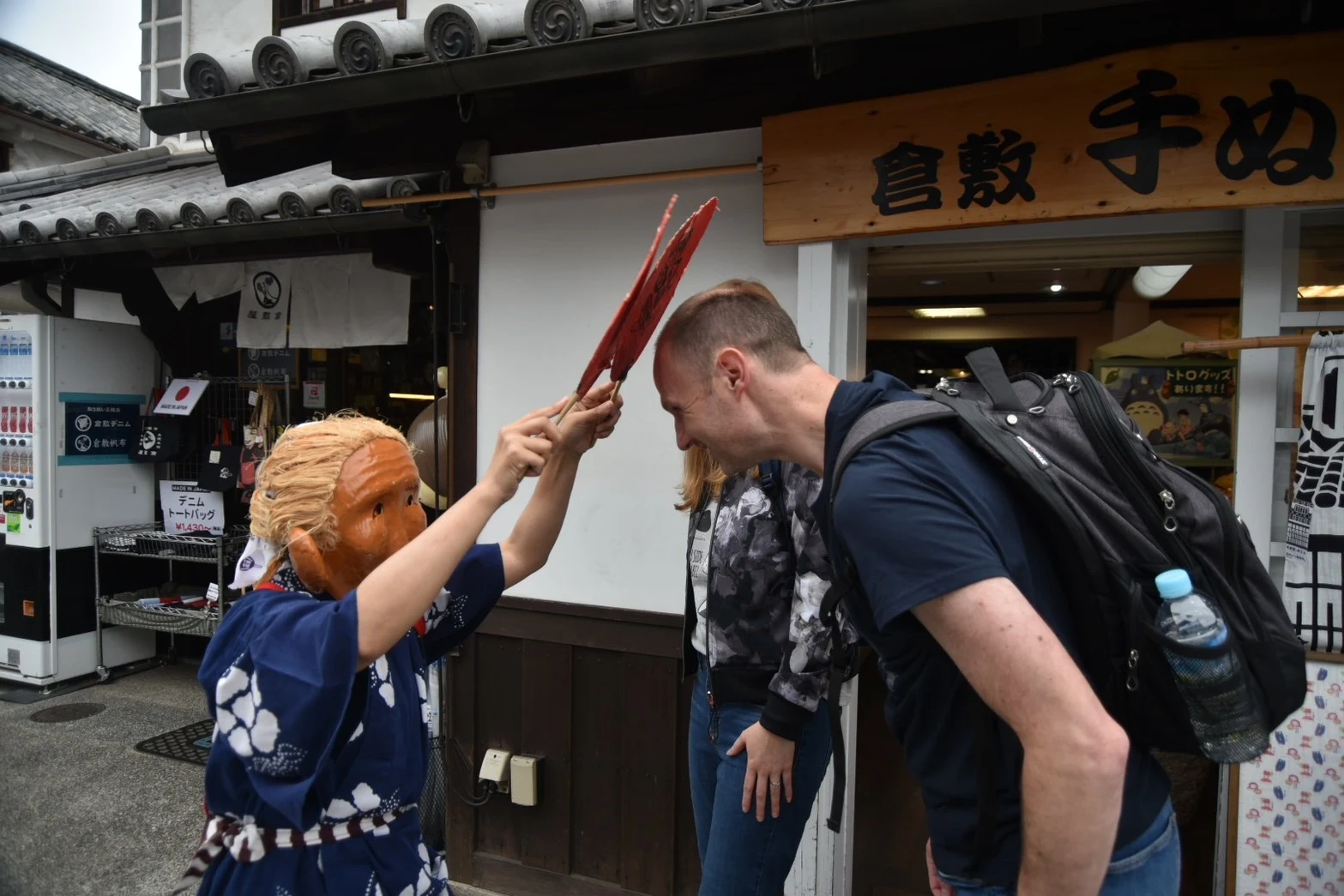
In addition, in the 6th year of Reiwa, the following activities were also conducted.
- Welcoming passengers at JR West's Twilight Express Mizukaze at Kurashiki Station and participating in exchange events
- Participation in local events such as "Kurashiki LIVE-GYM" and "Kurashiki Shirakabe Bride Parade"
- Planning experience events such as Suinkyo experiences and mask-making for children
- Giving lectures at training sessions for Kurashiki City employees and community courses
- Attraction during dinner time for demo tours aimed at MICE
(*MICE refers to a general term for business events that are expected to attract many participants)
In addition to interacting with people as Suinkyo, they are also actively engaged in activities to convey the culture, history, and techniques of Suinkyo through training and experience events.
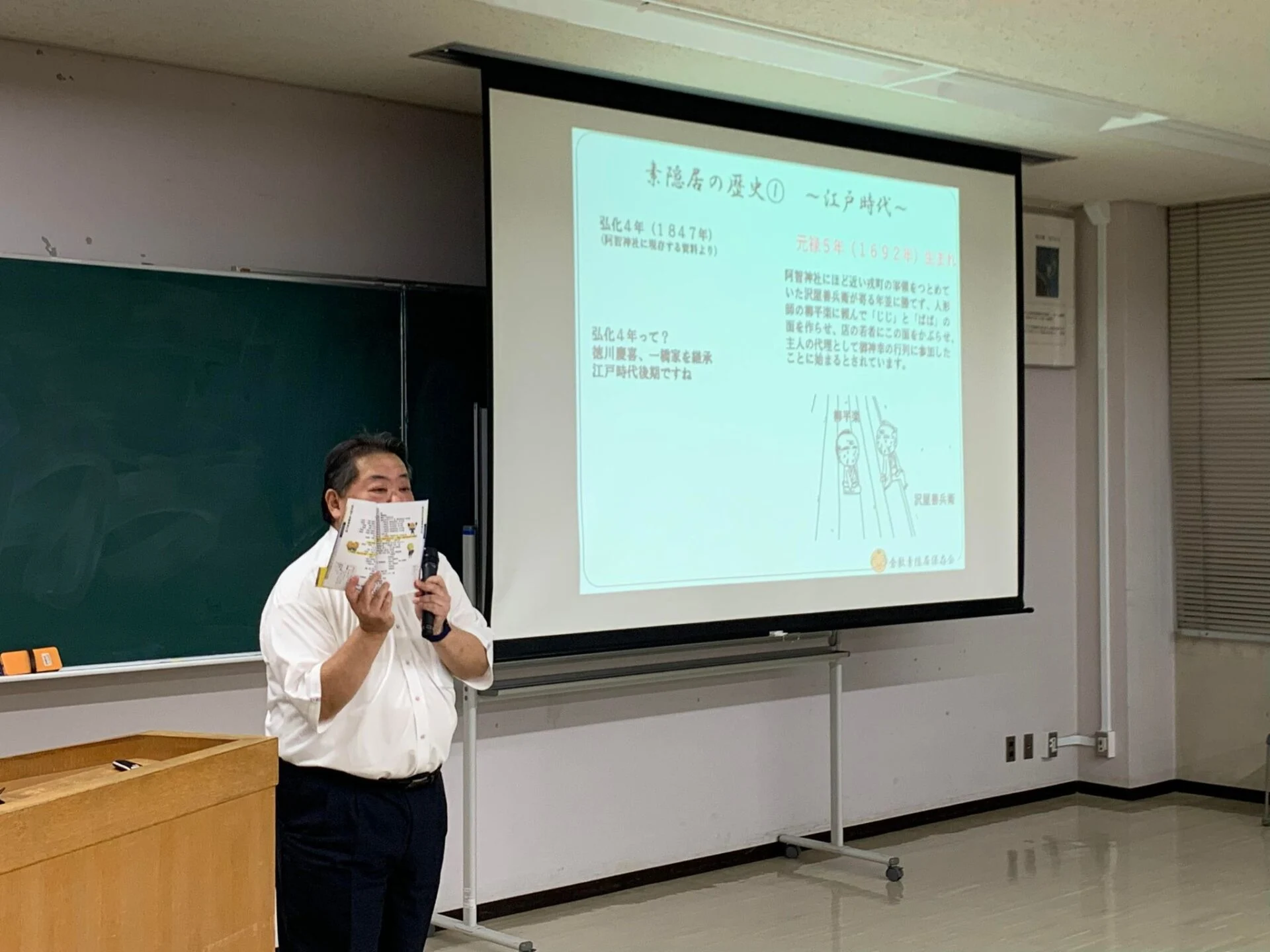
In 2025, Suinkyo was appointed as a Kurashiki Japan Heritage Ambassador, so it seems that there will be even more opportunities for activity in the future.
The Kurashiki Suinkyo Preservation Society has been preserving the Suinkyo tradition since the Edo period. We interviewed the secretary-general, Oda Akihiro, and Ando Toshiharu about the fulfillment of their activities.
Data of Kurashiki Suinkyo Preservation Society
| Name | Kurashiki Suinkyo Preservation Society |
|---|---|
| Website | Kurashiki Suinkyo Preservation Society |