Interview with the Kurashiki Sugenko Preservation Society
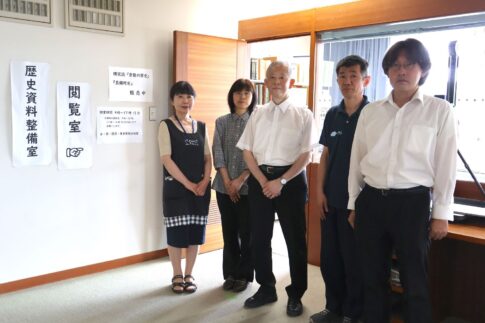
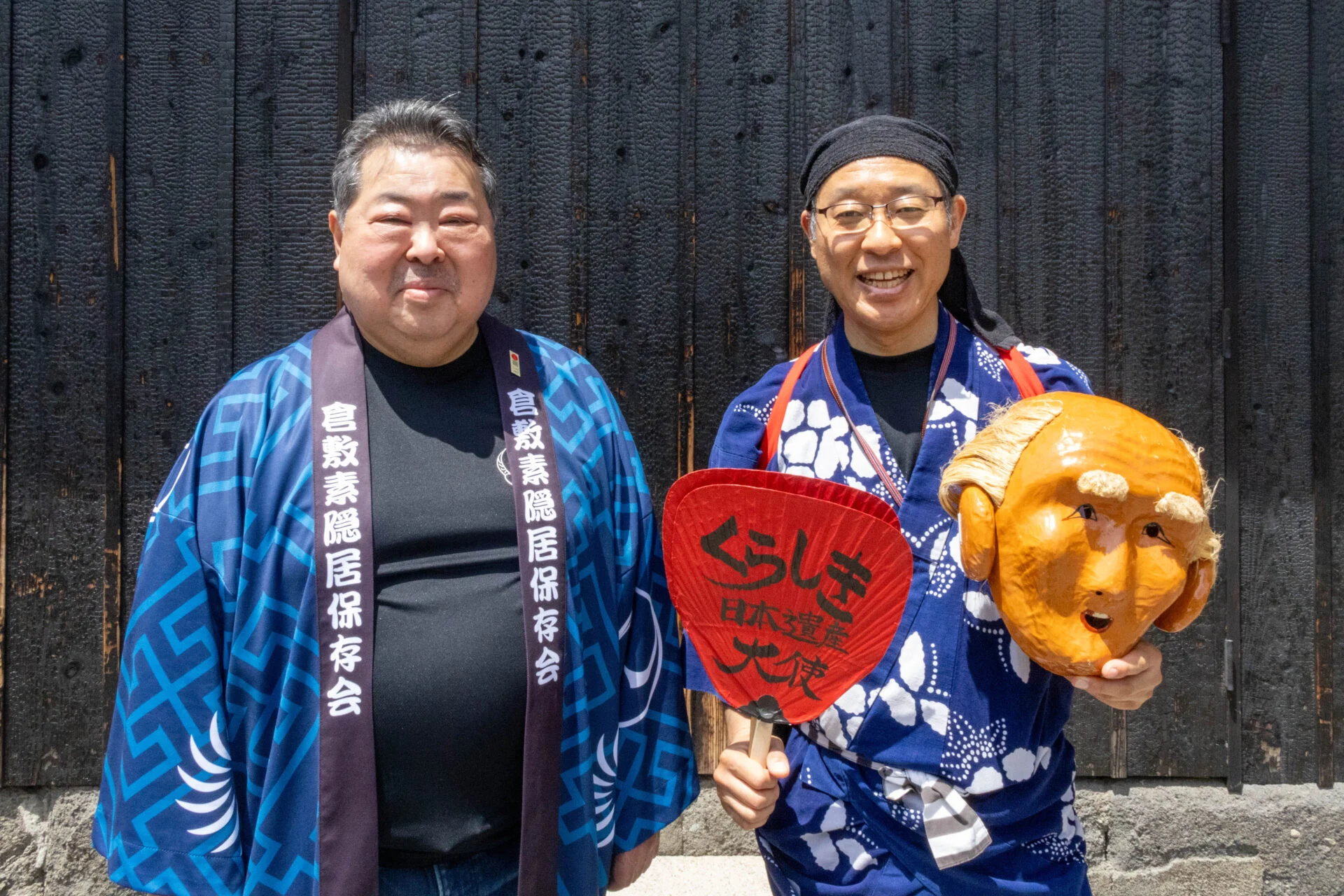
We spoke with the secretary general of the Kurashiki Sugenko Preservation Society, Oda Akihiro, and Ando Toshiharu.
Can you tell us about the background of the Kurashiki Sugenko Preservation Society?
Oda
The Kurashiki Sugenko Preservation Society was established by a group of volunteers in 1977.
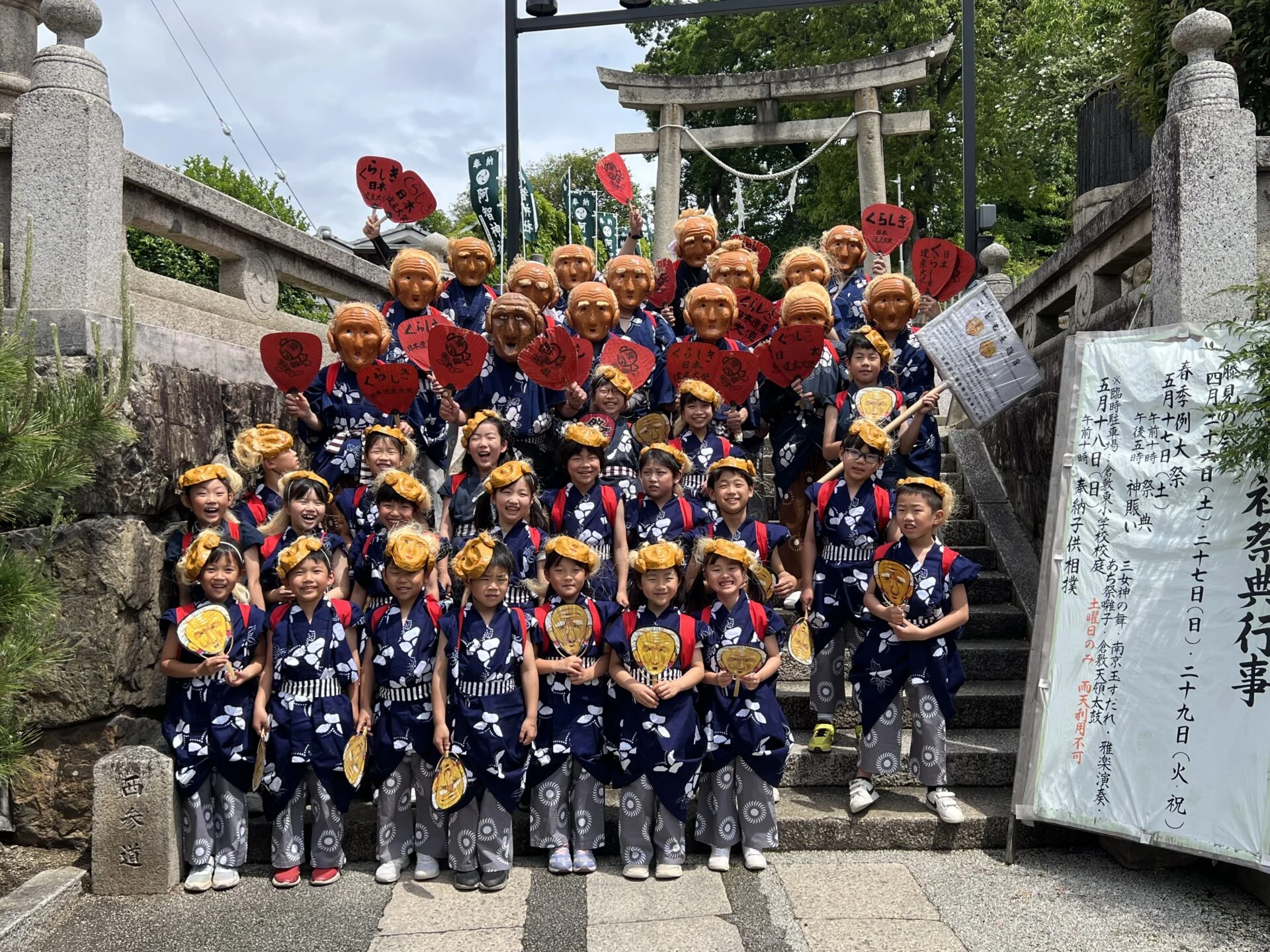
Sugenko used to appear at festivals in Kurashiki until the 1960s, but as the 1970s progressed, the vitality of the festivals began to decline, and consequently, the number of people passing down the Sugenko tradition also decreased. Thus, the Kurashiki Sugenko Preservation Society was formed, but due to the lack of people willing to become Sugenko, it remained inactive for a long time.
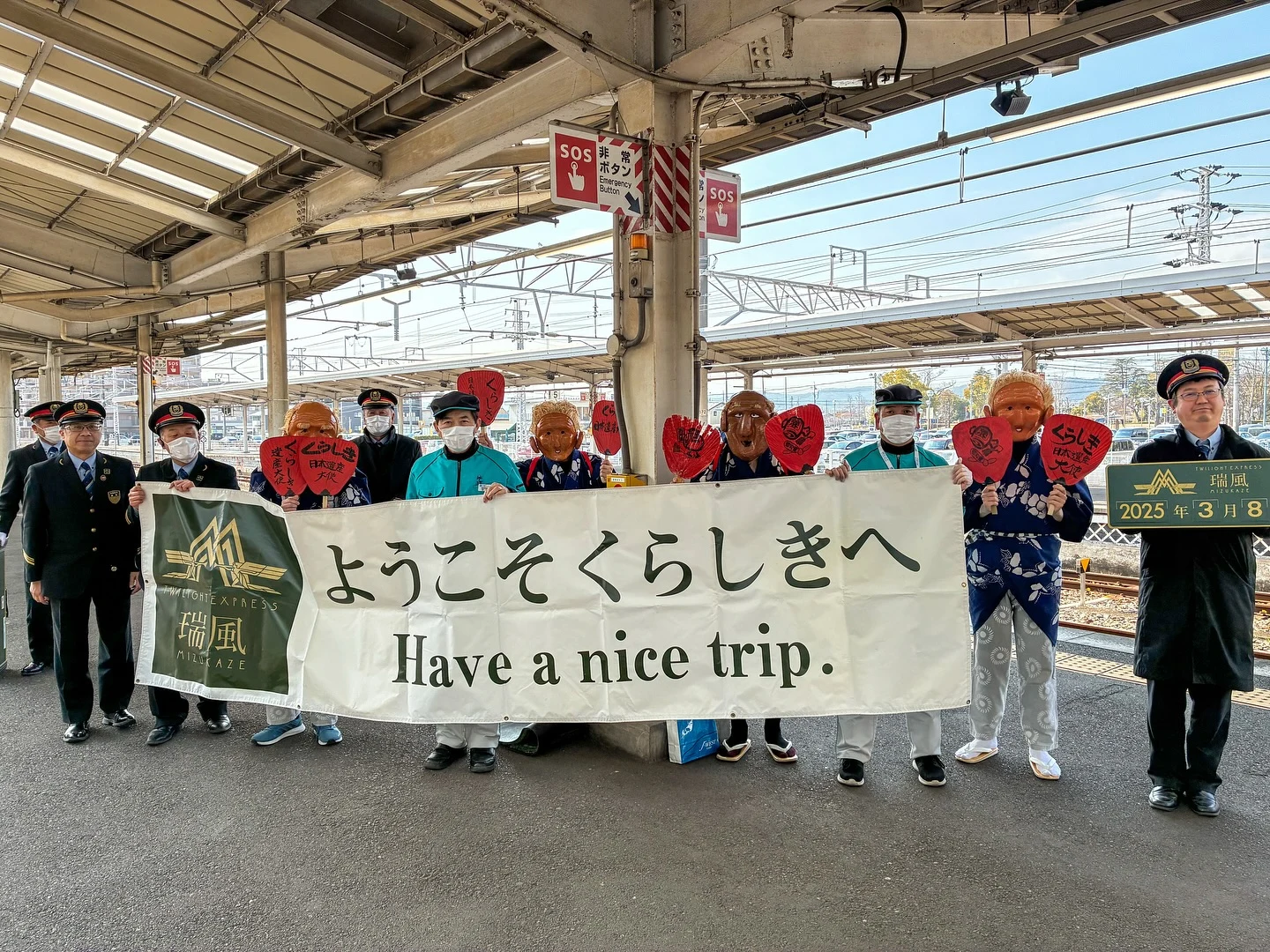
Later, in the Heisei era, the Kurashiki City Tourism Association received a request from a television station to cover Sugenko. Fujii Junpei, who was working at the tourism association at the time and was the former secretary general of the Kurashiki Sugenko Preservation Society, desperately gathered Sugenko costumes and masks around the town, and managed to respond to the coverage.
However, due to the current situation where it was difficult to find anyone who knew about Sugenko, even when asking the shrine or the town, Fujii Junpei and his classmates from middle school felt a sense of crisis and thought, "This cannot continue," and revived the inactive Kurashiki Sugenko Preservation Society in 1991.
How did you both get involved with the preservation society?
Oda
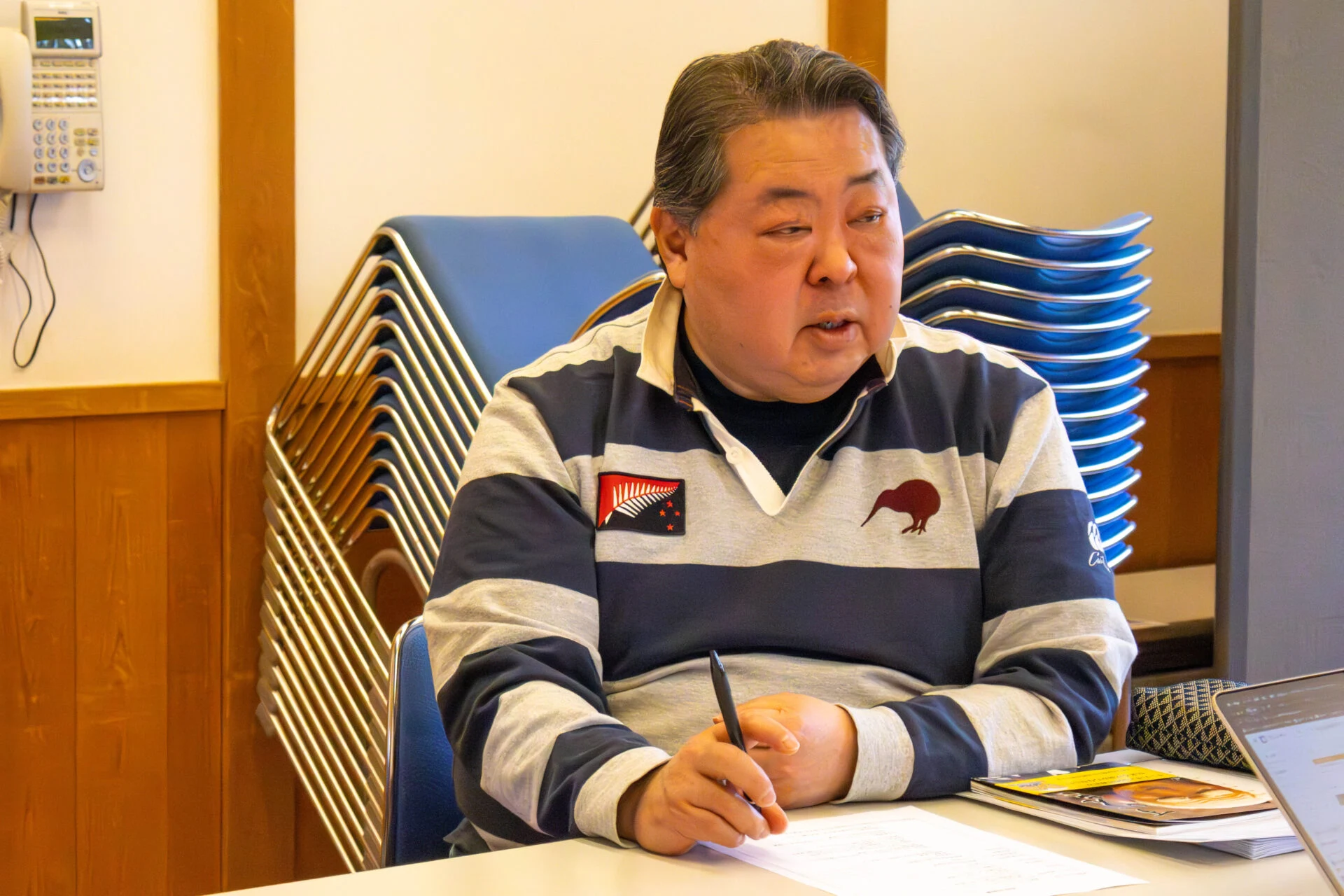
When I was a child, I had the experience of being hit by Sugenko, so I had always been curious about it.
However, as time went on, Sugenko appeared less frequently, and as I grew up, I had fewer opportunities to attend festivals, and before I knew it, I could no longer meet Sugenko.
But when I turned 30, I went to a festival with my child for the first time in a while, and I found Sugenko gathering in the back streets of Ebisu Street. I was surprised to see Sugenko again and while talking with them about old times, they said, "If you're interested, you can join us," and that’s how I got involved.
Ando
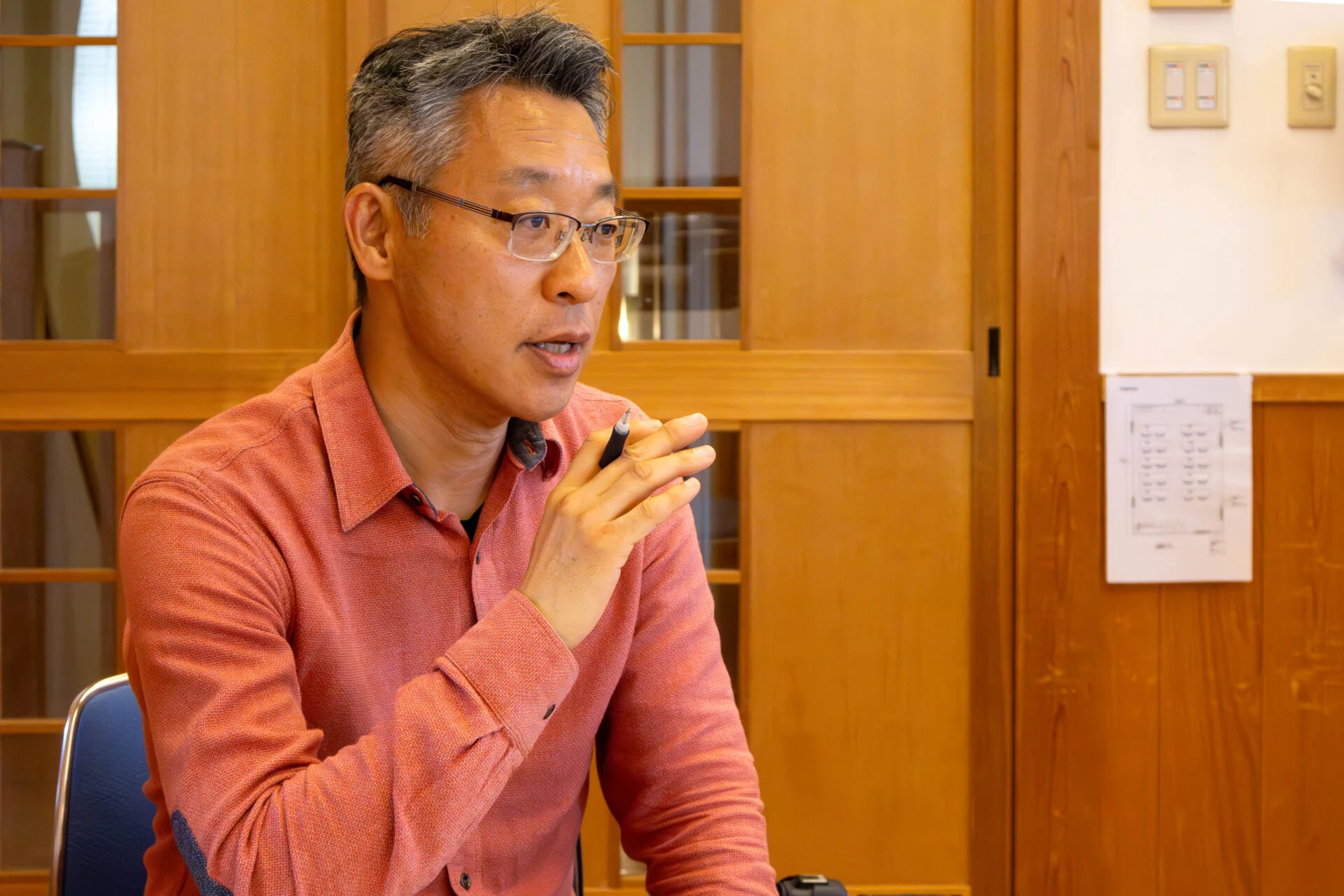
In my case, I happened to meet a Sugenko who had hit me, and he was a classmate. He was already a member of the Sugenko Preservation Society and told me, "Anyone can be Sugenko," so I thought I might as well give it a try.
At that time, I had just started to feel a desire to engage in community activities, so it was a perfect timing. Once I actually tried being Sugenko, I found it more enjoyable than I had imagined, and now I have been continuing this activity for almost 20 years.
What do you find rewarding about being Sugenko?
Ando
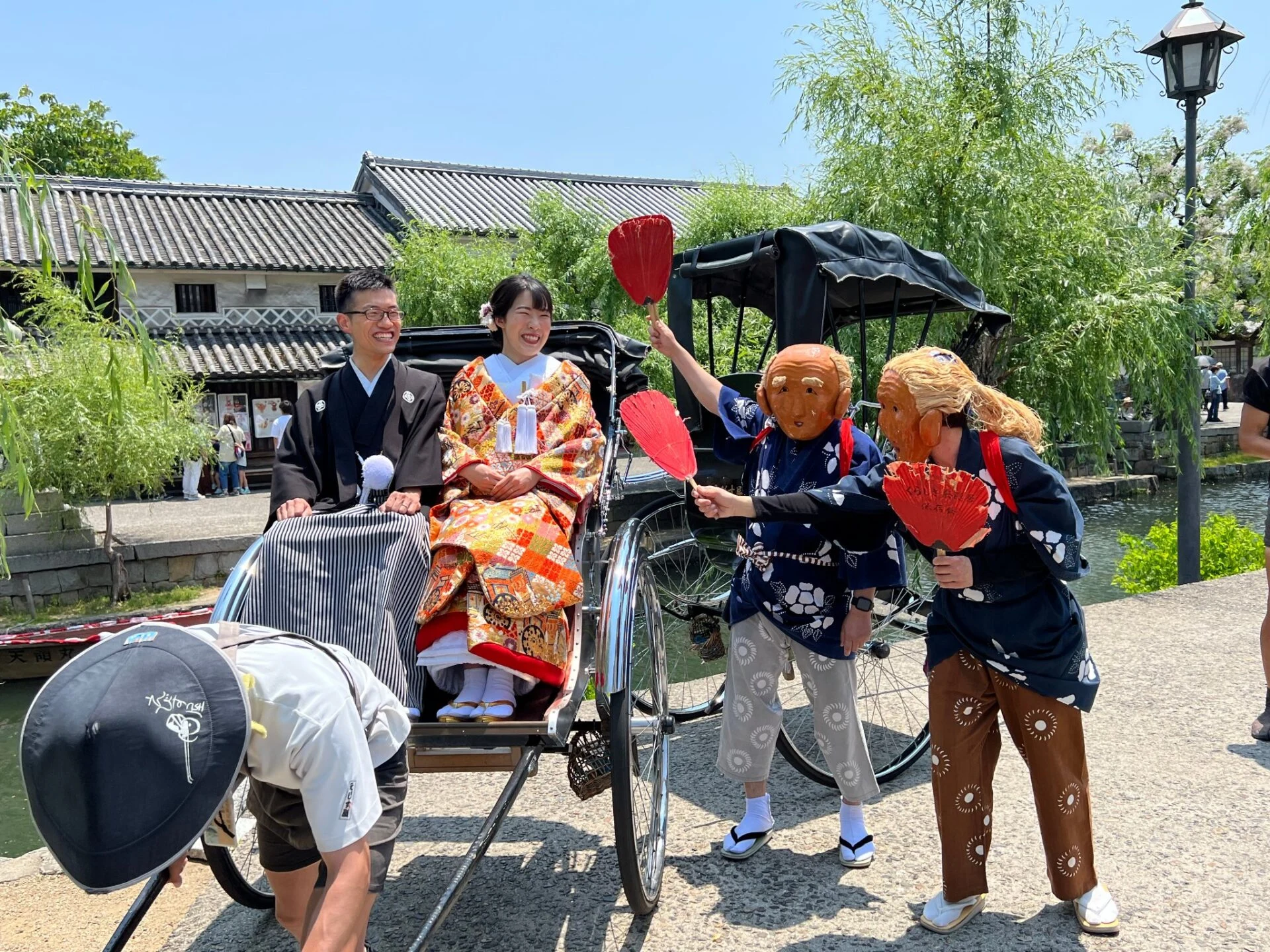
When I become Sugenko and hit people, everyone is happy, and that’s where I find the most enjoyment.
Many people thank me afterward, and some even ask, "Hit me more!" People from the local area, as well as tourists and foreigners, enjoy it in the same way.
I think I can provide an opportunity for people visiting Kurashiki to have fun.
Oda
Being thanked is the greatest reward for me.
Especially elderly people smile and say, "This will make me younger," or they even join their hands in prayer, believing that Sugenko brings benefits.
Seeing such reactions makes me think, "I'm glad I became Sugenko."
I have heard from locals that Sugenko used to be scary in the past, but it doesn't seem to have that impression now. Has there been a change to adapt to the times?
Oda
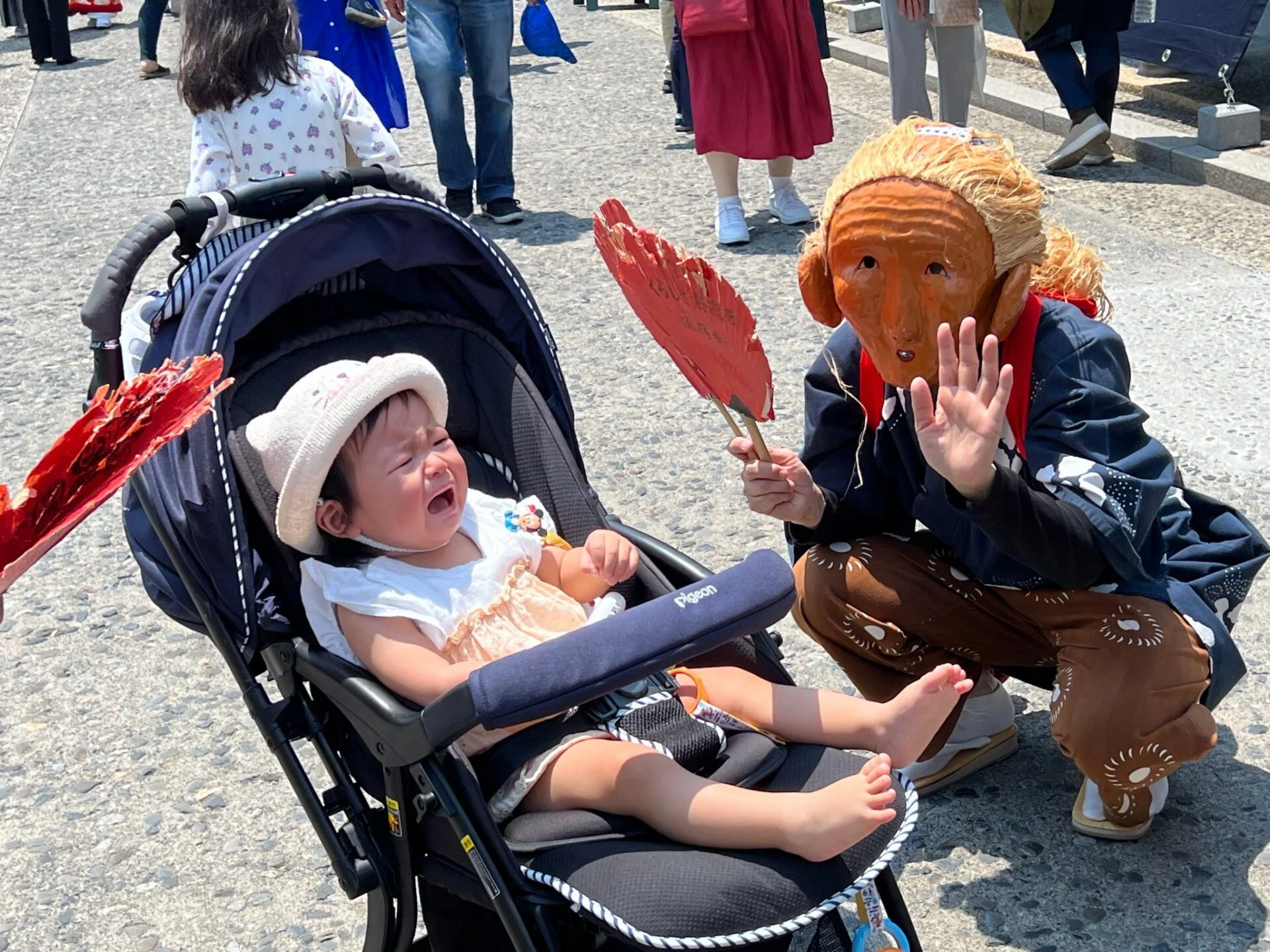
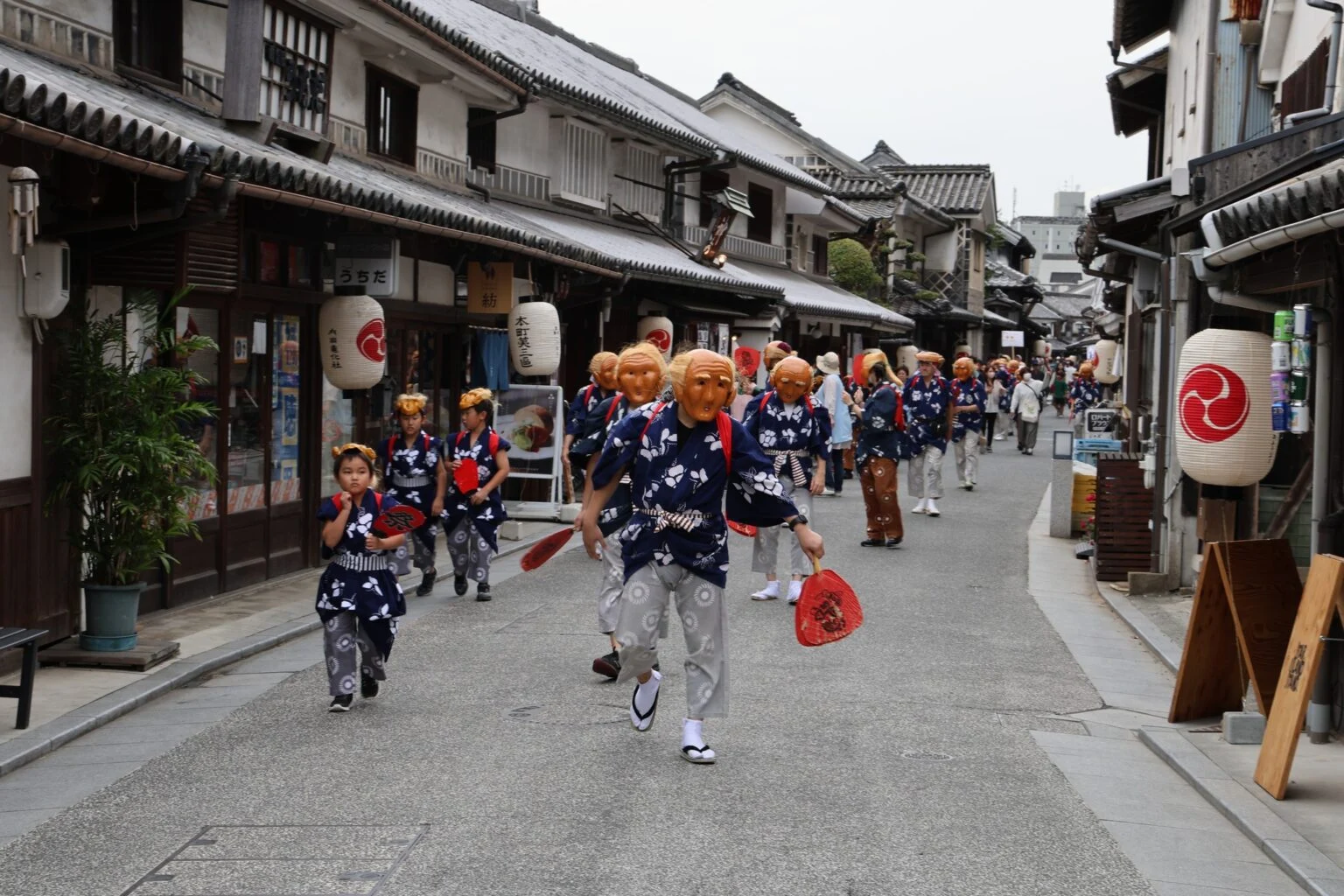
In the past, Sugenko was known for hitting hard and chasing people around.
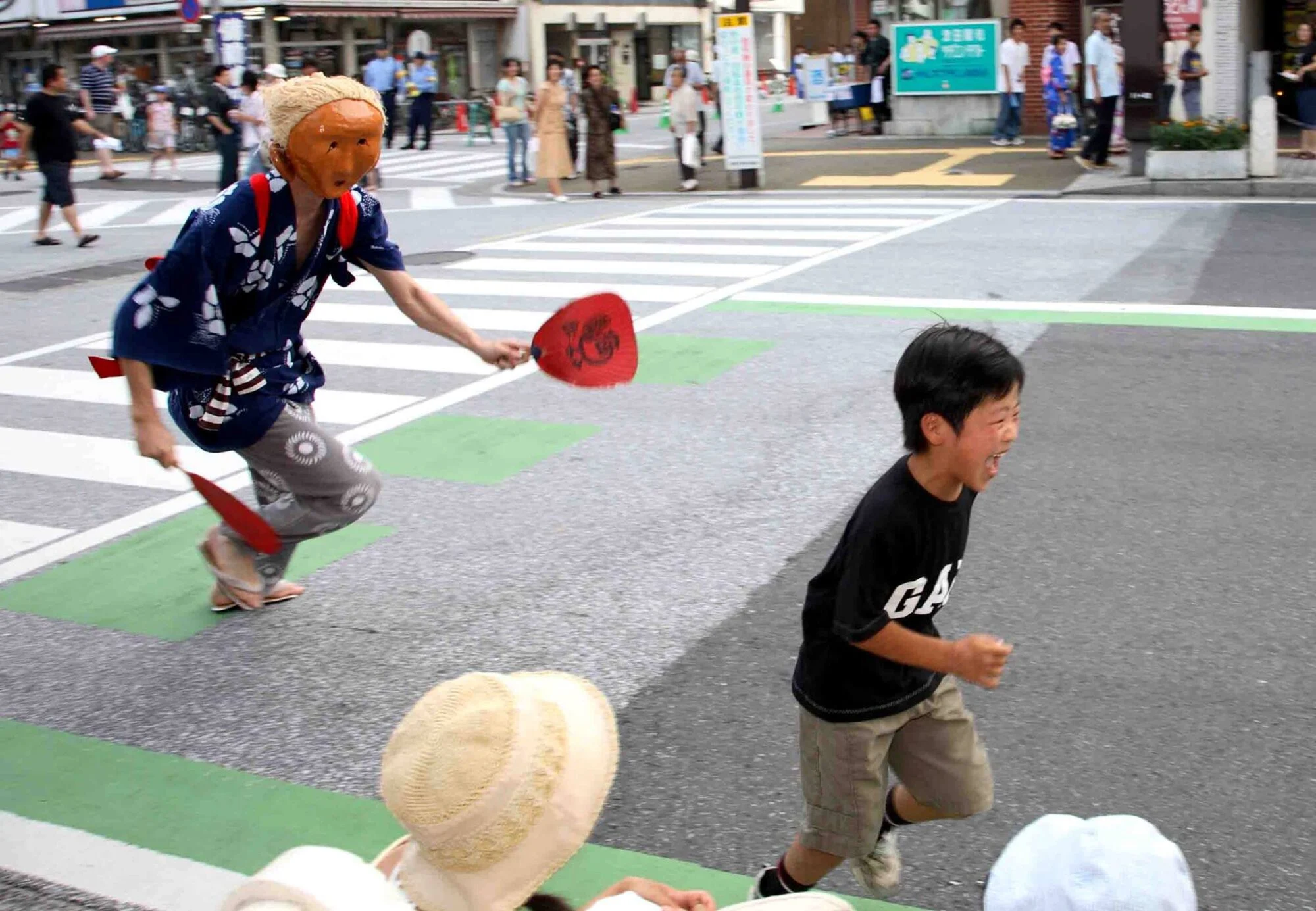
However, if we had continued that style, around the 2000s, the number of complaints and troubles increased dramatically. It became clear that the old methods were no longer acceptable, so we developed the current Sugenko style of gently hitting while observing the reactions of the people.
Moreover, we believe that the complaints about Sugenko stem from the fact that it was not well known, so we started activities to promote Sugenko using a website and social media.
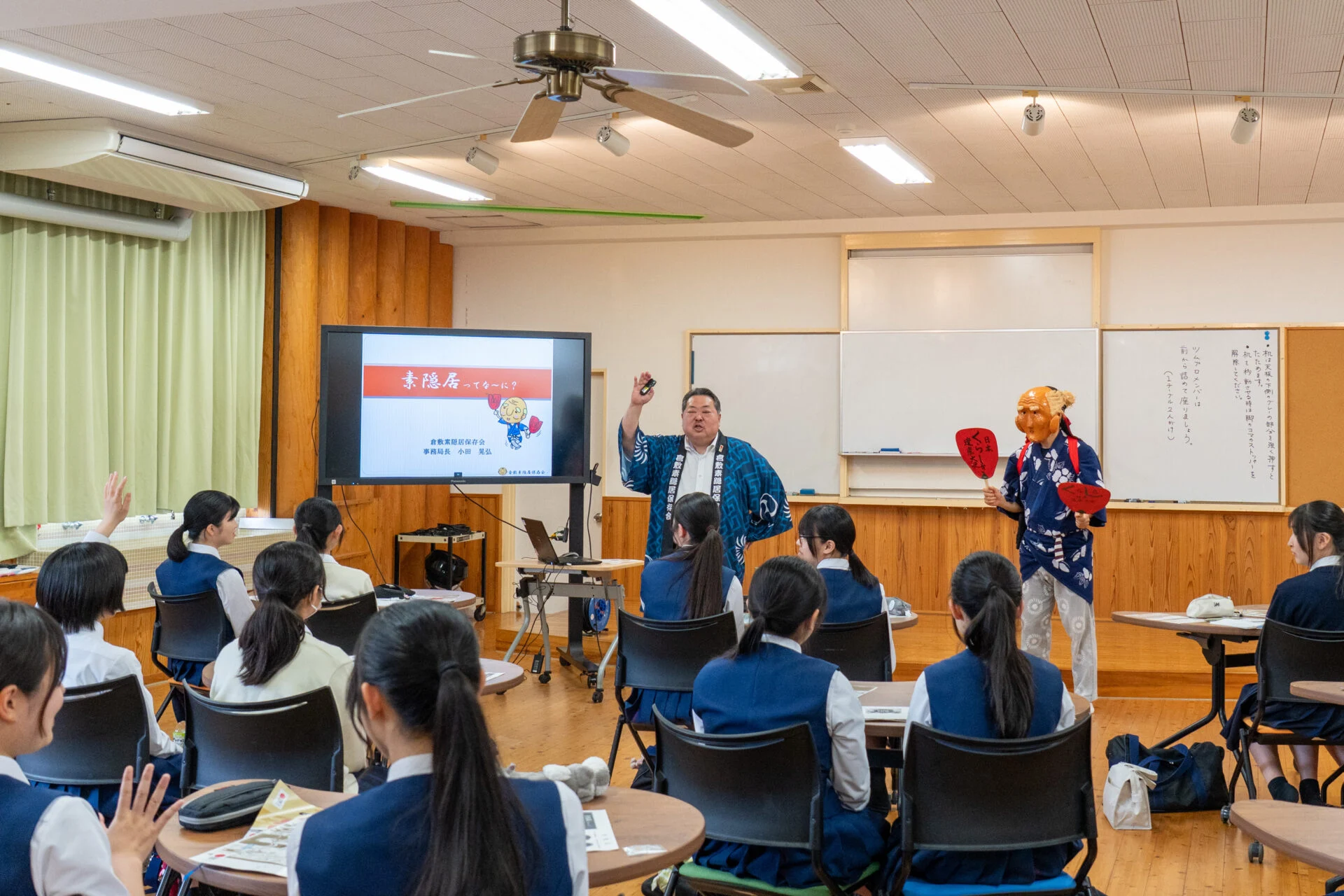
So, activities to raise awareness of Sugenko began.
Oda
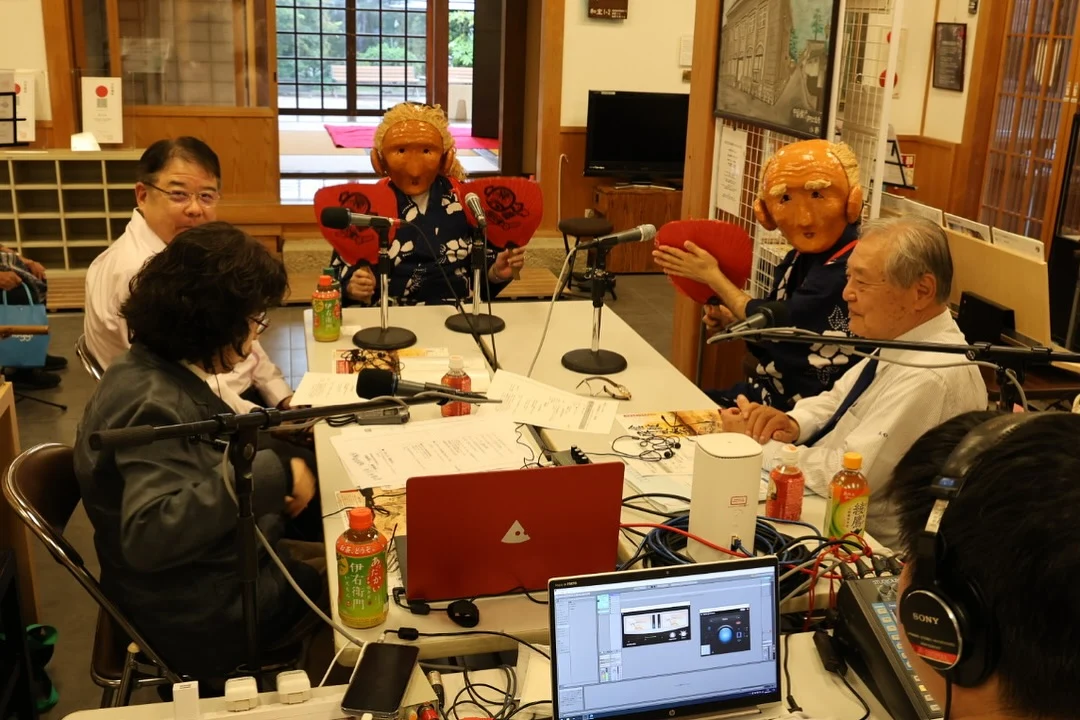
Yes. We started focusing on information dissemination through a website and social media, and even had a radio program on FM Kurashiki since the 2000s. From there, opportunities to be invited to events and to be featured in the media gradually increased.
In the past, we were invited to overseas events as well. Although we couldn't go there ourselves, we lent out costumes.
Ando
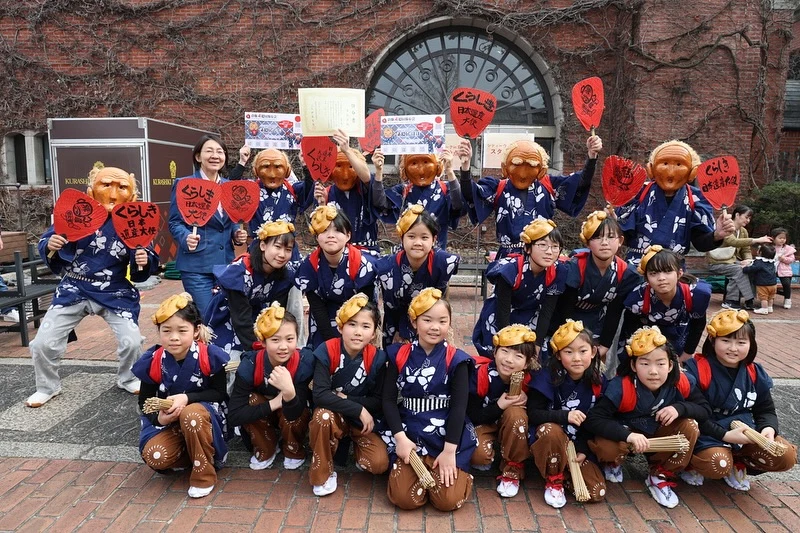
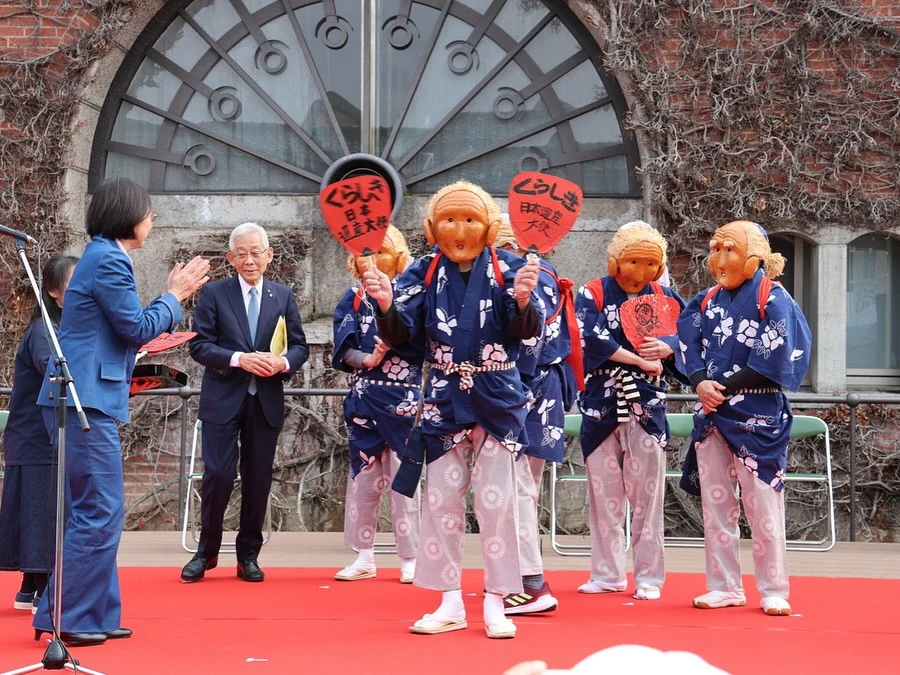
The most recent major activity is the Japan Heritage Festival in Kurashiki to be held in 2025, where Sugenko has been recognized as the Kurashiki Japan Heritage Ambassador. Now that we have an official status, I hope the recognition of Sugenko will spread even further.
How are the Sugenko masks made?
Oda
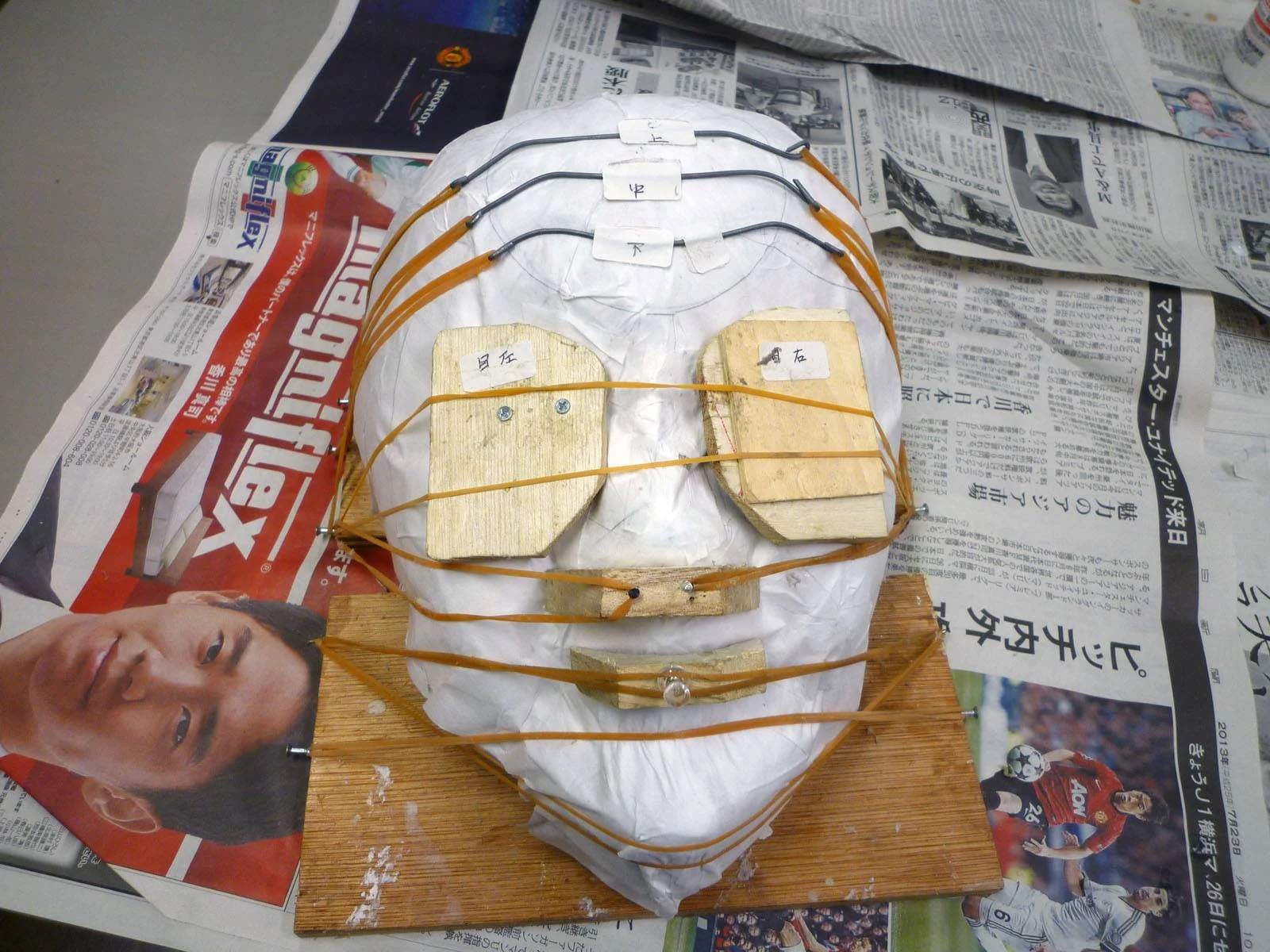
The material for the Sugenko mask is washi (Japanese paper). The process involves repeatedly pasting multiple layers of washi, drying them, and stacking them up to create the mask.
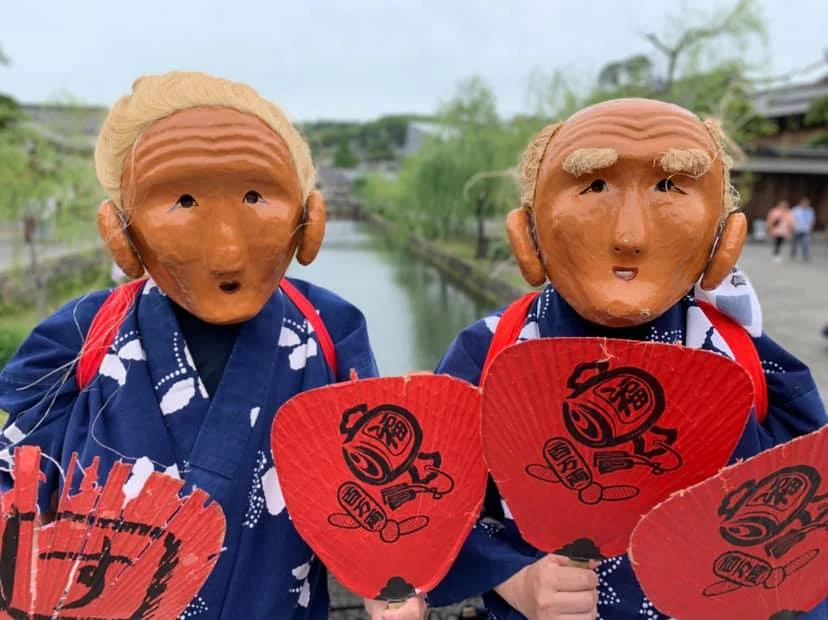
In the past, there were many different masks in various towns, resulting in a variety of expressions.
By the way, the original mask we use was made by Mr. Ikemizu, a craftsman of Kurashiki Hariko.
Now, with fewer mask makers, we tried making them ourselves, and it took us six months to finally complete them. It really does take a lot of time and effort...
Basically, Sugenko can only be seen at festivals, but can we also enjoy Sugenko through souvenirs?
Oda
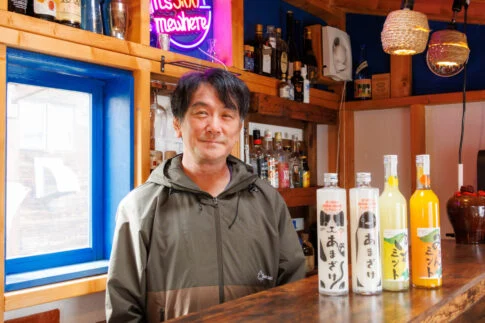
Speaking of souvenirs, at Kikkodo, famous for its murasuzume (a type of sweet), they sell Sugenko Monaka. Also, at Kurashiki Waheiji Shoten, located across from Shinkei-en Garden, they sell Sugenko Pickles. Additionally, there is a local sake called Jijibaba sold at Dobemorisan along the Kurashiki River.
Aside from food, there are also cute illustrated LINE stickers available.
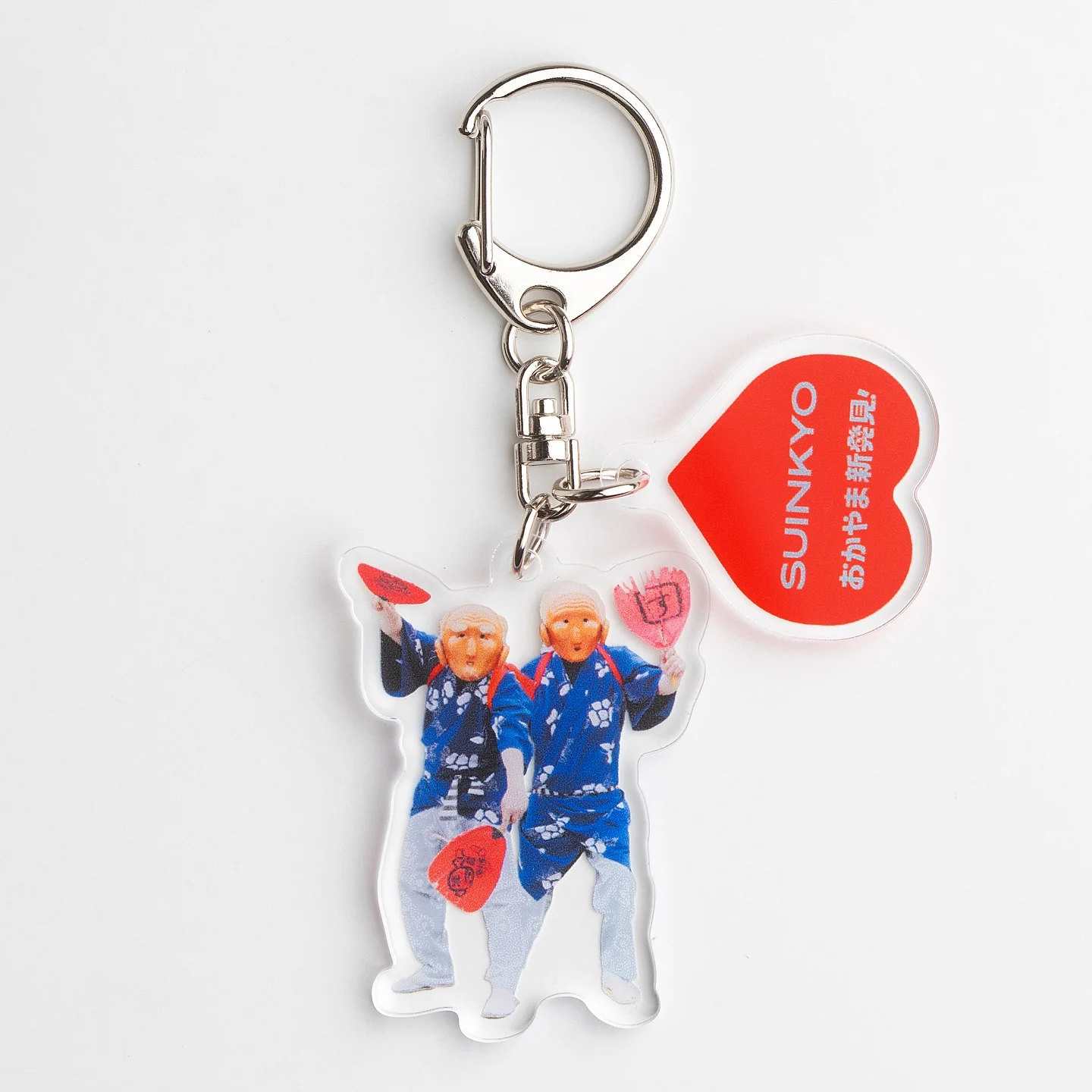
In the past, there were also limited-time sales of kibidango (a type of sweet) and acrylic keychains featuring Sugenko.
Do you have any future goals?
Oda
I would like to continue to focus on raising awareness of Sugenko. While Sugenko is a unique culture of Kurashiki City, I believe that its recognition is still low in areas slightly away from the Bikan Historical Area, such as Tamashima and Kojima.
Increasing the number of people who can become Sugenko, gathering funds to continue activities, and passing on Sugenko are all important, and I believe that the first step is to create opportunities for people to learn about it. Conveying what Sugenko is and making its existence known is our eternal theme.
Ando
Since Sugenko has been appointed as an ambassador for the Kurashiki Japan Heritage, we are currently considering initiatives to raise awareness in collaboration with Kurashiki City.
What I am currently thinking about is having high school students experience Sugenko.
It would make me happy if that experience in their youth could someday lead them to remember Sugenko as adults. I hope Sugenko can further thrive as a tradition of Kurashiki.
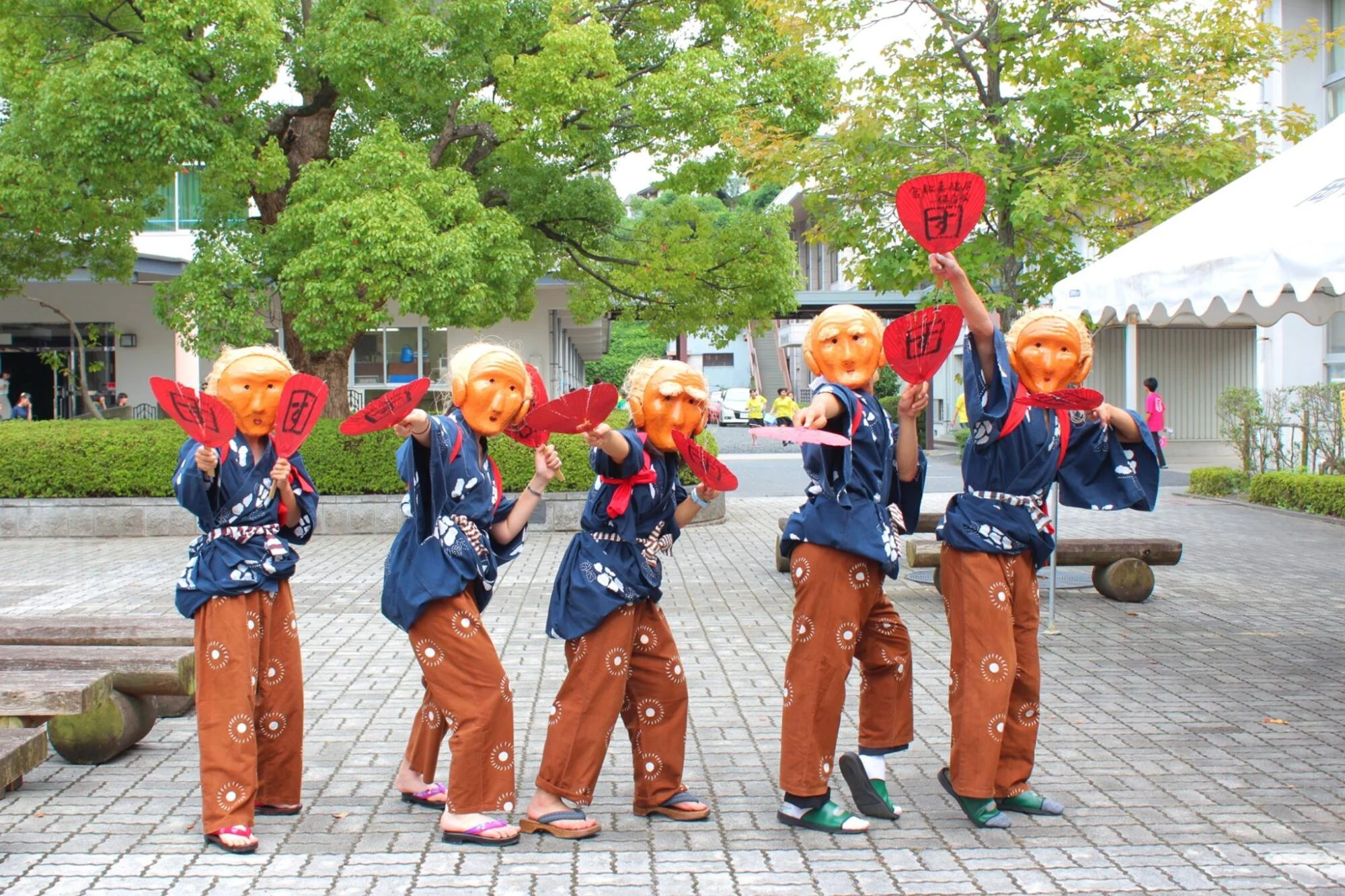
Finally, please give us a message.
Oda
If anyone is interested in Sugenko, please join us and give it a try. Anyone can become Sugenko. We look forward to hearing from you all.
Ando
As the number of Sugenko practitioners is decreasing, I hope to connect with new people. If you are interested, please feel free to contact us through our website or Facebook.
Conclusion
In the past, I have also experienced being Sugenko just once.
When I became Sugenko and tapped the heads of people walking in the street, I was thanked by many, both locals and tourists. It was an experience that made me realize that Sugenko is a beloved and sought-after presence among people.
If you are interested in community activities or traditional events, I encourage you to challenge yourself to become Sugenko.
Also, when you see Sugenko at festivals or around town, I recommend getting tapped. You might receive some good fortune!
Articles about Japan Heritage in Kurashiki City
Data of Kurashiki Suinkyo Preservation Society
| Name | Kurashiki Suinkyo Preservation Society |
|---|---|
| Website | Kurashiki Suinkyo Preservation Society |