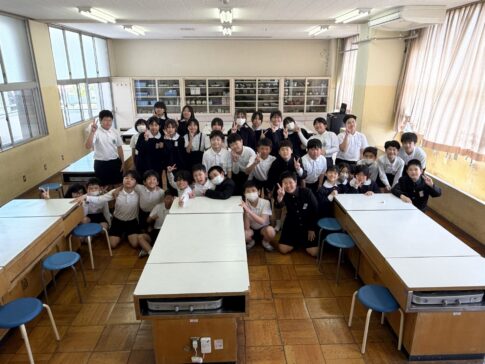
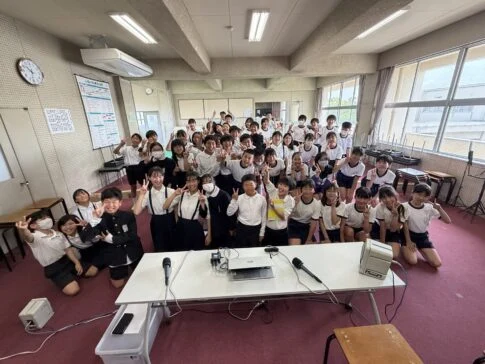
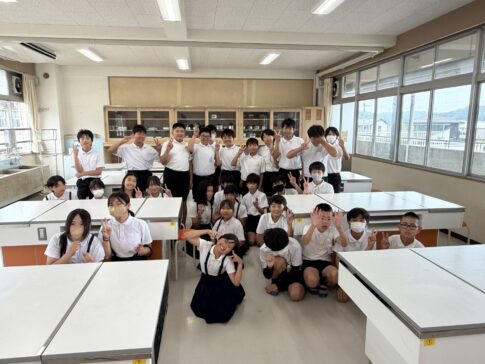
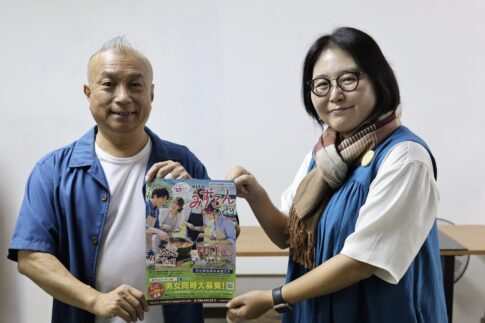
"If only it could be more livable..."
Some people may have thought about such things in their daily lives. However, even with ideals, the hurdles to realization can feel high.
In Kurashiki City, university students and young female staff from the city are working together to hold workshops to organize issues and consider policies to become a "city chosen by the younger generation and a just-right city."
What kind of city attracts young people and women? And how can we translate ideals into policies?
Introducing the workshop for women by women.
The information provided is from October 2026. Please note that it may differ from current information.
What is the "Workshop for Women by Women"?

The Workshop for Women by Women is held as part of the Women's Empowerment Project organized by Kurashiki City.
Students from universities and junior colleges in Okayama Prefecture team up with young female staff from Kurashiki City to think about creating a city that is attractive to young people and women, and to draft policies for Kurashiki City.
Overview of the Women's Empowerment Project
University and junior college students, along with young female staff from Kurashiki City and the Planning and Management Office, engage in group work on "fostering local pride" and "settling in the local area (working and living)" for their generation.The group will draft policies to ensure that Kurashiki City can be a place where the younger generation can realize their envisioned future, aiming for implementation in the 2027 fiscal year.
It is not just about thinking of urban development and policies. The proposed policies may be implemented as city projects in the 2027 fiscal year. This workshop is filled with dreams, where the ideals of young people and women about "what a good city would be like" may come true.
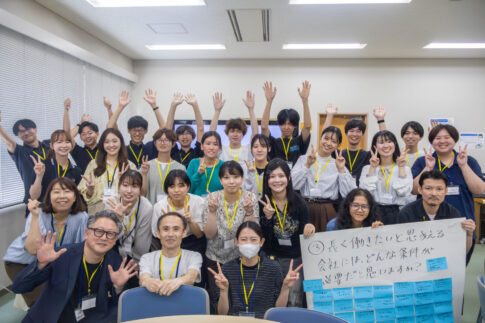
The workshop runs for three months from August to October 2026. Twelve participants will be divided into Team A and Team B to progress with group work.
Applications for participation in the workshop have closed.
As a Community Revitalization Cooperator, I also participated as a team member. I will introduce the orientation and group work from the first session.
Report on the first day of the workshop
On August 6, 2026, the orientation for the first session of the workshop was held. The flow of the day was as follows:
- Orientation
- Efforts for regional revitalization by Kurashiki City
What kind of city is Kurashiki?/Current situation surrounding local governments/"Efforts towards sustainable urban development" - Concept of problem-solving plans
- Tour of Ohara House & discussion
Orientation
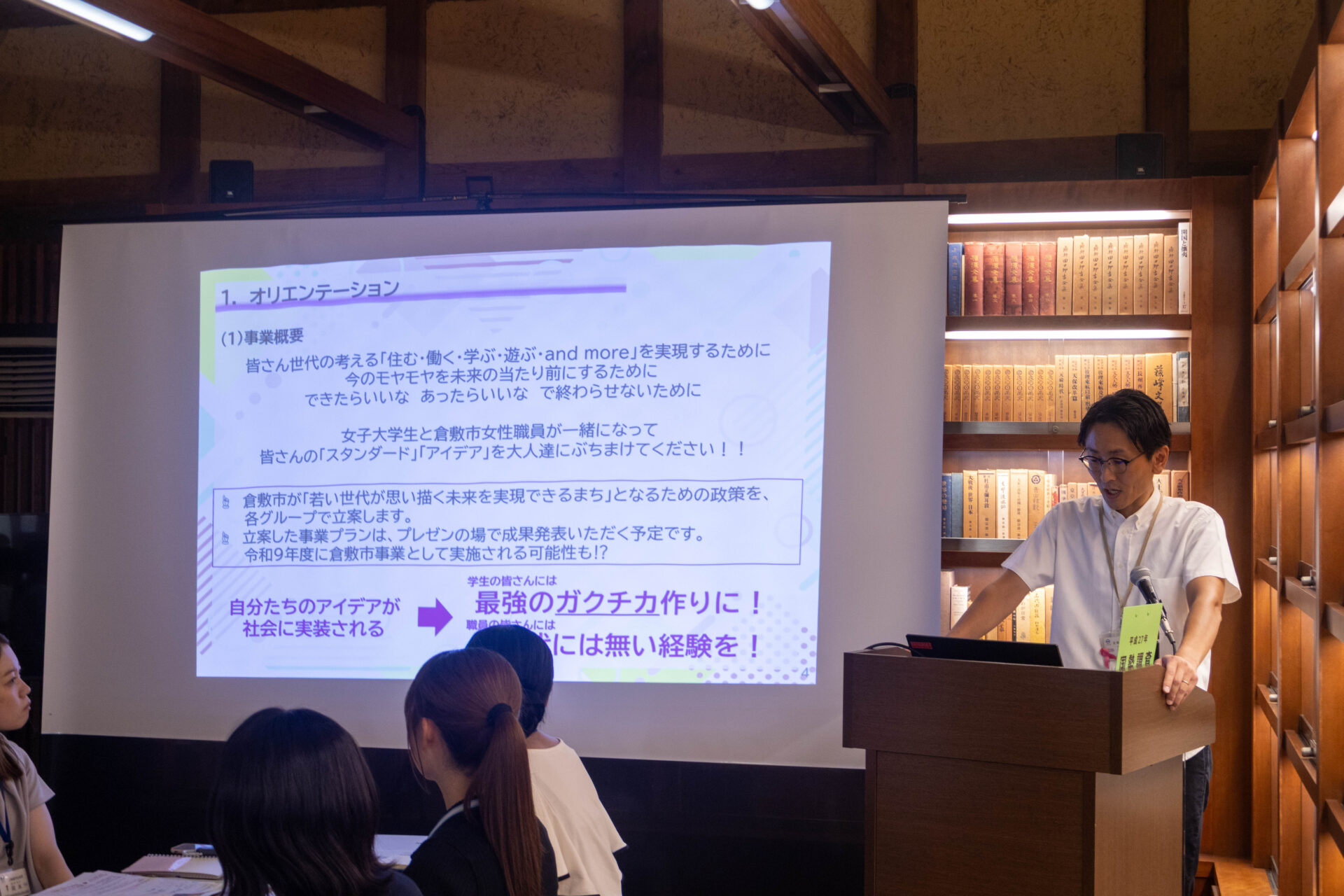
First, the staff from Kurashiki City explained the project overview.
They mentioned that the issues young people and women feel about the city can provide significant hints for urban development. Furthermore, it is essential for each young person to confront the nature of the city, people, and work that form the foundation of regional revitalization, rather than merely generating ideas for an ideal city.
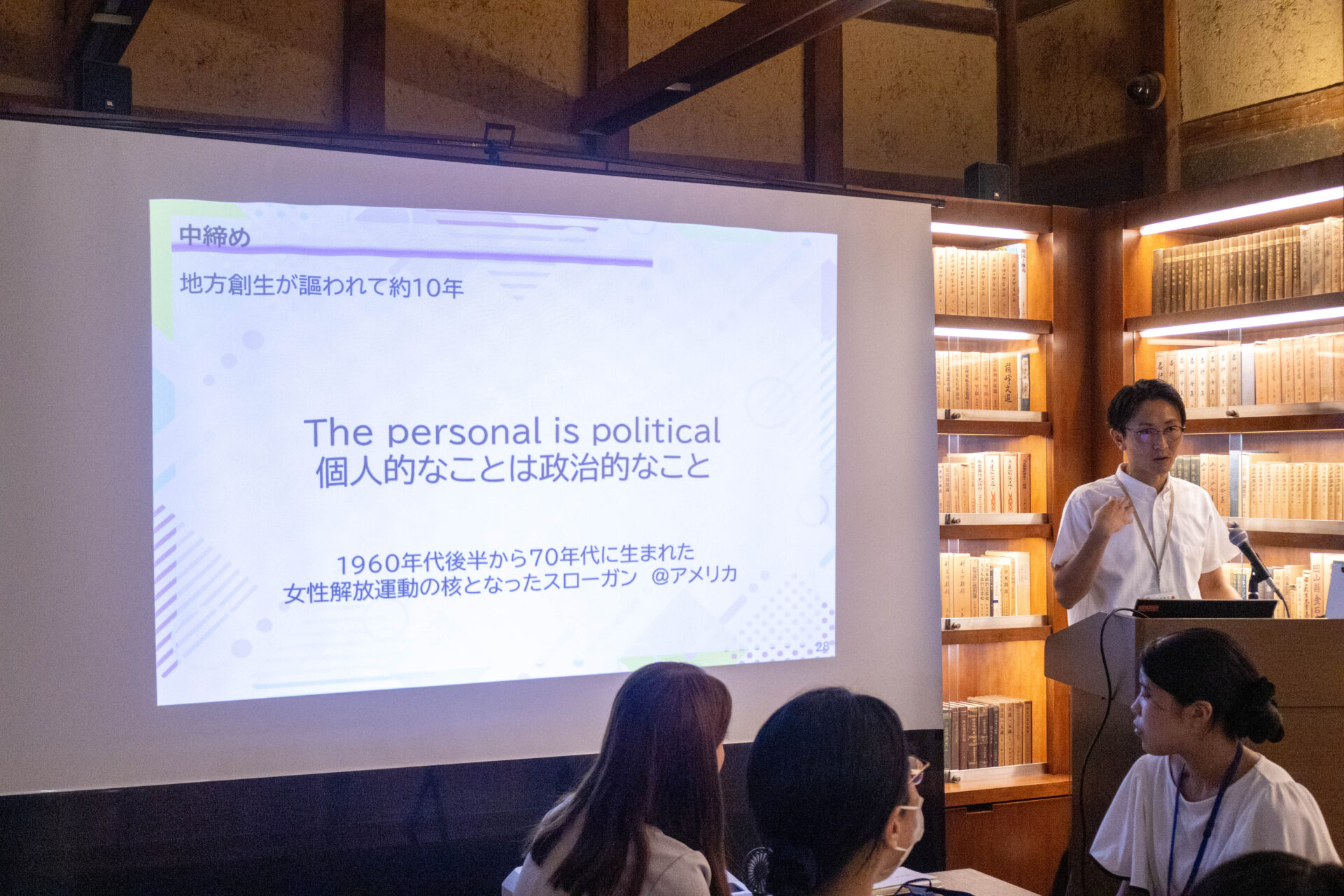
What left an impression on me was the staff's words: "Is population decline inherently a bad thing?" They explained that the issue may not be the decline itself, but rather the speed of the decline or the age composition, and that considering various perspectives can lead to new insights.
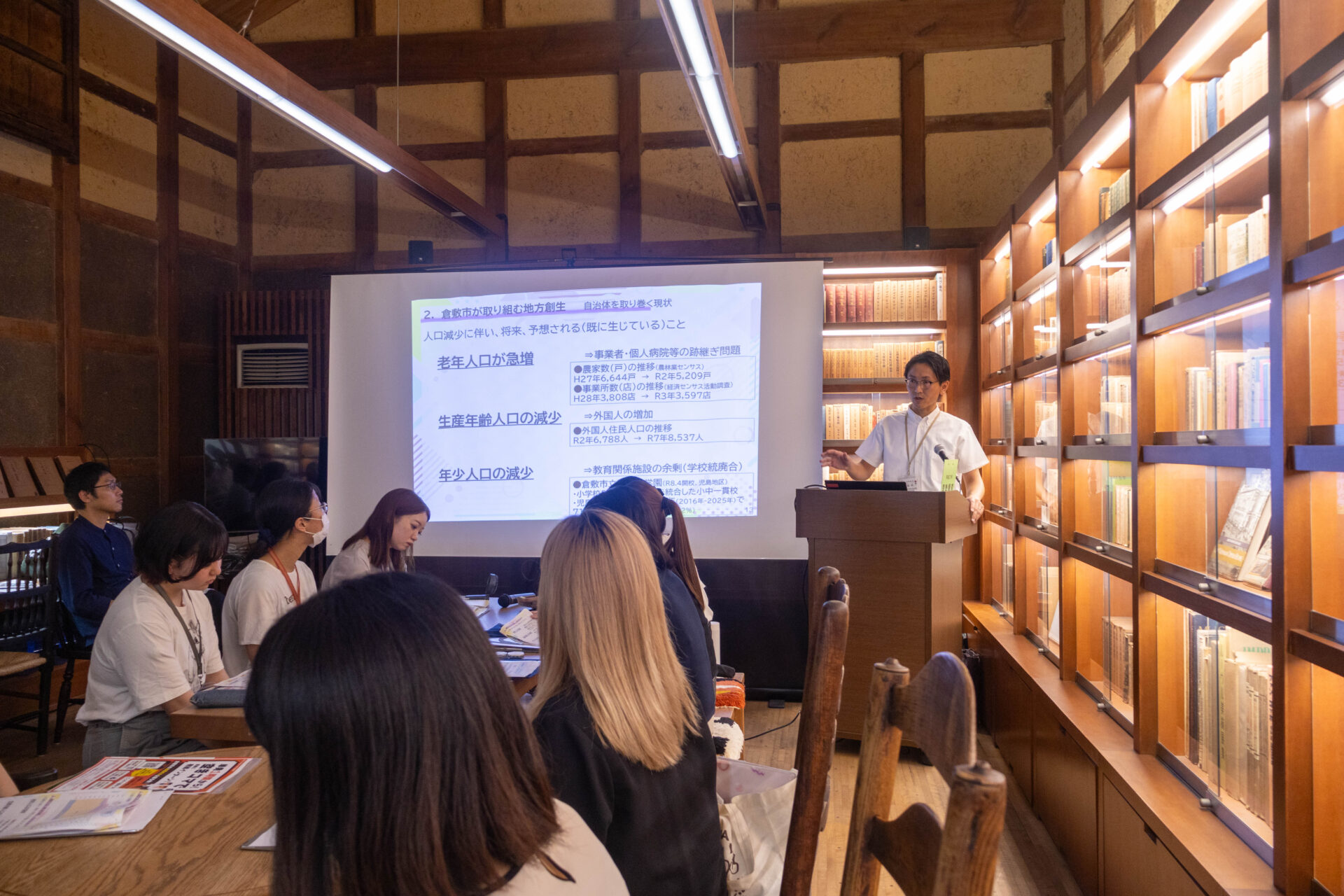
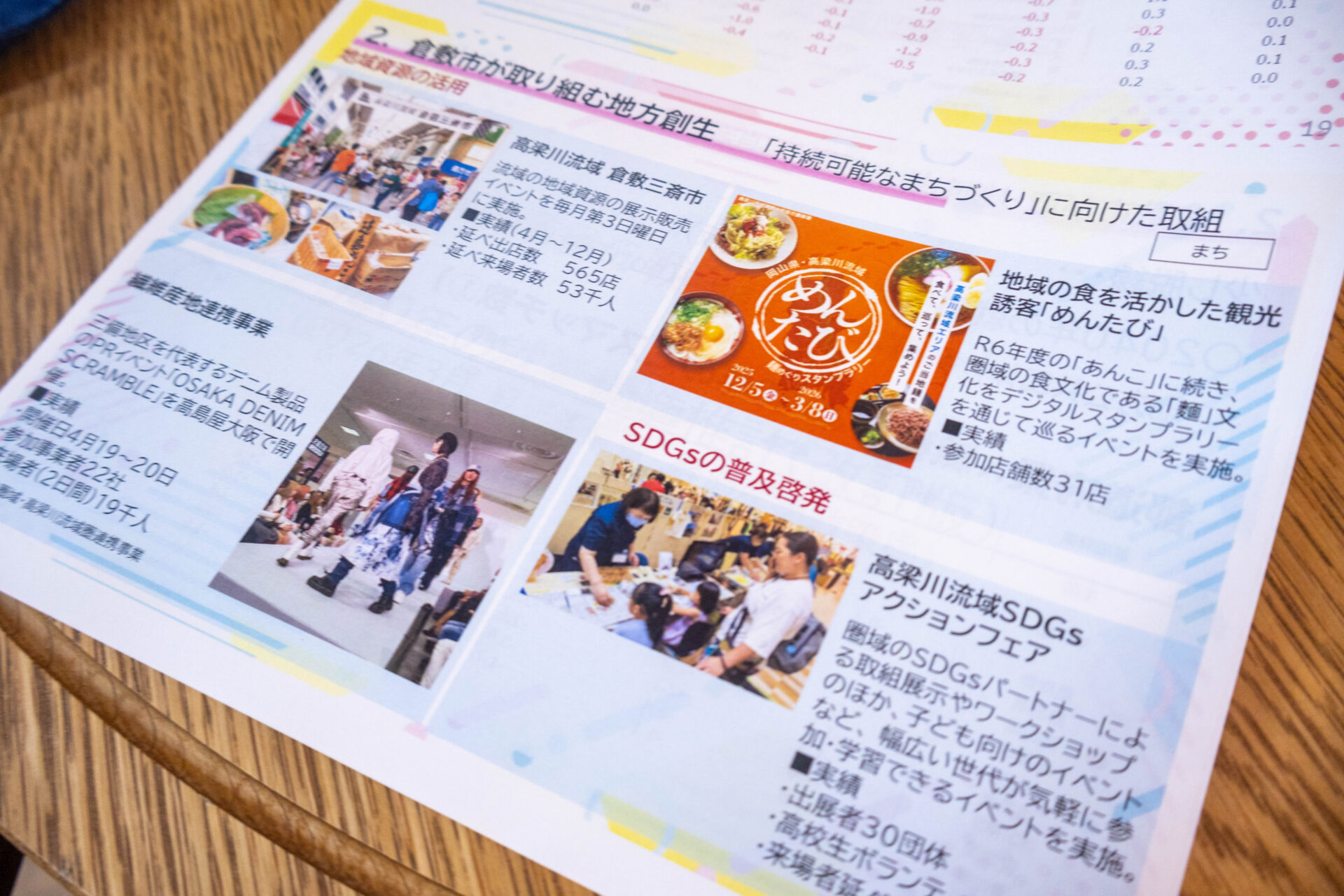
After that, we learned about the basic information of Kurashiki, such as population and industry. Kurashiki City, with a population of about 470,000, ranks third in population size in the Chugoku region, following Hiroshima City and Okayama City. Looking at the numbers alone, one might feel that "there are still people, so there's no need to rush...".
However, a certain study suggests that by around 2100, Japan's population may decrease to about half of the current 63 million. By maintaining a certain population size while preserving the charm of the region, we can protect each person's hometown.
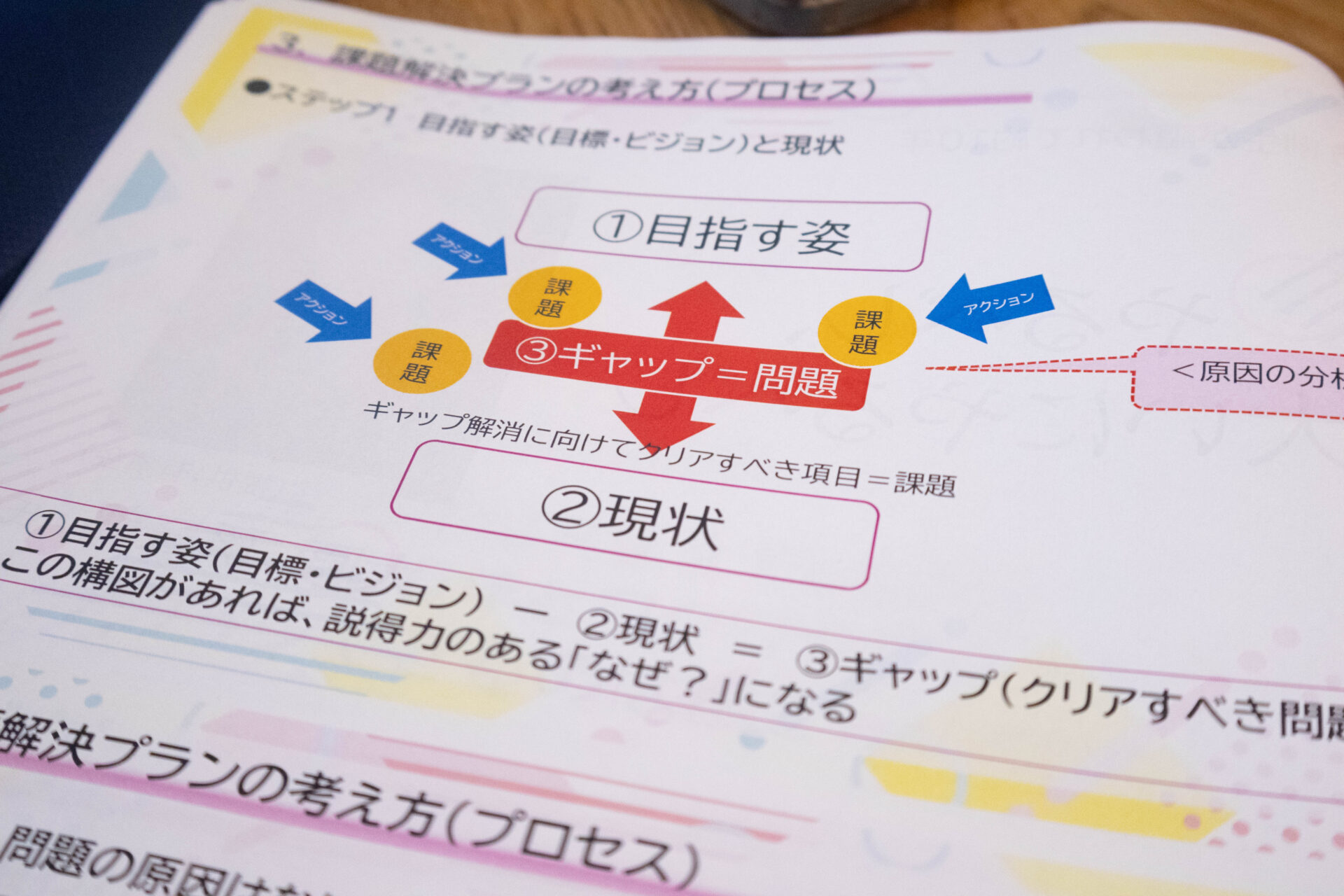
We also learned about the concept of problem-solving. Comparing ideals with the current situation and identifying gaps will likely be key to this workshop.
Learning about the history and mindset of the Ohara family
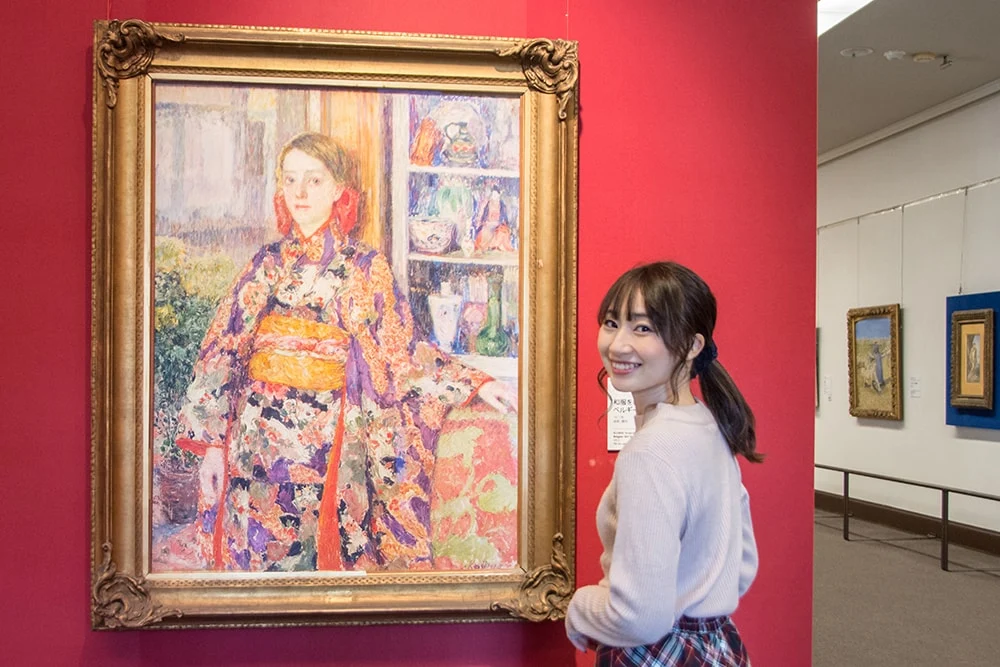
Next, we conducted a fieldwork session to learn about the Ohara family, who contributed to the development of Kurashiki. A tour was held at the nationally designated important cultural property, Ohara House Katalyzer.
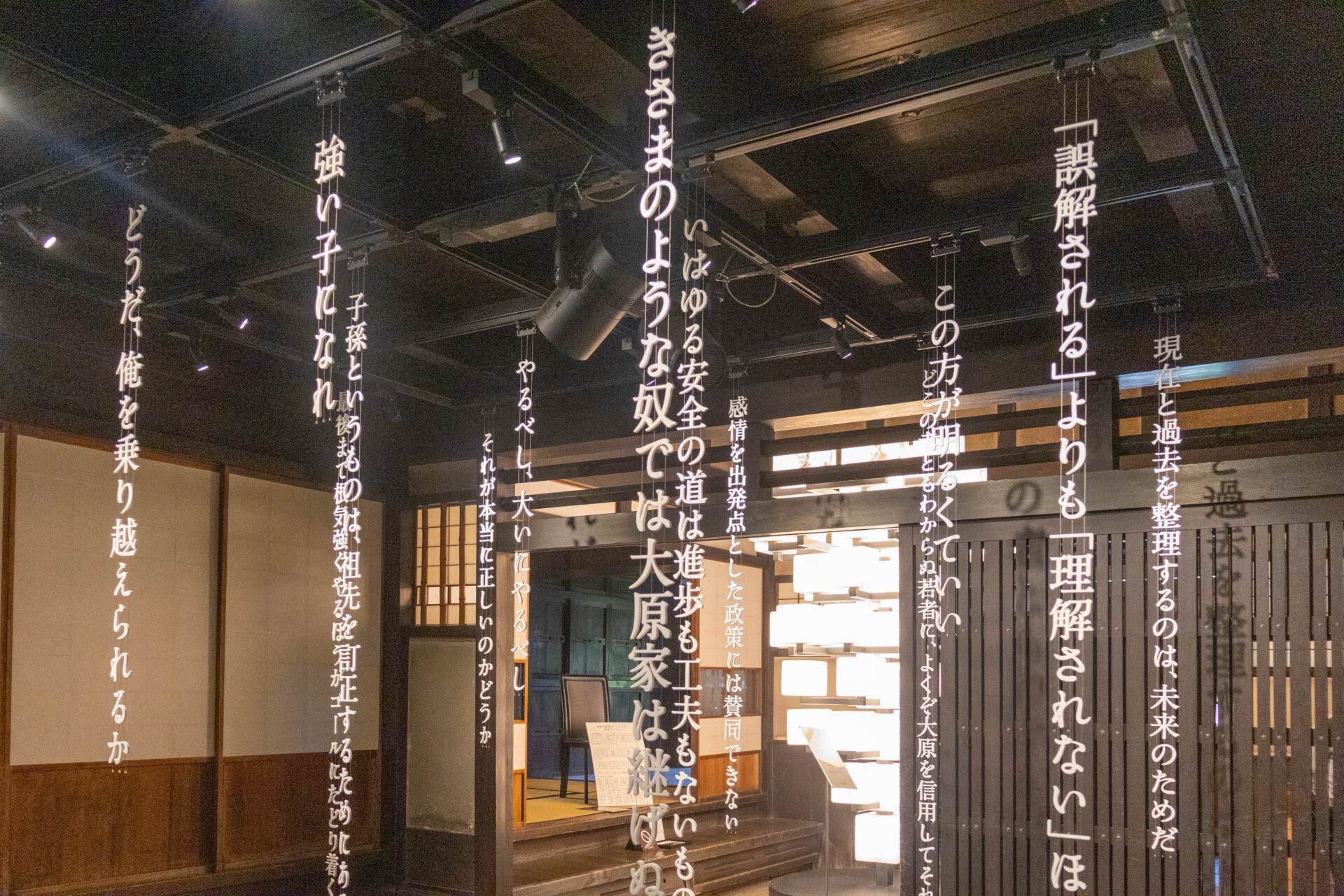
During the exhibition of words spoken by the 5th to 8th heads of the Ohara family, each participant recorded the words that resonated with them.
"If seven or eight out of ten people agree, it's better not to do it."
"Is it really correct?"
"I cannot agree with policies that start from emotions."
These are words that one might want to remember when taking on new challenges.
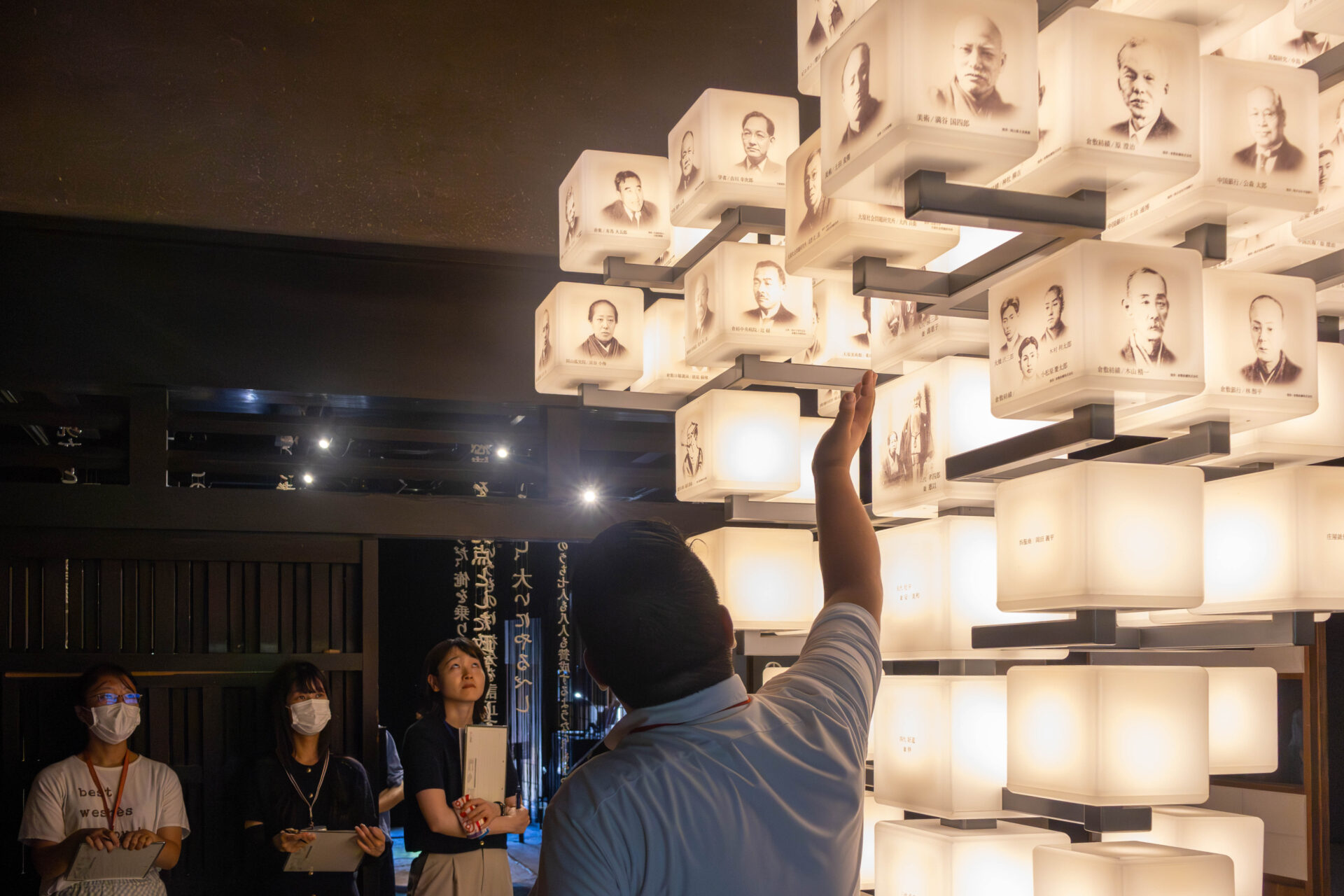
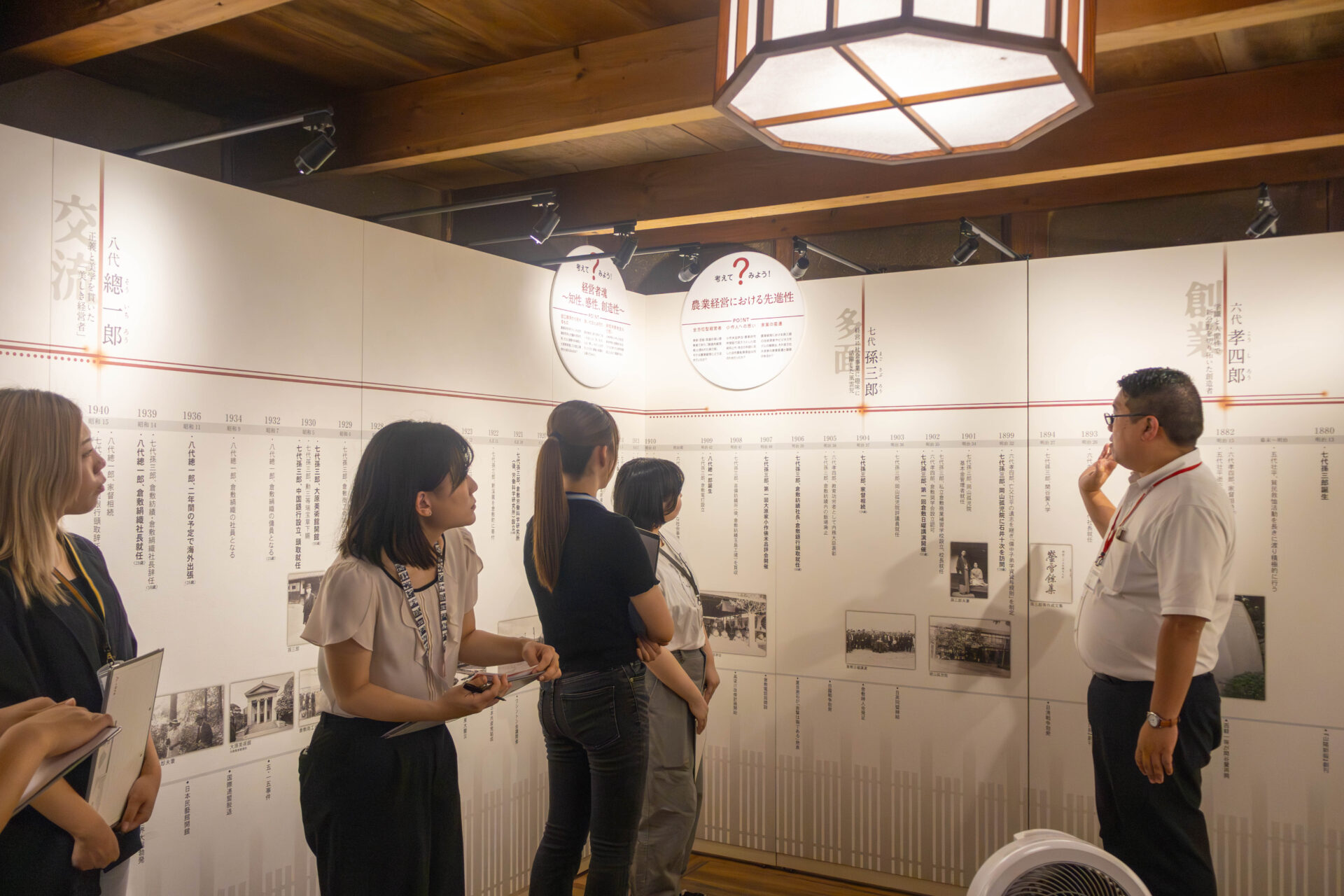
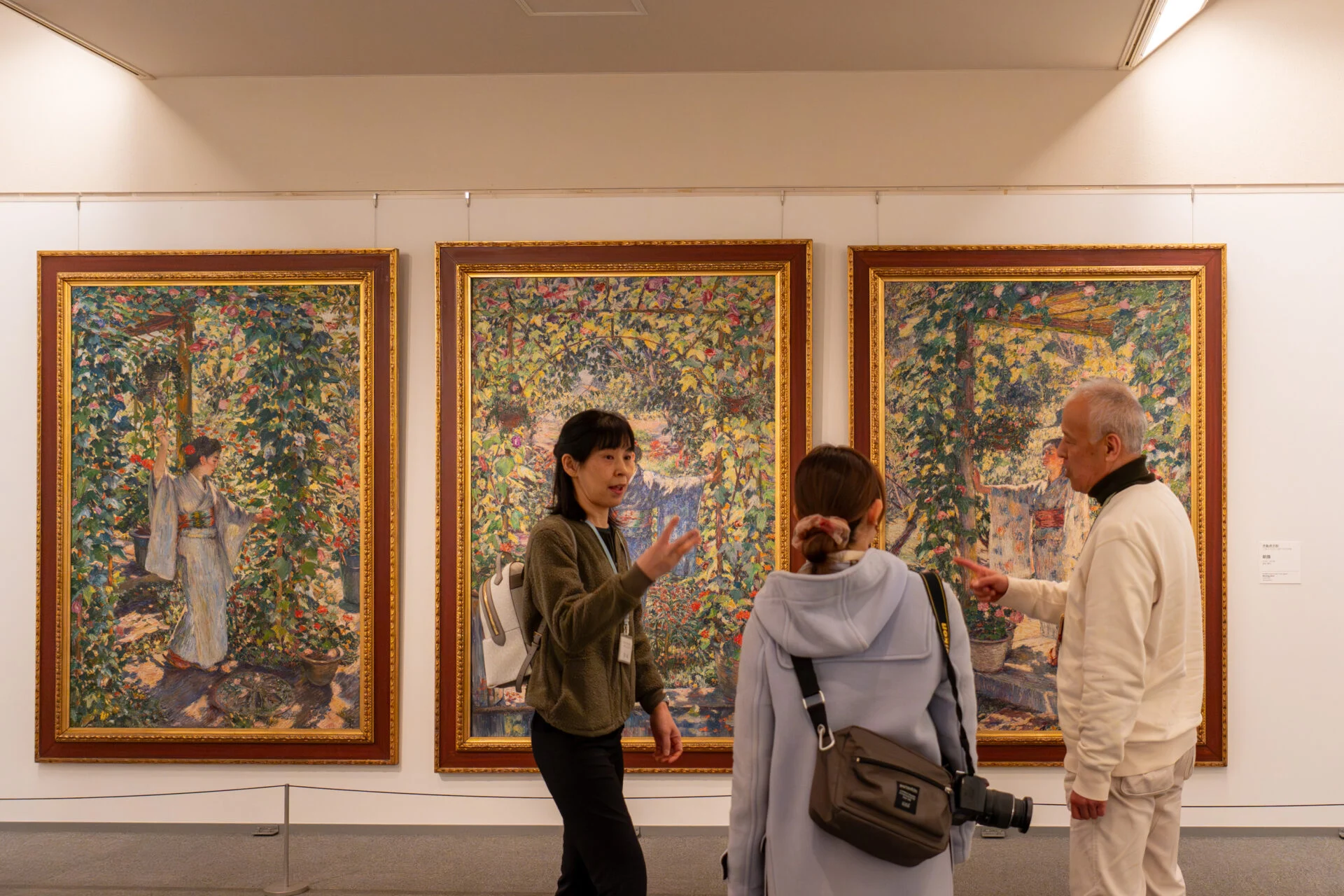
The cube tree illustrating the diverse relationships of the 8 generations of the Ohara family and a timeline detailing their achievements passed by with thorough explanations.
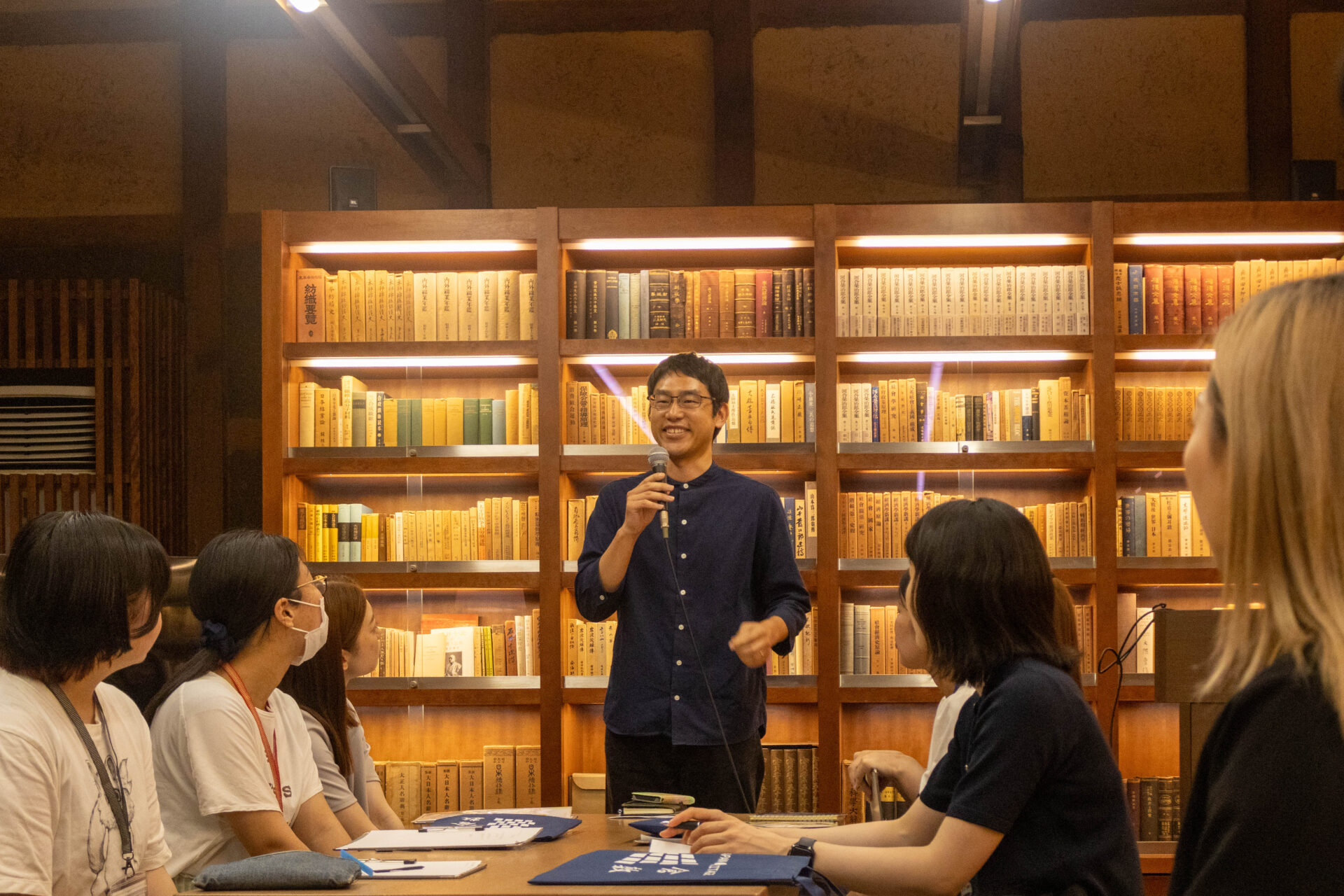
After the tour, a discussion was held, moderated by Narikiyo Hitoshi, an associate professor at Notre Dame Seishin University.
In a friendly atmosphere, participants took turns speaking into the microphone to share their impressions and insights from the tour.
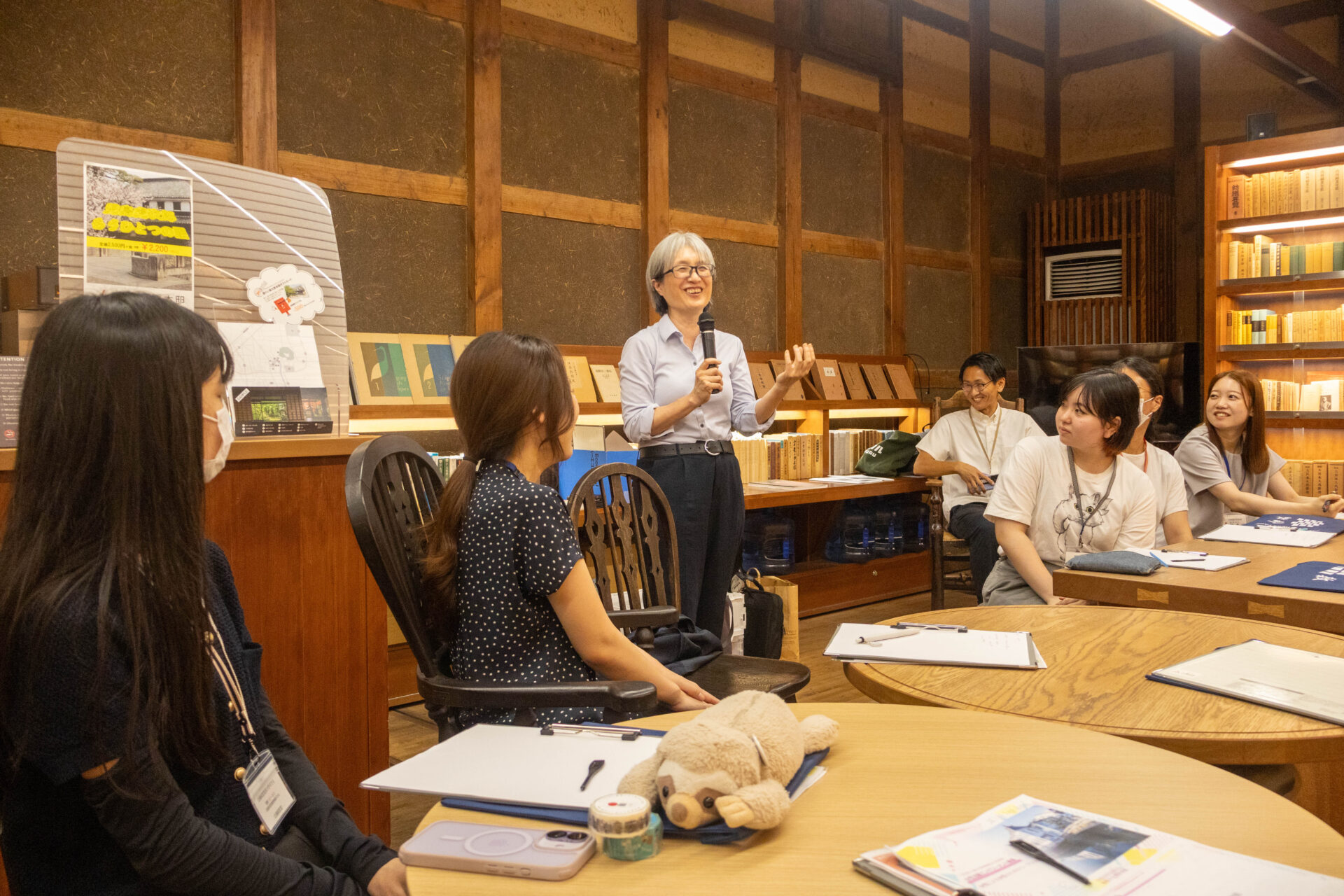
There was also a Q&A session with Akane Ohara, the representative director of the Ohara Museum of Art. Akane Ohara also serves as the chairperson of the Kurashiki Chamber of Commerce and Industry, becoming the first female chairperson in Okayama Prefecture.
When I asked, "What do you think constitutes a workplace and environment where women can thrive?" Akane Ohara replied, "I believe it is the equal right for both men and women to make judgments and decisions." I hope for a city where there is an environment where both men and women can thrive without special treatment for women.
Group work with university students and young city staff
I also covered the actual group work that took place after the orientation.
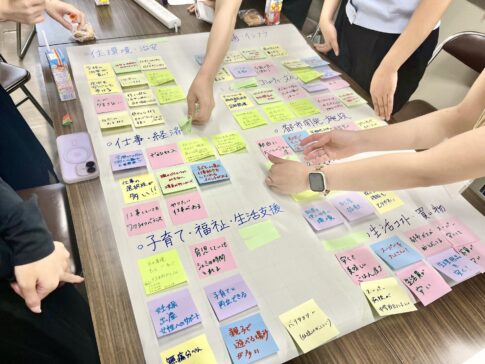
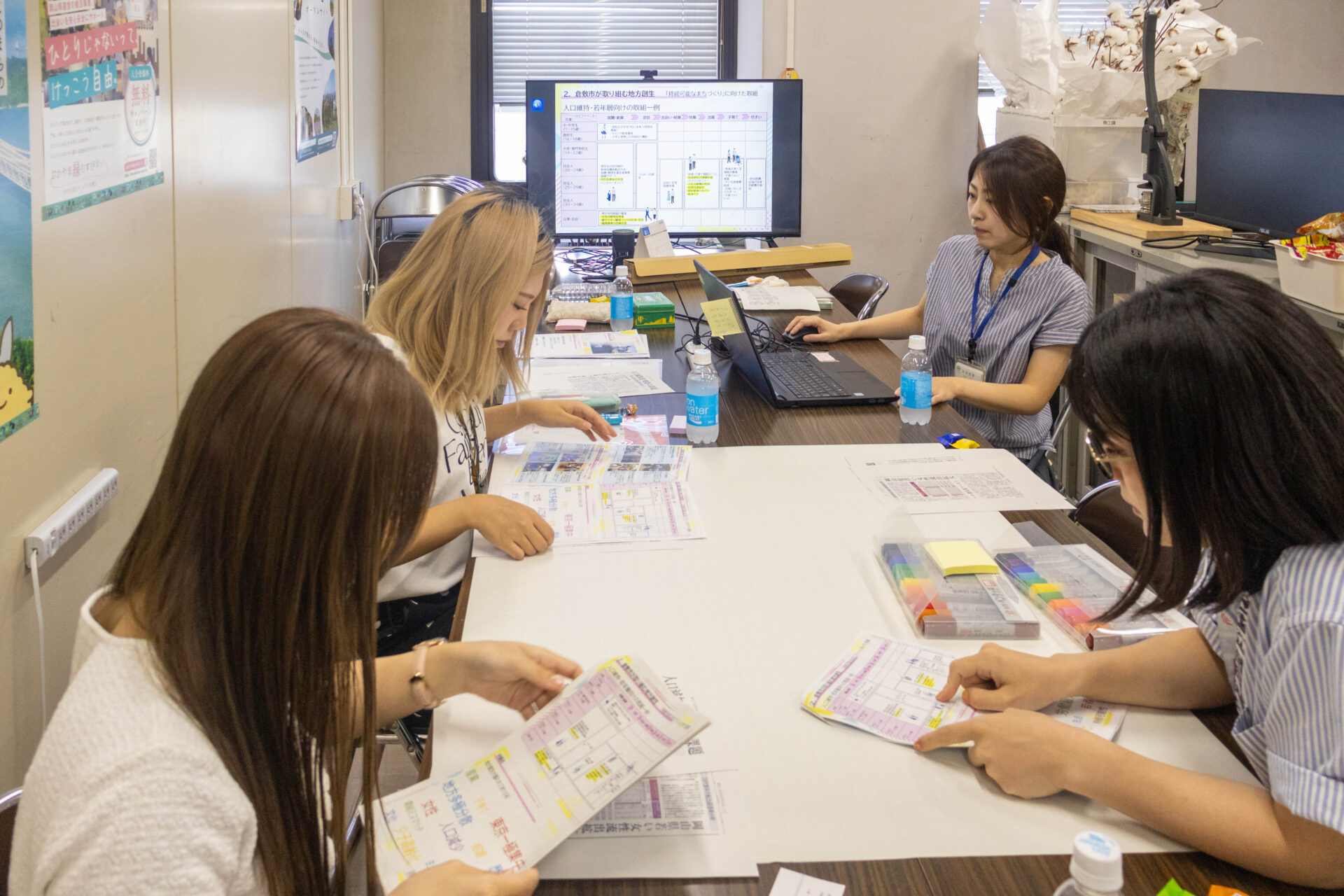
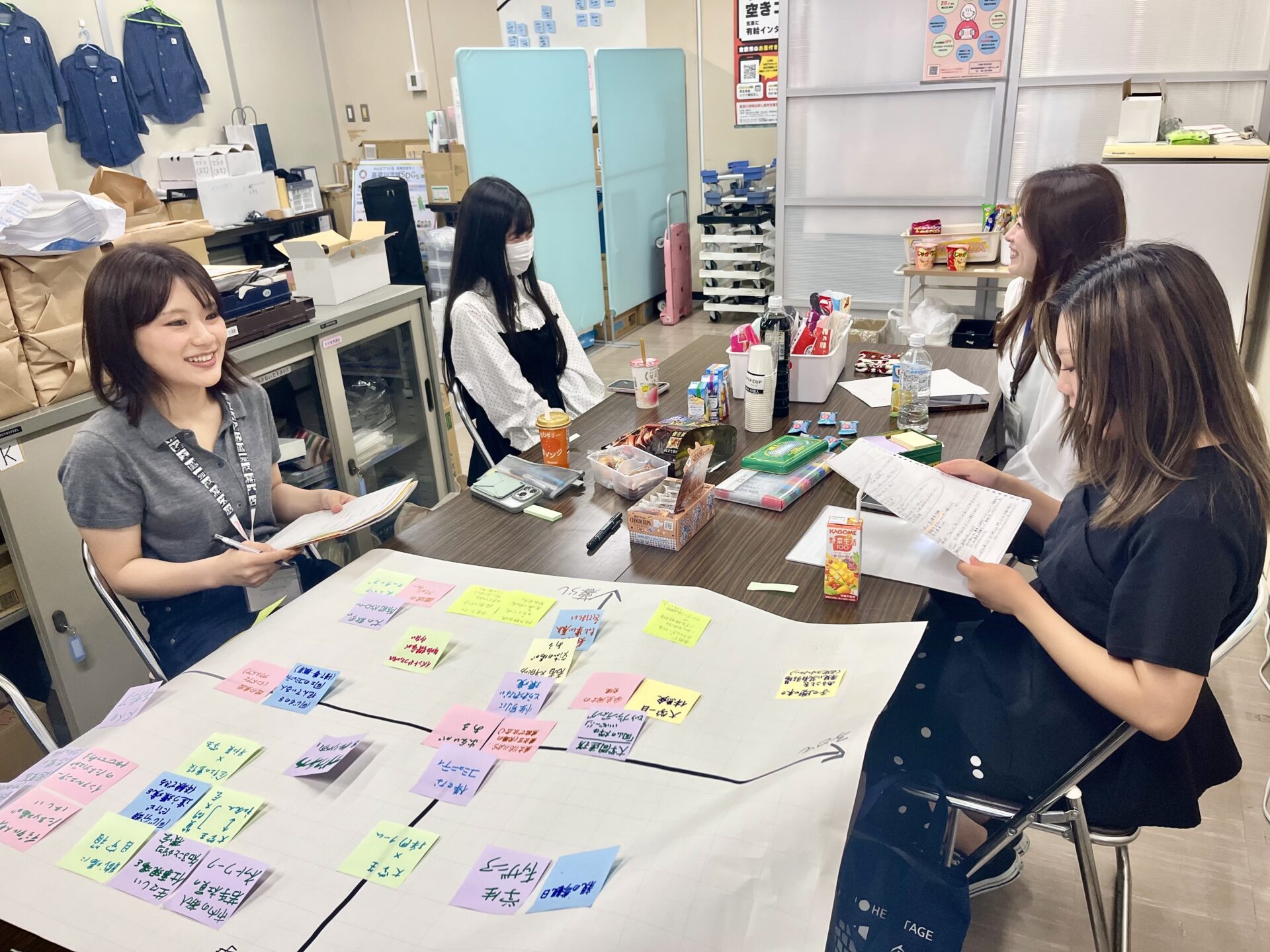
The topic discussed by Team B in the first session was "What kind of city would make Kurashiki livable?" Each person thought about "what kind of city would be good" and wrote their ideals on sticky notes.
There were various perspectives on the livability, such as the opinion unique to women that "it would be nice to purchase sanitary products at a lower price," and the common opinion across all generations that "increasing the number of buses would make it easier to live in old age."
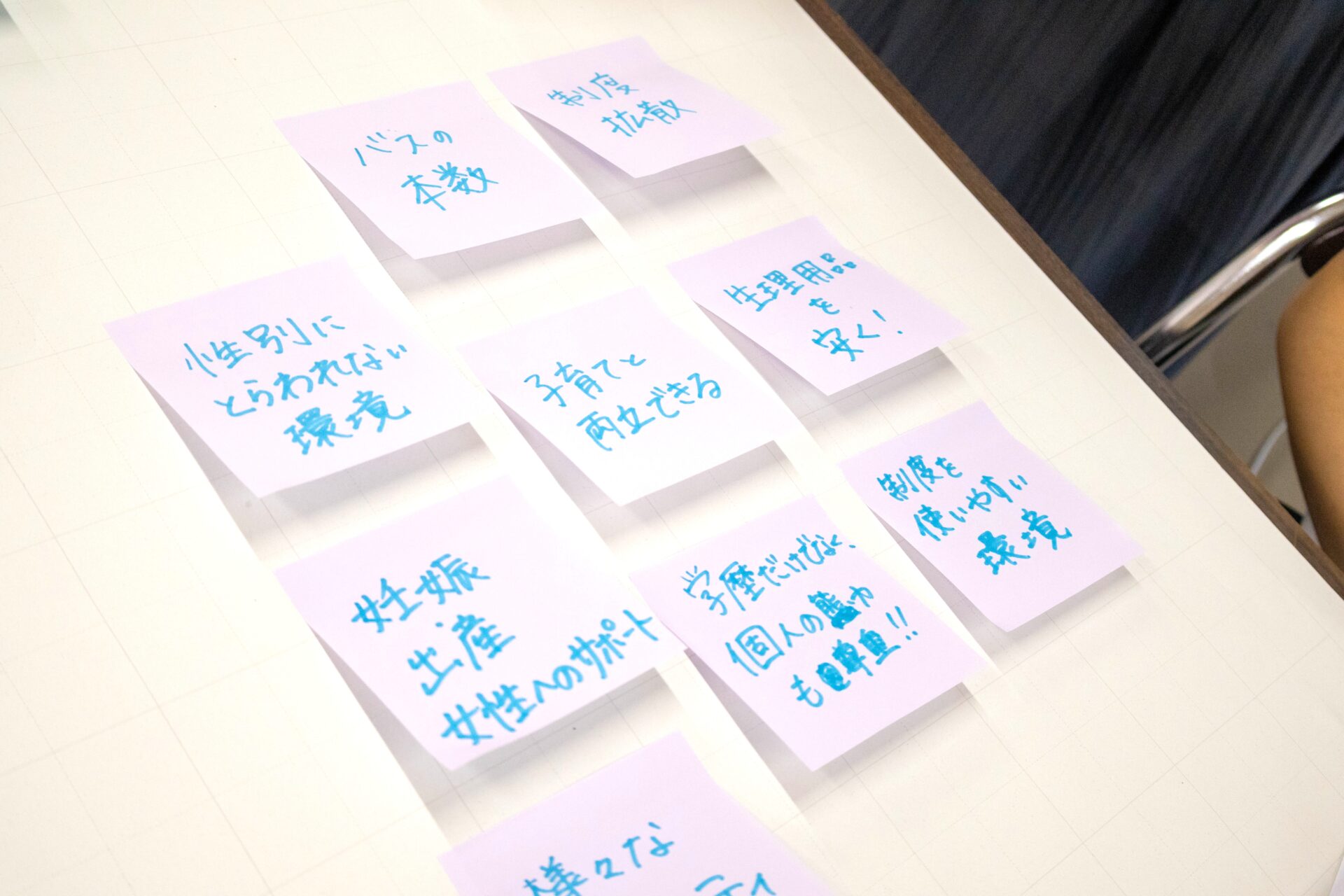
Voices such as "I hope support for women, such as during pregnancy and childbirth, will be enhanced" were raised alongside the need for "an environment where that system is easy to use." It is important that systems like maternity and childcare leave can be taken without hesitation by anyone. A city where child-rearing can be done stress-free will likely be attractive to the younger generation.
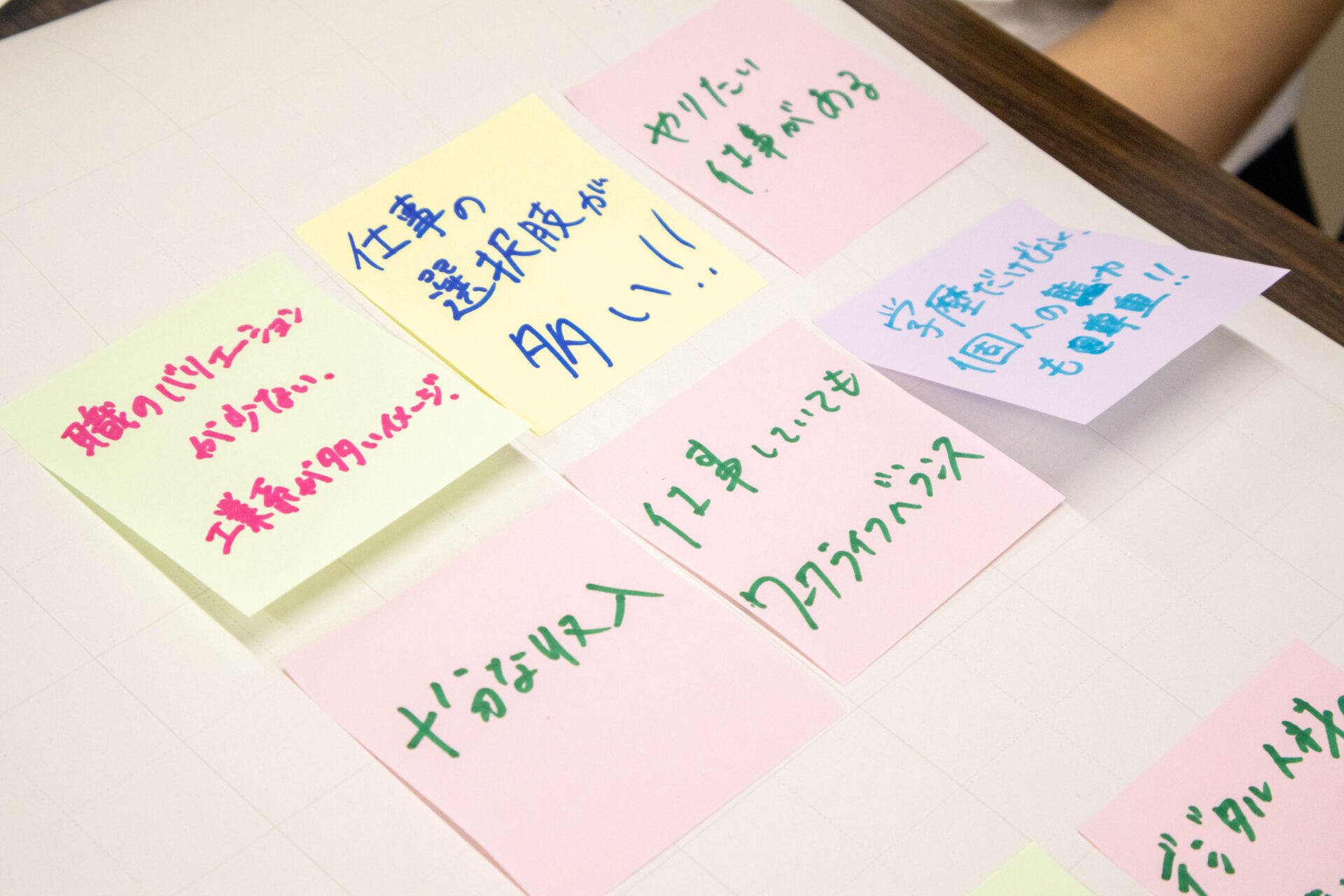
Additionally, students expressed concerns related to employment, such as "there are few job variations" and "there are few opportunities to learn about local jobs outside of company information sessions." In recent years, many students have moved out of the prefecture for employment, so it may be worth considering initiatives that allow students to learn about local job opportunities.
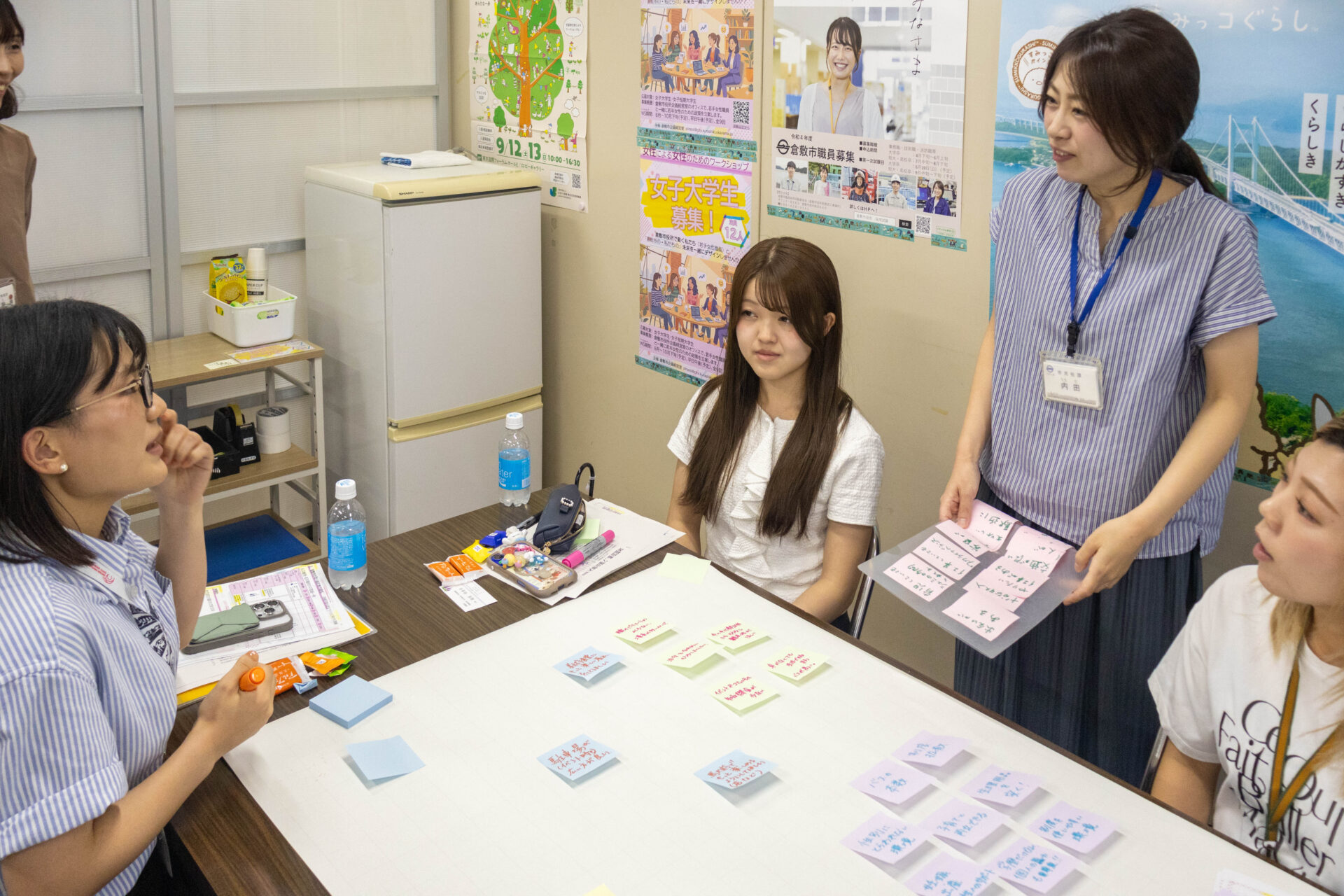
In about two hours of discussion, more than 60 sticky notes were written. From there, we categorized the ideal conditions for a city into categories such as "child-rearing and welfare" and "transportation and infrastructure."
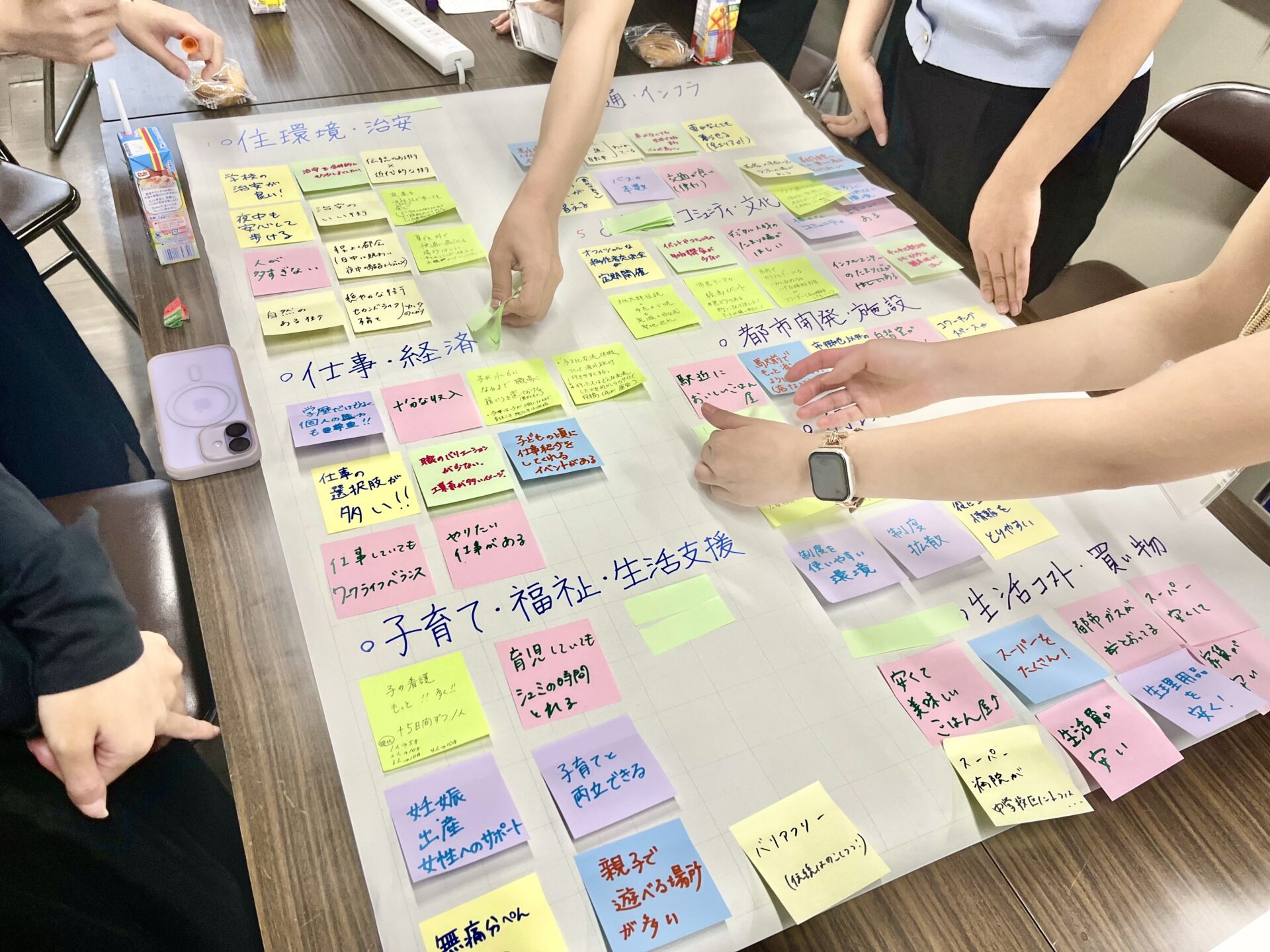
While continuing the discussion, we narrowed down the themes to explore further to "work and economy" and "community and culture." We hypothesized that a region that is easy to work in, has an active community, and maintains connections among people is a livable city.
Later, we shared ideas on what initiatives would be necessary to realize the above. Exciting suggestions such as "opportunities for company executives to interact with students," "parent observation days," and "places for young people and the elderly to interact" were presented.
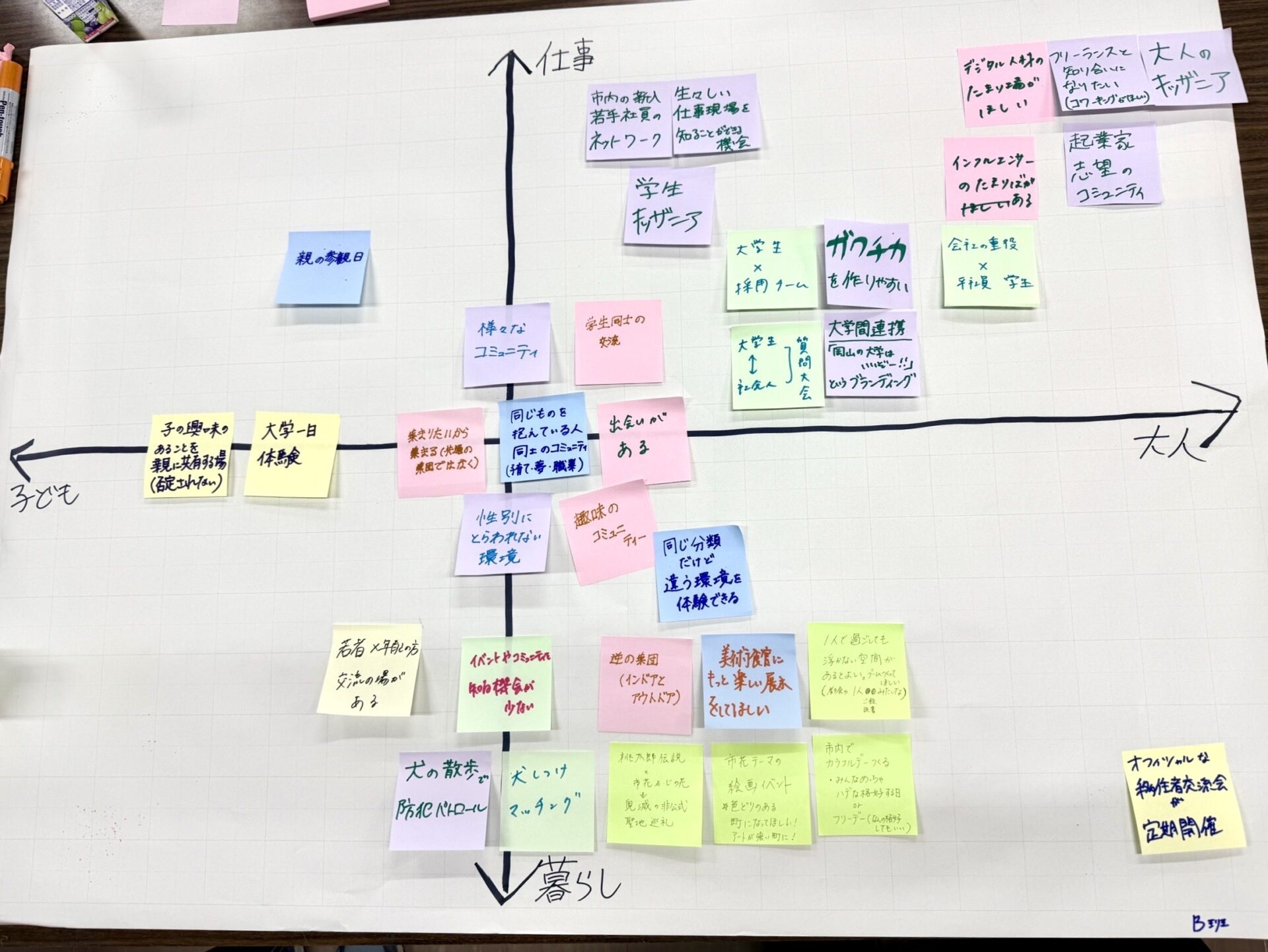
The group work will continue in order to shape the current stage of ideas, which can be seen as "the eggs of policy."
The results presentation of the policy planning workshop is scheduled to be held on October 27, 2026 (Tuesday). I am looking forward to seeing what kind of policies the female university students and young staff will create. I want to pay attention to the results as well.
From the Writer
As I participated in the workshop, I realized that the issues young people and women think about are common.
Every time one person expressed an opinion, others responded with "I understand!" and "I want that!" regarding the need for improvements in transportation infrastructure, revitalization of areas around stations other than JR Kurashiki Station, and the existence of communities that can expand friendships. I believe we were able to exchange many opinions in a calm atmosphere.
While it is certainly important to think about policies, I felt that conveying the issues felt by the younger generation to the government could lead to significant initiatives.
I want to keep an eye on the two teams as they make their final push toward the presentation on October 27.
Data on "Workshops for Women by Women"
| Name | "Workshops for Women by Women" |
|---|---|
| Date Held | Conducted from August to October 2026 |
| Location | Kurashiki City |
| Homepage | Kurashiki City Homepage Women's Empowerment Project |



What do you want to know about Kurashiki?
Enter a word to search articles from this site