Kurashiki has three designated Japan Heritage sites, and the 47 component cultural properties that make them up are located throughout the city.
Until now, there have been very few opportunities to visit the component cultural properties all at once, but during the "Japan Heritage Festival in Kurashiki" held on October 25 and 26, 2025, excursions (experiential tours) to visit the component cultural properties of each region were conducted.
Taking advantage of this great opportunity, I also participated in an excursion to visit the component cultural properties in Kojima.
I will introduce the details of the excursion, which was surprisingly rich for a half-day tour.
What is the Excursion of the Japan Heritage Festival in Kurashiki?
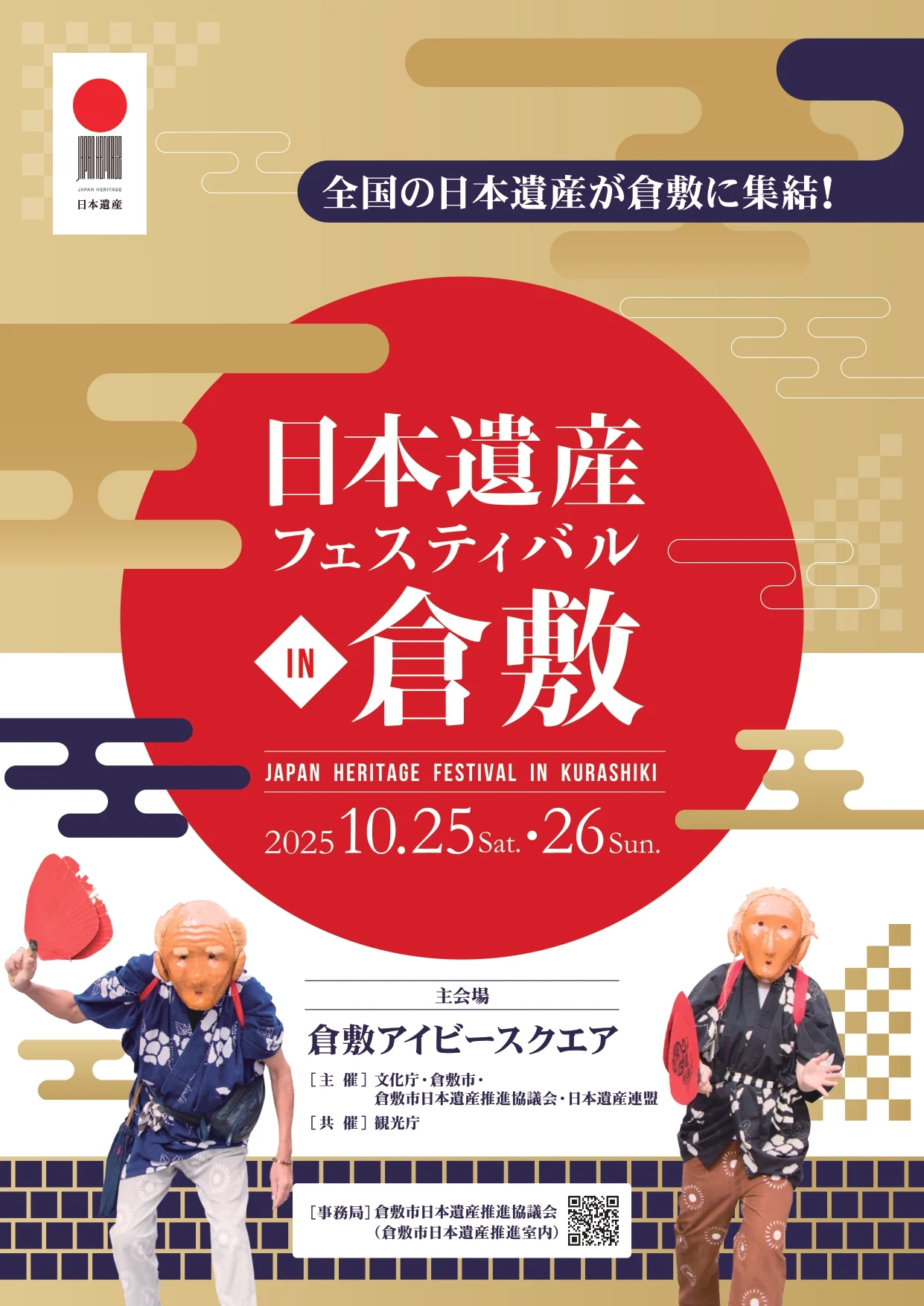
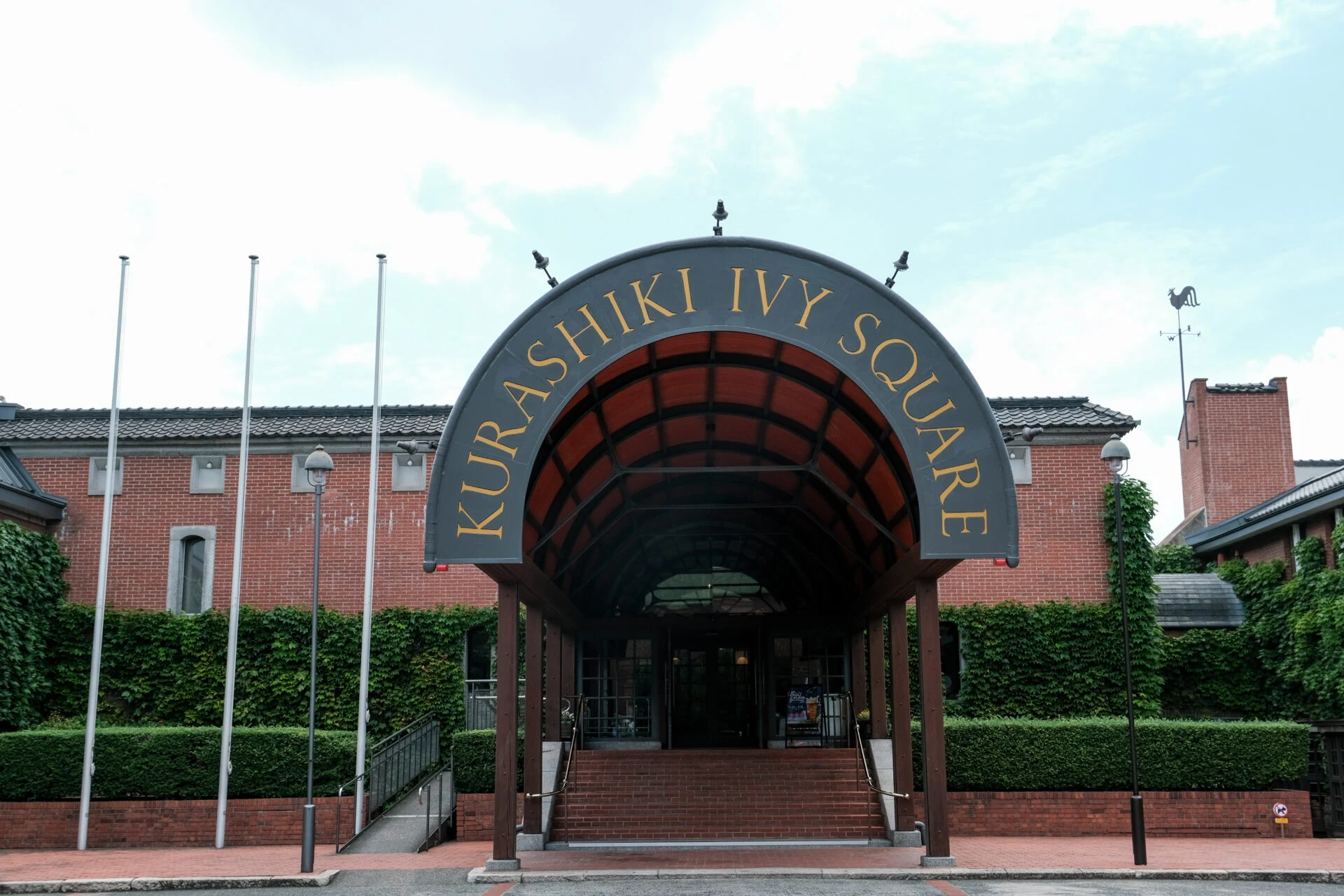
On October 25 (Saturday) and 26 (Sunday), 2025, the Japan Heritage Festival in Kurashiki was held at Kurashiki Ivy Square.
104 Japan Heritage sites from across the country gathered in Kurashiki, providing opportunities to convey the charm of Japan Heritage through various programs, including PR booths, folk performing arts stages, and mini-symposiums to deepen learning.
Among the many programs, I participated in the excursion held on the second day. It was a day trip of about half a day, touring the stories of Japan Heritage scattered throughout Kurashiki City.
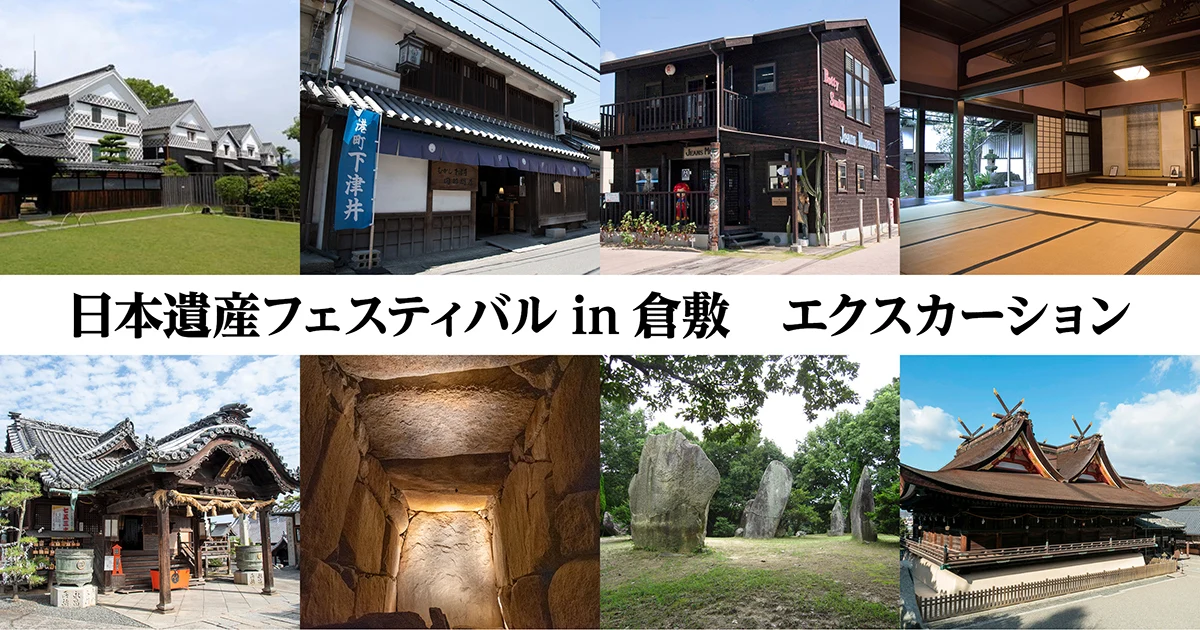
There were three types of courses available:
- "White" and "Blue" that Color Kurashiki - A Day Trip to Experience the Scenic Beauty of Many Islands and "Monozukuri" (craftsmanship)
- Reflecting on the Past of Kitamaebune - A Day Trip to Explore the Charm of a Port Town Flourishing through Setouchi Cruises and Trade
- Exploring the History of Ancient Kibi - A Day Trip to Visit Some of Japan's Most Notable Ruins and Experience Legendary Shinto Rituals
I chose the first course. It was a tour that allowed me to feel the romance of history along with the fun of craftsmanship experiences.
Overview of the Excursion in Kojima
On October 26 (Sunday) around 8:30 AM, the bus departed from Kurashiki Ivy Square in the continuous light rain.
It took about 40 minutes to travel to Kojima.
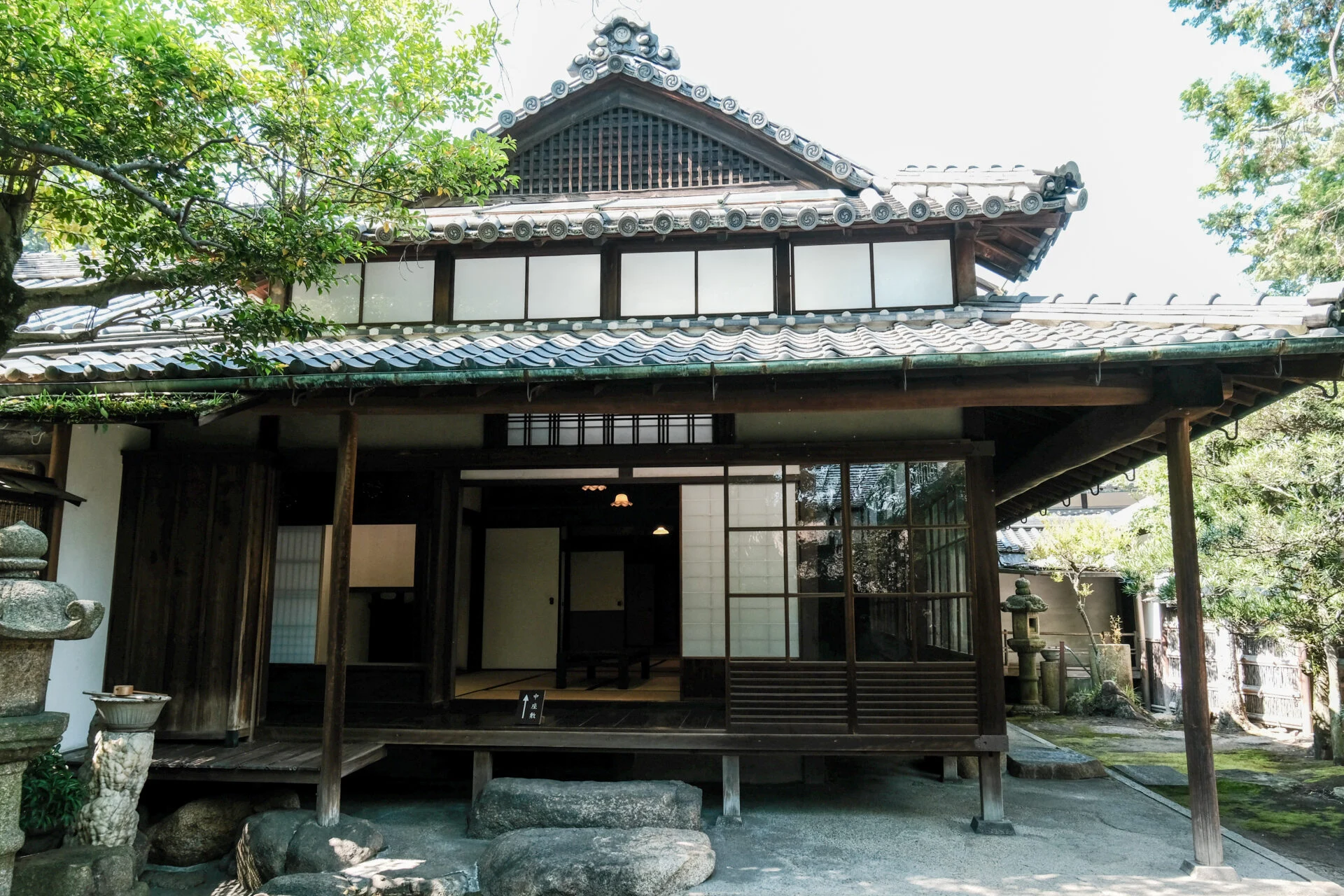
"Nozaki's Historical Residence Detached House Taikado" not usually open to the public
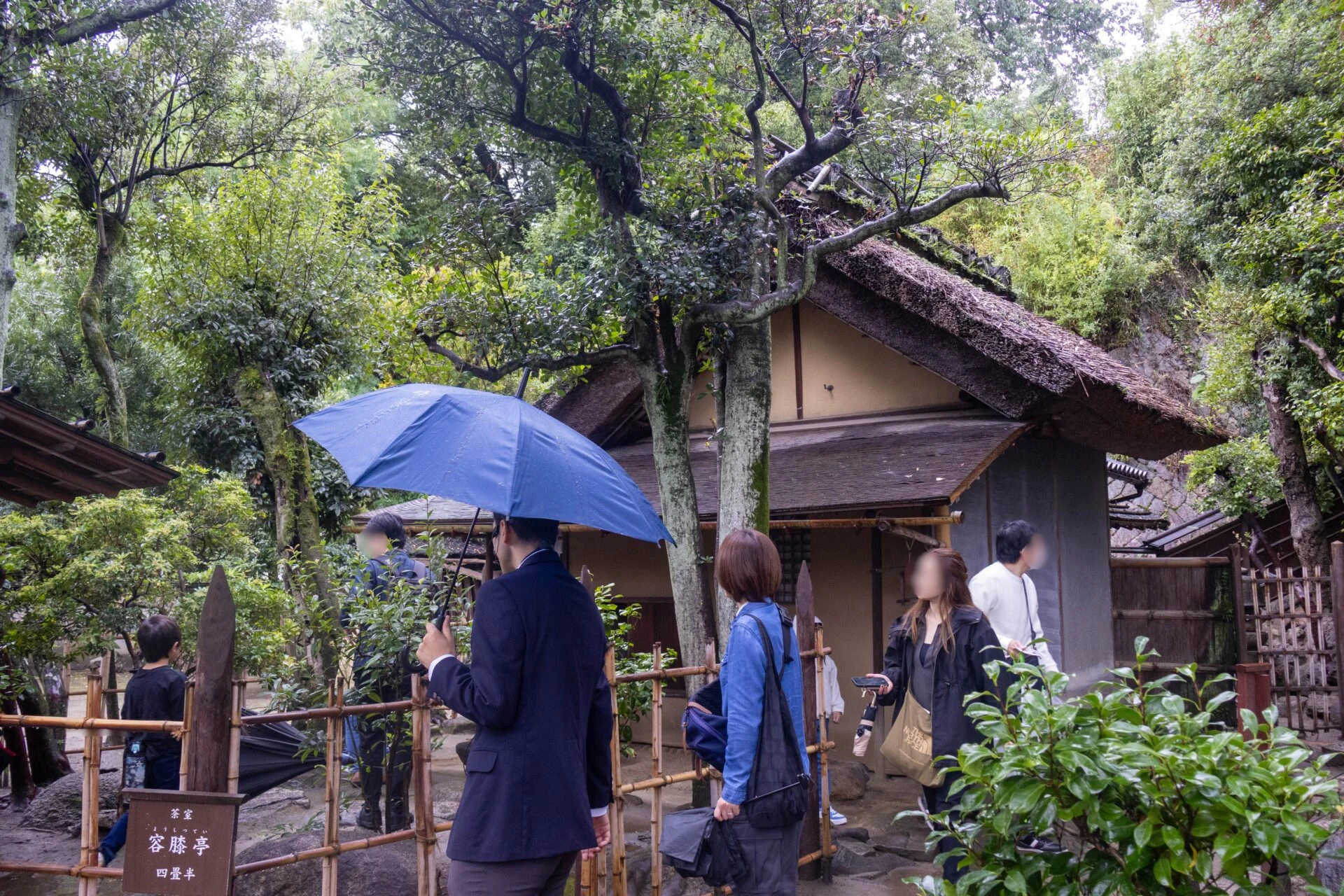
The first place we visited was "Nozaki's Historical Residence Detached House Taikado." We proceeded to the magnificent garden while receiving explanations from the guide of Nozaki's Historical Residence.
Taikado was built by Nozaki Buzaiemon, who made his fortune in the salt-making industry in Kojima and was also known as the "King of Salt," and his grandson Nozaki Bukichiro.
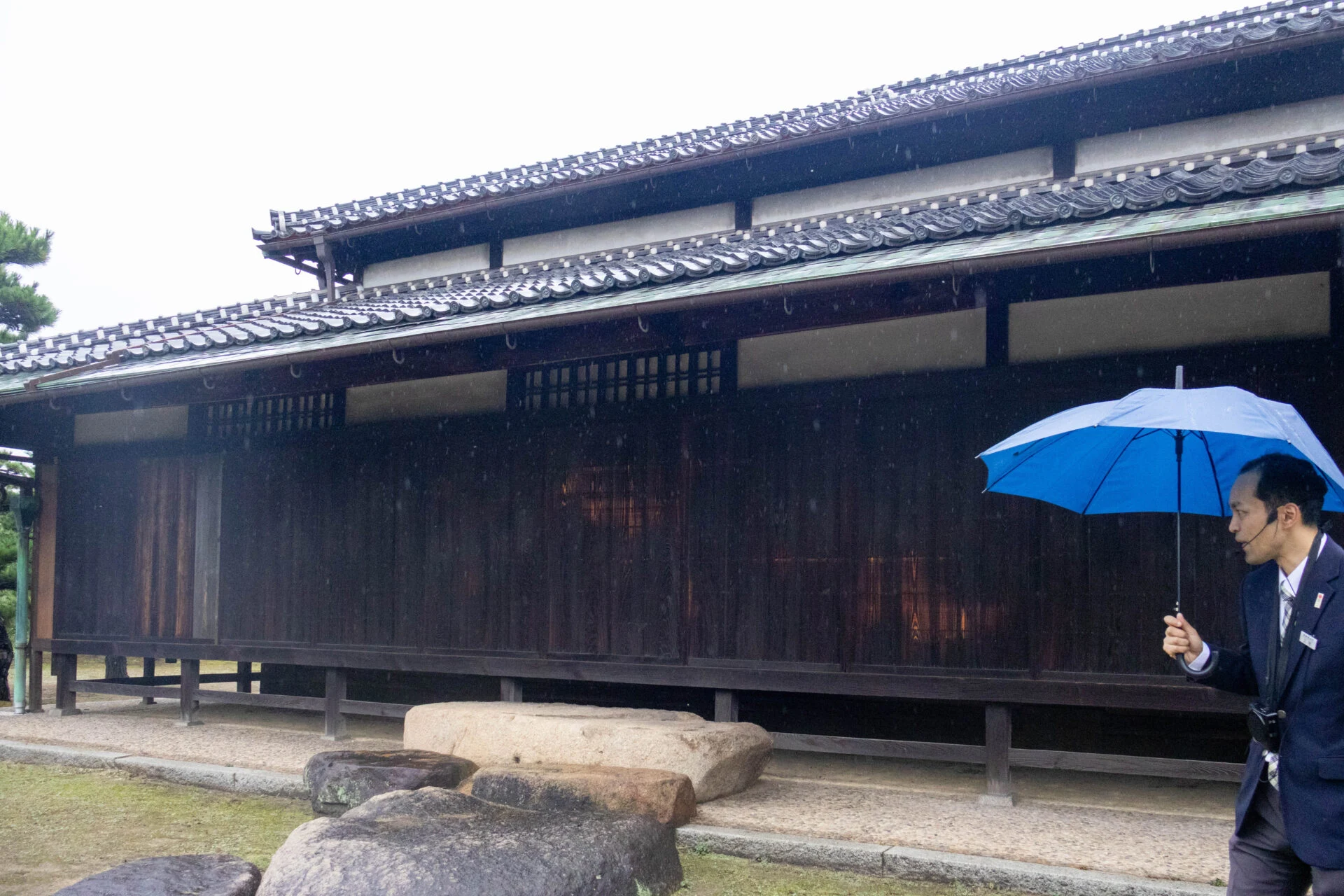
Taikado is usually not open to the public, and only during certain periods in February and March when Hinamatsuri dolls are displayed can the general public enter. We were able to visit it specially during this excursion.
According to the guide, Taikado is a building that was constructed about 130 years ago and has a size of 100 tatami mats.
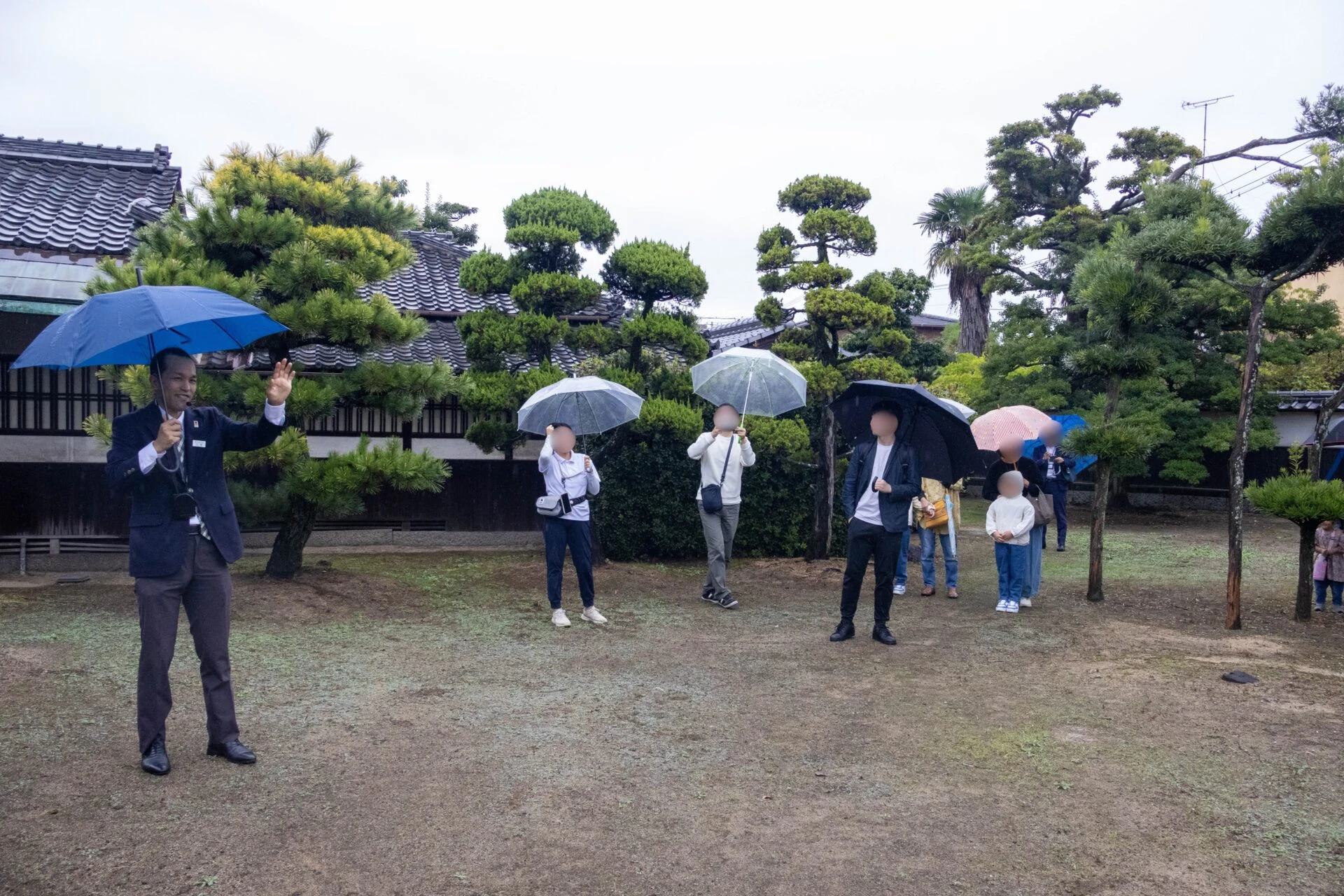
"In the vast garden, it is said that they used to keep cormorants, but when the war began, they donated them to Korakuen in Okayama due to the surrounding eyes," the guide explained.
"Nozaki Bukichiro is said to have held a grand 60th birthday party in this garden," the guide added.
As I gazed at the garden while listening to the guide's stories, the scenery of the time when people lived there naturally came to mind.
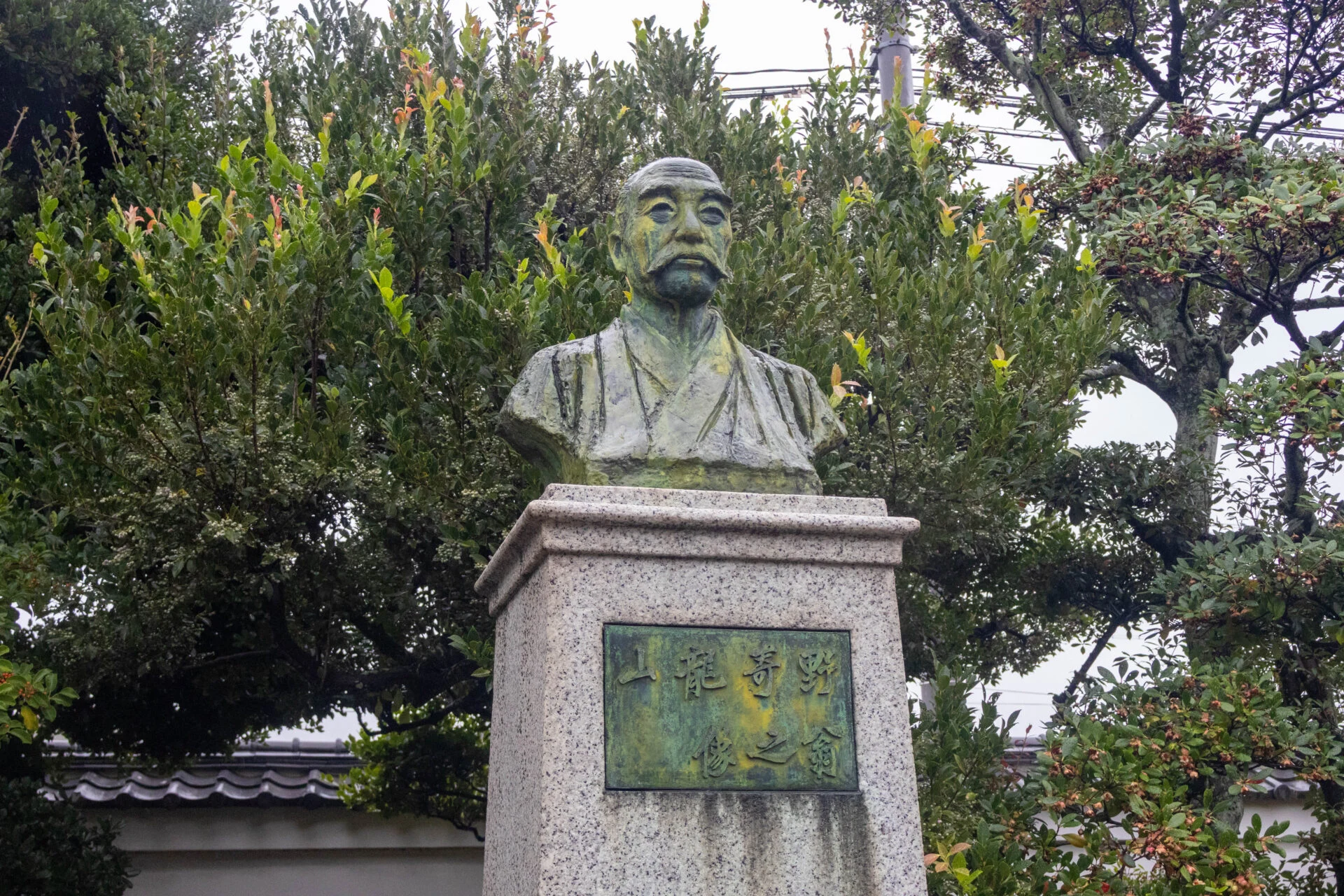
"Nozaki's Historical Residence," designated as an Important Cultural Property and component cultural property
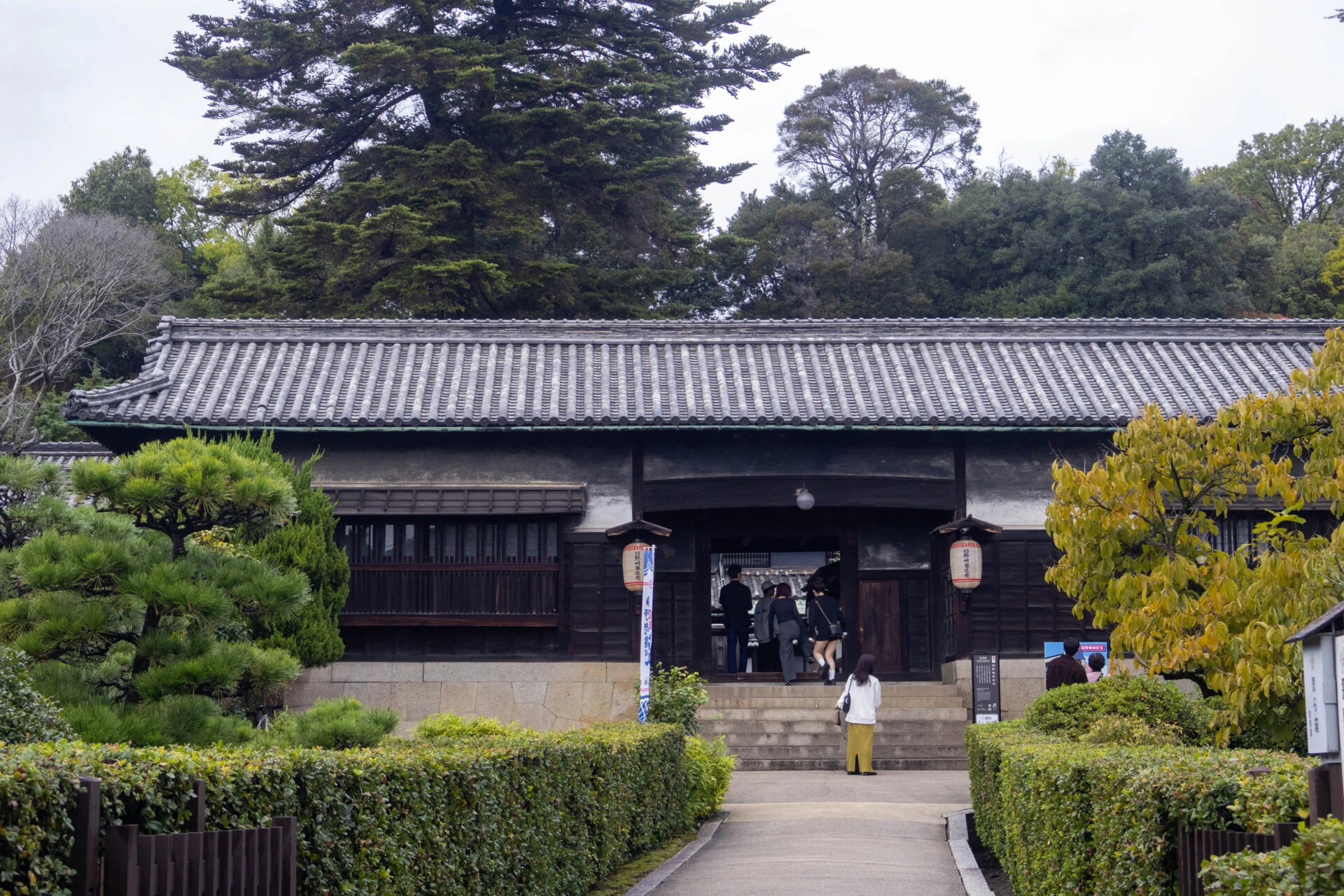
Next, we visited "Nozaki's Historical Residence," located just a minute's walk from Taikado.
It is the residence of Nozaki Buzaiemon, who made his fortune as the "King of Salt," and was built in the late Edo period.
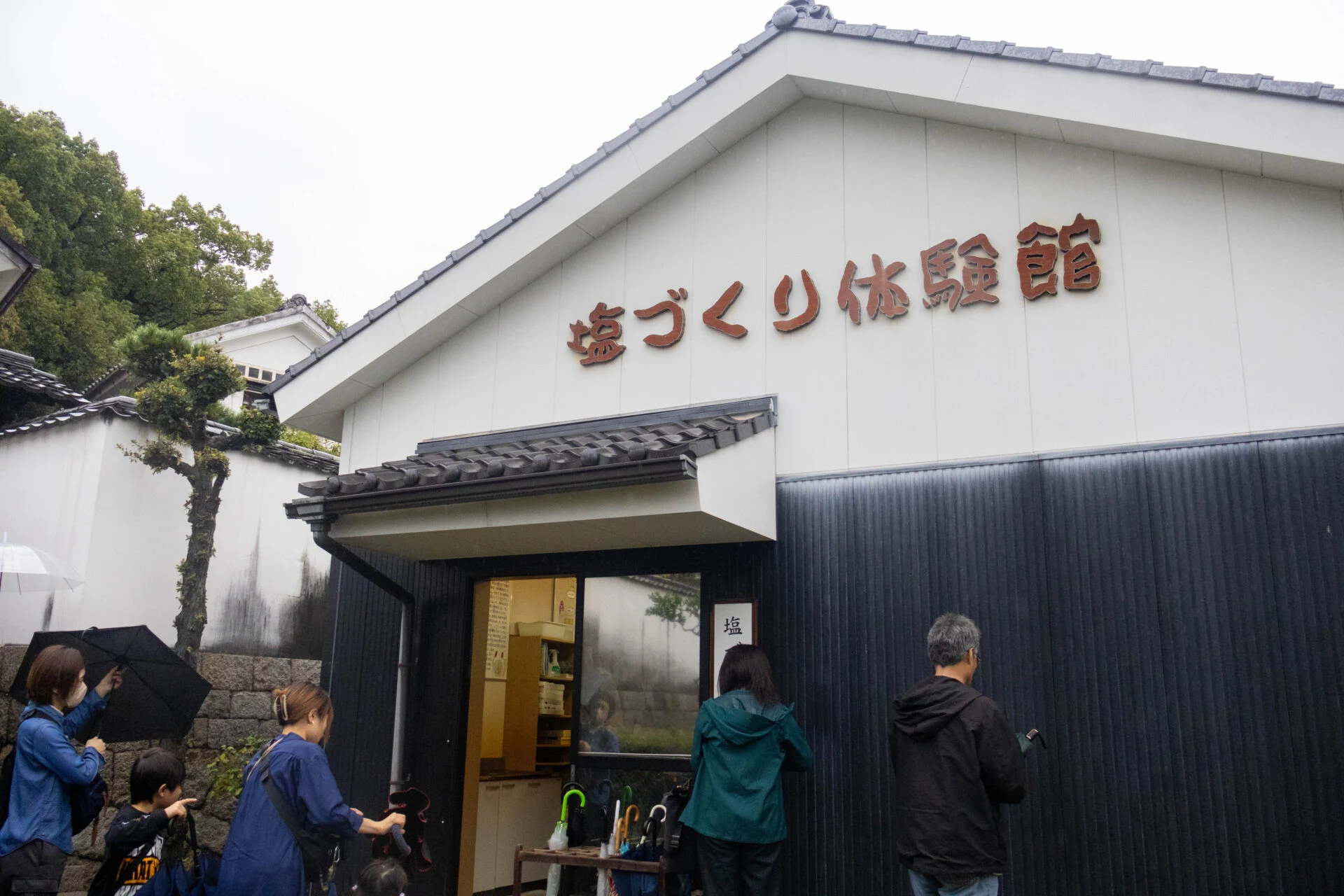
On the premises, there is a salt-making experience facility where we can try our hand at salt-making.
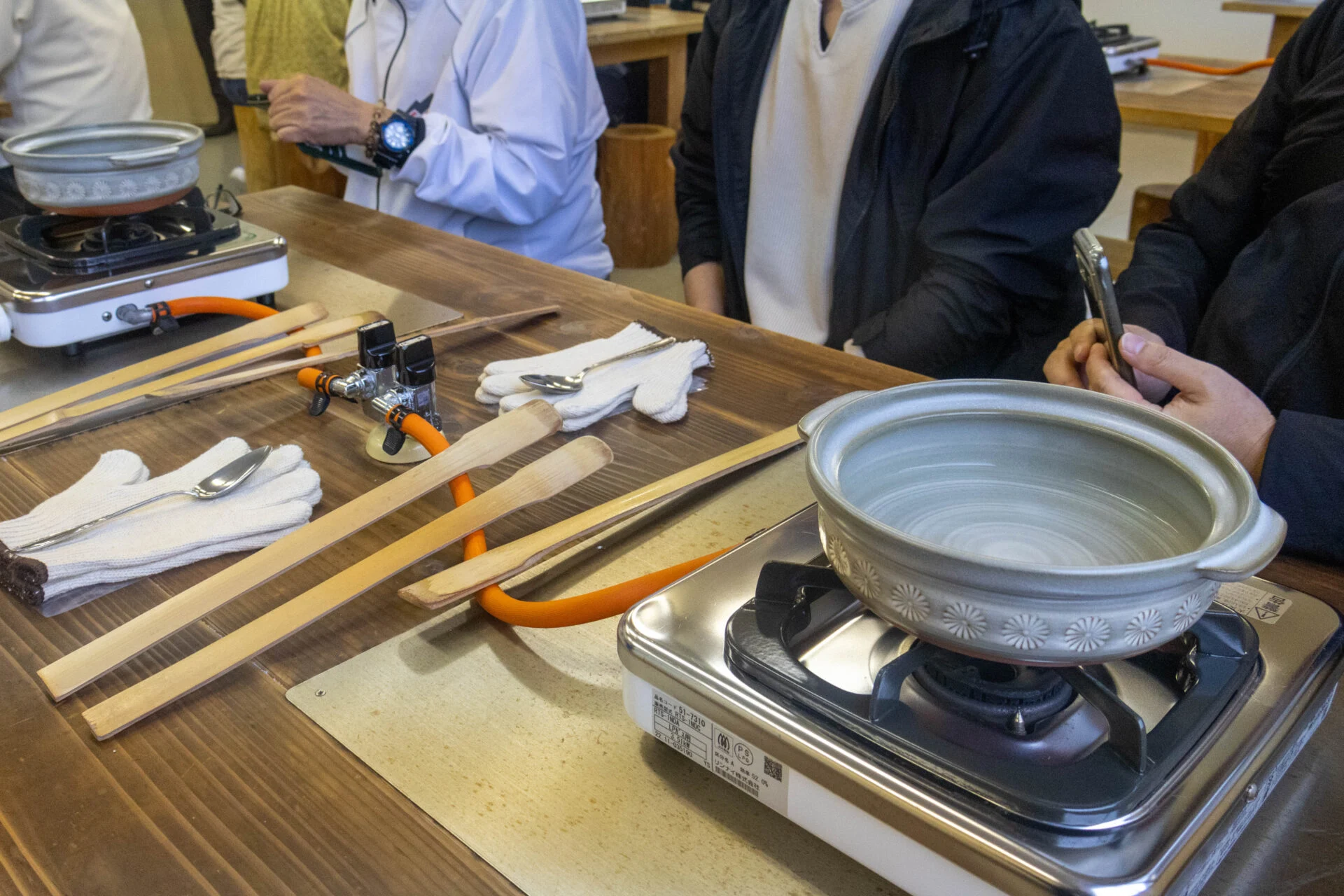
On the table were a pot placed on a portable gas stove, a bamboo spatula, gloves, and a spoon. The pot contained "kan-sui," which is the base for making salt.
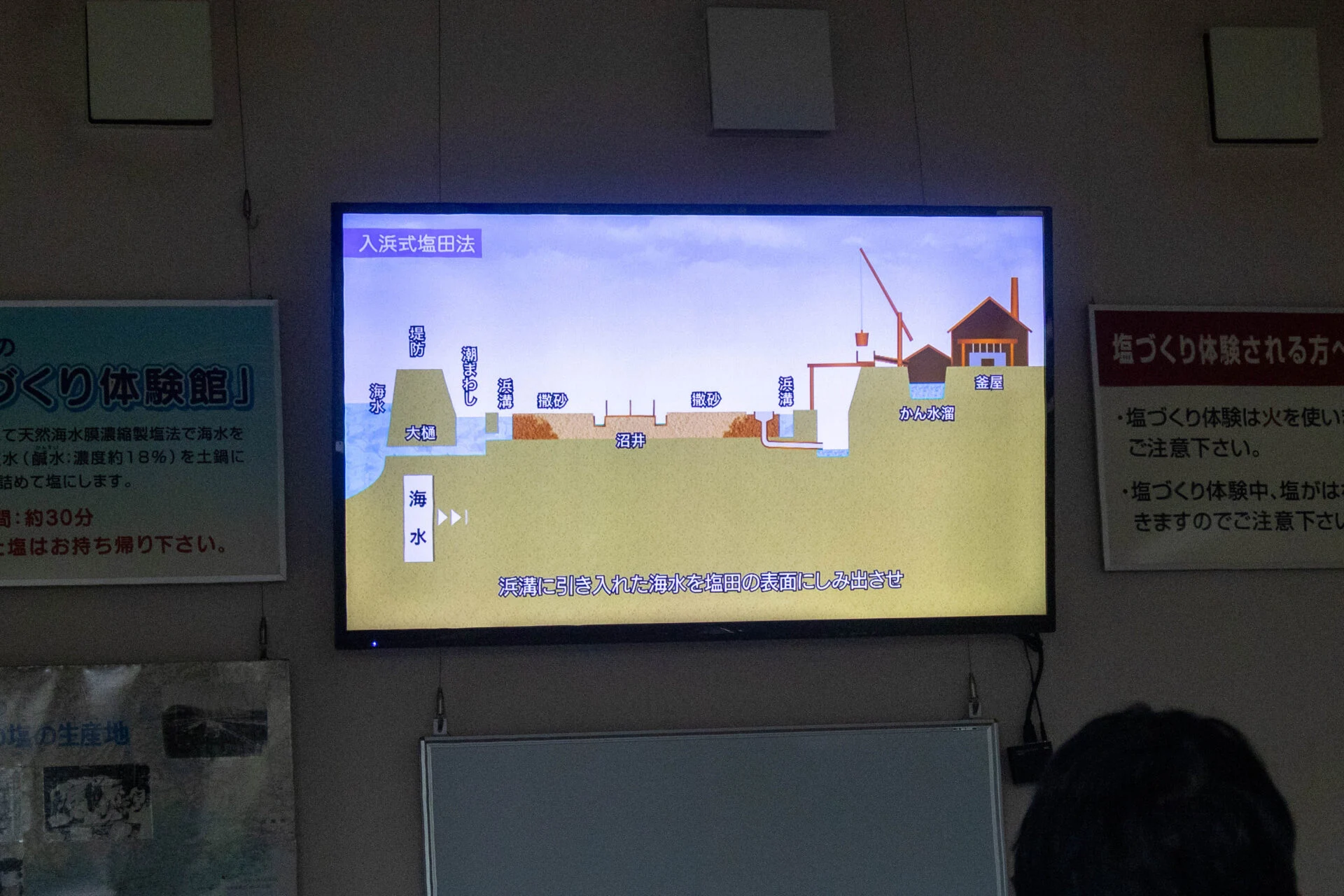
The salt concentration of seawater is 3%, while the salt concentration of kan-sui is 18%. I learned that salt is made from this highly concentrated saltwater.
While the kan-sui was heating, we learned through a video how the Nozaki family made salt.
By the time we finished watching the video, the kan-sui was boiling, and salt had already stuck to the pot. We stirred the kan-sui with the bamboo spatula while adding more heat.
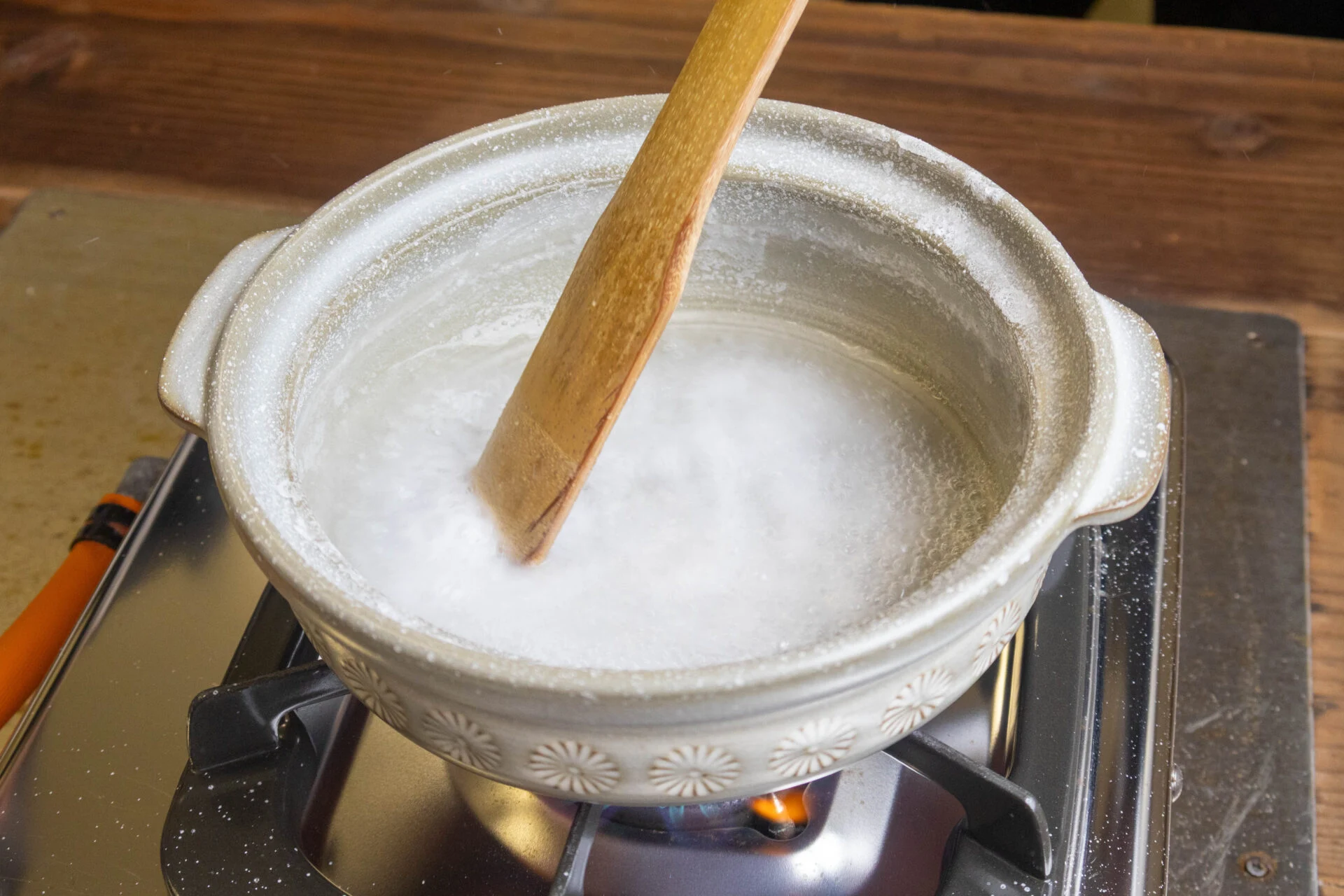
As we stirred, the kan-sui became thick, and before we knew it, solid salt was formed. When we dry-roasted it, the salt popped like popcorn.
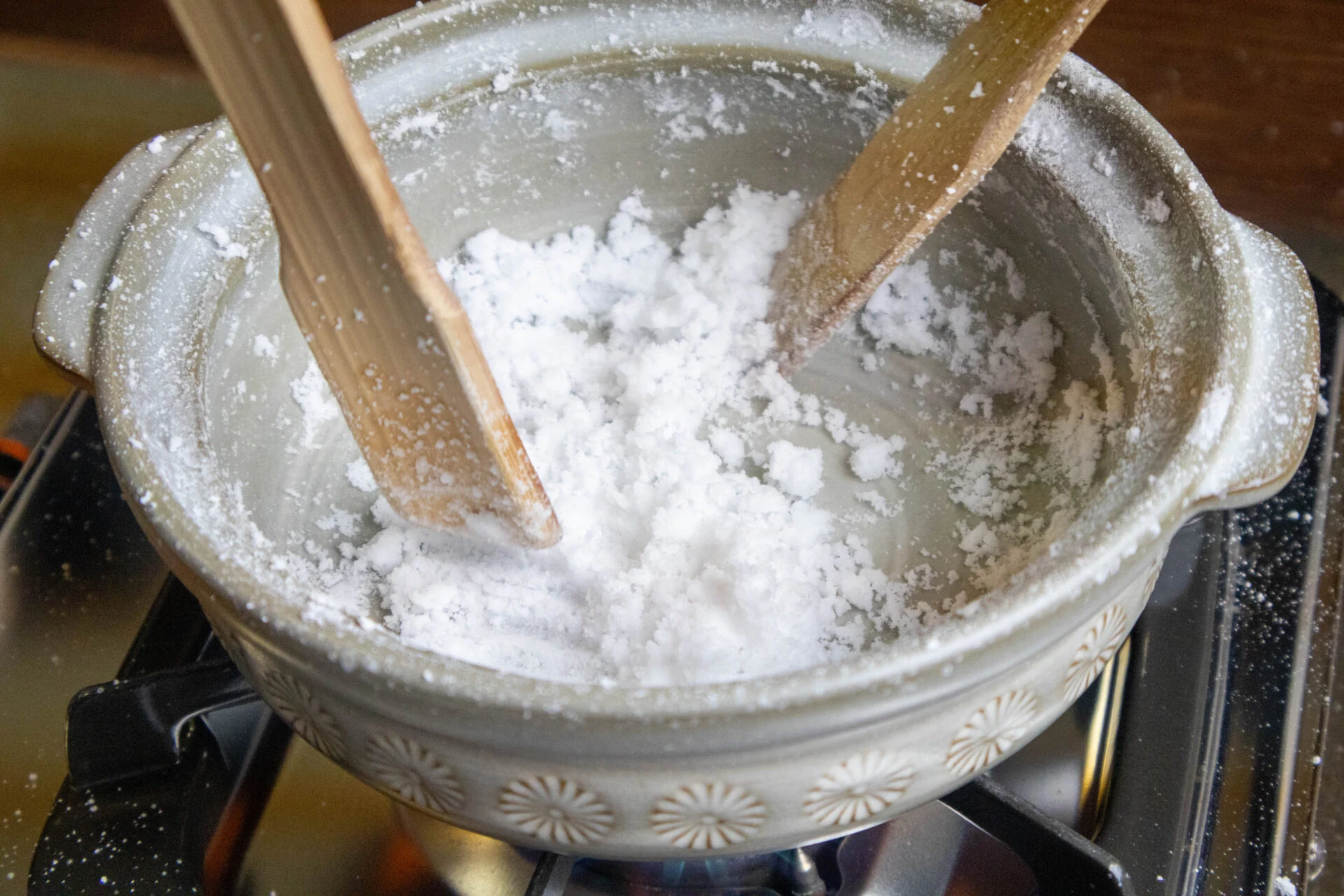
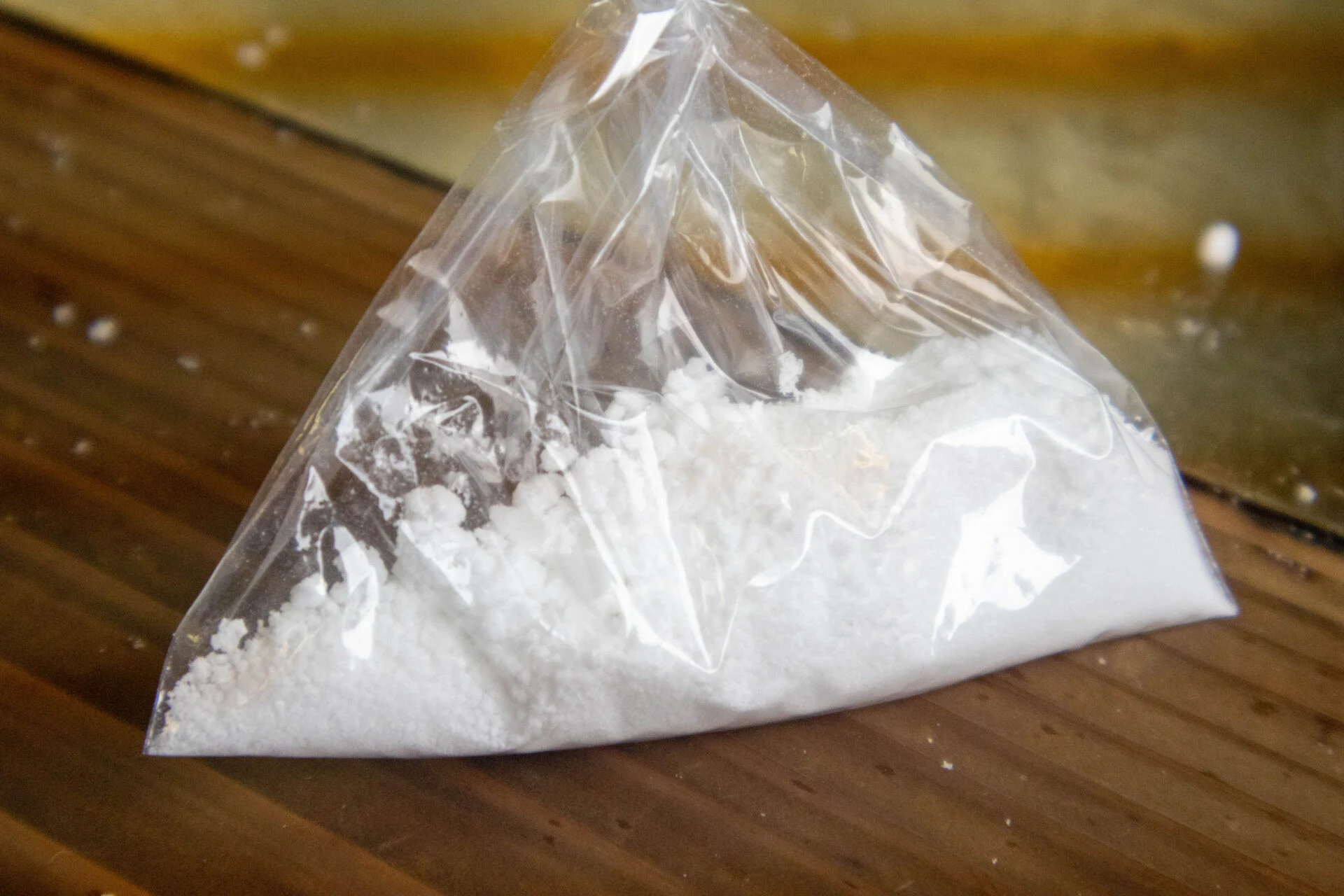
In no time, the original salt was completed after boiling.
The freshly made salt could be taken home as a souvenir.
Sitting at the same table with other participants, we excitedly discussed what to make with this salt. I thought I would like to use it for simple salt rice balls or boiled edamame.
After finishing the salt-making, we toured the residence with the guide.
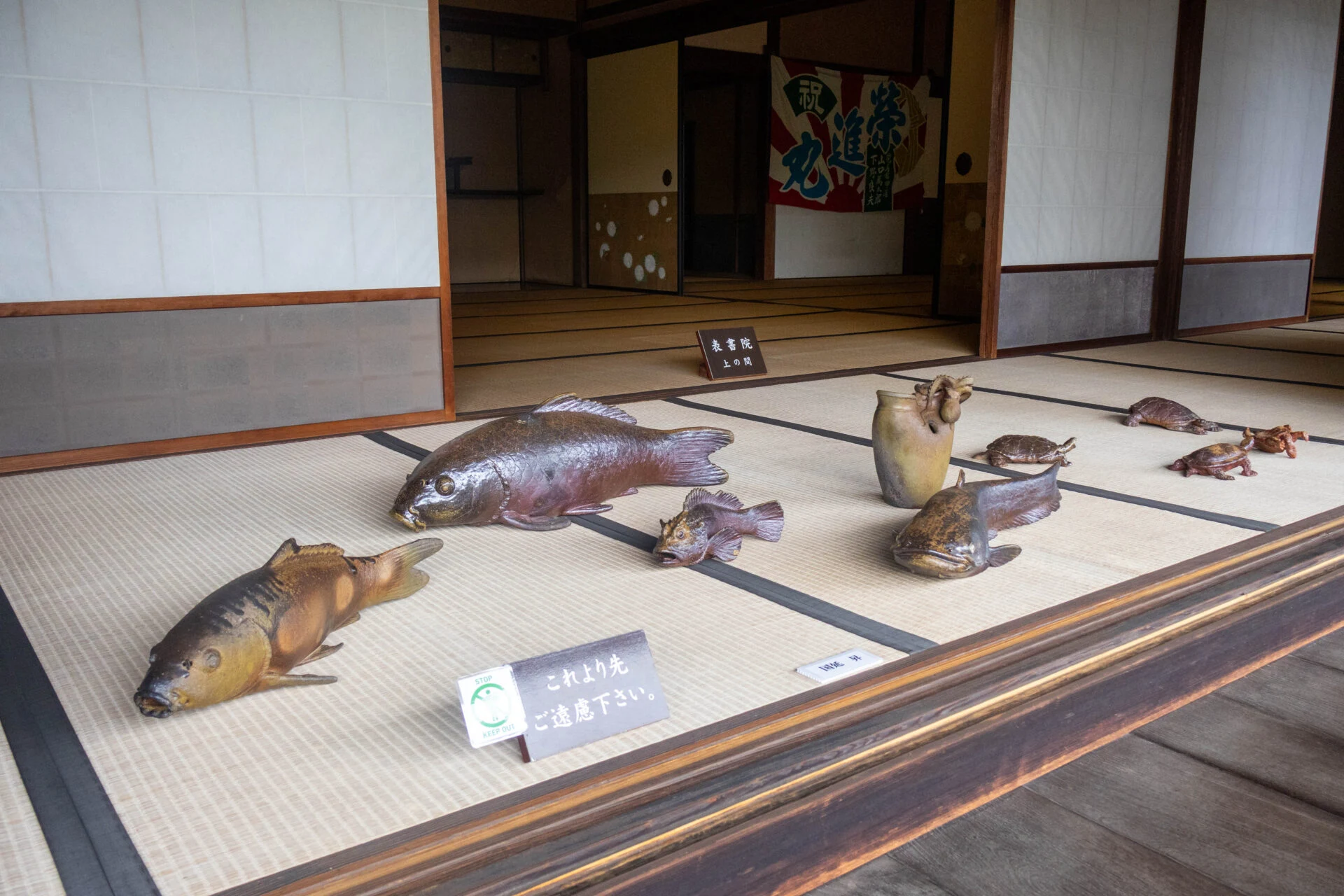
During our visit, works by Bizen pottery artists were also on display. The scene of sea creatures swimming on tatami mats is quite unique.
I have visited Nozaki's Historical Residence about four times, but this was the first time I learned from the guide that there is a shrine on the premises.
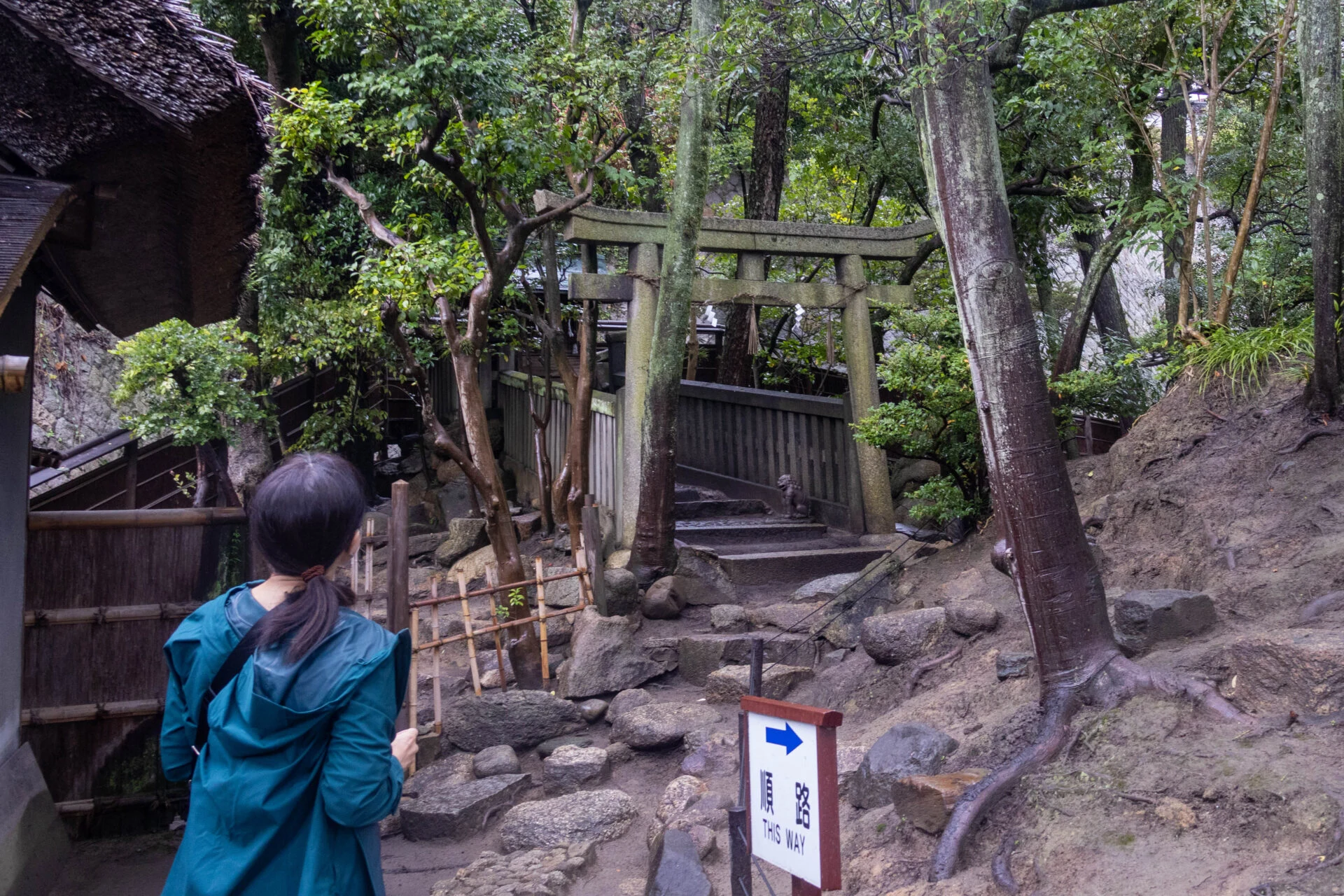
The salt-making process, which relies heavily on nature's blessings, certainly makes it understandable that there is a shrine to express gratitude to nature.
Even on the fifth visit, there are new insights to be gained by touring with the guide.
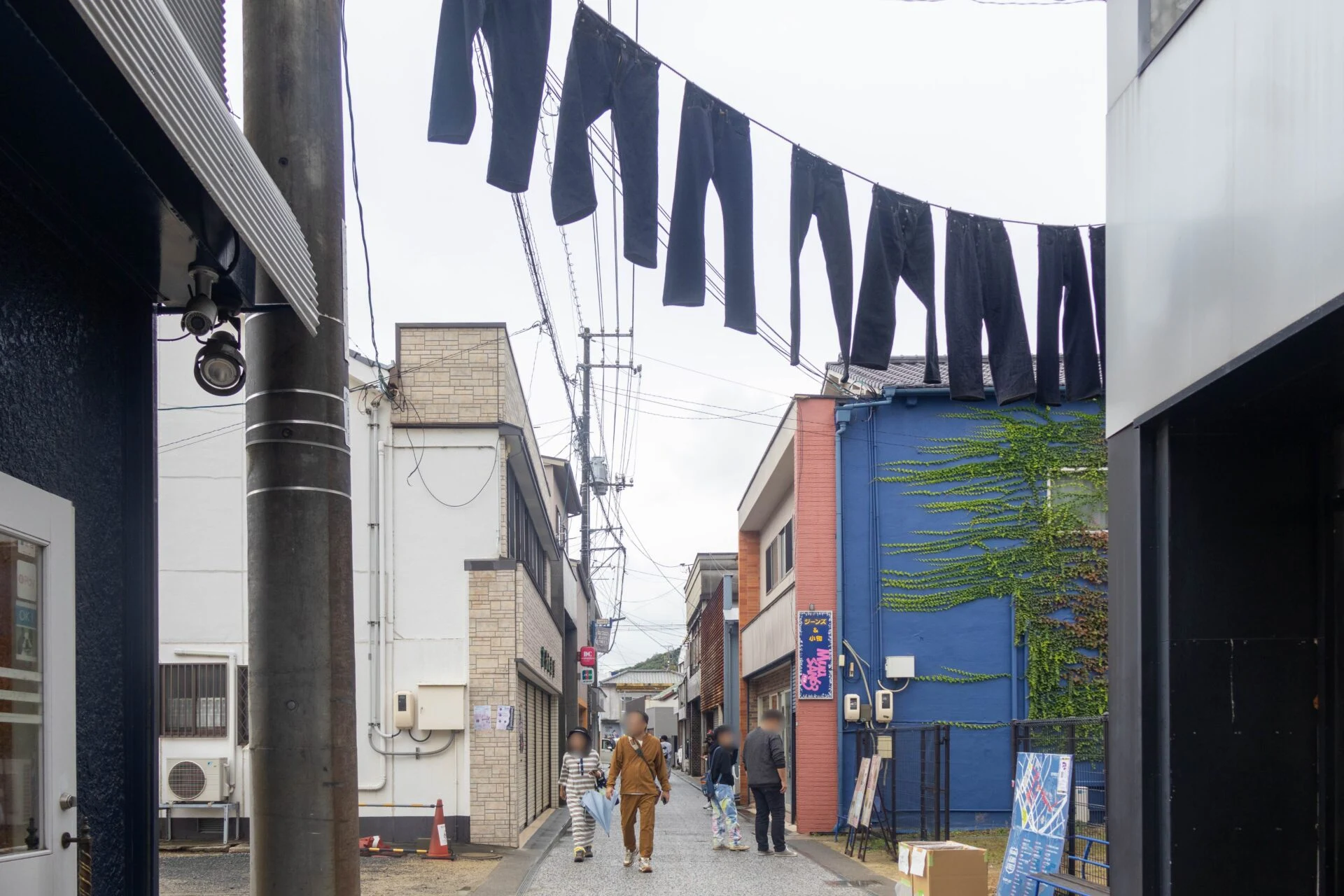
After touring Nozaki's Historical Residence, we strolled through Kojima Jeans Street before boarding the bus. The satisfaction was so great that it felt like more than just the first stop, and we headed to the next spot.
The Shimotsui Shipping Agent Museum, Preserving the History of Kitamae Ships
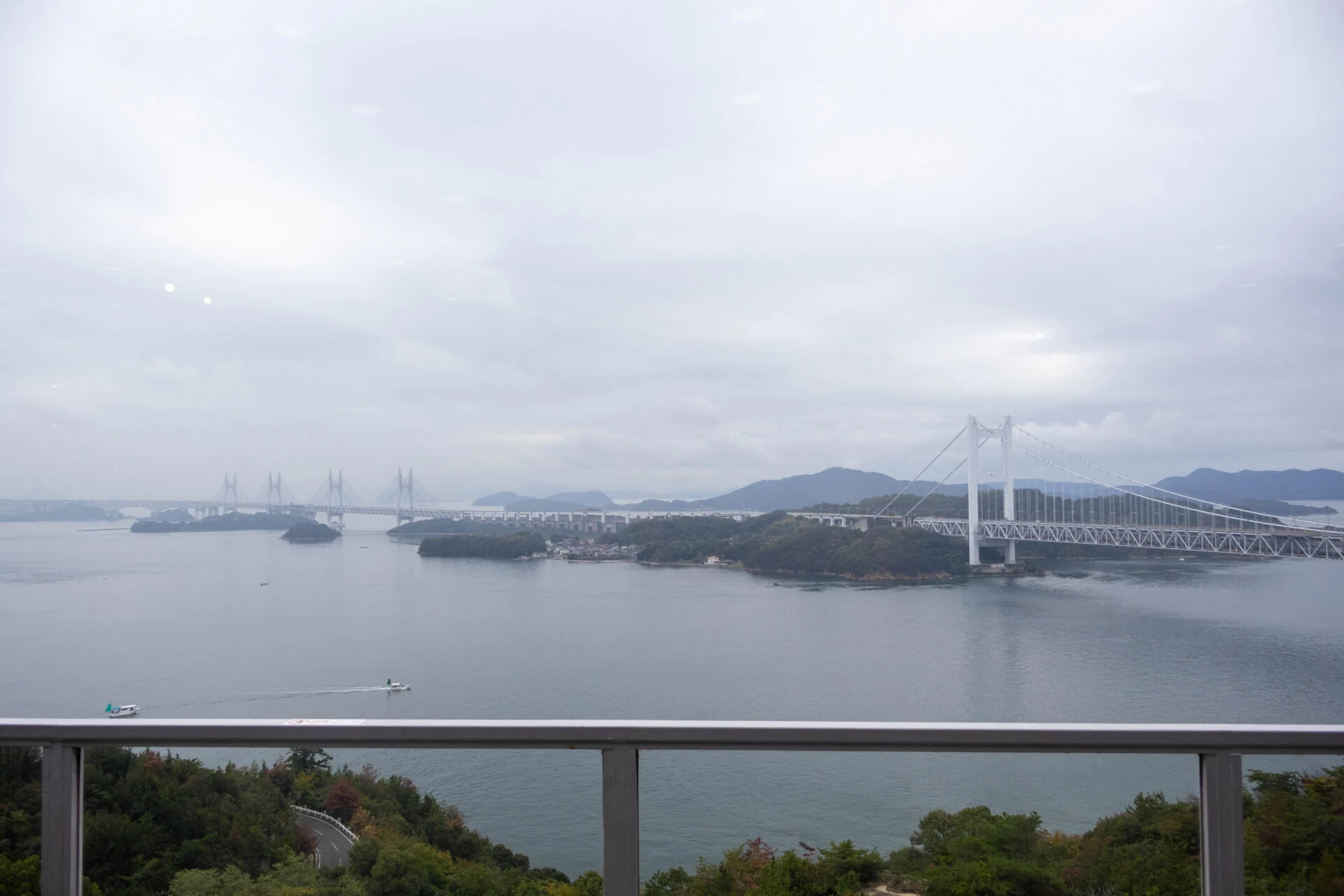
On the way to our next destination, Shimotsui, we rode the bus under the Seto-Ohashi Bridge. The imposing sight of the Seto-Ohashi Bridge is always impressive.
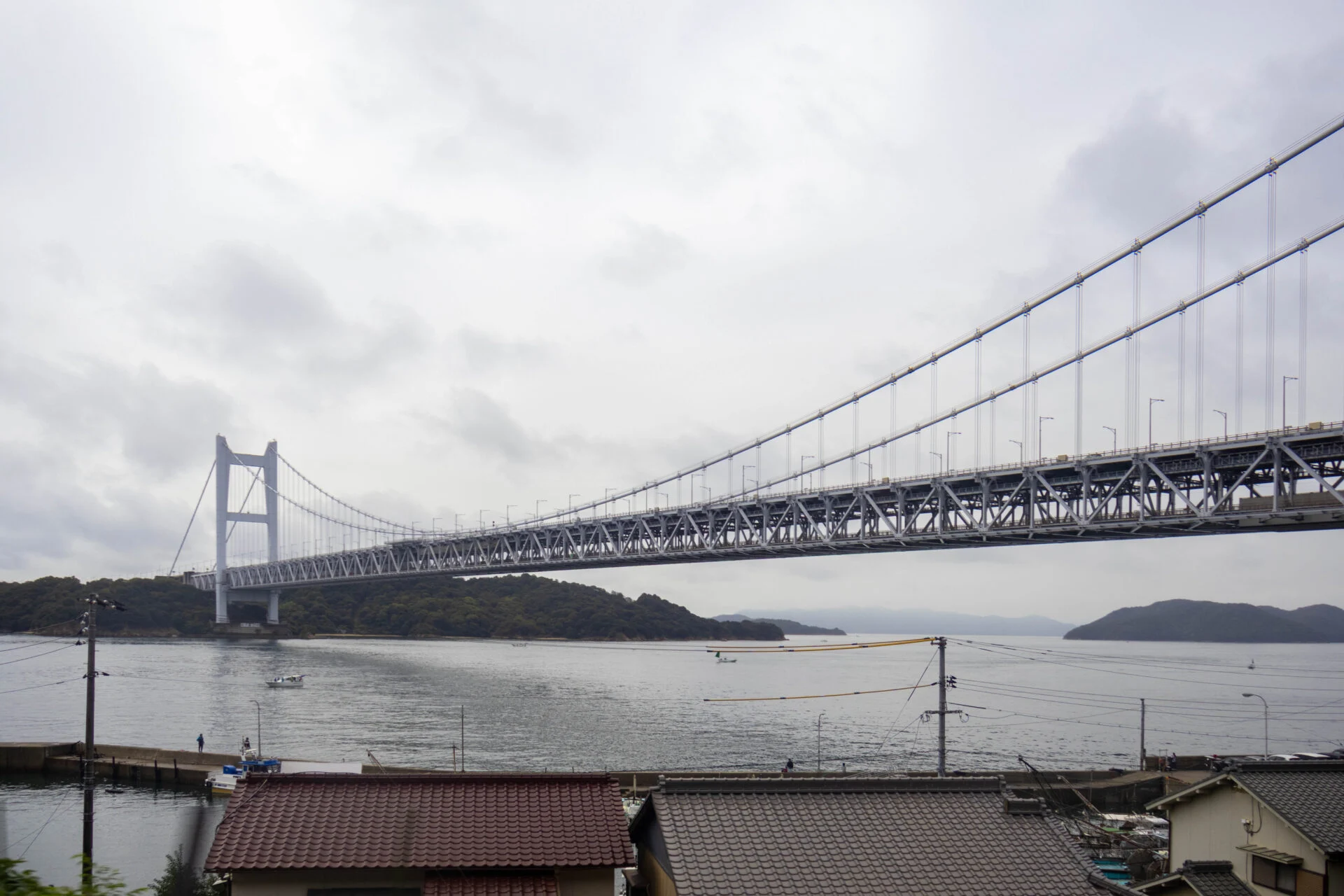
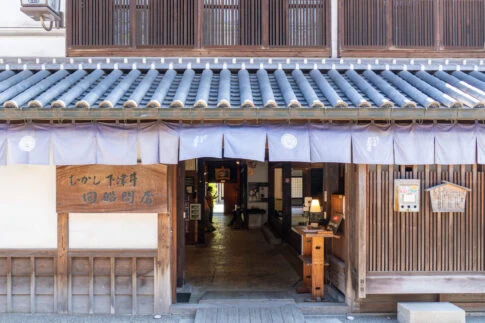
After about 15 minutes on the bus, we arrived at the "Shimotsui Shipping Agent Museum," which is registered as a cultural property. A local volunteer guide welcomed us.
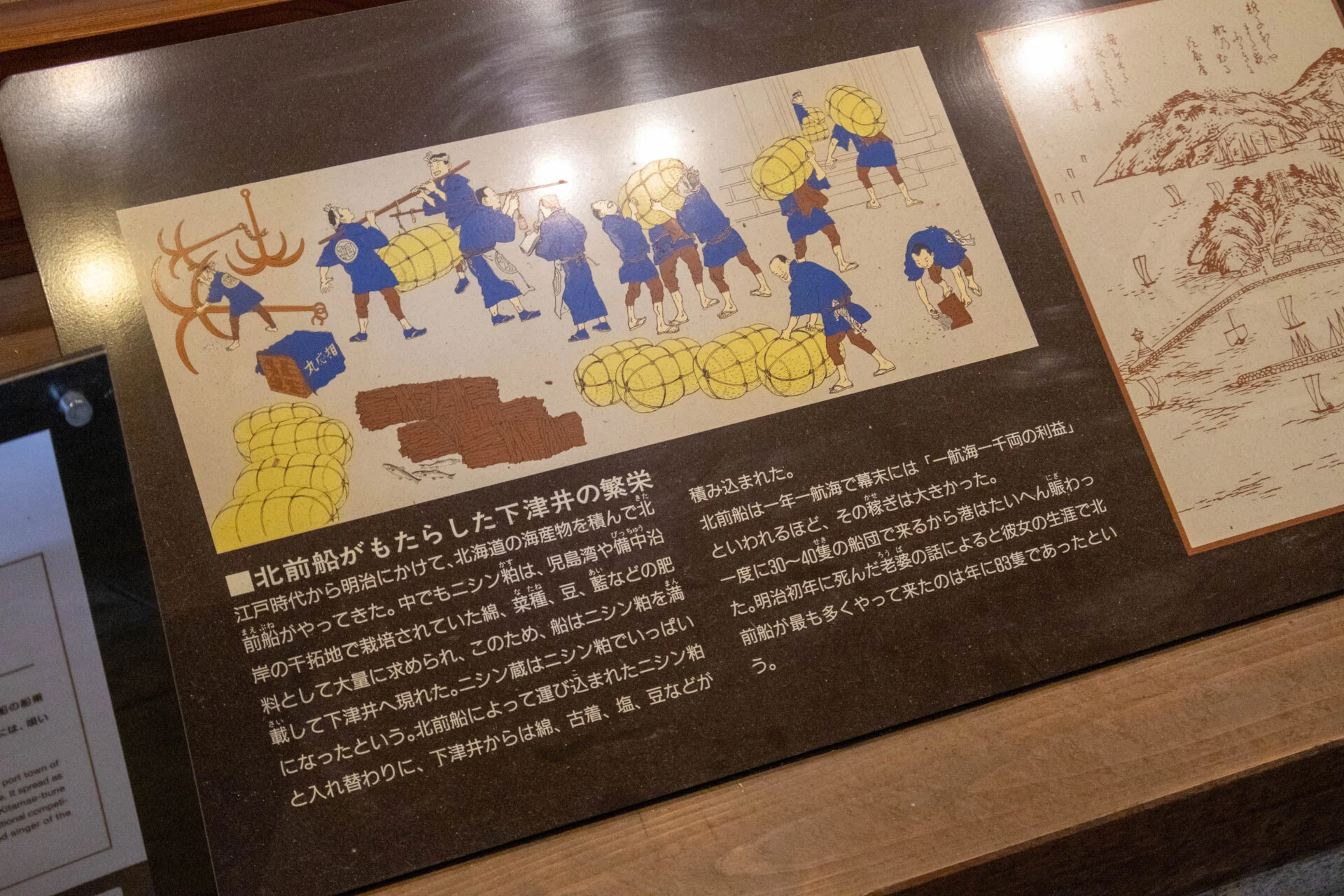
The Shimotsui Shipping Agent Museum is a facility that conveys the history of Shimotsui, which once thrived as a port of call for Kitamae ships. Valuable materials that illustrate the state of Shimotsui from the late Edo period to the Meiji period are on display.
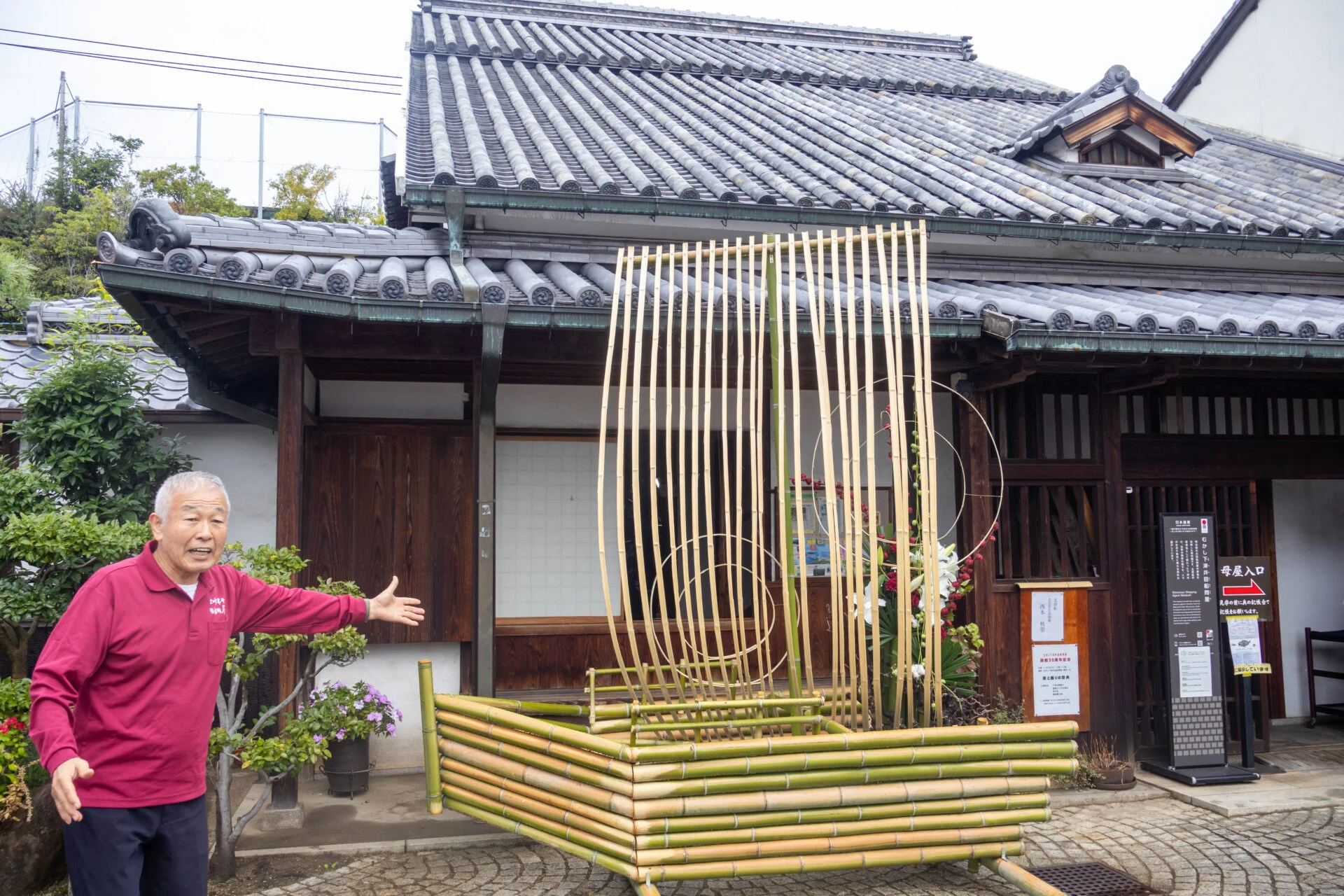
In the courtyard, there was a large bamboo ship that was handmade for this occasion, representing a Kitamae ship. It was such an impressive piece that I thought it should be displayed permanently, not just for a limited time.
We entered the exhibition room and learned about the history of Shimotsui.
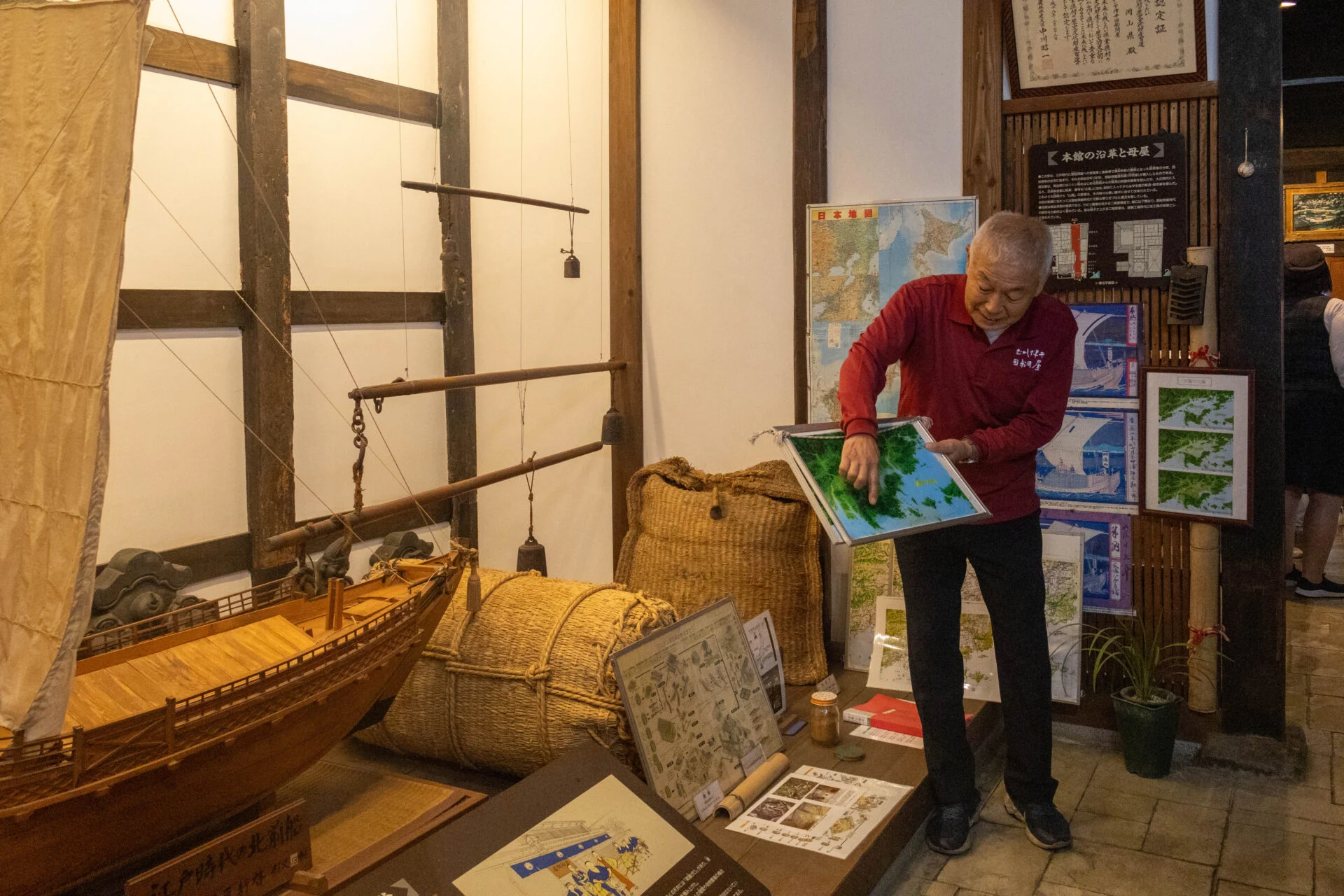
"In the past, Kojima was a reclaimed land where cotton was cultivated. The herring residue used as fertilizer for cotton cultivation was brought by Kitamae ships from Hokkaido,"
"The crew of the Kitamae ships reportedly earned 1,000 ryo (approximately 100 million yen in today's currency), but they enjoyed drinking and spent lavishly at every port. In Shimotsui, there is a song called 'Shimotsui Bushi' that serves as hospitality for the sailors,"
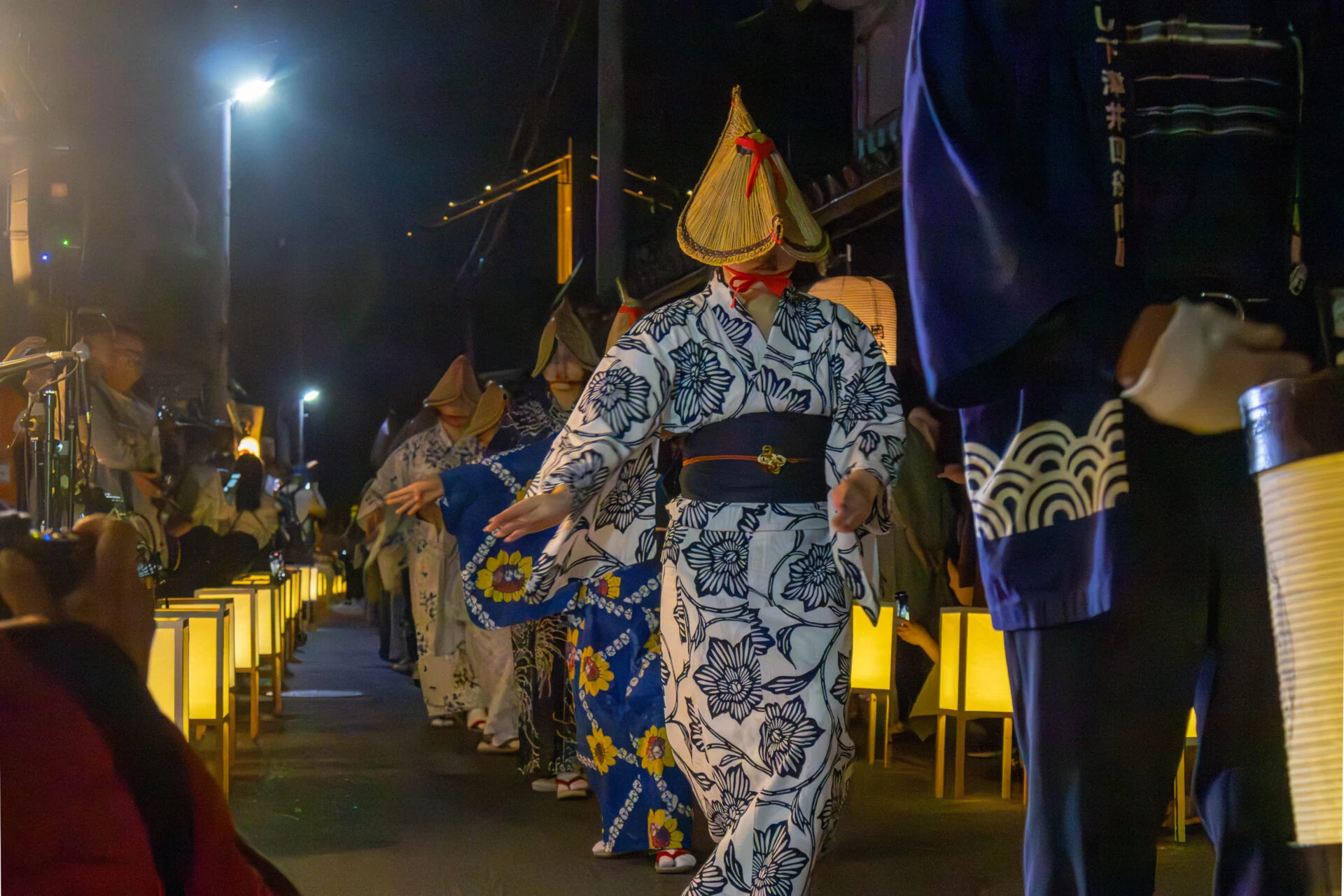
Since Shimotsui Bushi is also a registered cultural property, it was performed on the spot. As we clapped along, it felt like we were experiencing the atmosphere of hospitality in Shimotsui at that time.
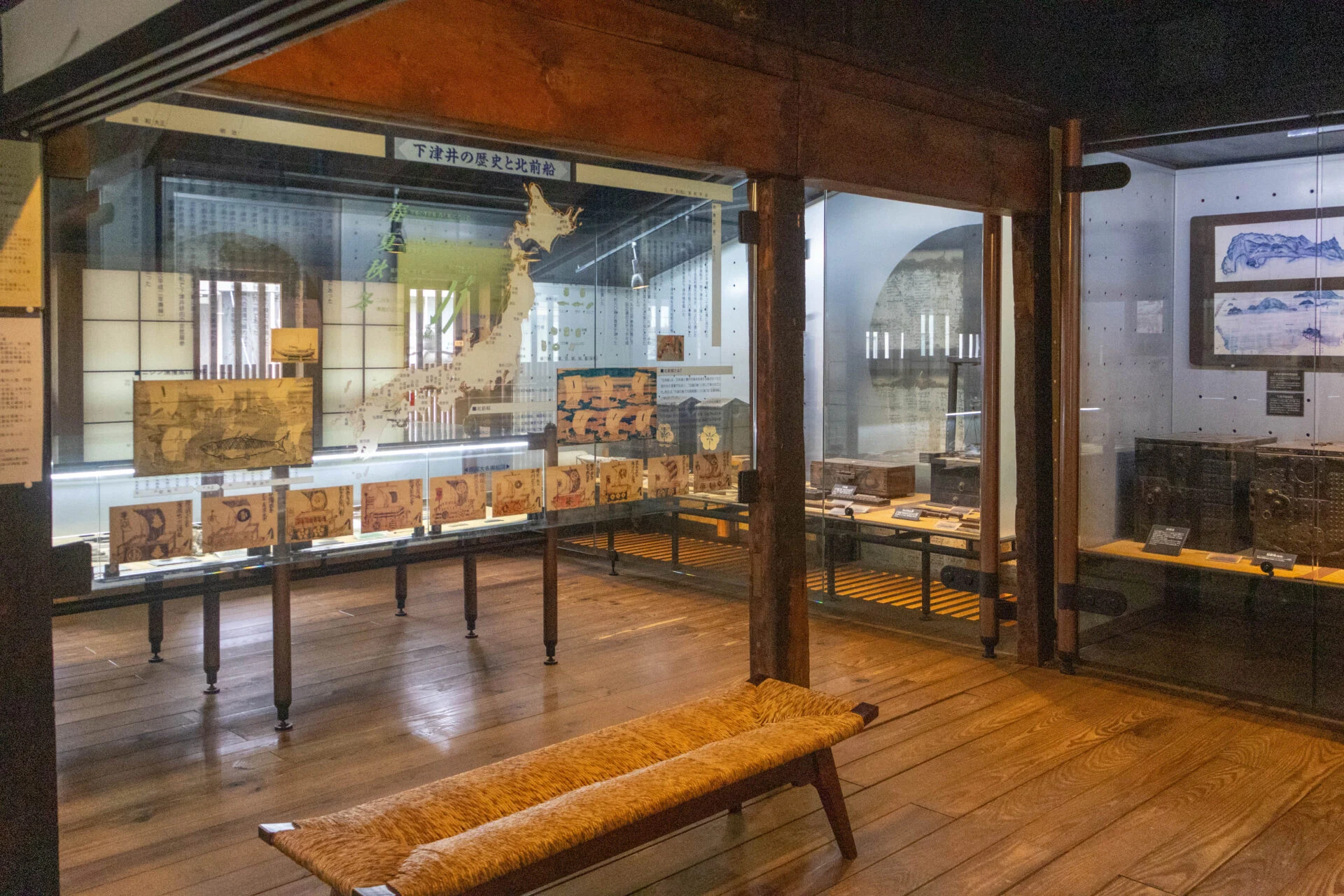
When we went up to the second floor of the Shimotsui Shipping Agent Museum, many valuable materials from that time were on display.
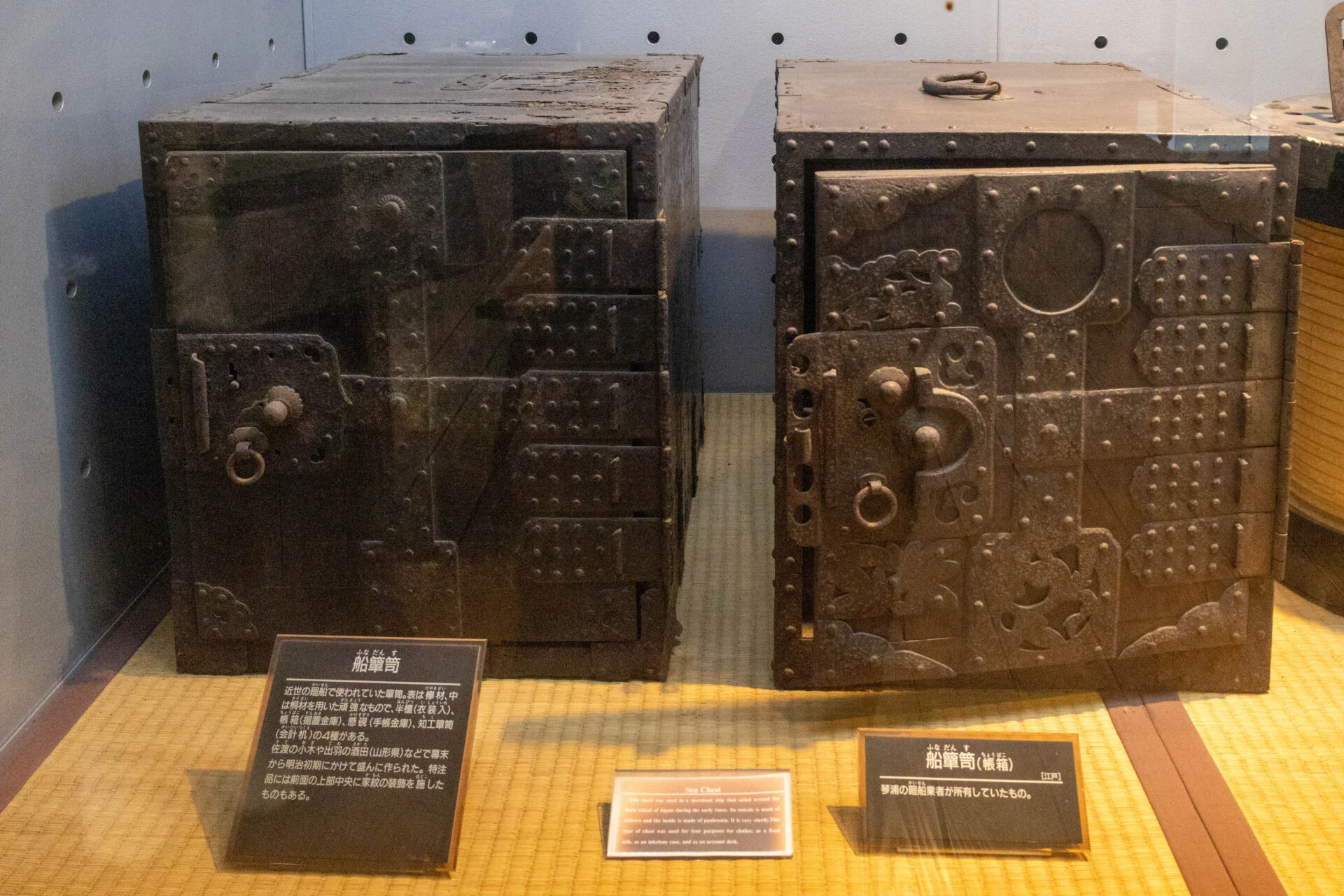
There was also a ship chest that was loaded onto the Kitamae ships. It was designed with a weight on one side to prevent water from entering, even if it fell into the sea.
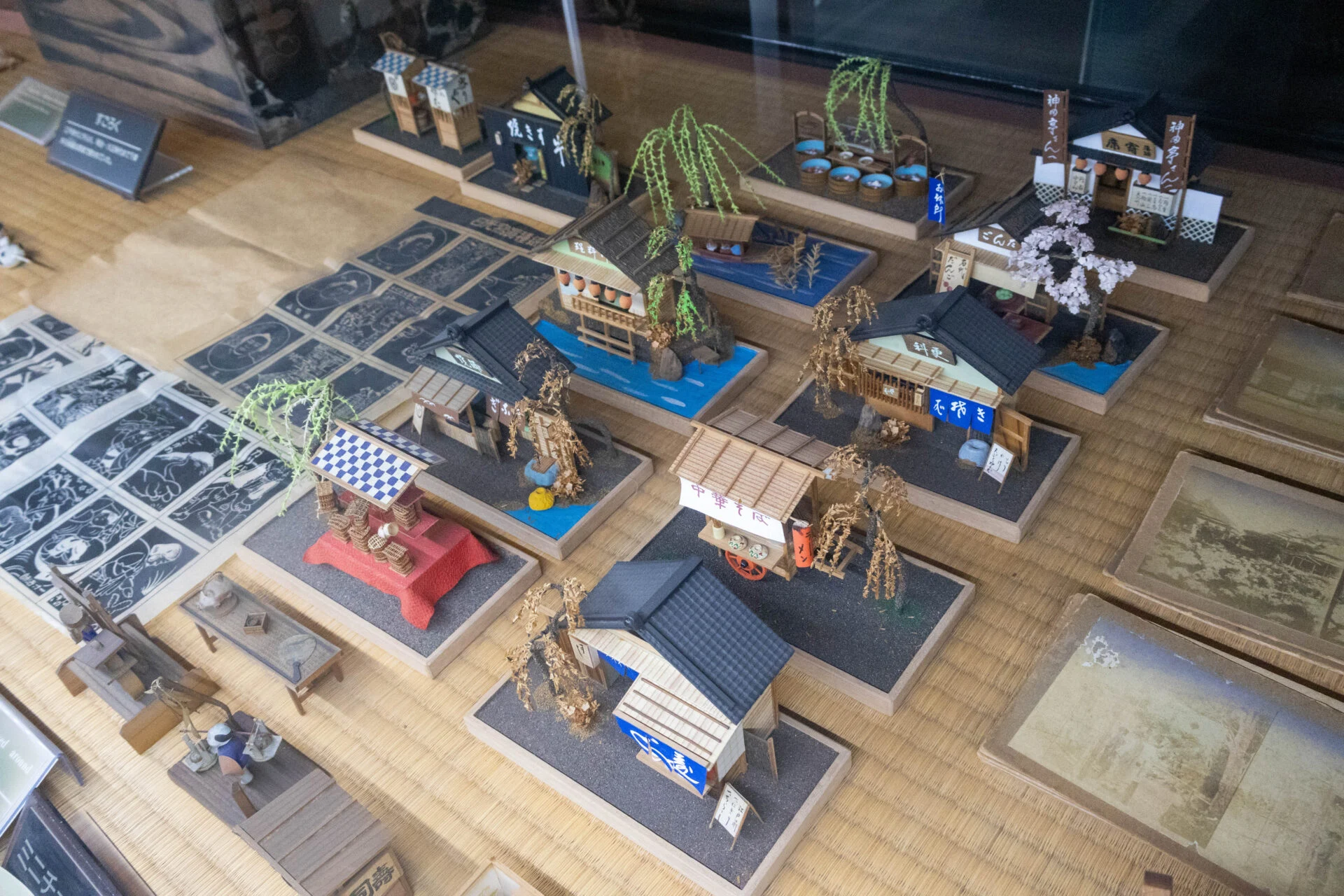
The cute miniature models were being closely examined by the children.
The exhibition was so rich that I thought I would like to visit again to take my time exploring.
Lunch at Washuzan Rest House with a View of the Seto-Ohashi Bridge
Having been active since early morning, we were hungry and welcomed the long-awaited lunchtime at the local dining area of Washuzan Rest House.
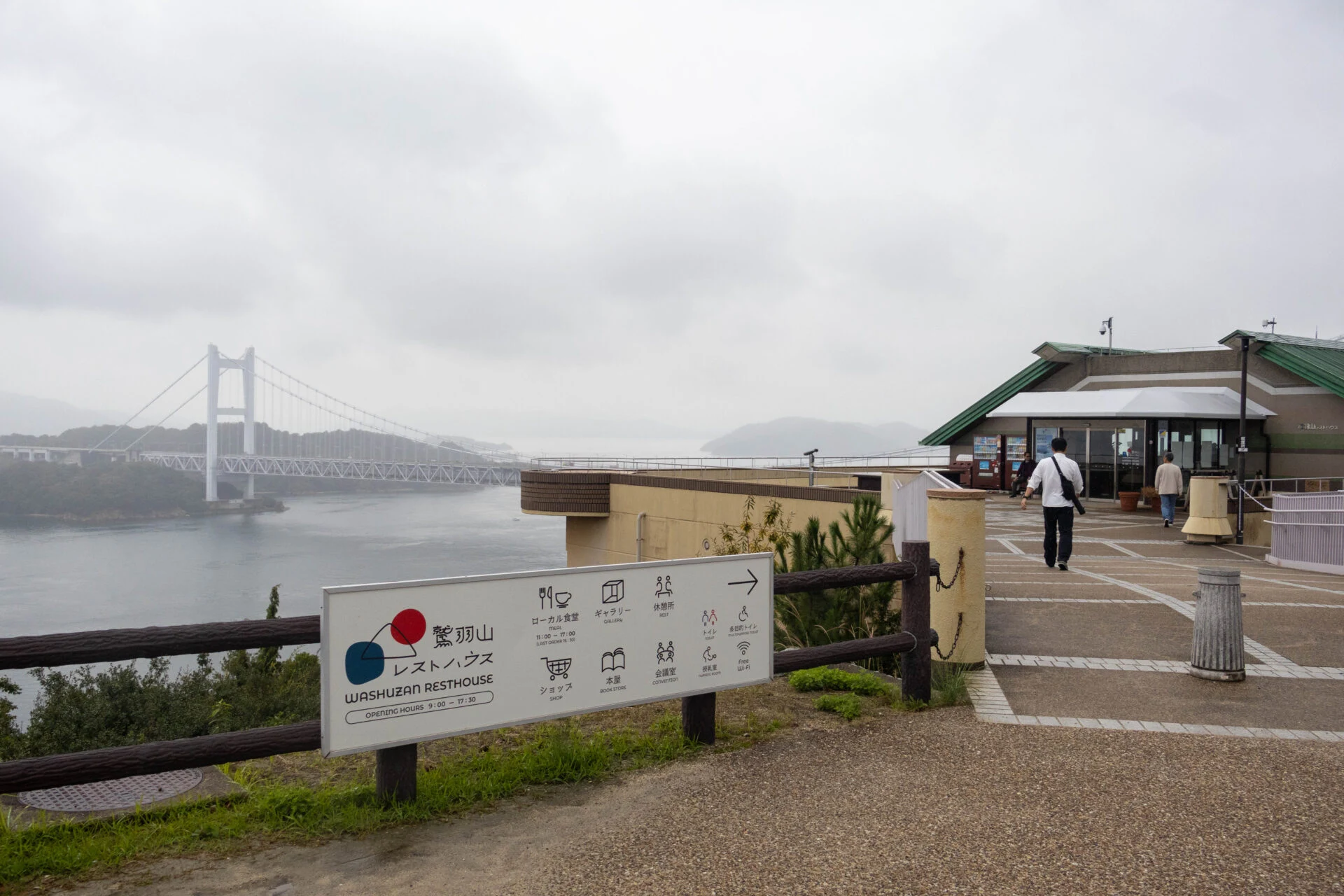
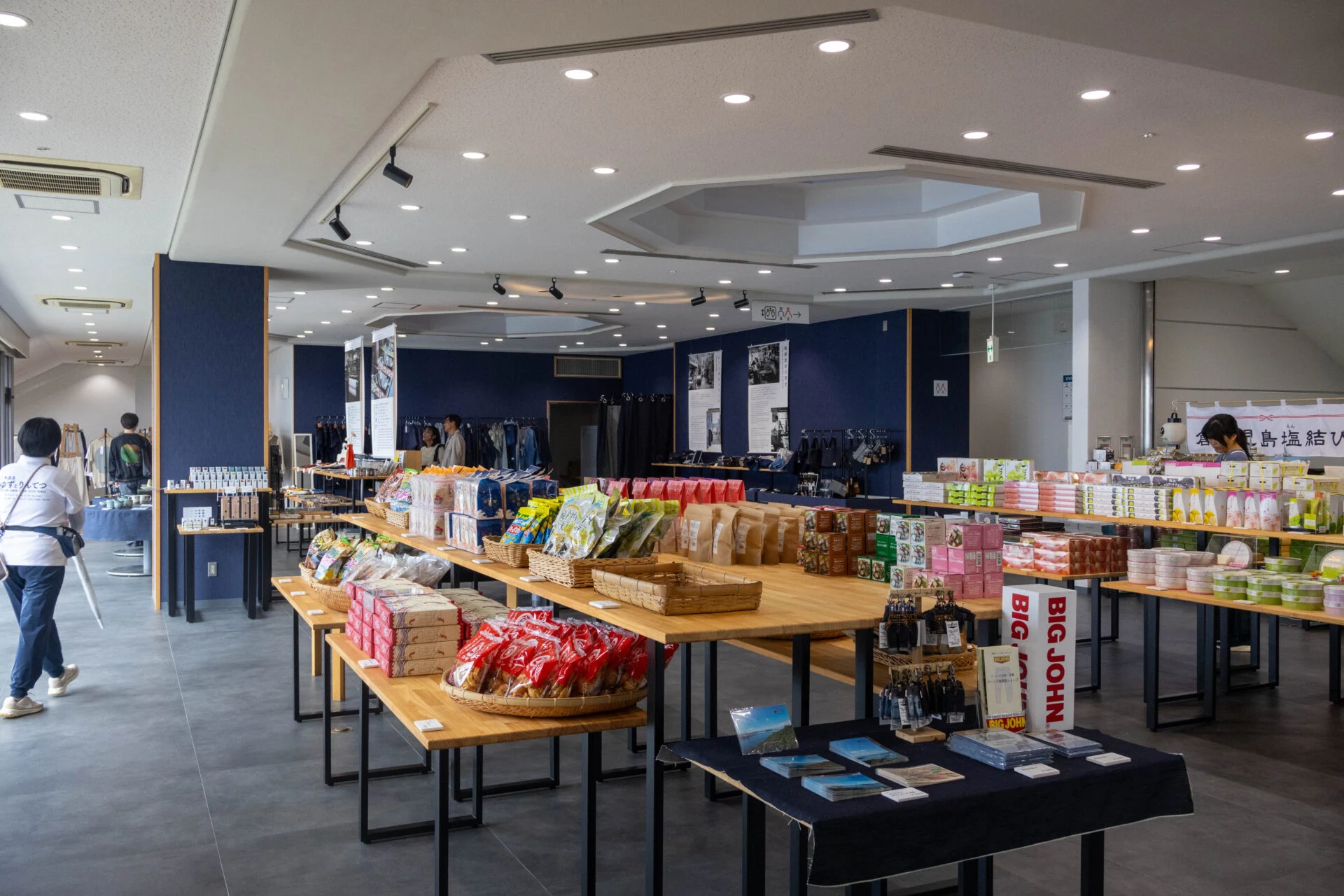
Washuzan Rest House is a complex facility that just reopened in April 2025. It features a souvenir shop, local dining, a bookstore, and a rest area, providing a place to relax while enjoying shopping and food.
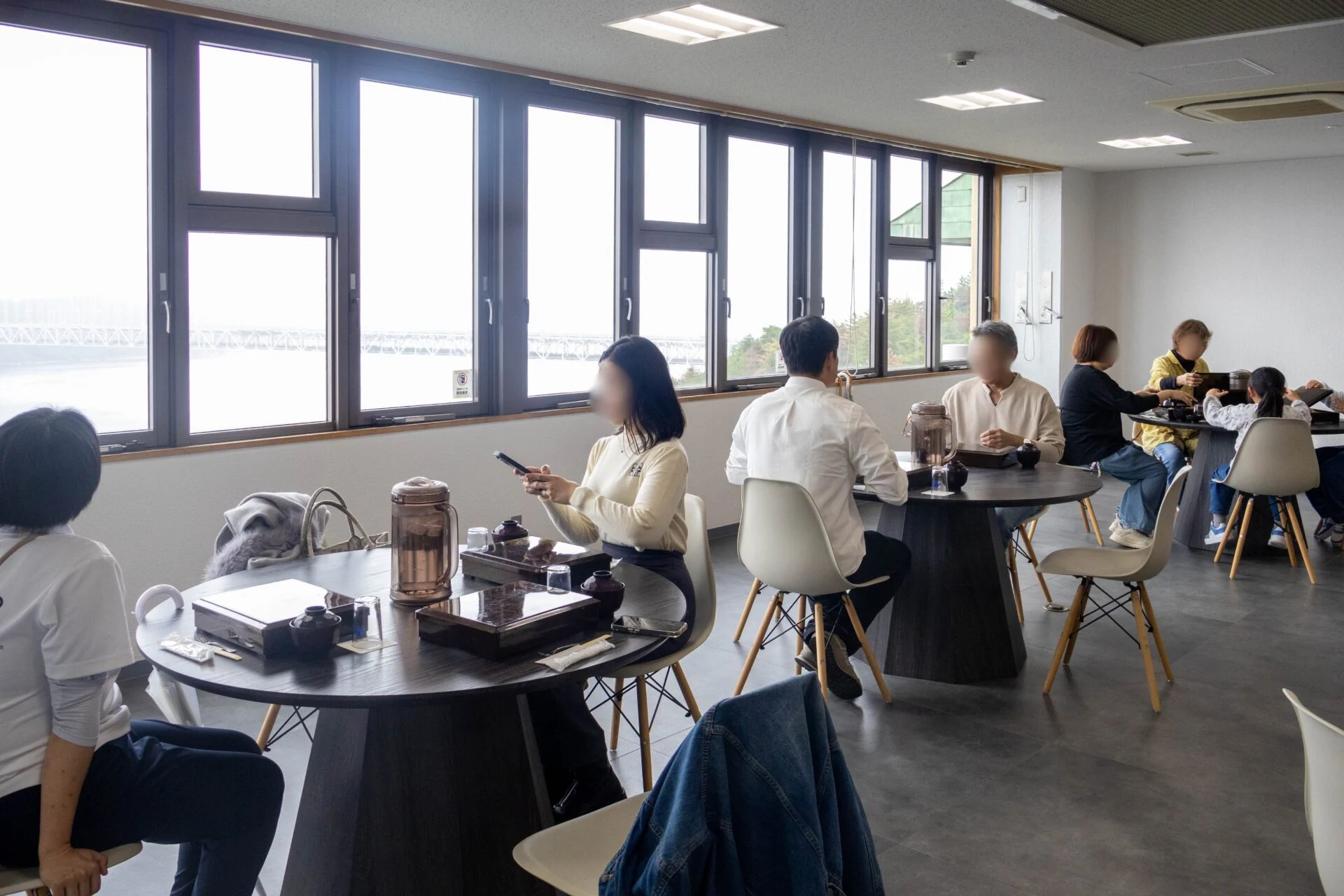
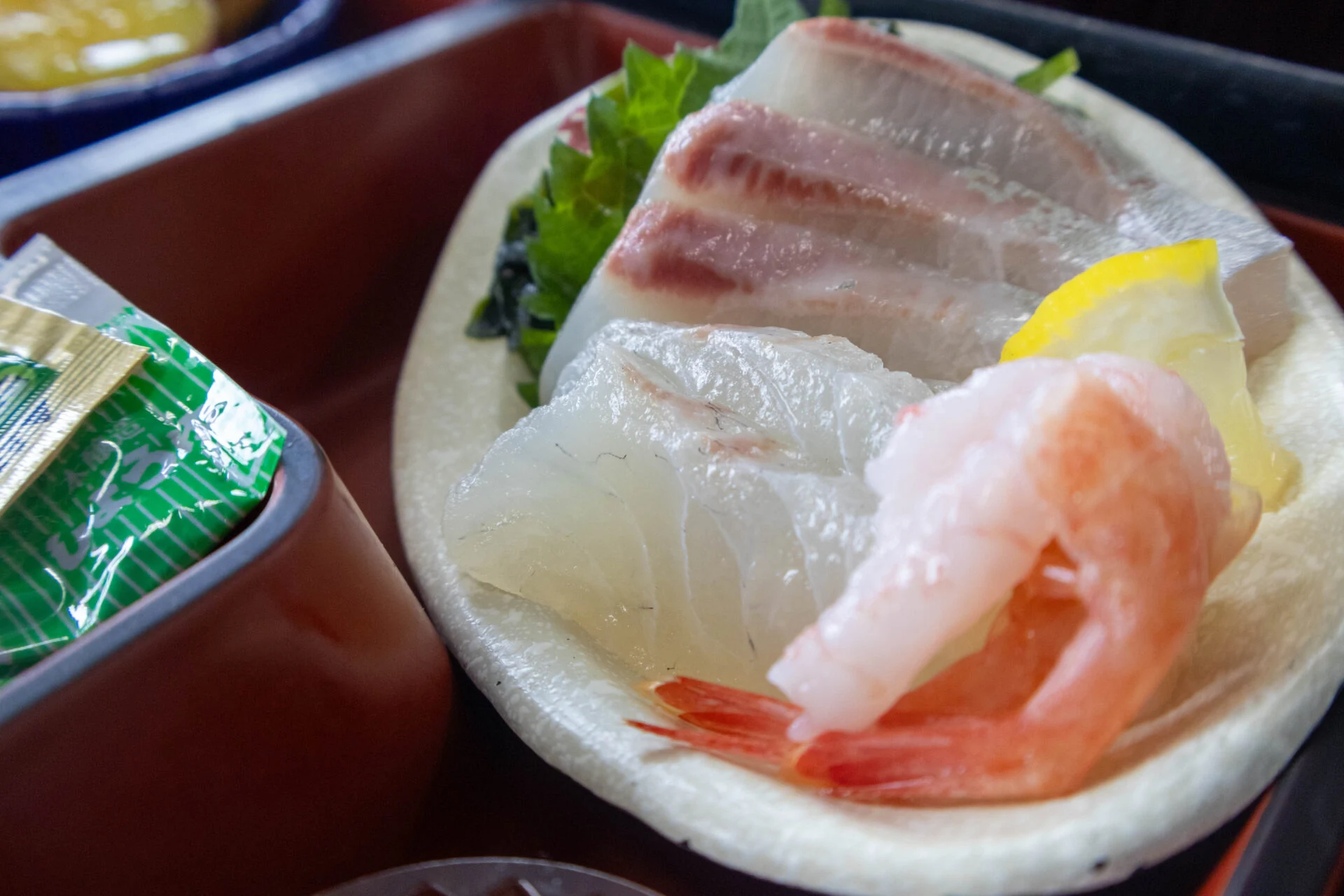
What was served was a special bento that is not on the menu, featuring seafood and fruits, allowing us to savor the flavors of Okayama, which is truly unique to the tour.
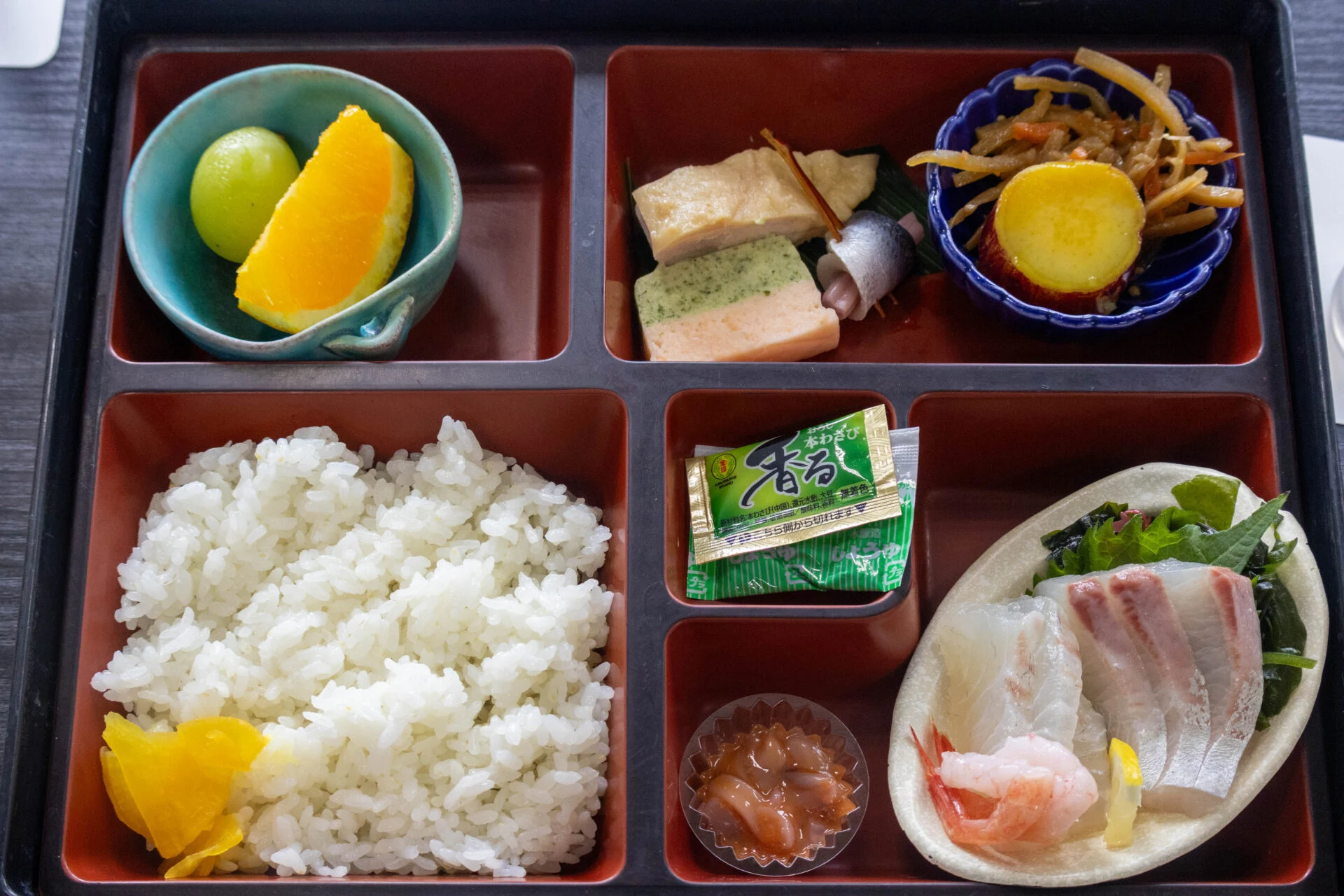
One participant mentioned, "I didn't expect to be able to eat sashimi, so I'm happy." The sashimi was fresh and delicious.
After finishing the meal, I took a look at the souvenir shop.
There are foods using salt from Kojima, as well as Okayama's representative textile products such as Sanada cord, tatami edging, tabi shoes, and denim products, all of which showcase the pride of Kurashiki.
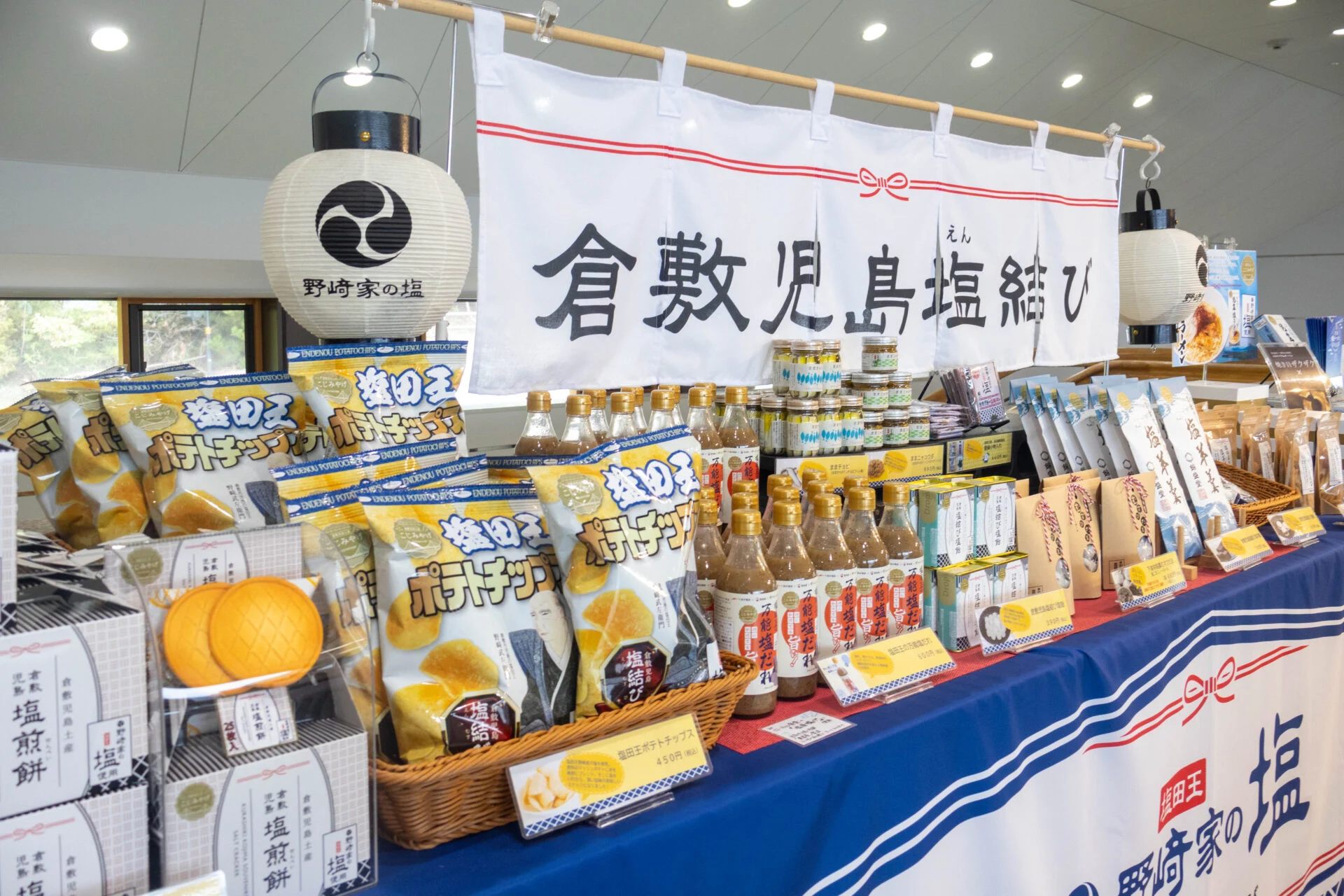
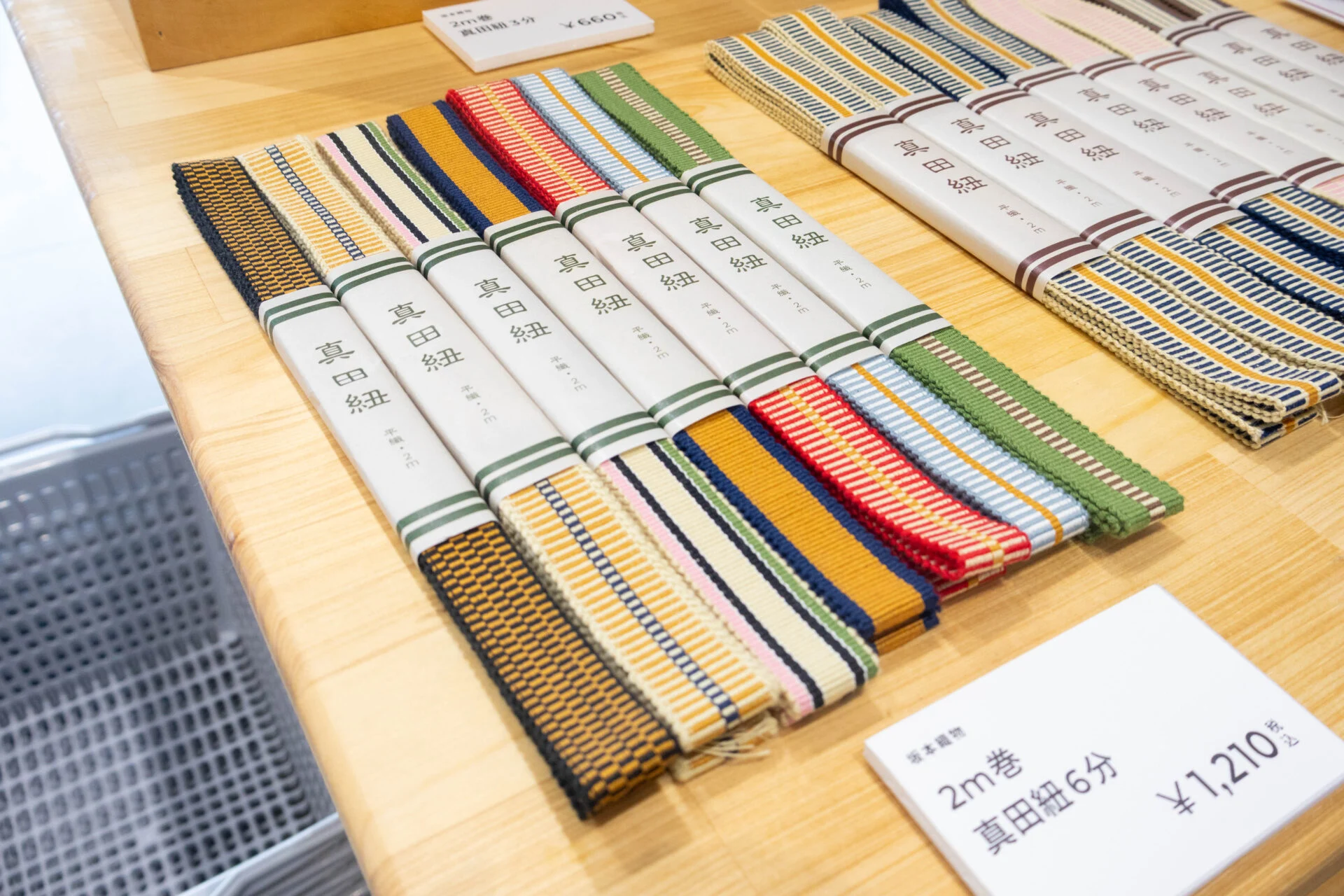

With such a wide variety of items available, I recommend visiting with plenty of time to enjoy shopping thoroughly.
Another highlight of Washuzan Rest House is the panoramic view of the Seto Inland Sea. Even on a rainy day, we were able to enjoy the magnificent scenery of the Seto-Ohashi Bridge.
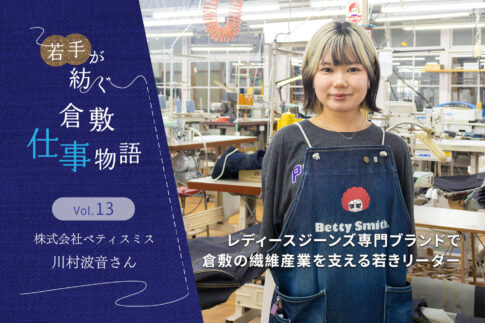
Japan's First Women's Jeans Manufacturer "Betty Smith" and Strap Making
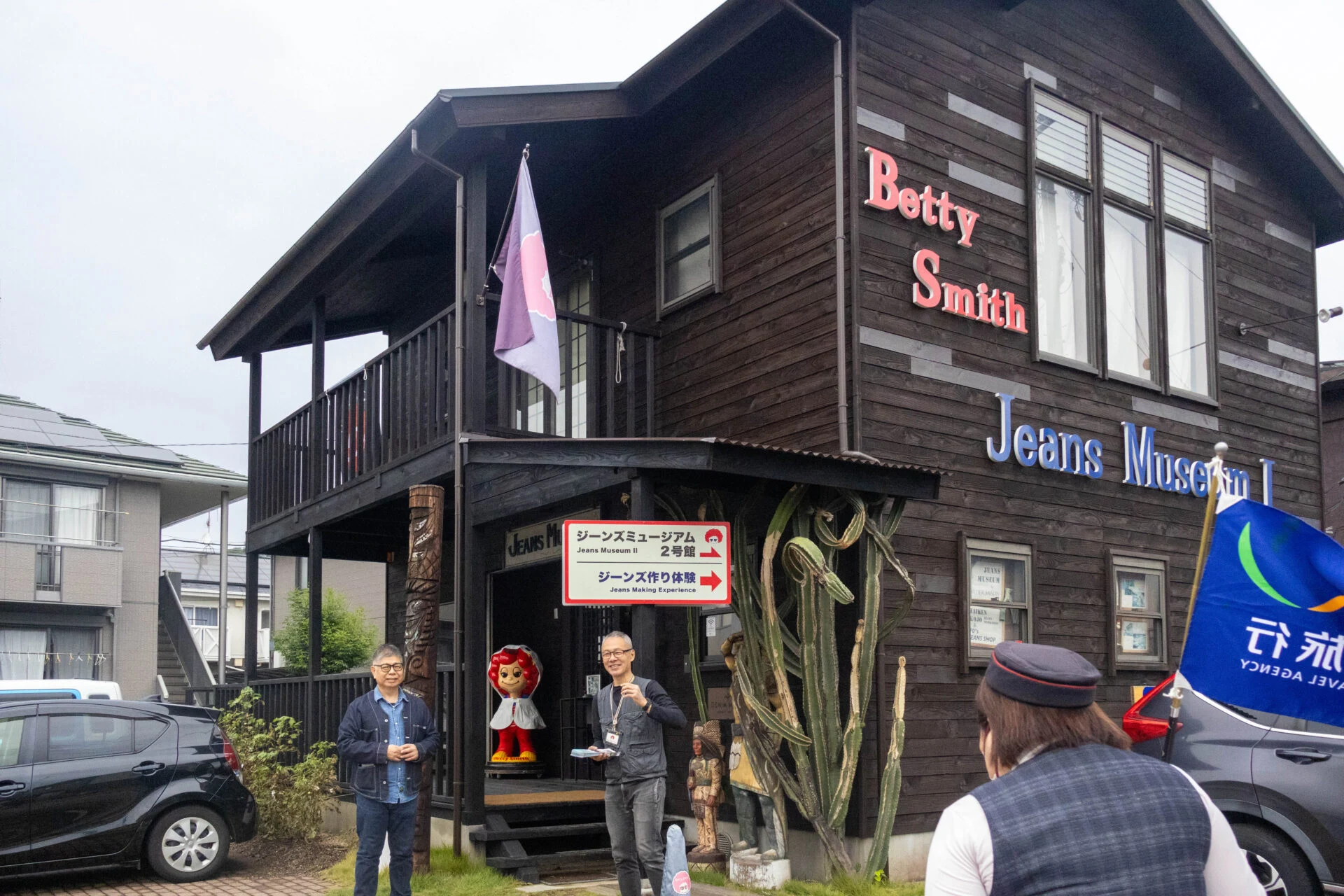
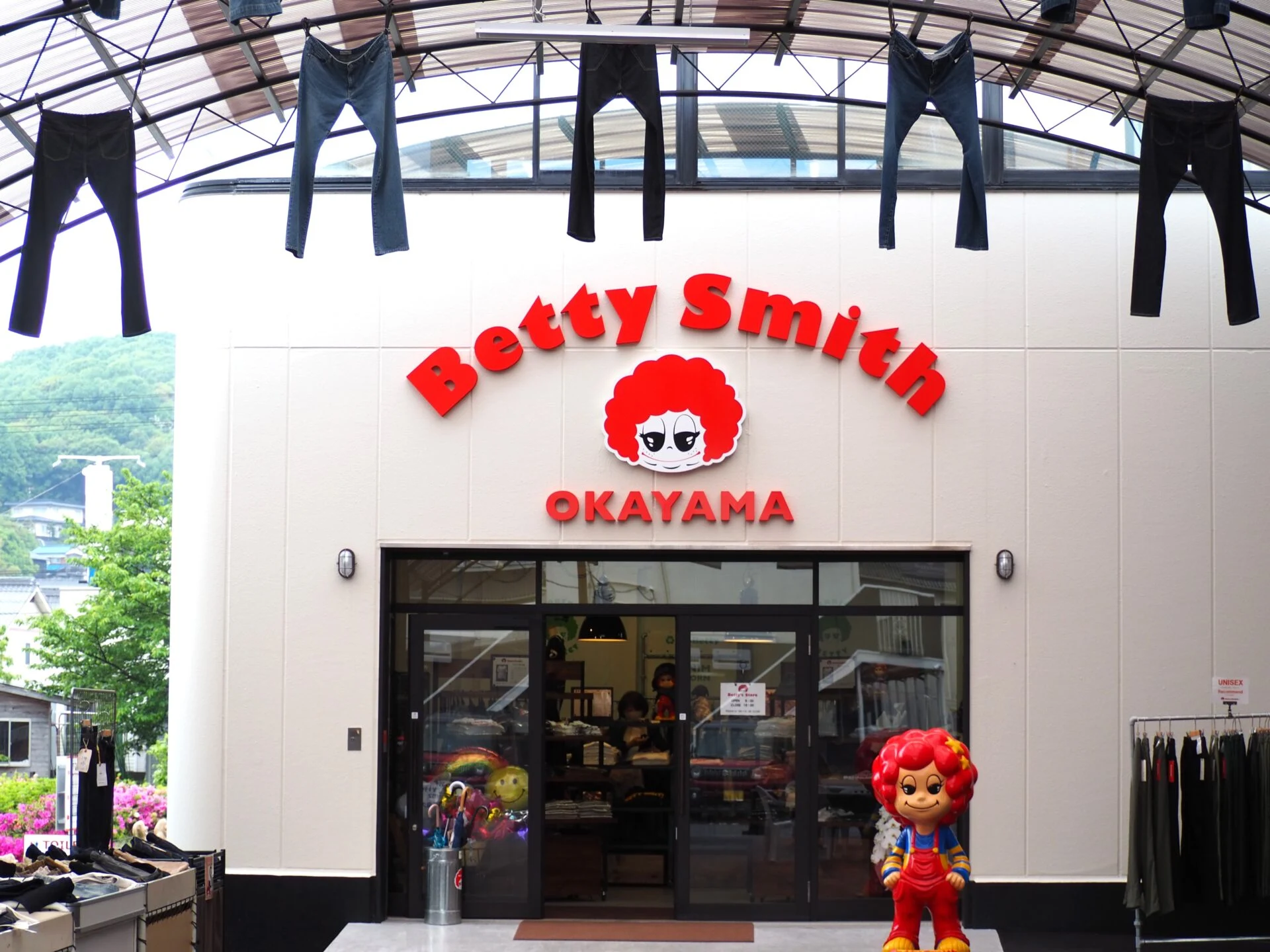
The last place we visited was Japan's first women's jeans brand, Betty Smith.
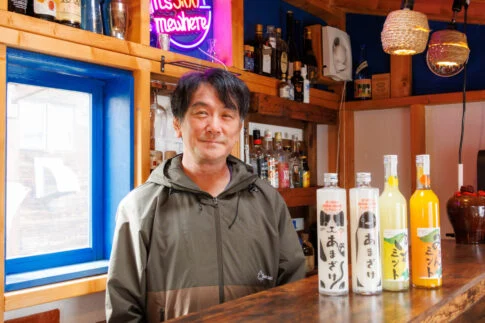
Here, we will tour the Jeans Museum with the guidance of Oshima Yasuhiro, the representative of Betty Smith Co., Ltd.
The Jeans Museum was established by Betty Smith for children's social studies field trips. It displays numerous valuable jeans and sewing machines that were actually used in the past.
First, Mr. Oshima taught us about the history of jeans.
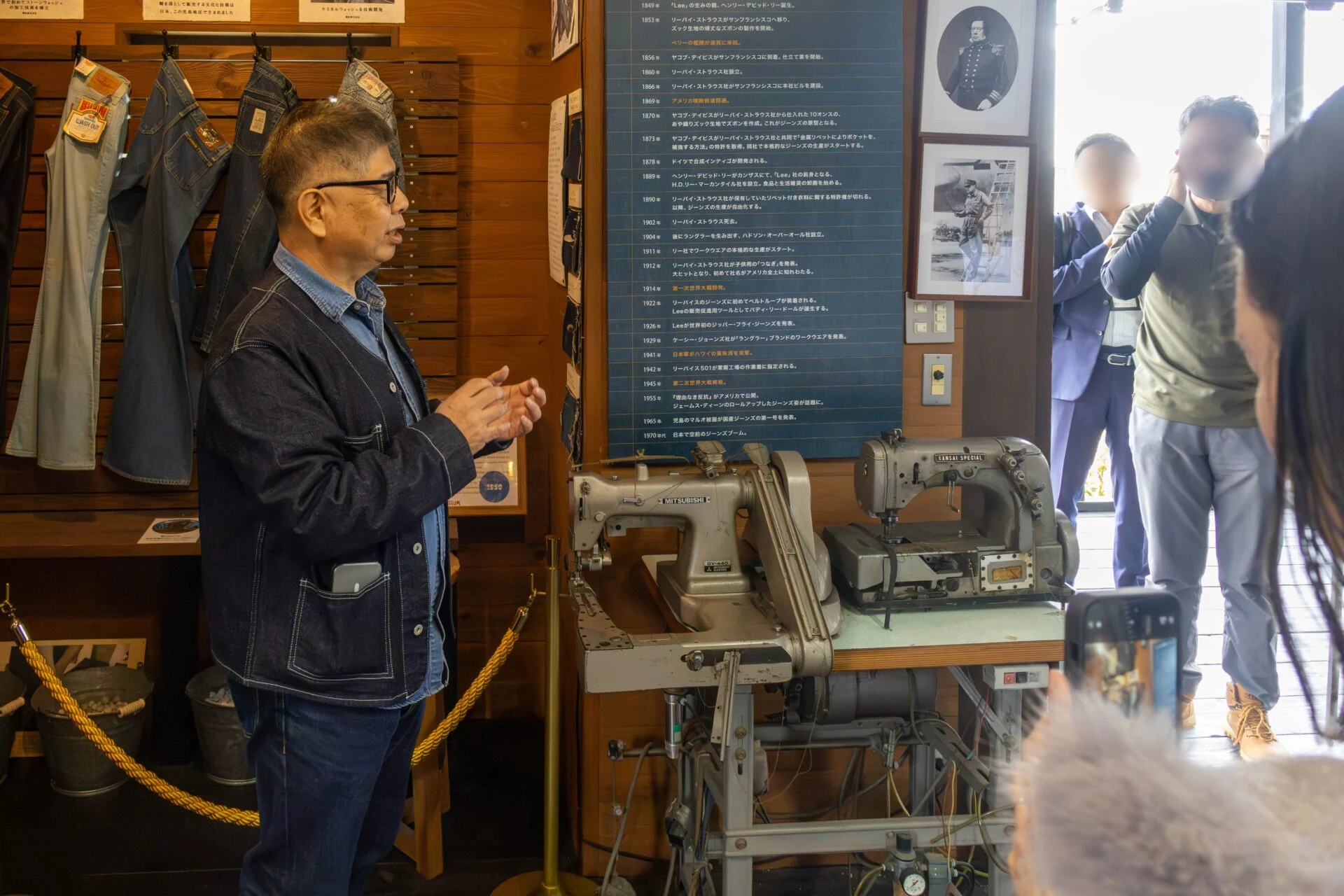
"Jeans were first made in America during the time of the topknot," he said.
"Kojima is called the birthplace of domestically produced jeans because it was the first to succeed in mass-producing jeans in Japan. In the past, there were no denim materials or production sites in Japan, but as jeans began to sell, domestic fabric and materials started to be produced."
"Kojima was the first to industrialize jeans."
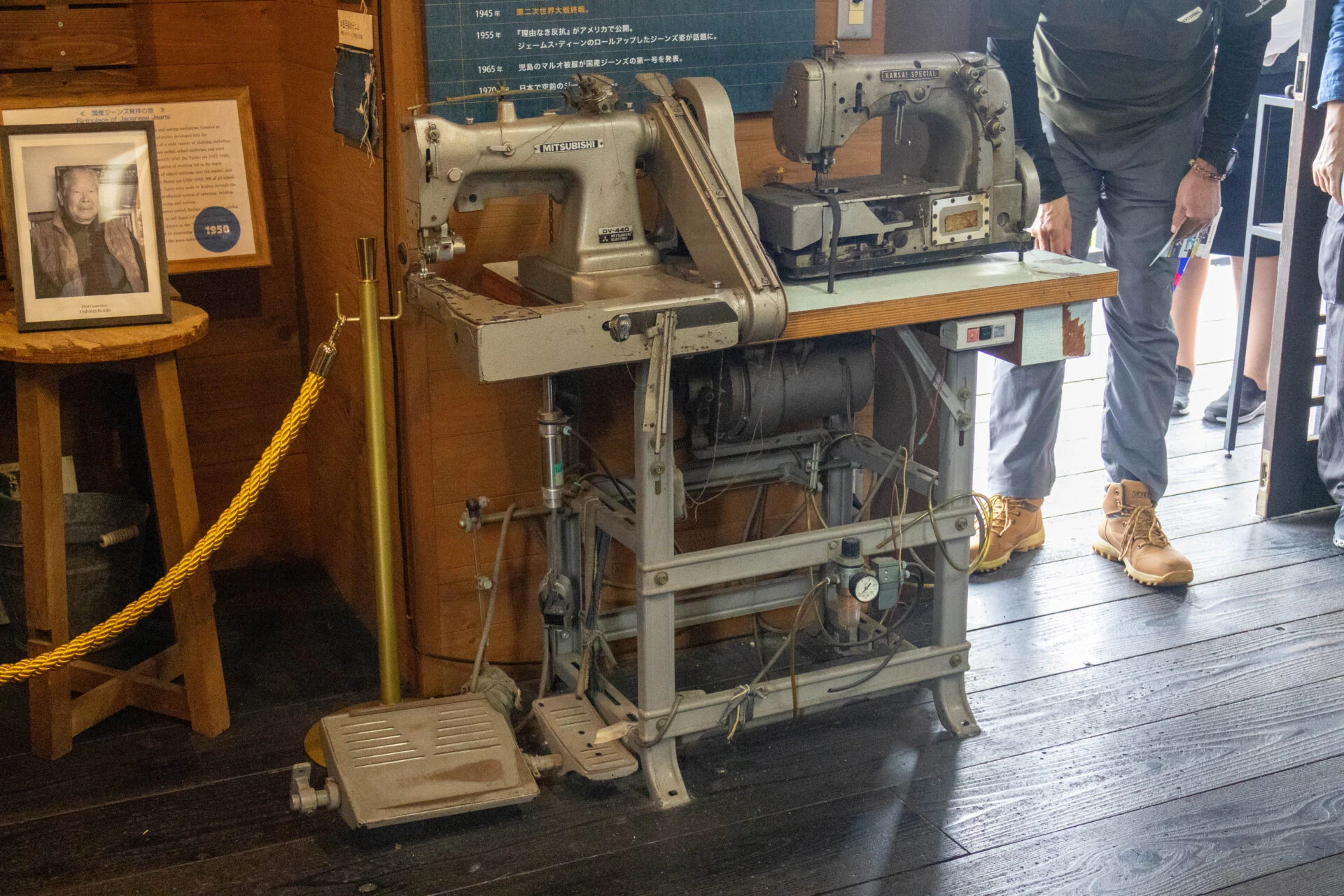
Listening to Mr. Oshima's guidance, it becomes clear that jeans spread in Japan due to the various ingenuity and efforts of the people of Kojima.
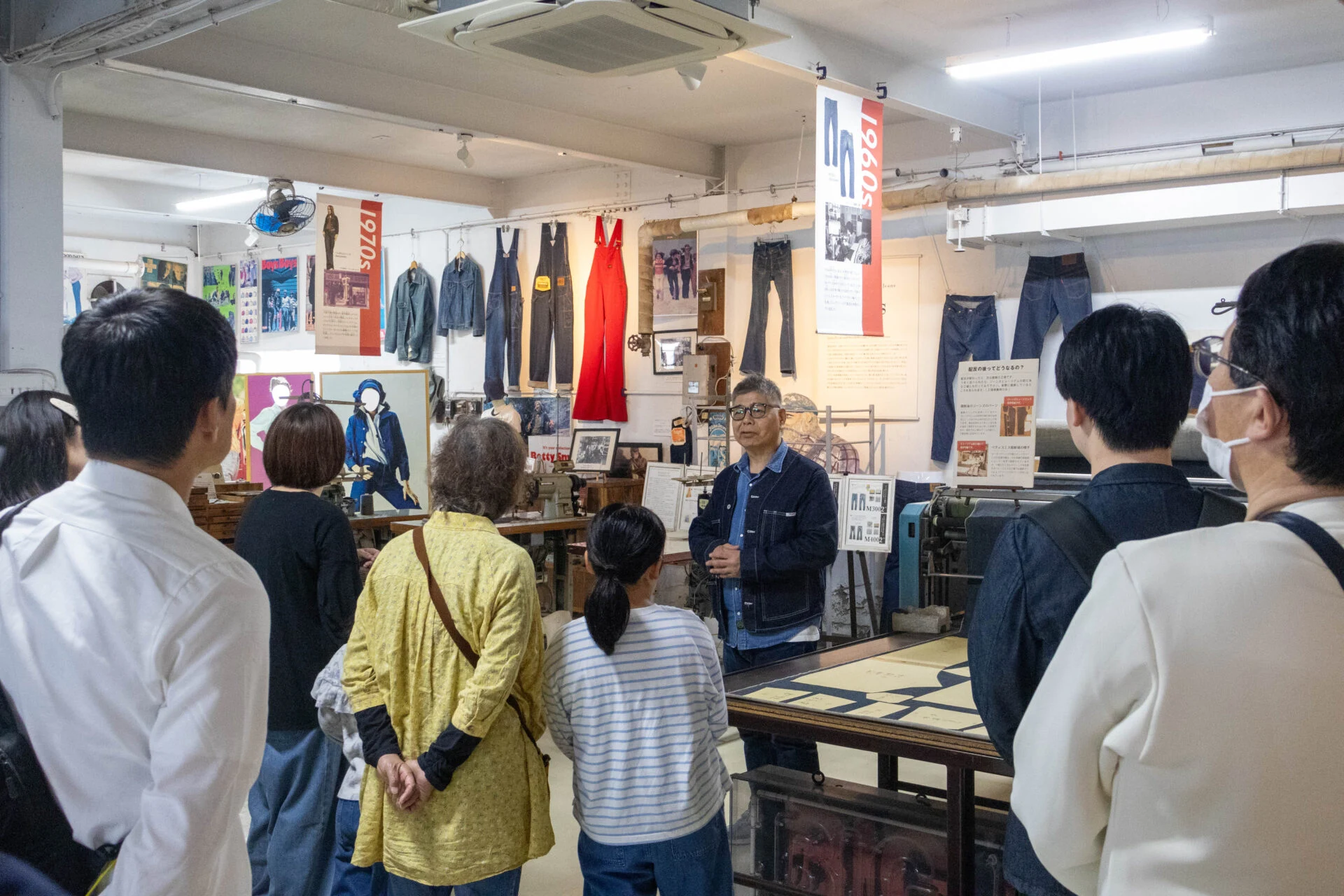
When we think of made-in-Japan, we often associate it with high quality, but Mr. Oshima states that the biggest feature of Japanese jeans is the processing technology.
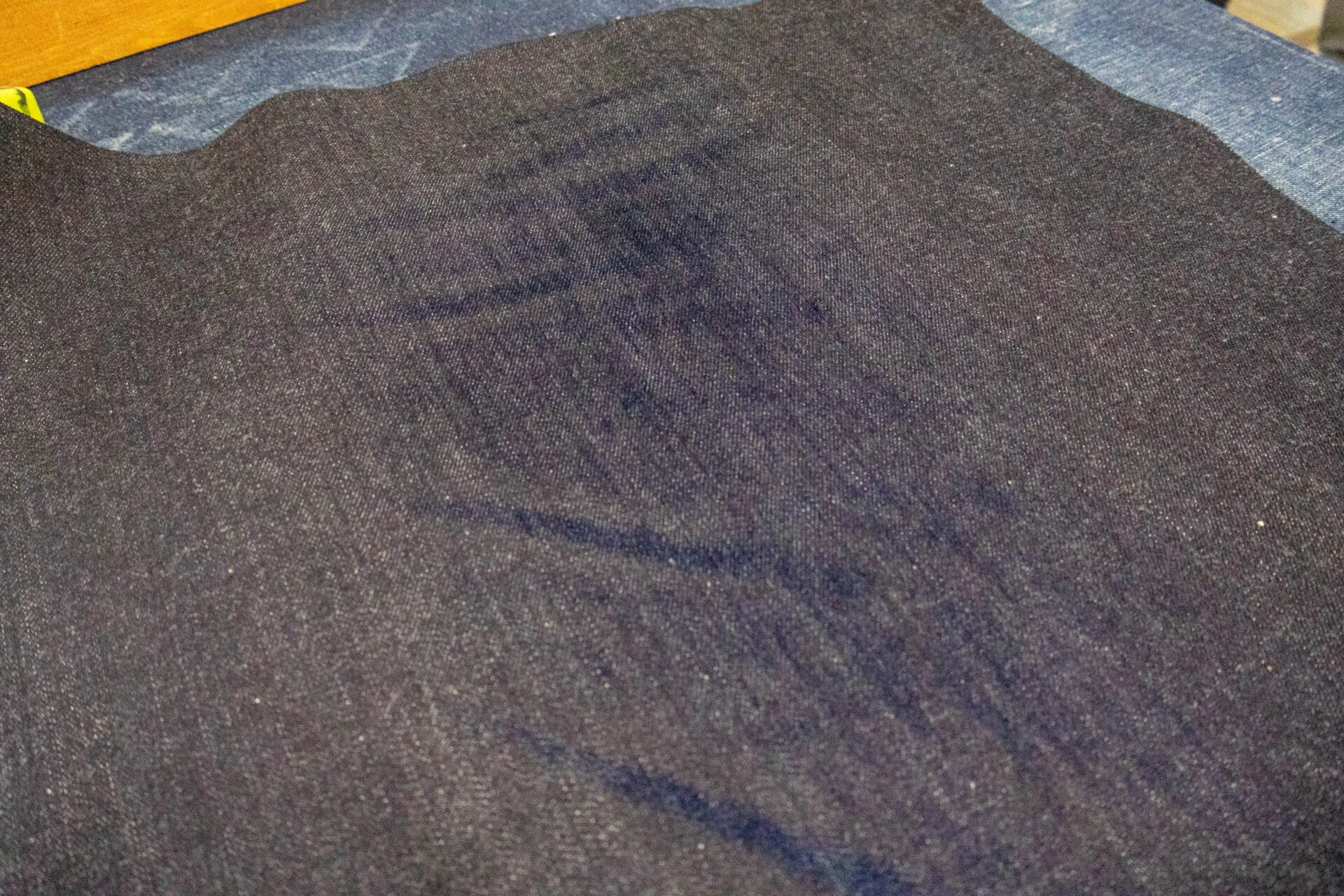
At Jeans Museum 2, the children experienced the rubbing process. By placing a mold with wave-like bumps under the fabric and rubbing it in one direction from above, wrinkles are created.
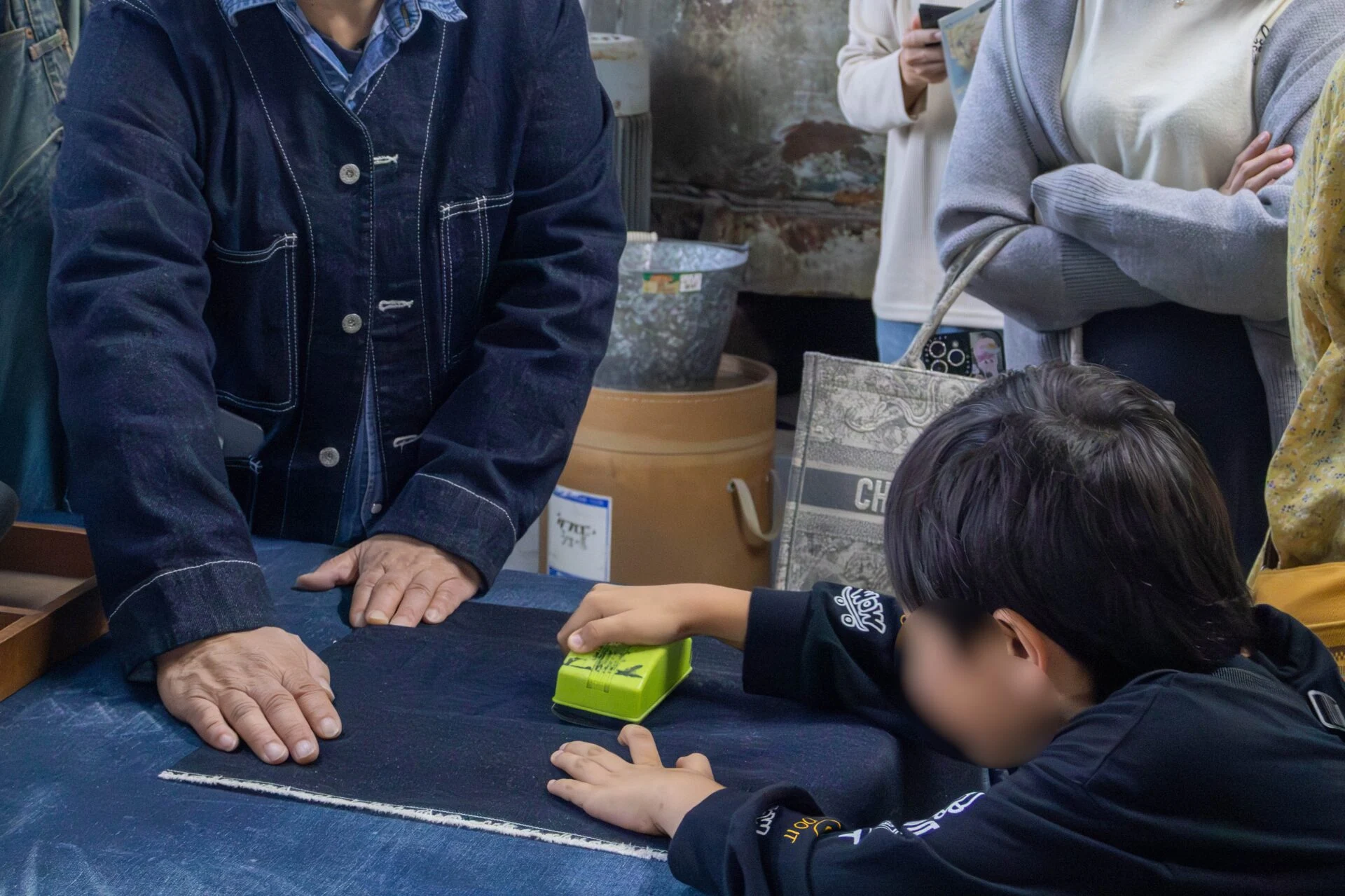
The processing not only makes the jeans look stylish but also allows them to fit comfortably on the body and be easy to wear.
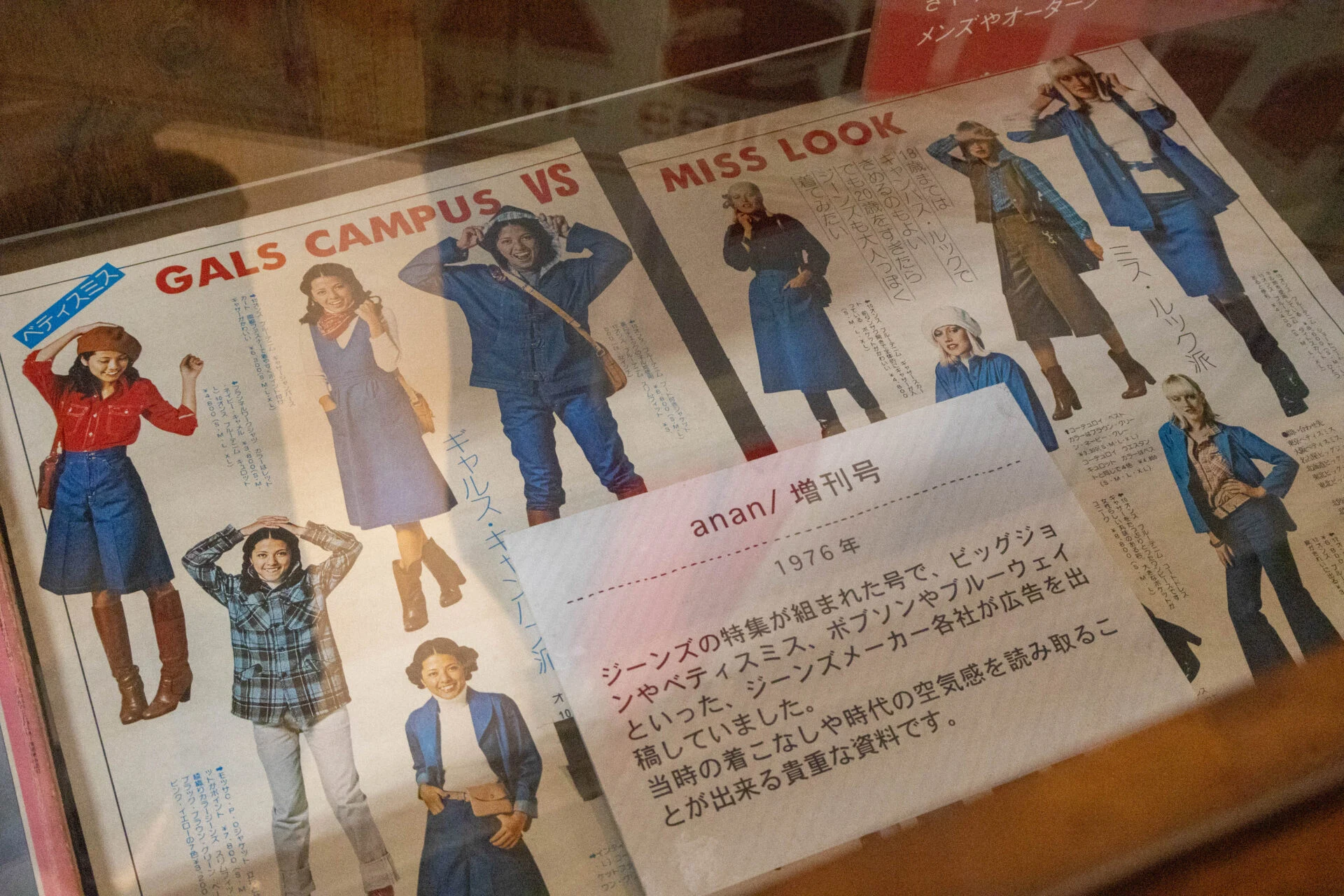
The Jeans Museum features a stunning display of valuable materials from past generations, making it hard to believe that admission is free.
In addition to jeans and machines, there are magazines and posters, allowing visitors to trace the trends of jeans from that era.
Currently, Betty Smith is focused on circulating the clothes they create. The recycled denim T-shirts made from scraps and worn-out jeans have an unexpectedly pleasant texture, making them hard to resist.
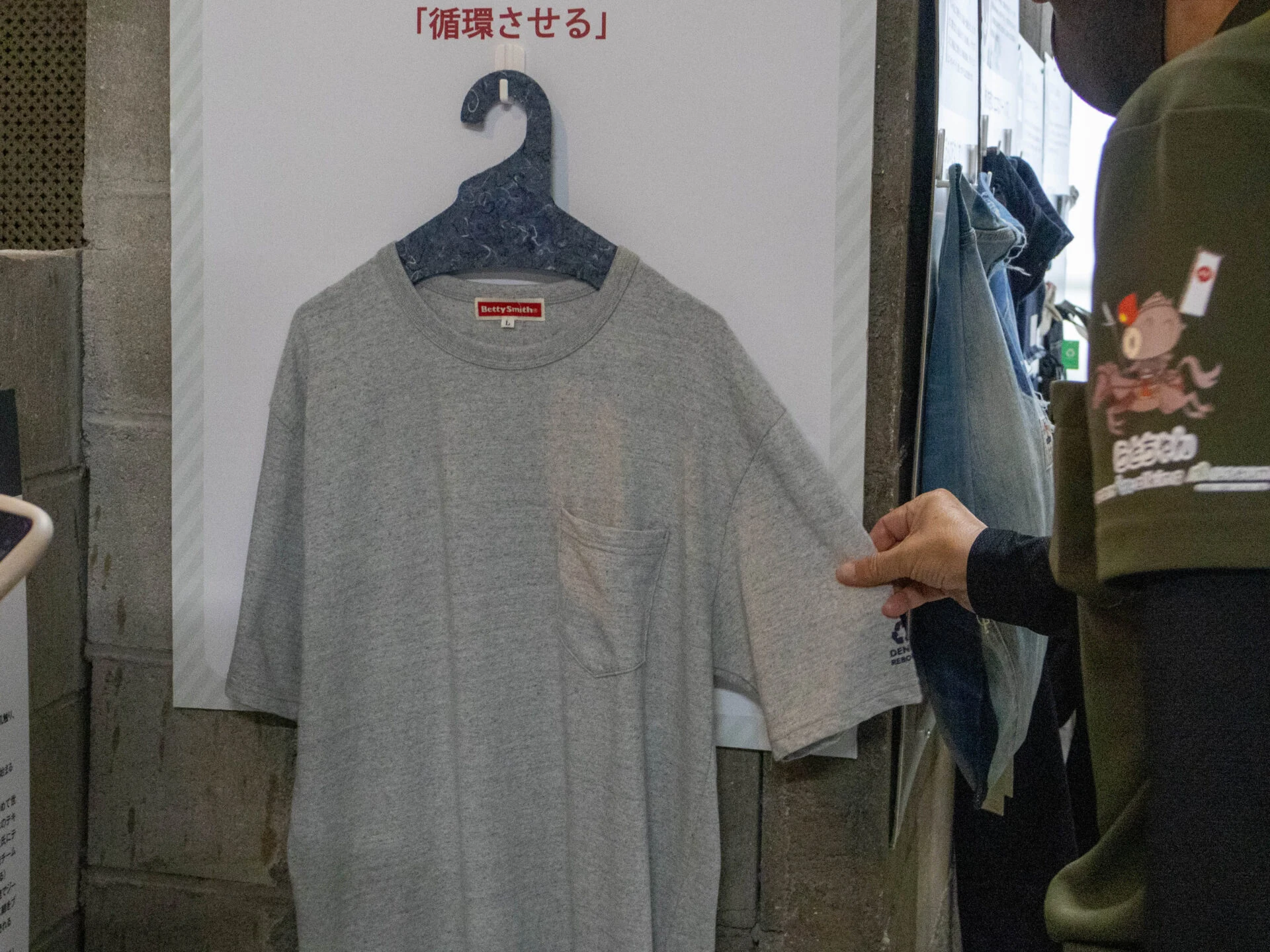
Next, we will move to the shop to experience making denim straps.
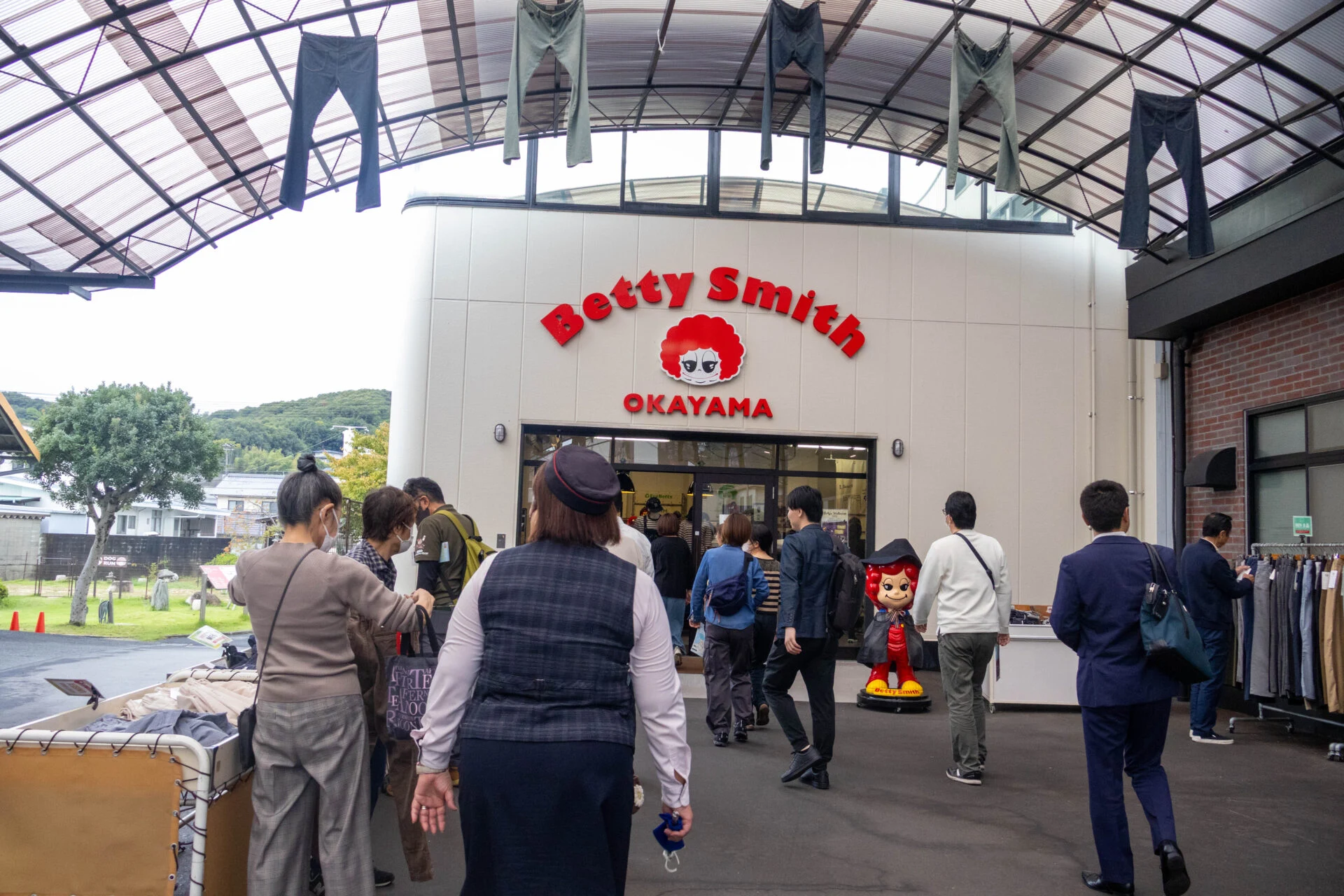
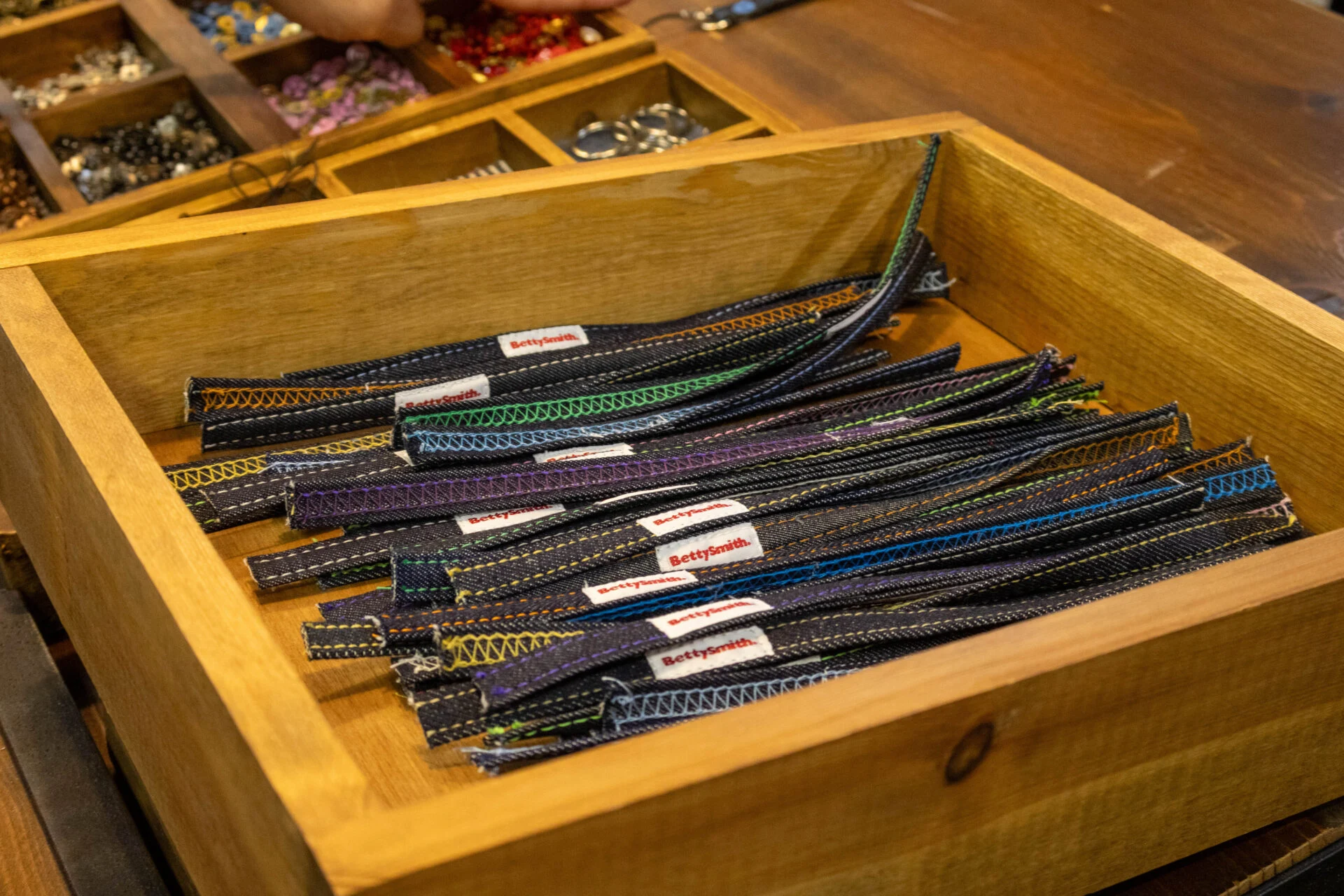
First, choose your favorite combination from the colorful denim straps and over 20 types of rivets.
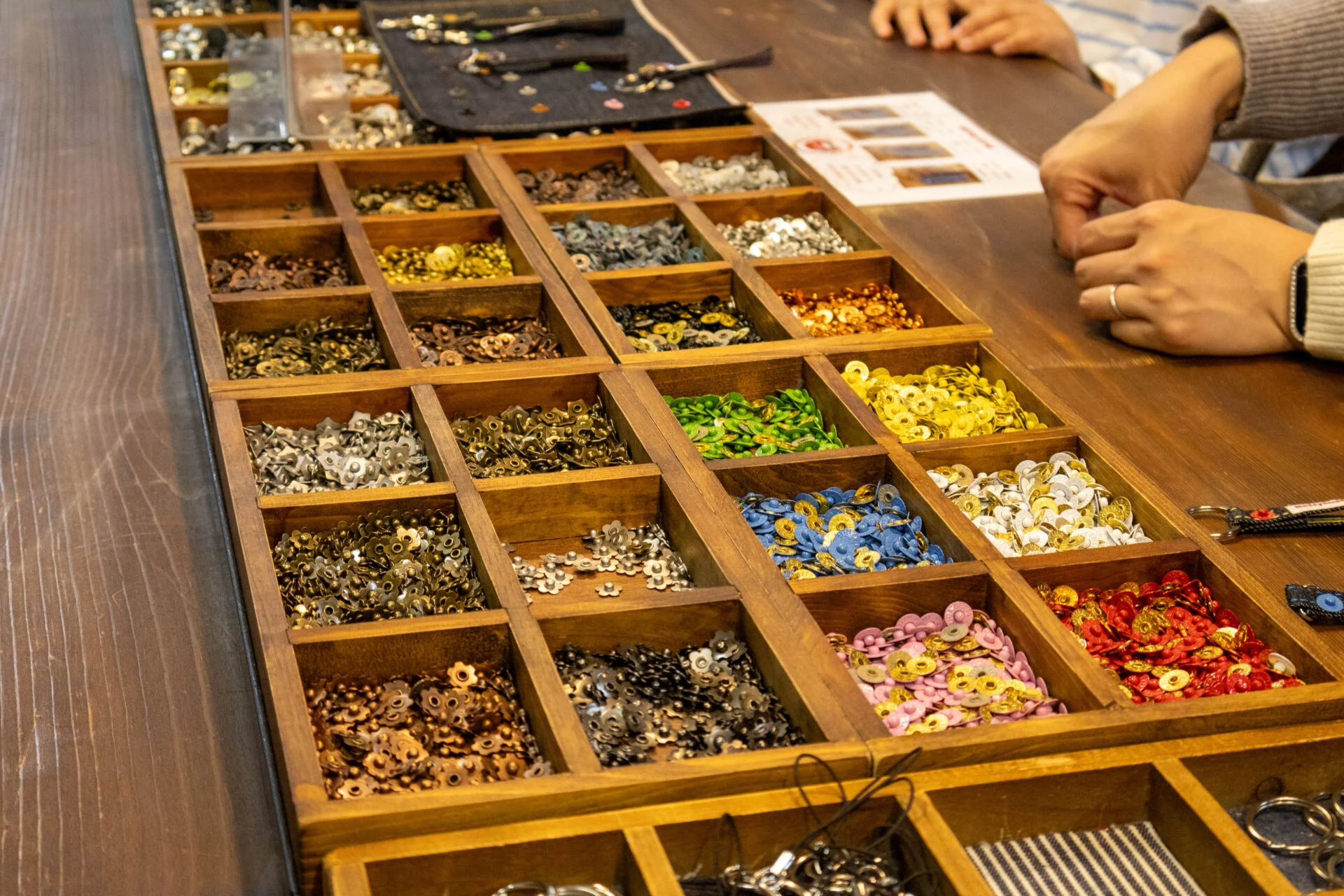
Rivets are metal parts used to reinforce jeans. While the rivets on everyday jeans may not be particularly special, there is a wide variety of colors and shapes, making the selection process time-consuming.
Once you have decided on the strap and rivets, you will finish the strap with the help of the staff using a machine that attaches the rivets.
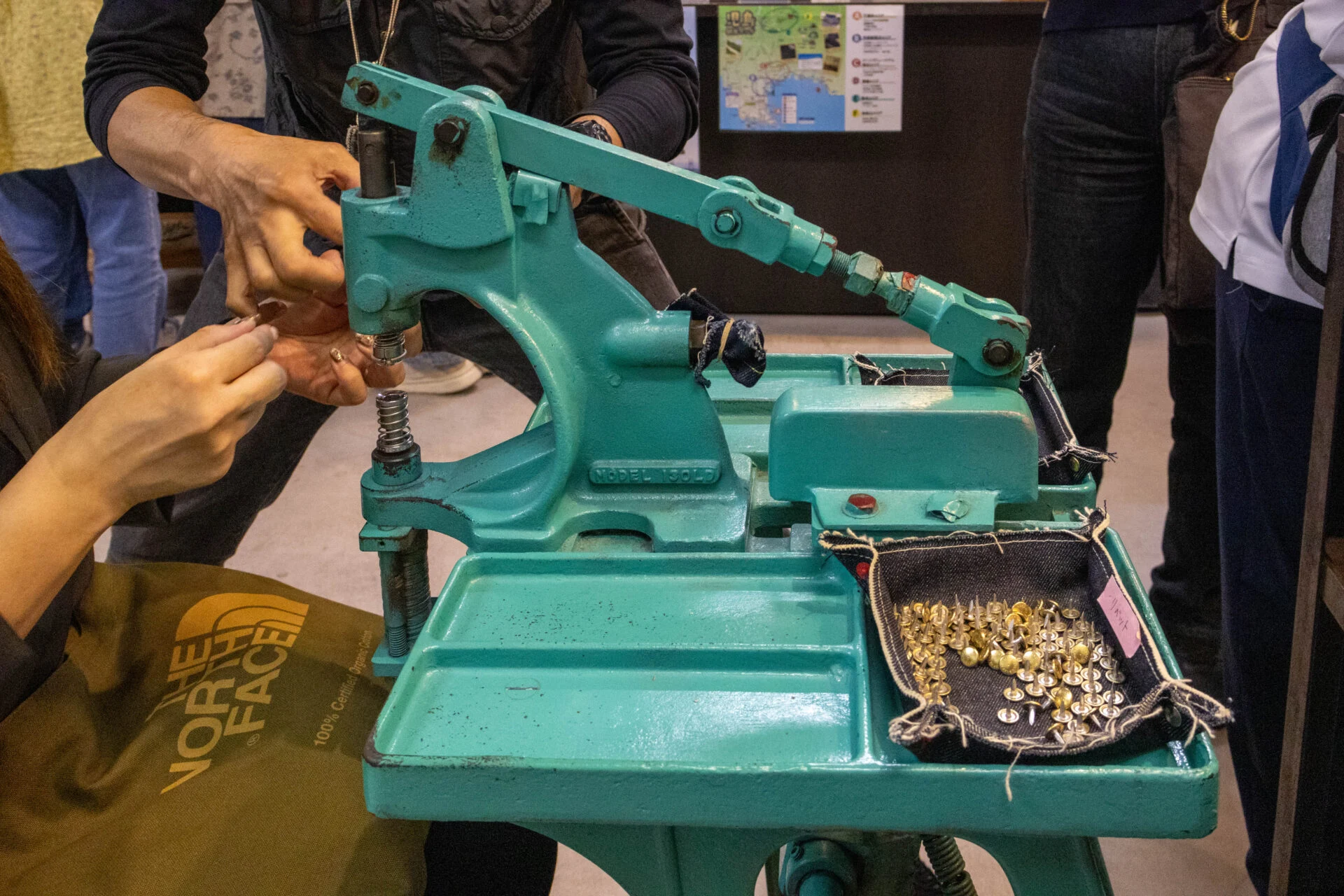
When you step down hard on the lever at your feet, a loud "clunk!" sound signals the completion of the strap. It required more force than I expected, and when I struggled, the staff member helped me press down together.
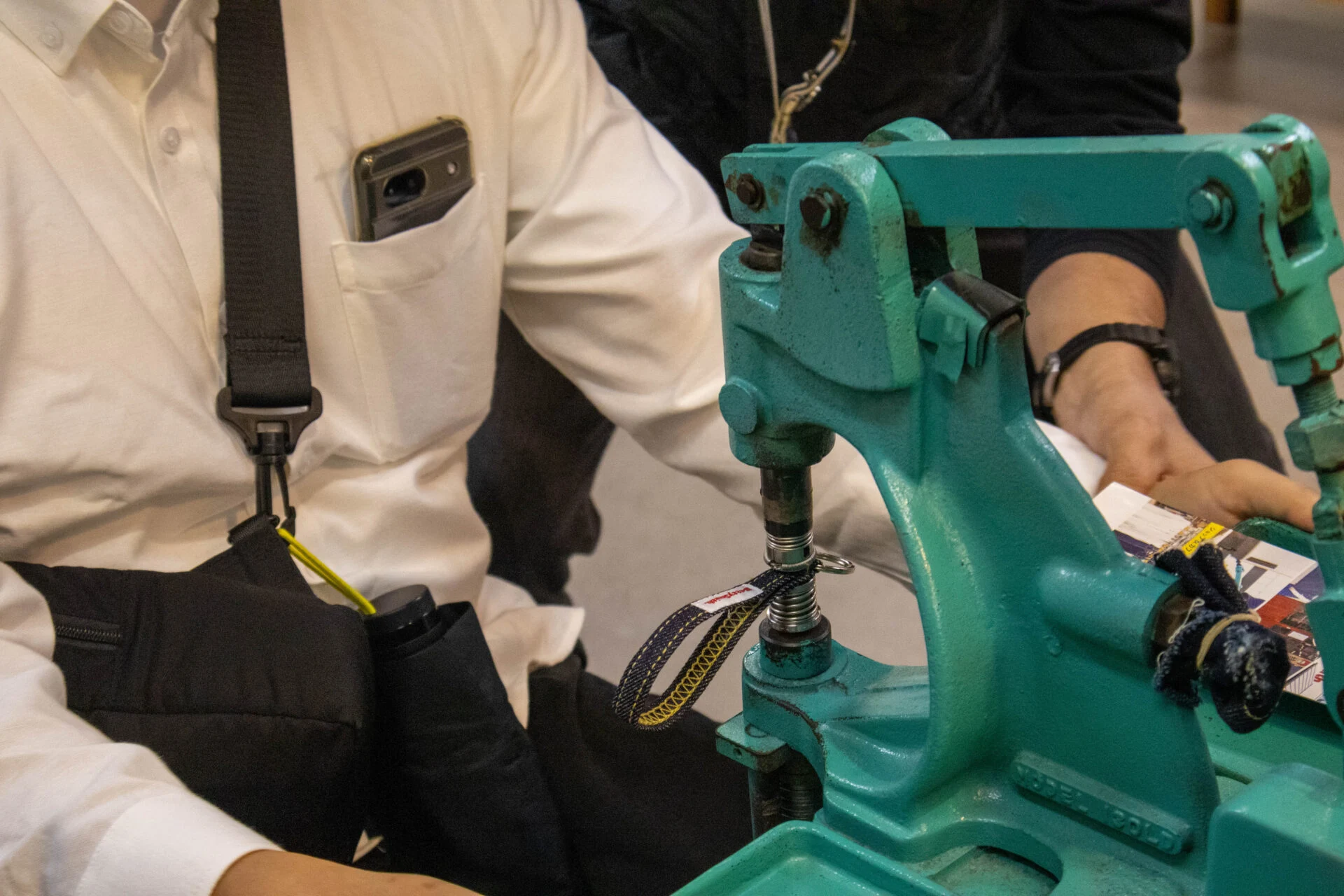
The completed denim strap is a one-of-a-kind item. It became a wonderful memory of the excursion.

Conclusion
The excursion was so fulfilling that it felt like more than half a day. Experiences like salt-making and denim strap-making became great memories.
Living in Kurashiki City, I have come to realize how cultural properties naturally blend into daily life. Even places I have visited before, receiving explanations from the guide allowed me to re-recognize the deep history behind them.
It may seem obvious, but this excursion made me feel that cultural properties have been carefully preserved over many years by many people.
I would like to share what I learned during this excursion with those around me.
Japan Heritage Festival in Kurashiki Excursion Data
| Name | Japan Heritage Festival in Kurashiki Excursion |
|---|---|
| Date | October 26, 2025 (Sunday) From 8:20 AM to 3:30 PM |
| Location | Kojima |
| Website | Japan Heritage Festival in Kurashiki |