Shimotsui Port is easy to enter and exit, just like the song goes
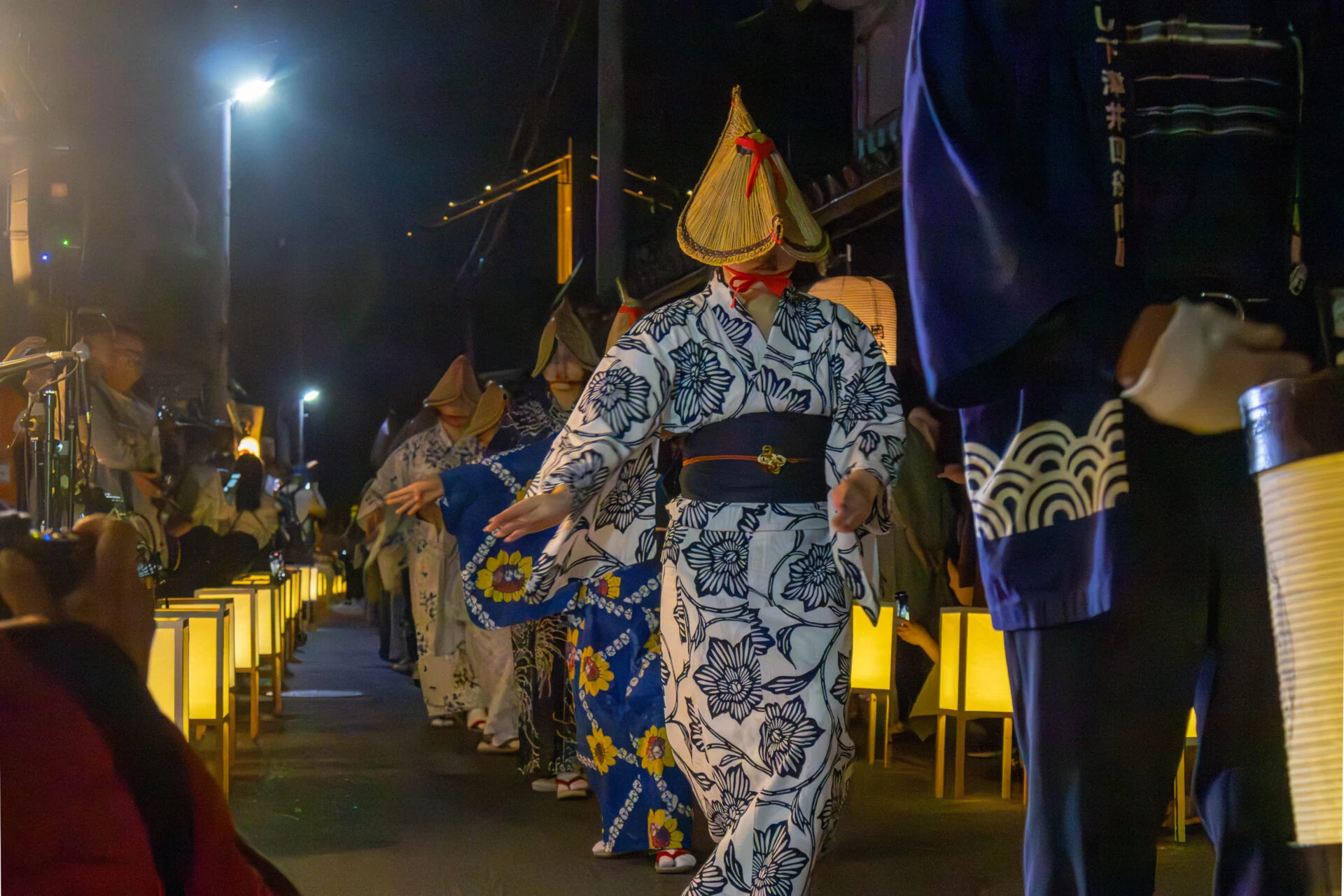
This is the opening line of the famous Shimotsui Bushi folk song.
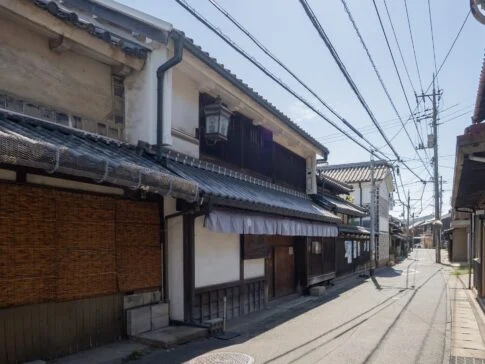
Shimotsui Port is a good harbor in the Seto Inland Sea that is easy to enter and exit, and many ships come and go as a port for waiting for favorable winds and tides. During its peak period, more than 80 Kitamaebune ships docked, and the narrow town of Shimotsui was said to be very lively.
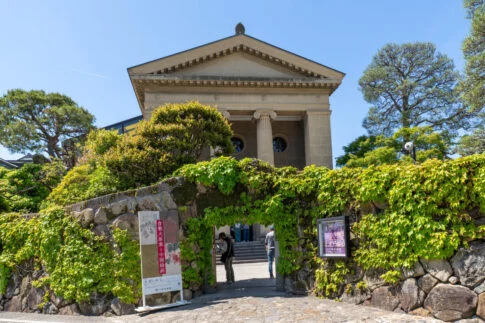
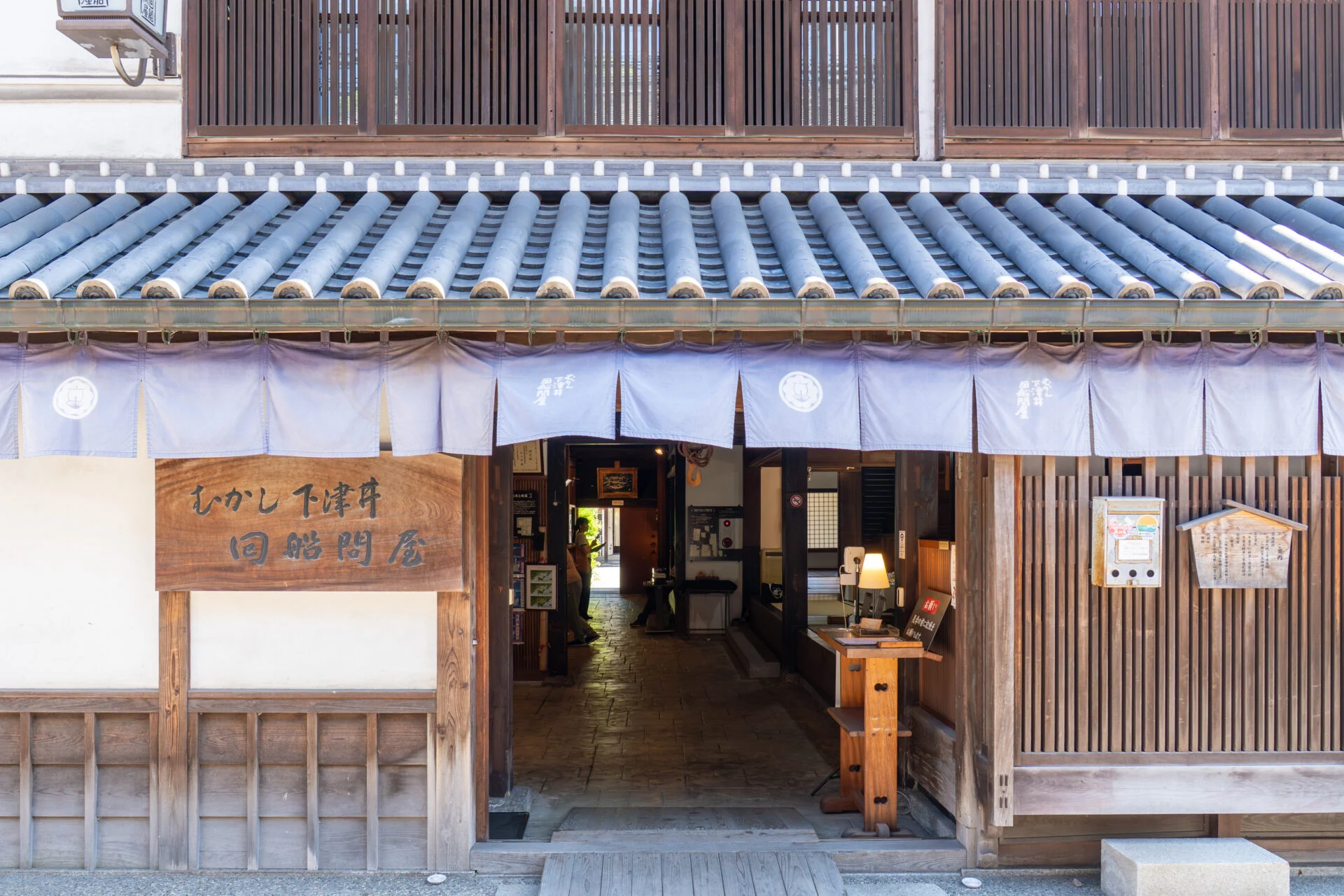
Through the " Shimotsui Shipping Agent Museum," which conveys the appearance of the Kitamaebune that came from the distant northern seas and supported Kurashiki's textile industry, we will introduce the story of prosperity that this small port town experienced.
What is the "Shimotsui Shipping Agent Museum"?
Now a quiet port town, the Shimotsui area of Kurashiki City flourished with many ships coming and going from the mid-Edo period onwards.
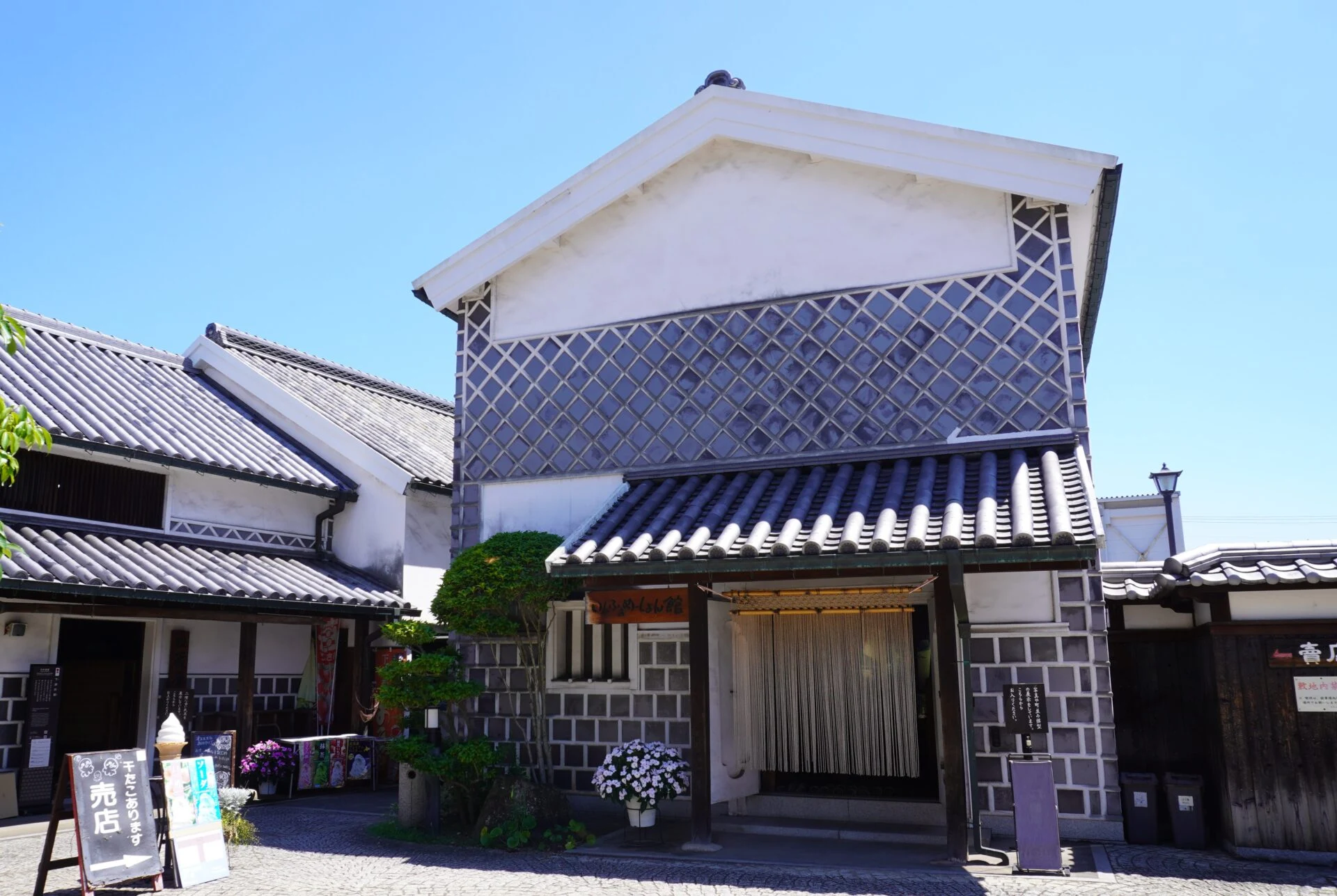
The "Shimotsui Shipping Agent Museum" is a facility that recreates the shipping agents and the life of the town during the late Edo period to the Meiji period.
The building was originally the residence of the Nishio family, who engaged in finance and warehousing during the Edo period, and was purchased by the Takamatsuya shipping agent (Nakanishi family) to be used as a merchant house and a storehouse for herring kasu.
It was restored by Okayama Prefecture in 1995 after the opening of the Seto-Ohashi Bridge.
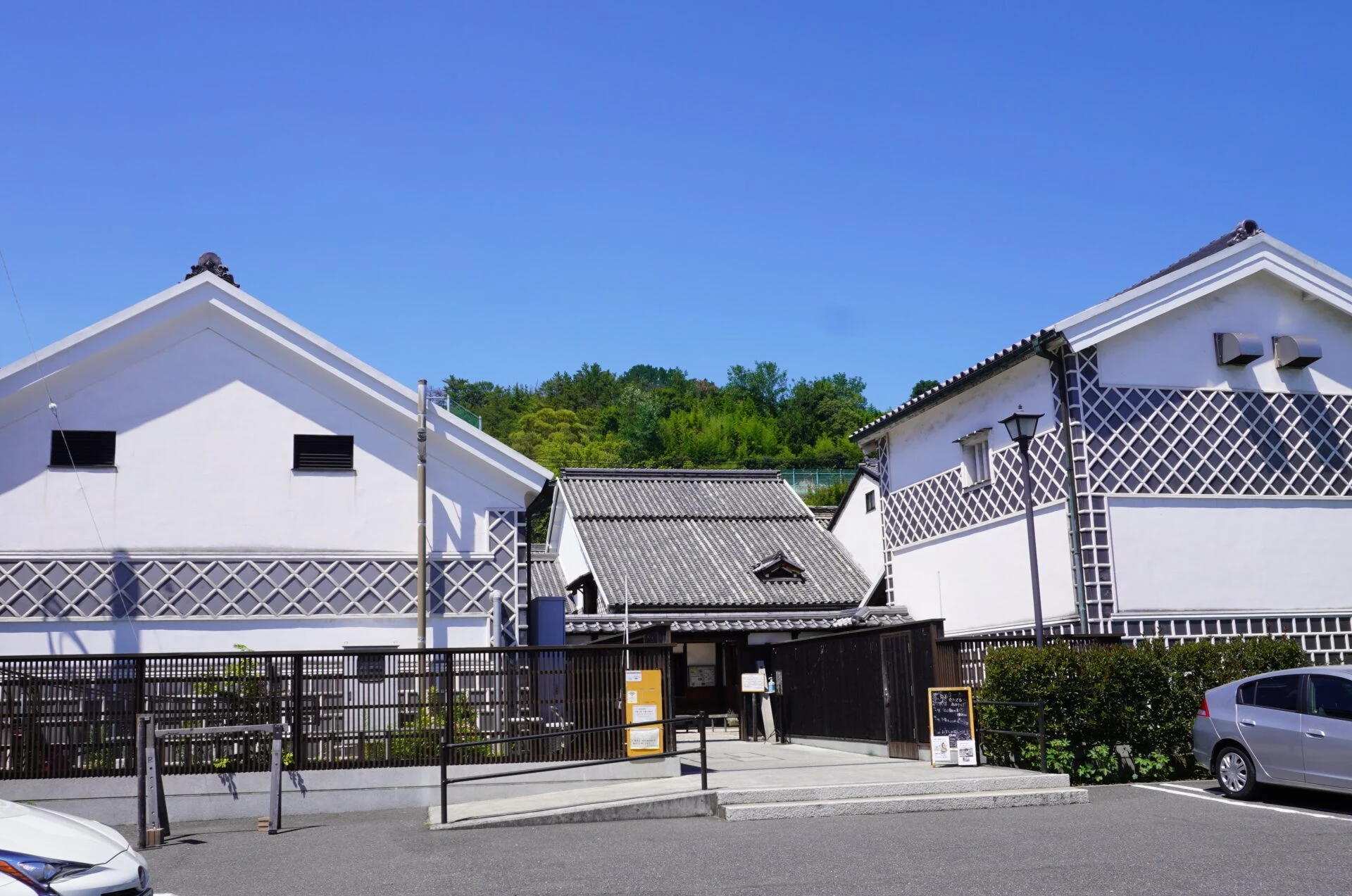
The restored main building and storehouse are utilized as exhibition spaces, restaurants, and souvenir shops across six facilities, including the main building, information center, and storehouse hall.
Facilities of the Shimotsui Shipping Agent Museum
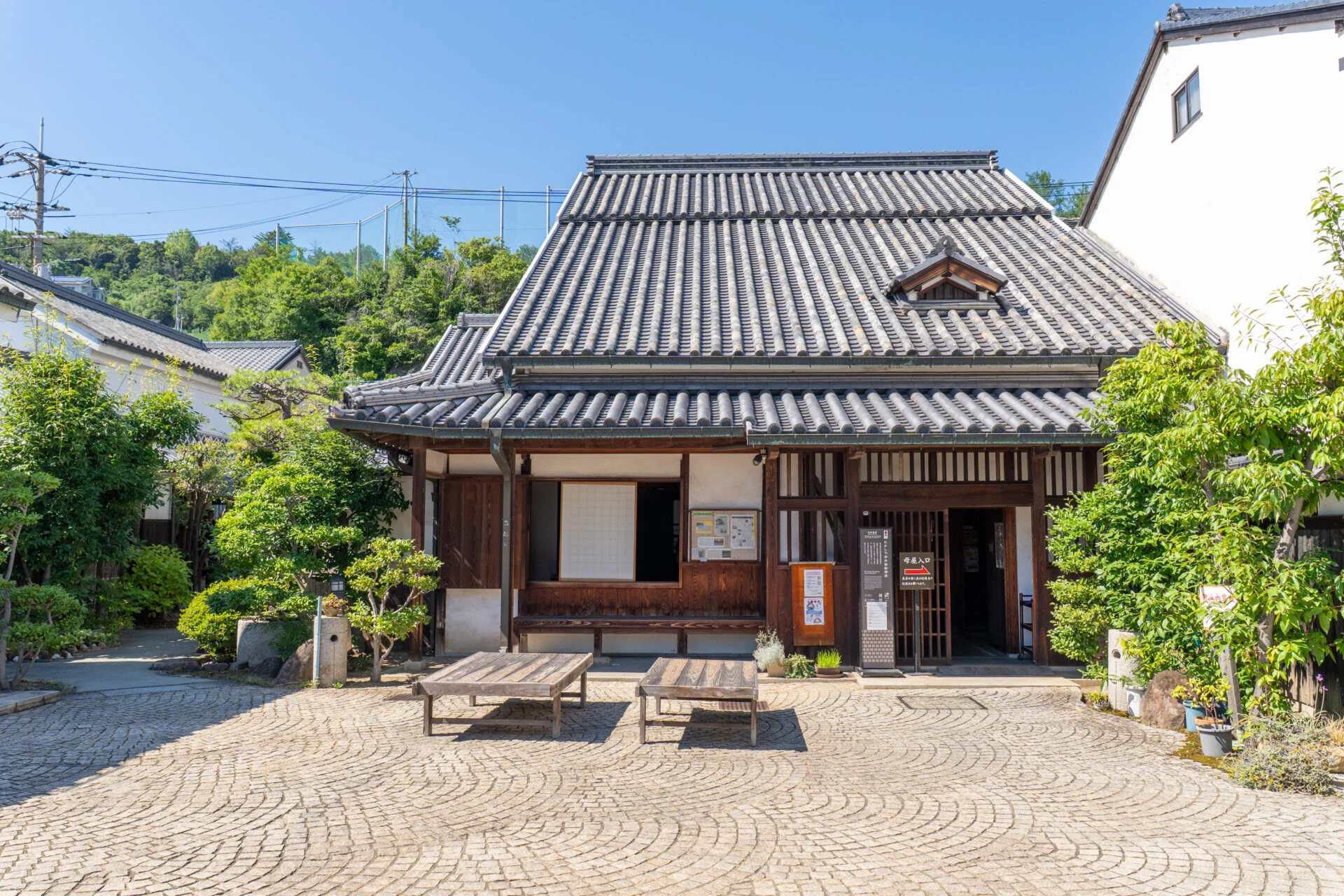
Let me introduce the facilities of the Shimotsui Shipping Agent Museum.
Main Building
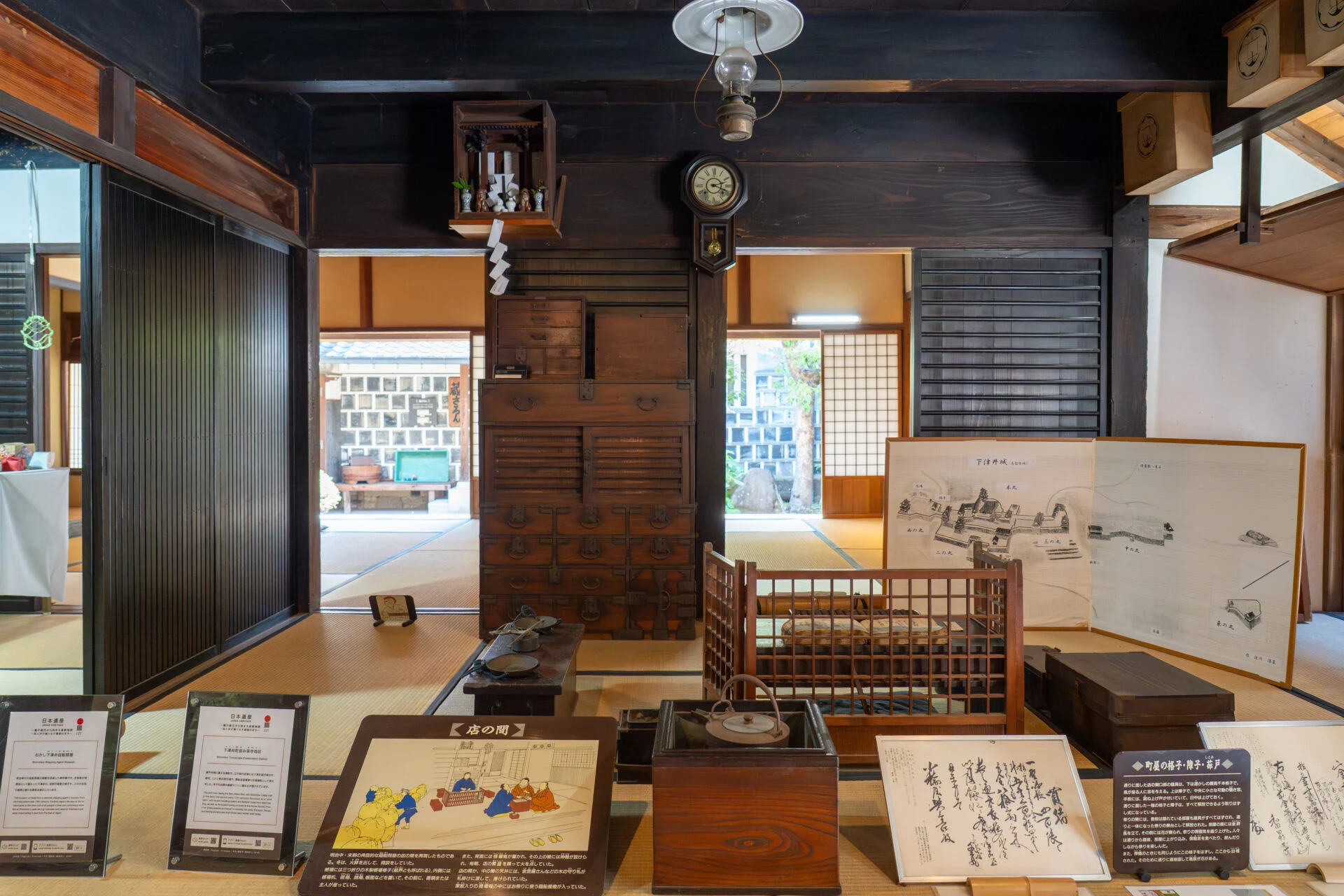
On the first floor of the Main Building, the office, tatami room, tea room, and kitchen are recreated to reflect the atmosphere of the time.
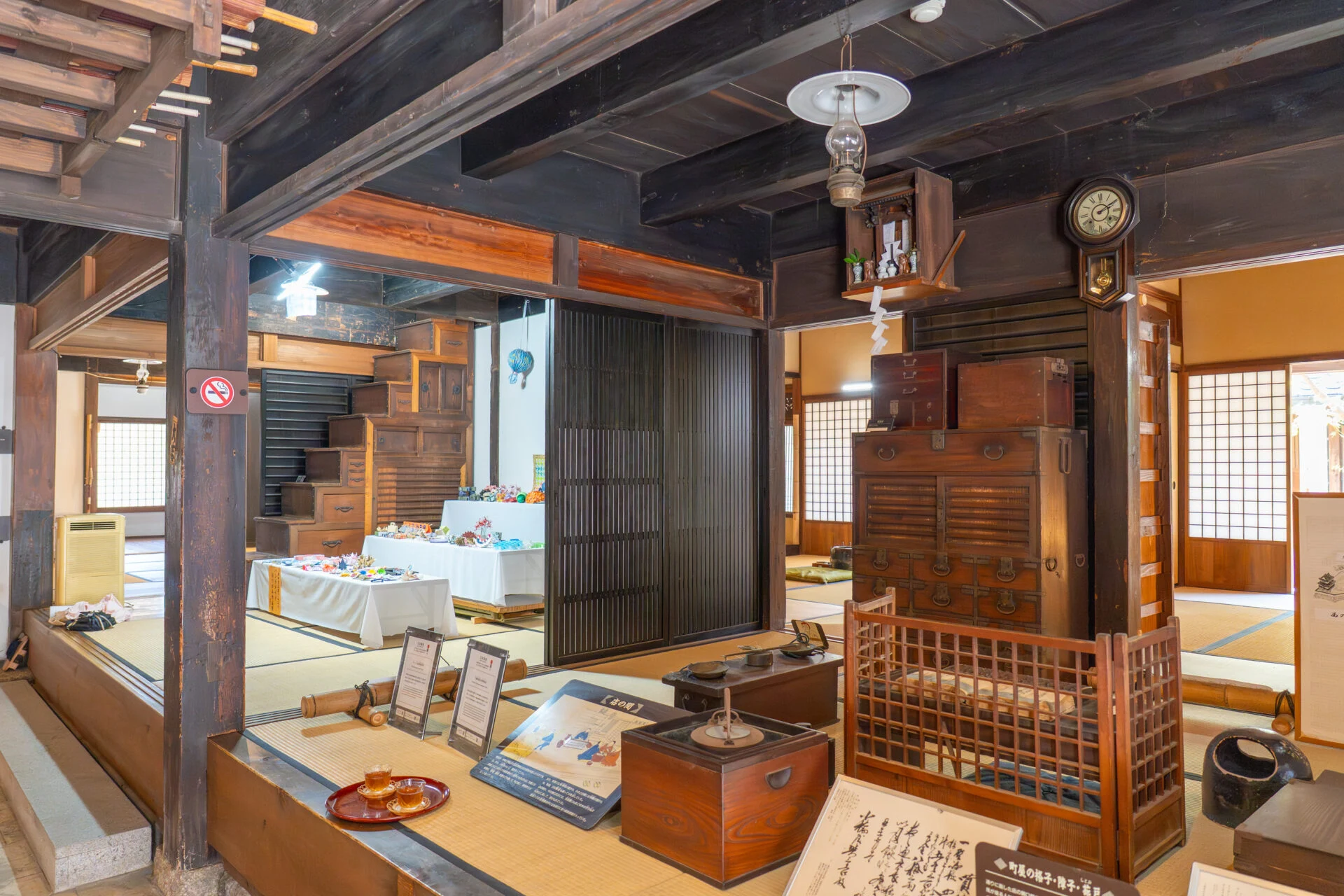
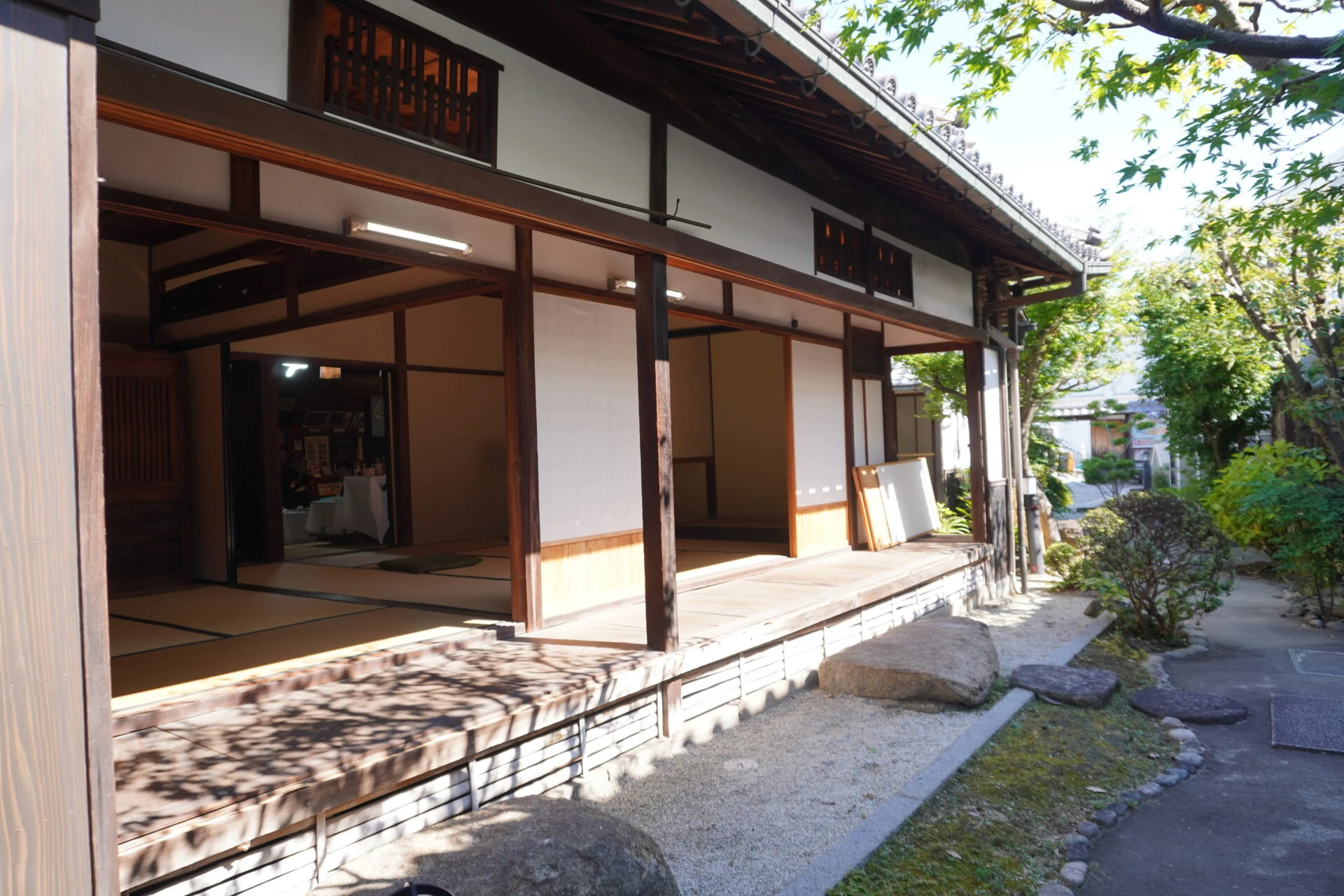
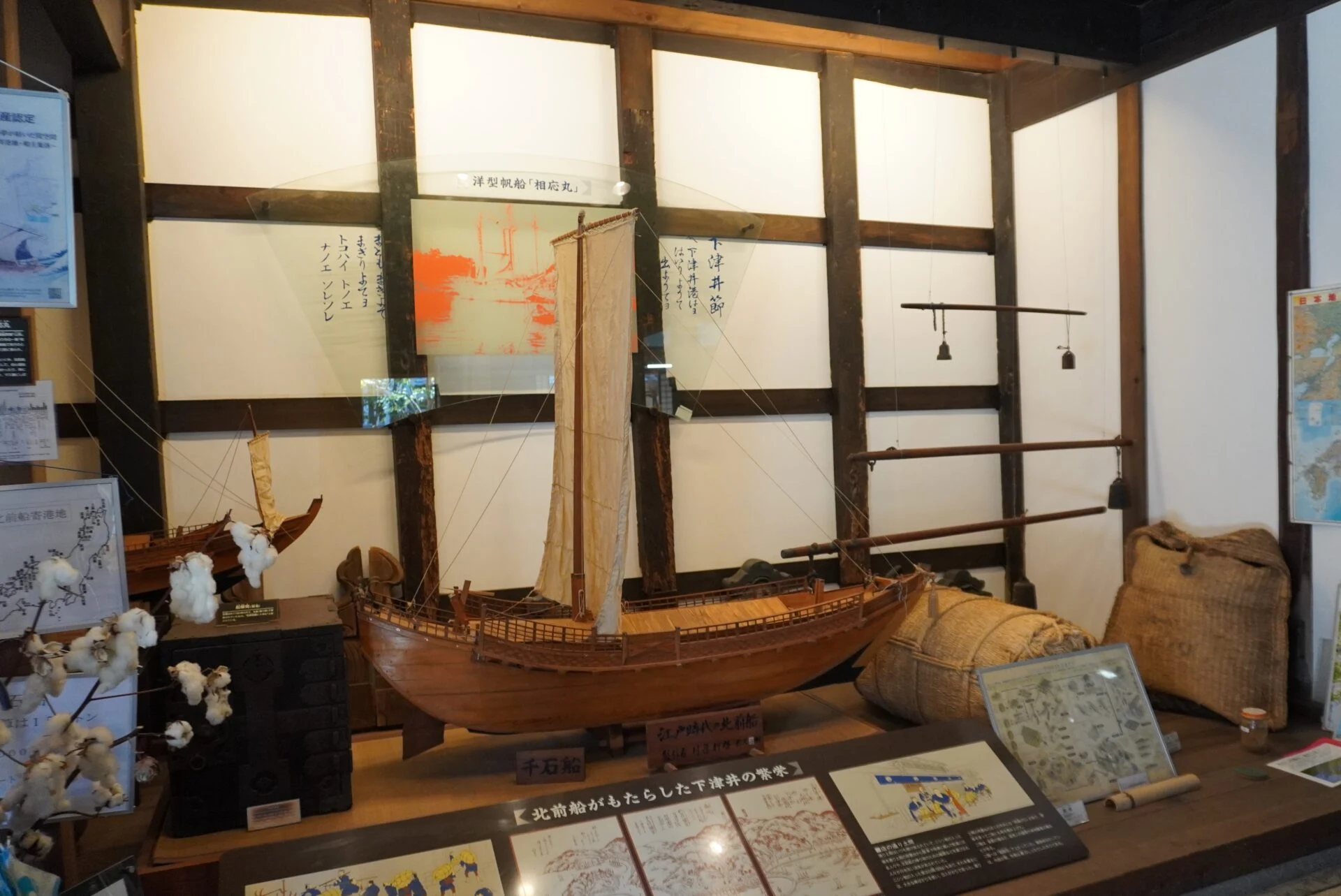
Right at the entrance, there are models of the Kitamaebune that brought wealth to the shipping agents, bales filled with herring kasu, and ship chests (funadansu) on display. The bales were said to weigh about 90 kilograms.
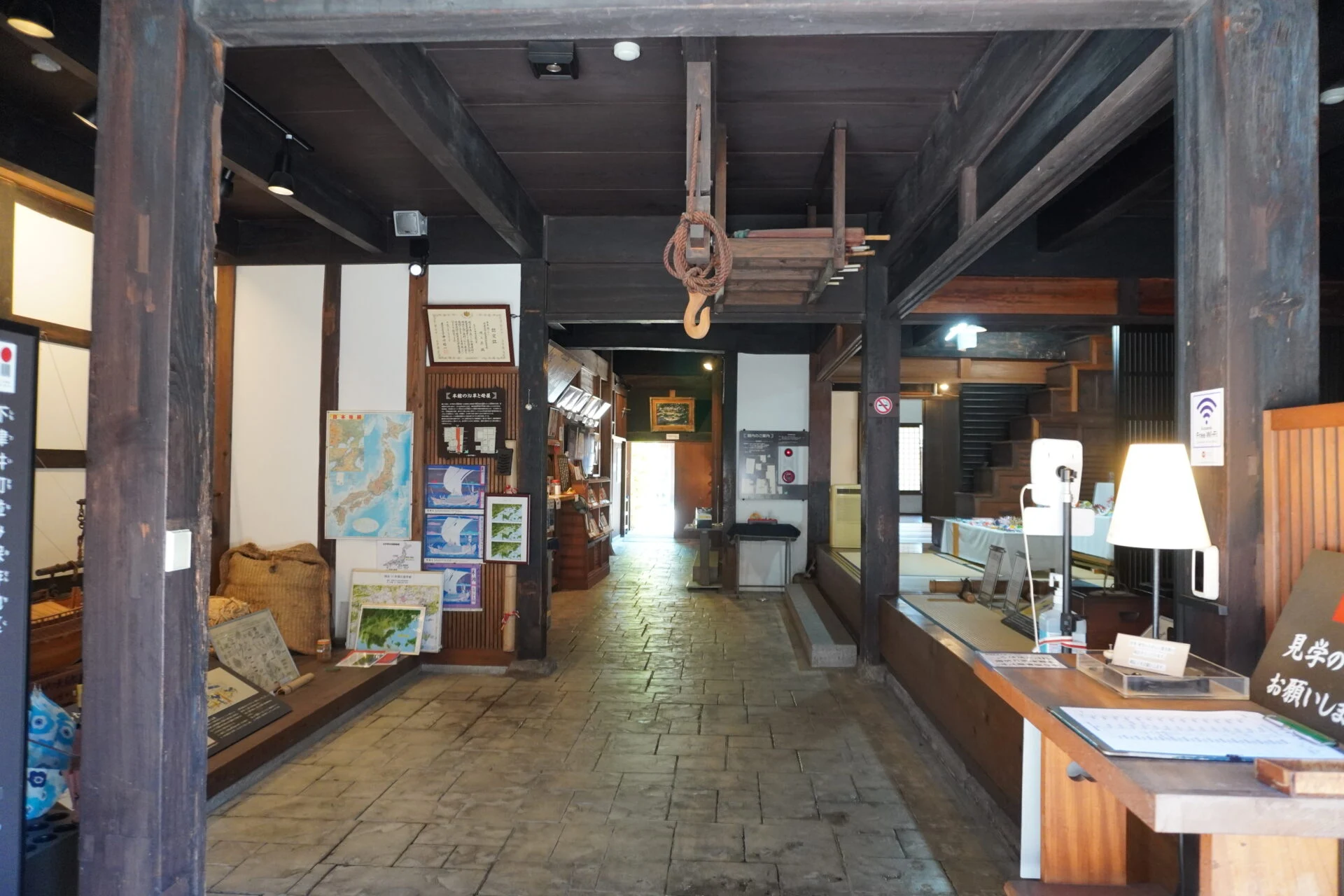
The corridor leads to the courtyard, surrounded by storehouses.
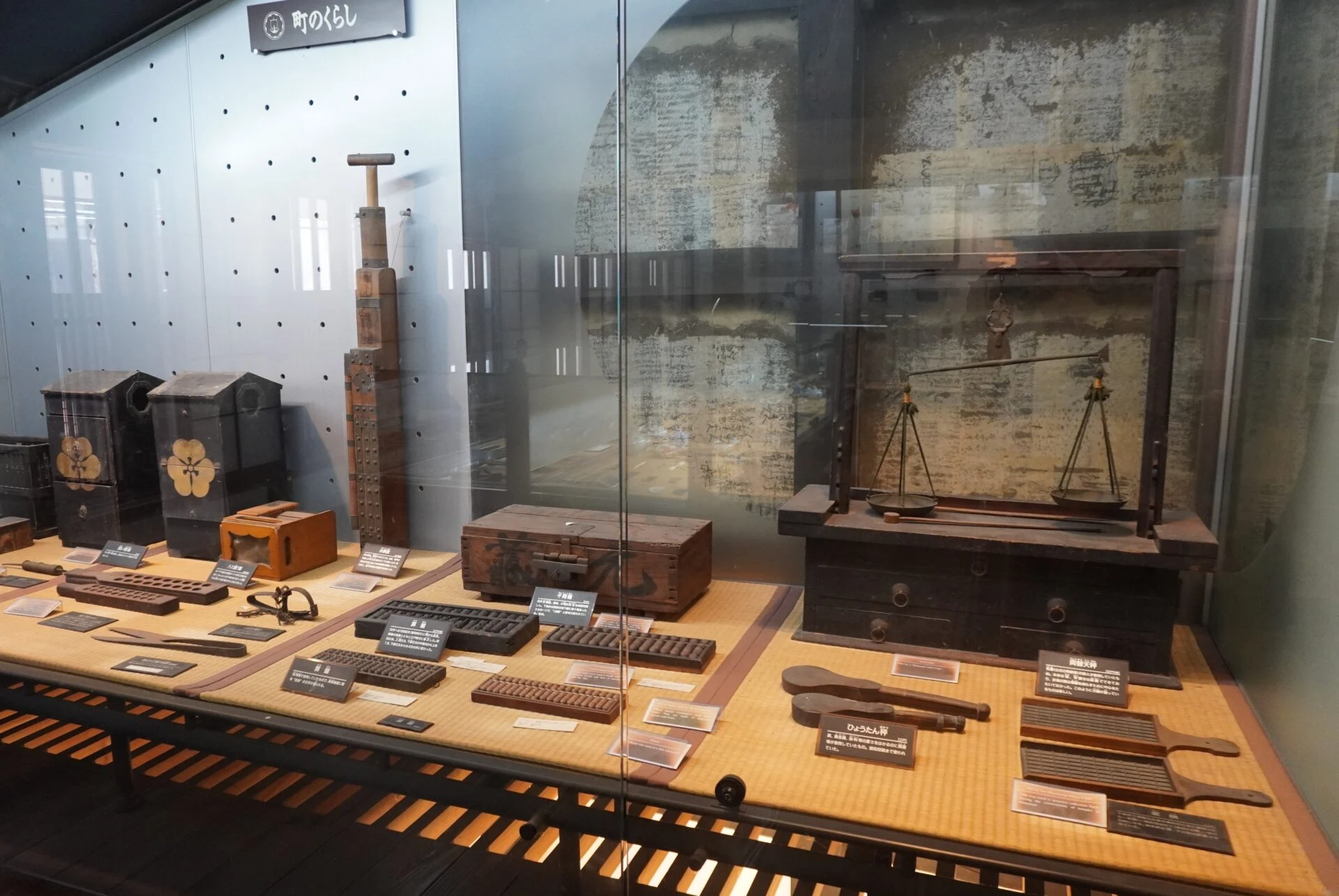
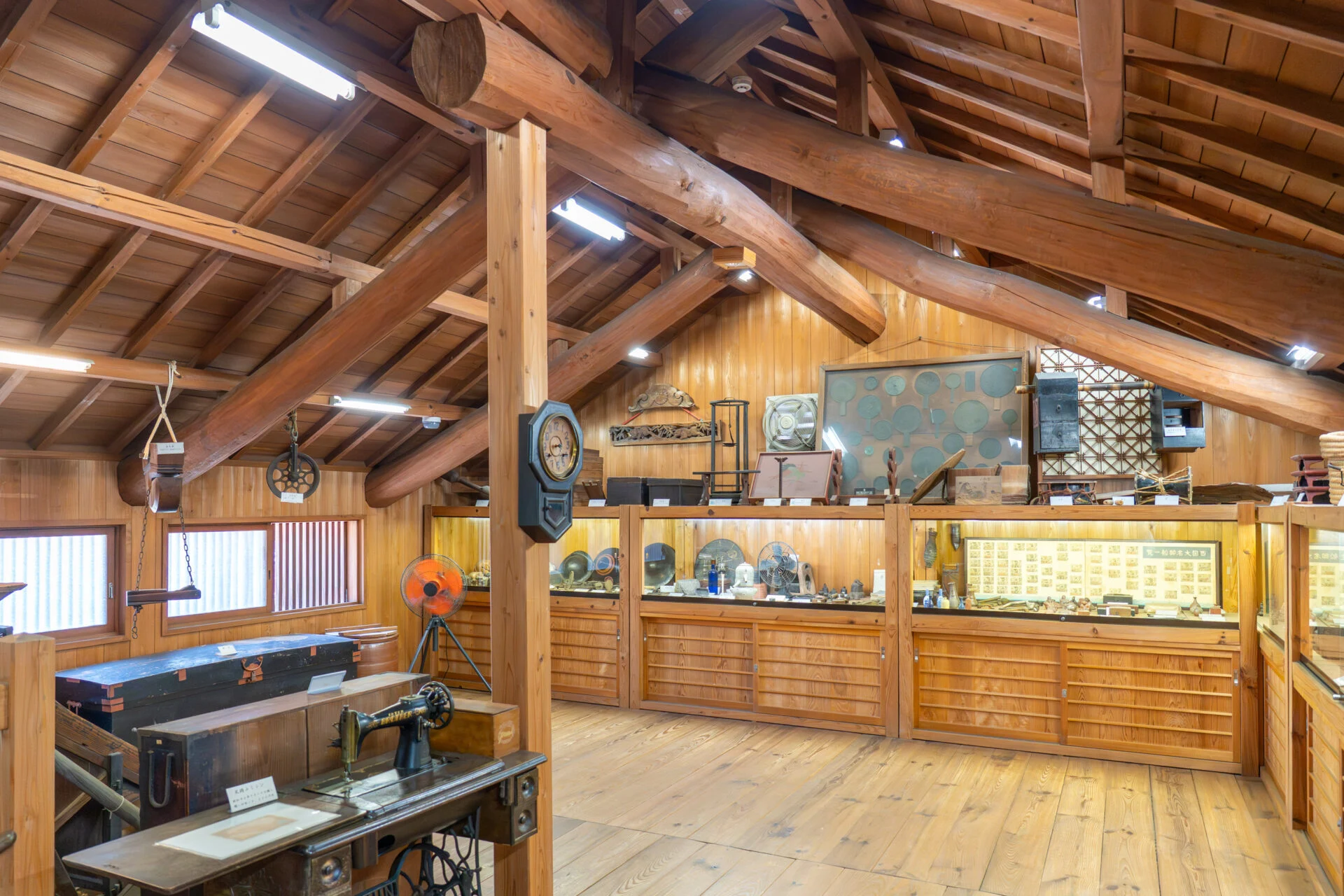
The second floor serves as an exhibition room, displaying items related to the Kitamaebune, daily life in Shimotsui after the Edo period, fishing, and tools used in commerce.
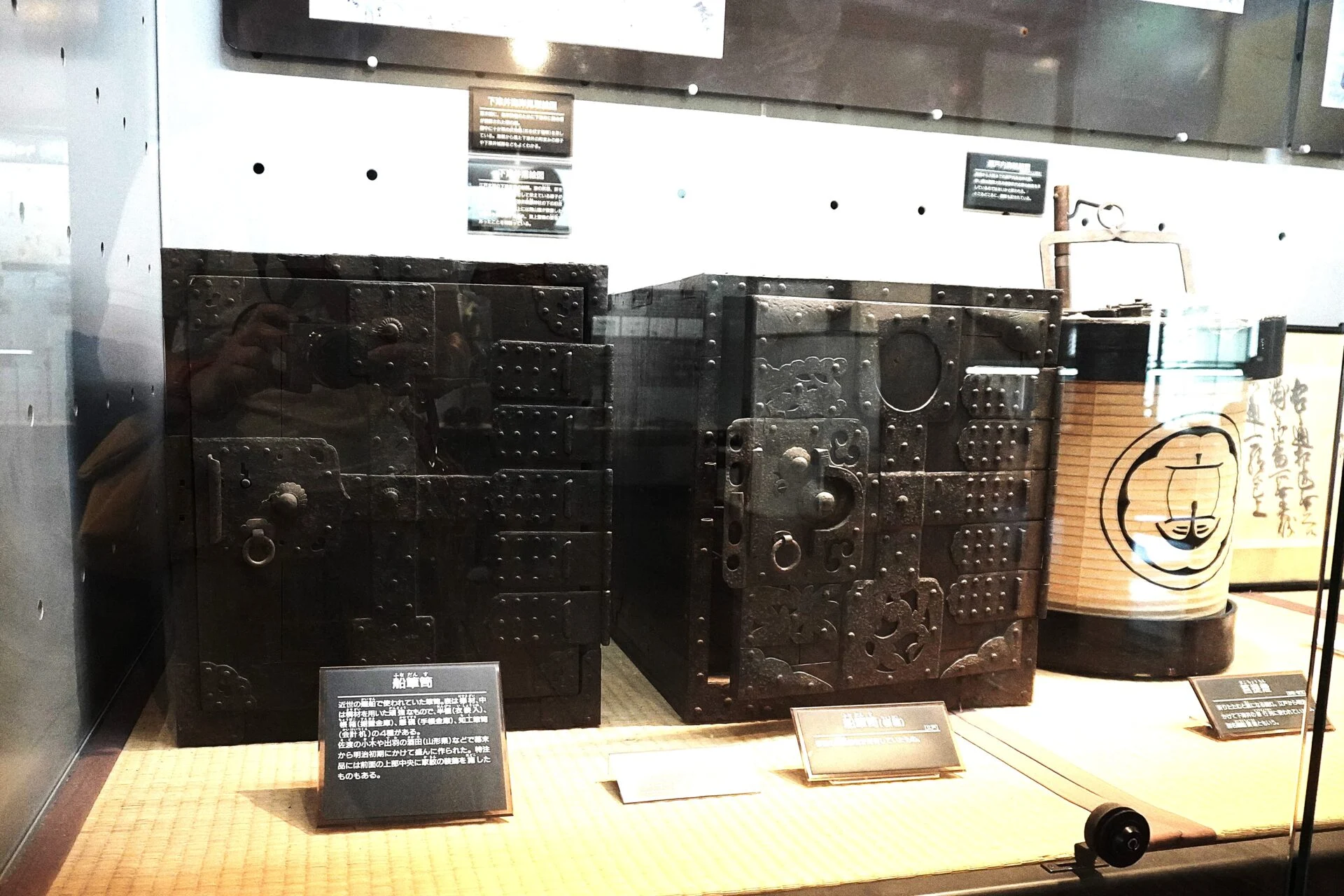
Ship chests (funadansu) are used to store valuables and are built sturdy to prevent water damage even in the event of a maritime accident.
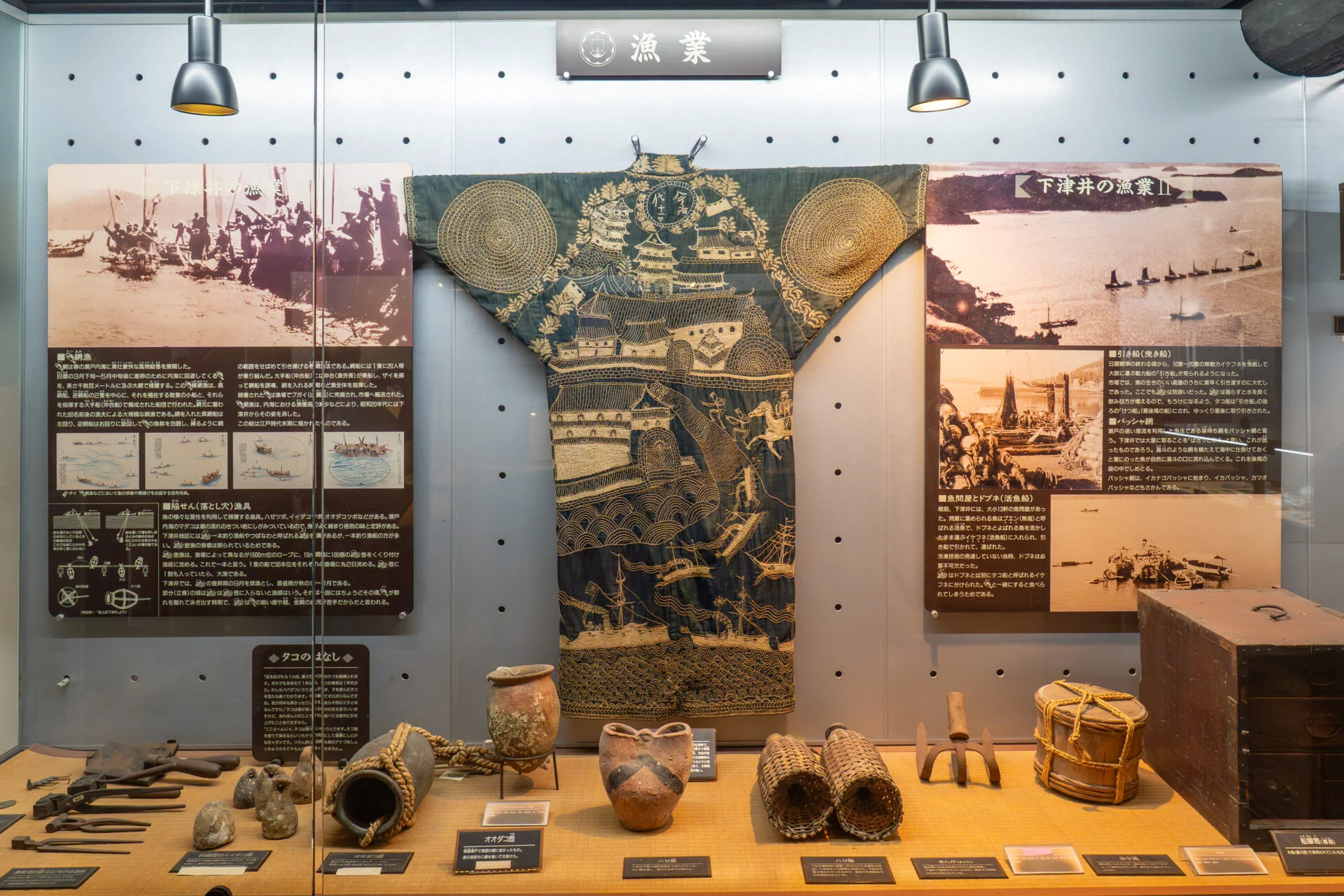
Hanging in the center is a kimono called sashiko donza, made of indigo-dyed cotton fabric with sashiko stitching, which fishermen wore as work clothing.
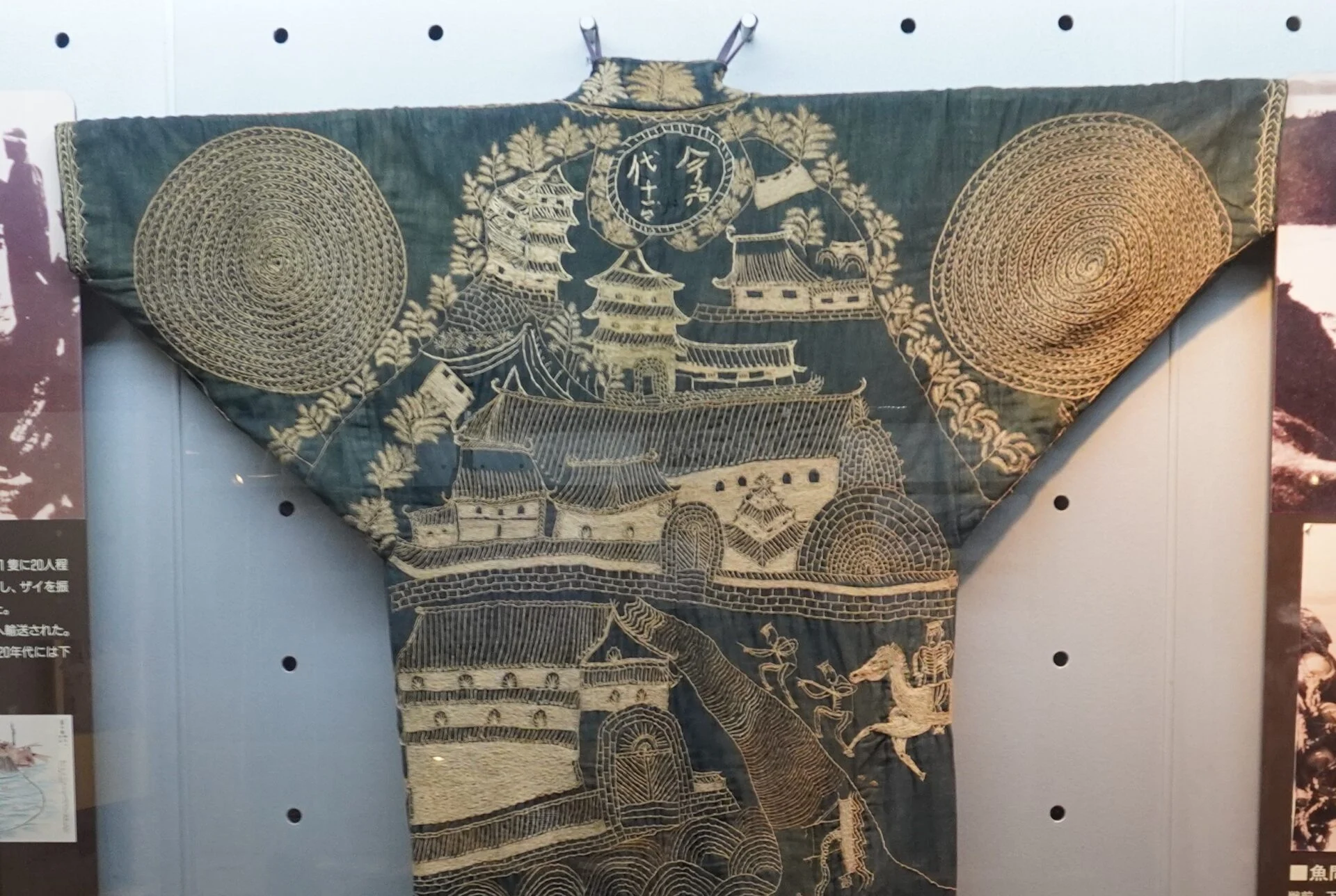
The displayed donza was made by the net maker of Shimotsui, Imajiri Daikichi, and depicts a battle scene from the First Sino-Japanese War.
In addition, daily necessities are also on display, allowing visitors to learn about the activities that took place in Shimotsui during the Meiji period.
Information Center
Facing the Main Building across the courtyard is the Information Center.
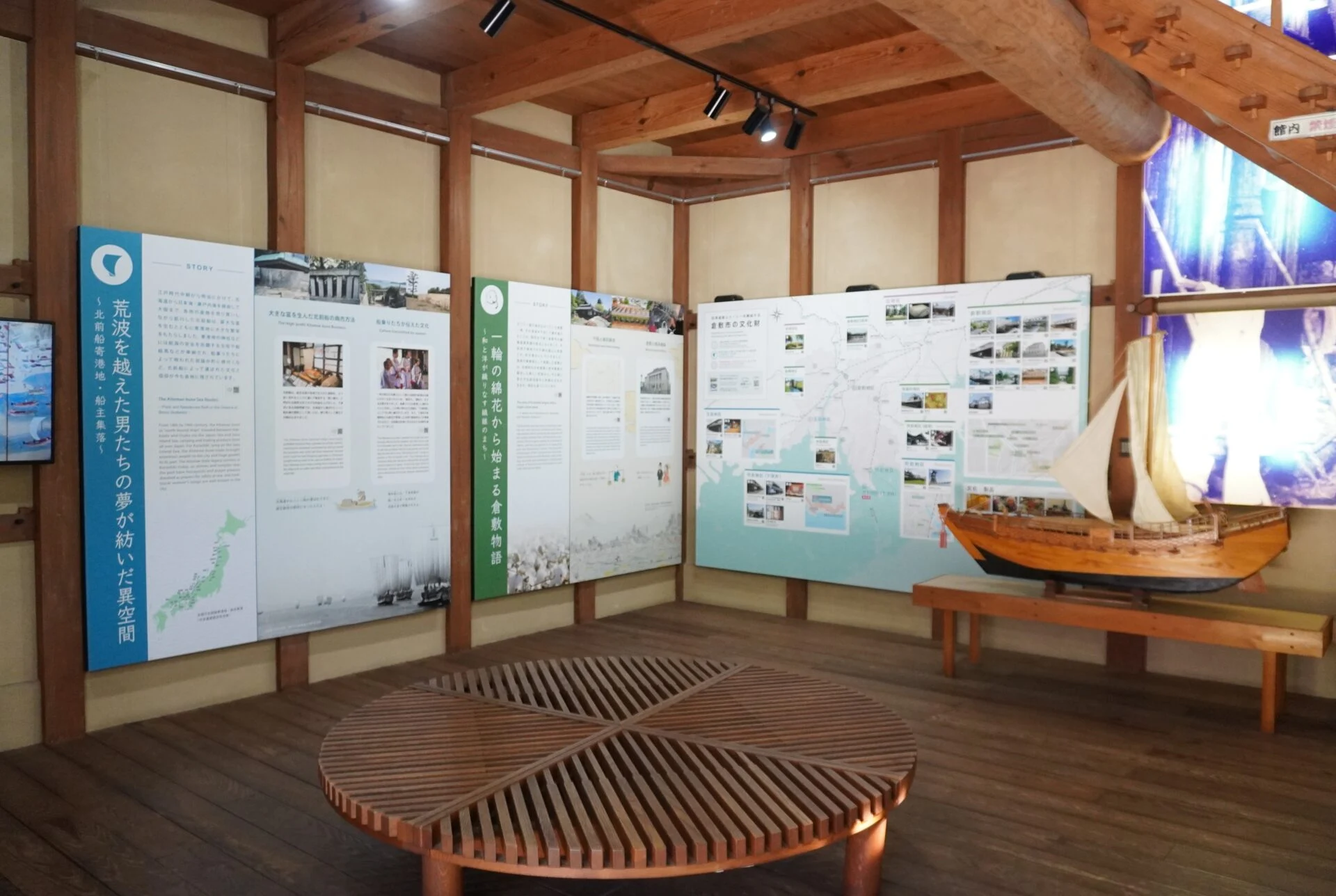
In the Shimotsui area, including the "Shimotsui Shipping Agent Museum," the "Shimotsui Townscape Preservation District" and "Shimotsui Bushi" are designated as Japan Heritage cultural properties with the following stories.
- A Kurashiki story beginning with a single cotton flower - A town of textiles woven with Japanese and Western elements
- A different world entwined with the dreams of men who overcame the stormy seas - A port of call for Kitamae ships and a shipowner village
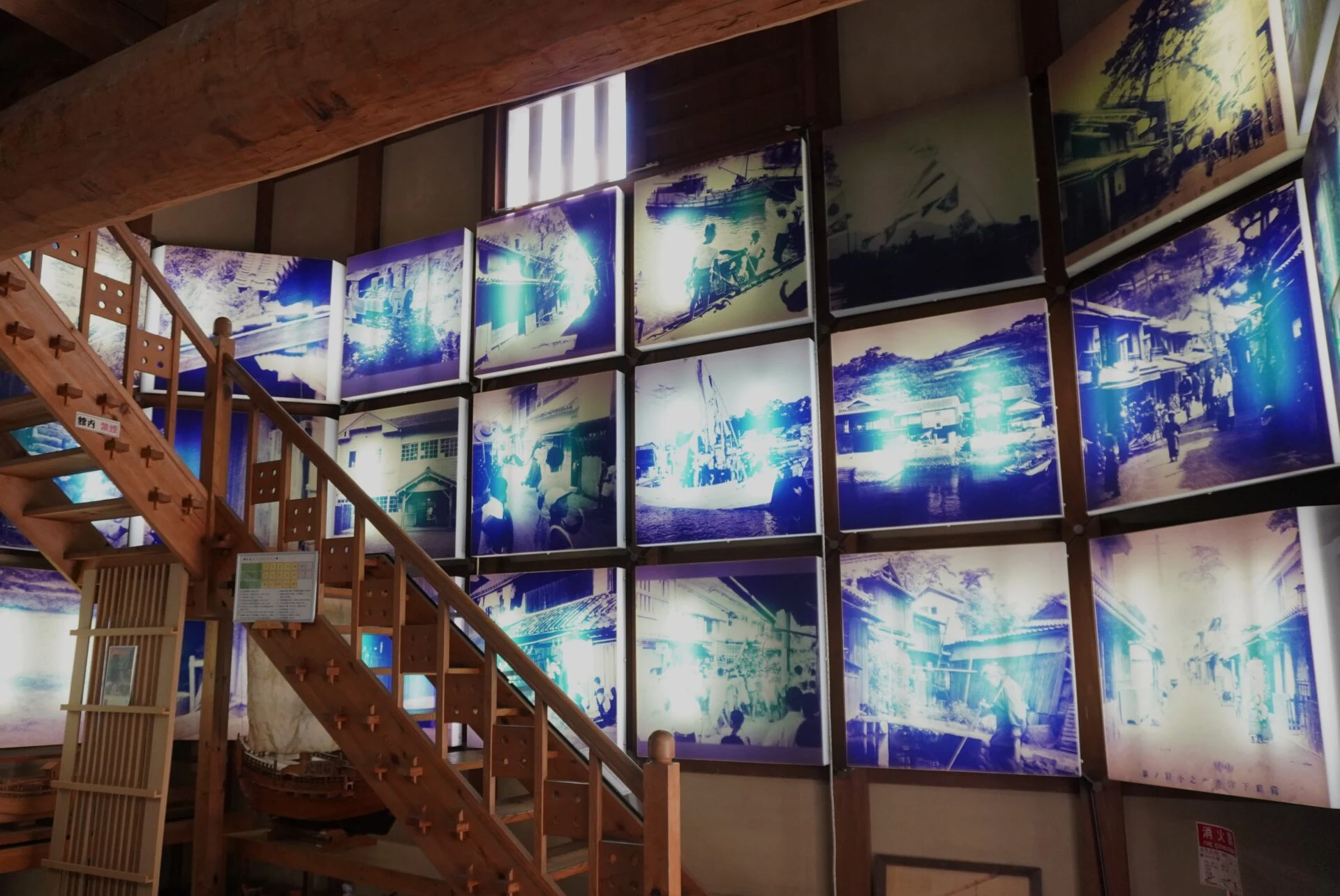
Around the stairs, there are photo panels introducing the festivals and fishing ports of Shimotsui, as well as the everyday town scenery, allowing glimpses into the history of Shimotsui.
On the second floor, there are paper craft works that convey the appearance of the town in the past.
Other Facilities
In addition, the following facilities are located on the premises.
- Kura Hall
- Storage
- Shopping Bazaar
- Kura Salon
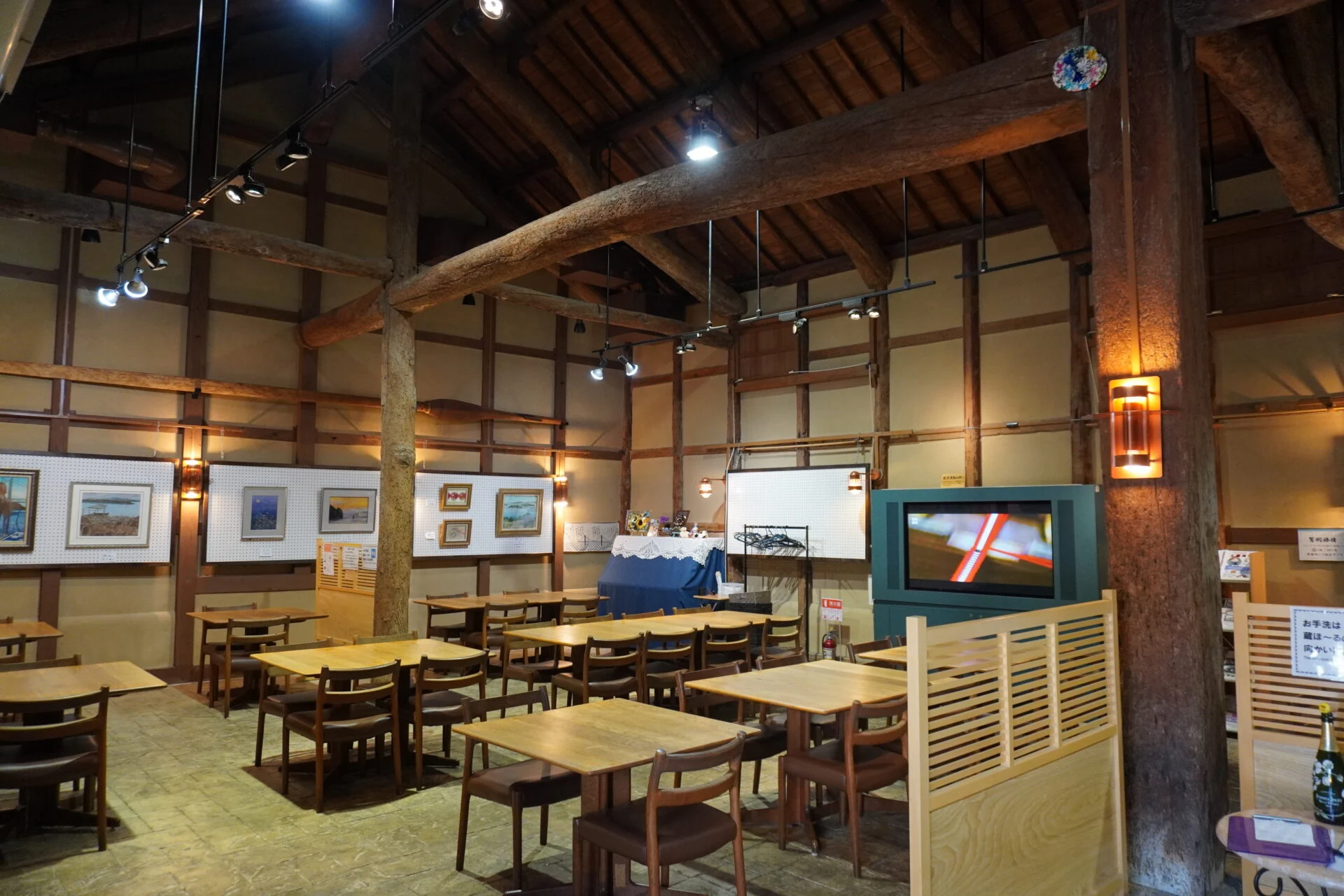
The Kura Hall is a restored storehouse that used to store herring kasu, and it is said that in the past, the storehouse was filled with herring kasu.
Currently, it operates as a dining establishment called Cantina Tomin, serving both Japanese and Italian cuisine.
Outside of business hours, it can be used as a free rest area and is also sometimes used as an event space.
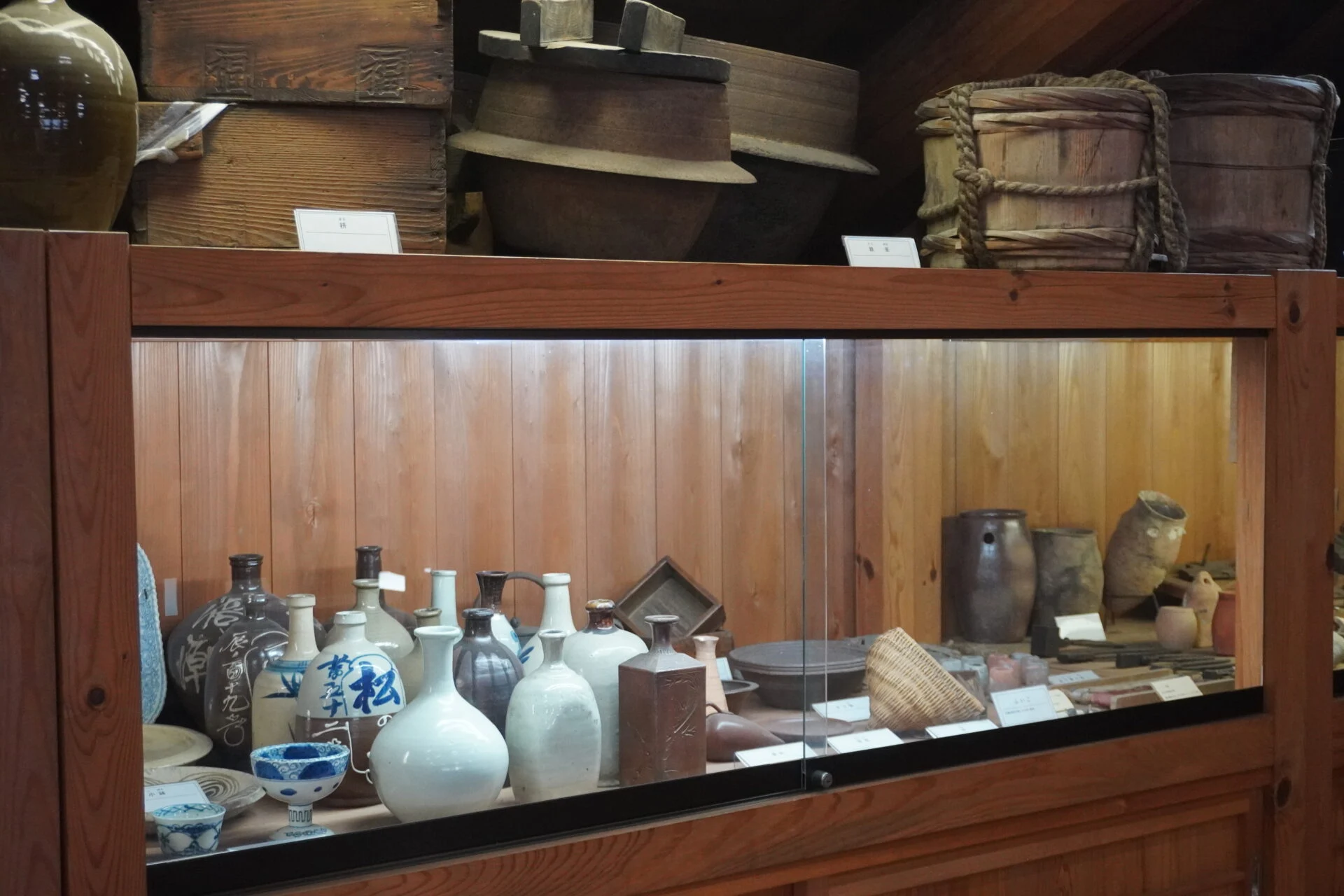
The Storage displays daily necessities collected from the local area.
The souvenir shop Shopping Bazaar features local souvenirs unique to Shimotsui, as well as a variety of seafood caught in nearby waters.
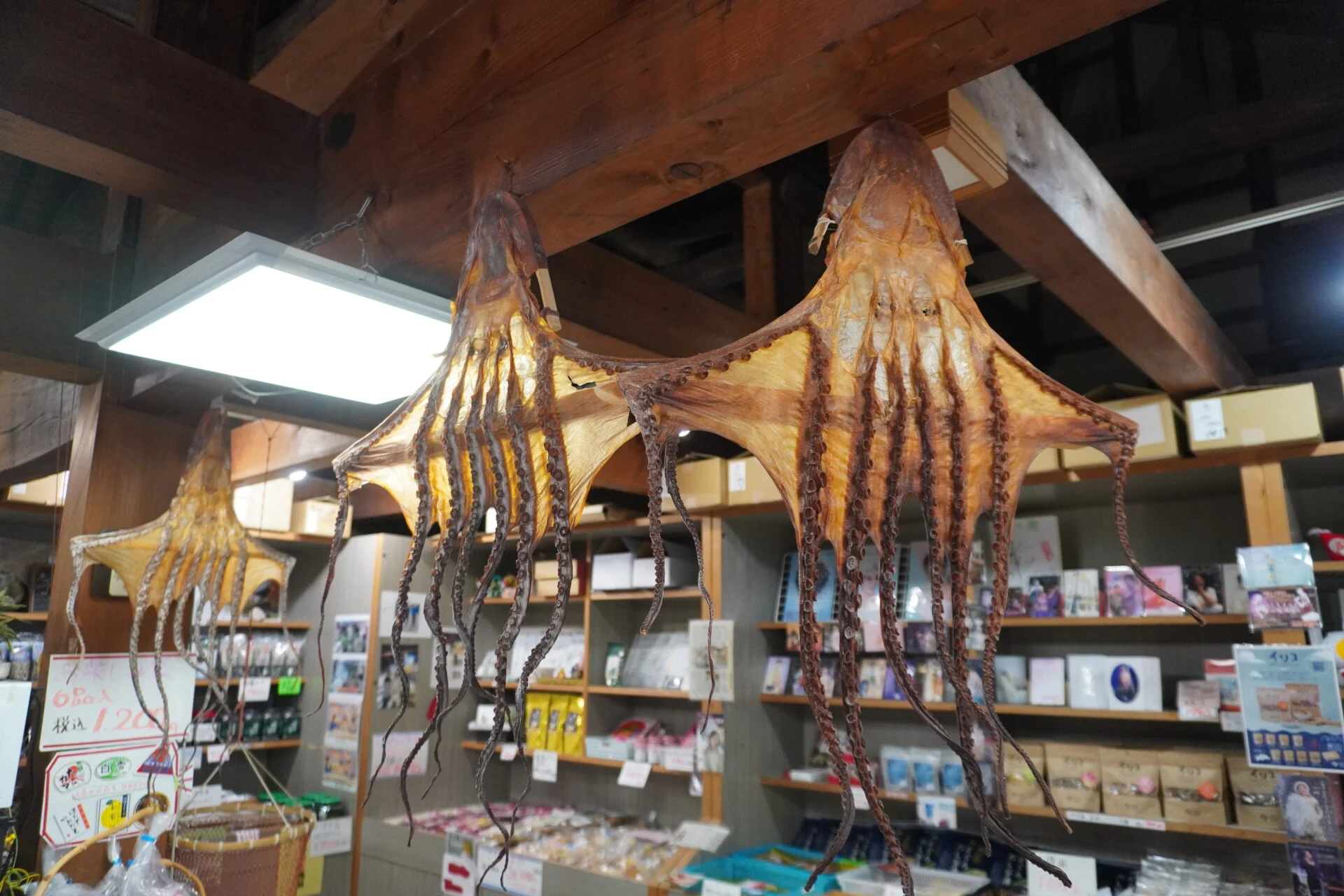
As expected from Shimotsui, the famous dried octopus catches the eye.
There is an abundance of seafood products made from locally caught octopus and nori.
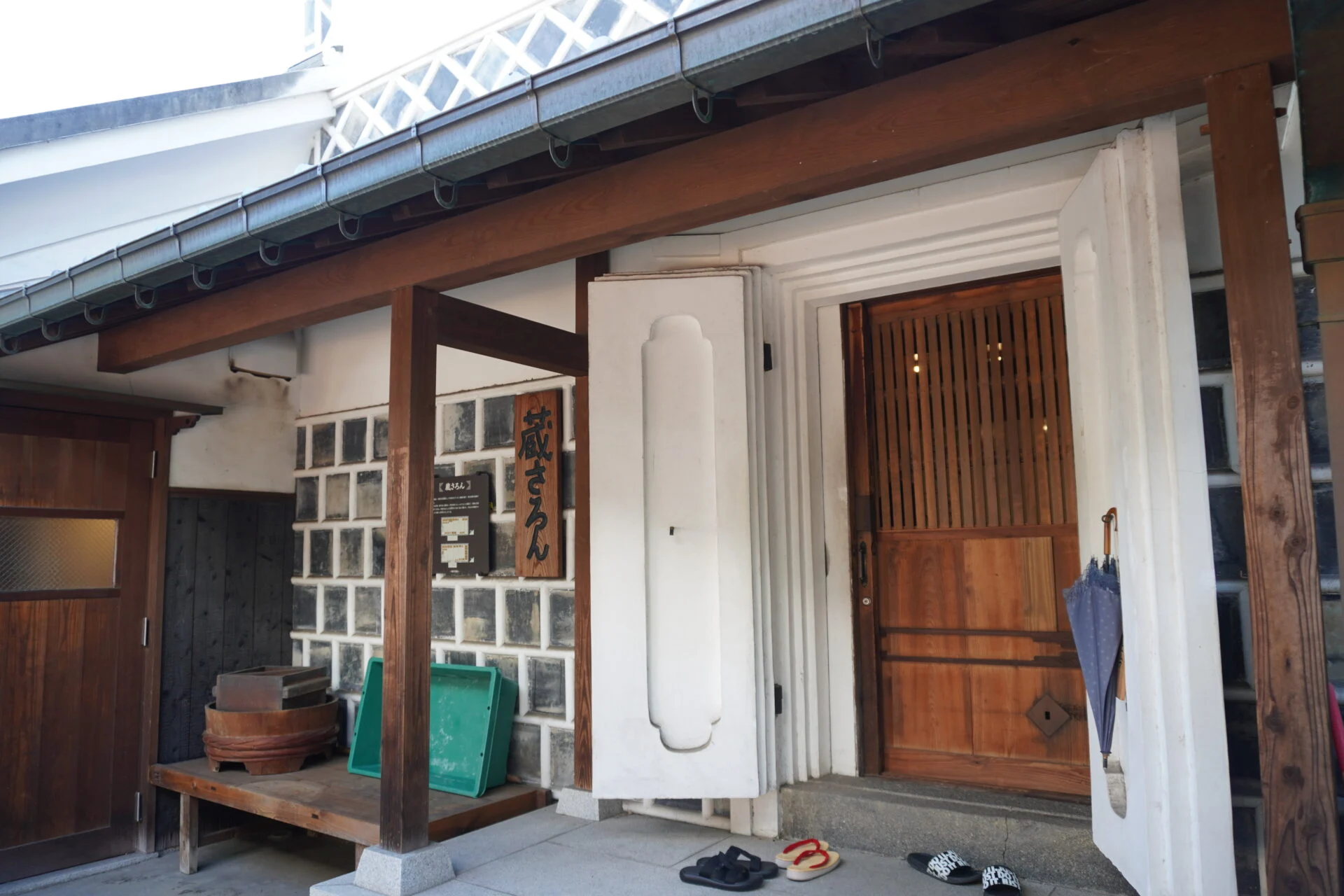
The Kura Salon can be used as a conference room and is available for anyone to use upon application.
The "Shimotsui Shipping Agent Museum," which symbolizes the prosperity of the town of Shimotsui.
We spoke with the director, Miyake Takeo, about the background of the restoration.
Data on the Shimotsui Shipping Agent Museum
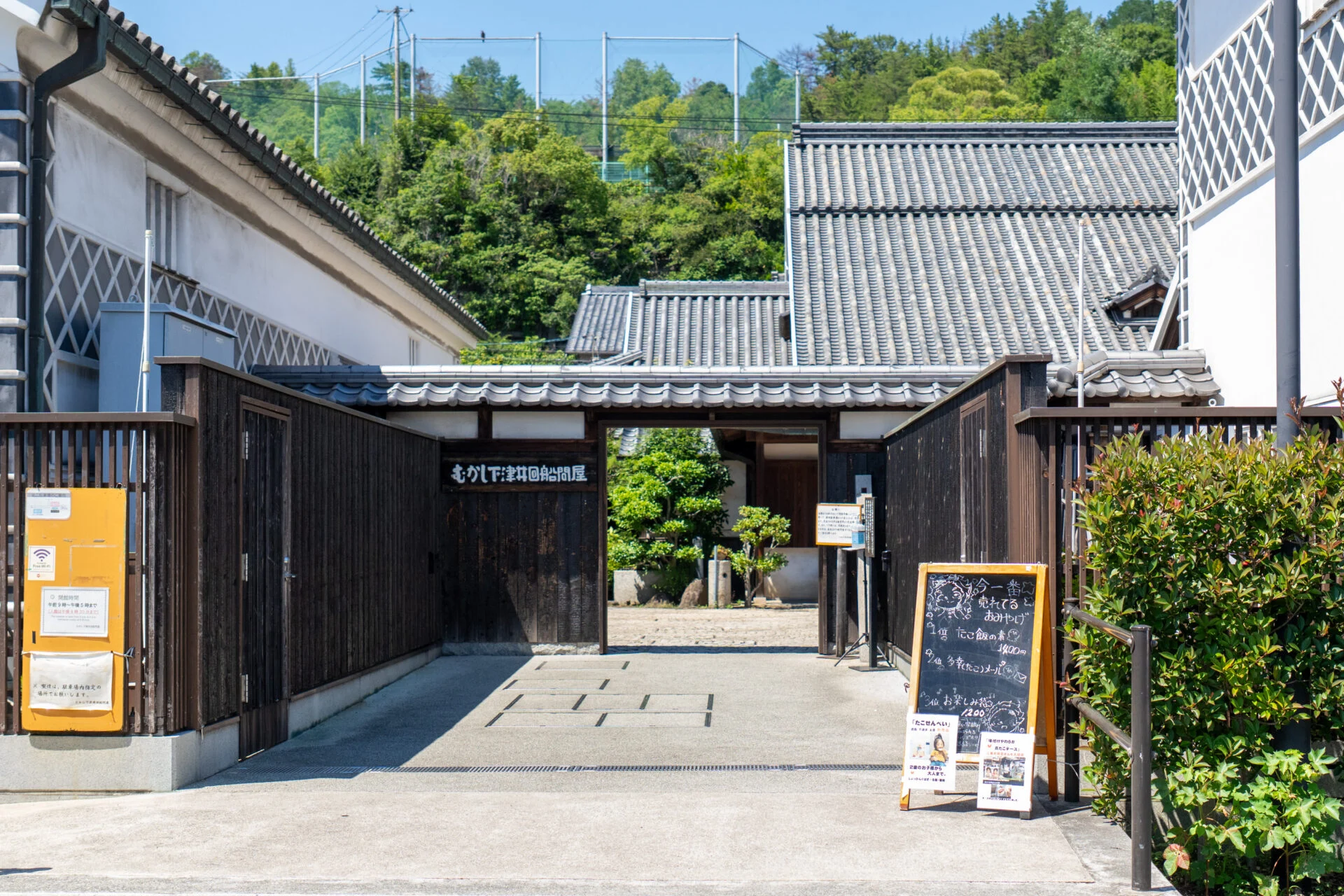
| Name | Shimotsui Shipping Agent Museum |
|---|---|
| Location | 1-7-23 Shimotsui, Kurashiki City, Okayama Prefecture |
| Contact | 086-479-7890 |
| Parking | Available |
| Opening Hours | 9:00 AM - 5:00 PM (Admission until 4:30 PM) After 5:00 PM, use the parking lot entrance for Kura Hall (dining establishment Cantina Tomin) |
| Closed | Tuesday If Tuesday is a holiday, it will be open, and the following Wednesday will be closed Closed from December 29 to January 3 |
| Admission Fee (tax included) | Free |
| Reservations | Available If guidance is needed, please make a reservation by FAX (086-479-7819) |
| Smoking | Non-smoking (smoking allowed only in designated areas) There is a smoking area in the parking lot |
| Restrooms | Western-style toilets, Japanese-style toilets, barrier-free toilets Accessible for wheelchairs |
| Childcare | Diaper changing station There is a multipurpose space for childcare in the restroom |
| Barrier-free | Barrier-free toilets |
| Website | Shimotsui Shipping Agent Museum |