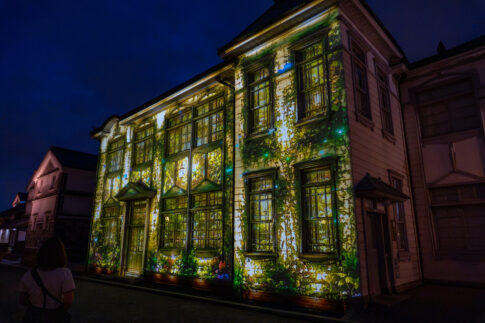
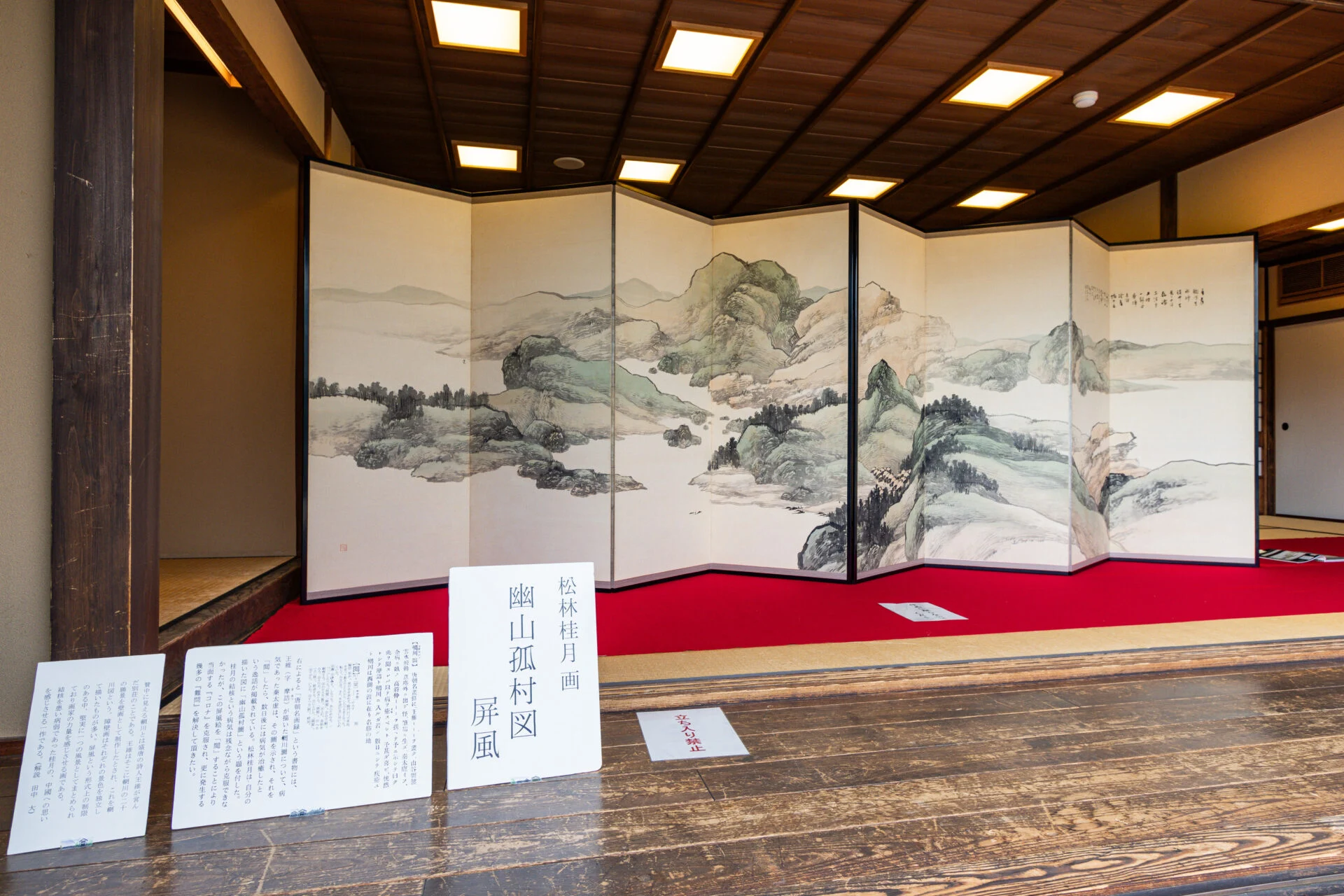
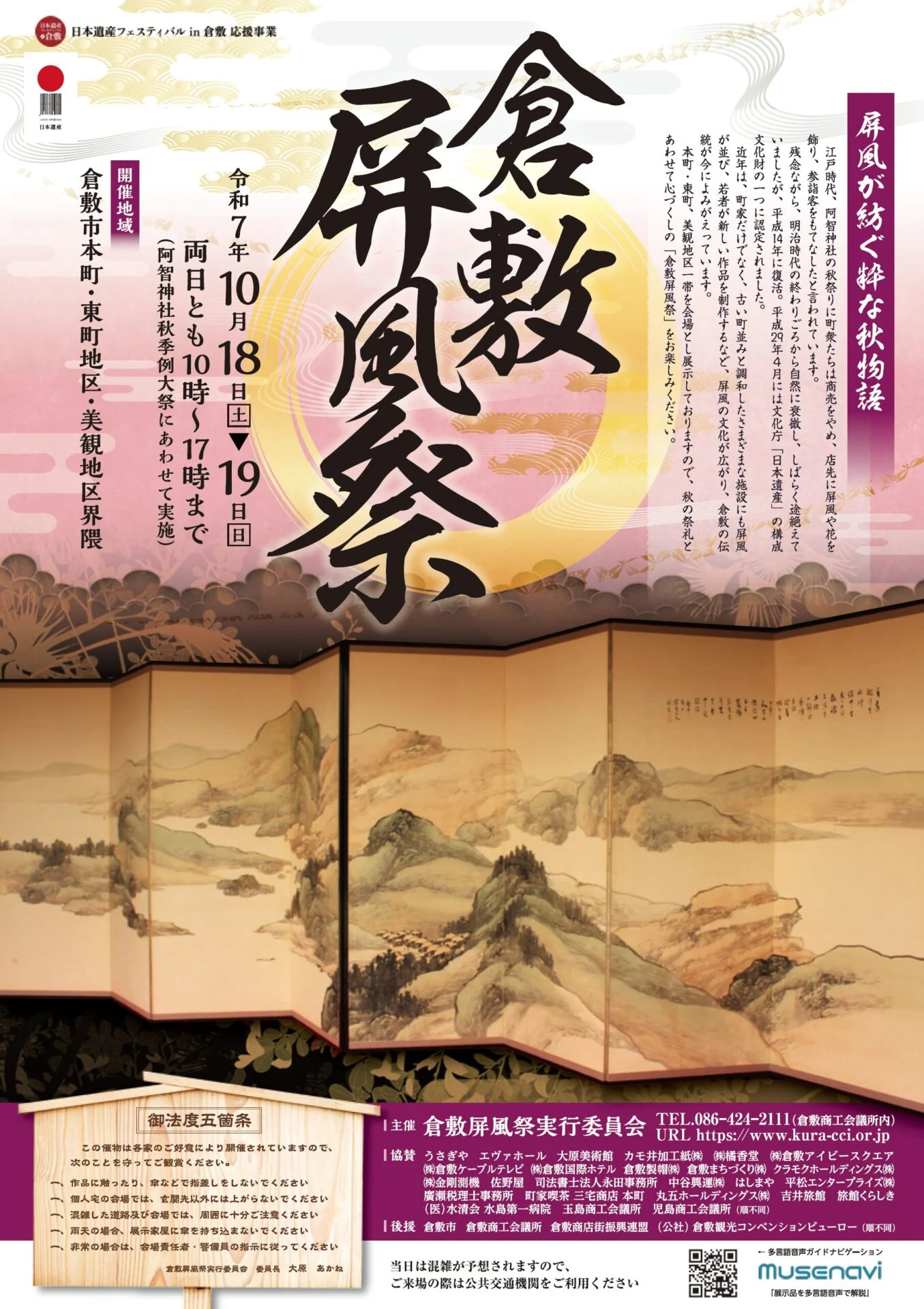
The "Kurashiki Byobu Festival" was revived in 2002 through the efforts of local people.
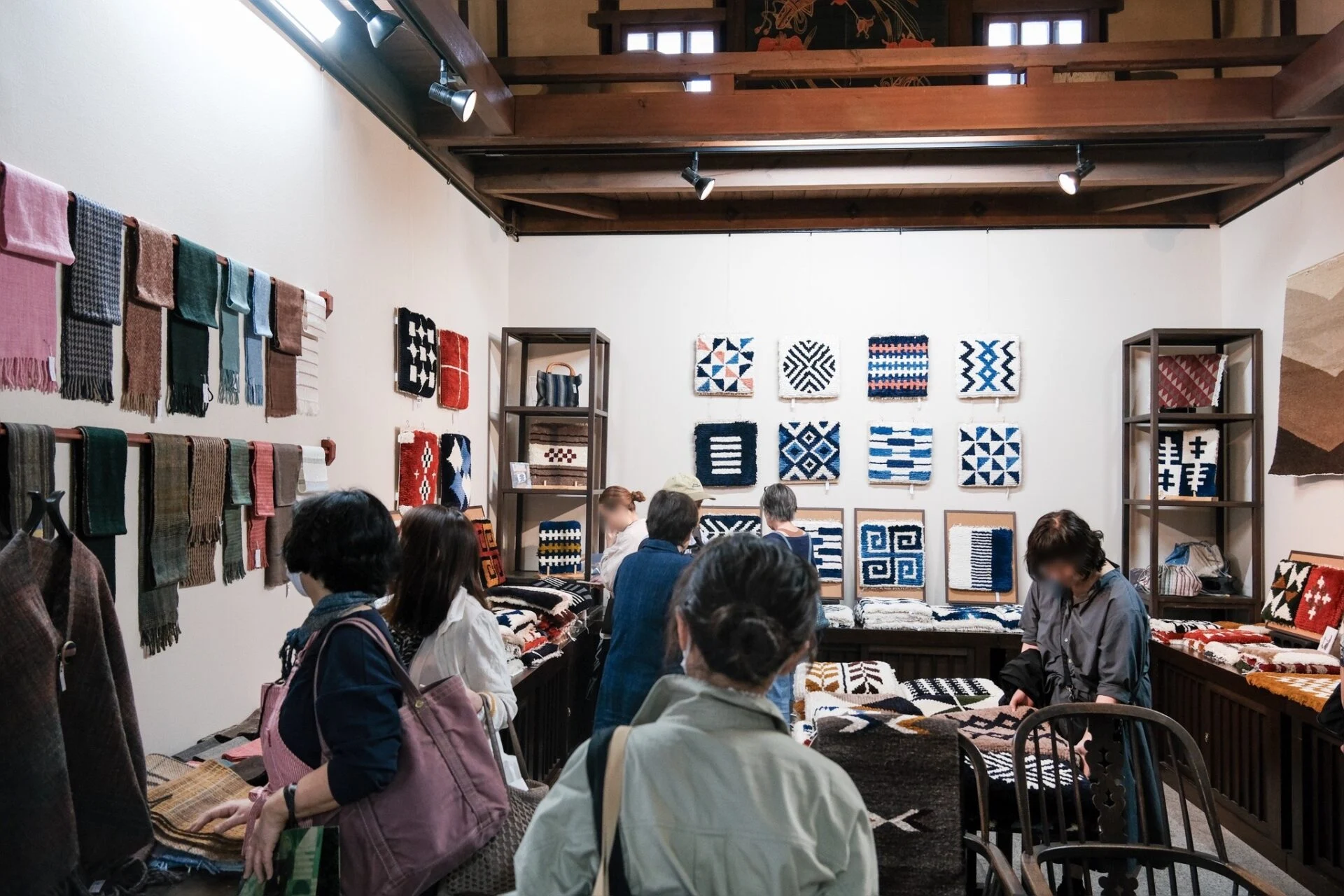
It is held in conjunction with the autumn festival at Achi Shrine, where townhouses are opened to the public, and folding screens are displayed indoors.
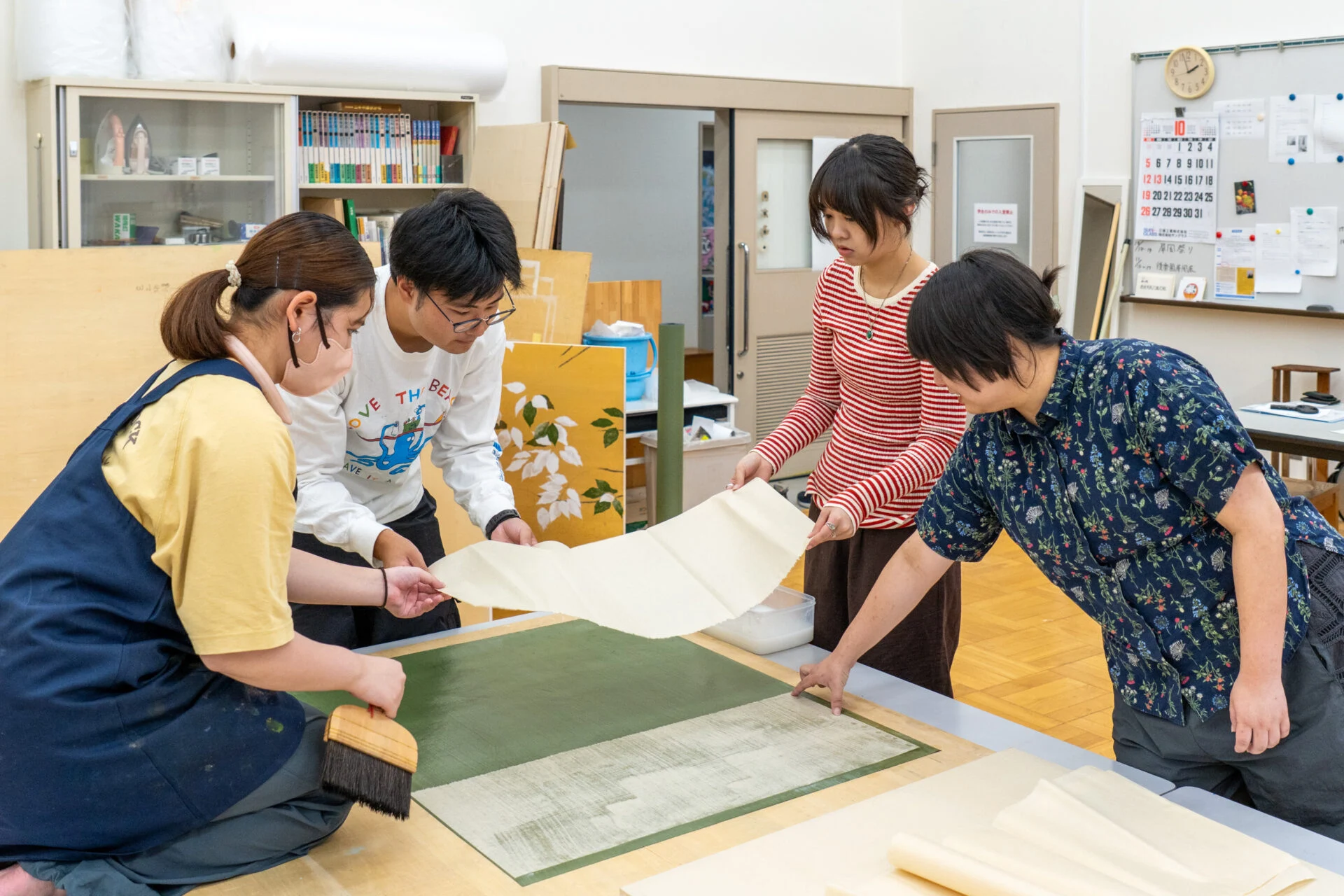
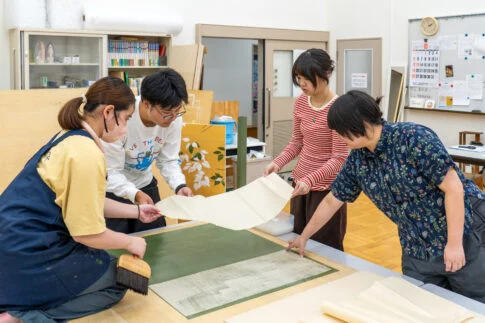
Among them, there are actually folding screens created by students from the Japanese Painting Seminar at Kurashiki University of Science and the Arts. Moreover, they are not only painting the screens but also creating the screens themselves from scratch.
We will introduce the "Kurashiki Byobu Project", which has been ongoing since 2018 and will celebrate its sixth edition in 2025.
What is the Kurashiki Byobu Project?
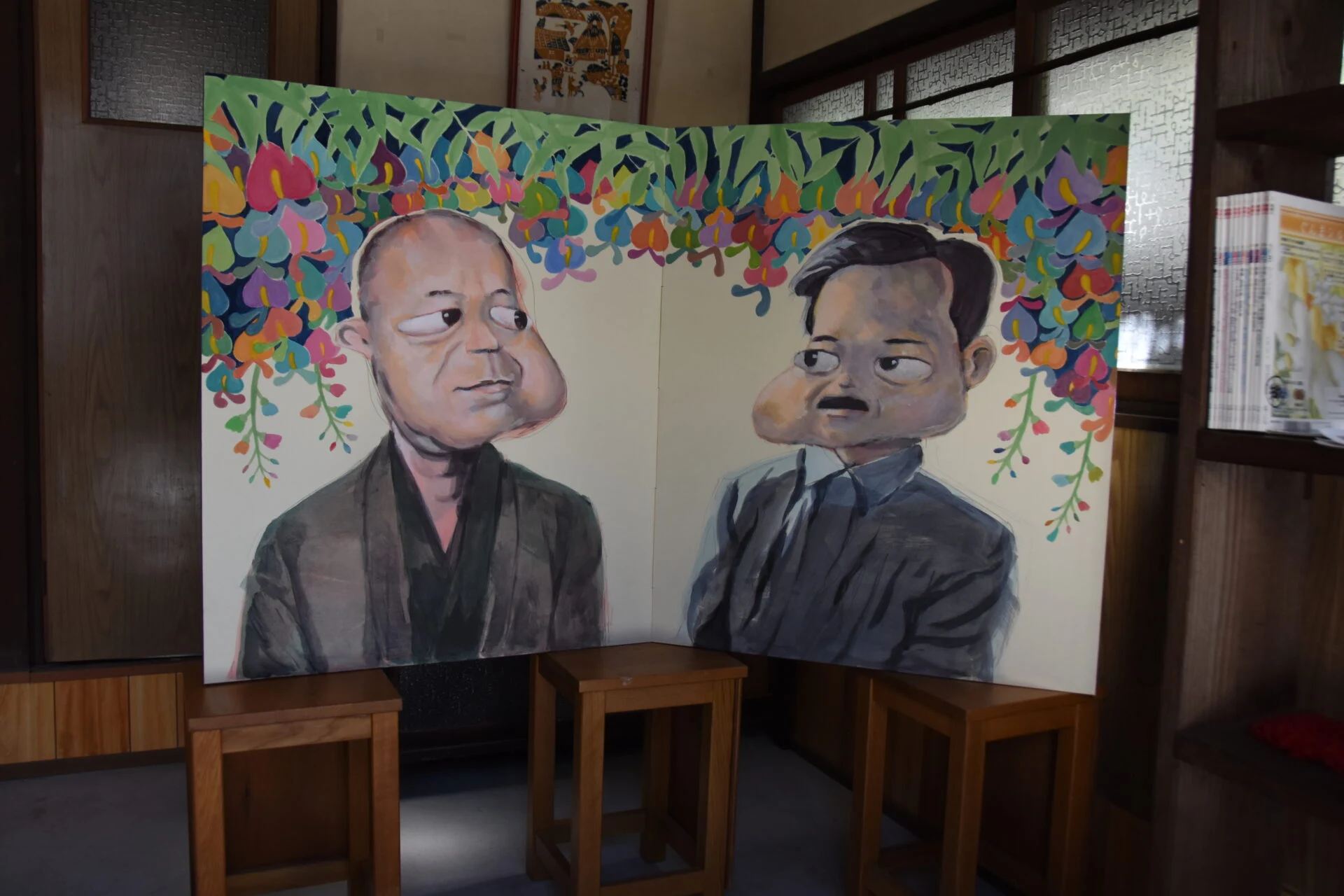
The "Kurashiki Byobu Project" is an initiative where students from the Japanese Painting Seminar at Kurashiki University of Science and the Arts create original folding screens to participate in the Kurashiki Byobu Festival.
It started in 2018 (Heisei 30) in collaboration with the Faculty of Arts at Kurashiki University of Science and the Arts and the Kurashiki Future Project, with the support of the Okayama Prefecture Interior Decoration Association.
Touching upon Japanese tradition through folding screen creation
The aim is to connect tradition and modernity by creating and exhibiting new folding screens, deepening understanding of tradition through the works, and considering the continuation of activities.
In 2025, it will be the sixth exhibition, and they have established a system where knowledge is passed down from seniors to juniors through year-round folding screen creation.
- 1st: 2018
- 2nd: 2019
- Cancelled due to COVID-19: 2020, 2021
- 3rd: 2022
- 4th: 2023
- 5th: 2024
- 6th: 2025
The process of creating folding screens at Kurashiki University of Science and the Arts
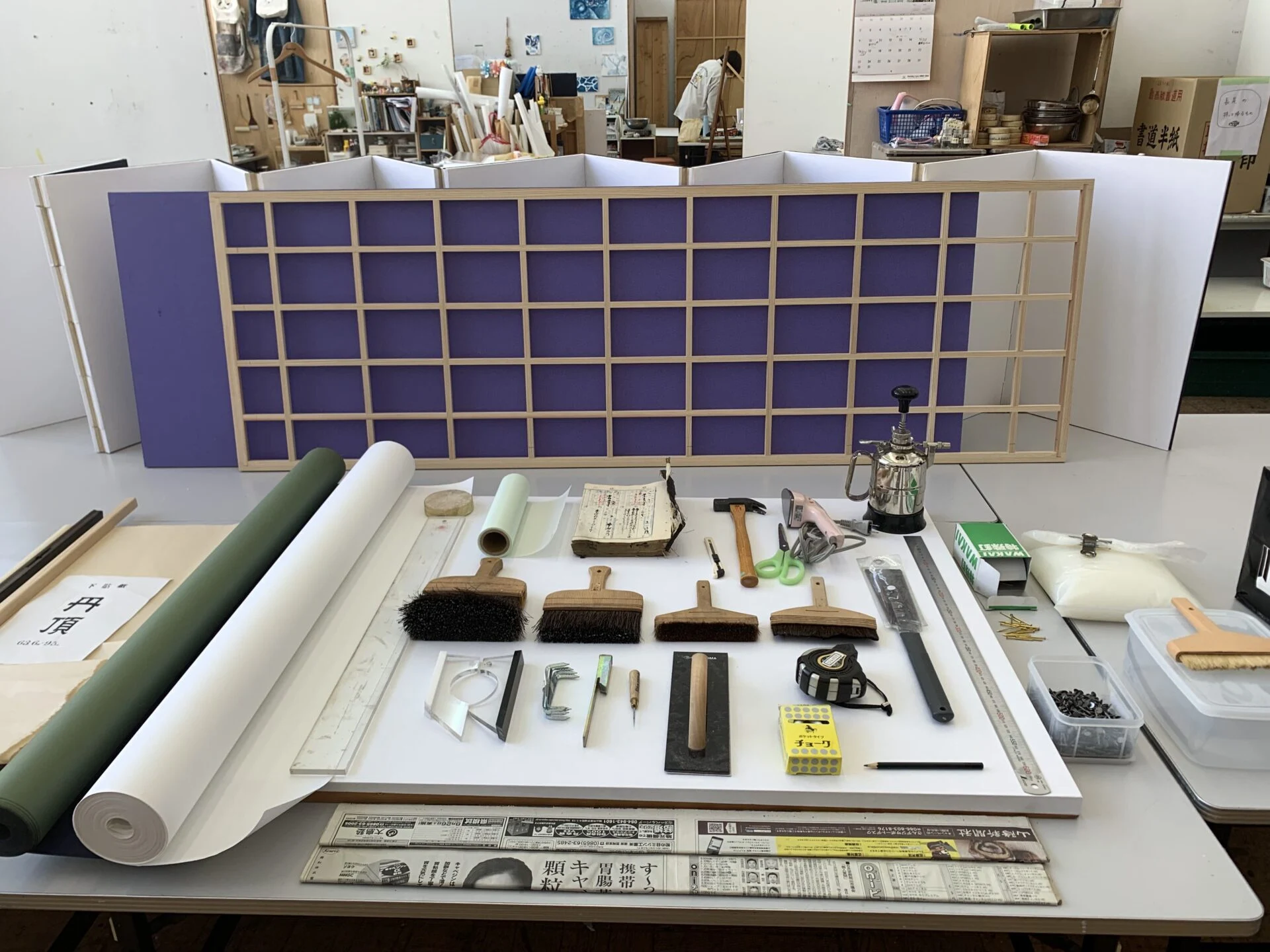
Since the start in 2018, for a while, they were creating folding screens under the guidance of craftsmen from the Okayama Prefecture Interior Decoration Association.
Then, in March 2023, they created the "Kurashiki University of Science and the Arts Folding Screen Creation Manual," and now they can create folding screens solely with school personnel.
The process of creation is as follows.
The method of creation is just one example
- Bone tightening
Attach a large piece of paper to a wooden frame and layer small washi paper on top. - Minow (Mino) pressing
Layer more washi paper on top. - Sawing
Make marks for the hinges using a saw. - Making hinges
Create hinges and connect the fans. - Receiving paste
Layer small washi paper on top again. - Main paper receiving paste
Reinforce the main paper (the paper for painting) by layering washi paper from the back. - Painting
Paint on the folding screen with the main paper attached
Sometimes, paintings created separately are pasted onto the folding screen. - Backing
Once the painting is complete, attach fabric to the back of the folding screen. - Oze
Attach beautiful paper to the sides (joints). - Edge hitting
Finally, create a wooden edge around the folding screen
Using a technique where hidden nails are not visible.
It seems they take about three months to create with classes held once a week for three sessions (five hours).
During the Byobu Festival, students explain about their works in front of them. Additionally, explaining their works to others provides a good opportunity to learn how their works are perceived.
Three students challenging folding screen creation at the 2025 Byobu Festival
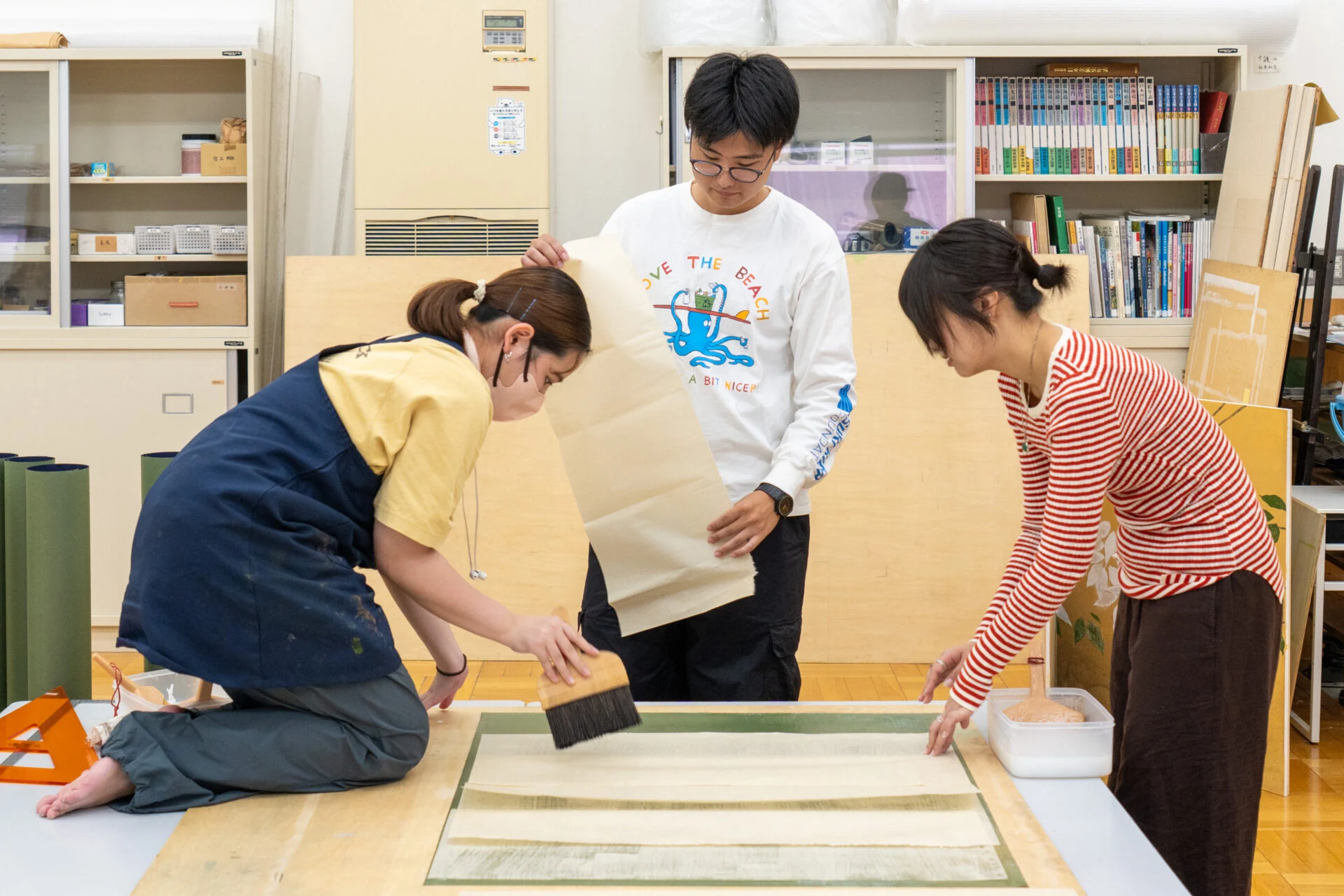
At the Byobu Festival held on October 18 and 19, 2025, three third-year students from the Faculty of Arts, Japanese Painting Seminar are advancing their folding screen creation.
- Sakura Fujiwara: "Clear Gaze"
- Sayuki Sumida: "Welcome to Fantasy"
- So Hiratsuka: "Two Intertwined"
They are guided by Yomogi Harada, an assistant professor in the Faculty of Arts.
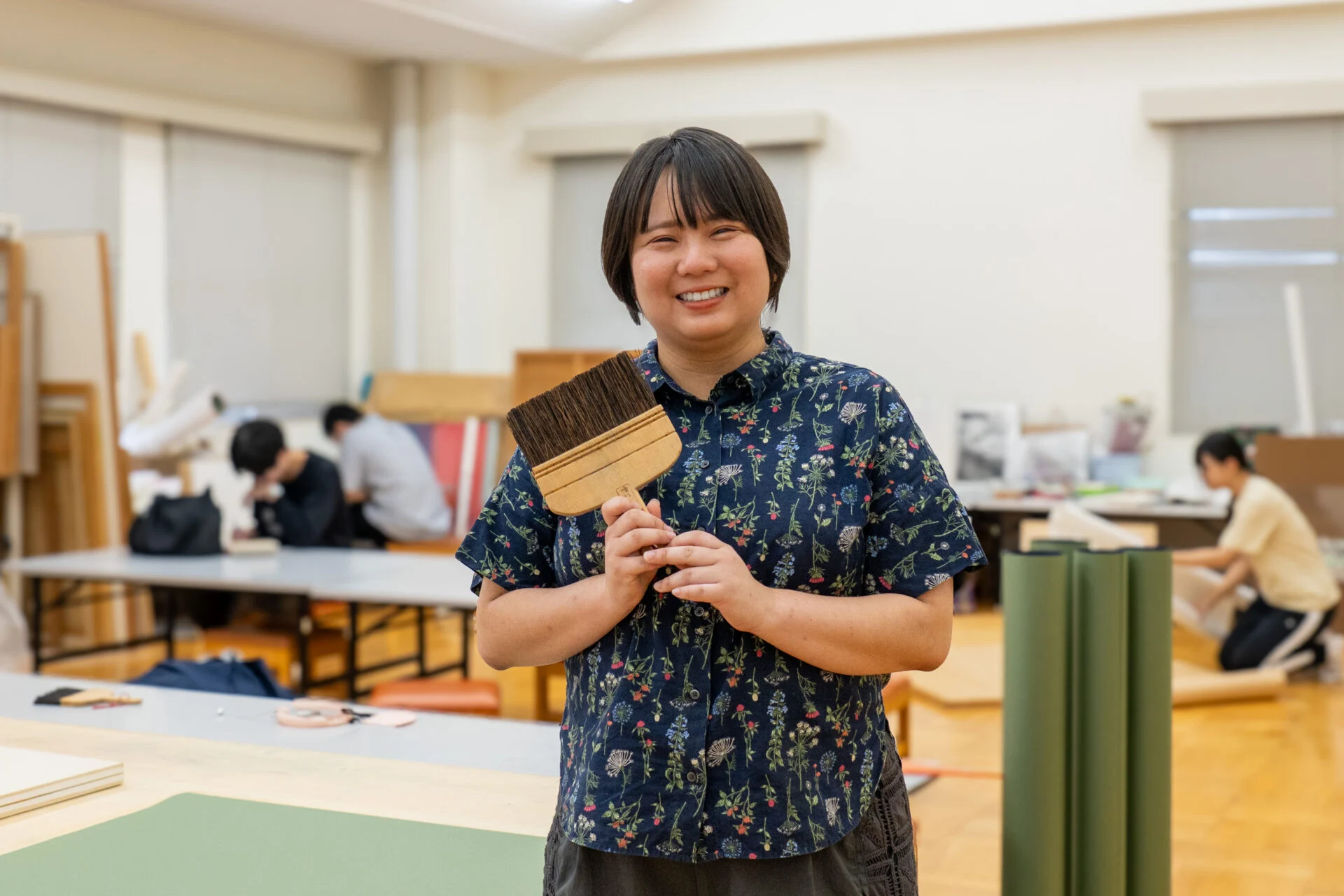
Yomogi Harada, who was a graduate student when the "Kurashiki Byobu Project" started in 2018, is now guiding students as a faculty member and plans to exhibit her own work at the Byobu Festival as a Japanese painter.
Interview with three students creating works and their instructor, Harada-sensei
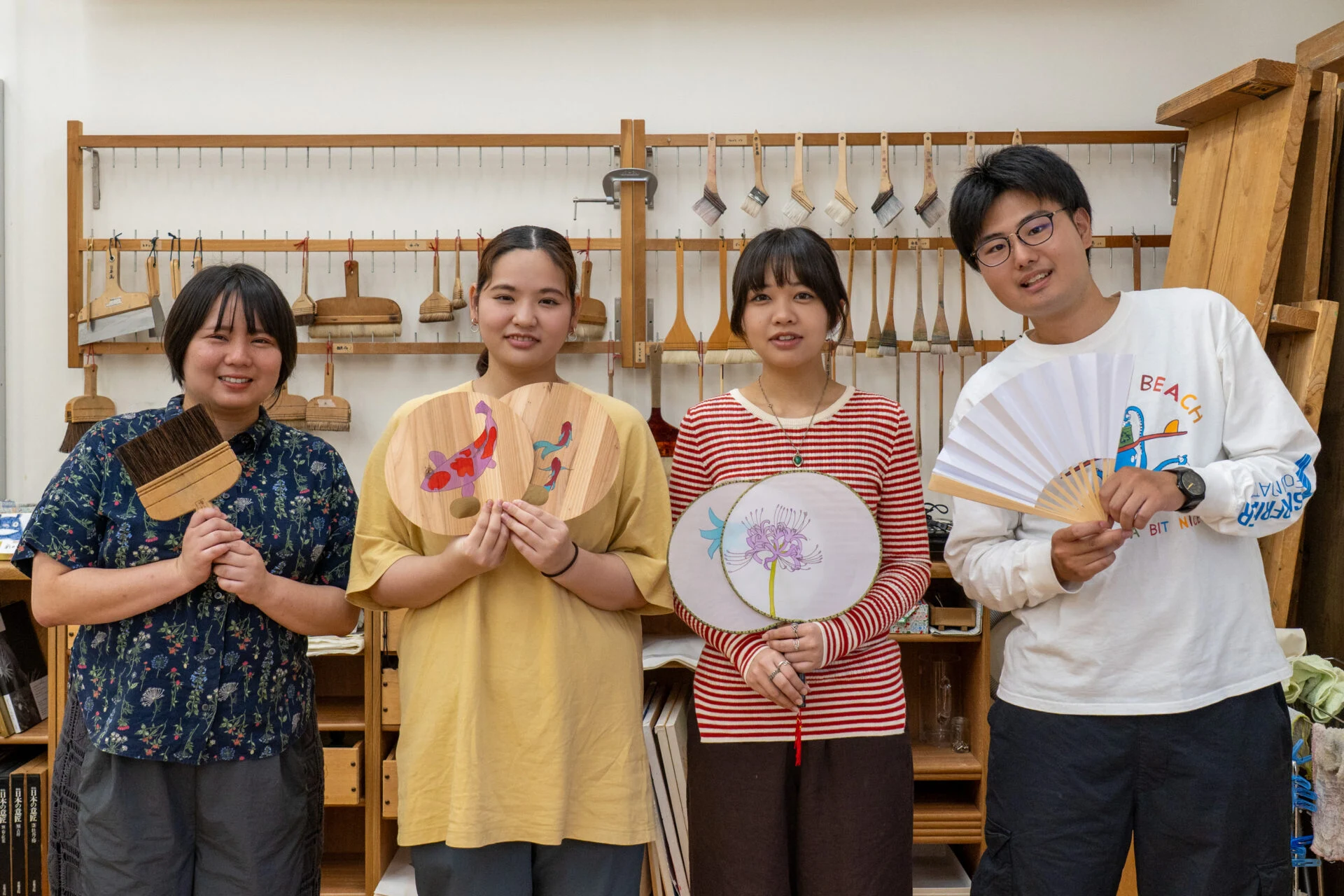
We interviewed Sakura Fujiwara, Sayuki Sumida, and So Hiratsuka, third-year students from the Japanese Painting Seminar, who are creating works for the Byobu Festival on October 18 and 19, 2025, along with their instructor, Yomogi Harada.
Is there a unified theme for the works for the Byobu Festival?
Harada (no honorifics)
I tell the students, "Let's make it a theme of Kurashiki."
This is because they aim to exhibit the created folding screens at the Byobu Festival. Therefore, they are required to incorporate a "Kurashiki element" somewhere in their works, but otherwise, they are free to create as they wish.
It might be fun for viewers to think, "Where and how is Kurashiki represented?" while appreciating the works.
Now, could you tell us the themes of the works you are currently creating?
Fujiwara (no honorifics)
I am combining the "kingfisher", which is the city bird of Kurashiki, and the "strongyle tree," which is the city tree.
Since Kurashiki is the theme, in reality, it is rare to see a kingfisher and a strongyle tree together in one place, but ideally, I want to express the thought of wanting to see them together by depicting a kingfisher perched on a strongyle tree.
Sumida (no honorifics)
When it was decided to have Kurashiki as the theme, I decided to depict the "landscape of the Bikan Historical Area of Kurashiki."
When I first visited the Bikan Historical Area, I felt the scenery was very fantastical, so I wanted to express that feeling.
Therefore, I am depicting the Bikan Historical Area in a fantastical way.
Hiratsuka (no honorifics)
What I am depicting this time is the relationship between the old and the new in the Bikan Historical Area.
While it may not be a complete opposition, I want to express the new image of Kurashiki, where the old is learned while the new develops.
How are you expressing the old and the new?
Hiratsuka
I am expressing the "dragon" as the old and the "chicken" as the new.
The dragon represents the image of longevity, so it symbolizes the old, while the chicken represents a young chicken that has grown, and I want to express a good rivalry. I hope to depict the Bikan Historical Area with an image of light shining down on them, like the "mie" in Kabuki, where they are glaring at each other.
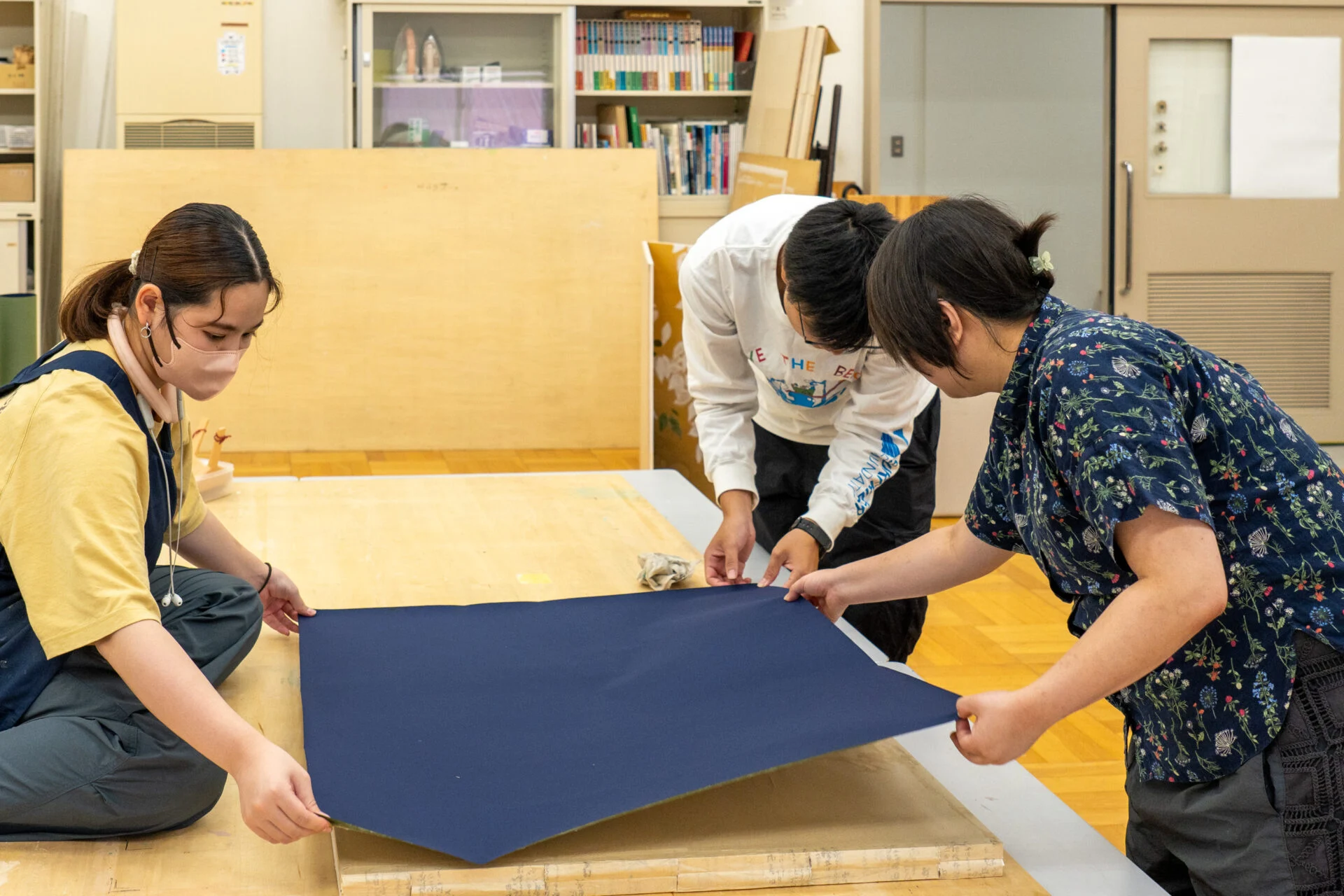
Is there anything you are particularly conscious of while guiding the students?
Harada
Since it is a class, I emphasize the experience of "making a folding screen from scratch."
I believe this is a valuable experience that cannot be obtained at other universities.
At the beginning of the class, craftsmen from the Okayama Prefecture Interior Decoration Association came to the university and taught how to make folding screens.
In the first few years, the techniques were passed down, and now they are mainly taught from seniors to juniors, ensuring that this tradition continues.
Now in its eighth year, it has become one of the features incorporated into the third-year classes of the Japanese Painting Seminar.
What are the highlights and points of interest in the works?
Fujiwara
I hope you will definitely look at the "kingfisher."
Since the title includes the word "gaze," I would like you to pay attention to the kingfisher's gaze and what it is looking at.
Sumida
I am depicting it with a composition that has depth, so I hope you can feel that atmosphere.
Also, I have included a cat in the landscape painting.
I want it to stand out like the cats in the Bikan Historical Area.
Hiratsuka
I want you to pay attention to the expressions of the dragon and the chicken.
I aim to depict expressions that are glaring at each other but not to the point of hostility.
Finally, please give a message to the readers.
Fujiwara
I think folding screens are not very familiar to most people, so I would be happy if they could feel a little closer to them through the Byobu Festival.
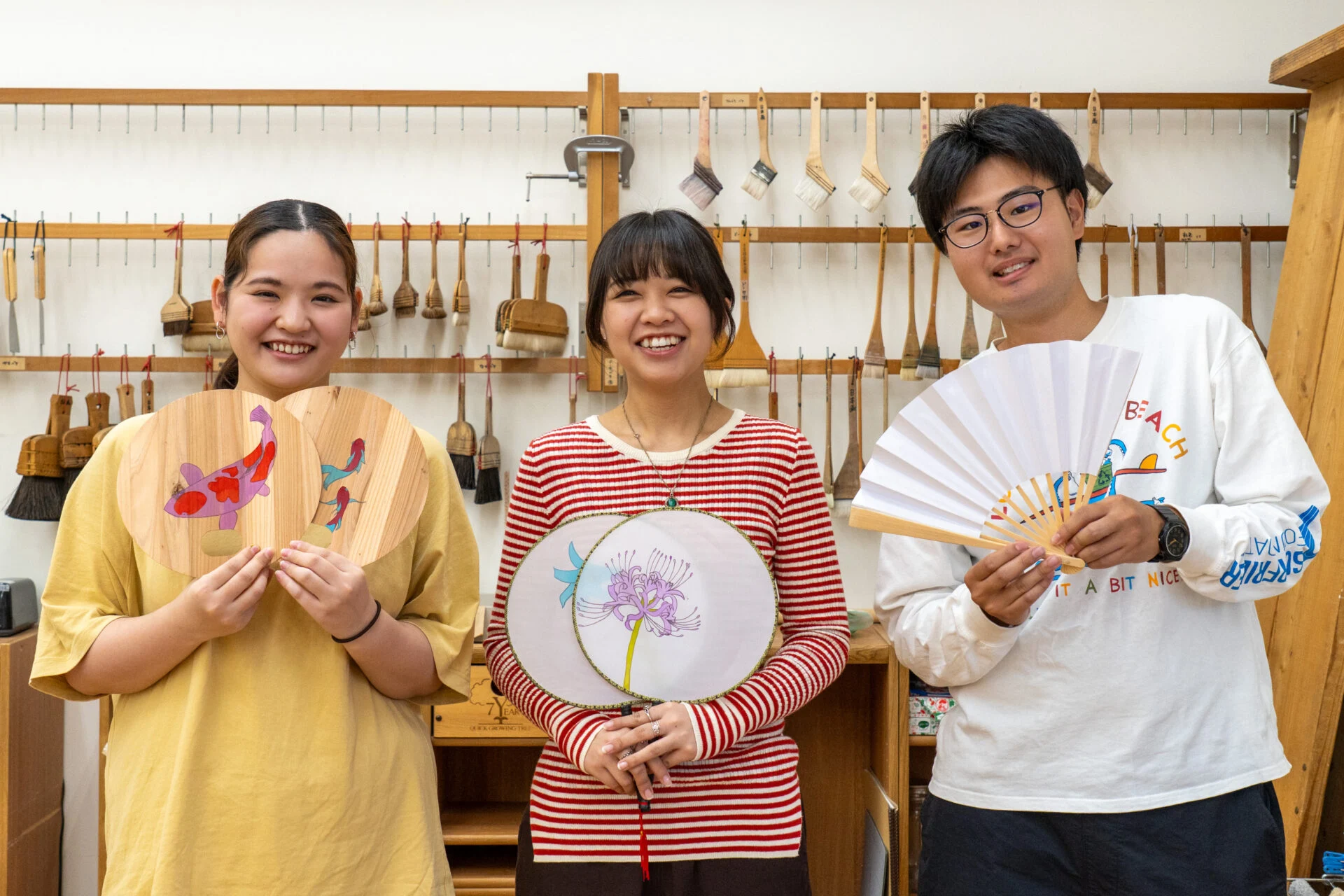
Conclusion
I knew that students from Kurashiki University of Science and the Arts showcase their works at the Byobu Festival every year, but I did not know that they were creating the "folding screens themselves" from scratch.
During the interview, they were just working on making the folding screens, and rather than painting, they were collaborating on the physical labor.
On the day of the Byobu Festival, Fujiwara's and Sumida's works will be displayed at "Ueshima Lantern," and Hiratsuka's work will be displayed at "Jazz Cafe Avenue."
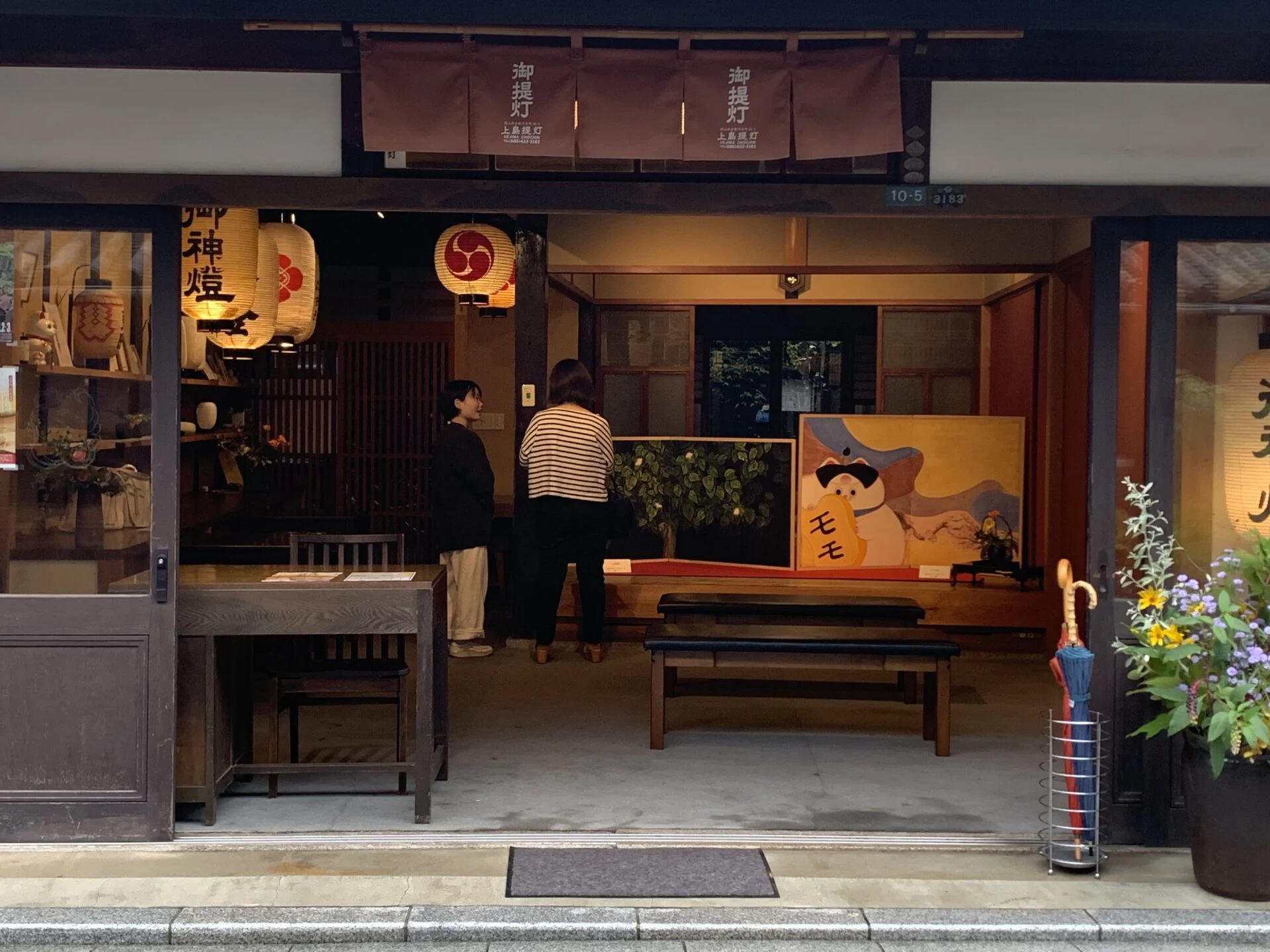
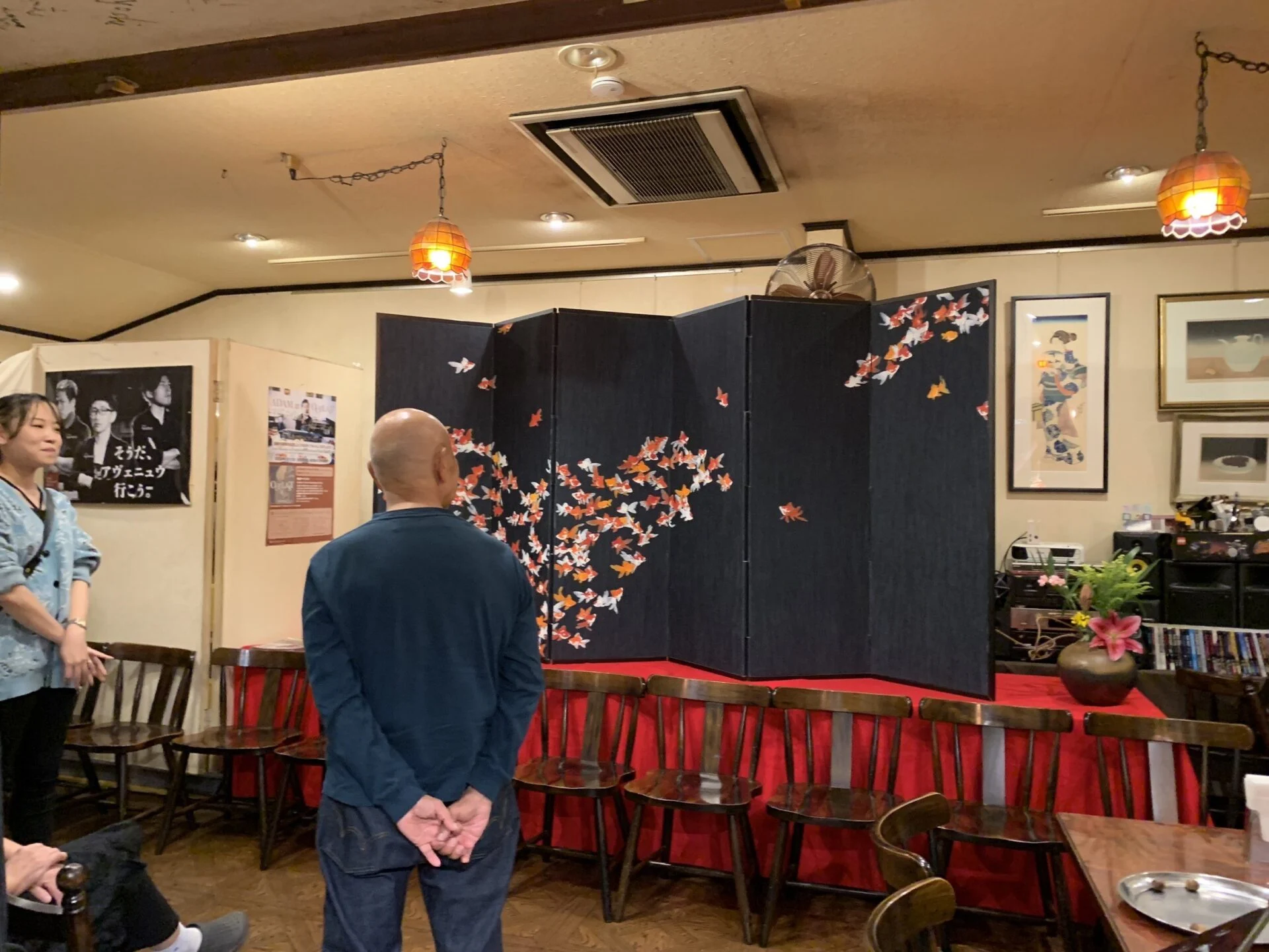
On the day of the Byobu Festival, students are scheduled to explain their works, so please make sure to visit.
Articles about the Kurashiki Byobu Festival
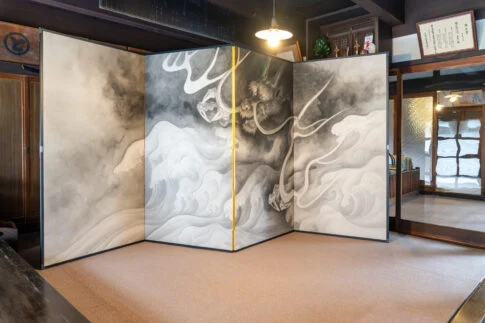
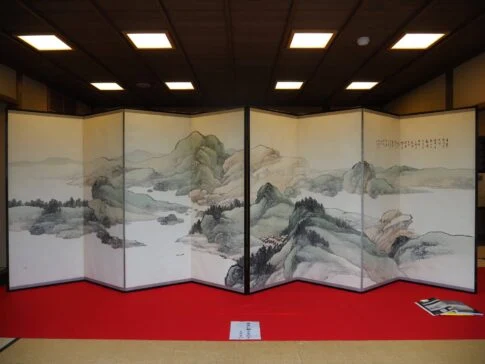
![[Byobu Festival 2019] Ohara Main Residence](https://media.kuratoco.com/wp-content/uploads/2019/10/23052631/byoubu-matsuri-2019_02.jpg)
![[Kurashiki Byobu Festival] Byobu from Hashimaya Kimono Store](https://media.kuratoco.com/wp-content/uploads/2018/10/23063705/byoubu-matsuri_10.jpg)
Data on the Kurashiki Byobu Festival
| Name | Kurashiki Byobu Festival |
|---|---|
| Dates | October 18 (Saturday) and 19 (Sunday), 2025 10:00 AM - 5:00 PM |
| Location | Bikan Historical Area |
| Participation Fee (including tax) | Free (some facilities may charge a fee) |
| Website | Kurashiki Byobu Festival (Kurashiki Chamber of Commerce and Industry website) |