Kurashiki City has three stories recognized as Japan Heritage.
One of them is “A Kurashiki story beginning with a single cotton flower – A town of textiles woven from Japanese and Western cultures.”
Some may answer, “Of course I know,” but have you ever actually grown cotton?
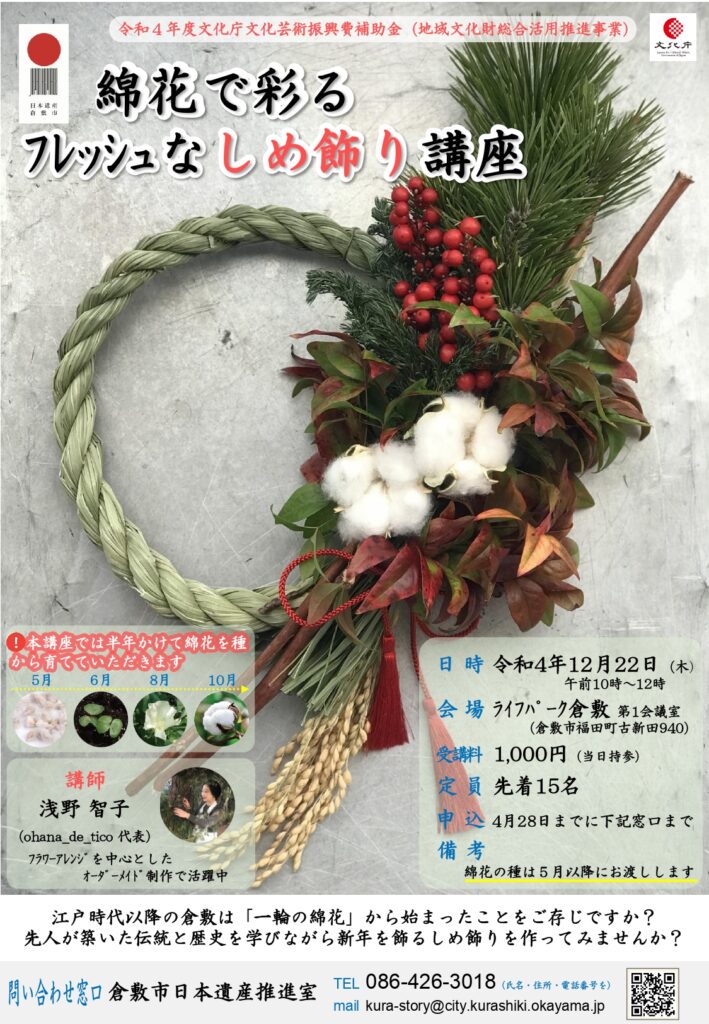
Through the efforts of the Kurashiki City Japan Heritage Promotion Office, a workshop was held where participants grew cotton seeds received in early spring 2022 in planters and created shimekazari (traditional Japanese decorations) using the cotton balls they harvested.
I will introduce the “original shimekazari” that I made.
Spring 2022: Cotton Cultivation
On a certain day in April 2022, about 10 to 20 cotton seeds were sent from the Kurashiki City Japan Heritage Promotion Office.
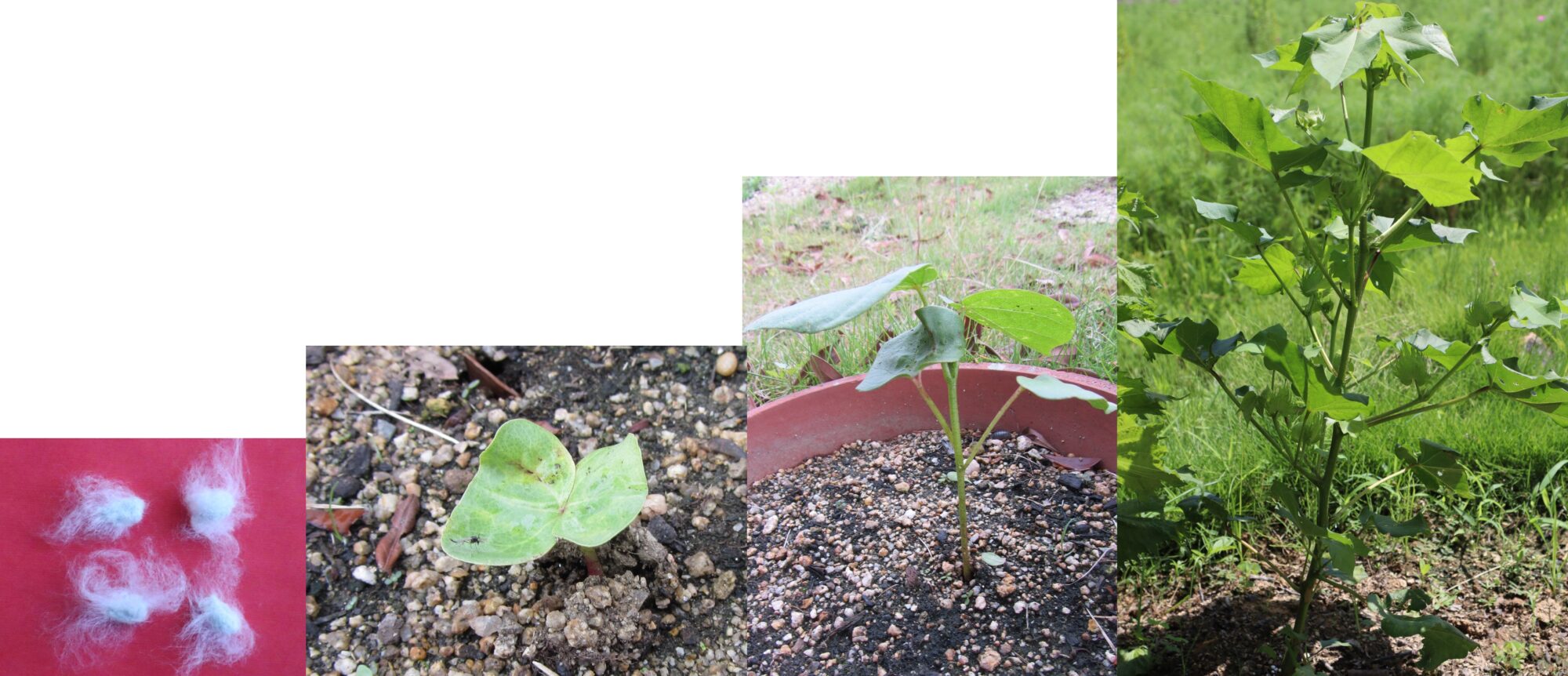
I immediately planted them in planters, and by May, cute cotyledons sprouted.
They grew vigorously, exceeding a height of 50 centimeters.
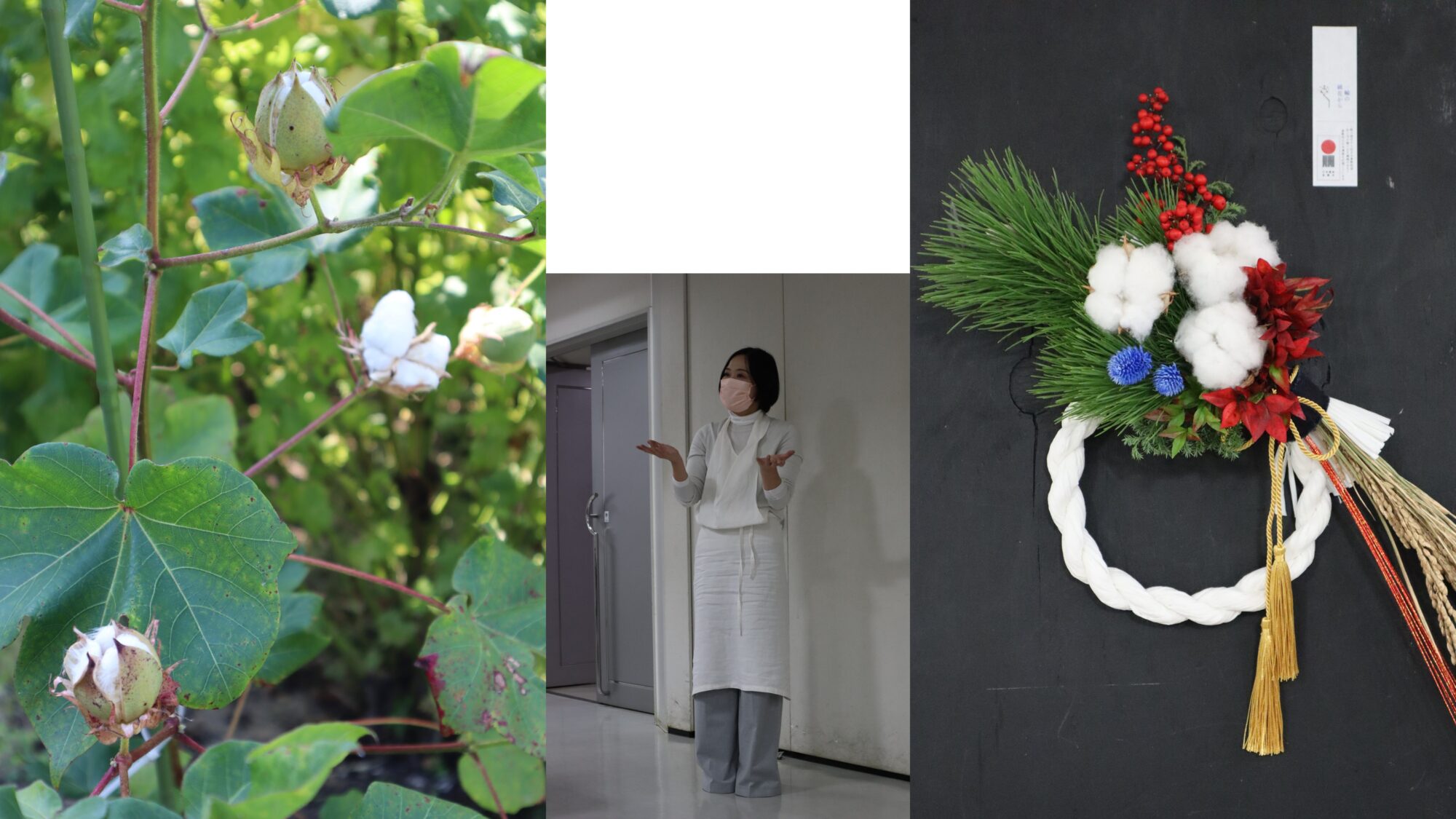
The first cotton flower bloomed in July.
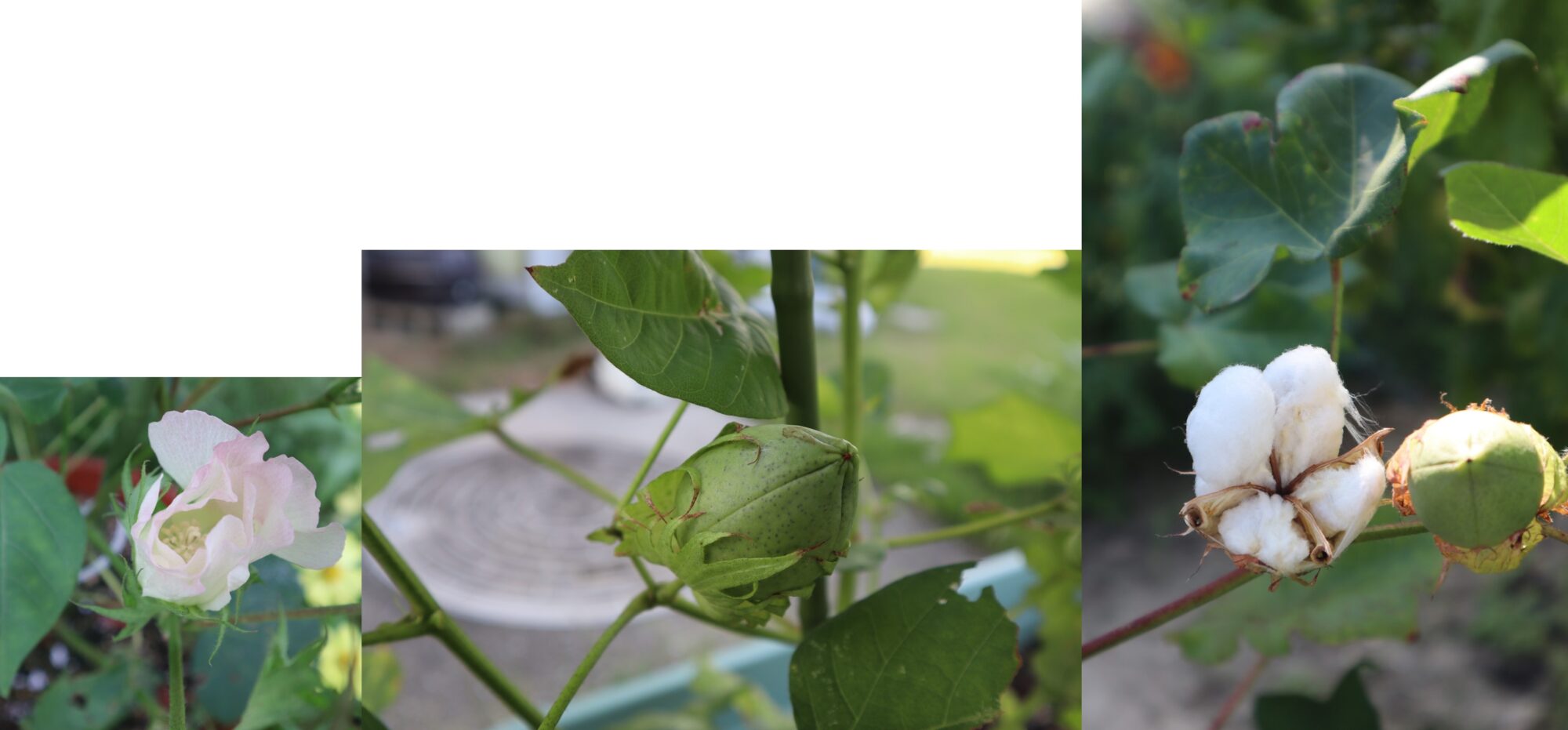
Its delicate appearance is beautiful enough for appreciation.
After the petals fell, a green ball shaped like a rugby ball appeared.
And one day, the green burst open, revealing the “cotton ball”.
A cotton ball is just cotton, isn't it?
It was a fresh surprise, though it may seem obvious.
December 2022: Participating in a shimekazari workshop with harvested cotton balls
On December 22, 2022, I participated in the workshop holding the harvested cotton balls under my arm.
Somehow, I felt more motivated than usual.
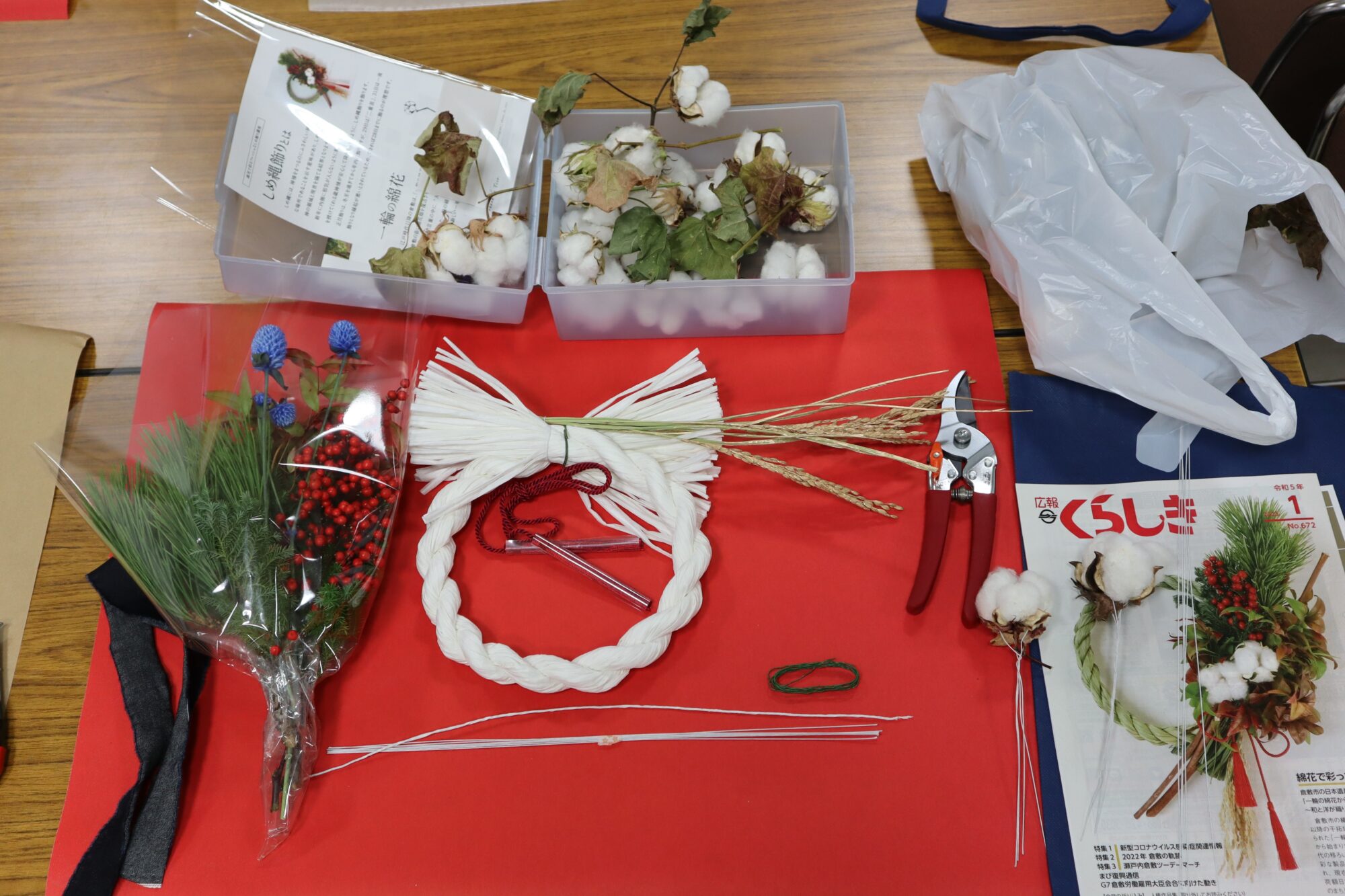
Materials were prepared on the table.
The cotton balls I brought are on the top, and the Kurashiki Public Relations January issue is placed on the bottom right.
Yes! The product of this workshop is featured on the cover.
Suppressing my excitement, let's review the Kurashiki story at the beginning of the workshop.
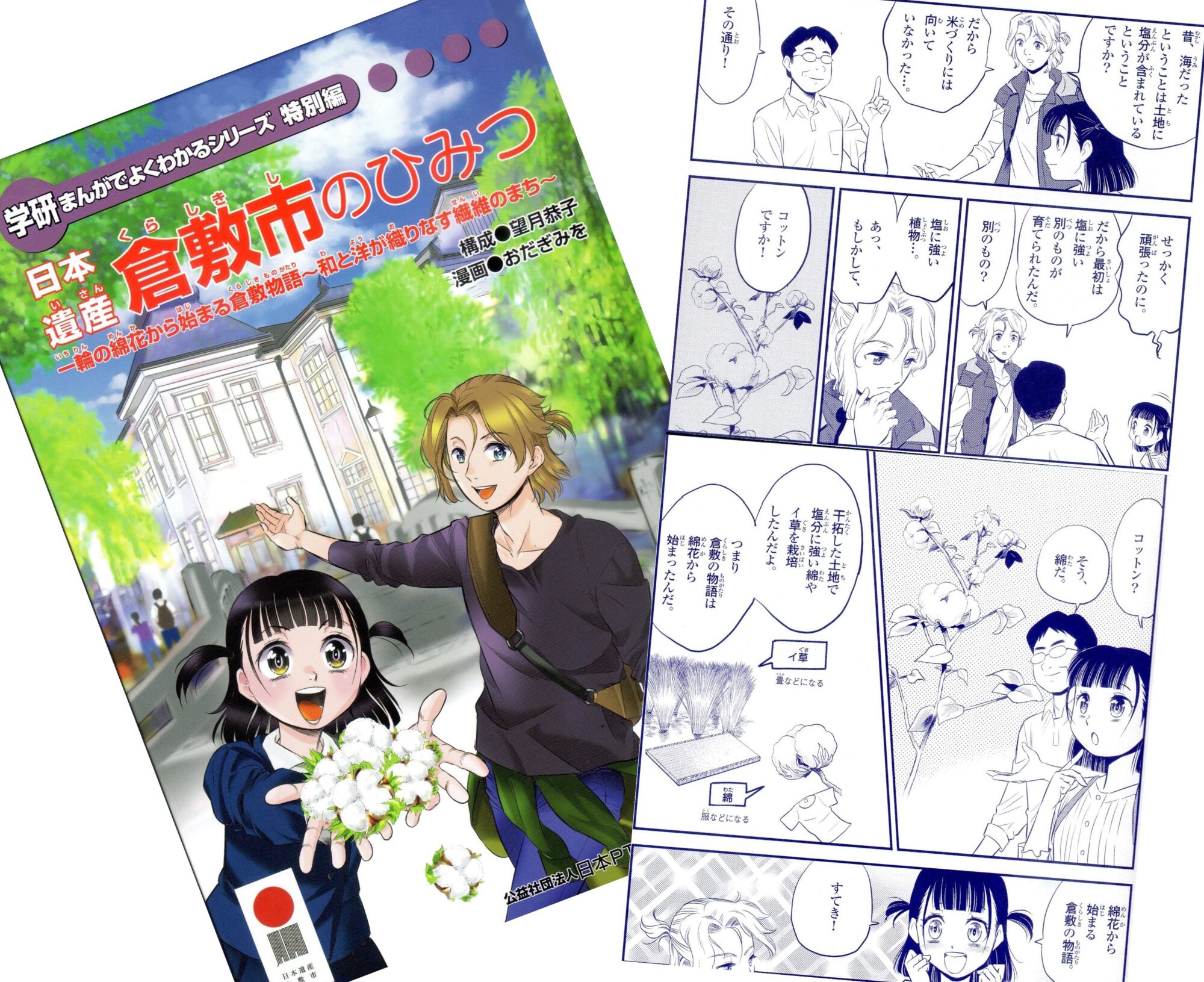
- Much of Kurashiki was developed through land reclamation during the Edo period
- In saline reclaimed land, rice cannot be grown immediately
- This is where the cultivation of salt-tolerant cotton began
- The Kurashiki story that leads to today’s denim industry started this way
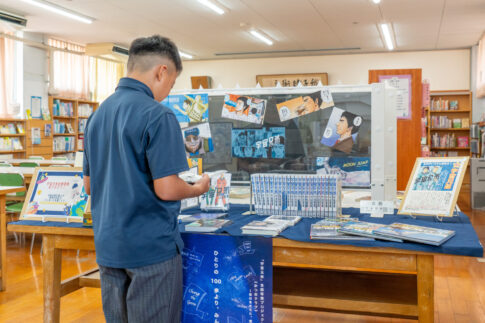
It seems that elementary school students in Kurashiki study this content through manga.
Making shimekazari Part 1: Attaching wire to cotton balls
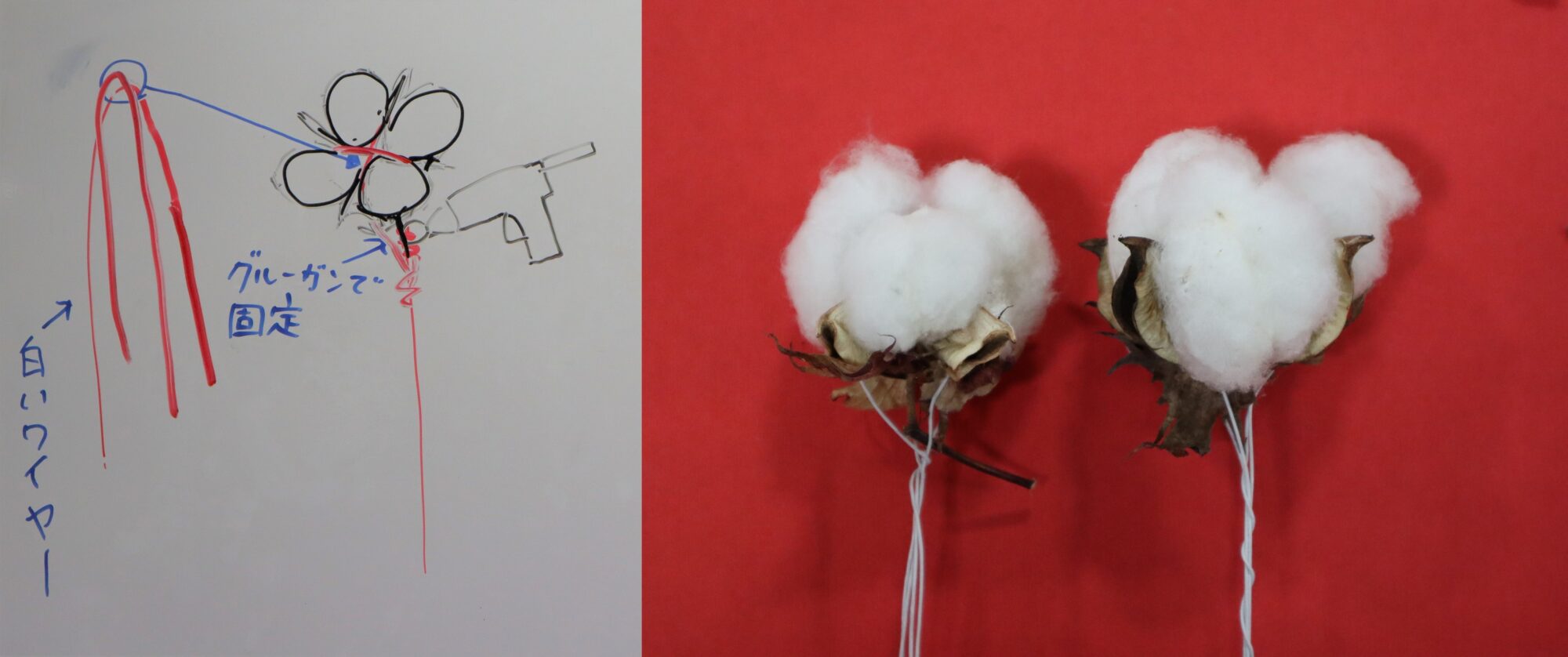
Finally, the making of shimekazari begins.
The first step was attaching wire to the main cotton balls.
I prepared the wire to attach the cotton to the shimenawa (sacred rope).
It was not necessary to secure it with a glue gun.
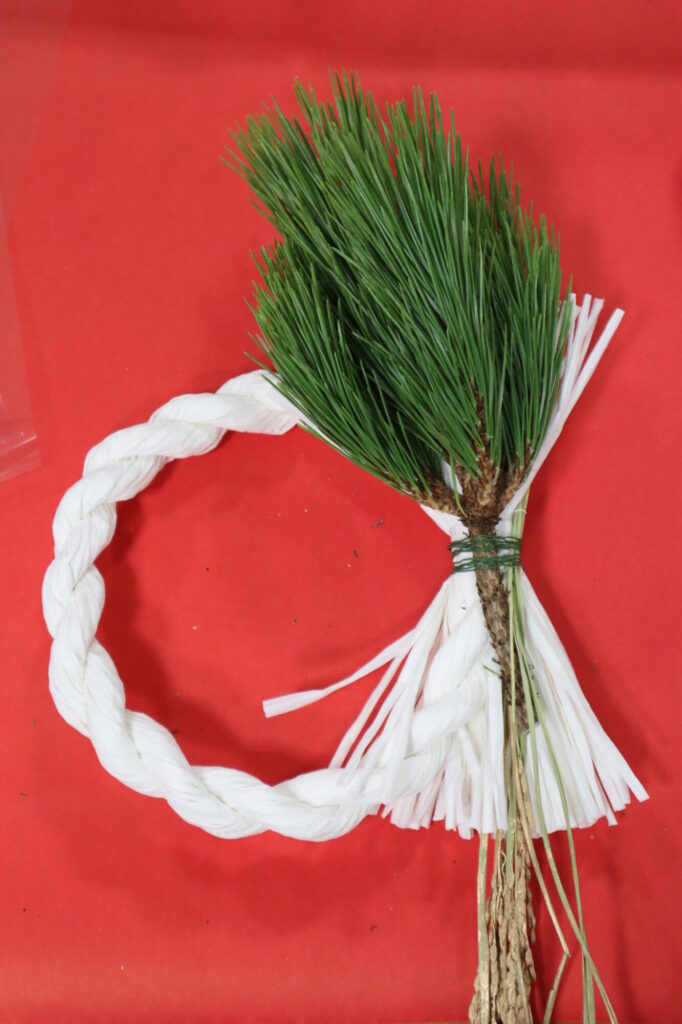
Shimenawa is used as a boundary to separate the sacred realm of the gods from the impure outside world.
It is hung at the entrance during the New Year to prevent evil spirits from entering.
Let's decorate the shimenawa.
Determine the place to decorate the shimenawa and securely tie the pine leaves there.
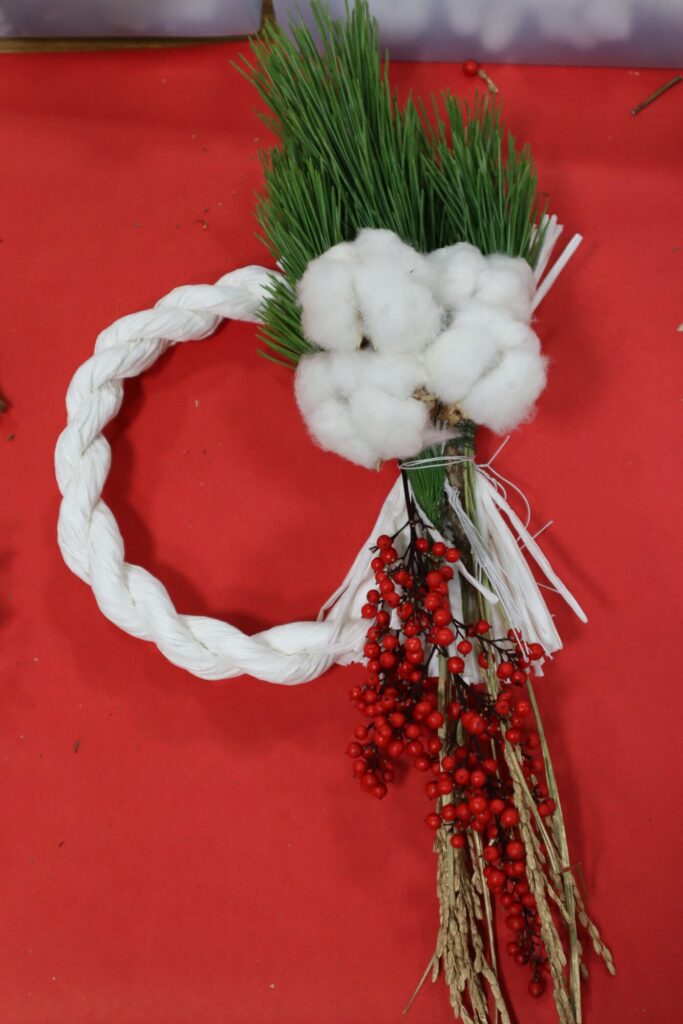
Next is positioning the main element.
Since my shimenawa was pure white, I decided to attach four cotton bundles in a position that did not overlap with the shimenawa.
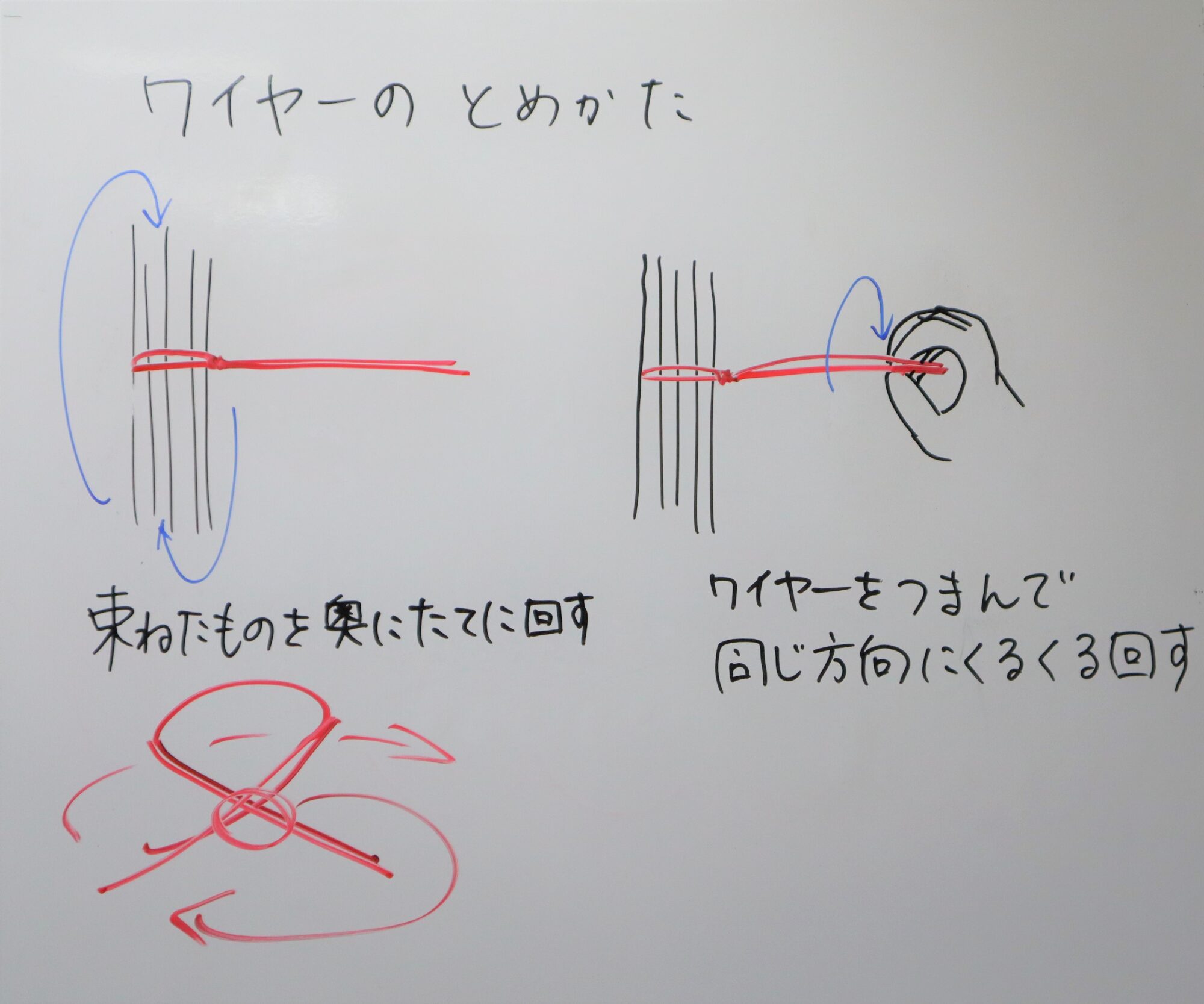
Attaching the cotton requires some tricks in how to secure the wire.
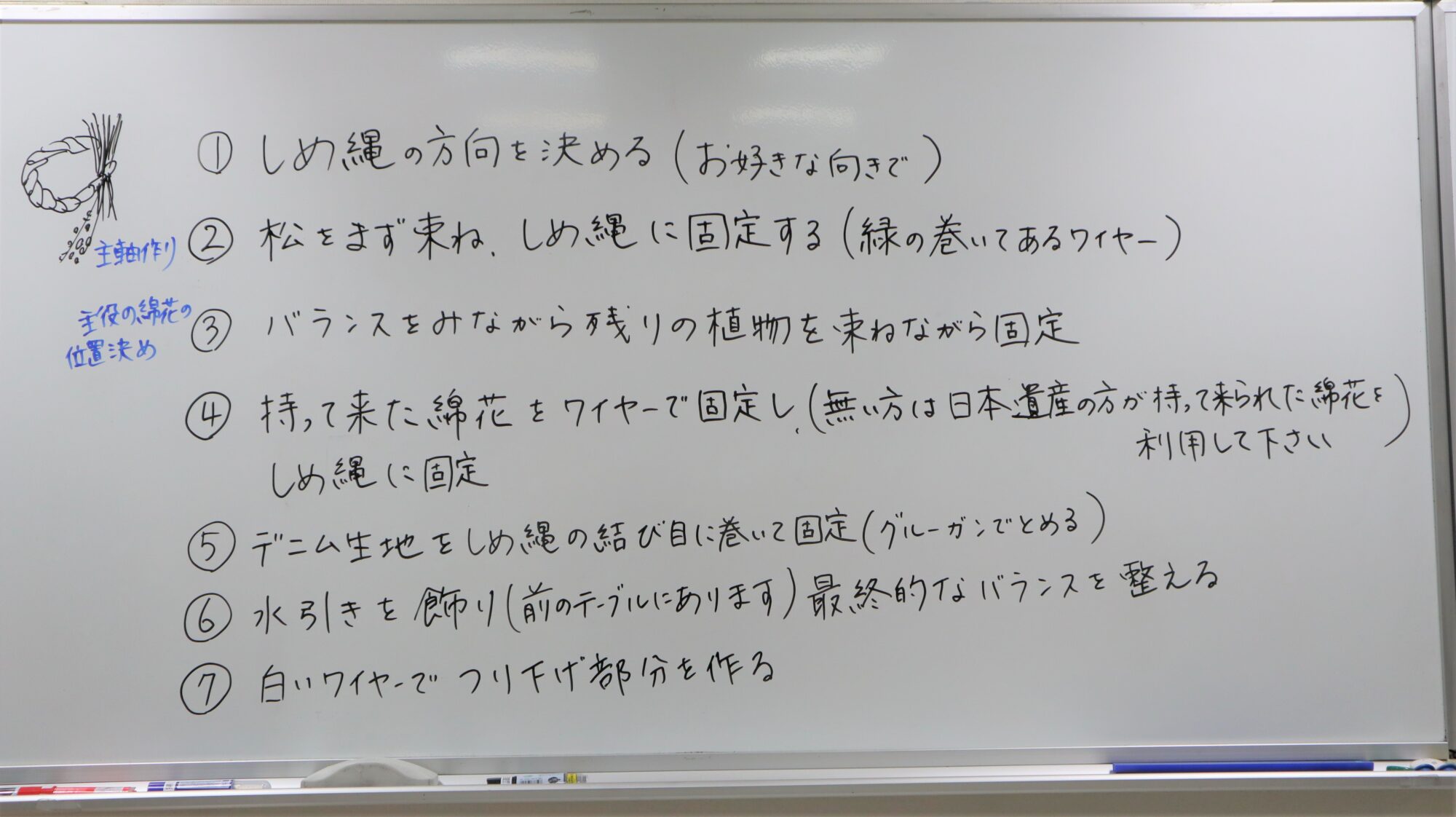
As shown in the diagram, twist the bundled side or pinch the end of the wire and twist it.
▼ The overall procedure for decoration looks like this.
Making shimekazari Part 2: Coloring
Once the main element is positioned and I understand how to secure the wire, I can freely use red, blue, and green to add color.
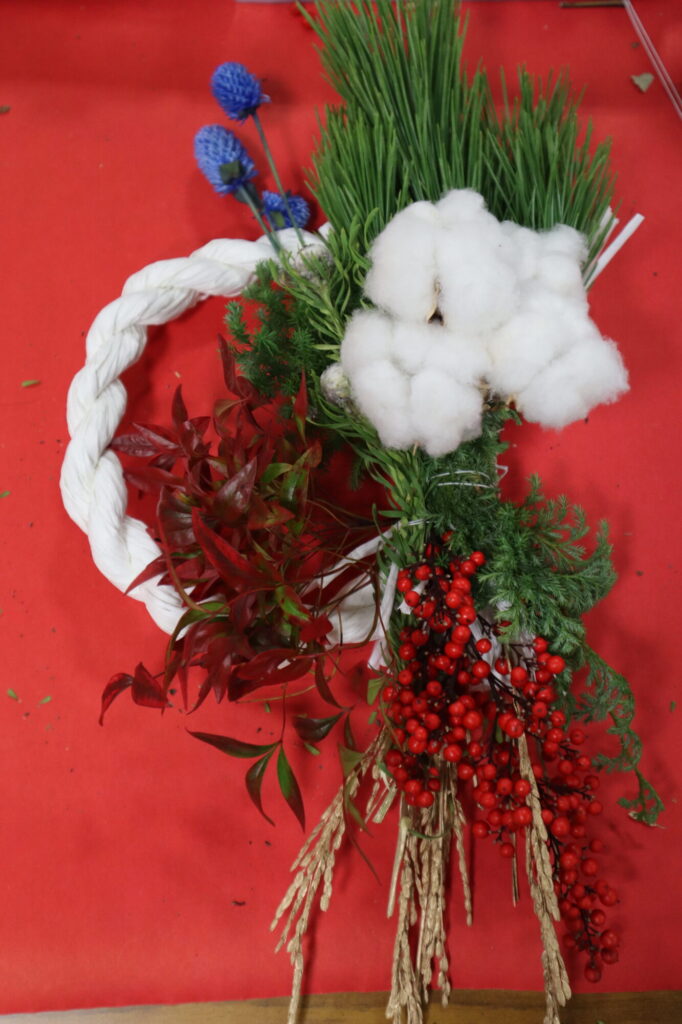
I gave it a try and decorated it.
However, this is the extent of what I can do...
Somehow, it feels unsettled.
In such times, I rely on my teacher.
Flower arrangement teacher Tomoko Asano kindly taught me step by step.
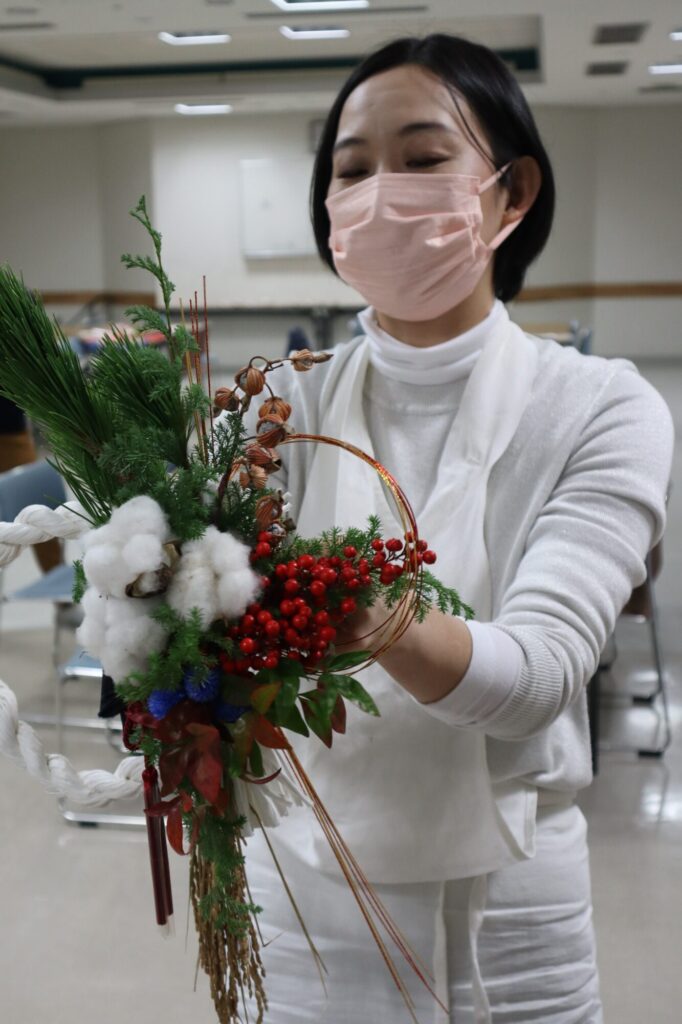
She gathered the blue accents, added a denim fabric ribbon, and finished the mizuhiki (decorative cord) inspired by the ears of a rabbit, in line with the zodiac.
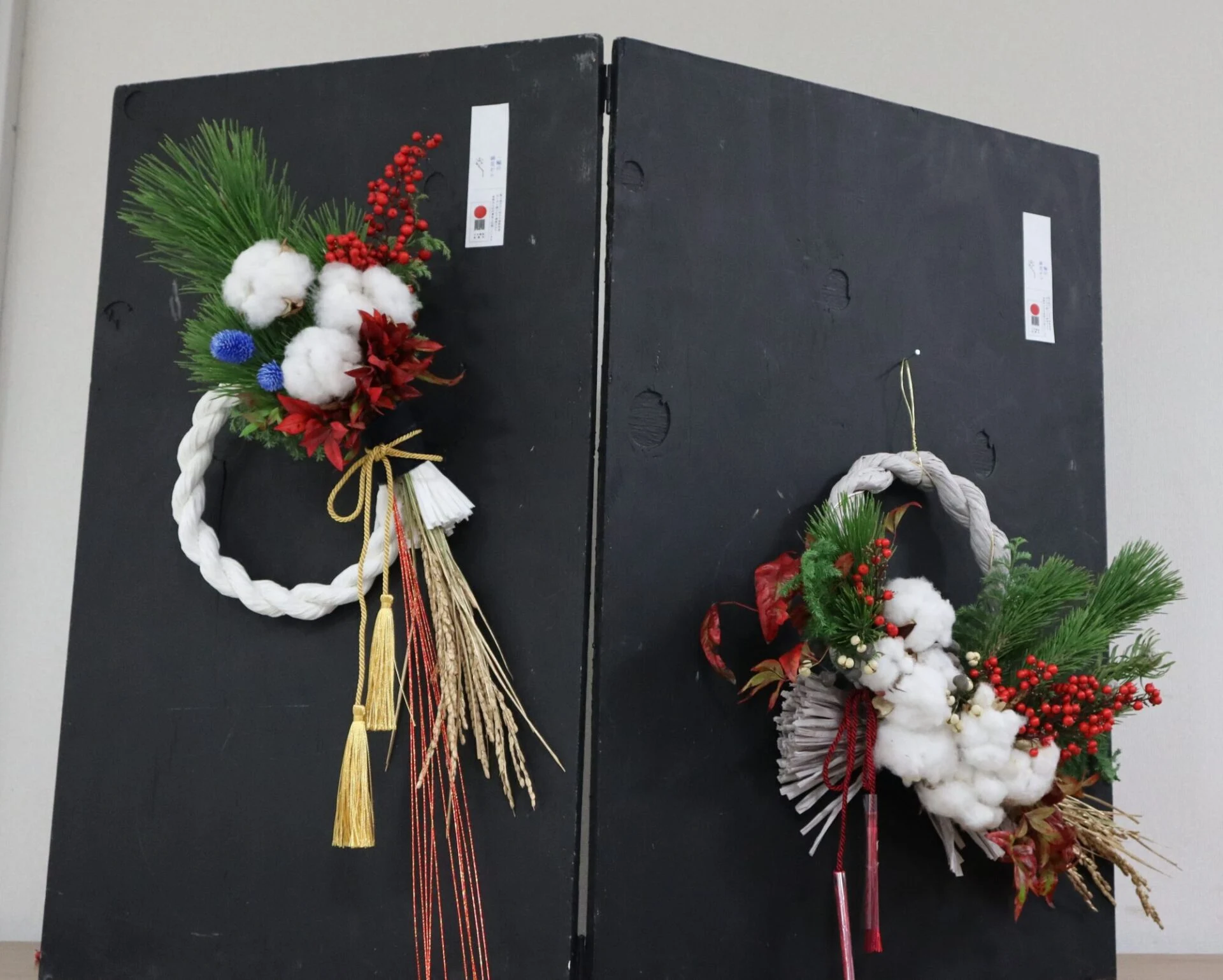
▼ And here is the finished product.
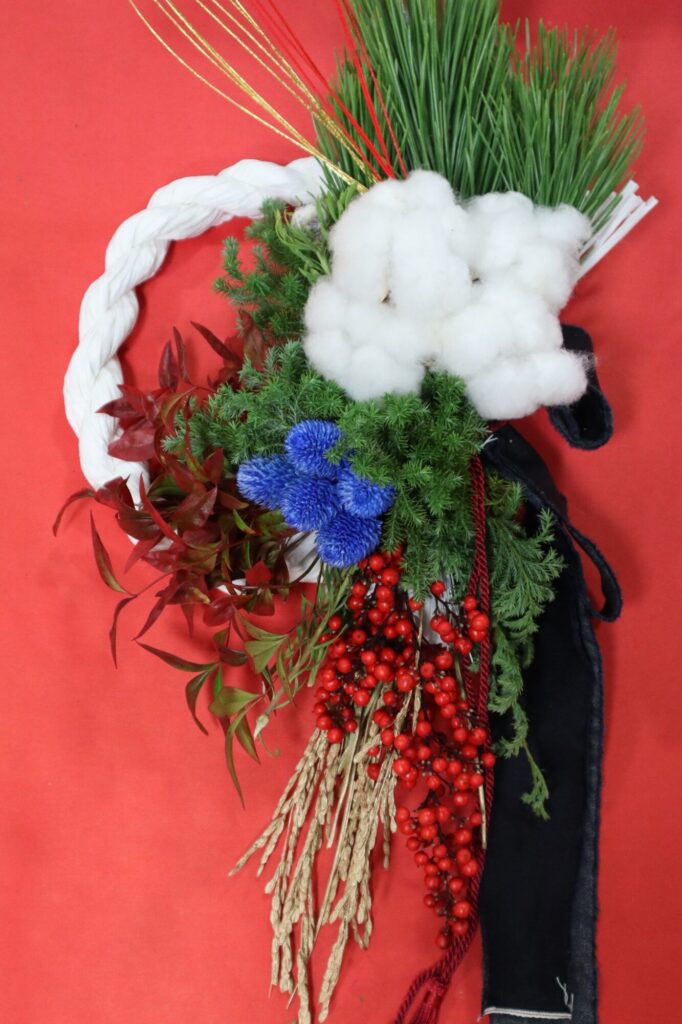
A stunning shimekazari (New Year’s decoration) has been completed.
Conclusion
The "A Kurashiki story beginning with a single cotton flower" has been registered as a Japan Heritage, and it has been five years since 2022.
During this time, the following initiatives have been undertaken.
- Elementary school students are exposed to the Kurashiki story manga
- High school students are filming promotional videos
- People of all ages are participating in the creation of Japan Heritage karuta (Japanese playing cards)
I have also heard that the revival cultivation of cotton and the making of children's clothing are being carried out.
I feel that cotton has once again taken root in Kurashiki.
I believe that cotton has become a part of the travel memories of many people visiting Kurashiki, and it is gradually becoming part of our identity as residents of Kurashiki.
In February 2023, there will also be a karuta event for children’s festival.
It is good to tour the related sites. Please be sure to experience the cotton of Kurashiki.
And why not try growing cotton from the beginning of spring 2023?
Data on the Fresh Shimekazari Course with Cotton
| Name | Fresh Shimekazari Course with Cotton |
|---|---|
| Date | December 22, 2022 |
| Participation Fee (tax included) | 1,000 yen |
| Homepage | Fresh Shimekazari Course with Cotton |