There’s something wonderful about the lively atmosphere of a festival.
Even as adults, they still get us excited.
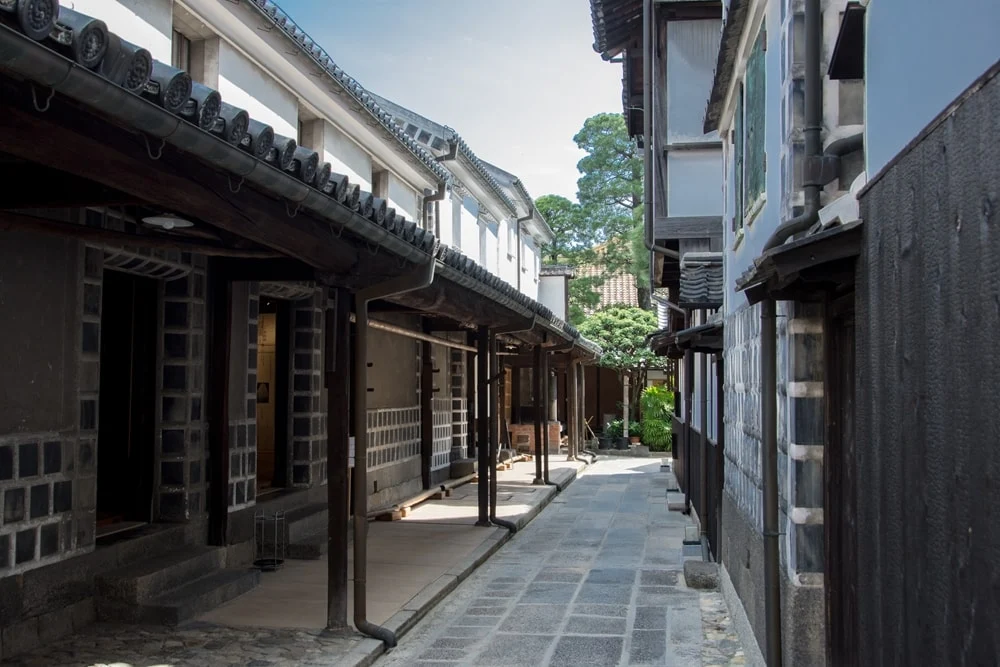
Festivals are held throughout the year in the Bikan Historical Area.
Of them, the Kurashiki Byobu Festival is highly recommended for anyone who isn’t very familiar with the Bikan Historical Area!
That’s because you can enjoy a stroll around town while taking in the festival, and visit shops that are usually difficult to enter.
As you admire colorful folding screens and others that seem to have a long history, you might find a shop or facility you like and think, “I’ll come back here.”
Here’s a look at the 2019 Kurashiki Byobu Festival.
The festival was canceled in 2021 to prevent the spread of COVID-19.
The information presented here was current when this article was published in October 2019. Please note that it may differ from current information.
What is the Kurashiki Byobu Festival?

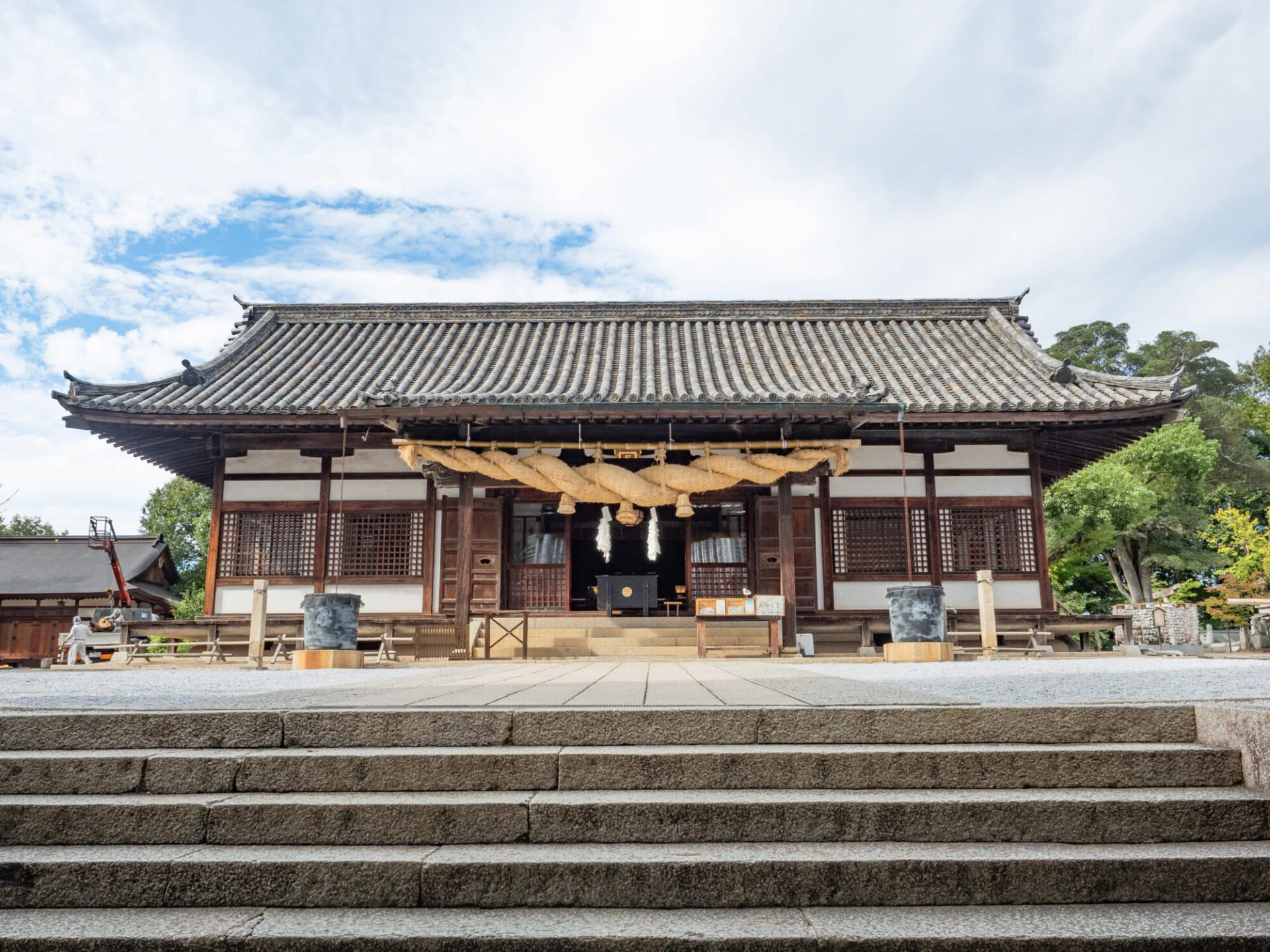
The Kurashiki Byobu Festival is an event held in conjunction with the autumn grand festival of Achi Shrine.
It is said that in the past, during the autumn grand festival, each household in the neighborhood removed the doors facing the street, displayed folding screens, arranged flowers, and welcomed visitors.
The custom died out once during the Meiji period, but the present-day festival was revived in 2002 through the efforts of local volunteers.
In April 2017, it was recognized as one of the cultural properties comprising the Agency for Cultural Affairs’ “Japan Heritage.”
In addition to folding screens, family heirlooms are displayed in homes, and supporting exhibits of folding screens are held at facilities around the Bikan Historical Area.
Allow about two hours to see the main and supporting exhibits
The Kurashiki Byobu Festival features two main types of exhibits:
- Folding-screen displays in traditional townhouses from Honmachi to Higashimachi (the main exhibits)
- Supporting exhibits around the Bikan Historical Area
You should allow about two hours to take a good look at each.
I say this because at the 2018 Byobu Festival, I spent about an hour looking at the “folding-screen displays in traditional townhouses from Honmachi to Higashimachi,” and in 2019, I spent about an hour looking at the “supporting exhibits around the Bikan Historical Area.”
If you just take a quick peek, it will take less time; conversely, if you want to look around more thoroughly, it will take longer.
The supporting exhibits
At the 2019 festival, I left the main exhibits for later and focused on the supporting exhibits.
Here are some that made a lasting impression on me.
Features of the supporting exhibits around the Bikan Historical Area

One feature of the supporting exhibits is that you can stroll around the Bikan Historical Area and its surrounding neighborhoods.
It’s also an ideal route if you’re thinking, “Last time I only saw the main exhibits, so this time I’ll focus on the supporting exhibits.”
I saw both the main and supporting exhibits, but if I had to choose, I’d say I preferred the main exhibits.
That said, both are well worth seeing.
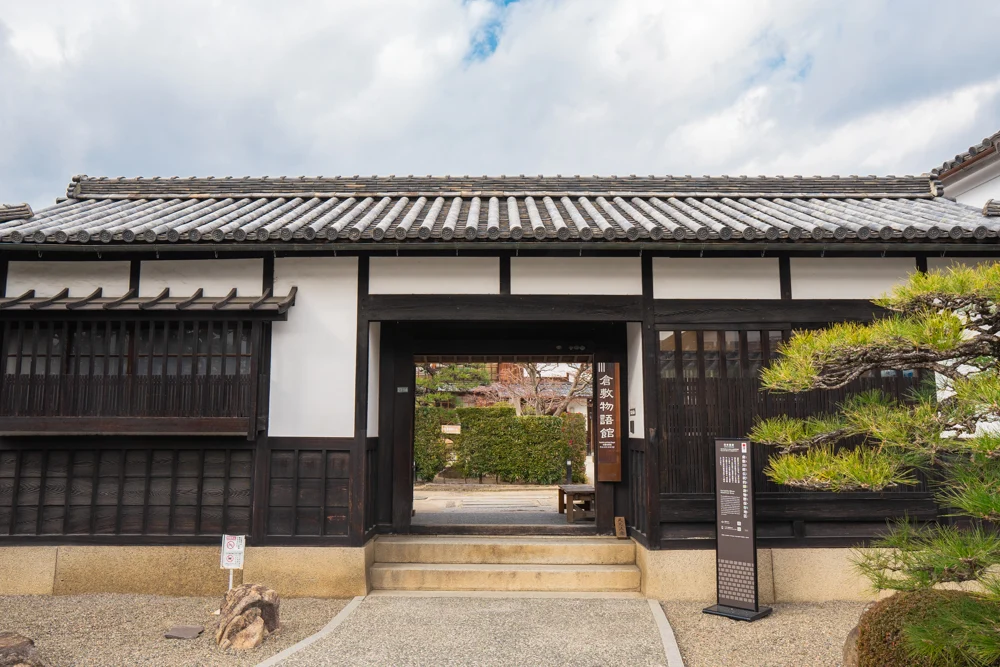
Kurashiki City Kurashiki Monogatari-kan

The folding screen at Kurashiki City Kurashiki Monogatari-kan is the first one you’ll see if you’re coming toward the Bikan Historical Area from the station.
Perhaps for that reason—or because it is a “folding screen reproducing a National Treasure using high-definition digital technology”—there are a great many visitors!
There are more people here than at any of the other folding-screen displays.
▼There was also a folding screen in the multipurpose hall.

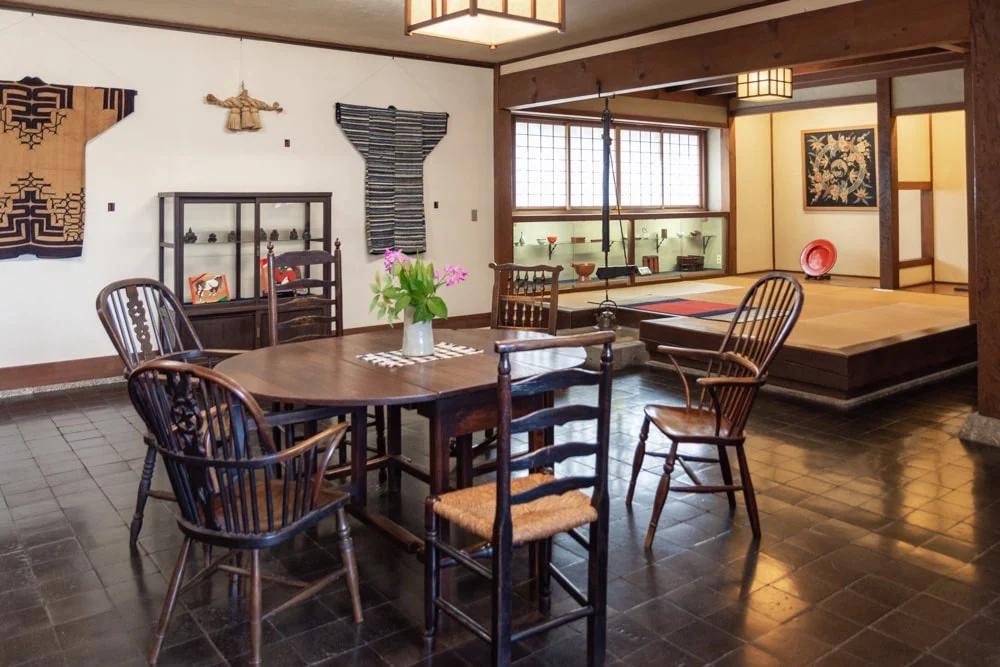
Kurashiki Museum of Folkcraft

The folding screen at the Kurashiki Museum of Folkcraft was displayed to the left of the reception desk.
Photography was permitted as long as you didn’t use flash.
When you visit, please ask before taking photos.
Kurashiki Archaeological Museum

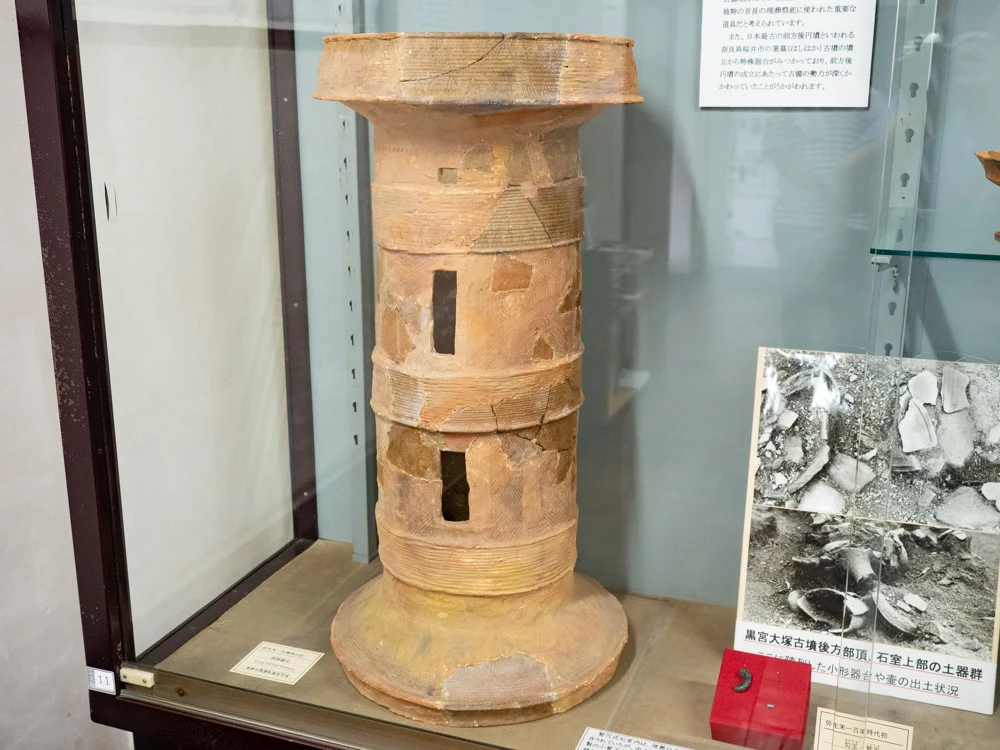
The folding screen at the Kurashiki Archaeological Museum was just to the right of the entrance.
The festival pamphlet marked it as “admission charged,” but no one said anything, and I was able to view it without paying. You can also take photos of the folding screen.
However, please ask before taking photos.
Ryokan Kurashiki

The display at Ryokan Kurashiki was an unusual folding screen made of flowers.
You go in through the entrance and head to the room on the right, but it was a little hard to find…
I wandered around looking for it, and people started to look at me suspiciously.
In that situation, just ask, “Where is the folding screen?” and they’ll show you.
The area where the folding screen was displayed was also the ryokan’s smoking area, so it was filled with the smell of cigarettes.
If you dislike cigarette smoke, you won’t want to stay long.
I thought, “What a shame, when the folding screen is so beautiful…”
Folding-screen displays in traditional townhouses from Honmachi to Higashimachi

The folding-screen displays in traditional townhouses from Honmachi to Higashimachi are the main exhibits of the festival.
The screens on display don’t all change every year.
Some may be the same, while others may be new.
If you attend for a second time or more, seeing what has changed is part of the fun.
Features of the townhouse folding-screen displays from Honmachi to Higashimachi
If this is your first time seeing folding screens at the festival, I recommend this section.
One feature is that you can see more than 20 different kinds of folding screens.
You can also casually enter shops and ryokan that might normally feel difficult to visit.
There are also lots of people out and about, giving you a real sense of “It’s a festival!”
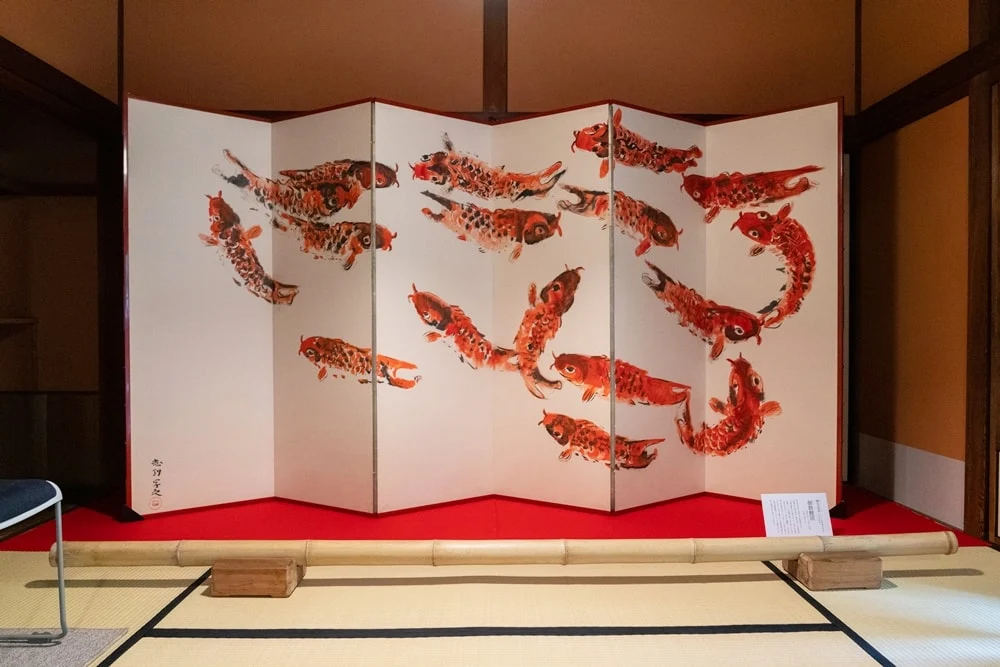
Ohara House Katalyzer

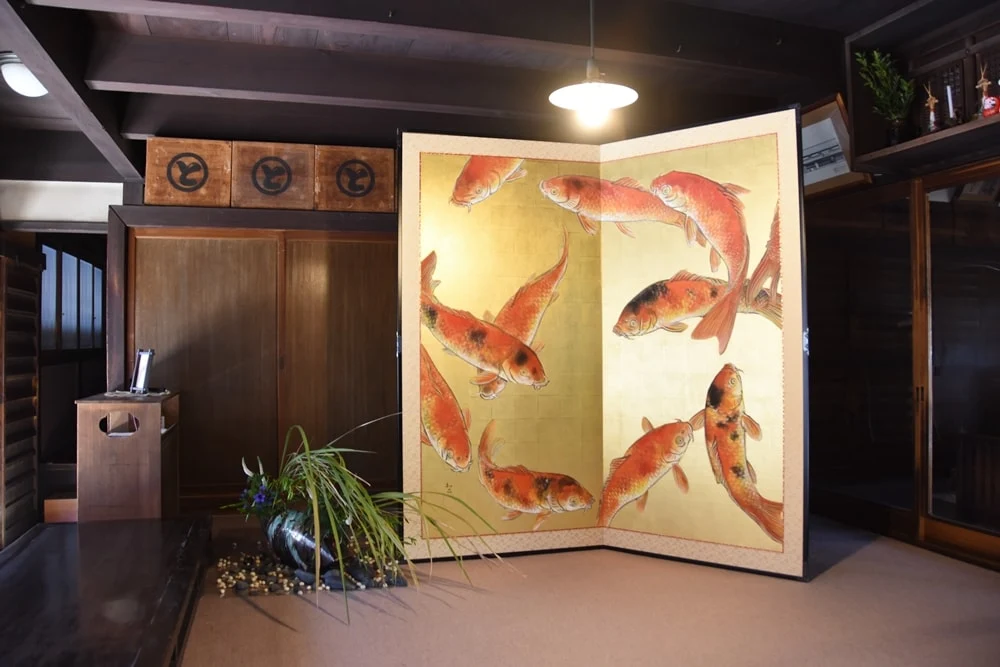
Ohara House Katalyzer displayed “Carp” by Shiko Munakata. The fish are not realistic carp; their somewhat stylized appearance is charming.
▼There was another folding screen as well.
Also by Shiko Munakata, it is titled “School of Carp.”
Achi Shrine

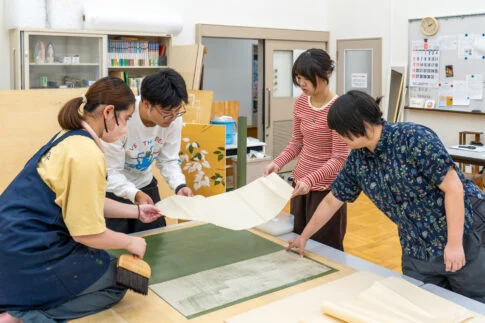
Folding screens created by students from Kurashiki University of Science and the Arts were on display on the grounds of Achi Shrine.
Students created folding screens in the same way in 2018, too!
▼They were also displayed at other locations, not just Achi Shrine.
This one is at Gallery Hashimaya.

▼The 2018 Byobu Festival article explains how the decision was made to create folding screens as part of a class.
Hashimaya Kimono Shop

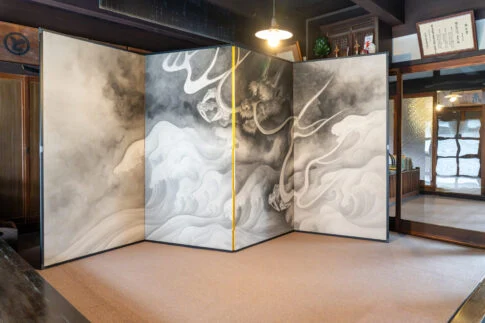
In 2019, Hashimaya Kimono Shop once again displayed a folding screen by Tomoki Moriyama, a Japanese-style painter who is also a professor at Kurashiki University of Science and the Arts.
As in 2018, it’s one of my favorite works.
Enjoy More Than Just Folding Screens
The Byobu Festival is an event where you can also enjoy strolling around town.
▼You can watch the Kurashiki Senzairaku parade.

▼Suinkyo are wandering all over the place, too, so if you run into one, ask them to tap you on the head with a fan.
It’s said to bring good fortune.

▼Be sure to enjoy the ikebana, too.

▼The lovely-smiling Kurashiki Komachi were near the Byobu Festival headquarters!

From the Writer
There are many different ways to enjoy the Byobu Festival.
You can set out to see every folding screen and walk all around the Bikan Historical Area.
It’s also perfectly fine to see only the ones that catch your eye.
You could ignore the folding screens and enjoy Achi Shrine’s autumn grand festival, or focus on sampling the local food.
There are no rules, so I hope you find a way to enjoy it that suits you.
Articles About the Kurashiki Byobu Festival
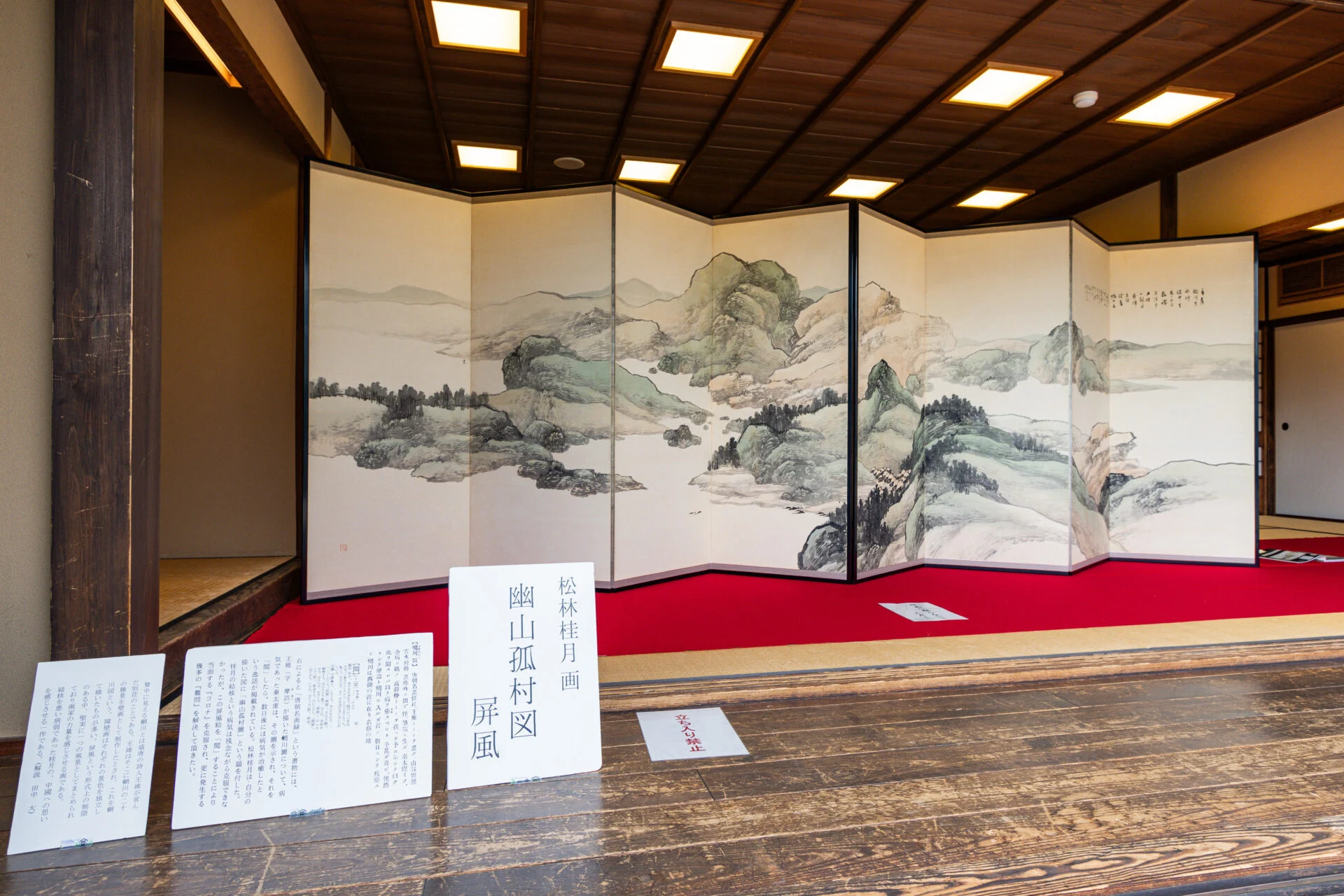
Kurashiki Byobu Festival Information
| Name | Kurashiki Byobu Festival |
|---|---|
| Dates | October 19 (Sat.) and 20 (Sun.), 2019 [Ended] 10:00 a.m. to 5:00 p.m. *Held to coincide with the Achi Shrine Autumn Grand Festival |
| Location | Honmachi and Higashimachi districts, around the Bikan Historical Area, Kurashiki City |
| Admission (tax included) | Free (admission fees are required at some locations) |
| Website | Kurashiki Byobu Festival | Kurashiki Tourism WEB |

What would you like to know about Kurashiki?
Enter a word to search articles on this site