
“Popular Chinese” and “town Chinese” restaurants are a distinctly Japanese take on Chinese cuisine, developed independently in Japan.
“Kouchin” in Tamashima, in western Kurashiki City, has been a beloved local restaurant for more than 60 years. It offers a wide range of popular dishes, including its signature Omen noodles.
In 2025, Kouchin relocated from Seishincho Shopping Street, where it had operated since opening, to a suburban location along a major road, and reopened after renovations.
Kouchin cherishes the traditions it has upheld over the years while taking on new challenges.
We take a closer look at Kouchin’s history, the secrets behind its popular dishes, what makes the restaurant special, and the background to its relocation and renovation.
The information presented is current as of the article’s publication in June 2026. Please note that it may differ from current information.
A long-established town Chinese restaurant, founded in 1959, relocates and reopens after renovations

Kouchin is a long-established Chinese restaurant with 67 years in business, having opened in 1959 in Seishincho Shopping Street, in the central district of Tamashima. It has long been cherished by the people of Tamashima as a popular Chinese and town Chinese restaurant.
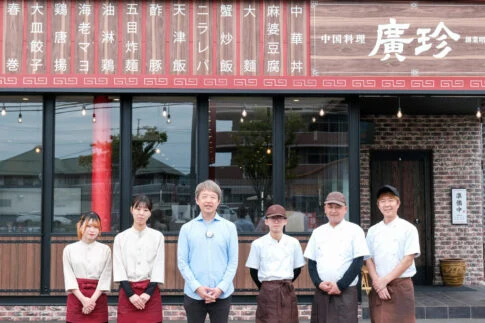
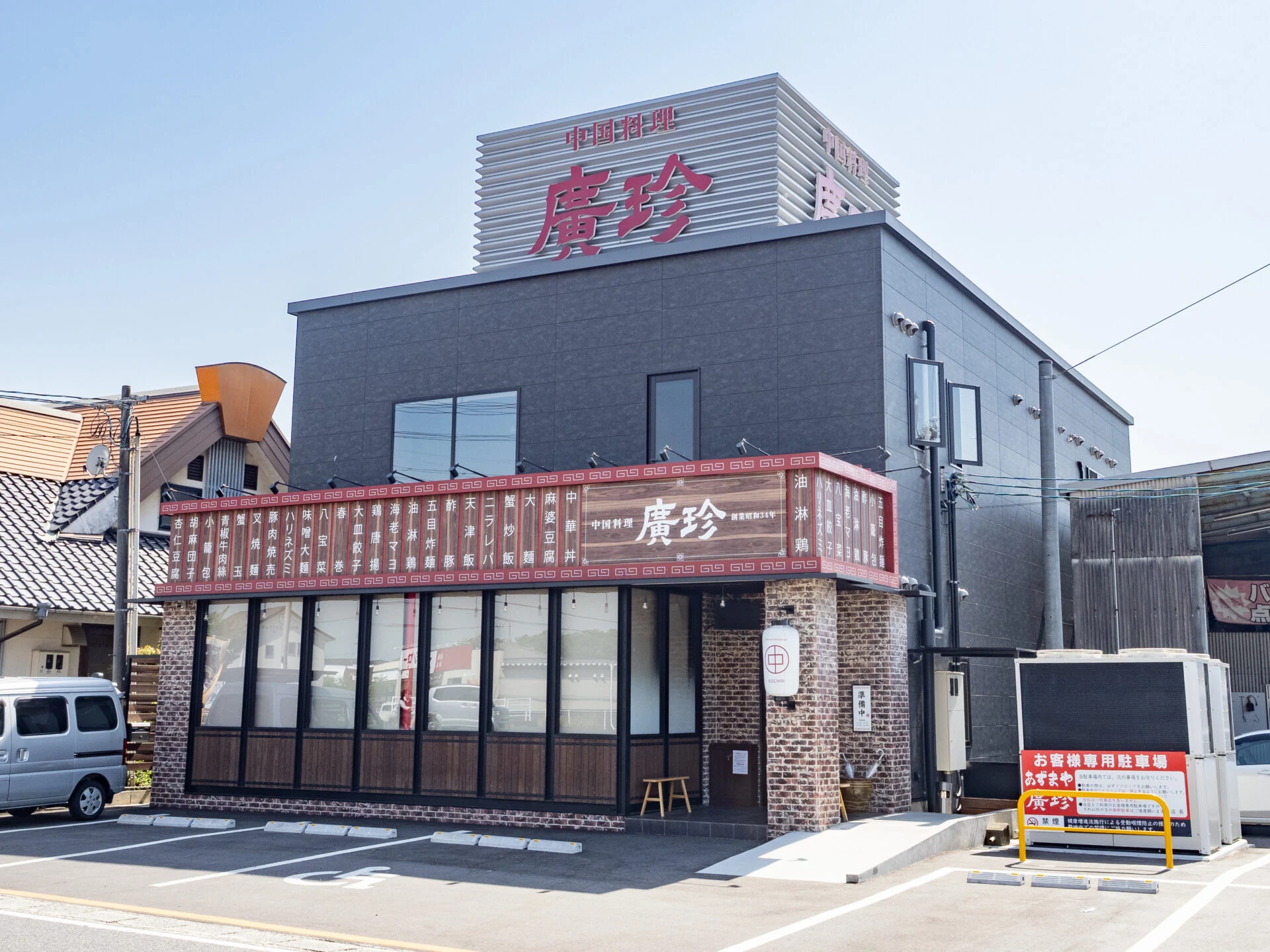
In March 2025, Kouchin made a fresh start, relocating from central Tamashima, where it had operated since opening, to the outskirts of Tamashima and reopening after renovations.
Kouchin is located along Sangyo-dori, on the west side of the road, beside the Tamekawa River.

It is just north of its sister restaurant, Azumaya Tamashima, and the two restaurants share a parking lot.

There are also second and third parking lots just a short walk away.

The first floor has counter and table seating.

It accommodates everyone from solo diners to families and groups.

There are also round-table seats.

The second floor has three private rooms with sunken kotatsu seating.

There is also a private room with tatami seating and a round table.
The partitions in the private rooms with sunken kotatsu seating can be removed to create a large room for up to about 60 people, making them suitable for banquets with large groups. The rooms are also equipped with a projector and sound system, so they can be used for meetings with meals.
In addition to Kouchin, Kouchin Co., Ltd., which operates the restaurant, runs the following group businesses:
- Azumaya Tamashima (Japanese cuisine)
- Menya Hiro (ramen)
- Hiromaru (Chinese deli)
- Chinese Diner Kouchin (Chinese cuisine)
There is also a points card that can be used across the Kouchin group.
Grand menu, lunch menu, and seasonal specials
Information as of June 2026. Prices include consumption tax.

Kouchin offers a wide selection, from noodles and rice dishes to a la carte dishes, dim sum, and desserts.

The varied selection focuses on popular Chinese dishes.


There are also set menus, banquet menus, and drinks and alcoholic beverages.

The weekday-only lunch menu is popular for its generous portions.

There are also seasonal limited-time menus that change throughout the year. You can order all menu items using the tablet at your table.
Takeout options, including bento, are also available.
Popular and Recommended Menu Items
Here are some of the popular dishes and staff recommendations from Kouchin’s wide-ranging Chinese menu.
“Daimen” has been Kouchin’s most popular signature dish since its early days
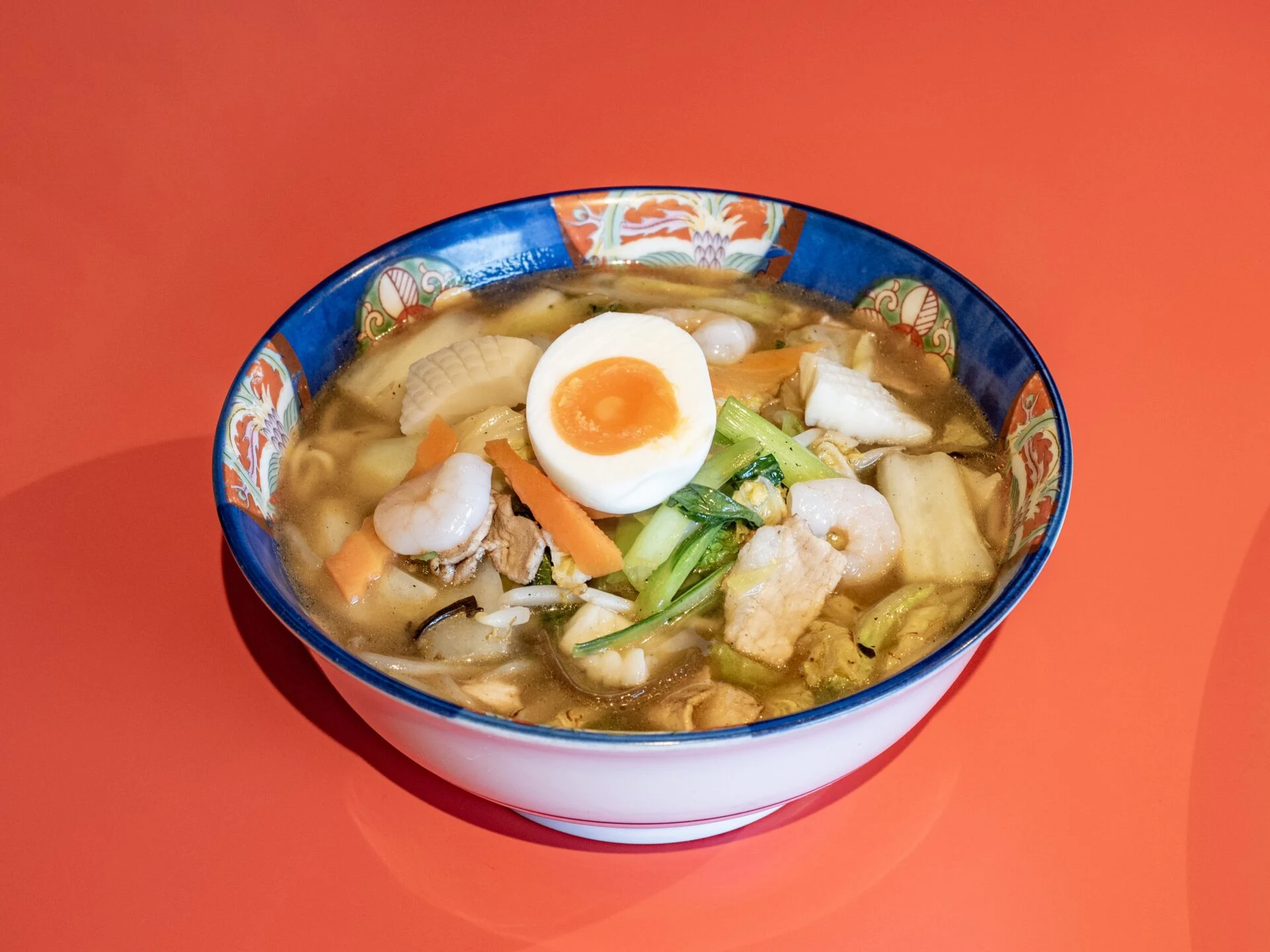
“Daimen” is a tanmen noodle soup generously filled with vegetables and other ingredients.

The vegetables are Chinese cabbage, cabbage, komatsuna, carrots, wood ear mushrooms, and green onions. The seafood is squid and shrimp, and the meat is pork. Half a boiled egg sits in the center.
The vegetables are carefully stir-fried to remove excess moisture, giving them a crisp texture.

The stir-fried vegetables are then combined with the soup. This brings the vegetables’ savory flavor and aroma together with the soup in a harmonious taste. Even before you take a bite, you can smell its appetizing aroma.
The soup is salt-seasoned and light in flavor. You can also taste the sweetness, savoriness, and aroma of the stir-fried vegetables.

The texture of the squid and shrimp adds a nice accent. The pork is delicious too.

The noodles are homemade, smooth and easy to swallow, and the soup clings to them well.
“Mapo tofu” is an authentic dish that focuses on “ma” and “la”

“Mapo tofu” is another popular dish.
It is available as a standalone dish, as “Mapo rice bowl,” and as a “Mapo tofu lunch” on the lunch menu.
Kouchin used to serve Japanese-style mapo tofu, but now offers an authentic Sichuan-style version.
You can choose from three levels of spiciness, from 1 to 3. When we visited, we ordered level 1.


The key to Kouchin’s mapo tofu is its focus on “ma” and “la”!
“Ma” refers to the numbing heat of Sichuan peppercorns, which makes your tongue tingle. “La” is the sharp, piercing heat of chili peppers.

A bite of the tofu, ground meat, and sauce brings a thick texture, a sweet-and-salty flavor, and the savory taste and sweetness of the meat. Then comes the tofu’s smooth, soft texture and gentle, subtle sweetness.

Then a tingling sensation and a mild spiciness spread through your mouth. The Sichuan peppercorn flavor comes through clearly, too. It’s a dish that makes you want more rice.
When you order mapo tofu, it also comes with two kinds of extra spices.

The red-colored spice called “red sansho” is huajiao (花椒). It is made from ripened berries and is characterized by a numbing heat.
The green-colored spice called “green sansho” is tengjiao (藤椒). Since it is made from berries before they ripen, it has a fresh, intense aroma.
Add more to taste.
“Sweet-and-sour pork” is a standard menu item popular with a wide range of customers

“Sweet-and-sour pork” has been one of the popular a la carte dishes since the restaurant opened.
Sweet-and-sour pork has its roots in Cantonese cuisine, making it a fitting dish for Kouchin, which was originally a Cantonese restaurant.
The key to Kouchin’s sweet-and-sour pork is the tangcu (sugar vinegar), a sweet-and-sour sauce.
Kouchin’s tangcu is ketchup-based, with light soy sauce, vinegar, and other ingredients added to balance the flavor.
Kouchin’s sweet-and-sour pork has a pleasant balance of sweetness and acidity, with a smooth, thick sauce that makes it very easy to enjoy.

The ingredients, including pork, green peppers, carrots, onions, and baby corn, were all cut into generously sized pieces.
This makes the dish satisfying to eat. Its vivid colors are also striking.
Other popular a la carte dishes include “shrimp with chili sauce,” “liver and chives,” “pepper steak,” “fried chicken,” and “gyoza,” in addition to sweet-and-sour pork and mapo tofu.
“Tenshindon” features fluffy egg and a house-made sauce

Popular rice dishes include tenshindon and “mapo don” and “chukadon.” During our visit, we ordered tenshindon.
Tenshindon is often served with a brown, soy sauce-based sauce or a reddish, sweet-and-sour sauce, but Kouchin’s version is different from both.

Kouchin’s tenshindon is distinguished by its pale cream-colored sauce, which has a rich, thick consistency.
The sauce for Kouchin’s tenshindon is based on chintan (clear soup) that has been simmered slowly.
No sugar is added, giving it a savory, easy-to-enjoy flavor.

The egg covering the rice is very thick and has a fluffy texture.

The filling included plump shrimp, green onions, and bamboo shoots.

This style of tenshindon has been served since the previous owner’s time and reflects his particular care.
“Gyoza” are distinguished by a filling of pork and mature chicken, with fish sauce as a secret ingredient

Dim sum is also popular at Kouchin, and “gyoza” and “xiaolongbao” are said to be especially popular orders.
Gyoza are available in the standard serving of six, as well as a large platter of 18 called “large-plate gyoza.” The large platter costs a little less per piece, making it good value.
It may be ideal for sharing with a group.
The gyoza are handmade in-house every day.
Another key point is that the filling combines ground pork with ground mature chicken.

Using mature chicken brings out a rich umami flavor and adds a satisfying bite, giving Kouchin’s gyoza their pleasantly textured filling.
Another key detail is that a little fish sauce is added to the soy sauce seasoning for a distinctive accent. This gives the flavor greater depth.
We were told that fish sauce is also added to other dishes that use soy sauce, such as soy sauce ramen, liver and chives, and the marinade for fried chicken.
Even in gyoza, a staple of neighborhood Chinese restaurants, Kouchin incorporates its own distinctive touches.
Kouchin, a long-established Chinese restaurant, has entered a new chapter following its relocation and renovation.
We interviewed its representative director, Hori Hiroshi.
Kouchin Information
| Name | Kouchin |
|---|---|
| Address | 1713-14 Tamashima, Kurashiki City, Okayama Prefecture |
| Contact | 086-522-5188 |
| Parking | Available Second and third parking lots available Shared with Azumaya Tamashima Branch |
| Hours | 11:00 a.m.–2:30 p.m. (last order 2:00 p.m.), 5:30 p.m.–9:00 p.m. (last order 8:30 p.m.) |
| Closed | Open daily |
| Payment methods |
|
| Reservations | Available Reservations accepted only for large groups using the second-floor seating (Reservations are not accepted for regular use of the first-floor seating) |
| Seating | 156 seats in total ・Counter: 6 seats ・Tables: 70 seats ・Second-floor tatami room: 80 seats |
| Smoking | Entirely non-smoking |
| Restrooms | Western-style toilet |
| Families with children | Strollers allowed (first floor only) Children's tableware available Children's chairs available |
| Accessibility | Ramp Wheelchair access available (first floor only) Restroom is not wheelchair accessible |
| Website | Kouchin | For everyone's "Delicious!" |

What would you like to know about Kurashiki?
Enter a word to search articles on this site






































Daimen has been popular since the restaurant’s early days and is Kouchin’s signature dish!
Along with plenty of vegetables, it contains seafood and meat, making it nutritionally balanced and a favorite among customers of all ages.