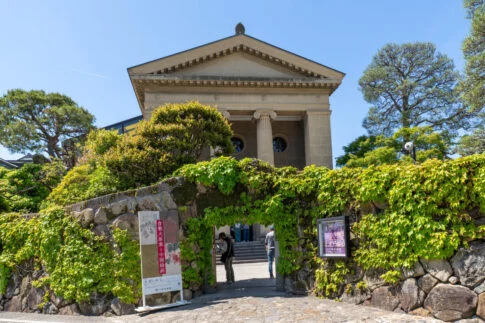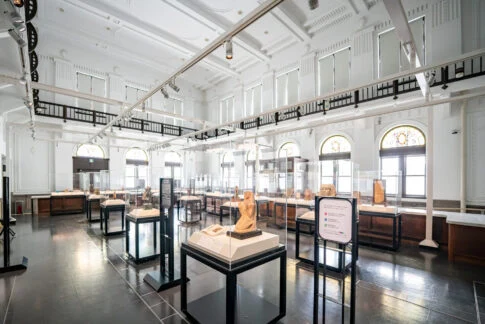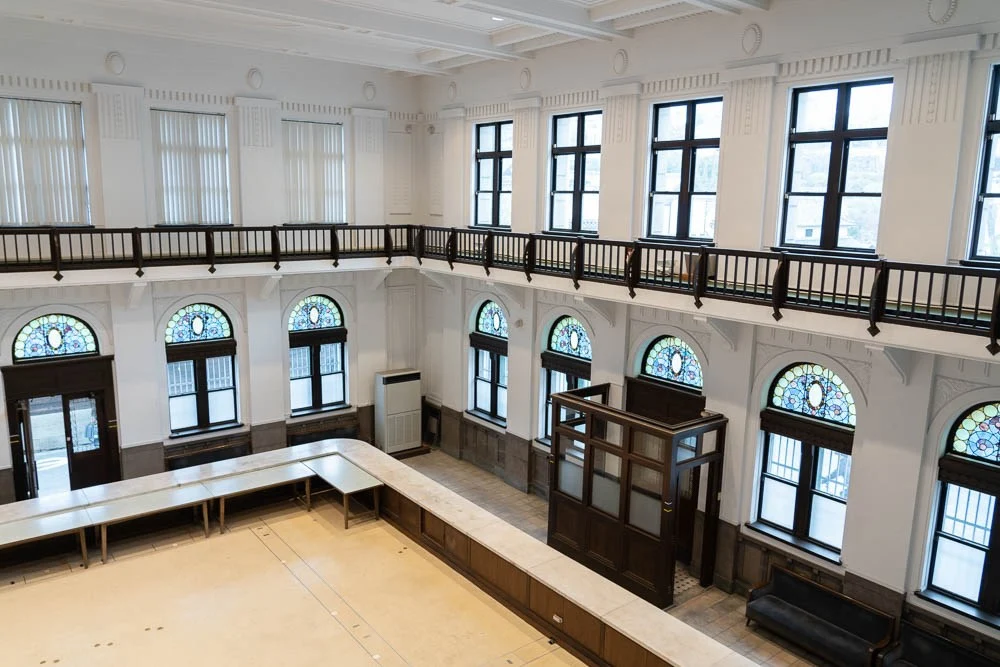
Did you know that there was a bank with Renaissance-style columns and stained glass in the Bikan Historical Area of Kurashiki?
This is the former China Bank building, which ceased operations in 2016.
Ohara Museum of Art is repurposing this building into a museum and plans to open the "Kojima Torajiro Gallery (tentative name)" in April 2022.
What kind of building was this beloved bank architecture that lasted for 100 years?
What kind of museum will it become?
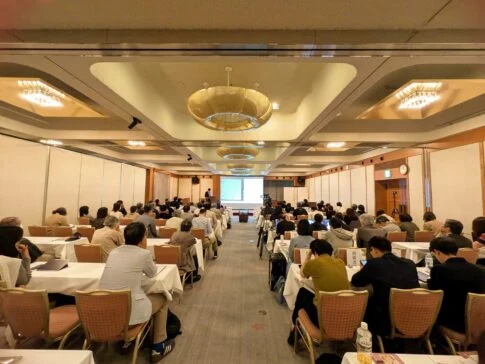
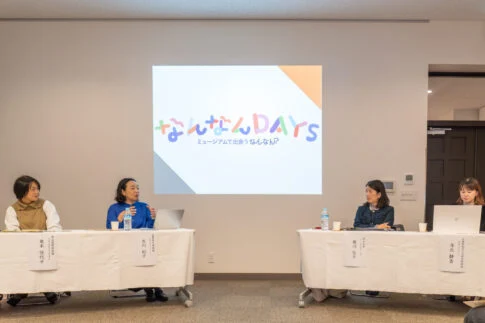
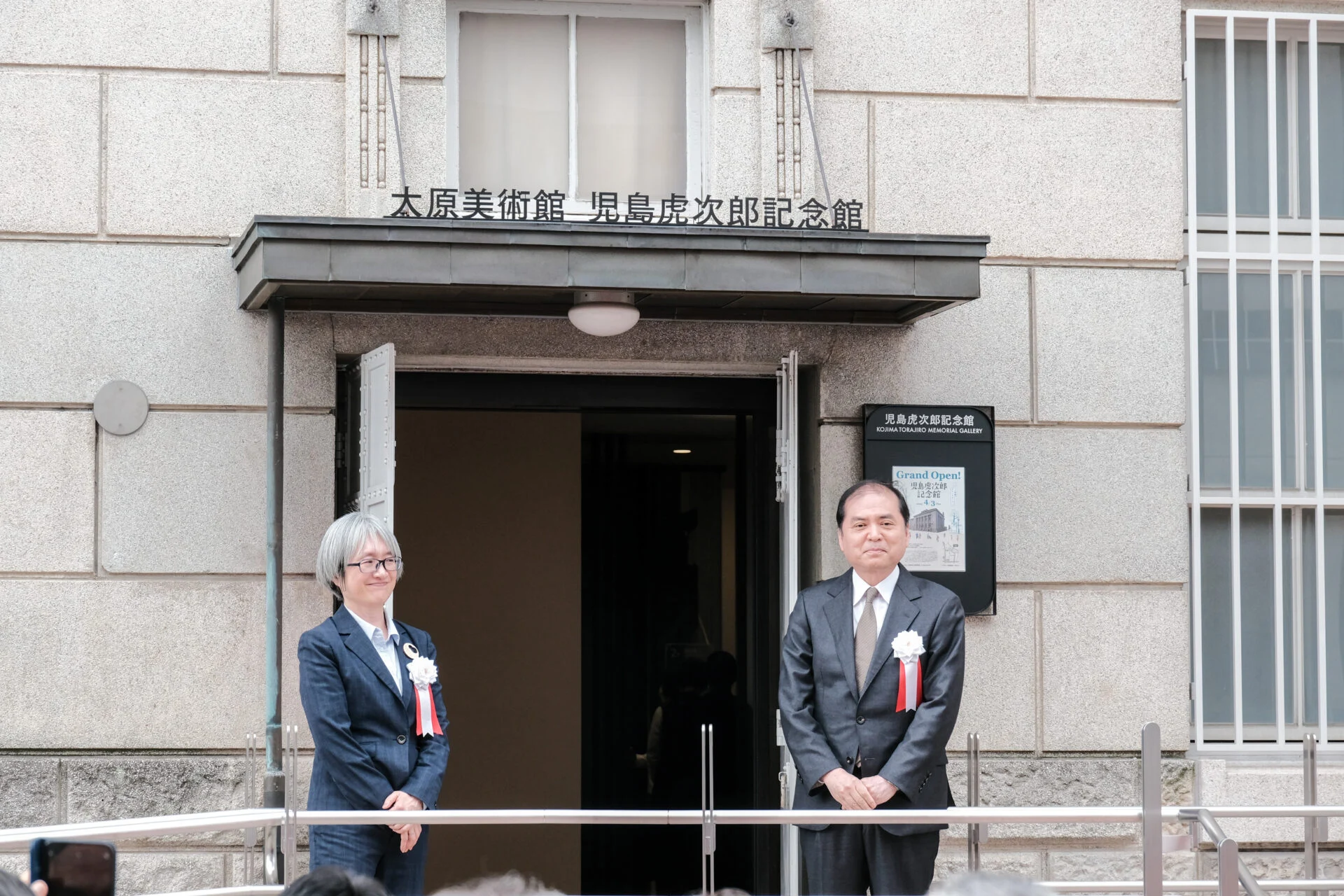
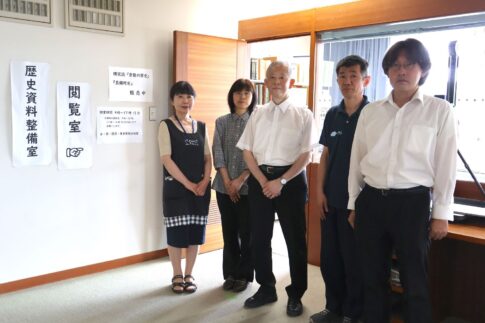
I attended a press conference held on January 29, 2020 (Wednesday).
The photos used in this article include those taken with special permission.
About the building that will become the "Kojima Torajiro Gallery (tentative name)"
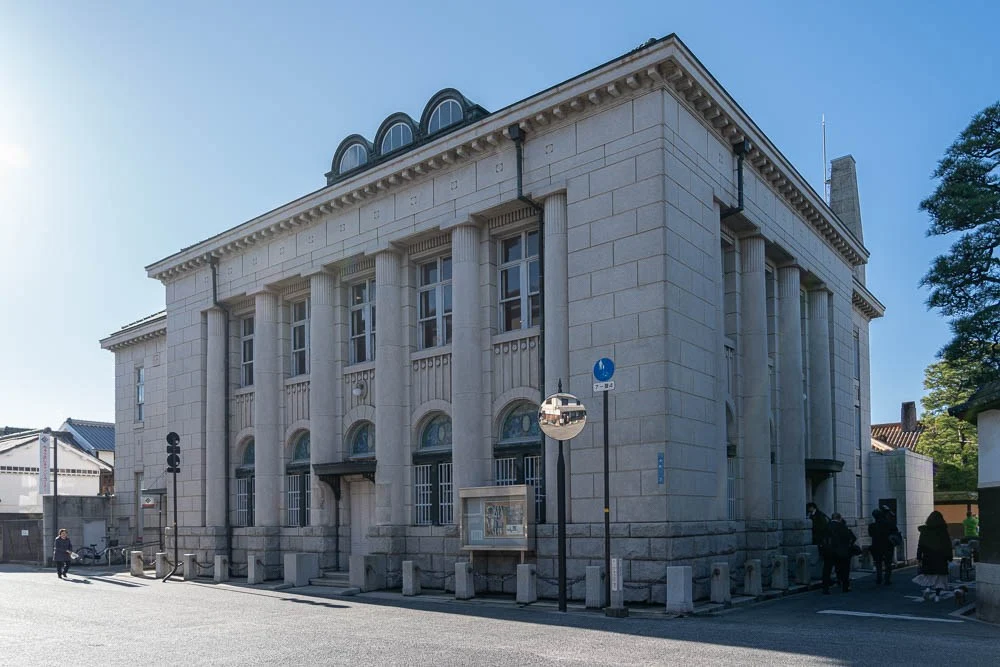
The building that will become the Kojima Torajiro Gallery (tentative name) was used as a bank.
| Address | 3-1 Honmachi, Kurashiki City, Okayama Prefecture |
|---|---|
| Structure | Preservation building: mixed structure (partly reinforced concrete) and wooden New building: reinforced concrete |
| Floor area | 961.38 square meters |
Let me introduce what kind of architecture it is, along with its relationship with Ohara Museum of Art.
Who is Kojima Torajiro?
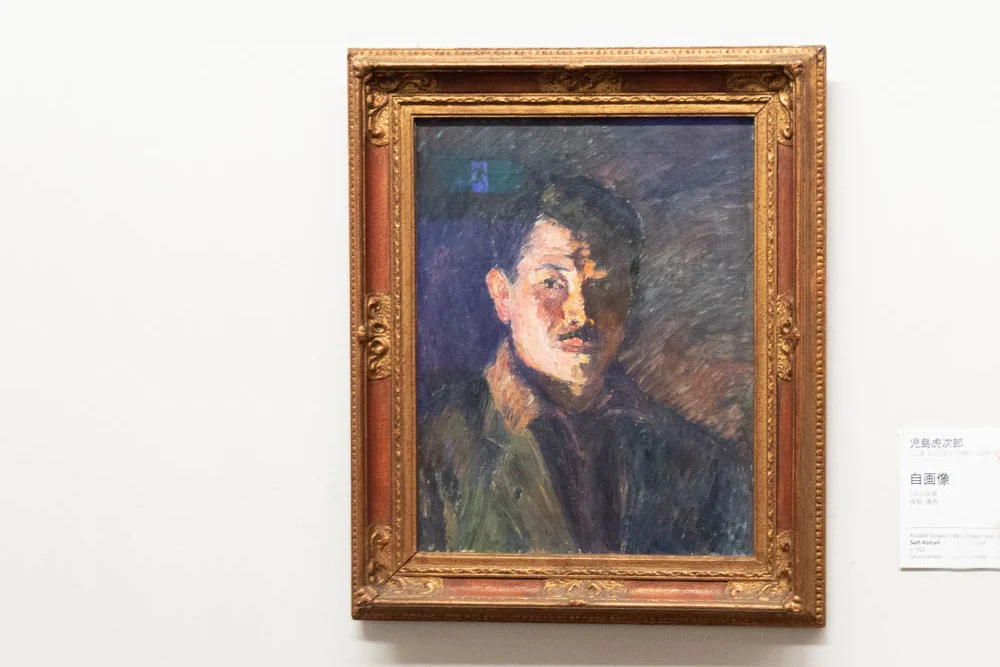
Kojima Torajiro was a Western-style painter born in 1881.
He entered the Western Painting Department of the Tokyo School of Fine Arts in 1902 and became a scholarship student of the Ohara family.
He won first prize at an art exhibition in 1907, and his work was purchased by the Imperial Household Ministry (now the Imperial Household Agency).
He studied abroad in Europe from 1908, graduating at the top of his class from an art school in Belgium.
It is clear that he was a very talented painter.
At that time in Japan, there were no opportunities to see real Western paintings.
For those learning Western painting in Japan, Kojima advised Ohara Magosaburo to collect Western paintings, and Magosaburo agreed.
While being recognized for his talent as a painter in France, Kojima also began collecting artworks.
He actively collected "contemporary art" of that era, such as visiting Monet's studio and obtaining one of his favorite pieces.
He laid the foundation for the wonderful collection of Ohara Museum of Art.
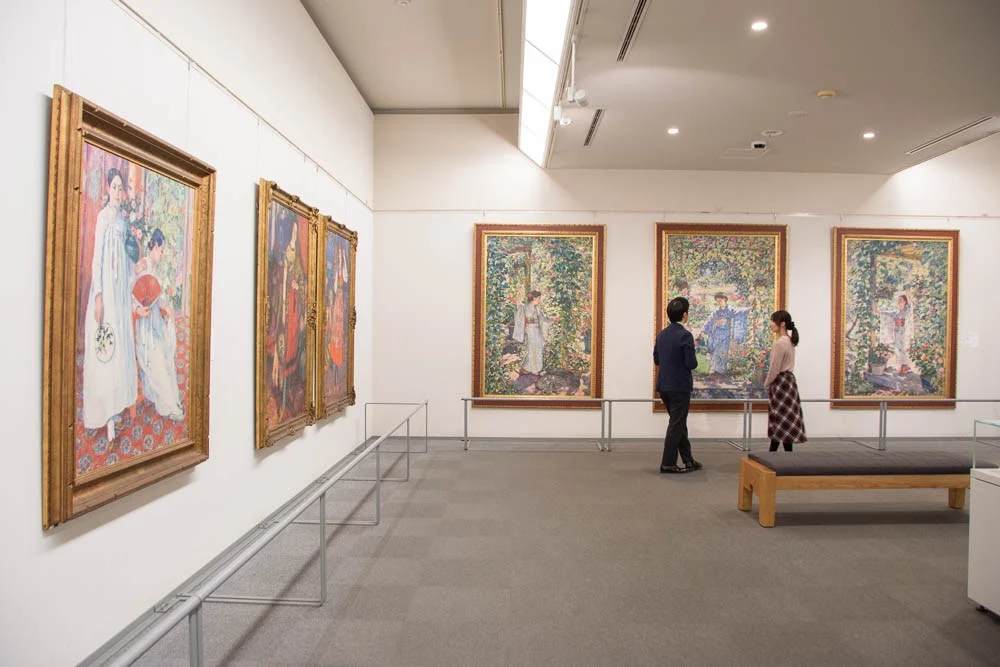
Kojima also purchased ancient art from Egypt and China.
In memory of Kojima Torajiro, who passed away at the young age of 47, Ohara Magosaburo established the Ohara Museum of Art to fulfill his wish.
He was an excellent painter, a discerning collector, a friend of Magosaburo, and made significant contributions to the development of Japanese art.
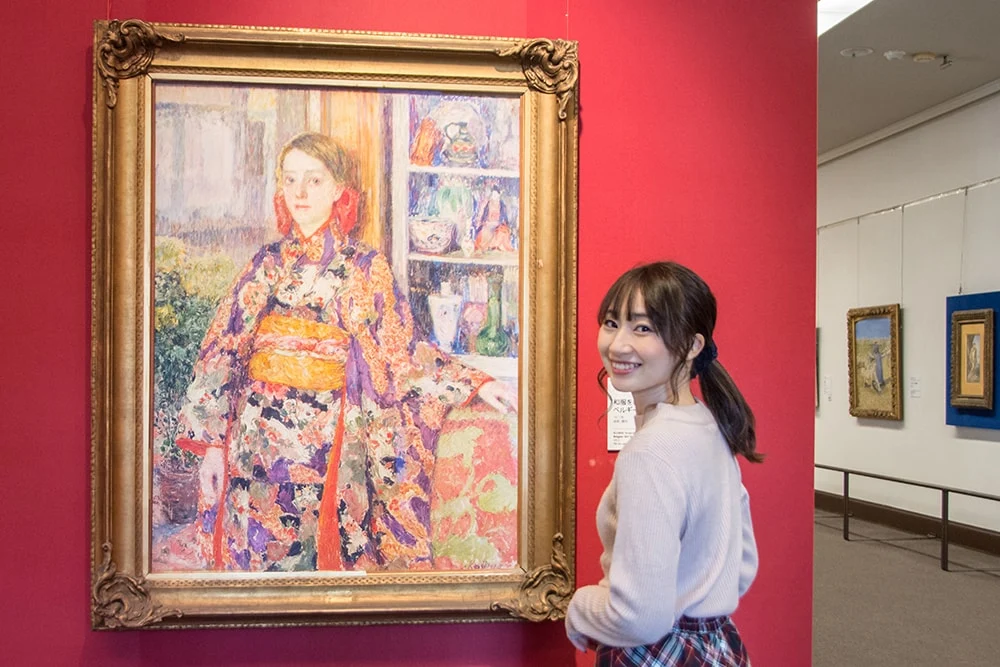
History of the architecture that will become the "Kojima Torajiro Gallery (tentative name)"
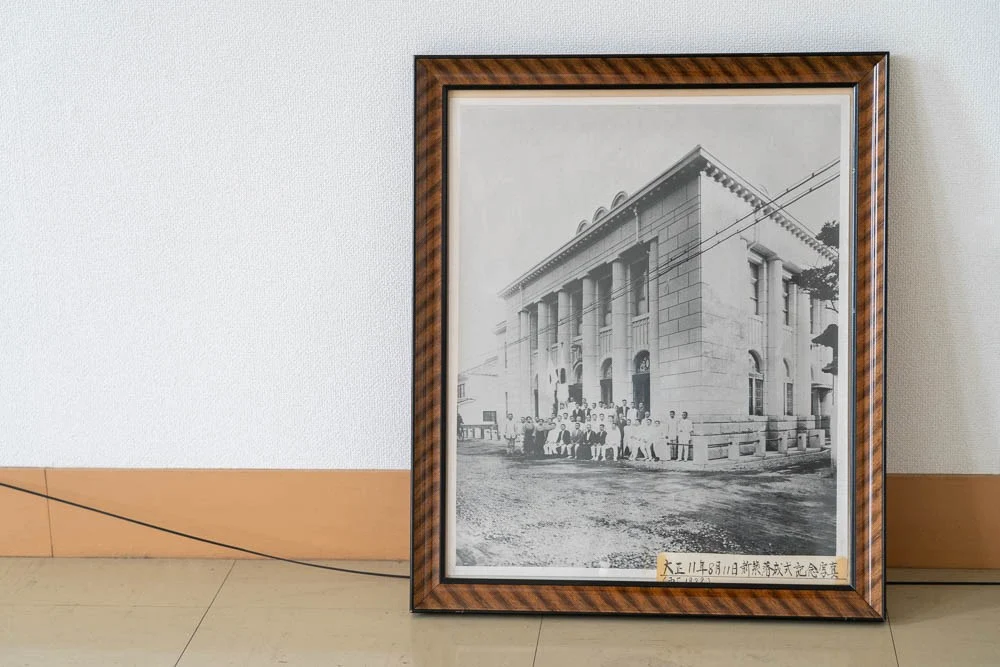
Next, let me briefly introduce the history of the building.
| 1921 | Construction begins |
|---|---|
| 1922 | Completion. Opens as the Kurashiki branch of Daiichi Godo Bank |
| 1930 | Renamed the Kurashiki branch of China Bank. Later renamed twice. |
| 1998 | Registered as a tangible cultural property |
| 2016 | Ceased banking operations. Transferred from China Bank to Ohara Museum of Art. |
| 2017 | Designated as a cultural property of the Japan Heritage "A Kurashiki story beginning with a single cotton flower - a town of textiles woven from harmony of Japanese and Western" |
| 2018 | Designated as an important cultural property by Kurashiki City |
The building has been in operation as a bank while undergoing expansions and seismic retrofitting.
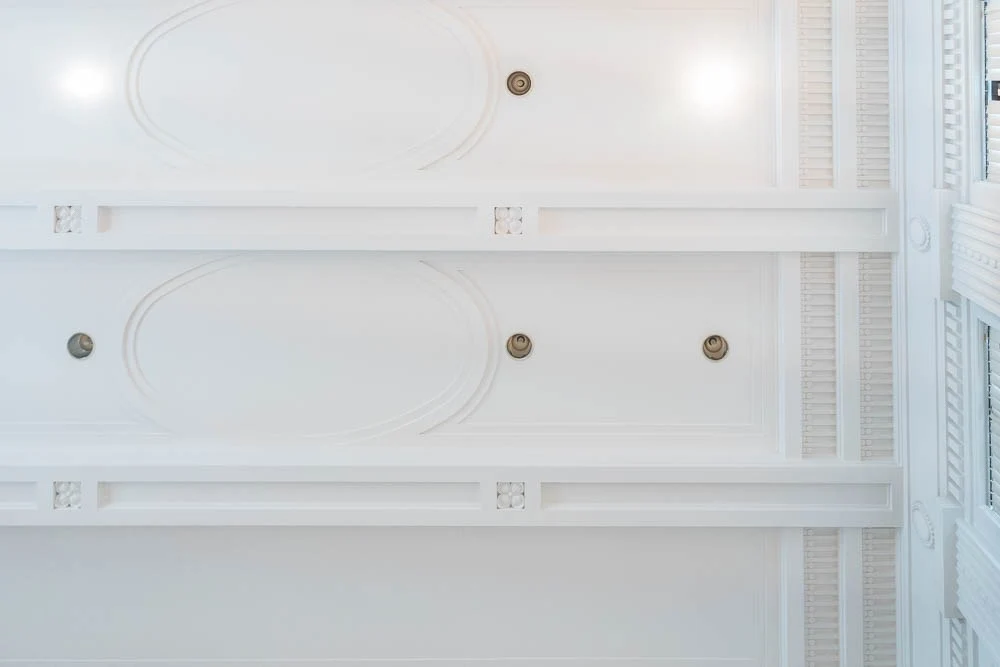
The restoration of the wooden plaster (kizuri shikkui) on the ceiling was reportedly done by molding the original.
It is clear that the building has been used with care.
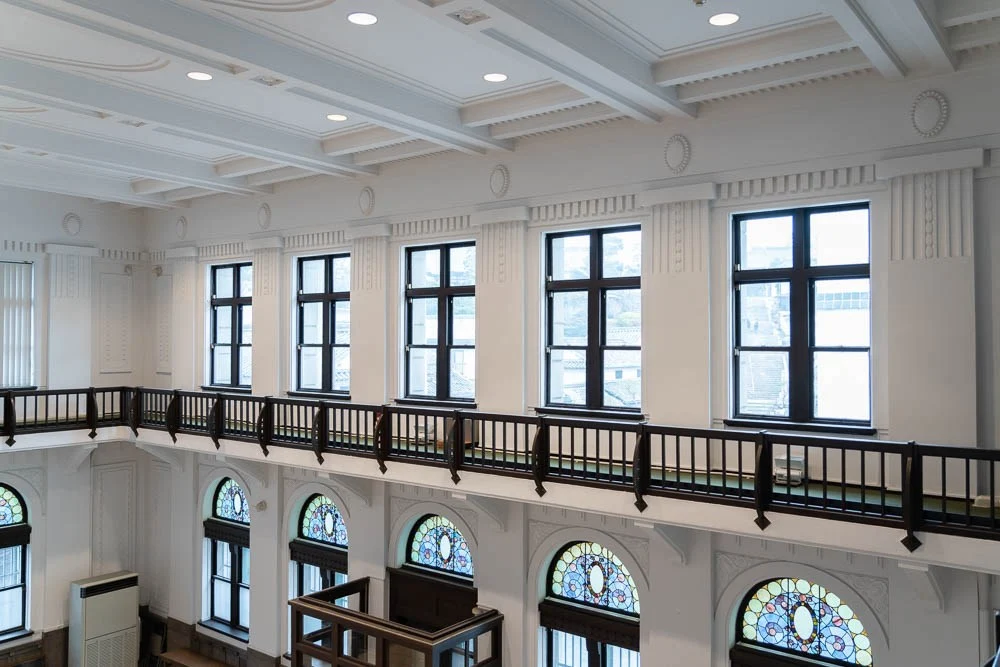
Connection with Ohara Museum of Art
When it was completed in 1922 (Taisho 11), it served as a branch of the First National Bank (now Chugoku Bank), and the president of the bank at that time was Ohara Magosaburo, the founder of Ohara Museum of Art.
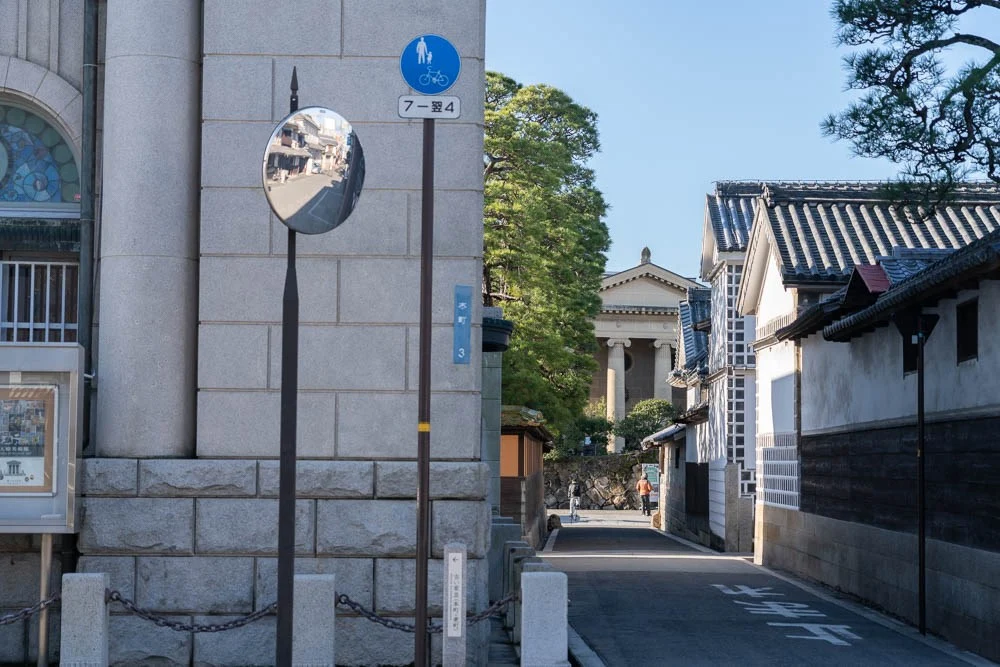
In terms of location, it is situated about 80 meters from the main building of Ohara Museum of Art and is adjacent to the Ohara family's villa, Yurin-so Villa.
Moreover, the architect who designed this building, Yakushiji Kazue, also worked on the designs of the main building of Ohara Museum of Art and Yurin-so Villa.
In other words, it is a place and building with a very deep connection to the Ohara family and Ohara Museum of Art.
It can also be said that it shares a commonality with Ohara Museum of Art as a "facility that supported the development of modern Kurashiki."
Functions of the "New Kojima Gallery (tentative)"
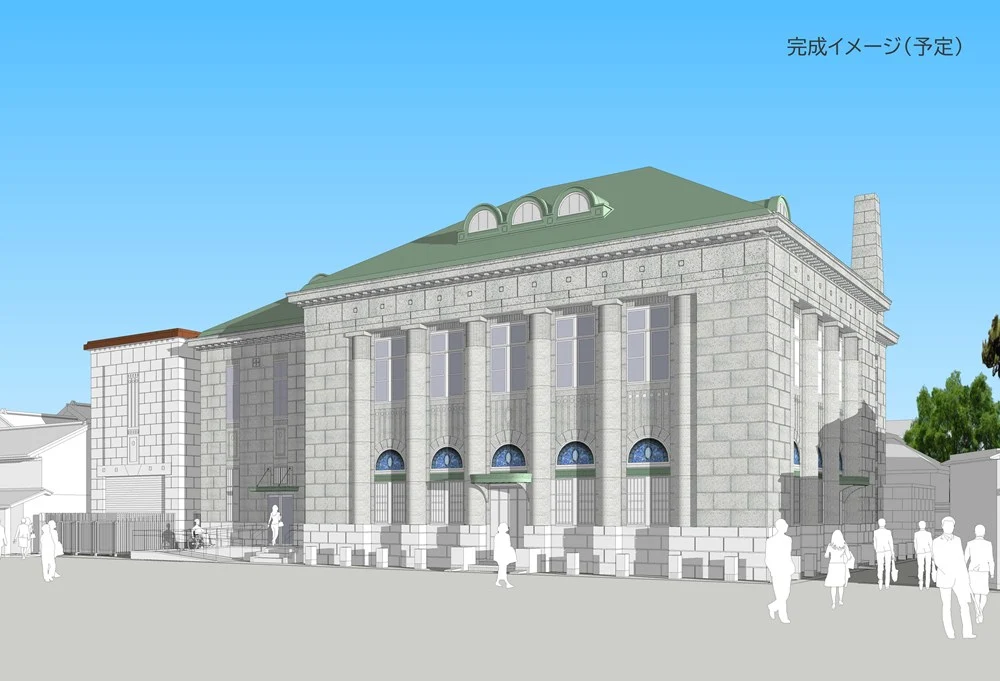
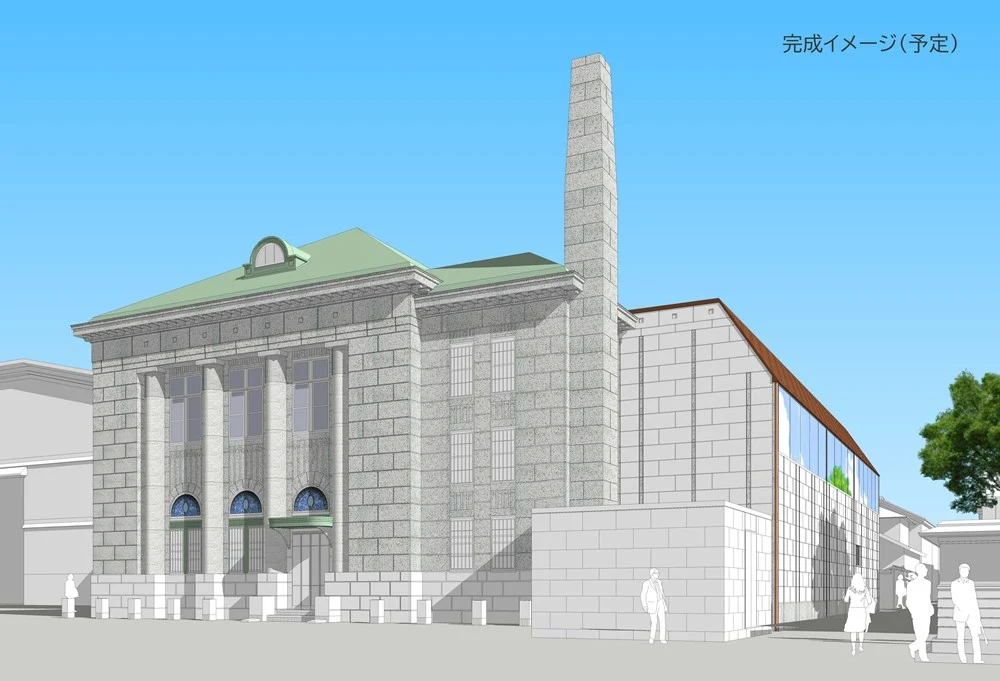
The "New Kojima Gallery (tentative)" will serve the following functions.
- Exhibition and preservation of art works
- Base for educational outreach and appreciation support projects
- Research institution functions
- Preservation and utilization of the building
Let me introduce these in a bit more detail.
Exhibition and Preservation of Art Works
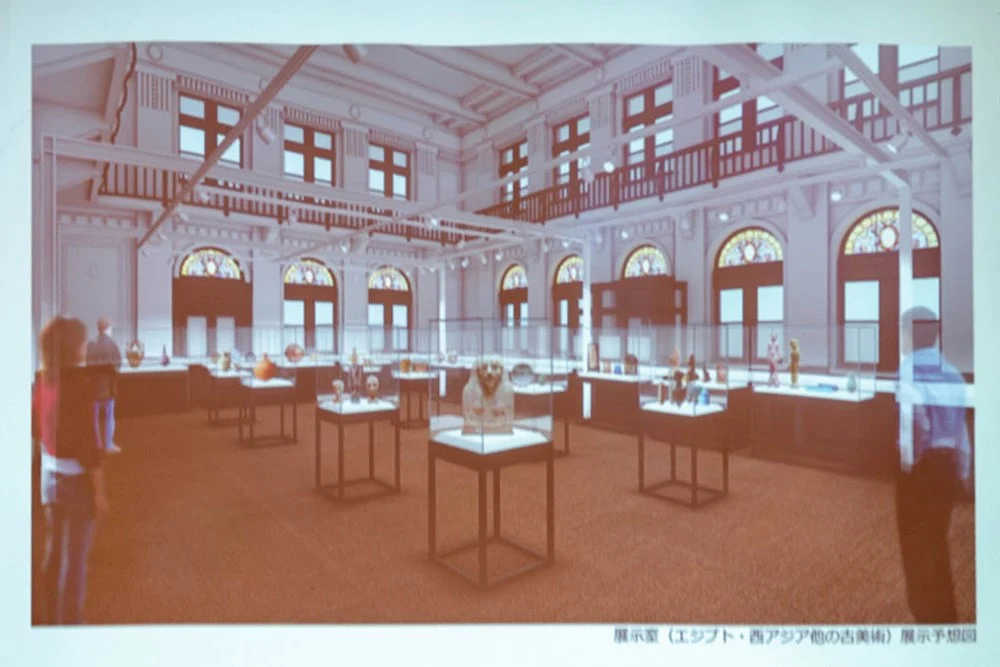
The following items will be exhibited and preserved at the New Kojima Gallery (tentative).
- Ancient art from Egypt, Western Asia, and others
- Works by Kojima Torajiro
The ancient art from Egypt and Western Asia can be referred to as the "source of culture."
Kojima Torajiro collected not only Western paintings but also art from ancient Egypt and Western Asia.
Approximately 600 pieces of art and pottery from ancient Egypt to around the 16th century will be housed.
Among these, the "strong>Pottery fragments from Fustat, Egypt" are attracting attention.
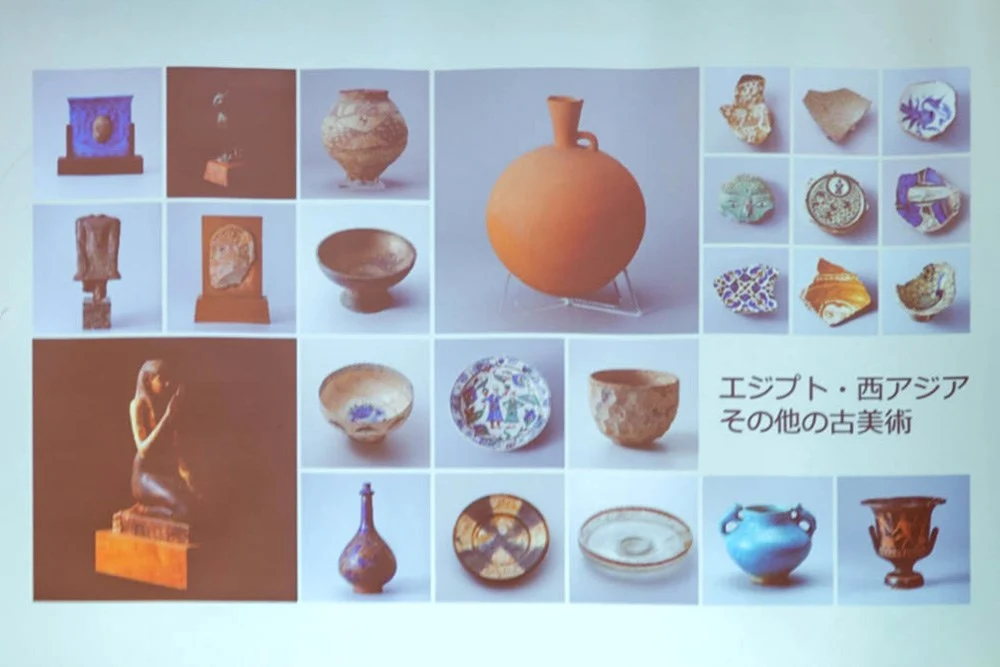
Fustat was a city established in 641 and was the center of commerce in Egypt until 1168.
However, it was later burned down and became a garbage dump for Cairo.
As a result, items used by Egyptians in their daily lives accumulated in Fustat and were left untouched for many years.
Pottery from China, Syria, and other places outside of Egypt have also been excavated from Fustat, showing a rich cultural exchange.
Now, numerous excavations from around the world are coming to Fustat to collect pottery fragments.
The pottery fragments to be housed in the New Kojima Gallery are among the very early finds from the Fustat excavations.
The fragments are significantly larger and diverse, and are said to have very high documentary value.
It includes valuable materials such as Islamic ceramics from around the 9th century, which have been considered "missing" among European researchers.
As research progresses, we may gain a better understanding of the historical flow of ceramics from the Middle East and Egypt.
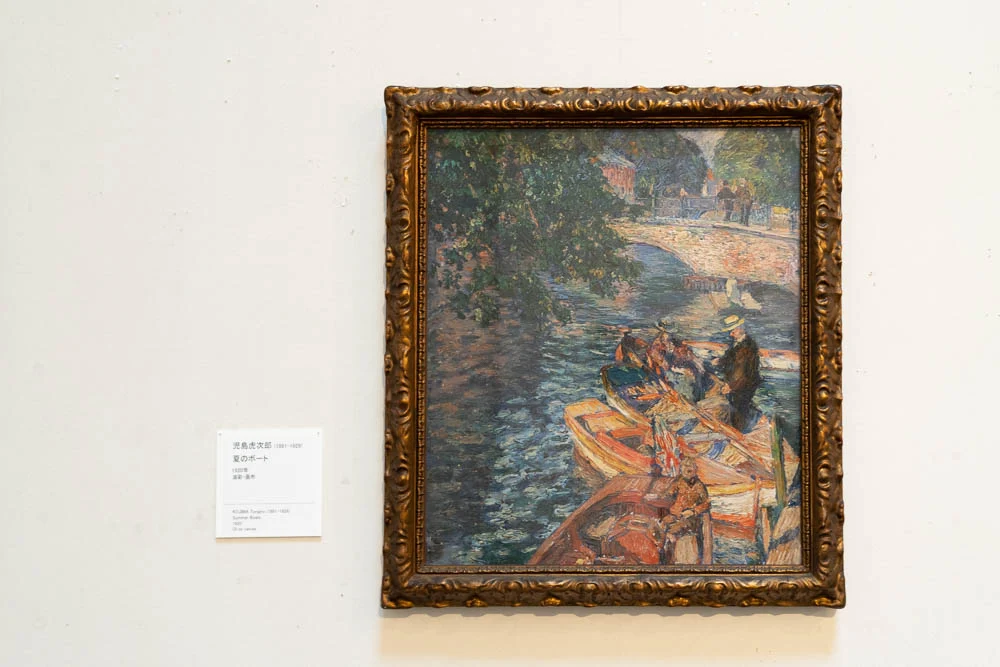
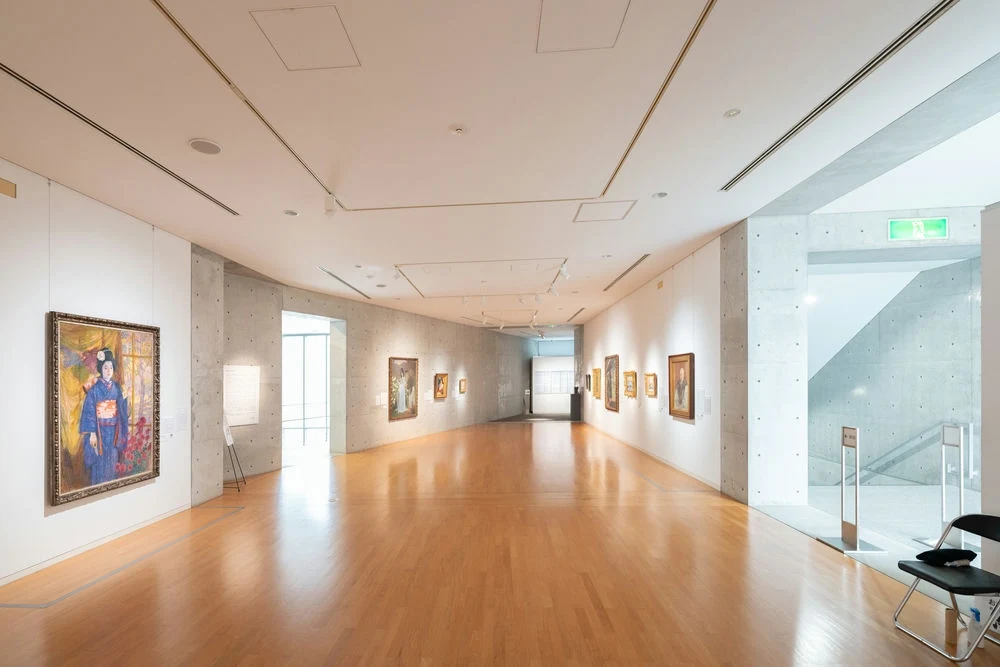
Approximately 160 pieces of Kojima Torajiro's works, including oil paintings and ceramics, are housed.
The author loves Kojima Torajiro's works, so they are very much looking forward to it!
Base for Educational Outreach and Viewing Support Projects
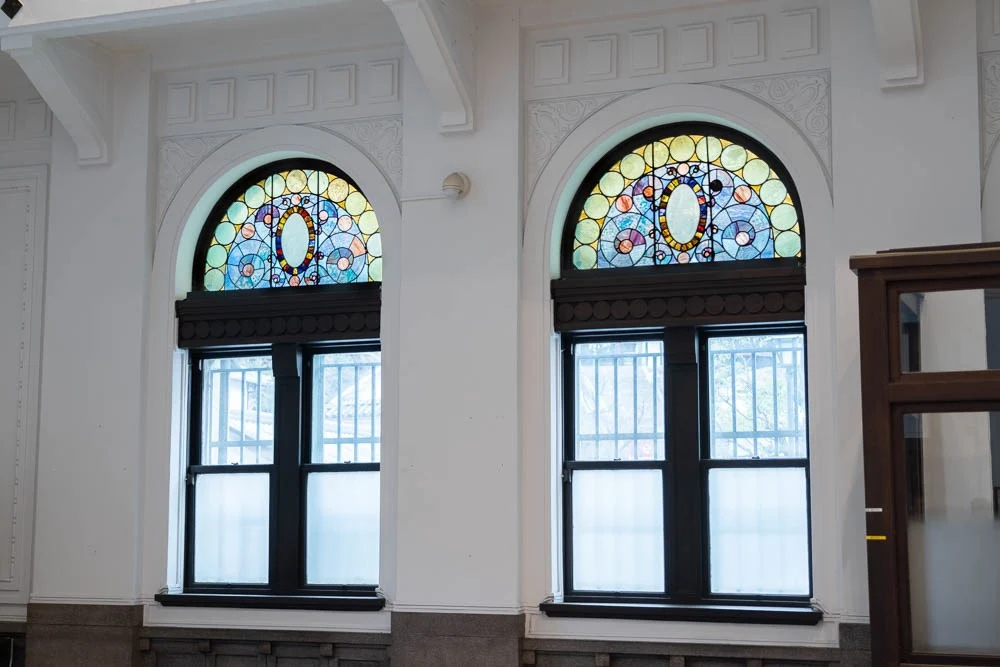
The Ohara Museum of Art has been actively engaged in educational outreach activities for many years.
In fact, they accept over 3,000 preschool children free of charge each year, and more than 20,000 school groups visit for viewing.
However, it seems that the lack of space has been a constraint when accepting groups.
The new Kojima Museum will have a lecture room.
After opening, they hope to further enhance the acceptance of school groups and workshops.
Research Institution
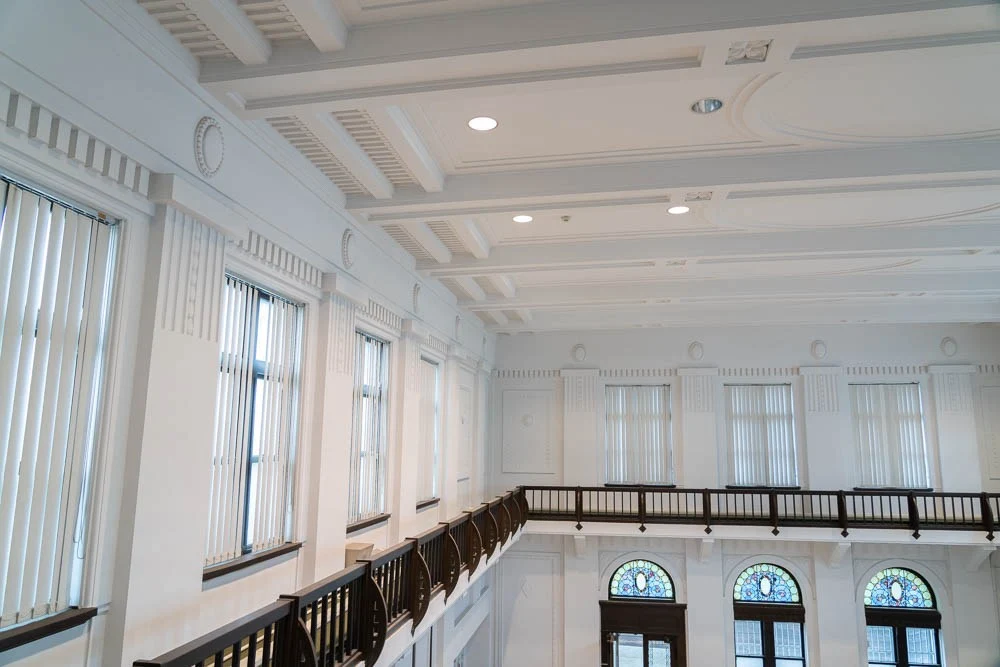
The Ohara Museum of Art houses a very wide range of works from ancient to modern times.
The staff of the Ohara Museum of Art plan to act as concierges, accepting various research investigations from archaeologists, ceramicists, applied scientists, and architects, and connecting and expanding research.
Preservation and Utilization of Buildings
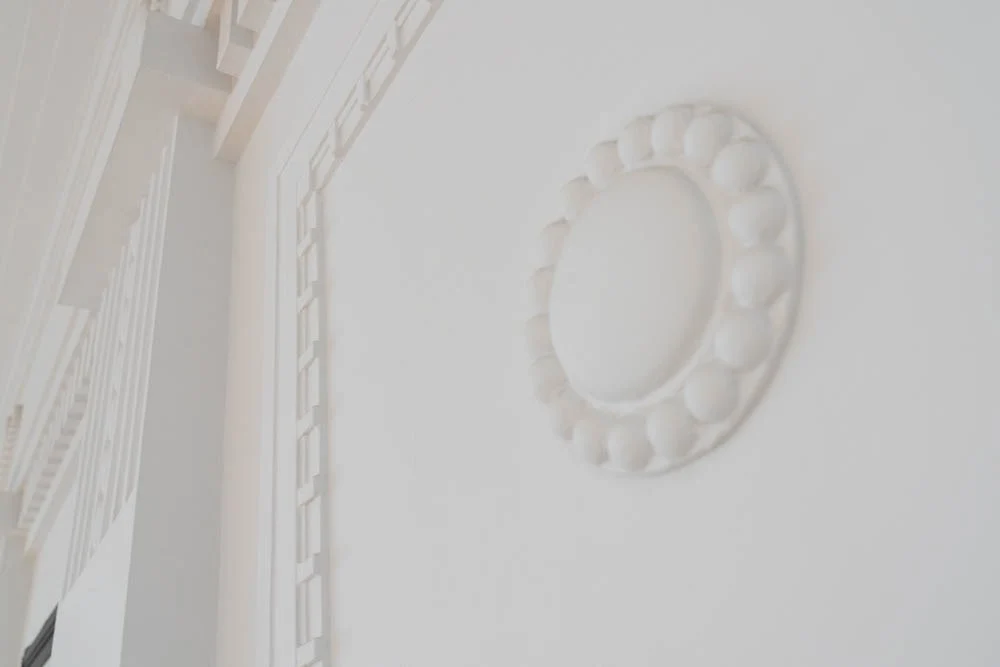
The building that will become the new Kojima Museum (tentative name) is an important element that constitutes the historical streetscape of Kurashiki.
The Ohara Museum of Art hopes to preserve this building, which is also important to the citizens, by utilizing it.
Relationship with the Kojima Torajiro Memorial Gallery at Kurashiki Ivy Square
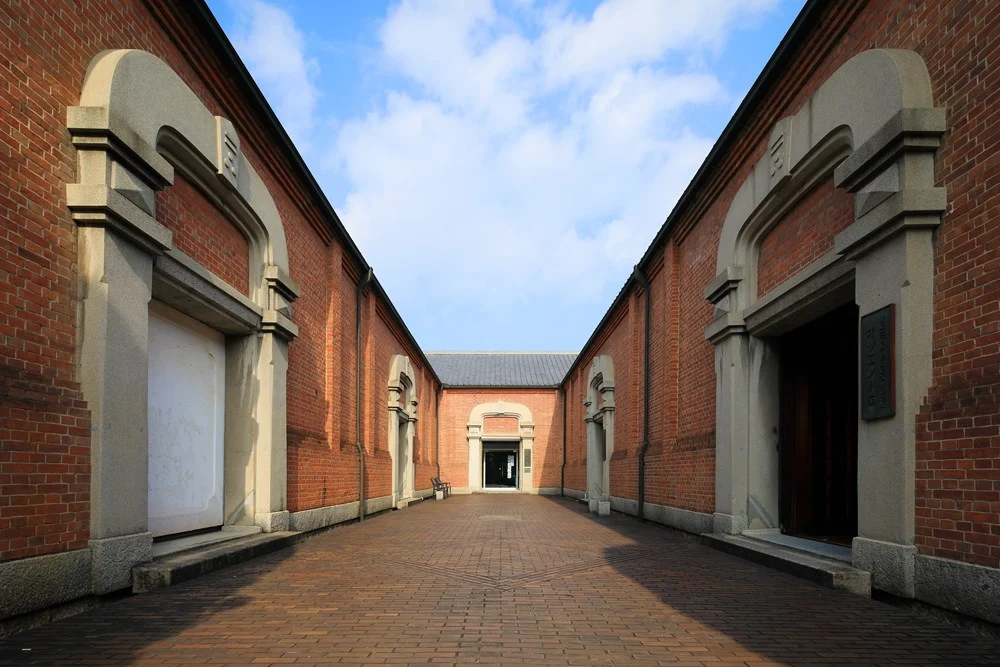
The Ohara Museum of Art operated the "Kojima Torajiro Memorial Gallery (hereinafter referred to as the "former Kojima Museum")" within Kurashiki Ivy Square from 1975 to 2017.
The former Kojima Museum was a renovation of a warehouse built during the Meiji period.
The building and display cases have also deteriorated, making it difficult to continue providing an appropriate environment for preserving and exhibiting valuable cultural properties.
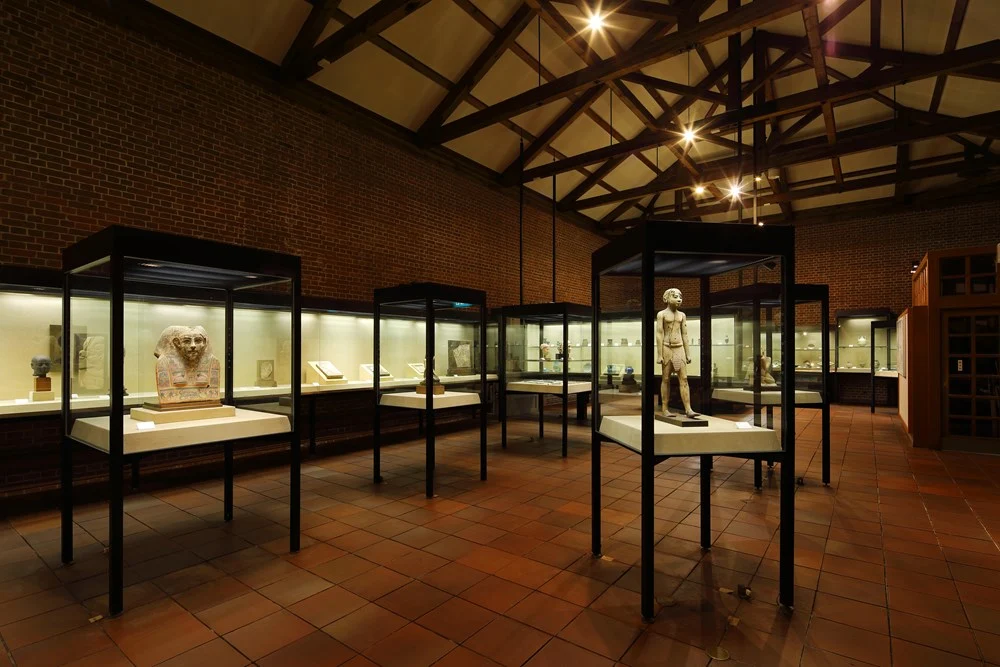
The items that were displayed at the former Kojima Museum will be carried over to the new Kojima Museum (tentative name).
It might be thought of as the former Kojima Museum coming back upgraded.
Total construction cost is 1 billion yen, donations are also being solicited
The new Kojima Museum aims to contribute broadly to the development of culture and the arts by utilizing the building while providing elevators and lecture rooms.
The total construction cost is 1 billion yen.
While using self-funding and loans, they are also soliciting donations from corporations and individuals.
There are tax incentives, and it is said that contributions will be recognized within the Ohara Museum of Art.
If you feel like supporting, please contact the Ohara Museum of Art.
The new Kojima Museum (tentative) is a "small museum"
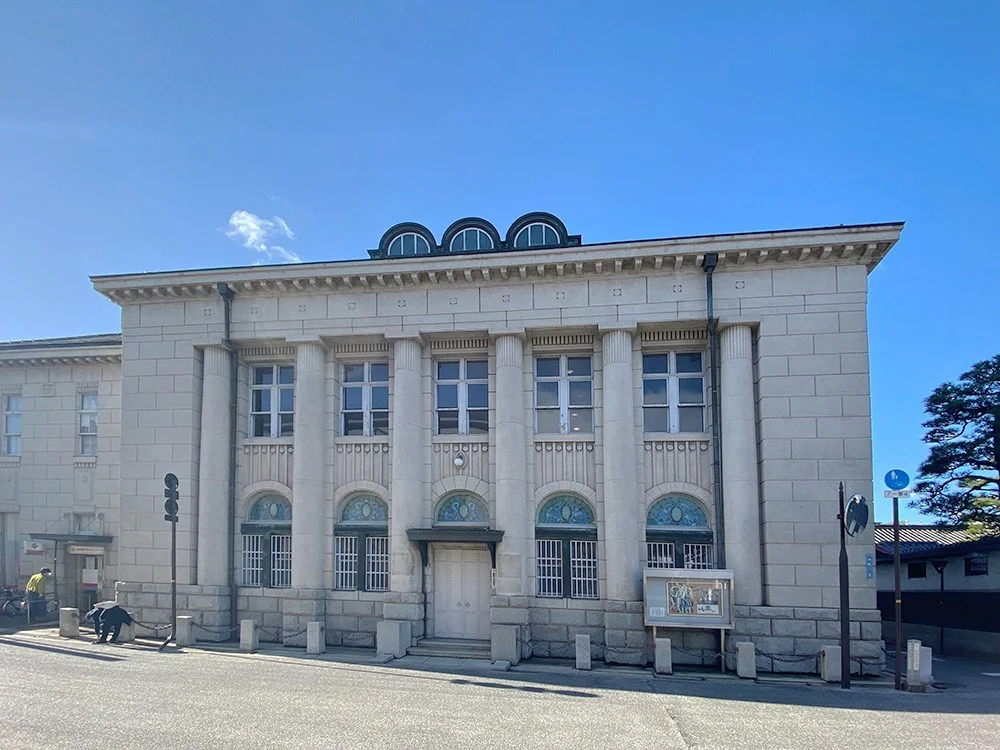
The new Kojima Museum (tentative) cannot undergo major renovations as part of it is a cultural property.
The challenge is how to make it a good museum while utilizing the charm of this historic building.
I felt that careful ingenuity was being applied.
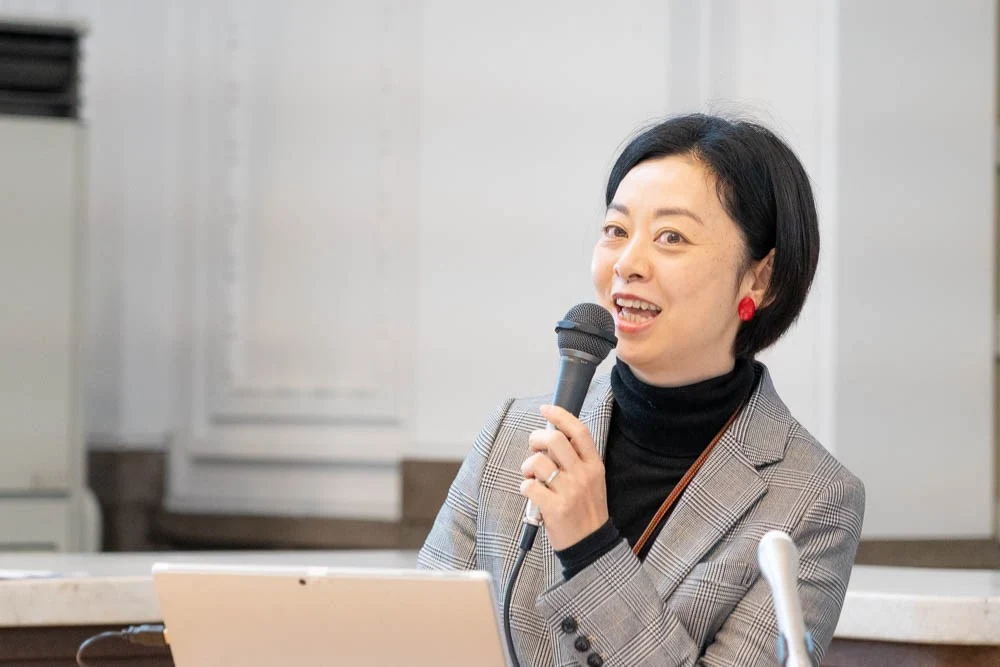
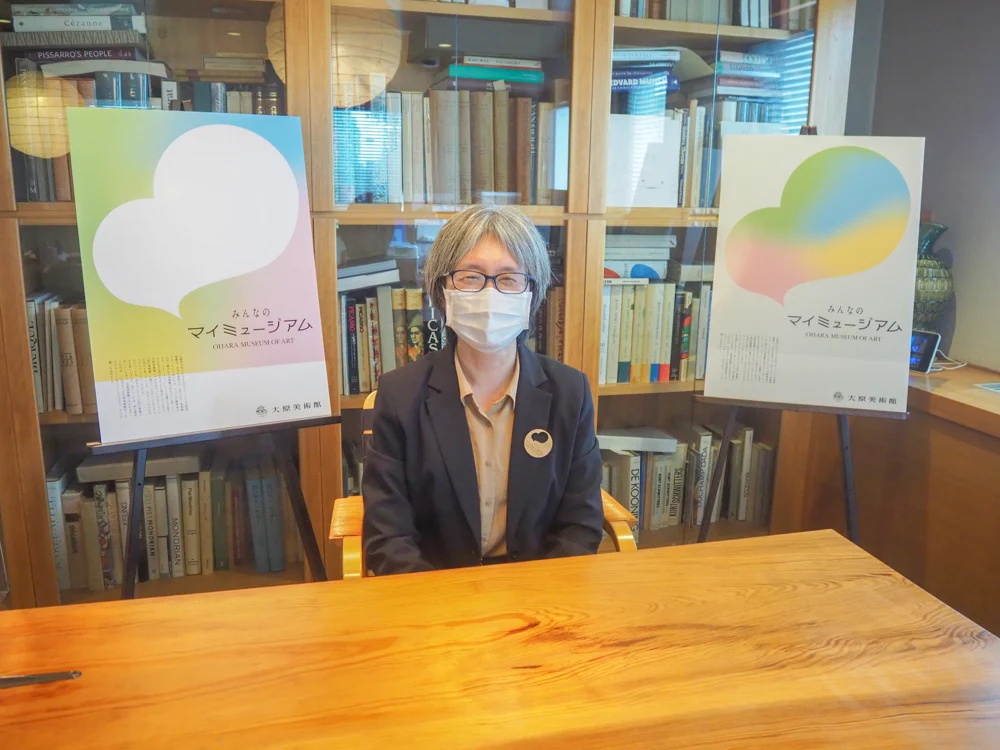
Chief Curator Ayumi Yoshikawa expressed about the new Kojima Gallery (tentative), “We have packed the functions and dreams of an art museum into an old, small, and cute building.”
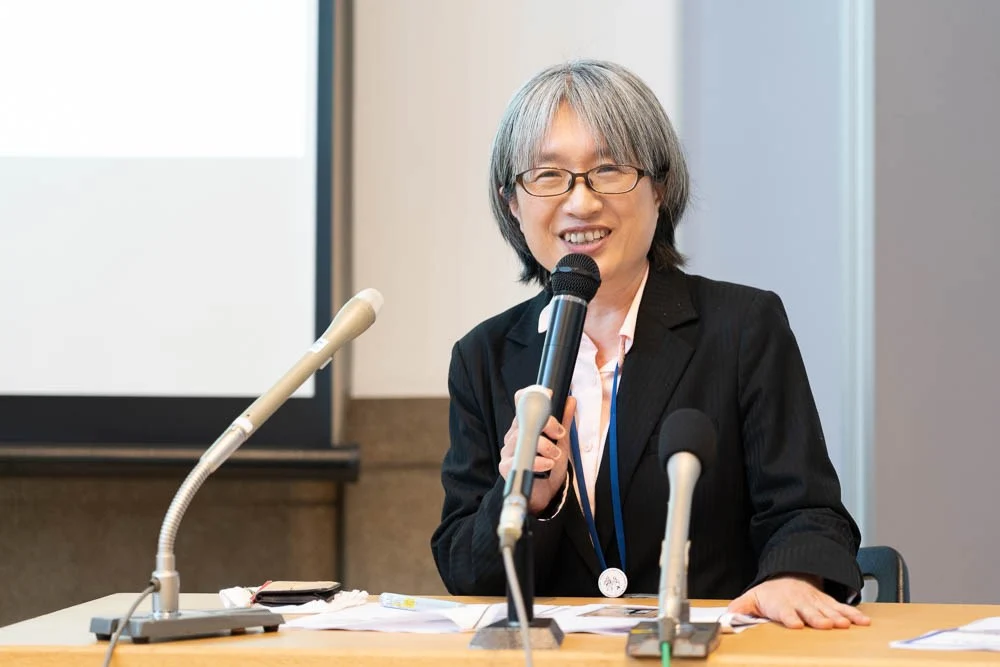
Chairperson Akane Ohara said, “I want to create excitement together with the citizens and residents of the prefecture.”
The opening of the new Kojima Gallery (tentative) is scheduled for April 2022.
2022 marks the 100th anniversary of the building's completion.
Moreover, April is the birth month of Kojima Torajiro.
A friendly art museum that blends into the streets will surely bring a new breeze to Kurashiki.
I am looking forward to the opening.
Articles about Ohara Museum of Art