Ohara Museum of Art has been continuing its artist residency program “ARKO (Artist in Residence Kurashiki, Ohara)” since 2005. After reviewing the program in light of the COVID-19 pandemic, it has been relaunched as one of the “Artist Cooperative Exchange Projects” starting in the 2025 fiscal year.
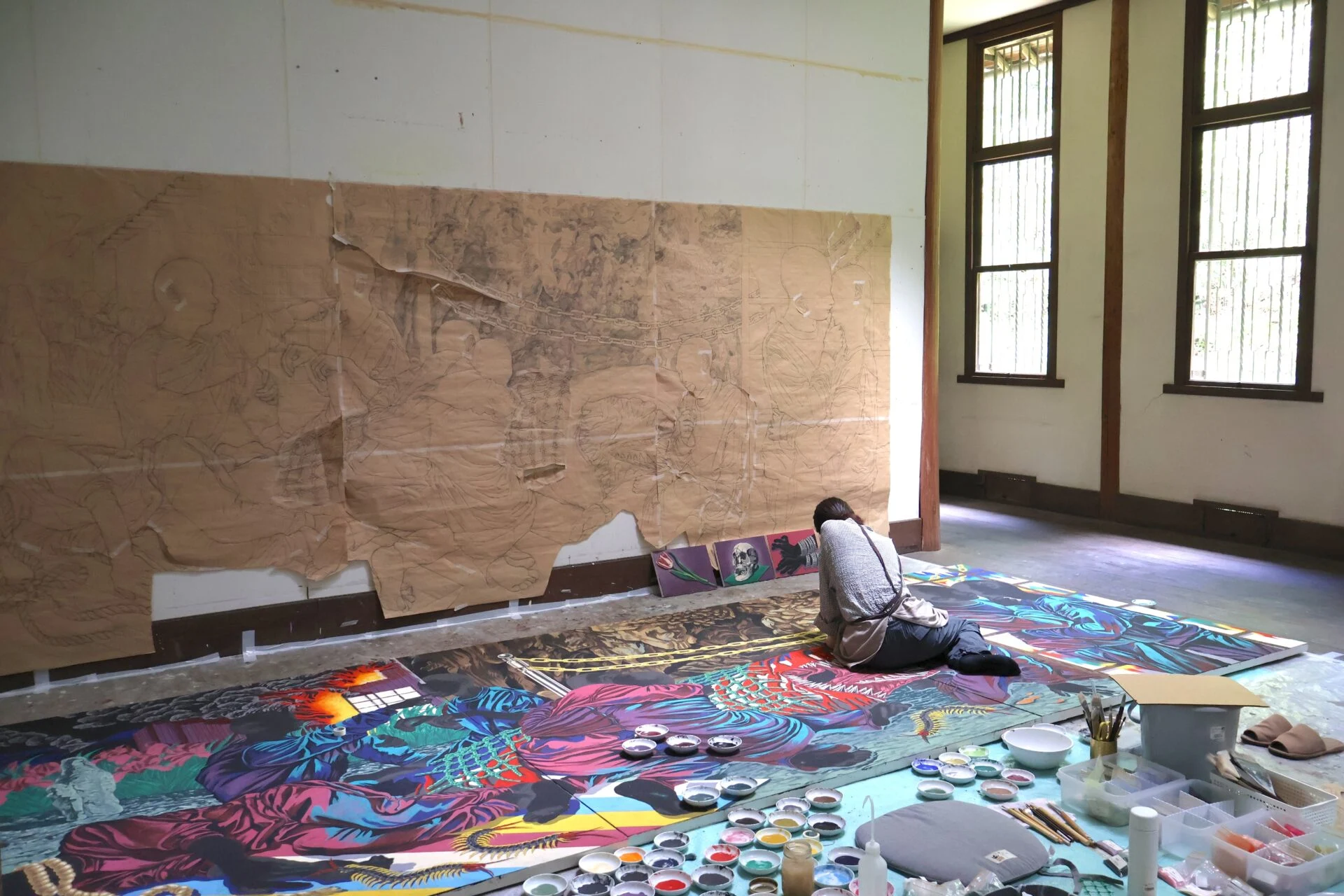
The first artist invited after the relaunch is Japanese painter Ose Mayuko. Ose will be staying and creating works in the former atelier of Kojima Torajiro located within “Muisonso” from April for three months, with the production site being opened to the public on July 2, 2026.
This article will introduce the newly started ARKO through an interview with Ose.
What is ARKO
The ARKO (Artist in Residence Kurashiki, Ohara) program, implemented by the Ohara Art Foundation, is a residency program where selected artists through an open call stay for up to three months to create works and exhibit the completed pieces.
The ARKO project, which started in 2005, has welcomed 18 artists.
It was held annually until 2019, but the program scheduled for 2020 was postponed due to measures against the spread of COVID-19.
The next event was held in 2023, with the artist being Taniwara Natsuko.
Restarting as an “Artist Cooperative Exchange Project”
In 2024, the Ohara Museum of Art transitioned to a new structure called Ohara Art Foundation. Along with this, a review of the program content was conducted, and ARKO has started moving under a new framework.
Two major changes have occurred.
- Extending the program duration to two years
In the first year, the recruitment, selection, and site visits of artists will be conducted, followed by the residency and exhibition in the second year.
This time, “ARKO 2025-2026” will involve applications and site visits in the 2025 fiscal year, with the residency and exhibition taking place in the 2026 fiscal year. - Positioning the program as one of the “Artist Cooperative Exchange Projects”
Based on the two pillars of “reutilization of Muisonso” and “communication from OHARA,” the aim is for artists and the museum to engage more closely and collaboratively create good works together.
The artist for ARKO 2025-2026 is Ose Mayuko
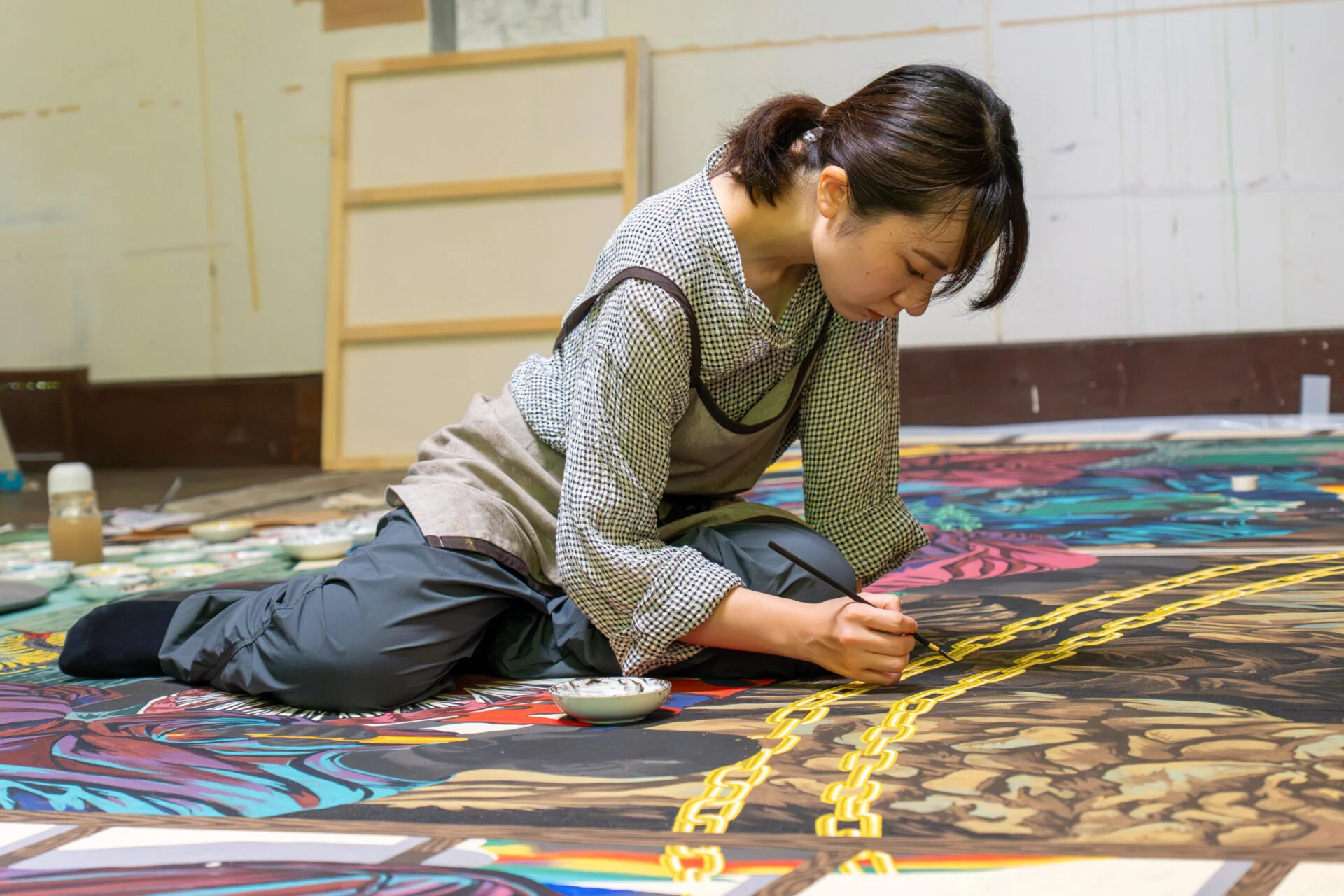
Participating as the artist for ARKO 2025-2026 is Japanese painter Ose Mayuko.
Born in 1996 in Kanagawa Prefecture, currently residing in Tokyo. She completed her master's degree in the Japanese painting field at Tama Art University Graduate School in 2020.
In 2015, she won the OME2015 Grand Prize at the Biennale, and in 2018, she received the French Embassy Award at the Art Award Tokyo Marunouchi 2018. Recently, she has held solo exhibitions at venues such as Taipei and Tokyo Opera City Art Gallery.
The site for her residency is the atelier within “Muisonso” located in Sakatsu, Kurashiki City.
Muisonso is the place where Kojima Torajiro, a painter who contributed to the collection of the Ohara Museum of Art, was based after 1912.
Upon entering the grounds of Muisonso, the atmosphere changes. It is a lush green area, and after climbing a somewhat slippery stone staircase, the atelier is located at the top.
The atelier was reportedly built in 1927 for Kojima Torajiro to create the work “Declaration of War Against Russia” to be dedicated to the Shōtoku Memorial Hall in Meiji Jingu Gaien, with a total floor area of about 124 square meters.
There is no electricity or running water, and there is no heating or cooling equipment. Natural light streams in through the windows.
About the works of ARKO 2025-2026
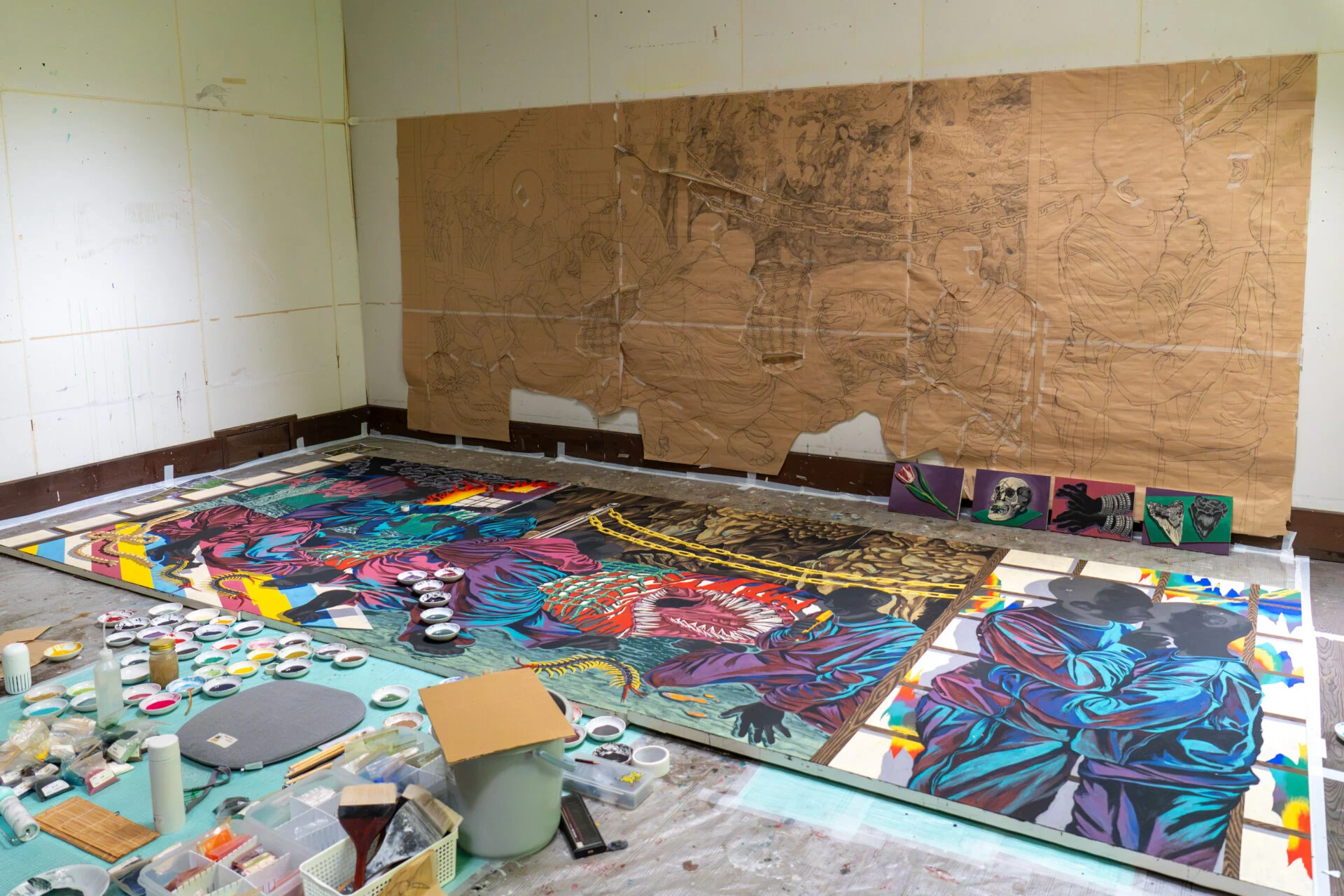
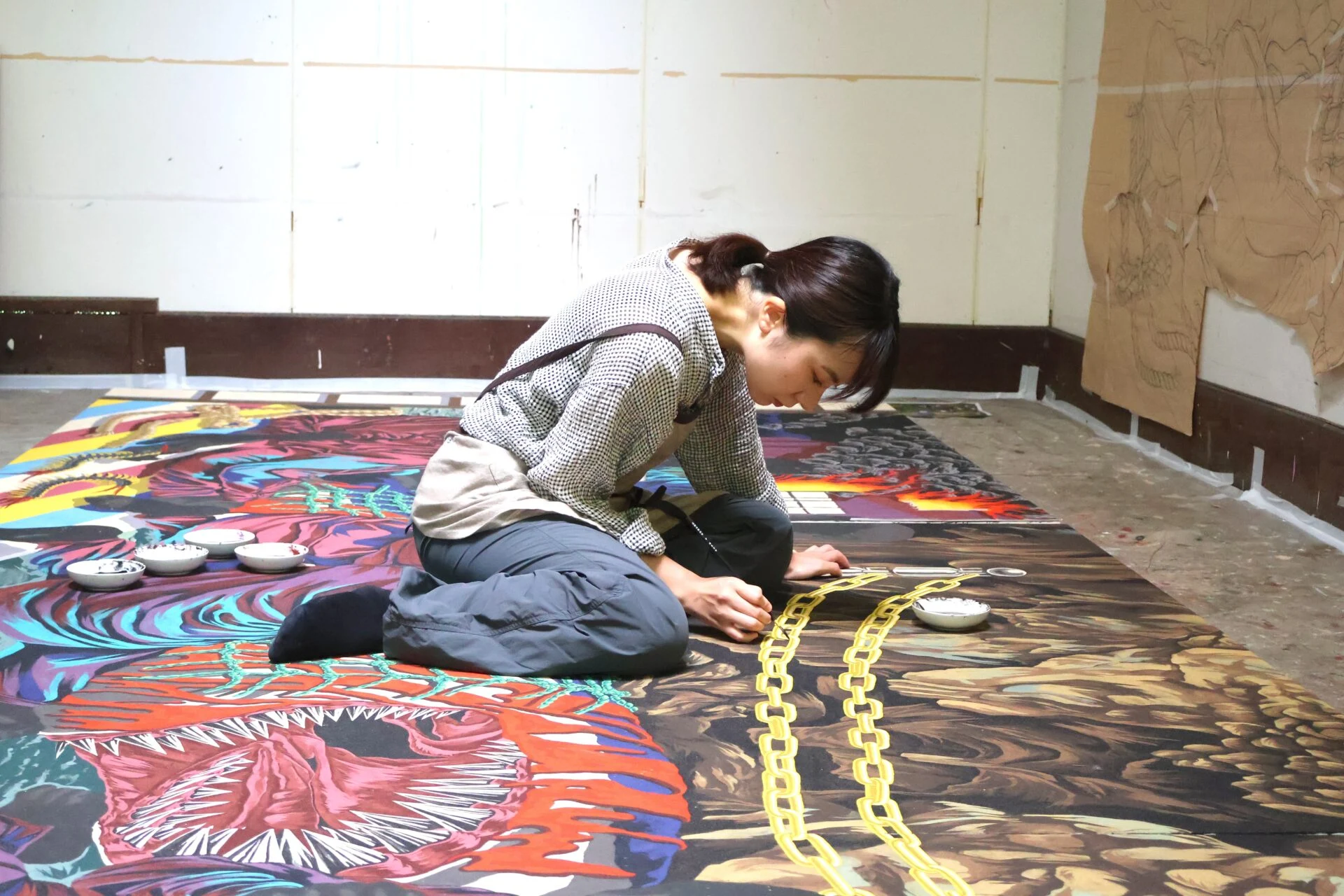
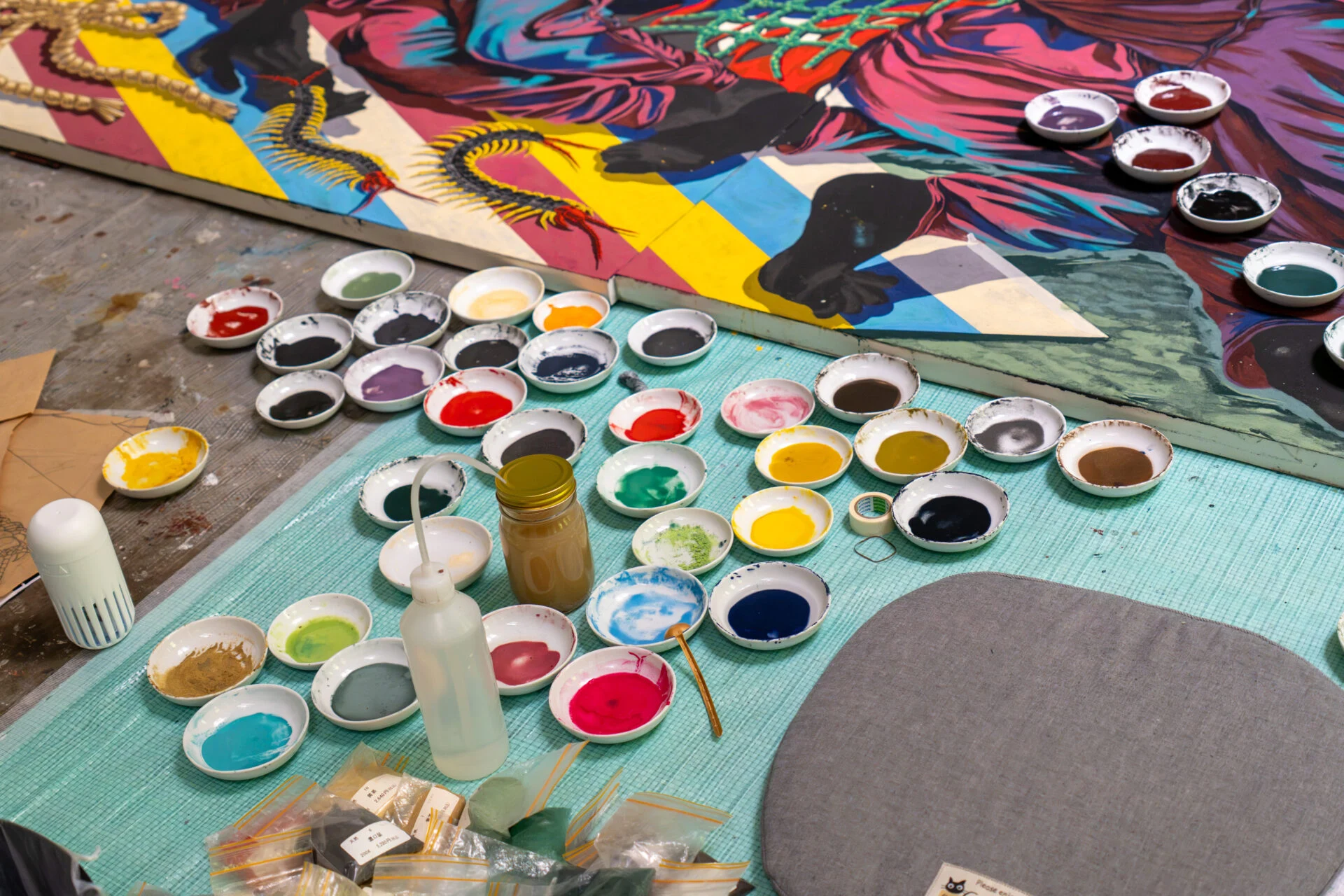
The size of the work being created this time is reportedly the largest among Ose's works to date. It is painted on a wooden panel covered with washi (Japanese paper) using mineral pigments used in Japanese painting.
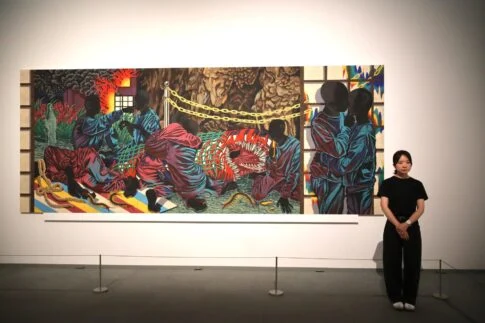
In the center of the work is a large shark, with a cave continuing behind it. Figures resembling shadows, which frequently appear in Ose's works, overlap.
The theme of the work is “The boundary between wild animals (threatening ones) and humans.” She sketched the boundary line beforehand and entered the atelier in April.
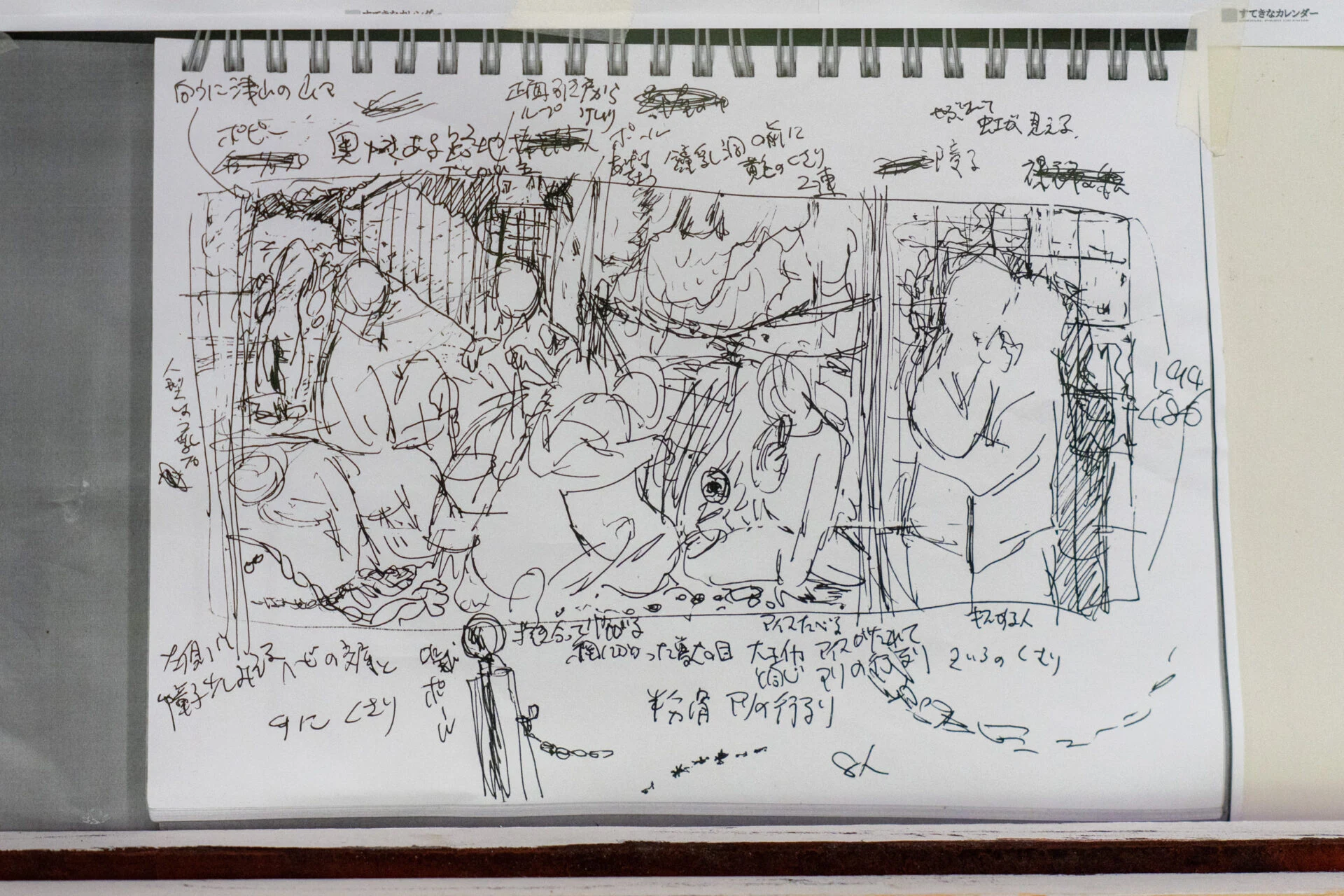
Q&A with Ose Mayuko
We spoke with Ose about the intentions behind the motifs in her work and her feelings about the production environment.
What made you apply for ARKO?
Ose (no honorifics)
I had only painted in Tokyo until now.
So, I thought that by spending three months in Okayama Prefecture, a place I had never visited before, I might encounter themes and motifs I had never met before, and I applied thinking I might see new developments in my paintings.
The image of a large shark entangled in a net is striking.
Ose
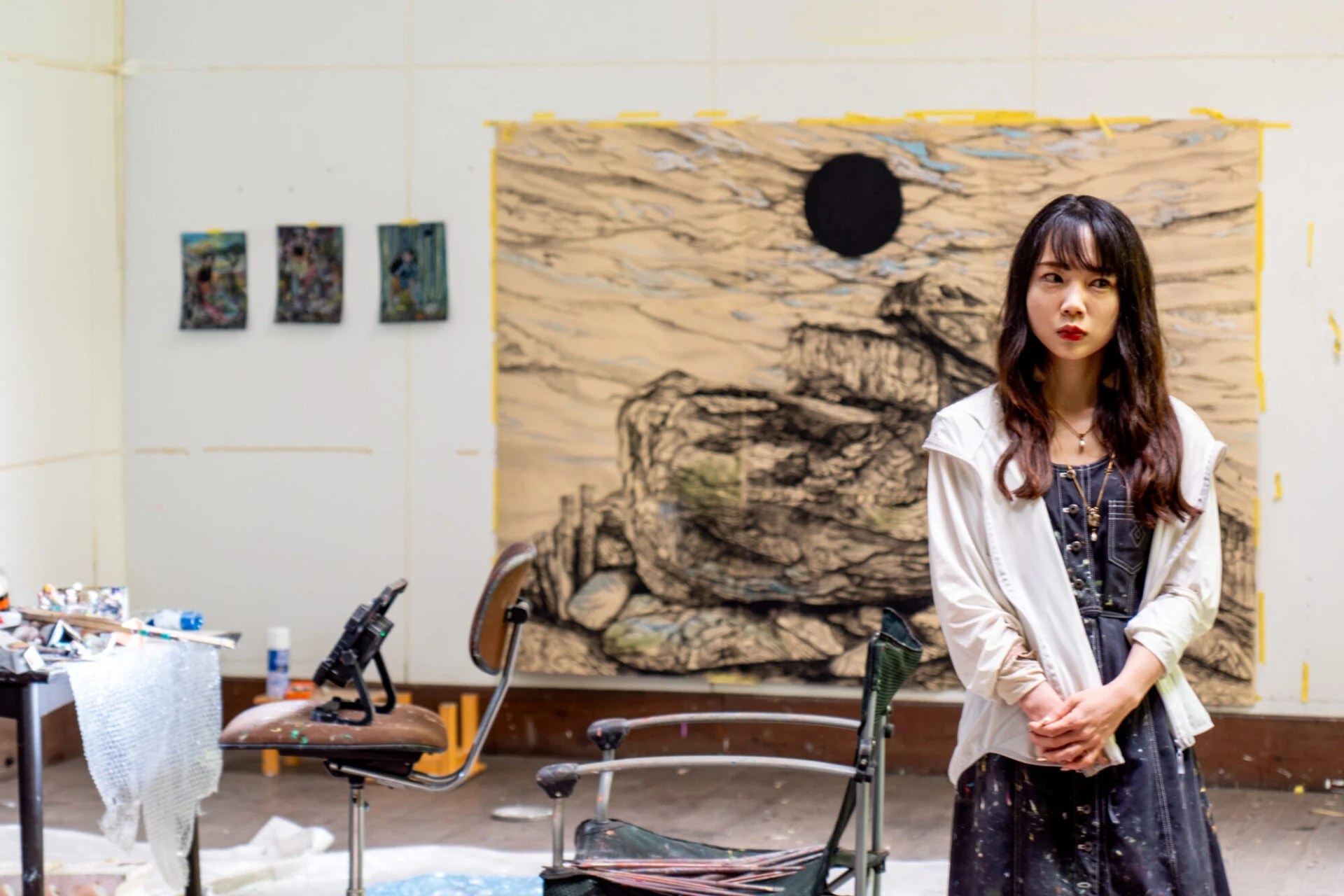
Originally, I was thinking of painting a large beast with long hair, considering a bear. However, it seems that bears do not appear much in Okayama, and I felt there was no reason to paint a bear here now.
At one point, during a break in production, I casually went to Kasaoka. There, I happened to visit the Kasaoka City Local Museum and learned about the human bones excavated from the Tsukumo Shell Mound in Kasaoka.
These bones are considered to be the world's oldest victims of sharks, and I decided to depict the shark as a “large existence that humans cannot do anything about.”
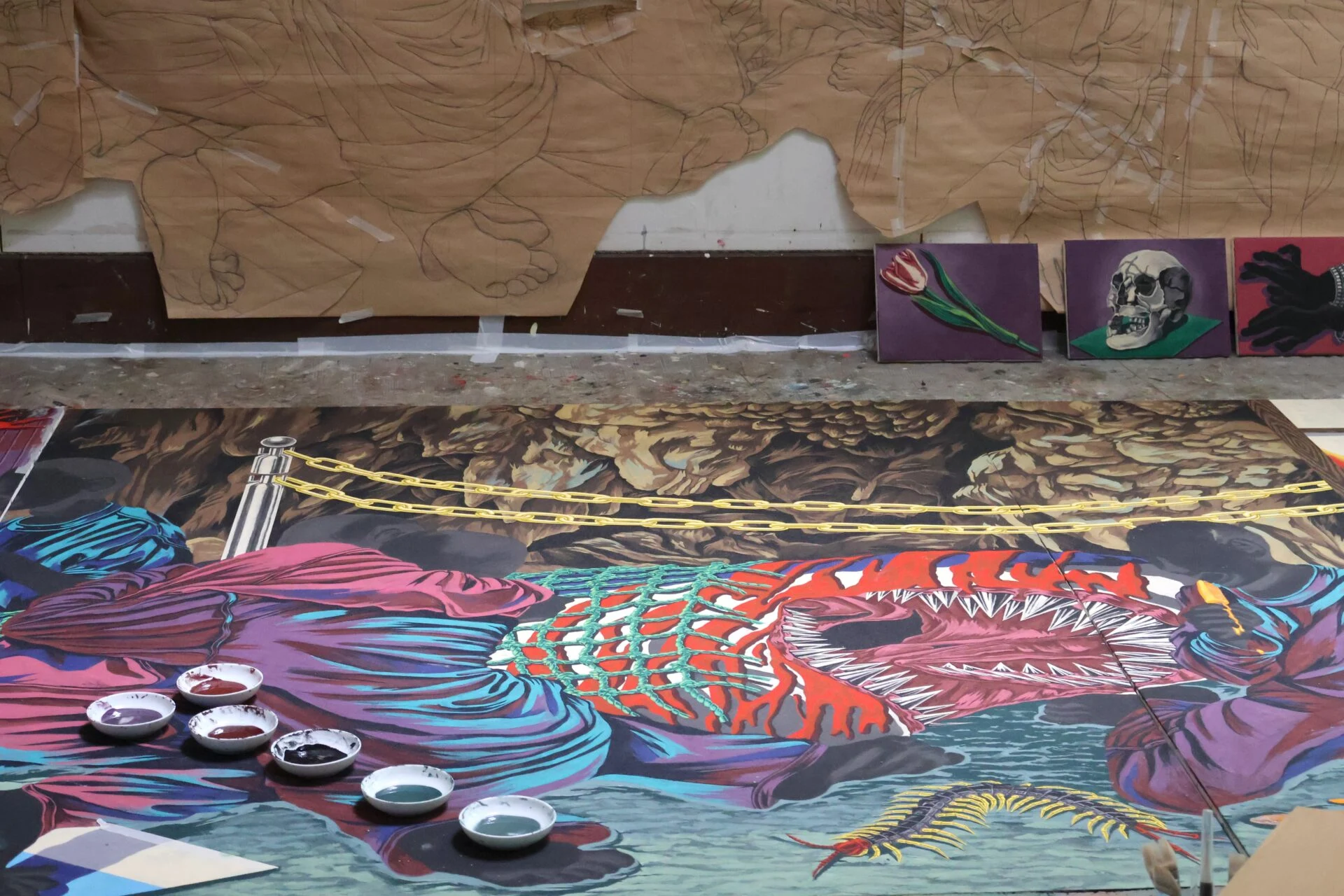
The figures in the work are depicted in black, with expressions and ages indiscernible. Why do you depict people as silhouettes?
Ose
I want to omit information such as gender, age, and what kind of expression they have, so they are depicted as silhouettes.
I am more interested in the situations surrounding the figures in the painting rather than who those people are, which is why I have chosen this form of expression.
There are figures in strange postures depicted in the painting.
Ose
The postures of the humans represent instinctual aspects rather than rational ones, akin to the three basic human desires.
Moreover, even though they are in a situation of capturing the shark, they do not seem to rejoice in it; rather, they appear somewhat detached and cold. I wanted to create a feeling that lacks warmth.
The painting also includes yellow chains, nets, and a floor resembling a plastic sheet. What is the intention behind this combination?
Ose
The chain in front of the cave was painted using a plastic chain sold at a home center.
The composition of my paintings is not very realistic; it is a fictional image.
By incorporating familiar elements like ropes, chains, and plastic sheets, I aim to keep the distance between the painting and myself from becoming too far, which is why I intentionally include these cheap and familiar motifs.
What did you feel about creating in an atelier without electricity or running water?
Ose
It is a somewhat inconvenient place to paint, but because of that, I was able to realize how significant the light, the sound of the wind, and the presence of insects and plants, which I usually do not pay much attention to are.
When I go there almost at the same time every day, the types of insects that appear change day by day. I notice that from this day, a certain insect appears, or that a particular flower has finished blooming and is now on the ground.
Such small changes felt significant to me.
What do you think about painting in the atelier associated with Kojima Torajiro?
Ose
I feel that Kojima Torajiro actually painted large works here.
Moreover, traces of the artists who have participated in ARKO so far remain.
I created with the feeling that even though I am a small presence, I would like to be a part of the flow of that history.
Opening from July 15
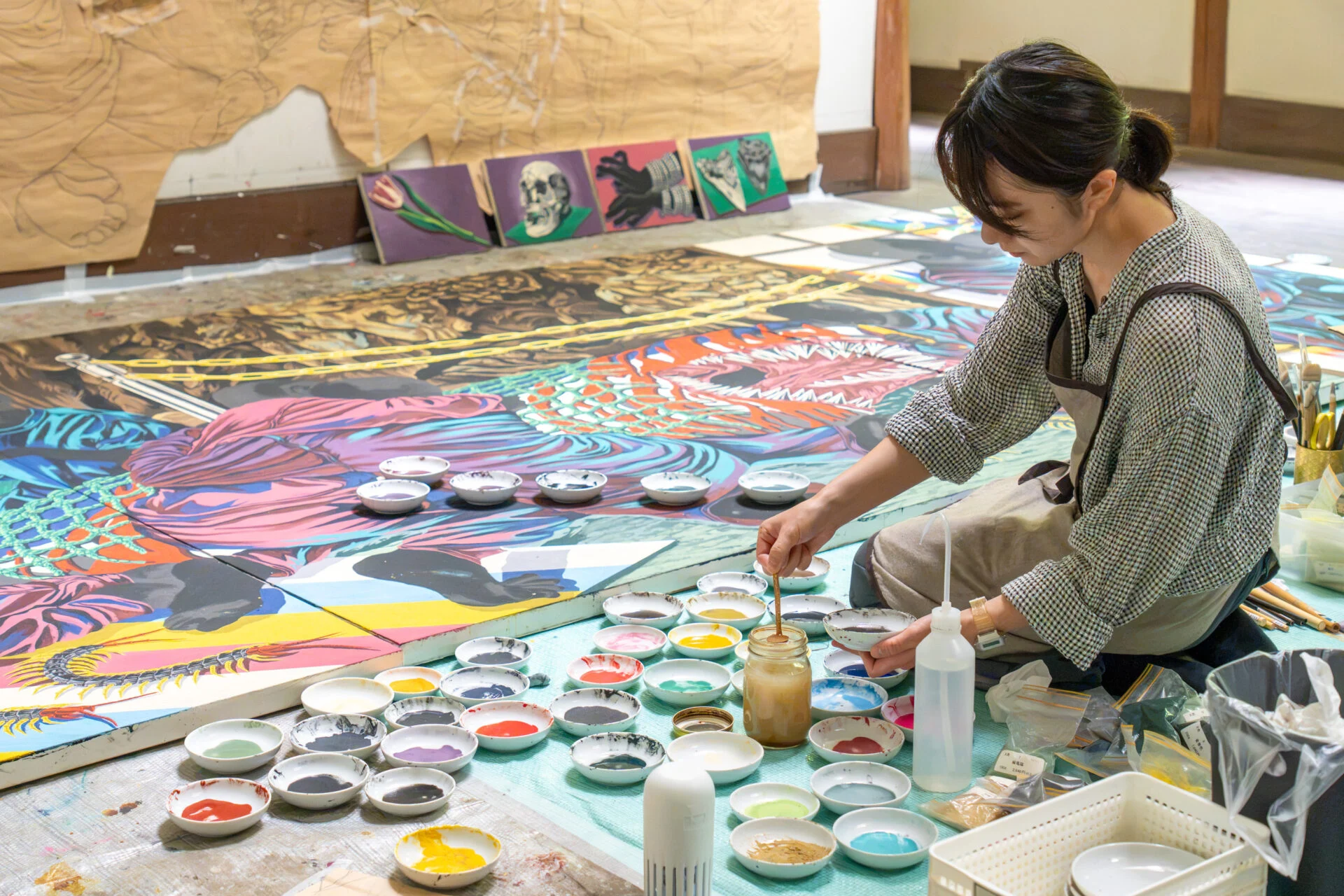
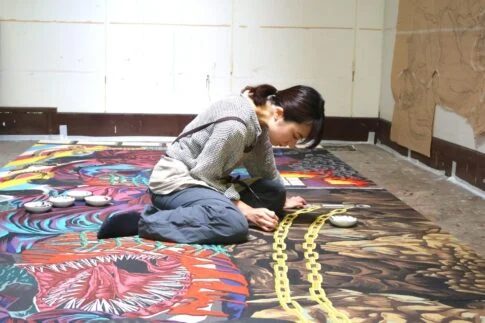
In a place without electricity or running water, under the natural light streaming in through the windows, Ose was earnestly applying her brush to the large work.
At the time of the interview (July 2, 2026), she was in the midst of production and mentioned that she would continue to work on it. The title is still undecided, and it will be exciting to see what changes will occur by the time of the exhibition.
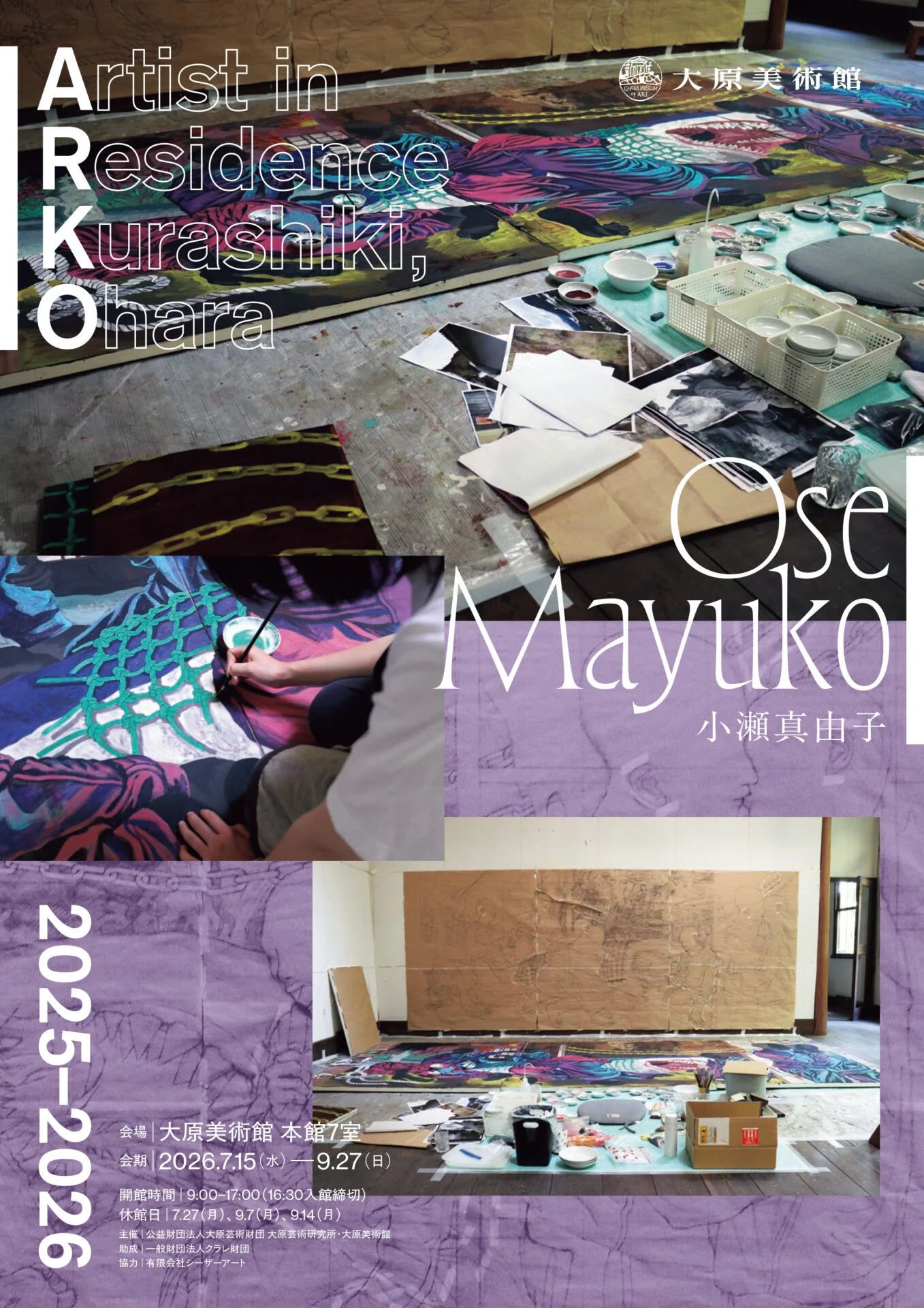
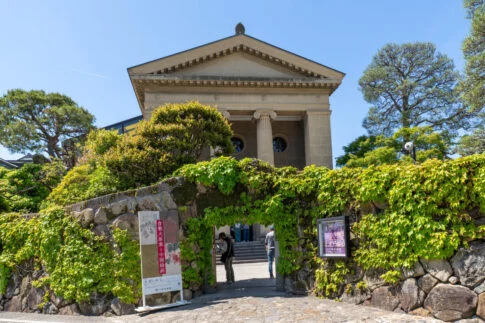
The completed work after the three-month residency will be exhibited at the Ohara Museum of Art, Room 7, from July 15 (Wednesday) to September 27 (Sunday), 2026.
Articles about Ohara Museum of Art
Data on ARKO2025-2026 Mayuko Kose
| Name | ARKO2025-2026 Mayuko Kose |
|---|---|
| Dates | From July 15, 2026 (Wednesday) to September 27, 2026 (Sunday) 9:00 AM to 5:00 PM (last admission at 4:30 PM) 【Closed Days】 July 27 (Monday), September 7 (Monday), September 14 (Monday) |
| Location | 1-1-15 Chuo, Kurashiki City, Okayama Prefecture |
| Admission Fee (including tax) | Available for viewing with the regular admission fee of Ohara Museum of Art General: 2,000 yen High school, middle school, and elementary school students (under 18 years old): 500 yen |
| Website | ARKO2025-2026 Mayuko Kose |