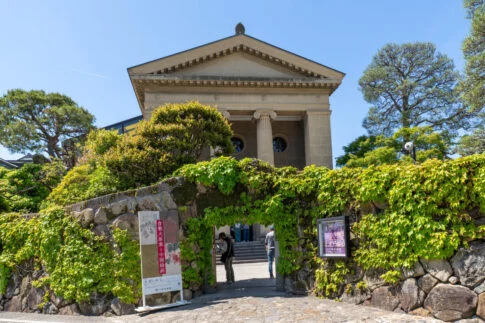
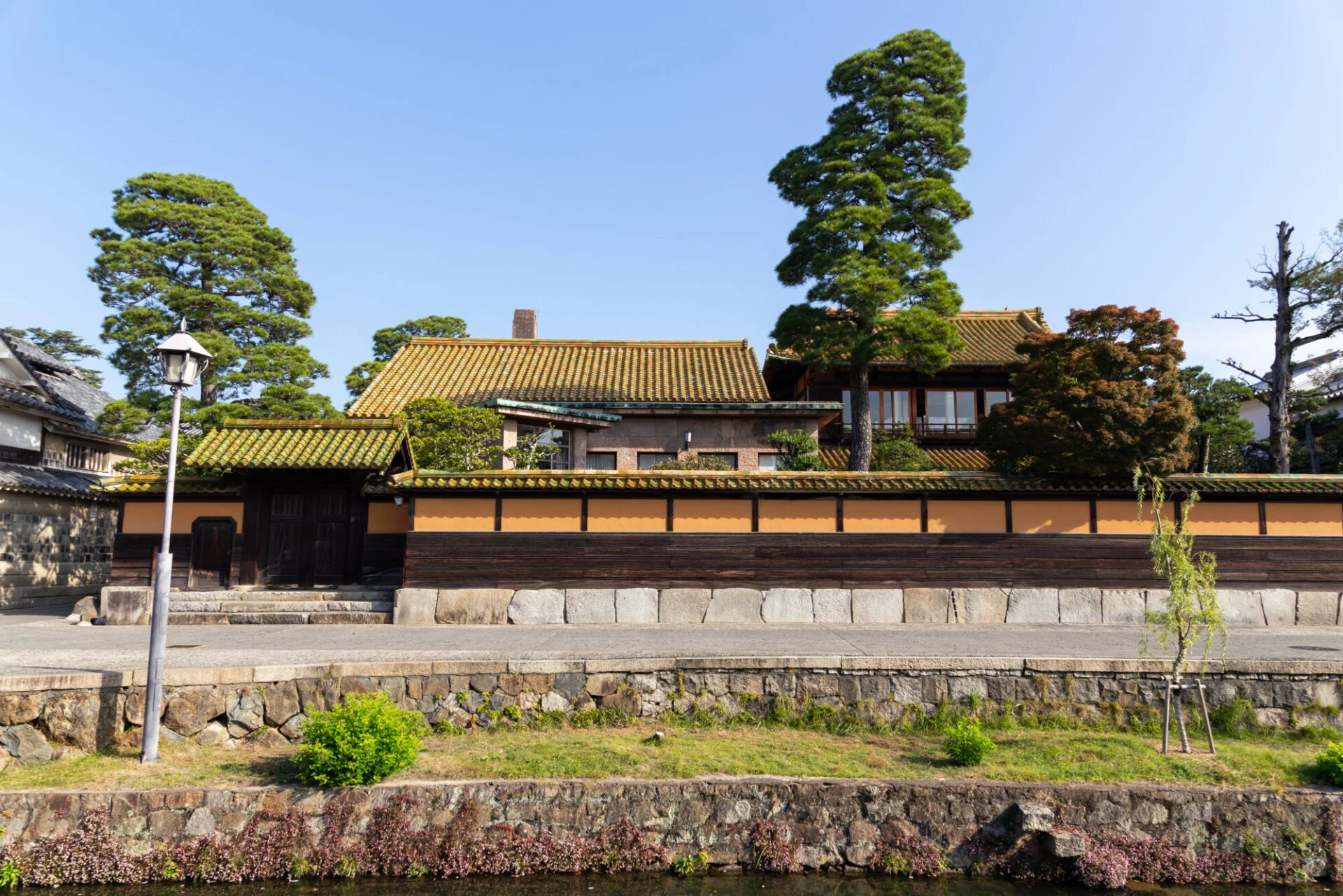
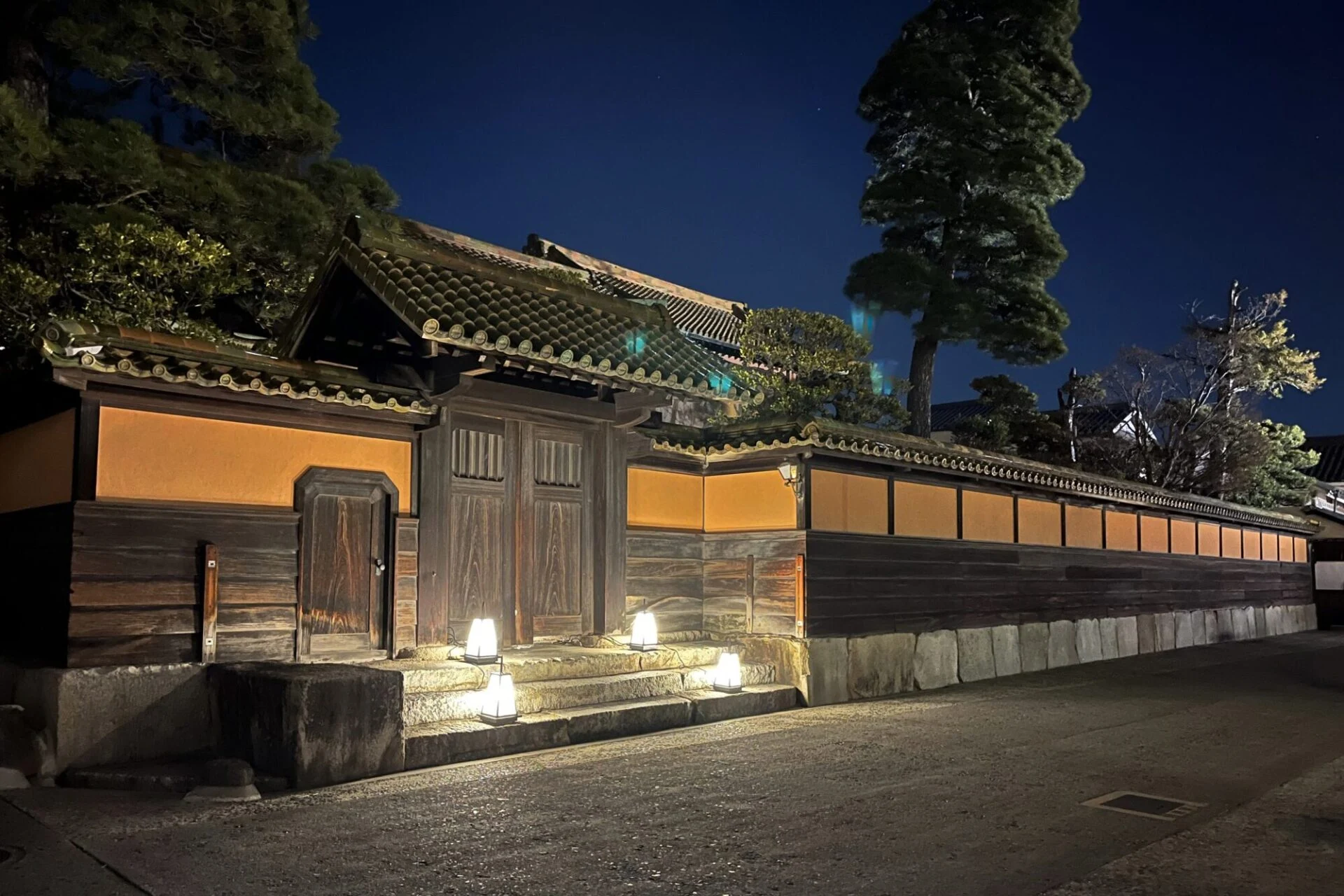
Did you know there is a building with a green tiled roof in the Bikan Historical Area of Kurashiki, where monochrome houses line the streets?
This beautiful and magnificent building is the former villa of the Ohara family, called Yurin-so Villa.
Normally, only the exterior of Yurin-so Villa can be viewed, but it is specially opened to the public twice a year in spring and autumn.
We covered the interior during this rare special opening.
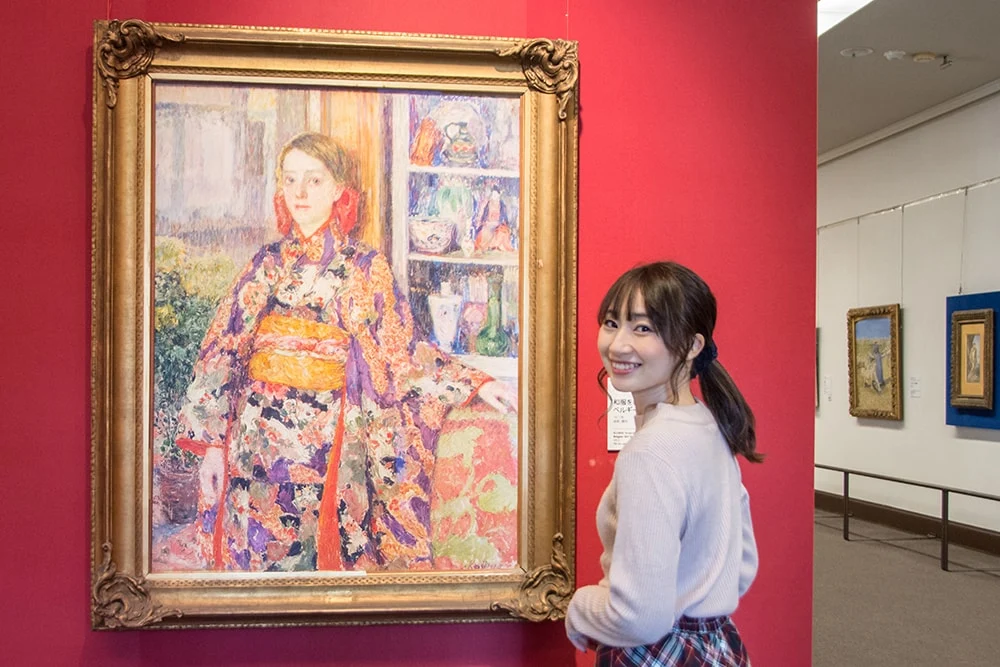
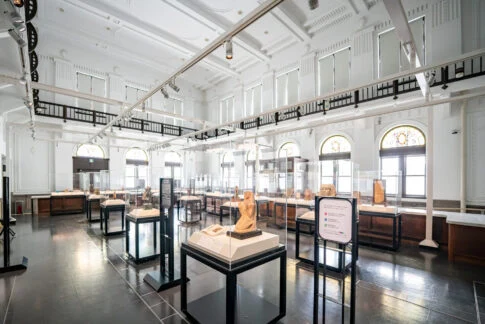
Photography is usually prohibited inside Yurin-so Villa. This time, we have received special permission to take photos.
What is Yurin-so Villa

Yurin-so Villa is the former villa of the Ohara family, which had a significant impact on the economy and culture of Kurashiki.
In 1928, the seventh head of the Ohara family, Ohara Magosaburo, built it for his ailing wife.
It was later used as a guesthouse and reportedly served as accommodation for Emperor Showa in 1947.
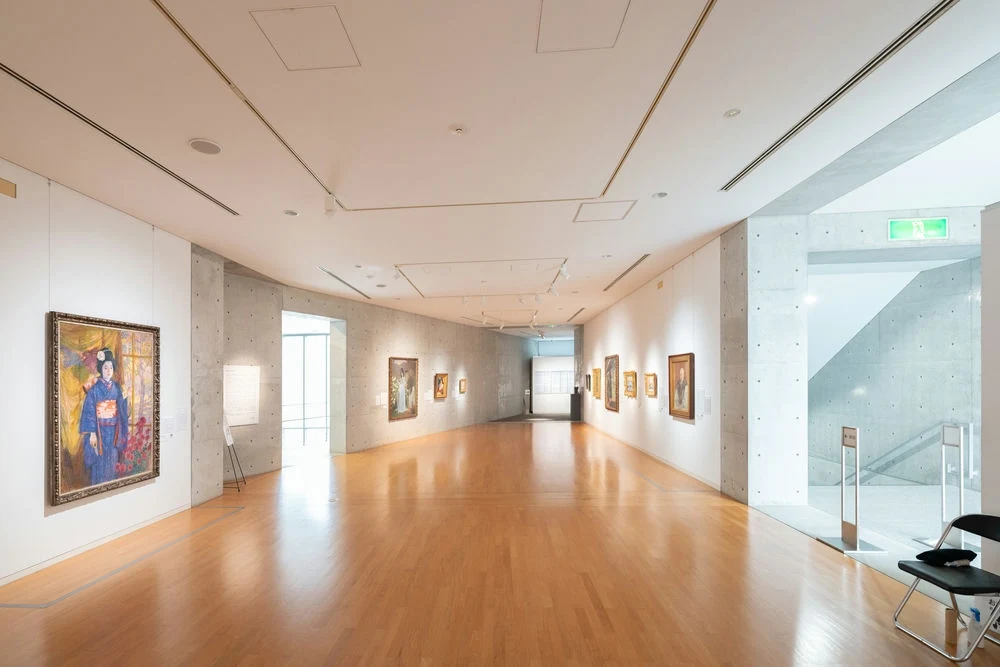
Currently, it is used as a facility of the Ohara Museum of Art.
Normally, only the exterior can be viewed, and the interior is not open to the public except during special openings.
When to visit Yurin-so Villa
Yurin-so Villa can usually only be viewed from the outside. However, since 1997, the interior has been opened to the public once each in spring and autumn during special exhibitions organized by the Ohara Museum of Art.
Typically, the spring opening occurs around Golden Week, and the autumn opening is in October.
However, due to the spread of COVID-19, the special exhibitions from spring 2020 to spring 2022 were canceled.
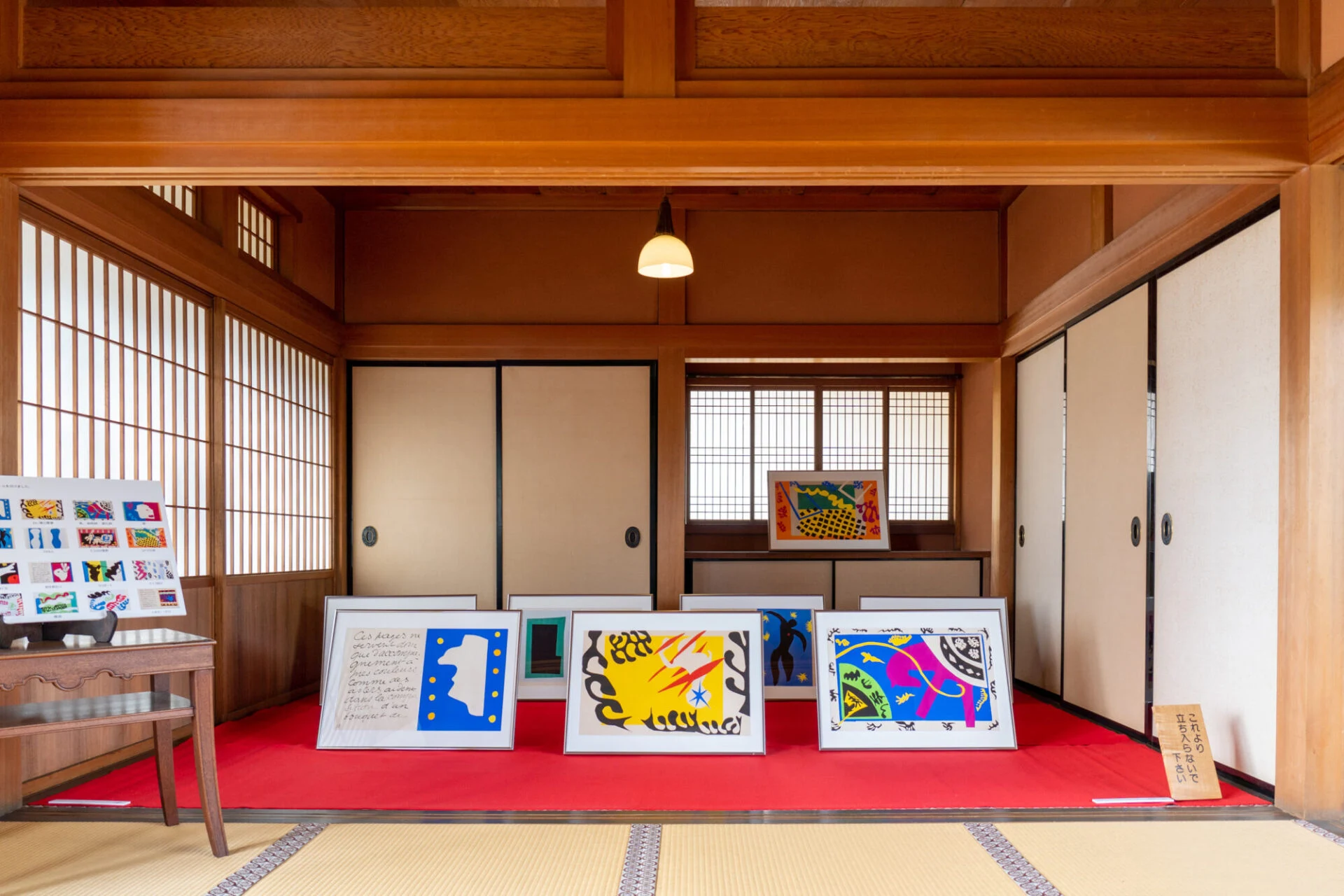
The revival was the 2022 autumn special exhibition "Matisse - Light and Color", which was the first in three years.
- Autumn 2018 "Natsunosuke Mise Hogokudo"
- Spring 2019 "Midorigotentei Beauty - Millet, Cezanne, Aida Makoto, and Rothko"
- Autumn 2019 "Monument of Drifting"
- Autumn 2022 "Matisse - Light and Color"
Highlights of Yurin-so Villa
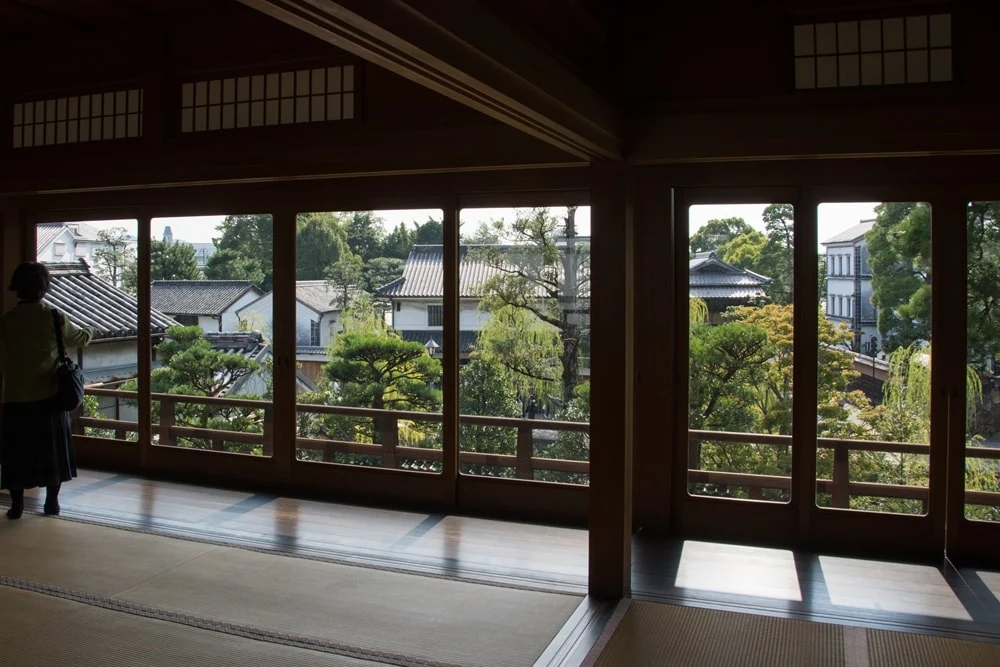
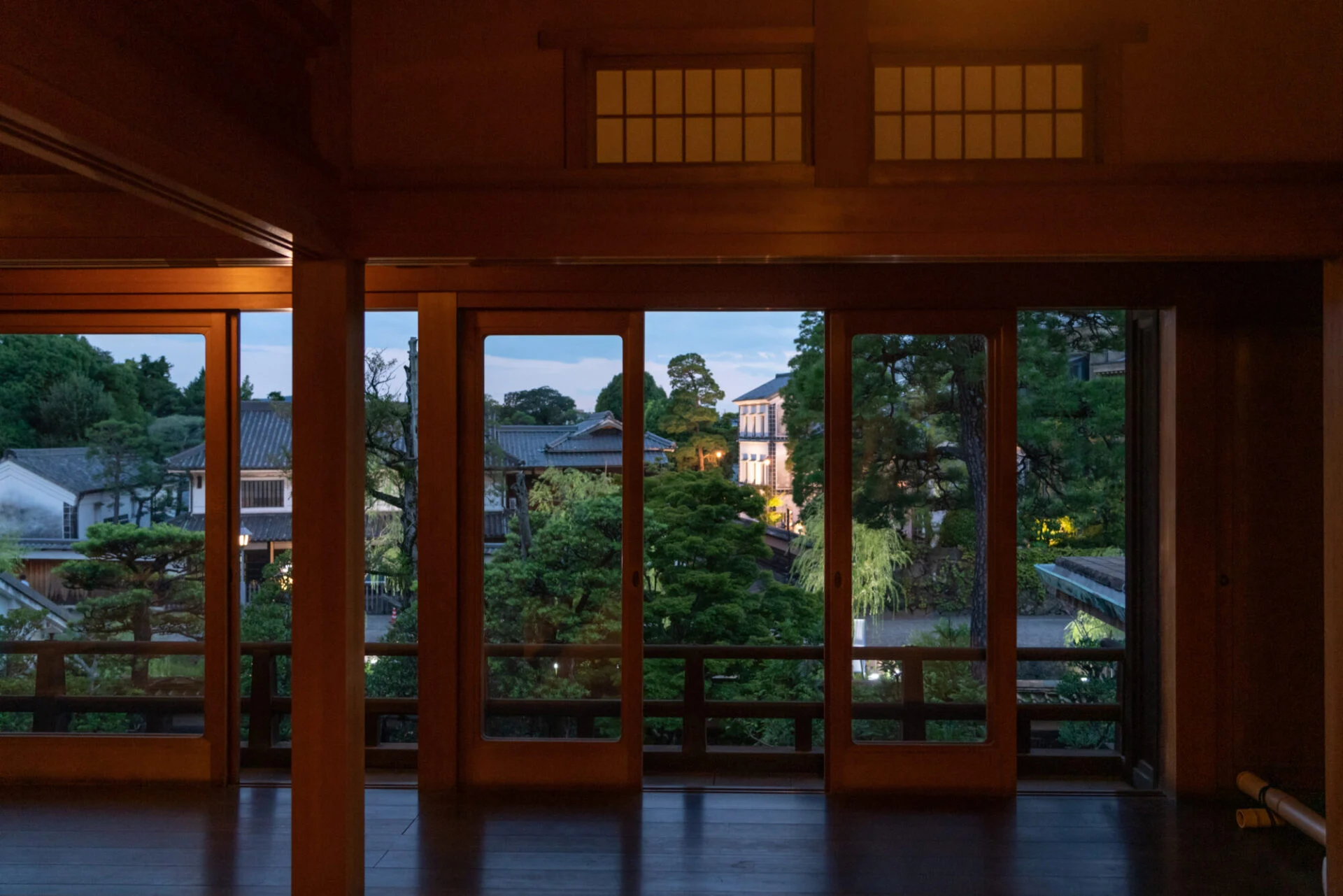
View of Bikan Historical Area from the second floor
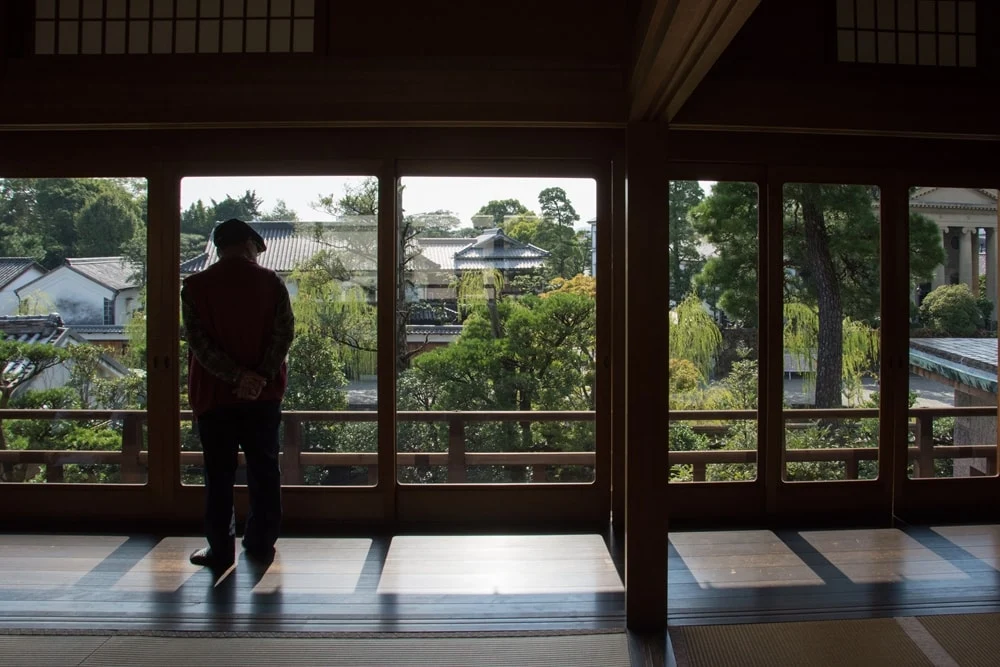
Yurin-so Villa is located at the end of the main street of the Bikan Historical Area.
From the windows on the second floor, you can overlook the Bikan Historical Area.
This view is simply the best!
It is a special view that was once only accessible to the Ohara family and their guests.
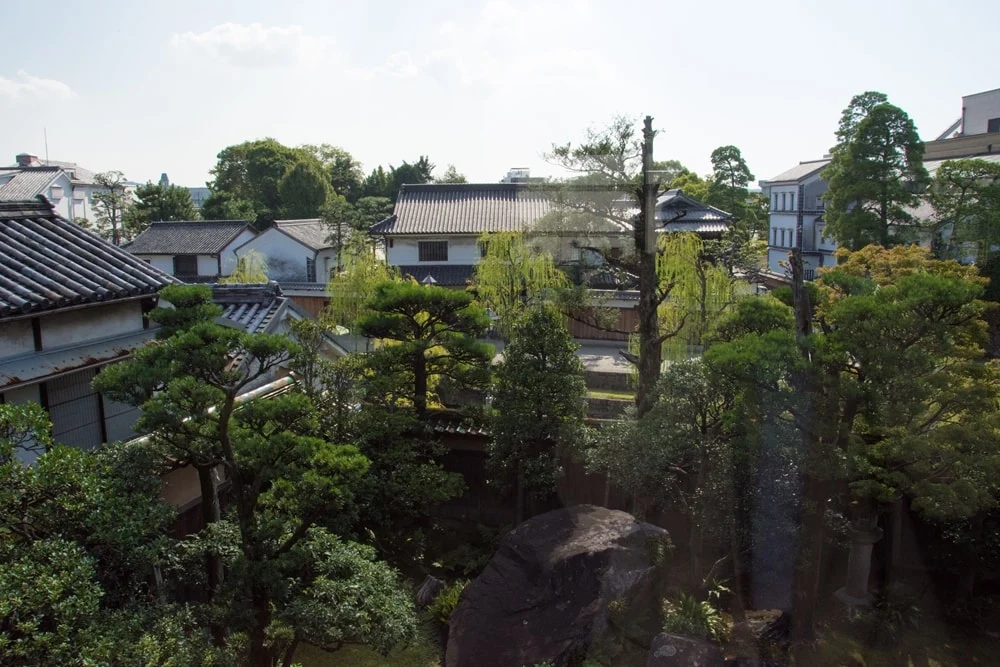
I was once again moved by the beauty of the Bikan Historical Area, and I felt incredibly rich, as if I had become a large landowner.
Personally, I feel that just this view alone is worth the special exhibition admission fee. It is a sight you must see.
I could also see the Ohara Museum of Art from there.
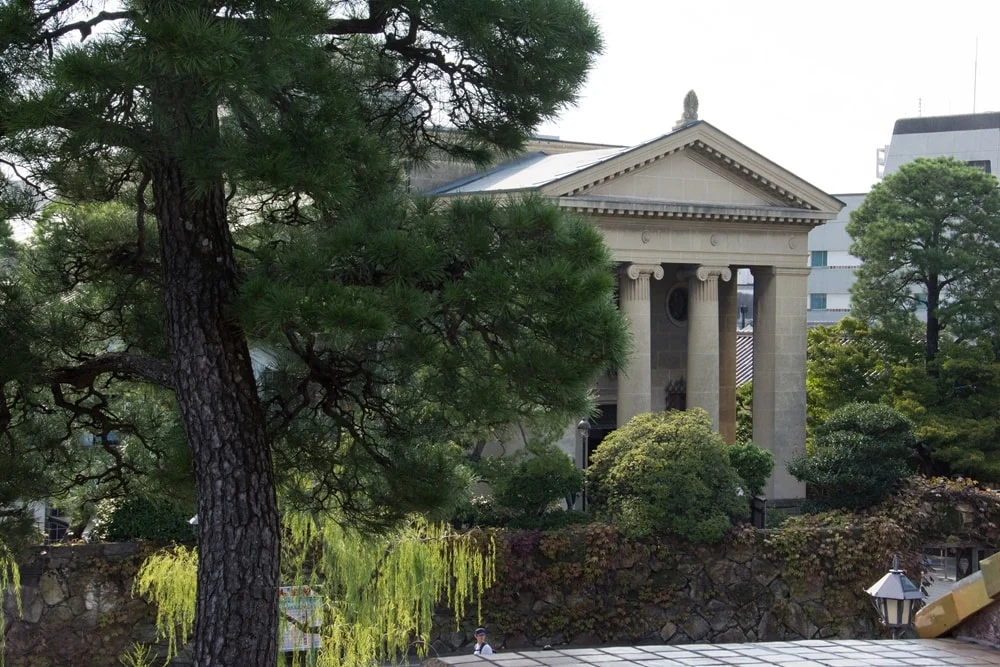
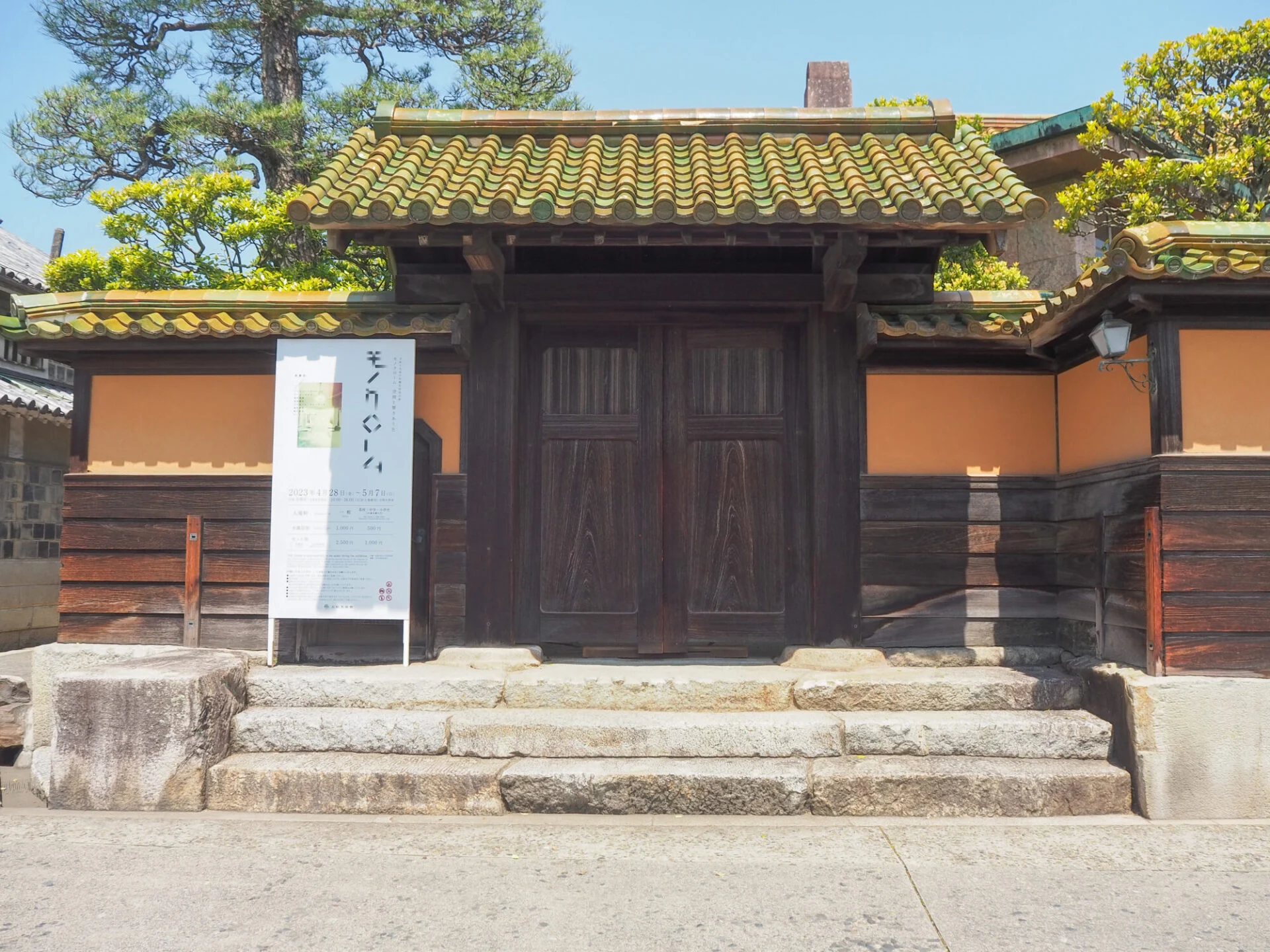
Green Roof Tiles
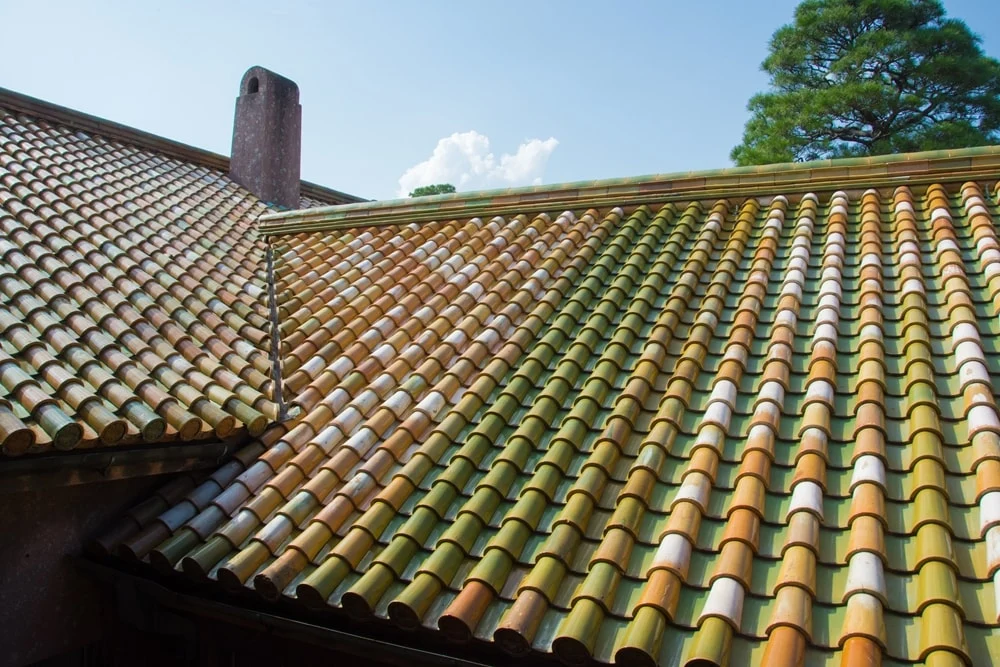
Yurin-so Villa is also called "Midorigotentei" due to its prominent green roof tiles.
These tiles were custom-made for Yurin-so Villa by the painter Kojima Torajiro, inspired by the Confucius Temple he saw in China.
A special glaze is used, which appears yellow-green or deep green depending on the angle of view.
Additionally, due to the varying application of the glaze, some areas appear orange or white, creating a beautifully striking and uneven roof tile.
It is said that the roof tiles of Yurin-so Villa cost about 30,000 yen each at current prices.
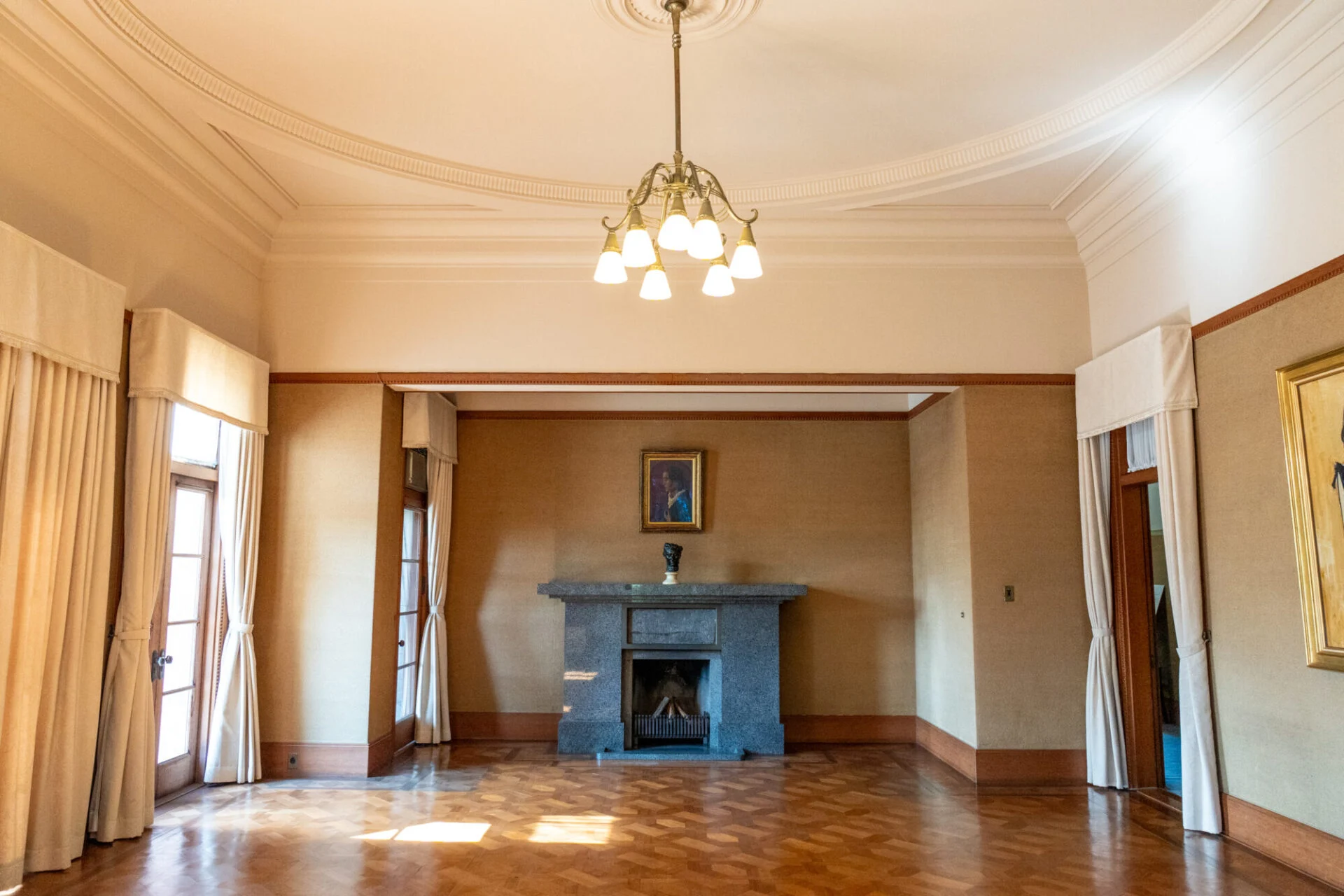
Fusion of Japanese and Western Architecture
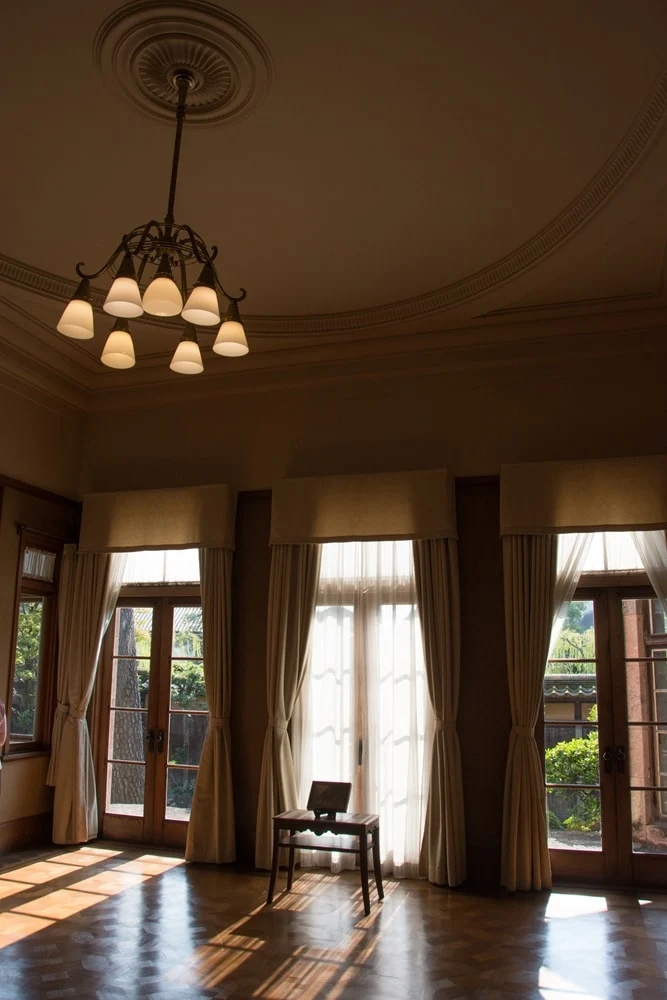
The design of Yurin-so Villa was done by Yakushiji Kazue.
Yakushiji Kazue was also responsible for the construction of the main building of the Ohara Museum of Art and the registered tangible cultural property, the former Kurashiki Honmachi Branch of the China Bank (Shin Kojima-kan (tentative name)).
The Japanese-style architectural parts were also advised by Ito Chuta, who built the Tsukiji Hongan-ji (Tokyo) and Meiji Jingu (Tokyo).
Moreover, various designs by Kojima Torajiro are incorporated into the interior and exterior.
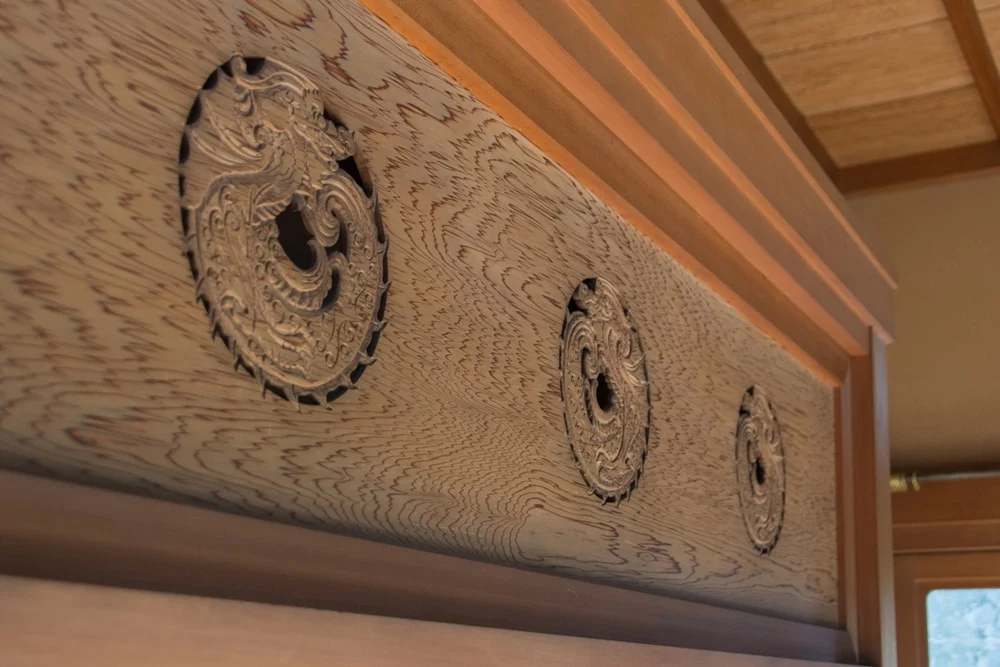
For example, the dragon-patterned transom was designed by Kojima Torajiro, inspired by Ohara Magosaburo, who was born in the Year of the Dragon.
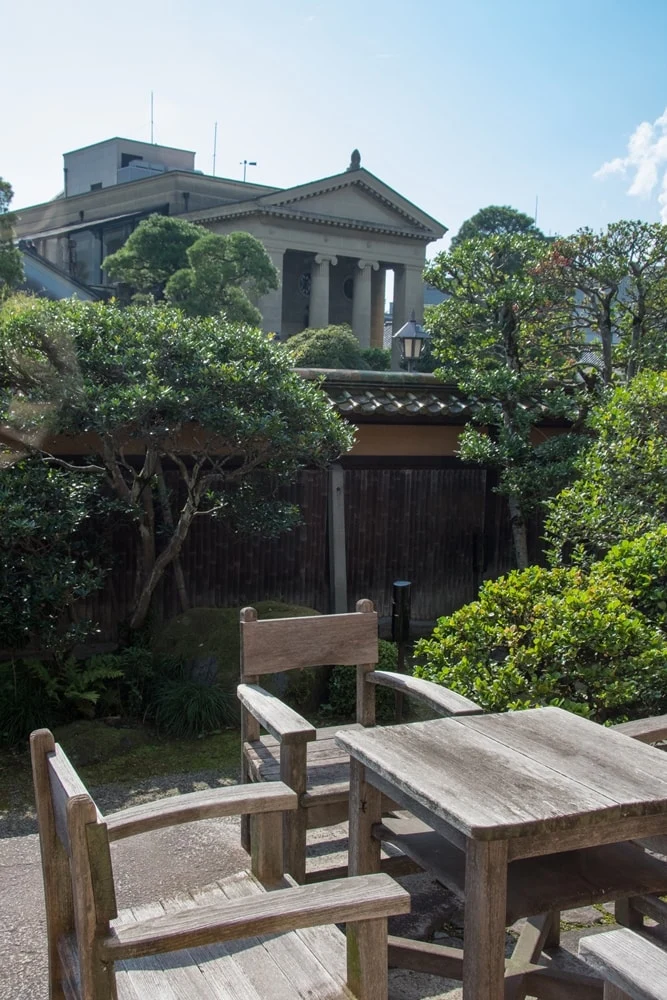
The table and chairs placed on the terrace were also designed by Kojima Torajiro.

Garden by a Pioneer of Modern Japanese Gardens
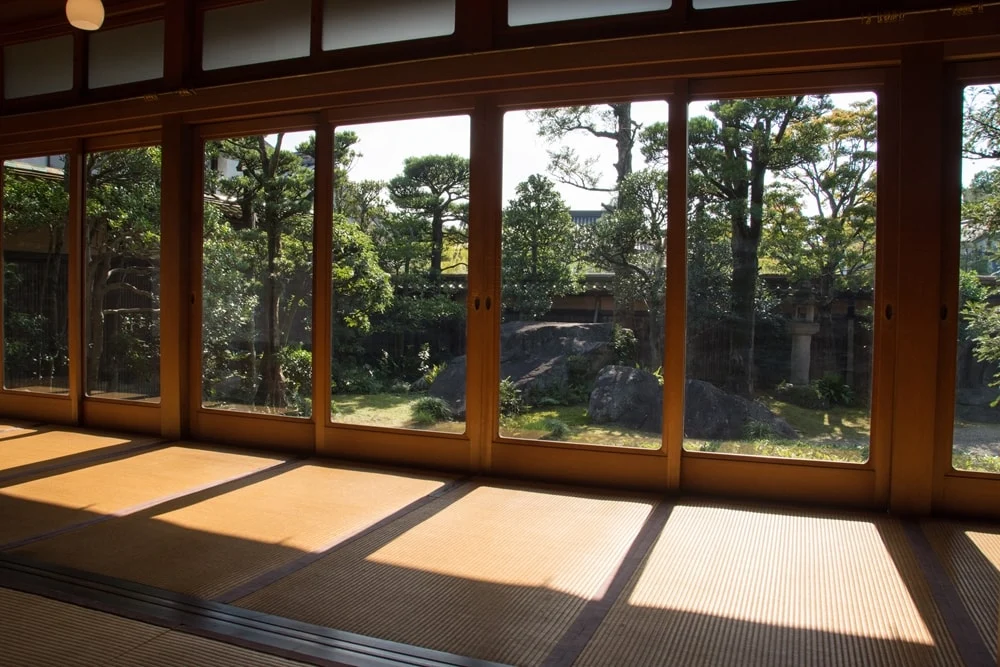
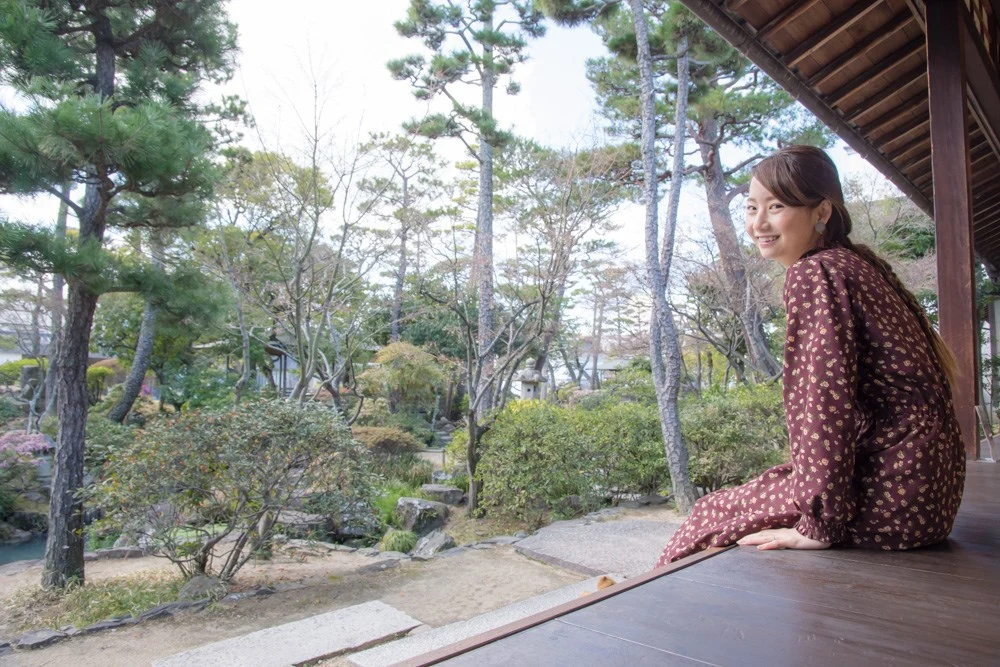
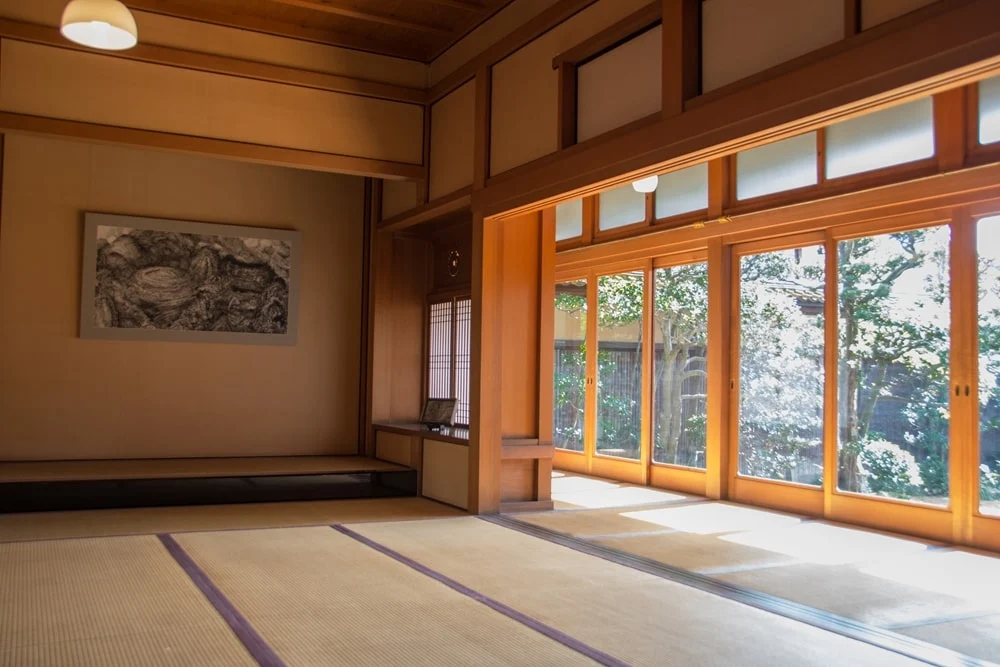
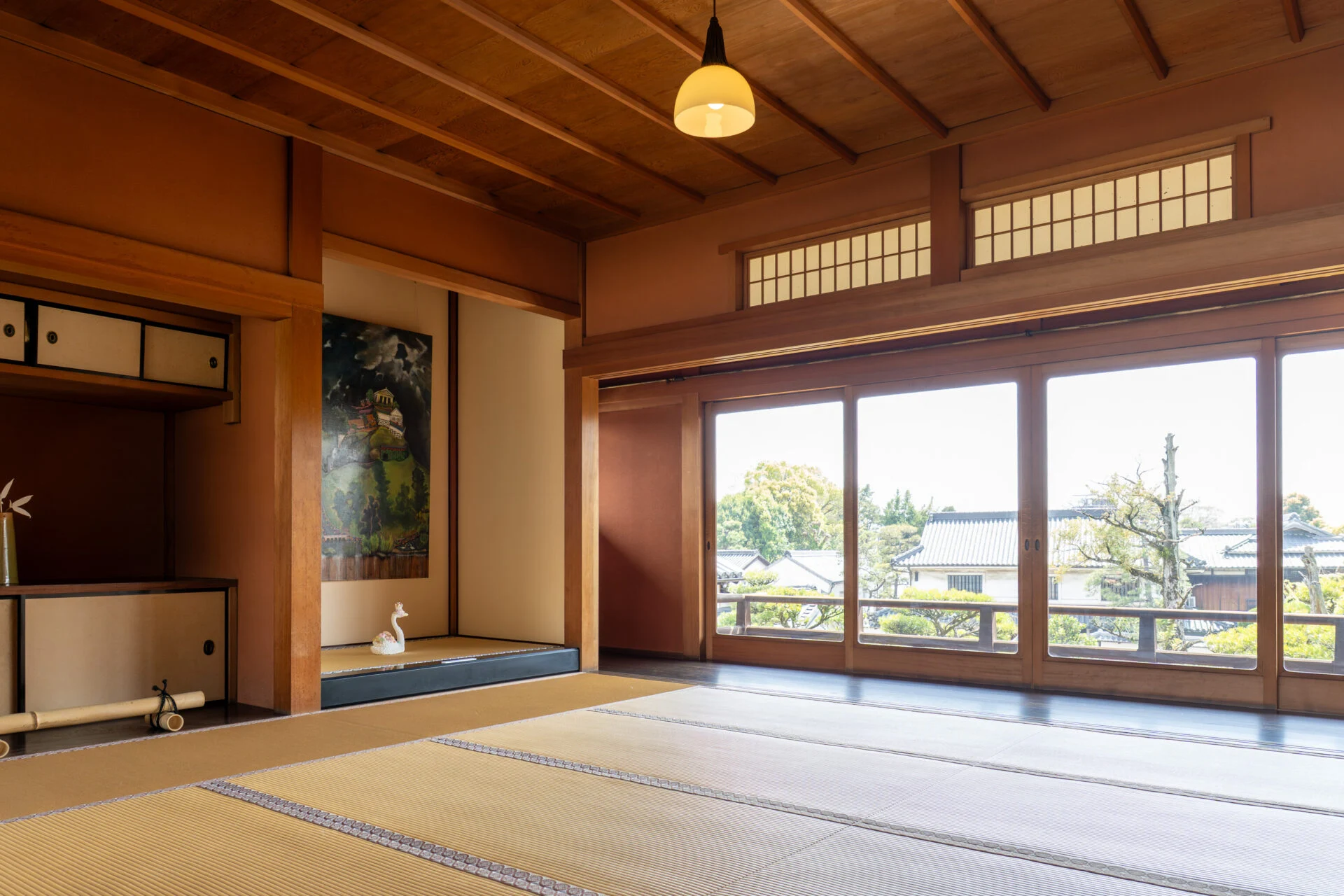
Yurin-so Villa has two gardens, each showcasing a different atmosphere. The first-floor Japanese-style room has open glass doors, allowing for a wide view of the garden from indoors.
The gardens of Yurin-so Villa were designed by "Seventh Ogawa Jihei," a pioneer of modern Japanese gardens.
He was the best gardener of the Meiji and Taisho eras, known as the "magician of water and stone."
Ogawa Jihei designed gardens such as the Heian Jingu Shrine Garden (Kyoto), Keiunkan Garden (Shiga), and Murin-an (Kyoto).
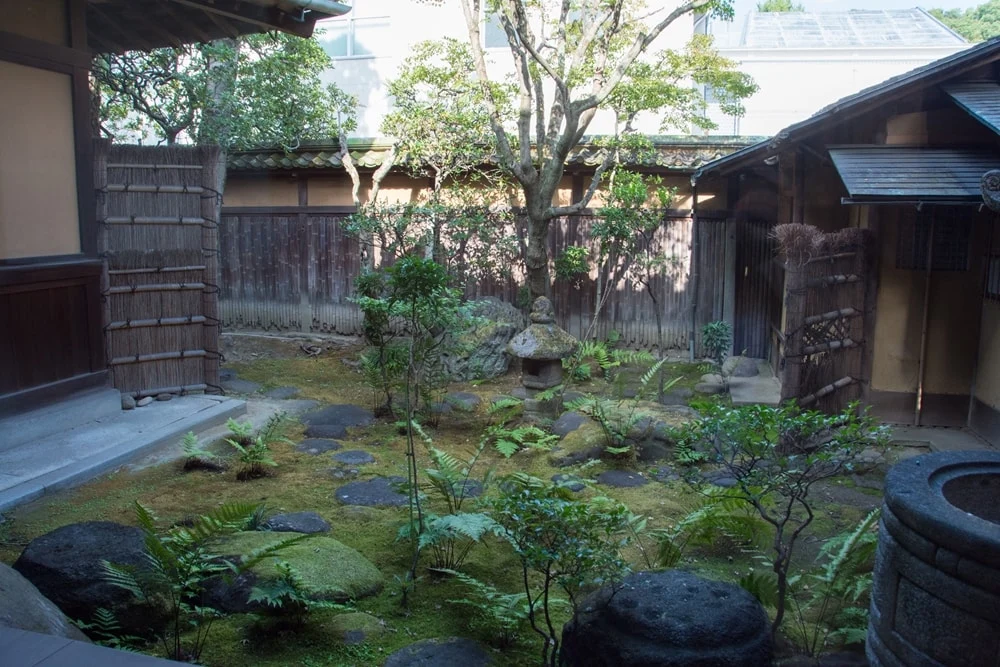
He also designed "Shinkei-en," which is located next to the Ohara Museum of Art.
About Natsunosuke Mise's "Hogokudo"
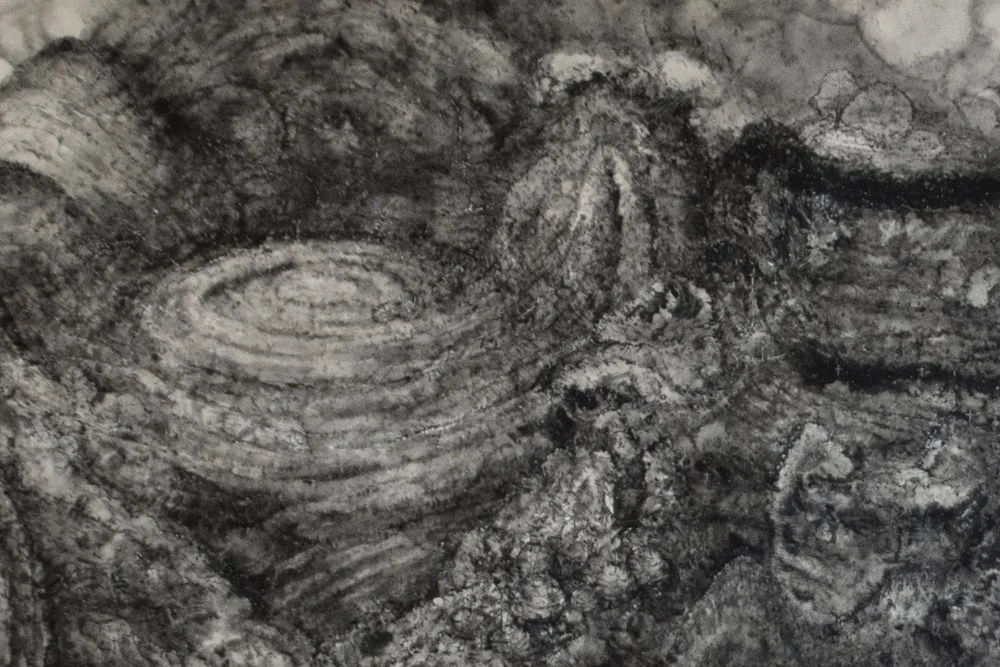
From October 19 (Friday) to November 4 (Sunday), 2018, a special exhibition titled "Hogokudo" by Natsunosuke Mise was held at Yurin-so Villa.
This was an exhibition unique to Yurin-so Villa that could only be seen in the autumn of 2018.
The painter Natsunosuke Mise creates works using traditional Japanese materials.
He has received numerous awards, including the VOCA Award, which is a gateway for young artists, and the 32nd Kyoto Prefectural Cultural Award Encouragement Prize, and has held solo exhibitions across Japan.
His works are also housed in institutions such as the Agency for Cultural Affairs, 21st Century Museum of Contemporary Art, Kanazawa, the Saxony State Museum in Germany, and the Benetton Foundation.
Mise has been drawn to Urakami Gyokudo, a literati painter from the Edo period who is also connected to the Ohara family.
In the exhibition "Hogokudo," new works created by Mise inspired by Urakami Gyokudo's works, as well as works by Urakami Gyokudo, were displayed.
Two of the exhibited works were created while staying at Yurin-so Villa.
These works are of a size perfect for display at Yurin-so Villa, created while feeling the daily changes in sunlight.
The exhibition in a room with large windows allowing natural light changes depending on the weather and time of day.
Unlike exhibitions in museums where the lighting is always uniform for clear visibility, it may be a bit difficult to see here.
That is precisely the environment in which the works were created, and it is also an interesting aspect.
Mr. Mise's works blend powerfully yet harmoniously with Yurin-so Villa, making it feel as if they have always been there.
Conclusion
The distinctive exterior of "Yurin-so Villa" is a wonderful place where you can enjoy a blend of Japanese and Western architecture, a rich garden, and a luxurious view.
Please take the opportunity to visit this rare chance to see the interior.
Articles about Yurin-so Villa
Data on Ohara Museum of Art Yurin-so Villa
| Name | Ohara Museum of Art Yurin-so Villa |
|---|---|
| Location | 1-3-18 Chuo, Kurashiki City |
| Contact | 086-422-0005 |
| Parking | None |
| Opening Hours | Generally, only the exterior is viewable. During the special opening of Yurin-so Villa in autumn 2022 from October 7 (Friday) to October 23 (Sunday), from 10:00 AM to 4:00 PM. * Last entry at 3:30 PM * Open every day during the event |
| Closed | Irregular holidays |
| Admission Fee (including tax) | Price during the special opening of Yurin-so Villa in autumn 2022 【Yurin-so Villa Admission Fee】 Adults: 1,000 yen High school, junior high, and elementary school students: 500 yen 【Set Ticket】 * Admission to both Yurin-so Villa and Ohara Museum of Art Adults: 2,000 yen High school, junior high, and elementary school students: 1,000 yen |
| Payment Method |
|
| Reservation | Not accepted |
| Smoking | Completely non-smoking |
| Website | Ohara Museum of Art Official Page |