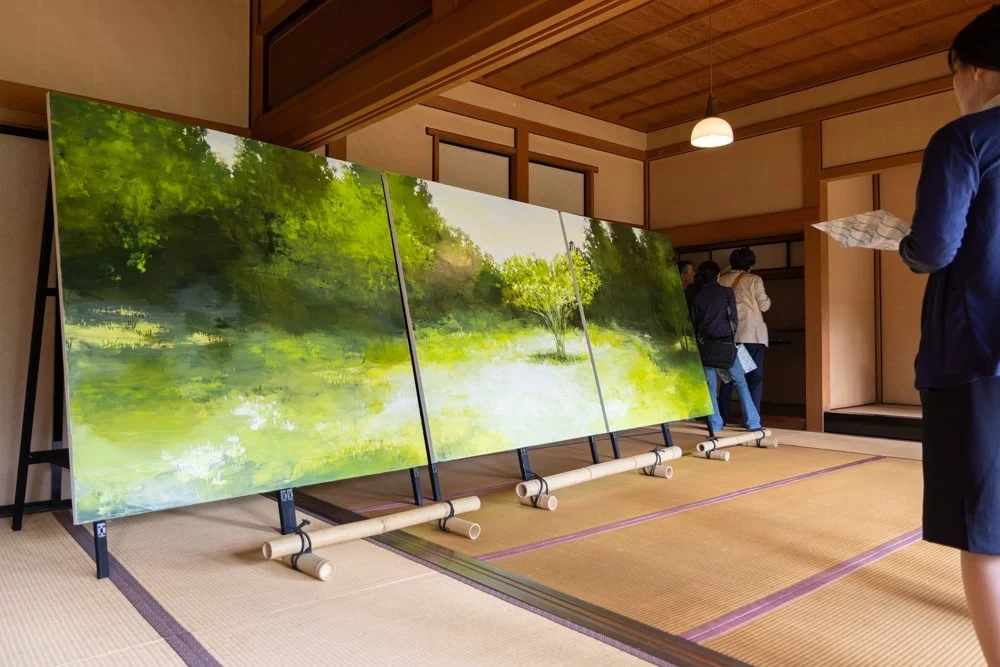
From April 26 (Friday) to May 6 (Monday, holiday) in 2019, a special exhibition by the Yurin-so Villa in the Bikan Historical Area was held by the Ohara Museum of Art.
The exhibition is titled, "The Green Palace Aesthetic - Millet, Cezanne, Aida Makoto, and Rothko, etc."
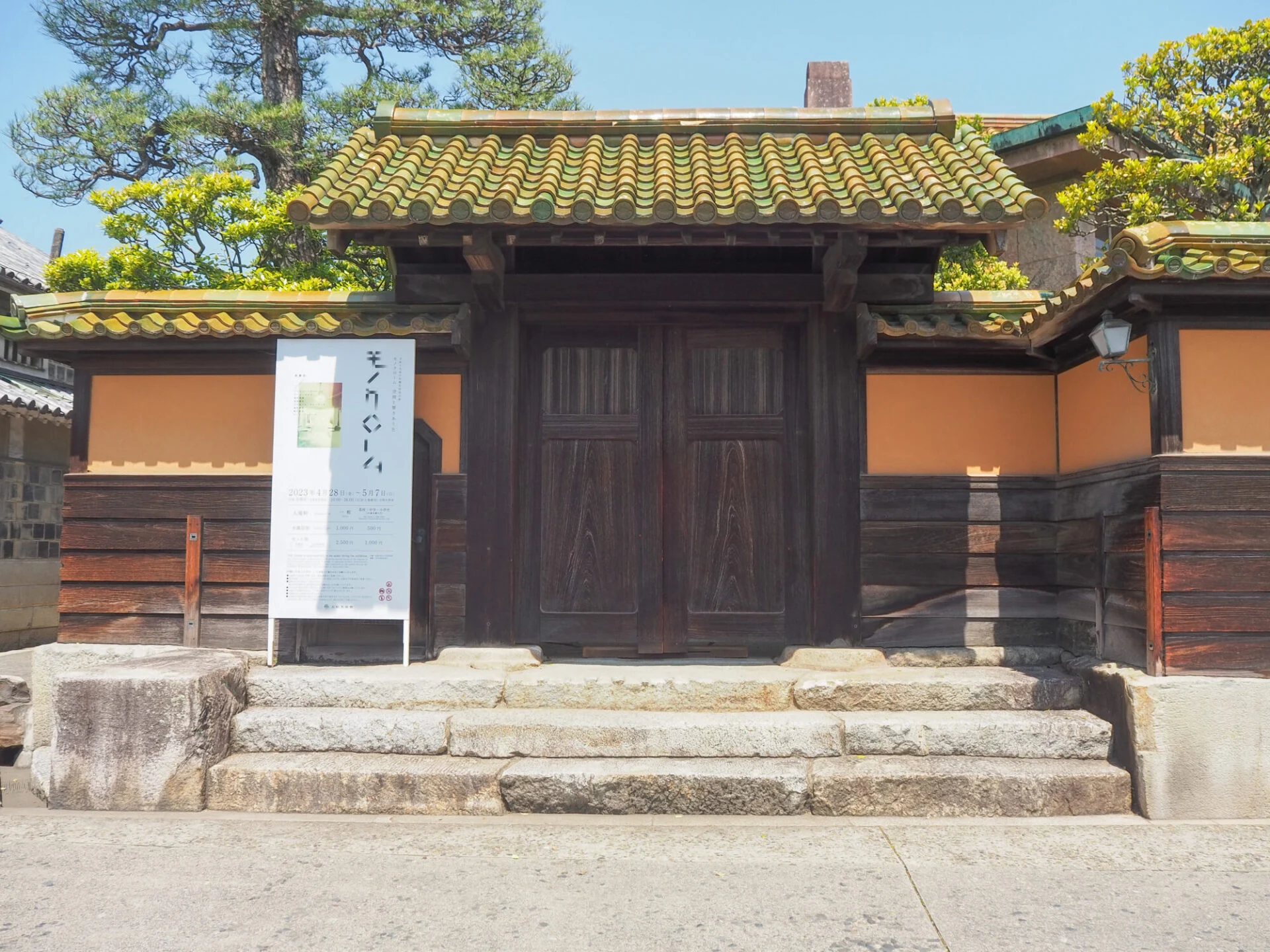
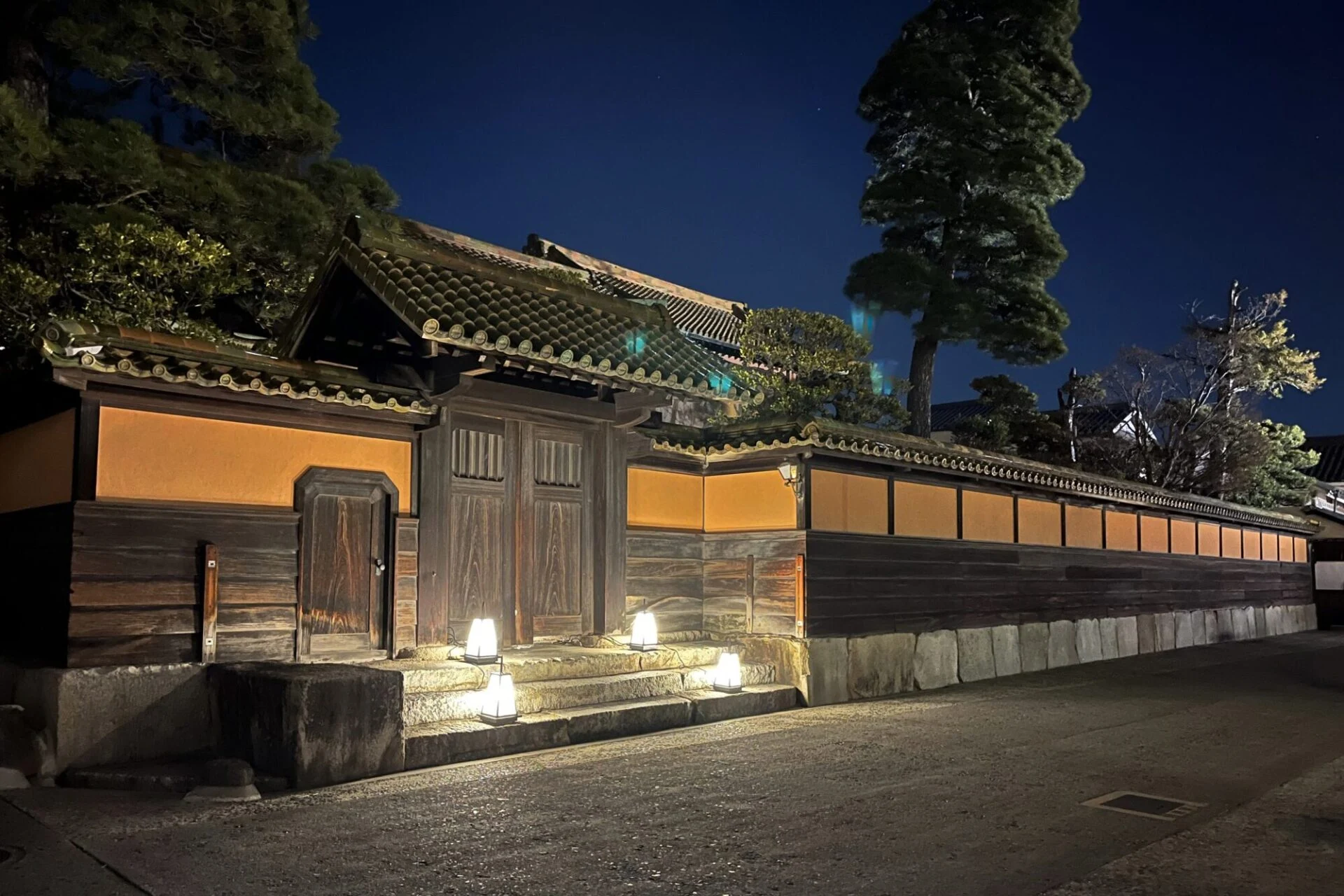
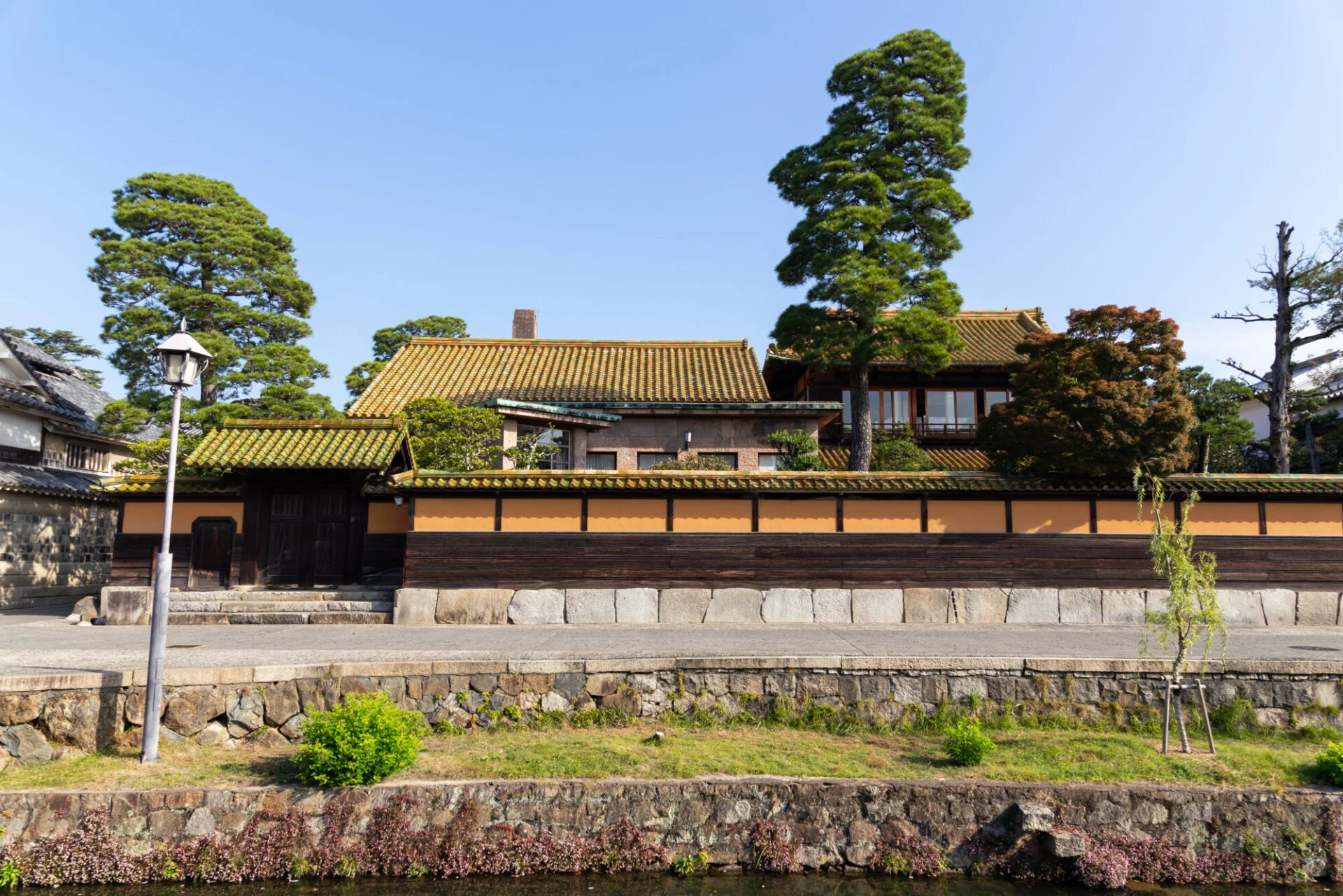
The venue, Yurin-so Villa, is also referred to as the "Green Palace" due to its green tiled roof.
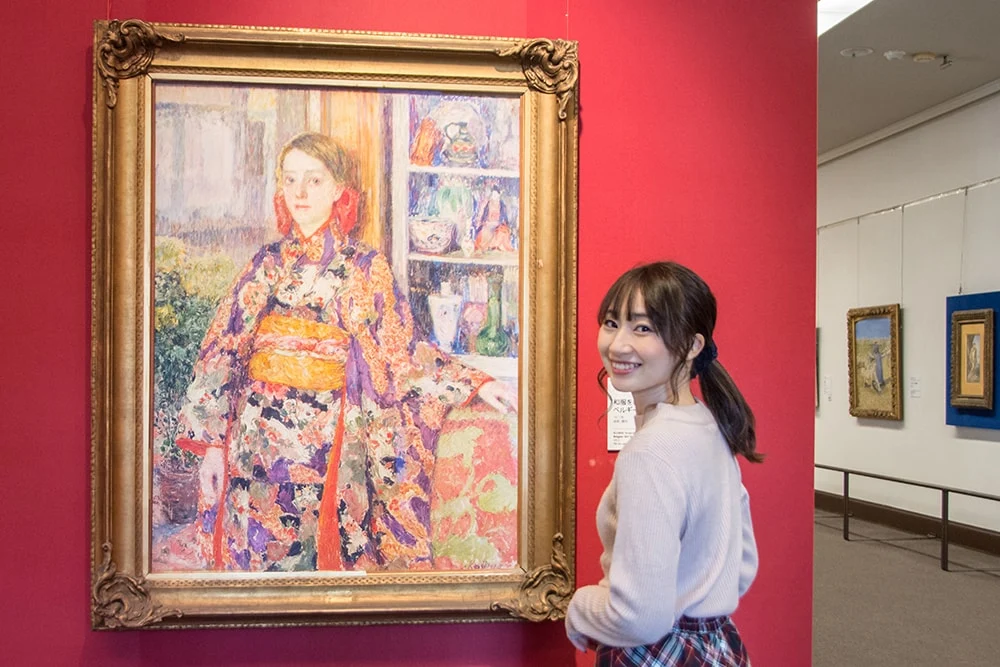
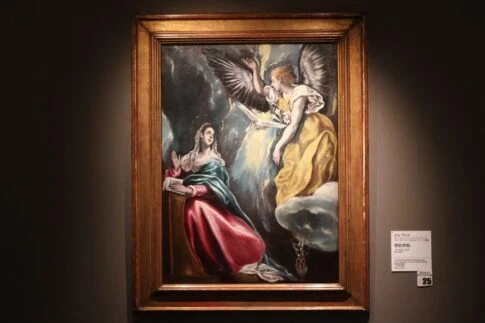
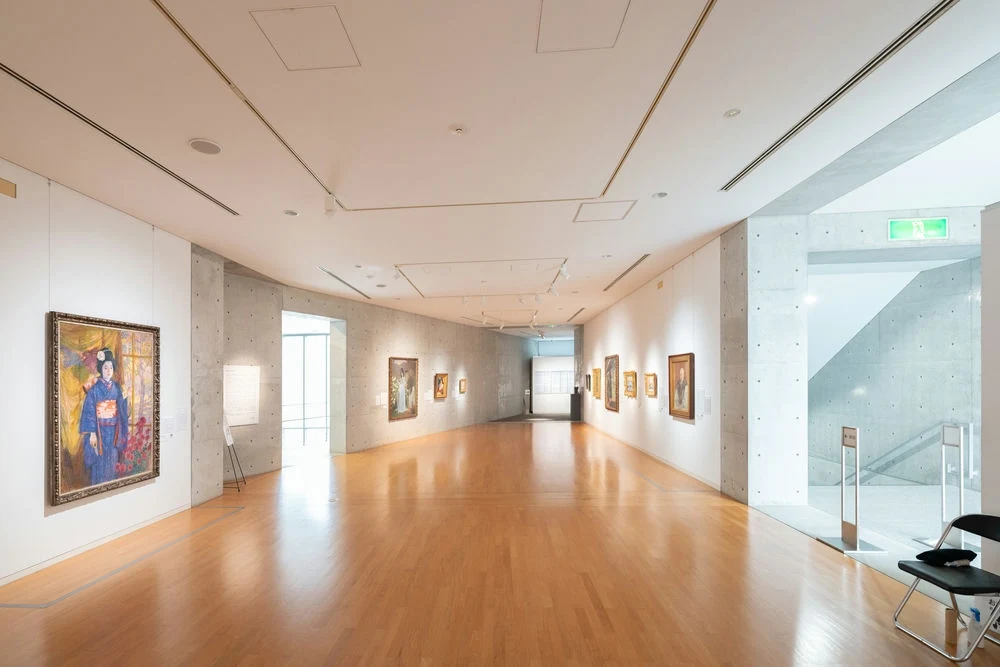
In "The Green Palace Aesthetic," works selected for their green hues from the collection of the Ohara Museum of Art were displayed.
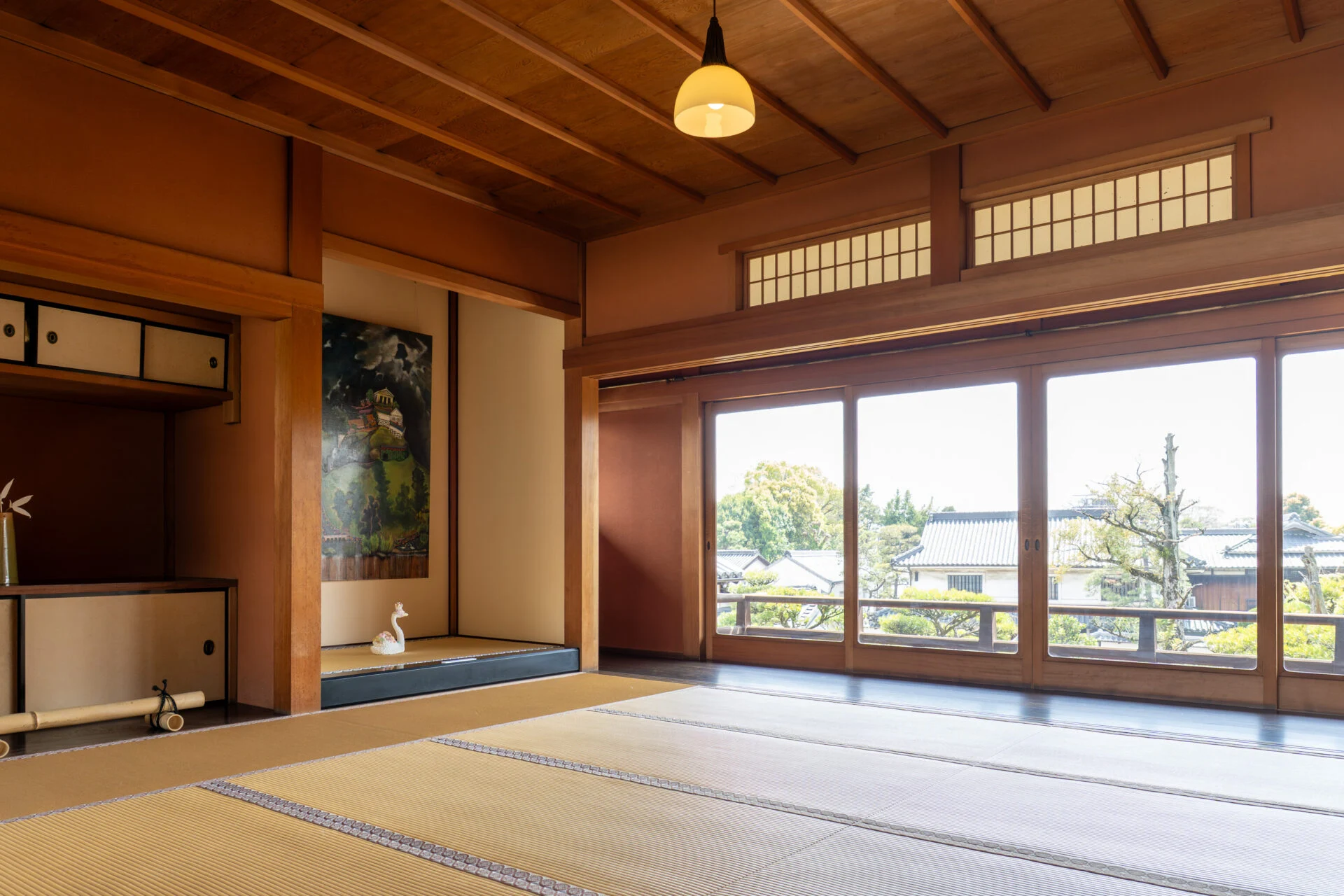
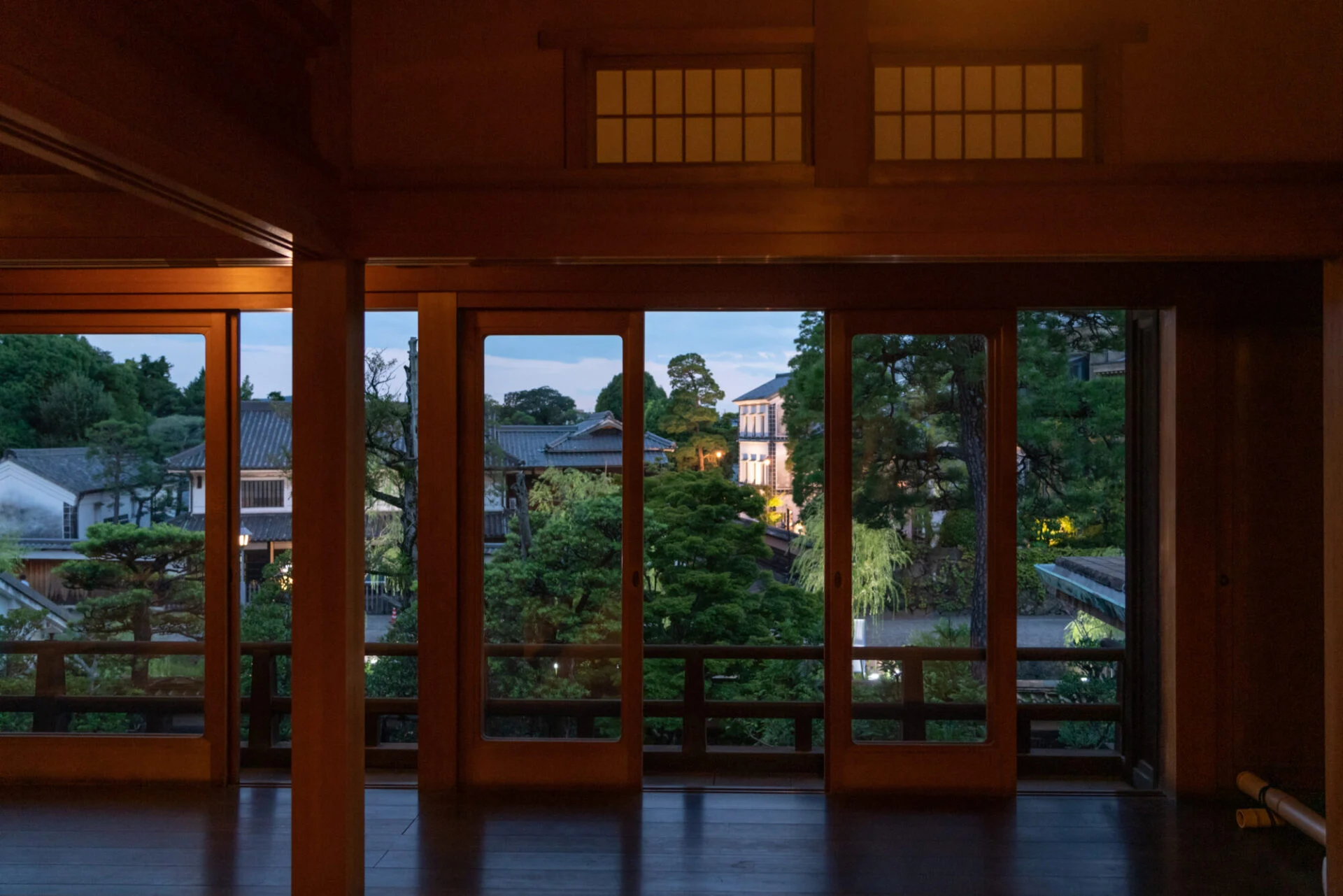
During the exhibition period, there was a rare opportunity to enter Yurin-so Villa, which is usually only viewable from the outside, and enjoy a view of the Bikan Historical Area from a special vantage point!
We covered the special exhibition.
Photography is usually prohibited inside Yurin-so Villa. This time, we have received special permission to take photos.
What is Yurin-so Villa
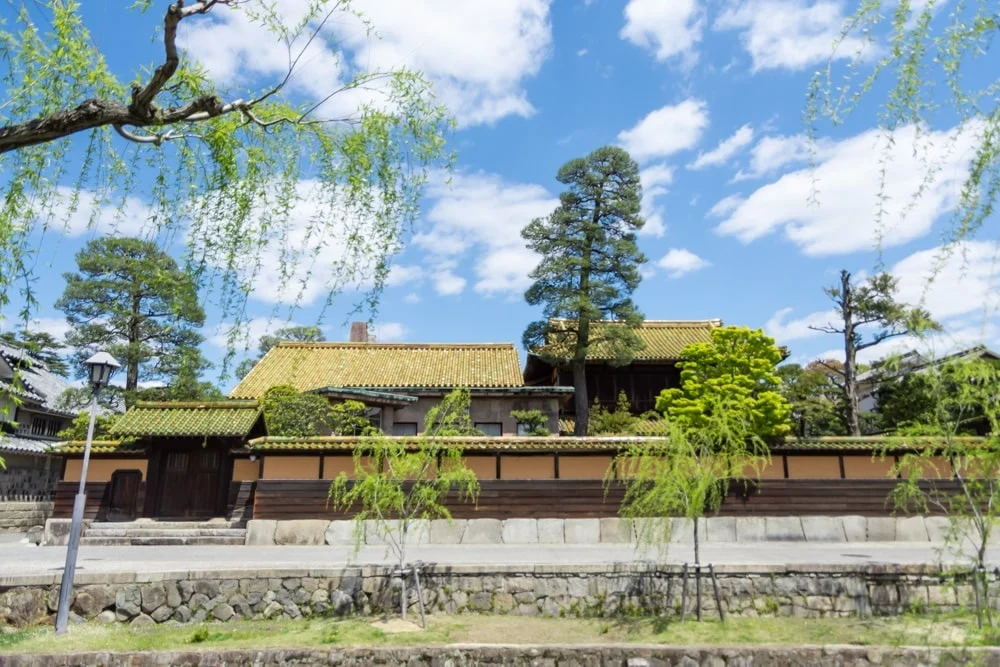
Yurin-so Villa is the former villa of the Ohara family, which had a significant impact on the economy and culture of Kurashiki. It was built in 1928.
Usually, only the exterior can be viewed. However, since 1997, it has been opened to the public for 1 to 2 weeks each spring and autumn as a venue for special exhibitions organized by the Ohara Museum of Art.
The features and highlights are detailed in the articles below, so please take a look.

Here are some highlights:
- The view of the Bikan Historical Area from the second floor is superb
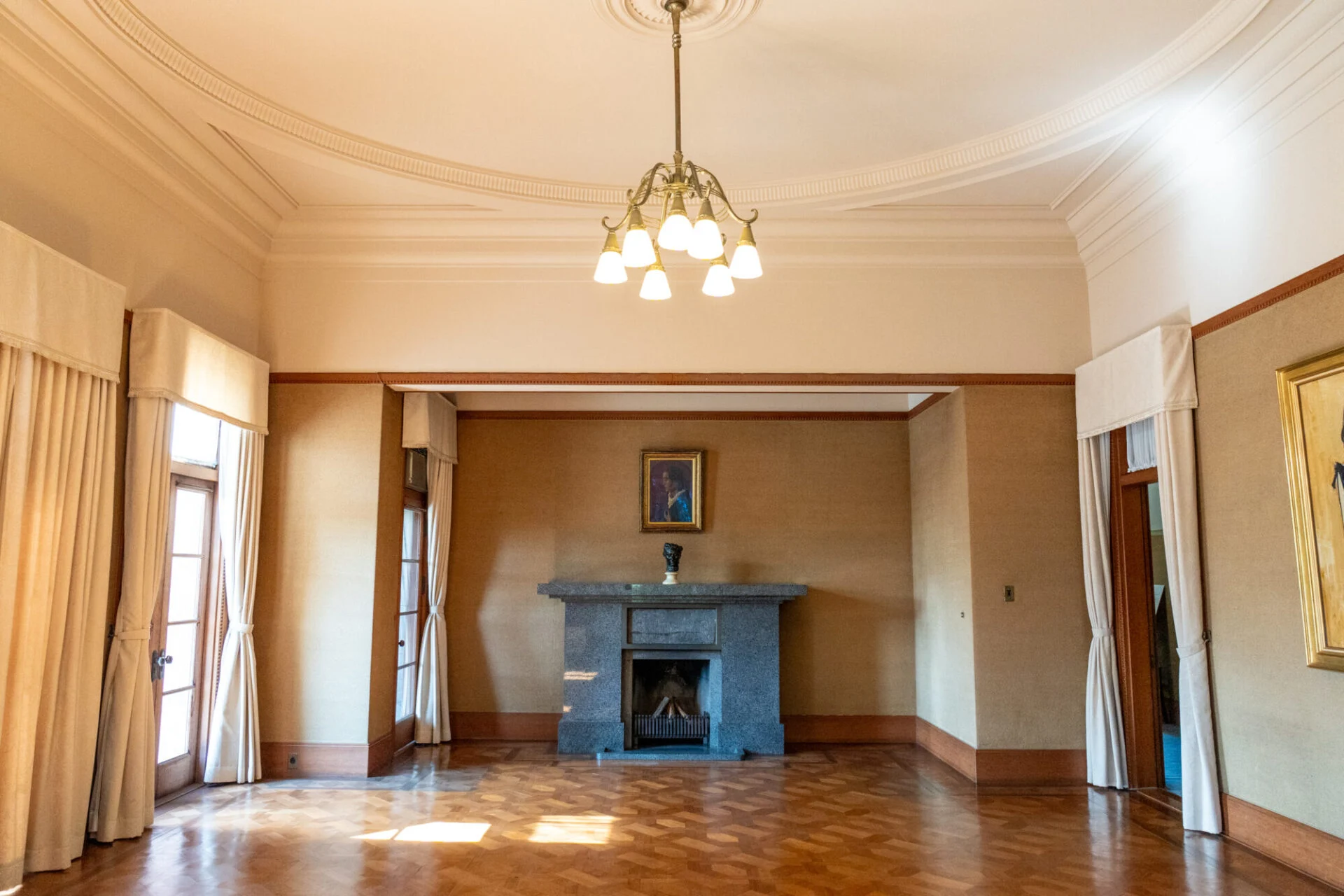
- A famous building that blends Western and Japanese styles
- Two gardens by a pioneer of modern Japanese gardens
Yurin-so Villa appearing in the Kindaichi Kousuke series by Seishi Yokomizo (?).
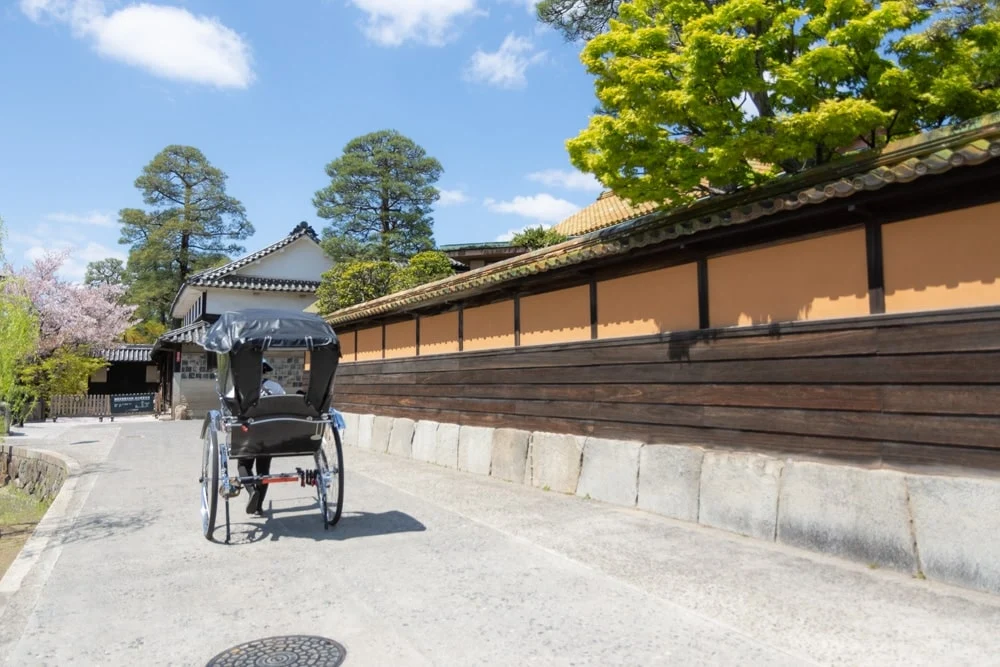
Mystery writer Seishi Yokomizo was evacuated to present-day Mabi, Kurashiki City for three years starting in 1945. The detective Kindaichi Kousuke was also born in Mabi.
In one of the Kindaichi Kousuke series, the novel "Yoru Aruku," which began serialization during his evacuation, features a building called "Midori Goten" as the setting for the first incident.
The description of "Midori Goten" closely resembles Yurin-so Villa!
It is highly likely that Seishi Yokomizo visited Yurin-so Villa during his evacuation and used it as a model for the setting.
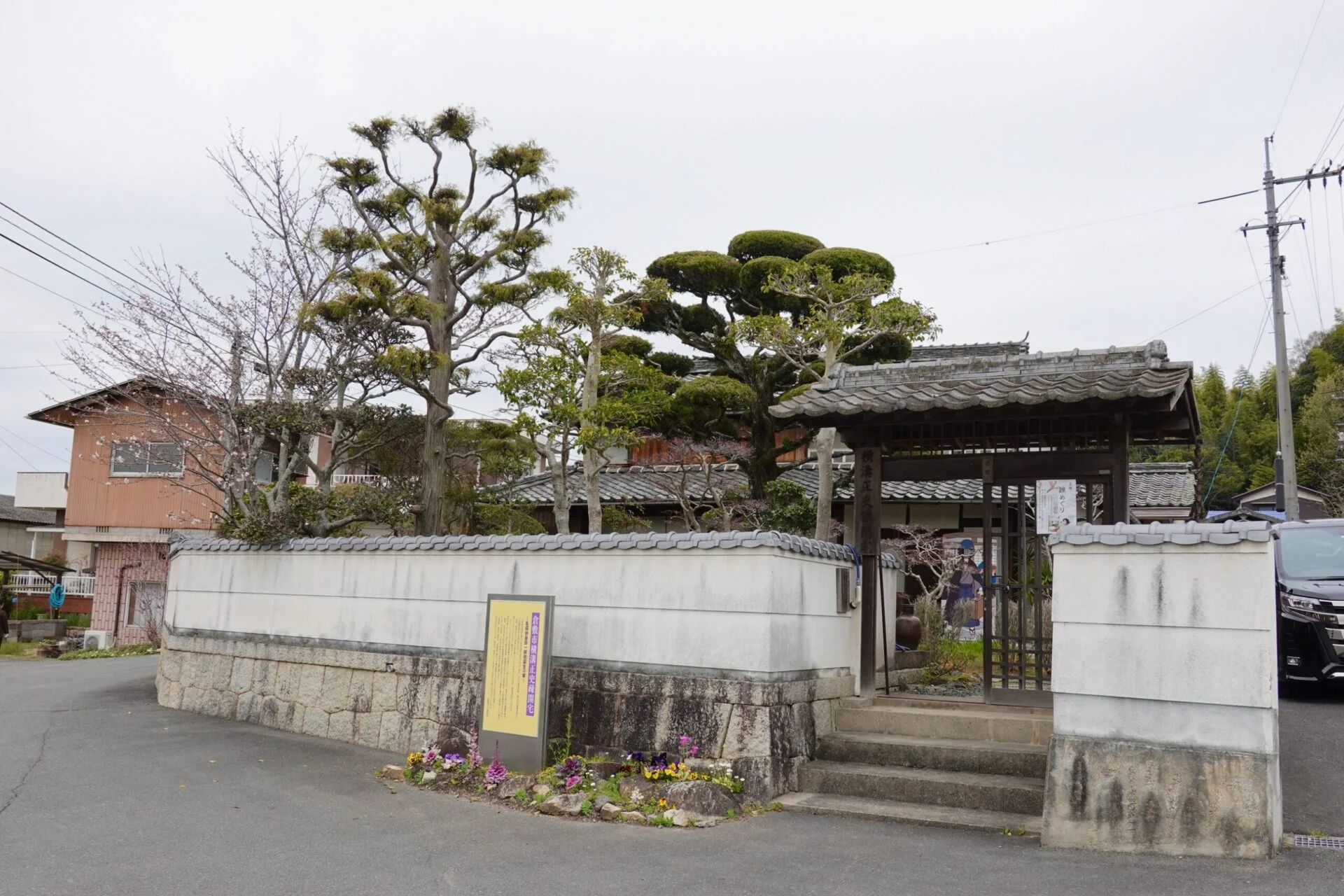
The green roof tiles of Yurin-so Villa
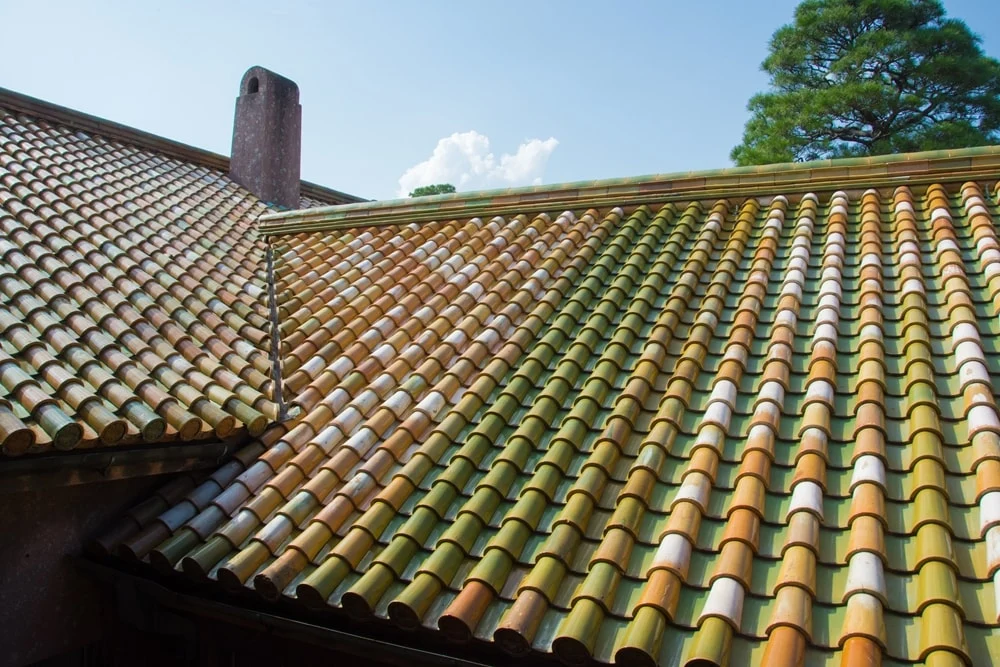
The works that form the foundation of the Ohara Museum of Art were collected by Kojima Torajiro, who was also involved in the construction of Yurin-so Villa.
The green roof tiles of Yurin-so Villa are said to have been inspired by the Confucius Temple that Torajiro saw in China.
Additionally, Yakushiji Kazue, who designed Yurin-so Villa, visited the textile town of Lyon in France and was impressed by its beautiful scenery.
He wanted to bring a beautiful streetscape to Kurashiki, a town known for textiles, and had a strong interest in roof tiles, which are an important element of the landscape.
Furthermore, Ohara Magosaburo, the founder of the Ohara Museum of Art and the one who commissioned the construction of Yurin-so Villa, is said to have visited the site to inquire about the manufacturing method after seeing green roof tiles from a Western-style building from a train window.
Unfortunately, he could not learn the manufacturing method from the owner of the Western-style building, and instead had tiles custom-made in Senshu, a region famous for tile production in Osaka.
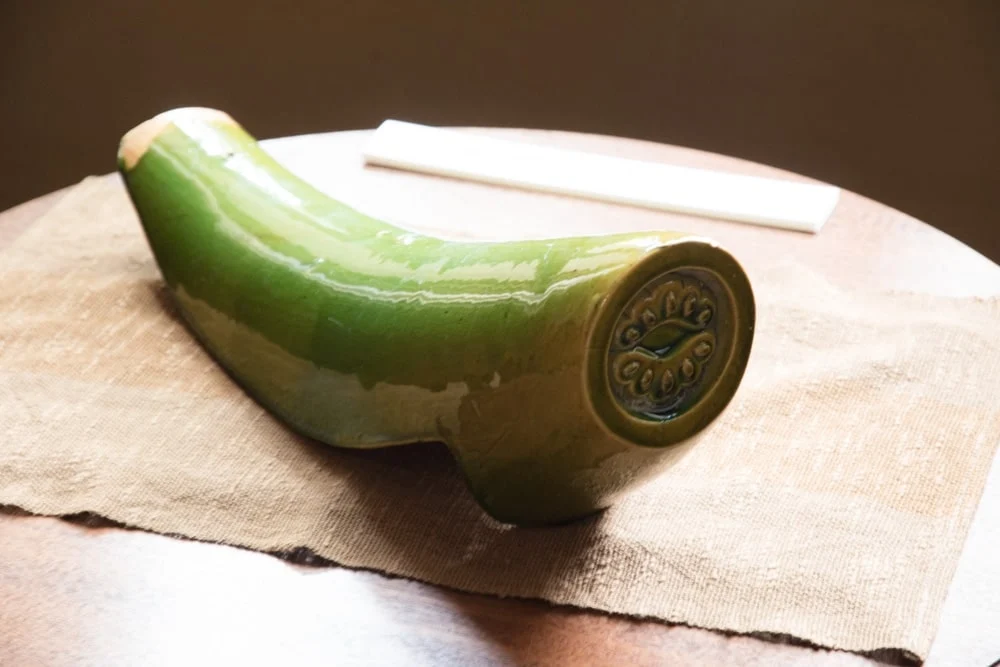
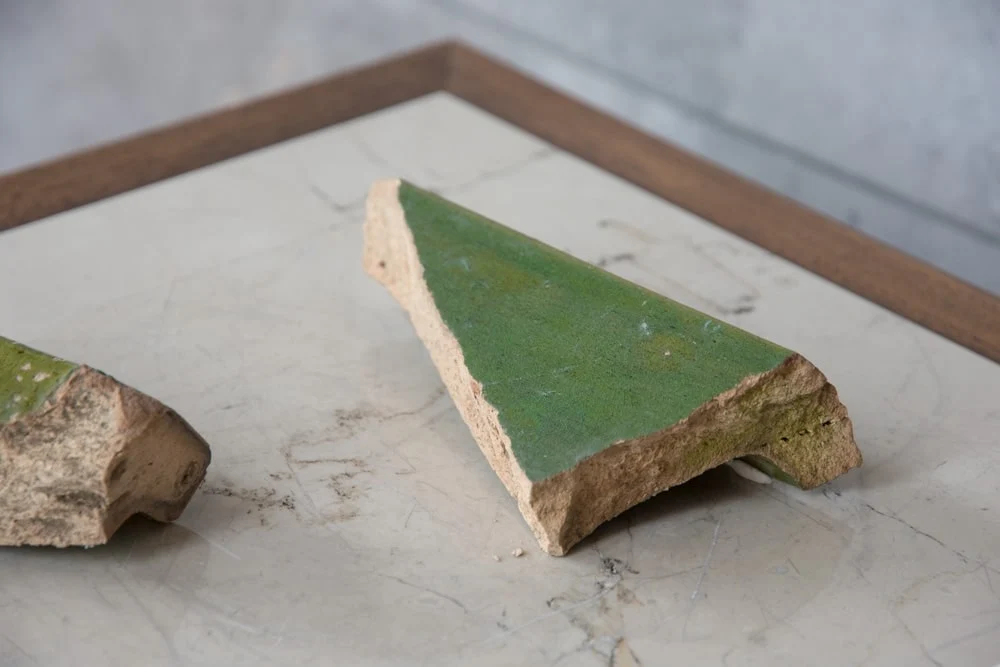
The green tiles, completed after much trial and error, are a beautiful green that reflects the passionate thoughts of three individuals.
Reference: Materials from the Ohara Museum of Art (2019)
The leaflet available at Yurin-so Villa indicates points where you can see the tiles well. Please check them out while walking around the villa.
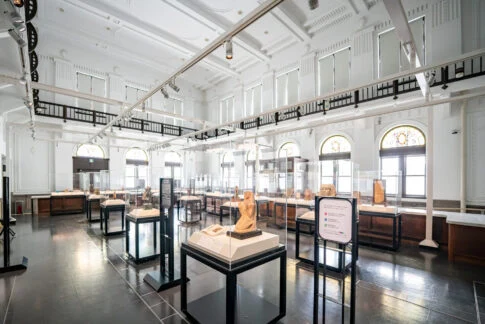
Additionally, some tiles are on display, allowing you to closely examine the beauty of the glaze covering the surface of the tiles.
About "The Green Palace Aesthetic - Millet, Cezanne, Aida Makoto, and Rothko, etc."
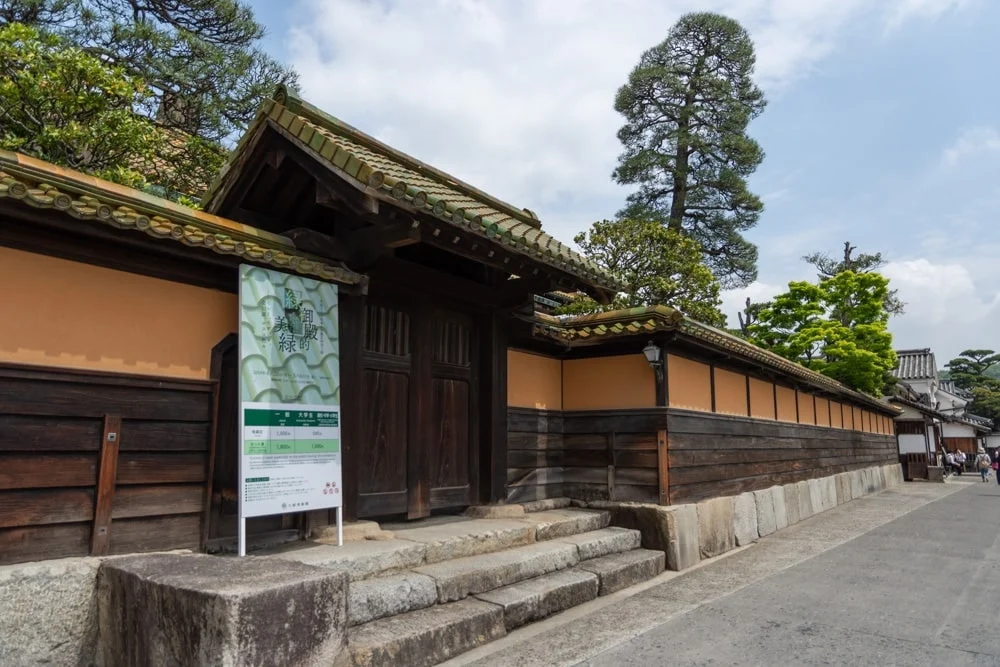
The exhibition "The Green Palace Aesthetic," held in the beautiful season of fresh greenery, is all about green!
- The green of Yurin-so Villa's roof
- The diverse greens of the artworks
- The green of the garden
This exhibition allows you to enjoy all of the above greens at the same time.
As you enter the entrance, green flowers welcome you.
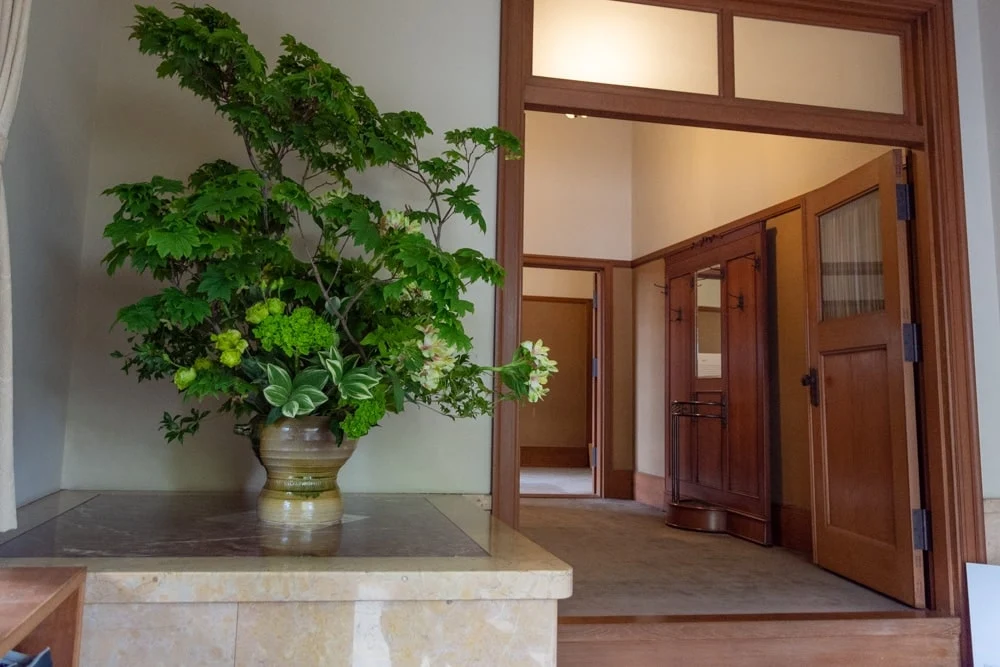
Each room has its own characteristics, so let’s introduce them.
1st Floor Western Room: Green as a Symbol
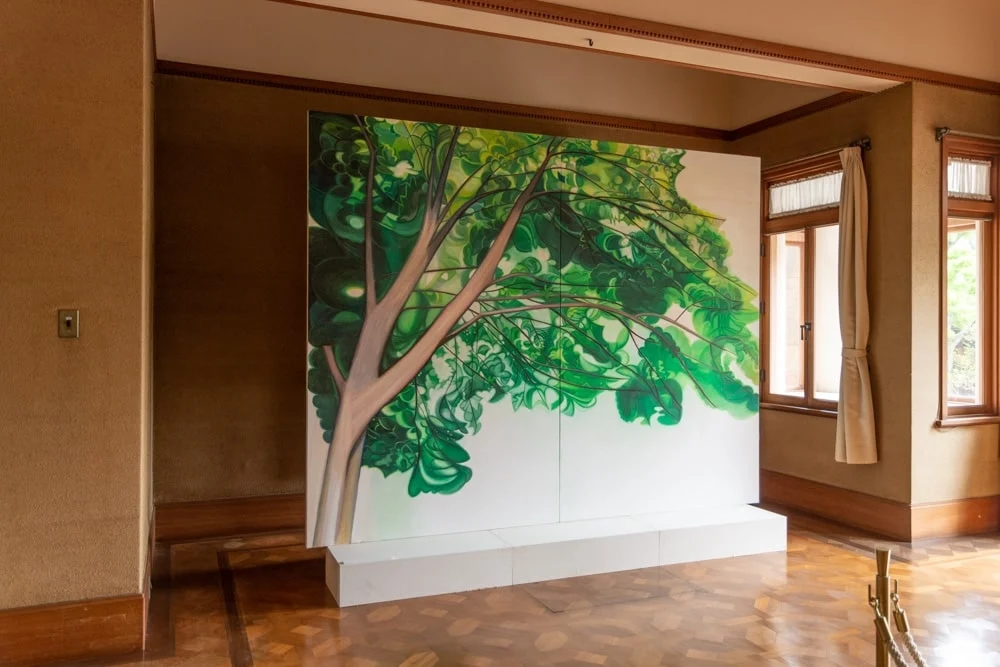
In the 1st Floor Western Room, the following works are displayed.
- Hisao Domoto "Universe"
- Josef Albers "Homage to the Square"
- Pablo Picasso "The Flutist"
- Chieko Oshie "Kodama"
When you see a rainbow, green is in the middle. It is a neutral color in terms of wavelength.
Josef Albers aimed for his paintings to be "not representing anything specific" in order to be universal. "Homage to the Square" is a painting with multiple squares arranged in a regular pattern, and it can be considered a pinnacle of the artist's representative series.
Chieko Oshie's "Kodama" is a pastel painting inspired by the nature of Kurashiki. The strength and divinity of the trees can be felt.
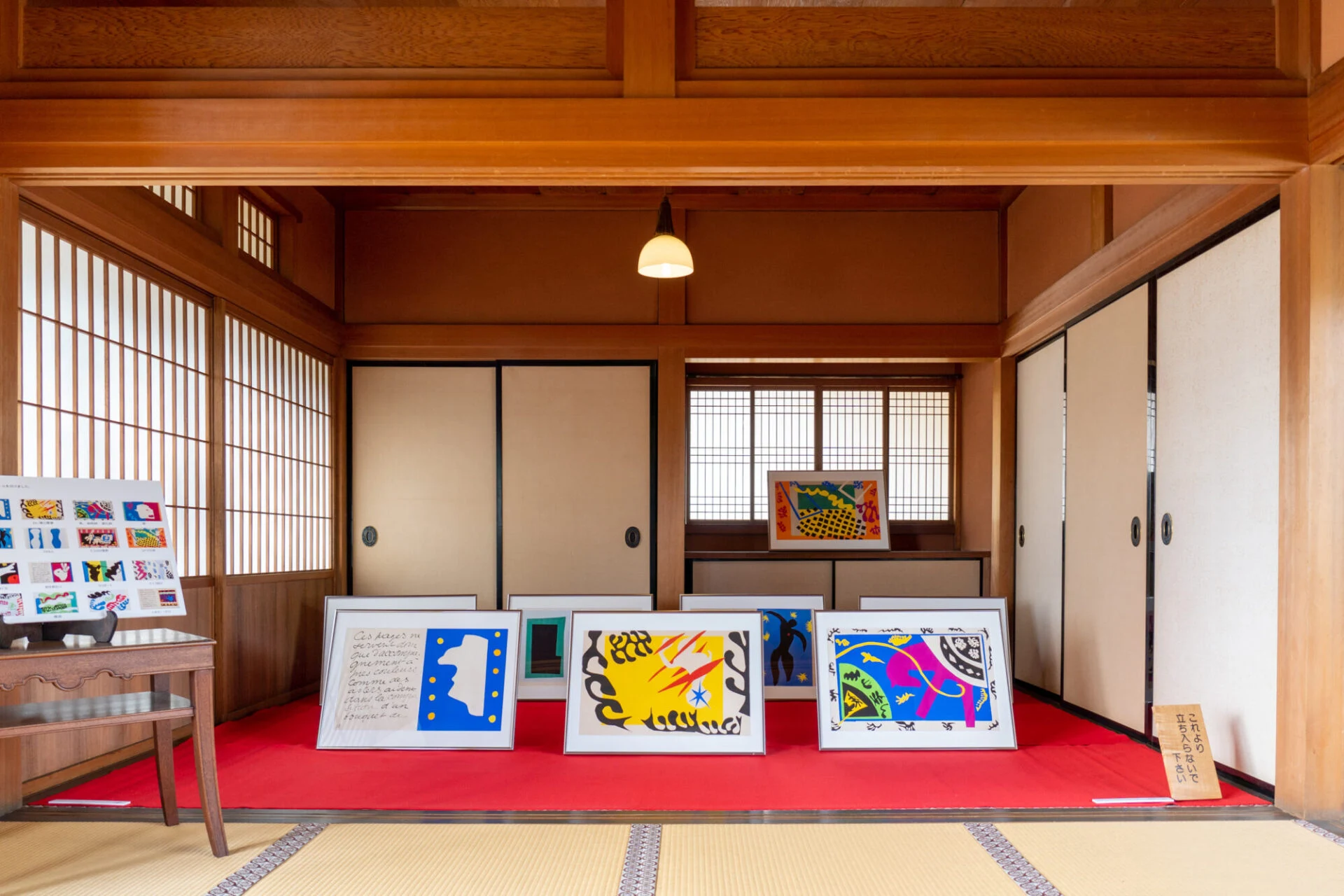
1st Floor Japanese Room: Green of Plants
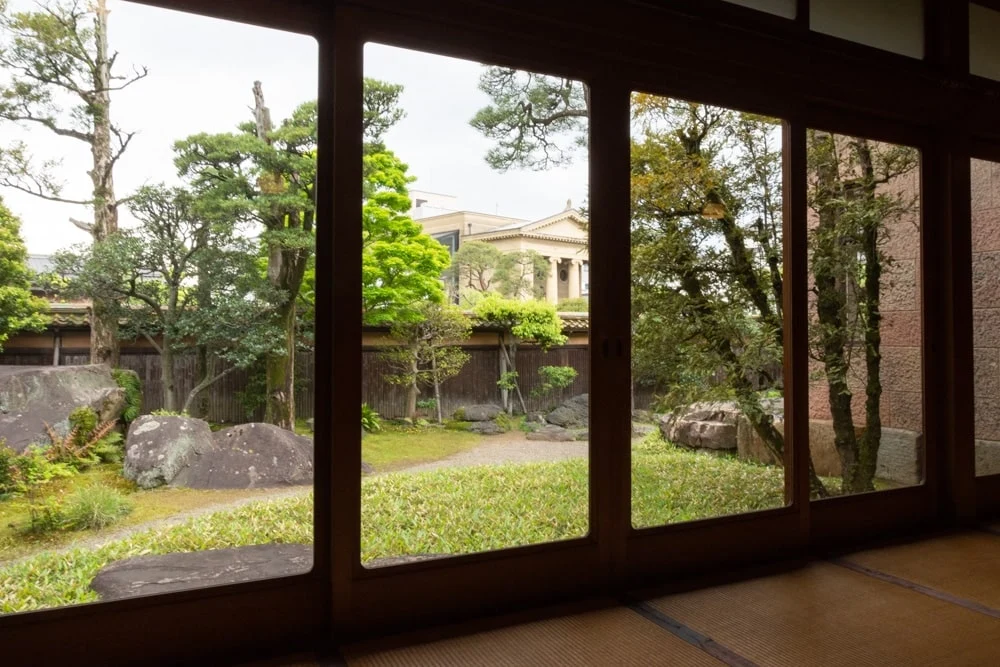
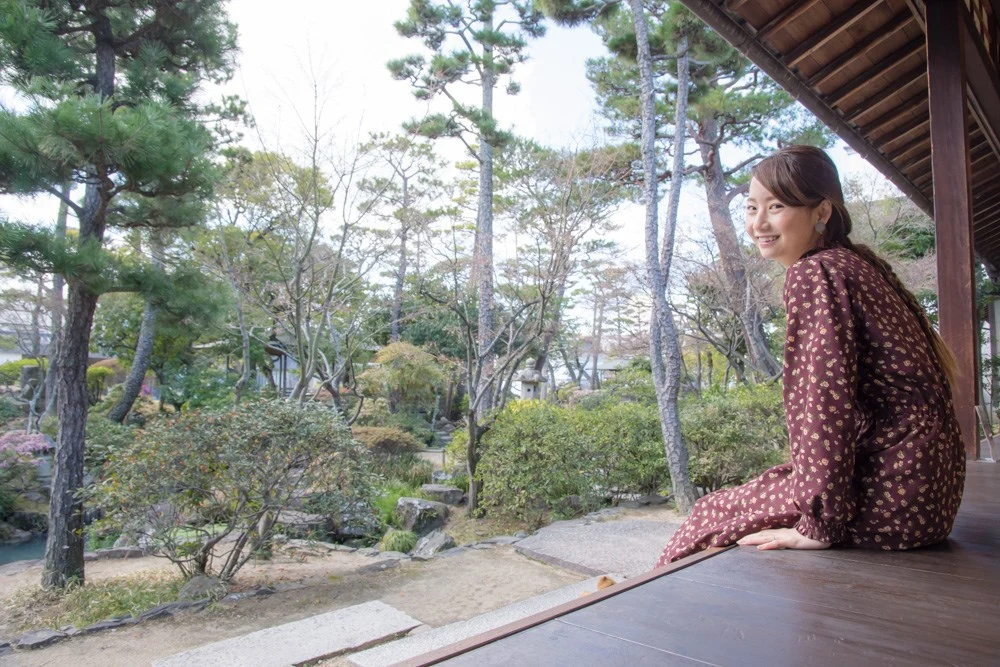
In front of you is a lush green garden in the 1st Floor Japanese Room. Here, works depicting the green of plants are displayed.
This is a pleasing space where you can enjoy both the actual garden's green and the green of the artworks.
- Jean-François Millet "The Cliff at Greville"
- Paul Cézanne "Bathers"
- Takako Hojo "Waiting Light -muison-so-"
- Aida Makoto "Ai-chan Bonsai (Pine) in the Garden"
- Aida Makoto "Ai-chan Bonsai (Pine)"
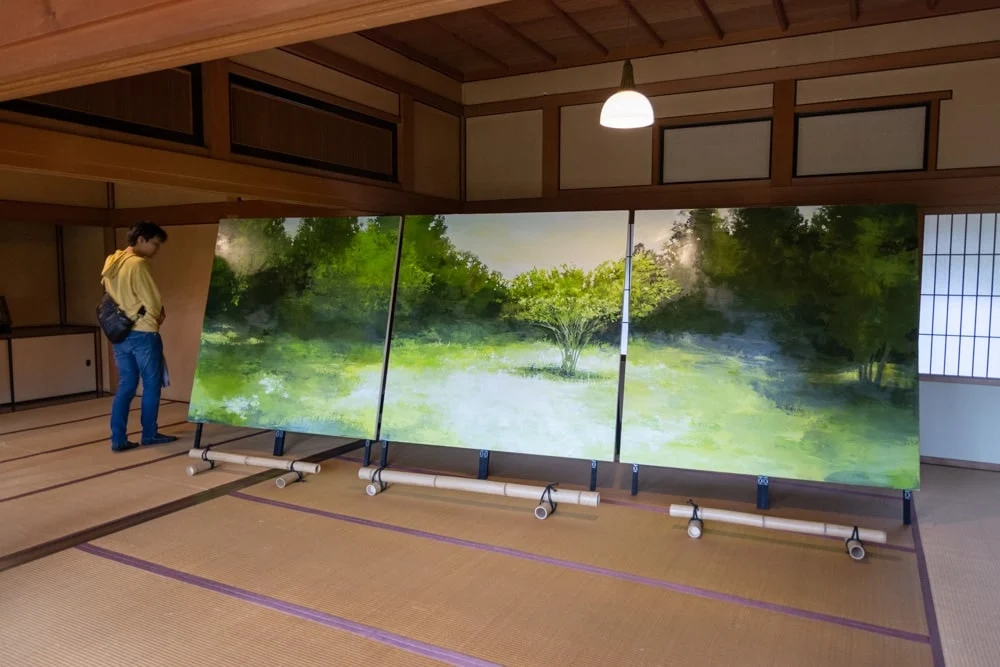
The first thing that catches your eye is Takako Hojo's large oil painting.
This work, inspired by the nature of Kurashiki, features a partially abstracted tree that tells the story of the beauty of nature.
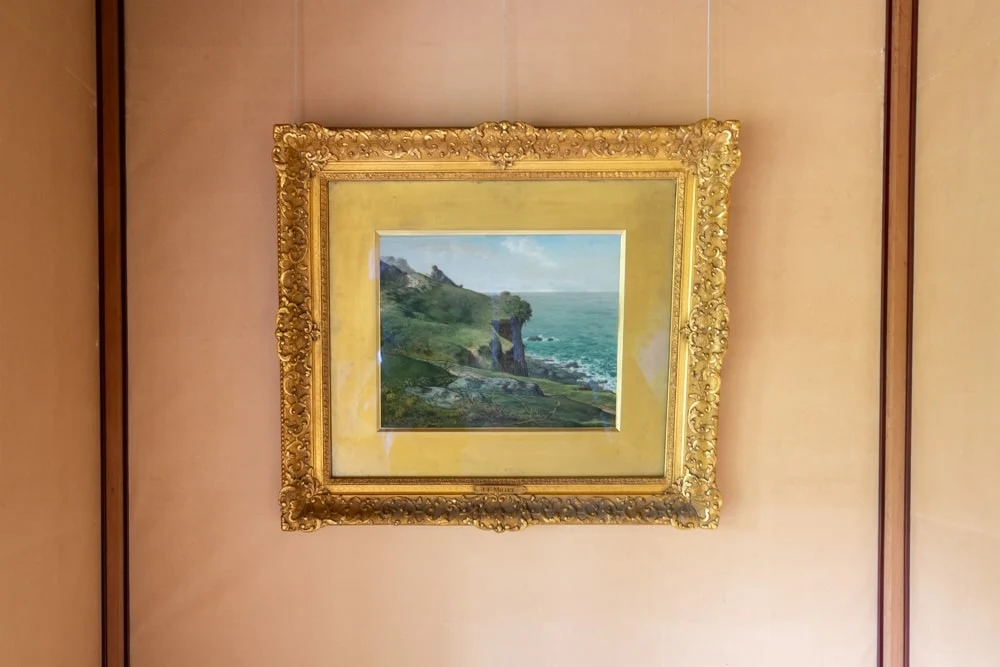
Millet's painting makes each blade of grass look soft.
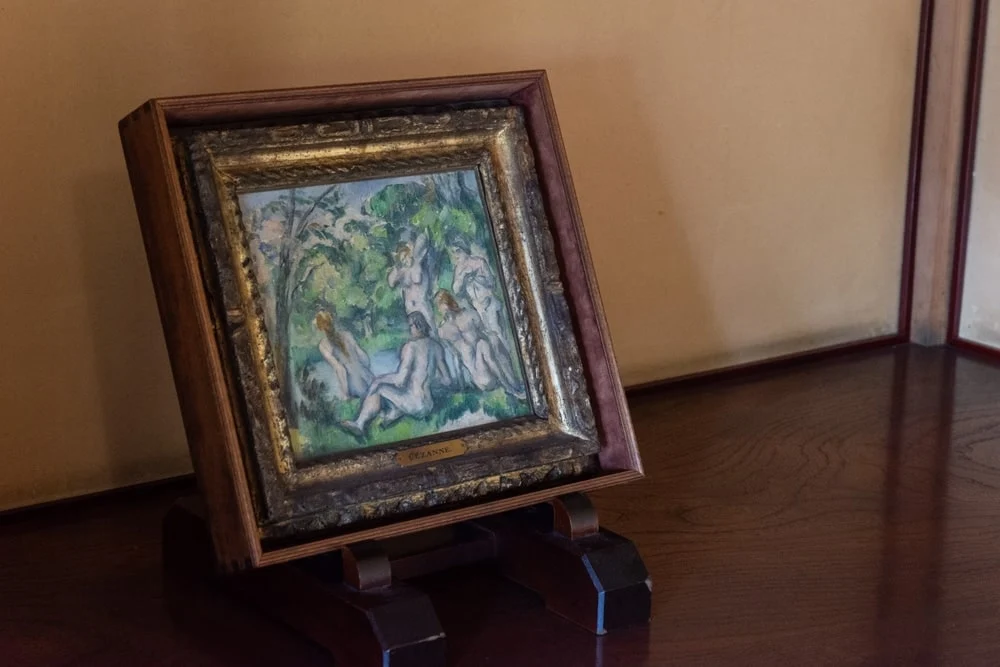
Cézanne depicts a nude woman bathing in the forest.
What has been startling viewers one after another is Makoto Aida's "Ai-chan Bonsai." It combines a beautiful girl figure with a bonsai, appearing both human and tree-like. Many, including myself, might find it "creepy."
Cézanne's "Bathers" and Makoto Aida's "Ai-chan Bonsai" were created 125 years apart and have completely different styles, yet both are inspired by nature and women.
It might be enjoyable to explore what perspectives they offer and to find commonalities and differences.
2nd Floor Japanese Room Water's Green
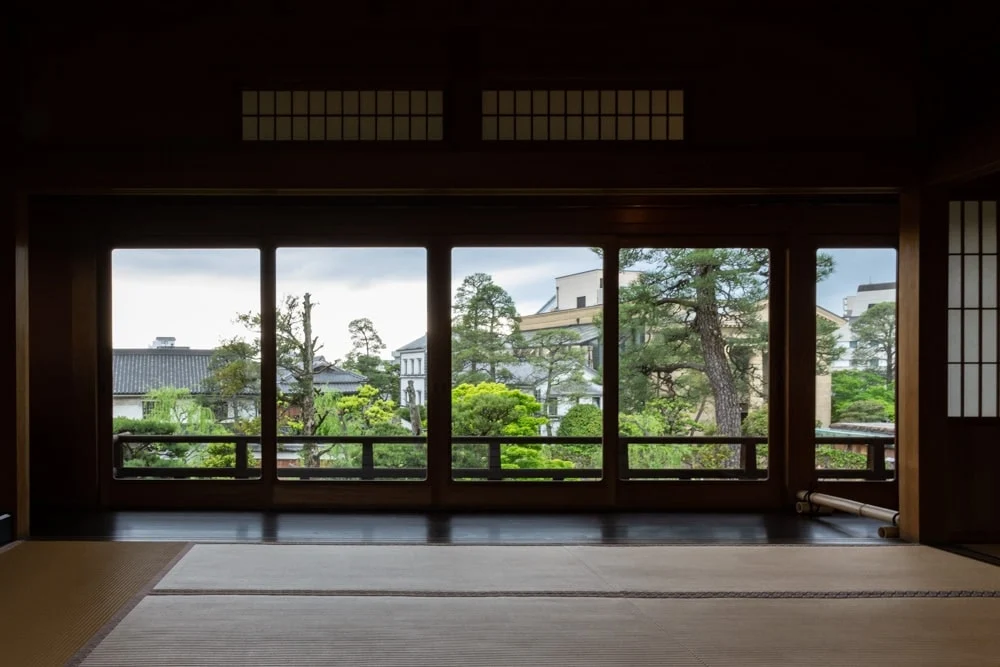
The second floor mainly features works related to water and green.
- Koiwa Makiko "From the series 'W' Mi-2"
- Jean Fautrier "Rain"
- Mark Rothko "Untitled (Green on Green)"
- Fukuda Miran "Yurin-so's Color Sangi"
It begins with a photograph by Koiwa Makiko of a water surface reflecting plants, connecting the first and second floors.
From a distance, Rothko's work appears entirely black, but as you get closer, you can see various greens layered on top.
Since it is displayed in the tokonoma without a frame, you can closely observe the brushwork and delicate colors without being obstructed by acrylic panels.
Fukuda Miran's work was created for Yurin-so in 2002. It perfectly expresses the green color of the roof tiles, making it a fitting piece for "Green Palace-like Beauty."
The second floor also offers particularly recommended views!
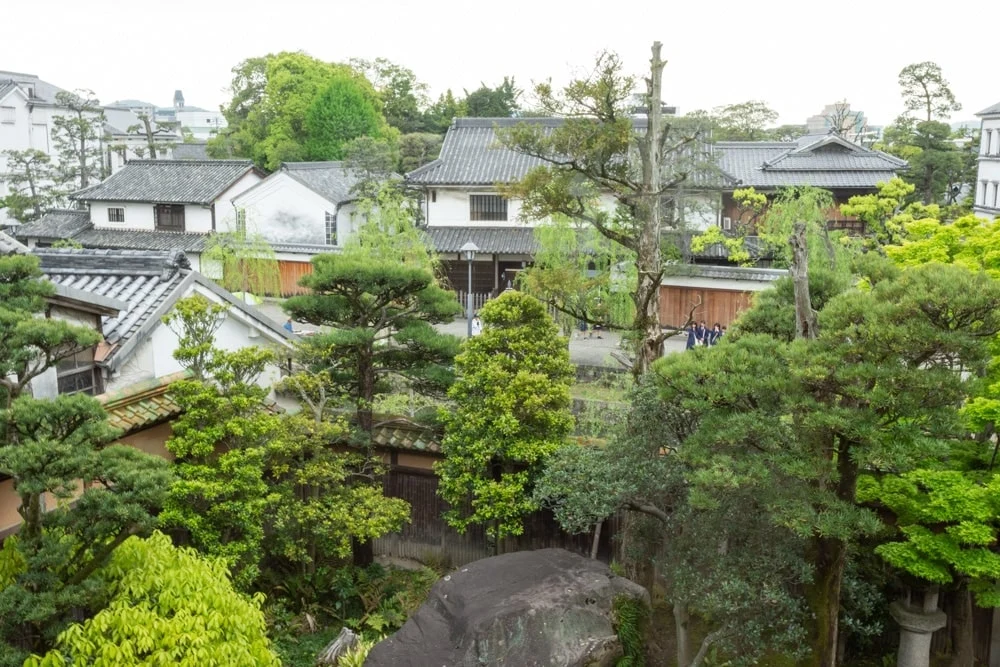
The Kurashiki River flowing through the Bikan Historical Area appears slightly green as it reflects the willows.
At my height (156 cm), I couldn't see the water surface of the river from the second floor, but there are connections between the green works related to water and the scenery around the Kurashiki River.
Conclusion
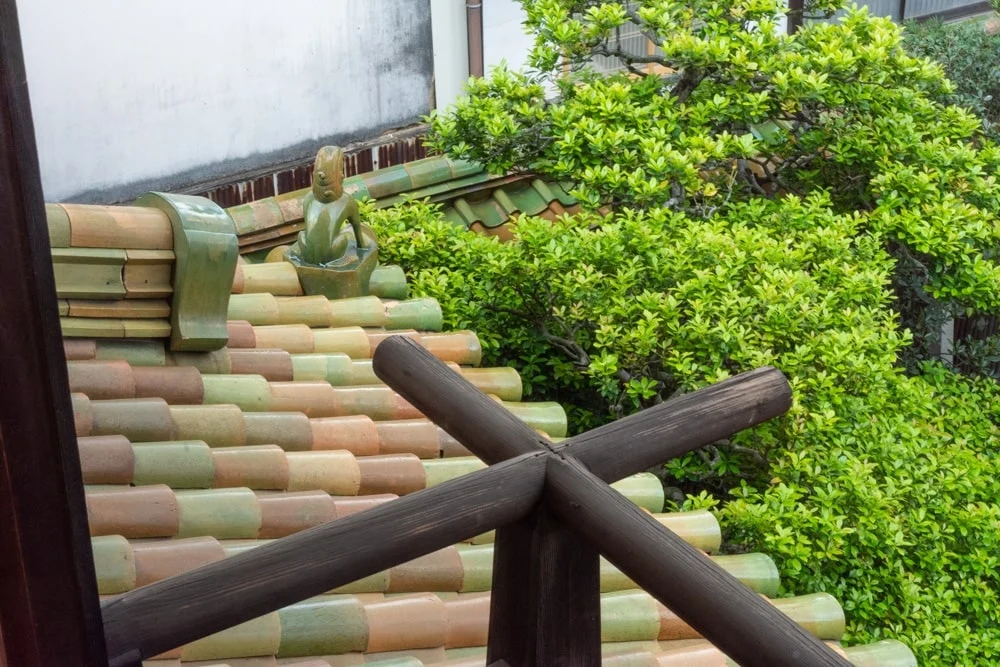
A special exhibition enveloped in greenery at Yurin-so, known as the "Green Palace."
Various works are connected by "green," leading to interesting discoveries.
From modern French painters like Cézanne and Millet to contemporary artists like Fukuda Miran and Makoto Aida, I am once again amazed by the richness of the Ohara Museum of Art's collection.
Voices from visitors at the venue included, "It was very good," "I was able to see works I have wanted to see for a long time," and "The history and aspirations of the Ohara Museum of Art are wonderful."
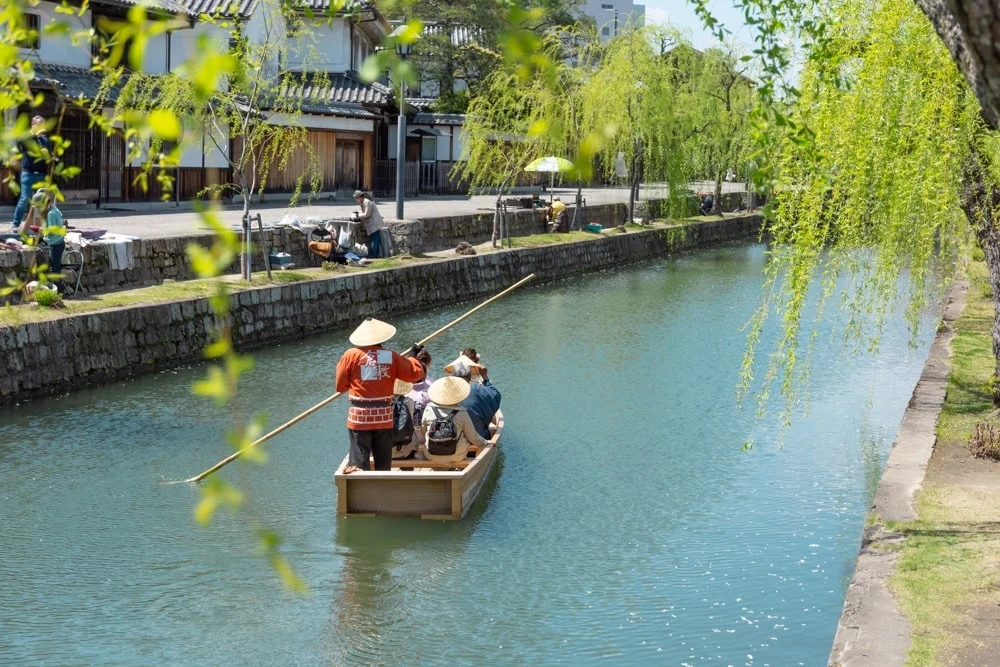
It is a beautiful season of fresh greenery. After leaving Yurin-so, I felt compelled to explore what kinds of green can be found in the Bikan Historical Area.
The exhibition "Green Palace-like Beauty - Millet, Cézanne, Makoto Aida, Rothko and More" runs for 11 days. In addition to the exhibits, the beautiful architecture, garden, and views from the windows are also recommended.
Please do visit Yurin-so.
The information regarding "Yurin-so appearing in the Kindaichi Kousuke series by Seishi Yokomizo" and "the green roof tiles of Yurin-so" is based on materials provided by the Ohara Museum of Art, while the explanation for "Green Palace-like Beauty - Millet, Cézanne, Makoto Aida, Rothko and More" is based on insights from the Ohara Museum of Art staff.
Articles about Yurin-so