The author Seishi Yokomizo, who created the famous detective Kousuke Kindaichi, lived in a temporary shelter in the area of Okada, Okayama Village, Kibi District, from just before the end of the war until a while after, in the current Okada, Mabi-cho, Kurashiki City.
Yokomizo recalls that his days in Mabi-cho were the most enjoyable period of his life.
The house where Yokomizo lived in Okayama Village has been restored and maintained by local people, preserving its appearance from that time as "Yokomizo Seishi Temporary Shelter."
It is open for visits and tours on designated days.
Here, I will introduce the Yokomizo Seishi Temporary Shelter, which has become a place of relaxation for fans and locals.
What is Yokomizo Seishi Temporary Shelter?
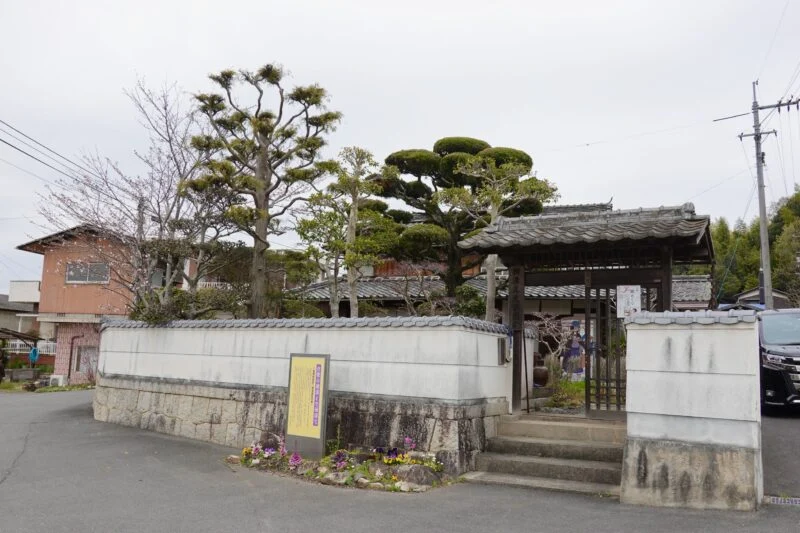
Just before the end of World War II, Yokomizo moved to the area of Sakura in Mabi-cho, Okayama Village, to escape the war.
This period lasted from April 1945 to July 1948, approximately three and a half years.
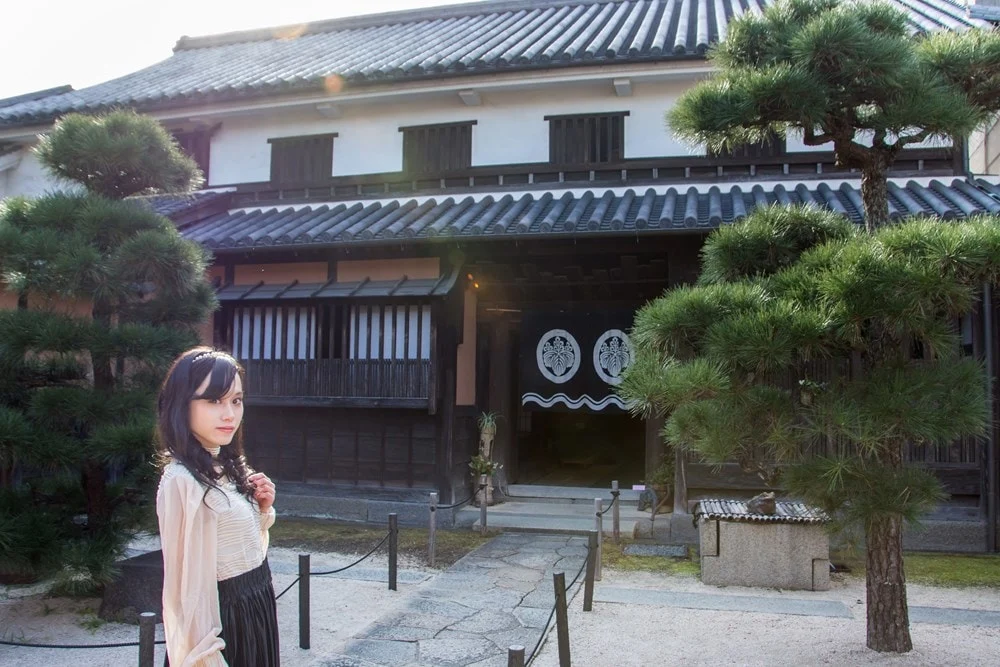
The house where Yokomizo lived has been maintained and opened to the public as “Yokomizo Seishi Temporary Shelter”.
Yokomizo moved to Mabi-cho because his father's hometown was nearby, and he had relatives in Soja.
If you visit the temporary shelter, it is recommended to do so as part of the walking course “Megu-ru: Kindaichi Kousuke's Path”, where you can enjoy the world of Yokomizo's works.
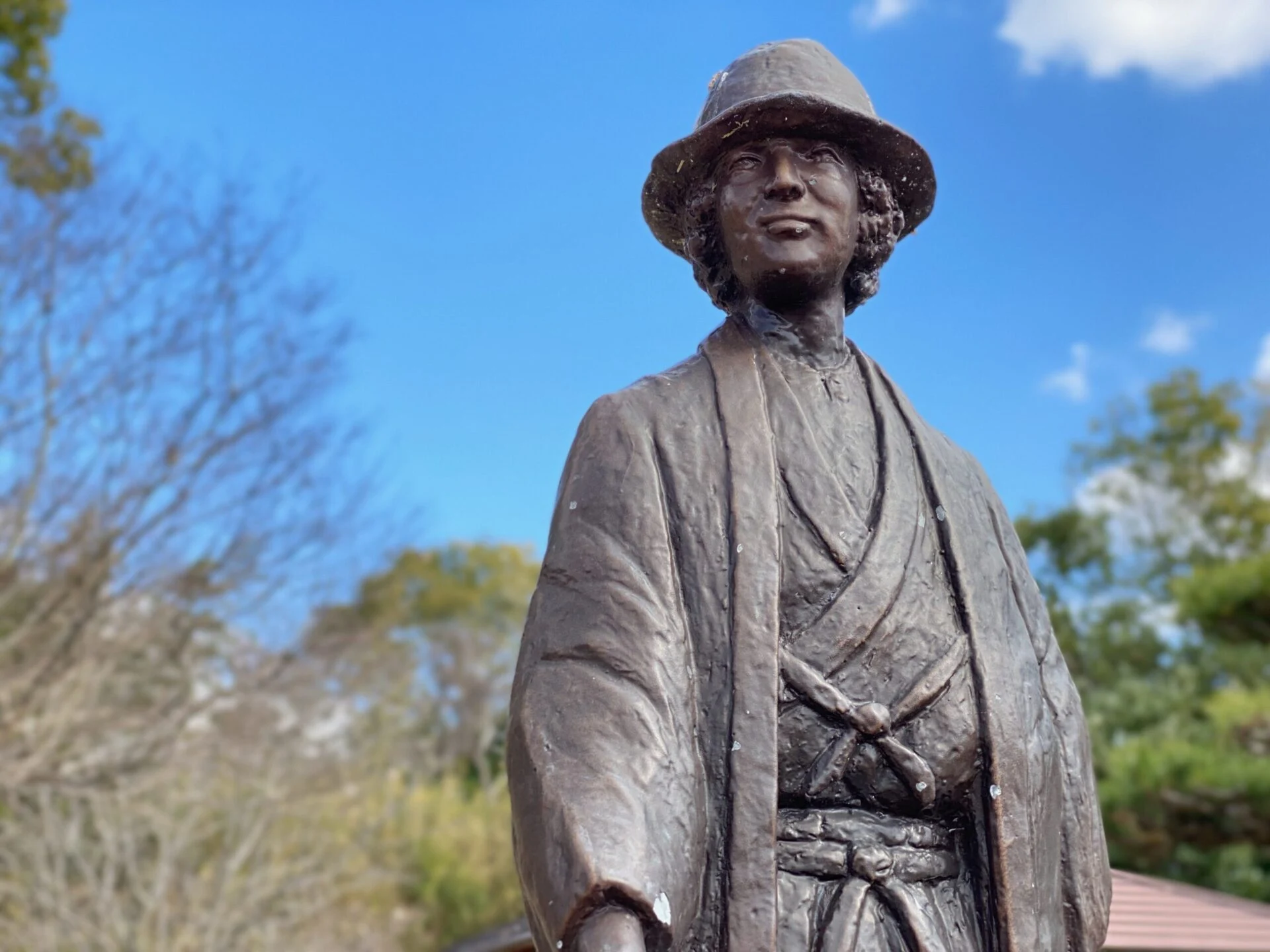
The representative author of Japan, Seishi Yokomizo, said, “In my nearly 70 years of life, this was perhaps the most enjoyable time”, recalling his days in Mabi-cho with tears in his eyes.
Highlights of Yokomizo Seishi Temporary Shelter
Here are the highlights of Yokomizo Seishi Temporary Shelter.
Floor plan that recreates the time Yokomizo lived there
The highlight of the temporary shelter is that you can experience the atmosphere of the time Yokomizo lived there.
In his essay "Monologue of Kindaichi Kousuke," Yokomizo describes the temporary shelter.
Upon entering the gate, to the left is a small garden adorned with large stones and lanterns, and to the right is a vegetable garden of about five or six tsubo that my wife and I had cultivated. In front of the gate, there is a low shoji screen, and inside is a fairly spacious dirt floor.
To the left of the dirt floor is a six-tatami room, and further left is a four-and-a-half-tatami room, which served as my study and bedroom.
Here is the floor plan from Yokomizo's time in the temporary shelter.
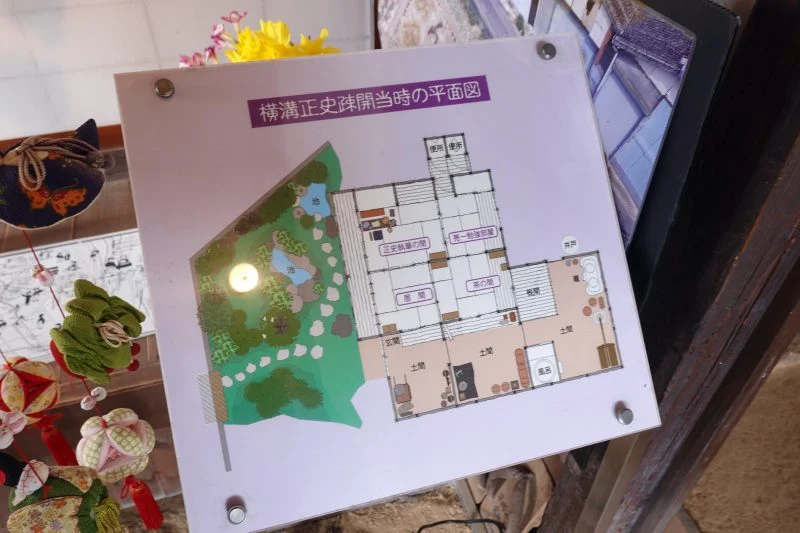
Looking at the floor plan, it is clear that the layout of the temporary shelter closely resembles what Yokomizo described at the time.
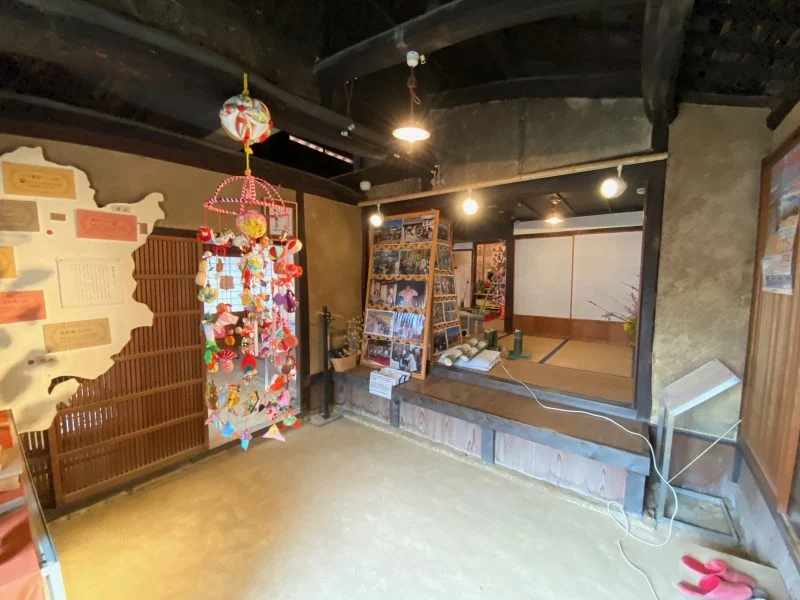
The dirt floor remains just as it was.
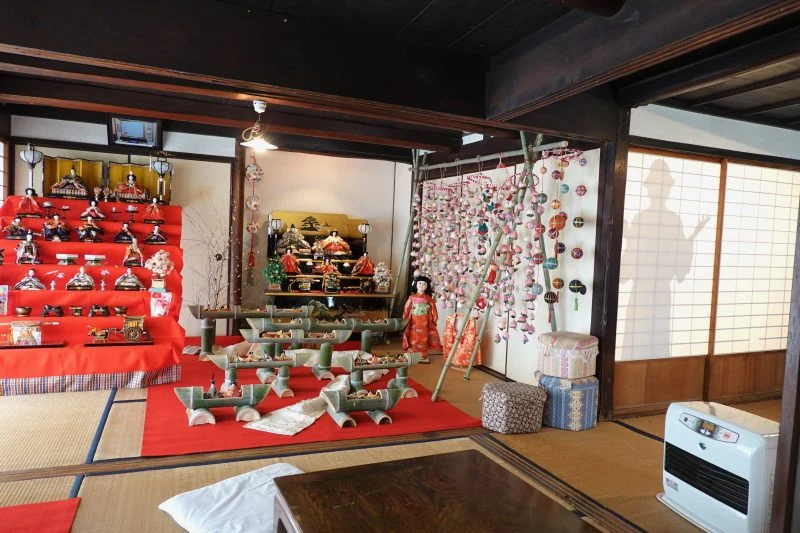
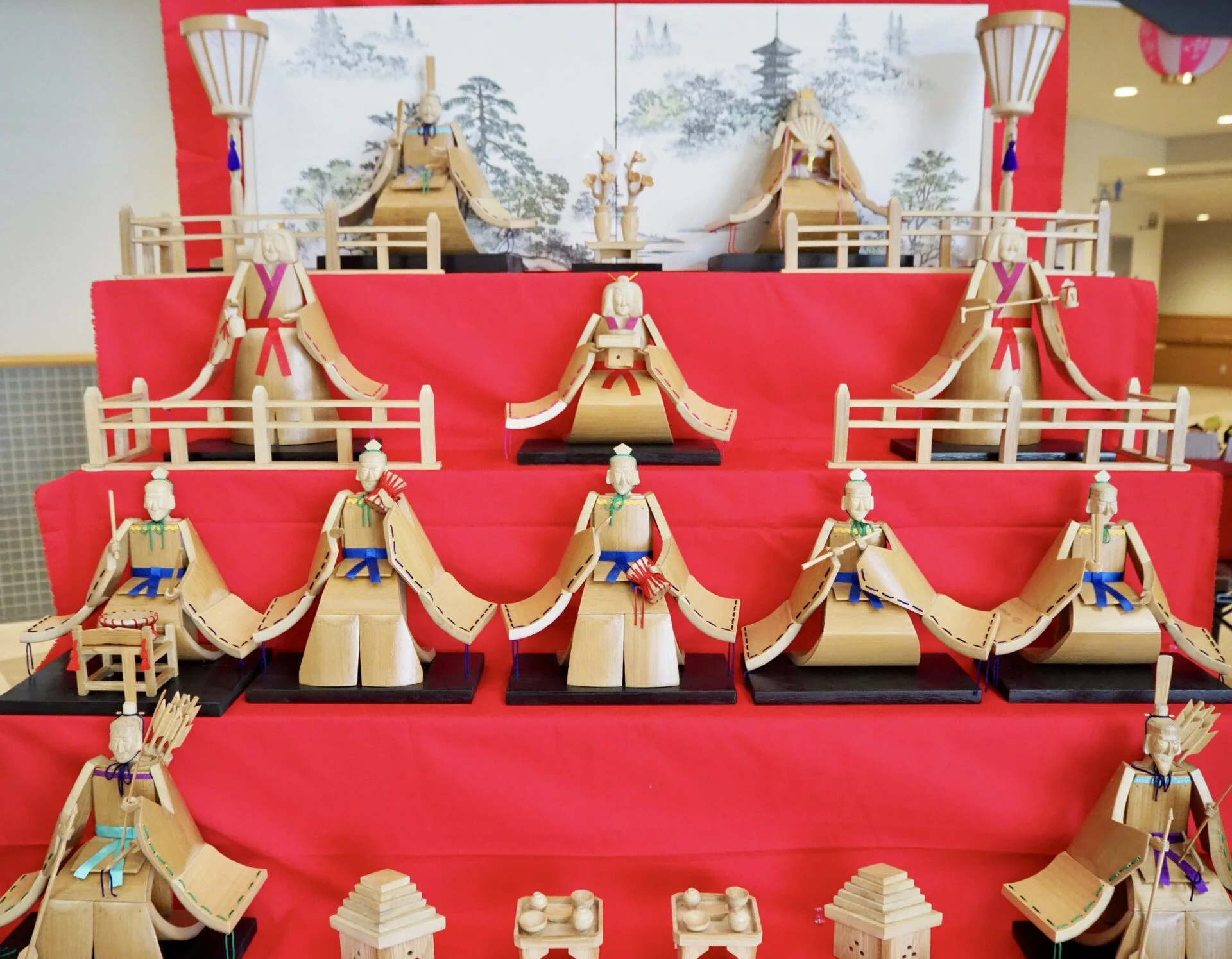
Yokomizo used the back four-and-a-half-tatami room as his study and bedroom. (This is where the hina dolls are displayed.)
By the way, there was a second floor in this house during the temporary shelter period, but it was said that the first floor was sufficient for daily living, so the second floor was used to store Yokomizo's books and magazines.
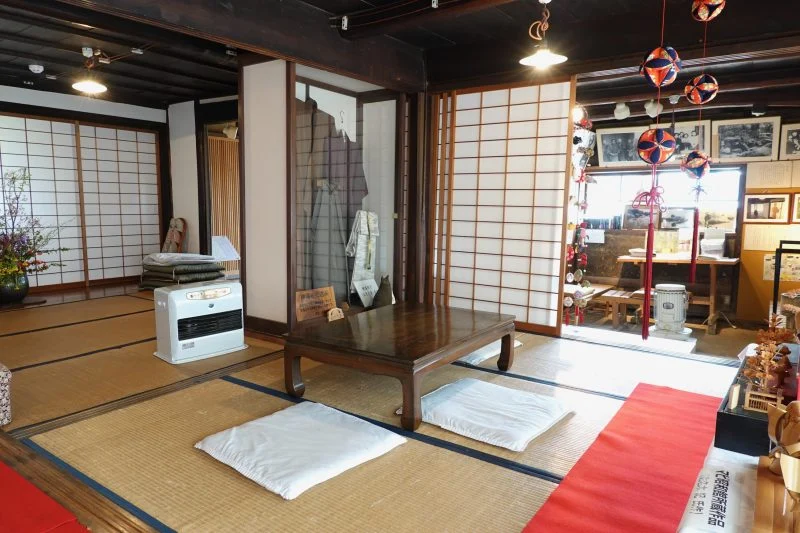
From the four-and-a-half-tatami room that Yokomizo used as a study, this is the view of the six-tatami room.
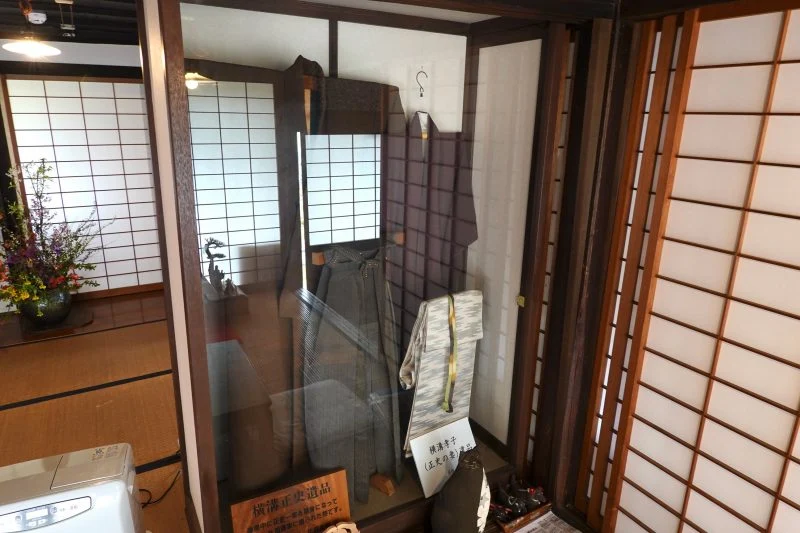
In one corner of the six-tatami room, there are relics sent by Yokomizo to Mr. Kato, who took care of him during his temporary shelter.
Mr. Kato was a former teacher who had known Yokomizo since before the temporary shelter and often visited his home.
When Yokomizo returned to Tokyo, Mr. Kato saw him off at Okayama Station, and they had a close relationship.
Yokomizo spoke about Mr. Kato as follows:
Ah, Mr. Kato. The greatest harvest of my temporary shelter life was probably meeting this person. Without him, neither "The Murder at the Honjin" nor "The Island of Exile" would have been born, and therefore, my current boom would not have existed.
The local legends and anecdotes that Yokomizo heard from Mr. Kato inspired him to write works such as "The Murder at the Honjin" and "The Island of Exile."
Another representative mystery writer of Japan, Edogawa Rampo visited this house with fellow writers.
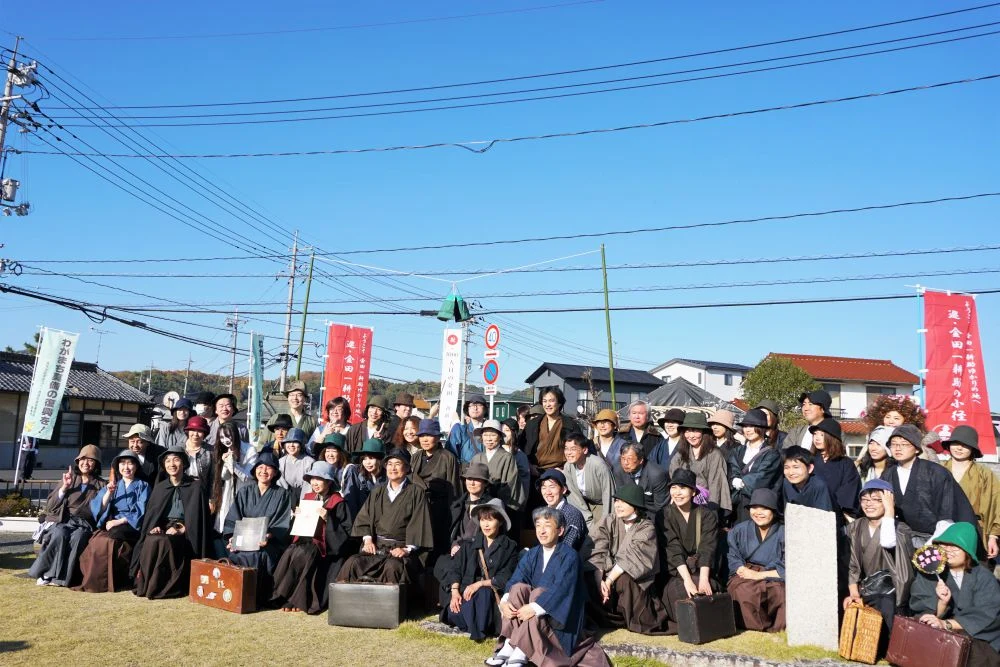
The popular Kindaichi Kousuke Cosplay Event is also held at the temporary shelter as one of the venues.
A must-see for fans! Key points!
At the entrance, it is interesting to see the nameplates for "Seishi Yokomizo" and "Kindaichi Kousuke."
Since the temporary shelter is also the birthplace of the famous detective Kindaichi Kousuke, it makes sense to have the nameplates!
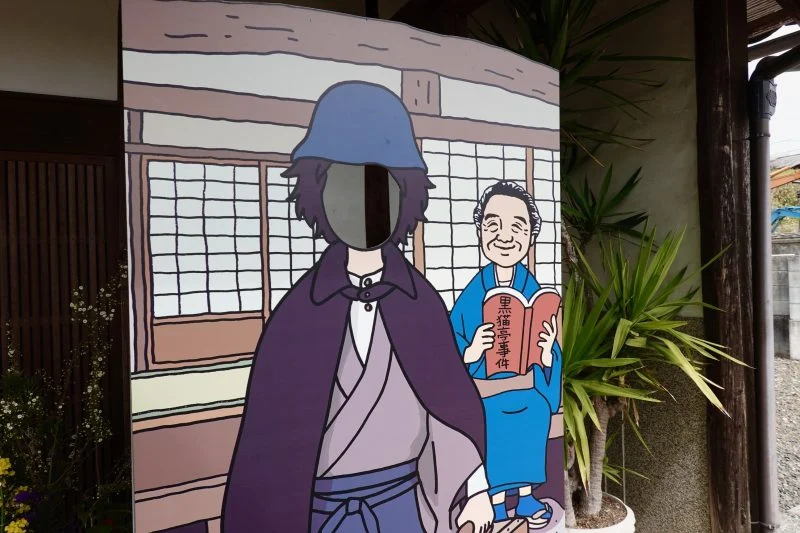
Next to the entrance, there is a face panel of Kindaichi Kousuke, perfect for commemorative photos. Yokomizo's gentle smile is impressive.
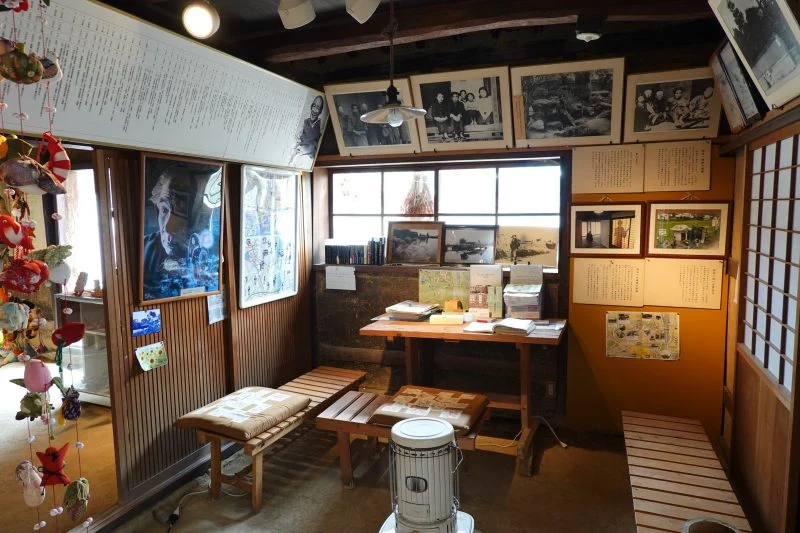
As you enter through the entrance, you can see local tourist maps and a timeline of Yokomizo's life on the dirt floor.
It is almost the same as it was back then, but it seems that the farthest end of the dirt floor used to be the kitchen.
There have been changes over the long years.
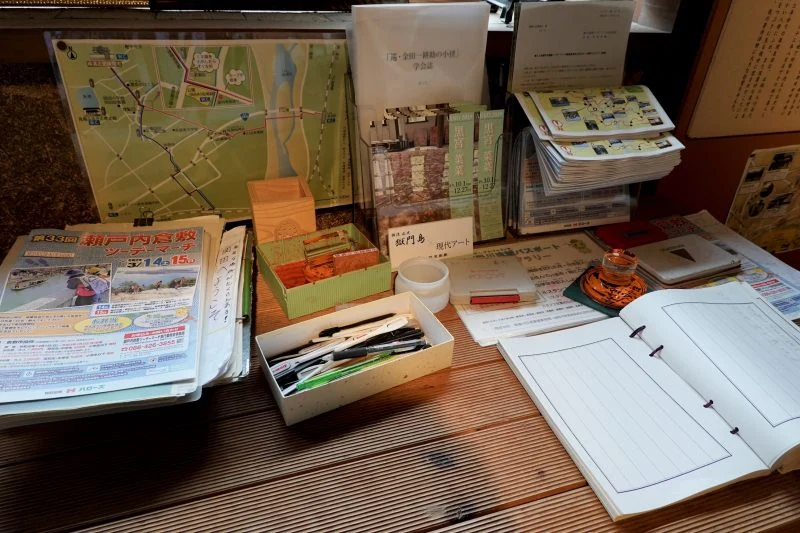
There are stamps from Yokomizo Seishi Temporary Shelter and a notebook for visitors to sign, so please take one as a memento.
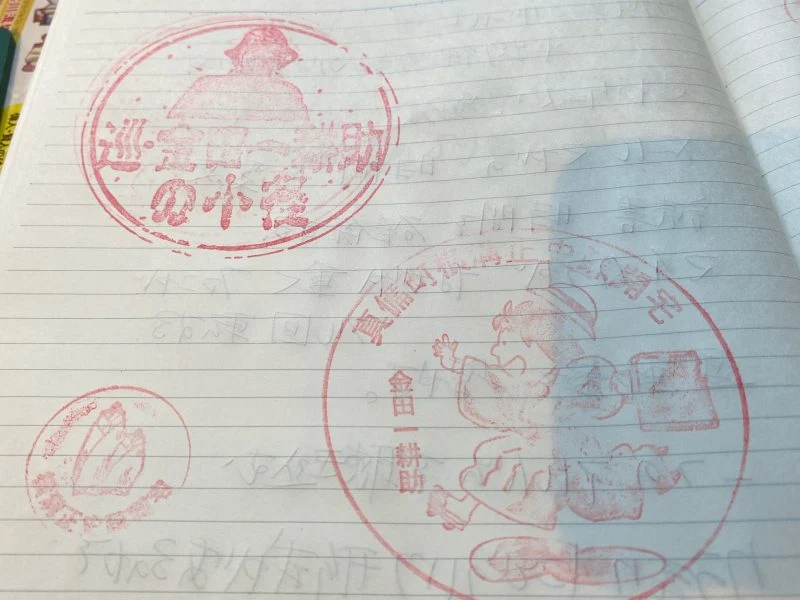
I also pressed the stamp in my notebook as a memento.
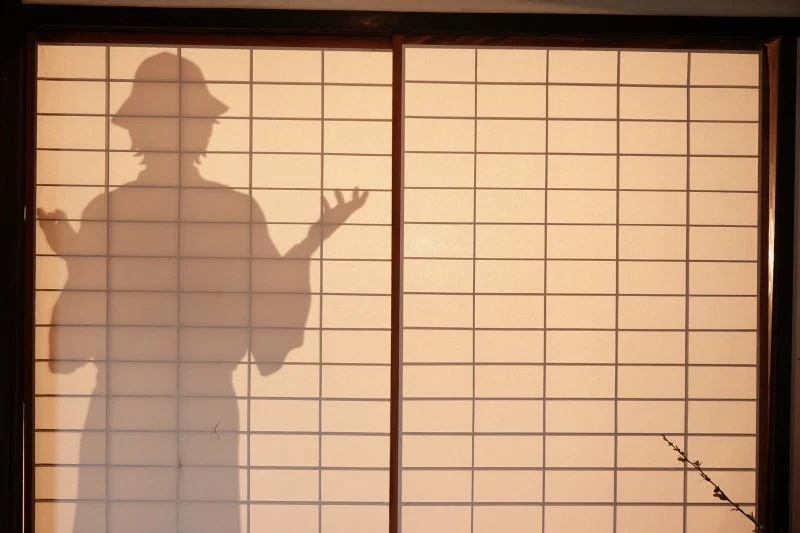
As I took off my shoes and stepped up from the dirt floor, I was greeted by the silhouette of Kindaichi Kousuke right in front of me.
Beautiful flower beds in season!
In the garden of the evacuation house, there is a statue of Seishi Yokomizo.
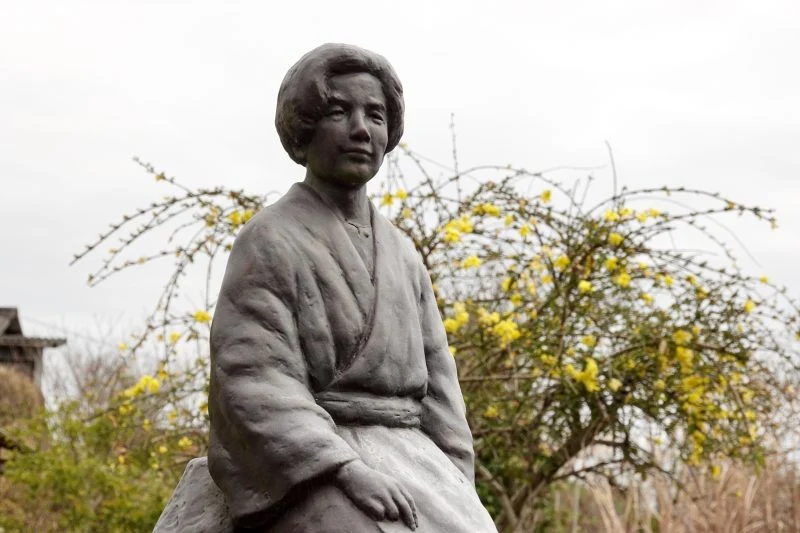
This statue was created based on a photograph of Yokomizo taken at the evacuation house.
If the timing is right, you can enjoy the sight of black tulips and black sunflowers that match the atmosphere of Yokomizo's works.
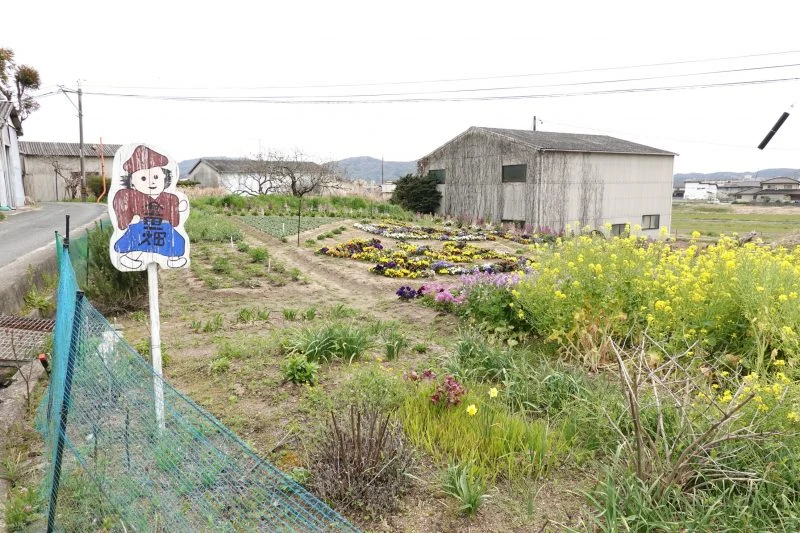
When I visited for the interview, although there were no tulips in bloom, flowers were blooming in a flower bed shaped like the characters of "Kindaichi."
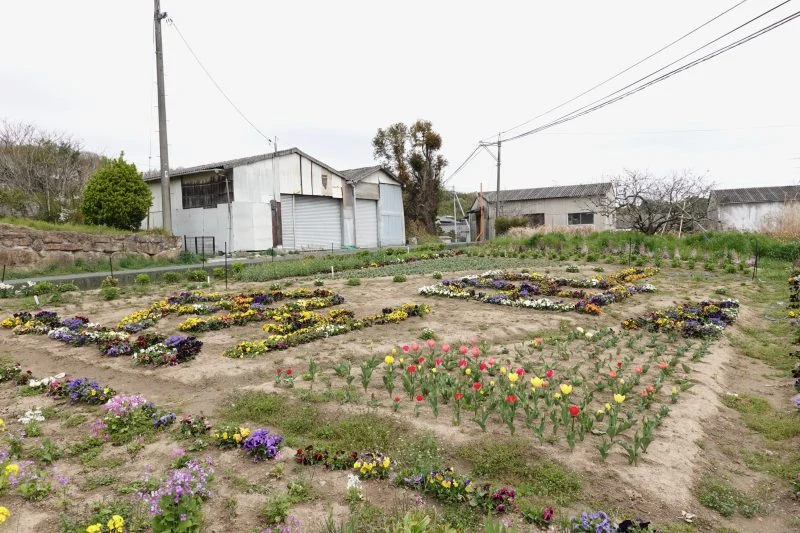
The evacuation house of Seishi Yokomizo is open on Tuesdays, Wednesdays, and weekends from 10 AM to 4 PM.
The Background of the Restoration of the Yokomizo Evacuation House
The evacuation house of Seishi Yokomizo was originally a residence. Yokomizo lived there during his evacuation, cared for by his sister-in-law, Mitsue Harada.
After Yokomizo returned to Tokyo, another owner lived there.
Later, after a period of vacancy, Mabi Town heard about plans to demolish the house, and in 2002, coinciding with the 100th anniversary of Yokomizo's birth, the town purchased the current evacuation house.
Until then, it was an ordinary house with fluorescent lights and other modern features, but when Mabi Town purchased it, it was restored to resemble as closely as possible the time when Yokomizo lived there.
When Yokomizo's sons visited the evacuation house, they reportedly said, "It feels just like when we lived here."
Currently, Kurashiki City has entrusted the management to a management association.
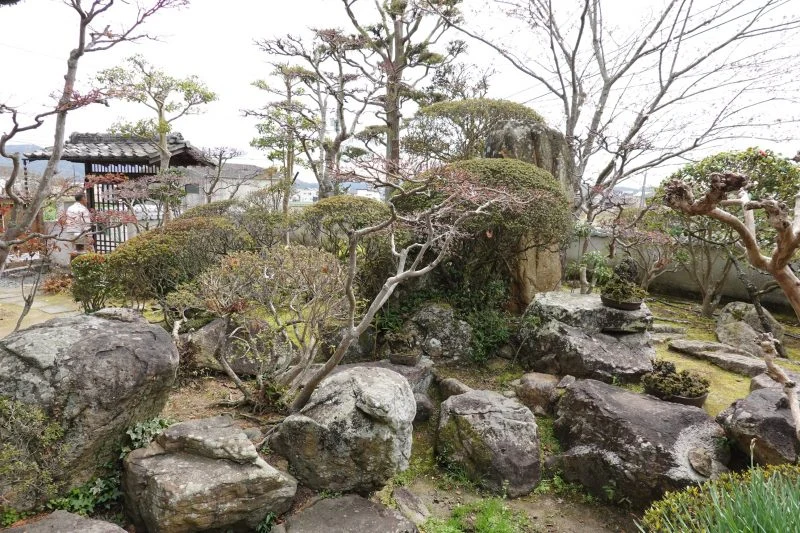
The evacuation house has a beautiful garden, which is maintained by the Silver Human Resources Center.
Thanks to the management of the association, the "Yokomizo Seishi Evacuation House" has been reborn as a holy place for Yokomizo fans.
Valuable Stories from Those Who Knew Yokomizo During His Evacuation!
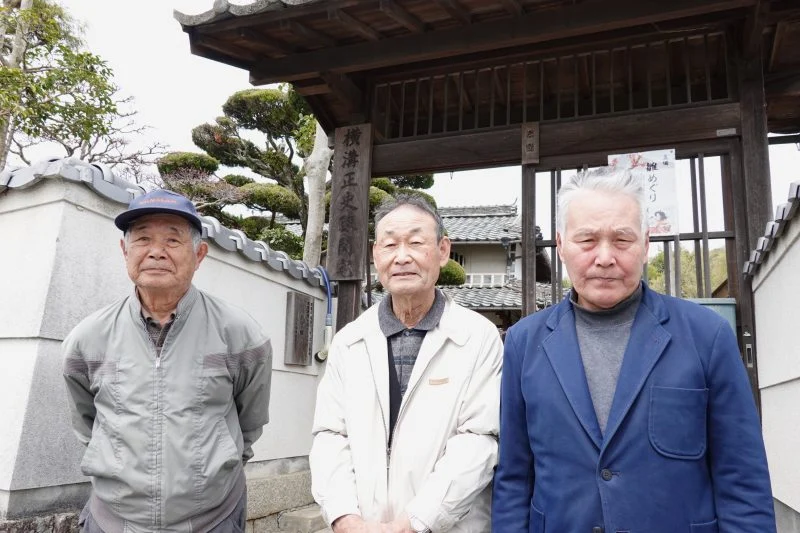
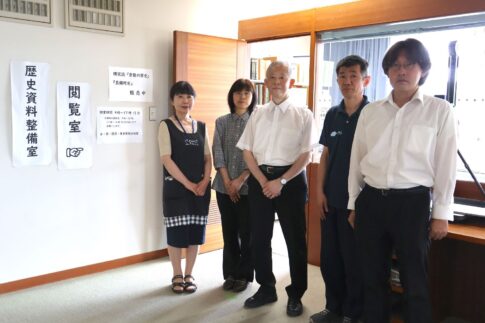
I was able to hear stories from a member of the evacuation house management association.
The house where Yokomizo lived has remained intact, and fans visit from not only within Japan but also from abroad.
Previously, there were many fans during the Kadokawa movie boom, but recently, it seems that the number of female fans visiting has increased.
I also heard stories from those who knew Yokomizo during his evacuation.
Yokomizo was weak and did not like vehicles, so he would sometimes have neighbors pedal a bicycle while he rode in the cargo area to Kurashiki.
Some of the management members remember seeing Yokomizo in a coat, wandering around the neighborhood while deep in thought.
Those who spoke about the stories that became the basis for works like "The Honjin Murders" were surprised that Yokomizo could construct a story and write it just from a few things they mentioned.
I believe that it was the days spent in Okayama Village that allowed Yokomizo to leap to becoming a national author.
While the evacuation house has become a holy place for Yokomizo fans, the members of the association seem to have some concerns.
The members are aging, and there are no younger generations joining.
I hope that this evacuation house, which has become a holy place for Yokomizo fans, can be preserved for a long time.
In Conclusion
Yokomizo spent only about three and a half years in Okayama Village.
However, regardless of the length of time, I felt that Yokomizo's personality and works are deeply loved by the local people.
The land of Okayama Village has become a place that could be called Yokomizo's "second hometown."
The evacuation house is a recommended place where you can enjoy two aspects: the life of the author Seishi Yokomizo and the birthplace of the famous detective.
The locations in Mabi Town that served as the backdrop for his works are organized as "Meguru: Kindaichi Kousuke's Path", allowing you to explore them on foot.
Be sure to visit them along with the evacuation house.
Data on the Yokomizo Seishi Evacuation House
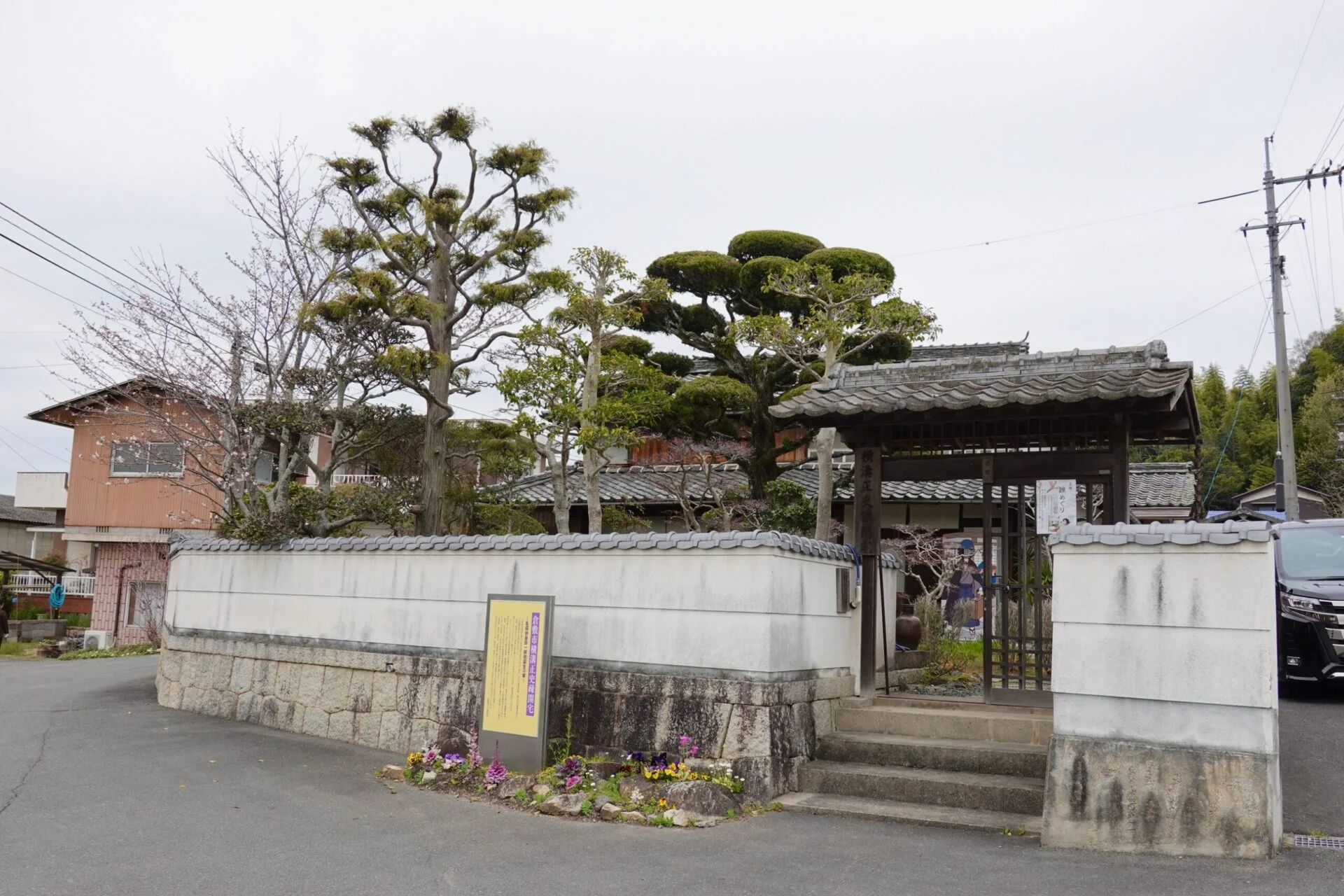
| Name | Yokomizo Seishi Evacuation House |
|---|---|
| Location | 1546 Okayama Prefecture, Kurashiki City, Mabi-cho, Okada |
| Contact | 086-698-8558 |
| Parking | Available |
| Opening Hours | 10 AM to 4 PM |
| Closed | Monday, Thursday, Friday |
| Admission Fee (Tax Included) | Free |
| Website | Yokomizo Seishi Evacuation House / Cultural Promotion Division / Kurashiki City |