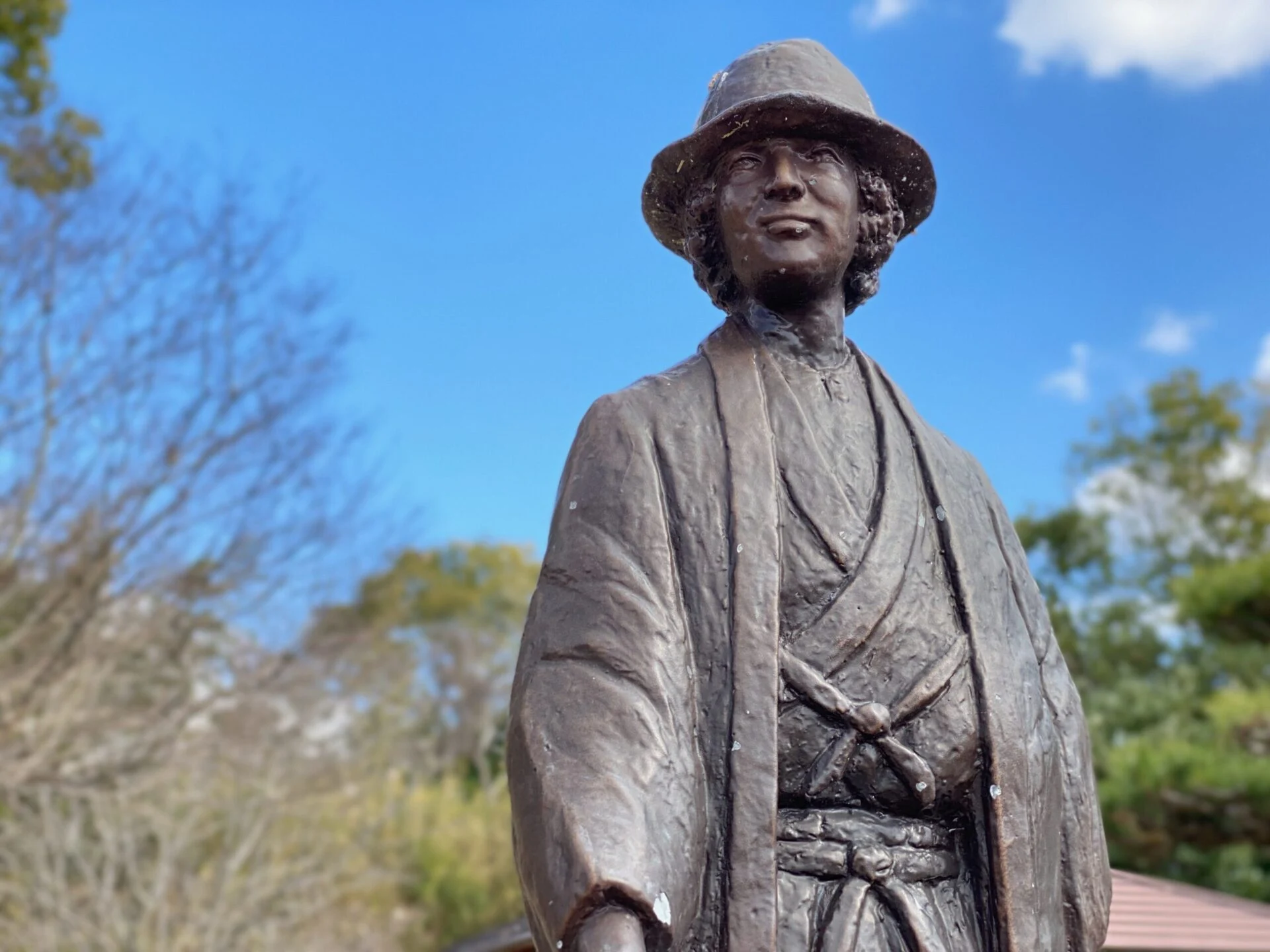
Mabi, Kurashiki City, is where the famous author Seishi Yokomizo, known for the Kindaichi Kousuke series, evacuated during the wartime and post-war period.
Seishi Yokomizo, who became a representative author of Japan, recalls that the days spent in Mabi were the most enjoyable of his life.
The famous spots related to Kindaichi and Yokomizo have been developed as a walking course called “Meguru: Kindaichi Kousuke no Komichi”.
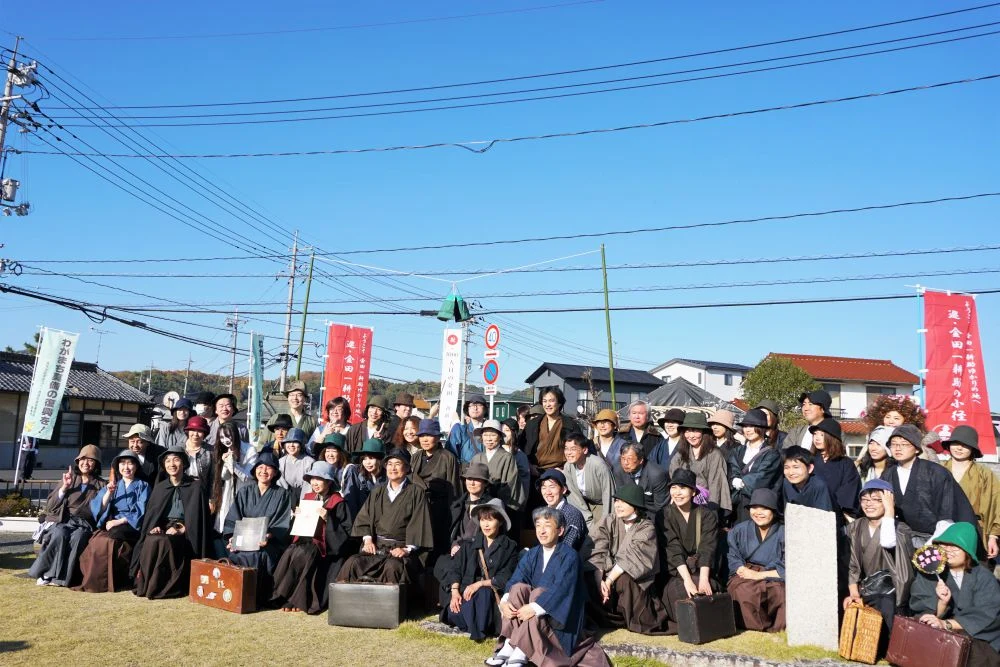
Additionally, every November, a Kindaichi Kousuke cosplay event is held in Mabi, becoming an autumn tradition.
This article introduces spots that appear in Yokomizo's works while tracing the footsteps of the author Seishi Yokomizo.
There are mechanisms throughout that allow you to feel the world of his works, making it a highly recommended walking course for fans of Yokomizo's works.
With half a day, you can cover all the routes, so why not walk as if you were Kindaichi Kousuke?
The first appearance of Kindaichi Kousuke at Kiyone Station
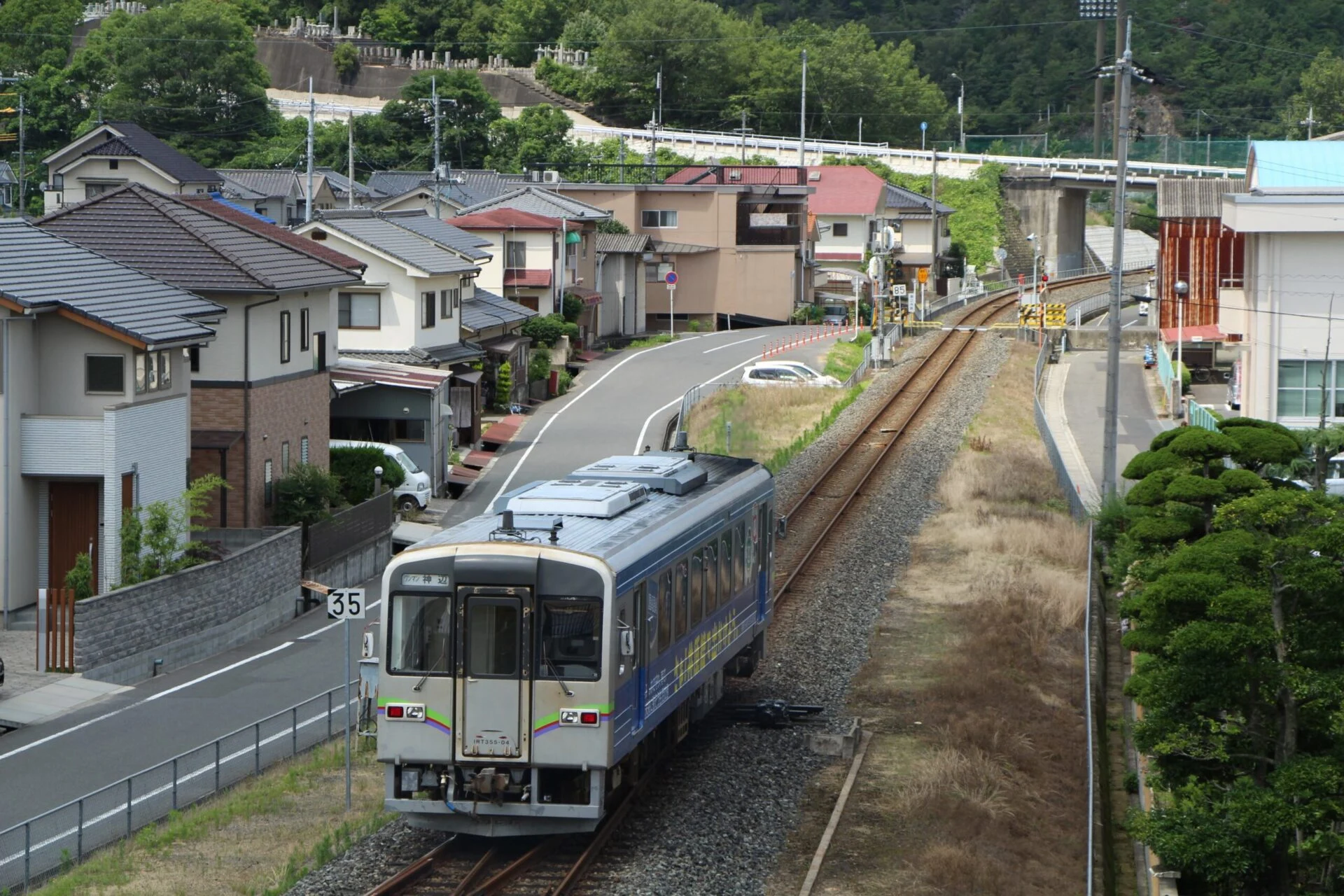
First, the starting point of “Meguru: Kindaichi Kousuke no Komichi” is Kiyone Station on the JR Hakubi Line and Ibara Railway.
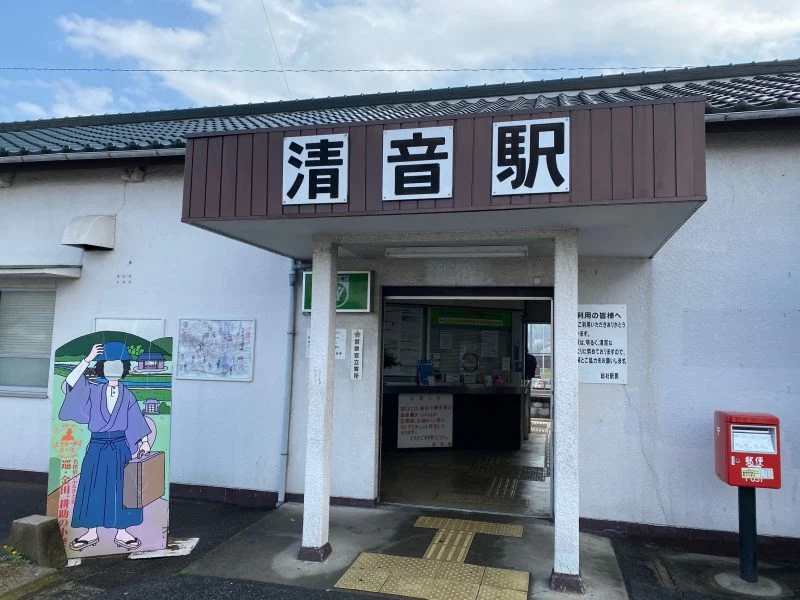
Kiyone Station is the place where Kindaichi Kousuke, the representative detective of Japan's mystery world, first appeared. In the work, it is referred to as “Kiy— Station” with part of the name obscured.
The title of the first appearance work is “The Honjin Murder Case”, which was Seishi Yokomizo's first full-length novel after the war.
It’s a bit long, but let’s take a look at the part where Kindaichi Kousuke first appears.
A young man got off at the Kiy— Station on the Hakubi Line and walked leisurely toward the Kaw— village.
He appeared to be about twenty-five or twenty-six, of medium build, rather slightly built, wearing a pair of white haori and kimono, and striped hakama, but both the haori and kimono were wrinkled, and the hakama was so loose that the pleats were hardly visible, and his navy tabi were about to show his toes, and his geta were worn down, and his hat was misshapen... In short, he was an incredibly unkempt young man for his age.
Quote: The Honjin Murder Case
Kindaichi arrived at Kiyone after taking the JR Hakubi Line from Kurashiki.
The reason Yokomizo evacuated to Mabi was due to the air raids in Tokyo and the recommendation from relatives to evacuate.
After temporarily staying in Soja City, the Yokomizo family moved to Okayada Village, Sakura district.
I evacuated with my wife and three children to a rural area in Okayama Prefecture, Okayada Village, Sakura.
The war was already over, but the villagers were very kind, and it was comfortable to stay there. I ended up staying there for almost four years, three years and three months, until my son entered university, when I had to reluctantly leave.
Quote: Monologue of Kindaichi Kousuke
Yokomizo recalls that the time he spent in Mabi was the most enjoyable period of his life.
The circumstances leading to Yokomizo's evacuation and his life in Mabi can be read in the essay collection “Monologue of Kindaichi Kousuke”.
The route of “Meguru: Kindaichi Kousuke no Komichi”
Now, let’s follow the route of “Meguru: Kindaichi Kousuke no Komichi” in order from Kiyone Station.
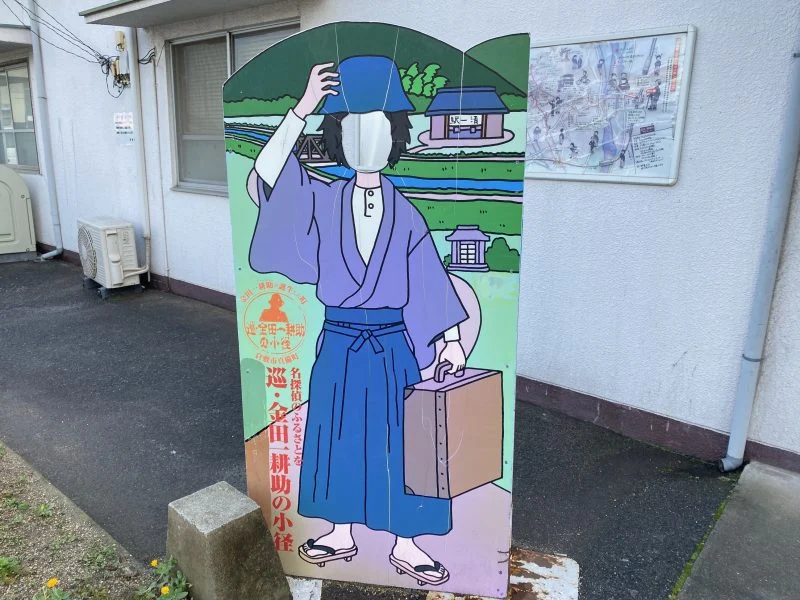
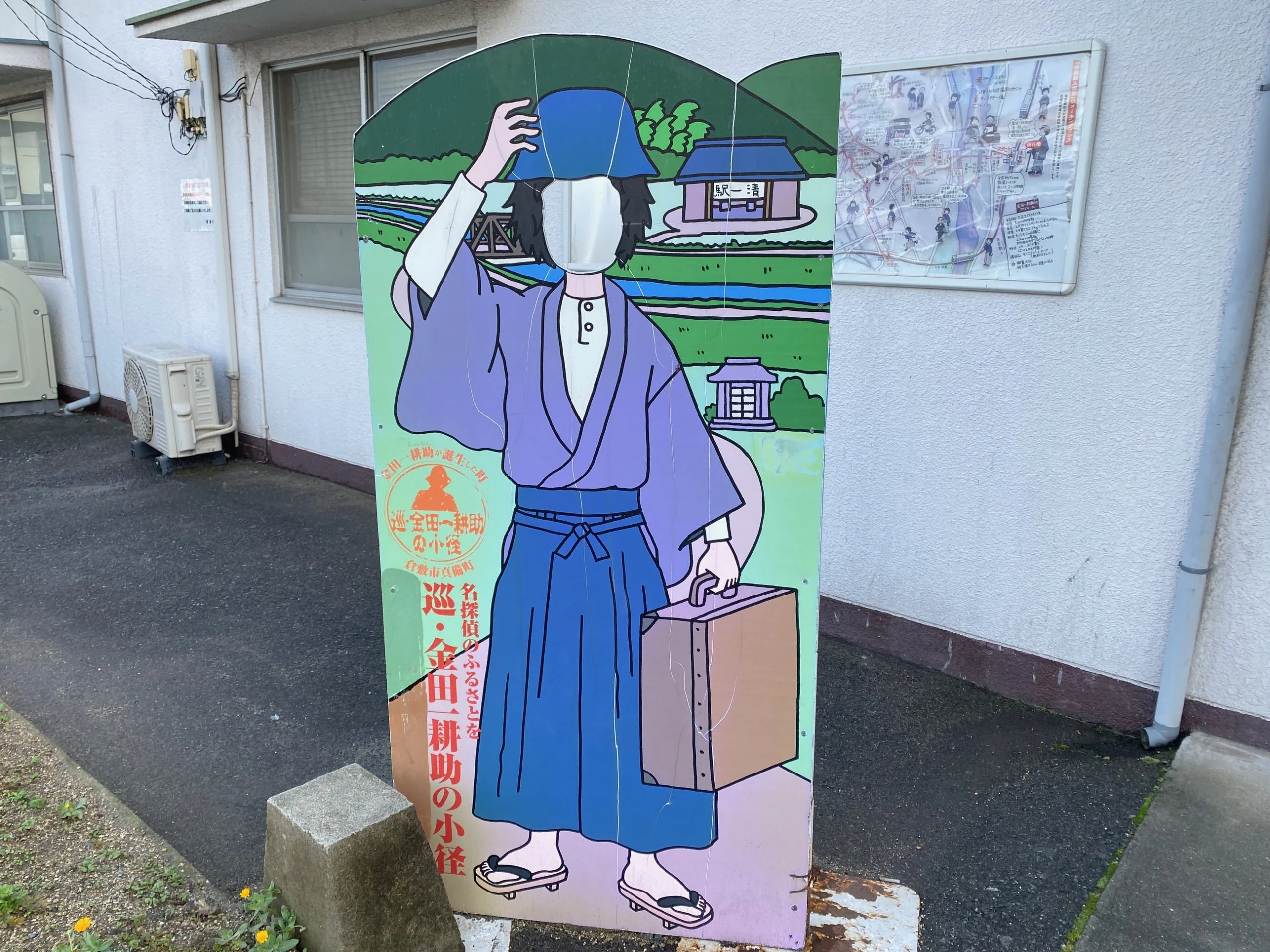
Upon exiting the west exit of Kiyone Station, you will immediately find a face panel of Kindaichi Kousuke, perfect for commemorative photos.
The total length of “Meguru: Kindaichi Kousuke no Komichi” is approximately 7 kilometers.
Exit the west exit of Kiyone Station and proceed straight along the road.
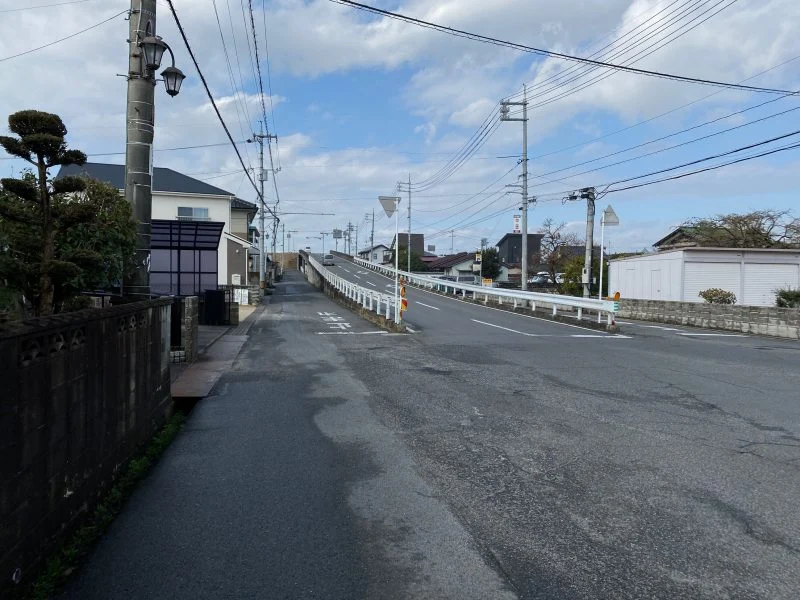
Proceed along the side road on the left side of the bridge to reach the area that served as the setting for the work.
After passing through the road, you will come to Kawabe Bridge.
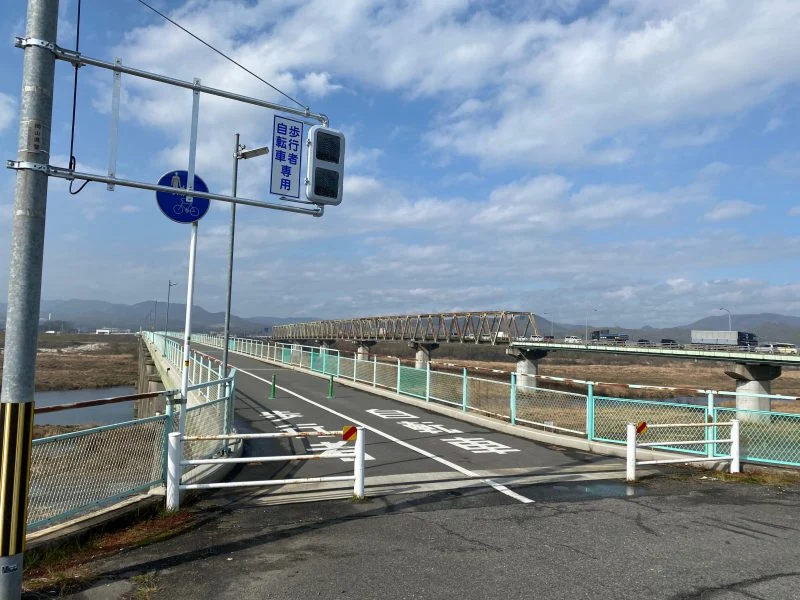
Cross the signal and proceed along the pedestrian lane.
Cross the bridge and proceed left, passing by the “Historical Site Sanyo Kaido Ichirizuka”.
During the Edo period, the Sanyo Road passed through Mabi.
As a result, there was a honjin (inn for feudal lords) where daimyos stayed, and even now, there are stone monuments for “Kawabe Honjin” and “Kawabe Waki Honjin Ruins”.
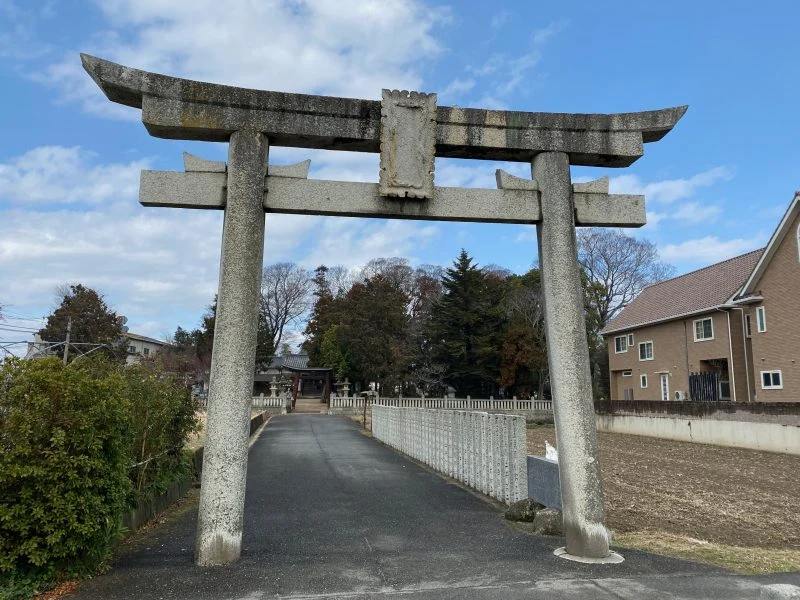
After a while, you will see Ushitora Onzaki Shrine, so please turn right here.
After passing through the torii gate and proceeding along the side road, you will see an underpass. Here, you will pass under National Route 486.
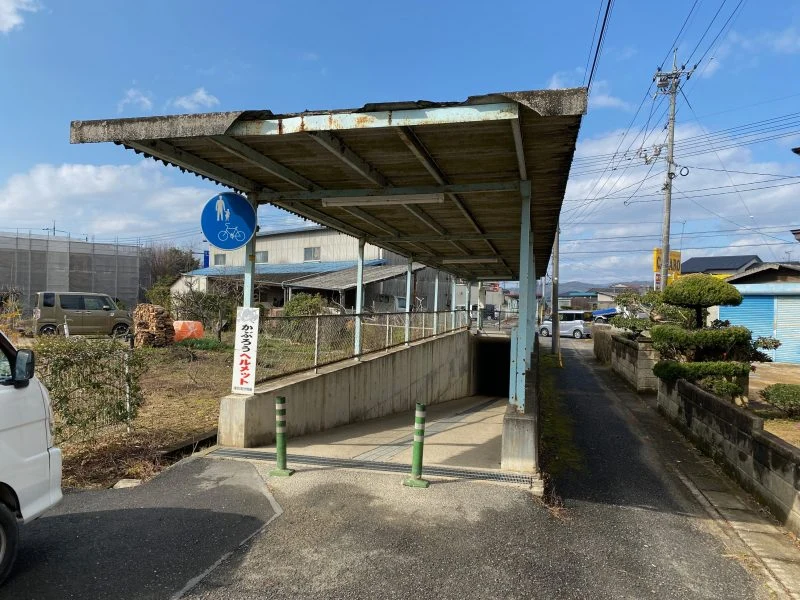
After passing through the underpass, you will finally enter “Meguru: Kindaichi Kousuke no Komichi”.
There is a Seven-Eleven at the exit, so it’s a good idea to replenish drinks and snacks here.
The site of the former Okayada Village Office - The path of Seishi Yokomizo
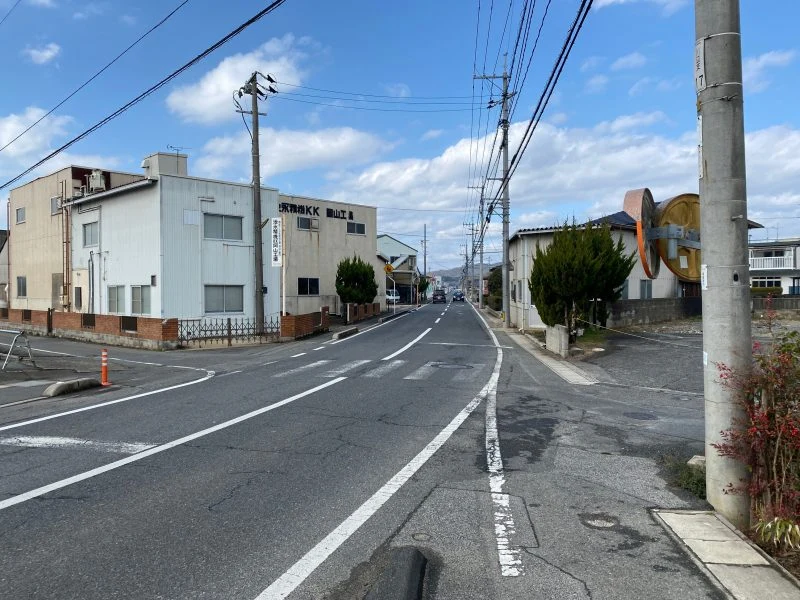
After walking straight for about 10 minutes from Seven-Eleven, you will reach Okayada District Park.
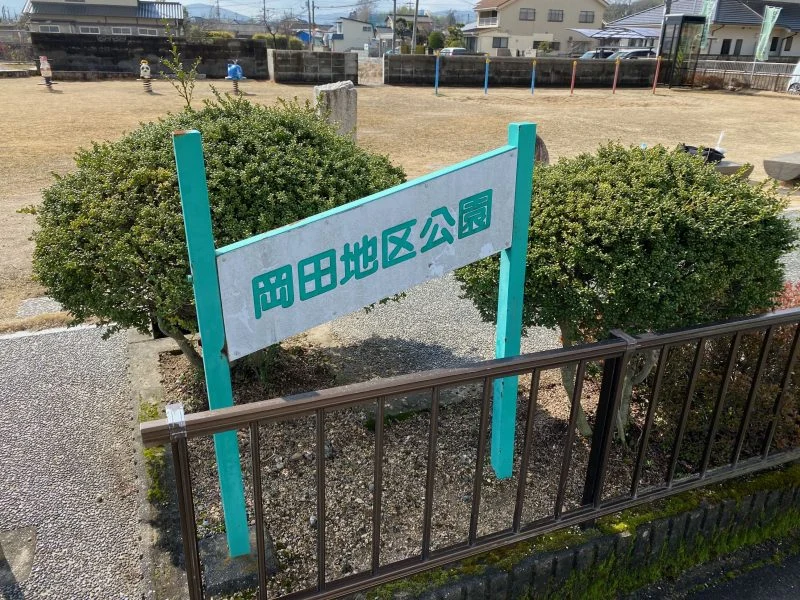
During the Edo period, Mabi was governed by the Okayada Domain, and there was a domain assembly hall in this location. (Part of the Yada district was under the Okayama Domain)
The village office was also located at Okayada District Park, and it appears in “The Honjin Murder Case” as well.
The area around Okayada District Park is where Yokomizo took walks and developed ideas for his works.
The site of the former village office has been turned into a park, and there are benches available for resting.
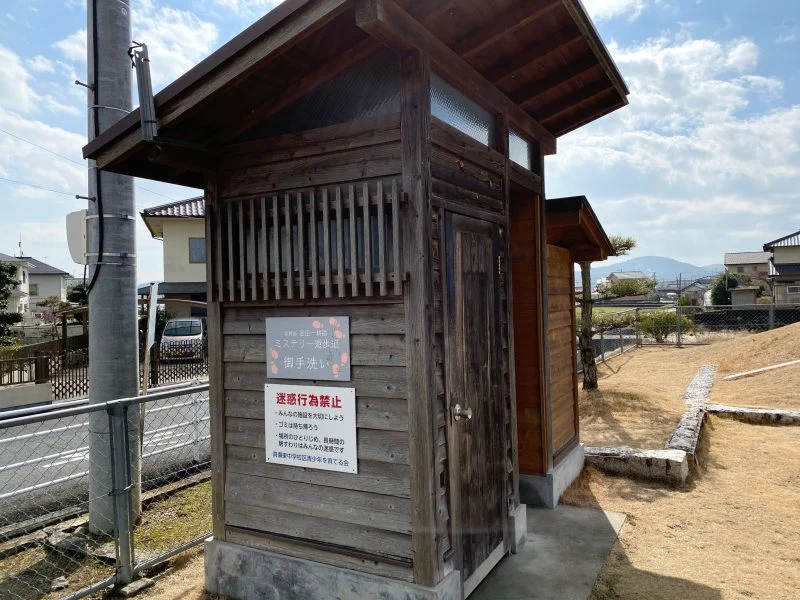
There are restrooms available, so let’s prepare and head to the next destination.
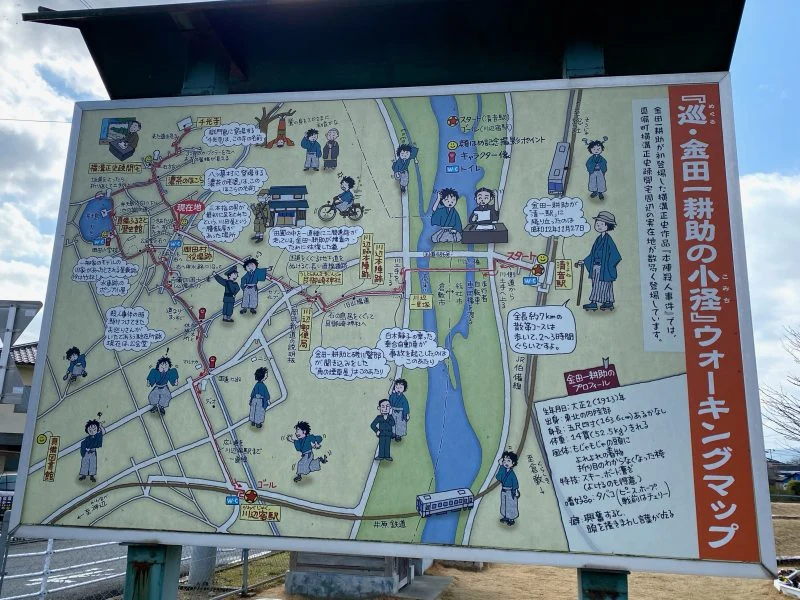
This park has a walking map for “Meguru: Kindaichi Kousuke no Komichi,” so you can check the route.
After walking for a while, when you reach the vicinity of Seishi Yokomizo's evacuation residence, you will find the Nōcha no Hokora.
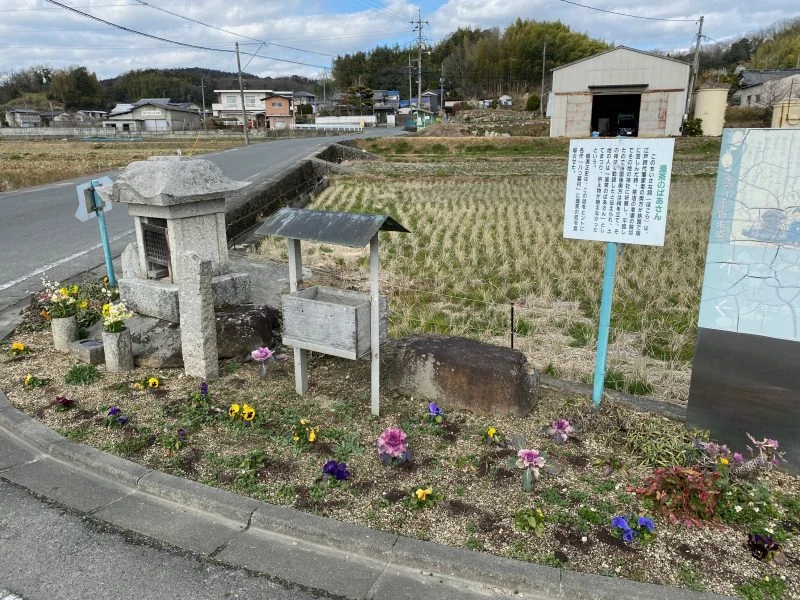
Based on the legends surrounding this shrine, Yokomizo created the character of the nun who serves thick tea in "The Village of Eight Graves."
You will walk through a peaceful rural landscape to reach the Shrine of Thick Tea, which likely hasn't changed much since the time Yokomizo was evacuated here.
Gradually, you will start to feel as if you are strolling through the world of his works.
Yokomizo Seishi's Evacuation House
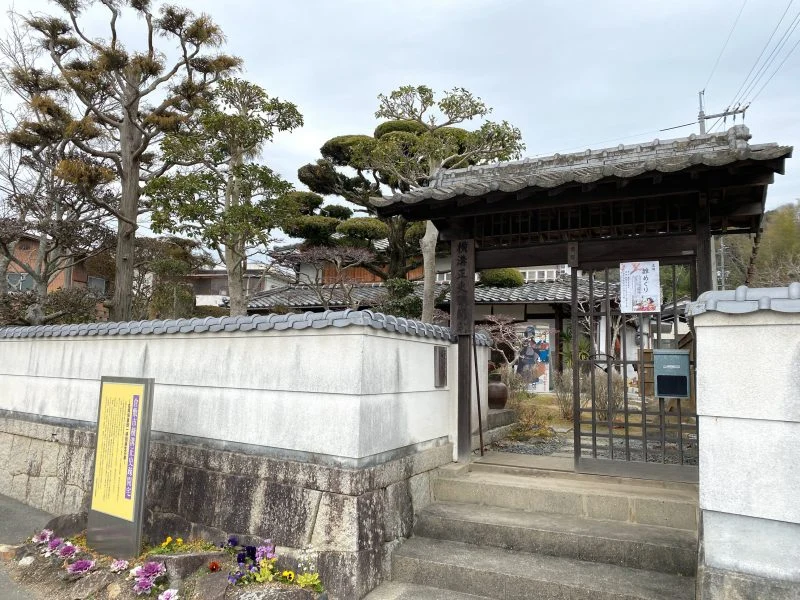
After passing the Shrine of Thick Tea and continuing straight, you will find Yokomizo Seishi's Evacuation House.
This house is the actual residence where Yokomizo lived during his evacuation and has been preserved as is.
Yokomizo became friends with the locals, rented a field, and listened to local legends to develop ideas for his detective novels.
Due to the relationship that the villagers had to pass in front of Yokomizo's house to reach their fields, it is said that they sometimes took breaks at his house during their work.
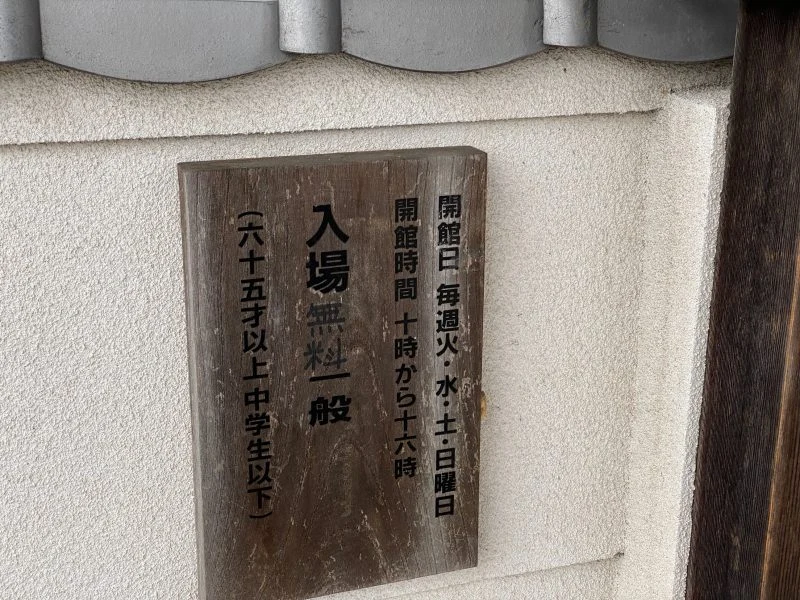
The admission fee for Yokomizo Seishi's Evacuation House is free.
Opening hours are from 10 AM to 4 PM, and the closed days are Monday, Thursday, Friday, and during the New Year holidays.
If you plan to go for a walk, please check the closed days before you head out.
This house is where he conceived his representative works, such as "The Murder at the Honjin," "The Curse of the Prison Island," and "The Village of Eight Graves."
Upon entering through the front door, you will find a dirt floor, and you can see materials such as a timeline of Yokomizo, allowing you to fully enjoy the world of his works.
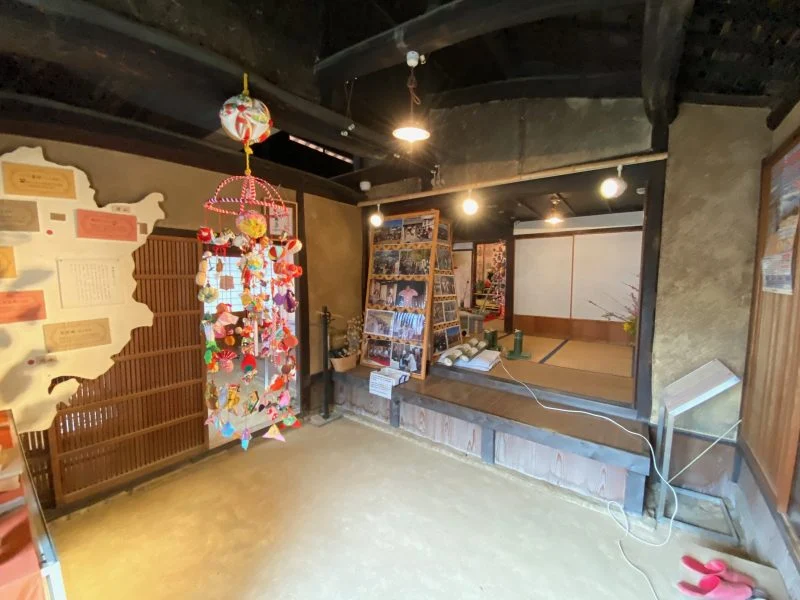
In front of the gate, there is a waist-high shoji screen, and inside is a fairly spacious dirt floor. To the left of the dirt floor is a six-tatami mat room, and further left is a four-and-a-half tatami mat room, which served as my study and bedroom.
Quote: Monologue of Kindaichi Kosuke
Reading Yokomizo's writings about the evacuation house reveals that this house remains as it was at that time.
When the author visited the evacuation house, they received enthusiastic explanations.
It is clear that this place and its connection to Yokomizo's works are cherished as a source of local pride.
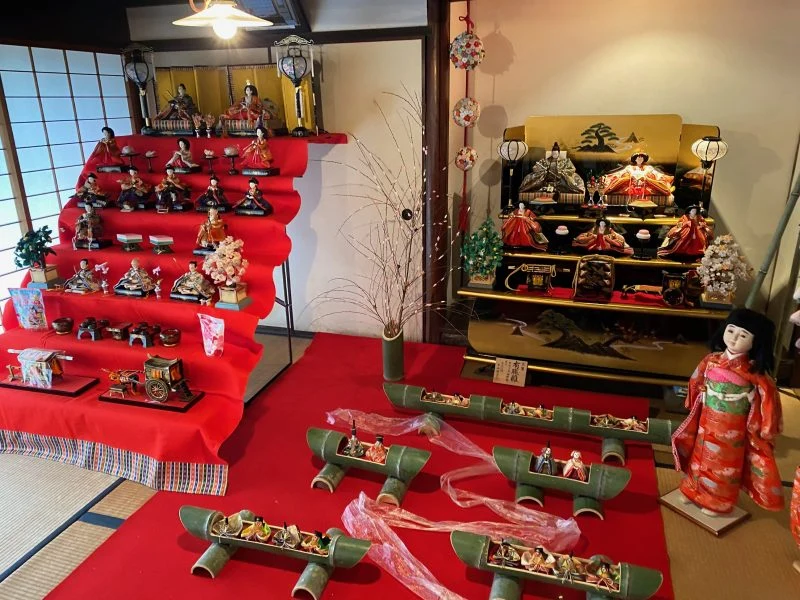
On the day the author visited, there were hina dolls displayed, as it was close to the Hina Matsuri (Doll Festival).
Usually, you can see the house as it was during Yokomizo's stay.
During the war, detective novels were banned by military orders.
Yokomizo read books he brought from Tokyo and devised tricks for his stories in anticipation of the end of the war.
It was also a time of paper shortages, so he collected and cut up unused manuscript paper from the packages sent from Tokyo and wrote his works on the blank parts.
Additionally, while discussing with friends at this location, he began to talk about various detective novel tricks.
This eventually led to the creation of the tricks in "The Murder at the Honjin" and "The Butterfly Murder Case."
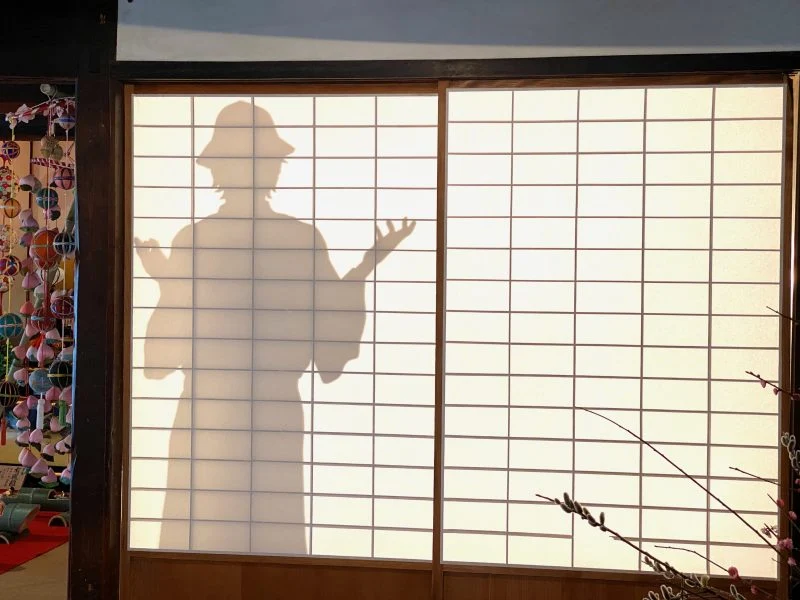
After the war, the great detective novel author "Edogawa Rampo" also visited this area to meet Yokomizo.
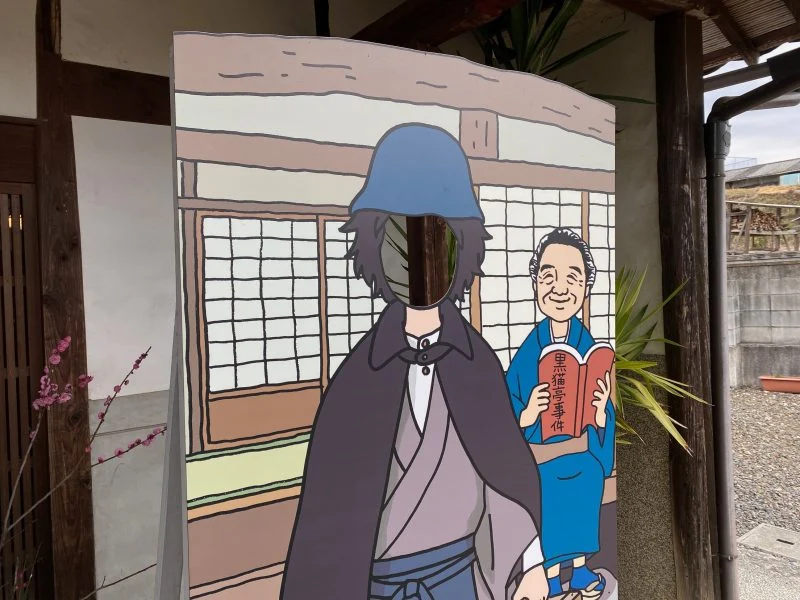
In the garden, there is a panel featuring Kindaichi's face.
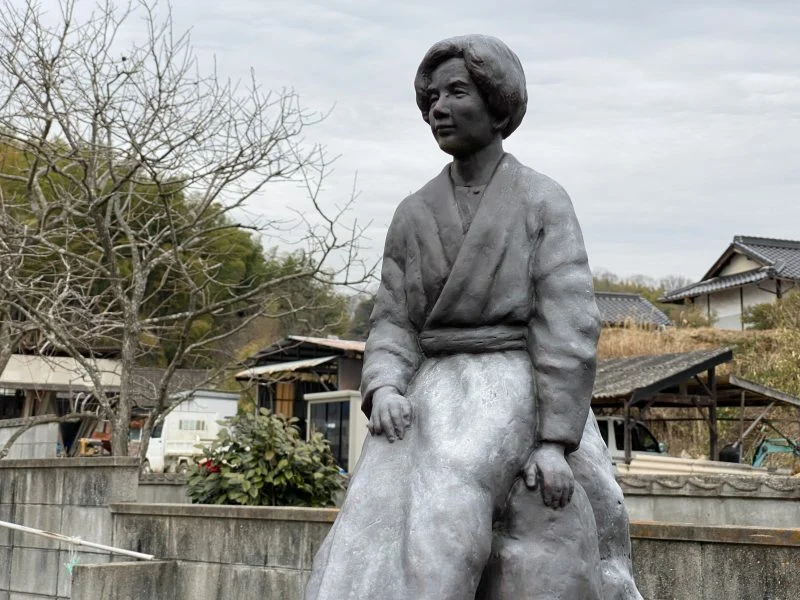
There is also a statue of Yokomizo Seishi, so be sure to check it out.
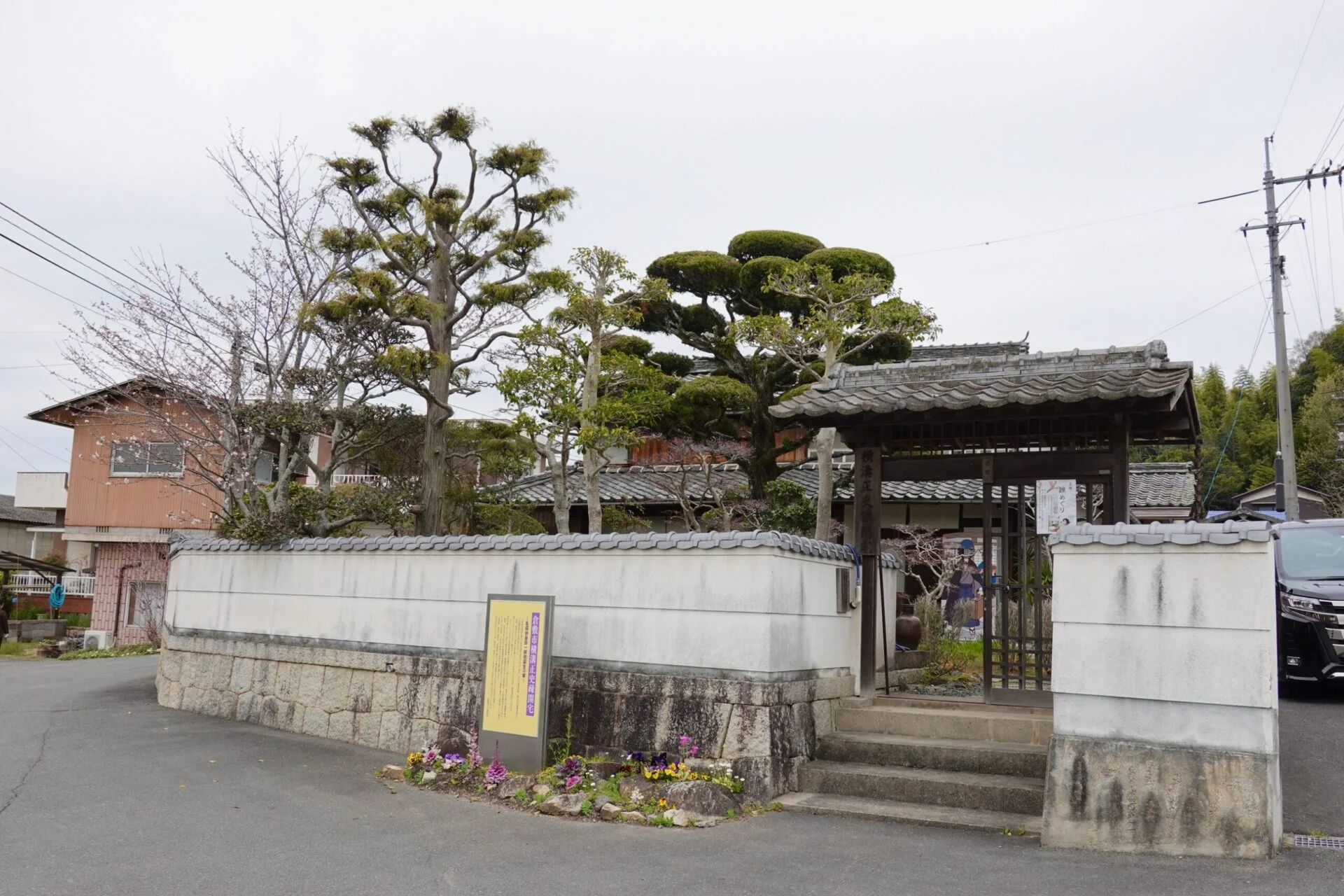
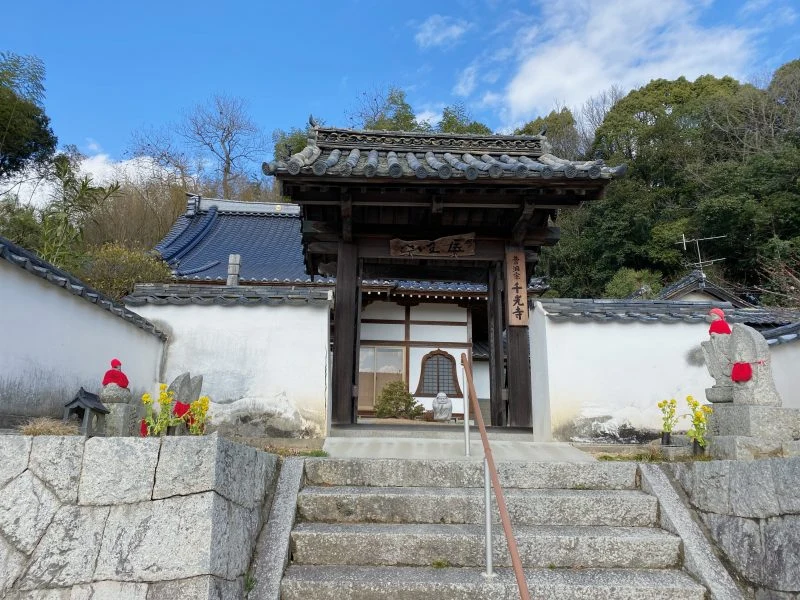
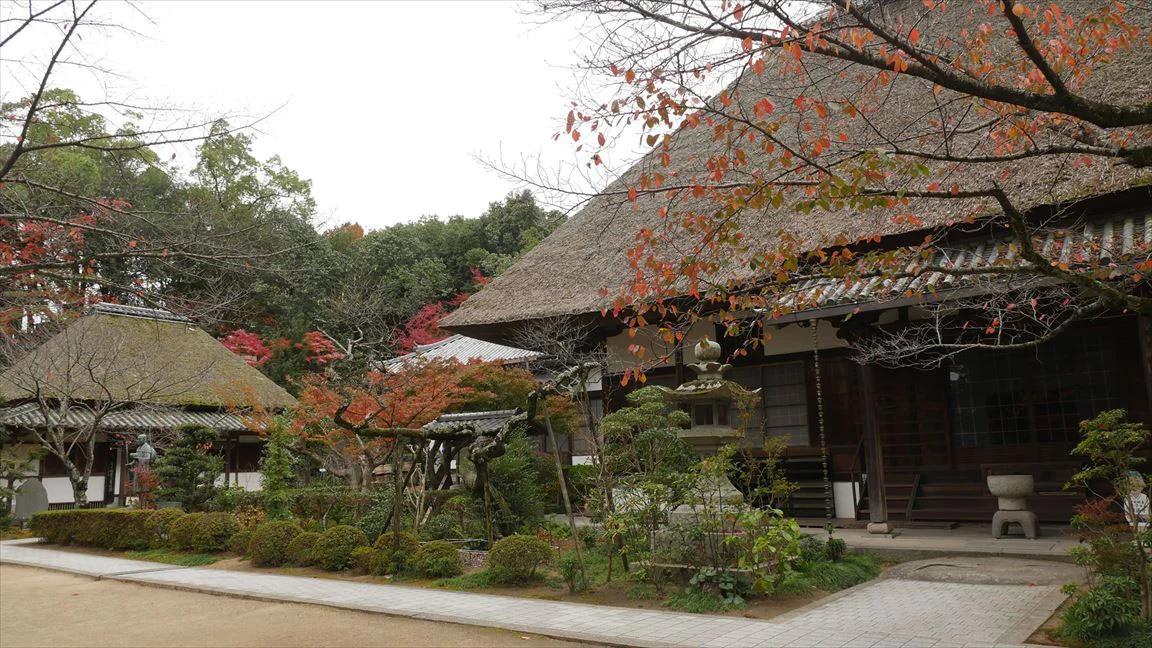
By the way, near Yokomizo Seishi's Evacuation House, there is Chikouji Temple, which served as the model for the temple appearing in "The Curse of the Prison Island."
Kurashiki City Mabi Furusato History Museum
Now, let's proceed to the next route.
After about a 10-minute walk from the evacuation house, you will reach a pond called Okada Oike.
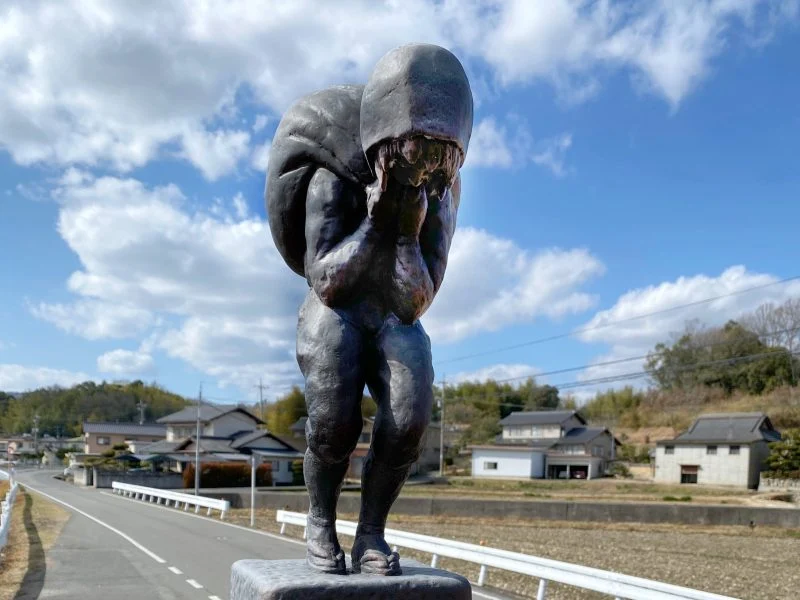
Here, you will find a statue of Orin, a character from "The Hand-Painted Ball of the Devil."
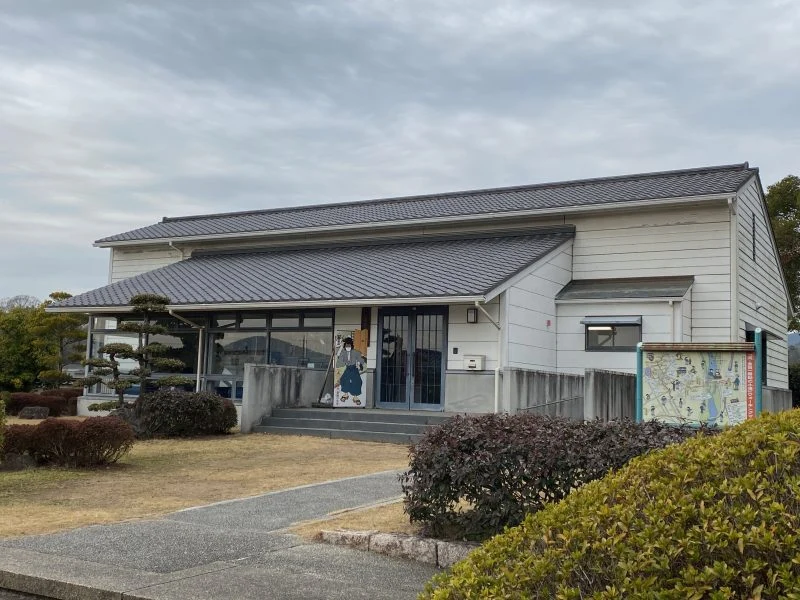
Beyond Okada Oike, you will find the Kurashiki City Mabi Furusato History Museum.
The Kurashiki City Mabi Furusato History Museum opened in 1994 as a cultural hub for the Mabi area.
There is a free parking lot in front of the facility, and there are shared restrooms with Oike Furusato Park.
When entering, please change into slippers at the entrance.
Inside the museum, there is a space to learn about Mabi and a display room regarding the history of Mabi, as well as paperback editions of Yokomizo's works.
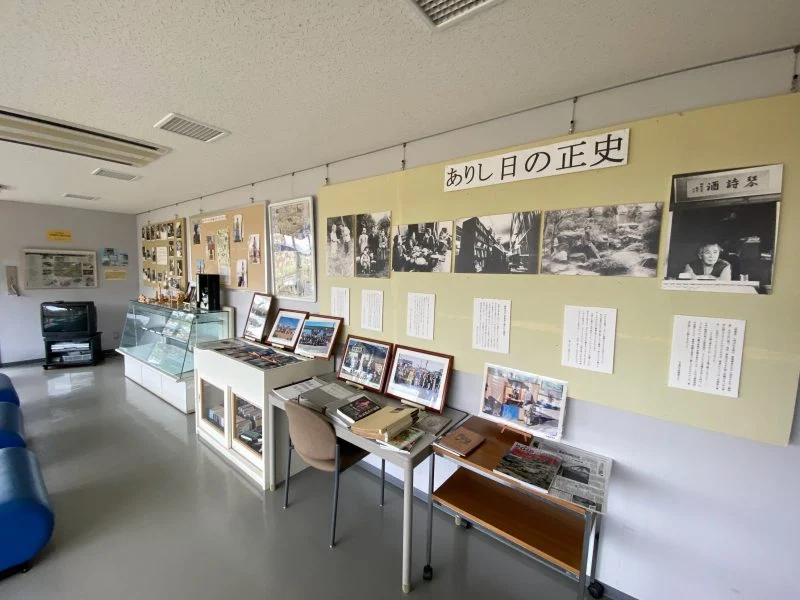
Here, you can actually read Yokomizo's works, starting with paperback editions.
When I asked the staff, I was told that it is possible to take photos of the pictures and materials displayed in the break area, as well as the ancient documents and exhibits about Seishi Yokomizo in the exhibition room.
In the exhibition room, you can see ancient documents related to the Okayama Domain, which governed Mabi during the Edo period, as well as valuable exhibits.
For fans of Yokomizo, the "Seishi Yokomizo Corner," which collects his relics, is a must-see.
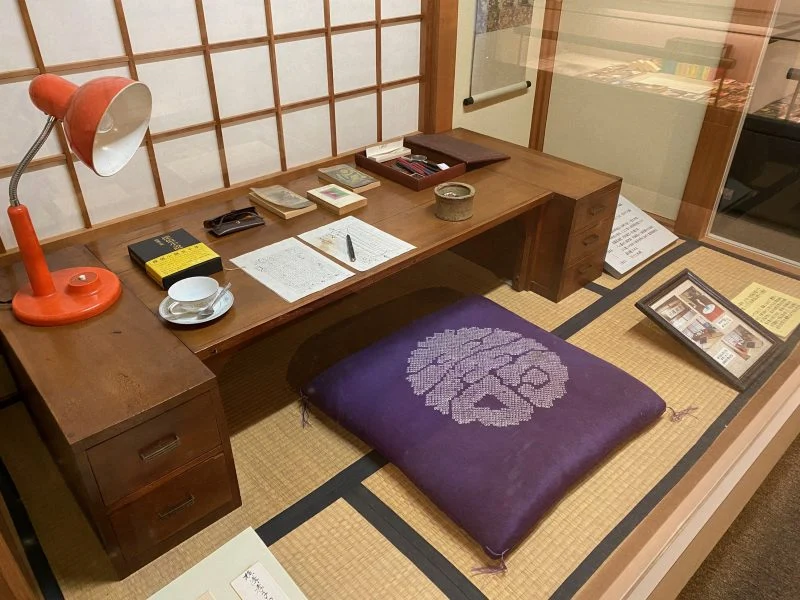
A table that Yokomizo used in his study at home in Tokyo has been donated and is on display.
According to the staff, it is not the table that Yokomizo actually used in Mabi, but you can still get a sense of the atmosphere during his writing.
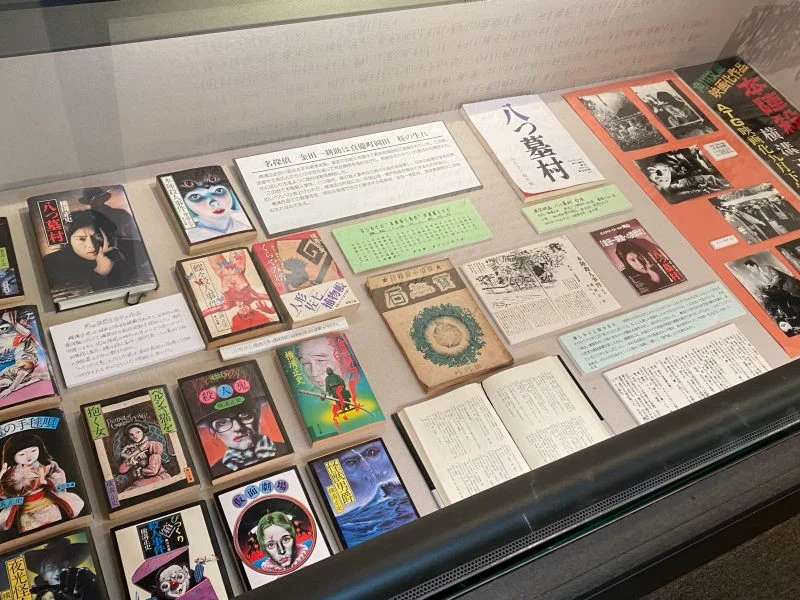
The script for the film adaptation of "The Honjin Murder Case" and the magazine in which the work was first published are also on display.
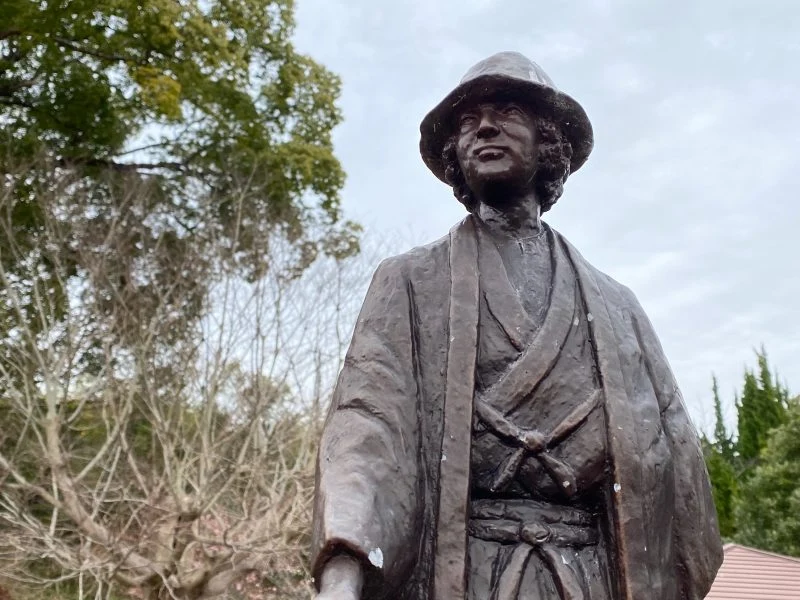
Outside the history museum, there is a statue of Kindaichi Kousuke.
By the way, Yokomizo reportedly liked actor Ikko Furya, who played Kindaichi Kousuke.
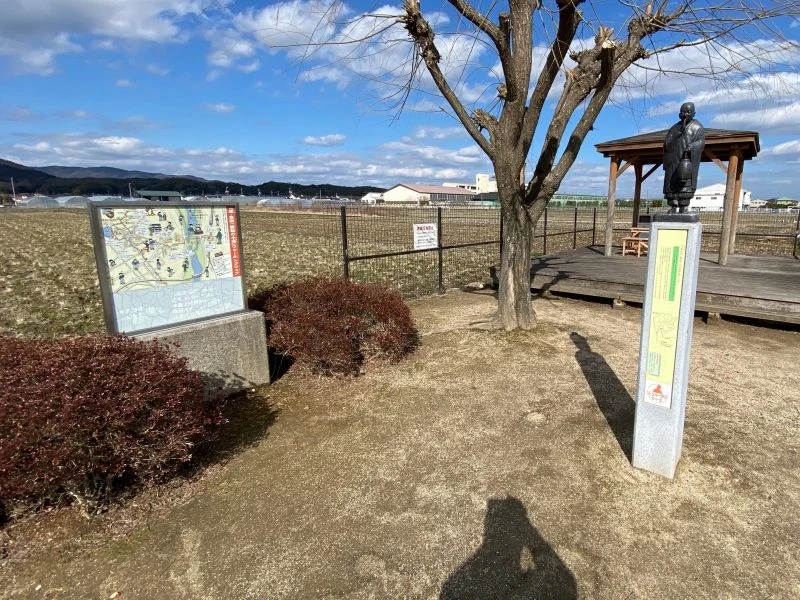
As you walk along the route from the history museum, there is a break area where you can rest your feet.
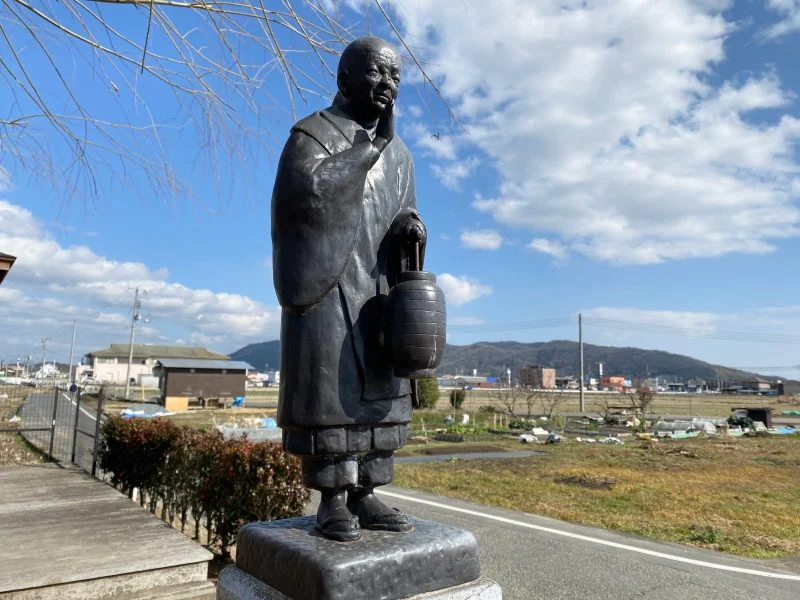
This break area features a statue of Ryouzen Monko, who appears in "Gokumon Island."
If you go straight down from the break area and pass by the Sanyo Marunaka supermarket, you will arrive at the endpoint of the course, Kawanabe-juku Station on the Ibara Railway.
Endpoint of the Course, Kawanabe-juku Station
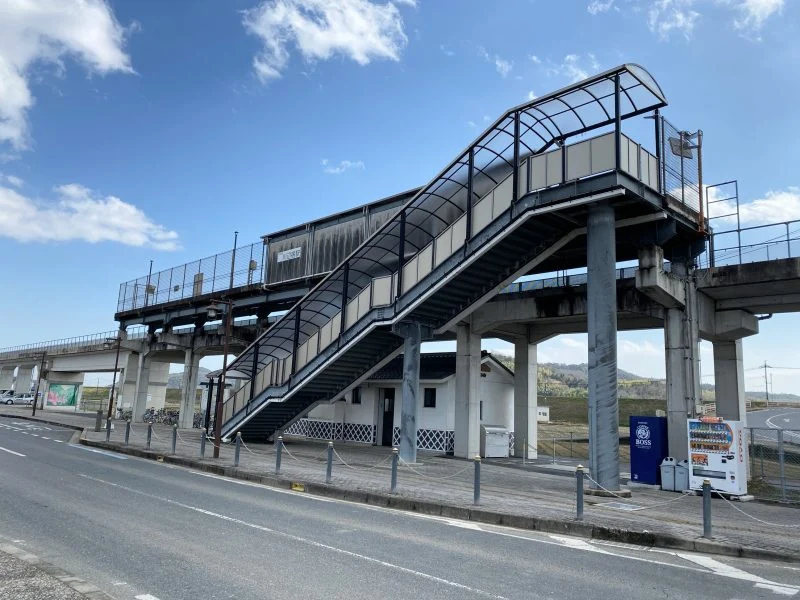
The endpoint of the Kindaichi Kousuke Trail is Kawanabe-juku Station on the Ibara Railway.
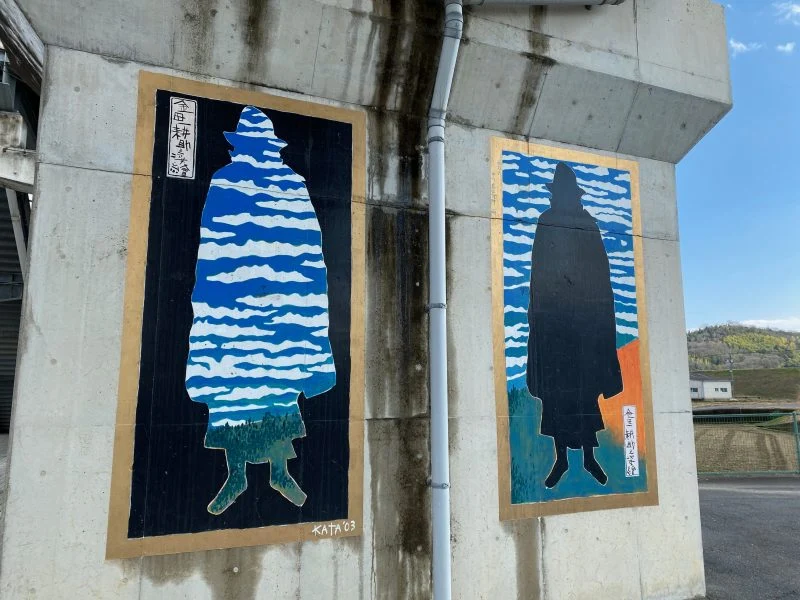
At Kawanabe-juku Station, there are art pieces themed around the world of the Kindaichi series depicted under the elevated track.
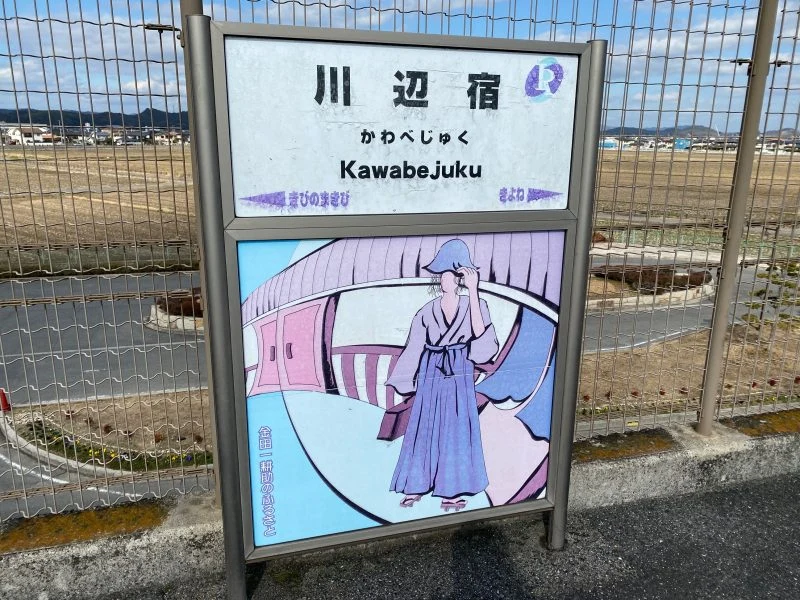
The information board on the platform is also a point you should definitely check out.
To get from Kawanabe-juku Station to JR Kurashiki Station, take the Ibara Railway to Kiyone Station and transfer to the JR Hakubi Line.
Conclusion
The author completed the entire course of the "Kindaichi Kousuke Trail" in less than three hours. It was a leisurely time spent taking notes, taking photos, and listening to stories.
There are also spots to take breaks along the way, so bringing a bento and walking leisurely is enjoyable.
The course is easy to walk without steep slopes, and you can enjoy walking while immersing yourself in the world of Yokomizo's works.
As a result of walking the walking course, I felt the local people's affection for Yokomizo and their desire to pass it on as a source of pride for the community.
Later in life, Yokomizo often spoke about Okayama Village during his evening drinks, sometimes even shedding tears while recounting stories.
Mabi is a place where the famous detective Kindaichi Kousuke was born and a significant place that Yokomizo considered his spiritual hometown.
Please take the time to explore the birthplace of this renowned detective that Japan is proud of.
▼ Participating in the annual cosplay event makes it even more enjoyable.
Data on the Kindaichi Kousuke Trail
| Name | Kindaichi Kousuke Trail |
|---|---|
| Date | Anytime |
| Location | Mabi, Kurashiki City |
| Participation Fee (Tax Included) | Free |
| Website | Kindaichi Kousuke Trail |