Hello!
I am Okuno Daiji, a freelance writer and blogger living in Tokyo.
Recently, I received a request from the Kurashiki Tocotoco editorial team to explore "where a man in his 40s would go if he casually visited Kurashiki from Tokyo!" and I wandered around Kurashiki!
It was a mission that was somewhat simple in terms of deciding on approximate destinations, but in reality, it was quite difficult.
First, let me introduce the first day's adventures.
I thoroughly walked around the area around Entsu-ji Temple, where the monk Ryo-kan trained for a long period during his youth, and the vicinity of Tamashima.
▼ For other "Kurashiki Tocotoco walks from Tokyo," click here!
- Day 2: A casual stroll from JR Kurashiki Station to the Bikan Historical Area at night
- Day 3: From the Bikan Historical Area to the Mabi area, which suffered from heavy rain damage
Visiting Entsu-ji Temple, where Ryo-kan trained
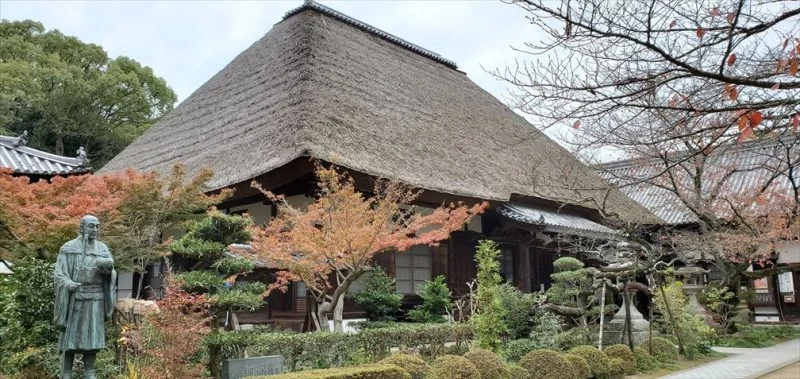
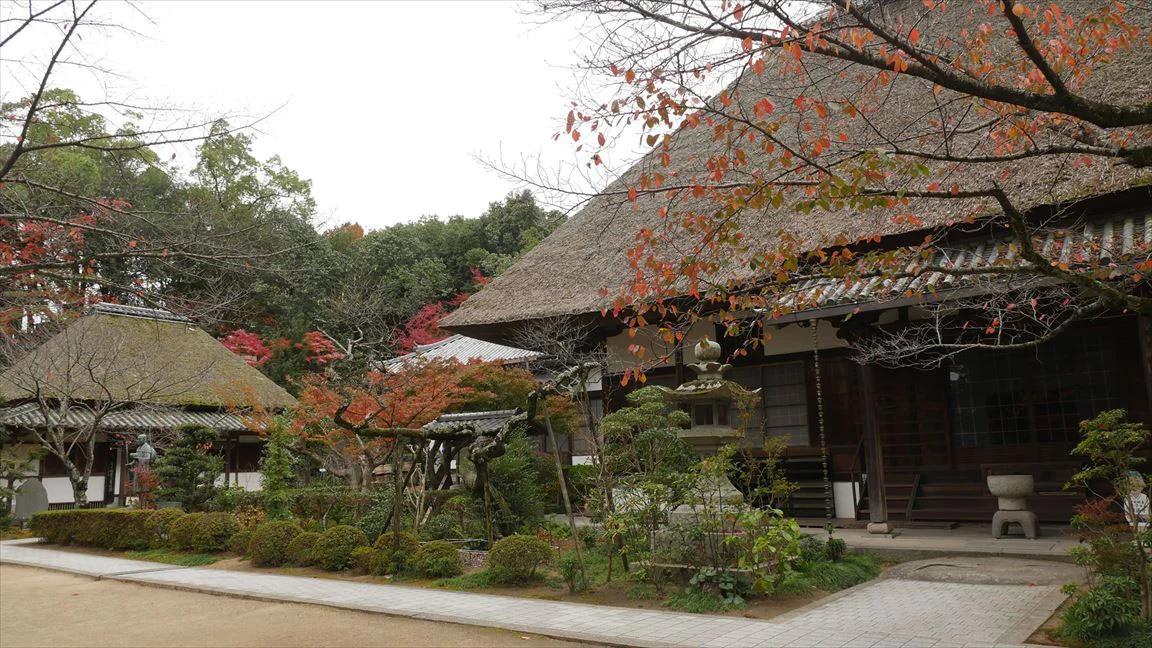
Entsu-ji Temple is a Soto Zen temple located about 4 kilometers from Shin-Kurashiki Station.
The spiritual site was opened by Gyoki Bosatsu about 1,200 years ago, and it is said that the temple was founded in the 11th year of Genroku.
The 11th year of Genroku was during the time when Tokugawa Tsunayoshi, known as the "Dog Shogun," was governing the country.
In the 15th year of Genroku, the raid by the Akō Rōshi took place, and it was built during such an era.
There are many temples named "Entsu-ji" across the country, including the Entsu-ji Temple in Sakyo Ward, Kyoto, known for its gardens, and the Entsu-ji Temple in Bunkyo Ward, Tokyo, which also appears in the popular historical novel "Onihei Hankacho."
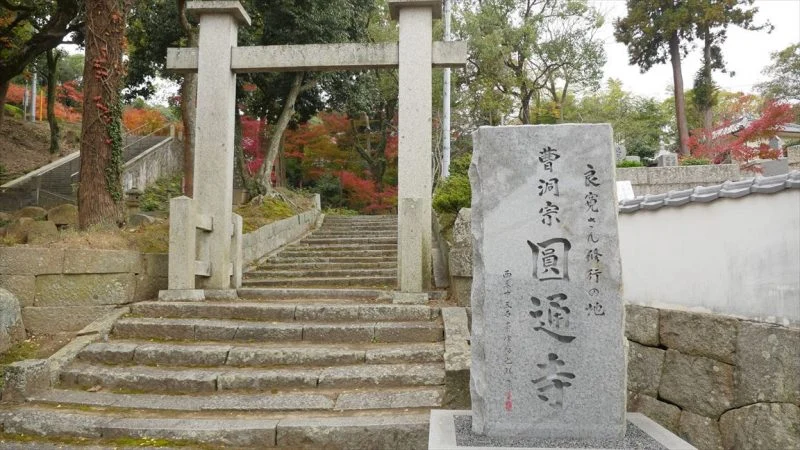
Speaking of Entsu-ji Temple in Kurashiki, it is famous as the temple where the monk Ryo-kan, who was also known as a poet and calligrapher, stayed and trained for a long time starting at the age of 22.
There is a tourist information center inside Shin-Kurashiki Station, where I was kindly informed about the route and means of transportation to Entsu-ji Temple.
I believe that the best way to know a place is to walk, but I took a taxi from Shin-Kurashiki Station to Entsu-ji Temple.
The fare was just under 1,800 yen.
I decided to save the joy of walking for later and used this strategy to save time on the way there.
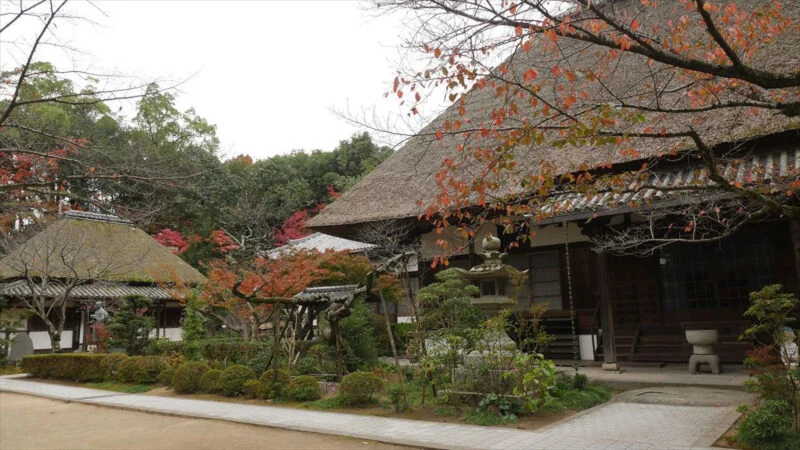
Entsu-ji Temple during the time when the leaves had just begun to turn a little red.
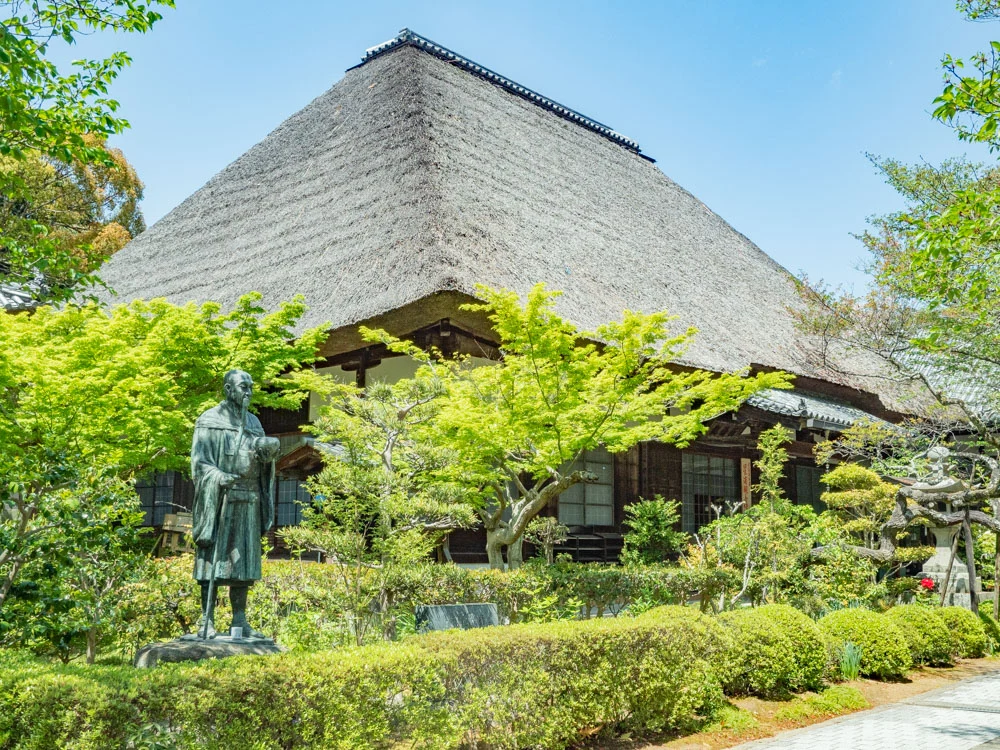
As I proceeded deeper, I saw the main hall watched over by the statue of Ryo-kan and the Ryo-kan Hall, where it is said he slept and trained.
There are 33 Kannon statues here, and it seems that some people enjoy visiting them.
I couldn't see them all, but each Kannon statue had completely different expressions and forms, making for an engaging exploration as I wondered which Kannon I would meet next.
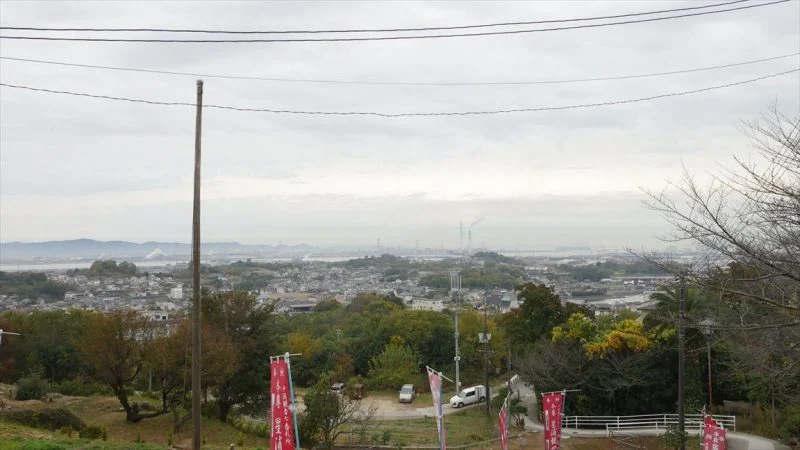
While on my Kannon pilgrimage, if I looked towards the sea from a high point, I could see the islands of the Seto Inland Sea "floating" beyond the industrial area.
Kurashiki has a huge industrial area called Mizushima Industrial Complex.
If you can travel by car and are a fan of factories, it would be enjoyable to see the factory night views at night.
Walking through the Showa-era townscape of Tamashima
From Entsu-ji Temple, I descended the mountain in a roundabout way from Shin-Kurashiki Station and explored Tamashima.
This Tamashima is said to have preserved a realistic Showa-era townscape, to the extent that it was used as a filming location for the movie "ALWAYS: Sunset on Third Street."
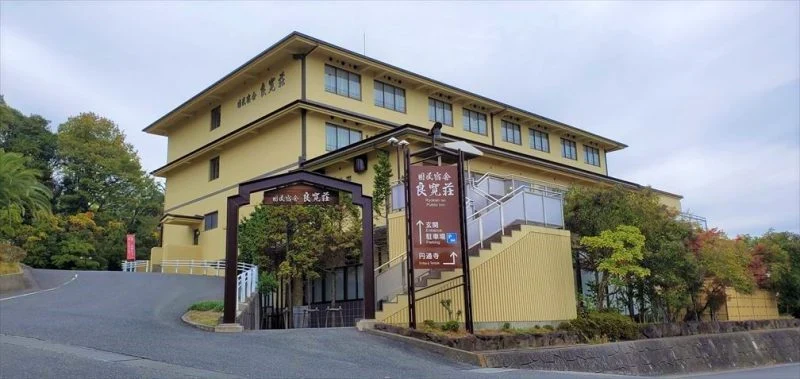
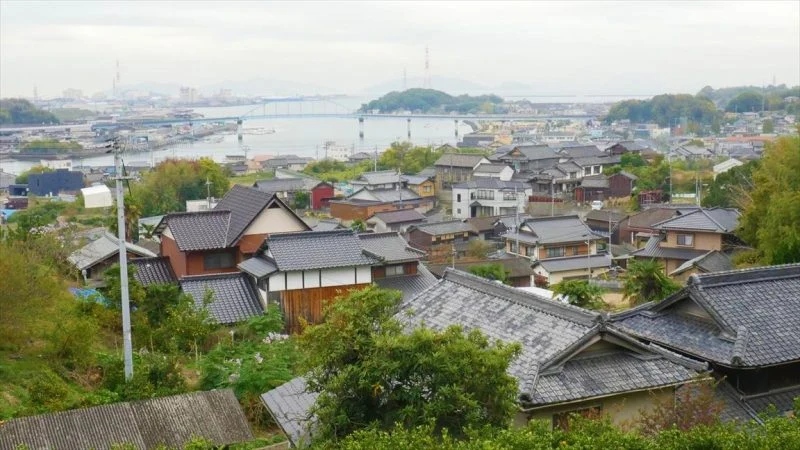
As I proceeded down the road from the front of the Ryo-kan-so, a hot spring and accommodation facility, I could overlook houses with tiled roofs.
Since these are private residences, it was difficult to take photos of some of them...
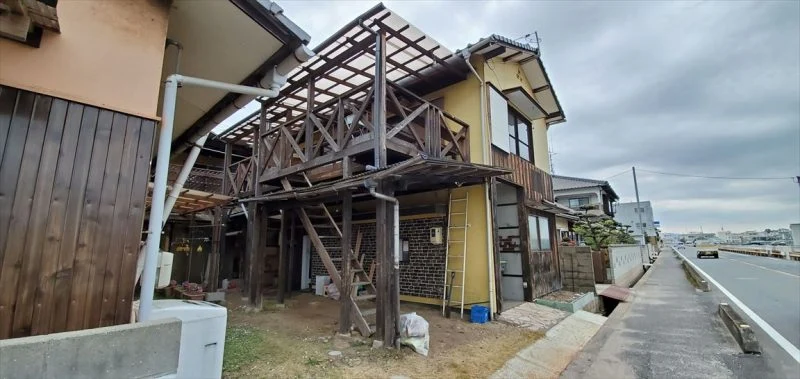
When I looked at the front of the building with the "external stairs,"
"A Bright Pistachio"??
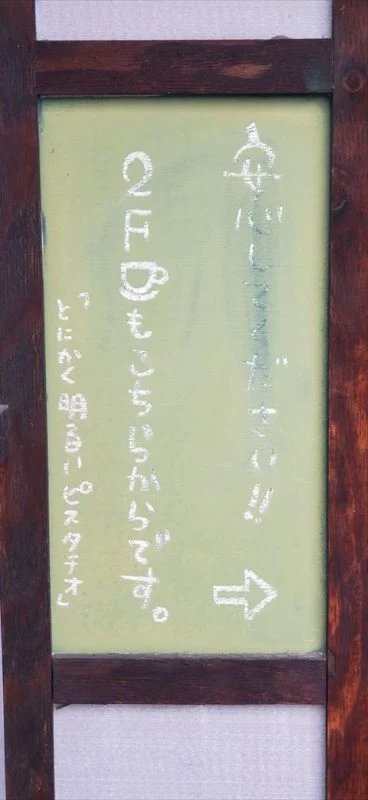
It seems that this was the entrance to a café.
I would have liked to take a break here if it had been open.
On the roadside, there was a monument stating "Birthplace of Okayama Prefectural Customs - Tamashima Customs Ruins".
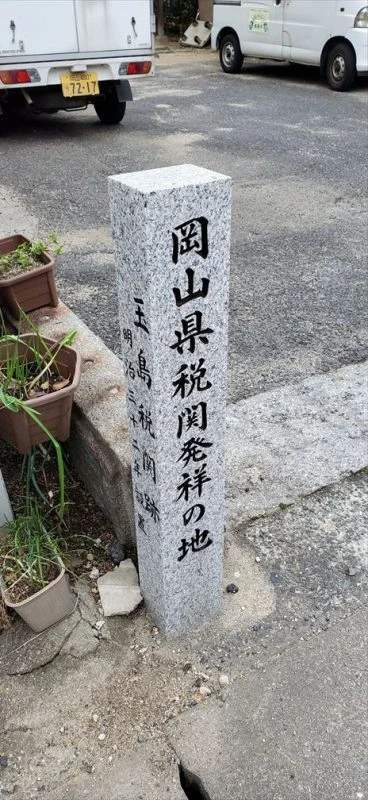
The presence of a customs office indicates that it was also a commercial center.
It was once the port of the Bitchu Matsuyama Domain, a place where people, goods, and money would have circulated.
I also came across a nostalgic red post box.
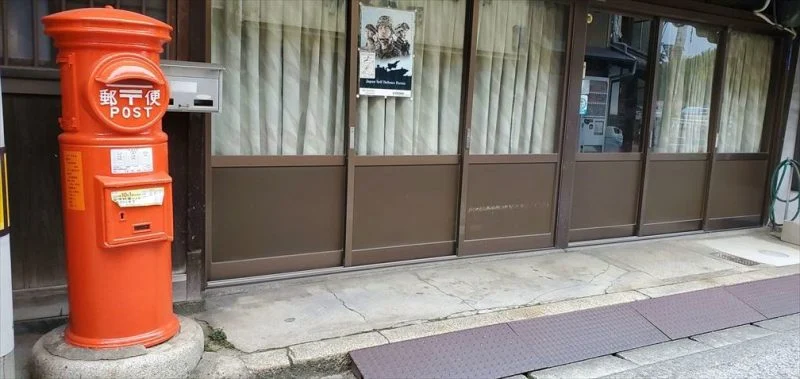
In Tamashima, there is an area called "Okayama Prefectural Designated Tamashima Townscape Preservation District", where the old-fashioned atmosphere still remains.
Just walking through this alley was so enjoyable...
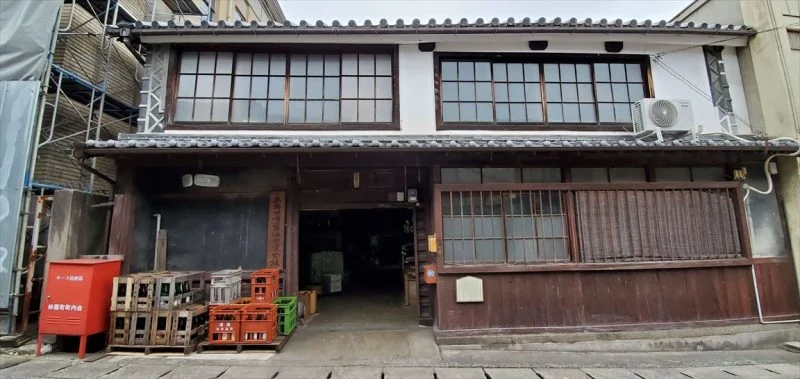
After the village office, it became a miso and soy sauce shop.
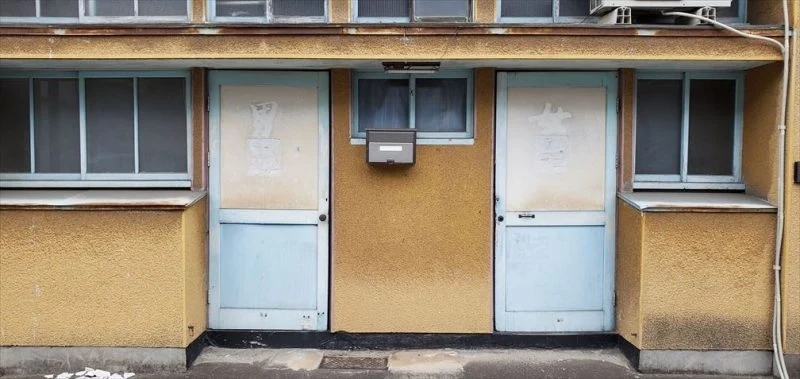
The sign with "yu" indicates that this was once a bathhouse.
I wonder if it is still in operation.

The two doors at the front are likely the entrances to the men's and women's baths.
The public baths I see in Tokyo usually have one entrance, and the separation for men and women occurs around the area with the geta box.
I have never seen a bathhouse with such a separate entrance.
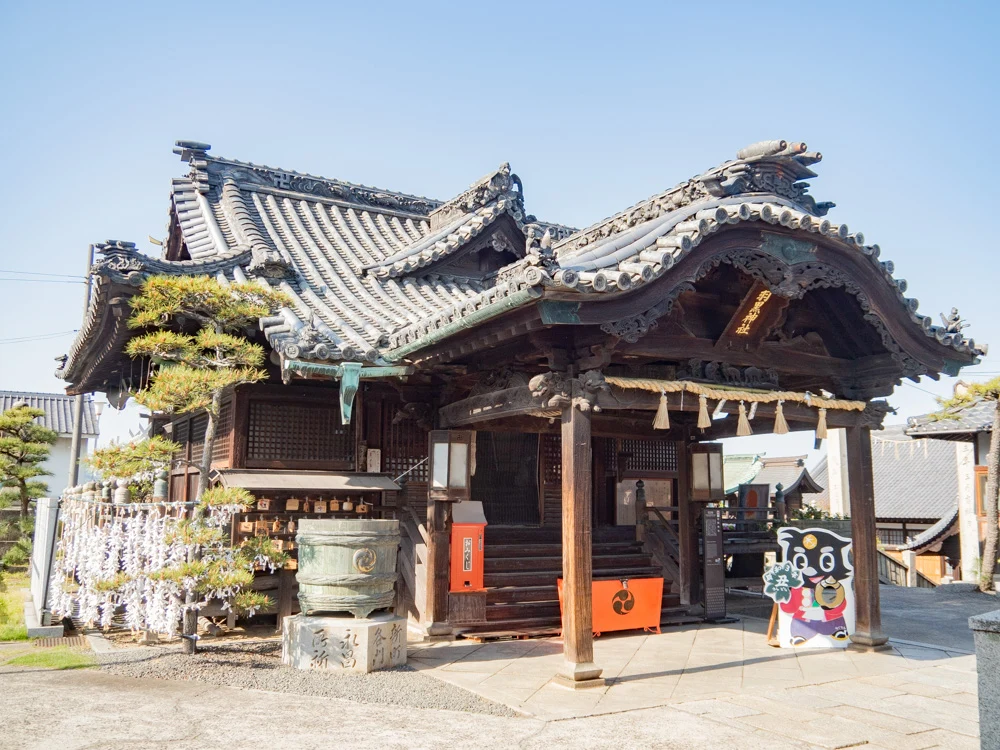
Haguro Shrine is located on a small hill.
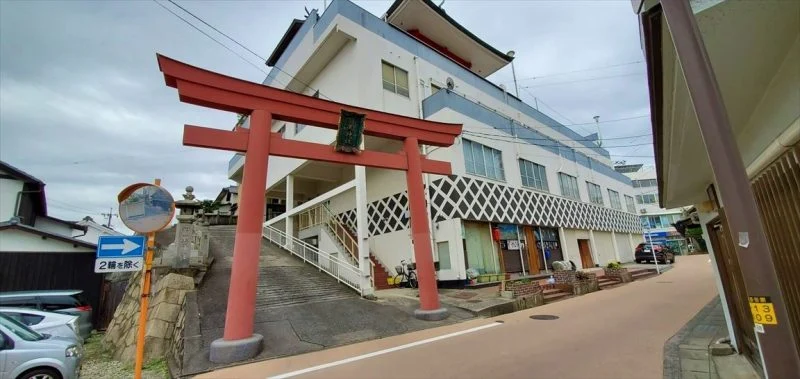
Looking behind, the large torii gate leads to a slope, and there seems to be a restaurant within the shrine grounds...
How free it is!
Enjoy Local Oden and Yakisoba! Visiting "Otayan Shokudo"
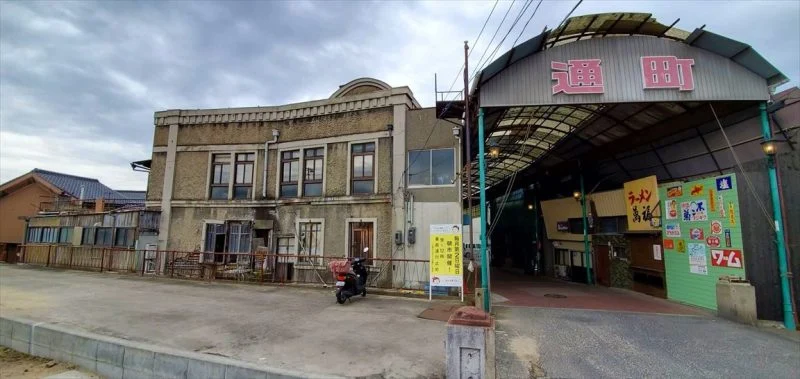
I visited the Tsumachi Shopping Street, which is a famous shopping street in Tamashima.
The advertisements posted at the entrance are all nostalgic items.
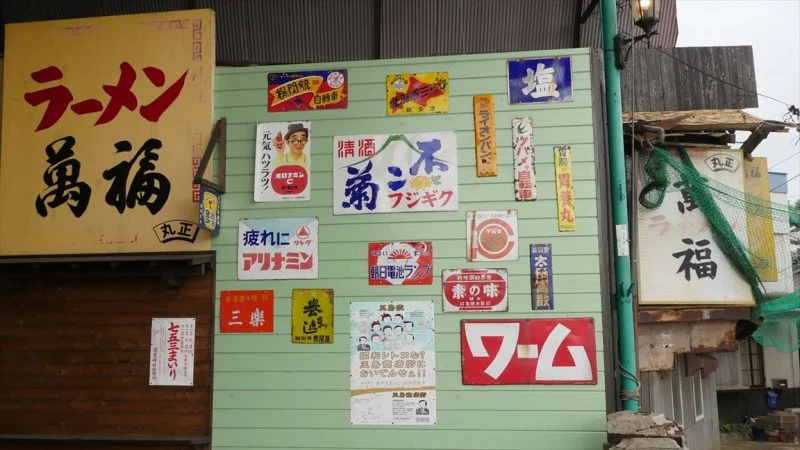
Oronamin C, for instance, is from posters when I was a child.
It's amazing how well they have been preserved.
In the middle of the shopping street was the "Otayan Shokudo," which is said to be frequently visited by travelers.
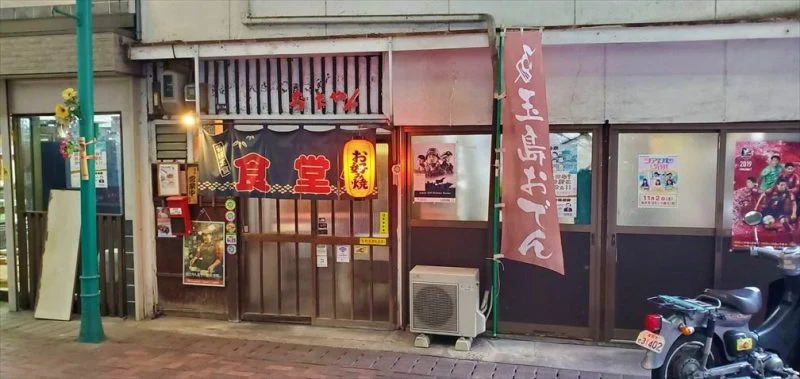
This shop is full of Showa-era atmosphere, and I immediately entered.
When I asked the owner for recommendations, they mentioned local dishes called Tamashima Oden and Karasu Tengu Yakisoba, so I decided to try these.
I wondered what to choose for the oden ingredients...
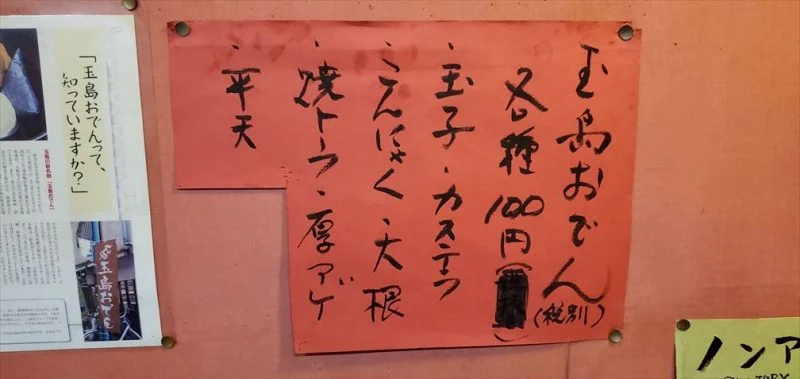
Huh??
Castella?
I asked, "What do you mean by castella?"
The owner replied, "You'll understand once you try it."
So I ordered the oden with egg, daikon, and castella.
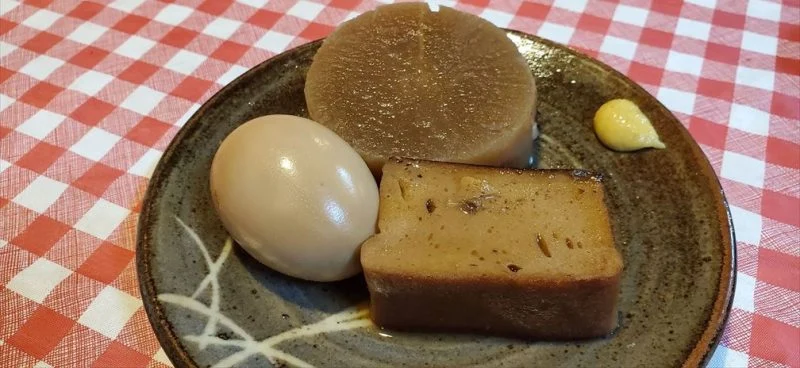
Both the daikon and egg were soaked in the oden broth and incredibly delicious!
And the castella had a mysterious appearance.
It had almost no sweetness, and the slightly firmer sponge seemed to have absorbed the oden broth thoroughly, giving it a unique flavor.
While I was eating and thinking it was a strange taste, the owner kindly served me some castella before it was made into oden. How nice!
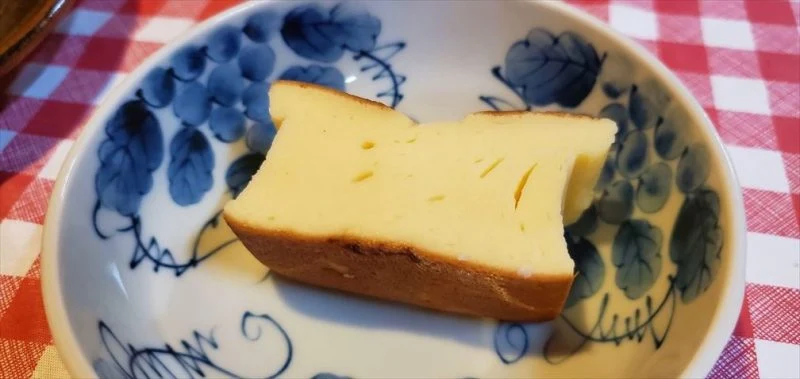
The castella itself was quite firm and not sweet, and when I tried to cut it with chopsticks, they broke.
It was an interesting ingredient, different from the castella you would eat as a snack.
Next, I had the "Karasu Tengu Yakisoba" (500 yen).
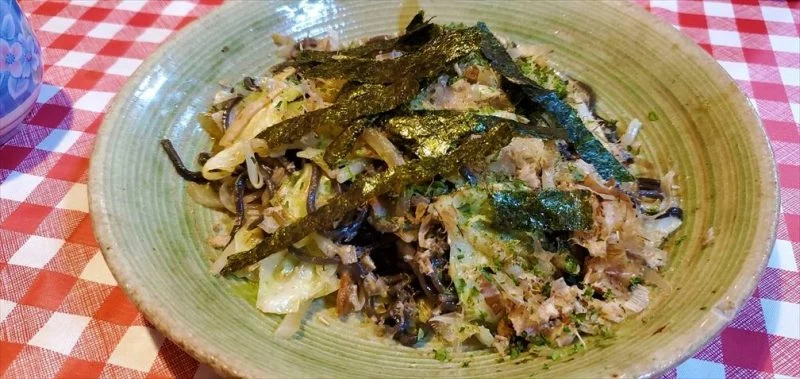
The yakisoba, named after the nearby Haguro Shrine, features black noodles made with squid ink.
When I lifted the noodles with chopsticks, they looked like they might have some seaweed in them! However, they turned out to be incredibly delicious yakisoba.
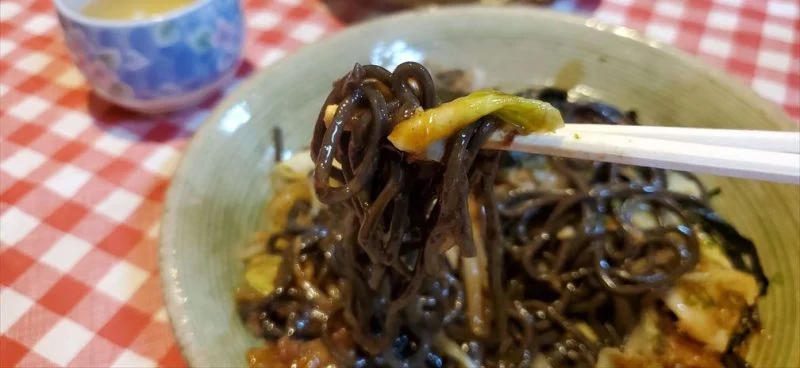
The noodles were chewy, and the flavors of the meat and the crunch of the vegetables were prominent.
"If you'd like, try this. It's a super spicy sauce made by a local shop," they said.
The sauce was incredibly delicious.
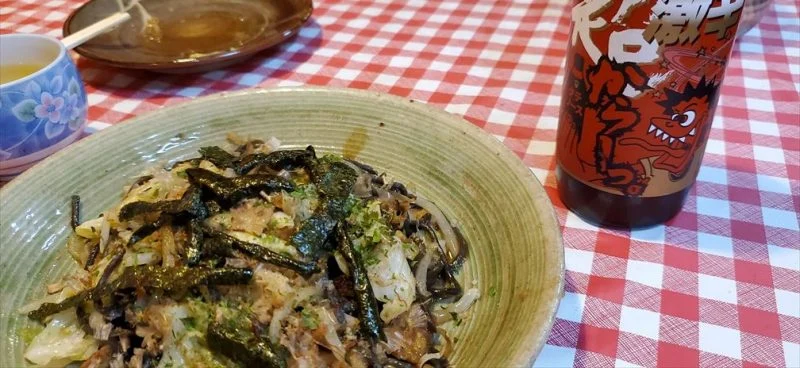
Since I am good with spicy food, I enjoyed it as a very nice accent.
On my way back, I was told about the company that makes this sauce.
Buying Souvenirs at Tatesauce
The sauce mentioned by the owner of Otayan Shokudo is from Tatesauce Honpo Teshimaya, which is based in Tamashima.
I heard that I could buy it directly, so I decided to visit the headquarters.
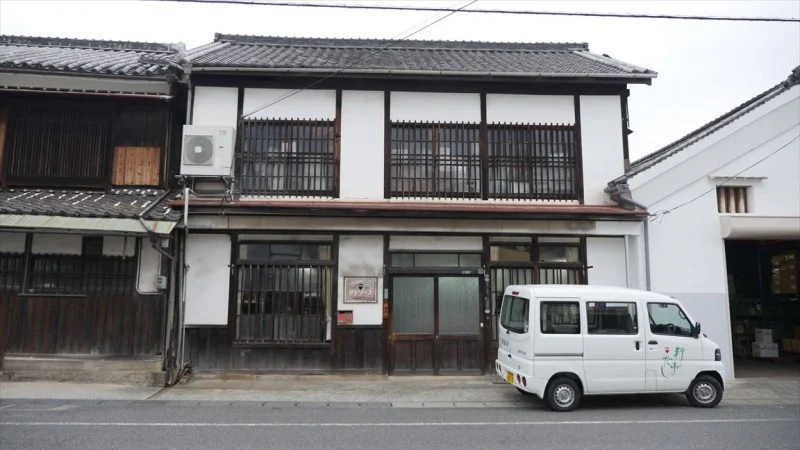
The building has a historical charm and feels great!
"Hello. I came here because I had this sauce at Otayan Shokudo and it was delicious," I said as I entered.
Upon hearing this, the president himself welcomed me and let me taste several of the products they handle.
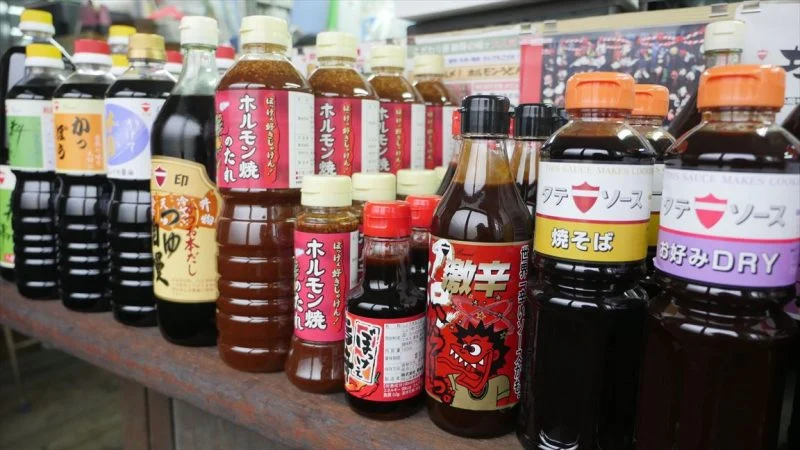
The sesame sauce and salt sauce were all delicious, but the standout was the Hormone Yaki no Tare.
There is a B-grade gourmet dish called "Tsuyama Hormone Udon" in Okayama (not in Kurashiki), and it seems to borrow its name from that.
The rich flavor is irresistible, and I can only eat it with grilled meat when I get home!
There is also an online shop, so I can restock.
Even though I should be tired from walking, I felt so cheerful that I walked about 5 kilometers to Shin-Kurashiki Station.
The road was almost straight, with no ups and downs, making it easy to walk.
Delicious Local Sake and Cuisine at "Unra Chubo Manmaya. Kurashiki Branch"
I returned to JR Kurashiki Station, where my accommodation is located.
After dropping off my luggage at the hotel, I took a bath and a nap to rest my feet, which had walked nearly 30,000 steps, before heading out into the night.
To find local dishes, it is ultimately quickest to carefully search for places that have menus outside.
I entered the "Unra Chubo Manmaya. Kurashiki Branch" located in a corner of the arcade street in front of the station.
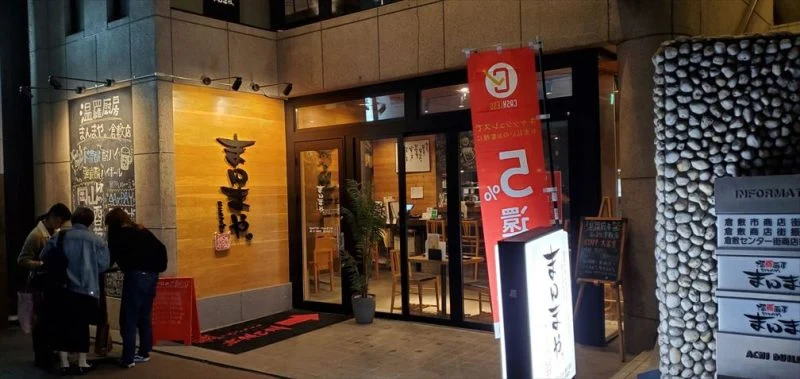
I took a seat at the counter and flipped through the menu.
As a specialty of Okayama, I ordered the "Mamakari no Kurozu-zuke" and the raw octopus sashimi and octopus tempura from the famous octopus-producing area of Shimotsui.
Then, I heard a voice from the owner behind the counter.
"Excuse me, where are you from?"
I hadn't mentioned that I was a traveler, and since I had returned to the hotel once, I was dressed as if I had just taken a stroll nearby, so I wondered how they knew.
"Ah, I guess it's easy to tell that I'm a traveler. I'm from Tokyo," I replied.
The owner responded,
"Many customers who order mamakari are travelers (smiling)."
I see.
Indeed, there are local specialties that locals don't often order, but are well-known.
I heard that while locals might eat mamakari at home, they wouldn't specifically order it at a restaurant.
Everything that came out from the sea was incredibly delicious.
Mamakari is a fish known as "Sappa" in the Kanto region.
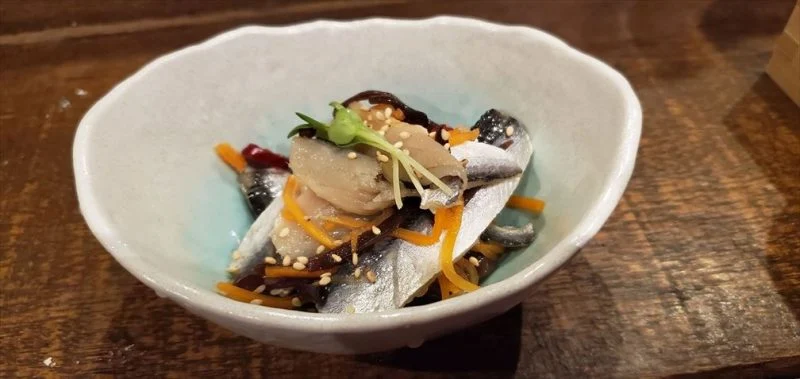
I don't eat it much in my hometown, but it is often served pickled as a specialty of Okayama.
The acidity is refreshing and penetrates my tired body.
The octopus from Shimotsui was truly exquisite!
It seems that the catch is not abundant, and it is not something you can easily find outside the prefecture.
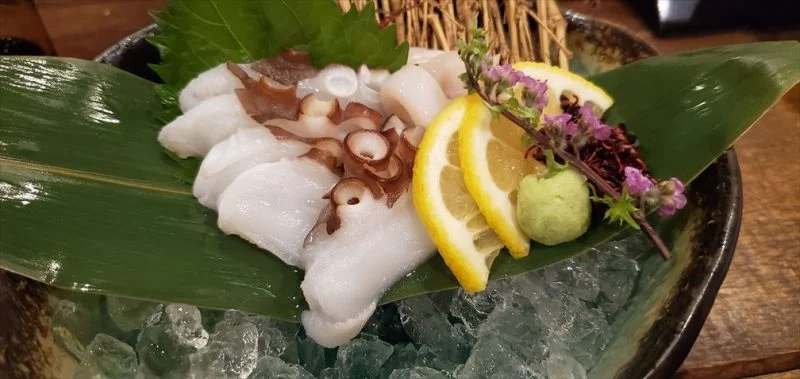
What surprised me was that they served salted sesame oil for the octopus sashimi as a condiment.
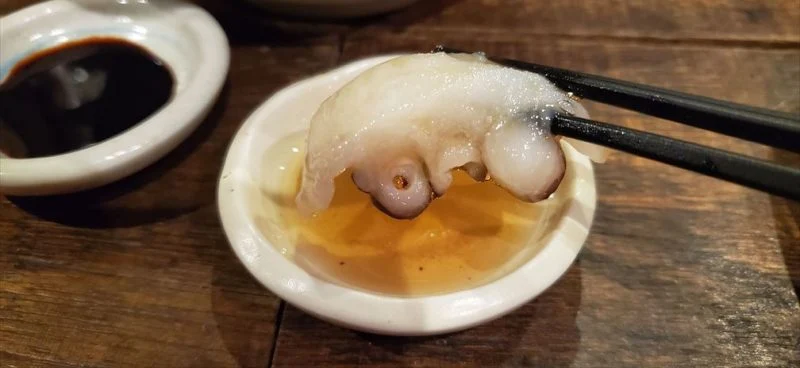
This combination, I used to enjoy with horse sashimi and liver sashimi before it was banned, but eating octopus with sesame oil and salt is something else!
The unique aroma of octopus pairs well with sesame oil.
Ah, this makes the sake go down easily.
Until now, I thought that when eating octopus sashimi, plum paste was the best.
The combination of sesame oil and salt feels like it’s coming very close.
I was delighted to expand my repertoire for enjoying octopus sashimi.
Fried octopus is also the best.
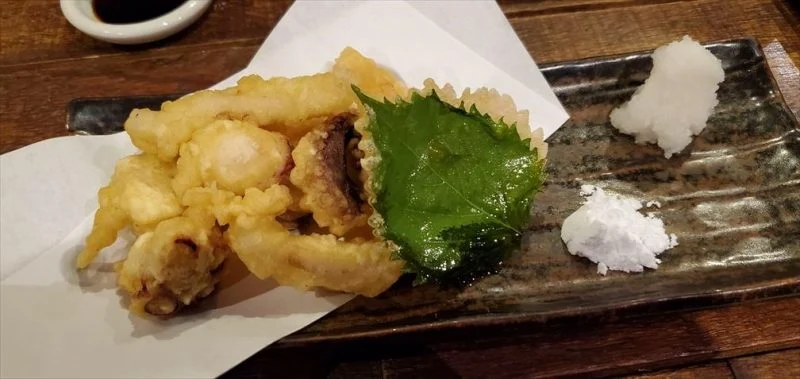
Perhaps because the salt I dipped it in is very finely ground, I was able to fully enjoy the texture of the fried coating and the octopus.
The octopus from Shimotsui is delicious.
I want to eat it again during this stay.
“If you came from Tokyo, you probably haven’t eaten this much, right? Sliced Spanish mackerel is available.”
I was recommended a dish that wasn’t on the menu.
Of course, I ordered it.
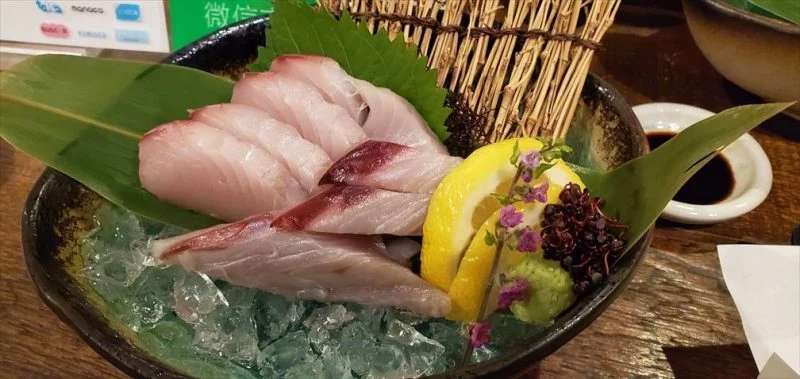
The pink flesh has a chewy texture, and the fat that is abundant is sweet, allowing me to fully enjoy the blessings of the Seto Inland Sea.
The joy of being served something not on the menu doubles the deliciousness.
I’m glad I ordered mamakari and got recognized as a traveler.
There were eight types of local sake from Okayama, which was more than enough for travelers.
There was also sake from Kurashiki.
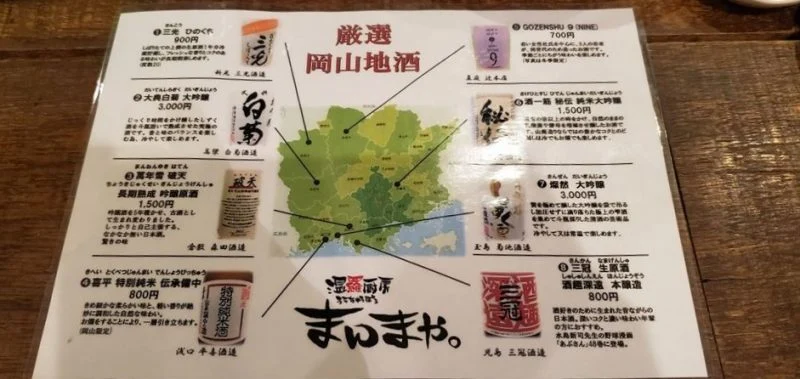
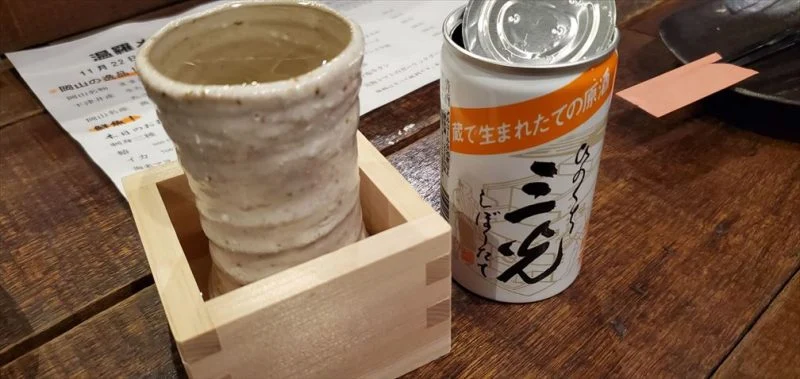
I tried several types, but the most delicious were the 20-degree “Sankou Hinokuchi” genshu and the “Daiten Shiragiku Daiginjo,” which costs 3,000 yen for one go!
Sankou Hinokuchi is an interesting sake packed in a can, and 20 degrees is quite a high alcohol content for genshu.
This is a product to be cautious of for those who are weak with alcohol.
Daiten Shiragiku Daiginjo was a truly exceptional product.
It is fluffy, not too strong, but has a definite aroma, and both the taste and the aftertaste are elegant and refreshing.
Such a flavor is not something you can drink often!
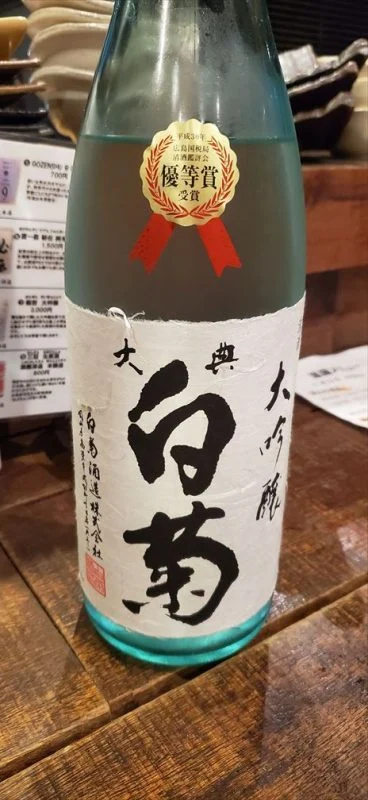
Opportunities to drink sake of the same class are rare, but if I find it at a local sake shop, I want to drink it again! That’s how strongly I felt about that cup.
Enjoying Tamashima and dancing with octopus on the first day
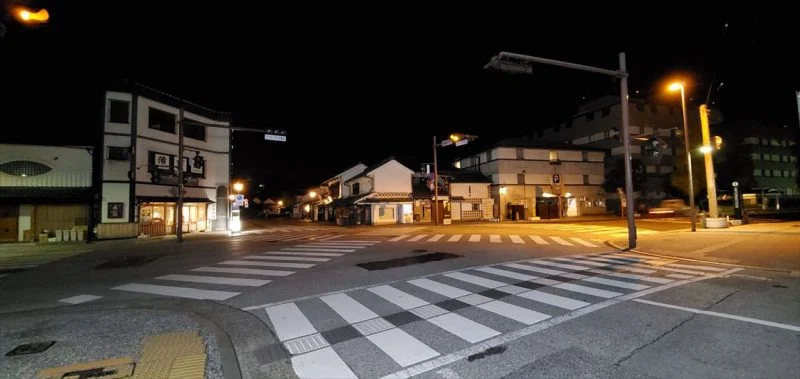
As I enjoyed the blessings of Kurashiki, the fun night passed by.
This is a personal impression, but when I think of Kurashiki, I imagine the area from JR Kurashiki Station to the Bikan Historical Area.
And when it comes to food, I think of kibidango.
I have such a vague image that I would even refer to the Nakasu area in Fukuoka Prefecture as “Hakata” and call all tonkotsu ramen “Hakata ramen.”
However, the visit to Tamashima impressed upon me that Kurashiki City faces the sea.
And the delicious octopus from Shimotsui was a delightful confirmation of the gourmet offerings of this seaside town.
Moreover, in a town like Tokyo, there aren’t many restaurants where you can enjoy a variety of local sake from Tokyo.
Even when I go to a place that advertises itself as a “local sake shop,” I often find famous local sake from all over the country, and I hardly know any places that gather and serve sake from Tokyo’s breweries.
When I visit a region, I want to enjoy the local sake and cuisine.
I find myself wondering what we could offer if someone from Kurashiki came to Tokyo.
The first day in Kurashiki was filled with history, townscapes, and delicious flavors, and it came to a close.
Next time's guide
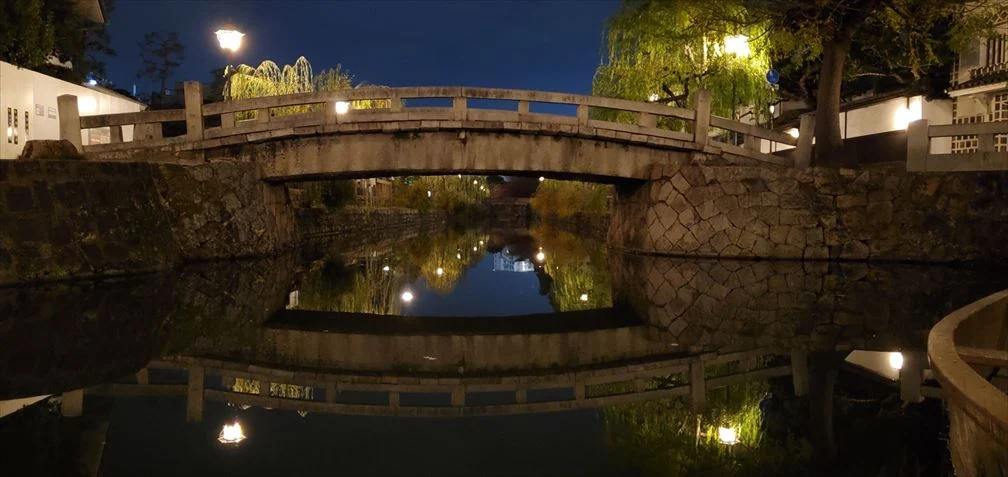
Next time, I will take a leisurely walk from JR Kurashiki Station to the Bikan Historical Area at midnight!
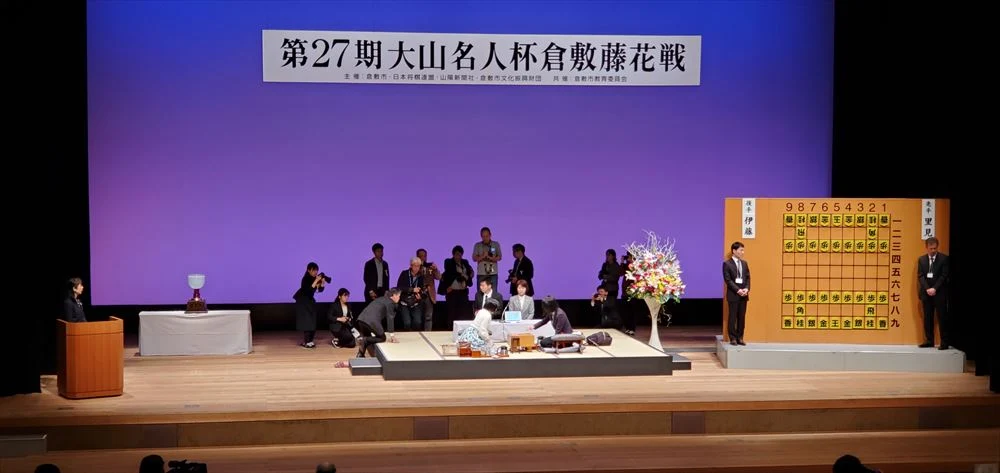
In the morning, I will eat Kurashiki's specialty, Bukkake udon, to energize myself, and then watch the public match of the shogi title match “Ooyama Meijin Cup Kurashiki Fujika-sen.”
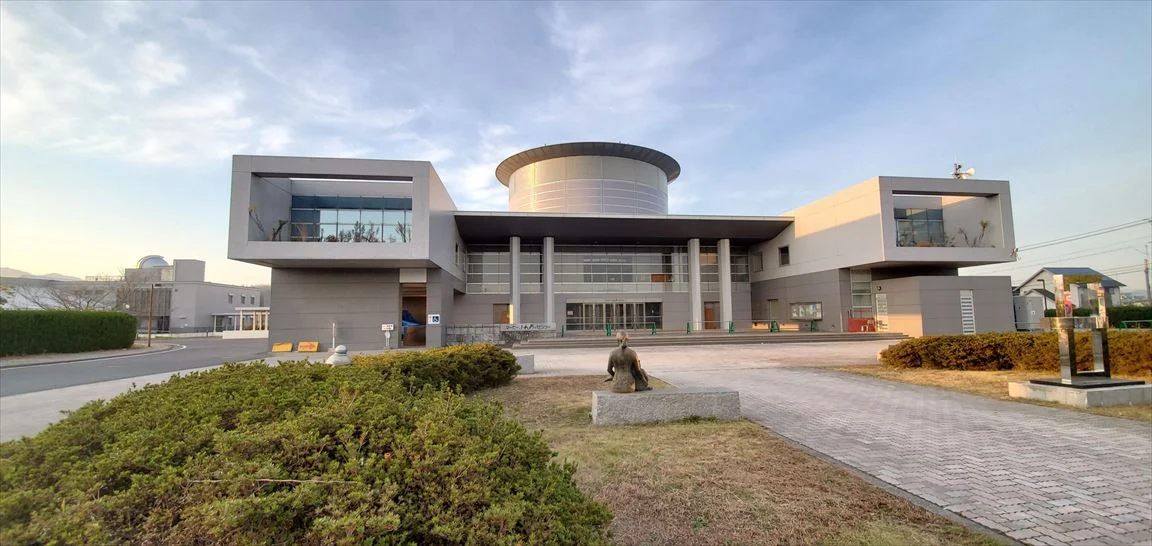
After that, I also visited the “Ooyama Yasuharu Memorial Hall.”
At night, I will indulge in the octopus from Shimotsui again.
Feeling good, I will walk through the Bikan Historical Area at night and enjoy its beauty.