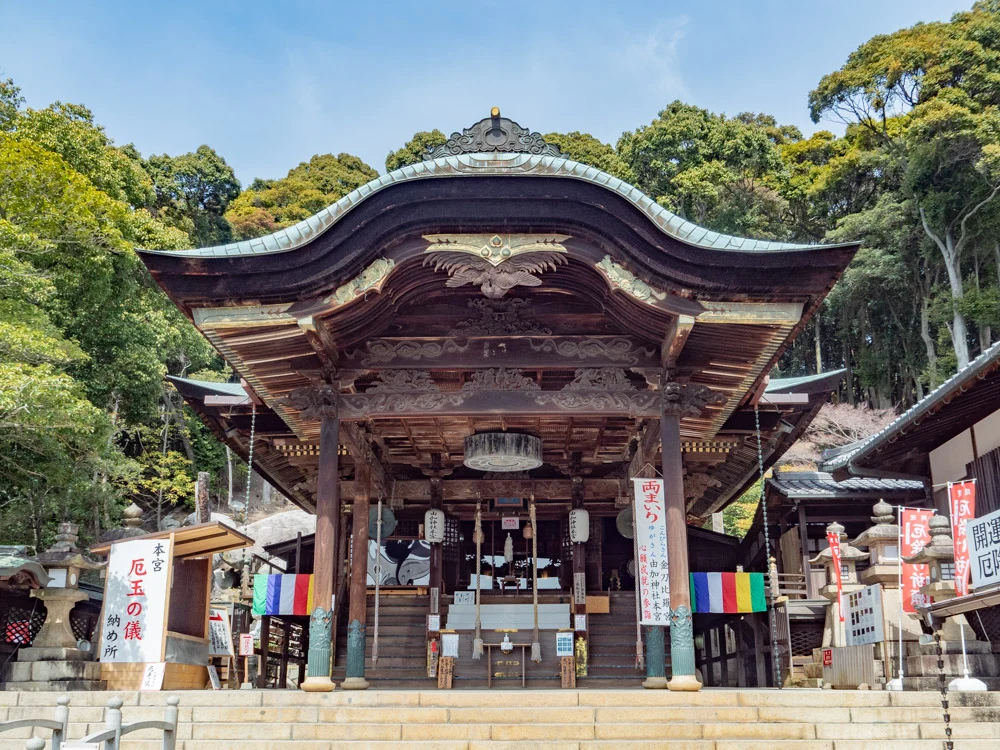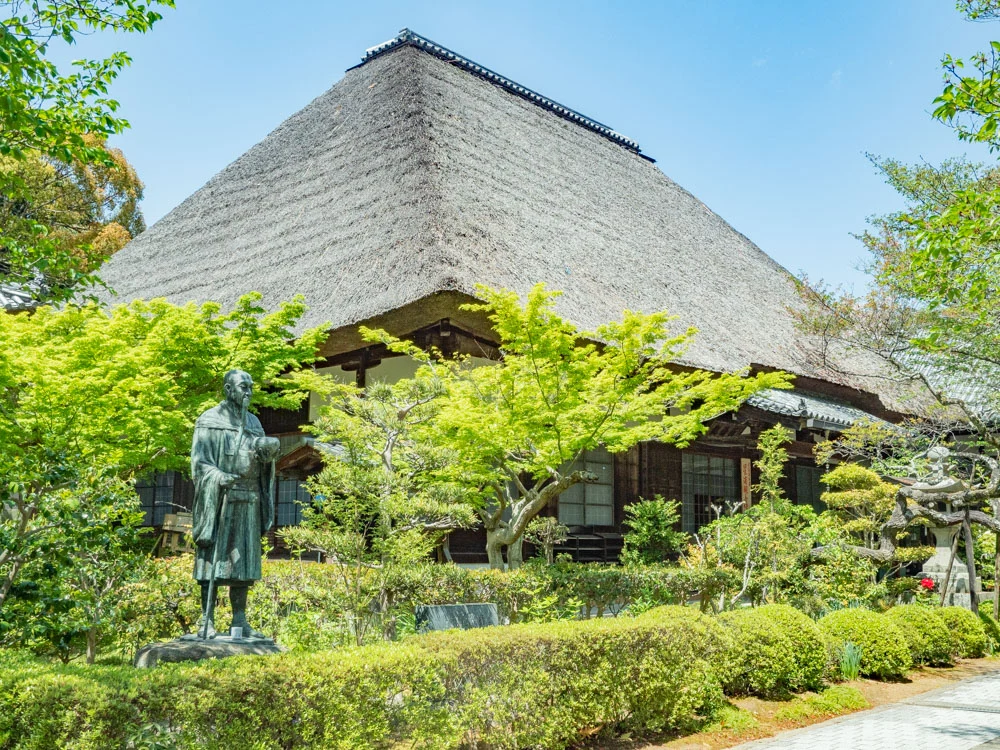
Known as a great monk and respected by many, the Edo period monk Ryo-kan.
Did you know that Ryo-kan has a connection to Kurashiki City?
In fact, Ryo-kan trained at a temple in Kurashiki City for about 12 years.
That temple is Ensu-ji Temple, located in the Tamashima area in the western part of the city.
It is a historic temple with origins dating back to the Nara period.
Even today, many tourists visit as it is known as Ryo-kan's place of training.
Ensu-ji Temple is also famous for its historic main hall, impressive gardens, and the seasonal flowers and trees that can be enjoyed.
Let’s introduce the charm and history of Ensu-ji Temple.
Ensu-ji Temple: An Old Temple on Mt. Hakka in Tamashima
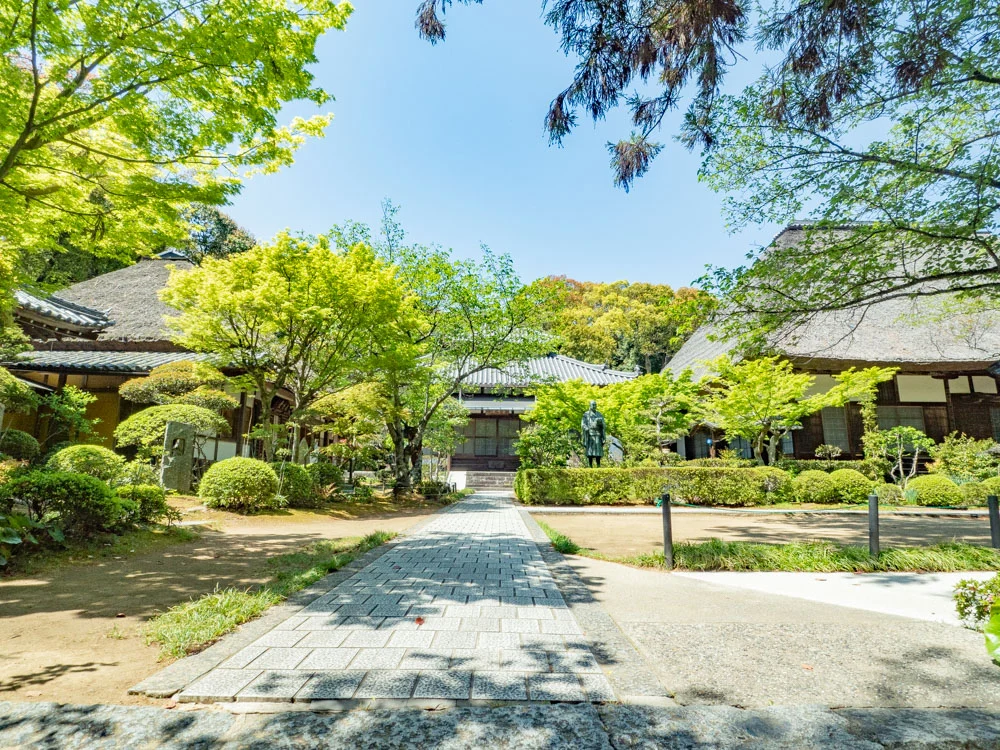
Ensu-ji Temple is an old temple located in the Tamashima area in the western part of Kurashiki City.
Soto Zen temple, with the mountain name Hodarakusan.
The main deity is Shokan-non Bosatsu, commonly known as Hoshiura Kannon, and is designated as a National Important Cultural Property.
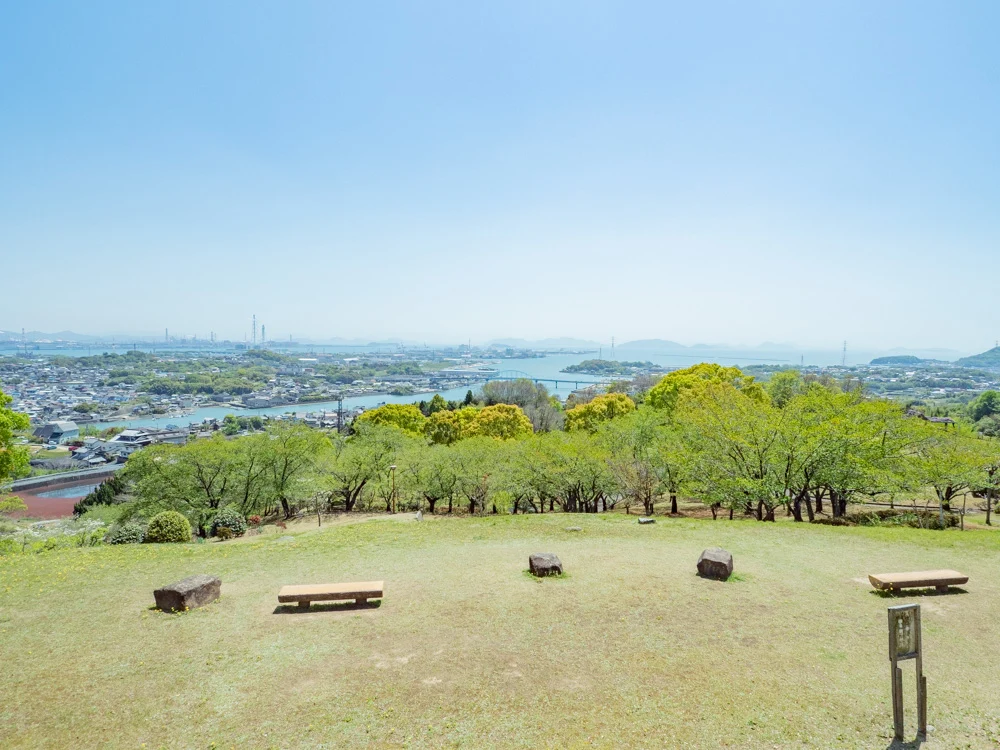
Ensu-ji Temple is located approximately 1.3 kilometers southwest of the Tamashima branch of the city hall.
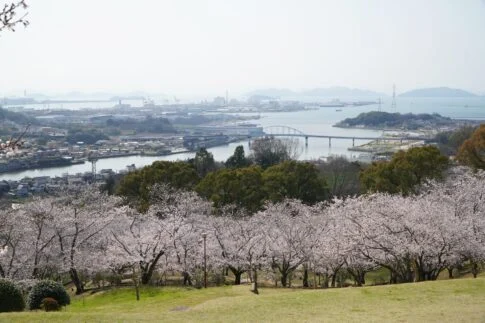
Hakka-san, a 90-meter high mountain from which you can overlook the town of Tamashima, the industrial area, and the Seto Inland Sea.
Ensu-ji Temple is designated as a historical site by Okayama Prefecture, and the surrounding area is developed as Ensu-ji Park.
The temple grounds are also designated as an Okayama Prefecture historical site, and the main hall and the bronze sitting Jizo statue are designated as cultural properties of Kurashiki City, while Ensu-ji Park is designated as a scenic spot by Okayama Prefecture.
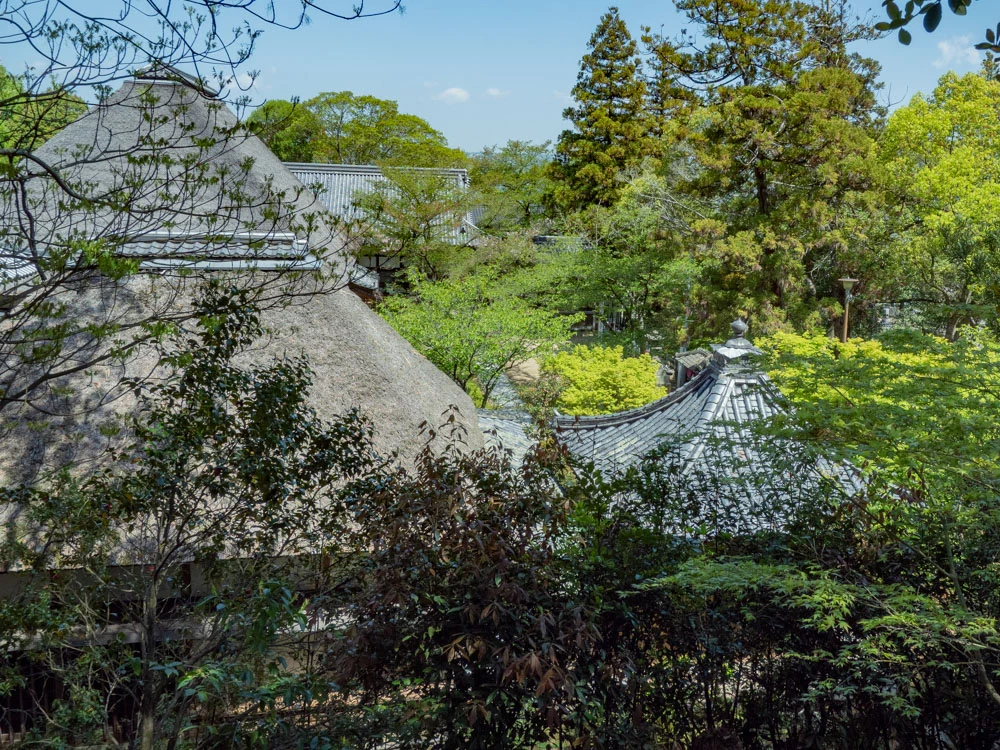
Ensu-ji Temple originated from the monk Gyoki from the Nara period, who enshrined a Kannon statue on Mt. Hakka.
In the mid-Edo period, during the Genroku era, the monk Ryoko restored it and it became known as Ensu-an, and from the 4th year of Shōtoku (1714), it was called Ensu-ji Temple.
Ensu-ji Temple is also a pilgrimage site for several sacred places.
- Chugoku Kannon Pilgrimage: No. 7
- Sanyo Flower Temple 24 Temples: No. 17
- Bichu Ryo-kan's Heart Temple: No. 1
- Bichu Asakuchi Saigoku Kannon Pilgrimage: No. 1
- 108 Kannon Pilgrimage: No. 9
At Ensu-ji Temple, the "Kannon En-nichi" is held on the 18th of every month.
Among them, May 18th and November 18th are designated as "Hana Kannon".
Various events are held at Ensu-ji Temple.
For details about the events, please visit the official Ensu-ji Temple website.
The Training Ground of the Great Monk Ryo-kan
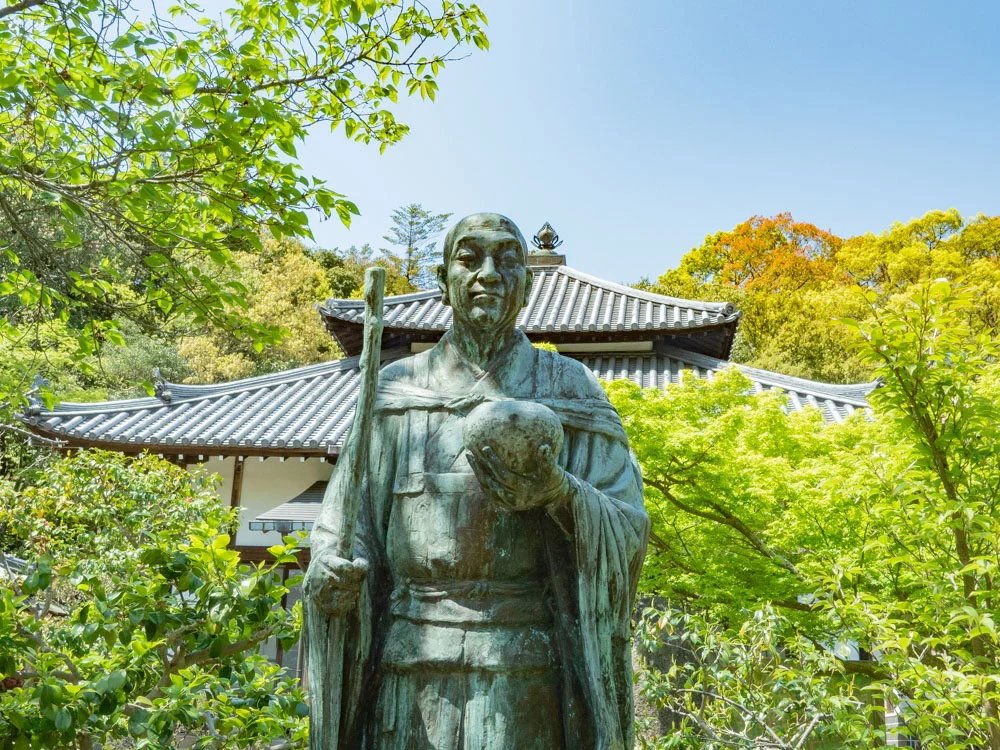
Ensu-ji Temple is known for being the training ground of the great monk Ryo-kan.
Ryo-kan was born in the 8th year of Hōreki (1758) in Izumozaki, Echigo Province (present-day Izumozaki-cho, Niigata Prefecture).
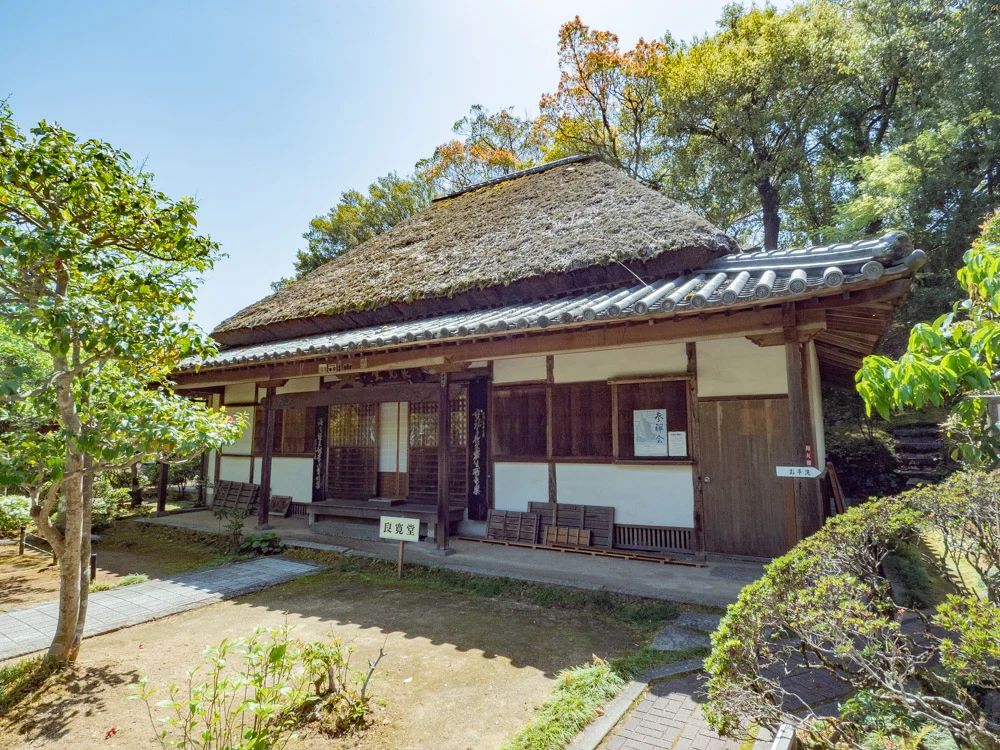
In Echigo, he met Kokusen and came to train at Ensu-ji Temple in Bichu Province, where Kokusen served as the head priest.
Ryo-kan trained at Ensu-ji Temple for about 12 years, from the age of 22 to 33.
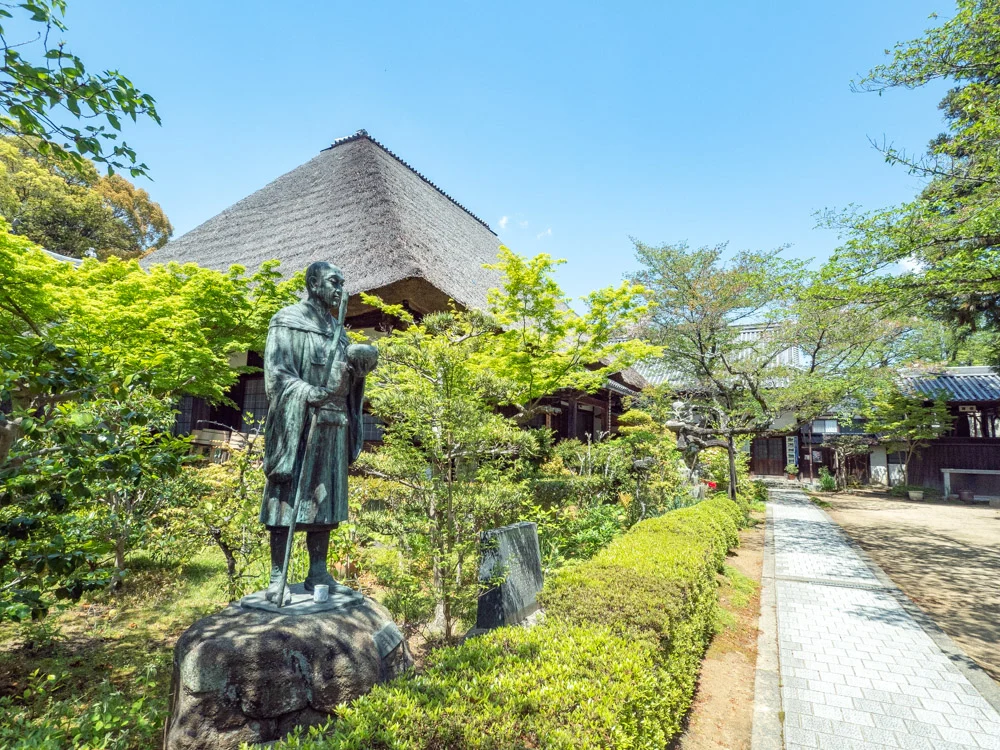
In 1981, a statue of Ryo-kan was erected in the temple grounds.
The original work is by sculptor Takashi Miyamoto, who is from Bichu-cho, Takahashi City.
In Kurashiki City, there is also Chorenji Temple, which is associated with Ryo-kan.
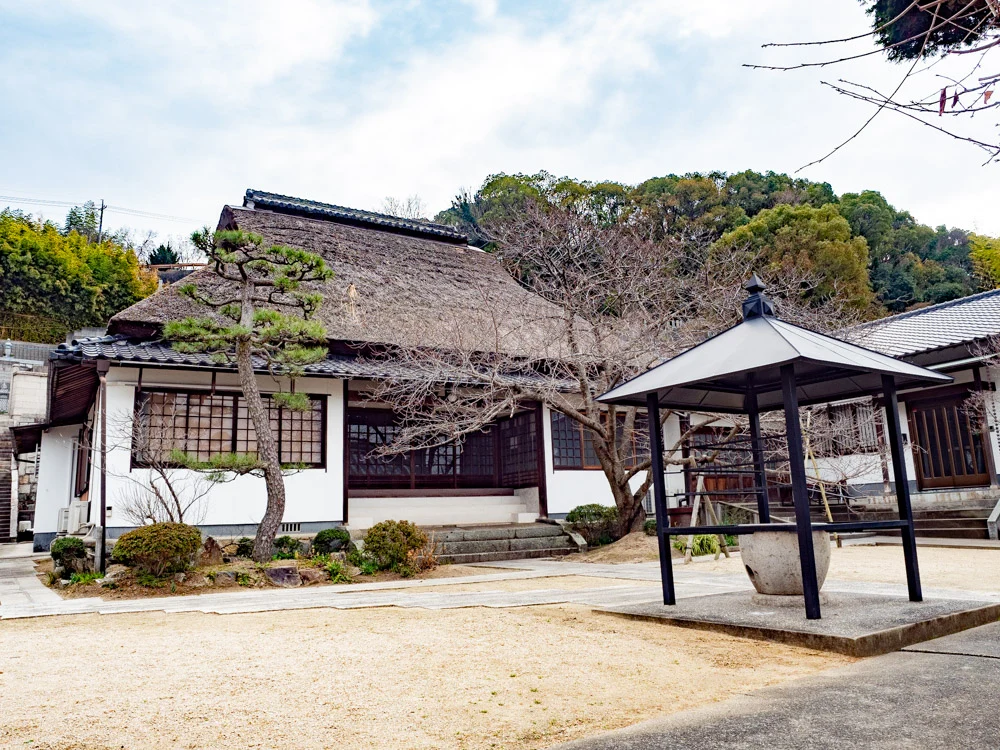
Chorenji Temple was restored by Ryo-kan's master, Kokusen.
Therefore, it is said that Ryo-kan also visited Chorenji Temple.
Highlights of Ensu-ji Temple
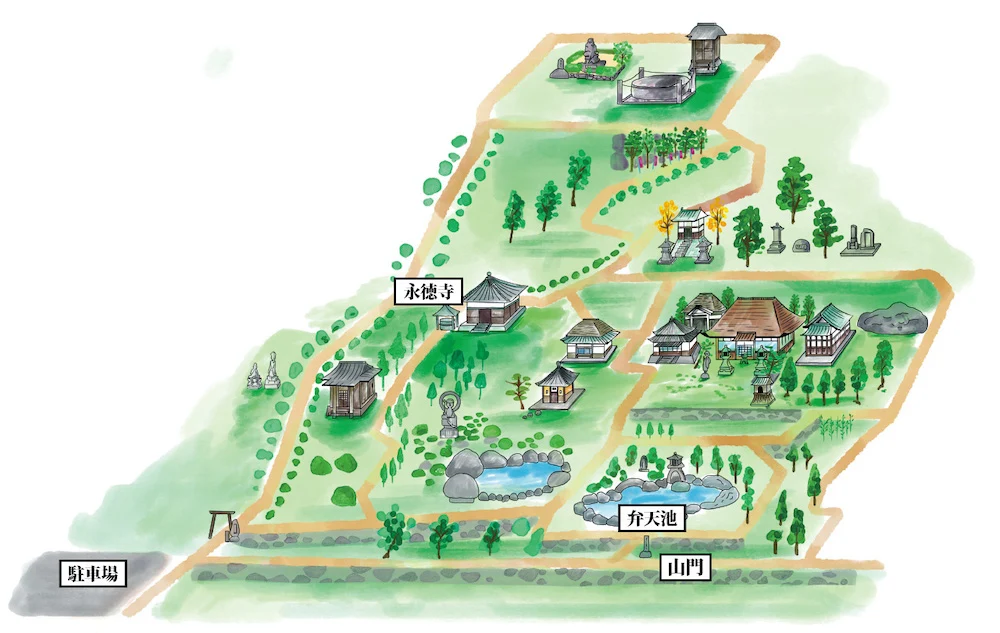
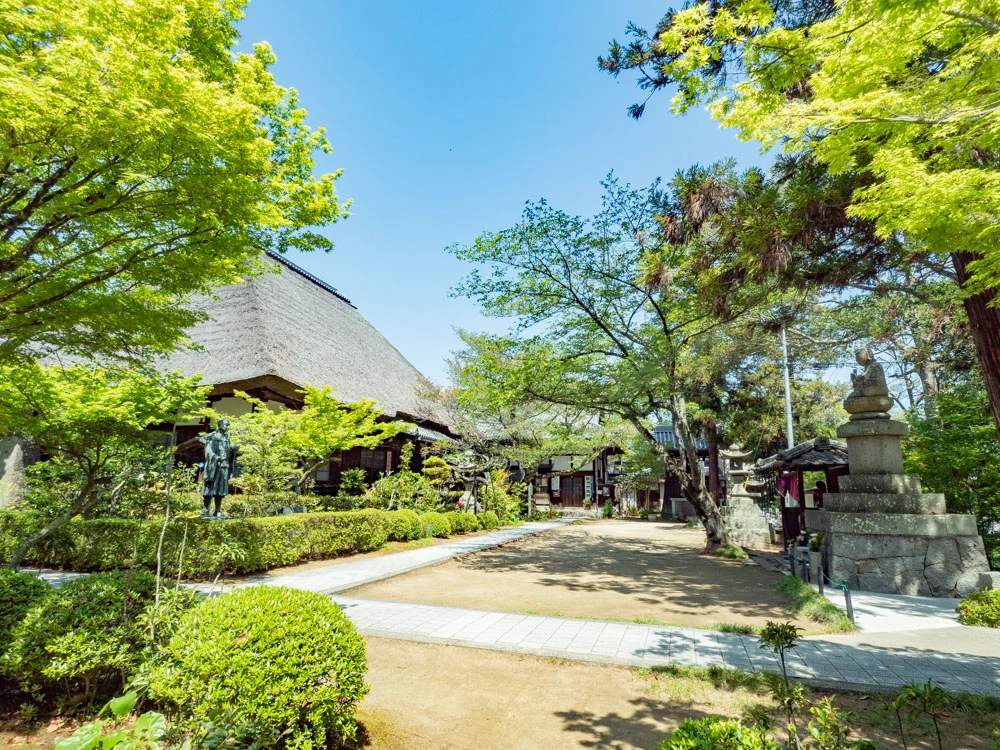
The grounds of Ensu-ji Temple are spacious and contain various buildings.
From among them, let’s select and introduce the highlights of Ensu-ji Temple.
Main Hall (Designated Important Cultural Property of Kurashiki City)
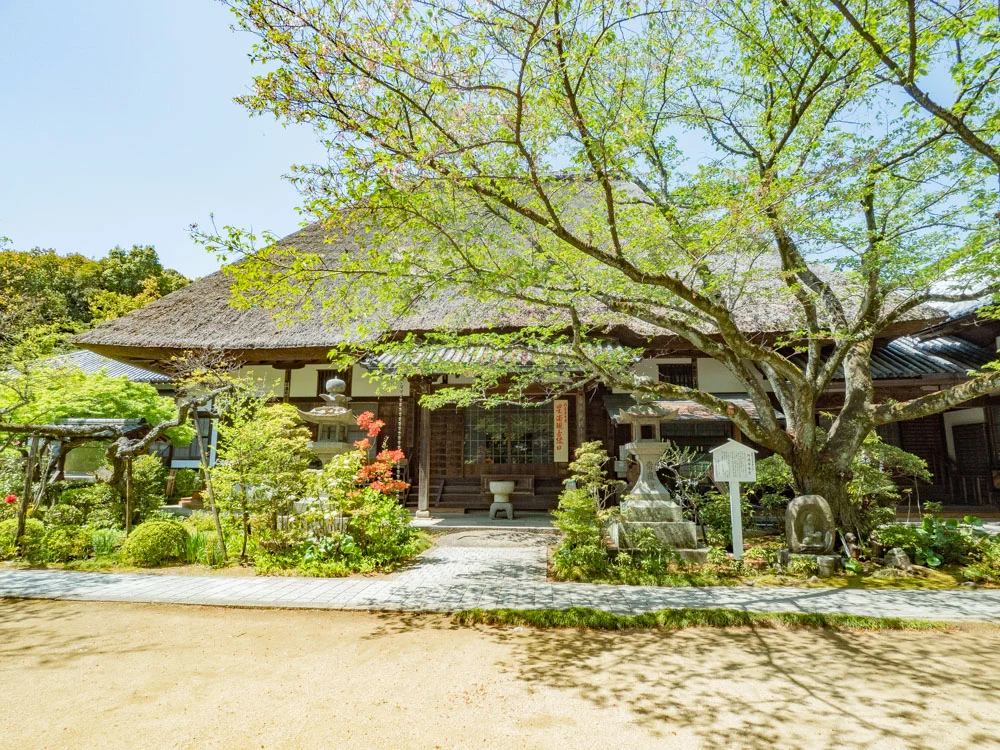
The Main Hall has a thatched roof and exudes a historical atmosphere.
It was built in the mid-Edo period and is considered the largest main hall among temples in Kurashiki City.
It has preserved its original appearance in good condition, making it a very valuable building, and it has been designated as an Important Cultural Property of Kurashiki City.
Inside the main hall, the main deity, the Hoshiura Kannon, also known as the Shokan-non Bosatsu Standing Statue, is enshrined.
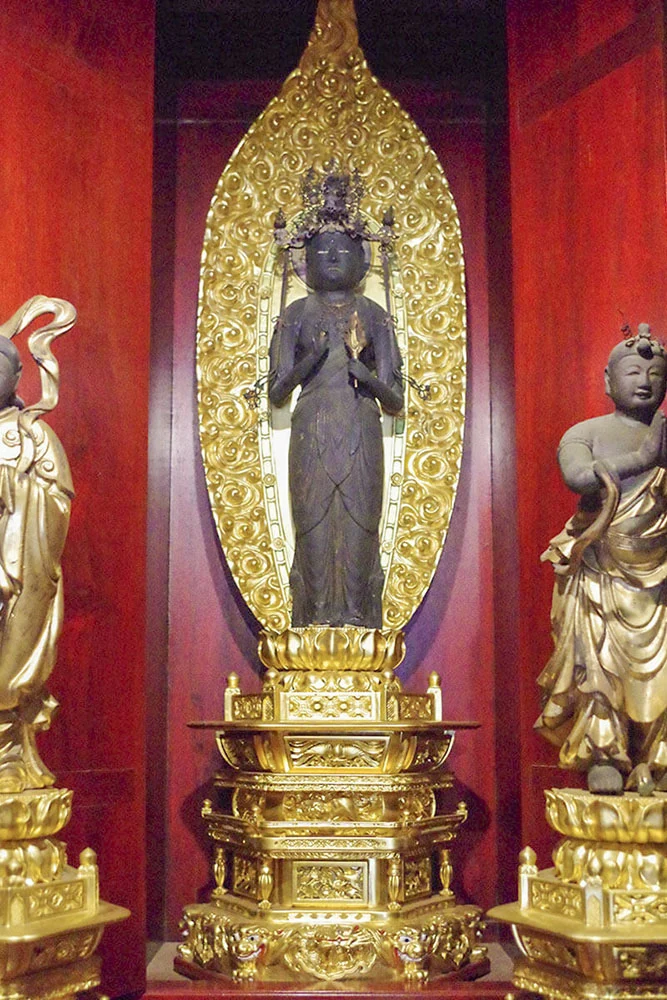
The Shokan-non Bosatsu Standing Statue is a National Important Cultural Property.
This statue is said to have been created by Gyoki.
Please note that the statue is not open to the public.
Stone Garden
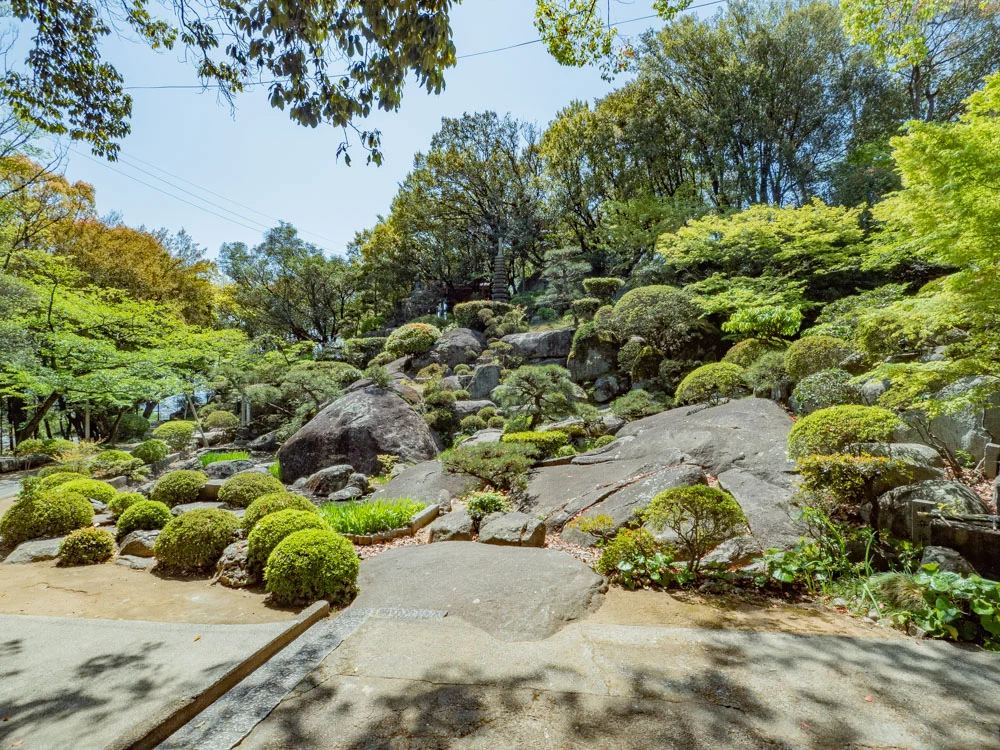
The Stone Garden is located along the path from the Shiomi Gate at the entrance of the temple grounds towards the main hall and Ryo-kan Hall.
It is a beautiful garden that skillfully utilizes natural stones arranged on a slope.
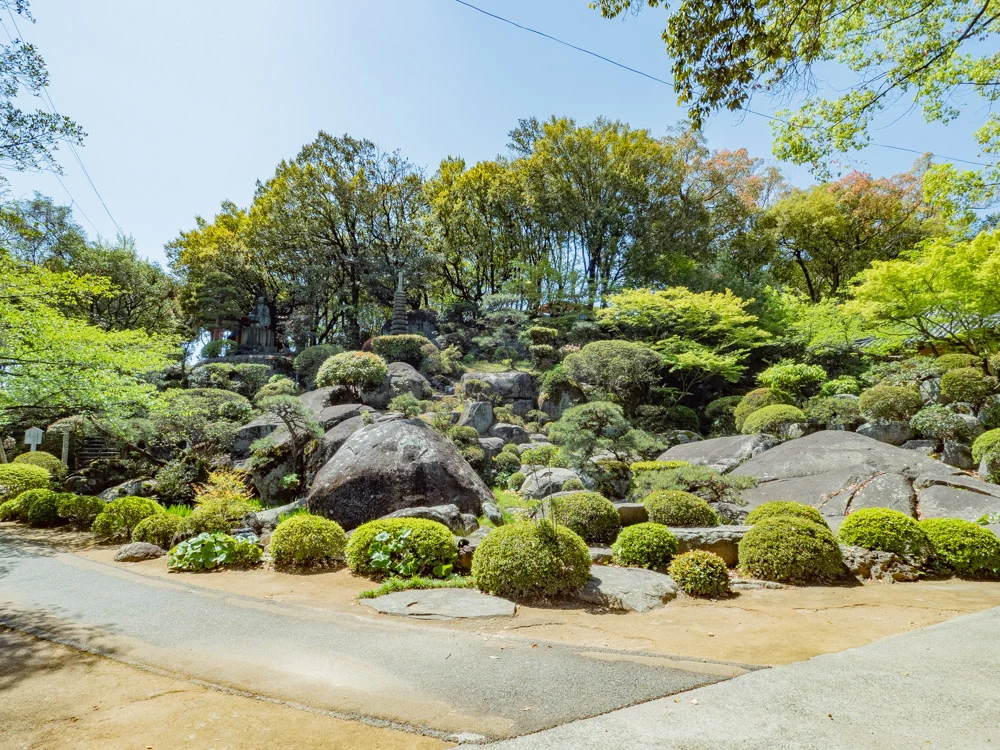
At the foot of the slope, there is a pond called Tsurukame-ike, where irises bloom in spring.
Bronze Sitting Jizo Statue (Designated Important Cultural Property of Kurashiki City)
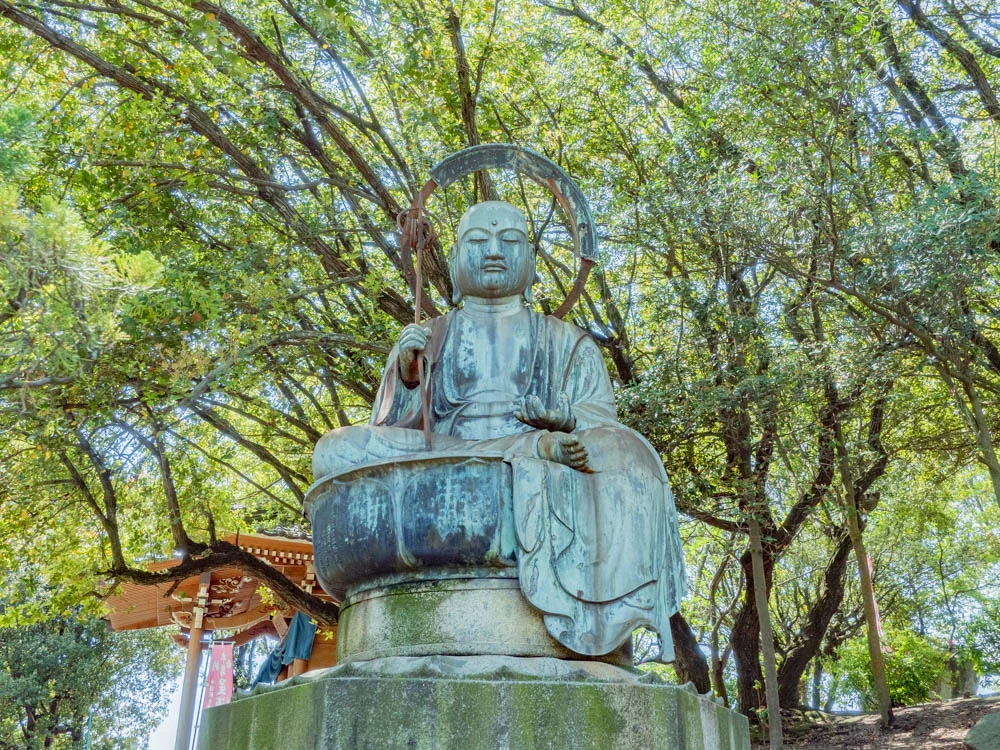
The Bronze Sitting Jizo Statue is located on the slope of the Stone Garden.
It stands about 2.2 meters tall from its pedestal and is said to have been created by Harima Kondo and Sadanobu Fujiwara from Kyoto.
The year of creation is the 8th year of Hōreki (1758) during the mid-Edo period.
The Bronze Sitting Jizo Statue is designated as an Important Cultural Property of Kurashiki City.
Mt. Hakka Summit Plaza (Hakka Stone, Atago Shrine, Ryo-kan Statue)
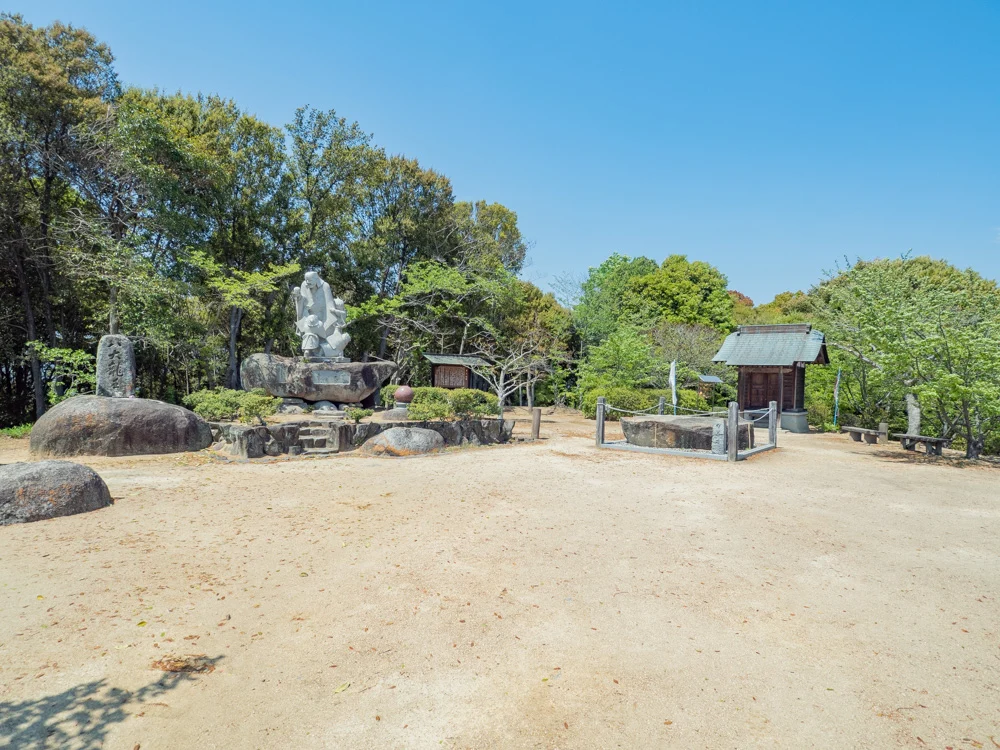
As you continue to climb the slope where the Bronze Sitting Jizo Statue is located, you will eventually reach the summit of Mt. Hakka.
The summit area is a plaza, and at the very back stands the Atago Shrine.
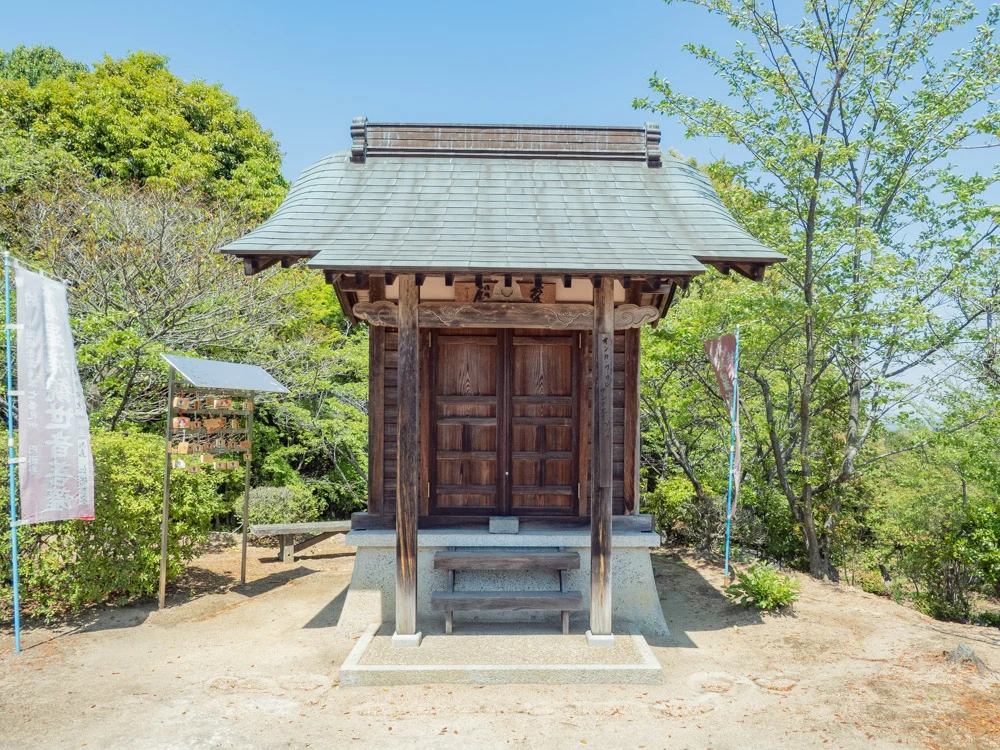
Atago Shrine enshrines the Shogun Jizo.
Atago Shrine is a reconstruction of the Atago Hall built by the third generation of Entsu-ji Temple, Ryoki, on the mountaintop.
In the center of the square, there is a large flat rock.
This is the "Hakkaseki" related to the origin of Entsu-ji Temple.
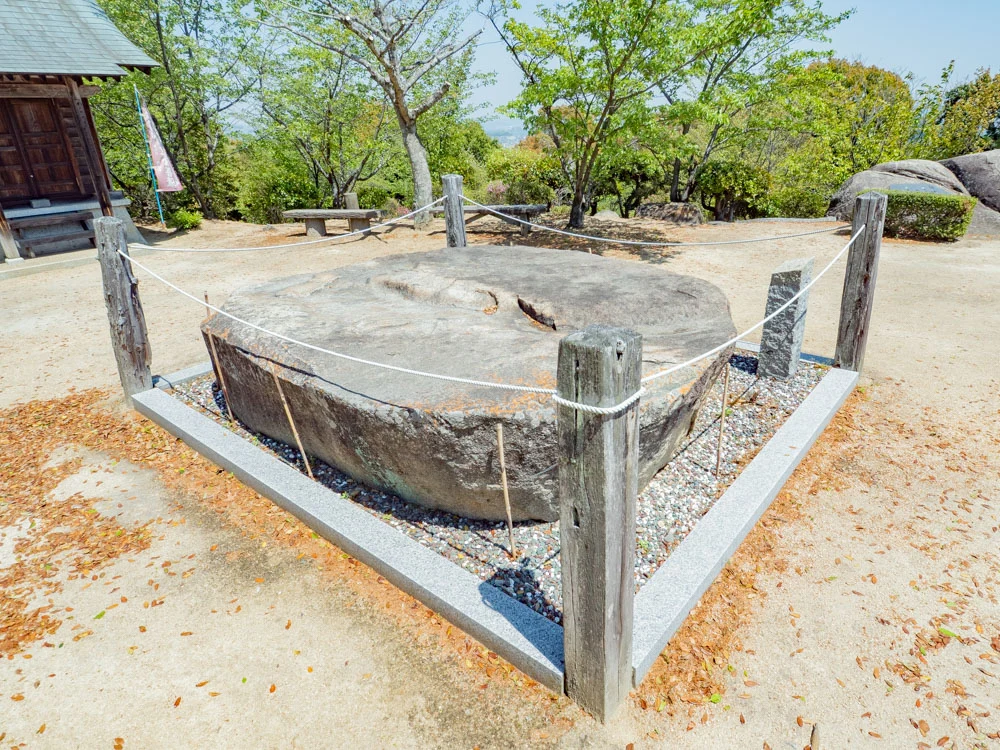
In the Nara period, the famous monk Gyoki discovered it.
It was enshrined as the stone that would serve as the pedestal for Kannon Bodhisattva's descent.
Since then, Hakkasan, where Entsu-ji Temple is located, has become a sacred place.
Additionally, there is a statue of Ryokan in the mountaintop square.
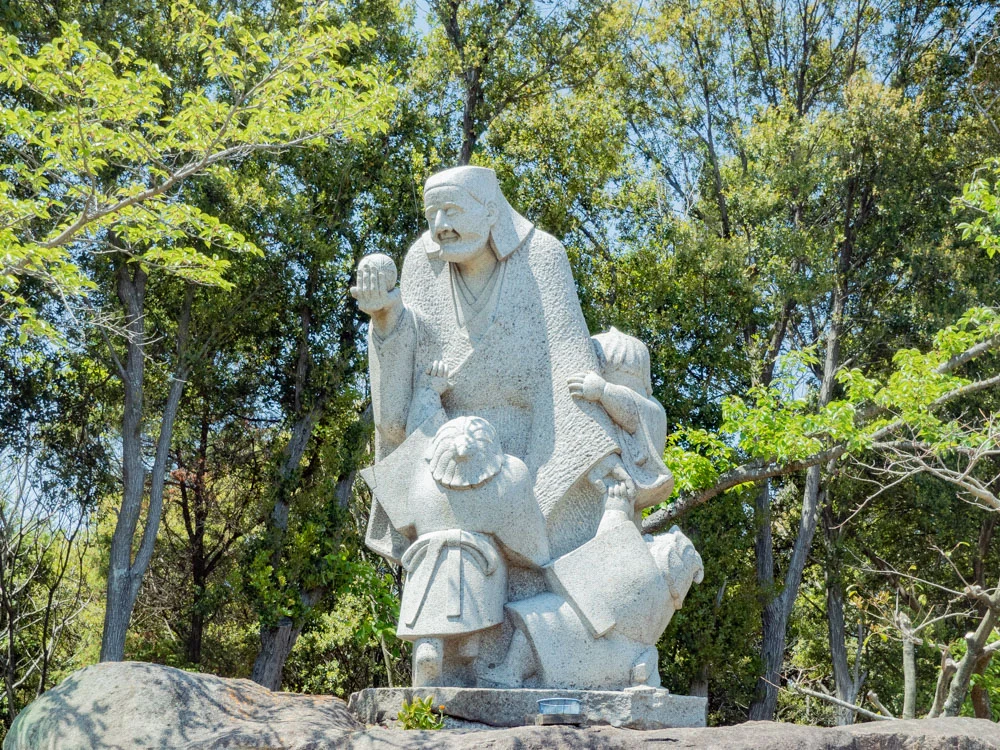
The Child and Ryokan Statue depicts Ryokan playing with children.
Ryokan was very fond of children and is said to have often played with them using handballs.
The Child and Ryokan Statue was erected in 1966.
It was made by the important intangible cultural asset craftsman Hirata Goyo, standing 2.6 meters tall and weighing 6 tons.
Tamashima Hoshiura Hakkai-en
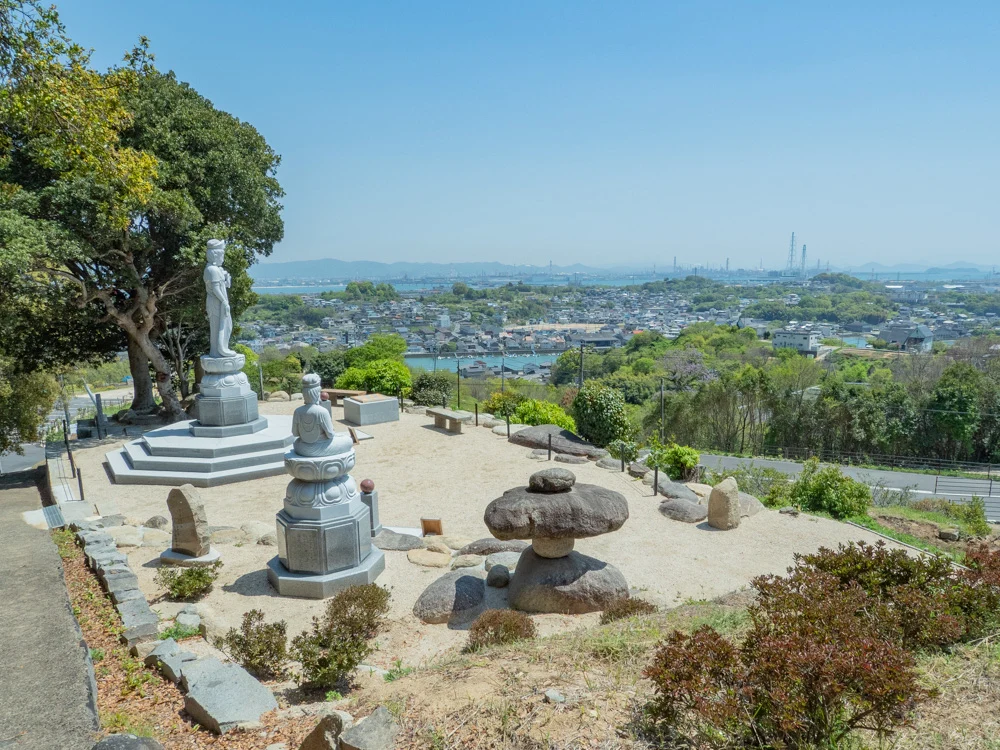
The Tamashima Hoshiura Hakkai-en is located at the southern end of the temple grounds.
It was created in January 2021 and is a new spot.
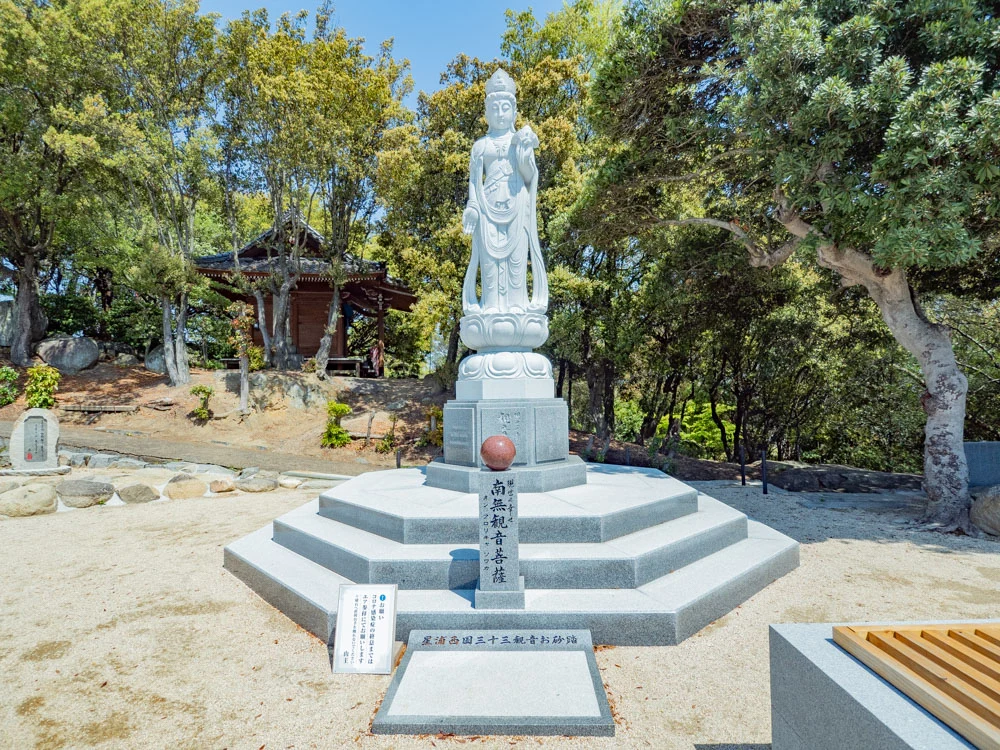
Hakkai Kannon Bodhisattva Statue and Miroku Bodhisattva Statue face the town of Tamashima and the sea.
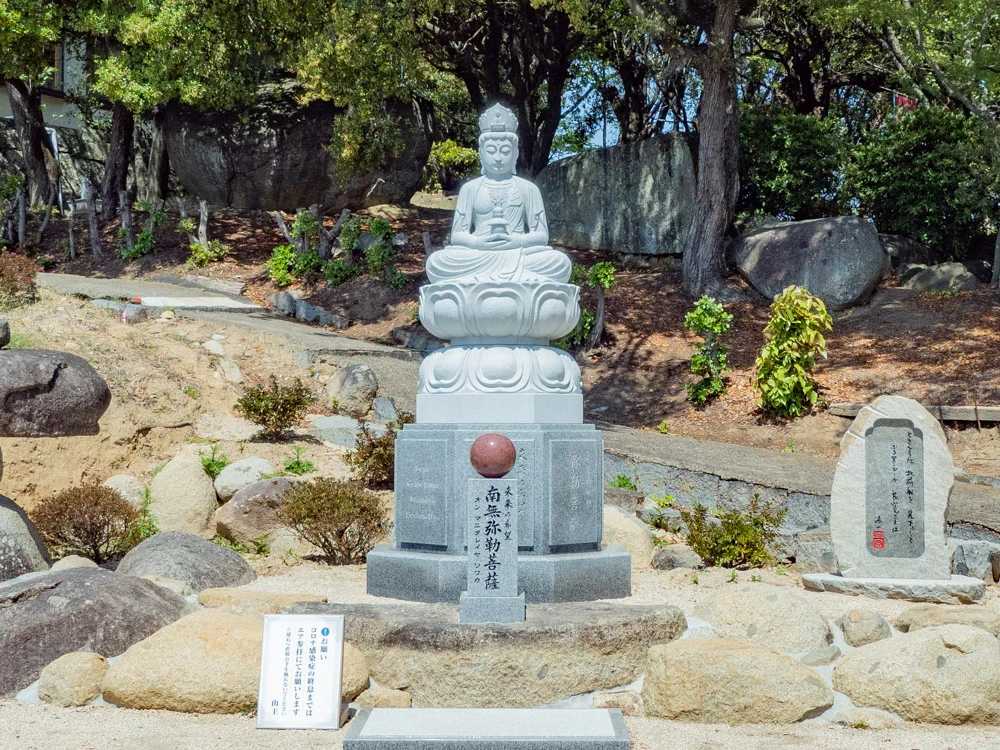
According to the resident priest of Entsu-ji Temple, Nihon Tetsumei, "Kannon Bodhisattva wishes for present happiness, while Miroku Bodhisattva wishes for future hope."
They pray for the peace of the town of Tamashima and the end of the COVID-19 pandemic, watching over the future of the community.
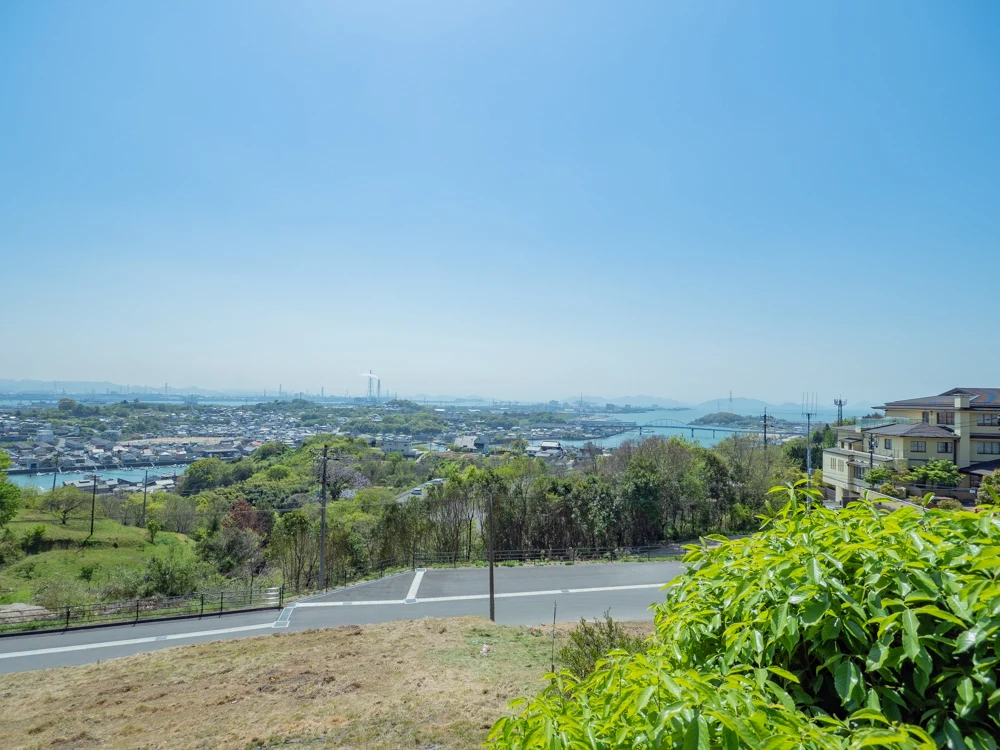
The view from Hakkai-en is wonderful, offering a panoramic view of the town and the sea.
It is also a sunrise spot, especially recommended for the first sunrise visit during the New Year.
Flowers and Autumn Leaves in the Temple Grounds and Entsu-ji Park
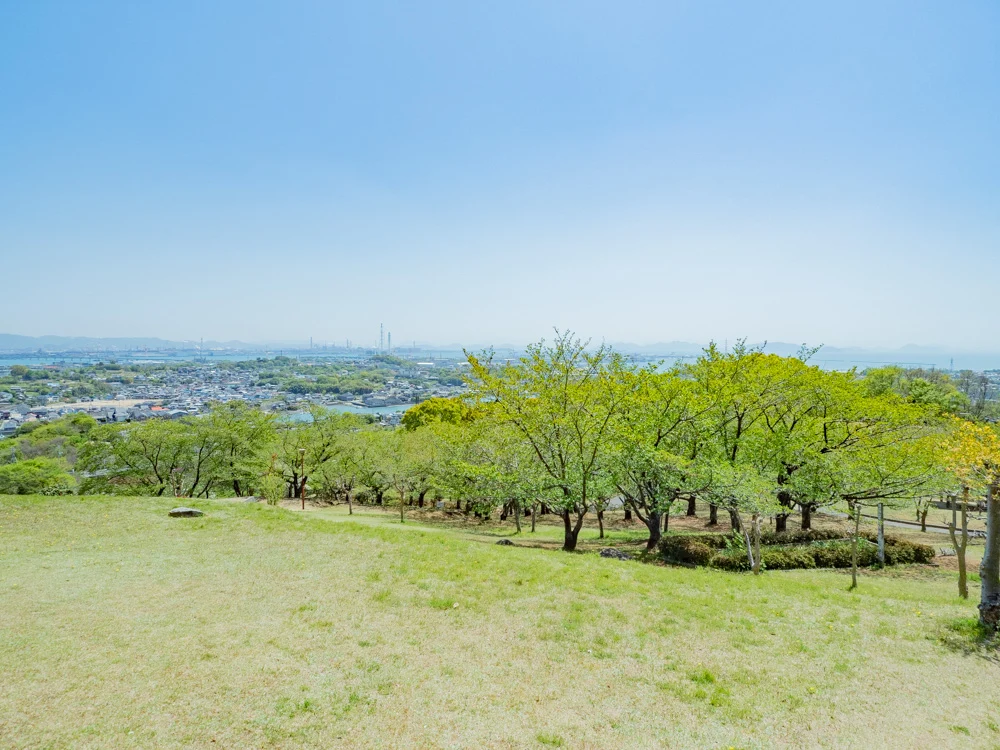
On the southwestern slope of the temple grounds, various flowers are planted.
From late March to early April, cherry blossoms bloom.
From mid-April to mid-May, satsuki azaleas bloom.
Since many are planted, when they are in full bloom, they create a very beautiful sight.
With good visibility, enjoying the flowers along with the scenery is also an attraction.
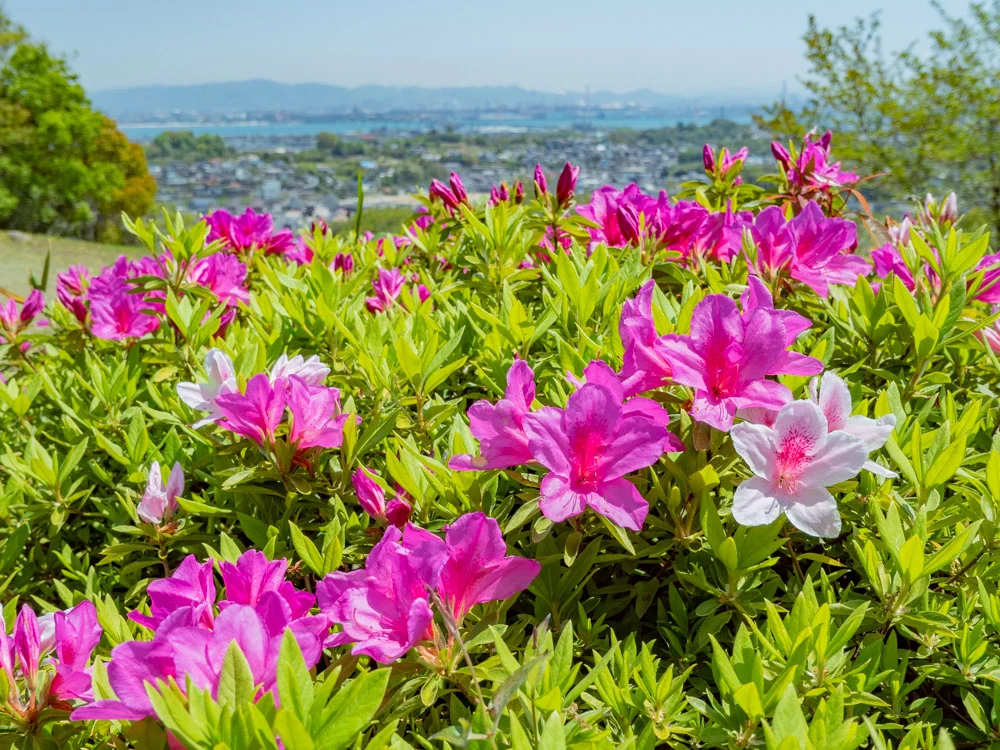
Cherry blossoms and satsuki azaleas are also planted around the main hall, Ryokan-do.
Furthermore, there are many maples around the main hall, Ryokan-do.
During the autumn foliage season, the beautifully red maples can be enjoyed.
Additionally, the deep green blue maples in spring and summer are refreshing and recommended.
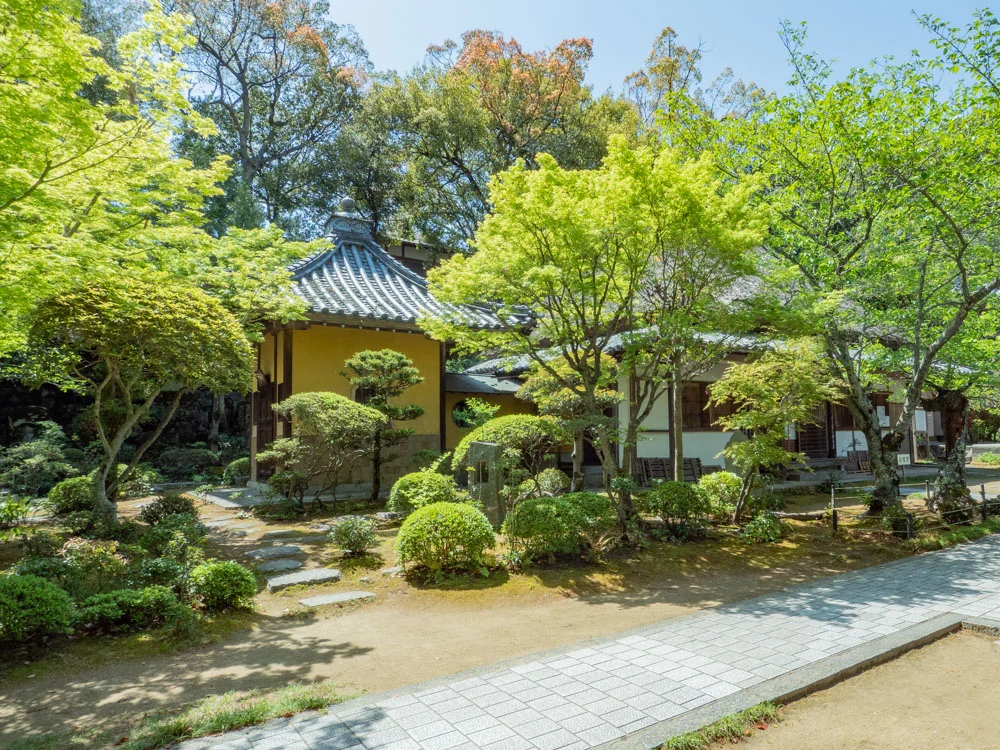
According to Priest Niho, the lush green moss, including the stone garden, is also beautiful and recommended.
Entsu-ji Temple's Goshuin
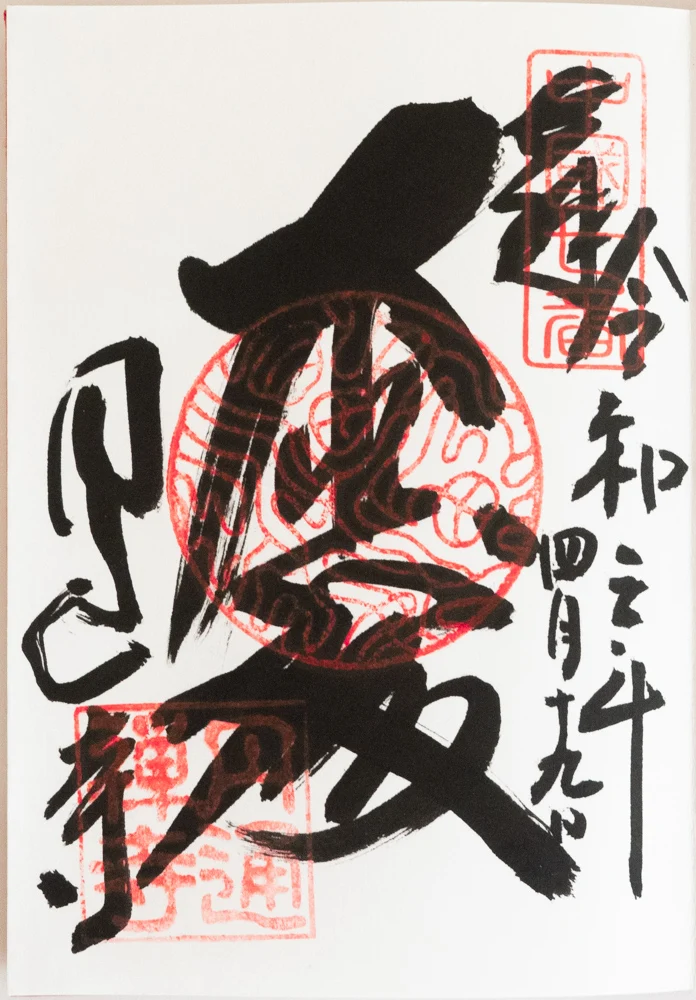
At Entsu-ji Temple, you can receive a goshuin during your visit.
If you want a goshuin, after your visit, go to the temple office on the right side of the main hall.
When receiving a goshuin at Entsu-ji Temple, please pay a 300 yen donation fee.
One of the Representative Landmarks of Tamashima: Entsu-ji Temple
A place of faith that has continued since ancient times, a historical site where Ryokan practiced, and a place where beautiful nature and magnificent scenery can be enjoyed throughout the seasons.
The various aspects of Entsu-ji Temple are its charm.
Please visit Entsu-ji Temple, where you can enjoy various experiences.
Entsu-ji Temple Data
| Name | Entsu-ji Temple |
|---|---|
| Other Name | Hodarakuzan |
| Sect | Soto Zen |
| Location | 451 Kashima, Tamashima, Kurashiki City, Okayama Prefecture |
| Contact | 086-522-2444 |
| Parking | Available Parking is also possible at Entsu-ji Park |
| Main Deity | Hoshiura Kannon (Shō Kannon Bodhisattva) |
| Benefits | Benefits in this world, removal of suffering, healing of illness, warding off evil, etc. |
| Goshuin (Donation Fee) | Available (300 yen) |
| Closed Days | None |
| Admission Fee | None |
| How to Pay Admission and Donation Fees |
|
| Restrooms | Western-style and Japanese-style restrooms |
| Website | Ryokan's Training Temple: Soto Zen Entsu-ji Temple |