I am Daiji Okuno, a freelance writer and blogger, who has been asked, "If a man in his 40s casually comes to Kurashiki from Tokyo, where would he go?" and I am strolling around Kurashiki.
Today is the second day in Kurashiki.
The previous day, I was able to experience the sea in Kurashiki, such as in the Tamashima area and Shimotsui's octopus, but what kind of Kurashiki will I encounter today?
I am excited.
▼ For other "Kurashiki Tocotoco walks from Tokyo," click here!
- Day 1: I walked through the Showa retro townscape of Tamashima, Kurashiki City
- Day 3: From the Bikan Historical Area to the Mabi area affected by heavy rain
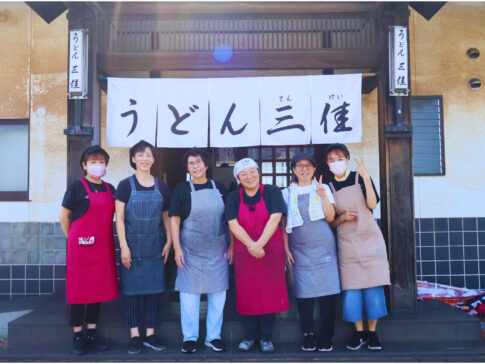
Breakfast is Kurashiki's specialty Bukkake udon
Ignoring the hotel breakfast buffet, I visited in front of JR Kurashiki Station to see if there was something good for breakfast, and I immediately found the words "Bukkake udon".
Bukkake udon is a Kurashiki gourmet dish.
It can be eaten in the morning!
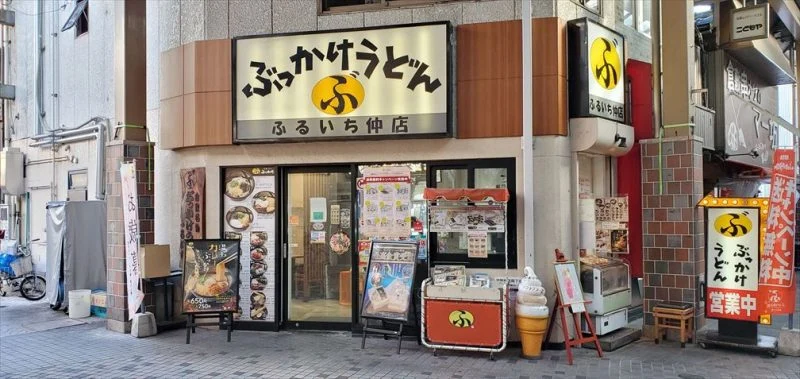
If that's the case, I have to go.
I quickly entered the shop.
The "Bukkake udon" is also the name of the shop, and it seems that this "bukkake type" is particularly famous.
It is characterized by plenty of tenkasu (tempura scraps) and grated ginger.
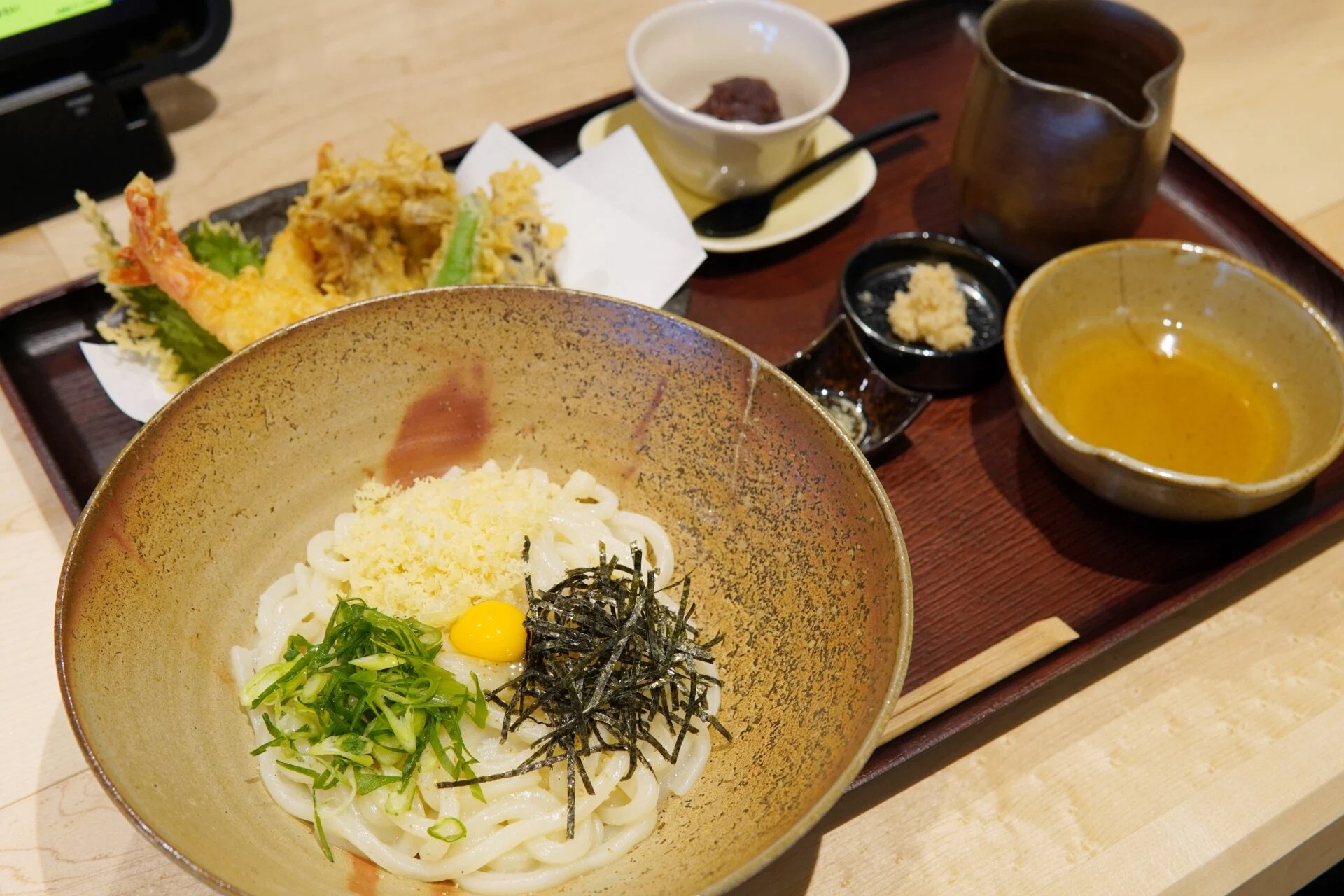
I like to add tororo (grated yam) to my noodles, so I ordered the cold "Buttoro" (Bukkake udon with tororo topping).
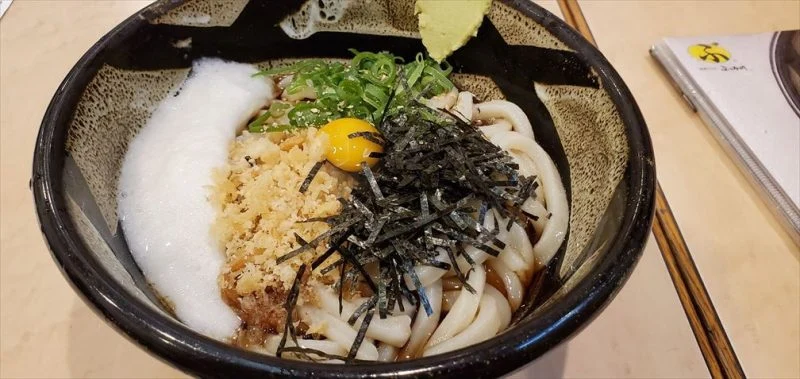
The udon had a chewy texture and was firm.
The bukkake sauce seems to be based on kombu (kelp) and katsuobushi (dried bonito), and it is characterized by a sweetness that balances the saltiness.
Thanks to that, the overall flavor is gentle, and the deliciousness of the sauce with wasabi mixed in made me feel, compared to regular salty udon, "This is delicious!" and I was delighted.
What a nice breakfast!
▼ For the gourmet information of the shop, please check this article.
A "Nostalgic Market" was held in front of Geibunkan Hall
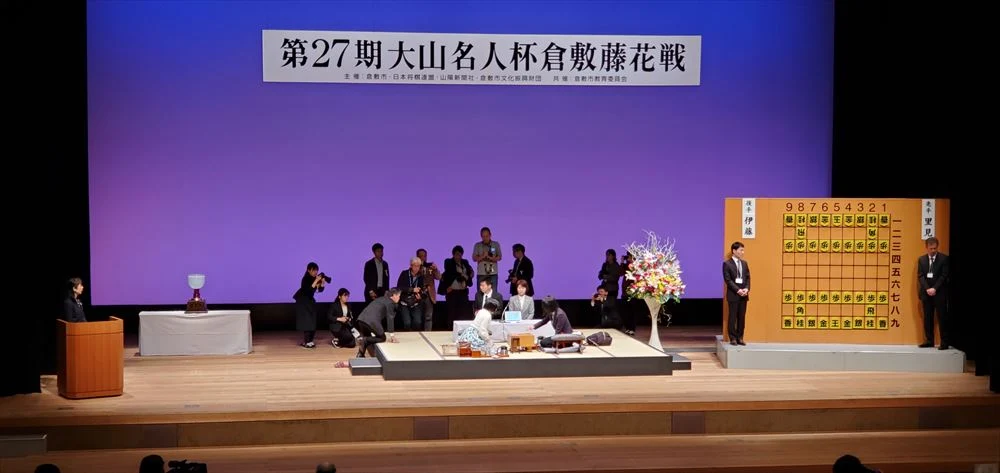
The main purpose of this day was to watch the public match of the shogi title match "Ohyama Meijin Cup Kurashiki Fujika Sen".
It is only in the second game of the Kurashiki Fujika Sen that you can watch a public match in the middle of a game.
As a convention, the second game is held publicly in Kurashiki, and it is wonderful to feel the shogi title match very close.
▼ For details, please see this viewing record!
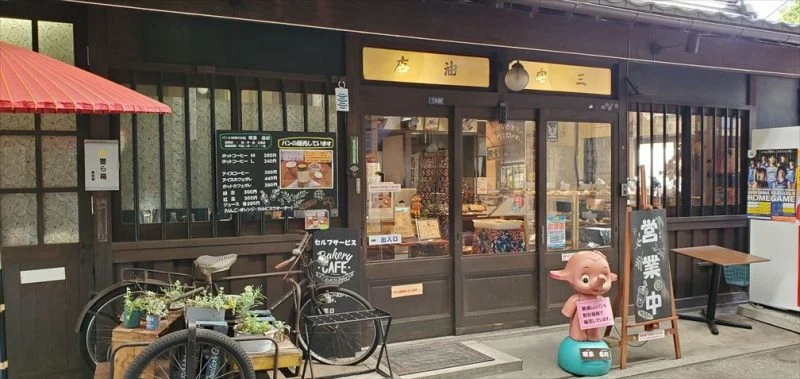
Now, on the way to the venue for the Kurashiki Fujika Sen.
If I get tired of the hotel breakfast buffet, I thought it would be nice to have breakfast at a bakery like this as I passed by.
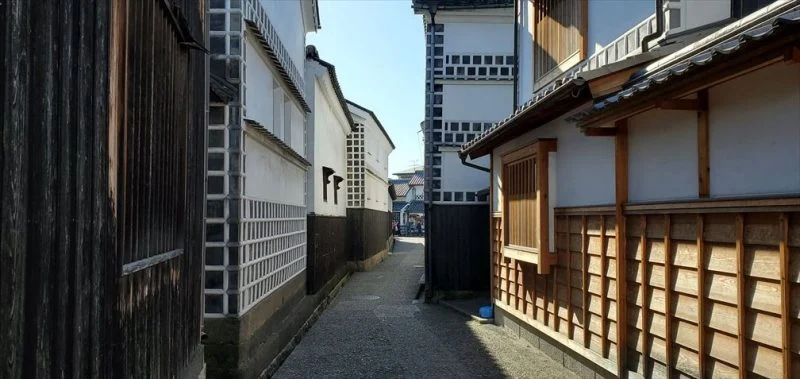
The Bikan Historical Area, with its charming townscape, has beautiful rivers on both sides, but I also thought there is something appealing about these narrow alleys...
I arrived in front of Geibunkan Hall.
Welcoming me was a classic car, the Ferrari Dino!
Men in their late 40s belong to the generation that experienced the supercar boom in their childhood.
This classic car brings back memories of that time.
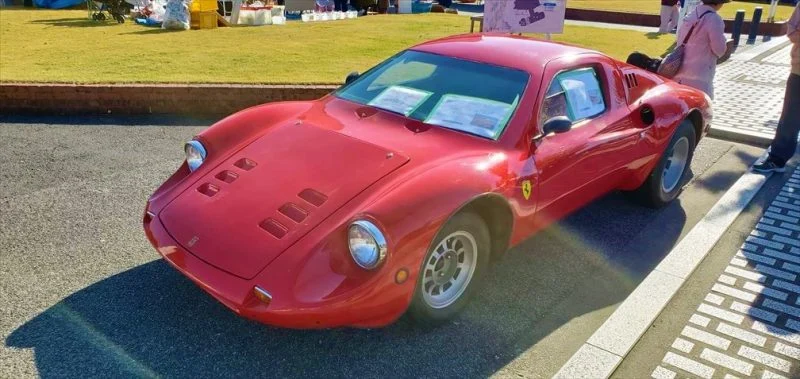
Whoa! But it's kind of small! Why is that?
Upon closer inspection, it seems to be a replica mounted on a Volkswagen Beetle, with an engine size of 1600CC, comparable to a Japanese compact car.
The price after assembly is 2.5 million yen, which is hard to tell if it's expensive or cheap.
It seems that this is being sold by a local company.
Why was there such an exhibition?
It seems that a "Kurashiki Nostalgic Market" was being held that day.
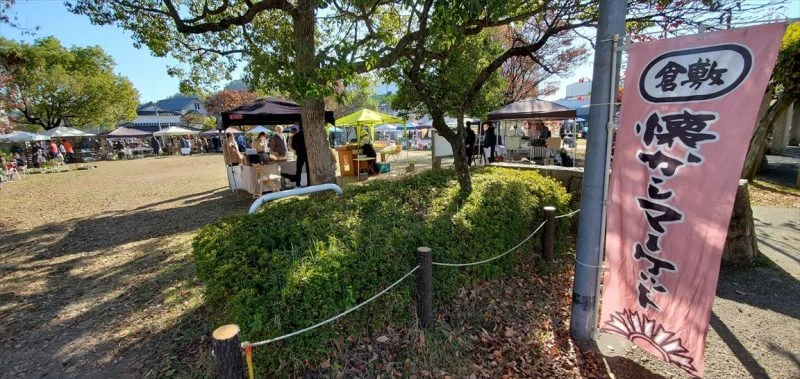
In addition to food stalls, various colorful antiques, small ornaments, and potted plants were being sold.
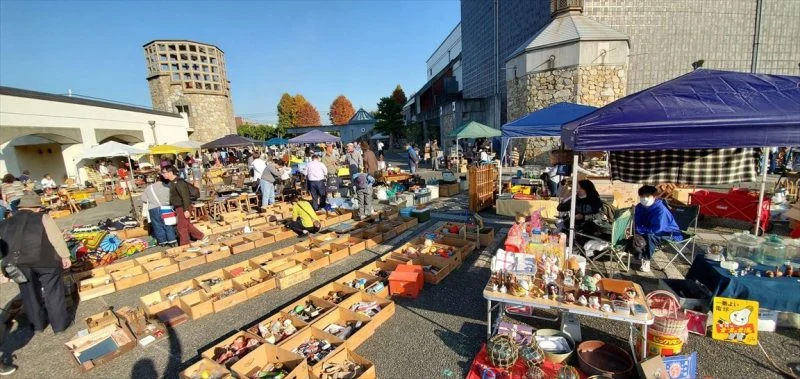
As a traveler, I couldn't increase my luggage, so I just looked around, but I had some curry rice and takoyaki with sesame oil and green onions to prepare for the public match.
Takoyaki with sesame oil and salt is also a good idea.
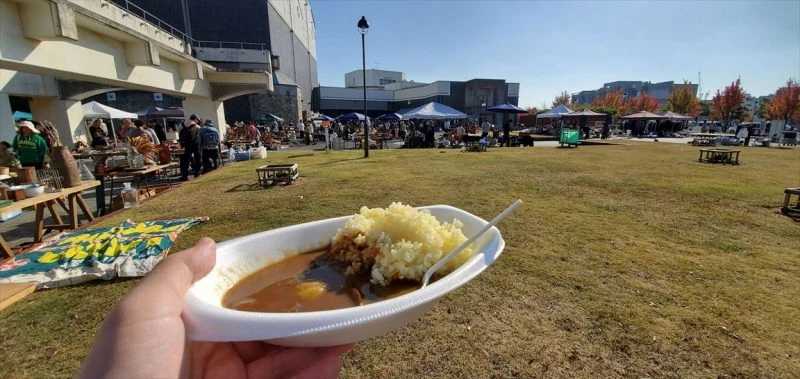
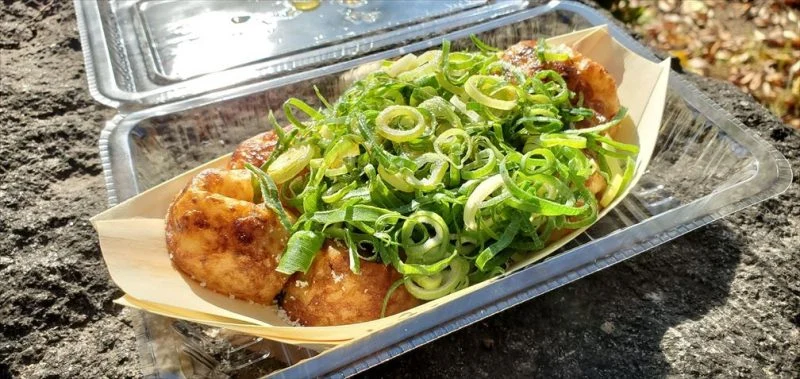
Hmm? I feel like I ate octopus with that combination last night...
![I walked through the Showa retro townscape of Tamashima, Kurashiki City - From Tokyo to Kurashiki Tocotoco Vol.1 [Day 1]](https://media.kuratoco.com/wp-content/uploads/2019/12/23051518/P7060514.jpg)
Reflecting on the great master of the Showa era at the Yasuaki Ohyama Memorial Hall
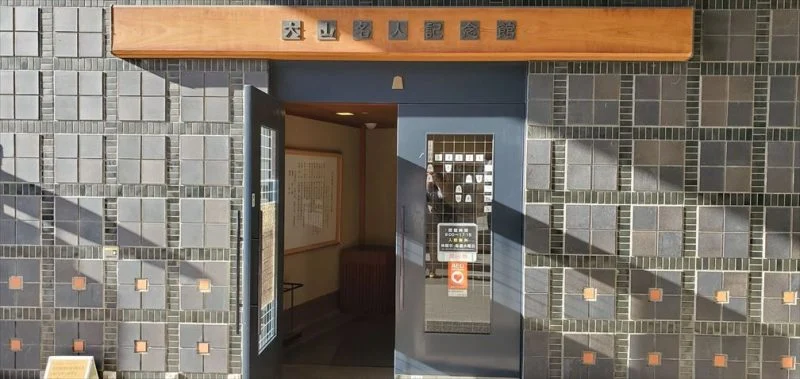
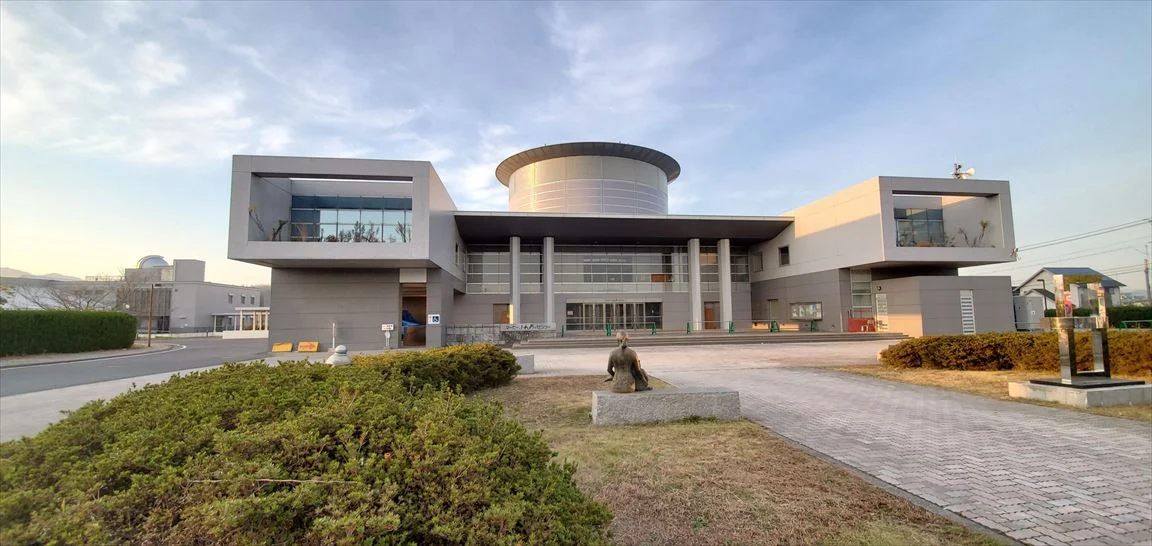
The public match allows free entry and exit, so at a timing when I felt there was still time until the climax, I visited the "Yasuaki Ohyama Memorial Hall" located on the same premises.
Yasuaki Ohyama (15th Meijin) passed away in 1992 and was a great master of shogi in the Showa era.
Some may know that Yoshiharu Habu (9-dan) achieved the remarkable feat of monopolizing all seven titles in 1996, but the 15th Meijin Ohyama was the one who became the five-crown king when there were only five shogi titles.
From the late 1950s to the early 1960s, it would not be an exaggeration to say he was invincible.
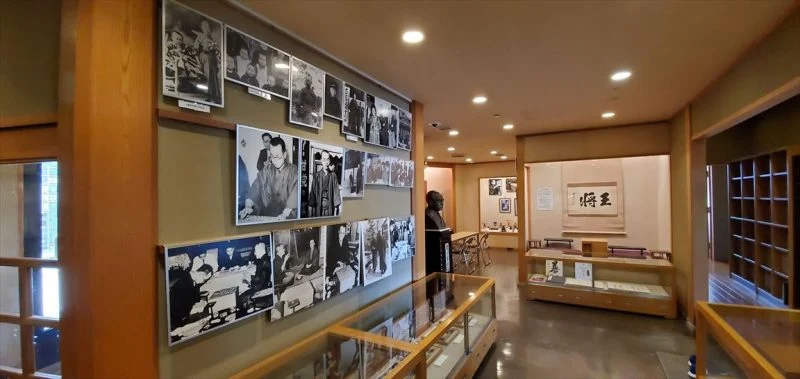
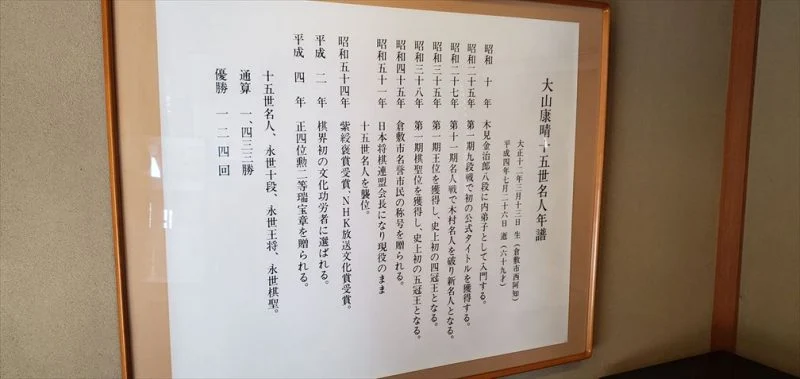
In the intellectual sport of shogi, it is extraordinary to have been active at the forefront for such a long time.
- Won the Osho title at the age of 59
- Won the NHK Cup shogi tournament at the age of 60
- Challenged for the highest title "Meijin Sen" at the age of 63
- Challenged for the Kio title at the age of 66
Can you believe that someone in an intellectual sport was involved in title matches until the age of 66?
Even at 48, I find myself becoming more forgetful.
Habu Yoshiharu 9-dan and Fujii Sota 7-dan must leave behind results comparable to the 15th generation Meijin Ooyama in their later years to be called "the strongest in history" by many people.
While they may have surpassed the strength of the momentary maximum wind speed, I believe that the greatness of staying at the forefront for a long time will resonate with those who know the 15th generation Meijin Ooyama.
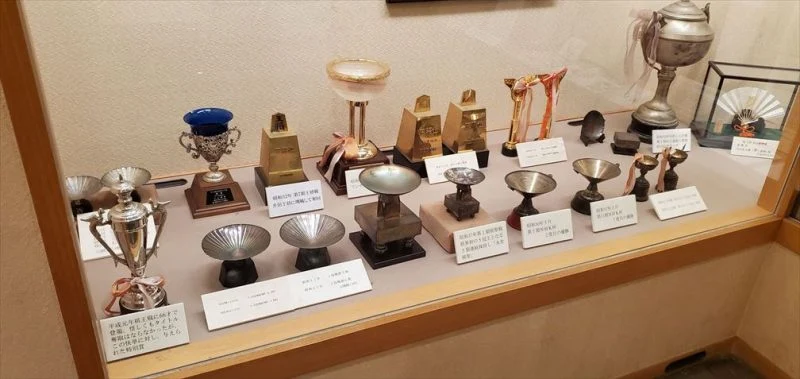
I have gone on for a while, but the Ooyama Yasuharu Memorial Museum is a place where shogi boards, pieces, portraits, and statues used by Meijin Ooyama are displayed.
It seems to also function like a simple dojo, as when I visited, several young people who appeared to be students were engrossed in study across the shogi board.
I am a takoyaki shop. I don't have a name yet.
Perhaps due to the fatigue from the previous day or the mental effort from watching the Kurashiki Fujika match, I felt a bit tired.
So after the match ended, I returned to the hotel for a nap and then strolled around the streets of Kurashiki at night.
On this day, I had decided to go to that shop I had found the day before.
The shop with the bright banner of Shimotsui's Madako.
It is located two doors down from the shop where I had bukkake udon for breakfast.
But I don't know the name of the shop.
Even when I asked the owner, I couldn't get an answer, but there are rumors online that the shop is called "Arigatou".
What does that mean?
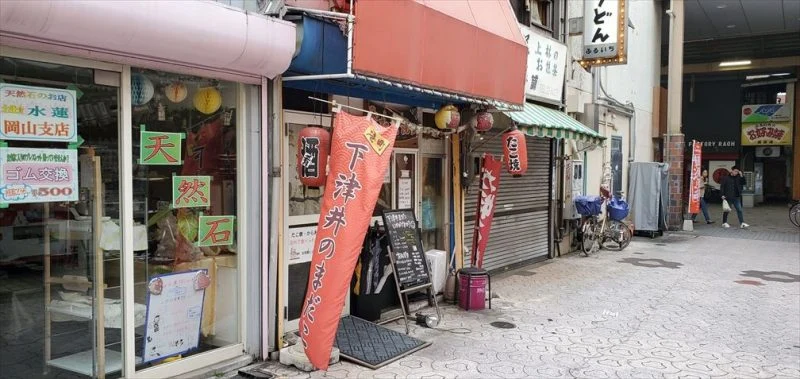
Speaking of which, I feel like I have been eating octopus both last night and during lunch that day...
No, I am not concerned at all.
I could tell just by peeking from outside that there are only about 4 to 5 seats.
I peeked into the shop around 7 PM, but it was full, so I passed by and strolled around nearby before returning twice.
Finally, around 9 PM, I was able to enter the shop.
The owner is a man who looks like a typical old guy, around 70 years old.
You can eat Shimotsui's takoyaki and fried octopus for 350 to 450 yen, but
"It takes about 10 to 15 minutes because I start the fire after you order,"
he runs the shop at his own pace.
While enjoying a beer and chilled tofu that come out quickly, I ordered takoyaki, fried octopus, and octopus sashimi.
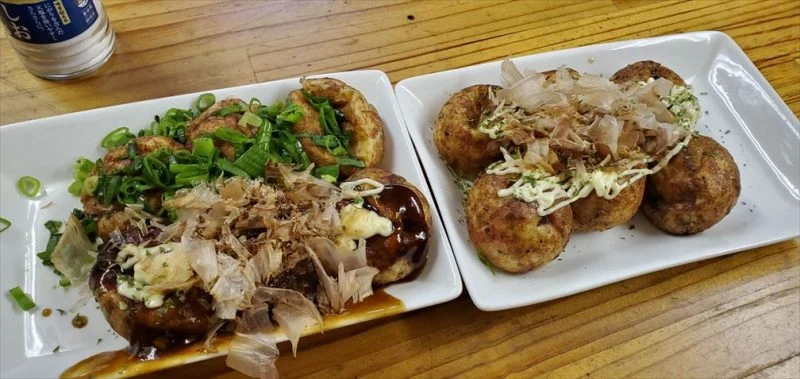
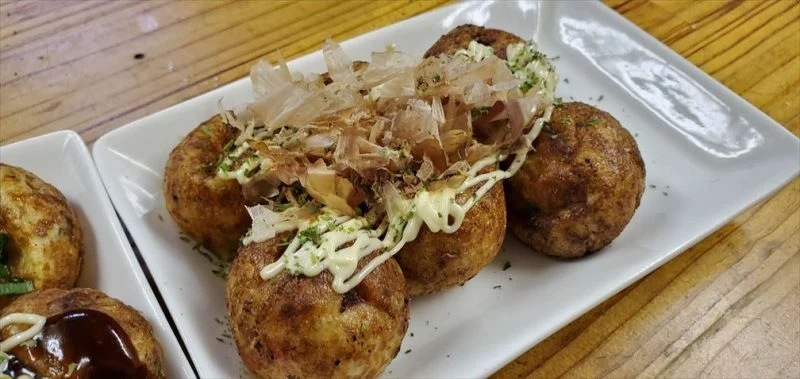
The texture is very crunchy, and the aroma is really nice.
The day before, I had octopus from Shimotsui in a very seafood-like form, but today I enjoyed octopus in a very down-to-earth way.
Thinking about it, it might be the first time I ate takoyaki as octopus cuisine rather than "flour-based food."
The takoyaki I had eaten before was described as,
"Crispy on the outside but fluffy on the inside!"
But the takoyaki I ate this time was, "Oh, the octopus inside is delicious!"
The octopus sashimi is served with vinegar miso.
Yesterday, I had a new experience with sesame oil and salt, but today I had a new experience with vinegar miso.
This opened a new door to octopus sashimi for me.

I had another new experience.
If you come to Kurashiki, you should eat octopus.
There is no doubt about it.
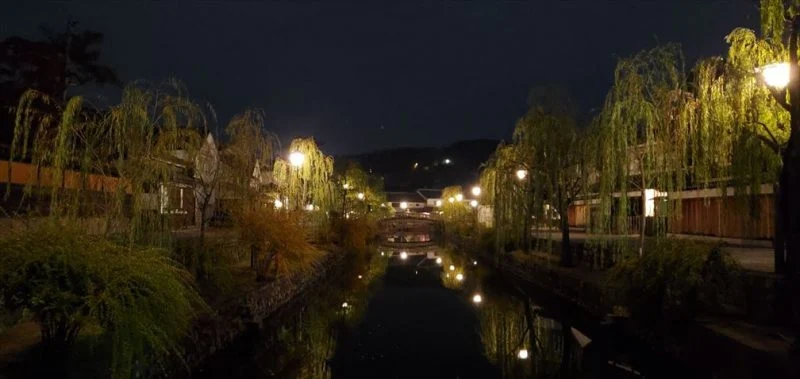
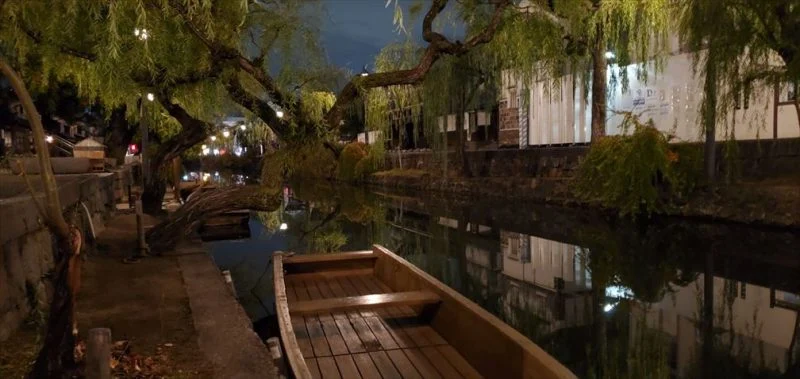
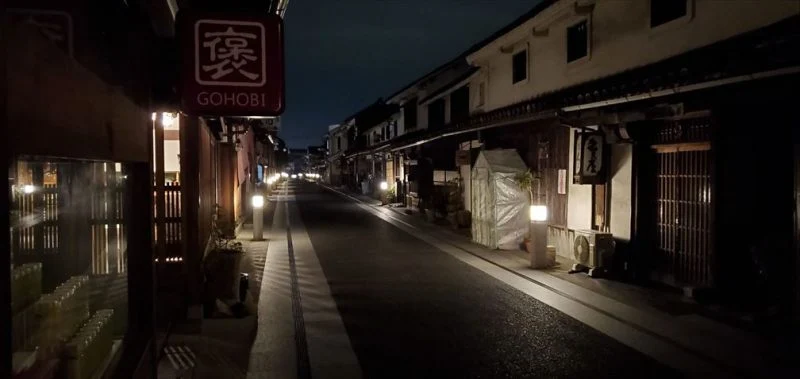
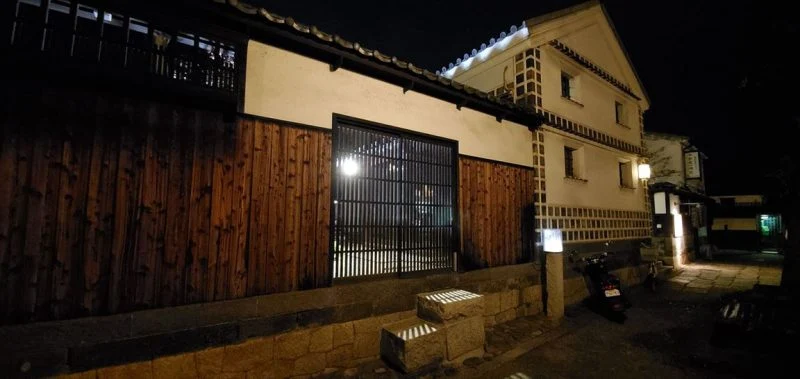
The Bikan Historical Area at night is photogenic!
After enjoying the octopus, I visited the Bikan Historical Area, which was completely dark.
By 10 or 11 PM, the role of the Bikan Historical Area as a tourist spot seems to have ended, and people appear to be moving to the downtown area.
Going against the flow of people, I headed towards the deserted Bikan Historical Area.
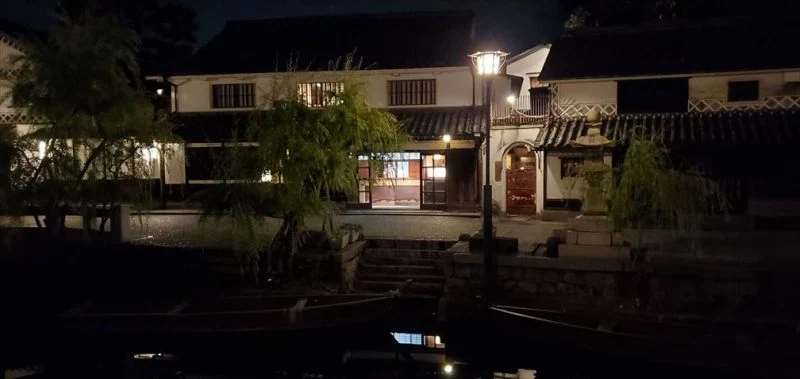
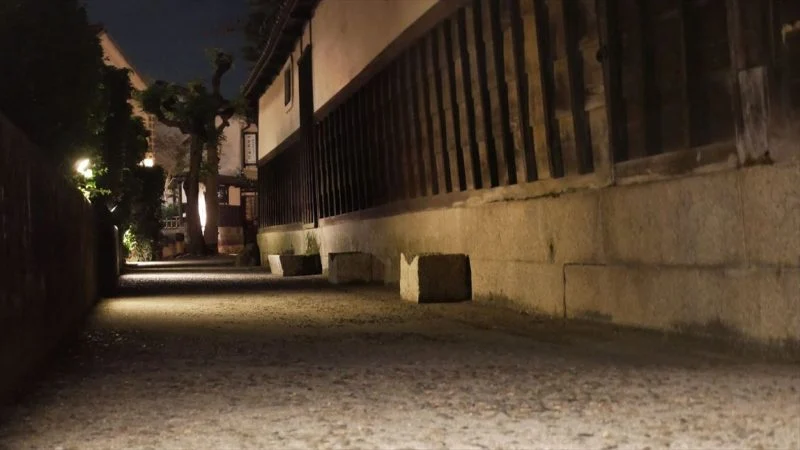
The Bikan Historical Area has become a town illuminated only by streetlights and the lights of shops finishing their work for the day, with almost no sign of people.
Occasionally, I would see someone heading home from another area or a couple walking slowly and affectionately.
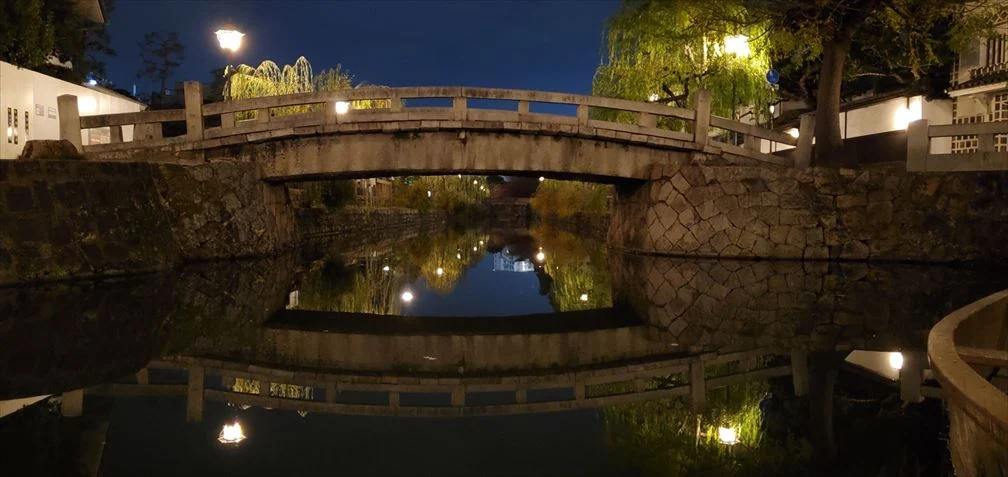
On this day, there was no wind, and the river was beautifully like a mirror, except for the occasional ripples created by koi.
Above all, the lack of foot traffic highlights the beauty of the scenery.
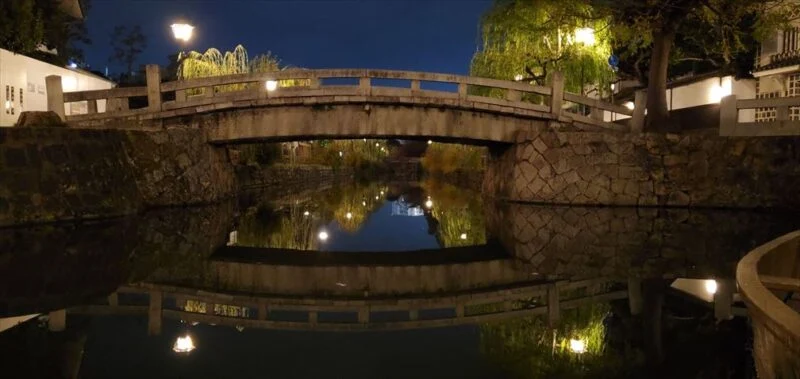
On tourism websites, I have seen the Bikan Historical Area bustling with people during the day and beautiful at sunset.
However, isn't the Bikan Historical Area after people have left incredibly beautiful!
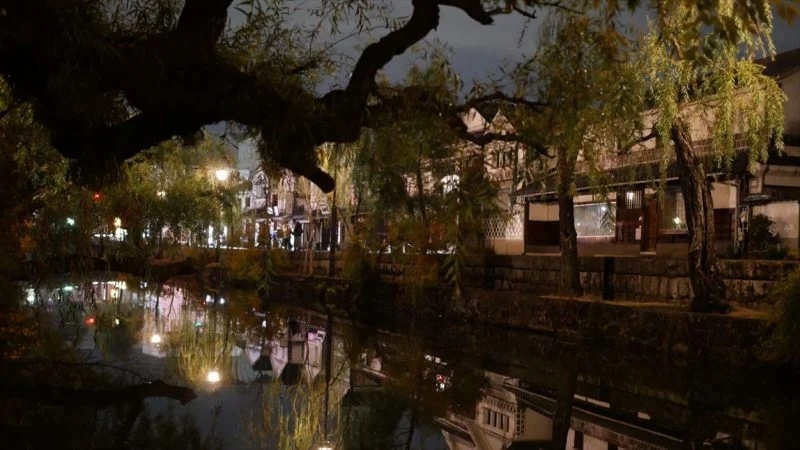
I lightly regretted not bringing a set for night photography.
After the foot traffic has disappeared, the Bikan Historical Area is definitely worth a visit!
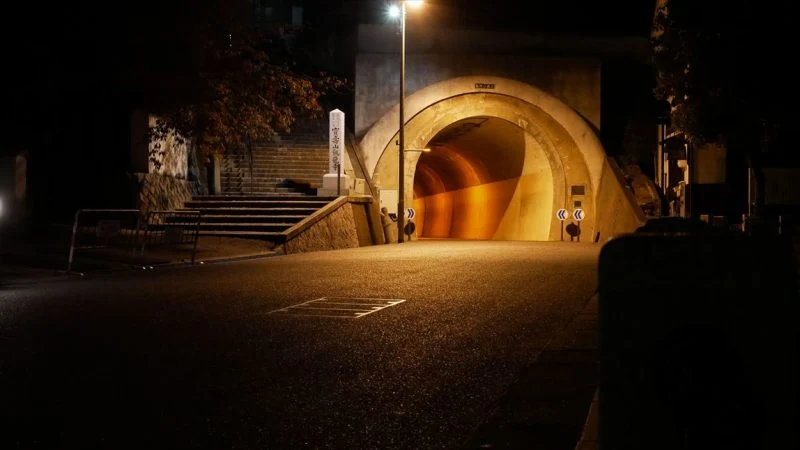
Here are a few photos of the Bikan Historical Area at night.
The second day of experiencing shogi culture and rediscovering takoyaki
For me, who has been playing shogi for 40 years, the Kurashiki Fujika match is one of the title matches I wanted to see live.
I learned the word Kurashiki because it was the hometown of the 15th generation Meijin Ooyama.
Being able to enjoy a solemn title match in the hometown of the great Meijin was a very valuable experience.
Kurashiki has delicious octopus! This left a strong impression on me, which is another significant gain.
I ate it the day before as well, but I feel that the deliciousness of what is casually served in a down-to-earth shop is something rooted in the area.
Takoyaki is octopus cuisine.
I never get tired of it. I can really eat as much as I want. I still want to eat more.
It was that delicious...
If you love octopus, you should visit Kurashiki!
The Bikan Historical Area at night was a rare spot that combined the beauty of the scenery and night view with tranquility and a lack of foot traffic.
Experiencing a beautiful night view all to myself is not something that happens often, and I felt glad to have come to Kurashiki.
A solemn public match, the Bikan Historical Area at night with no one around.
It was the second day in Kurashiki, where I thoroughly enjoyed the overwhelming "stillness" over "motion."
Next Announcement
Next time, it's a 2-night, 3-day Kurashiki Tocotoco walk, the final day!
I also visited spots around the Bikan Historical Area, such as Achi Shrine and Kurashiki Ivy Square.
Don't miss the "Kurashiki Department Store," which is full of Showa-era charm, located in front of JR Kurashiki Station.
Moreover, Kurashiki City is not just the Bikan Historical Area. Mabi, which suffered significant damage from the heavy rain in July 2018, is also part of Kurashiki City.
Thinking about how things were back then, I drove around with a friend who was busy during the disaster.