I am Daiji Okuno, a freelance writer and blogger, who has been asked, "What kind of places would a man in his 40s visit if he casually came to Kurashiki from Tokyo?" and I am strolling around Kurashiki.
Today is the third day of my visit (the final day).
On the first day, I enjoyed the Tamashima area and the seafood, and on the second day, I experienced the quiet and solemn Kurashiki.
What kind of day will today be?
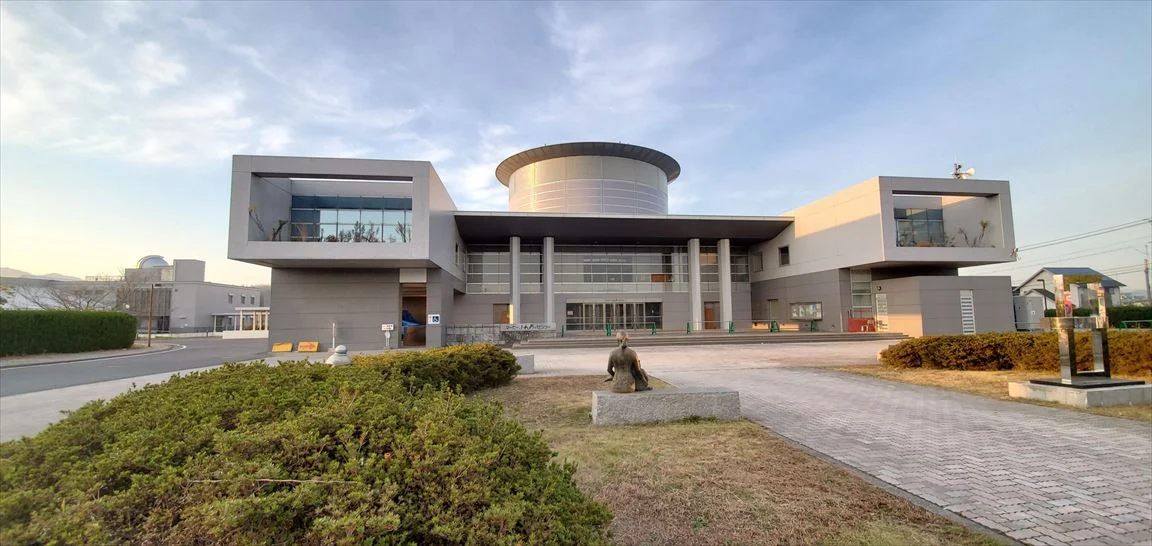
I visited the Bikan Historical Area and Mabi, which suffered significant damage from the heavy rain in July 2018.
▼ For other "Kurashiki Tocotoco walks from Tokyo," click here!
- Day 1: Walked through the Showa retro streets of Tamashima, Kurashiki City
- Day 2: Strolled from JR Kurashiki Station to the Bikan Historical Area at midnight
Breakfast is Bukkake udon again
This is where I say goodbye to the Universal Hotel in front of JR Kurashiki Station, which has taken good care of me.
Originally, I prefer to stay in a single room at a business hotel when traveling, expecting it to serve as a base camp to return to sleep.
It was a reasonable and just right hotel.
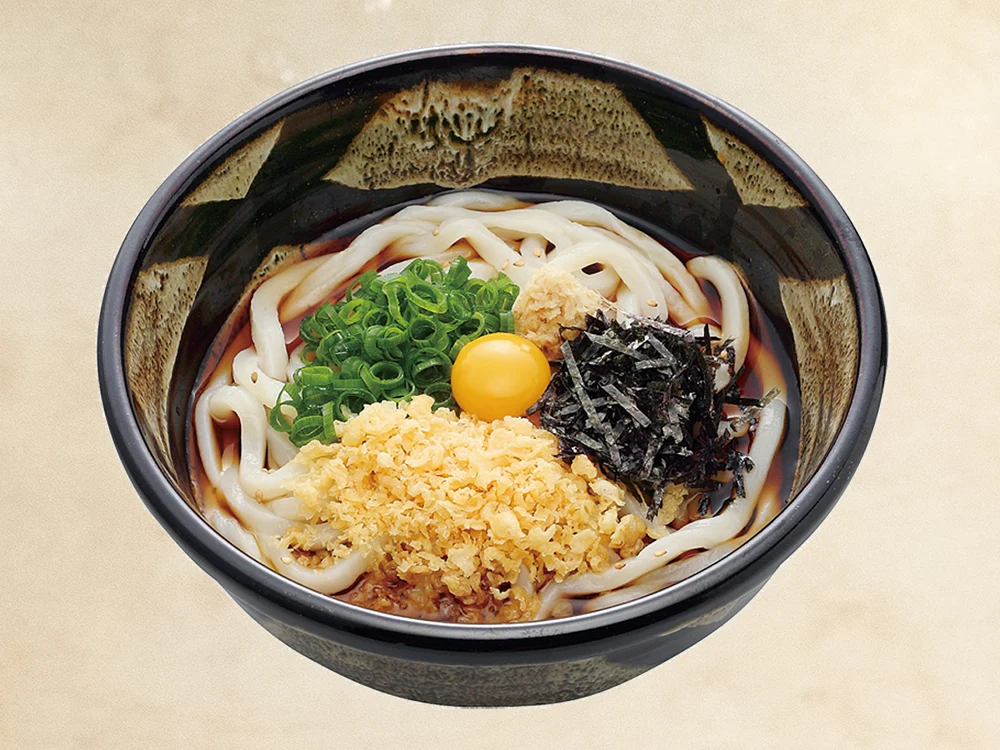
For breakfast, I had Bukkake udon again at "Kurashiki Udon Bukkake Furuichi Nakaten."
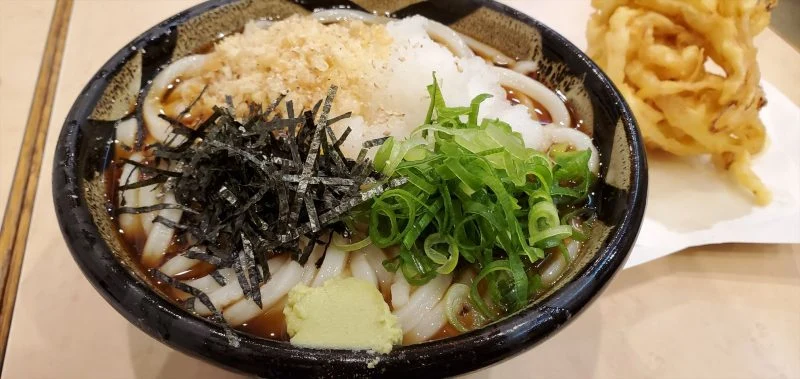
I really liked this place.
I ordered the cold Bukkake udon "Buttoro" with tororo, in a large serving, and added onion tempura, but it was too much.
My stomach is full from the morning.
▼ For gourmet information about the restaurant, please see this article.
To work off my meal, I will take a stroll around the "Kurashiki Department Store," which I found interesting during my walk the previous night.
"Kurashiki Department Store," a collection of multiple buildings
"You should definitely visit Kurashiki Department Store."
This was recommended to me by a friend in Kurashiki.
At the north exit of JR Kurashiki Station, there is a shopping mall called "Ario," and at the south exit, there is Tenmaya.
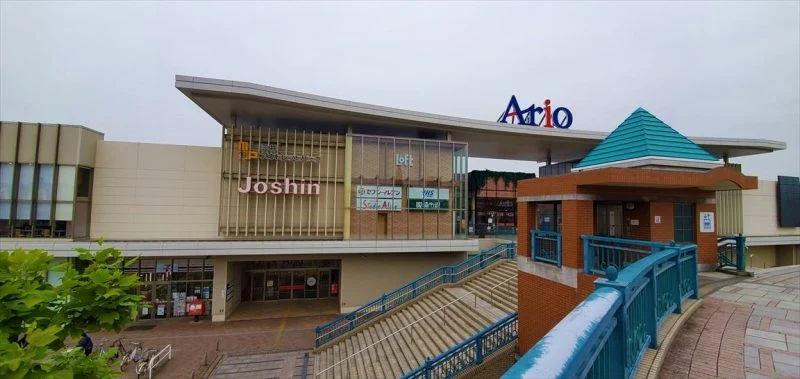
At Ario, you can find food, home appliances, and clothing, providing everything you need for daily life.
If you prefer to reduce your travel luggage and procure items locally, relying on Ario would be a good idea.
I digress.
Kurashiki Department Store is not a large building near a terminal station, as one might expect from a department store.
It is a collection of stores that has a nostalgic Showa atmosphere, formed by multiple buildings that are connected together.
I speculated that it might not mean a department store in the traditional sense, but rather an attempt to create a space similar to a department store.
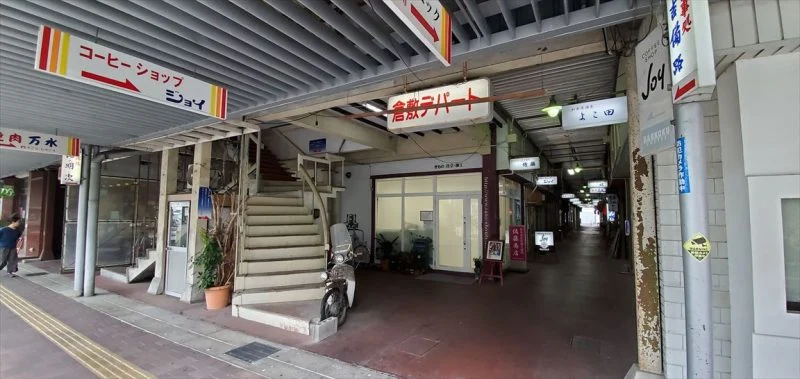
From the front, it looks like a large mall with stores inside, but from the side, you can see that different buildings are lined up.
Looking at the map displayed nearby, I confirmed that it indeed has the label "Kurashiki Department Store."
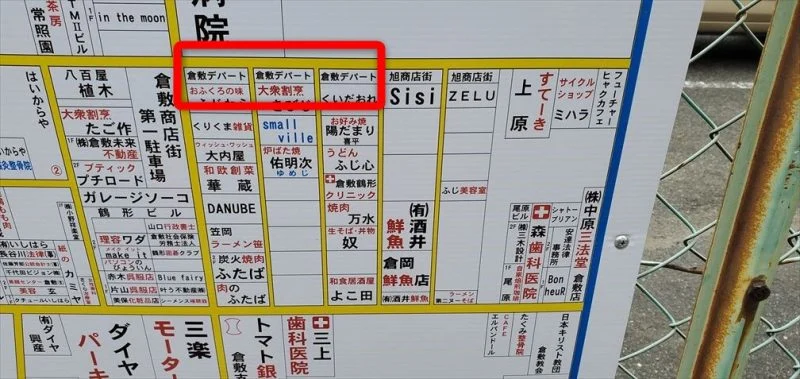
However, this does not mean it is a single building.
It is clearly a "group of buildings" that are connected by roofs.
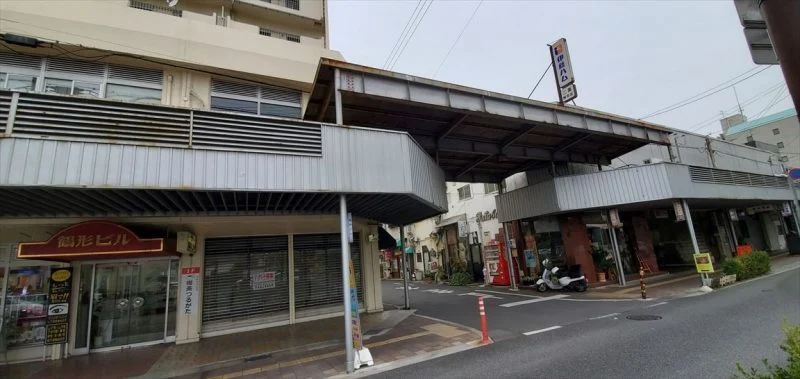
Again from the front, you can see that a large roof is installed along the sidewalk facing the road.
This roof over the sidewalk spans multiple buildings, and from the front of the large Tsurugata Building, there is an arcade roof over the alley that separates it from Kurashiki Department Store.
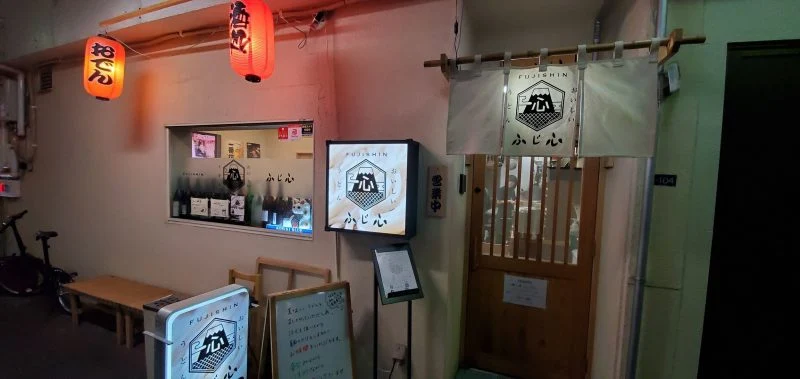
"Fujishin" inside Kurashiki Department Store was a local gem not aimed at tourists
Located in a corner of Kurashiki Department Store, "Fujishin" is a udon shop where you can also enjoy sake and side dishes.
In fact, I stopped by here on the first night.
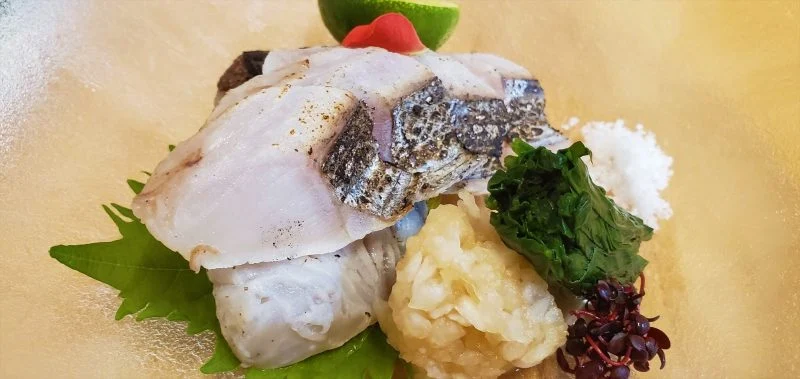
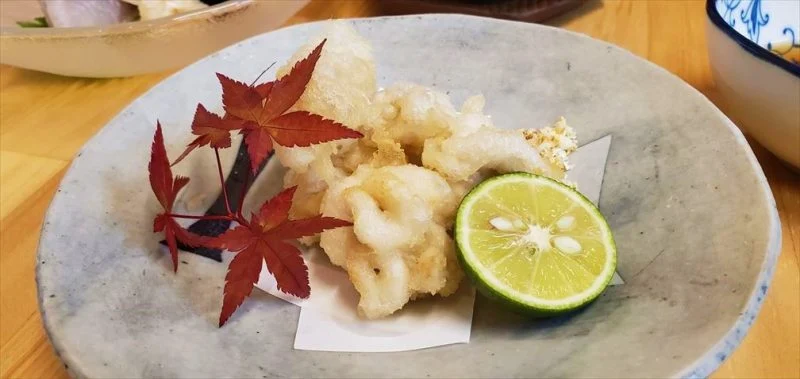
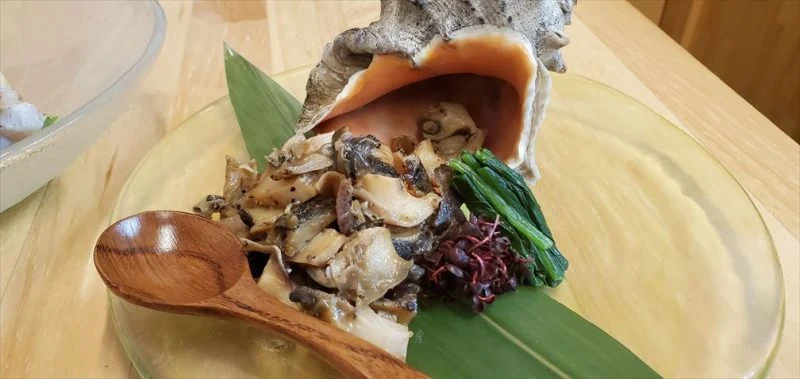
Here, I enjoyed delicious seafood such as seared Spanish mackerel, tempura of shirako, and butter soy sauce stir-fried clams.
▼ The seared Spanish mackerel had a firm texture and exquisite saltiness
▼ The crispy batter and the creamy shirako were perfectly balanced
▼ The richness of the butter, the sweetness of the soy sauce, and the aroma and texture of the clams.
Butter soy sauce stir-fried clams
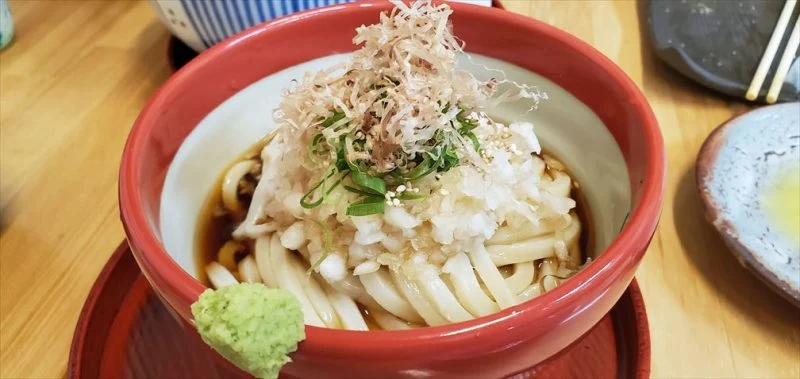
▼ The Bukkake udon was refreshing, with the sweetness of the broth standing out and delicious
All of these were exquisite and very delicious, but what really caught my attention was the "strong mustard cucumber," which seems to be a standard side dish.
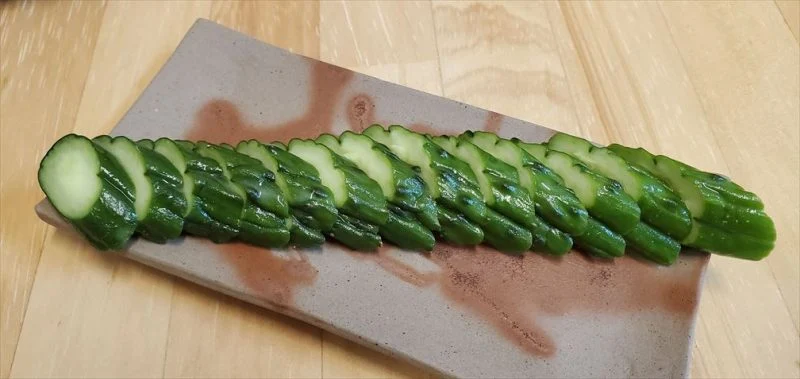
"Is it pickled cucumber seasoned with salt and mustard to give it a sharp taste?"
As I thought while eating, I was surprised to find a subtle sweetness.
This enhanced the flavors of the salt and mustard, doubling the deliciousness.
When I asked the owner, I learned that they use sugar to create the sweetness.
I had already felt a pleasant sense of incongruity with the sweetness of the Bukkake udon broth, and I began to wonder if Kurashiki might have a characteristic way of using sweetness.
It was so delicious that I ended up ordering a second helping. I was captivated by the cucumber.
It made me want to explore the sweetness in simple dishes, rather than just famous specialties.
▼ For gourmet information about the restaurant, please see this article.
![[Closed] Udon Tavern Fujishin - A place where passion and commitment to food are conveyed through cooking](https://media.kuratoco.com/wp-content/uploads/2019/03/23060543/fujishin-81.jpg)
Visit Achi Shrine, which overlooks the Bikan Historical Area from above
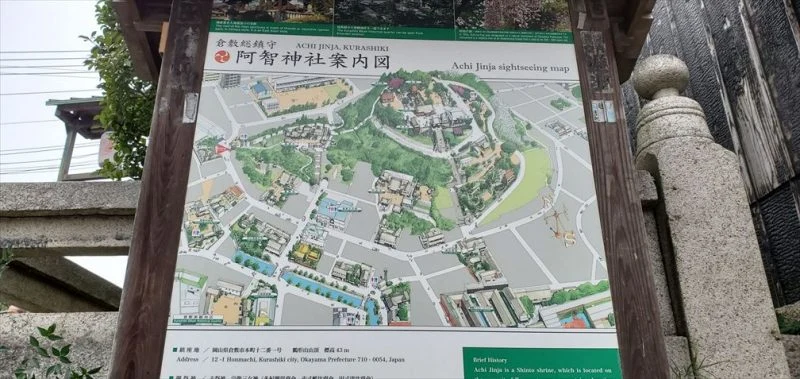
The area in front of Kurashiki Station is called "Achi."
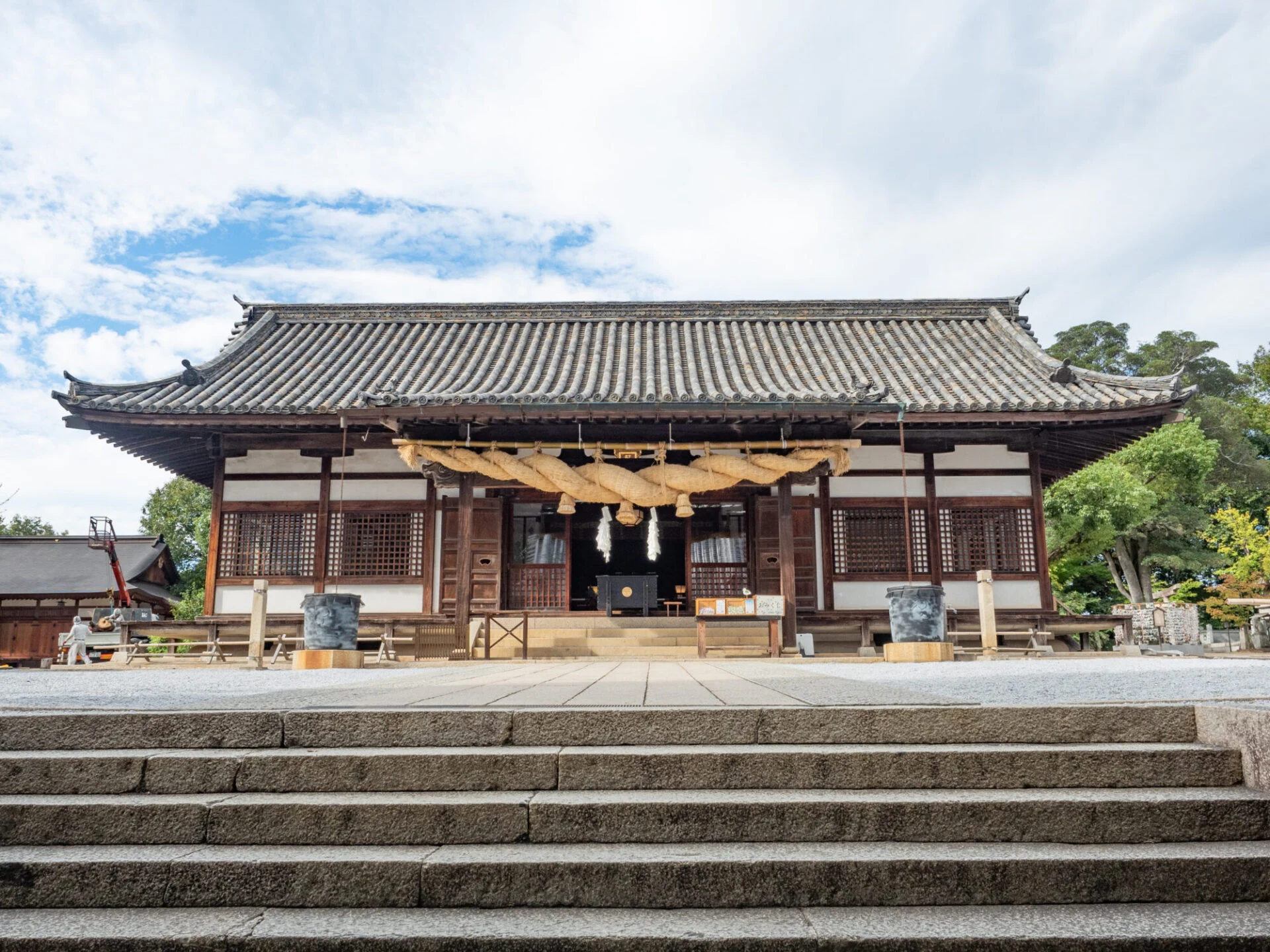
The shrine named Achi Shrine is located between Kurashiki Station and the Bikan Historical Area.
The townscape around Kurashiki Station is flat with no hills, but Achi Shrine is situated on a small hill.
This small hill is called "Tsurugatayama."
In the Heian period, the surrounding area was a tidal flat, and from the Sengoku period to the Edo period, land reclamation continued, resulting in the current plain.
Its elevation is said to be 43 meters.
I decided to climb the stairs on the side of Kanryuji Temple on Tsurugatayama to see if I could view the townscape of Kurashiki.
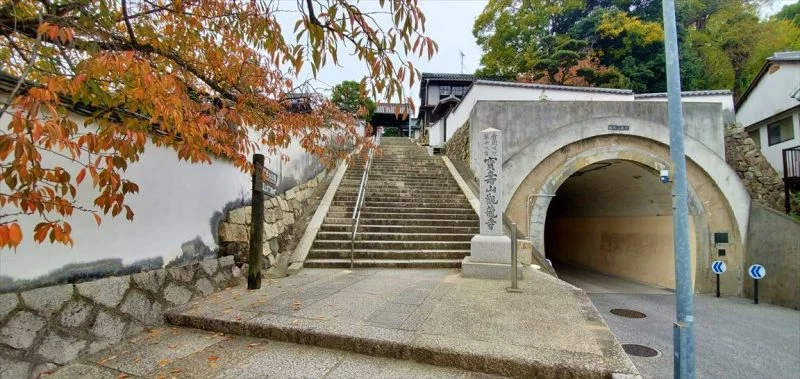
Kanryuji Temple is the site where the Choshu army attacked a nearby magistrate's office during battles related to the Meiji Restoration and established a camp.
The nearby magistrate's office is located around the tourist spot Kurashiki Ivy Square, which is really just a stone's throw away.
Originally, Kurashiki was a "tenryo," a directly governed area of the Edo shogunate during the Edo period, so it is not surprising that the Choshu army attacked this area.
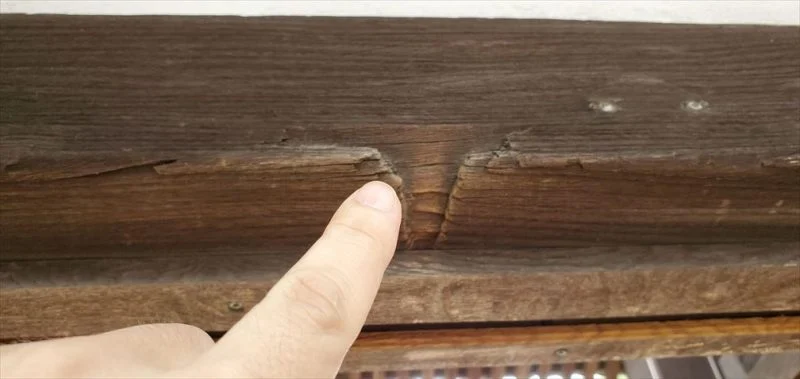
I heard that there are arrow marks on the door frame of the mountain gate, so I went to take a look.

Is this it?
Now, as I walk through the area named Tsurugatayama Park, I was able to get a panoramic view of the Bikan Historical Area from above.
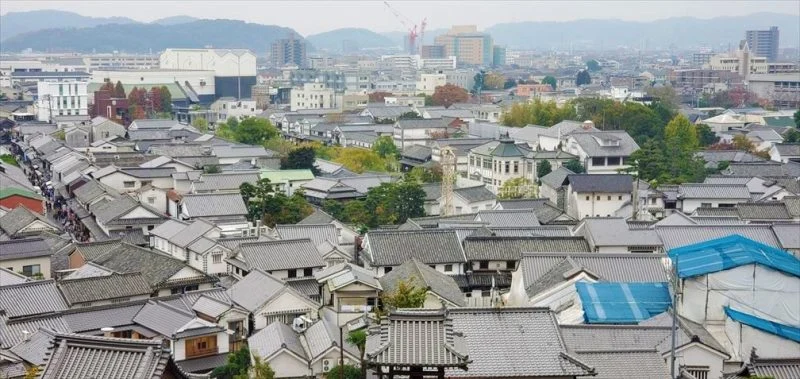
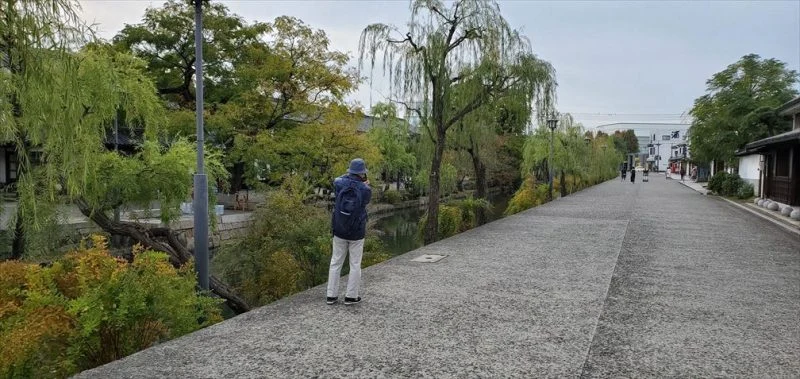
The green area in the central upper part is the green part of the main street in the Bikan Historical Area.
▼ This is the green area I am referring to.
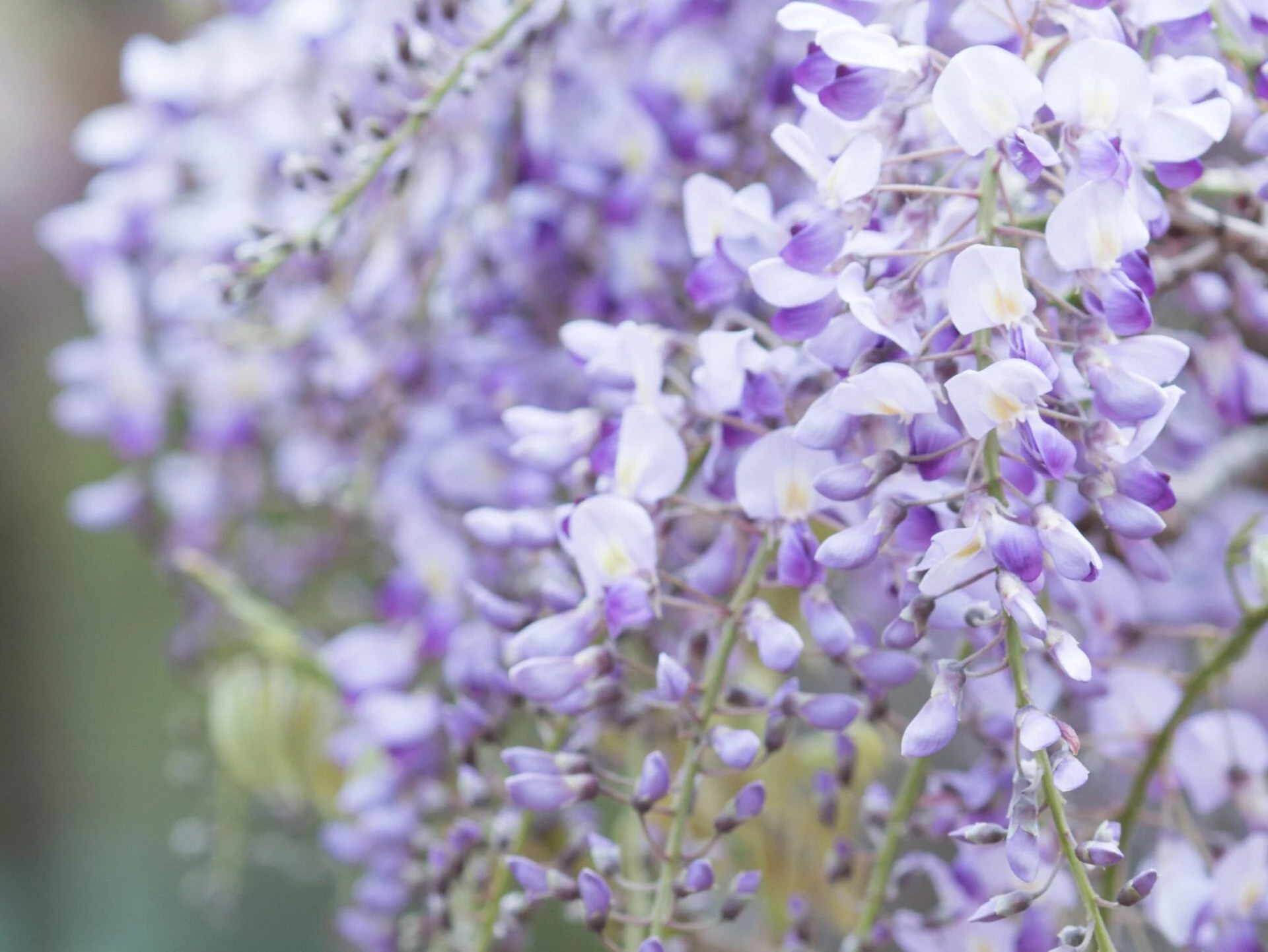
And speaking of Achi Shrine's specialties, there is the "Achi Wisteria."
Ah, I suddenly understood that the title "Fujika" in the Kurashiki Fujika Tournament of Shogi is derived from this.
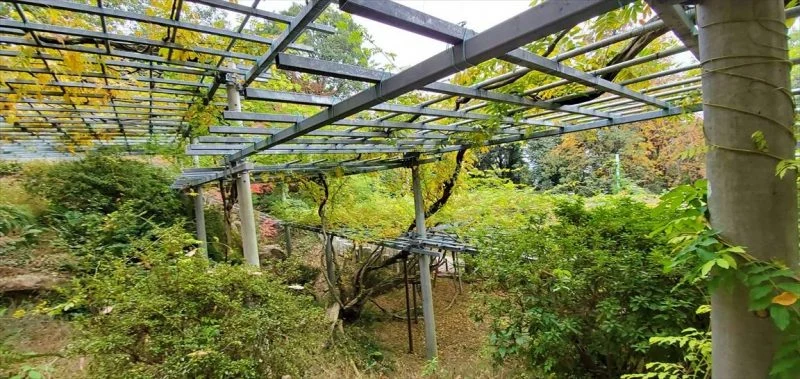
It is a natural monument designated by the prefecture, and due to its age of 300 to 500 years, it is currently undergoing treatment by an arborist.
I sincerely hope it recovers and blooms beautifully around Golden Week!
▼ For details on the cherry blossom viewing event at Achi Wisteria, please see this article.
Visit Kurashiki Ivy Square, where the ivy leaves turn beautiful colors
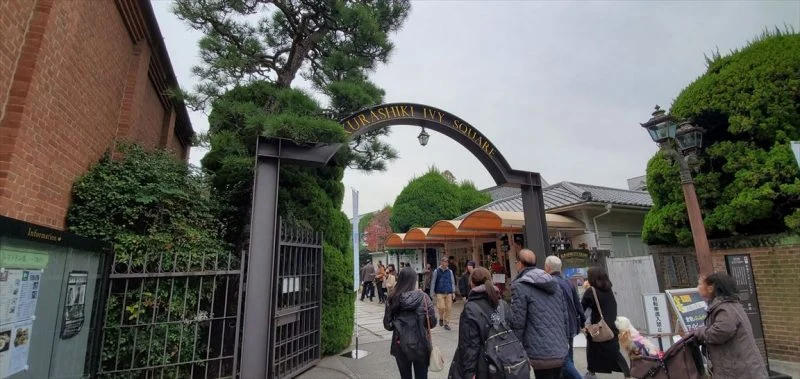
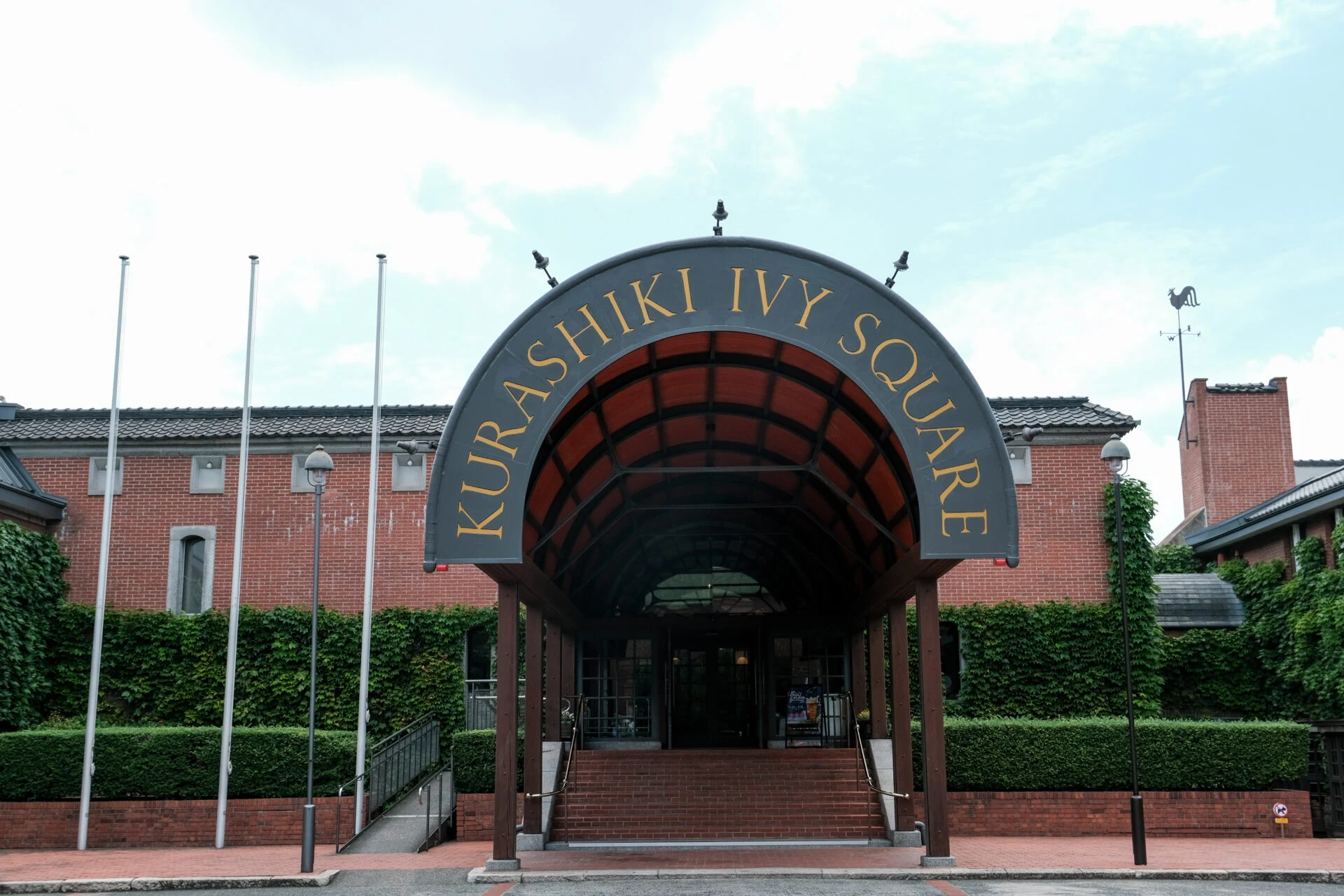
Right after descending from Achi Shrine, you will find Kurashiki Ivy Square.
This facility retains the appearance of the Kurashiki Spinning Company (now KURABO INDUSTRIES LTD.) from the Meiji era, and includes hotels, restaurants, and cultural facilities.
Originally, it was the site of a magistrate's office during the Edo period, which was demolished and repurposed for the spinning company.
Spinning refers to the process of making thread, and I couldn't help but think that this is connected to Kurashiki's fame as a denim town.
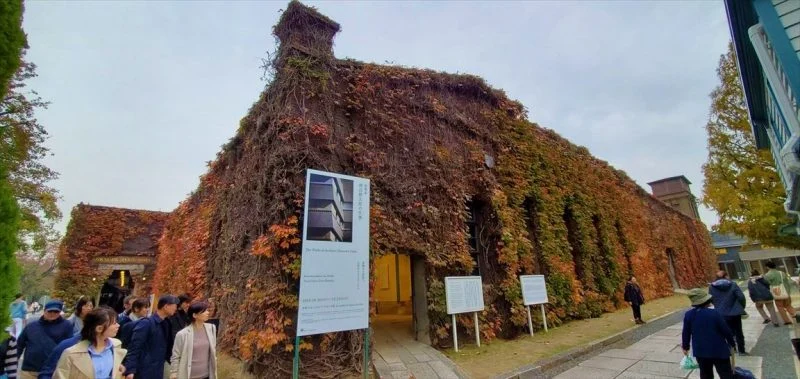
The site of the factory is used for exhibitions and other events.
The ivy is beautifully colored, and travelers never cease to take photos with this as the backdrop.
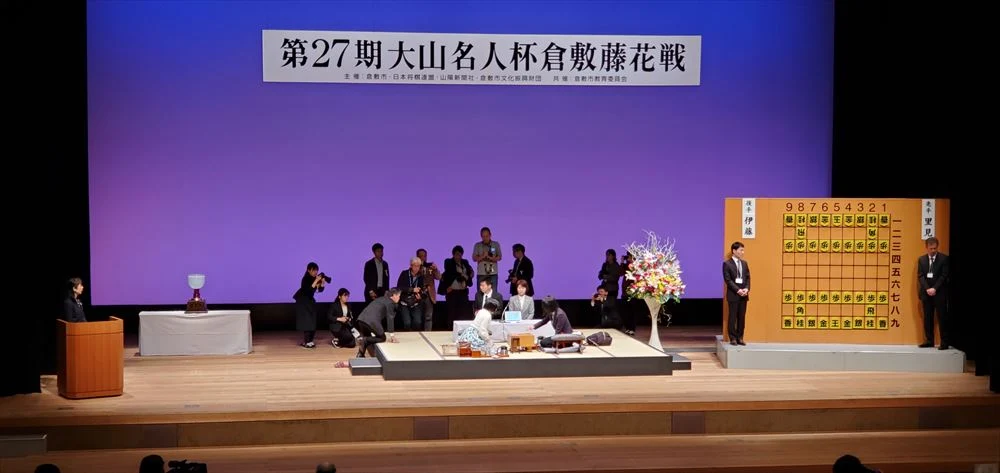
While strolling through Kurashiki Ivy Square, it was time for one of my major objectives of this trip, the commentary of the Kurashiki Fujika Tournament in Shogi, to begin.
You can find the article about that here, but after the commentary, I will finally head to the last destination of this trip.
Visit Mabi, which suffered significant damage from the July 2018 heavy rain
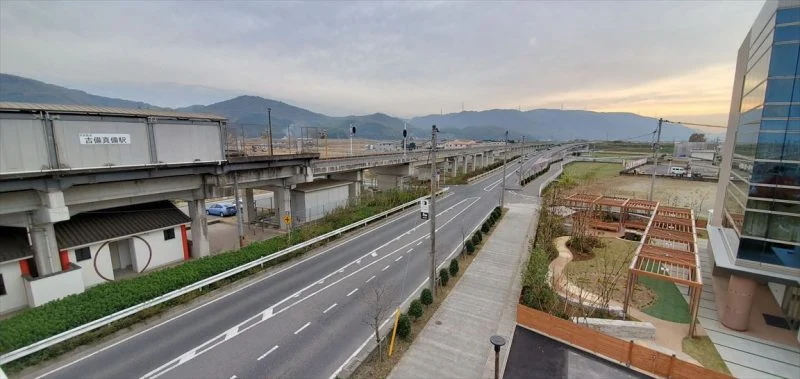
There isn't much I can do, but I wanted to see the Mabi area with my own eyes at least once.
Since I had acquaintances who rushed to the site during the July 2018 heavy rain disaster, I wanted to see the place.
The last place I decided to visit on this trip is the Mabi area.
From Kurashiki Station, it takes about 20 minutes by transferring between the JR Hakubi Line and the Ibara Railway.
Although both lines do not have many trains, they seem to be mindful of transfer convenience, as the arrival and departure times at the transfer station, Kiyone Station, were about five minutes apart.
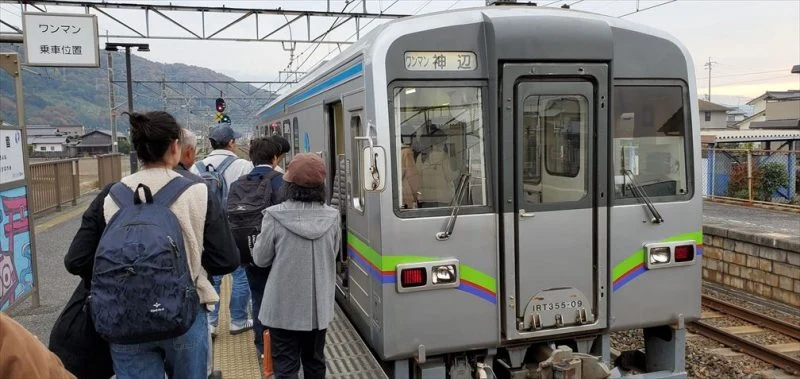
Ibara Railway operates with a one-man system, and passengers press a button to open the doors when getting off.
The train runs on an elevated track, and Kibinomakibi Station is also at a high position.
The town was rich in water, with two major rivers, the Takahashi River and the Oda River, as well as canals and ponds.
From a nearby cram school, children who finished studying ride their bicycles home, talking loudly.
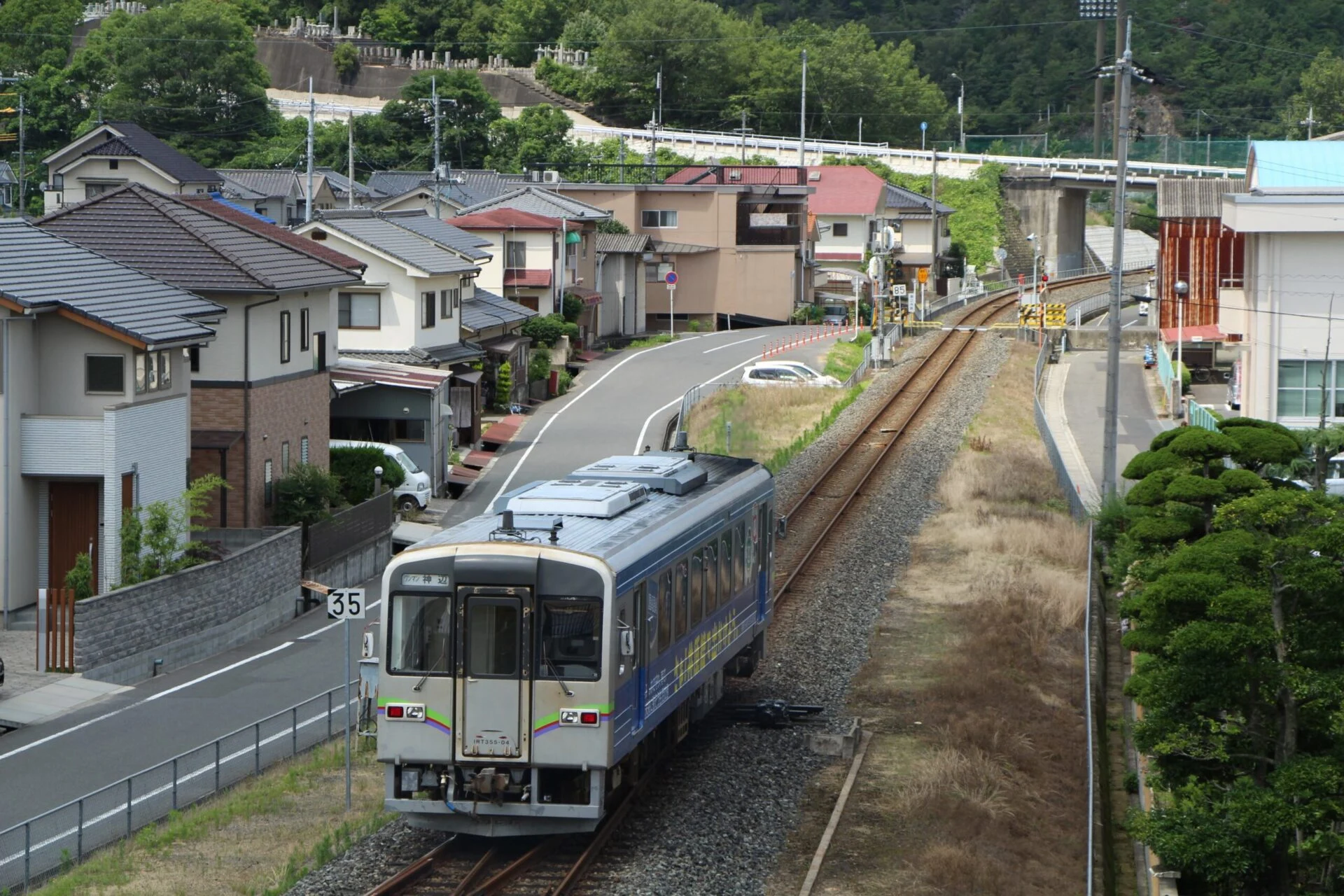
As I followed the scene with my eyes, what came into view was a general house with the first floor covered in blue tarps.
I realized that there had been damage up to the height of the first floor and that recovery was still not complete.
I got a ride in a friend's car and visited the "Mabi Community Center," which has not been operational since the disaster.
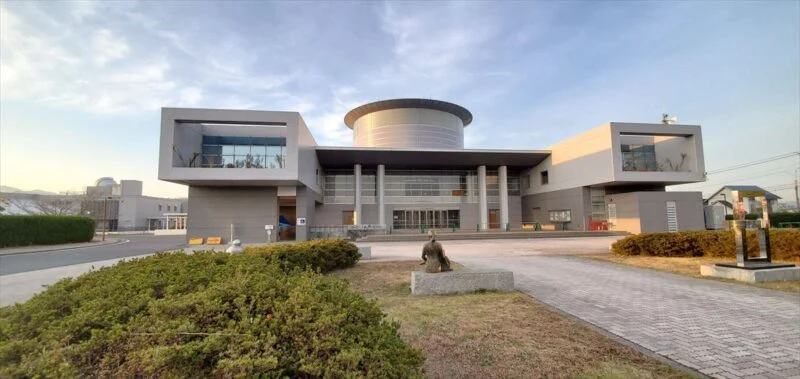
From a distance, it is a beautiful building, but the doors are closed, and you cannot enter.
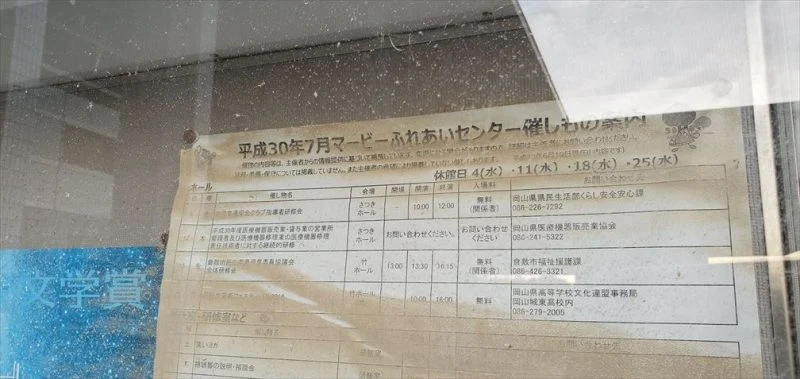
The notice near the entrance has not been updated since the list of events from July 2018, and it feels like time has stopped here...
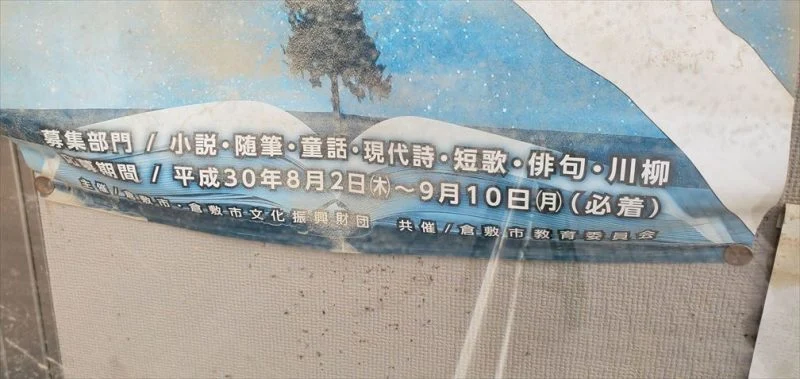
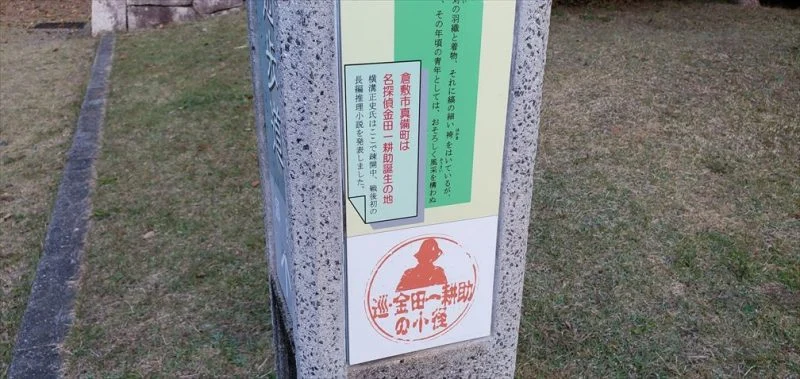
The Mabi area is known for being the hometown of Kibi no Makibi, a famous court noble from the Nara period, as well as a production area for bamboo shoots, and for being the town where Yokomizo Seishi sent Kindaichi Kosuke into the world.
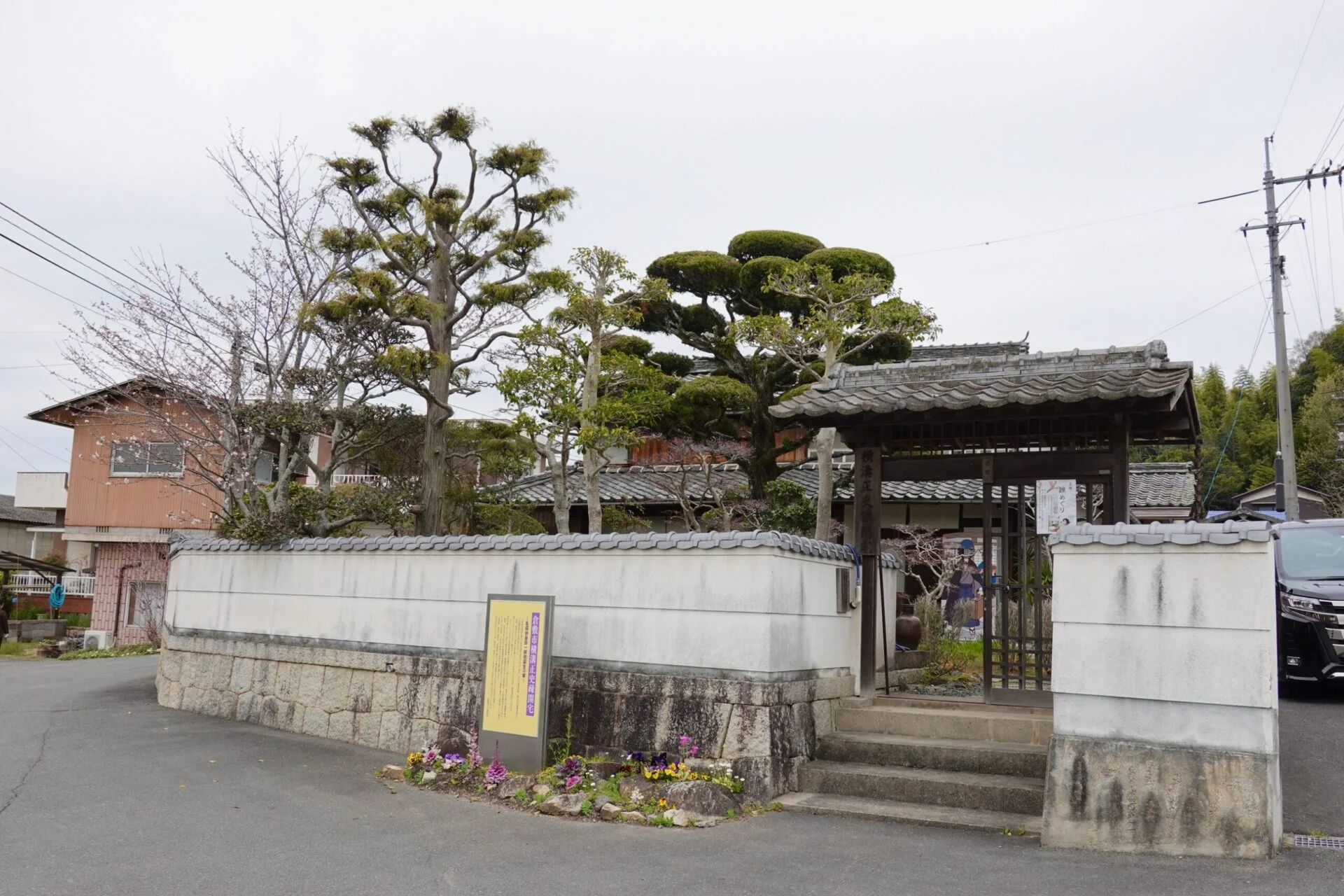
I hope the town can effectively utilize these strengths to revitalize itself.
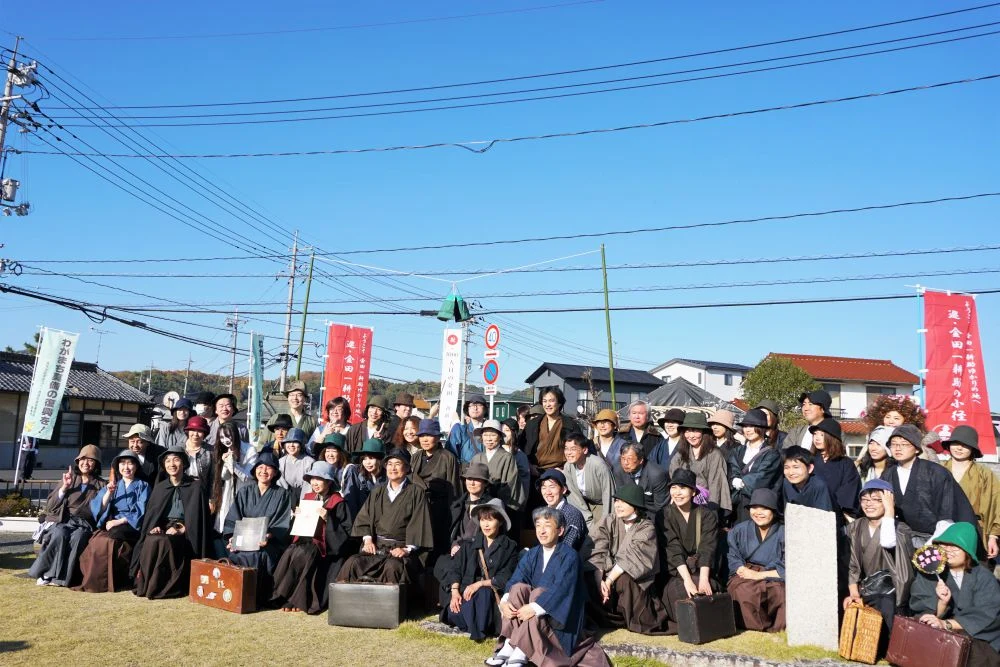
The 11th Cosplay Event: 1000 Kindaichi Kosuke (held on November 23, 2019) - An event exploring the hometown of the famous detective Kindaichi Kosuke seems to be one of the events, and I think it would be great if more people could come by taking advantage of such opportunities.
When my favorite athlete underwent neck surgery and had to withdraw from competition, they said,
“I will not return as I was before. I will come back stronger than before.”
I really like this phrase, and I sometimes keep it in my heart when I am going through tough times.
I hope the Mabi area can be like that too.
Finally, I visited the renowned Western confectionery shop in Mabi, Wohl Wollen, to conclude this trip.
The cake I had on the return Shinkansen was delicious.
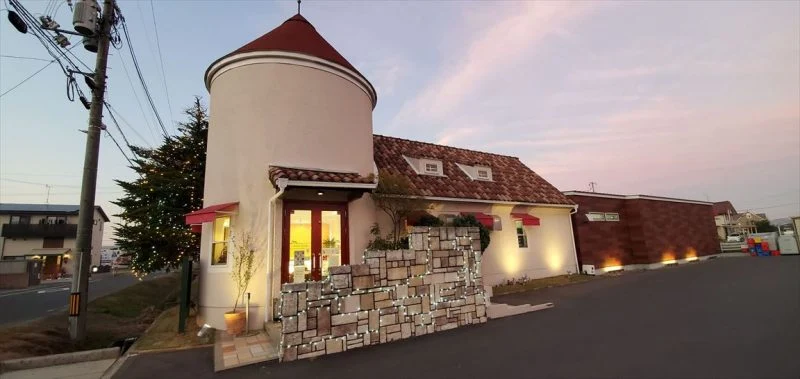
▼For information about Wohl Wollen, please see this article.

The Mabi area is surprisingly large, and I relied on a friend who rushed around during the disaster to drive me around various places.
I was really grateful.
In October of the year following the heavy rain in July 2018, Typhoon No. 19 caused the Tama River to flood at the border of Tokyo and Kanagawa Prefectures.
The Tama River flooded for the first time in 45 years, and at 48 years old, I had no memory of it, so it was a first-time experience for me.
I remember seeing footage that conveyed the fear of whether the water would overflow the levee, and I began to perceive it as a real concern for myself.
While I had the desire to help the affected areas as a fellow human being and Japanese person, I cannot deny that I had the image that it was something that happened far away.
I feel that the flooding of the Tama River was one of the significant reasons I visited Mabi this time.
A 2-night, 3-day trip to learn about history, tradition, gourmet food, and disasters
I enjoyed a 2-night, 3-day trip walking around Kurashiki.
The Entsu-ji Temple where the young Ryokan trained is beautiful with the beginning of autumn leaves, and since the Tamashima area seems to offer a night view of the industrial district, I would like to visit again by car or other means.
The night view of the factory area is definitely a genre that has fans, so it seems likely to become even more lively.
The octopus from Shimotsui, which I had never encountered in Tokyo, was truly delicious, and I recognized takoyaki as "octopus cuisine" for the first time.
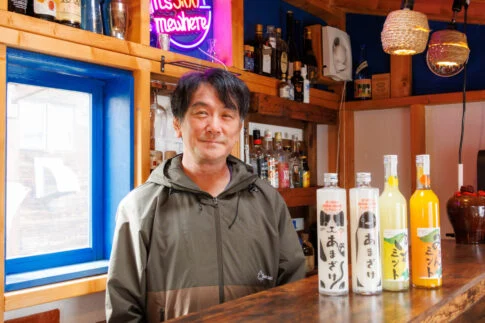
The owner here was an interesting person as a bar owner.
It seems like it would be fun to go there when feeling a bit tired or down.
The Kurashiki Fujika Tournament in shogi allowed me to experience the tension of a public match, and reaffirmed the achievements of the 15th generation Meijin Ooyama, and I understood why the title name includes "Fujika," which satisfied my curiosity.
The current state of the Mabi area truly moved me with the signs of a town that is indeed progressing in recovery and the remnants of the disaster that still remain.
I cannot help but hope that those who are working hard now will show us an even greater revival.
I would like to visit Kurashiki again.
Now that I understand that it is a flat town, a bicycle trip also seems enjoyable.
▼For other "Kurashiki Tocotoco Walks from Tokyo," click here!
- Day 1: Walking through the Showa retro streets of Tamashima, Kurashiki City
- Day 2: Strolling from JR Kurashiki Station to the Bikan Historical Area at night