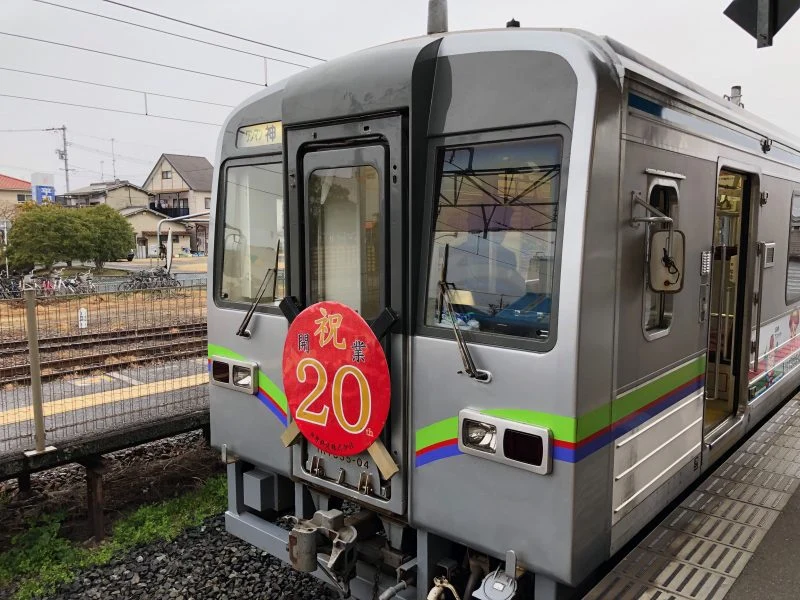
In 2019, Ibara Railway celebrated its 20th anniversary.
It operates only the "Ibara Line," a local line connecting Soja City in Okayama Prefecture to Fukuyama City in Hiroshima Prefecture.
I live in Ibara City and take the Ibara Railway almost every day for my commute to work.
Since the station is close to my home, I also primarily use the Ibara Railway when heading to Kurashiki or Okayama.
Even those who have never taken the Ibara Railway because they don't use it for commuting or school might find it enjoyable to ride while leisurely looking out the window for a little outing or sightseeing.
For me, the Ibara Railway is a very important presence.
In this article, I will introduce the Ibara Line of the Ibara Railway, which has become an indispensable means of transportation in the region.
Details about the Ibara Line
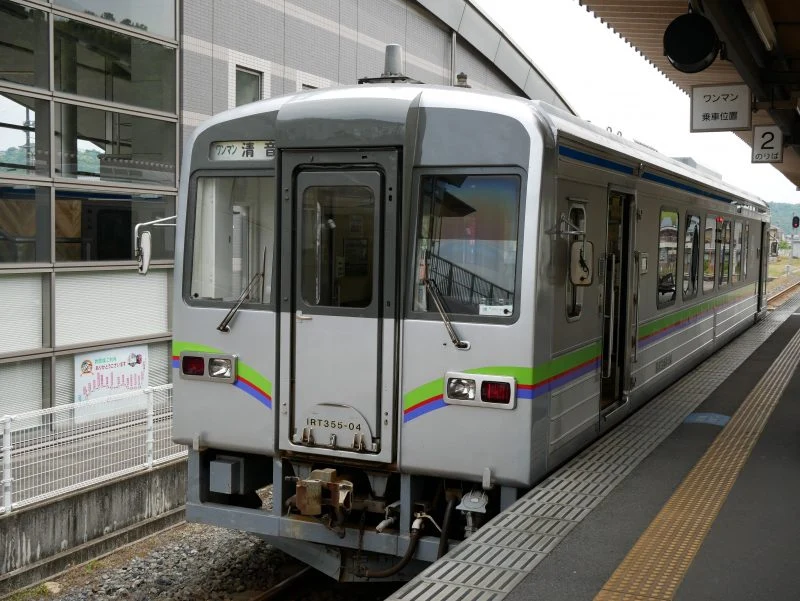
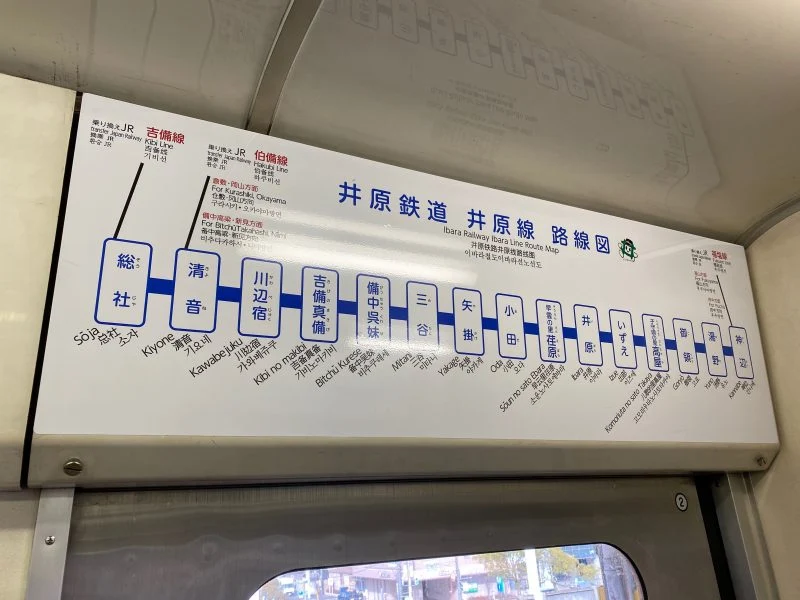
The Ibara Line is a local line connecting Soja City in Okayama Prefecture to Fukuyama City in Hiroshima Prefecture, with a total length of 41.7 kilometers.
It opened on January 11, 1999, at 11:11:11 AM, and celebrated its 20th anniversary in 2019.
When I counted, I realized that the Ibara Line has been in existence longer than I have been alive.
Looking back, I have so many memories associated with it.
Recently, I have been hearing a lot about the closure of local lines.
In a time when the population is decreasing and rural areas are facing tough times, it is truly remarkable that a new railway company has been established and continues to exist.
This shows that it is an indispensable means of transportation for the local people.
How to ride the Ibara Line?
Have you ever thought, "What kind of boarding system does the Ibara Line have?"
The Ibara Line has mostly unmanned stations, with only Kiyone Station, Yakage Station, Ibara Station, and Kannabe Station being manned.
The trains are operated basically by a single operator (only one driver) except during events.
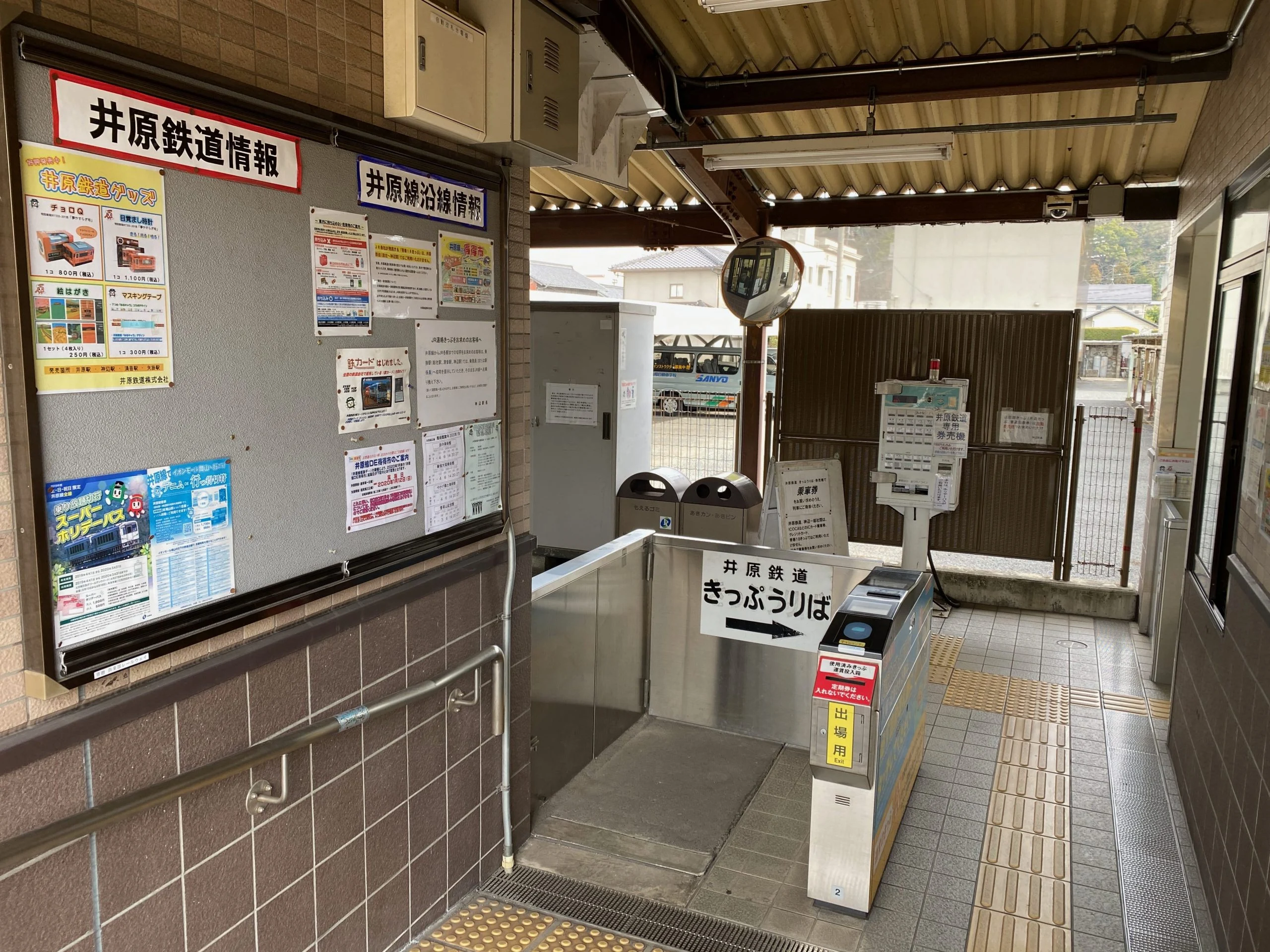
Therefore, instead of using tickets or transportation electronic money like ICOCA as with JR, you pay the fare in cash to the driver.
Some stations do sell connecting tickets with JR and tickets as well.
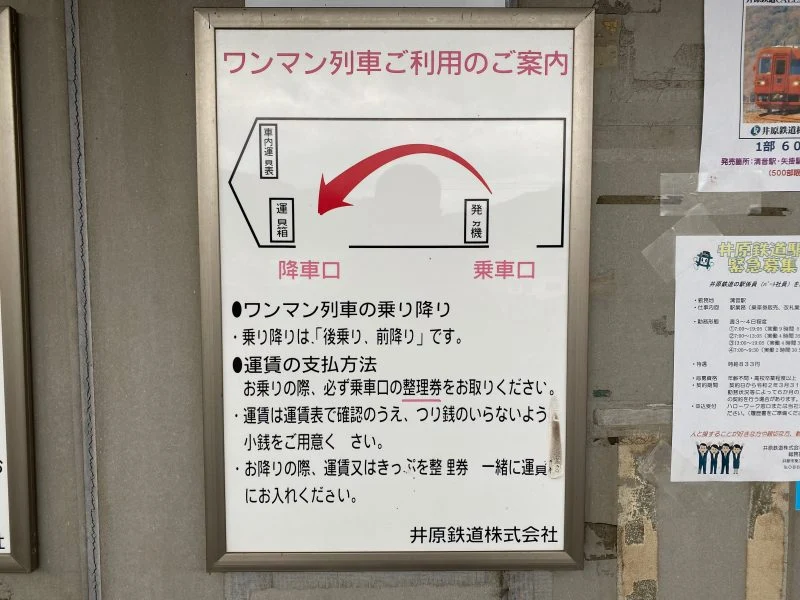
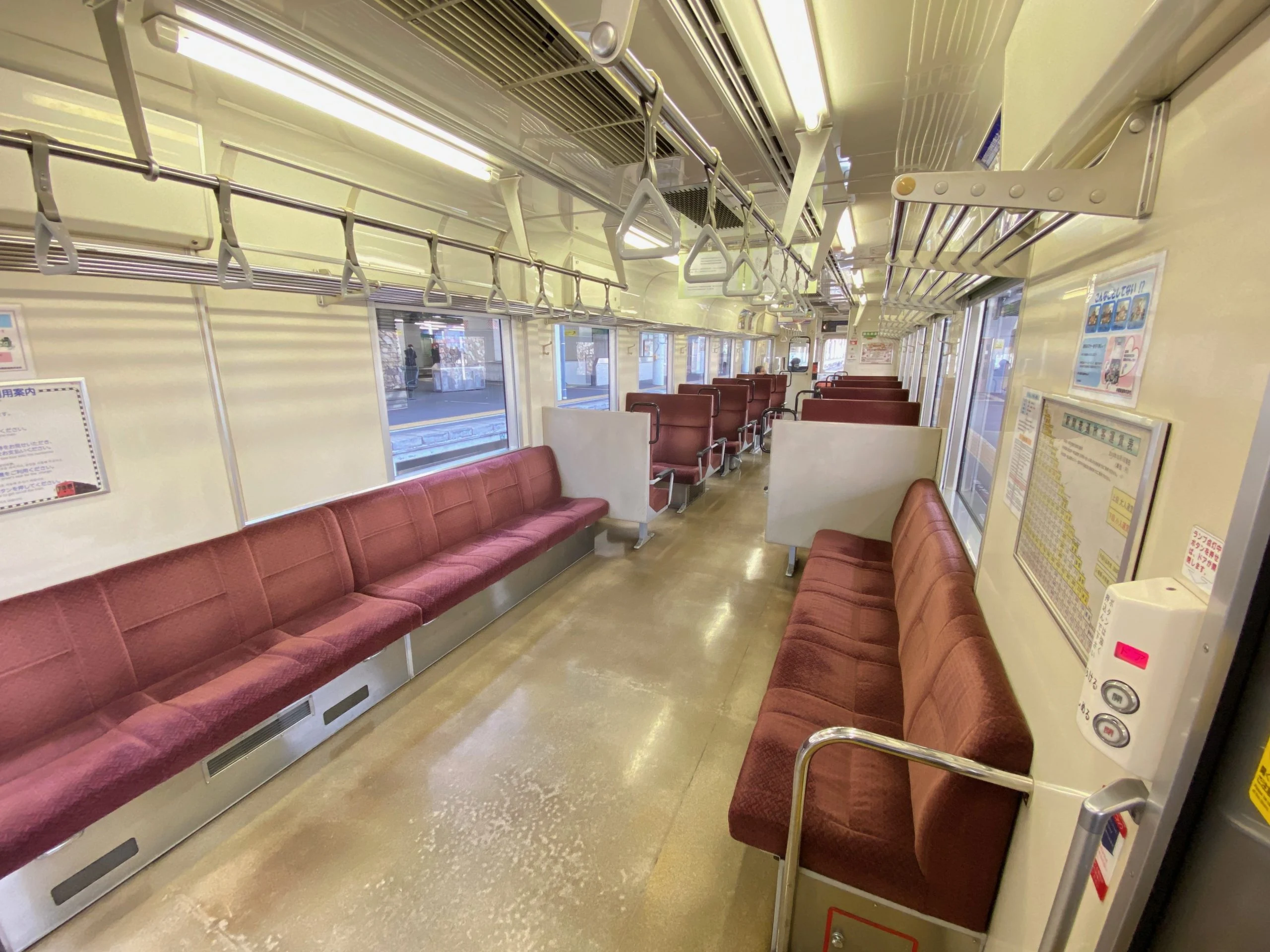
The boarding system is "board from the back and exit from the front," like a bus, so please board from the rear of the train.
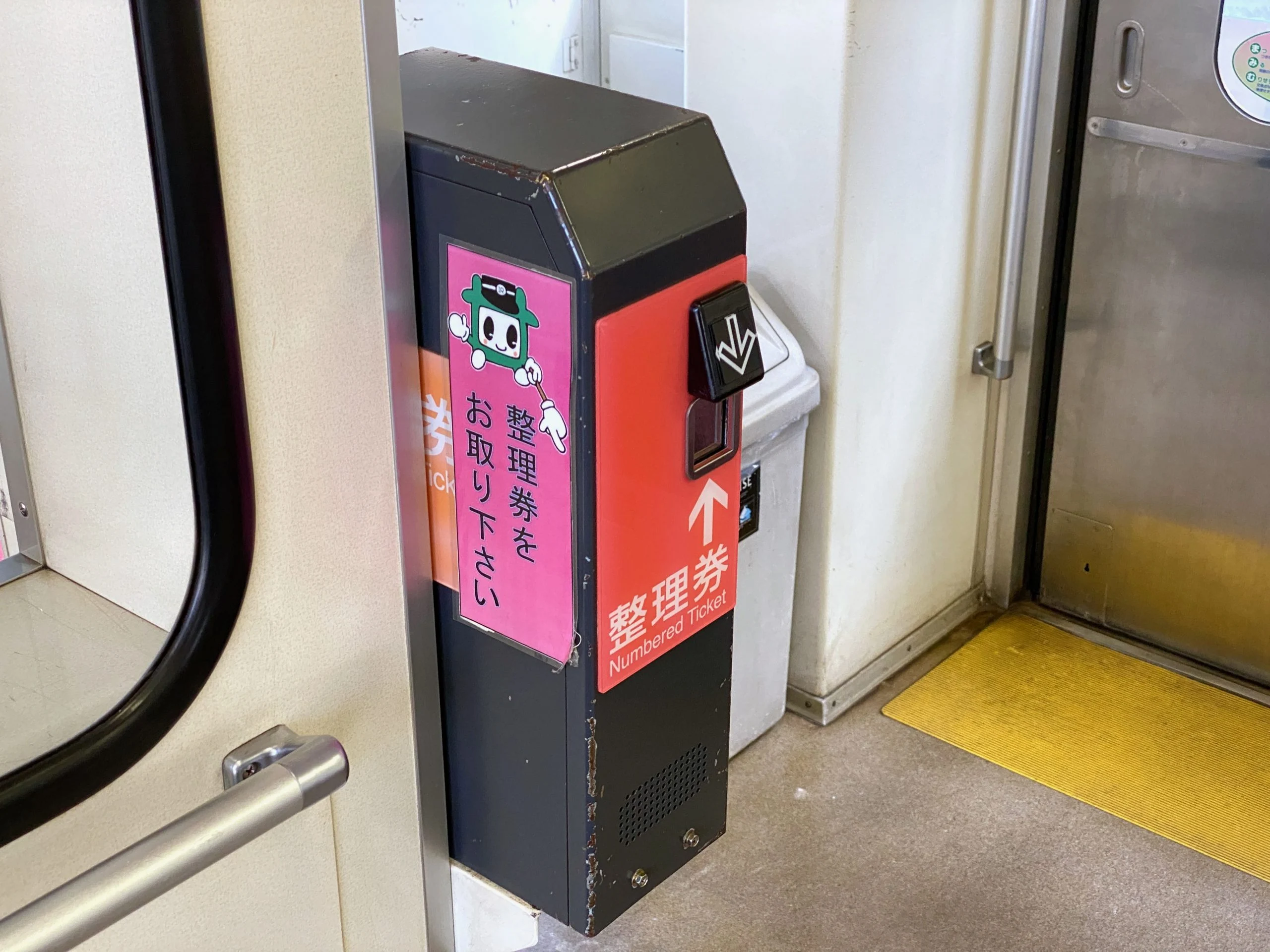
When you board, open the door using the button next to it, enter the train, and take a ticket.
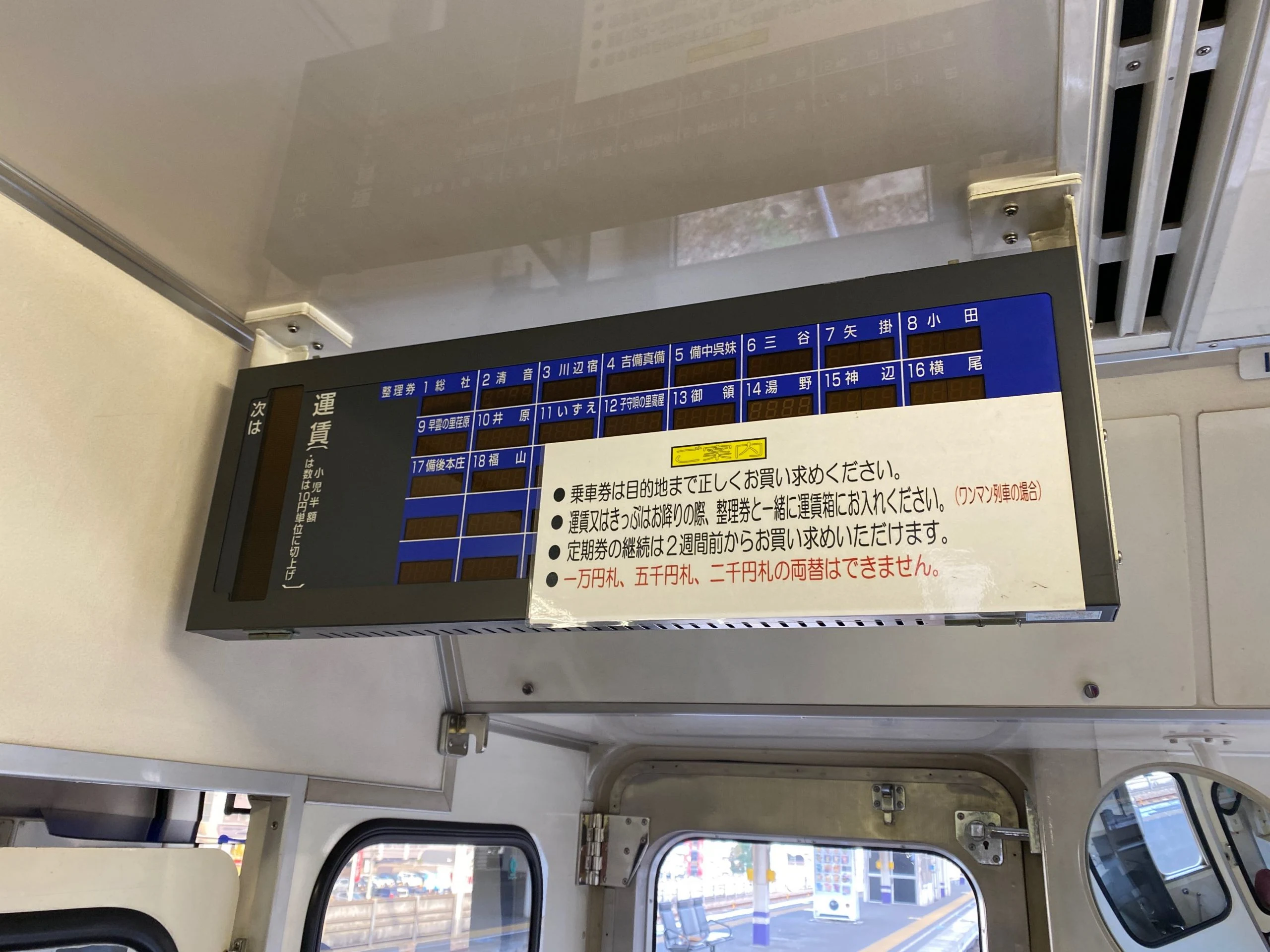
The fare can be checked on the fare board inside the train, which is convenient.
There is also a change machine like on a bus.
You can only change 1,000 yen bills, and coins of 500 yen, 100 yen, and 50 yen can be exchanged.
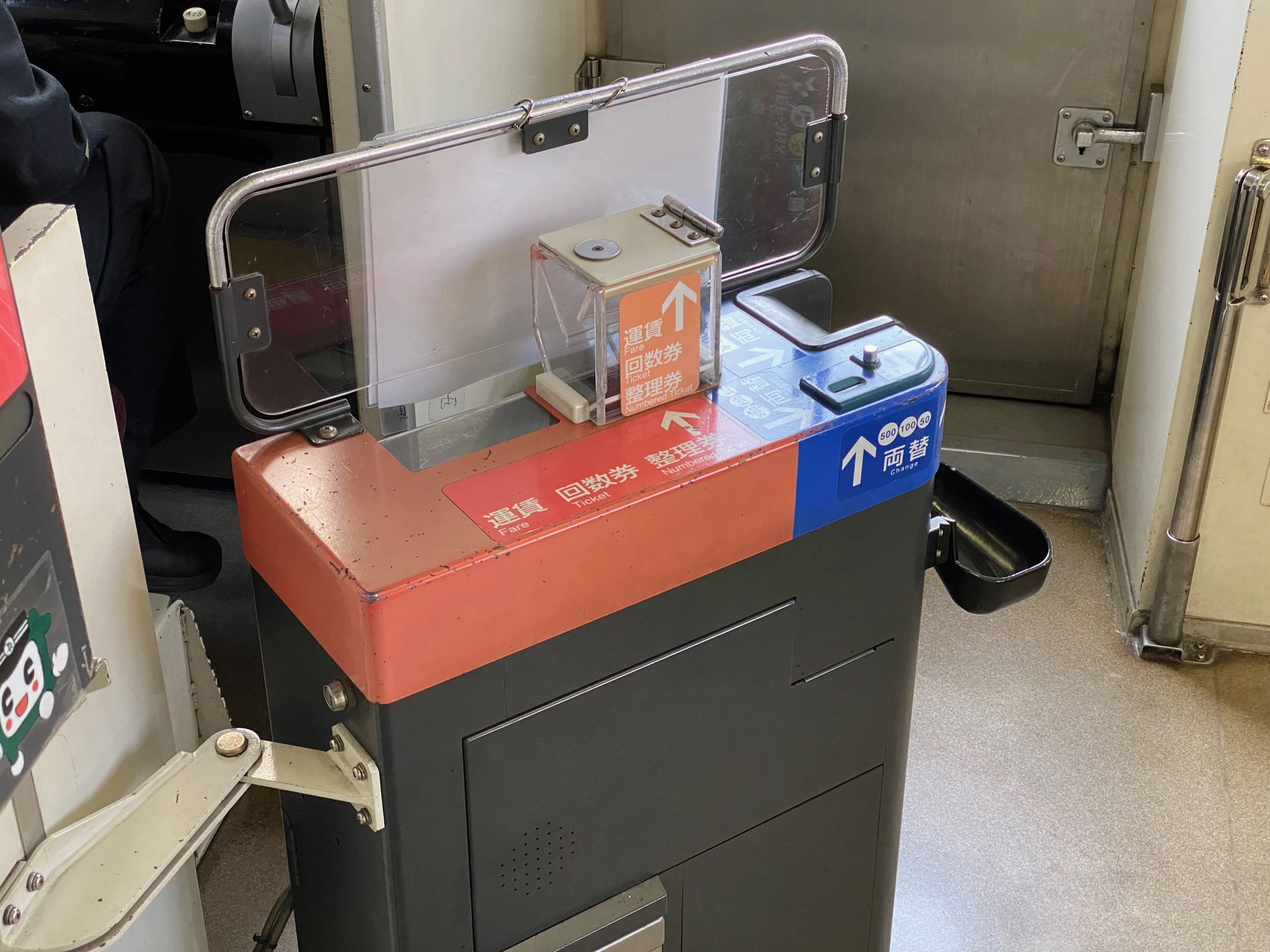
Pay the fare when you get off.
You can either put it in the fare collection area of the change machine or hand it directly to the driver.
When transferring to JR at Kiyone Station or Kannabe Station, just show the connecting ticket to the driver.
If you are heading towards Okayama Station or JR Kurashiki Station using the Ibara Line, you will take a train heading towards Soja (upward).
However, since the final stop is Soja Station, there is no direct service to Okayama or Kurashiki.
If you want to go to Okayama or Kurashiki, you need to transfer to the Hakubi Line at JR Kiyone Station.
Of course, you can purchase a ticket at JR Kiyone Station when transferring.
Conversely, if you are using the Ibara Line to head towards JR Fukuyama Station, you will take a train heading towards Kannabe (downward).
There are only three direct services from Kannabe Station to JR Fukuyama Station each day.
Otherwise, Kannabe Station is the final stop.
Normally, to go from Soja Station to JR Fukuyama Station using the Ibara Line, you need to transfer to the Fukuen Line at JR Kannabe Station.
It seems that the schedule is set to be convenient for commuting and school.
The services that directly connect to JR Fukuyama Station operate in the morning, afternoon, and evening.
It is convenient since you do not need to transfer.
The leisurely one-car train
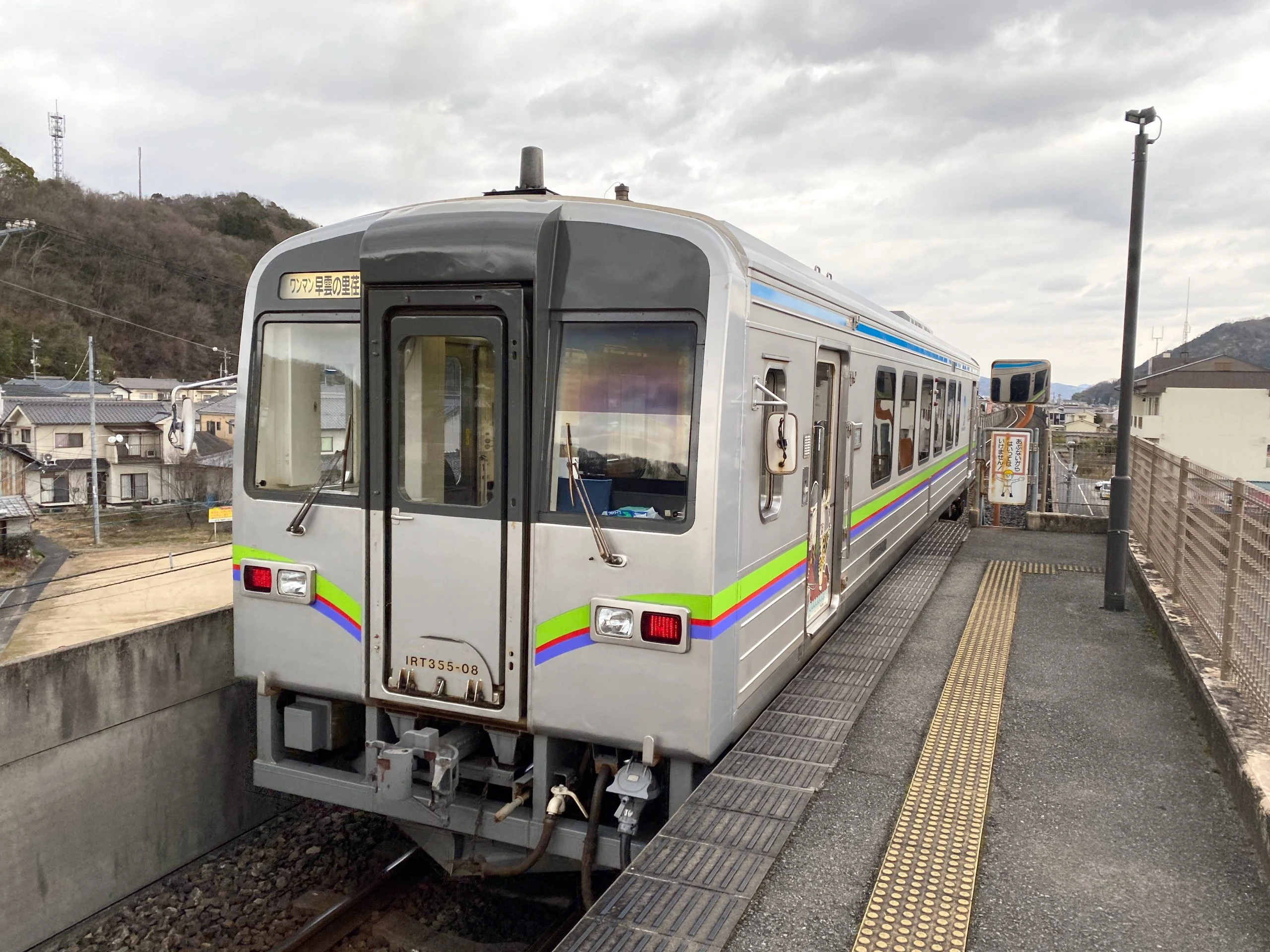
This is a moment when I was with someone who was riding the Ibara Line for the first time.
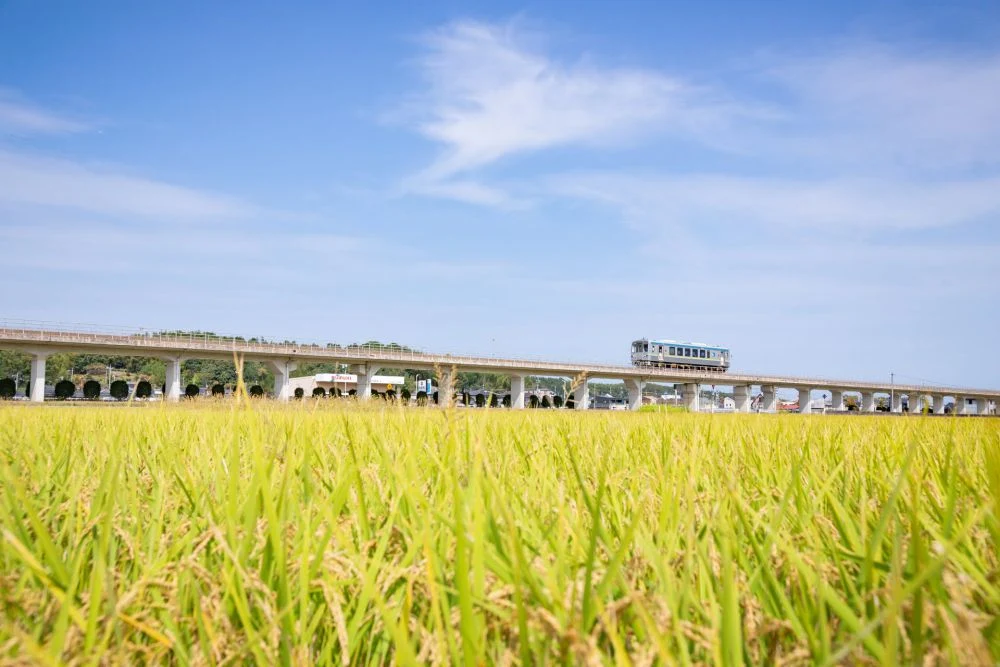
Most people are surprised that the Ibara Line's trains are one-car trains.
It has been 20 years since its opening.
A one-car train passes through the leisurely rural landscape.
This has become a familiar sight along the line.
Two-car trains only run during commuting hours or special events.
On weekdays during the day, it is common for only a few people, including myself, to be on the train.
What are the charms of the Ibara Line?
What are the charms of the Ibara Line?
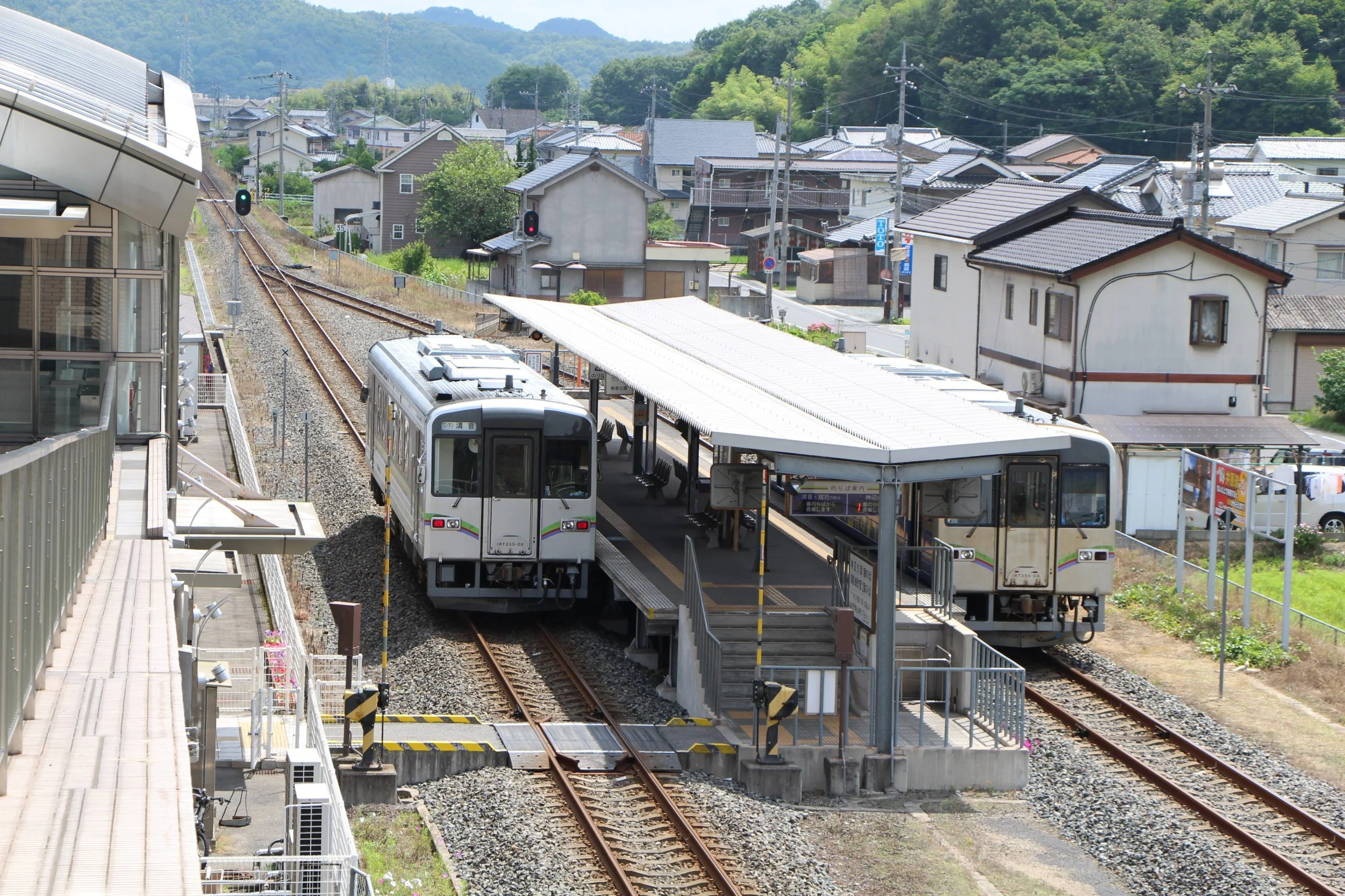
In my opinion, it is because it is the quintessential local line.
It is not running in a tourist area or in the city center, but rather it is integrated into daily life as a means of everyday transportation, which I believe is the greatest charm of the Ibara Line.
It has a different atmosphere from the "flashy" attractions that attract tourists from all over the country with beautiful scenery that looks great on social media.
However, the charm of being a friendly, handmade local railway is also a significant aspect of the Ibara Line.
There are things that attract me as everyday means of transportation used for commuting, going to school, and shopping, rather than for special occasions.
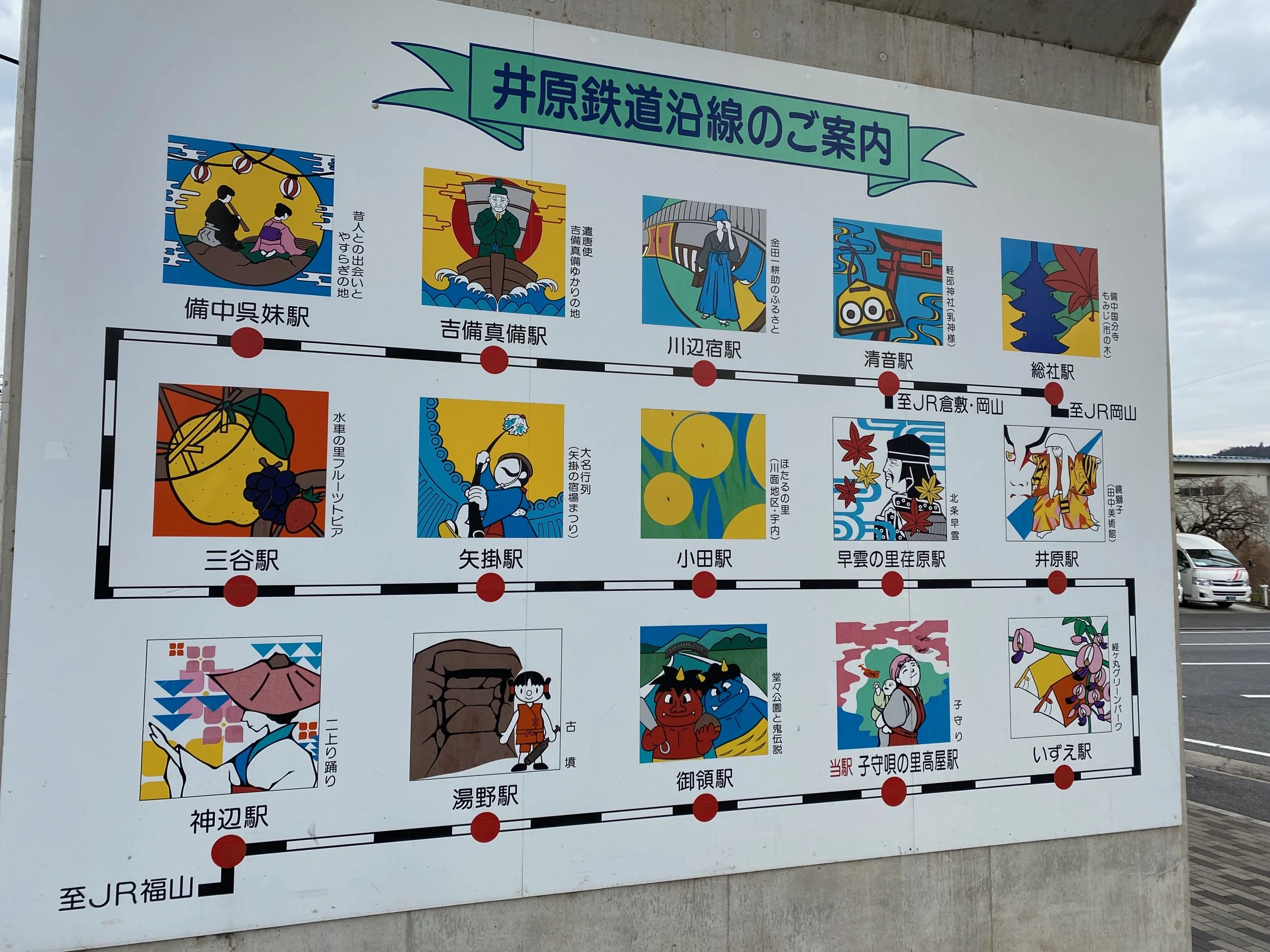
The station name displays unique to the land seen at each station are also points that I hope you will take a look at.
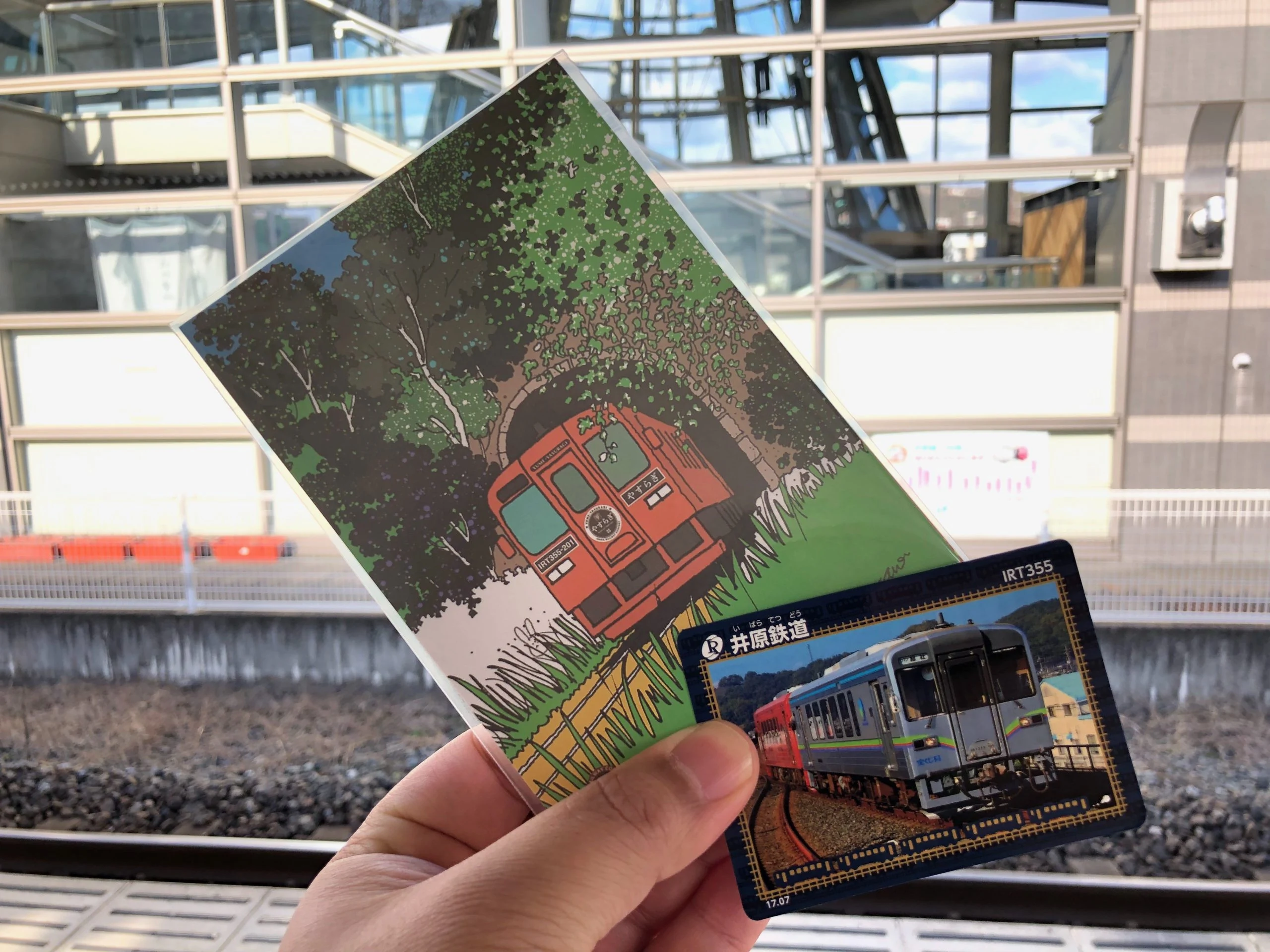
As an interesting initiative, the "train cards" created by local private railway companies across the country also include the Ibara Line.
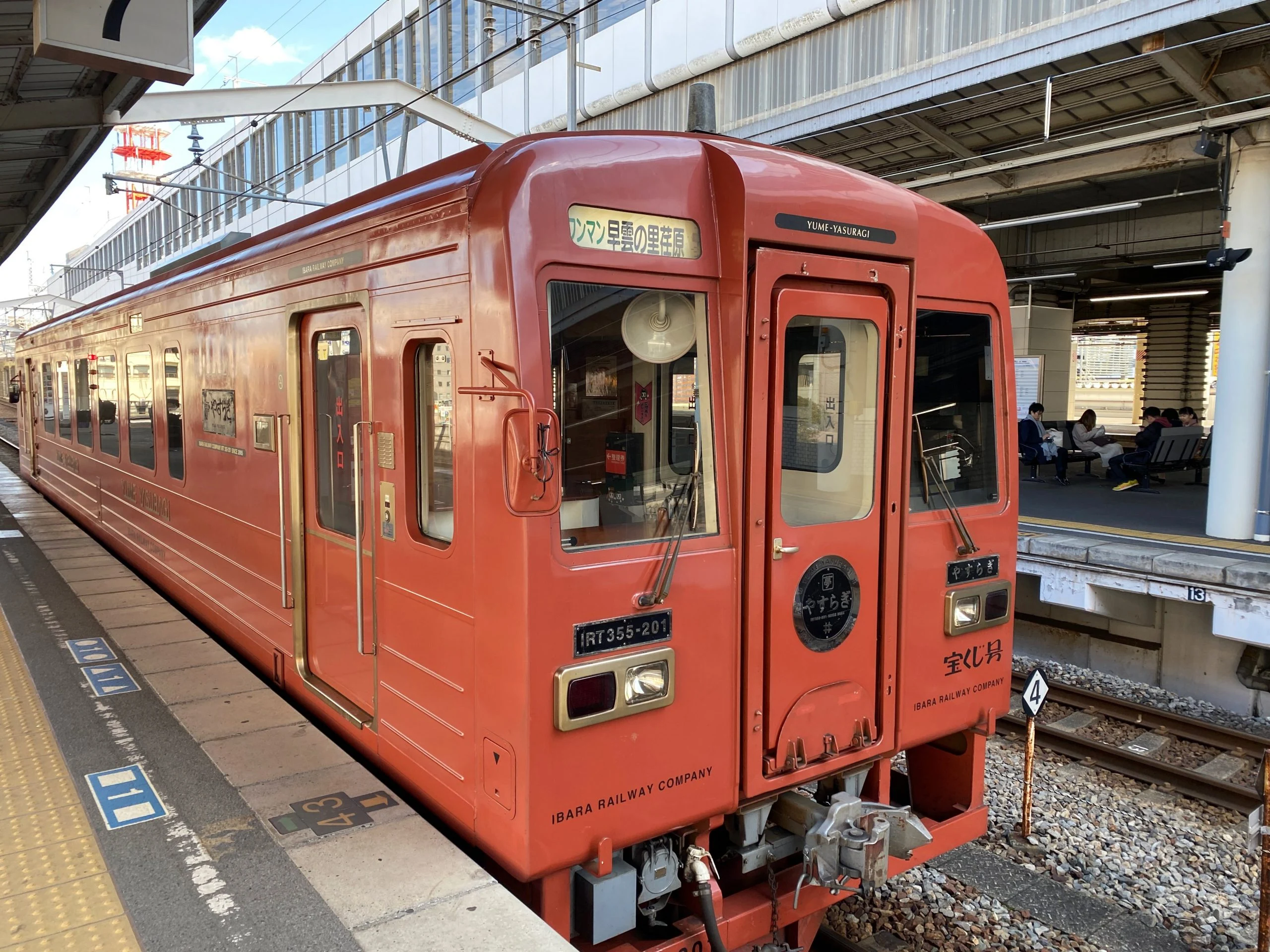
Additionally, there is a retro-style train called Dream Yasukura, and you often see people taking pictures of it.
The Dream Yasukura train uses natural solid wood inside, creating a calm atmosphere in the car.
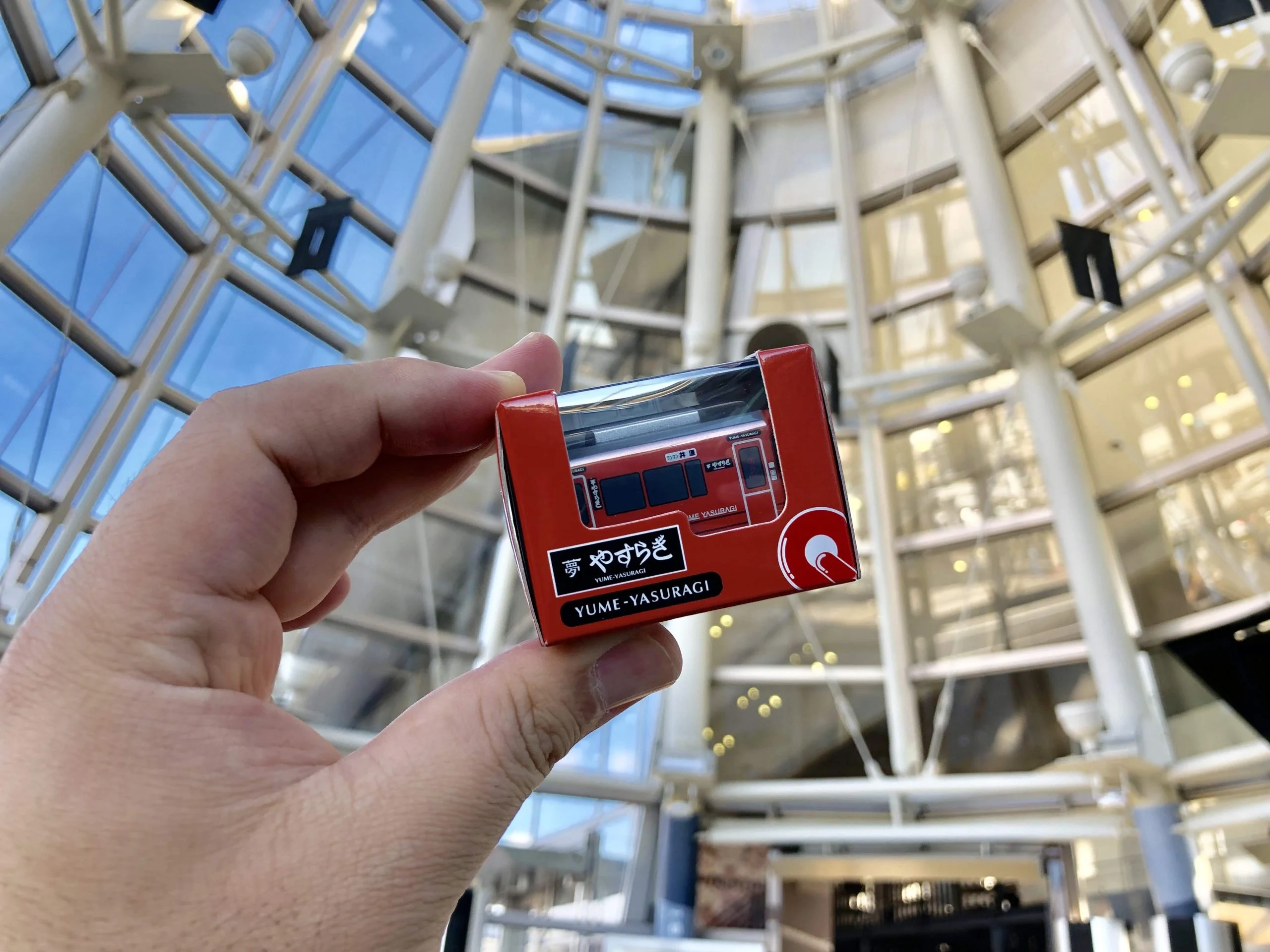
By the way, you can purchase the Dream Yasukura Train Choro-Q at Ibara Station, Kiyone Station, and Yakage Station.
Role as a Local Line
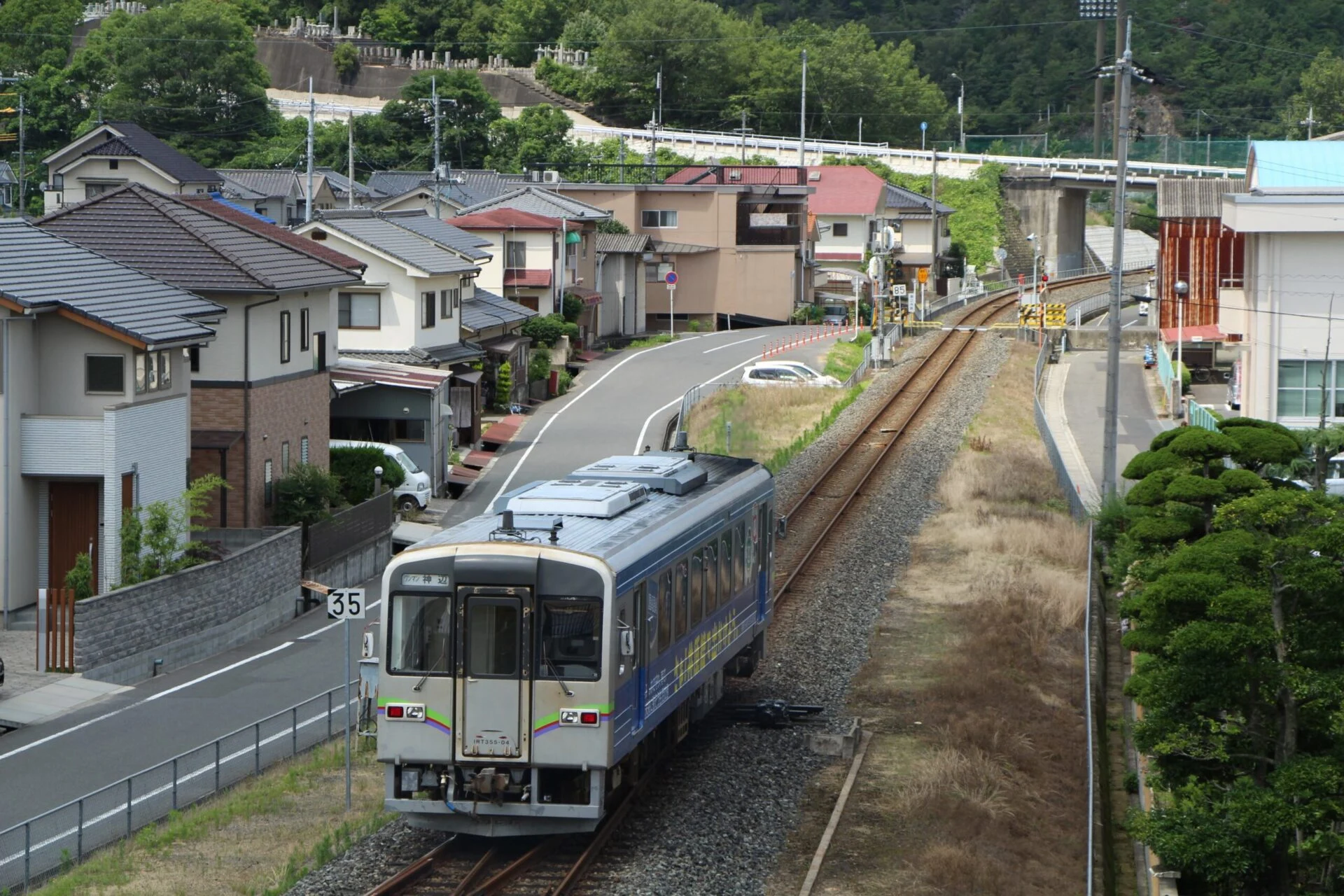
During the heavy rain in July 2018, the Ibara Line also suffered damage to its tracks, and operations were suspended.
As a result, there was a significant impact, such as providing alternative transportation by bus between Soja Station and Mitani Station.
Although the city of Ibara, where the author lives, did not suffer extensive damage, it experienced prolonged effects due to the suspension of service.
This experience made me realize that disasters can occur in my own community, prompting a change in my awareness of the severity of the damage caused by the heavy rain.
The days following the heavy rain in July 2018 strongly reminded me that "what is taken for granted is not always guaranteed."
While route buses also operate along the Ibara Line, there are many situations where "the Ibara Line is better" in terms of the number of services and the capacity for passengers.
Additionally, on the Ibara Line, there are events where various works from local kindergartens, preschools, and welfare facilities are displayed under the title "Gallery Train."
From these aspects, I feel that there is a strong message of "fulfilling the role of a local railway."
Ibara Line Active as a Local Means of Transportation
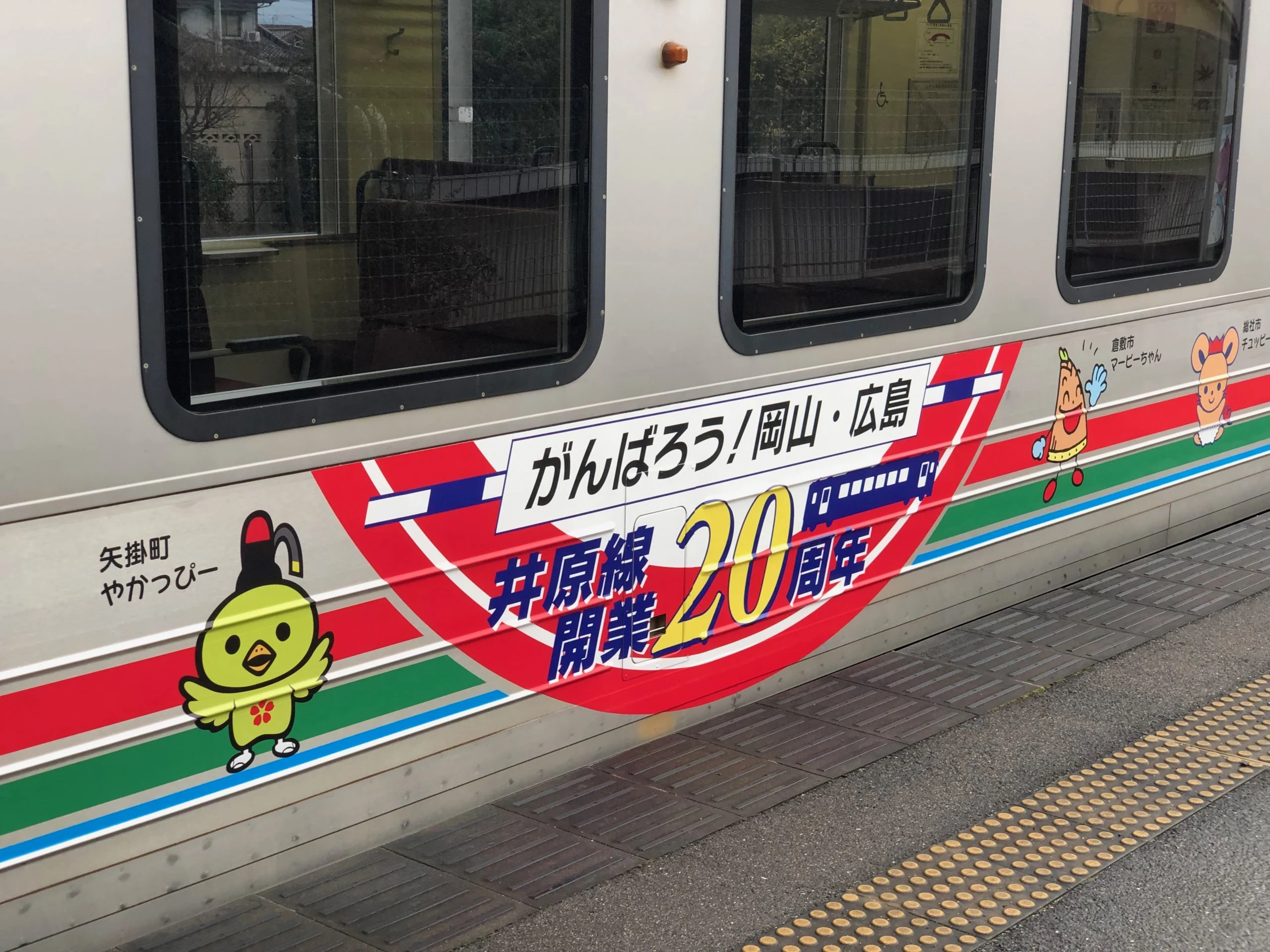
When riding the Ibara Line, you will often share the train with middle and high school students, as well as university students.
There are schools along the Ibara Line, and it covers a wide area from Soja City to Fukuyama City, so it has completely established itself as a means of commuting to school.
Additionally, it plays a role in boosting tourism by collaborating with local events.
On January 12, 2020 (Sunday), there was an Ibara Line Appreciation Day, and events were held centered around Ibara Station.
In local cities with poor transportation, it is often a "car society."
It may not be one car per family, but rather one car per person.
However, for those who cannot drive, calling a taxi every time can be quite a hassle.
In such cases, having public transportation allows you to go shopping, visit the hospital, and meet friends or relatives.
I have increasingly felt that there are things that can only be done because it is a local line, as I use the Ibara Line every day.
The Ibara Line will continue to be active for commuting, going to school, and tourism.
I encourage you to ride the Ibara Line and explore the surrounding area.