
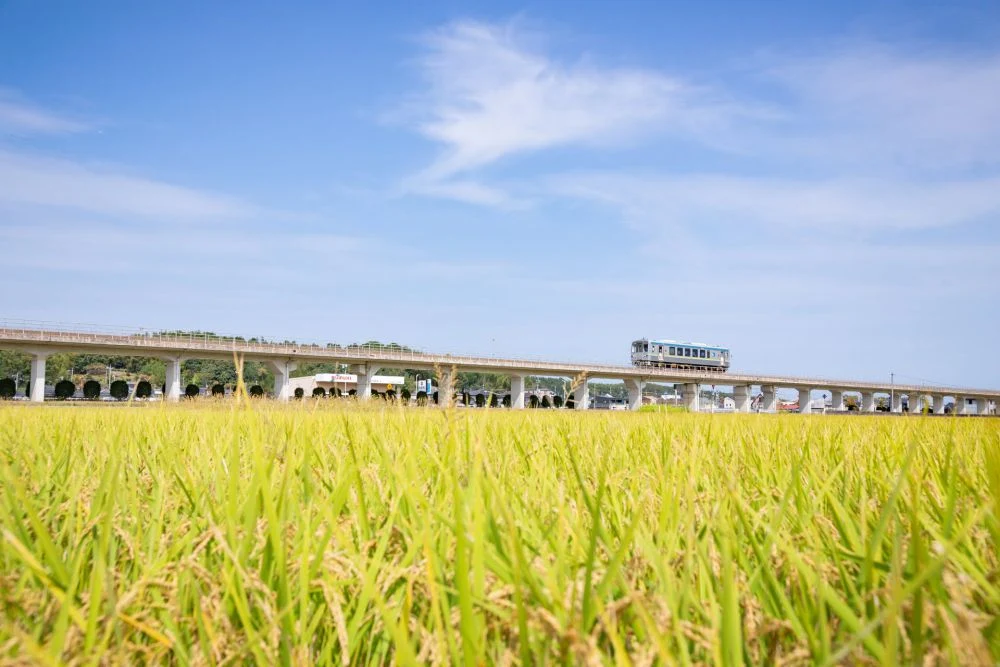
Kibinomakibi Station in Mabi, Kurashiki City is a region where agriculture is thriving.
The damage to the rice fields caused by the heavy rain in July 2018 was significant, and it is said that only half of the expected rice harvest was achieved in the 2018 fiscal year.
About 1 year and 3 months have passed since the heavy rain in July 2018, which was reported with scenes of muddy fields and scattered disaster debris.
In October 2019, we will introduce the current scenery of Mabi Town, where golden rice ears sway in the wind, and the trains of the Ibara Railway run.
What is the Ibara Railway?
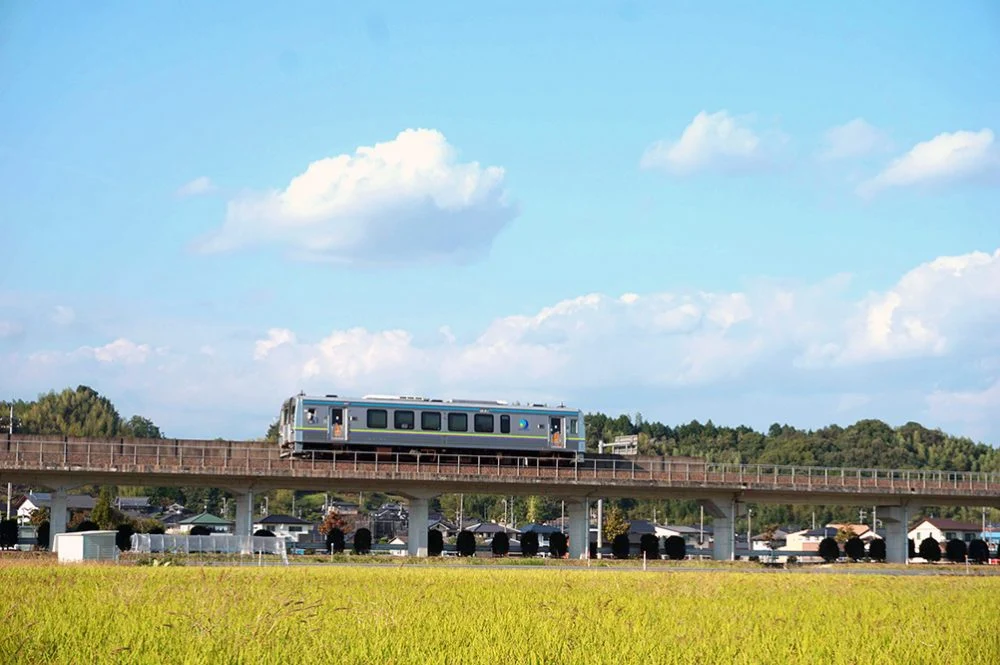
Ibara Railway started operations on January 11, 1999.
It is a railway that runs 41.7 km from "Soja Station" in Soja City, Okayama Prefecture, to "Kannabe Station" in Fukuyama City, Hiroshima Prefecture.
The travel time from Soja to Mabi, Yakage, Ibara, and Fukuyama is about 1 hour and 10 minutes.
It connects the southwestern part of Okayama Prefecture with the eastern Bingo region of Hiroshima Prefecture.
The view from the train window is outstanding!
Instead of multiple cars, it mainly operates single-car trains.
You can leisurely enjoy the rural scenery.
It is mainly used by students and elderly people, and for those living in Mabi Town, it is a railway closely connected to their daily lives.
On weekends and holidays, there are also special tickets and events such as the "Super Holiday Pass" and "Ibara Line DE Tokutoku Market" on the mornings of the first, second, and third Sundays.
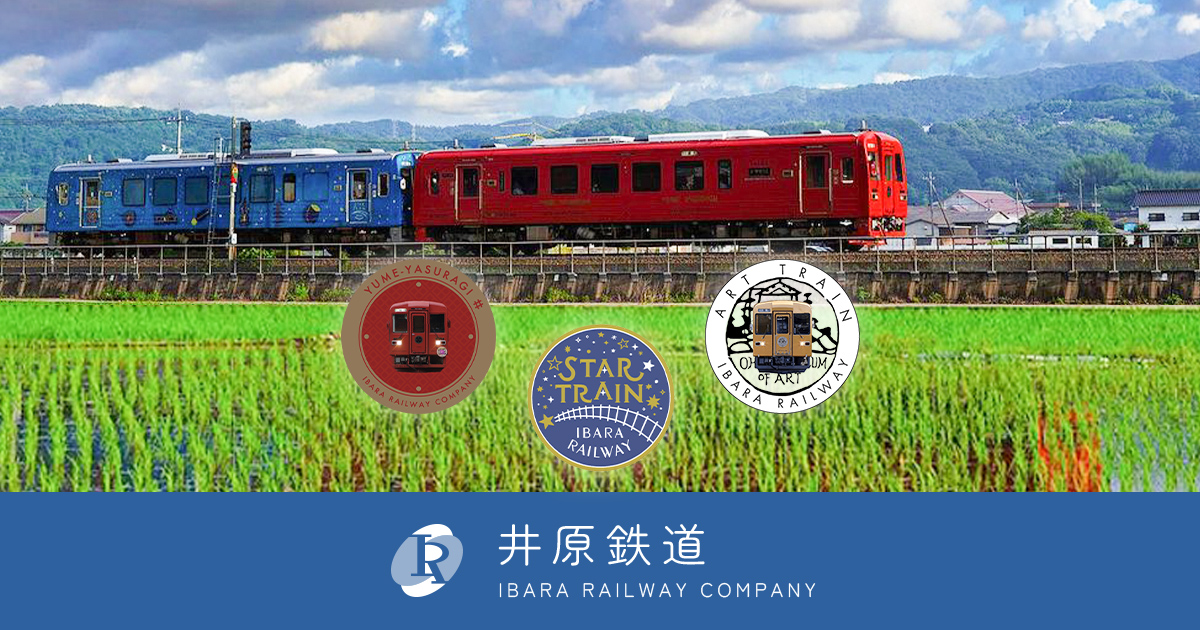
▼The stations of the Ibara Railway are as follows.
| Izue Station | Ibara City, Okayama Prefecture |
| Kawabe-juku Station | Ibara City, Okayama Prefecture |
| Goryo Station | Fukuyama City, Hiroshima Prefecture |
| Yuno Station | Fukuyama City, Hiroshima Prefecture |
| Kannabe Station | Fukuyama City, Hiroshima Prefecture |
At the time of the heavy rain in July 2018, the Ibara Line was completely out of service from July 6, 2018.
After the heavy rain, there was a substitute transportation service by bus for about two months, and full service resumed on September 3, 2018.
When the service resumed and I woke up early in the morning to the sound of the Ibara Railway running through Mabi Town, I felt relieved and almost cried, thinking "normalcy has returned."
The charm of the endlessly expanding rural landscape. About Kawabe-juku Station
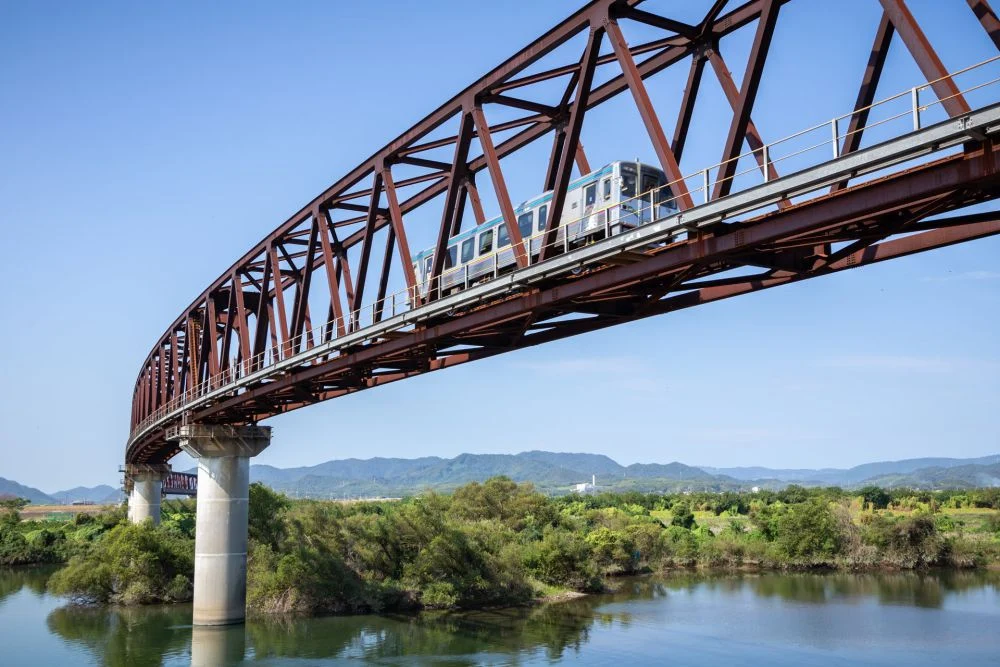
I have used the Ibara Railway many times, and I especially recommend the view from the window when crossing the Takahashi River.
You can enjoy the scenery of the Takahashi River sparkling in the sunlight, which is truly soothing to the heart.
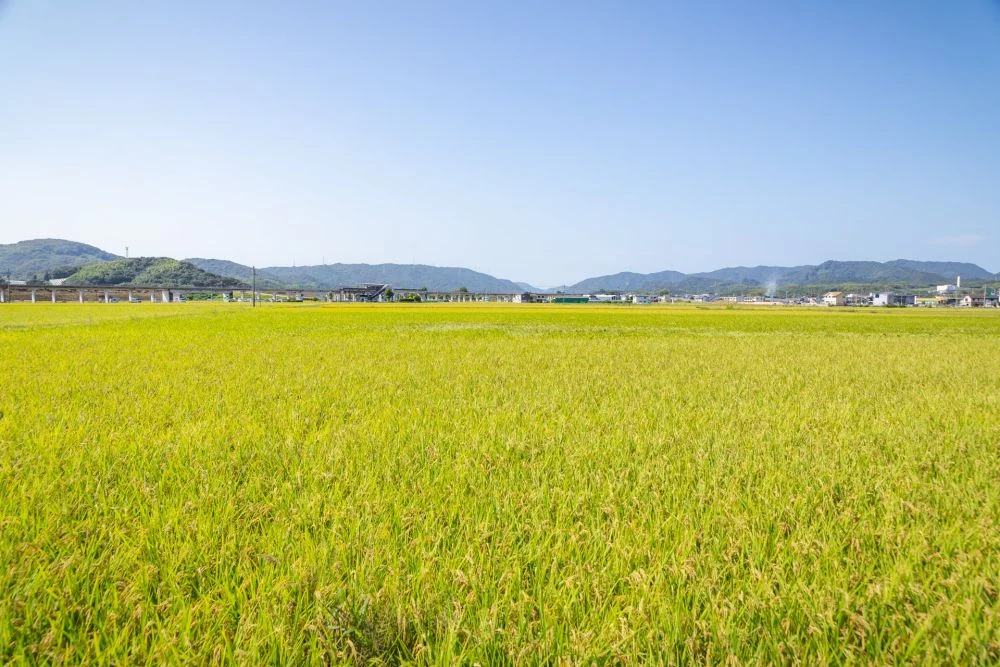
The Kawabe area on the eastern side of Mabi Town derives its name from its location along the banks of the Takahashi River.
The area around Kawabe prospered as a post town on the Sanyo Road, and that is why the station was named "Kawabe-juku Station."
To the north of Kawabe-juku Station, golden rice ears spread out, and during sunset, it is truly a spectacular view!
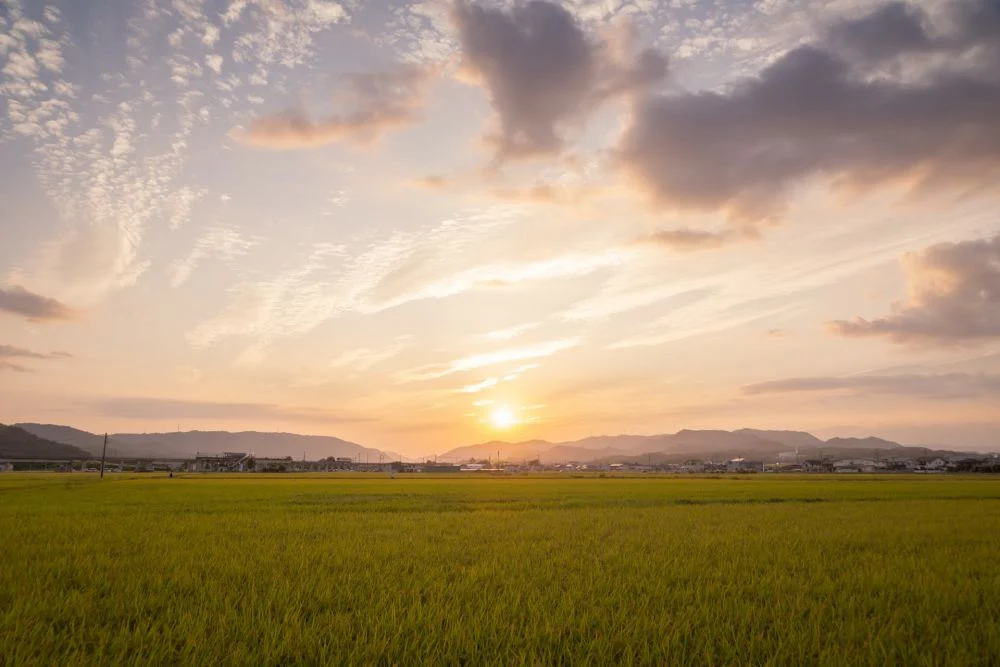
The orange sunset sinking behind the mountains, the softly reddening sky, and the beauty of the golden rice ears made me lose track of time as I gazed in wonder.
About Kibinomakibi Station, the center of Mabi Town
The surroundings of Kibinomakibi Station
Kibinomakibi Station is the central station of the Ibara Railway running through Mabi Town.
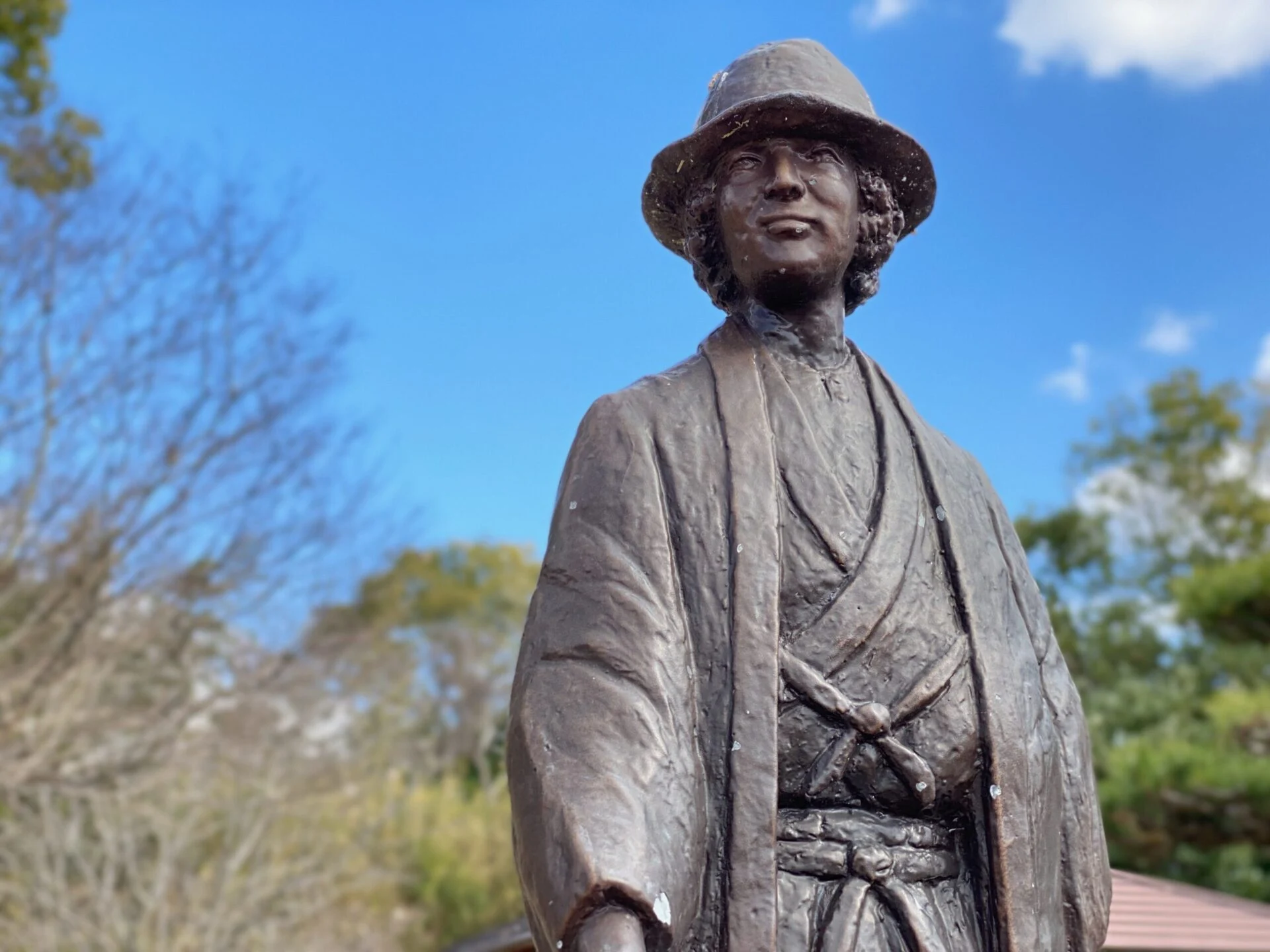
The station name is derived from the name of the great person, Kibi no Makibi, who is said to be the origin of the name of Mabi Town.
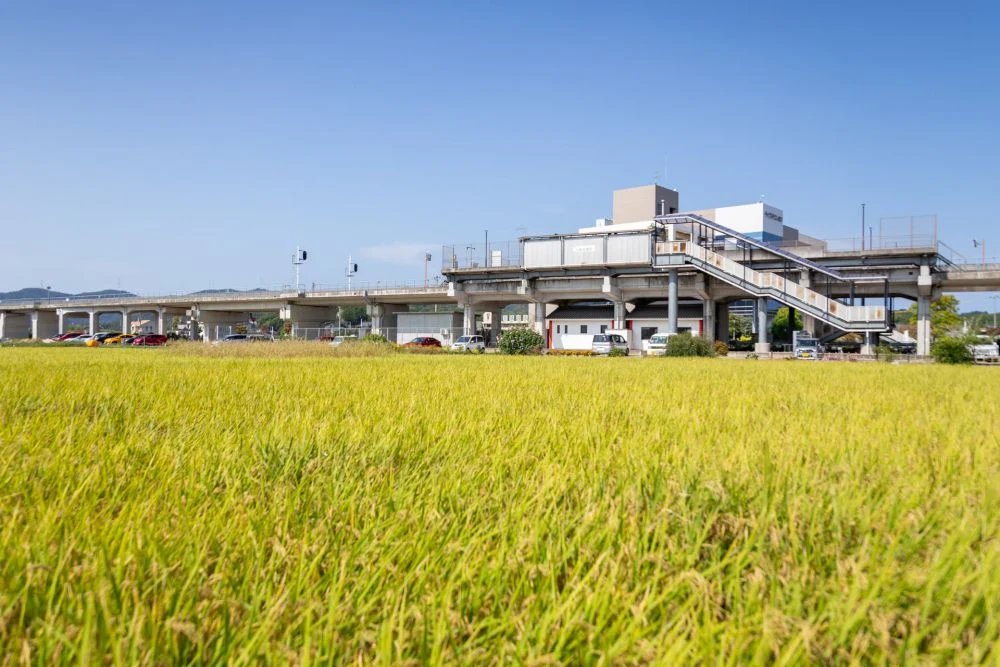
Just north of Kibinomakibi Station in the Yata district of Mabi Town, there are places like "Life Town Mabi" and "Kurashiki City Office Mabi Branch," making it a central location in the Mabi area.
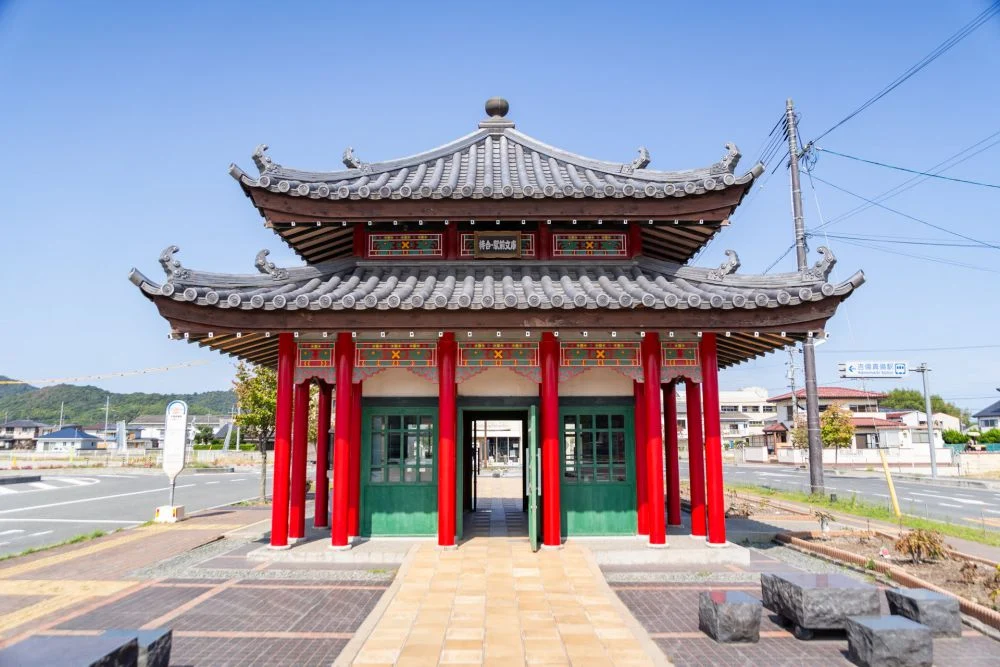
To the north of Kibinomakibi Station, there is a Chinese-style building.
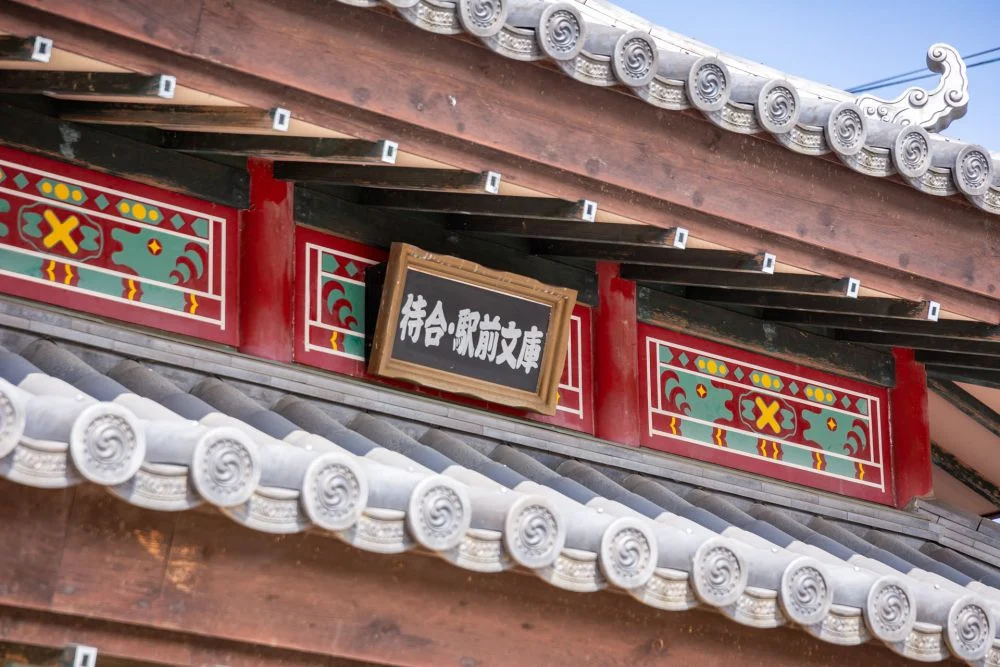
If you look closely, you can find a sign that says "Waiting Room / Station Front Library!"
As of 2019, there are no books in the library, but it is used as a waiting area for the station.
The same Chinese-style buildings are also found in "Makibi Park," "Makibi Memorial Hall," and "Take-no-ko Tea House," which can be reached in about a 15-minute walk from Kibinomakibi Station.
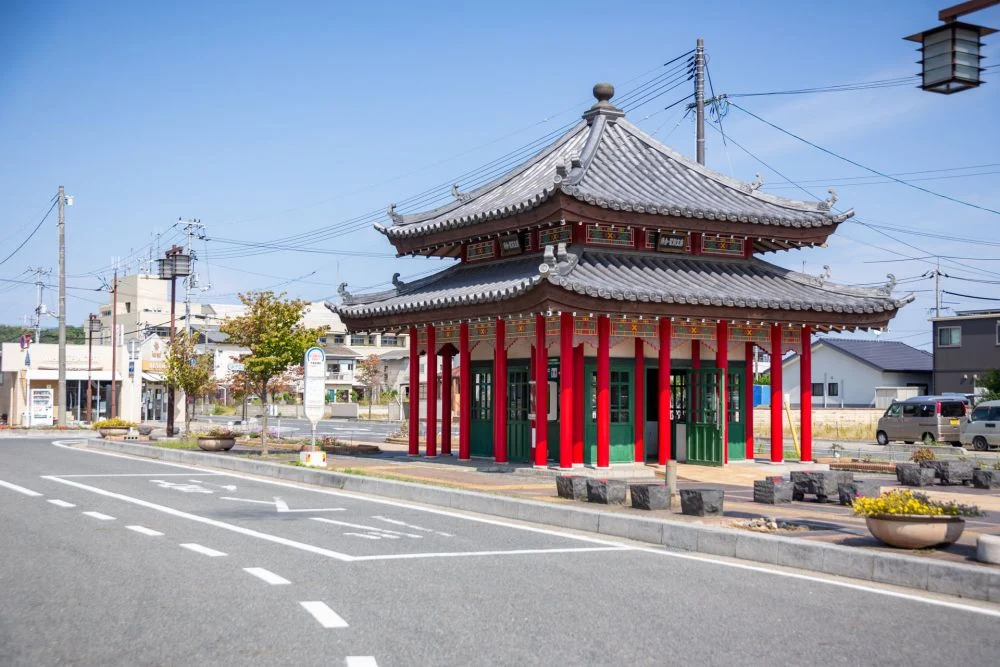
Around this waiting room, a "Sunday Morning Market" is held every second Sunday of the month at 8 AM.
You may find seasonal special prices for local specialties such as bamboo shoots and grapes (Pione) that are famous in Mabi Town, making it a great deal.
The local specialties "Bamboo Shoot Croquettes" and "Mabi Okowa" are highly recommended, so why not visit by taking the Ibara Line?
Never forget the memory of the heavy rain. What is the Orange Line?
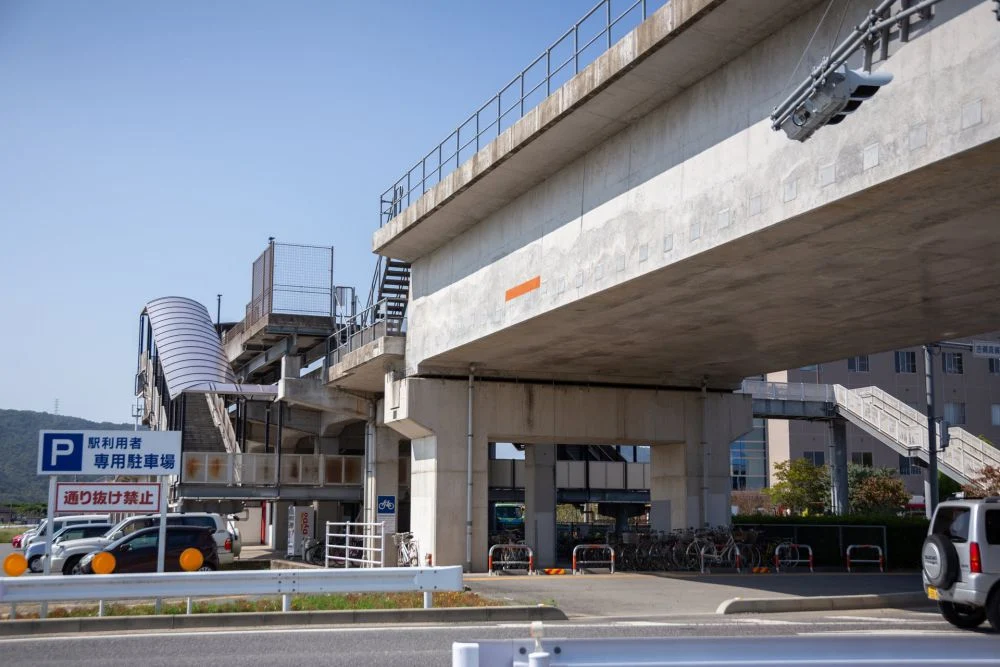
Can you see the orange line marked under the station's elevated structure?
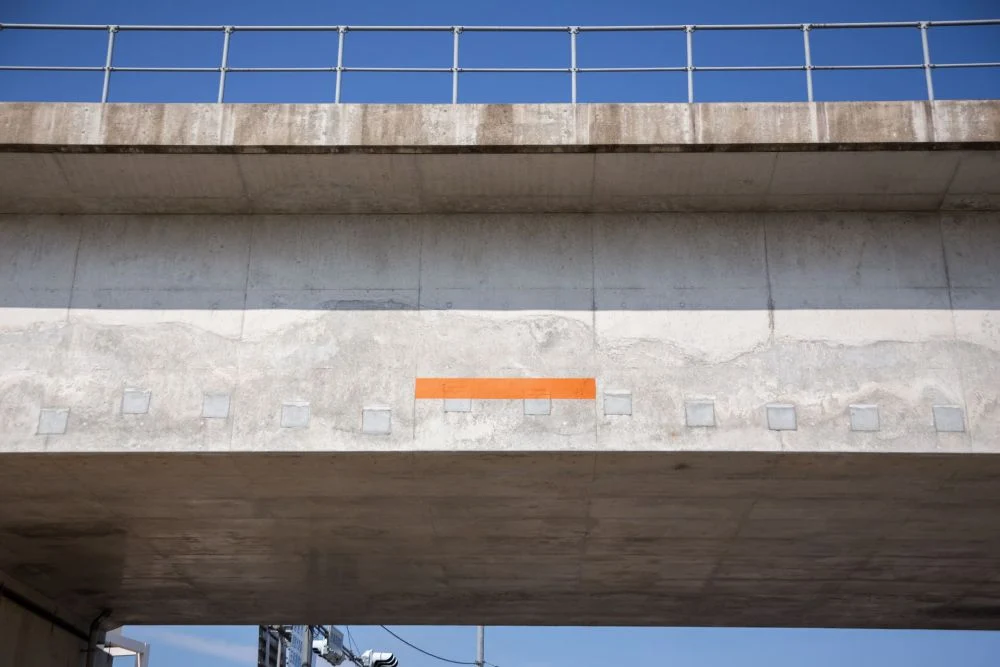
This "Orange Line" is located at a height of about 5 meters, the same height as the embankment of the Oda River flowing from west to east through the town.
Members of the Yata District Community Development Council, based on past flood experiences, painted this line two years before the heavy rain in July 2018, stating, "At the worst time, the water will come up to here."
In fact, during the heavy rain in July 2018, it was reported that the water reached this "Orange Line."
As of 2019, a peaceful landscape spreads out, but I felt again that "we must never forget the efforts to prevent the disaster from fading away."
A spot to view the Ibara Railway trains up close. About Bitchu Kurese Station
Next, we head to the Kurese district on the west side of Mabi Town.
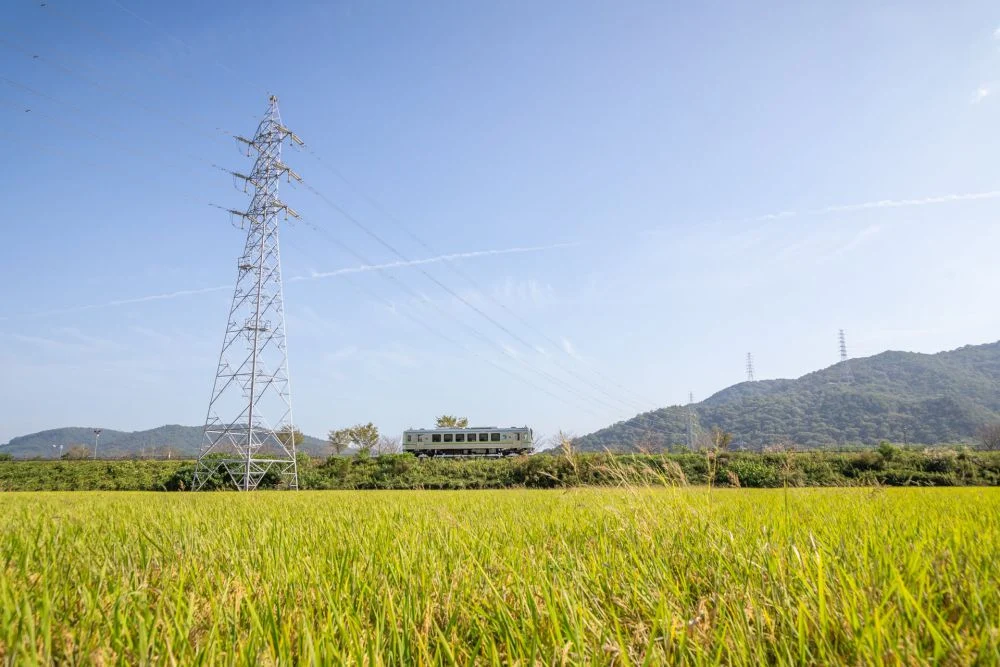
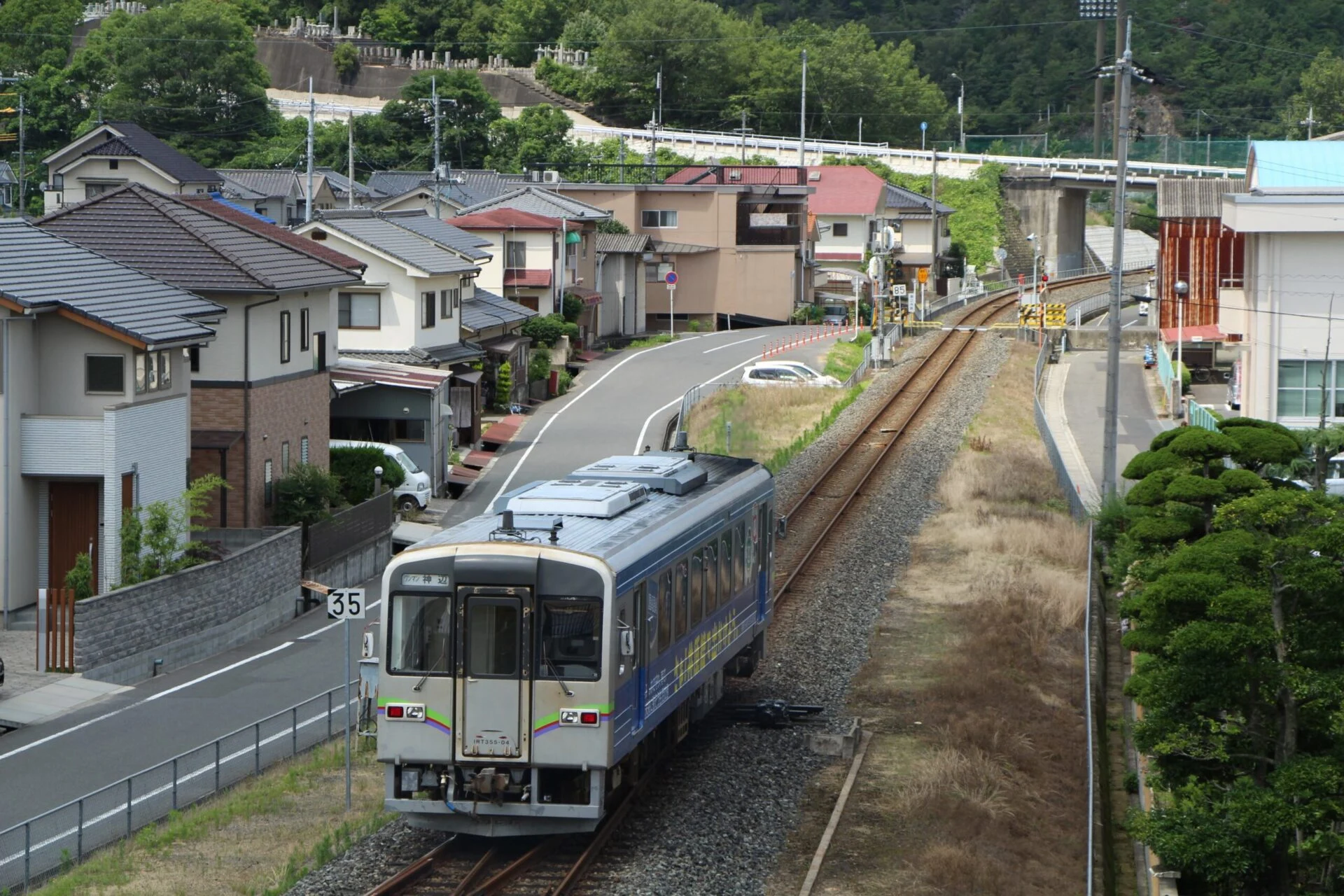
While the Ibara Railway runs mostly on elevated tracks, this line runs at a level almost the same as the roadway, making it a spot where you can view the trains up close.
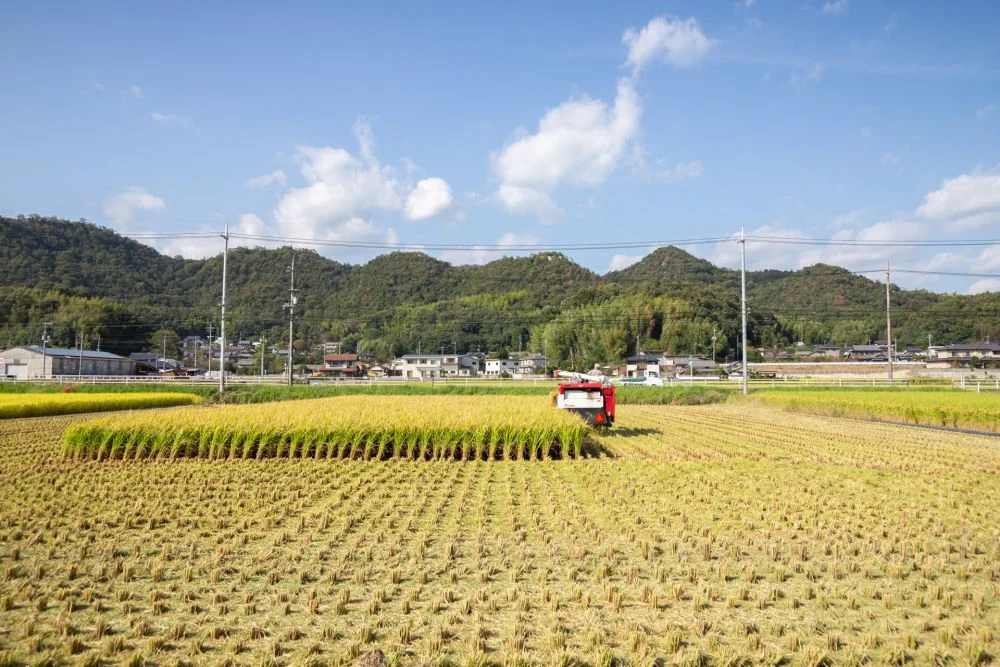
On October 5, 2019, when the interview was conducted, the rice harvesting had just begun, and we were able to see the rice being cut by a combine harvester.
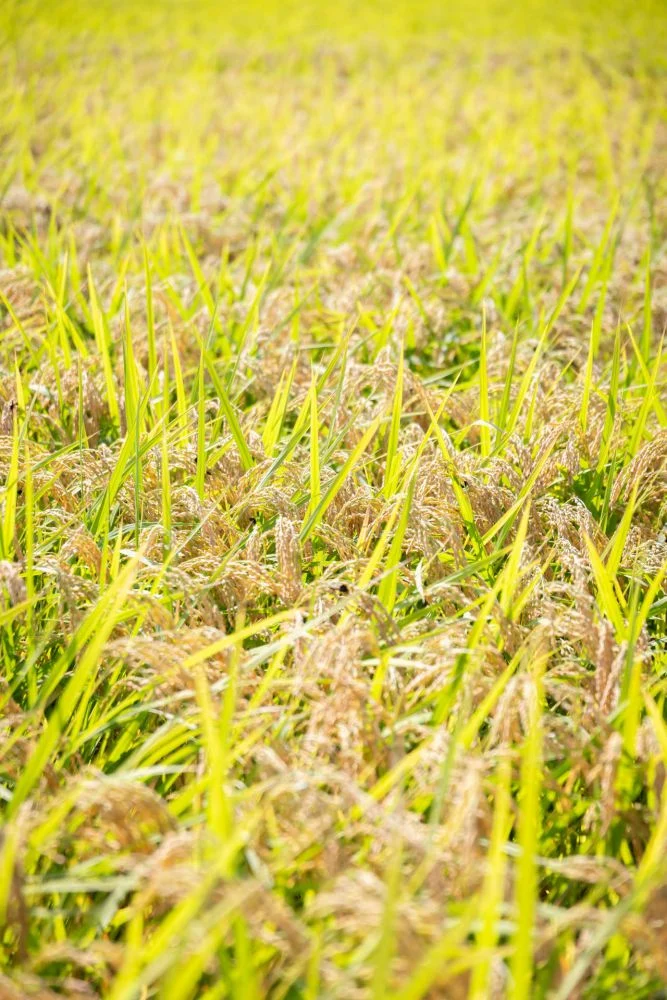
The richly ripened rice ears are drooping, eagerly awaiting the time for harvest.
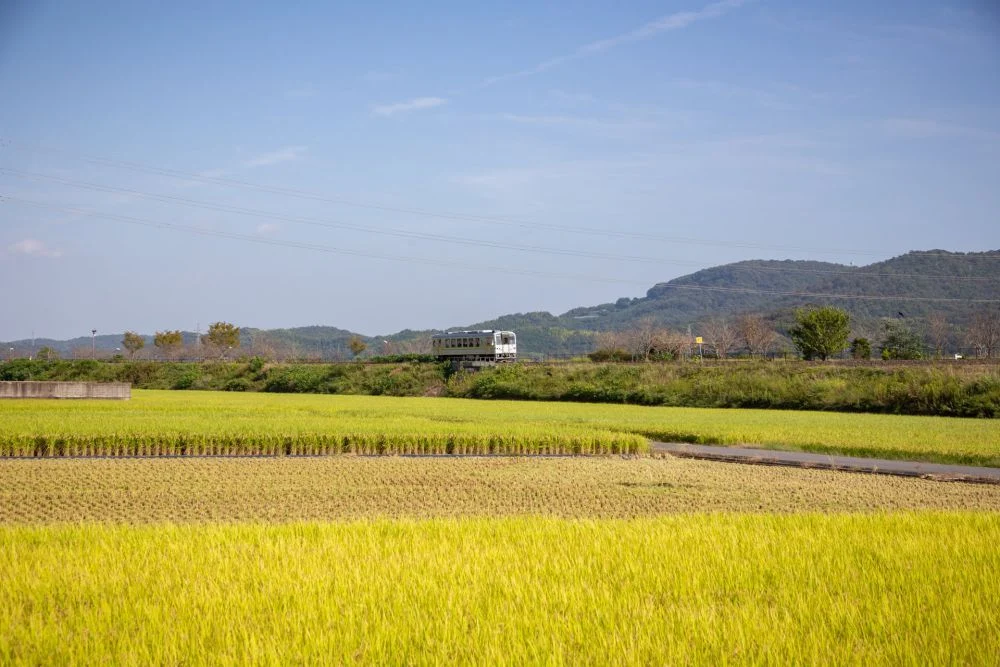
As the autumn leisure season approaches, why not take a leisurely visit to Mabi Town via the Ibara Railway, enjoy the scenery, and savor the fresh air?
July 2019, The "Now" of Mabi Town as Seen from the Ibara Railway
There is also a video capturing the "now" of Mabi Town taken from the window of the Ibara Railway, so please take a look.
The scars from the heavy rain disaster in July 2018 remain, but you can see that recovery is gradually progressing.
Conclusion
This article was requested from Toshiyuki Sasaki, who assisted with the photography for the "13th Kurashiki Haruyoi Akari 2019" article.
I conveyed my thoughts and requests to him for the shoot, and I was deeply moved by the resulting photos of the gentle scenery of Mabi Town.
Right after the heavy rain disaster in July 2018, there were piles of disaster debris under the elevated tracks of the Ibara Railway.
Now, thanks to the cooperation of many people, Mabi Town is gradually regaining its original scenery.
The trains of the Ibara Railway run, and the sound of "clackety-clack" resonates.
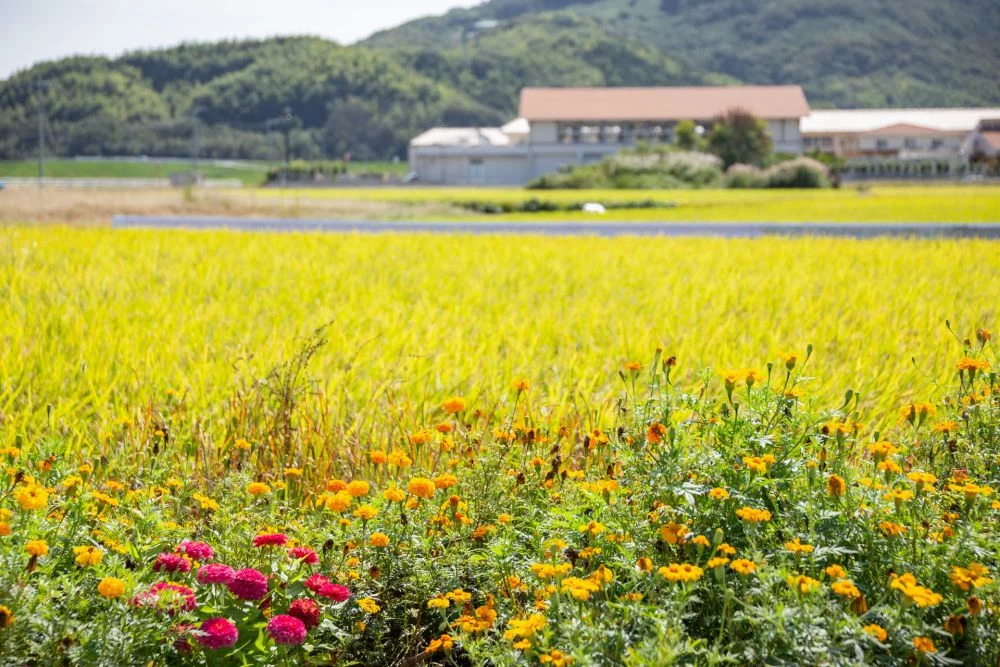
And in the flower beds planted by town planners and volunteers, seasonal flowers bloom, and the rice fields are filled with abundant rice ears.
May the beauty of Mabi Town in autumn 2019 reach many people.










Photography: Toshiyuki Sasaki (Instagram)