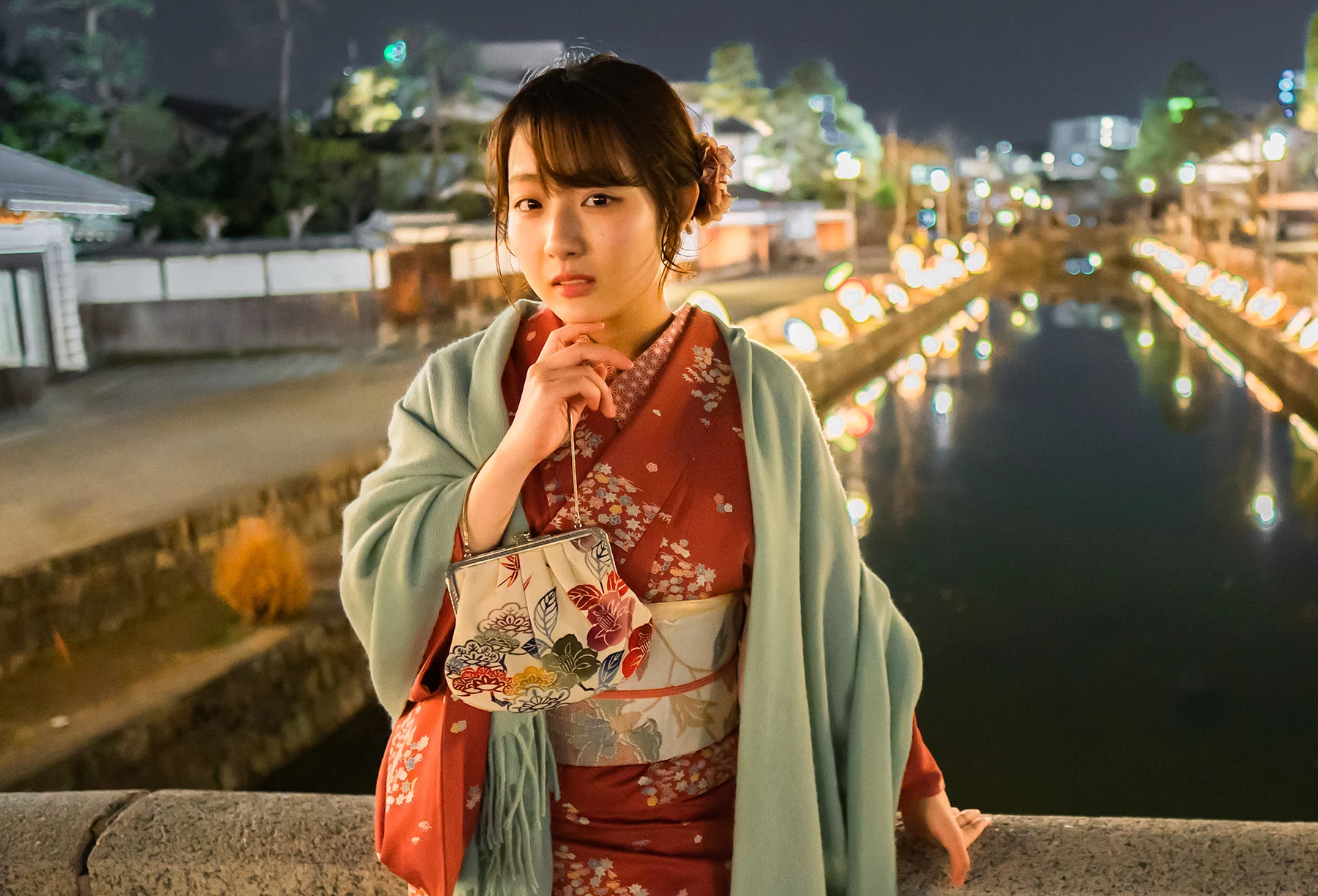
“Kurashiki Shunsho Akari” lights up the night in the Bikan Historical Area with traditional Japanese illumination.
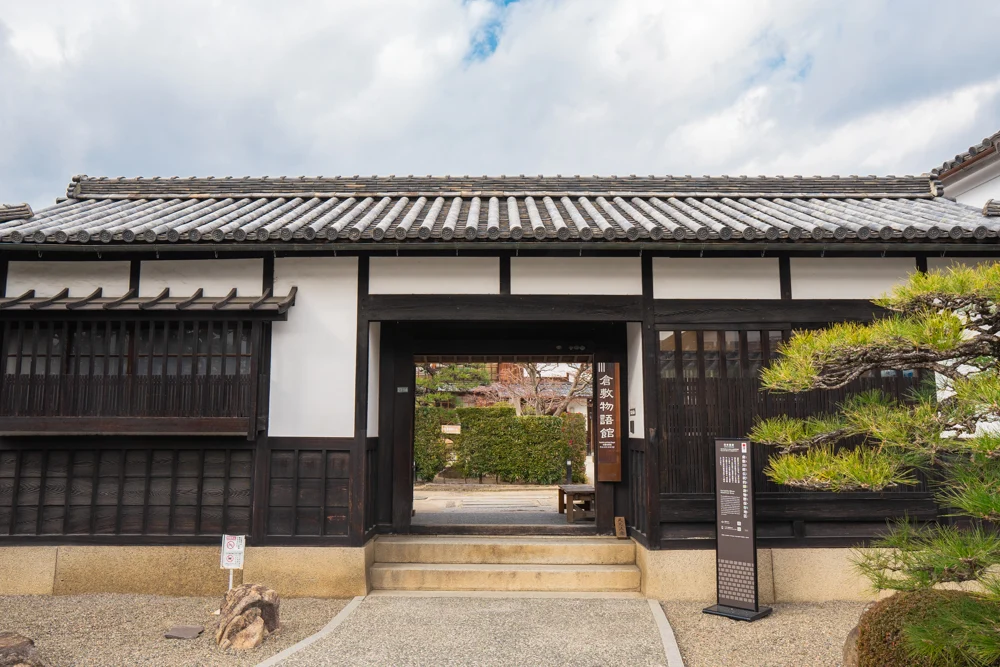
The lights harmonize with the scenery of the Bikan Historical Area, including Japanese umbrella lights lined up in front of the beautiful mansion with green roof tiles, Yurin-so Villa, and cut-glass lights displayed in the garden and in front of the nagaya-mon gate at Kurashiki City Kurashiki Monogatari-kan.
Each year, the event features thoughtfully designed lights that illuminate the Bikan Historical Area at night, making it a wonderful way to enjoy a spring evening stroll.
Along with the event held on March 9, 2019, we’ll introduce the Bikan Historical Area’s nighttime charms, including its classic photogenic spots!

The information presented was current when this article was published in March 2019. Please note that it may differ from current information.
What Is Kurashiki Shunsho Akari?
The event grew out of “Starlight Avenue,” which began in March 1993 and illuminated the area around JR Kurashiki Station.
The area around the north exit of JR Kurashiki Station (including the former Kurashiki Tivoli Park) and the area from the south exit to near the Bikan Historical Area were brightly illuminated each spring until March 2005.
The following year, in 2006, it was renamed “Kurashiki Shunsho Akari” and reborn as a nighttime illumination event suited to the traditional Japanese scenery of the Bikan Historical Area. In 2019, it was held for the 13th time.
The event was canceled in 2011 due to the Great East Japan Earthquake.

We covered Kurashiki Shunsho Akari on March 9, 2019.
The schedule for the 13th Kurashiki Shunsho Akari was as follows:
- Saturday, March 9, 2019
- Saturday, March 16, 2019
- Sunday, March 17, 2019
The event ran from 6 p.m. to 9 p.m. (with some exceptions), with the entire Bikan Historical Area serving as the venue.
Opening Ceremony

On the first day, March 9, the opening ceremony began at 5:30 p.m. on Imabashi Bridge in front of Ohashi Museum of Art.
The event opened with greetings from Kurashiki City Mayor Kaori Ito, followed by an opening declaration from Kiyohiko Kobayashi, chairman of the Kurashiki Tourism and Convention Bureau.

Toshihiro Inoue, a director of the Okayama Nishi Agricultural Cooperative, said:
“I’m very pleased that sweet peas from Funao, Kurashiki, which ranks second in the country for shipment volume, can add flowers to the event. Kurashiki sweet peas are known for their wide range of colors. Please enjoy their colors and fragrance.”
The colorful sweet peas were displayed in front of participating shops along the Kurashiki River, adding a touch of spring to the town.
Next came a performance by the “Mabi Bamboo Orchestra,” which began its activities in 1996 as part of community revitalization in the Mabi area.

The gentle tones of the bamboo xylophone rang out.

They performed “Furusato” on bamboo instruments handmade by people involved in bamboo crafts in Mabi.
The moving performance enveloped the Bikan Historical Area as dusk gradually fell.

“Spring Evening Concert” by the “Mabi Bamboo Orchestra”
The Spring Evening Concert was held at Kurashiki City Kurashiki Monogatari-kan from 6:30 p.m.
It was still light during the opening ceremony, but in just an hour the sun had completely set and it had grown dark—the perfect time to enjoy the evening lights.
The concert was performed by the “Mabi Bamboo Orchestra,” which had also given a wonderful performance at the opening ceremony.

The instruments used by the “Mabi Bamboo Orchestra” were damaged in the July 2018 heavy rains, becoming rusty or breaking.
To resume activities, members of the Bamboo Orchestra posted on Twitter asking for help.
In response, people in Okayama Prefecture donated an electronic piano and a glockenspiel, while volunteers washed and repaired the bamboo instruments, allowing the group to hold this concert.

They seemed nervous at the opening, but gradually began to smile, and it was clear they were enjoying the performance.
“We were able to reach this day thanks to the support of so many people. We hope you’ll continue to support us,” one of the members said in closing.
Seeing performers of all ages, from elementary school students to older adults, dressed in their newly made uniforms and playing in unison was truly uplifting.
The Bamboo Orchestra performed only on March 9.
“Cut-Glass Lights” That Harmonize with the Bikan Historical Area
Here’s a look at the “cut-glass lights,” made by illuminating cut-glass pieces shaped as fourteen-faced polyhedra with equilateral triangular and square faces.
The cut-glass lights are highly recommended by the author!

We spoke with Mr. Suyama, who handles reception and event planning at Kurashiki City Kurashiki Monogatari-kan and makes the cut-glass lights.
This time, we made cut-glass lights with a Japanese theme. We also have new designs inspired by paper balloons.
Since the main building was being used as the Spring Evening Concert stage on March 9, 2019, the cut-glass lights could not be displayed there. However, we plan to use the main building for the display on March 16 and 17.
We arrange the display based on the inspiration of the day, so I think you’ll be able to enjoy cut-glass lights with a different atmosphere each time.
We’ll also hold a workshop to make mini cut-glass lanterns, limited to 15 people per day on a first-come, first-served basis. If you’re interested, please take this opportunity to make one.
Workshops are held even on days when the Shunsho Akari event is not taking place, so please get in touch if you’re interested.
Shadow-Picture Lights, “Spring Evening Almanac,” to Enjoy on a Stroll
Here are the “shadow-picture lights,” held daily from sunset until 9 p.m. from March 9 to 17, 2019.

First, here are the shadow-picture lights at Ko-eido Kurashiki Yukei Store, famous for its kibidango dumplings.
The shadow-picture projections blend into the townscape of traditional merchant houses, creating an elegant atmosphere quite different from the usual scene.

At Ohashi House, you can enjoy shadow-picture lights in two locations, to the north and south, so I went to take a look.

Cars also pass along the road, so please take care when taking photos.

Images are projected onto the shoji screens, with different scenes to enjoy at each location.
There are eight shadow-light displays in all this year!
We also recommend strolling through the Bikan Historical Area at night as you look for the shadow lights.
“Wish Lights,” with wishes placed in candle cups
Next, head to “Wish Lights,” where people write their wishes on candle cups, place lights inside, and display them along the Kurashiki River.

The scene reflected on the water is different from what you see during the day, creating an enchanting atmosphere.

About 300 small lights, inscribed with the wishes of many people, were lined up along the Kurashiki River.

“May our whole family live happily.”
“May we spend our days smiling.”
Lights bearing all kinds of wishes lined the Kurashiki River in a colorful display.
Wish Lights are displayed only on March 9.
“Shinkei-en Lights,” in a magnificent Japanese garden

Next, we made our way to “Shinkei-en Lights.”

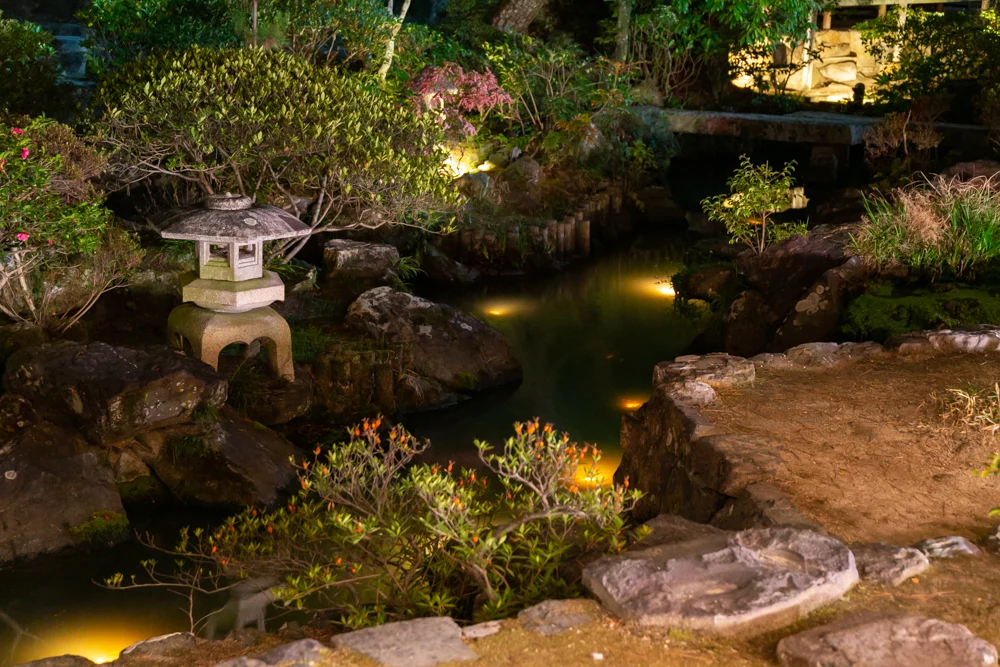
▲ The garden at Shinkei-en Garden

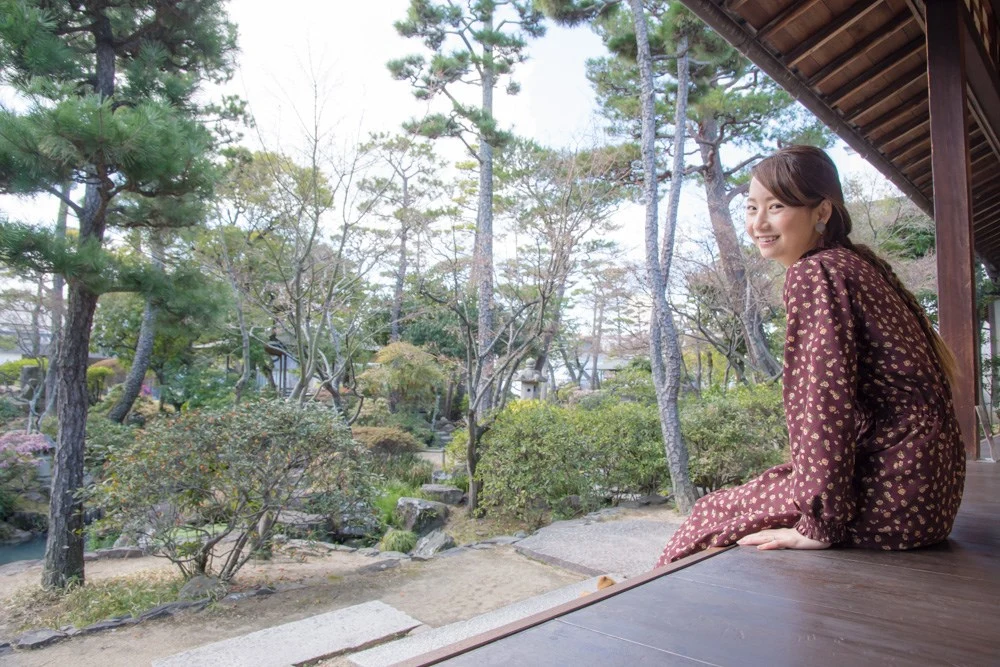
Take in the garden from the veranda, enjoying its atmosphere unlike that of daytime, and relax as you savor a spring evening.
The popular, photogenic “Japanese Umbrella Lights”
Finally, we headed to “Japanese Umbrella Lights,” where Japanese umbrellas are arranged and illuminated along the street in front of Yurin-so Villa, the former secondary residence of the Ohara family.

The gentle red, green, and orange glow of the umbrellas stands out against the white walls of the Bikan Historical Area, while candle flames add to the scene around the Kurashiki River.

It gets quite crowded because this display is popular, so please be considerate of others when taking photos.
A nighttime stroll through the Bikan Historical Area

The shops were bustling on the days of the Shunsho Akari event.
Even shops that normally close in the evening stayed open for the event.

Shunsho Akari runs until 9 p.m.
A little after 9 p.m., the Bikan Historical Area returns to its usual quiet nighttime atmosphere.
I especially like the view of Ryokan Kurashiki and the Kurashiki Momoko building from Nakabashi Bridge.

▼ We asked Toshiyuki Sasaki, who helped us with photography for this article, to take a photo at one of his favorite spots in the Bikan Historical Area at night.
Can you tell where this is?
It’s that alley bustling with people during the day. At night, it falls completely silent and has an entirely different atmosphere.
The “Kamaboko” sign is your clue. See if you can find it.

From the Writer
The Shunsho Akari event began at dusk.
This time, we’ve introduced the Bikan Historical Area after Shunsho Akari ended and the night had grown quiet.
Could you get a sense of how the atmosphere changes as time passes?

“Shunsho Akari” is an event where you can enjoy the Bikan Historical Area at night, beautifully illuminated.
Even more lights will be added on the special days, March 16 and 17, 2019!
- Alley Lights
- Townscape Lights
- Bamboo Lights
- Flower Lanterns
- Dream Cherry Blossoms

Kurashiki Shunsho Akari is my favorite event in the Bikan Historical Area, where you can feel the arrival of spring!
At night, the Bikan Historical Area has a different atmosphere from the daytime, offering a truly special experience.
Why not take a leisurely stroll, feeling the night breeze as you admire the buildings and streetlights reflected on the surface of the Kurashiki River?
You’re sure to discover new charms of the Bikan Historical Area.
- Photography: Toshiyuki Sasaki
Kurashiki Shunsho Akari Information

| Name | Kurashiki Shunsho Akari |
|---|---|
| Dates | March 9, 2019, March 16, 2019, and March 17, 2019 6:00 p.m. to 9:00 p.m. (some exceptions) |
| Location | Bikan Historical Area |
| Admission (tax included) | Free |
| Website | 13th Kurashiki Shunsho Akari 2019 |


What would you like to know about Kurashiki?
Enter a word to search articles on this site