It is still too early to call it spring, and the Bikan Historical Area is illuminated with soft lights.
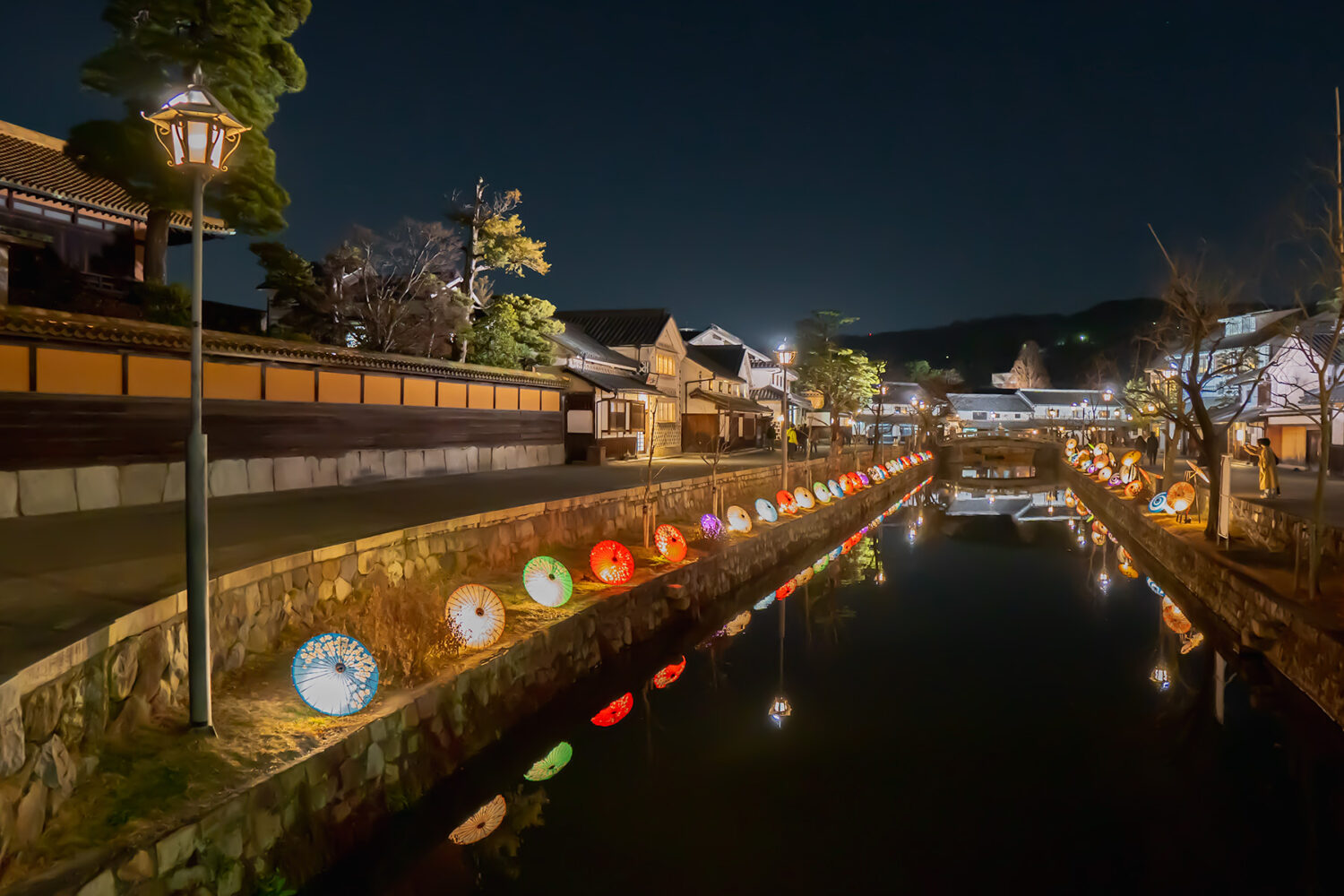
Kurashiki Haruyoi Akari is a light-up event held every year from mid-February to early March in the Bikan Historical Area of Kurashiki.
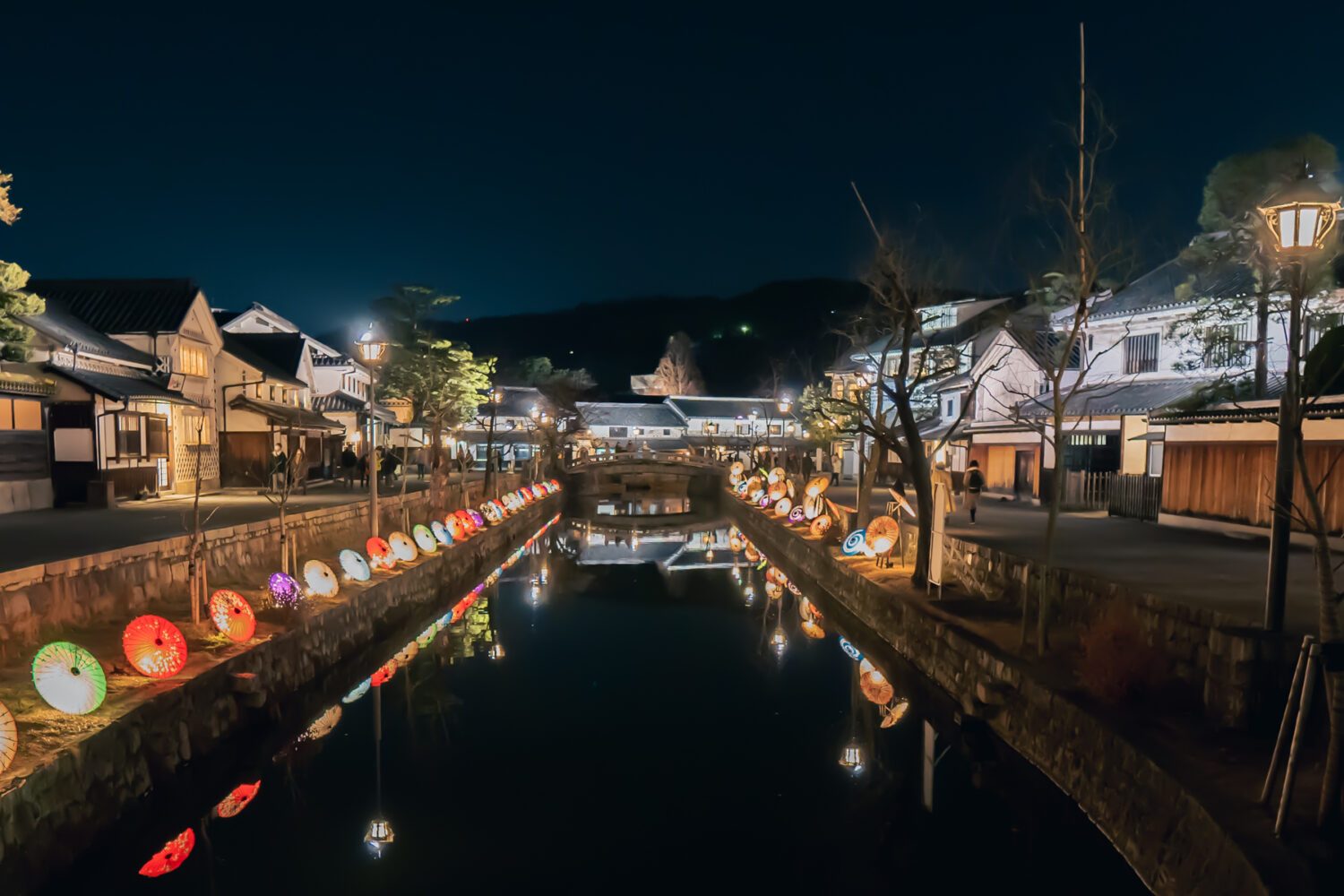
The traditional buildings from the Edo period are lined with wagasa (Japanese umbrellas) and andon (lanterns) that light up, creating a magical sparkle in the town.
This spring, high school students who will leave Kurashiki for universities in Tokyo visited the Bikan Historical Area, illuminated in various colors.
How will the lights illuminating the town where they were born and raised appear to the high school students stepping into the next stage of their lives?
Visiting Kurashiki Haruyoi Akari
Kurashiki Haruyoi Akari, illuminating the Edo period townscape with colorful lights.
This spring, high school students leaving Kurashiki will walk through the Bikan Historical Area, which is dressed in a different appearance than usual.
What is Kurashiki Haruyoi Akari?
Kurashiki Haruyoi Akari is a light-up event held in the Bikan Historical Area of Kurashiki from mid-February to early March every year.
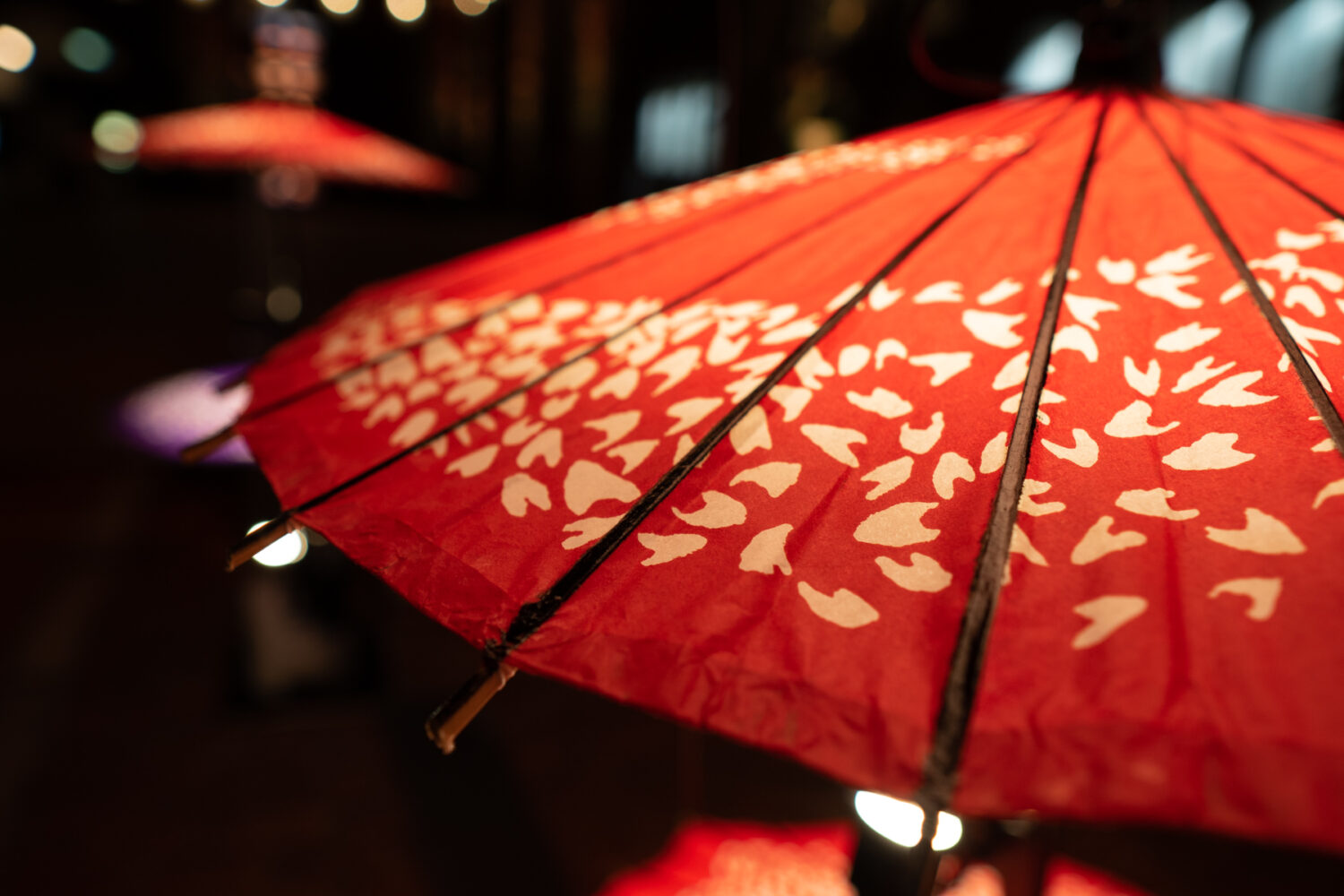
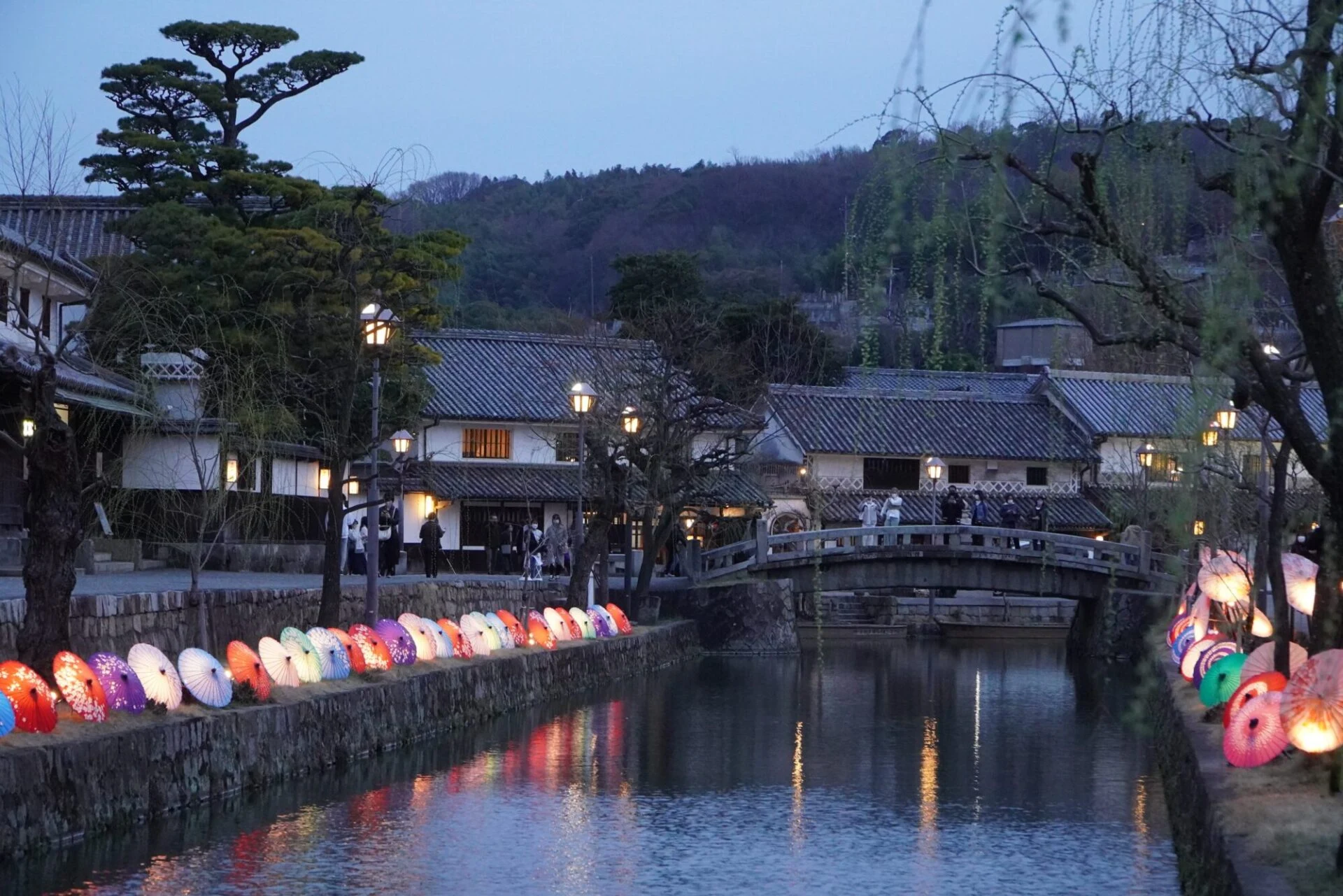
In the Bikan Historical Area, wagasa and andon are lined up, illuminating the townscape from the Edo period with gentle light.
The event for 2023 is held from February 18 to March 12.
From sunset until 9 PM, the Bikan Historical Area is adorned with various colors of lights.
High school students leaving Kurashiki visit the Bikan Historical Area
This spring, high school students who will advance to universities in Tokyo will visit the familiar tourist spot in their hometown, the Bikan Historical Area of Kurashiki.
Changing places of residence means that the scenery that was once taken for granted will become extraordinary.
The familiar scenery of the town where they were born and raised may appear different from before.

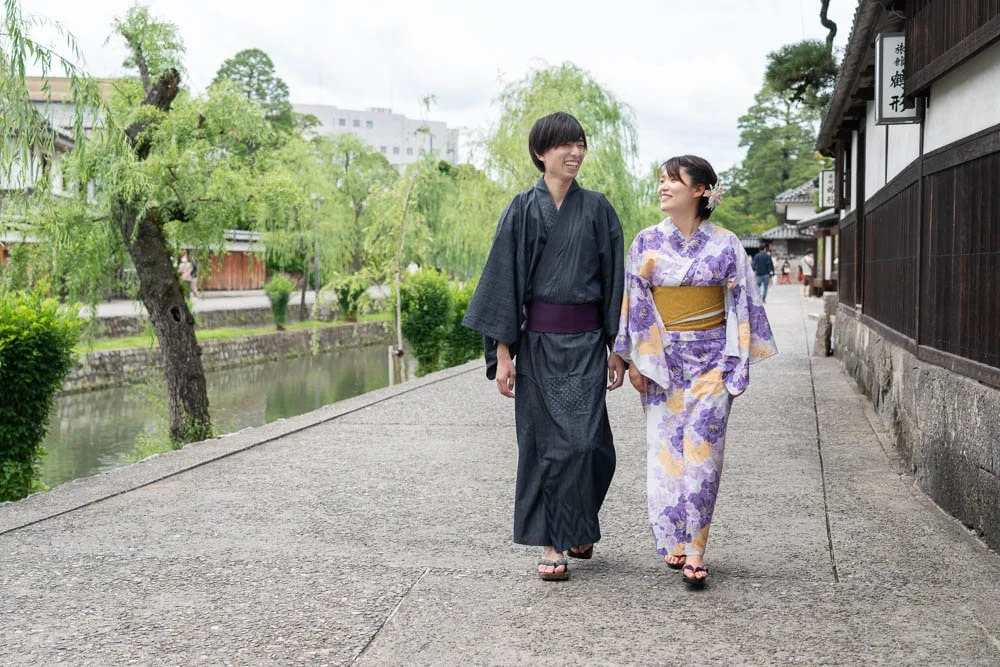
Matching the townscape
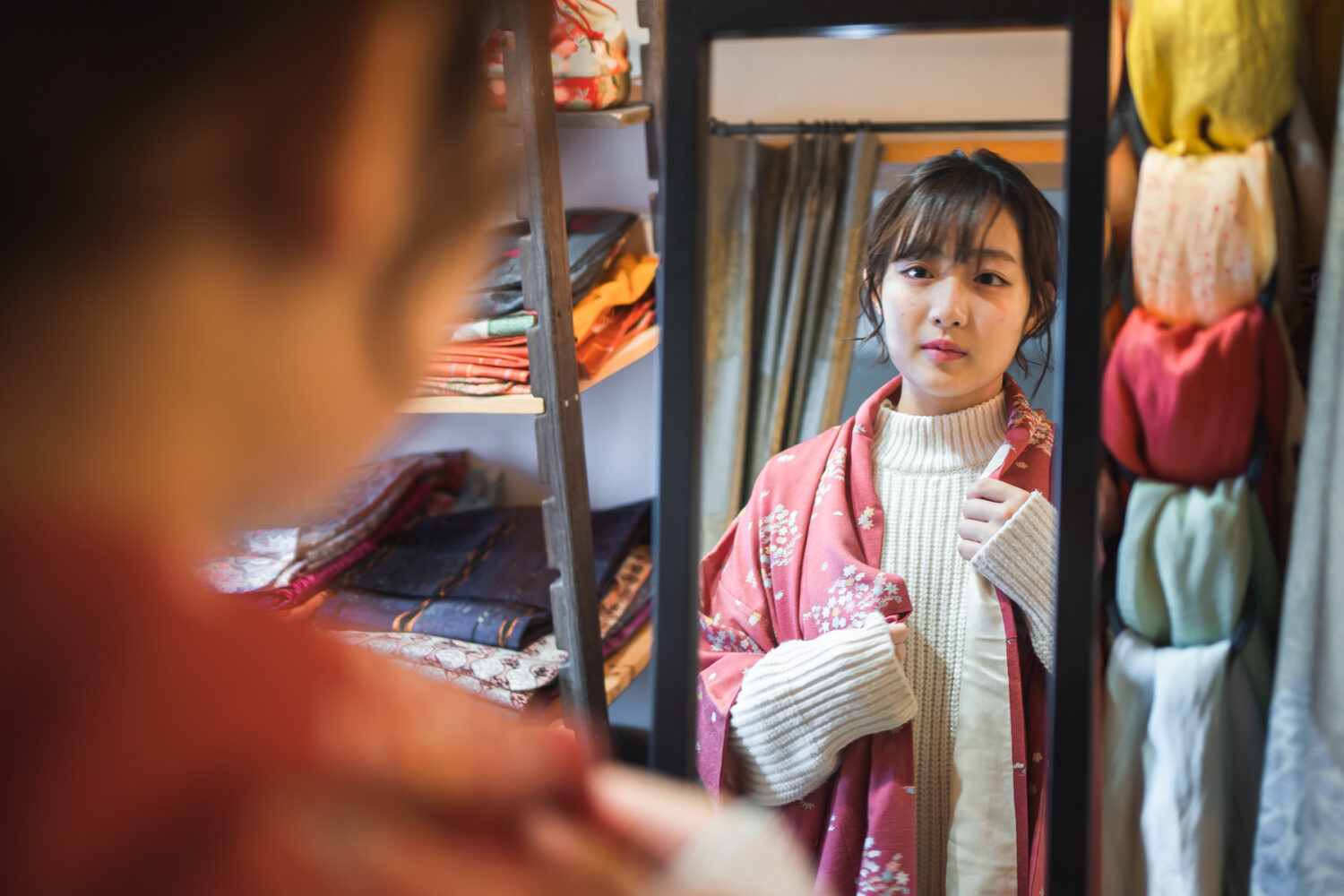
Dressing to match the Edo period townscape will surely elevate one's spirits.
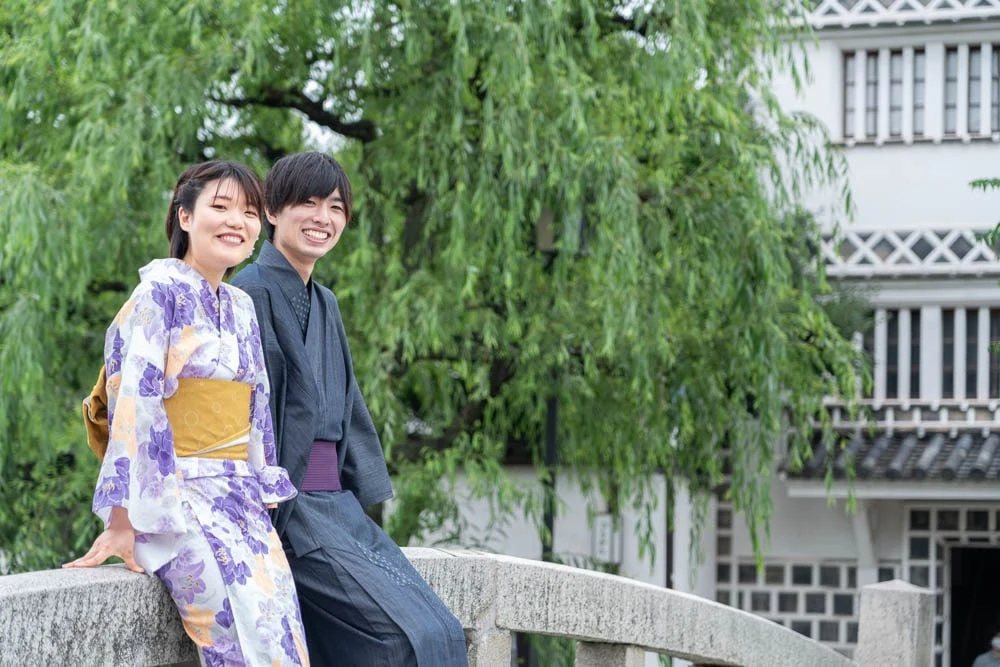
Before the town is illuminated by lights at dusk, the place visited for dressing is Kimono Roman.
It is a kimono rental and dressing specialty store located in an alley of the Bikan Historical Area.
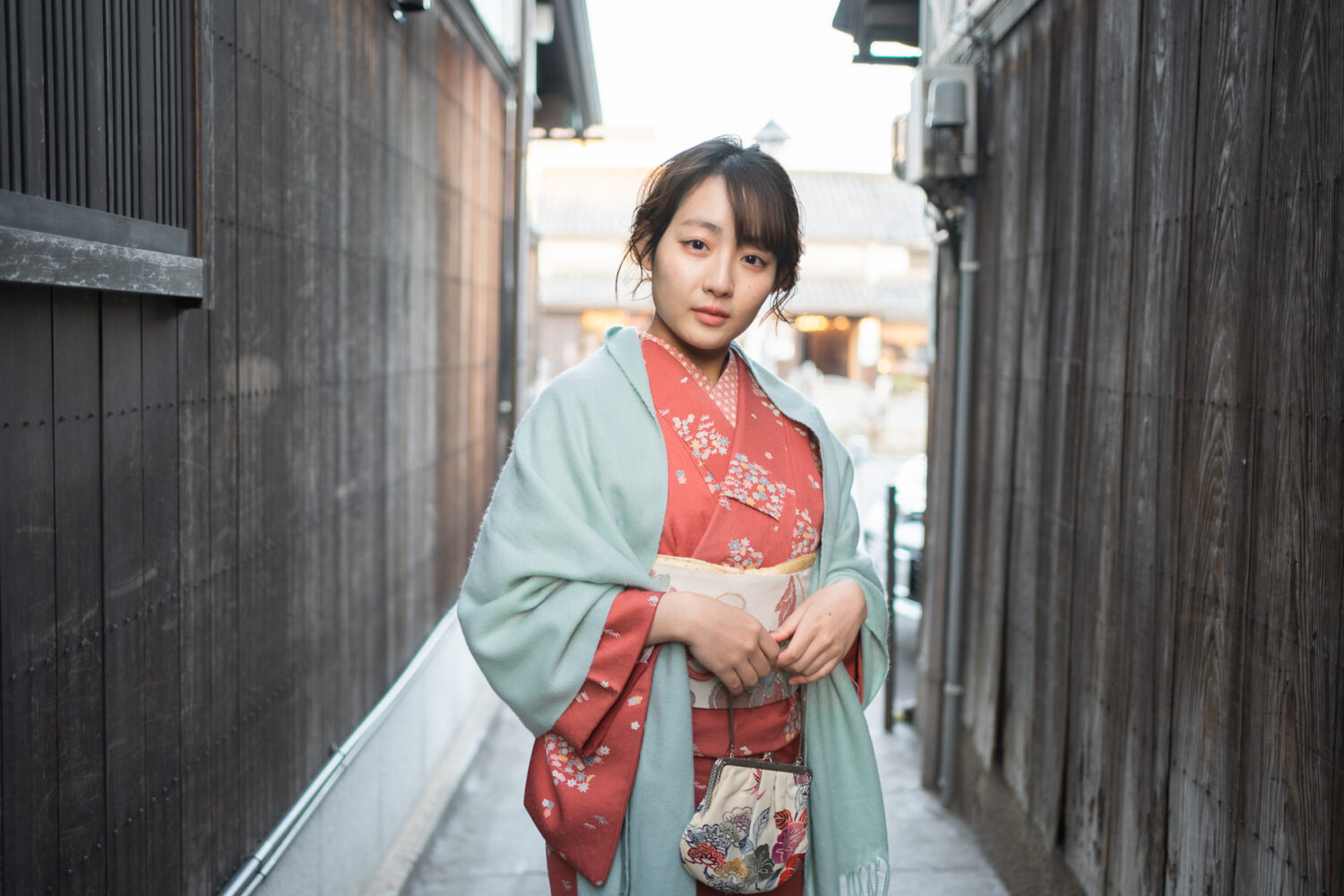
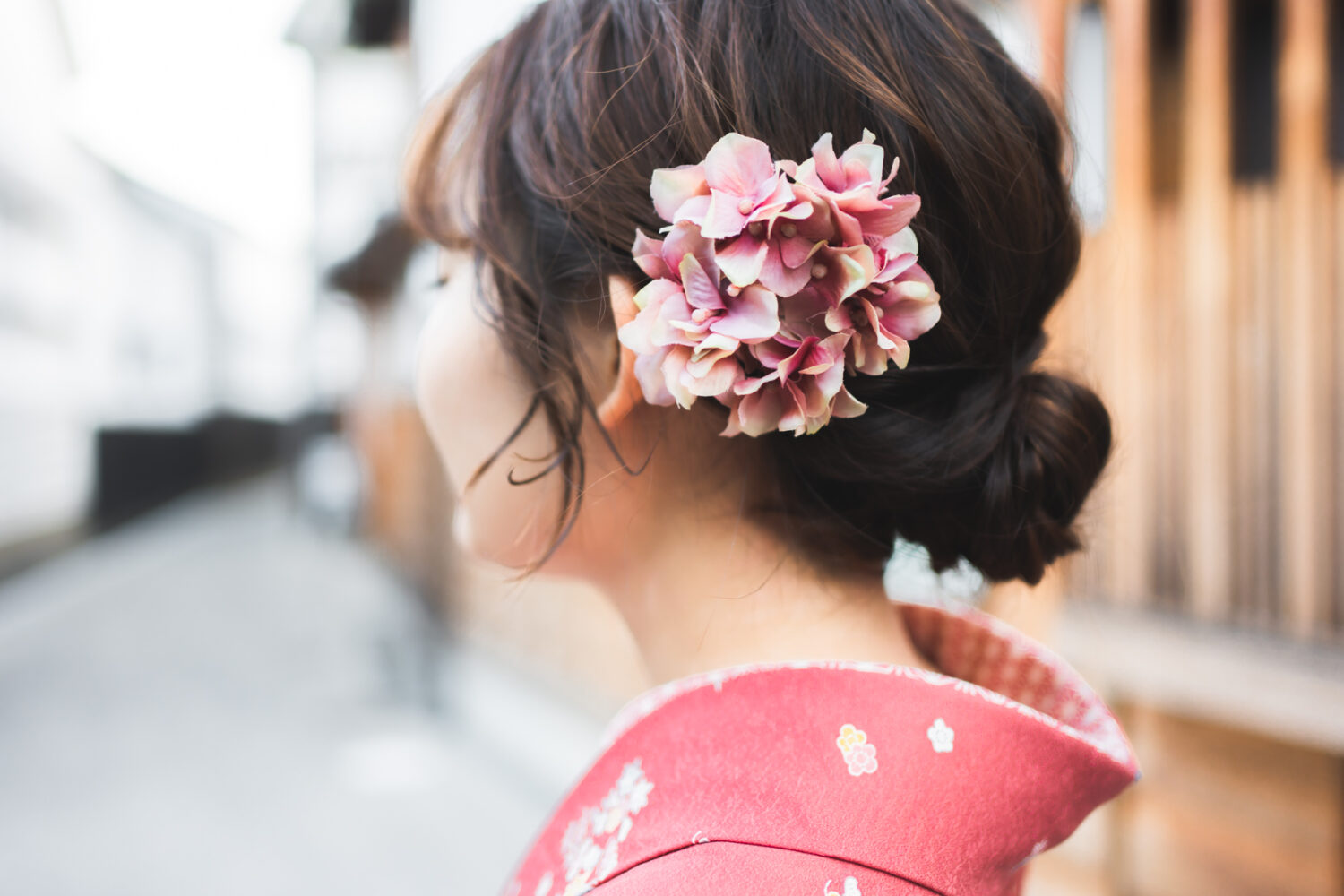
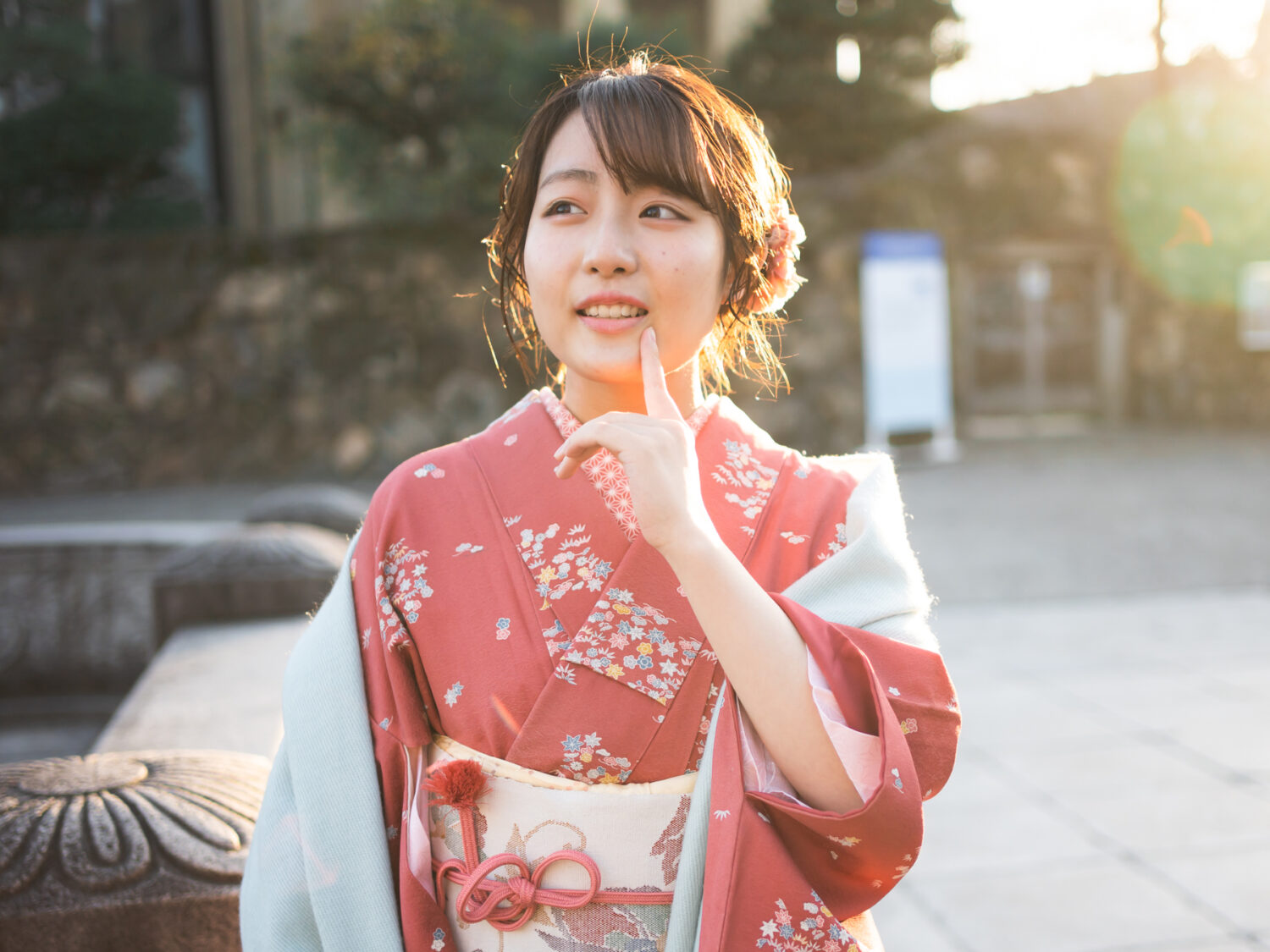
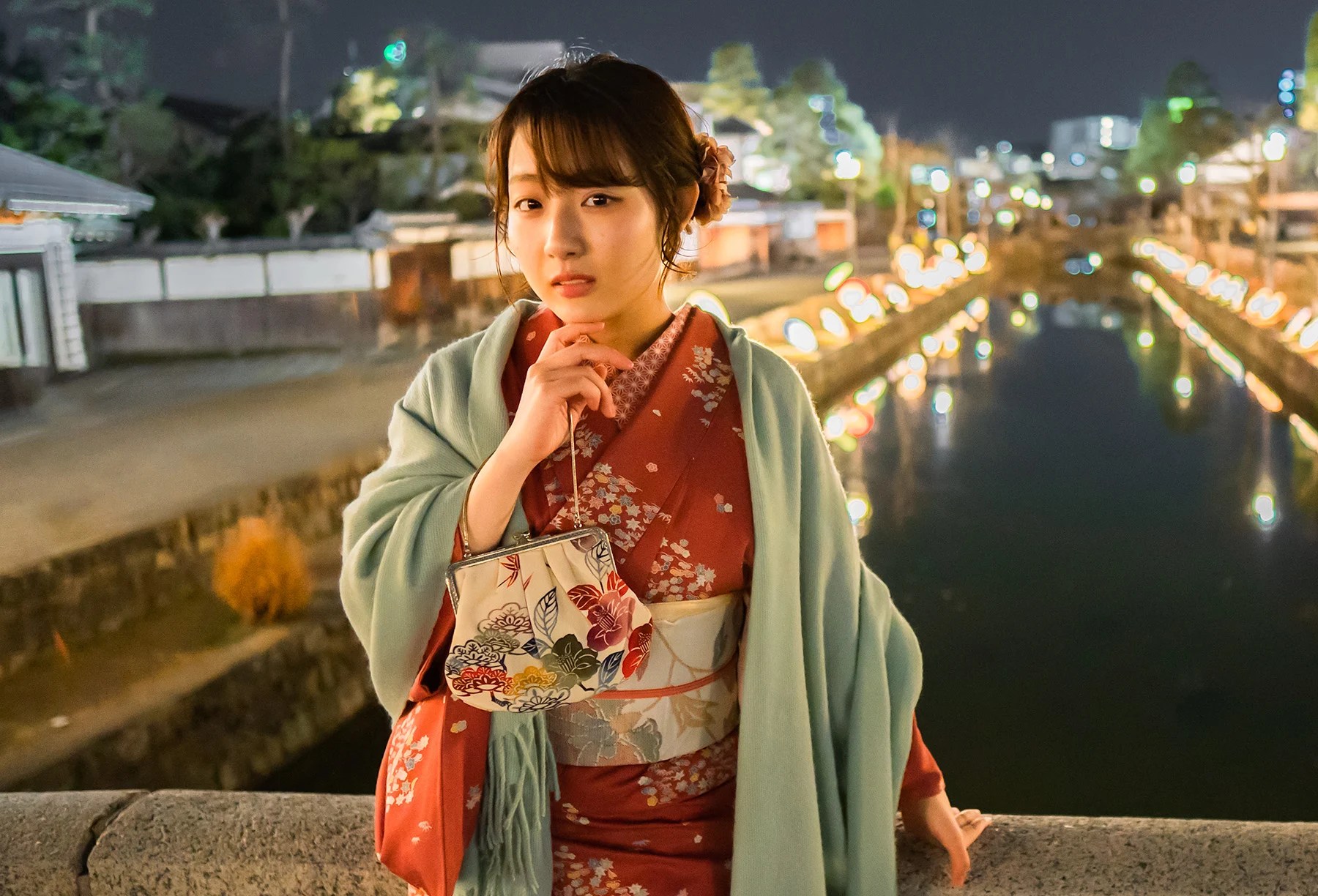
The chosen outfit is a pink kimono adorned with pastel-colored flowers.
The obi (sash) was chosen in a light white color to enhance the pink of the kimono.
Additionally, a hair ornament matching the color of the kimono was selected.
Even in a familiar local tourist spot, simply changing the outfit transforms the mood into something extraordinary.
The townscape before the wagasa are lit
As they set out for the Bikan Historical Area after finishing dressing, the town was illuminated by the setting sun.
Before the wagasa lined throughout the town are lit, they enjoy the Bikan Historical Area in their kimono.
Walking along the Kurashiki River
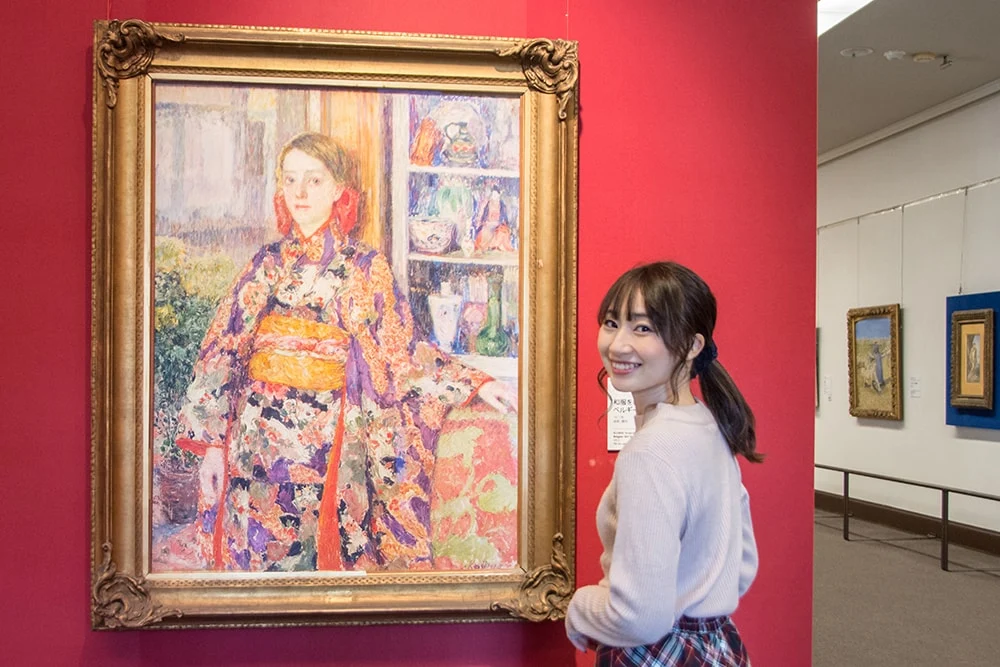
The first place they reached in the Bikan Historical Area was the Ohara Museum of Art, Japan's first private Western art museum.
Established during the Meiji era when Kurashiki began to economically develop, it was opened to display art collected by local entrepreneurs and Western painters who traveled through Europe.
This pioneering museum continues to convey the importance of culture to us even today.
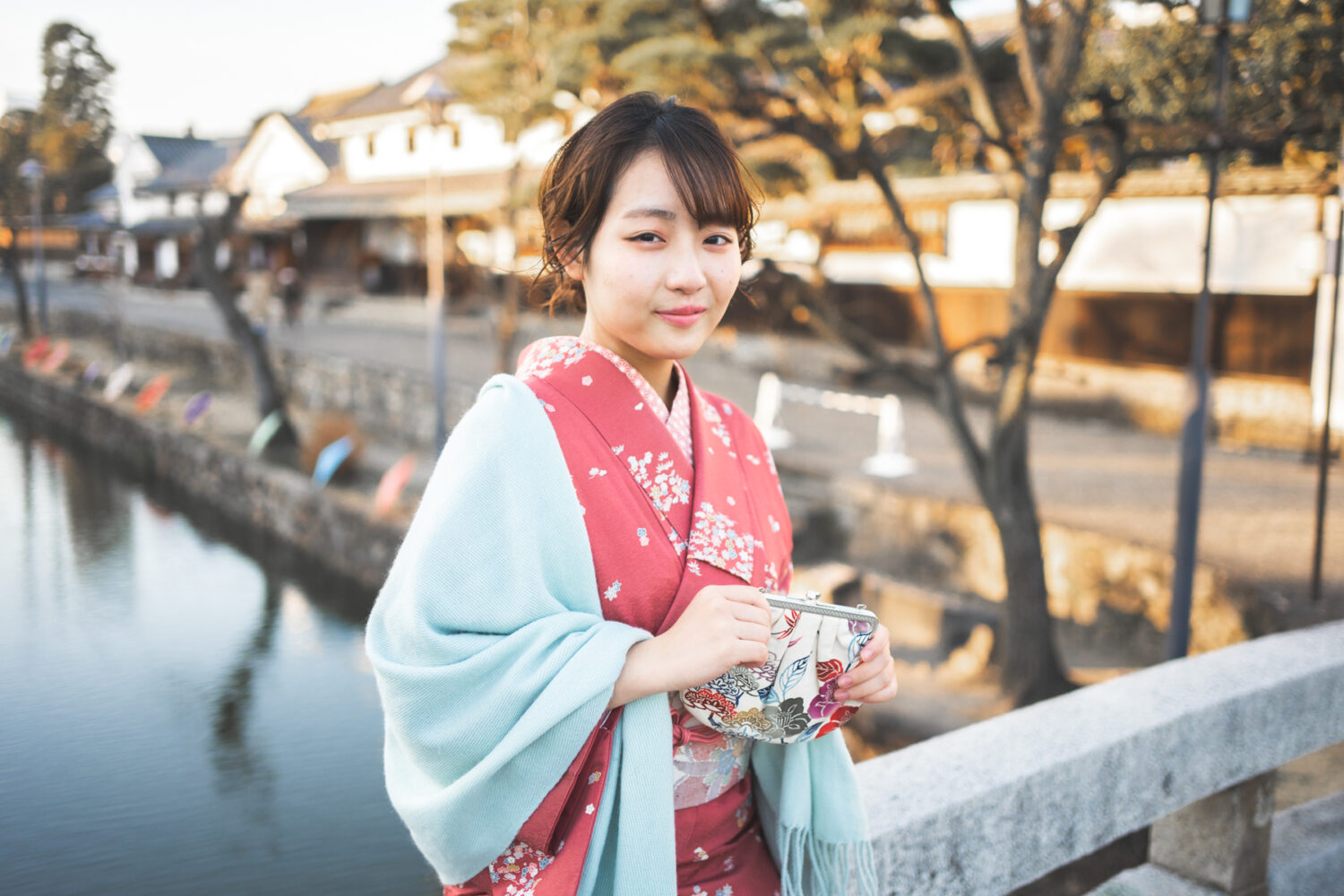
They began walking in the Bikan Historical Area one hour before sunset.
The townscape from the Edo period sparkled in the orange glow of the setting sun.
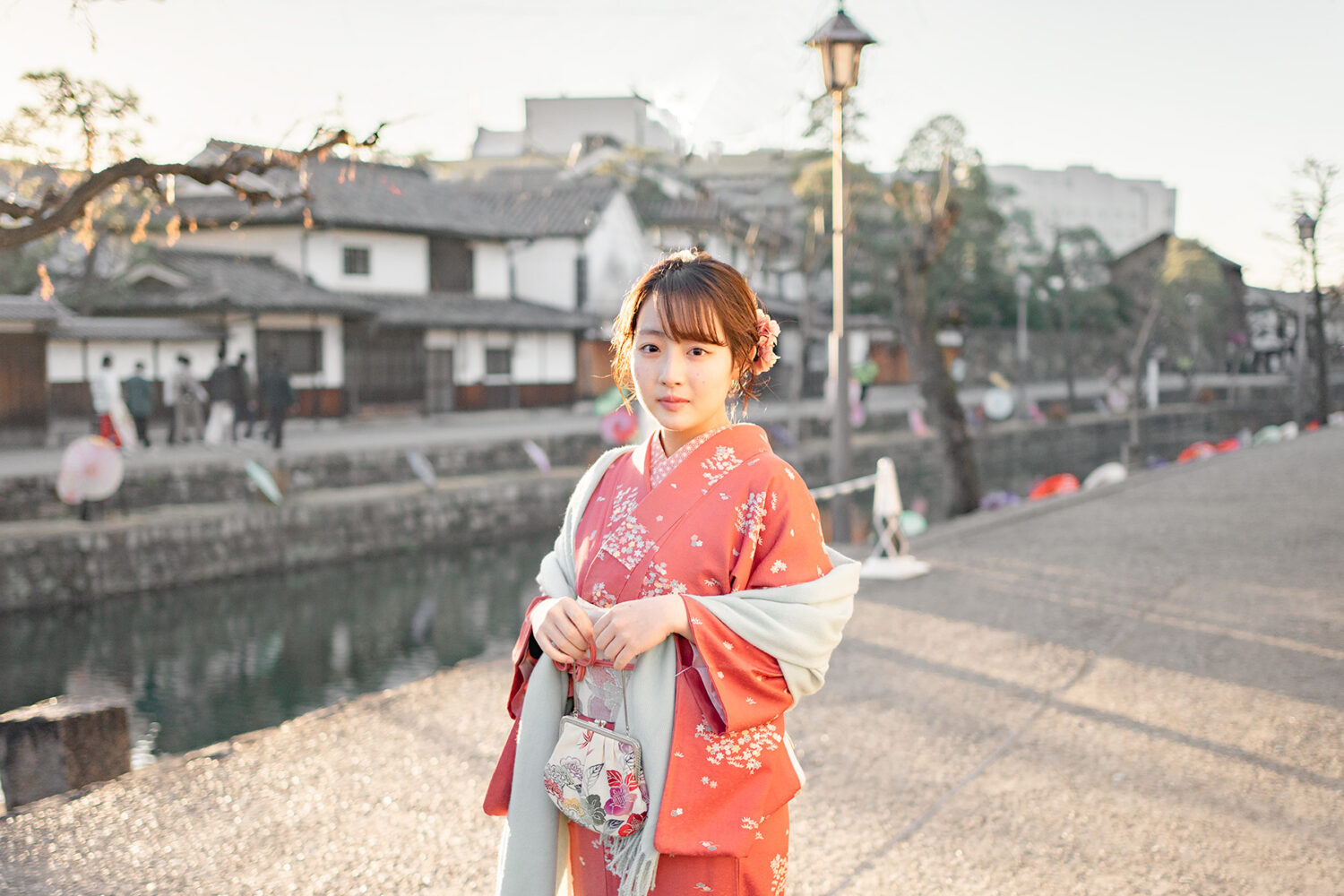
The sight of traditional houses lined along the Kurashiki River is a representative scene of the Bikan Historical Area.
They walk along the Kurashiki River until the time when the wagasa are lit.
Indulging in luxury in the town of Tenryo
About 400 years ago, the area along the Kurashiki River was designated as a Tenryo directly governed by the Edo Shogunate, developing as a hub for goods.
The warehouses and mansions that supported logistics during the Edo period are now utilized as restaurants and apparel stores.
In other words, enjoying sweets while gazing at the townscape of Tenryo is a unique pleasure of the Bikan Historical Area.
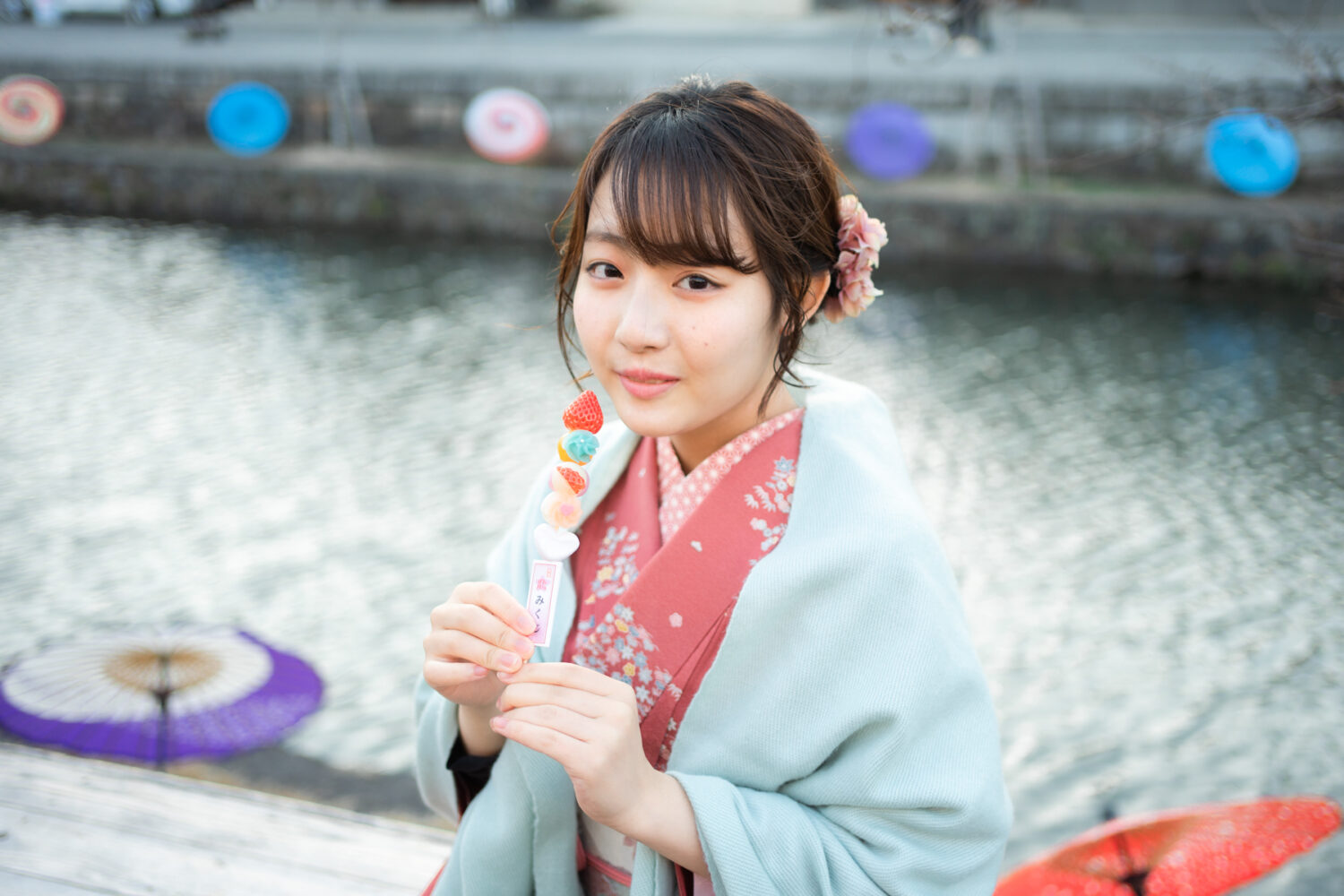
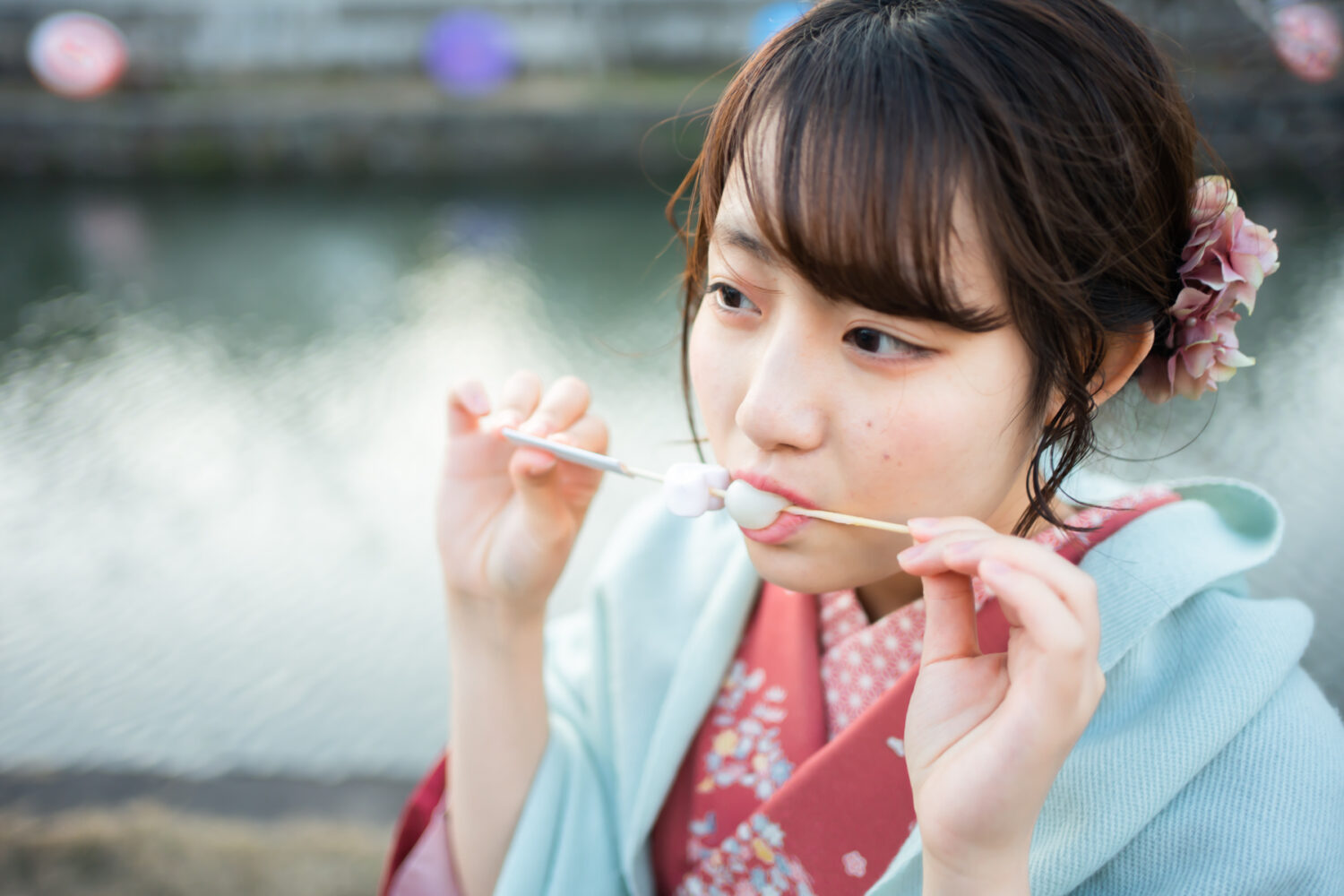
At dusk, what I rushed to grab at a store before closing was adorably cute dumplings.
Indulging in sweets amidst the traditional townscape that has been carefully passed down is a luxuriously delightful time.
The Bikan Historical Area, which flourished as a logistics hub in the early modern period, is now bustling as a commercial district.
Even the cute dumplings have a story that reflects the passage of time.
Illuminated by the Evening Lights
In the complex commercial facility Kurashiki SOLA, there is an exhibition of Indigo Umbrella Lights.
Kurashiki, which thrived in the textile industry since the Edo period, began producing domestically made jeans in response to societal needs during the Showa era.
Indigo is the dye that creates the deep blue color of jeans.
The indigo-patterned umbrellas also reflect the history of Kurashiki.
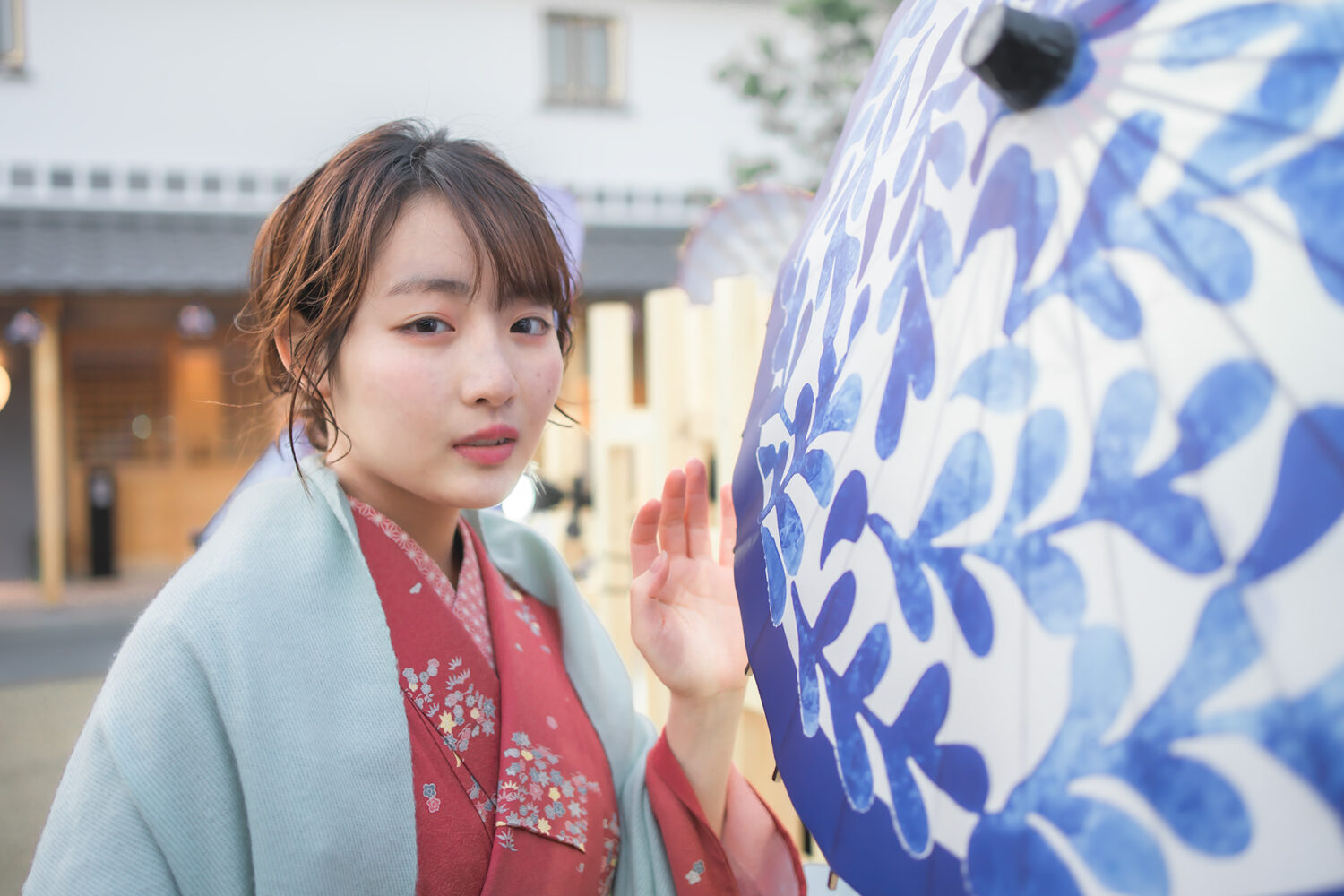
As I slowly admired the indigo umbrellas, the sun had set.
I noticed that the orange light from the town illuminated by the sunset was fading away.
The remaining light in the sky softly illuminated the square where the umbrellas were lined up.
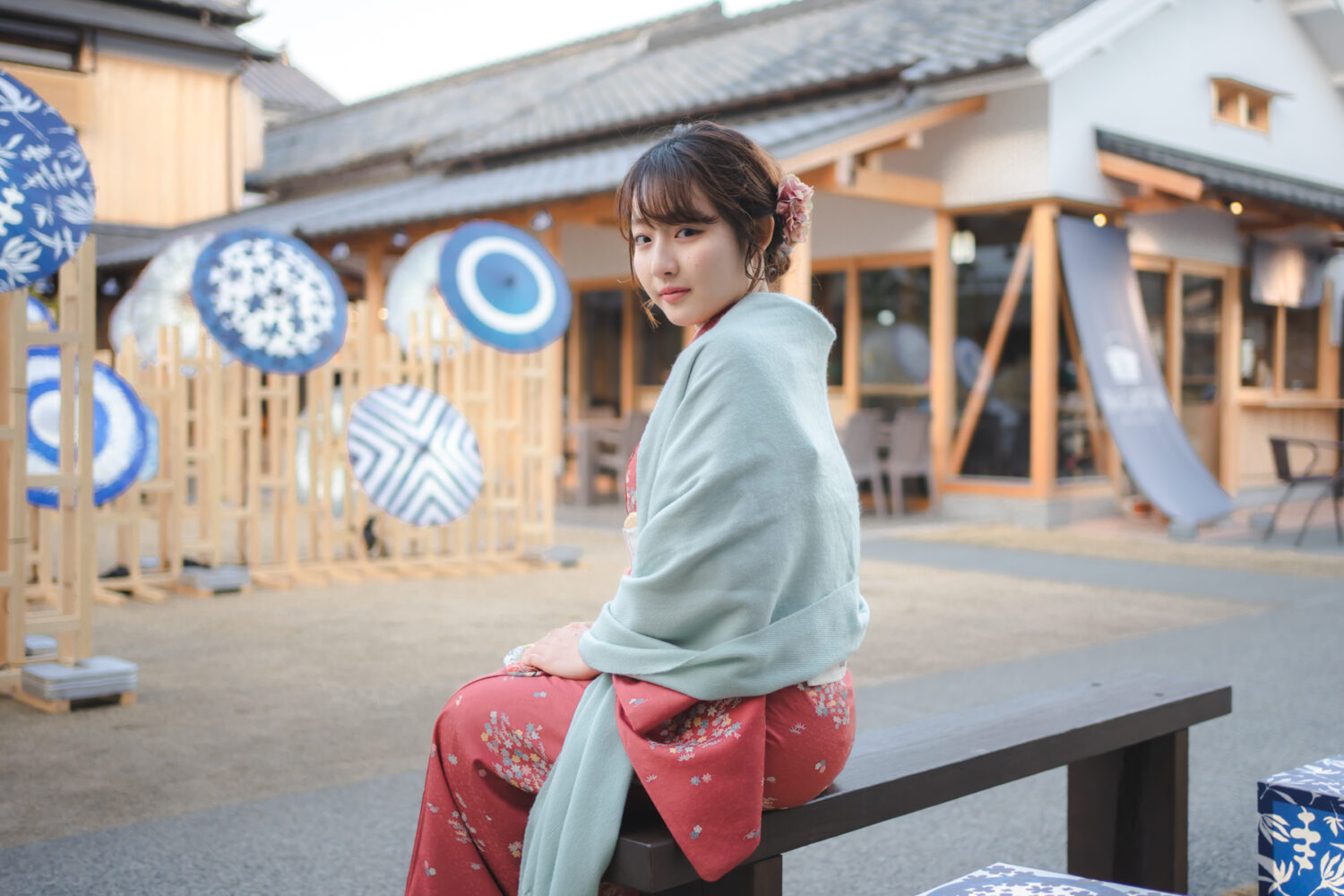
The Edo Period Townscape Colored by Lights
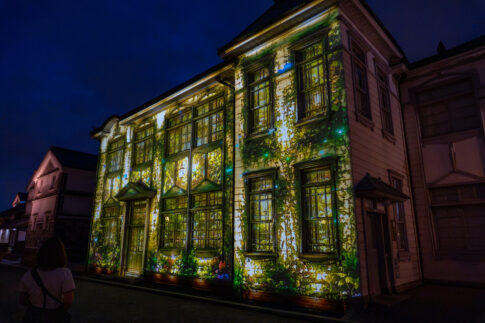
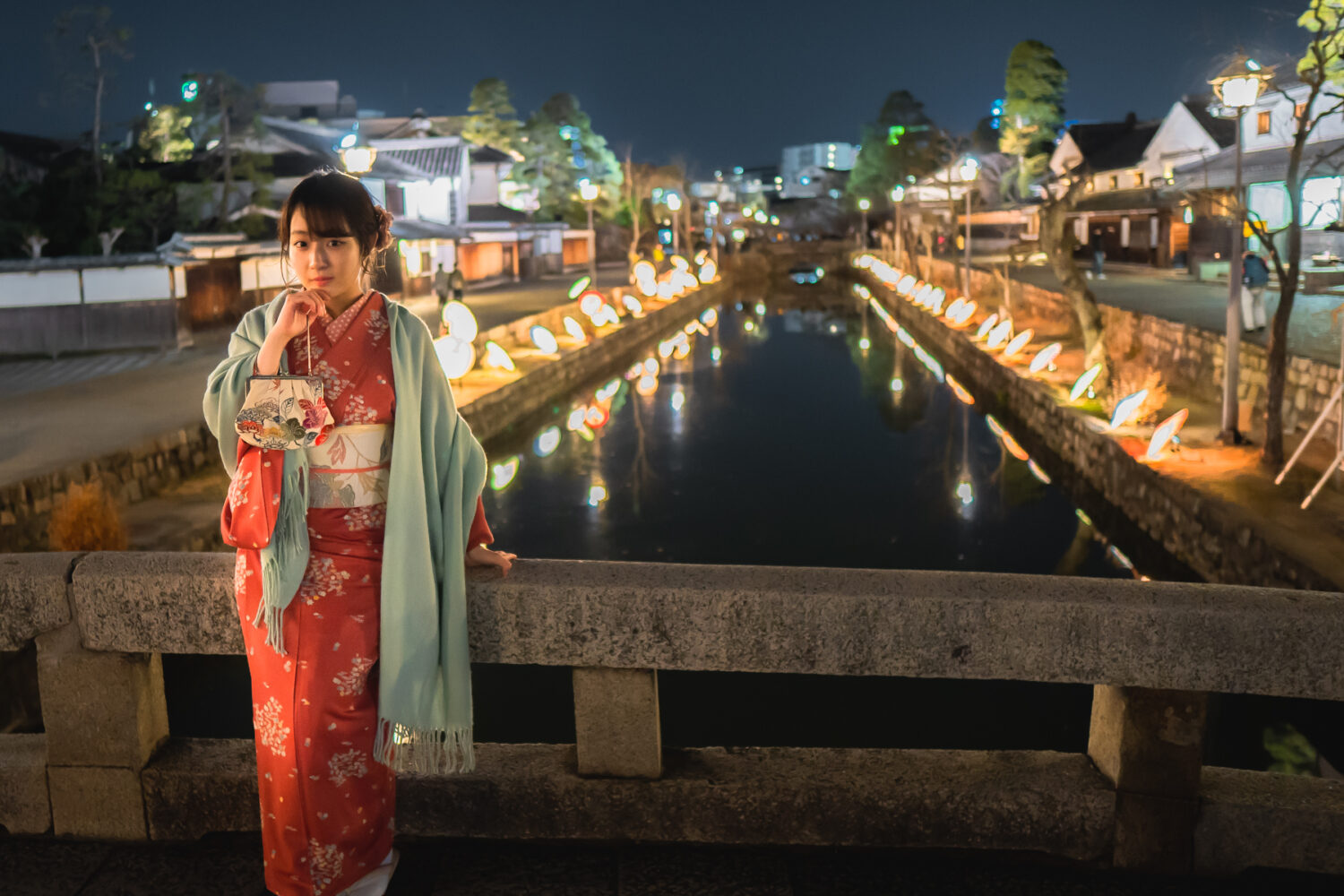
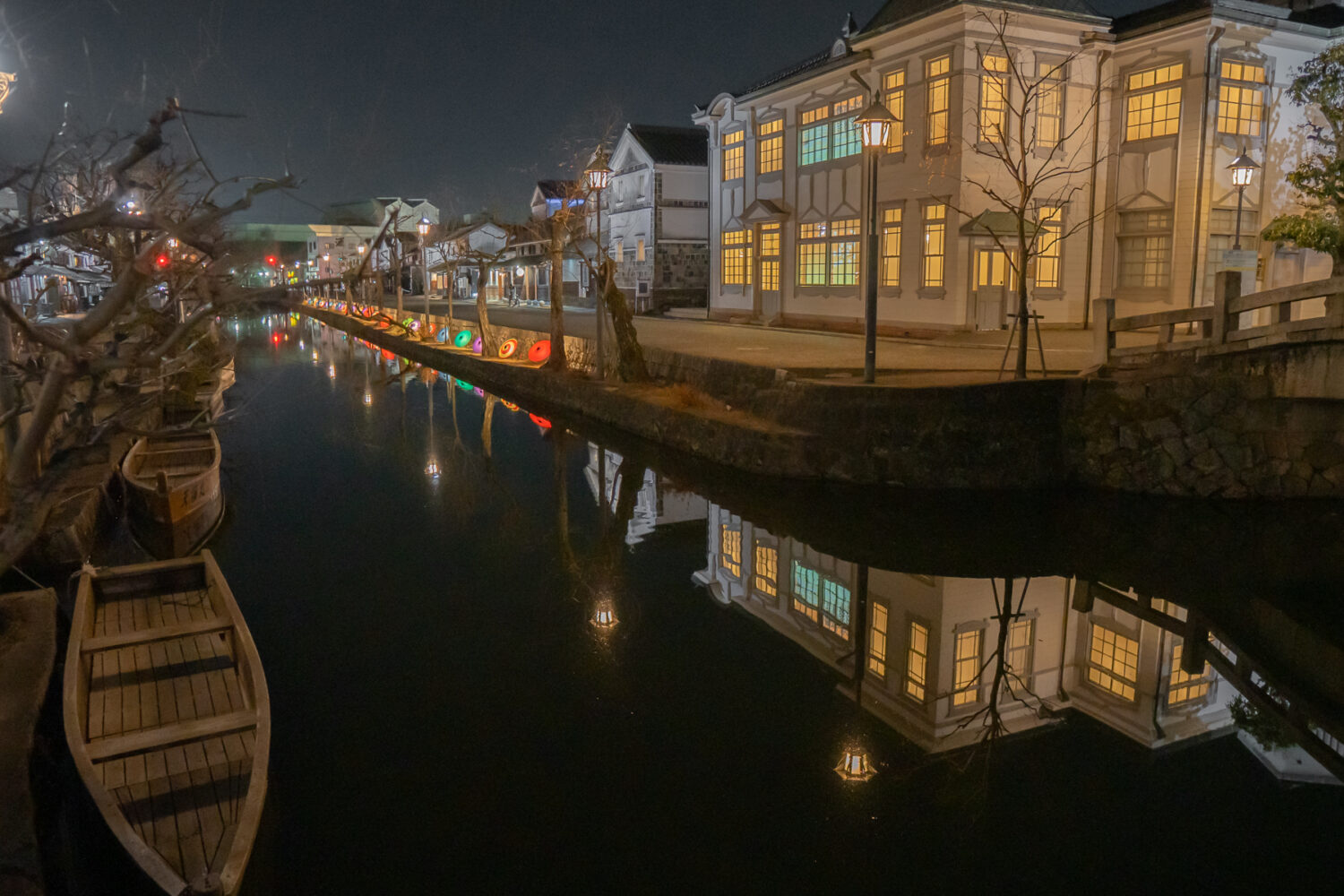
As the sun sets and darkness spreads over the town, the scenery of the Bikan Historical Area changes even more.
The umbrellas that had been glowing softly in the sunlight began to color the town with vivid lights.
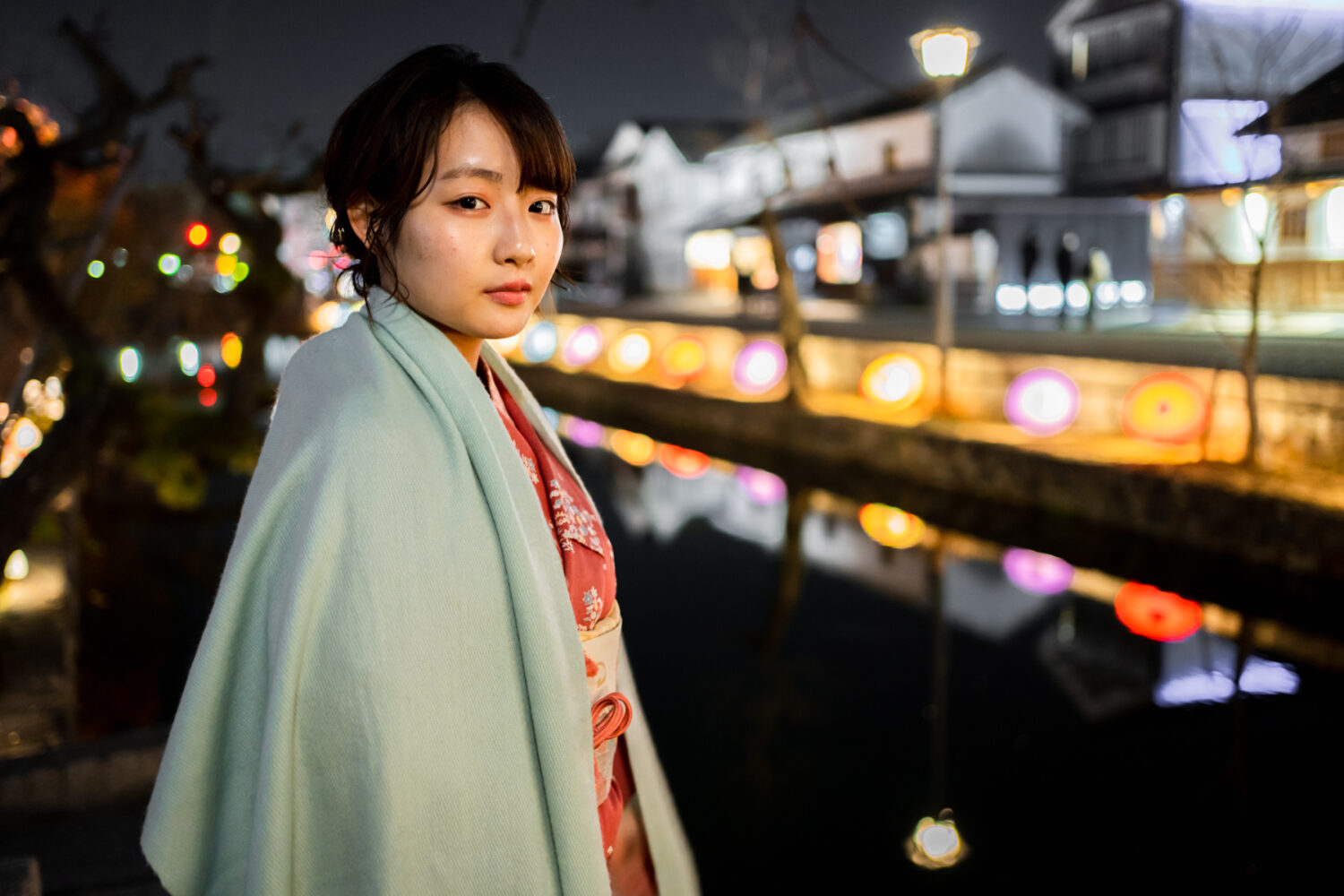
Walking Along the Kurashiki River at Night
The traditional buildings that have been passed down without being replaced by new ones amidst the economic development of the early modern period are precious entities.
A rare view that can only be found in the Bikan Historical Area spreads out before me.
The extraordinary lighting effects made me reassess the charm of the familiar scenery.
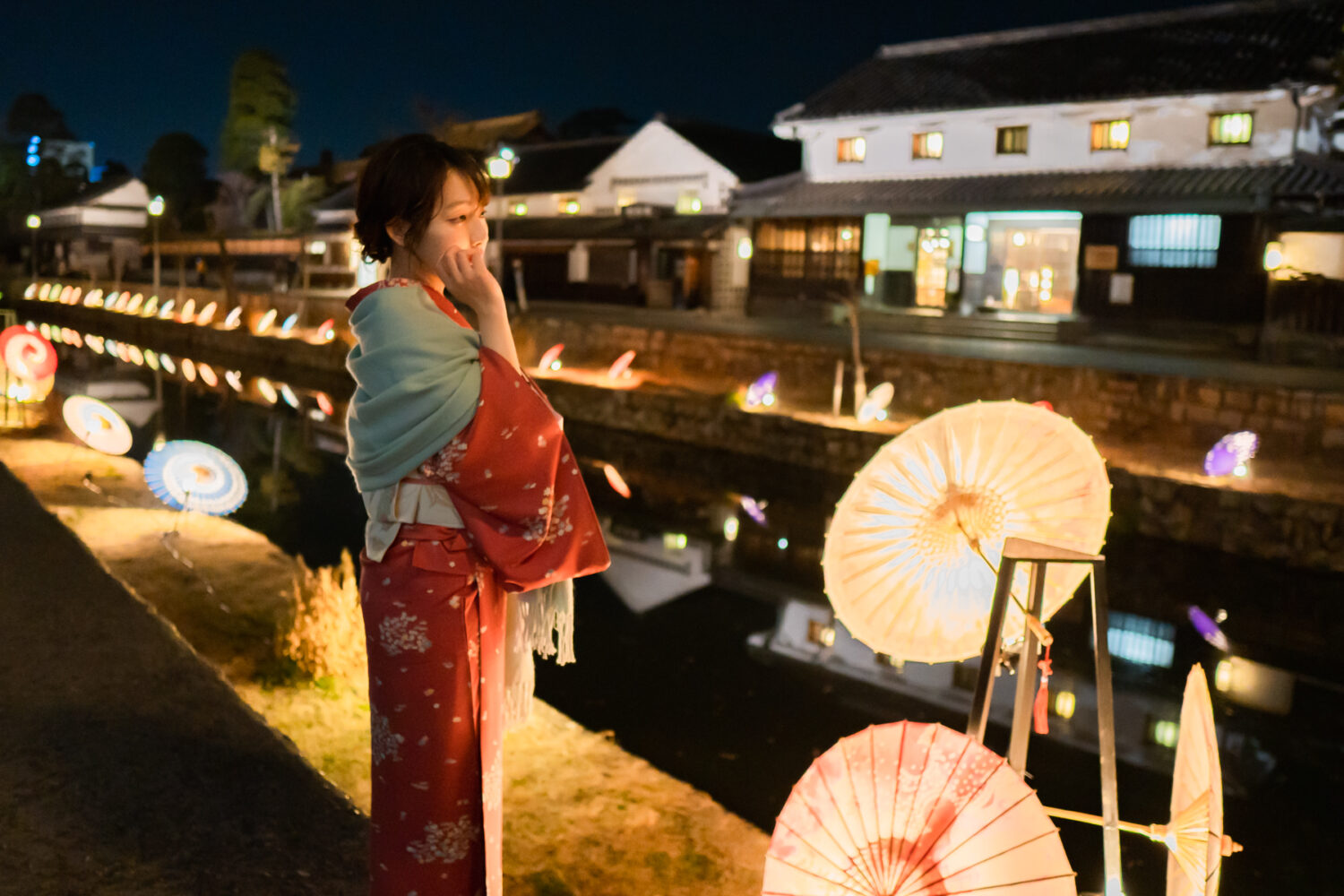
The Indigo Umbrella Lights also changed their expression as night fell.
The light shining from within made the indigo color more vivid, transforming it into a refined impression.
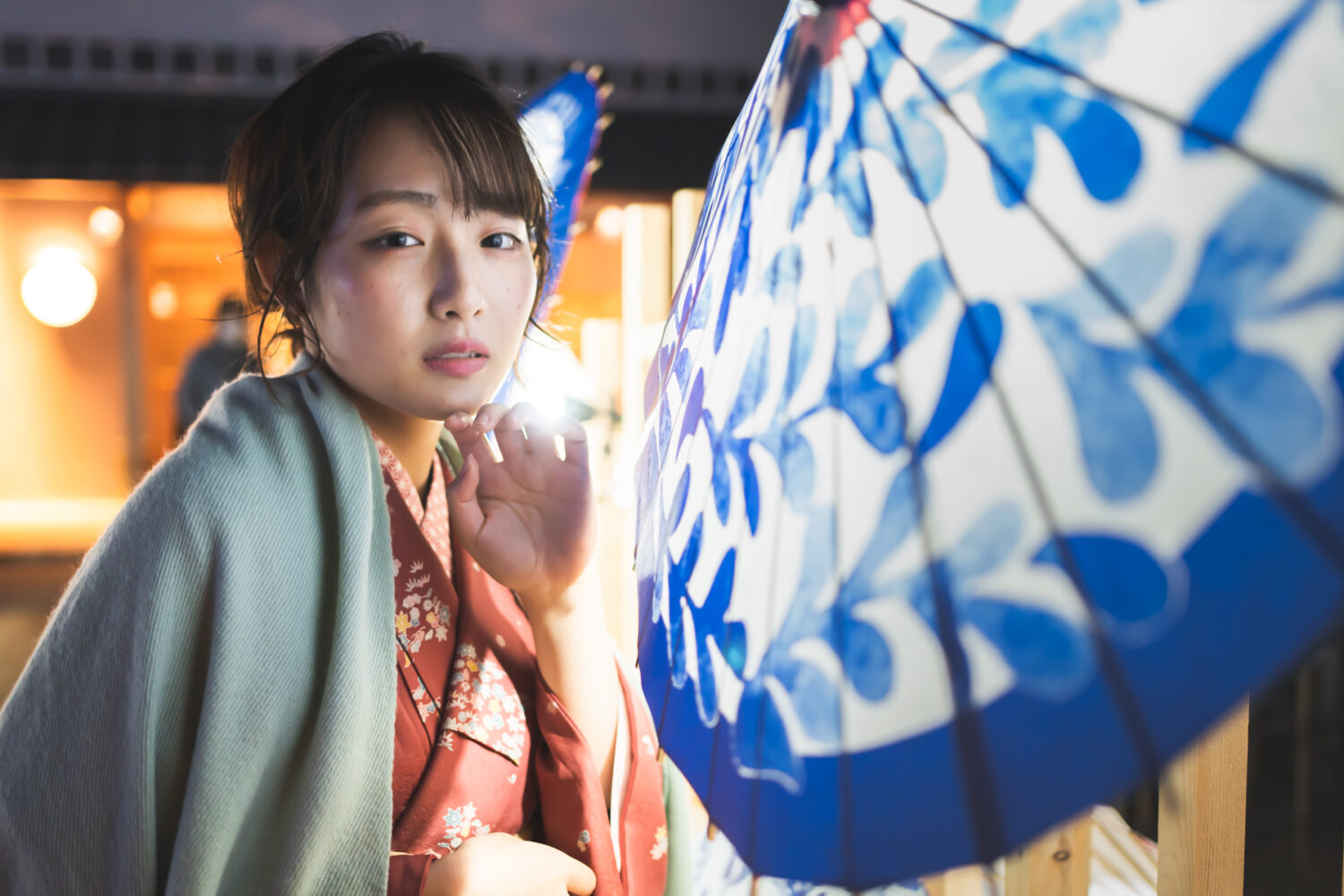
Watching the changing scenery of the town with the passage of time from dusk to night is the best way to enjoy the Kurashiki Spring Evening Lights.
Walking through the town while feeling the history emanating from the light spilling from the umbrellas makes one an expert in fully enjoying Kurashiki.
What the Taisho Era Building Conveyed
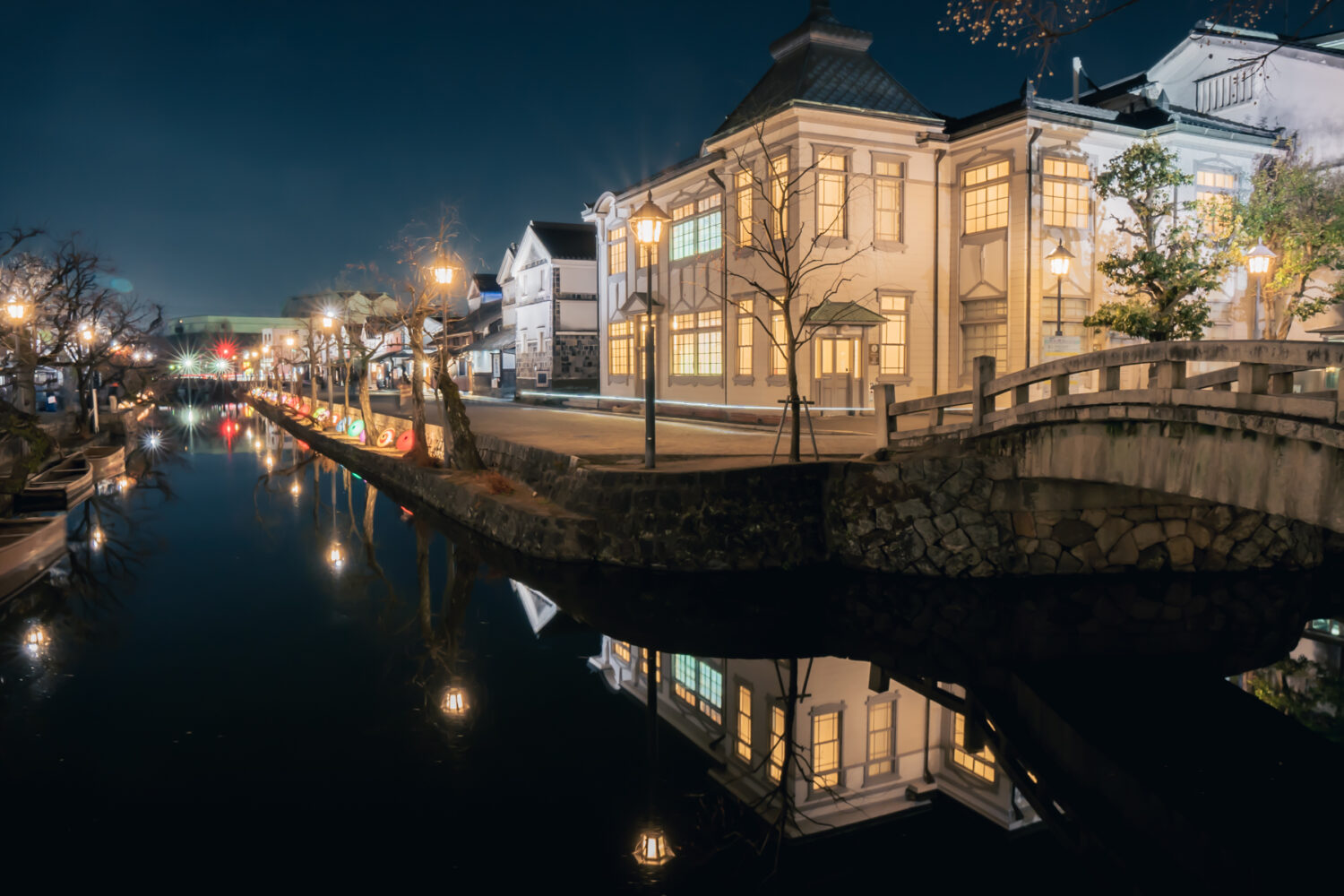
Among the buildings by the Kurashiki River, there is a charming building that catches the eye.
This building was used as the Kurashiki Town Hall during the Taisho era and is now utilized as a tourist information center.
The architecture built a little after the Edo period has a different presence compared to the surrounding houses, which likely draws the attention of many.
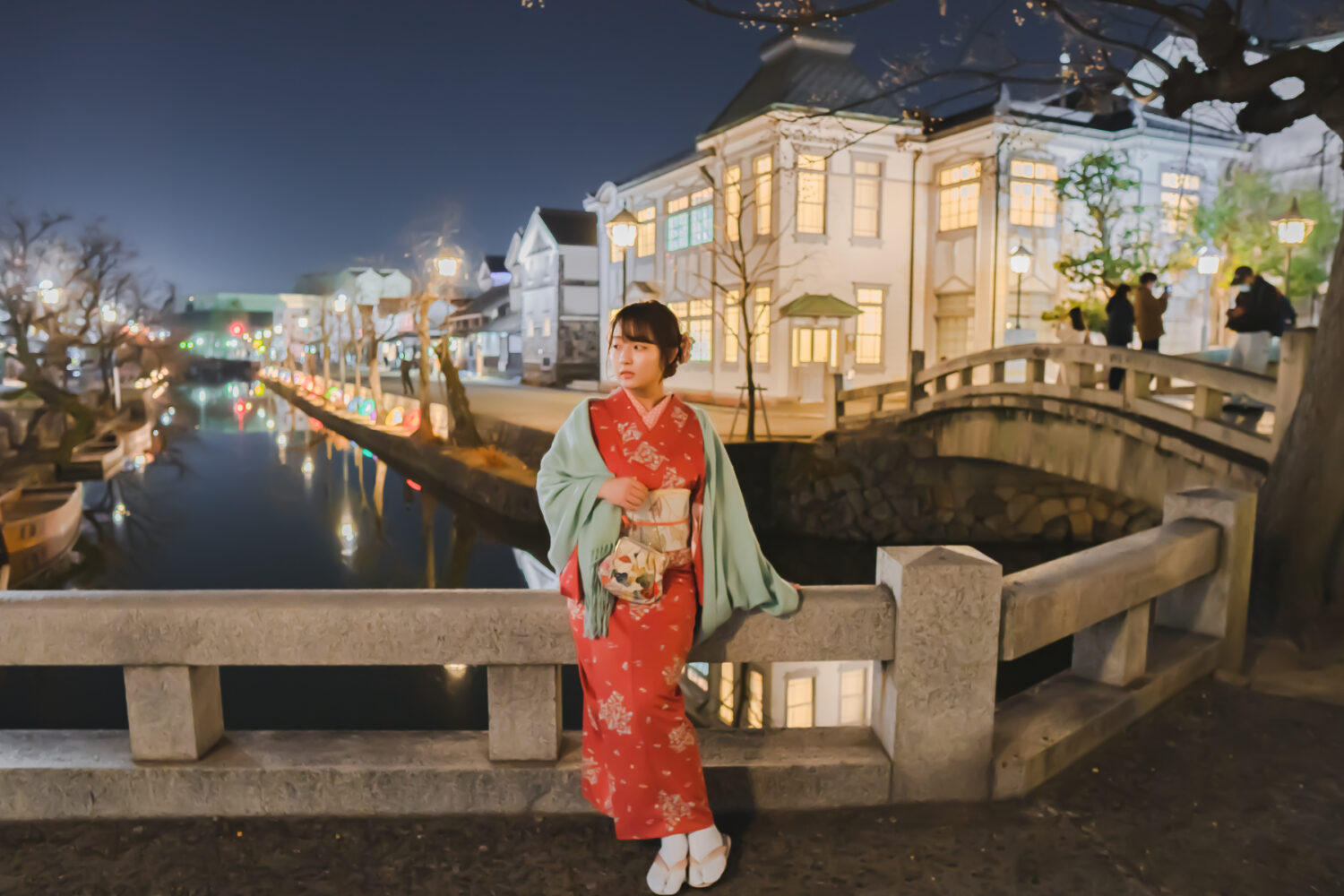
The windows of the old Kurashiki Town Hall reflect shadow puppets.
I found myself stopping to admire the shadows cast by the gentle light.
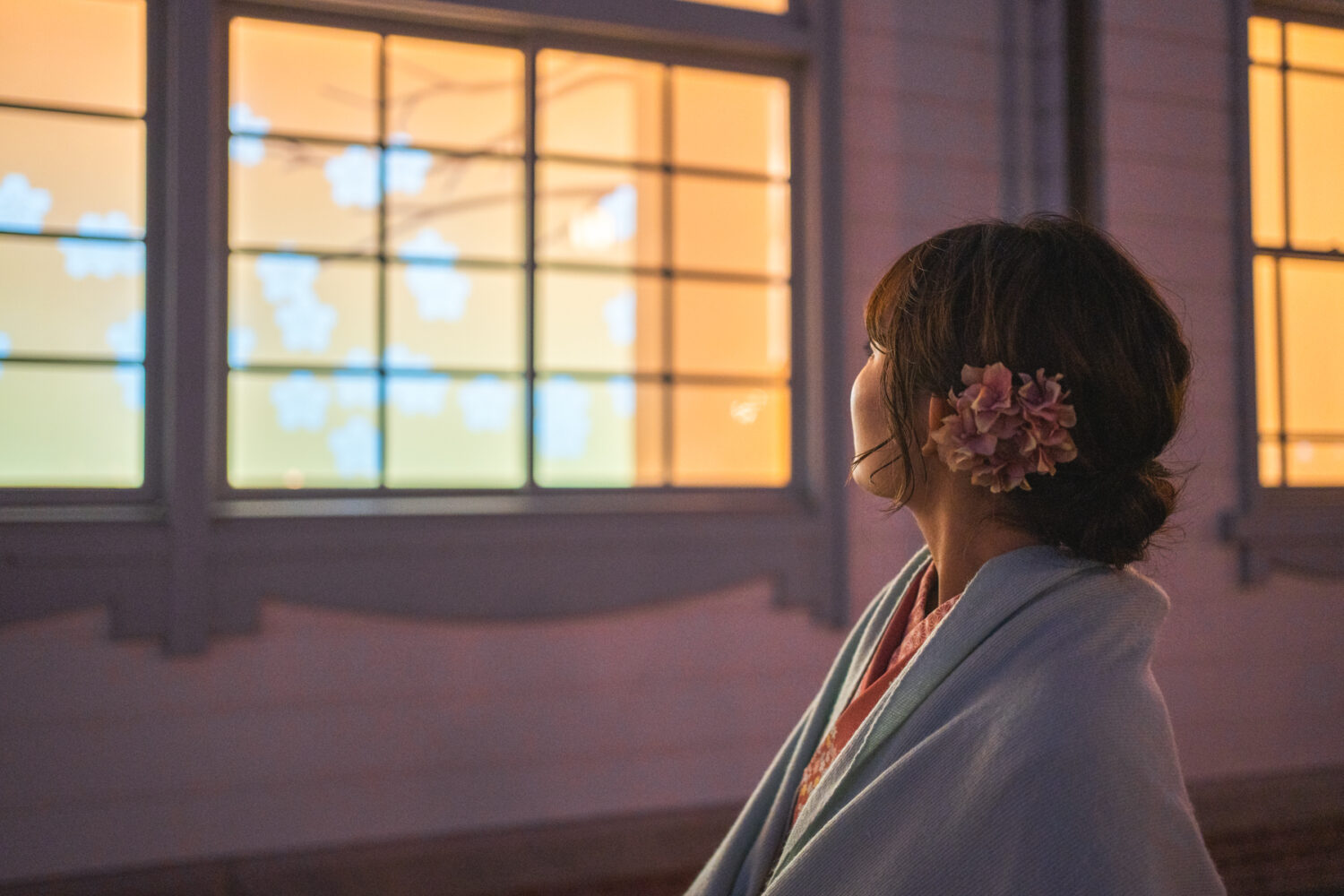
Realizing that I had been captivated by the shadow puppets, I moved my feet that had stopped.
As I began to walk again, I glanced up at the roof of the building.
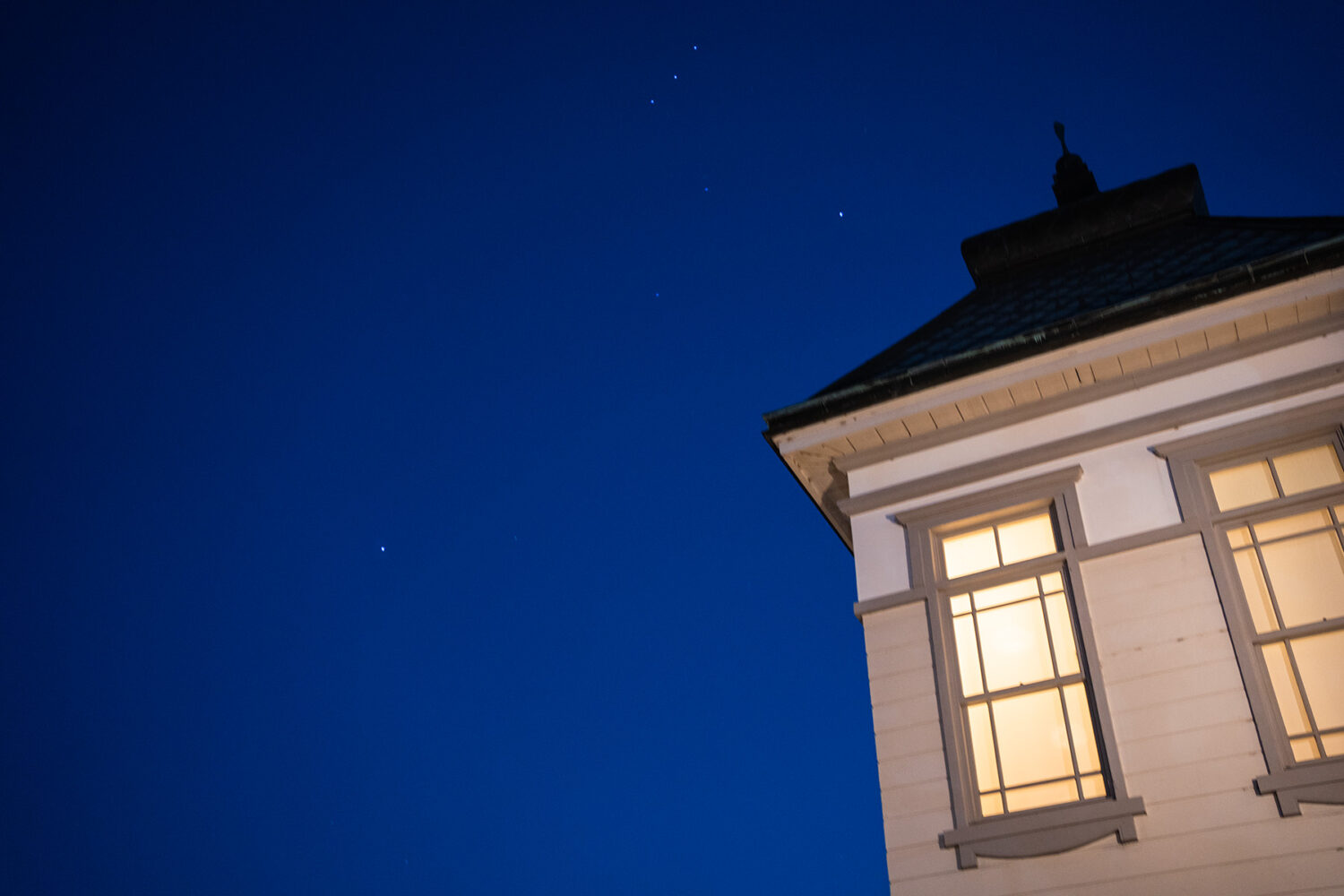
“The sky is a deep indigo color. It looks beautiful against the retro building,” I said, as the scenery before my eyes spilled out of my mouth.
The end of winter is a season filled with mixed expectations and anxieties about new beginnings.
Perhaps it is because this season, when the familiar daily life transforms into the extraordinary, makes one appreciate the beauty of the ordinary color of the sky.
When new realizations arise about the things that exist around us as if they are taken for granted, it is actually the heart of the observer that has changed.
The colorful lights illuminating the familiar townscape like magic have also enriched my sensitivity to the things close to me.
The Light Illuminating the Meiji Era Building
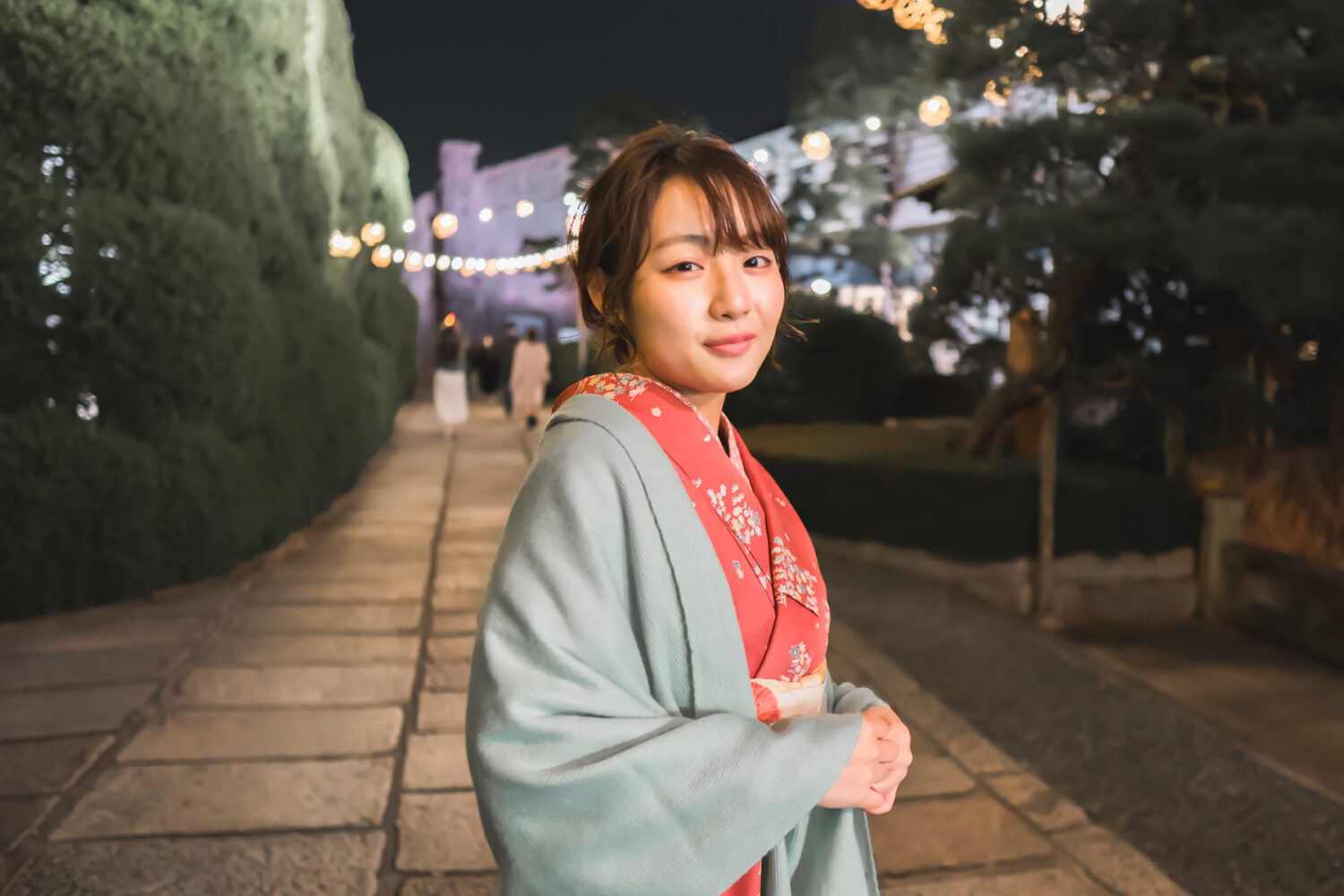
Within the Bikan Historical Area, there are many buildings that evoke a sense of the passage of time.
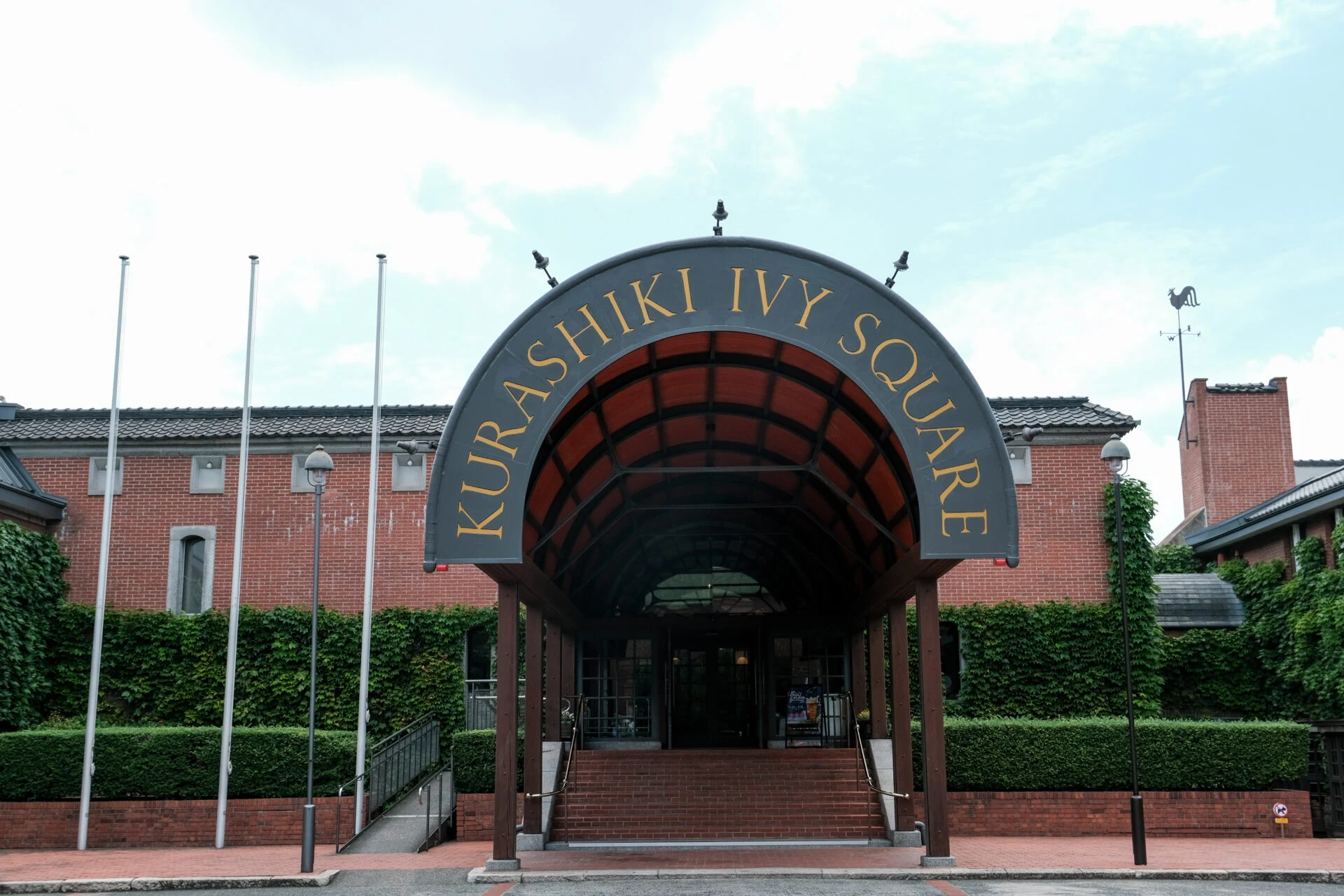
The Kurashiki Ivy Square, which is now utilized as accommodation, was built as a spinning mill during the Meiji era.
I also visited the lighting effects applied to the Meiji era building.
Inside the Spinning Mill
The Kurashiki Ivy Square, built as a spinning mill during the Meiji era, features bricks not found in modern buildings.
From the building, which was designed based on British factory architecture of the time, one can feel Japan's history aimed at modernization.
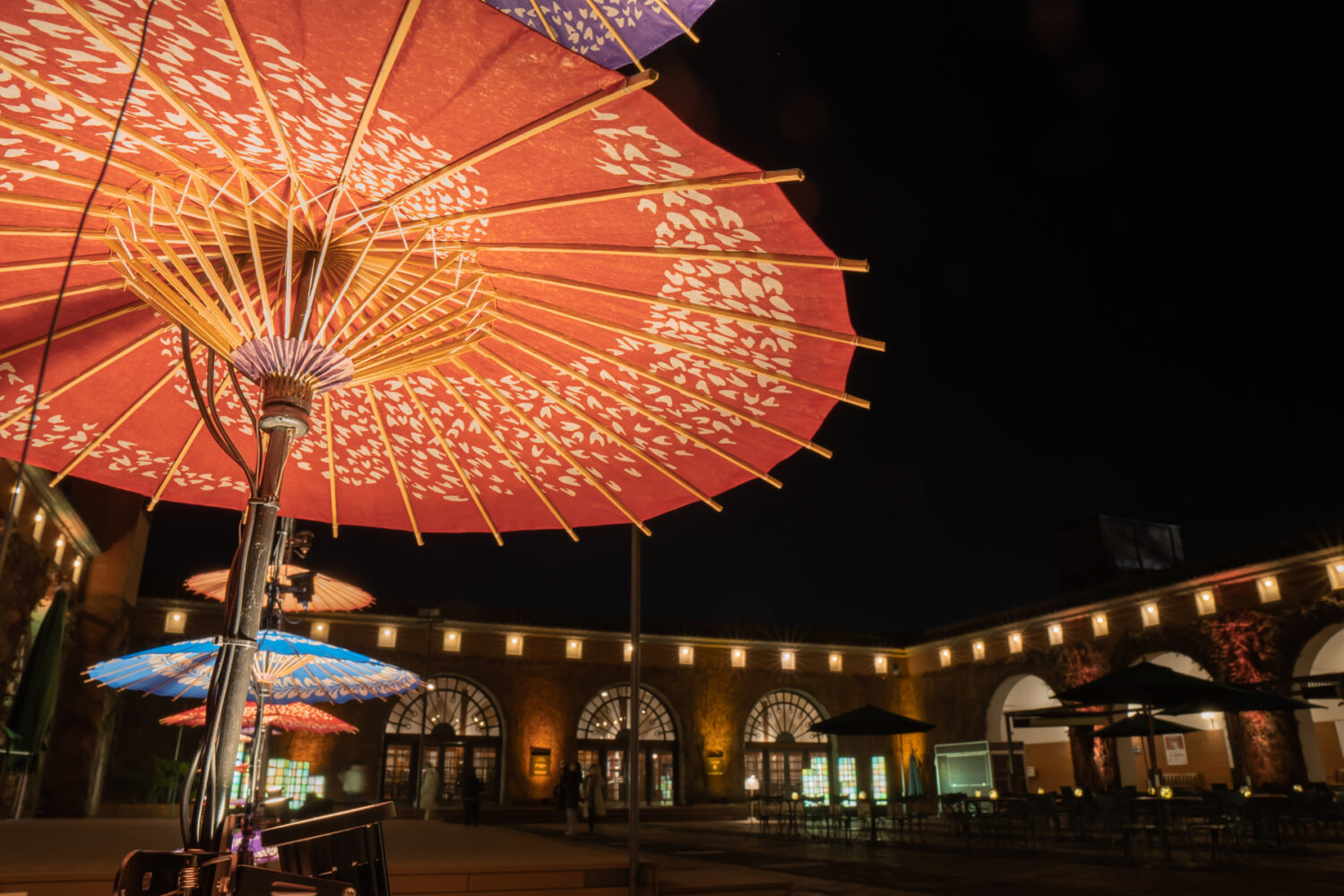
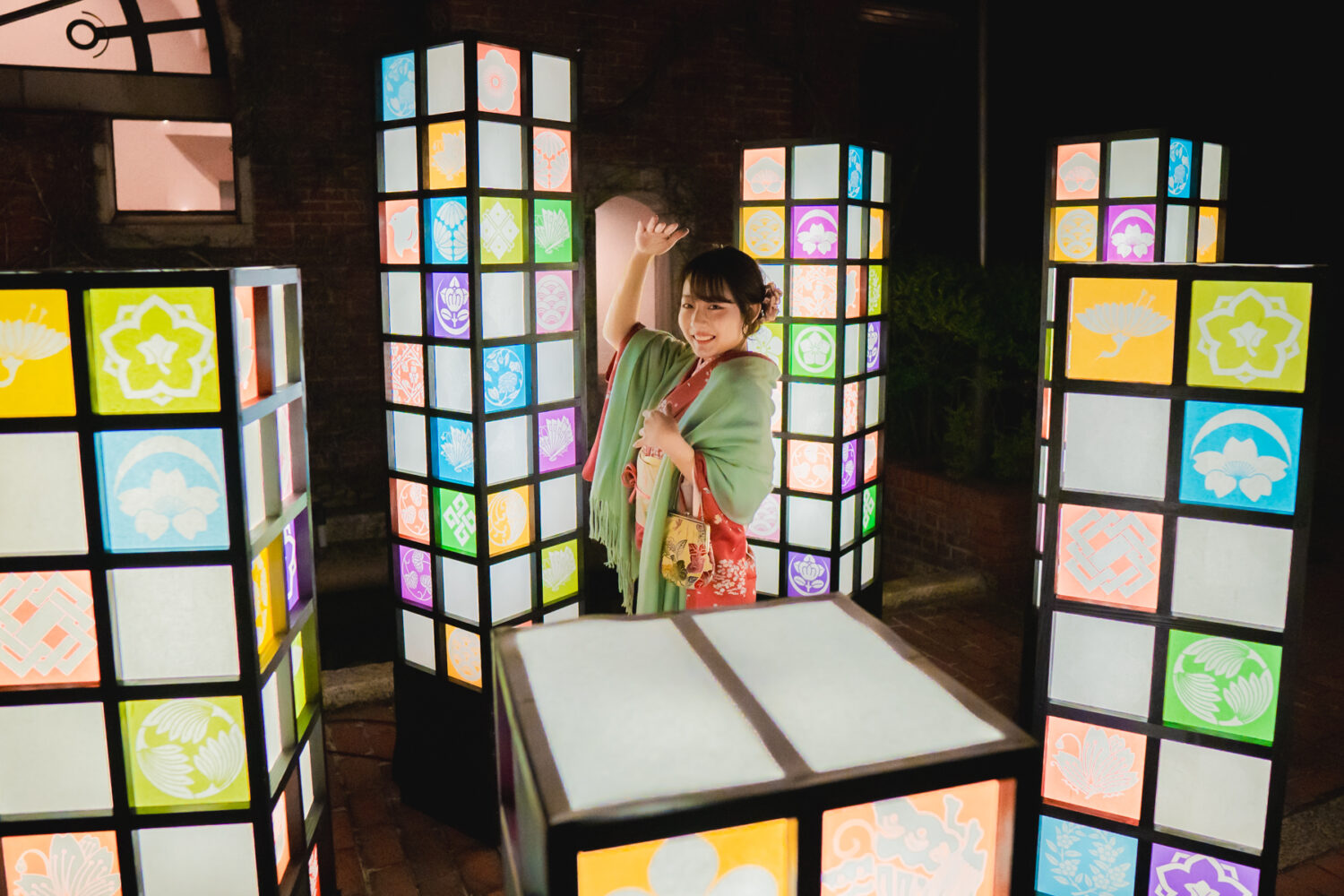
In the courtyard, there were displays of the charmingly glowing Spring Evening Lanterns with colorful geometric patterns and the eye-catching Hanging Umbrella Lights.
Enjoying the Light Display
The light passing through colored paper creates vivid colors in the "Spring Evening Lantern."
The cheerful use of colors naturally makes your body move.
It's no wonder that one can get excited under the illumination of various colored lights.
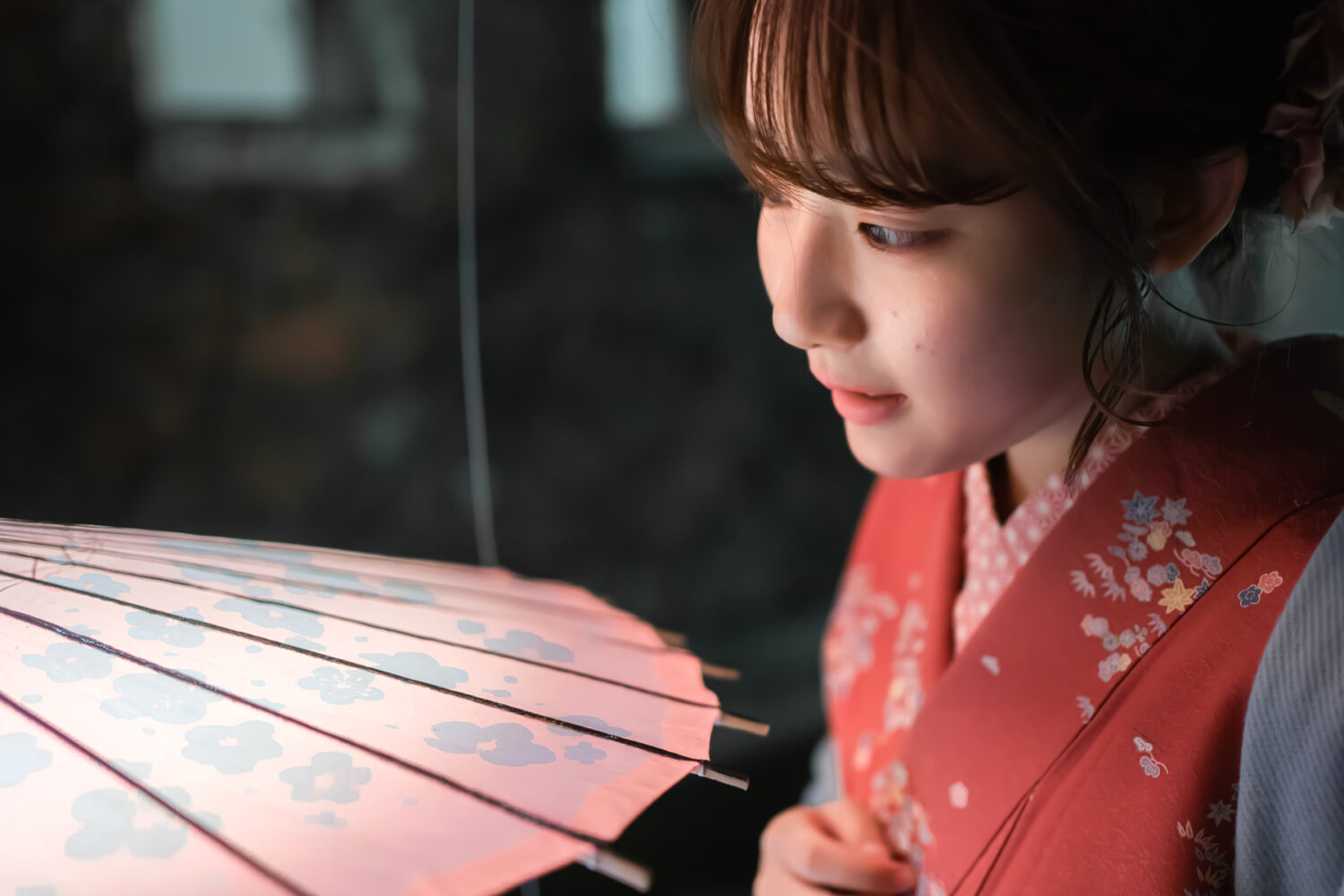
The vertically arranged "Hanging Umbrella Lights" allowed for a close look at the patterns painted on the traditional umbrellas.
The light passing through the paper attached to the umbrellas creates a gentle impression.
The display created by the traditional umbrellas and light, symbolizing culture and history, deeply made me feel the charm of Kurashiki.
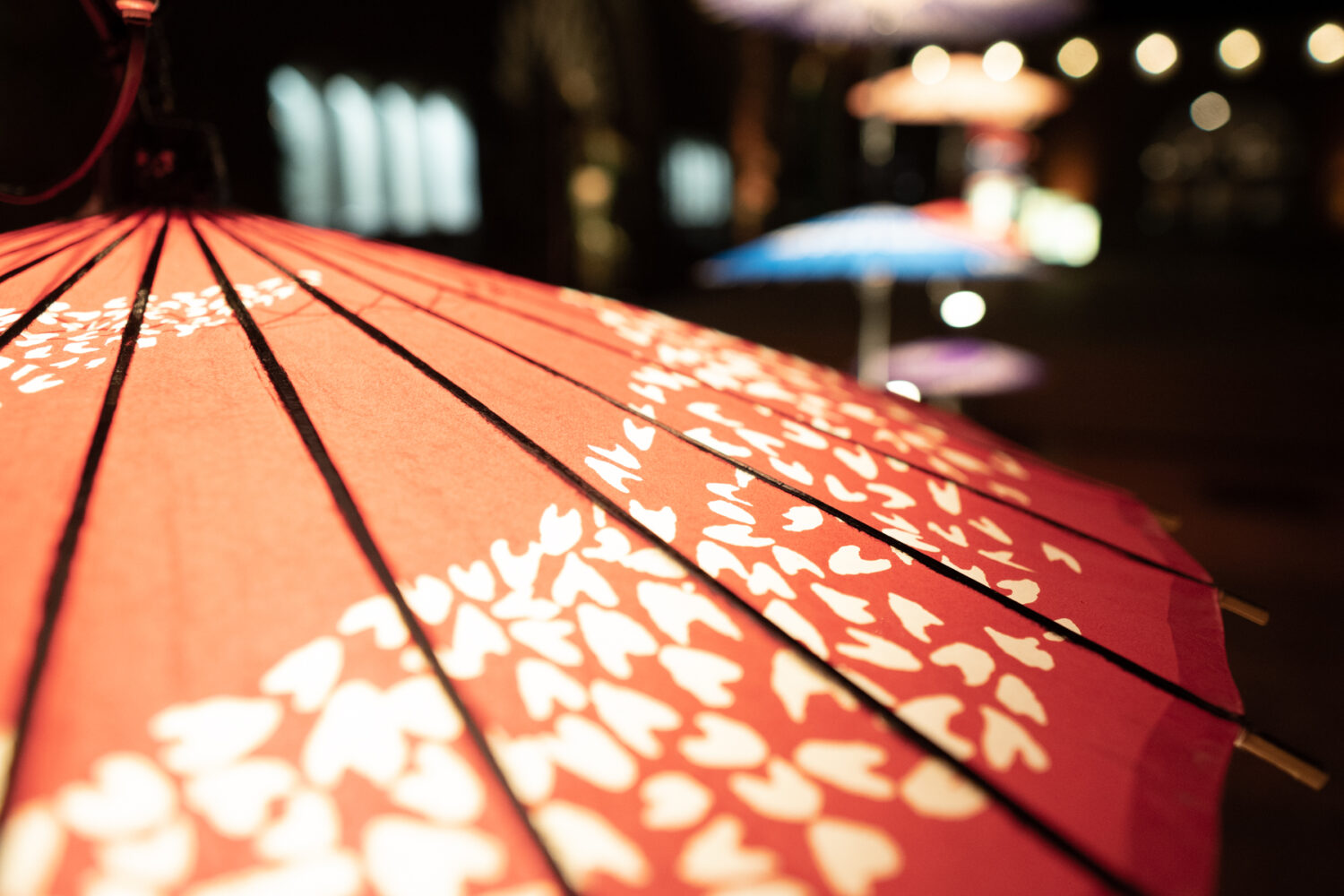
The Bikan Historical Area, where buildings from the Edo, Meiji, and Taisho periods are mixed, allows you to feel the passage of time just by walking.
The various colors of light emitted from the traditional umbrellas may symbolize the activities of people in each era.
After Seeing the Spring Evening Lanterns
For those starting a new life in spring, the end of winter is a season filled with both anticipation and anxiety.
You may look forward to the life that is about to begin, while also feeling the sadness of leaving behind the life you have known.
As you reflect on the unstable state of your heart, comparing it to the changes in temperature, sunlight, and trees, you come to realize that the ordinary daily life was something irreplaceable.
Eight years ago, when I moved to Kurashiki and visited the Bikan Historical Area for the first time, what I happened to see was the townscape of the Edo period adorned with traditional umbrellas.
Having spent 28 years in the Tokyo metropolitan area, one of the world's leading cities, I had very few opportunities to engage with local culture and history.
I vividly remember feeling a value I had never experienced before when I saw the light of the traditional umbrellas symbolizing culture and history.
And now, by comparing the 28 years spent in the metropolitan area with the 8 years in Kurashiki, I have realized that both have their own beautiful scenery.
From dusk to evening, from the Edo period to the present, from Kurashiki to Tokyo.
While gazing at the colorful lights that illuminate like magic, I was drawn to the things that change with time, perhaps because it was the transition from winter to spring.
I found myself pondering the significance of a townscape that reflects the passage of time being adorned with colorful lights.
It may be at the moment of moving to a new stage from winter to spring that we truly realize the importance of the ordinary.
Data for the 16th Kurashiki Spring Evening Lanterns
| Name | 16th Kurashiki Spring Evening Lanterns |
|---|---|
| Dates | February 18, 2023 (Saturday) to March 12, 2023 (Sunday) Lighting from 5:30 PM to 9:00 PM |
| Location | Bikan Historical Area |
| Participation Fee (Tax Included) | Free |
| Website | 16th Kurashiki Spring Evening Lanterns |