In the past, the cultivation of mint was actively carried out mainly in the southern part of Okayama Prefecture.
From 1873 to 1941, Japan's mint production was the highest in the world. Okayama Prefecture's domestic share was second, following Hokkaido.
Mint was also cultivated as a specialty product in Kurashiki, but with the rapid economic growth, the number of farmers decreased, and the cultivation of mint declined.
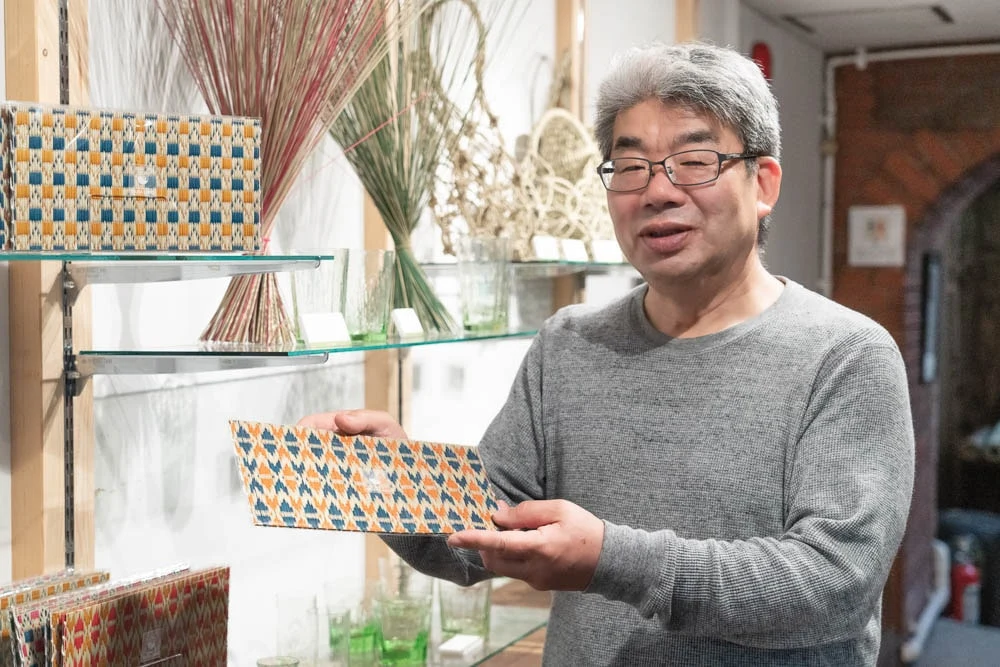
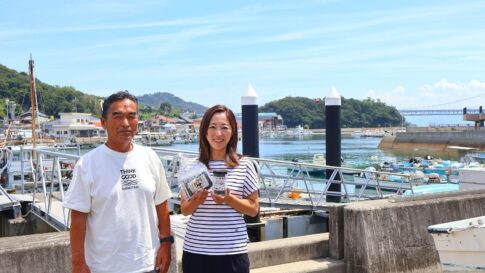
The Kibi no Kuni Future Plan has successfully reflected on the history of mint cultivation in Kurashiki and revived it. They have developed products utilizing the grown mint, which are sold at the store Kurashiki Mint and through an online shop.
This article introduces the history and initiatives of mint cultivation in Kurashiki.
What is "Kurashiki Mint"?
Overview of "Kurashiki Mint"
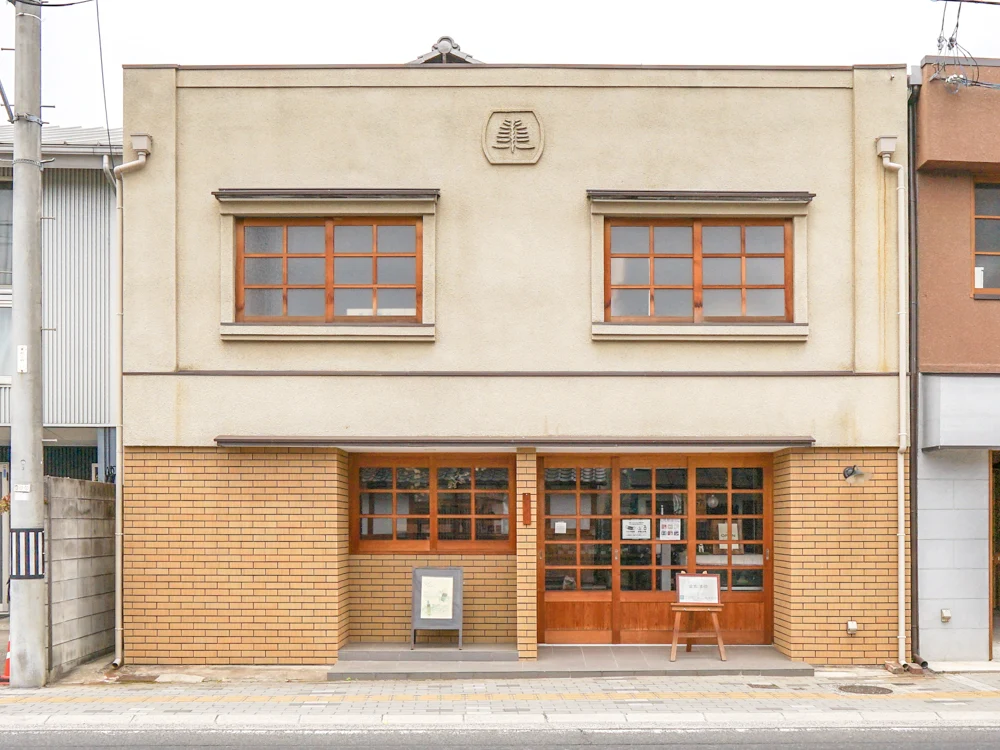
"Kurashiki Mint" is a sales location for products utilizing mint grown in Kurashiki.
It is operated by the limited liability company Kibi no Kuni Future Plan.
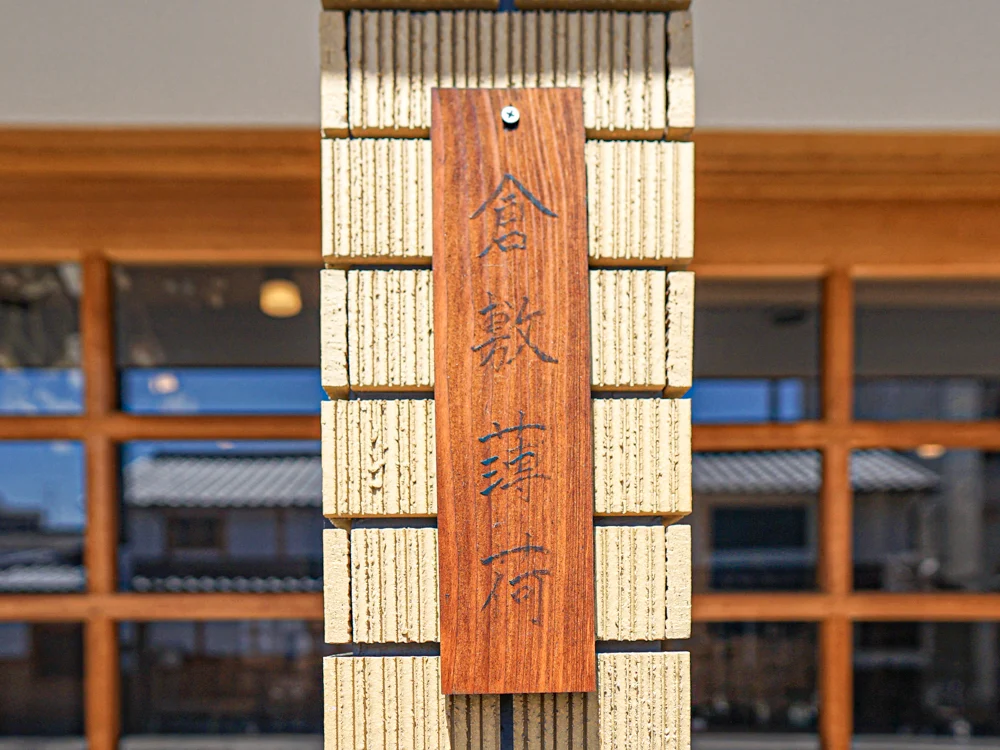
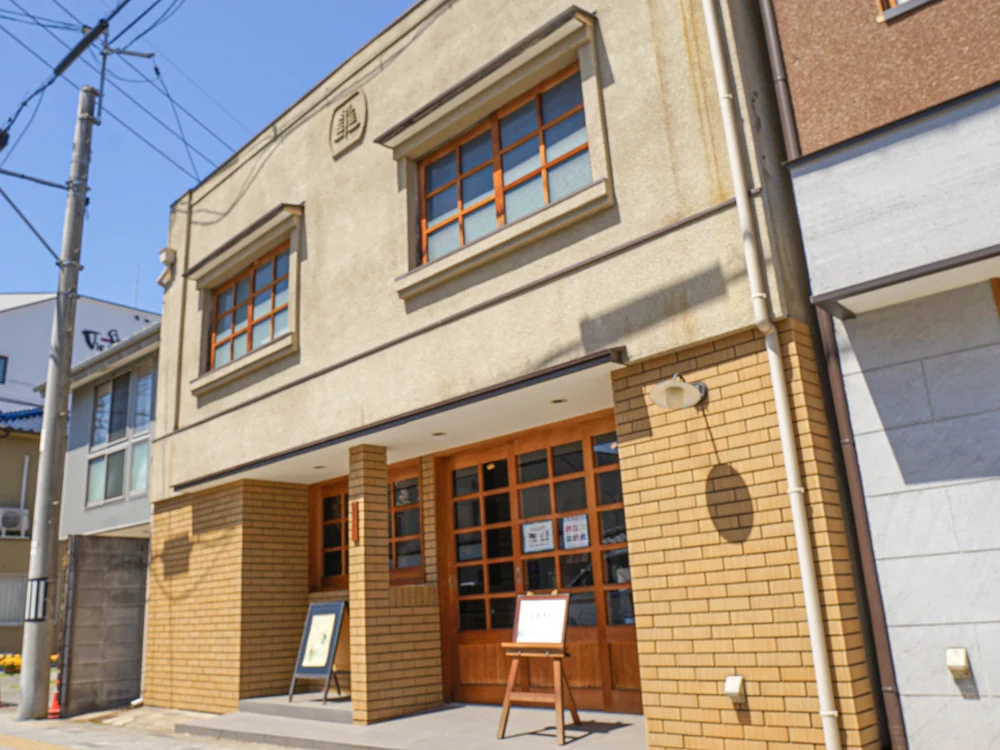
Kurashiki City Art Museum is located about 100 meters to the west of a cute retro building. Originally built during the Taisho era, it was remodeled into a signboard architecture style when it was used as a watch shop in the 1950s, resulting in its current form.
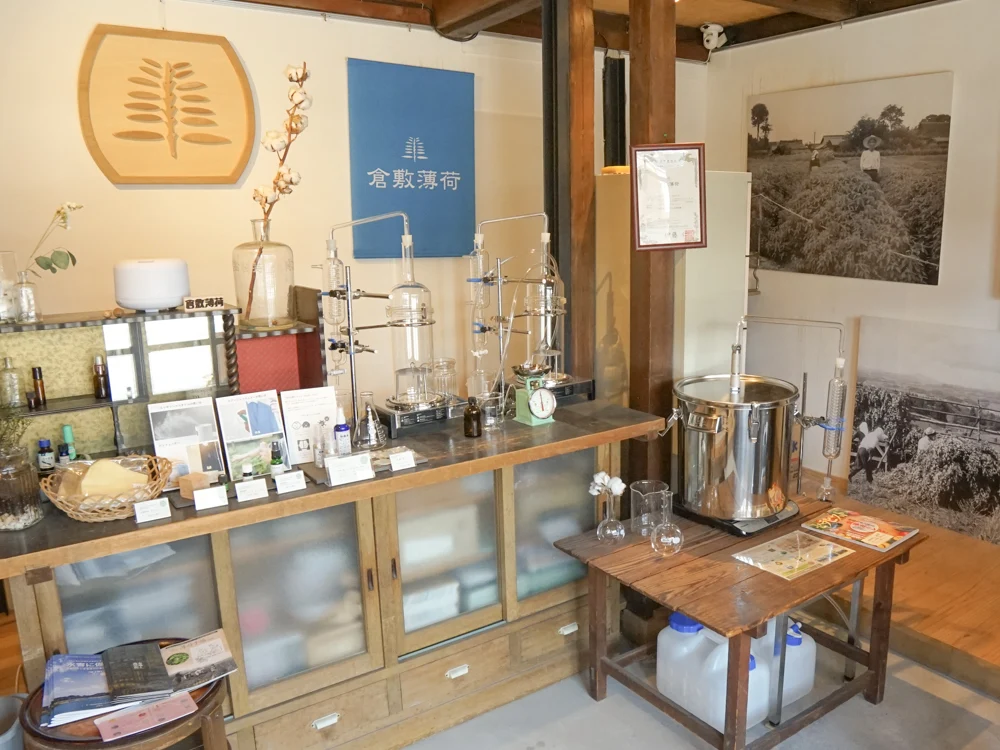
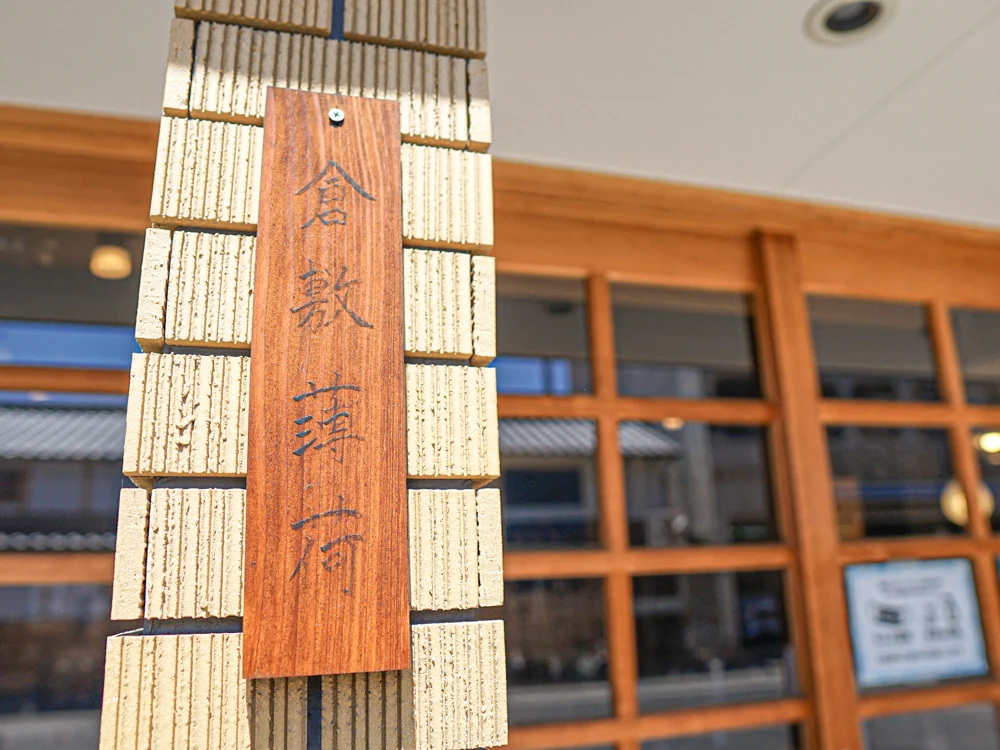
The official name of Kurashiki Mint is Kurashiki Mint Exhibition Hall.
It has an old-fashioned name reflecting the history of mint cultivation that was once active in Kurashiki. The interior features wooden pillars and beams, creating a calm atmosphere.
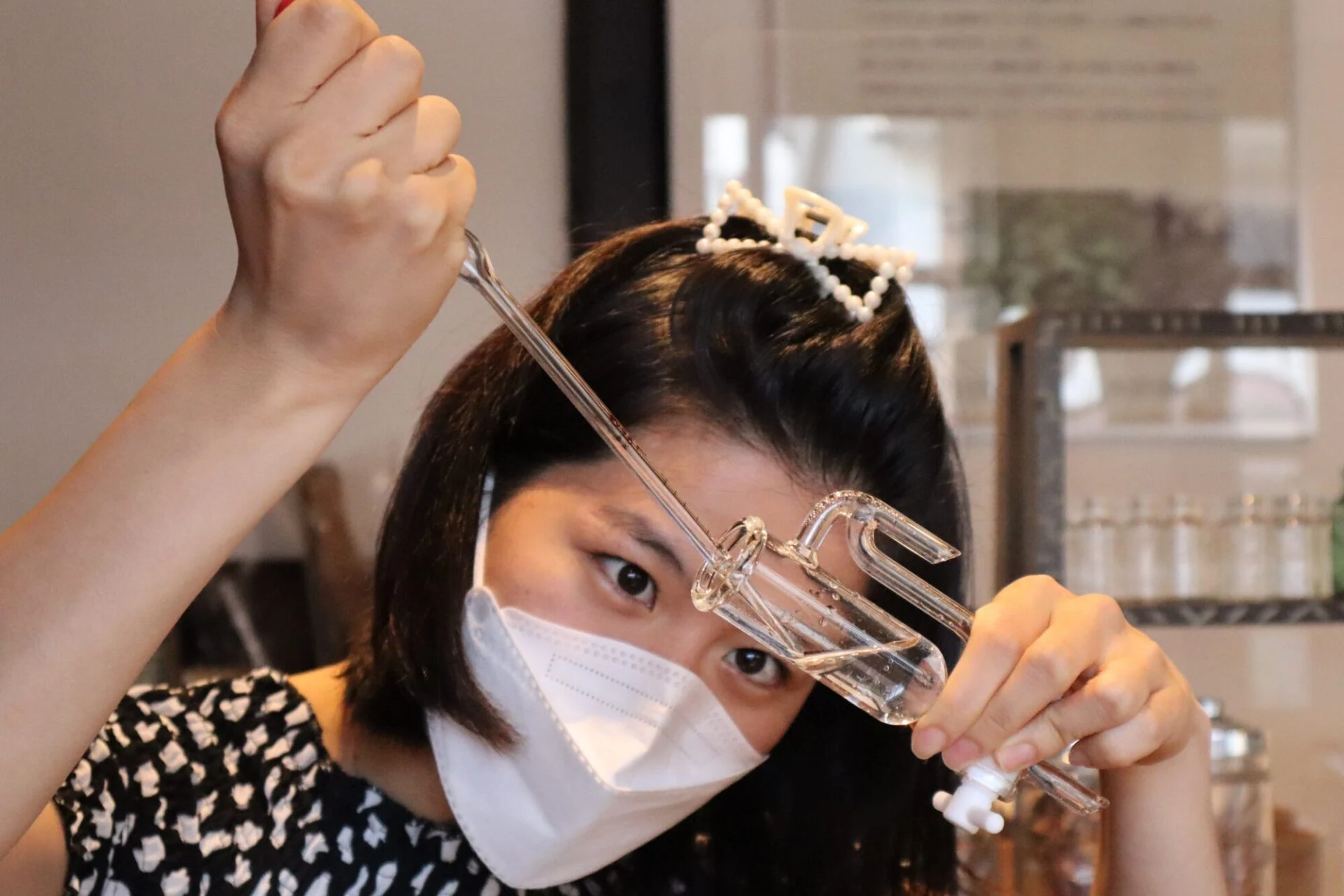
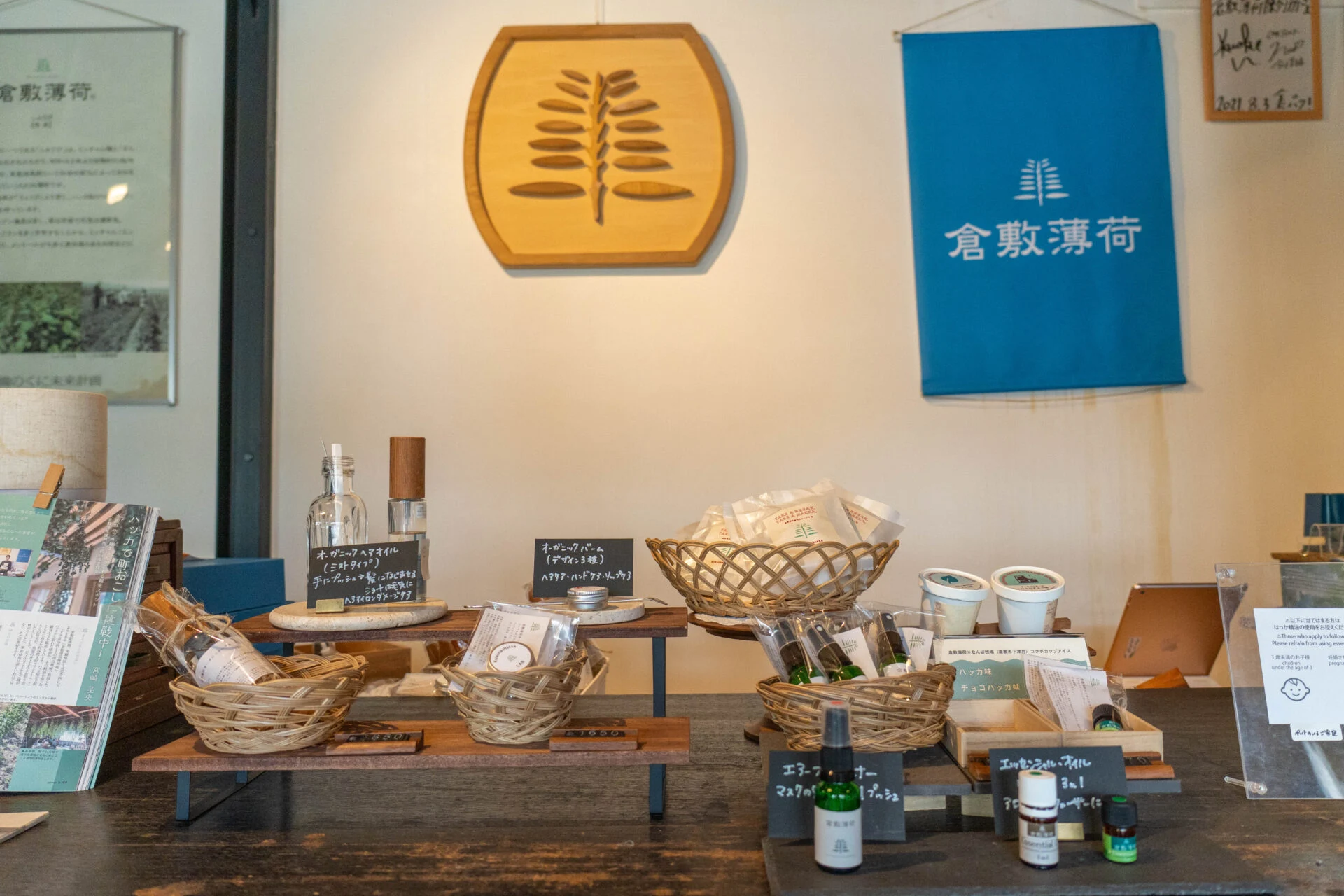
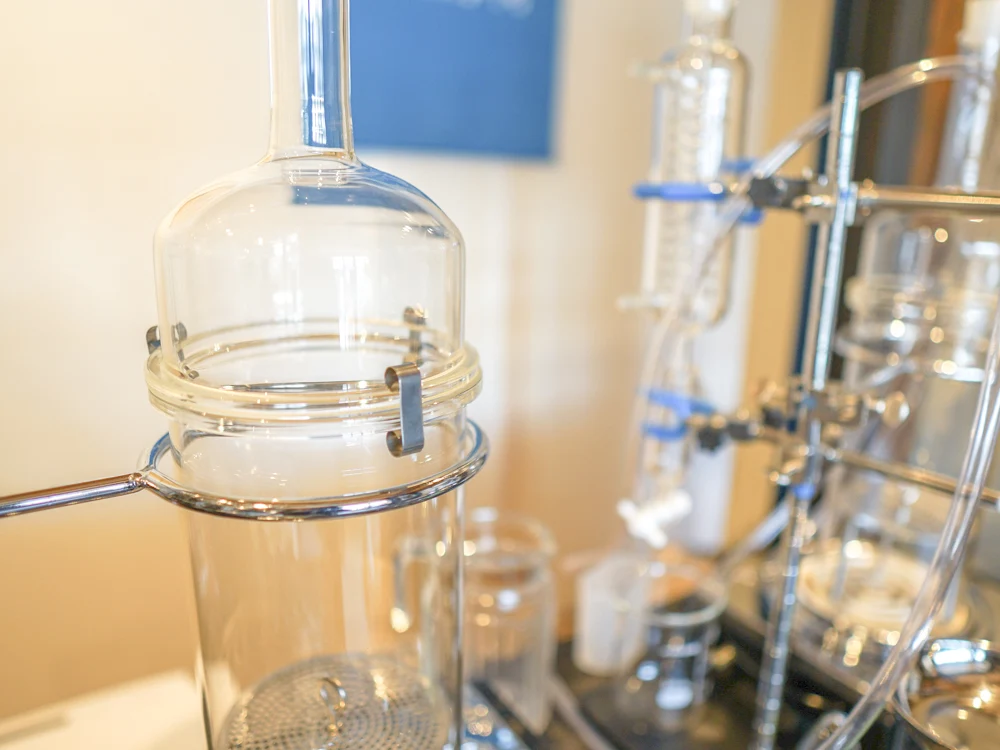
Glass equipment for distilling mint catches the eye.
Kibi no Kuni Future Plan
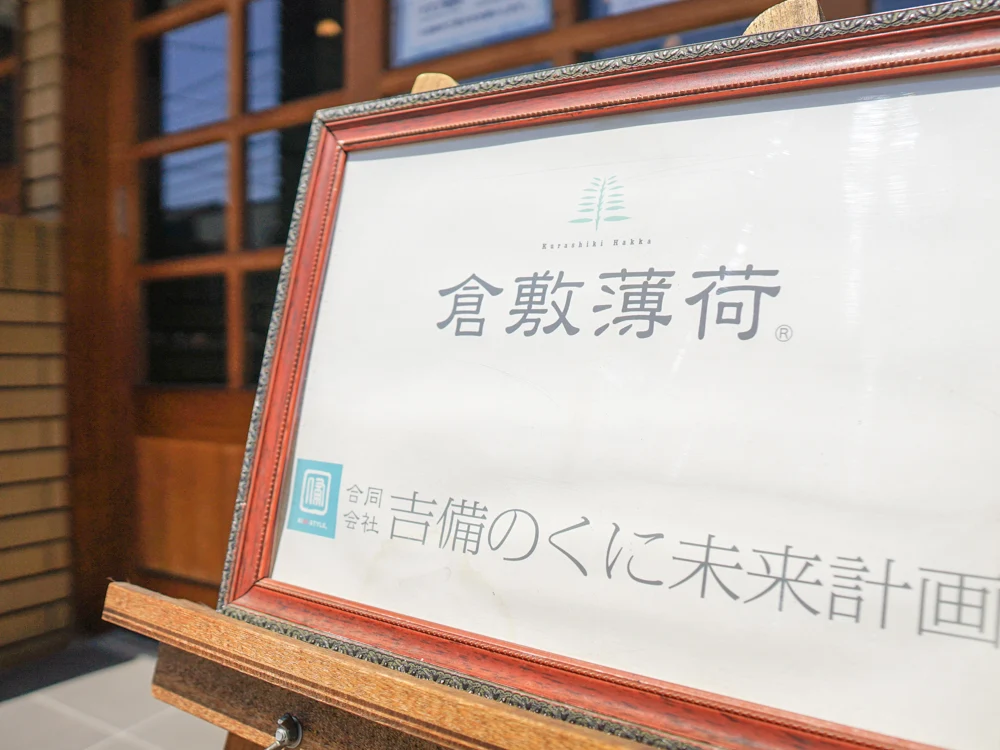
The limited liability company Kibi no Kuni Future Plan is an organization that engages in community development utilizing the resources and specialty products of Kurashiki.
It began around 2010 when people involved in community development in Kurashiki were active under the former Kurashiki Future Plan. They learned about the history of mint cultivation in Kurashiki and started cultivating mint and developing products.
In 2015, they established the limited liability company and began selling Kurashiki Mint products.
Products of "Kurashiki Mint"
What products are available?
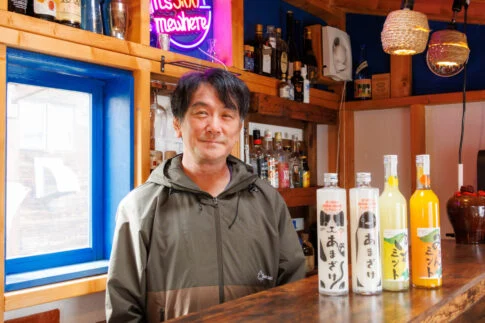
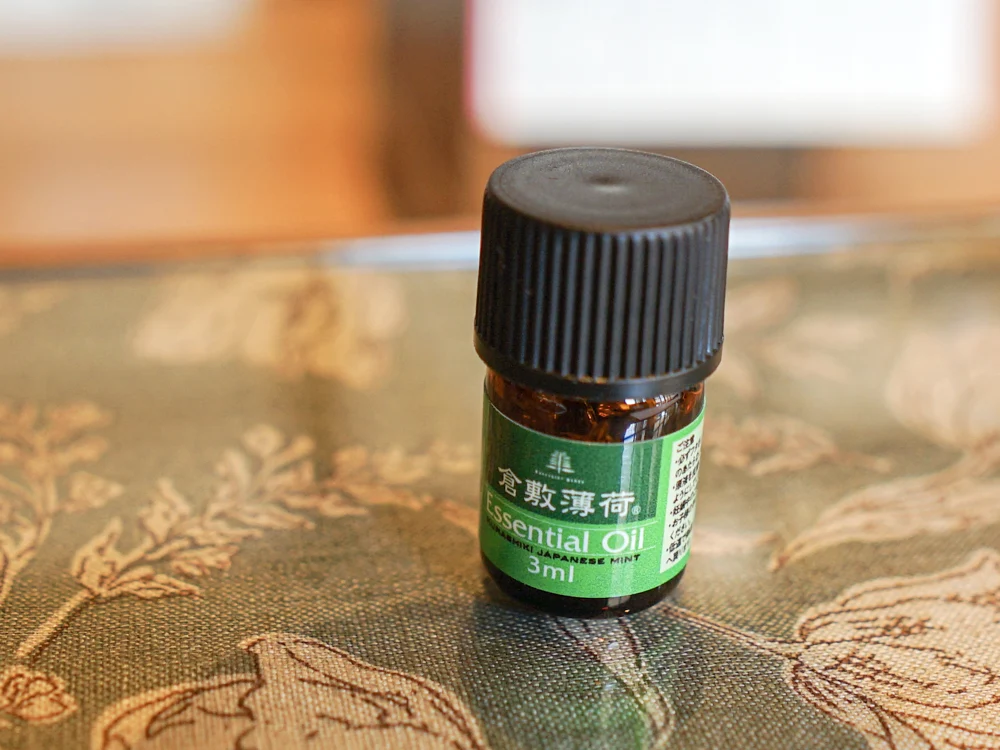
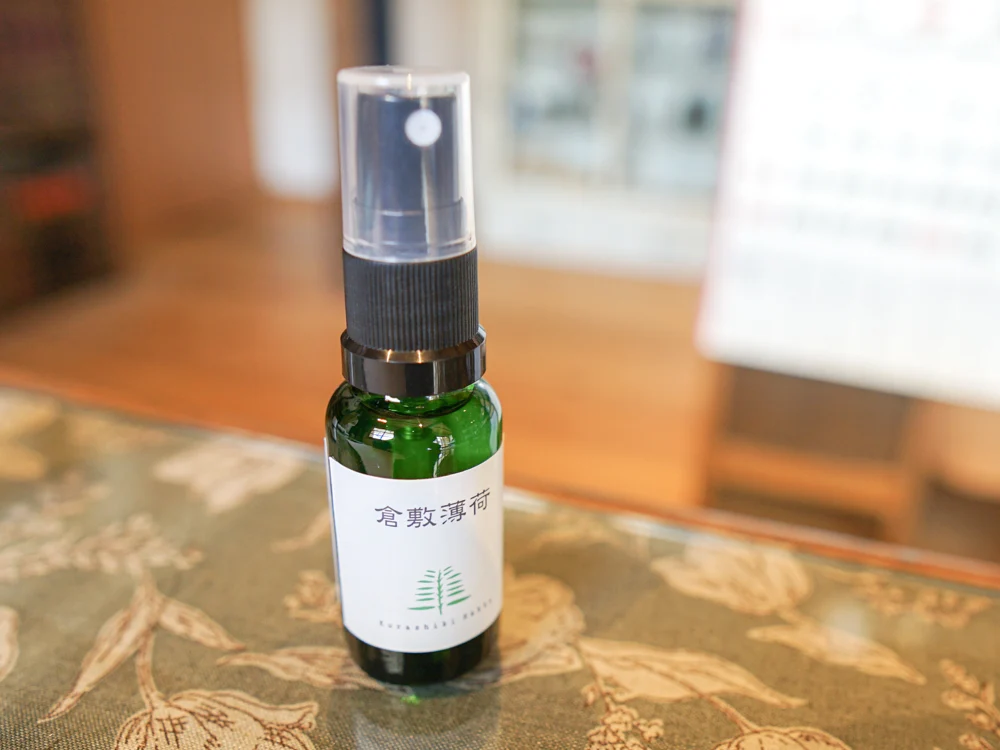
The products handled by Kurashiki Mint include essential oil and air freshener.
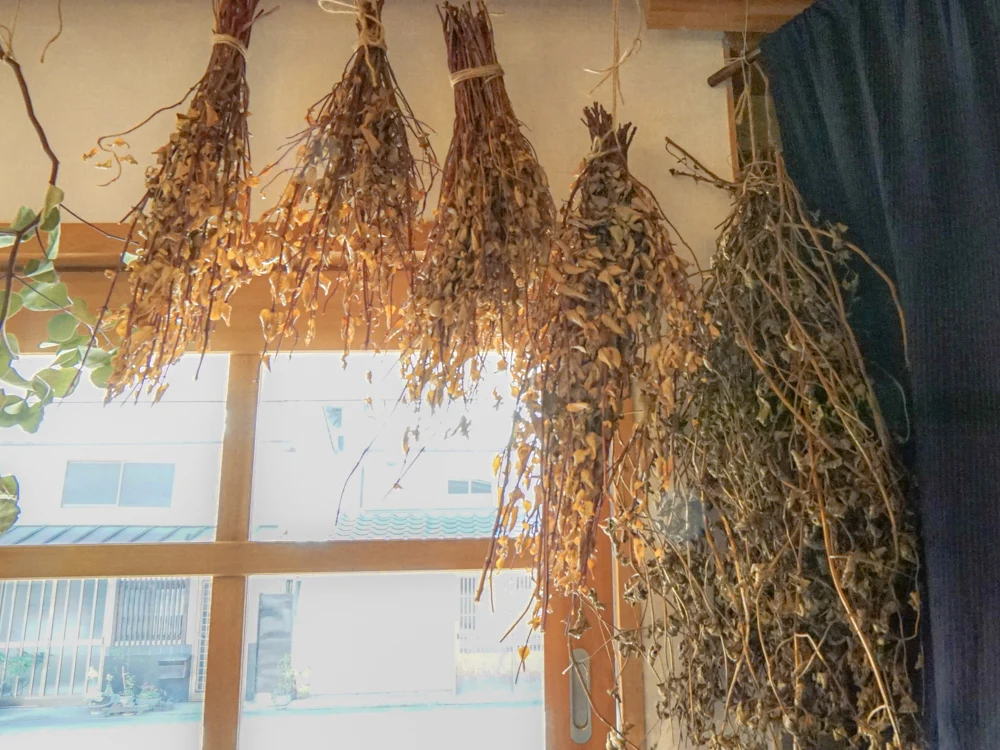
Dried mint is steamed in a distillation machine to separate it into water and oil. The extracted oil is the essential oil, which is concentrated with the refreshing aromatic component menthol.
The air freshener is a diluted version of the essential oil mixed with purified water. It is contained in a bottle with a spray attached.
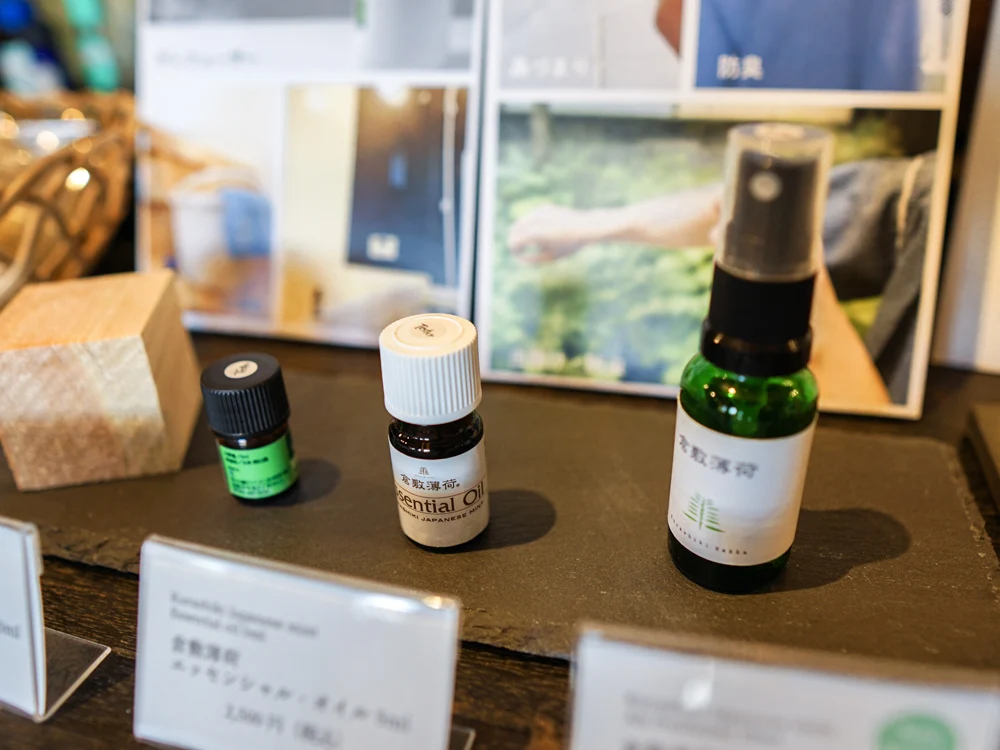
Products can be purchased not only at the store but also from the Kurashiki Mint online shop.
Below are the prices of the products handled by Kurashiki Mint.
| Product | Price (including tax) |
|---|---|
| Essential Oil (3ml) | 2,970 yen |
| Essential Oil (5ml) | 4,620 yen |
| Air Freshener | 1,100 yen |
How to use the products
Essential oil can be added to an aroma diffuser to enjoy the fragrance.
When cleaning, using water mixed with essential oil to wipe tables and floors is said to have insect-repelling effects.
The air freshener is expected to have insect-repelling effects, so it can be used as an insect repellent when going outdoors.
Spraying it on handkerchiefs or masks is said to provide a refreshing sensation.
History of mint cultivation in Kurashiki
Was Japan's mint production once the highest in the world?
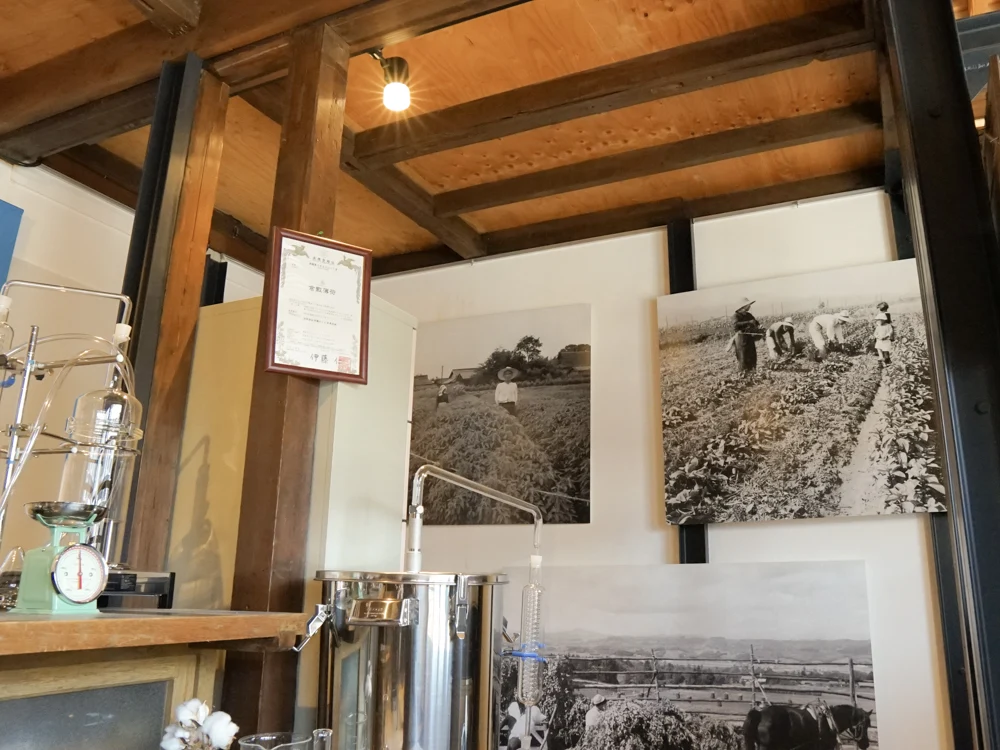
The cultivation of mint in Okayama is said to have started in the Edo period.
Mint cultivation spread nationwide, and from 1873 to 1941, Japan's mint production was the highest in the world. Hokkaido ranked first in domestic share, with Okayama in second place.
Mint cultivation was also actively carried out in Kurashiki.
In 1967, a variety of mint called "Shubi" was produced at a farm testing station in Kurashiki.
However, due to the decrease in the agricultural population caused by rapid economic growth and the influx of synthetic menthol from overseas, mint cultivation declined. The testing station was also closed.
Mint cultivation was swept away by the waves of industrialization and market globalization.
Until the revival of mint cultivation in Kurashiki
In the 2010s, wild mint was found in Okayama Prefecture.
The former Kurashiki Future Plan, which is the predecessor of Kibi no Kuni Future Plan, investigated the roots of the wild mint at the Okayama University Faculty of Agriculture library.
The history of mint cultivation in Kurashiki became clear.
In an attempt to utilize the once-thriving industry for regional revitalization, experimental cultivation began. Thus, mint cultivation in Kurashiki was revived.
With stable production, they began selling products at Kurashiki Mint from 2015.
Conclusion
The author had no idea that mint cultivation was taking place in Kurashiki.
Finding and reviving an industry that was once forgotten feels like a grand project. While there is a call to cherish the natural environment, there are limits to individual awareness, and creating a system is important.
If activities that lead to environmental protection can be established as a business, a society where economic activities and environmental protection can coexist can be built.
I look forward to the day when the Kurashiki Mint business becomes known worldwide and a model for eco-business emerges from Kurashiki.
Data on Kurashiki Mint (Kurashiki Mint Exhibition Hall)
| Name | Kurashiki Mint (Kurashiki Mint Exhibition Hall) |
|---|---|
| Address | 2-10-11 Chuo, Kurashiki City, Okayama Prefecture |
| Parking | None |
| Regular Holidays | Irregular holidays |
| Payment Methods |
|
| Website | Kurashiki Mint |