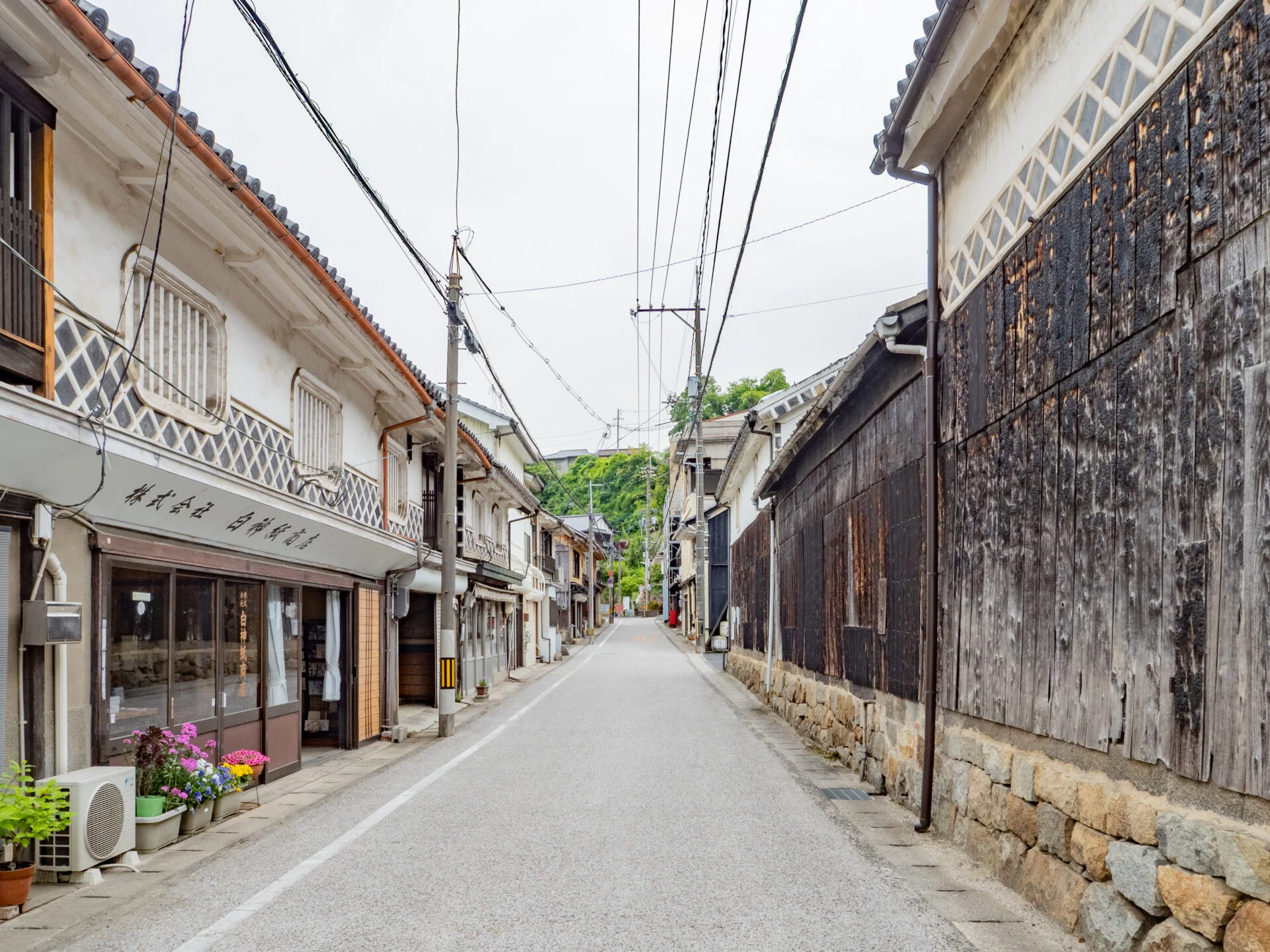
During the Edo period, Tamashima was a prosperous port town and one of the leading commercial areas in the Seto Inland Sea.
There are places that still retain the remnants of Tamashima's history.
One of them is the "Haguro Shrine" (羽黒神社) located on Mt. Haguro, in the center of Tamashima.
It is the guardian deity of Tamashima, watching over its development.
Additionally, Haguro Shrine has gained attention for its unique and artistic goshuin (temple seals).
Let’s introduce the history and charm of Haguro Shrine.
Haguro Shrine was built by the lord of Bitchu Matsuyama Domain for the reclamation of Tamashima during the Edo period
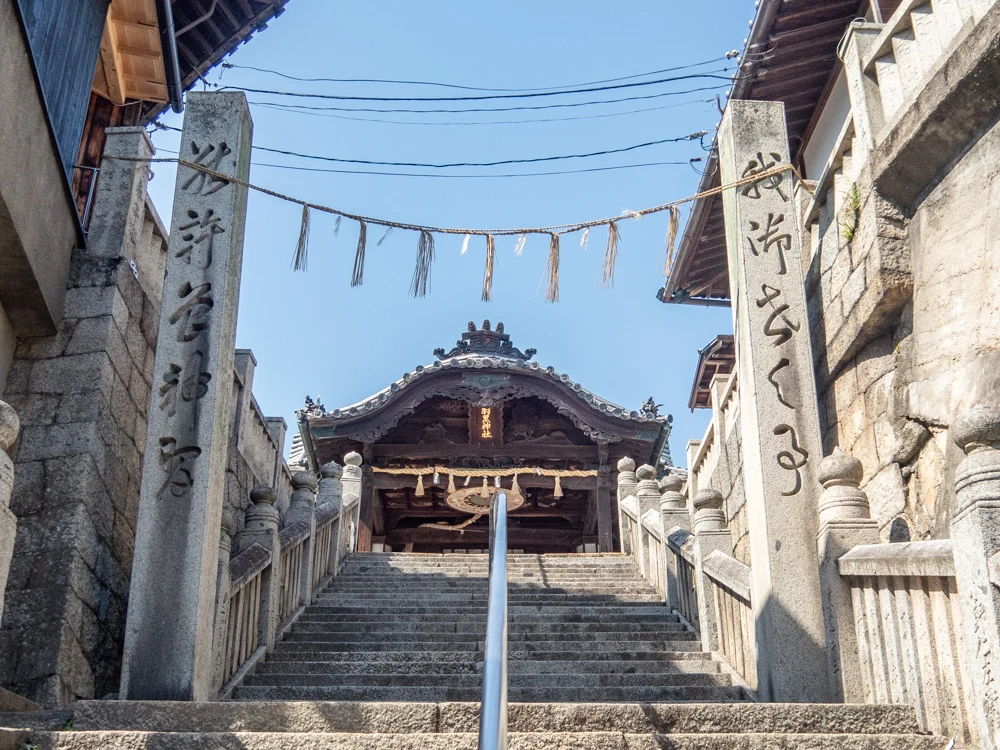
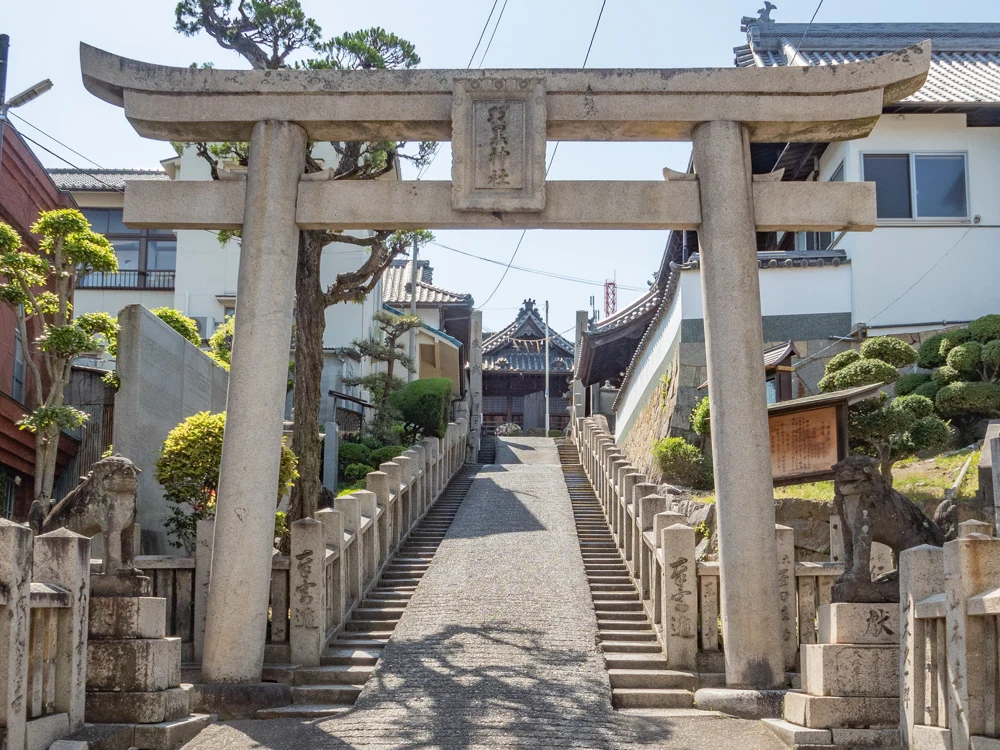
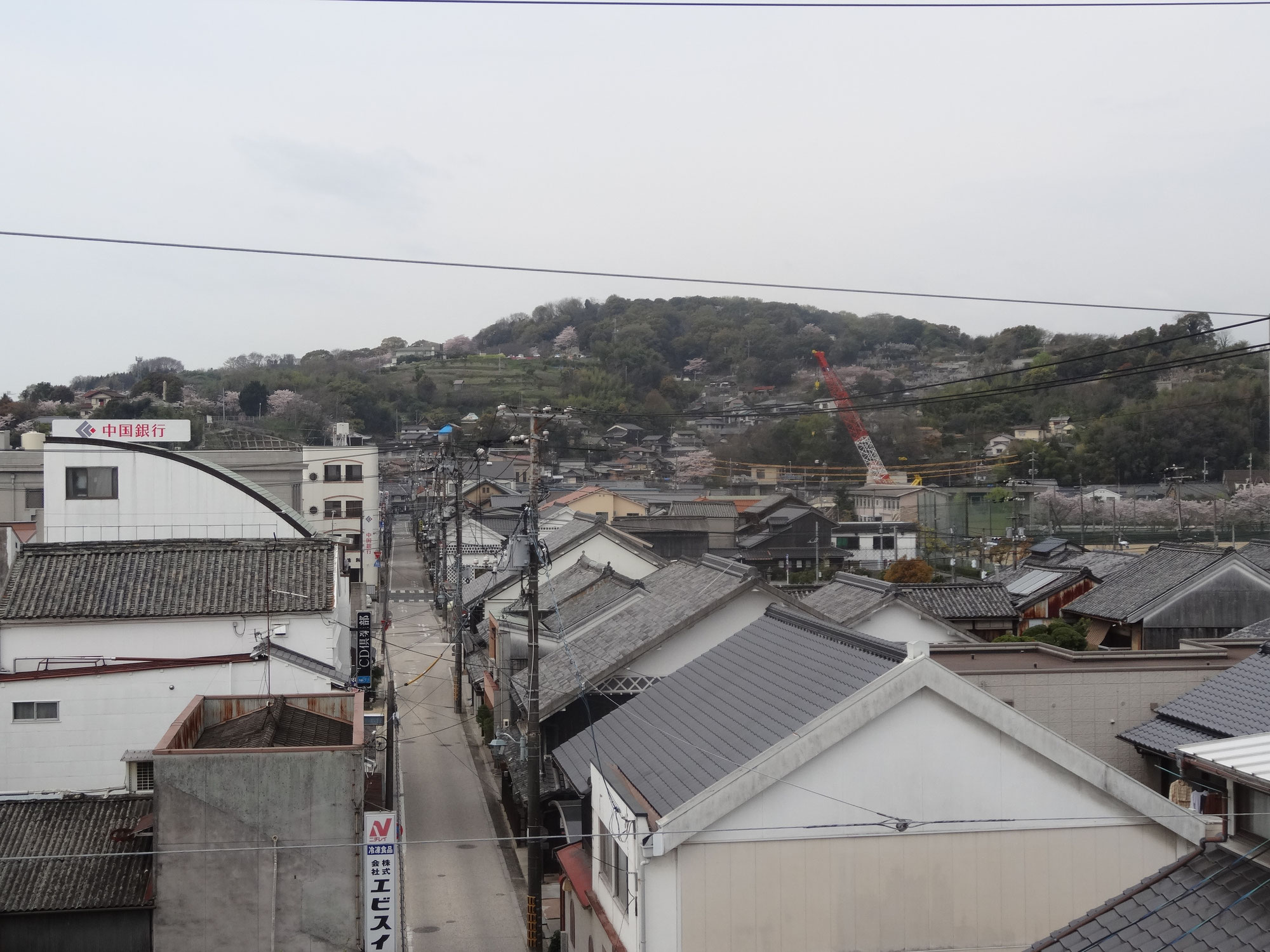
Haguro Shrine is located on a small hill called "Mt. Haguro" in the center of Tamashima.
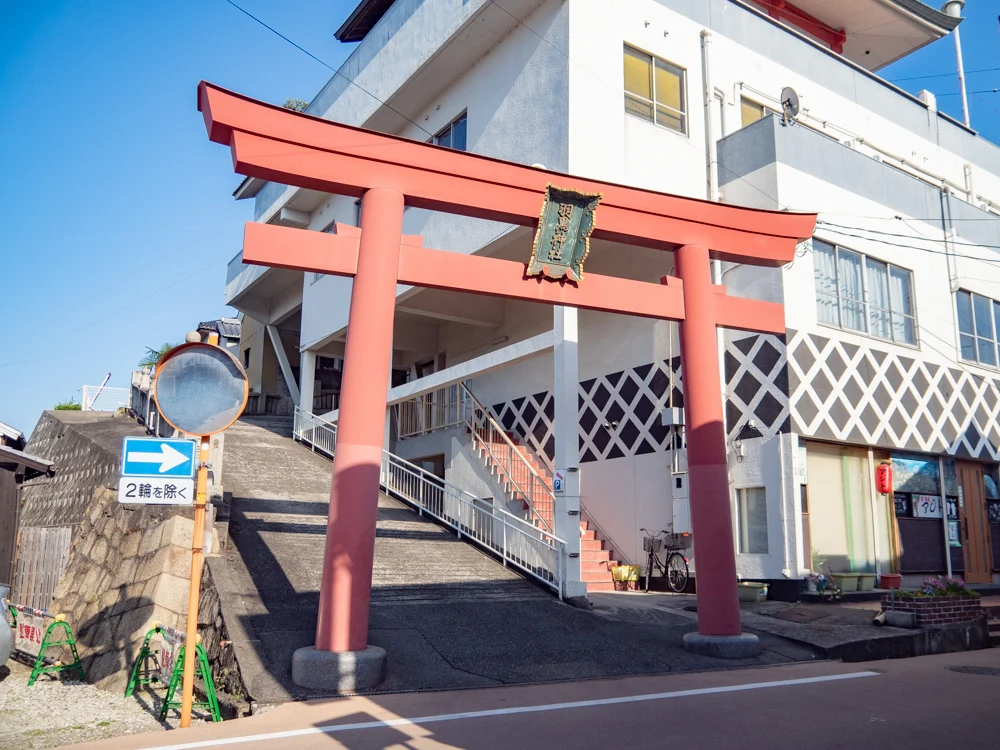
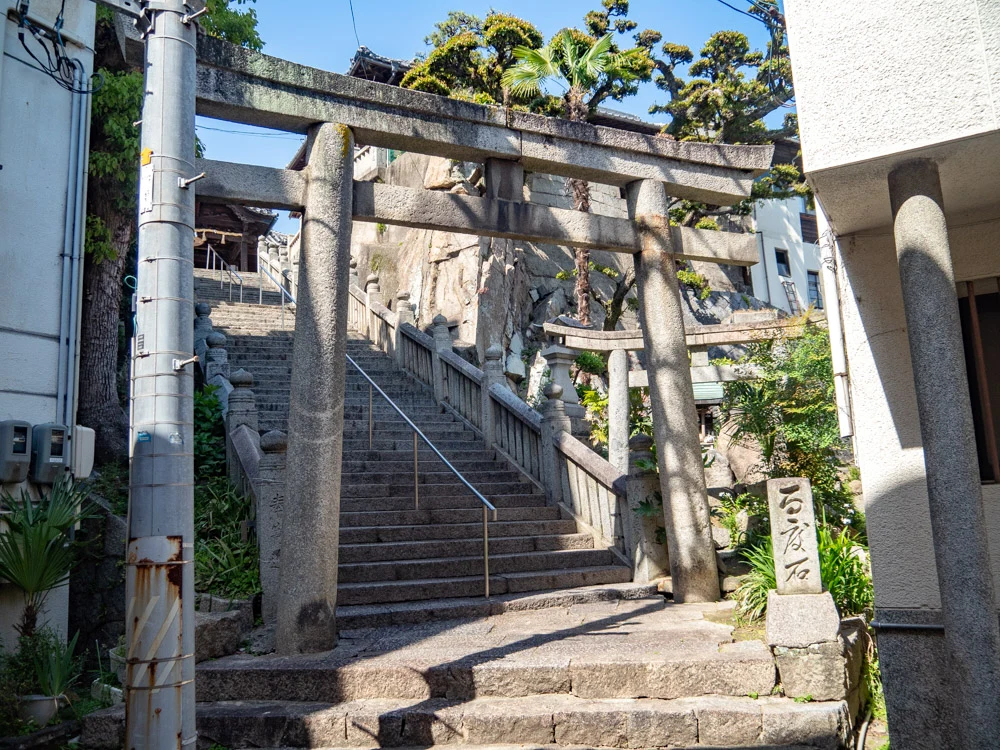
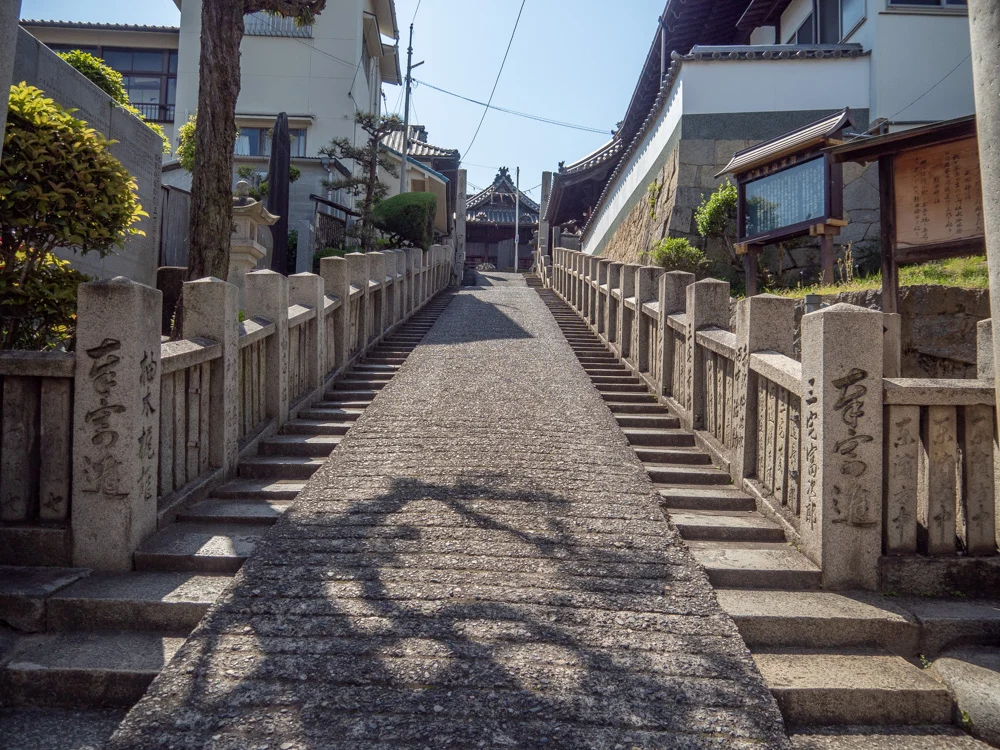
There are three approaches to Haguro Shrine: east, west, and south.
Among these, the eastern and western approaches can be accessed by car.
The parking lot is located on the west side of the shrine grounds.
In fact, the entire Tamashima area was originally sea.
In the early Edo period, it was reclaimed by the Bitchu Matsuyama Domain, creating a vast area of land.
Haguro Shrine was established by the lord of the Matsuyama Domain, Mizunoya Katsutaka, in the first year of Manji (1658) to pray for the success of the reclamation and the peace of the land created by it.
Since then, it has been cherished by the local residents as the guardian deity of Tamashima.
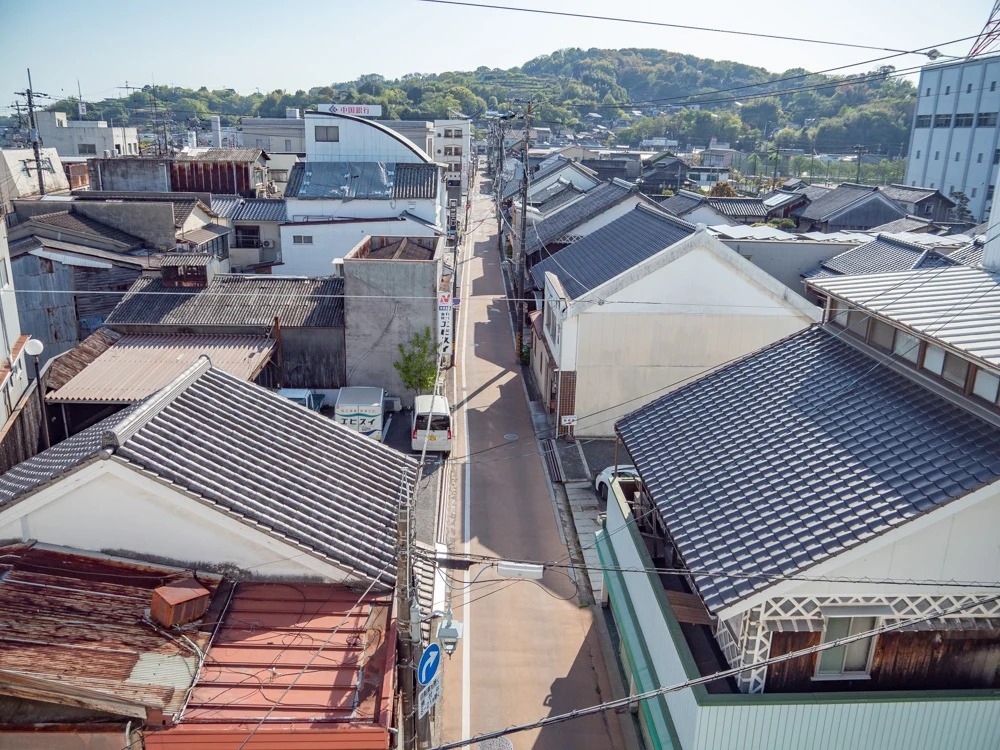
After the reclamation, a port was created in the current center of Tamashima, and the surrounding port town developed to the extent that it was called "the Naniwa of the West," becoming one of the leading commercial areas in the Seto Inland Sea.
As a result, Haguro Shrine was revered by successful merchants and those who came to Tamashima for trade via the Kitamae-bune (northern coastal ships).
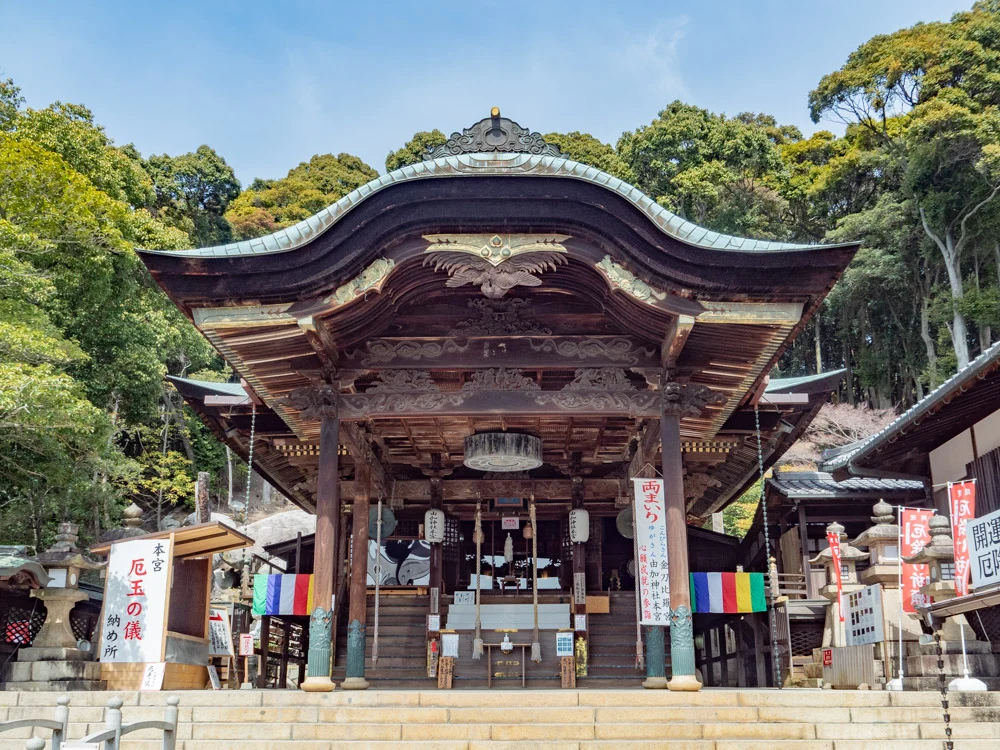
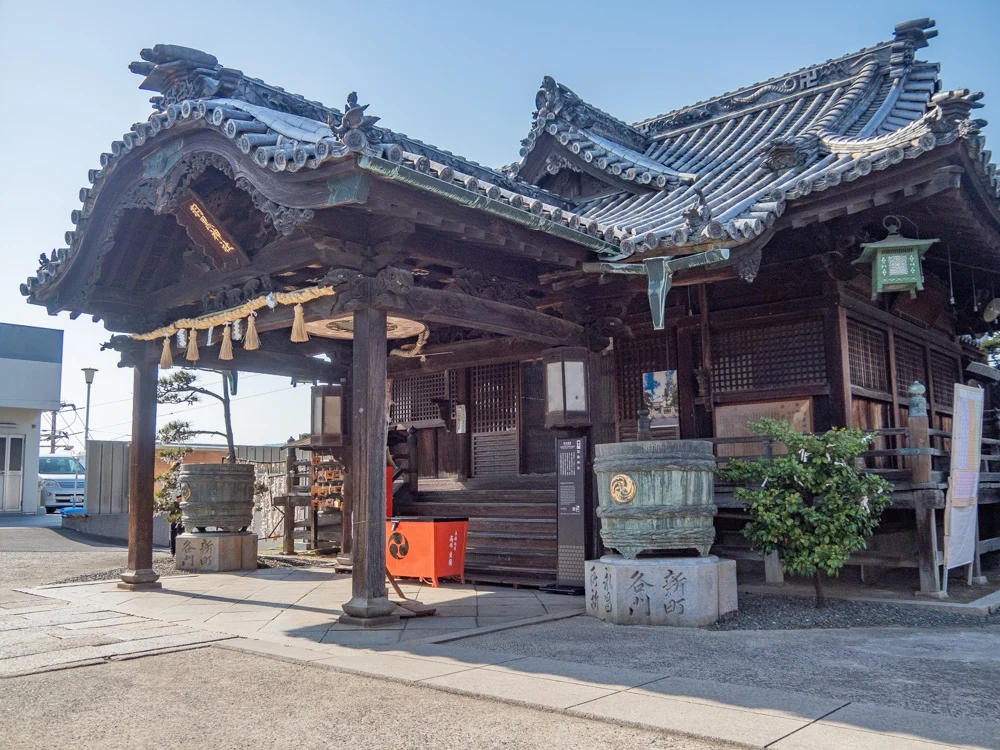
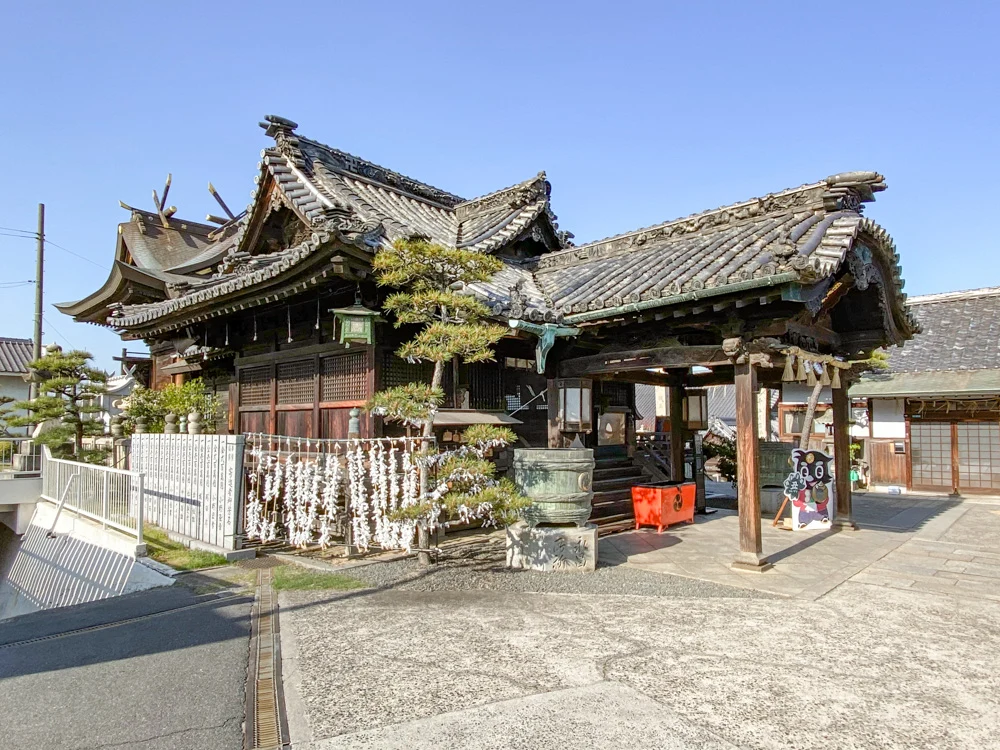
The shrine building of Haguro Shrine is very ornate for its size, with many decorations that are detailed and artistic.
Haguro Shrine conveys the history of Tamashima's past prosperity as a commercial city.
In the spring of 2018, the Tamagaki (decorative fence) and Funema (boat-shaped ema) located within the shrine grounds were recognized as Japan Heritage cultural properties of the A different world entwined with the dreams of men who overcame the stormy seas.
Highlights of Haguro Shrine
Haguro Shrine has many points of interest.
From among them, let’s introduce the particularly noteworthy ones.
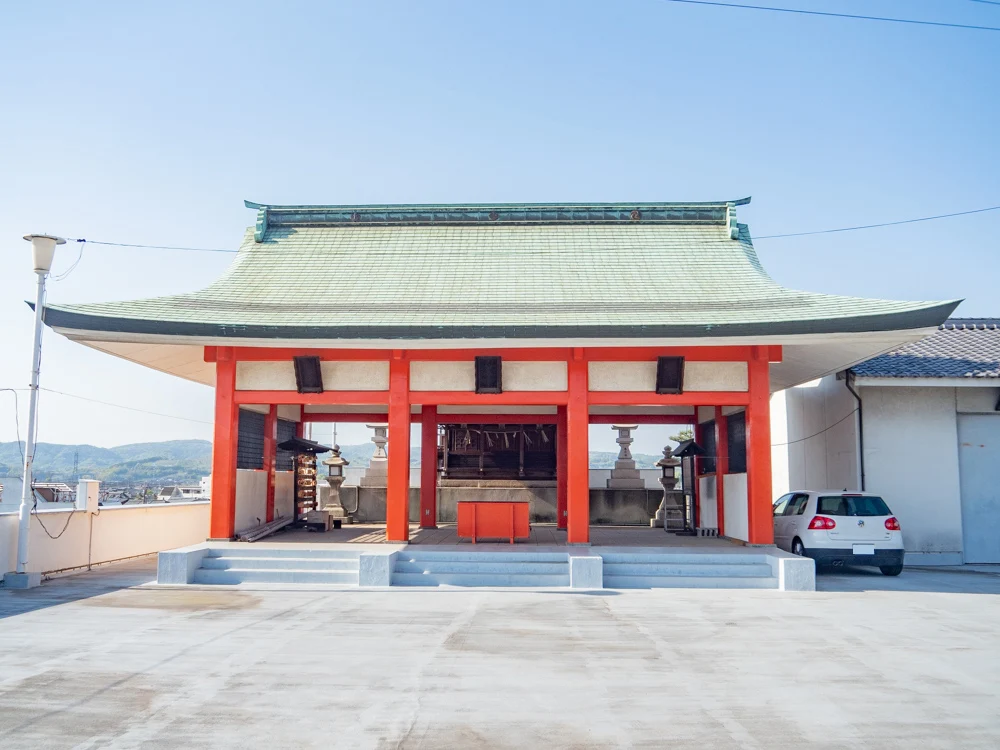
Main Hall
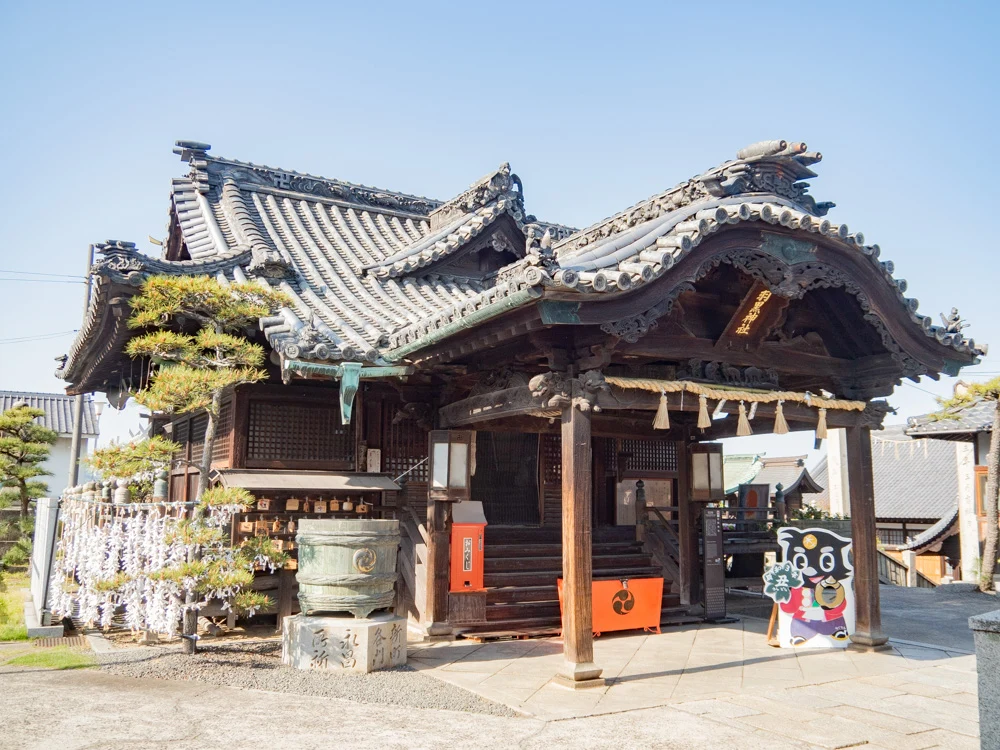
The main hall is the building where the deity enshrined at the shrine is worshipped.
When visiting Haguro Shrine, be sure to pay your respects at the main hall first.
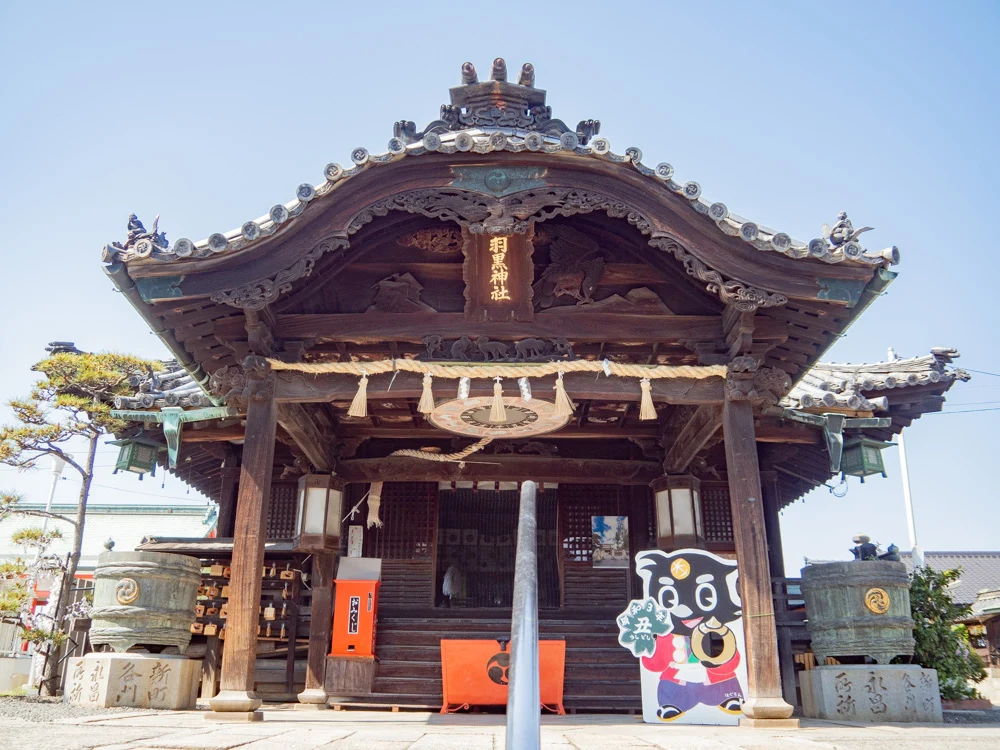
The main hall of Haguro Shrine is a very old building that was rebuilt in the first year of Ansei (1854).
At first glance, it may look like an ordinary shrine's main hall, but please pay attention to the decorations.
There are many intricate decorations applied to various parts.
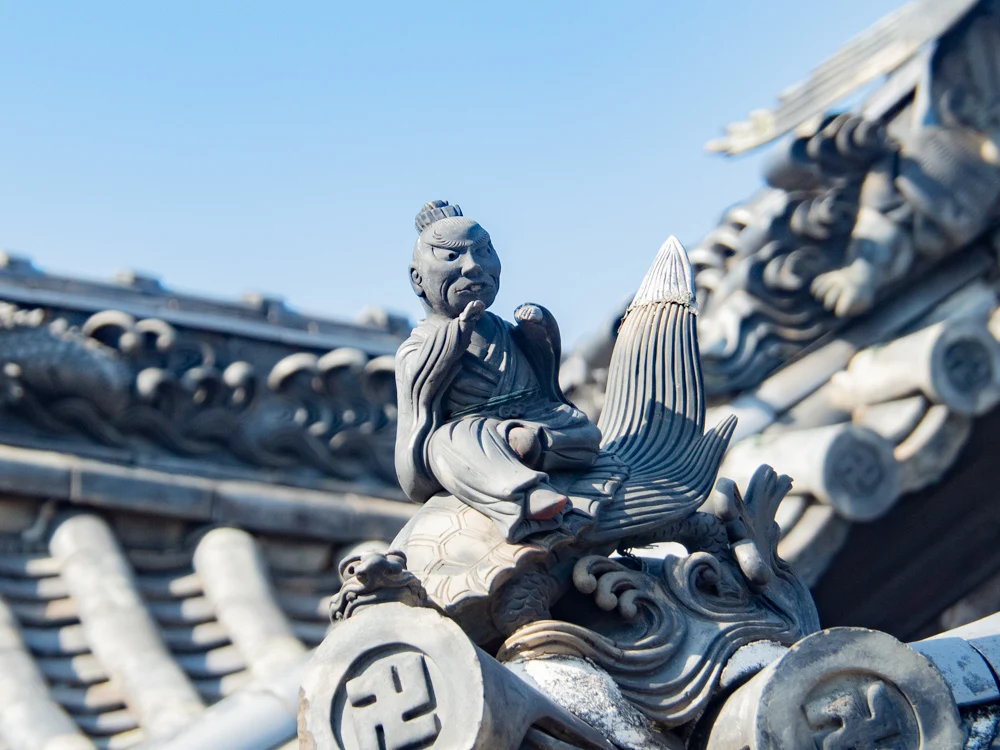
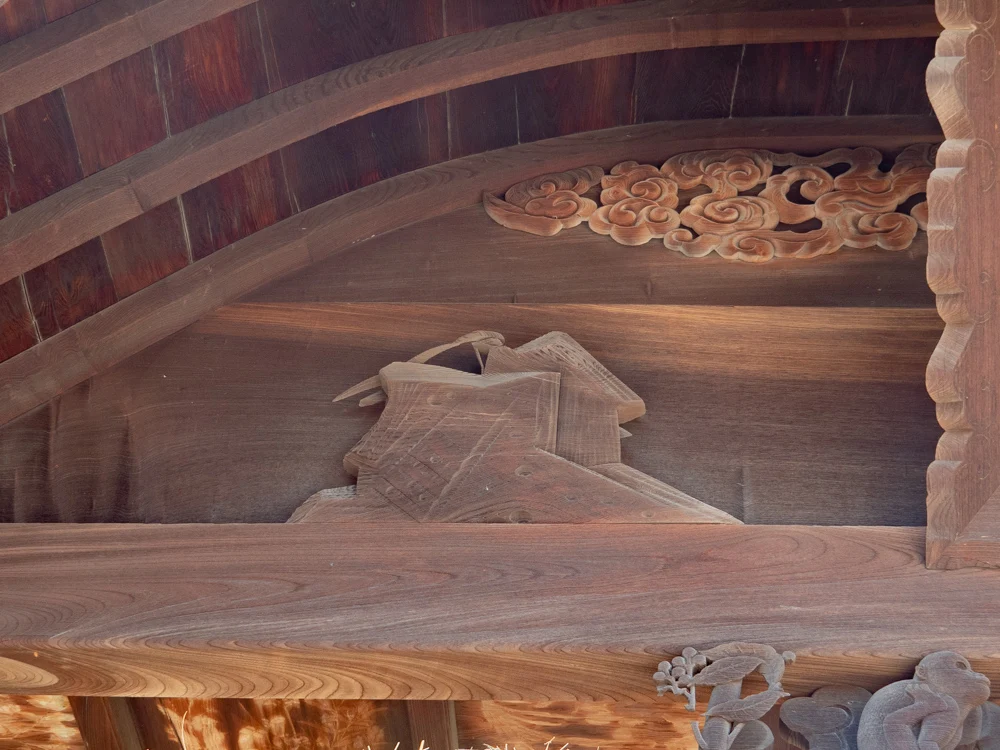
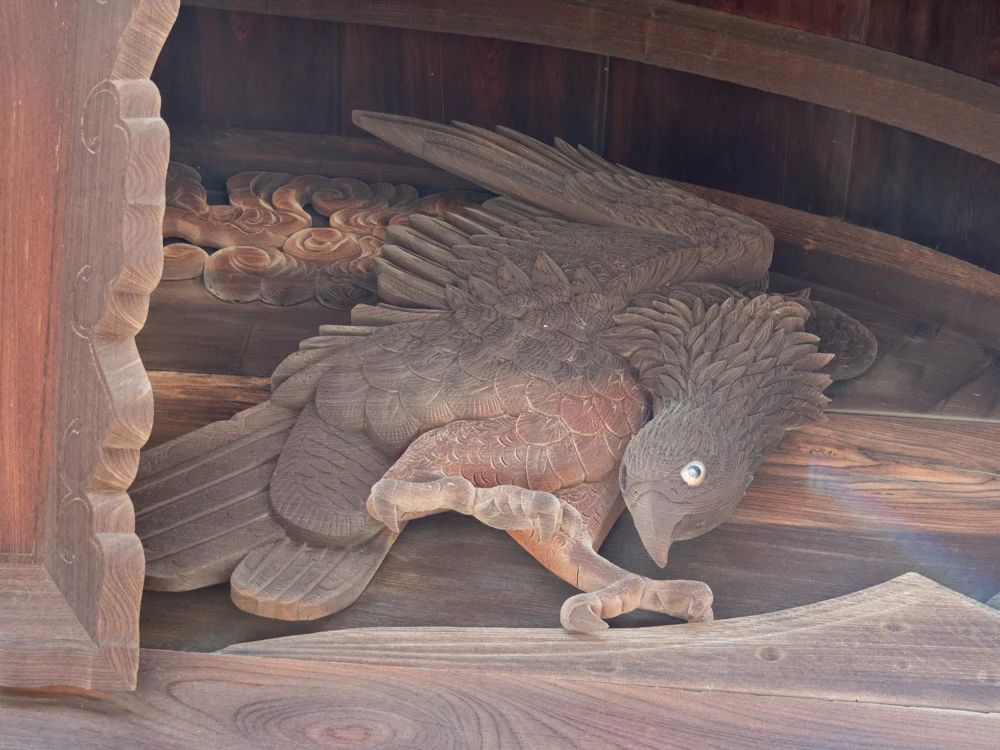
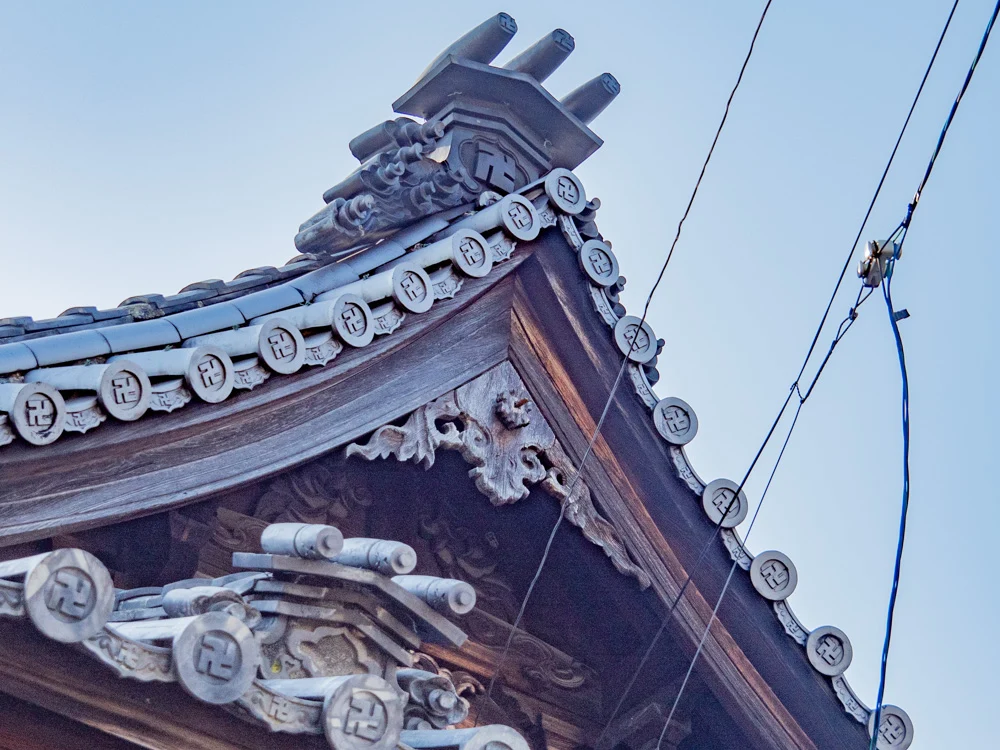
The abundance and attention to detail in the decorations are evidence that Tamashima once prospered as a commercial city.
It was because there were many wealthy merchants that such elaborate decorations were made.
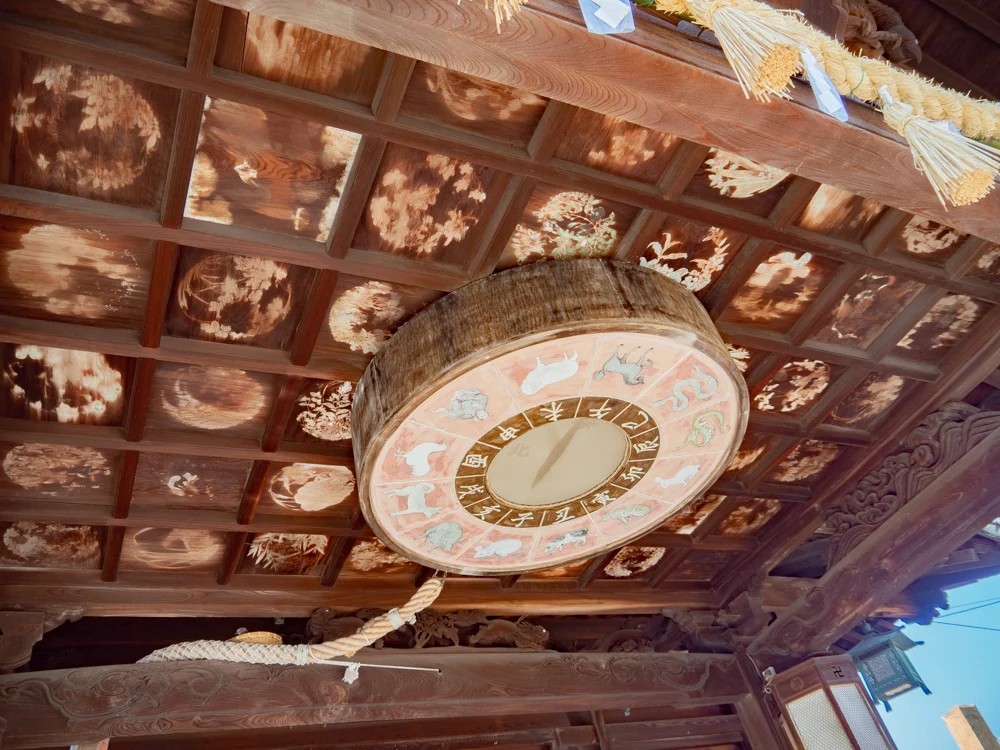
What I have introduced is just a small part.
Please take your time to observe it closely.
Karasu Tengu
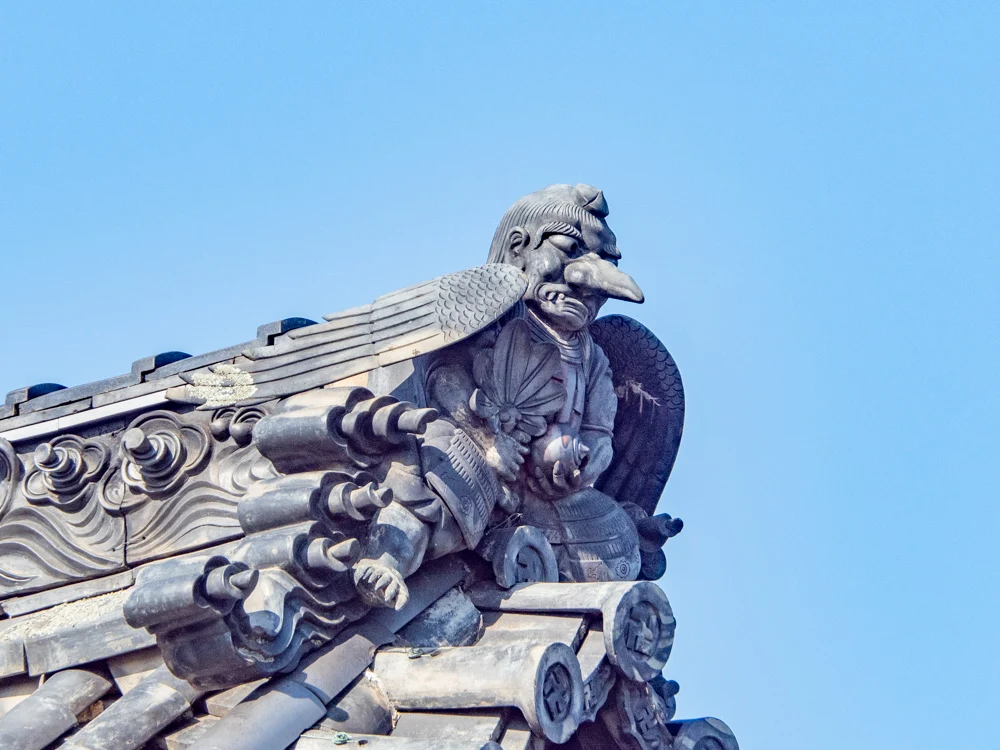
Perched atop the roof of the main hall, overlooking the shrine and the town, is the "Karasu Tengu."
Haguro Shrine was enshrined from Mt. Haguro in Tsuruoka City, Yamagata Prefecture (details will be introduced later).
It is said that the Karasu Tengu was also brought over when Haguro Shrine was established.
Today, the Karasu Tengu has become a beloved character symbolizing Haguro Shrine.
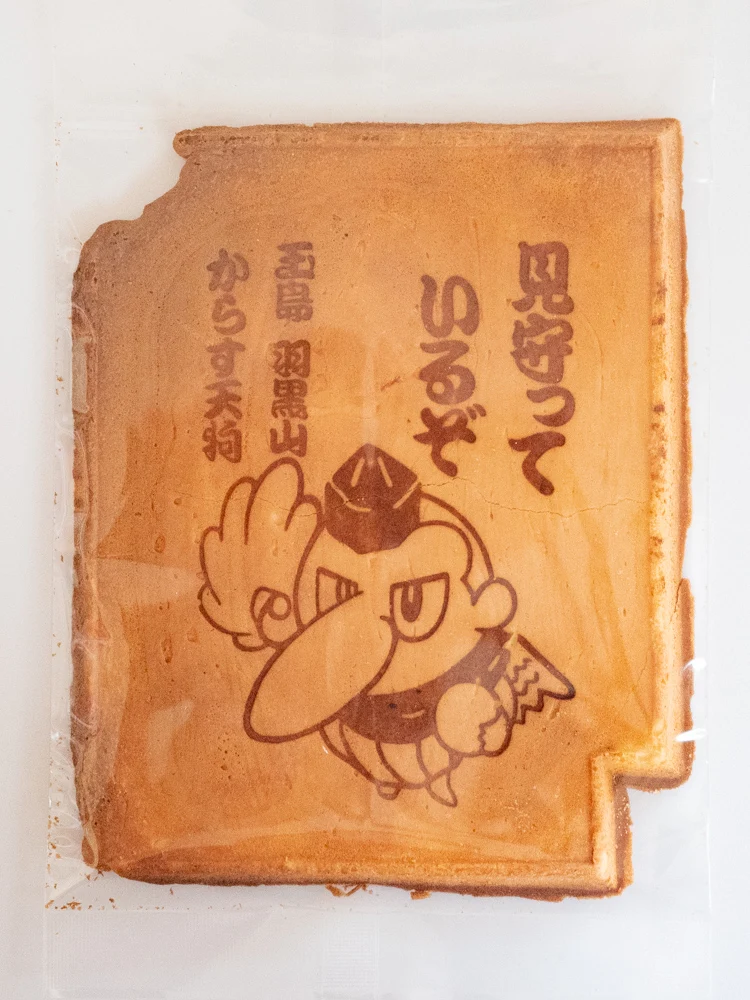
Furthermore, a town revitalization mascot character called Haguron, inspired by the Karasu Tengu, has appeared, and a costume contest for Karasu Tengu is held during the spring festival.
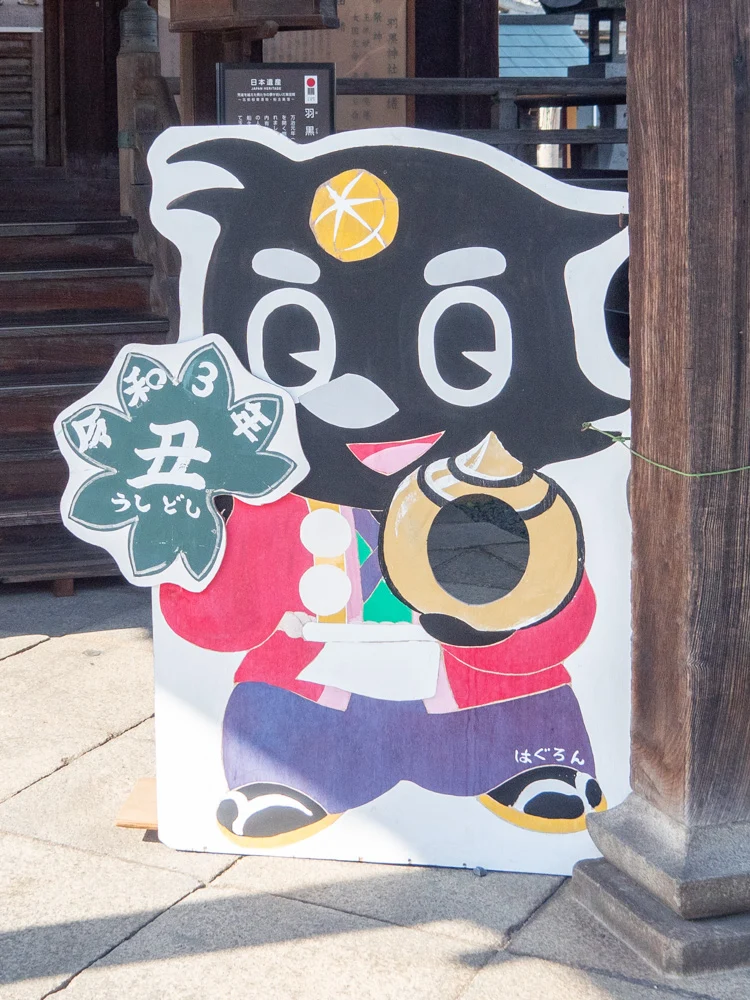
The Karasu Tengu is also the mascot character of Tamashima Town.
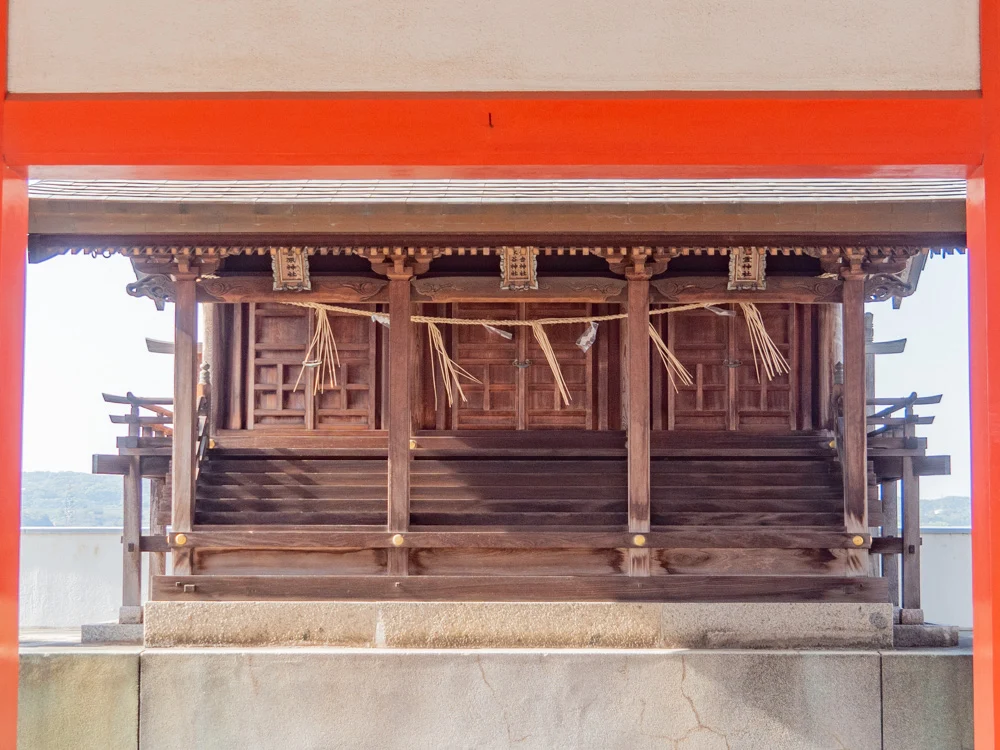
Main Shrine
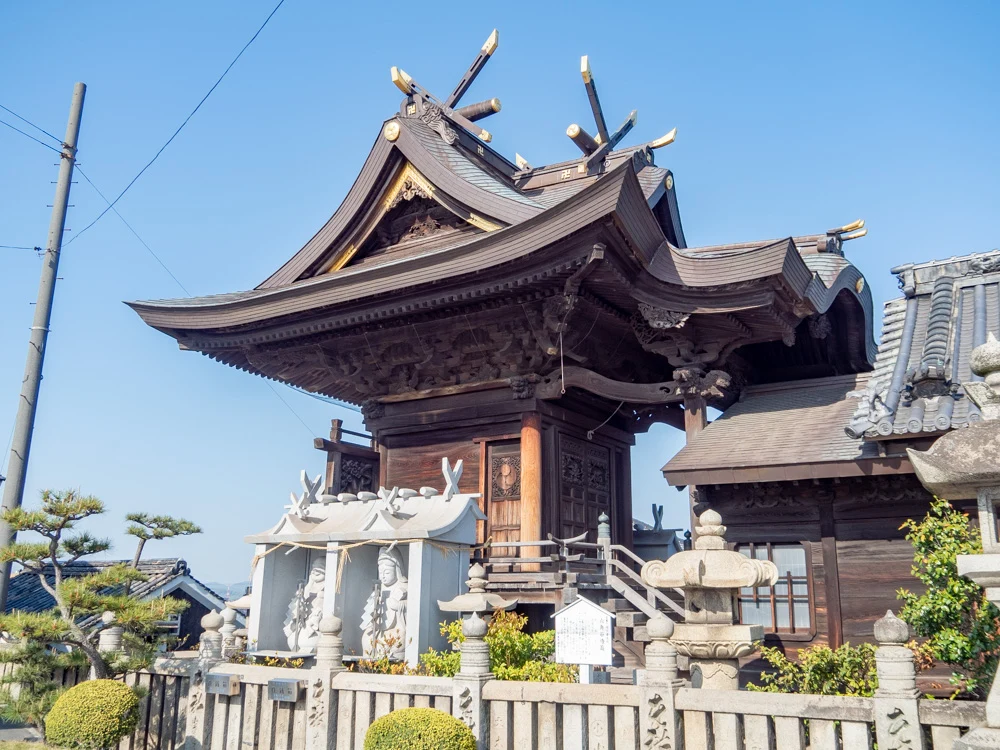
The large building behind the worship hall is the Main Shrine.
It is the building where the deity is enshrined.
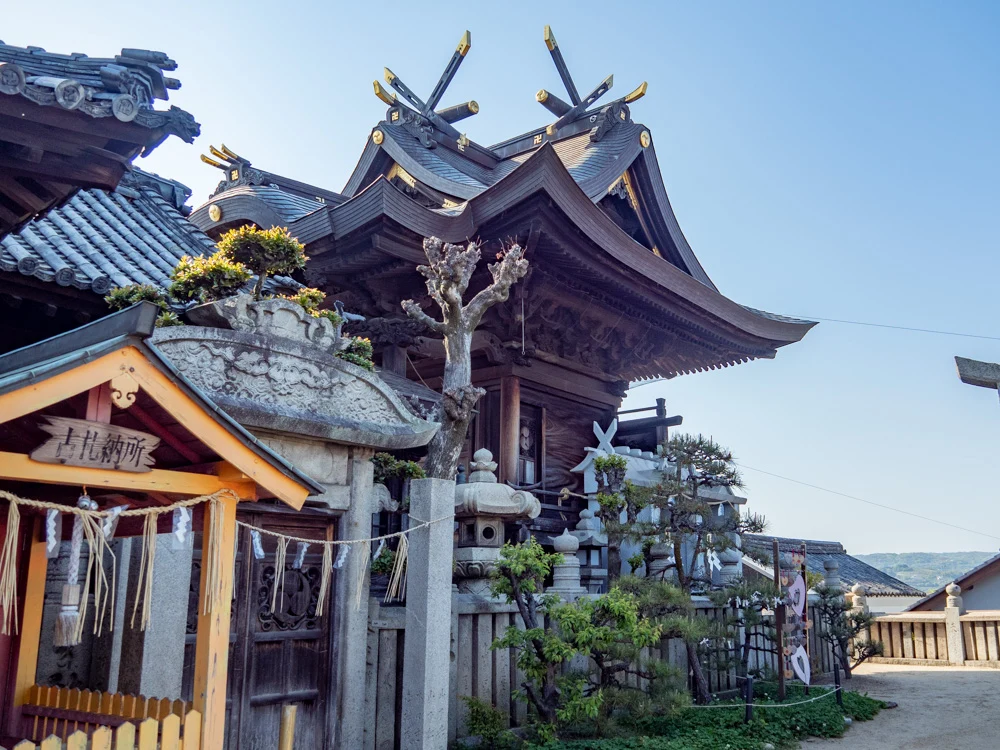
The Main Shrine of Haguro Shrine was rebuilt in the 4th year of the Kaei era (1851) during the late Edo period.
Like the worship hall, it is very old.
Also, just like the worship hall, let's pay attention to the decorations of the Main Shrine.
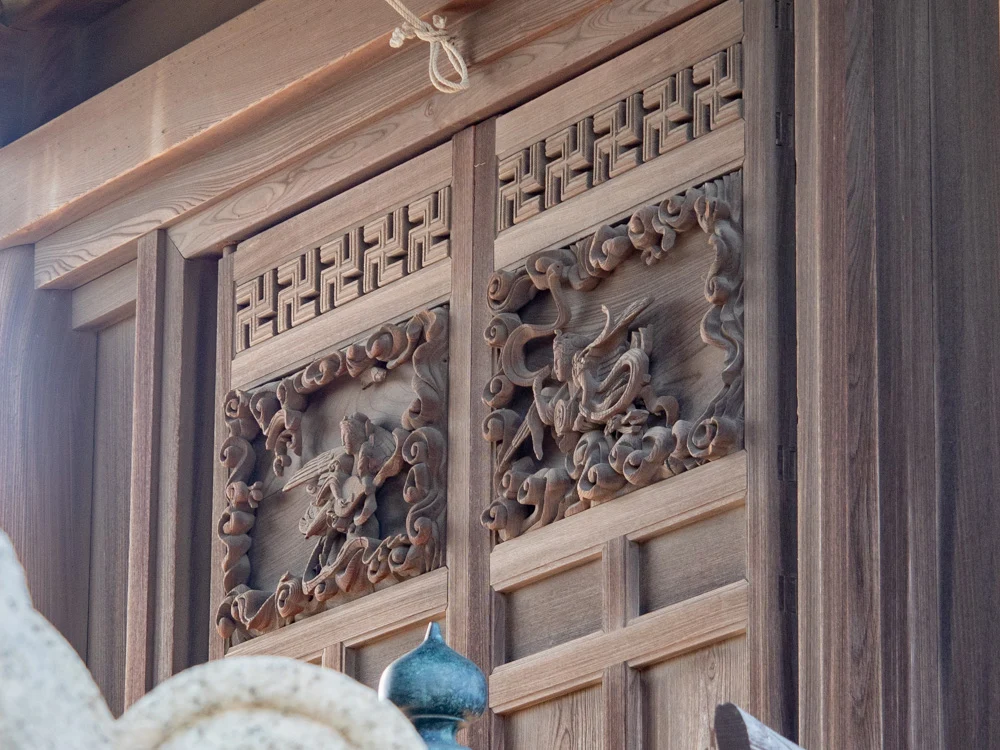
On the front of the Main Shrine, there are two figures of Karabiraki (a mythical bird).
It is said to have the upper body of a human and sings with a very beautiful voice in the heavenly realm.
Above it is a swastika, a remnant of the past syncretism of Shinto and Buddhism.
The Main Shrine is also adorned with many intricate decorations.
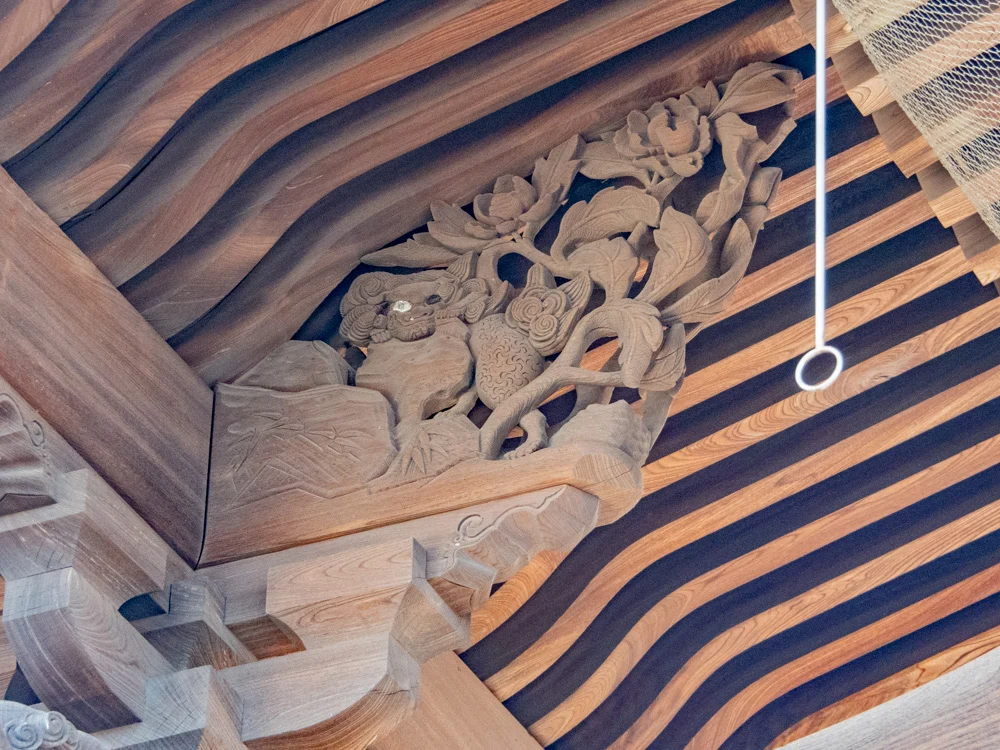
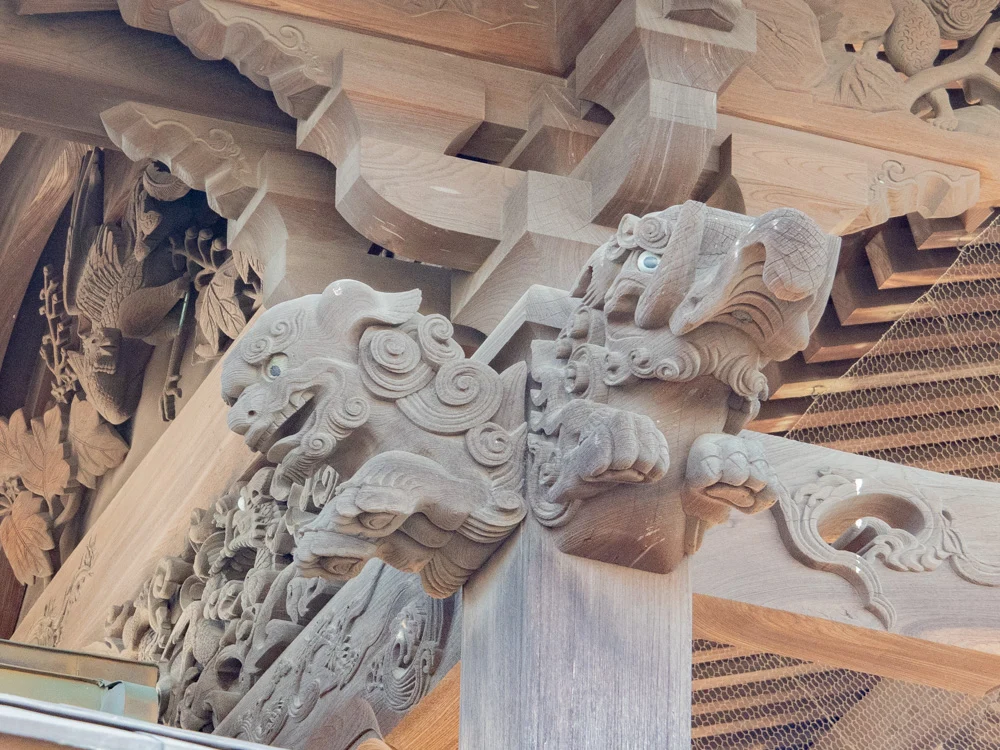
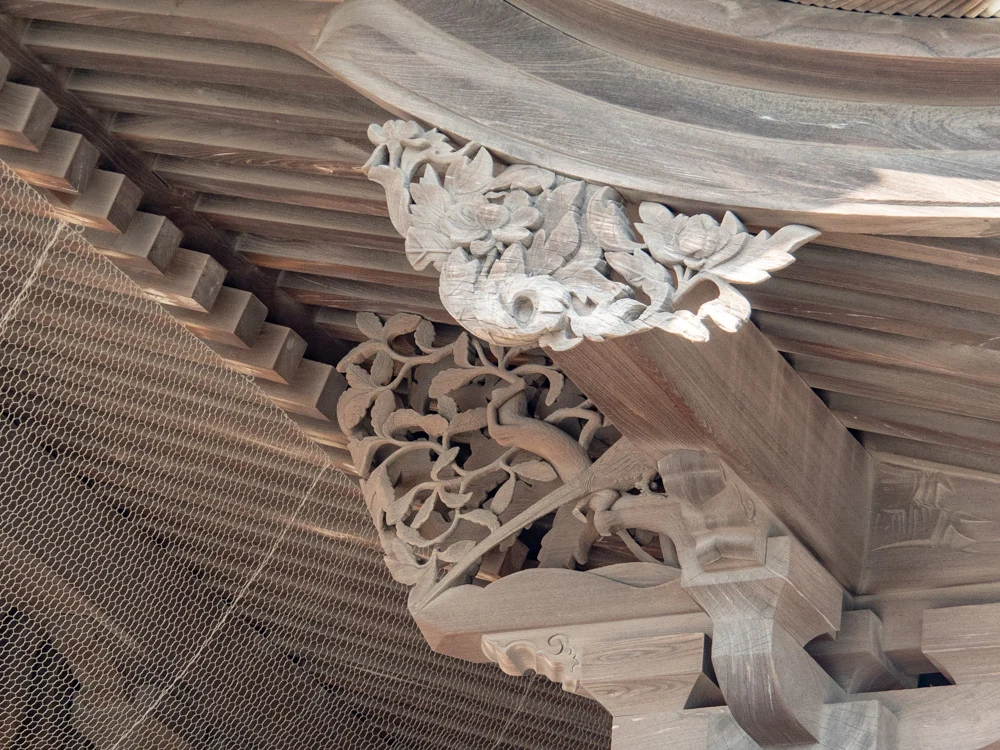
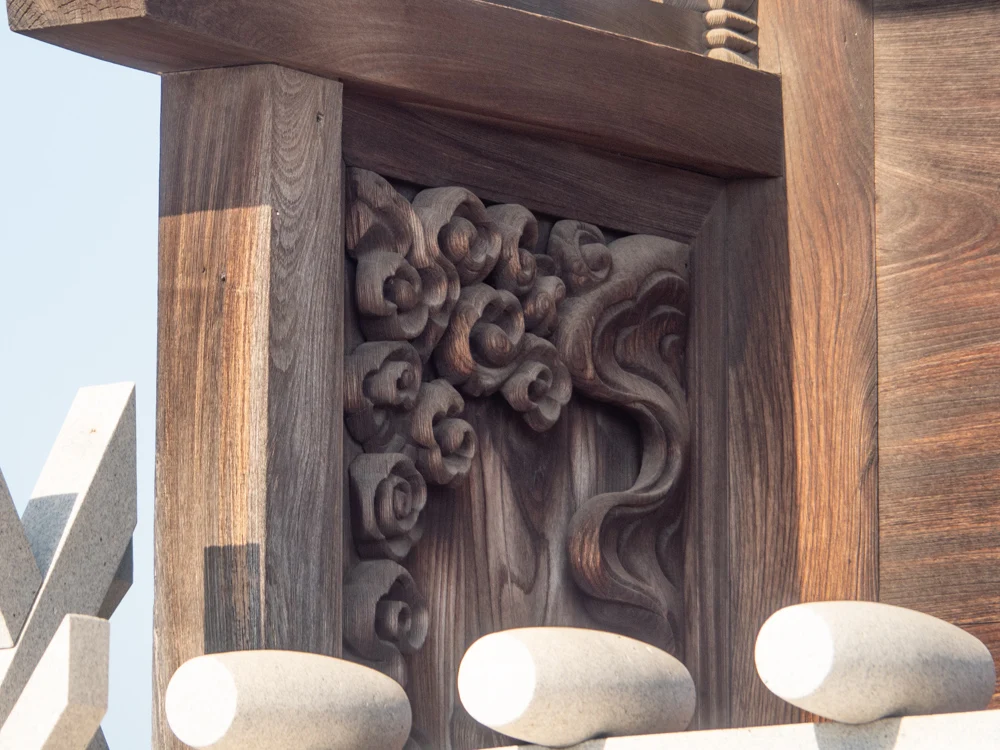
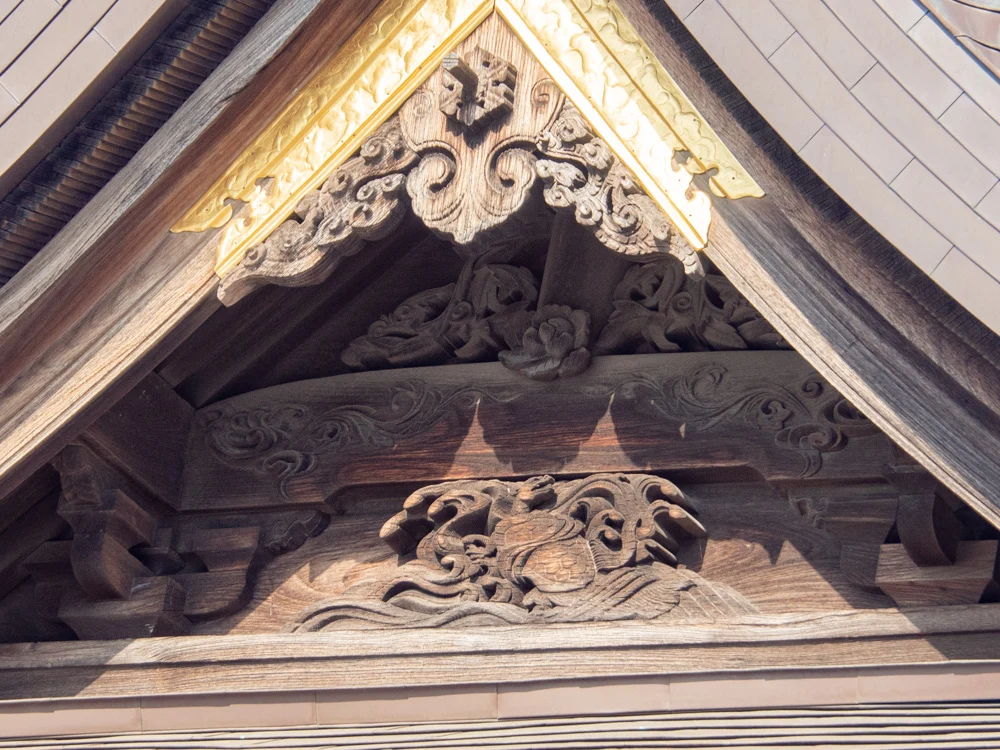
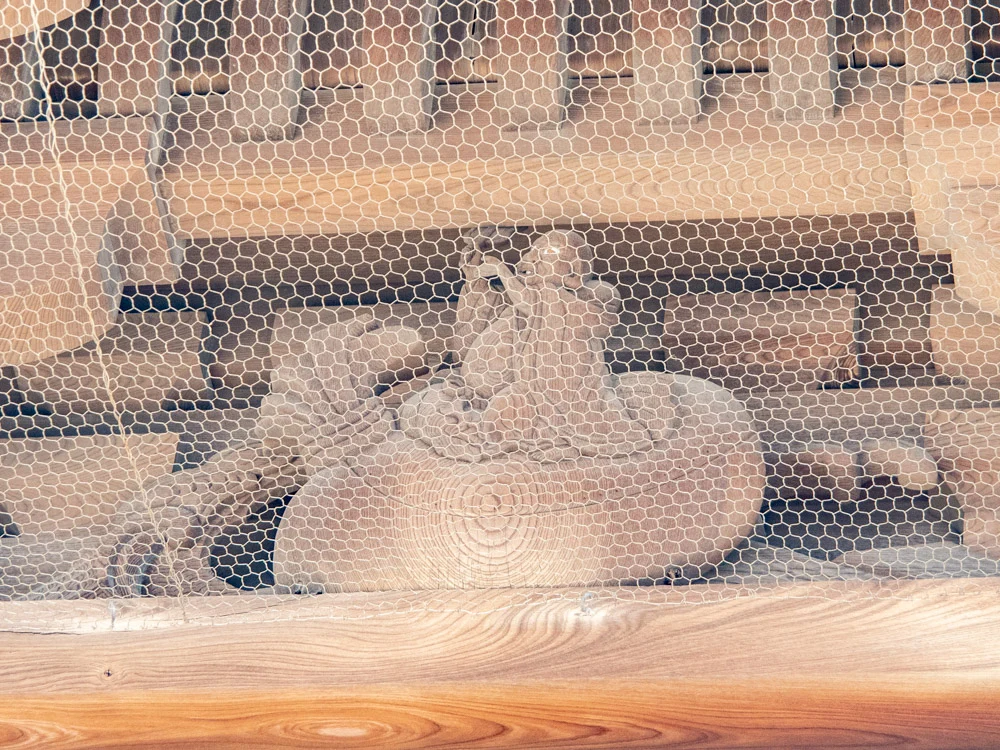
Among the decorations of the Main Shrine, the Seven Lucky Gods are particularly noteworthy.
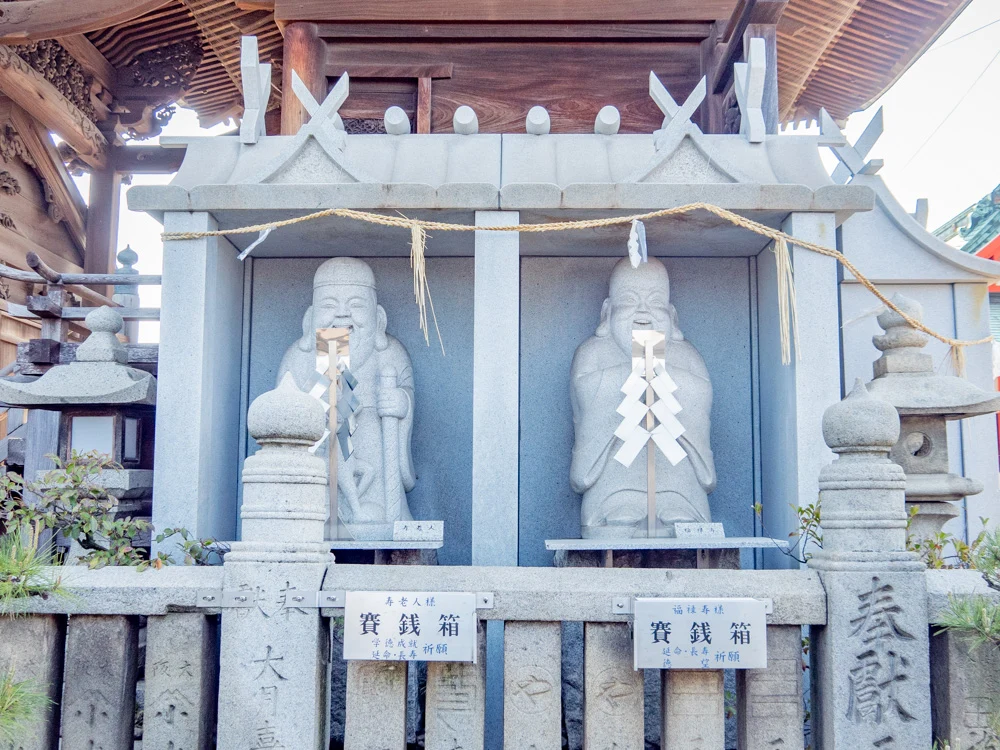
In addition, statues of the Seven Lucky Gods are also erected around the Main Shrine.
Like the worship hall, the decorations introduced are just a small part.
Please be sure to explore various things on-site.
Hexagonal Stone Lantern (Designated Cultural Property of Kurashiki City)
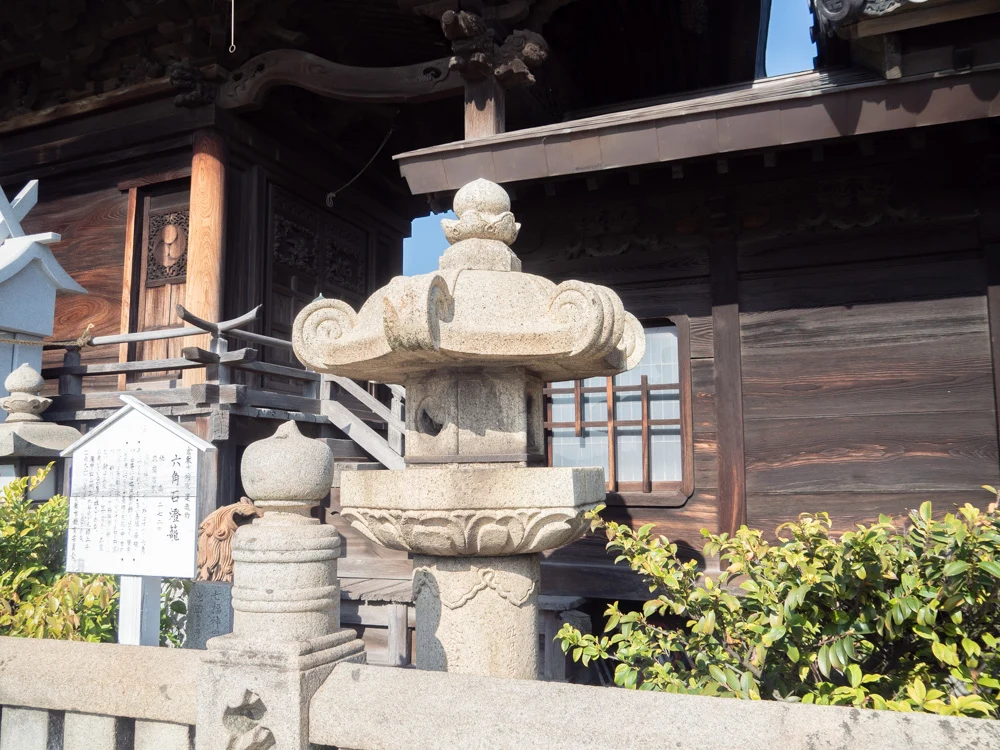
The Hexagonal Stone Lantern is a pair located on either side of the Main Shrine.
It was donated by Mizutani Katsutaka, the lord of Bitchu Matsuyama Domain, in the 5th year of the Genroku era (1692).
The Hexagonal Stone Lantern is one of the oldest remaining items at Haguro Shrine.
Therefore, the Hexagonal Stone Lantern is designated as a Cultural Property of Kurashiki City.
Shrines within the Grounds
Shrines within the Grounds are shrines other than the Main Shrine that are enshrined within the grounds.
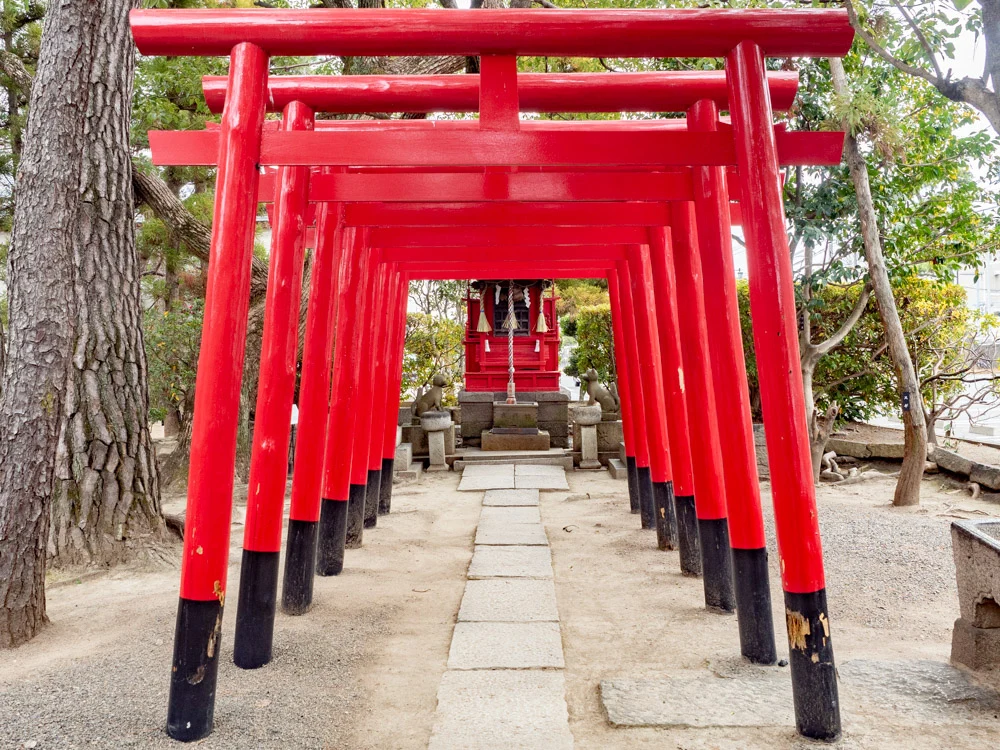
There are many shrines within the grounds of Haguro Shrine.
From among them, let’s introduce some notable shrines.
Sugawara Shrine, Mizutani Shrine, Sumiyoshi Shrine, Warei Shrine
To the left rear of the Main Shrine is Sugawara Shrine, in the center are Mizutani Shrine and Sumiyoshi Shrine, and to the right is Warei Shrine.
Three shrines are lined up.
The left Sugawara Shrine enshrines Sugawara no Michizane, who is famous as the god of learning.
It is well-known as a deity of scholarship.
The central Mizutani Shrine enshrines Mizutani Katsutaka, who reclaimed the land of Tamashima and built Haguro Shrine.
Additionally, it also enshrines his son Mizutani Katsumune and grandson Mizutani Katsuyoshi, who served as lords of Matsuyama after Katsutaka.
Sumiyoshi Shrine was originally located about 500 meters west of Haguro Shrine on a hill called Sumiyoshi-yama.
It was moved to the grounds of Haguro Shrine.
The right Warei Shrine is believed to have been established by enshrining Yamabe Kiyohei from Uwajima City, Ehime Prefecture.
Kumata Shrine
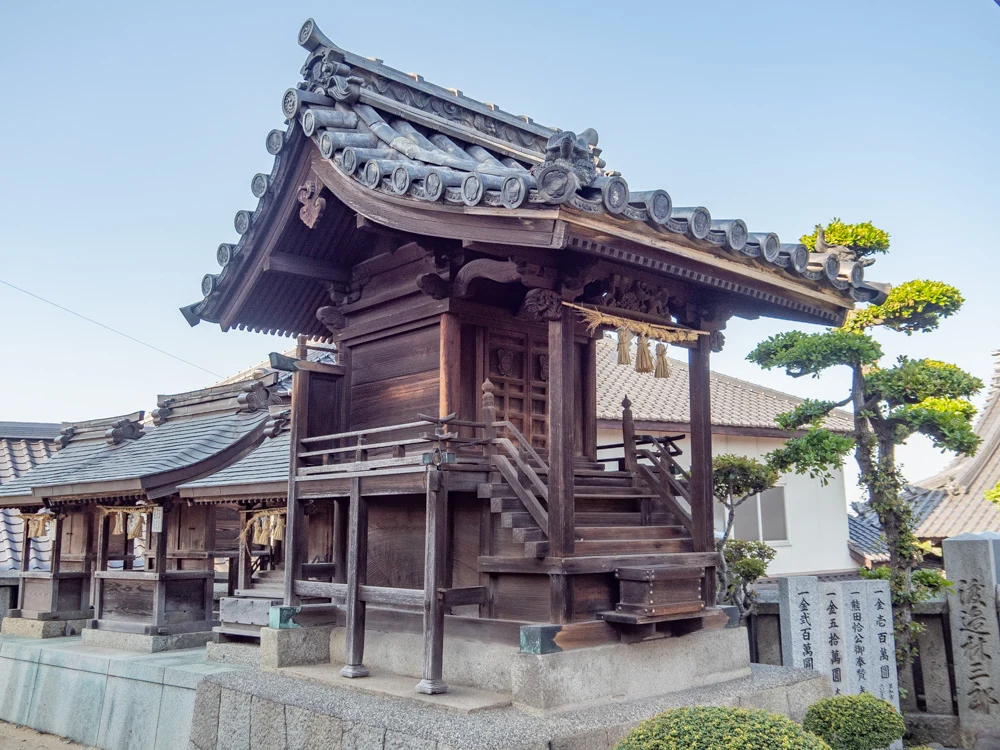
Kumata Shrine is one of the shrines located to the right of the Main Shrine.
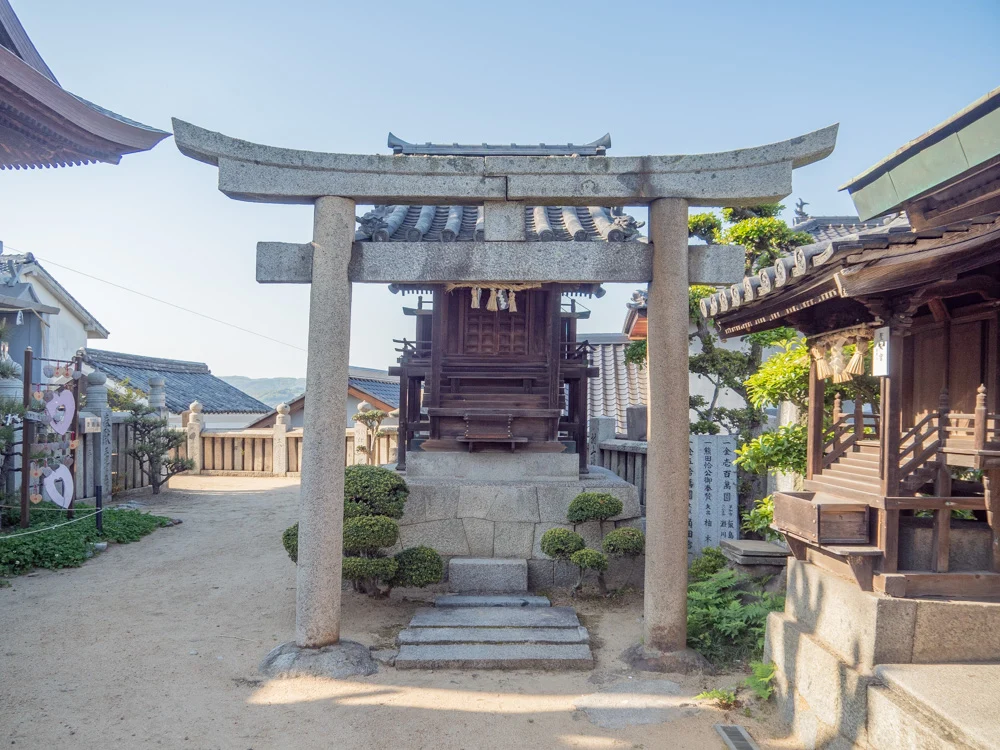
Kumata Shrine enshrines Kumata Ataka.
Kumata committed suicide at Saiso-tei (Old Yunoki House) during the Tamashima Incident that occurred at the end of the Edo period.
Kumata is regarded as a hero of the town who prevented Tamashima from being embroiled in conflict.
For this reason, the residents of Tamashima built Kumata Shrine to express their gratitude to Kumata.
For more information about Kumata Ataka and the Tamashima Incident, please see the article on Saiso-tei.
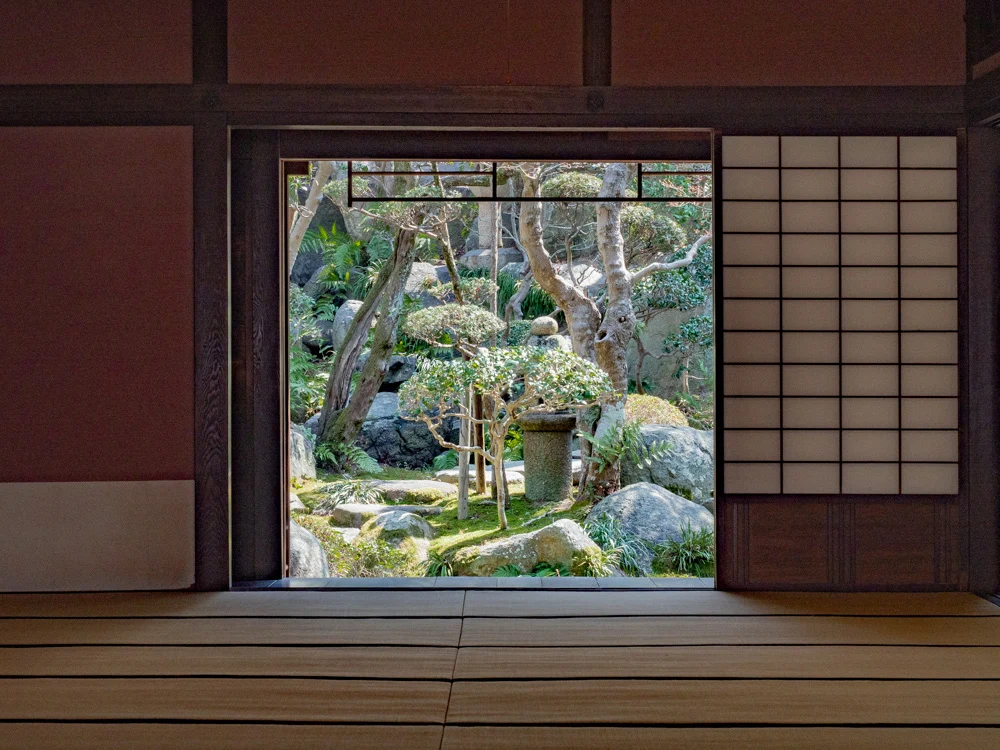
Musubi no Matsu
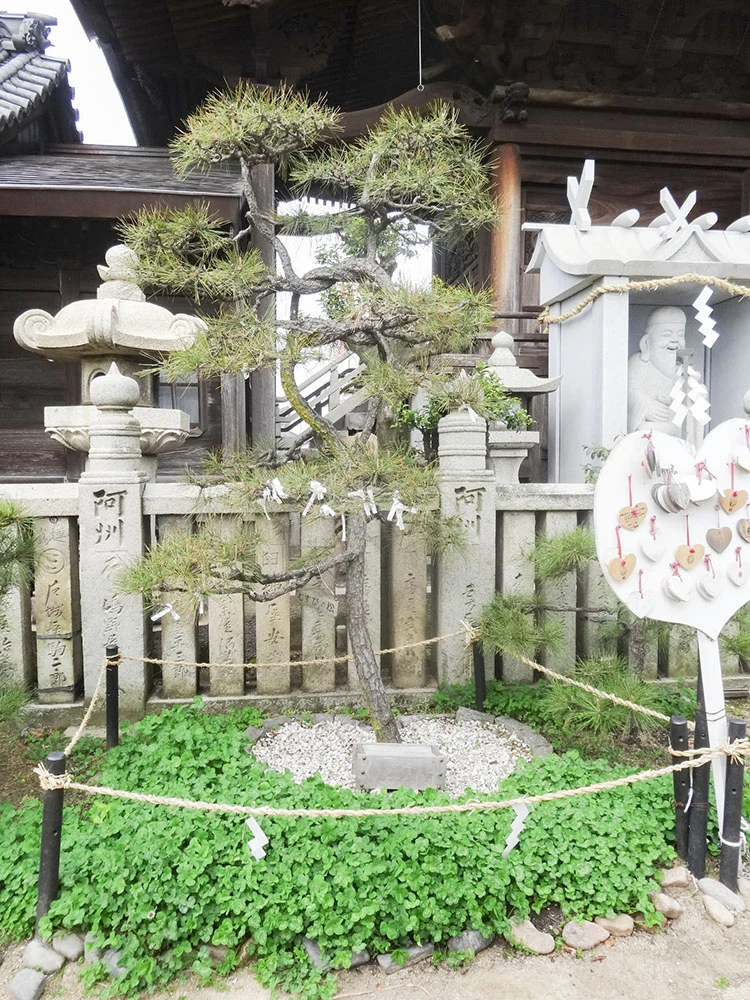
The Musubi no Matsu is located immediately to the right of the main hall.
Remarkably, the branches on both sides are tied together like a string.
For this reason, it is said to have the benefit of bringing good relationships.
If you hold a wedding ceremony at Haguro Shrine, you will receive a handmade heart-shaped ema to offer.
Ema-dono
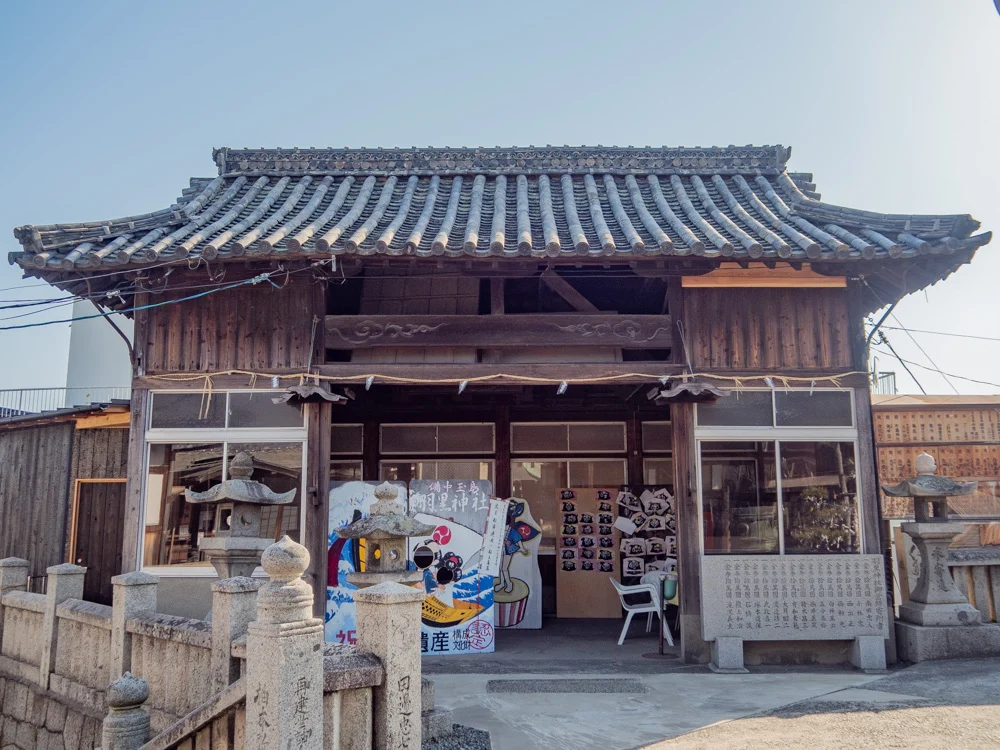
To the left as you ascend the stone steps of the southern approach is the Ema-dono.
Inside the Ema-dono, a large ema is displayed at the top.
Among the large ema, there are funema (boat ema) that were once offered by merchants.
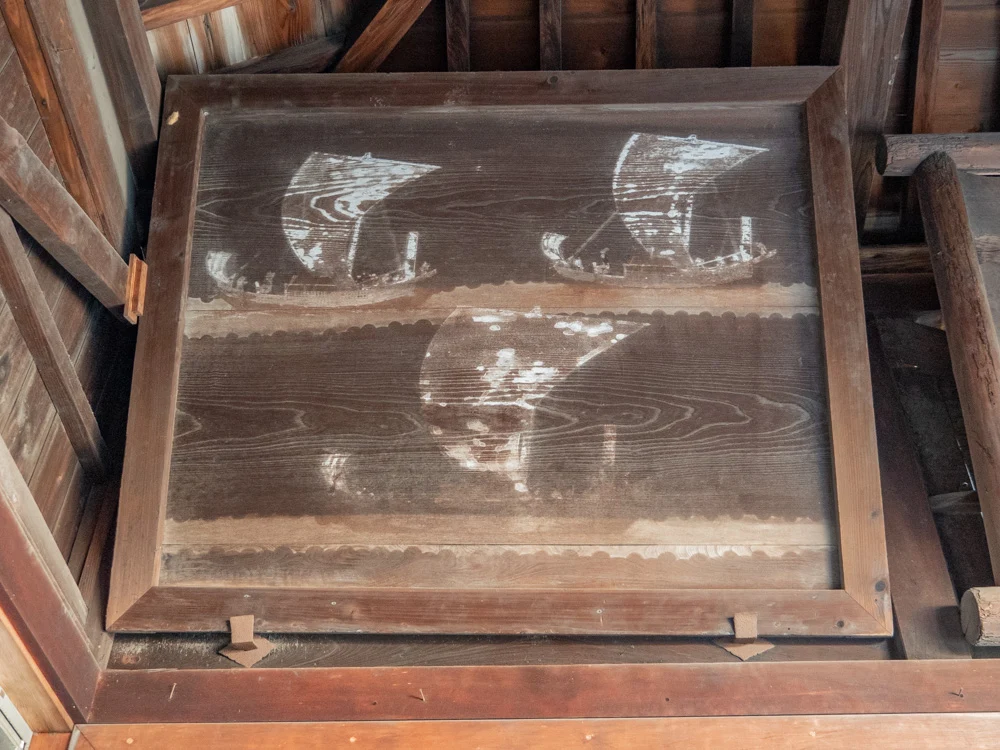
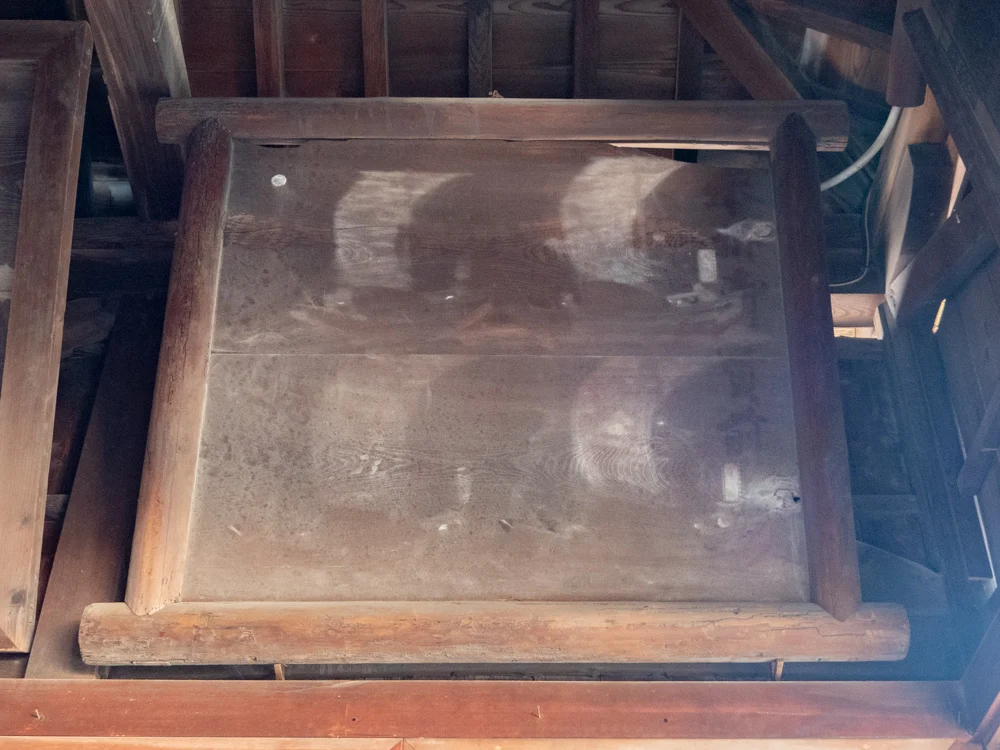
The funema is a cultural property of the Japan Heritage "A different world entwined with the dreams of men who overcame the stormy seas ~ The ports of the Kitamae ships and the shipowners' settlements."
Tamagaki
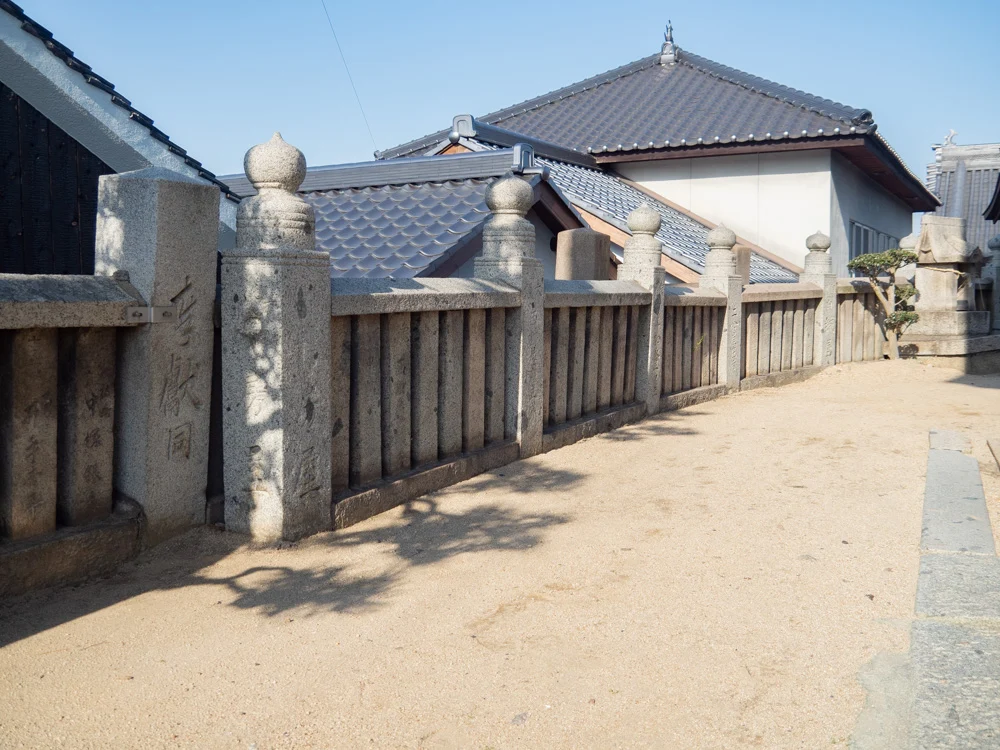
At Haguro Shrine, the Tamagaki is also one of the highlights.
Tamagaki refers to the fence or enclosure that surrounds the shrine grounds and the main hall.
The names and regions of those who made donations to the shrine are inscribed on the Tamagaki.
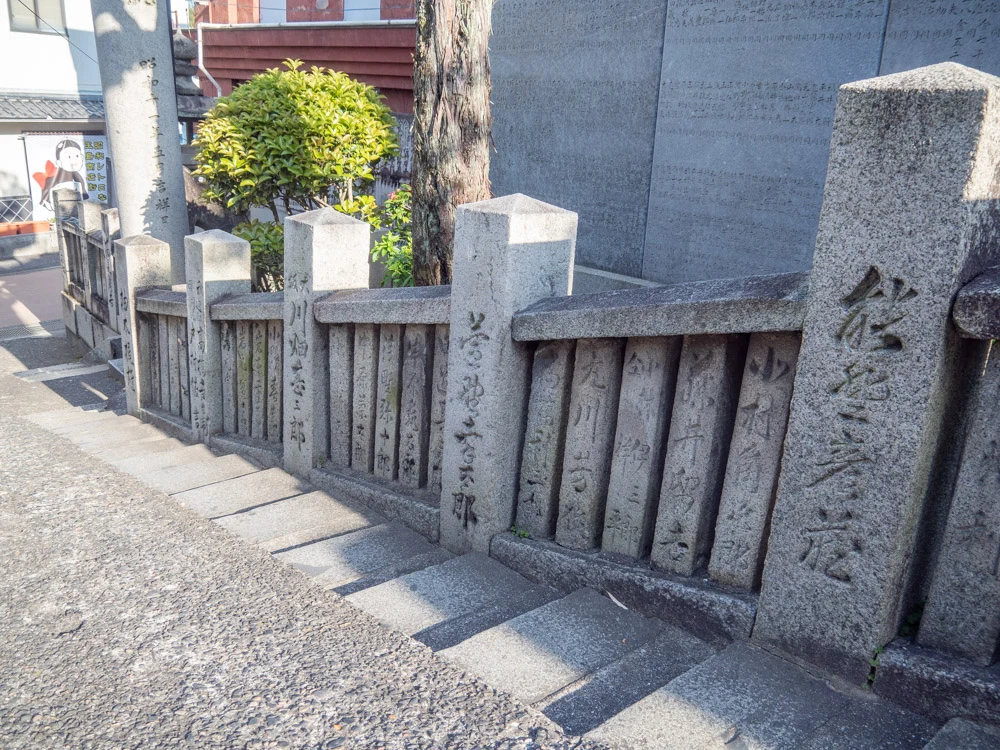
The Tamagaki at Haguro Shrine has the names of many people from the local area of Tamashima, as well as from surrounding regions.
In fact, among them, there are also names of people from distant places.
For example, Hakodate (present-day Hakodate City), Akita (present-day Akita City), Azuma (present-day Tokushima Prefecture), and Osaka (present-day Osaka City).
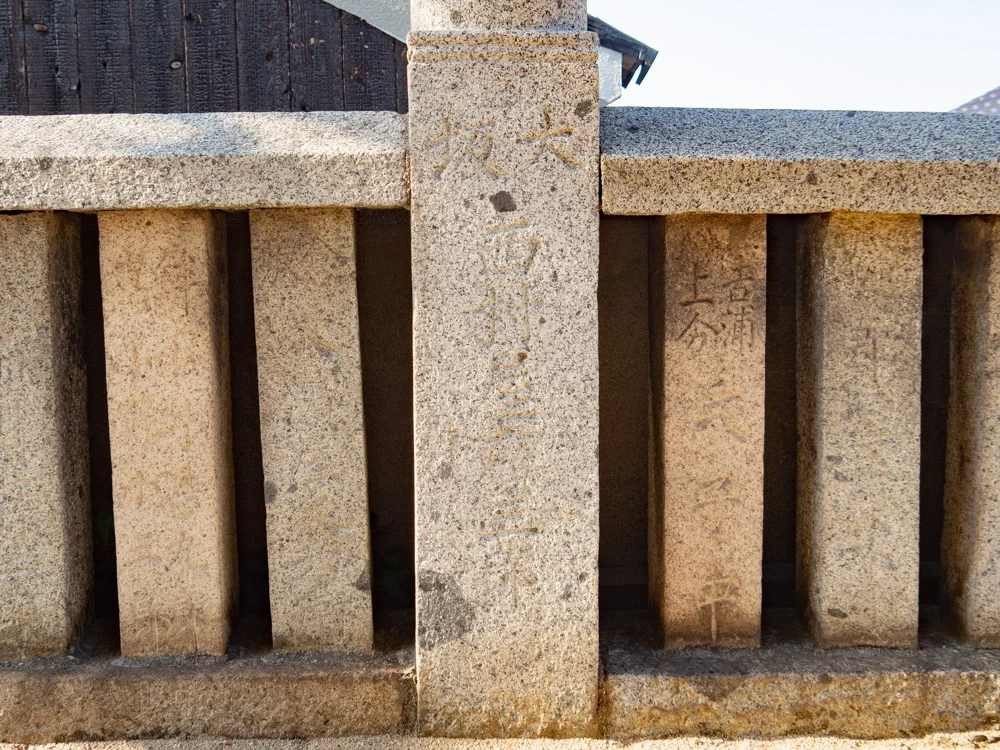
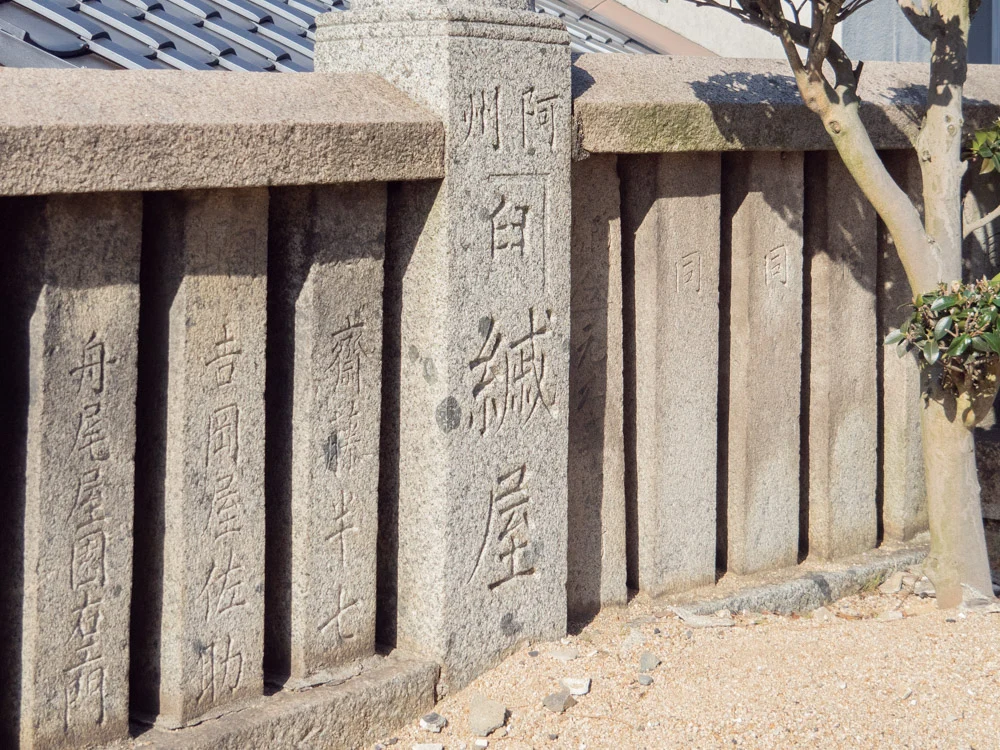
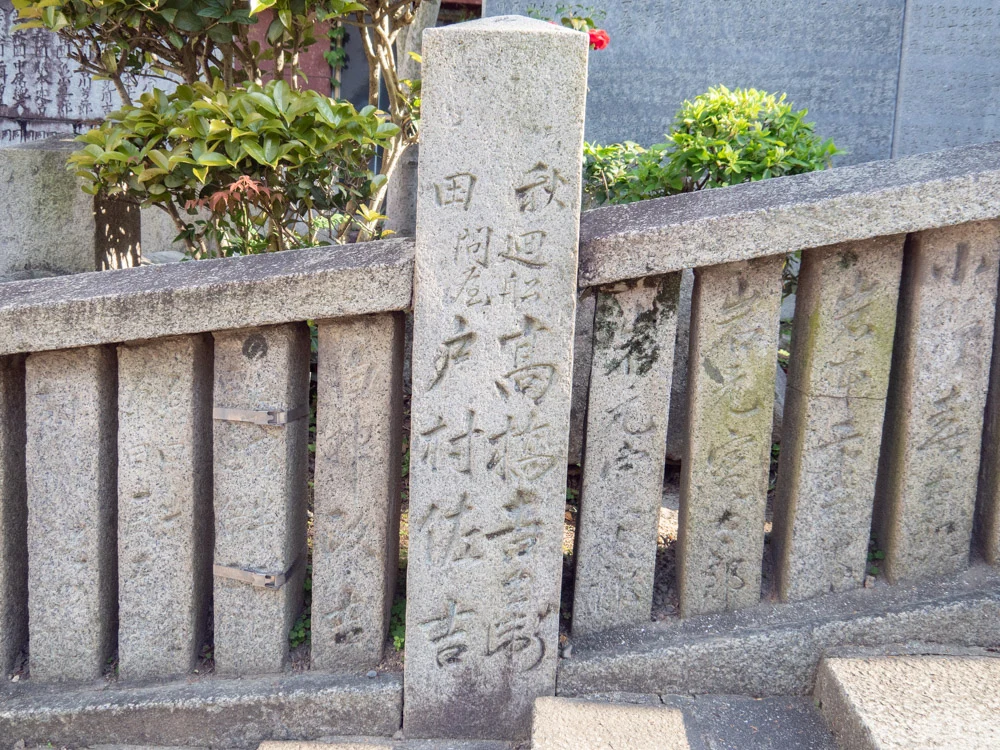
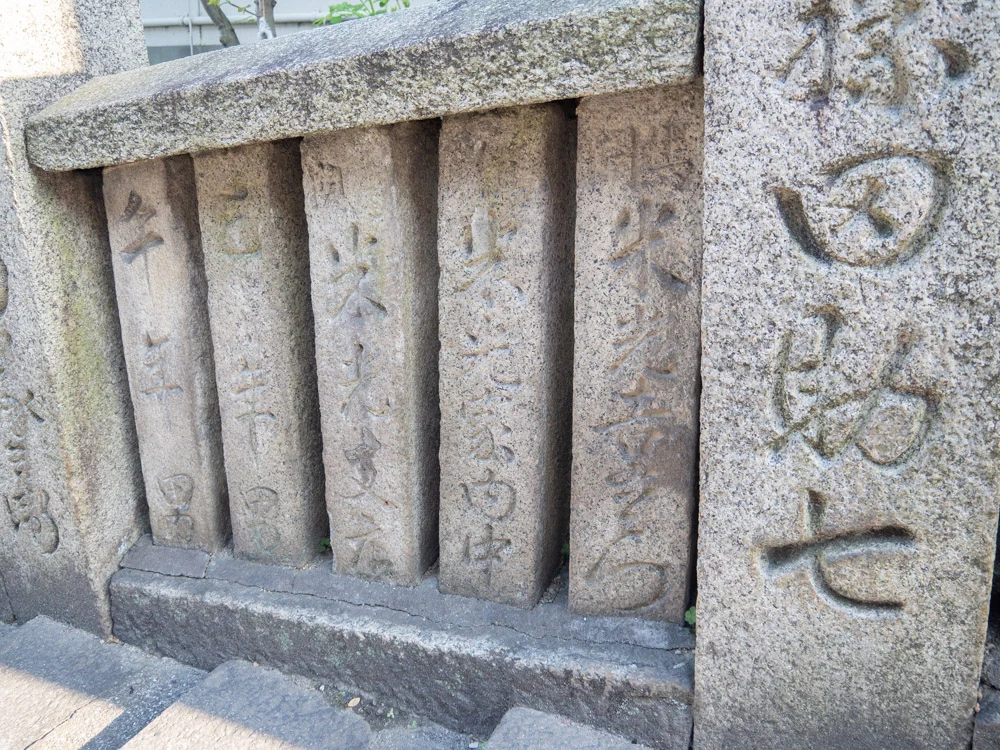
Merchants from distant regions who visited Tamashima also made donations to Haguro Shrine.
This indicates that various merchants from different regions visited Tamashima's port by ship, including the Kitamae ships, and conducted business, proving that Tamashima flourished as a commercial city.
For this reason, the Tamagaki of Haguro Shrine has become a cultural property of the Japan Heritage "A different world entwined with the dreams of men who overcame the stormy seas ~ The ports of the Kitamae ships and the shipowners' settlements."
Generally, people may not pay much attention to the Tamagaki, but at Haguro Shrine, be sure to take a close look at it.
Haguro Shrine's Goshuin and Goshuincho are also highlights
Haguro Shrine's goshuin (temple seal) is also noteworthy.
The goshuin of Haguro Shrine is very artistic and has a lot of attention to detail.
For example, there are the following points.
- There are 2 types of regular goshuin and 1 type of monthly changing goshuin
- The prints used for the goshuin are handmade by the shrine staff
- The design and patterns of the monthly changing goshuin change every month
- The motifs of the monthly changing goshuin are decorations of the shrine's main hall
- The design and patterns of the monthly changing goshuin incorporate seasonal elements and include a single kanji character
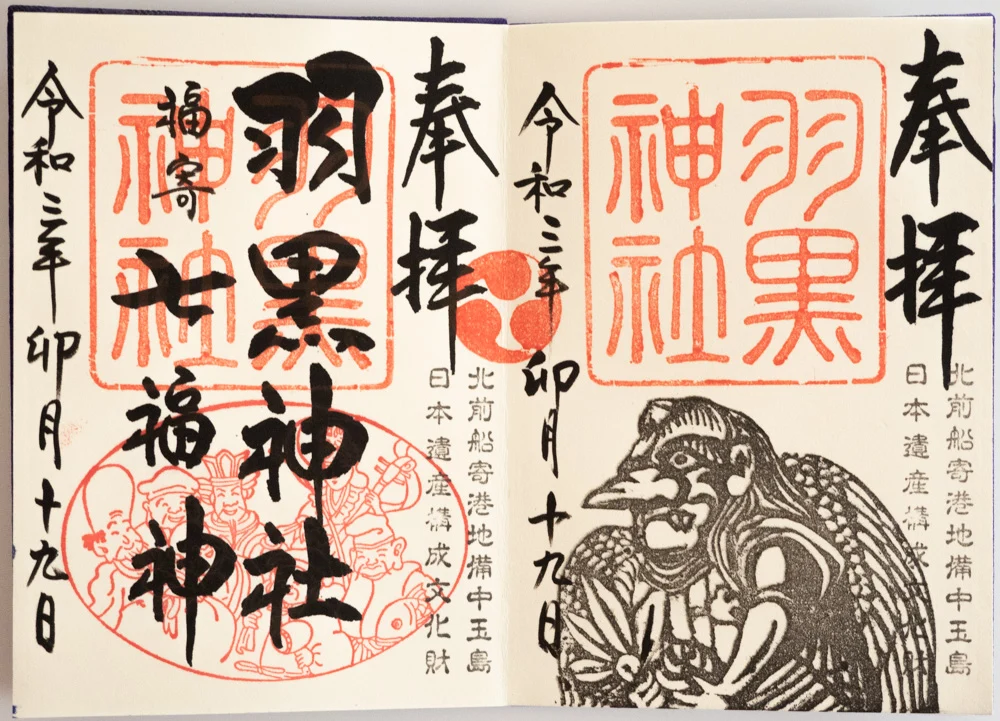
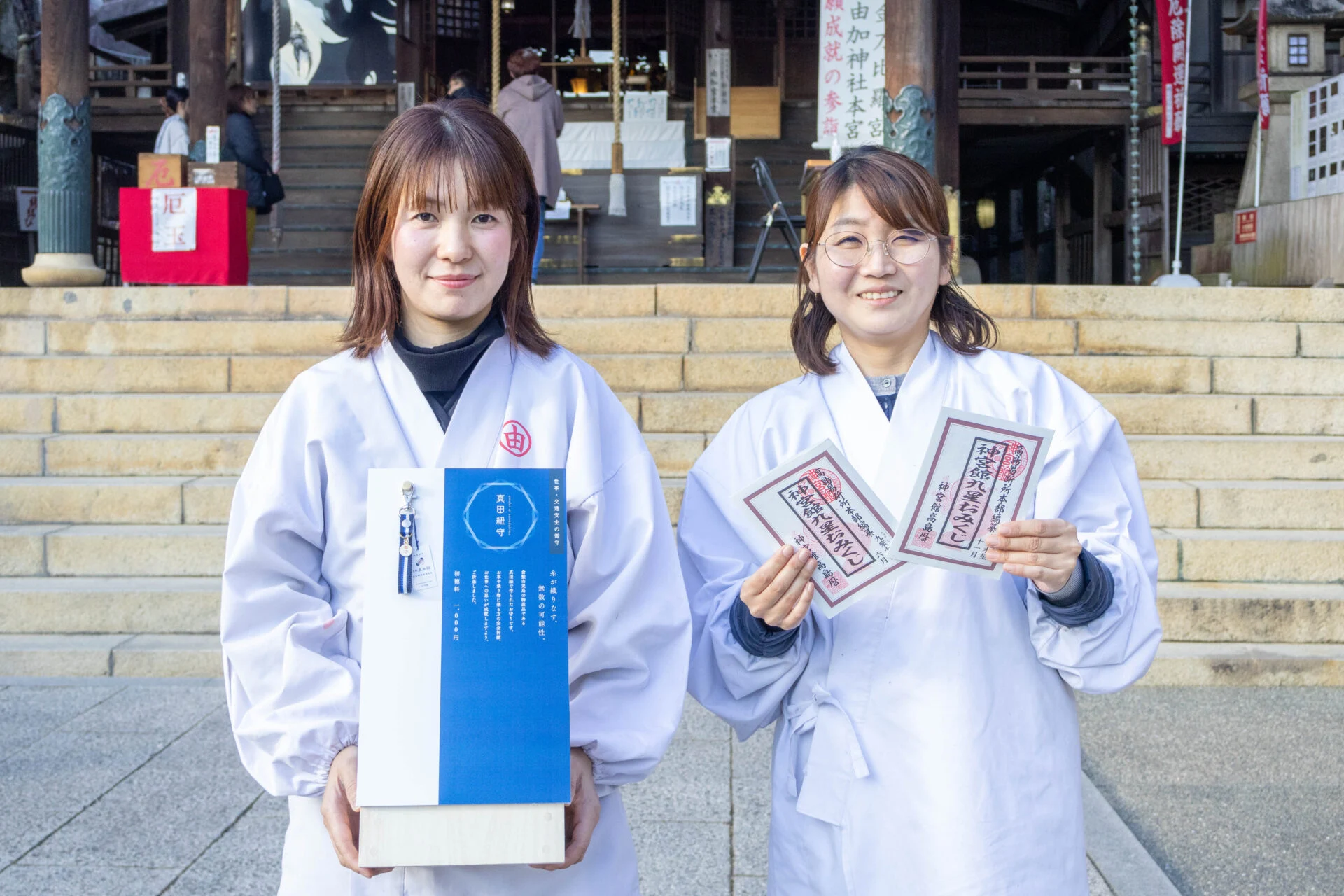
During the interview, I received both types of regular goshuin.
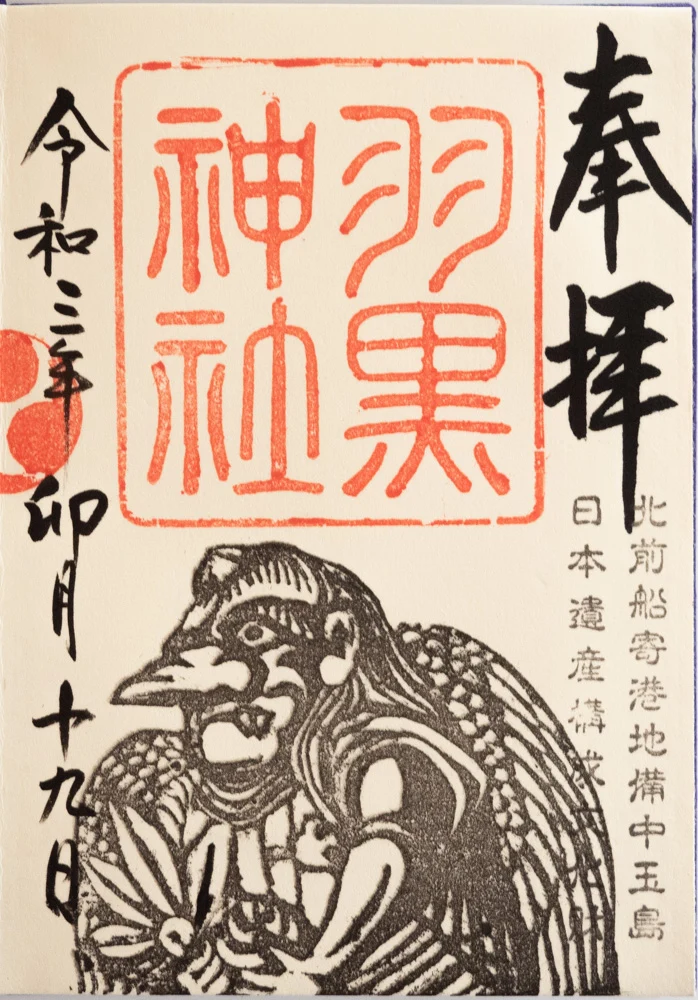
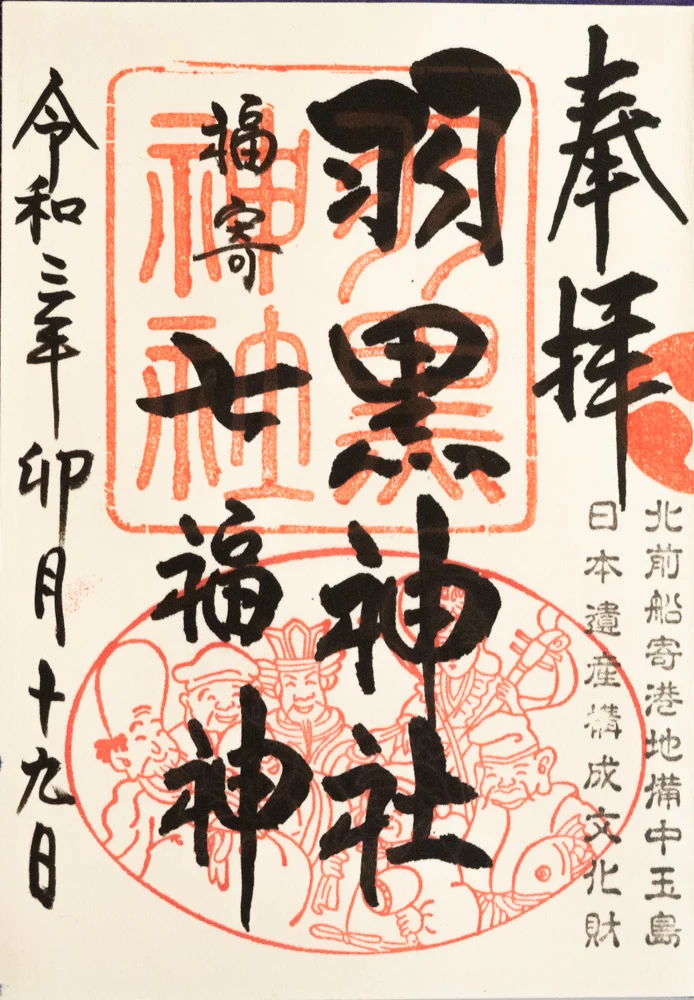
I also received the monthly changing goshuin.
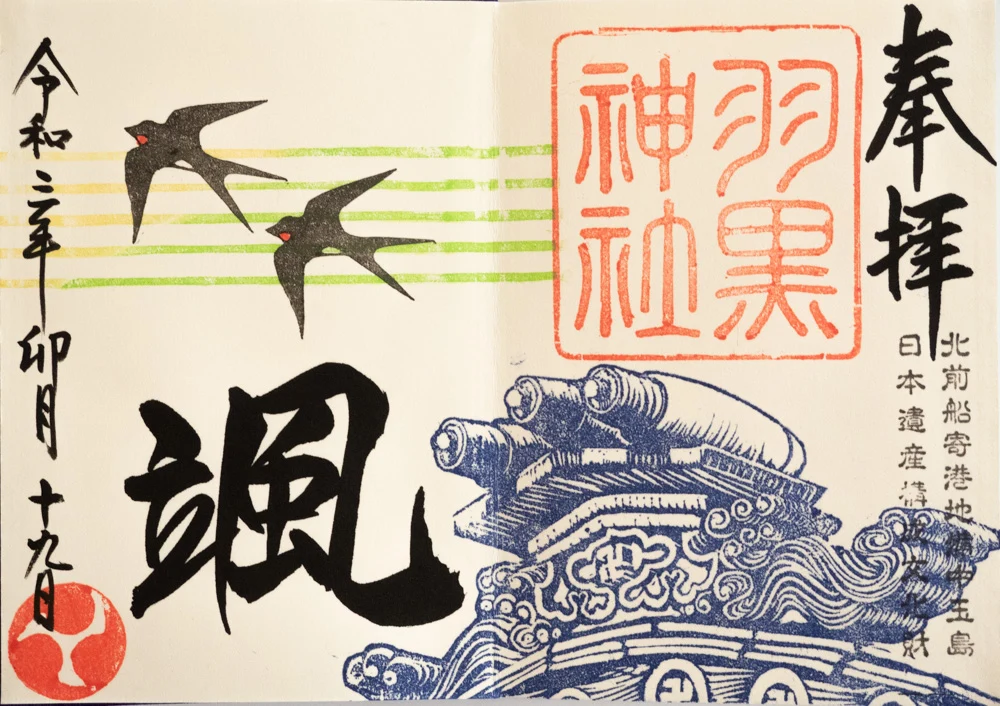
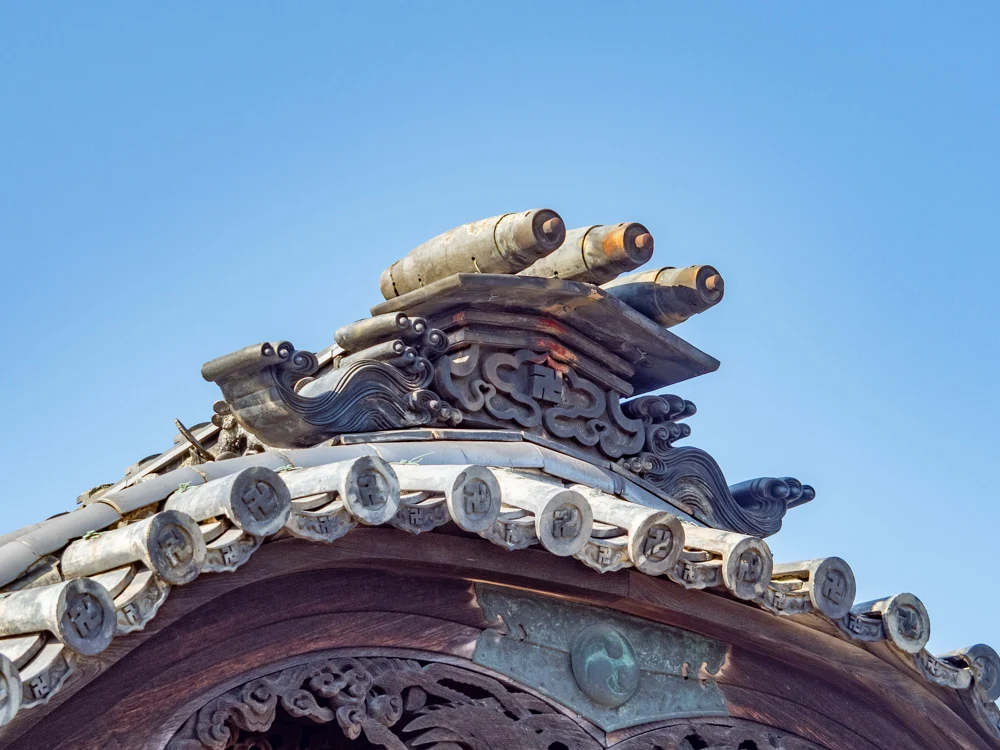
The motif of the goshuin I received during the interview was the kyō no maki-gawara (curved roof tile) from the karahafu (Chinese gable) of the worship hall.
Since the interview was in April, it depicted a swallow and included the kanji character Hayate (はやて、サツ、ソウ).
The details of the monthly changing goshuin are introduced on the official Instagram of Haguro Shrine by the end of the previous month, so be sure to check it out.
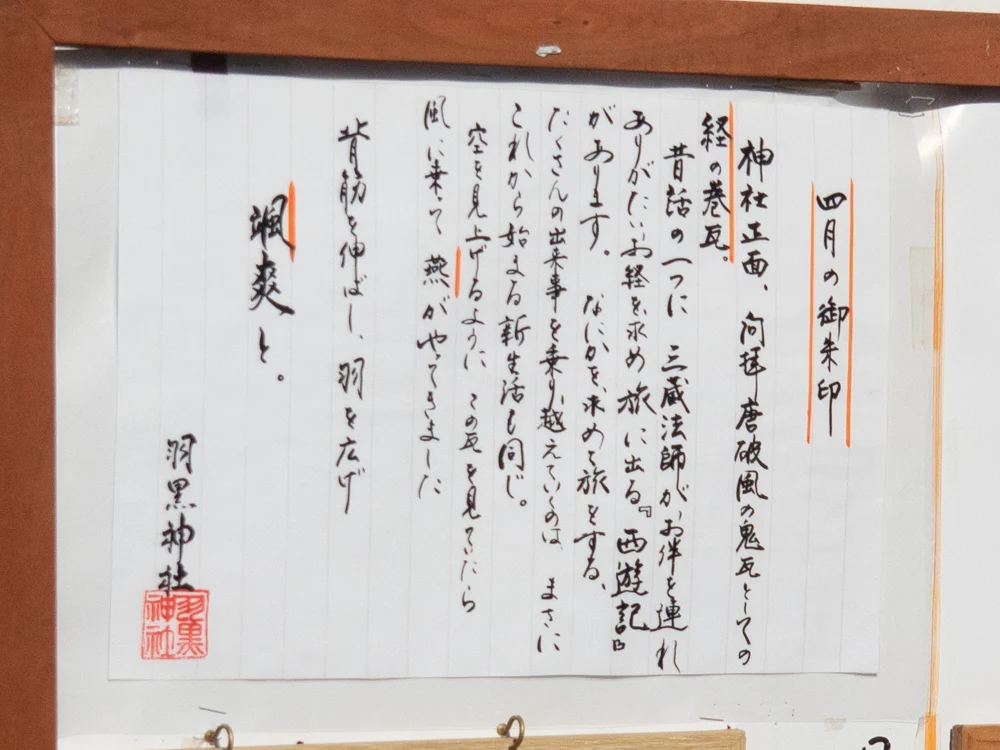
Introduction of Past Goshuin
For reference, here is an introduction to past goshuin.
In the past, there was a "series" of goshuin that used 8 pages and could be completed by receiving goshuin for 4 consecutive months.
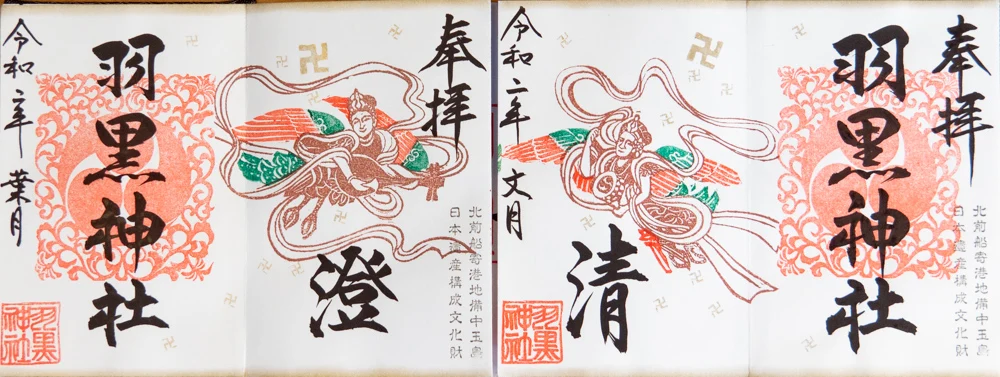
It is designed to resemble the doors of the main hall, and there are two pairs of "Karyobin" (a mythical bird) adorning the front of the main hall.
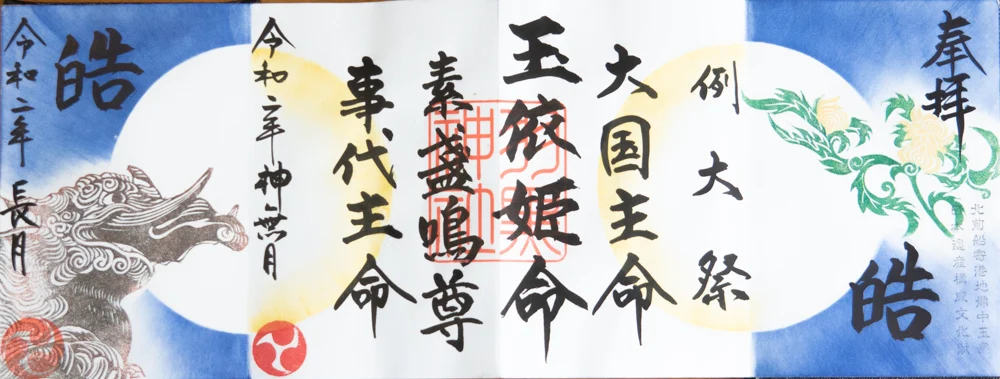
The Goshuin inside the opened section is inspired by the sacred mirror.
There are also decorations of the "Baku" (a mythical creature) from the main hall.
It is easier to understand when viewed in a video, so please refer to the following.
Previously, a black washi Goshuin book was distributed.
The Goshuin series, which takes several months to complete and is based on the Treasure Sword (寶劍), is truly a masterpiece.
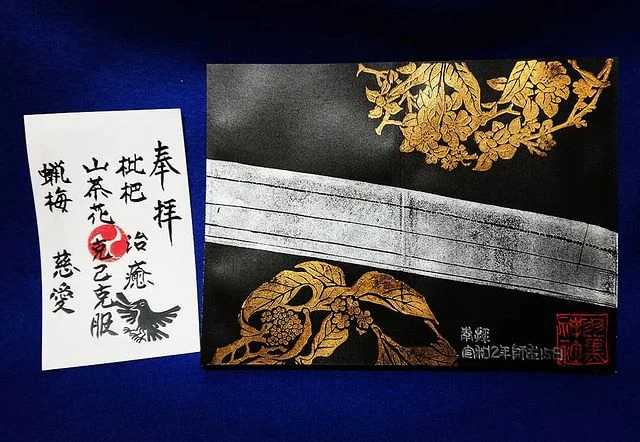
The black washi Goshuin series is also easy to understand in the video, so please take a look at the following.
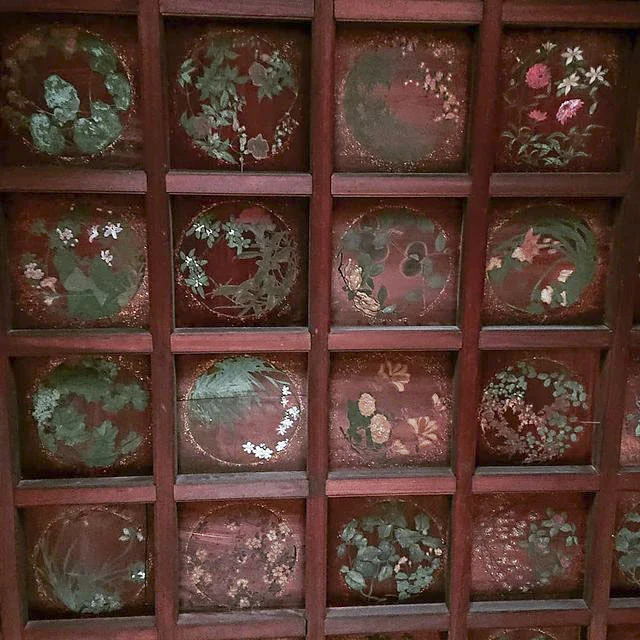
The patterns around the sword are motifs of the plants depicted on the ornate ceiling of the worship hall.
How to Receive Goshuin
Goshuin can be received at the Shamusho (office).
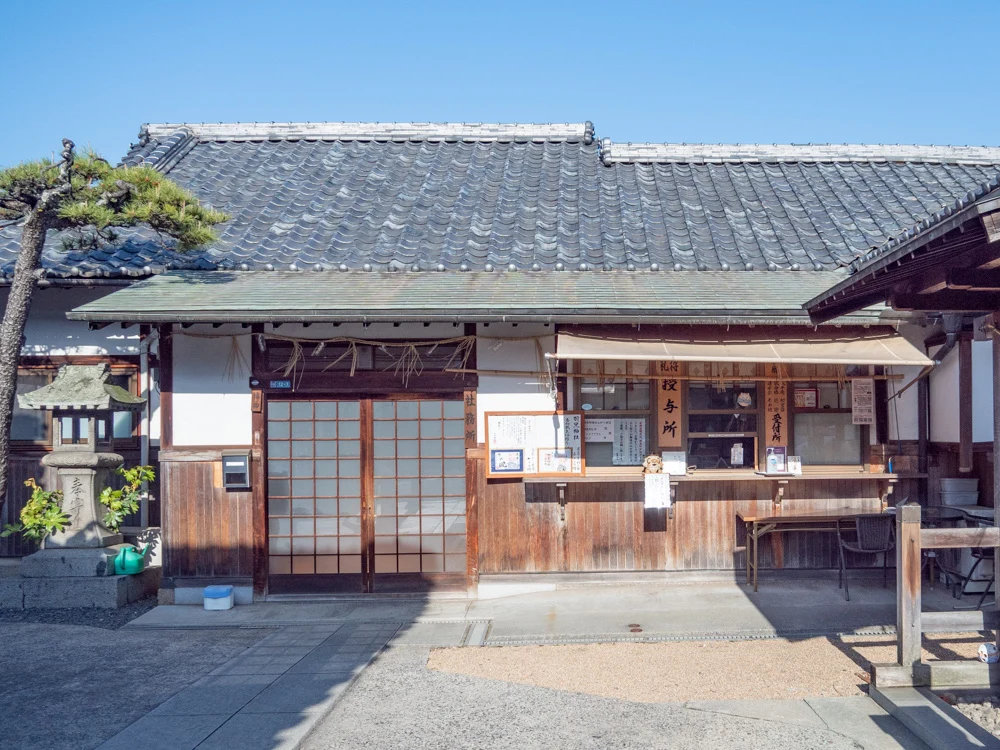
The regular Goshuin costs 500 yen each for both types, and the monthly changing Goshuin costs 1,000 yen as an offering.
Due to the high number of people wishing to receive Goshuin, it is difficult to receive them on the day of the visit.
Therefore, the method is to leave the Goshuin book at the Shamusho and receive it later.
There are two ways to receive it.
- Pick it up yourself at Haguro Shrine
- Have it mailed to you
If you wish to have it mailed, an additional shipping fee of 180 yen is required along with the offering for the Goshuin.
There are three ways to check the completion of the Goshuin.
- Check on the top page of the Haguro Shrine official website
- Check on the Haguro Shrine official blog
- Check on the Haguro Shrine Instagram
Please check using the method that is convenient for you.
Haguro Shrine Original Goshuin Book
Haguro Shrine also has an original Goshuin book.
The original Goshuin book comes in two colors: matcha green and deep indigo.
The matcha green represents the fact that Tamashima has long been a region where tea ceremony is thriving, while the deep indigo is inspired by the night sea seen from the Kitamae ships.
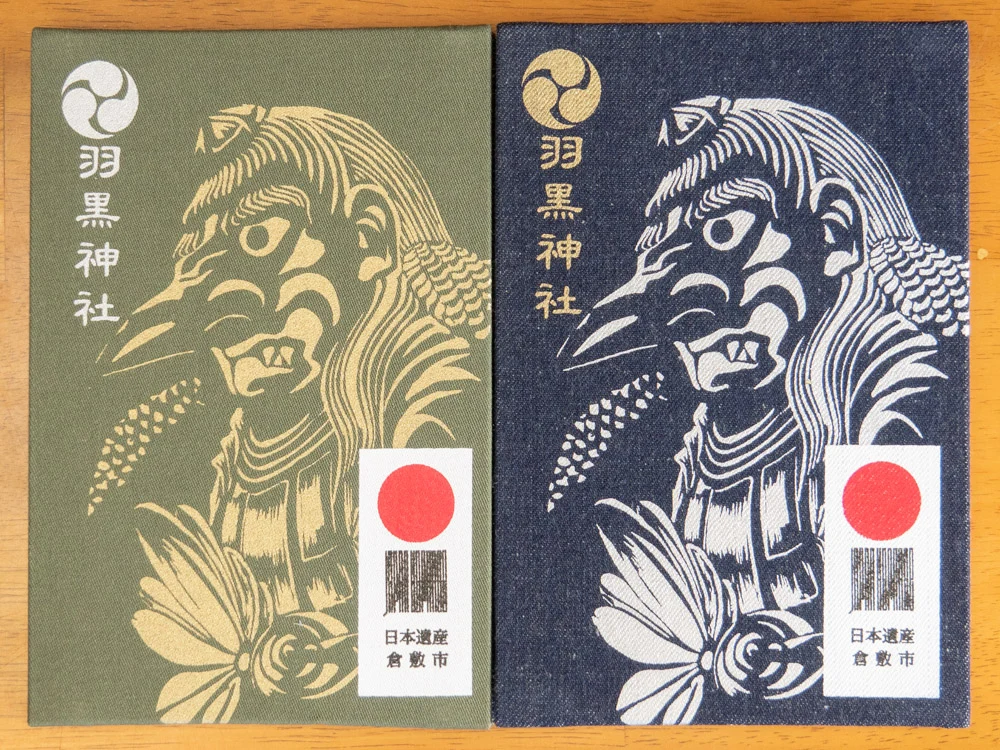
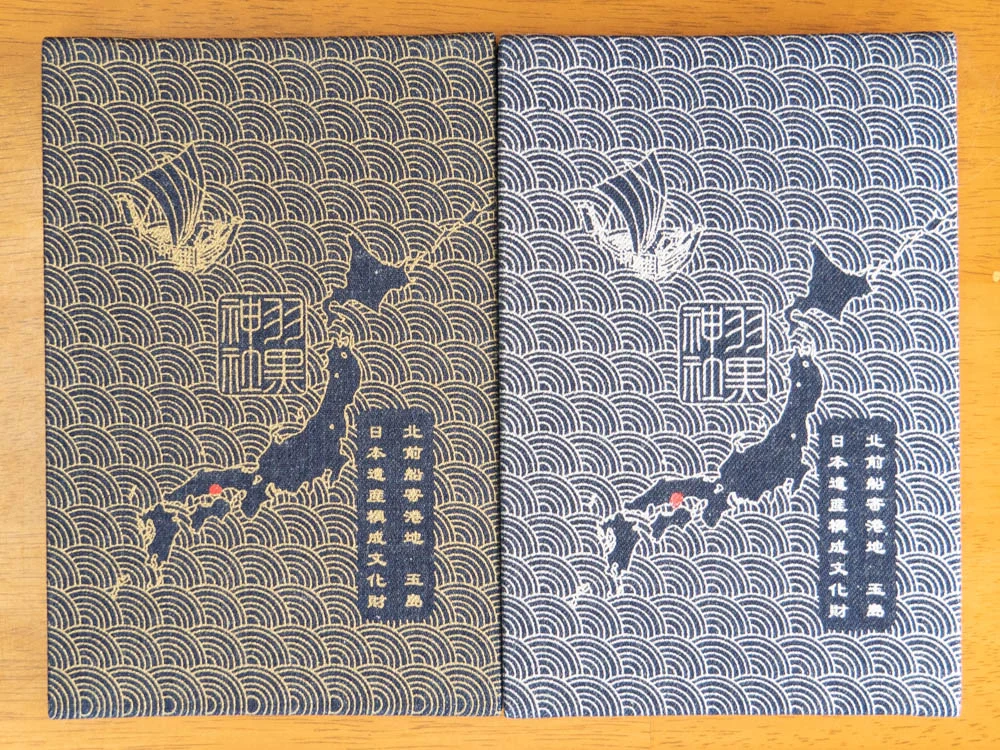
The matcha green version has a cotton twill fabric on the front and denim fabric on the back.
The deep indigo version is made of denim fabric on both the front and back.
The original Goshuin book comes with a limited opening Goshuin on the first page.
Please note that the original Goshuin book will be discontinued once the stock runs out.
To receive the original Goshuin book from Haguro Shrine, please pay an offering of 3,700 yen at the Shamusho for one book.
Events at Haguro Shrine
Haguro Shrine has many annual events.
Among them, the following events are particularly noteworthy.
| Event | Timing | Main Highlights |
|---|---|---|
| Shichifukujin Festival | March | ・Lottery ・Hinamatsuri event "Tamashima Minato Ohina-zukuri" |
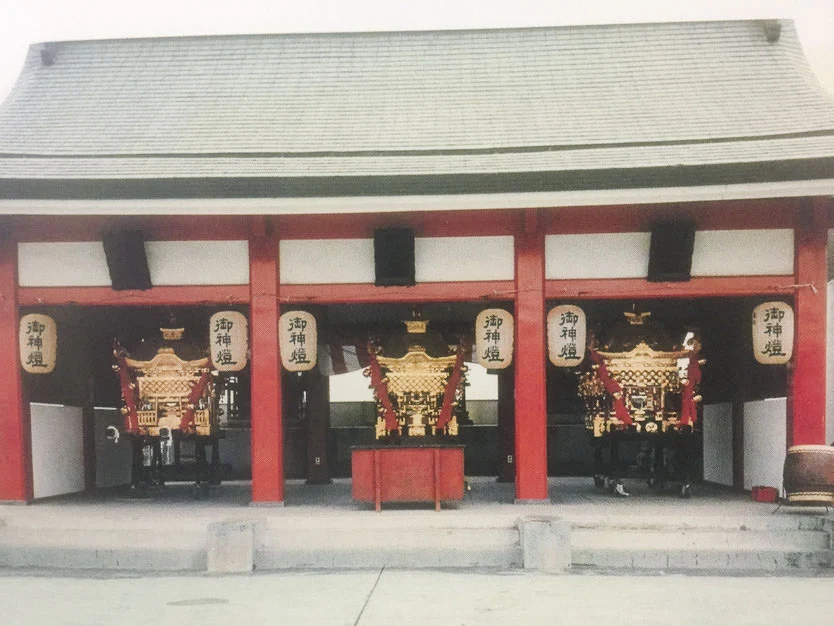
| Sumiyoshi and Mizutani Shrine Grand Festival | May | ・Mikoshi (portable shrine) ・Karasu Tengu Costume Contest |
| Sugawara Shrine Tenjin Festival | July | ・Mikoshi ・Funatogyo (boat procession) |
| Haguro Shrine Grand Festival | October | ・Mikoshi ・Chitose-raku (senzairaku) |
The mikoshi at the Haguro Shrine Grand Festival is the largest among the three mikoshi.
For more details about the events at Haguro Shrine, please refer to the Haguro Shrine official website.
History of Haguro Shrine
What kind of history does Haguro Shrine have?
Let's unravel it.
Land of Tamashima Born from Reclamation
The area where the center of Tamashima is located was originally sea.
The names Kashiwajima, Otojima, and Nanajima, which still remain as place names in Tamashima, were also islands.
Furthermore, Mt. Haguro, where Haguro Shrine is located, was also called "Amidayama" and was a small island floating between Kashiwajima and Otojima.
In 1642, when Mizutani Katsutaka became the lord of Bichu Matsuyama Domain, the Matsuyama Domain, which governed the area of Kashiwajima, Otojima, and Nanajima, began to reclaim the sea.
The previous lord, Ikeda Nagatsune, had also reclaimed land around Nagao (present-day Nagao, Kurashiki City), but a larger reclamation was carried out.
Mizutani Katsutaka began reclamation in 1642 and gradually expanded the land into the sea.
From 1655, the largest scale of reclamation work began.
In this context, Mizutani Katsutaka enshrined Haguro Shrine on Amidayama in 1658, wishing for the success of the reclamation work and the development of the land after reclamation.
The reclamation work was completed in 1659, and the newly created land was called Tamashima Shinden (present-day Kurashiki City, Tamashima).
Moreover, the port around Mt. Haguro (Tamashima Minato) flourished as a commercial port, and the surrounding port towns also developed.
Development of Tamashima and Haguro Shrine
Tamashima Minato was a port for Kitamae ships.
Kitamae ships were vessels that connected Hokkaido and Osaka (present-day Osaka City) via the Sea of Japan, Kanmon Strait, and Seto Inland Sea.
Cotton cultivation was thriving around Tamashima.
Meanwhile, herring fishing was active on the Sea of Japan side.
In Tamashima, herring meal was needed as fertilizer for cotton cultivation.
As a result, the trade of herring meal brought by Kitamae ships and cotton cultivated in Tamashima became active, and Tamashima grew into one of the leading commercial cities in the Seto Inland Sea.
At its peak, there were over 40 kaisen-donya (shipping businesses) in the port town of Tamashima.
As Tamashima developed as a commercial city, the number of wealthy merchants increased.
Successful local merchants and those who visited Tamashima via Kitamae ships made donations to Haguro Shrine, allowing it to grow significantly.
Thus, Haguro Shrine has become cherished as the guardian deity of Tamashima to this day.
We interviewed the chief priest, Fukuda Makoto.
Data of Haguro Shrine
| Name | Haguro Shrine |
|---|---|
| Location | 1-12-1 Tamashima Chuo-cho, Kurashiki City, Okayama Prefecture |
| Contact | 086-522-2695 |
| Parking | Available |
| Deities | Tamayori-hime no Mikoto Susanoo no Mikoto Ookuninushi no Mikoto Kotoshironushi no Mikoto |
| Benefits | Prosperity in business, fulfillment of wishes, matchmaking, etc. |
| Goshuin (Offering) | Available (500 yen or 1,000 yen) *The offering varies depending on the type of Goshuin |
| Visiting Hours | Open for worship at any time |
| Reception Hours | 9:00 AM - 4:00 PM |
| Closed Days | None |
| Admission Fee | None |
| How to Pay Admission Fee/Offering |
|
| Restroom | No restroom |
| Website | Welcome to Haguro Shrine - Hagurojinja Page! |