When it comes to the Bikan Historical Area in Kurashiki, the charm lies in its historical atmosphere with many old buildings remaining.
Since you are visiting such a historic place, why not visit a location where you can feel the history of the land?
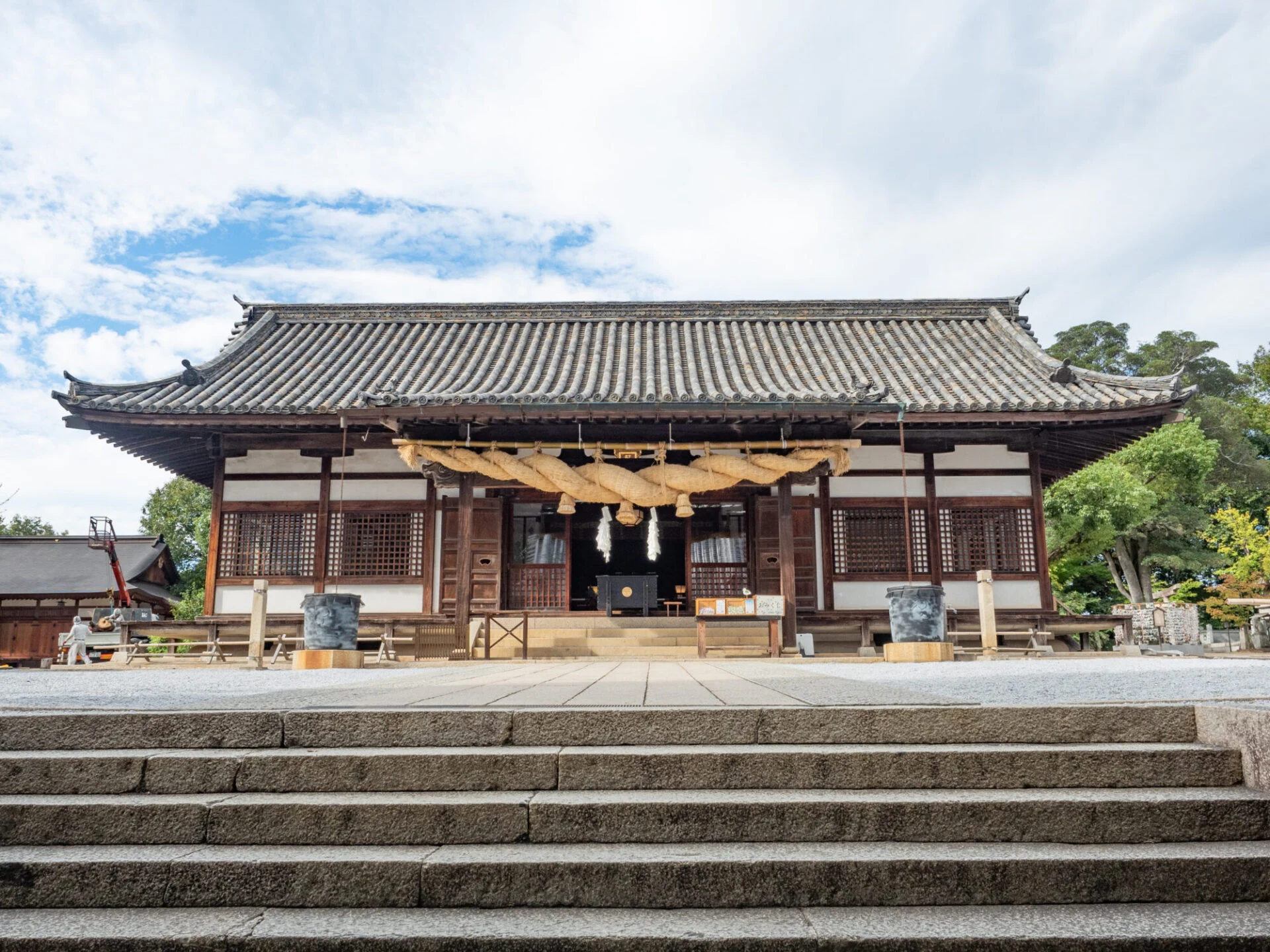
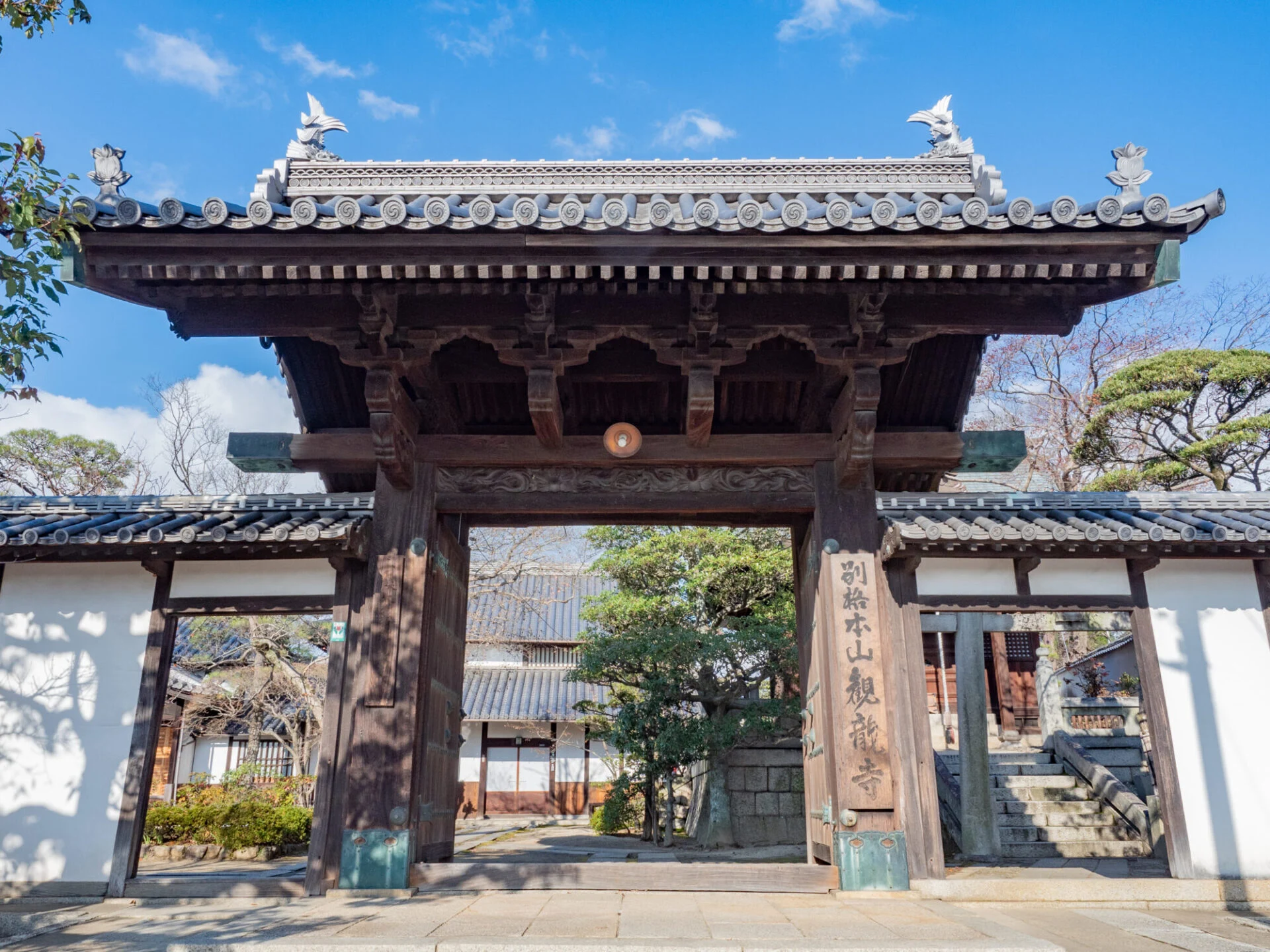
Famous historical spots around the Bikan Historical Area include Achi Shrine and Kanryuji Temple.
However, there are also hidden gems.
One of them is the Shiroyama Inari Shrine.
As the name Shiroyama suggests, there used to be a castle in Kurashiki.
The Shiroyama Inari Shrine is a very small shrine, but it conveys the history that there was a castle in the Bikan Historical Area.
The fact that there was a castle in Kurashiki is not widely known.
Therefore, I will introduce the Shiroyama Inari Shrine and its history.
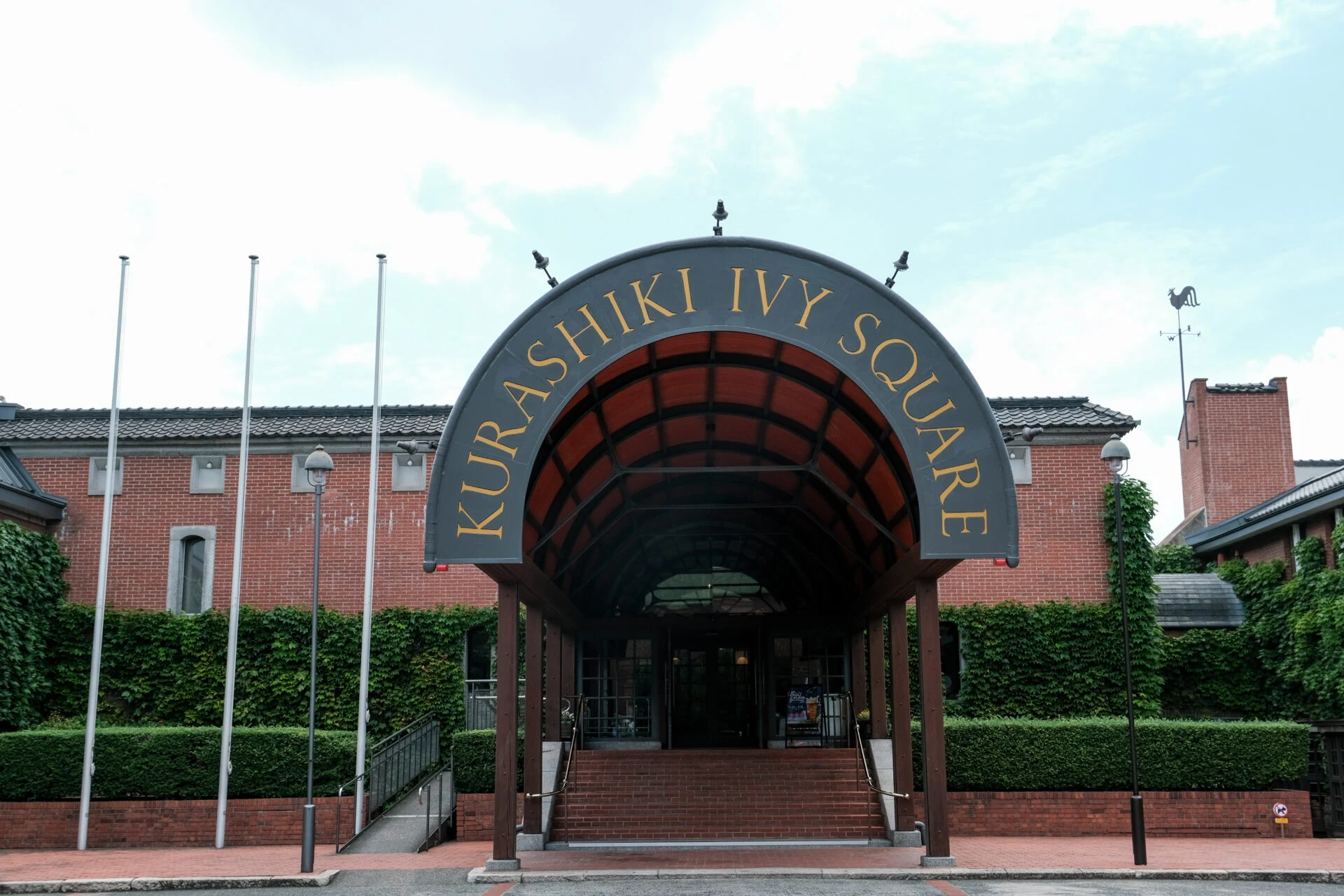
Shiroyama Inari Shrine is a small shrine located within the Kurashiki Ivy Square parking lot
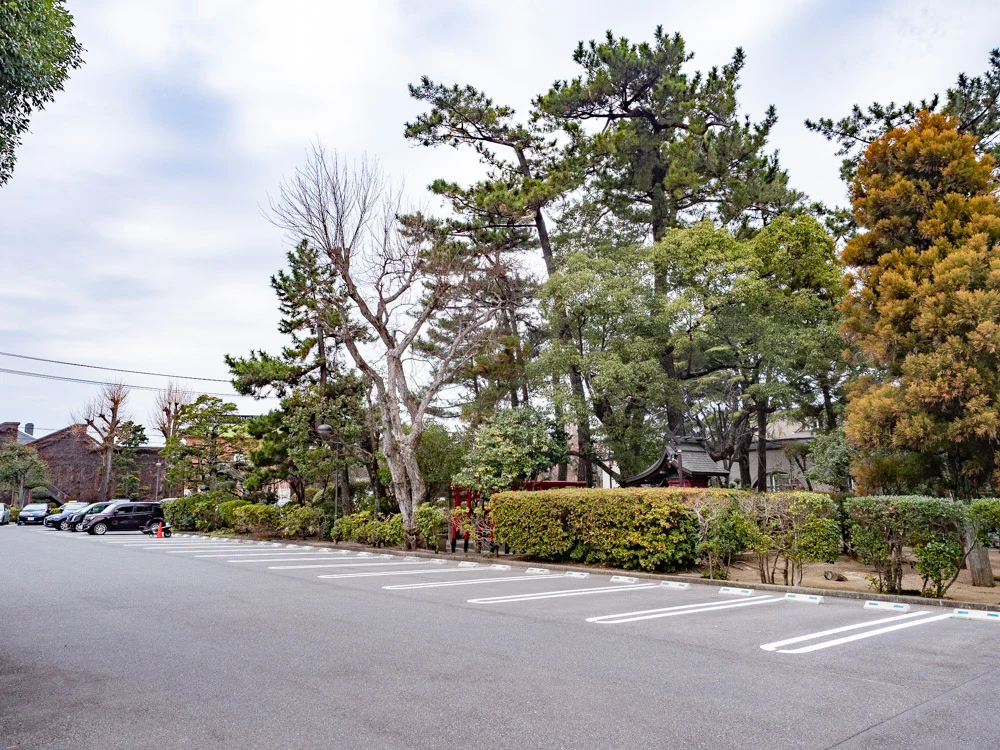
Shiroyama Inari Shrine is located in the parking lot of Kurashiki Ivy Square on the east side of the main gate of Kurashiki Ivy Square.
It is just south of the Floral Court building of Kurashiki Ivy Square.
▼ You can see a place with lush trees in the parking lot.
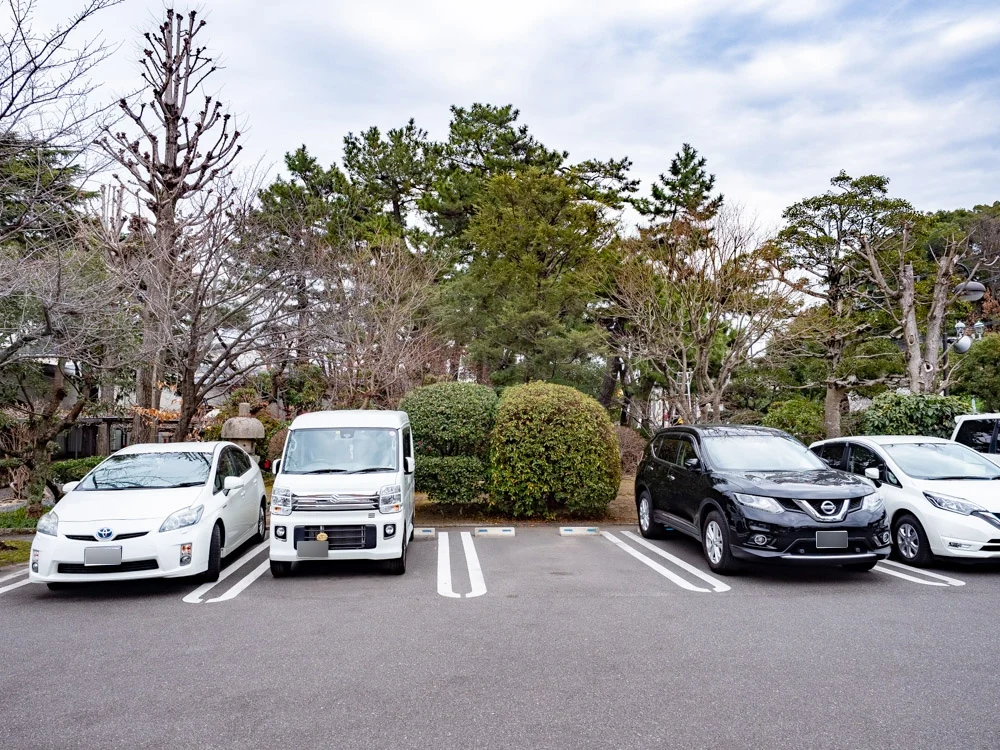
That is where the Shiroyama Inari Shrine is located.
▼ The shrine building is very small, so it is hard to see from a distance as it is hidden among the trees.
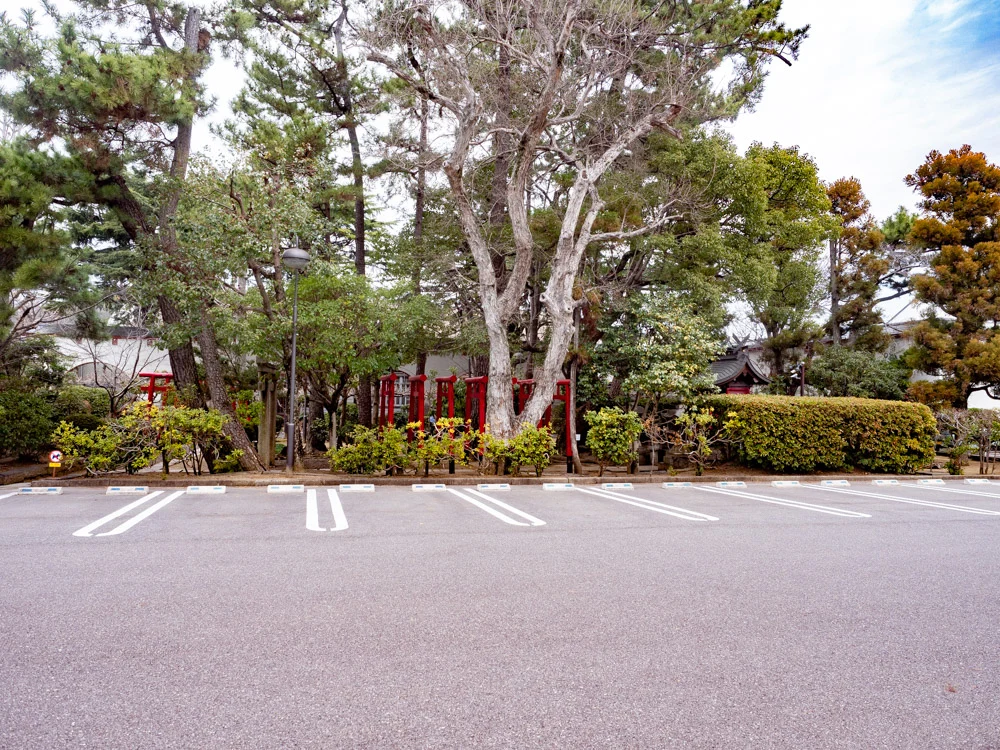
You might not imagine that there is a shrine in such a place.
This Shiroyama Inari Shrine was originally built as a branch shrine of the current Fushimi-Inari Taisha Shrine during the Sengoku Period.
The original location was on the east side of the current Kurashiki Ivy Square property.
However, it was relocated due to the construction of KURABO INDUSTRIES LTD. in the mid-Meiji Period.
In the Taisho Period, it was relocated again to its current location.
Note that the factory of KURABO INDUSTRIES LTD. is now the Kurashiki Ivy Square.
Highlights of Shiroyama Inari Shrine
Shiroyama Inari Shrine is a small shrine, but it has the following highlights.
Let’s introduce them one by one.
Vermilion Torii Gates
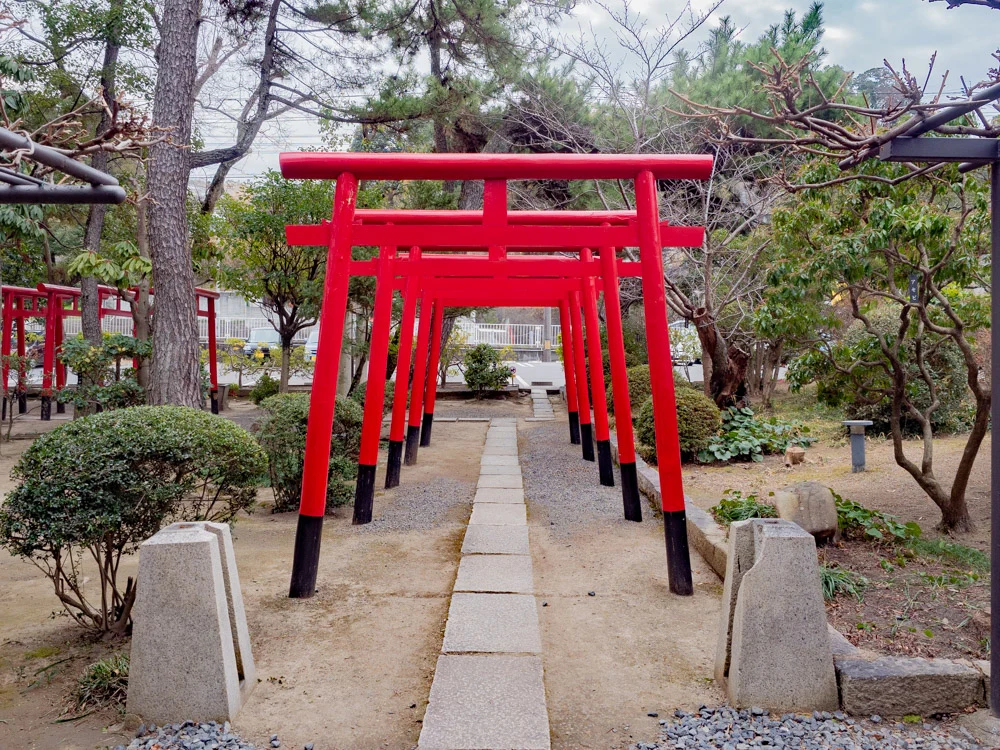
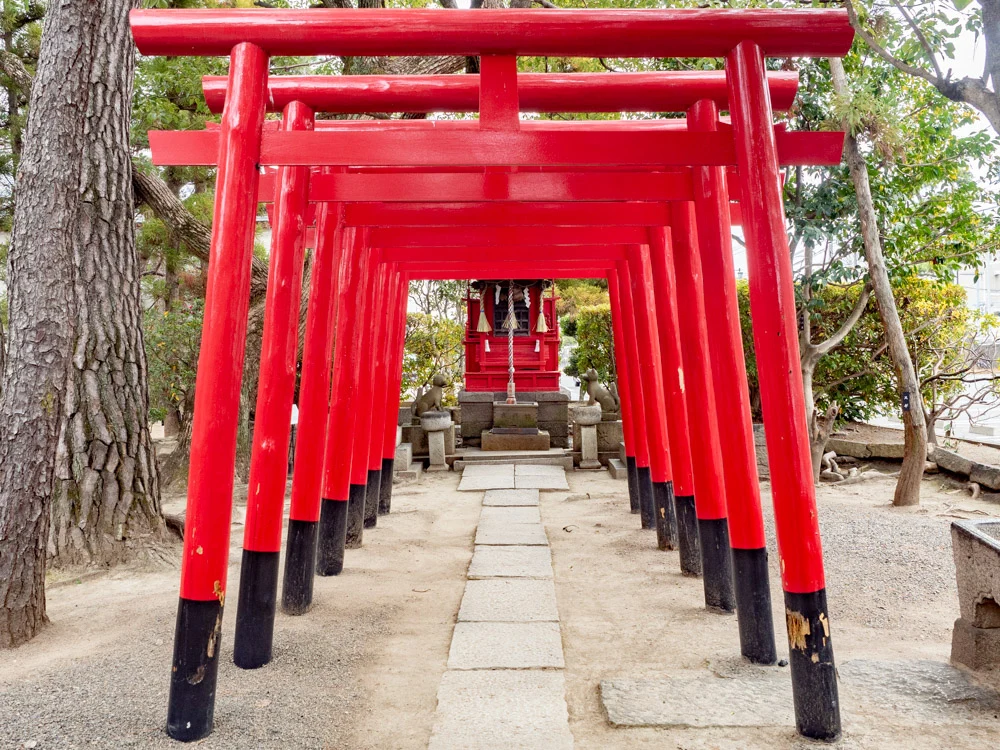
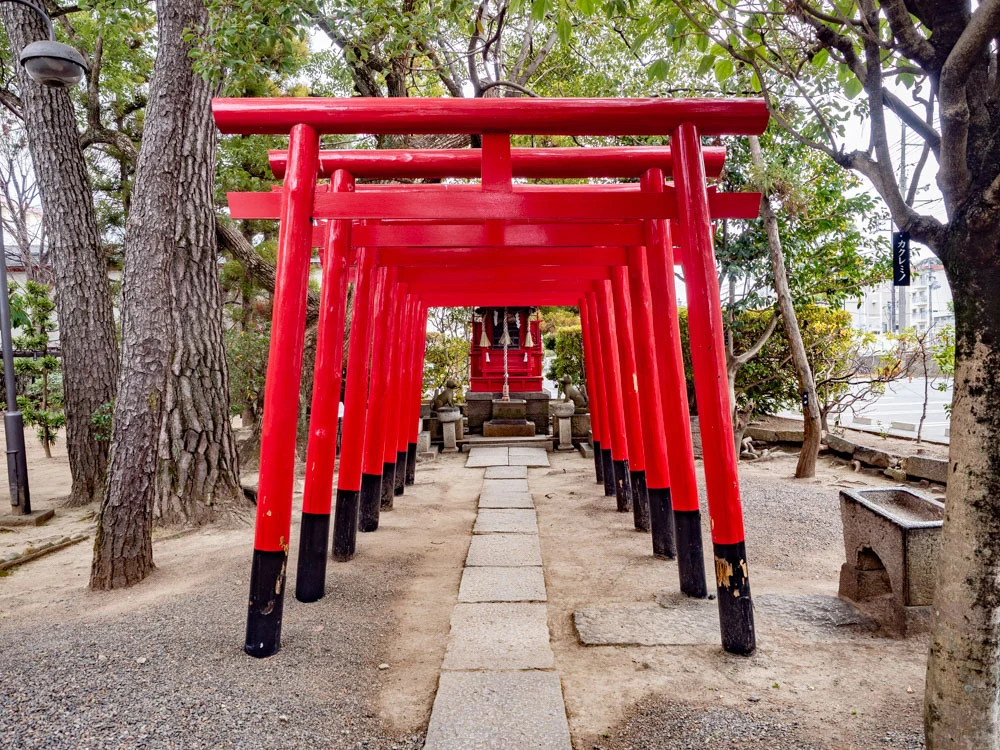
From in front of the Floral Court building, there are several vermilion torii gates (ren-torii) lined up.
Speaking of ren-torii, famous examples include the "Senbon Torii" at Fushimi-Inari Taisha Shrine, Motonosumi Shrine in Nagato City, Yamaguchi Prefecture, and Fukutoku Inari Shrine in Shimonoseki City, Yamaguchi Prefecture.
▼ Compared to those, the number and size are considerably smaller, but walking through the approach gives a sense of solemnity.
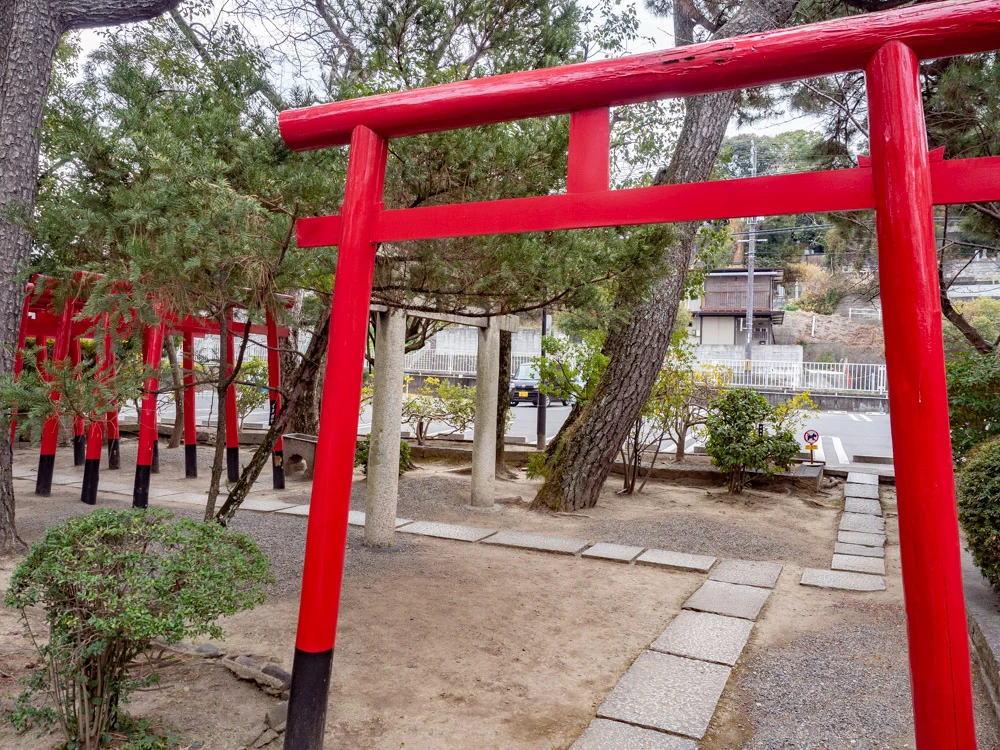
Originally, this Shiroyama Inari Shrine was built as a branch shrine of Fushimi-Inari.
It might be related to the Senbon Torii of Fushimi-Inari.
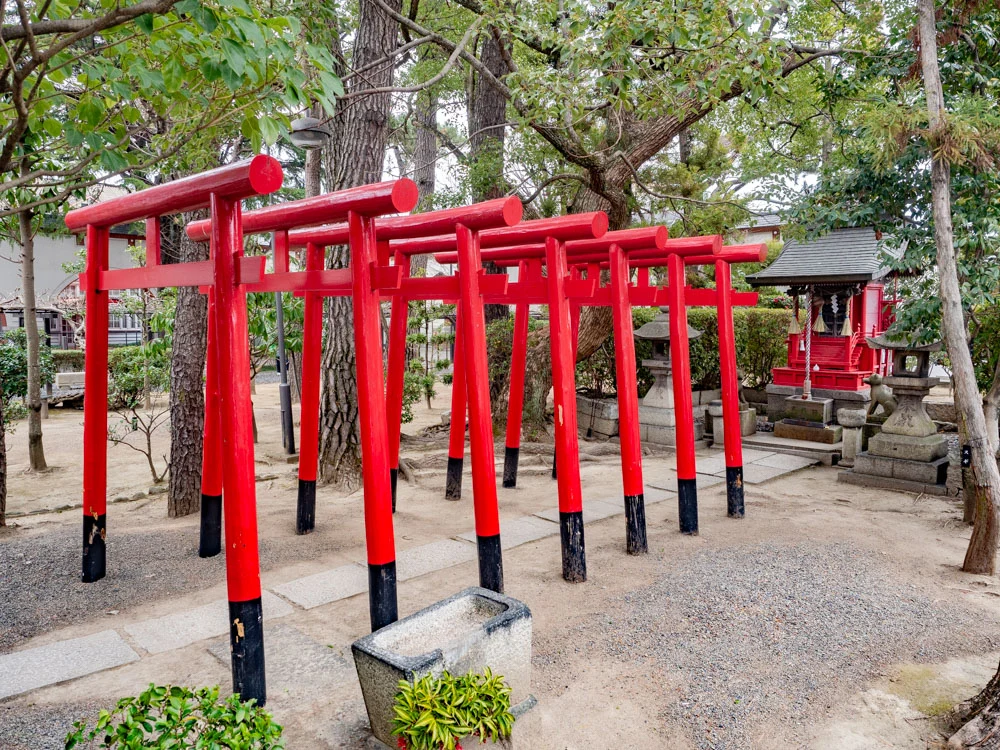
▼ After proceeding about 15 meters along the path with the torii gates, the path makes a right angle turn to the left (east).
▼ Even after the turn, the torii gates continued all the way to the shrine building.
Stone Torii Gate from the Late Edo Period
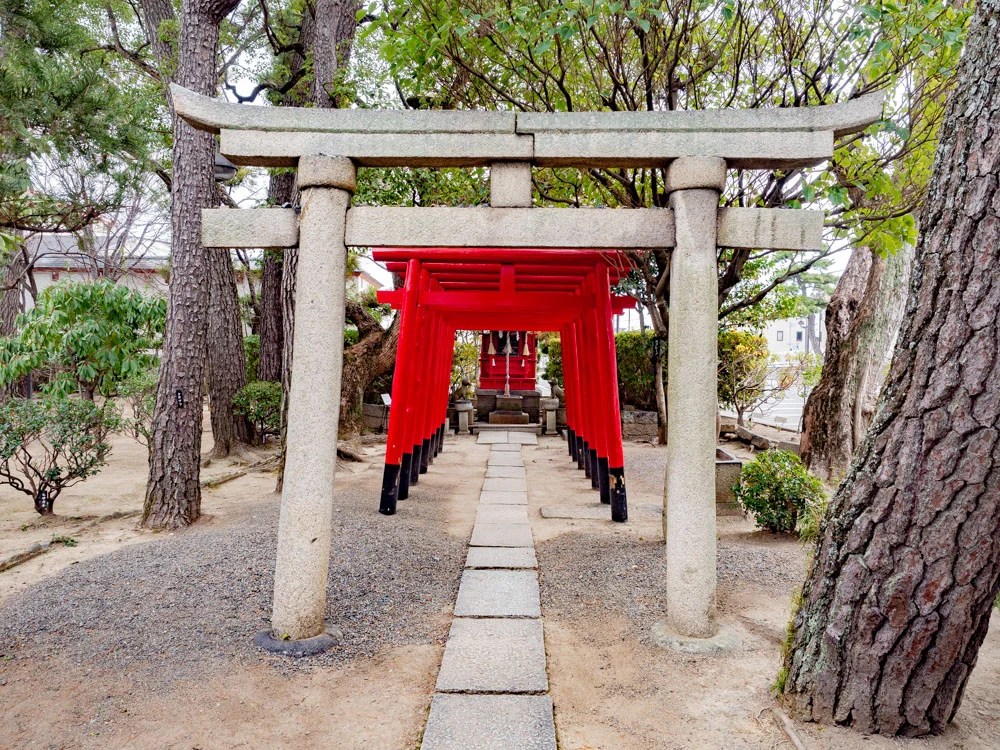
The approach is lined with vermilion torii gates, but after the path makes a right angle turn, there is suddenly one stone torii gate.
This torii gate is inscribed with the year 8 of the Bunka era, indicating that it was built in the late Edo Period.
It is a valuable remnant that has survived since before the relocation due to the construction of KURABO INDUSTRIES LTD. in the Meiji Period.
Stone Lantern from the Early Meiji Period
In front of the shrine building, there are two stone lanterns placed on either side.
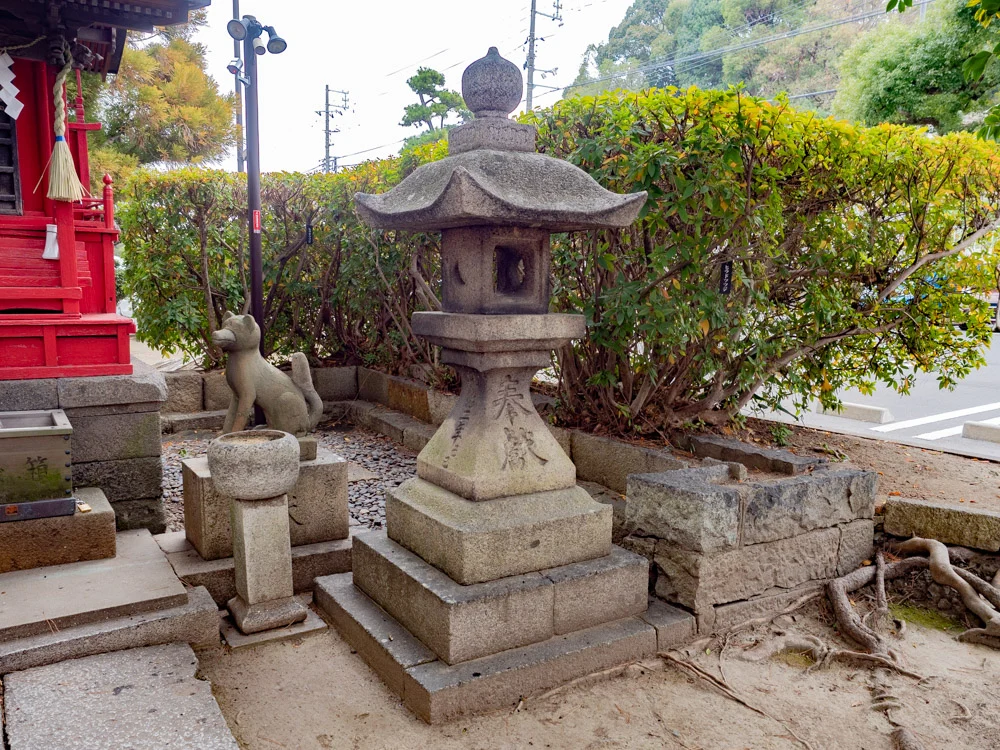
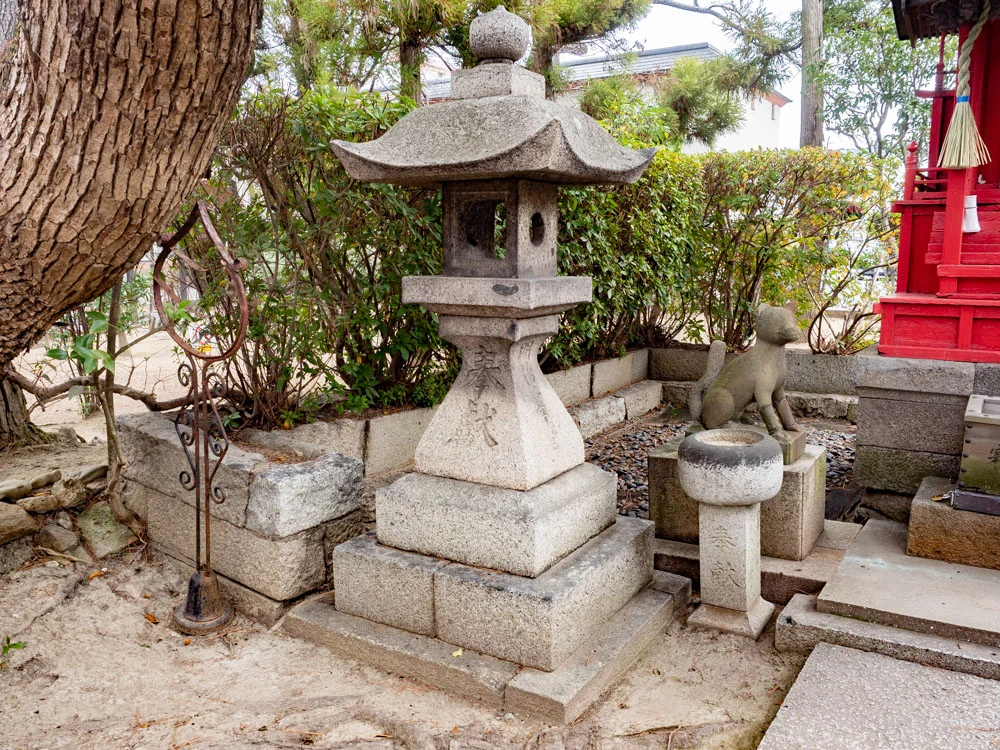
▼ This stone lantern is inscribed with the year 2 of the Meiji era.
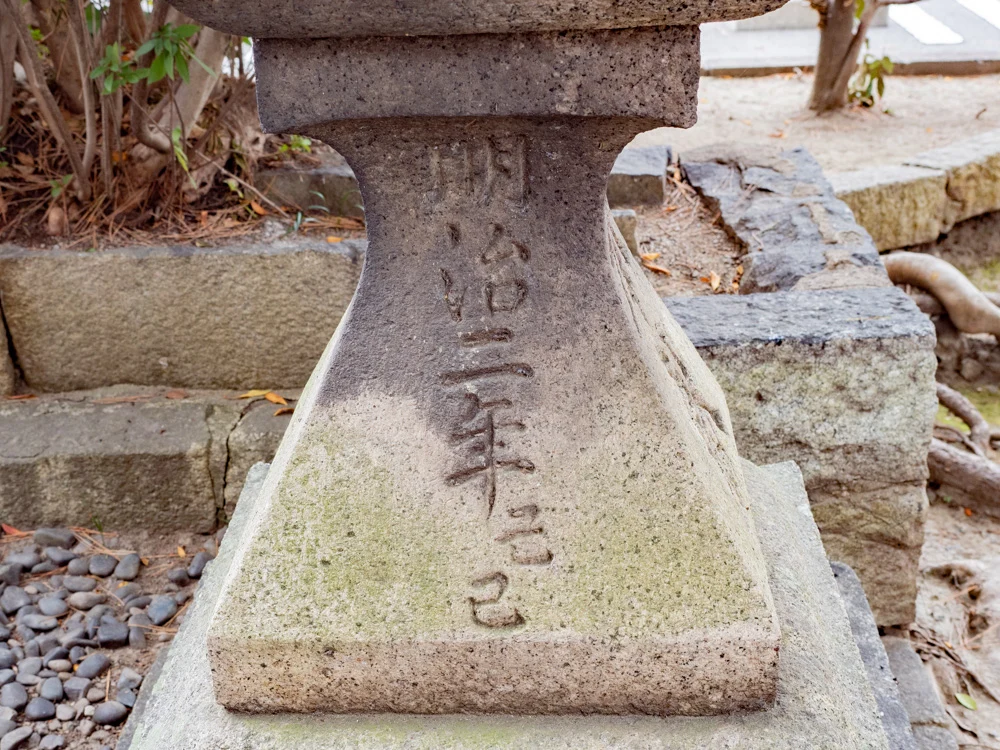
Like the stone torii gate, this is also from before the relocation in the mid-Meiji Period.
Fox Statues from the Late Edo Period
When it comes to shrines, there are usually komainu (guardian dogs), but at Inari shrines, there are fox statues instead.
▼ At Shiroyama Inari Shrine, there are also two fox statues in front of the shrine building.
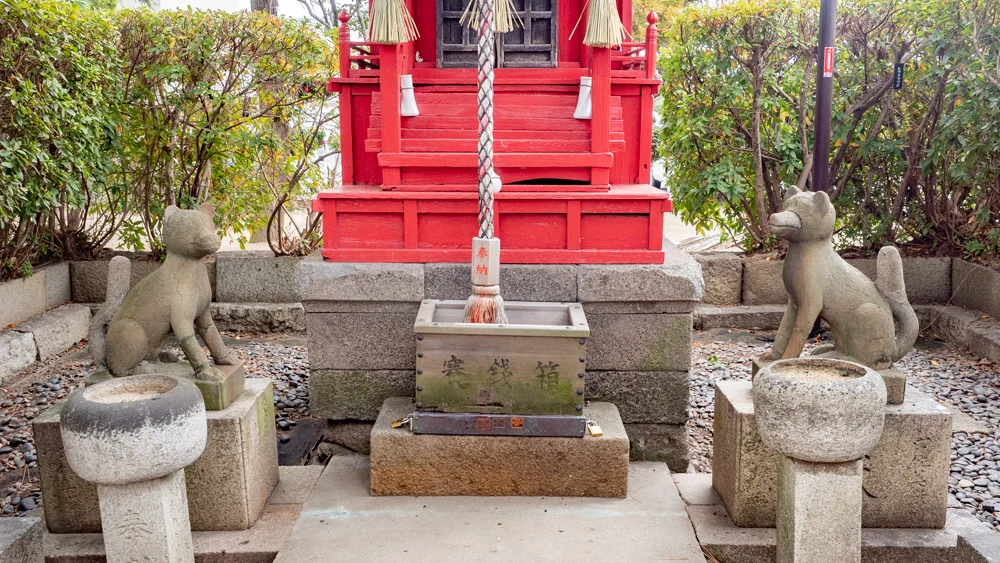
The base of the fox statue is inscribed with November of the 5th year of the Tenpo era, indicating that it is from the late Edo Period.
Like the stone torii gate and stone lantern, it is clear that these statues also remain from before the relocation.
Shrine Building
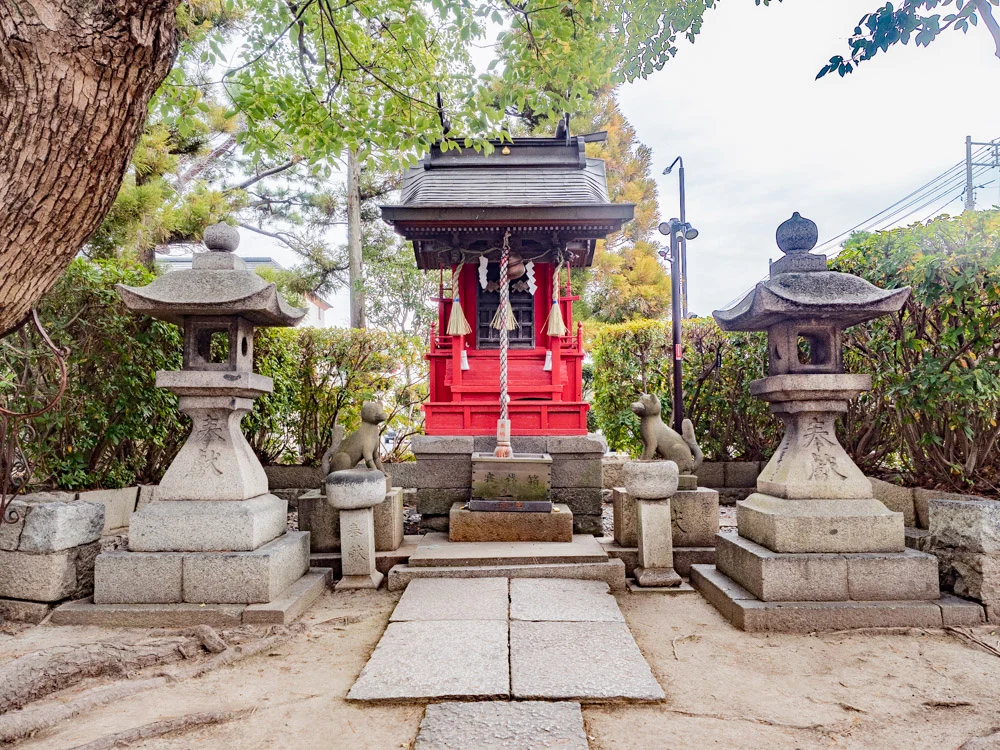
The shrine building of Shiroyama Inari Shrine is very small.
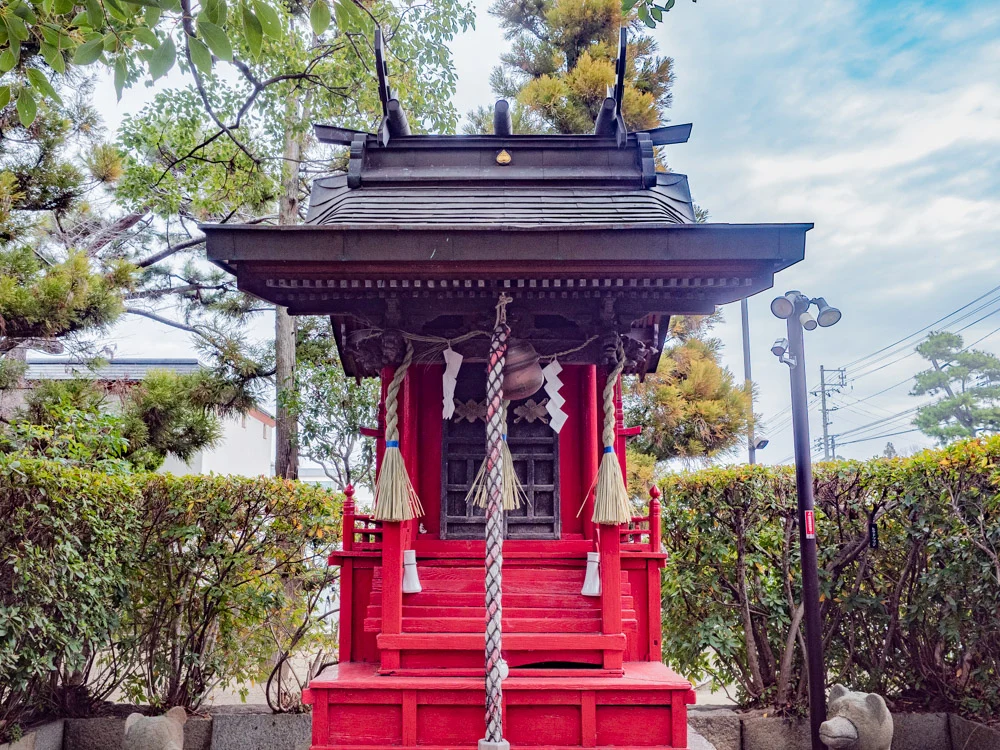
It was not possible to confirm when this main hall was built.
Camphor Tree
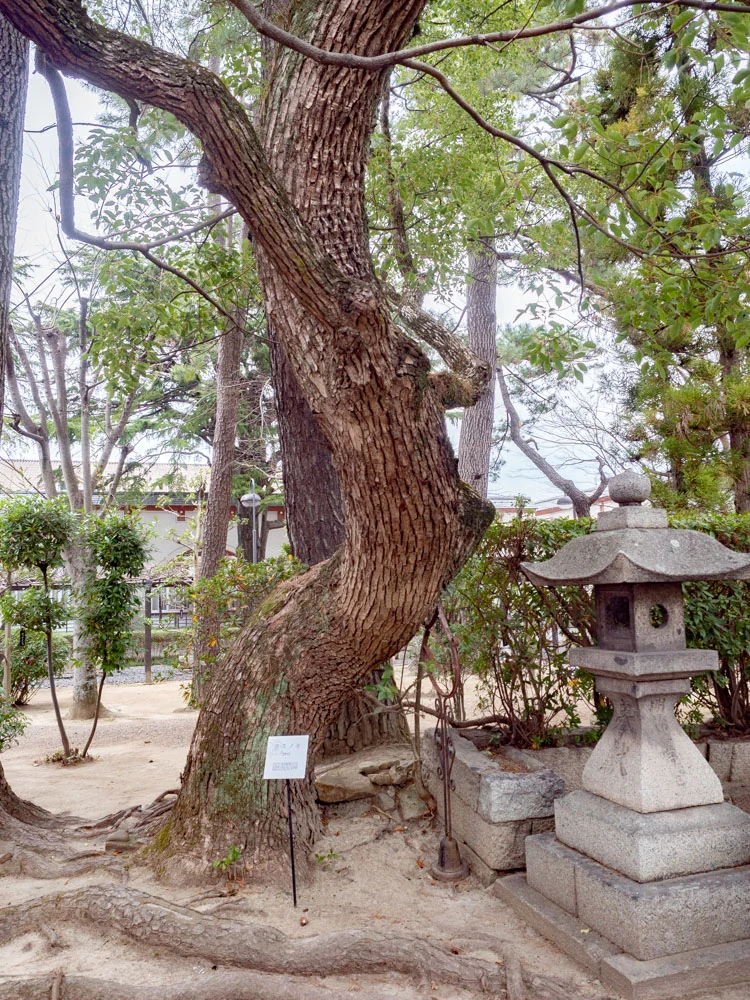
The area around the main hall is covered with trees such as camphor trees and pines.
The camphor tree is the city tree of Kurashiki City.
Being surrounded by city trees, Shiroyama Inari Shrine seems to hold a special significance.
In particular, the camphor tree located to the left (north) of the main hall appeared to be quite old.
Wisteria Arbor
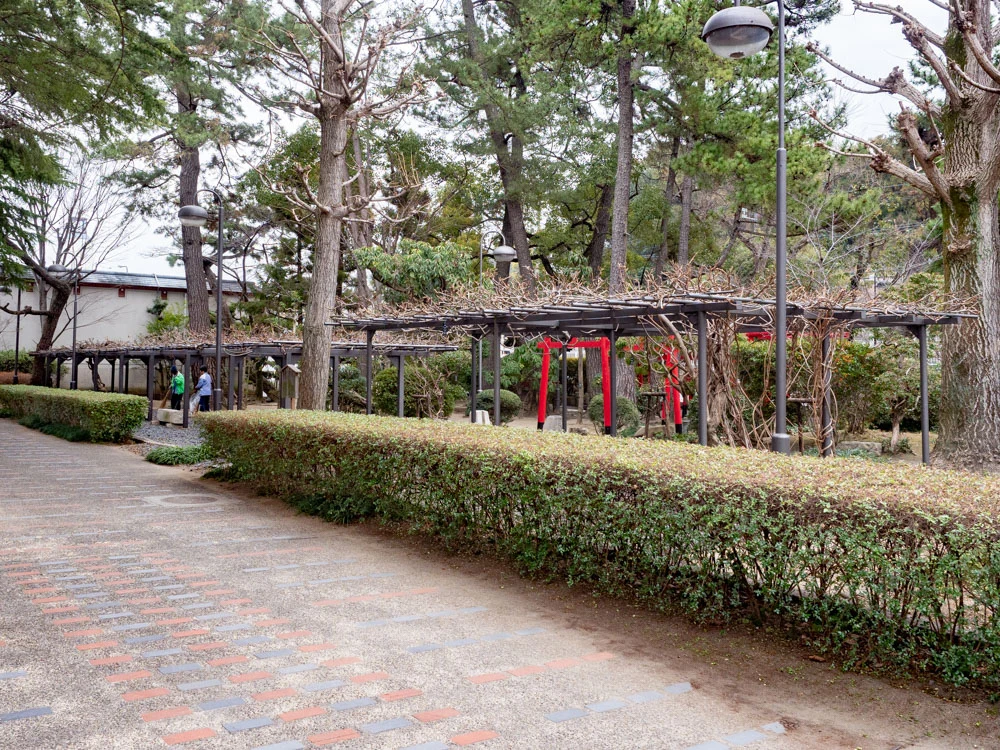
Wisteria is the city flower of Kurashiki City.
To the left of the path leading to the Flora Court building, there is a row of wisteria arbors.
According to the guide, it is said that the kingfisher, which is the city bird of Kurashiki City, sometimes visits here.
No Goshuin at Shiroyama Inari Shrine
When I asked someone at Kurashiki Ivy Square about Shiroyama Inari Shrine, they said there is no shrine priest managing it.
Therefore, there is no goshuin (shrine seal) for Shiroyama Inari Shrine.
What are the Deities and Benefits of Shiroyama Inari Shrine?
Shrines are places to worship deities, right?
It is intriguing to know what deity (the main deity) is worshipped at Shiroyama Inari Shrine.
Also, what kind of benefits (goryaku) does it provide?
In fact, Inari shrines are dedicated to the deity Ukanomitama (written in kanji as 宇迦之御魂 and others).
Thus, Shiroyama Inari Shrine also worships Ukanomitama.
Ukanomitama is the deity of food, grains, and agriculture.
Therefore, it is believed to provide the benefits of abundant harvests, and from there, it is also associated with prosperity in business and industrial prosperity.
Note that "Uka" means "food" in ancient Japanese, "Mi" (御) is a prefix indicating something sacred, and "Tama" means soul.
In other words, Ukanomitama means "the soul of food".
By the way, Inari comes from "inenari" = to bear rice.
The kanji for "inenari" were used to create Inari, Inase, Inao, and other variations, and the reading eventually changed to "inari".
As the name suggests, it was originally a deity of rice cultivation.
Over time, the Inari deity and Ukanomitama, the deity of food, came to be regarded as the same deity.
History of Shiroyama Inari Shrine
Shiroyama Inari Shrine is currently a small shrine, but it has a long history.
Now, let me introduce the history of Shiroyama Inari Shrine.
There Used to Be a Mountain on the East Side of Kurashiki Ivy Square
In the eastern half of the current Kurashiki Ivy Square site, there used to be a small hill that was forested.
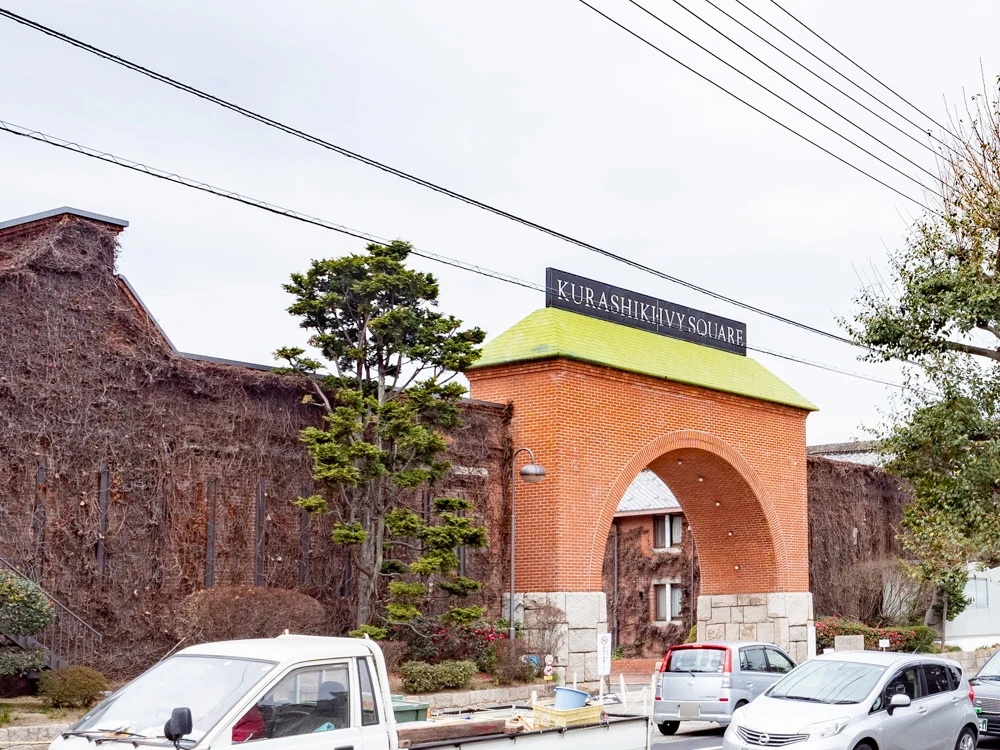
This small hill was called "Kurashikiyama" after the place name.
Additionally, there is a tradition that Kobori Enshu, who became the daikan (local magistrate) of Bitchu in the early Edo period, built a teahouse here, which is why it is also referred to as "Chayama".
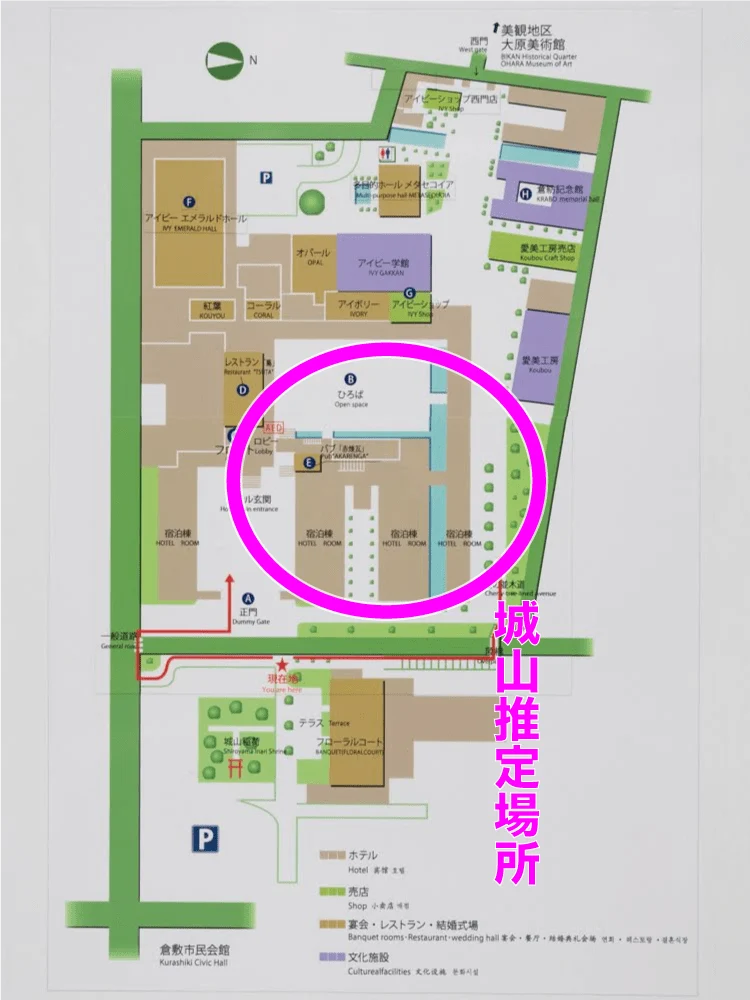
In fact, a castle was once built on this Kurashikiyama.
Therefore, Kurashikiyama was also called "Shiroyama" (from now on, referred to as Shiroyama).
There Was a Castle on Shiroyama, the Only One in the Bikan Historical Area
The castle that was on Shiroyama is said to have been built by Ono Yoshifuru, who played an active role in the "Rebellion of Fujiwara no Sumitomo" that occurred in the early Heian period, as one of his bases.
After that, the descendants of the Ono clan continued to use it as a base.
This castle was referred to as "Kurashiki Castle", "Kurashikiyama Castle", and "Ono Castle".
It is considered the only castle that existed in the center of present-day Kurashiki City (originally Kurashiki).
The Origin of Shiroyama Inari Shrine Dates Back to the Sengoku Period
In the second year of Meio (1493), during the Sengoku period, the then lord of the castle, Ono Yoshinobu, built a shrine on Shiroyama as a branch shrine of Fushimi Inari located in present-day Kyoto City, as the ujigami (guardian deity of the clan) of the Ono clan.
Later, in the fifth year of Genna (1619), it was named "Shiroyama Inari Daimyojin", and eventually came to be called the current "Shiroyama Inari Shrine".
Additionally, Shiroyama is also referred to as "Inariyama".
Originally, it was the ujigami of the Ono clan, but by the Edo period, it had become widely beloved by the local residents of Kurashiki.
For example, the following illustrations confirm that Shiroyama and Shiroyama Inari were depicted.
- Bird's-eye view of Kurashiki Village (estimated to be from the mid-Edo period)
- Small section map (late Edo period: 1863)
- Shiroyama Inari Shrine map (Meiji 2)
The illustrations also reveal that there was a Hachiman Shrine at the foot of Shiroyama.
Note that Kurashiki Castle was abolished by the time of the Edo period, and in the third year of Enkyō (1746), the Kurashiki Daikan Office was built on the west side of Kurashikiyama, serving as the base for the daikan dispatched by the Edo Shogunate.
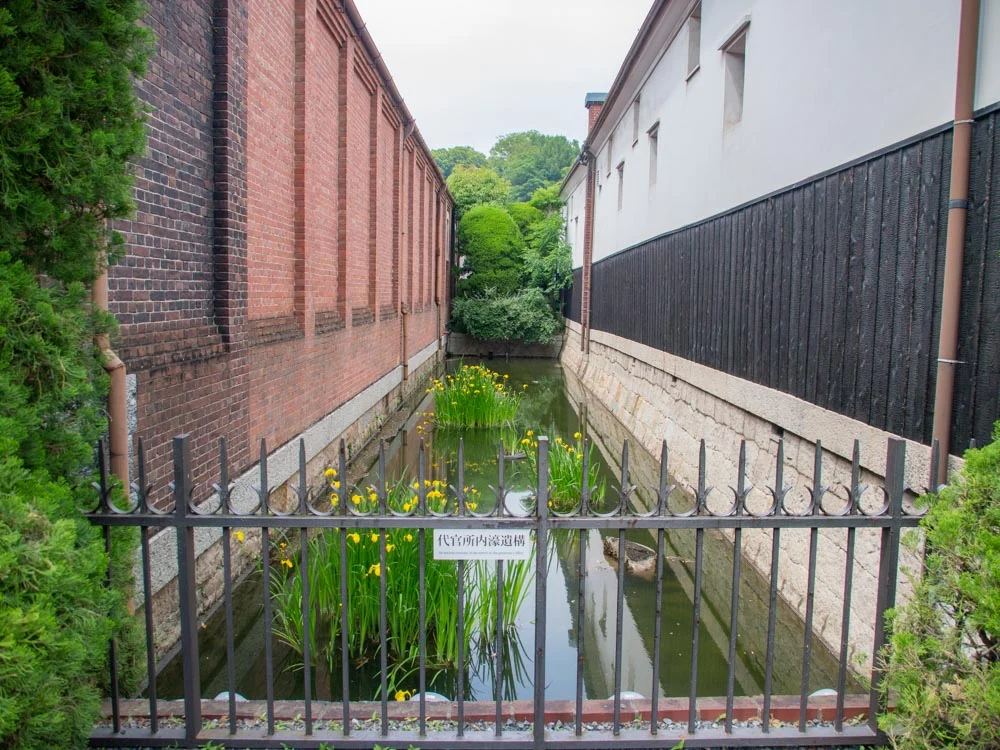
Additionally, the Ono clan became the shoya (village head) of Kurashiki Village.
The Kurashiki Daikan Office was used as the Kurashiki Prefectural Office when Kurashiki Prefecture was established in the early Meiji period.
The Shrine Was Relocated for the Construction of Kurabo Industries in the Mid-Meiji Period
Later, in the 21st year of Meiji (1888), to construct KURABO INDUSTRIES LTD. on the site of the Kurashiki Daikan Office and Kurashiki Prefectural Office, Shiroyama was cut down and flattened.
As a result, Shiroyama Inari Shrine was relocated to Mukaimichimachi.
The location is said to be around the west side of the current west gate of Kurashiki Ivy Square.
Later, in the 3rd year of Taisho (1914), it was moved again to its current location.
▼ Additionally, at the Achi Shrine, Shiroyama Inari Shrine is also enshrined as a subsidiary shrine.
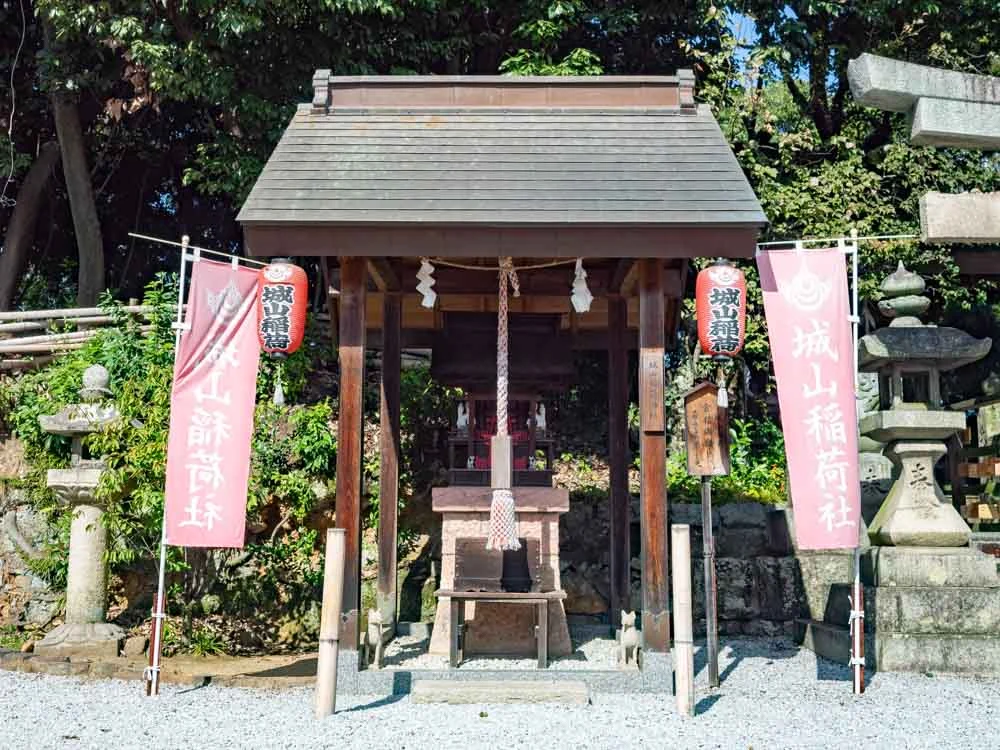
Conclusion
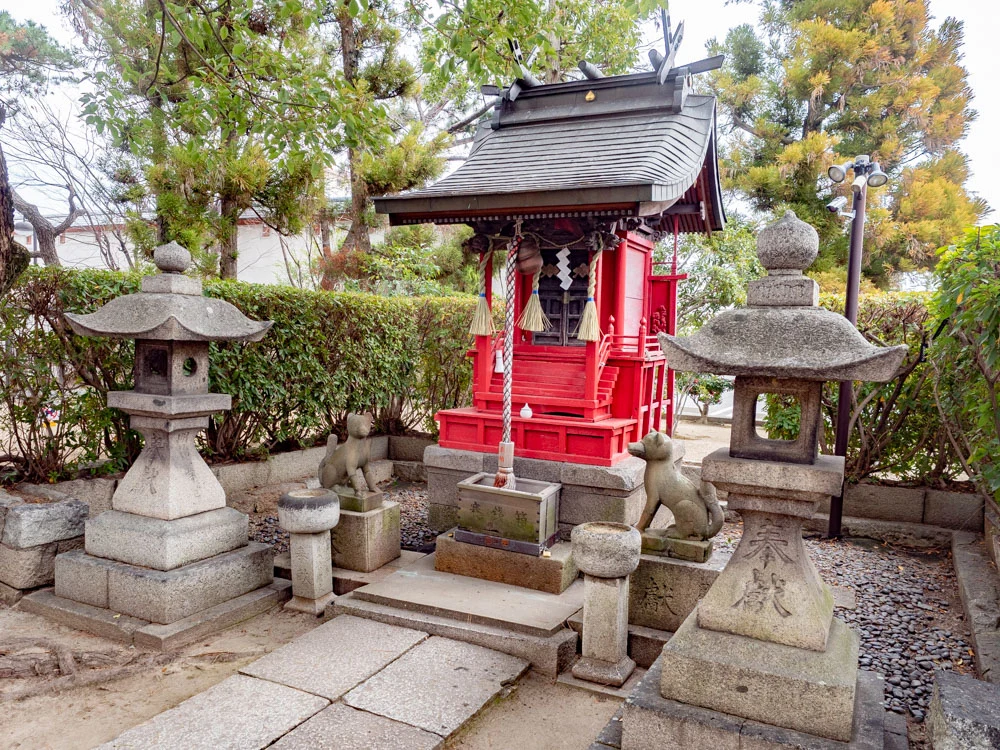
When it comes to shrines around the Bikan Historical Area in Kurashiki, Achi Shrine is famous.
However, Shiroyama Inari Shrine is also an important shrine when discussing the history of Kurashiki.
The name "Shiroyama" conveys that there was once a castle in Kurashiki and that there used to be a mountain in the area of Kurashiki Ivy Square.
Shiroyama Inari Shrine quietly stands in the parking lot of Kurashiki Ivy Square.
Surrounded by the city tree, city flower, and city bird of Kurashiki, it gives the impression of being a special place.
Although it is a small shrine, why not visit Shiroyama Inari Shrine during your sightseeing?
Data of Shiroyama Inari Shrine
| Name | Shiroyama Inari Shrine |
|---|---|
| Location | 16-1-1 Honmachi, Kurashiki City, Okayama Prefecture |
| Contact | None |
| Parking | None |
| Main Deity | Ukanomitama no Kami (宇迦之御魂神) |
| Benefits | Abundant harvests, prosperity in business, industrial prosperity |
| Goshuin (Initial Offering) | None |
| Visiting Hours | All day |
| Reception Hours | None |
| Closed Days | None |
| Admission Fee | None |