Yuga Shrine Honmiya located in Kojima. With a history of over 2000 years, it is a shrine that attracts many worshippers from both inside and outside the prefecture as the head temple for warding off evil. Many residents of Kurashiki City likely visit for their first shrine visit of the year.
When visiting the shrine, you will definitely see amulets and omikuji (fortune slips).
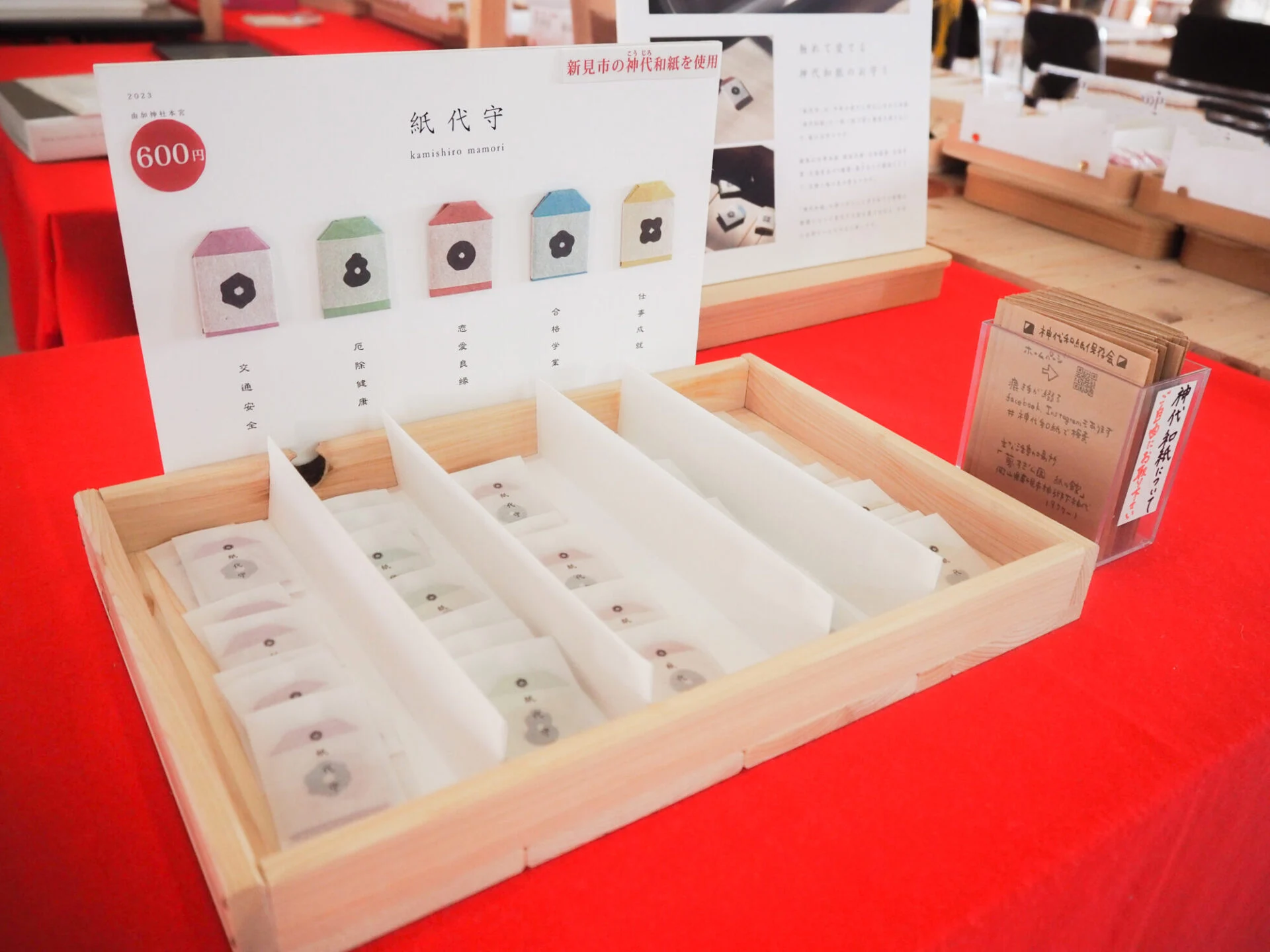
In 2025, a new amulet called Sanada Himo Amulet will be distributed at Yuga Shrine Honmiya. This amulet is made using Sanada himo, a traditional craft of the region, and is packed with care and attention.
It will be introduced alongside the Kyusei Omikuji, which started distribution in 2023.
What are the new amulets and omikuji at Yuga Shrine Honmiya?
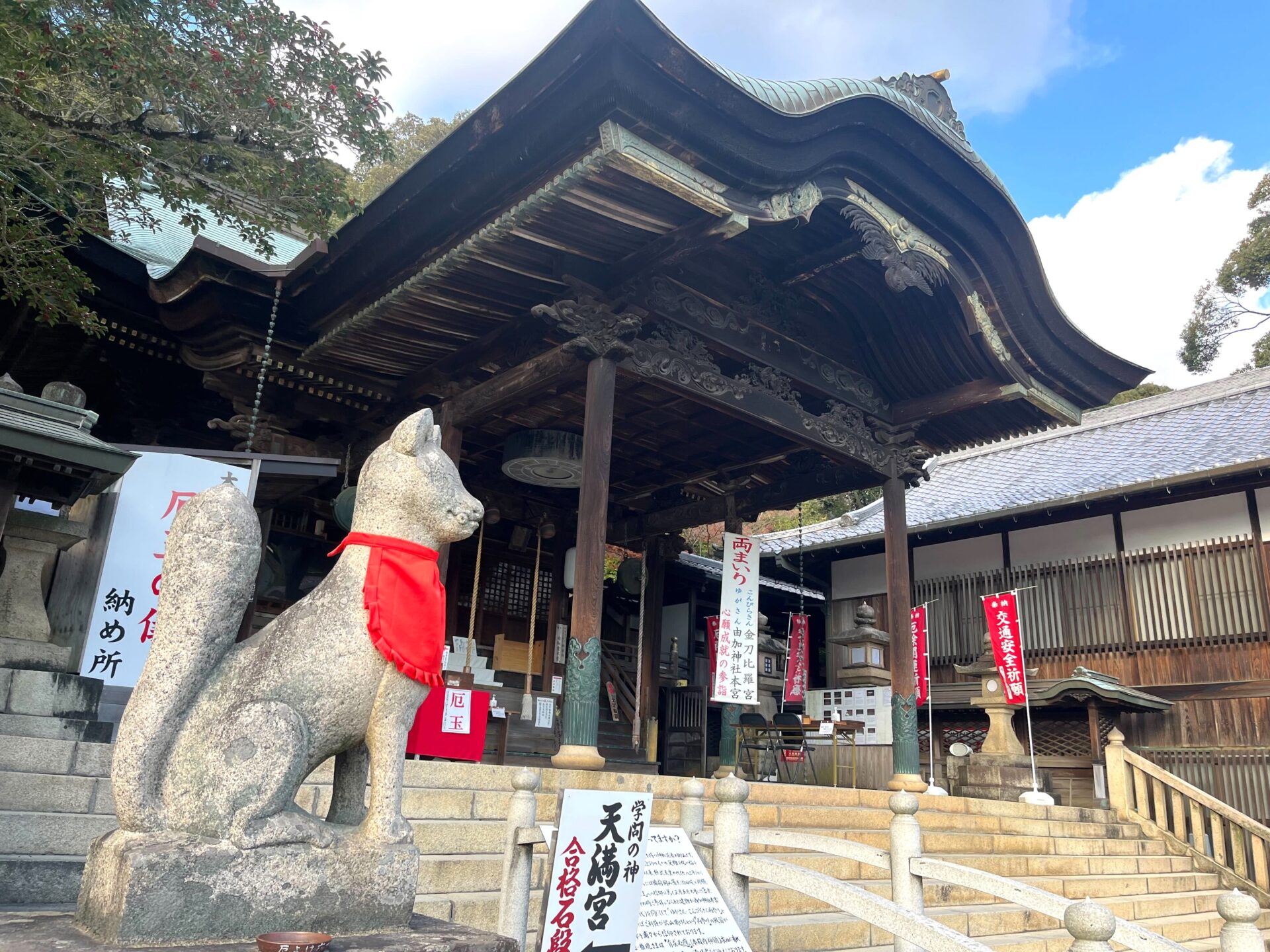
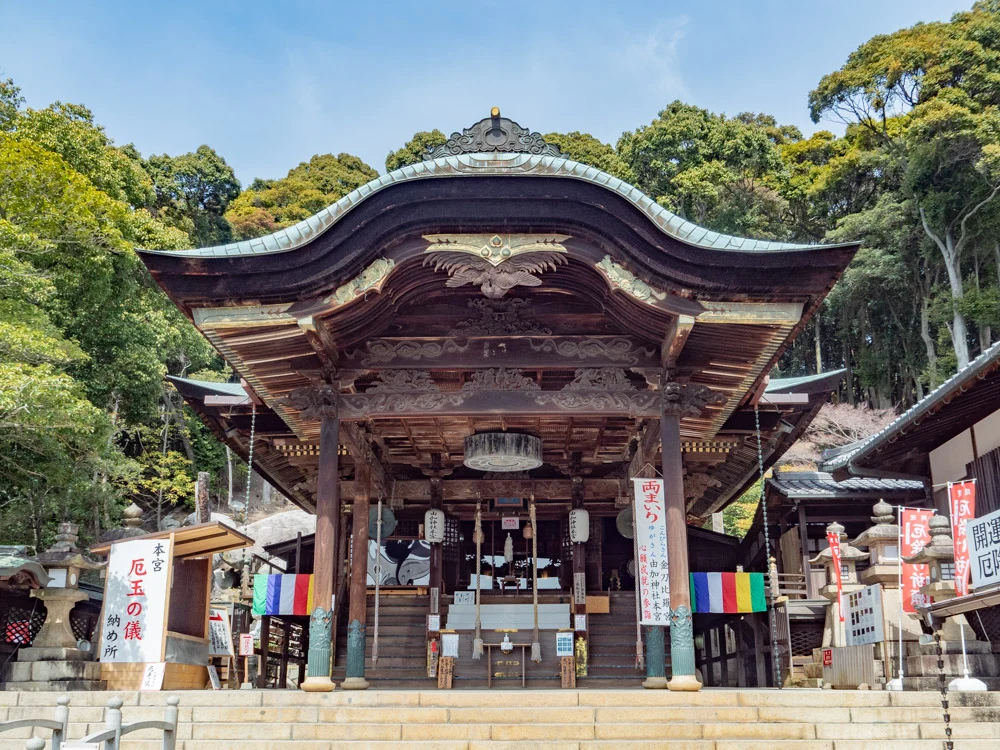
Yuga Shrine Honmiya is a shrine located on Mt. Yuga in the Kojima area.
Known as the head temple for warding off evil, over 350,000 worshippers visit during the New Year.
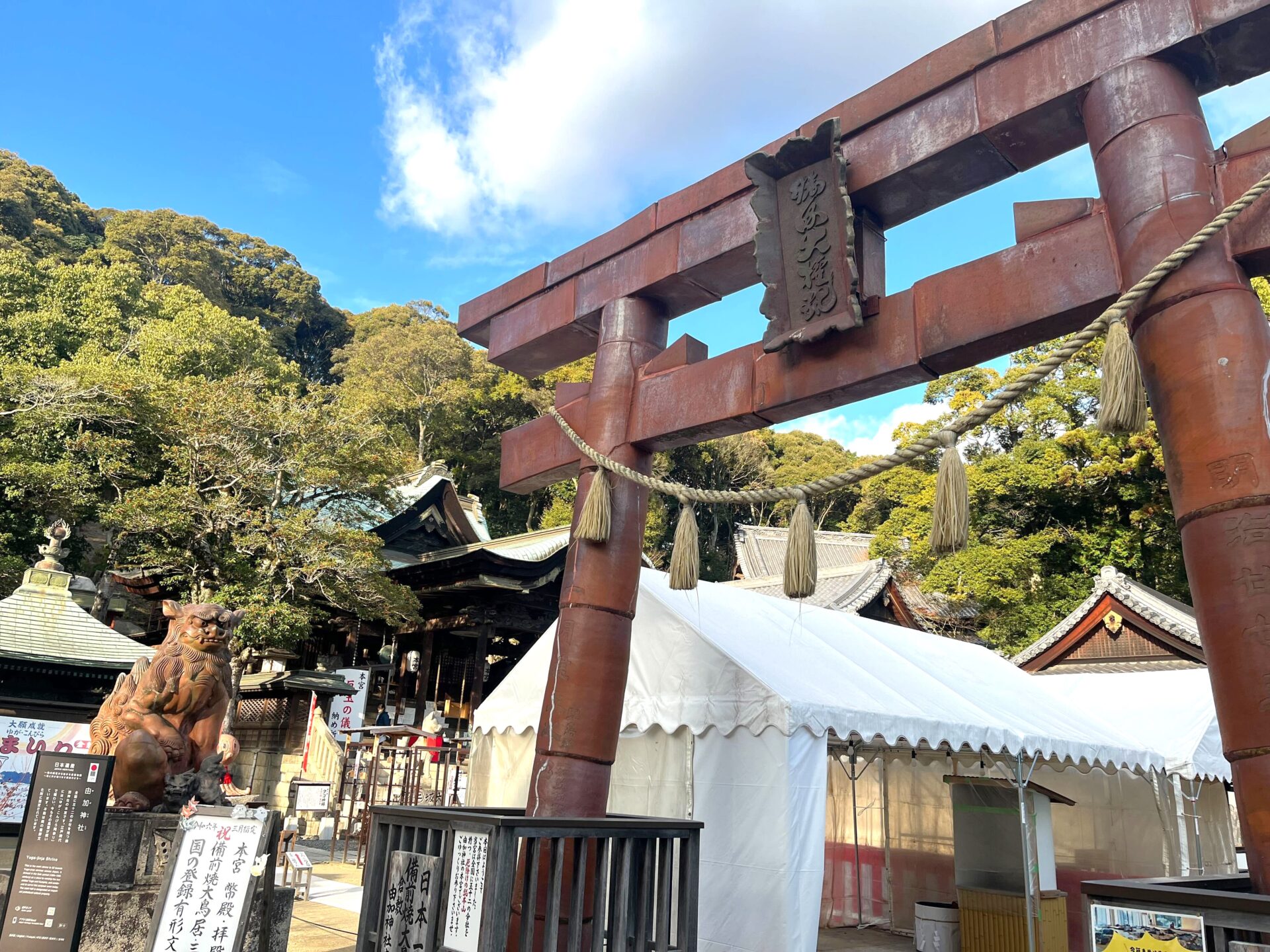
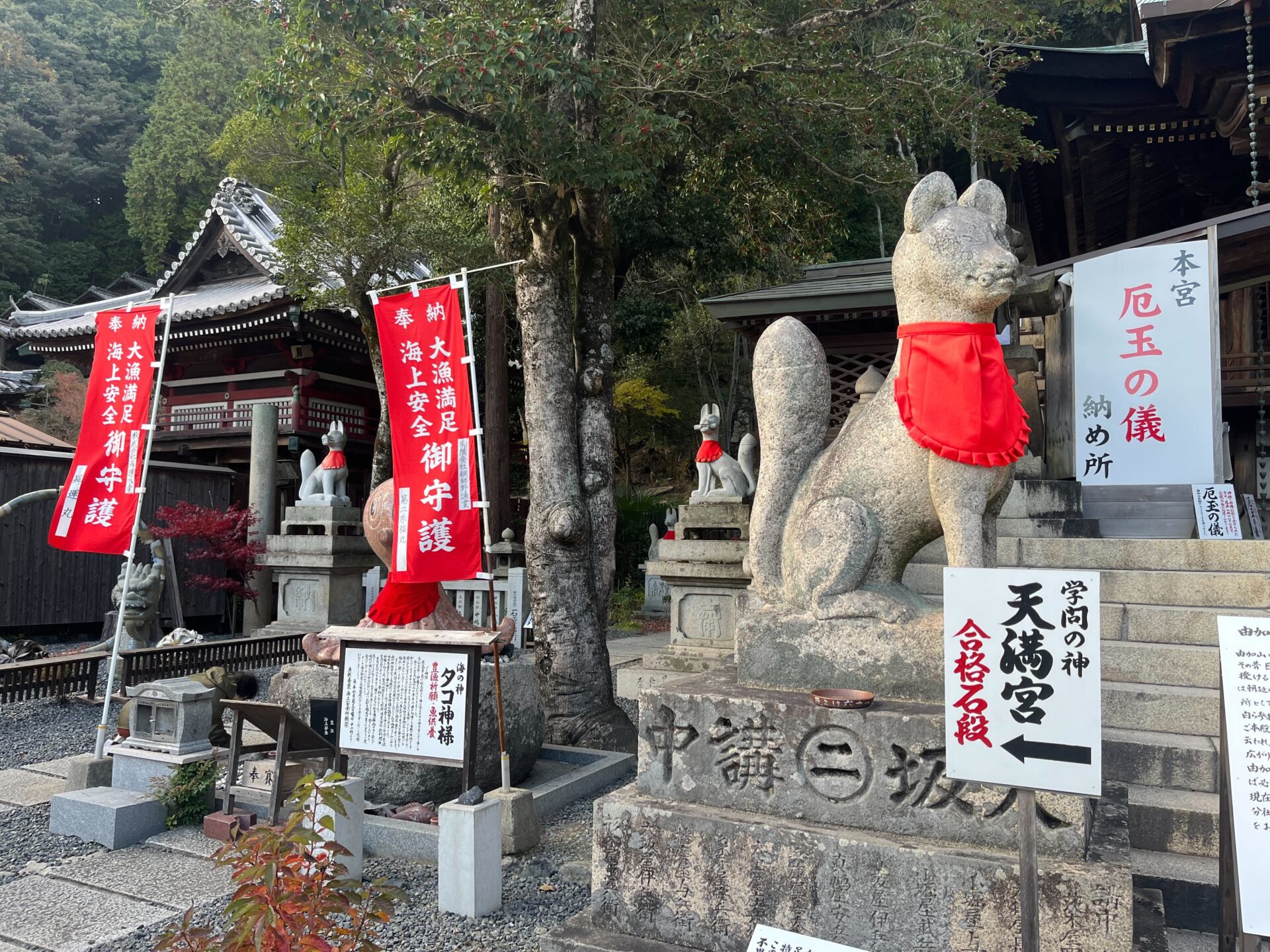
The shrine features many attractions, including a torii gate made of Bizen pottery, the "Yaku-dama Ceremony" where ceramic balls filled with evil are thrown and broken, and the "Octopus God" unique to the region known for its octopus production.
Another major attraction of Yuga Shrine Honmiya is its collaboration with local businesses to distribute amulets and goshuincho (temple stamp books).
"Sanada Himo Amulet" created in collaboration with Sakamoto Textile
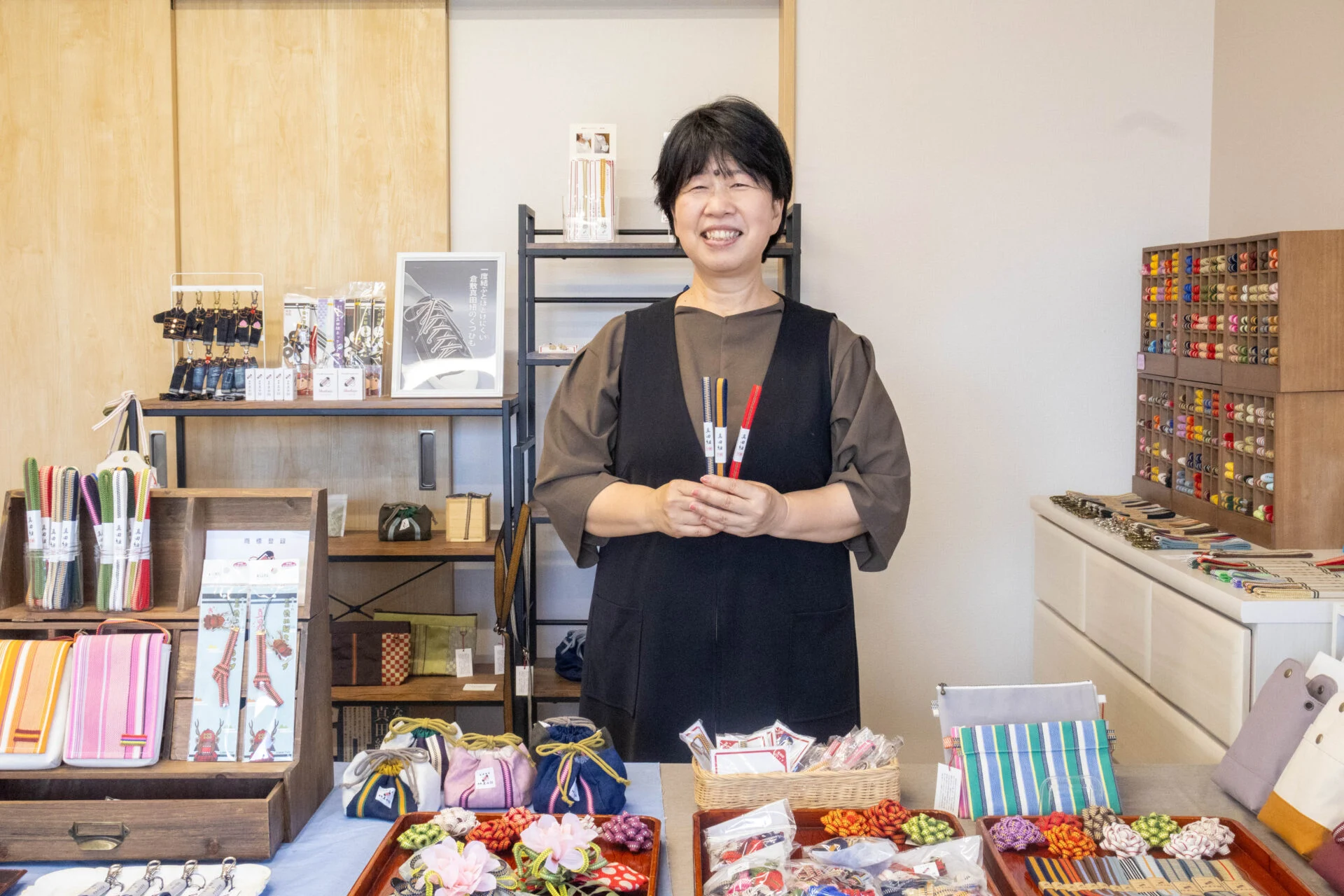
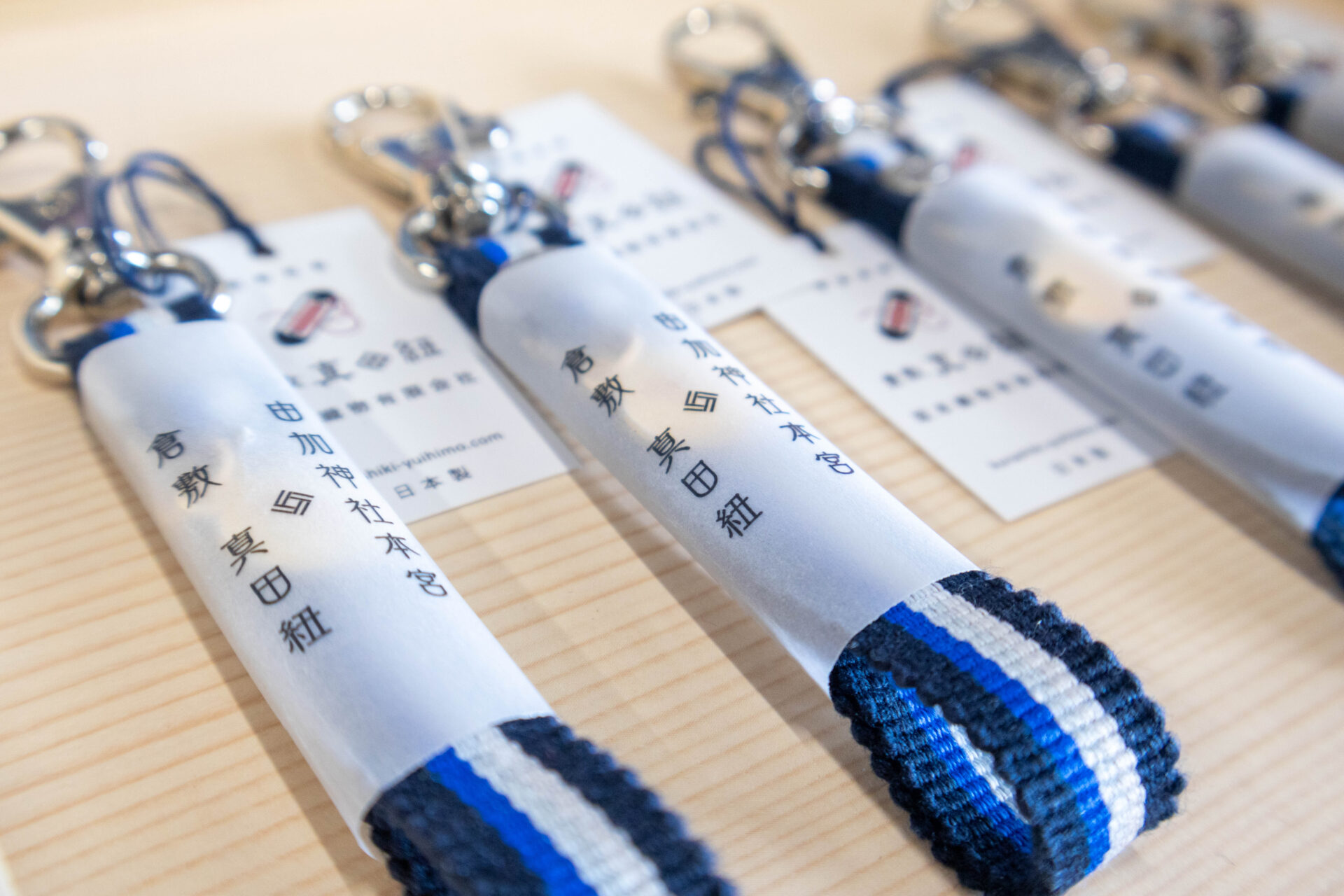
The Sanada Himo Amulet, which will be newly distributed from 2025, is an amulet created in collaboration with Sakamoto Textile Co., Ltd., which manufactures Sanada himo in Kojima.
In Kojima, where cotton cultivation was thriving, various textile products and fabrics have been made since ancient times, flourishing as a "town of textiles." Sanada himo is one of the representative textiles of Kojima, named after the warlord Sanada Yukimura, who wrapped it around the hilt of his sword during the Warring States period. It is said to be the thinnest textile in the world.
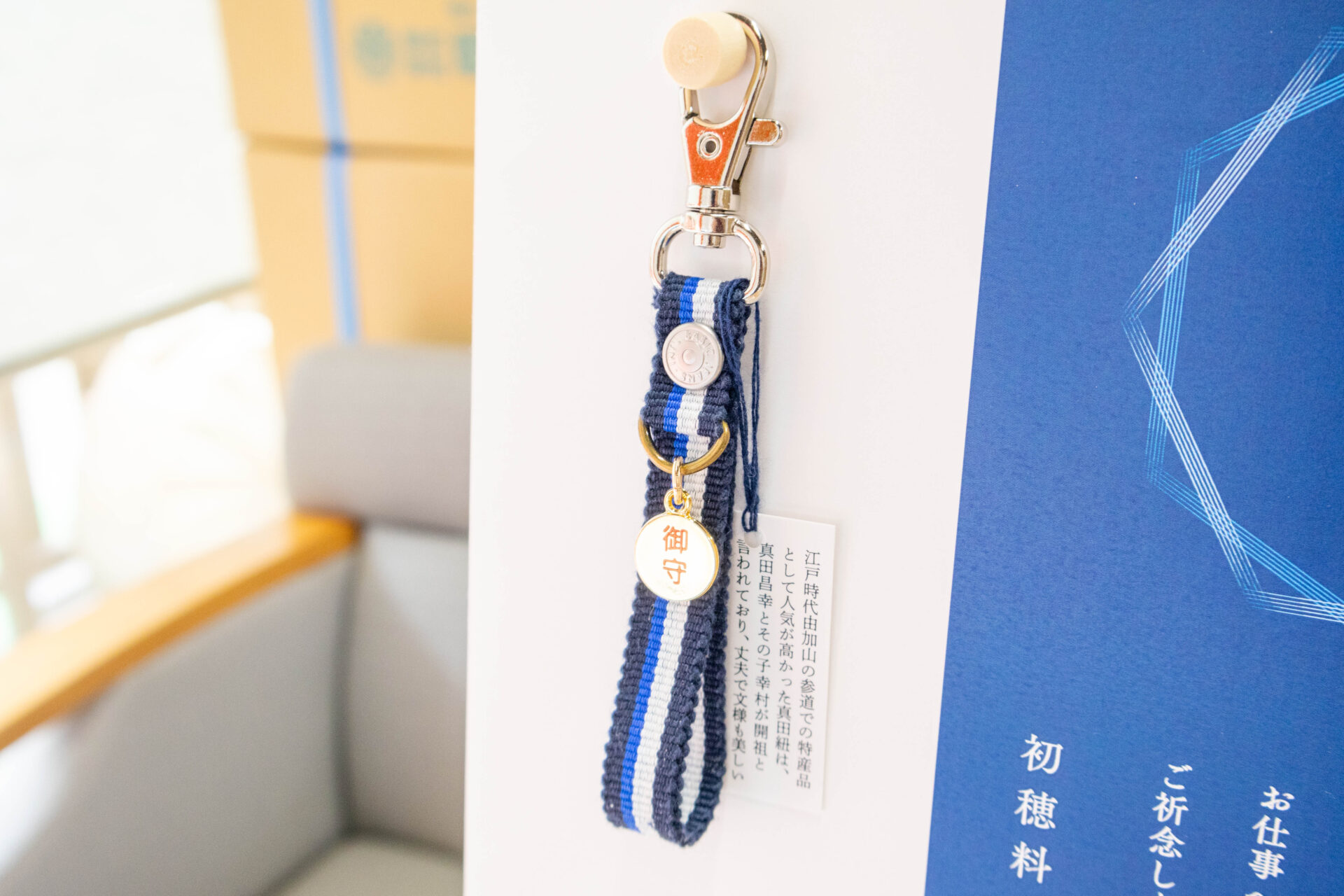
Sanada himo, made from cotton and silk, is very durable and resistant to stretching, and was historically used for sword tassels and armor.
The wishes behind the Sanada Himo Amulet are work and traffic safety. The blue thread used evokes the Seto Inland Sea and Kojima's denim, and the design is easy for both men and women to pick up.
The initial offering fee is 1,000 yen.
"Kyusei Omikuji" using a familiar calendar
The Kyusei Omikuji is an omikuji based on Kyusei astrology, which started distribution in 2023.
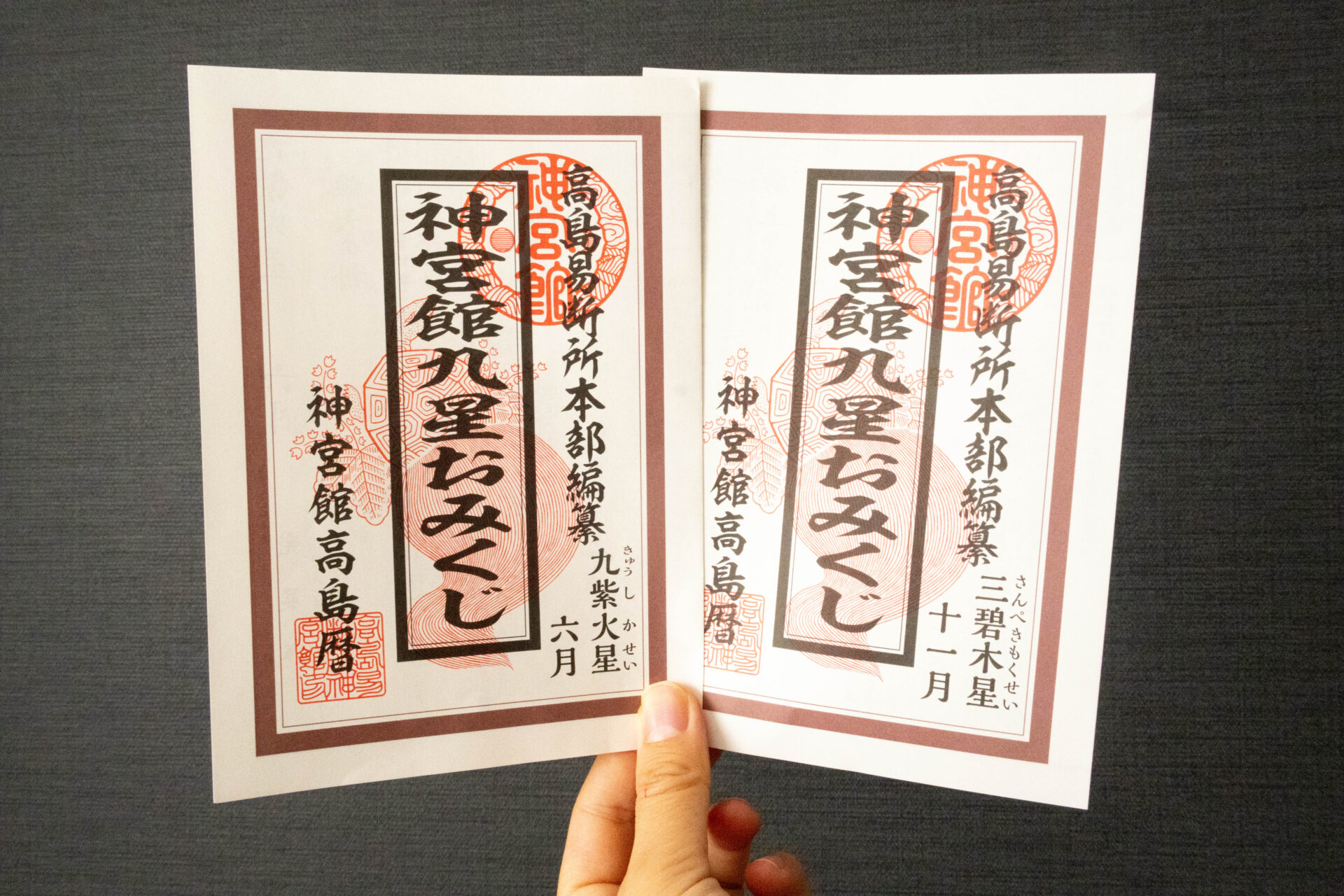
Kyusei astrology is a type of fortune-telling based on ancient Chinese star astrology. Based on your birth date, you are assigned to one of the 9 types of stars, which reveals your personality, fortune, compatibility, auspicious and inauspicious directions, and house layout.
- Ichihaku Suisei (一白水星)
- Jikoku Dosei (二黒土星)
- Sanpeki Mokusei (三碧木星)
- Shiroku Mokusei (四緑木星)
- Goou Dosei (五黄土星)
- Roppaku Kinsei (六白金星)
- Shichiseki Kinsei (七赤金星)
- Happaku Dosei (八白土星)
- Kyushi Kasei (九紫火星)
"Ichihaku Suisei" and "Goou Dosei" may look like unique four-character idioms, but when you read each character, you can see that they are combinations of familiar kanji representing numbers, colors, and stars.
Kyusei astrology has been cherished in China as a form of folk belief for a long time. It is said to have spread to Japan's Onmyodo (a technique for fortune-telling using astronomy and calendars) and subsequently became popular among the public.
The Kyusei Omikuji explains fortunes and auspiciousness based on each star, as well as the characteristics of each star, lucky items, and advice, making it a rich source of information. It is a rare omikuji that not only reveals your fortune but also your own characteristics.
The Kyusei Omikuji reveals fortunes from the beginning of spring until the following year's Setsubun. The initial offering fee is 300 yen.
During the New Year period, if you tell the year and month of your birth at the amulet shop, you can receive an omikuji.
Interview with the person in charge
We spoke with the person in charge about the background of the Sanada Himo Amulet and Kyusei Omikuji.
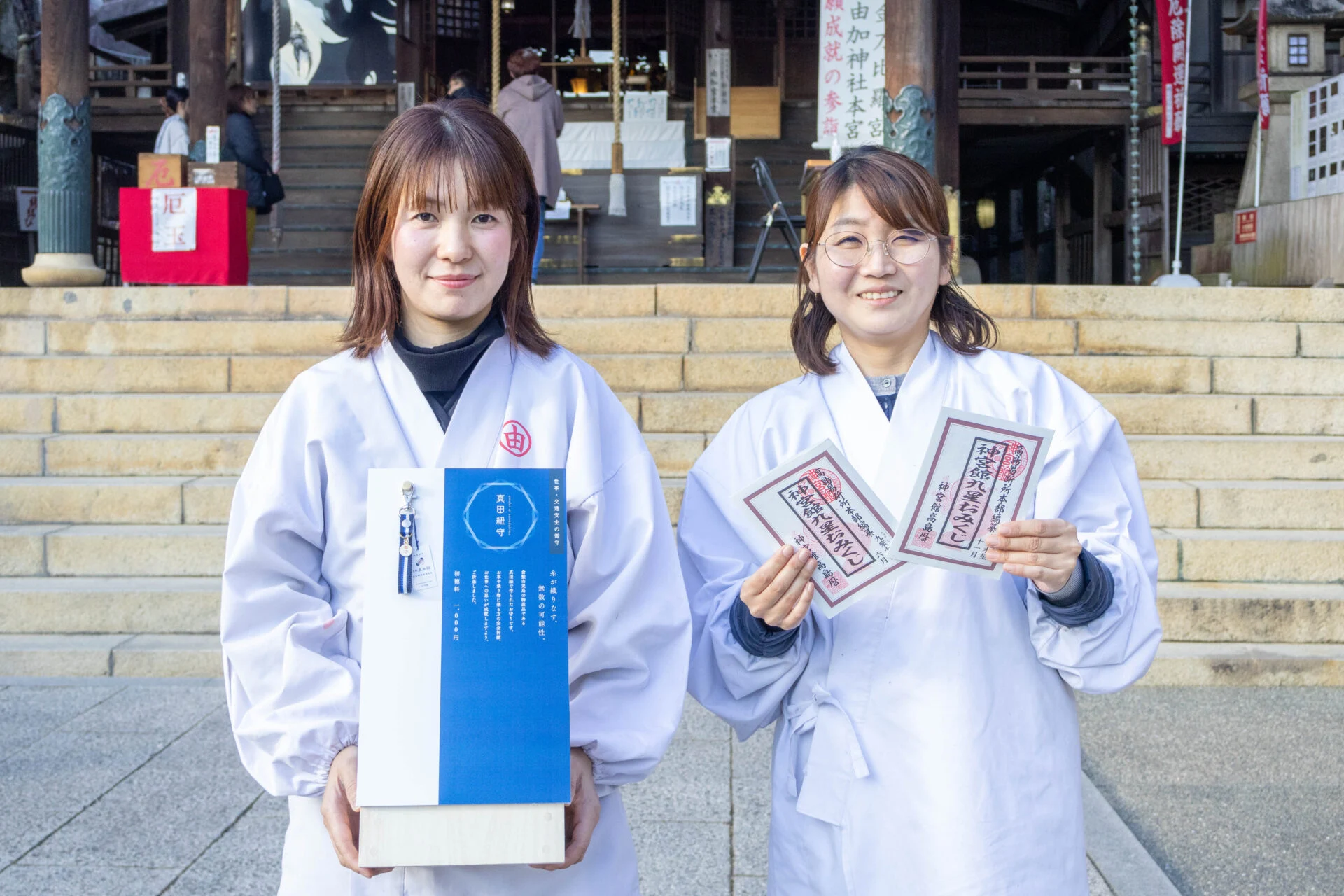
About the Sanada Himo Amulet
Please tell us about the background of its creation and the opportunity for collaboration with Sakamoto Textile.
The amulets previously offered at Yuga Shrine were mostly cute and popular mainly among women.
Thinking, "I want to create an amulet that is easy for men to carry," I reached out to Sakamoto Textile, with whom I had a connection, to start the production.
The reason for reaching out to Sakamoto Textile is that they have a long-standing relationship with Yuga Shrine and are easy to consult with. I am grateful for their flexibility in responding to our requests regarding colors and patterns.
In fact, Sakamoto Textile had previously suggested placing Sanada himo amulets. There is a monument honoring Sanada Yukimura, who transmitted Sanada himo, on Mt. Yuga, so I believe that connection played a role.
I have heard that Sanada himo was a catalyst for Kojima's prosperity as a "town of textiles." In the Edo period, Sanada himo was sold along the approach to Yuga Shrine, energizing the town, and the technology of Sanada himo developed, leading to the flourishing of the textile industry.
Are there any particular points you focused on?
When I consulted with Sakamoto Textile, they responded confidently, "We can weave various patterns," so I wanted to create an original pattern for Yuga Shrine.
The most time-consuming aspect was choosing the colors. I wanted to select colors that would appeal to both men and women, so I went through color samples, experimenting and deliberating for several months until I finally arrived at a beautiful blue.
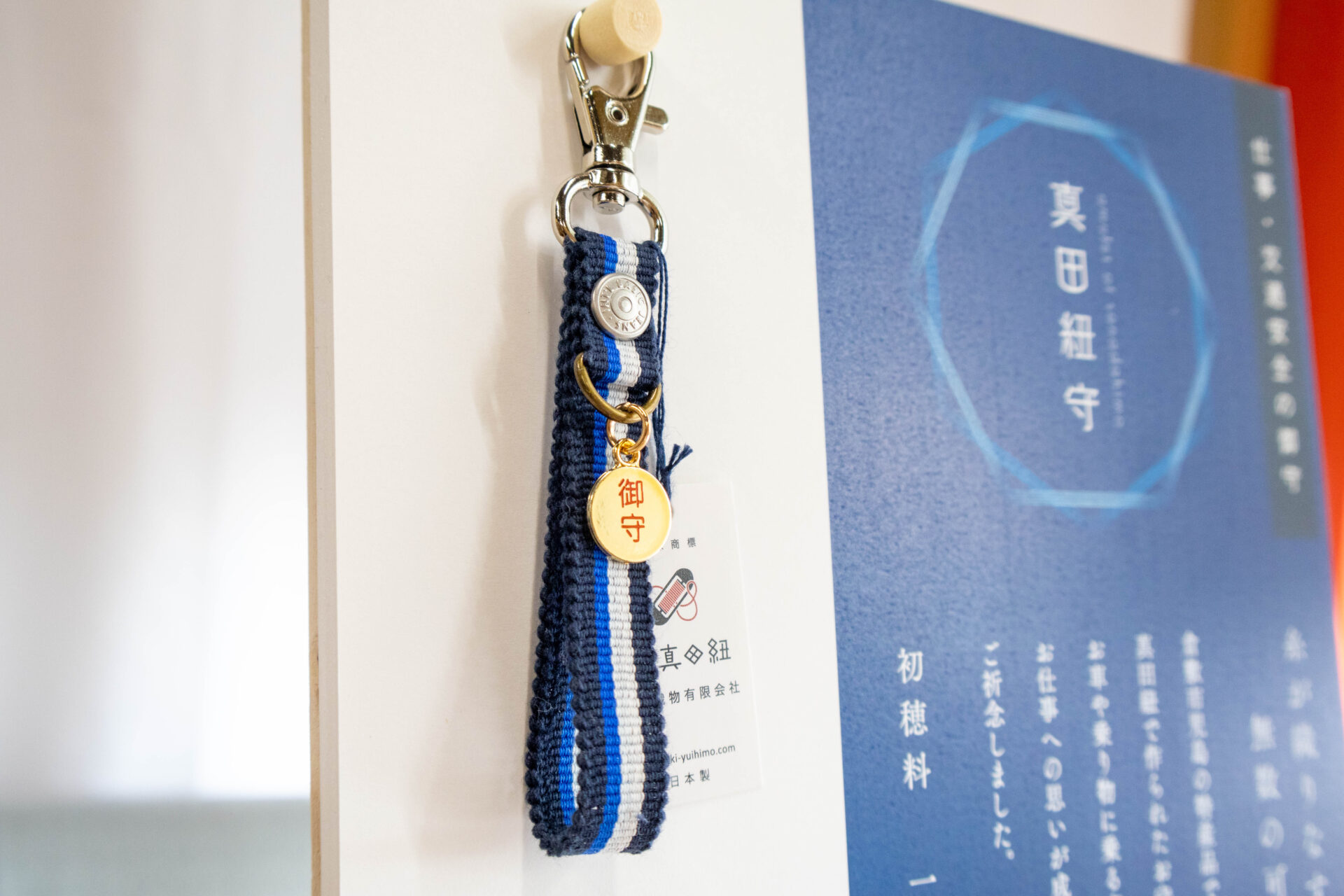
Additionally, I focused on the pattern, making it difficult to notice dirt.
I wanted the pattern to be related to the shrine, so I initially thought, "How about a gradient starting from white, as the color of the shrine's hakama changes from white to darker colors based on rank?"
Then, Sakamoto Textile advised, "If the end color is white, it may show dirt easily," so I placed darker colors at both ends to minimize dirt visibility. Furthermore, to ensure that the five colors of thread create a beautiful gradient, we adjusted the thickness and other aspects together, completing the original pattern for Yuga Shrine.
Since it is strap-like, it is easy to attach to office or car keys, making it a convenient amulet to carry.
You have collaborated with local businesses before; what is your mindset when working on these projects?
Above all, I have a strong desire to preserve traditional crafts that have been passed down for generations.
At Yuga Shrine, we have collaborated with local specialties, including the Sanada Himo Amulet, Bizen pottery-made Bizen Amulet, and goshuincho using denim, tatami edging, and more.
I believe that by continuing to engage with traditional crafts, we can protect certain cultures, and I hope that such initiatives can lead to regional revitalization. I want to pass down the techniques and culture of traditional crafts that have been inherited for generations to future generations.
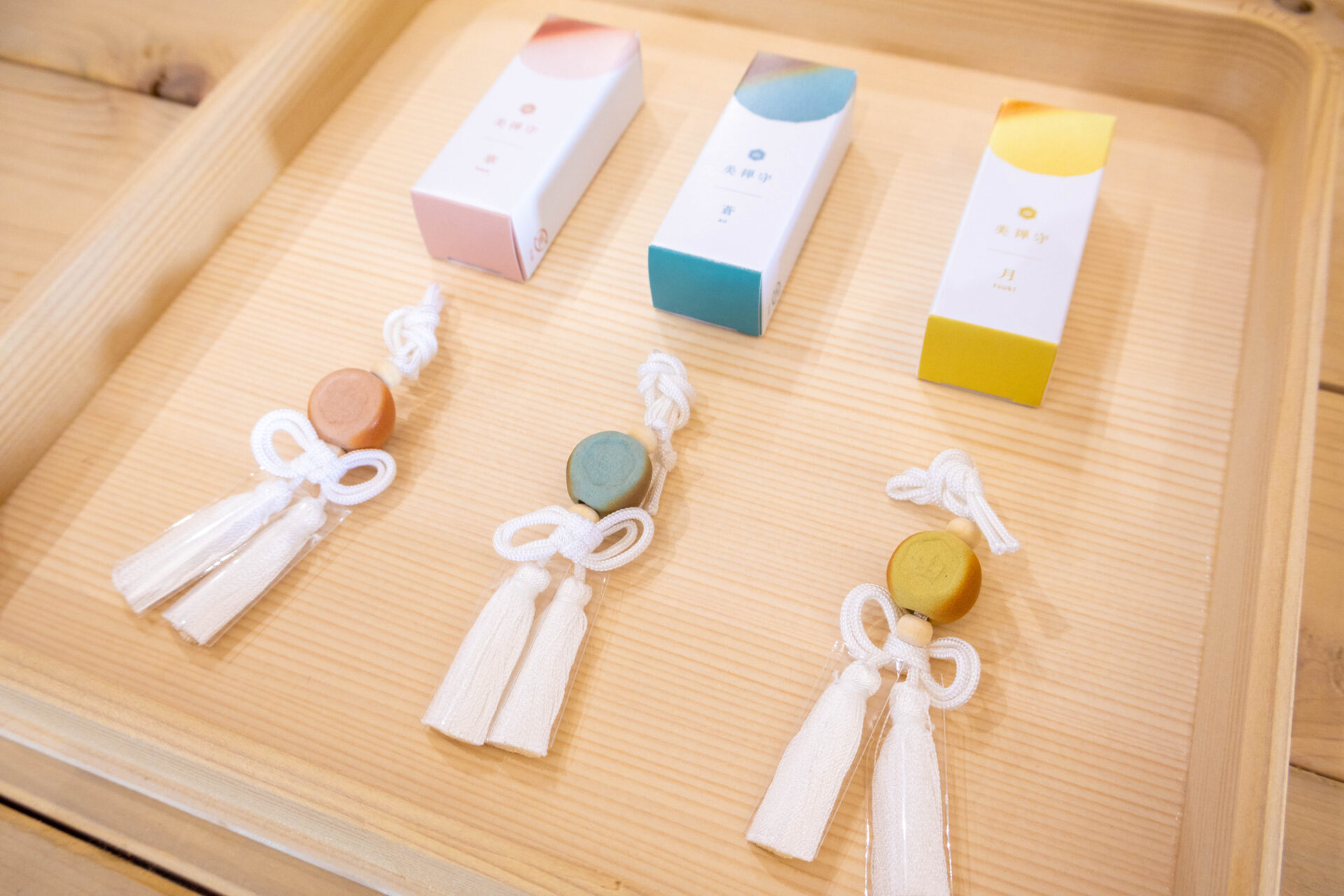
By the way, there are people who come all the way from Ibaraki to seek the Bizen Amulet. When I see someone react with "This is it!" I feel happy thinking, "Oh, they came all this way for this."
Since the shrine is located on a mountain, I think it is difficult to visit, but I am truly grateful for those who come from afar.
Who would you recommend the Sanada Himo Amulet to?
Since its wishes are for work and traffic safety, I recommend it to those who use vehicles in their daily lives, as well as those who wish for improvement and development in their work, and for good connections.
Many people struggle with workplace relationships, so I pray that their connections with others will also head in a good direction.
Kyusei Omikuji
Please tell us about the background of the Kyusei Omikuji.
The shrine receives various consultations. Many people come with concerns about wedding dates, house layouts, and other issues related to years and directions.
The range of consultations is broad, from significant matters like ground-breaking ceremonies and weddings to everyday concerns, so I wanted to create an omikuji that would be a familiar presence for everyone, which was the initial motivation.
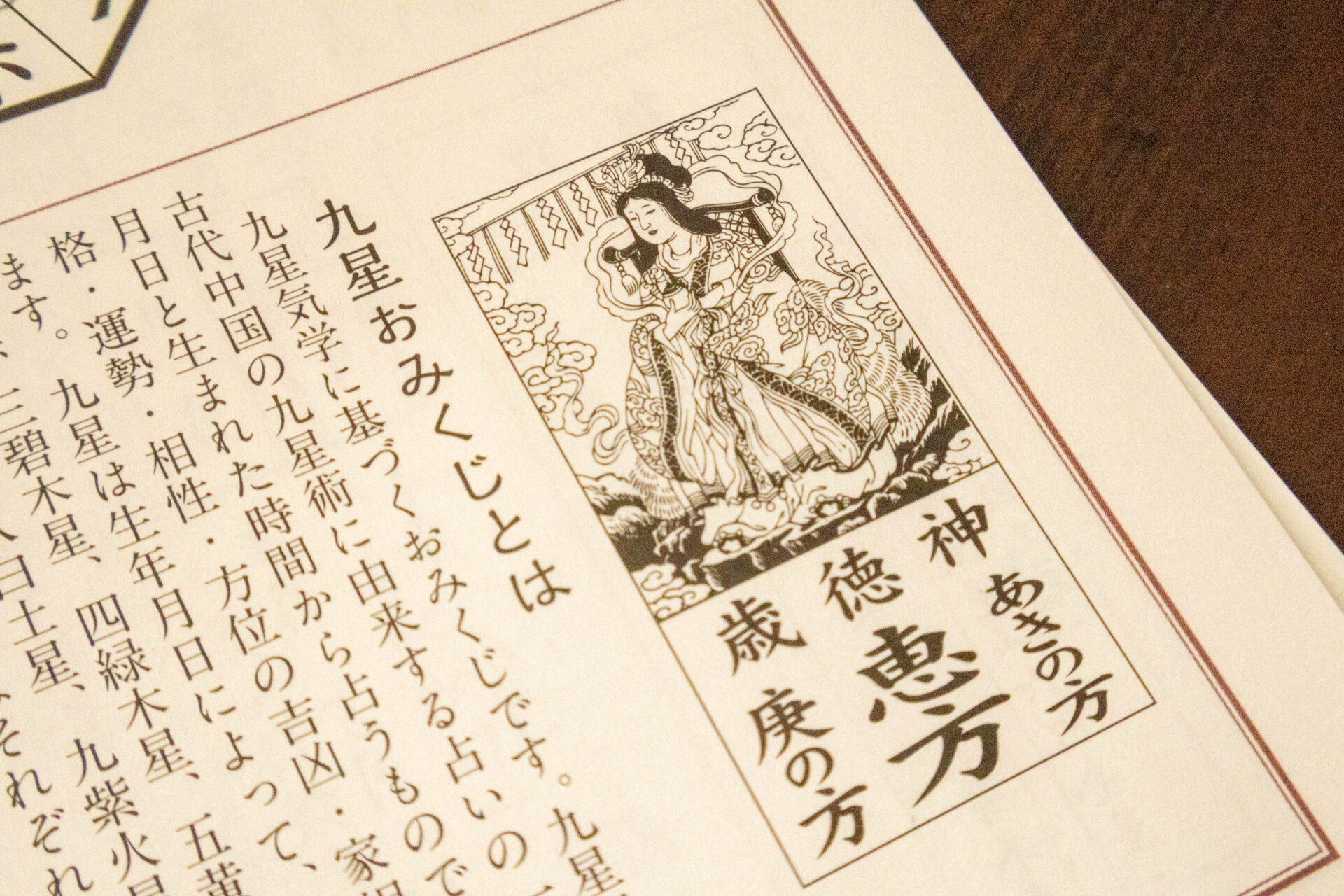
Therefore, we thought of using the calendar, which is an inseparable part of our lives, and created the Kyusei Omikuji under the supervision of Jinguukan Takashima Calendar, which is famous for calendars.
It includes not only the fortune for the year but also the characteristics and advice for each star, so I hope it serves as a reference when making decisions.
It's rare to have an omikuji that reveals a person's characteristics.
Indeed. It allows you to discover, "This is the kind of personality I have," which I think adds an interesting aspect.
The Kyusei Omikuji just started in 2023, and we are also in the stage of "What kind of information would be helpful?" It can be challenging to decide what to extract from the many things written in the calendar books.
Does the Kyusei omikuji have any unique features?
I think regular omikuji are strongly focused on testing luck, but in the case of Kyusei omikuji, it features content that can only be divined through the nine stars, such as advice and compatibility between stars.
Since there is a deep relationship between shrines and calendars, I believe that the content is written to be useful for everyone.
Since its distribution began in 2023, what has been the response and reaction?
The content is rich and substantial, covering characteristics, good and bad months, and compatibility with other stars, so many people are very pleased.
Various items are written, but because it does not use difficult words, we have received feedback that it is easy to read and understandable.
As long as you know the birth date, it can be provided, so there are people who request it for their family and friends.
It is an easy-to-read and interesting omikuji, so I would be happy if you could read it together and share the enjoyment.
Message to Readers
Finally, please give a message to the readers.
When you have any worries, I hope you can visit us and that we can help you feel a little more at ease or provide a change of pace.
All of our staff are looking forward to your visit to the shrine.
Conclusion
The author is a resident who moved from Kanagawa, but I have never seen protective charms or goshuincho (stamp books) made with traditional crafts at local shrines.
Through this interview, I learned about a new means of regional revitalization, which is "shrines preserving local traditions," and it was very educational. Placing collaboratively produced local specialties can also be a trigger for attracting tourists to the area, so I think it is a wonderful initiative.
It is said that the Kyusei omikuji is best drawn once a year. Since I used to draw omikuji every time I visited a shrine, I plan to draw it just once next year to determine my fortune.
The Sanada-himo protective charm and Kyusei omikuji, which can only be obtained at Yuga Shrine Honmiya. Why not pick them up as companions for the New Year?
Sanada-himo Protective Charm & Kyusei Omikuji Data
| Name | Sanada-himo Protective Charm & Kyusei Omikuji |
|---|---|
| Location | 2852 Yuka-yama, Kojima, Kurashiki City, Okayama Prefecture |
| Contact | 086-477-3001 |
| Parking | Available There are first and second parking lots |
| Deity | Teoki Hooi no Mikoto Hiko Sashiri no Mikoto Kamu Naohi no Mikoto Oonaohi no Mikoto Principal Buddha: Amida Nyorai, Yakushi Nyorai |
| Benefits | Protection from evil Disaster prevention Traffic safety Construction and civil engineering safety Family safety Improvement of skills Increase in financial luck Prosperity in business Marriage and love fulfillment Childbirth and prosperity of descendants Examination success and more |
| Goshuin (Initial fee) | Available (300 yen) |
| Visiting Hours | Visiting hours: Anytime |
| Reception Hours | 9:00 AM - 4:00 PM |
| Admission Fee | No admission fee |
| Website | Yuga Shrine Honmiya, the Head Shrine for Protection from Evil |