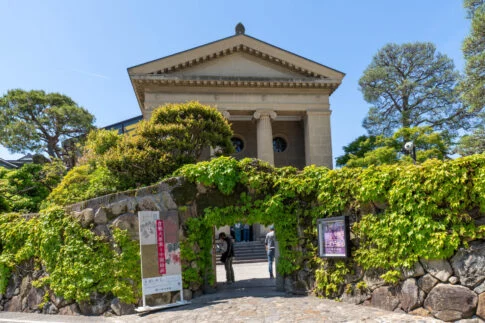
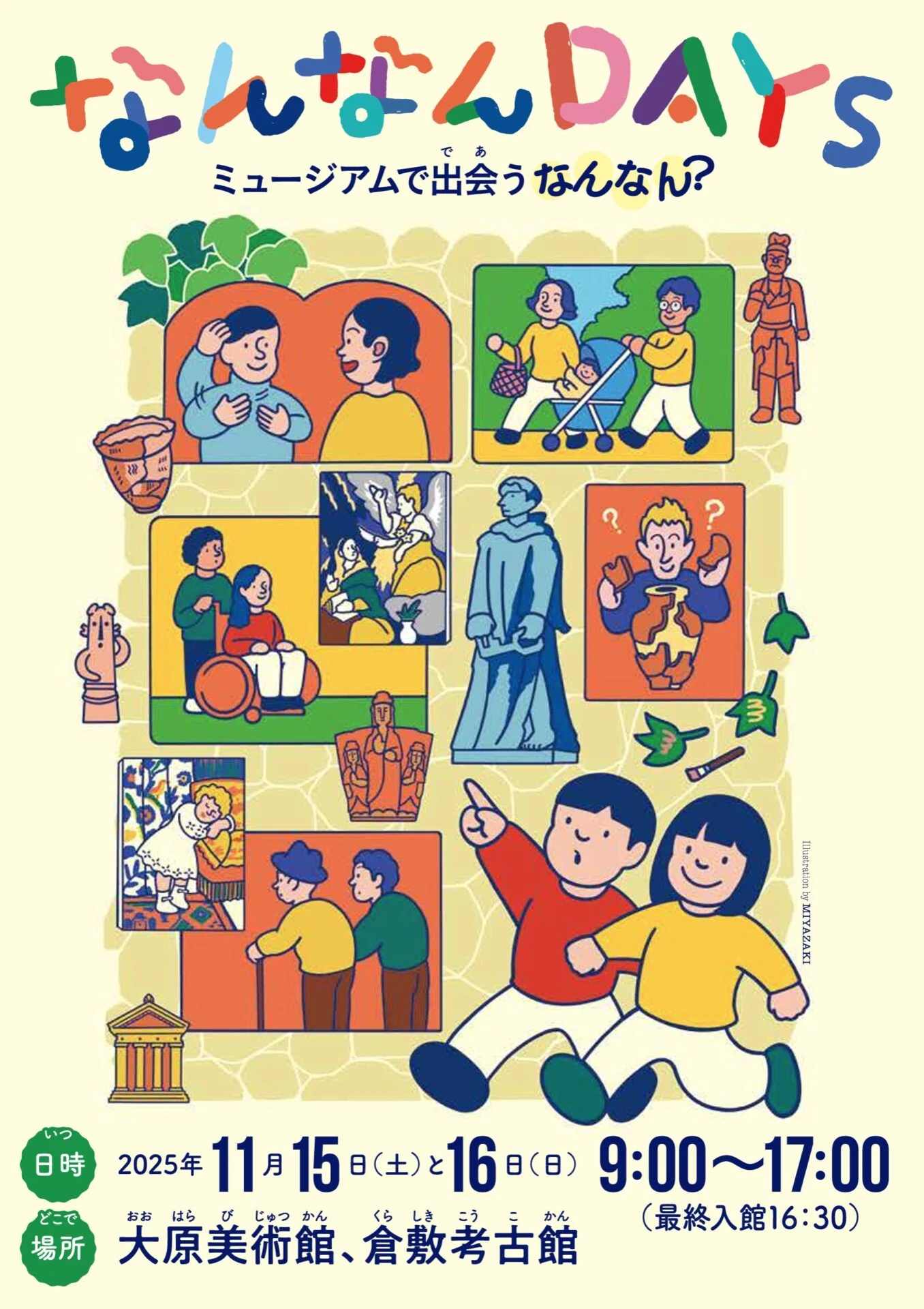
“Nannan DAYS,” held at the Ohara Museum of Art on November 15 and 16, 2025, is a new initiative aimed at making museums more accessible to everyone.
It was often introduced as the successor event to the “Children’s Art Museum,” which ran for about 20 years, and it is probably true that many participants had the same impression.
This article introduces the background and purpose of the event through a look at the “Nannan DAYS 2025 Roundtable,” held the week after “Nannan DAYS.”
The information presented was accurate when this article was published in January 2026. Please note that it may differ from current information.
What Is Nannan DAYS?

“Nannan DAYS” is a large-scale workshop event aimed at making museums more accessible to everyone, held at the Ohara Museum of Art on November 15 and 16, 2025.
From 2002 to 2019, the Ohara Museum of Art held an annual event every August called “Children’s Art Museum” (commonly known as “Chirumyu”). However, it was canceled as part of measures to prevent the spread of COVID-19 starting in 2020, and has remained suspended ever since.
Apparently, every year as summer approached, the museum received inquiries asking, “Will it be held this year?” “Nannan DAYS” was planned as an event that would draw on the history of “Children’s Art Museum” while restarting in a new form.
Specifically, whereas the previous event focused on children, the new event is designed to make it easier for a diverse range of people—including foreign residents, people with disabilities, and families raising children—to participate.
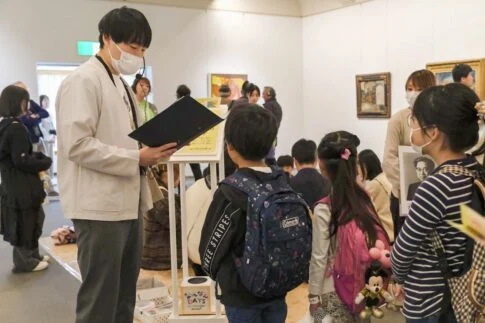
Nannan DAYS 2025 Roundtable

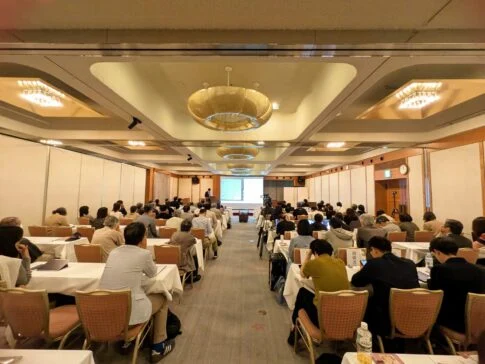
Then, on Monday, November 24 (a substitute holiday), the week after Nannan DAYS 2025 was held, a roundtable was held with the speakers and participants to share outcomes and challenges and exchange ideas for future activities.
Presentations by the Speakers
The speakers were as follows:
- Onimoto Kayoko (Fixed-Term Researcher, Education and Public Programs, Curatorial Department, National Museum of Art, Osaka)
- Yoshikawa Noriko (Chief Curator and Educator, Shiga Museum of Art)
- Shibakawa Hiroko (Assistant Professor, ESD Collaborative Promotion Center, Okayama University)
- Teramoto Shizuka (Education and Public Programs, Ohara Museum of Art Foundation)
Teramoto Shizuka

Teramoto Shizuka, the lead person in charge of the new “Nannan DAYS” event, reported on the background to its launch.
Bring back Chirumyu!
But… bring it back in a new form
With this policy in mind, Teramoto said she wanted the museum to be a place that people of all kinds would find easy to visit when they wanted to go to a museum, and where they could take home a positive experience after their visit.
To that end, this time they focused on improving museum accessibility and undertook the following initiatives:
- Reaching out to groups who had not previously received much information (foreign residents of Okayama Prefecture, welfare facilities and organizations, childcare support facilities, and children in northern Okayama Prefecture)
- Publishing detailed accessibility information (restrooms, steps, etc.) on a dedicated website
- Making visits more comfortable (introducing writing boards, a calm-down space, childcare services, and more)

Calm-down space
A place where people who are sensitive to stimuli such as light and sound can rest and settle themselves when they become tired or feel they may be heading toward a panic attack.
She also explained the concepts behind the event’s three pillars—explore, create, and add color—and introduced specific examples, including multilingual support, a “Plain Japanese Tour”, and workshops engaging the five senses.
Onimoto Kayoko

Onimoto Kayoko once worked at the Ohara Museum of Art and now oversees education and public programs at the National Museum of Art, Osaka, in Osaka City.
As an example from the National Museum of Art, Osaka, she introduced “Little Children’s Art Tour,” a program for preschool children. The program also includes a session called “Komekko,” primarily for preschool children whose first language is sign language.
She also spoke about “See +,” an art program that uses senses other than sight.
Yoshikawa Noriko

Yoshikawa Noriko, a curator at the Shiga Museum of Art, introduced her museum’s efforts to become “a museum like a living room.”
As one example, she introduced the 2023 exhibition “An Exhibition with Many Ways of Seeing.”
The exhibition, made possible by exchanging ideas with families with young children and people with disabilities, was organized into eight sections. Since then, the museum has continued various initiatives, including workshops and dialogue-based viewing.
Shibakawa Hiroko

Shibakawa Hiroko of the ESD Collaborative Promotion Center, Graduate School of Education, Okayama University, shared her recommendations from the perspectives of both a social education researcher and a mother.
At Tsunagi Art Museum in Tsunagi Town, Ashikita District, Kumamoto Prefecture, she was inspired by the idea that “an art museum is a small window open to society” and has been working in the hope that schools, too, can become like that.
Symposium

The final hour took the form of a symposium, during which the four speakers and participants exchanged views on topics including the following:
- The effectiveness of the “Plain Japanese Tour” and challenges in defining its target audience
- Why and how staff at the Kurashiki Archaeological Museum gave prompts during the “Doki Doki Pottery Puzzle” that engaged participants’ senses rather than simply pointing them toward the visually correct answer
- The popularity of mini-panels addressing questions about museums, and approaches to captions
- How to accommodate both quiet viewing and viewing with dialogue (zoning)
Overall, although there were challenges, the discussion was mainly appreciative of the fact that a new initiative had been put into practice, and the exchange took place in a friendly atmosphere.
From the Writer

It was only fairly recently that I learned that the Ohara Museum of Art had been broadening its activities beyond its work as an “art museum,” including initiatives such as “Children’s Art Museum.”
In recent years, with keywords such as the SDGs, it has become “normal” for companies and organizations to engage in social contribution activities. I was surprised to learn that the Ohara Museum of Art had been undertaking various initiatives even before this became the norm.
As someone who had been eagerly awaiting its return, I was glad not only that it had resumed as a new initiative, but also to learn that it was intended to continue.
As was discussed at the roundtable, there was indeed a “gap” between the organizers’ intentions and the actual participants in some of the initiatives.
However, these are insights that could only have been gained by putting the initiatives into practice, and I hope they will continue, with lessons applied next time.
Articles about the Ohara Museum of Art

Nannan DAYS 2025: What’s Nannan? Discover It at the Museum — Roundtable Event Information
| Name | Nannan DAYS 2025: What’s Nannan? Discover It at the Museum — Roundtable |
|---|---|
| Date | Monday, November 24, 2025 (substitute holiday) 1:00–4:00 p.m. |
| Location | Ohara Museum of Art, Kojima Torajiro Memorial Gallery |
| Admission (tax included) | Free |
| Website | Nannan DAYS 2025: What’s Nannan? Discover It at the Museum — Special Website |



What would you like to know about Kurashiki?
Enter a search term to find articles on this site