
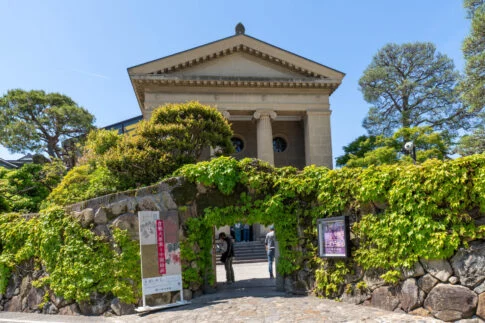
The “Children’s Art Museum,” commonly known as “Chilmyu,” is the Ohara Museum of Art’s annual summer art festival, held every August.
A variety of thoughtfully designed programs are offered to help children feel at home with art.
It’s an art event that everyone, young and old, can enjoy—not just children.
I joined Chilmyu with “Okayama Song Girl Suzu-chan,” a third-grade elementary school student visiting an art museum for the first time.
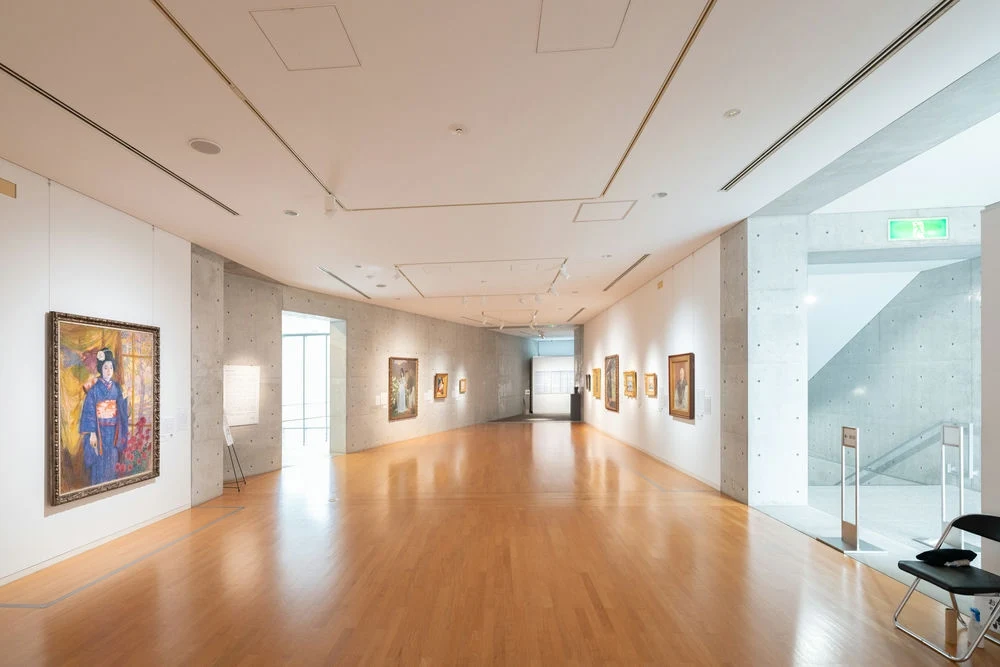
Photography is normally prohibited inside the Ohara Museum of Art. We were granted special permission to take photographs this time.
The information presented here is current as of when this article was published in September 2019. Please note that it may differ from current information.
About the Children’s Art Museum (Chilmyu)
What is the Children’s Art Museum (Chilmyu)?

The “Children’s Art Museum” is a summer art festival held by the Ohara Museum of Art. It is commonly shortened to “Chilmyu.”
It has been held every August since 2002, and 2019 marked its 18th edition.
It’s a fun-filled event with plenty of activities that make it easy to get acquainted with the world of art!
This major event involves not only staff from the Ohara Museum of Art, but also many museum studies trainees, volunteers, and volunteer high school and university students.
With so many people involved and taking part, visitors can engage with art more actively, and the museum becomes a creative, experimental space.
In 2019, it was held on Saturday, August 24, and Sunday, August 25.

In 2019, the following facilities also provided special cooperation.
The Bikan Historical Area was bustling with activity.
Admission fees for the Children’s Art Museum (Chilmyu)
| Category | Fee (tax included) |
|---|---|
| Elementary and junior high school students from Kurashiki City | Free |
| Elementary and junior high school students | ¥250 |
| High school students | ¥500 |
| University students | ¥800 |
| Adults | ¥1,300 |
Elementary and junior high school students can enter the museum for half the usual price, just ¥250. On the day of the event, elementary and junior high school students from Kurashiki City can enter free of charge by bringing the “Iki Iki Passport” distributed at school!
Chilmyu participants receive a wristband.
Showing the wristband allows re-entry to the Main Building, Annex, and Crafts and Oriental Art Gallery on the day of the event.

Chilmyu 2019 programs

The following programs were held in 2019.
| Program | Location | Participation fee (tax included) |
|---|---|---|
| My Ohara Collection | Main Building Atrium | ¥300 |
| I Be Museum | Main Building Atrium | Free |
| Museum Door Explorers | Second floor, Main Building Atrium | Free |
| Interactive artwork appreciation tour | Room 1, Main Building | Free |
| Find-the-picture game in 5-7-5 syllables | Room 2, Main Building | Free |
| Magic of Light: Shining Eggs | Room 6, Main Building | Free |
| Gather round! Everyone’s lucky colors | Room 7, Main Building | Free |
| Let’s all paint Monet’s Water Lilies! | Courtyard of the Crafts and Oriental Art Gallery | Free |
| SUKI♡SUMI! | Courtyard of the Crafts and Oriental Art Gallery | ¥200 |
| Oriental Gallery coloring pages | Oriental Gallery exit | Free |
| Feel the Museum with Your Body♥ | Oriental Gallery exit | ¥200 |
| Dance workshop Let’s play with outdoor sculptures! | Lawn in front of the Annex | Free |
| Story-making | Room 1, Annex | Free |
| Art with fans | Room 3, Annex | ¥100 |
| Ohara Museum of Art SNS Popularity Poll 2019 | Main Building exit | Free |
| Open study session: “Chilmyu Observation Tour” | In front of the Main Building | Free |
| Museum Pilgrimage | In front of the Main Building | Free |
| Making a bronze mirror | Kurashiki Archaeological Museum | ¥1,000 |
| Doki-Doki Pottery Stamp Bag | Kurashiki Archaeological Museum | ¥200 |
Let’s go to the Ohara Museum of Art!

We arrived at the Ohara Museum of Art as soon as it opened on the first day.
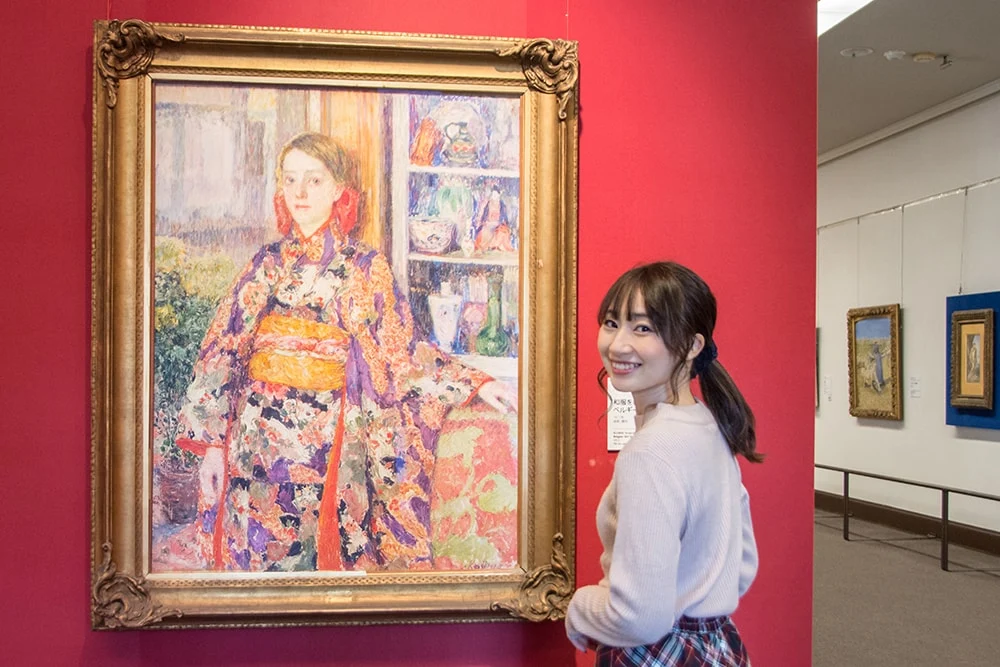
Suzu-chan was fascinated by the artworks inside, asking, “How do you read this title?” and “Why is it called ‘Hair’?”
We toured the venue while taking part in several programs. Here are the programs we joined.
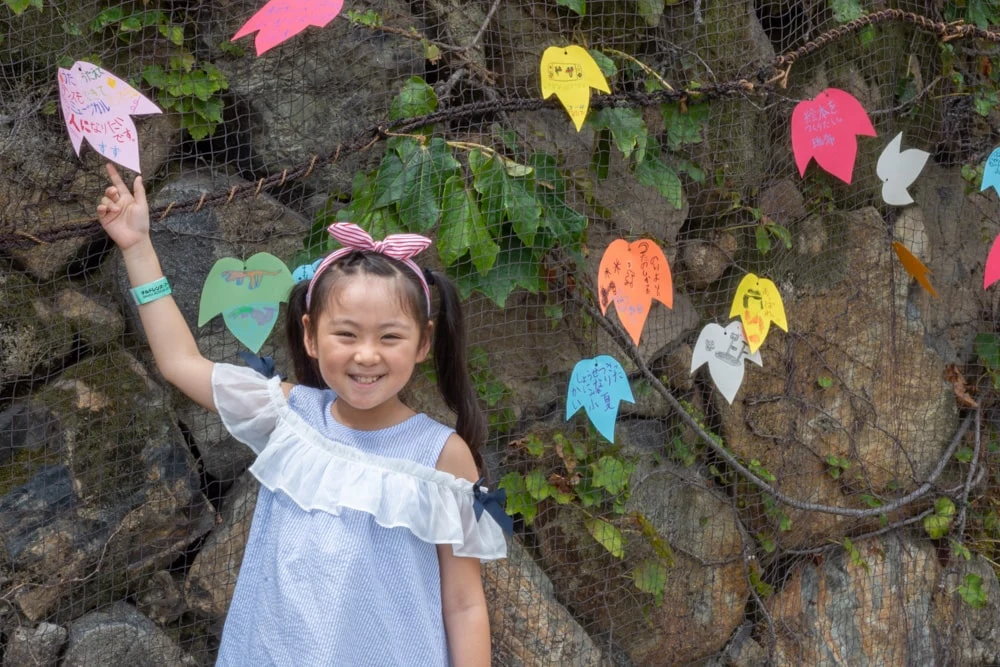
I Be Museum

Visitors write things such as their future dreams on colored paper, then decorate the ivy covering the stone wall of the Ohara Museum of Art with them.
The museum’s colorful outer wall caught the attention of passersby.

Interactive artwork appreciation tour

The staff and children appreciate artworks at the Ohara Museum of Art through conversation.

For example, Aristide Maillol’s sculpture “Torso of Île-de-France.”
- What does it look like?
- Why did you think it was a woman?
- What shape is it?
- Do you think she is young?
- What shape are her legs?
- What pose do you think her hands are in?
- Which way is her face turned?
- What expression do you think she has?
- What do you think she is doing?
- Try striking a pose that you think might fit
- How did it make you feel?
In response to questions like these, the children share what they felt and thought.
“Maybe her hands are a little behind her.”
“I think she has a neutral expression.”
“Maybe she’s about to run.”
Talking about the artwork helped us look at it more deeply than simply viewing it. It’s interesting to compare how other people felt about it.
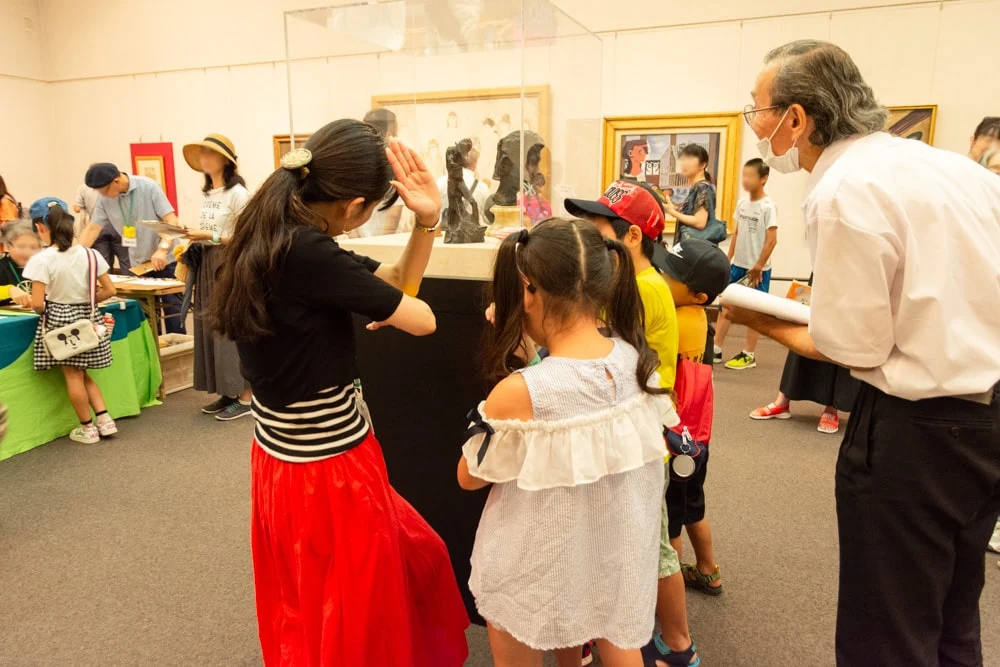
They’re striking the same pose as the sculpture and thinking about what kind of scene it depicts. Is she sad? Happy? Worried?
Find-the-picture game in 5-7-5 syllables

The handout has five senryu poems written about a particular artwork. The game is to find which artwork each poem describes.
We walk around the room, looking at the artworks and wondering what they depict.
After checking the answers, each person chooses one favorite artwork and comes up with their own 5-7-5 poem.

Suzu-chan chose Picasso’s “Still Life with Skull” as her favorite work and quickly came up with a haiku! She seemed to enjoy it, so she chose another work and composed one more.

After that, she looked at other works, gazed at what was depicted, and spontaneously composed more poems in the 5-7-5 syllable pattern.
Gather Round! Everyone’s Lucky Colors

Everyone draws an omikuji fortune slip, then uses a sticker in the lucky color revealed to create a work together.

It was still early in the event when these photos were taken. What will the finished work look like when the Children’s Art Museum event ends?
Take a Break in Shinkei-en Garden

Greenery flourished in Shinkei-en Garden, located on the grounds of the Ohara Museum of Art.
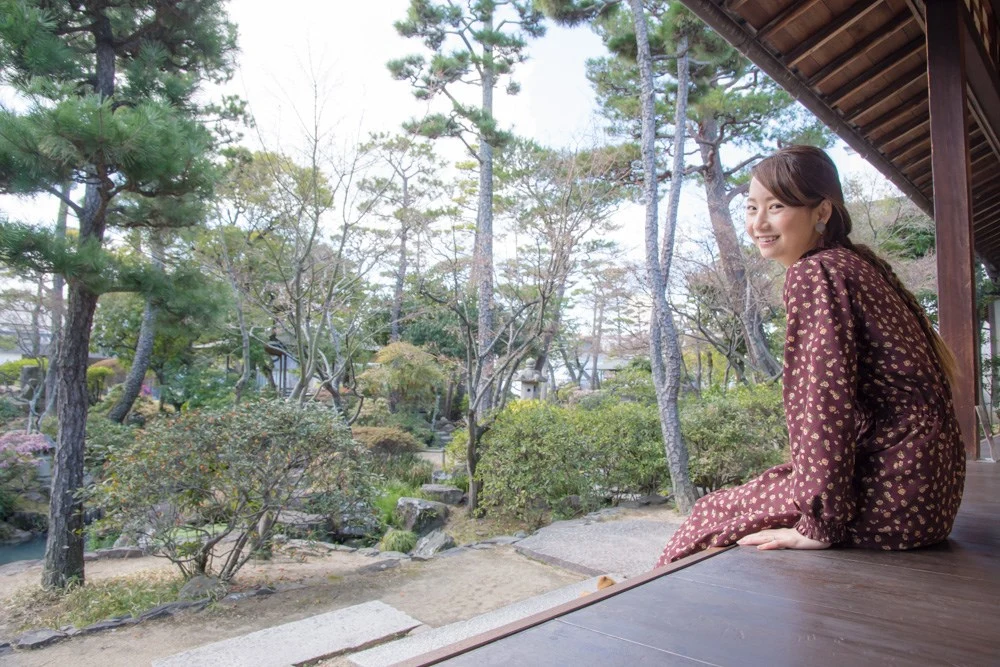
There are benches, too, making it a perfect place for a short break. We spent a while watching the carp.
Ohara Museum of Art Social Media Popularity Poll 2019

Post your favorite work on social media and receive an original pin badge.

A large cloth printed with works representing the Ohara Museum of Art hung on the wall.
Photography is normally not allowed inside the museum. It’s lovely to be able to take photos alongside the artworks.
Creating Stories

Next, we headed to the Ohara Museum of Art Annex.
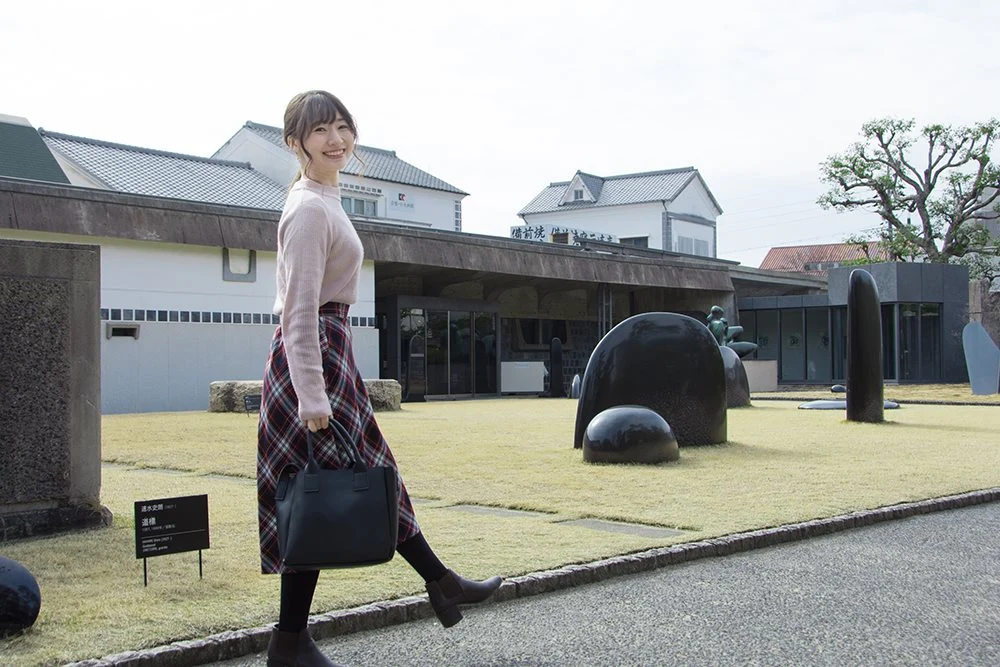
They look at the artworks and freely create stories.
The stories are displayed, and it’s fascinating how the same painting can inspire completely different tales depending on who is looking at it!
Here are a few examples of stories they came up with.
| Artist and title | What the painting depicts | Story created by a participant |
|---|---|---|
| Koide Narashige “Nude on a Chinese Bed (Nude Woman A)” | A painting of a nude woman lying down | A woman toyed with by men. She laments, “Everything is such a hassle now.” |
| Maeda Kanji “Two Laborers” | A painting of two men looking this way | Friends they met while working away from home meet at their usual spot. But one of them says, “This might be the last time.” |
| A magician and a novelist. After watching “Ossan’s Love,” they longed for office work and came to the employment agency. |
Suzu-chan looked at Kotaro Takamura’s sculpture “Arm” and made up a story about a “strongman.”
Art with Fans

They use paper printed with artworks to make collages and create hand fans.

Suzu-chan cut out the large figure of a man from Hodler’s “The Woodcutter.” We wondered what she would do with it, then she folded it partway and boldly arranged it across both sides of the fan.

She finished a cool fan that brings out the painting’s powerful impact!

A staff member told us, “The children look so happy when they finish their work. I love seeing their faces.”
To the Kurashiki Archaeological Museum

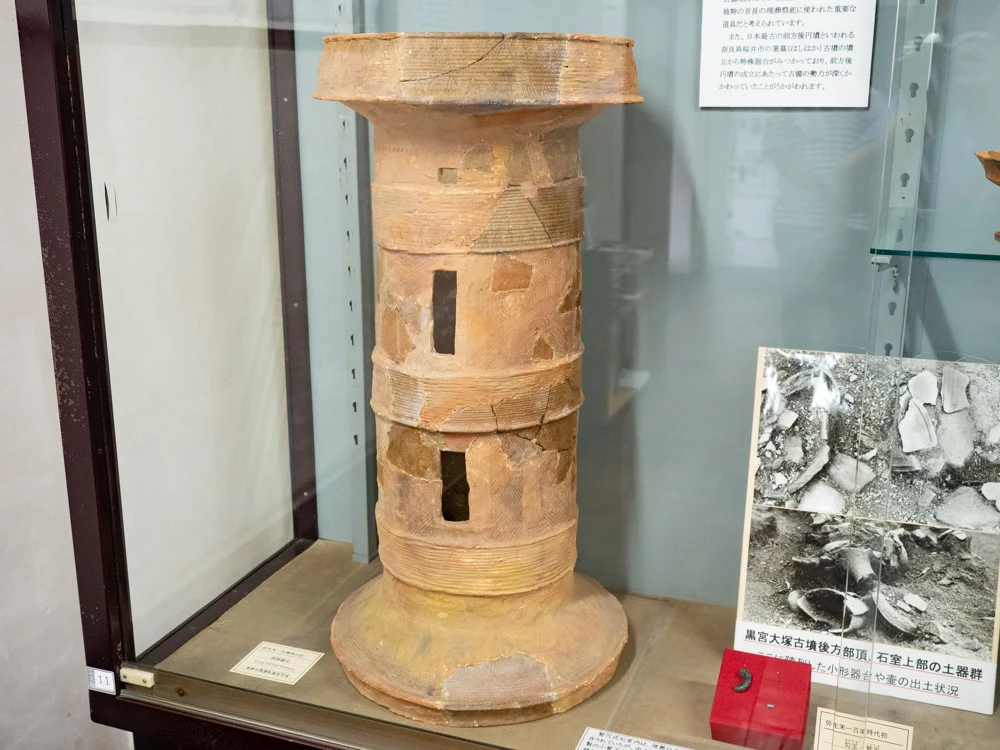
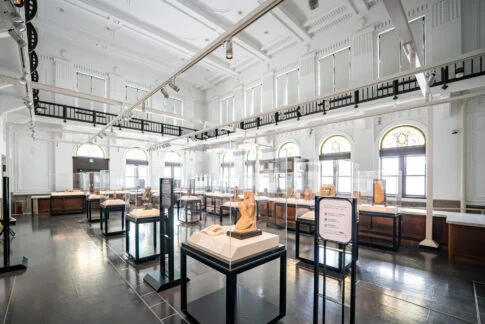
Next, we visited the “Kurashiki Archaeological Museum,” which conducts research and studies in the Kibi region, an area rich in archaeological sites.
Doki-Doki Pottery Stamp Bags

They make original bags by stamping them with designs of pottery and ancient burial mounds.

The Kurashiki Archaeological Museum’s original handmade eraser stamps, made by the staff, are so cute!
The staff carefully showed them how to get a clean print, and they finished colorful, impressive bags.

Looking around, we saw bags full of personality: some people had created chic designs using a single color, while others had made gradients.
It looks like a great way to feel closer to history.
Impressions

The Children's Art Museum (Chirumyu) offers lots of fun programs.
We made our way around at a brisk pace, but even so, we couldn't get to everything we wanted to see during our roughly three hours of reporting. It seems Suzu-chan also took part in a workshop after the interview. You can easily enjoy a full day here.
Before the museum opened, children were already lined up outside, unable to wait to get in. What left a strong impression was how the venue was filled with happy, smiling faces.

The Chirumyu guide is written in simple language that children can easily read, helping them dive into the world of art on their own.
Even people who usually think, “A museum might be too formal,” or “I'd like to go, but I don't know how to enjoy it with my children,” can have a relaxed and enjoyable time.
Suzu-chan had a great time, of course, and her mother was moved, too.
As a museum lover, the author also got to engage with art in a fresh way and was thoroughly satisfied!
It was a wonderful event that brought together the Ohara Museum of Art's wish for “everyone to become familiar with art.”

Finally, here are the words of one of the staff members from “Find the Picture in Five-Seven-Five.”
“There is no right answer to how you feel about art. If that's what you thought when you saw it, then that's just fine.”
Whether you're a child or an adult, whether you love art or not, this summer festival is for everyone to enjoy. Be sure to join the next Chirumyu.
Articles about the Ohara Museum of Art
Ohara Museum of Art Children's Art Museum 2019 Information
| Name | Ohara Museum of Art Children's Art Museum 2019 |
|---|---|
| Dates | August 24 (Sat)–August 25 (Sun), 2019 9:00 a.m.–5:00 p.m. (admission until 4:30 p.m.) *Hours vary by program |
| Location | 1-1-15 Chuo, Kurashiki City, Okayama Prefecture |
| Admission (tax included) | Adults: ¥1,500 High school students: ¥500 Junior high and elementary school students: ¥250 (Junior high and elementary school students living in Kurashiki City are admitted free with an “Ikiiki Passport”) |
| Website | Children's Art Museum 2019 |

What would you like to know about Kurashiki?
Enter a word to search articles on this site



































Model: Suzu-chan (Twitter)